
In the April 11, 1936 edition of the New York Age newspaper, Joe Bostic wrote in his “Seeing The Show” column about show he attended at the Apollo Theatre. The headliner was an unknown: the now legendary blues singer Lead Belly. Bostic was not impressed:
The advanced publicity stated that this man had been in two jails on murder charges and that the wardens, on hearing him work out on his guitar and vocally, had set him free. Maybe they did but after hearing the man myself, I’m not so sure that musical excellence prompted [the] actions. It may have been that both they and the other inmates wanted some peace during their quiet hours. No. Lead Belly isn’t the man, if it’s music that you want.
After reviewing other aspects of the show, including the comedy of Pigmeat Markham, Bostic concludes his review with this:
Midge Williams, the sensation from the west coast, looks, acts and sings like she knew most of the answers as a personality soloist…. She’s too good for the company she’s in at the Apollo this week.
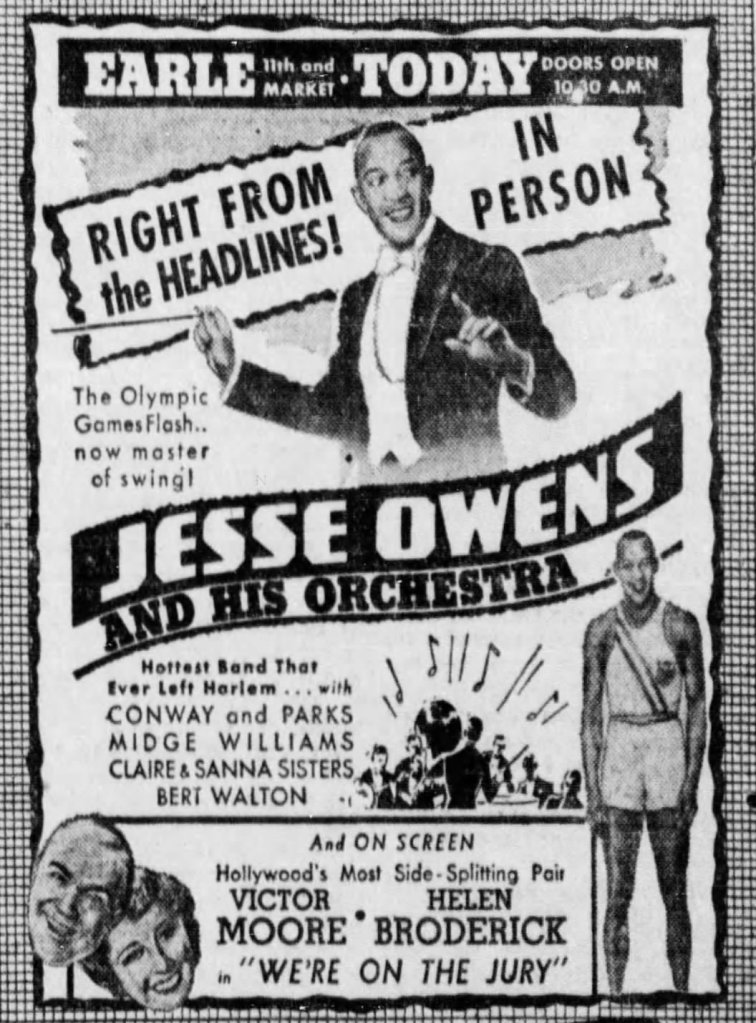
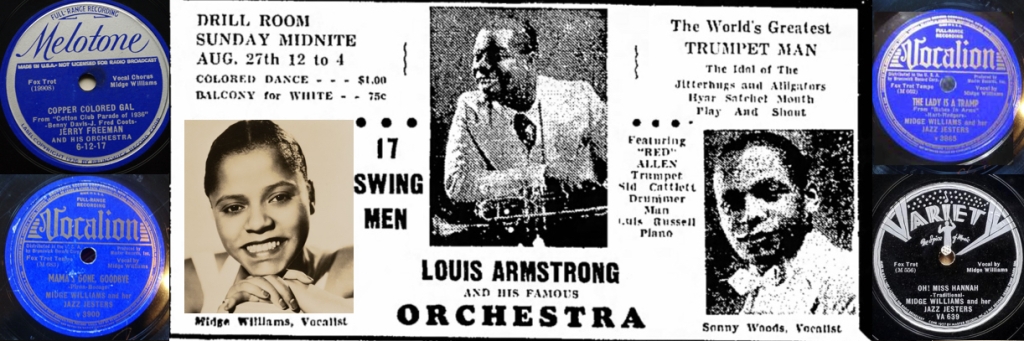
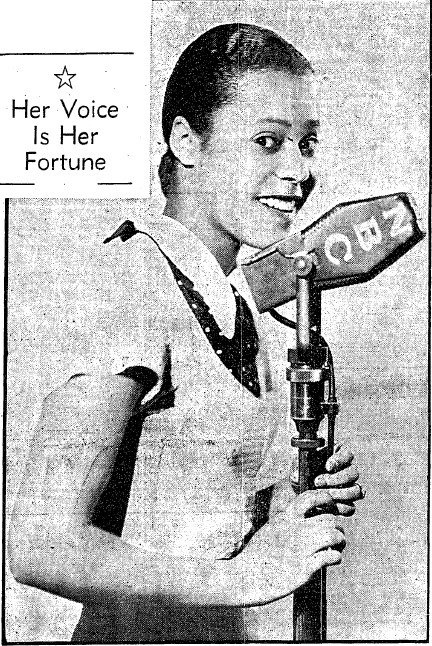
I’ve had a bit of an obsession with the mysterious Midge Williams since I first heard her recordings of familiar jazz standards… sung in both Japanese and English. In the mid 1930’s, she was the first female African American singer with a national radio show. Midge worked with Bunny Berigan, Fats Waller, Duke Ellington, and Jimmie Lunsford. When Olympian Jesse Owens had a short-lived foray as a bandleader, Midge was his singer. She toured with Louis Armstrong’s orchestra for three years, from 1938 until 1941, when she ended up hospitalized in Detroit. And then… nothing. She died of tuberculosis in 1952 at age 36.
That’s the story in a nutshell, according to the liner notes of her CD compilations and the few websites that mention her. Several years ago, I set out to fill in the blanks on this forgotten artist.
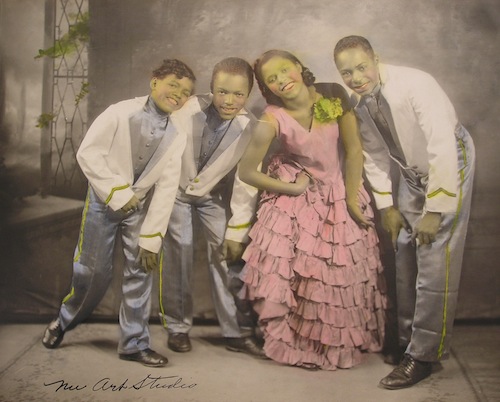
Midge started out in a family group with her three brothers. They were The Williams Quartette, later The Williams Four, performing in clubs and churches in the San Francisco area. They later joined the Fanchon and Marco vaudeville circuit and performed up and down the West Coast during summer breaks from school.
A musician / arranger named Roger Segure took them under his wing and became their manager, securing work on local radio and then traveling with the group to China and Japan. The opportunity to hear swing jazz vocals sung live was heralded as a major event in the history of Japanese jazz. During their stay in Japan, Midge recorded several sides, singing in English and Japanese, accompanied by the Columbia Jazz Band:
Midge crossed paths with writer Langston Hughes as he traveled through the Far East. Back in New York a few years later, Hughes would write songs for Midge. She recorded his “Love Is Like Whiskey” in February, 1938. Another song, “Night Time,” with lyrics by Hughes and music from her manager Roger Segure, was the theme song to her radio program. Unfortunately, no recording of the song exists.
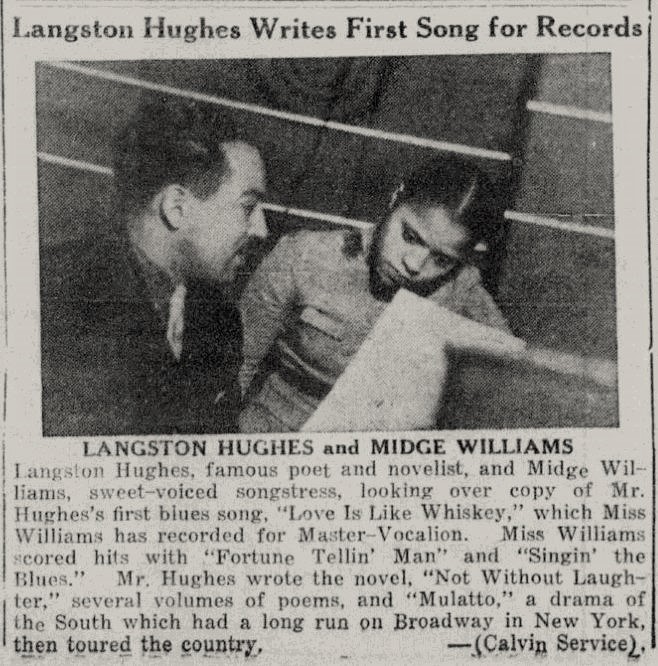
Attempts by gossip columnists to stir rumors of a romance between the two proved unsuccessful.
Midge was just 21 years old when she began hosting her own radio show on NBC – a twice-weekly 15-minute program. She recorded several dozen sides while also making club appearances. A prominent figure in Harlem society at the time, the African American newspapers covered her every move… until her alcoholism resulted in a dismissal from the Louis Armstrong Orchestra.

Her last studio recording was with Lil Hardin Armstrong (Louis’ ex-wife) and her Dixielanders in 1940:
In April of 1946, Midge made an appearance on Jack Webb’s radio show. She was in fine voice on a cover of “Cow Cow Boogie”:
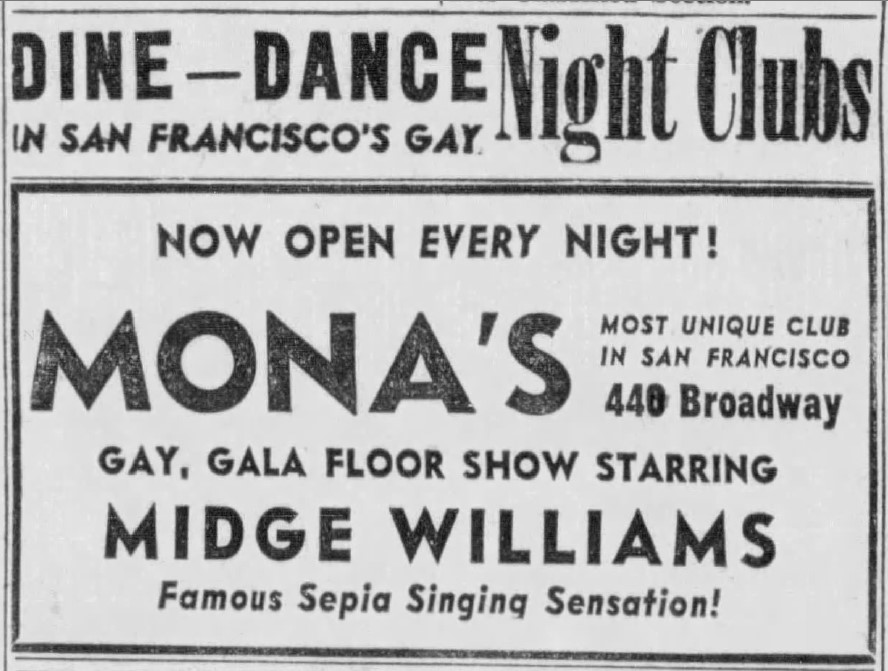
Shortly after the Jack Webb radio performance, Midge settled into a six month engagement at Mona’s 440 Club, the legendary lesbian bar in San Francisco. It is from this period that we have a photo of Midge, an image that has been widely circulated. One of the most familiar photos depicting lesbian nightlife of the 1940’s, it was also used to promote the 1993 documentary Last Call At Maud’s.
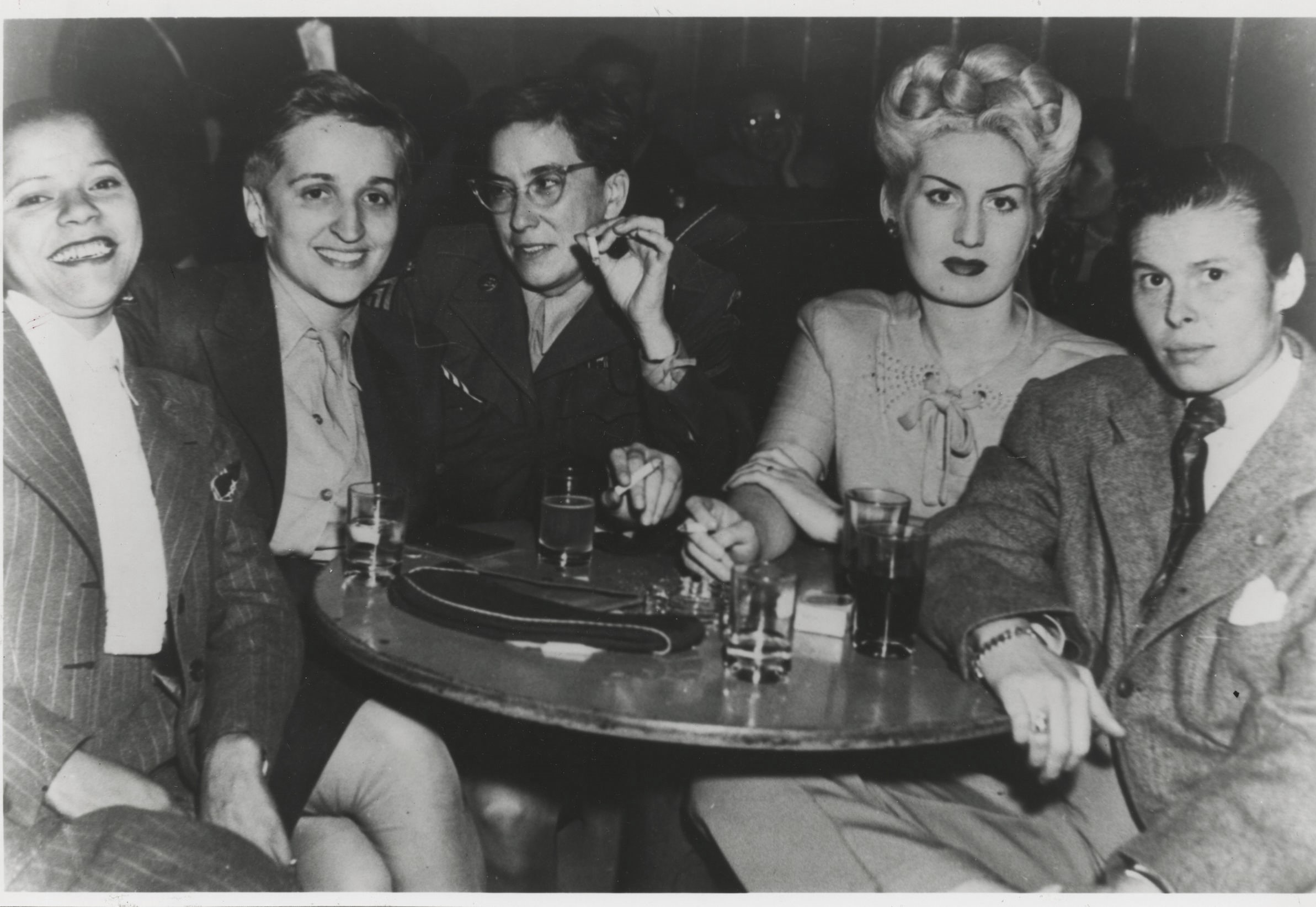
Midge Williams (left) with fellow Mona’s singer Kay Scott and friends (ca 1946)
Tune in to a 35 minute overview of the life and music of Midge Williams on 60 Degrees with Brian Ferrari.
See also:
Neeka Shaw: The Forgotten Showgirl
Madame Spivy on the Good Time Sallies podcast
Madame Spivy: Movies & Television
Madame Spivy’s Alley Cat
Madame Spivy’s Tarantella
The Christmas In Connecticut Delivery Woman
Etta James: Advertising Zombie
No More Chicken Pepperoni: RIP Yvonne Wilder
Artist’s Muse: José “Pete” Martinez
 Brian Ferrari's Blog