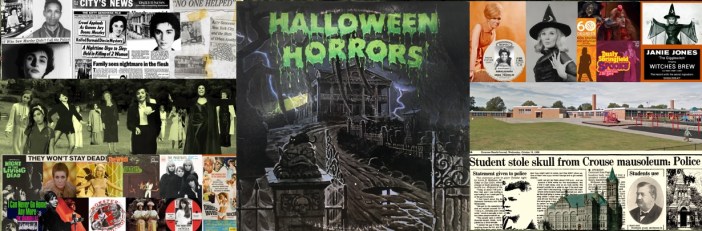
Happy Halloween! In keeping with the season, we have collected some spooky stories from the past 10 years – both fiction and non-fiction. Enter if you dare.
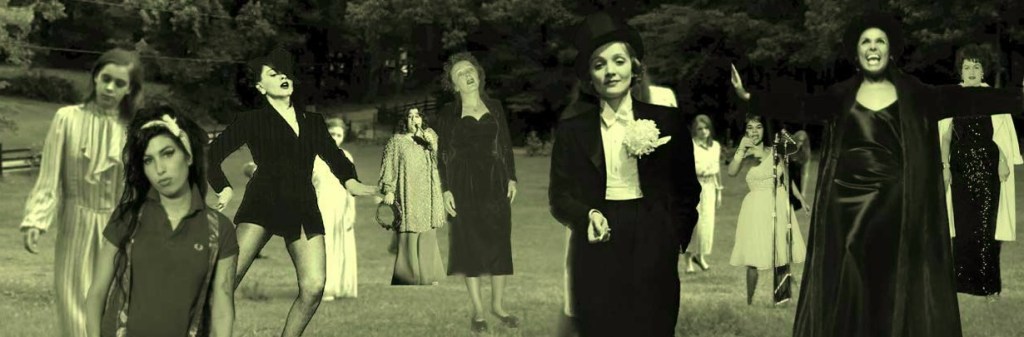
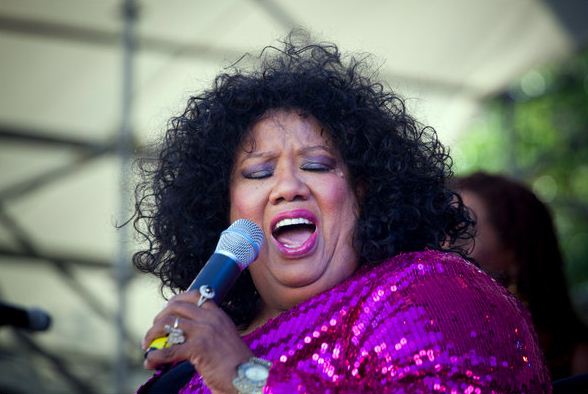
Zombie Divas: When an unexplained phenomena reanimates dear departed divas, the strained relationship of a stylish but troubled gay couple is exposed.
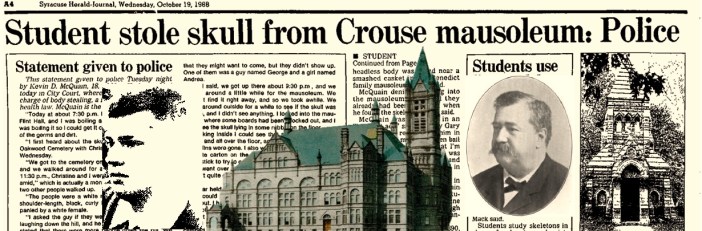
Whatever Happened To The Kid Who Boiled John Crouse’s Head? In 1988, a Syracuse University art student walked out of Oakwood Cemetery with the head of John Crouse in a paper bag, intent on using it as a prop for his art. It proved to be quite useful.
The Playground Swing: An unexplained ghostly occurrence at an elementary school triggers the memory of a bigger, more terrifying experience.
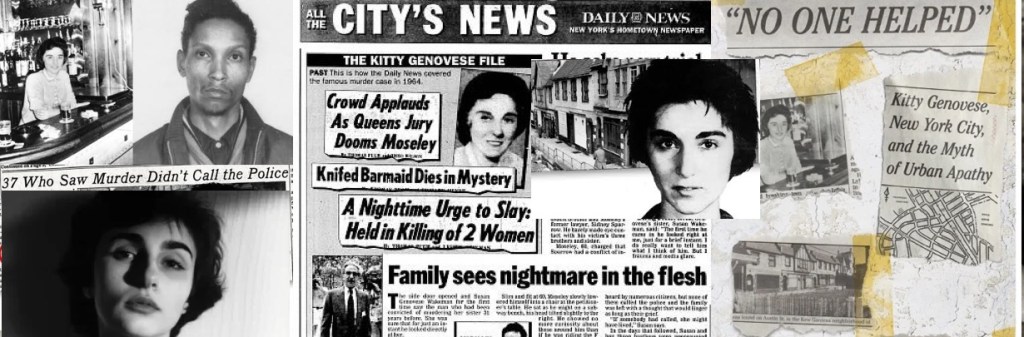
If You See Something, Say Something: In our first blog post from 2016, we examined the inaccuracies of the urban legend surrounding the Kitty Genovese murder.
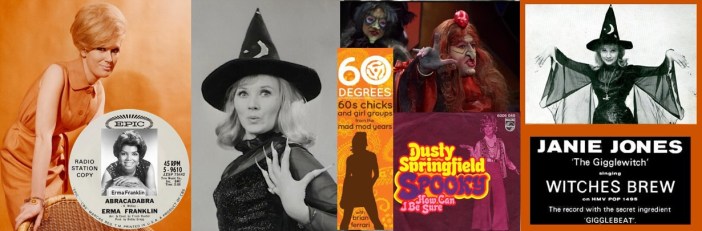
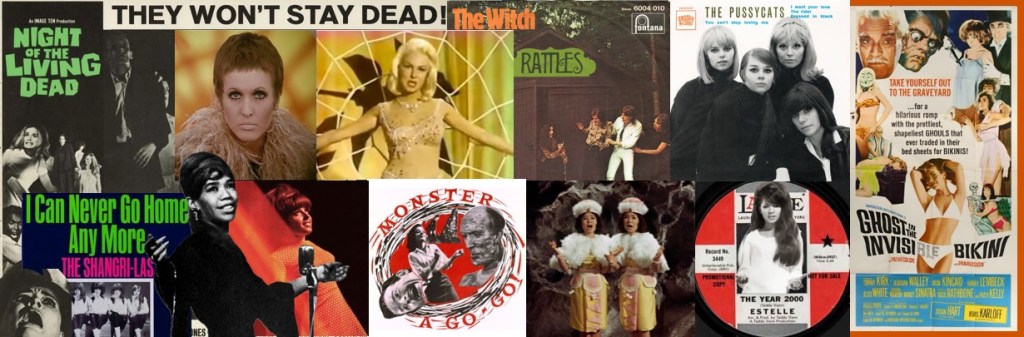
Once again we have The 60 Degrees Girl Group Halloween Shows! Four terrifying hours from East Village Radio featuring rockabilly outlaws, death discs, soul witches, women driven to madness by their guys and much more mayhem.
It’s that time again! Tis the season for Halloween favorites courtesy of 60 Degrees with Brian Ferrari, my weekly radio program featuring “60’s chicks and girl groups – the hidden gems, cult favorites and unreleased obscurities of the decade.” The show ran for five years from 2008-2013 and has been back on the air since the relaunch of East Village Radio in July, 2024.
Our first Halloween episode was originally broadcast on October 27, 2008 and aired every Halloween for the duration of the show’s run.
Our second Halloween show took a mere 17 years to come to fruition. Halloween 60 Degrees Part II: Electric Boogaloo is streaming here:
Once again, we’ve got soul witches, rockabilly rabble-rousers, death discs, horror movie theme songs, science fiction sirens, girls driven to madness by love, and more dead boyfriends than you can shake a broomstick at. Plus a whole lot more! As with every episode, the songs are interspersed with vintage commercials, sound effects and movie clips.
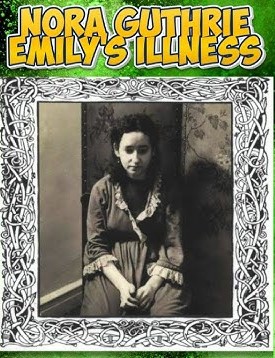
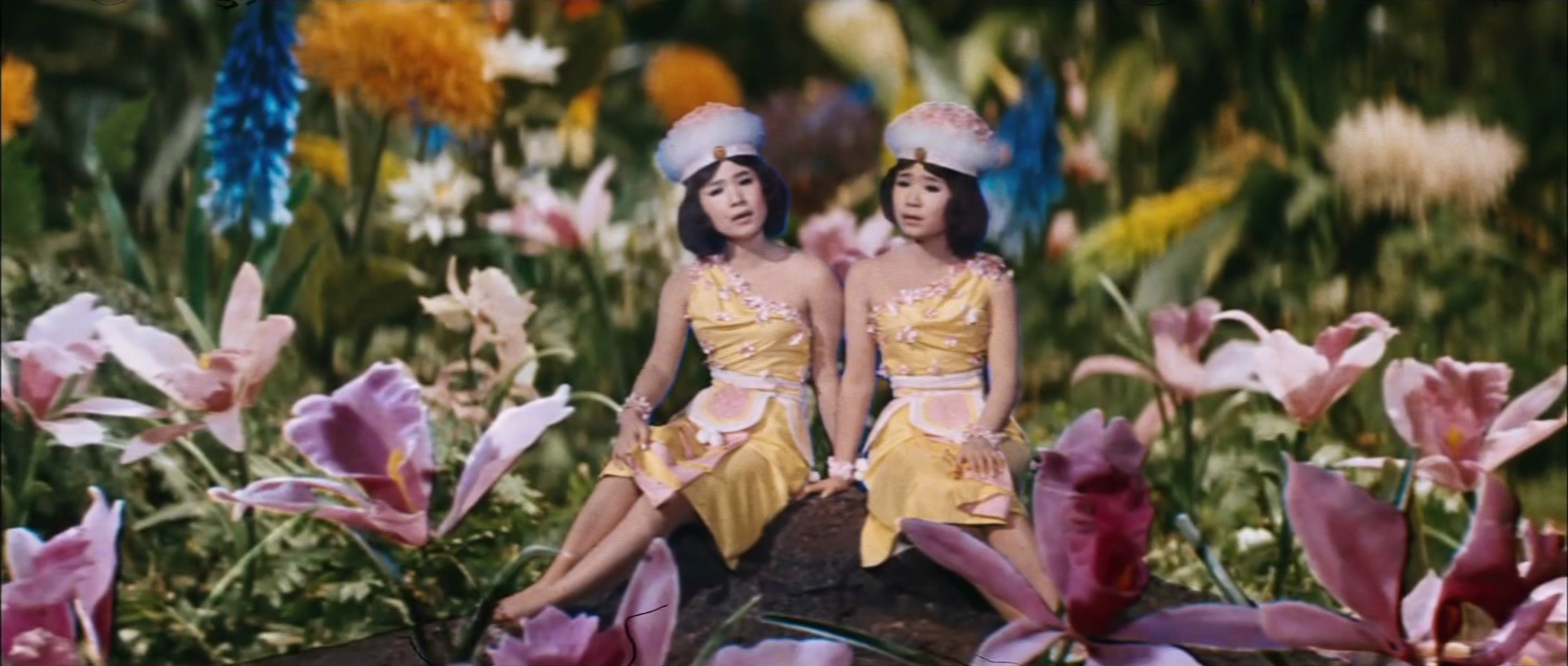
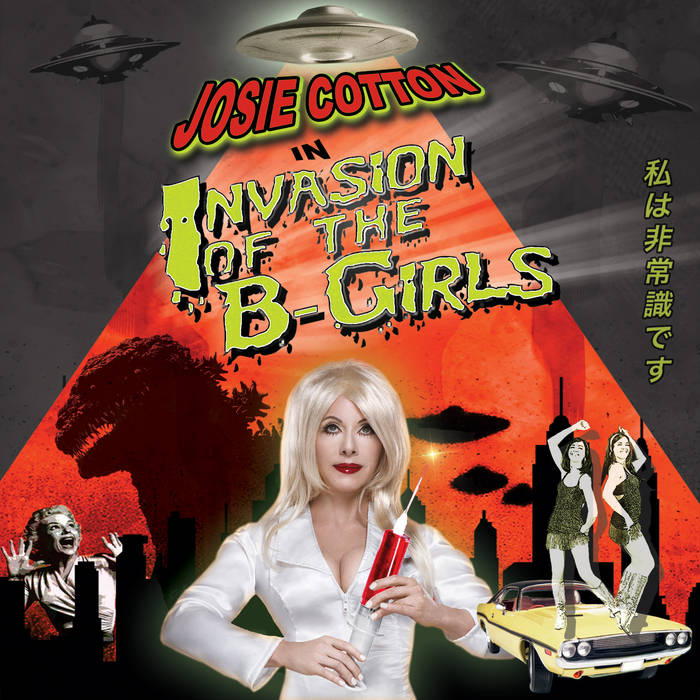
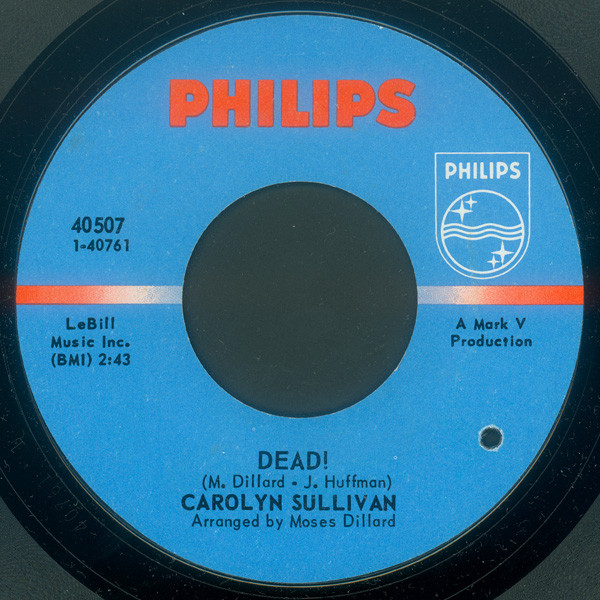
Playlist: The Tammys “Egyptian Shumba” Carolyn Sullivan “Dead!” Annisteen Allen “Fujiyama Mama” Sparkle Moore “Killer” Jewell Gilbert “Mad Nervous Woman” La Lupe “Fever” Teacho & His Students “Chills & Fever” The Wonderettes “I Feel Strange” Helene Smith “Thrills and Chills” Nora Guthrie “Emily’s Illness” Bernadette Carroll “The Hero” Twinkle “Terry” The Shangri-Las “I Can Never Go Home Anymore” The Pussycats “Dressed in Black” The Jaye Triplets “(Nightmare) I Didn’t Wanna Fight” Bette Davis & Debbie Burton “What Ever Happened to Baby Jane?” Patti Page “Hush, Hush, Sweet Charlotte” Josie Cotton “Who Killed Teddy Bear?” The Peanuts (wi Bear McCreary) “Mothra’s Song” Josie Cotton “Faster Pussycat” Linda Cumbo (Clifford) “Did You Ever Lose Your Mind (Over A Boy)” Reparata & The Delrons “I Can Hear The Rain” Lesley Gore “I’m Fallin’ Down” Lori Saunders “Out of Your Mind” Koko Taylor & Willie Dixon “Insane Asylum” Sugar Pie DeSanto “Witch For A Night” Julie Driscoll, Brian Auger & The Trinity “Season Of The Witch” The Rattles “The Witch” Janie Jones “Witch In White” Betty Barnes “Requiem (For A Girl Born Of The Wrong Times)” Twinkle “Soldier’s Dream” Estelle Bennett “In The Year 2000” The Pussycats “The Rider” Shocking Blue “Deamon Lover” Joi Lansing “Web Of Love” The Crystals “Vampire” Laura Gibson “Li’l Red Riding Hood” Annie Lennox “I Put a Spell On You”
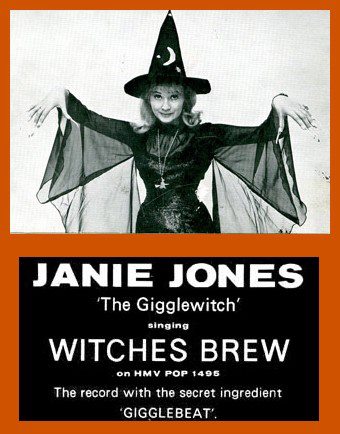
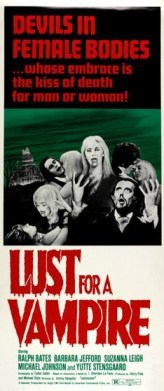
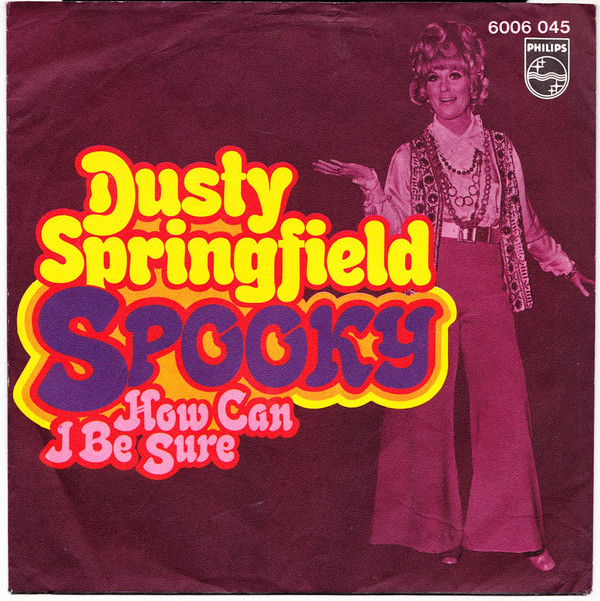
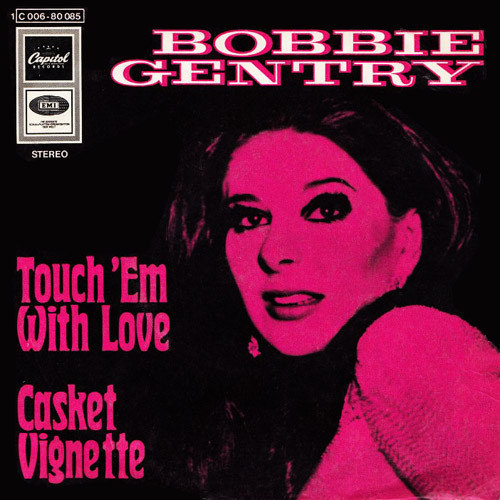
60 Degrees Halloween Show #1 Playlist: Reparata & The Delrons “Panic” Babs Tino “Dr. Jekyll & Mr. Hyde” The Centurians “Intoxica” Sparkle Moore “Skull and Crossbones” Wanda Jackson “Riot in Cell Block #9” Southern Culture on the Skids “Torture” Southern Culture on the Skids “Devil’s Stompin’ Ground” Southern Culture On The Skids “Theme From “The Cheaters”” France Gall “Frankenstein” The Crystals “Frankenstein Twist” Hayley Mills “Jimmie Bean Song” Claudine Clark “Walkin’ Through A Cemetery” The Sham-ettes “Hey There Big Bad Wolf” Hayley Mills “Cranberry Bog” Nite Hawks “Chicken Grabber” The Shangri-Las “Give Us Your Blessings” The Satisfactions “Daddy You Just Gotta Let Him In” The Goodees “Condition Red” The Nu-Luvs “So Soft, So Warm (Dressed In Black)” The Whyte Boots (Lori Burton) “Nightmare” Glenda Collins “It’s Hard to Believe It” Judy Garland “Purple People Eater (Live)” The Kane Triplets “Theme from “Mission Impossible”” Link Wray “The Swag” Tracy “Strange Love (from “Lust For A Vampire”)” Mikki Young “Who Killed Teddy Bear?” Patti Seymour “The Silencer” Josie Cotton “Maneaters (Get Off The Road)” Janie Jones “Wiches Brew” Martha Reeves & The Vandellas “Mobile Lil The Dancing Witch” Bettye LaVette “Witchcraft In The Air” Erma Franklin “Abracadabra” Dusty Springfield “Spooky” The Lawrence Comp. “Moon Beams” Marie Applebee “The Boy Who Took My Heart (took my mind)” The Love Chain “The Love Chain” Peggy Lee “The Case Of M.J.” Janie Jones “Psycho” Martin Sisters “Mother Mother (I Feel Sick)” Julie Budd “All’s Quiet On West 23rd” Gayle Haness “Johnny Ander” The Indigos “He’s Coming Home” Bobbie Gentry “Casket Vignette” Cass Elliot “The Costume Ball” Dusty Springfield “Haunted”
The first Halloween show was also posted to Youtube a few years ago. There are three segments with visuals and some minor alterations.
Part 1:
Reparata & the Delrons – Panic
Babs Tino – Dr. Jeckyll and Mr. Hyde
Sparkle Moore – Skull & Crossbones
Wanda Jackson – Riot In Cellblock 9
Southern Culture On The Skids – Torture
France Gall – Frankenstein
The Crystals – Frankenstein Twist
Hayley Mills – Jimmy Bean
Claudine Clark – Walking Through A Cemetery
The Sham-ettes – Hey There Big Bad Wolf
Part 2:
Hayley Mills – Cranberry Bog
The Shangri-La’s – Give Us Your Blessing
The Satisfactions – Daddy You Just Gotta Let Him In
The Goodees – Condition Red
The Nu-Luvs – So Soft, So Warm (Dressed In Black)
The Whyte Boots (Lori Burton) – Nightmare
Glenda Collins – It’s Hard To Believe It
Judy Garland – Purple People Eater
The Kane Triplets – Theme From Mission Impossible
Tracy – Strange Love
Mikki Young – Who Killed Teddy Bear?
Patti Seymour – The Silencer
Josie Cotton – Maneaters (Get Off The Road)
Part 3:
Janie Jones – Witches Brew
Martha & The Vandellas – Mobile Lil The Dancing Witch
Bettye Lavette – Witchcraft In The Air
Erma Franklin – Abracadabra
Dusty Springfield – Spooky
Marie Applebee – The Boy Who Took My Heart (took my mind)
The Love Chain – The Love Chain
Peggy Lee – The Case of M.J.
Janie Jones – Psycho
The Martin Sisters – Mother Mother (I Feel Sick)
Julie Budd – All’s Quiet On West 23rd St.
Gayle Haness – Johnny Ander
The Indigos – He’s Coming Home
Cass Elliott – The Costume Ball
Teacho & The Students – Chills & Fever
Dusty Springfield – Haunted
There you have it – 4 terrifying hours of 60’s chicks and girl groups. 60 Degrees is always kinda cool, but at this time of year, its downright bone-chilling!
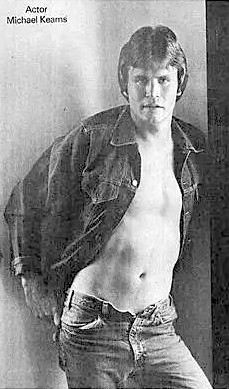
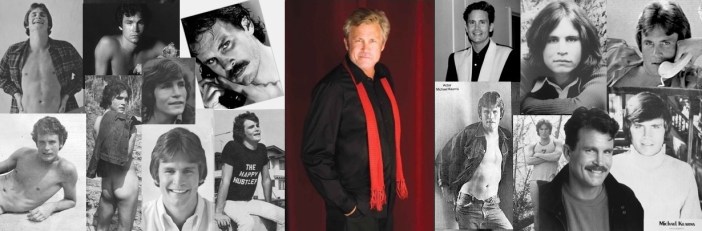
Michael Kearns had nine lives. The actor, activist, author, and teacher was born January 8, 1950, in St. Louis, Missouri and passed away on October 5, 2026 at 76 years old. Among the many notices online, the BoyCulture site posted an exhaustive tribute, while political reporter Karen Ocamb shared personal stories about their unlikely friendship.
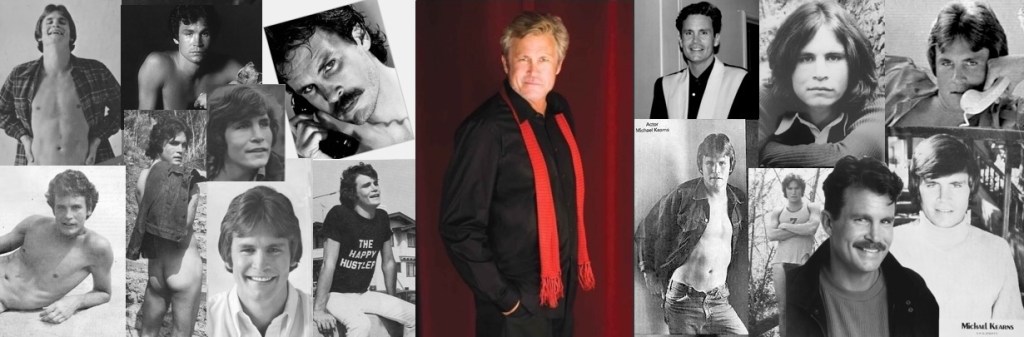
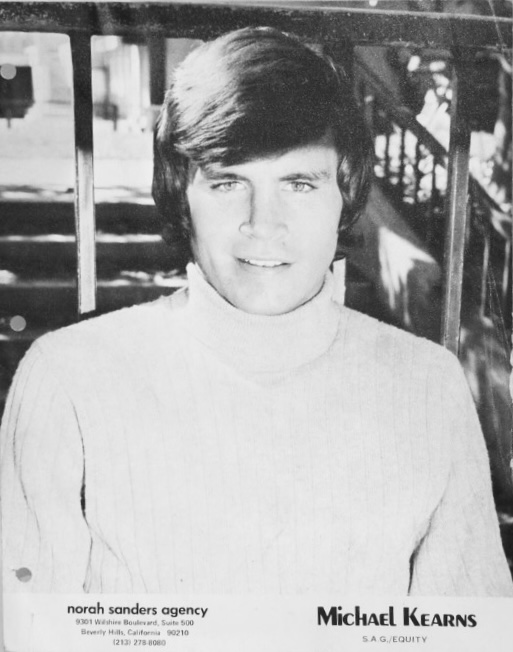
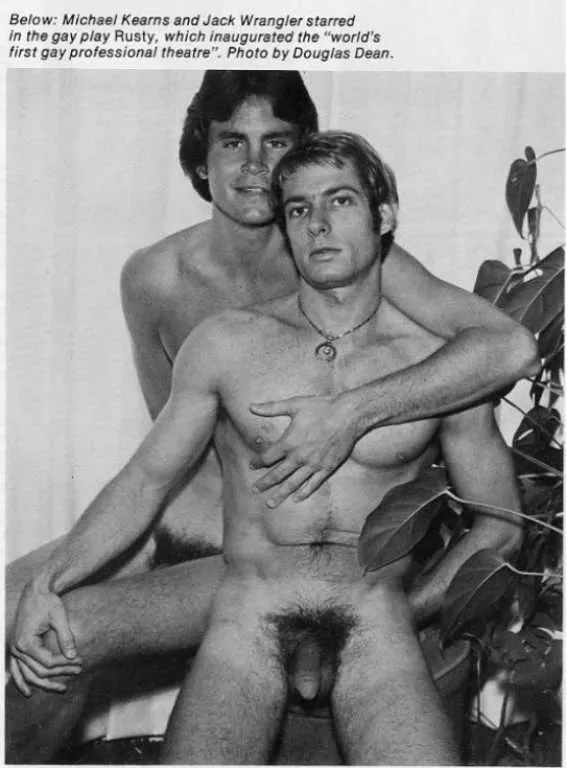
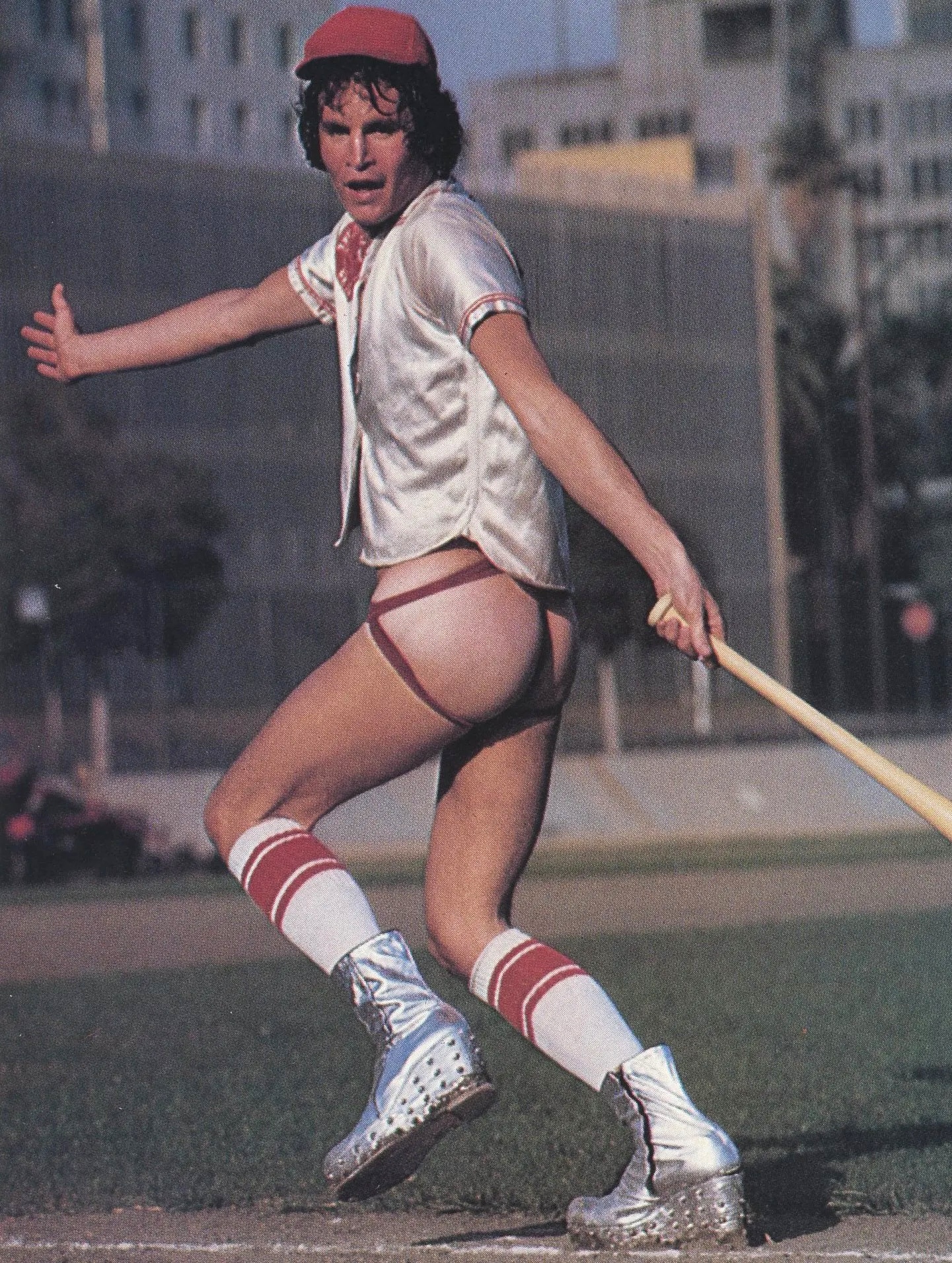
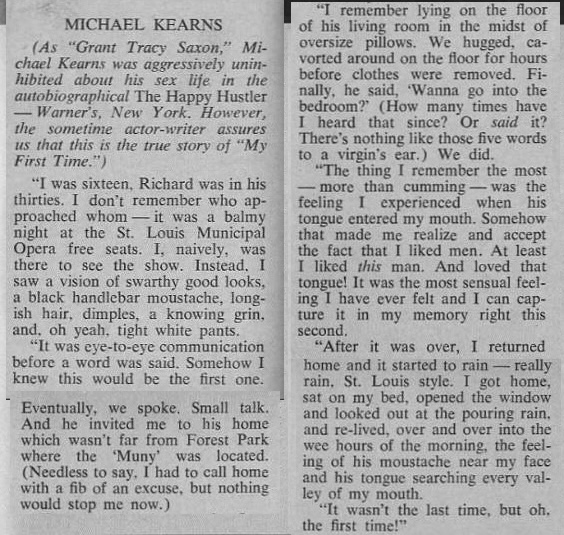
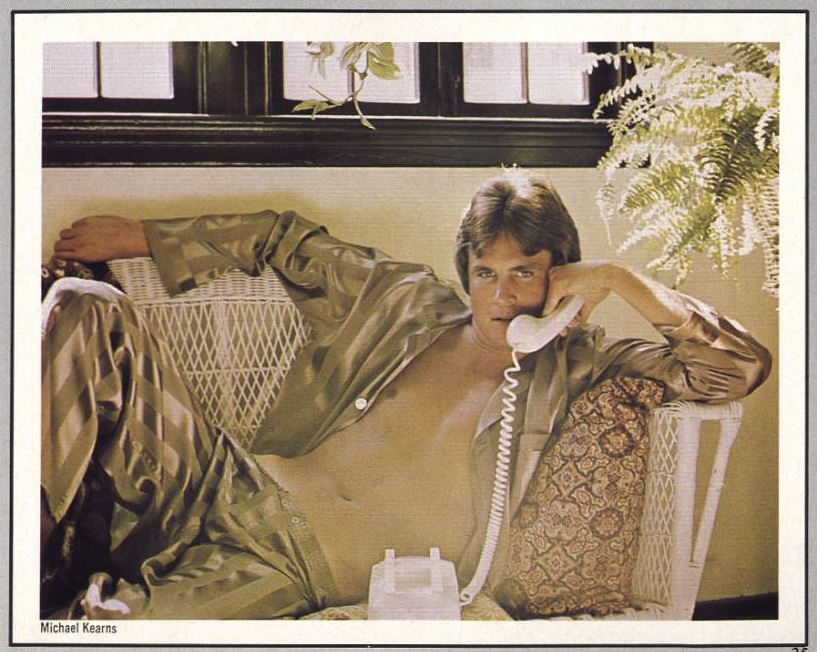
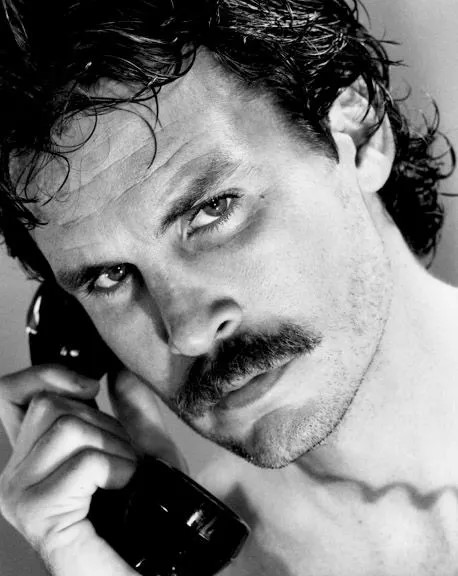
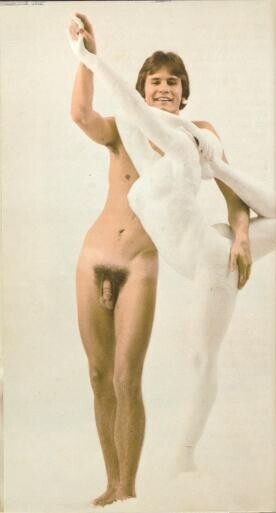
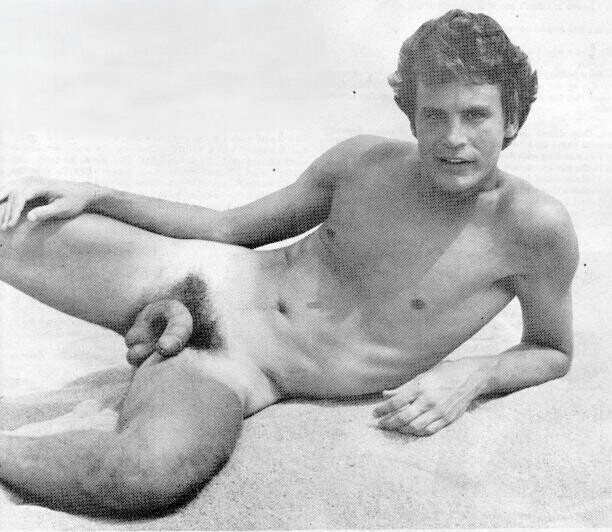
Here are some photos and interviews in the gay press from the 1970’s & 1980’s to illustrate the importance of Michael Kearns’ voice in the gay community at the time. He was an unapologetic trailblazer who sometimes made mistakes but wasn’t afraid to talk about them.
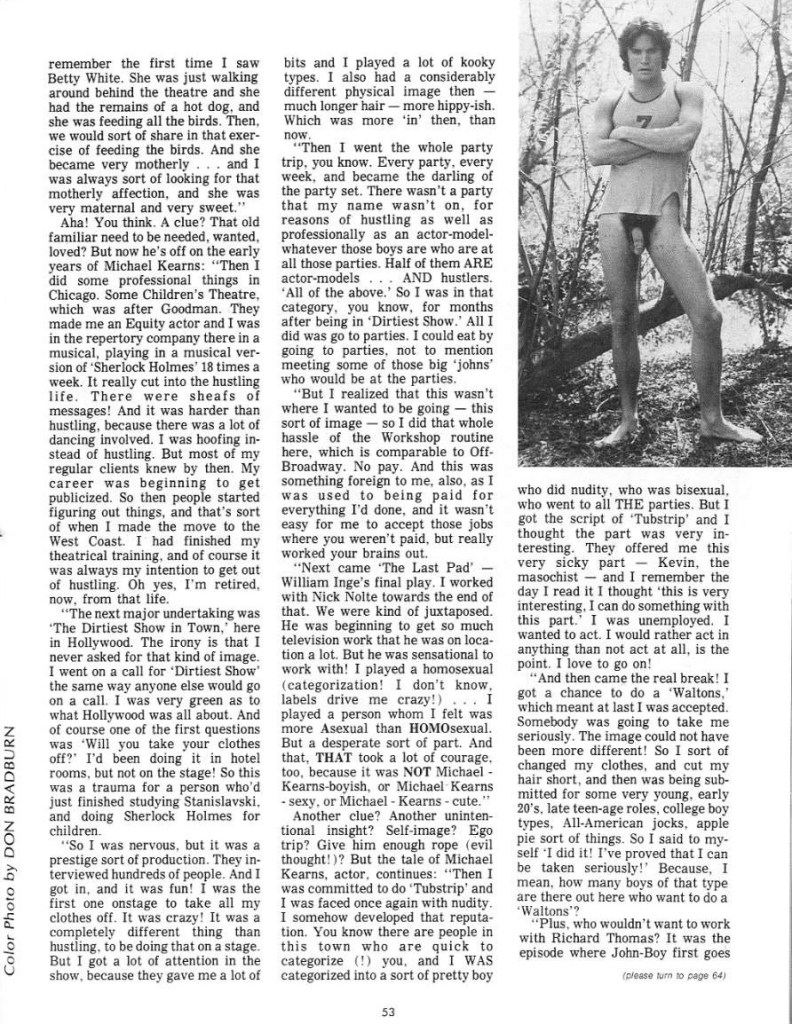
Although he had been acting since childhood, Kearns’ breakthrough was a starring role was in the L.A. production of the infamous Tom Eyen / Jeff Barry musical revue The Dirtiest Show In Town. Kearns later said, “Suddenly I found myself on stage with my clothes off, playing gay and straight characters in sort of sketch material. Then I sort of got this reaction in the gay press and also about that time I became, simultaneously, a party boy.”
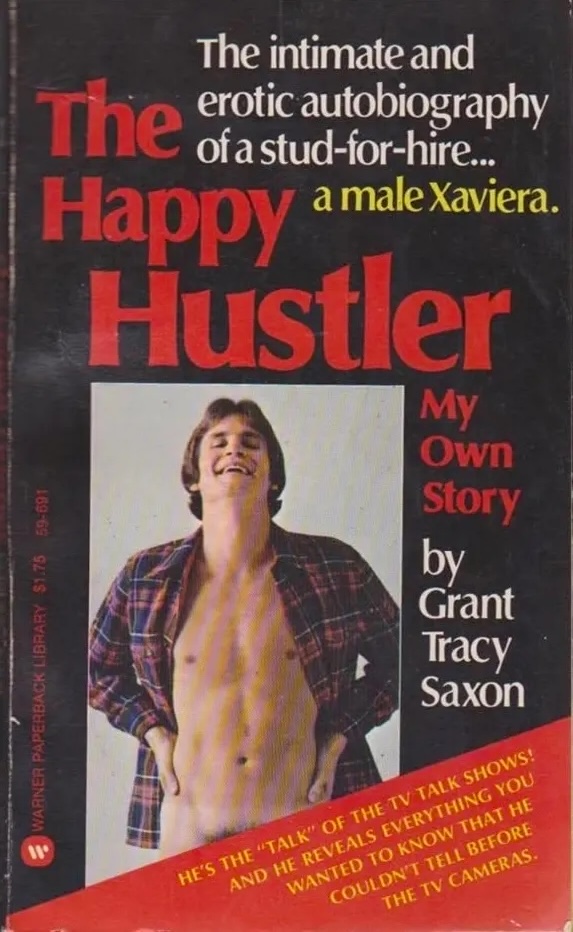
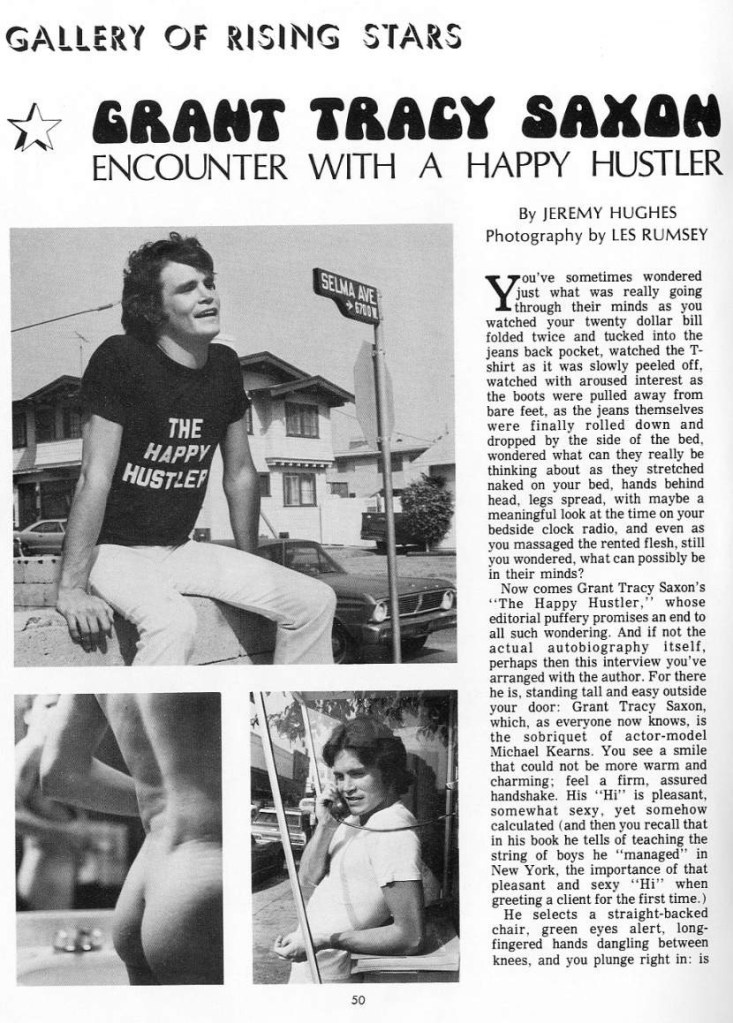
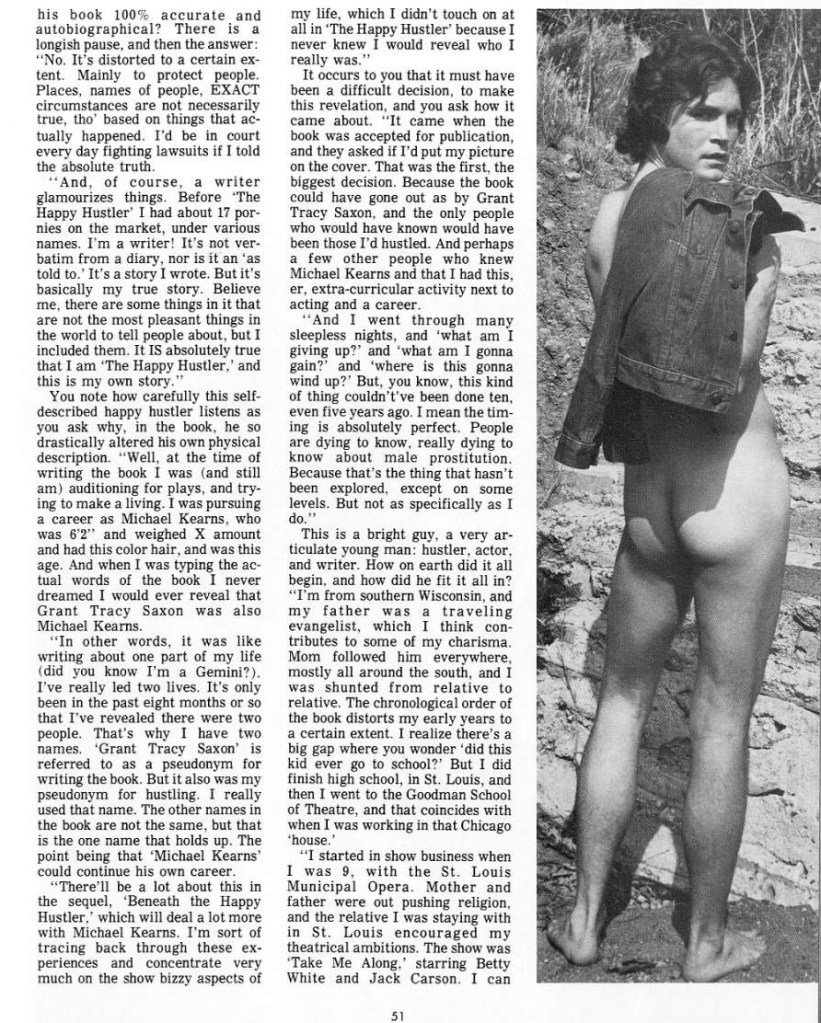
Fast-forward a couple of years: Kearns’ “roommate” is erotic fiction author Thom Recina. He writes a book to cash in on the success of Xaviera Hollander’s The Happy Hooker. Kearns is paid $250 to pose as fictional author Grant Tracy Saxon for the cover photos of The Happy Hustler. The publisher decides to take it a step further and have Kearns portray this person for interviews, talk shows and live appearances.
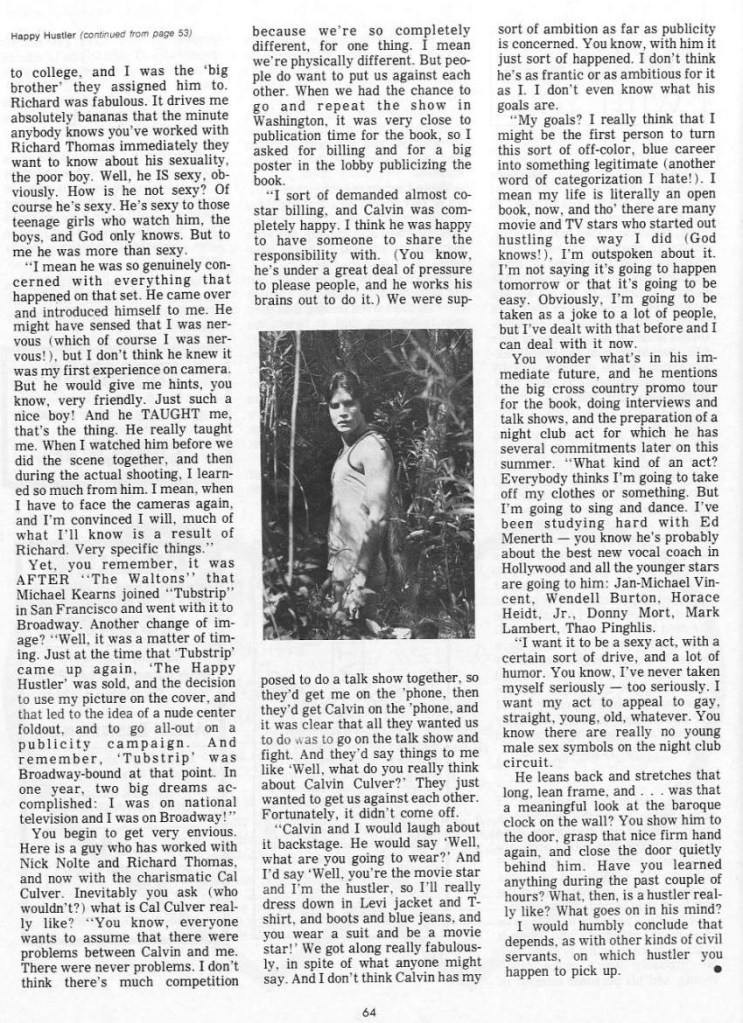
The feature below from the June, 1975 issue of In Touch magazine is an interesting read, with elements of Kearns’ life interwoven with the fictional Saxon. While he may not have actually been the hustler that he was pretending to be, he would move further in that direction as the 1970’s wore on.
“The first time I saw Betty White… she was just walking around behind the theatre and she had the remains of a hot dog, and she was feeding all the birds. Then, we would sort of share in that exercise of feeding the birds. And she became very motherly… and I was always sort of looking for that motherly affection, and she was very maternal and very sweet.”
“Everyone wants to assume that there were problems between Calvin (Culver, aka Casey Donovan) and me. There were never problems… We got along really fabulously, in spite of what anyone might say.”
Kearns with Jack Wrangler in Mandate magazine (June, 1976)
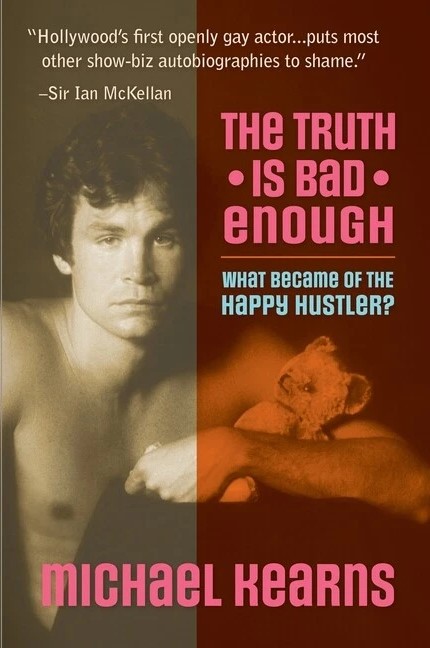
In his memoir The Truth Is Bad Enough, Kearns did not mince words in his recollections of working onstage with Jack Wrangler, describing him as ” a monster of duplicitous self-creation.”
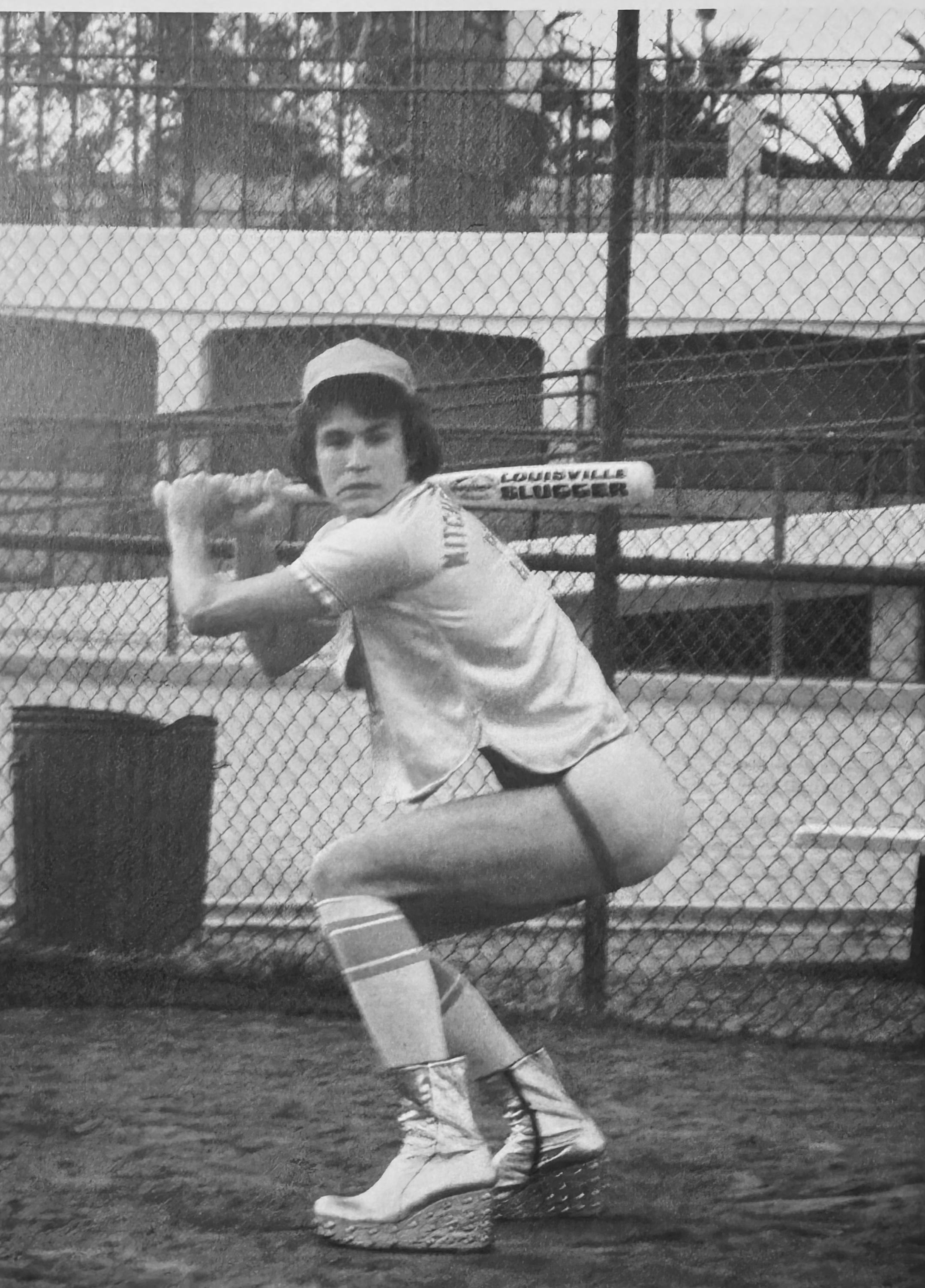
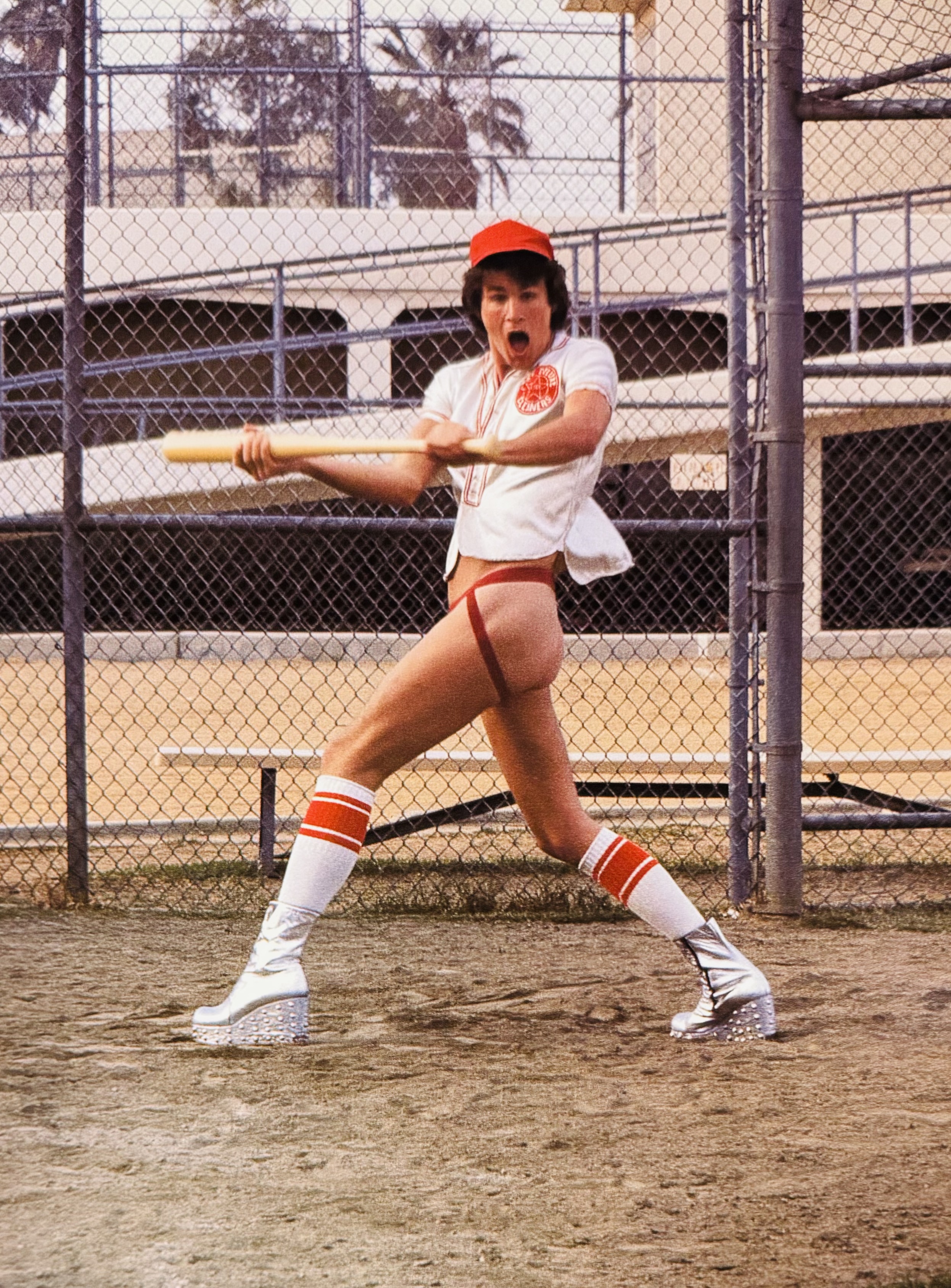
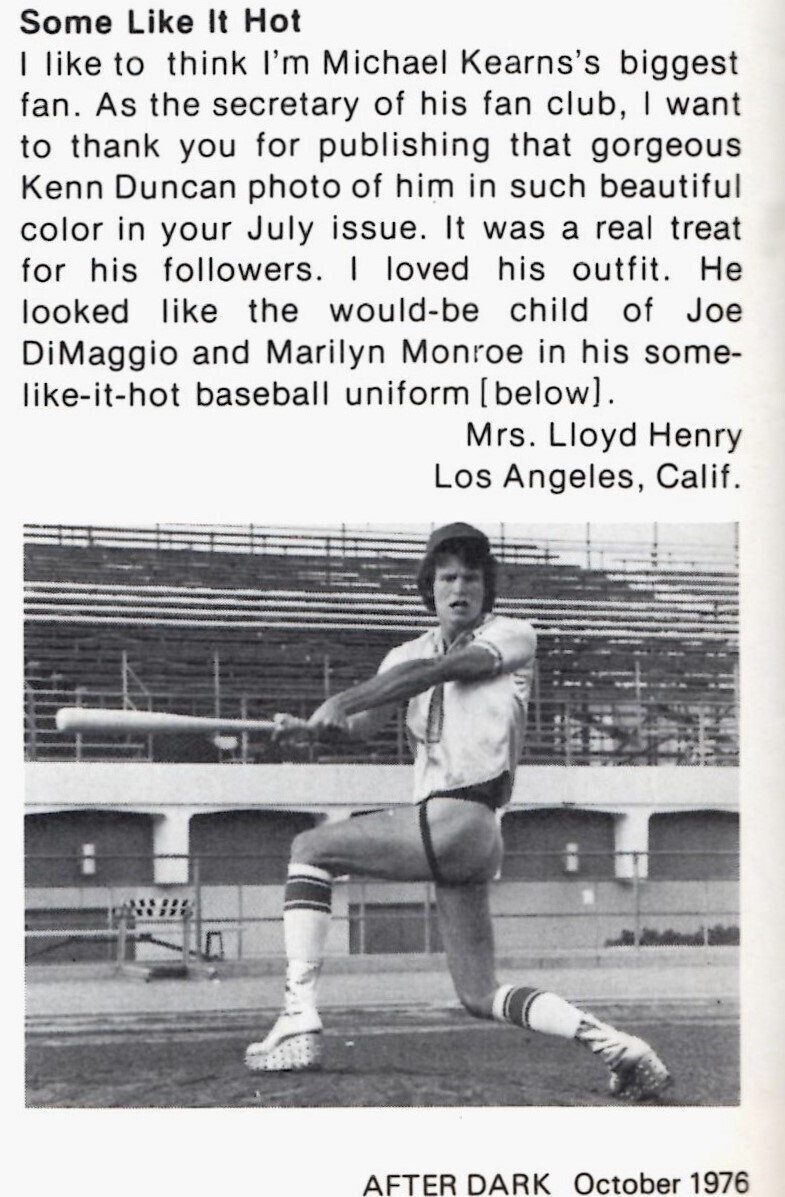
A fan letter and a Kenn Duncan photo shoot (After Dark, 1976)
In Touch Magazine #35 (May/June 1978):
In Touch Magazine #35 (May/June 1978)
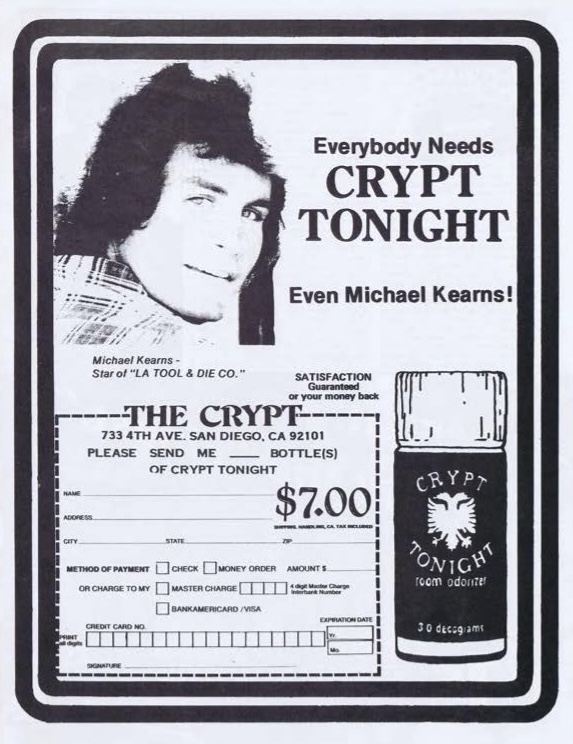
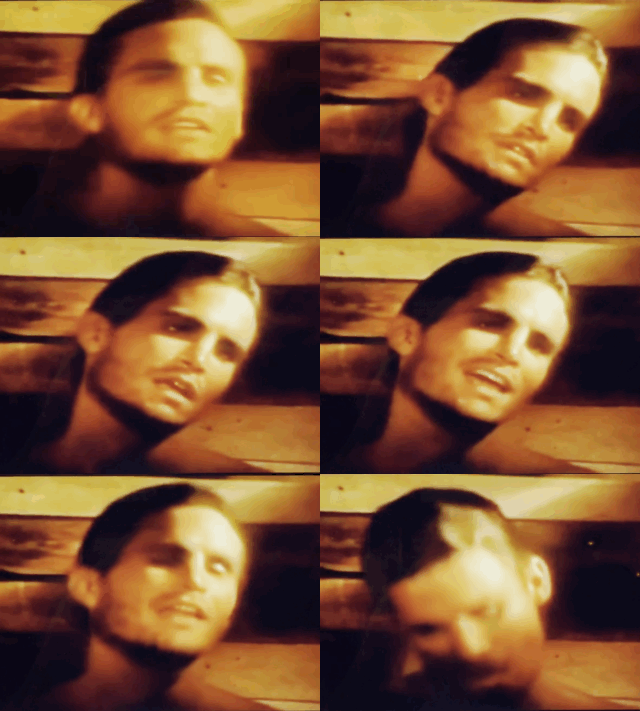
In 1979, Kearns made a memorable appearance in the gay adult film classic L.A. Tool and Die. “I was sort of this outlaw and this gay liberationist without knowing I was. Because I can look back at L.A. Tool and Die, and what I can say for fact is that I was loaded and there were many negatives about the film, but the positive was that I once and for all said to the world, ‘I’m a faggot. There’s no turning back now, no matter what.'”
In the 1980’s he became one of the first actors to publicly acknowledge that he was HIV positive while still garnering work in film and television.
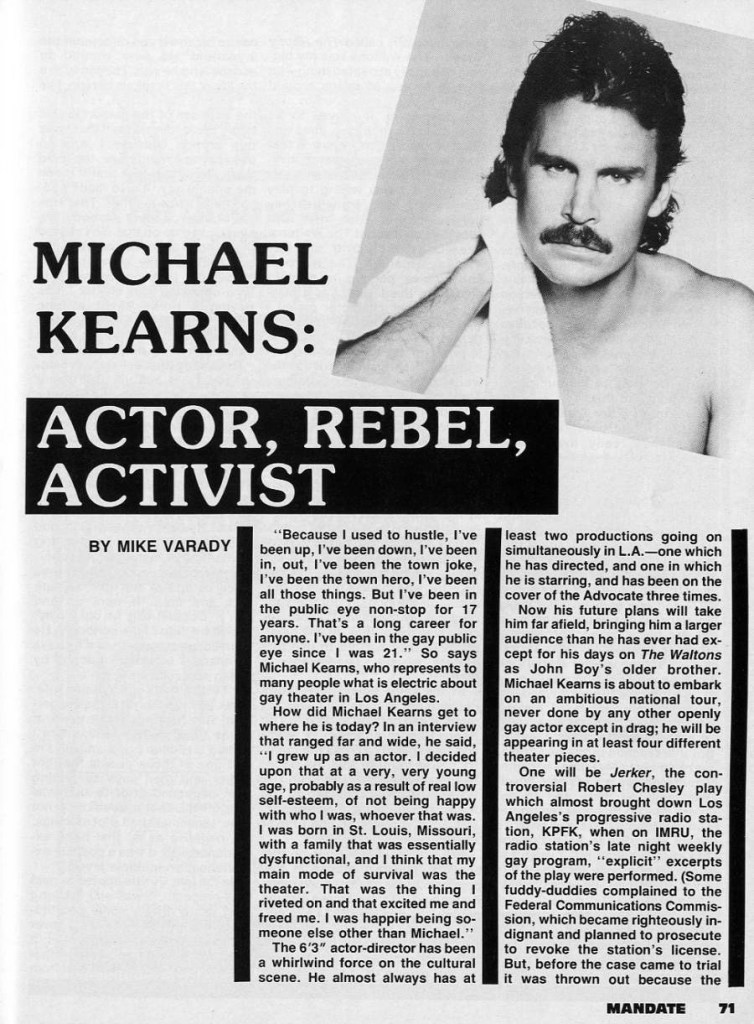
Interview in the October, 1988 issue of Mandate:
Publicity still for the play Dream Man (1988)
“I’m happy I made the movie, not that I would go back, and that people know me from that and the book, but there’s so much more to me, and I’m disappointed when I meet someone who wants to keep the communication on that level.”
Kearns overall commitment to the gay community is to help people understand that you can be what you want to be on your own terms, and survive and be gay, even if you have to create your own career and reinvent yourself. “I’ve really done it by never compromising.”
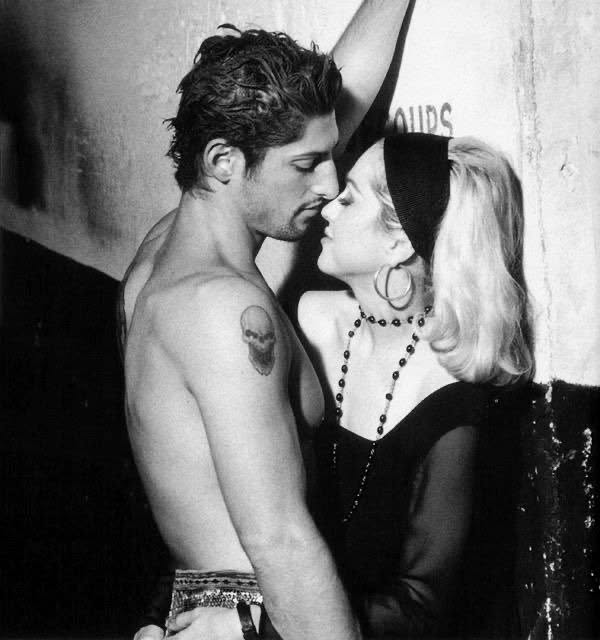
Madonna’s triumphant return to the 2026 MTV Video Music Awards contained many blink-and-you’ll-miss-it cameos during her performance of “Danceteria.” One of those was her ex-boyfriend and music video co-star Tony Ward.
Ward & Madonna, 1990 (photo: Herb Ritts)
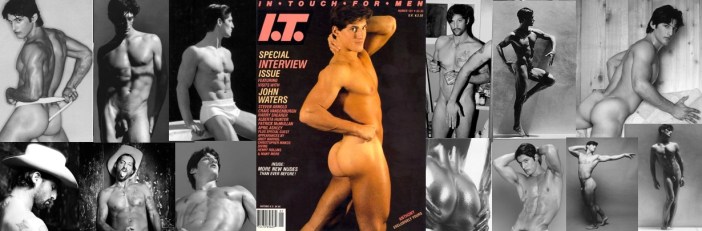
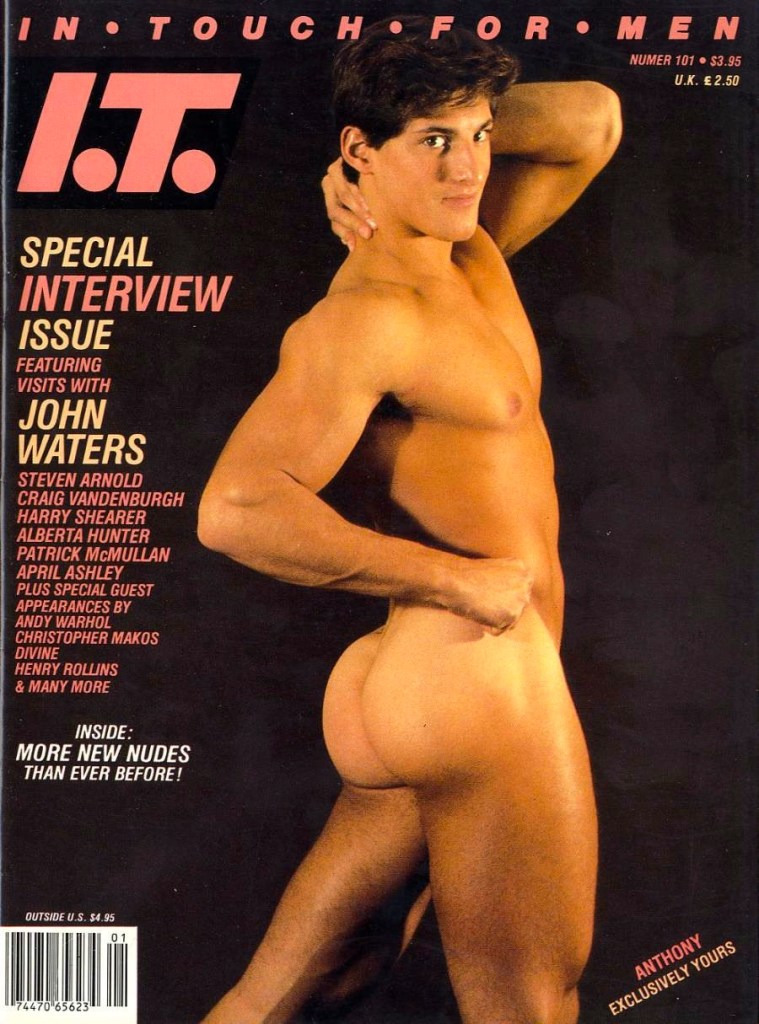
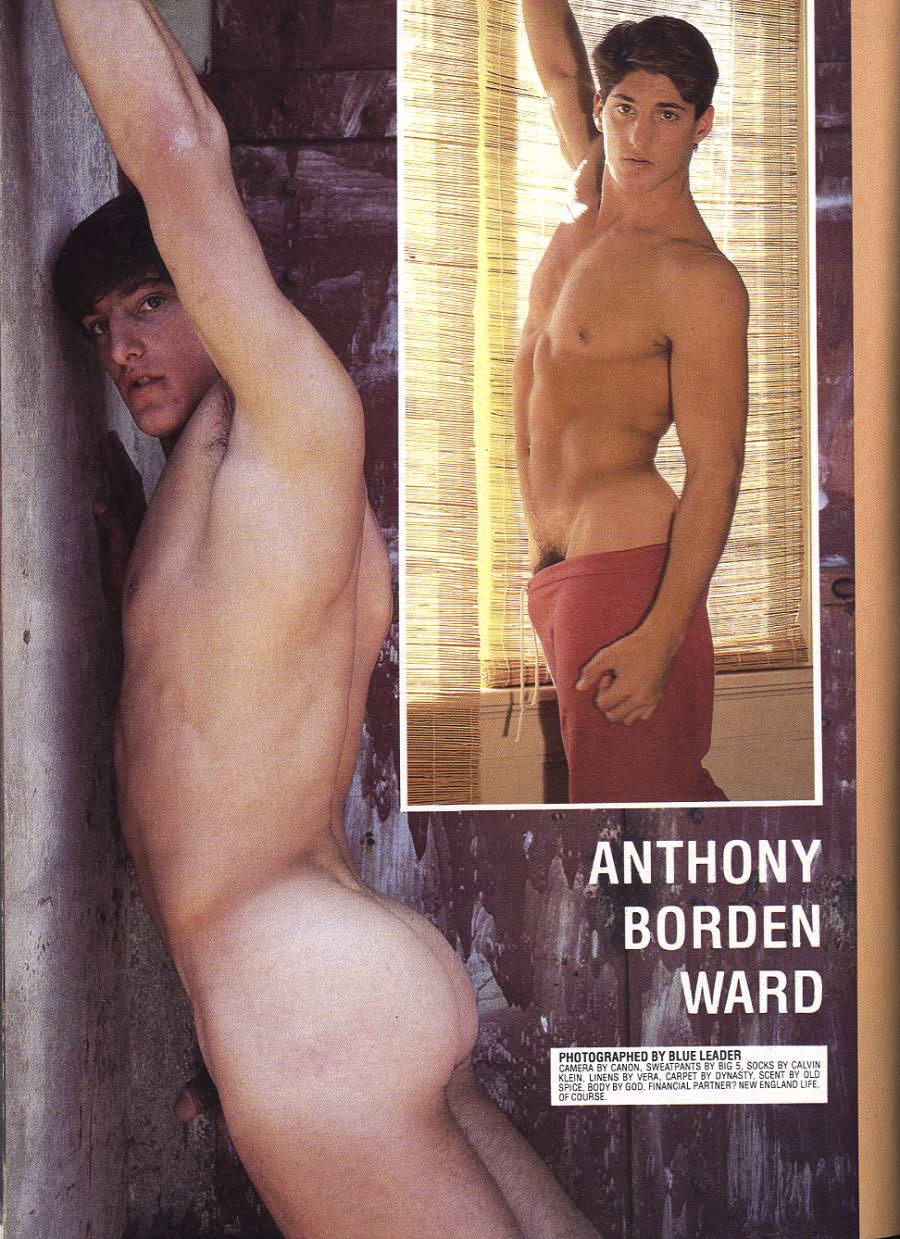
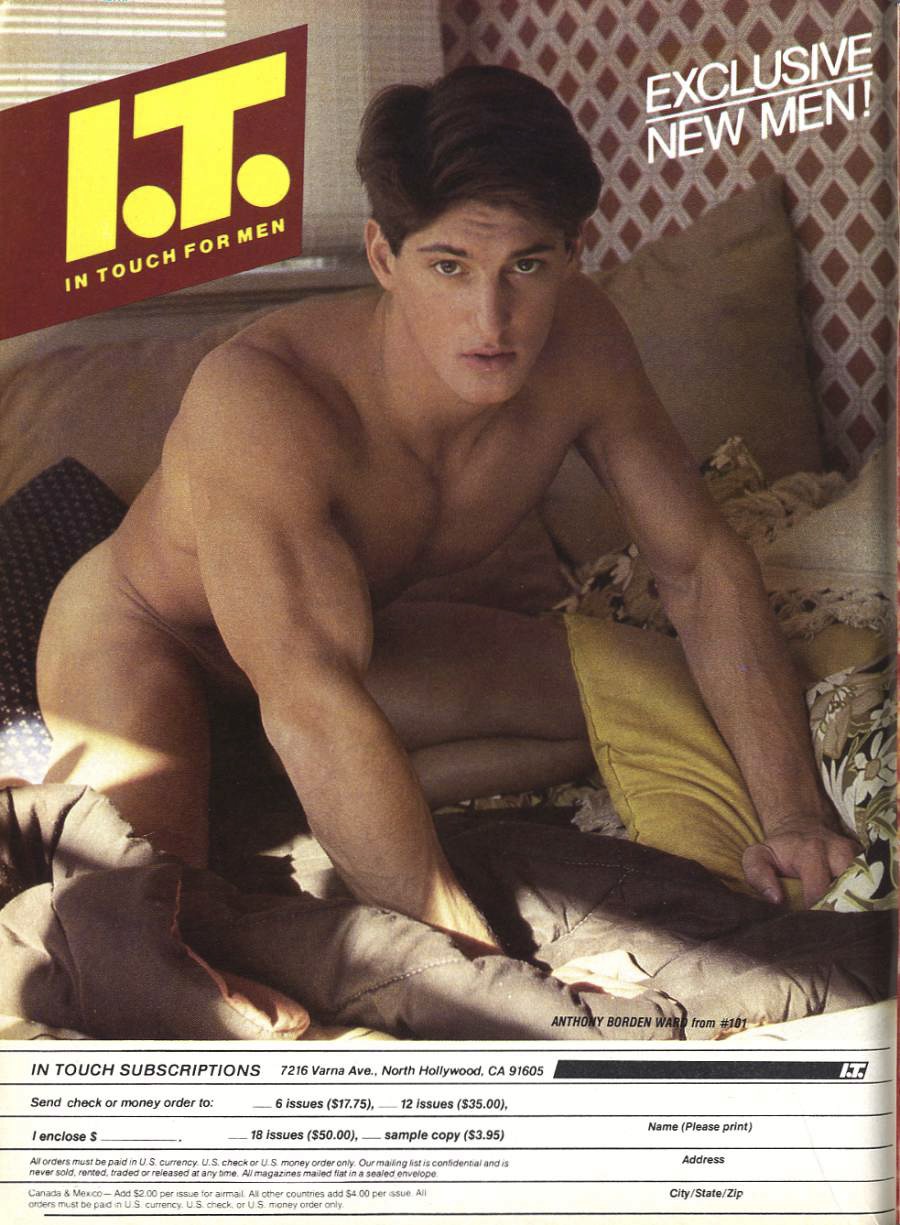
I had just recently revisited Ward’s cover photo & layout in the March, 1985 issue of In Touch For Men. (The featured John Waters interview will be posted at a later date). Credited by his full name, baby-faced Anthony Borden Ward was 21 years old when the issue hit the newsstands. He already had four years of modeling experience under his belt, working with photographer Herb Ritts and modeling for Calvin Klein. (Although his socks are not visible in the photos, they are credited to CK.)
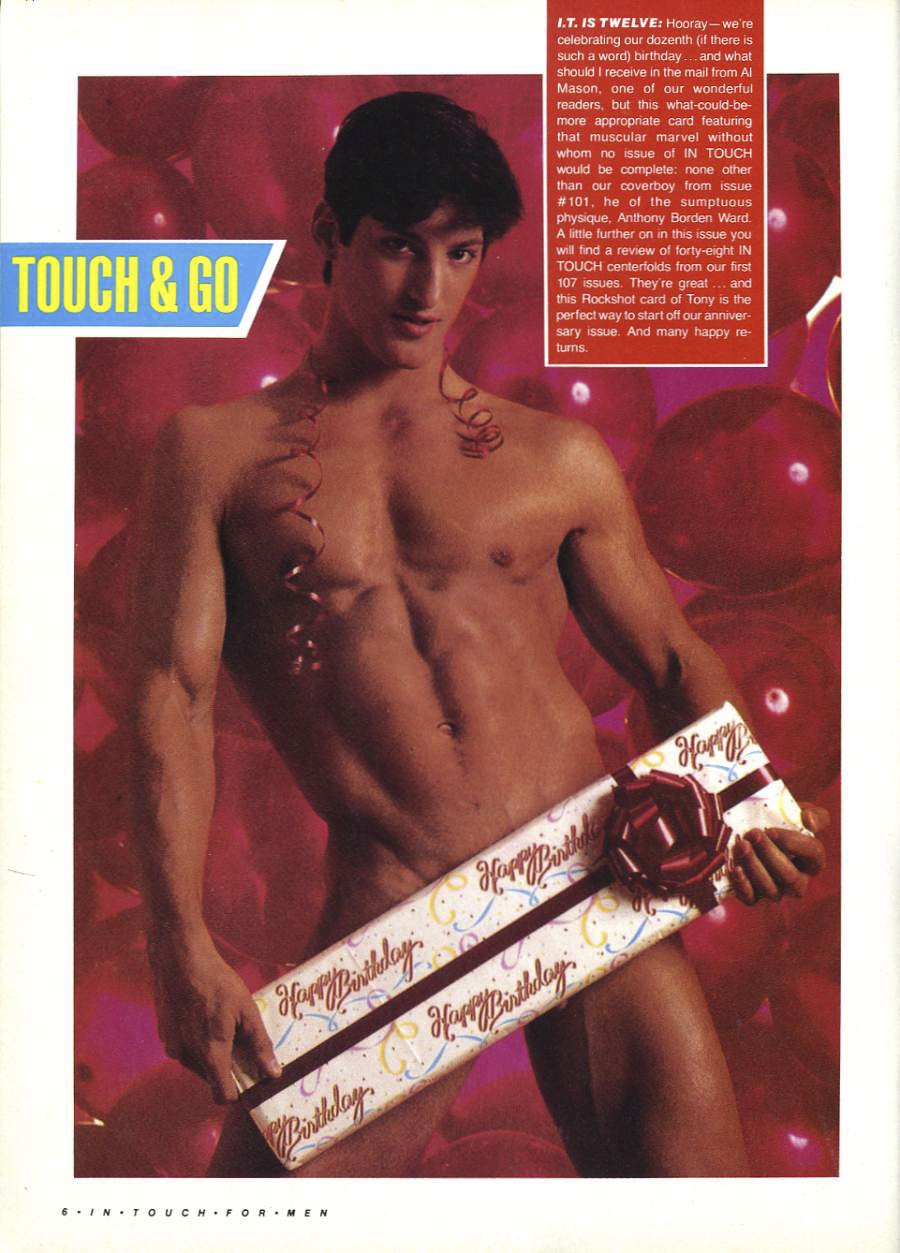
Ward also appeared in promotional shots for In Touch later that year:
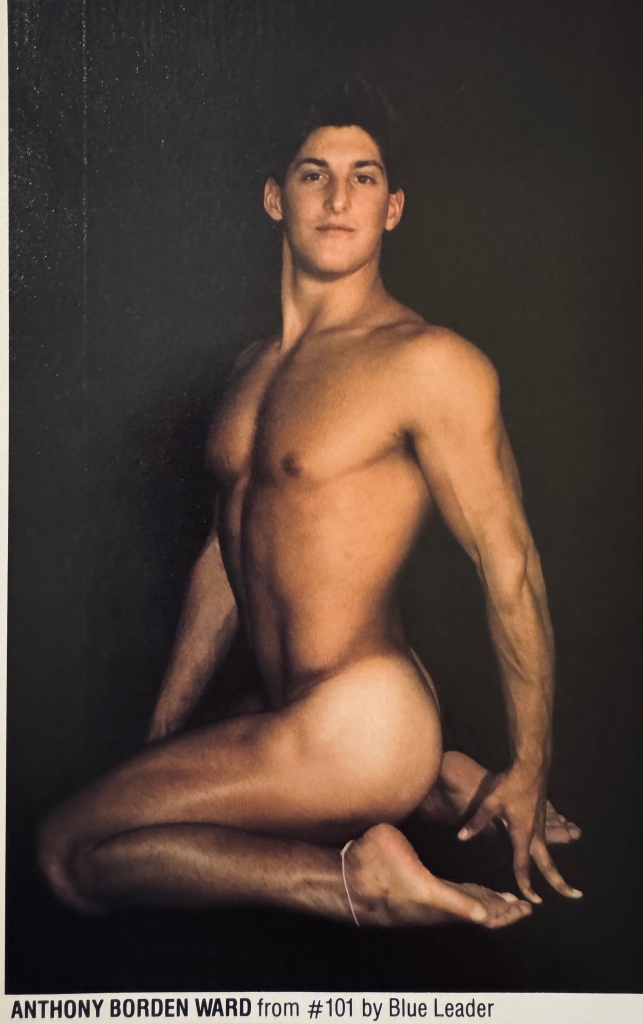
An outtake from the original photo shoot later appeared in the January, 1990 issue of In Touch.
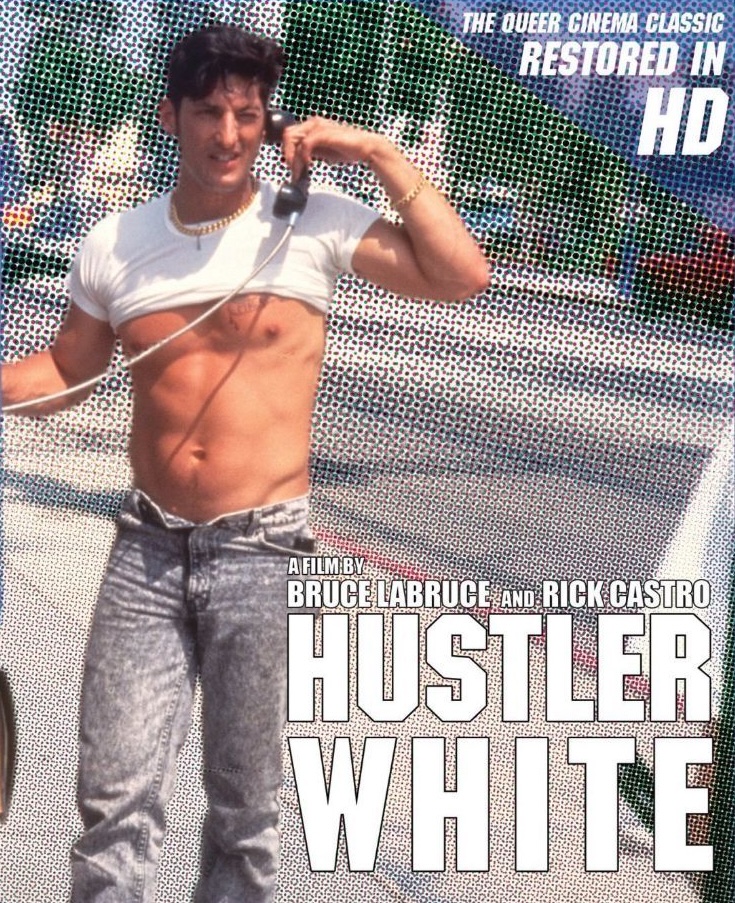
Ward went on to appear in Madonna’s videos for “Cherish” (1989, directed by Herb Ritts), “Justify My Love”(1990) and “Erotica” (1992). He also appeared in Madonna’s 1992 book Sex. He starred in Bruce LaBruce’s movie Hustler White (1996), the 1998 documentary Sex/Life In L.A, and dozen other films and music videos.
Besides his work in front of the camera, Tony Ward is also a painter and photographer. He lives in Palm Springs, CA.
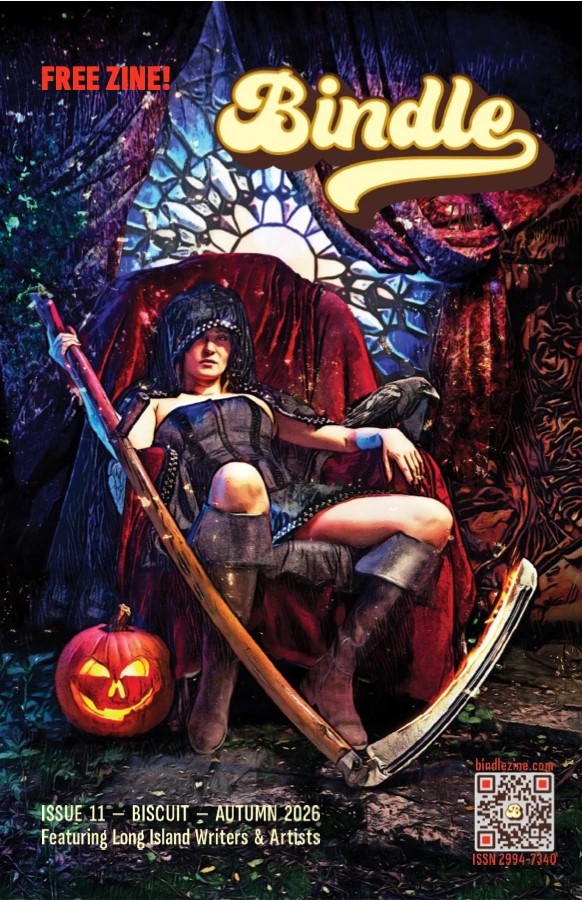
It’s been a minute since I last contributed to Bindle zine. The new Autumn, 2026 issue features my poem “Medora, North Dakota, 1997” along with a link to hear a spoken word version in the electronica track Under The Stars by Fox Ferrari. This is a collaboration with my husband, Tobias Fox Ferrari, who also contributed artwork for the issue.
“Medora, North Dakota, 1997” is dedicated to Jennifer Kay, my dance partner for that summer in Medora. She passed away suddenly in June, 2026.
Medora, North Dakota, 1997
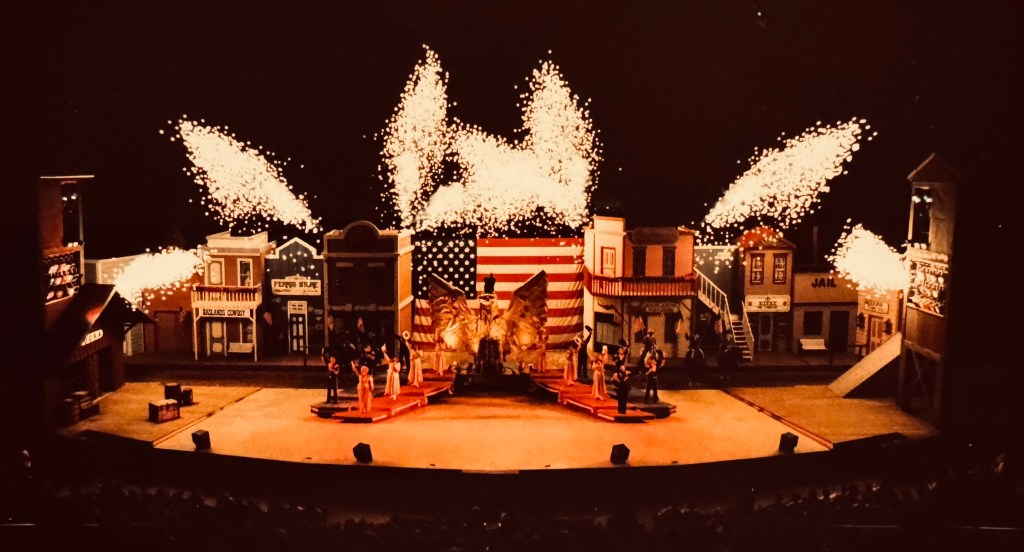
There was that moment of elation when we became stars under the stars as the fireworks flew and 2000 sold out seats snapped closed like clams: The audience leapt to their feet with cheers and applause that washed over us like those warm summer winds. Our smiles as wide and gen-u-ine as that North Dakota sky.
We recited our cornball jokes between the knife-thrower and the dog act. Exit stage left for a quick switch to the clog shoes and back onstage again. I landed that double pirouette every time and we did our lifts and cartwheels and flips and nobody dropped a girl.
In our dressing rooms under the stage, the horses clattered overhead. We kept our boots upright so no critters crawled in again. Looking for a temporary home, just like us, like the show dogs and ponies. We found our place there, if only for a time.
We sit in the audience now—watching disinterested boys with halfhearted smiles lifting leaden buffalo gals. We reluctantly stand in our snake-free shoes and join the customary ovation, wishing we had just one more chance to give our 110% and bask in that well-earned breeze.
You can get a real, paper copy of Bindle for free! Send your mailing address to subscribe@bindlezine.com, or fill out the form at bindlezine.com/subscribe. Thanks as always to Jonathan Russell for making Bindle happen.
bin•dle(noun): a bundle of clothes or bedding, stereotypically carried on a stick by runaway children and transients.
“We all wander through our lives, and we collect memories, possessions, and relationships. Bundle them all together, and you have yourself a bindle. Our zine represents a collection of writing and art and photography – a bindle of creativity that we send across America, a tramp in search of a mailbox.”
Ephemera: collectible printed or written items that were originally meant to be used for a short time and discarded.
I love the word. Would it surprise anyone to know that I have a file cabinet full of clippings on my favorite female singers & girl groups of the past… uh… century? Clearly, I do not find ephemera to be ephemeral.
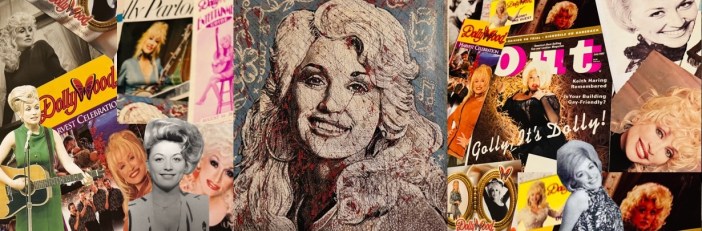
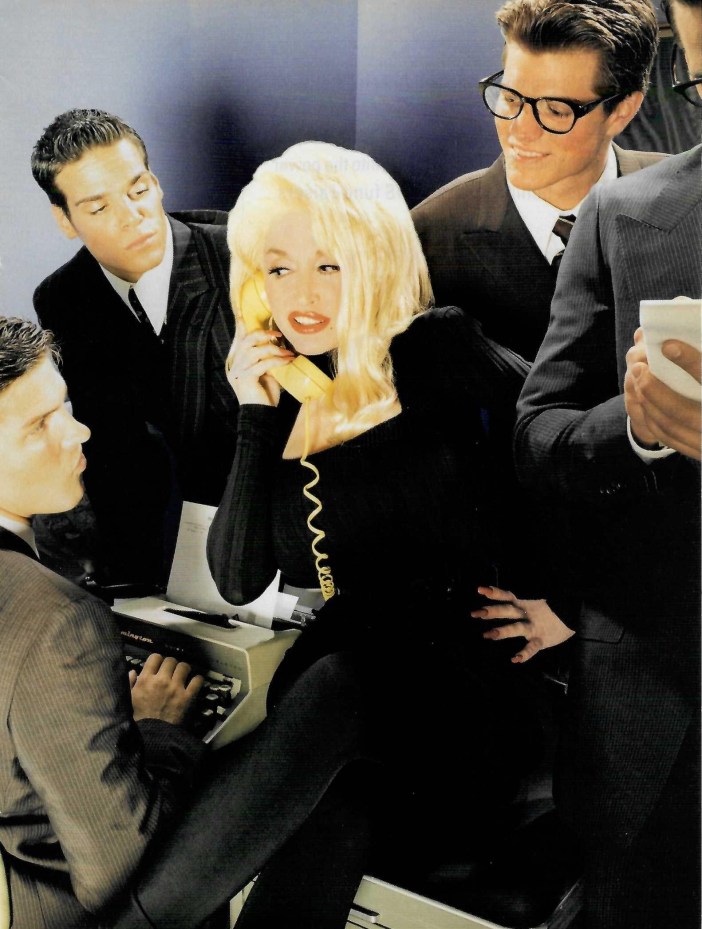
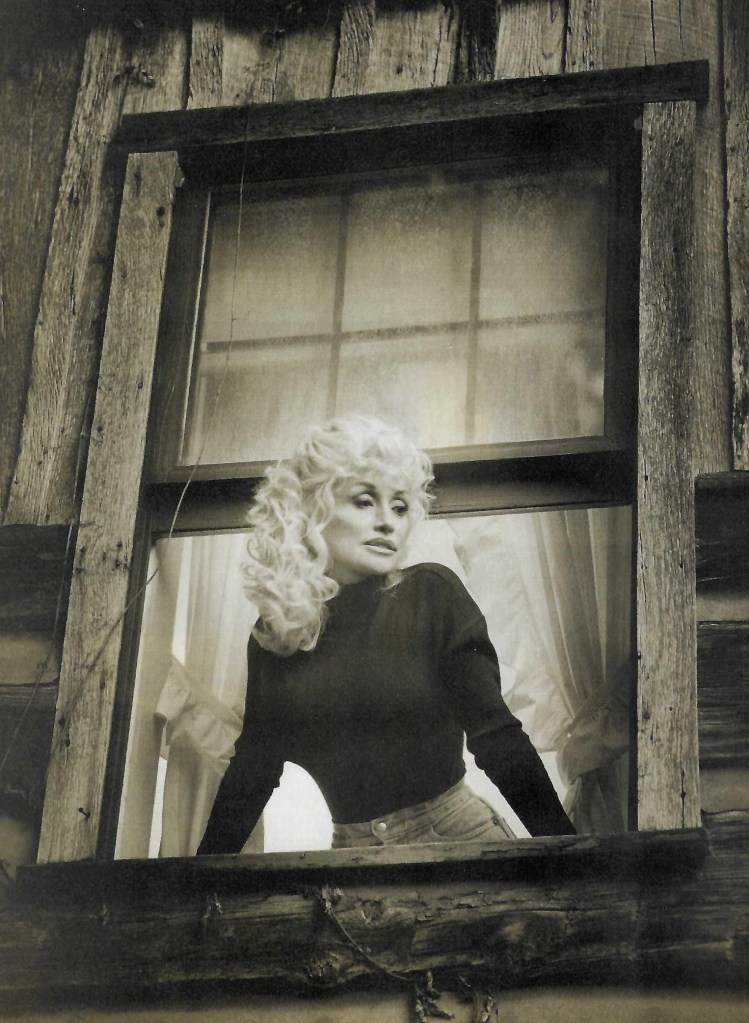
What more can be said about dearly departed Dolly Parton? Plenty have eulogized her since her passing. Here I offer random tidbits from my Dolly Parton file along with a few paragraphs I contributed to an article in The Forest Hills Times / Queens Ledger.
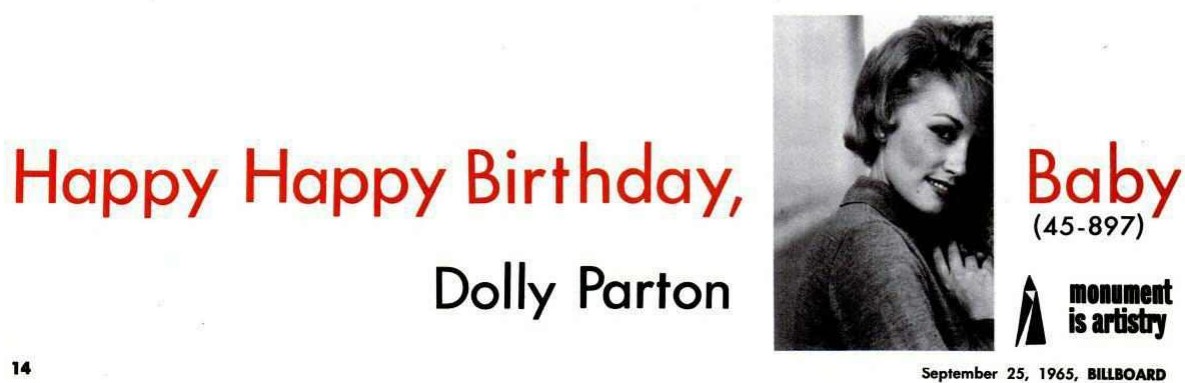
First, we have some clippings from Billboard magazine in 1965. Monument records was promoting her latest single – a cover of Margo Sylvia & The Tuneweavers’ “Happy Happy Birthday Baby.” Produced by Ray Stevens, Dolly’s version peaked at #108 – bubbling under the U.S. Billboard Hot 100.
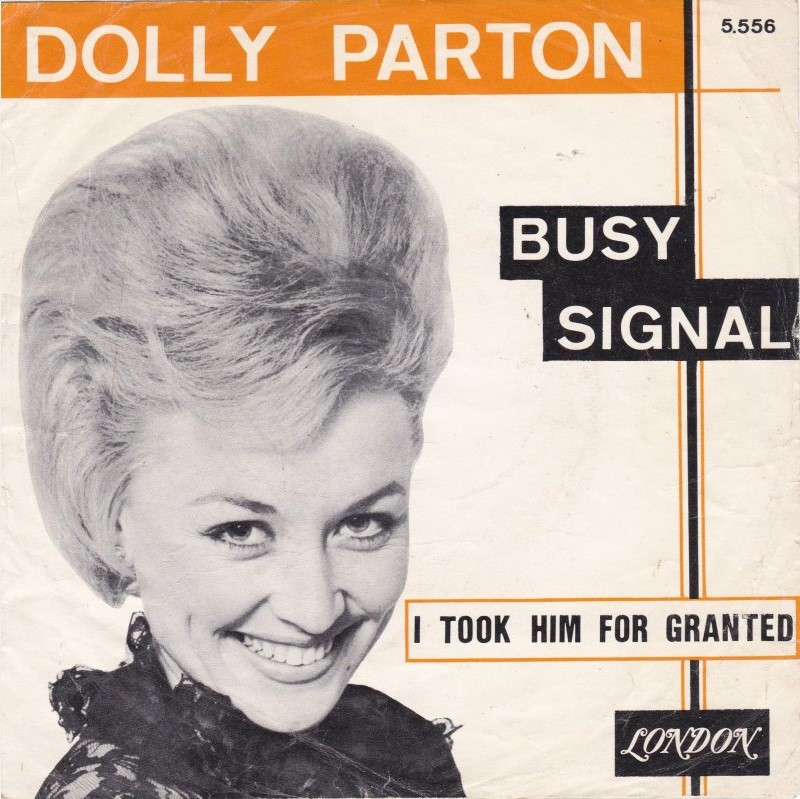
Her follow-up single, Busy Signal did not chart.
Belgian 45 picture sleeve for Dolly Parton’s “Busy Signal” (1965)
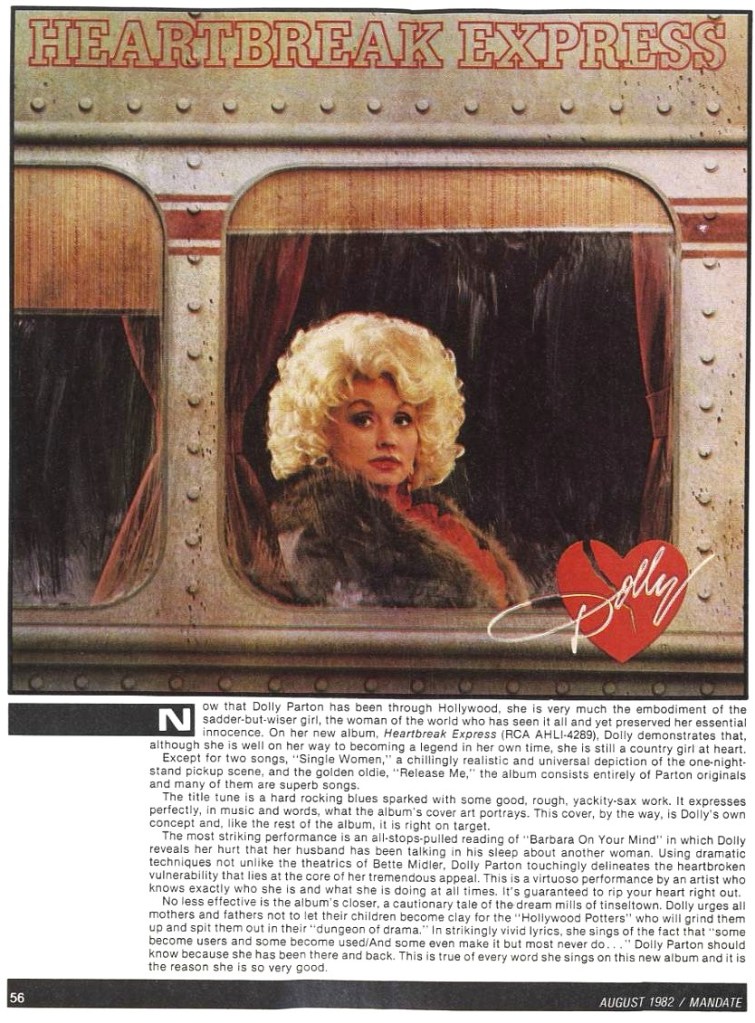
In August 1982, the Mandate magazine featured an article on Dolly’s latest LP, Heartbreak Express:
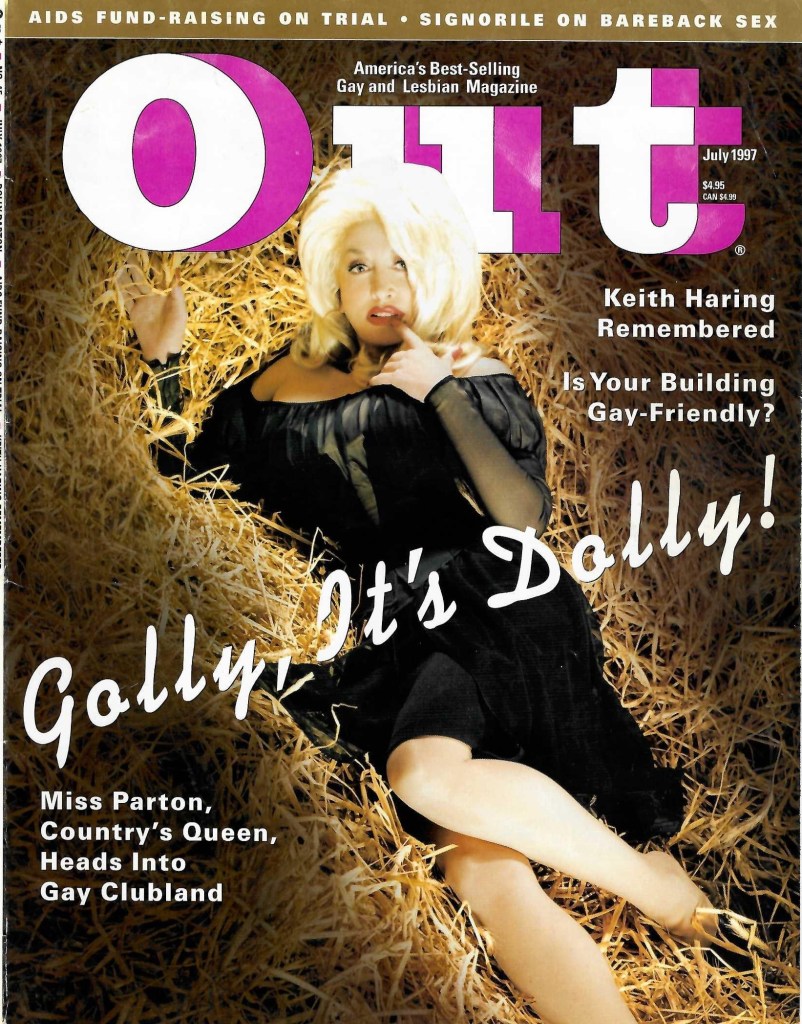
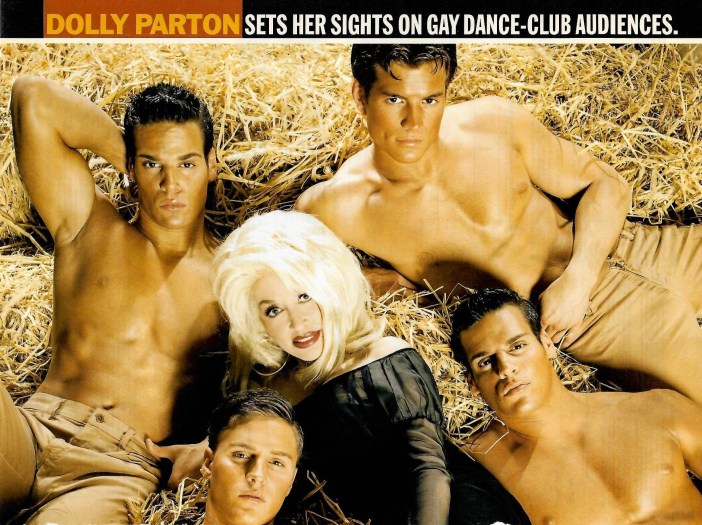
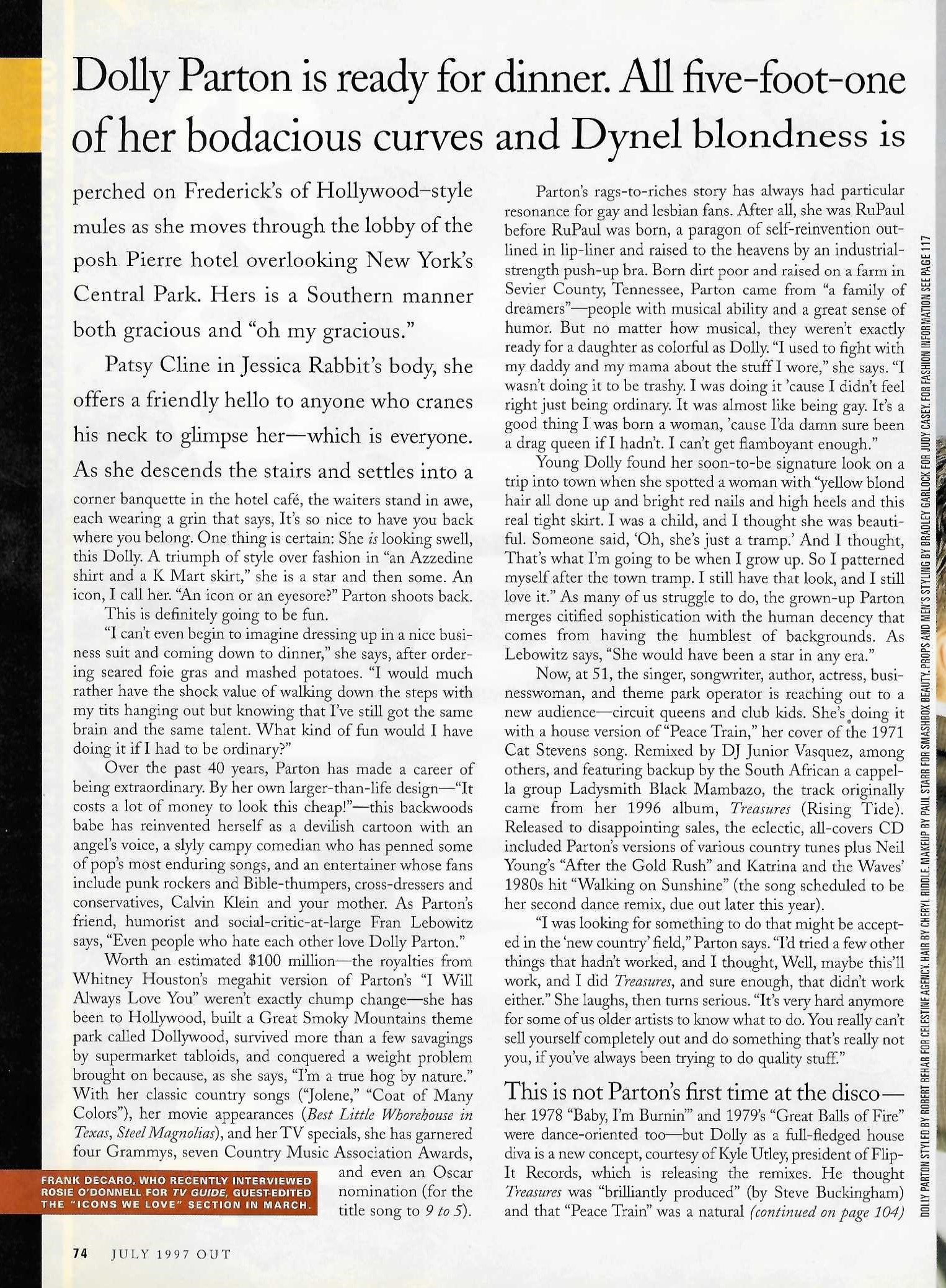
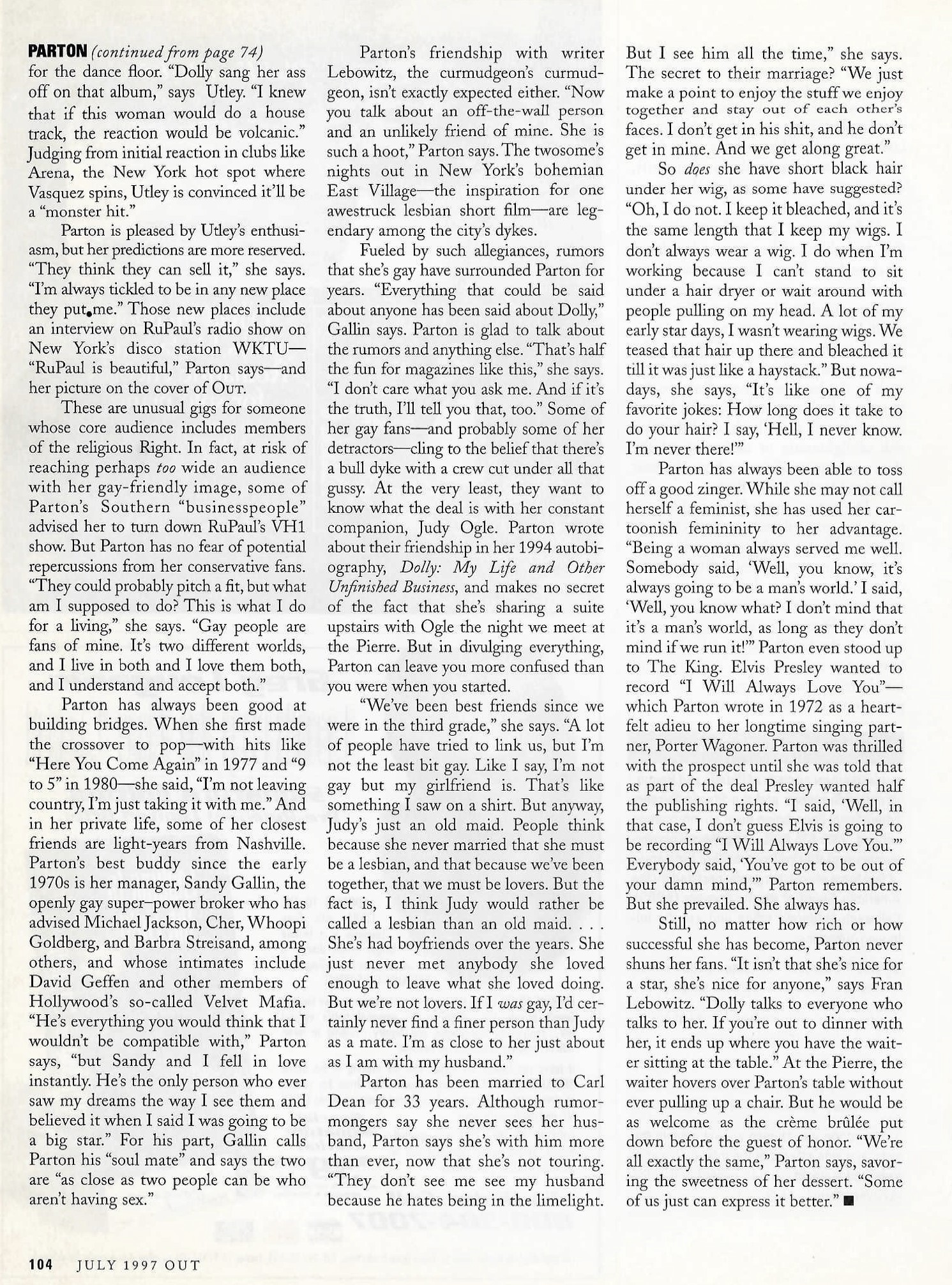
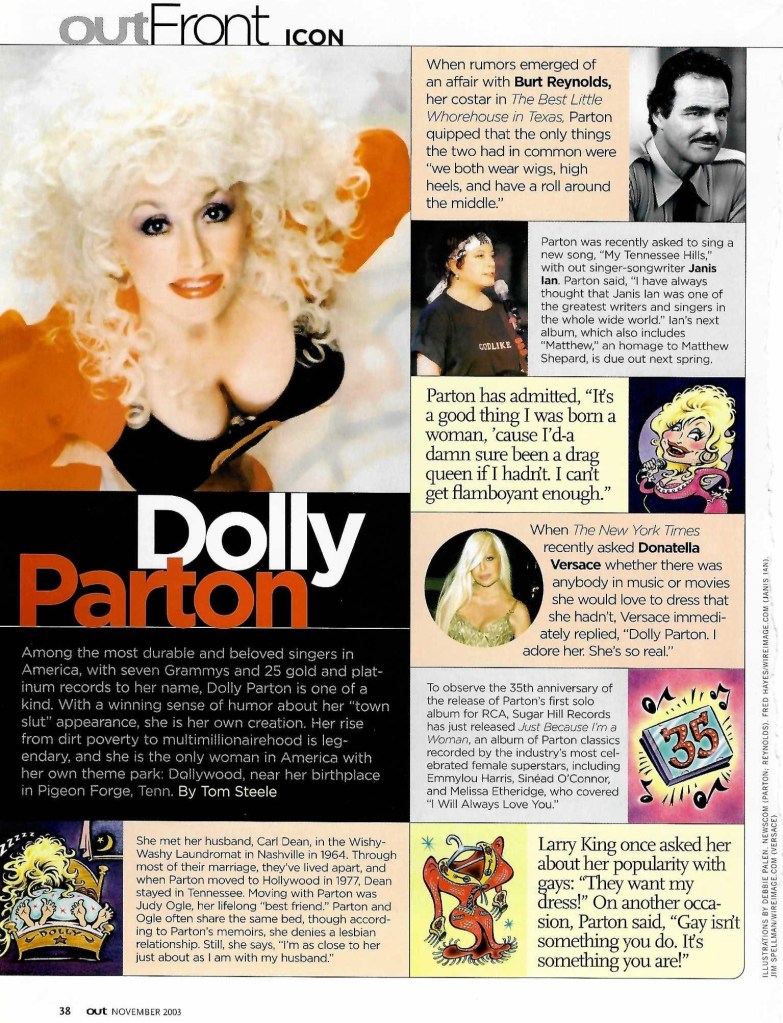
Dolly featured in the July 1997 Out magazine cover feature:
Pulse magazine (2/2001)
Out magazine (11/2003)
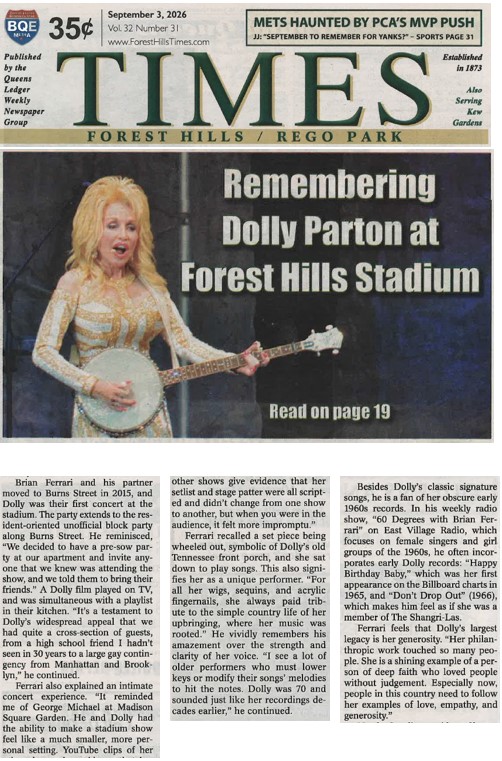
Earlier this month, I recounted Dolly Parton’s 2016 show at Forest Hills Stadium for Michael Perlman’s article in the Forest Hills Times / Queens Ledger:
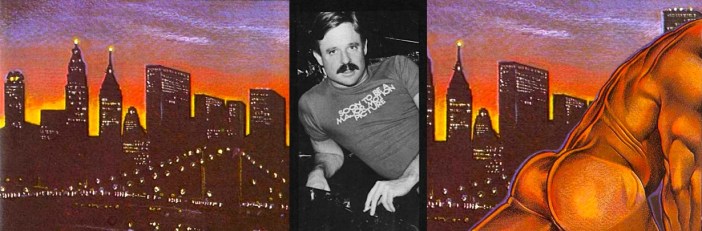
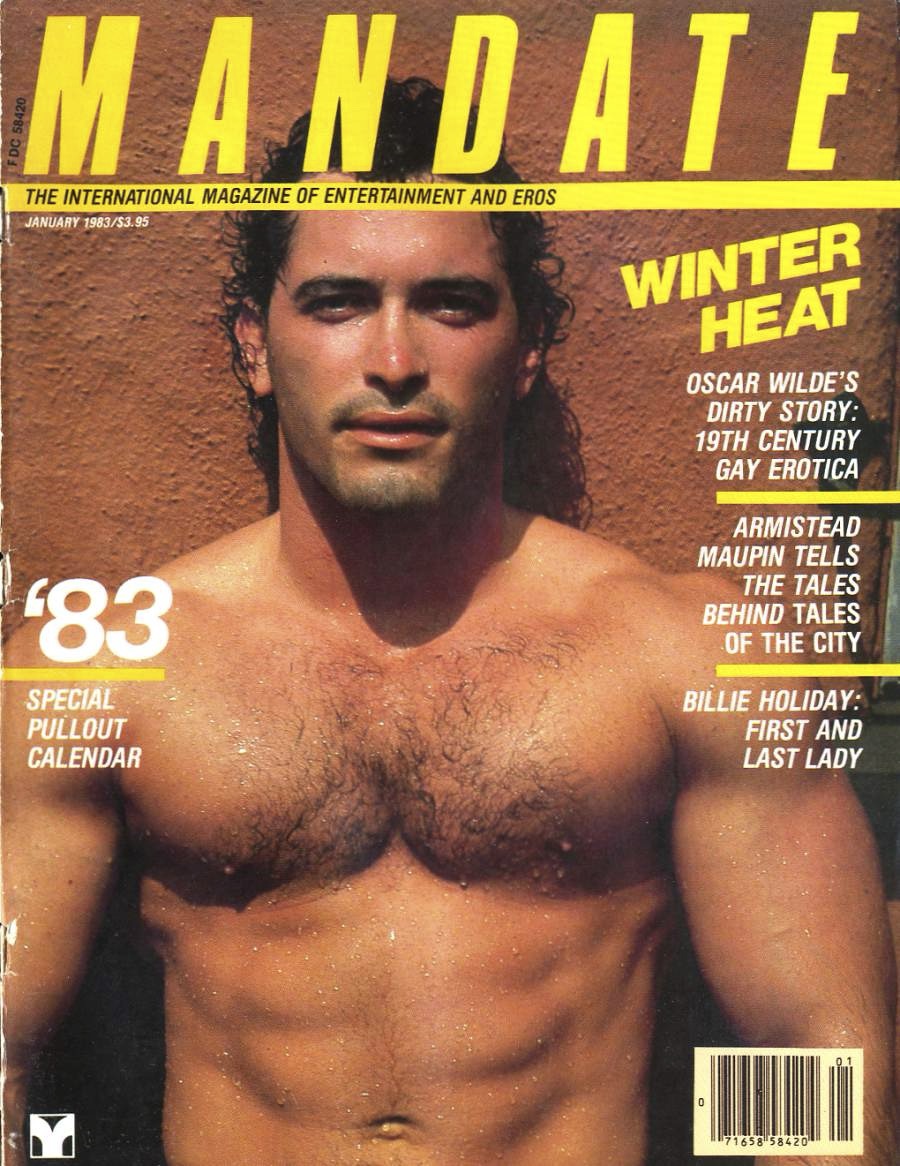
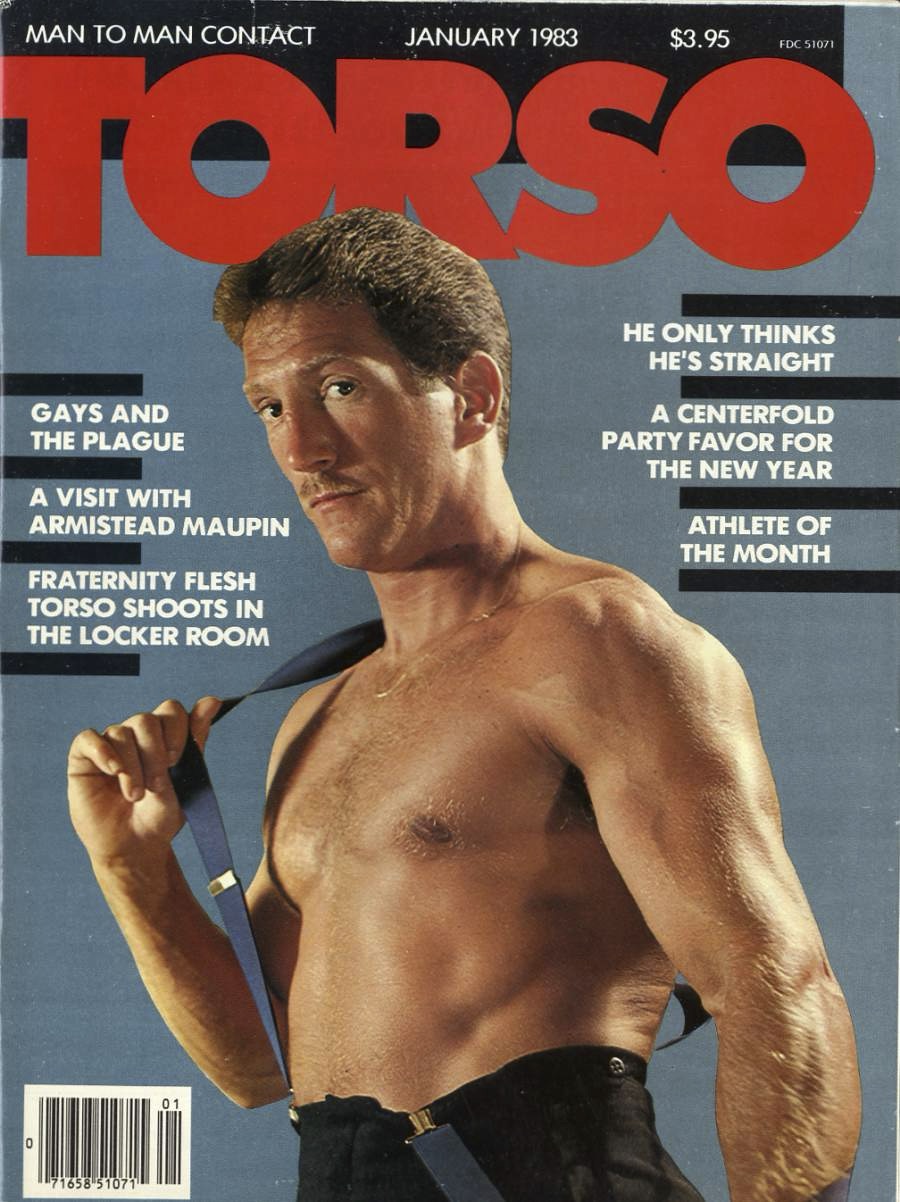
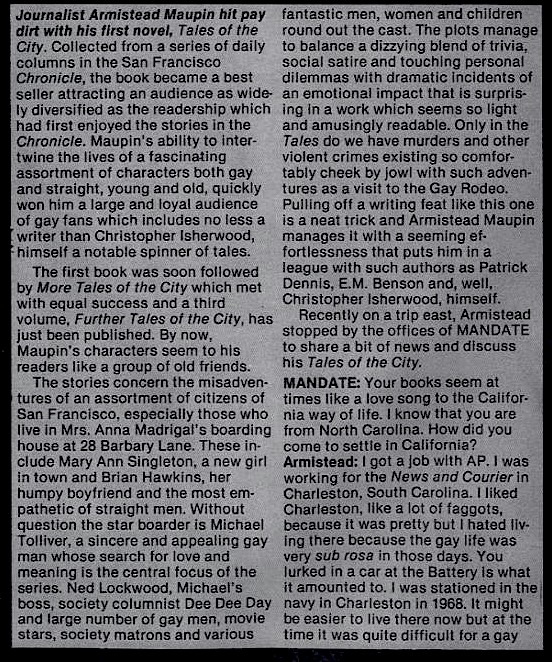
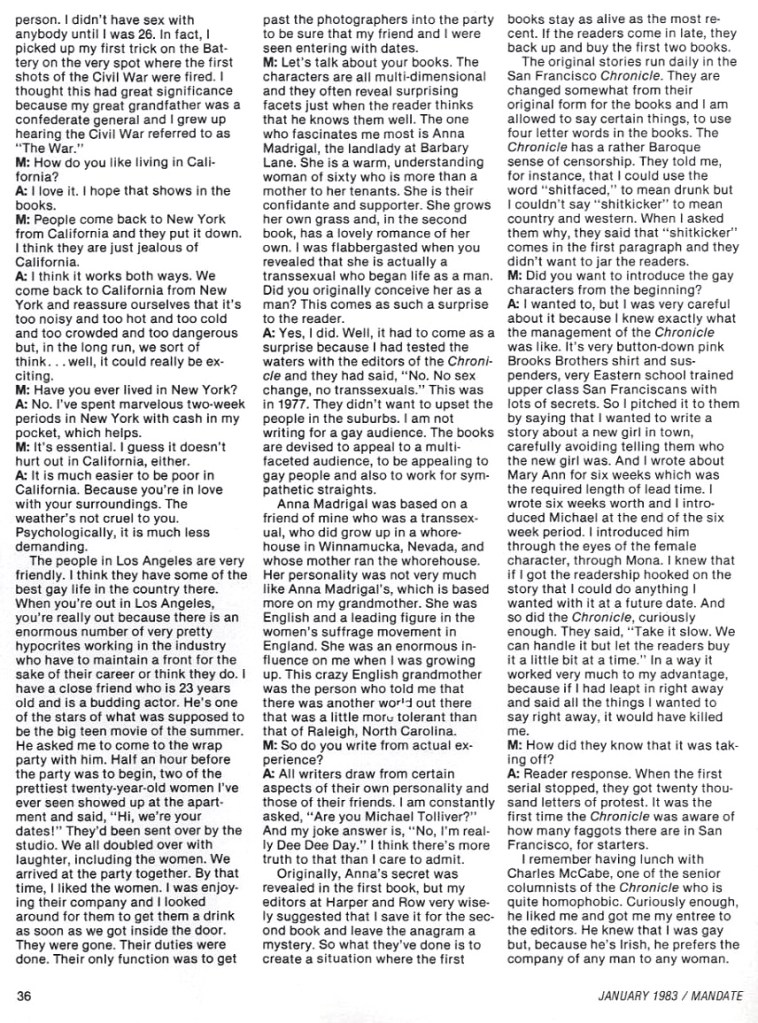
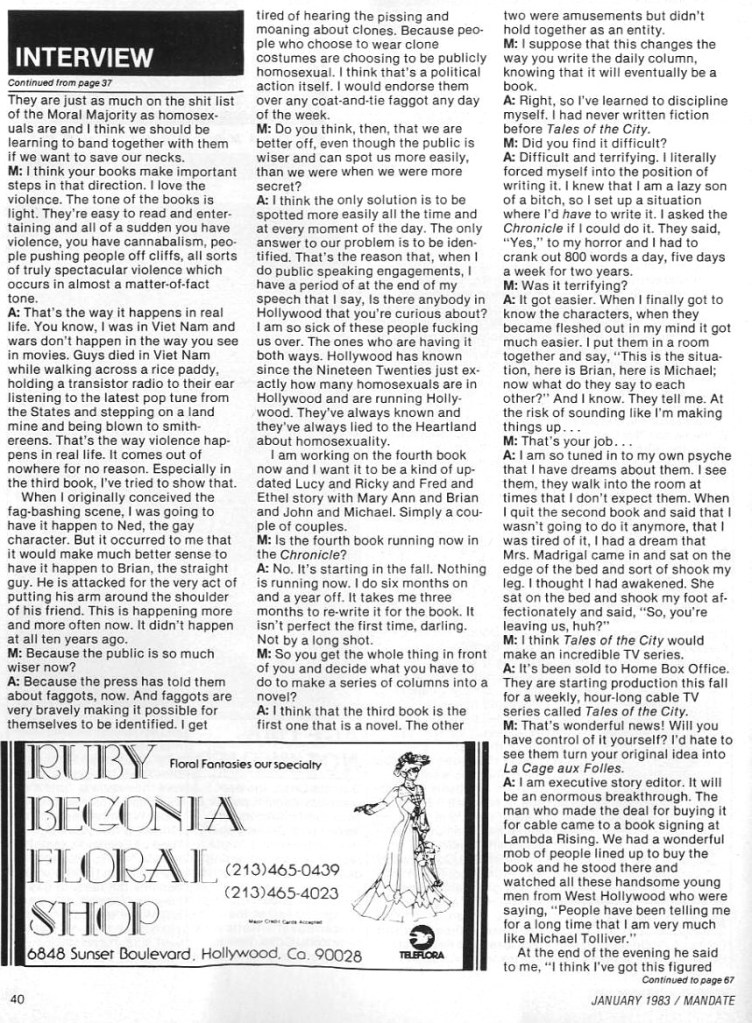
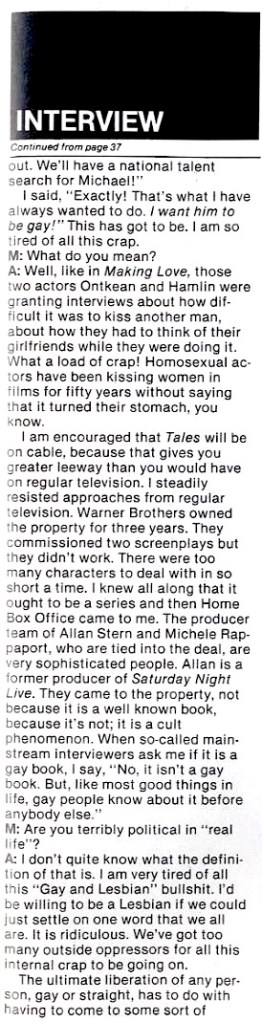
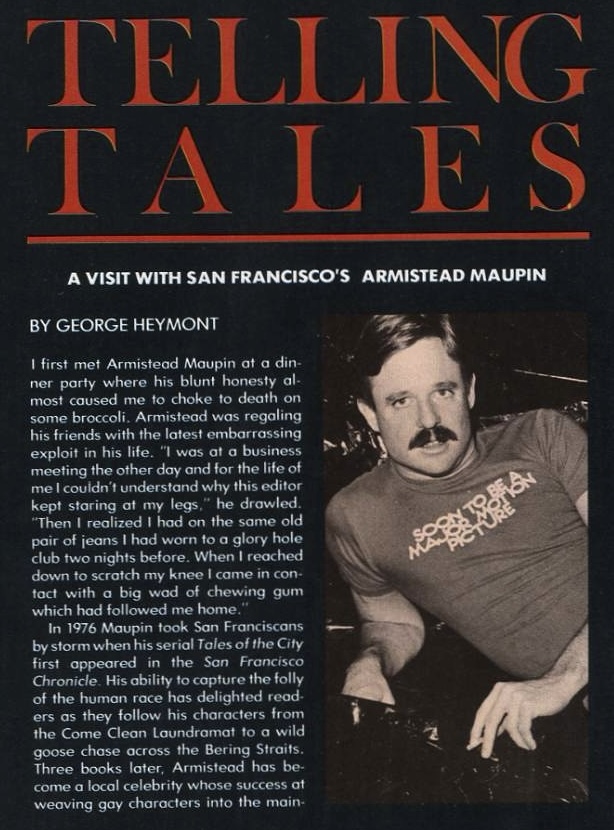
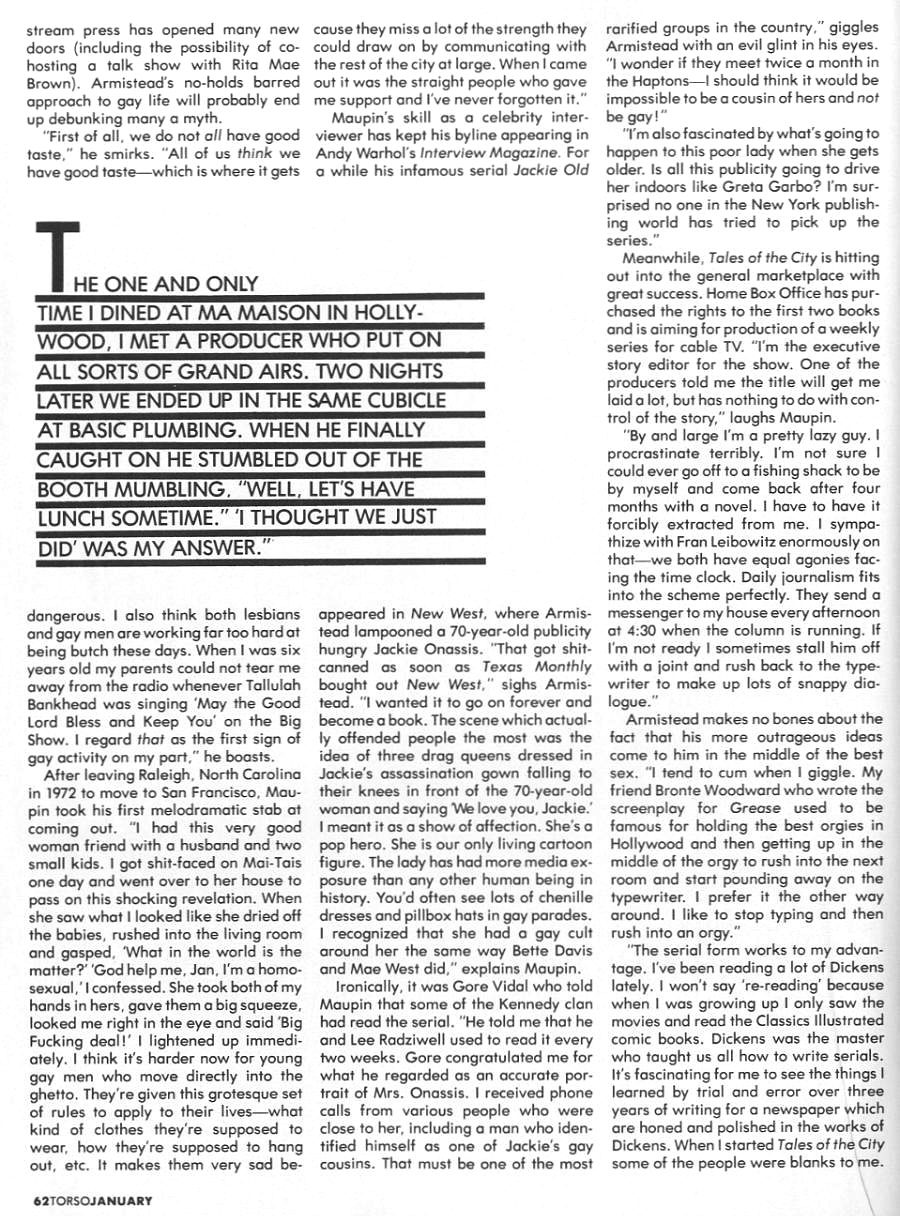
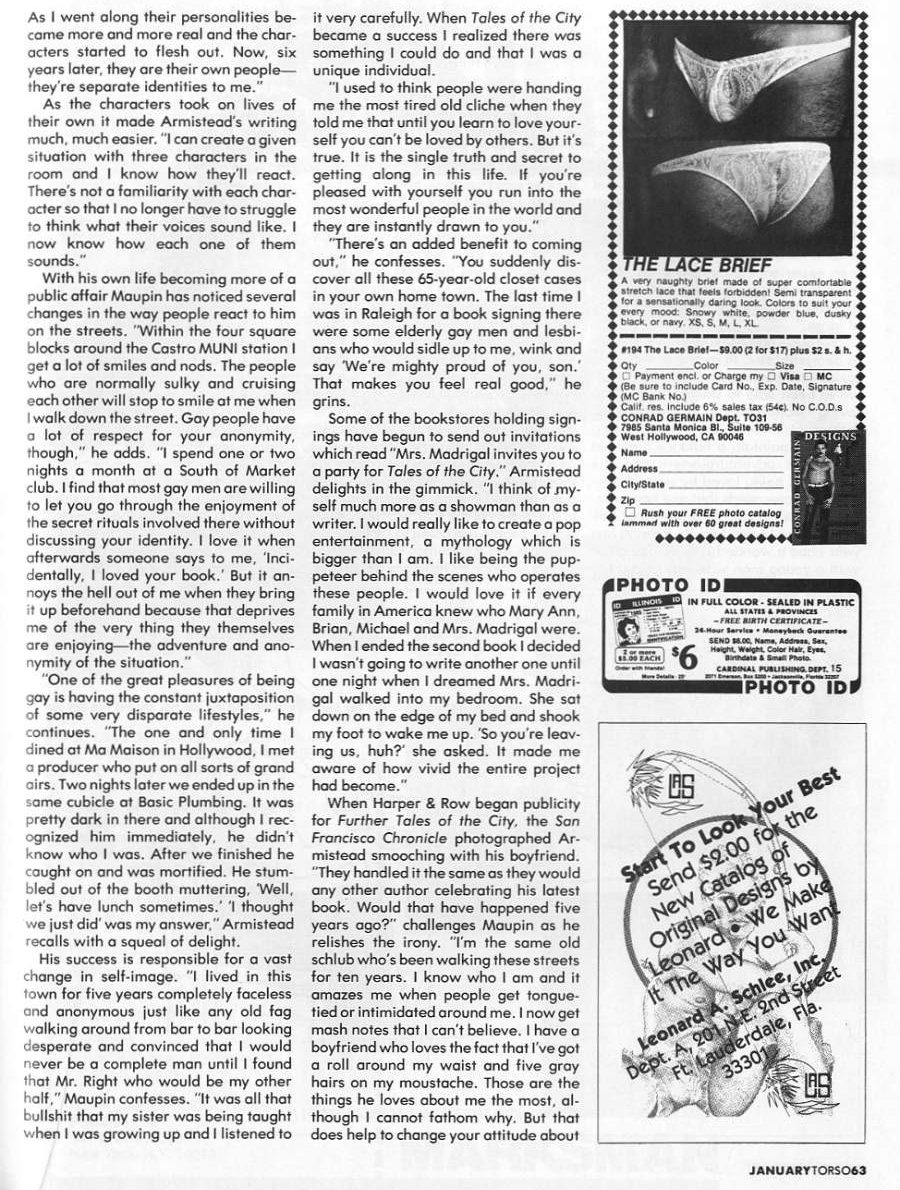
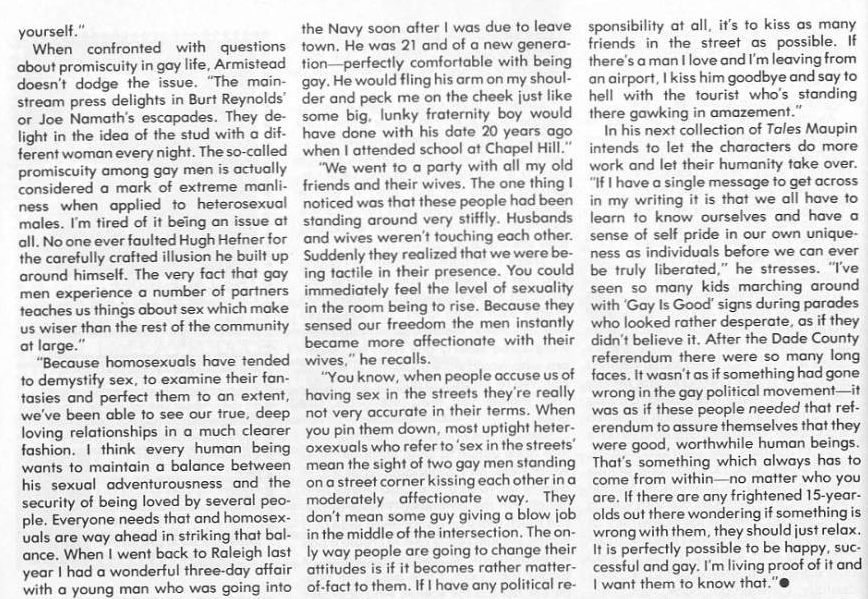
In January 1983, Armistead Maupin made the rounds of gay publications with interviews in both Mandate and Torso magazines. He was at a unique point in his life and career: Further Tales of the City, the third book in the series had just been released. Maupin mentions that he had been named as “executive story editor” for an HBO series adapting the first two Tales… books. Unfortunately, this did not come to fruition, and it would be another 10 years before the first book was filmed as a 6-part miniseries for Channel 4 (UK) & PBS (US)
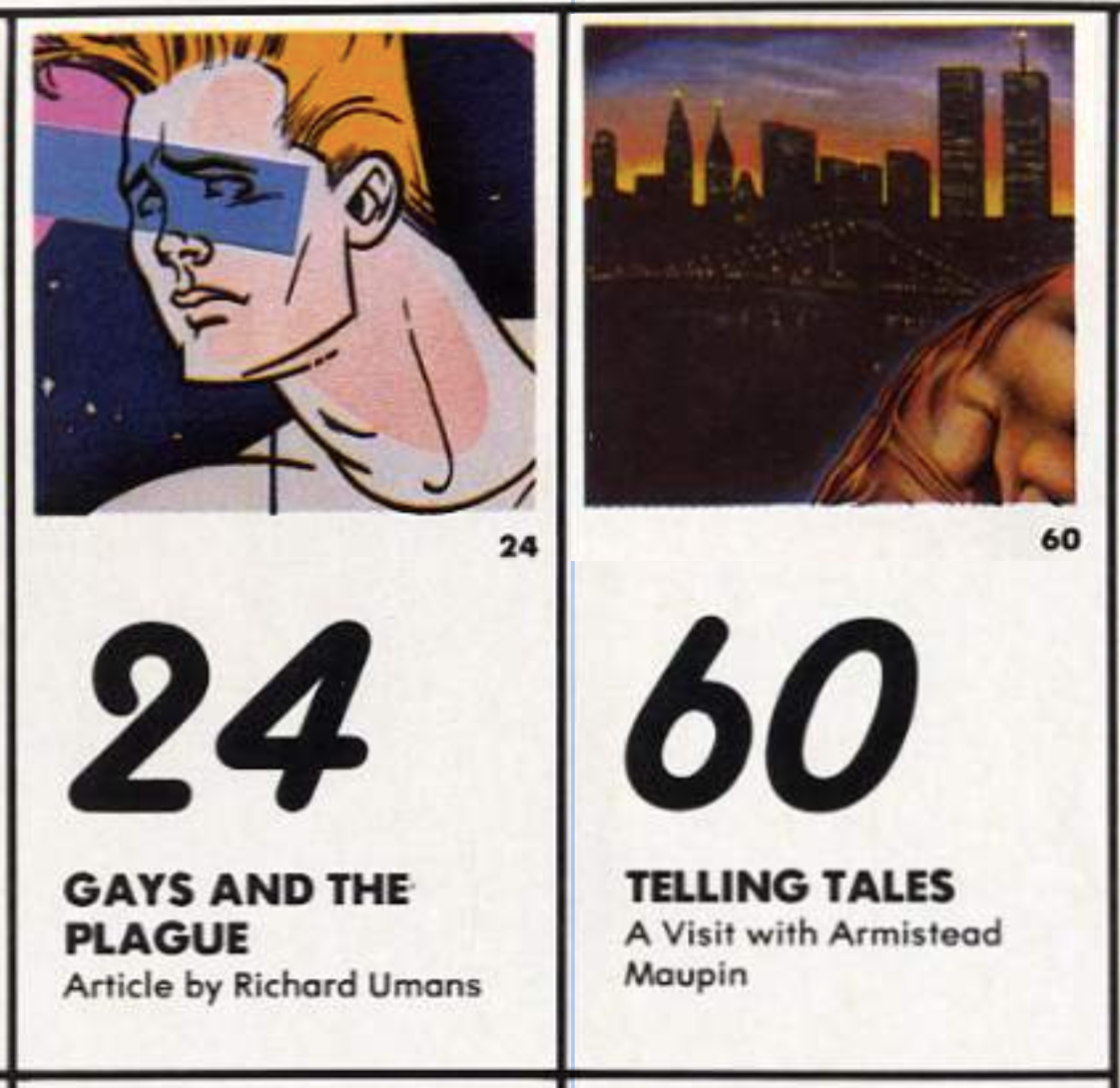
Just a few pages before the Torso feature is an article titled “Gays And The Plague.” The name “AIDS” had not yet been coined and the cause of the “gay cancer” was still unknown. The epidemic would have a devastating effect on Maupin, the gay community, and the fictional characters of Barbary Lane.
“We come back to California from New York and reassure ourselves that it’s too noisy and too hot and too cold and too crowded and too dangerous but, in the long run, we sort of think… well, it could really be exciting.”
“I came out to my family during the course of the book. Michael’s letter to his parents was my letter to my parents.”
“I do not regard Tales of the City as a gay work. I regard it as a work written by a gay man that has gay characters in it and appeals to a lot of different kinds of people. I don’t want to preach to the choir.”
“When I quit the second book and said that I wasn’t going to do it anymore, that I was tired of it, I had a dream that Mrs. Madrigal came in and sat on the edge of the bed and sort of… shook my foot affectionately and said, ‘So, you’re leaving us, huh?'”
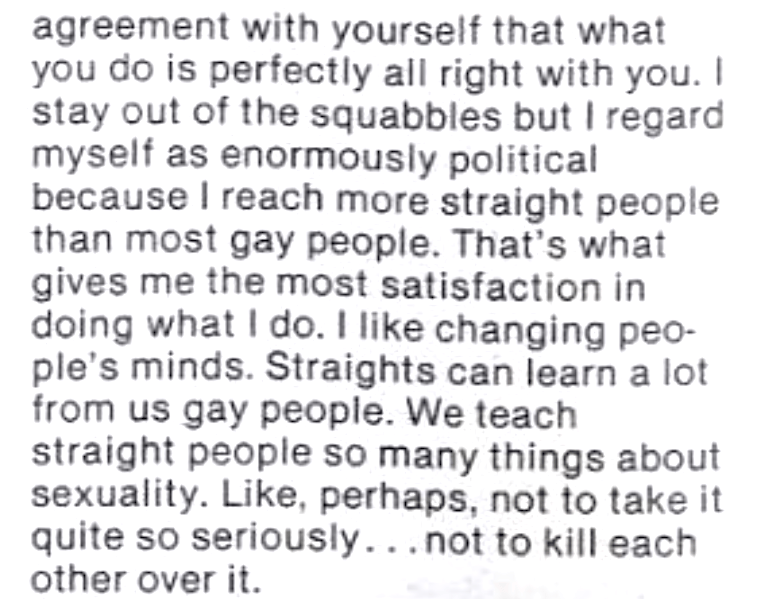
“I regard myself as enormously political because I reach more straight people than most gay people. That’s what gives me the most satisfaction in doing what I do. I like changing people’s minds.”
The Torso article below refers to another Maupin serial that is often overlooked: Jackie Old – a fictional piece about Jacqueline Kennedy Onassis at age 70. Unfortunately, she did not live to see 70 and this series – 5-parts initially published in New West magazine – would not get an official release until 2014 as a Kindle novella. Even so, it is not included in his bibliographies.
“First of all, we do not all have good taste,” he smirks. “All of us think we have good taste – which is where it gets dangerous.”
“By and large I’m a pretty lazy guy. I procrastinate terribly… I sympathize with Fran Liebowitz enormously on that – we both have equal agonies facing the time clock.”
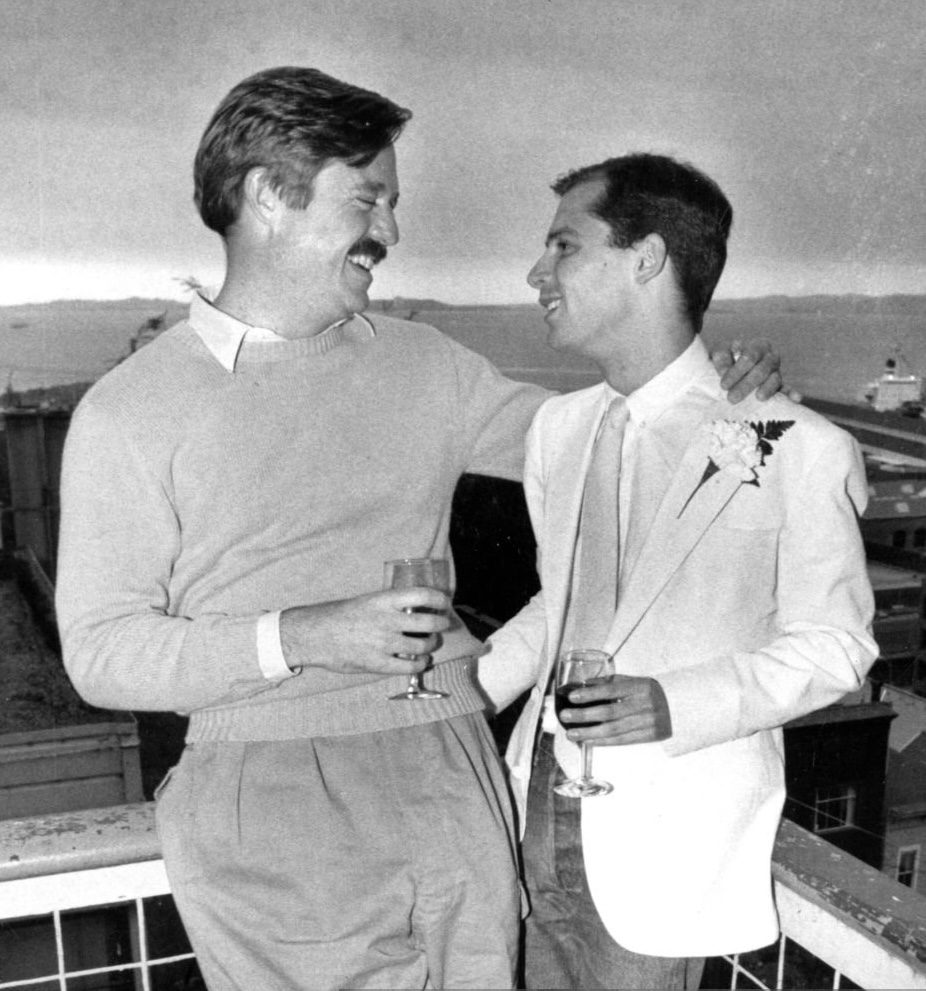
Armistead Maupin at home with Gregory Skraznas, 07/1982 (Photo by Steve Ringman/San Francisco Chronicle via Getty Images)
When Harper & Row began publicity for Further Tales of the City, the San Francisco Chronicle photographed Armistead smooching with his boyfriend. “They handled it the same as they would any other author celebrating his latest book. Would that have happened five years ago?”
“If I have a single message to get across in my writing it is that we all have to learn to know ourselves and have a sense of self pride in our own uniqueness as individuals… that’s something which always has to come from within – no matter who you are.”
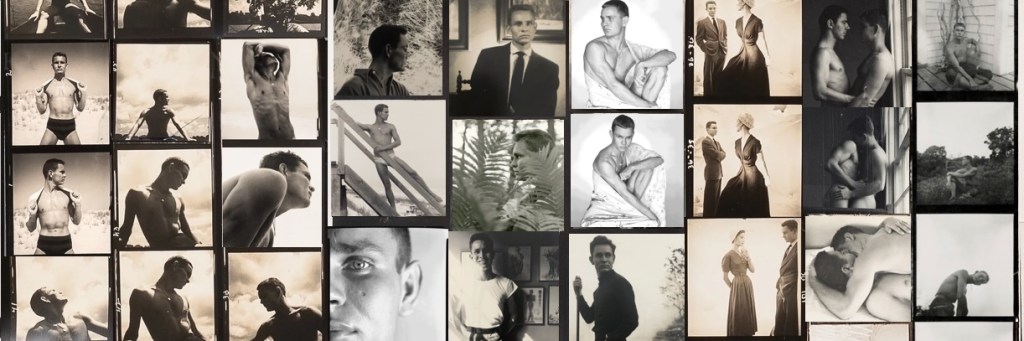
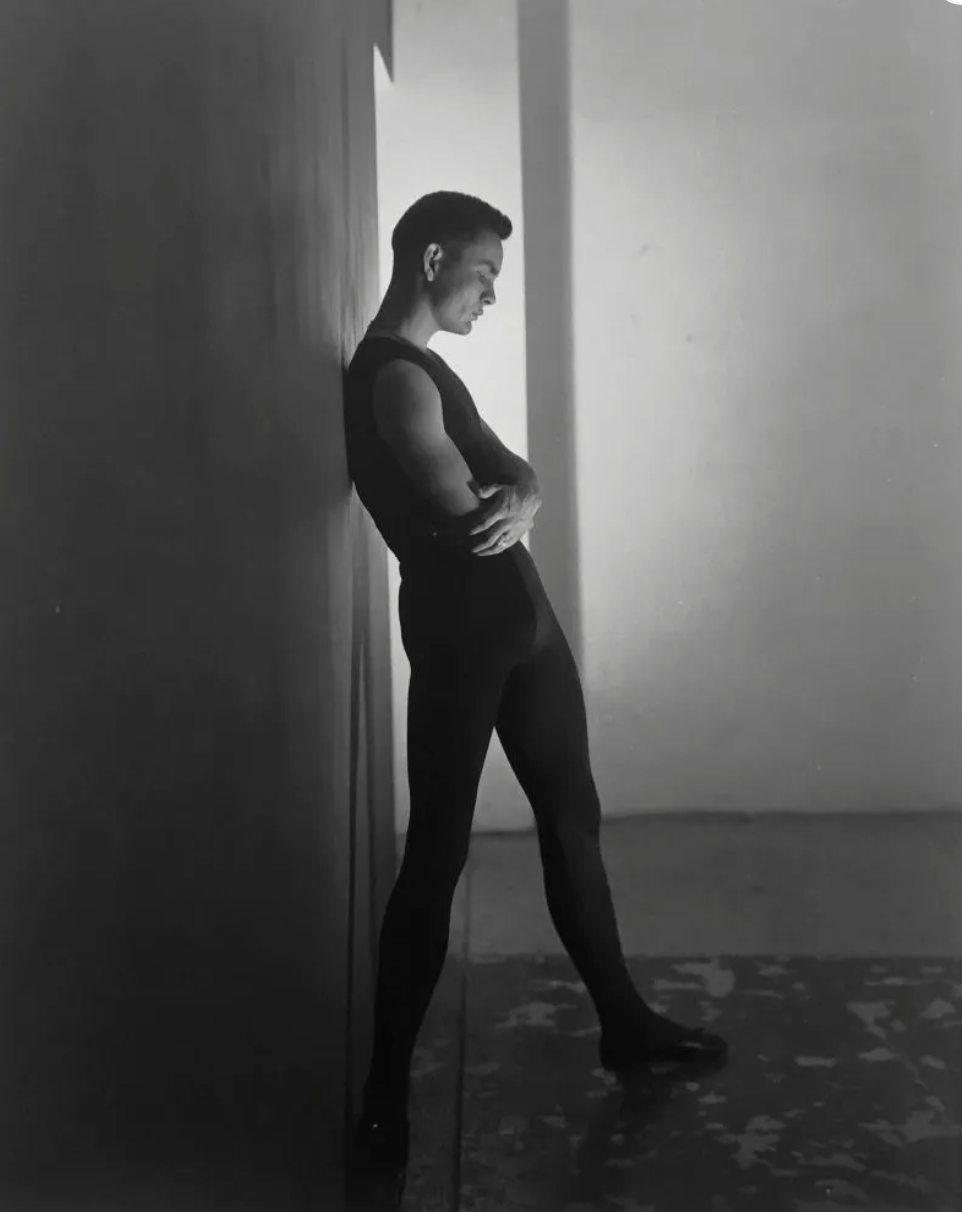
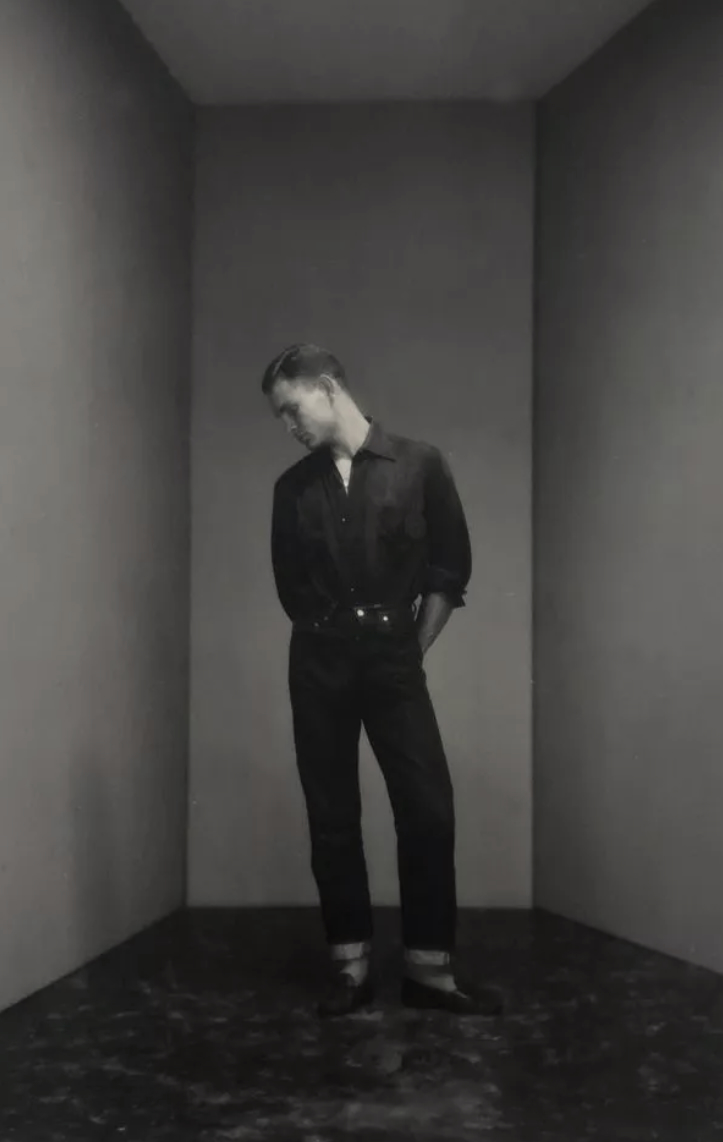
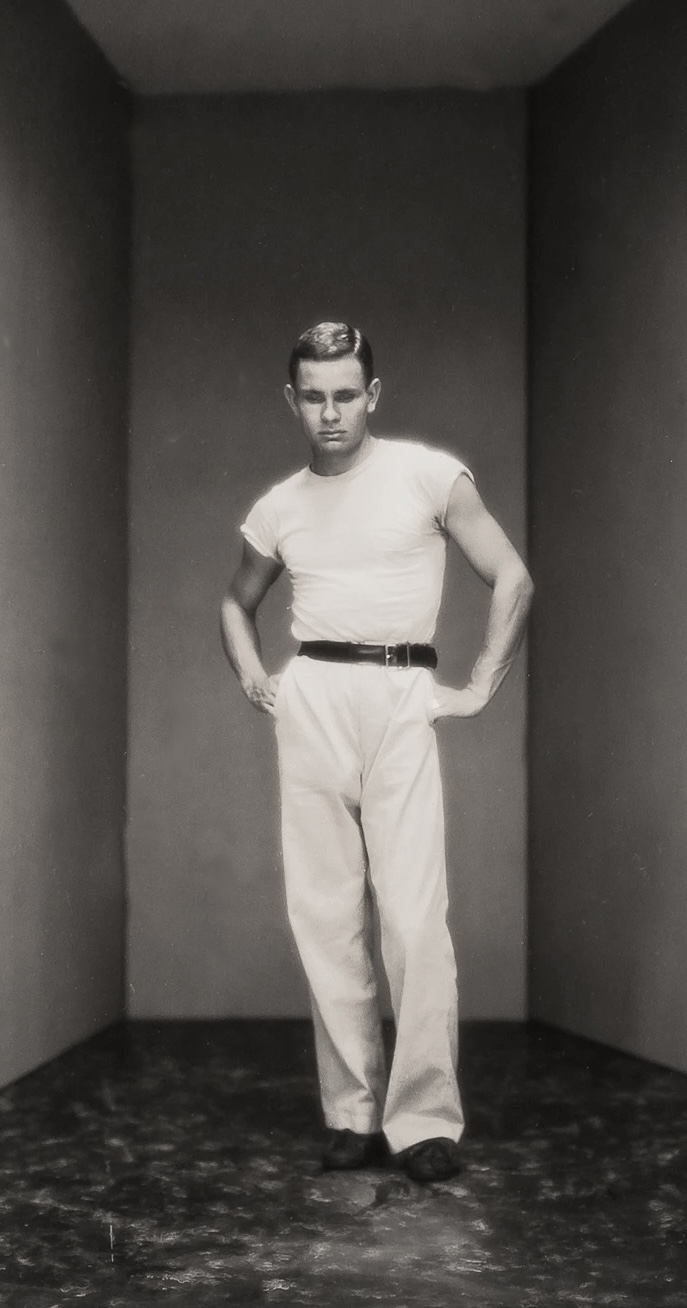
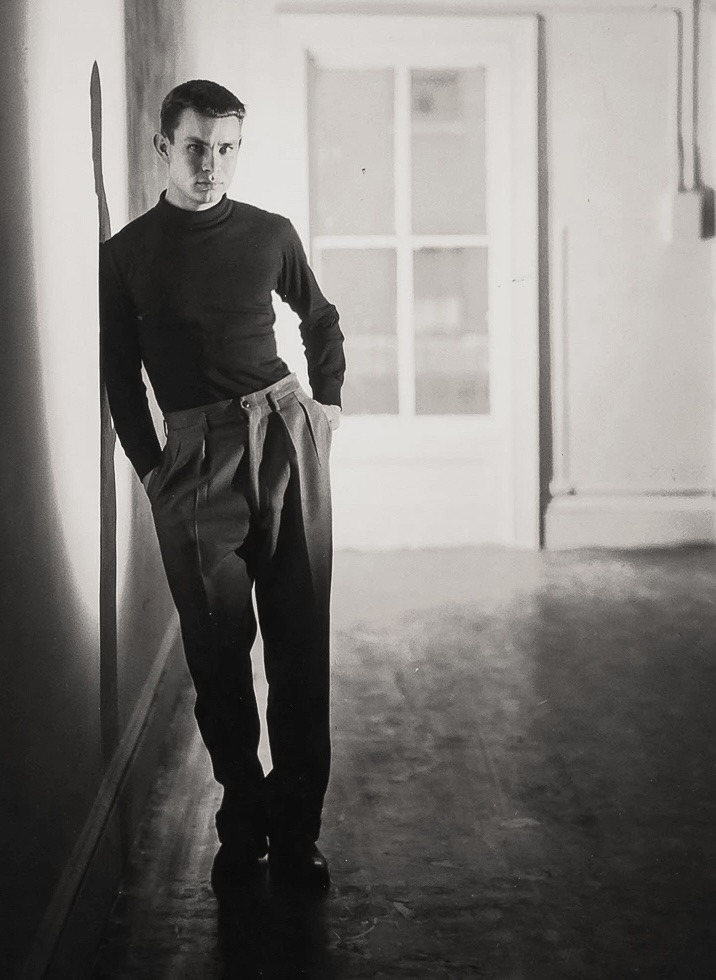
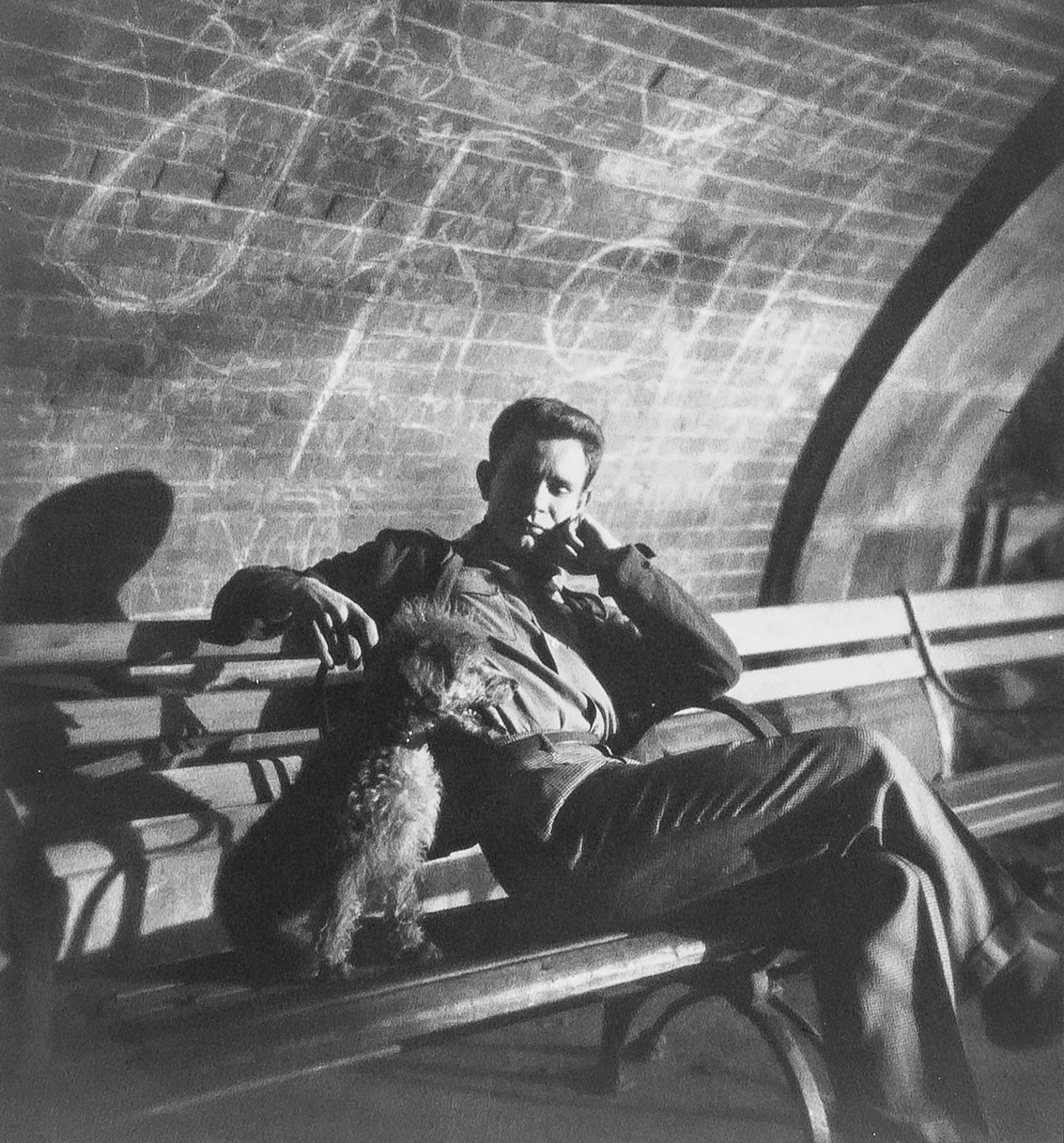
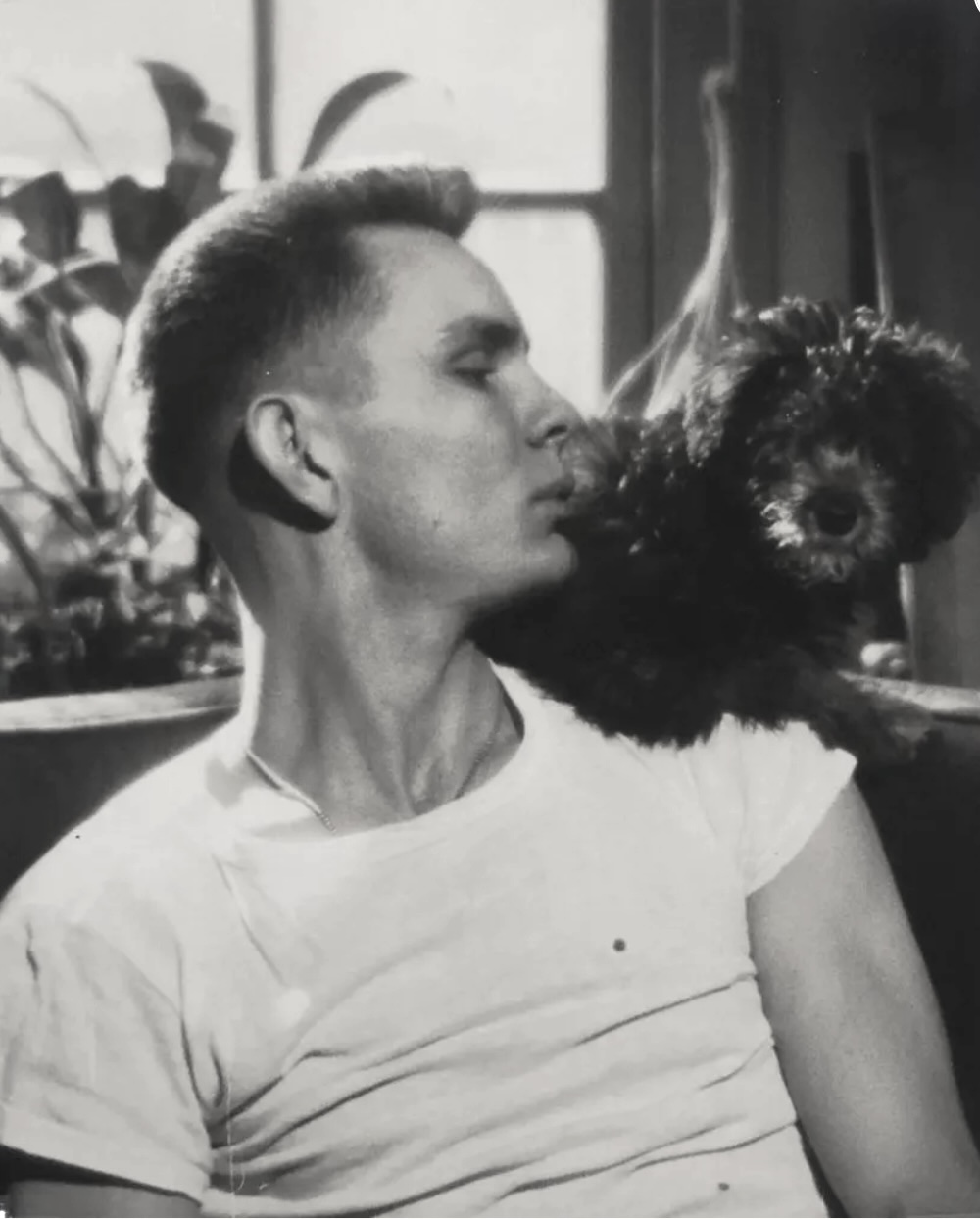
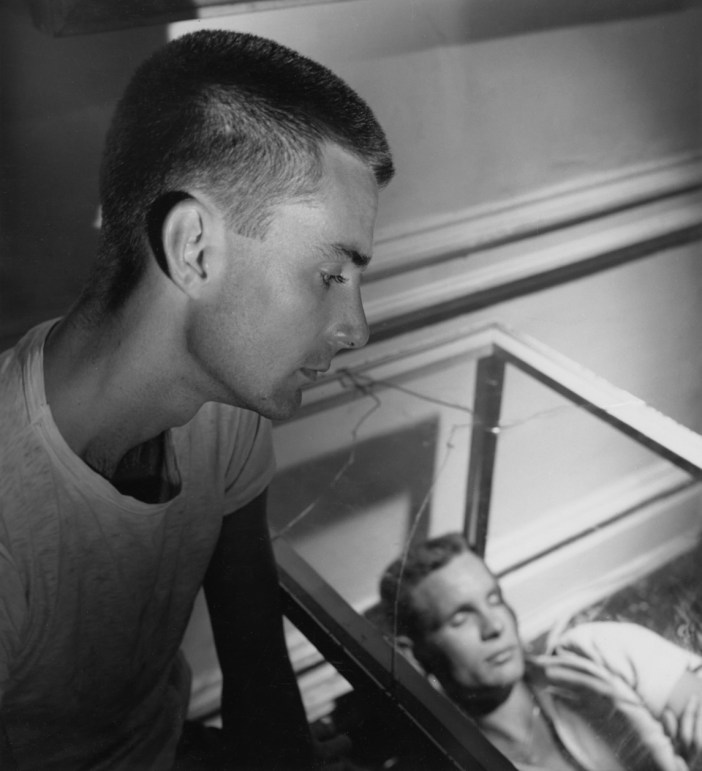
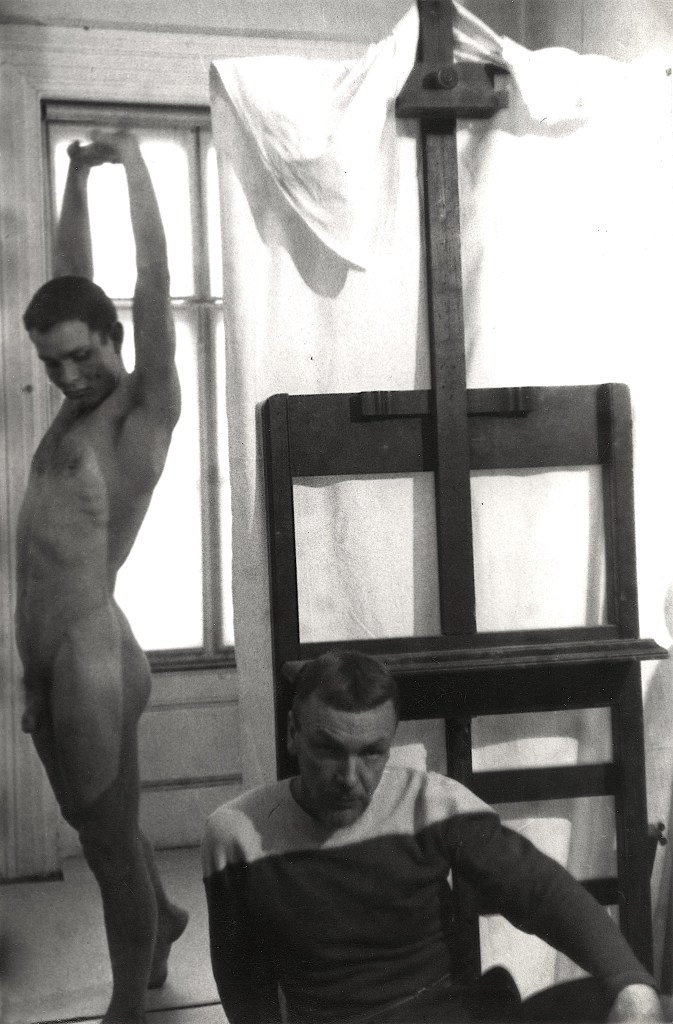
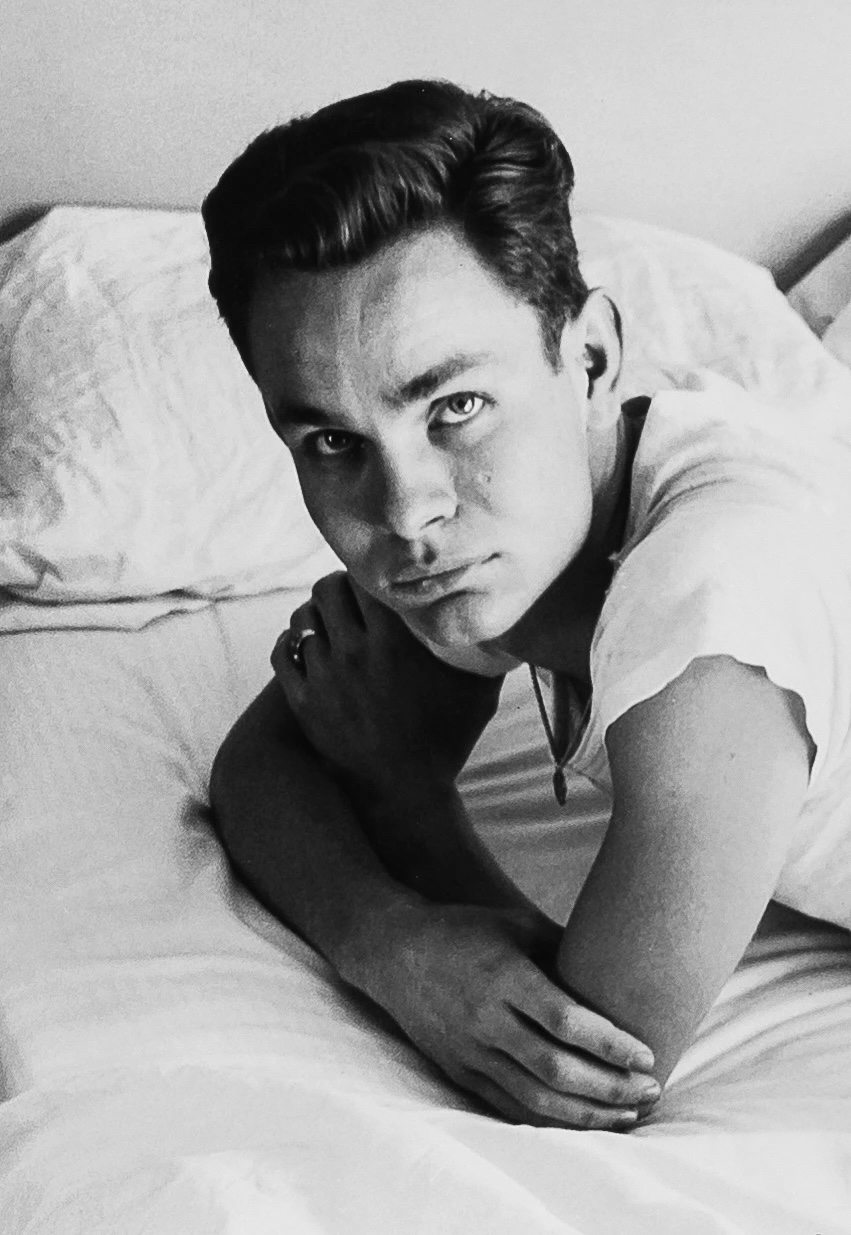
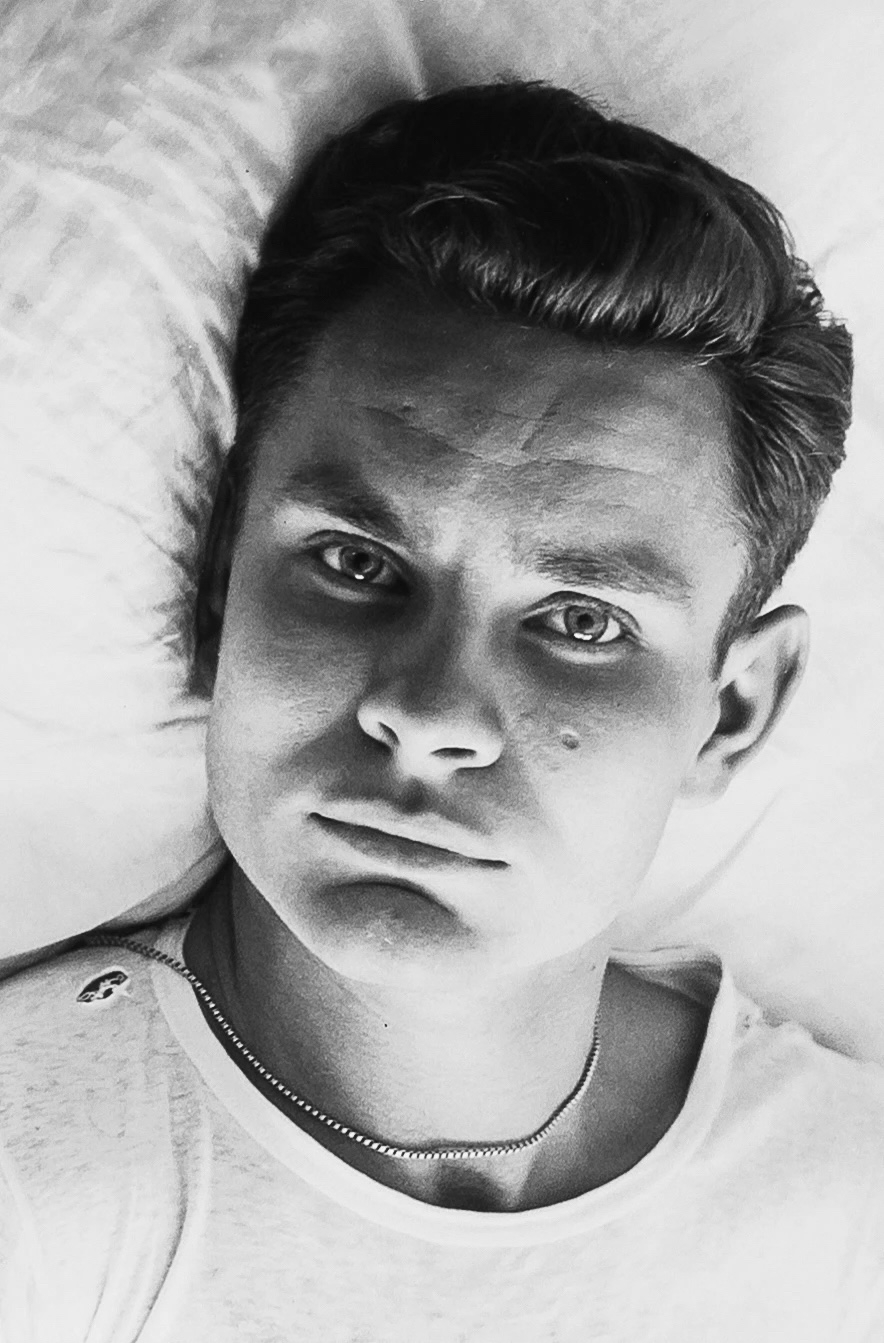
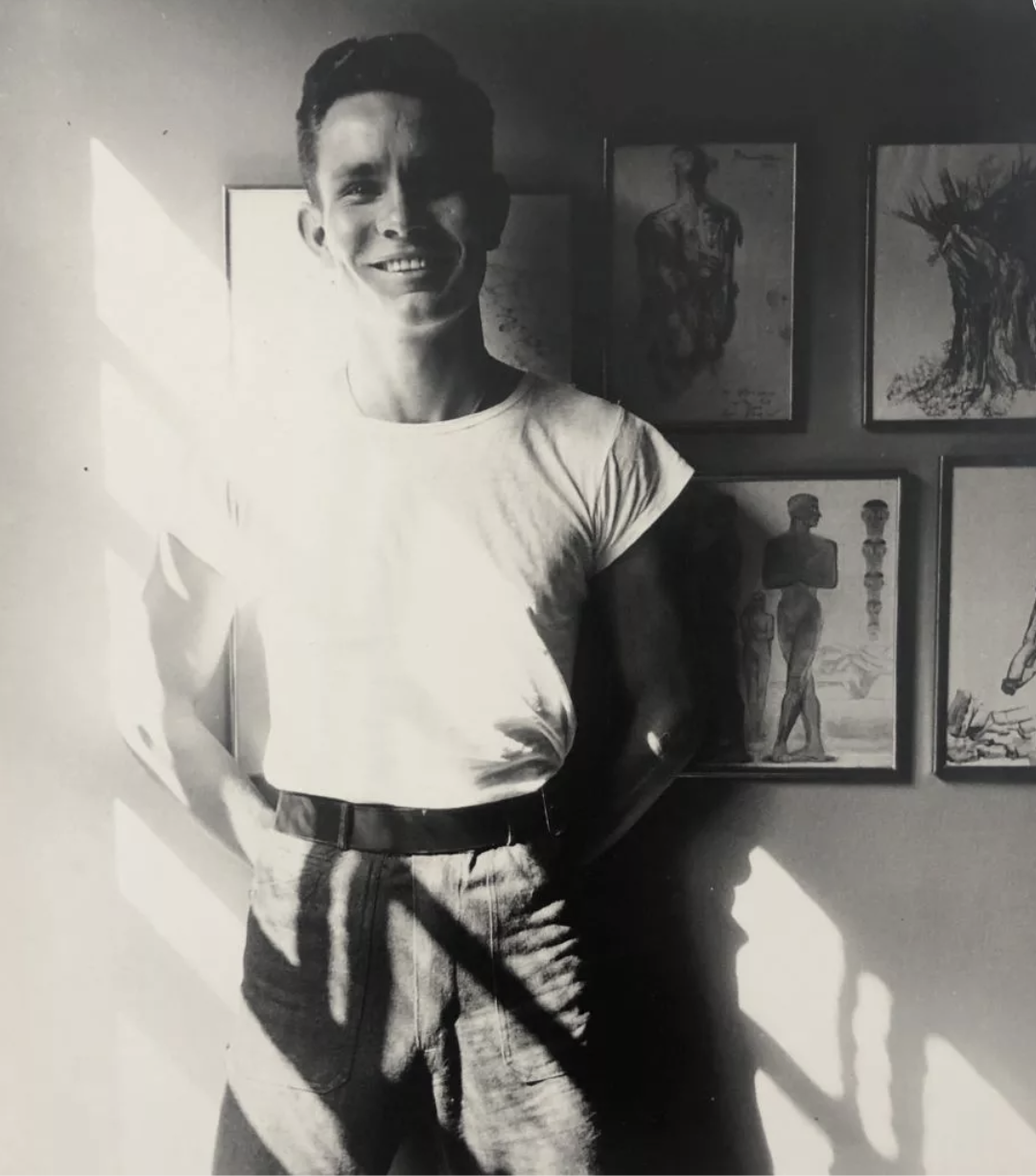
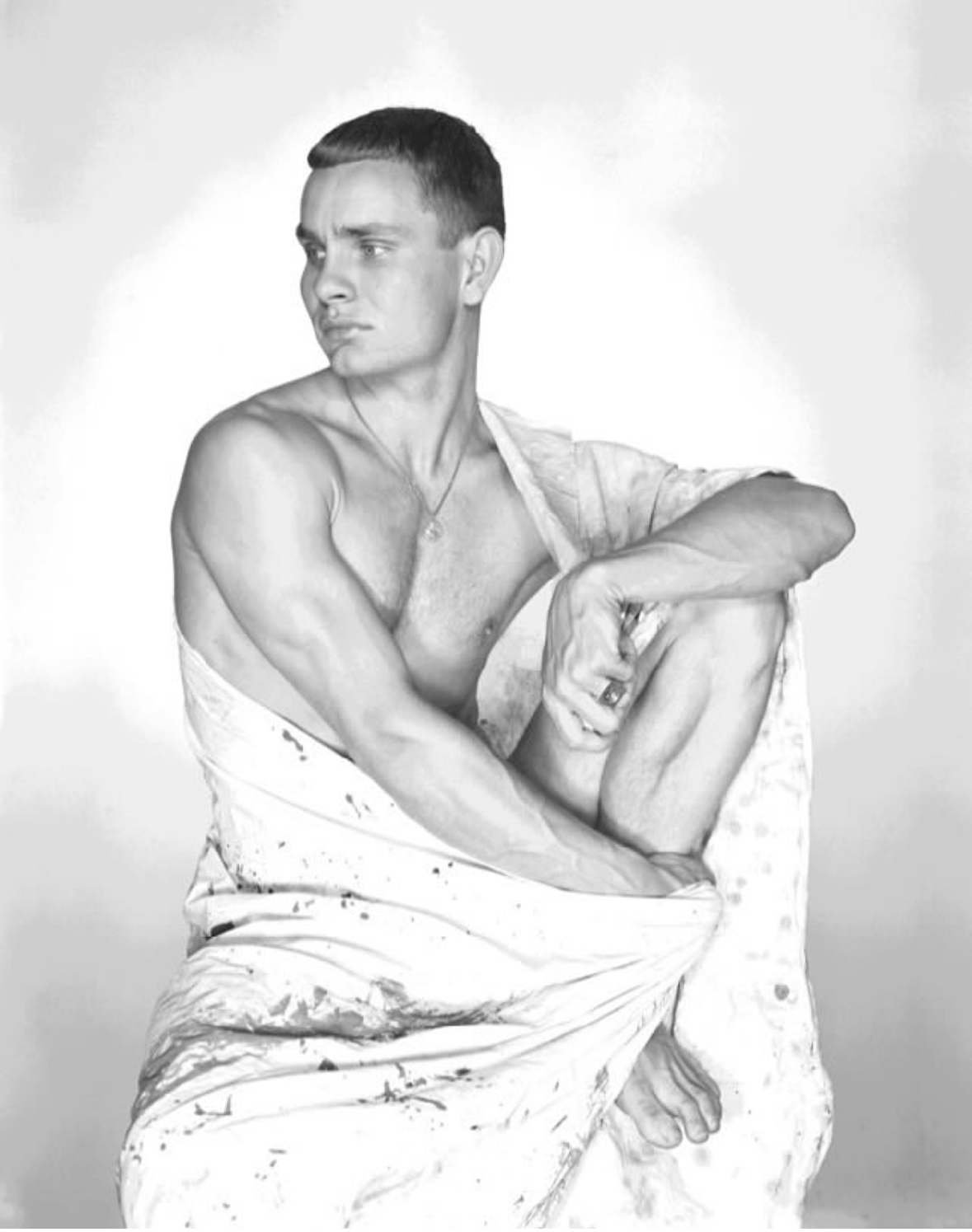
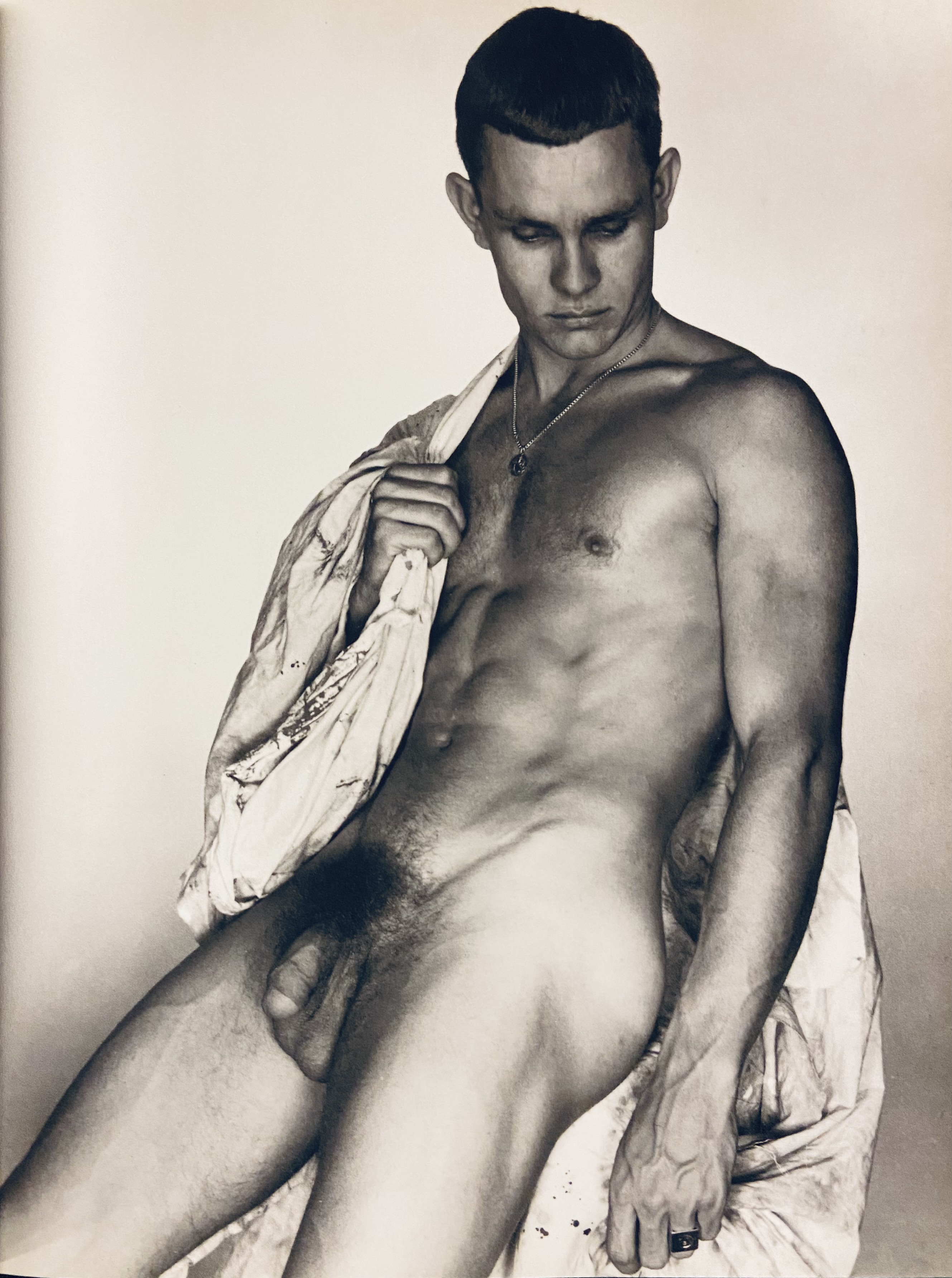
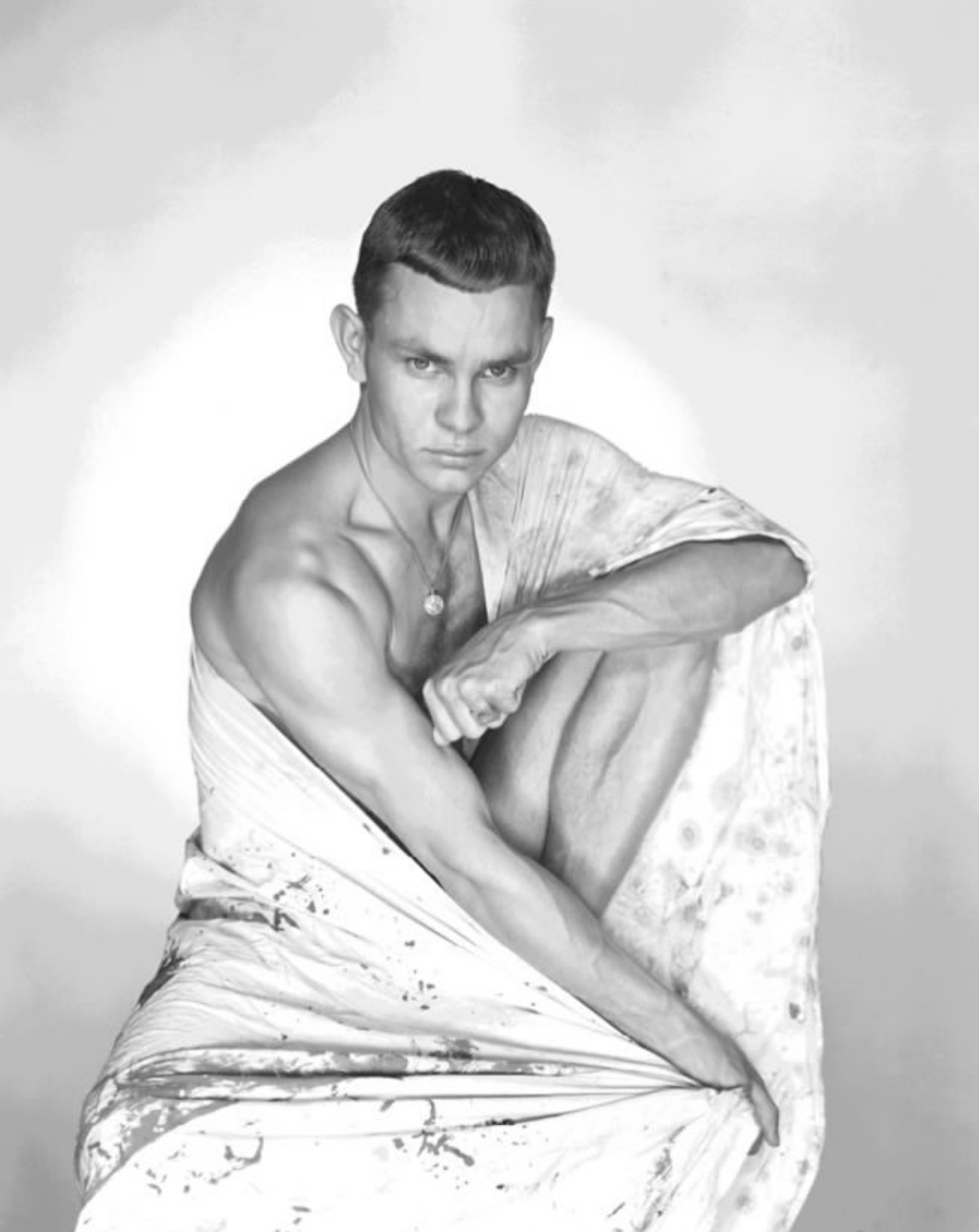
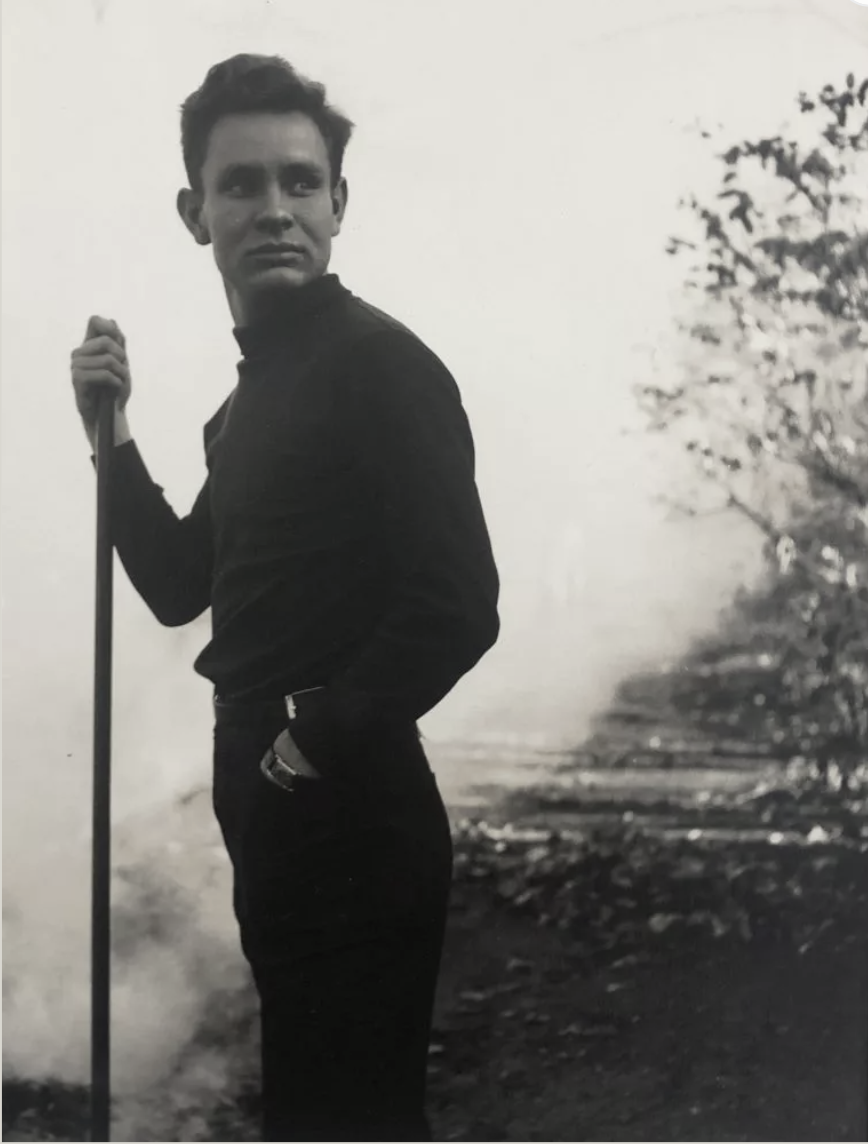
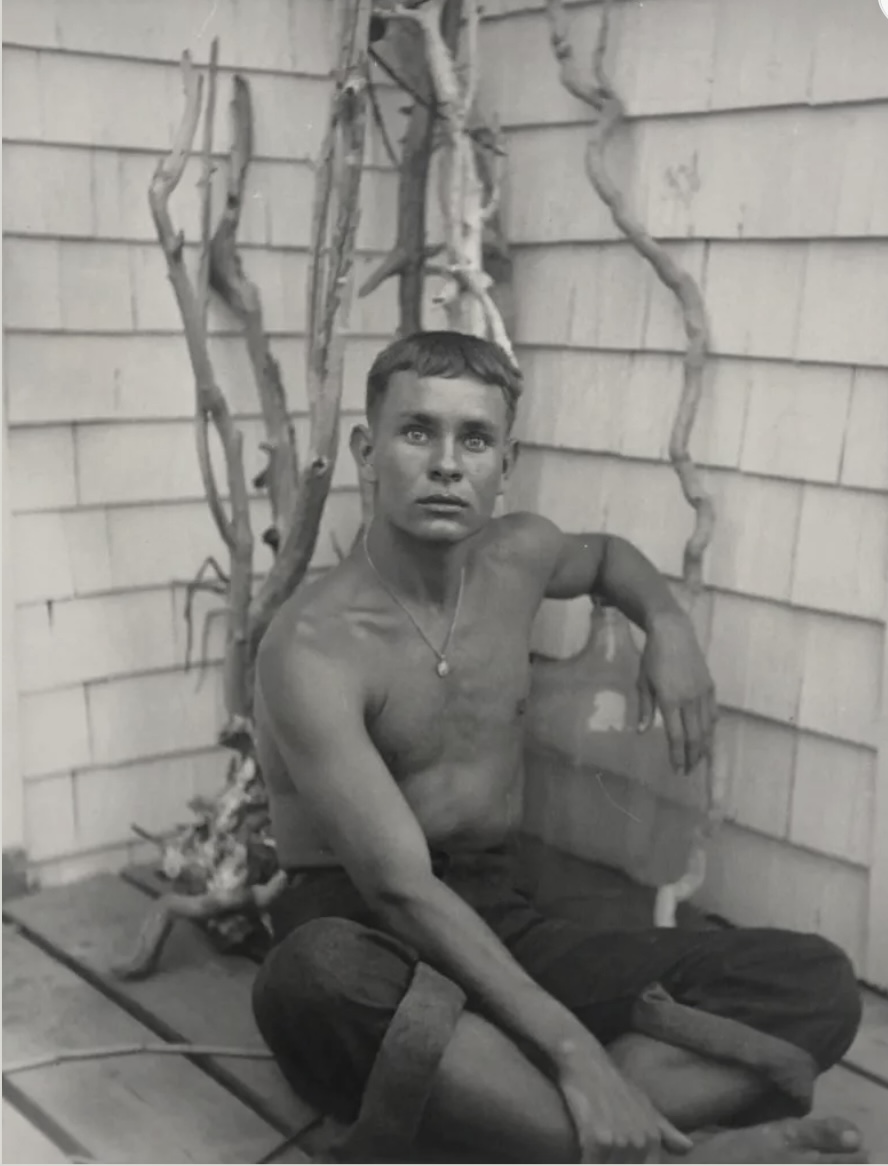
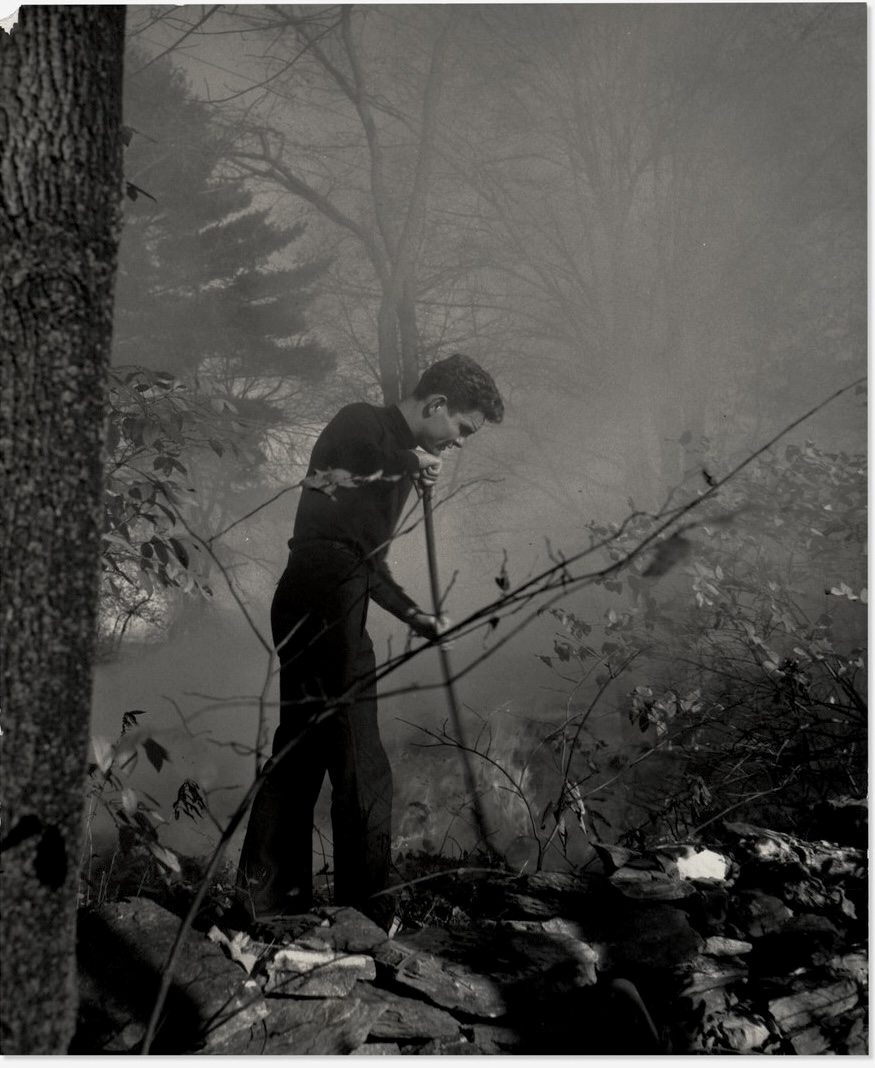
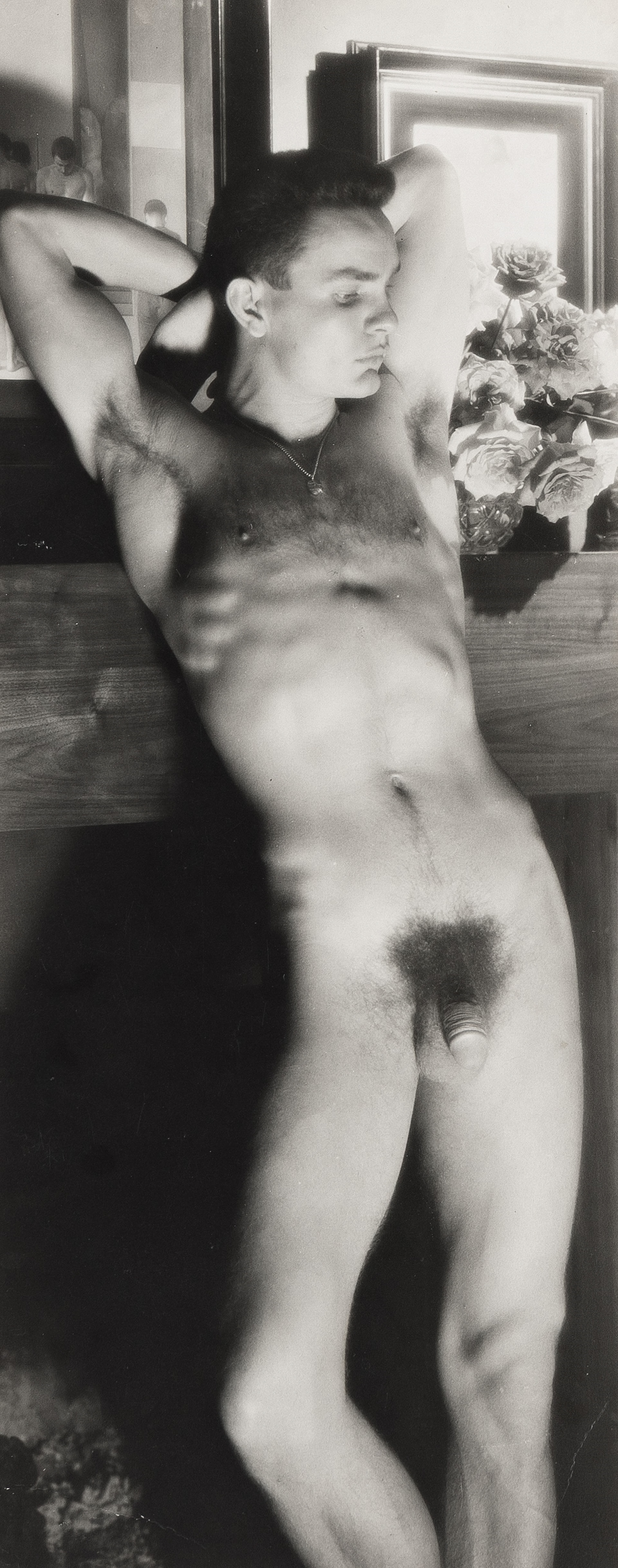
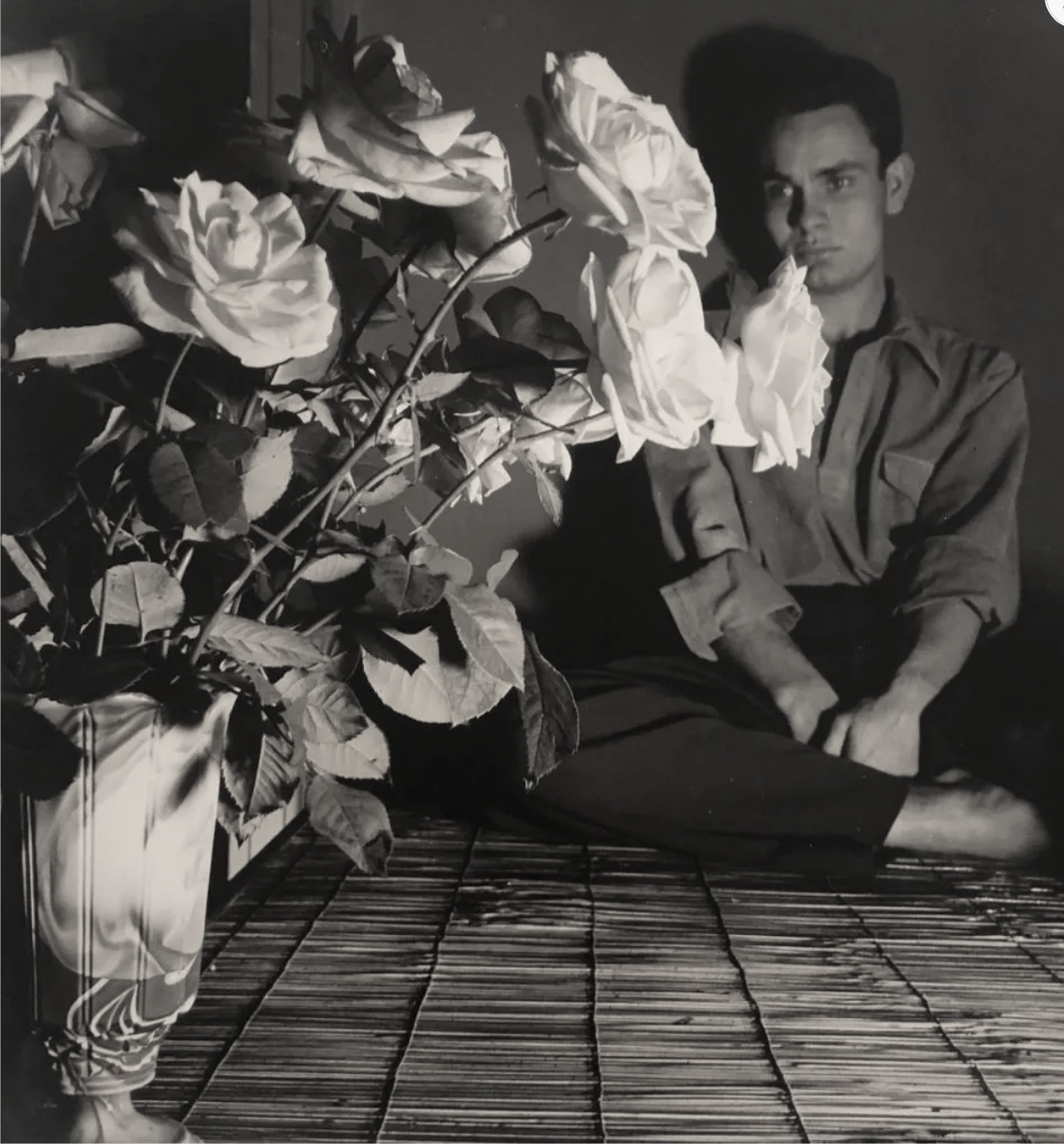
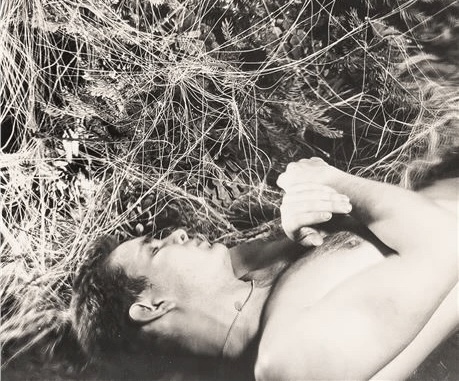
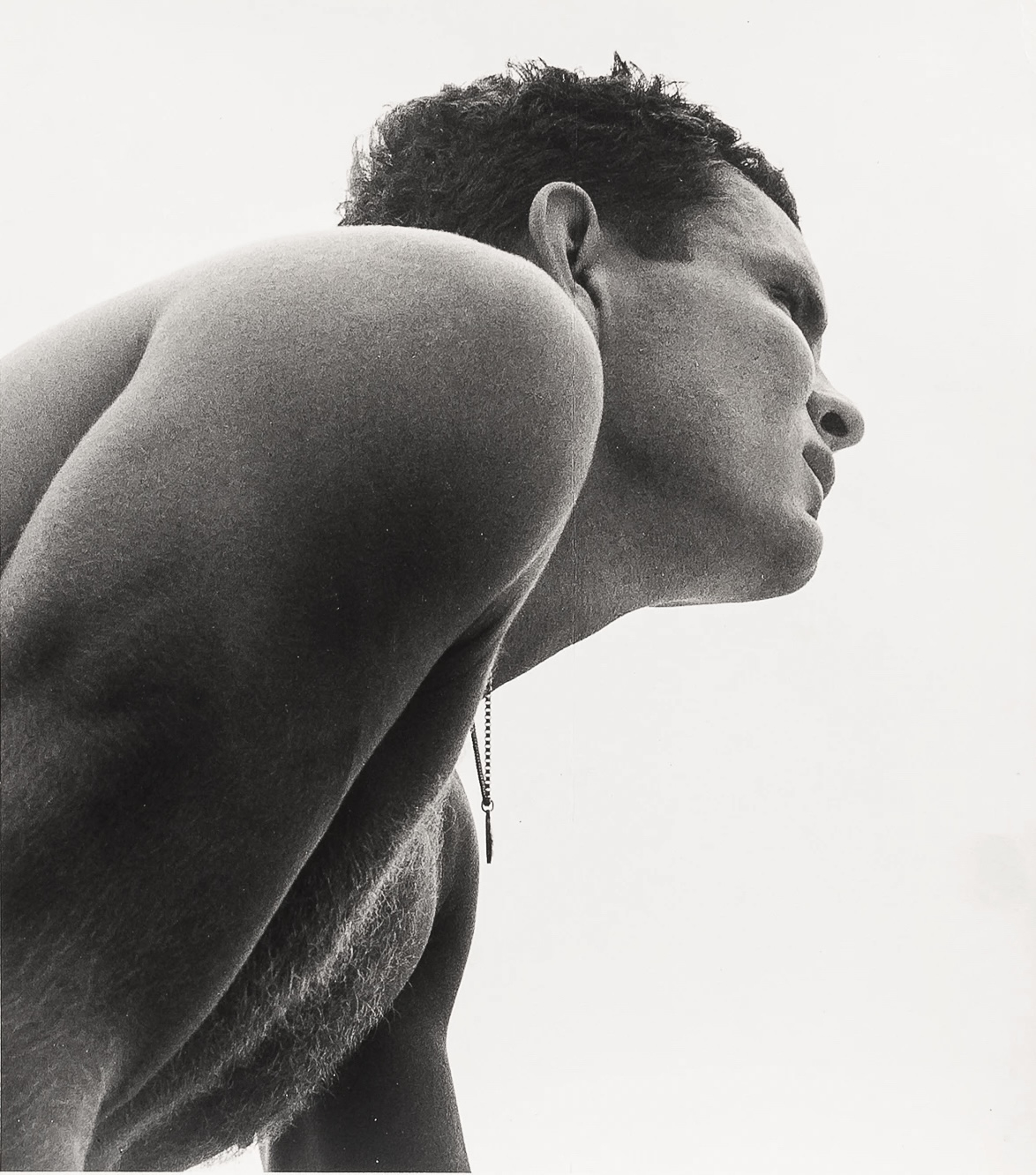
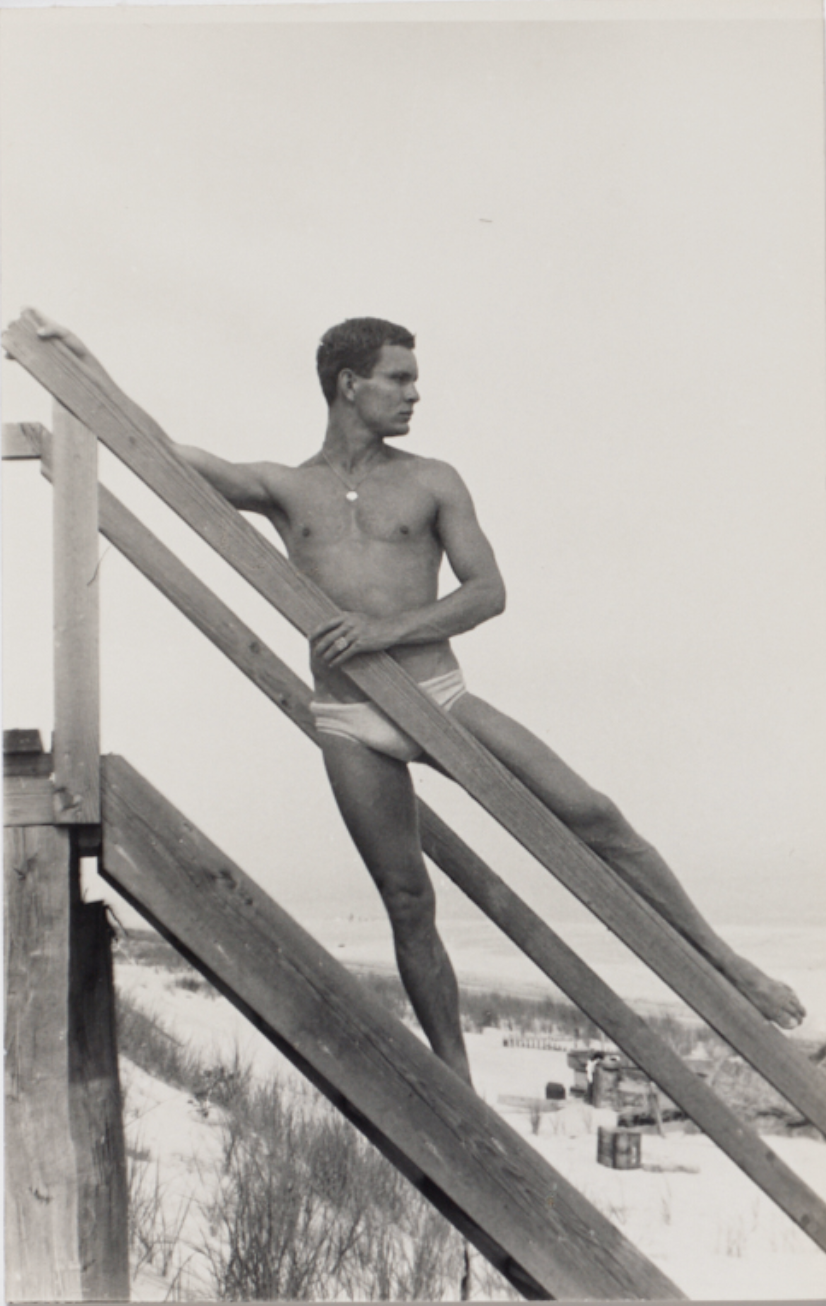
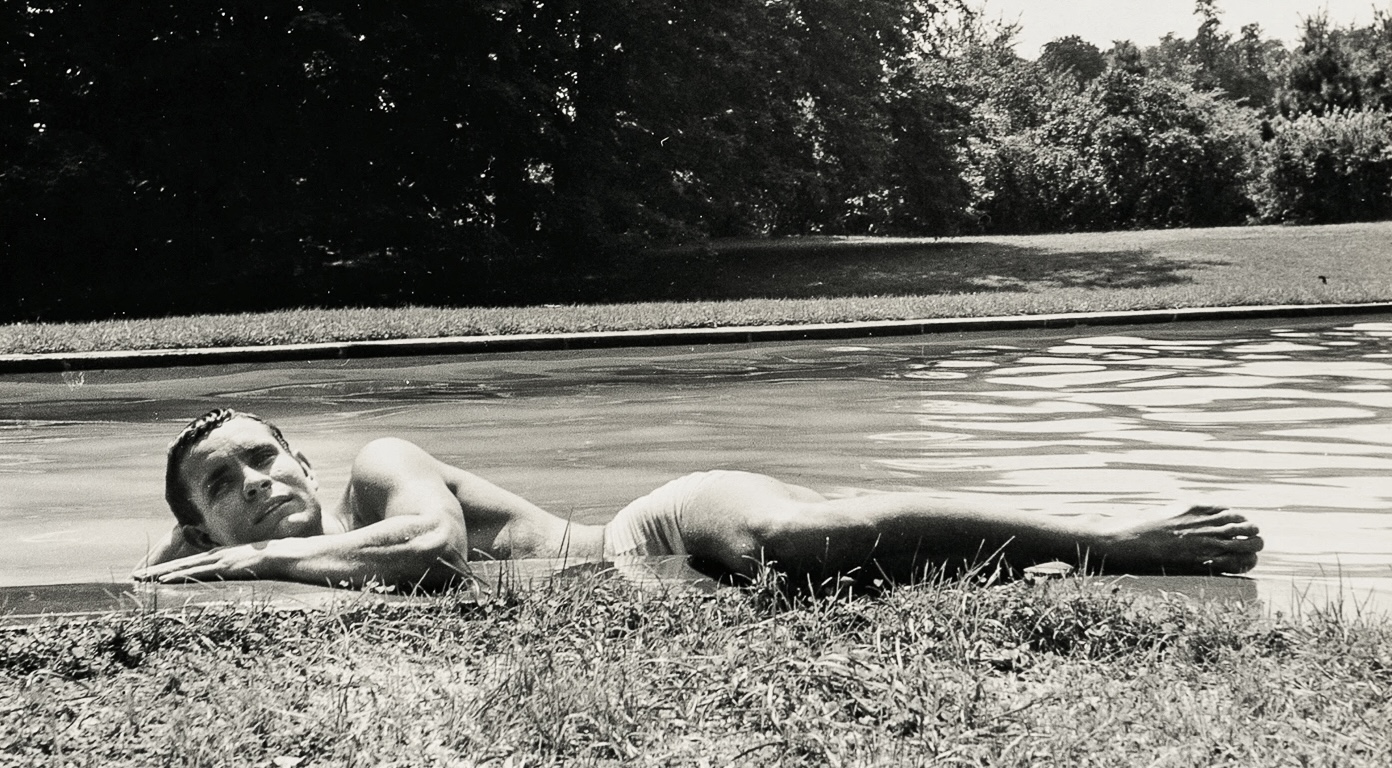
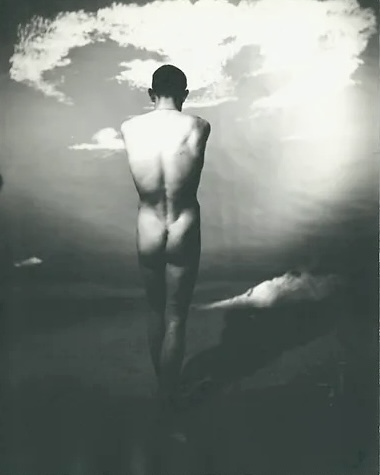
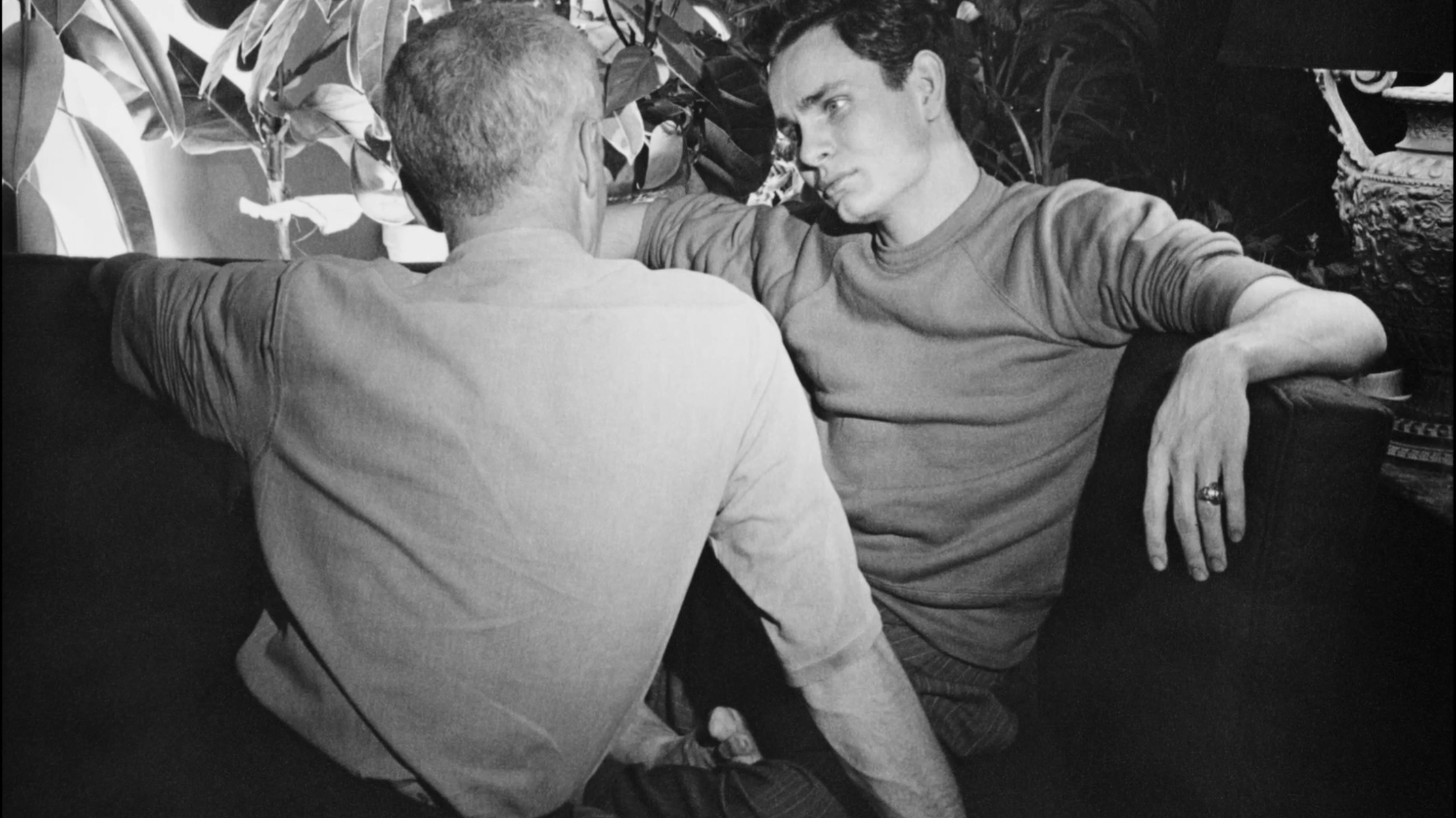
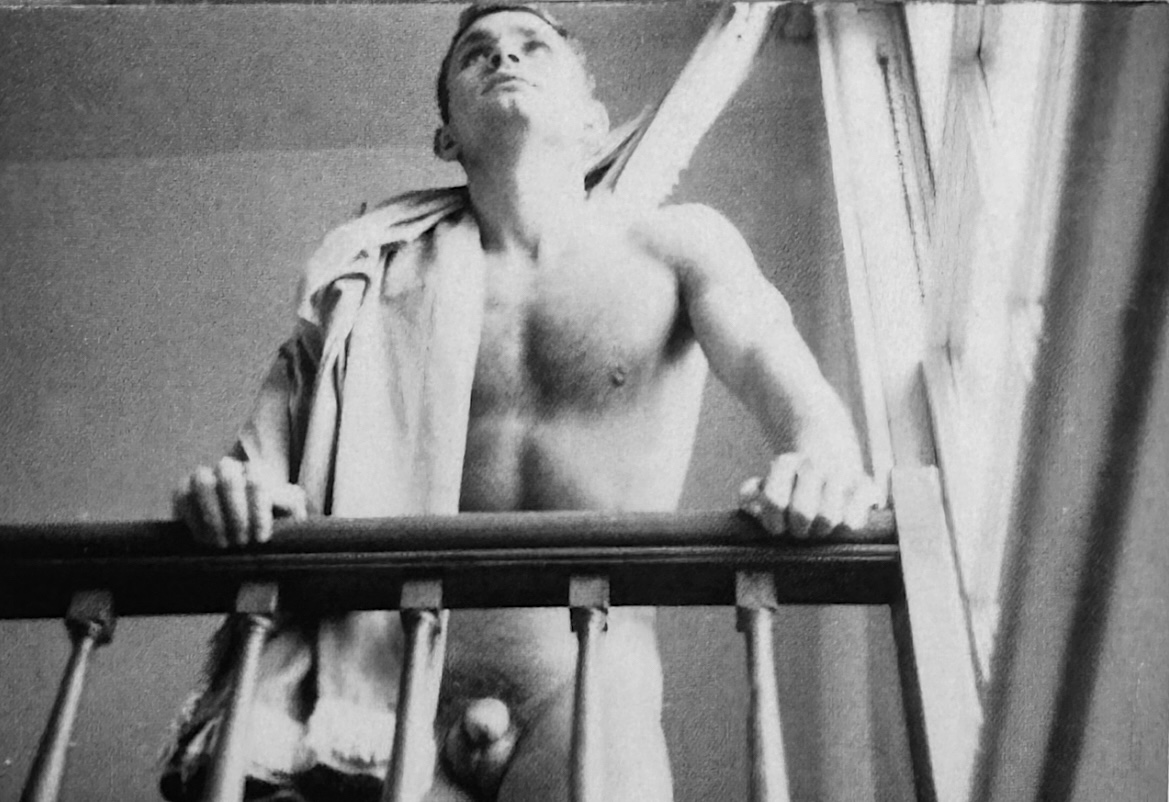
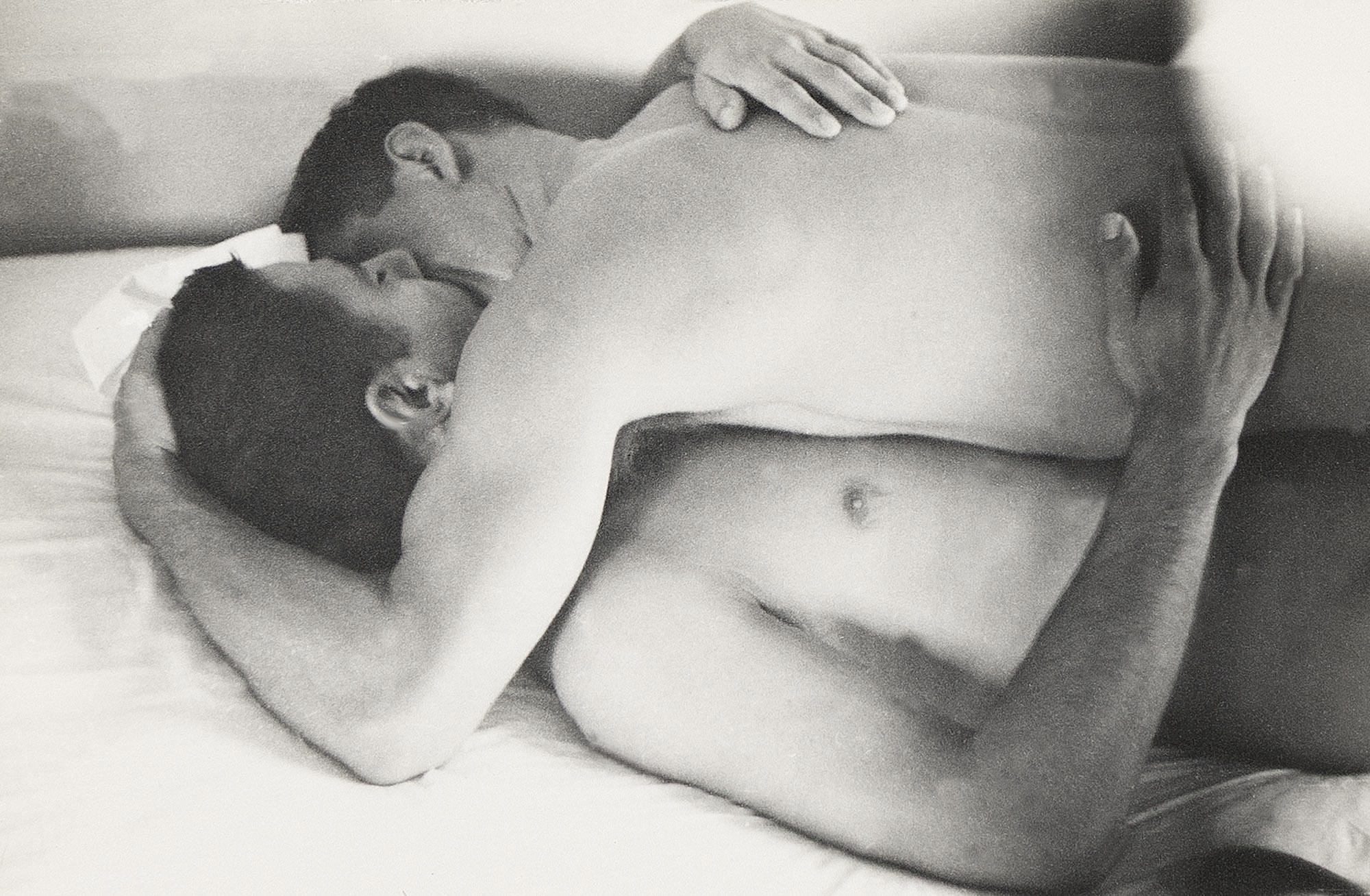
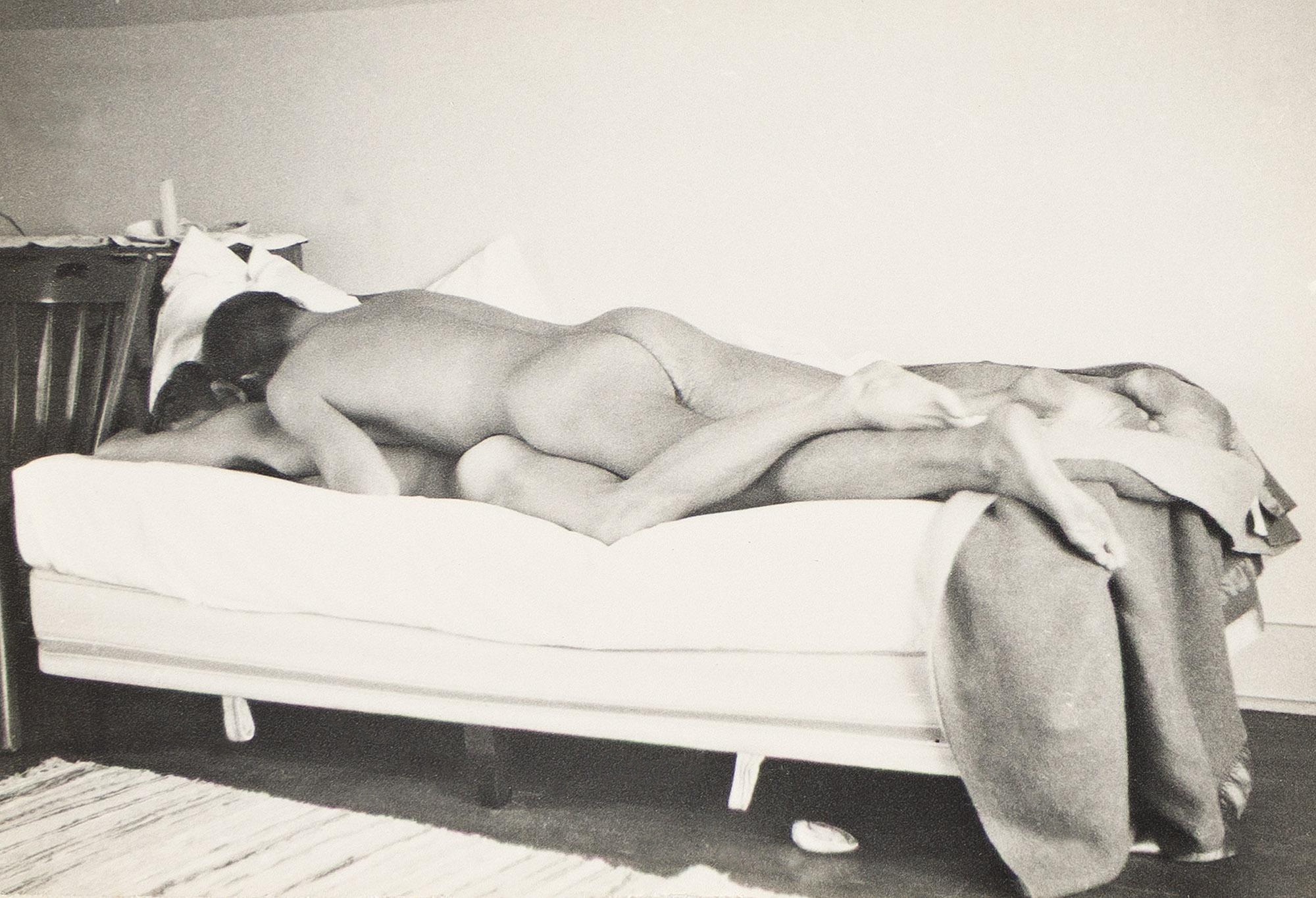
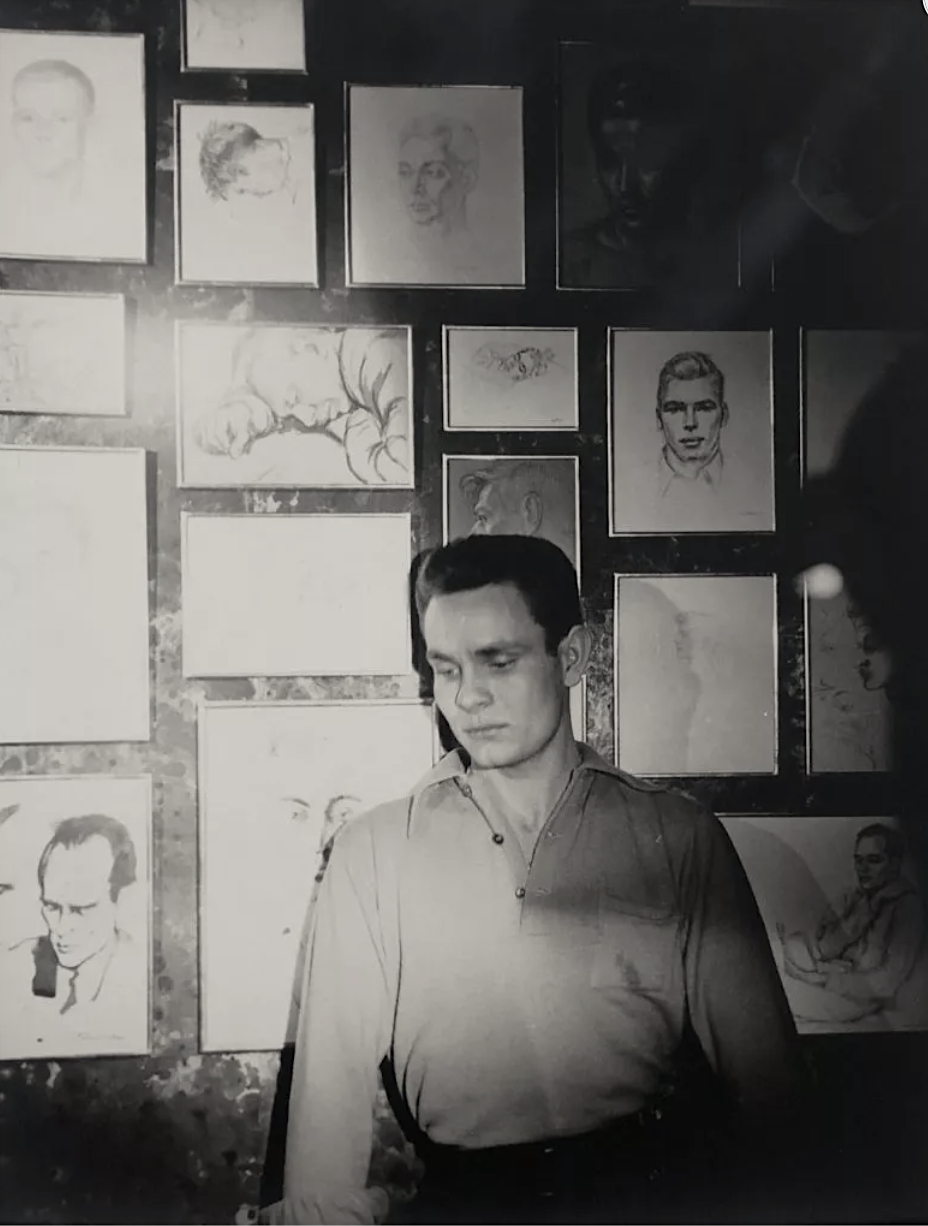
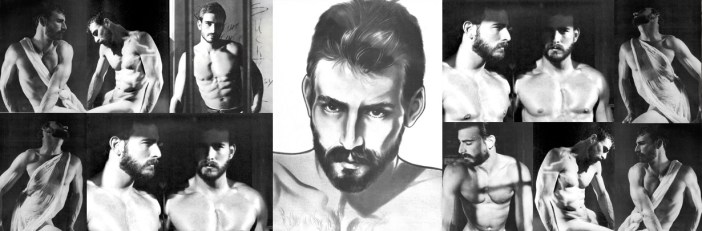
In 2022, the ever-popular Chuck Howard was one of the first profiles in our Artist’s Muse series. While romantically involved with artists Bernard Perlin and then George Platt Lynes, Howard was a frequent subject of the art they created, along with their fellow artist friends and cohorts. He later went on to a successful career in the fashion industry as well as a restaurateur. The original post was updated as new photos and info became available. However, the volume of recently discovered photos and articles about dear Chuck warranted a new post highlighting this work, primarily by George Platt Lynes and the PaJaMa collective.
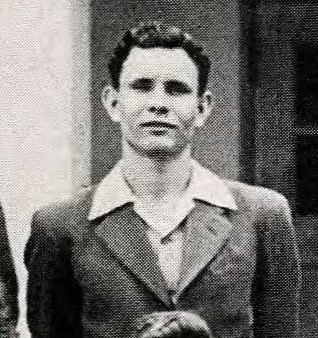
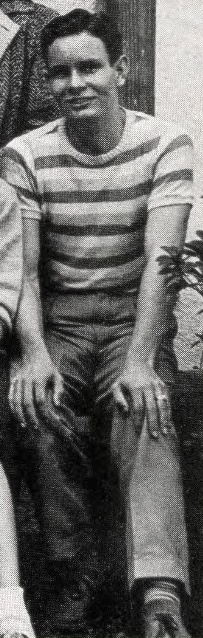
Charles Frank “Chuck” Howard was born in Cochran, Georgia on March 4, 1927. While in his teens, the family relocated to Leesburg, Florida where Chuck attended the local high school. A popular student, Chuck took part in many activities including theater, band, and Youth Council. An honor society member, Chuck was voted “Most Intellectual” when he graduated in 1944. He then joined the Naval Air Force and was a tail gunner through the end of World War II.
Rollins College, Winter Park, FL 1947
While stationed in Miami Beach, Chuck met New York artist Bernard Perlin through a mutual friend. Perlin would later recall, “He turned up one day in his little white uniform. He was the cutest thing you ever saw, and he was just, golly, he was sculpted. He was also one of those very rare people who had a thousand best friends. Everyone loved Chuck, and Chuck loved everybody.”
After being discharged in 1946, Howard attended Rollins College before studying fashion in France on the G.I. Bill. He then relocated to New York City to live with Perlin. “Our fling was charming and sweet, because Chuck was sweet and funny,” Perlin said, “It was very gratifying.”
In 1948, Perlin was offered a residency in Rome and threw himself a farewell party. It was there that Chuck was introduced to George Platt Lynes.
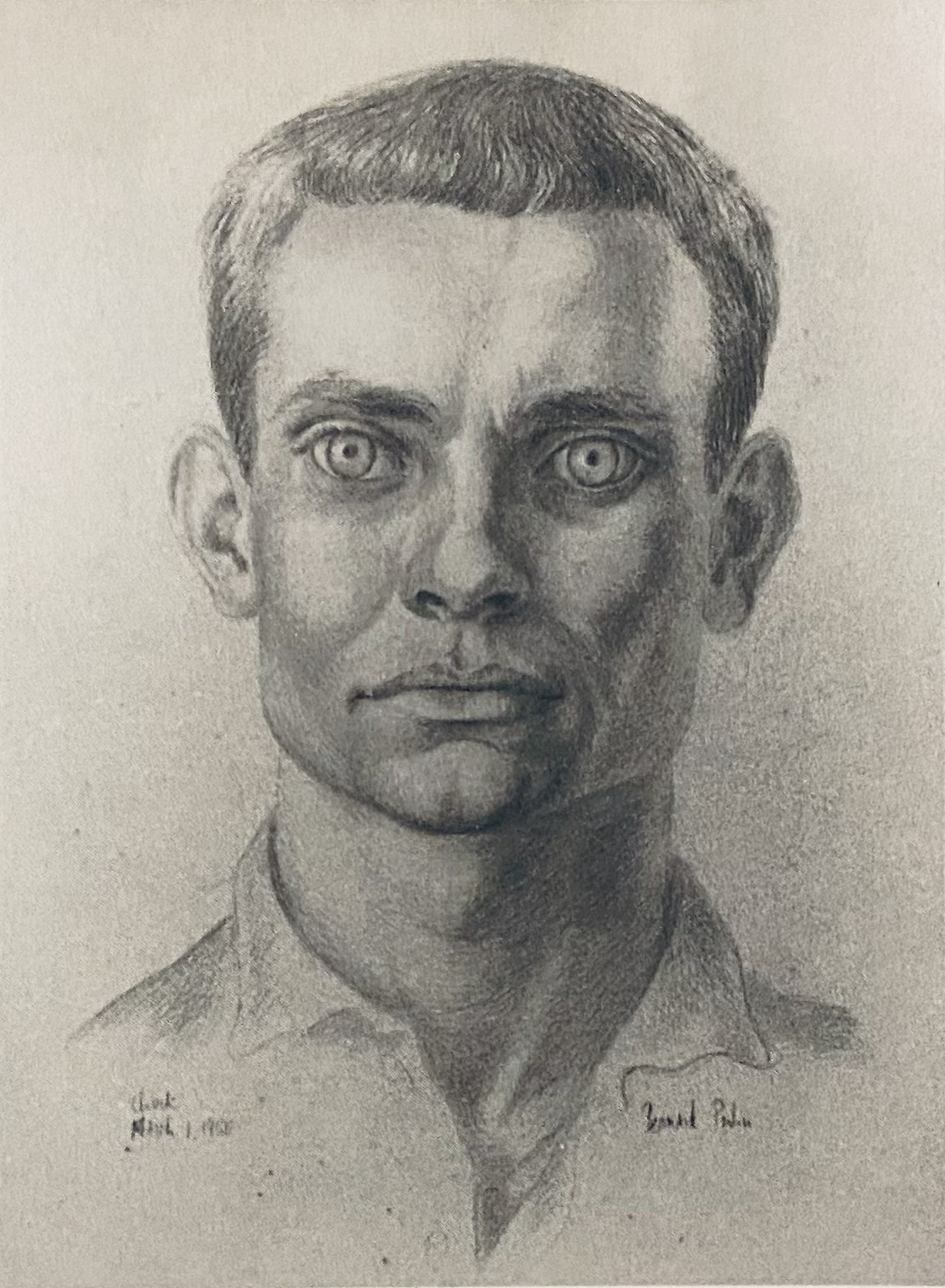
Four sketches of Chuck Howard by Bernard Perlin
George Platt Lynes self portrait with Chuck Howard, ca 1948
Chuck Howard and George Platt Lynes, ca 1950
“Another twenty-one-year-old has moved in on me bag and baggage, almost without being invited…” Lynes wrote in a letter to his friend, author Katherine Anne Porter.
Howard was viewed favorably by Lynes’ friends and was said to have a grounding effect on the photographer. The relationship lasted for just over two years.
Chuck Howard with Lynes’ dog, Bozo
Wilbur Pippin & Chuck Howard, (ca. 1950)
Chuck Howard with Jared French in his studio at 55 St. Luke’s Pl., NYC (ca. 1949)
Although Howard had previously posed as a model for several Bernard Perlin sketches, it was after his introduction to Lynes and his circle of friends that he became a favorite several artists. He posed for George Tooker, sculptor John LaFarge, Paul Cadmus, and Jared French, with whom he also had a physical relationship.
When Lynes’ nude photography became more widely exhibited decades after his death, photos of Chuck Howard were among the most celebrated. Howard downplayed the photos, describing his work modeling for Lynes as “primarily lighting tests.” Collectors disagree.
Chuck Howard also had a film career of sorts when he participated in Dr. Alfred Kinsey’s famous studies, performing sexual acts with poet Glenway Wescott in front of the researchers’ movie camera. Howard later remarked; “It wasn’t Hollywood.”
Lynes and Howard parted ways in January, 1951. “Chuck has decided to go off and live by himself;” Lynes wrote to his mother. “I shall miss him but I don’t disapprove… I’m afraid that my influence is too often all-pervading, all-inclusive.”
Chuck subsequently embarked on a “tempestuous affair” with hustler / model Ted Starkowski, as mentioned in his own Artist’s Muse profile. In the summer of 1951, the couple posed for a series of photographs shot by Paul Cadmus and credited to The PaJaMa collective. Taken in and around Carrington House on Fire Island, these photos capture a level of intimacy seldom seen among gay couples at that time. An increasing number of these photographs have surfaced in recent years and are among the most popular credited to PaJaMa.
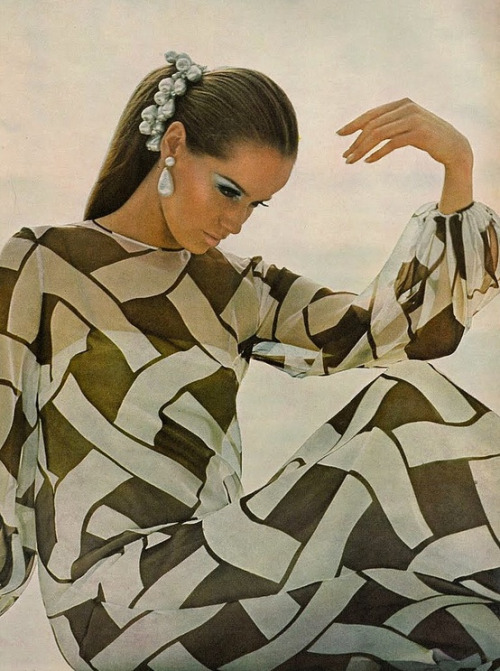
Act II: Chuck Howard’s career in the fashion industry began to flourish in the late 1950’s when he sketched for several designers, including Bill Blass. He worked for David Crystal before moving on to Anne Klein’s Junior Sophisticates. In 1965, he joined Townley, working his way up to become chief designer and head of business operations. The company was then renamed Chuck Howard, Inc. His design style was noted for its sense of humor with sporty, colorful coats, tunics, pants, and jersey shirts.
Around this time, a Parsons student named Donna Karan began working for Howard and he eventually introduced her to Anne Klein.
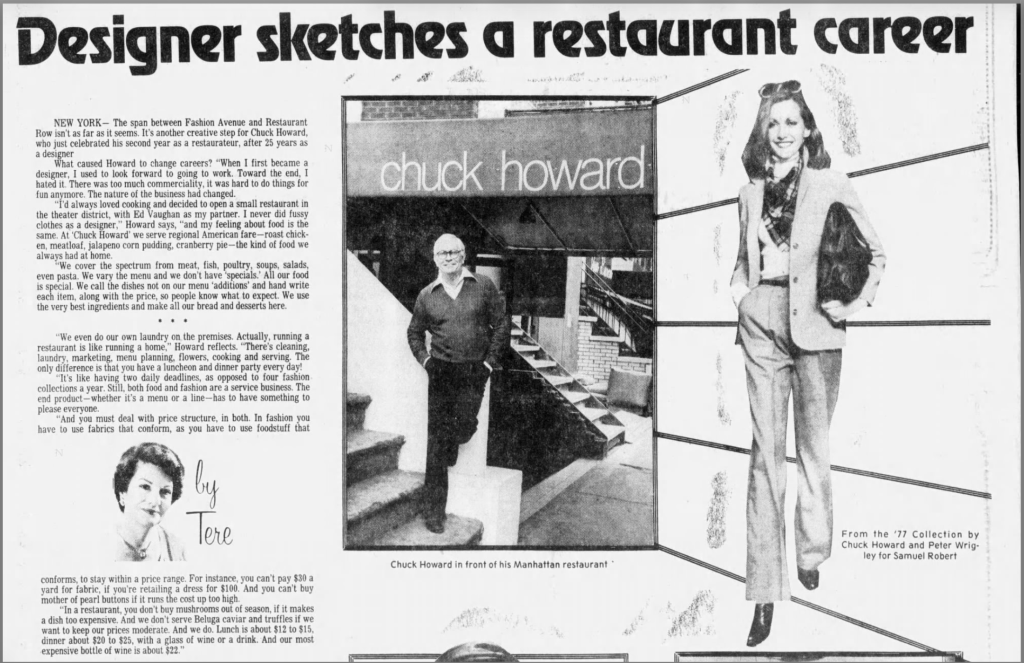
After Klein’s death in 1974, Donna Karan succeeded her as designer for the Anne Klein studio. Chuck Howard then closed his company and became a designer and creative coordinator there, where he was responsible for several of its collections. He departed with fellow designer Peter Wrigley in 1976 to form their own company.
Chuck Howard (r) with his partner Ed Vaughan in their restaurant (1981)
Act III: In 1980, after his departure from the fashion industry, Chuck Howard opened his self-named restaurant on Restaurant Row. Assisting him in this next chapter was his partner Edward Vaughan. The couple rented a three story townhouse at 355 W 46th St and lived on the third floor above the restaurant.
Soon after opening, twenty-two-year-old Anthony Bourdain took over running the back of the house. He later recounted his time at the restaurant in the “Chef of The Future!” chapter of Kitchen Confidential, with Chuck and Edward referred to as “Tom and Fred.” He writes, “They were genuinely lovely, intelligent, warm-hearted and funny older guys who cooked well, had impeccable taste and were considered (rightly) to be wonderful, charming and entertaining hosts – naturals, it had been said, for the restaurant business, especially a restaurant in the heart of the theater district where they knew and were liked by so many.”
Newark Star Ledger, (12/15/1982)
New York Daily News, (1/15/81)
The restaurant was initially successful, although the Daily News review suggested that it wasn’t destined to last. Bourdain further describes the restaurant’s decline, with mounting costs and dwindling guests. “What I learned… was a sad lesson that has served me well in decades since: I learned to recognize failure. I saw, for the first time, how two beloved, funny and popular guys can end up less beloved, not so funny and much less popular after trying to do nothing more than what their friends told them they were good at.” Bourdain moved on to another restaurant, and by the end of 1982, Chuck Howard’s had closed.
The couple retired to the island of Saba in the Netherlands Antilles where they lived for several years before settling in Santa Fe, New Mexico.
On October 5, 2002, Chuck Howard died of pancreatic cancer at the age of 75 in Albuquerque, New Mexico. He was survived by his partner Edward Vaughan.
Chuck Howard, ca 1950 / 1997
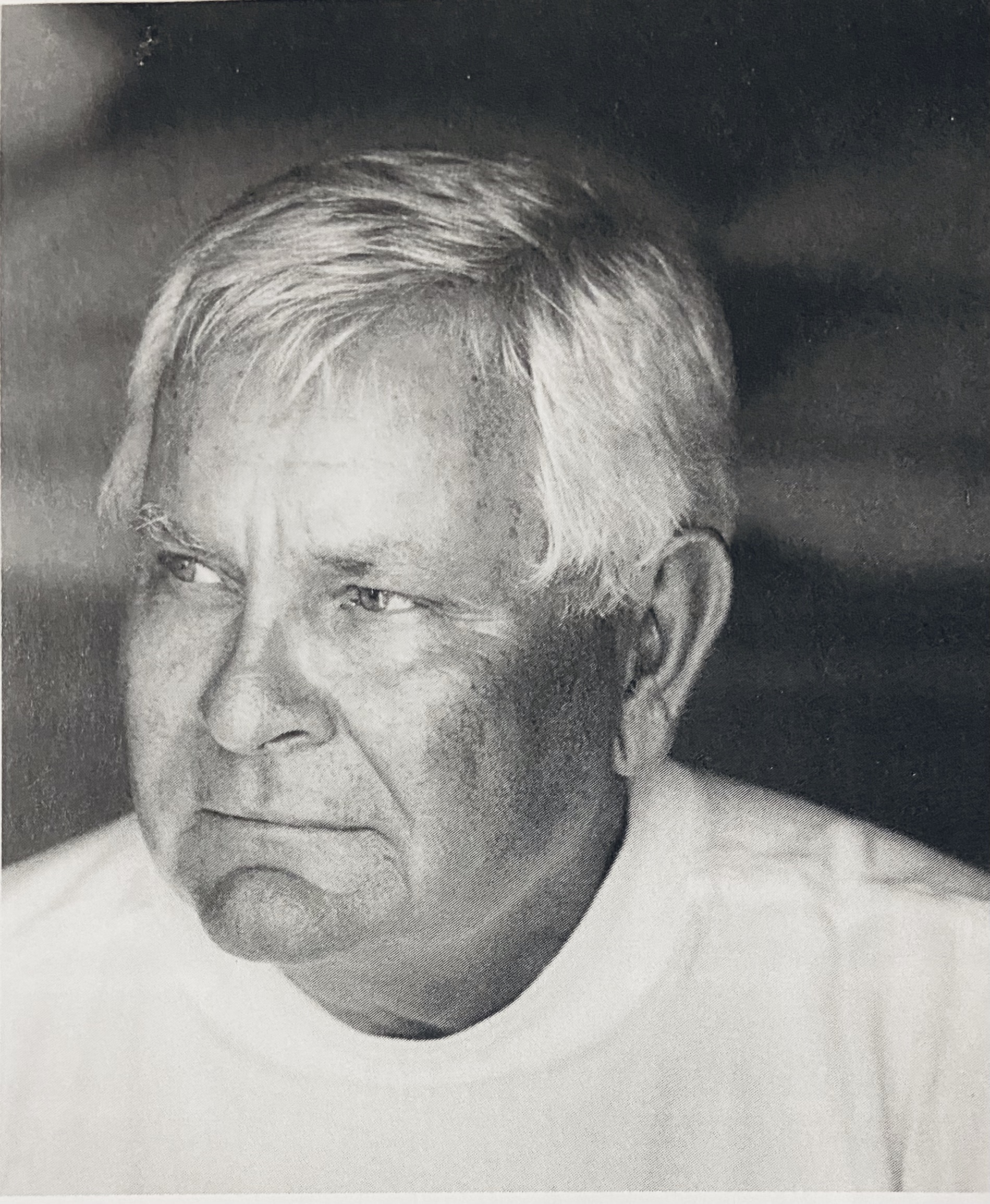
Chuck Howard’s life had a similar trajectory as fellow Lynes paramour Randy Jack: A WWII military man who became an artists’ muse before moving on to the world of fashion and finally ending up as a restaurateur. In their twilight years, both also enjoyed a bit of recognition for the work they inspired in some of the great American artists of the 20th century.
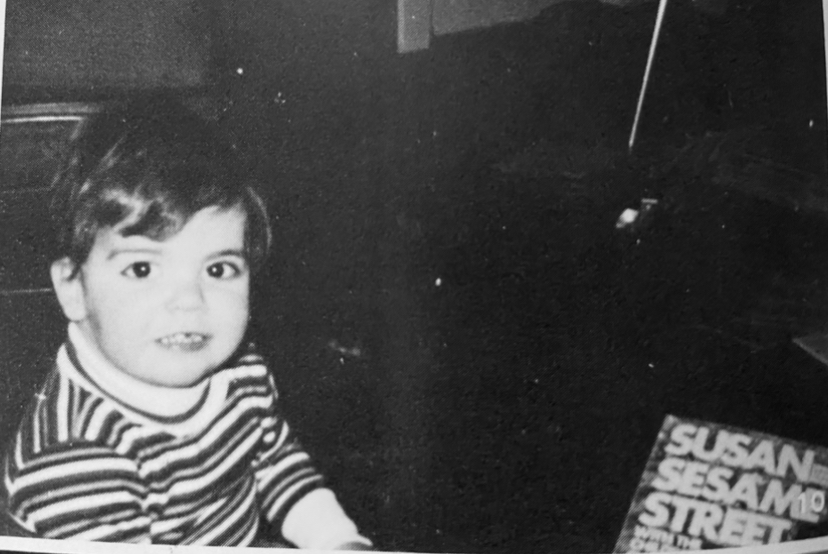
When I was two years old, my mother wrote in my baby book that I liked to listen to records. That’s how far back that goes. Among my Disneyland and Sesame Street records were all of my parents’ discarded 45s from their formative years. This was now the 1970’s and albums were what they were purchasing.
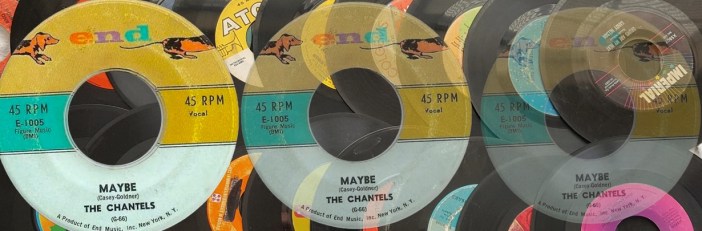
Even before I could read, I could tell by looking at the record label which songs I liked. The blue ones with the map on them were good (it was Motown). The ones with the orange and yellow swirl were The Beatles and The Beach Boys. (Capitol records – fun to watch spin on the turntable). My favorite record, though, was the only one with little doggies on the label: “Maybe” by the Chantels, on End records.
“Candy” – my mother’s name – was written on the label in neat pre-teen cursive. She told me many times that she used to listen to this record every day when she came home from school.
By this time, she was no longer quite so fond if it. She didn’t care for any of the old records, really. Not anymore. There wasn’t a lot of nostalgia in our house. The old-fashioned “ba-da-dum-dum dum” piano intro of “Maybe” would start and she’d roll her eyes, asking why I insisted on playing those old songs. But sometimes while doing housework, she would loudly sing along, complete with dramatic gestures that made me laugh.
Part II: 1979
My mom, her boyfriend, and I are sitting around listening to music. They met working at the Pizza Hut. He’s 20 years old and listens to Kiss and Foghat. She’s 33, divorced with three kids and likes Billy Joel and the Saturday Night Fever soundtrack.
I don’t recall how “Maybe” came up, but I went and fished it out of my pile of 45s. Like me, he wasn’t born yet when this record came out. The song intro starts, and he jumps on it. “What the hell is that?” It is decades away from current popular music, and he’s making fun of it. Poking fun at her, really. Not in a mean way. Everyone is laughing.
He keeps starting the record over – playing that creaky piano intro over and over again until she’s laughing so hard, she has tears in her eyes.
Part III: July, 2011
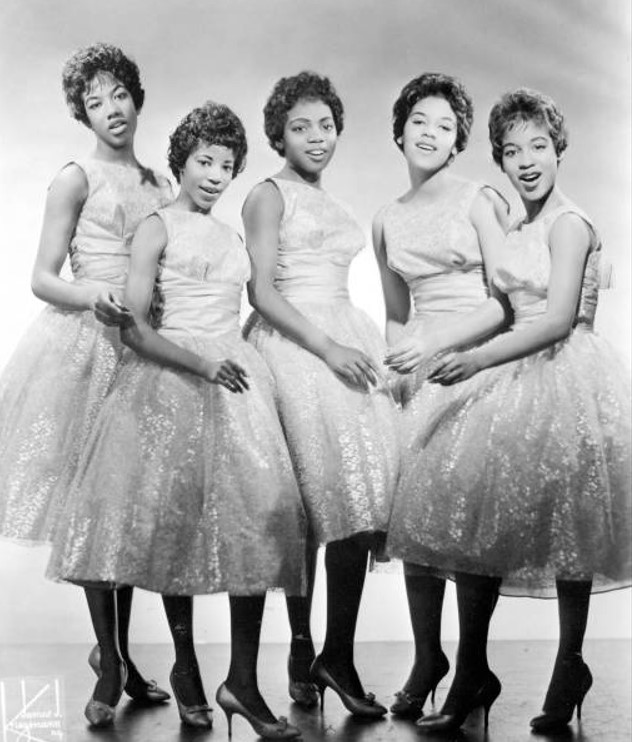
July 30, 2011, I’m at Lincoln Center’s Damrosch Park for She’s Got The Power! A Girl Group Extravaganza. This is an all-day concert celebrating the girl groups of the 1950’s and 60’s. Former Chantels lead singer Arlene Smith is one of the performers.
By this point, “Maybe” is considered to be one of the greatest records of the 1950’s, paving the way for the girl group era and making a place at the table for female R&B vocal groups. Singers like Darlene Love and The Supremes cite the recording as an early influence.
Arlene Smith takes to the stage draped in glittery fabric, seated in an electric wheelchair that she expertly maneuvers around the stage as she sings the song. 54 years have passed since she recorded this, but her voice is still strong. I decide to call my mother, tell her where I am and hold up the phone for her to hear.
“Oh my god. I haven’t heard that song in years!” she says. She gets a little choked up, and I tell her I’ll call her later when I get home.
In the documentary Girl Groups – Story Of A Sound, Arlene Smith recalled that she had just turned 16 years old when the Chantels recorded “Maybe.” “I was singing about the kind of love that I didn’t know… I loved my parents.”
Part IV: July, 2026
We are enjoying a summer evening in my sister’s back yard, as best we can. A year and a half of cancer treatments has reduced my mother to 90 lbs, but it’s the Alzheimer’s that has now taken the lead in this battle. Earlier in the afternoon, we had her try to draw a clock – a cognitive test used to detect the disease. She couldn’t do it, although she can still tell the time on her watch. It’s a tricky thing to navigate.
I suddenly have an idea. I pick up my sister’s phone and hijack her Summer BBQ Spotify playlist. I tell my mother I want her to listen to something and see if she remembers it.
The piano begins “ba-da-dum-dum dum” …” Her brow is slightly furrowed. When the vocals start, she mouths the words, but she doesn’t sing. I don’t remember the last time I heard her sing.
My stepfather is dozing next to her. Without opening his eyes, he says “What year was that?”
“1958. Do you remember this song?,” I ask.
“Sounds familiar,” he says.
I tell my mother; “This was your favorite record when you were a kid. You said you used to listen to it every day when you came home from school.”
She nods and softly says, “I was heartbroken.”
“Over who?”
“I don’t remember.”
She may not have remembered, but later that night, I did. His name was Jackie. I grew up in the same house that my mother did and sometimes I would find little hearts drawn in hidden places: on the wall inside the linen closet, on the underside of the coffee table. In these hearts she had written “Candy loves Jackie.” I remember asking her about him back then. She told me about the first boy she was in love with, and how crushed she was when it didn’t work out.
Would I have mentioned his name if I had thought of it in the back yard? Are painful memories better left forgotten? Or is it important to keep trying to remember simply as a brain exercise?
Maybe if I play this record for her next weekend, it will trigger a different memory. Maybe she will remember singing around the house, or the Pizza Hut guy. Maybe the memory of my phone call from Lincoln Center will come back to her. Or maybe next time, the song won’t sound familiar to her at all.
The record fades out as Arlene repeatedly pleads “Maybe…” Her fellow teenage Chantels, forever frozen in time, sing back to her; “Maybe maybe maybe…”
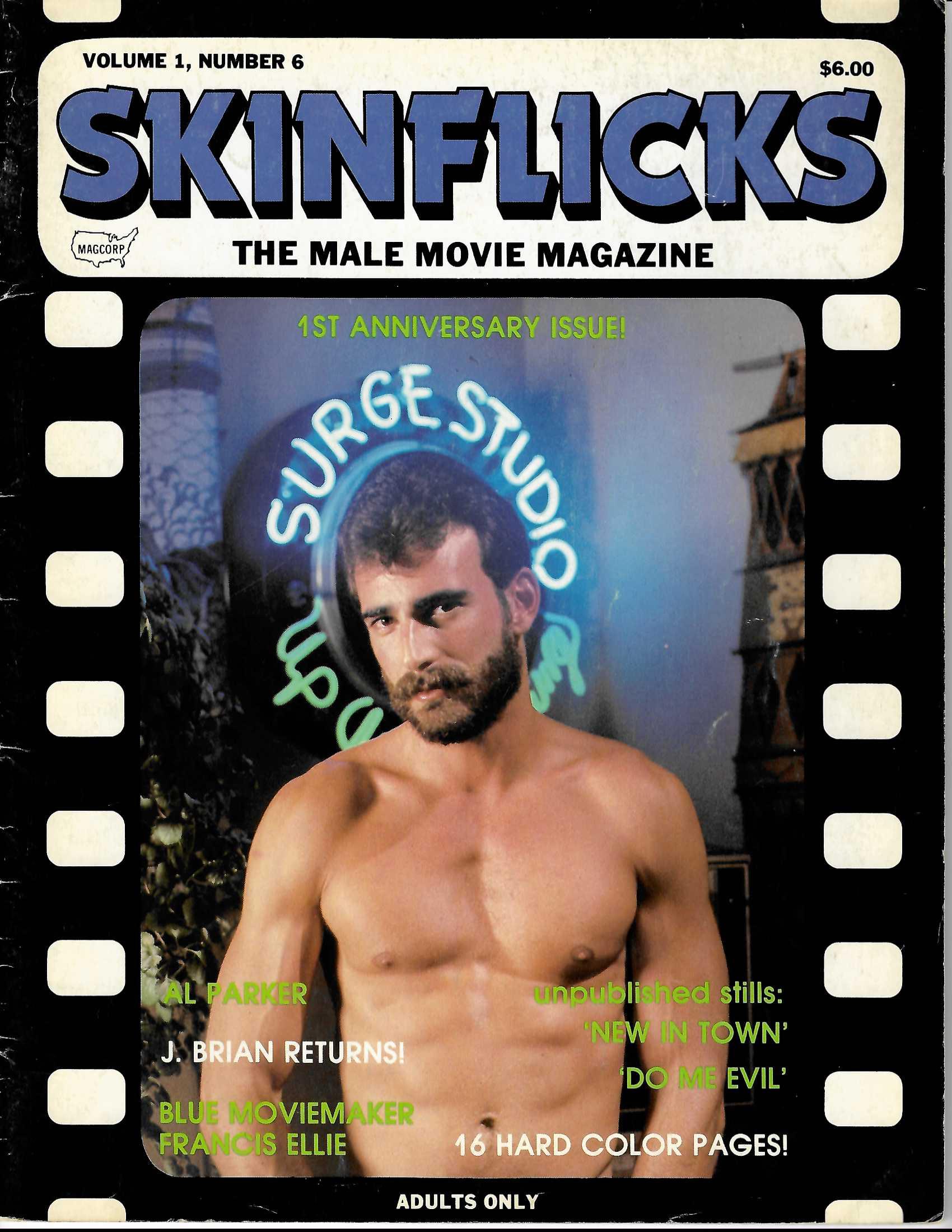
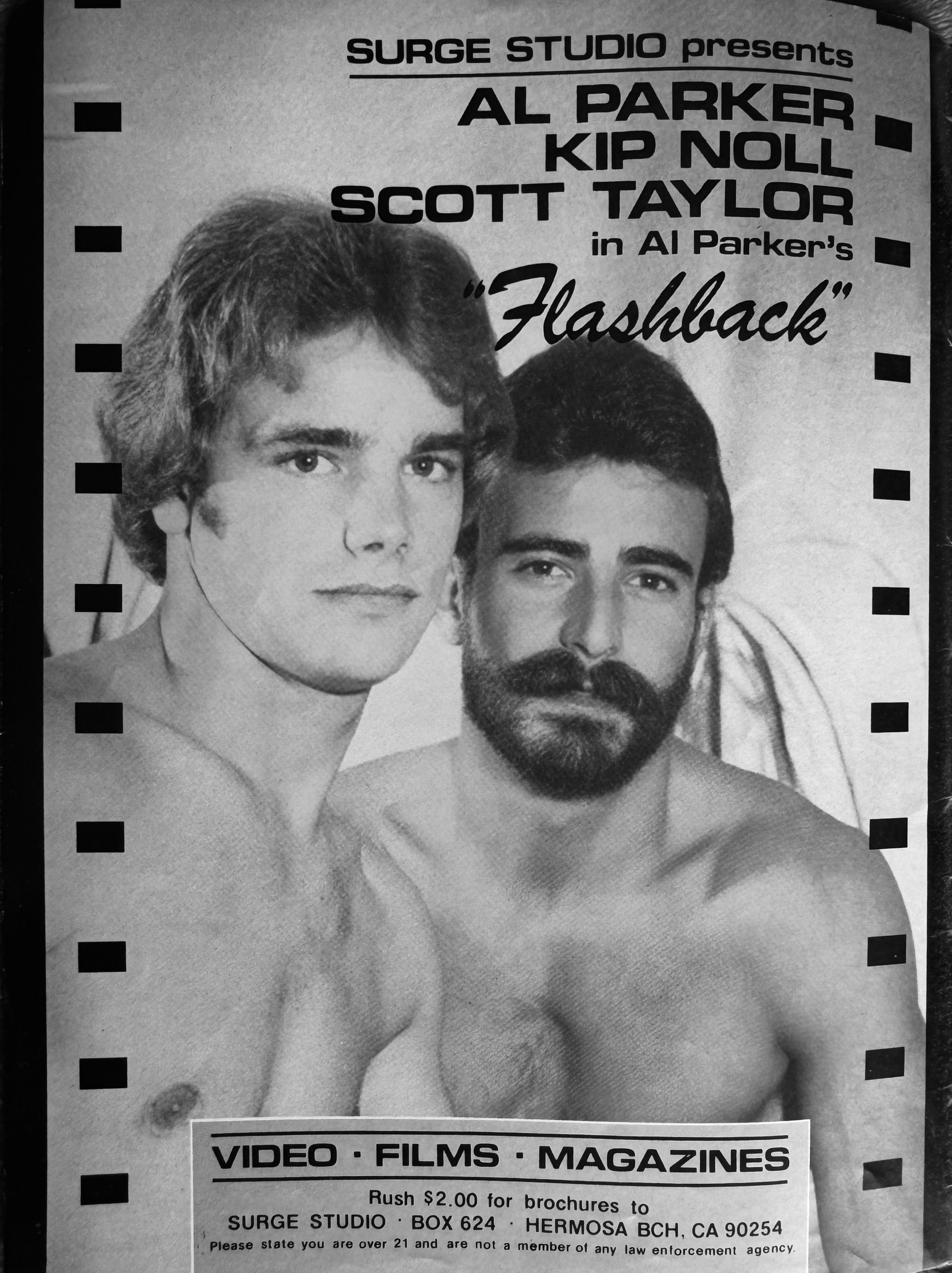
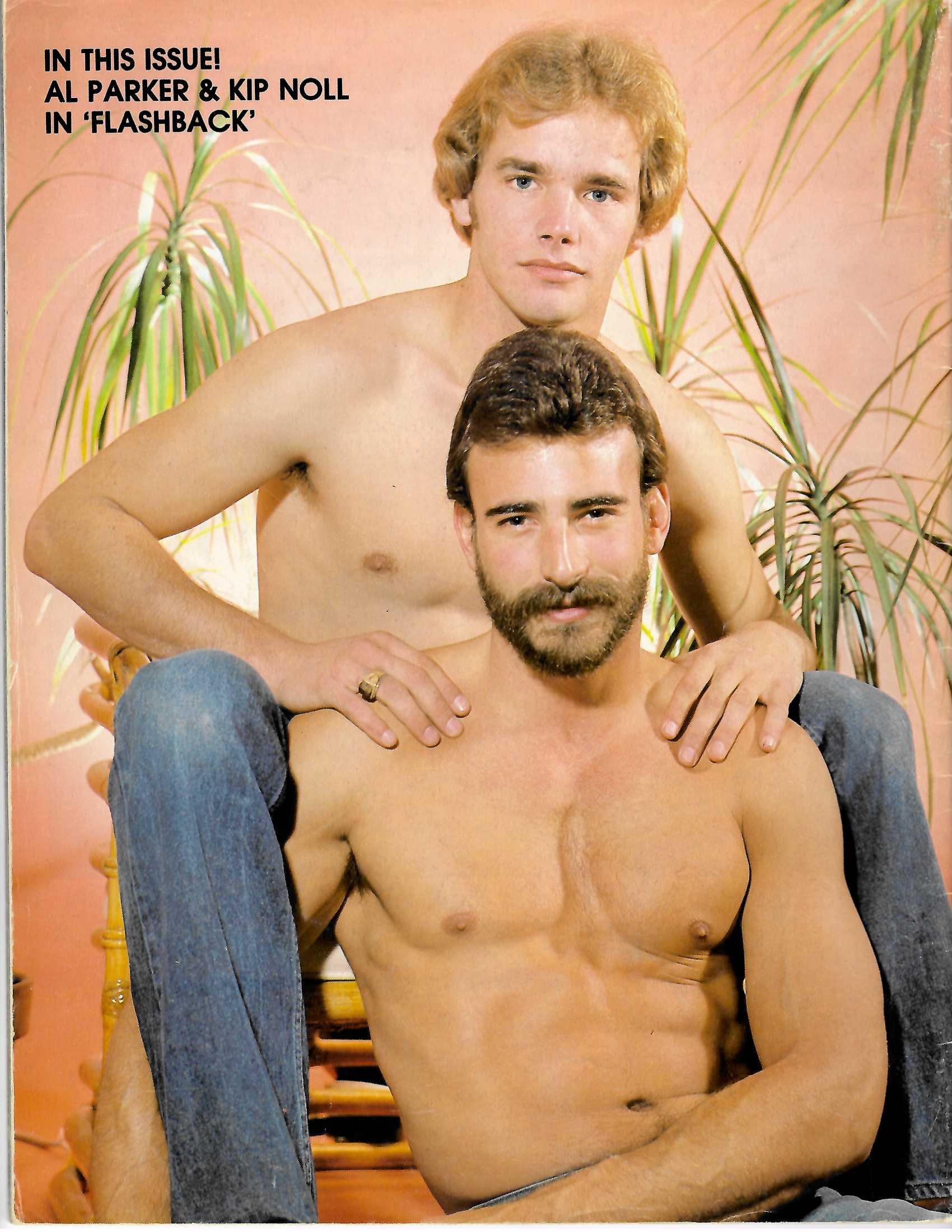
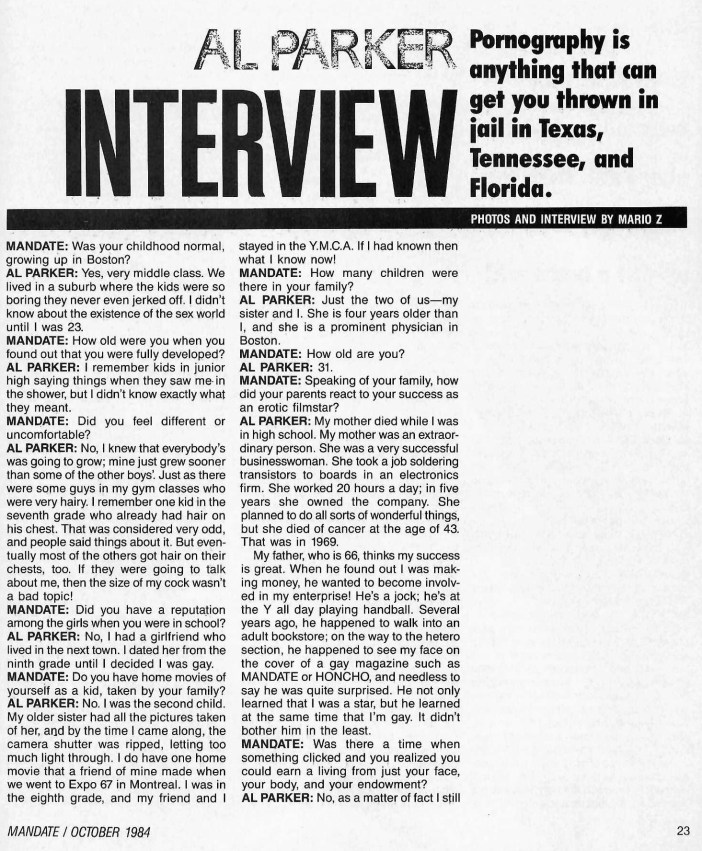
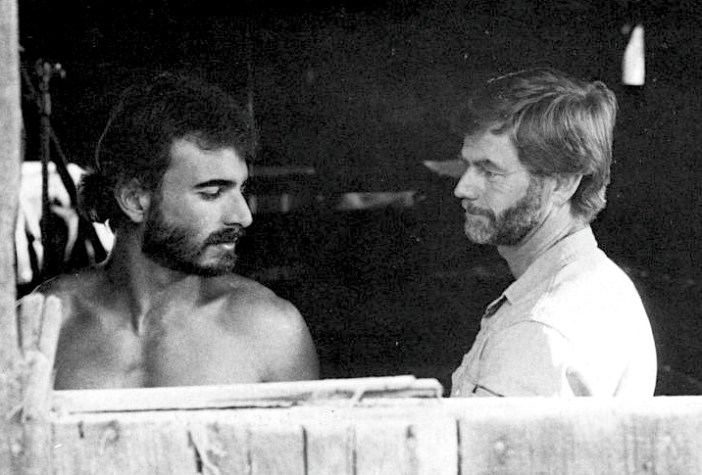
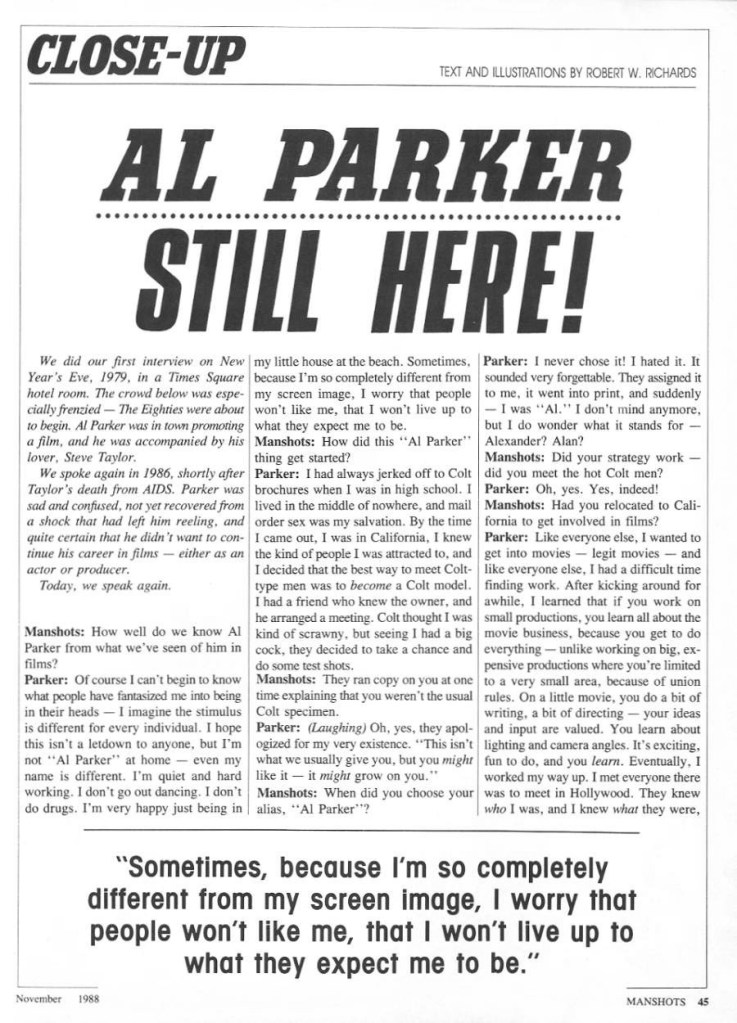
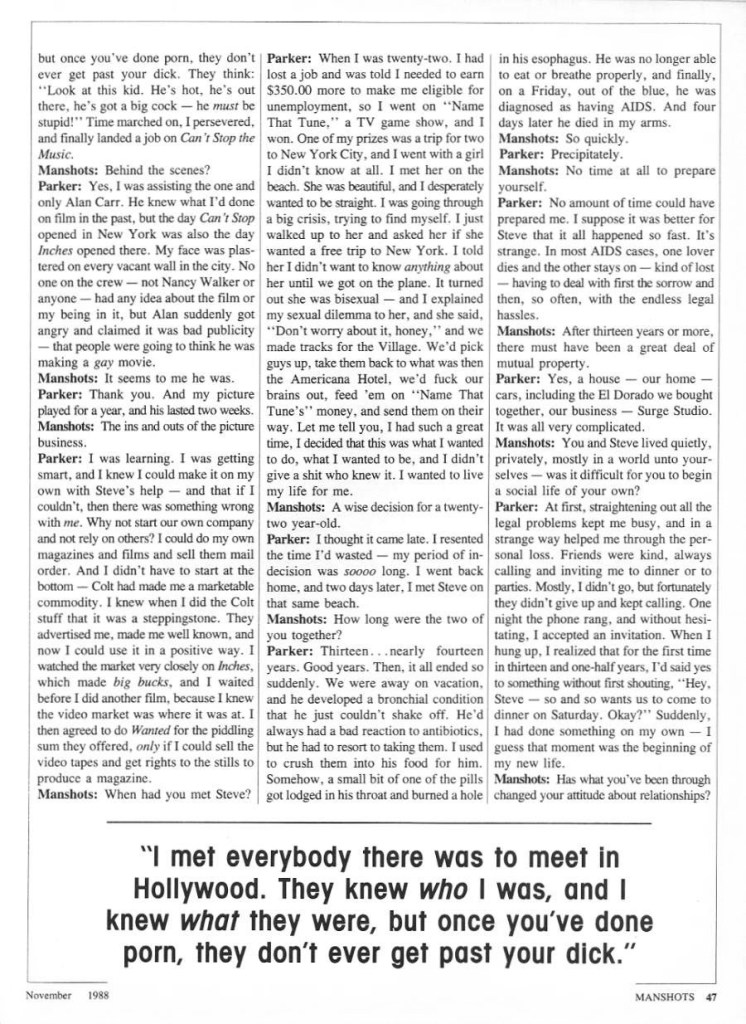
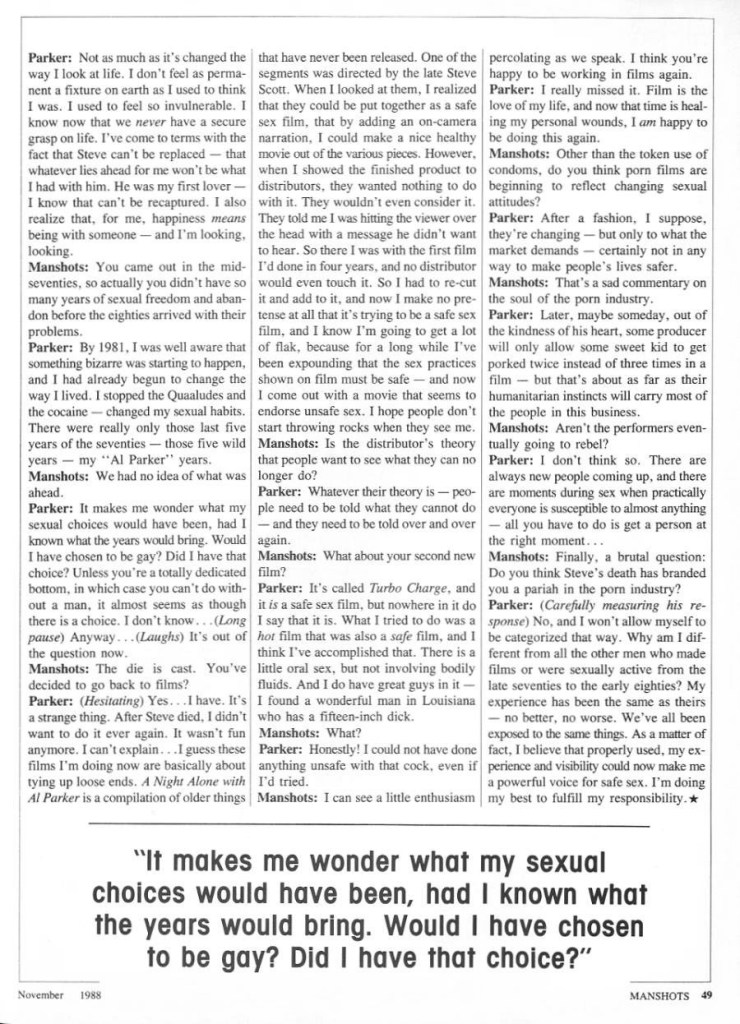
Legendary gay porn star Al Parker holds the #1 spot in Boyculture’s totally unbiased, science-driven list of the top (ahem) 250 Greatest Gay Porn Stars In The History Of Civilization. We only know many of these performers through their film oeuvre and photo layouts, but Al Parker always had a lot to say. In interviews, he seemed to enjoy recounting his sexual exploits as a teenager attending Woodstock, his win on the game show Name That Tune, working behind the scenes on the film Can’t Stop The Music, and running Surge studios with his partner Steve Taylor.
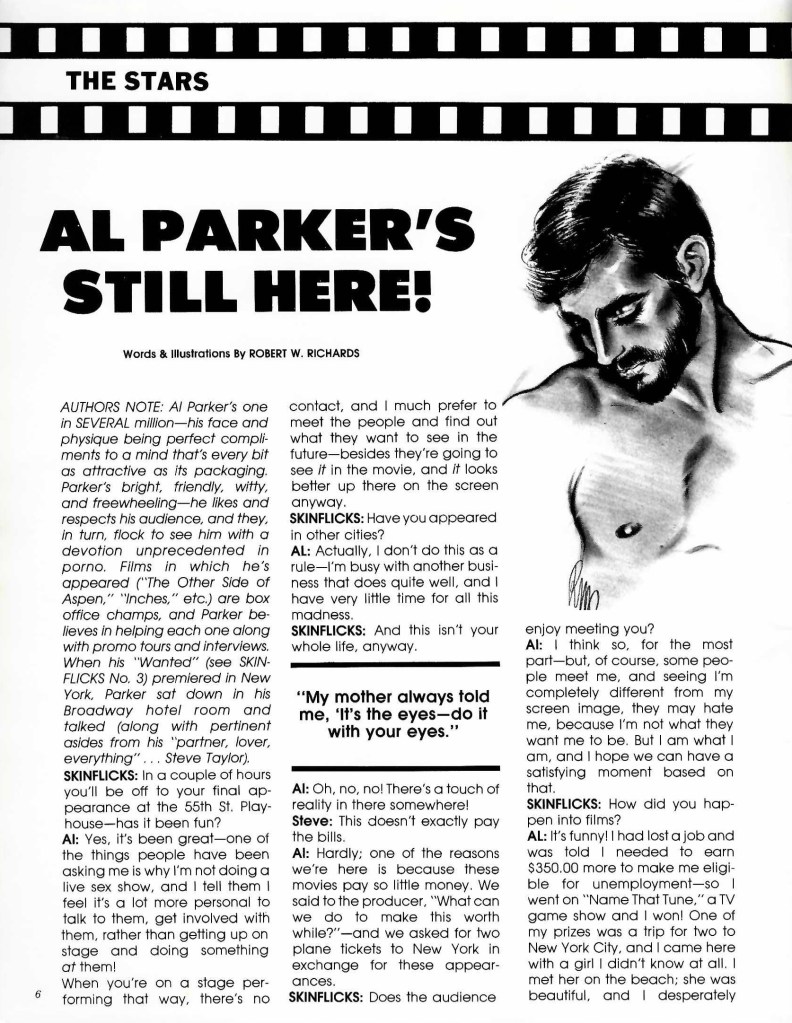
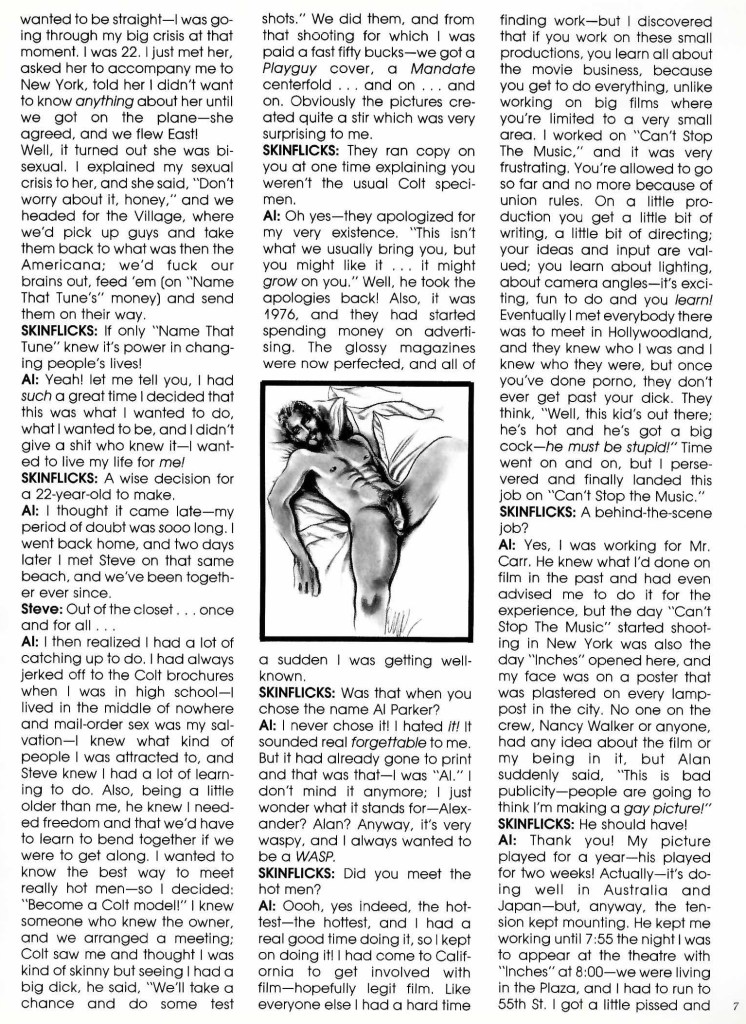
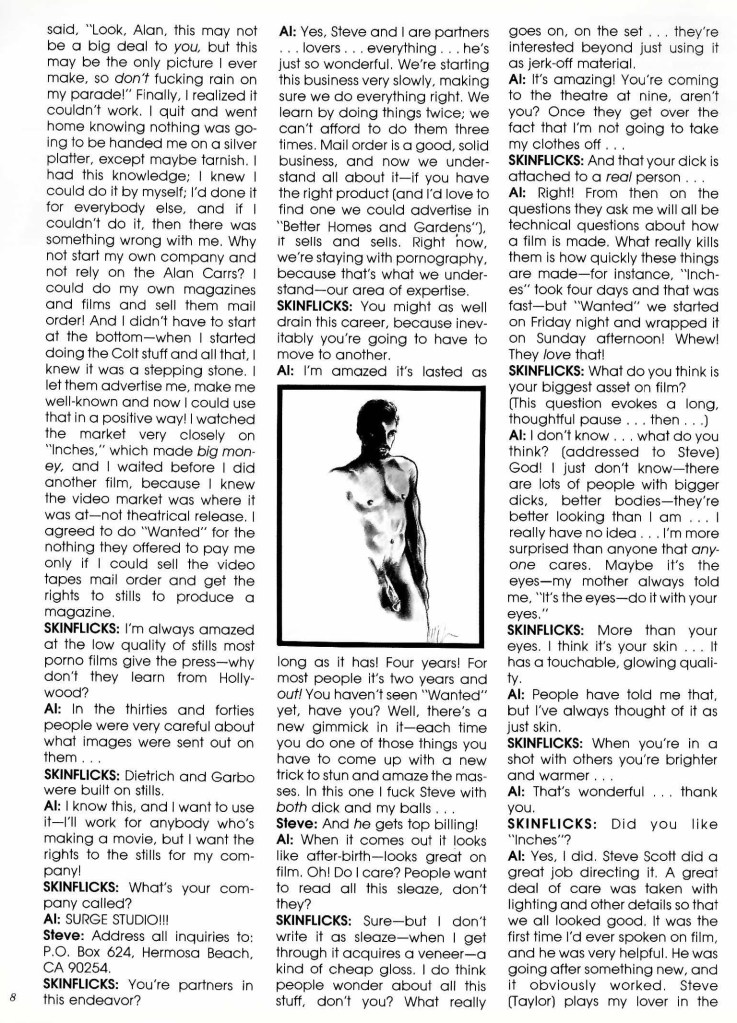
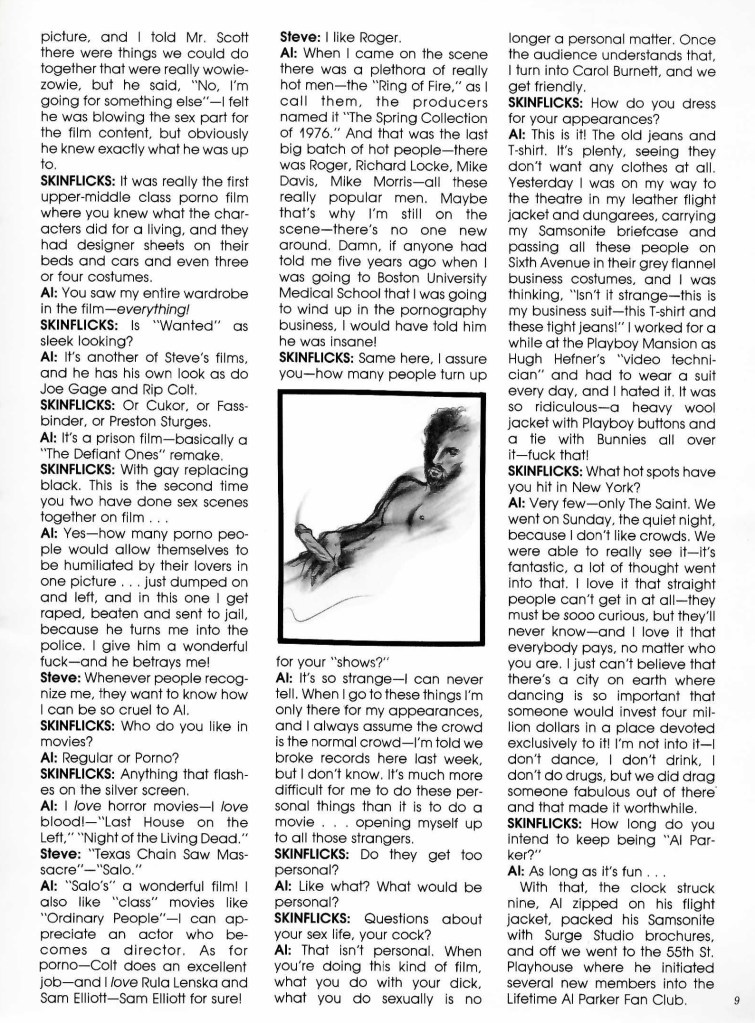
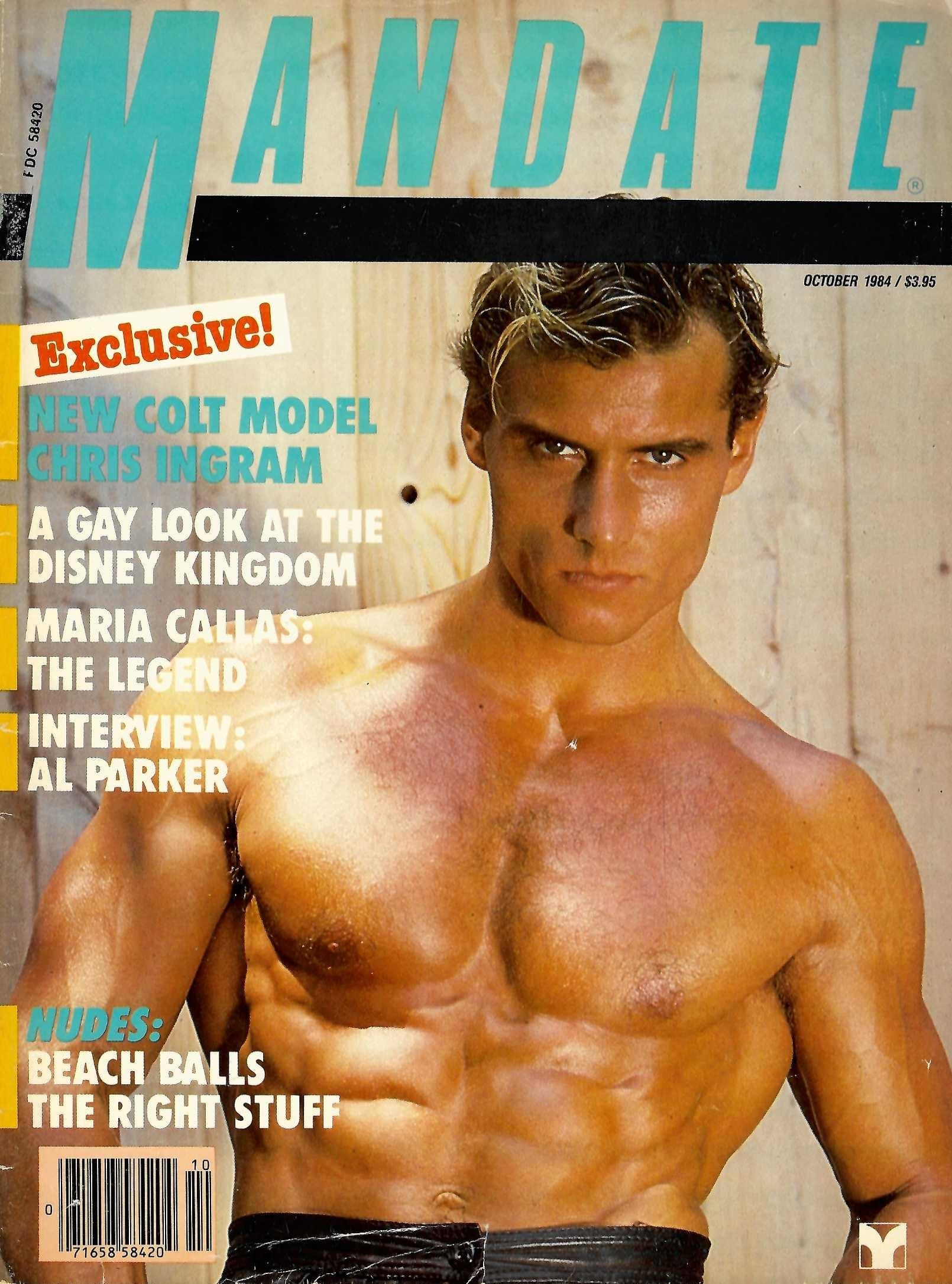
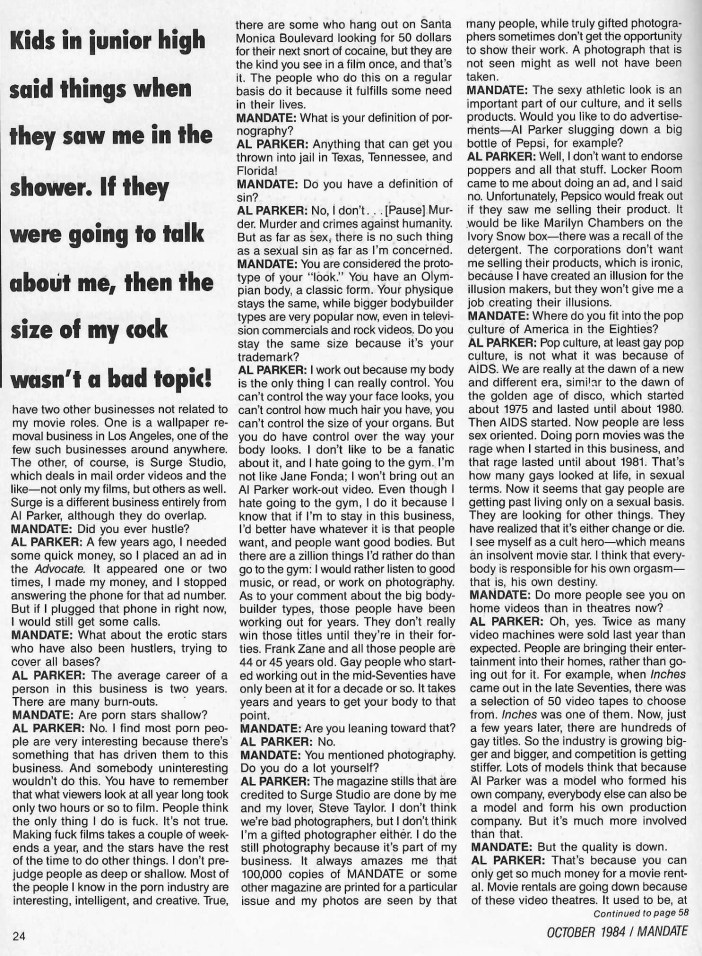
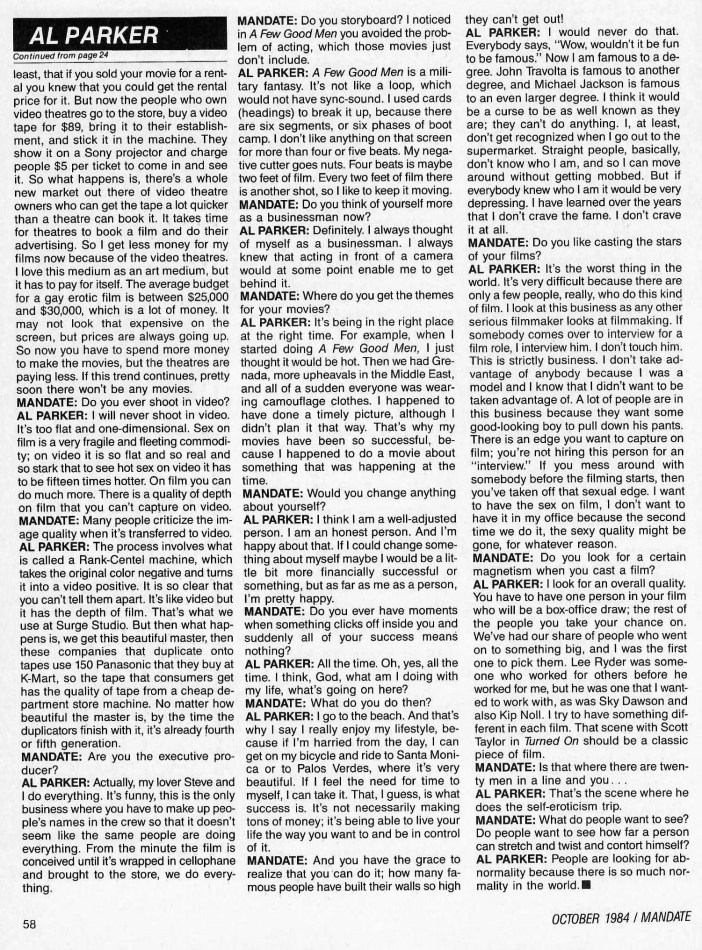
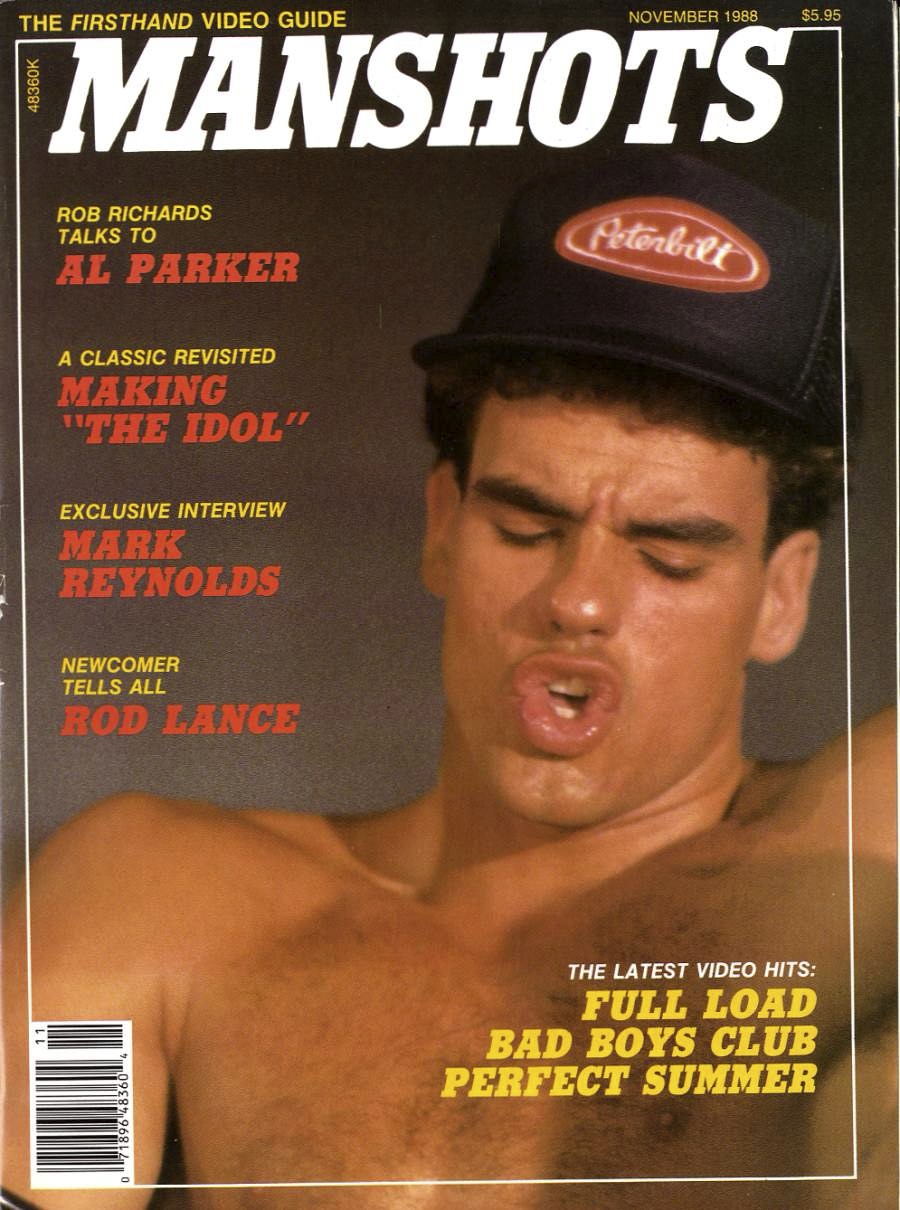
Featured below are three interviews conducted through the 1980’s. The first is from New Years Eve, 1979 and appeared in Skinflicks magazine. At the time, Parker was three years into his adult film career and at the top of his game. Steve Taylor is on hand to offer comments as well. The second interview appeared in the October, 1984 issue of Mandate. Interview #3 is from the November, 1988 issue of Manshots, two years after Taylor had died of AIDS complications.
“Some people meet me, and seeing I’m completely different from my screen image, they may hate me, because I’m not what they want me to be. But I am what I am, and I hope we can have a satisfying moment based on that.”
“… the day Can’t Stop The Music started shooting in New York was also the day Inches opened here, and my face was on a poster that was plastered on every lampost in the city. No one on the crew, Nancy Walker or anyone, had any idea about the film or my being in it…”
“Steve and I are partners… lovers… everything… he’s just so wonderful. We’re starting this business very slowly, making sure we do everything right.”
“My father… happened to see my face on the cover of a gay magazine… needless to say he was quite surprised. He not only learned that I was a star, but he learned at the same time that I’m gay. It didn’t bother him in the least.”
“I see myself as a cult hero – which means an insolvent movie star. I think that everybody is responsible for his own orgasm – that is, his own destiny.”
Al Parker with long-term life partner (and sometime costar) Steve Taylor. Together they founded Surge Studios.
Al Parker was 40 years old when he died of complications from AIDS on August 17, 1992. A biography written by Roger Edmonson, Clone: The Life and Legacy of Al Parker Gay Superstar was published in 2000.