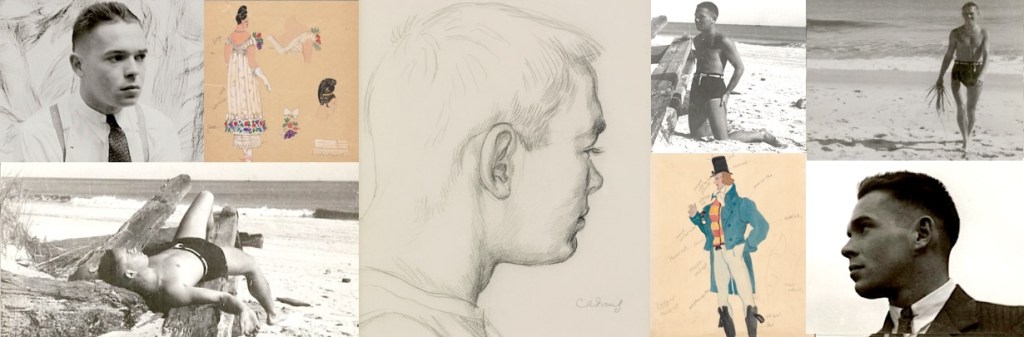
I recently wrote a piece for the Fire Island Pines Historical Preservation Society titled “The Fire Island Muses of George Platt Lynes & The PaJaMa Collective.” It focuses on the subjects of the artwork they created during their time on Fire Island. This is an expansion on one of those profiled: Forrest Thayer.
Including Forrest Thayer in the Artist’s Muse series may seem to be a bit of a stretch. He was not a subject of George Platt Lynes (as far as I know) and was only captured by the PaJaMa photo lens during a short period in the late 1930’s. Nevertheless, the talented costume designer still deserves a mention.
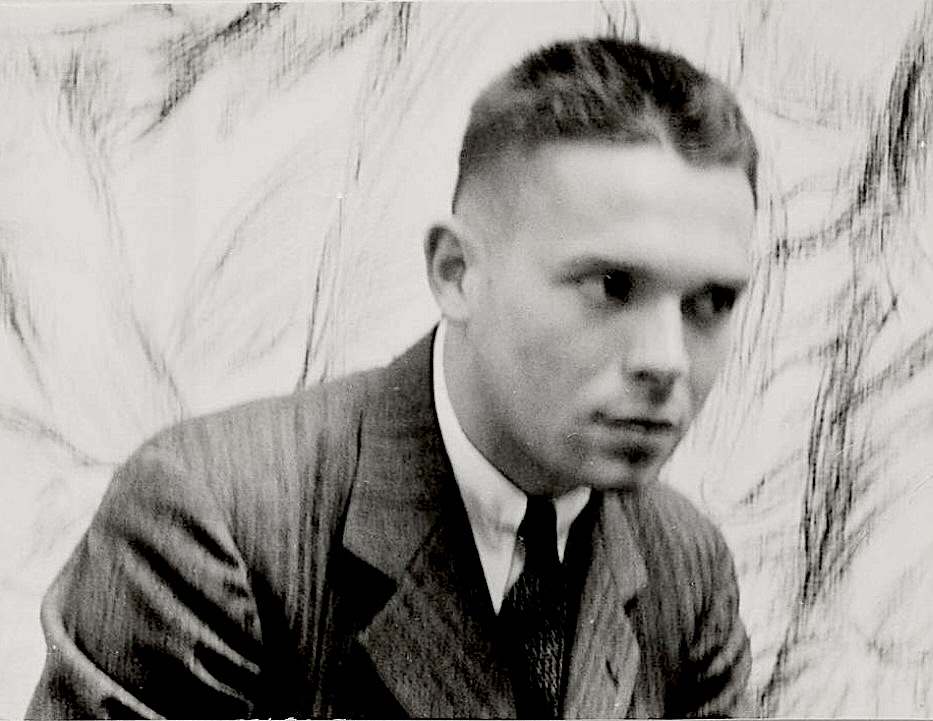

Forrest Thayer photographed in the PaJaMa studios at 5 St. Luke’s Place (1938)
Forrest Glenn Thayer, Jr. was born on May 29, 1916 in Sag Harbor, New York. He was the first child of Forrest and Helen Sigmund Thayer. A younger sister, Helen, was born in 1919. His father was the assistant superintendent of the nearby Fahys Watch Case Factory. He later moved up to superintendent in the early 1920’s.
Both parents were active in the Sag Harbor community, appearing in local stage productions and soloing in the church choir. Mrs. Thayer was also president of the bridge club. When the Fahys Watch Case Factory was sold to Bulova in 1934, Forrest Sr. found work with the Keystone Watch Case Company in New Jersey. He moved to Riverside and would visit his wife and children on the weekends.
Forrest Jr. graduated from Pierson High school in 1933 and went on to study at the New York School of Fine and Applied Arts, now known as Parsons School of Design.
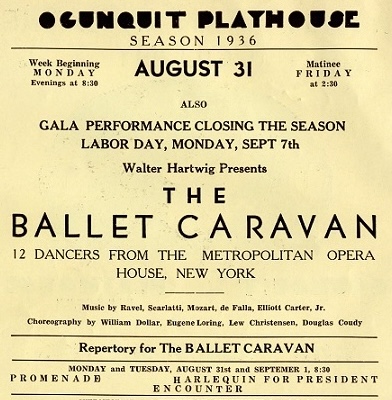
In 1936, Lincoln Kirstein organized Ballet Caravan, a company expressly dedicated to the commission and production of ballets with American themes. These would be created by American composers, choreographers, designers and dancers. The company also provided off-season summer employment for his American Ballet company dancers, which included Kirstein’s paramour, José Martinez.
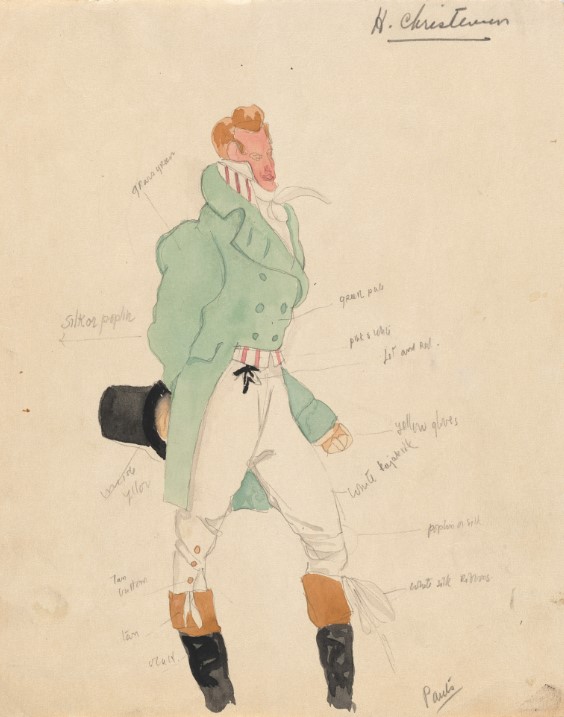
One of dancer William Dollar’s first forays into choreography was Ballet Caravan’s production of Promenade, set to Maurice Ravel’s Valse Nobles et Sentimentales. 20-year-old Forrest Thayer designed the costumes for the production, which featured dancers Eugene Loring and brothers Harold and Lew Christiansen.

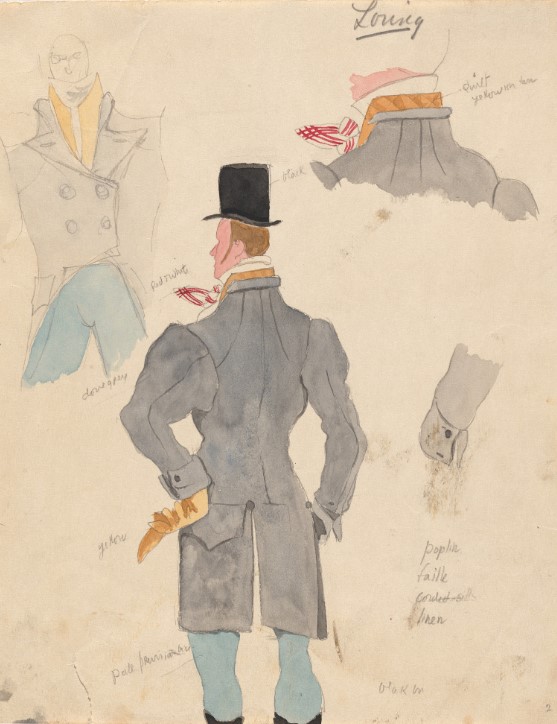
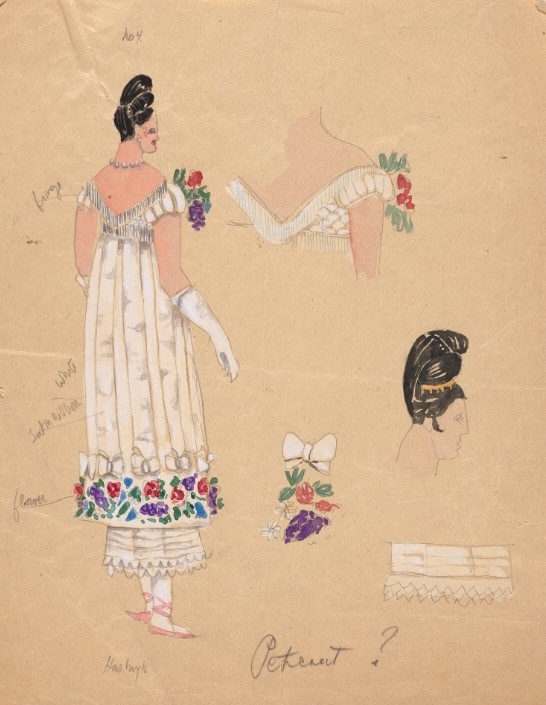


Promenade costume sketches by Forrest Thayer with photos by George Platt Lynes (1936)

Paul Cadmus and Jared French would each take a turn designing sets and costumes for Ballet Caravan: Cadmus with Filling Station (choreographed by Lew Christiansen) in 1937 and French with Aaron Copeland’s Billy The Kid (choreographed by Eugene Loring) in the Fall of 1938. Between those productions, the creative team took a trip out to Fire Island where the PaJaMa collective would retire each summer.


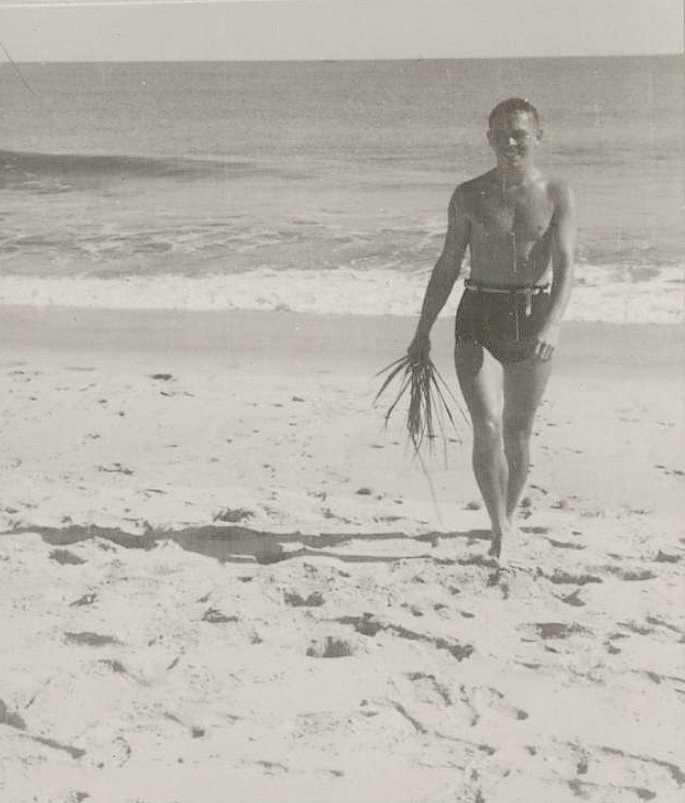

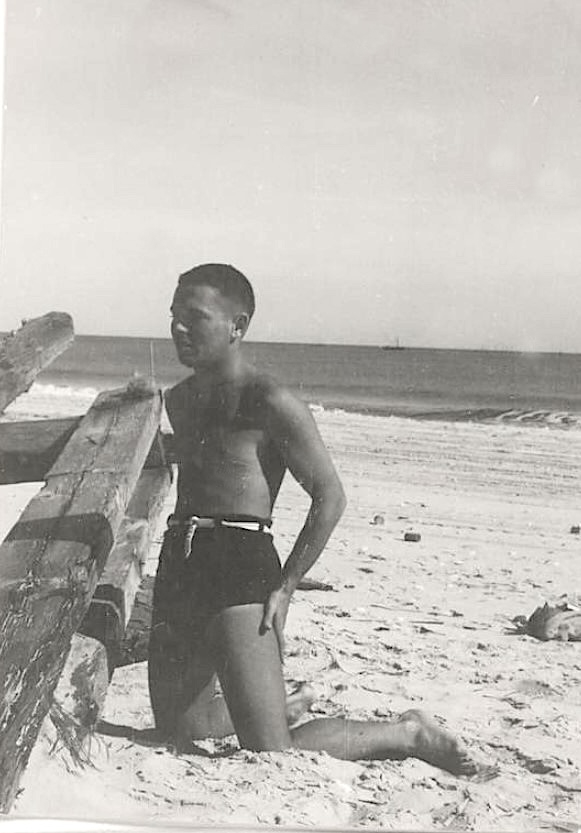
Forrest Thayer frolicking on Fire Island with Paul Cadmus, Jared French and José Martinez (1938)

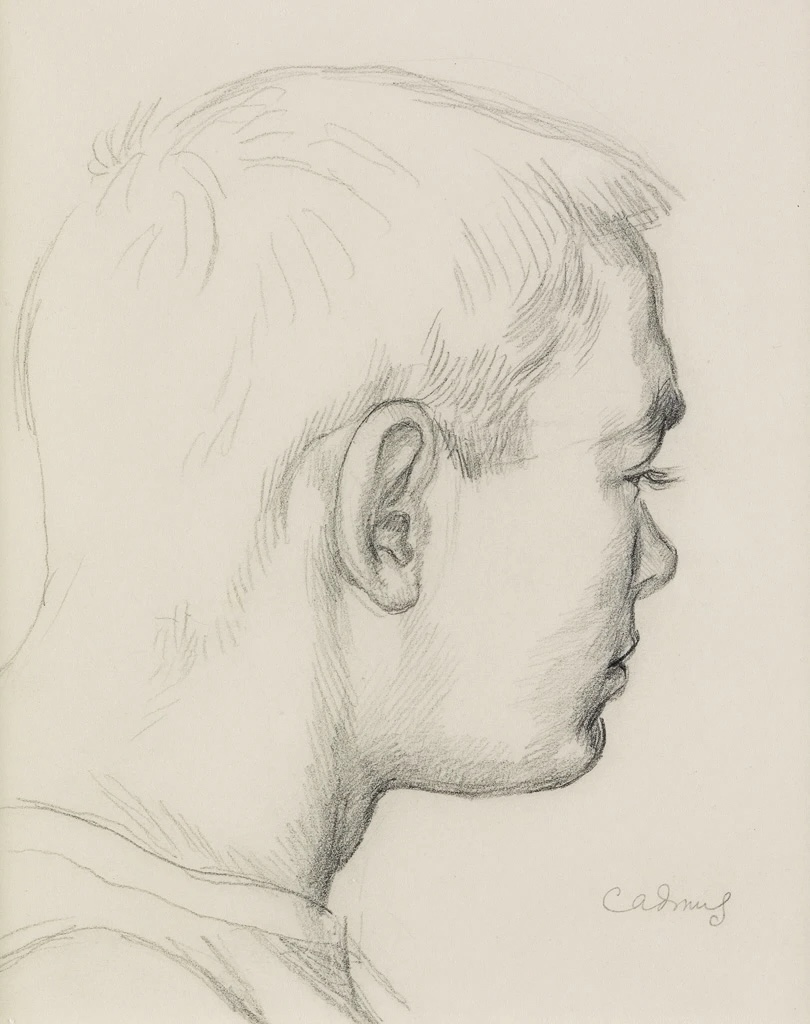
Thayer spent the rest of the summer of 1938 as the scenic designer for the Studio Players in East Hampton, L.I. He continued to find freelance work regionally as a scenic and costume designer. In 1940, he was the scenic designer for the Provincetown Players in New York City. He spent the summer of 1941 working with the Hilltop Players in Ellicot City, Maryland.
During World War II, Thayer served as a staff sergeant in India and Burma from February, 1942 through December, 1945. He landed back in New York after the war and resumed his design career.
In the spring of 1947, Thayer tried his hand at co-directing a revival production of Percy Shelley’s The Cenci at the Equity Library Theater. Reviews were not favorable. During that summer, he directed an adaption of Jean Paul Sartre’s No Exit for the Maverick Players in Woodstock, New York.

Back in New York City, his work with wardrobe continued. Over the next 5 years, he was a part of the following productions:
1947 – Crime And Punishment – Broadway with John Geilgud & Lillian Gish (assistant to Costume Designer Lester Polakov)
1948 – Inside U.S.A. – Broadway (assistant to costume designer Eleanor Goldsmith)
1948 – Cole Porter’s Kiss Me Kate – Broadway (assistant to costume designer Lemuel Ayers)
1949 – Noel Coward’s Present Laughter tour starring Edward Everett Horton (costume design)
1949 – The Philadelphia Story tour (costume design)
1949 – Garson Kanin’s The Smile Of The World – Broadway with Ossie Davis & Ruby Dee (costume design)
1950 – Cole Porter’s Out Of This World – Broadway (assistant to costume designer Lemuel Ayers)
1950 – Garson Kanin’s The Live Wire – Broadway (costume design)
1950 – The Jack Carter Show – NBC Television (costume design)
1951 – Music In The Air – Broadway (assistant to costume designer Lemuel Ayers)
In the fall of 1951, a week before the Broadway opening of Music In The Air, Thayer drove out to Sag Harbor for a visit with his mother. Wherever his career took him, he made frequent return visits to the family home on Jermain Avenue. He spent the evening of Saturday, September 29th in East Hampton visiting friends. As he was driving back to Sag Harbor in the early morning hours of Sunday, September 30th, he was involved in a single car accident. It was reported that he fell asleep at the wheel and struck a tree. He died the next day at Southampton Hospital.

The Thayer home is just a half mile down the road from Oakland Cemetery. Forrest’s funeral was held at the house, and he was interred with military honors at the cemetery. His parents are now buried there with him.


See also:
Fire Island PaJaMa Party
Provincetown PaJaMa Party
Artist’s Muse: José “Pete” Martinez
Artist’s Muse: Chuck Howard
Artist’s Muse: Randy Jack
Artist’s Muse: Ted Starkowski
Artist’s Muse: The Mystery Model
Artist’s Muse: Donald Windham & Sandy Campbell
Artist’s Muse: Wilbur Pippin
George Platt Lynes: In Touch Magazine (1982)
Fire Island Muses of George Platt Lynes & The PaJaMa Collective
Revisiting George Platt Lynes’ Fire Island Muses




 Brian Ferrari's Blog