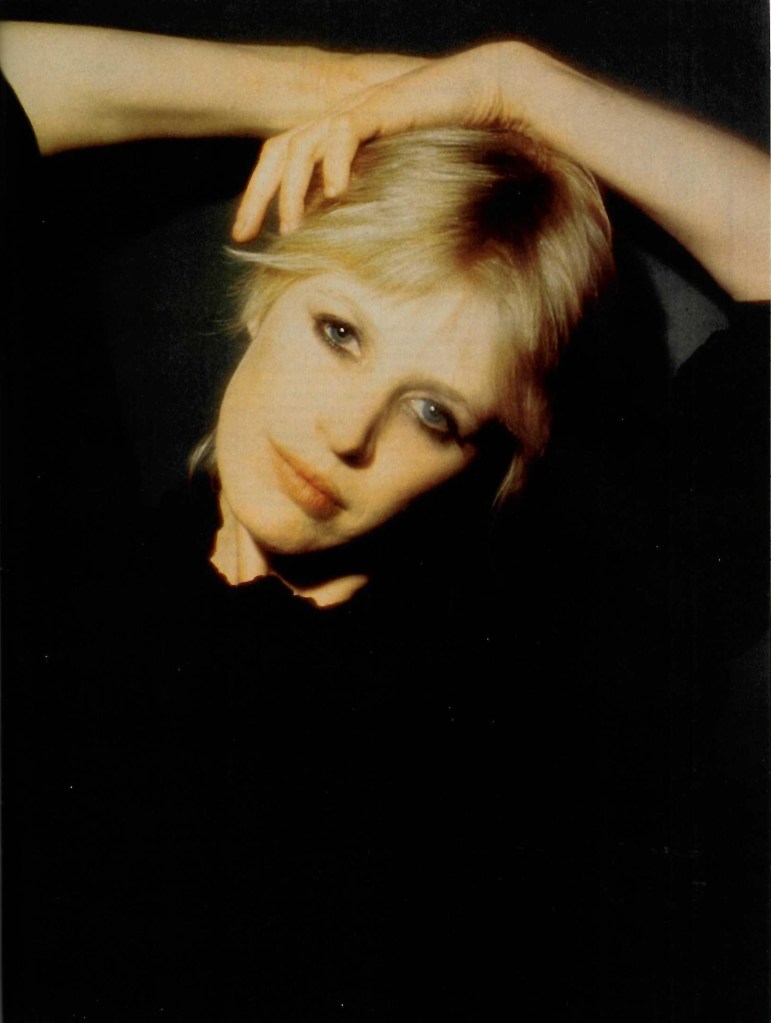
“Like an apparition of decadence and dissipation, she is an all too appropriate picture of innocence fallen prey to the evils and excesses of that most glamorous unholy trinity – drugs, sex and rock-and-roll.”
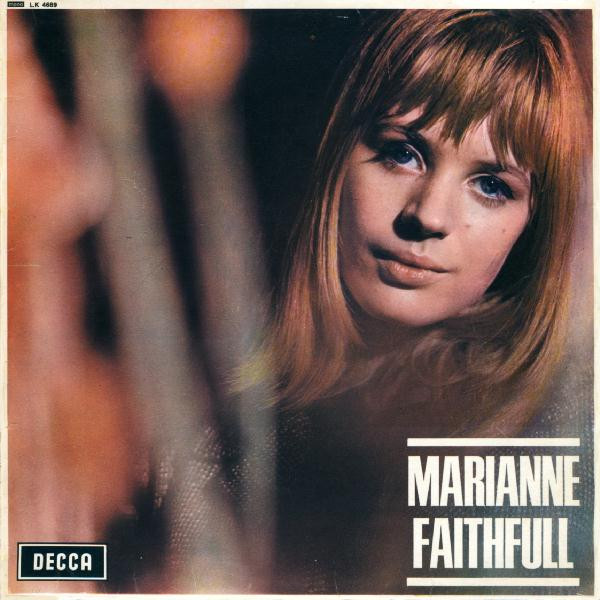
Depending on your calculations, Marianne Faithfull was entering the second or third act of her career when she was featured in the March, 1980 issue of After Dark magazine. The willowy chanteuse first achieved fame as part of the British Invasion with her 1964 hit “As Tears Go By,” a song written by Mick Jagger and Keith Richards. She worked her way through the Rolling Stones – first with Brian Jones, then Richards and finally Jagger, to whom she was linked romantically through rest of the 1960’s.
Faithfull’s singing career waned as she transitioned into acting roles. She was a poster child for the swinging London set, and then a cautionary tale of its excesses. By the early 1970’s, her career had been eclipsed by a series of scandalous headlines detailing drug use, breakdowns, arrests, and then homelessness. She eventually kicked her heroin habit, although complete sobriety continued to be elusive. A foray into country music in 1976 was not well received.
In the beginning… Marianne Faithfull sings “As Tears Go By” (1964)
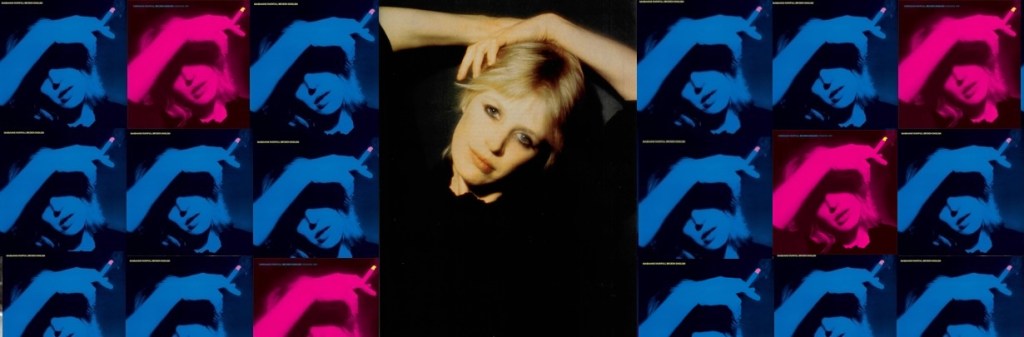
Then came the critical and commercial success of Broken English – her 1979 LP proved to be her definitive album. She emerged like a phoenix from the ashes of the 1970’s with a punk-infused declaration that she still had something to say. How she chose to say it – with explicit lyrics that got the album banned in several countries – certainly didn’t hurt her reputation as a rock and roll survivor.
The Guardian revisited the album in a 2013 review, with Alexis Petridis writing “…her husking vocals on Broken English seemed not merely ravaged, but imperious and defiant with it, a sensation heightened by the arrangements her rasp was set against… she sounded like she was telling someone to go fuck themselves even when she wasn’t.”
It doesn’t bode well that writer Brant Mewborn begins the After Dark feature with the observation, “Marianne Faithfull is nodding out.” She’s recovering from a car accident and exhausted from a European publicity tour. “Marianne seems overworked and over-sedated. She’s obviously not ready for an interview, and I’m definitely not ready to play interrogating nursemaid to a strung-out girl who may need to publicize her reemerging career but could use a bed even more.”
One can’t help but wonder if the reporter would have been as forthcoming if he was describing Mick Jagger or Keith Richards in such a state. But that holds true for most of the judgement hurled at Faithfull throughout her career.
She does pull it together though, and Mewborn later describes her as “surprisingly candid and coherent.”
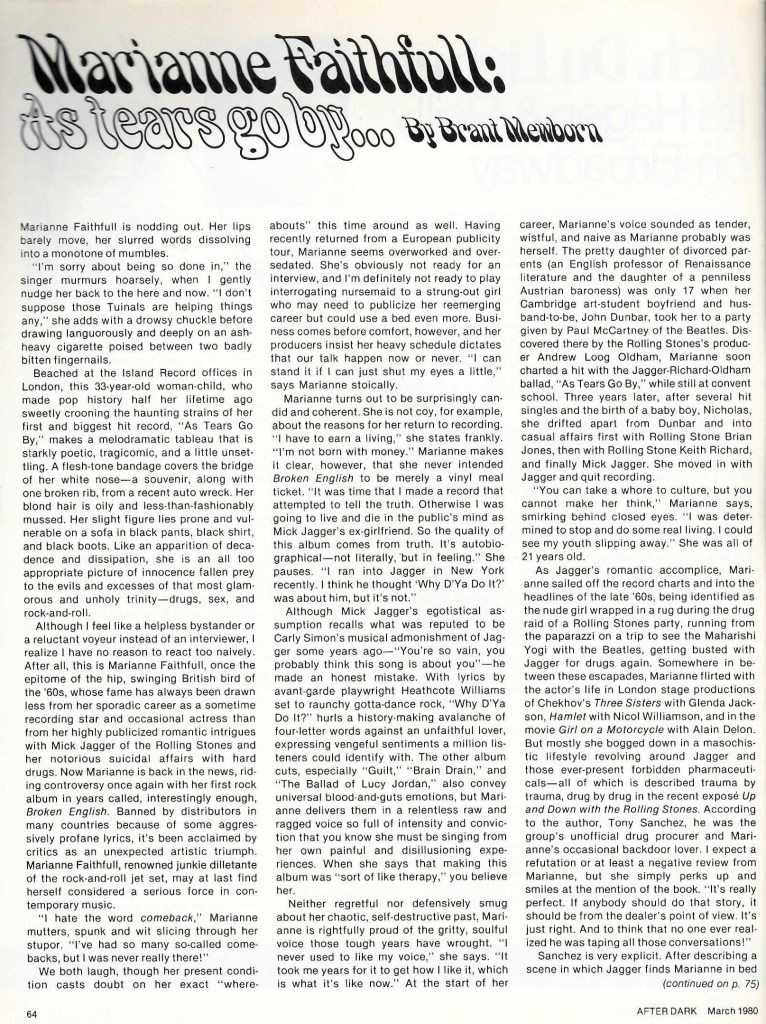
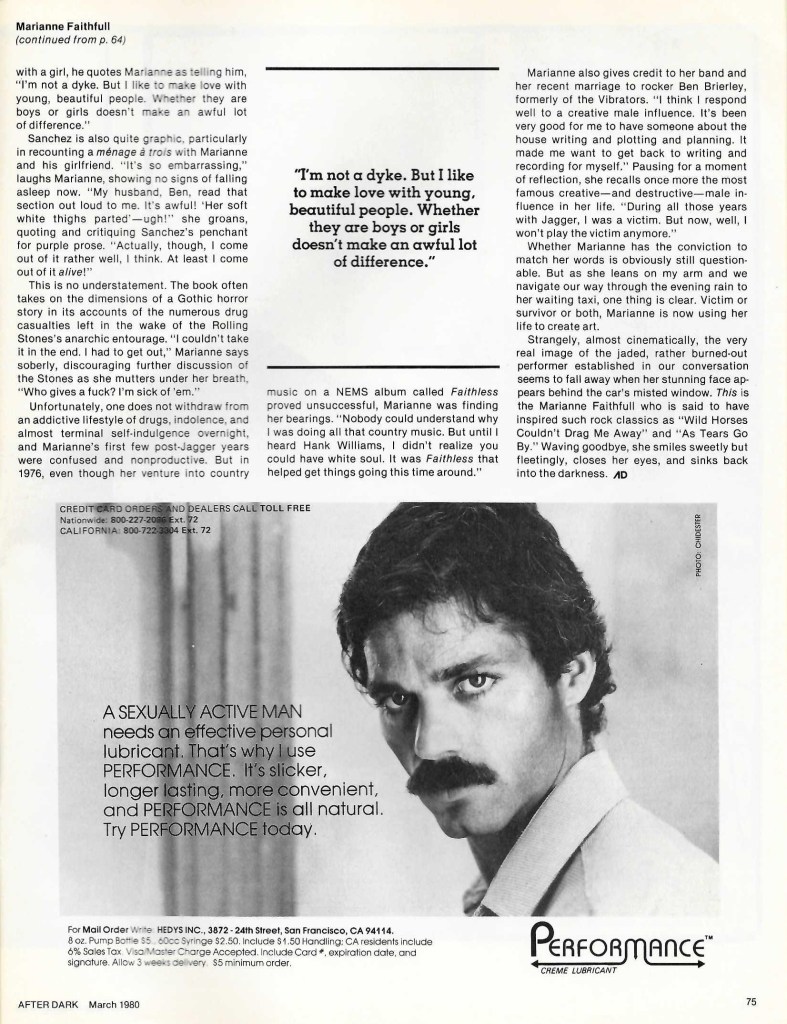
It’s interesting to note that one of the quotes highlighted in the article is “I’m not a dyke, but I like to make love with young beautiful people. Whether they are boys or girls doesn’t make an awful lot of difference.” This is actually attributed to Faithfull in the lurid tell-all Up And Down With The Rolling Stones, a book purportedly written by the band’s drug dealer Tony Sanchez but ghost written by British music journalist John Blake. In any case, she does not confirm or deny the quote here.
Reporter Brant Mewborn went on to become a senior editor at Rolling Stone magazine. He was just 38 years old when he died in 1990. Marianne Faithfull passed away at age 78 in January, 2025.
Broken English is also the title of a new documentary about Marianne Faithfull. The film screened at the Venice Film Festival and will have a theatrical release in the UK later this month. Read more about it here.
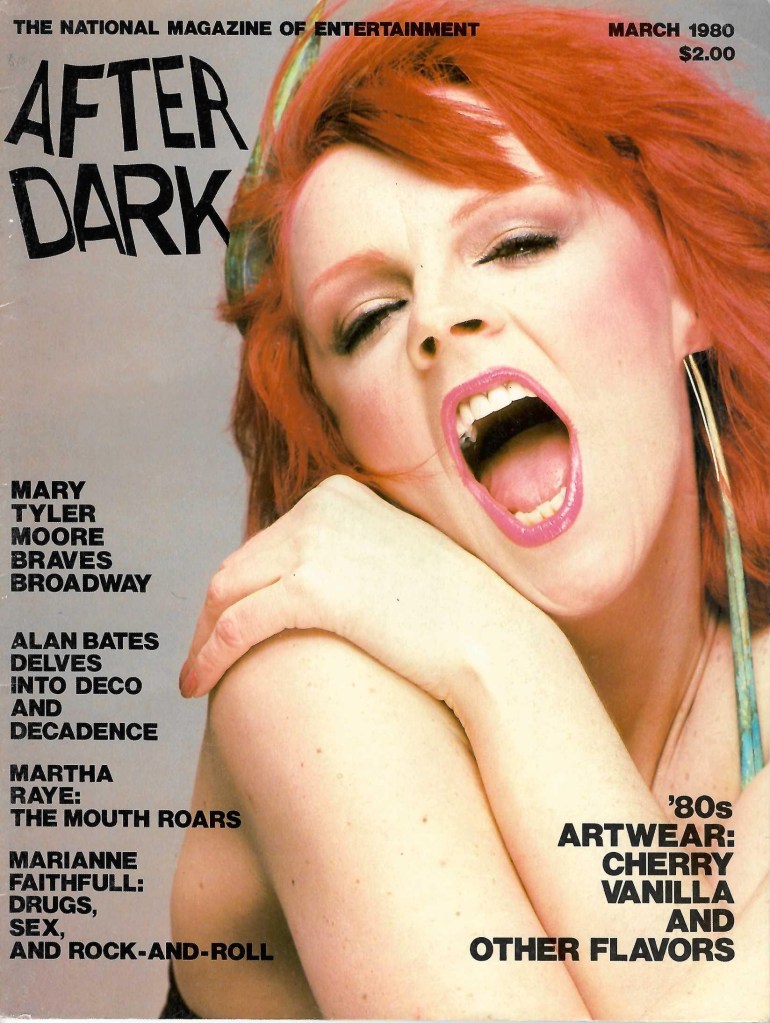
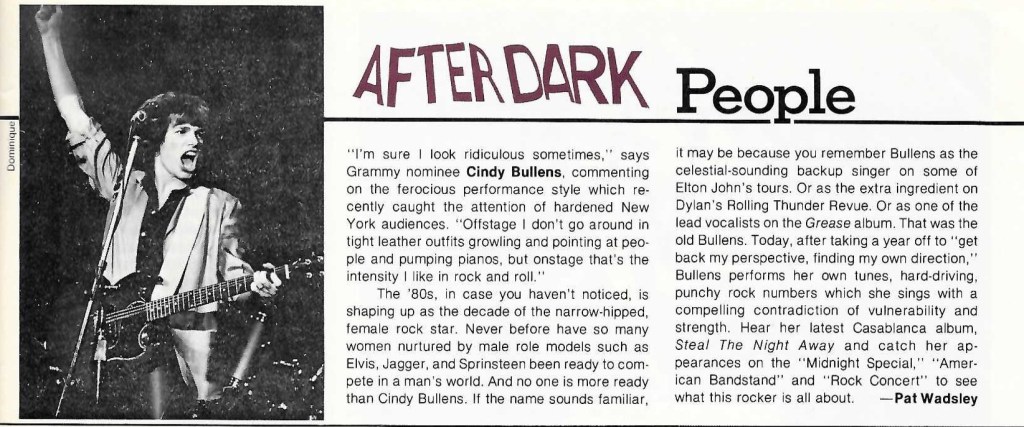
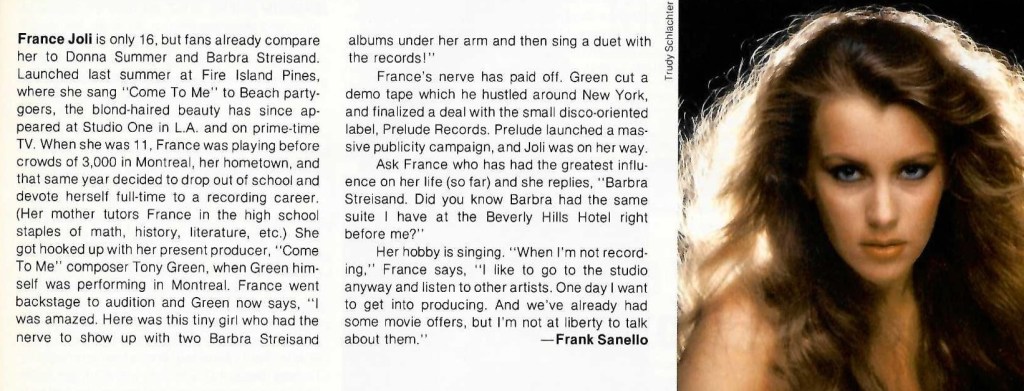
Two other singers featured elsewhere in this issue of After Dark: Cindy Bullens and France Joli.
Although Bullens put out a dozen LPs throughout her career, she is probably best known for her contributions to the 1978 Grease motion picture soundtrack, singing “It’s Raining On Prom Night” and “Freddie My Love.”
Bullens came out as transgender in 2012 and is now known as Cidney. See a recent interview posted below:
A 2023 interview with Cidney Bullens:
France Joli had just turned 17 years old when this issue of After Dark hit the stands. She was still riding high on the strength of her debut LP and the disco hit “Come To Me.” Her performance the previous summer in the Fire Island Pines is the stuff of legend and previously covered here in New York City In Touch (1979).
See Also:
Ronnie Spector – Siren (1980)
Debbie Harry At The World (1989)
New York City In Touch (1979)
Sheena Is A Grandmother
Ronnie, Rosa & Wanda: Girl Group Heaven
Tina Turner: 12+ Cover Songs You May Have Missed
Etta James: Advertising Zombie
You Know The B-52’s Song “Roam” Is About Butt Sex, Right?
10 Forgotten Cher Moments
12 (More) Forgotten Classics By New Wave Ladies
Dusty Springfield Sings Kate Bush
 Brian Ferrari's Blog