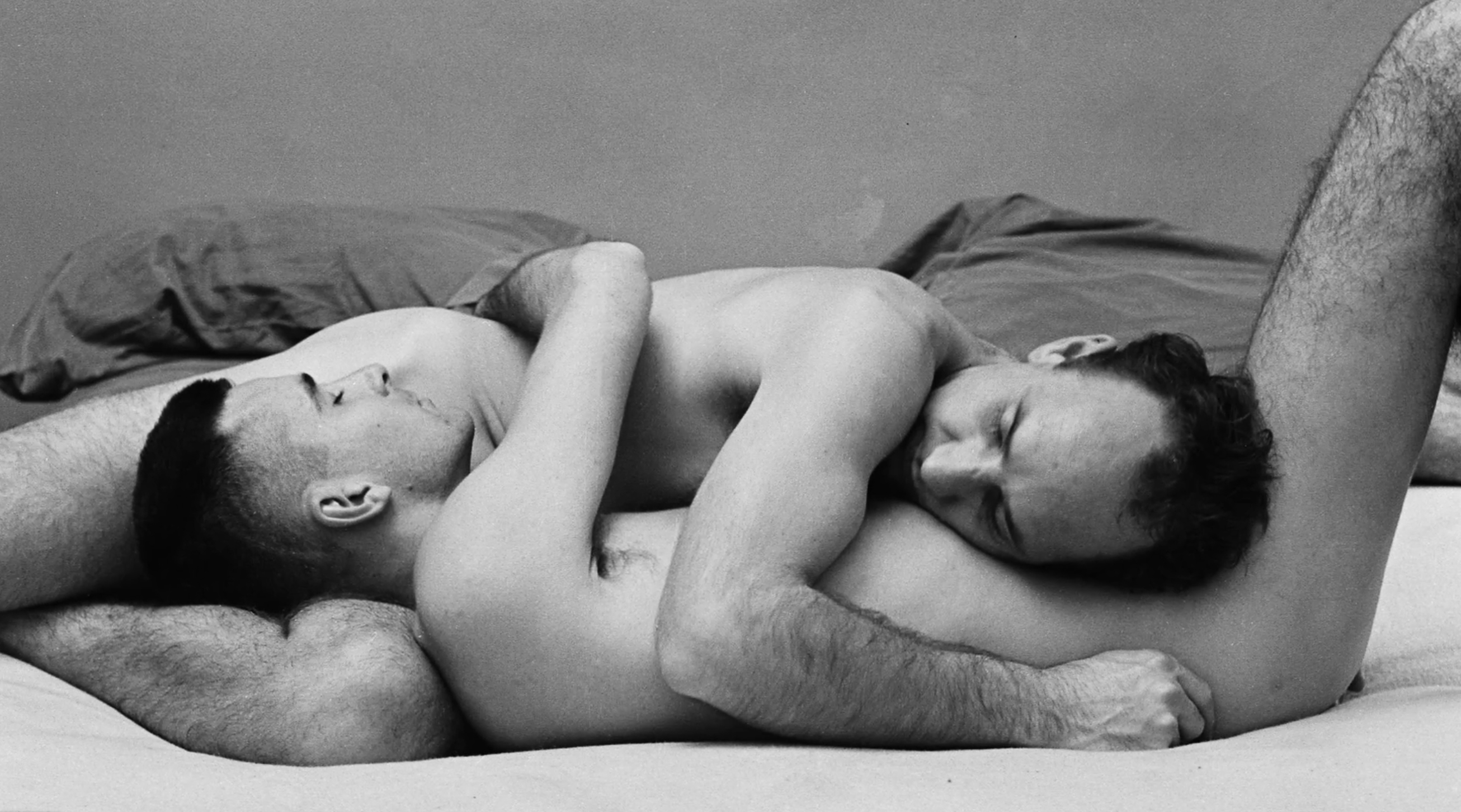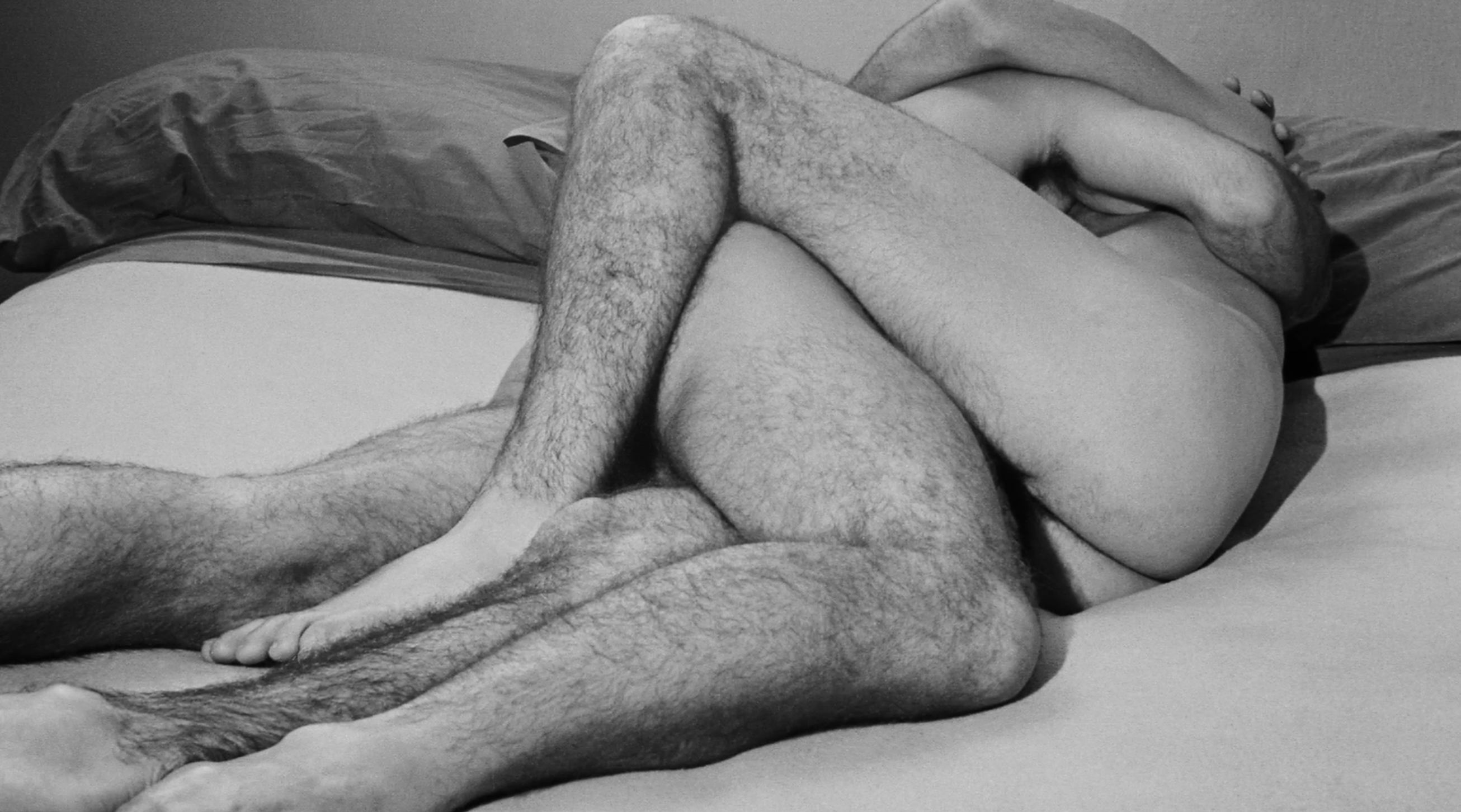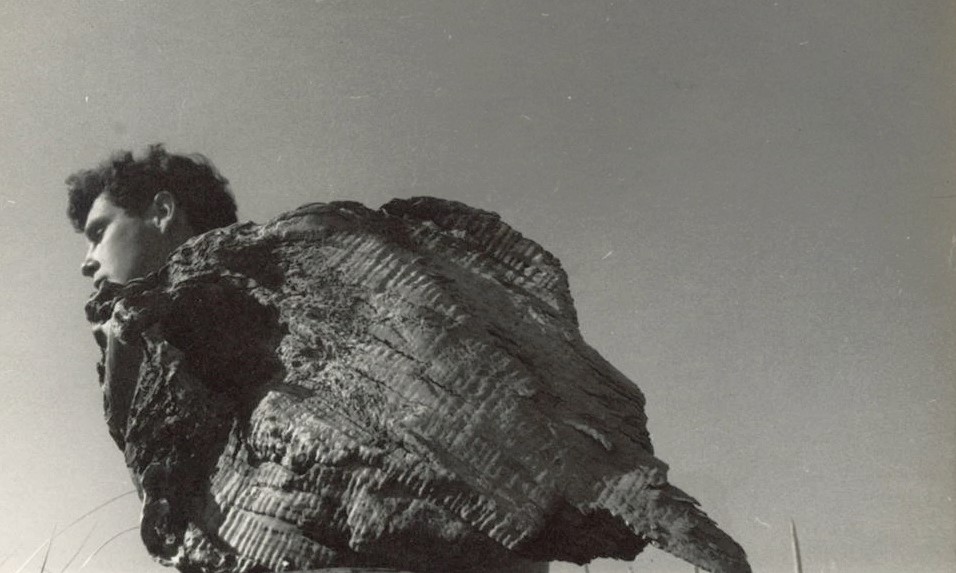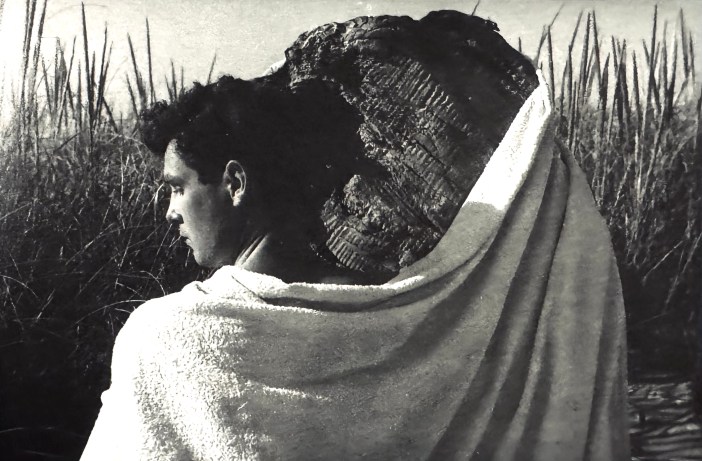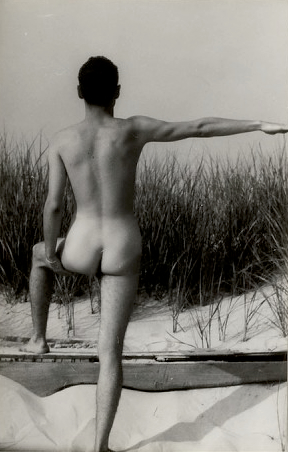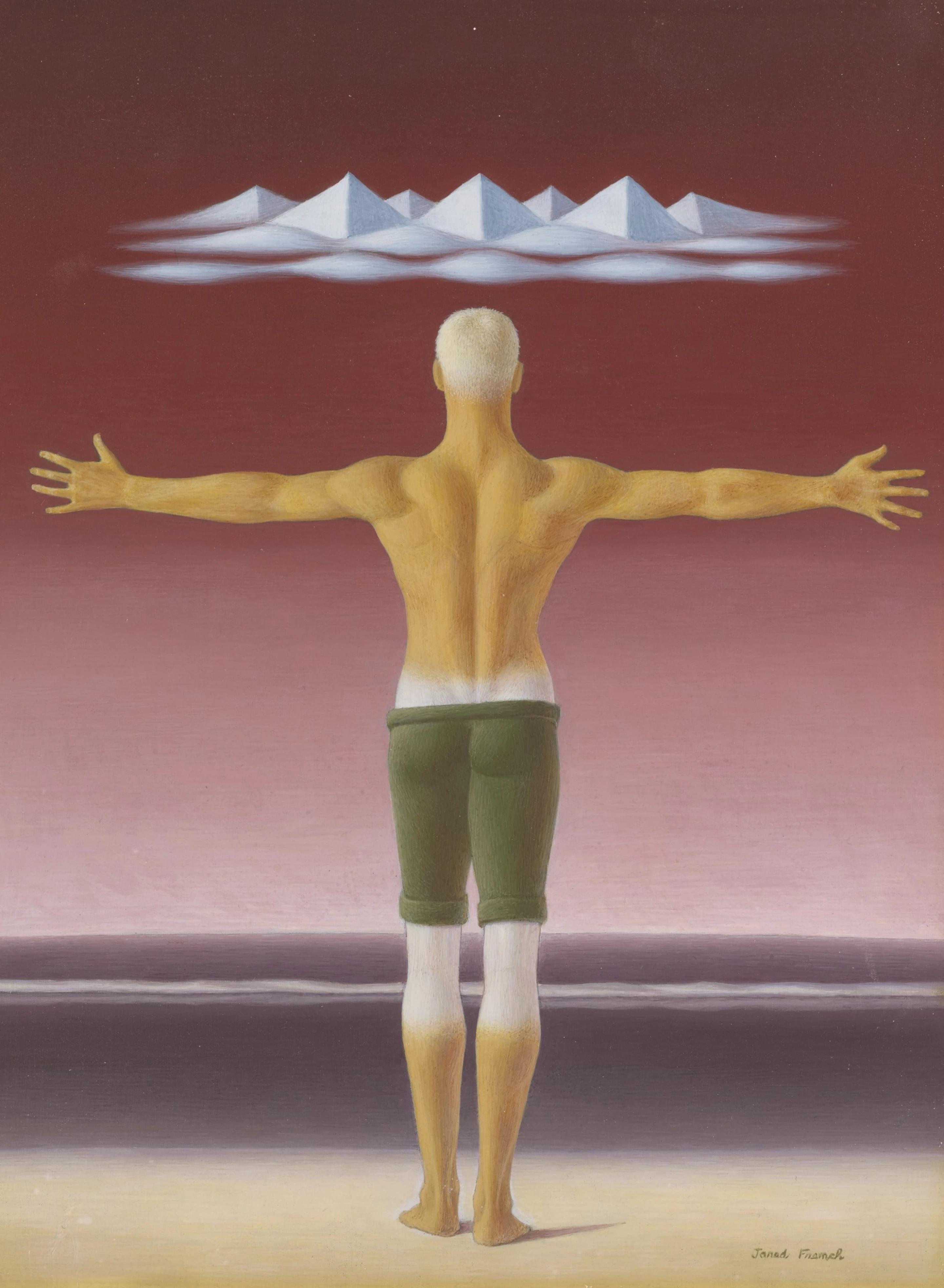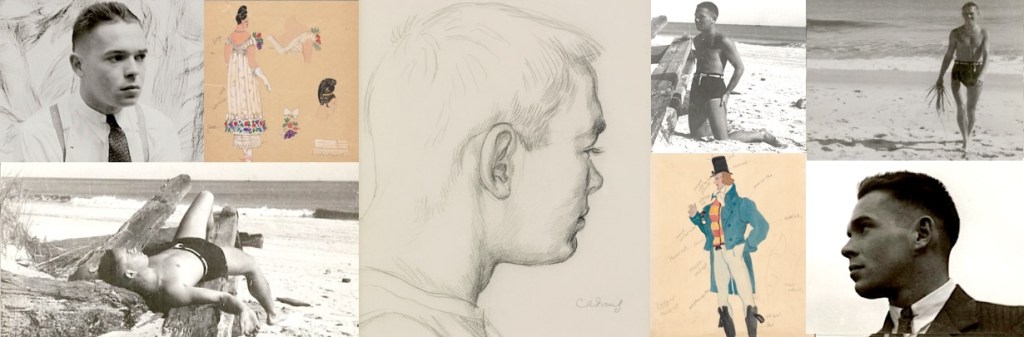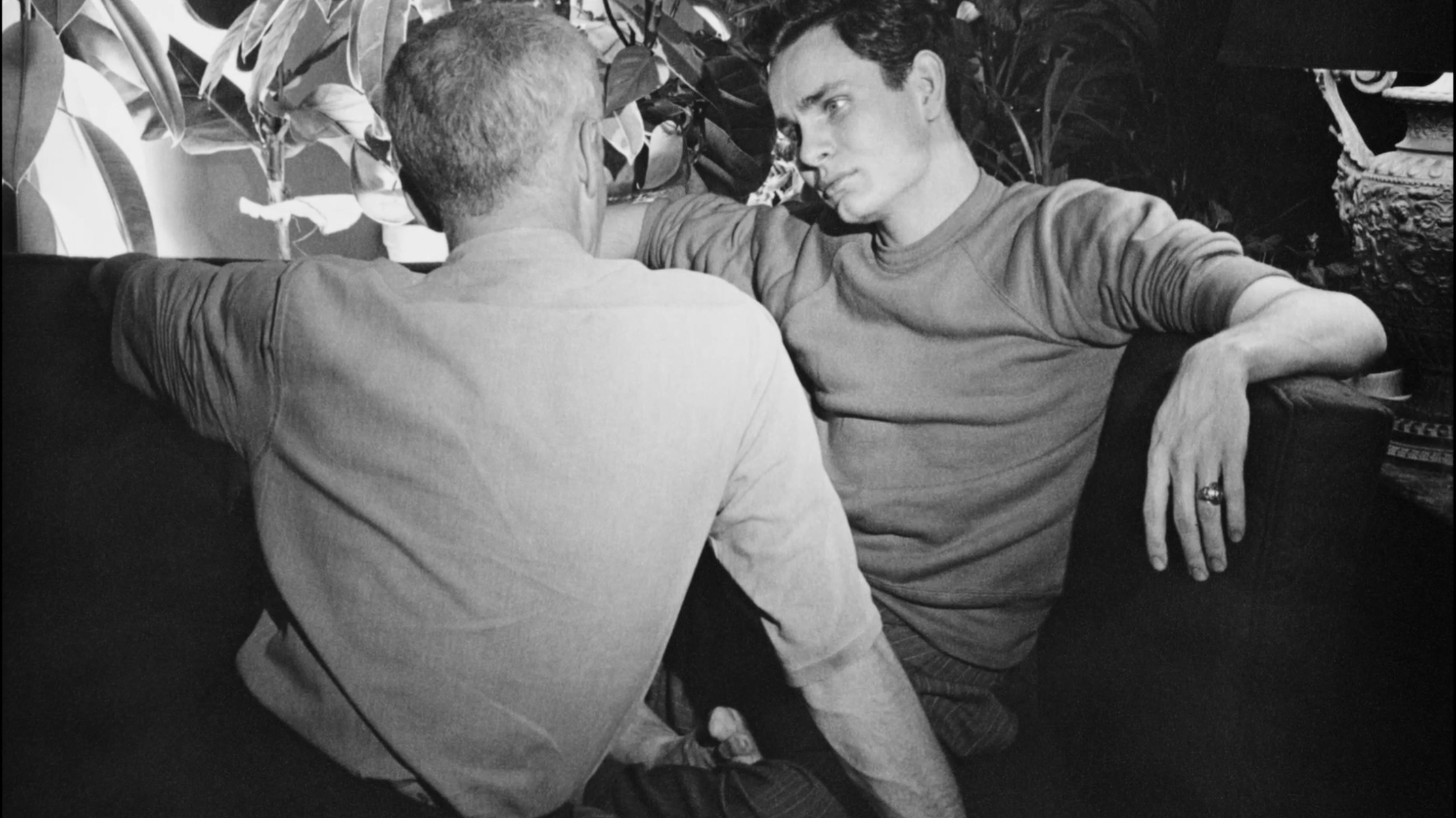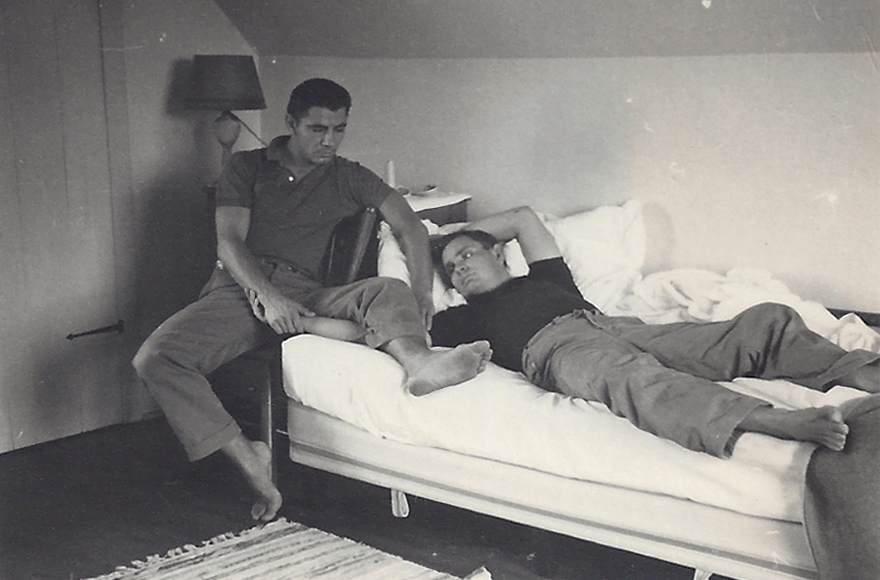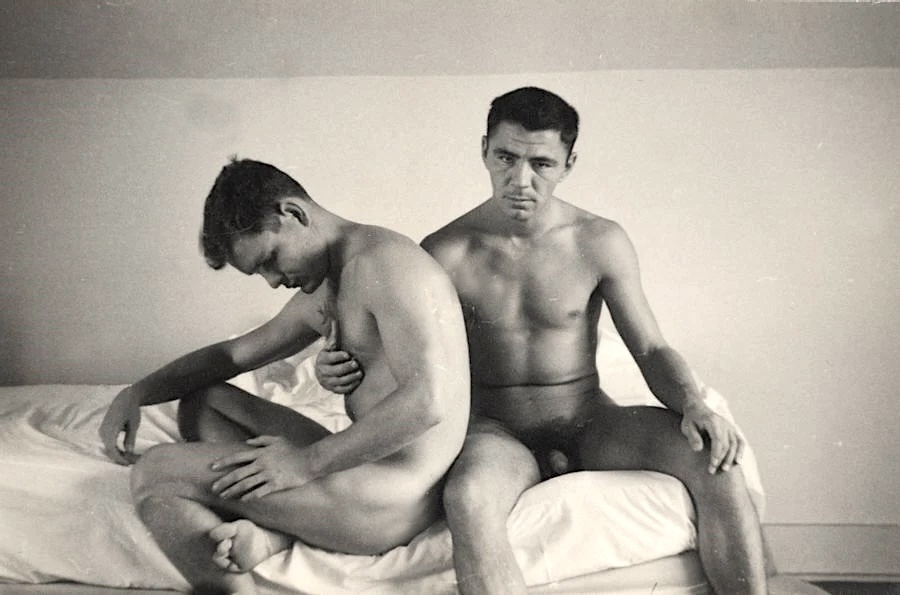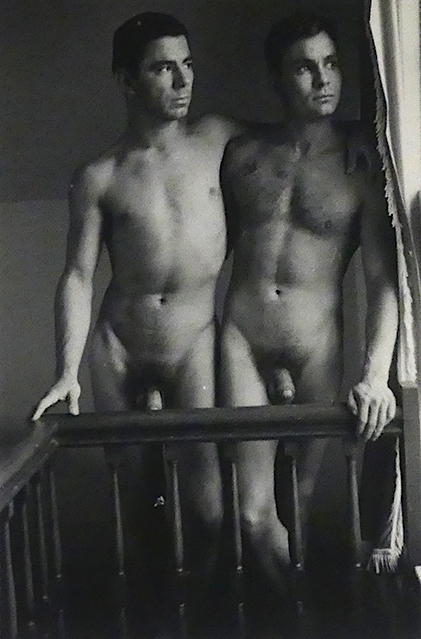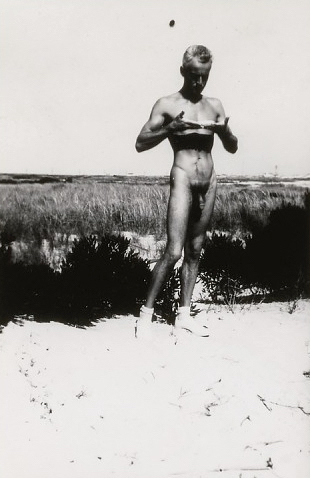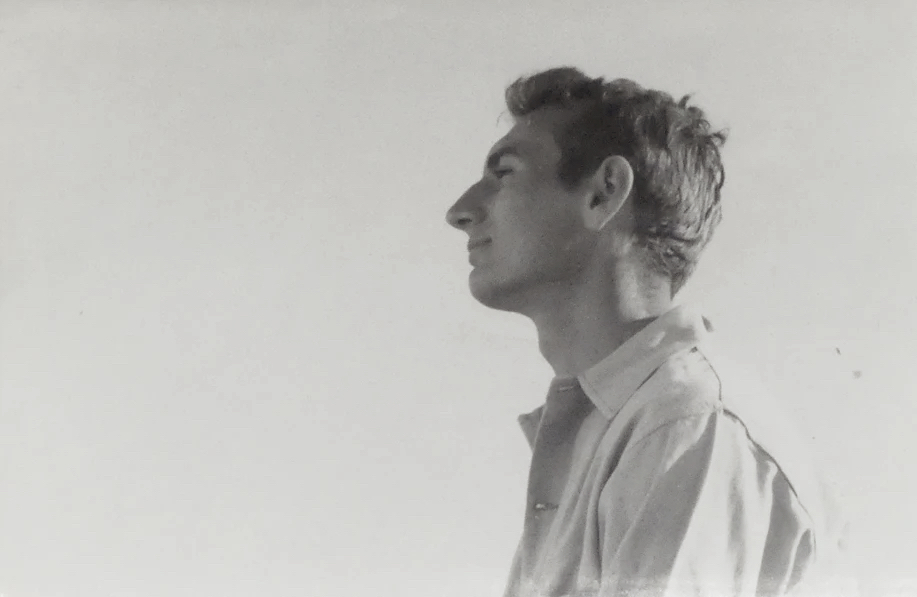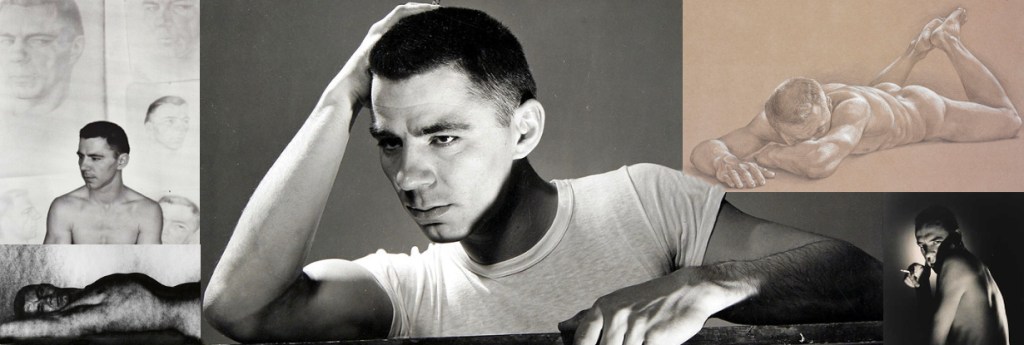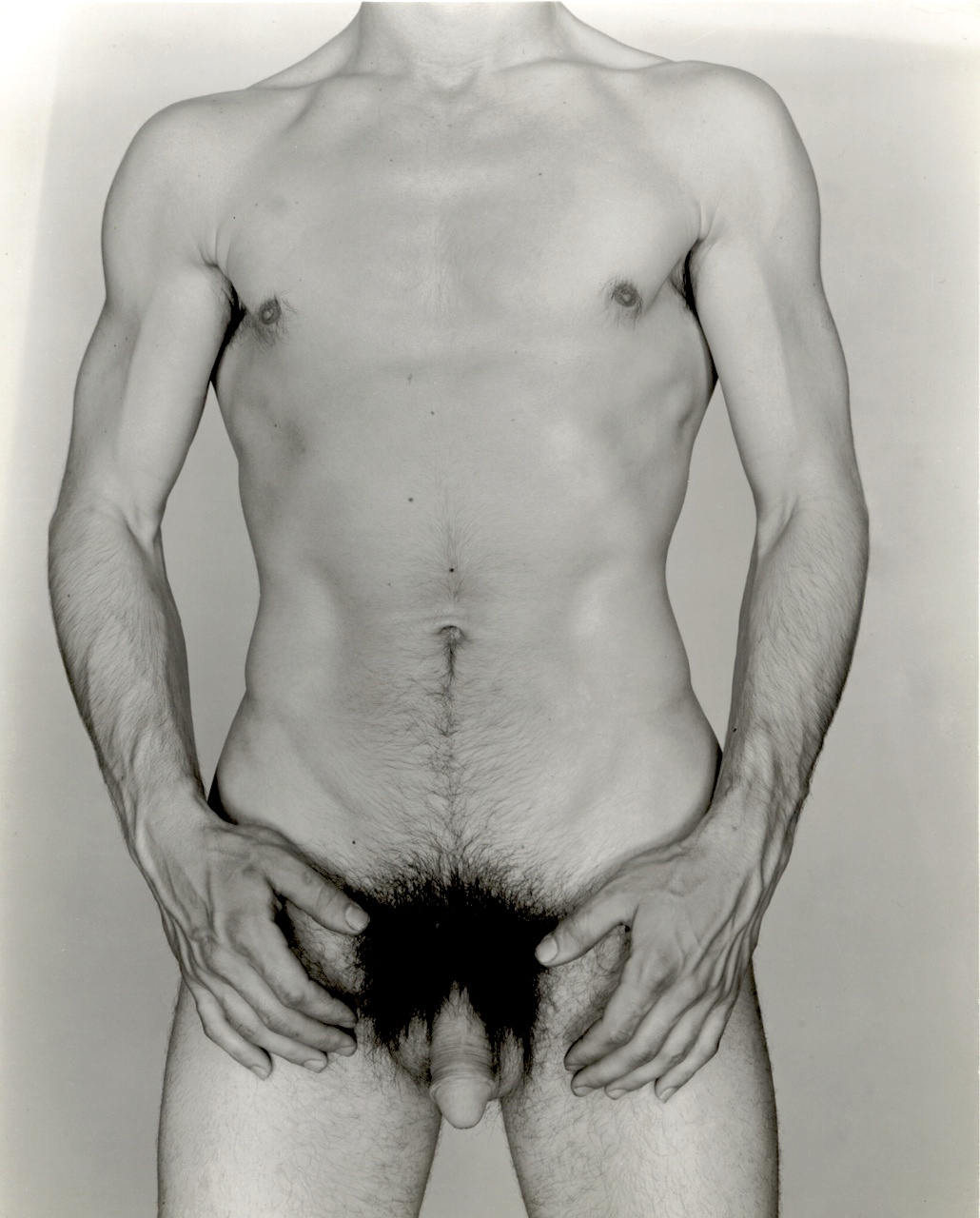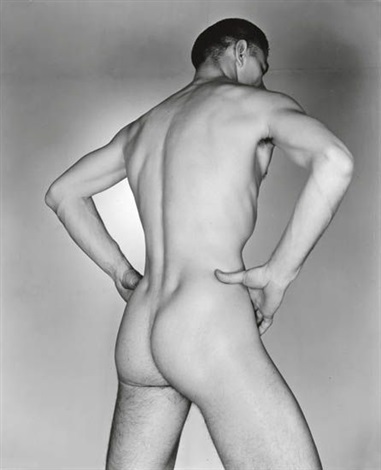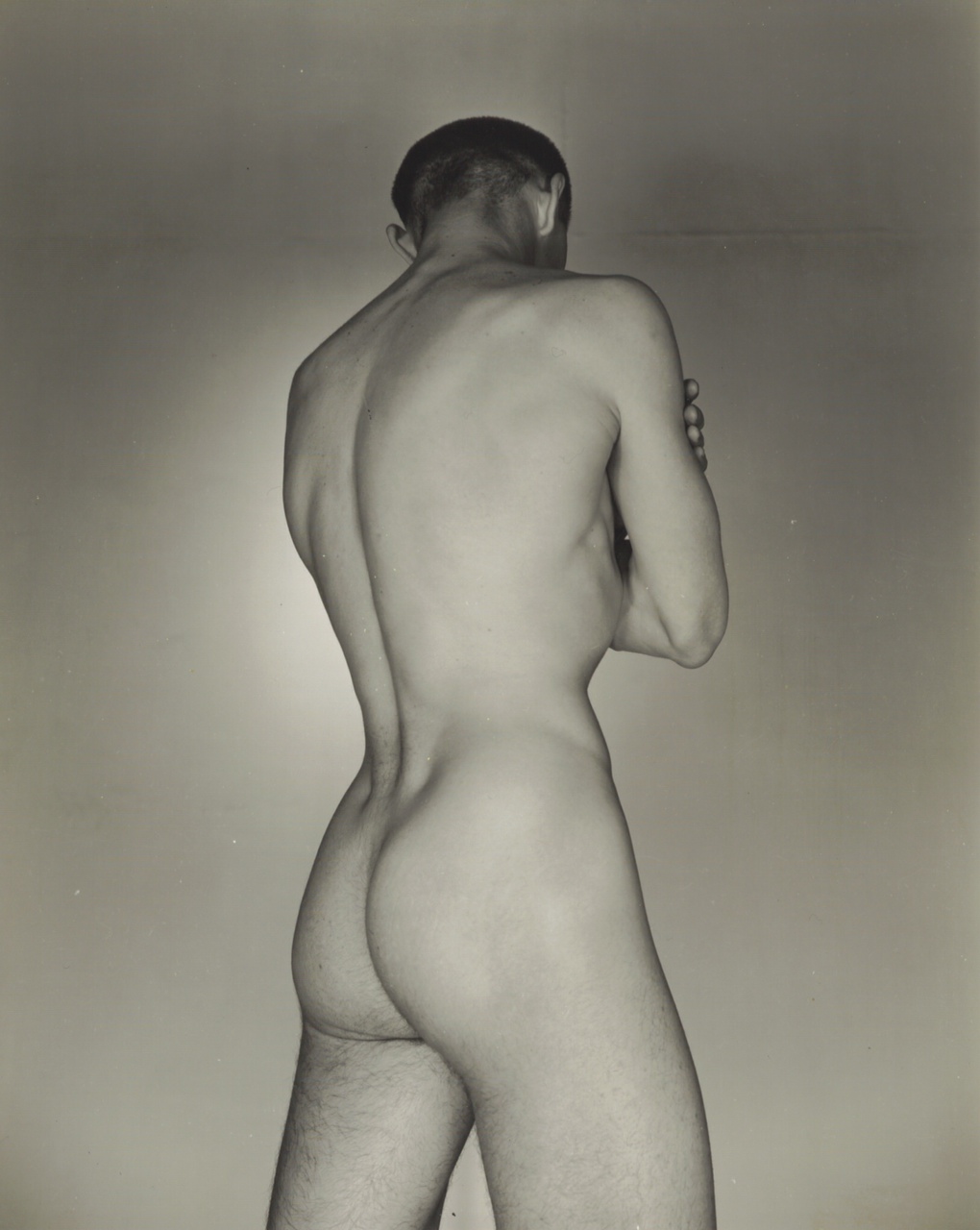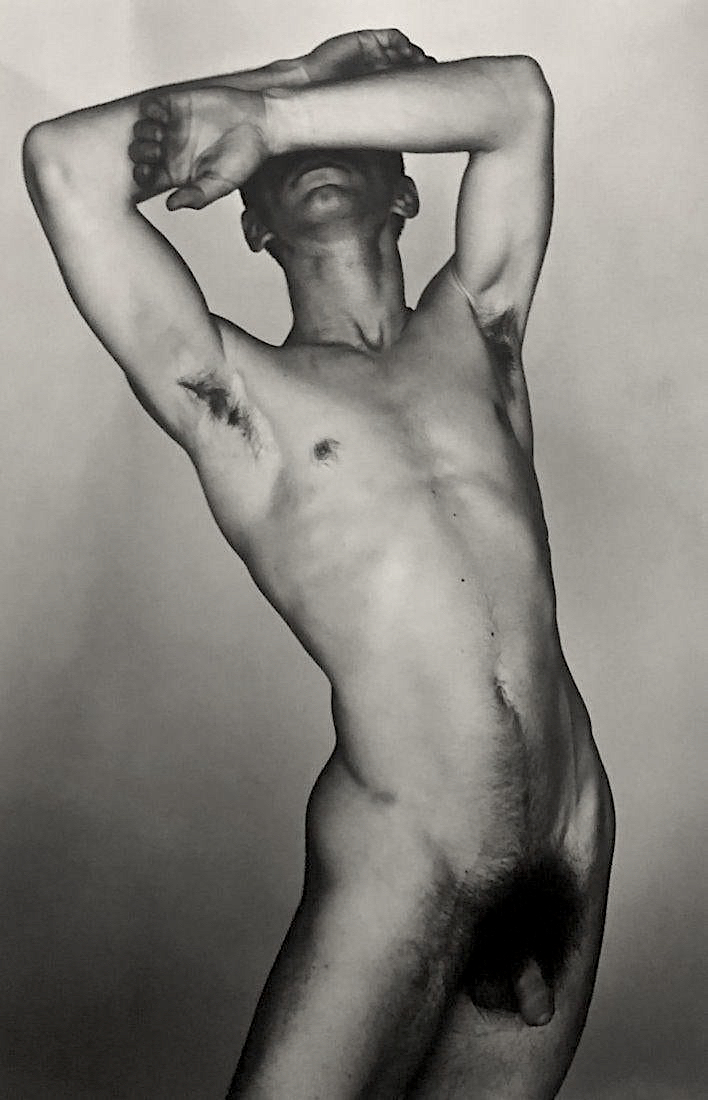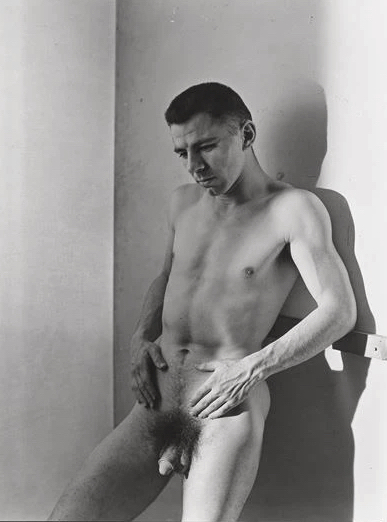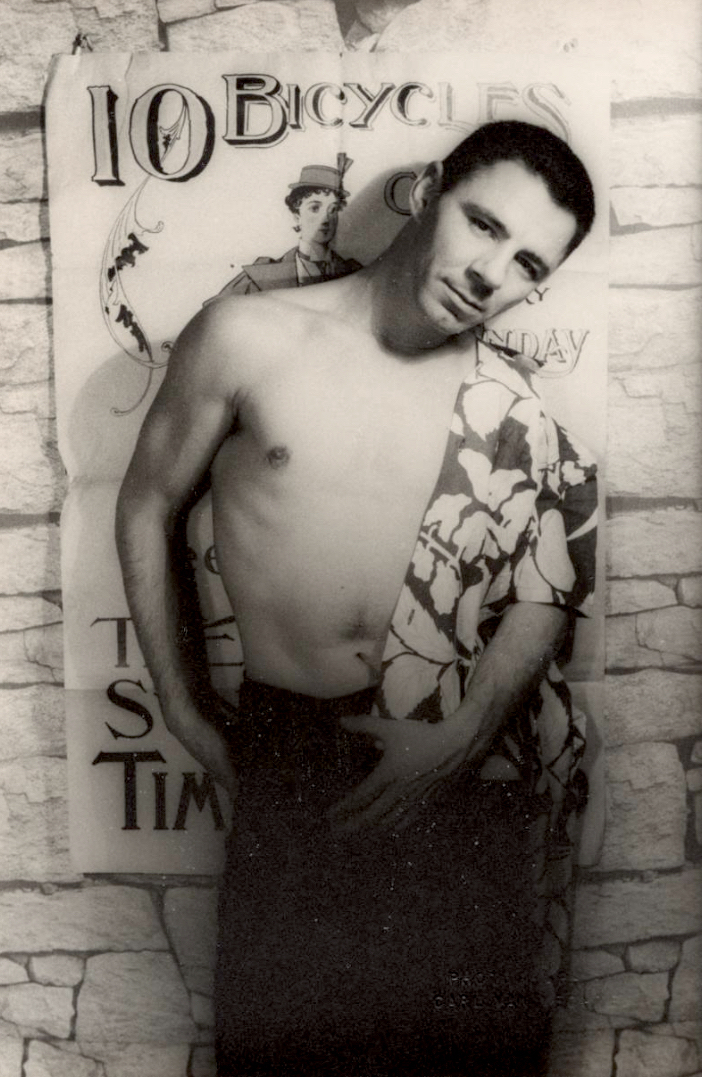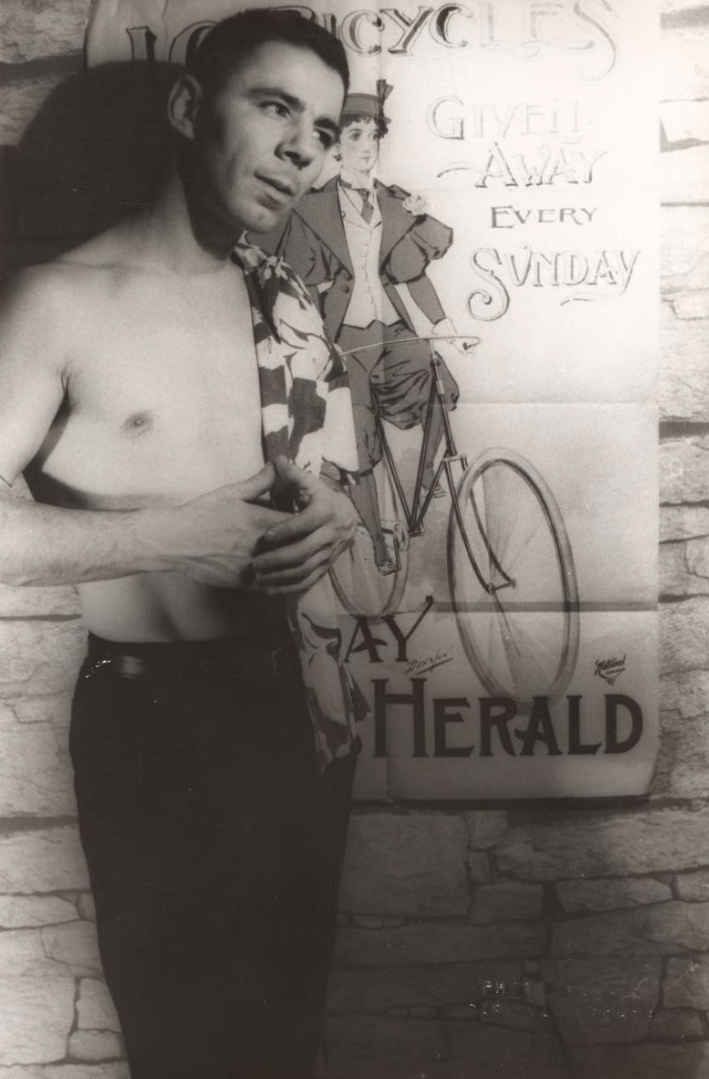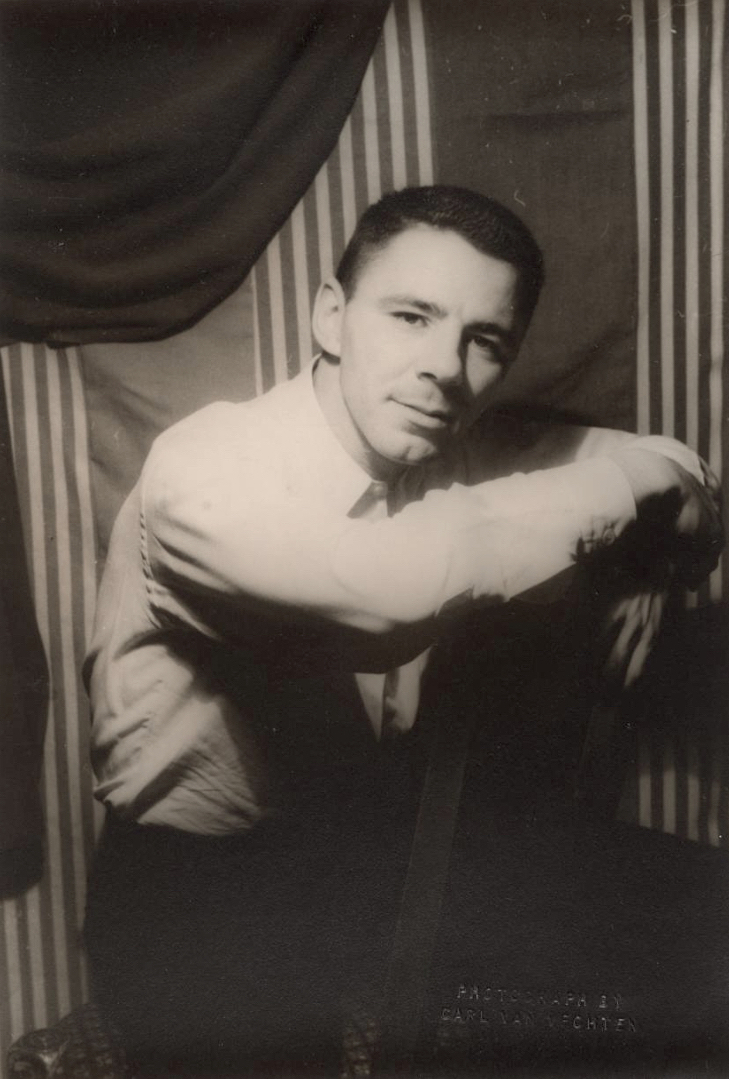
Revisiting George Platt Lynes’ Fire Island Muses

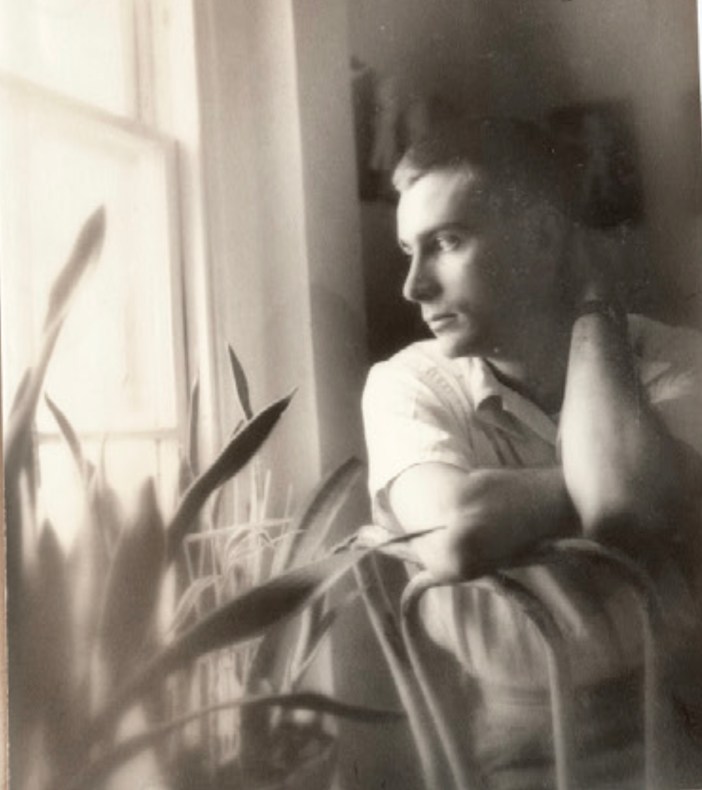
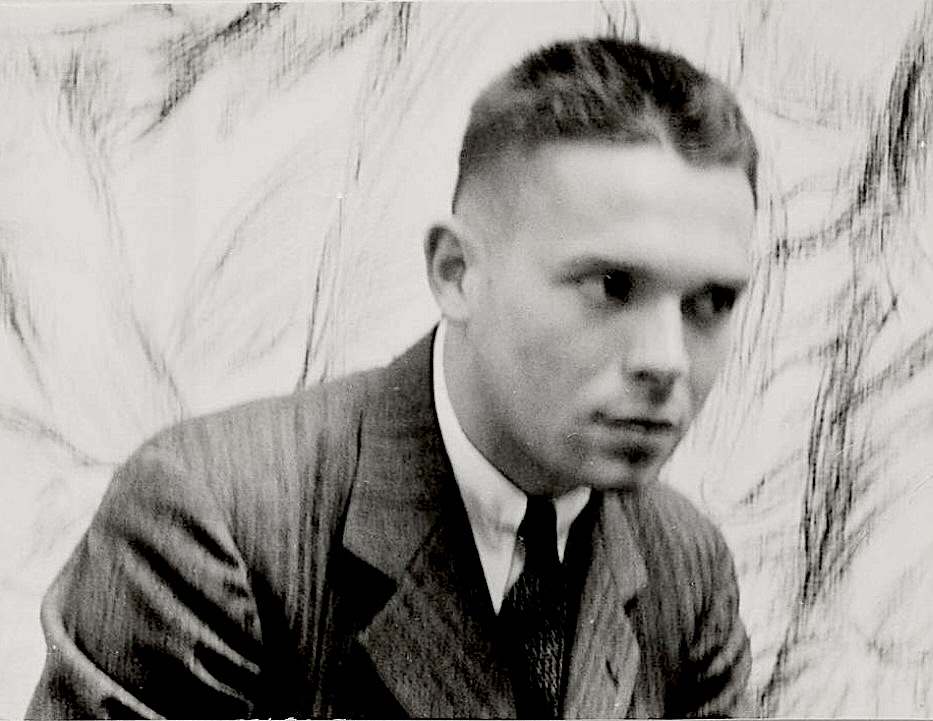
George Platt Lynes, self-portrait (ca 1940)

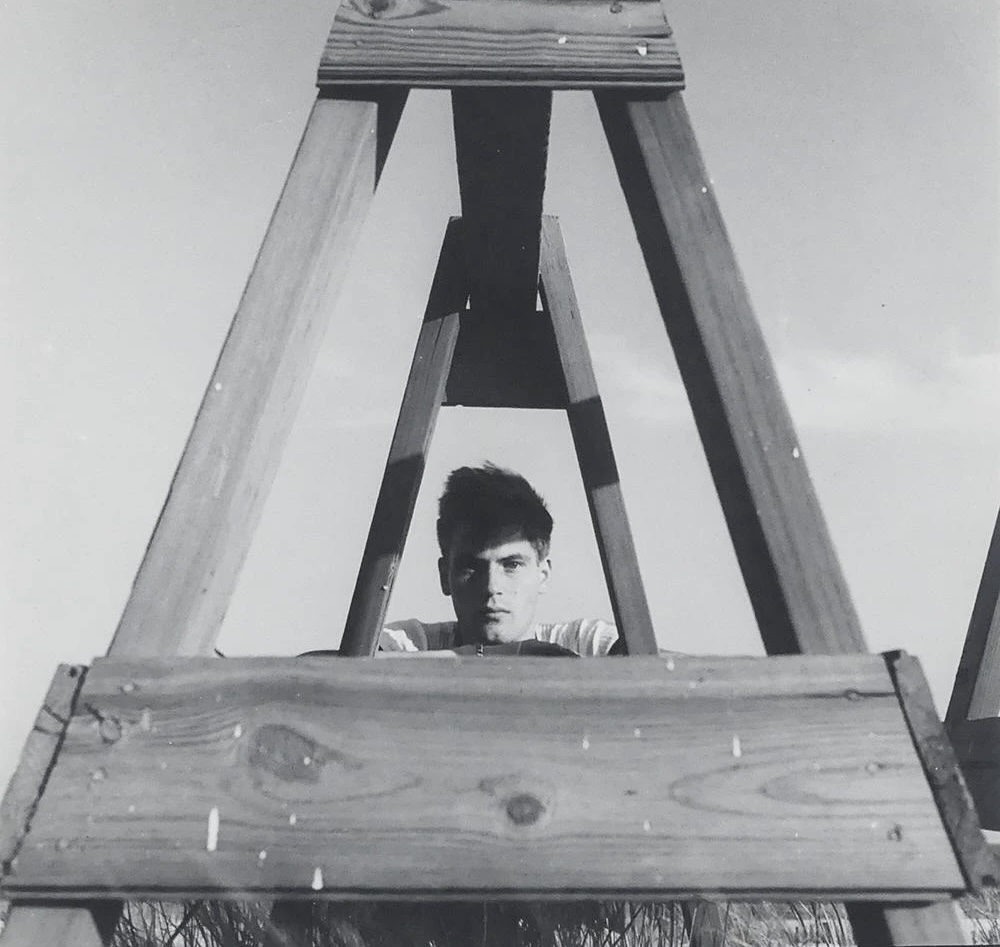
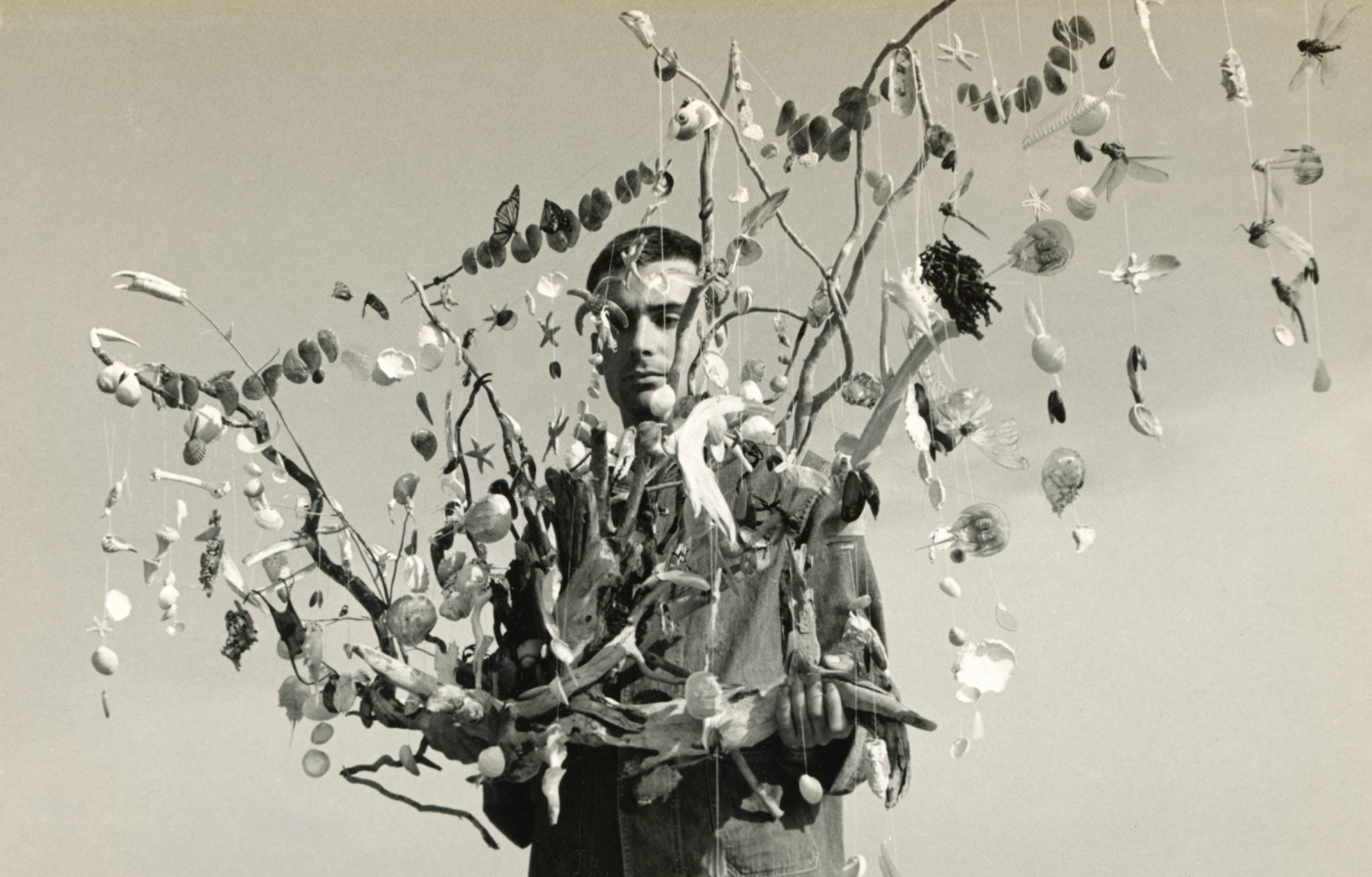
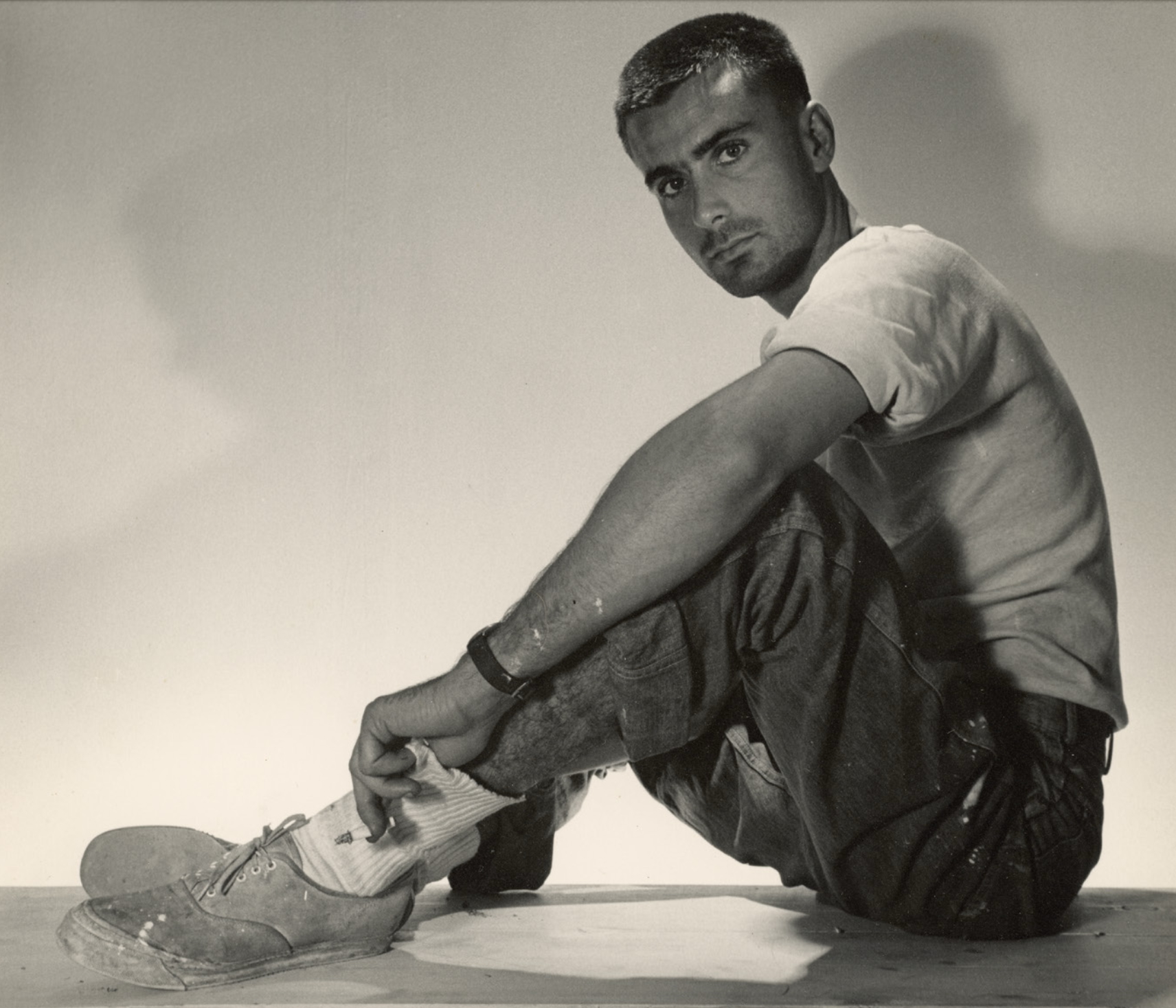
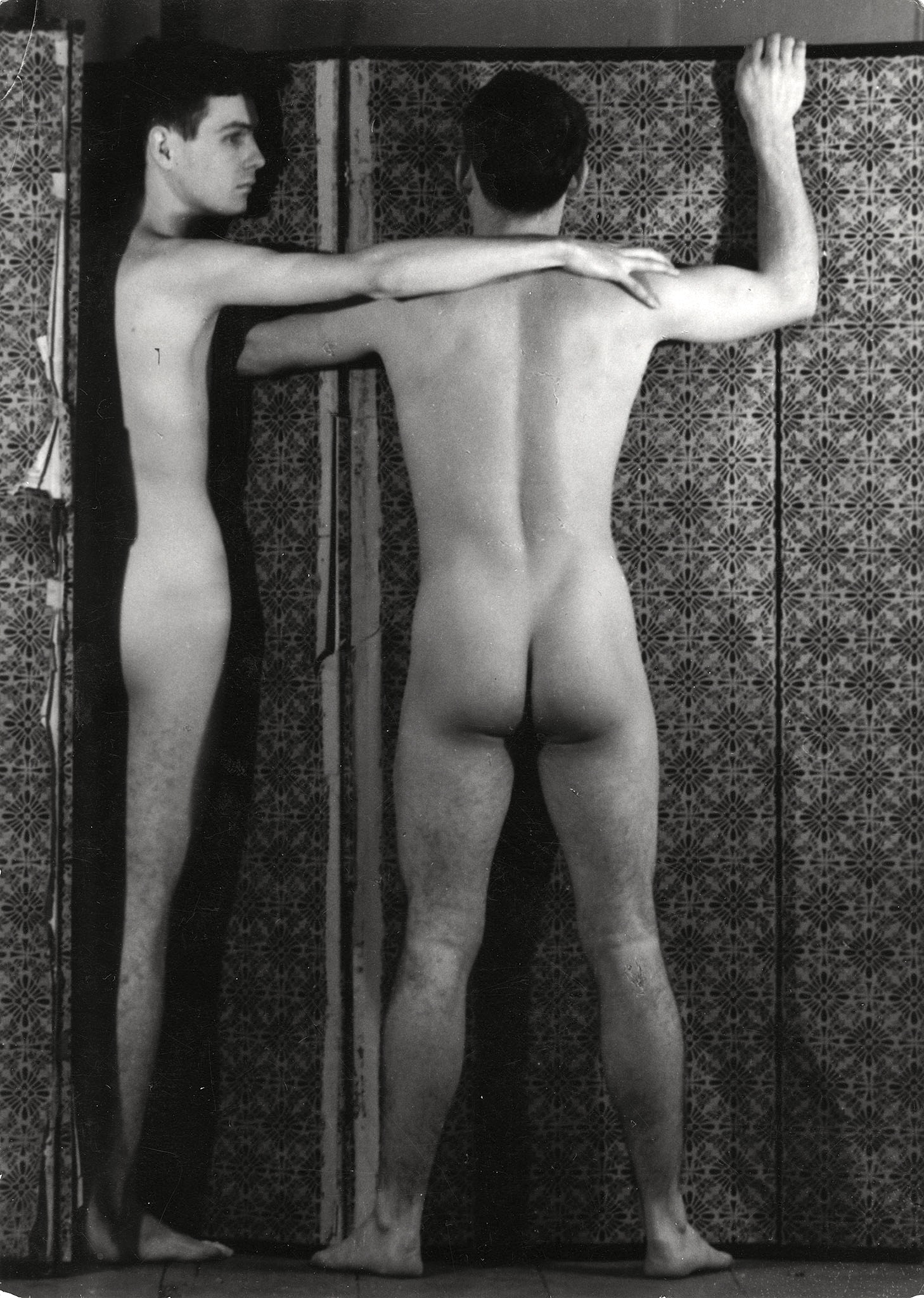
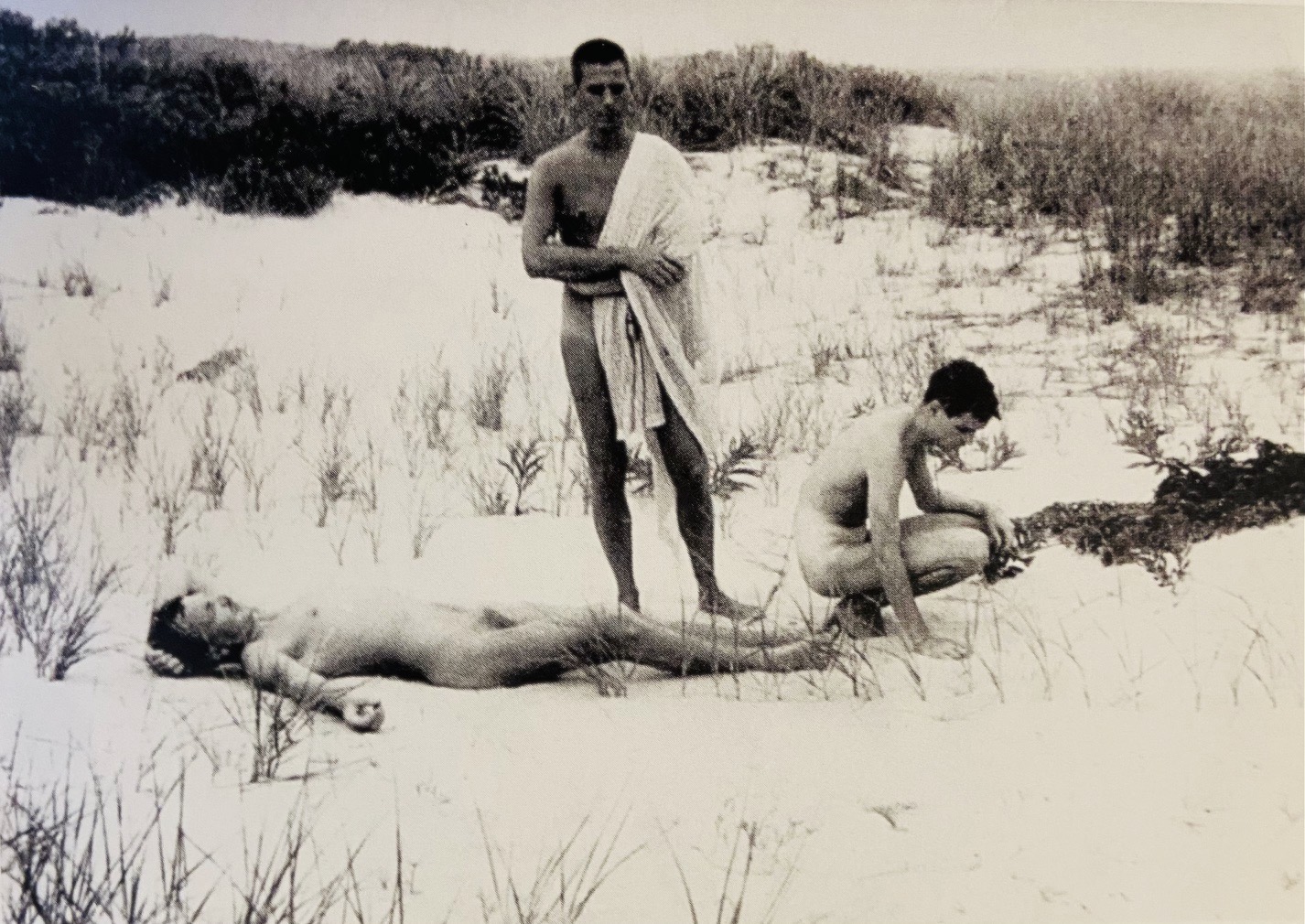
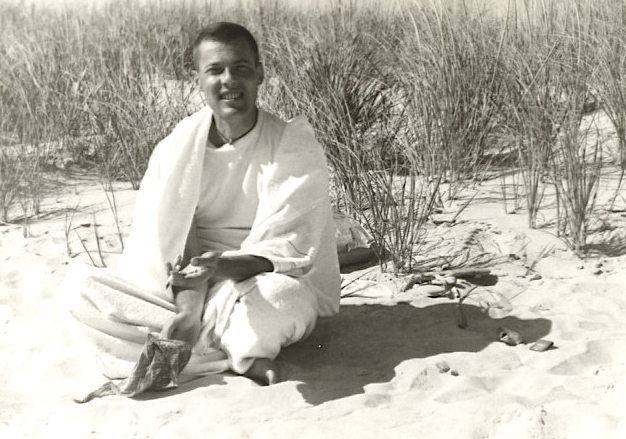
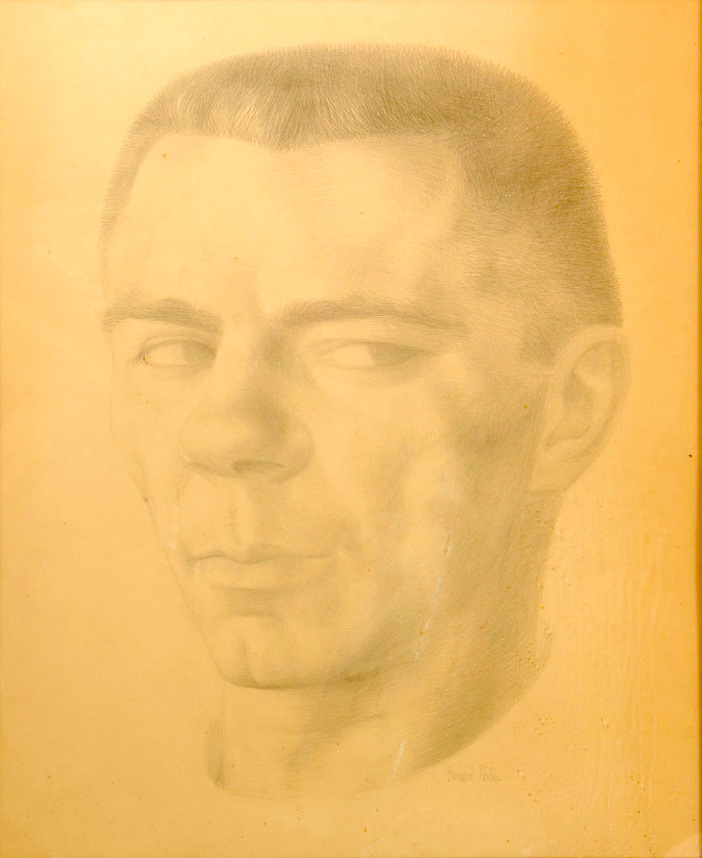
Next month will mark five years since I started the Artist’s Muse series on this blog – profiling the men who inspired, and were subjects of, mid-century artists like George Platt Lynes, Bernard Perlin, George Tooker and the PaJaMa collective: Paul Cadmus, Jared and Margaret French. Last summer I compiled some of these stories and photos for the Fire Island Pines Historical Preservation Society website. “The Fire Island Muses of George Platt Lynes & The PaJaMa Collective” focused on the subjects of the artwork they created during their time on Fire Island. Click here for the full post.

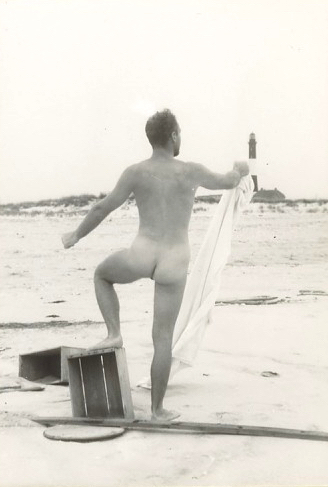
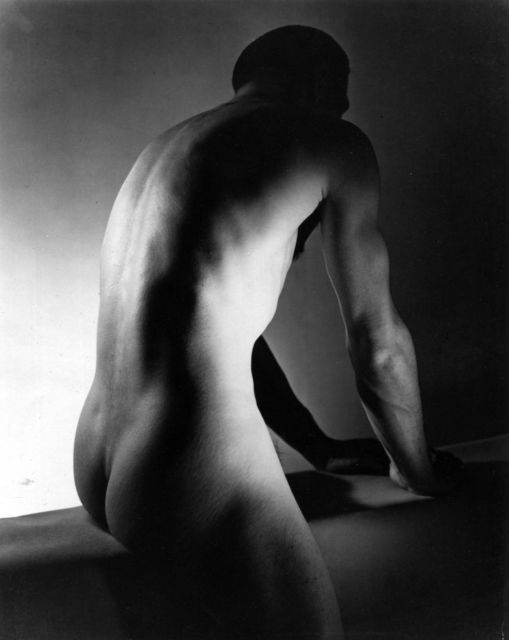
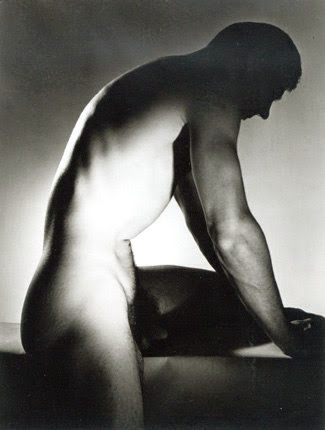
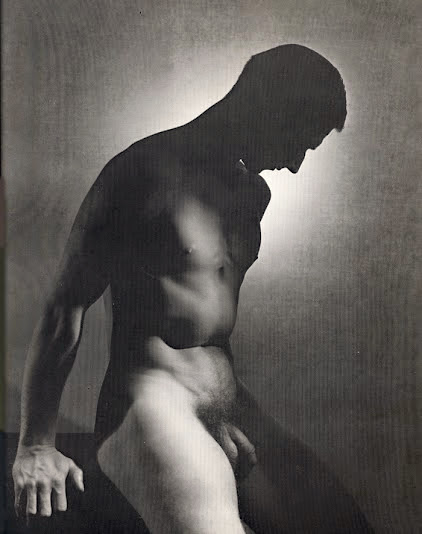
This summer, Vogue has entered the mix with a piece titled The 1940s Vogue Photographer Who Turned His Lens to the Male Muses of Fire Island. Honestly, it sounds as if he happened upon a coven of beautiful gay men, rather than importing his friends and lovers from the mainland. While it’s true that Lynes would photograph models and “attractive men that he heard of through word of mouth,” this applied to his studio work back in New York City. On Fire Island, the photos were of his intimate circle.

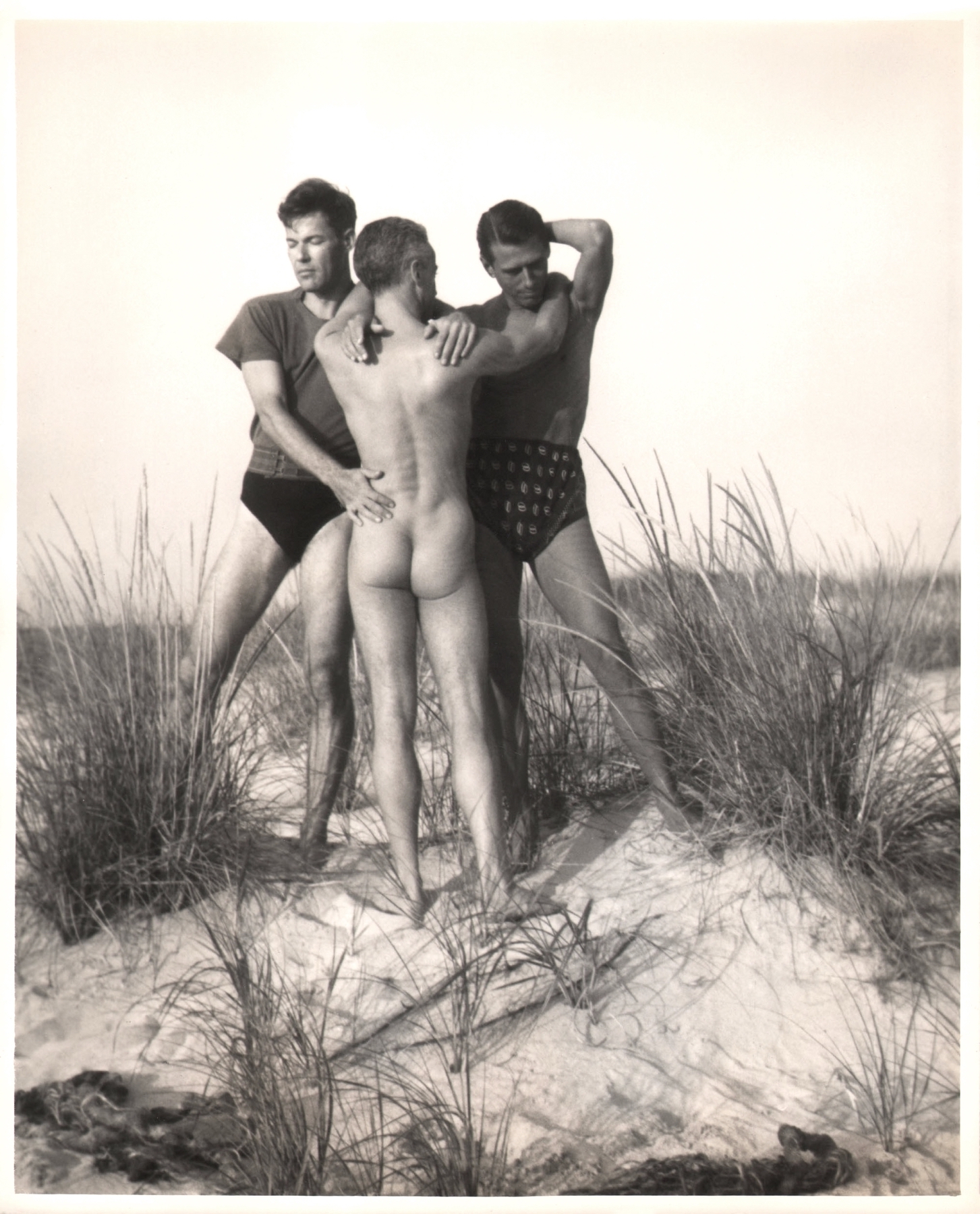
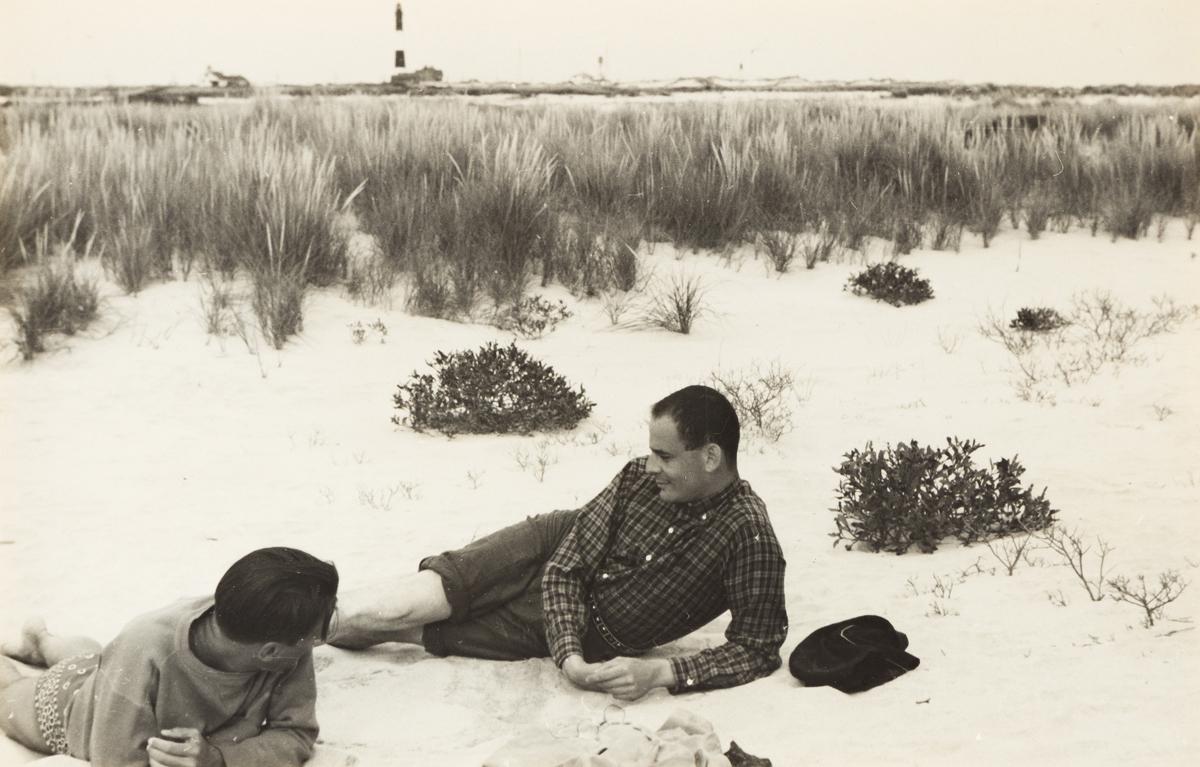
Lynes’ Fire Island photos are inextricably linked with the PaJaMa collective, as they all vacationed together and posed for each other. Artists like Lynes, Tooker and Perlin were all influential on each other’s work, especially the photographic aspects of their creativity.
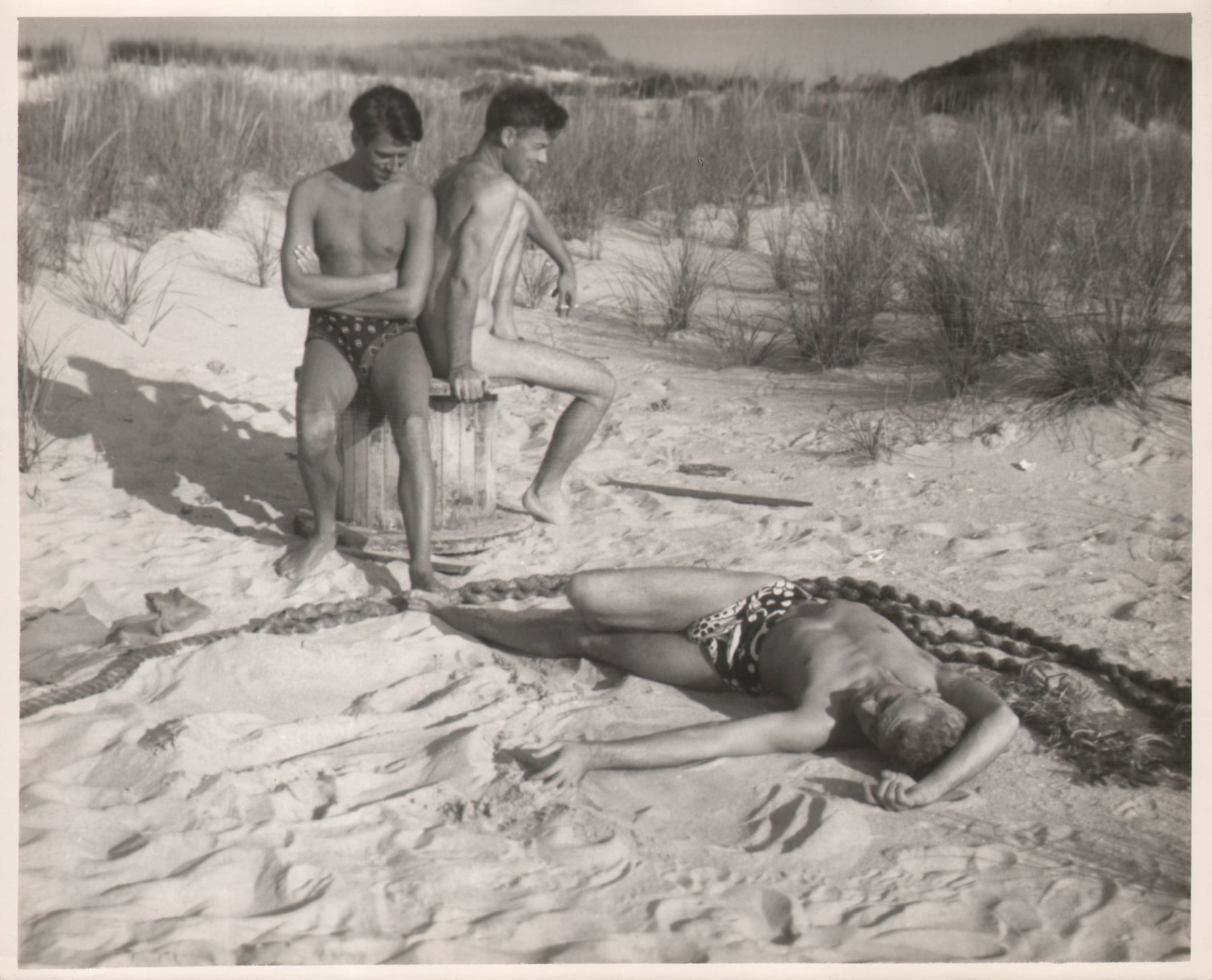
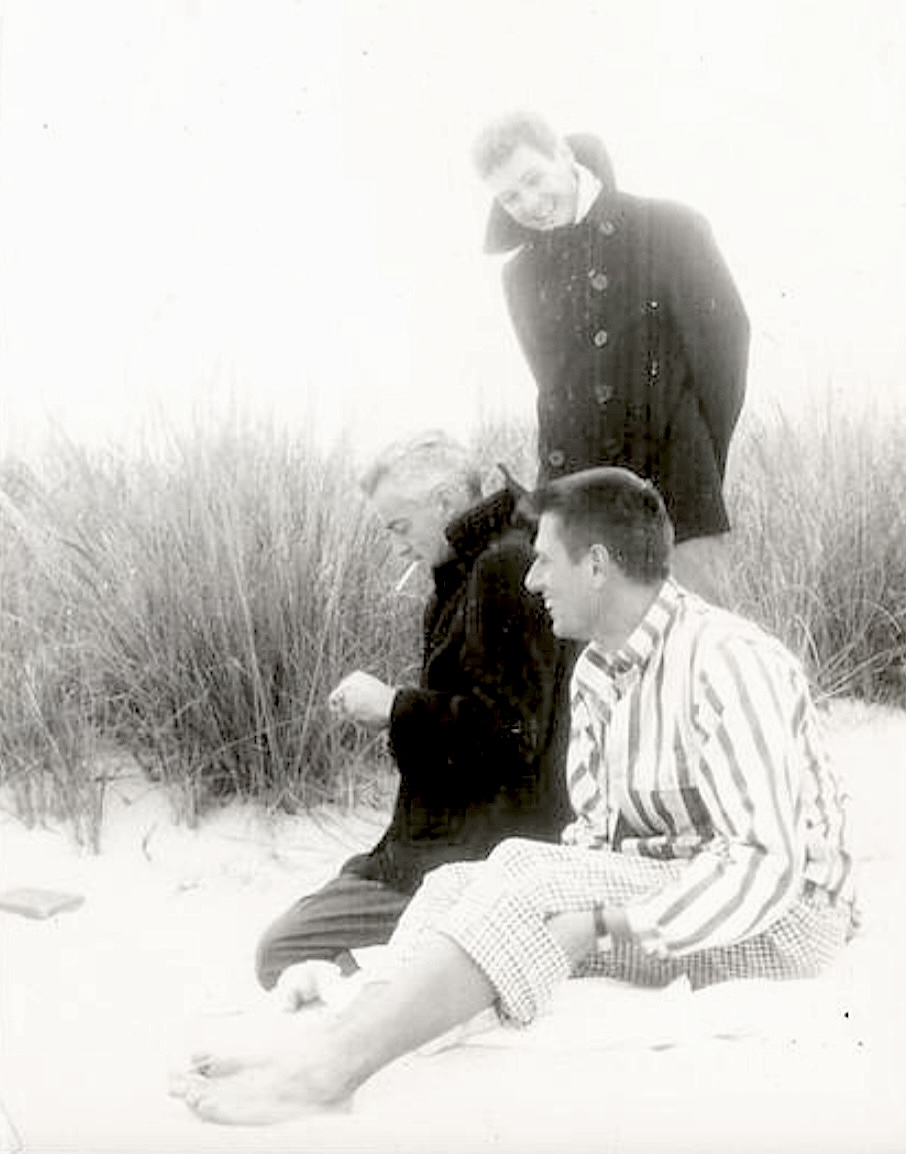
Lynes with Paul Cadmus, Glenway Wescott, Donald Windham, Jared French & the Fire Island Lighthouse, PaJaMa (ca. 1938-40)

The Vogue piece displays several photos from A.Therien gallery’s recent collection of images featuring fellow photographer Wilbur Pippin, who was profiled here back in April. These are additional photos from that collection:

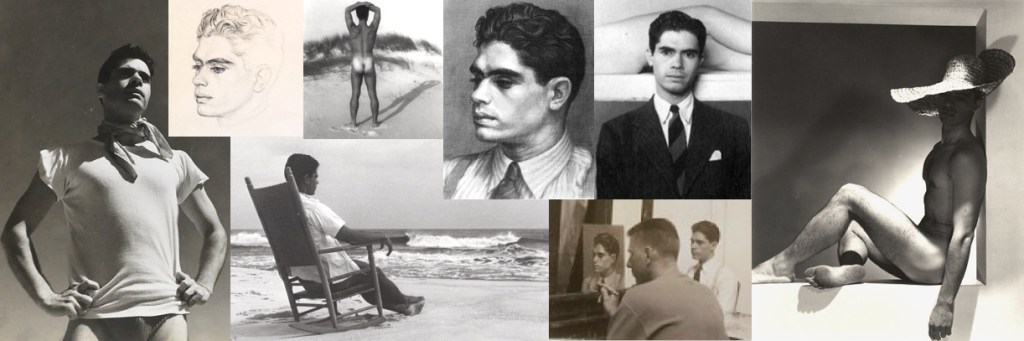
Wilbur Pippin with Fidelma Cadmus Kirstein and George Tooker, photos by George Platt Lynes & PaJaMa (ca. 1948-50)

In 1943, Lynes was so enamored of Jonathan Tichenor that he left his long-term threeway relationship with Glenway Wescott and Monroe Wheeler to be with him. The pair moved in together and Lynes shocked his discreet friends by announcing that they planned to be married. Tichenor was the subject of many Lynes photographs during this period, including some memorable shots snapped on Fire Island. The relationship imploded in 1945 when Tichenor ran off to become the second husband of socialite/artist Bridget Bate.

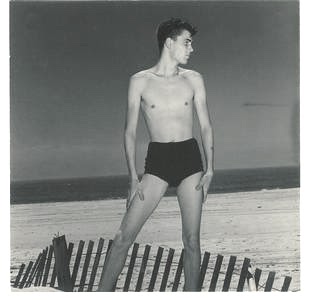
Jonathan Tichenor, Fire Island, photos by George Platt Lynes & PaJaMa (ca 1944)

Lynes met aspiring dancer Randy Jack in 1947 while he was working for Vogue in Los Angeles. The pair moved back to New York the following year, where Jack found success as a model. They parted ways a few months later. Read more about Randy Jack here.
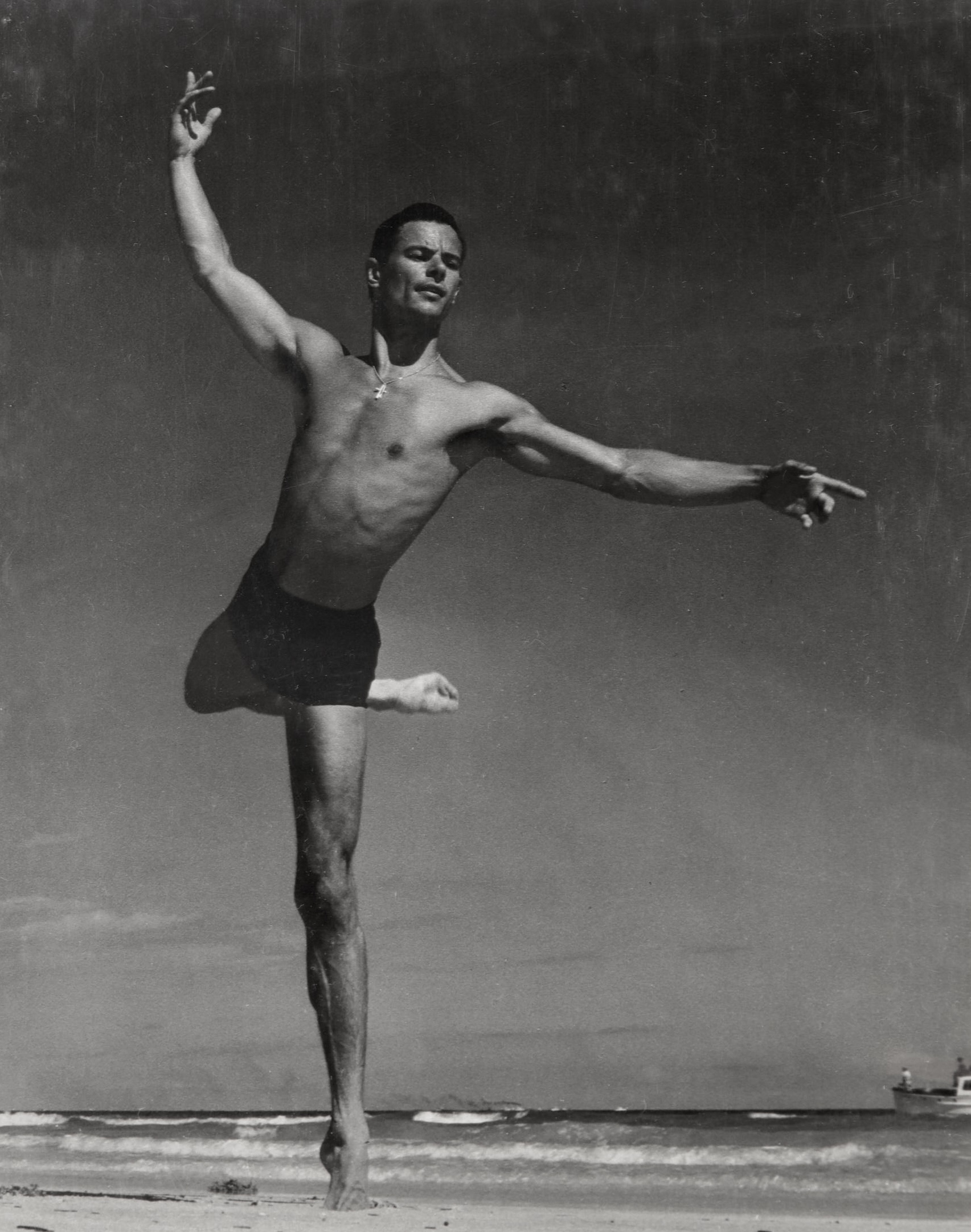
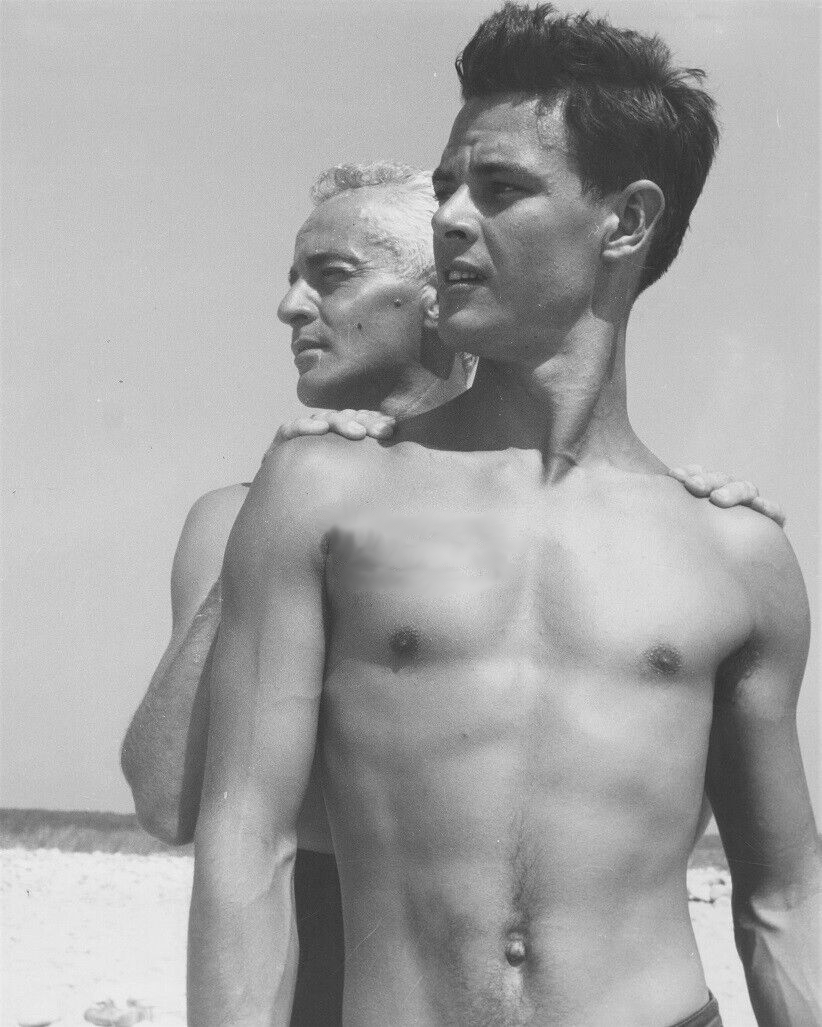
Lynes with his boyfriend Randy Jack (ca 1948)

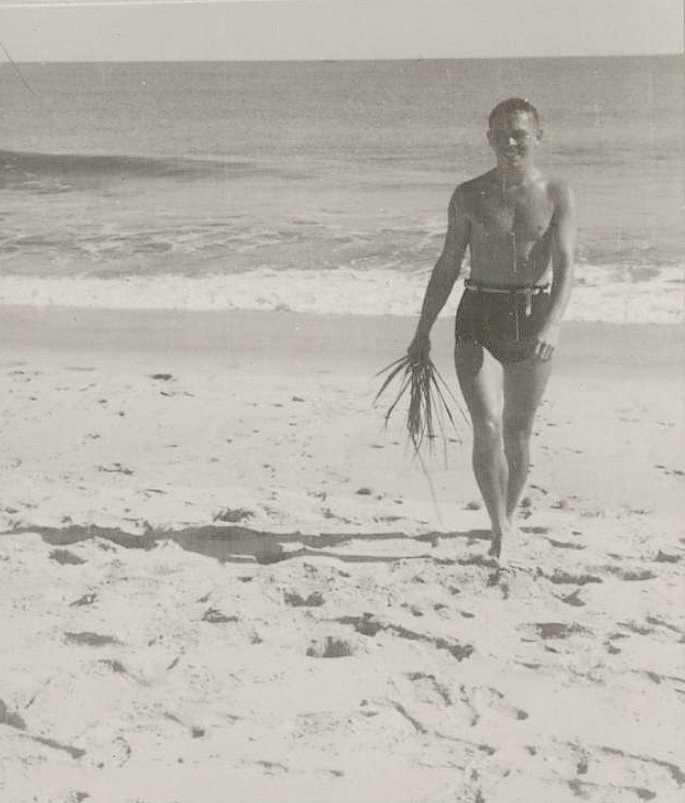
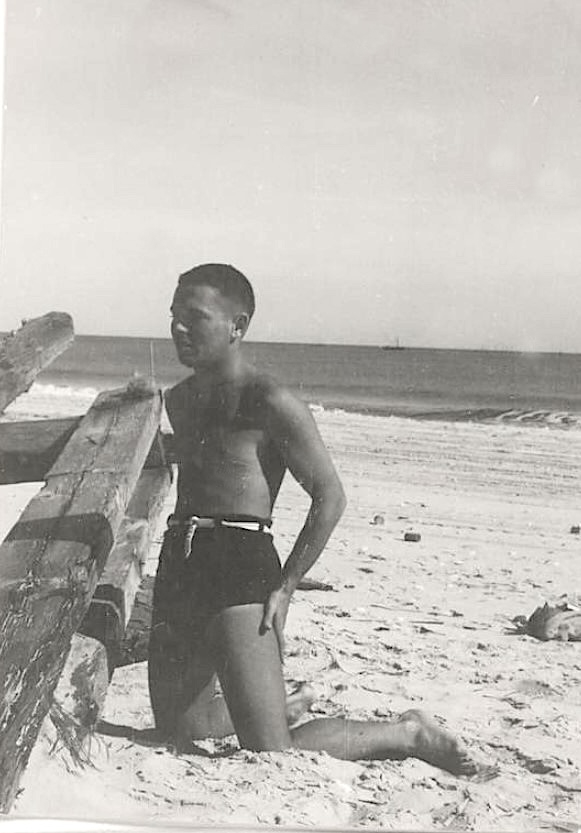
Ten days after the departure of Randy Jack, former military man Chuck Howard moved in with Lynes. Throughout their relationship, Lynes frequently photographed Howard on Fire Island. He later became a successful fashion designer and restaurateur. Read more about Chuck Howard here.
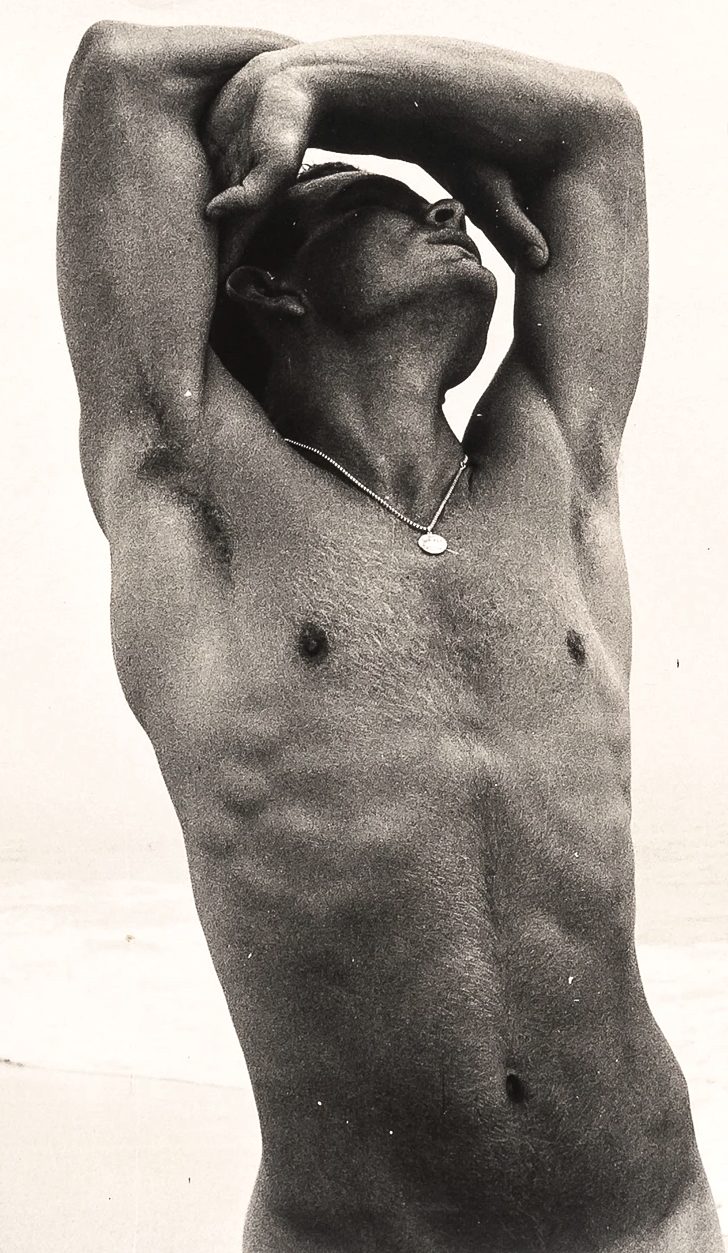
Chuck Howard photographed on Fire Island by George Platt Lynes (ca 1950)

In 1950, Lynes created a studio beach scenario with dancers Nicholas Magallanes and Tanaquil LeClerq in poses from the George Balanchine/Jerome Robbins ballet Jones Beach. Magallanes was also a member of Lynes’ social circle and a frequent model for his nude photography.

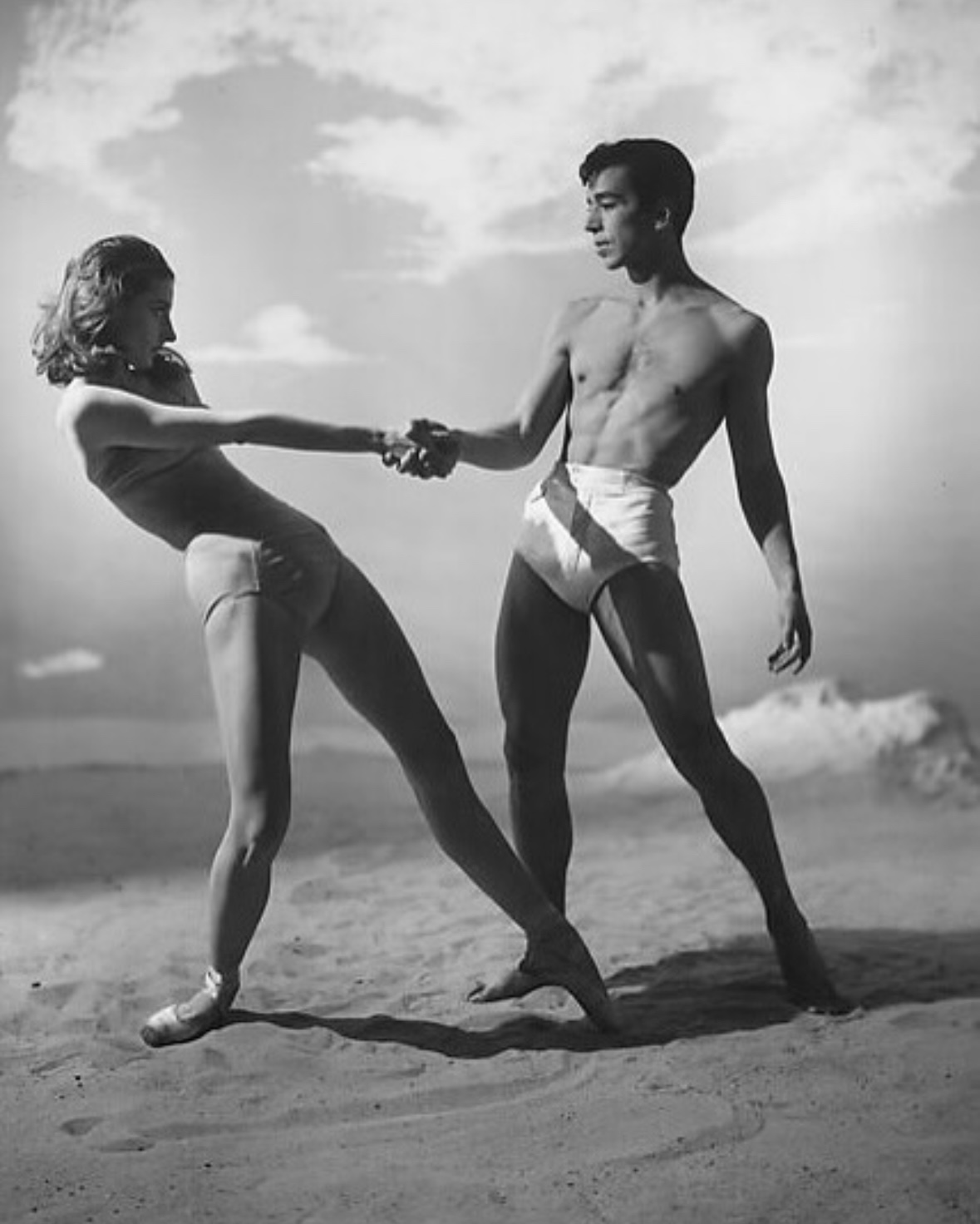
Nicholas Magallanes and Tanaquil LeClerq in Jones Beach, George Platt Lynes (1950)

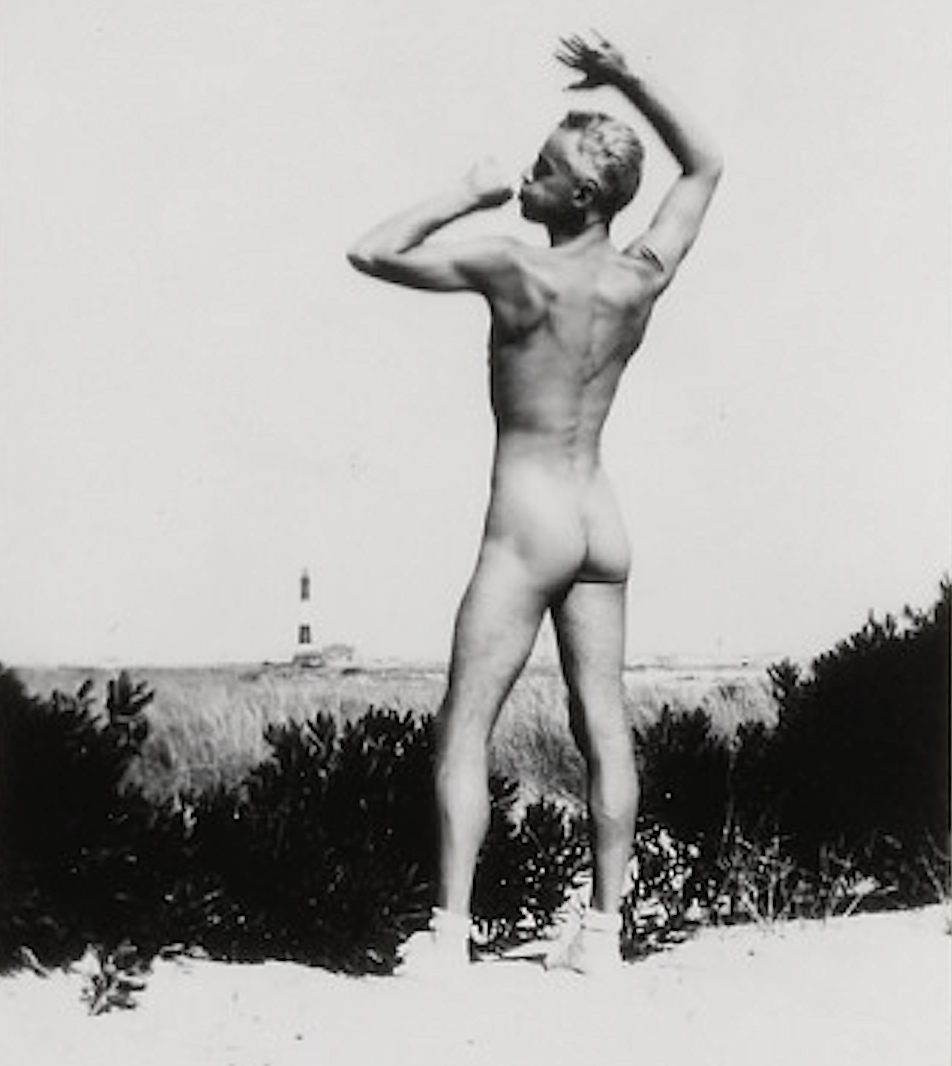
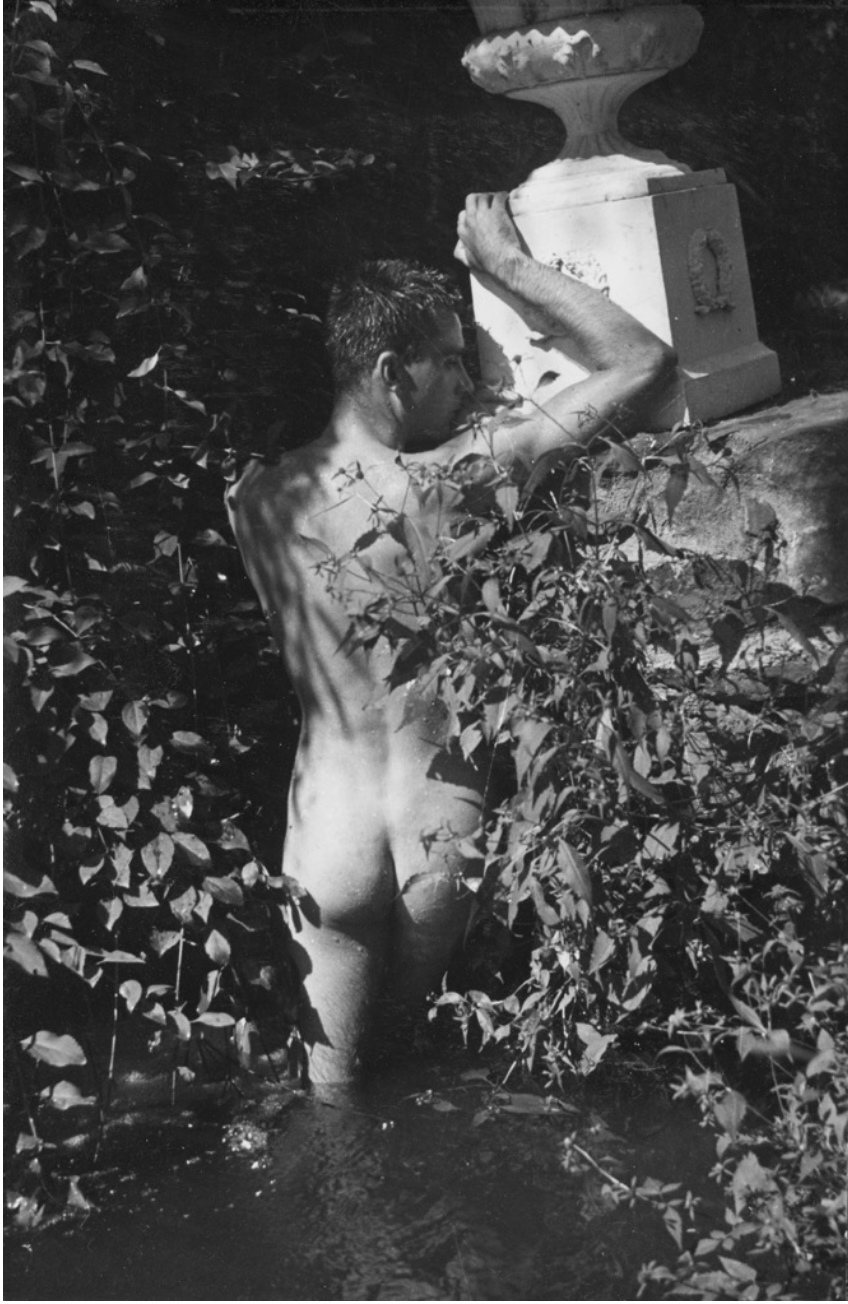
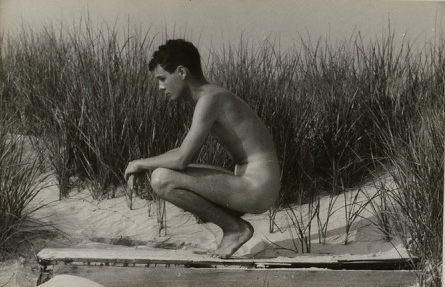
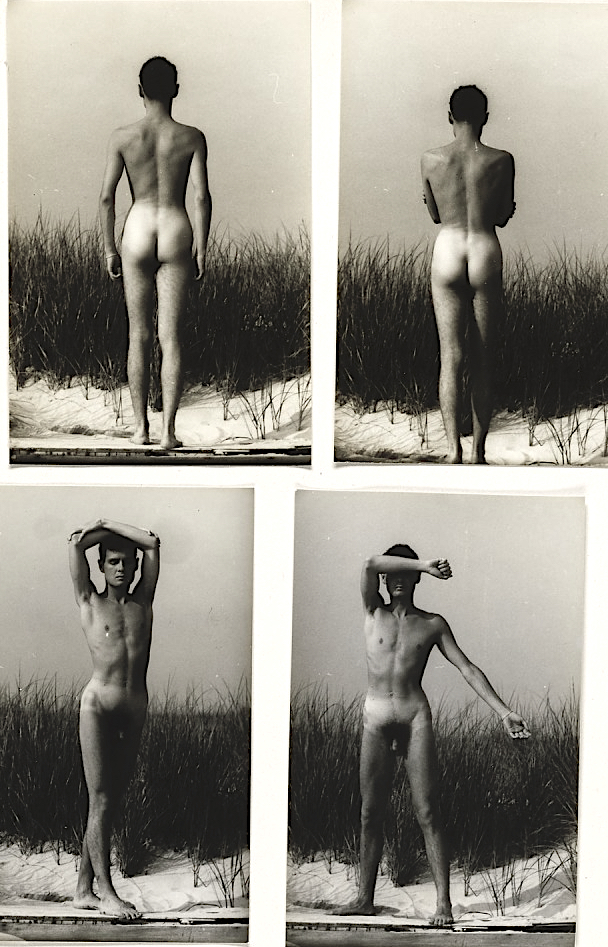
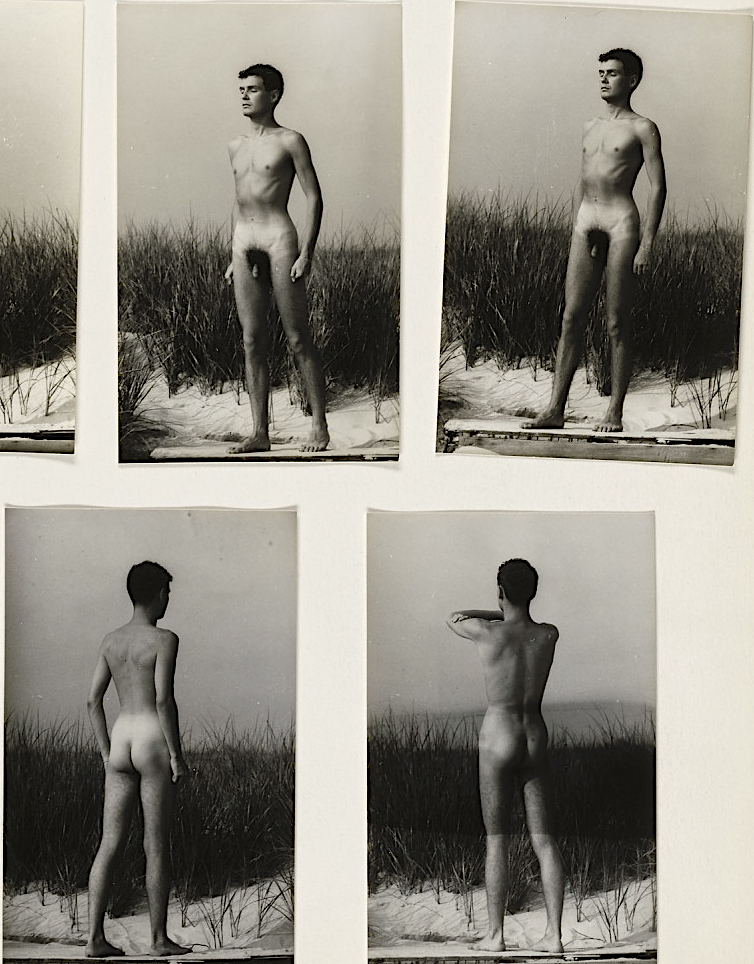
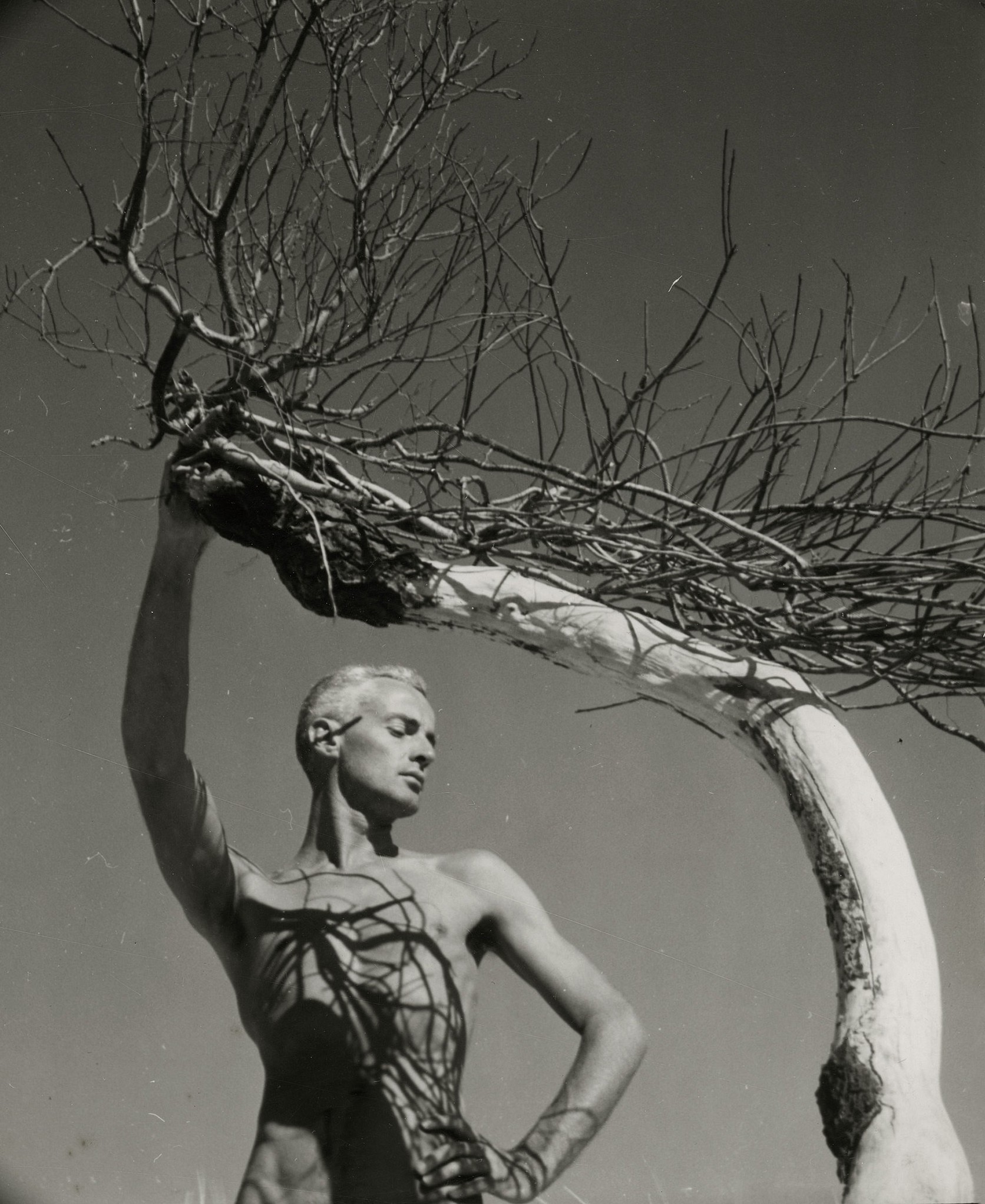
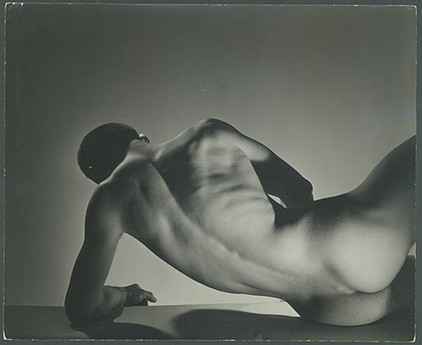
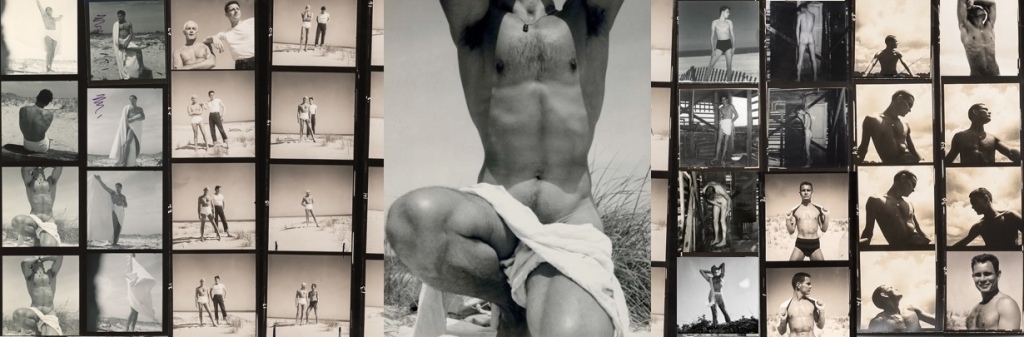
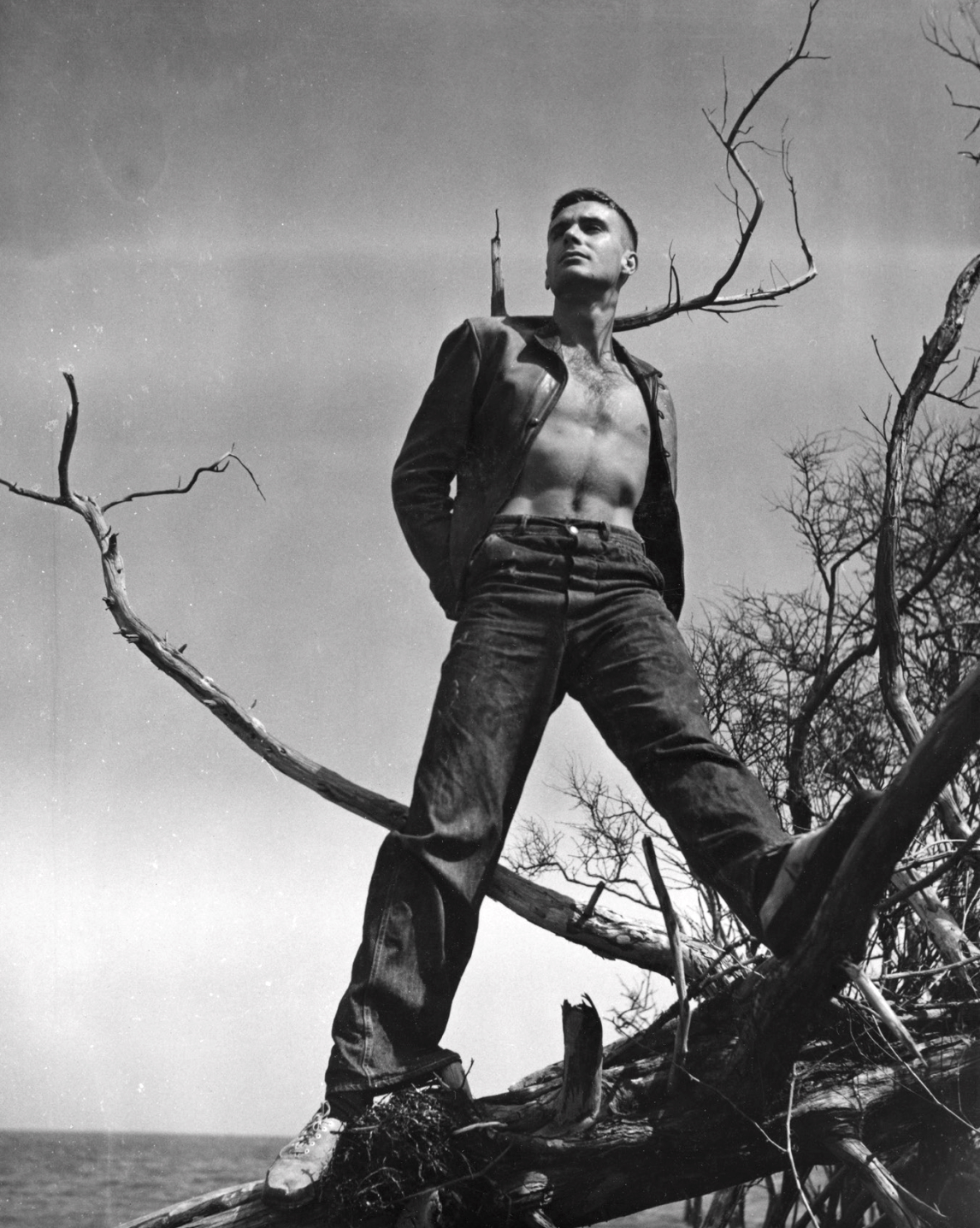
Lynes’ most iconic Fire Island image is of dancer Francisco Moncion, seen here with some alternate shots from the contact sheet. The influence on the work of Herb Ritts and Bruce Weber is evident.
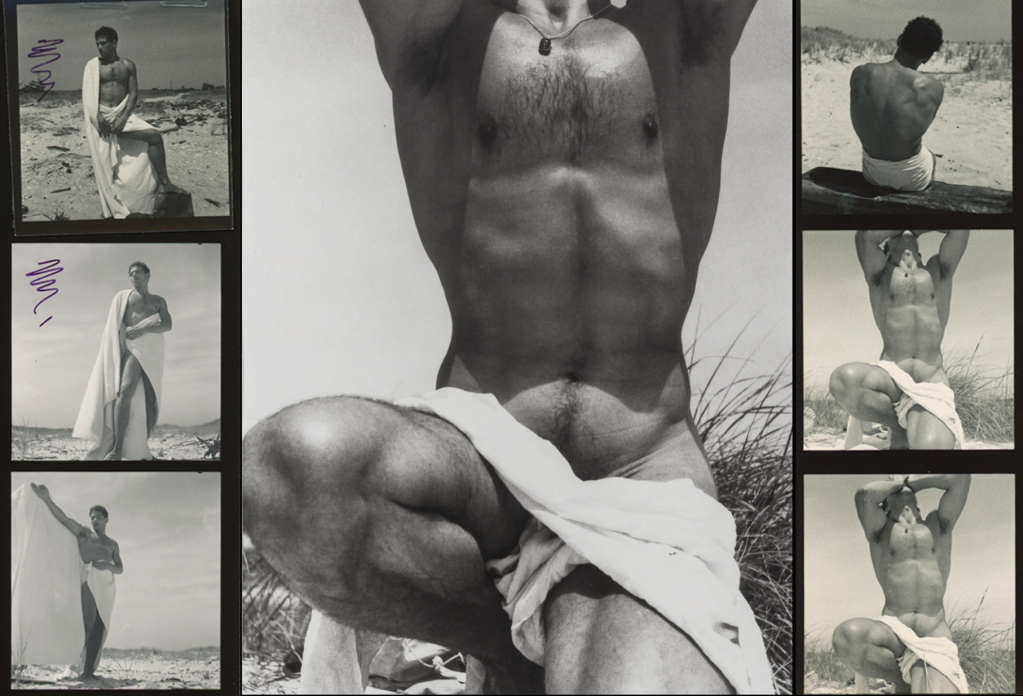
Francisco Moncion photographed by George Platt Lynes on Fire Island (ca 1948-50)

The Vogue profile of George Platt Lynes concludes that his work for the magazine may have provided him with commercial success, but that his Fire Island portraits show that success comes in many forms.

I heartily concur.

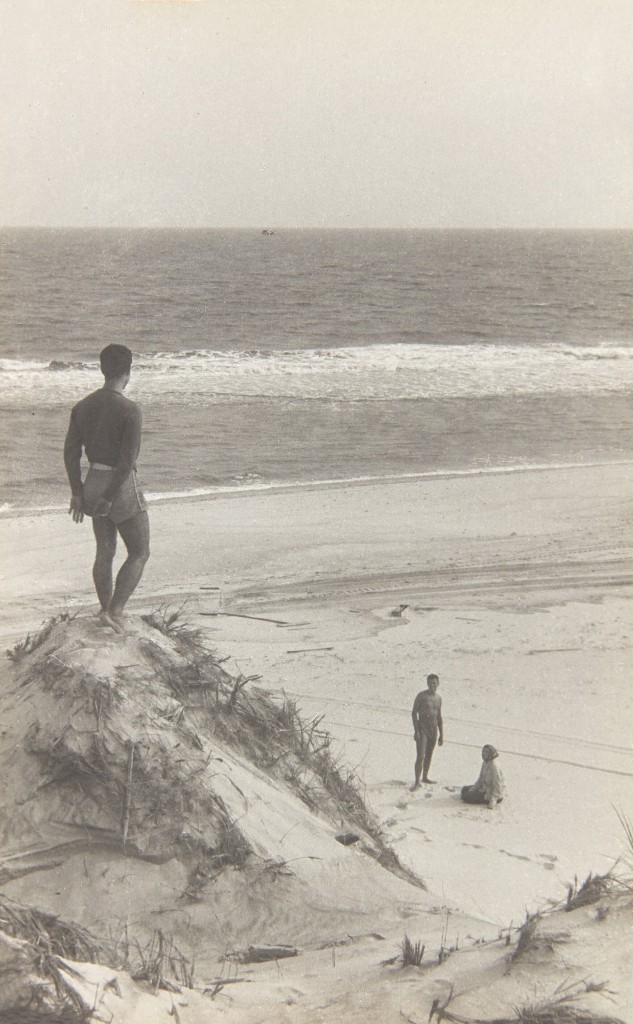
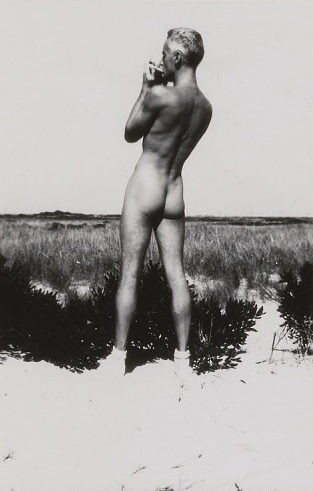
George Platt Lynes, Fire Island, PaJaMa (1941)

See Also:
Artist’s Muse: Ted Starkowski
Artist’s Muse: Forrest Thayer
Artist’s Muse: William Weslow
Artist’s Muse: The Mystery Model
Artist’s Muse: José “Pete” Martinez
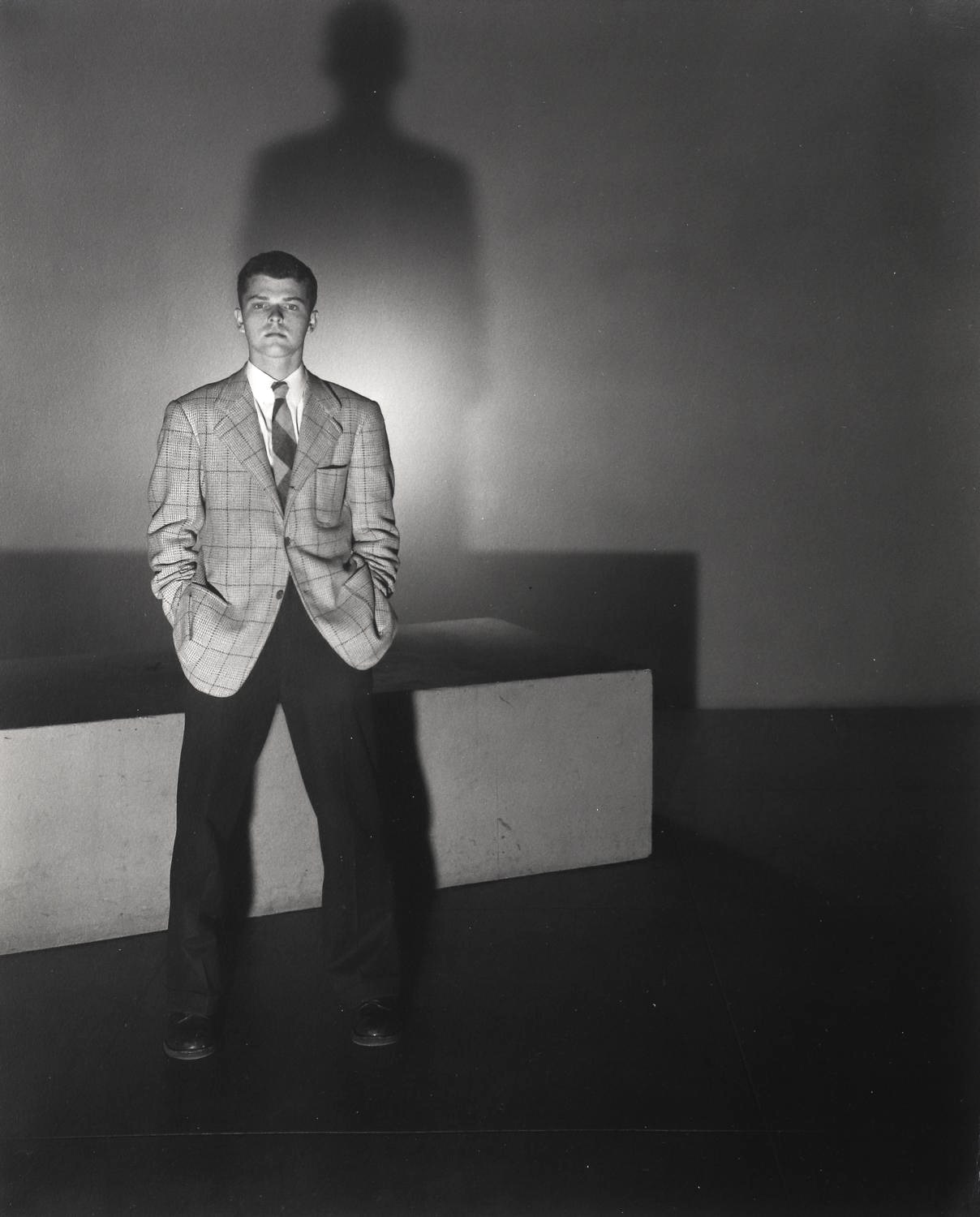
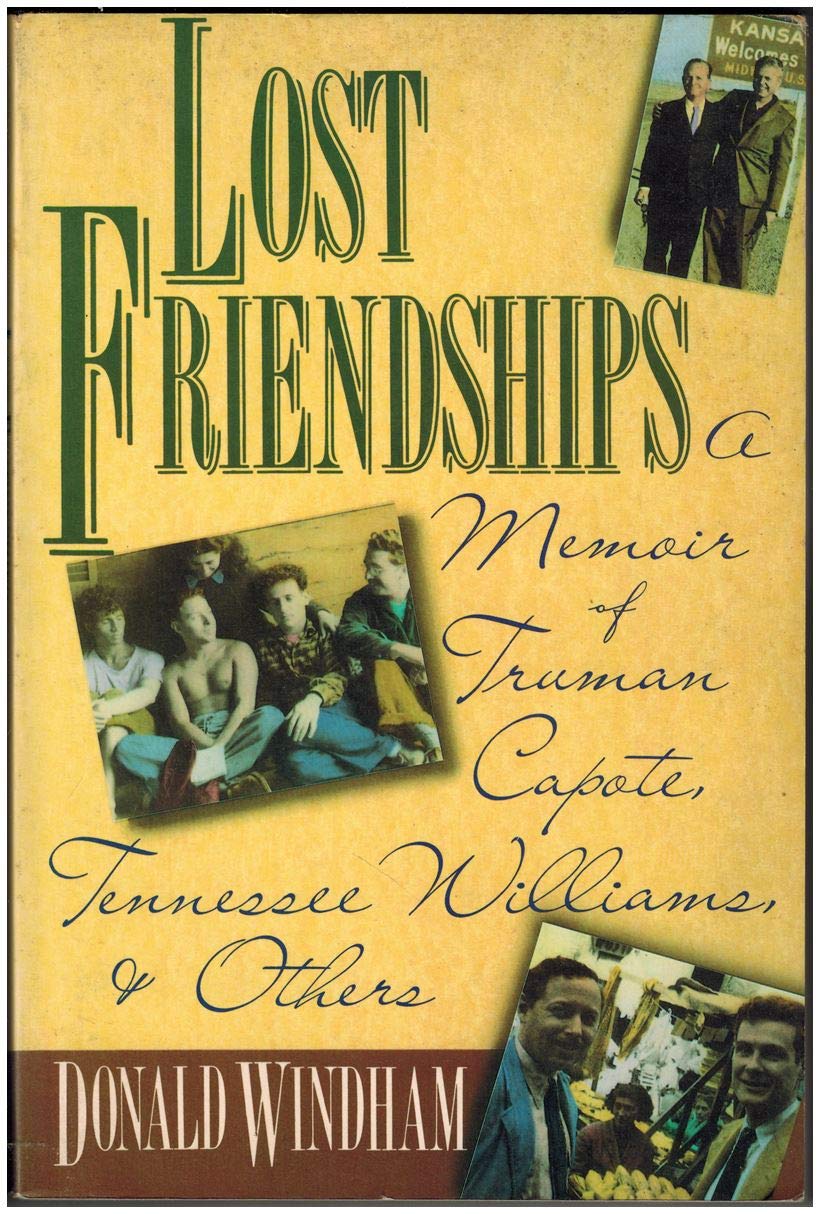
Artist’s Muse: Donald Windham & Sandy Campbell
Buddy & Johnny: A Historic Photo Shoot
Provincetown PaJaMa Party
Fire Island PaJaMa Party
George Platt Lynes: In Touch Magazine (1982)

Artist’s Muse: Wilbur Pippin

The latest subject in our Artist’s Muse series is Wilbur “Billy” Pippin, a friend, lover and confidant to a circle of artists that included George Platt Lynes, George Tooker, Paul Cadmus, Jared & Margaret French (aka the PaJaMa collective).

Wilbur Thomas Pippin was born on May 25, 1924 in Macon, Georgia. An only child, his father was employed by Railway Express while his mother worked at a dress shop. After the couple separated, Wilbur and his mother moved down the road to his maternal grandmothers house. He attended Lanier High School for Boys, where he was on the honor roll and received recognition for 5 years of perfect attendance. Upon graduation in June of 1942, he enlisted in the Army and served through World War II.

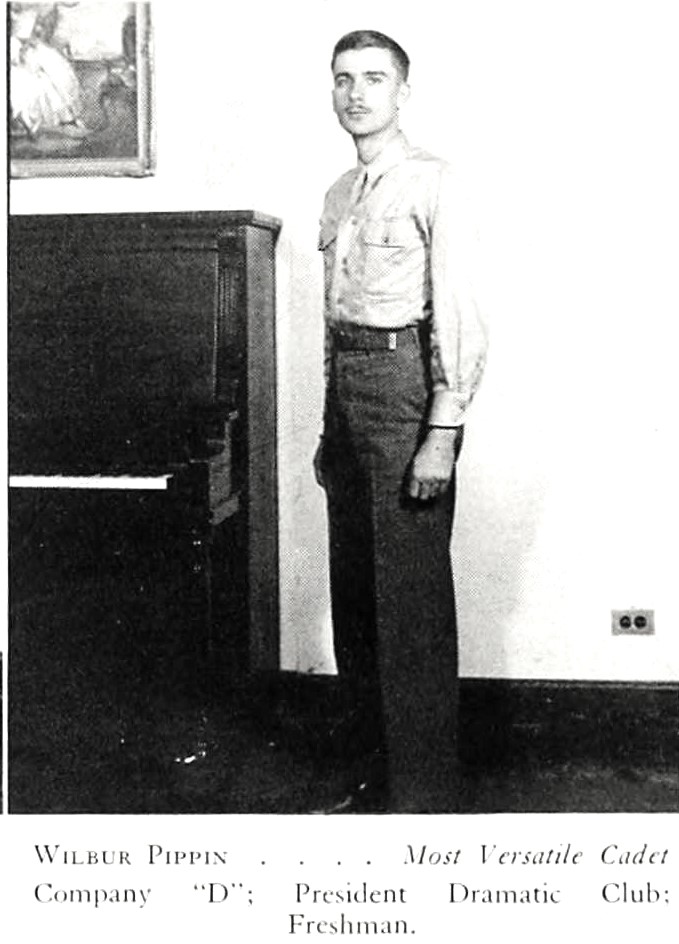
Back in Georgia for the 1946-47 school year, Billy enrolled as a freshman at North Georgia College in Dahlonega, three hours north of Macon. He became president of the drama club and was also voted “Most Versatile Cadet”. His academic career seems to have ended after that successful first year, as life took an unexpected turn in the form of a fellow named Fred Melton.

Sgt. Pippin – the Most Versatile Cadet at North Georgia College (1947)

Fred “Butch” Melton (1939)

We previously mentioned Fred “Butch” Melton in a profile of Artist’s Muse/writer Donald Windham. Butch was an Atlanta artist/photographer who moved to New York in 1939 with Windham, his boyfriend at the time. After the two split in 1942, Melton abruptly married Sarah “Sally” Marshall. The newlyweds settled in Greenwich Village and had two sons in quick succession. The growing family then moved back to Sally’s hometown of Macon, Georgia to live on land provided by her parents.

In the New York Public Library blog post Finding Frederick Melton, Stephen Bowie writes, “Melton dove into small-town Southern life with gusto. He built a modern house and workshop on the property, painted, and worked on the newspaper and in the local theater. But the experiment in conformity didn’t last.”

Whether Butch and Billy met doing local theatre or through some other social event is speculative. Suffice to say that Macon isn’t a very large town. In any case, the two found each other, and sparks flew. Billy did not return to college. In early 1948, Butch left his young family in Macon to move back to New York with Billy.

The couple moved into a cold-water tenement flat at 446 West 55th street in Hell’s Kitchen. Butch introduced Billy to the circle of gay artists that he had left behind 5 years prior. The striking young man soon began to turn up in their work.

Bernard Perlin & Wilbur Pippin photographed by Fred Melton in Cherry Grove, Fire Island (1948)

Wilbur Pippin photographed on Fire Island with George Tooker and Margaret French

Ballet impresario Lincoln Kirstein was apparently so fond of the couple that he tasked them with running Pippin Press, a silkscreen company he bankrolled and named after Billy. The original intent was to make collectible prints of ballet designs and the work of artists like Pavel Tchelitchev. Ultimately Pippin Press found more success producing custom silkscreen wallpaper.

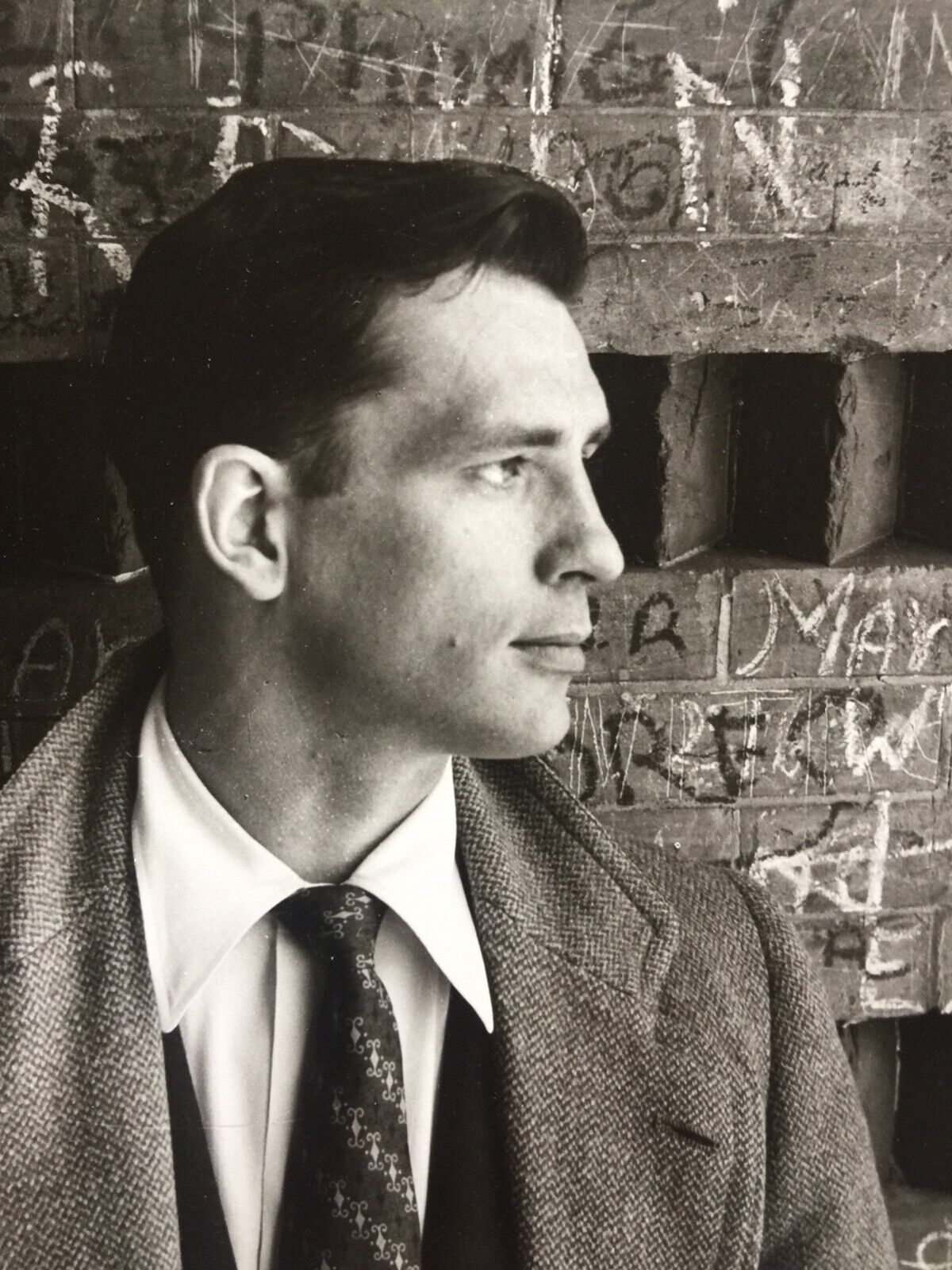
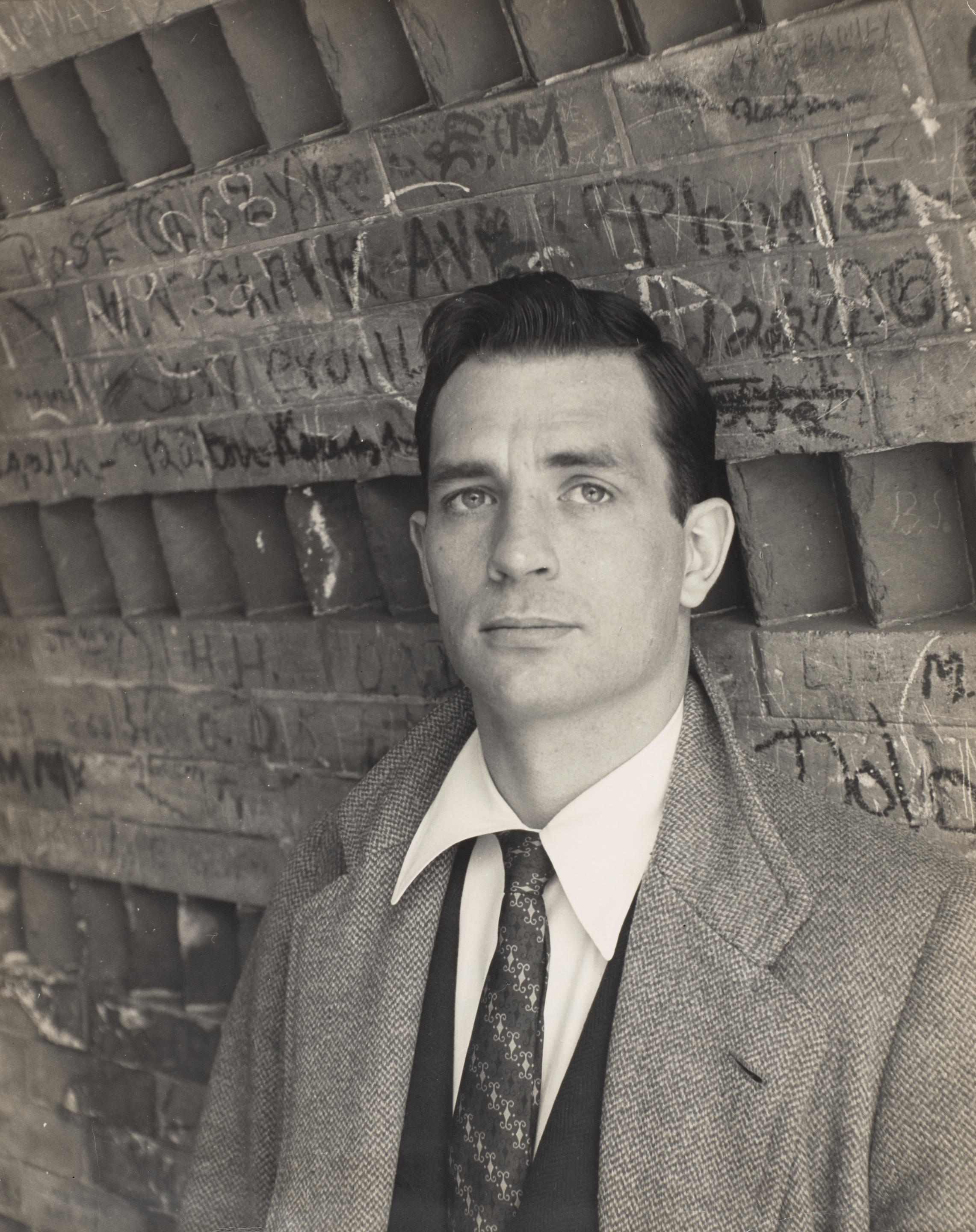
Billy also began exploring photography alongside Butch, forming the “Melton-Pippin Photography” imprint for both of their work. Although he later enjoyed a long career as a fashion photographer, today Billy’s most notable photographs are his 1950 portraits of Jack Kerouac. It was one of these photos that was Kerouac’s choice for the original cover sketch of On The Road.

Jack Kerouac photographed by Wilbur Pippin (1950)

In early 1951, Butch and Billy had a new neighbor when their friend George Platt Lynes moved into the building. Lynes’ relationship with Chuck Howard had recently ended, and he was facing increasing financial woes. Lynes was initially pleased to have the couple as neighbors – Melton helped him with remodeling and silk-screening wallpaper for the living room. But he quickly grew annoyed by the couple “forever borrowing that old cup of sugar…” he wrote to a friend, “… or in their case it was more likely to be a bottle of gin.”

Wilbur Pippin & Chuck Howard, (ca. 1950)

Wilbur Pippin photographed by George Platt Lynes

Besides the thirsty neighbors, the far-west proximity and sketchy neighborhood did not sit well with Lynes. By September, he had fled back to the comfort of the East side, although his finances could not support it.

Fred “Butch” Melton & Wilbur “Billy” Pippin photographed by George Platt Lynes (ca 1951)

The couple remained friends with Lynes through the rest of his life, despite some difficult times. When Lynes fell out of favor with Lincoln Kirstein, Melton was named as his replacement as the official photographer for the New York City Ballet. In 1955 when Lynes was hospitalized with terminal lung cancer, Pippin was one of a small group of friends tasked by Russell Lynes to dismantle and pack up his brother’s apartment. George Platt Lynes died in December of that year.

With Pippin Press winding down, Billy went to work as publicity director for the New York City Ballet as well as press representative of the Broadway show Protective Custody, which opened and closed in late December, 1956.

By the end of the 1950’s, Butch and Billy had gone their separate ways. As with so many others, Fred Melton was dropped by the mercurial Lincoln Kirstein and had been replaced as photographer for the New York Ballet, just as he had replaced Lynes years before.

In 1961, Melton departed New York once again, leaving his collection of ballet negatives to the New York Public Library, intent on spending his last days drinking on the beaches of Puerto Rico.

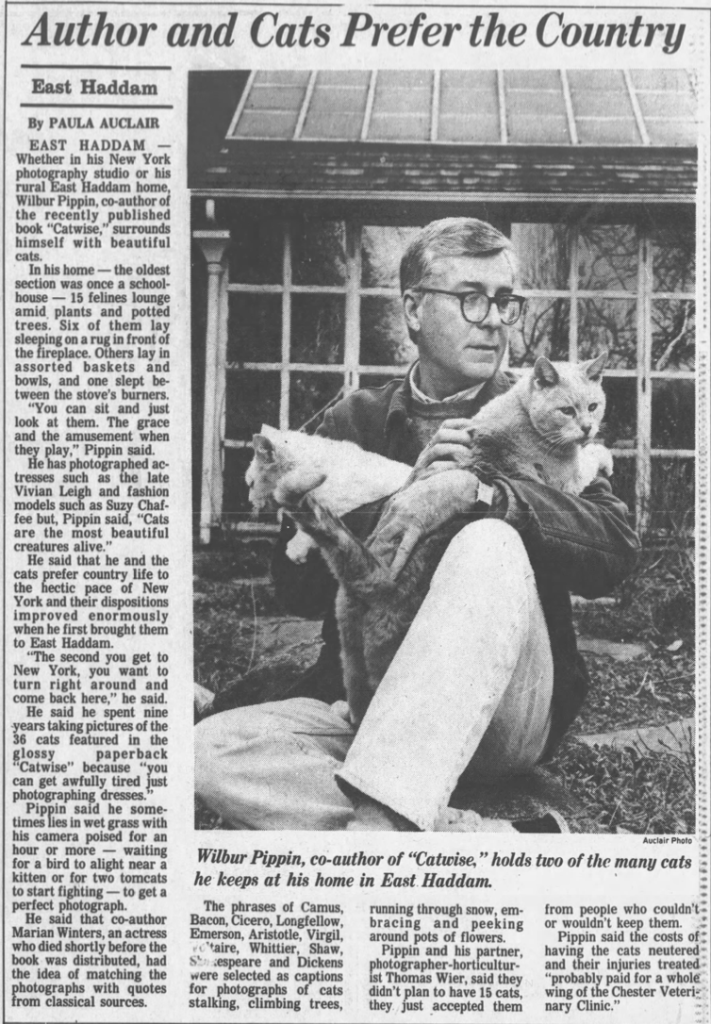
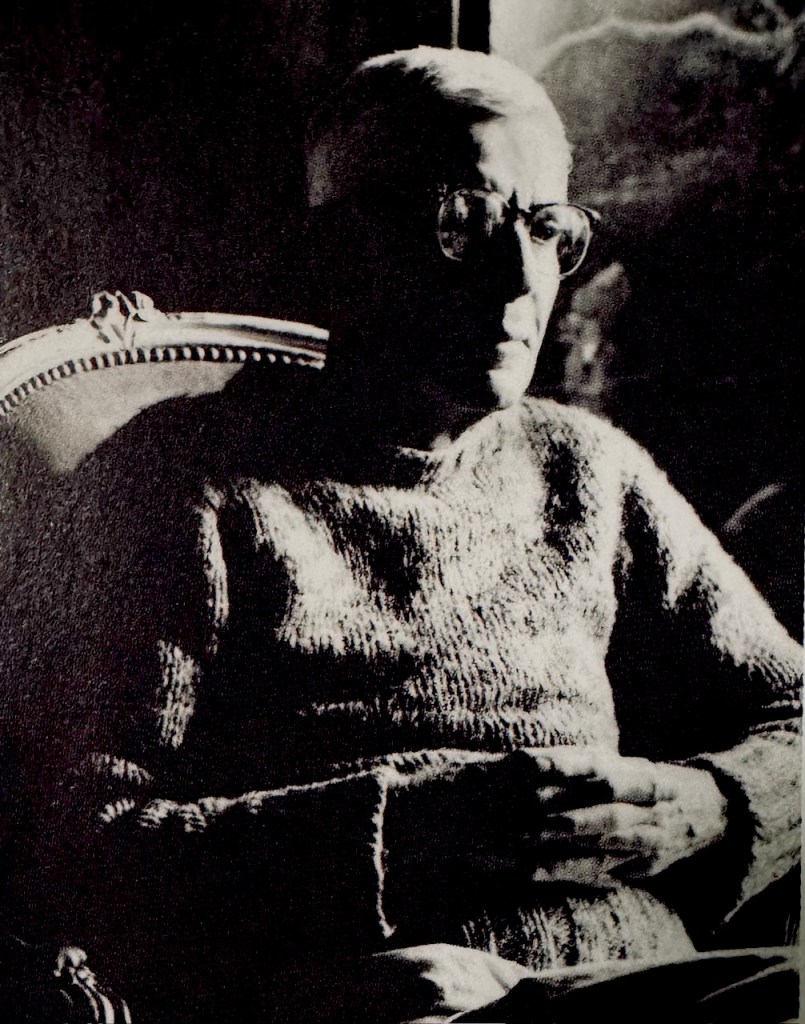
Meanwhile, Billy was working steadily as a fashion and celebrity photographer for the New York Times. He traveled the world through the following decades as a freelance fashion photographer for Vogue and other outlets. In the late 1960’s, Pippin coupled with fellow photographer, Thomas Wier, Jr. For 30 years, the duo ran Pippin & Wier Photography in New York City. Their country home was an old converted schoolhouse in East Haddam, CT. They eventually amassed a menagerie of 15 cats.

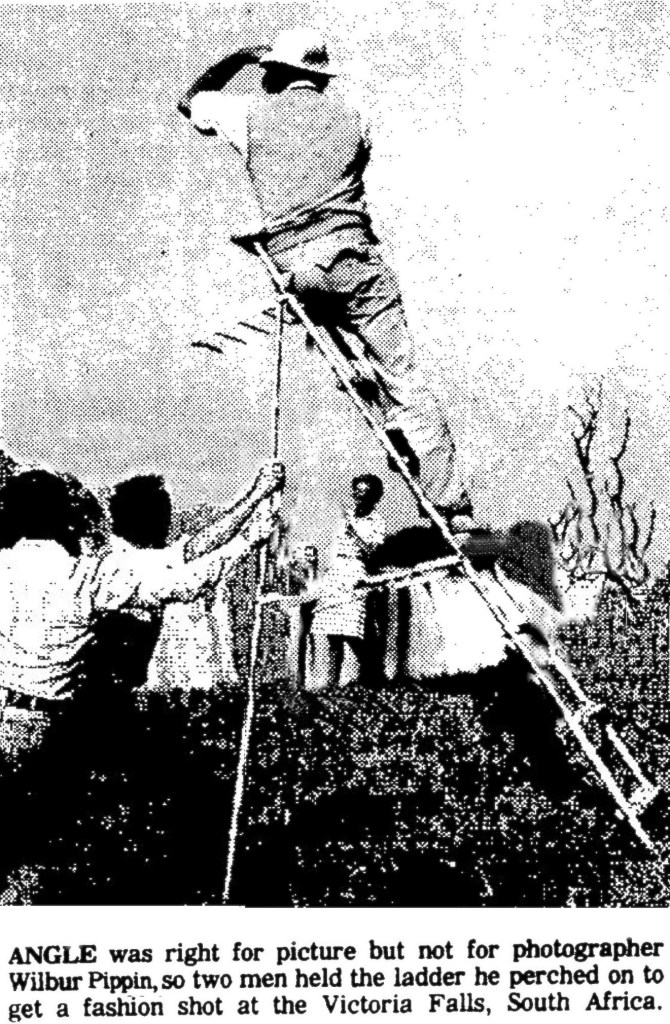
The Commercial Appeal, Memphis, TN 10/29/64

Daily Messenger, Canandaigua, NY (12/12/1974)

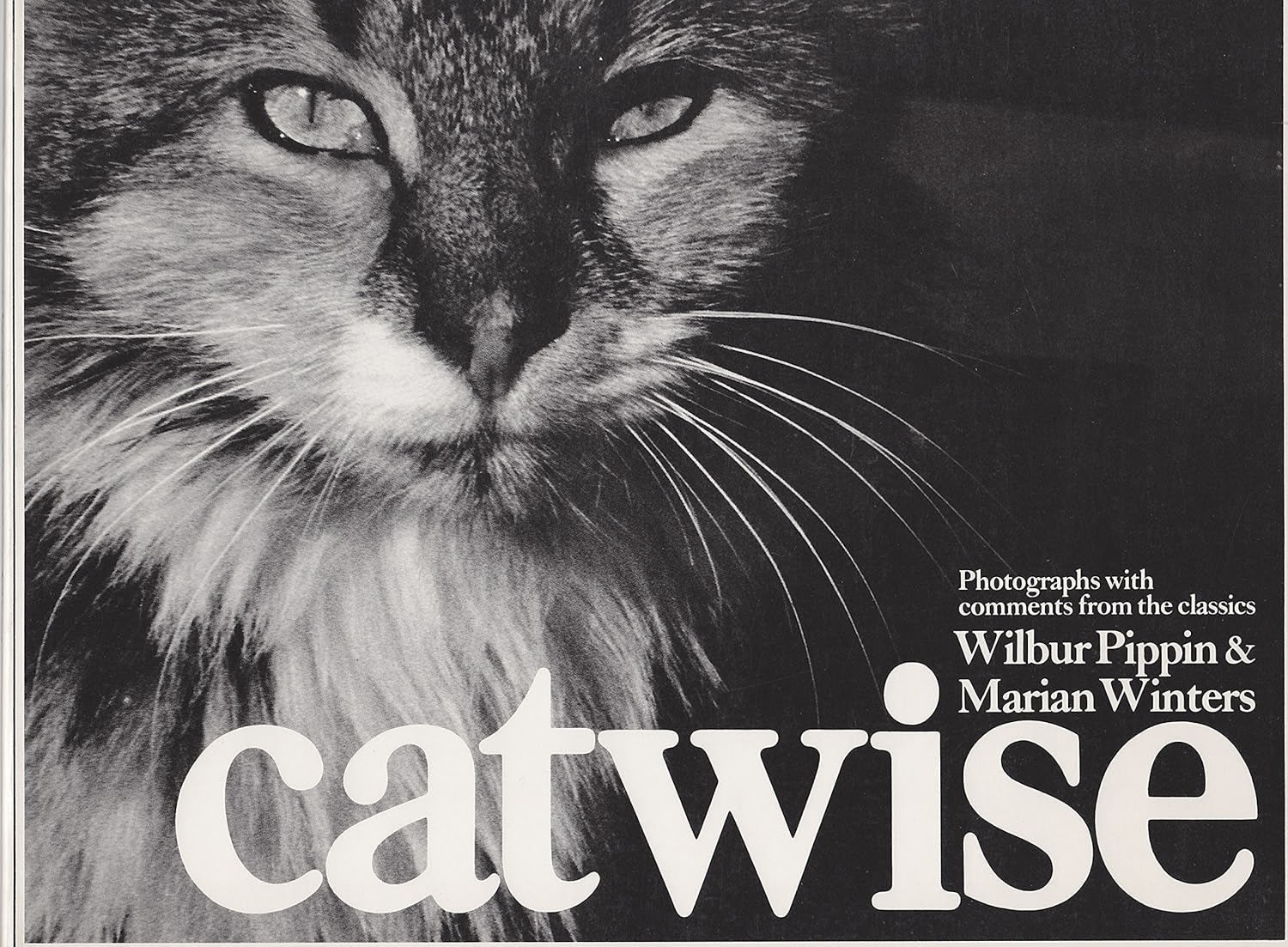
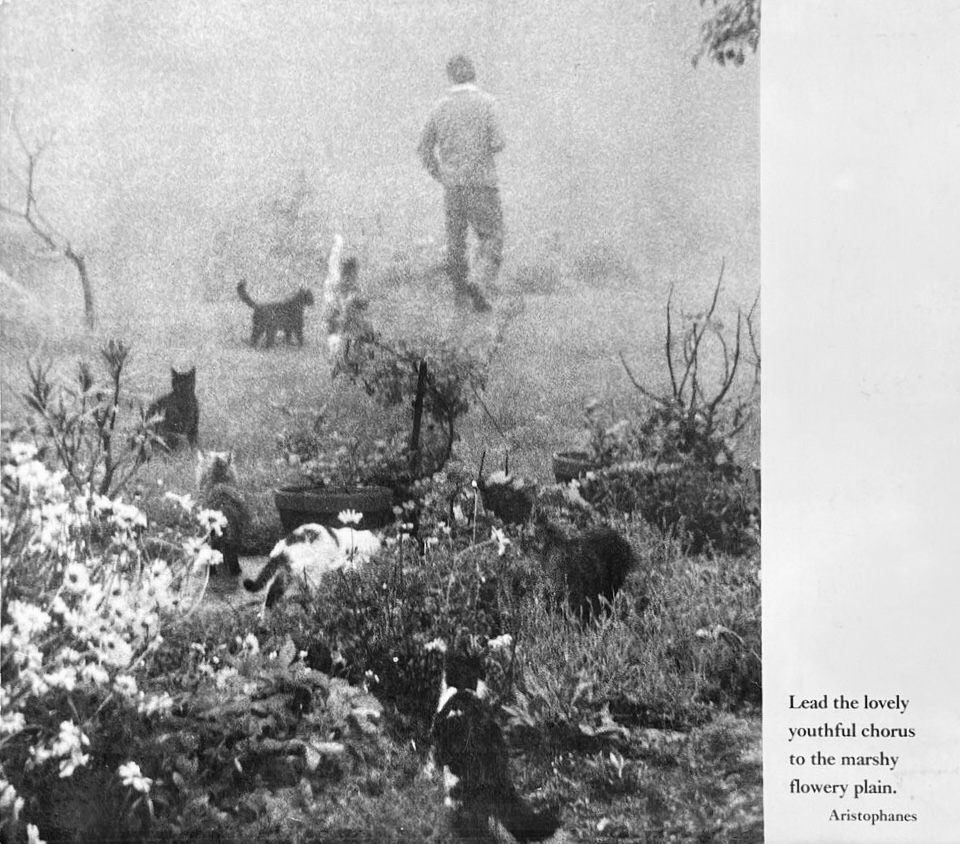
In 1979, Pippin co-authored the book Catwise with actress Marian Winters. This was a collection of photographs Pippin had taken of his feline family, with classical quotes selected by Winters. Sadly, Winters succumbed to cancer just before the book’s publication.

Hartford Courant, Connecticut (12/14/79)

Pippin and Wier eventually retired to their East Haddam house. Thomas Wier Jr. died on 9/12/2000, age 70. Wilbur Pippin died on 4/30/2003 at his home, age 78.

In 2024, the A. Therian gallery in Cairo, New York featured Billy, an exhibition of rare and previously unseen photos of Wilbur Pippin taken by George Platt Lynes, the PaJaMa collective, and Fred Melton. This collection of photographs shed light upon the striking young man from Macon, Georgia who became a friend, lover and confidant to his great artistic contemporaries.

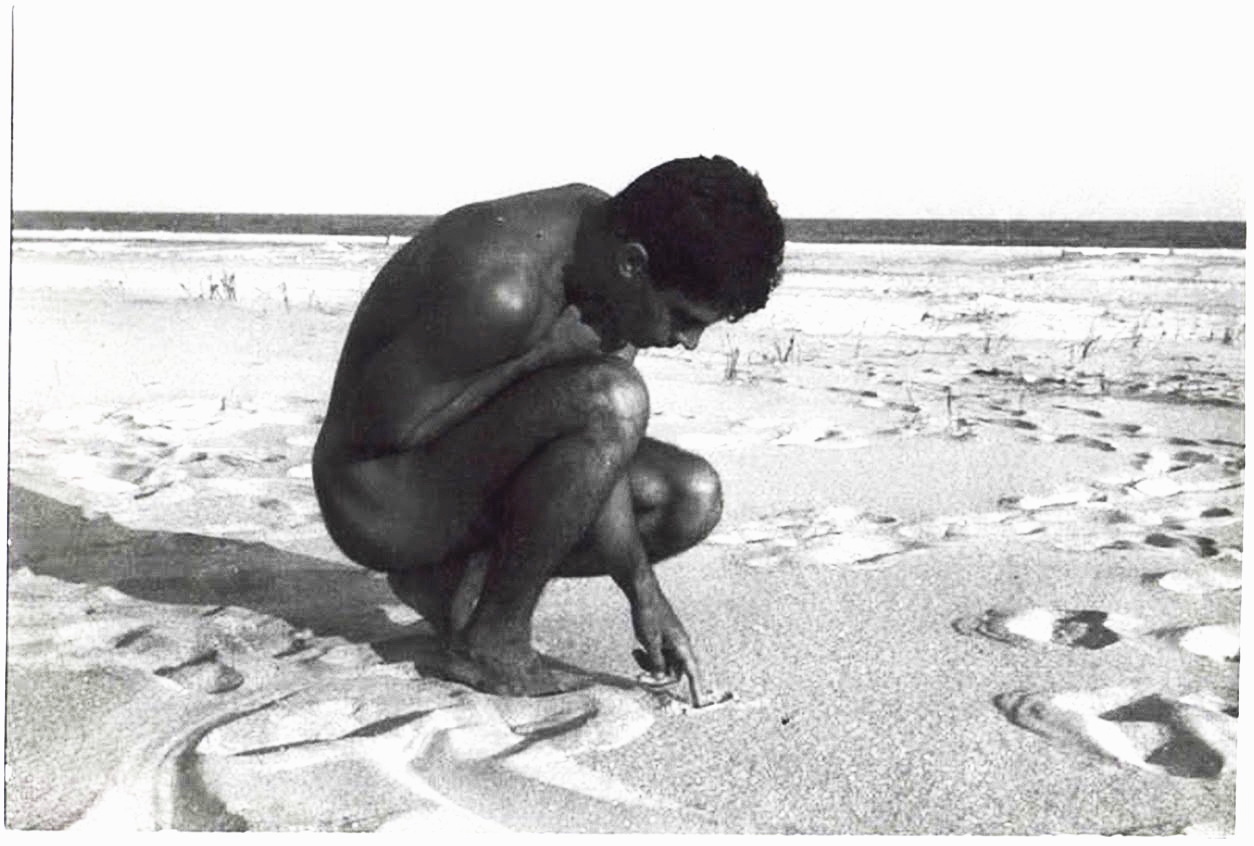
Wilbur Pippin, Egremont, Massachusettes (ca. 1948)

See Also:
Artist’s Muse: Chuck Howard
Artist’s Muse: Randy Jack
Artist’s Muse: Ted Starkowski
Artist’s Muse: The Mystery Model
Artist’s Muse: José “Pete” Martinez
Artist’s Muse: Forrest Thayer
Artist’s Muse: William Weslow
Artist’s Muse: Donald Windham & Sandy Campbell
Buddy & Johnny: A Historic Photo Shoot
Provincetown PaJaMa Party
Fire Island PaJaMa Party
Fire Island Muses of George Platt Lynes & The PaJaMa Collective
George Platt Lynes: In Touch Magazine (1982)
Revisiting George Platt Lynes’ Fire Island Muses

Artist’s Muse: Donald Windham & Sandy Campbell

I recently wrote a piece for the Fire Island Pines Historical Preservation Society titled “The Fire Island Muses of George Platt Lynes & The PaJaMa Collective.” It focuses on the subjects of the artwork they created during their time on Fire Island. This is an expansion on two of those profiled: Donald Windham and Sandy Campbell.

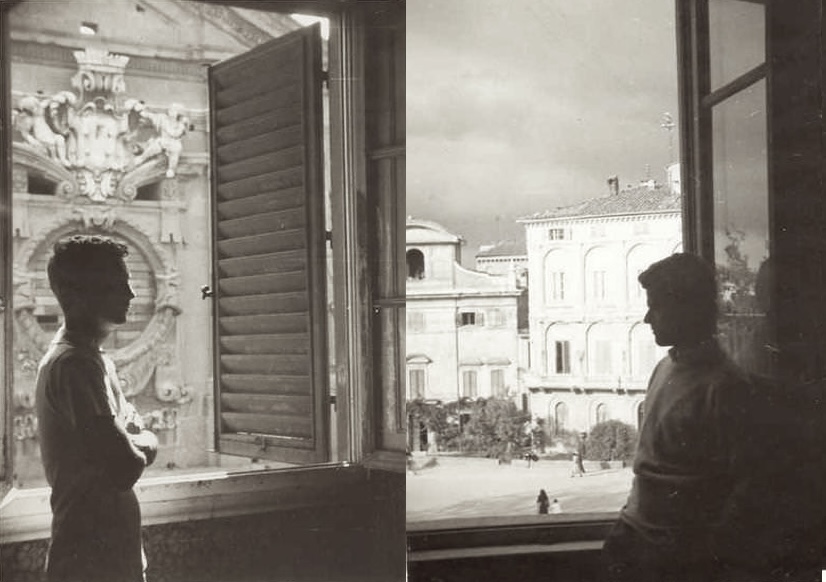
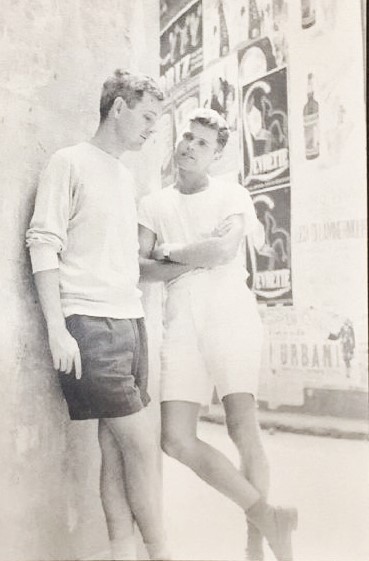
Windham & Campbell in Italy, ca 1950

Fred “Butch” Melton (1939)

In 1939, 19-year-old Donald Windham moved to New York from Atlanta with his boyfriend, graphic artist/photographer Fred “Butch” Melton. They were welcomed into the New York circle of artistic types that included George Platt Lynes, Tennessee Williams, Paul Cadmus, Jared and Margaret French.

Donald Windham & Fred “Butch” Melton photographed by Jared French at his 5 St. Luke’s Place studio (ca 1941)

In 1942, Butch ended his relationship with Windham, opting for a more conventional lifestyle by getting married, fathering two sons and moving to Macon, Georgia. This didn’t last long: Butch met and fell in love with local artist Wilbur “Billy” Pippin. In early 1948, he left his young family and returned to New York with Billy. But that’s another story…

Donald Windham with Jared French & Paul Cadmus on Fire Island, ca 1940

In 1942, the newly single Windham supported himself by working at Lincoln Kirstein’s Dance Index magazine. He lived in the Cadmus/French studios at 5 St. Luke’s Place while they spent time at their rental on Fire Island. He would frequently visit there as well. The lithe young man with the striking profile became the subject of many PaJaMa photos and sketches.

Windham posed as a reference for Jared French’s Homesickness (1942)

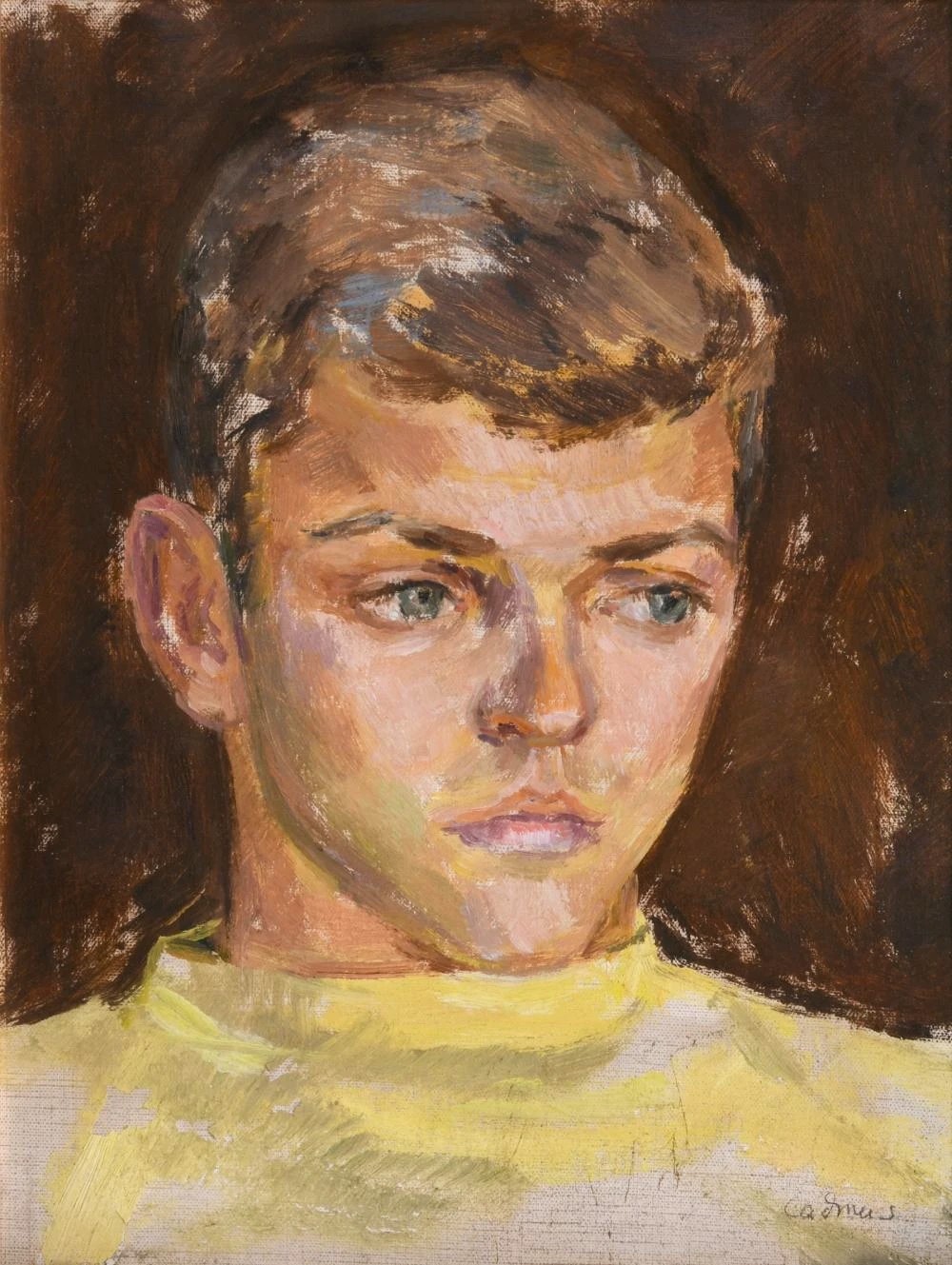
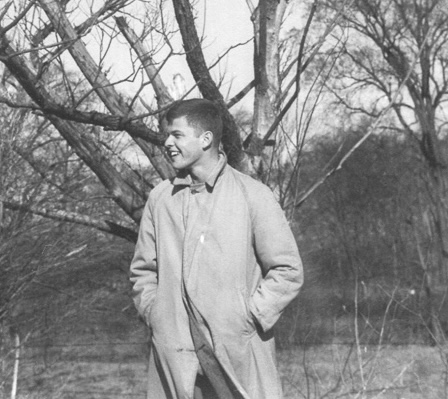
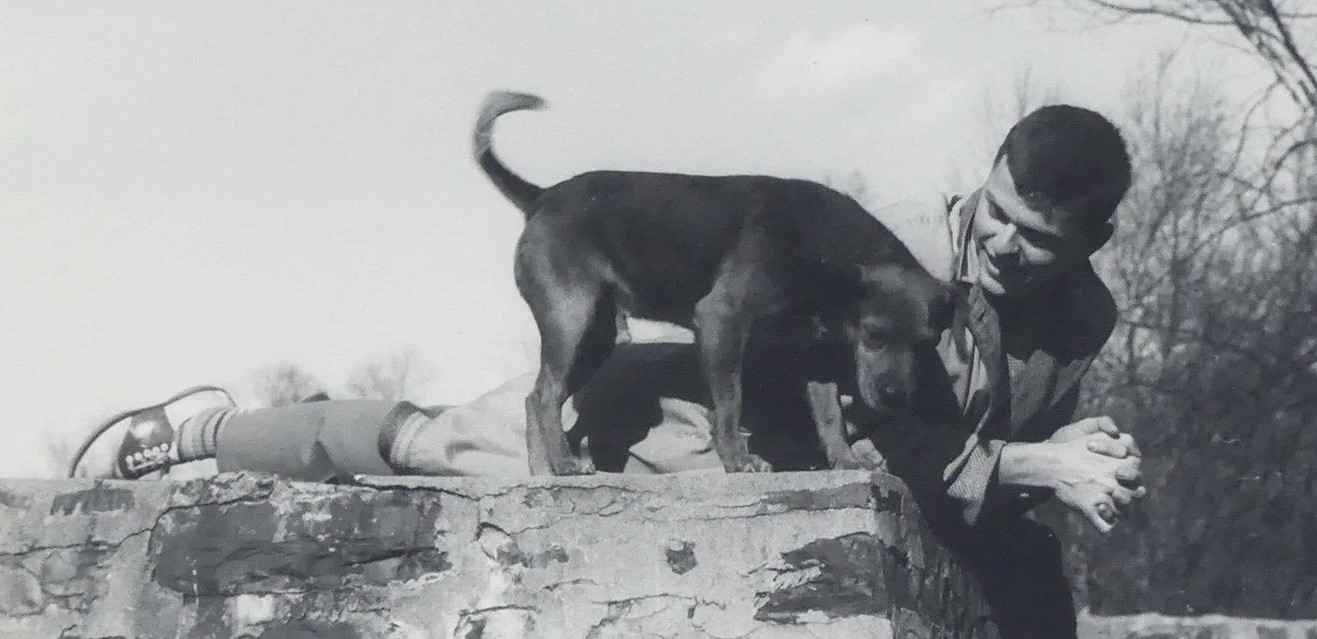
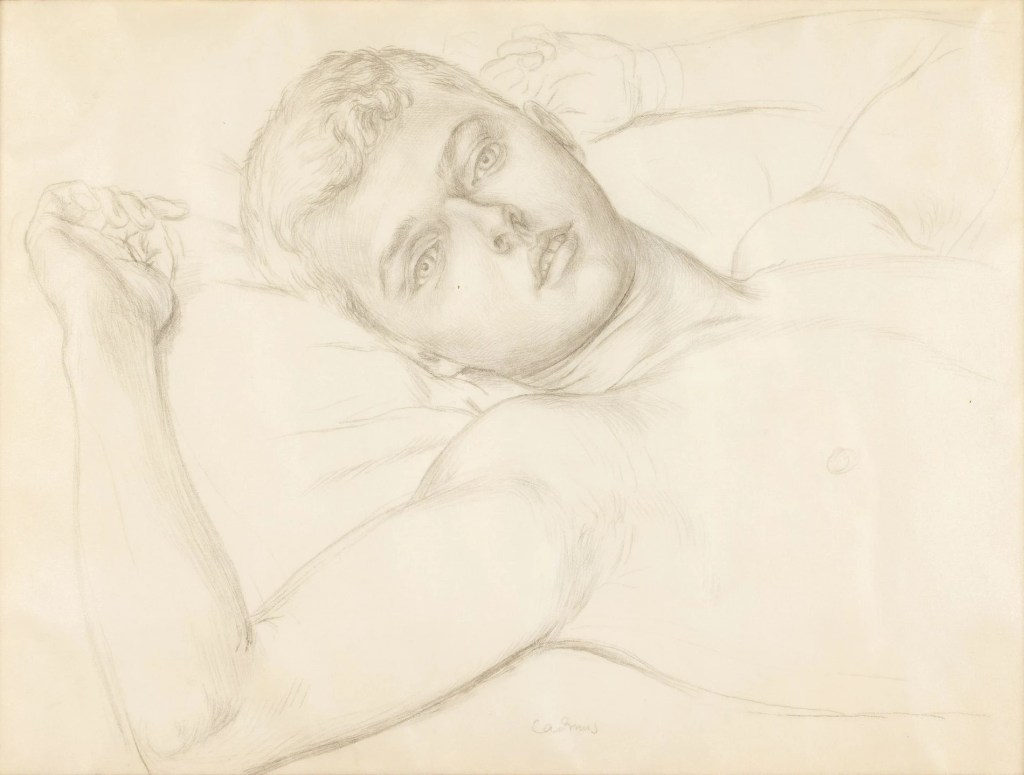
Paul Cadmus met 21-year-old Princeton theater student Sandy Campbell at a party in 1943. The young man asked the artist to do a pencil portrait that he could give to his mother, as he suspected that he would soon be drafted. Cadmus was instantly smitten with the handsome young man. He went on to draw, paint and photograph him frequently throughout the following year.

Campbell is the central figure of Cadmus’s 1944 painting Reflection. Donald Windham was the original model for the figure laying on the floor. Before the painting was completed, however, the two models fell in love. Cadmus was not happy with this turn of events, and Windham’s likeness disappeared from the finished painting, with the figure’s head turned slightly away.

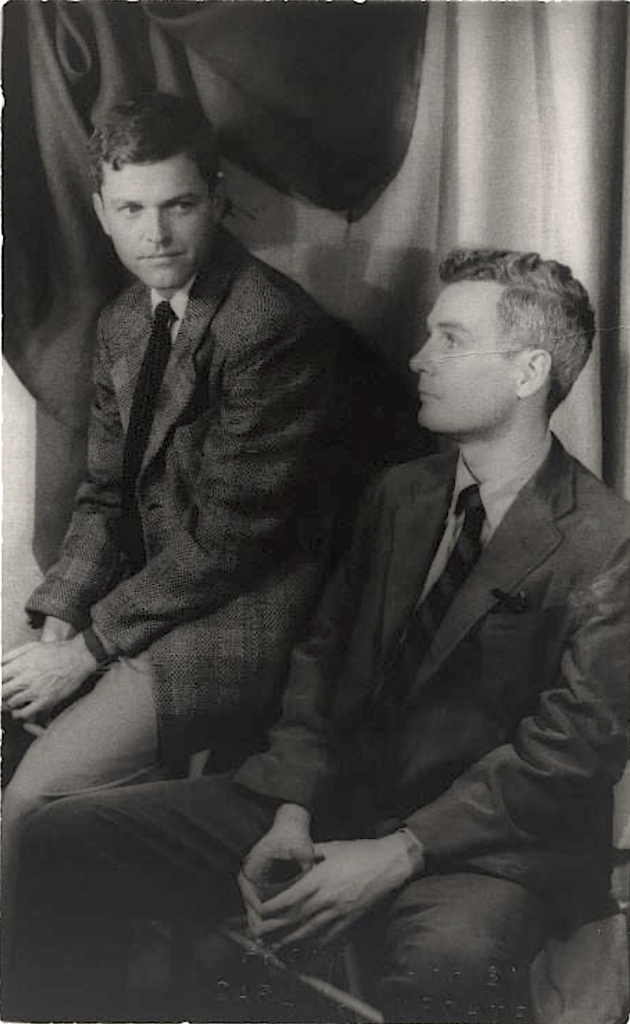
Donald Windham & Sandy Campbell photographed by George Platt Lynes (ca 1943)

Photographer George Platt Lynes photographed both Campbell and Windham several times in separate studio settings. In 1945, he shot Windham again with his friend and writing collaborator, Tennessee Williams.

Donald Windham, Tennessee Williams & Edmund Gwen photographed by George Platt Lynes (1945)

Windham and Williams co-wrote the play You Touched Me!, a romantic comedy based on a short story by D.H. Lawrence. It opened on Broadway starring Edmund Gwen and Montgomery Clift in late 1945. Unfortunately, reviews were mixed and it closed 4 months later.

Around the same time, Campbell was cast in a string of minor Broadway and film roles that would span the next 10 years. He then decided to give up acting and focus on editing and publishing Windham’s work.

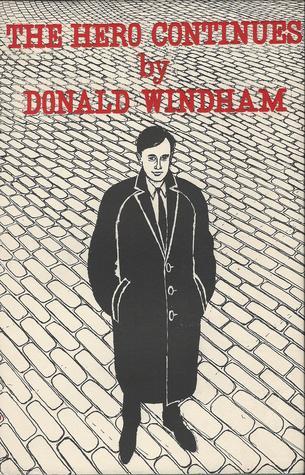
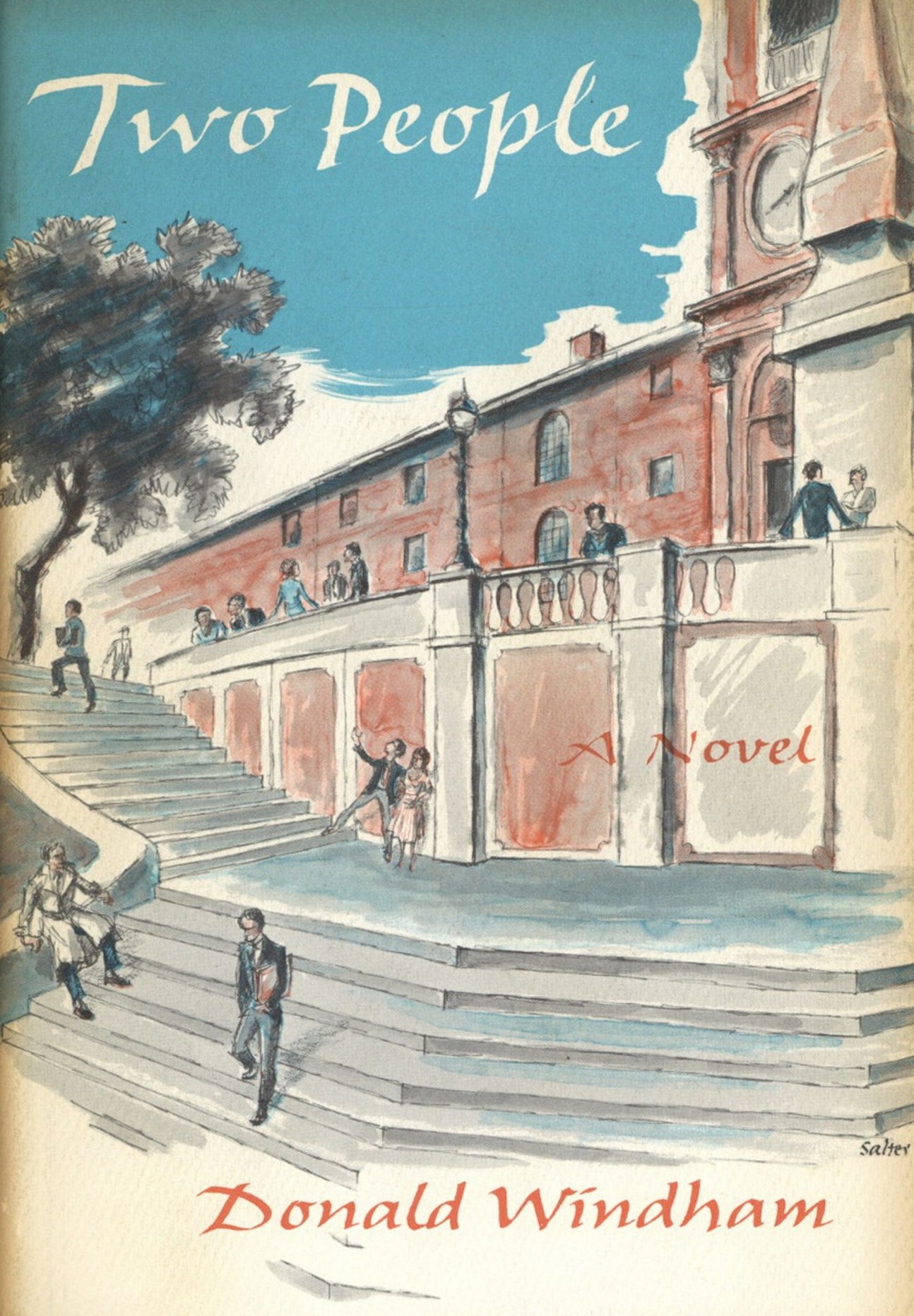
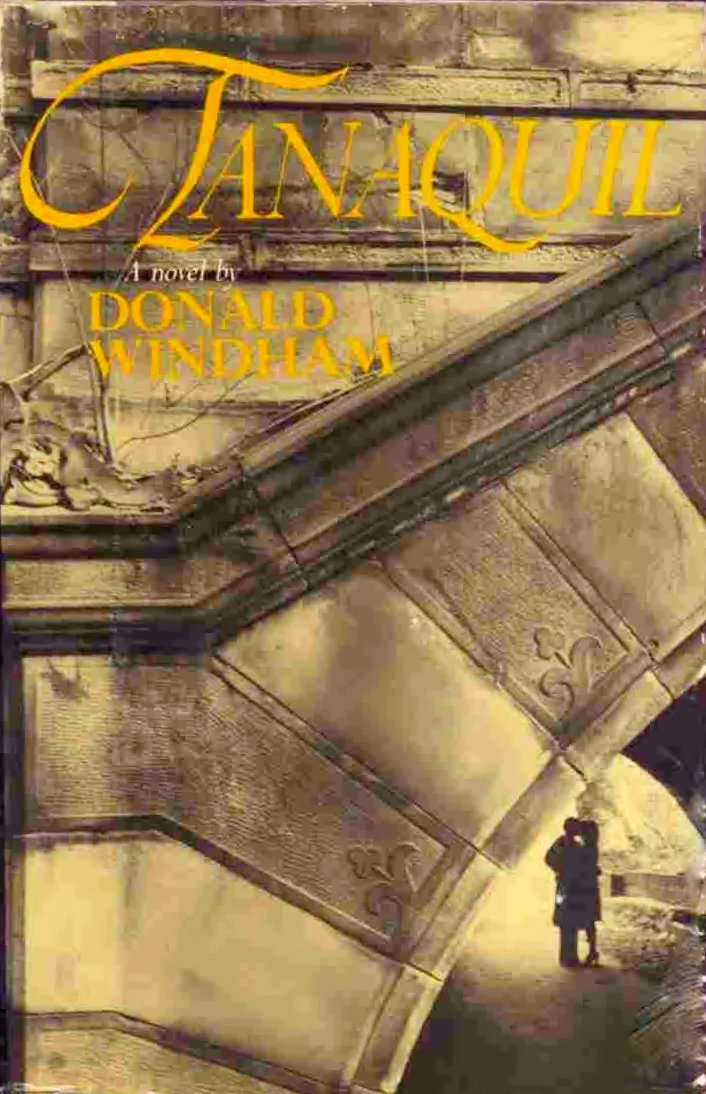
Donald Windham’s literary output (1950-1998)

Windham’s 1972 novel Tanaquil is a fictionalization of his time among the George Platt Lynes / PaJaMa circle of friends. His later work focused on correspondence and reflections on his famous literary friends, including E.M. Forster, Tennessee Williams, Alice B. Toklas and Truman Capote.

Campbell & Windham with Capote

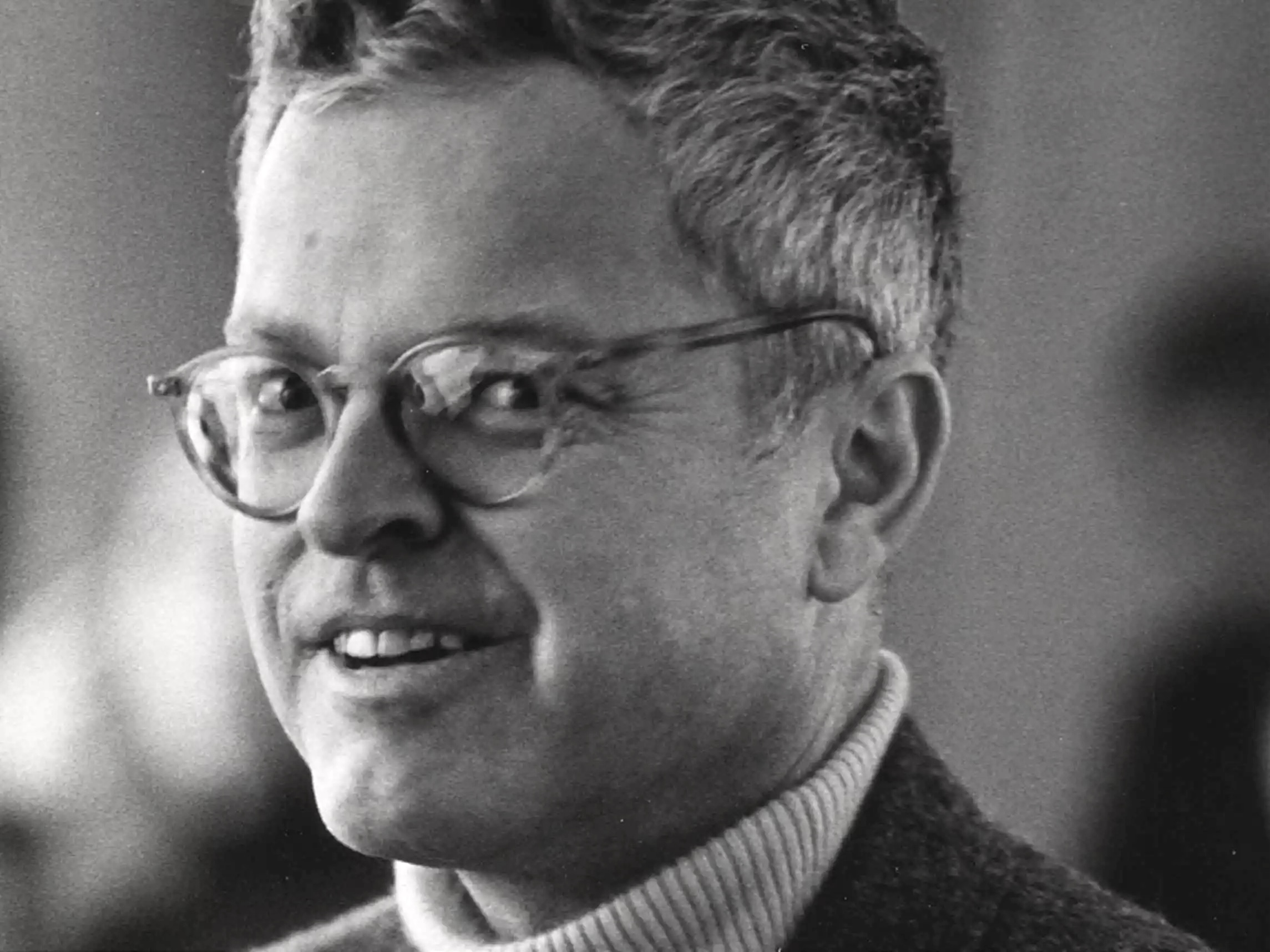
Windham & Campbell, ca 1987

Windham and Campbell remained a couple for the rest of their lives. Besides their New York City apartment on Central Park South, they also had a Fire Island house on Ocean Walk in The Pines, where Campbell died suddenly of a heart attack on June 26, 1988. Windham outlived his younger partner by 22 years, passing in May, 2010 at the age of 89. Their combined estates fund the annual Windham-Campbell Literary Prizes, established at Yale University in 2012.

Jack Parlett’s 2022 book Fire Island devotes almost an entire chapter to Donald Windham’s 70-year span visiting the island. Parlett writes; “(Windham) was part of the very first generation to discover its potential as an enclave; first as a young man, visiting Saltaire with some of the earliest queer artists to incorporate the island into their practice; and later as a man in his fifties, happily coupled with the love of his life, who made in the Pines an enclave within an enclave, a restful home for two people, even amid the loudness of the community’s sexual and cultural boom in the 1970’s.”


See also:
Donald Windham on Truman Capote: Christopher Street (1988)
Fire Island PaJaMa Party
Fire Island Muses of George Platt Lynes & The PaJaMa Collective
Revisiting George Platt Lynes’ Fire Island Muses
Artist’s Muse: Wilbur Pippin
Artist’s Muse: José “Pete” Martinez
Artist’s Muse: Chuck Howard
Artist’s Muse: Randy Jack
Artist’s Muse: Ted Starkowski
Artist’s Muse: The Mystery Model
George Platt Lynes: In Touch Magazine (1982)

Artist’s Muse: Forrest Thayer

I recently wrote a piece for the Fire Island Pines Historical Preservation Society titled “The Fire Island Muses of George Platt Lynes & The PaJaMa Collective.” It focuses on the subjects of the artwork they created during their time on Fire Island. This is an expansion on one of those profiled: Forrest Thayer.

Including Forrest Thayer in the Artist’s Muse series may seem to be a bit of a stretch. He was not a subject of George Platt Lynes (as far as I know) and was only captured by the PaJaMa photo lens during a short period in the late 1930’s. Nevertheless, the talented costume designer still deserves a mention.

Forrest Thayer photographed in the PaJaMa studios at 5 St. Luke’s Place (1938)

Forrest Glenn Thayer, Jr. was born on May 29, 1916 in Sag Harbor, New York. He was the first child of Forrest and Helen Sigmund Thayer. A younger sister, Helen, was born in 1919. His father was the assistant superintendent of the nearby Fahys Watch Case Factory. He later moved up to superintendent in the early 1920’s.

Both parents were active in the Sag Harbor community, appearing in local stage productions and soloing in the church choir. Mrs. Thayer was also president of the bridge club. When the Fahys Watch Case Factory was sold to Bulova in 1934, Forrest Sr. found work with the Keystone Watch Case Company in New Jersey. He moved to Riverside and would visit his wife and children on the weekends.

Forrest Jr. graduated from Pierson High school in 1933 and went on to study at the New York School of Fine and Applied Arts, now known as Parsons School of Design.

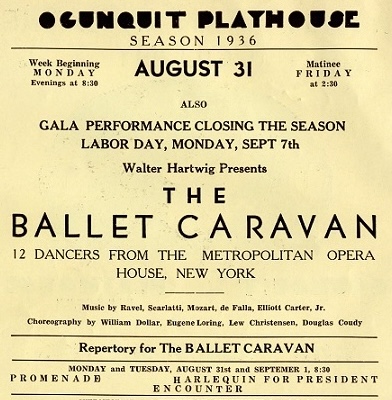
In 1936, Lincoln Kirstein organized Ballet Caravan, a company expressly dedicated to the commission and production of ballets with American themes. These would be created by American composers, choreographers, designers and dancers.  The company also provided off-season summer employment for his American Ballet company dancers, which included Kirstein’s paramour, José Martinez. 

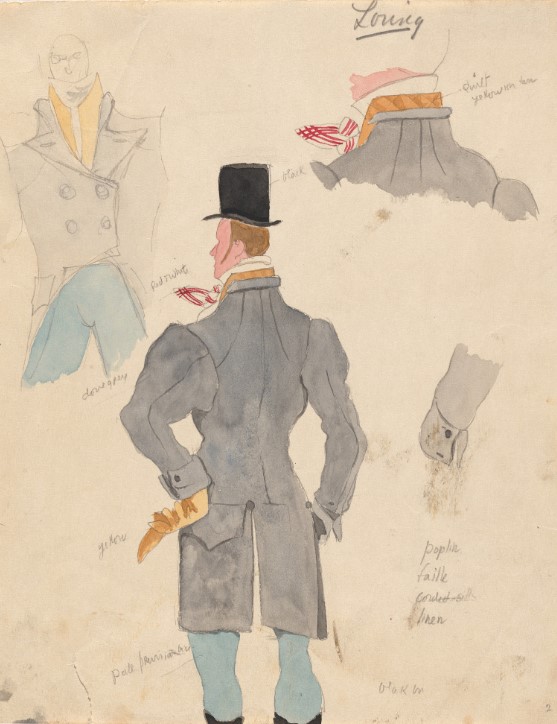
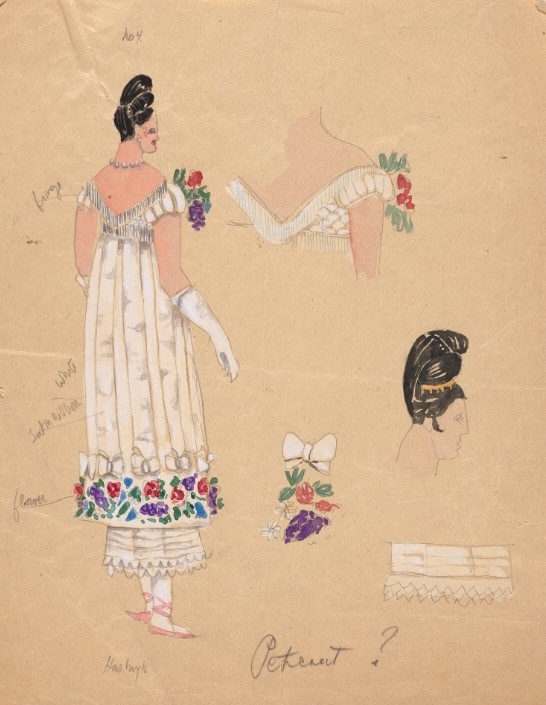
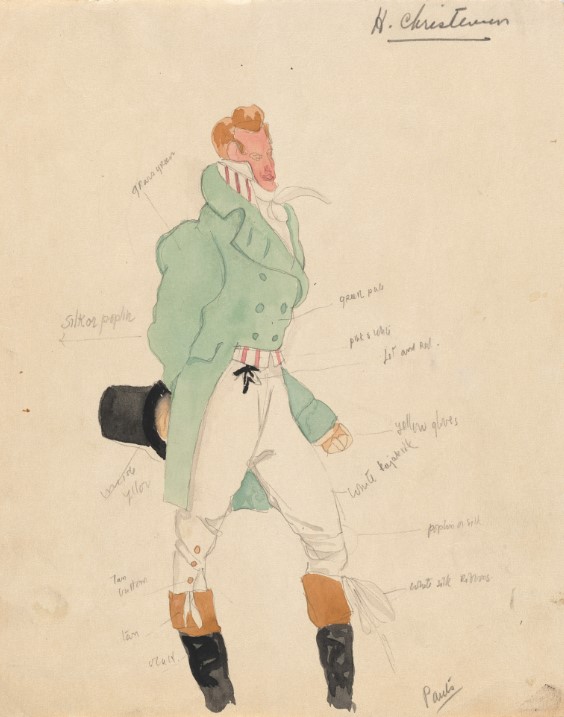
One of dancer William Dollar’s first forays into choreography was Ballet Caravan’s production of Promenade, set to Maurice Ravel’s Valse Nobles et Sentimentales. 20-year-old Forrest Thayer designed the costumes for the production, which featured dancers Eugene Loring and brothers Harold and Lew Christiansen.

Promenade costume sketches by Forrest Thayer with photos by George Platt Lynes (1936)

Sag Harbor Express, 5/12/1938

Paul Cadmus and Jared French would each take a turn designing sets and costumes for Ballet Caravan: Cadmus with Filling Station (choreographed by Lew Christiansen) in 1937 and French with Aaron Copeland’s Billy The Kid (choreographed by Eugene Loring) in the Fall of 1938. Between those productions, the creative team took a trip out to Fire Island where the PaJaMa collective would retire each summer.

Forrest Thayer, Paul Cadmus and José Martinez at the Saltaire, Fire Island Ferry (1938)

Forrest Thayer frolicking on Fire Island with Paul Cadmus, Jared French and José Martinez (1938)

The PaJaMa photo “After The Hurricane” features (l-r) Jared French, Lincoln Kirstein, José Martinez, Forrest Thayer and probably Paul Cadmus. 

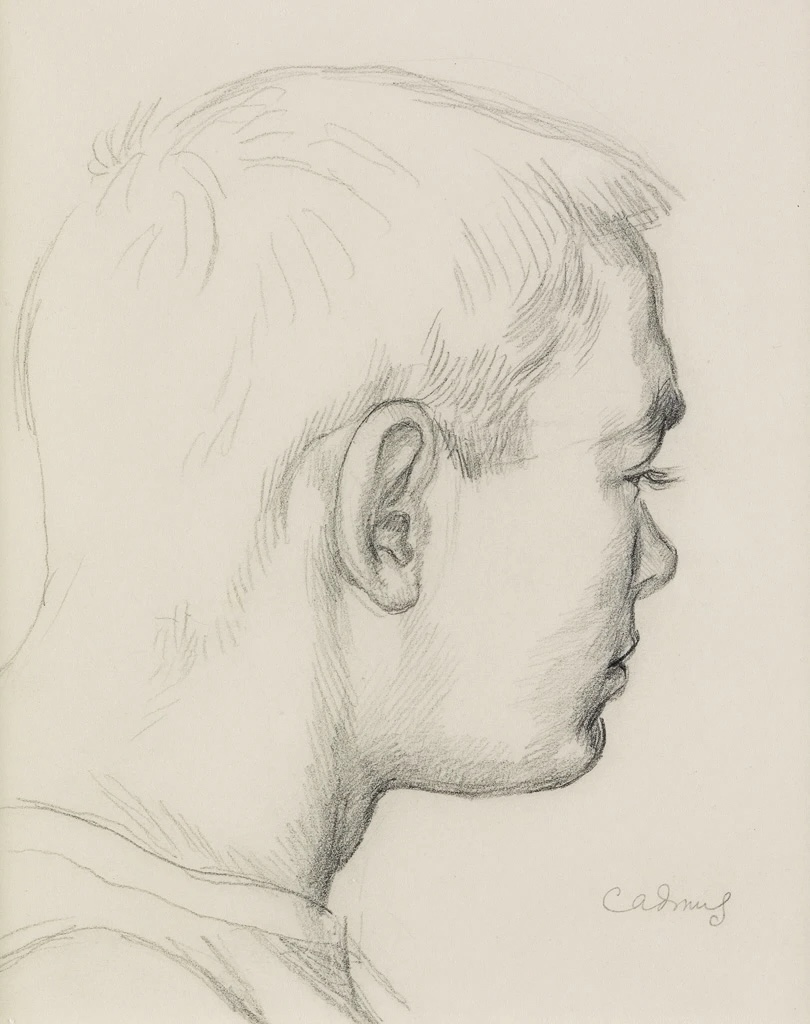
Forrest Thayer sketch by Paul Cadmus

Thayer spent the rest of the summer of 1938 as the scenic designer for the Studio Players in East Hampton, L.I. He continued to find freelance work regionally as a scenic and costume designer. In 1940, he was the scenic designer for the Provincetown Players in New York City. He spent the summer of 1941 working with the Hilltop Players in Ellicot City, Maryland.

During World War II, Thayer served as a staff sergeant in India and Burma from February, 1942 through December, 1945. He landed back in New York after the war and resumed his design career.

In the spring of 1947, Thayer tried his hand at co-directing a revival production of Percy Shelley’s The Cenci at the Equity Library Theater. Reviews were not favorable. During that summer, he directed an adaption of Jean Paul Sartre’s No Exit for the Maverick Players in Woodstock, New York.

New York Daily News, July 23, 1950

Back in New York City, his work with wardrobe continued. Over the next 5 years, he was a part of the following productions:

1947 – Crime And Punishment – Broadway with John Geilgud & Lillian Gish (assistant to Costume Designer Lester Polakov)
1948 – Inside U.S.A. – Broadway (assistant to costume designer Eleanor Goldsmith)
1948 – Cole Porter’s Kiss Me Kate – Broadway (assistant to costume designer Lemuel Ayers)
1949 – Noel Coward’s Present Laughter tour starring Edward Everett Horton (costume design)
1949 – The Philadelphia Story tour (costume design)
1949 – Garson Kanin’s The Smile Of The World – Broadway with Ossie Davis & Ruby Dee (costume design)
1950 – Cole Porter’s Out Of This World – Broadway (assistant to costume designer Lemuel Ayers)
1950 – Garson Kanin’s The Live Wire – Broadway (costume design)
1950 – The Jack Carter Show – NBC Television (costume design)
1951 – Music In The Air – Broadway (assistant to costume designer Lemuel Ayers)

In the fall of 1951, a week before the Broadway opening of Music In The Air, Thayer drove out to Sag Harbor for a visit with his mother. Wherever his career took him, he made frequent return visits to the family home on Jermain Avenue. He spent the evening of Saturday, September 29th in East Hampton visiting friends. As he was driving back to Sag Harbor in the early morning hours of Sunday, September 30th, he was involved in a single car accident. It was reported that he fell asleep at the wheel and struck a tree. He died the next day at Southampton Hospital.

Sag Harbor Express 10/4/51

The Thayer home is just a half mile down the road from Oakland Cemetery. Forrest’s funeral was held at the house, and he was interred with military honors at the cemetery. His parents are now buried there with him.

Eight of Forrest Thayer’s costume sketches from Promenade are a part of the Museum Of Modern Art collection, courtesy of Lincoln Kirstein.

See also:
Fire Island PaJaMa Party
Provincetown PaJaMa Party
Artist’s Muse: José “Pete” Martinez
Artist’s Muse: Chuck Howard
Artist’s Muse: Randy Jack
Artist’s Muse: Ted Starkowski
Artist’s Muse: The Mystery Model
Artist’s Muse: Donald Windham & Sandy Campbell
Artist’s Muse: Wilbur Pippin
George Platt Lynes: In Touch Magazine (1982)
Fire Island Muses of George Platt Lynes & The PaJaMa Collective
Revisiting George Platt Lynes’ Fire Island Muses

Fire Island Muses of George Platt Lynes & The PaJaMa Collective

I am pleased to announce that I have penned an article for the Fire Island Pines Historical Preservation Society website titled “The Fire Island Muses of George Platt Lynes & The PaJaMa Collective.” It focuses on the subjects of the artwork they created during their time on Fire Island. See the full piece here: https://www.pineshistory.org/the-archives/fire-island-muses

Paul Cadmus & Jared French, Fire Island, PaJaMa (1940)

I have previously written about The PaJaMa collective’s Fire Island summers. They were frequently joined by fellow artists George Platt Lynes and Bernard Perlin, as well as a parade of friends and lovers, performers and literary types from their New York social scene. They were almost exclusively attractive young gay men who served as models and muses for the artists.

Chuck Howard & Ted Starkowski, FI, PaJaMa, 1951

10 of these men are profiled in the piece – several of whom have previously been featured here. The others will inevitably get more in-depth profiles in the future:
José “Pete” Martinez
Forrest Thayer
Donald Windham & Sandy Campbell
Jonathan Tichenor
Randy Jack
Ted Starkowski
Chuck Howard
Jensen Yow & Jack Fontan

Paul Cadmus: Two Boys On The Beach (1938) / Two Boys On The Beach 2 (1939)

Margaret French, “The Moon by Day”, 1939

Thanks to Robert Bonanno for reaching out and John Dempsey for the feedback and formatting!

See Also:
Fire Island PaJaMa Party
Provincetown PaJaMa Party
Revisiting George Platt Lynes’ Fire Island Muses
Artist’s Muse: Wilbur Pippin
Artist’s Muse: William Weslow
Artist’s Muse: The Mystery Model
Buddy & Johnny: A Historic Photo Shoot
Donald Windham on Truman Capote: Christopher Street (1988)
New York City In Touch (1979)
Gay Times #69 (1978)
George Platt Lynes: In Touch Magazine (1982)

Artist’s Muse: José “Pete” Martinez


In last summer’s post about the PaJaMa Collective – artists Paul Cadmus, Jared French and his wife Margaret – the focus was on their Fire Island photos of the late 1930’s. One of the friends who cavorted with the trio during that time was José “Pete” Martinez, a dancer from New York City who was involved with their friend, arts patron and ballet impresario Lincoln Kirstein.

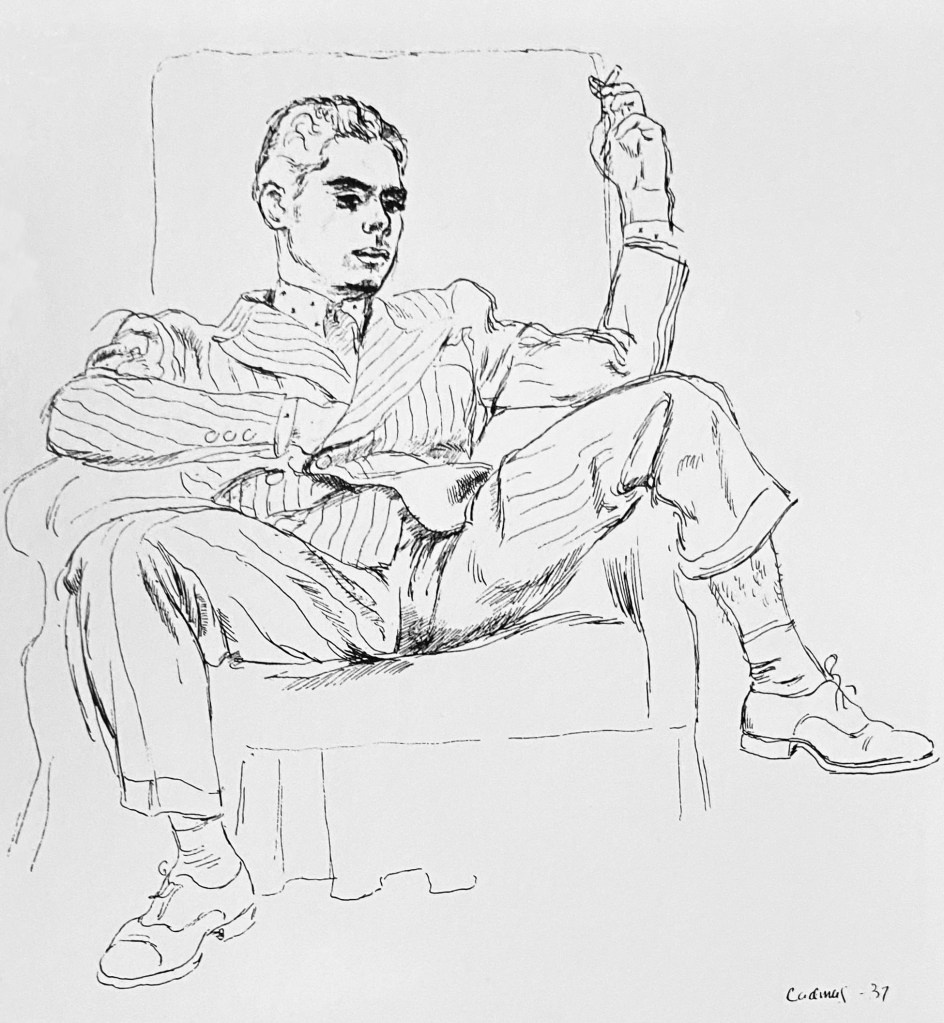
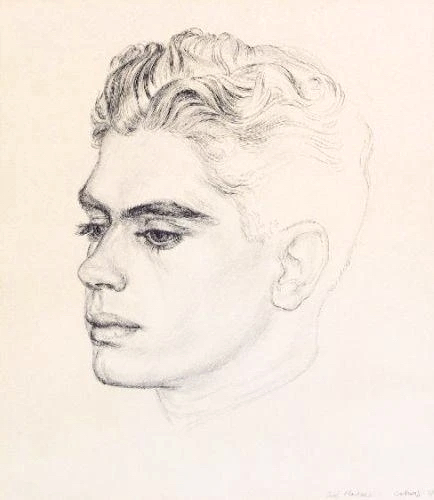
Paul Cadmus’s 1937 sketch of José Martinez appears in Charles Kaiser’s book The Gay Metropolis.

In David Leddick’s book Intimate Companions, Martinez is described as “a droll and witty young man… Those who knew the two men in the 1930’s said he was capable of endlessly amusing his lover, and that of all the men in his life, Martinez was the man that Kirstein most likely loved the most. Kirstein loved gossip and other men’s tales of their sexual exploits, and this love of storytelling drew him to Martinez. In addition, Martinez was handsome, and many artists painted, drew and photographed him. “

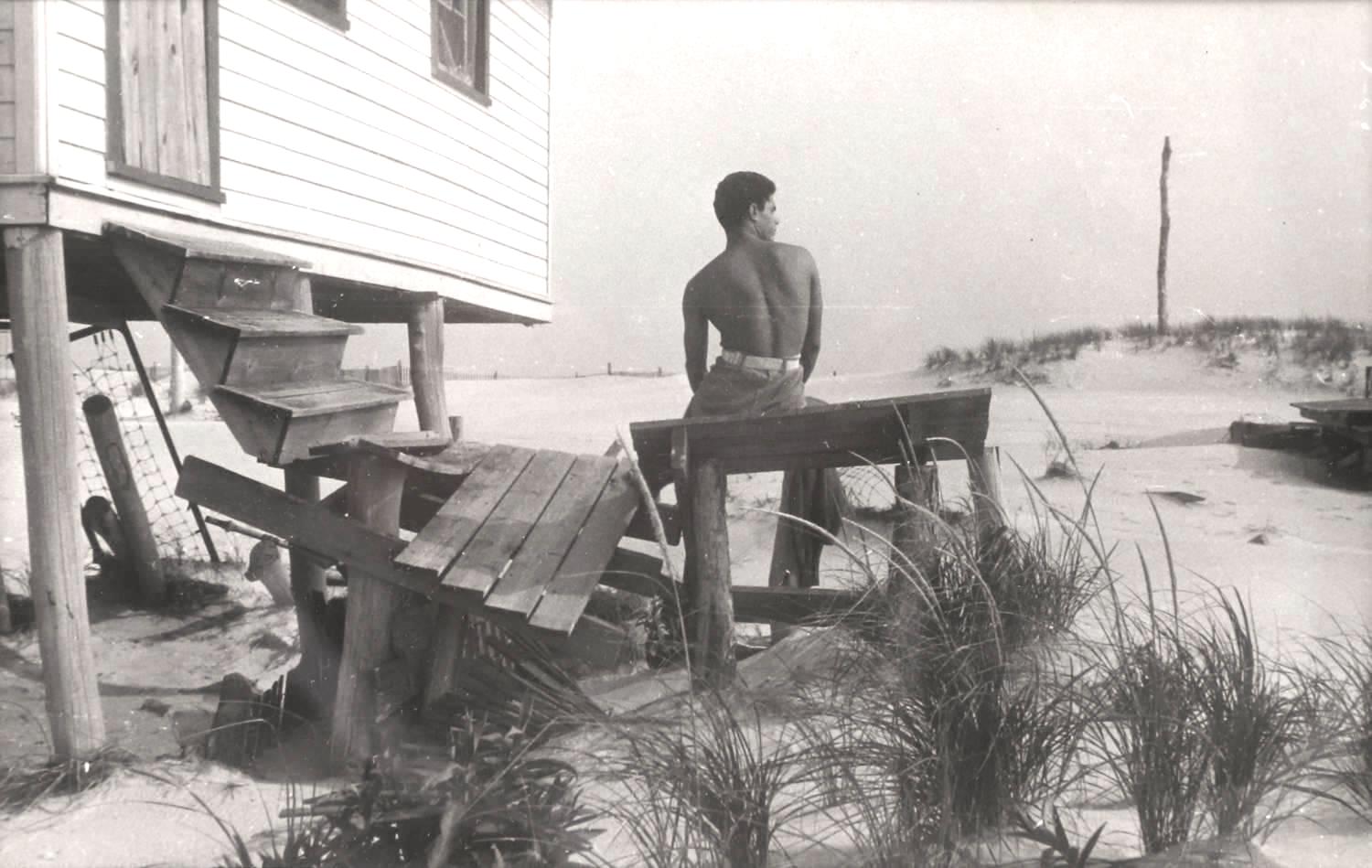
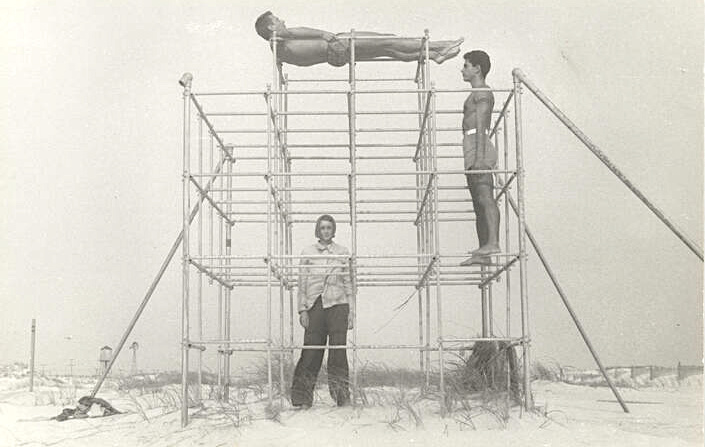
Fire Island PaJaMa photos featuring José Martinez with Paul Cadmus, Jared and Margaret French, ca 1938-39

Besides The PaJaMa Collective, those artists included Paul Cadmus’ sister Fidelma and photographers William Caskey and George Platt Lynes.

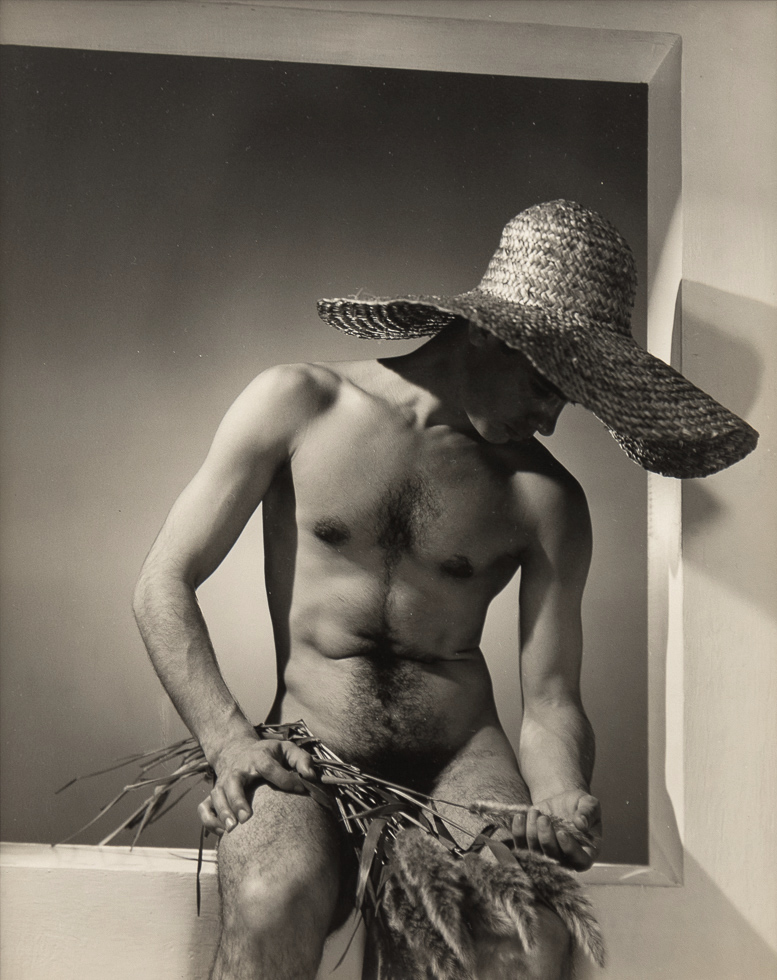
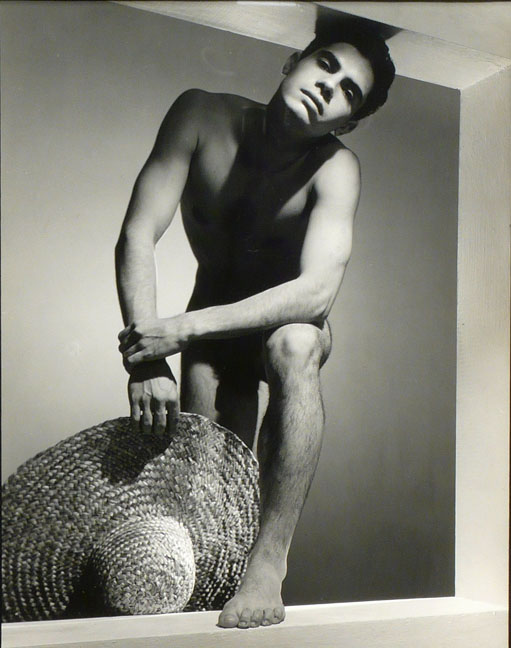
The most memorable Lynes photo of Martinez is a studio shot with the dancer perched in a window frame wearing nothing but a wide brimmed sun hat.


George Platt Lynes photographs of José Martinez.

Pete Martinez (who sometimes used the stage name Pete Stefan) was born José Antonio Martinez-Berlanga in Mexico on March 13, 1913. His family moved to Houston, Texas when he was quite young. Mama Martinez had been a folk dancer back in Mexico and one of Jose’s sisters dreamed of following in her footsteps. Little José was drafted as her dance partner. The scenario is familiar to many boys who begin to study dance as children: the sister loses interest and drops out, but he continues on. It’s a page torn out of A Chorus Line. Later an uncle took him to see Ballet Russe, which further strengthened his resolve to dance. “I was going to set the world on fire,” he would later recount.

After graduating high school, much to the chagrin of his parents, José moved to New York City to study at the School of American Ballet, where he eventually gained a full scholarship. Upon graduation, he was invited to join the company.

José Martinez photographed by Paul Cadmus, ca 1938

Martinez caught the eye of Lincoln Kirstein, and the relationship progressed to the point that they moved in together.

The PaJaMa photo “After The Hurricane” features (l-r) Jared French, Lincoln Kirstein, José Martinez, Forrest Thayer and probably Paul Cadmus. Tragically, costume designer Forrest Thayer was killed in a Southampton single car accident in 1951.


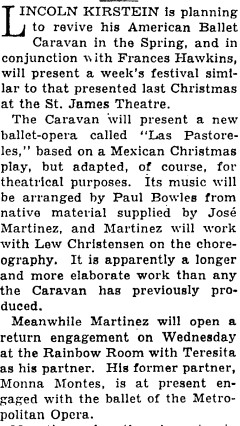
Martinez became a member of The Ballet Caravan, a touring company founded by Kirstein to provide off-season summer employment to American ballet dancers. Here Martinez began to get more involved in the creative process: conceiving the ideas and librettos for ballets, if not choreographing them. He is most associated with the ballet Pastorela, although his exact contribution to its creation varies depending on the source.

As noted in the New York Times article below, Martinez also had several engagements at Rockefeller Center’s Rainbow Room with different dance partners.

New York Times, 12/1/40

Jose Martinez photographed by William Caskey

Lincoln Kirstein & his wife Fidelma Cadmus


Martinez eventually found himself in a triangular romantic situation similar to his friends in The PaJaMa Collective: Paul Cadmus and Jared French had a sexual relationship that continued after French married Margaret Hoening. The three all lived and worked together in a Greenwich Village townhouse at 5 St. Luke’s Place. When Lincoln Kirstein married Paul’s sister Fidelma, she moved into the apartment he shared with Martinez, who continued to live with them for the first year of the marriage.

Martinez was also photographed in the summer of 1938 sunbathing with Jared French and Paul Cadmus on the roof of their home/studios at 5 St. Luke’s Place.

The Ballet Caravan were on a South American tour through 1941 as the U.S. entered World War II. The troupe returned to a very different New York City than the one they had left. When Martinez was denied entry to the Army, he went to work at a hostel for Jewish refugees in Haverford, Pennsylvania where writer Christopher Isherwood was already working. The two were acquaintances through Kirstein but developed a close friendship that would sometimes turn physical, as detailed in Isherwood’s diaries.

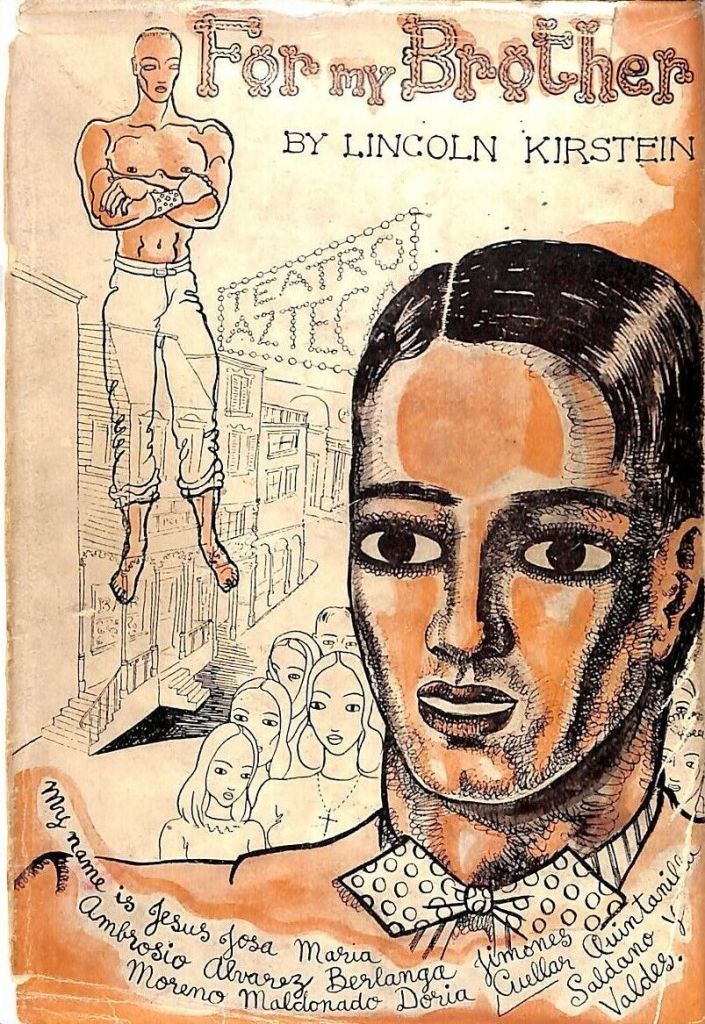
For My Brother: A True Story By José Martinez As Told To Lincoln Kirstein original jacket designed by William Chappell.

Paul Cadmus photographed sketching José Martinez at 5 St. Luke’s Place.

In 1943, a book was published in the UK with the rather unwieldy title For My Brother: A True Story By José Martinez As Told To Lincoln Kirstein.

From the original dust jacket: “It is the life story of a young American of Mexican origin whose family has settled in a small town in Texas. It is at the same time a study in the contrast between two worlds, two ways of life: industrial, polyglot America, and the more primitive civilization of Mexico just over the border, where many of the hero’s relations still live. The story is told with great poetic feeling and a rare delicacy of perception in human relationships…”

The chronology on Kirstein’s website makes no mention of Martinez and lists For My Brother as fiction “based on a Mexican sojourn.”

The book jacket was designed by fellow dancer-turned-ballet designer William Chappell. For My Brother… is quite rare, as most of the 2,000 printed copies were said to have been destroyed in a warehouse bombed by the Nazis. A Canadian edition was later published by MacMillan.

Martinez was finally able to join the military in 1943 and remained in service until the end of the war.

Back in New York, he resumed his dance career with Ballet Society where he danced in the original 1946 productions of George Balanchine’s Four Temperaments and William Dollar’s Highland Fling.

And then…. to invoke A Chorus Line once again: “What do you do when you can no longer dance?”

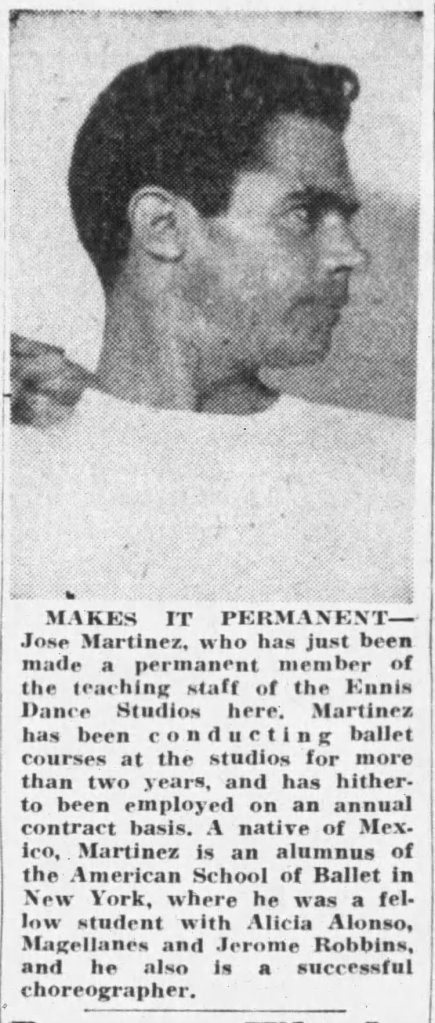
A knee injury hastened the end of his performance career. A June 4, 1950 article in the Norfolk Virginian-Pilot chronicled his coming to terms with the transition. He drifted for a year before settling into the next chapter of his life as a dance teacher in Norfolk, Virginia.

Norfolk Virginian-Pilot, 7/27/47
Norfolk Virginian-Pilot, 6/12/49


After Virginia, Martinez founded other dance studios in Ohio and California, where he retired from teaching in the mid-1960’s.

Lincoln Kirstein died at aged 88 in January, 1996. José Martinez passed away 16 months later in Pasadena, California at age 84.

See also:
Fire Island PaJaMa Party
Provincetown PaJaMa Party
Artist’s Muse: Wilbur Pippin
Artist’s Muse: Forrest Thayer
Artist’s Muse: William Weslow
Artist’s Muse: Chuck Howard
Artist’s Muse: Randy Jack
Artist’s Muse: Ted Starkowski
Artist’s Muse: The Mystery Model
Fire Island Muses of George Platt Lynes & The PaJaMa Collective
George Platt Lynes: In Touch Magazine (1982)
Revisiting George Platt Lynes’ Fire Island Muses

Artist’s Muse: Chuck Howard

In the profile Artist’s Muse: Randy Jack, I wrote about his relationship with photographer George Platt Lynes, which came to an end in the Fall of 1948. Just 10 days after Jack moved out of the apartment, another former military man named Chuck Howard moved in as Lynes’ next boyfriend.

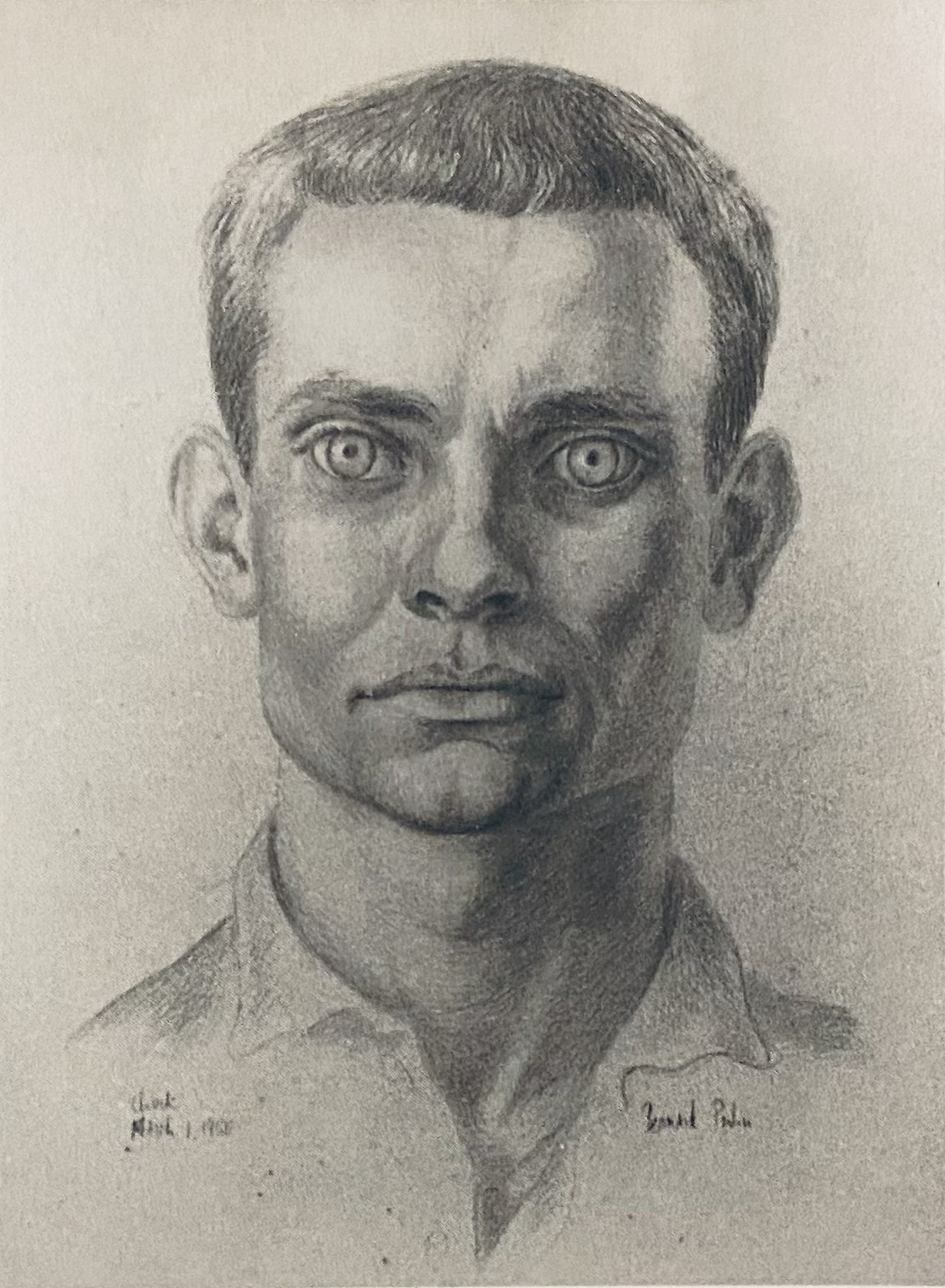
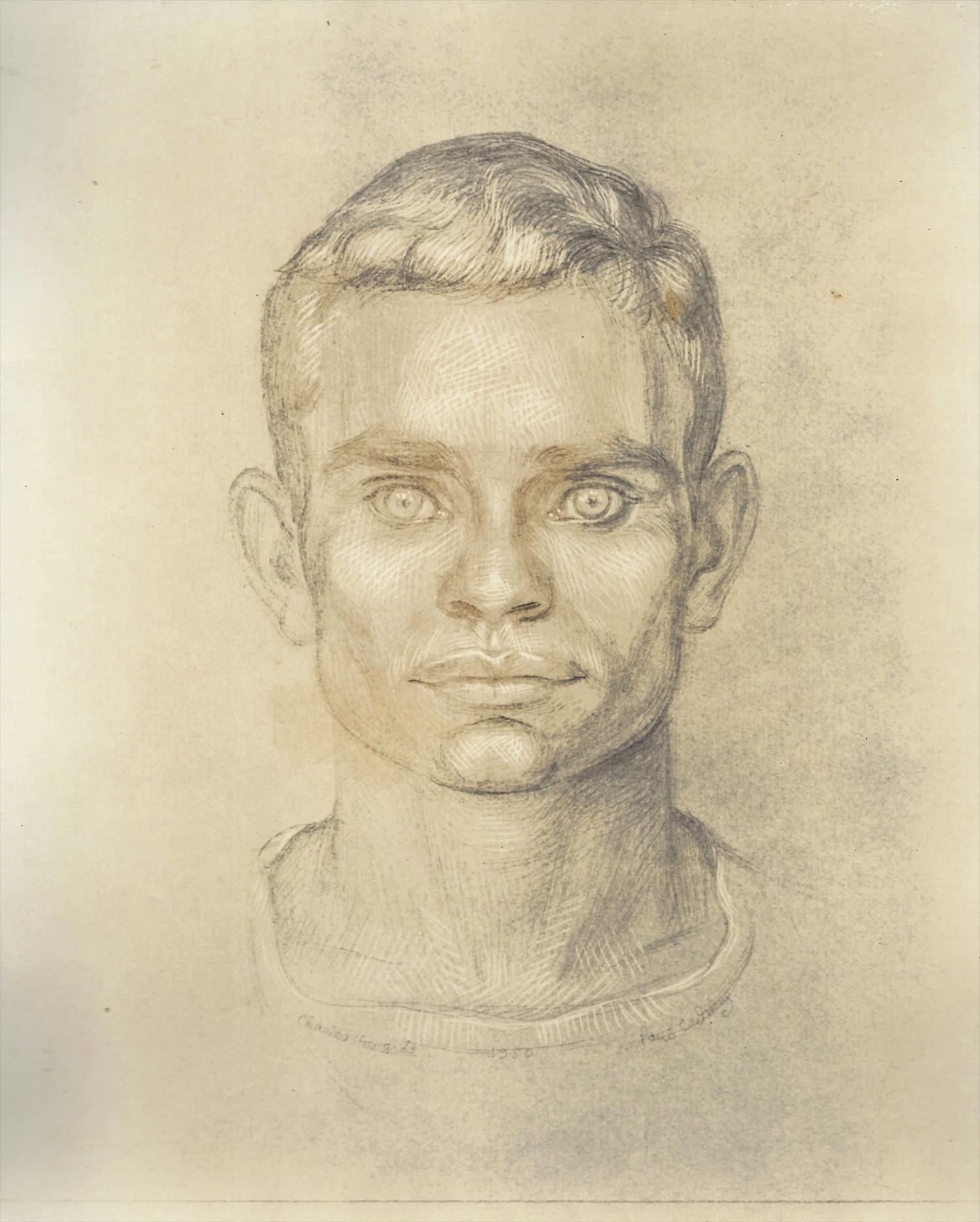
Charles “Chuck” Howard was born in Cochran, Georgia on March 4, 1927. After graduating from high school during World War II, he joined the Naval Air Force and became a tail gunner. While stationed in Miami Beach, he met New York artist Bernard Perlin and the two would “reconnect” whenever Chuck was in New York City. After the war, Howard studied fashion in France on the G.I. Bill before moving back to NYC to live with the artist. When Perlin was offered a residency in Rome, he threw himself a farewell party, and Chuck was introduced to Lynes.

Four sketches of Chuck Howard by Bernard Perlin

George Platt Lynes self portrait with Chuck Howard, ca 1948
Chuck Howard and George Platt Lynes, ca 1950

“Another twenty-one-year-old has moved in on me bag and baggage, almost without being invited..” Lynes wrote in a letter to his friend, author Katherine Anne Porter.

Howard was viewed favorably by Lynes’ friends and was said to have a grounding effect on the photographer. The relationship lasted for just over two years.

George Platt Lynes & Chuck Howard, ca. 1950

Although Howard had previously posed for Bernard Perlin, it was after his introduction to Lynes and his circle of friends that he became a favorite model for the artists. He posed for George Tooker, sculptor John LaFarge, and Jared French, with whom he also had a physical relationship.

Paul Cadmus also sketched him several times and used him as the model for the central figure in his painting Architect (1950).

Architect by Paul Cadmus (1950) Chuck Howard was the model for the central figure with George Tooker reflected behind him.

When Lynes’ nude photography became more widely exhibited decades after his death, photos of Chuck Howard were among the most celebrated. Howard downplayed the photos, describing his work modeling for Lynes as “primarily lighting tests.” Collectors disagree.

Chuck Howard also had a film career of sorts when he participated in Dr. Alfred Kinsey’s famous studies, performing sexual acts with poet Glenway Wescott in front of the researchers’ movie camera. Howard later remarked; “It wasn’t Hollywood.”

Lynes and Howard parted ways in January, 1951. “Chuck has decided to go off and live by himself;” Lynes wrote to his mother. “I shall miss him but I don’t disapprove… I’m afraid that my influence is too often all-pervading, all-inclusive.”

In an earlier blog post on Ted Starkowski, I mentioned that he and Chuck then embarked on what author David Leddick described as “a tempestuous affair.” The couple were photographed together on Fire Island while vacationing with Paul Cadmus, Jared and Margaret French: aka The PaJaMa Collective.

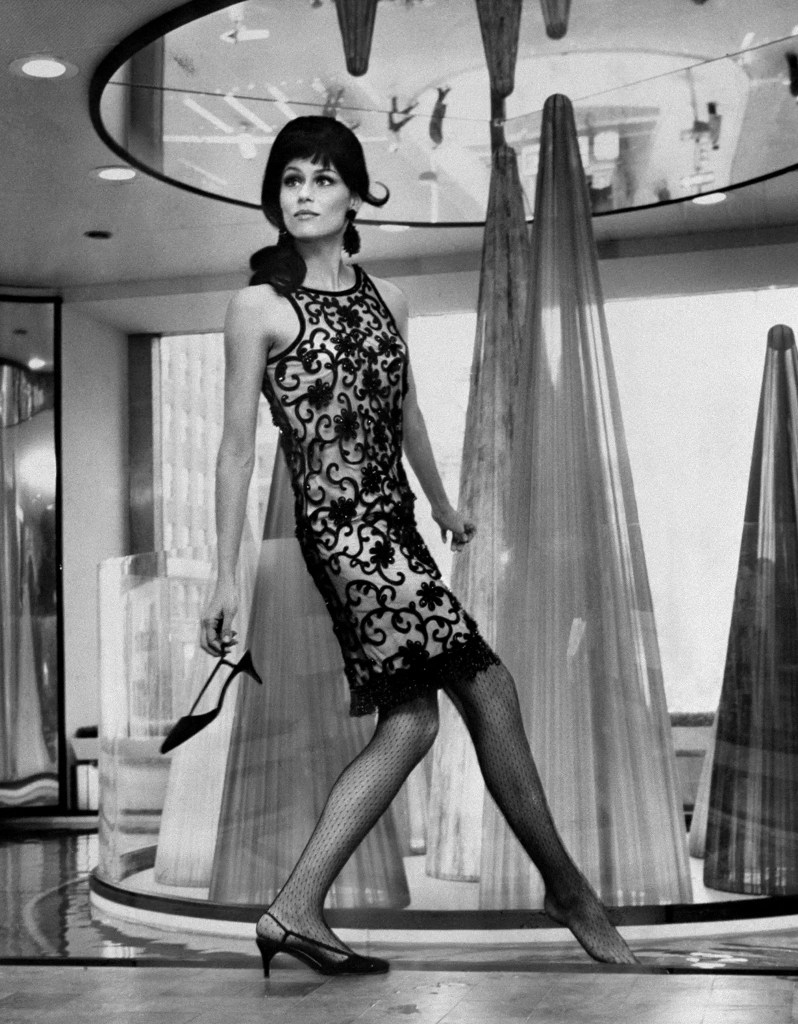
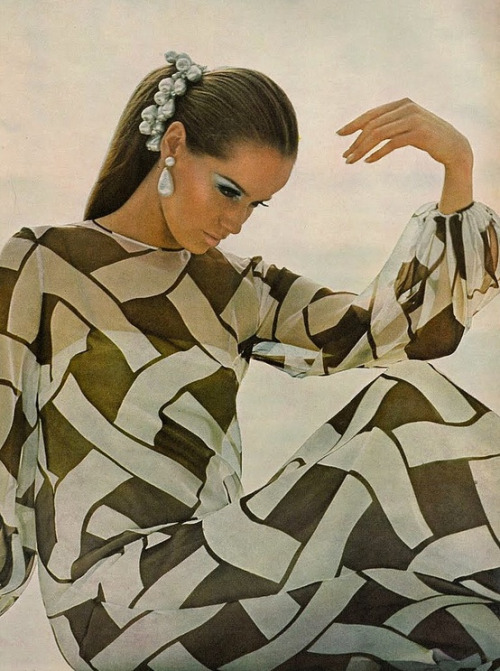
Lauren Hutton modeling a dress by Chuck Howard. (1965)

Act II: Chuck Howard’s career in the fashion industry began to flourish in the late 1950’s when he sketched for several designers, including Bill Blass. He worked for David Crystal before moving on to Anne Klein’s Junior Sophisticates. In 1965, he joined Townley, working his way up to become chief designer and head of business operations. The company was then renamed Chuck Howard, Inc. His design style was noted for its sense of humor with sporty, colorful coats, tunics, pants and jersey shirts.

Around this time, a Parsons student named Donna Karan began working for Howard and he eventually introduced her to Anne Klein.

After Klein’s death in 1974, Donna Karan succeeded her as designer for the Anne Klein studio. Chuck Howard then closed his company and became a designer and creative coordinator there, where he was responsible for several of its collections. He departed with fellow designer Peter Wrigley in 1976 to form their own company.

Howard and Wrigley operated their business out of Chuck’s townhouse at 412 W 47th street – formerly the infamous party house of New Yorker editor Harold Ross and Alexander Woolcott.

Chuck Howard (r) with his partner Ed Vaughan in their restaurant (1981)

Act III: In 1980, after his departure from the fashion industry, Chuck Howard opened his self-named restaurant on Restaurant Row. Assisting him in this next chapter was his partner Edward Vaughan. The couple rented a three story townhouse at 355 W 46th St and lived on the third floor above the restaurant.

Soon after opening, twenty-two-year-old Anthony Bourdain took over running the back of the house. He later recounted his time at the restaurant in the “Chef of The Future!” chapter of Kitchen Confidential, with Chuck and Edward referred to as “Tom and Fred.” He writes, “They were genuinely lovely, intelligent, warm-hearted and funny older guys who cooked well, had impeccable taste and were considered (rightly) to be wonderful, charming and entertaining hosts – naturals, it had been said, for the restaurant business, especially a restaurant in the heart of the theater district where they knew and were liked by so many.”

New York Daily News, (1/15/81)

The restaurant was initially successful, although the Daily News review suggested that it wasn’t destined to last. Bourdain further describes the restaurant’s decline, with mounting costs and dwindling guests. “What I learned… was a sad lesson that has served me well in decades since: I learned to recognize failure. I saw, for the first time, how two beloved, funny and popular guys can end up less beloved, not so funny and much less popular after trying to do nothing more than what their friends told them they were good at.” Bourdain moved on to another restaurant, and by the end of 1982, Chuck Howard’s had closed.

The couple retired to the island of Saba in the Netherlands Antilles where they lived for several years before settling in Santa Fe, New Mexico.

On October 5, 2002, Chuck Howard died of pancreatic cancer at the age of 75 in Albuquerque, New Mexico. He was survived by his long time partner Edward Vaughan.

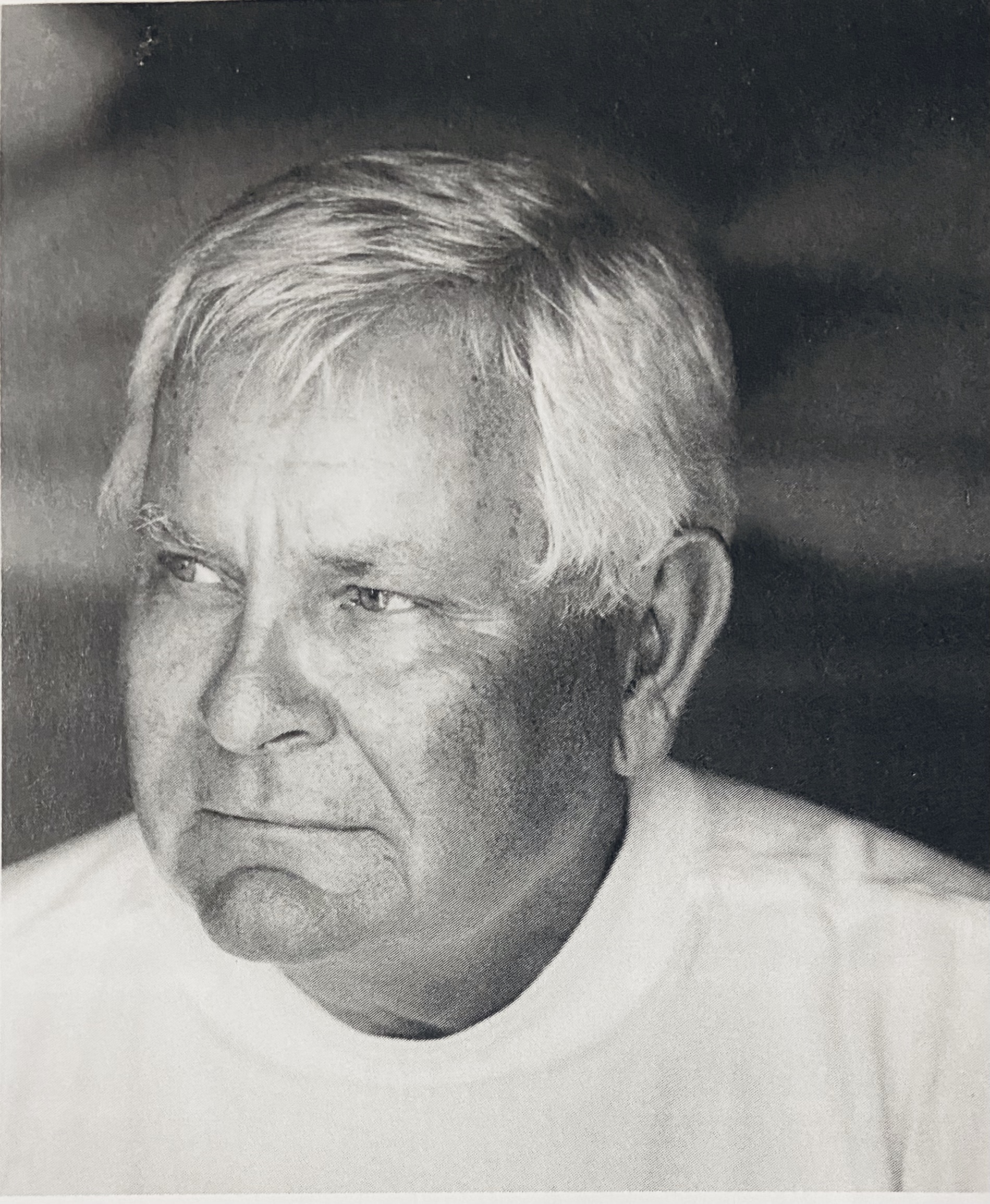
Chuck Howard, ca 1950 / 1997

Chuck Howard’s life had a similar trajectory as fellow Lynes paramour Randy Jack: A WWII military man who became an artists’ muse before moving on to the world of fashion and finally ending up as a restaurateur. In their twilight years, both also enjoyed a bit of recognition for the work they inspired in some of the great American artists of the 20th century.

See also:
Artist’s Muse: Donald Windham & Sandy Campbell
Artist’s Muse: José “Pete” Martinez
Artist’s Muse: Randy Jack
Artist’s Muse: Wilbur Pippin
Artist’s Muse: Ted Starkowski
Artist’s Muse: The Mystery Model
Fire Island Muses of George Platt Lynes & The PaJaMa Collective
Revisiting George Platt Lynes’ Fire Island Muses
Fire Island PaJaMa Party
Buddy & Johnny: A Historic Photo Shoot
Kenn Duncan After Dark
George Platt Lynes: In Touch Magazine (1982)
Fire Island PaJaMa Party

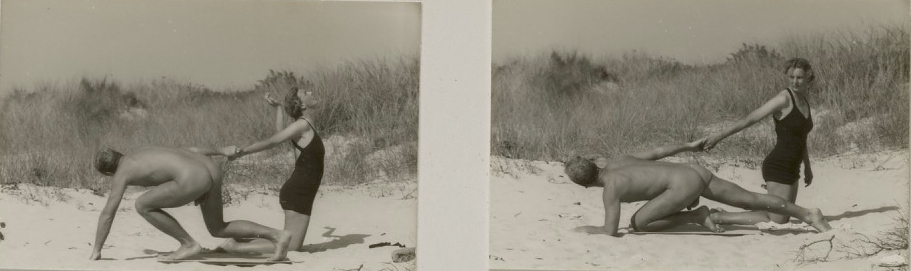
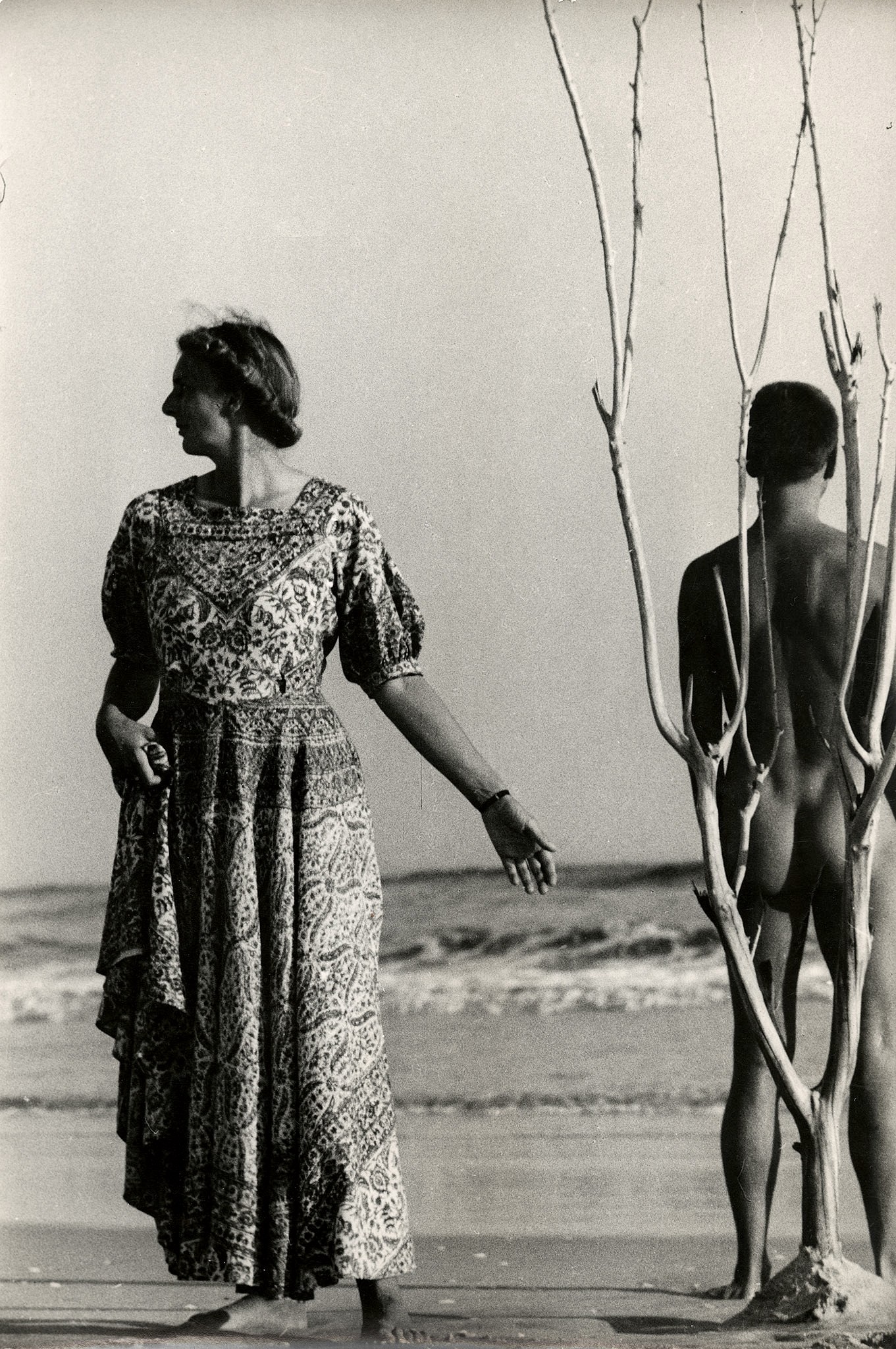
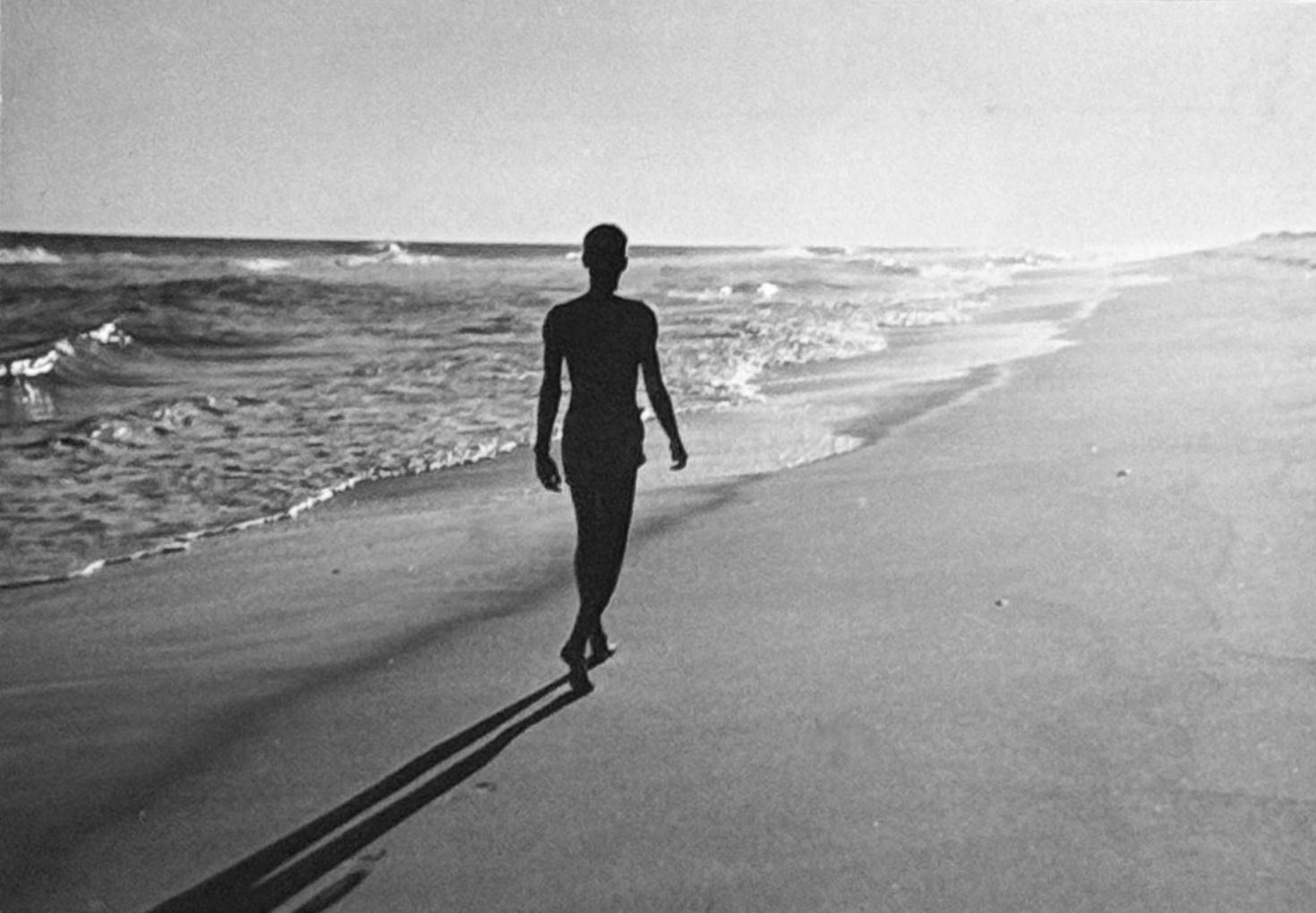
During vacations from the 1930’s through the mid-1950’s, artists Paul Cadmus, Jared French, and his wife Margaret Hoening French photographed each other on the beaches of Fire Island and later Cape Cod. Usually nude or donning simple costumes, they would also use found objects as props to create stark, surreal and/or erotic images. They passed Margaret’s Leica camera around, taking turns as subject and auteur. This collaborative authorship was reflected in the umbrella name Paul Cadmus later chose for this work, utilizing the first two letters of their first names: PaJaMa.

Cadmus explained, “After we’d been working most of the day, we’d go out late afternoons and take photographs when the light was best. They were just playthings. We would hand out these little photographs when we went to dinner parties, like playing cards.”

The dynamic was complicated: Paul and Jared were lovers – a relationship that continued during Jared and Margaret’s marriage. All three lived and worked in a townhouse at 5 St. Lukes Place in Greenwich Village.

Paul Cadmus & Jared French, Fire Island, PaJaMa (1941)

A 2015 New York Times review of a PaJaMa exhibition noted that their photos “breathed eroticism.” While some of the hundreds of photos are masterpieces of magical realism, others appear to be figure studies for their painting. And then there are simple snapshots of nude men frolicking on the beach, enjoying the sun and surf.

Right: Jared French on Fire Island (1940) Left: Paul Cadmus’ etching “Youth With Kite”, 1941

Jared French and his considerable wares are the most frequent subject of the photographs, with entire rolls of film devoted to his nude poses and posturing. Cadmus and Margaret are slightly more demure although we do not know who was giving direction from behind the camera at any given time.

These three artists were joined by various friends and lovers through the years, fellow artists and writers that were part of their New York social circle.

Dancer/Model José “Pete” Martinez appears in PaJaMa photos of the late 1930’s with Paul Cadmus

1938 PaJaMa photos of writer Glenway Wescott sometimes appear online mislabled as Paul Cadmus or Ted Starkowski.

Writer Donald Windham (with Cadmus & French), ca 1940

Photographer George Platt Lynes was a frequent guest with his own camera.

Artist Bernard Perlin captured by the PaJaMa lens on Fire Island (1939)

Jared French in Saltaire after the devastating hurricane of 1938.

West of Saltaire, the Fire Island Lighthouse served as a frequent backdrop.

Jensen Yow, Bill Harris & Jack Fontan, ca. 1950

Alexander Jensen Yow recently recalled the circle of artists, as well as his participation in PaJaMa photos of the early 1950’s. “Paul posed us and took the pictures. I was never out there with Jerry (Jared). There were plenty of personality conflicts all scattered around with these people, but I never knew what they were or anything… Jerry was always nice to me though. But his and Margaret’s was a strange relationship… She was crazy about Jerry but she was always in the background, you know. Always there. Jerry did what he wanted to do, and she tagged after him. I was so green when I met these people that I didn’t know how to act…. I tried to be discreet but it wasn’t easy.” (NOTE: Jensen Yow died at age 95 in September of 2022)

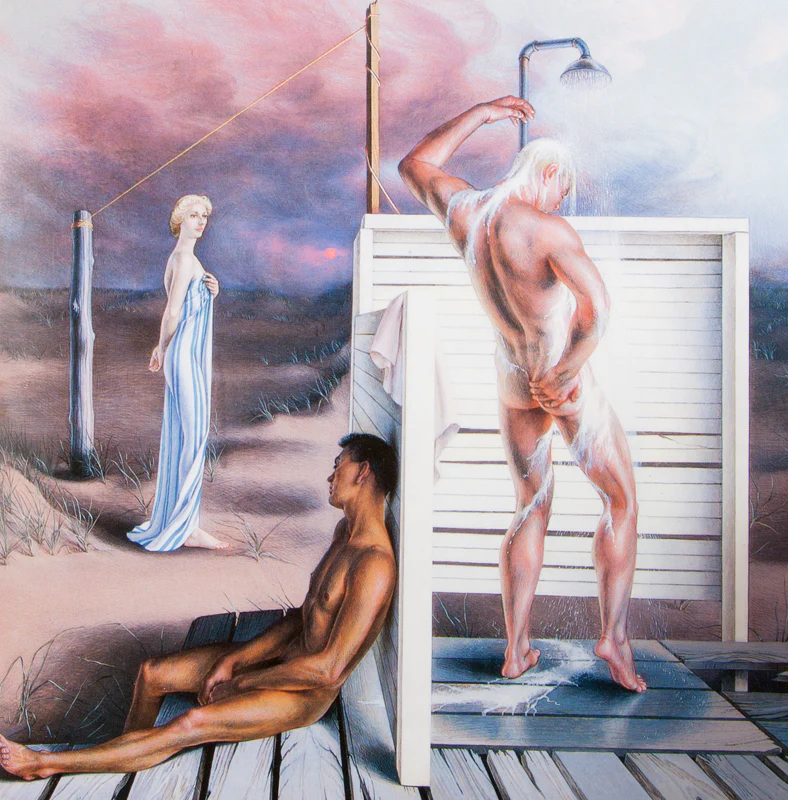
Paul Cadmus, “The Shower”, 1943

Margaret French, “The Moon by Day”, 1939

As with George Platt Lynes’ male nude photographs, the PaJaMa collection did not receive much notice or recognition until the 1990’s. They are now frequently exhibited in galleries and selections are a part of the MOMA collection.

Donald Windham, Saltaire, FI (1942)

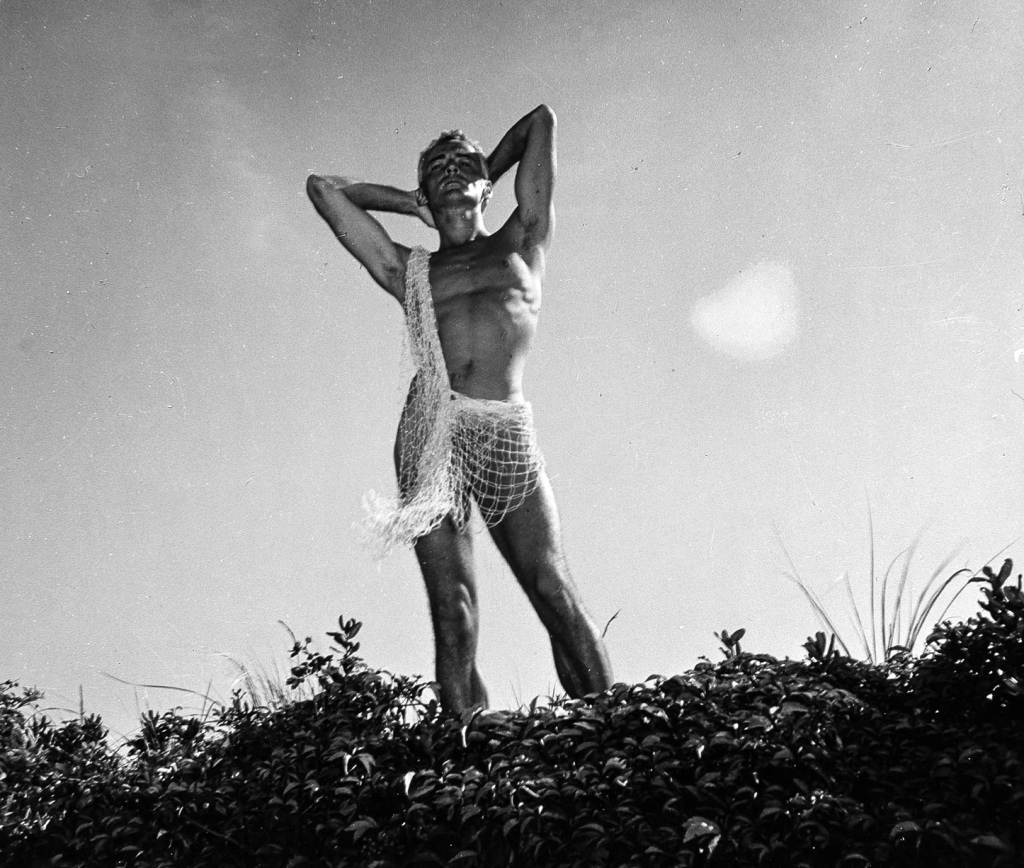
In George Parlett’s 2022 book Fire Island, he writes of a PaJaMa photo of Donald Windham:

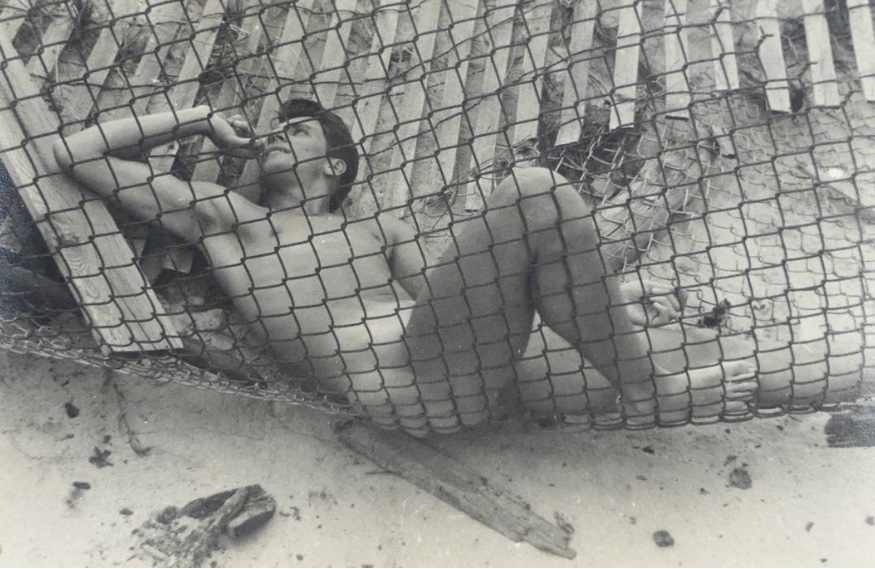
It’s composition seems to show us how remembering is an act, not a given. There Windham is, dragging the large net, collecting and carrying with him the various and unknown sediments of the shore while offering his gaze wholly to his beholder. There is a levity there, in the resemblance of the net to a gown or a veil, its slightly campy or drag quality, but also a quiet note of death, in how this black material evokes a shroud, or mourning garb. Fire Island has long been a place where such contradictions are brought together; youth and death, glamour and grit. This interplay can be felt, the image tells us, in the landscape of the place.

PaJaMa, FI, ca. 1944

See Also:
Provincetown PaJaMa Party
Fire Island Muses of George Platt Lynes & The PaJaMa Collective
Revisiting George Platt Lynes’ Fire Island Muses
Artist’s Muse: Wilbur Pippin
Artist’s Muse: Donald Windham & Sandy Campbell
Artist’s Muse: José “Pete” Martinez
Artist’s Muse: The Mystery Model
Artist’s Muse: Chuck Howard
Artist’s Muse: Ted Starkowski
Artist’s Muse: Randy Jack
Buddy & Johnny: A Historic Photo Shoot
George Platt Lynes: In Touch Magazine (1982)

Artist’s Muse: Ted Starkowski

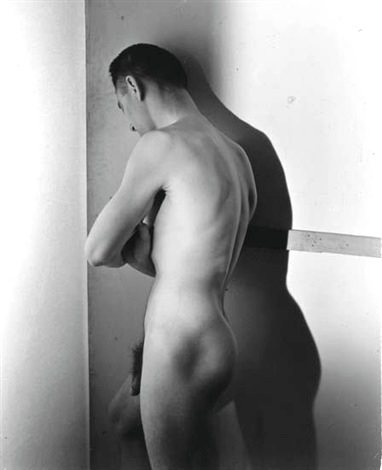
Although photographer George Platt Lynes passed away of lung cancer at age 48 in 1955, it took another 30 years before the majority of his male nude photographs were celebrated and widely released. Virtually every collection of his work now features photos of a model named Ted Starkowski. His nude images are featured on the covers of several collections of Lynes’ work – in solo shots or posed with Mel Fellini:

So who was Ted Starkowski?

Lynes biographer David Leddick wrote: Ted Starkowski George Platt Lynes

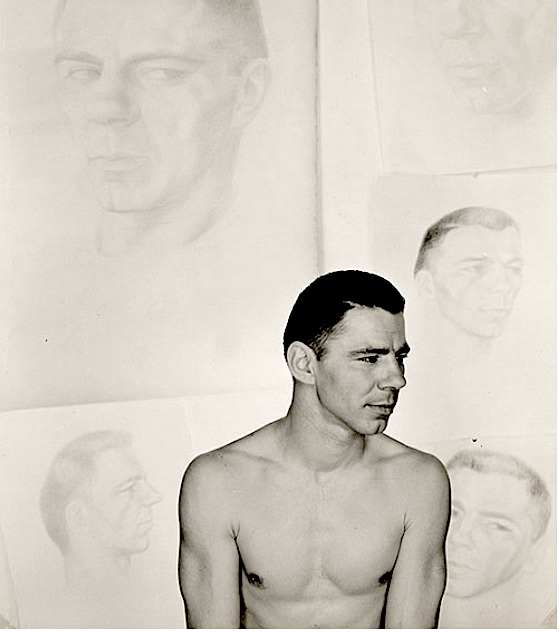
Ted Starkowski worked the streets. Hustling by night, he regaled  Bernard Perlin and George Platt Lynes with his adventures while he posed for them during the day. They created unique images with his cat-like face and lithe body.

Perlin later recalled; “He looked like an old tomcat – you know, after the battle. But he just loved the way he looked…. he was a star whore, he aimed for people with money and he got it.”

(Above) George Platt Lynes photographed Ted Starkowski flanked by Bernard Perlin’s sketches.

Ted Starkowski Lynes 1950 clothed2

Teodor Francis Starkowski was born in Hartford, Connecticut on April 4, 1927- the eighth child of Polish immigrants. When he was 6 years old, Ted was critically injured when he was struck by a car in front of his family’s home. He eventually made a full recovery, but the incident would foreshadow another auto accident forty-four years later. 

His Army registration in September of 1945 indicates that he had attended three years of high school and was working at St. Thomas Seminary in Bloomfield.

After his stint in the military he relocated to New York City, where he became a favorite subject for Lynes and his circle of artist friends, including Paul Cadmus and Jared French.

(Above) Six images of Ted Starkowski by Jared French.

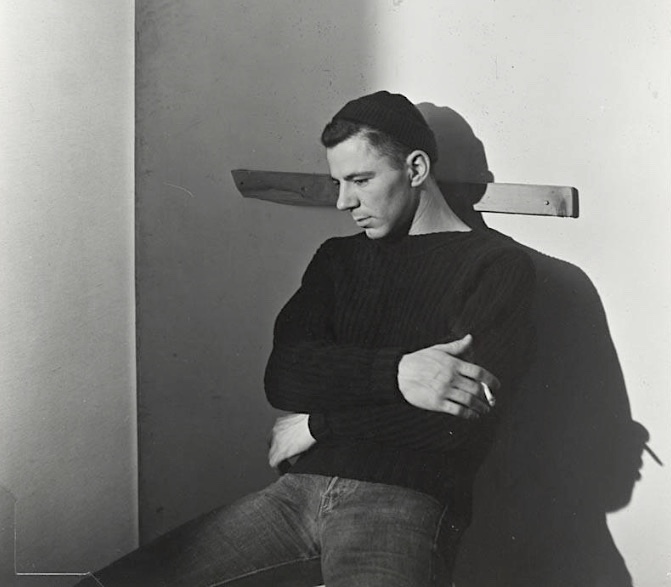
Thomas D. Baynes of The Univeristy of Western Ontario wrote extensively of one particular George Platt Lynes 1954 photograph in his thesis More than a Spasm, Less than a Sign: Queer Masculinity in American Visual Culture, 1915-1955:

Ted Starkowski Lynes 1950 clothedFew other photographs by Lynes do as much to cast the model as an actor. In his tight jeans, bulging conspicuously at the crotch, fisherman-rib sweater worn without an undershirt, and workaday watchman’s cap relegated to the status of an ornament, Starkowski looks like a longshoreman snatched from the imagination of Tom of Finland … Lynes’s studio provides only the minimum furniture required to support Starkowski in a posture that manages to be solicitous and pensive at the same time, welcoming an evaluating view despite being absorbed in thought.

This photograph extends rough trade as a portable structure of fantasy that discovers erotic opportunities in ambiguities of dress and pose…. Evidently, Starkowski had a knack for acting like a straight man, or at least like a fantasy version thereof.

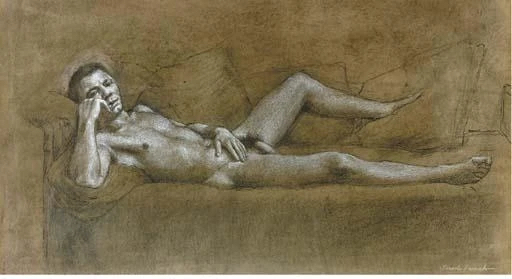
Ted Starkowski as drawn by Paul Cadmus (Male Nude, TS5, 1954)
A reader sent a photo of this Paul Cadmus drawing titled “Ted Reading” – posted with permission.

Another model who posed for many of the same artists was fellow ex-military man Chuck Howard, George Platt Lynes’ live-in boyfriend. After their split in January, 1951, Howard and Starkowski became involved in what David Leddick described as “a tempestuous affair.” The couple were photographed together on Fire Island while vacationing with Paul Cadmus, Jared and Margaret French: artists who called their collective photography work PaJaMa, an acronym of the first letters of their first names. See more of their work here.

The year after George Platt Lynes’ death, Starkowski was photographed by Carl Van Vechten. These photos are dated April 3, 1956:

Ted Starkowski by Paul Cadmus 1963


Thanks to a wealthy benefactor, Starkowski traveled extensively in the second half of the 1950’s. Perlin recalled; “There was this old boy who picked him up on 42nd Street. Ted enthralled him – kept him drunk and kept him out of money, with which Ted bought diamonds, which he wore. Both hands glittered with diamonds.”

Leddick relays a story of Starkowski showing off a new diamond ring to artist George Tooker.  Asking if he thought it was too big. Tooker replied “Yes, it is too large for a woman to wear.”

The Paul Cadmus drawing on the left shows Starkowski at age 36 in 1963.

And then… the trail goes dark for the next 14 years. If more images or information come to light, I will update this post. What we do know is that on Friday May 13, 1977, Ted Starkowski was leaving a New York City bar when he was struck and killed by a car. He was 50 years old.ted-starkowski-obit

An obituary ran in the Hartford Courant the following Tuesday, May 17th. He was buried in Mount Saint Benedict Cemetery in Bloomfield, Connecticut.

z-ted_starkowski-grave-1

It was a sad end to a man who had inspired many artists.

Bernard Perlin recalled, “Despite his nefariousness, he did good in the art world. My drawings are comparatively negligible, but many of George’s photographs are just absolutely wonderful.”

See Also:
Artist’s Muse: Donald Windham & Sandy Campbell
Artist’s Muse: Forrest Thayer
Artist’s Muse: Randy Jack
Artist’s Muse: Chuck Howard
Artist’s Muse: The Mystery Model
Artist’s Muse: Wilbur Pippin
Buddy & Johnny: A Historic Photo Shoot
Fire Island PaJaMa Party
Provincetown PaJaMa Party
George Platt Lynes: In Touch Magazine (1982)
Fire Island Muses of George Platt Lynes & The PaJaMa Collective
Revisiting George Platt Lynes’ Fire Island Muses

New York City In Touch (1979)
IT 11_79aa

A few weeks ago, I posted an article from the Nov/Dec 1979 issue of In Touch Magazine. This was part of trio of San Francisco articles from gay publications (the other two from the September, 1980 issue of Blueboy featured essays by Armistead Maupin and Randy Shilts).

Shifting focus back to the East Coast, there were some New York-centric ads and pop culture info that I wanted to post, since that’s my home turf.

IMG_1493

So here we are again, back in 1979 with Issue #44.

Lets get a different perspective of cover model / centerfold Todd Denson:

NY1

There are several ads throughout the magazine for CBC Clubs  – a gay-owned chain of bathouses that dotted North America. CBC Club New York was located at 24 First Avenue in the East Village. This branch closed in the mid-80’s and the space was purchased by the Suthon family, which turned it into the restaurant Cave Canem and later Lucky Cheng’s. It was during the twilight days of Cave Canem that I moved to the neighborhood.

IMG_1487

I had been living there for about a year when my boyfriend and I saw a listing in HX magazine for a gay bar/restaurant inhabiting an old bathhouse located at 24 First Avenue.  This seemed strange – it was only 4 blocks from our East 6th Street apartment, yet we had never heard anything about it.

One night we ventured over – only to be turned away by a surly doorman who claimed there was a private party inside. We didn’t believe him – how did he know we weren’t invited guests? Our imaginations went wild with speculation of what gay/leather/sex dungeon lurked behind those doors. After reading this interesting piece on the history of the space in Jeremiah’s Vanishing New York, I gather that it probably WAS a private party that we tried to crash… and possibly a lesbian orgy.

LuckyChengsThe following year Lucky Cheng’s Chinese Restaurant opened with its now famous drag and gender-fluid waitstaff, thriving at this location for 19 years. By the time I finally ventured in – just once – it was to buy a gift certificate for my parents, at their request. The once bohemian restaurant had become an edgy staple for straight out-of-towners. Lucky Cheng’s eventually followed the tourist trade up to the theatre district. The building was sold and is slated to be torn down and replaced by… you guessed it: Luxury Apartments!

One other note to add a little context: right across the street at 19 First Avenue is Lil’ Frankie’s Restaurant and the home of East Village Radio’s storefront broadcast booth. This is where my 60’s girl group show 60 Degrees with Brian Ferrari aired from 2008-2013… and resumed broadcast in 2024. (see & hear here & here)

NY2


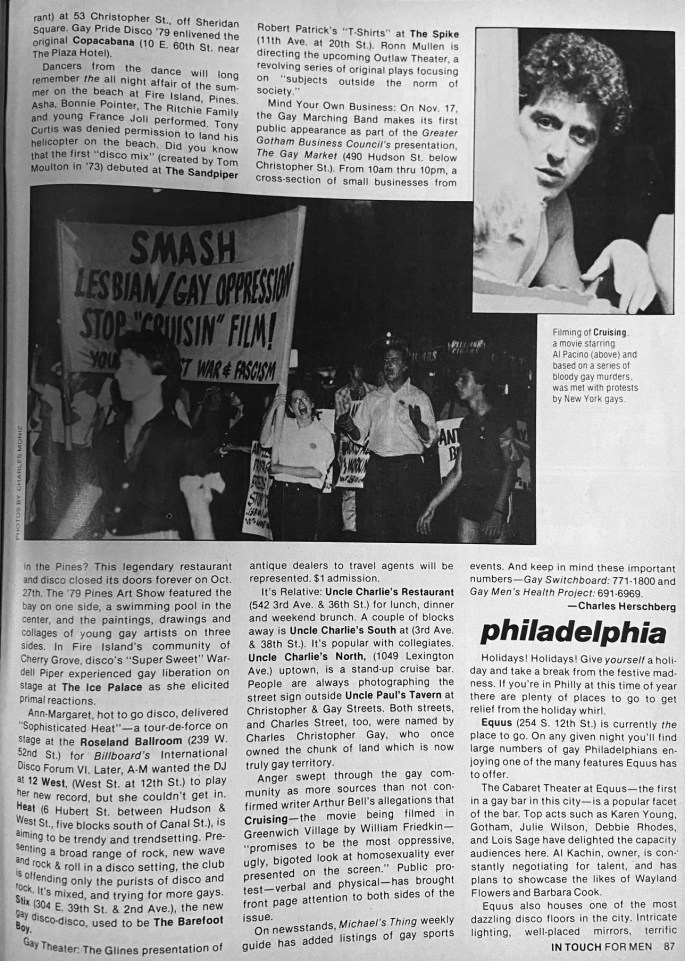
1979 marked the 10th anniversary of the Stonewall Riots.  Here’s an account of how the occasion was celebrated in NYC and Fire Island, as well as the protests surrounding the filming of Al Pacino’s laughable misfire Cruising.

NY3

Some background on the musical references above:

16 year old France Joli’s July 1979 Pines performance is the stuff of legend. She made a return to the annual Beach Party in 2018.


Wardell Piper is mentioned performing “Super Sweet” at the Ice Palace in Cherry Grove. She had been a member of soul group The First Choice, but this was her biggest solo hit:


I love the passing reference that Ann-Margret – “hot to go disco” – couldn’t get into a West Village club to have them play her record. Sounds like the gays weren’t having it. “Love Rush” was a track from this brief chapter of her career. Any allusion to poppers is purely intentional.

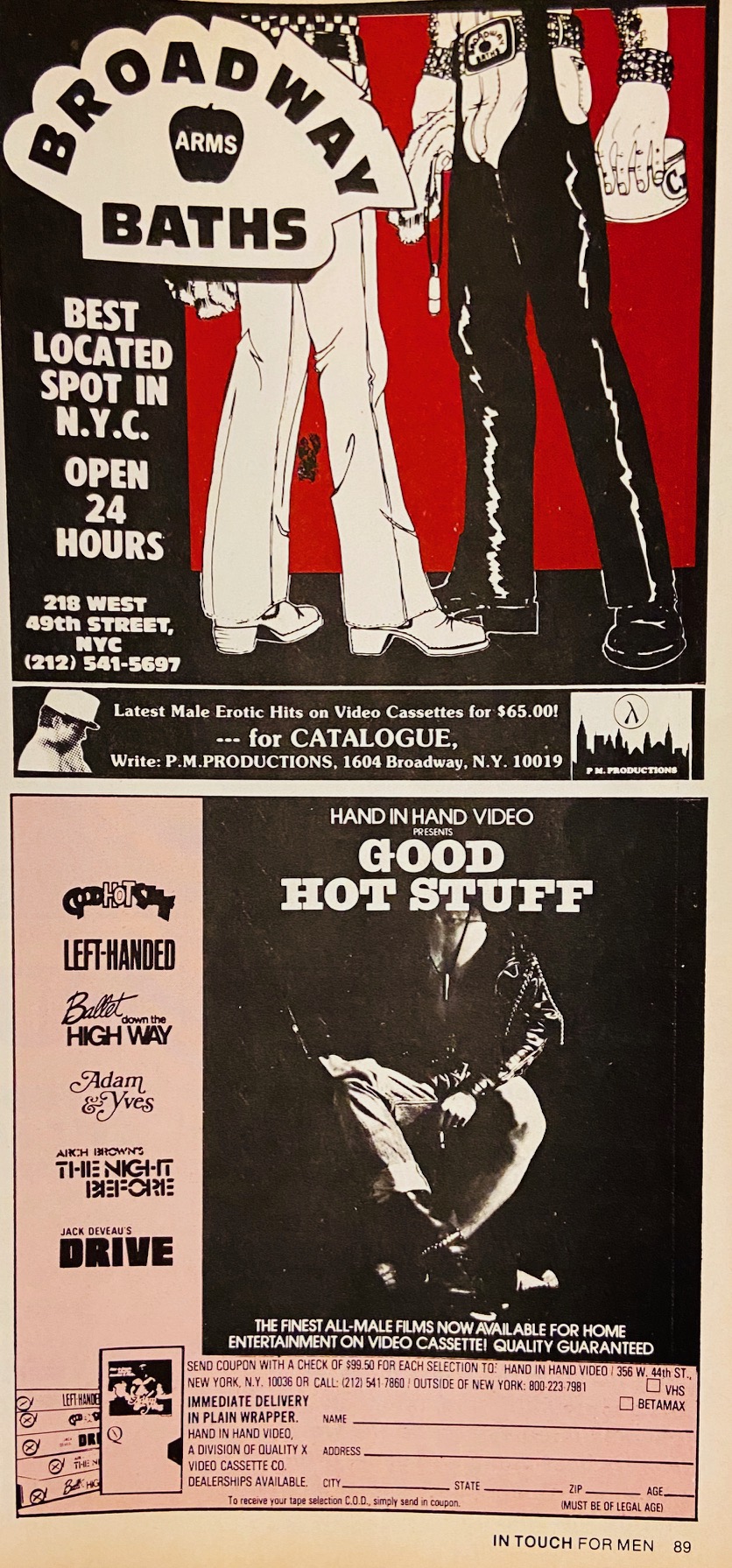
Here’s some other ads – one for Broadway Arms Baths, which was located across the street from the Ambassador Theatre on West 49th Street, and two NYC-based gay porn video companies featuring VHS tapes for the low low price range of $65-$99.50! Just imagine what the VCR cost.

NY4

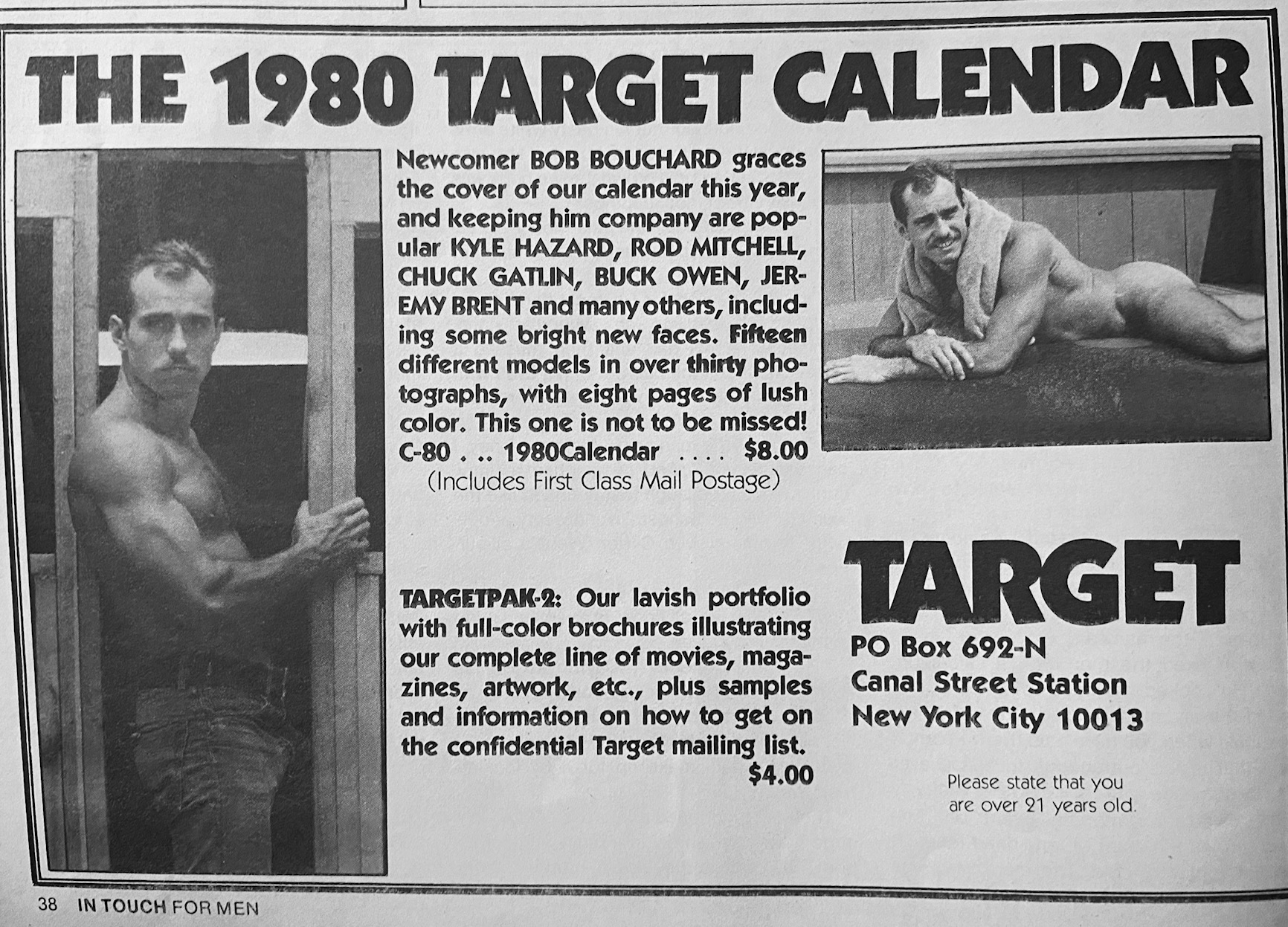
IMG_1486

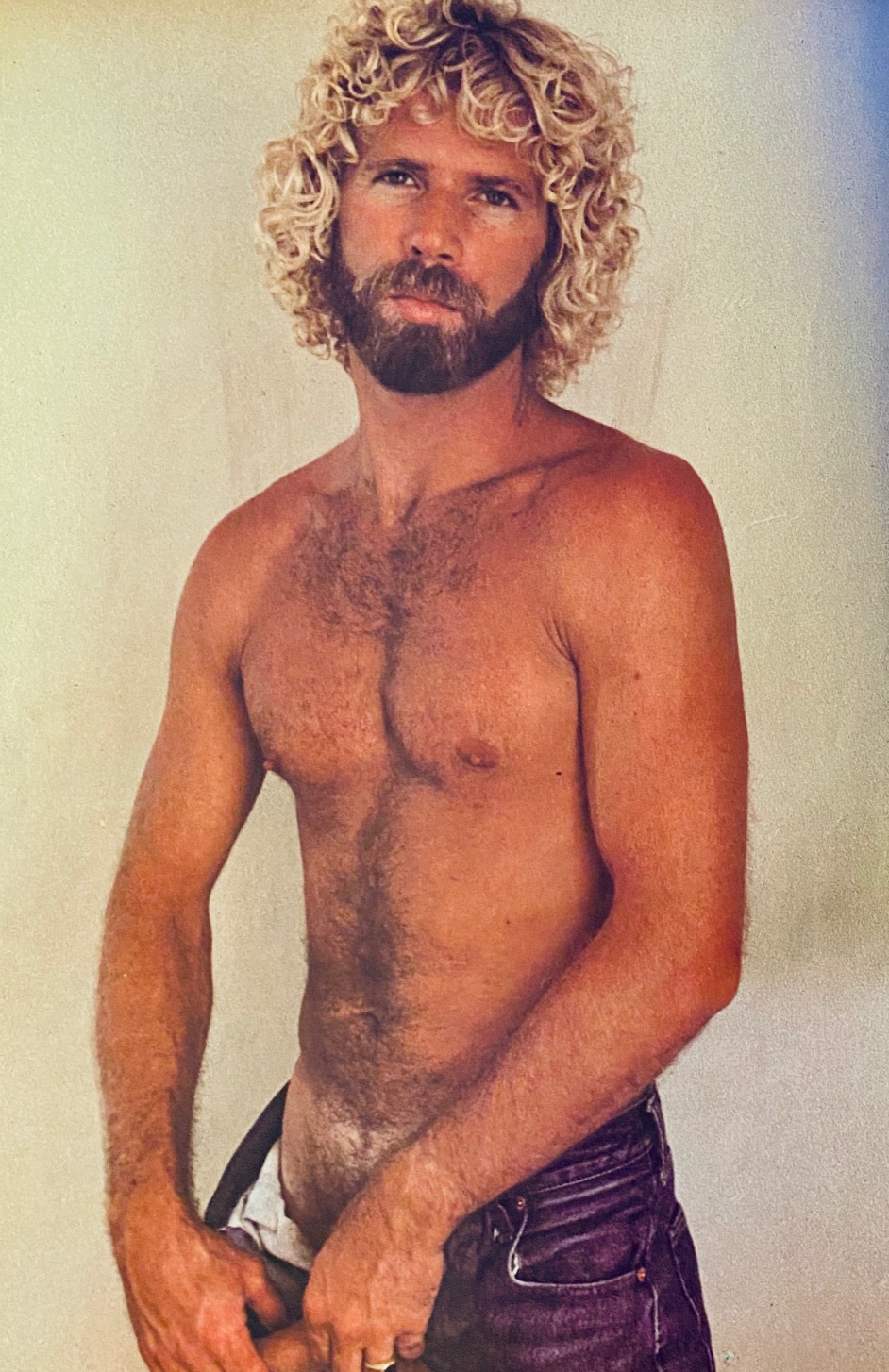
I had to post pics of this guy, who is SO 1979 that it hurts. Michael Mouse Hank Owens is a landscaper, a Sagittarius and only indoors when he’s at the disco!

IMG_1491IMG_1488

That’s all for now! I leave you with an ad for lube. Natural lube. With a horse.

NY5

See Also:
Gay Times #69 (1978)
Blueboy 1980: Gays of NYC
John Waters in Blueboy Magazine (1977)
In Touch For Men: Disco Danny (1979)
San Francisco: In Touch For Men (1979)
Revisiting Blueboy Magazine (1980)
Armistead Maupin in Blueboy Magazine (1980)
Revisiting Bette Midler’s Thighs & Whispers (1979)
Costello Presley & 80’s Gay Porn Guilty Pleasures
Debbie At The World (1989)
Sheena Is A Grandmother
Keith Haring In Heat Magazine (1992)