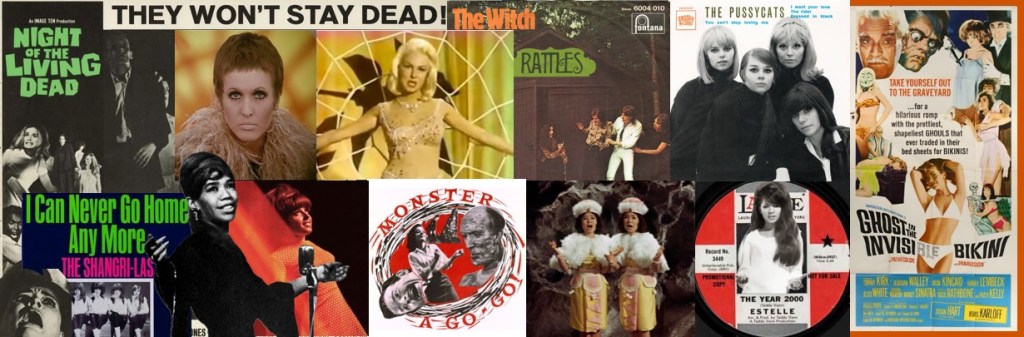
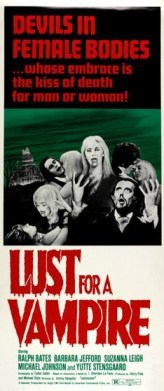
It’s hard to believe that it has been 17 years since I put together the first Halloween show for 60 Degrees with Brian Ferrari, my weekly radio program featuring “60’s chicks and girl groups – the hidden gems, cult favorites and unreleased obscurities of the decade.” The show ran for five years and has been back on the air since the relaunch of East Village Radio in July, 2024. This Halloween episode was originally broadcast on October 27, 2008 and aired every Halloween for the duration of the show’s run.
This year we have a new show! Halloween 60 Degrees Part II: Electric Boogaloo is streaming here:
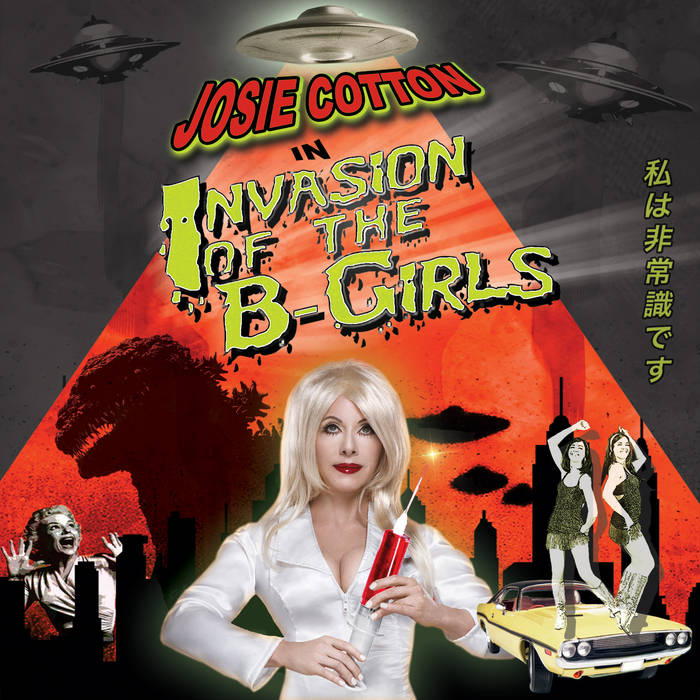
Once again, we’ve got soul witches, rockabilly rabble-rousers, death discs, horror movie theme songs, science fiction sirens, girls driven to madness by love, and more dead boyfriends than you can shake a broomstick at. Plus a whole lot more! As with every episode, the songs are interspersed with vintage commercials, sound effects and movie clips.
It’s hard to believe that it has been 16 years since I put this Halloween show together for 60 Degrees wi Brian Ferrari, my weekly radio show focusing on “60’s chicks and girl groups – the hidden gems, cult favorites and unreleased obscurities of the decade.” The show ran for five years (2008-2013) on East Village Radio and has been back on the air since July, 2024. This Halloween episode was originally broadcast on October 27, 2008 and aired every Halloween for the duration of the run.
In this very special episode, we’ve got soul witches, rockabilly rabble-rousers, death discs, horror movie theme songs, science fiction sirens, girls driven to madness by love and more dead boyfriends than you can shake a broomstick at. Plus a whole lot more! As with every episode, the songs were interspersed with vintage commercials, sound effects and movie clips.
That’s what I told myself. When I went back to look for earlier drafts that I was sure I had started, I discovered that there were none. I never wrote anything down – I only thought about sharing this story. For years. Until now.
“Do you have any real ghost stories?” is a fun question that pops up occasionally in social situations. My go-to response is the story of The Playground Swing – an unexplained occurrence from when I was in the 6th grade. Whether or not it is an actual ghost story, the memory has stayed with me for 44 years.
Just as the clear, cool weather of an early September day can evoke memories of 9/11, the story of The Playground Swing always comes back to me on crisp October mornings. It sneaks in sideways while I’m going through my morning routine, or while I’m commuting. It evaporates before I ever sit down and type it out. There’s not a whole lot to the story, really. It’s that unexplained simplicity that makes it a bit anticlimactic in the telling.
It was the fall of 1980 and I was in 6th grade at Bowling Green Elementary school in East Meadow, New York. We had moved into my grandmother’s house the year before, after a year of unrest following my parents’ divorce. I was happy to be living there, in the cozy house my mother grew up in. I looked forward to going to the school that my parents, aunts, and uncles had all attended.
Once upon a time, I had been a popular kid, but this was our second move in under two years. I remember hearing that it was a bad age to be uprooted and have to make new friends. Obviously many kids maneuver their way through it successfully. I didn’t.
5th grade had been bad, but I did have a couple of new friends to help me get through it. When we got into 6th grade, they were in a different classroom on the other side of the school. In my class, there were no allies. It felt like they were all against me. Looking back now, I would have to say that, among those in my class, I was met with 50% aggression and 50% apathy.
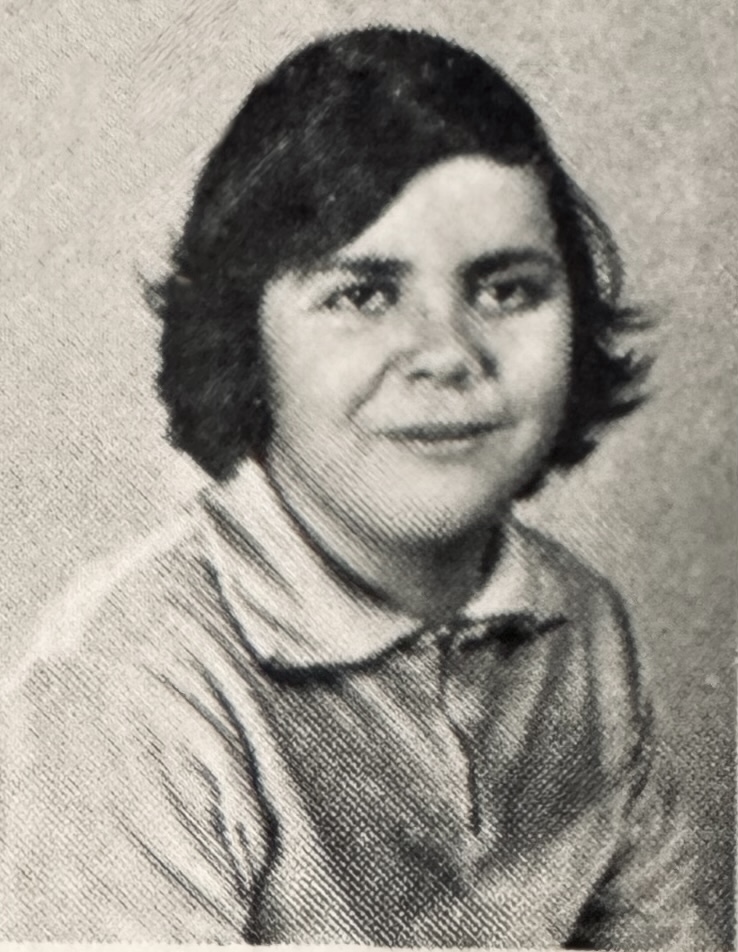
I was a chubby kid in need of a shower and a haircut, with big eyes and thick lashes that caused me to be regularly mistaken for a girl. My class picture says it all: This is a photo of an 11-year-old who was misgendered by the photographer moments before he snapped the picture. When I rolled my eyes and said, “I’m a boy,” he sputtered “Oh, uh… I was talking to that girl over there.” Now smile! *Click*.
For years, my memory was this: One day, my entire class gathered after school to confront me as I walked through the playground towards home. I’m sure it wasn’t ALL of them but when faced with an angry mob of your peers gathering around you, well… I didn’t stop to take attendance. It was a lot of them.
What was their plan? To beat me up? What would that accomplish? I don’t think they actually knew either, and in that disorganization I was able to run away. My best defense was that I could always run fast.
My mother called the school to complain and I was allowed to stay home the next day. The vice-principal went and spoke to the class, asking why they were picking on me. The response landed me in his office for a lecture: I had a bad mouth. I cursed at everyone. This is what he was told. I was the problem. No mention of the taunts and name calling that were the catalysts for my colorful language.
Fuck them, I thought.
My teacher was Mr. Dillon, a soft-spoken beanpole of a man who had been teaching there since my parents attended in the 1950’s. He kept his Vantage cigarettes in the breast pocket of his shirt, and another teacher would stop in to watch the class while he went out for smoke breaks. He had lost his wife a few years before and seemed sad, defeated, and waiting to retire.
In the Bowling Green student handbook that nobody reads, I found that if I brought a note from my mother, I could go home for lunch. I don’t know of anyone else who did this or wanted to. Teachers and staff would look at me funny when I presented my note and told them I was heading out. I would run home to avoid the lunchtime awkwardness of where to sit, as well as any potential playground altercations.
We went on a field trip that year to the top of the World Trade Center, which I loved. Two things stick out about that trip: Standing up against the glass and looking down. It was dizzying. I also remember that when it was time for lunch, I sat with the teachers. They seemed puzzled.
Back to The Playground Swing. Our classroom overlooked the playground and on this one sunny and clear October morning, all of us began to notice this one swing moving back and forth, high and steady like a metronome. It was empty. There was no wind and all of the other swings were completely still. I don’t know how long this went on – it seemed like an hour.
Mr. Dillon tried to redirect our focus back inside the classroom. His voice had a nervous quiver to it that I had never heard before. He could see the swing too, and there was no visible explanation. There were no nearby structures for someone to hide in and pull a string to create this effect. It was a freestanding swing set in the middle of a flat asphalt playground.
By the time the lunch bell rang, the swinging had stopped. We all headed out into the hall, where the kids from the classroom next to ours were similarly perplexed – they had seen it too. There was talk of it being the ghost of some kid who died the year before I moved there, but I don’t remember the name, and surely I would have heard about this before.
Nobody had an explanation, and it never happened again. And that’s the story of The Playground Swing.
The school year went on. The bullying continued, although somehow I managed to avoid another angry mob scenario. One of my main tormentors was this butch brute of a gal who treated me as her physical and verbal punching bag. My mother once again called the school to request that she stop assaulting me, which resulted in her getting called to the vice-principal’s office. We were in music class when she returned. As she walked past where I was sitting, she grabbed the top of the back of my chair and slammed it towards the floor. I fell backwards, landing flat on my back with a loud crack. Everyone gasped. And nobody did a thing.
I got back into my chair, buried my head in my arms and sobbed uncontrollably. The feeling of hopelessness was overwhelming, with one thought repeating in my head: “This will never end. This will never end. This will never end.”
Our last day of school was a needless half day with nothing to do. Mr. Dillon, who could barely maintain control of his class on the best of days, was losing the battle. Kids were killing time by throwing things, yelling and walking around, waiting for dismissal. I’d had enough of this scene and decided to make a move.
While Mr. Dillon was trying to catch a kid who had wandered down the hallway, I went to his desk, opened the drawer, found my report card, and walked out the door. Once outside the school, I heard someone yell out the window “He’s coming after you!” So I ran. I ran through the playground – past those motionless swings. I ran away from that school as fast as I could, faster than ever before. I would continue running away from that place for years.
I would like to say that I didn’t look back, but I did. Every once in a while I would think about what I could have done to navigate those waters more successfully. While I can go back and forth with ideas about how I could have improved my social game, there is one thing from that year that had no explanation or variables: What was up with that swing?
If it was a ghost revisiting the playground to have one last turn on a swing, that’s less frightening than the abuse I suffered at the hands of my classmates.
I just wish I had more stories about benevolent spirits and less about wretched children.
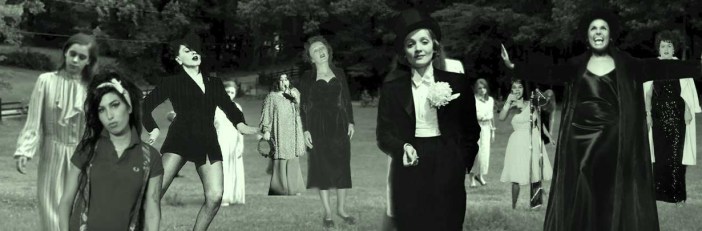
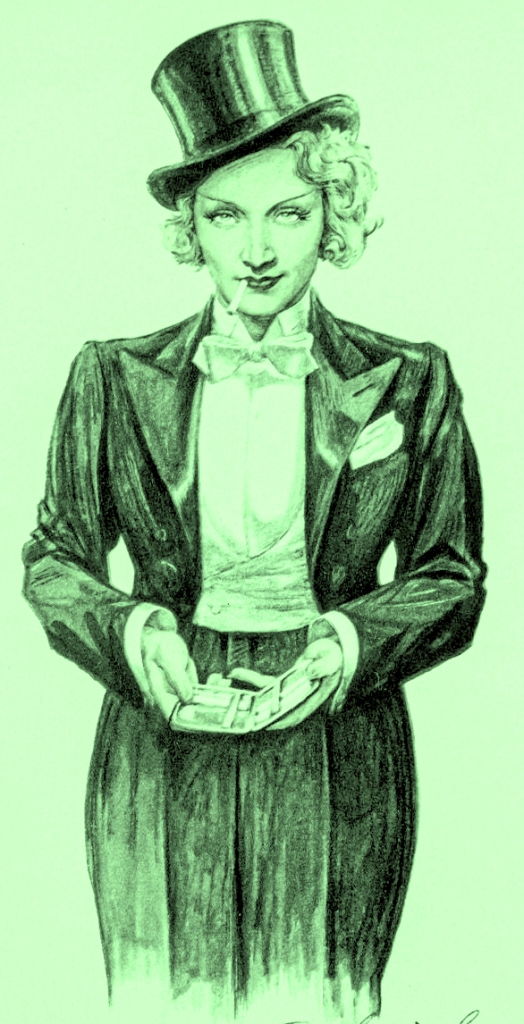
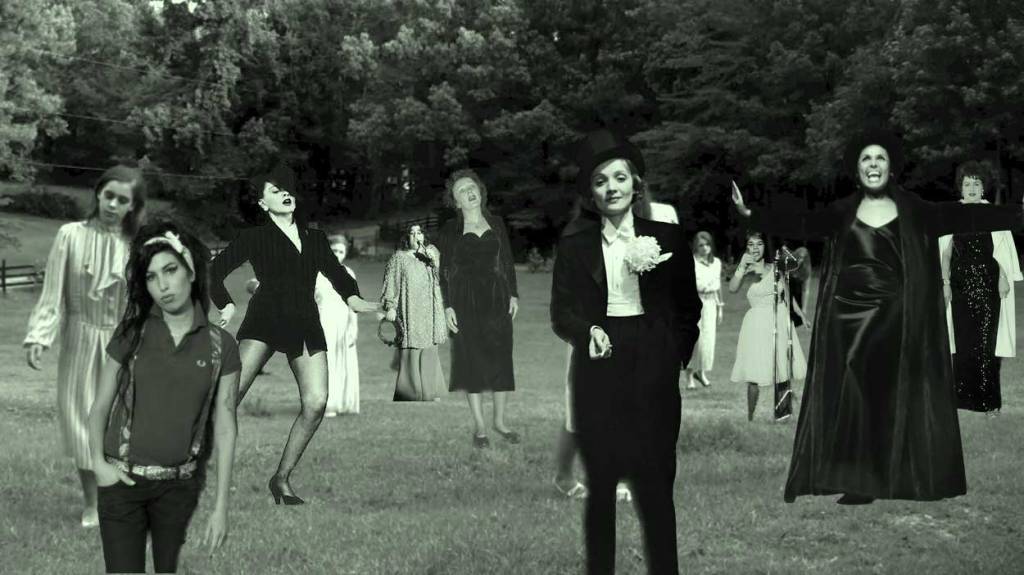
Marlene Dietrich is slumped in a wing back chair chain smoking in the corner of our living room. She is clad in her trademark top hat and tuxedo, although the ensemble is far from crisp and clean. I am on the leather settee across the room, drinking my second cup of coffee while reading the Sunday New York Times. I embraced technology and began to read the newspaper on my iPad last year, but recently I had to switch back to the hard copy. Marlene is strangely drawn to the light of the iPad. As soon as I open it, she starts hovering around, trying to paw at it. She got her hands on it once when my partner Tim carelessly left it open on the credenza. This resulted in considerable damage, which of course I had to pay for. Now I keep it locked in my briefcase and only use it for work purposes.
Sometimes Tim and I talk to Marlene, but she rarely responds. When she does, it is with incoherent mumbles shrouded in a thick German accent. Most of the time she just sits there, staring off into space with a look that might be described as profound sorrow or excruciating boredom. It’s open to interpretation. What is certain is that she is constantly smoking cigarettes. She smokes like a … well, like a fiend. There’s no other way to put it.
The constant smoke is pretty offensive, even if it does simulate that hazy effect in which she was photographed for her films. When Tim and I realized that the acrid smoke was masking a more ghastly smell of decay, we stopped complaining about it. Tim always liked to burn incense and scented candles anyway; now he has gone full-throttle with air fresheners, perfume oils and room deodorizers. There is an apothecary on Lafayette Street that sells $150 cheesecloth bags of a special potpourri blend created specifically to eradicate the stench of the divas. Tim visits there pretty much every week, although I can’t help but think that Emiliano, the part-time model behind the register might also have something to do with the frequency as well.
I tried to explain to Tim that we can’t afford this extravagance – the nightly news suggests that a simple $1.49 box of baking soda would do the trick. But as with all matters financial, he doesn’t like to talk about it. He seems to think that as long as our credit cards are not declined, then we have the money to pay for anything.
I go to the kitchen to refill my coffee cup. Tim is standing at the stove, scrambling eggs. His shoulders are tensed halfway to his ears, his mouth a taught crimson bowtie as he shuffles the eggs around the pan, shaking his head slightly.
“She drank the rest of the gin.” he says curtly.
“How do you know it was her?” I ask. I turn to the sink and begin to nonchalantly rinse out the crystal goblet which I had used for the previous evening’s nightcap.
“Just look at her.” He nods towards the corner by the garbage can, where Edith Piaf is rocking back and forth on her feet, twisting a tortured handkerchief in her fists. The empty bottle of gin is lying in the recycle bin next to her, right where I left it the night before. She will burst into song shortly, most likely “Non, Je Ne Regrette Rein.” It was quite jarring at first, but now we see the signs: first the rocking starts, followed by the handkerchief twisting, then the low, guttural moans begin and eventually form the familiar tune that used to flood through our home on many a Sunday afternoon. I have grown accustomed to it. Tim, however, has not. “Fucking lush,” he mutters.
From the living room, I can hear the sounds of Marlene on the move: Every day, like clockwork, she heads out on a quest for cigarettes – dragging her filthy shoes across the antique Persian rug. Tim and I used to be fanatic about trying to maintain all of the fine furnishings we had purchased when we moved into this apartment together. Here, we had created our dream dwelling: a chic little paradise with an art deco design scheme. We were setting the stage for an endless series of sophisticated cocktail and dinner parties that never materialized: these are different times. Besides, we were working too hard to even think about entertaining. And then the divas showed up. Now there are stains and cigarette burns and everything is hopelessly caked with mud and ashes and god knows what else. Our broken Dyson vacuum lies in a heap underneath the baby grand piano.
“Why doesn’t THAT reanimate?” Tim cracked. I thought it was funny but I didn’t laugh. I wasn’t in the mood.
I return to my newspaper with a fresh cup of coffee. “See you later Marlene,” I say with faux exuberance. She flicks her hand over her shoulder as a sign of vague acknowledgement. At the front door, she softly begins warbling “Fawwing in wuv again… nevuh wanted tooooo….”
Theories abound as to the cause of this phenomena – 24 hour news channels devote considerable programming to speculative hypothesis involving a century of electronic sound, radio, and television waves intersecting with static electricity and wifi hot spots or possibly some other random factors that resulted in these reanimated corpses taking on the forms of our dear departed divas.
The idea that the subject has to be deceased is cause for even more speculation. There are no reports of Madonna, Britney or Cher zombies. It’s those that have been mourned and continue to be revered. Conspiracy theorists are having a field day.
I should also explain that these are not your garden variety “shoot ‘em in the head to kill ‘em” movie type of zombies. Go ahead and destroy your Lena Horne – by dawn the next day, another one will be back in a glittering pantsuit, angrily shout-singing “Stormy Weather” around the apartment.
There’s no point in maiming them, either – our friends Thomas and Ed had a Dusty Springfield that kept gesticulating wildly, smashing knickknacks and bric-a-brac with every dramatic swoop. They accidentally tore off her arms while trying to restrain her before she destroyed every last piece of their precious mercury glass collection. The next morning they awoke to a ghostly rendition of “You Don’t Have To Say You Love Me” as a fully intact Dusty zombie hurled, one by one, the remaining contents of their china cabinet down the hall towards their bedroom.
Our Judy is perched on top of the dresser in the corner of the master bedroom – she wears a fedora, black tights and a dress jacket…. eternally snapping her fingers to the intro of “Come On Get Happy.” She rarely ever sings, but ya gotta give credit to that corpse: she’s got rhythm. Even as the flesh wears away on her fingers and falls onto the floor, she keeps steady time.
It’s not really them – we have to remind ourselves that. And some of these zombies are cast wildly against type for the roles they are now inhabiting. I saw a TikTok of a little old Asian Mama Cass that really had the moves down. But it’s not the same.
Our divas disappeared – often prematurely, tragically, suddenly. What we were left to comfort ourselves with were their images, movies and recordings – these are the trappings that most likely brought them forth in their most stereotypical and obvious incarnations. Now that they have been among us, even in these imperfect decaying forms, we can’t go back to having them at arm’s length. Not anymore.
I was a freshman theatre major at Syracuse University when I scribbled this in my journal one bright spring day in 1988:
I’m writing at Oakwood Cemetery, where we are sitting on the steps of the Brown Mausoleum. People might think it’s morbid to hang out in a cemetery, but I love it here – so beautiful and peaceful. If we were sitting in the Quad, with radios blaring and frisbees flying around, I couldn’t relax – it always feels like a fight is just waiting to break out. There’s no judgement here. Other kids walk by every so often but it’s very quiet. I’ve heard that drug deals go on here at night though.
So young. So innocent. So little insight. Then again, I was 19 years old and this was before that kid boiled John Crouse Jr.’s head.
Hanging out with friends at the mortuary chapel in Oakwood Cemetery (Spring 1988)
Oakwood is a 160 acre cemetery adjacent to the Syracuse University campus. Their website advertises “a grand array of monuments and mausoleums which form a virtual outdoor museum of funerary sculpture and architecture while mirroring the lives of Syracuse’s Victorian families.”
The cemetery was an alternative hangout for us – actors and artists clad in vintage chic attire, toting journals, sketchbooks and cameras. We didn’t come to SU for the sports or fraternity life. The typical campus hangout spots weren’t always the best places to relax, so we went to the cemetery. We were respectful, but not everyone else subscribed to the ‘Take only pictures, leave only footprints’ credo. This is why we can’t have nice things.
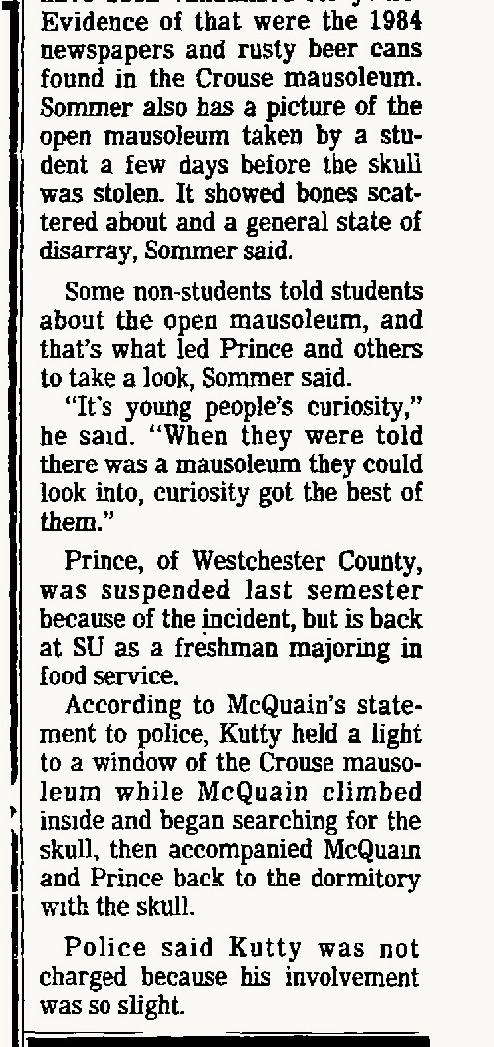
In October of that year, freshman art student Kevin McQuain thought it would be cool to steal a human head from a mausoleum “to use as a model for sculpture class,” he would later say. He brought it back to his dorm – the nearby Flint Hall – and proceeded to try and clean the cranium by boiling it with bleach in a trashcan placed on the stove of the 3rd floor common area. Residents were alarmed by the stench and even more so when they discovered the source. McQuain was arrested along with his friends, Seth Prince and Omar Kutty.
Flint and Day Halls – two Syracuse University dorms adjacent to Oakwood Cemetery
Two factors helped this gruesome crime to become a national news story:
a) It was Halloween season.
b) It wasn’t just any old skull in the trashcan.
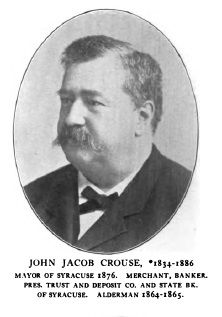
The vandalized mausoleum contained John and Catherine Crouse and their two sons. The Crouse family was a wealthy philanthropic clan that loomed large in the area for generations. A fair percentage of the city of Syracuse bears the Crouse name. John Sr. funded the University’s Crouse College to honor his wife. Their son, John Jacob Crouse, Jr. served as the mayor of Syracuse. All of the coffins in the tomb were vandalized, but the cranium in question belonged to John Jr.
From The Syracuse Herald, 10/21/88 and a vintage postcard for Crouse College:
While this macabre news story placed the University in the national spotlight, it would soon be forgotten – replaced by an unfathomable tragedy. Two months after this incident, the Lockerbie bombing took place. Thirty-five Syracuse students perished on Flight 103 in a terrorist attack that divided campus life with a definitive line of before and after.
By the time Kevin McQuain and his friends went to court in early 1989, all but local news outlets had lost interest in the macabre little “Art Student Boils Founder’s Head” story. McQuain pled guilty and was properly contrite under advice of counsel. The charges against Seth Prince and Omar Kutty were dropped, yet all three received the same sentence: 200 hours of community service.
From The Syracuse Times, 1/26/89:
Kevin McQuain at sentencing. (Herald Journal photo by Carl J. Single)
Universities tend to frown upon students who cook the heads of their benefactors. Following McQuain’s sentencing, his scholarship was revoked. Later newspaper articles state that he left Syracuse due to a lack of funds, but he did complete his undergraduate degree at Alfred University, which is not exactly the Dollar Tree of higher education. Perhaps it was best for all concerned that he made a fresh start outside of Onondaga County.
There is a 2002 follow-up piece from the Syracuse Post Standard that keeps getting… ahem… dug up… every few years and reprinted around Halloween. It’s about how poor Kevin McQuain got stuck with a nickname that he could not shake. His friends dubbed him “Skully.” And he decided “to embrace it.” He went on to form a Goth/Rockabilly record label called Skully Records, which he apparently still runs himself as a side hustle to his every day technical services job.
In 2015, he self-published a vampire/punk novel under the name Kevin Skully McQuain. He also designs t-shirts.
Somehow, the unavoidable “Skully” handle does not force itself onto his professional resume: it just leaks into his side projects where the macabre notoriety might help bump things up a notch.
But oh, how the nickname plagues him! He CANNOT escape it.
Here’s the thing: I’ve been called several things throughout my life that I have hated. I assume that you, dear reader, have had one or two unwanted nicknames as well. But I don’t know yours… and you don’t know mine… because we did not hyphenate them into our names.
How contrite is a person if he is still trying to milk the last ounce of notoriety out of something he stupidly did over 30 years ago? If you made a mistake at 18 – and who hasn’t? – would you allow that thing to be the defining moment of your life? Would you still call yourself “Farty” because you once let one rip in gym class? Is that all ya got?
McQuain is married and a father now, and I can’t help but wonder: at what point in the dating process does one explain the origin of “Skully”? Third date? Over dinner? And what is the appropriate age to sit your child down to explain that you once desecrated a corpse? “Yes, Jayden, Skully-daddy did once boil the head of the mayor of Syracuse, but listen…. that was a bad idea, ok?”
Back in 2002, McQuain said “That was a mistake I made when I was young, and I’m fortunate that it didn’t stigmatize me for the rest of my life.” And yet, at 50 years old, he still holds on to the “Skully” nickname, with the backstory tucked into the pocket of his aging punk-rock jeans, ready to whip out and exploit whenever he has a new artistic endeavor that might need a little publicity boost.
In 1988, Kevin McQuain walked out of Oakwood Cemetery with the head of John Crouse in a paper bag, intent on using it as a prop for his art. Over 30 years later, he still finds it quite useful.
It’s hard to believe that it has been 10 years since I put this Halloween show together for 60 Degrees wi Brian Ferrari, my weekly radio show focusing on “60’s chicks and girl groups – the hidden gems, cult favorites and unreleased obscurities of the decade.” The show ran for five years (2008-2013) on East Village Radio, a storefront internet radio station in New York City. This Halloween episode was originally broadcast on October 27, 2008 and aired every Halloween for the duration of the run. As with every episode, the songs were interspersed with vintage commercials, sound effects and movie clips.
In this very special episode, we’ve got soul witches, rockabilly rabble-rousers, death discs, horror movie theme songs, science fiction sirens, girls driven to madness by love and more dead boyfriends than you can shake a broomstick at. Plus a whole lot more!



























 Brian Ferrari's Blog