Revisiting George Platt Lynes’ Fire Island Muses

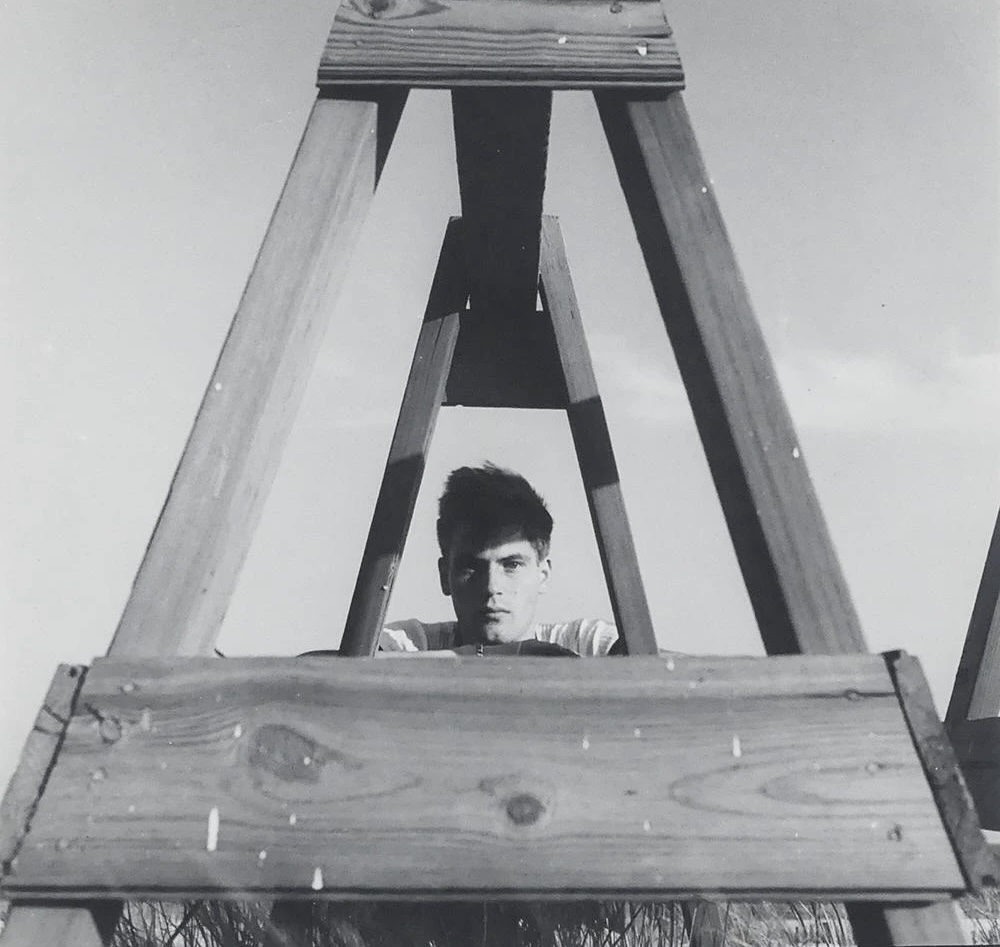
George Platt Lynes, self-portrait (ca 1940)

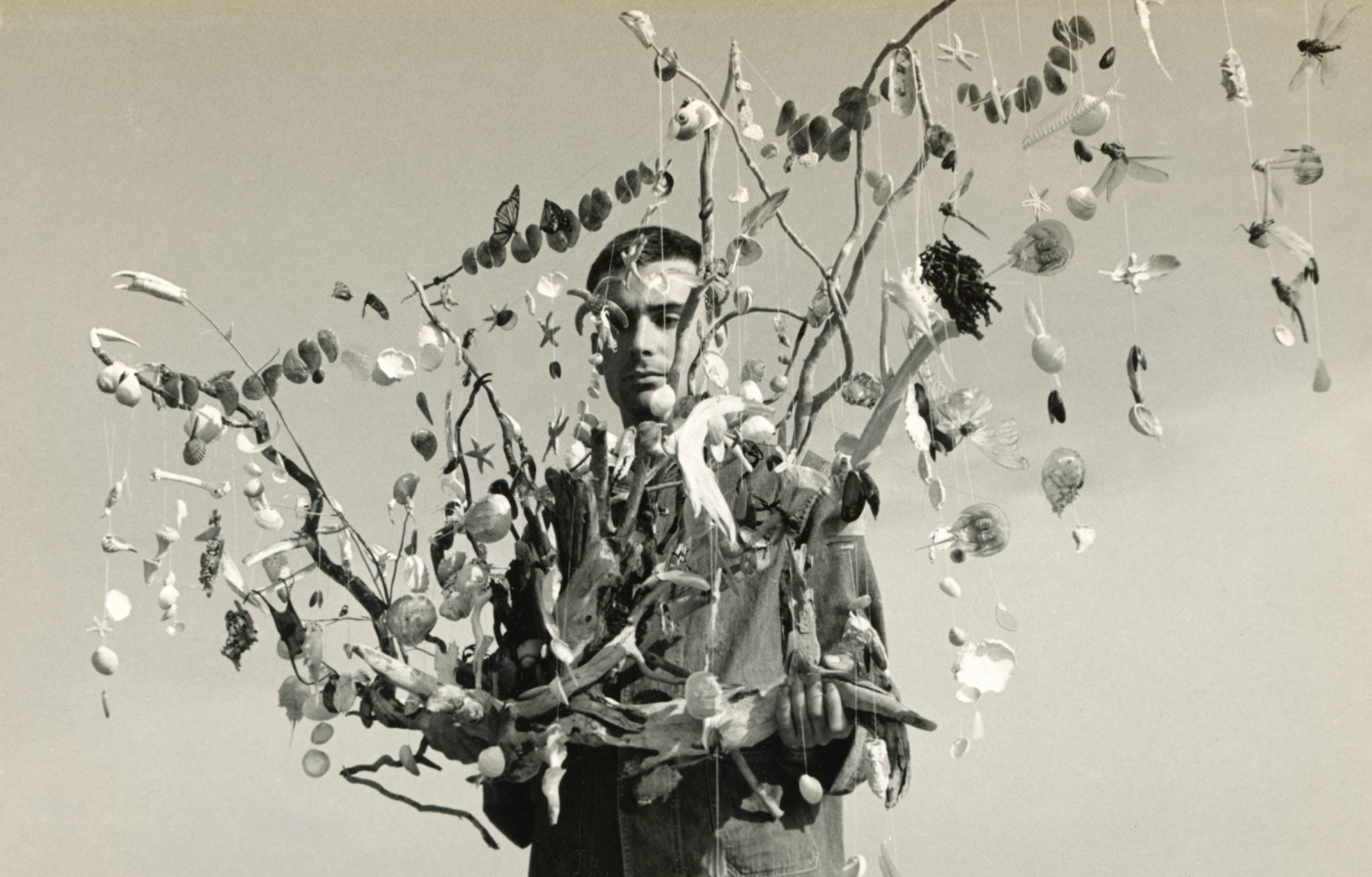
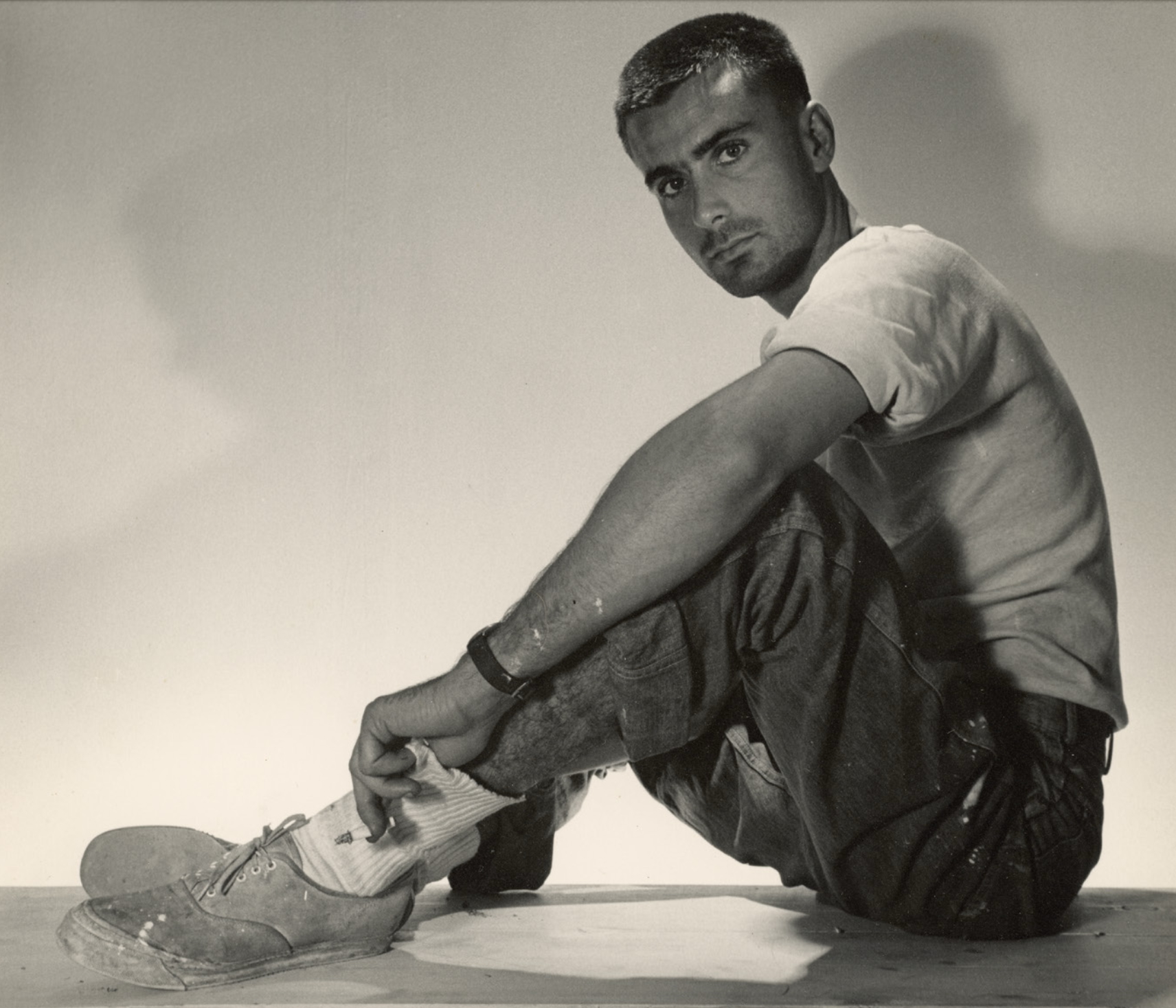
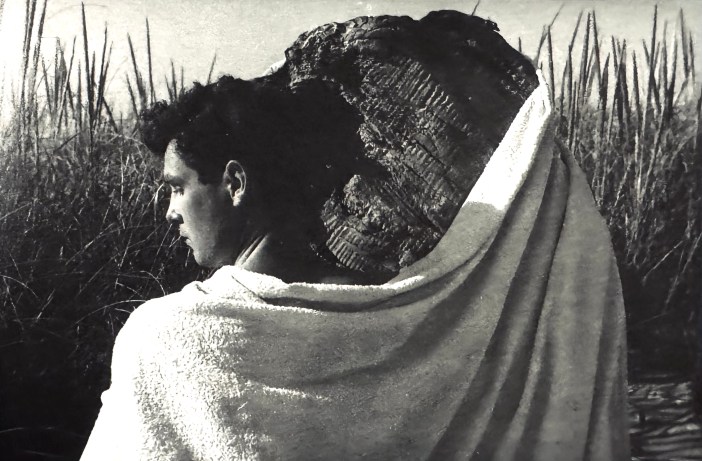
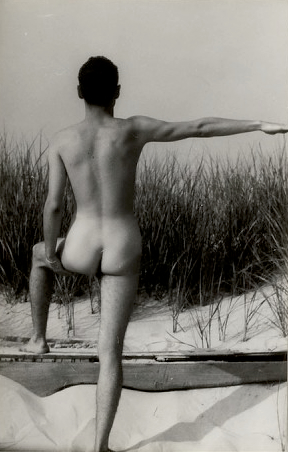
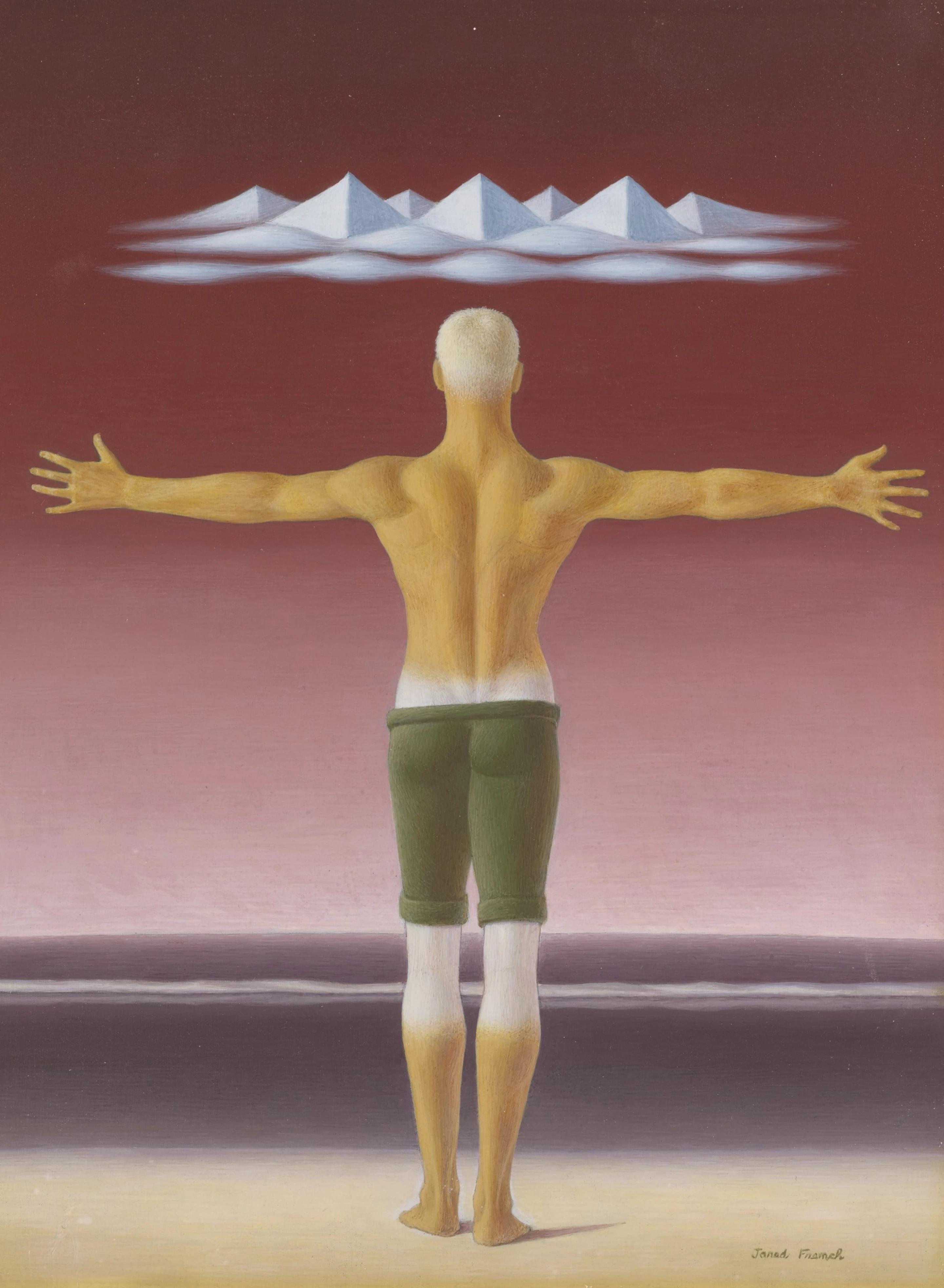
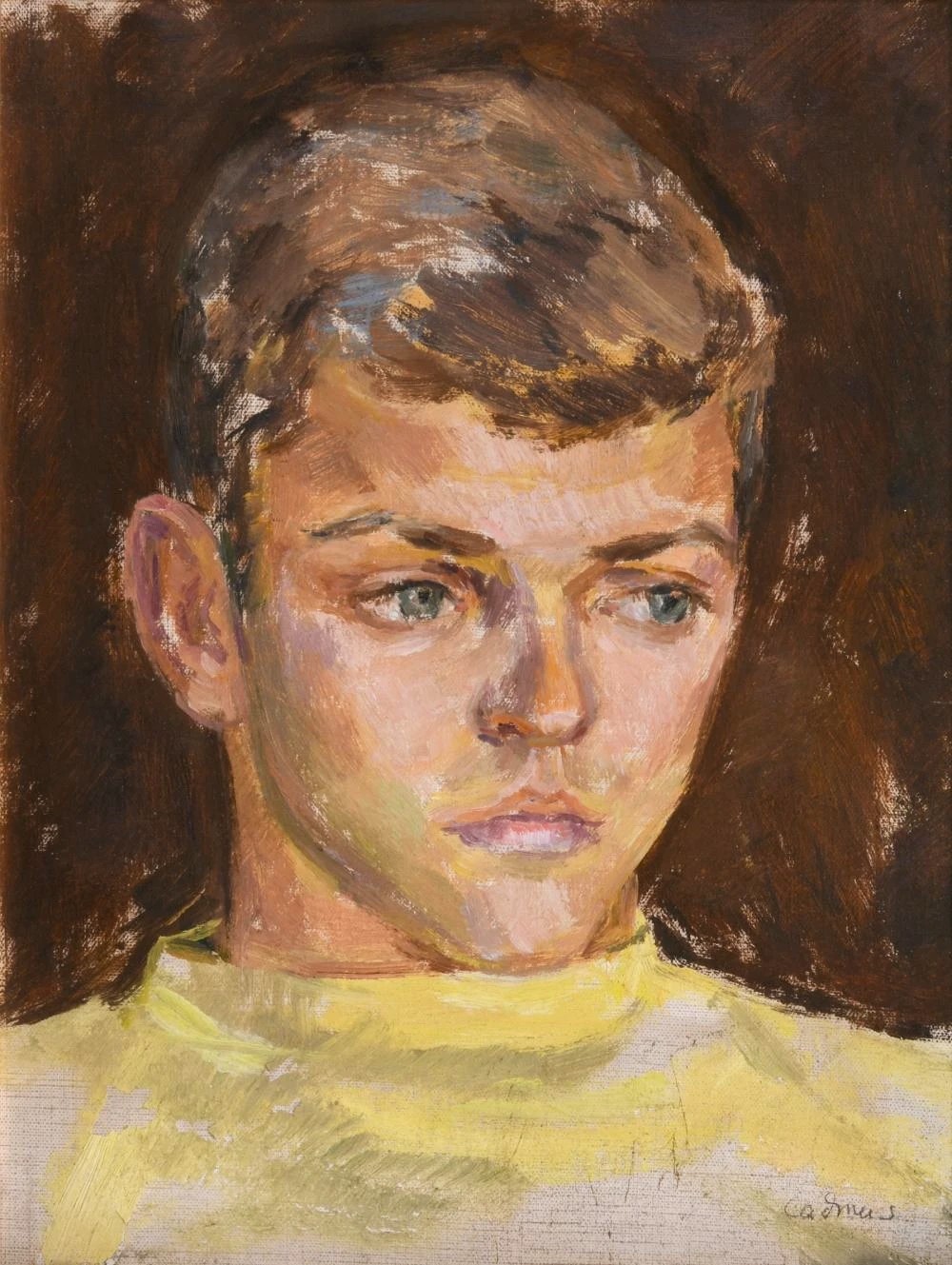
Next month will mark five years since I started the Artist’s Muse series on this blog – profiling the men who inspired, and were subjects of, mid-century artists like George Platt Lynes, Bernard Perlin, George Tooker and the PaJaMa collective: Paul Cadmus, Jared and Margaret French. Last summer I compiled some of these stories and photos for the Fire Island Pines Historical Preservation Society website. “The Fire Island Muses of George Platt Lynes & The PaJaMa Collective” focused on the subjects of the artwork they created during their time on Fire Island. Click here for the full post.

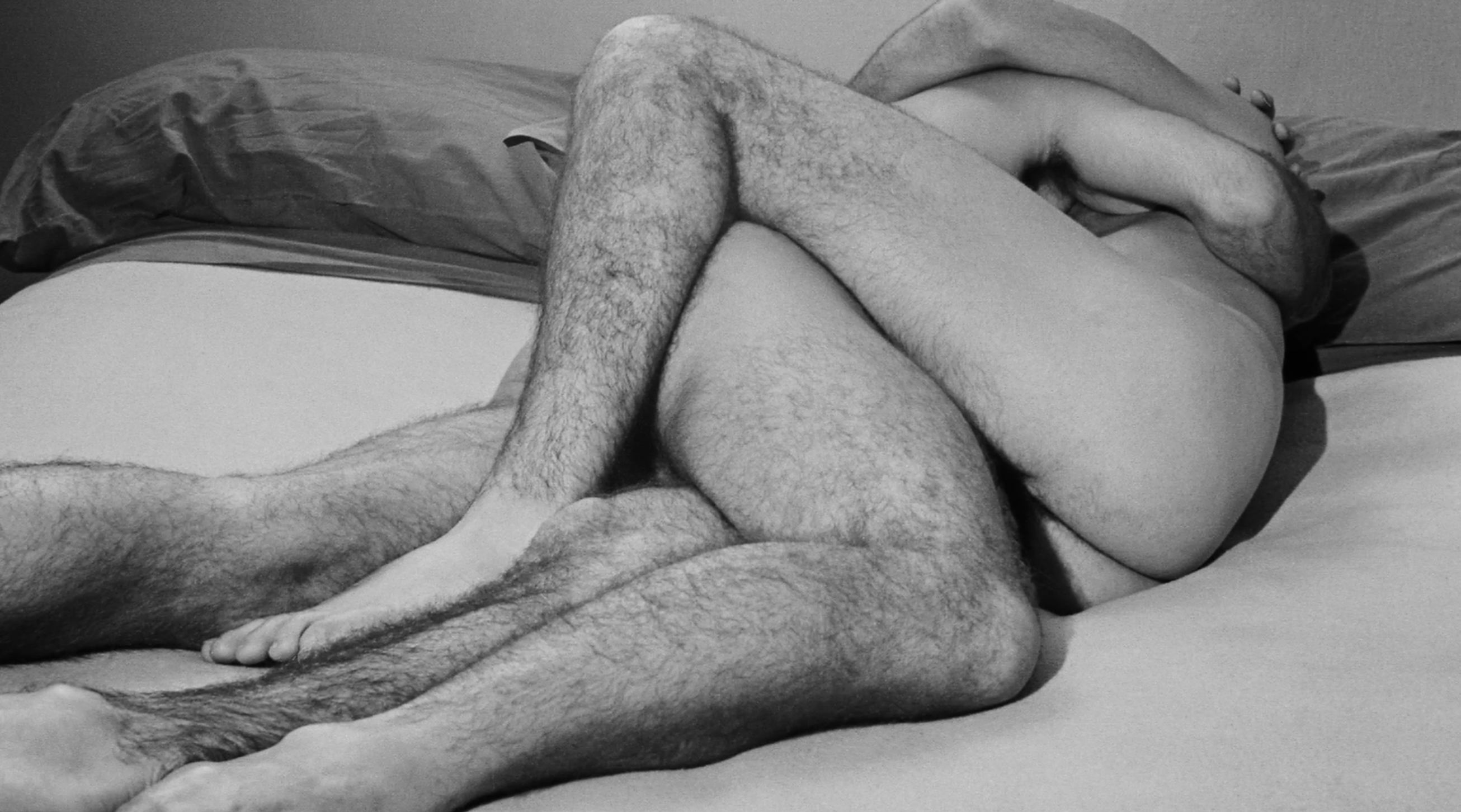
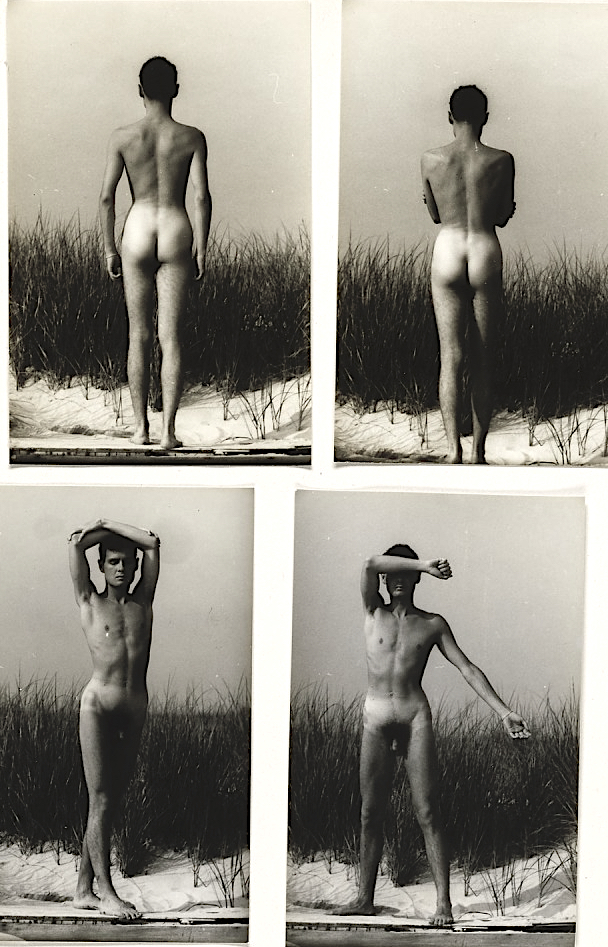
This summer, Vogue has entered the mix with a piece titled The 1940s Vogue Photographer Who Turned His Lens to the Male Muses of Fire Island. Honestly, it sounds as if he happened upon a coven of beautiful gay men, rather than importing his friends and lovers from the mainland. While it’s true that Lynes would photograph models and “attractive men that he heard of through word of mouth,” this applied to his studio work back in New York City. On Fire Island, the photos were of his intimate circle.

Lynes’ Fire Island photos are inextricably linked with the PaJaMa collective, as they all vacationed together and posed for each other. Artists like Lynes, Tooker and Perlin were all influential on each other’s work, especially the photographic aspects of their creativity.
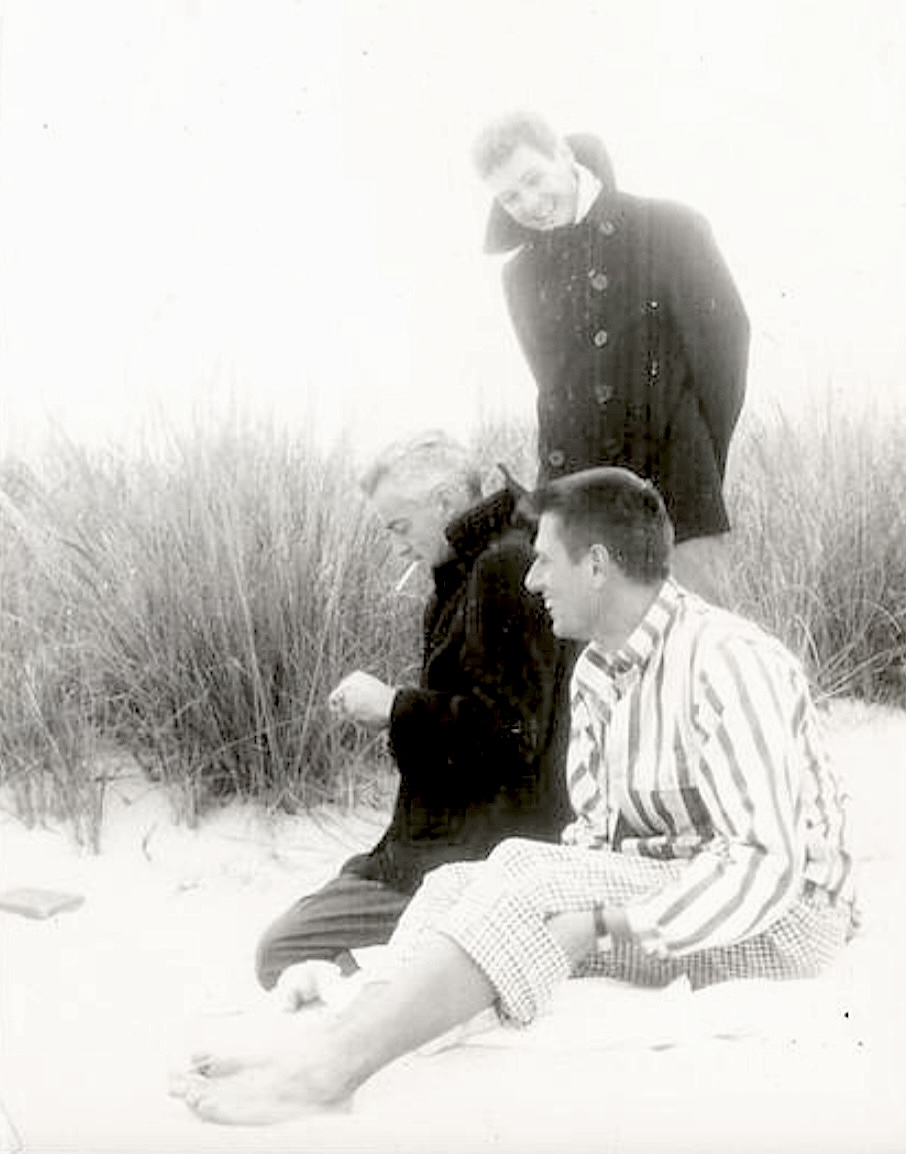
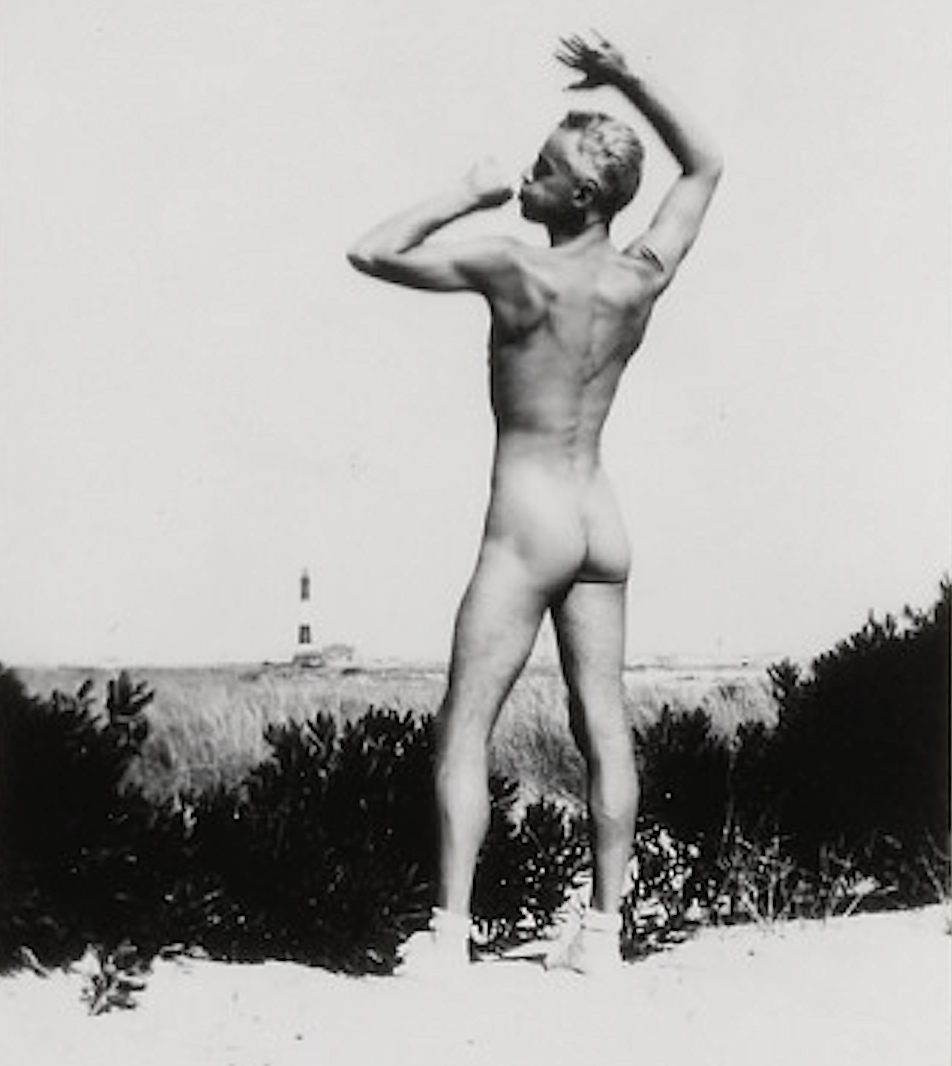
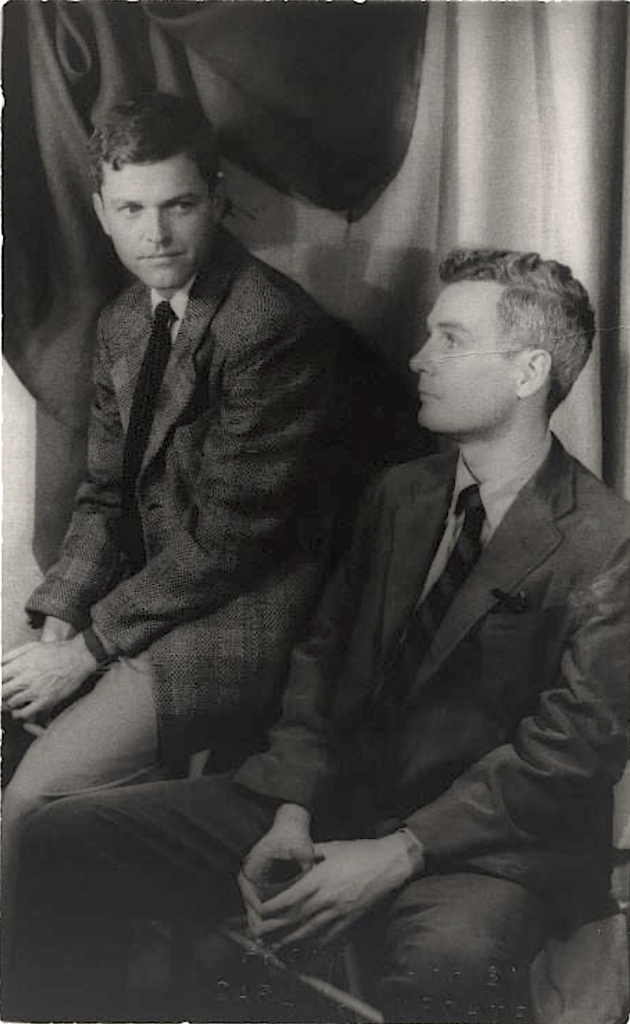
Lynes with Paul Cadmus, Glenway Wescott, Donald Windham, Jared French & the Fire Island Lighthouse, PaJaMa (ca. 1938-40)

The Vogue piece displays several photos from A.Therien gallery’s recent collection of images featuring fellow photographer Wilbur Pippin, who was profiled here back in April. These are additional photos from that collection:

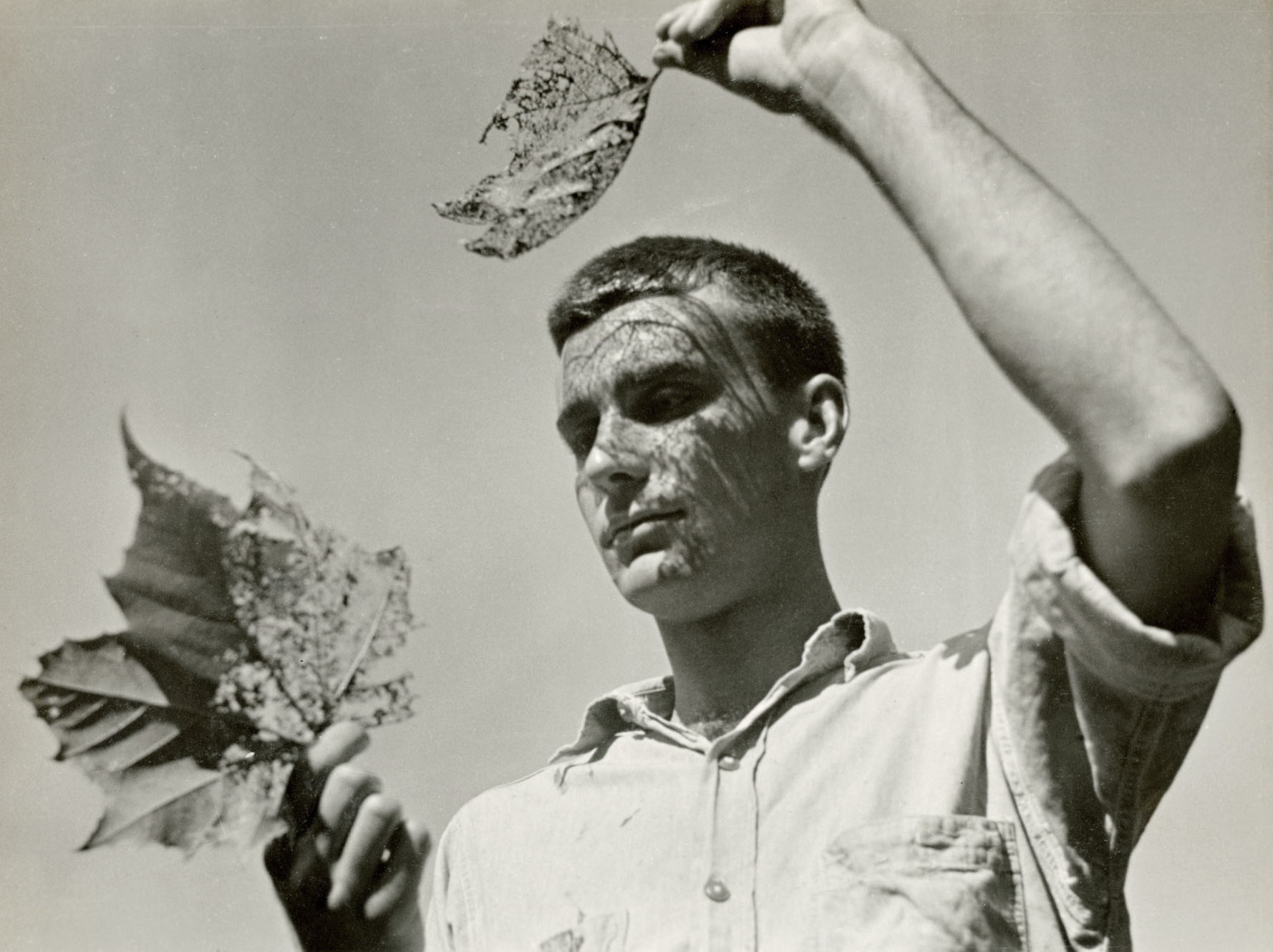
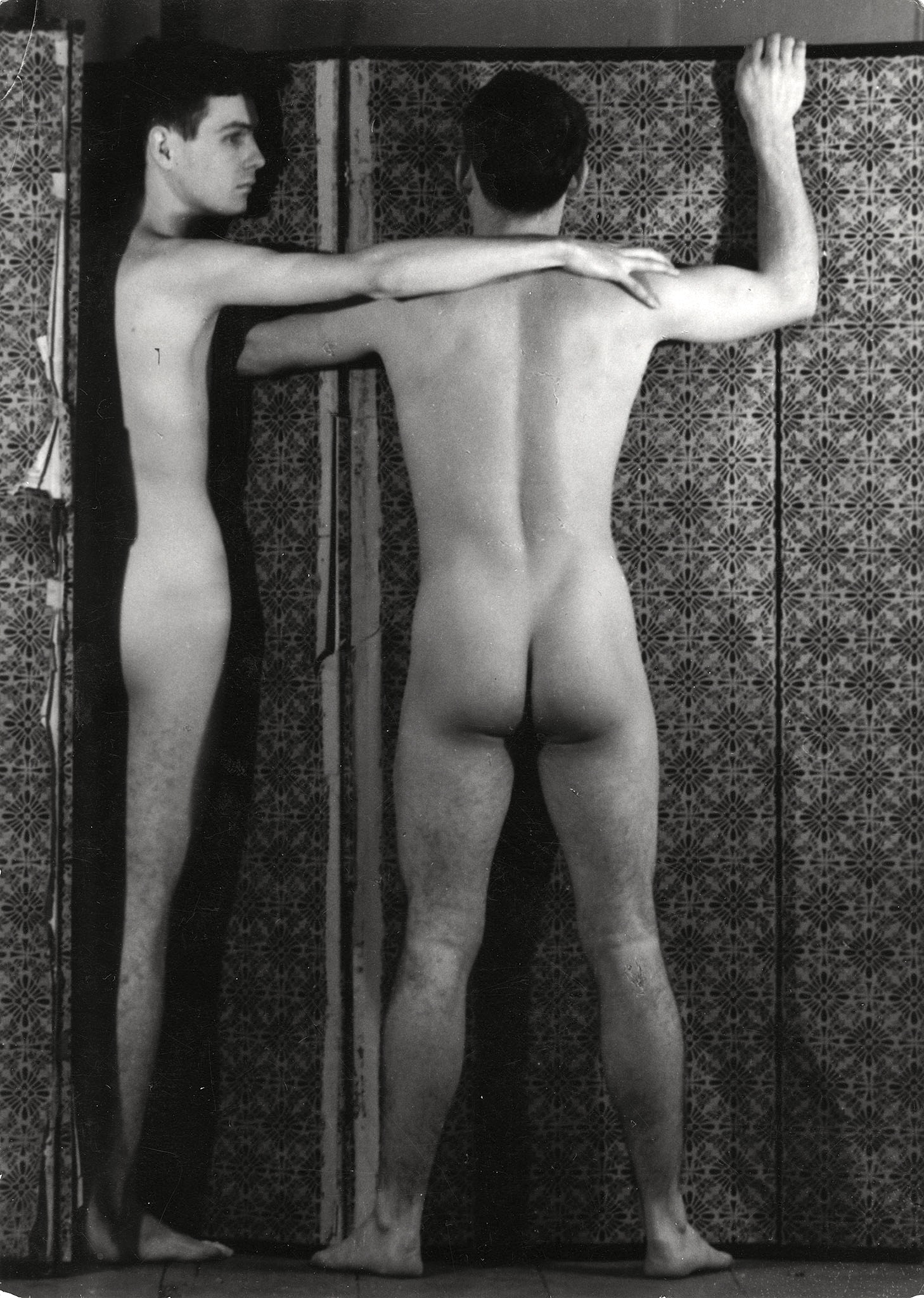
Wilbur Pippin with Fidelma Cadmus Kirstein and George Tooker, photos by George Platt Lynes & PaJaMa (ca. 1948-50)

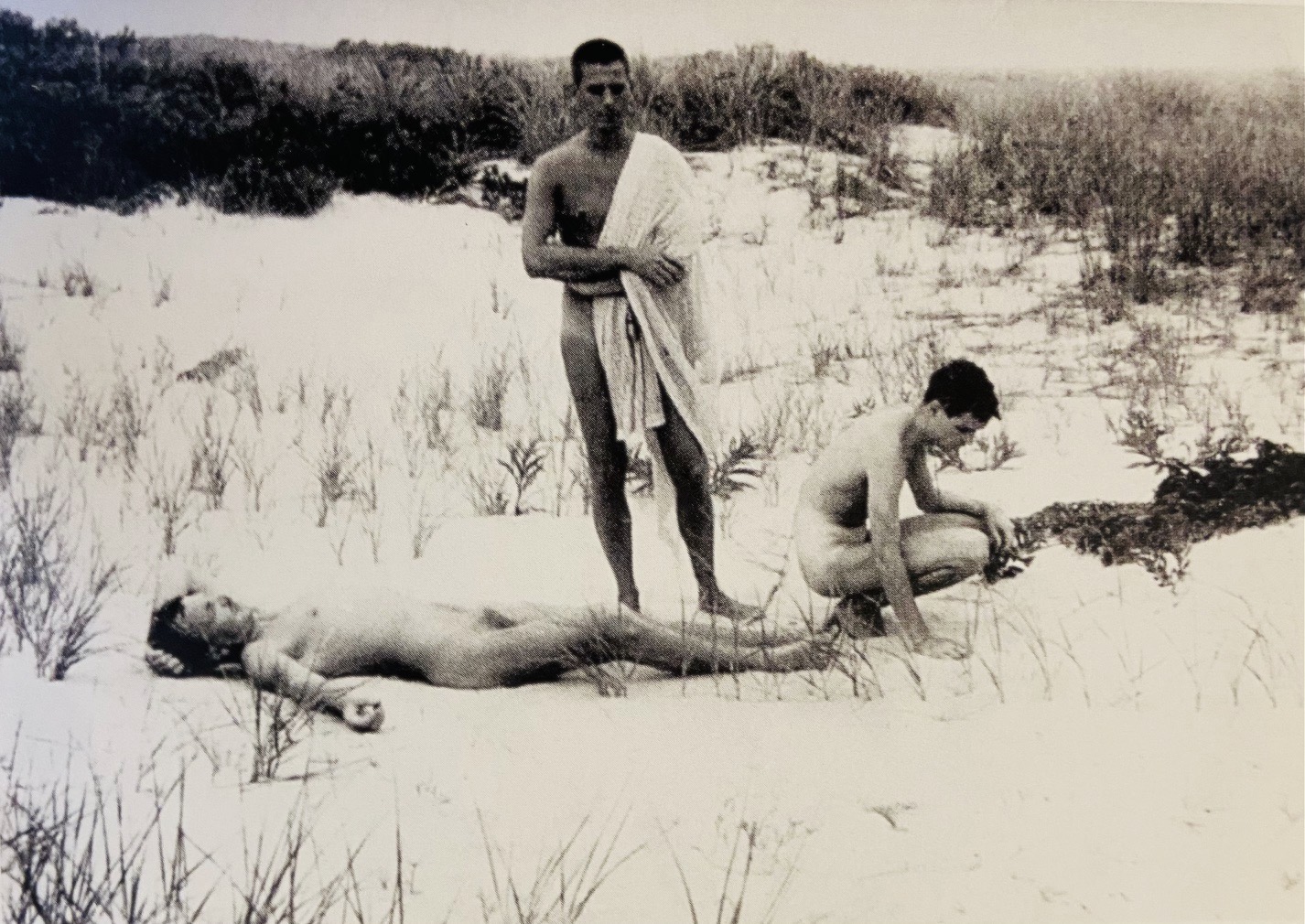
In 1943, Lynes was so enamored of Jonathan Tichenor that he left his long-term threeway relationship with Glenway Wescott and Monroe Wheeler to be with him. The pair moved in together and Lynes shocked his discreet friends by announcing that they planned to be married. Tichenor was the subject of many Lynes photographs during this period, including some memorable shots snapped on Fire Island. The relationship imploded in 1945 when Tichenor ran off to become the second husband of socialite/artist Bridget Bate.

Jonathan Tichenor, Fire Island, photos by George Platt Lynes & PaJaMa (ca 1944)

Lynes met aspiring dancer Randy Jack in 1947 while he was working for Vogue in Los Angeles. The pair moved back to New York the following year, where Jack found success as a model. They parted ways a few months later. Read more about Randy Jack here.
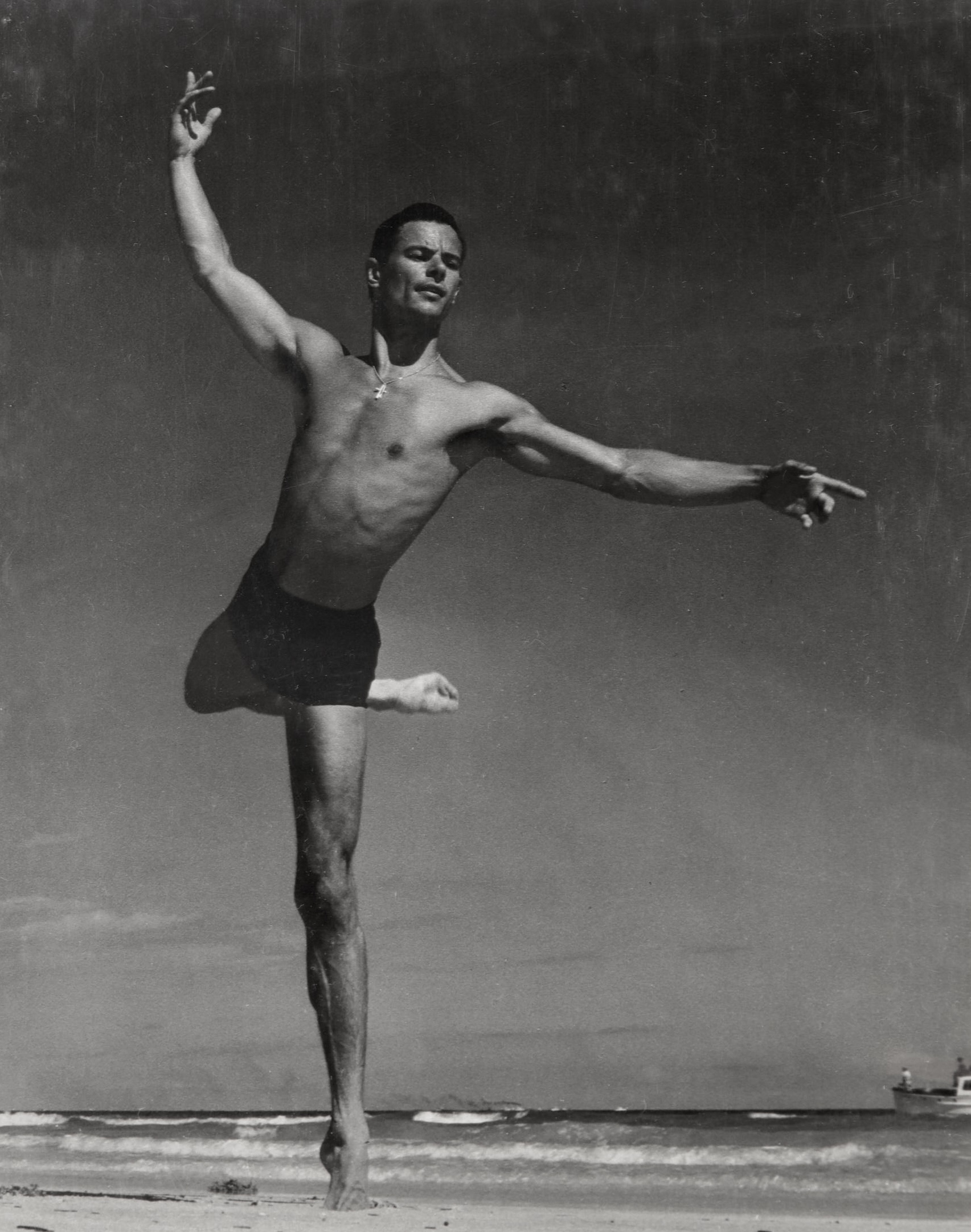
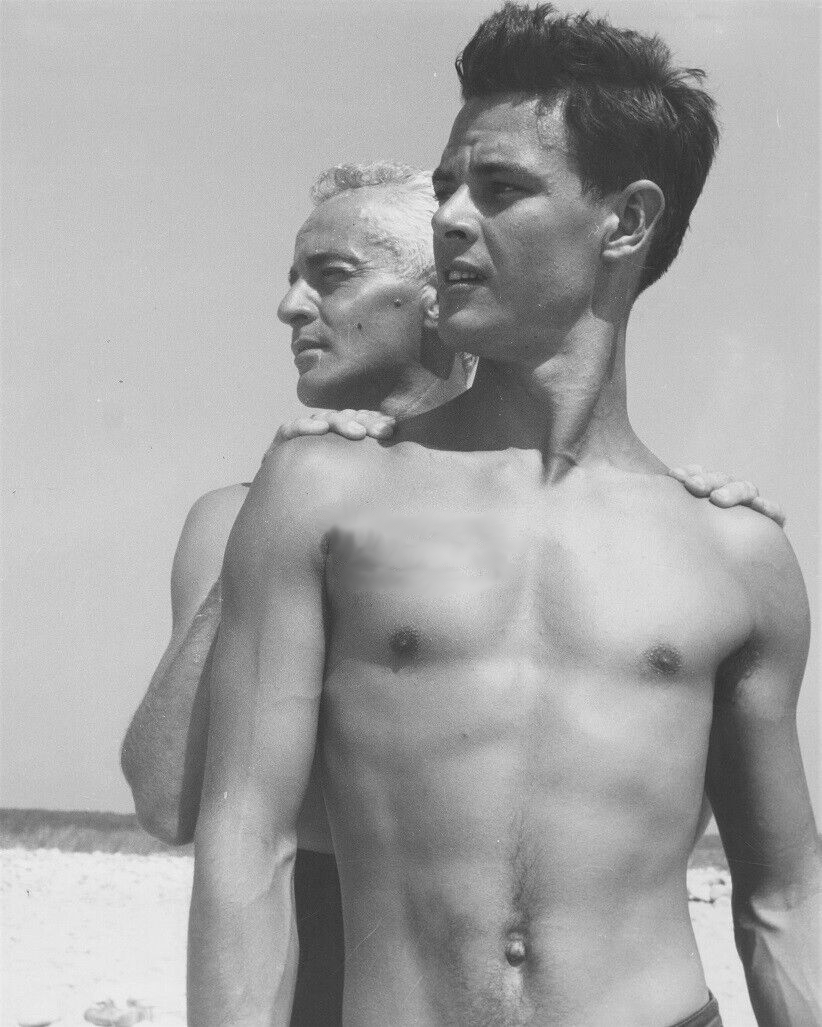
Lynes with his boyfriend Randy Jack (ca 1948)

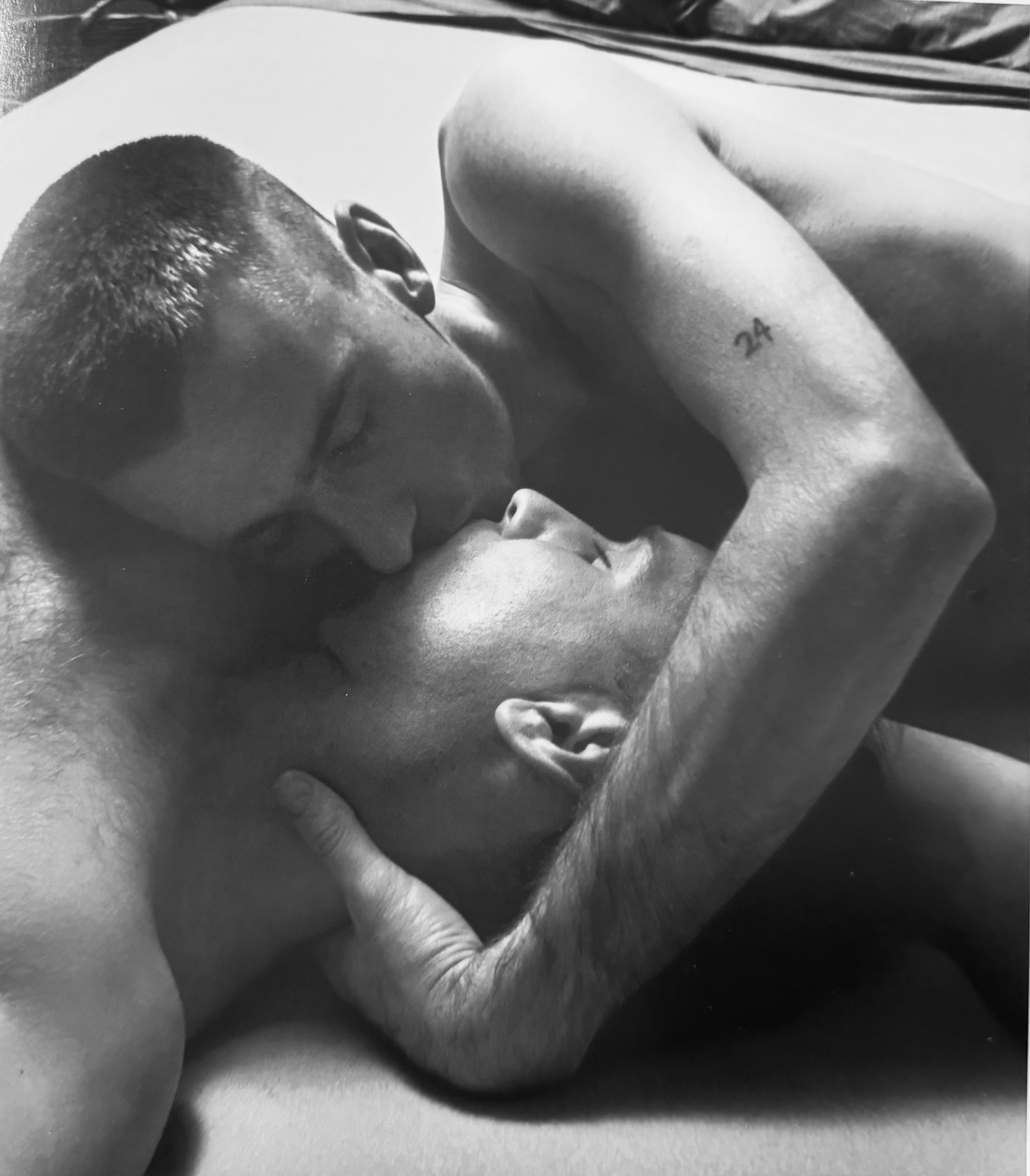
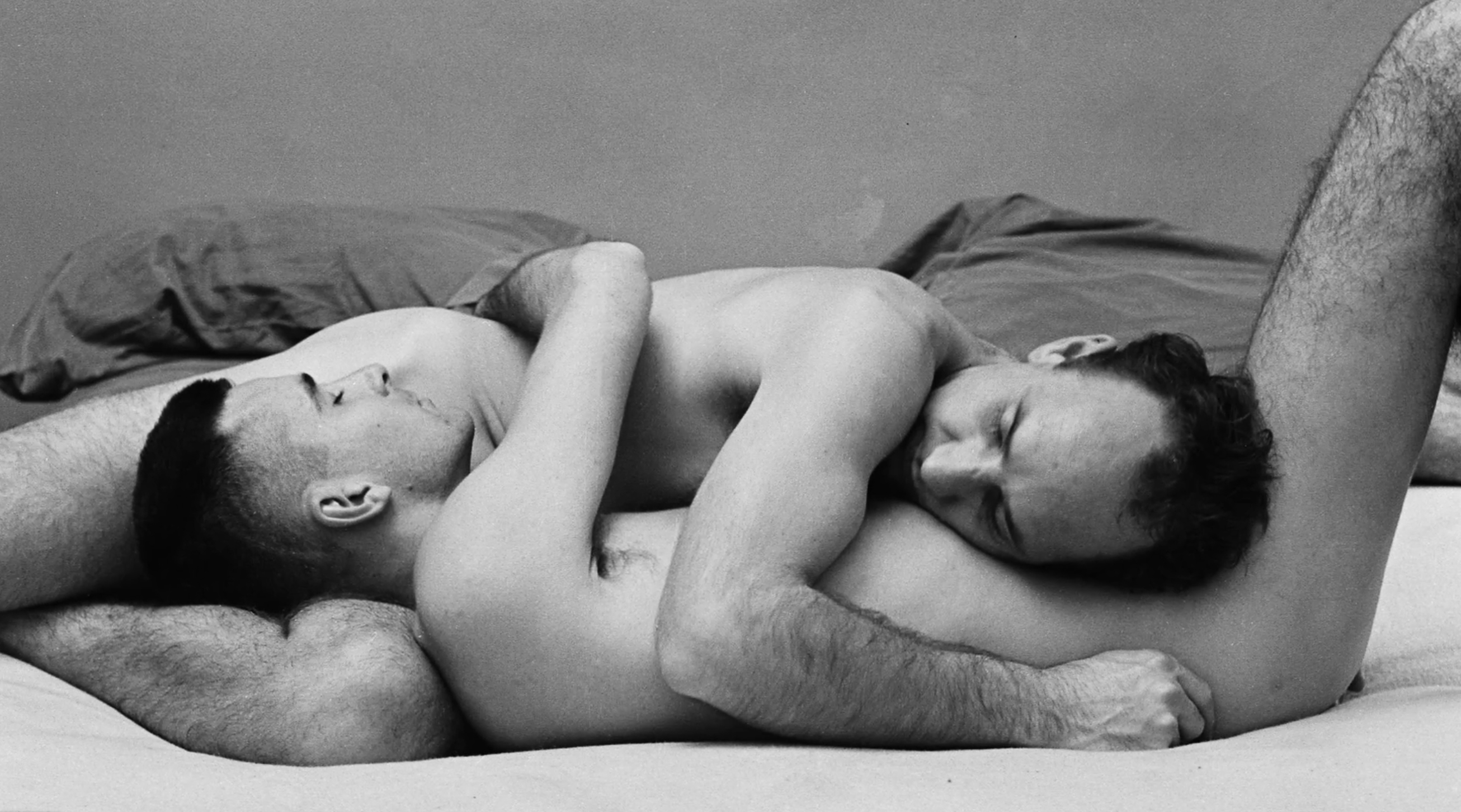
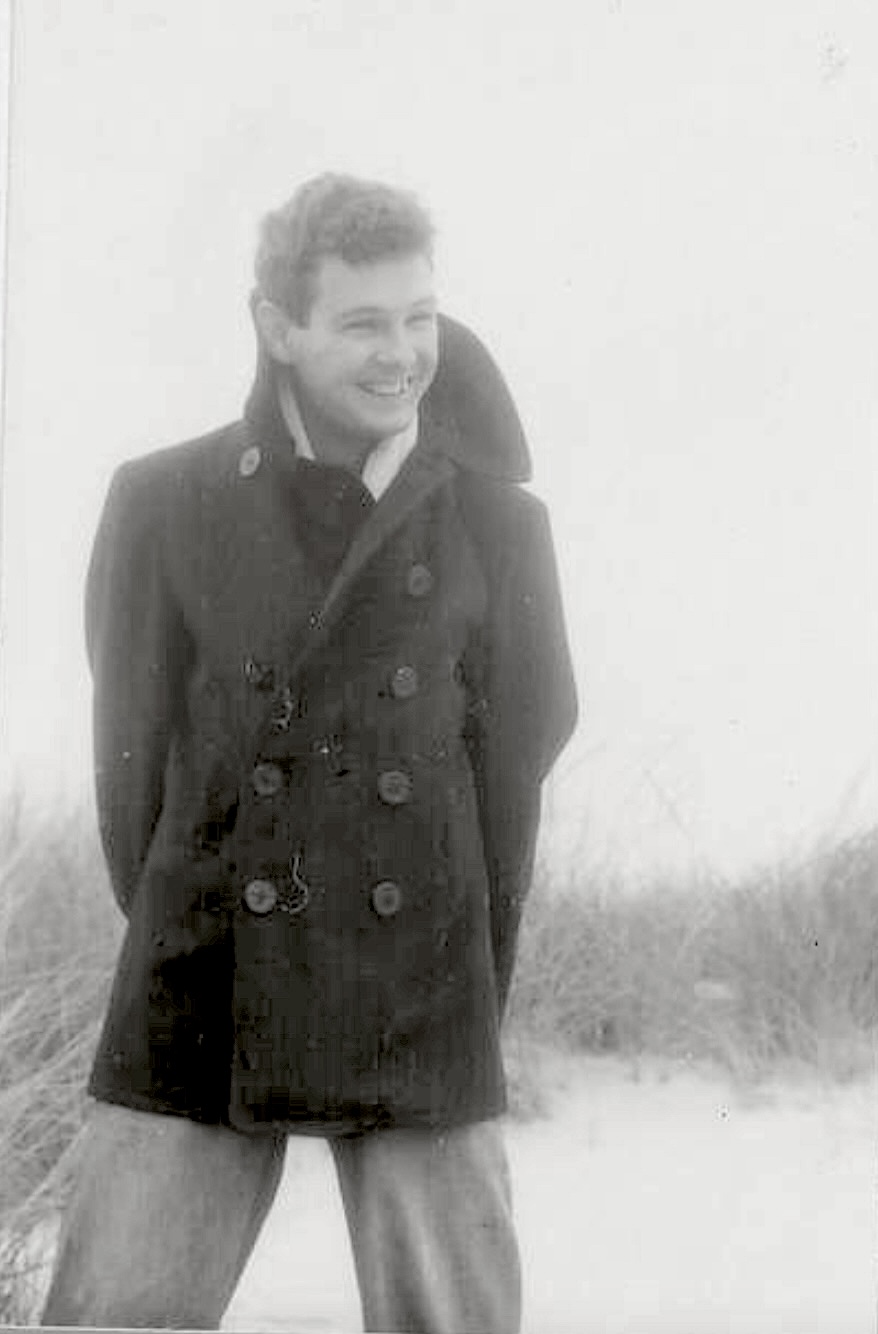
Ten days after the departure of Randy Jack, former military man Chuck Howard moved in with Lynes. Throughout their relationship, Lynes frequently photographed Howard on Fire Island. He later became a successful fashion designer and restaurateur. Read more about Chuck Howard here.
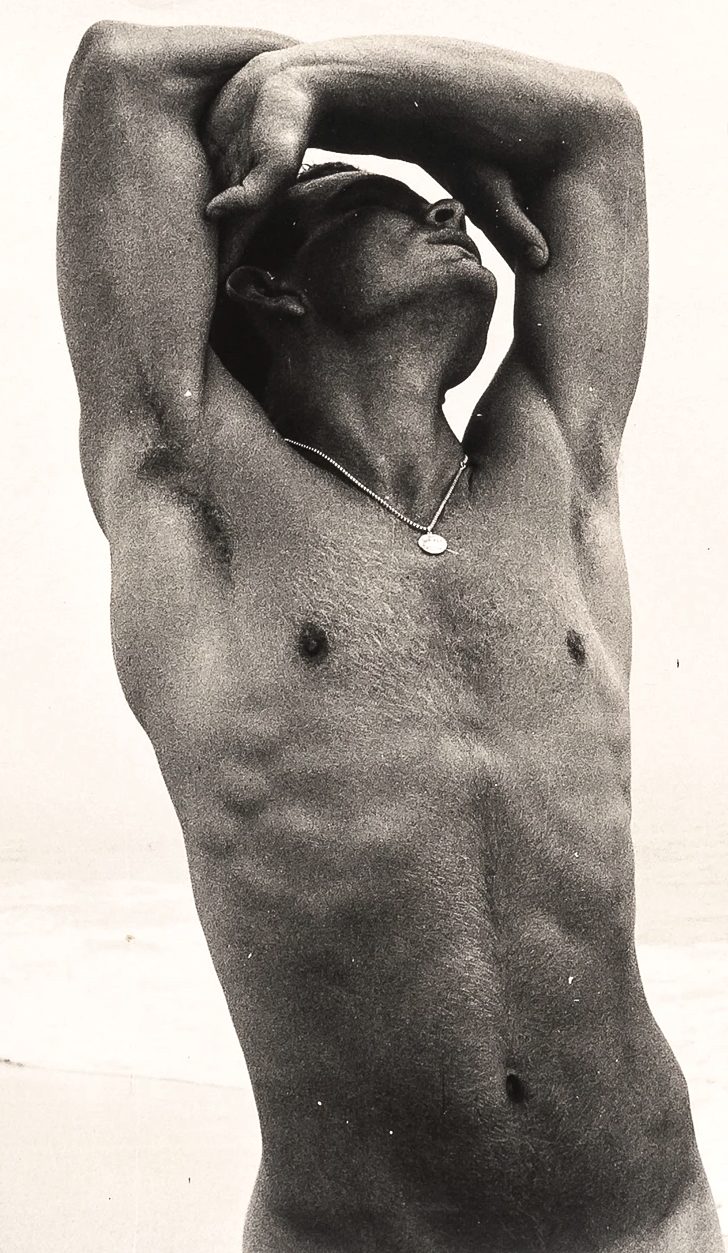
Chuck Howard photographed on Fire Island by George Platt Lynes (ca 1950)

In 1950, Lynes created a studio beach scenario with dancers Nicholas Magallanes and Tanaquil LeClerq in poses from the George Balanchine/Jerome Robbins ballet Jones Beach. Magallanes was also a member of Lynes’ social circle and a frequent model for his nude photography.

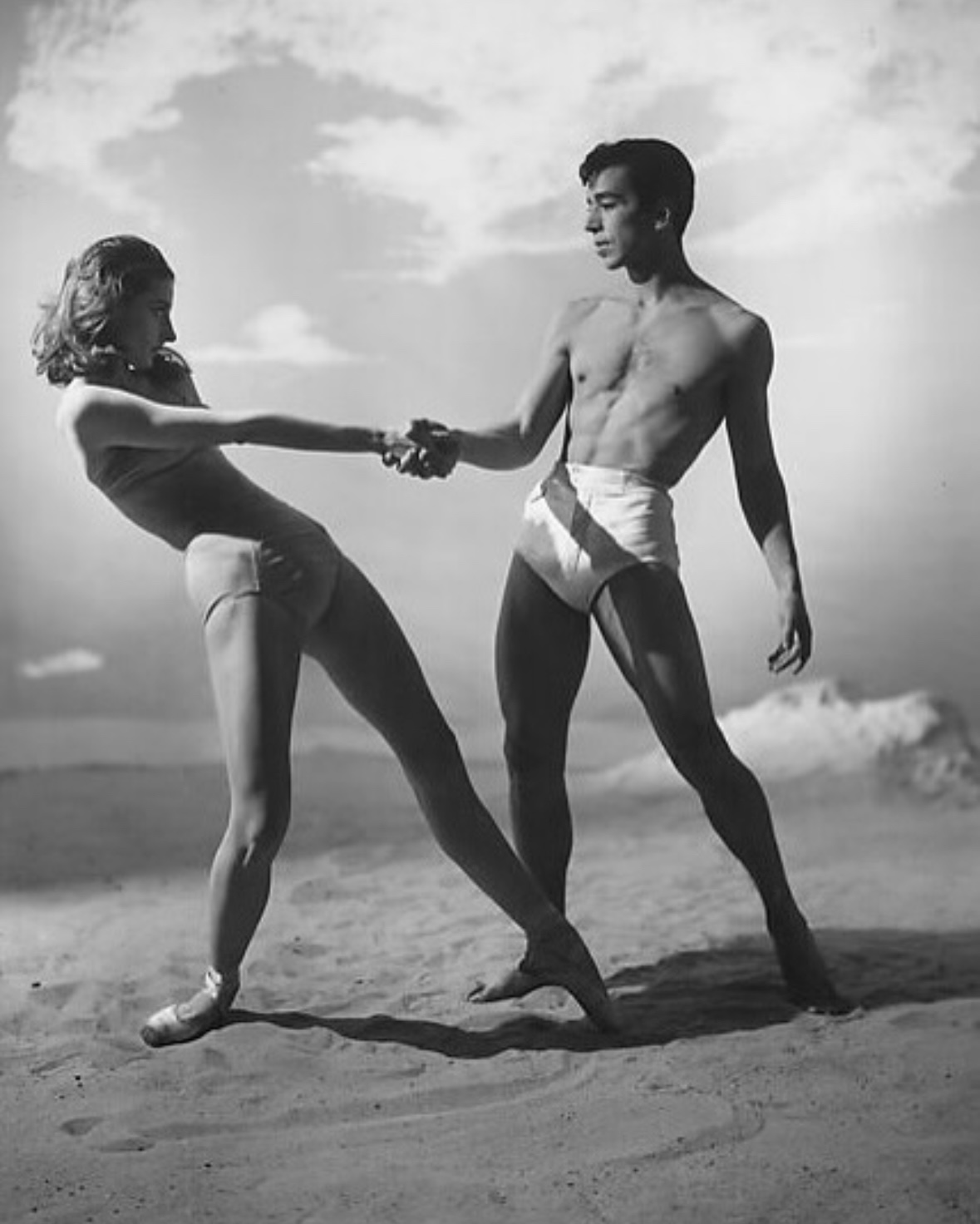
Nicholas Magallanes and Tanaquil LeClerq in Jones Beach, George Platt Lynes (1950)

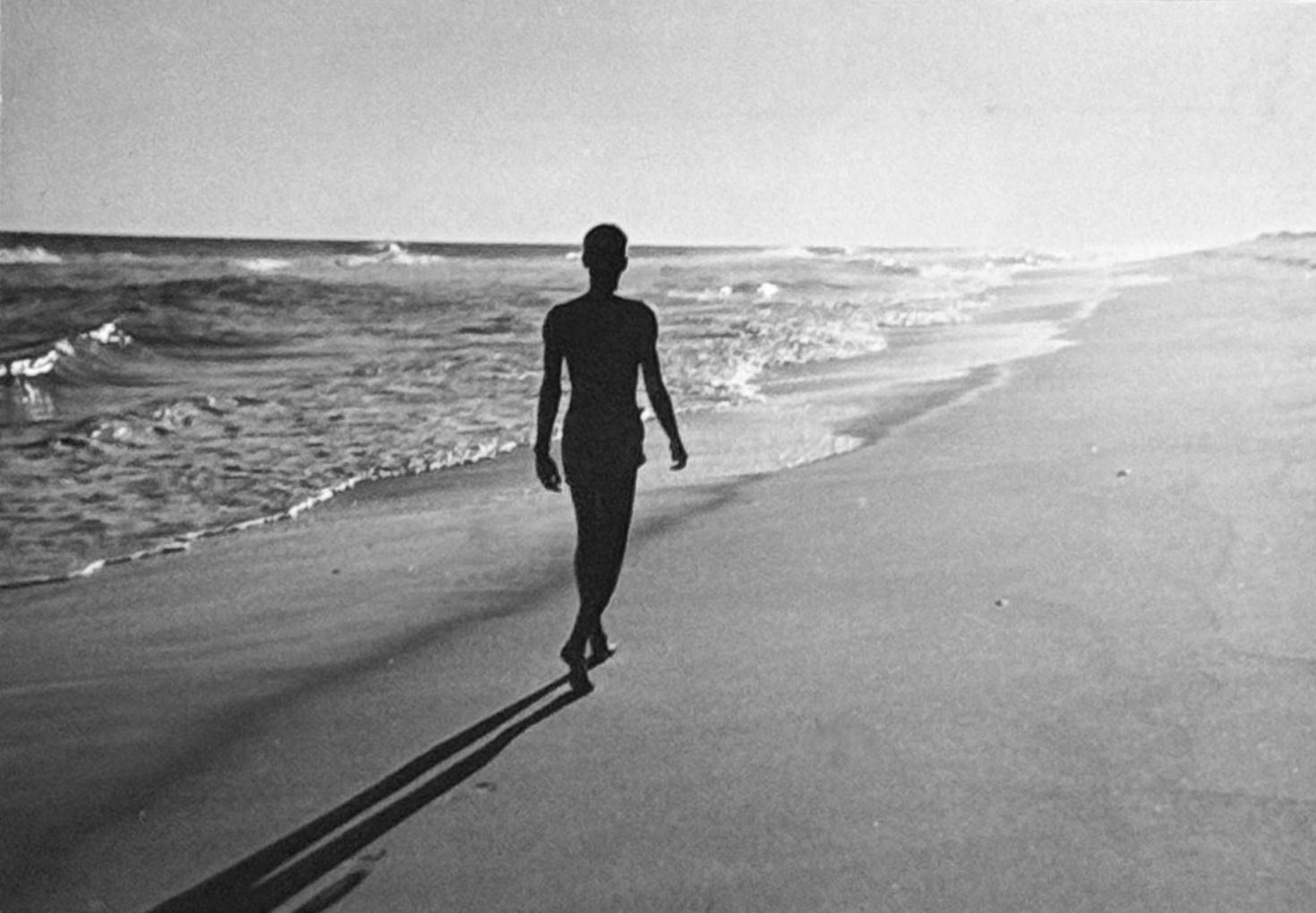
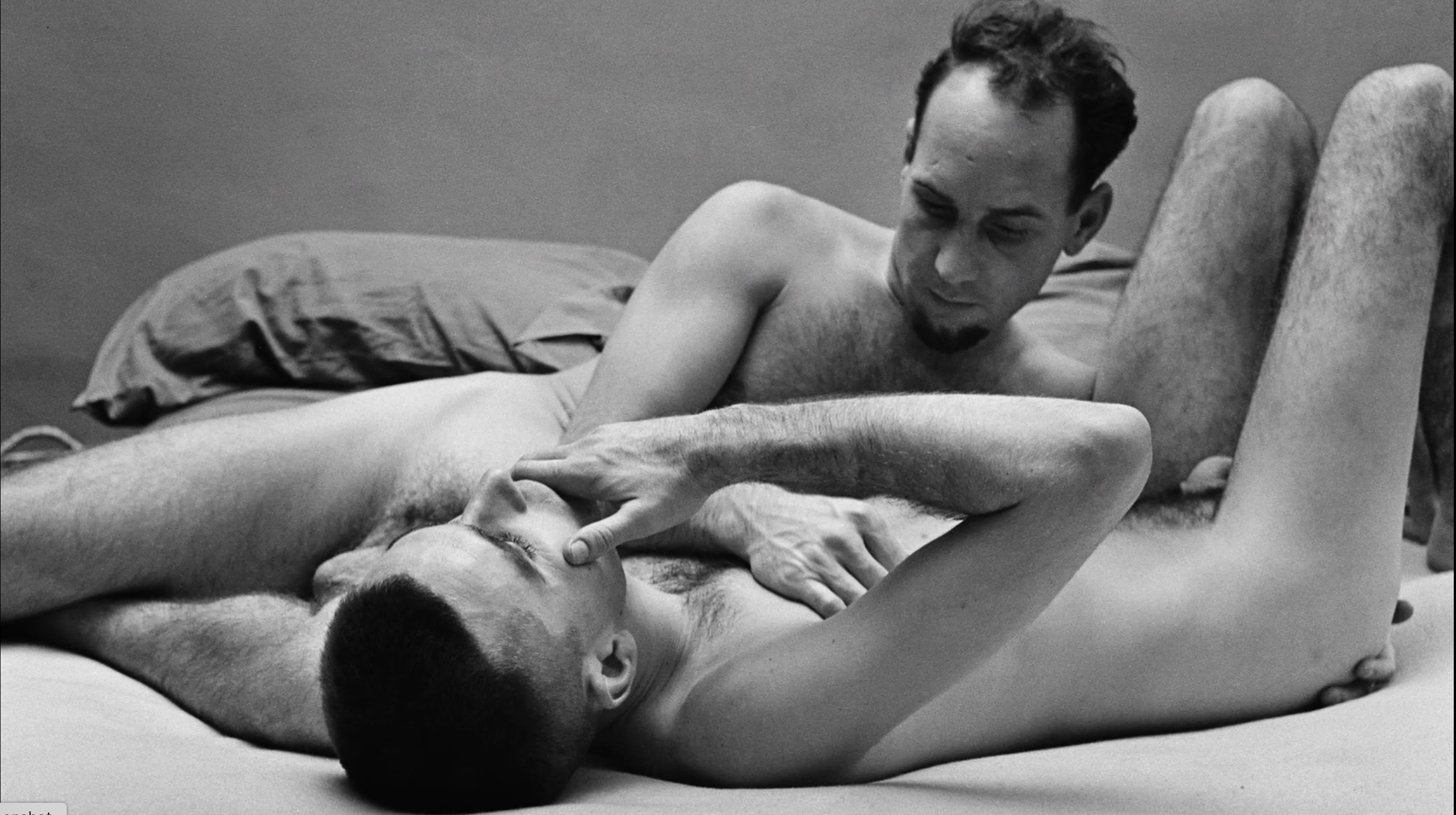
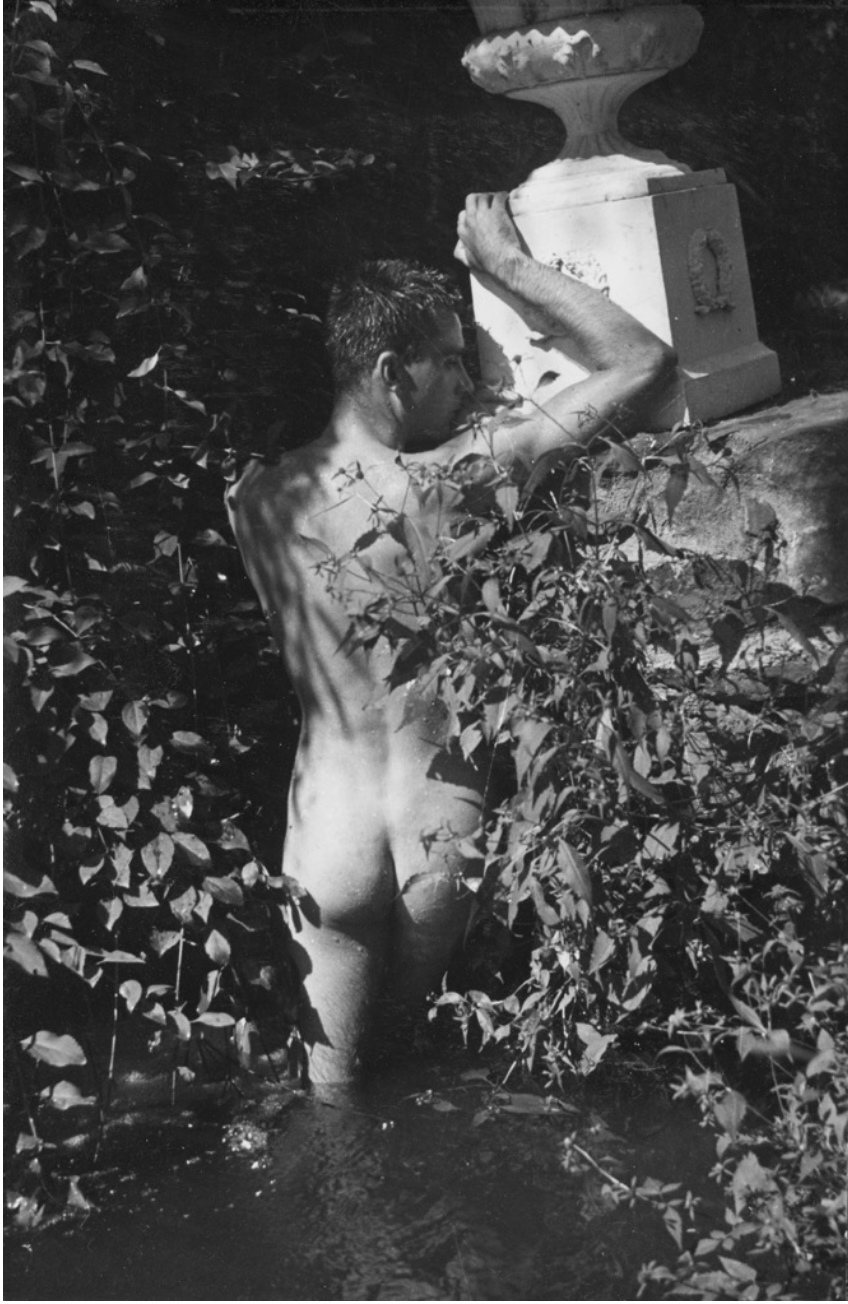
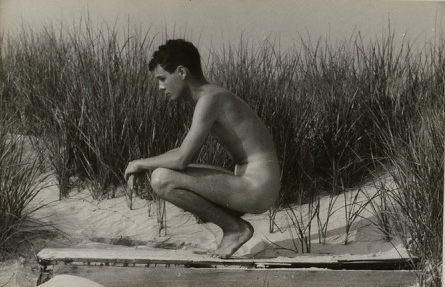
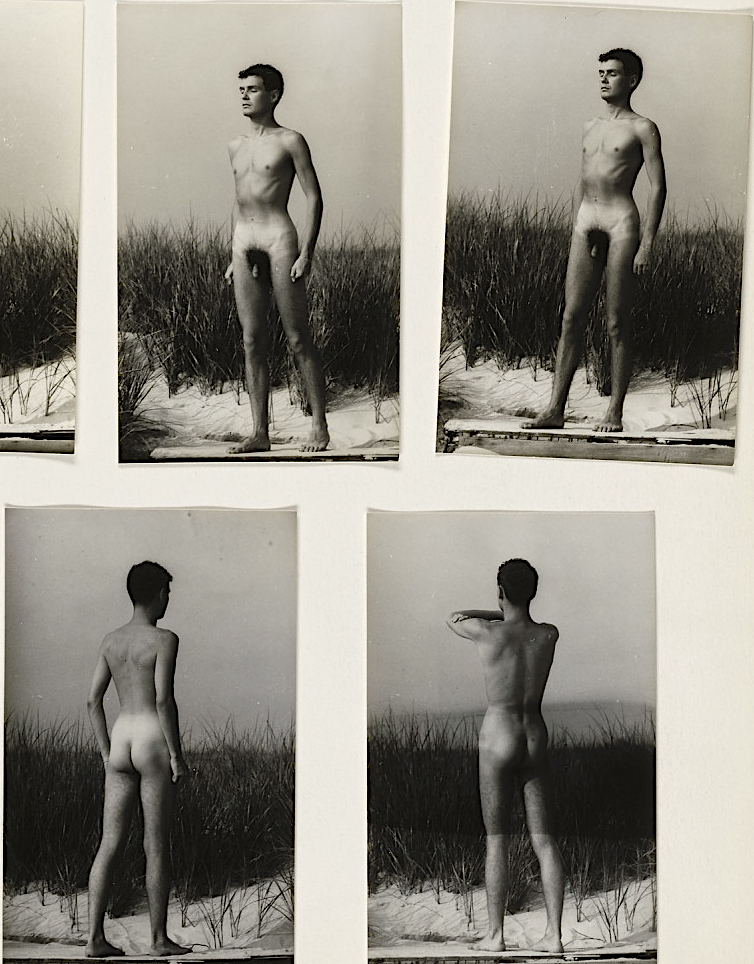
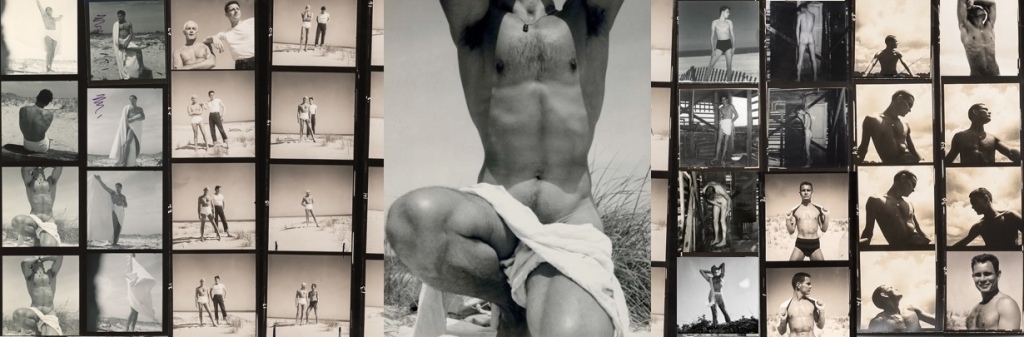
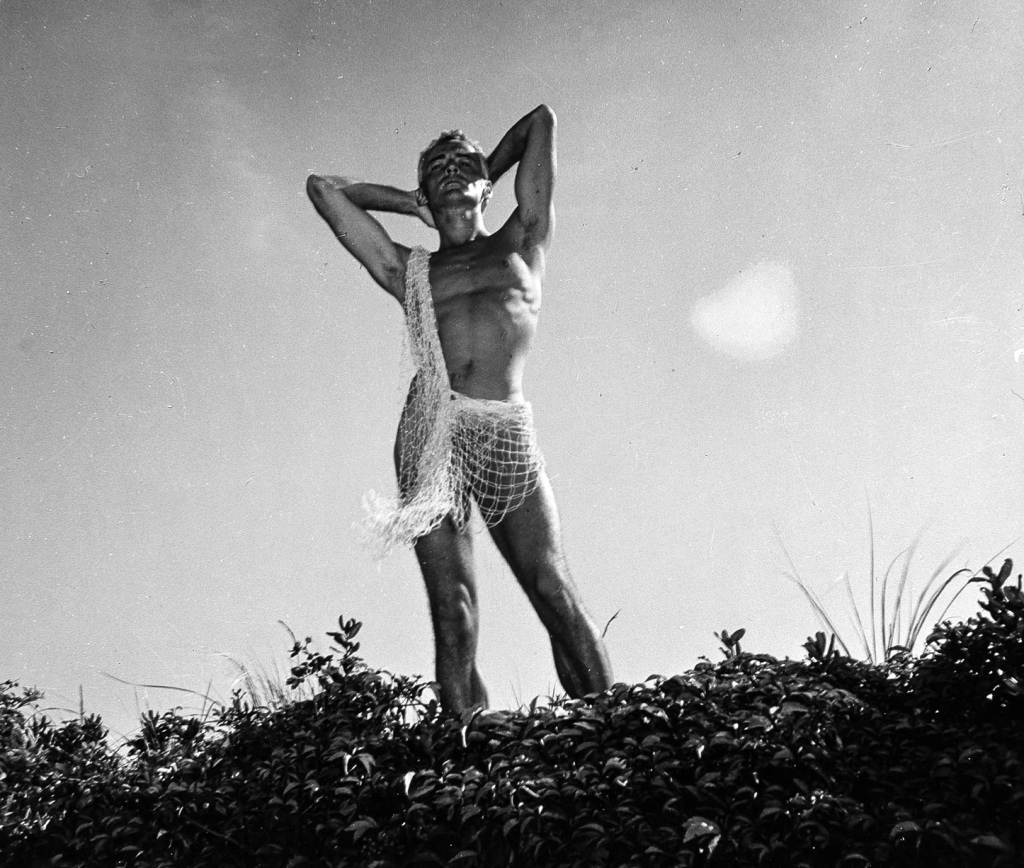
Lynes’ most iconic Fire Island image is of dancer Francisco Moncion, seen here with some alternate shots from the contact sheet. The influence on the work of Herb Ritts and Bruce Weber is evident.
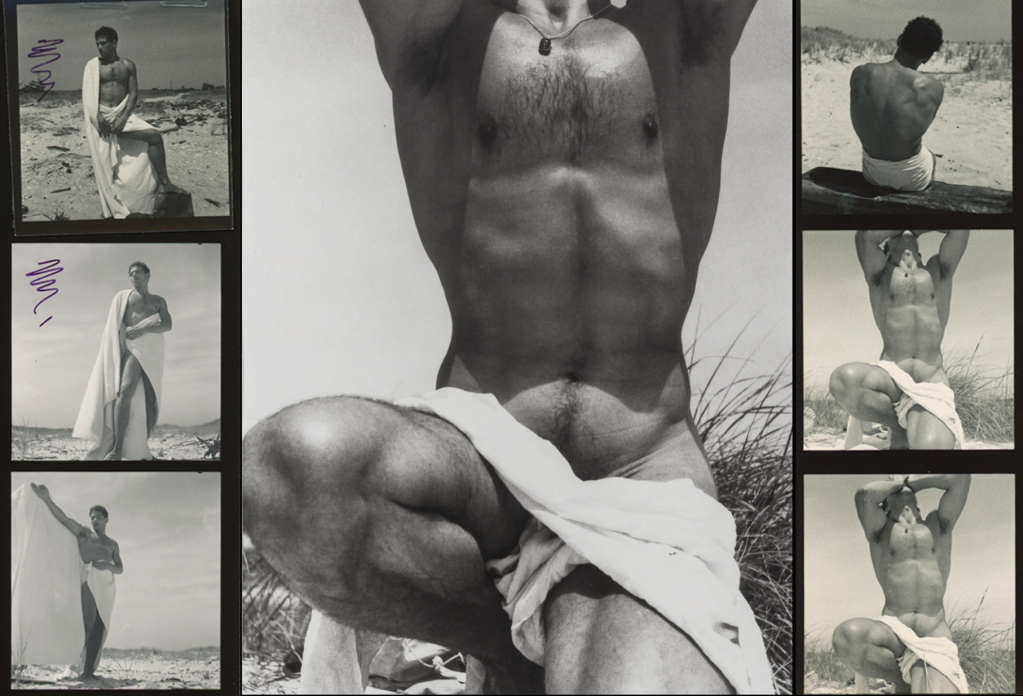
Francisco Moncion photographed by George Platt Lynes on Fire Island (ca 1948-50)

The Vogue profile of George Platt Lynes concludes that his work for the magazine may have provided him with commercial success, but that his Fire Island portraits show that success comes in many forms.

I heartily concur.

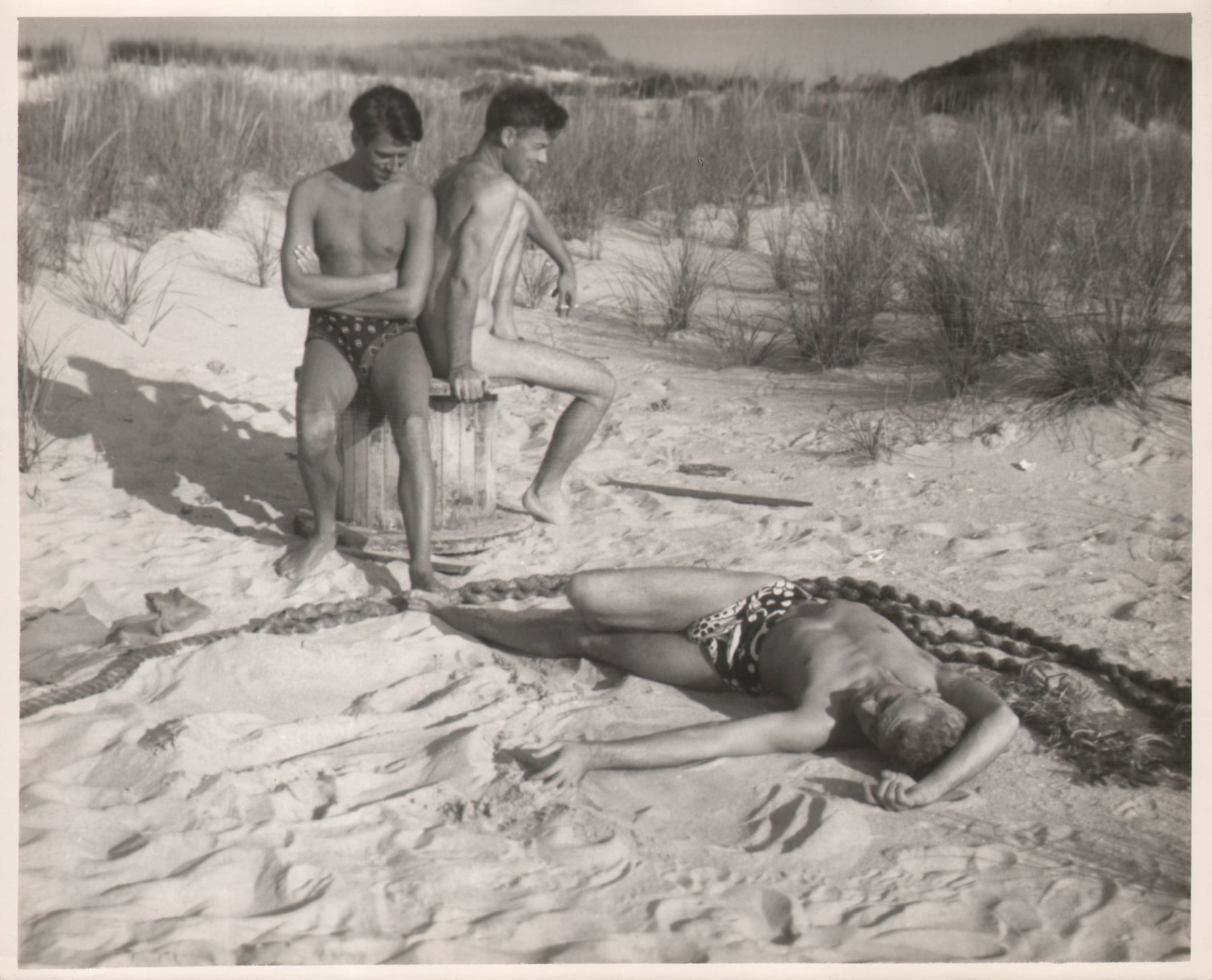
George Platt Lynes, Fire Island, PaJaMa (1941)

See Also:
Artist’s Muse: Ted Starkowski
Artist’s Muse: Forrest Thayer
Artist’s Muse: William Weslow
Artist’s Muse: The Mystery Model
Artist’s Muse: José “Pete” Martinez
Artist’s Muse: Donald Windham & Sandy Campbell
Buddy & Johnny: A Historic Photo Shoot
Provincetown PaJaMa Party
Fire Island PaJaMa Party
George Platt Lynes: In Touch Magazine (1982)

The Mysterious Midge Williams

In the April 11, 1936 edition of the New York Age newspaper, Joe Bostic wrote in his “Seeing The Show” column about show he attended at the Apollo Theatre. The headliner was an unknown: the now legendary blues singer Lead Belly. Bostic was not impressed:

The advanced publicity stated that this man had been in two jails on murder charges and that the wardens, on hearing him work out on his guitar and vocally, had set him free. Maybe they did but after hearing the man myself, I’m not so sure that musical excellence prompted [the] actions. It may have been that both they and the other inmates wanted some peace during their quiet hours. No. Lead Belly isn’t the man, if it’s music that you want.

After reviewing other aspects of the show, including the comedy of Pigmeat Markham, Bostic concludes his review with this:

Midge Williams, the sensation from the west coast, looks, acts and sings like she knew most of the answers as a personality soloist…. She’s too good for the company she’s in at the Apollo this week.

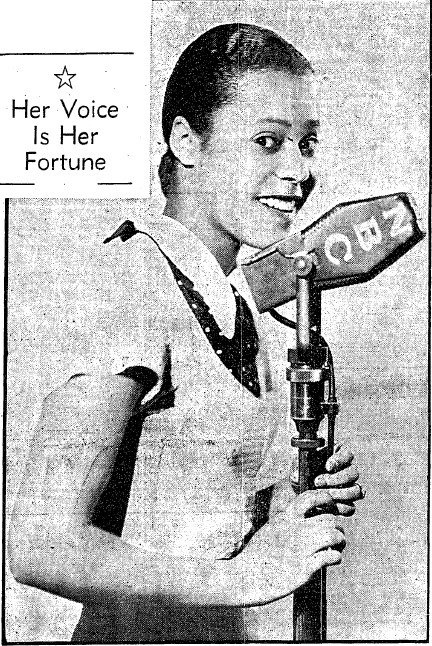
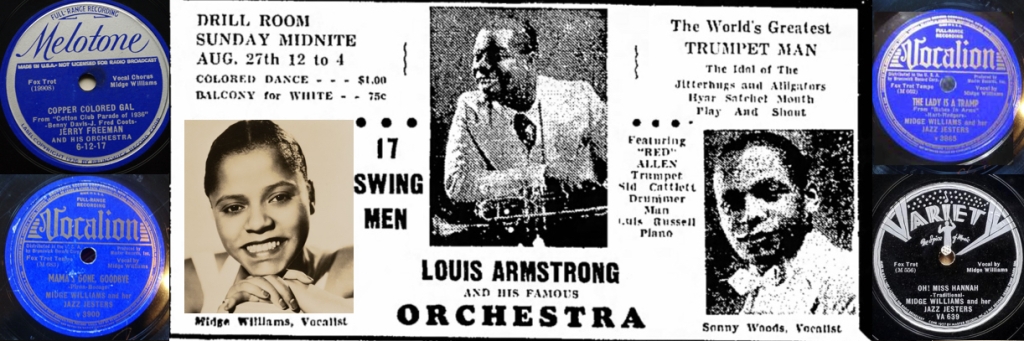
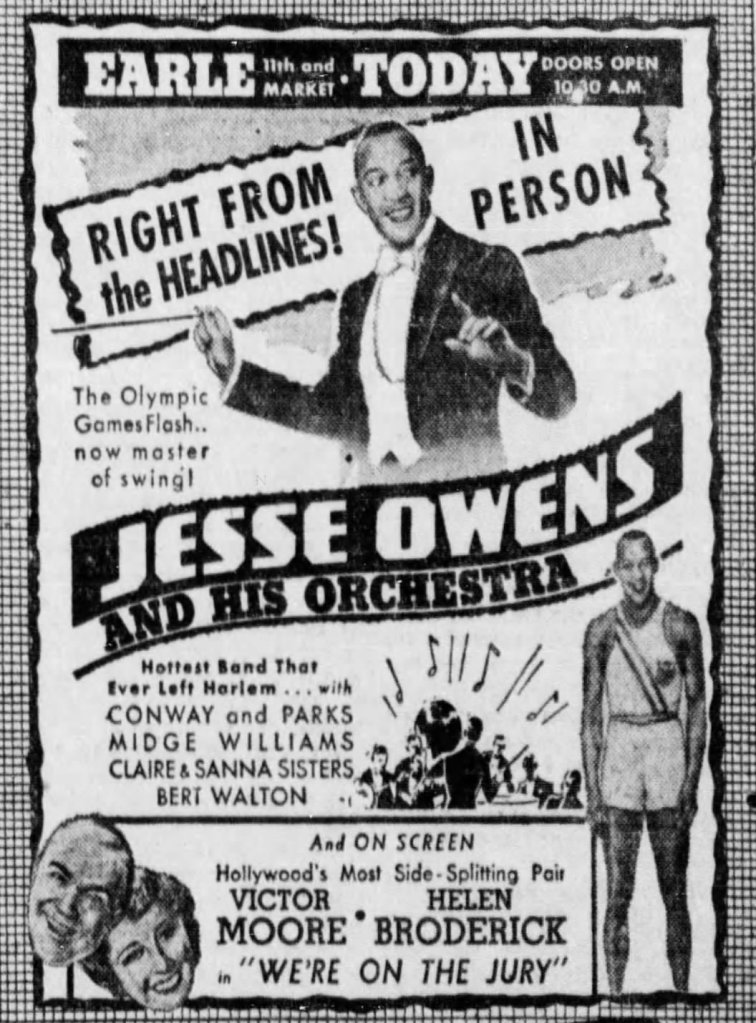
I’ve had a bit of an obsession with the mysterious Midge Williams since I first heard her recordings of familiar jazz standards… sung in both Japanese and English. In the mid 1930’s, she was the first female African American singer with a national radio show. Midge worked with Bunny Berigan, Fats Waller, Duke Ellington, and Jimmie Lunsford. When Olympian Jesse Owens had a short-lived foray as a bandleader, Midge was his singer. She toured with Louis Armstrong’s orchestra for three years, from 1938 until 1941, when she ended up hospitalized in Detroit. And then… nothing. She died of tuberculosis in 1952 at age 36.

That’s the story in a nutshell, according to the liner notes of her CD compilations and the few websites that mention her. Several years ago, I set out to fill in the blanks on this forgotten artist.

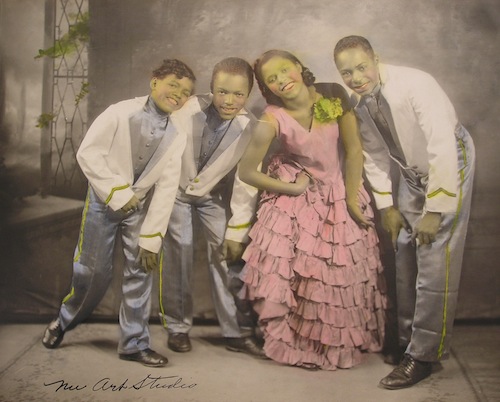
Midge started out in a family group with her three brothers. They were The Williams Quartette, later The Williams Four, performing in clubs and churches in the San Francisco area. They later joined the Fanchon and Marco vaudeville circuit and performed up and down the West Coast during summer breaks from school.

A musician / arranger named Roger Segure took them under his wing and became their manager, securing work on local radio and then traveling with the group to China and Japan. The opportunity to hear swing jazz vocals sung live was heralded as a major event in the history of Japanese jazz. During their stay in Japan, Midge recorded several sides, singing in English and Japanese, accompanied by the Columbia Jazz Band:

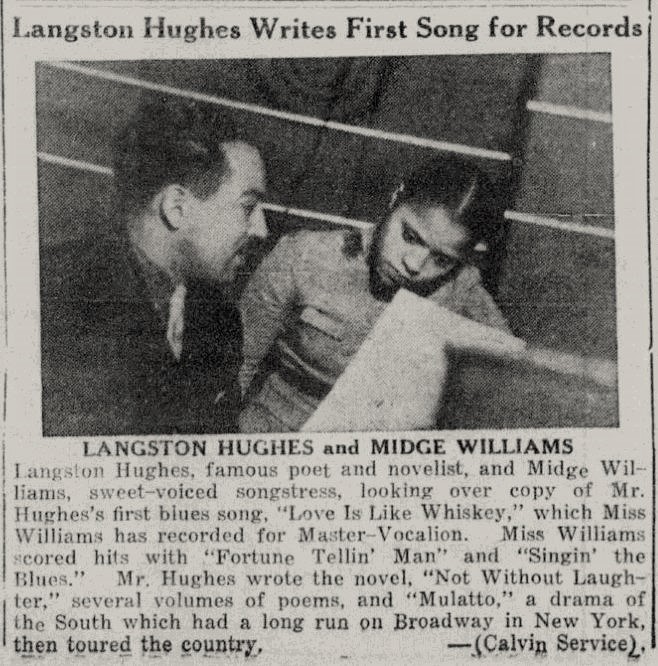
Midge crossed paths with writer Langston Hughes as he traveled through the Far East. Back in New York a few years later, Hughes would write songs for Midge. She recorded his “Love Is Like Whiskey” in February, 1938. Another song, “Night Time,” with lyrics by Hughes and music from her manager Roger Segure, was the theme song to her radio program. Unfortunately, no recording of the song exists.

The New York Age, April 16, 1938
California Eagle, (8/17/39)

Attempts by gossip columnists to stir rumors of a romance between the two proved unsuccessful.

Midge was just 21 years old when she began hosting her own radio show on NBC – a twice-weekly 15-minute program. She recorded several dozen sides while also making club appearances. A prominent figure in Harlem society at the time, the African American newspapers covered her every move… until her alcoholism resulted in a dismissal from the Louis Armstrong Orchestra.

Baltimore Afro-American (4/30/38)

Her last studio recording was with Lil Hardin Armstrong (Louis’ ex-wife) and her Dixielanders in 1940:

In April of 1946, Midge made an appearance on Jack Webb’s radio show. She was in fine voice on a cover of “Cow Cow Boogie”:

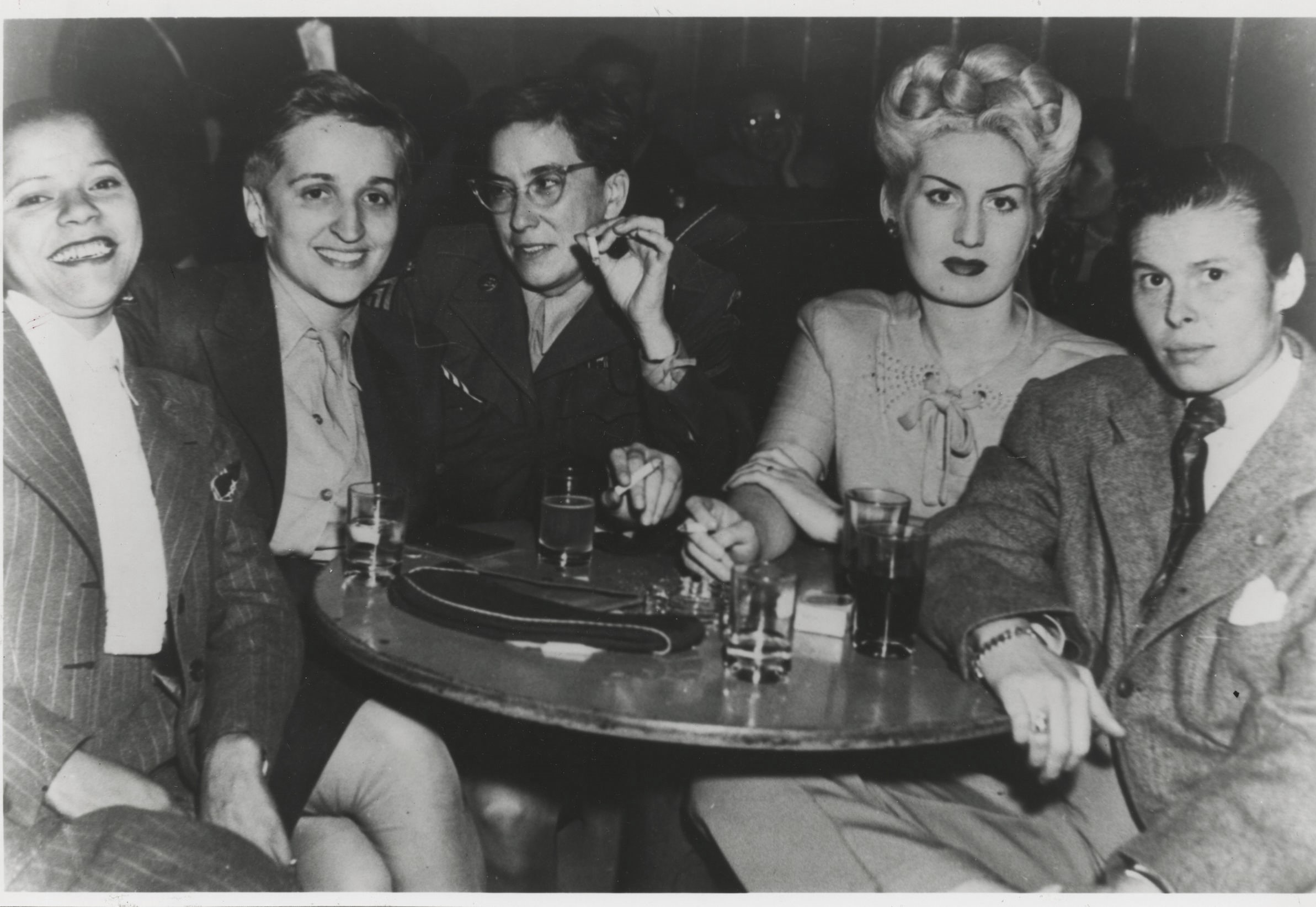
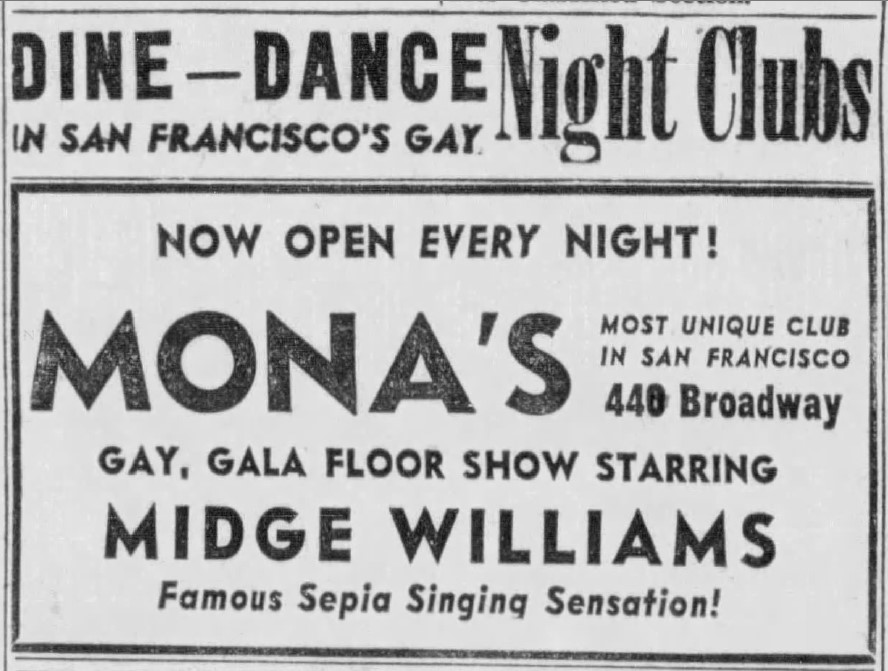
Shortly after the Jack Webb radio performance, Midge settled into a six month engagement at Mona’s 440 Club, the legendary lesbian bar in San Francisco. It is from this period that we have a photo of Midge, an image that has been widely circulated. One of the most familiar photos depicting lesbian nightlife of the 1940’s, it was also used to promote the 1993 documentary Last Call At Maud’s.

Midge Williams (left) with fellow Mona’s singer Kay Scott and friends (ca 1946)

Tune in to a 35 minute overview of the life and music of Midge Williams on 60 Degrees with Brian Ferrari.

See also:
Neeka Shaw: The Forgotten Showgirl
Madame Spivy on the Good Time Sallies podcast
Madame Spivy: Movies & Television
Madame Spivy’s Alley Cat
Madame Spivy’s Tarantella
The Christmas In Connecticut Delivery Woman
Etta James: Advertising Zombie
No More Chicken Pepperoni: RIP Yvonne Wilder
Artist’s Muse: José “Pete” Martinez


Artist’s Muse: Wilbur Pippin

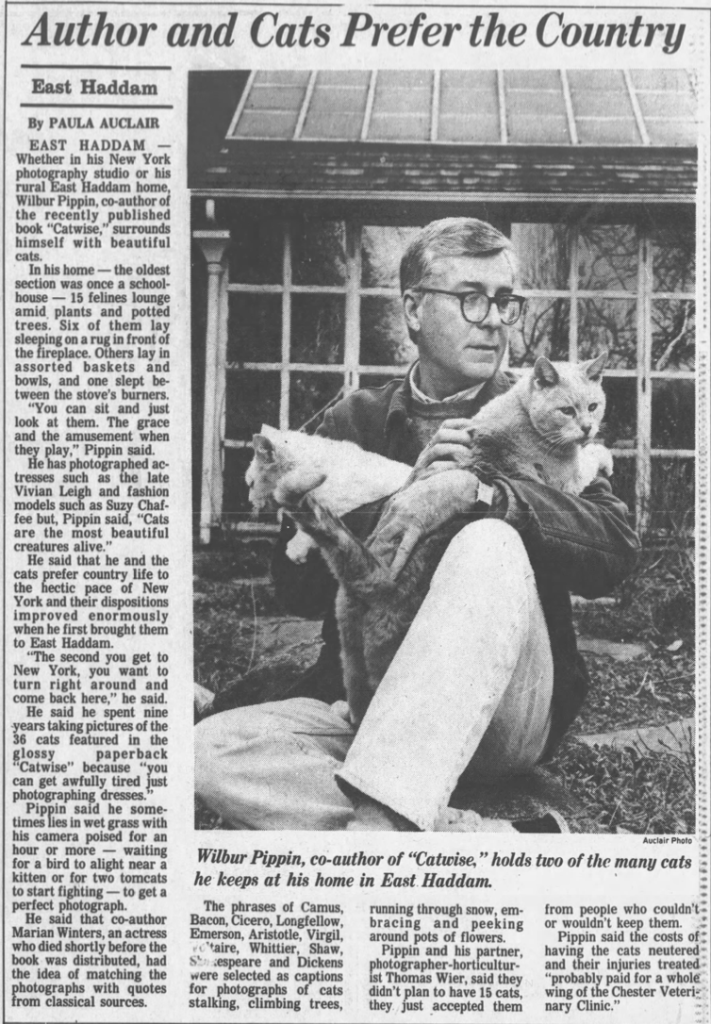
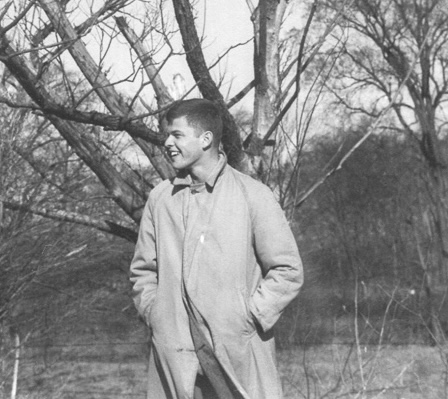
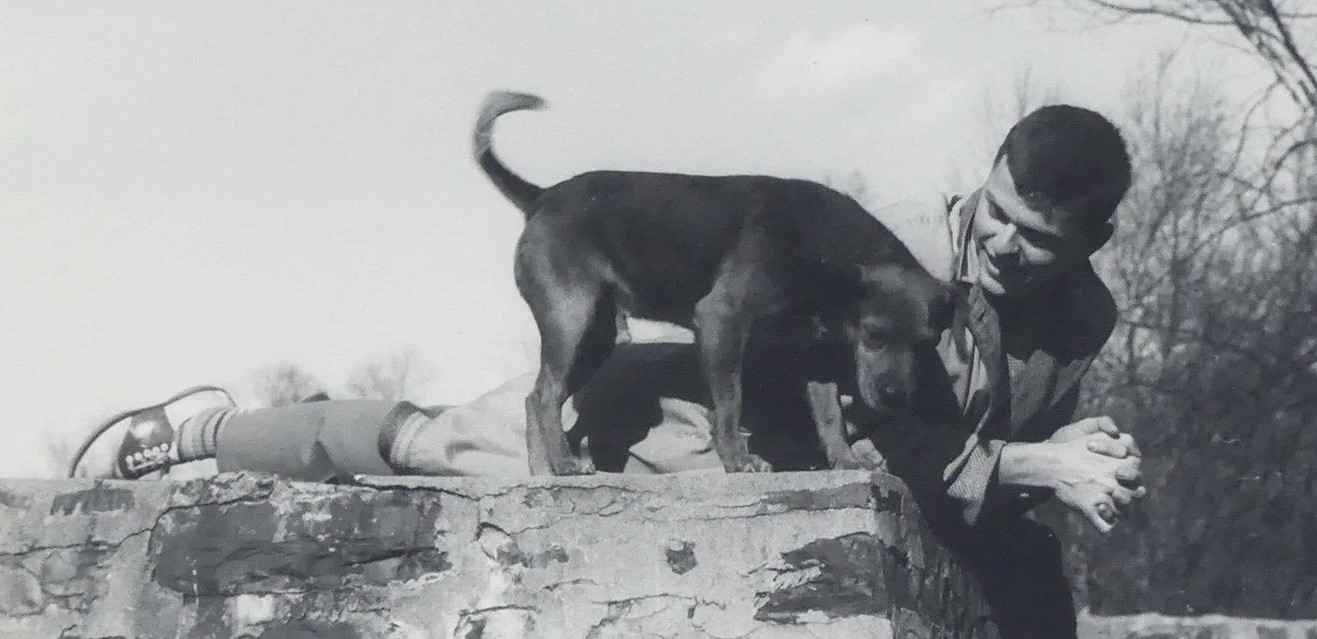
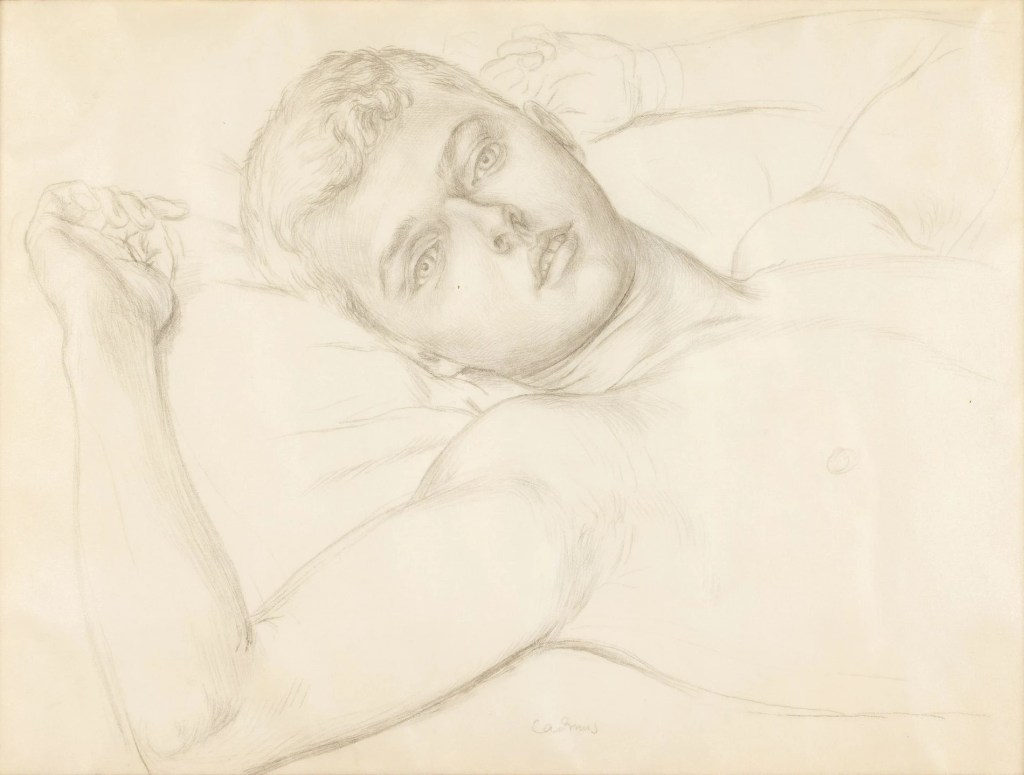
The latest subject in our Artist’s Muse series is Wilbur “Billy” Pippin, a friend, lover and confidant to a circle of artists that included George Platt Lynes, George Tooker, Paul Cadmus, Jared & Margaret French (aka the PaJaMa collective).

Wilbur Thomas Pippin was born on May 25, 1924 in Macon, Georgia. An only child, his father was employed by Railway Express while his mother worked at a dress shop. After the couple separated, Wilbur and his mother moved down the road to his maternal grandmothers house. He attended Lanier High School for Boys, where he was on the honor roll and received recognition for 5 years of perfect attendance. Upon graduation in June of 1942, he enlisted in the Army and served through World War II.

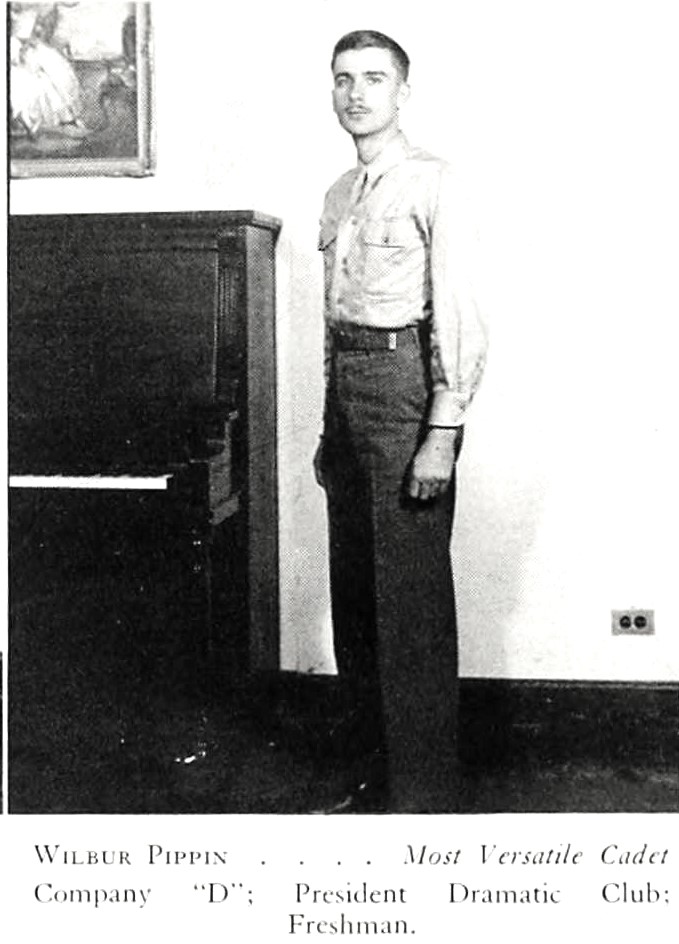
Back in Georgia for the 1946-47 school year, Billy enrolled as a freshman at North Georgia College in Dahlonega, three hours north of Macon. He became president of the drama club and was also voted “Most Versatile Cadet”. His academic career seems to have ended after that successful first year, as life took an unexpected turn in the form of a fellow named Fred Melton.

Sgt. Pippin – the Most Versatile Cadet at North Georgia College (1947)

Fred “Butch” Melton (1939)

We previously mentioned Fred “Butch” Melton in a profile of Artist’s Muse/writer Donald Windham. Butch was an Atlanta artist/photographer who moved to New York in 1939 with Windham, his boyfriend at the time. After the two split in 1942, Melton abruptly married Sarah “Sally” Marshall. The newlyweds settled in Greenwich Village and had two sons in quick succession. The growing family then moved back to Sally’s hometown of Macon, Georgia to live on land provided by her parents.

In the New York Public Library blog post Finding Frederick Melton, Stephen Bowie writes, “Melton dove into small-town Southern life with gusto. He built a modern house and workshop on the property, painted, and worked on the newspaper and in the local theater. But the experiment in conformity didn’t last.”

Whether Butch and Billy met doing local theatre or through some other social event is speculative. Suffice to say that Macon isn’t a very large town. In any case, the two found each other, and sparks flew. Billy did not return to college. In early 1948, Butch left his young family in Macon to move back to New York with Billy.

The couple moved into a cold-water tenement flat at 446 West 55th street in Hell’s Kitchen. Butch introduced Billy to the circle of gay artists that he had left behind 5 years prior. The striking young man soon began to turn up in their work.

Bernard Perlin & Wilbur Pippin photographed by Fred Melton in Cherry Grove, Fire Island (1948)

Wilbur Pippin photographed on Fire Island with George Tooker and Margaret French

Ballet impresario Lincoln Kirstein was apparently so fond of the couple that he tasked them with running Pippin Press, a silkscreen company he bankrolled and named after Billy. The original intent was to make collectible prints of ballet designs and the work of artists like Pavel Tchelitchev. Ultimately Pippin Press found more success producing custom silkscreen wallpaper.

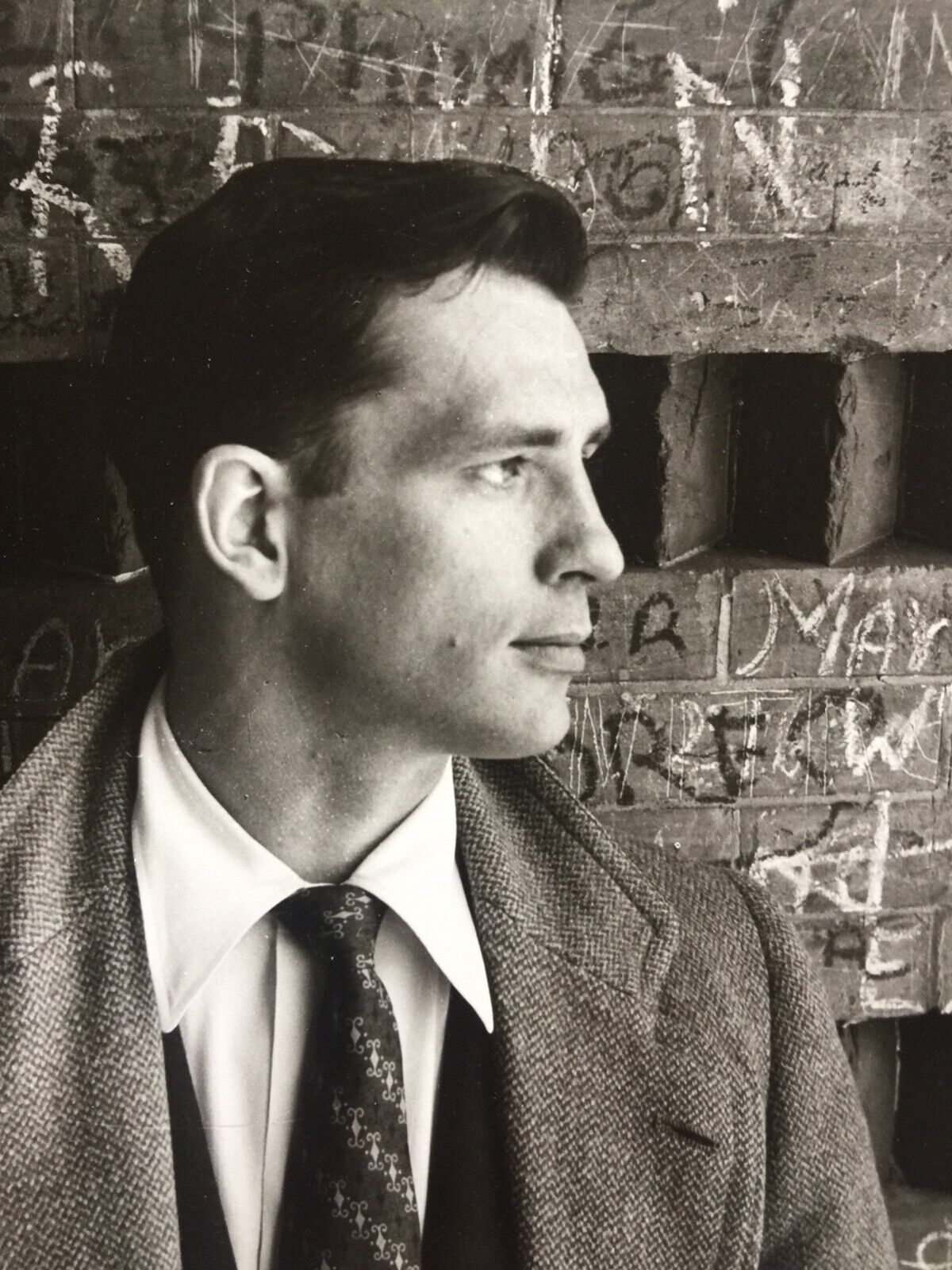
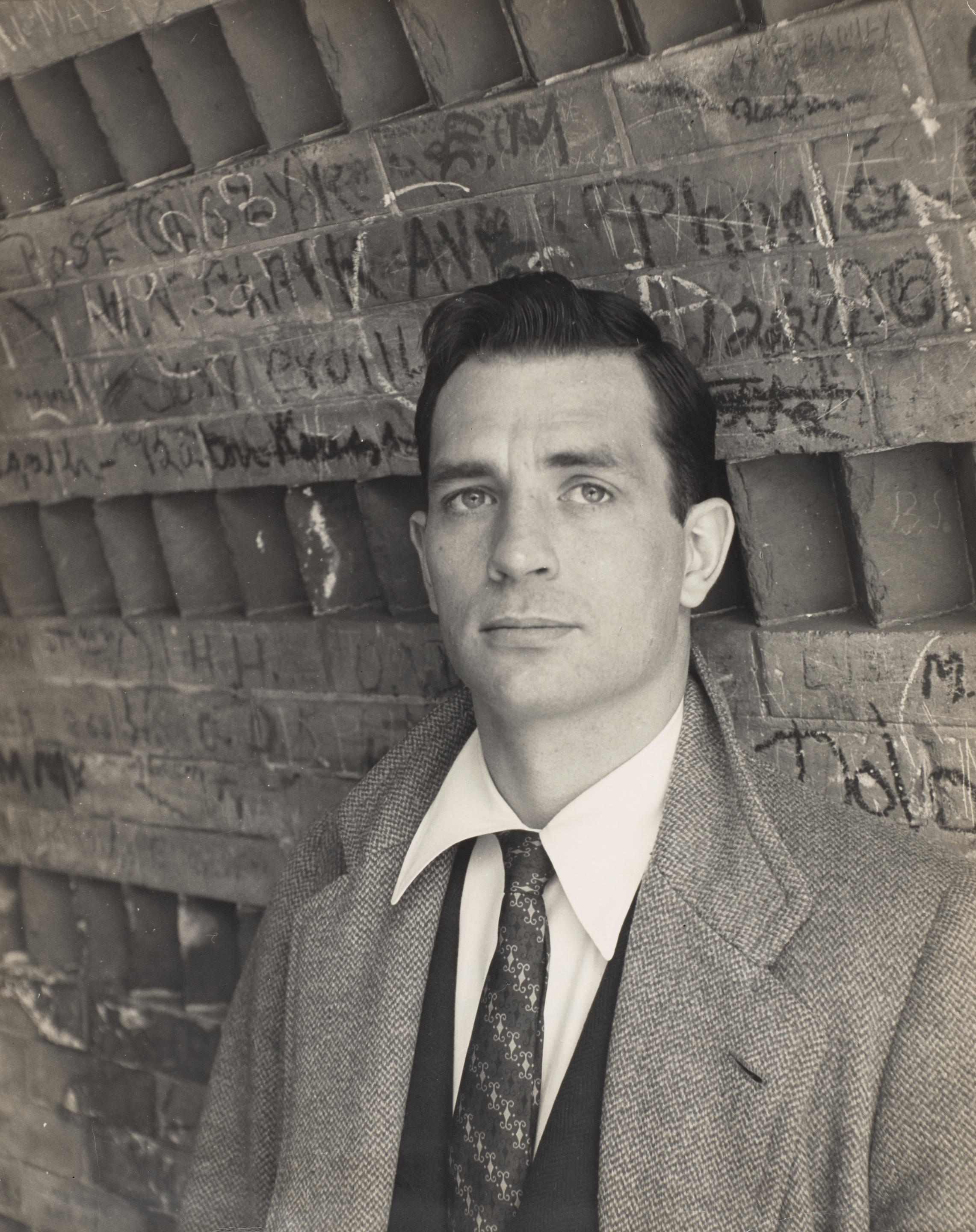
Billy also began exploring photography alongside Butch, forming the “Melton-Pippin Photography” imprint for both of their work. Although he later enjoyed a long career as a fashion photographer, today Billy’s most notable photographs are his 1950 portraits of Jack Kerouac. It was one of these photos that was Kerouac’s choice for the original cover sketch of On The Road.

Jack Kerouac photographed by Wilbur Pippin (1950)

In early 1951, Butch and Billy had a new neighbor when their friend George Platt Lynes moved into the building. Lynes’ relationship with Chuck Howard had recently ended, and he was facing increasing financial woes. Lynes was initially pleased to have the couple as neighbors – Melton helped him with remodeling and silk-screening wallpaper for the living room. But he quickly grew annoyed by the couple “forever borrowing that old cup of sugar…” he wrote to a friend, “… or in their case it was more likely to be a bottle of gin.”

Wilbur Pippin & Chuck Howard, (ca. 1950)

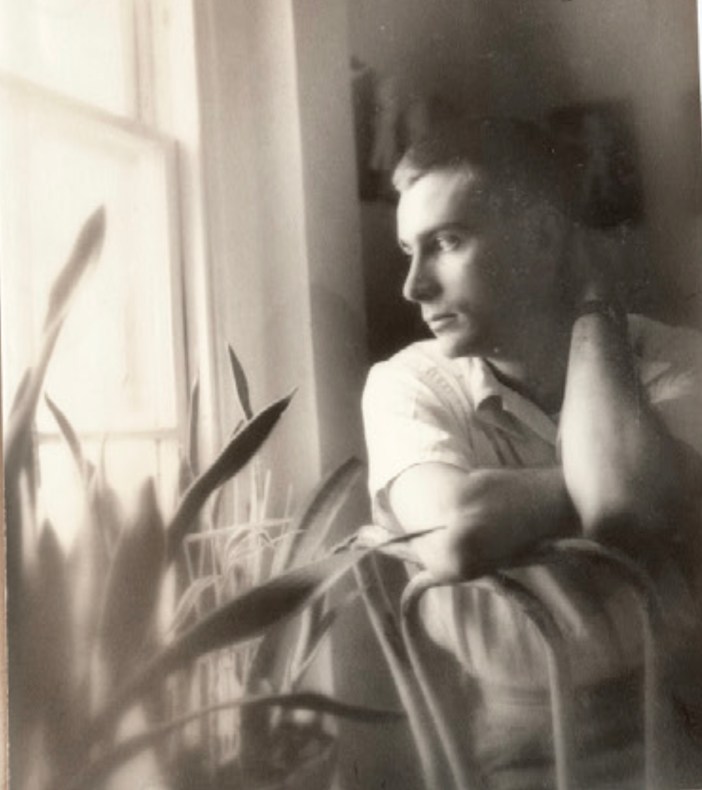
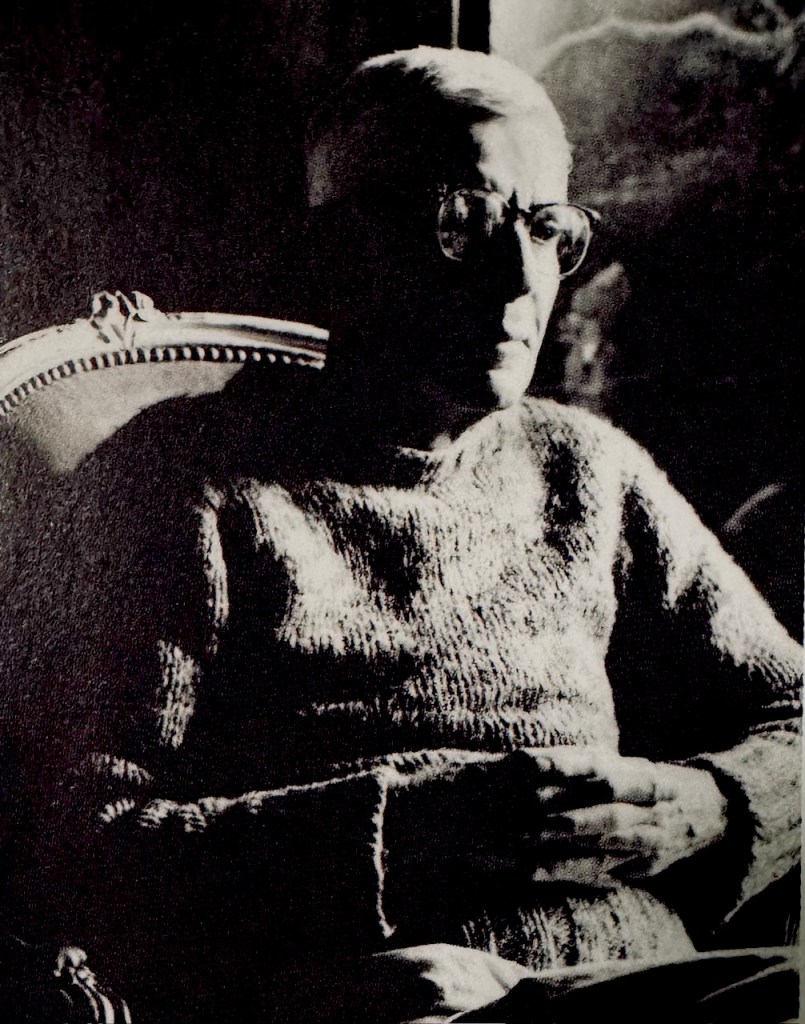
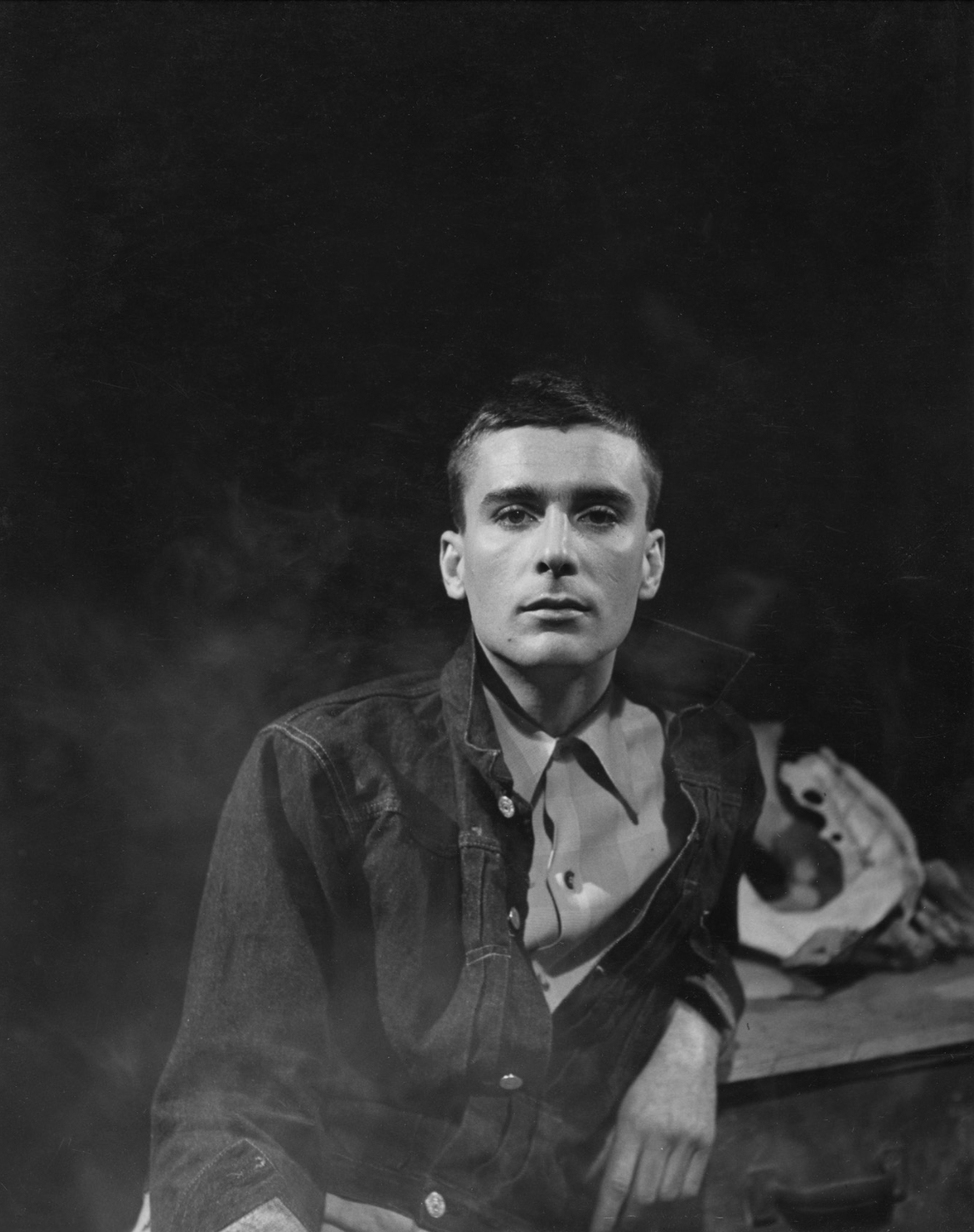
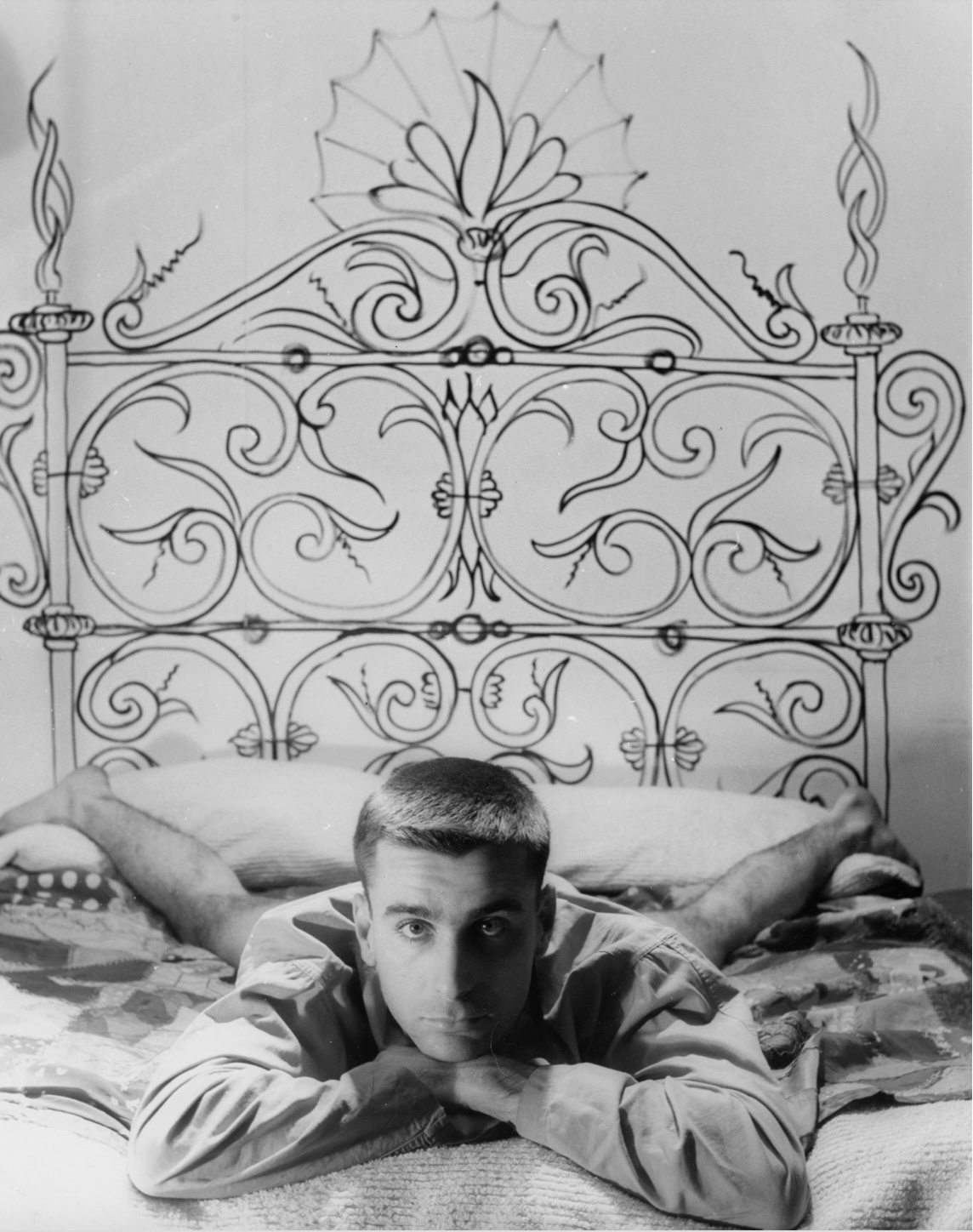
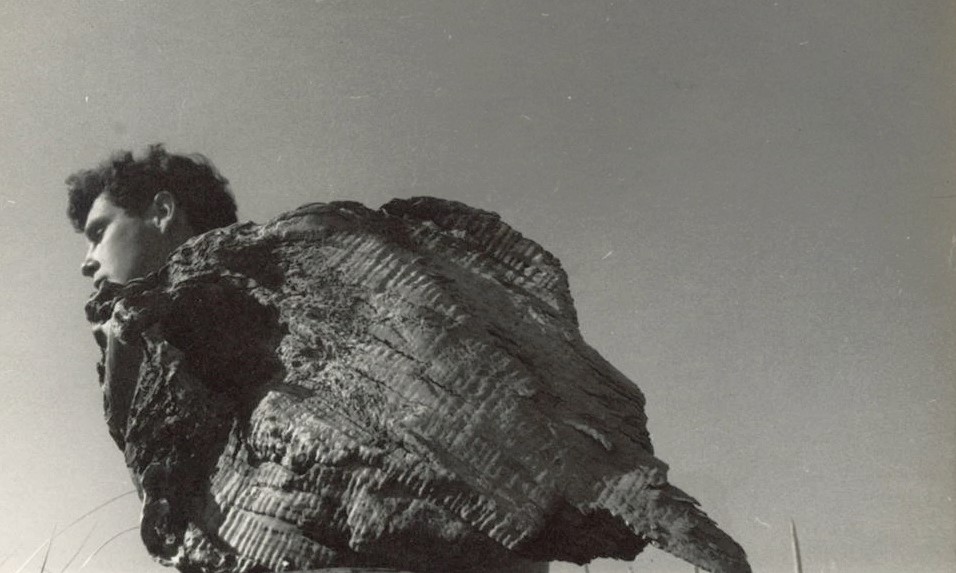
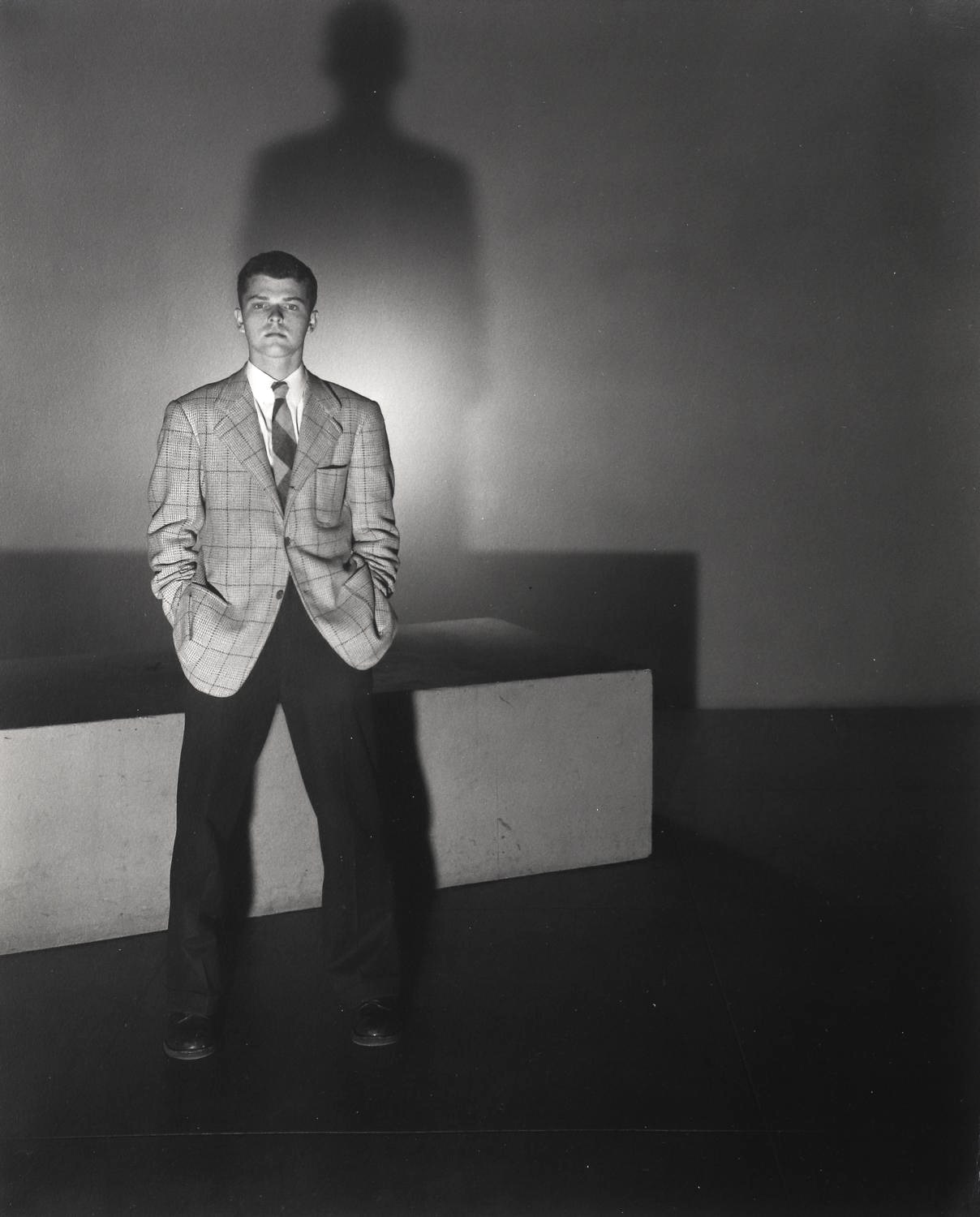
Wilbur Pippin photographed by George Platt Lynes

Besides the thirsty neighbors, the far-west proximity and sketchy neighborhood did not sit well with Lynes. By September, he had fled back to the comfort of the East side, although his finances could not support it.

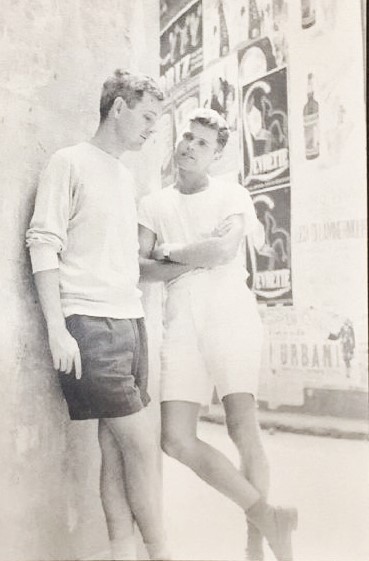
Fred “Butch” Melton & Wilbur “Billy” Pippin photographed by George Platt Lynes (ca 1951)

The couple remained friends with Lynes through the rest of his life, despite some difficult times. When Lynes fell out of favor with Lincoln Kirstein, Melton was named as his replacement as the official photographer for the New York City Ballet. In 1955 when Lynes was hospitalized with terminal lung cancer, Pippin was one of a small group of friends tasked by Russell Lynes to dismantle and pack up his brother’s apartment. George Platt Lynes died in December of that year.

With Pippin Press winding down, Billy went to work as publicity director for the New York City Ballet as well as press representative of the Broadway show Protective Custody, which opened and closed in late December, 1956.

By the end of the 1950’s, Butch and Billy had gone their separate ways. As with so many others, Fred Melton was dropped by the mercurial Lincoln Kirstein and had been replaced as photographer for the New York Ballet, just as he had replaced Lynes years before.

In 1961, Melton departed New York once again, leaving his collection of ballet negatives to the New York Public Library, intent on spending his last days drinking on the beaches of Puerto Rico.

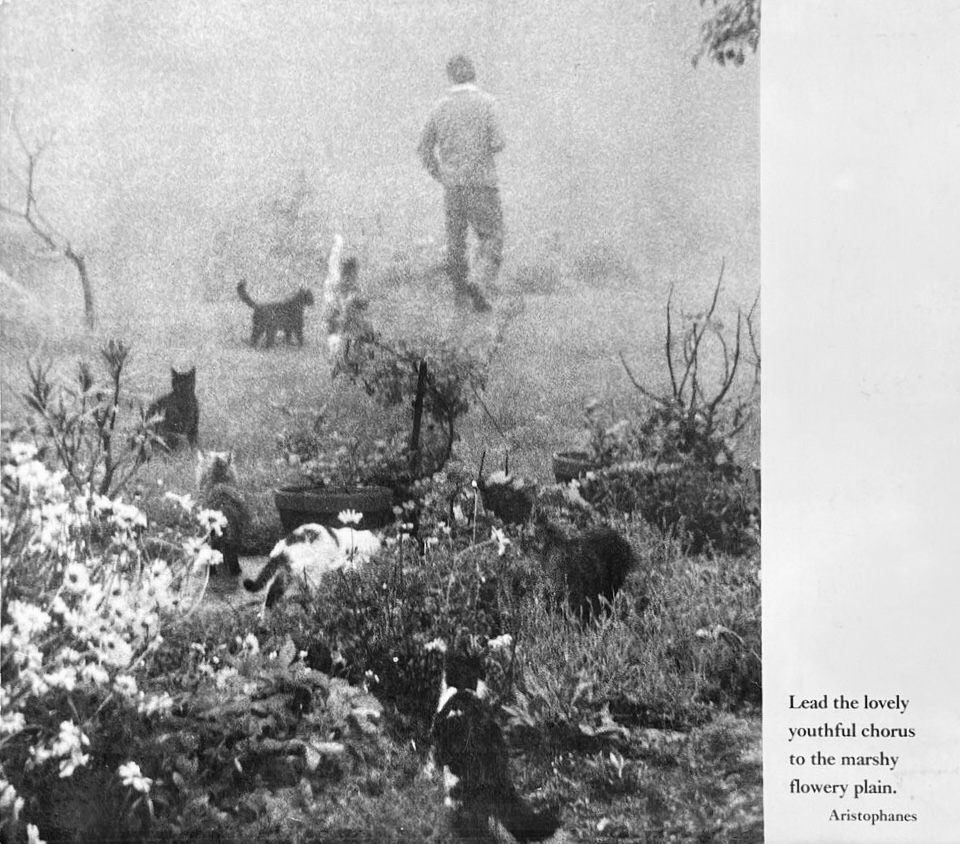
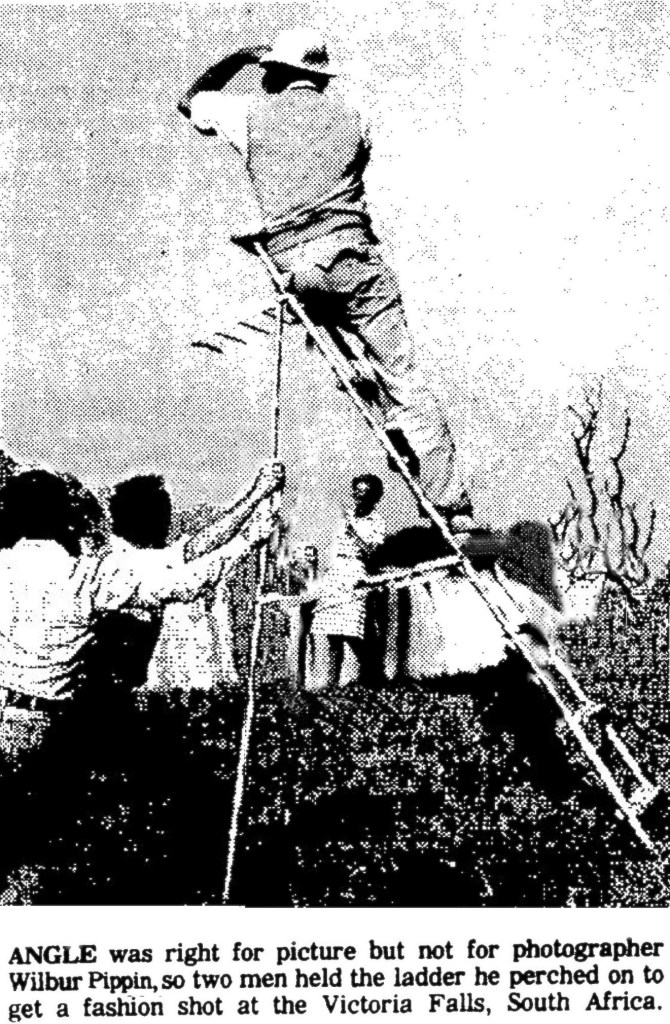
Meanwhile, Billy was working steadily as a fashion and celebrity photographer for the New York Times. He traveled the world through the following decades as a freelance fashion photographer for Vogue and other outlets. In the late 1960’s, Pippin coupled with fellow photographer, Thomas Wier, Jr. For 30 years, the duo ran Pippin & Wier Photography in New York City. Their country home was an old converted schoolhouse in East Haddam, CT. They eventually amassed a menagerie of 15 cats.

The Commercial Appeal, Memphis, TN 10/29/64

Daily Messenger, Canandaigua, NY (12/12/1974)

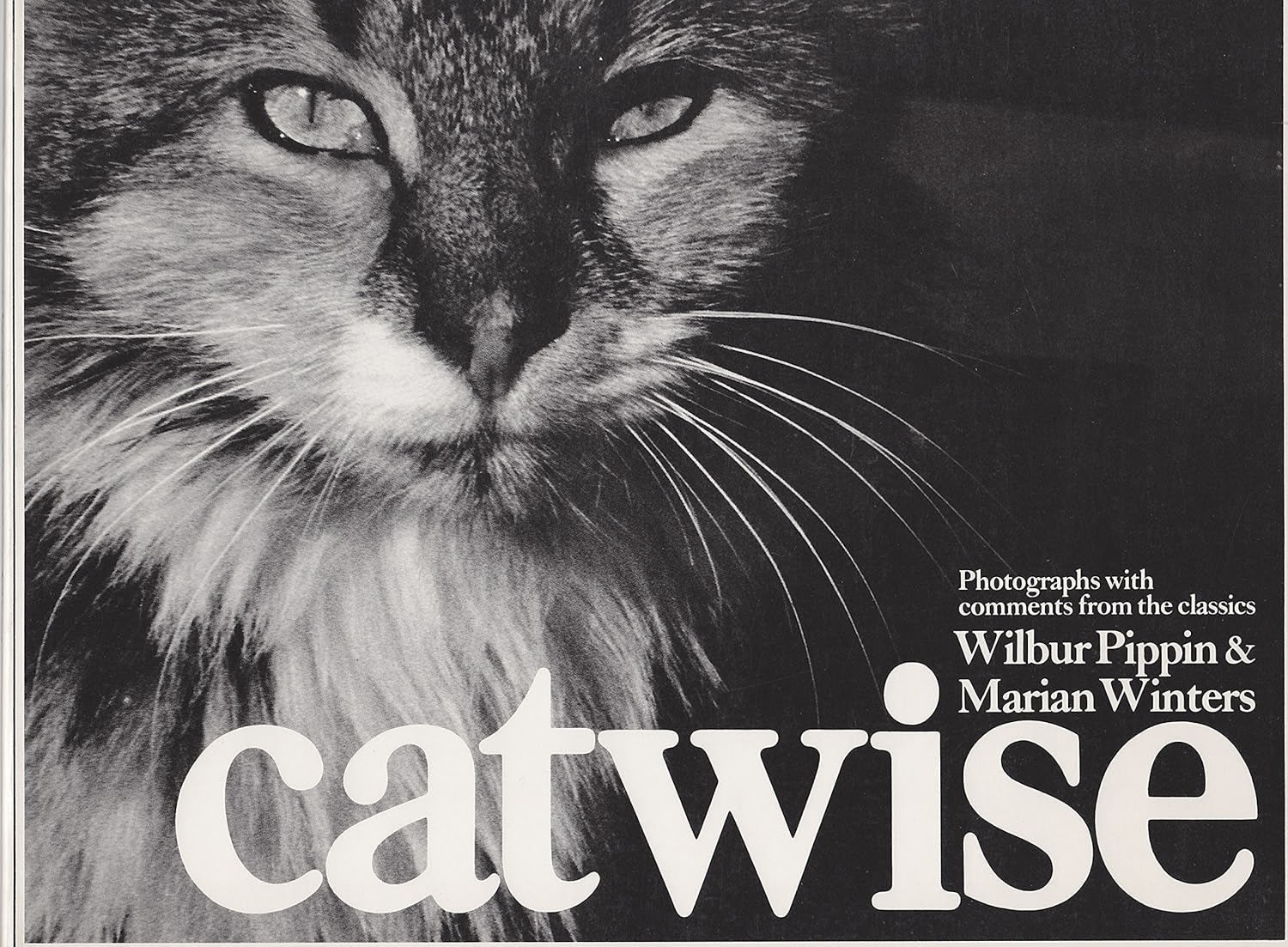
In 1979, Pippin co-authored the book Catwise with actress Marian Winters. This was a collection of photographs Pippin had taken of his feline family, with classical quotes selected by Winters. Sadly, Winters succumbed to cancer just before the book’s publication.

Hartford Courant, Connecticut (12/14/79)

Pippin and Wier eventually retired to their East Haddam house. Thomas Wier Jr. died on 9/12/2000, age 70. Wilbur Pippin died on 4/30/2003 at his home, age 78.

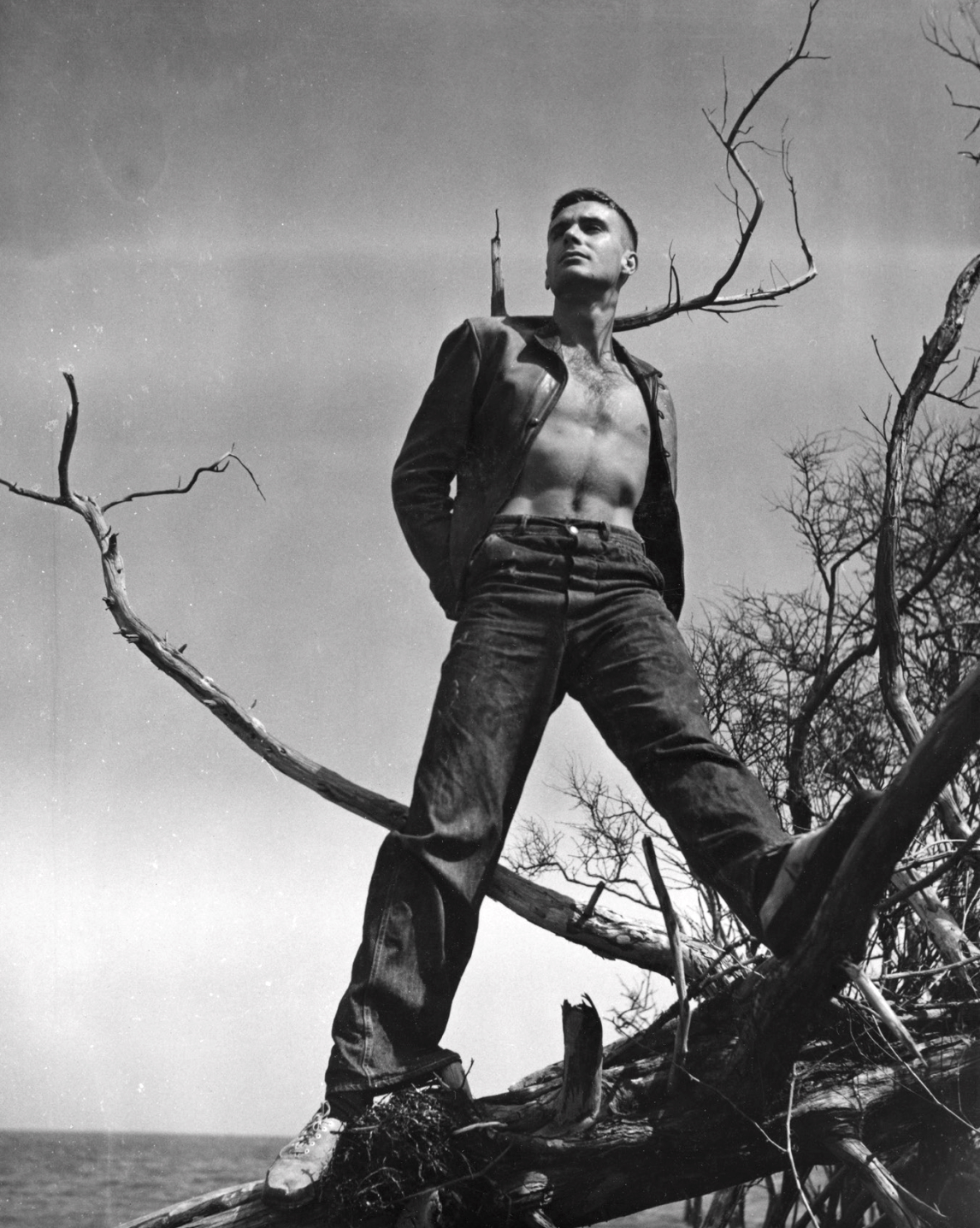
In 2024, the A. Therian gallery in Cairo, New York featured Billy, an exhibition of rare and previously unseen photos of Wilbur Pippin taken by George Platt Lynes, the PaJaMa collective, and Fred Melton. This collection of photographs shed light upon the striking young man from Macon, Georgia who became a friend, lover and confidant to his great artistic contemporaries.

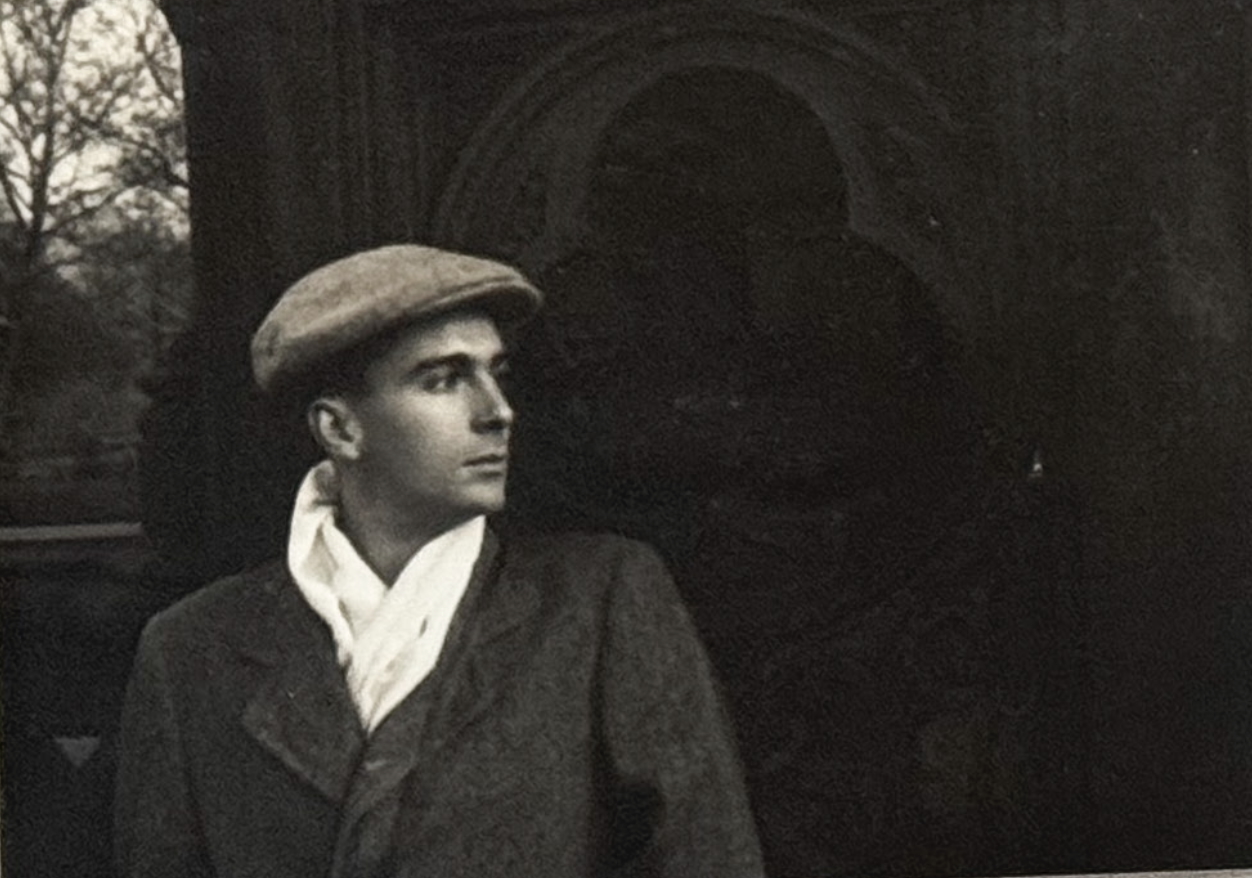
Wilbur Pippin, Egremont, Massachusettes (ca. 1948)

See Also:
Artist’s Muse: Chuck Howard
Artist’s Muse: Randy Jack
Artist’s Muse: Ted Starkowski
Artist’s Muse: The Mystery Model
Artist’s Muse: José “Pete” Martinez
Artist’s Muse: Forrest Thayer
Artist’s Muse: William Weslow
Artist’s Muse: Donald Windham & Sandy Campbell
Buddy & Johnny: A Historic Photo Shoot
Provincetown PaJaMa Party
Fire Island PaJaMa Party
Fire Island Muses of George Platt Lynes & The PaJaMa Collective
George Platt Lynes: In Touch Magazine (1982)
Revisiting George Platt Lynes’ Fire Island Muses

Artist’s Muse: Donald Windham & Sandy Campbell

I recently wrote a piece for the Fire Island Pines Historical Preservation Society titled “The Fire Island Muses of George Platt Lynes & The PaJaMa Collective.” It focuses on the subjects of the artwork they created during their time on Fire Island. This is an expansion on two of those profiled: Donald Windham and Sandy Campbell.

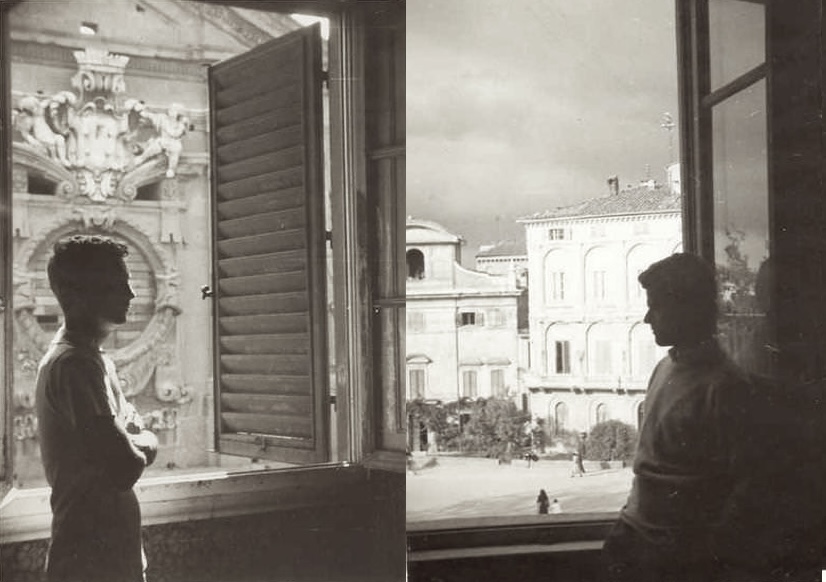
Windham & Campbell in Italy, ca 1950

Fred “Butch” Melton (1939)

In 1939, 19-year-old Donald Windham moved to New York from Atlanta with his boyfriend, graphic artist/photographer Fred “Butch” Melton. They were welcomed into the New York circle of artistic types that included George Platt Lynes, Tennessee Williams, Paul Cadmus, Jared and Margaret French.

Donald Windham & Fred “Butch” Melton photographed by Jared French at his 5 St. Luke’s Place studio (ca 1941)

In 1942, Butch ended his relationship with Windham, opting for a more conventional lifestyle by getting married, fathering two sons and moving to Macon, Georgia. This didn’t last long: Butch met and fell in love with local artist Wilbur “Billy” Pippin. In early 1948, he left his young family and returned to New York with Billy. But that’s another story…

Donald Windham with Jared French & Paul Cadmus on Fire Island, ca 1940

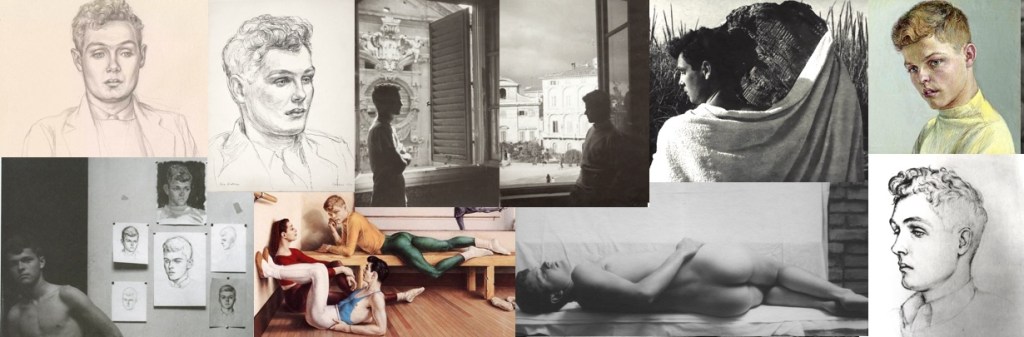
In 1942, the newly single Windham supported himself by working at Lincoln Kirstein’s Dance Index magazine. He lived in the Cadmus/French studios at 5 St. Luke’s Place while they spent time at their rental on Fire Island. He would frequently visit there as well. The lithe young man with the striking profile became the subject of many PaJaMa photos and sketches.

Windham posed as a reference for Jared French’s Homesickness (1942)

Paul Cadmus met 21-year-old Princeton theater student Sandy Campbell at a party in 1943. The young man asked the artist to do a pencil portrait that he could give to his mother, as he suspected that he would soon be drafted. Cadmus was instantly smitten with the handsome young man. He went on to draw, paint and photograph him frequently throughout the following year.

Campbell is the central figure of Cadmus’s 1944 painting Reflection. Donald Windham was the original model for the figure laying on the floor. Before the painting was completed, however, the two models fell in love. Cadmus was not happy with this turn of events, and Windham’s likeness disappeared from the finished painting, with the figure’s head turned slightly away.

Donald Windham & Sandy Campbell photographed by George Platt Lynes (ca 1943)

Photographer George Platt Lynes photographed both Campbell and Windham several times in separate studio settings. In 1945, he shot Windham again with his friend and writing collaborator, Tennessee Williams.

Donald Windham, Tennessee Williams & Edmund Gwen photographed by George Platt Lynes (1945)

Windham and Williams co-wrote the play You Touched Me!, a romantic comedy based on a short story by D.H. Lawrence. It opened on Broadway starring Edmund Gwen and Montgomery Clift in late 1945. Unfortunately, reviews were mixed and it closed 4 months later.

Around the same time, Campbell was cast in a string of minor Broadway and film roles that would span the next 10 years. He then decided to give up acting and focus on editing and publishing Windham’s work.

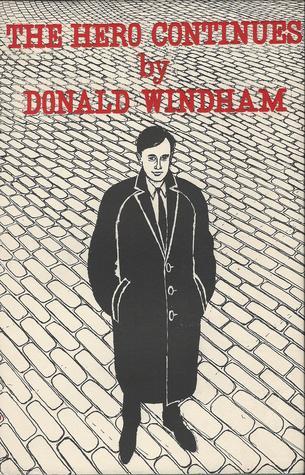
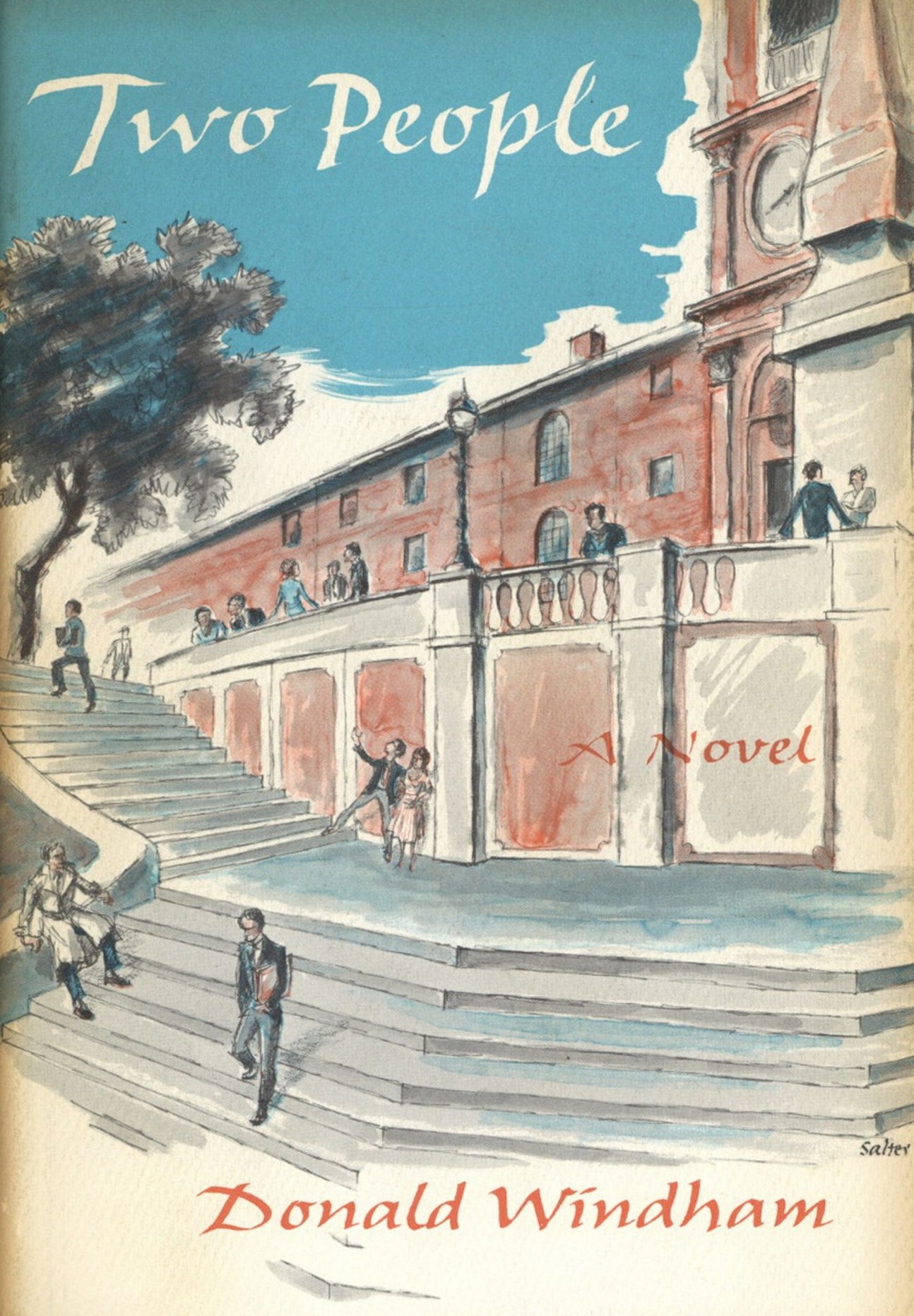
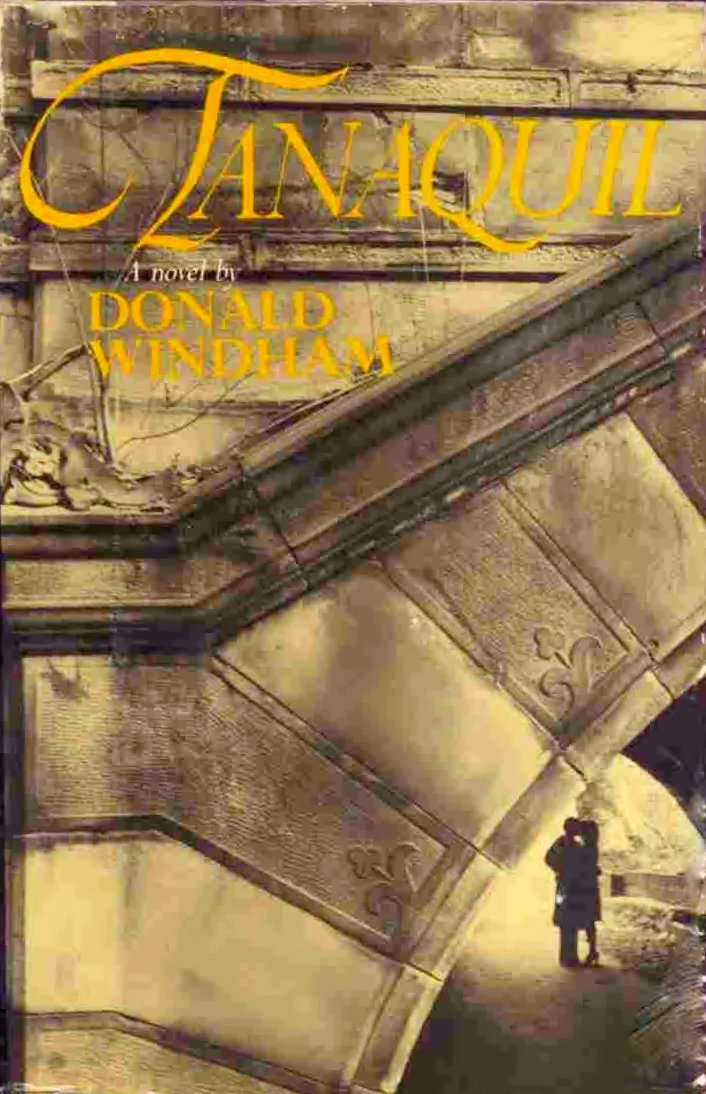
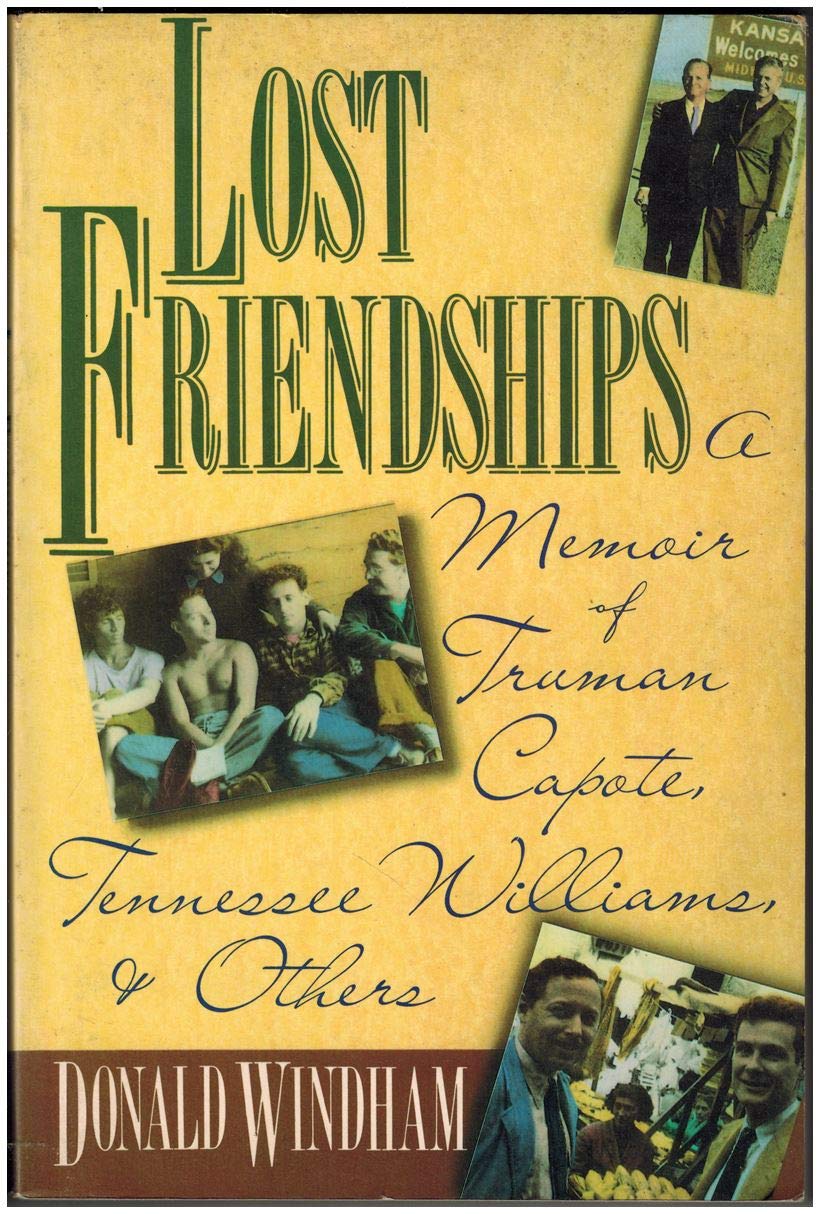
Donald Windham’s literary output (1950-1998)

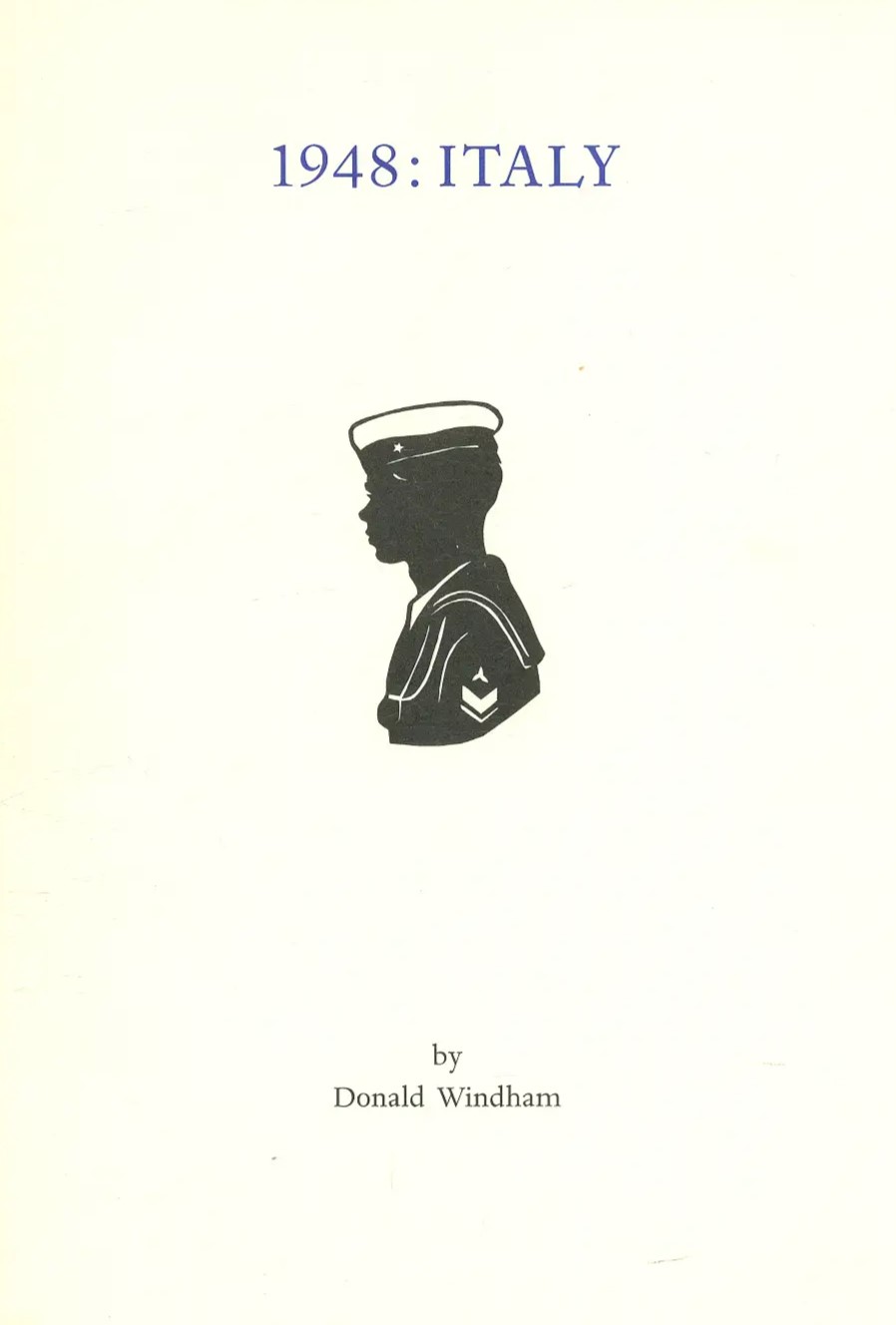
Windham’s 1972 novel Tanaquil is a fictionalization of his time among the George Platt Lynes / PaJaMa circle of friends. His later work focused on correspondence and reflections on his famous literary friends, including E.M. Forster, Tennessee Williams, Alice B. Toklas and Truman Capote.

Campbell & Windham with Capote

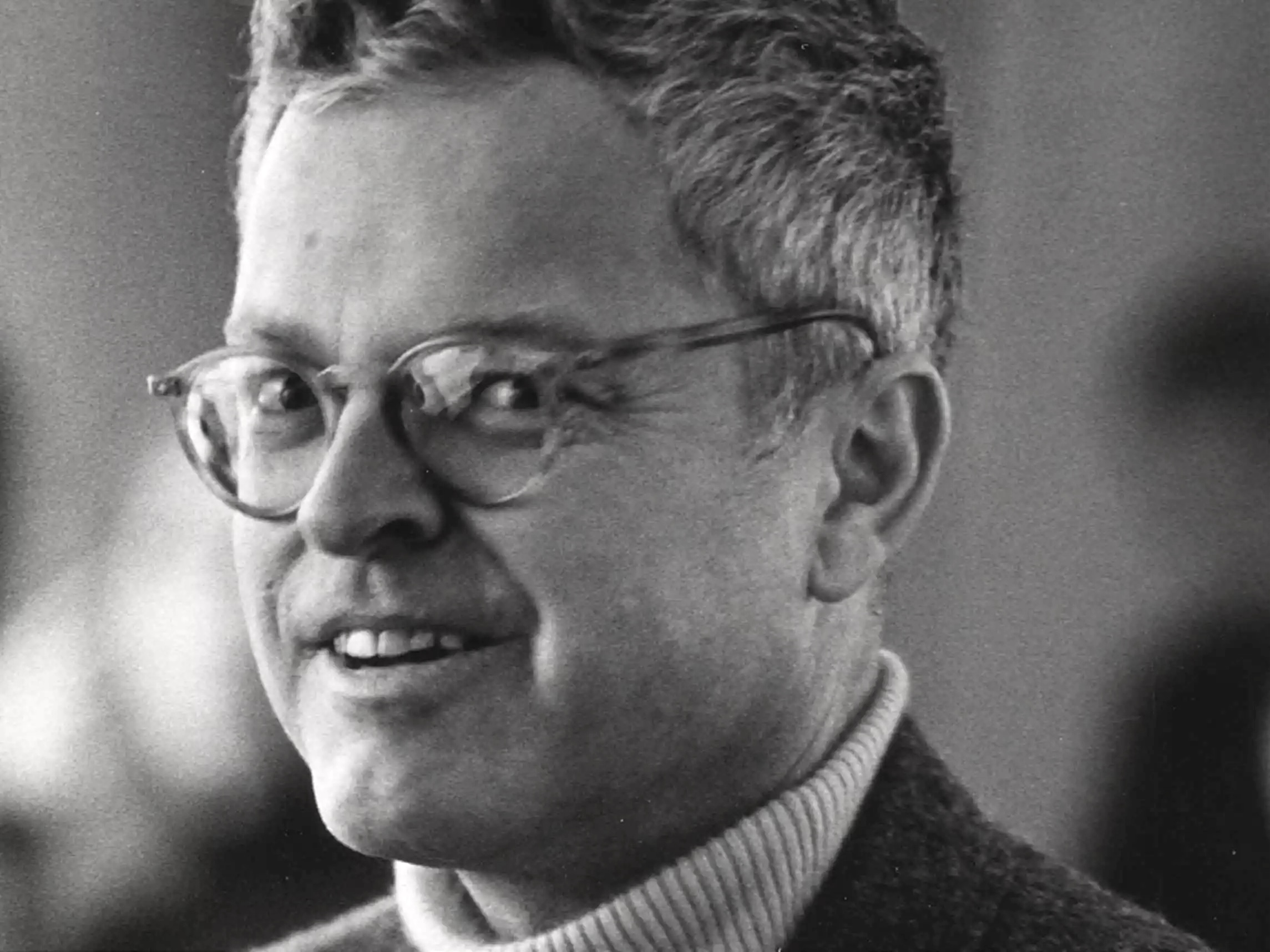
Windham & Campbell, ca 1987

Windham and Campbell remained a couple for the rest of their lives. Besides their New York City apartment on Central Park South, they also had a Fire Island house on Ocean Walk in The Pines, where Campbell died suddenly of a heart attack on June 26, 1988. Windham outlived his younger partner by 22 years, passing in May, 2010 at the age of 89. Their combined estates fund the annual Windham-Campbell Literary Prizes, established at Yale University in 2012.

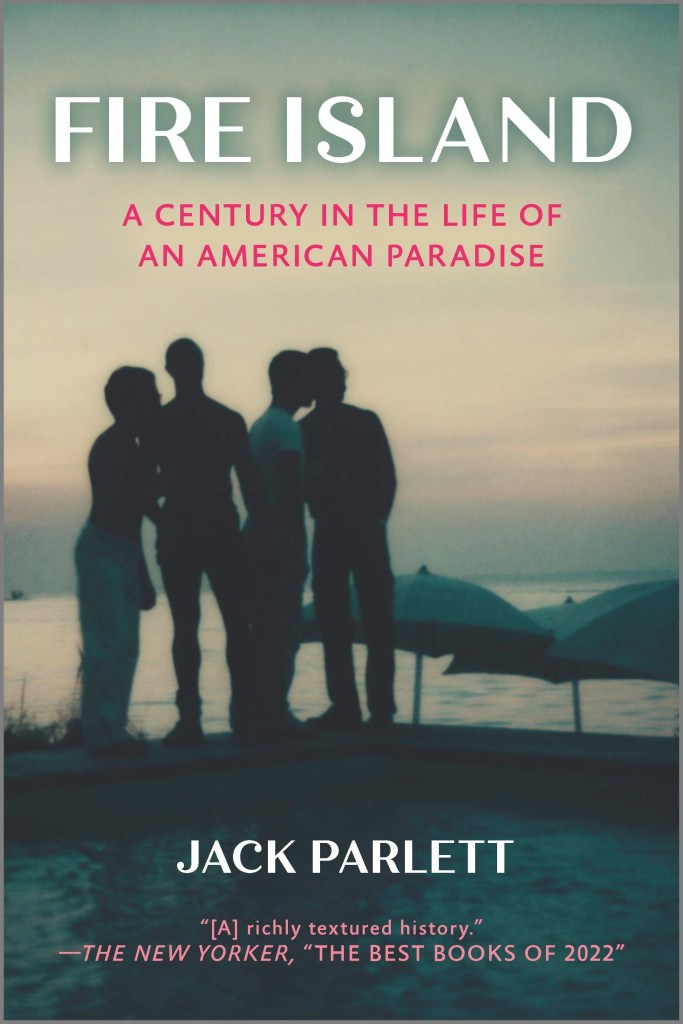
Jack Parlett’s 2022 book Fire Island devotes almost an entire chapter to Donald Windham’s 70-year span visiting the island. Parlett writes; “(Windham) was part of the very first generation to discover its potential as an enclave; first as a young man, visiting Saltaire with some of the earliest queer artists to incorporate the island into their practice; and later as a man in his fifties, happily coupled with the love of his life, who made in the Pines an enclave within an enclave, a restful home for two people, even amid the loudness of the community’s sexual and cultural boom in the 1970’s.”


See also:
Donald Windham on Truman Capote: Christopher Street (1988)
Fire Island PaJaMa Party
Fire Island Muses of George Platt Lynes & The PaJaMa Collective
Revisiting George Platt Lynes’ Fire Island Muses
Artist’s Muse: Wilbur Pippin
Artist’s Muse: José “Pete” Martinez
Artist’s Muse: Chuck Howard
Artist’s Muse: Randy Jack
Artist’s Muse: Ted Starkowski
Artist’s Muse: The Mystery Model
George Platt Lynes: In Touch Magazine (1982)
Back To The Girl Zone: 60 Degrees Returns

I’m bursting with excitement to be able to share the news about something I have been working on for the past couple of months…

After a 10 year hiatus, East Village Radio is now officially back on the air. My show, 60 Degrees with Brian Ferrari ran on the station for 5 years – from 2008-2013. The 2-hour program, featuring female 60’s singers and girl groups, is now back with new episodes bi-weekly, with repeated classic episodes on the opposite week. Besides the Sunday morning, 8-10am broadcast, archives of the show will be available for streaming on demand, any time, for free.

Here’s a little backstory: I had a late night public access television program called Bri-Guy’s Media Surf that aired in New York City from 1997-2007. Based on the music clips I played on that show, I was approached to do a spot on the early low-frequency broadcast version of East Village Radio. The signal was so weak that I couldn’t receive it in my apartment three blocks north of the station. Given the workload of producing the TV show, I didn’t have the bandwidth to take on a two-hour radio program, so I politely declined. After Media Surf wrapped in late 2007, I was offered a radio spot again. By this time, the station had transitioned into internet streaming and now had a worldwide audience. This time I said “Yes.”

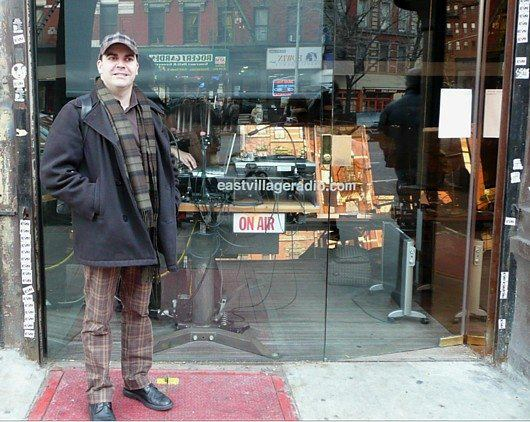
In front of the EVR booth (2008)
From its inception, the concept of 60 Degrees was that it existed in an alternate reality where women ruled the pop charts throughout the 1960’s, a decade that I consider to be the most transitional and eclectic in the history of popular music. The all-female playlist is in direct contrast to radio programmers that only allow a certain number of female artists per hour. In the land of 60 Degrees, it’s all women, all the time. The men remain in the shadows, only stepping forward for the occasional duet.

This is not to say that the male groups that ruled the charts are completely ignored here. Female artists doing Beatles or Rolling Stones covers and tribute or answer songs are often featured. Besides, you can’t have a 60’s girl group playlist without the specter of Phil Spector looming large.

Another rule for 60 Degrees is that it is not a re-hash of the WCBS-FM “We play your favorite oldies” format. If a 60’s hit is in rotation on an oldies station, you won’t hear it here unless it’s live version, an alternate take, or sung in a foreign language.

Other ingredients that add to 60 Degrees’ unique flavor are the vintage commercials and sound clips from various movies and TV shows peppered throughout each 2 hour episode. These add a camp element to the proceedings and act as an acknowledgement of pop culture’s shift over the past 60 years.

60 Degrees usually concludes each episode with a modern cover or a remix of a 60’s tune to transition the listener back to the current day, in preparation for the next show on the East Village Radio schedule.

Exciters lead singer Brenda Reid was a guest on the show in 2012.

I did my first (and only) live show in the First Avenue storefront booth on January 17, 2008. Broadcasting live at street level by myself was a slightly terrifying prospect. The first show went without interruption but at some point I was bound to get a random loon trying to get into the booth while I’m spinning some Shirelles. And it wasn’t like I was going to get a sidewalk crowd like the higher profile prime time DJs. Besides, the variety of the content meant that I was dealing with wildly different sound levels and other audio issues over approximately 75 different clips per episode. Pre-taping allowed for a more seamless, fast-paced show, which was then broadcast in the morning hours before the DJ booth was open.

After 5 years on the air, I felt that the show had run it’s course and I hung up my headphones. I continued on my own personal quest of discovering new/old music, focusing on early soul singers and the sister groups of the 1940’s… then the 1930’s… until one day I found myself listening to 78 records on my 1916 RCA crank victrola. Having gone about as far as I could go, I thew it into reverse once again.

And so we’re back. From outer space. And so is 60 Degrees. I hope you will come along for the ride. It’s kinda cool

Bringing 60 Degrees back to East Village Radio, with the help of Jean & The Statesides.

See also:
EVR in the NYT
60’s Girl Group Survivors
Girl Group Heaven: Ronnie, Rosa & Wanda
60 Degrees Halloween Show
60 Degrees Girl Group Christmas
Ronnie Spector 1980
10 Forgotten Cher Moments
Dusty Springfield Sings Kate Bush
Etta James: Advertising Zombie
So Jill Sobule
A Christmas Without Miracles: The 1987 Motown Xmas Special