March of the Wooden Soldiers: 10 Things You May Not Know About The Classic Film

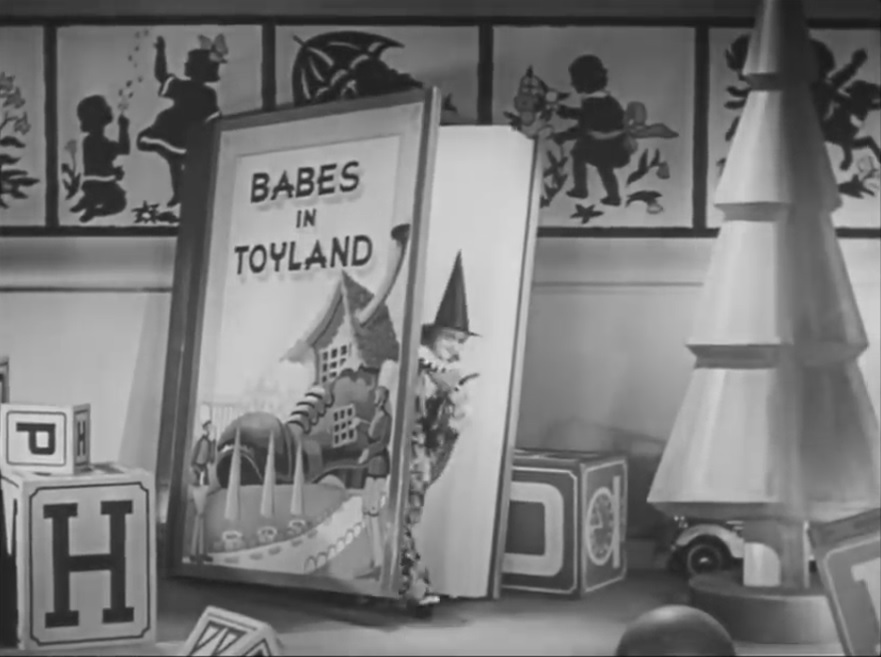
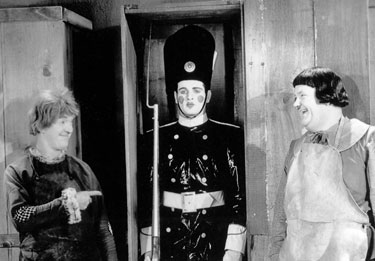
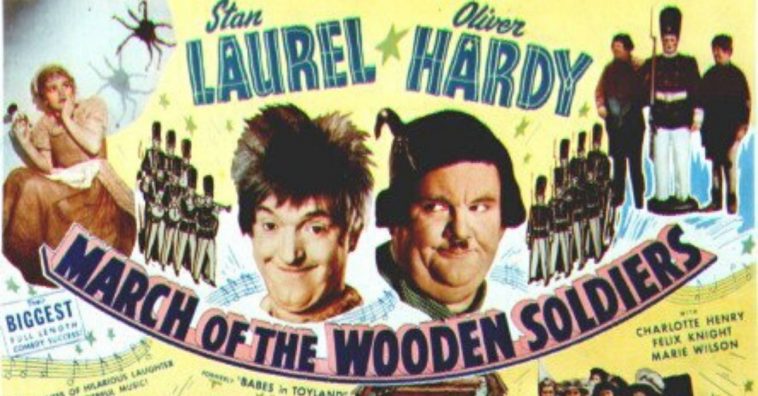
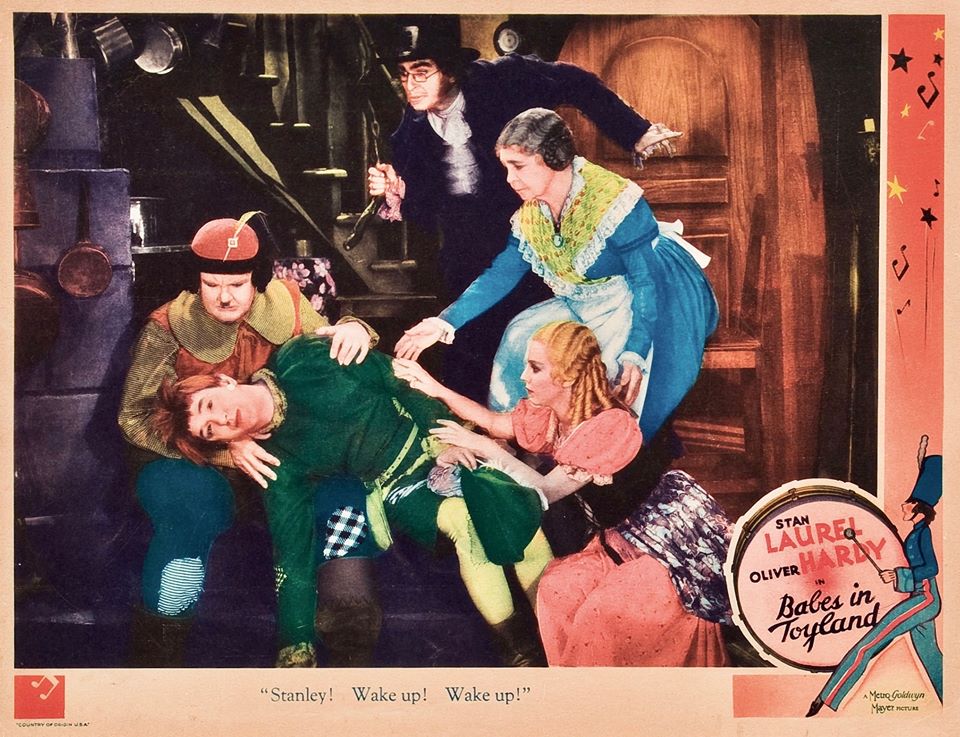
It’s hard to believe that the Laurel & Hardy holiday classic March of the Wooden Soldiers debuted 91 years ago. Originally released as Babes In Toyland on Nov. 30, 1934, the holiday perennial was based on Victor Herbert’s popular 1903 operetta. The film came out of Hal Roach studios and was co-directed by Gus Meins and Charles Rogers.

Here’s the trailer:

I originally posted this celebration of the film on the 85th Anniversary. Here is an updated and expanded version:

10 Things You May Not Know About March of The Wooden Soldiers


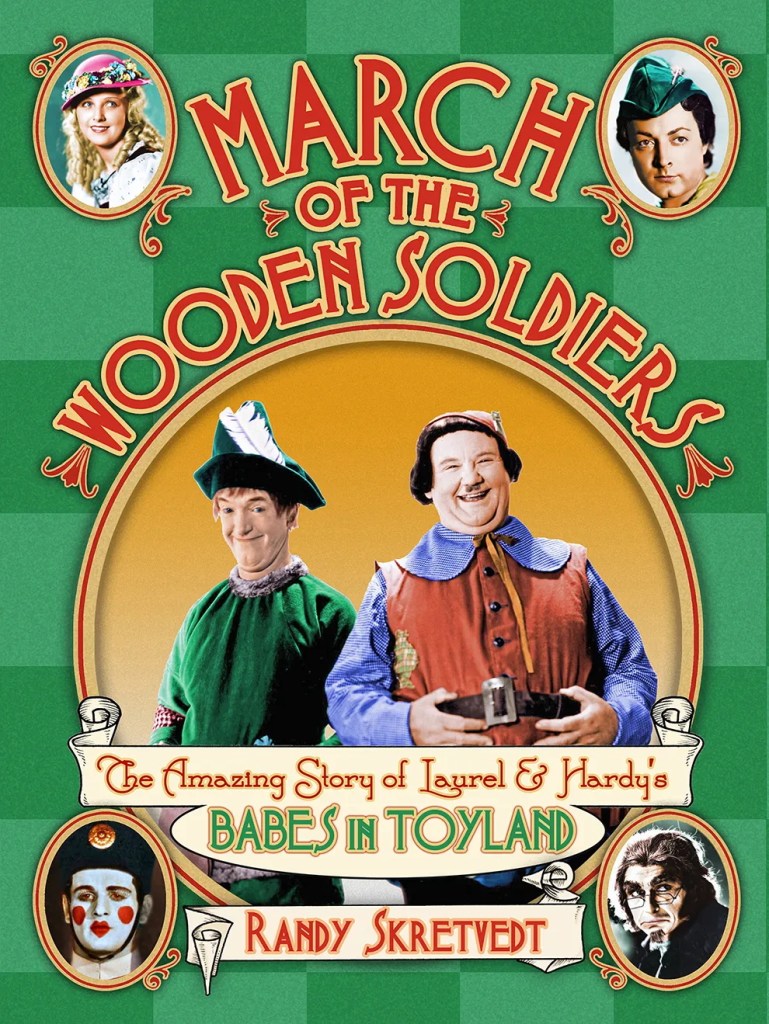
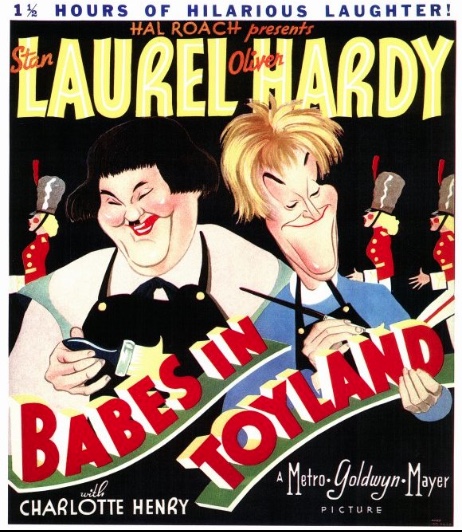
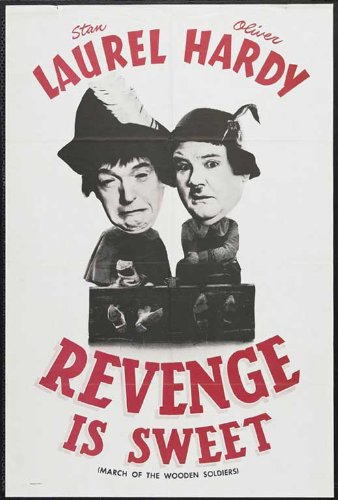
1) In addition to Babes In Toyland, the film was also re-released under several different titles, including Laurel and Hardy in Toyland and Revenge Is Sweet. This was sometimes due to the estate of Victor Herbert withholding rights to the original title. In the book March of the Wooden Soldiers: The Amazing Story of Laurel & Hardy’s Babes In Toyland, Randy Skretvedt writes; “Ella Herbert Bartlett detested the film and didn’t want the name Babes In Toyland to be further besmirched by its association with Laurel and Hardy.”
2) Although the 1934 film includes many of the characters in the original operetta,  the plot is almost completely different. Six musical numbers from the original stage score are featured: “Toyland”, “Never Mind Bo-Peep”, “Castle in Spain”, “Go to Sleep (Slumber Deep)” and the instrumental “March of the Toys”. Additionally, an instrumental version of “I Can’t Do The Sum” is used to underscore many scenes.

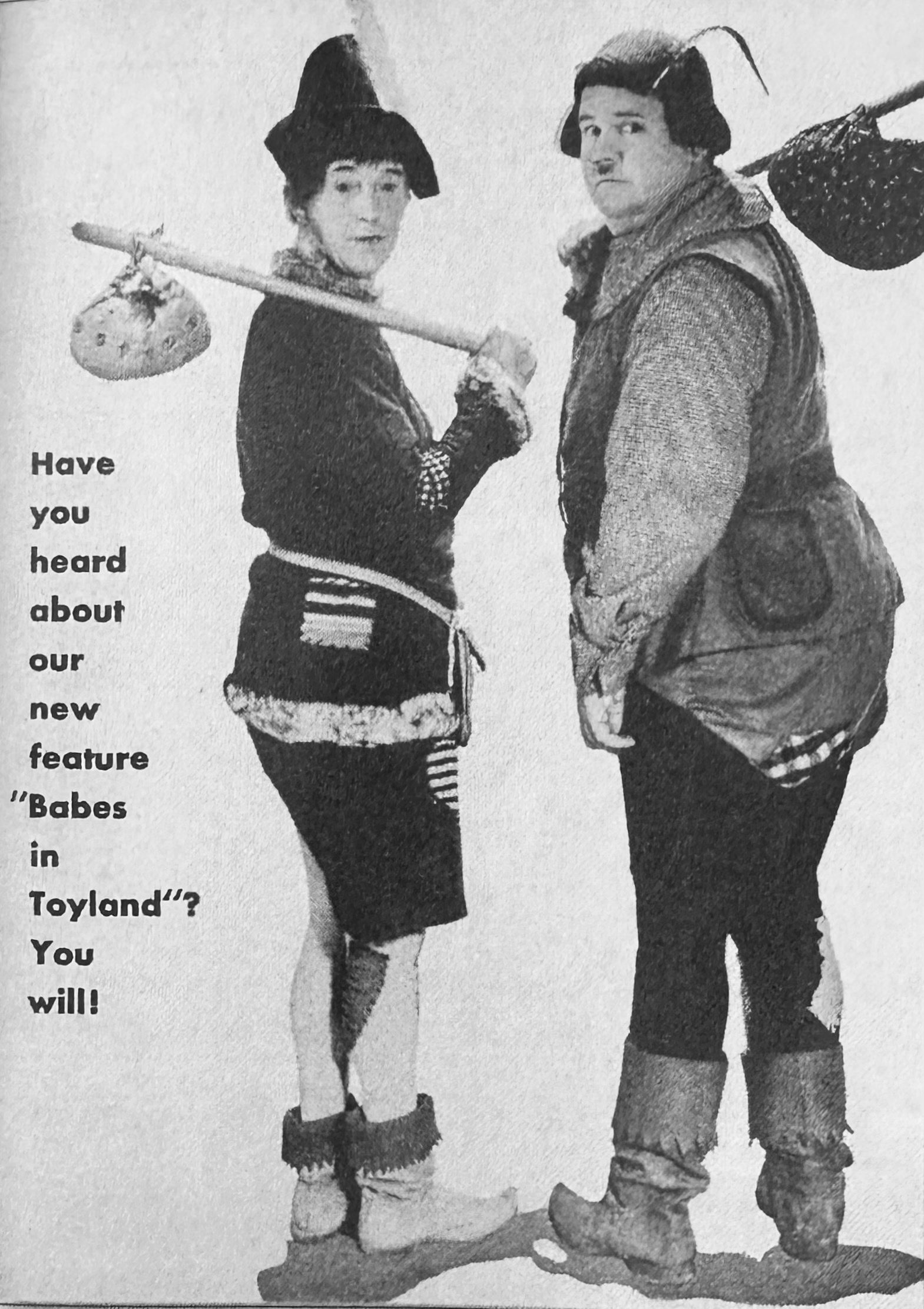
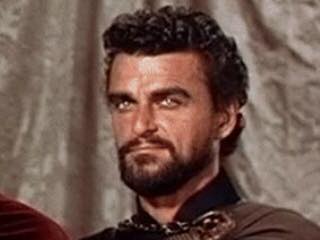
3) The villainous Silas Barnaby was played by 22-year-old Henry Kleinbach. He later changed his name to Henry Brandon and appeared in over 100 films throughout his 60 year career.

Brandon played essentially the same character as an opera impresario who torments poor, poor Alfalfa in Our Gang Follies of 1938.

20 years later he played Acacious Page in film Auntie Mame.

Another fun fact: Brandon’s partner for the last 25+ years of his life was Mark Herron, who was briefly the 4th husband of Judy Garland.


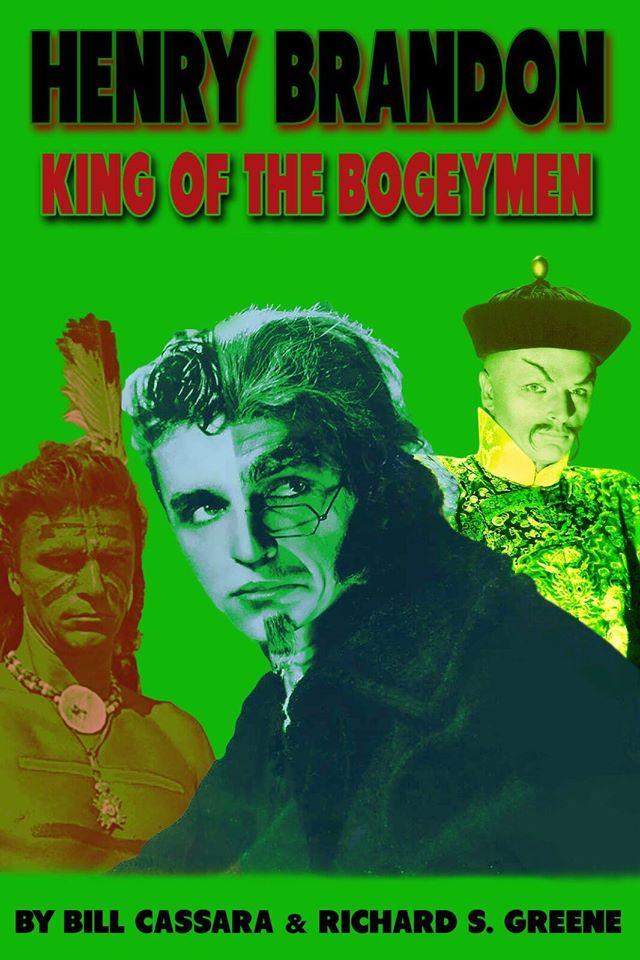
In 2018, Bill Cassara and Richard S. Greene published Henry Brandon: King Of The Bogeymen.

You can also find out more about Henry Brandon here


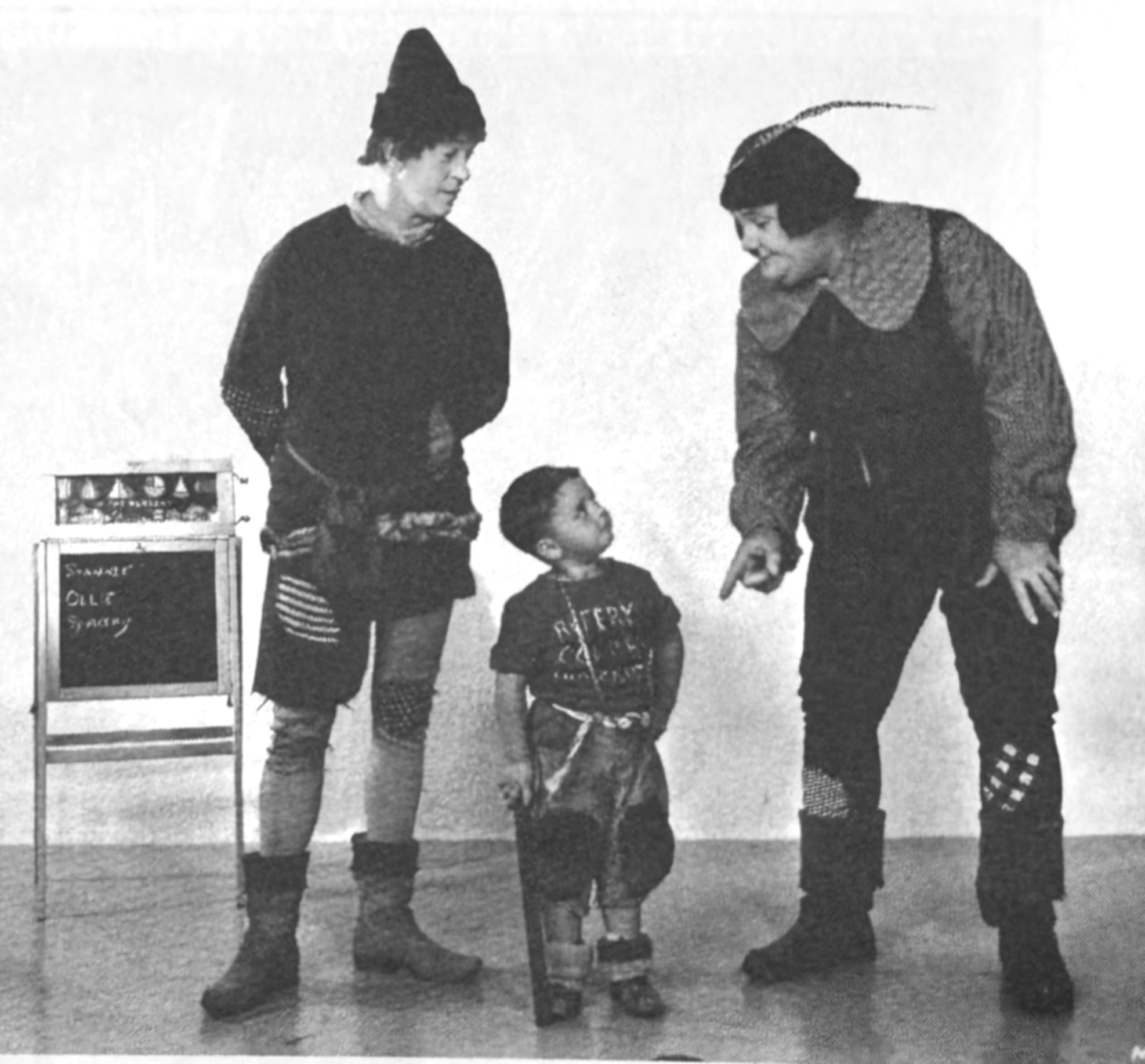
4) Our Gang (aka The Little Rascals) also filmed at Hal Roach studios. Several of the kids appear as schoolchildren in Toyland, although not dressed in their Our Gang costumes as in this photo atop Mother Peep’s Shoe-house.

Laurel & Hardy introduce Spanky to “pee wees” in this promotional photo shoot.

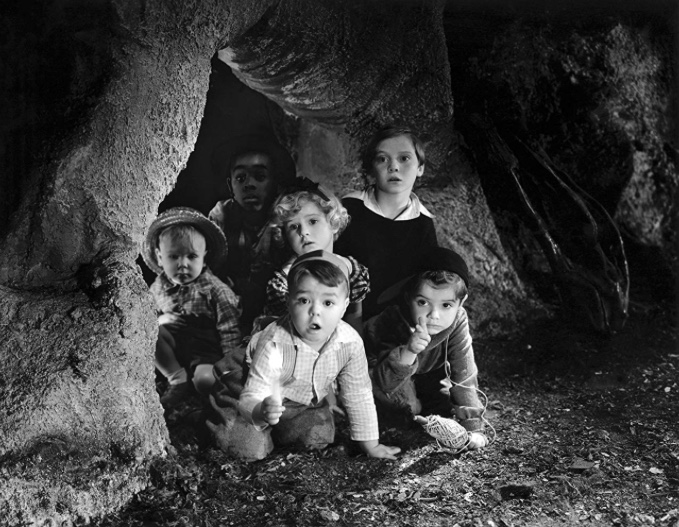
One of the most popular Our Gang / Little Rascals shorts, Mama’s Little Pirate was filmed the same year and has an extended sequence shot in the caves of Bogeyland. Gus Meins directed both films.

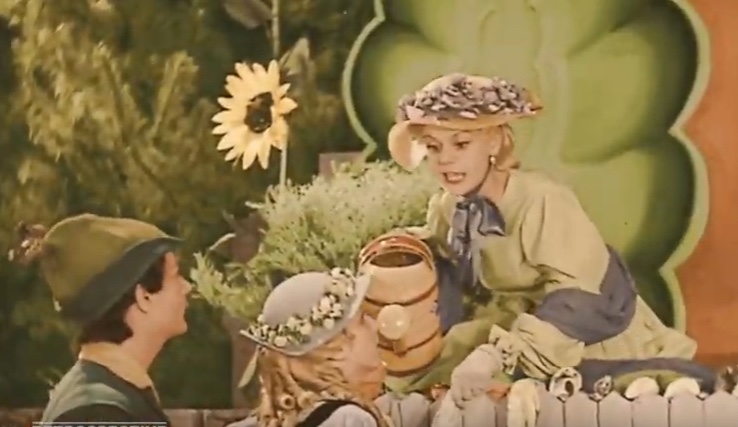
Another Our Gang connection: two graduates of the silent era, Johnny Downs and Jean Darling appear as Little Boy Blue and Curly Locks:

Johnny Downs and Jean Darling as Little Boy Blue and Curly Locks
Queen of Hearts Alice Moore with a couple of Little Rascals.

5) Felix Knight played romantic lead Tom Tom and fell in love with co-star Alice Moore, who played the Queen of Hearts. They were married the following year.

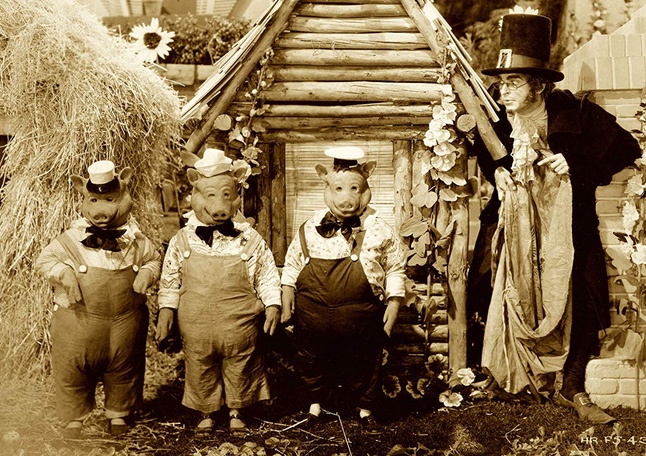
Behind the scenes, l-r: Alice Moore (Queen Of Hearts) Charley Rodgers (Simple Simon and the film’s co-director), Felix Knight (Tom Tom), Charlotte Henry (Bo-Peep) and Henry Brandon (Barnaby). Note the Three Little Pigs masks and padding hanging in the background.

Knight also appeared with Laurel and Hardy in their 1936 film – The Bohemian Girl:


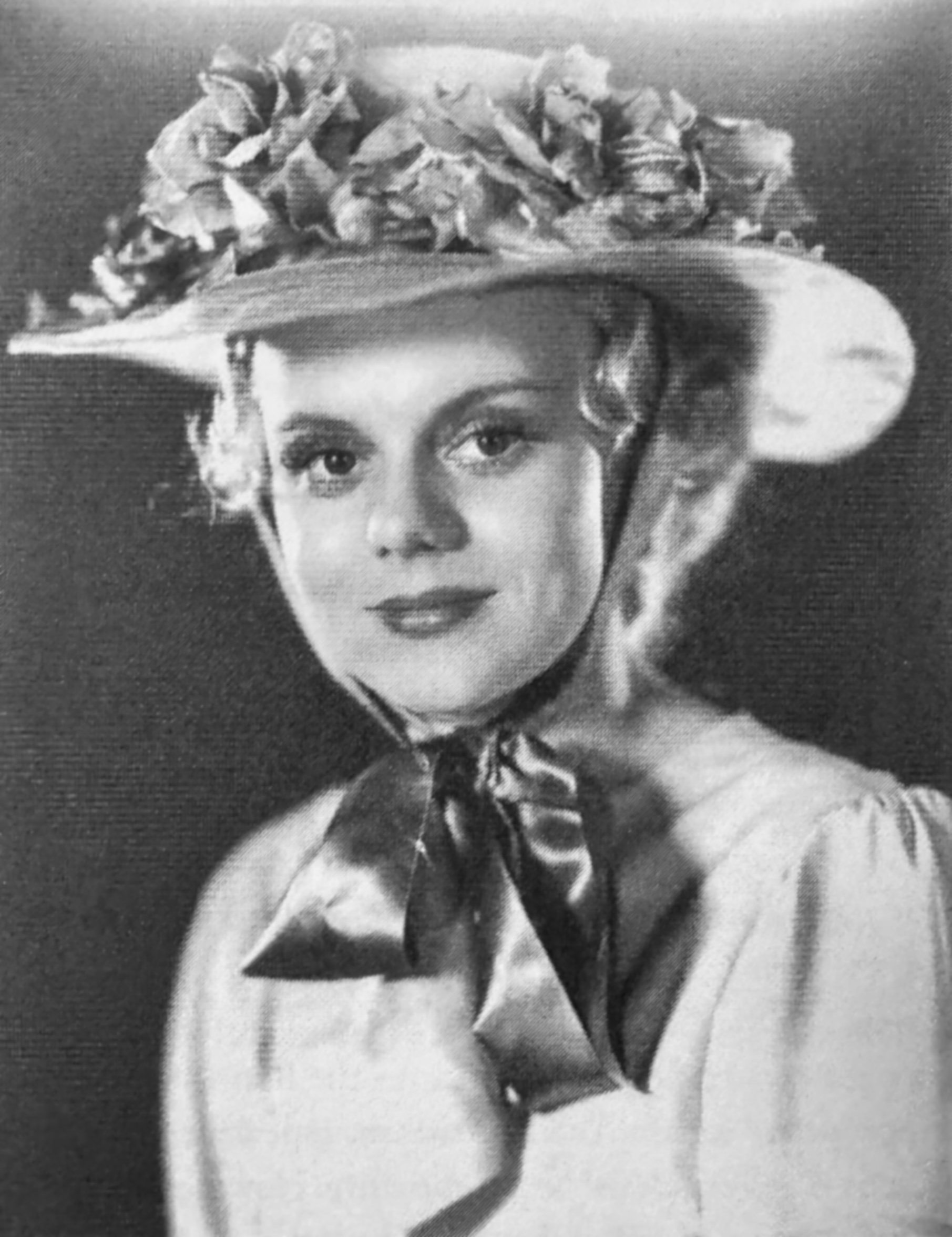
6) Marie Wilson makes an early film appearance as Mary Quite Contrary. Her later work in film, radio and television (most notably My Friend Irma) garnered her three stars on the Hollywood Walk Of Fame.

“NO, I haven’t seen them!” Marie Wilson as Mary Quite Contrary

7) Who’s Afraid Of The Big Bad Wolf?  An instrumental version of this song is used to underscore scenes with the Three Little Pigs. However, the song is not from the Babes In Toyland operetta – it was originally featured in the 1933 Disney short Three Little Pigs and has been covered by everyone (surprisingly) from Barbra Streisand to LL Cool J.

00Elmer


8) About those pigs….  Elmer, the kidnapped pig was played by a little person – 2′ 11″ Angelo Rossito. He appeared in 70 films spanning from the silent film era to his role as “The Master” in Mad Max Beyond Thunderdome (1985).


Angelo Rossitto in Freaks (1932) and Mad Max Beyond Thunderdome (1985)


The two other pigs were played by child actors: 

Payne B. Johnson has said that he was cast as Jiggs because, unlike the other children auditioning, he didn’t complain about the heavy mask and padding. Although only four years old, this was his eleventh film credit. He would later appear in a handful of Our Gang shorts, including Our Gang Follies of 1938 with Henry Brandon.

As of 2025, he is the last surviving major player from the film.

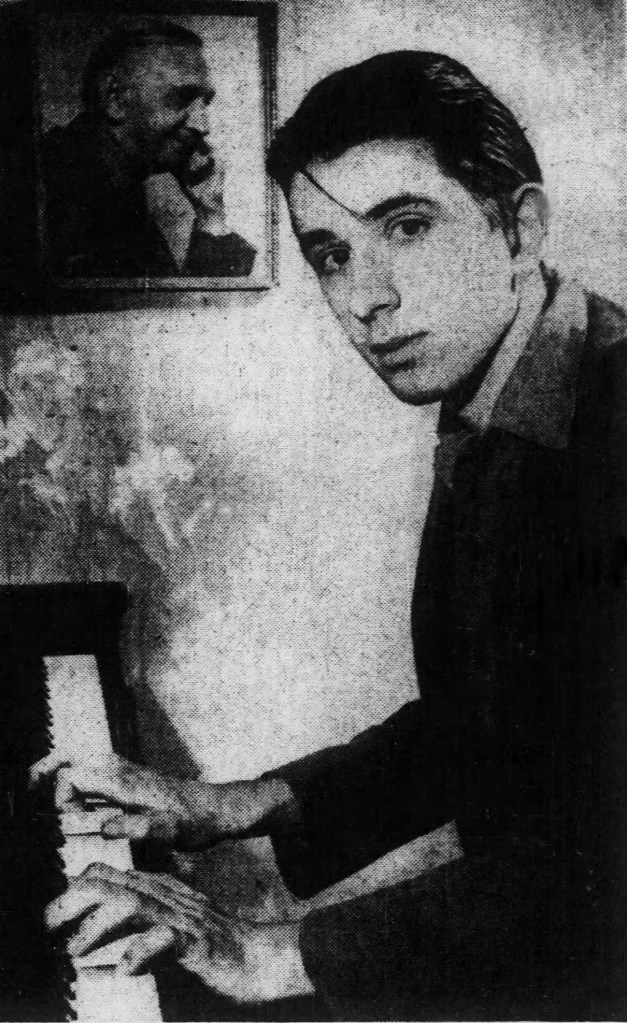
Edward Earle Marsh toured as a child prodigy pianist/composer.


And THIS little piggy…. was a porn star! Willie was played by Edward Earle Marsh, a child prodigy pianist/composer who later performed on Broadway with the stage name Edward Earle. In 1969, he reinvented himself as Zebedy Colt, a gay cabaret singer. He kept the name as he directed and performed in both straight and gay adult films through the 1970’s & 80’s.

Someone needs to write a book about this guy.


9) The film became a broadcast television staple on Thanksgiving and Christmas Day in the early 1960’s. I grew up watching the film on NYC’s WPIX Channel 11, which continues to air the film to this day. In 1990 they switched to the colorized version, and in 2018, due to viewer requests, they began airing restored black and white and colorized versions at different times during the day.

Some may remember a shorter version of the film airing on television years ago. This 73-minute edit was trimmed for theatrical re-release in 1950. Due to the objections of Victor Herbert’s estate mentioned above, the title of the film was changed and the opening sequence shortened to omit “Babes In Toyland” from Mother Goose’s book.

Motion picture censors in 1950 objected to the unmarried Tom Tom and Bo Peep snoozing together at the end of the song “Go to Sleep (Slumber Deep).” The whole sequence was cut.

This edited version of the film had fallen into public domain and was broadcast on television in the 1980’s. Any susequent restored prints or colorized versions of the film run at the original 79 minute length.

If it isn’t broadcast in your area, you can watch the full movie here:


10) Bearing in mind that the source material is the original operetta and not this film, there have been numerous wildly different versions of Babes In Toyland:

Between 1950 and 1960, there were three television productions broadcast during Christmas seasons, including one featuring Barbara Cook and Dennis Day in 1955.

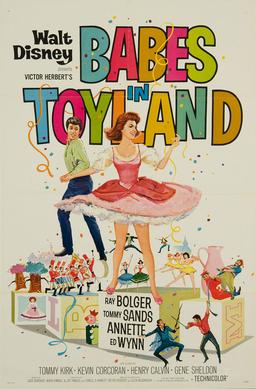
Walt Disney’s Technicolor™ 1961 film version starred Annette Funicello and Ray Bolger.

A 1986 made-for-television version featured Drew Barrymore, Keanu Reeves and “a royal legion of tacky trolls” with only two songs from the Victor Herbert score, a new plot, and new songs by Leslie Bricusse.

Click the link to see the full movie on Youtube:


An 1997 animated film version, with a new plot and only one of the original songs, featured the voices of Christopher Plummer and Lacey Chabert.


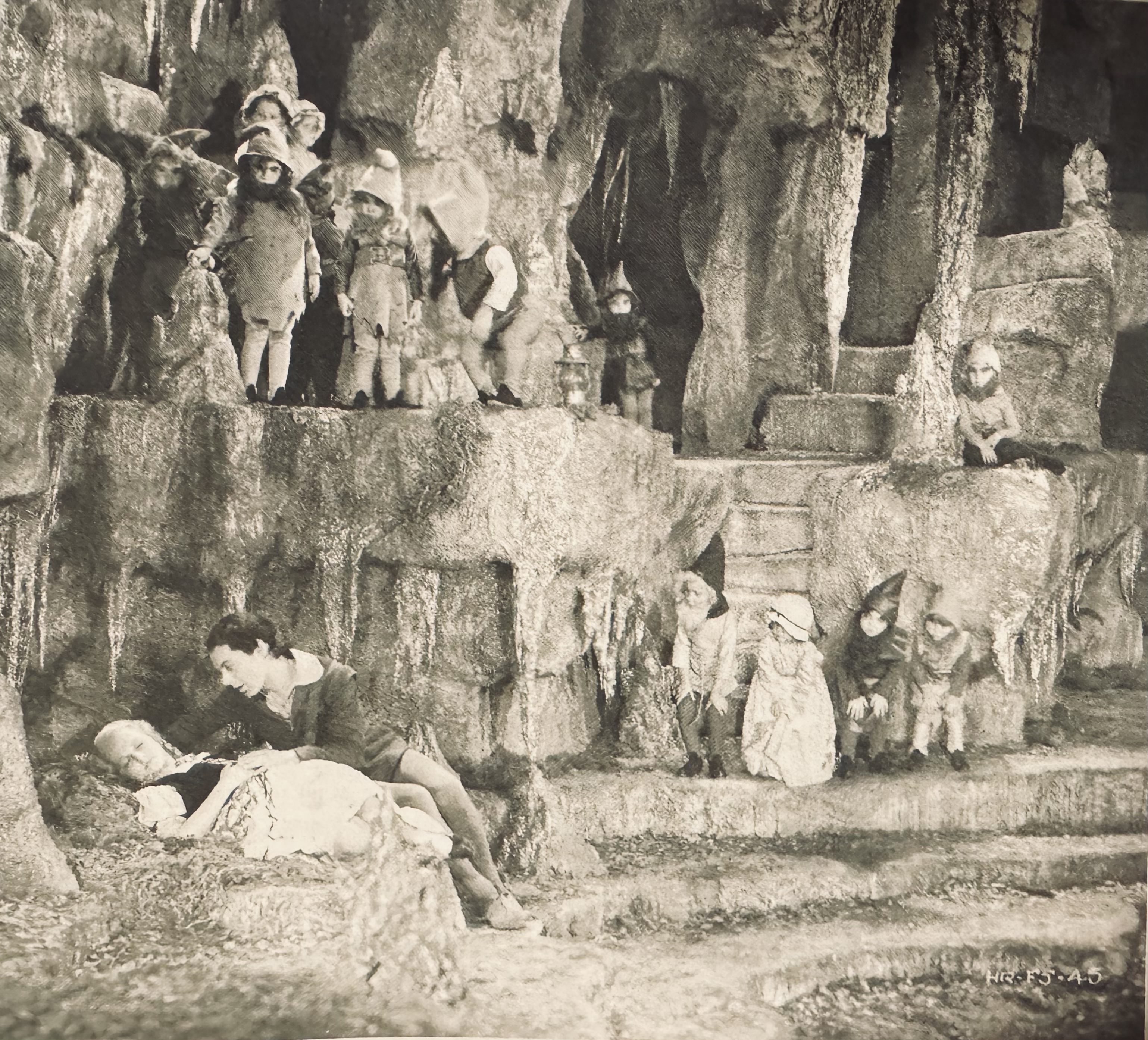
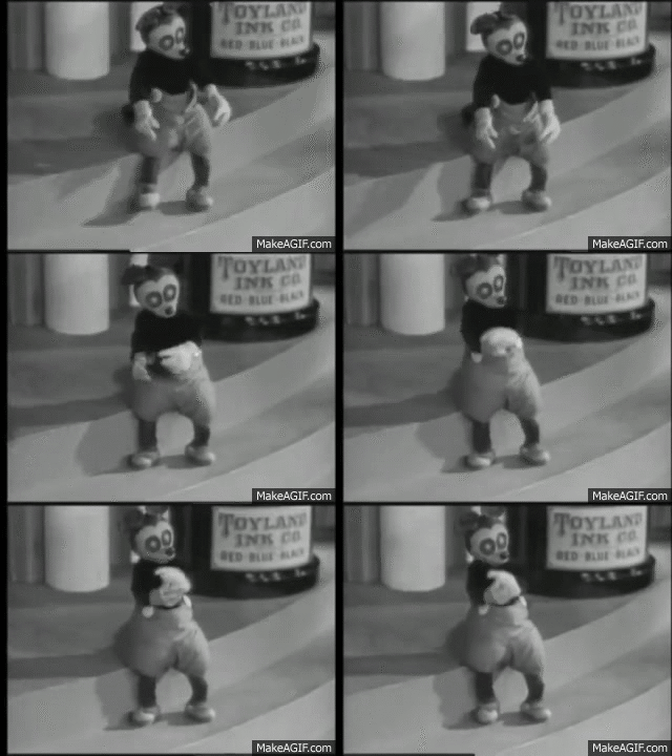
These other versions come and go, but none feature Stannie Dum and Ollie Dee… a gay wedding… nightmare-inducing pig masks … a monkey inside a knockoff Mickey Mouse costume… or carpet-clad Bogeymen with visible zippers and padding.

Join me in wishing a happy 91st birthday to a Hollywood holiday classic!

For more information, I highly recommend the book March of the Wooden Soldiers: The Amazing Story of Laurel & Hardy’s Babes In Toyland by Randy Skretvedt.

See Also:
Some Thanksgiving Treats For You (2025)
Dusting Off The Holiday Favorites (2025)
Your Guide To Gay Holiday Movies
The 60 Degrees Girl Group Christmas Show
The Christmas In Connecticut Delivery Woman
¿Dónde Está Santa Claus (& Augie Rios)?
Yes Virginia, There Is A Spotify Playlist
A Christmas Without Miracles: The 1987 Motown Xmas Special
Neeka Shaw: The Forgotten Showgirl
The Mysterious Midge Williams
Madame Spivy: Movies & Television

March of the Wooden Soldiers: 10 Things You May Not Know About The Classic Film

UPDATE: This post has been updated and expanded with additional photos HERE.

It’s hard to believe that the Laurel & Hardy holiday classic March of the Wooden Soldiers debuted 88 years ago. Originally released as Babes In Toyland on Nov. 30, 1934, the holiday perennial was based on Victor Herbert’s popular 1903 operetta. The film came out of Hal Roach studios and was co-directed by Gus Meins and Charles Rogers.

Here’s the trailer:

I originally posted this celebration of the film on the 85th Anniversary. Here is an updated version:

10 Things You May Not Know About March of The Wooden Soldiers


1) In addition to Babes In Toyland, the film was also re-released under several different titles, including Laurel and Hardy in Toyland and Revenge Is Sweet.

2) Although the 1934 film includes many of the characters in the original operetta,  the plot is almost completely different. Six musical numbers from the original stage score are featured: “Toyland”, “Never Mind Bo-Peep”, “Castle in Spain”, “Go to Sleep (Slumber Deep)” and the instrumental “March of the Toys”. Additionally, an instrumental version of “I Can’t Do The Sum” is used to underscore many scenes.


3) The villainous Silas Barnaby was played by 22 year old Henry Kleinbach. He later changed his name to Henry Brandon and appeared in over 100 films throughout his 60 year career.
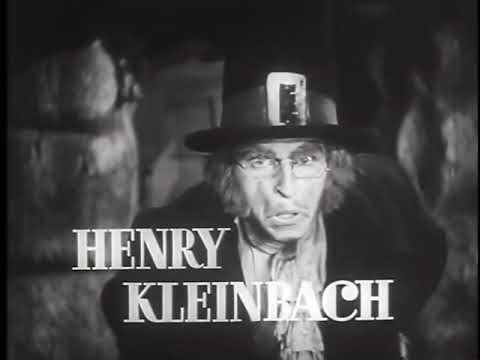
Brandon played essentially the same character as an opera impresario who torments poor, poor Alfalfa in Our Gang Follies of 1938.

20 years later he was Acacious Page in Auntie Mame.

Another fun fact: Brandon’s partner for the last 25+ years of his life was Mark Herron, who was briefly married to Judy Garland.


Bill Cassara and Richard S. Greene recently published a book about him.

You can also find out more about Henry Brandon here


4) Our Gang (aka The Little Rascals) also filmed at Hal Roach studios. Several of the kids appear as schoolchildren in Toyland, although not dressed in their Our Gang costumes as in this photo atop Mother Peep’s Shoe-house.
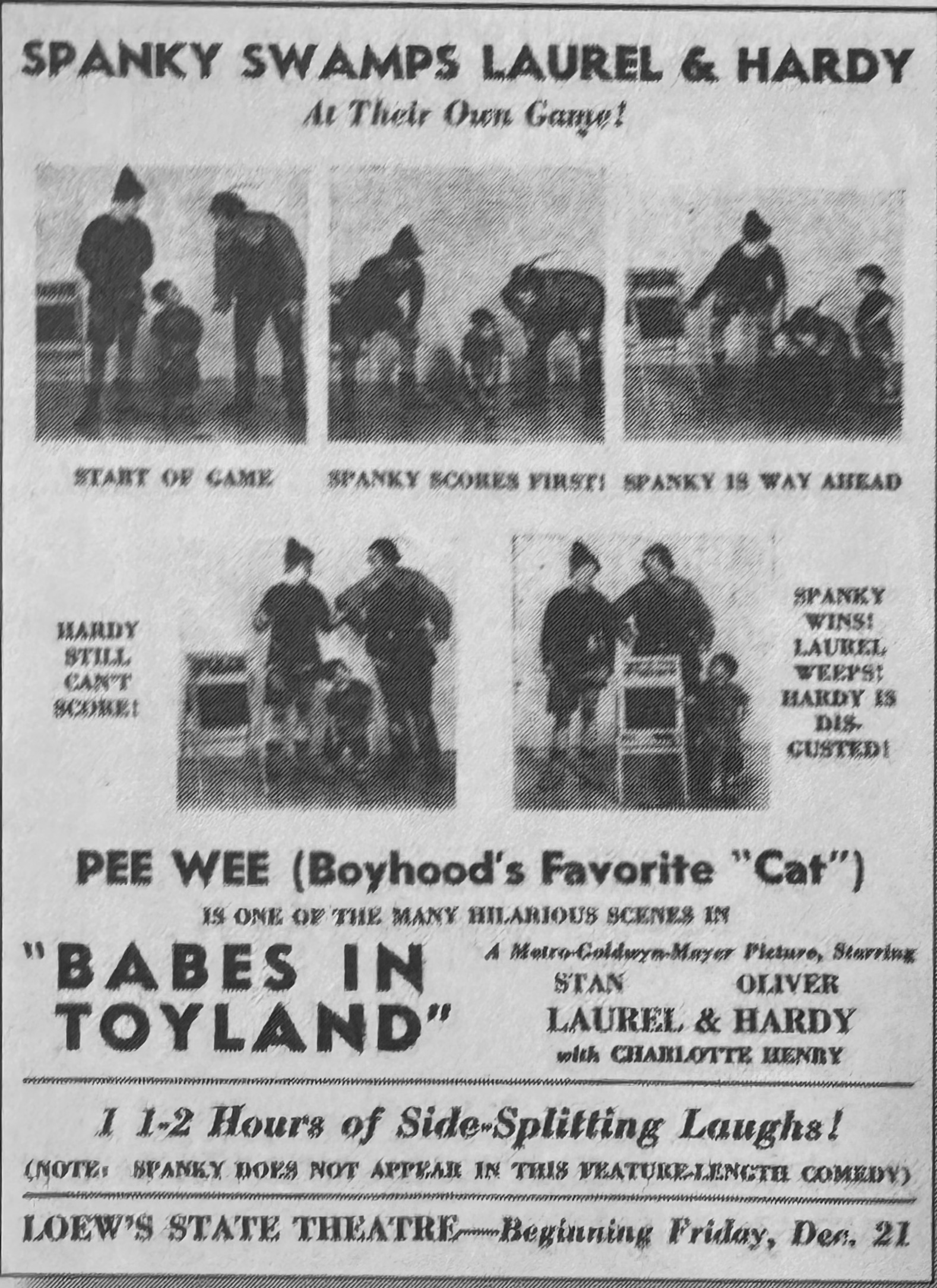
One of the most popular Our Gang / Little Rascals shorts, Mama’s Little Pirate was filmed the same year and has an extended sequence shot in the caves of Bogeyland. Gus Meins directed both films.

Another Our Gang connection: two graduates of the silent era, Johnny Downs and Jean Darling appear as Little Boy Blue and Curly Locks:

Johnny Downs and Jean Darling as Little Boy Blue and Curly Locks
Queen of Hearts Alice Moore with a couple of Little Rascals.

5) Felix Knight played romantic lead Tom Tom and fell in love with co-star Alice Moore, who played the Queen of Hearts. They were married the following year.

Behind the scenes, l-r: Alice Moore (Queen Of Hearts) Charley Rodgers (Simple Simon and the film’s co-director), Felix Knight (Tom Tom), Charlotte Henry (Bo-Peep) and Henry Brandon (Barnaby). Note the Three Little Pigs masks and padding hanging in the background.

Knight also appeared with Laurel and Hardy in their 1936 film – The Bohemian Girl:


6) Marie Wilson makes an early film appearance as Mary Quite Contrary. Her later work in film, radio and television (most notably My Friend Irma) garnered her three stars on the Hollywood Walk Of Fame.

“NO I haven’t seen them!” Marie Wilson as Mary Quite Contrary

7) Who’s Afraid Of The Big Bad Wolf?  An instrumental version of this song is used to underscore scenes with the Three Little Pigs. However, the song is not from the Babes In Toyland operetta – it was originally featured in the 1933 Disney short Three Little Pigs and (surprisingly) has been covered by everyone from Barbra Streisand to LL Cool J.

00Elmer


8) About those pigs….  Elmer, the kidnapped pig was played by a little person – 2′ 11″ Angelo Rossito.


The two other pigs were played by child actors: 

Payne B. Johnson played Jiggs. As of 2022, he is the last surviving major player from the film.


And THIS little piggy…. was a porn star! Willie was played by Edward Earle Marsh, later a Broadway performer known as Edward Earle. He then reinvented himself as Zebedy Colt, a gay cabaret singer and porn star who appeared in both gay and straight movies through the 1970’s & 80’s.

Someone needs to write a book about this guy.


9) The film became a broadcast television staple on Thanksgiving and Christmas Day in the early 1960’s. I grew up watching the film on NYC’s WPIX Channel 11, which continues to air the film to this day. In 1990 they switched to the colorized version, and in 2018, due to viewer requests, they began airing restored black and white and colorized versions at different times during the day.

Some may remember a shorter version of the film airing on television years ago. A 73 minute version that had fallen into public domain was broadcast for a few years in the 1980’s, with the opening “Toyland” song sequence trimmed and the “Go to Sleep (Slumber Deep)” number cut completely. Any restored prints or colorized versions of the film run at the original 79 minute length.

If it isn’t broadcast in your area, you can watch the full movie here:


10) Bearing in mind that the source material is the original operetta and not this film, there have been numerous wildly different versions of Babes In Toyland:

Between 1950 and 1960, there were three television productions broadcast during Christmas seasons, including one featuring Barbara Cook and Dennis Day in 1955.

Walt Disney’s Technicolor™ 1961 film version starred Annette Funicello and Ray Bolger.

A 1986 made-for-television version featured Drew Barrymore, Keanu Reeves and “a royal legion of tacky trolls” with only two songs from the Victor Herbert score, a new plot, and new songs by Leslie Bricusse.


An 1997 animated film version, with a new plot and only one of the original songs, featured the voices of Christopher Plummer and Lacey Chabert.


These other versions come and go, but none feature Stannie Dum and Ollie Dee… a gay wedding… nightmare-inducing pig masks … a monkey dressed as a Mickey Mouse knockoff… or poorly costumed Bogeymen with visible zippers and padding.

Join me in wishing a happy 88th birthday to a Hollywood holiday classic!

See Also:
The 60 Degrees Girl Group Christmas Show
’60s Girl Group Survivors
The Christmas In Connecticut Delivery Woman
¿Dónde Está Santa Claus (& Augie Rios)?
Yes Virginia, There Is A Spotify Playlist
A Christmas Without Miracles: The 1987 Motown Xmas Special
Some Thanksgiving Treats For You (2024)
Neeka Shaw: The Forgotten Showgirl
The Mysterious Midge Williams
Madame Spivy: Movies & Television

Madame Spivy: Auntie’s Face

“She was once like Whistler’s Mother – now they whistle when she passes.”

Ladies and Gentleman, it is time once again to revisit that late great dynamic lady of song, Madame Spivy LeVoe (1906-1971), also known simply as Spivy. A lesbian entertainer, nightclub owner and character actress, Spivy has been described as “The Female Noel Coward” – to which I add “…. if he was born Bertha Levine in Brooklyn.” You can see earlier posts about her here and here.

Spivy Promo pic

Since my last Spivy post, I was thrilled to see that she had been profiled on Dennis Dermody’s Cinemaniac website, and even happier to see that, after a little nudge, I was given some credit for all the “borrowed” photos, video and large portions of my previous posts. Bless his heart, I’m sure it was just an oversight.

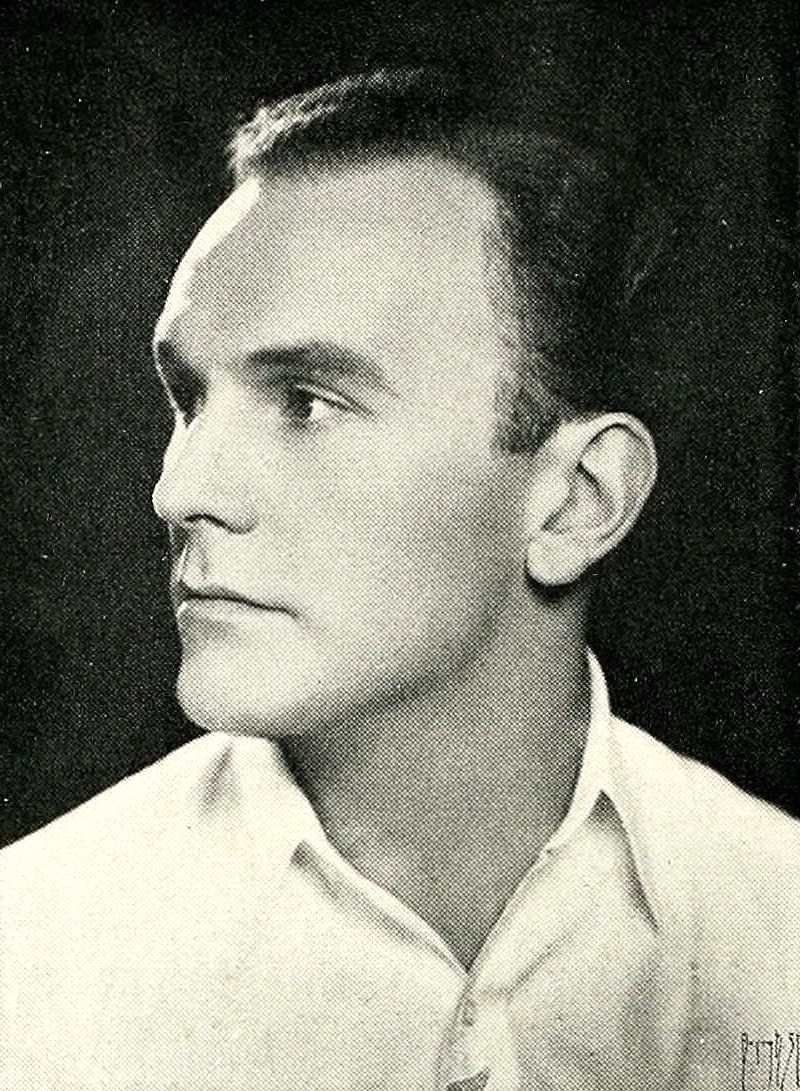
Moving on… today we will be listening to “Auntie’s Face”, a song written by Broadway actor and fellow nightclub performer Guy Moneypenny (1906-1983).

Guy Moneypenny 1935

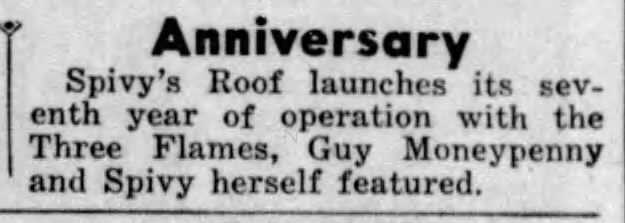
Daily_News_1946_01_12

Spivy’s recording was featured on her 1949 album An Evening With Spivy.

spivey-evening-med

Spivy had something of a catchphrase that she would use to introduce a song: A solemn pronouncement that “This is VERY sad and we must be VERY quiet, please.” She would then launch into a number that was anything but either of those things. At least four of her recordings contain this introduction – one can imagine that it was a playful way to get the attention of a noisy nightclub audience.

Auntie’s Face

We all have strange relatives… but let me tell you about my Aunt Grace.
She’s a MAD thing. This is very sad and we must be very quiet, please.
This is the tragedy of poor Aunt Grace – how she became a complete disgrace
It all began when she lifted her face and decided to be young and gay.

Since she’s become a rejuvenated case, the whole house suffers from her madcap pace
There’s no longer any quiet in the whole damn place
So we lift our eyes to heaven and pray.
Please God make Auntie’s face fall. For we’ve all got our backs to the wall
Her reputation’s battered. Our principals are shattered. She hasn’t any moral code at all.

Her breath now reeks of bathtub gin. Goes out nights in search of sin.
We wake up in the morning to find her coming in… from an all night brawl.
We’re all in such a dither, for heaven knows she’s coarse.
When she brings the milkman with her – wait ‘til you hear this one – why must she bring his horse?

Please God make Auntie’s face fall. For nothing is sacred at all.
We caught her teaching Granny to manipulate her fanny in a rhumba with a cashmere shawl.
And just last night they phoned from the jail – it seems they’re holding Auntie ‘til we fork up the bail
They found her on Broadway singing “Love For Sale”. Yes they did! And the price was small.

She steals cigars from brother. She’s thrown away her glasses.
She was once like Whistler’s Mother – now they whistle when she passes.
She thinks she’s the belle of the ball. We’re afraid that she’s going on call

Dear God we beg your pardon but to hell with Lizzie Arden
If you’ve any mercy left at all… please God make Auntie’s face fall!

lizzie arden

Some of Spivy’s other recordings contain obscure references that require a little research and explanation. Not so with “Auntie’s Face”: Cole Porter’s standard “Love For Sale” is still well-known. The line “To Hell with Lizzie Arden” is a reference to cosmetics queen Elizabeth Arden, whose beauty product empire still stands. And who isn’t familiar with Whistler’s Mother?

Furthermore… a song about plastic surgery certainly rings truer today than it did 70 years ago. It may come as a shock to fans of the Real Housewives that the first facelift procedures took place in the early 1900’s.

Other Spivy posts:
The Alley Cat
The Tarantella
100% American Girls
A Tropical Fish
I Brought Culture To Buffalo In The 90s
I Didn’t Do A Thing Last Night
Why Don’t You?
Madame Spivy: Movies & Television
Madame Spivy on the Good Time Sallies Podcast
Good Time Sallies: Madame Spivy Radio

tumblr_c159c6fe9a530f839a464aab690e2a1d_dd093cf6_500

Spivy card

March of the Wooden Soldiers’ 85th Anniversary: 10 Things You May Not Know About The Classic Film

01 March-Of-The-Wooden-Soldiers-On-November-28th-Thanksgiving-Day-758x396
 
UPDATE: This post has been updated and expanded with additional photos HERE.

This year marks the 85th anniversary of the Laurel & Hardy classic March of the Wooden Soldiers. Originally released as Babes In Toyland on Nov. 30, 1934, the holiday perennial was based on Victor Herbert’s popular 1903 operetta. The film came out of Hal Roach studios and was co-directed by Gus Meins and Charles Rogers.

 
Here’s the trailer:
 

To celebrate this occasion, I present to you….

 
10 Things You May Not Know About March of The Wooden Soldiers
 
 
1) In addition to Babes In Toyland, the film was also re-released under several different titles, including Laurel and Hardy in Toyland and Revenge Is Sweet.
 
 
01 Babes In Toyland 19341 revenge1-spanish.jpg


2) Although the 1934 film includes many of the characters in the original operetta,  the plot is almost completely different. Six musical numbers from the original stage score are featured: “Toyland”, “Never Mind Bo-Peep”, “Castle in Spain”, “Go to Sleep (Slumber Deep)” and the instrumental “March of the Toys”. Additionally, an instrumental version of “I Can’t Do The Sum” is used to underscore many scenes.


2

 
3 Kleinbach


3) The villainous Silas Barnaby was played by 22 year old Henry Kleinbach. He later changed his name to Henry Brandon and appeared in over 100 films throughout his 60 year career.


3 Follies 1938 Barnaby


Brandon played essentially the same character as an opera impresario who torments poor poor Alfalfa in Our Gang Follies of 1938.


3Acacious Page 1958


20 years later he was Acacious Page in Auntie Mame.


Another fun fact: Brandon’s partner for the last 25+ years of his life was Mark Herron, who was briefly married to Judy Garland.
 
 
3b


Bill Cassara and Richard S. Greene recently published a book about him.
 
 
You can also find out more about Henry Brandon here


4-our-gang-on-set.jpg


4) The Little Rascals (aka Our Gang) also filmed at Hal Roach studios. Several of the gang appear as schoolchildren in Toyland, although not dressed in their Our Gang costumes as in this photo atop Mother Peep’s Shoe-house.
 
4 Mamas Little Pirate


One of the most popular Our Gang / Little Rascals shorts, Mama’s Little Pirate was filmed the same year and has an extended sequence shot in the caves of Bogeyland. Gus Meins directed both films.


Another Our Gang connection: two graduates of the silent era, Johnny Downs and Jean Darling appear as Little Boy Blue and Curly Locks:

 
4 Johnny Downs Jean Darling2
Johnny Downs and Jean Darling as Little Boy Blue and Curly Locks


5) Felix Knight played romantic lead Tom Tom and fell in love with co-star Alice Moore, who played the Queen of Hearts. They were married the following year.
 
5 Behind the scenes
Behind the scenes, l-r: Alice Moore (Queen Of Hearts) Charley Rodgers (Simple Simon and the film’s co-director), Felix Knight (Tom Tom), Charlotte Henry (Bo-Peep) and Henry Brandon (Barnaby). Note the Three Little Pigs masks and padding hanging in the background.
Knight also appeared with Laurel and Hardy in their 1936 film – The Bohemian Girl:
 

6) Marie Wilson makes an early film appearance as Mary Quite Contrary. Her later work in film, radio and television (most notably My Friend Irma) garnered her three stars on the Hollywood Walk Of Fame.
6 Marie Wilson Mary Contrary
“NO I haven’t seen them!” Marie Wilson as Mary Quite Contrary
 
 
7) Who’s Afraid Of The Big Bad Wolf?  An instrumental version of this song is used to underscore scenes with the Three Little Pigs. However, the song is not from the original Babes In Toyland operetta – it was originally featured in the 1933 Disney short Three Little Pigs and (surprisingly) has been covered by everyone from Barbra Streisand to LL Cool J.


8 three pigs1
 
00Elmer


8) About those pigs….  Elmer, the kidnapped pig was played by a little person – 2′ 11″ Angelo Rossito.


The two other pigs were played by child actors: 

 
8 Payne B Johnson Jiggs


Payne B. Johnson played Jiggs. As of 2021, he is the last living major player from the film.


8 zebedy earle-edward


And THIS little piggy…. was a porn star! Willie was played by Edward Earle Marsh, later a Broadway performer known as Edward Earle. He then reinvented himself as Zebedy Colt, an out gay cabaret singer and porn star who appeared in both gay and straight movies through the 1970’s & 80’s.

 
Someone needs to write a book about this guy.


9 PIX
 
9) The film became a broadcast television staple on Thanksgiving and Christmas Day in the early 1960’s. I grew up watching the film on NYC’s WPIX Channel 11, which continues to air the film to this day. In 1990 they switched to the colorized version, and in 2018, due to viewer requests, they began airing both the restored black and white and colorized versions at different times during the day.
 
Some may remember a shorter version of the film airing on television years ago. A 73 minute version was broadcast for a few years in the 1980’s, with the opening “Toyland” song sequence trimmed and the “Go to Sleep (Slumber Deep)” number cut completely. Any restored prints or colorized versions of the film run at the original 79 minute length.
 
 
9 MarchWoodenSoldiersWPIXad
 
If it isn’t broadcast in your area, you can watch the full movie here:

 
10) Keeping in mind that the source material is the original operetta and not this film, there have been numerous other versions of Babes In Toyland:
 
Between 1950 and 1960, there were three television versions, all broadcast during the Christmas season, including one featuring Barbara Cook and Dennis Day in 1955.


Walt Disney’s Technicolor™ 1961 film version starred Annette Funicello and Ray Bolger.


A 1986 made-for-television version featured Drew Barrymore, Keanu Reeves and “a royal legion of tacky trolls” with only two songs from the Victor Herbert score, a new plot, and many new songs by Leslie Bricusse.
 

An 1997 animated film version, with a new plot and only one of the original songs, featured the voices of Christopher Plummer and Lacey Chabert.
 
These other versions come and go, but none feature Stannie Dum and Ollie Dee…. nightmare-inducing pig masks …. a monkey dressed as a Mickey Mouse knockoff…. or poorly costumed Bogeymen with visible zippers and padding.
 
00bogeymen
 
01 aa
 
Join me in wishing a Happy 85th Birthday to a Hollywood Holiday Classic!


00mickey offbrand


See Also:
The 60 Degrees Girl Group Christmas Show
’60s Girl Group Survivors
The Christmas In Connecticut Delivery Woman
¿Dónde Está Santa Claus (& Augie Rios)?
Yes Virginia, There Is A Spotify Playlist
A Christmas Without Miracles: The 1987 Motown Xmas Special
Some Thanksgiving Treats For You (2024)
Neeka Shaw: The Forgotten Showgirl
The Mysterious Midge Williams
Madame Spivy: Movies & Television