Revisiting George Platt Lynes’ Fire Island Muses

George Platt Lynes, self-portrait (ca 1940)

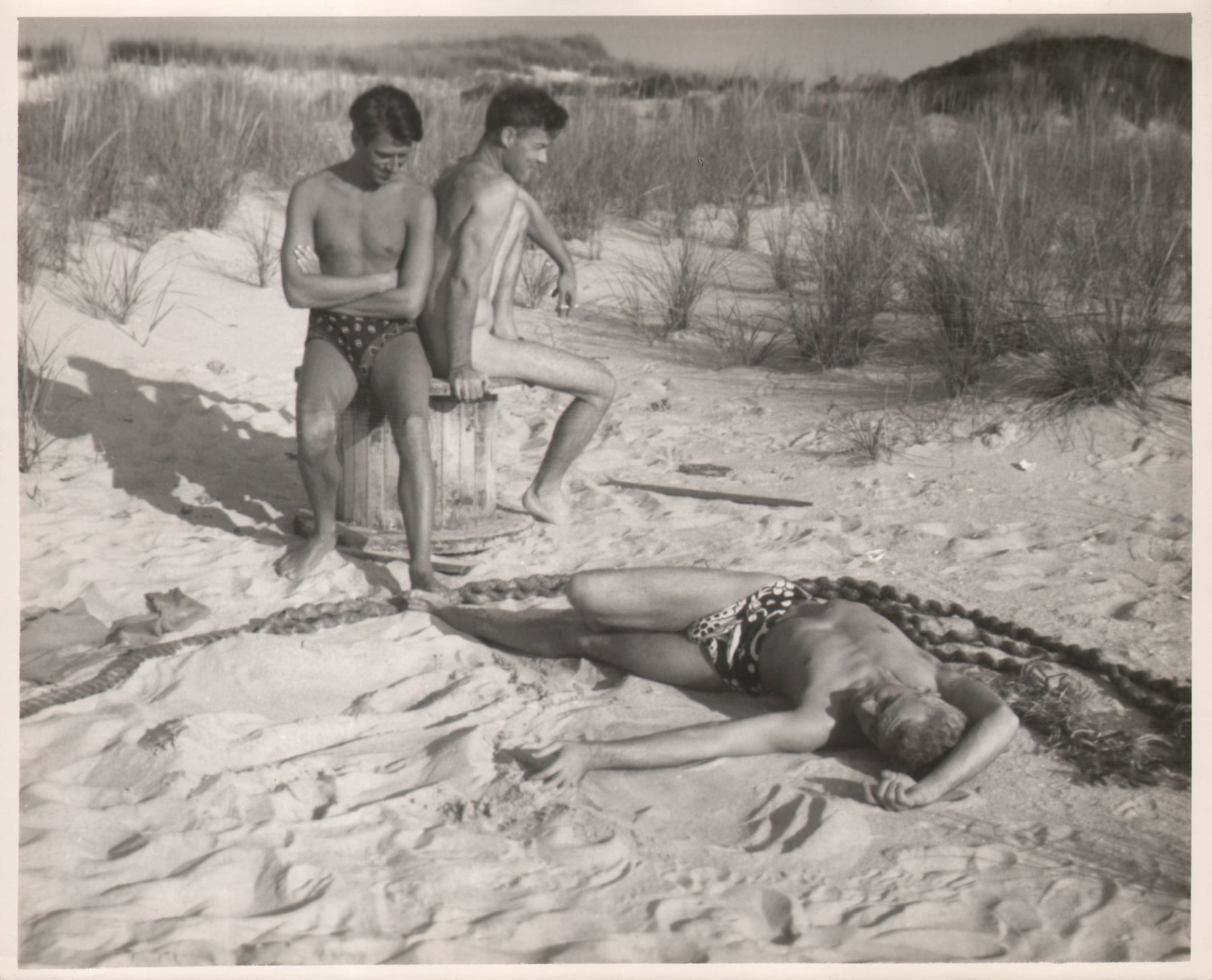
Next month will mark five years since I started the Artist’s Muse series on this blog – profiling the men who inspired, and were subjects of, mid-century artists like George Platt Lynes, Bernard Perlin, George Tooker and the PaJaMa collective: Paul Cadmus, Jared and Margaret French. Last summer I compiled some of these stories and photos for the Fire Island Pines Historical Preservation Society website. “The Fire Island Muses of George Platt Lynes & The PaJaMa Collective” focused on the subjects of the artwork they created during their time on Fire Island. Click here for the full post.

This summer, Vogue has entered the mix with a piece titled The 1940s Vogue Photographer Who Turned His Lens to the Male Muses of Fire Island. Honestly, it sounds as if he happened upon a coven of beautiful gay men, rather than importing his friends and lovers from the mainland. While it’s true that Lynes would photograph models and “attractive men that he heard of through word of mouth,” this applied to his studio work back in New York City. On Fire Island, the photos were of his intimate circle.

Lynes’ Fire Island photos are inextricably linked with the PaJaMa collective, as they all vacationed together and posed for each other. Artists like Lynes, Tooker and Perlin were all influential on each other’s work, especially the photographic aspects of their creativity.

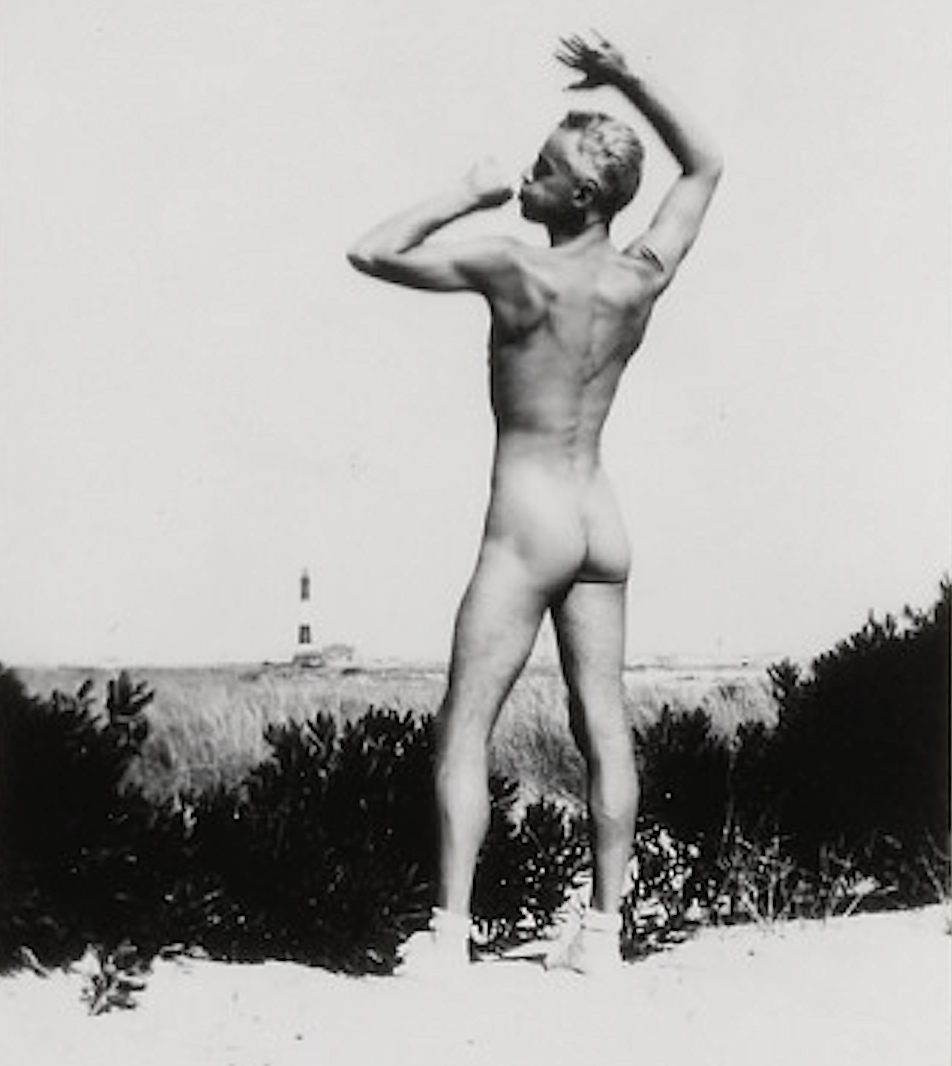
Lynes with Paul Cadmus, Glenway Wescott, Donald Windham, Jared French & the Fire Island Lighthouse, PaJaMa (ca. 1938-40)

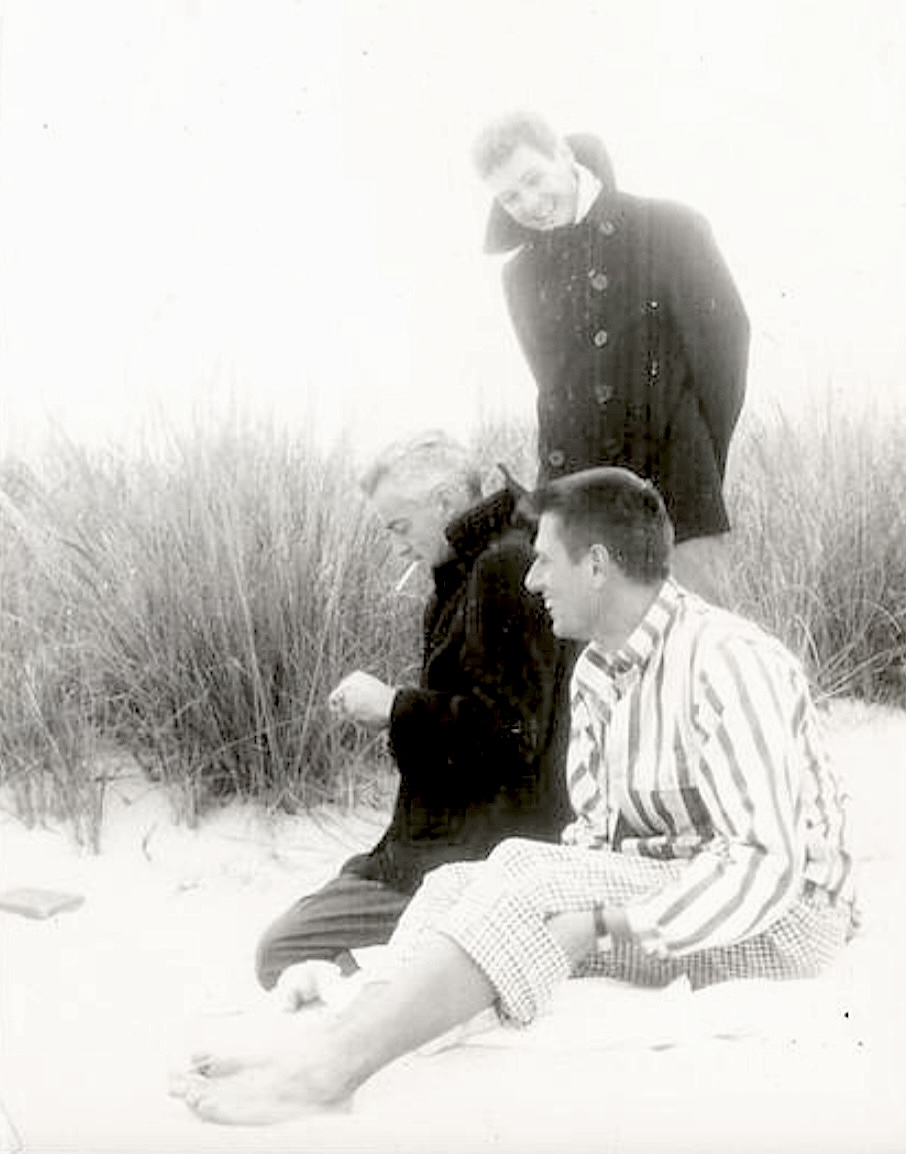
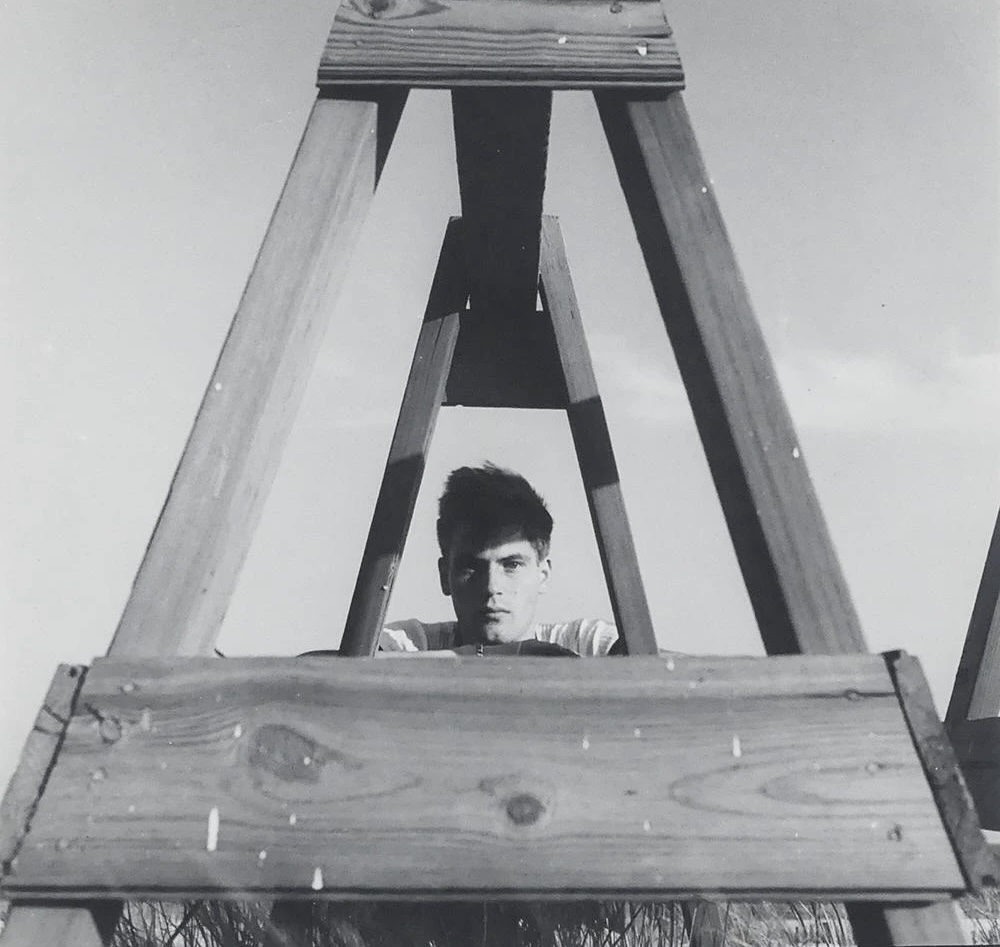
The Vogue piece displays several photos from A.Therien gallery’s recent collection of images featuring fellow photographer Wilbur Pippin, who was profiled here back in April. These are additional photos from that collection:

Wilbur Pippin with Fidelma Cadmus Kirstein and George Tooker, photos by George Platt Lynes & PaJaMa (ca. 1948-50)

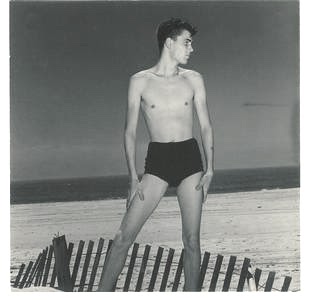
In 1943, Lynes was so enamored of Jonathan Tichenor that he left his long-term threeway relationship with Glenway Wescott and Monroe Wheeler to be with him. The pair moved in together and Lynes shocked his discreet friends by announcing that they planned to be married. Tichenor was the subject of many Lynes photographs during this period, including some memorable shots snapped on Fire Island. The relationship imploded in 1945 when Tichenor ran off to become the second husband of socialite/artist Bridget Bate.

Jonathan Tichenor, Fire Island, photos by George Platt Lynes & PaJaMa (ca 1944)

Lynes met aspiring dancer Randy Jack in 1947 while he was working for Vogue in Los Angeles. The pair moved back to New York the following year, where Jack found success as a model. They parted ways a few months later. Read more about Randy Jack here.

Lynes with his boyfriend Randy Jack (ca 1948)

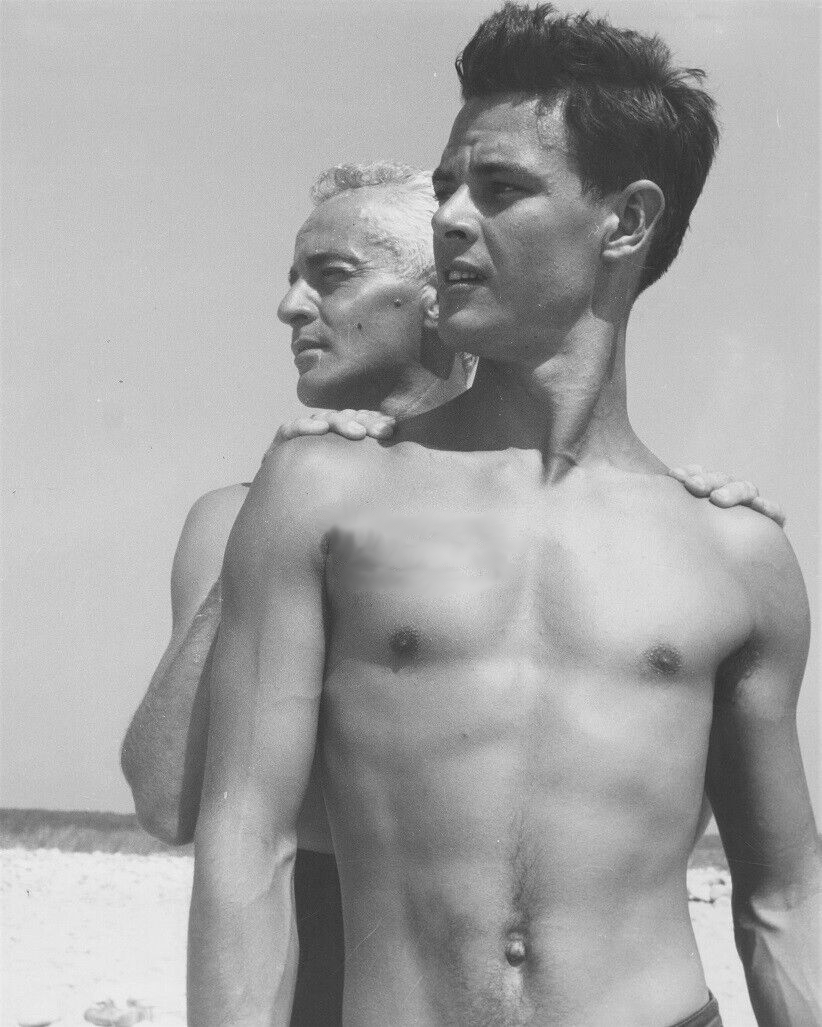
Ten days after the departure of Randy Jack, former military man Chuck Howard moved in with Lynes. Throughout their relationship, Lynes frequently photographed Howard on Fire Island. He later became a successful fashion designer and restaurateur. Read more about Chuck Howard here.

Chuck Howard photographed on Fire Island by George Platt Lynes (ca 1950)

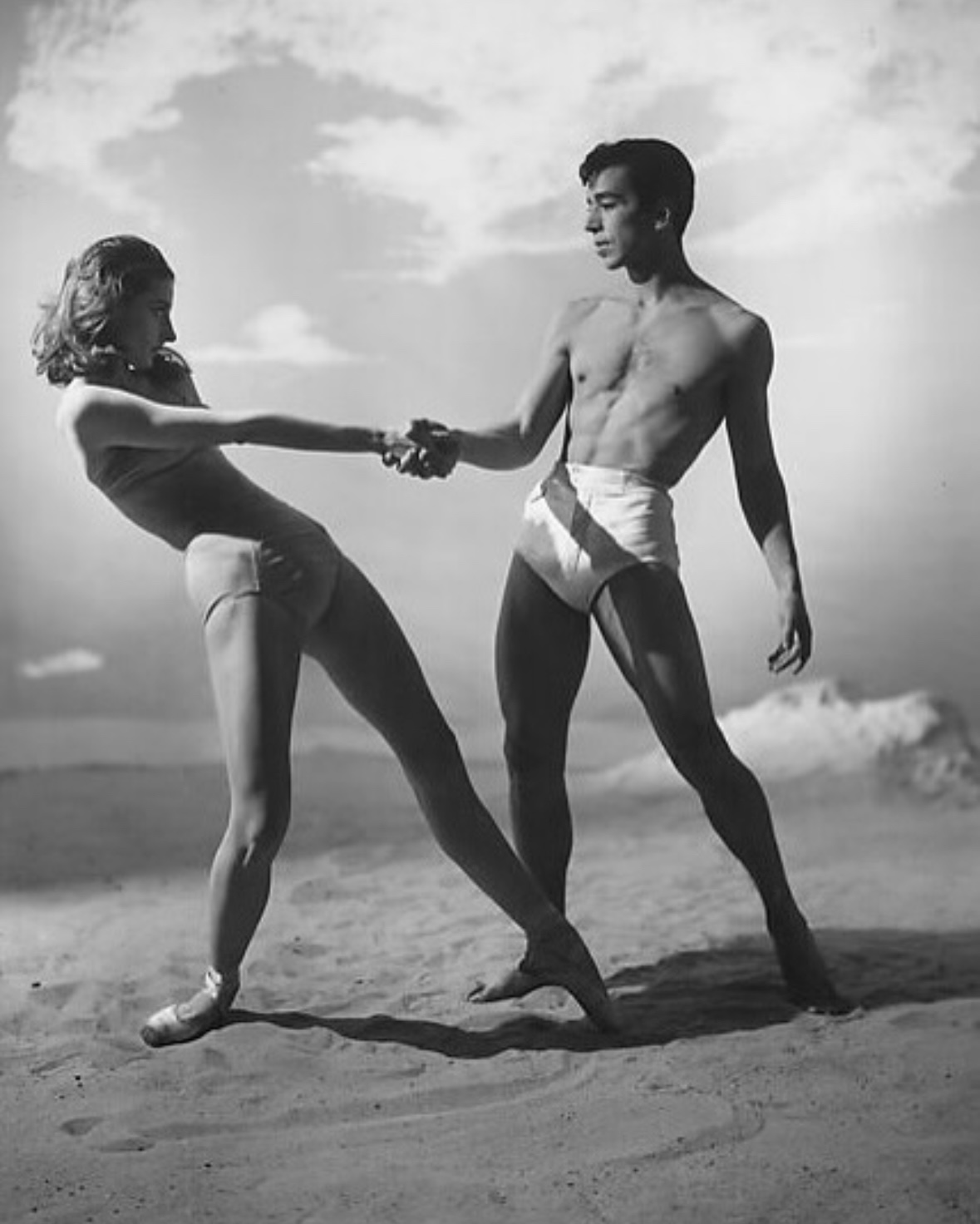
In 1950, Lynes created a studio beach scenario with dancers Nicholas Magallanes and Tanaquil LeClerq in poses from the George Balanchine/Jerome Robbins ballet Jones Beach. Magallanes was also a member of Lynes’ social circle and a frequent model for his nude photography.

Nicholas Magallanes and Tanaquil LeClerq in Jones Beach, George Platt Lynes (1950)

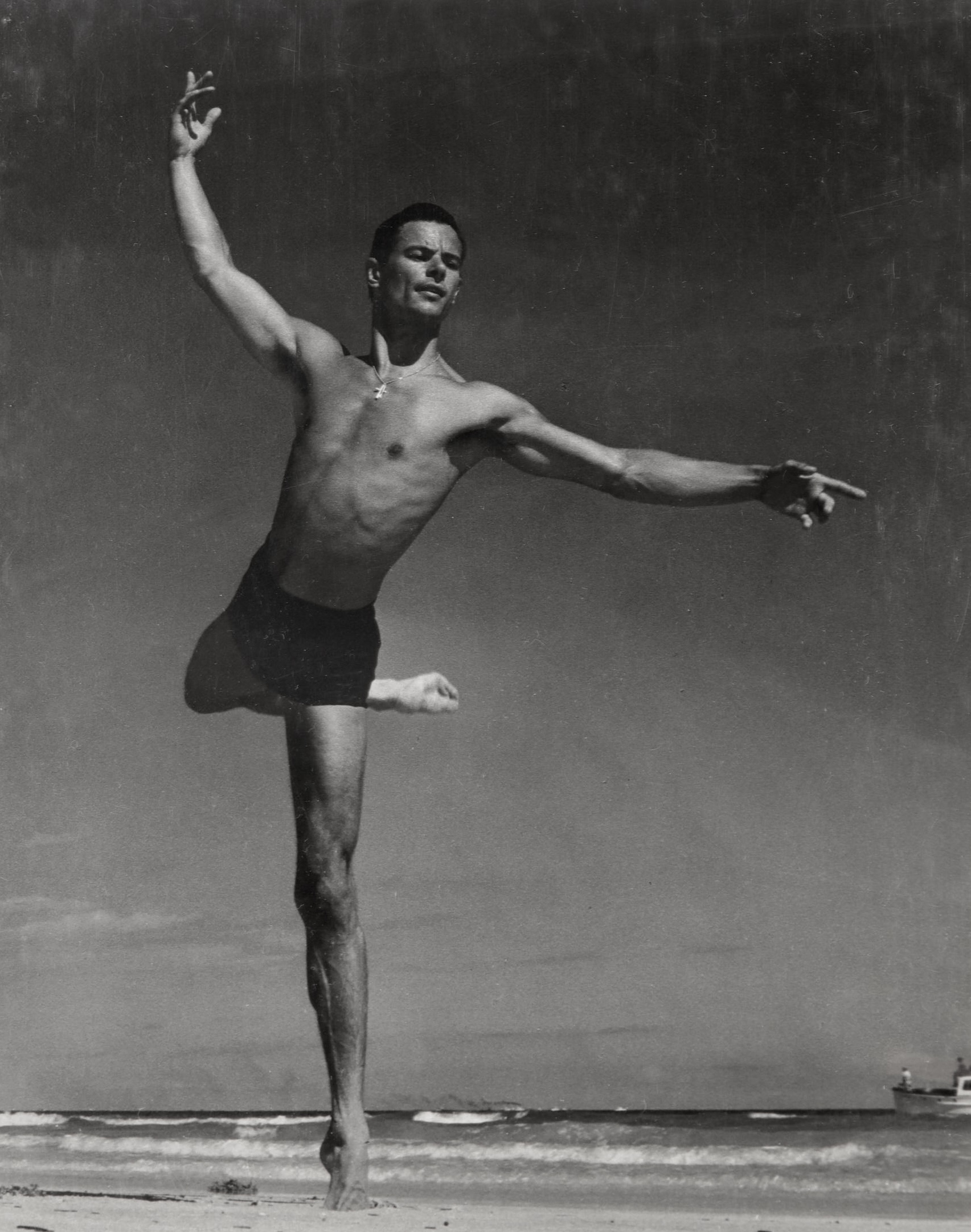
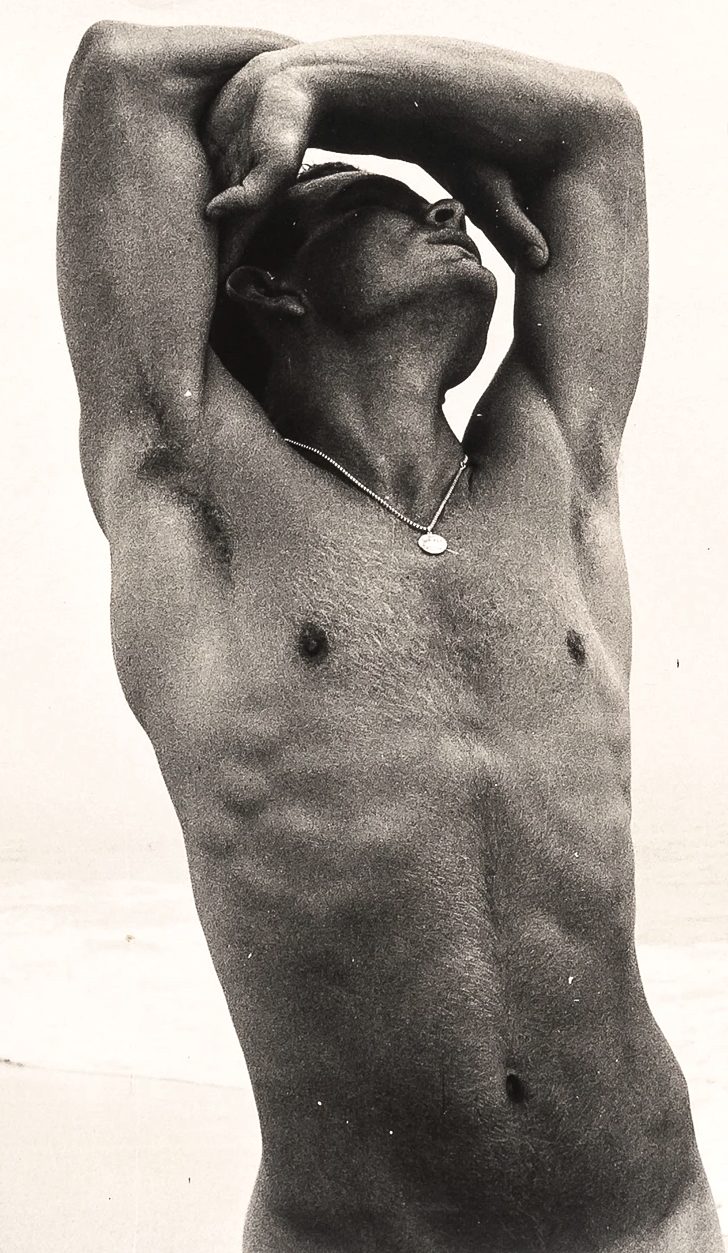
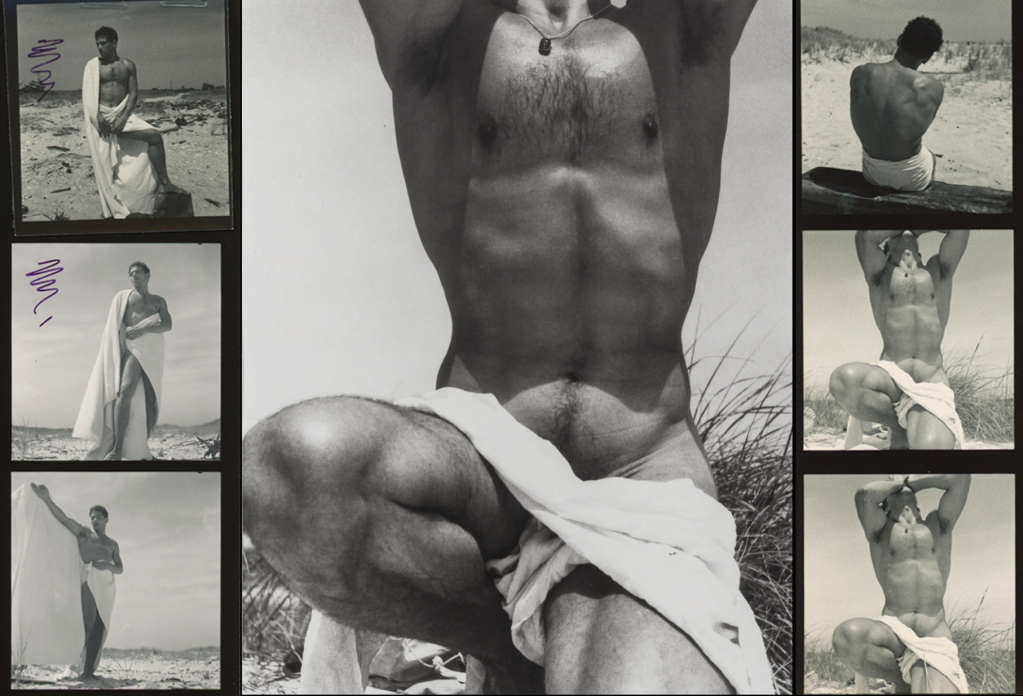
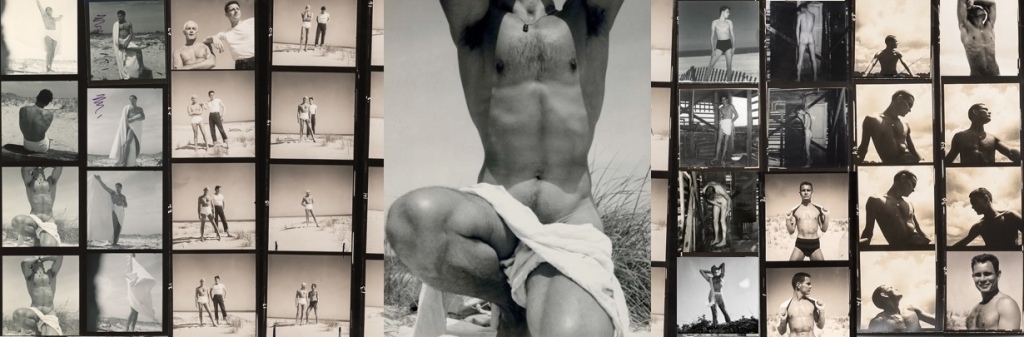
Lynes’ most iconic Fire Island image is of dancer Francisco Moncion, seen here with some alternate shots from the contact sheet. The influence on the work of Herb Ritts and Bruce Weber is evident.

Francisco Moncion photographed by George Platt Lynes on Fire Island (ca 1948-50)

The Vogue profile of George Platt Lynes concludes that his work for the magazine may have provided him with commercial success, but that his Fire Island portraits show that success comes in many forms.

I heartily concur.

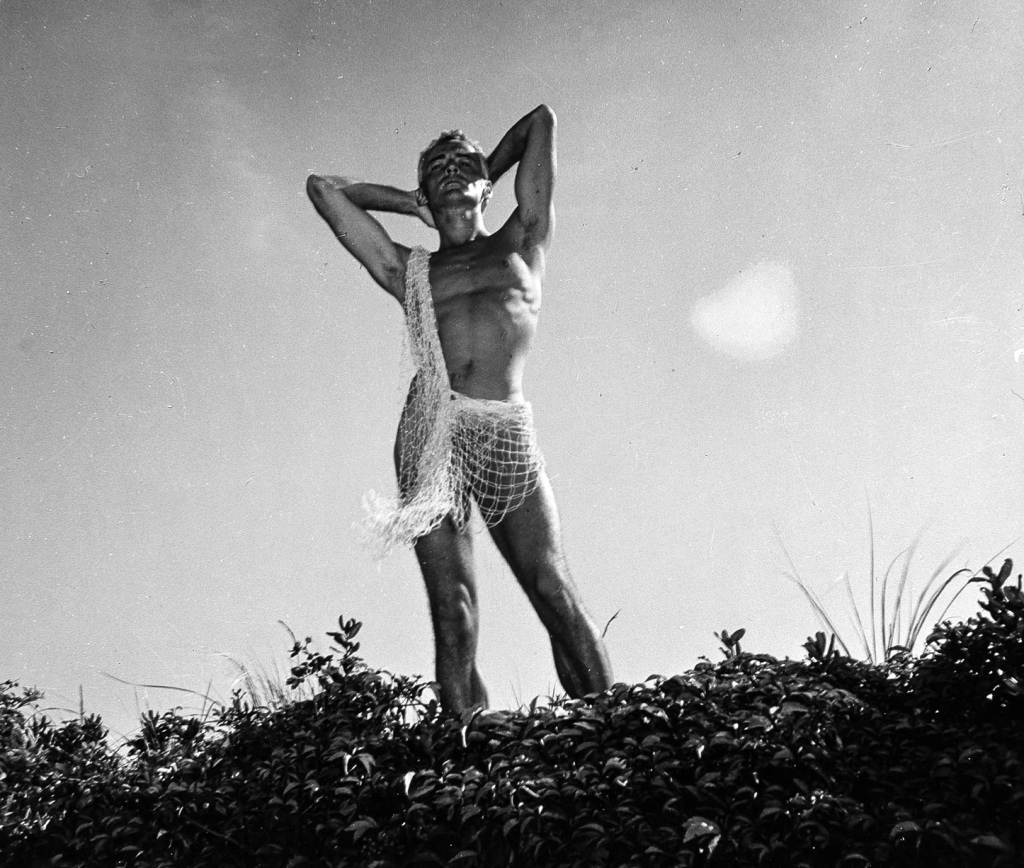
George Platt Lynes, Fire Island, PaJaMa (1941)

See Also:
Artist’s Muse: Ted Starkowski
Artist’s Muse: Forrest Thayer
Artist’s Muse: William Weslow
Artist’s Muse: The Mystery Model
Artist’s Muse: José “Pete” Martinez
Artist’s Muse: Donald Windham & Sandy Campbell
Buddy & Johnny: A Historic Photo Shoot
Provincetown PaJaMa Party
Fire Island PaJaMa Party
George Platt Lynes: In Touch Magazine (1982)

Dusting Off The Holiday Favorites (2024)

NYC Holiday Window Display (1915)

I know I am not alone when I say that I take comfort in the annual repetition of the holidays: revisiting holiday-themed music, films, television shows… and now internet posts. Dave Holmes’ account of Patti LaBelle’s disastrous performance at the 1996 National Christmas Tree lighting is worth an annual revisit. Trust me.

Not to get meta or anything, but the post you are currently reading has been reworked and updated each year since 2020.

While we’re mining the past and dusting off our chestnuts, here’s the intro to the 1999 holiday episode of Bri-Guy’s Media Surf, an NYC Public Access show that featured yours truly lip-synching a little Esquivel:

Whenever the song pops up on my holiday playlist, I still do this.

I find it interesting that we immerse ourselves in certain pop culture favorites for exactly 6 weeks of the year and then pack them up in mothballs with the ornaments until next year. I mean, Brenda Lee’s “Rockin’ Around The Christmas Tree” is currently at #1 on the Billboard Hot 100. Burl Ives, Bobby Helms and Andy Williams are also in the top 10. Are any of them on your 4th of July playlist? They aren’t on mine.

Gabe Pressman (left) with Marilyn Monroe (1956)

I used to look forward to the annual Christmas Eve tradition on NBC New York’s evening news when reporter Gabe Pressman would read “Yes Virginia, There Is A Santa Claus.” I taped it in 2011, knowing that the tradition wouldn’t last forever. The self-described “little Jewish kid from the Bronx” was 87 years old at the time and continued to work at NBC until his death at age 93.

NBC New York reporter Gabe Pressman’s annual segment on Virginia O’Hanlon’s 1897 letter to the New York Sun Newspaper.

In keeping with this revisit, my other blog posts of Christmas past are back to haunt you like A Christmas Carol, Mr. Scrooge:

Last year I posted Your Guide To Gay Disposable Holiday Movies, highlighting the 10 gayest Lifetime/Hallmark/Netflix movies of the past few years:


Copyright issues kept my 60 Degrees Girl Group Christmas playlists out of commission but now they are back! They have been running each week on the resurrected East Village Radio all month. Click here for streaming:
12/1/2024 – from 2008
12/8/2024 – from 2009
12/15/2024 – from 2012

And here’s a new one:

There’s a new Motown Christmas Special this year that has already aired in prime time several times this month, featuring Smokey Robinson, Gladys Knight, Martha Reeves and The Temptations. Here is my take on the 1987 Motown Christmas Special – which featured very few Motown acts.


Here are 10 Things You May Not Know About March of The Wooden Soldiers, the Laurel & Hardy classic holiday film.

My Canine Christmas Tail is a true story about my dog Sunshine, a basset hound with an appetite for tinsel.


Have you watched Christmas In Connecticut yet this year? How about that delivery woman? This year I was able to update my 2019 post, identifying Daisy Bufford as the actress who played the unbilled role.

The original version of “¿Dónde Está Santa Claus?” is featured in “Llamacita,” this year’s Amazon Prime holiday commercial. Here’s a little backstory on the song & Augie Rios, who sang the original version.

Also – would you like to hear my Spotify holiday playlist?

Way back in 2002, when Limewire was a thing and people listened to music on silvery discs, I started creating Christmas CD mixes that I would mail out or give to people. These were received with a heartwarming combination of feigned delight, veiled indifference and deafening silence. None of these CDs had a pressing of more than 20 copies. I’d like to call them “much sought after” – but no, that’s not really the case, although every once in a while, someone really got into them and would ask for copies of other volumes.

And so, I’m offering this simple playlist…. for kids from 1 to 92. Unfortunately some of the tracks on these dozen CDs are not on Spotify, but I keep adding songs that would be on the current CD volume… if there was one. And now the playlist is over 17 hours of holiday tunes. I recommend listening on shuffle – there’s something to irritate everyone. Enjoy!

Here’s one more nugget to stuff in your stocking: This vid went viral in 2011. Choreographed and performed by Alex Karigan & Zac Hammer of the Amy Marshall Dance Company, it was filmed in one continuous take at the New 42nd St. Dance Studios. There’s something infectious about it: the joy, the corniness, the celebratory queerness of it all. It makes me want to dust off my jazz shoes. Once a year.

See Also:
Your Guide To Disposable Gay Holiday Movies
The 60 Degrees Girl Group Christmas Show
The Christmas In Connecticut Delivery Woman
¿Dónde Está Santa Claus? (& Augie Rios)?
March Of The Wooden Soldiers: 10 Things You May Not Know About This Holiday Classic
Sunshine & Tinsel: A Canine Christmas Tail
A Christmas Without Miracles: The 1987 Motown Xmas Special

Artist’s Muse: William Weslow

Hard to believe but it has been a year since the last Artist’s Muse profile – these are men who inspired and were subjects of 20th Century painters, photographers, and other artists. It was last January that we cast the spotlight on Jose “Pete” Martinez. Chuck Howard was profiled in September, 2022 and is currently being featured in George Platt Lynes photographs on exhibition at Childs Gallery in Boston. If you read our post and then take a look at their press release, you might surmise the primary source of their biographical material.

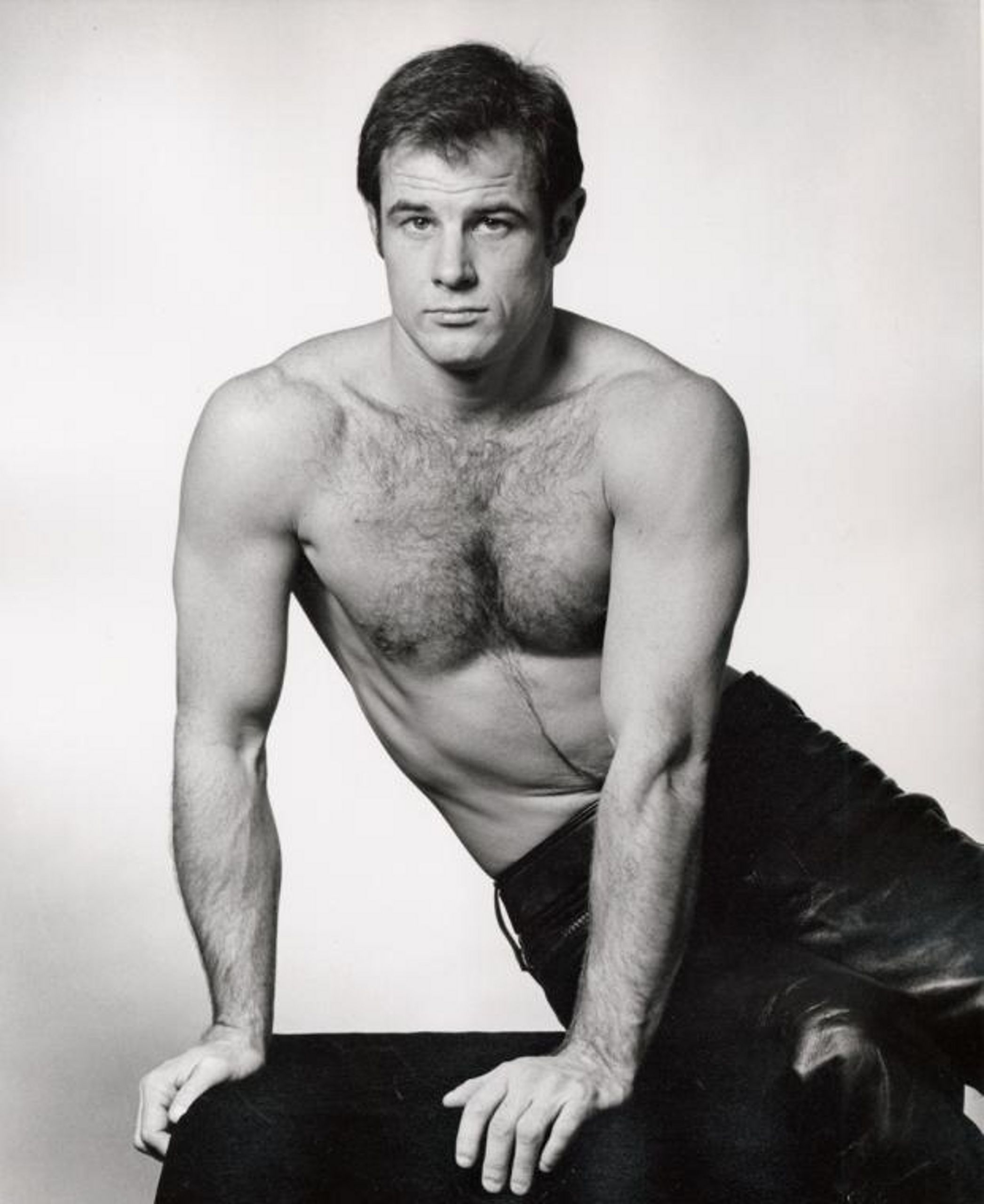
Our latest Artist’s Muse is William Weslow, a ballet dancer with an extraordinarily long career who was also a Broadway performer, artist, and masseur. He posed for George Platt Lynes’ camera during their brief relationship, and was later involved with choreographer Jerome Robbins. He posed nude for dance photographer Kenn Duncan when he was in his 50’s, looking as fit as in photos from 25 years earlier.

The Columbian, Vancouver, WA (6/7/44)

William Edward Weslow was born on March 20, 1925 in Seattle, Washington. His mother had been a Ziegfeld dancer, and he soon followed her lead. As a teen, Weslow studied with famed dance instructor Mary Ann Wells. His 1943 draft registration card lists him as a student at Broadway High School in Seattle. Later that year, he joined the Navy Coast Guard and was stationed in the Alaska.

Annie Get Your Gun (1946) Ethel Merman with Weslow on the right (Photo: Eileen Darby)

After his stint in the Navy, Weslow headed to New York to continue his ballet study. He joined the Ballet Theatre, but soon turned his attention to the Broadway stage. He was in the original Broadway casts of two Ethel Merman vehicles: Annie Get Your Gun and Call Me Madam, the latter choreographed by Jerome Robbins. Besides touring companies, he also appeared on Broadway in the original casts of The Girl In Pink Tights and Wonderful Town with Rosalind Russell.

Weslow photographed by George Platt Lynes (1951)

It was around 1951 that Weslow had his brief relationship with photographer George Platt Lynes. The affair was so fleeting that it did not garner a mention in Allen Ellenzweig’s recent Lynes biography. In David Leddick’s Intimate Companions, it is summed up in a single anecdote:

Dancer William Weslow, who had a transitory but more serious than usual romance with George Platt Lynes in the early 1950’s, evidently treated the photographer to the kind of temperament Platt Lynes had displayed to his admirers in the past. Dining at Platt Lynes’s apartment before a performance, Weslow had requested a steak because of the demanding dancing that was to be done that evening. Instead, Platt Lynes served him an elaborate veal dish, which the young dancer flung against the wall before leaving in search of a steak.

Lynes’s photographs of Weslow are also rare, due in part to the paper negative process that the photographer was experimenting with at the time. This cost-cutting technique gave the photos a quality that have been described as either “ethereal” or “muddy.”

When he wasn’t on stage, Weslow enjoyed painting and sketching, with an affinity for exotic birds, both real and imagined. His work garnered several gallery showings through the years.

Buffalo Courier Express (4/1/51) & New York Post Star (7/9/71)

New York Daily News (1/1/54) & (11/6/54)

Weslow was a soloist at Radio City Music Hall, New York Daily News (6/20/56)

In 1955, he originated the role of Levi Stolzfuss in the Amish musical Plain and Fancy. After nearly 10 years in musicals, he felt the need for a change. When the show closed the following year, he rejoined the Ballet Theatre for a brief stint before settling in at the New York City Ballet for the rest of his dance career.

Like his relationship with Lynes, Weslow’s dalliance with choreographer Jerome Robbins was so fleeting that most biographers fail to mention it. It is worth noting as it caused friction between the two while they continued to work together. Weslow is not alone in saying that Robbins could be vindictive, manipulating his dancers because of personal grudges, often pitting them against each other.

Weslow also caught the eye of New York City Ballet Director Lincoln Kirstein. He rebuffed his advances, stating “I don’t find you attractive, Mr. Kirstein.” “Who asked you to find me attractive?” Kirstein snapped, “I was just asking you to come over to the house for a few drinks and stay over.”

Later, the two had a chance meeting at a gay bathhouse. Weslow greeted him loudly with “Why Lincoln, hello! Come here often?” The married Kirstein did not respond and left the establishment.

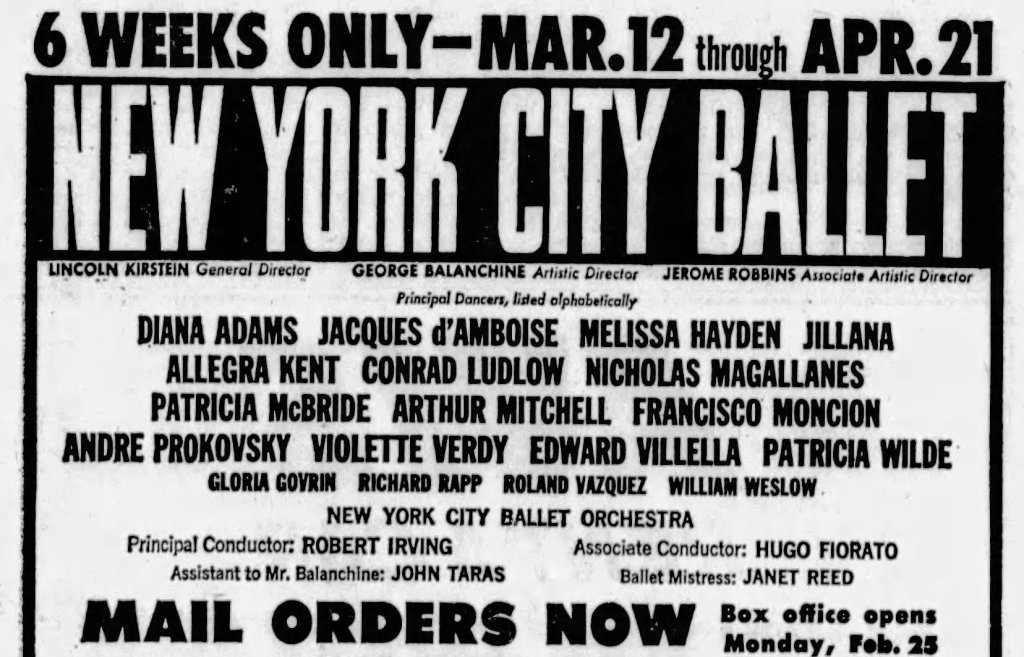
1963 Ad for New York City Ballet
1963: Weslow & Suki Schorer in Variations from Don Sebastian (photo: Martha Swope)
1964: Weslow & Sara Leland in La Valse (photo: Martha Swope)
1964: William Weslow & Carol Sumner are the dancers in the first of 4 Temperaments – NYCB filmed for Canadian Television
1965: New York City Ballet rehearsal for Don Quixote (l-r) Nicholas Magallanes, George Balanchine, Richard Rapp, Jillana, William Weslow (photo: Martha Swope)
Camden Courier Post, New Jersey (3/8/66)
1966: Weslow & Marnee Morris in A Midsummer Night’s Dream (photo: Martha Swope)
1967: Weslow & Leslie Ruchala in Don Quixote (photo: Martha Swope)

In the mid 1960’s, Weslow began cultivating a side career as a masseur, working on fellow ballet dancers including Alicia Alonso and Edward Villella, who credited Weslow’s massages with extending his career by several years. Weslow makes a brief appearance as his masseur in the 1968 documentary Man Who Dances: Edward Villella.

In 1972, Weslow was dismissed from the New York City Ballet. He was 47 years-old and had been with the company for 14 years. In the book I Remember Balanchine, he recounts Balanchine telling him, “You’re too old. You have to leave company. We only want young, pretty dancers here. Old dancers – you see, when they get old they should just go away and die. This is what they should do, die. Because you’re not pretty. No youth… Besides, dear, you’re not going to commit suicide, are you?”

He replied; “To please you, no, I wouldn’t, Mr. Balanchine.”

“And that was that,” Weslow writes; “He didn’t say ‘You have been a good dancer’ or anything. It was just ‘Go away. Go away.’ I was close to tears. It was a terrible blow because I adored the company.”

Weslow’s massage work helped him to keep a connection to the dance world while easing into the next phase of his life, as he became known as “masseur to the stars.”

1976: Weslow was 51 years old when he was photographed by Kenn Duncan
When former ballet dancer Anne Byrne (aka Mrs. Dustin Hoffman) was profiled in the New York Daily News, her masseur William Weslow was there to lend a hand or two. (1/22/78)
William Weslow (1997)

When interviewed later in life, a reporter recalled “He seemed to love Maria Tallchief and had a poster of her on the wall. He also had kind words for Allegra Kent. He could be quite sarcastic, compassionate, cranky and deeply moving remembering certain people and other things.”

Allegra Kent called him “the funniest comedian ever” while also noting his empathy for others. He could also be quite brutal in his assessment of those he had worked with. Of Kirstein he said, “There was cruelty in Lincoln.” Jerome Robbins, he told a biographer “should have been cut up in small pieces and burned in a microwave somewhere because he was so horrible to me.”

William Weslow (2000)

While photographing male nudes for his 2011 book Shades of Love, photographer Demitris Yeros recounts how a naked octogenarian William Weslow would repeatedly interrupt the photo shoot, arms waving to chase the pigeons from his veranda. 

William Weslow passed away at age 87 on January 29, 2013 in New York City. He was remembered in a Dance Magazine article as “A flamboyant personality with a sassy comeback for any remark directed his way…. (he) was as colorful off stage as on.”

See also:
Artist’s Muse: José “Pete” Martinez
Artist’s Muse: Donald Windham & Sandy Campbell
Artist’s Muse: Forrest Thayer
Artist’s Muse: Chuck Howard
Artist’s Muse: Randy Jack
Artist’s Muse: Ted Starkowski
Artist’s Muse: Wilbur Pippin
Artist’s Muse: The Mystery Model
Fire Island Muses of George Platt Lynes & The PaJaMa Collective
Revisiting George Platt Lynes’ Fire Island Muses
George Platt Lynes: In Touch Magazine (1982)
Kenn Duncan After Dark

Dusting Off The Holiday Favorites (2023)

NYC Holiday Window Display (1915)

I know I am not alone when I say that I take comfort in the annual repetition of the holidays: revisiting holiday-themed music, films, television shows… and now internet posts. Dave Holmes’ account of Patti LaBelle’s disastrous performance at the 1996 National Christmas Tree lighting is worth an annual revisit. Trust me.

Not to get meta or anything, but the post you are currently reading has been reworked and updated each year since 2020.

While we’re mining the past and dusting off our chestnuts, here’s the intro to the 1999 holiday episode of Bri-Guy’s Media Surf, an NYC Public Access show that featured yours truly lip-synching a little Esquivel:

Whenever the song pops up on my holiday playlist, I still do this.

I find it interesting that we immerse ourselves in certain pop culture favorites for exactly 6 weeks of the year and then pack them up in mothballs with the ornaments until next year. I mean, Brenda Lee’s “Rockin’ Around The Christmas Tree” is currently at #1 on the Billboard Hot 100. Burl Ives, Bobby Helms and Andy Williams are also in the top 10. Are any of them on your 4th of July playlist? They aren’t on mine.

Gabe Pressman (left) with Marilyn Monroe (1956)

I used to look forward to the annual Christmas Eve tradition on NBC New York’s evening news when reporter Gabe Pressman would read “Yes Virginia, There Is A Santa Claus.” I taped it in 2011, knowing that the tradition wouldn’t last forever. The self-described “little Jewish kid from the Bronx” was 87 years old at the time and continued to work at NBC until his death at age 93.

NBC New York reporter Gabe Pressman’s annual segment on Virginia O’Hanlon’s 1897 letter to the New York Sun Newspaper.

In keeping with this revisit, my other blog posts of Christmas past are back to haunt you like A Christmas Carol, Mr. Scrooge:

Last week I posted Your Guide To Gay Disposable Holiday Movies, highlighting the 10 gayest Lifetime/Hallmark/Netflix movies of the past few years:


Copyright issues kept my 60 Degrees Girl Group Christmas playlist out of commission but now it’s back! I plan to post other episodes of my old radio show in the new year.

Here is my take on the 1987 Motown Christmas Special – which featured very few Motown acts.


Here are 10 Things You May Not Know About March of The Wooden Soldiers, the Laurel & Hardy classic holiday film.

My Canine Christmas Tail is a true story about my dog Sunshine, a basset hound with an appetite for tinsel.


Have you watched Christmas In Connecticut yet this year? How about that delivery woman? This year I was able to update my 2019 post, identifying Daisy Bufford as the actress who played the unbilled role.

The original version of “¿Dónde Está Santa Claus?” is featured in “Llamacita,” this year’s Amazon Prime holiday commercial. Here’s a little backstory on the song & Augie Rios, who sang the original version.

Also – would you like to hear my Spotify holiday playlist?

Way back in 2002, when Limewire was a thing and people listened to music on silvery discs, I started creating Christmas CD mixes that I would mail out or give to people. These were received with a heartwarming combination of feigned delight, veiled indifference and deafening silence. None of these CDs had a pressing of more than 20 copies. I’d like to call them “much sought after” – but no, that’s not really the case, although every once in a while, someone really got into them and would ask for copies of other volumes.

And so, I’m offering this simple playlist…. for kids from 1 to 92. Unfortunately some of the tracks on these dozen CDs are not on Spotify, but I keep adding songs that would be on the current CD volume… if there was one. And now the playlist is over 17 hours of holiday tunes. I recommend listening on shuffle – there’s something to irritate everyone. Enjoy!

Here’s one more nugget to stuff in your stocking: This vid went viral in 2011. Choreographed and performed by Alex Karigan & Zac Hammer of the Amy Marshall Dance Company, it was filmed in one continuous take at the New 42nd St. Dance Studios. There’s something infectious about it: the joy, the corniness, the celebratory queerness of it all. It makes me want to dust off my jazz shoes. Once a year.

See Also:
Your Guide To Disposable Gay Holiday Movies
The 60 Degrees Girl Group Christmas Show
The Christmas In Connecticut Delivery Woman
¿Dónde Está Santa Claus? (& Augie Rios)?
March Of The Wooden Soldiers: 10 Things You May Not Know About This Holiday Classic
Sunshine & Tinsel: A Canine Christmas Tail
A Christmas Without Miracles: The 1987 Motown Xmas Special
Kenn Duncan After Dark


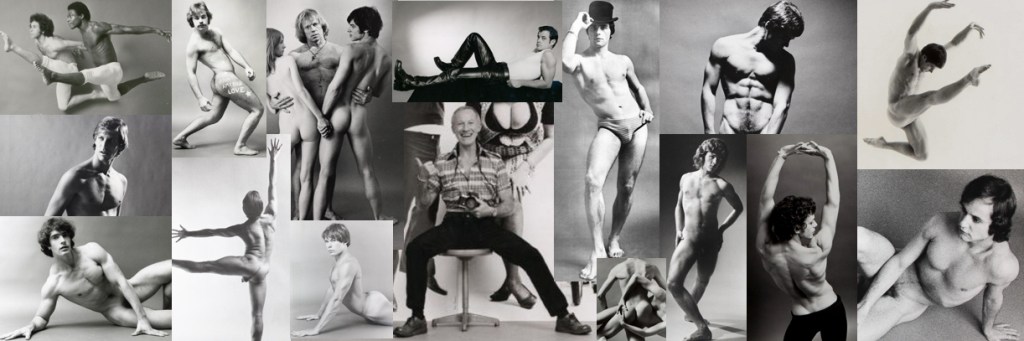
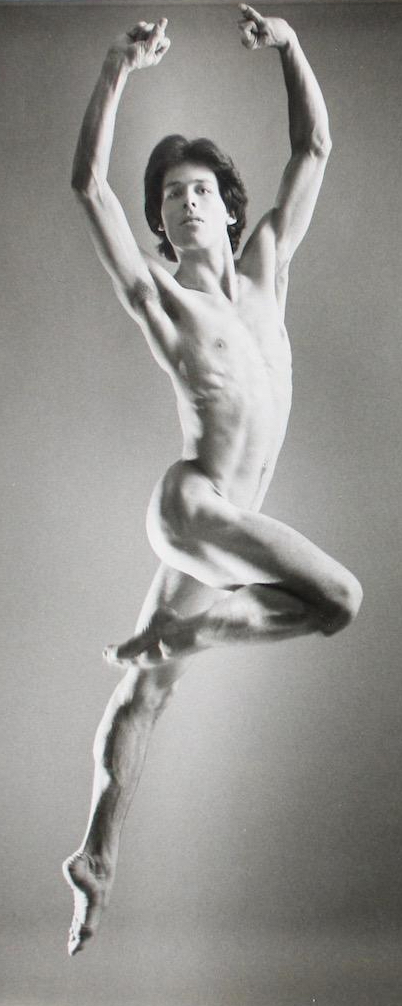
Kenn Duncan is widely considered to be one of the foremost dance photographers of the late 20th Century. In addition to his work as principal photographer for After Dark and Dance Magazine, his photos also appeared in Vogue, Time, Life, Newsweek and Harper’s Bazaar. From the mid-1960’s through the early 1980’s, he photographed nearly every major dance company in the world as well as many Broadway shows.

Born in New Jersey on September 22, 1928, Duncan began his career as a figure skater and then segued into dance. His career took another turn when he was sidelined with a broken foot and signed up for a six-week photography course at the local YMCA. Naturally he gravitated back to the dance world for photographic inspiration.

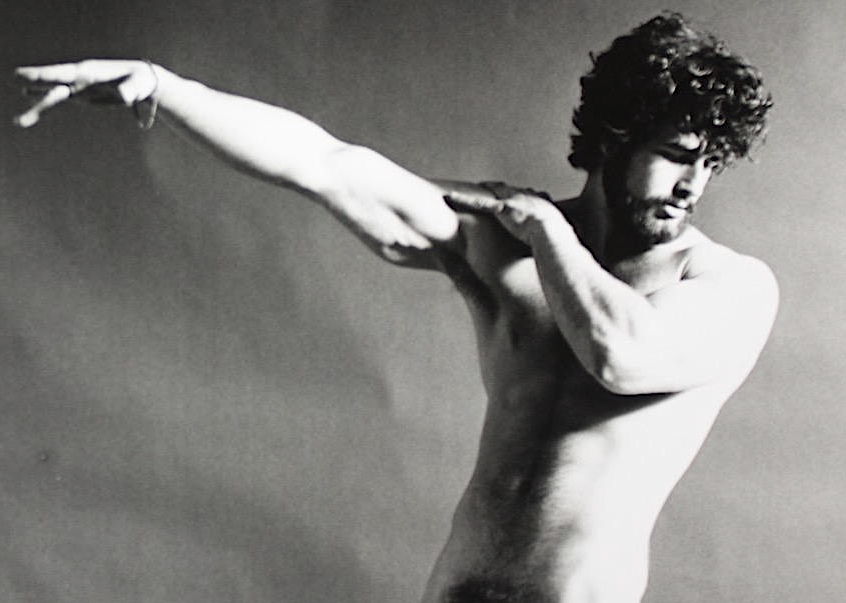
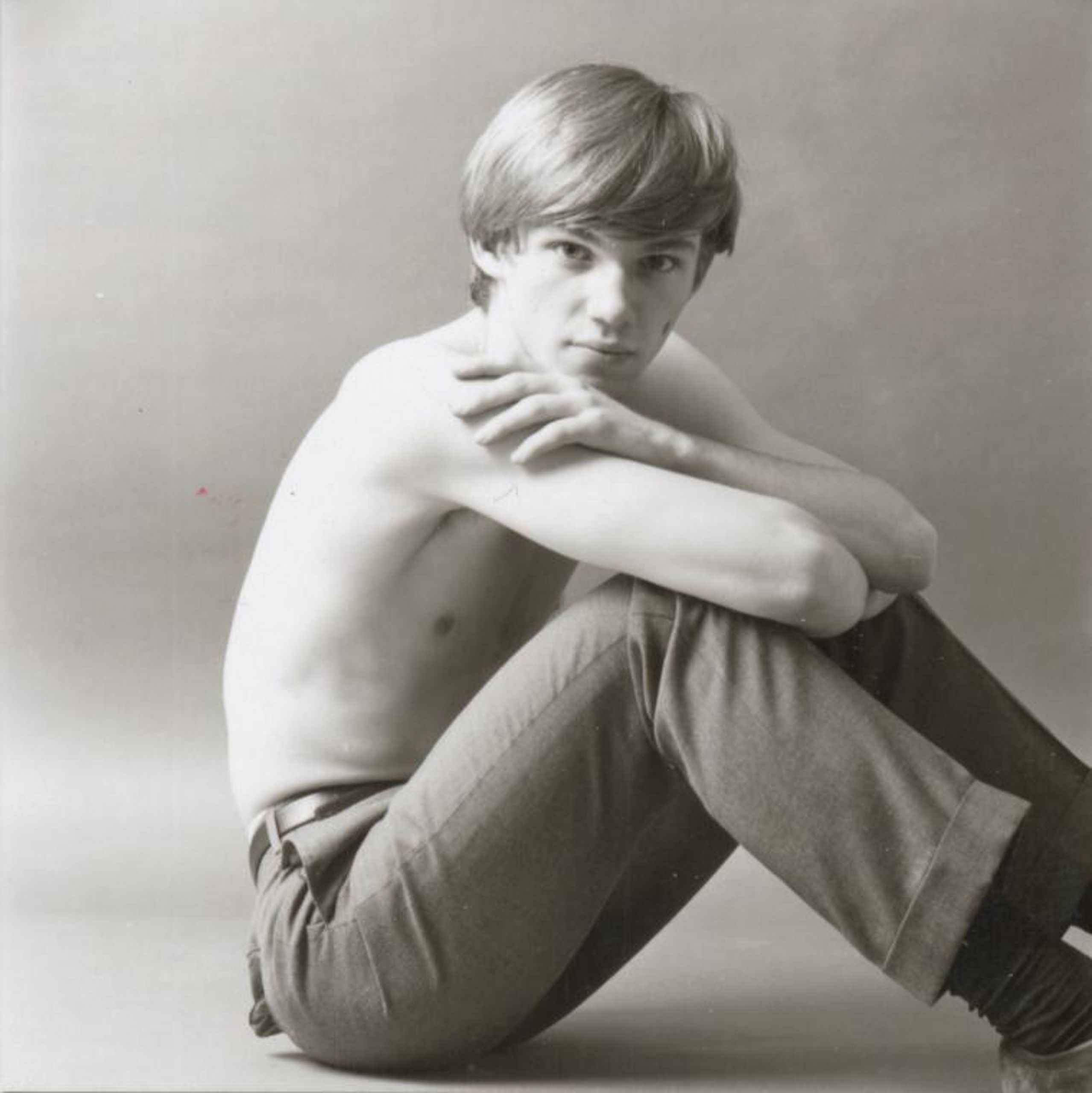
In addition to his dance photography, Duncan was well regarded for his nude photographs, with an emphasis on male subjects. His first two books, Nudes (1970) and More Nudes (1971) were favorably received for his “discreet and artistic arrangements of his subjects.”

Christopher Walken (1968)

After Dark was an edgy entertainment and culture-based magazine that sprang from the waning Ballroom Dance Magazine in 1968. In The Rise And Fall Of Gay Culture, Daniel Harris writes; “One of the strangest reincarnations in journalistic history… it was out of the ashes of a periodical devoted to such topics as waltzes, rumbas, and turkey trots that After Dark, an audacious mass-market experiment in gay eroticism, arose like a phoenix in all of its subversive splendor.”

Although After Dark was not officially a gay magazine, the publishers were certainly willing to cater to that audience, pushing the envelope on male nudity to a degree that is still not seen in mainstream US publications 50 years later.

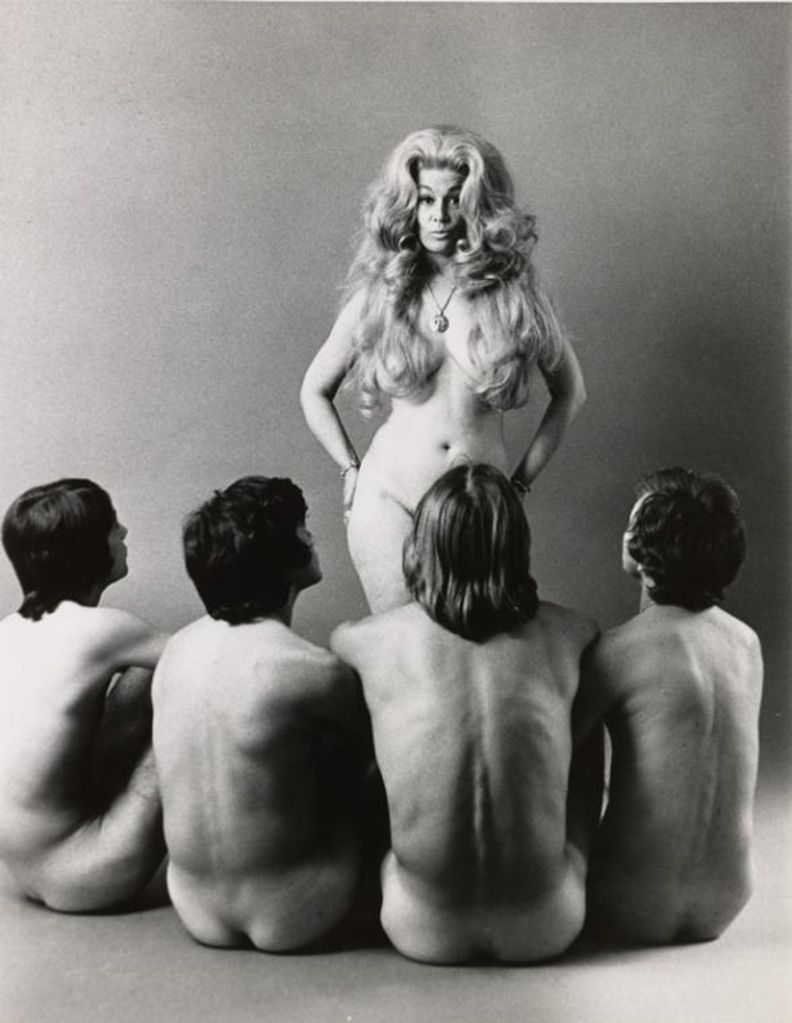
Sylvia Miles & Friends (1970)

Richard Thomas (1969)

Sal Mineo (1971)

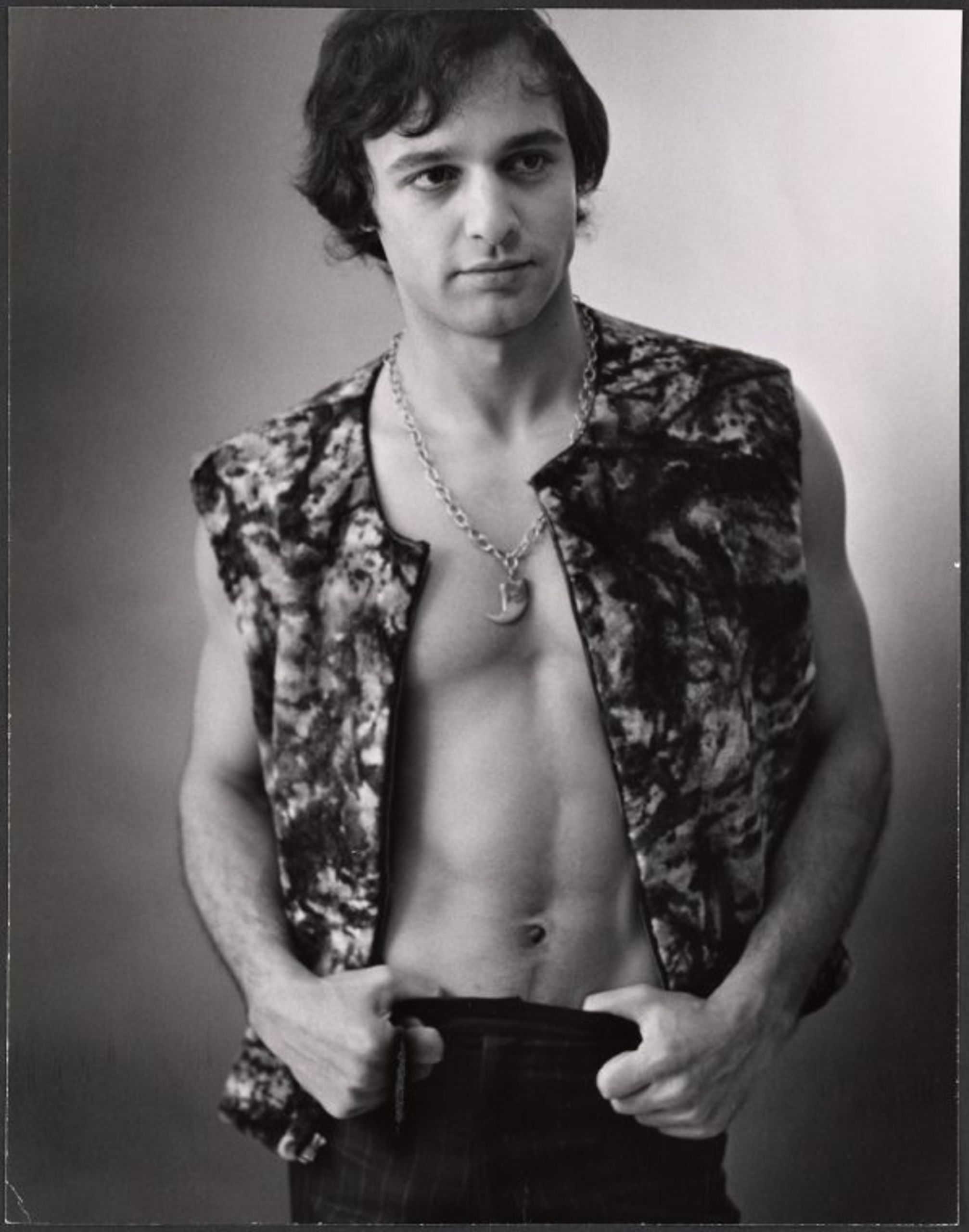
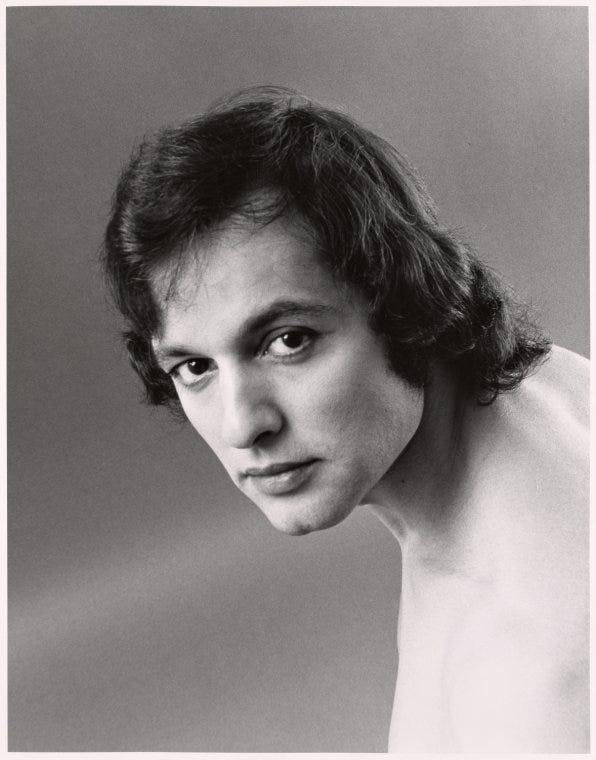
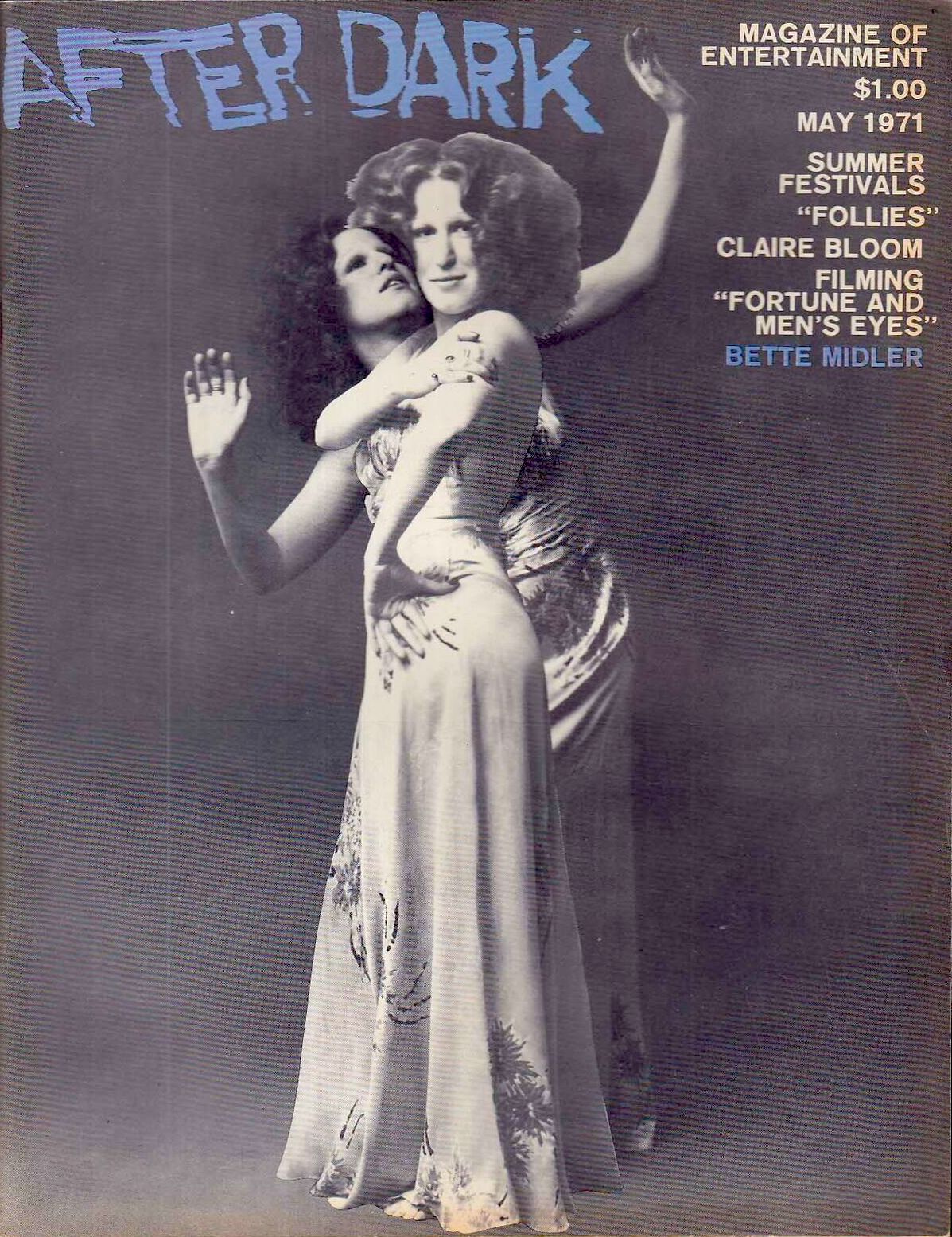
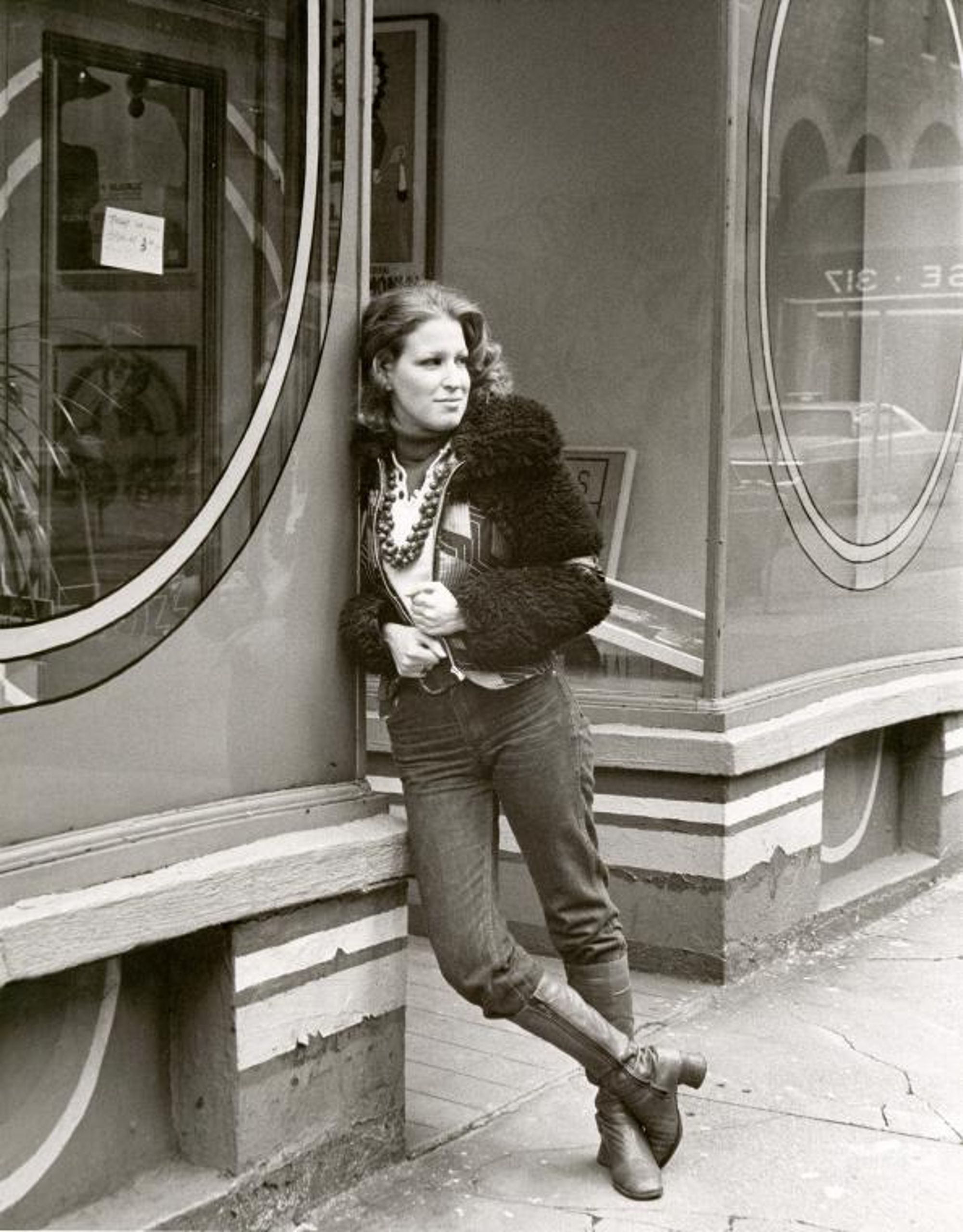
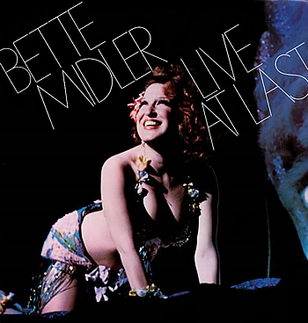
Duncan photographed Bette Midler numerous times through the years, including three After Dark cover photos and the cover shot for her 1976 Live At Last LP.

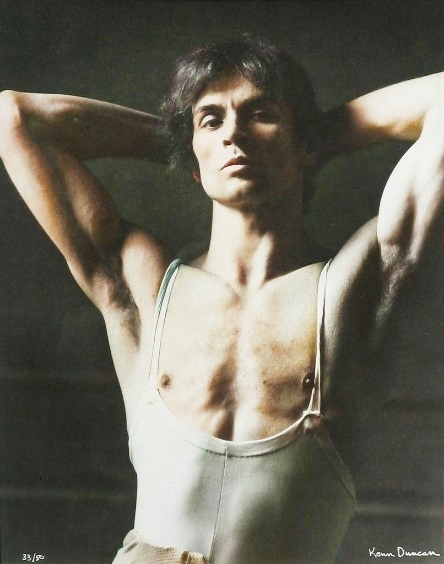
Rudolph Nureyev (1971)

Mikhail Baryshnikov

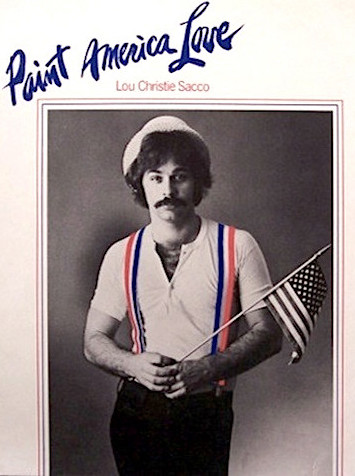
In 1971, Kenn Duncan photographed singer Lou Christie for his Paint America Love LP.

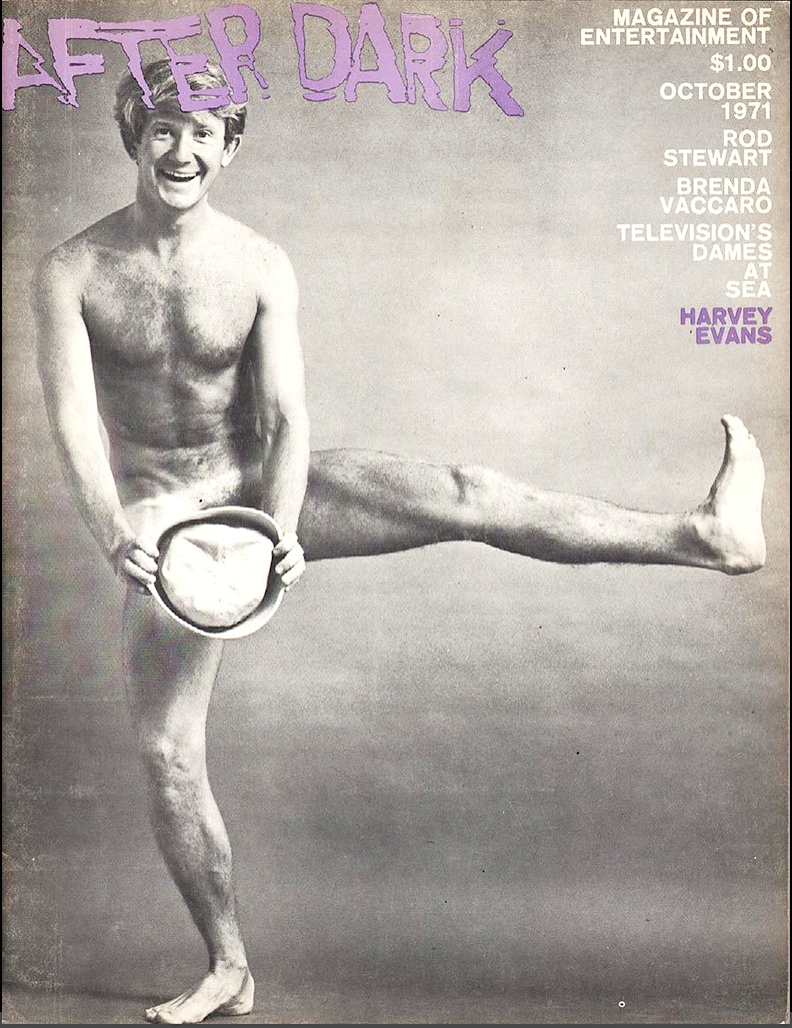
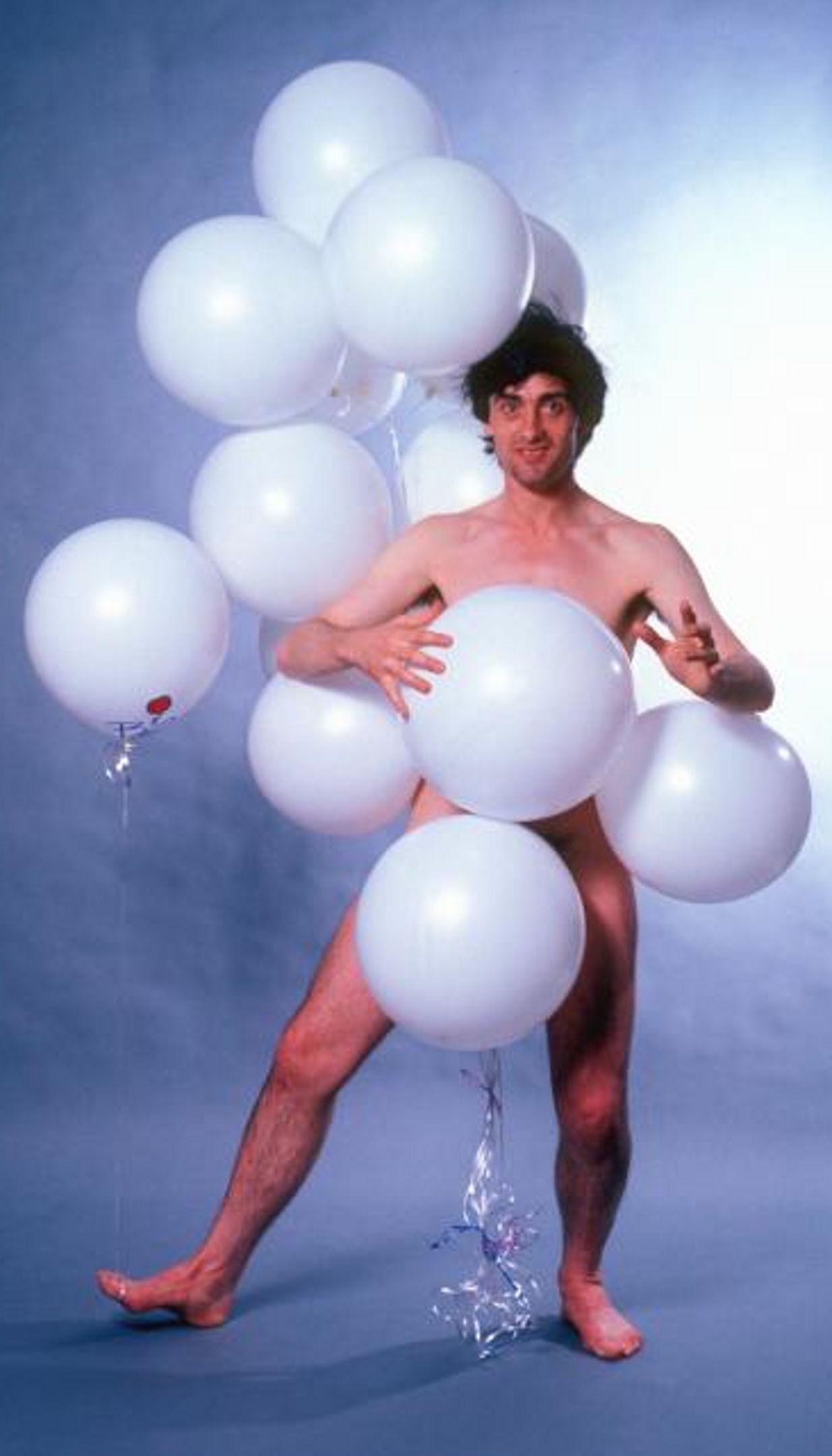
Harvey Evans was photographed in the buff for the October, 1971 cover of After Dark to promote the television adaption of the musical Dames At Sea.

LaBelle (l-r) Nona Hendryx, Sarah Dash, Patti LaBelle photographed in 1972 shortly before their intergalactic makeover.

Tony award-winning Welsh actor/director Roger Rees in several undated photos.

Brad Davis (1981)

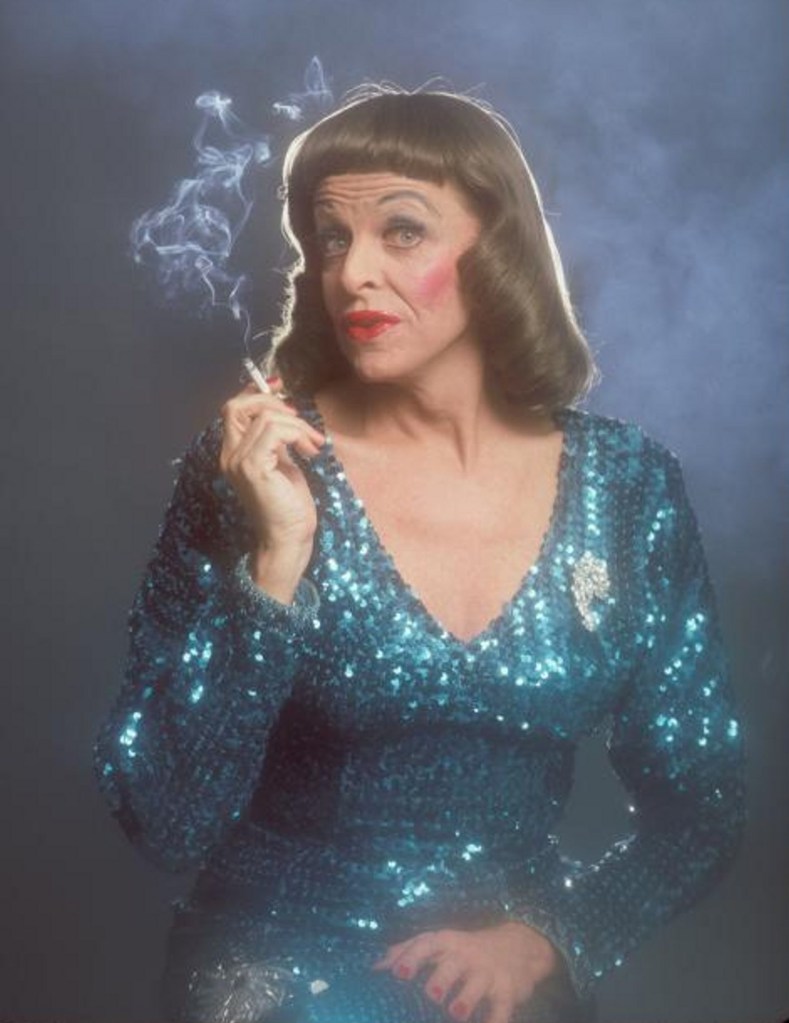
Charles Pierce as Bette Davis (1981)

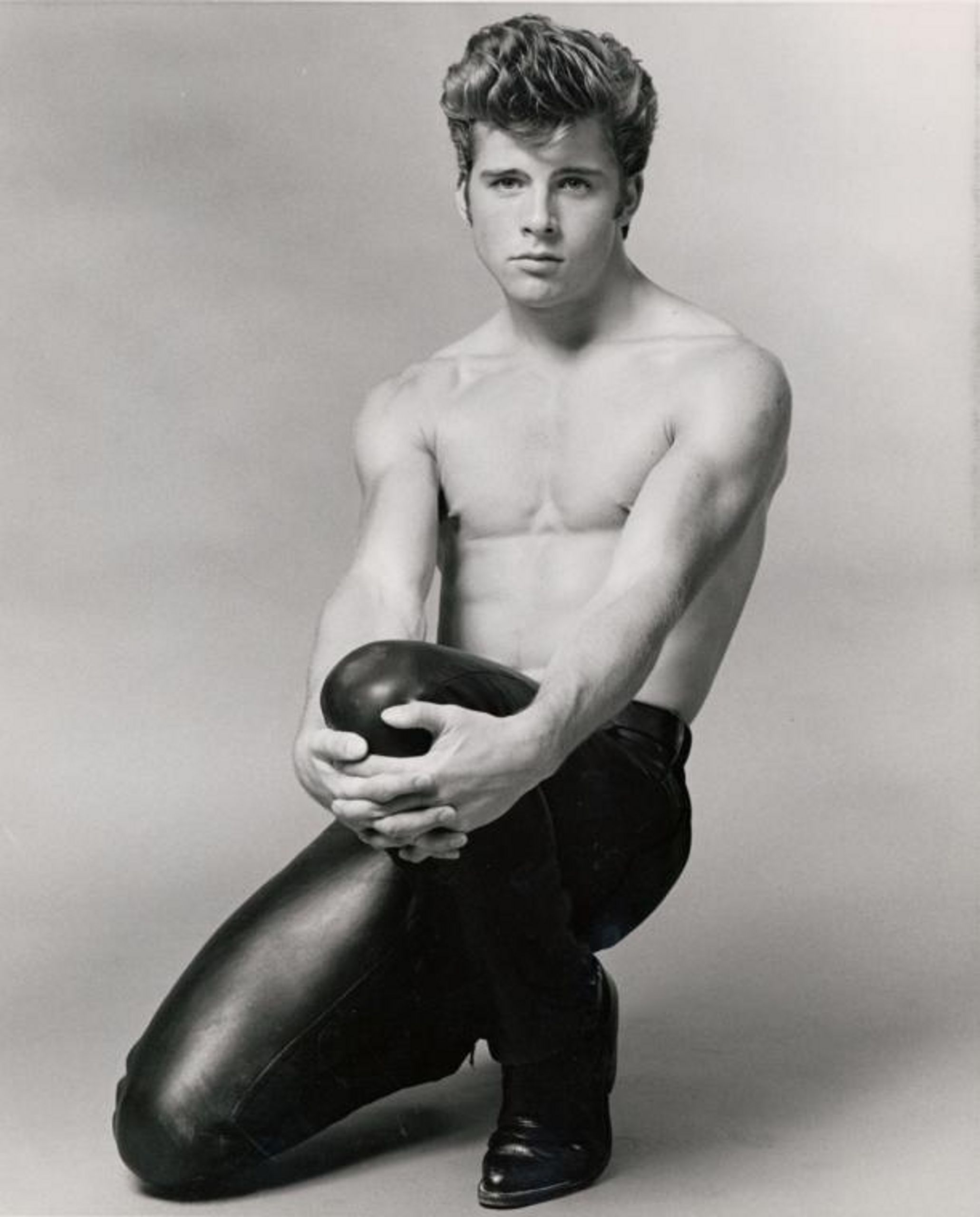
Maxwell Caulfield (1981)


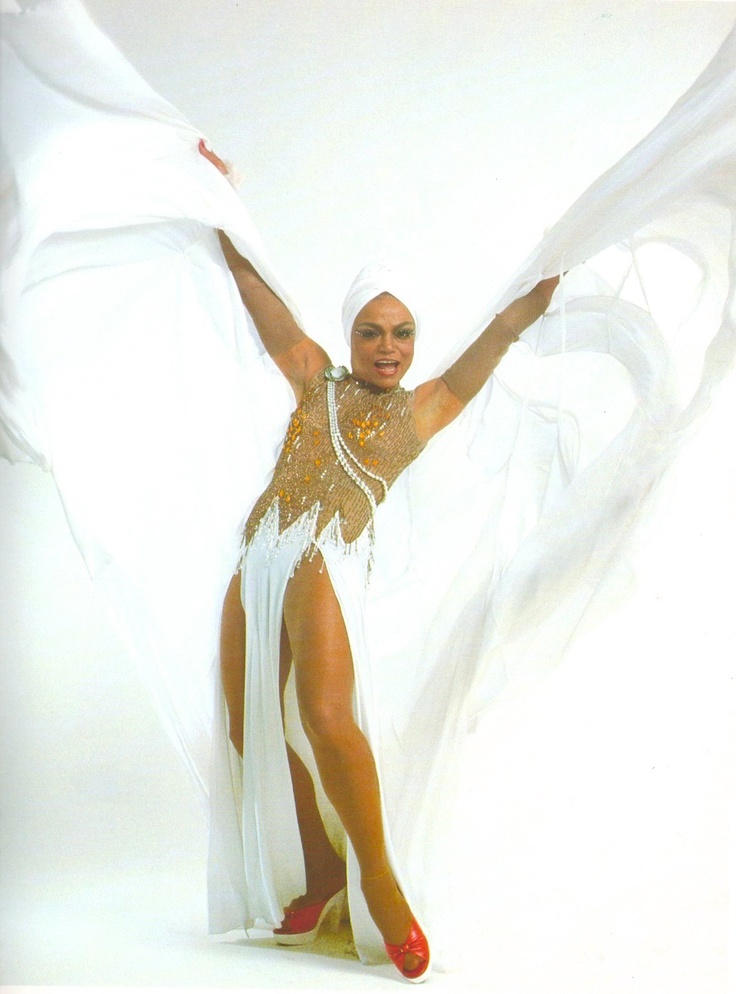
After Dark shuttered in early 1983. The following year, Duncan published The Red Shoes, a photo book featuring celebrities wearing red shoes in a nod to both the Hans Christian Anderson fairy tale as well as the ruby slippers of The Wizard of Oz. Among those featured were many familiar subjects of his earlier work, including (pictured below) Brad Davis, Bette Midler, Maxwell Caulfield, Eartha Kitt, Dick Cavett, Mikhail Baryshnikov, John Curry, Richard Thomas, Gregory Hines, and Treat Williams.

Duncan began work on a second Red Shoes book, but it remained unfinished, along with several other projects. He was just 57 years old when he died of AIDS complications at New York Hospital on July 27, 1986. In 2003, the New York Public Library for the Performing Arts acquired 600,000 photos from Kenn Duncan’s estate. Many of these photos have been digitized and are now available for viewing online for free.


See also:
Don Herron’s Tub Shots
The Yale Posture Photos: Bill Hinnant
The Yale Posture Photos: James Franciscus
Revisiting Bette Midler’s Thighs & Whispers (1979)
Gay Times #69 (1978)
John Waters in Blueboy Magazine (1977)
Fire Island PaJaMa Party
Artist’s Muse: José “Pete” Martinez
Artist’s Muse: The Mystery Model
Artist’s Muse: William Weslow
Revisiting George Platt Lynes’ Fire Island Muses
Keith Haring In Heat Magazine (1992)
George Platt Lynes: In Touch Magazine (1982)

In Touch For Men: Disco Danny (1979)

I recently found myself perusing (as one does) the Sept/Oct 1979 issue of In Touch For Men Magazine. Featured on the cover and centerfold is Tim Kramer, an All-American boy who would go on to become one of the top gay porn stars of the 1980’s.

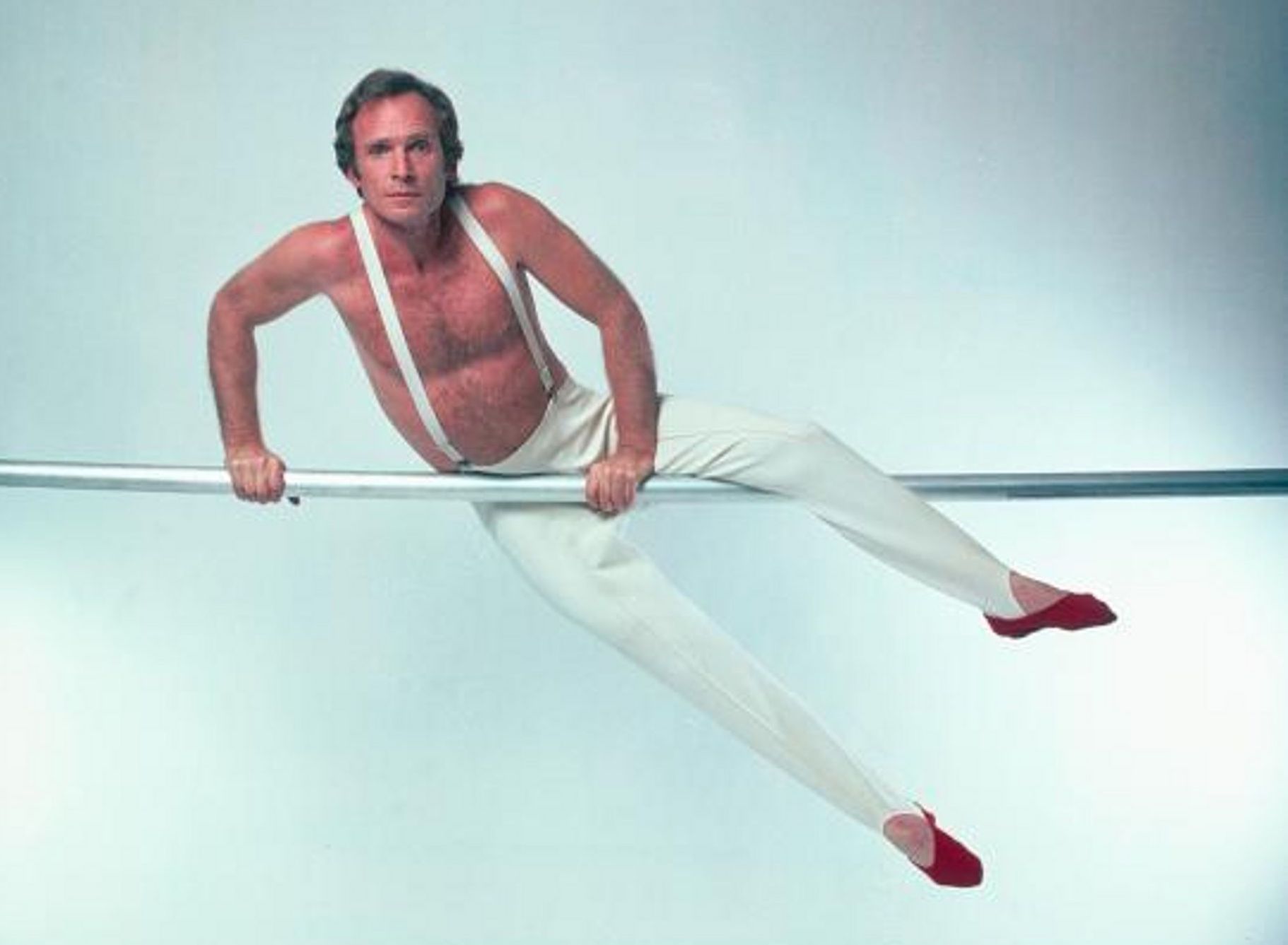
There is also this two page spread about a similar corn-fed wholesome fellow: the guy who played Disco Danny in a popular Trident commercial.

The Disco Danny profile was written by Charles Herschberg, a year after the writer himself had been featured in the buff as “Damien Charles: The New York Man” in issue #69 of Gay Times.

Unfortunately Disco Danny does not reveal nearly as much, posing for just one shirtless photo. He’s here flirting with the gay press strictly for promotional purposes: trying to arouse the interest of a gay audience for his recently released debut single “Dancin’.”


The commercial that started it all: Trident Disco Danny

The Disco Danny character was a takeoff on John Travolta’s iconic role in the film Saturday Night Fever. Following in Travolta’s platform-shoed footsteps, he was signed to the same record label – Midsong Records. As the In Touch article notes, “Vocal ability was not primarily what won him his contract.”

He appeared on the early Nickelodeon show America Goes Bananaz with host Randy Hamilton conducting the interview and introducing two performances: “Dancin'” and “High School Honey,” a track from the LP that was never released.

The “b” side of the “Dancin'”single: “I Fell In Love With An Angel.”

Unfortunately, all the PR attempts to cross him over to a successful career outside of teen discos proved futile. There was no follow-up single and the Dancin’ LP was shelved, although he continued to find lucrative work in national commercials alongside some familiar faces:

Honeycomb cereal commercial with Anthony Michael Hall.
Bubble Yum commercial with Disco Danny on drums behind Ralph Macchio and Cynthia Gibb.

So what happened then?

Like rainbow suspenders, satin pants and the dance that spawned his name, Disco Danny fell out of fashion. He eventually gave up show biz and found work as a salesman. He married several times and like many a New Yorker, eventually migrated south. According to an acquaintance, he has become a Florida Man, with all the political leanings that go with the territory, adding with a sigh “he’s no longer the sweet, talented kid I knew.”
Ah well. We’ll always have Trident. And In Touch.

See Also:
Revisiting Bette Midler’s Thighs & Whispers (1979)
Kurt Bieber: From Little Me to Colt Model
Costello Presley & 80’s Gay Porn Guilty Pleasures
Kenn Duncan After Dark
Gay Times #69 (1978)
Blueboy 1980: Gays of NYC
John Waters in Blueboy Magazine (1977)
New York City: In Touch For Men (1979)
San Francisco: In Touch For Men (1979)
Revisiting Blueboy Magazine (1980)
Armistead Maupin in Blueboy Magazine (1980)
George Platt Lynes: In Touch Magazine (1982)

Artist’s Muse: José “Pete” Martinez


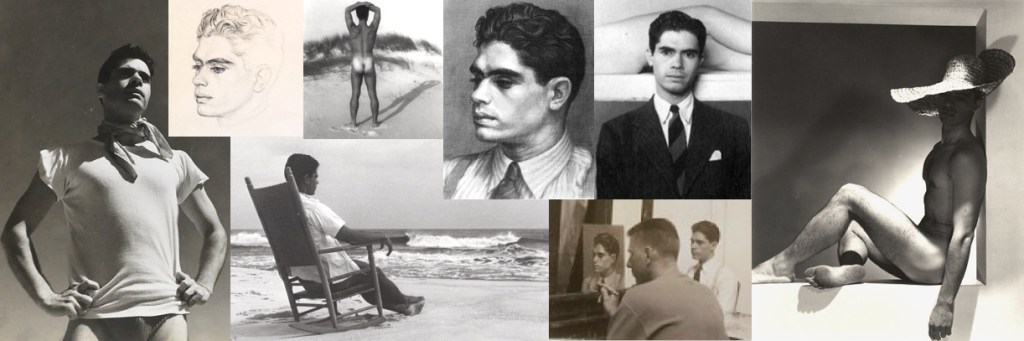
In last summer’s post about the PaJaMa Collective – artists Paul Cadmus, Jared French and his wife Margaret – the focus was on their Fire Island photos of the late 1930’s. One of the friends who cavorted with the trio during that time was José “Pete” Martinez, a dancer from New York City who was involved with their friend, arts patron and ballet impresario Lincoln Kirstein.

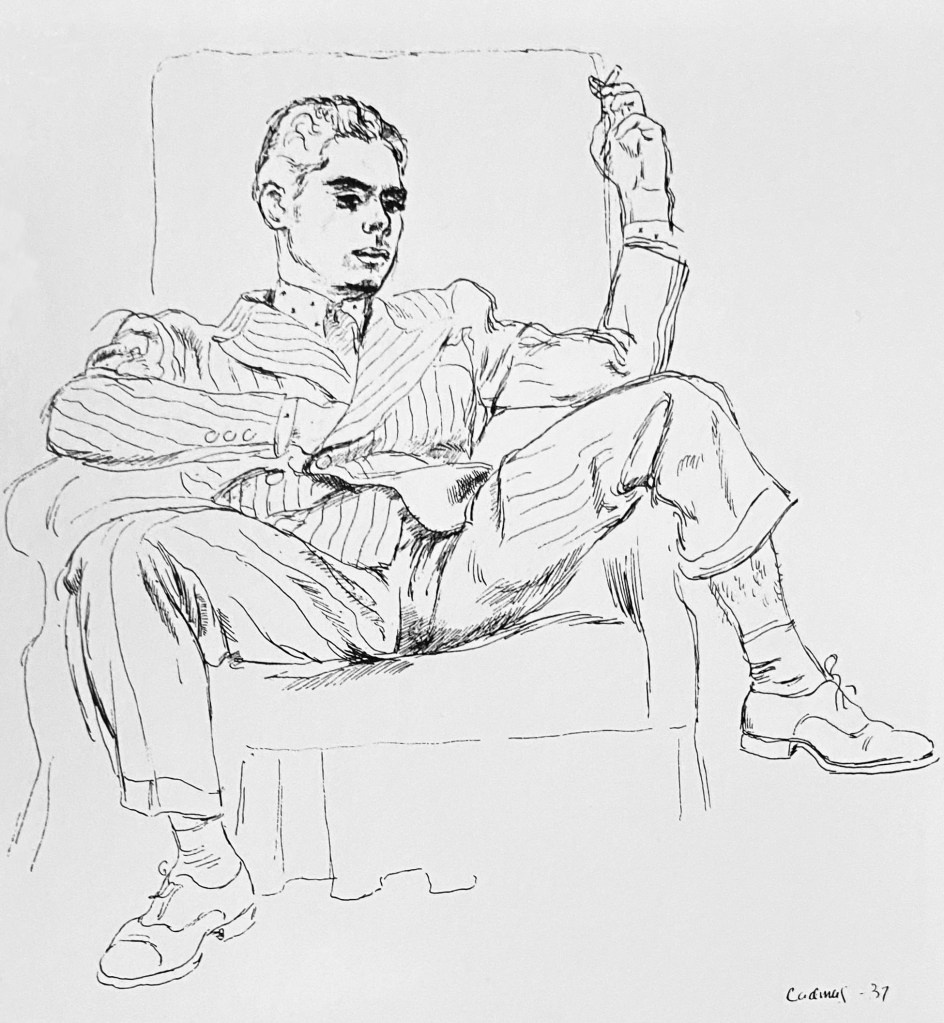
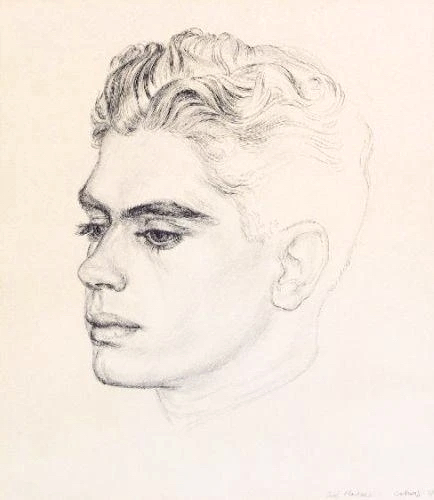
Paul Cadmus’s 1937 sketch of José Martinez appears in Charles Kaiser’s book The Gay Metropolis.

In David Leddick’s book Intimate Companions, Martinez is described as “a droll and witty young man… Those who knew the two men in the 1930’s said he was capable of endlessly amusing his lover, and that of all the men in his life, Martinez was the man that Kirstein most likely loved the most. Kirstein loved gossip and other men’s tales of their sexual exploits, and this love of storytelling drew him to Martinez. In addition, Martinez was handsome, and many artists painted, drew and photographed him. “

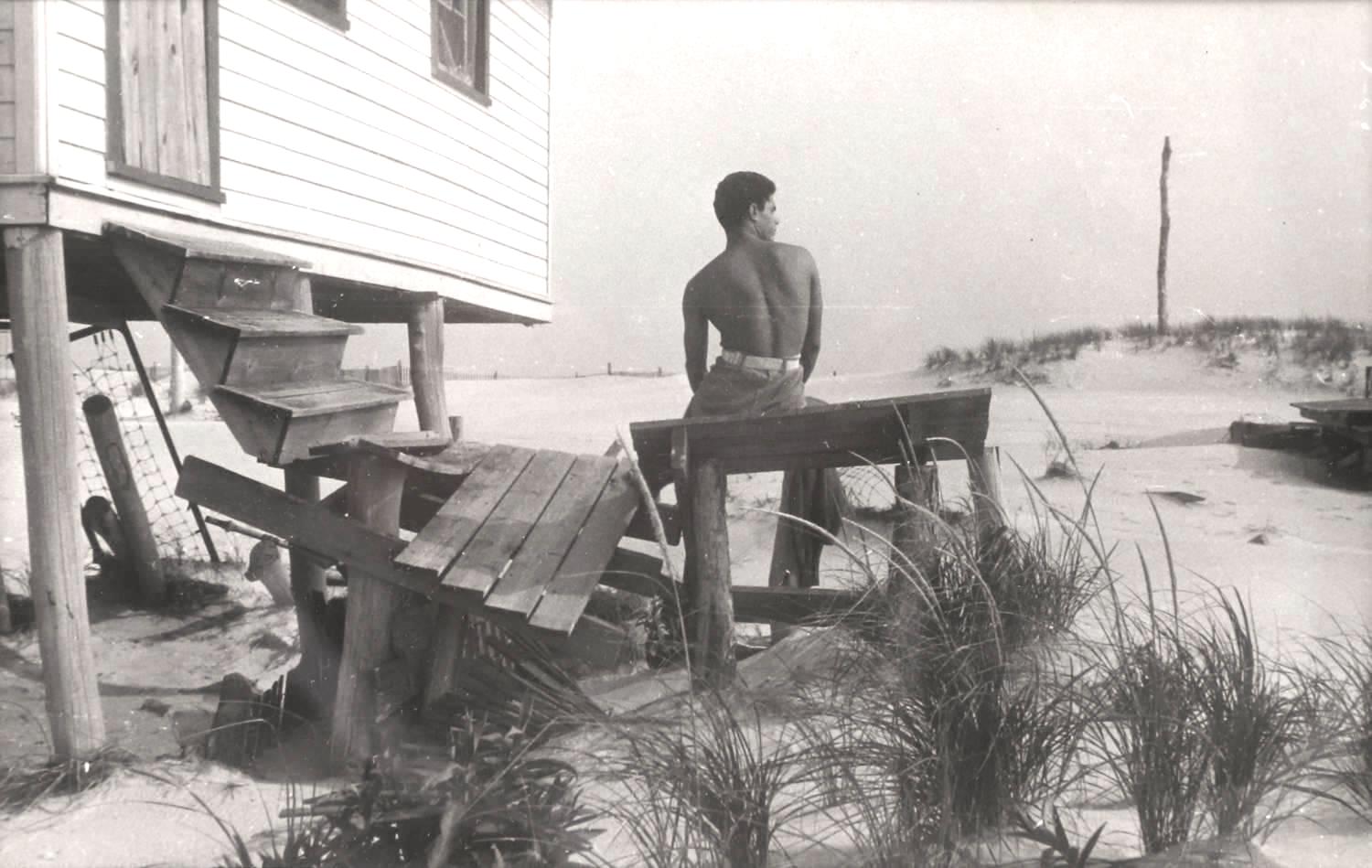
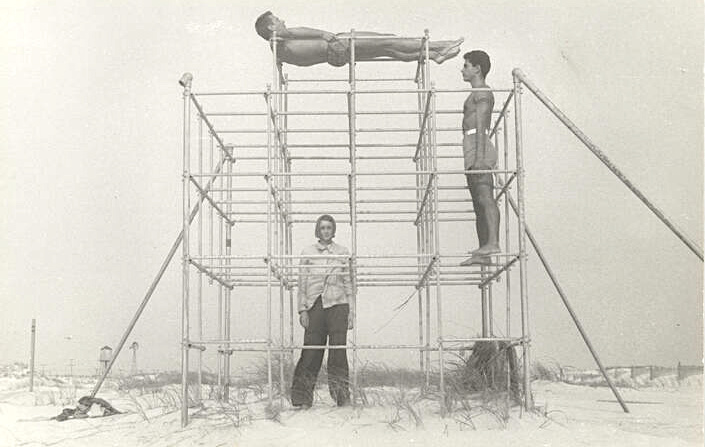
Fire Island PaJaMa photos featuring José Martinez with Paul Cadmus, Jared and Margaret French, ca 1938-39

Besides The PaJaMa Collective, those artists included Paul Cadmus’ sister Fidelma and photographers William Caskey and George Platt Lynes.

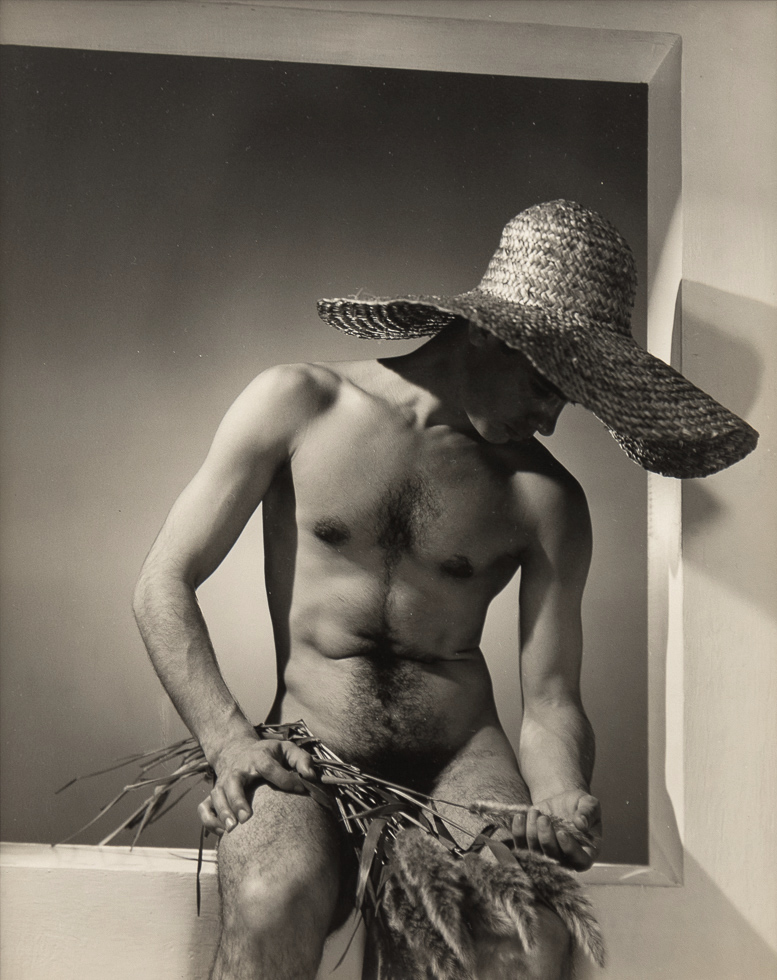
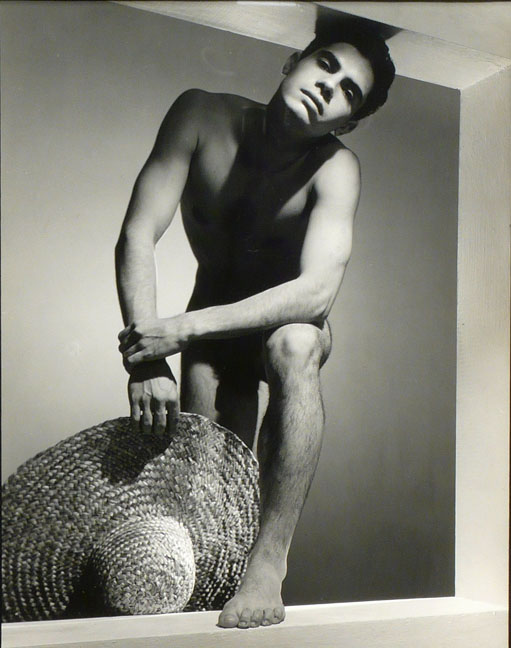
The most memorable Lynes photo of Martinez is a studio shot with the dancer perched in a window frame wearing nothing but a wide brimmed sun hat.


George Platt Lynes photographs of José Martinez.

Pete Martinez (who sometimes used the stage name Pete Stefan) was born José Antonio Martinez-Berlanga in Mexico on March 13, 1913. His family moved to Houston, Texas when he was quite young. Mama Martinez had been a folk dancer back in Mexico and one of Jose’s sisters dreamed of following in her footsteps. Little José was drafted as her dance partner. The scenario is familiar to many boys who begin to study dance as children: the sister loses interest and drops out, but he continues on. It’s a page torn out of A Chorus Line. Later an uncle took him to see Ballet Russe, which further strengthened his resolve to dance. “I was going to set the world on fire,” he would later recount.

After graduating high school, much to the chagrin of his parents, José moved to New York City to study at the School of American Ballet, where he eventually gained a full scholarship. Upon graduation, he was invited to join the company.

José Martinez photographed by Paul Cadmus, ca 1938

Martinez caught the eye of Lincoln Kirstein, and the relationship progressed to the point that they moved in together.

The PaJaMa photo “After The Hurricane” features (l-r) Jared French, Lincoln Kirstein, José Martinez, Forrest Thayer and probably Paul Cadmus. Tragically, costume designer Forrest Thayer was killed in a Southampton single car accident in 1951.


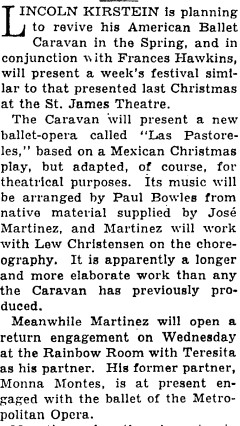
Martinez became a member of The Ballet Caravan, a touring company founded by Kirstein to provide off-season summer employment to American ballet dancers. Here Martinez began to get more involved in the creative process: conceiving the ideas and librettos for ballets, if not choreographing them. He is most associated with the ballet Pastorela, although his exact contribution to its creation varies depending on the source.

As noted in the New York Times article below, Martinez also had several engagements at Rockefeller Center’s Rainbow Room with different dance partners.

New York Times, 12/1/40

Jose Martinez photographed by William Caskey

Lincoln Kirstein & his wife Fidelma Cadmus


Martinez eventually found himself in a triangular romantic situation similar to his friends in The PaJaMa Collective: Paul Cadmus and Jared French had a sexual relationship that continued after French married Margaret Hoening. The three all lived and worked together in a Greenwich Village townhouse at 5 St. Luke’s Place. When Lincoln Kirstein married Paul’s sister Fidelma, she moved into the apartment he shared with Martinez, who continued to live with them for the first year of the marriage.

Martinez was also photographed in the summer of 1938 sunbathing with Jared French and Paul Cadmus on the roof of their home/studios at 5 St. Luke’s Place.

The Ballet Caravan were on a South American tour through 1941 as the U.S. entered World War II. The troupe returned to a very different New York City than the one they had left. When Martinez was denied entry to the Army, he went to work at a hostel for Jewish refugees in Haverford, Pennsylvania where writer Christopher Isherwood was already working. The two were acquaintances through Kirstein but developed a close friendship that would sometimes turn physical, as detailed in Isherwood’s diaries.

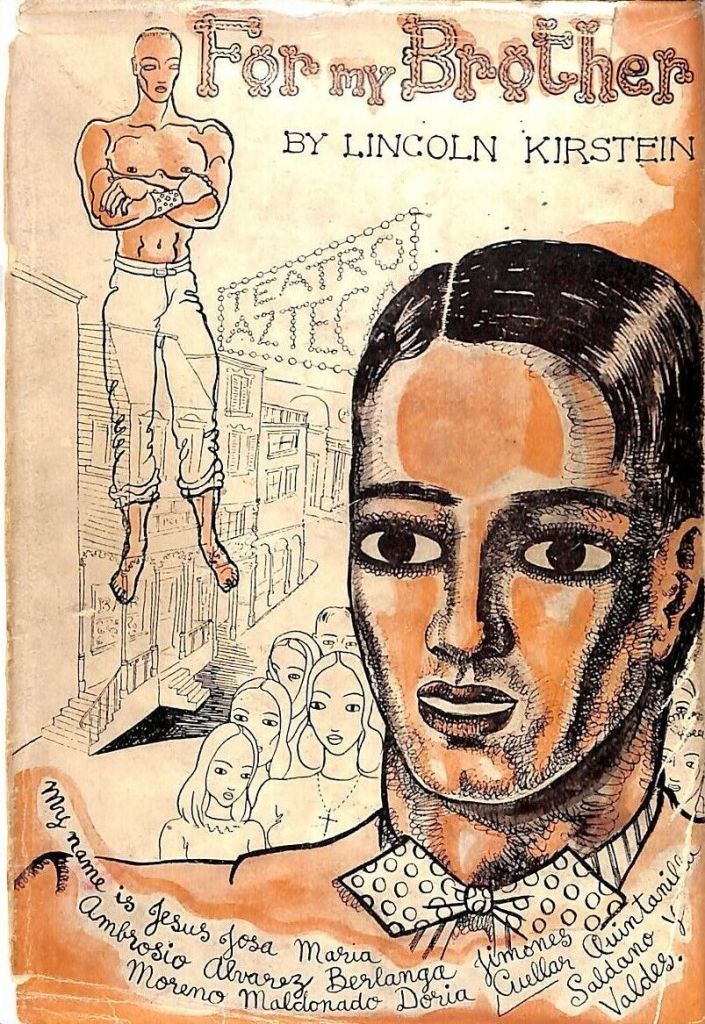
For My Brother: A True Story By José Martinez As Told To Lincoln Kirstein original jacket designed by William Chappell.

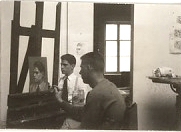
Paul Cadmus photographed sketching José Martinez at 5 St. Luke’s Place.

In 1943, a book was published in the UK with the rather unwieldy title For My Brother: A True Story By José Martinez As Told To Lincoln Kirstein.

From the original dust jacket: “It is the life story of a young American of Mexican origin whose family has settled in a small town in Texas. It is at the same time a study in the contrast between two worlds, two ways of life: industrial, polyglot America, and the more primitive civilization of Mexico just over the border, where many of the hero’s relations still live. The story is told with great poetic feeling and a rare delicacy of perception in human relationships…”

The chronology on Kirstein’s website makes no mention of Martinez and lists For My Brother as fiction “based on a Mexican sojourn.”

The book jacket was designed by fellow dancer-turned-ballet designer William Chappell. For My Brother… is quite rare, as most of the 2,000 printed copies were said to have been destroyed in a warehouse bombed by the Nazis. A Canadian edition was later published by MacMillan.

Martinez was finally able to join the military in 1943 and remained in service until the end of the war.

Back in New York, he resumed his dance career with Ballet Society where he danced in the original 1946 productions of George Balanchine’s Four Temperaments and William Dollar’s Highland Fling.

And then…. to invoke A Chorus Line once again: “What do you do when you can no longer dance?”

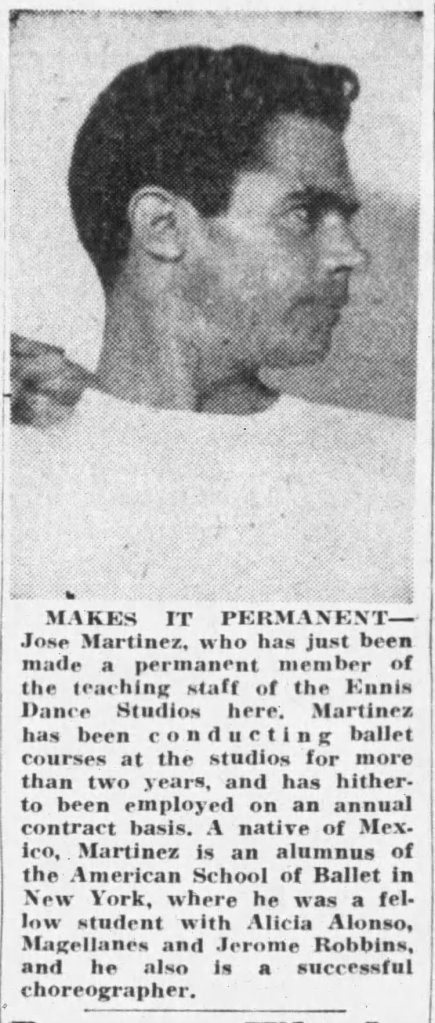
A knee injury hastened the end of his performance career. A June 4, 1950 article in the Norfolk Virginian-Pilot chronicled his coming to terms with the transition. He drifted for a year before settling into the next chapter of his life as a dance teacher in Norfolk, Virginia.

Norfolk Virginian-Pilot, 7/27/47
Norfolk Virginian-Pilot, 6/12/49


After Virginia, Martinez founded other dance studios in Ohio and California, where he retired from teaching in the mid-1960’s.

Lincoln Kirstein died at aged 88 in January, 1996. José Martinez passed away 16 months later in Pasadena, California at age 84.

See also:
Fire Island PaJaMa Party
Provincetown PaJaMa Party
Artist’s Muse: Wilbur Pippin
Artist’s Muse: Forrest Thayer
Artist’s Muse: William Weslow
Artist’s Muse: Chuck Howard
Artist’s Muse: Randy Jack
Artist’s Muse: Ted Starkowski
Artist’s Muse: The Mystery Model
Fire Island Muses of George Platt Lynes & The PaJaMa Collective
George Platt Lynes: In Touch Magazine (1982)
Revisiting George Platt Lynes’ Fire Island Muses

Artist’s Muse: The Mystery Model

One of my goals in creating posts about artist’s models like Chuck Howard, Randy Jack, and Ted Starkowski is to clear up misinformation posted online by galleries and auction houses. Whether the inaccuracies are intentionally deceptive or the result of laziness, the errors spread across the internet, with subjects misidentified and photo dates sometimes off by decades.

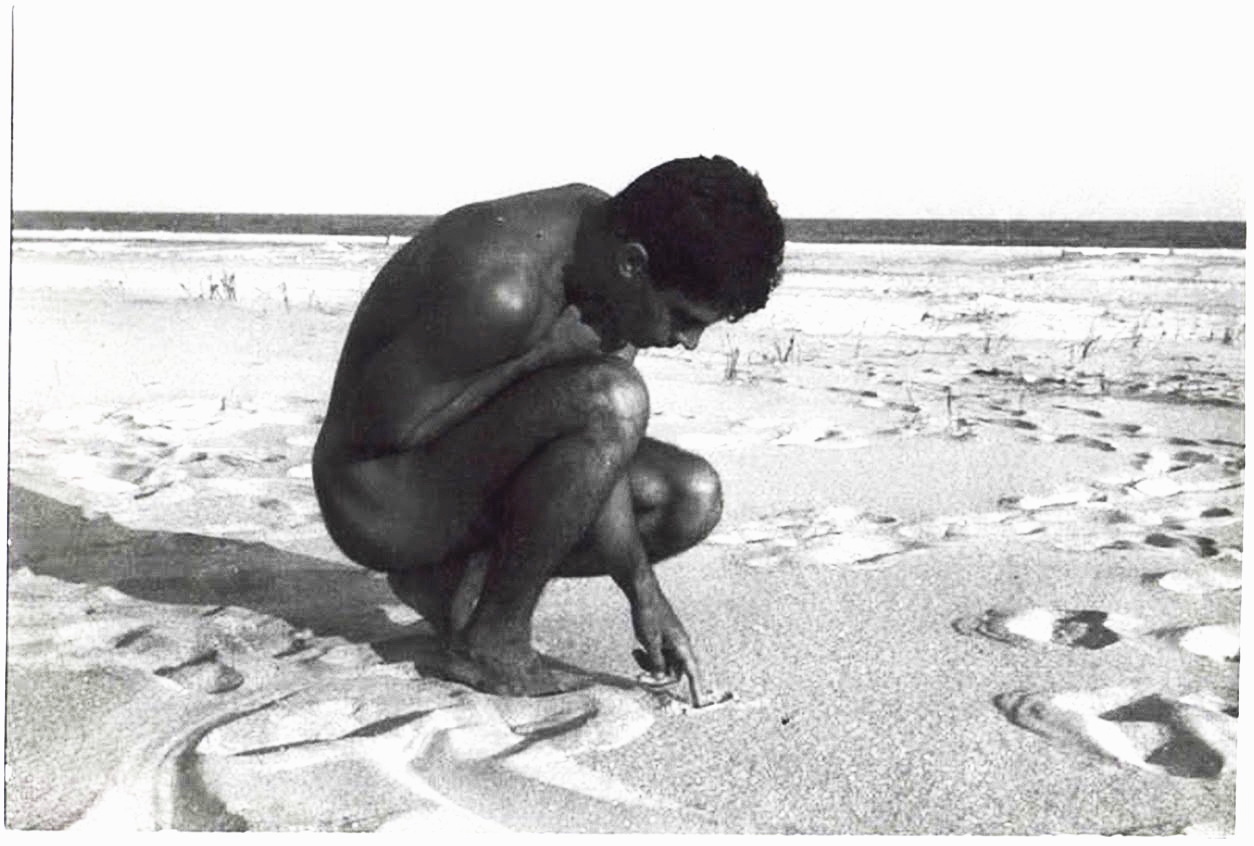
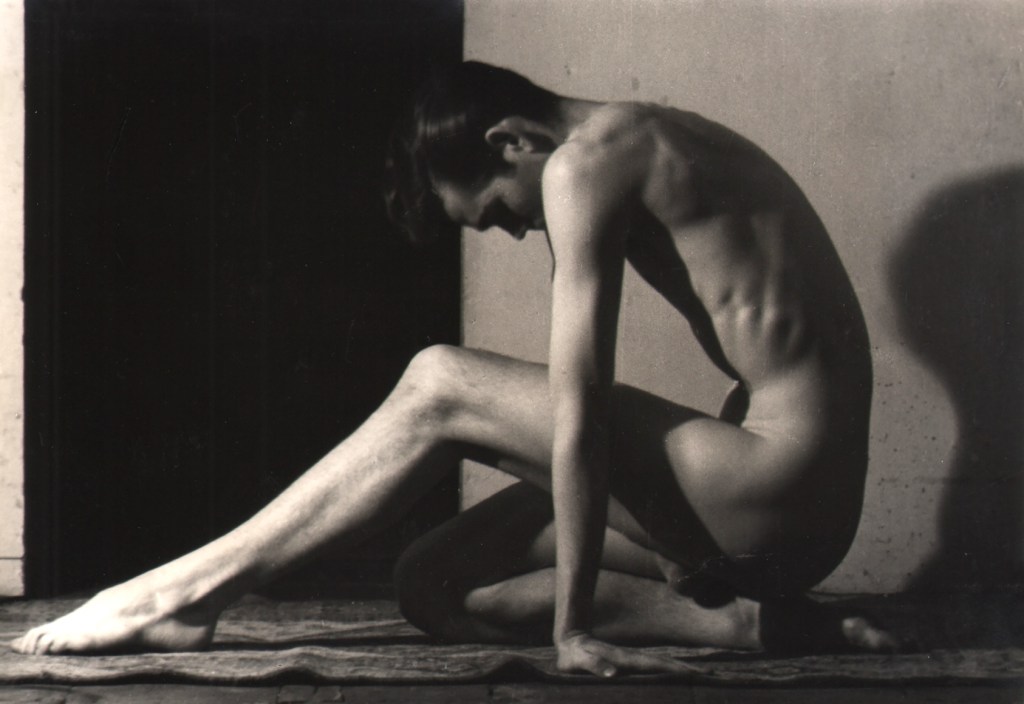
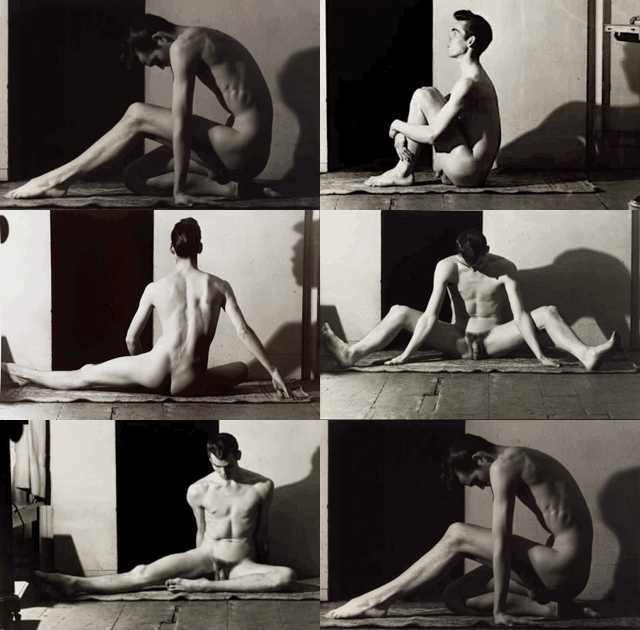
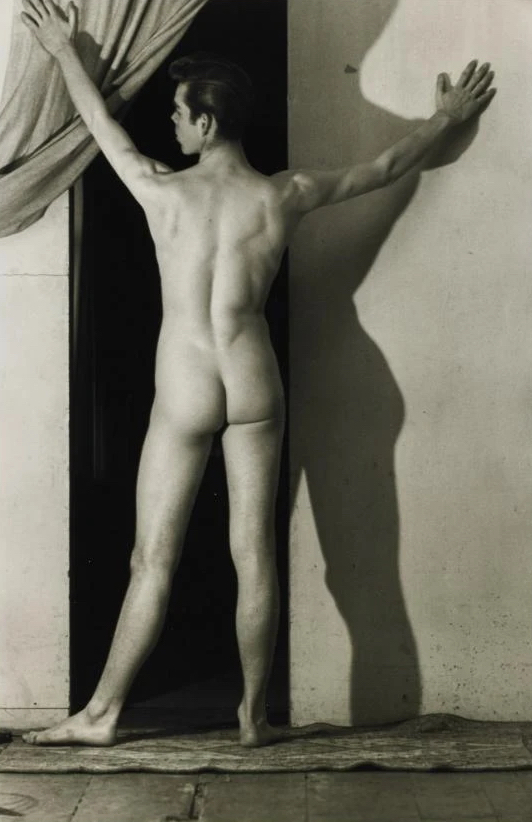
A series of 30+ nude model study photos are have recently been listed for auctions as “Jared French Nude Study of Tennessee Williams” or “Studio di nudo Tennessee Williams.” One set of two 8×10 photos sold for over $650. These should have been credited to the PaJaMa collective, which Jared French was a part of, and unfortunately (or fortunately, depending on how you look at it), the lean muscularly defined model is certainly not writer Tennessee Williams.

Tennessee Williams was the subject of several PaJaMa photos in Provincetown and at Jared French’s New York City studio at 5 St. Luke’s Place. In one of these photos, Williams strikes the same pose in the same place as our mystery model.

So who was the thin young chap with the low-hangers?

Martha Graham levitating John Butler

In another corner of the internet, I found two of these photos in a PaJaMa exhibit, dated 1943 and identifying the subject as dancer/choreographer John Butler (1918-1993). In the early 1940’s, he earned money working as an art model while studying dance with both Martha Graham and George Balanchine.

Besides the PaJaMa photos above, he was also photographed by George Platt Lynes:

John Neilson Butler was born in Charleston, Tennessee and moved to Greenwood, Mississippi with his parents at a very early age. He graduated from Greenwood High School in 1936 and made his way to New York City, where he initially studied dance with Eugene Loring before moving on to Balanchine and Martha Graham.

AP article (1955)

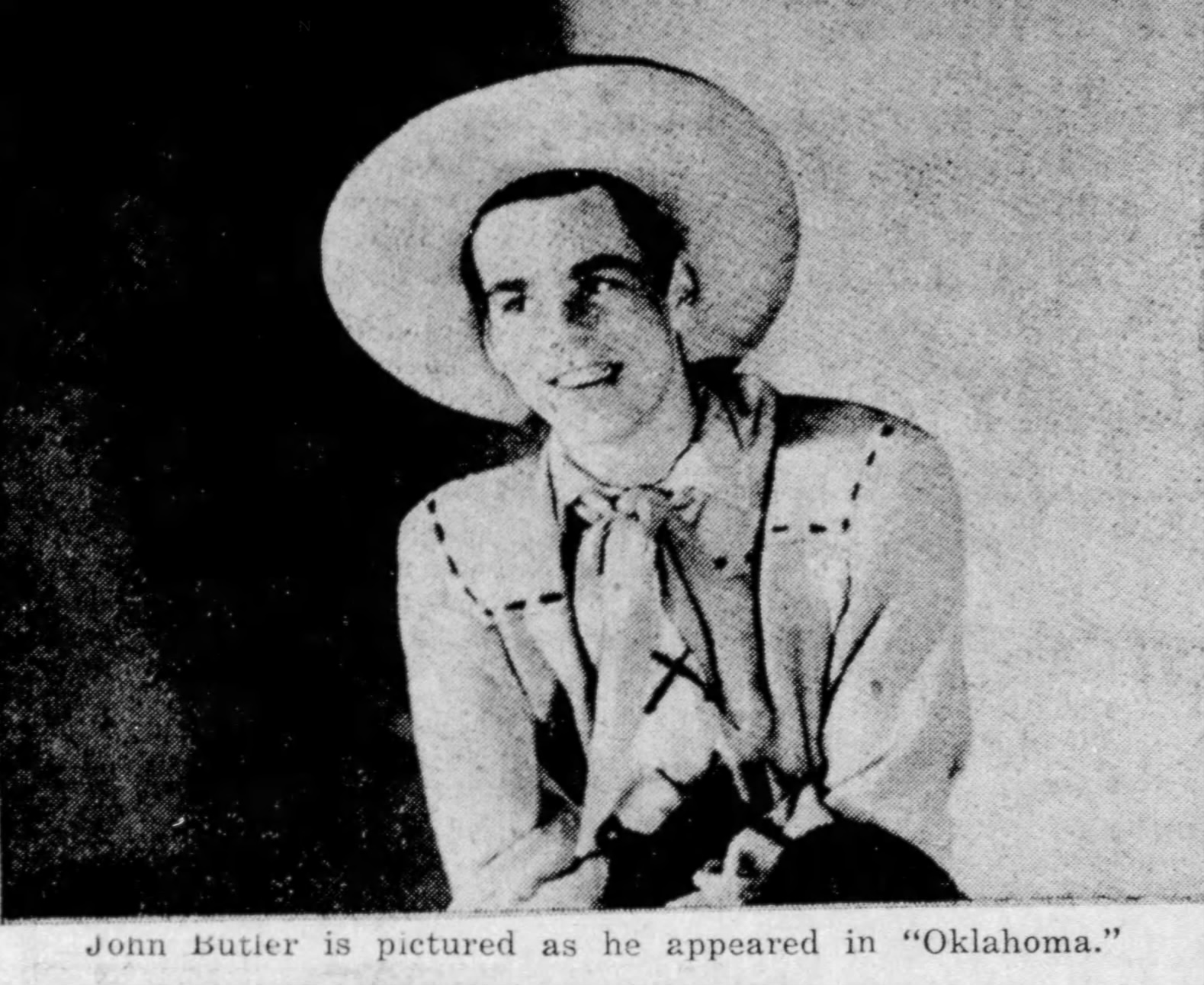
Butler danced on Broadway as Dream Curly in the original production of Oklahoma! He appeared in a string of Broadway musicals throughout the 1940’s including Hollywood Pinafore, Inside U.S.A. and On The Town, where he dated castmate Cris Alexander.

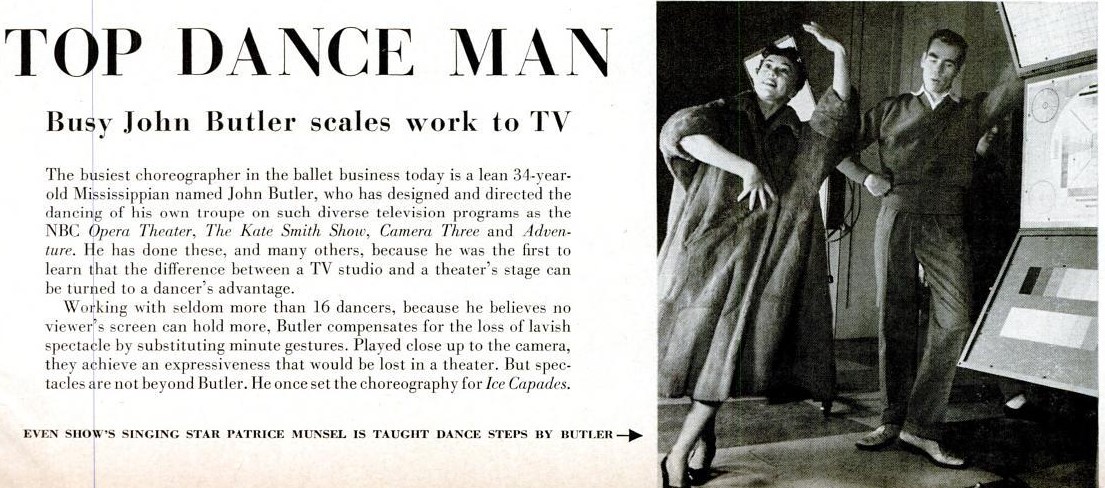
He began to transition into choreography in the late 1940’s. The combined influences of Loring, Balanchine and Graham gave his work unique elements of classical ballet as well as modern dance. He was one of the first to create works specifically for television, which was still considered a new and inferior medium. He choreographed variety show segments (The Ed Sullivan Show, The Kate Smith Show) as well as for Omnibus and full-length ballets and operas. His 1951 staging of Amahl and the Night Visitors was recreated annually for nine NBC holiday specials.

Butler performs as one of the Three Dancers in this 1955 broadcast.

Life Magazine profiled Butler in their April 25, 1955 issue:

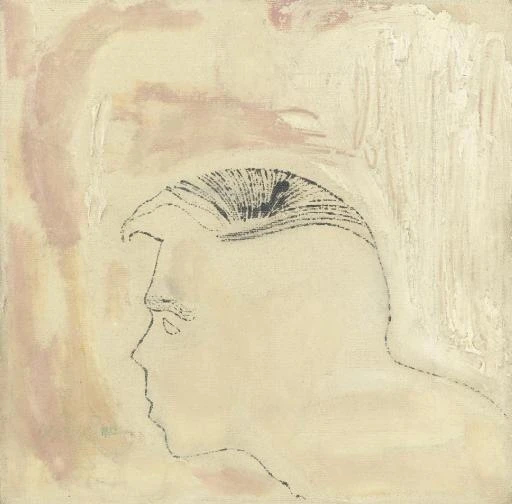
Two sketches of John Butler by Andy Warhol (1952)

In addition to his work choreographing for Broadway and television, Butler founded The John Butler Dance Company in 1955. It was later renamed American Dance Theater and toured Europe until it disbanded in 1961.

John Butler & Carmen de Lavallade rehearse Portrait of Billie, his dance meditation on Billie Holliday (ca 1960)
John Butler & Melvin Dwork (1963)

His most celebrated work was the New York City Opera staging of Carmina Burana (1959). Through the years, it has been recreated with over 30 companies.

In 1961 he met celebrated interior designer Melvin Dwork, who has called Butler “the love of my life.” They remained companions and friends until Butler’s death in 1993. Dwork was instrumental in preserving Butler’s dance legacy.

The Greenwood Commonwealth, Greenwood Mississippi (3/6/1965)

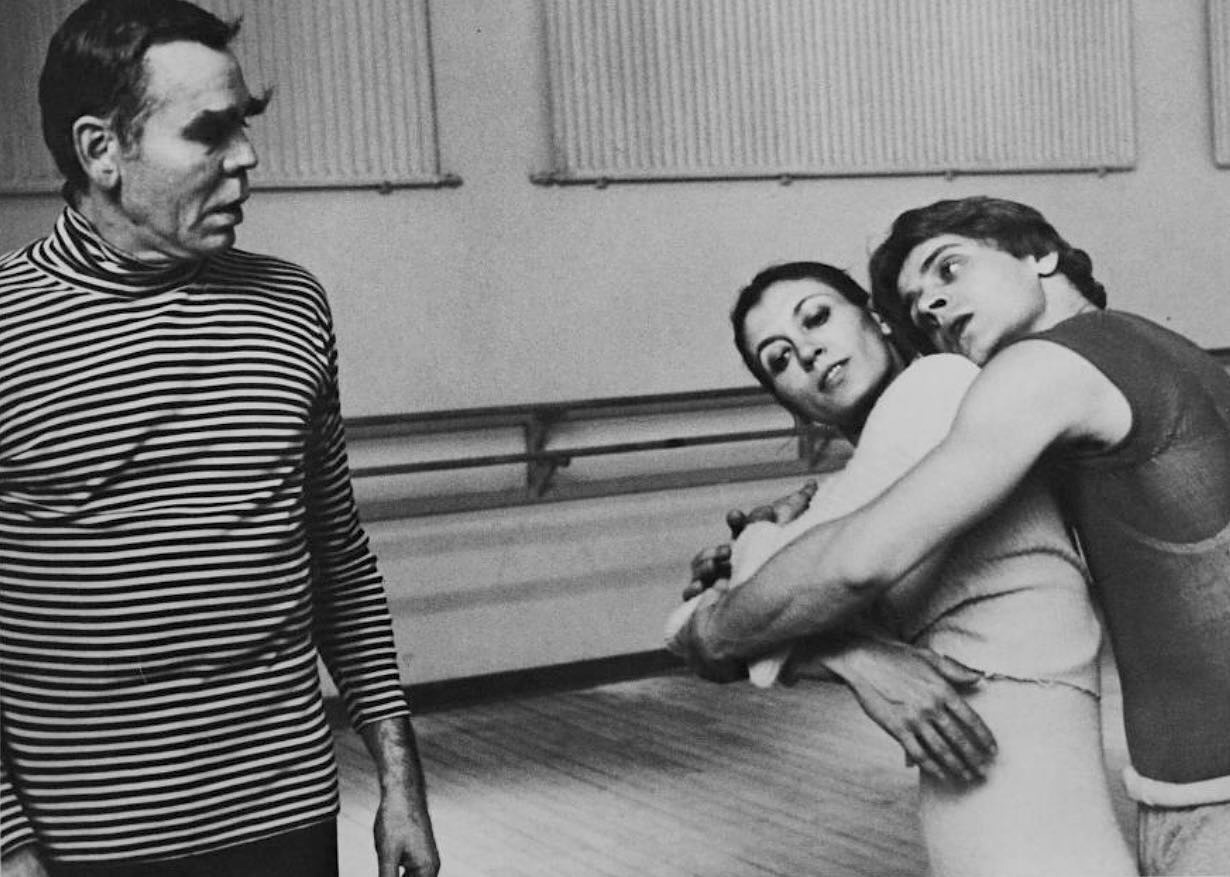
As he matured, Butler’s voluminous eyebrows became something of a trademark of his appearance. He appears to have embraced this with a level of zeal that surely inspired George Whipple.

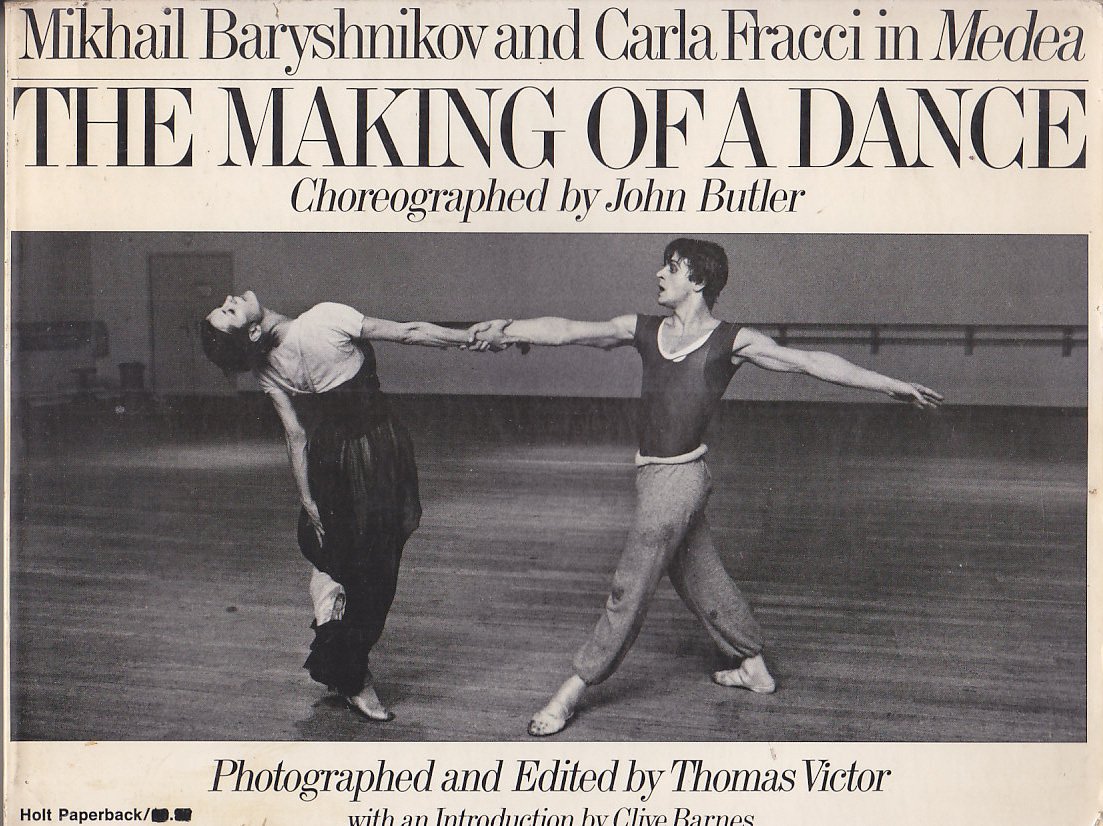
Over the next several decades, Butler continued to choreograph throughout the U.S. and around the world. The Hague, Munich, Sydney, Spoleto, Montreal, and Warsaw were part of his regular rotation with occasional work in Italy and South America. Back in New York City he choreographed Medea, the first dance for Mikhail Baryshnikov after his defection to the West.

John Butler photographed in April of 1993. He died of lung cancer later that year at the age of 74.

In 1993, author Camille Hardy interviewed John Butler for Dance Magazine shortly before his death. As they sat in his Upper East Side apartment, surrounded by his artwork collection and the walls lined with the works of Warhol, Avedon and Lynes, he said “I’ve done everything in my life I ever wanted to do.”

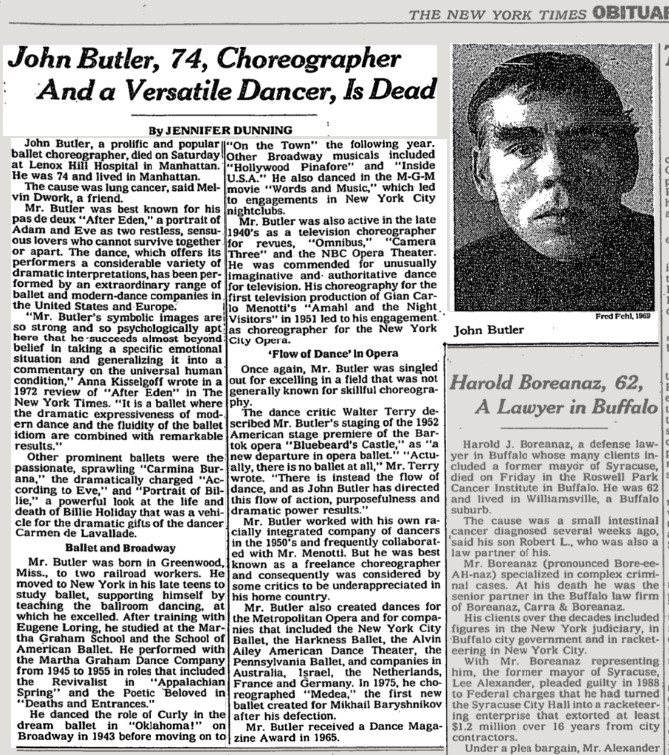
New York Times Obituary (12/13/93)

See also:
Fire Island PaJaMa Party
Provincetown PaJaMa Party
Fire Island Muses of George Platt Lynes & The PaJaMa Collective
Revisiting George Platt Lynes’ Fire Island Muses
Artist’s Muse: Forrest Thayer
Artist’s Muse: William Weslow
Artist’s Muse: José “Pete” Martinez
Artist’s Muse: Chuck Howard
Artist’s Muse: Randy Jack
Artist’s Muse: Wilbur Pippin
Artist’s Muse: Donald Windham & Sandy Campbell
Buddy & Johnny: A Historic Photo Shoot
Kenn Duncan After Dark
George Platt Lynes: In Touch Magazine (1982)