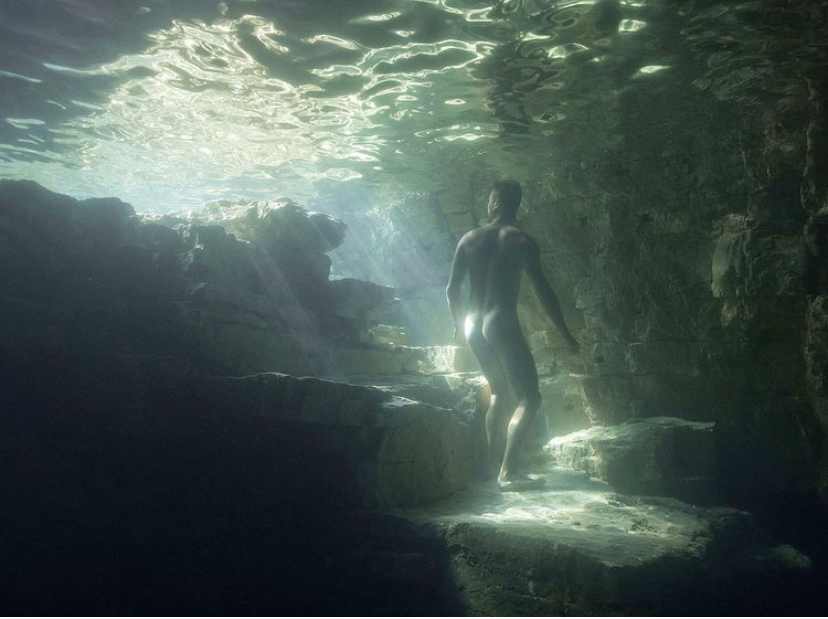
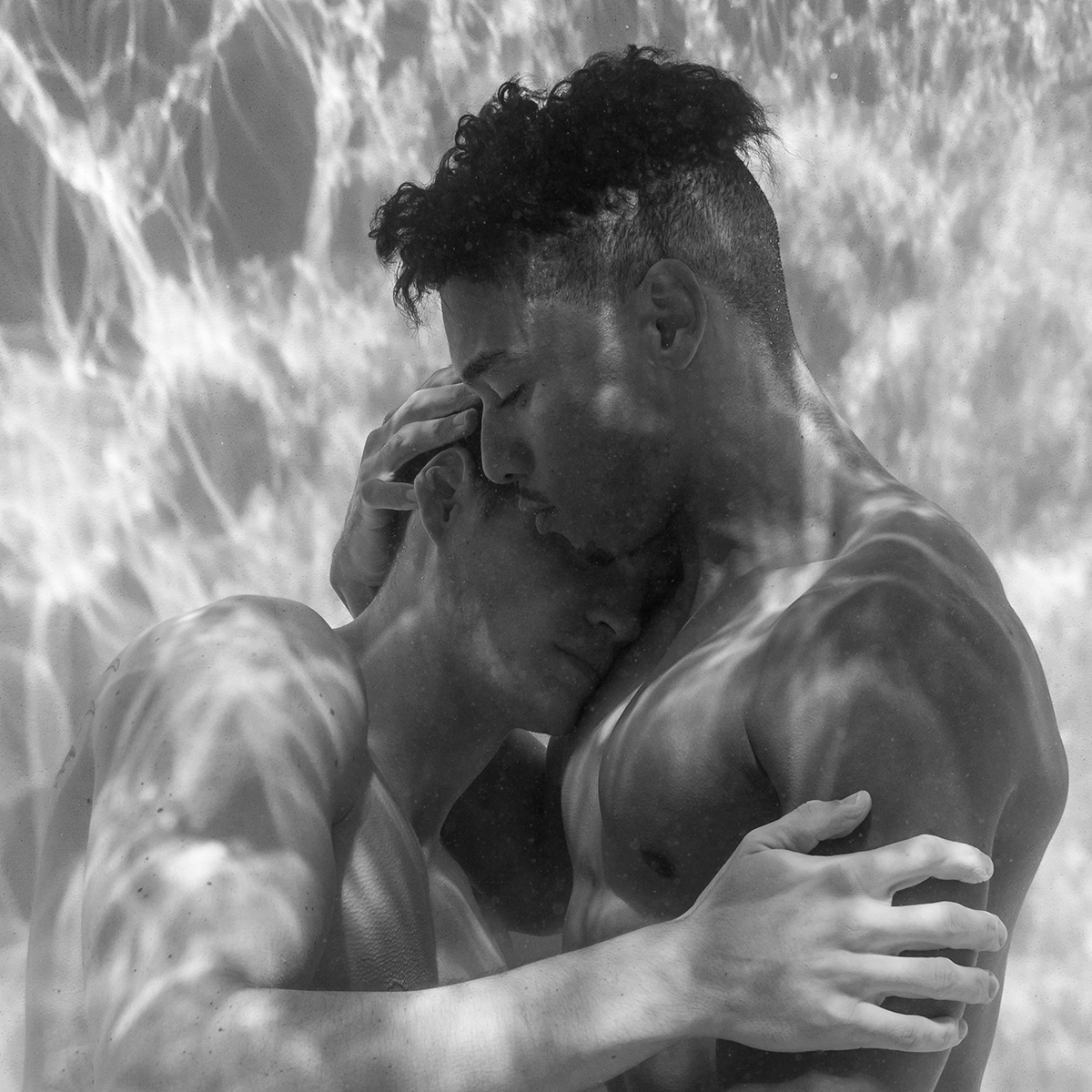
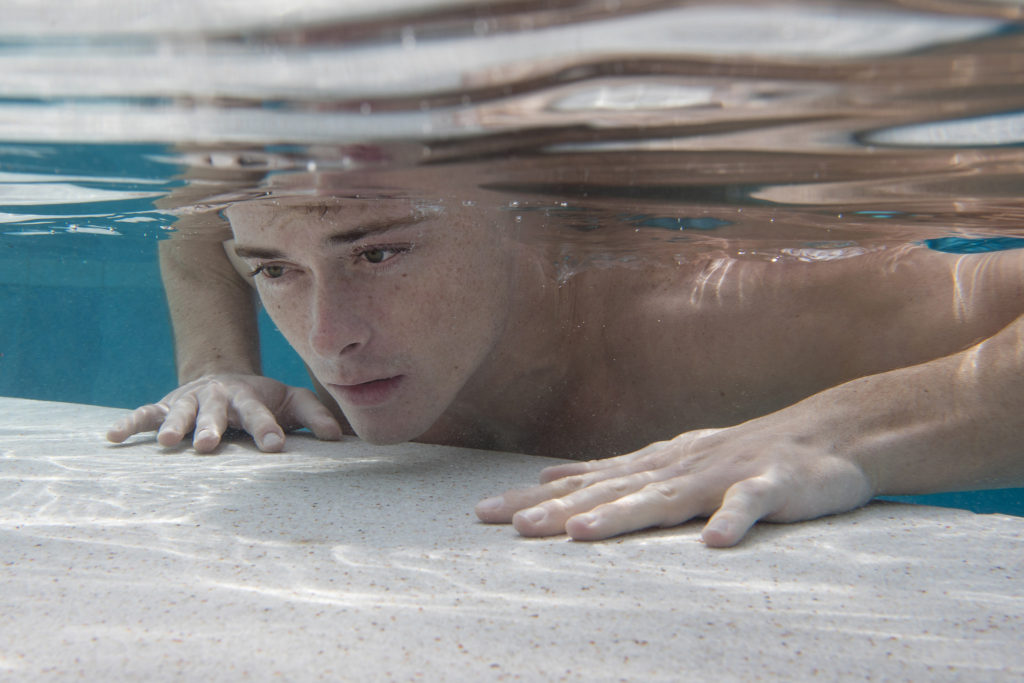
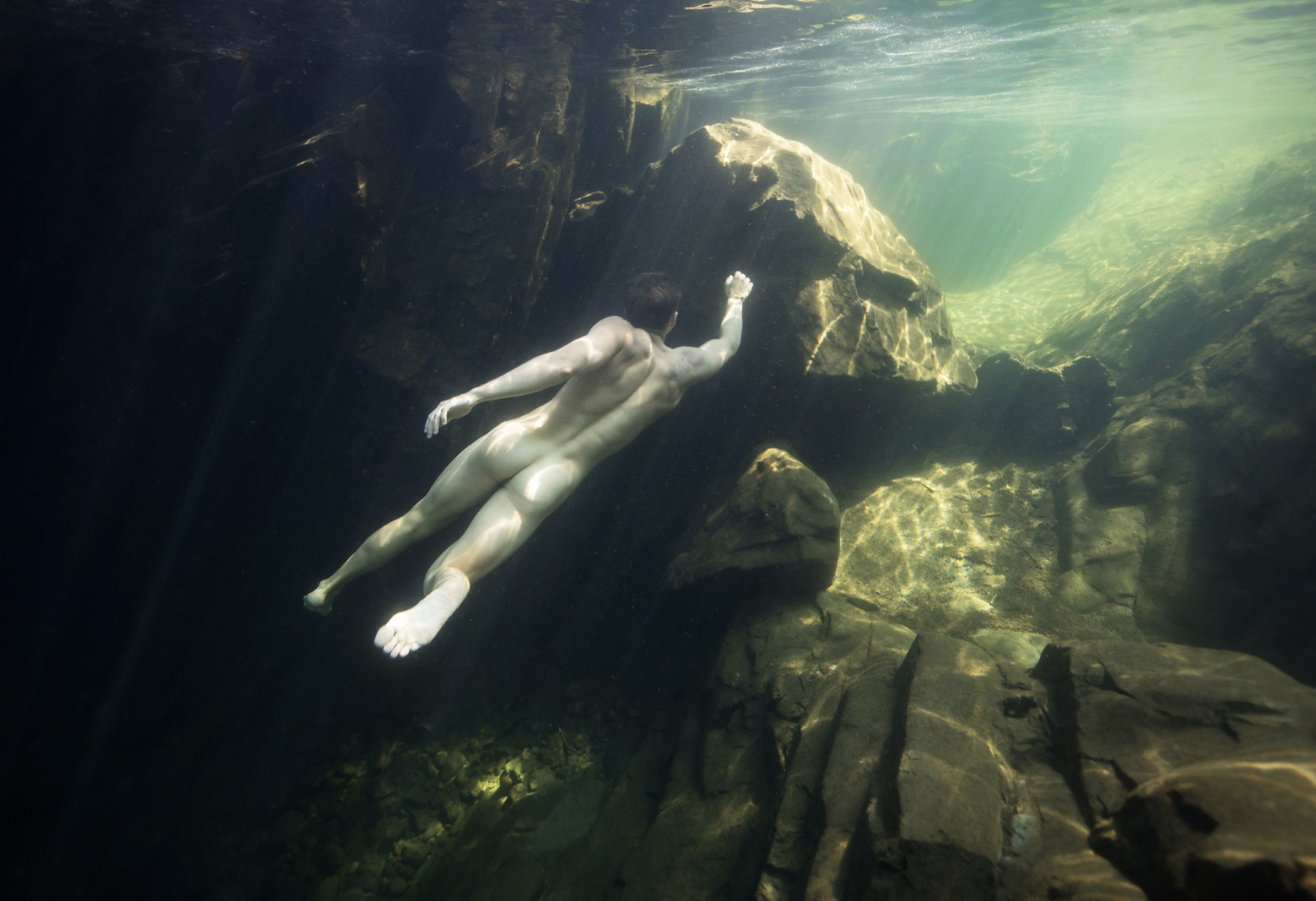
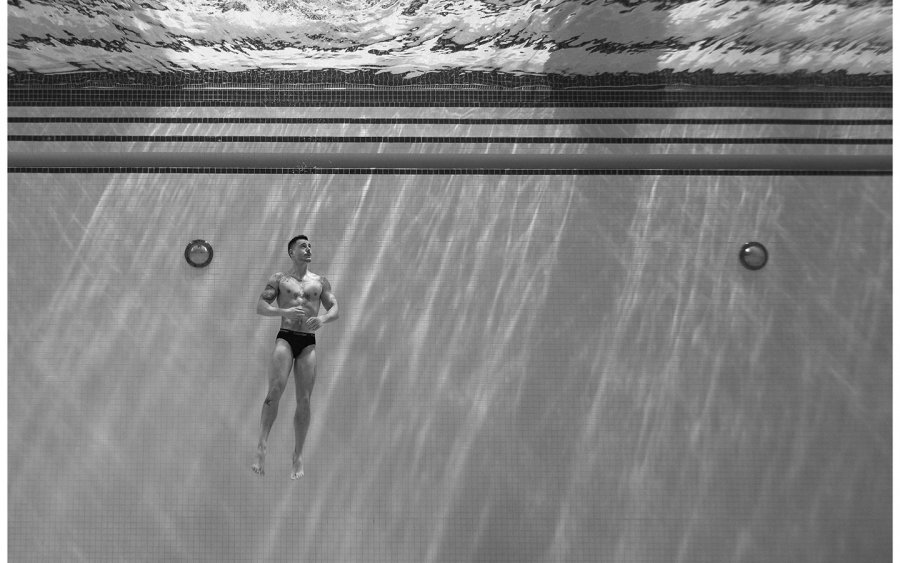
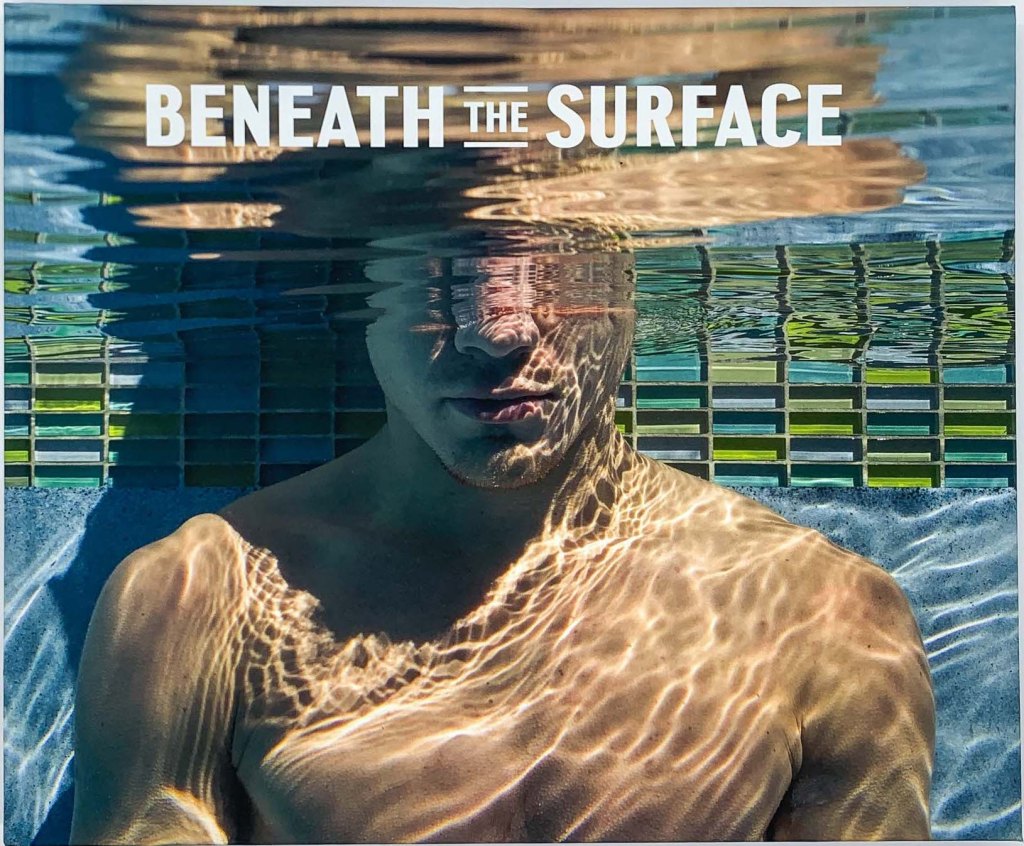
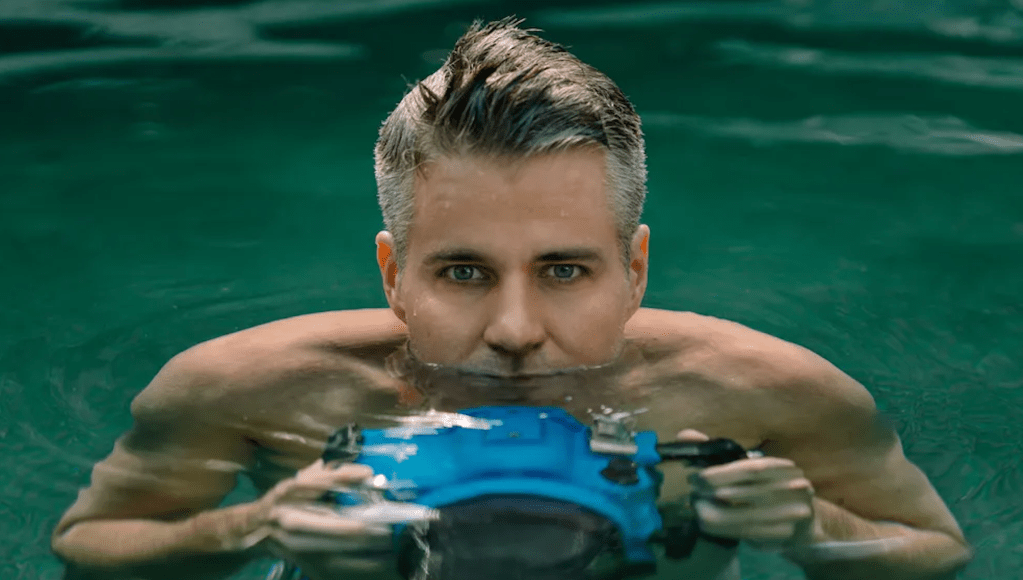
September 26, 2025 would have been Lucas Murnaghan’s 50th birthday. The celebrated underwater photographer and orthopedic surgeon lost his battle with cancer nearly 5 years ago on March 21, 2021. His longtime partner Antonio Lennert has kept his legacy alive with reissues and reprints of his finest photos.
From Murnaghan’s website: “Lucas was never defined by a single identity. He was an orthopaedic surgeon, a healer who combined precision with deep empathy. He was a photographer, whose underwater lens revealed truths about intimacy, masculinity, and vulnerability that had rarely been seen before. He was an entrepreneur, a teacher, and a storyteller. But above all, he was a human being whose curiosity, humour, and generosity touched everyone around him.”
In a 2020 Ted Talk, Murnaghan charted his path as an uptight overachiever following the family tradition by becoming a doctor, coming to terms with his sexuality and the circumstances that led him to become a full-time photographer and entrepreneur in recent years.
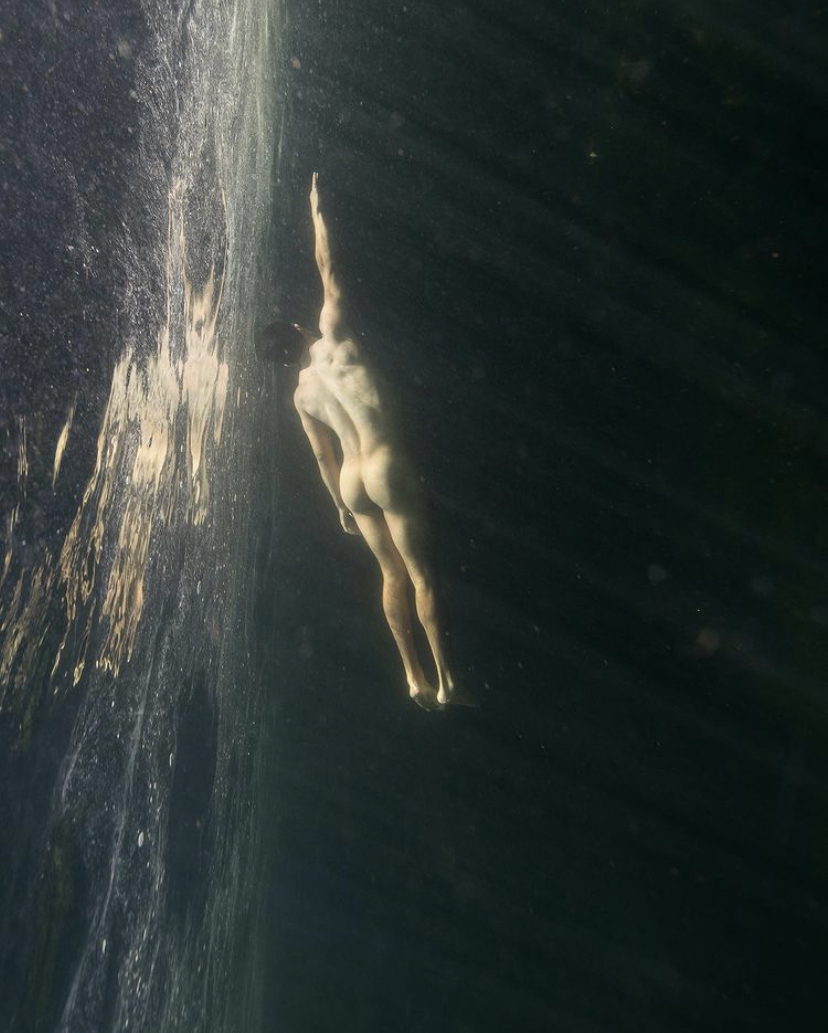
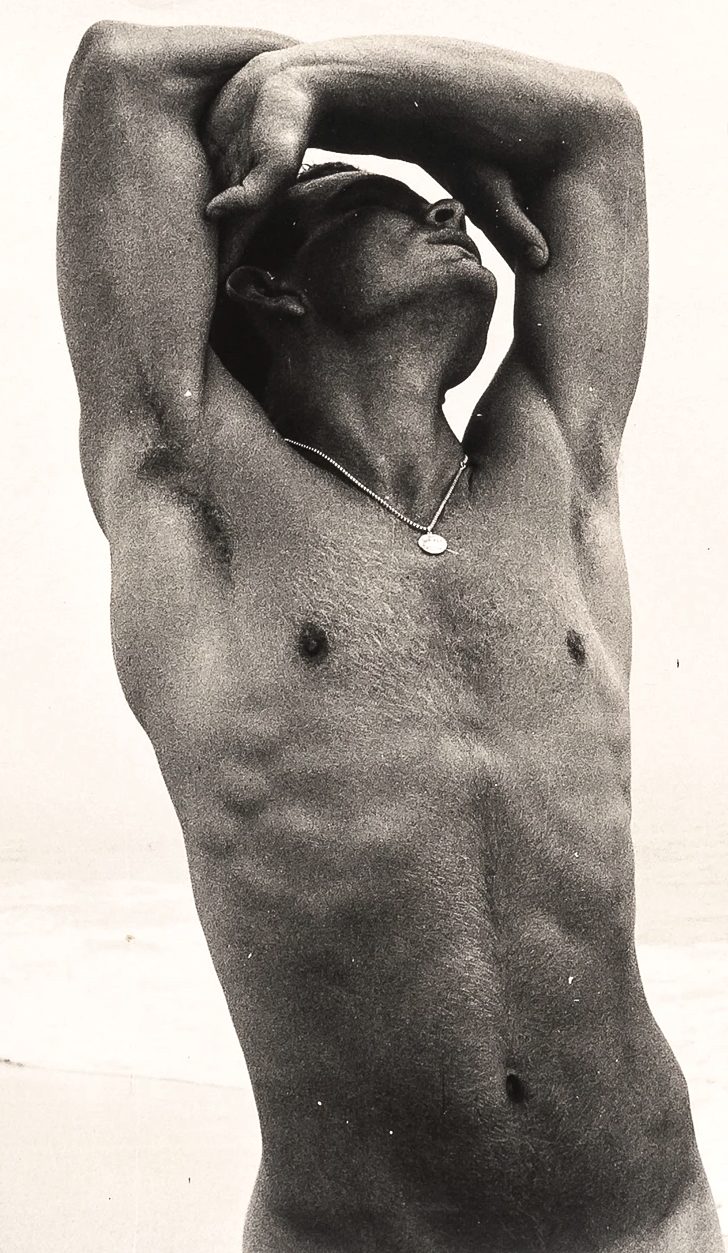
I started following Lucas on Instagram in 2018. I knew nothing about him but his photographs spoke for themselves: stark, striking images that often played with what he described as “the balance between vulnerability and confidence, pride and shame, solitude and connection.”
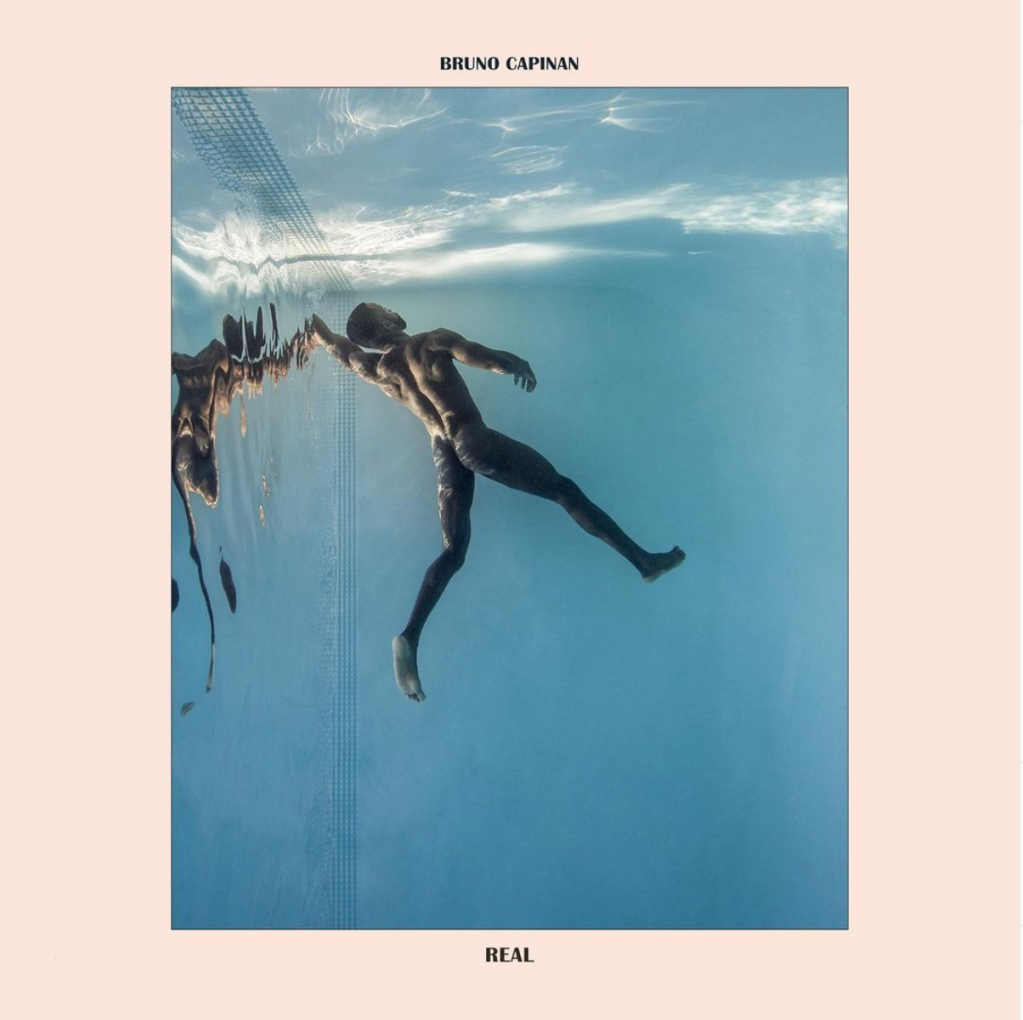
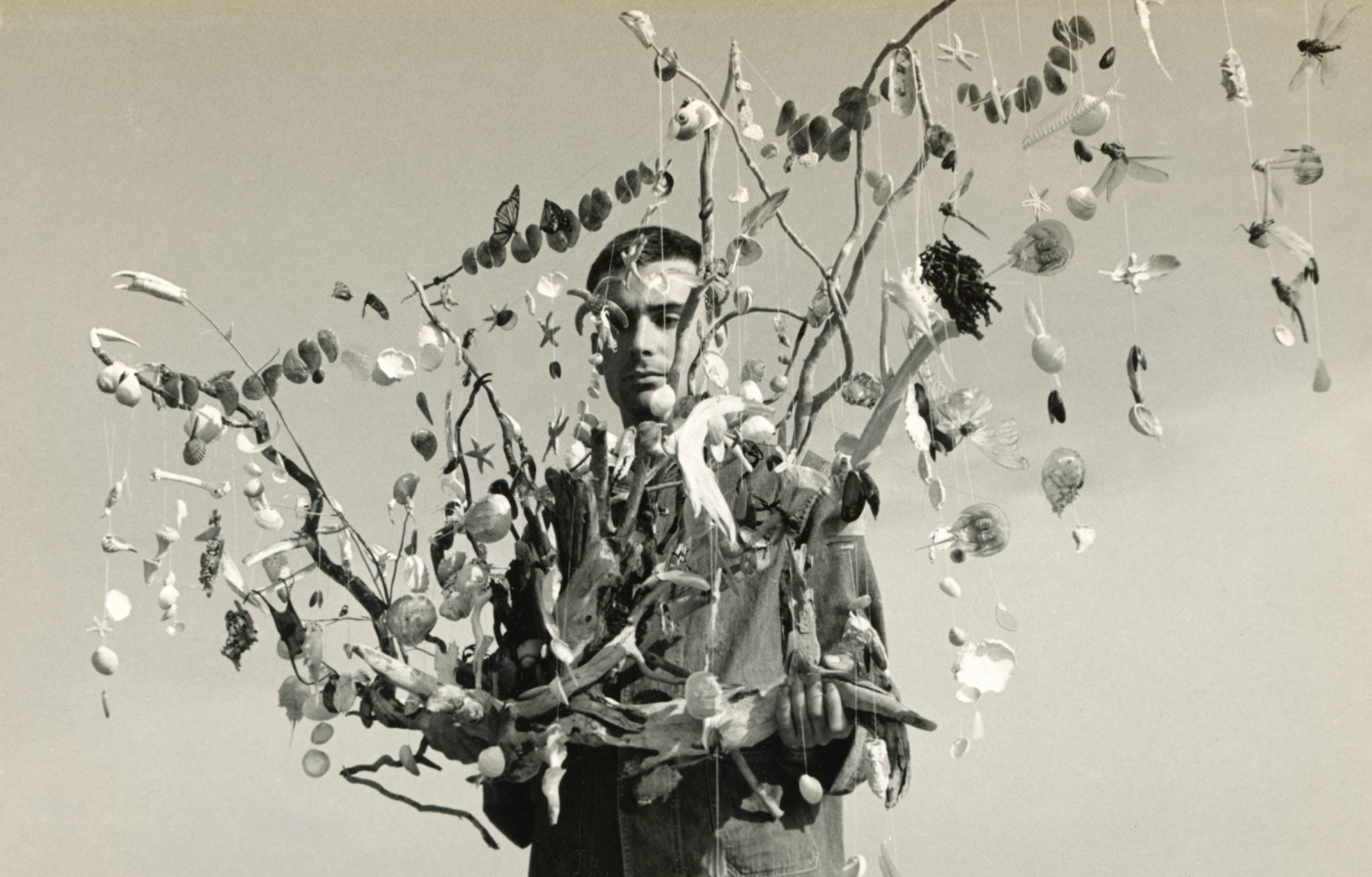
Murnaghan’s photo Suspended Animation on the cover of Bruno Capinan’s 2018 CD.
When he began to promote his photography, his initial impulse was to hide his “day job” as a medical doctor, feeling that it prohibited him from being taken seriously as a photographer, or having an artistic point of view.
“I felt like I was entering the art world from the side door. Well, as it turns out, there is no front door. As an artist, that’s all we can do… gather up our entire lives and transmit it into our work. To do anything less than that is to not be honest with ourselves or our audience.”
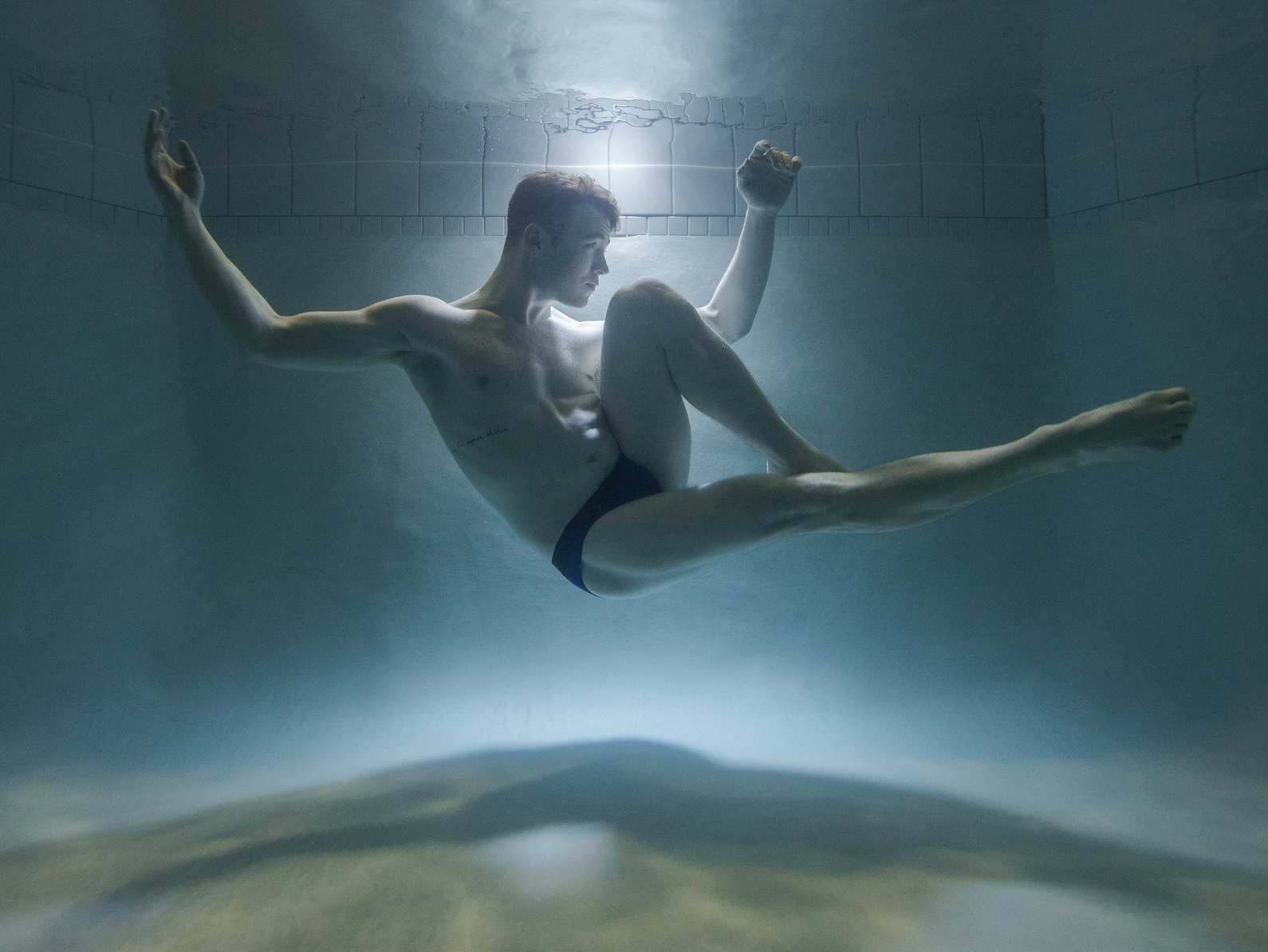
Singer/songwriter Derek Macolly is the subject of several Murnaghan photographs.
For more images and information regarding his book Beneath The Surface, please visit www.lucasmurnaghan.com/
From the website:
“Today, as we celebrate his 50th birthday, we also celebrate the many lives Lucas touched—from his patients and colleagues to his collectors, collaborators, and friends. His photography remains not only a body of work, but a legacy: one that continues to challenge, inspire, and connect us.”
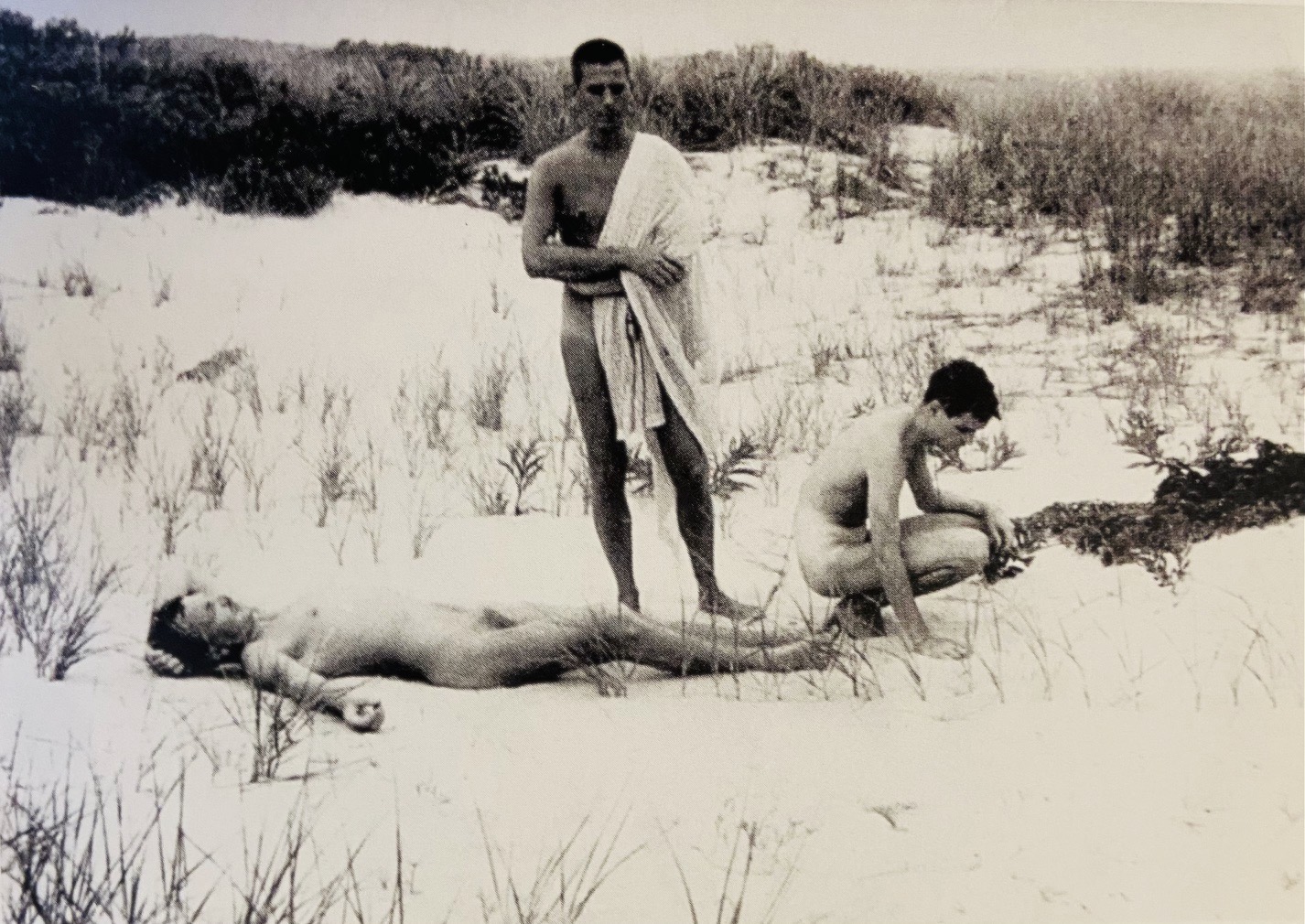
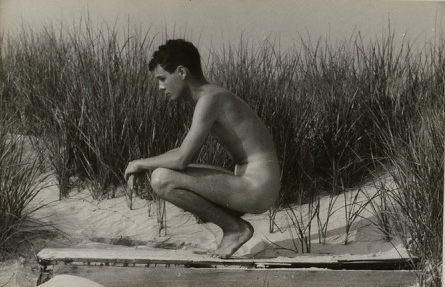
Next month will mark five years since I started the Artist’s Muse series on this blog – profiling the men who inspired, and were subjects of, mid-century artists like George Platt Lynes, Bernard Perlin, George Tooker and the PaJaMa collective: Paul Cadmus, Jared and Margaret French. Last summer I compiled some of these stories and photos for the Fire Island Pines Historical Preservation Society website. “The Fire Island Muses of George Platt Lynes & The PaJaMa Collective” focused on the subjects of the artwork they created during their time on Fire Island. Click here for the full post.
This summer, Vogue has entered the mix with a piece titled The 1940s Vogue Photographer Who Turned His Lens to the Male Muses of Fire Island. Honestly, it sounds as if he happened upon a coven of beautiful gay men, rather than importing his friends and lovers from the mainland. While it’s true that Lynes would photograph models and “attractive men that he heard of through word of mouth,” this applied to his studio work back in New York City. On Fire Island, the photos were of his intimate circle.
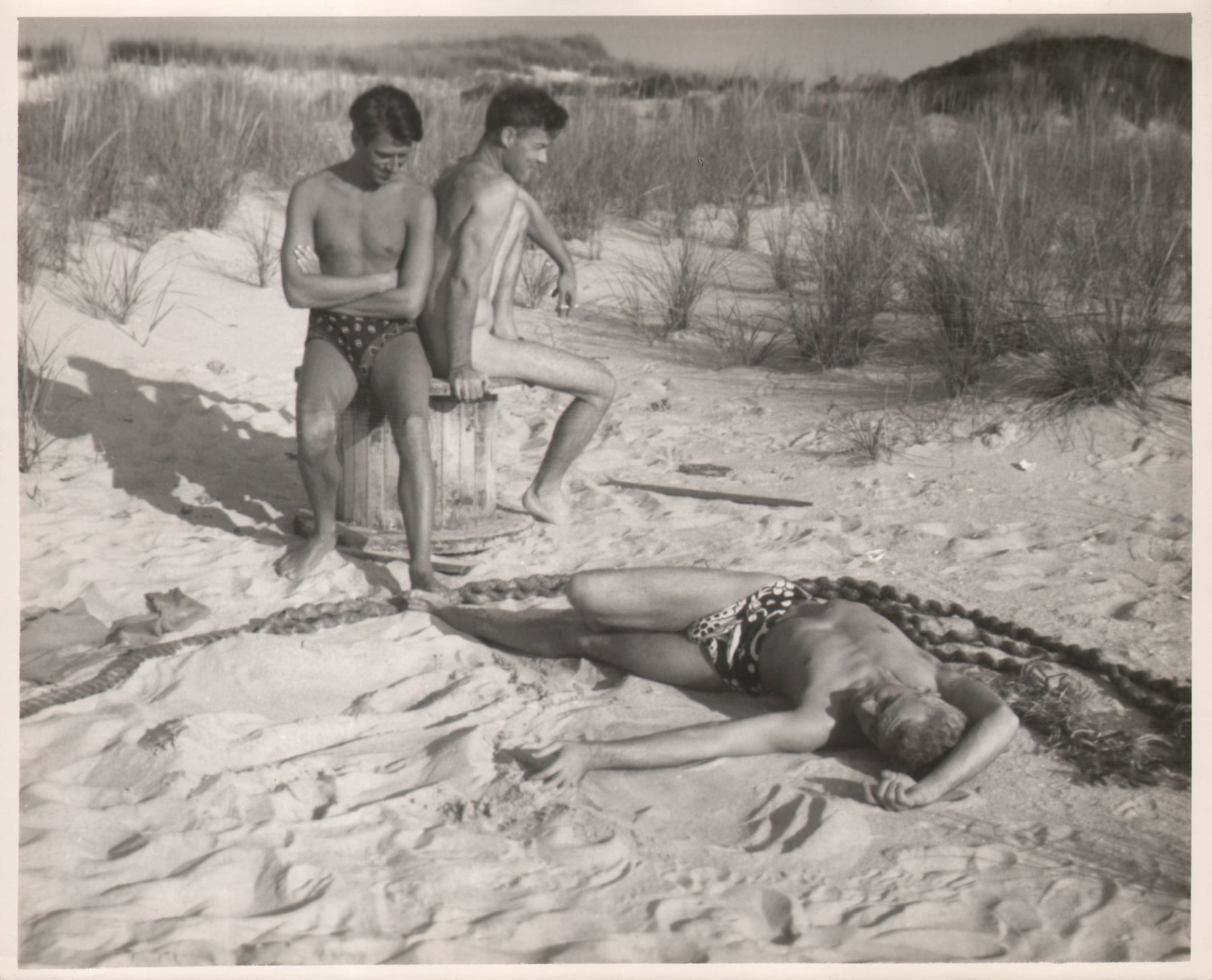
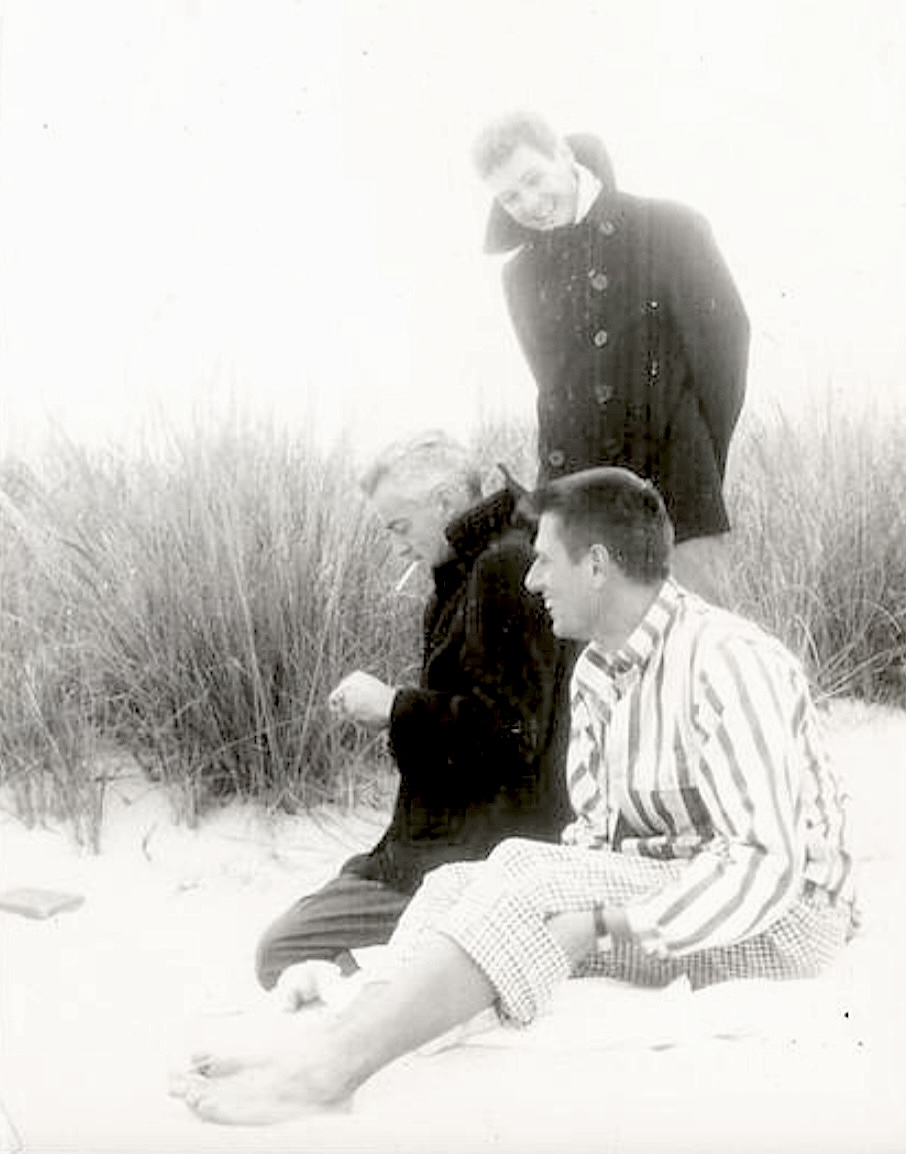
Lynes’ Fire Island photos are inextricably linked with the PaJaMa collective, as they all vacationed together and posed for each other. Artists like Lynes, Tooker and Perlin were all influential on each other’s work, especially the photographic aspects of their creativity.
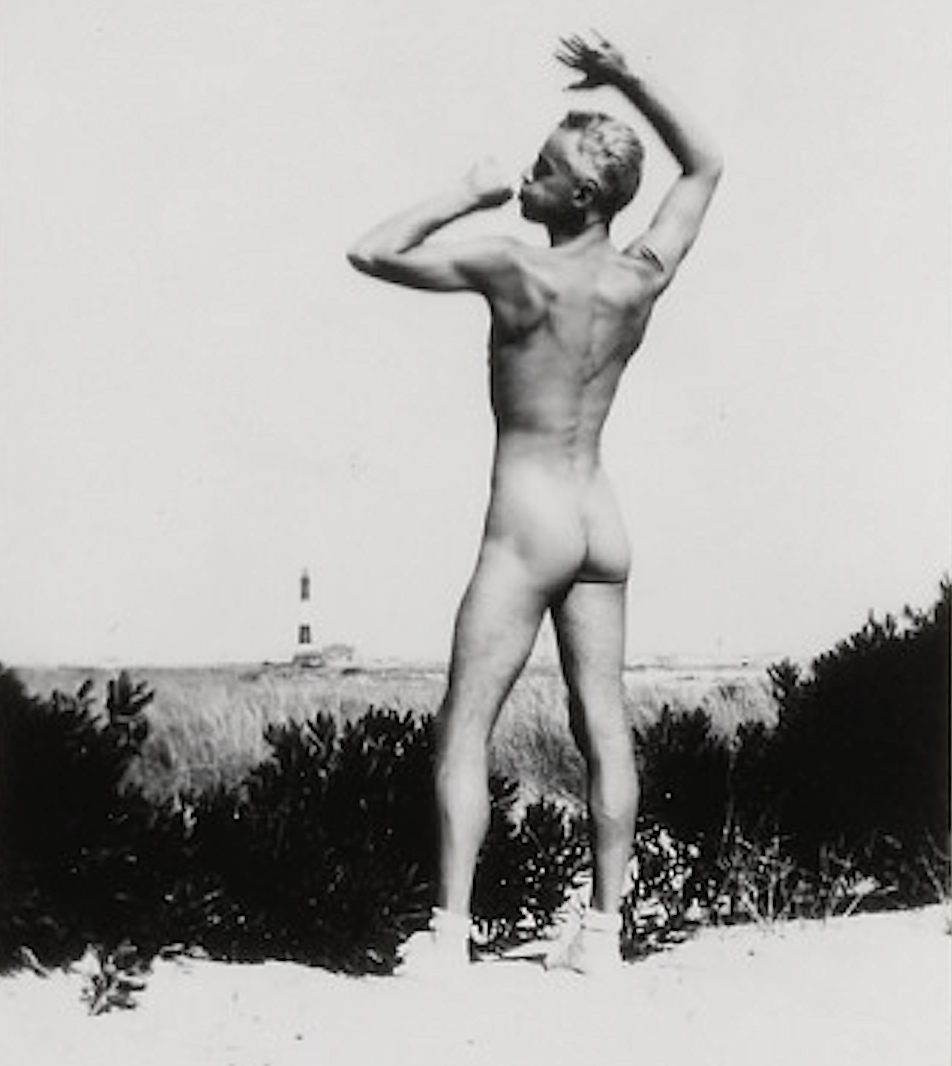
Lynes with Paul Cadmus, Glenway Wescott, Donald Windham, Jared French & the Fire Island Lighthouse, PaJaMa (ca. 1938-40)
The Vogue piece displays several photos from A.Therien gallery’s recent collection of images featuring fellow photographer Wilbur Pippin, who was profiled here back in April. These are additional photos from that collection:
Wilbur Pippin with Fidelma Cadmus Kirstein and George Tooker, photos by George Platt Lynes & PaJaMa (ca. 1948-50)
In 1943, Lynes was so enamored of Jonathan Tichenor that he left his long-term threeway relationship with Glenway Wescott and Monroe Wheeler to be with him. The pair moved in together and Lynes shocked his discreet friends by announcing that they planned to be married. Tichenor was the subject of many Lynes photographs during this period, including some memorable shots snapped on Fire Island. The relationship imploded in 1945 when Tichenor ran off to become the second husband of socialite/artist Bridget Bate.
Jonathan Tichenor, Fire Island, photos by George Platt Lynes & PaJaMa (ca 1944)
Lynes met aspiring dancer Randy Jack in 1947 while he was working for Vogue in Los Angeles. The pair moved back to New York the following year, where Jack found success as a model. They parted ways a few months later. Read more about Randy Jack here.
Lynes with his boyfriend Randy Jack (ca 1948)
Ten days after the departure of Randy Jack, former military man Chuck Howard moved in with Lynes. Throughout their relationship, Lynes frequently photographed Howard on Fire Island. He later became a successful fashion designer and restaurateur. Read more about Chuck Howard here.
Chuck Howard photographed on Fire Island by George Platt Lynes (ca 1950)
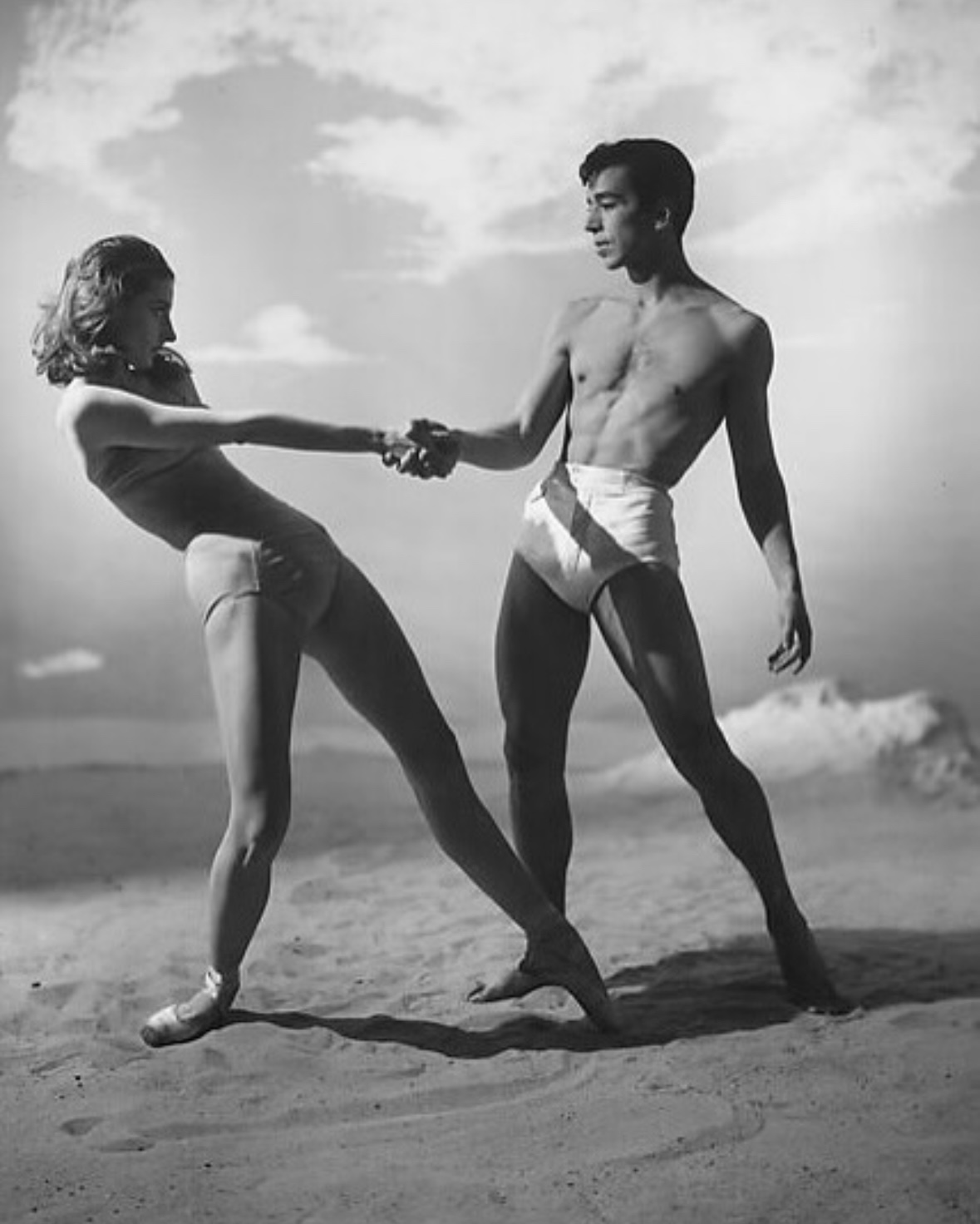
In 1950, Lynes created a studio beach scenario with dancers Nicholas Magallanes and Tanaquil LeClerq in poses from the George Balanchine/Jerome Robbins ballet Jones Beach. Magallanes was also a member of Lynes’ social circle and a frequent model for his nude photography.
Nicholas Magallanes and Tanaquil LeClerq in Jones Beach, George Platt Lynes (1950)
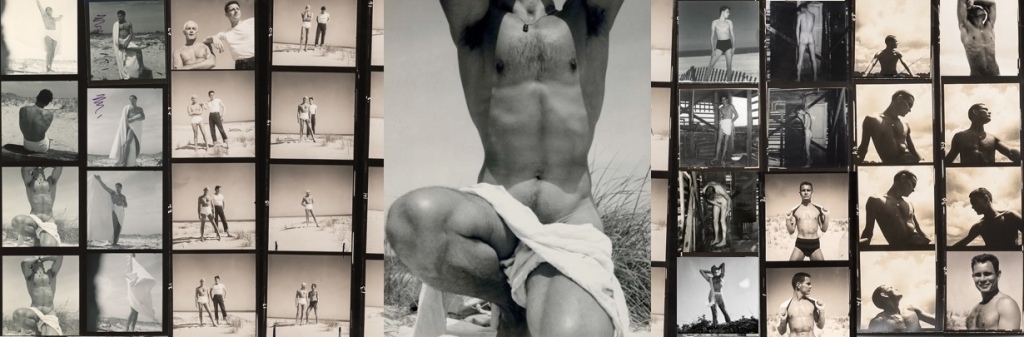
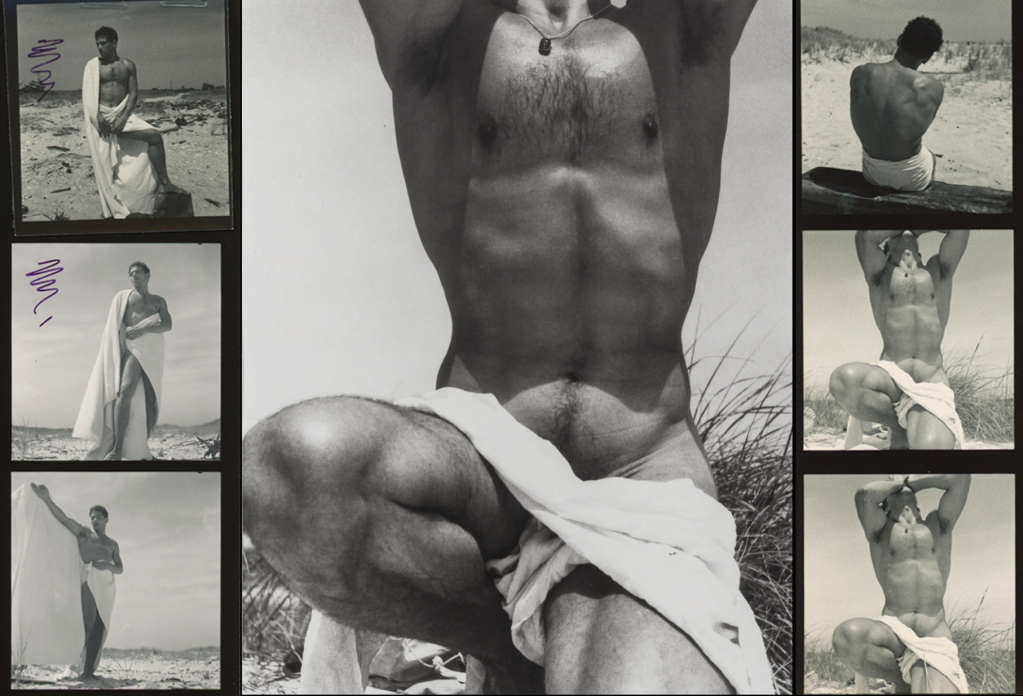
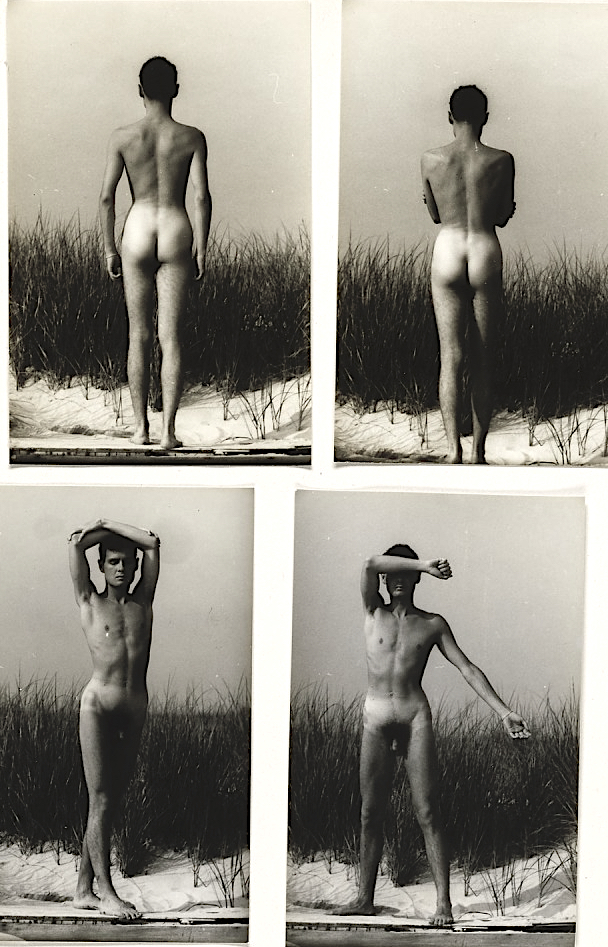
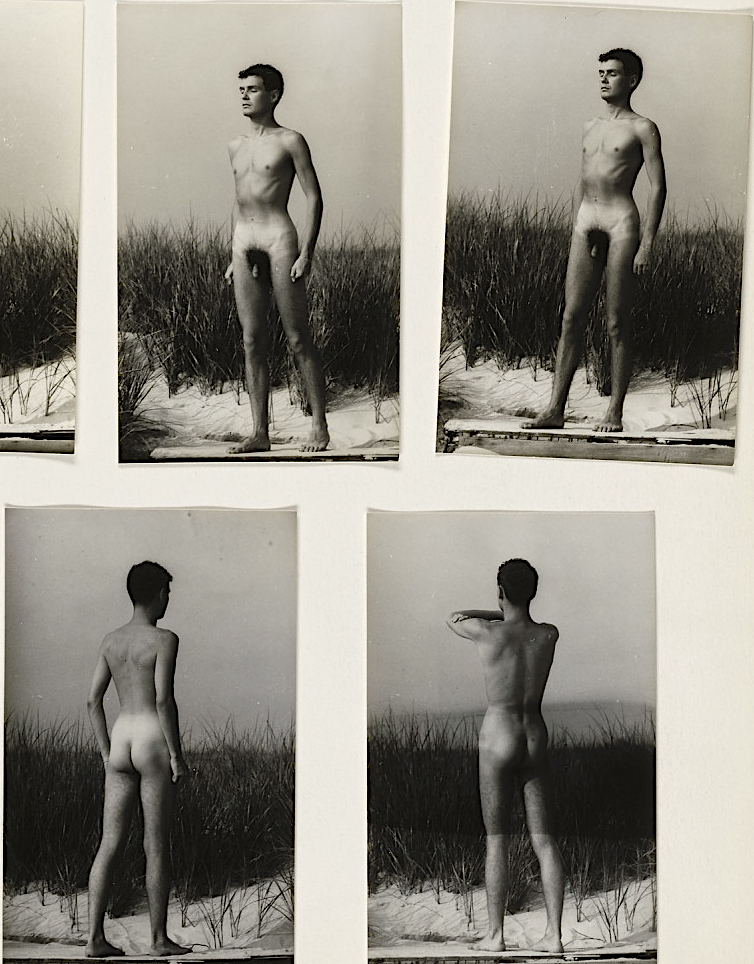
Lynes’ most iconic Fire Island image is of dancer Francisco Moncion, seen here with some alternate shots from the contact sheet. The influence on the work of Herb Ritts and Bruce Weber is evident.
Francisco Moncion photographed by George Platt Lynes on Fire Island (ca 1948-50)
The Vogue profile of George Platt Lynes concludes that his work for the magazine may have provided him with commercial success, but that his Fire Island portraits show that success comes in many forms.
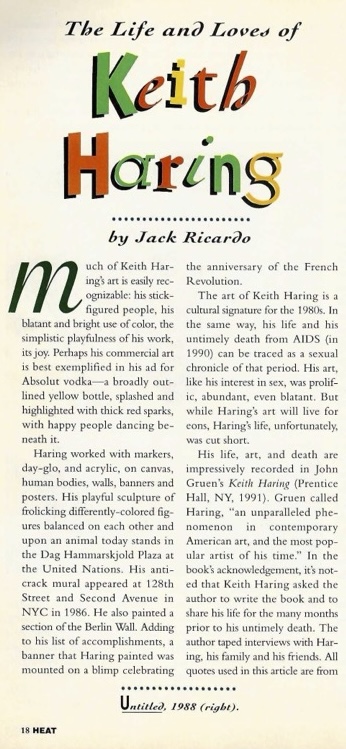
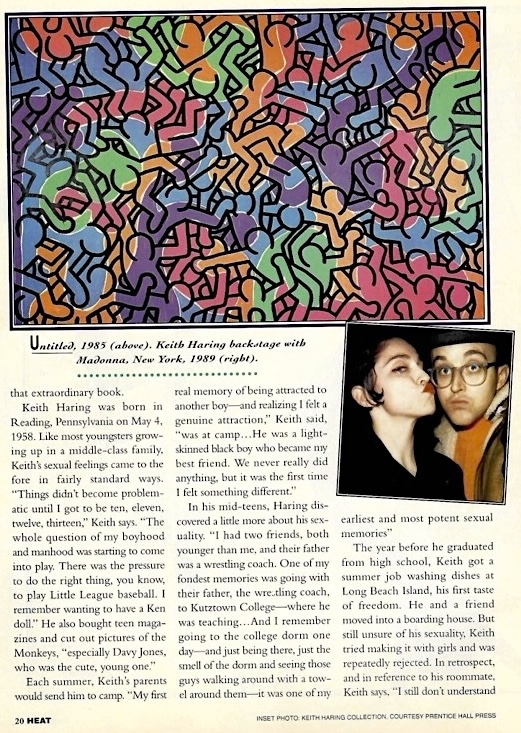
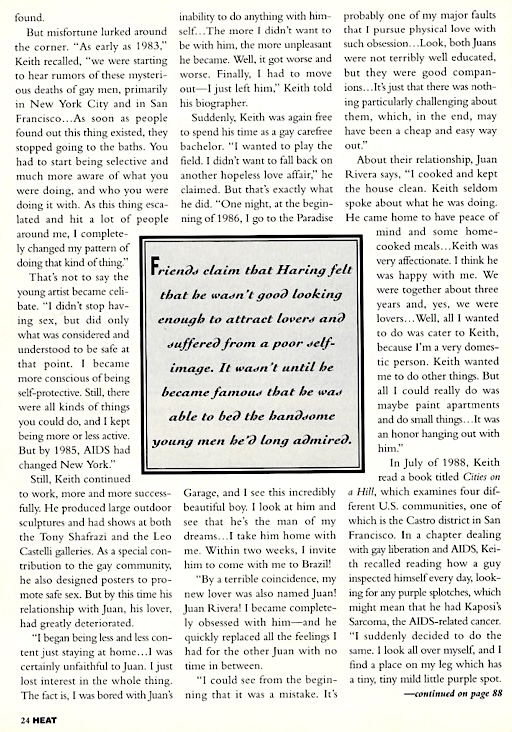
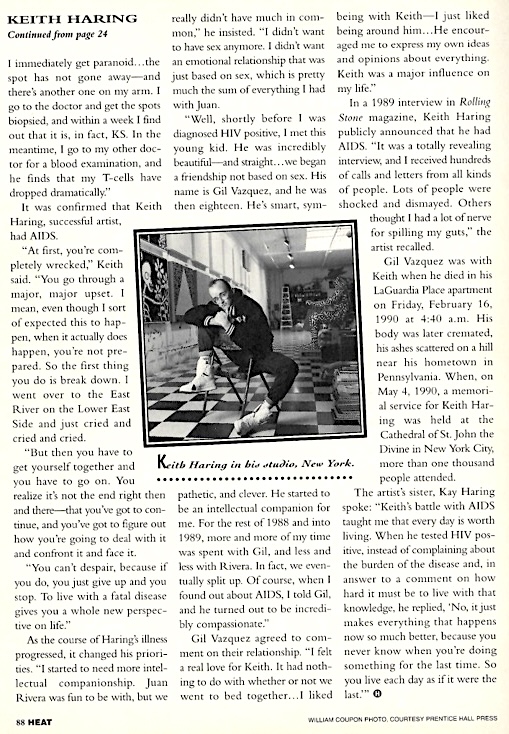
I was recently perusing (as one does) the June 1992 issue of Heat, a short-lived gay men’s magazine. Amongst the pictorials of cover boy Rob Cryston and fellow gay porn stars Karl Thomas and Sam Abdul is an article titled “The Life and Loves of Keith Haring” by Jack Ricardo.
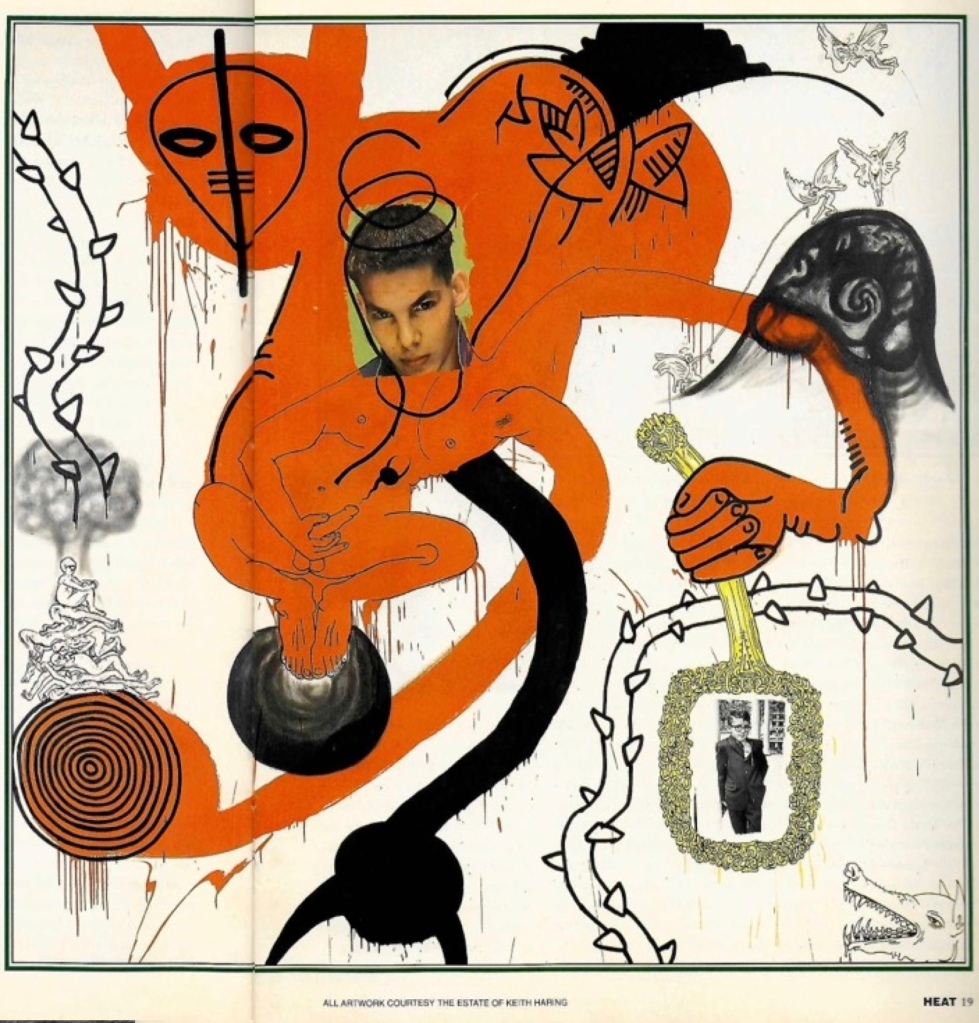
Keith Haring, Untitled (1988)
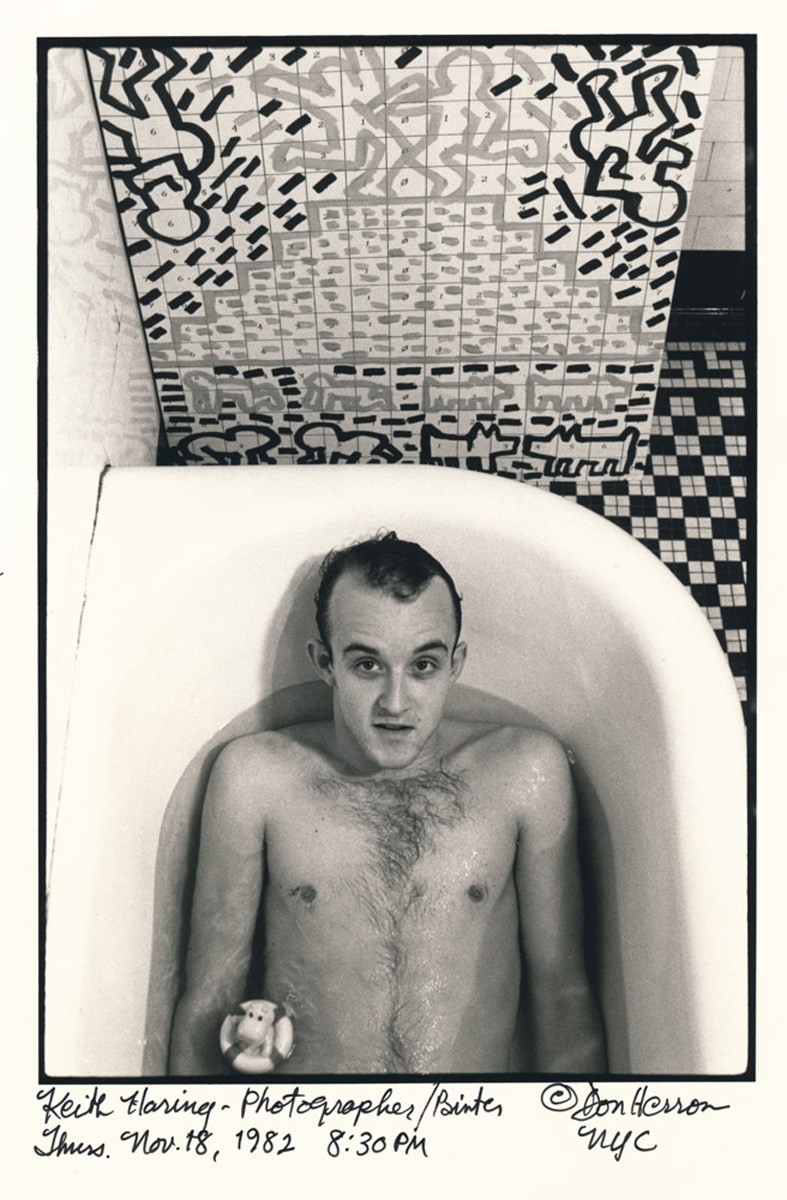
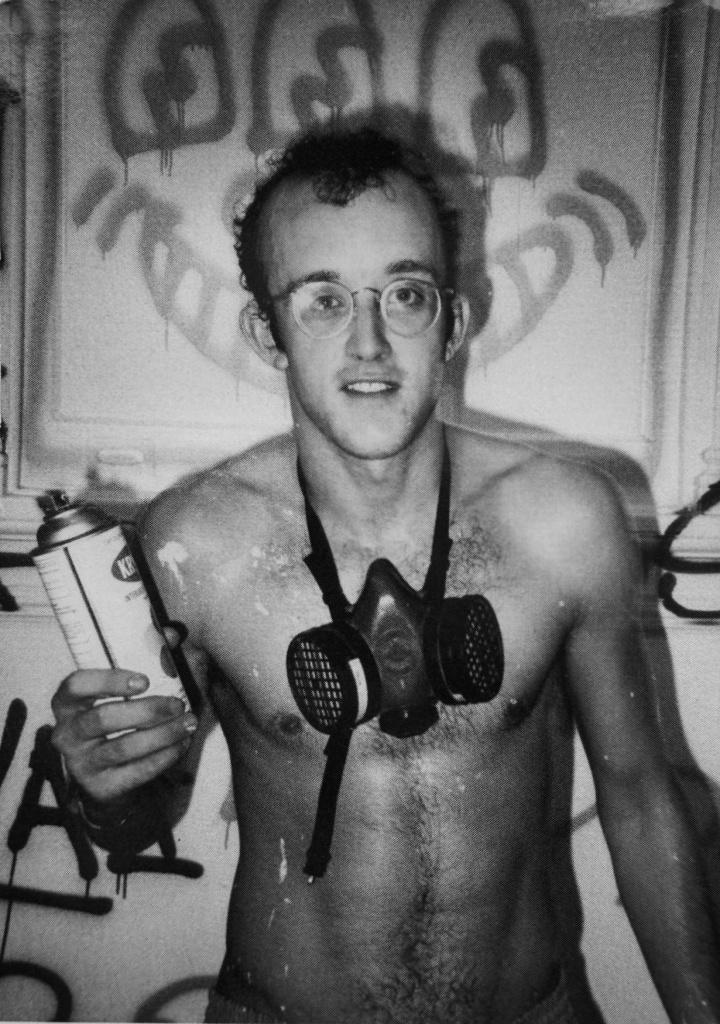
Keith Haring photographed by Don Herron (1982)
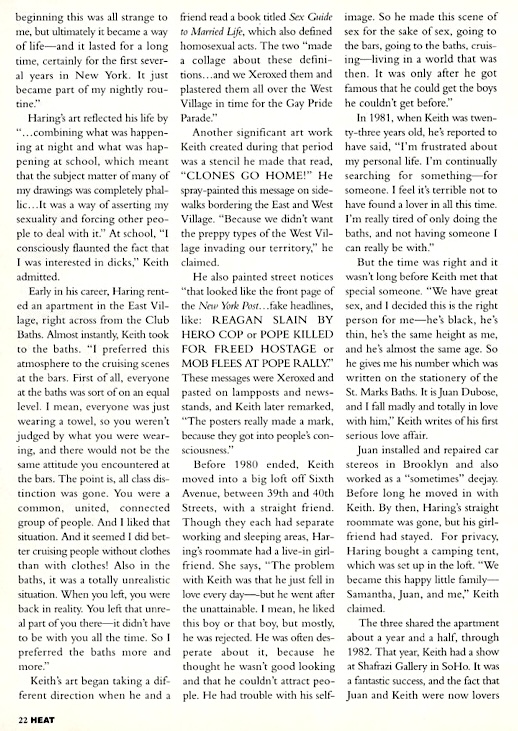
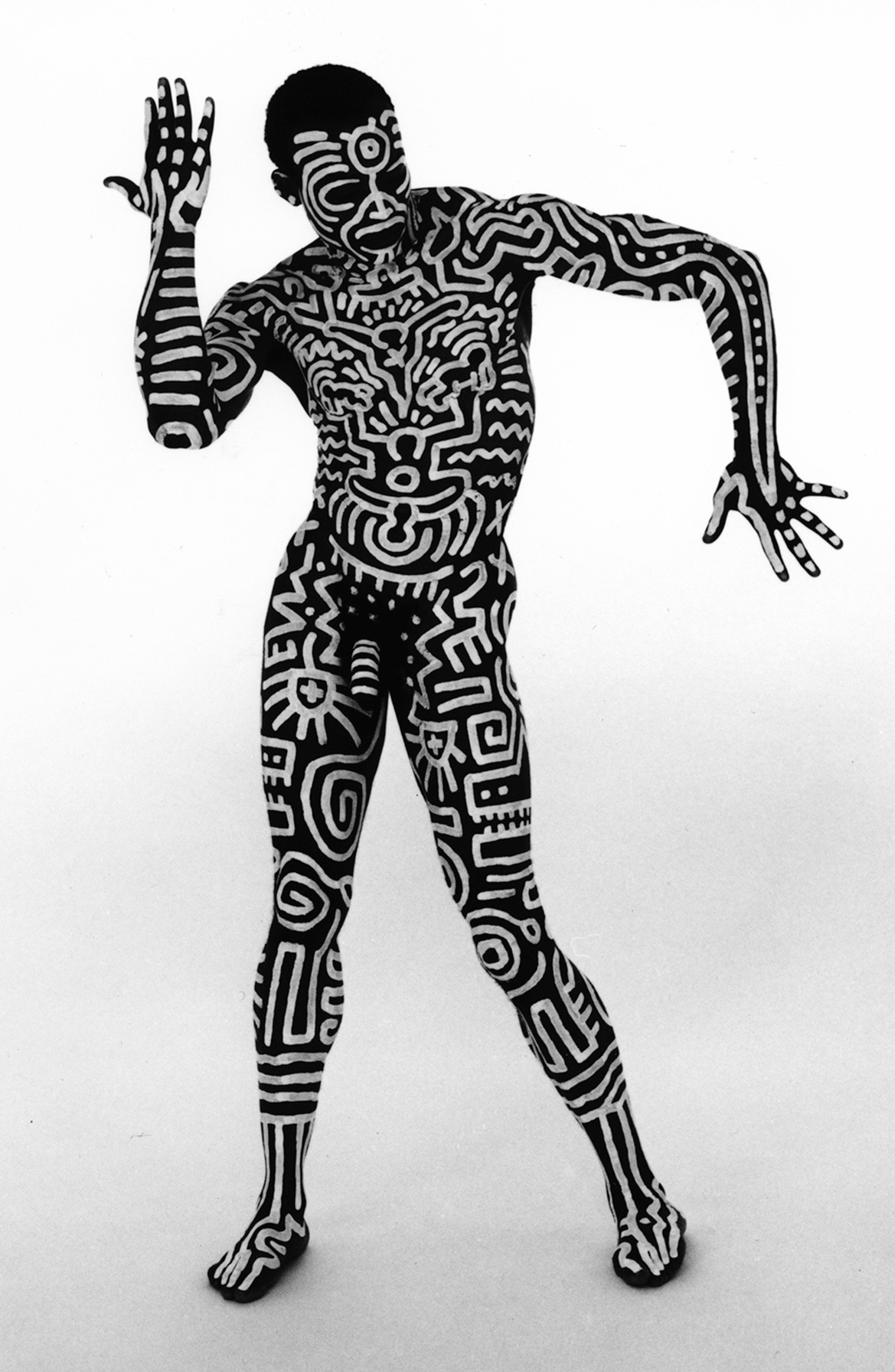
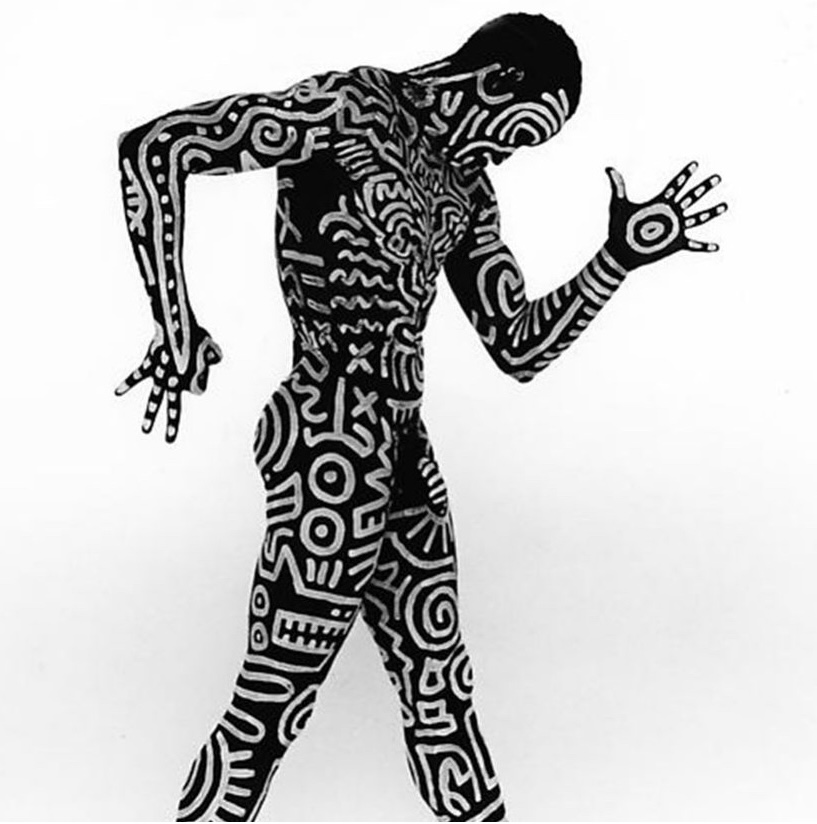
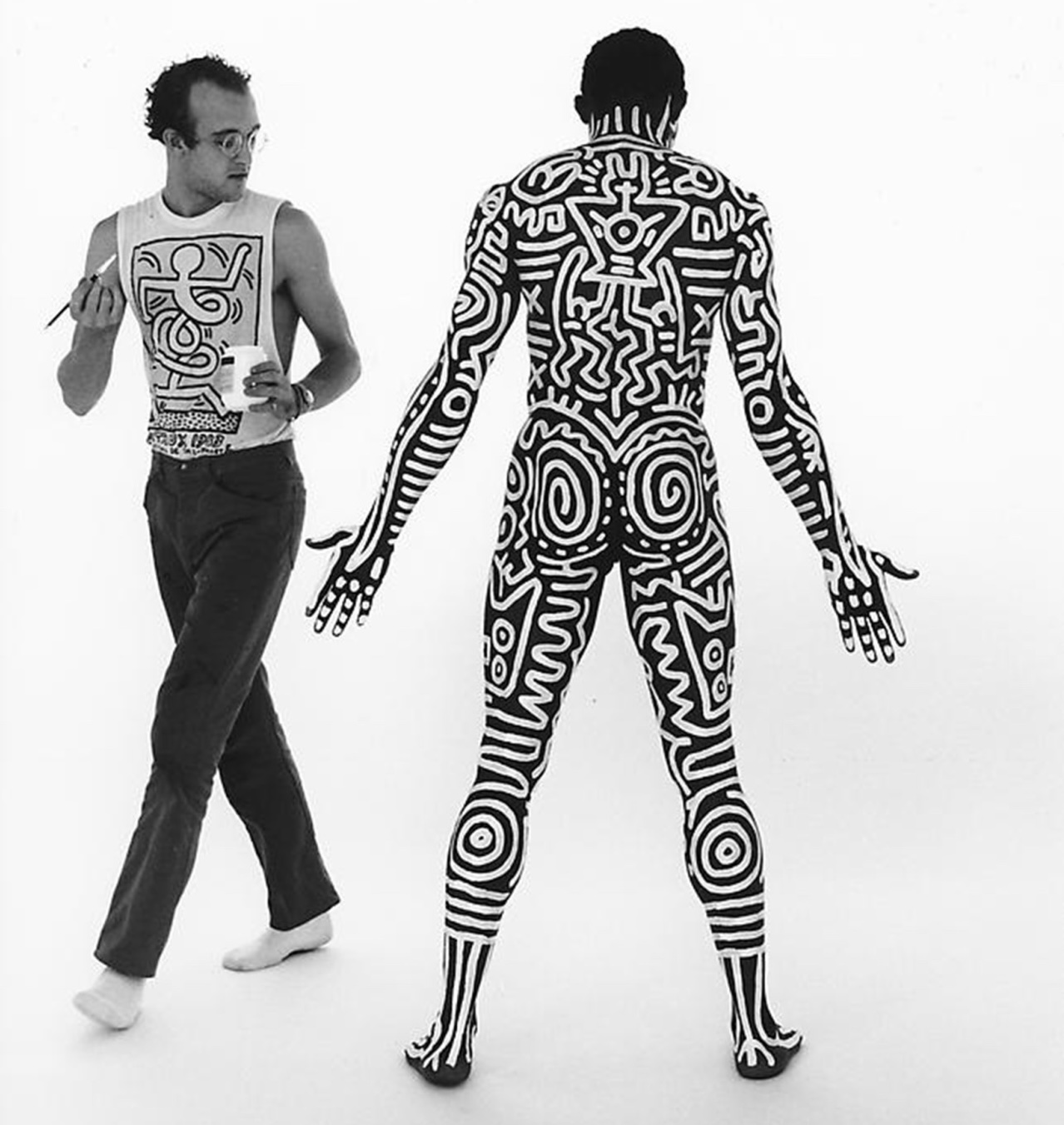
Bill T. Jones painted by Keith Haring (1983)
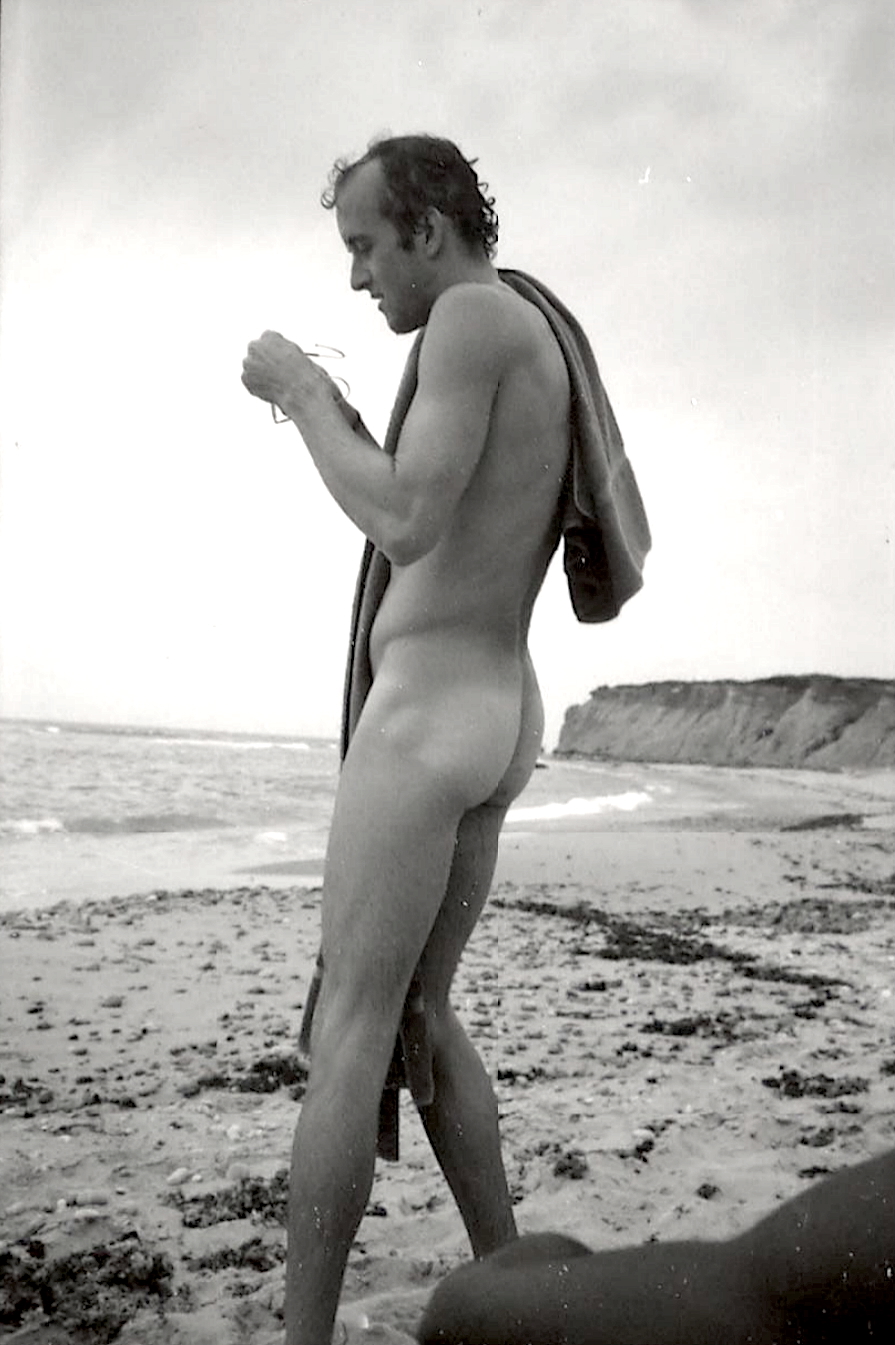
Keith Haring photographed by Andy Warhol, Montauk (8/22/84)
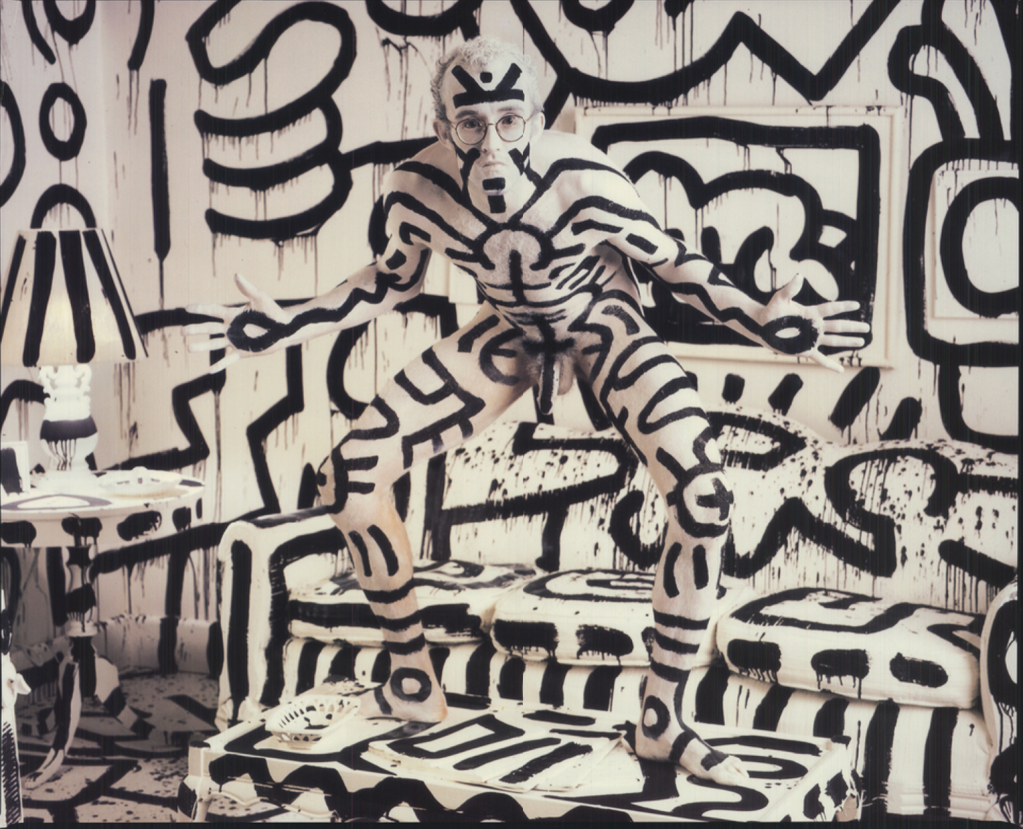
Keith Haring photographed by Annie Leibovitz (1986)
This article was published just two years after Haring’s death. In 2019, Gil Vazquez became Executive Director of the Keith Haring Foundation, a role he held for 6 years.
Keith Haring photographed by Patrick McMullan, NYC (8/14/84)
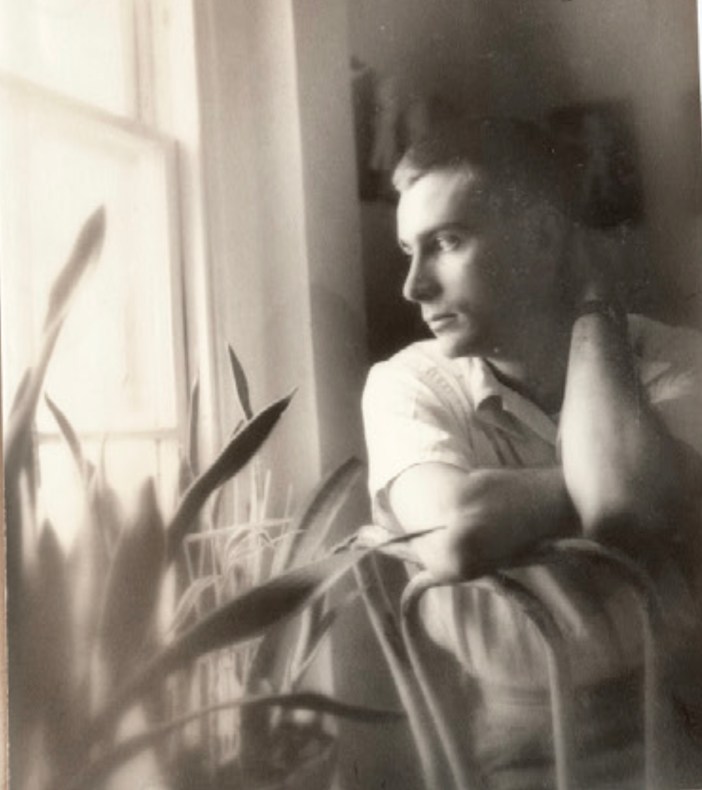
The latest subject in our Artist’s Muse series is Wilbur “Billy” Pippin, a friend, lover and confidant to a circle of artists that included George Platt Lynes, George Tooker, Paul Cadmus, Jared & Margaret French (aka the PaJaMa collective).
Wilbur Thomas Pippin was born on May 25, 1924 in Macon, Georgia. An only child, his father was employed by Railway Express while his mother worked at a dress shop. After the couple separated, Wilbur and his mother moved down the road to his maternal grandmothers house. He attended Lanier High School for Boys, where he was on the honor roll and received recognition for 5 years of perfect attendance. Upon graduation in June of 1942, he enlisted in the Army and served through World War II.
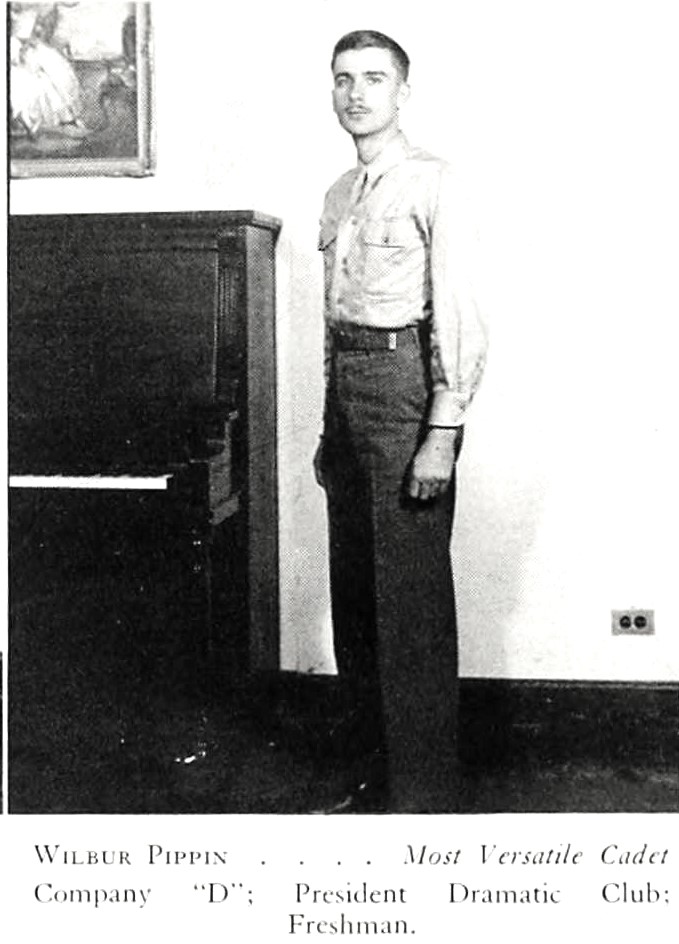
Back in Georgia for the 1946-47 school year, Billy enrolled as a freshman at North Georgia College in Dahlonega, three hours north of Macon. He became president of the drama club and was also voted “Most Versatile Cadet”. His academic career seems to have ended after that successful first year, as life took an unexpected turn in the form of a fellow named Fred Melton.
Sgt. Pippin – the Most Versatile Cadet at North Georgia College (1947)
Fred “Butch” Melton (1939)
We previously mentioned Fred “Butch” Melton in a profile of Artist’s Muse/writer Donald Windham. Butch was an Atlanta artist/photographer who moved to New York in 1939 with Windham, his boyfriend at the time. After the two split in 1942, Melton abruptly married Sarah “Sally” Marshall. The newlyweds settled in Greenwich Village and had two sons in quick succession. The growing family then moved back to Sally’s hometown of Macon, Georgia to live on land provided by her parents.
In the New York Public Library blog post Finding Frederick Melton, Stephen Bowie writes, “Melton dove into small-town Southern life with gusto. He built a modern house and workshop on the property, painted, and worked on the newspaper and in the local theater. But the experiment in conformity didn’t last.”
Whether Butch and Billy met doing local theatre or through some other social event is speculative. Suffice to say that Macon isn’t a very large town. In any case, the two found each other, and sparks flew. Billy did not return to college. In early 1948, Butch left his young family in Macon to move back to New York with Billy.
The couple moved into a cold-water tenement flat at 446 West 55th street in Hell’s Kitchen. Butch introduced Billy to the circle of gay artists that he had left behind 5 years prior. The striking young man soon began to turn up in their work.
Bernard Perlin & Wilbur Pippin photographed by Fred Melton in Cherry Grove, Fire Island (1948)
Wilbur Pippin photographed on Fire Island with George Tooker and Margaret French
Ballet impresario Lincoln Kirstein was apparently so fond of the couple that he tasked them with running Pippin Press, a silkscreen company he bankrolled and named after Billy. The original intent was to make collectible prints of ballet designs and the work of artists like Pavel Tchelitchev. Ultimately Pippin Press found more success producing custom silkscreen wallpaper.
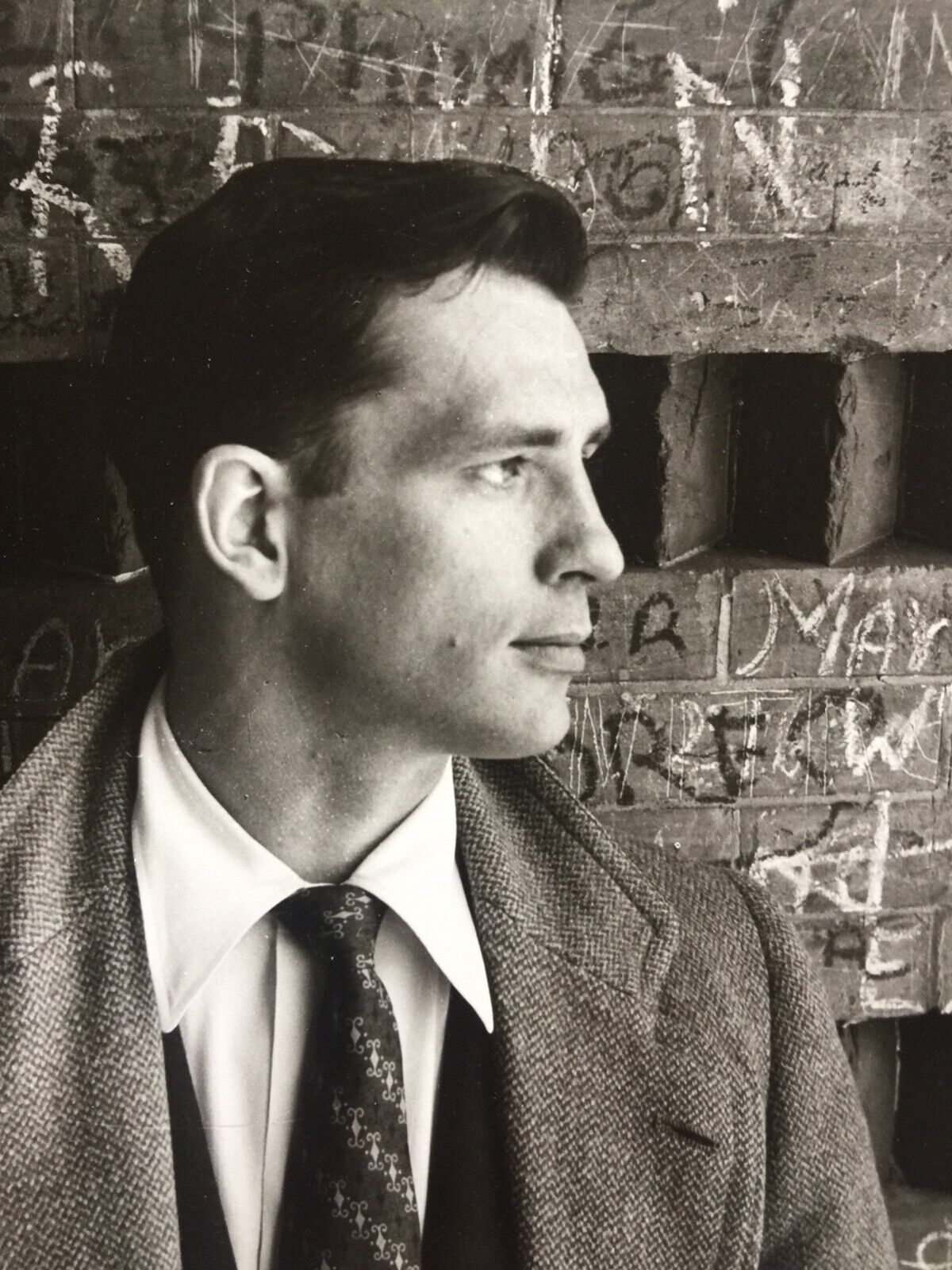
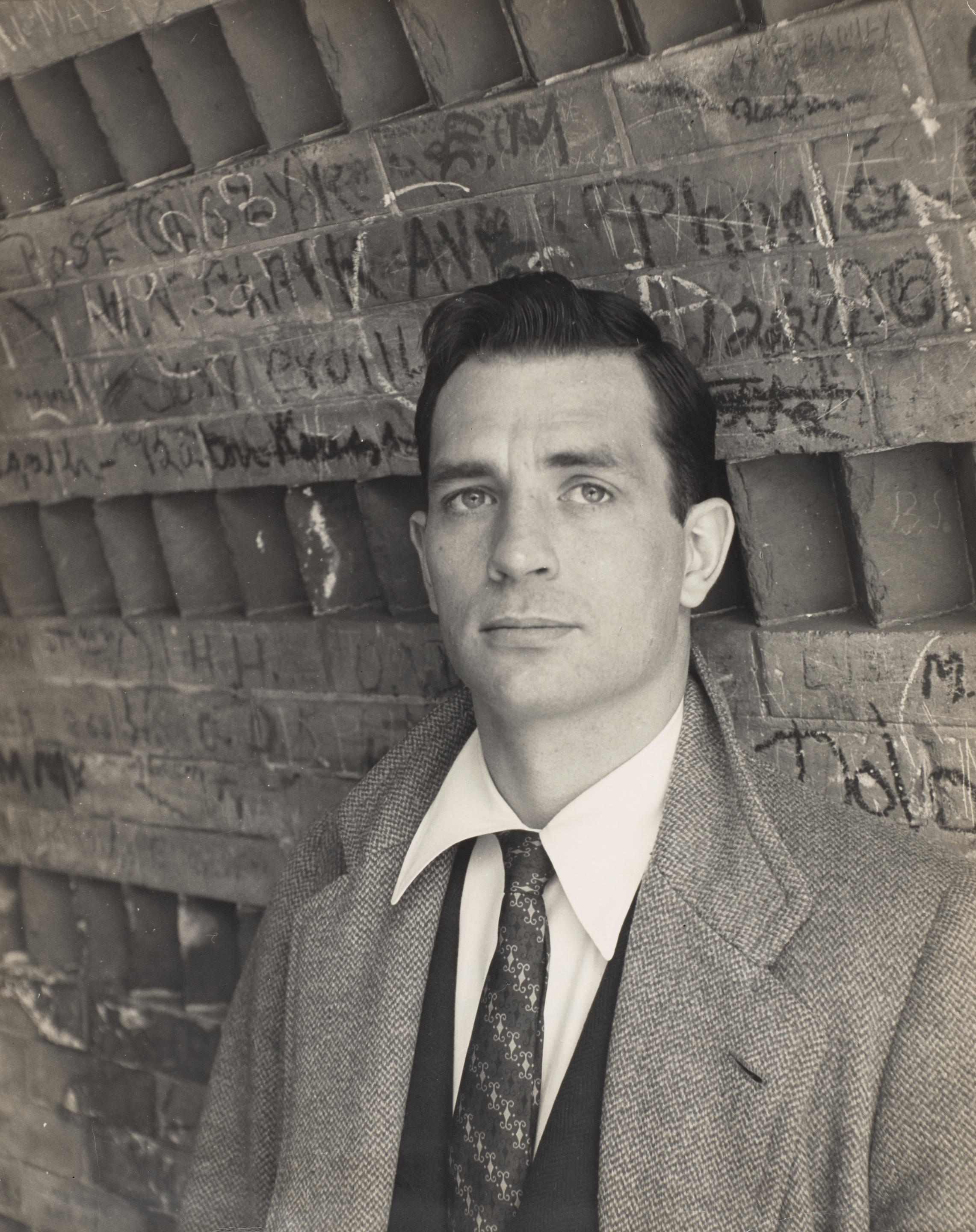
Billy also began exploring photography alongside Butch, forming the “Melton-Pippin Photography” imprint for both of their work. Although he later enjoyed a long career as a fashion photographer, today Billy’s most notable photographs are his 1950 portraits of Jack Kerouac. It was one of these photos that was Kerouac’s choice for the original cover sketch of On The Road.
Jack Kerouac photographed by Wilbur Pippin (1950)
In early 1951, Butch and Billy had a new neighbor when their friend George Platt Lynes moved into the building. Lynes’ relationship with Chuck Howard had recently ended, and he was facing increasing financial woes. Lynes was initially pleased to have the couple as neighbors – Melton helped him with remodeling and silk-screening wallpaper for the living room. But he quickly grew annoyed by the couple “forever borrowing that old cup of sugar…” he wrote to a friend, “… or in their case it was more likely to be a bottle of gin.”
Wilbur Pippin & Chuck Howard, (ca. 1950)
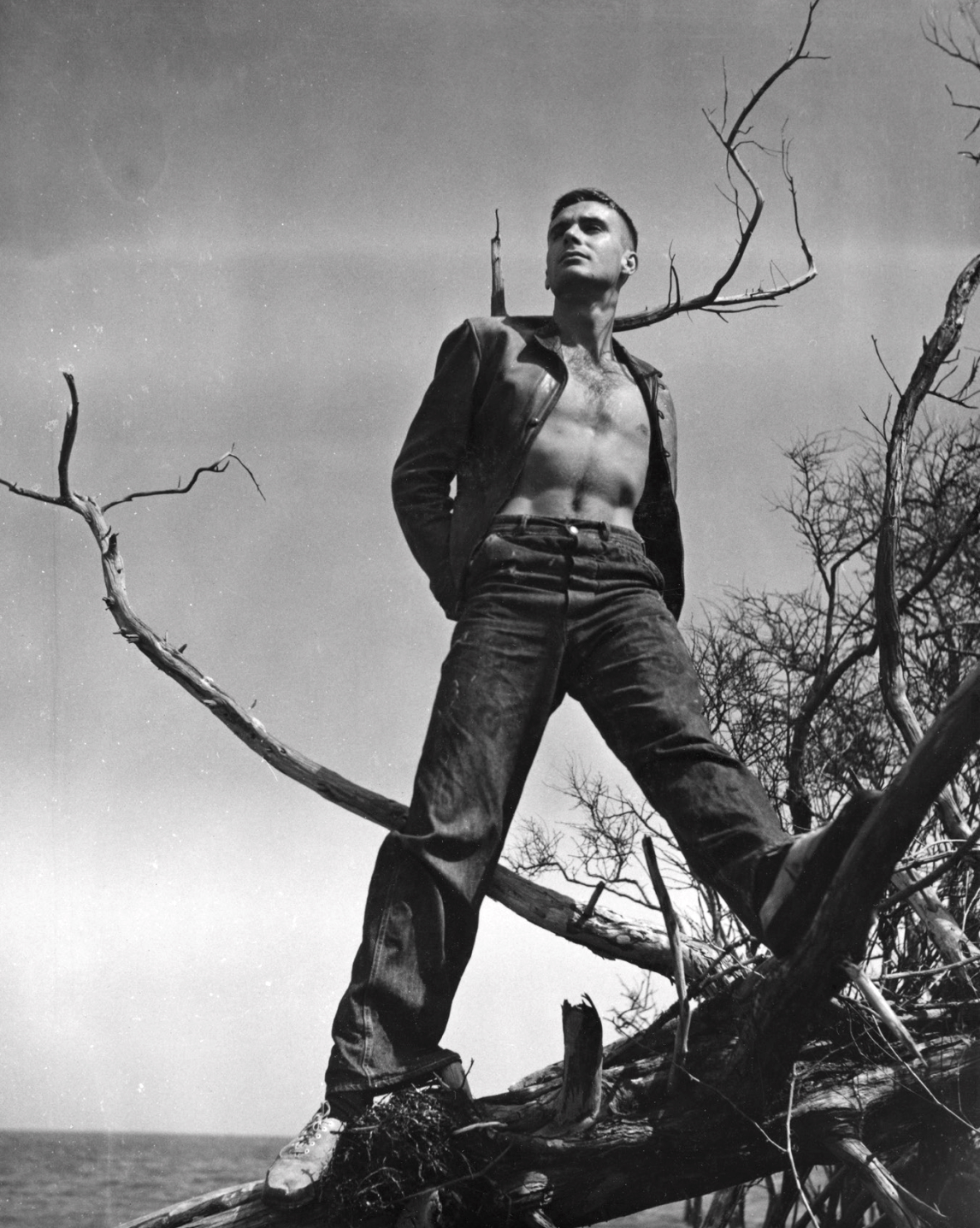
Wilbur Pippin photographed by George Platt Lynes
Besides the thirsty neighbors, the far-west proximity and sketchy neighborhood did not sit well with Lynes. By September, he had fled back to the comfort of the East side, although his finances could not support it.
Fred “Butch” Melton & Wilbur “Billy” Pippin photographed by George Platt Lynes (ca 1951)
The couple remained friends with Lynes through the rest of his life, despite some difficult times. When Lynes fell out of favor with Lincoln Kirstein, Melton was named as his replacement as the official photographer for the New York City Ballet. In 1955 when Lynes was hospitalized with terminal lung cancer, Pippin was one of a small group of friends tasked by Russell Lynes to dismantle and pack up his brother’s apartment. George Platt Lynes died in December of that year.
With Pippin Press winding down, Billy went to work as publicity director for the New York City Ballet as well as press representative of the Broadway show Protective Custody, which opened and closed in late December, 1956.
By the end of the 1950’s, Butch and Billy had gone their separate ways. As with so many others, Fred Melton was dropped by the mercurial Lincoln Kirstein and had been replaced as photographer for the New York Ballet, just as he had replaced Lynes years before.
In 1961, Melton departed New York once again, leaving his collection of ballet negatives to the New York Public Library, intent on spending his last days drinking on the beaches of Puerto Rico.
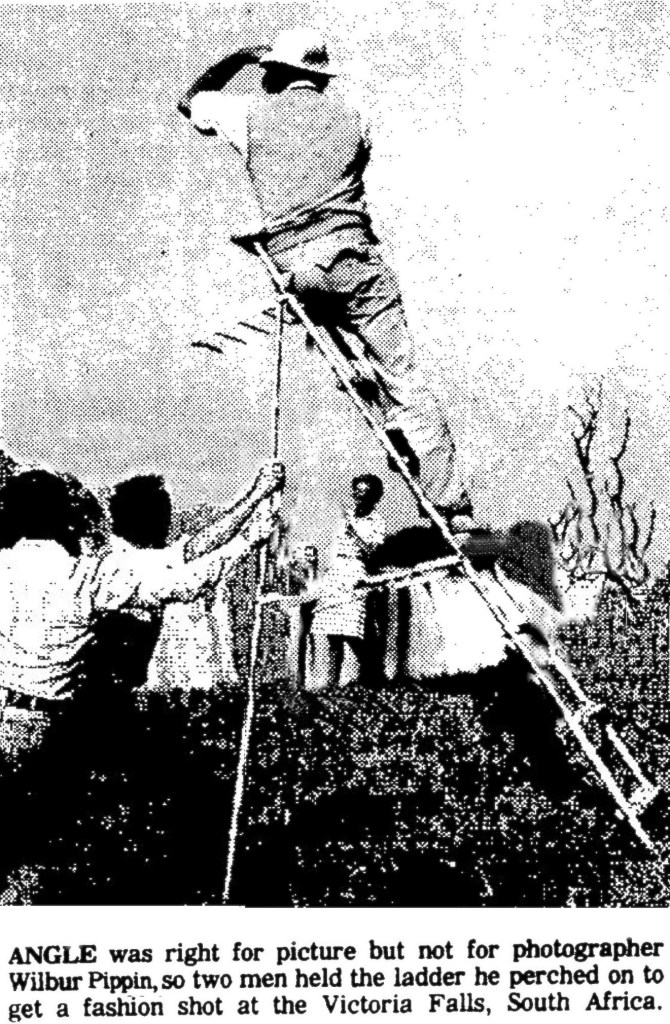
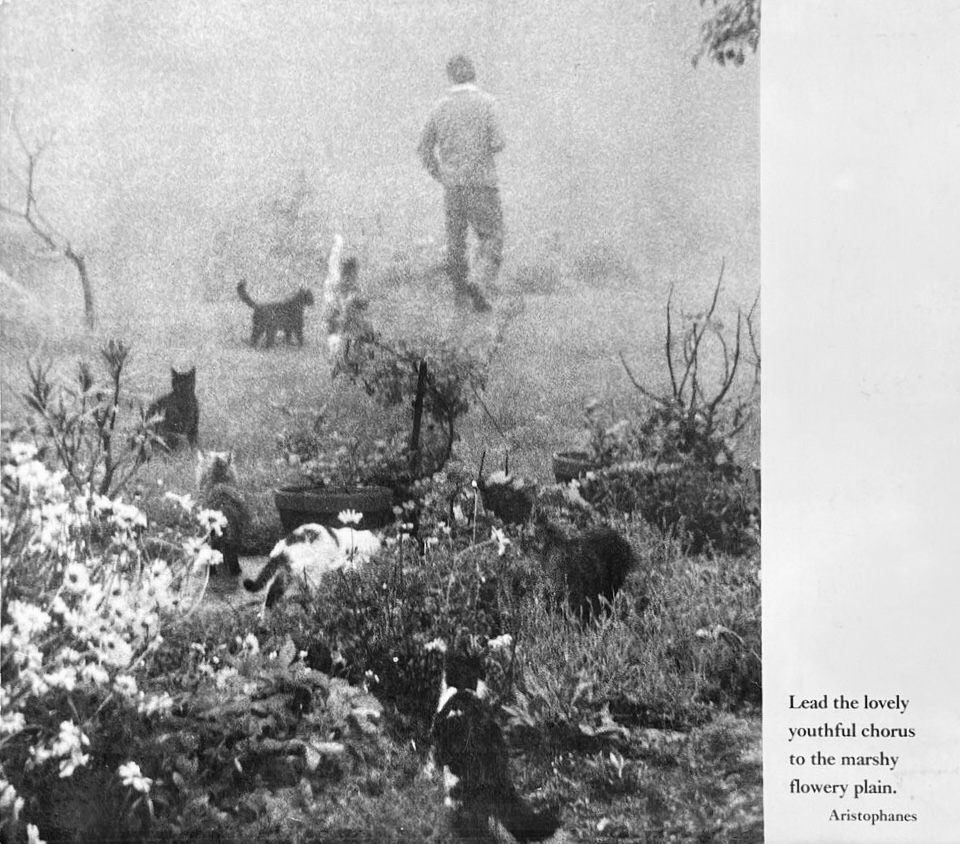
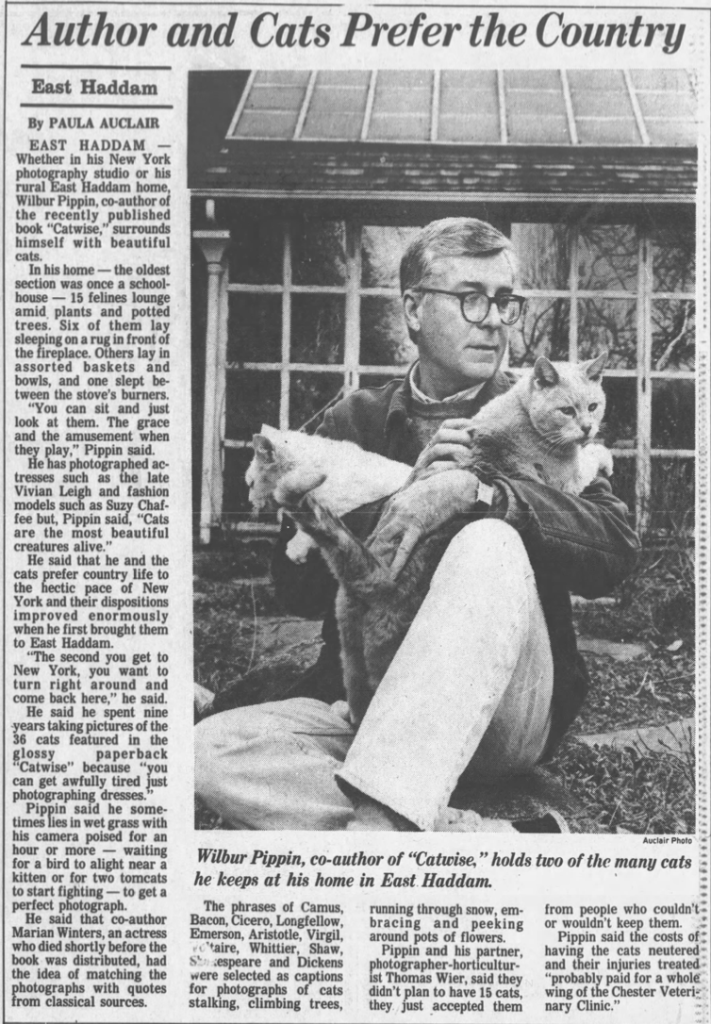
Meanwhile, Billy was working steadily as a fashion and celebrity photographer for the New York Times. He traveled the world through the following decades as a freelance fashion photographer for Vogue and other outlets. In the late 1960’s, Pippin coupled with fellow photographer, Thomas Wier, Jr. For 30 years, the duo ran Pippin & Wier Photography in New York City. Their country home was an old converted schoolhouse in East Haddam, CT. They eventually amassed a menagerie of 15 cats.
The Commercial Appeal, Memphis, TN 10/29/64
Daily Messenger, Canandaigua, NY (12/12/1974)
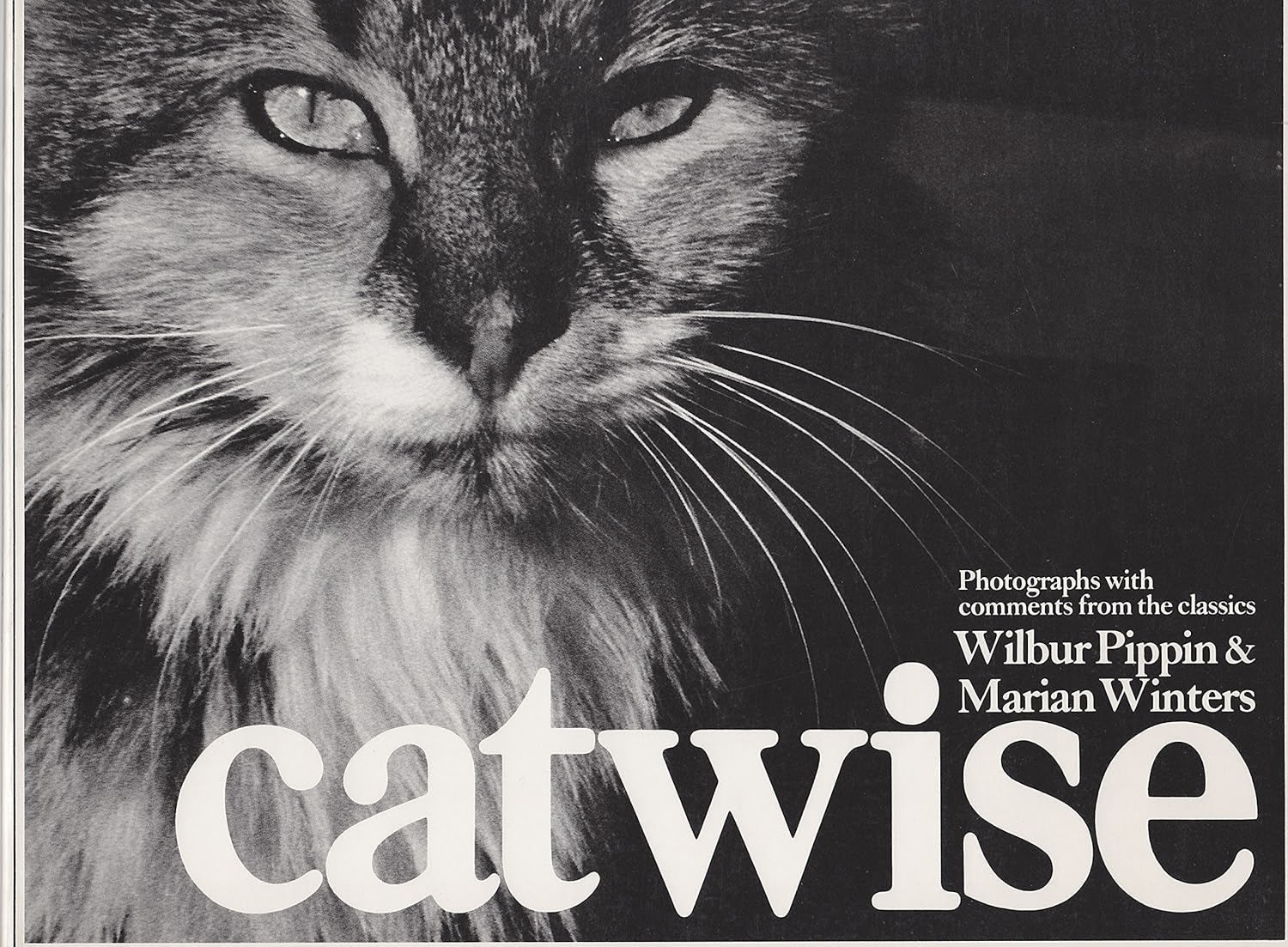
In 1979, Pippin co-authored the book Catwise with actress Marian Winters. This was a collection of photographs Pippin had taken of his feline family, with classical quotes selected by Winters. Sadly, Winters succumbed to cancer just before the book’s publication.
Hartford Courant, Connecticut (12/14/79)
Pippin and Wier eventually retired to their East Haddam house. Thomas Wier Jr. died on 9/12/2000, age 70. Wilbur Pippin died on 4/30/2003 at his home, age 78.
In 2024, the A. Therian gallery in Cairo, New York featured Billy, an exhibition of rare and previously unseen photos of Wilbur Pippin taken by George Platt Lynes, the PaJaMa collective, and Fred Melton. This collection of photographs shed light upon the striking young man from Macon, Georgia who became a friend, lover and confidant to his great artistic contemporaries.
The cover of the book George Platt Lynes Photographs 1931-1955 features this photo of Edward Lennox Bigelow, Dora Maxwell, and Johnathan Tichenor (ca. 1943)
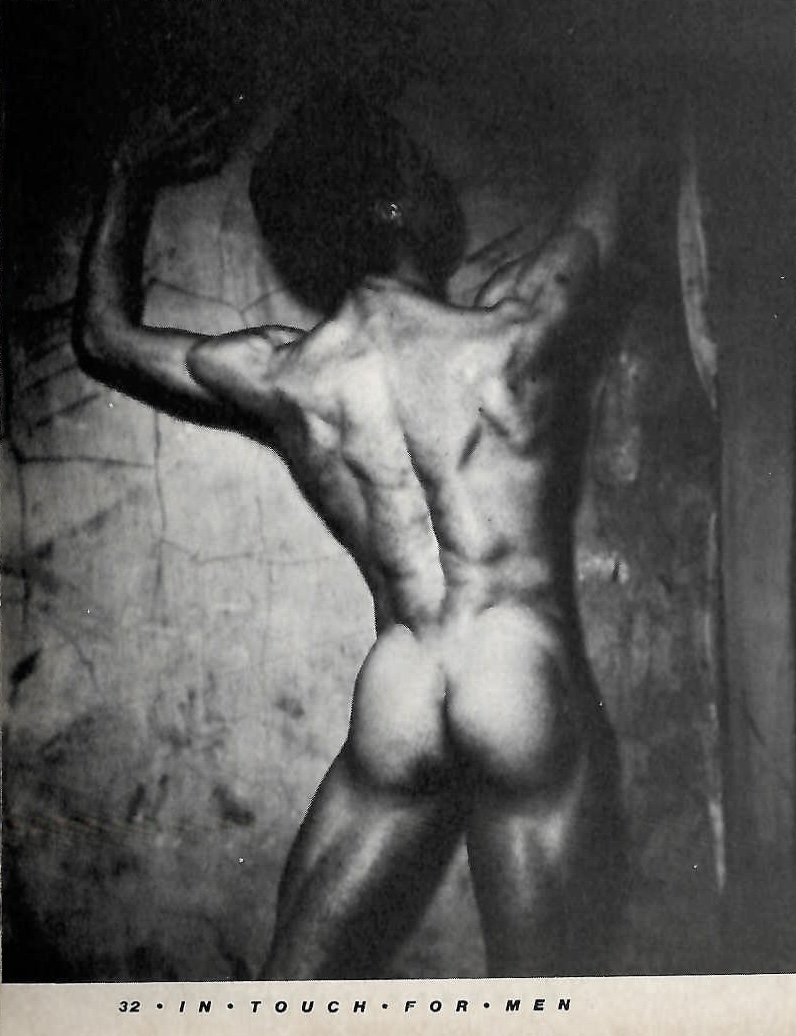
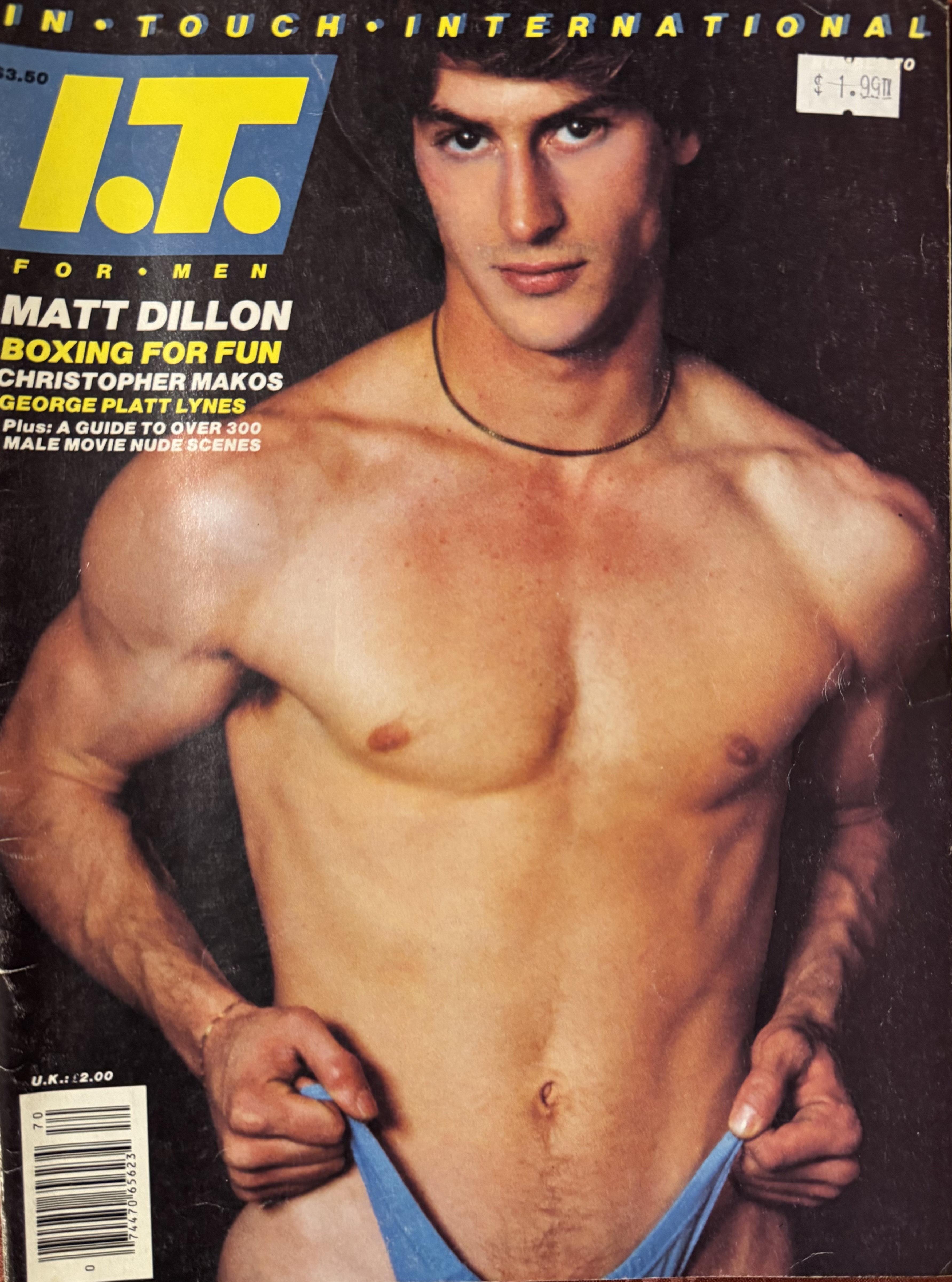
I recently acquired a copy of the August 1982 issue of In Touch magazine, which featured the photos of George Platt Lynes. Although Platt Lynes died of cancer over 25 years earlier, this was the beginning of the publication of his male nude photographs, which have now become recognized as his most memorable work.
Just a few months before, Jack Woody and Twelvetrees Press had published George Platt Lynes Photographs 1931-1955, an oversized hardcover book with introductory texts by Glenway Wescott, George Balanchine, and Lincoln Kirstein. Someone wisely permitted In Touch to publish a handful of Platt Lynes’ male nude studies, introducing his work to a whole new generation of gay men. Many of these photos were previously unpublished.
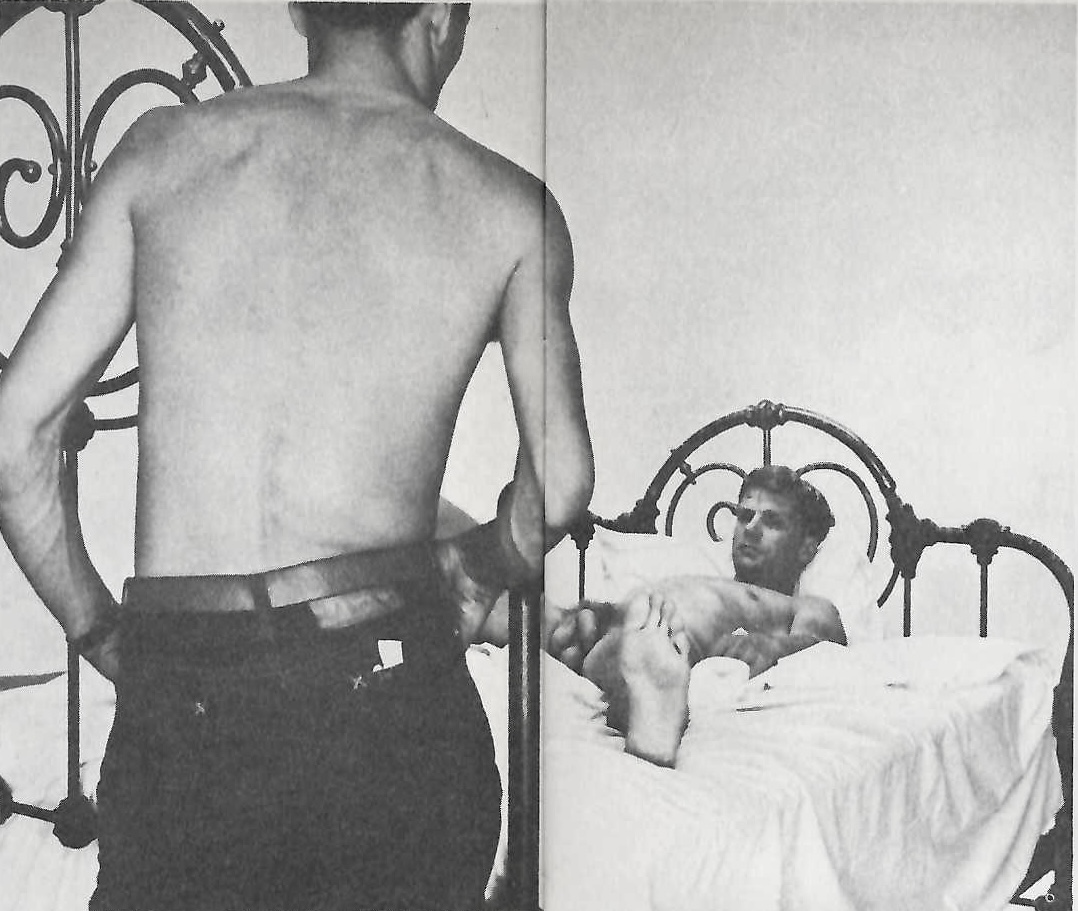
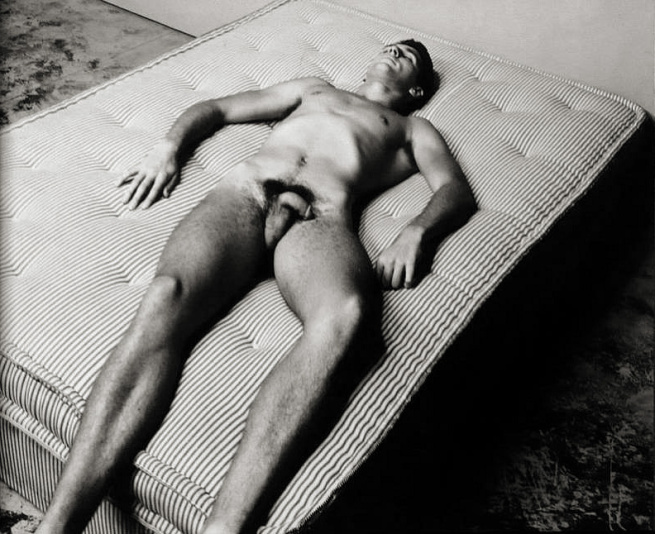
The models in the photo above are Charles “Tex” Smutney and Charles “Buddy” Stanley, subjects of some of Lynes’ most memorable photographs. Of Smutney, David Leddick wrote “few of Platt Lynes’s subjects so perfectly embodied youth and innocence as did this athletic, fair-haired figure.”
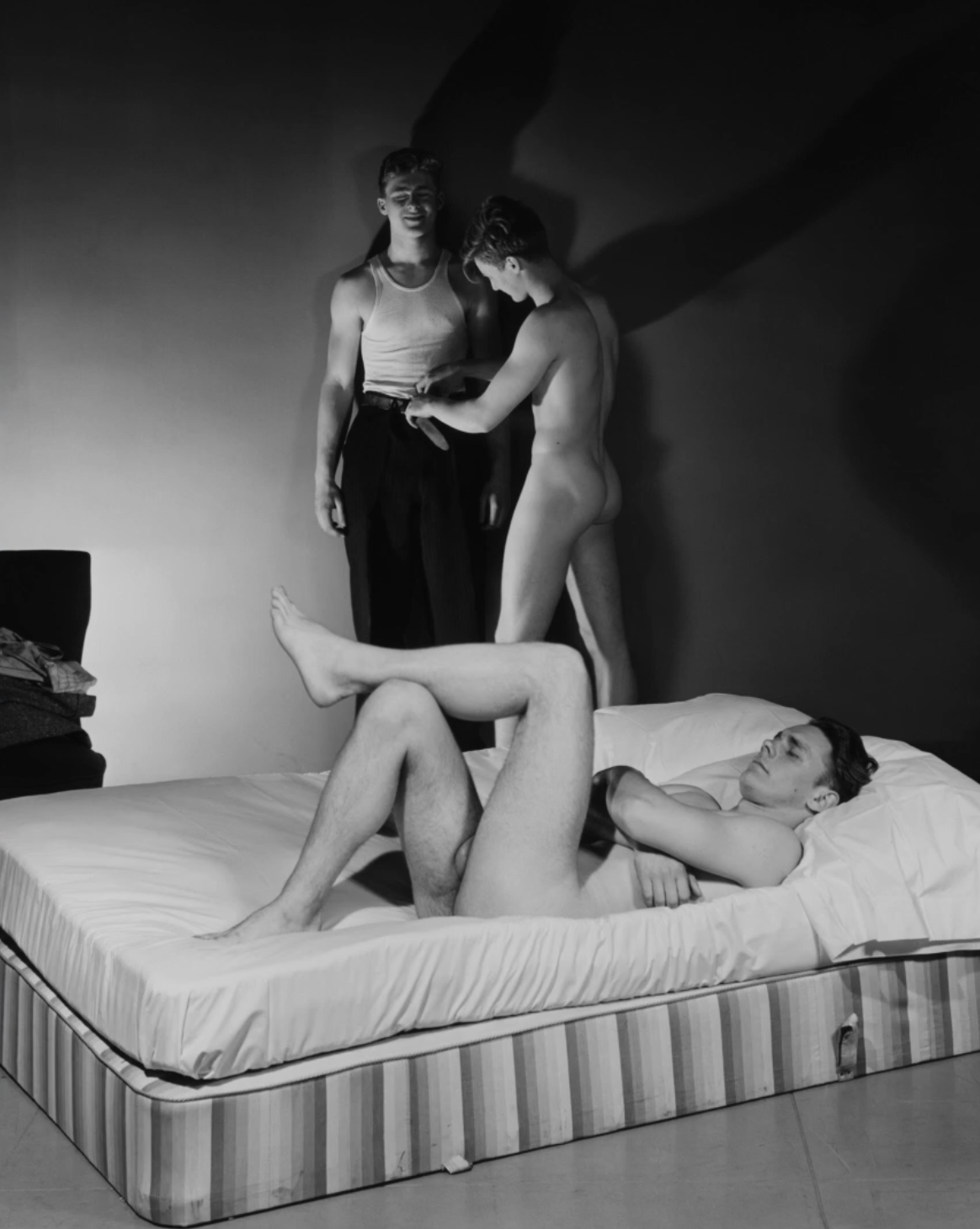
The image comes from the 30 photograph “Bedroom Series” of these two undressing and lying on a bed with a third model, Bradbury Ball. (below)
The above photo of The Ritter Brothers (ca. 1934) is now part of the Metropolitan Museum collection.
The subject of two In Touch photos is Blanchard Kennedy, a frequent model for Platt Lynes in the late 1930’s.
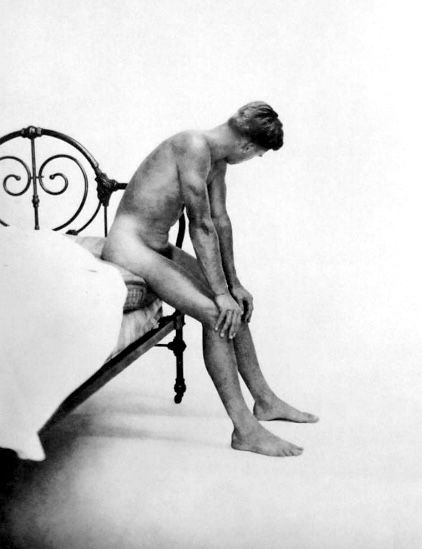
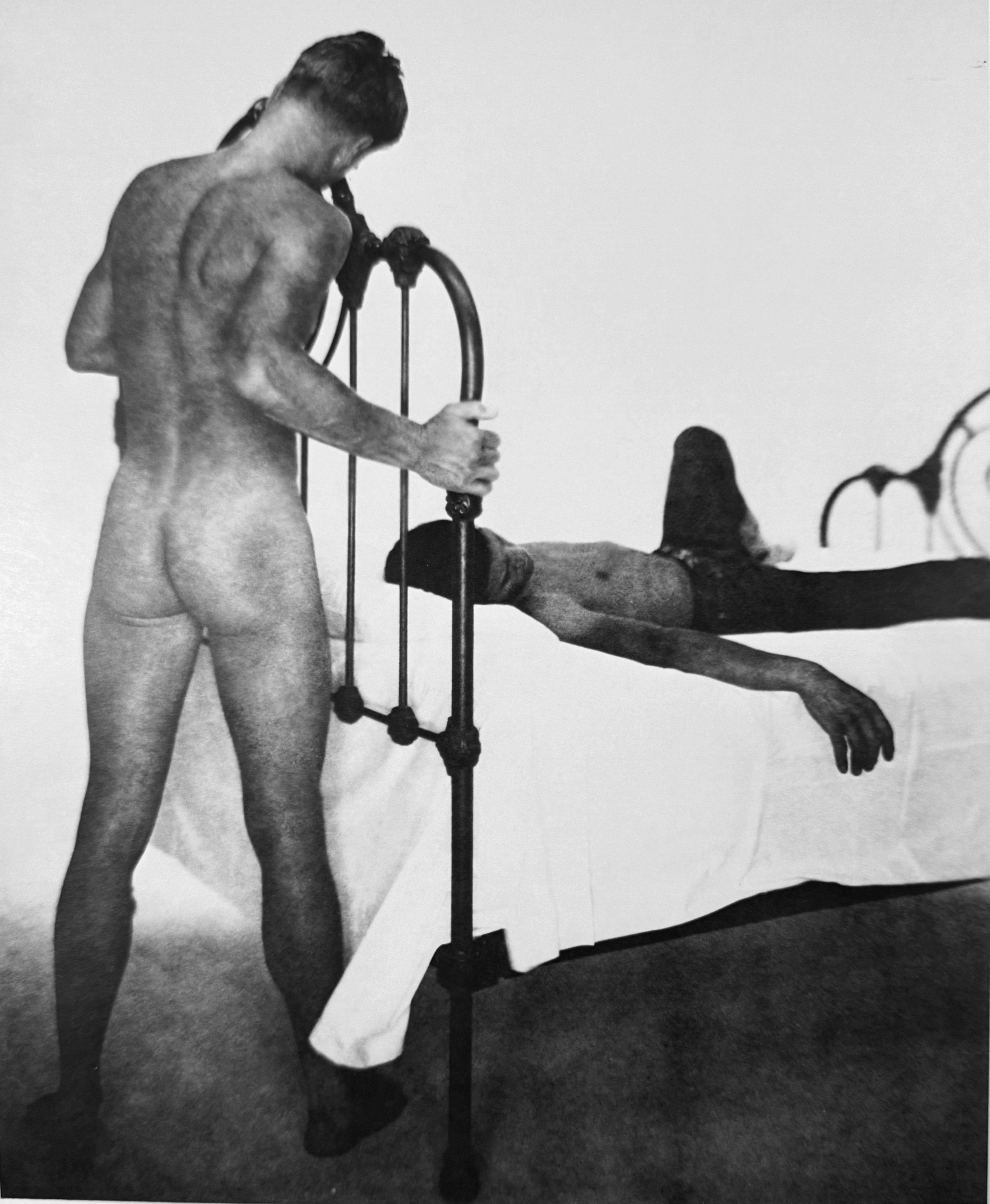
The three photos above from In Touch are part of an early 1950’s series of images taken around the bed in Lynes’ studio (see below). The models are unidentified, although the blond is sometimes misidentified as Alexander Jensen Yow or Ralph Pomeroy, two subjects who were also photographed seperately in or around the same bed.
Left to right: Gordon Hansen, Jack Fontan, Dick Beard, Unidentified
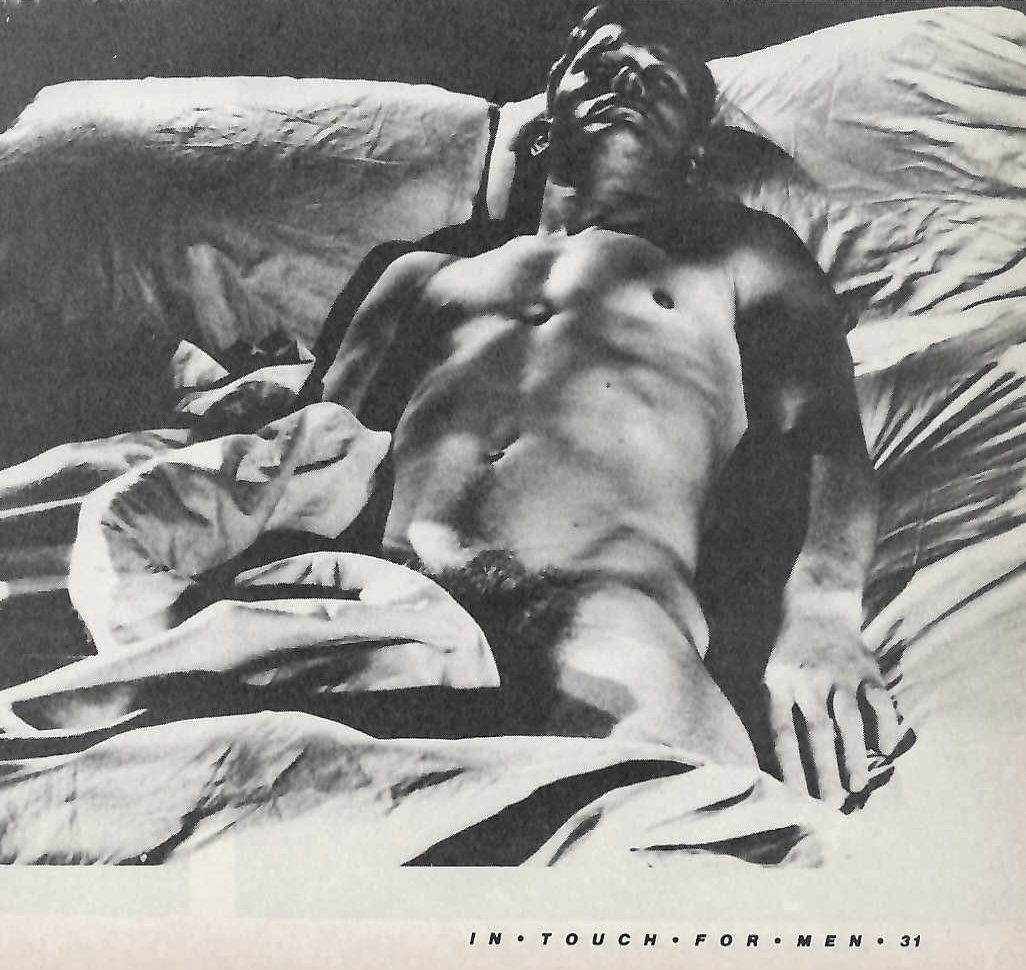
The final full-page photograph of an unidentified model illustrates the timeless artistry of Platt Lynes’ work.
Also featured in this issue is a profile of Warhol photographer Christopher Makos, who, like Platt Lynes, blurred the line between artistic and homoerotic photography.
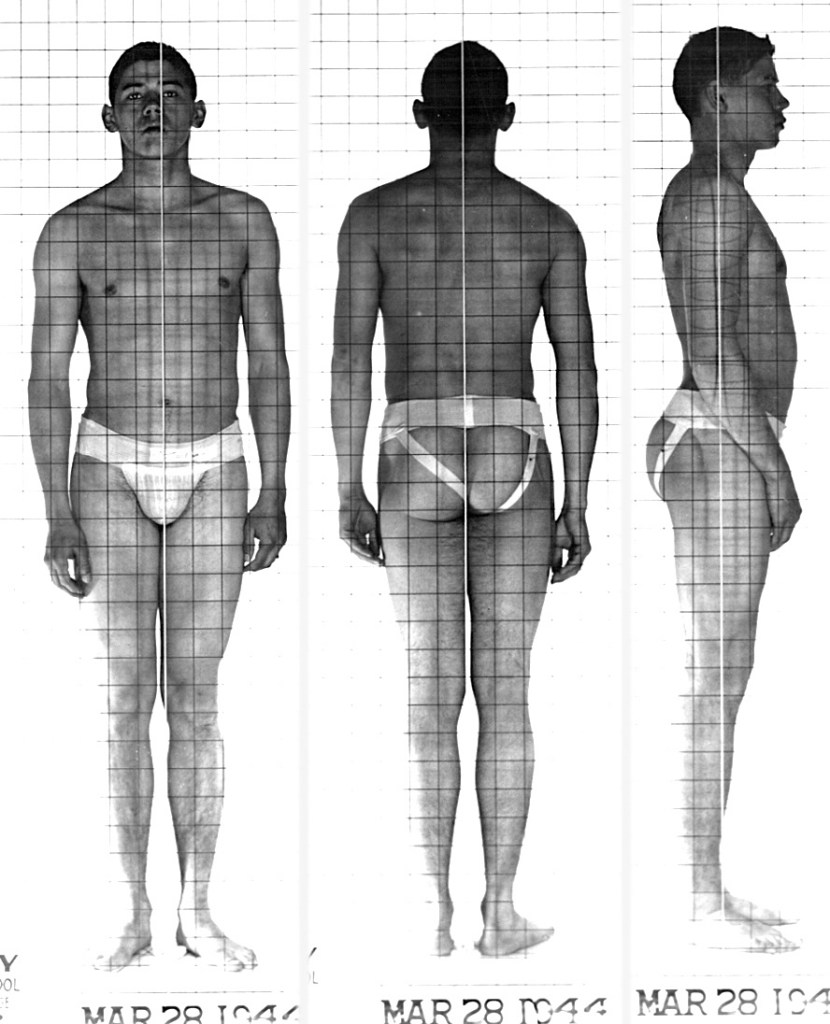
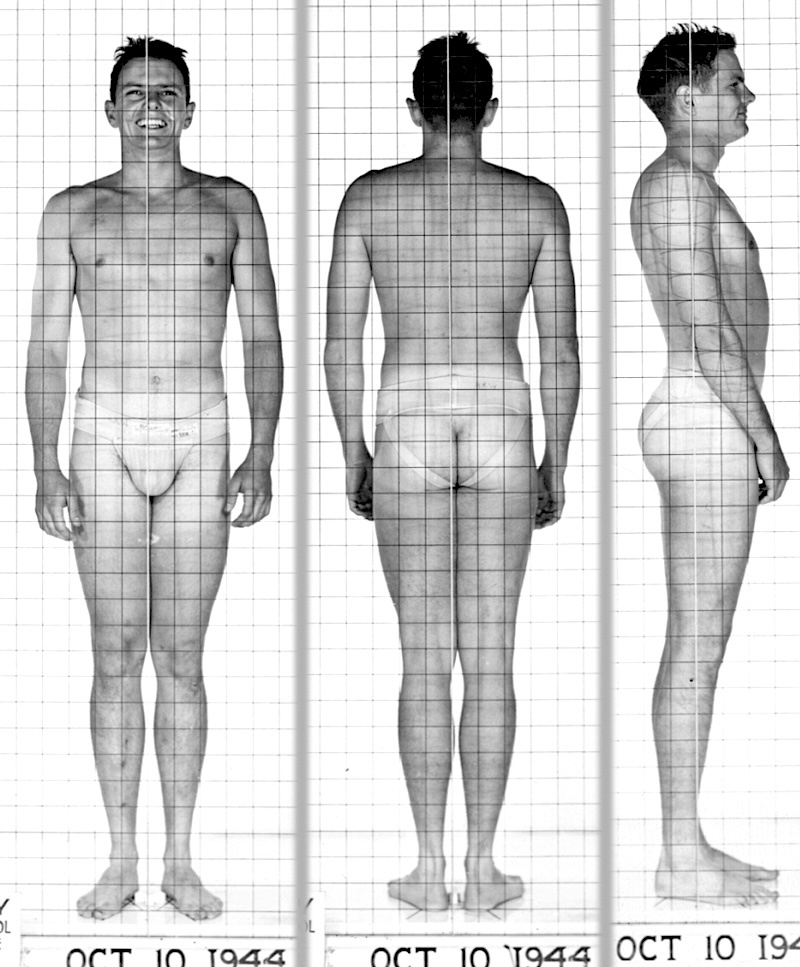
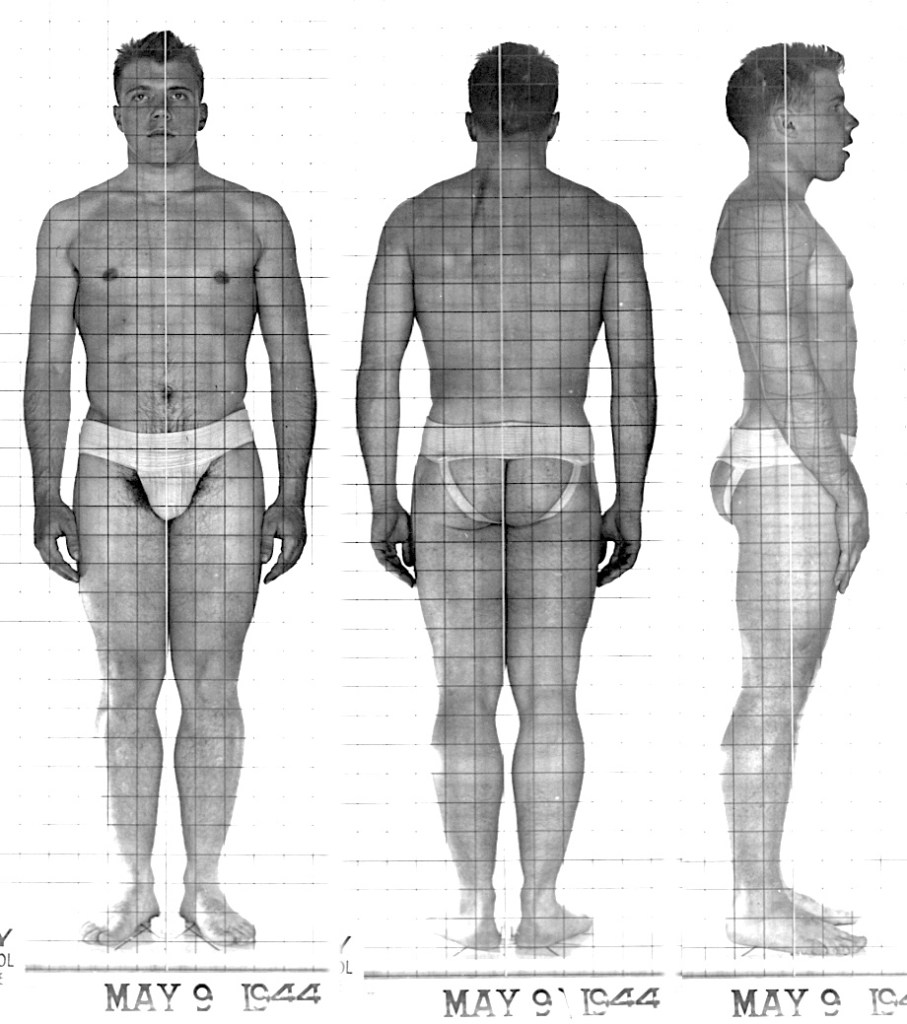
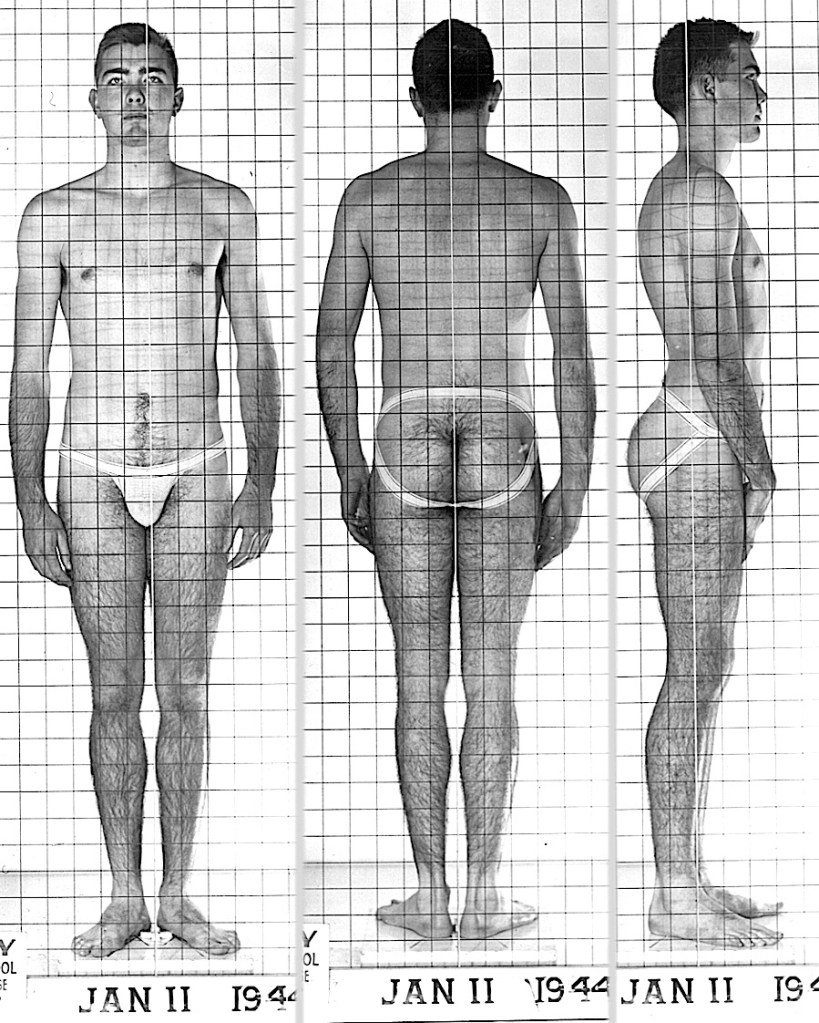
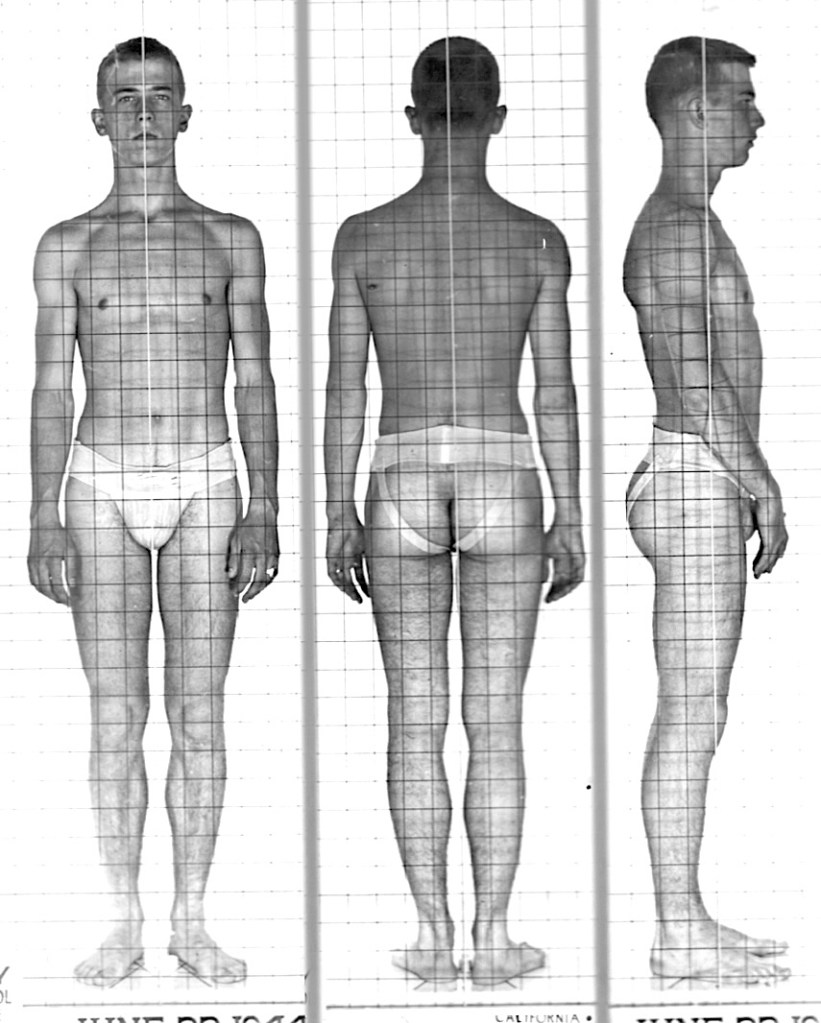
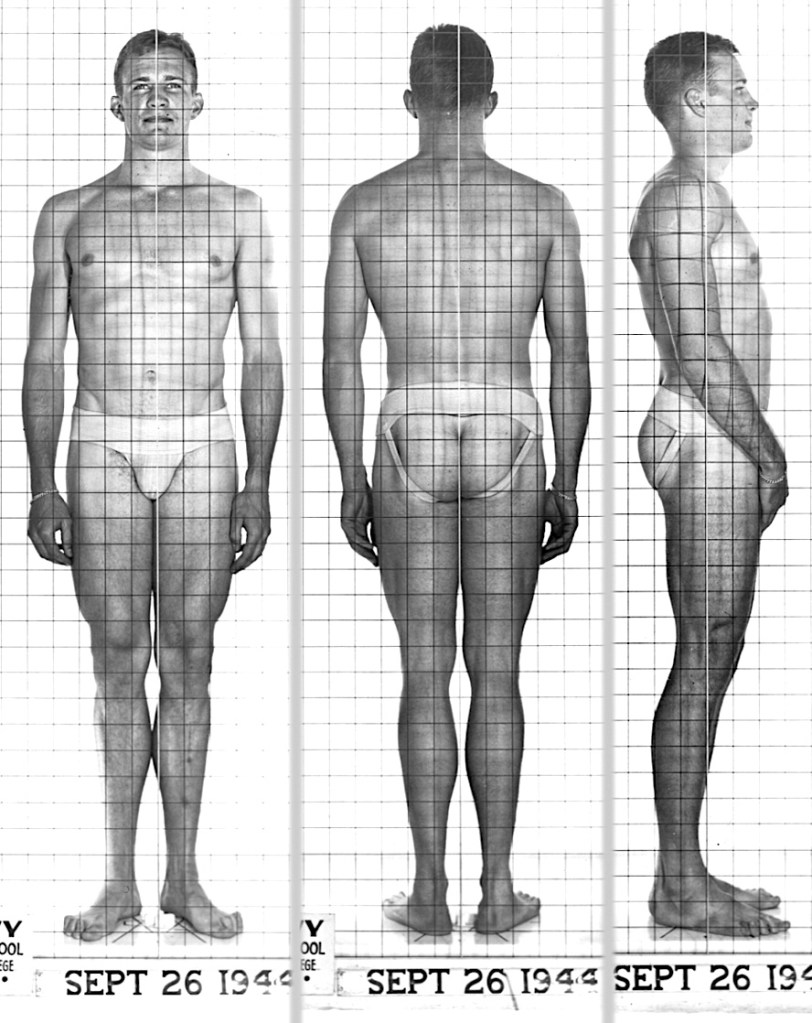
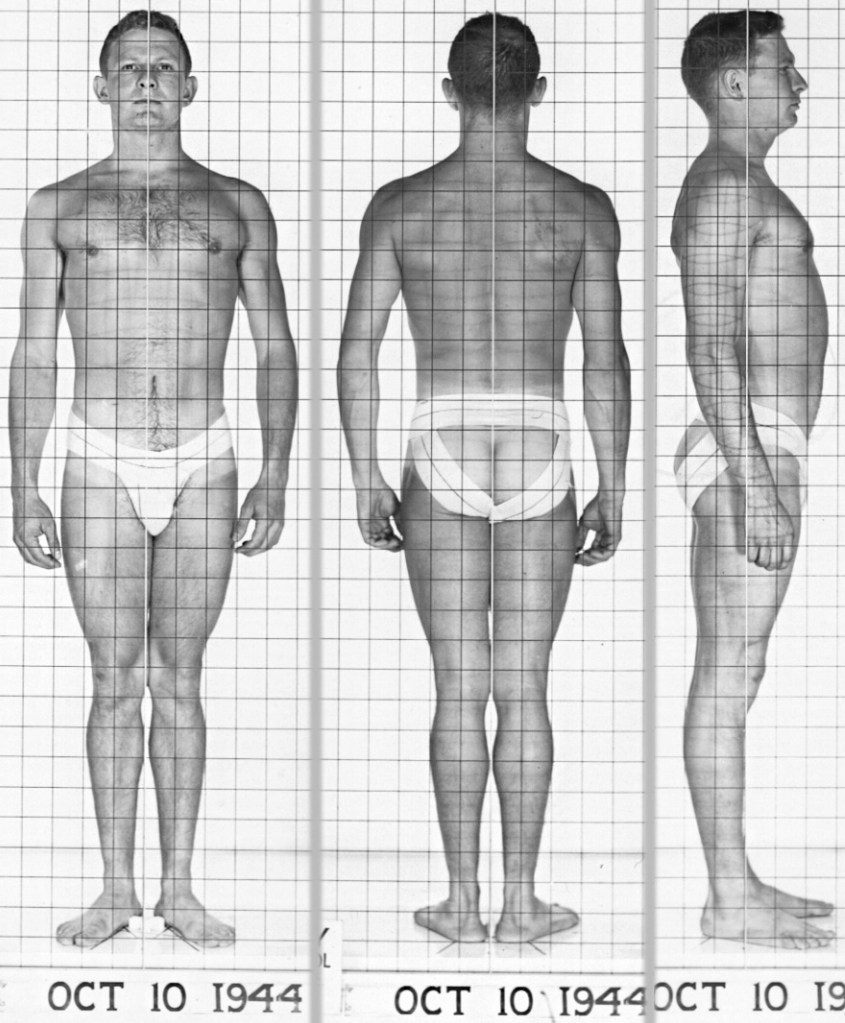
It’s that time again… due to popular demand, we have an 8th installment of WWII-era photos featuring the jockstrap-clad pre-flight training school cadets at St. Mary’s College in California. You can view the first one here, with links to all the rest at the bottom of this post. This installment focuses on those who trained in 1944 – 80 years ago. These men enlisted to fight against a dictator, as opposed to our current situation, where we are all contending with living under one.
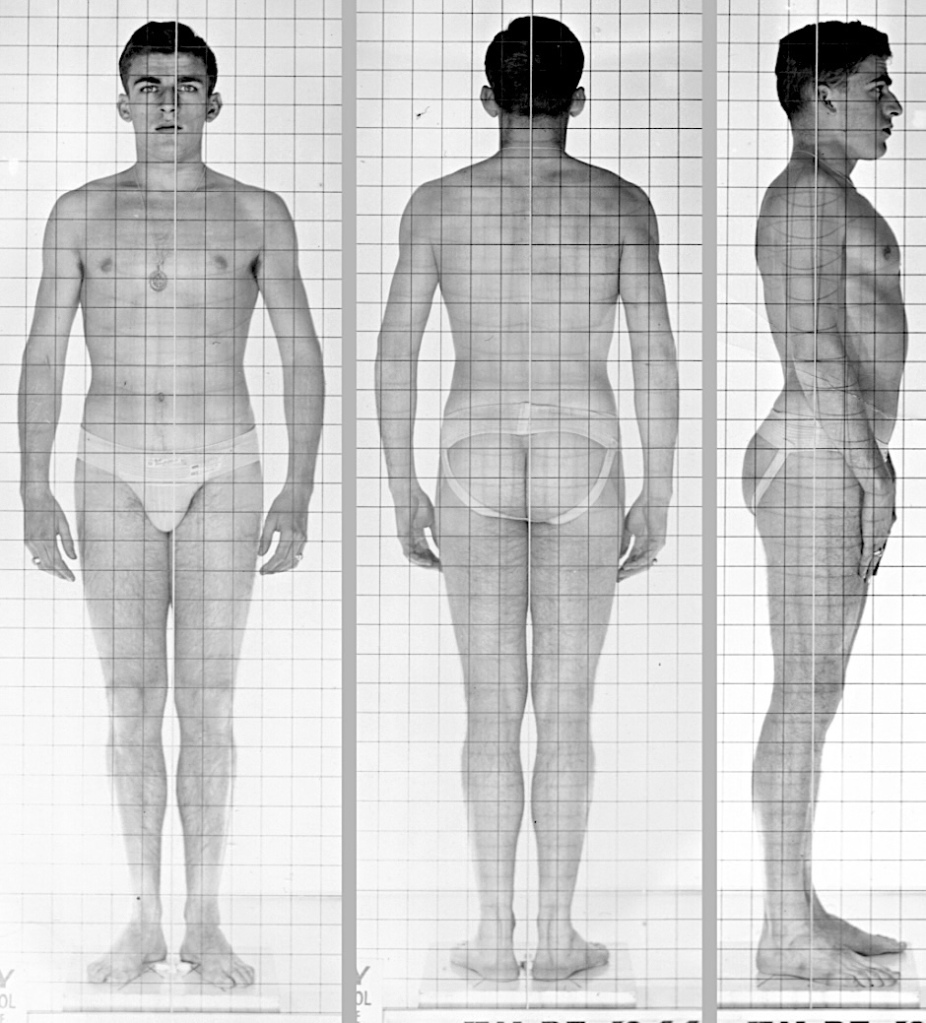
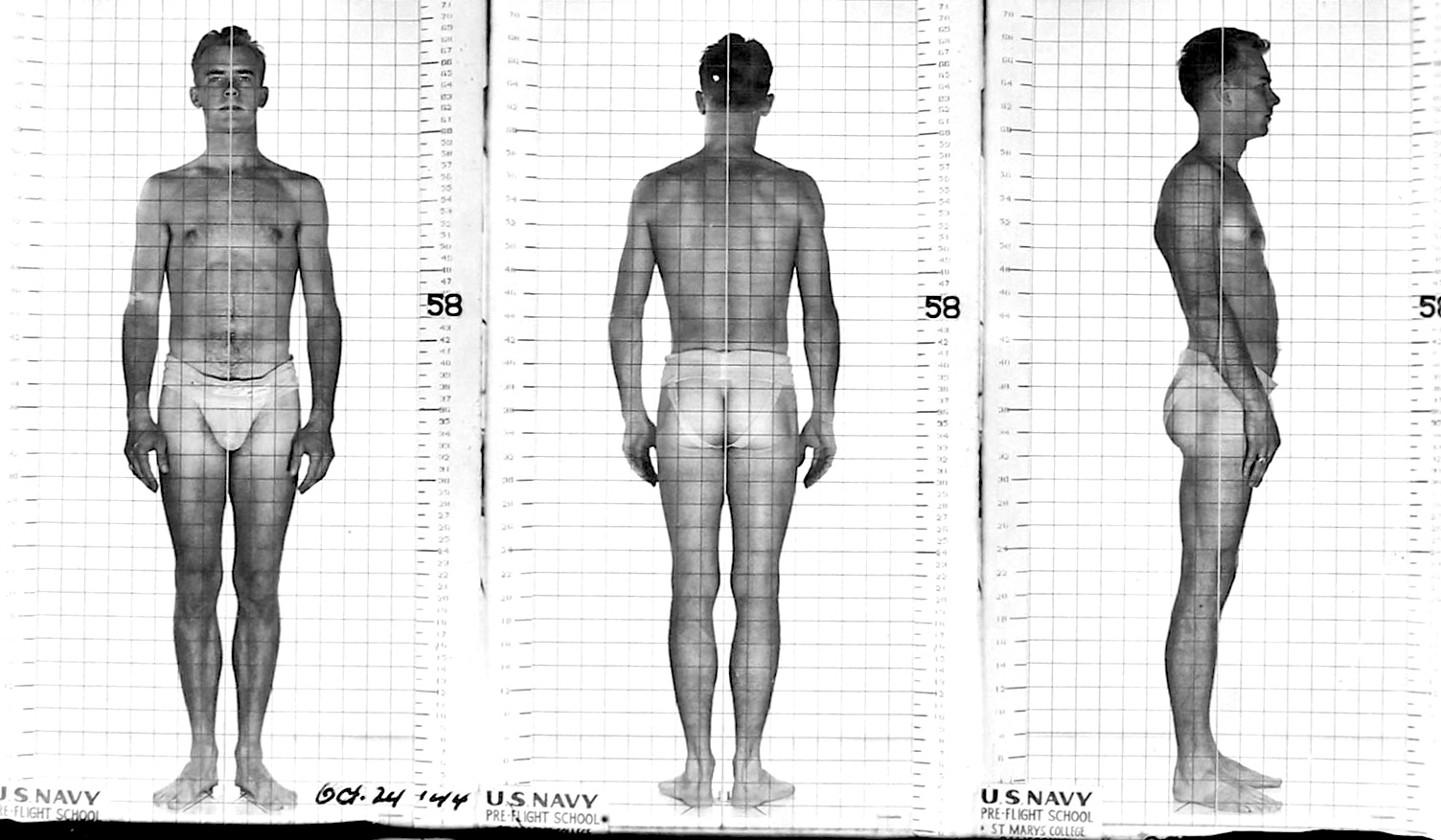
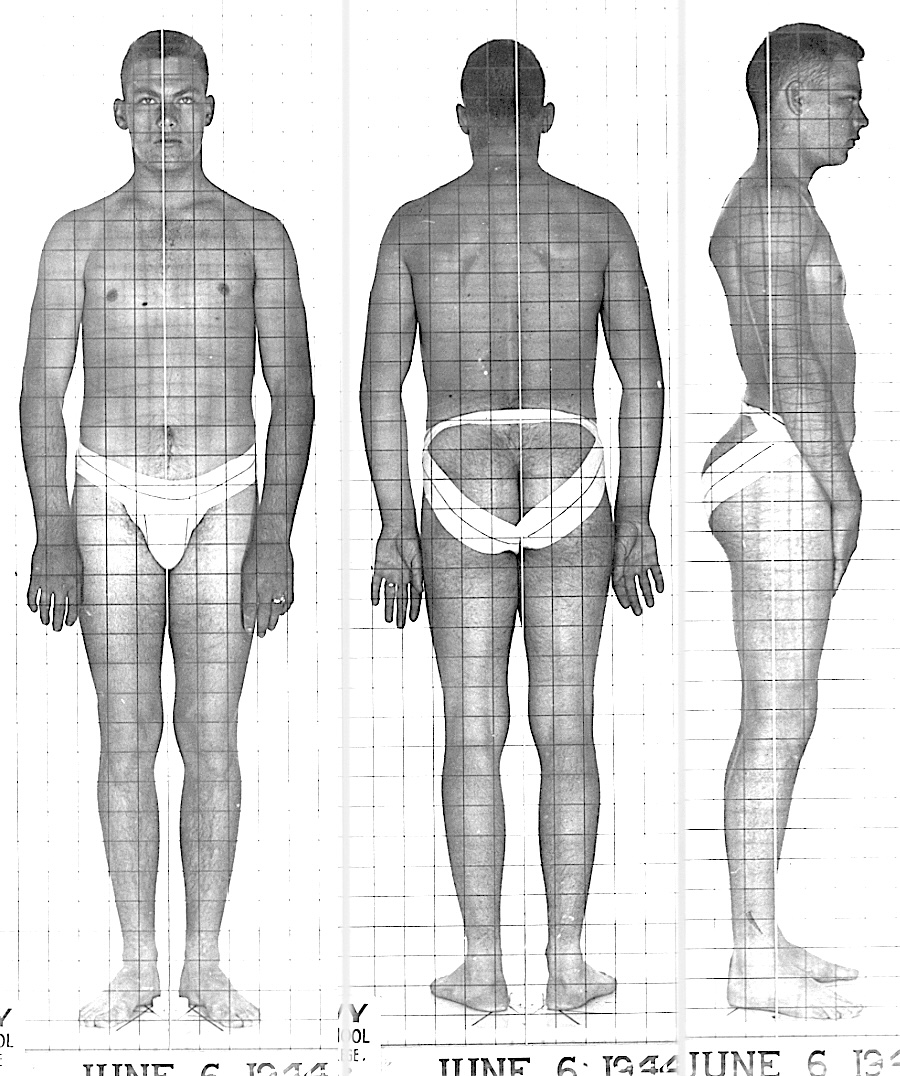
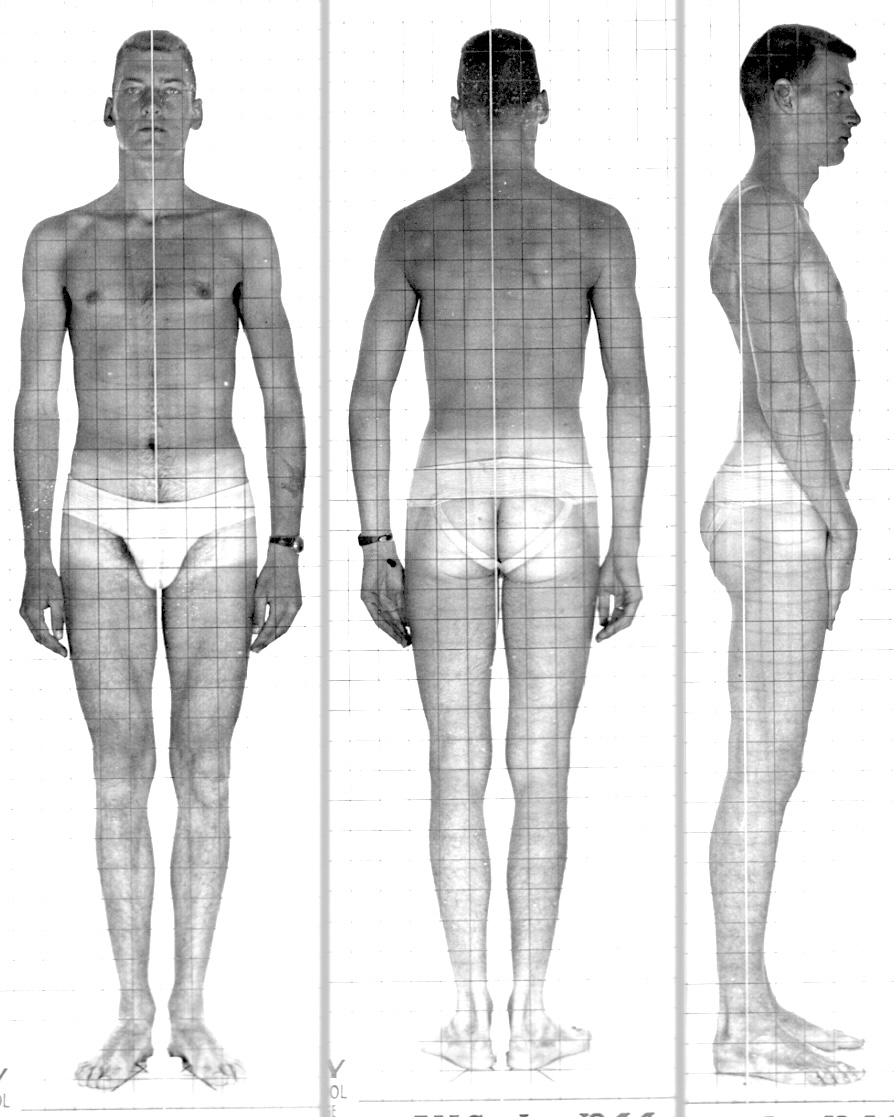
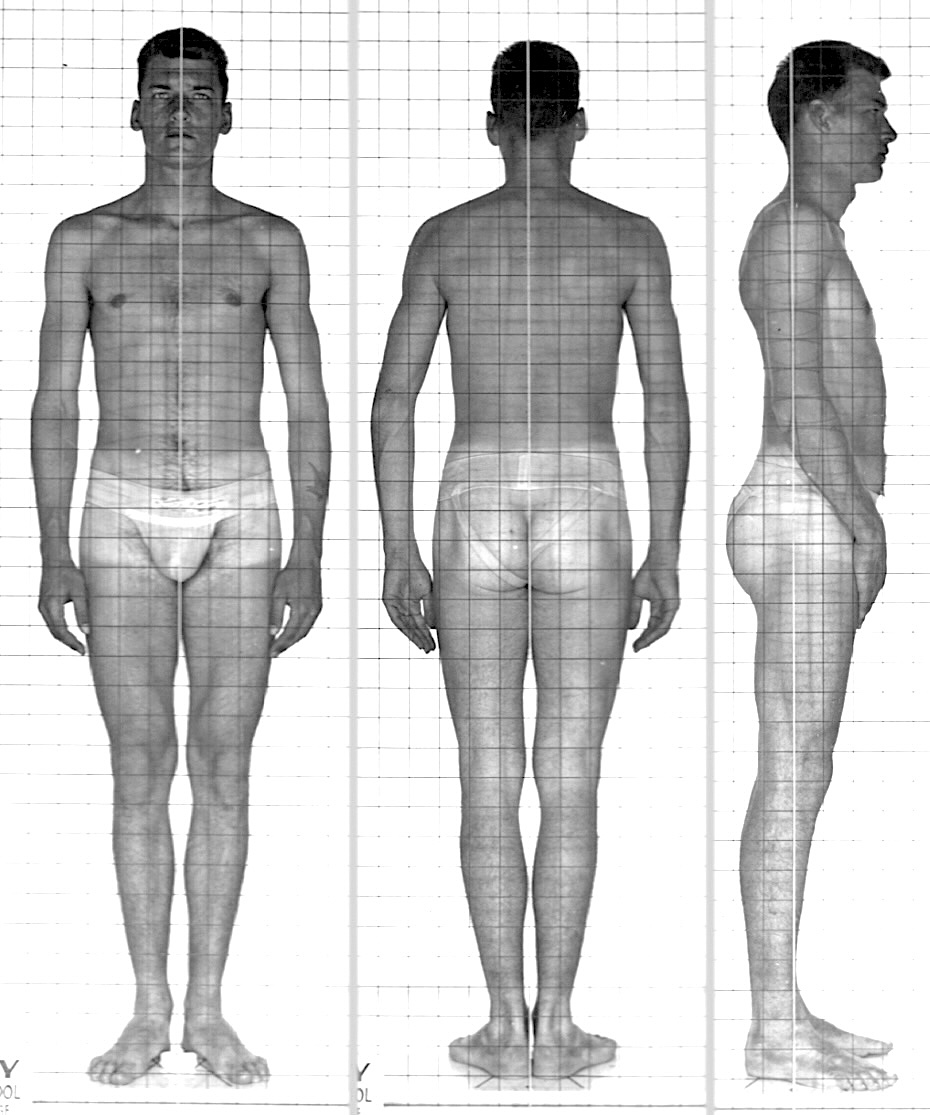
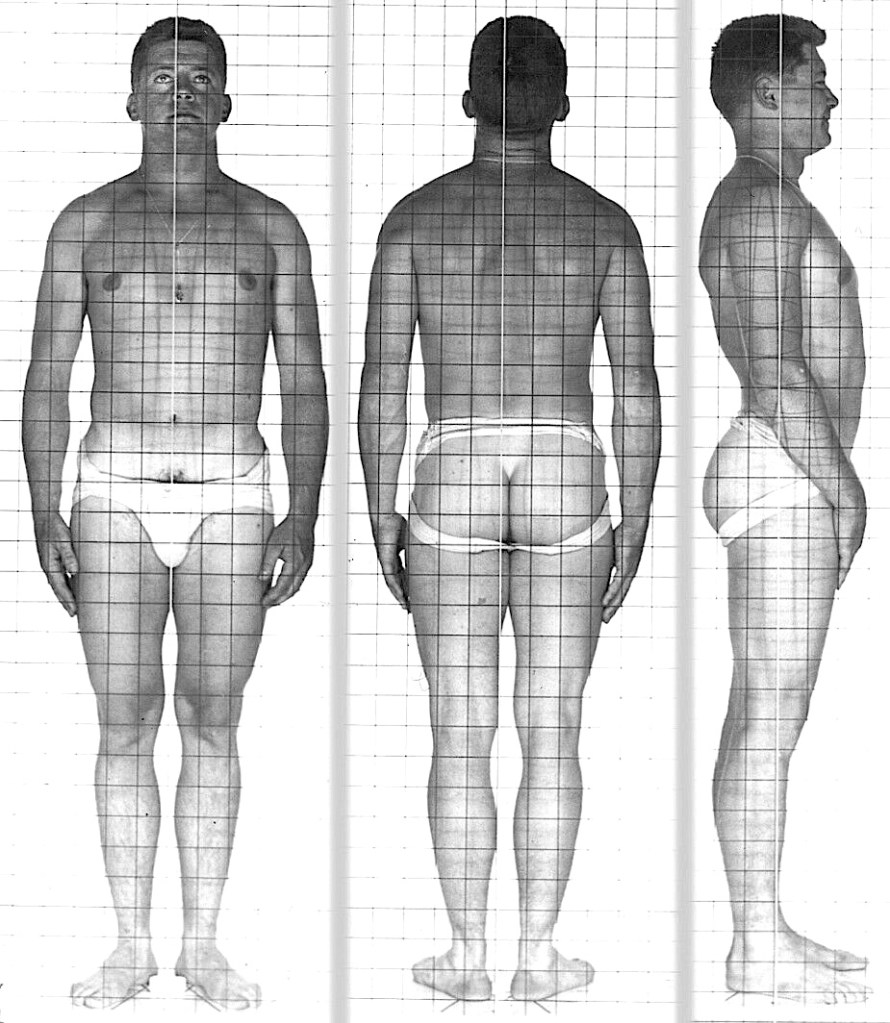
I first became aware of these black and white 5″x7″ triptych photos several years ago. Listings turn up on auction sites frequently, where the photos are often accompanied by the index card used to record the physical training progress of the cadet.
The earliest photos (from June 13, 1942) feature the men completely nude, but all subsequent photos feature the cadets in jockstraps, standing behind some sort of grid fencing to better detect posture misalignment and spinal curvature.
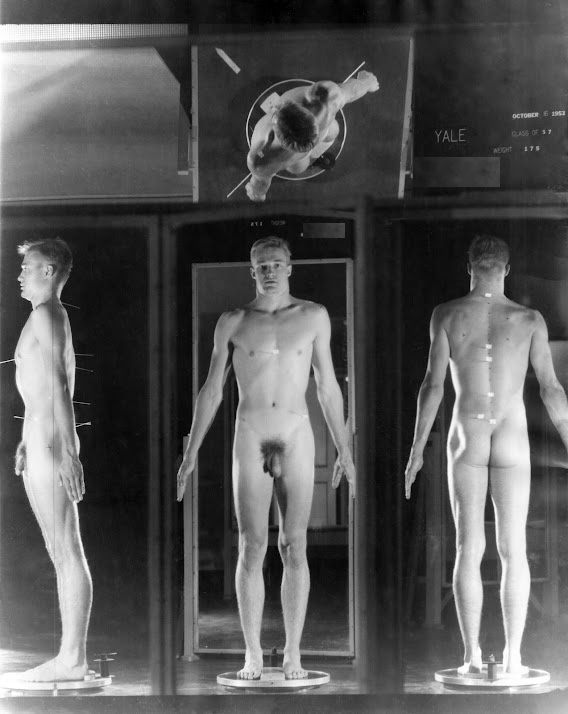
There is still some confusion between these photos and the Yale / Ivy League posture pics, since the Navy photos were sometimes used to illustrate stories about the Yale pics. Note that all of these images contain a visible U.S. Navy / St. Mary’s Pre-Flight School placard, even if they have been cropped out in some posts. Similarly the Yale University photos are identified as such within the frame of the photos:
Fortunately for us, multiple photos of some cadets have surfaced, allowing for comparisons of their training progress:
Comparison photos 6/6-8/1/44
Comparison photos 8/1-8/29/44
And while there is a lack of ethnic diversity, there are a variety of body types.
My collection now includes over 900 jpegs of different cadets. While some of these men did perish during WWII, the largest majority that I have researched lived to ripe old ages.
Any surviving cadets would now be over 100 years old. Last year, I discovered one who passed away in 2022 at the age of 103.
One thing these young men have in common, as they were documented in timeless photos of their physical prime: they were far from home, training to fight for their country.
At this time of year, 80 years later, we again salute The Greatest Generation for their fine forms and dedication.
Whenever I see posts on social media that mention the 1970 film The Boys In The Band, there are always strongly opposing viewpoints. Whether you love or hate the film, everyone can agree that it is a cultural touchstone. Like the Stonewall uprising itself, The Boys In The Band serves as a landmark, with every other gay-themed film described as either preceding or following it.
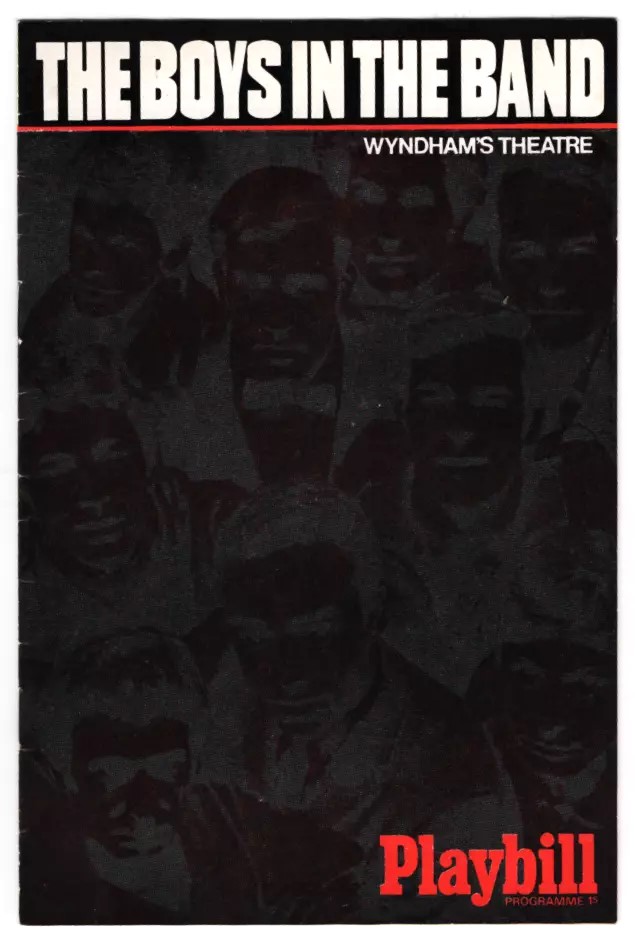
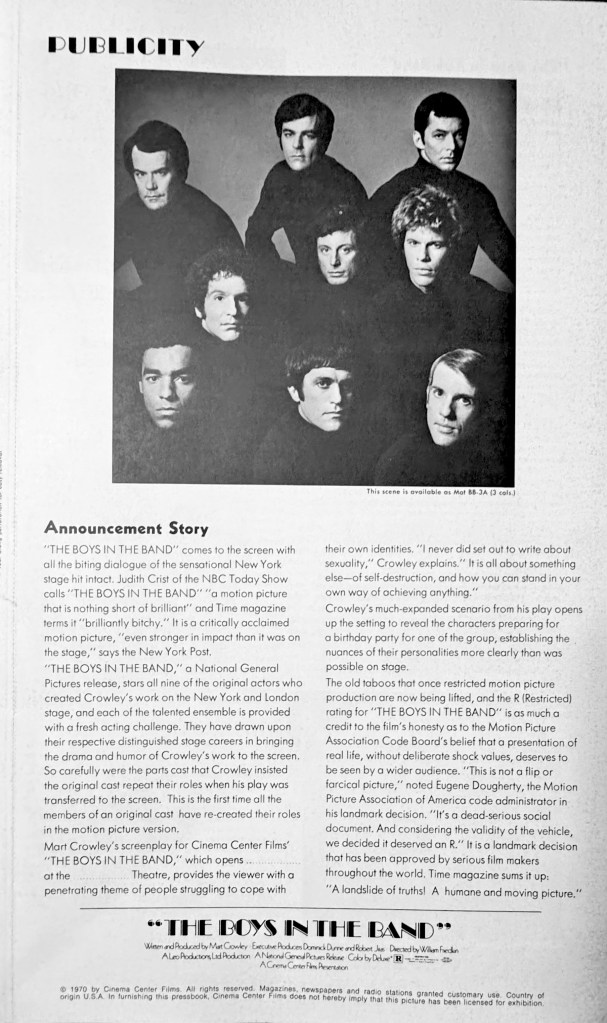
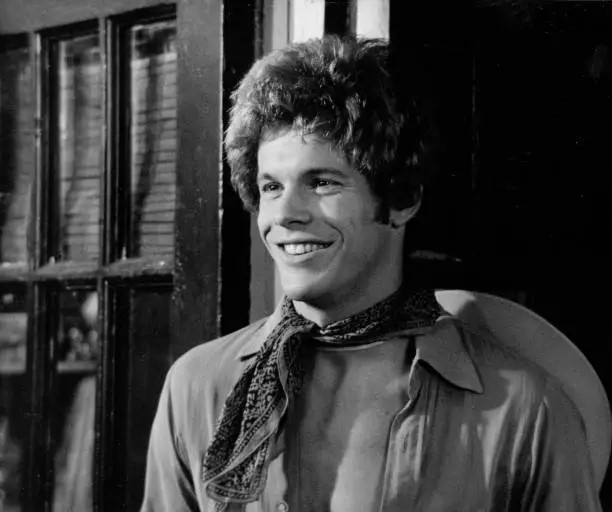
I recently acquired the original press book for the film, which you can see below. Also included is the Playbill from the original West End production with the same cast as well as some revealing photos of “Cowboy” Robert La Tourneaux. During the New York run of the play, he was photographed in and out of clothes by Jack Mitchell for After Dark magazine. Years later, La Tourneaux would appear in photo layouts for Mandate, Honcho, and Zeus, which were the names of gay publications and not a queer law firm.
The Boys In The Band poster (l-r) Leonard Frey, Robert La Tourneaux (Photo by LMPC via Getty Images)
In 1939, 19-year-old Donald Windham moved to New York from Atlanta with his boyfriend, graphic artist/photographer Fred “Butch” Melton. They were welcomed into the New York circle of artistic types that included George Platt Lynes, Tennessee Williams, Paul Cadmus, Jared and Margaret French.
Donald Windham & Fred “Butch” Melton photographed by Jared French at his 5 St. Luke’s Place studio (ca 1941)
In 1942, Butch ended his relationship with Windham, opting for a more conventional lifestyle by getting married, fathering two sons and moving to Macon, Georgia. This didn’t last long: Butch met and fell in love with local artist Wilbur “Billy” Pippin. In early 1948, he left his young family and returned to New York with Billy. But that’s another story…
Donald Windham with Jared French & Paul Cadmus on Fire Island, ca 1940
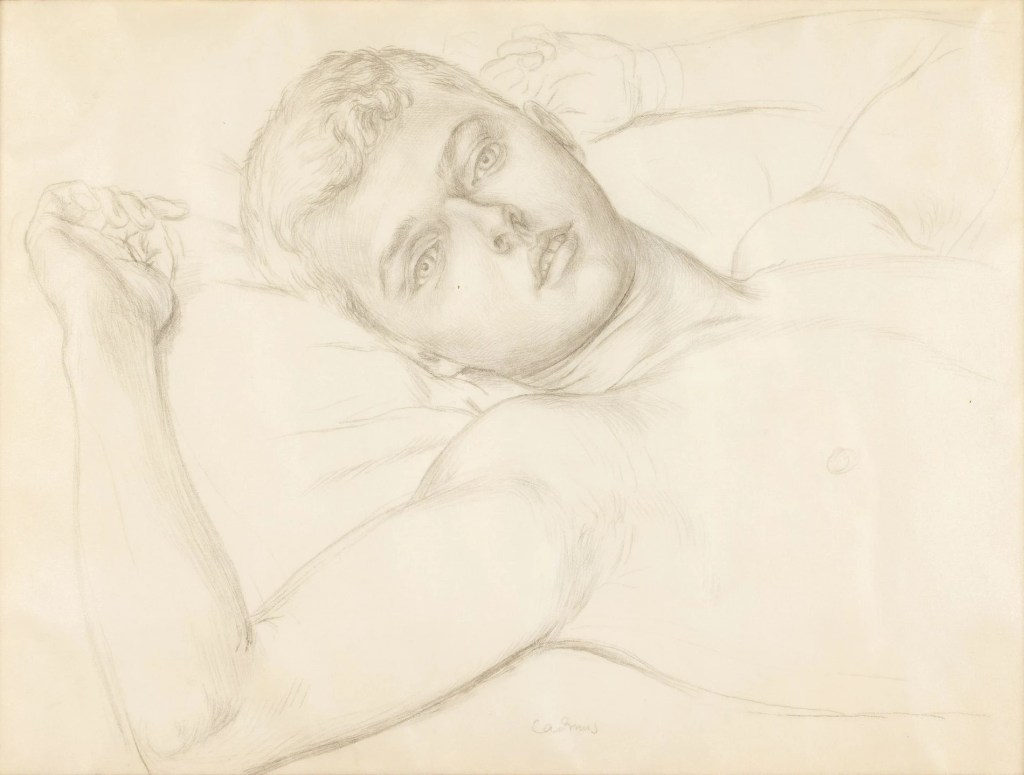
In 1942, the newly single Windham supported himself by working at Lincoln Kirstein’s Dance Index magazine. He lived in the Cadmus/French studios at 5 St. Luke’s Place while they spent time at their rental on Fire Island. He would frequently visit there as well. The lithe young man with the striking profile became the subject of many PaJaMa photos and sketches.
Windham posed as a reference for Jared French’s Homesickness (1942)
Paul Cadmus met 21-year-old Princeton theater student Sandy Campbell at a party in 1943. The young man asked the artist to do a pencil portrait that he could give to his mother, as he suspected that he would soon be drafted. Cadmus was instantly smitten with the handsome young man. He went on to draw, paint and photograph him frequently throughout the following year.
Campbell is the central figure of Cadmus’s 1944 painting Reflection. Donald Windham was the original model for the figure laying on the floor. Before the painting was completed, however, the two models fell in love. Cadmus was not happy with this turn of events, and Windham’s likeness disappeared from the finished painting, with the figure’s head turned slightly away.
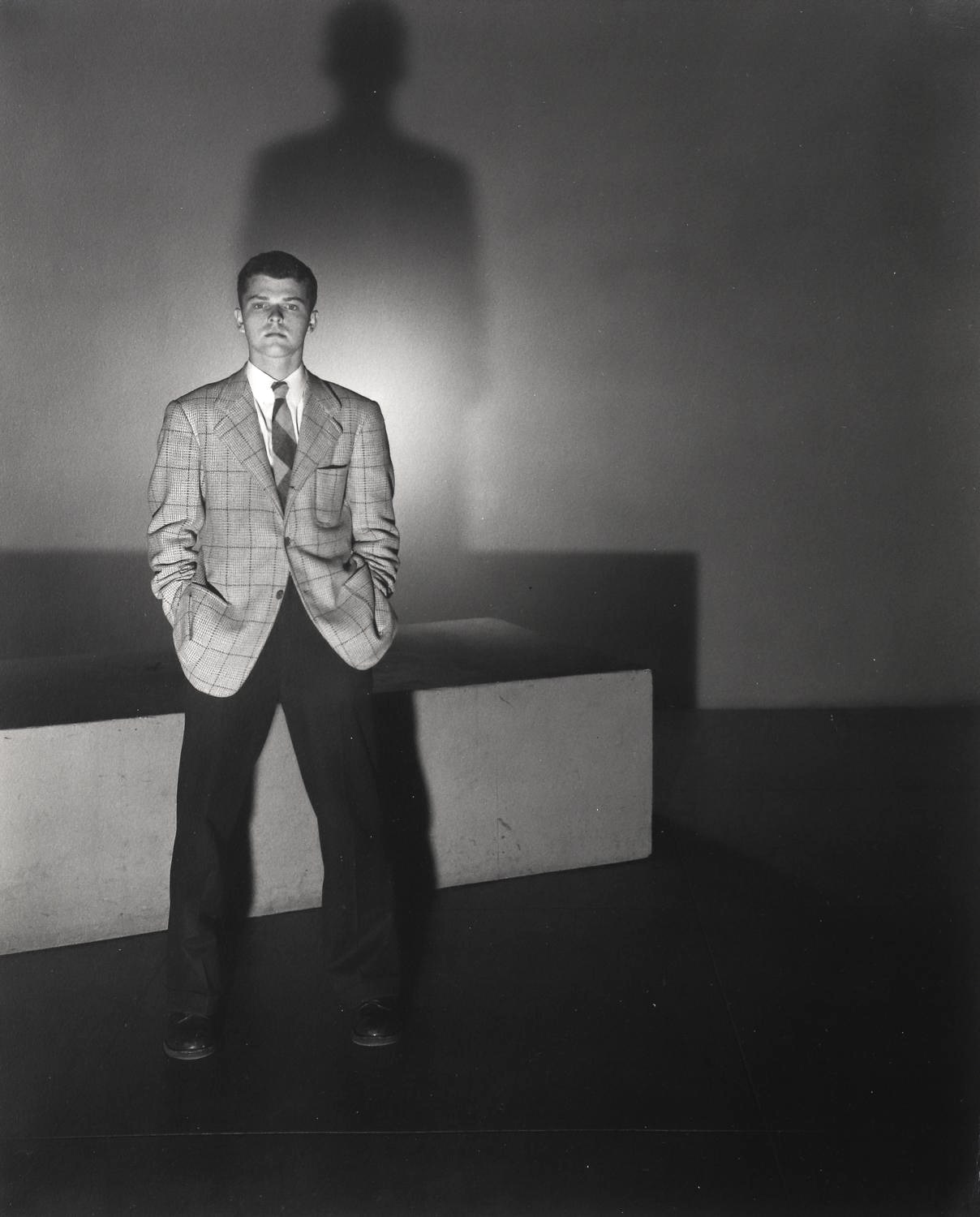
Donald Windham & Sandy Campbell photographed by George Platt Lynes (ca 1943)
Photographer George Platt Lynes photographed both Campbell and Windham several times in separate studio settings. In 1945, he shot Windham again with his friend and writing collaborator, Tennessee Williams.
Donald Windham, Tennessee Williams & Edmund Gwen photographed by George Platt Lynes (1945)
Windham and Williams co-wrote the play You Touched Me!, a romantic comedy based on a short story by D.H. Lawrence. It opened on Broadway starring Edmund Gwen and Montgomery Clift in late 1945. Unfortunately, reviews were mixed and it closed 4 months later.
Around the same time, Campbell was cast in a string of minor Broadway and film roles that would span the next 10 years. He then decided to give up acting and focus on editing and publishing Windham’s work.
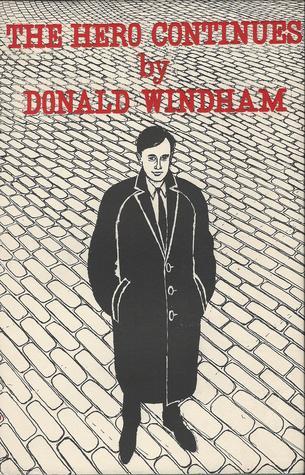
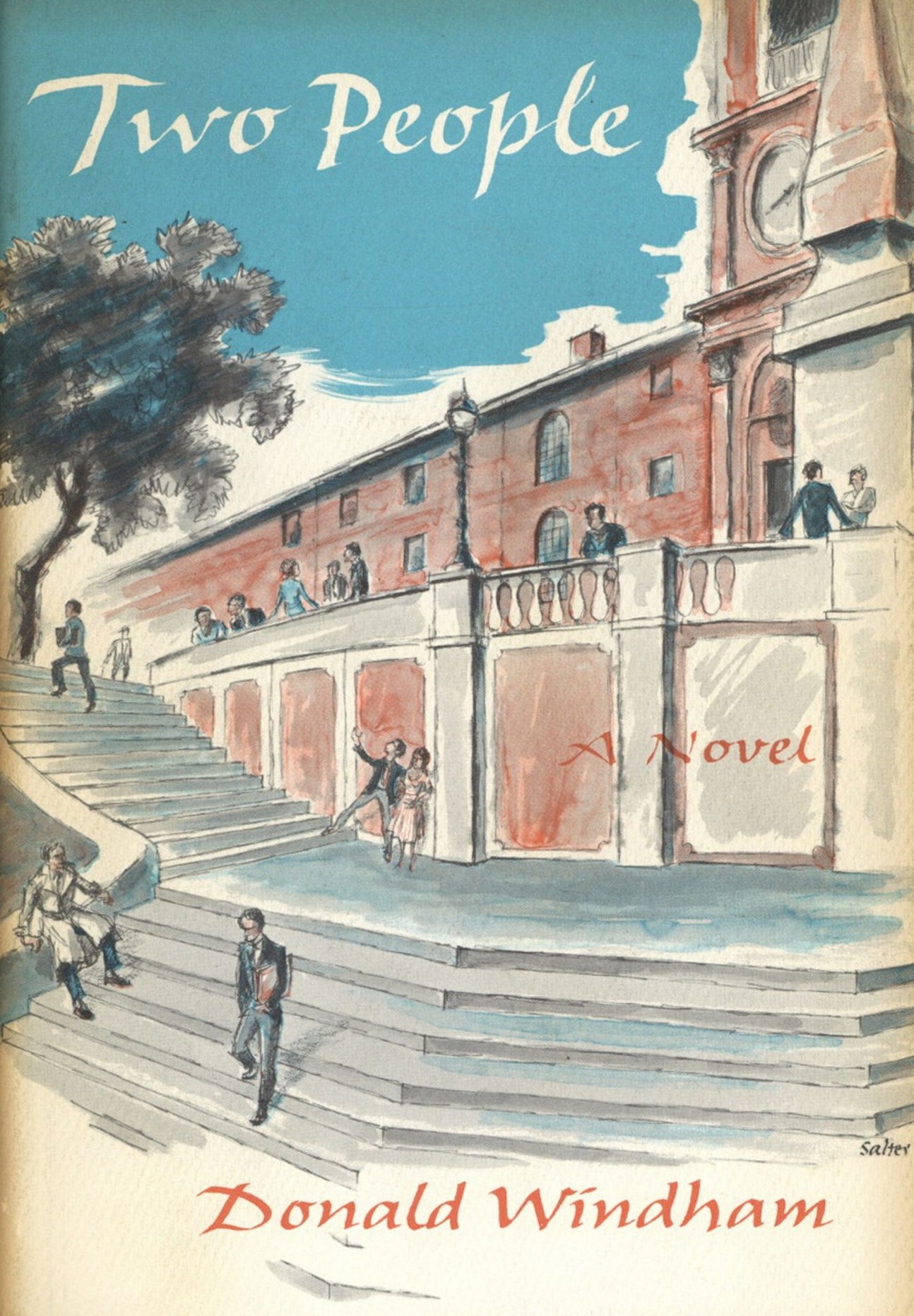
Donald Windham’s literary output (1950-1998)
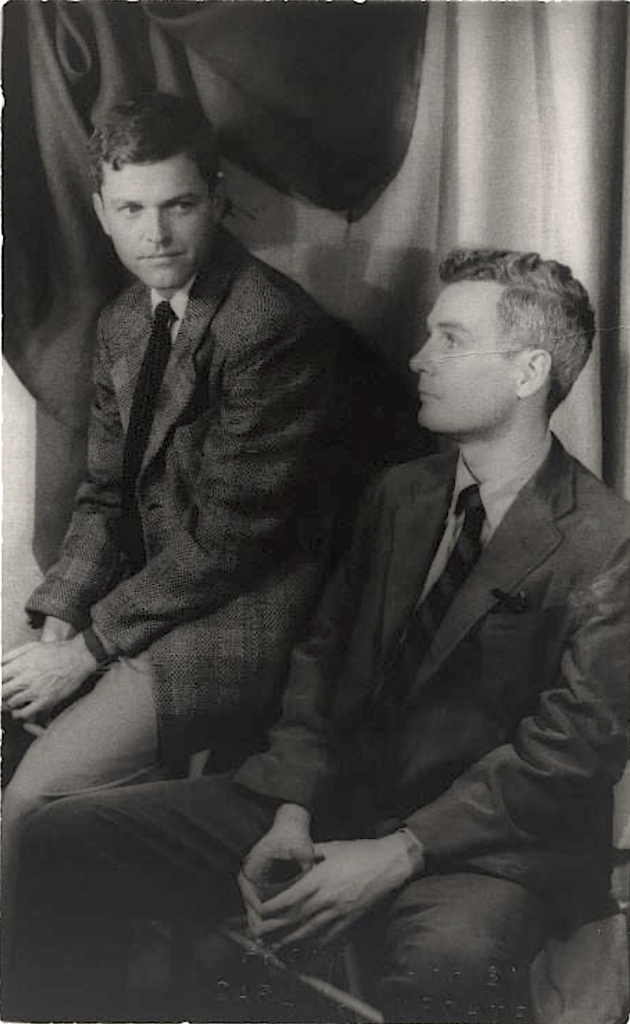
Windham & Campbell photographed by Carl Van Vechten (1955)
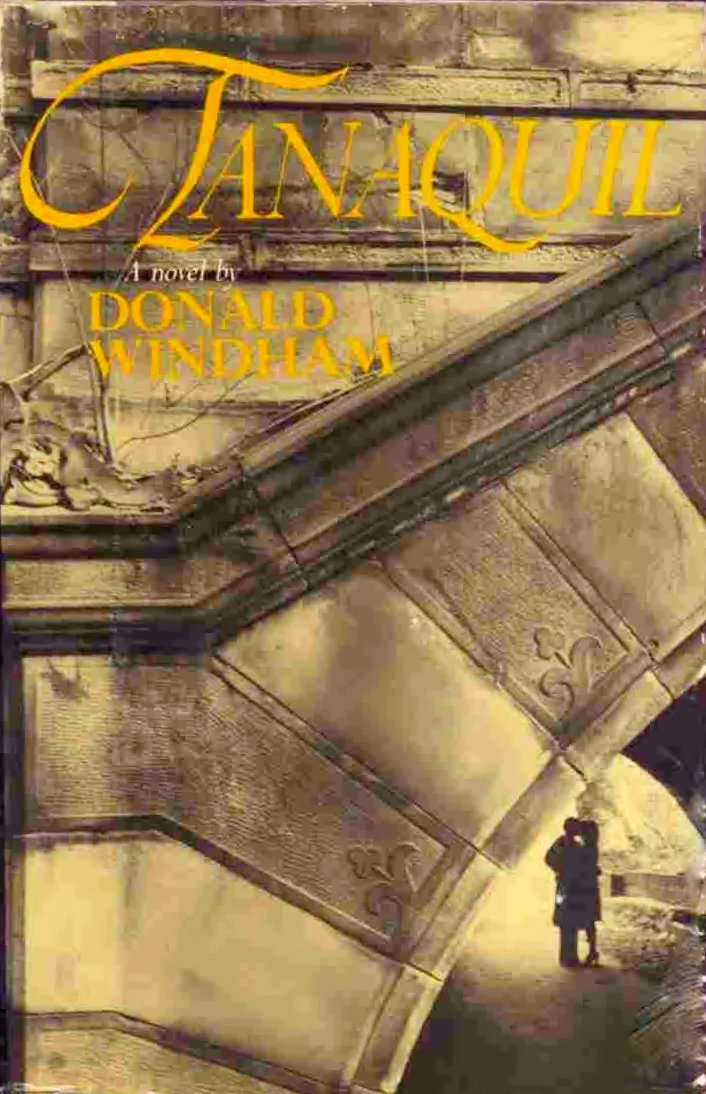
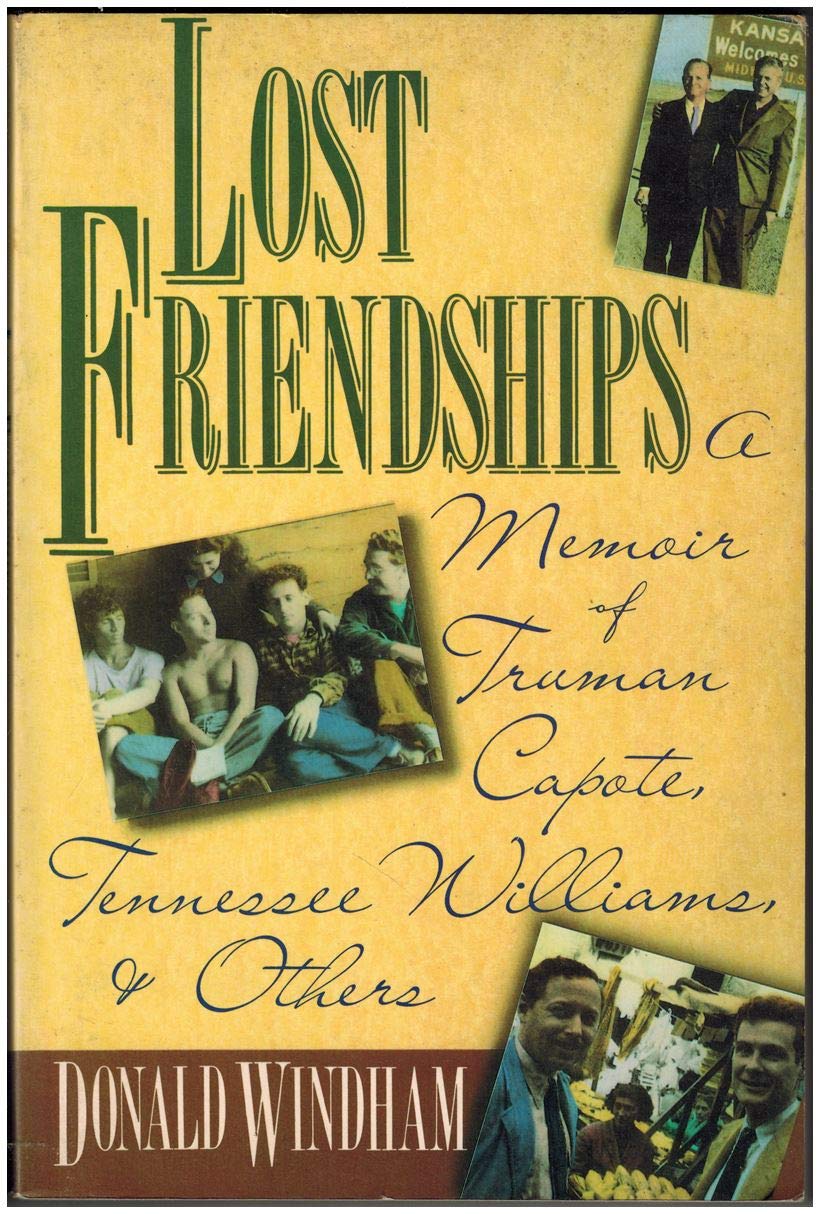
Windham’s 1972 novel Tanaquil is a fictionalization of his time among the George Platt Lynes / PaJaMa circle of friends. His later work focused on correspondence and reflections on his famous literary friends, including E.M. Forster, Tennessee Williams, Alice B. Toklas and Truman Capote.
Campbell & Windham with Capote
Windham & Campbell, ca 1987
Windham and Campbell remained a couple for the rest of their lives. Besides their New York City apartment on Central Park South, they also had a Fire Island house on Ocean Walk in The Pines, where Campbell died suddenly of a heart attack on June 26, 1988. Windham outlived his younger partner by 22 years, passing in May, 2010 at the age of 89. Their combined estates fund the annual Windham-Campbell Literary Prizes, established at Yale University in 2012.
Jack Parlett’s 2022 book Fire Island devotes almost an entire chapter to Donald Windham’s 70-year span visiting the island. Parlett writes; “(Windham) was part of the very first generation to discover its potential as an enclave; first as a young man, visiting Saltaire with some of the earliest queer artists to incorporate the island into their practice; and later as a man in his fifties, happily coupled with the love of his life, who made in the Pines an enclave within an enclave, a restful home for two people, even amid the loudness of the community’s sexual and cultural boom in the 1970’s.”
Paul Cadmus & Jared French, Fire Island, PaJaMa (1940)
I have previously written about The PaJaMa collective’s Fire Island summers. They were frequently joined by fellow artists George Platt Lynes and Bernard Perlin, as well as a parade of friends and lovers, performers and literary types from their New York social scene. They were almost exclusively attractive young gay men who served as models and muses for the artists.
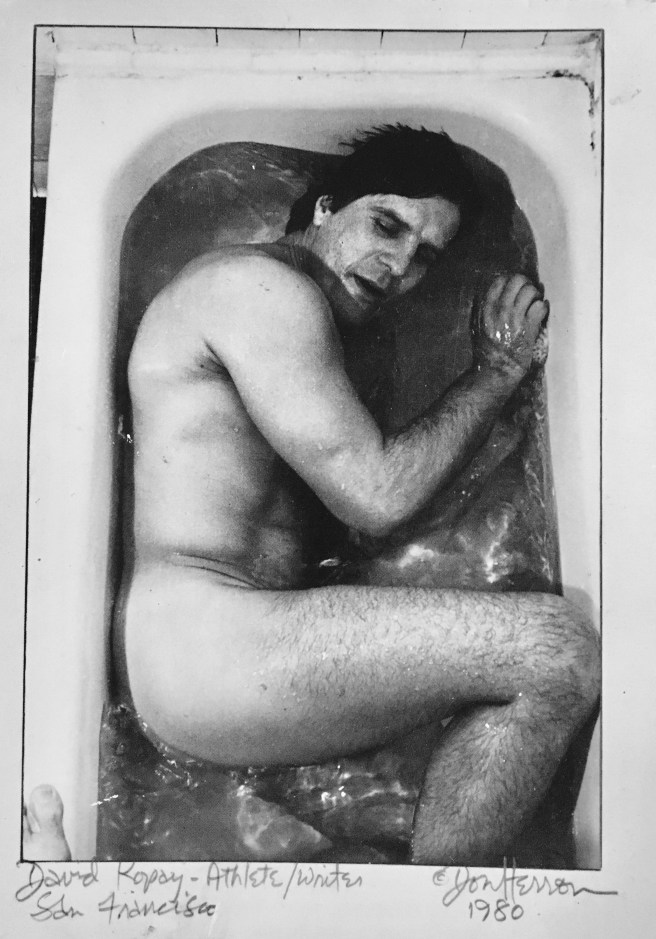
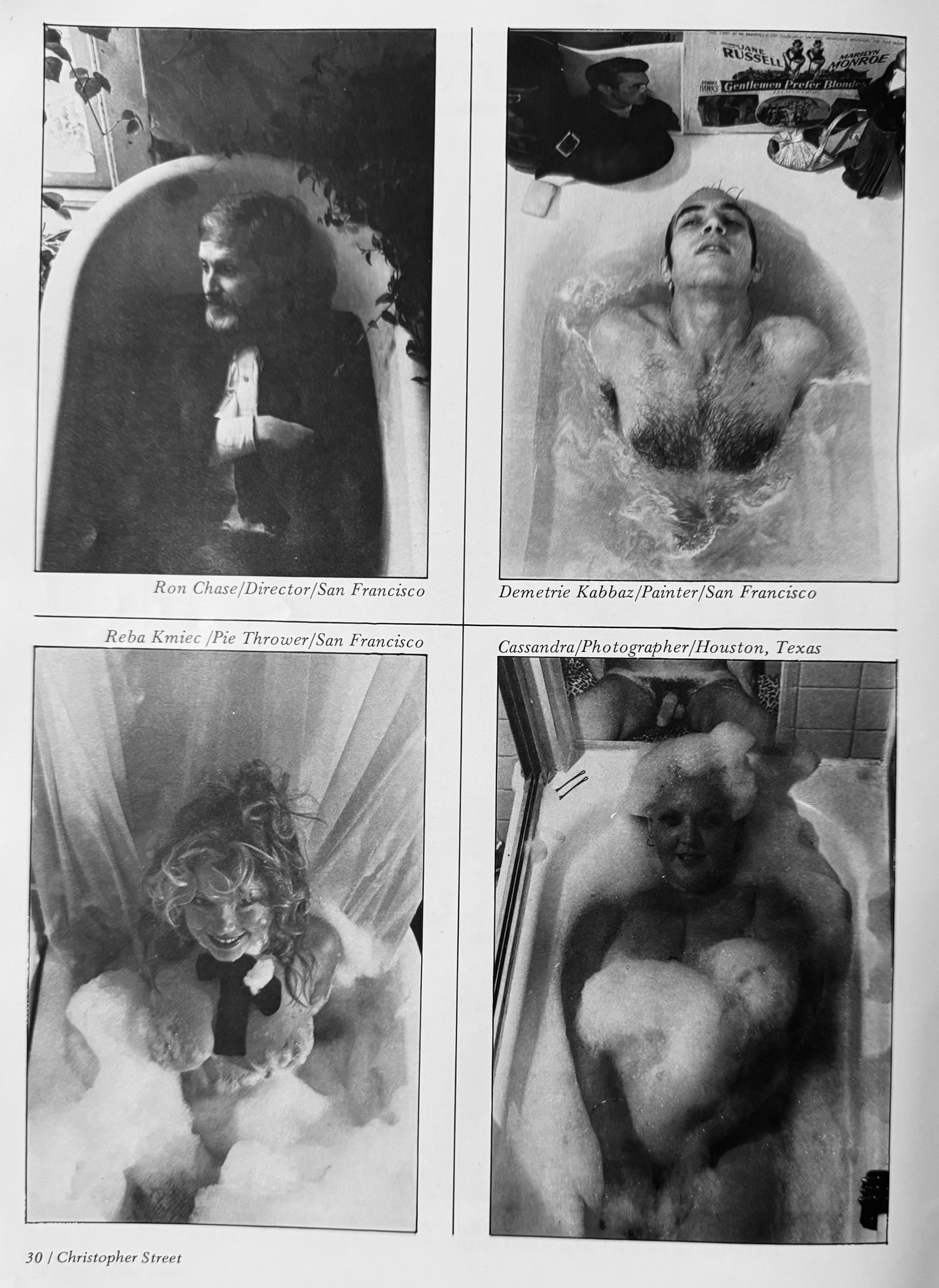
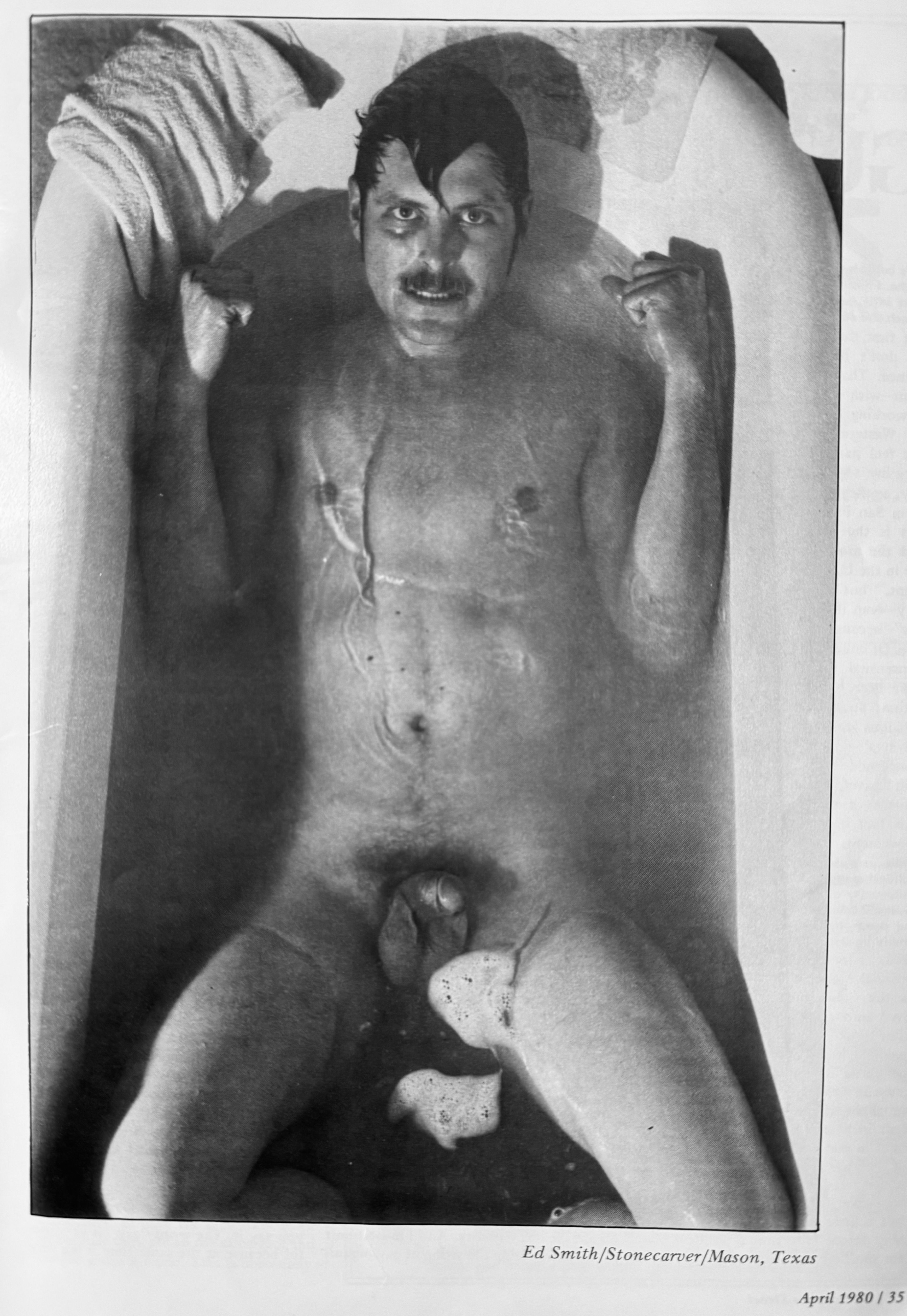
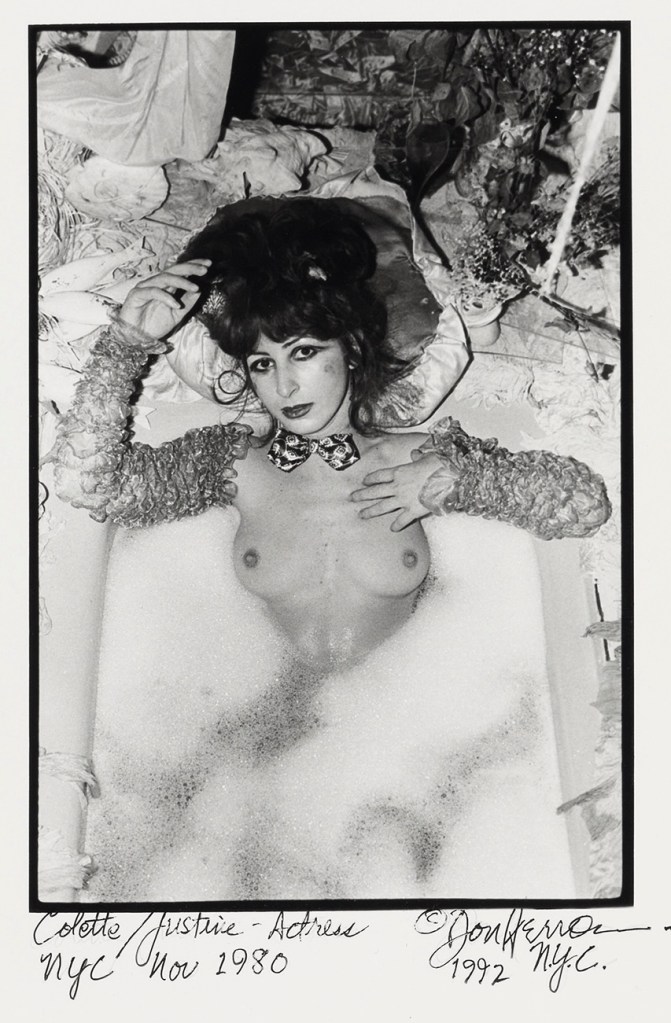
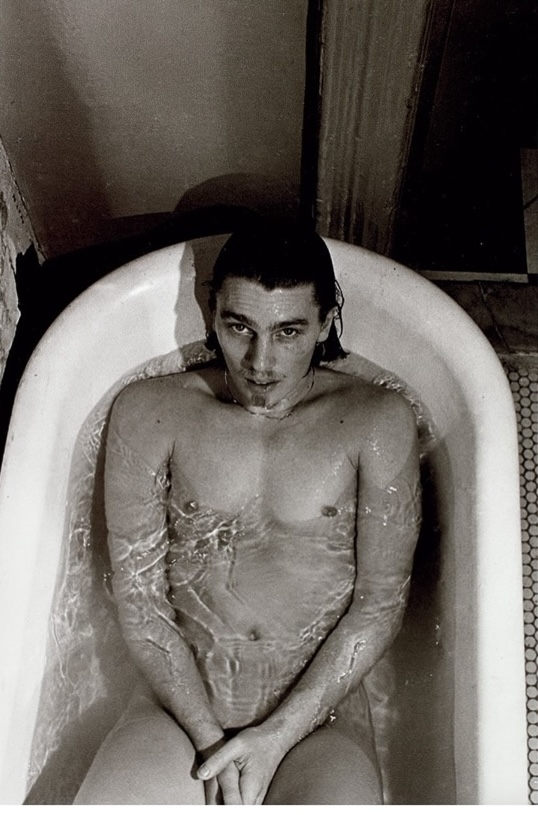
Back in 2018, I posted two collections of artist/photographer Don Herron’s Tub Shots, a series of images featuring the famous and near-famous posing in their bathtubs. This coincided with an exhibition of 65 photographs at the Daniel Cooney Gallery here in NYC. The blog posts (Pt. 1 and Pt. II) still garner a considerable amount of traffic, as well as a third collection posted 2 years ago. Now we have a fourth selection of the collection: a Christopher Street magazine feature from April, 1980 and recollections from the subjects.
The April, 1980 issue of Christopher Street, with football player David Kopay sharing the cover with a very nice Tom of Finland illustration.
Among those featured in the Christopher Street layout was artist Mel Odom, who shared memories of the experience in Pt.1.
Ronald Chase is a San Francisco-based artist, photographer, educator, independent filmmaker and opera designer.
Demetrie Kabbaz (1944-2014) was a painter known for his highly stylized portraits of Marilyn Monroe and other iconics of pop culture.
The article mentions a 1981 exhibit at Jehu gallery in San Francisco. The tub shot of gallery owner Ron Jehu (1937-2007) is also included alongside actress Mink Stole and popular San Francisco DJ Sheila Rene (1939-1998).
Writer Felice Picano: “Don came to my duplex at 317 E 11th Street, now owned by Annie Leibovitz and he was a sweet man, so he climbed onto the back of the bathtub where he was cramped but also supported by two walls and he shot a bunch of photos.
“He then asked if I could recommend others to shoot, and I sent him to either George Stavrinos or to Victor Hugo (Halston’s lover). By the time Don was done, he had gotten a pretty full and accurate portrait of Bohemia In New York City in the period. And, as I wrote in my book Art & Sex in Greenwich Village, Don captured what was probably the last unified downtown NYC bohemian community.”
Peter Hujar (1934-1987) was a photographer primarily known for his portraiture. His photo is featured on the same page as fellow photographer Robert Mapplethorpe (1946-1989). Annie Leibovitz would later recall, “Peter and I shared a distaste for Robert. One of the reasons is that Peter thought Robert was silly, you know, which he was. And he thought that Robert copied him in certain ways, which of course he did.”
Belle de Jour was New York’s most notorious dominatrix in the 1970’s and 1980’s. She ran a successful commercial dungeon and a weekly S&M theatre in her midtown loft. Submissive men, suburban couples, and thrill seekers were known to fill the bleachers to watch Belle and her entourage perform.
Don Herron‘s own Tubshot can be seen in this ad for a 1982 gallery showing:
Sur Rodney Surrecounts his tub shot: “We used the bathroom of Cynthia Chiarulli’s loft for the photo shoot, which was styled by Suzan Silver, a jewelry maker who made her wares from mirrored plastics she purchased on Canal Street. She provided the lipstick and sprayed the sides of my hair silver.
“I used the photo for the cover of my first book of poems… I organized an exhibition of Donald’s prints at the Tribeca club Stilwende and also showcased Suzan’s jewelry. I also screened a new version of my TV talk show – the All New Sur Rodney Sur Show. Sometime after the event I produced a version of my talk show where I interviewed Holly Woodlawn in a bubble bath for a photo shoot with Donald in a television studio in Chelsea.”
Valery Oisteanu: “I remember being introduced to Don by Timothy Greenfield and Don was part of the East Village Arts scene. He was very friendly. I was writing a monthly column at that time in Cover Arts magazine called ‘The Wall Patrol’ about art galleries…. Don took a photo of me naked wearing a Mylar face mask and there are also butt plugs as a humorous prop.”
Colette Justine (aka Colette Lumiere) is a multi-media artist who is considered a pioneering street performance artist and “photographic tableau vivant.” She is also known for playing with male/female gender roles through different guises and personas.
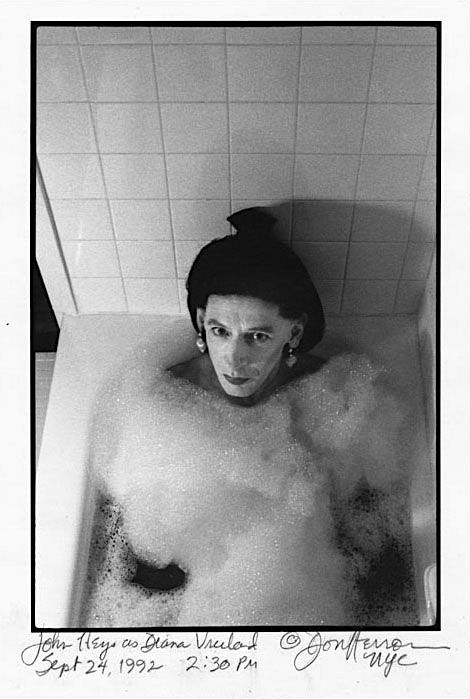
Käthe Kruse, performer/artist: “I was staying with John Heys when he was photographed by Don. When we met in John’s apartment and he saw my hair, he asked to photograph me too. So after the shoot with John, I got off my clothes and laid down in the bathtub and he arranged my hair. Then he climbed up to the edges of the bathtub and started to photograph. He told me that he always takes the same number of photos (eighteen) and then he stopped. I love these kind of concepts. When I was back in Berlin I received one print and after all these years it is still hanging in my home. I love the photo and I am very happy and thankful to have been photographed by Don.”
Photographer/visual artist Christopher Makos (1980)
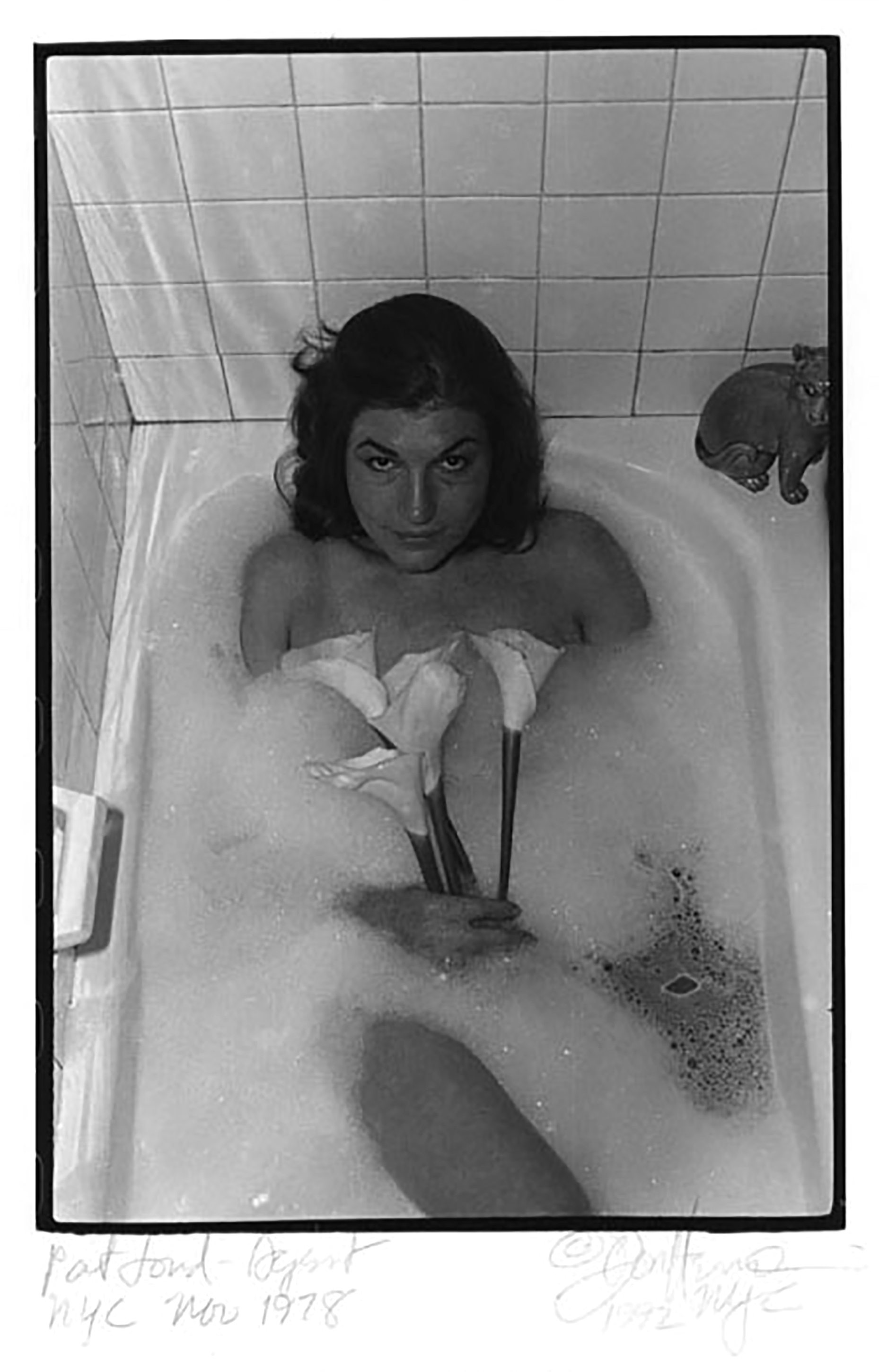
Stanton Weiss (1952-2022): “New York in the 1970’s was an unparalleled place. There was an edge to it and a feeling that anything could happen. I had a seemingly conservative job working for Dick Ridge, the renowned interior designer. The phone rang. ‘Stanton darling, it’s Pat. Don Herron wants to photograph me and I need to use Dick’s tub! My bathroom is being painted.’ Pat was Pat Loud, America’s first reality star of PBS’ An American Family. She is a stunning woman, and unlike other reality stars, she is the epitome of grace and style. She posed with calla lilies and then Don asked me if I would like to be photographed as well.”
Pat Loud (1926-2021): “I recall Don calling me to say he was doing a series of photographs of people in their bathtubs and would I pose for him. I told him I didn’t do bathtubs but he assured me that nudity was not his objective and I could use all the bubble bath I wanted…. I don’t know whose idea the calla lilies were that seem so dominant and strategically placed and yet so out of place for such a photo.”
Dick Ridge (1928-2021): “I received a phone call from Pat Loud, who asked me if I would pose along with other people of the moment for a picture in my bathtub. Having just returned from Southampton, I had a pretty good tan and decided ‘Why not?'”
Poet Michael Ratcliff, Performer/Fashion designer Katy K (Kattelman), Legendary nightlife performer Joey Arias.
Marcus Leatherdale (1952-2022) was a Canadian portrait photographer who was personally and professionally associated with Robert Mapplethorpe.
Michael Musto: “Don contacted me with the idea of photographing me in my bathtub. I thought that was a novel idea, especially since I usually took showers, not baths. He wanted the photo to express my eccentric side, so I wore the shower cap, shades and white lipstick. I found Don to be likeably quirky and creative. This was a time of horror because of the mounting epidemic, but it was also a time when LGBT culture, nightlife, and solidarity were on the rise. I used my Village Voice column as a venue for both anger and humor at the same time, while also expressing myself via fashion and nightlife antics. Don’s photo captured my multiple moods.”






































































































 Brian Ferrari's Blog