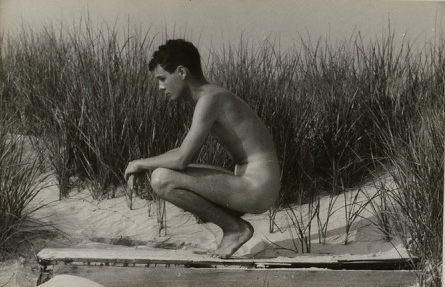
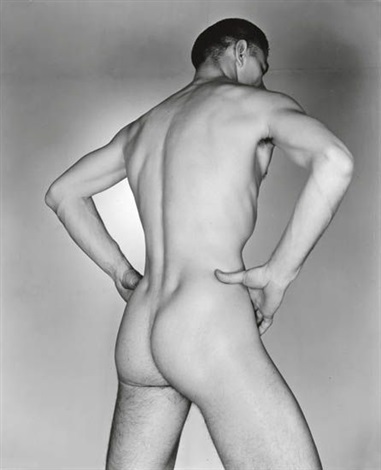
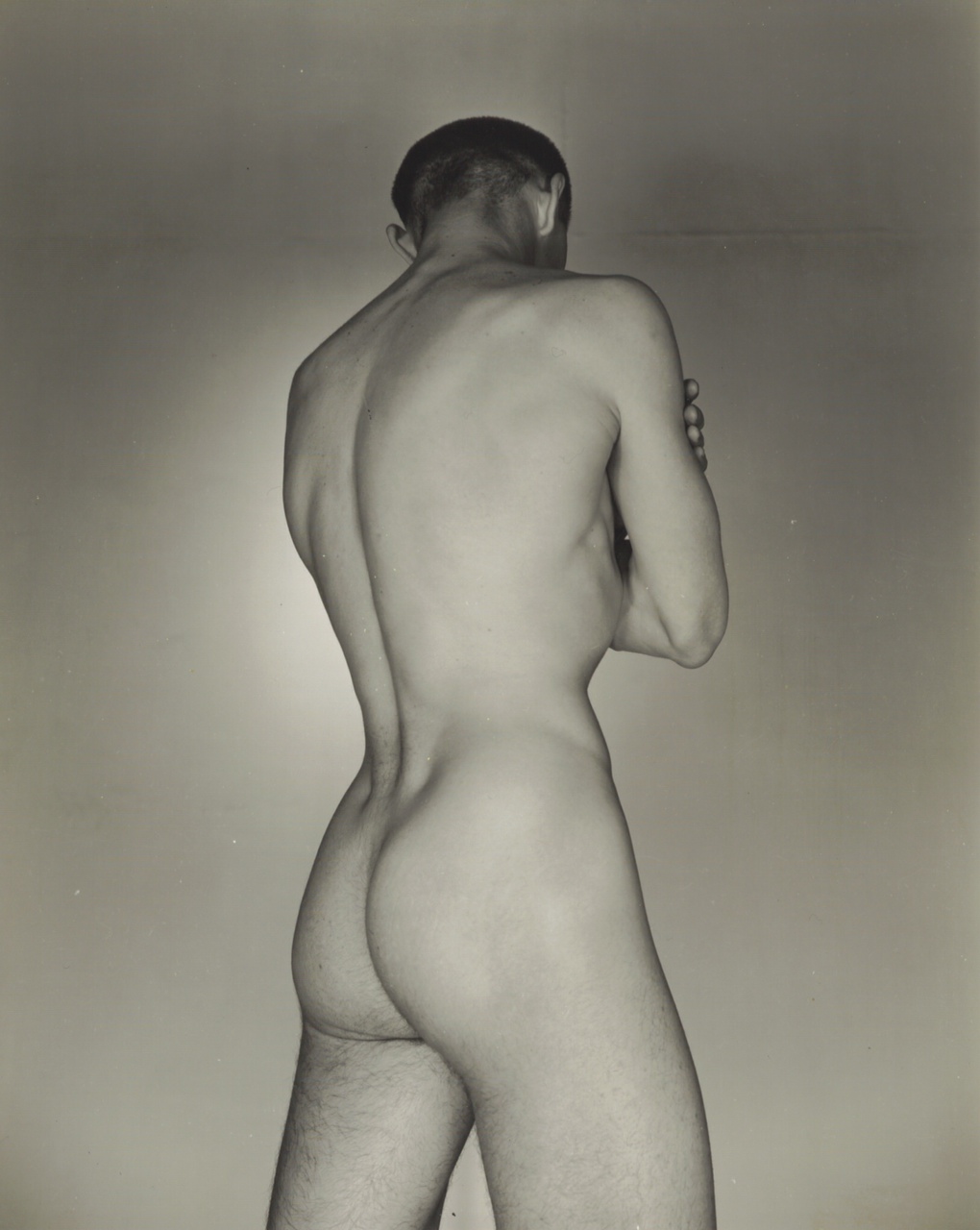
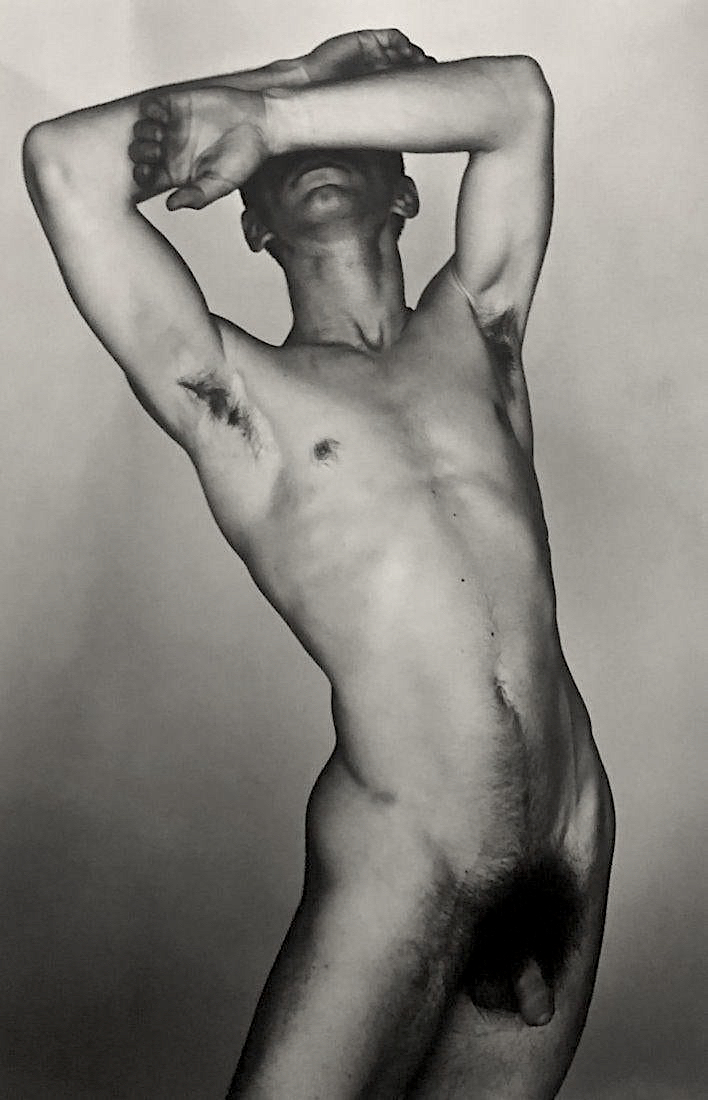
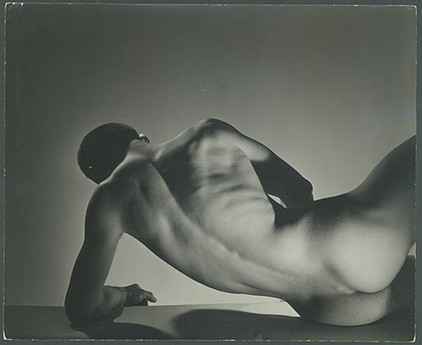
Artist’s Muse: Chuck Howard

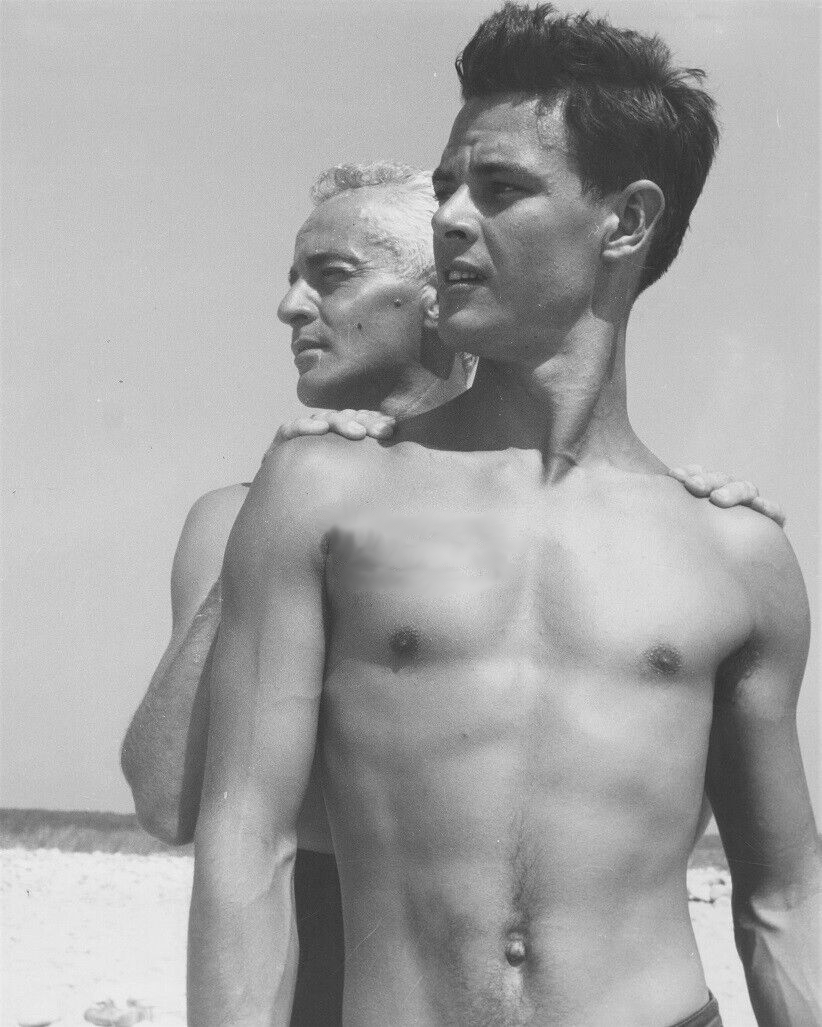
In the profile Artist’s Muse: Randy Jack, I wrote about his relationship with photographer George Platt Lynes, which came to an end in the Fall of 1948. Just 10 days after Jack moved out of the apartment, another former military man named Chuck Howard moved in as Lynes’ next boyfriend.

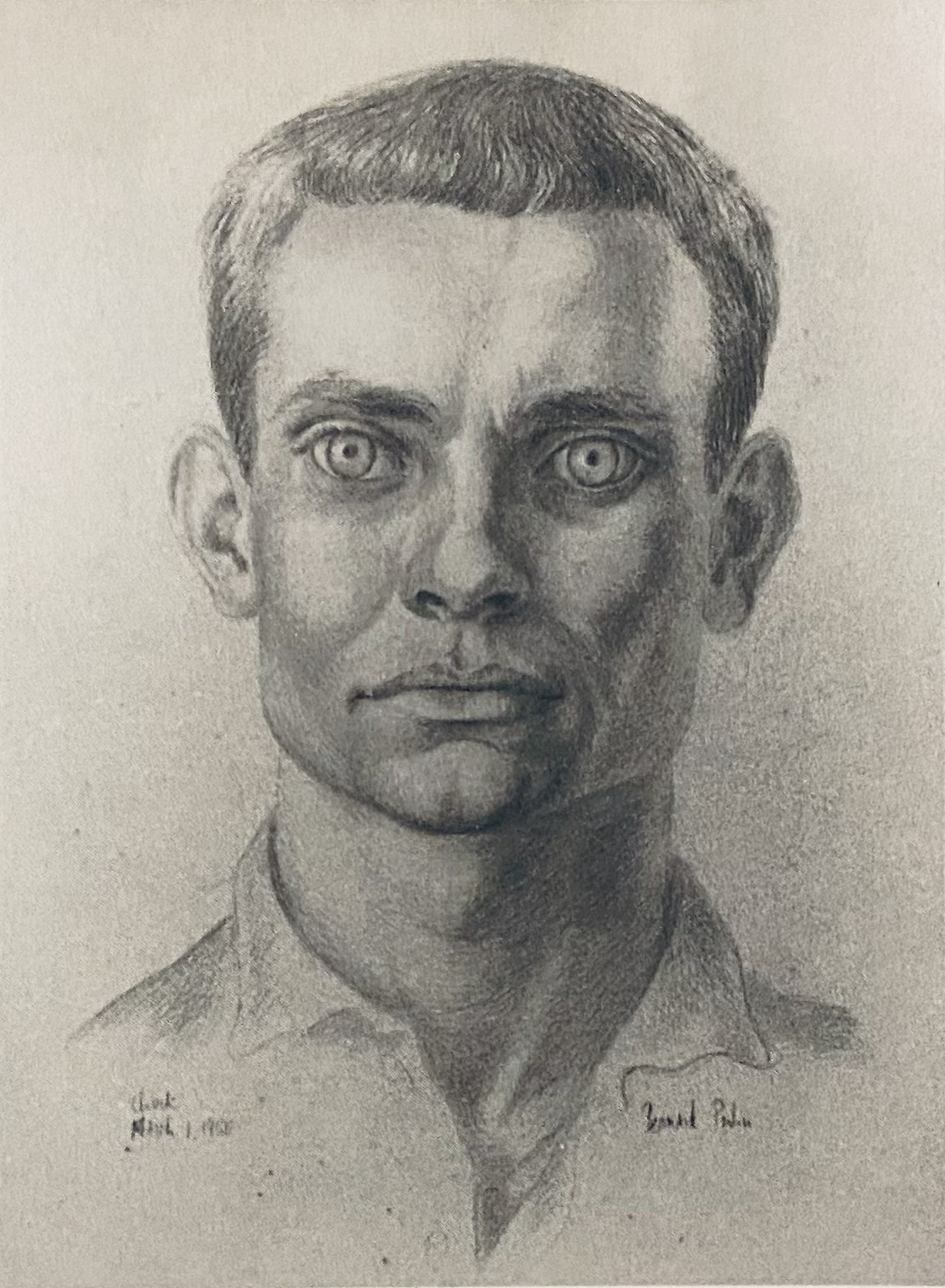
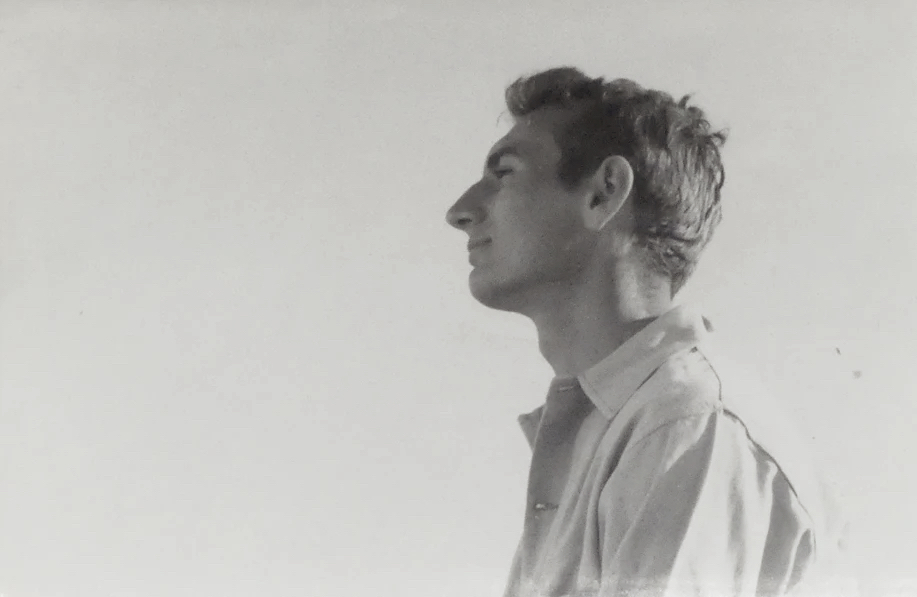
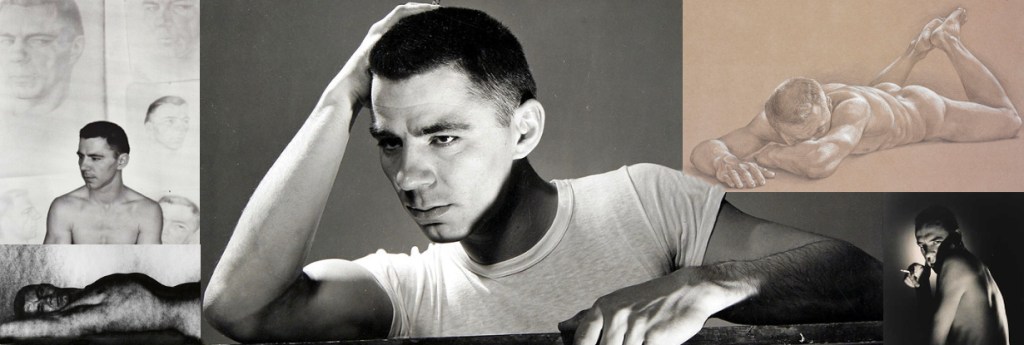
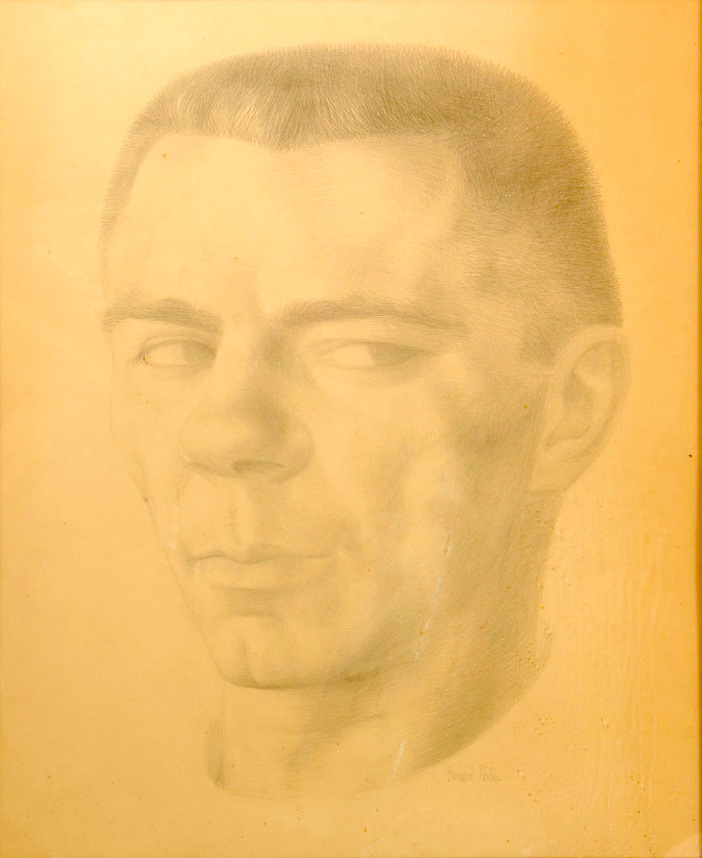
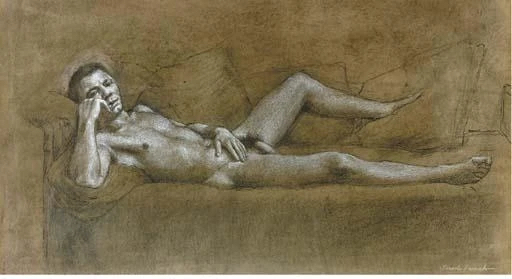
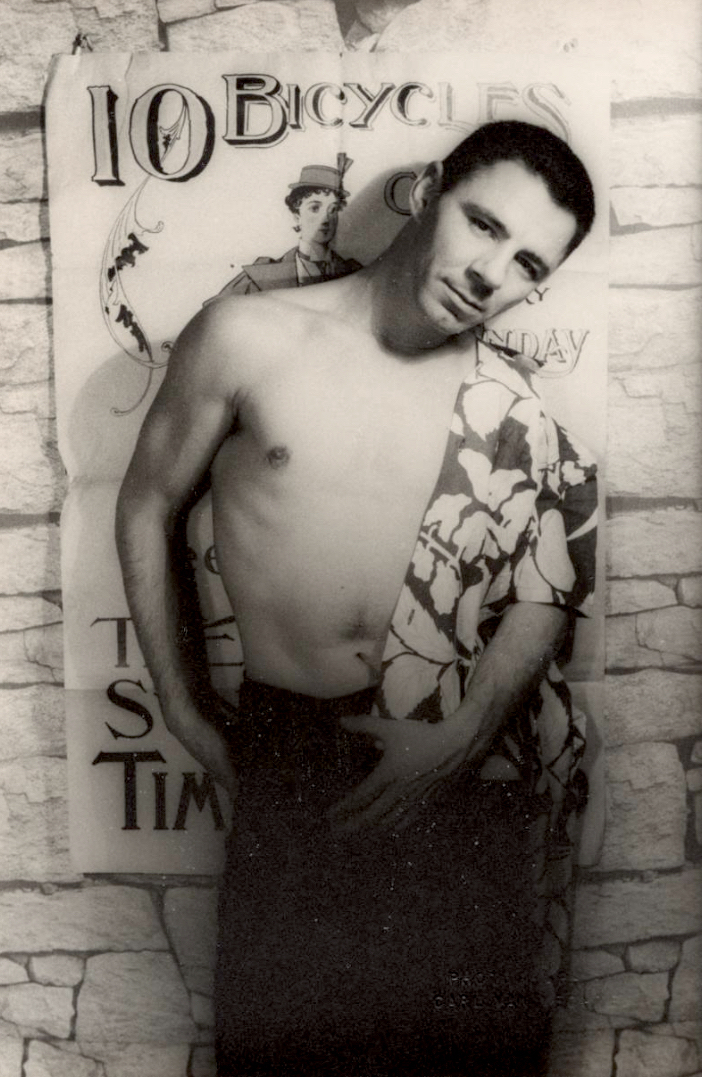
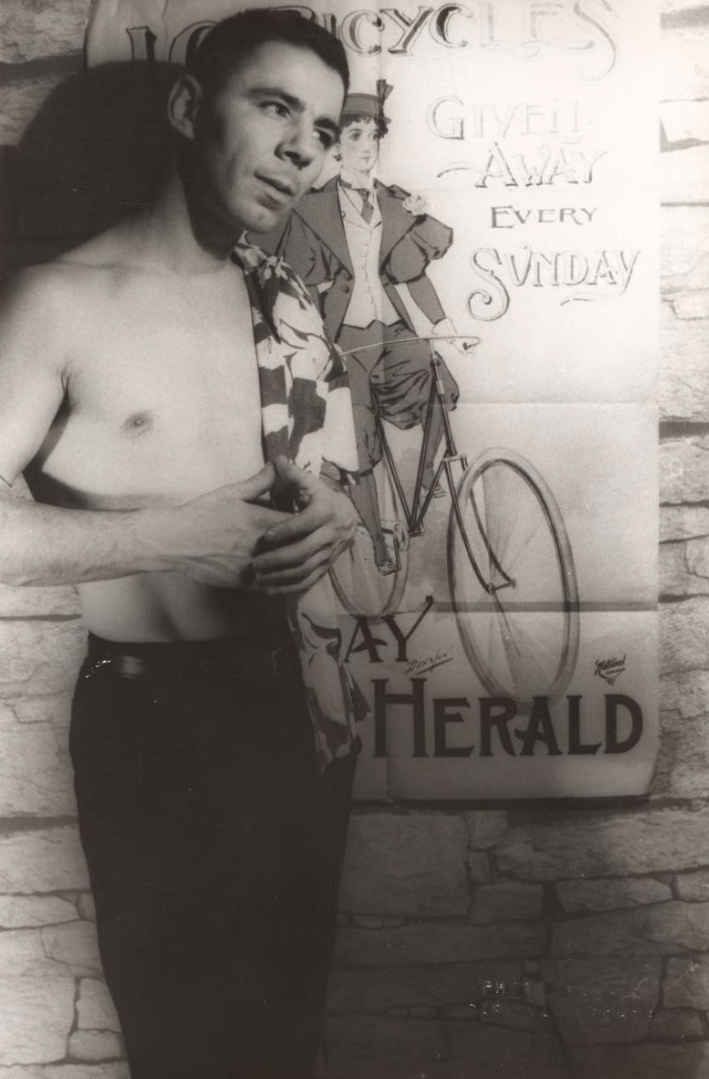
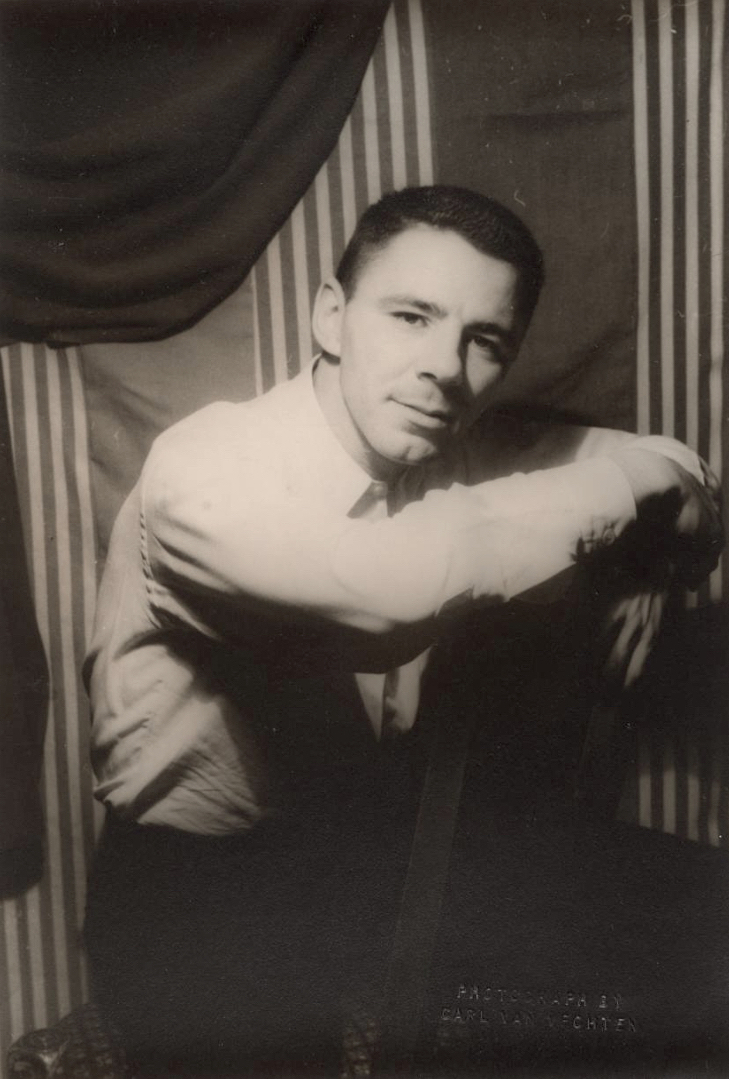
Charles “Chuck” Howard was born in Cochran, Georgia on March 4, 1927. After graduating from high school during World War II, he joined the Naval Air Force and became a tail gunner. While stationed in Miami Beach, he met New York artist Bernard Perlin and the two would “reconnect” whenever Chuck was in New York City. After the war, Howard studied fashion in France on the G.I. Bill before moving back to NYC to live with the artist. When Perlin was offered a residency in Rome, he threw himself a farewell party, and Chuck was introduced to Lynes.

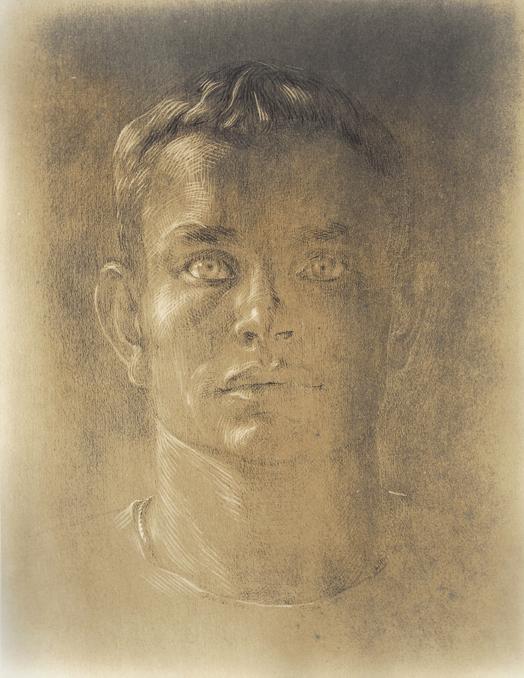
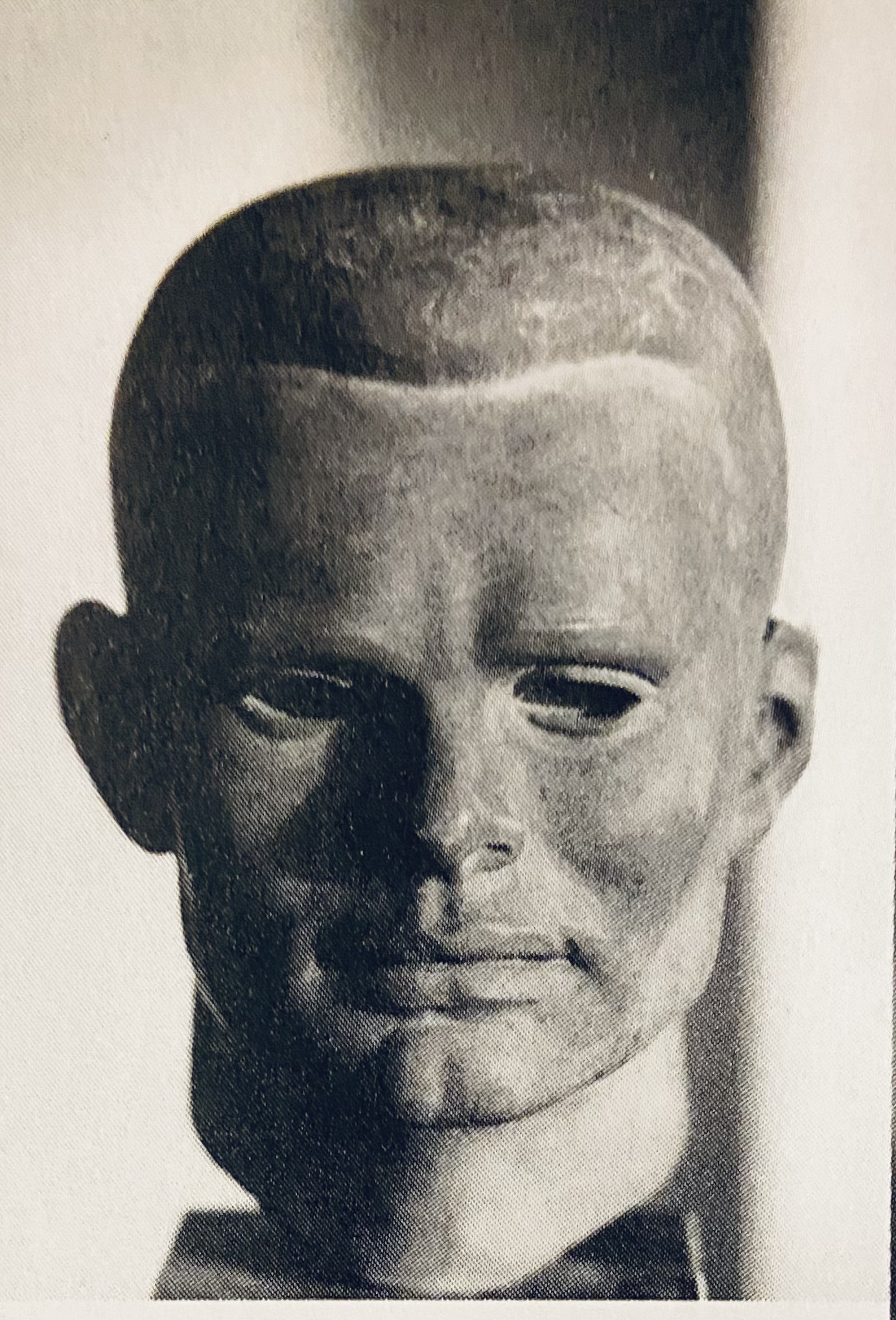
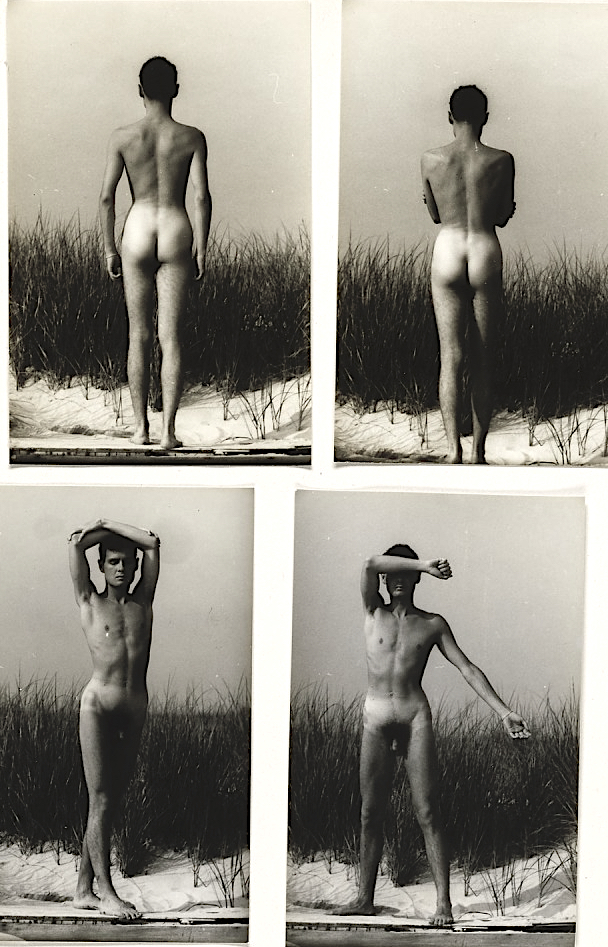
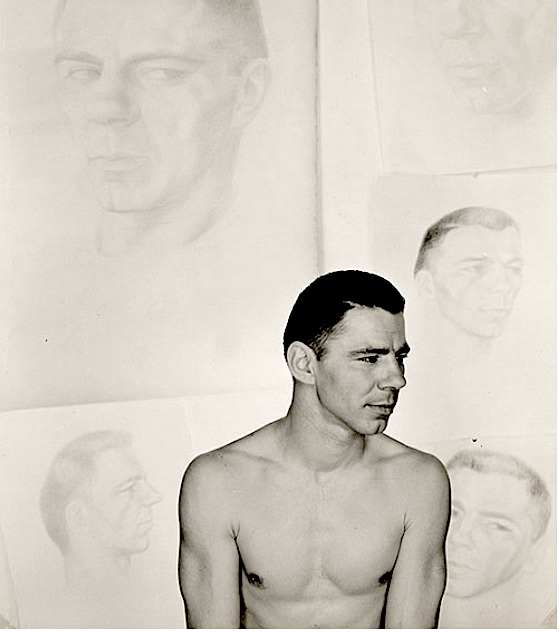
Four sketches of Chuck Howard by Bernard Perlin

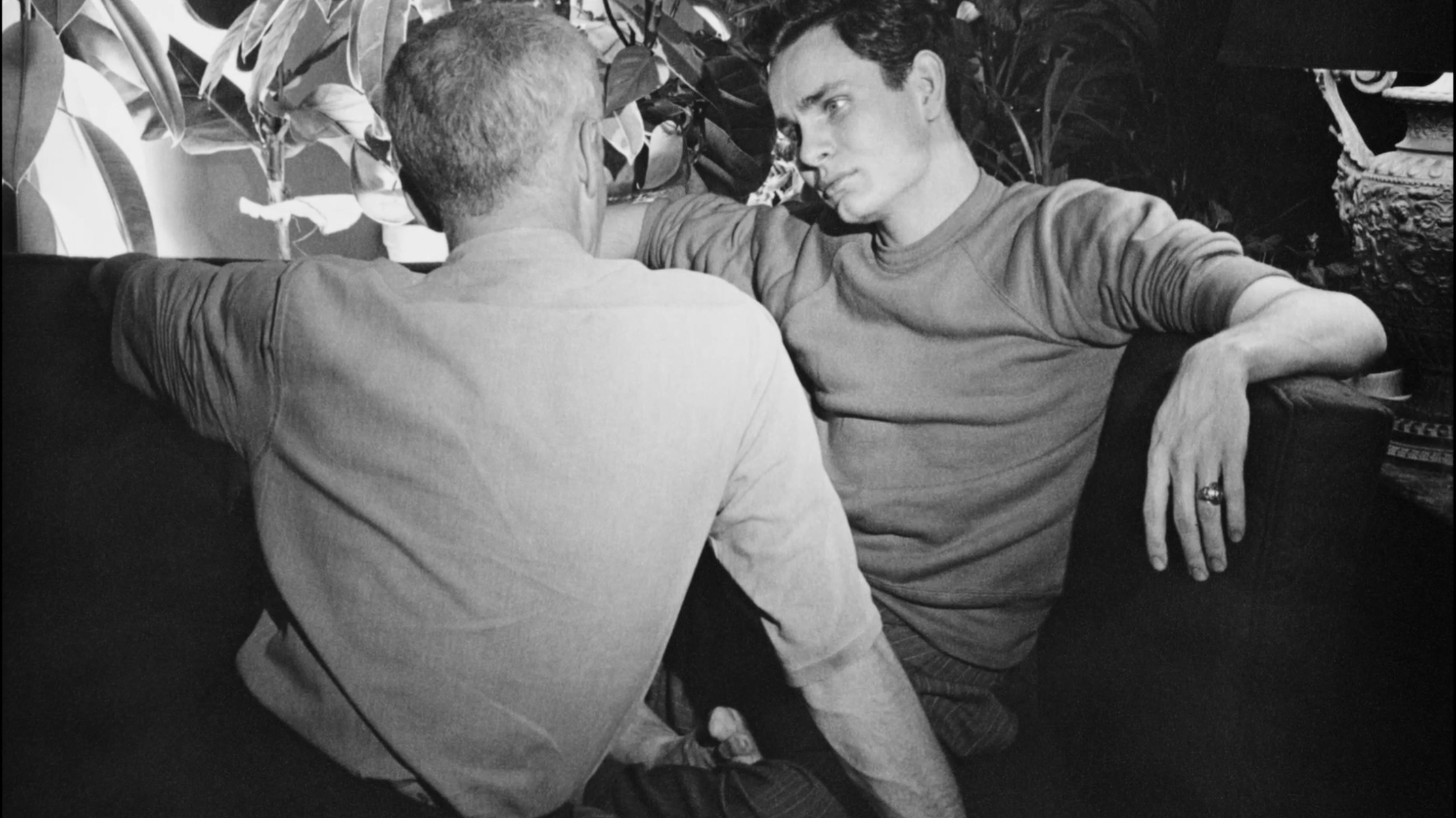
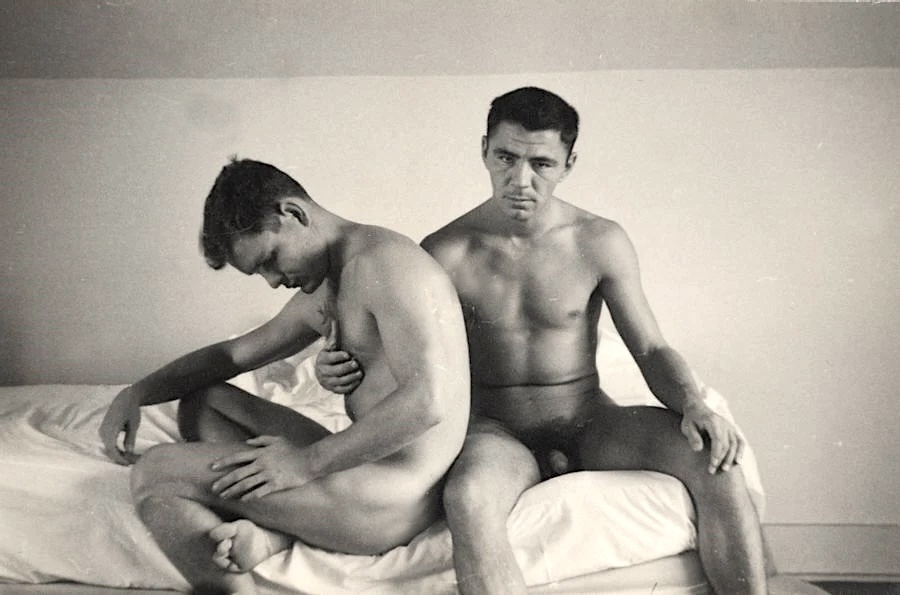
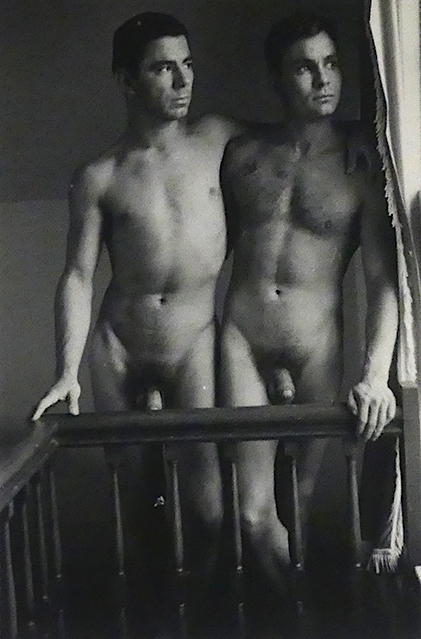
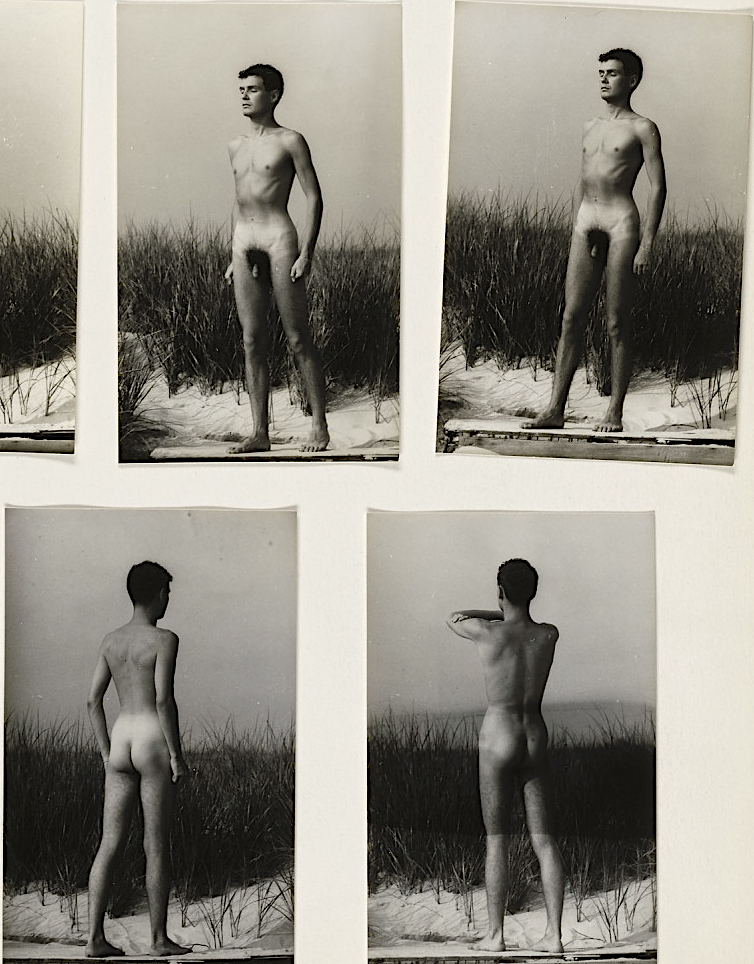
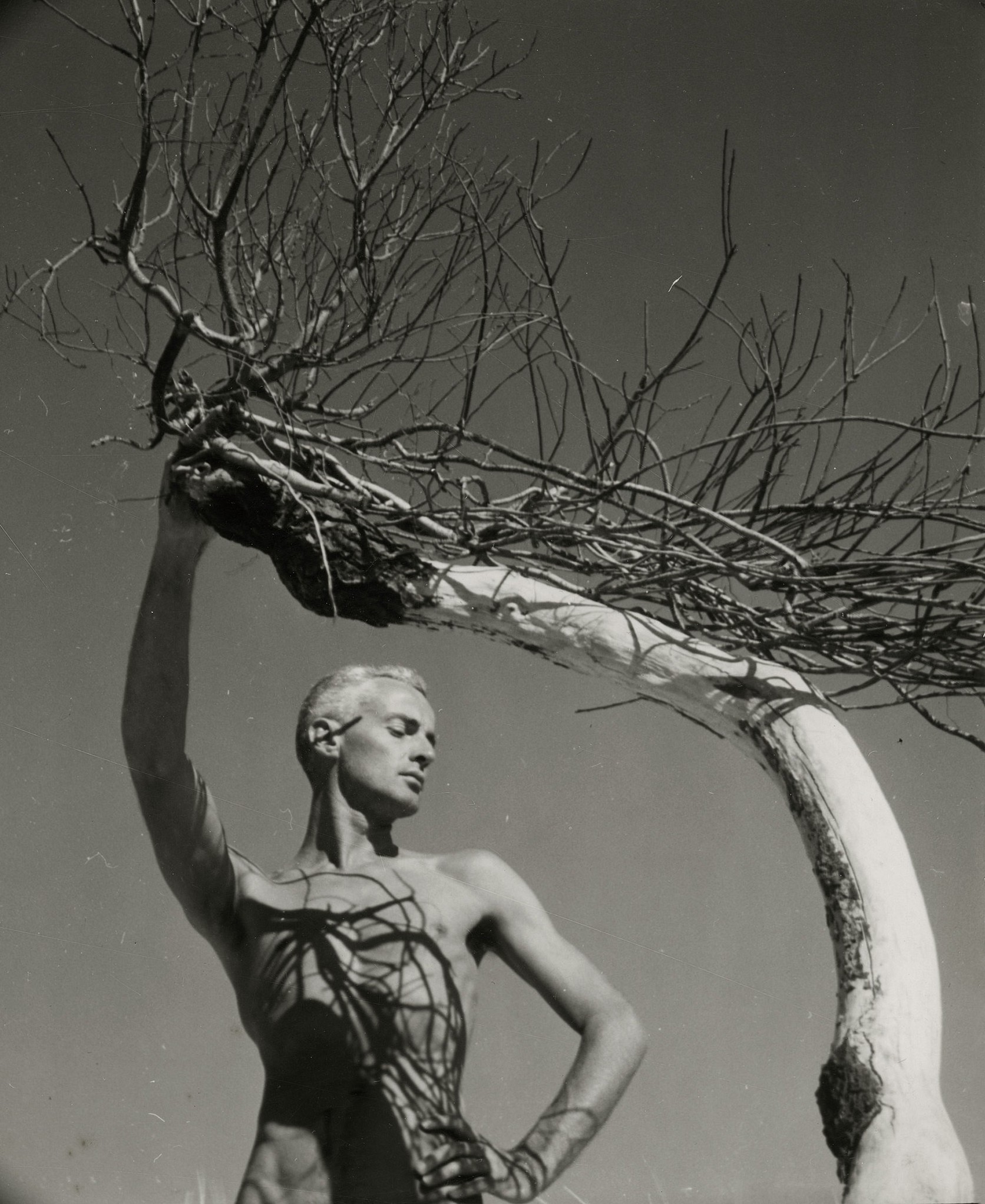
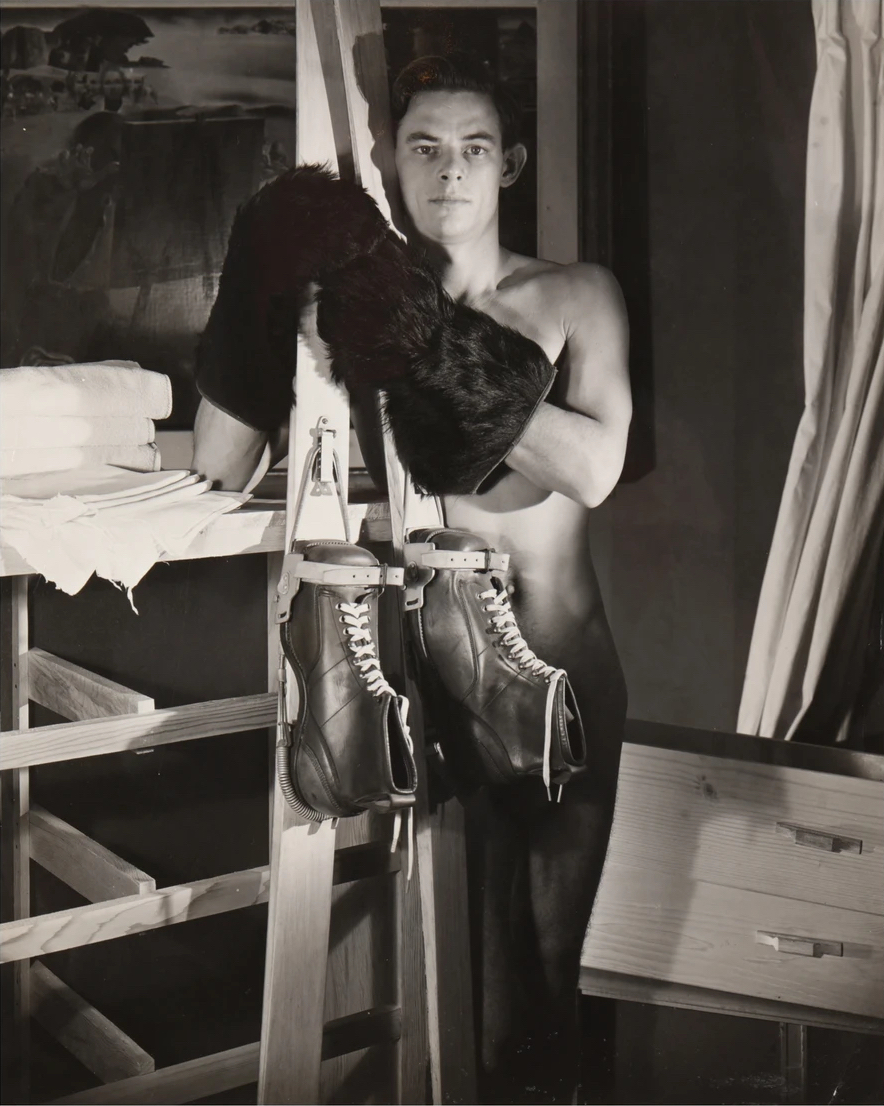
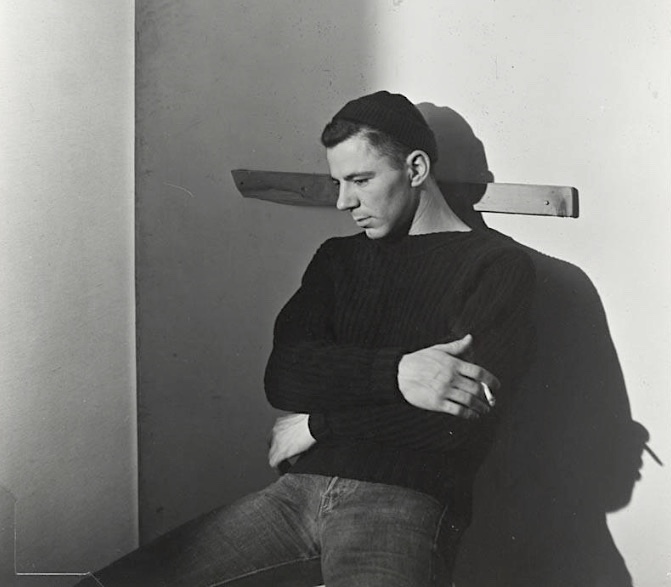
George Platt Lynes self portrait with Chuck Howard, ca 1948
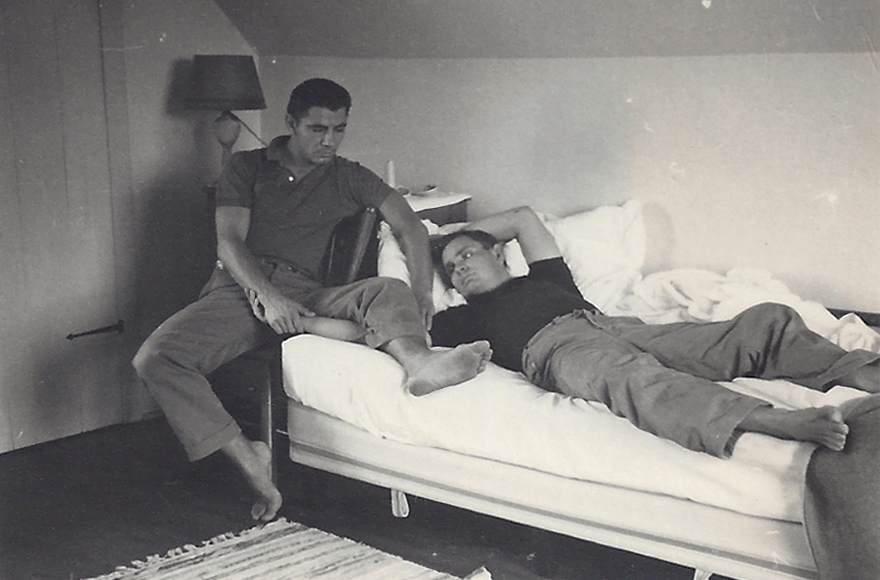
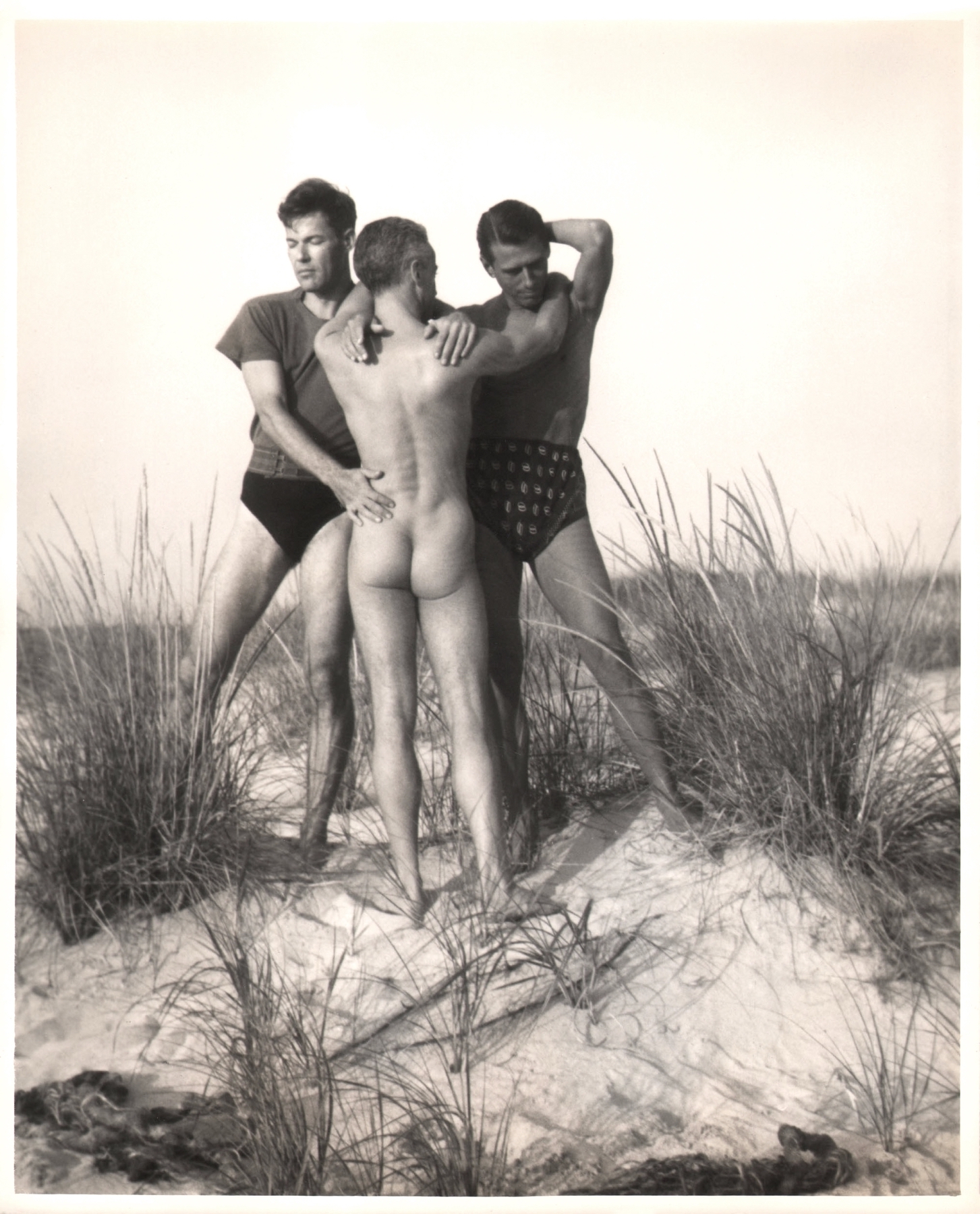
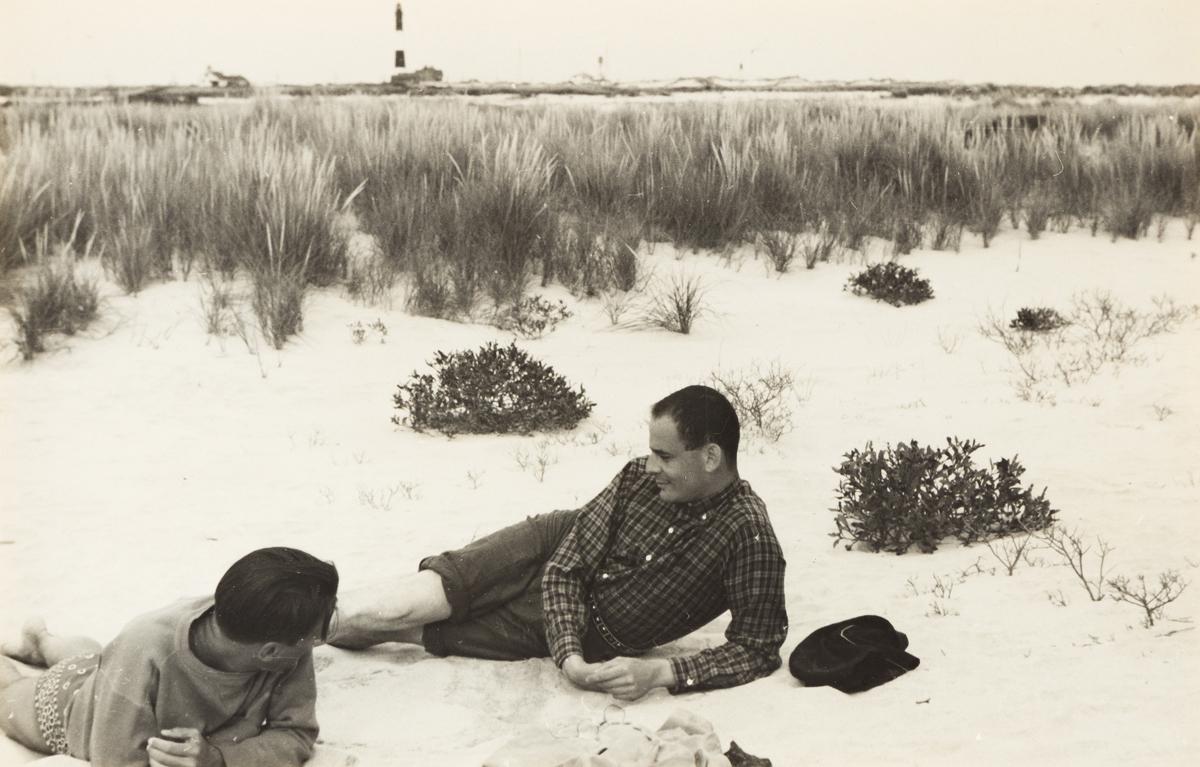
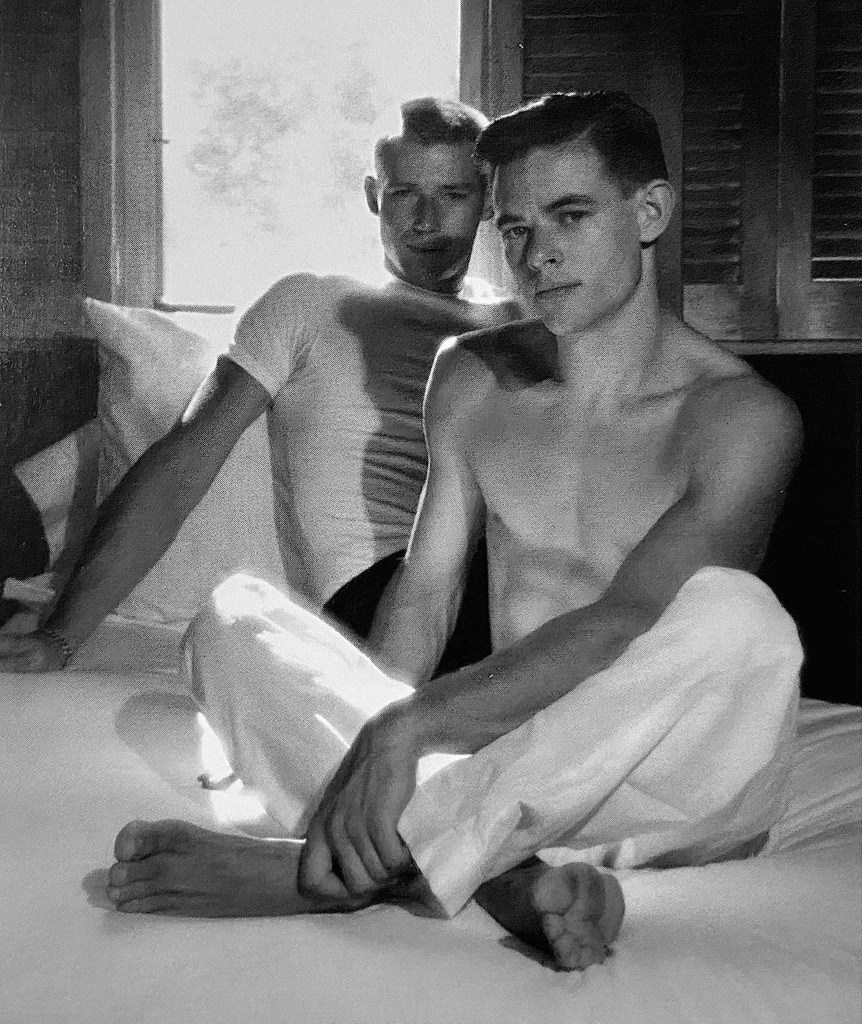
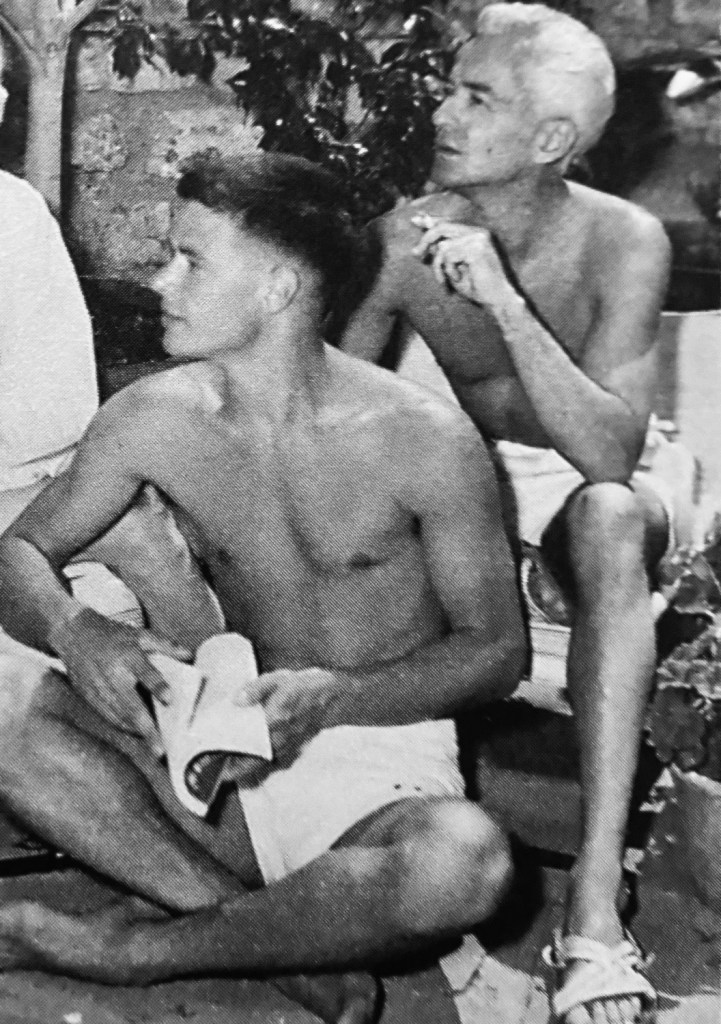
Chuck Howard and George Platt Lynes, ca 1950

“Another twenty-one-year-old has moved in on me bag and baggage, almost without being invited..” Lynes wrote in a letter to his friend, author Katherine Anne Porter.

Howard was viewed favorably by Lynes’ friends and was said to have a grounding effect on the photographer. The relationship lasted for just over two years.

George Platt Lynes & Chuck Howard, ca. 1950

Although Howard had previously posed for Bernard Perlin, it was after his introduction to Lynes and his circle of friends that he became a favorite model for the artists. He posed for George Tooker, sculptor John LaFarge, and Jared French, with whom he also had a physical relationship.

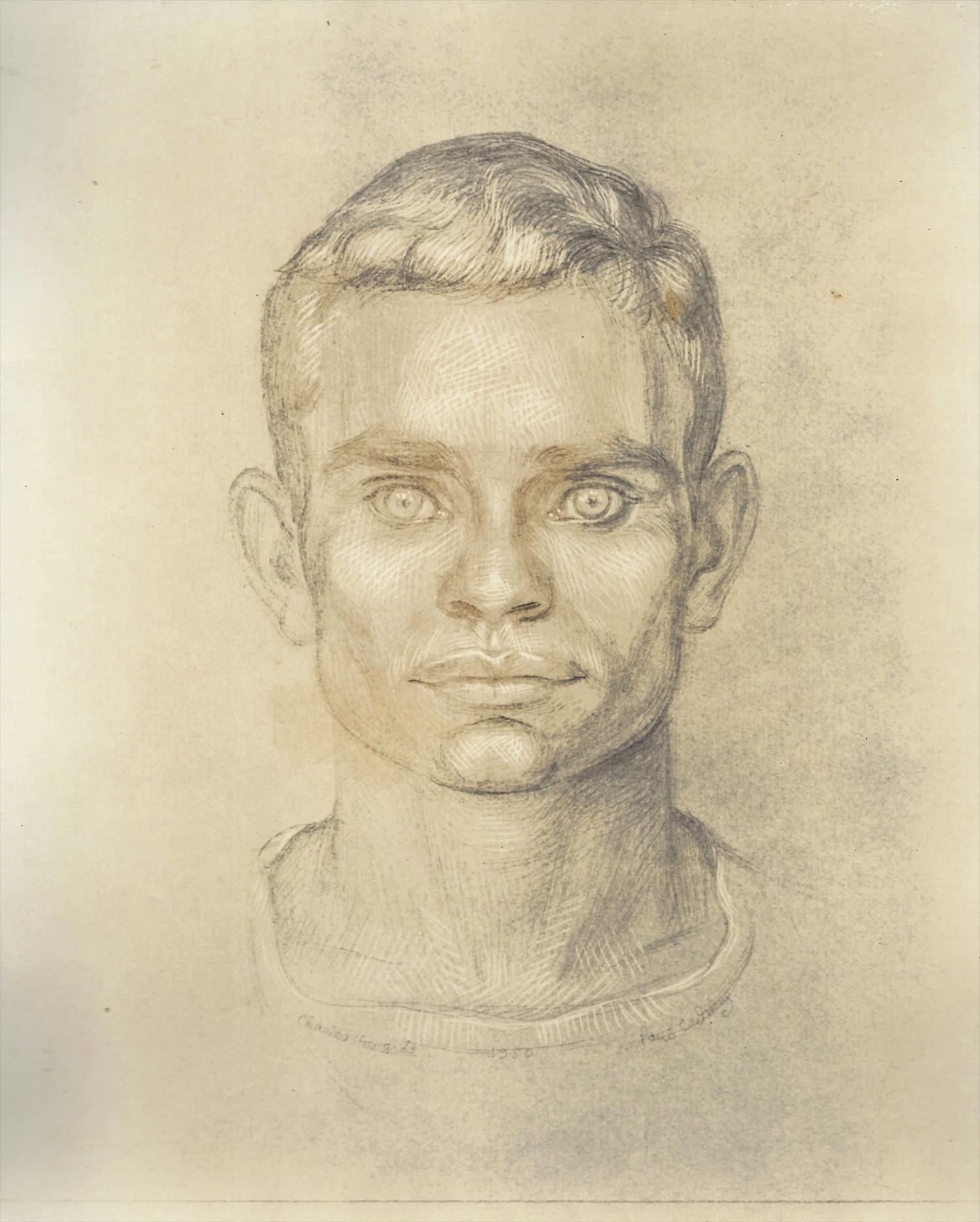
Paul Cadmus also sketched him several times and used him as the model for the central figure in his painting Architect (1950).

Architect by Paul Cadmus (1950) Chuck Howard was the model for the central figure with George Tooker reflected behind him.

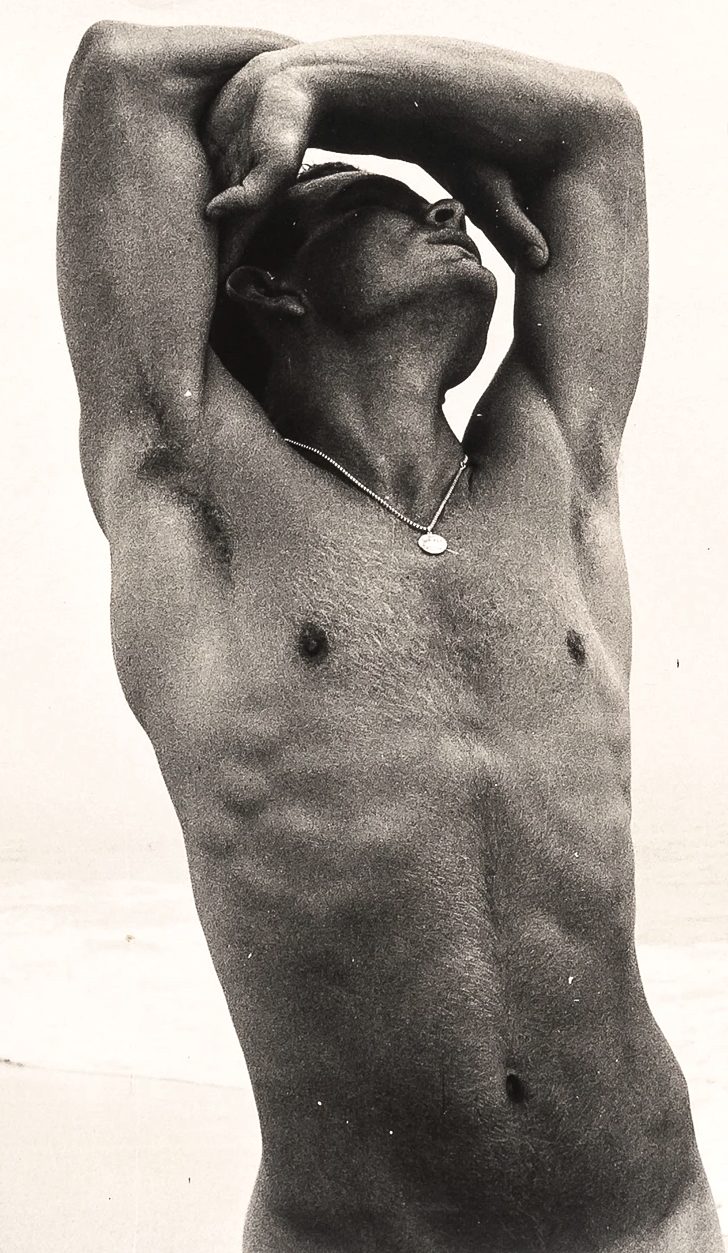
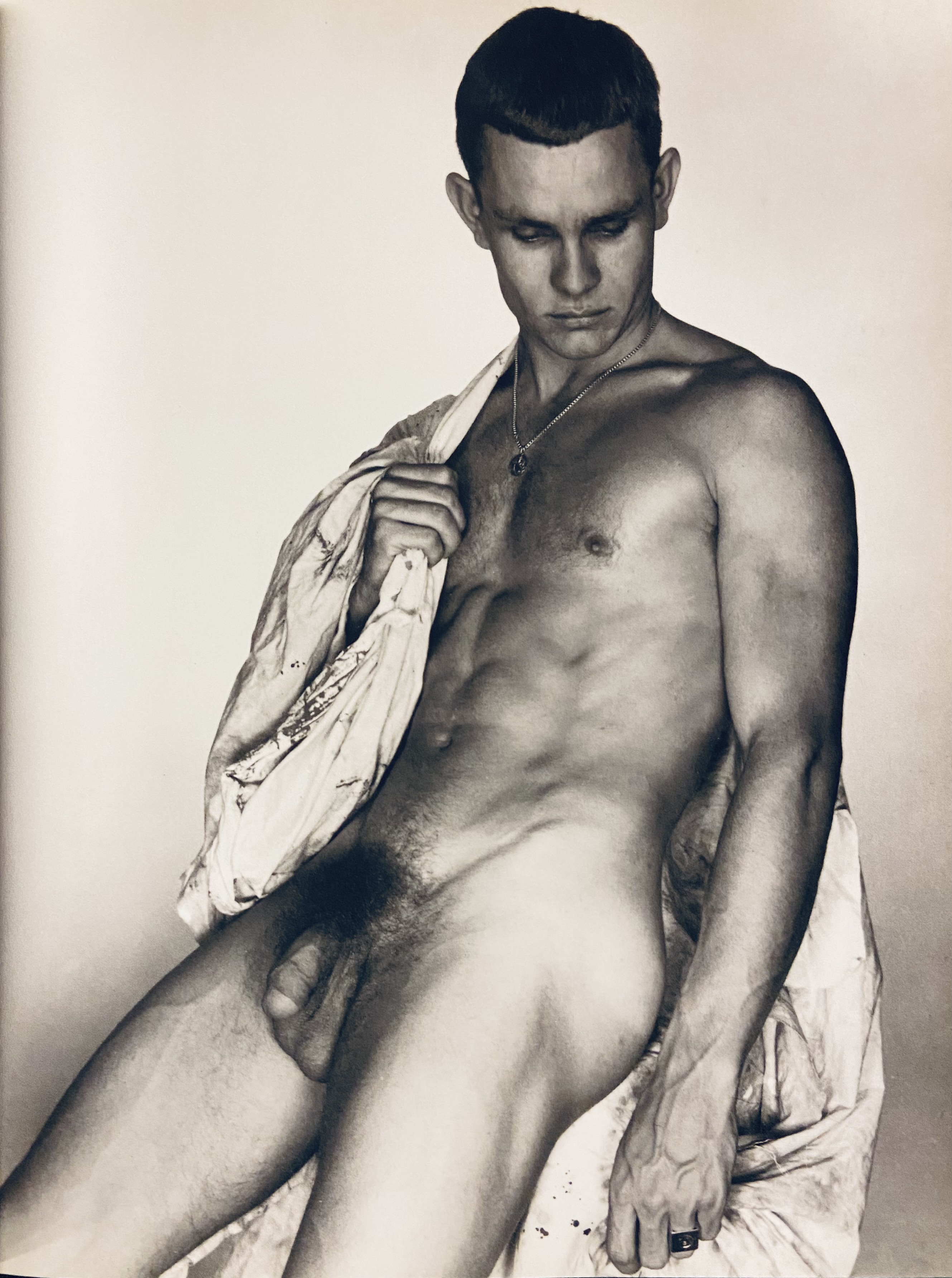
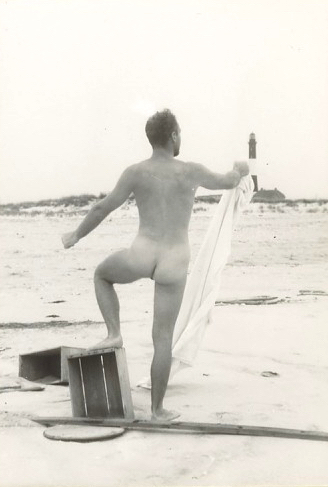
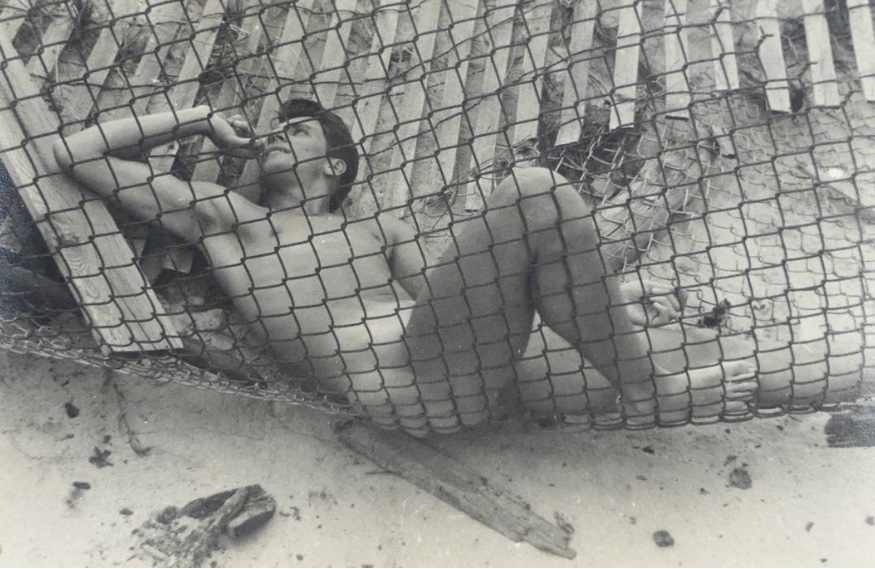
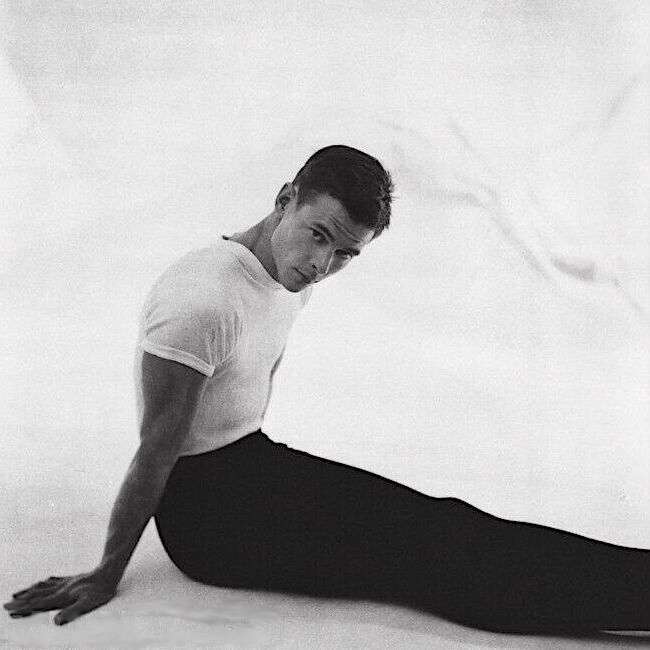
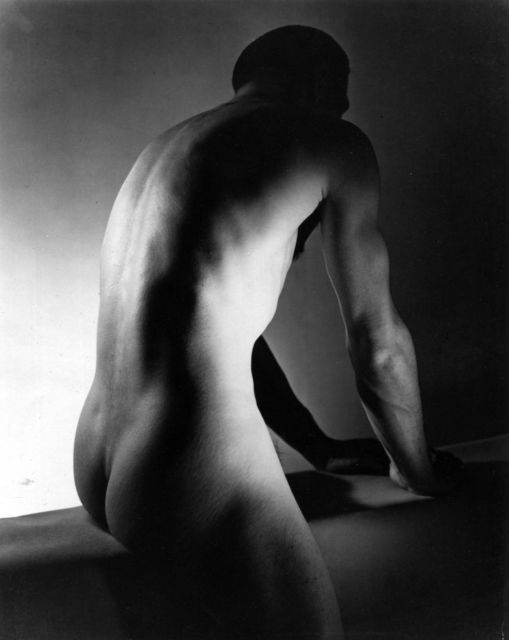
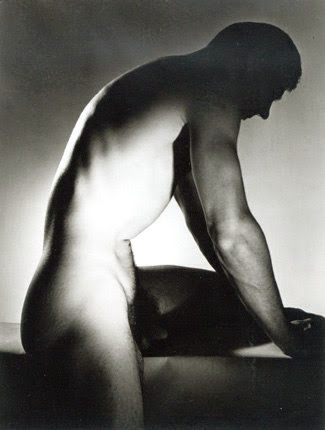
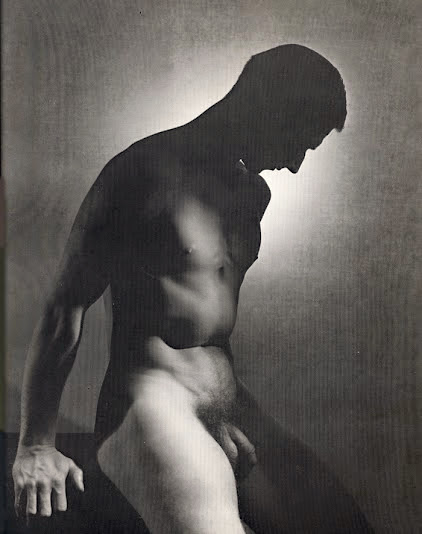
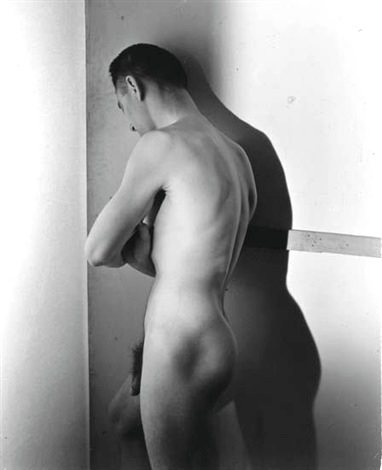
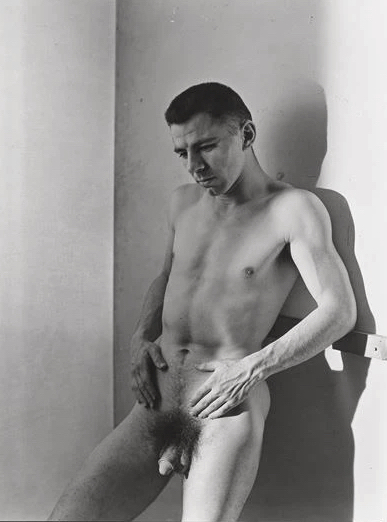
When Lynes’ nude photography became more widely exhibited decades after his death, photos of Chuck Howard were among the most celebrated. Howard downplayed the photos, describing his work modeling for Lynes as “primarily lighting tests.” Collectors disagree.

Chuck Howard also had a film career of sorts when he participated in Dr. Alfred Kinsey’s famous studies, performing sexual acts with poet Glenway Wescott in front of the researchers’ movie camera. Howard later remarked; “It wasn’t Hollywood.”

Lynes and Howard parted ways in January, 1951. “Chuck has decided to go off and live by himself;” Lynes wrote to his mother. “I shall miss him but I don’t disapprove… I’m afraid that my influence is too often all-pervading, all-inclusive.”

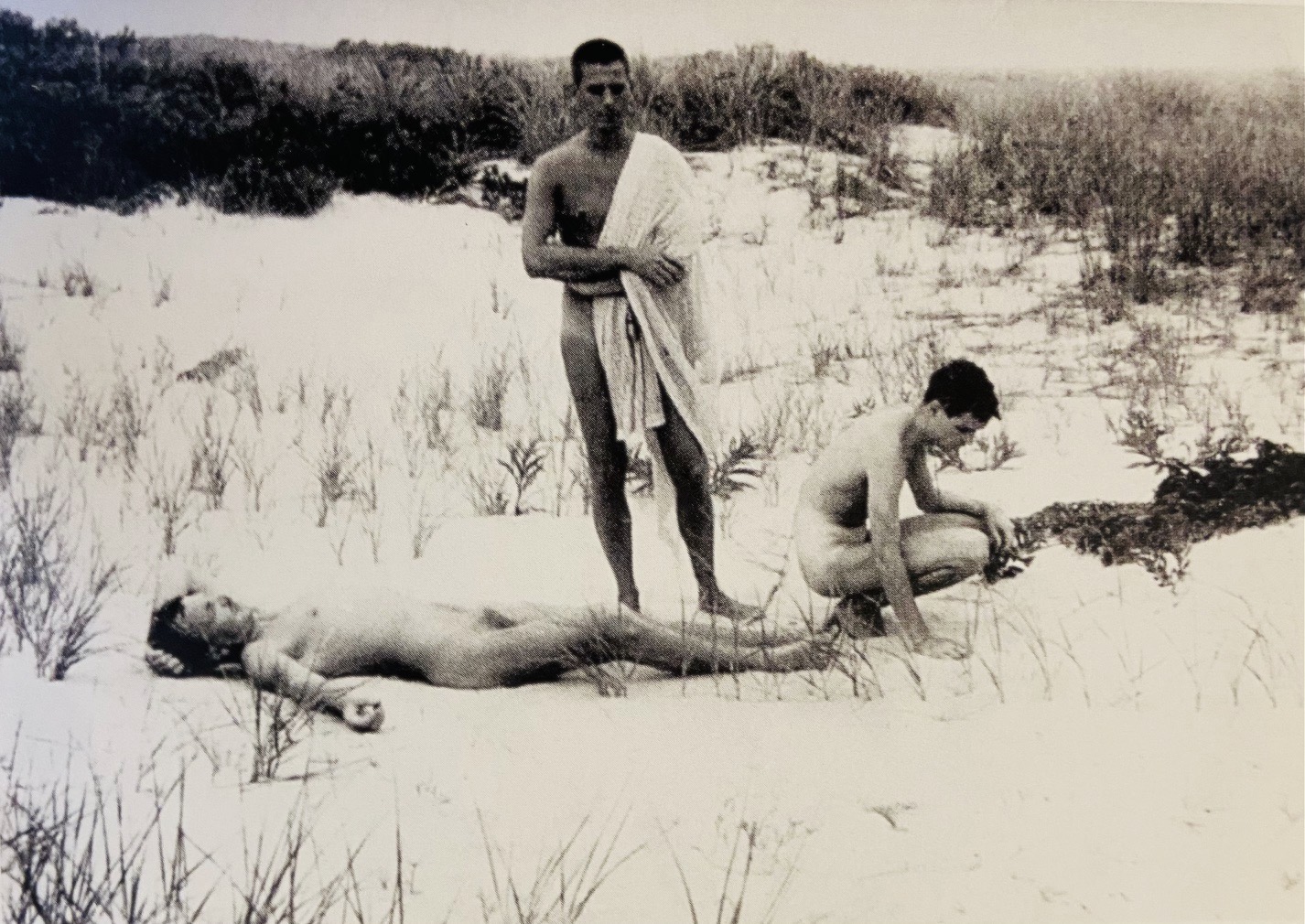
In an earlier blog post on Ted Starkowski, I mentioned that he and Chuck then embarked on what author David Leddick described as “a tempestuous affair.” The couple were photographed together on Fire Island while vacationing with Paul Cadmus, Jared and Margaret French: aka The PaJaMa Collective.

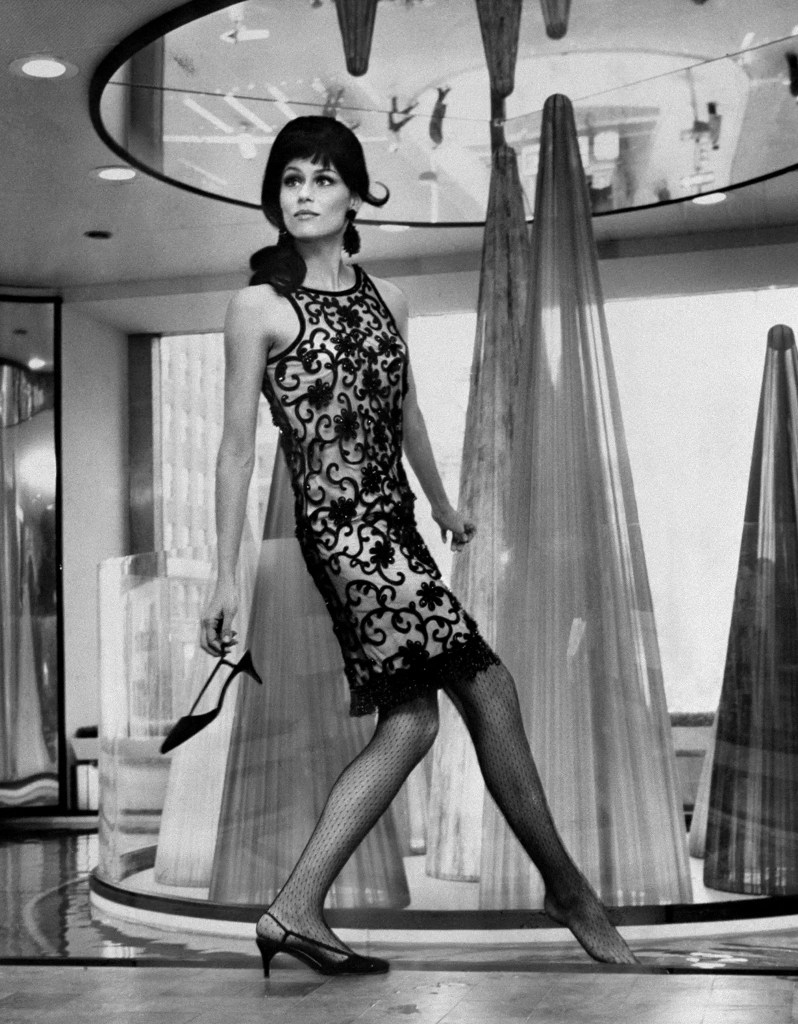
Lauren Hutton modeling a dress by Chuck Howard. (1965)

Act II: Chuck Howard’s career in the fashion industry began to flourish in the late 1950’s when he sketched for several designers, including Bill Blass. He worked for David Crystal before moving on to Anne Klein’s Junior Sophisticates. In 1965, he joined Townley, working his way up to become chief designer and head of business operations. The company was then renamed Chuck Howard, Inc. His design style was noted for its sense of humor with sporty, colorful coats, tunics, pants and jersey shirts.

Around this time, a Parsons student named Donna Karan began working for Howard and he eventually introduced her to Anne Klein.
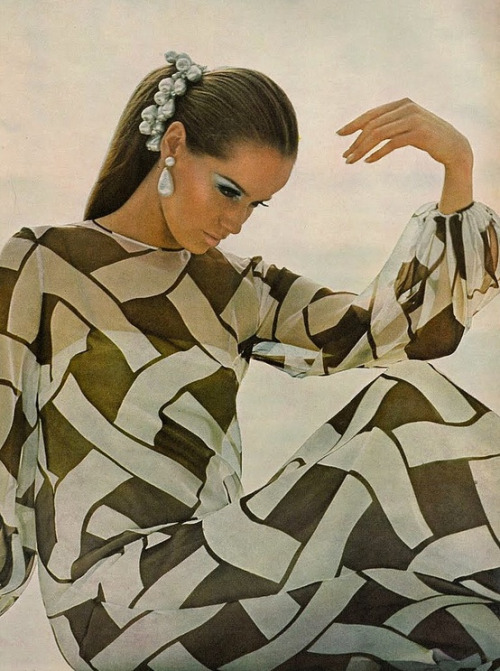
After Klein’s death in 1974, Donna Karan succeeded her as designer for the Anne Klein studio. Chuck Howard then closed his company and became a designer and creative coordinator there, where he was responsible for several of its collections. He departed with fellow designer Peter Wrigley in 1976 to form their own company.

Howard and Wrigley operated their business out of Chuck’s townhouse at 412 W 47th street – formerly the infamous party house of New Yorker editor Harold Ross and Alexander Woolcott.

Chuck Howard (r) with his partner Ed Vaughan in their restaurant (1981)

Act III: In 1980, after his departure from the fashion industry, Chuck Howard opened his self-named restaurant on Restaurant Row. Assisting him in this next chapter was his partner Edward Vaughan. The couple rented a three story townhouse at 355 W 46th St and lived on the third floor above the restaurant.

Soon after opening, twenty-two-year-old Anthony Bourdain took over running the back of the house. He later recounted his time at the restaurant in the “Chef of The Future!” chapter of Kitchen Confidential, with Chuck and Edward referred to as “Tom and Fred.” He writes, “They were genuinely lovely, intelligent, warm-hearted and funny older guys who cooked well, had impeccable taste and were considered (rightly) to be wonderful, charming and entertaining hosts – naturals, it had been said, for the restaurant business, especially a restaurant in the heart of the theater district where they knew and were liked by so many.”

New York Daily News, (1/15/81)

The restaurant was initially successful, although the Daily News review suggested that it wasn’t destined to last. Bourdain further describes the restaurant’s decline, with mounting costs and dwindling guests. “What I learned… was a sad lesson that has served me well in decades since: I learned to recognize failure. I saw, for the first time, how two beloved, funny and popular guys can end up less beloved, not so funny and much less popular after trying to do nothing more than what their friends told them they were good at.” Bourdain moved on to another restaurant, and by the end of 1982, Chuck Howard’s had closed.

The couple retired to the island of Saba in the Netherlands Antilles where they lived for several years before settling in Santa Fe, New Mexico.

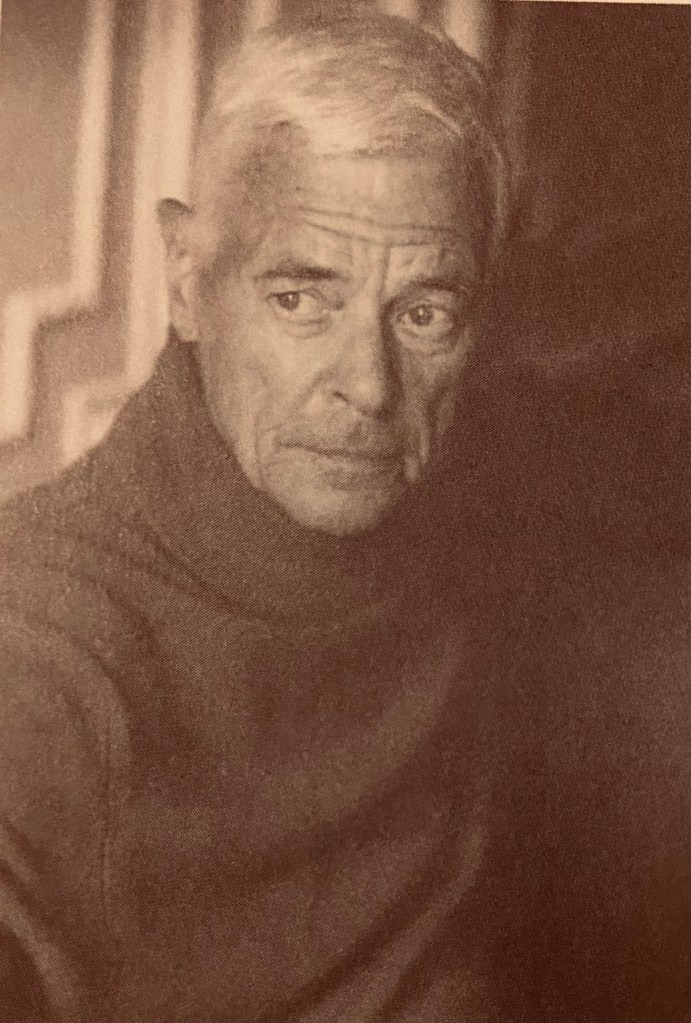
On October 5, 2002, Chuck Howard died of pancreatic cancer at the age of 75 in Albuquerque, New Mexico. He was survived by his long time partner Edward Vaughan.

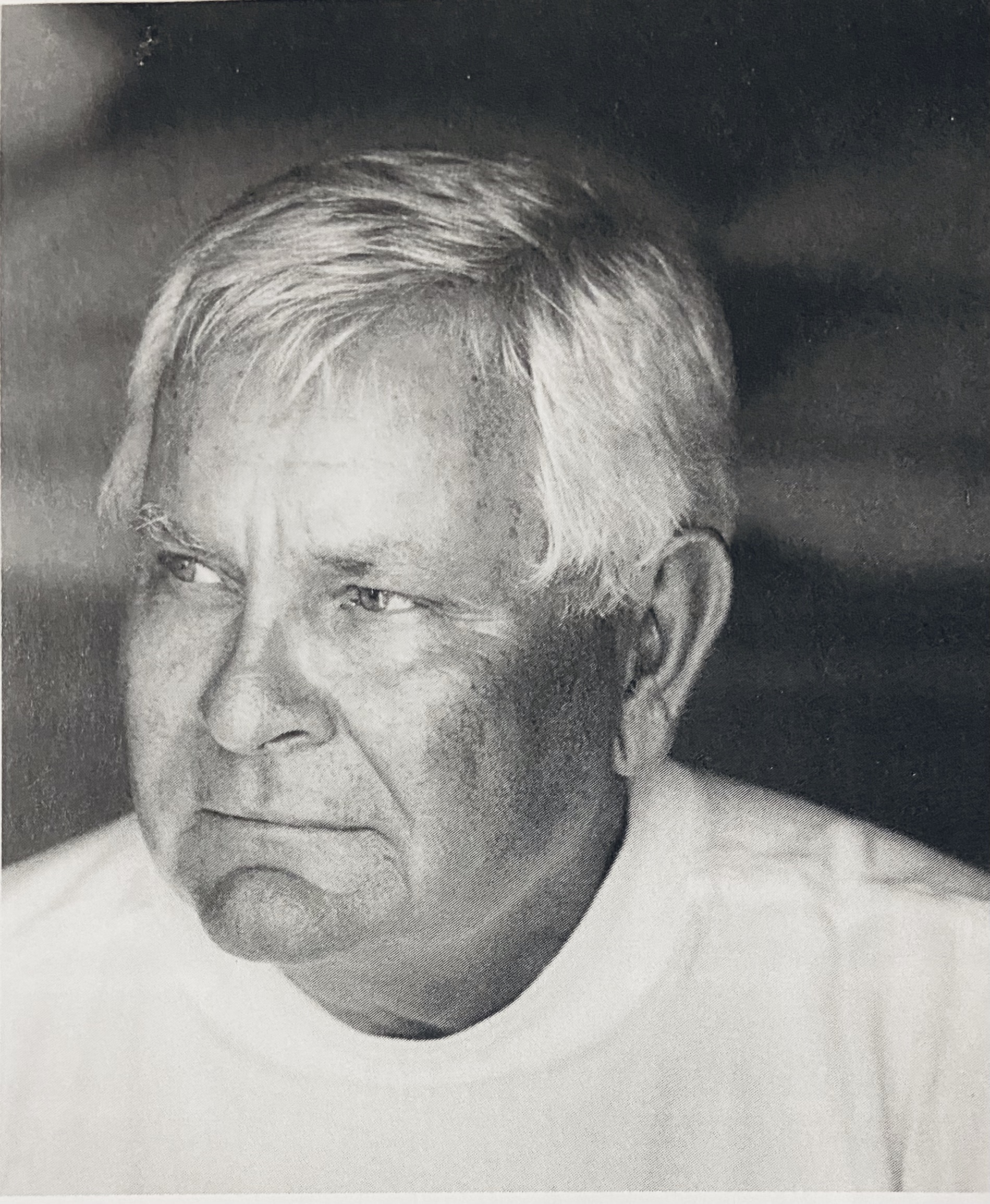
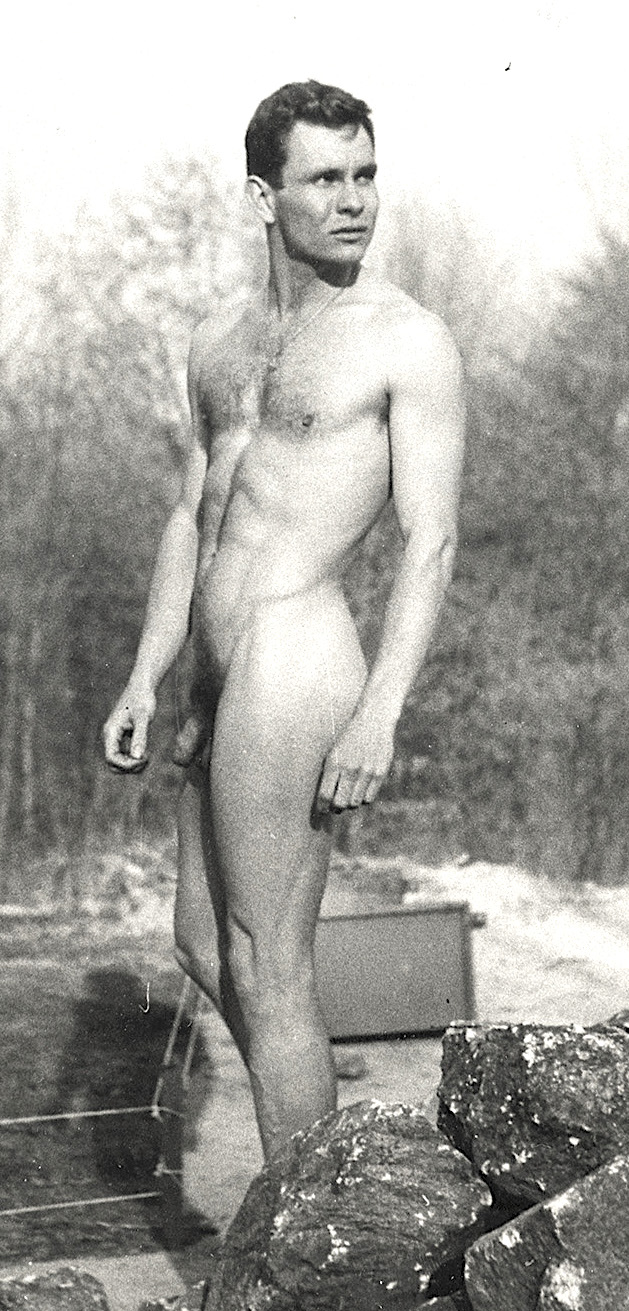
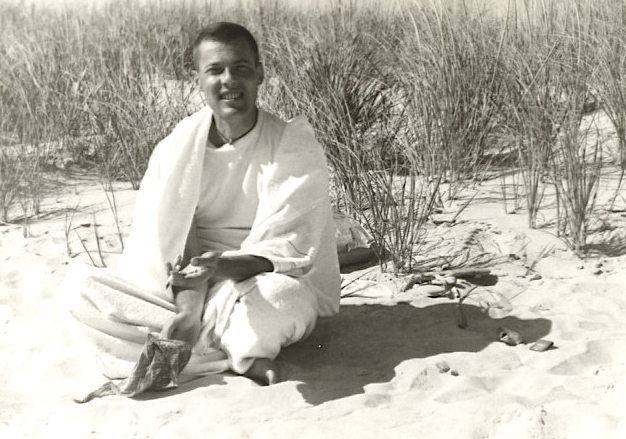
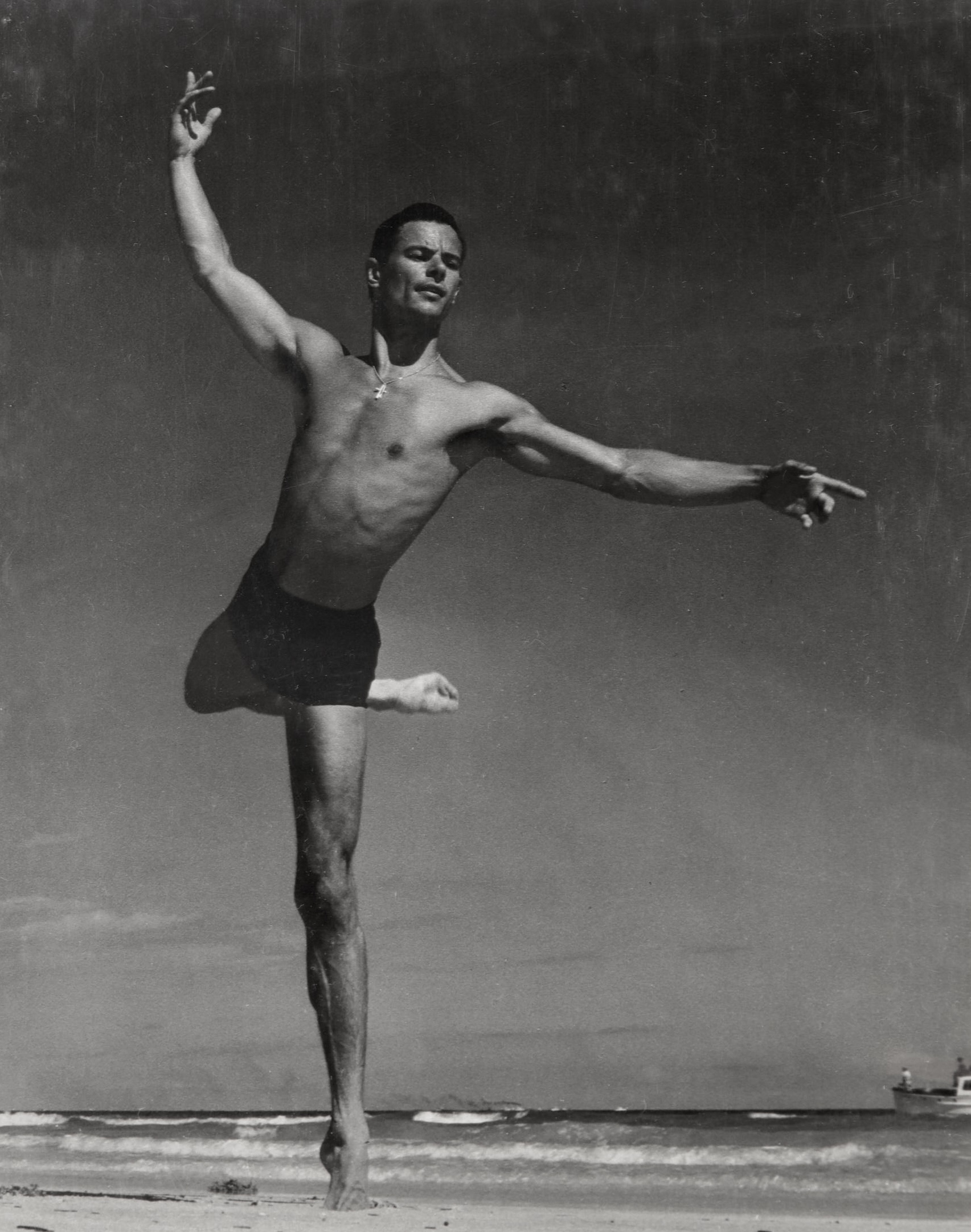
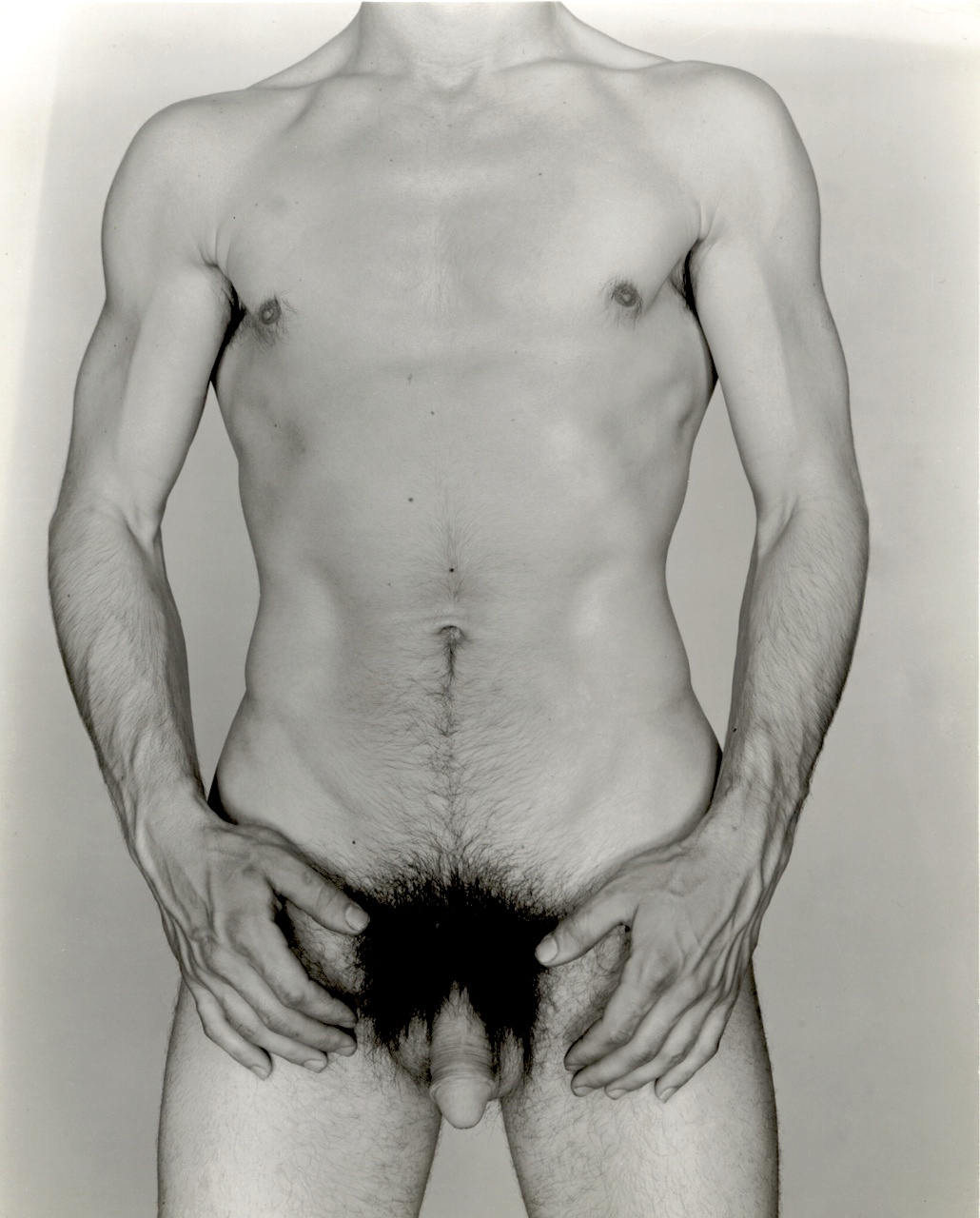
Chuck Howard, ca 1950 / 1997

Chuck Howard’s life had a similar trajectory as fellow Lynes paramour Randy Jack: A WWII military man who became an artists’ muse before moving on to the world of fashion and finally ending up as a restaurateur. In their twilight years, both also enjoyed a bit of recognition for the work they inspired in some of the great American artists of the 20th century.

See also:
Artist’s Muse: Donald Windham & Sandy Campbell
Artist’s Muse: José “Pete” Martinez
Artist’s Muse: Randy Jack
Artist’s Muse: Wilbur Pippin
Artist’s Muse: Ted Starkowski
Artist’s Muse: The Mystery Model
Fire Island Muses of George Platt Lynes & The PaJaMa Collective
Revisiting George Platt Lynes’ Fire Island Muses
Fire Island PaJaMa Party
Buddy & Johnny: A Historic Photo Shoot
Kenn Duncan After Dark
George Platt Lynes: In Touch Magazine (1982)

Fire Island PaJaMa Party

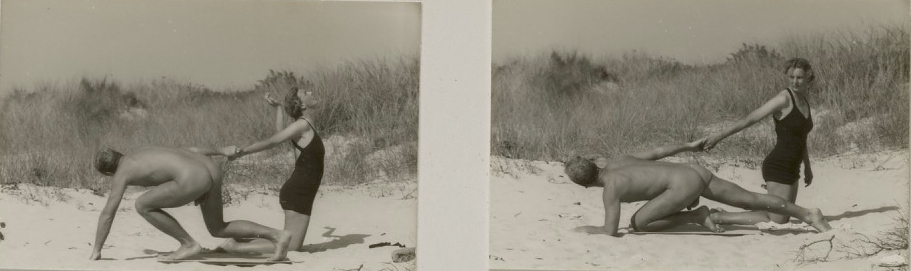
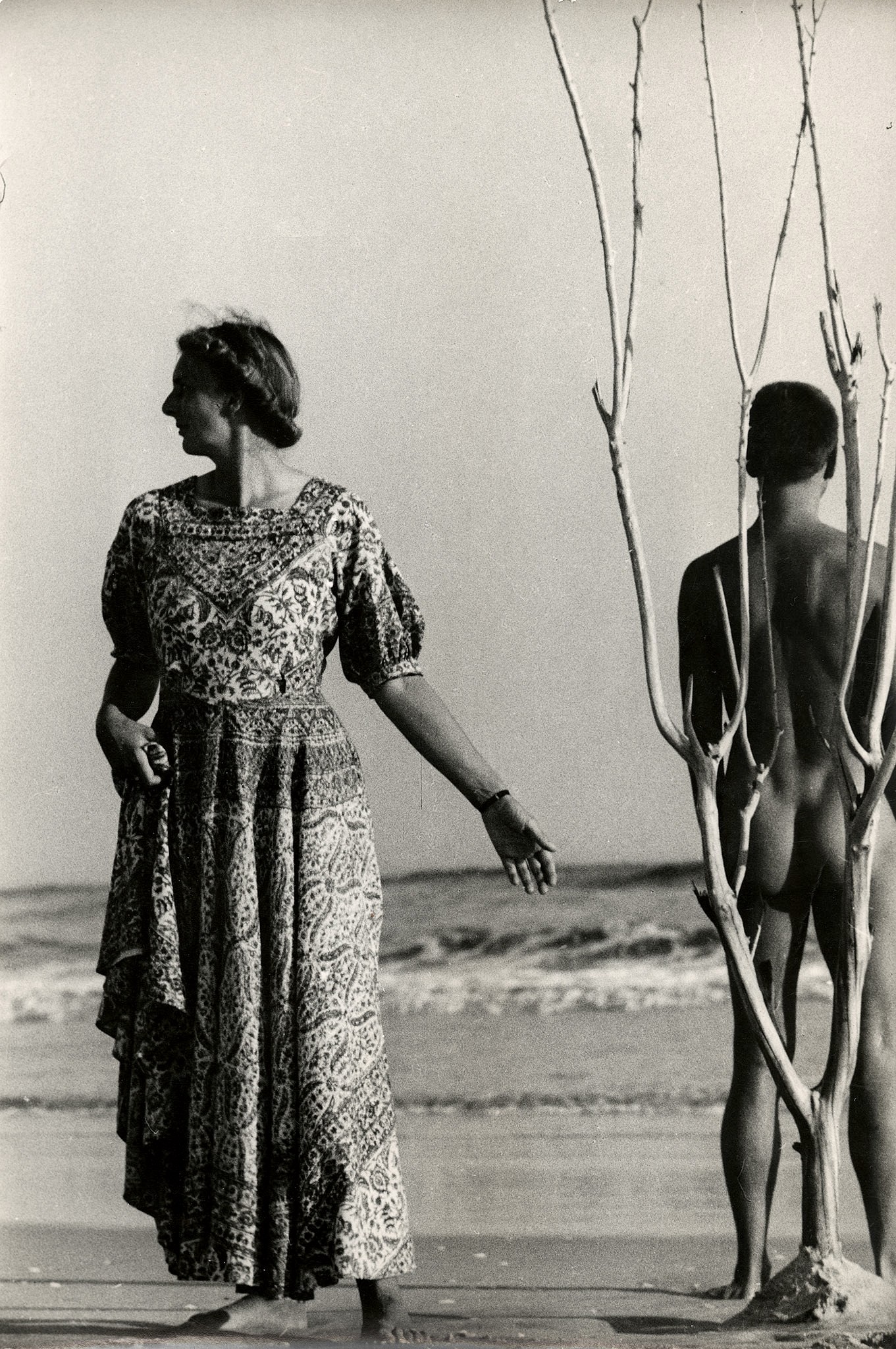
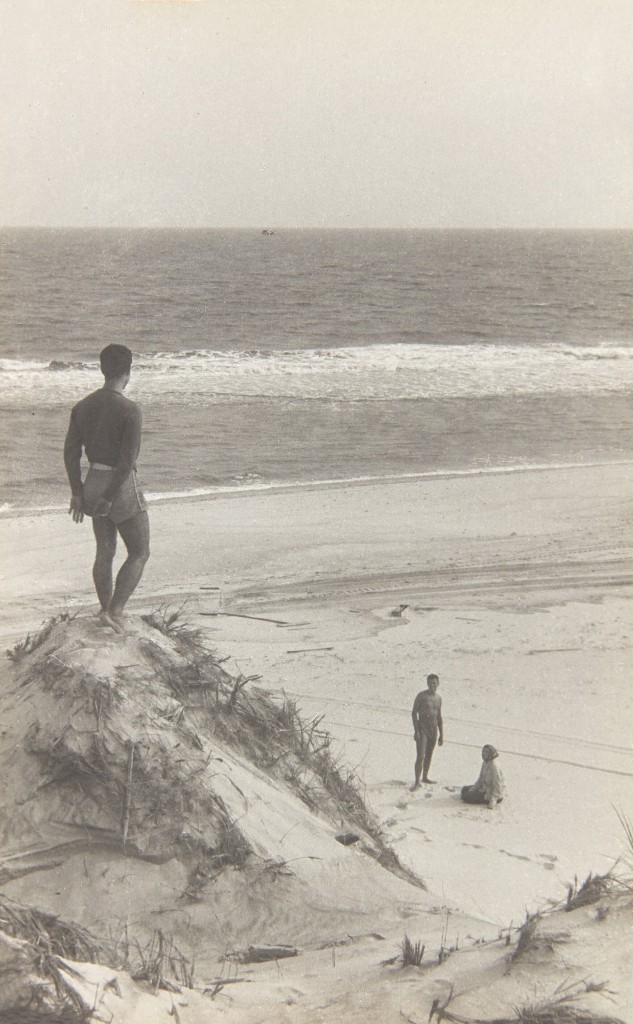
During vacations from the 1930’s through the mid-1950’s, artists Paul Cadmus, Jared French, and his wife Margaret Hoening French photographed each other on the beaches of Fire Island and later Cape Cod. Usually nude or donning simple costumes, they would also use found objects as props to create stark, surreal and/or erotic images. They passed Margaret’s Leica camera around, taking turns as subject and auteur. This collaborative authorship was reflected in the umbrella name Paul Cadmus later chose for this work, utilizing the first two letters of their first names: PaJaMa.

Cadmus explained, “After we’d been working most of the day, we’d go out late afternoons and take photographs when the light was best. They were just playthings. We would hand out these little photographs when we went to dinner parties, like playing cards.”

The dynamic was complicated: Paul and Jared were lovers – a relationship that continued during Jared and Margaret’s marriage. All three lived and worked in a townhouse at 5 St. Lukes Place in Greenwich Village.

Paul Cadmus & Jared French, Fire Island, PaJaMa (1941)

A 2015 New York Times review of a PaJaMa exhibition noted that their photos “breathed eroticism.” While some of the hundreds of photos are masterpieces of magical realism, others appear to be figure studies for their painting. And then there are simple snapshots of nude men frolicking on the beach, enjoying the sun and surf.

Right: Jared French on Fire Island (1940) Left: Paul Cadmus’ etching “Youth With Kite”, 1941

Jared French and his considerable wares are the most frequent subject of the photographs, with entire rolls of film devoted to his nude poses and posturing. Cadmus and Margaret are slightly more demure although we do not know who was giving direction from behind the camera at any given time.

These three artists were joined by various friends and lovers through the years, fellow artists and writers that were part of their New York social circle.

Dancer/Model José “Pete” Martinez appears in PaJaMa photos of the late 1930’s with Paul Cadmus

1938 PaJaMa photos of writer Glenway Wescott sometimes appear online mislabled as Paul Cadmus or Ted Starkowski.

Writer Donald Windham (with Cadmus & French), ca 1940

Photographer George Platt Lynes was a frequent guest with his own camera.

Artist Bernard Perlin captured by the PaJaMa lens on Fire Island (1939)

Jared French in Saltaire after the devastating hurricane of 1938.

West of Saltaire, the Fire Island Lighthouse served as a frequent backdrop.

Jensen Yow, Bill Harris & Jack Fontan, ca. 1950

Alexander Jensen Yow recently recalled the circle of artists, as well as his participation in PaJaMa photos of the early 1950’s. “Paul posed us and took the pictures. I was never out there with Jerry (Jared). There were plenty of personality conflicts all scattered around with these people, but I never knew what they were or anything… Jerry was always nice to me though. But his and Margaret’s was a strange relationship… She was crazy about Jerry but she was always in the background, you know. Always there. Jerry did what he wanted to do, and she tagged after him. I was so green when I met these people that I didn’t know how to act…. I tried to be discreet but it wasn’t easy.” (NOTE: Jensen Yow died at age 95 in September of 2022)

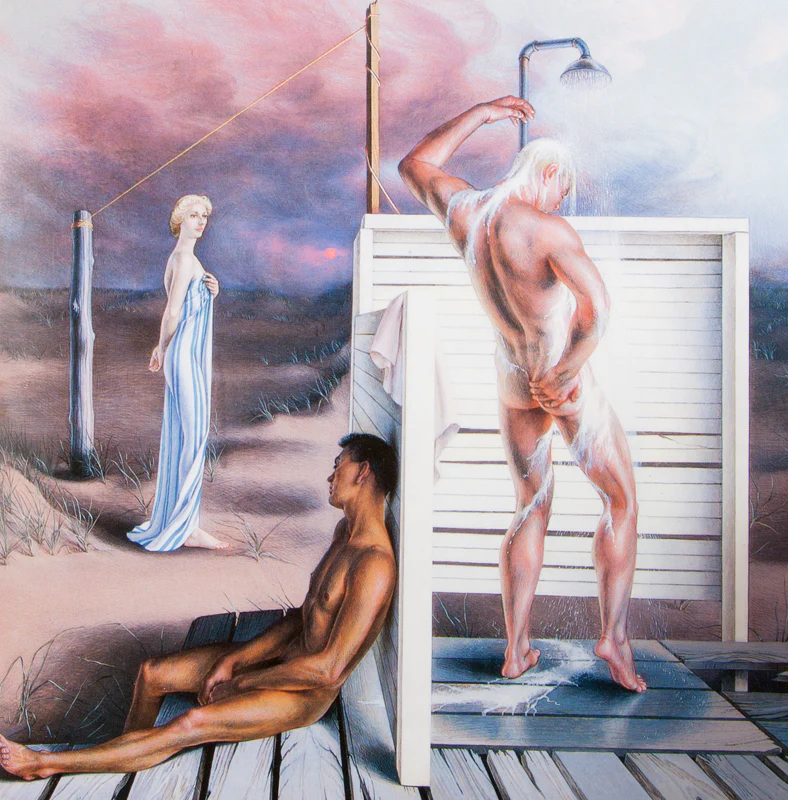
Paul Cadmus, “The Shower”, 1943

Margaret French, “The Moon by Day”, 1939

As with George Platt Lynes’ male nude photographs, the PaJaMa collection did not receive much notice or recognition until the 1990’s. They are now frequently exhibited in galleries and selections are a part of the MOMA collection.

Donald Windham, Saltaire, FI (1942)

In George Parlett’s 2022 book Fire Island, he writes of a PaJaMa photo of Donald Windham:

It’s composition seems to show us how remembering is an act, not a given. There Windham is, dragging the large net, collecting and carrying with him the various and unknown sediments of the shore while offering his gaze wholly to his beholder. There is a levity there, in the resemblance of the net to a gown or a veil, its slightly campy or drag quality, but also a quiet note of death, in how this black material evokes a shroud, or mourning garb. Fire Island has long been a place where such contradictions are brought together; youth and death, glamour and grit. This interplay can be felt, the image tells us, in the landscape of the place.

PaJaMa, FI, ca. 1944

See Also:
Provincetown PaJaMa Party
Fire Island Muses of George Platt Lynes & The PaJaMa Collective
Revisiting George Platt Lynes’ Fire Island Muses
Artist’s Muse: Wilbur Pippin
Artist’s Muse: Donald Windham & Sandy Campbell
Artist’s Muse: José “Pete” Martinez
Artist’s Muse: The Mystery Model
Artist’s Muse: Chuck Howard
Artist’s Muse: Ted Starkowski
Artist’s Muse: Randy Jack
Buddy & Johnny: A Historic Photo Shoot
George Platt Lynes: In Touch Magazine (1982)

80 Years Ago: The Men of St. Mary’s Pre-Flight School

Celebrating the jockstrap-clad WWII men of St. Mary's Pre-Flight training school, which began 80 years ago this month.
St. Mary’s College during WWII

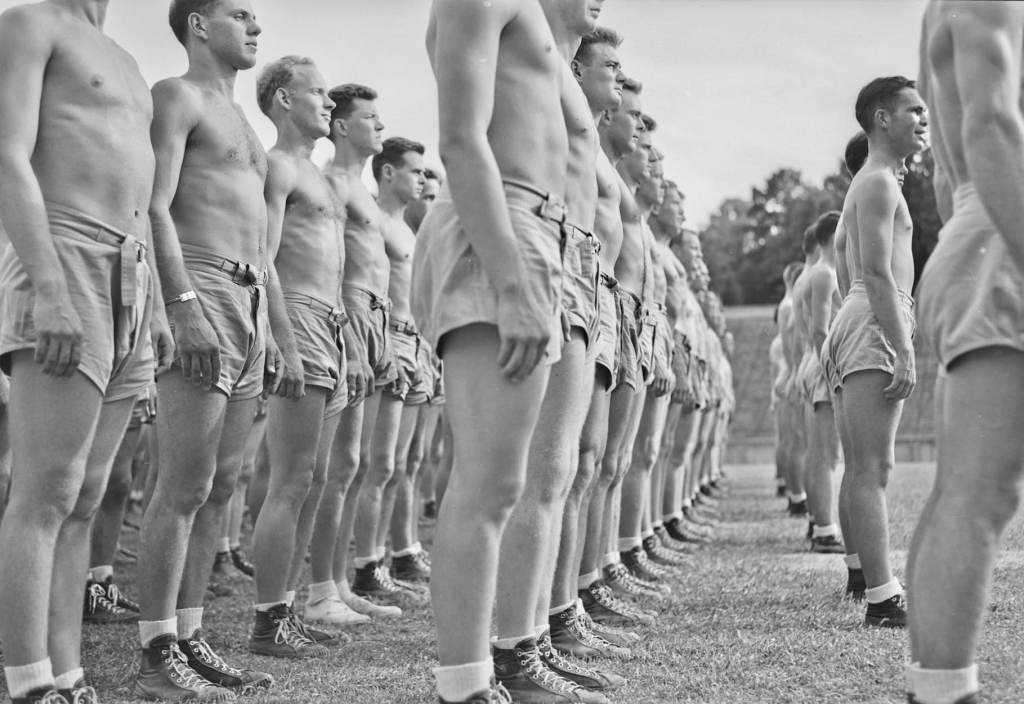
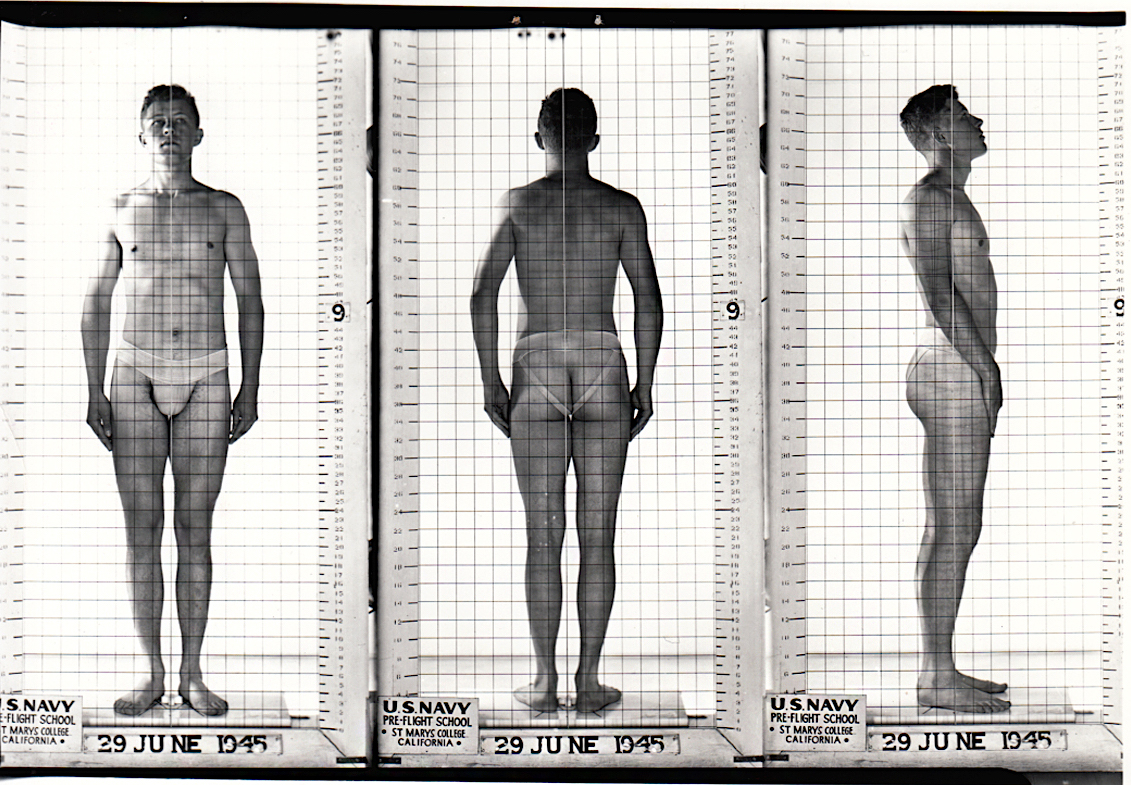
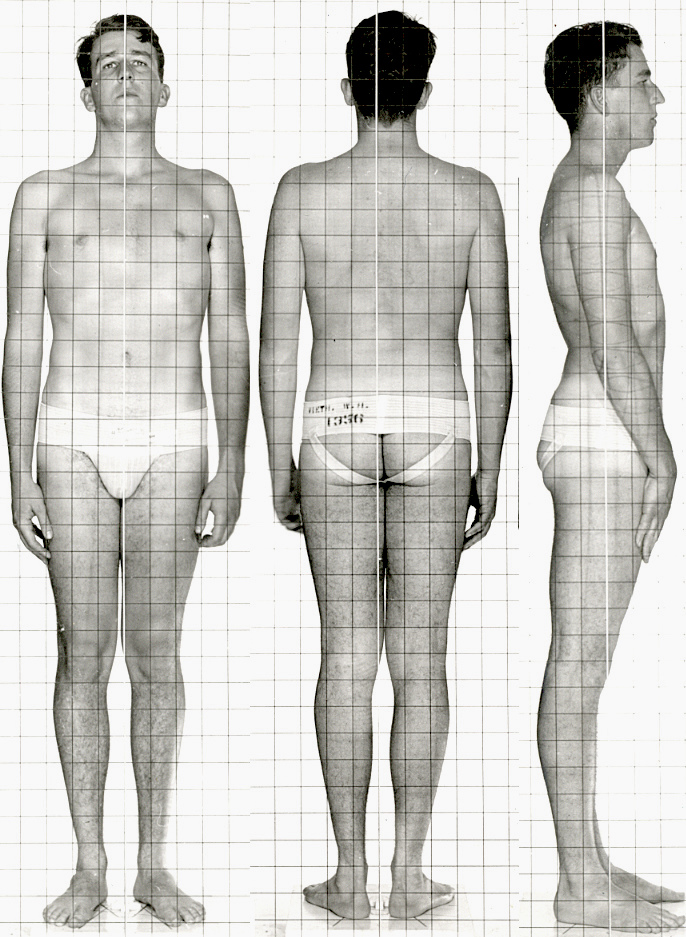
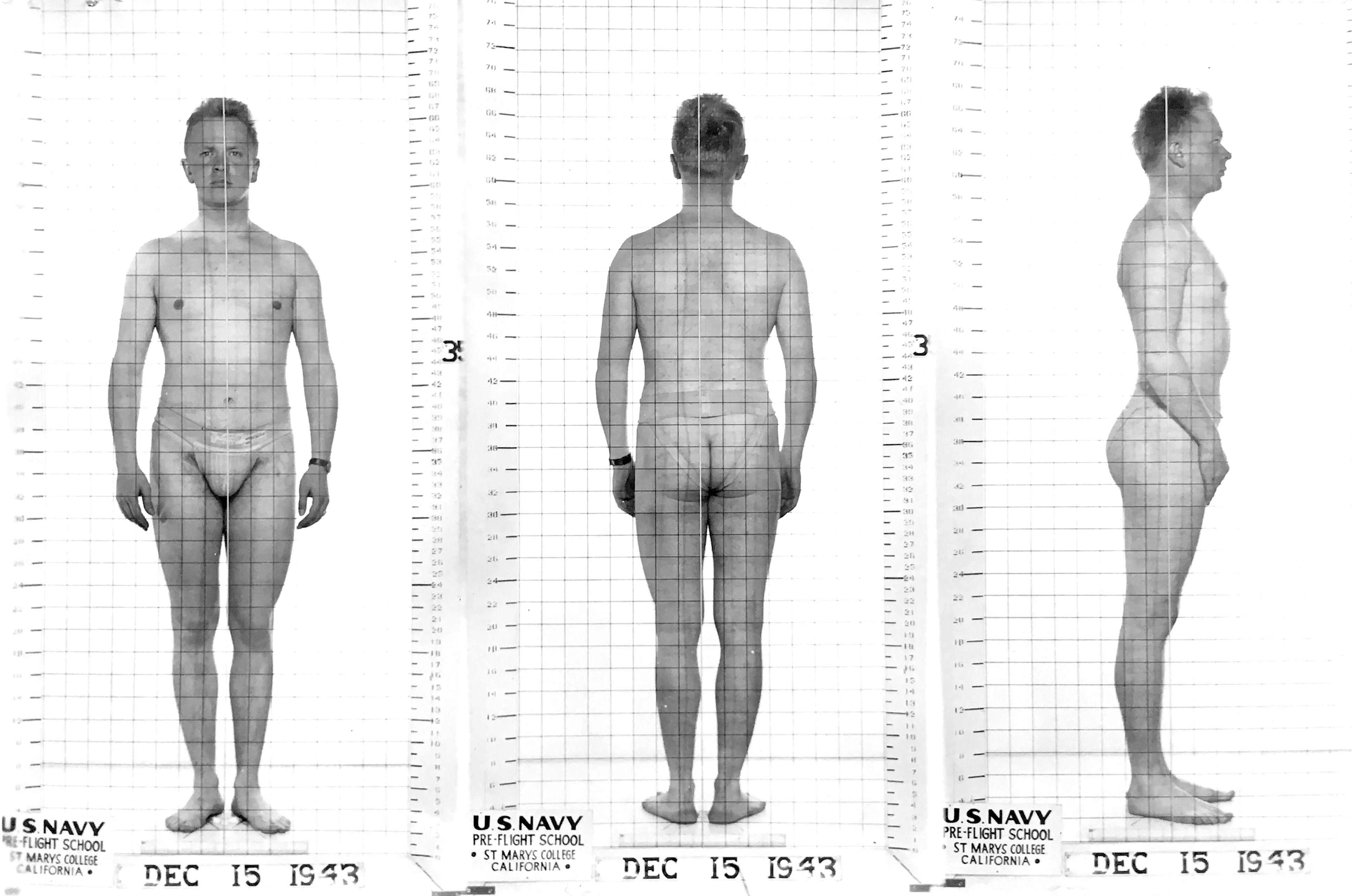
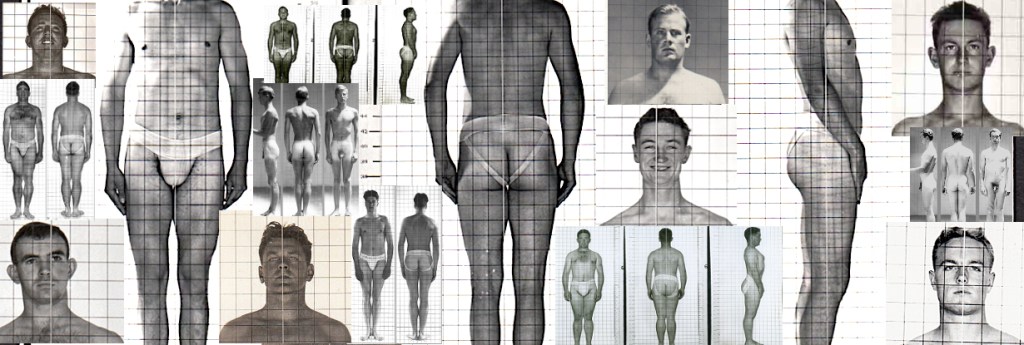
June, 2022 marked 80 years since the start of the U.S. Navy pre-flight training program that took place at St. Mary’s College. Images of naked or jockstrap-clad cadets were taken during training at the school in Moraga, California when it was requisitioned for the war effort from 1942-1946. You can see more of these photos in our previous posts:

Men of St.Mary’s Pre-Flight School
Boys of Summer: St. Mary’s Pre-Flight School
Christmas At St. Mary’s Pre-Flight School, Pt. I
Christmas At St. Mary’s Pre-Flight School, Pt. II
Christmas At St. Mary’s Pre-Flisht School, Pt. III
More Men of St. Mary’s Pre-Flight School
1944: The Men of St. Mary’s Pre-Flight School

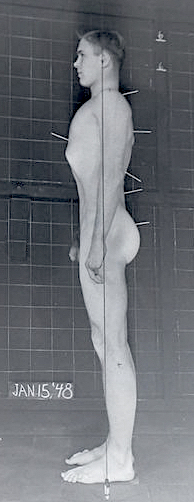
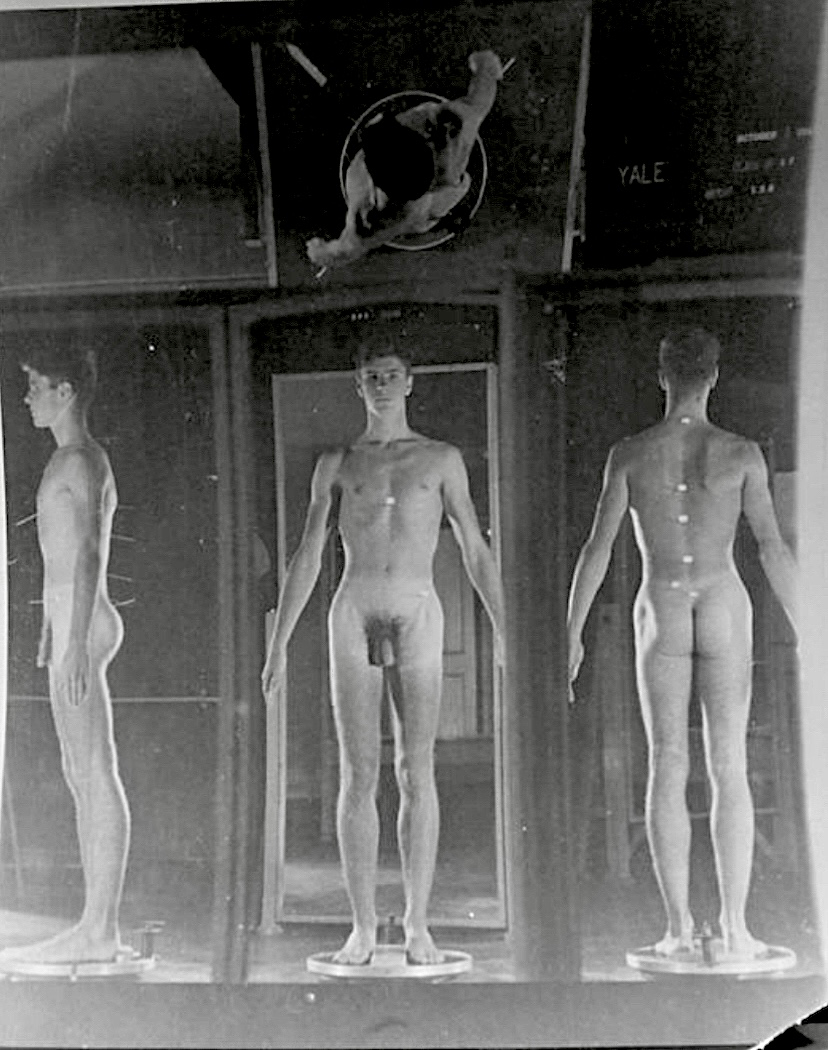
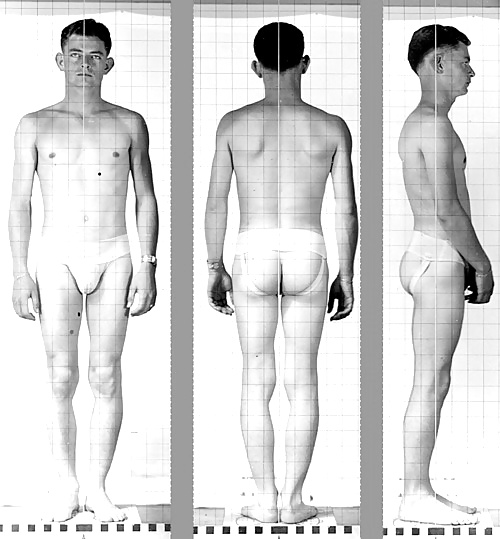
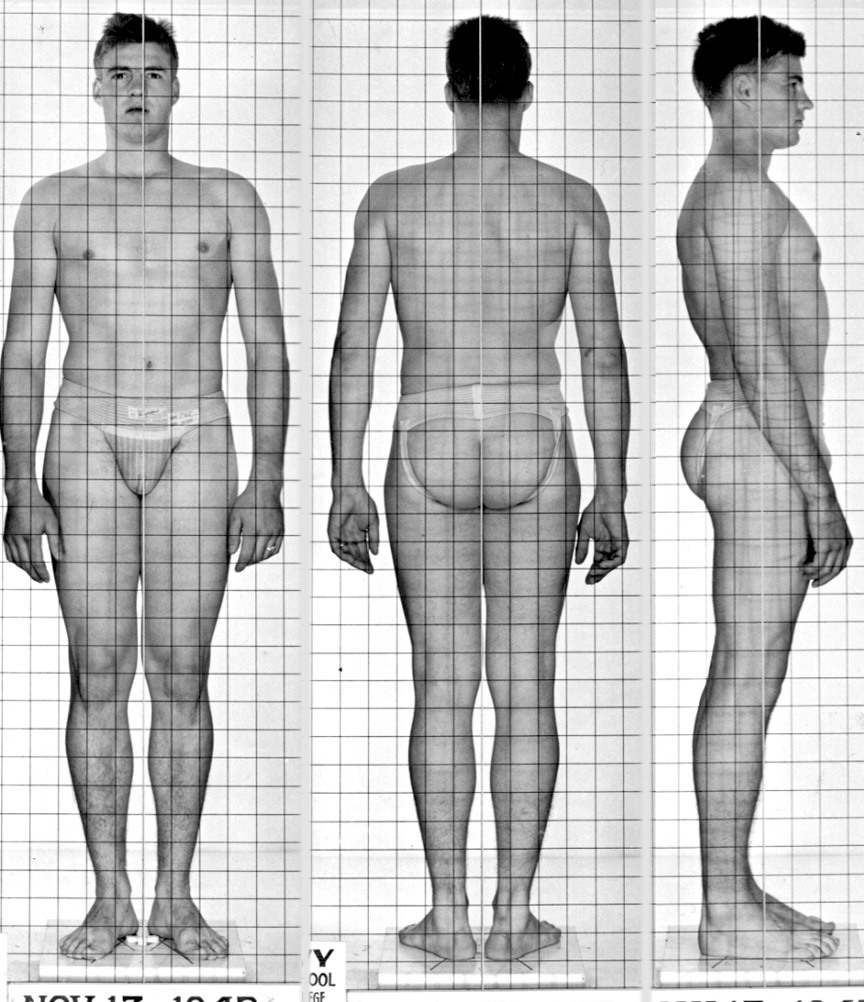
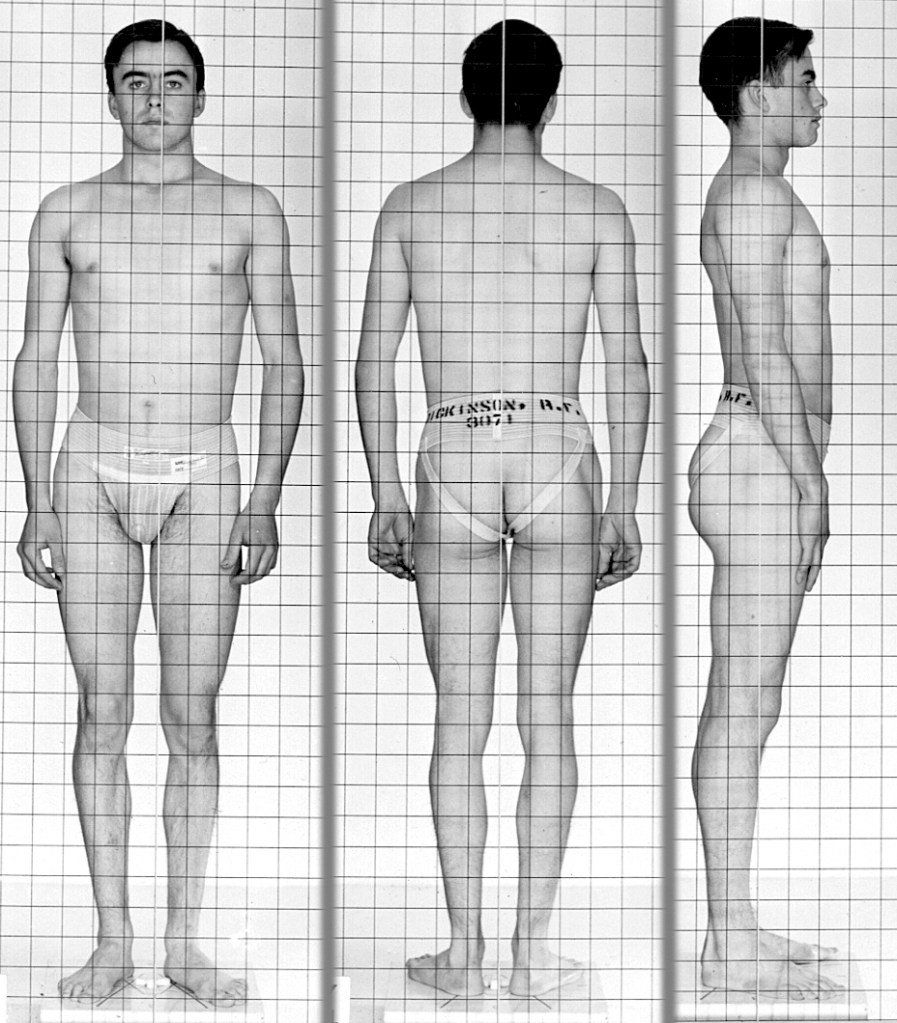
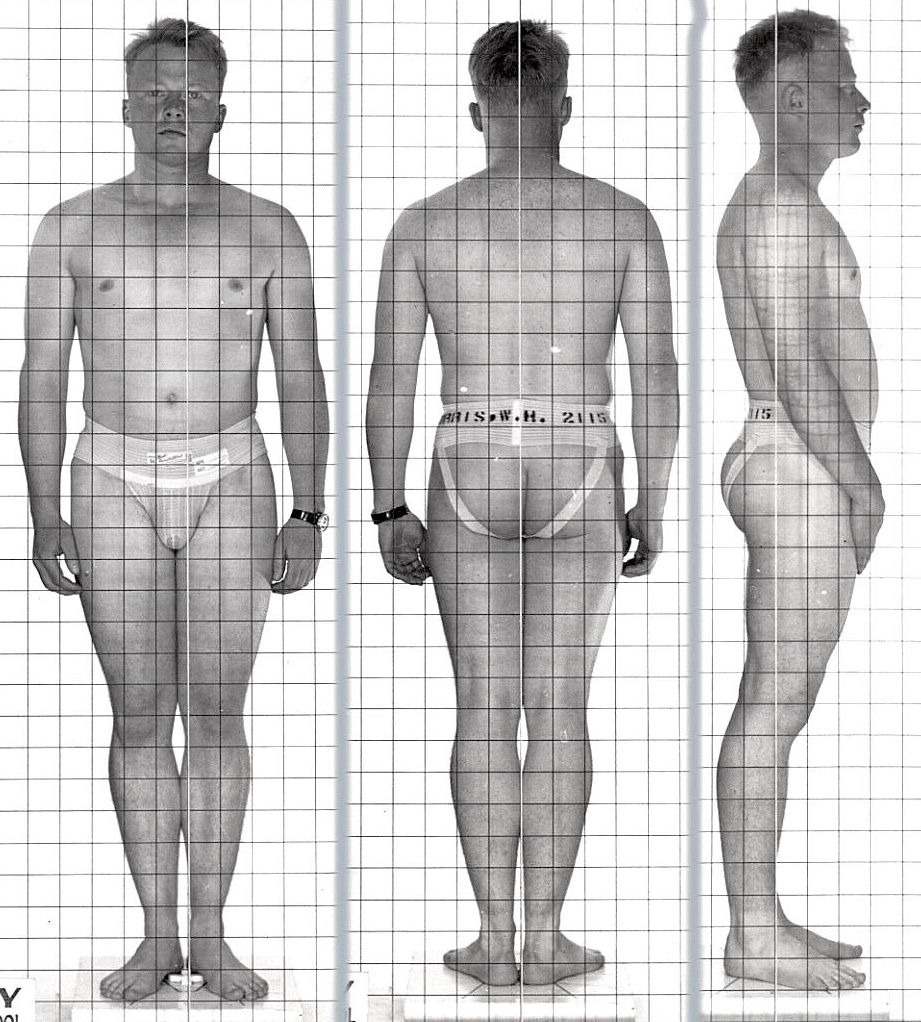
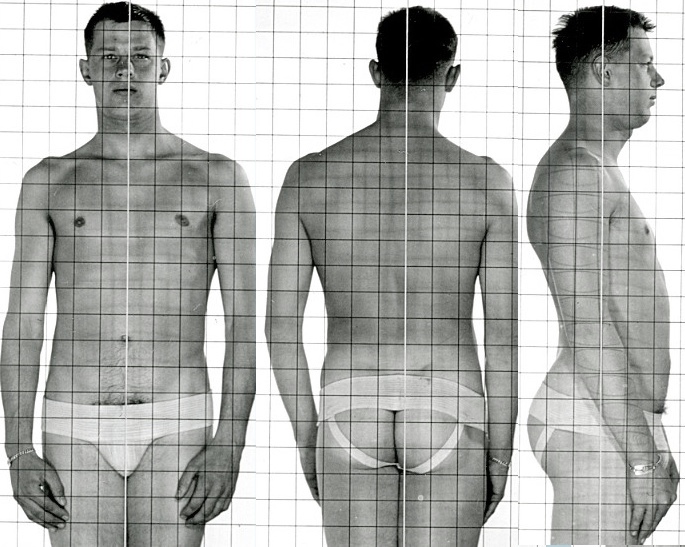
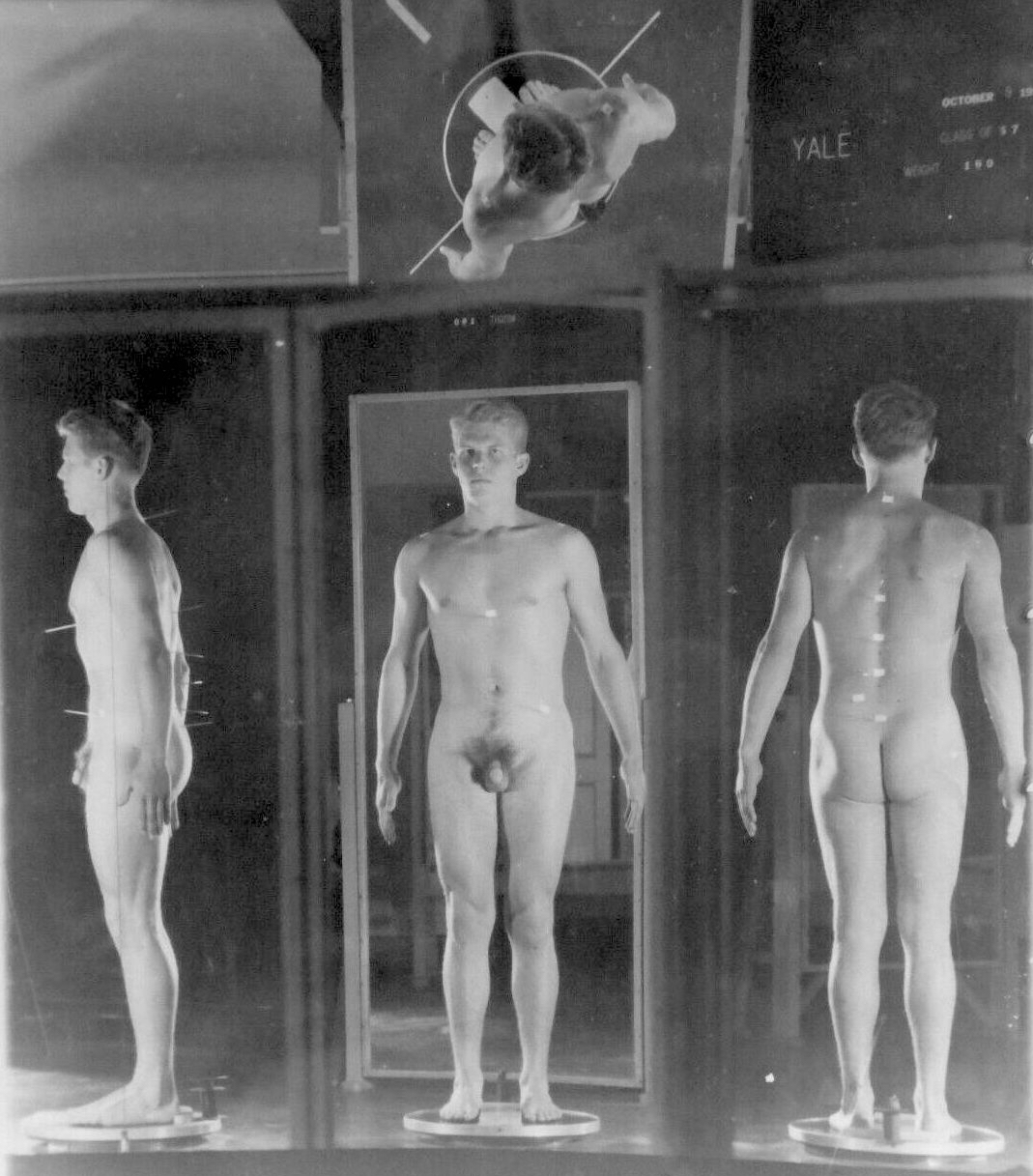
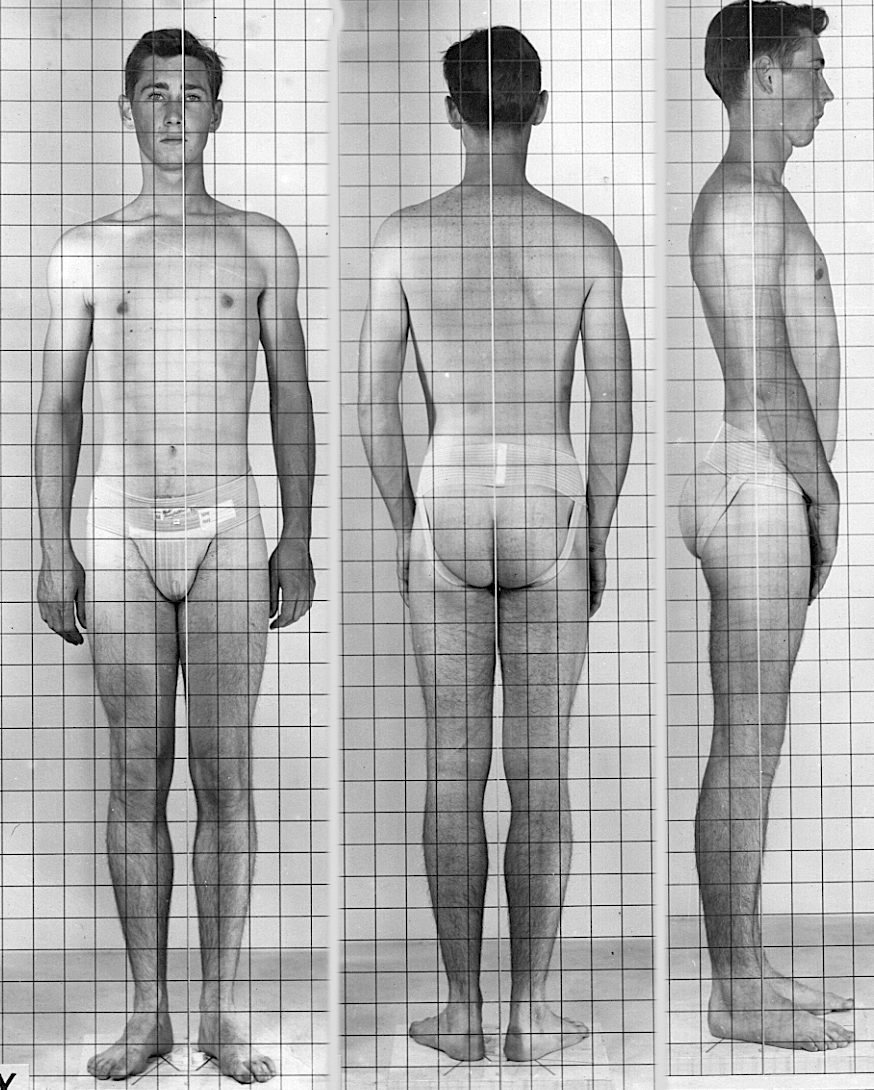
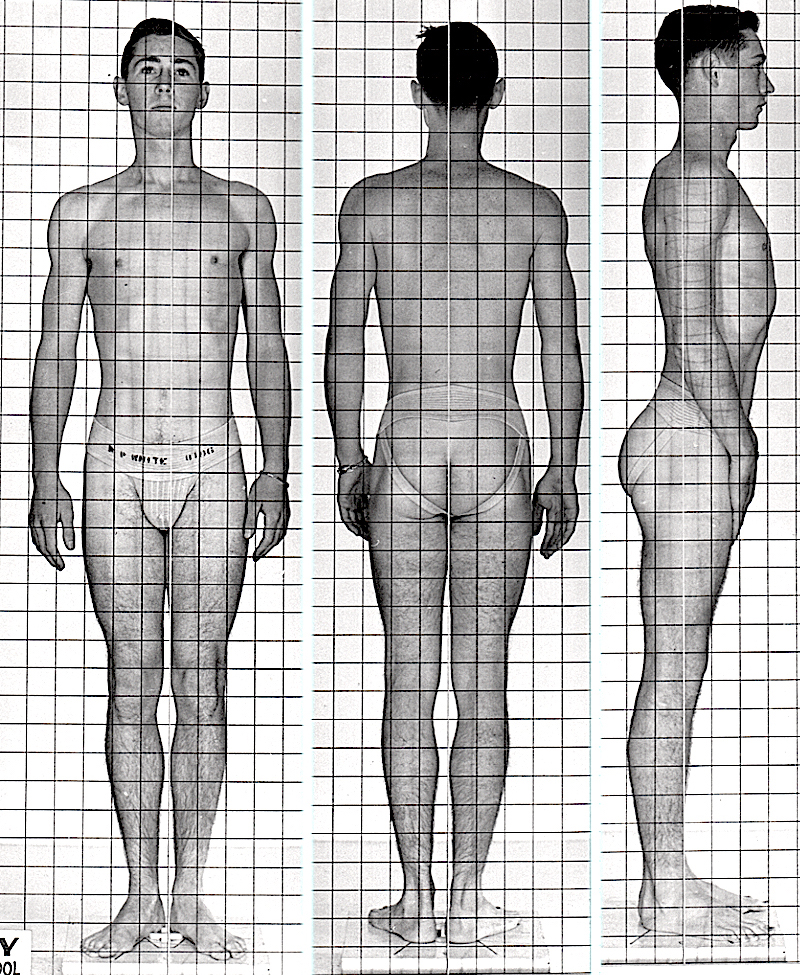
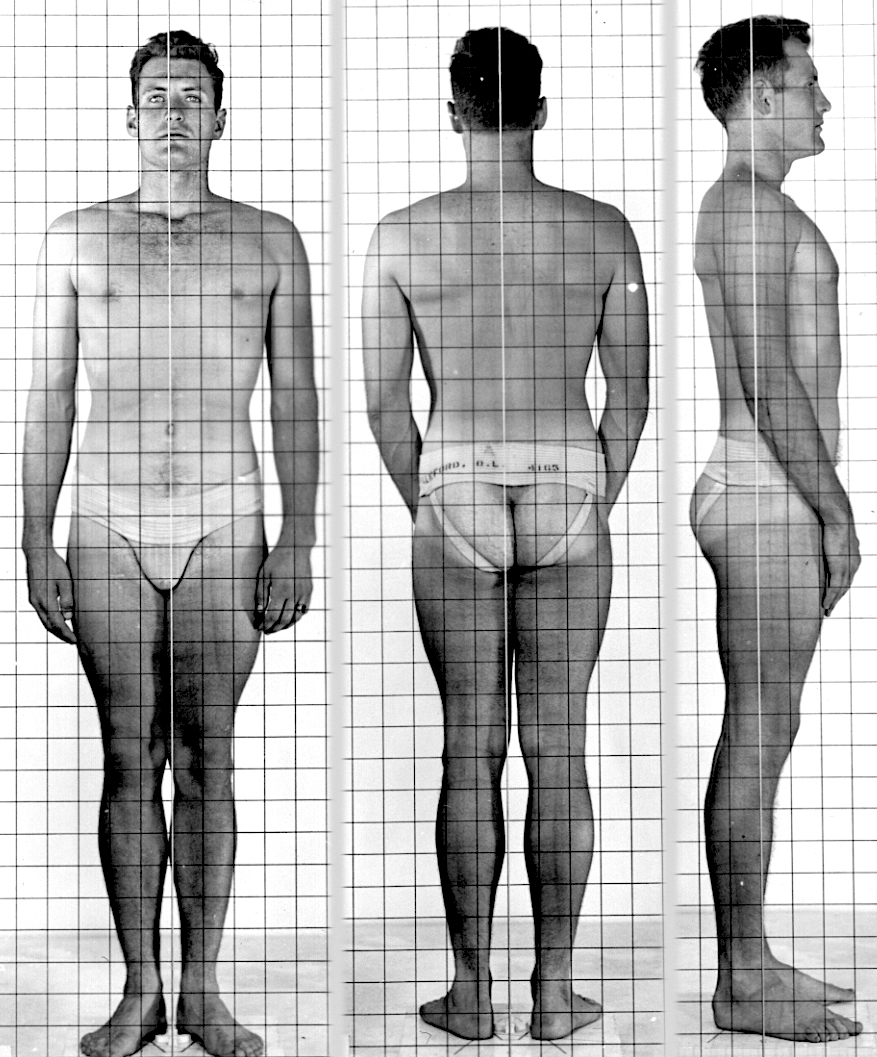
Unfortunately, there is still some confusion when these pictures surface, as they are sometimes misidentified as Ivy League posture photos. For comparison, here are two of the different Yale posture photos:

The single profile pose was used from the late 1930’s until 1952. It was then replaced with a mirror/ triptych setup, which has “Yale” visible in the background.

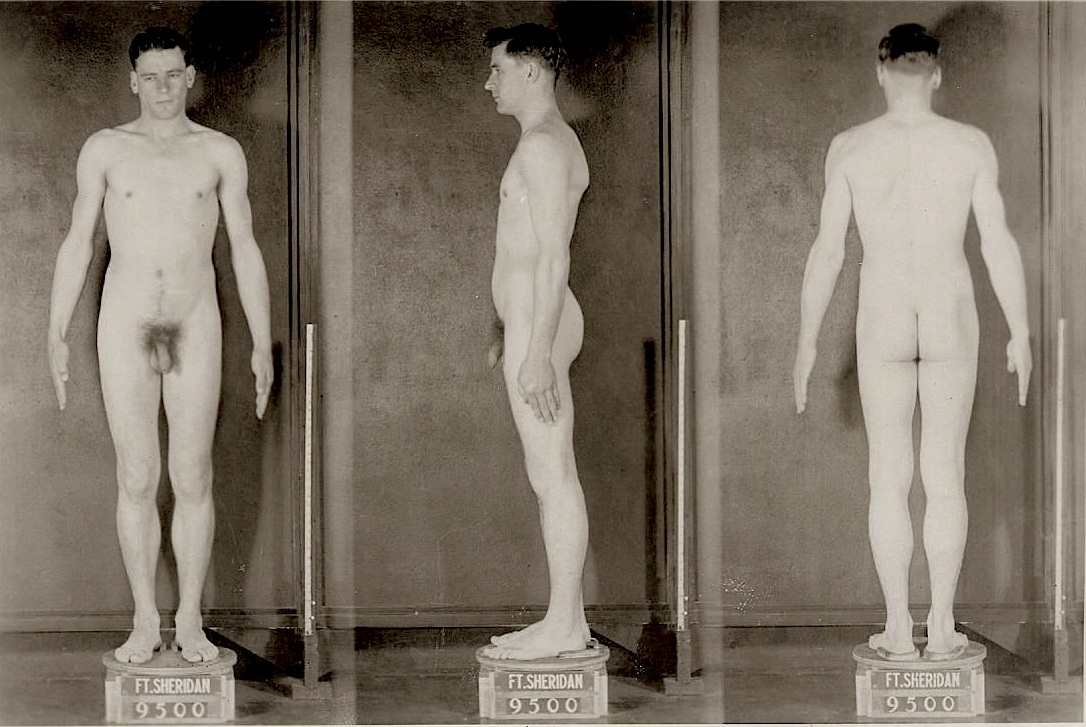
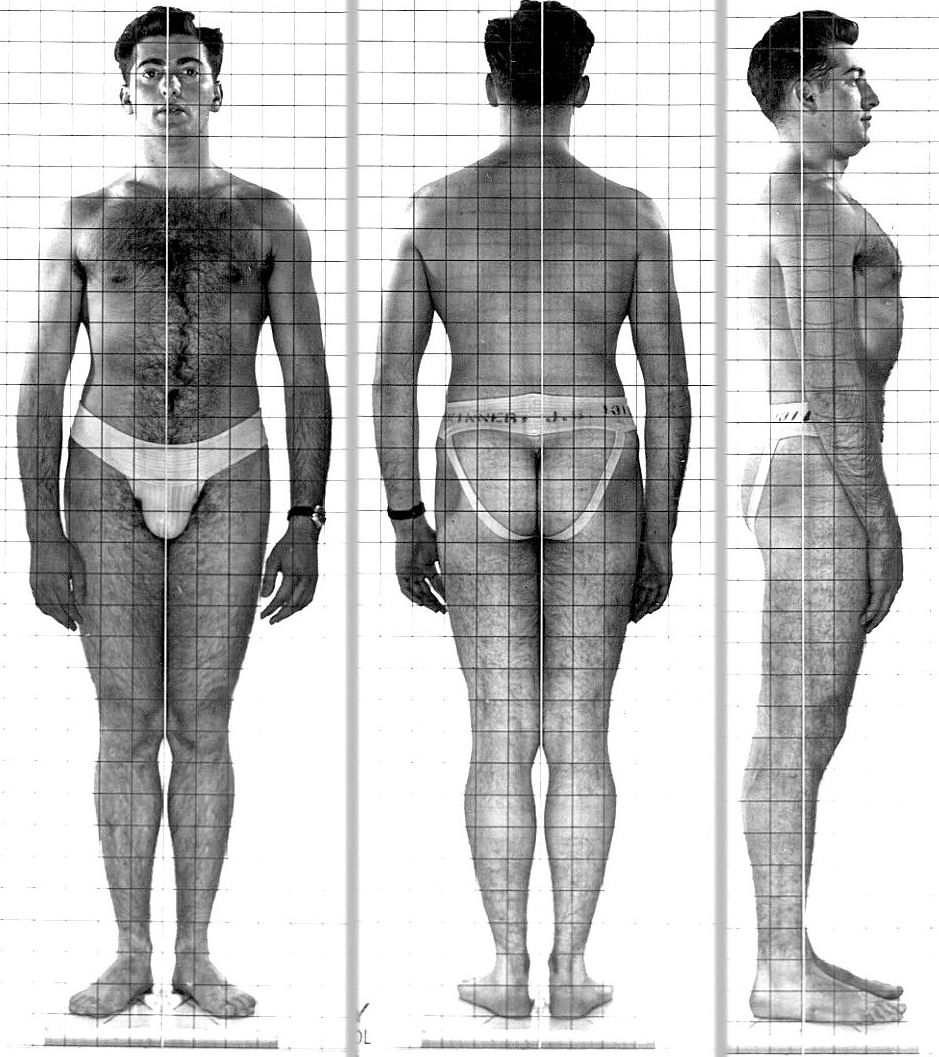
Prior to World War II, there were other physical fitness photos taken at the army base in Ft. Sheridan, Illinois. These fully nude pics do not pop up on the internet as often as those from St. Mary’s Pre-flight school. As shown above, both sets of photos contain the location identified within the photo.

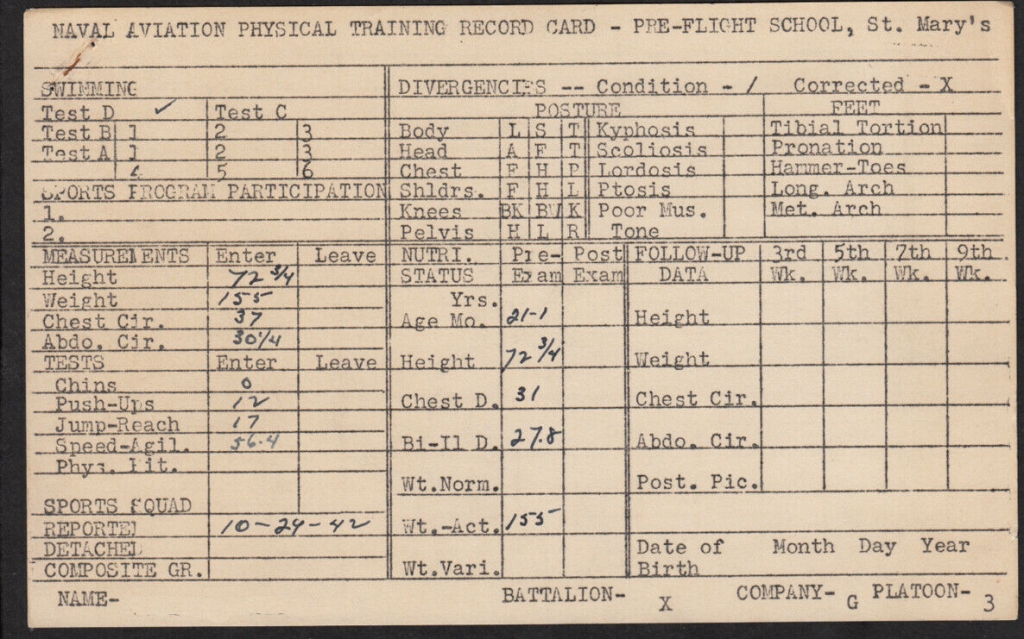
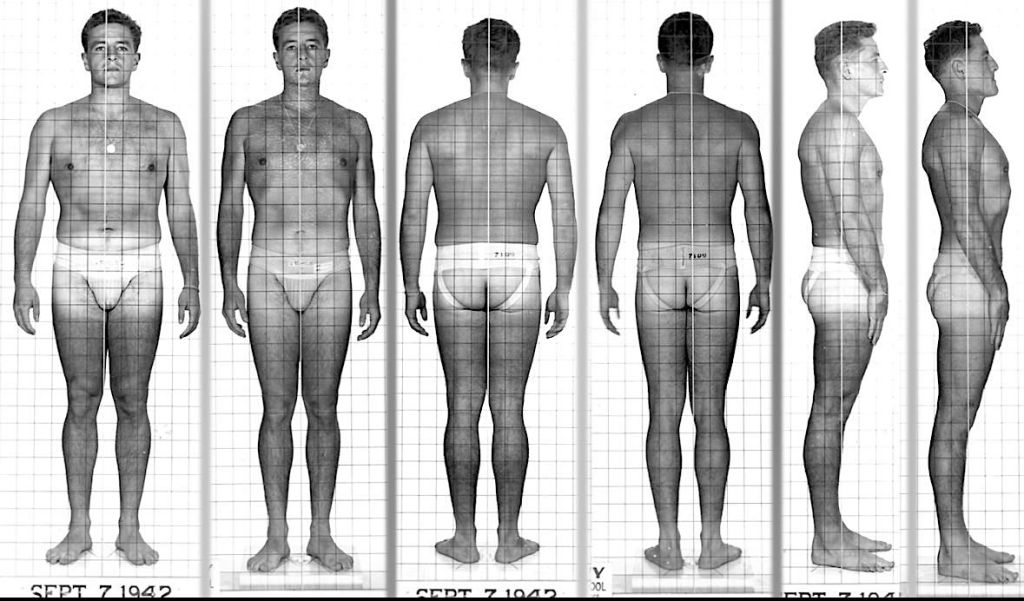
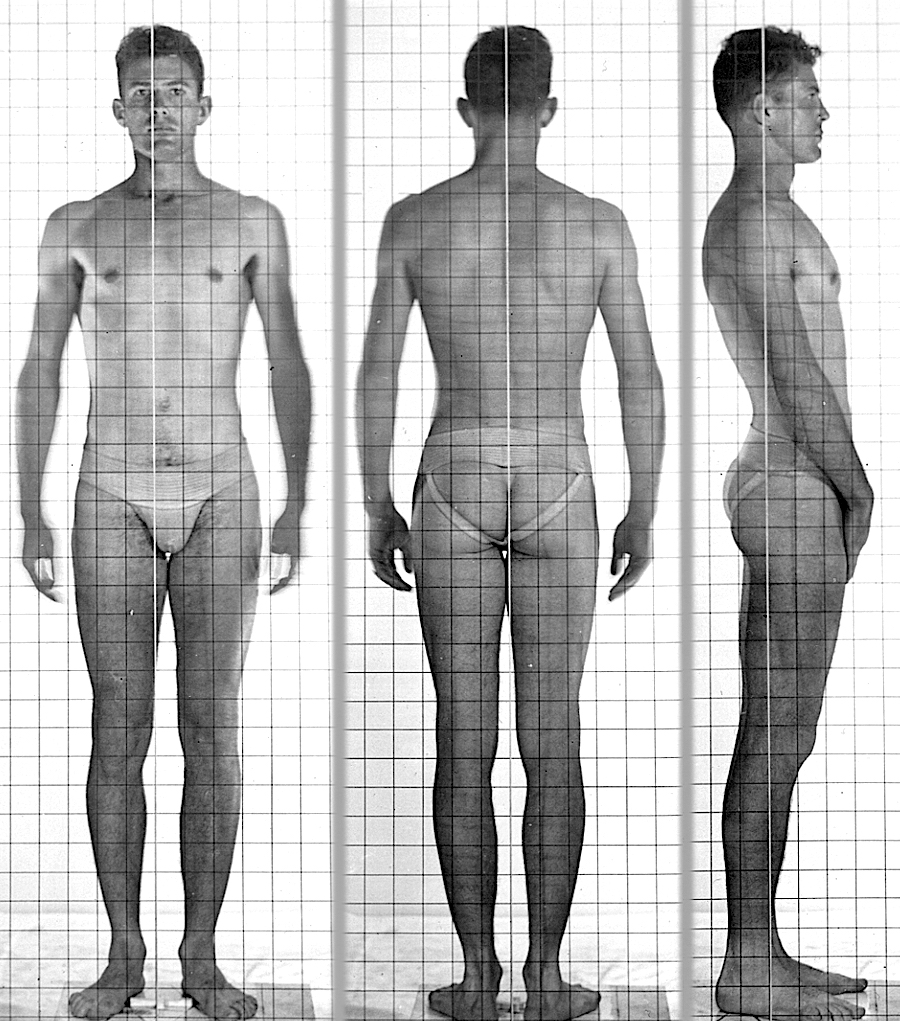
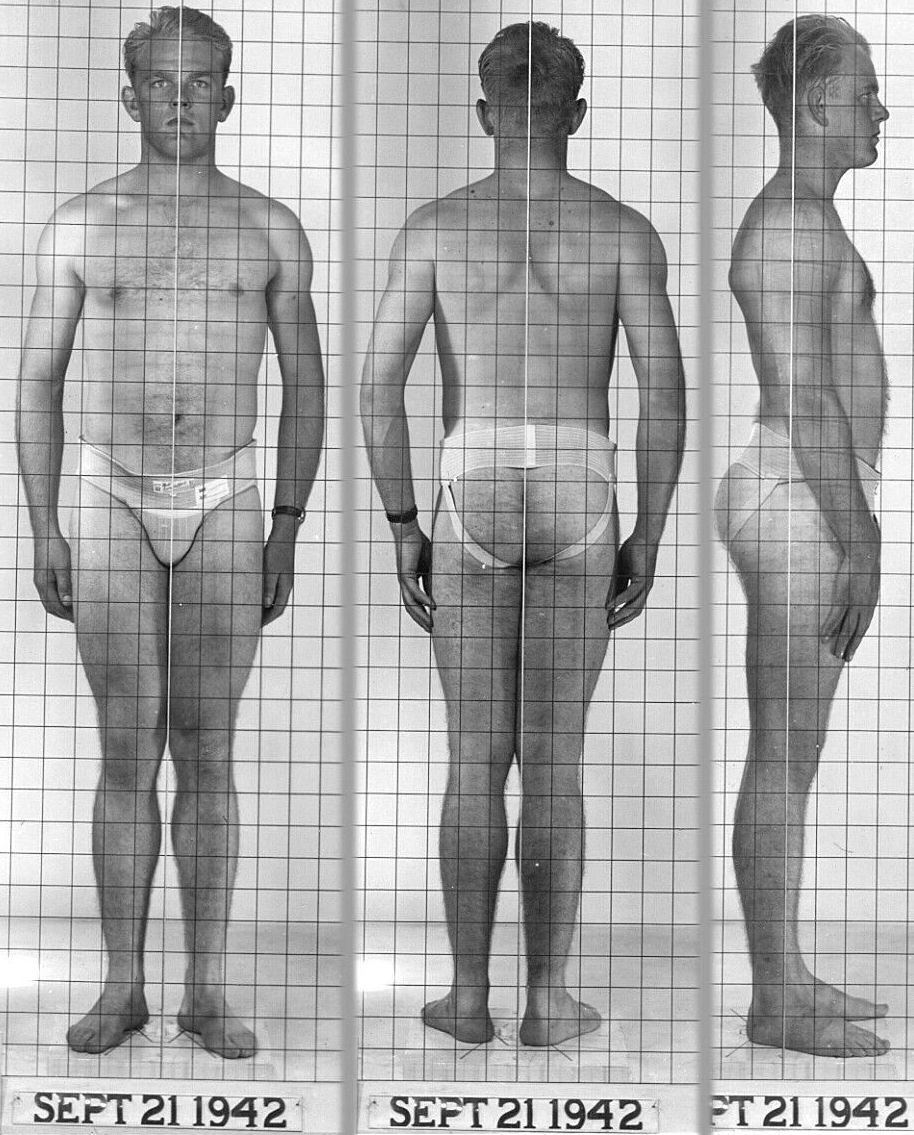
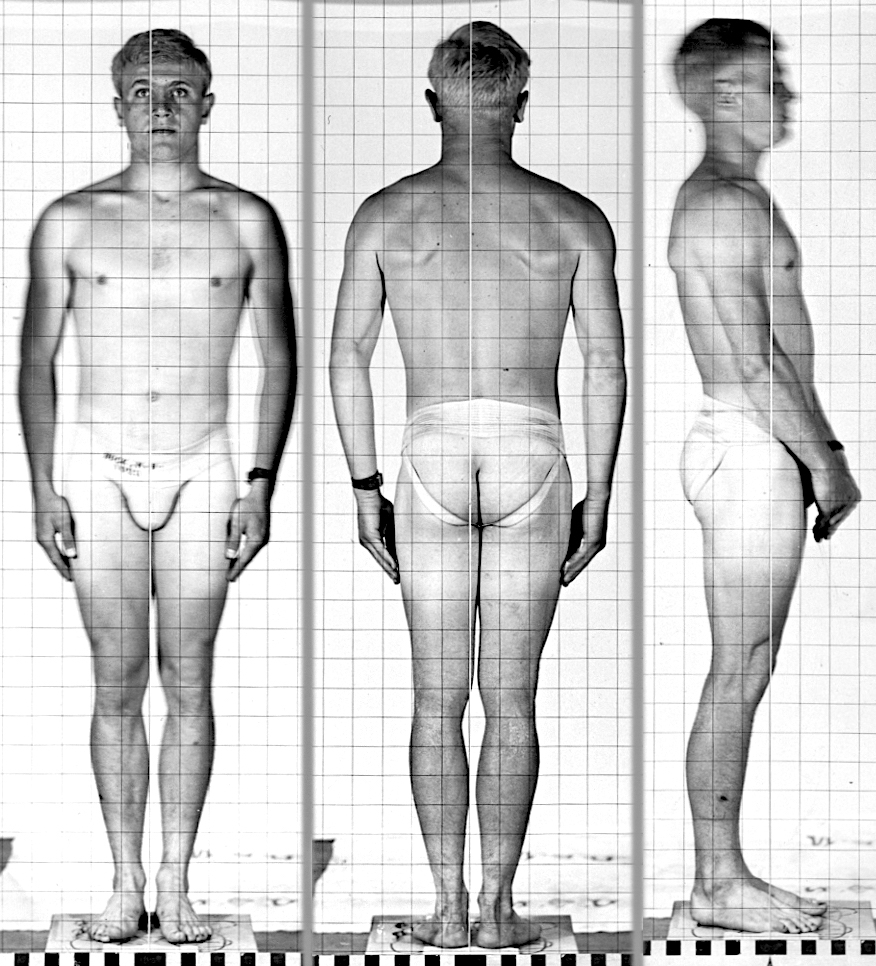
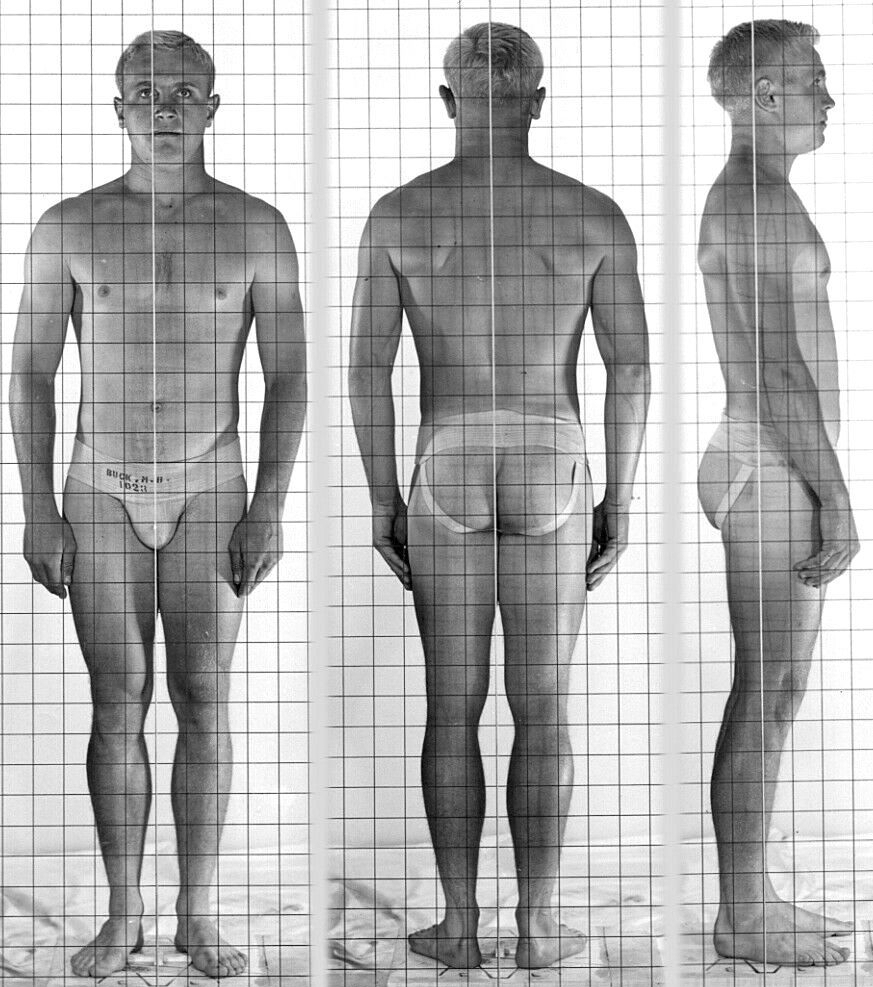
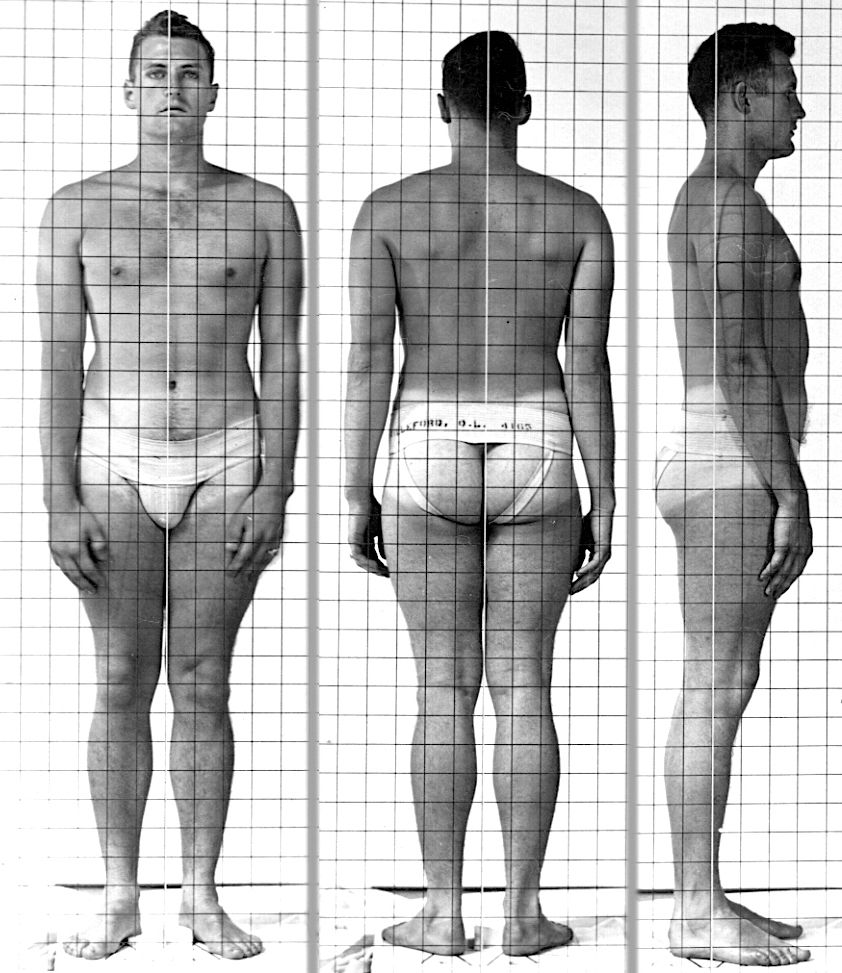
The St. Mary’s photos were taken to measure the fitness progression of each recruit as they underwent extreme physical training. Each picture was accompanied by an index card containing body measurements and physical achievement statistics over the course of several months.

This allows for some contrasting images that would be the envy of many fitness plans.

Only the earliest St. Mary’s photos – dated June 13, 1942 – feature the men completely nude. All subsequent photos feature the cadets in jockstraps. In all of the photos, the men stand behind some sort of grid fencing to better illustrate misalignment and spinal curvature. The above comparative photos were dated June 13th & August 28th, 1942.

My collection of photos gathered from around the internet now includes close to 700 different cadets. The youngest identified died at age 20 and the oldest lived to 103 years old.

Whether the individual photos of these handsome young men capture them at the beginning of their lives or tragically close to the end, all of the subjects are timelessly captured in prime physical condition as they trained to serve their country. 80 years later, we salute and admire their fine forms and dedication.

Navy Memorial Bench plaque from the St. Mary’s campus.


See Also:
The Yale Posture Photos: James Franciscus
The Yale Posture Photos: Bill Hinnant
Men of St.Mary’s Pre-Flight School
Boys of Summer: St. Mary’s Pre-Flight School
Christmas At St. Mary’s Pre-Flight School, Pt. I
Christmas At St. Mary’s Pre-Flight School, Pt. II
Christmas At St. Mary’s Pre-Flisht School, Pt. III
More Men of St. Mary’s Pre-Flight School

Artist’s Muse: Randy Jack

While scrolling across the internet in search of photographs by George Platt Lynes, I came across one that I had never seen before – a handsome shirtless young gent sitting cross-legged on a bed. Initially I was skeptical of its authenticity, as the subject looked so casual and timeless. There is nothing dated about the guy or his surroundings: the image could have been captured at any point in the last century.

I decided to do a little investigating and found that it was, in fact, an authentic Lynes photo. The handsome subject was a fellow named Randy Jack, Lynes boyfriend circa 1947-48. A new Lynes biography also helped to fill in the blanks.

Homer Randolph Jack was born on April 5, 1926 in Lake Clinton, Illinois. He attended Waukegan High School where he enjoyed singing and performing. As a senior, he starred in the high school’s production of the comedy Best Foot Forward. Upon graduation in 1944, he joined the Navy.

After WWII, with his Naval tour of duty completed, Randy Jack settled in Los Angeles, where he embarked on a relationship with ice cream parlor impresario Wil Wright Jr.

Californians of a certain age still swoon at the memory of Wil Wright’s frozen delights, decades after the last shop closed its doors.

Wil & Randy

In the recently published George Platt Lynes bio The Daring Eye, author Allen Ellenzweig refers to Randy Jack as “Wil Wright’s favorite.” In August of 1947, the two of them rented a room in Lynes’ Hollywood home. The New York-based photographer was in the midst of his “Hollywood period” working for Vogue magazine. Lynes – who always lived beyond his means and was notoriously bad with money management – decided to take in roommates to share chores and expenses.

This arrangement did not last long because, as Lynes wrote to a friend, “Wil can’t bear not to be boss and that is one thing he can’t be. Not here.” Wright also resented George’s influence on Jack, encouraging him to pursue a career as a dancer. When Wil moved out after a couple of months, Randy stayed…. and found his way into Lynes’ bed as well.

Randy Jack with George Platt Lynes (1947)

Randy Jack committed himself to a vigorous regimen of ballet classes. Although Lynes was aware that Jack was a bit long in the tooth to start training for a career as a dancer, he supported his efforts nonetheless. He wrote to his friend Monroe Wheeler; “He’s too old, 21, but he has a ballet dancers body and a ballet dancer’s soul.” 

Randy Jack’s protruding ears – called “bat like” in several accounts – were viewed by Lynes as a further hindrance to attaining success as a ballet dancer. While he could not erase Jack’s advanced age, he could do something to remove this obstacle, so the cards would be “stacked in his favour, to remove whatever flies there may be in the ointment.” He agreed to barter with a plastic surgeon: Lynes would photograph the surgeon’s glamorous wife in exchange for the operation to pin back Jack’s ears. Lynes wrote to his mother at the time: “…I can’t leave things alone but redecorate or remodel anything I can lay my hands on, people as well as houses.”

The photos of Randy Jack taken in Lynes’ library are understandably the most popular.

Ears firmly clipped, Lynes photographed his roomie en tenue de danse at Vogue studios, creating this striking series of photos:

In May of 1948, Lynes’ contract with Vogue ended and he returned to New York City with Randy and their dog Bozo in tow.

Portrait of Randy Jack by Bernard Perlin, June 5, 1948

As mentioned in our profile of Ted Starkowski, Lynes and his artist friends often shared models. Like Starkowski, Randy Jack was the subject of several other artists’ work, including Bernard Perlin.

Perlin later recalled, “I really am lousy. George commissioned me to do a drawing of Randy Jack. Randy and I had interrupted the drawing with some ill-advised smooching, which was in turn interrupted by Robert Drew, (my boyfriend) who lived directly downstairs from me. He was damn furious, and he left me. That was the end of it, of our thing.”

Soon after the move to New York, Jack abandoned his ballet studies and began to find work as a fashion model. This proved to be a far more attainable and lucrative goal.

In mid-summer, George wrote to Katherine Anne Porter that he was troubled about the young man, “… I wonder what New York has done to him, or what I have done.”

Whether or not Randy left George or their cohabitation ended by mutual consent is debatable. The fact remains that he moved out in the Fall of 1948… and Lynes’ next boyfriend and muse, Chuck Howard moved into the apartment 10 days later.

David Leddick writes “Jack became one of the most successful fashion models in an industry that was just becoming big business, posing for both photographers and the many illustrators of the time.”

When I look into the life of an artist’s muse from the past, there is always a point in their story that brings to mind the Kirsty MacColl song “What Do Pretty Girls Do?” The answer, she sings: “They get older just like everybody else.”

As his modeling career waned, Jack began his third act as an interior designer. His work with commercial / hotel spaces led him to the Middle East, where he settled on the island of Bahrain and became a restaurateur, opening the Upstairs Downstairs restaurant in 1977.

In 1982 Jack published Upstairs Downstairs Cookbook, featuring favorite recipes from the restaurant’s menu alongside his own illustrations.

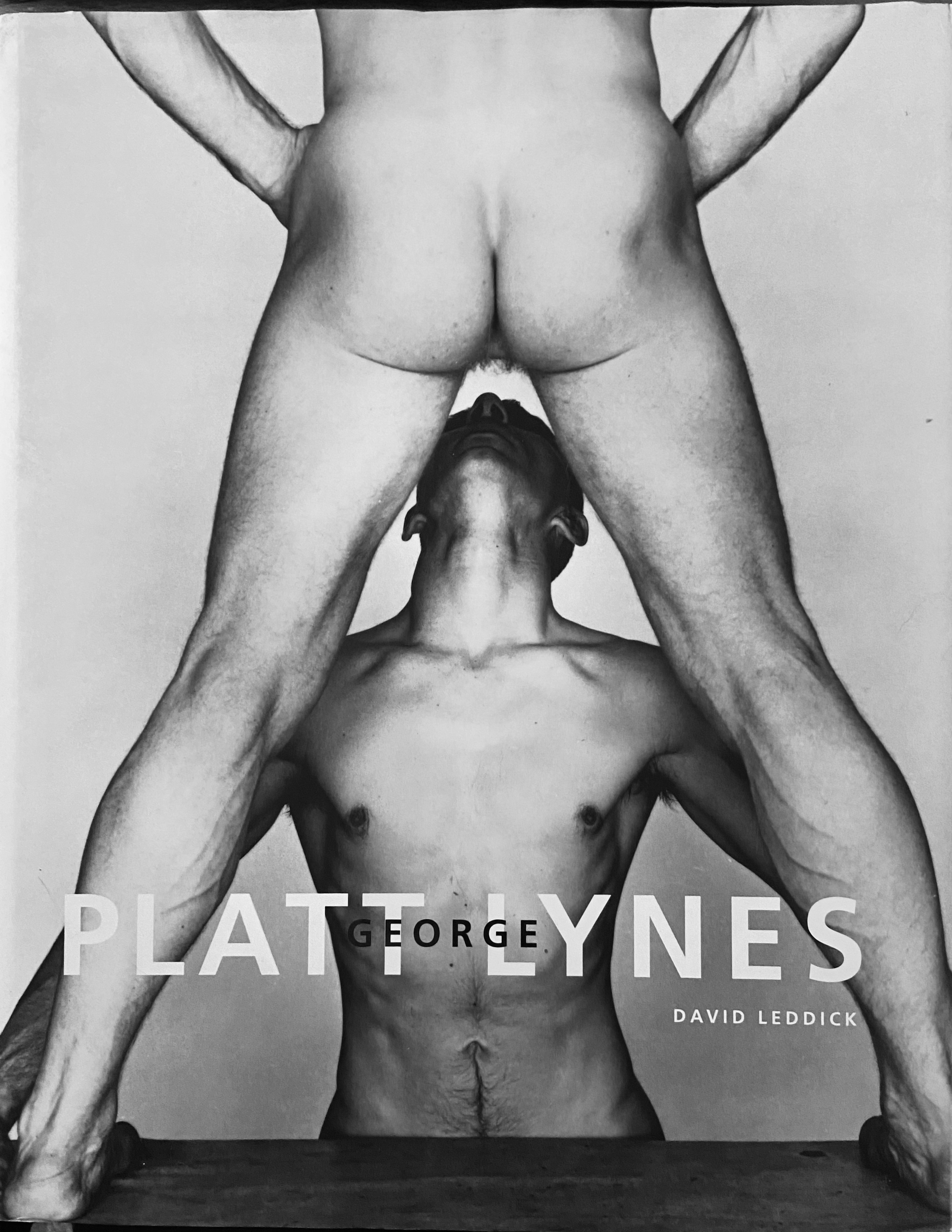
In the mid-90’s, Intimate Companions author David Leddick reached out to Randy Jack to talk about his early years with George Platt Lynes. Leddick recounts being tipped off that Jack was living in Bahrain, and that he was able to simply call the local information to get his phone number. Strangely, Jack’s birth name in the book is listed as Randolph Omar Jack, as if the author misheard “Homer” on a poor telephone connection.

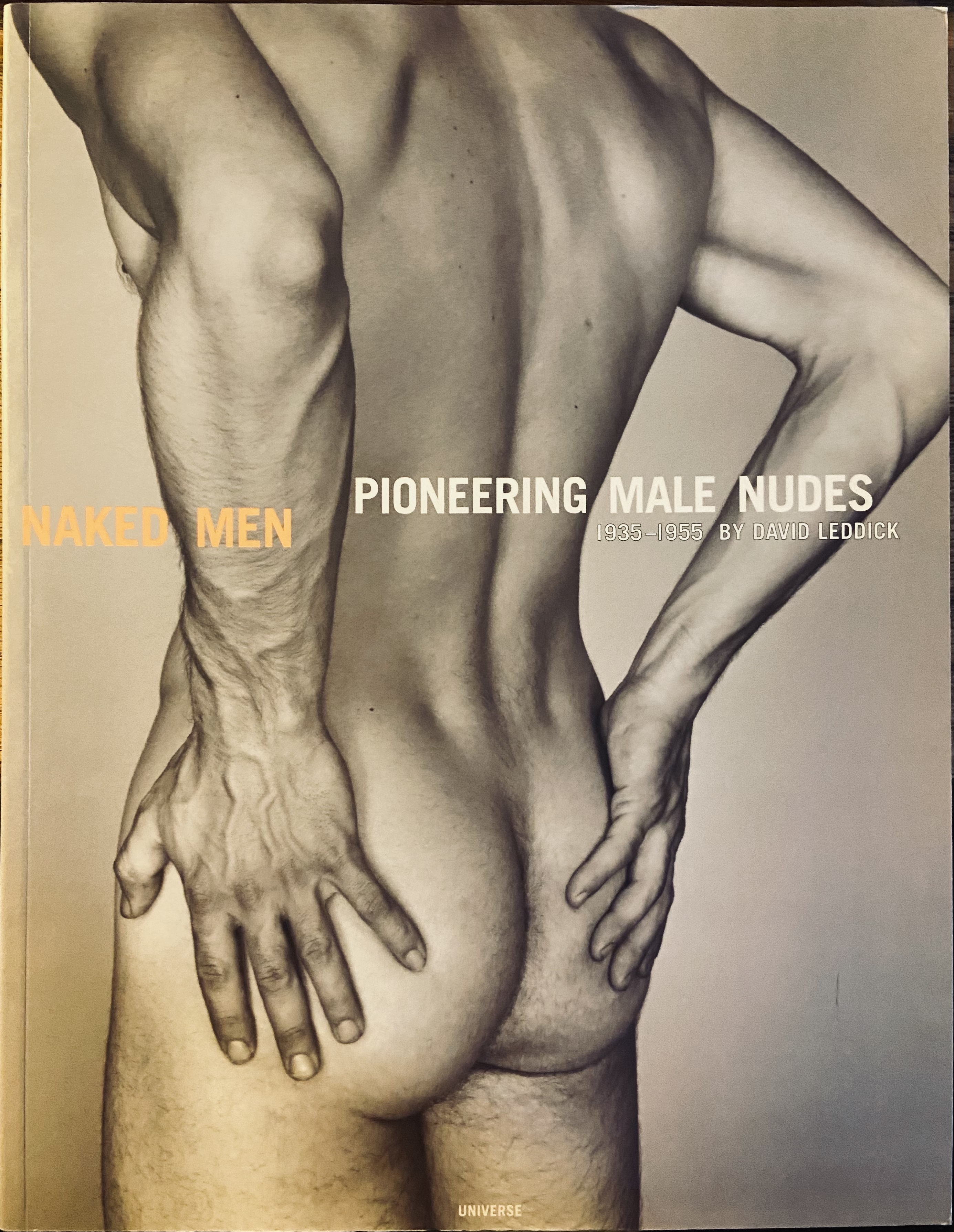
A current photo of Randy Jack appeared in Leddick’s 1997 book Naked Men: Pioneering Male Nudes. Shortly after the book’s publication, on June 5, 1997, Jack died in Bahrain. He was 71 years old. The Upstairs Downstairs restaurant is still in operation today. The restaurant’s Facebook page has comments from patrons recalling Randy Jack’s hospitality and the good times they had there.

The kid from Waukegan had come a long way.

See Also:
George Platt Lynes models / bedfellows John Leapheart & Buddy McCarthy profiled here
Artist’s Muse: Donald Windham & Sandy Campbell
Artist’s Muse: William Weslow
Artist’s Muse: José “Pete” Martinez
Artist’s Muse: Ted Starkowski
Artist’s Muse: Chuck Howard
Artist’s Muse: The Mystery Model
Artist’s Muse: Wilbur Pippin
Fire Island Muses of George Platt Lynes & The PaJaMa Collective
Revisiting George Platt Lynes’ Fire Island Muses
Fire Island PaJaMa Party
George Platt Lynes: In Touch Magazine (1982)

Christmas At St. Mary’s Pre-Flight School pt. II

Dear Readers,

It’s that time again… due to popular demand, it’s our fourth installment of WWII-era photos featuring the jockstrap-clad pre-flight training school cadets at St. Mary’s College in California. You can view the first one here. Part II was from last Christmas. Part III was the boys of summer. And now here we are with another look at these strapping young men – many away from home for the first time – photographed as they trained to go to war during the holidays.

I first became aware of these black and white 5″x7″ triptych photos a few years ago. Listings often turn up on auction sites, where the photos are often accompanied by the index card used to record the physical training progress of the cadet.

The earliest photos (from June 13, 1942) feature the men completely nude, but all subsequent photos feature the cadets in jockstraps, standing behind some sort of grid fencing to better detect posture misalignment and spinal curvature.

There is still some confusion between these photos and the Yale / Ivy League posture pics, since the Navy photos were sometimes used to illustrate stories about the Yale pics. Note that all of these images contain a visible U.S. Navy / St. Mary’s Pre-Flight School placard, even if they have been cropped out in some posts. Similarly the Yale University photos are identified as such within the frame of the photos:

Fortunately for us, multiple photos of some cadets have surfaced, allowing for comparisons of their training progress:

Before / After 7 weeks of training, Sept. – Nov. 1942

And while there is a lack of ethnic diversity, there are a variety of body types.

Before / After a month of training: 12/8/43-1/12/44

My collection now includes close to 600 jpegs of different cadets. While some of these men did perish during WWII, the largest majority that I have researched lived to ripe old ages.

Any surviving cadets would now be close to 100 years old. I recently discovered one who passed away a few months ago at the age of 103.

One thing these young men have in common, as they were documented in timeless photos of their physical prime: they were far from home during the holidays, training to fight for their country.

At this time of year, nearly 80 years later, we again salute The Greatest Generation for their fine forms and dedication.

See more here:
Men of St.Mary’s Pre-Flight School
Boys of Summer: St. Mary’s Pre-Flight School
Christmas At St. Mary’s Pre-Flight School, Pt. I
Christmas At St. Mary’s Pre-Flisht School, Pt. III
80 Years Ago: The Men Of St. Mary’s Pre-Flight School
More Men Of St. Mary’s Pre-Flight School
1944: The Men of St. Mary’s Pre-Flight School
The Yale Posture Photos: James Franciscus
The Yale Posture Photos: Bill Hinnant

WWII Boys Of Summer: St. Mary’s Pre-Flight School

Welcome to our third installment of photos celebrating WWII-era men of U.S. Navy pre-flight training at St. Mary’s College. These images of naked or jockstrap-clad cadets were taken at the school in Moraga, California when it was requisitioned for the war effort between 1942-1946. You can see more photos in our other posts:

Men of St.Mary’s Pre-Flight School
Christmas At St. Mary’s Pre-Flight School, Pt.I
Christmas At St. Mary’s Pre-Flight School, Pt. II
Christmas At St. Mary’s Pre-Flisht School, Pt. III
80 Years Ago: The Men of St. Mary’s Pre-Flight School
More Men of St. Mary’s Pre-Flight School
1944: The Men of St. Mary’s Pre-Flight School

Only the earliest photos – dated June 13, 1942 – feature the men completely nude. An anonymous person offers a helping hand as the men are photographed in profile.

Comparative photos from June 13 & August 18,1942

All subsequent photos feature the cadets in jockstraps. In all of the photos, the men stand behind some sort of grid fencing to better illustrate misalignment and spinal curvature.

The photos were taken to measure the fitness progression of each recruit as they underwent extreme physical training. Each picture was accompanied by an index card containing body measurements and physical achievement test results over the course of several months.

This allows for some contrasting images that Weight Watchers might want to consider emulating.

Before and after a summer of training: June 26 & September 8, 1942

This installment focuses on photos of cadets as they underwent summer training in the California sun. The results speak for themselves. #tanlines

My collection of photos gathered from around the internet now includes close to 500 different cadets. I have taken my pastime a step further by researching the origins as well as the fates of these brave men. Those featured in this post passed away as young as 22 and as old as 94.

Whether the photos of these handsome young men are literal snapshots near the beginnings of their lives or tragically close to the end, all of the subjects are equally, timelessly captured here in prime physical condition, sun dappled as they trained to serve their country. Nearly 80 years later, we salute and admire their fine forms and dedication.

See Also:
Men of St.Mary’s Pre-Flight School
Christmas At St. Mary’s Pre-Flight School, Pt.I
Christmas At St. Mary’s Pre-Flight School, Pt. II
Christmas At St. Mary’s Pre-Flisht School, Pt. III
80 Years Ago: The Men of St. Mary’s Pre-Flight School
More Men of St. Mary’s Pre-Flight School
1944: The Men of St. Mary’s Pre-Flight School
The Yale Posture Pics: James Franciscus
The Yale Posture Pics: Bill Hinnant

Artist’s Muse: Ted Starkowski

Although photographer George Platt Lynes passed away of lung cancer at age 48 in 1955, it took another 30 years before the majority of his male nude photographs were celebrated and widely released. Virtually every collection of his work now features photos of a model named Ted Starkowski. His nude images are featured on the covers of several collections of Lynes’ work – in solo shots or posed with Mel Fellini:

So who was Ted Starkowski?

Lynes biographer David Leddick wrote: Ted Starkowski George Platt Lynes

Ted Starkowski worked the streets. Hustling by night, he regaled  Bernard Perlin and George Platt Lynes with his adventures while he posed for them during the day. They created unique images with his cat-like face and lithe body.

Perlin later recalled; “He looked like an old tomcat – you know, after the battle. But he just loved the way he looked…. he was a star whore, he aimed for people with money and he got it.”

(Above) George Platt Lynes photographed Ted Starkowski flanked by Bernard Perlin’s sketches.

Ted Starkowski Lynes 1950 clothed2

Teodor Francis Starkowski was born in Hartford, Connecticut on April 4, 1927- the eighth child of Polish immigrants. When he was 6 years old, Ted was critically injured when he was struck by a car in front of his family’s home. He eventually made a full recovery, but the incident would foreshadow another auto accident forty-four years later. 

His Army registration in September of 1945 indicates that he had attended three years of high school and was working at St. Thomas Seminary in Bloomfield.

After his stint in the military he relocated to New York City, where he became a favorite subject for Lynes and his circle of artist friends, including Paul Cadmus and Jared French.

(Above) Six images of Ted Starkowski by Jared French.

Thomas D. Baynes of The Univeristy of Western Ontario wrote extensively of one particular George Platt Lynes 1954 photograph in his thesis More than a Spasm, Less than a Sign: Queer Masculinity in American Visual Culture, 1915-1955:

Ted Starkowski Lynes 1950 clothedFew other photographs by Lynes do as much to cast the model as an actor. In his tight jeans, bulging conspicuously at the crotch, fisherman-rib sweater worn without an undershirt, and workaday watchman’s cap relegated to the status of an ornament, Starkowski looks like a longshoreman snatched from the imagination of Tom of Finland … Lynes’s studio provides only the minimum furniture required to support Starkowski in a posture that manages to be solicitous and pensive at the same time, welcoming an evaluating view despite being absorbed in thought.

This photograph extends rough trade as a portable structure of fantasy that discovers erotic opportunities in ambiguities of dress and pose…. Evidently, Starkowski had a knack for acting like a straight man, or at least like a fantasy version thereof.

Ted Starkowski as drawn by Paul Cadmus (Male Nude, TS5, 1954)
A reader sent a photo of this Paul Cadmus drawing titled “Ted Reading” – posted with permission.

Another model who posed for many of the same artists was fellow ex-military man Chuck Howard, George Platt Lynes’ live-in boyfriend. After their split in January, 1951, Howard and Starkowski became involved in what David Leddick described as “a tempestuous affair.” The couple were photographed together on Fire Island while vacationing with Paul Cadmus, Jared and Margaret French: artists who called their collective photography work PaJaMa, an acronym of the first letters of their first names. See more of their work here.

The year after George Platt Lynes’ death, Starkowski was photographed by Carl Van Vechten. These photos are dated April 3, 1956:

Ted Starkowski by Paul Cadmus 1963


Thanks to a wealthy benefactor, Starkowski traveled extensively in the second half of the 1950’s. Perlin recalled; “There was this old boy who picked him up on 42nd Street. Ted enthralled him – kept him drunk and kept him out of money, with which Ted bought diamonds, which he wore. Both hands glittered with diamonds.”

Leddick relays a story of Starkowski showing off a new diamond ring to artist George Tooker.  Asking if he thought it was too big. Tooker replied “Yes, it is too large for a woman to wear.”

The Paul Cadmus drawing on the left shows Starkowski at age 36 in 1963.

And then… the trail goes dark for the next 14 years. If more images or information come to light, I will update this post. What we do know is that on Friday May 13, 1977, Ted Starkowski was leaving a New York City bar when he was struck and killed by a car. He was 50 years old.ted-starkowski-obit

An obituary ran in the Hartford Courant the following Tuesday, May 17th. He was buried in Mount Saint Benedict Cemetery in Bloomfield, Connecticut.

z-ted_starkowski-grave-1

It was a sad end to a man who had inspired many artists.

Bernard Perlin recalled, “Despite his nefariousness, he did good in the art world. My drawings are comparatively negligible, but many of George’s photographs are just absolutely wonderful.”

See Also:
Artist’s Muse: Donald Windham & Sandy Campbell
Artist’s Muse: Forrest Thayer
Artist’s Muse: Randy Jack
Artist’s Muse: Chuck Howard
Artist’s Muse: The Mystery Model
Artist’s Muse: Wilbur Pippin
Buddy & Johnny: A Historic Photo Shoot
Fire Island PaJaMa Party
Provincetown PaJaMa Party
George Platt Lynes: In Touch Magazine (1982)
Fire Island Muses of George Platt Lynes & The PaJaMa Collective
Revisiting George Platt Lynes’ Fire Island Muses

Christmas At St. Mary’s Pre-Flight School

The sun is shining, the grass is green
The orange and palm trees sway
There’s never been such a day
In Beverly Hills, LA
But it’s December the 24th
And I’m longing to be up north…

That’s the rarely heard opening verse to Irving Berlin’s classic song White Christmas – originally released in 1942. The song popped into my head as I gathered these Christmastime photos of jockstrap-clad cadets in pre-flight training school at St. Mary’s College in California. Never mind that the school is actually several hundred miles north of Beverly Hills. It is still sunny California, where these strapping young men – many away from home for the first time – were training to go to war during the holidays.

As I mentioned in a previous post, I first became aware of these black and white 5″x7″ triptych photos a couple of years back through posts on a Facebook photo group.

Listings of these photos often turn up on auction sites, where they are sometimes include the index card used to record the physical training progress of the cadet.


The earliest photos feature the men completely nude, but all subsequent photos feature the cadets in jockstraps, standing behind some sort of grid fence to better detect posture misalignment and spinal curvature. All of these photos contain a visible U.S. Navy / St. Mary’s Pre-Flight School placard.


Fortunately for us, multiple photos of some cadets have surfaced, allowing for comparisons of their training progress:

Before / After 8 weeks of training: Fall, 1942

And while there is a lack of ethnic diversity, there is a variety of body types.

Before / After 3 weeks of training: December, 1942

My collection now includes over 300 jpegs of different cadets. Some did perish during WWII, but the largest majority that I have researched lived to ripe old ages. Any surviving cadets would now be in their late 90’s.

One thing these young men have in common, as they were documented in timeless photos of their physical prime: they were far from home during the holidays, training to fight for their country.

At this time of year, 75+ years later, cue up White Christmas as we again salute their fine forms and dedication.

See more here:
Men of St.Mary’s Pre-Flight School
Boys of Summer: St. Mary’s Pre-Flight School
Christmas At St. Mary’s Pre-Flight School, Pt. II
Christmas At St. Mary’s Pre-Flisht School, Pt. III
80 Years Ago: The Men Of St. Mary’s Pre-Flight School
More Men of St. Mary’s Pre-Flight School
1944: The Men of St. Mary’s Pre-Flight School
The Yale Posture Photos: James Franciscus
The Yale Posture Photos: Bill Hinnant

END SES 12_29_42 copy

The Men of St. Mary’s Pre-Flight School

One of my socially distant pastimes of 2020 has been searching for jpegs of WWII U.S. Navy Pre-Flight Training photos. These images of naked or jockstrap-clad cadets were taken at St. Mary’s College in California when it was requisitioned for the war effort between 1942-1946. I first became aware of these black and white 5″x7″ triptych photos through posts on a Facebook photo group. Listings often turn up on eBay and other auction sites, where the photos are sometimes accompanied by an index card which was used to record the physical training progress of each cadet.

It has been speculated that this was tied to a study on race purity/eugenics, as were the infamous Yale student posture photos. I choose to believe that it was merely a matter of recording alignment and physical fitness as part of the overall medical examination process.

Comparative fitness photos for a cadet taken on 6/27 & 8/31 1942

Call me naïve, but if we are to appreciate the photos of these fine young men who were training to fight for our country, it’s a lot less icky to ignore a potential ulterior motive on the part of those taking the photos.

Comparative fitness photos for a cadet taken on 7/27 & 9/29 1942

The earliest photos – dated June 13, 1942 – feature the men completely nude. When the subjects were photographed in profile, they appear to be holding hands with someone off-camera – presumably to help them obtain proper… positioning?

All subsequent photos feature the cadets in jockstraps, standing behind some sort of grid fence to better detect misalignment and spinal curvature. Note that, although cropped here, all of these photos contain a visible U.S. Navy / St. Mary’s Pre-Flight School placard.

Most of the photos shown here were gathered from various sources around the internet with the subject’s name cropped out: God forbid someone ran across a picture of near-naked PeePaw and suffered conflicting feelings.

My collection includes nearly 200 jpegs of different cadets with the names intact. I have taken my pastime a step further by researching who these men were and where they ended up. As expected, some did perish during the war – just a year or two after these photos were taken. Others reenlisted for the Korean War and did not survive that conflict. But the largest majority went on to successful careers, families and lived to ripe old ages. Any surviving cadets would now be in their late 90’s.

Whether the photos of these handsome young men are literal snapshots near the beginnings of their lives or tragically close to the end, all of the subjects are equally, timelessly captured here in prime physical condition as they trained to serve our country. 75+ years later, we salute their fine forms and dedication.

See more photos here:
Christmas At St.Mary’s Pre-Flight School
Boys of Summer: St. Mary’s Pre-Flight School
Christmas At St. Mary’s Pre-Flight School, Pt. II
Christmas At St. Mary’s Pre-Flisht School, Pt. III
80 Years Ago: The Men Of St. Mary’s Pre-Flight School
More Men of St. Mary’s Pre-Flight School
1944: The Men of St. Mary’s Pre-Flight School
The Yale Posture Photos: James Franciscus
The Yale Posture Photos: Bill Hinnant

Madame Spivy: 100% American Girls

“Our country is so fine, it will really be divine, when we get everyone but us to move away.”

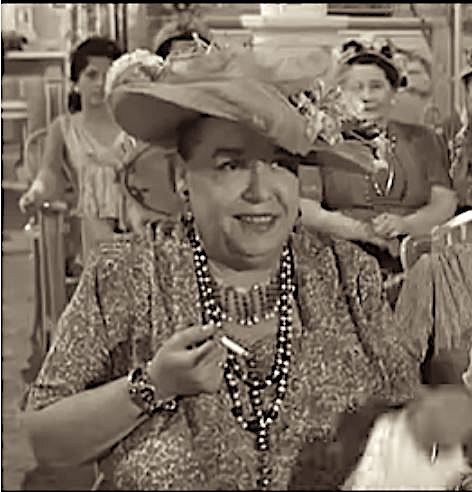
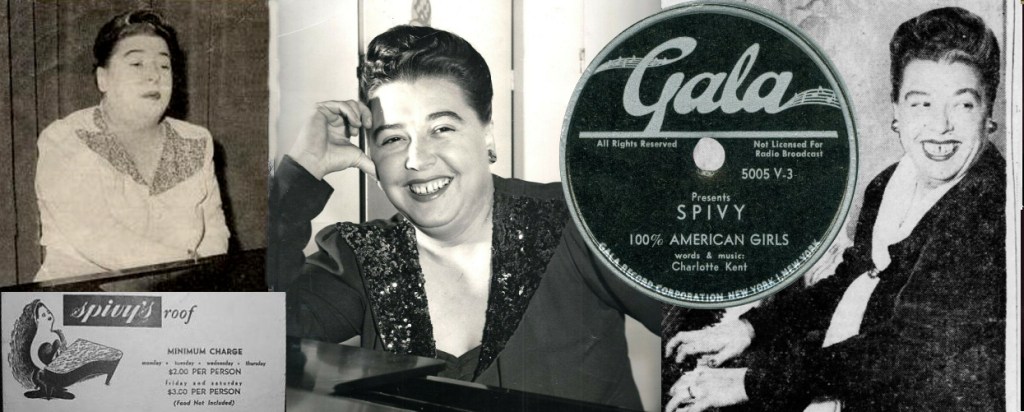
Ladies and Gentleman, it is time once again to revisit that late, great dynamic lady of song, Madame Spivy LeVoe (1906-1971), also known simply as Spivy. A lesbian entertainer, nightclub owner and character actress, Spivy has been described as “The Female Noel Coward” – to which I add “…. if he had been born in Brooklyn as Bertha Levine.” You can read other posts about her here:
The Alley Cat
The Tarantella
Auntie’s Face
A Tropical Fish
I Brought Culture To Buffalo In The 90s
I Didn’t Do A Thing Last Night
Why Don’t You?

Film Spivy Manchurian Candidate2Given the current political climate, it’s a perfect time to have a listen to “100% American Girls”, a stinging satirical composition by Charlotte Kent which reminds us that nationalism, xenophobia and gentile racism have been marching hand-in-hand across this great land for generations. God Bless America.
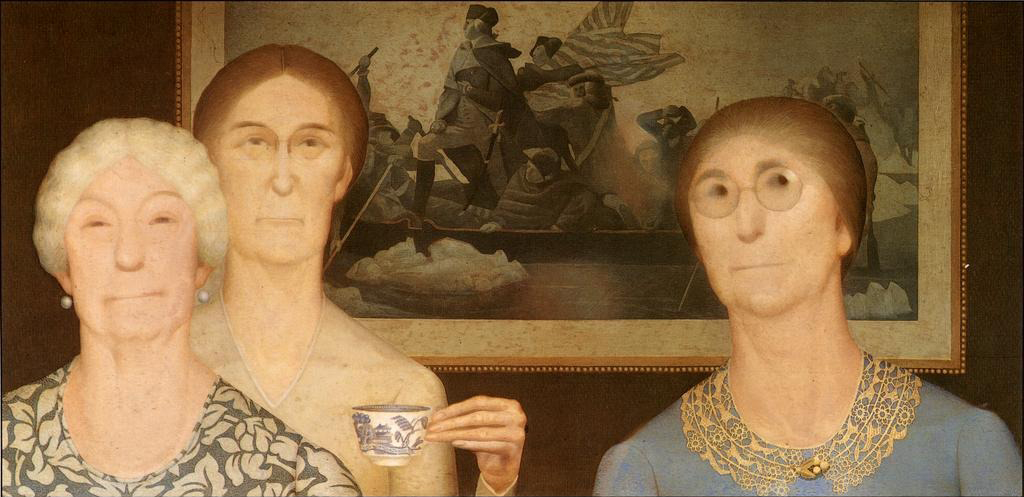
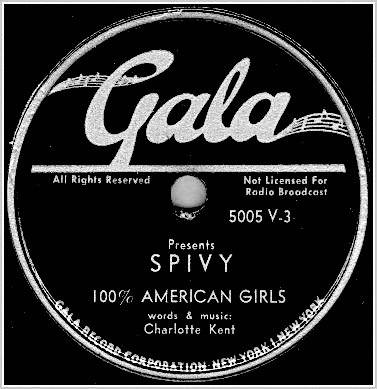
The opening line addresses the “Daughters, Aunts, Mothers and Second Cousins of the War of 1812…” – a not-so-subtle swipe at the exclusive, ultra-white & conservative Daughters of the American Revolution (DAR).

Grant Wood’s 1932 painting Daughters Of Revolution.

The line “You’re supposed to be keeping THOSE people out of Constitution Hall…” refers to the Washington DC concert hall owned by the DAR.  In 1939, they denied African-American singer Marian Anderson the opportunity to sing before an integrated audience, causing First Lady Eleanor Roosevelt to resign her membership in protest. The Roosevelts then arranged for Anderson to perform on the steps of the Lincoln Memorial on Easter Sunday, April 9, 1939. The result was an historic performance before an integrated crowd of more than 75,000 people and a radio audience in the millions.

Some notes on other references in the song:

Westbrook Pegler was a columnist at the time who opposed labor unions and The New Deal.

Note that Consuela – the only ethnic name mentioned – is directed to be “the rabble,” or disorderly crowd.

Alfred M. Landon was the Republican presidential candidate in 1936 who lost to FDR in a landslide vote.

First Lady Dolley Madison was a world-renowned hostess who, according to lore, was the first to serve guests ice cream at the White House.

100% American Girls

Members of the Daughters, Aunts, Mothers and Second Cousins of the War of 1812, form into double file.
Stop twitching at that bunting Carrie and smile. Take off that feather boa, Mary Louise this is a parade, not a charade.

Vera, you go right back to Washington, you’re not supposed to be marching at all! You’re supposed to be keeping THOSE people out of Constitution Hall.
Please… you on the float there. Lord Calvin is sagging. Yankee Doodle is flat. Your powder is wet. And your Mayflower is dragging.

Oh thank God here’s George III. Alright Lizzie, stand right there and sneer.
Please Consuela, someone has to be the rabble. You throw the Boston tea right in this little box over here.
Remember the things we said we’d never abandon. Remember we’re still true to Alfred M. Landon.
Remember when the Bill of Rights…. HMMMM ….. tried to get fresh with me!
My Westbook Pegler ’tis of thee. Ah ha! The bugle! Formation girls:

Nelly pull your belly in – it’s for the U.S.A. We’ve got to be adorable today.
Oh aren’t you excited? And isn’t this a binge? Lets unfurl every curl in our lunatic fringe.
Tilly, Queenie, Magnolia, Hillaire… to arms!
Nelly pull your belly in and hold your chin up high. We’ll give the crowd a treat as we pass by.

The Pricker unit forward, the Bilbo club behind….And Bessie you keep waving what your grandpa signed.
All together now: Comb your hair for California, wash your neck for Io-way.
Our country is so fine, it will really be divine when we get everyone but us to move away.
Take a Benzedrine for old Virginia, where our daddies sniffed their snuff with dukes and earls.

We are for the human race, which is lovely (in its place). We’re 100% American Girls!
What? Do I see one of you lag when before you is marching the flag?
Did Washington crossing the Delaware say “Let’s call it off, boys – I’m not in the mood for rowing”?
Did Betsy Ross say “Fold up the banner girls –  I hate sewing”?

Hmmm. Really girls! Eyes up! Curls up and away!
Annie pull your fanny in  – it’s for the U.S.A. We’ve got to be adorable today.
When Valley Forge was icy and up to here in snow… did Dolly Madison say “No”?
Myrtle, Cissy, Prissy, Mamie – to arms!

Annie pull your fanny in  – it’s for the U.S.A. We’re 100% American Girls!

This song – along with “Madame’s Lament” – were the two Charlotte Kent compositions featured on Spivy’s 1947 album An Evening With Spivy. Kent had several songwriting credits in film and on Broadway throughout the 1930’s. In 1939, she contributed to the book & lyrics of the musical Sing For Your Supper along with John La Touche, another composer with whom Spivy collaborated. We will get to those recordings at a later date. Stay tuned!

See Also:
The Alley Cat
The Tarantella
Auntie’s Face
A Tropical Fish
I Brought Culture to Buffalo In The 90’s
I Didn’t Do A Thing Last Night
Why Don’t You?
Madame Spivy: Movies & Television
Madame Spivy on the Good Time Sallies Podcast
Madame Spivy – Good Time Sallies Radio