Artist’s Muse: William Weslow

Hard to believe but it has been a year since the last Artist’s Muse profile – these are men who inspired and were subjects of 20th Century painters, photographers, and other artists. It was last January that we cast the spotlight on Jose “Pete” Martinez. Chuck Howard was profiled in September, 2022 and is currently being featured in George Platt Lynes photographs on exhibition at Childs Gallery in Boston. If you read our post and then take a look at their press release, you might surmise the primary source of their biographical material.

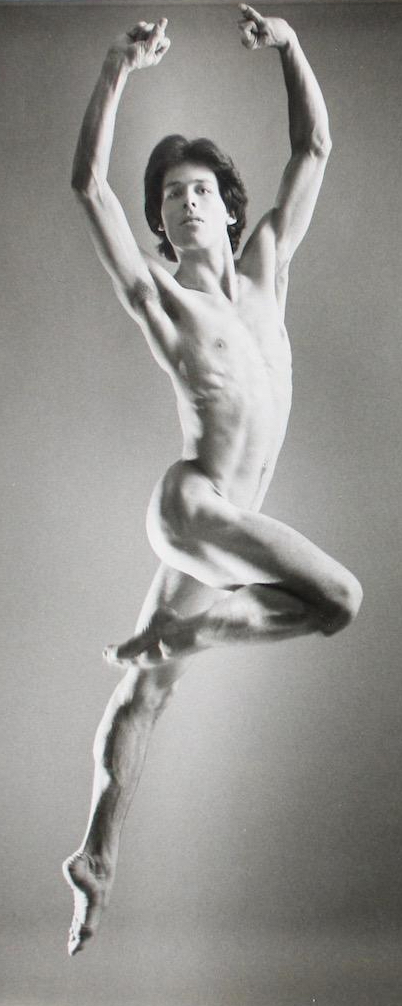
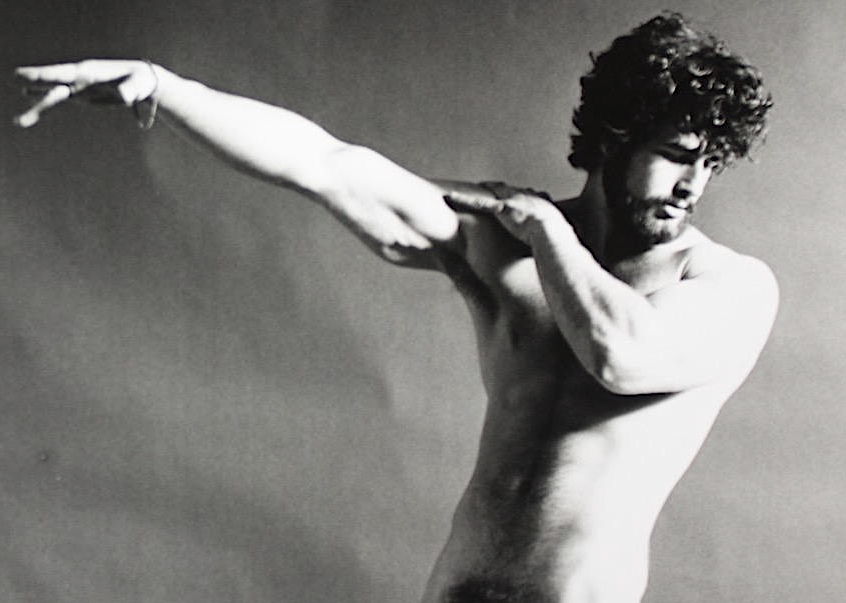
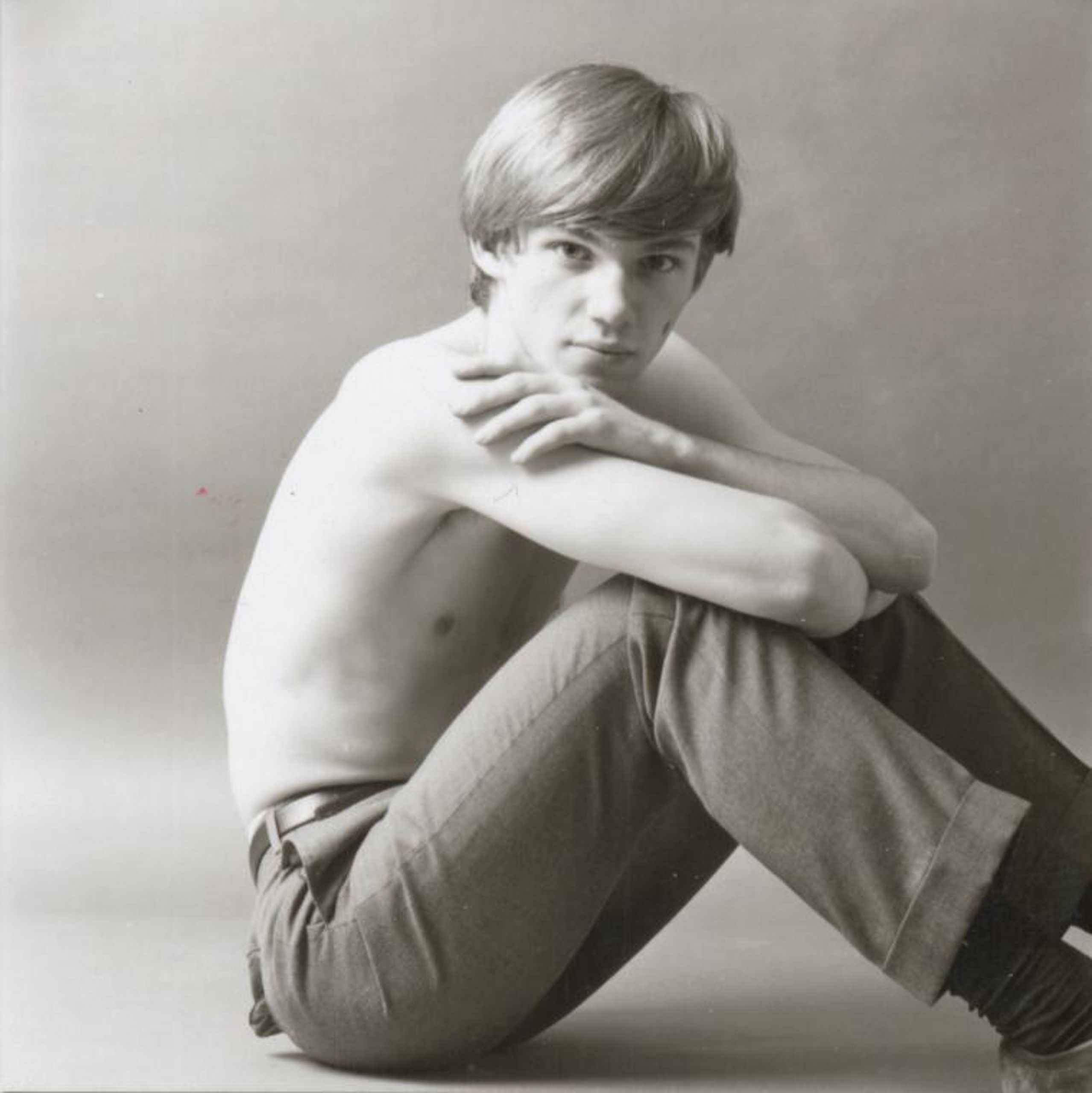
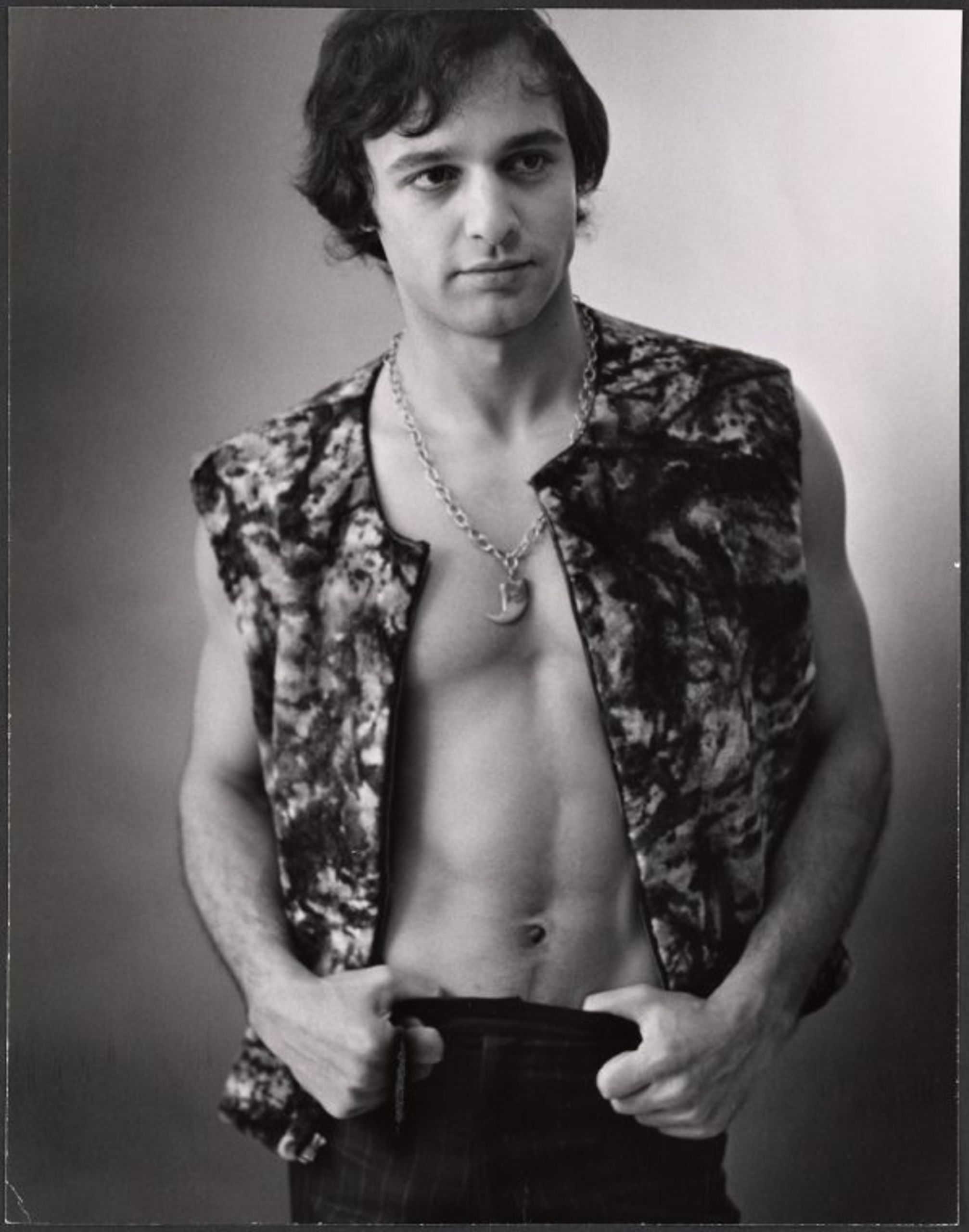
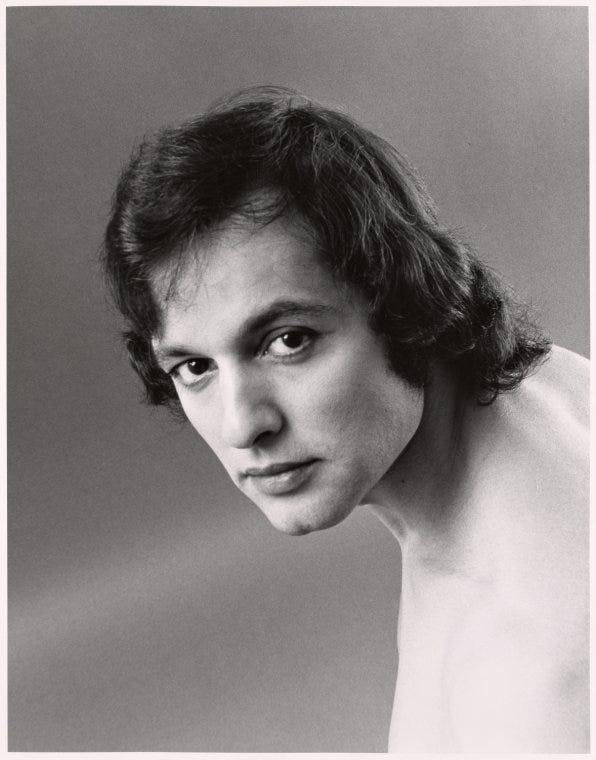
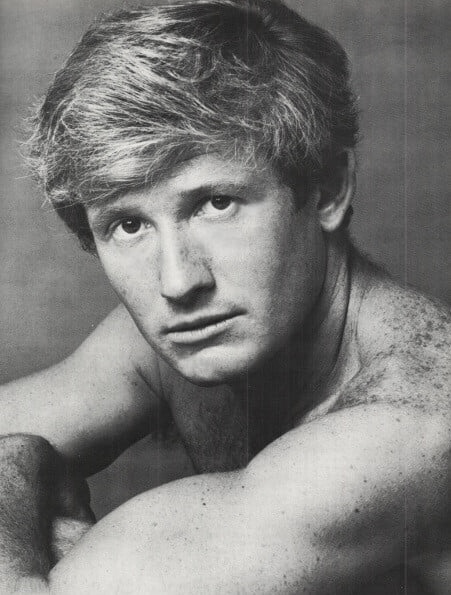
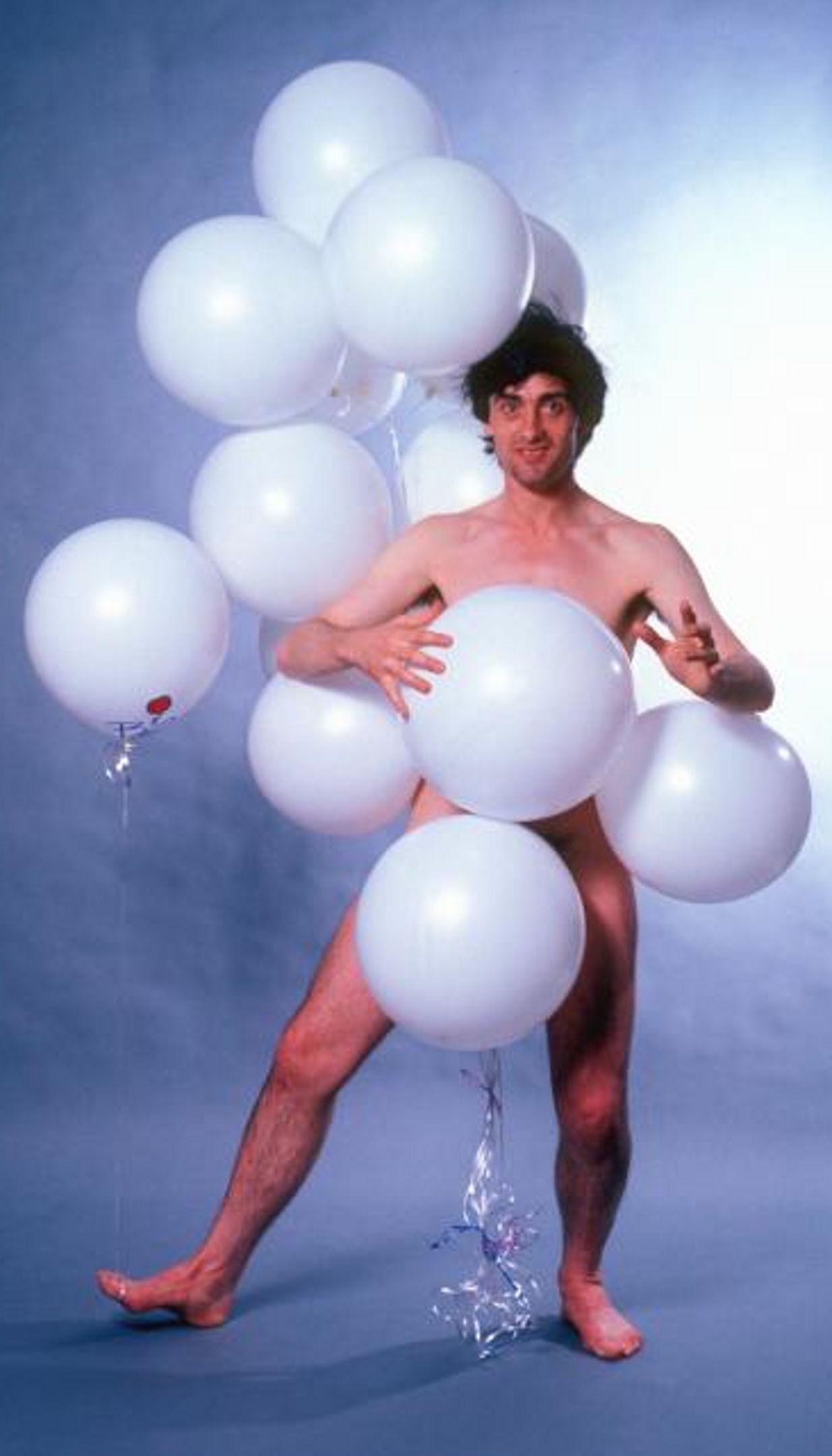
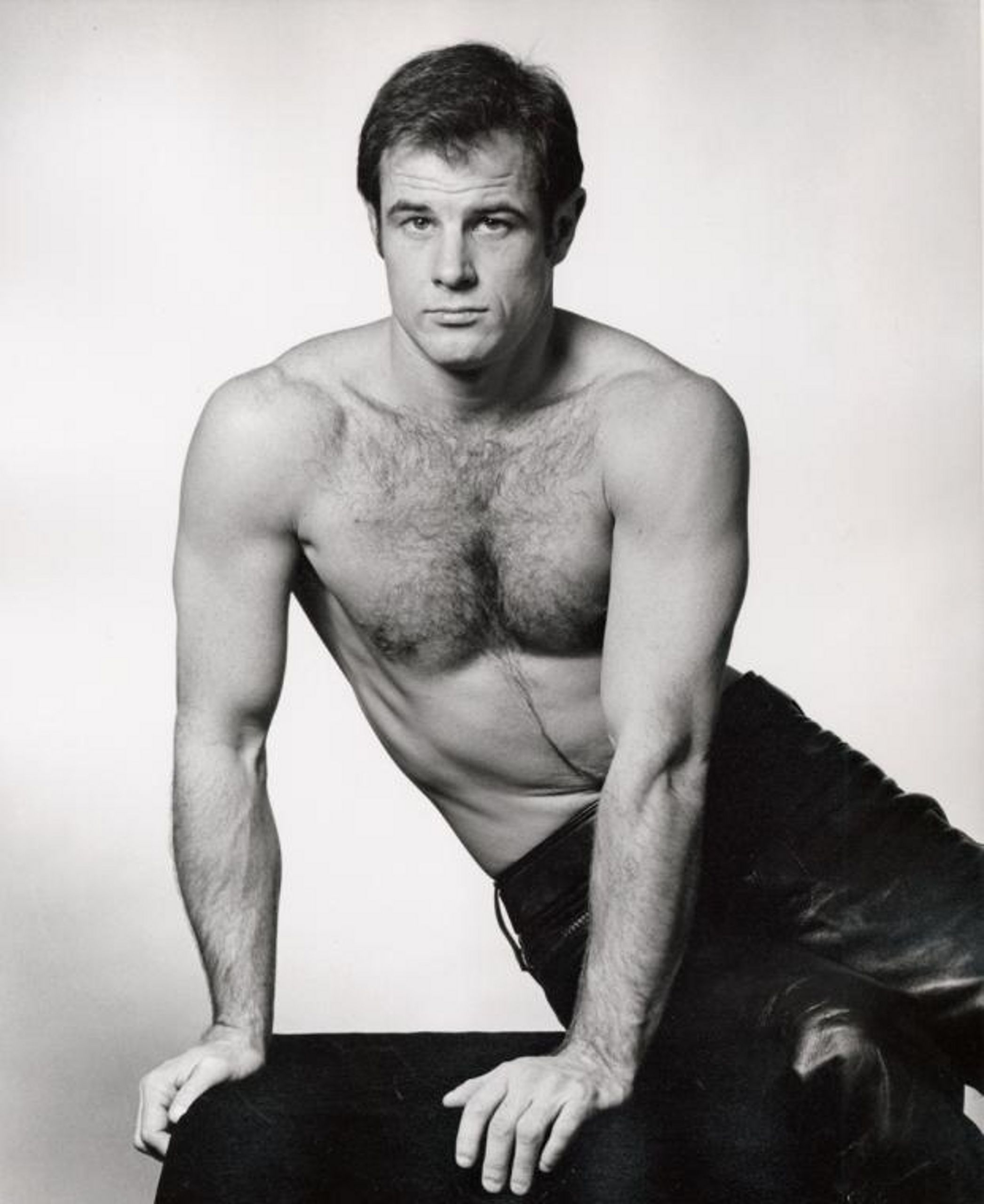
Our latest Artist’s Muse is William Weslow, a ballet dancer with an extraordinarily long career who was also a Broadway performer, artist, and masseur. He posed for George Platt Lynes’ camera during their brief relationship, and was later involved with choreographer Jerome Robbins. He posed nude for dance photographer Kenn Duncan when he was in his 50’s, looking as fit as in photos from 25 years earlier.

The Columbian, Vancouver, WA (6/7/44)

William Edward Weslow was born on March 20, 1925 in Seattle, Washington. His mother had been a Ziegfeld dancer, and he soon followed her lead. As a teen, Weslow studied with famed dance instructor Mary Ann Wells. His 1943 draft registration card lists him as a student at Broadway High School in Seattle. Later that year, he joined the Navy Coast Guard and was stationed in the Alaska.

Annie Get Your Gun (1946) Ethel Merman with Weslow on the right (Photo: Eileen Darby)

After his stint in the Navy, Weslow headed to New York to continue his ballet study. He joined the Ballet Theatre, but soon turned his attention to the Broadway stage. He was in the original Broadway casts of two Ethel Merman vehicles: Annie Get Your Gun and Call Me Madam, the latter choreographed by Jerome Robbins. Besides touring companies, he also appeared on Broadway in the original casts of The Girl In Pink Tights and Wonderful Town with Rosalind Russell.

Weslow photographed by George Platt Lynes (1951)

It was around 1951 that Weslow had his brief relationship with photographer George Platt Lynes. The affair was so fleeting that it did not garner a mention in Allen Ellenzweig’s recent Lynes biography. In David Leddick’s Intimate Companions, it is summed up in a single anecdote:

Dancer William Weslow, who had a transitory but more serious than usual romance with George Platt Lynes in the early 1950’s, evidently treated the photographer to the kind of temperament Platt Lynes had displayed to his admirers in the past. Dining at Platt Lynes’s apartment before a performance, Weslow had requested a steak because of the demanding dancing that was to be done that evening. Instead, Platt Lynes served him an elaborate veal dish, which the young dancer flung against the wall before leaving in search of a steak.

Lynes’s photographs of Weslow are also rare, due in part to the paper negative process that the photographer was experimenting with at the time. This cost-cutting technique gave the photos a quality that have been described as either “ethereal” or “muddy.”

When he wasn’t on stage, Weslow enjoyed painting and sketching, with an affinity for exotic birds, both real and imagined. His work garnered several gallery showings through the years.

Buffalo Courier Express (4/1/51) & New York Post Star (7/9/71)

New York Daily News (1/1/54) & (11/6/54)

Weslow was a soloist at Radio City Music Hall, New York Daily News (6/20/56)

In 1955, he originated the role of Levi Stolzfuss in the Amish musical Plain and Fancy. After nearly 10 years in musicals, he felt the need for a change. When the show closed the following year, he rejoined the Ballet Theatre for a brief stint before settling in at the New York City Ballet for the rest of his dance career.

Like his relationship with Lynes, Weslow’s dalliance with choreographer Jerome Robbins was so fleeting that most biographers fail to mention it. It is worth noting as it caused friction between the two while they continued to work together. Weslow is not alone in saying that Robbins could be vindictive, manipulating his dancers because of personal grudges, often pitting them against each other.

Weslow also caught the eye of New York City Ballet Director Lincoln Kirstein. He rebuffed his advances, stating “I don’t find you attractive, Mr. Kirstein.” “Who asked you to find me attractive?” Kirstein snapped, “I was just asking you to come over to the house for a few drinks and stay over.”

Later, the two had a chance meeting at a gay bathhouse. Weslow greeted him loudly with “Why Lincoln, hello! Come here often?” The married Kirstein did not respond and left the establishment.
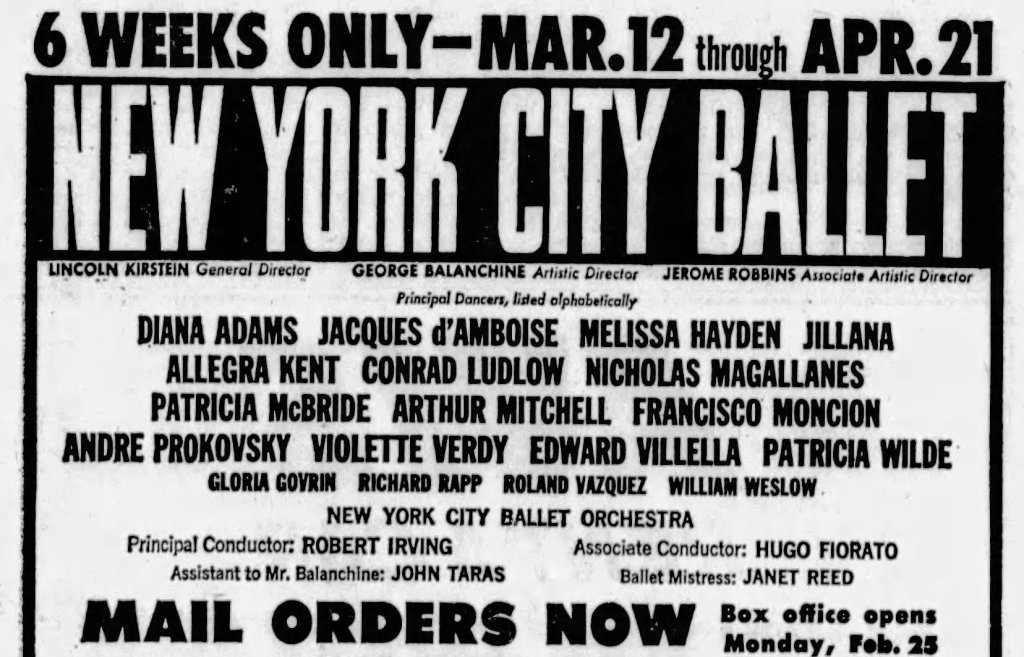
1963 Ad for New York City Ballet
1963: Weslow & Suki Schorer in Variations from Don Sebastian (photo: Martha Swope)
1964: Weslow & Sara Leland in La Valse (photo: Martha Swope)
1964: William Weslow & Carol Sumner are the dancers in the first of 4 Temperaments – NYCB filmed for Canadian Television
1965: New York City Ballet rehearsal for Don Quixote (l-r) Nicholas Magallanes, George Balanchine, Richard Rapp, Jillana, William Weslow (photo: Martha Swope)
Camden Courier Post, New Jersey (3/8/66)
1966: Weslow & Marnee Morris in A Midsummer Night’s Dream (photo: Martha Swope)
1967: Weslow & Leslie Ruchala in Don Quixote (photo: Martha Swope)

In the mid 1960’s, Weslow began cultivating a side career as a masseur, working on fellow ballet dancers including Alicia Alonso and Edward Villella, who credited Weslow’s massages with extending his career by several years. Weslow makes a brief appearance as his masseur in the 1968 documentary Man Who Dances: Edward Villella.

In 1972, Weslow was dismissed from the New York City Ballet. He was 47 years-old and had been with the company for 14 years. In the book I Remember Balanchine, he recounts Balanchine telling him, “You’re too old. You have to leave company. We only want young, pretty dancers here. Old dancers – you see, when they get old they should just go away and die. This is what they should do, die. Because you’re not pretty. No youth… Besides, dear, you’re not going to commit suicide, are you?”

He replied; “To please you, no, I wouldn’t, Mr. Balanchine.”

“And that was that,” Weslow writes; “He didn’t say ‘You have been a good dancer’ or anything. It was just ‘Go away. Go away.’ I was close to tears. It was a terrible blow because I adored the company.”

Weslow’s massage work helped him to keep a connection to the dance world while easing into the next phase of his life, as he became known as “masseur to the stars.”

1976: Weslow was 51 years old when he was photographed by Kenn Duncan
When former ballet dancer Anne Byrne (aka Mrs. Dustin Hoffman) was profiled in the New York Daily News, her masseur William Weslow was there to lend a hand or two. (1/22/78)
William Weslow (1997)

When interviewed later in life, a reporter recalled “He seemed to love Maria Tallchief and had a poster of her on the wall. He also had kind words for Allegra Kent. He could be quite sarcastic, compassionate, cranky and deeply moving remembering certain people and other things.”

Allegra Kent called him “the funniest comedian ever” while also noting his empathy for others. He could also be quite brutal in his assessment of those he had worked with. Of Kirstein he said, “There was cruelty in Lincoln.” Jerome Robbins, he told a biographer “should have been cut up in small pieces and burned in a microwave somewhere because he was so horrible to me.”

William Weslow (2000)

While photographing male nudes for his 2011 book Shades of Love, photographer Demitris Yeros recounts how a naked octogenarian William Weslow would repeatedly interrupt the photo shoot, arms waving to chase the pigeons from his veranda. 

William Weslow passed away at age 87 on January 29, 2013 in New York City. He was remembered in a Dance Magazine article as “A flamboyant personality with a sassy comeback for any remark directed his way…. (he) was as colorful off stage as on.”

See also:
The Colorful World of Carl Van Vechten
Artist’s Muse: José “Pete” Martinez
Artist’s Muse: Donald Windham & Sandy Campbell
Artist’s Muse: Chuck Howard
Artist’s Muse: Randy Jack
Artist’s Muse: Ted Starkowski
Artist’s Muse: Wilbur Pippin
Artist’s Muse: The Mystery Model
Fire Island Muses of George Platt Lynes & The PaJaMa Collective
Revisiting George Platt Lynes’ Fire Island Muses
George Platt Lynes: In Touch Magazine (1982)
Kenn Duncan After Dark

’60s Girl Group Survivors

Recently, the Gr8terDays blog featured cast photos from TV shows throughout the golden age of television. Surviving cast members are pictured in color while those who have shuffled off this mortal coil are depicted in black and white. I found this method of categorizing to be a bit jarring and sad, but also informative. 

The post begins; “I’ve always been the morbid type. Even as a kid, I would watch old movies and TV shows and zero in on, ‘Which of these people is still alive?'” 

Well, I was that kid too, although I didn’t get that way without help. I remember watching The Wizard of Oz on television when I was 5 or 6 years old while my parents made casual conversation of tallying the deceased cast members.  “Yeah, she overdosed. And he’s dead. That one’s probably dead too… I’m not sure about Jack Haley.”

This might explain why my last post was Zombie Divas, a piece of Halloween fiction that featured a reanimated Judy Garland and other dearly departed entertainers hanging around the narrator’s apartment. 

I have written about my love of ’60s girl groups in the past. From 2008-2013 and again in 2024, I produce and host 60 Degrees with Brian Ferrari, a 2-hour weekly program on East Village Radio devoted to female singers of the 1960’s. I have great respect for these women and am very much enjoying the newly released book Will You Still Love Me Tomorrow? An Oral History Of The ’60’s Girl Groups by Laura Flam and Emily Sieu Liebowitz.

With that said, here’s my list of surviving members of 30+ girl groups (primarily) of the 1960’s. They may be gone, but their music lives on.

Lead singer Peggy Santiglia and Phyllis “Jiggs” Allbut are the last original Angels. Besides Barbara “Bibbs” Allbut, first lead singer Linda Jansen and Bernadette Carroll have also passed on.

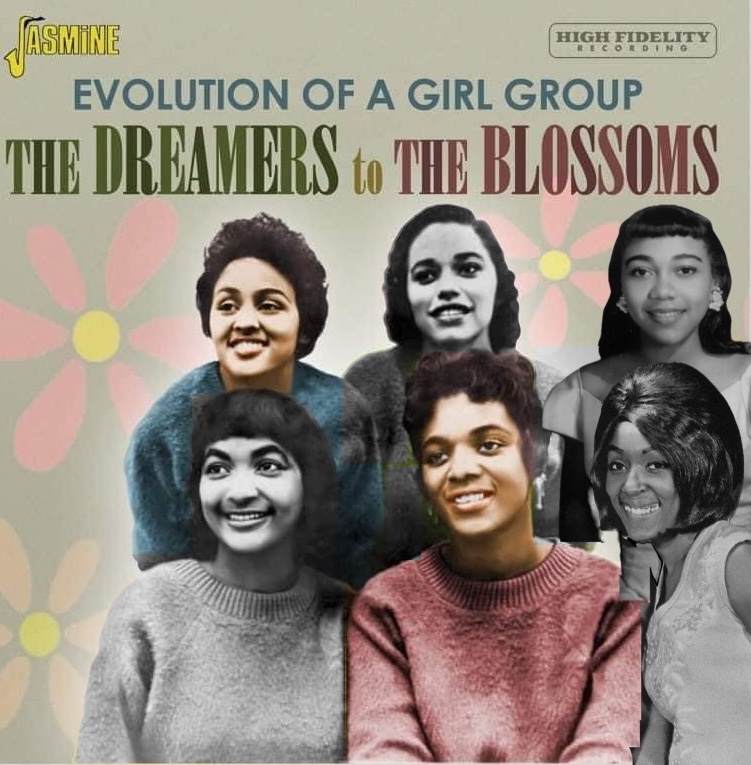
Darlene Love’s group The Blossoms started as The Dreamers in 1954. The evolving lineup went through many group names and members, with Fanita James as the one constant throughout. The 1964 lineup with Love, James and Jean King were regulars on the TV show Shindig! and continued until Darlene’s departure in 1975. Jean passed away in 1983, while Fanita died on Thanksgiving Day, 2023. Twin sisters Annette and Nanette Williams passed away in 2023 & 2026, respectively.
When Reather Dixon Turner died in 2014, co-lead singer Emma Pought Patron became the sole surviving member of The Bobbettes, which formed in East Harlem in 1955.
Seminal girl group The Chantels formed in the Bronx in 1957. They lost Jackie Landry to cancer in 1997, and lead singer Arlene Smith (on the left) passed away on July 29, 2026.
Baby, That’s Me: The last member of The Cake is Barbara Morillo.
The Chordettes were of an earlier generation than the other girl groups, having formed as a folk group in the late 1940’s. They later shifted over to pop music with hits like “Mr. Sandman” and “Lollipop”. Carol Buschman, the last member from the group’s heydey, passed away on September 30, 2023 at age 96.
Chiffon Sylvia Peterson passed away in July, 2023. Barbara Lee had previously died in 1992. Lead singer Judy Craig still occasionally performs with her daughter and niece.
Original Crystals lead singer Barbara Alston passed away in 2018.
The Butterflys were a quartet with two former Crystals: Myrna Giraud and Mary Thomas along with lead singer Paulette Holland. All three are still in New York City… but where in the world is Carmen Santiago?
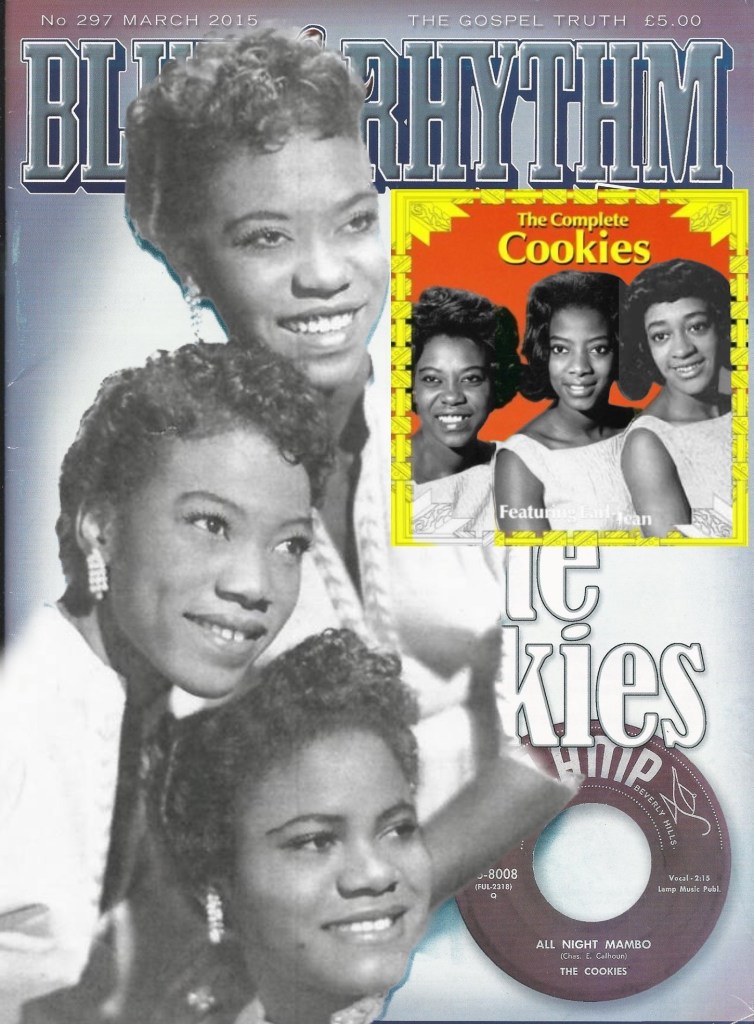
The original Cookies formed in 1954 and later morphed into the original lineup of The Raelettes. The second incarnation featured original member Dorothy Jones with Margaret Ross and Earl-Jean McCrea. In recent years, Margaret headed a Cookies lineup that honored the earlier group in live shows with their song “In Paradise.” She passed away in January 2026. The last Cookie, Earl-Jean McCrea Reavis died four months later on May 7, 2026.
Sole surviving Dixie Cup Barbara Hawkins keeps the group alive with current member Athelgra Neville, sister of The Neville Brothers.
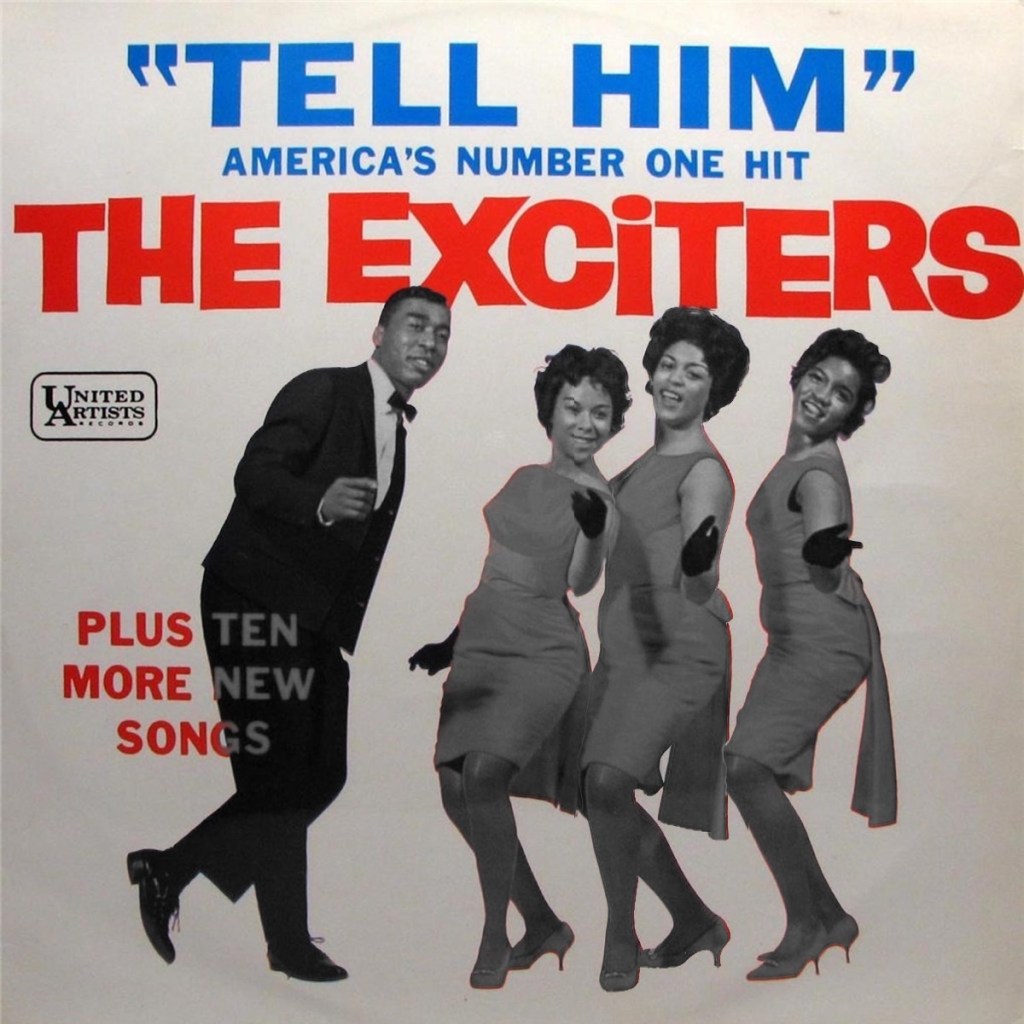
The exciting Brenda Reid, lead singer of The Exciters, was the last surviving member of her group when she passed away at age 80 on April 29, 2026.
No pearly gates for these Flirtations: The group, formed in New York as The Gypsies in 1962, moved to the UK in the late 60’s. All three are still performing together, including Viola Billups, aka Pearly Gates.
Guitarist Carol McDonald (aka Shaw) passed away in 2007. In October 2023, the group was inducted into the New England Music Hall of Fame with the surviving members in attendance.
Honey Cone lead singer Edna Wright (sister of Darlene Love) passed away in September, 2020.
Trying to keep track of the many Ikettes is akin to herding cats, but this classic lineup – which became The Mirettes – featured Robbie Montgomery, Venetta Fields, and Jessie Smith, who died in February, 2021.
Bluebelle Sarah Dash passed away in September, 2021. The New York Times recently reported the ongoing health battles of Cindy Birdsong, who left the Bluebelles to join the Supremes in 1967.
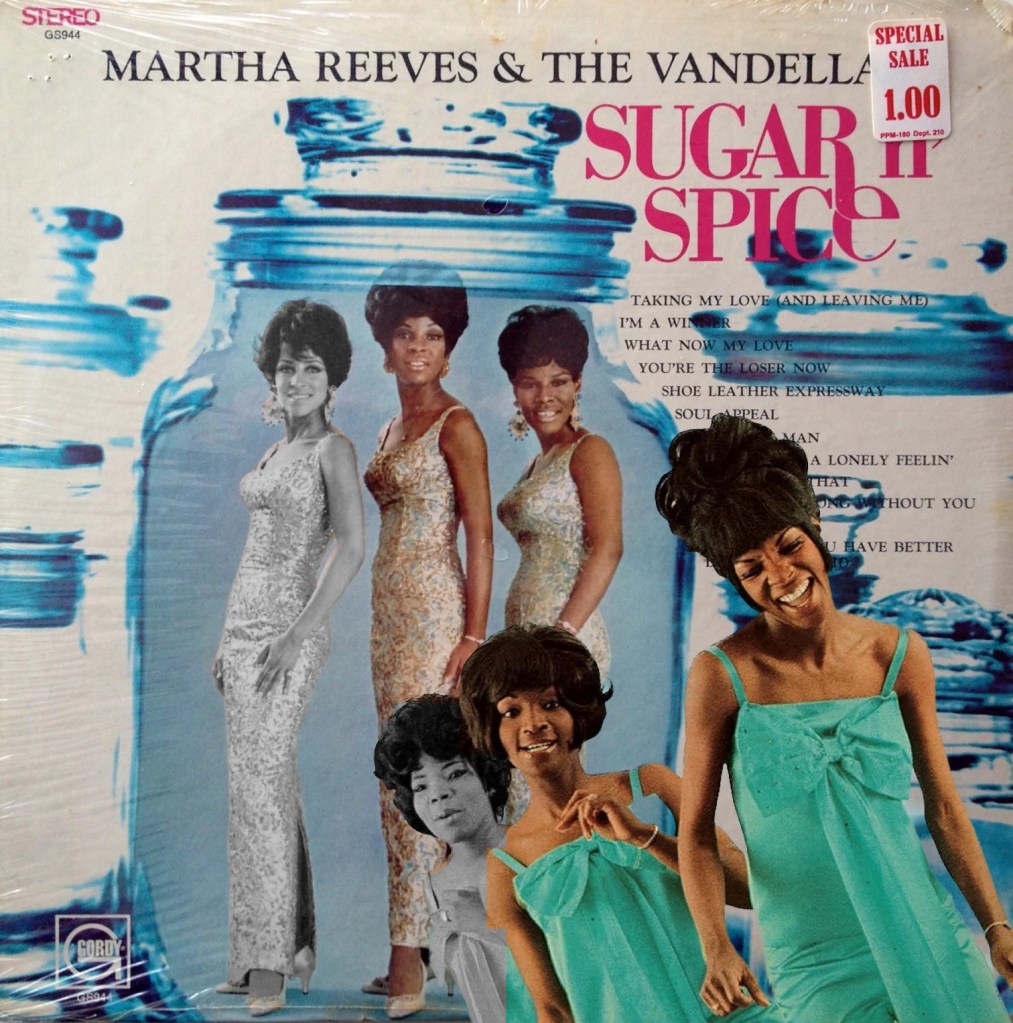
Late 60’s Vandella Sandra Tilley succumbed to an aneurysm in 1982. Original Vandella Rosalind Ashford Holmes passed away on September 15, 2026. Martha Reeves and her other Vandellas are alive and well.
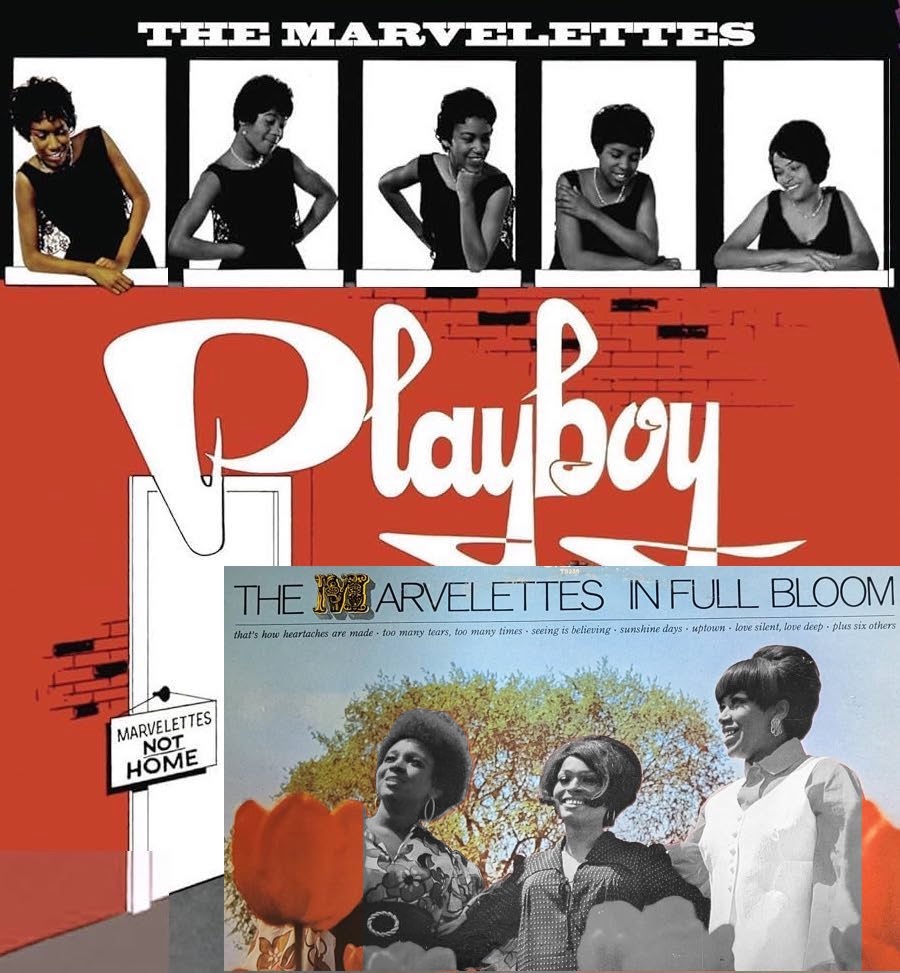
Katherine Anderson Schaffner, group spokesperson and the one constant member of The Marvelettes, passed away on September 20, 2023. Ann Bogan, who replaced original lead singer Gladys Horton in 1967, passed away on August 6, 2026. The sole surviving original Marvelette is now Juanita Cowart Motley, the first to leave the group in 1963.
When Murmaids lead singer Terry Fischer passed away in 2017 from Parkinson’s disease, her sister and fellow Murmaid Carol Fischer Morell called her “the heart and soul of the group.”
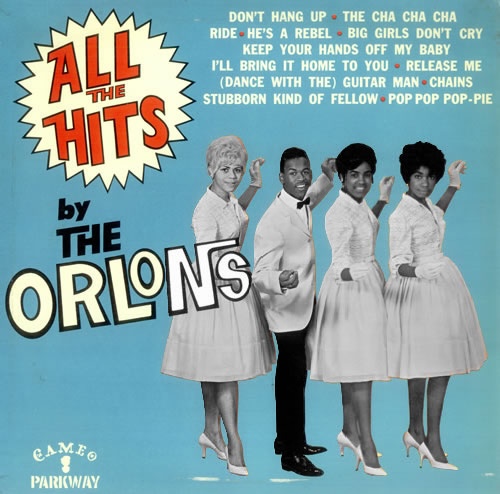
Sole surviving Orlon Stephen Caldwell was still active on the oldies circuit with replacement members until 2022. He passed away on October 1, 2025.
Middle Paris sister Sherrell has been the sole surviving sibling since the death of Allbeth in 2014. Youngest sister Priscilla passed away in 2004.
All three Pixies Three (as well as replacement member Bonnie Long-Walker) are still at the party.
Ruth Pointer is the oldest and last surviving member of The Pointer Sisters.
Reparata (Mary Aiese) had two sets of Delrons in the 1960’s. Carol Drobnicki succumbed to cancer at age 33 in 1980. Reparata passed away on 11/30/2024.
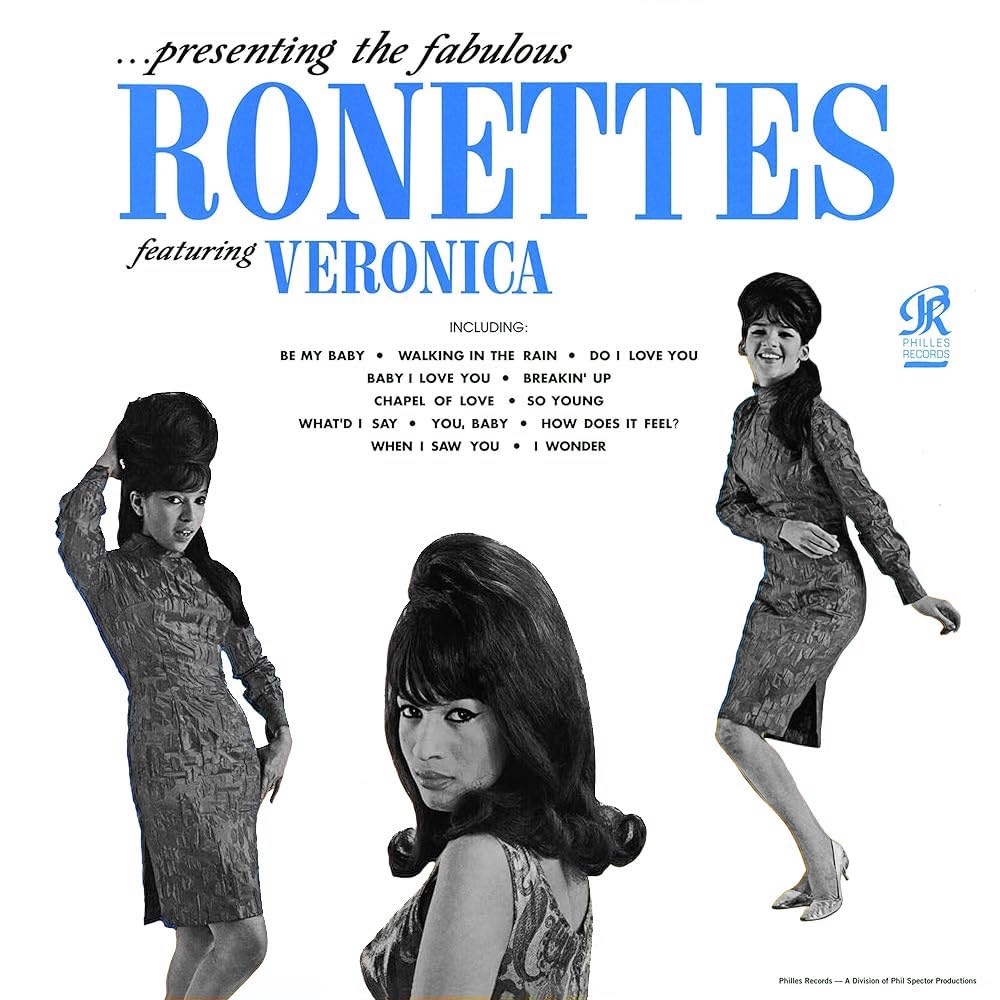
The last original Ronette, cousin Nedra Talley Ross passed away on April 26, 2026.
The elegant Royalettes from Baltimore, Maryland lost their first member when Anita Ross Brooks passed away a few years ago.
The Shangri-Las: The Ganser twins have been gone for decades, but Mary Weiss passed away on January 19, 2024, leaving her sister Betty as the last surviving group member.
The Shirelles formed in 1957 and hailed from Passaic, New Jersey. Shirley Owens Alston Reeves has retired from performing, but Beverly Lee tours with her own Shirelles.
Besides Mary Wilson and Florence Ballard, early 4th Supreme Barbara Martin has also passed on. However, all of the 1970’s post-Diana Ross Supremes are still with us.
Cissy (mother of Whitney) Houston passed away at age 91 on 10/7/2024, leaving Estelle Brown as the sole surviving member of this legendary backing group.
Fayette Pinkney was one of the founding members of The Three Degrees, which was formed by producer Richard Barrett in 1963. She went solo in 1976 and passed away in 2009. Originally from Philadelphia but now based in the UK, members of the group are still touring.
The Toys were assembled in Jamaica, Queens in 1961. Lead singer Barbara Harris is the only one still performing, although the retired members often show up to support her at shows. All three still live in the Tri-state area.
At different times, Motown’s Velvelettes also featured Vandellas Betty Kelly and the late Sandra Tilley. Founding member Bertha Barbee McNeal passed away in December, 2022.
The Ad Libs were not a true girl group, but “The Boy From New York City” and their follow-up Blue Cat singles sure fit in the genre. Sadly, Mary Ann Thomas and the boys from Bayonne, New Jersey have all passed on.

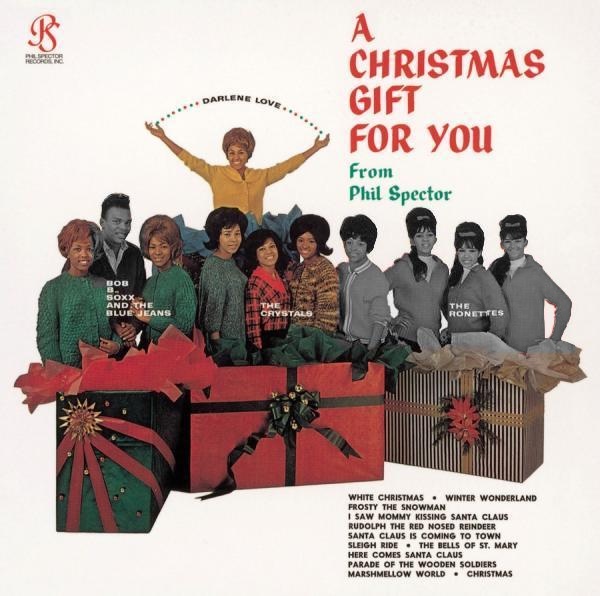
The cast of the Phil Spector Christmas LP, released in 1963.


Other books I highly recommend: John Clemente’s Girl Groups: Fabulous Females Who Rocked The World, which is cited as a reference source on anything related to the genre. Prior to that, Alan Betrock’s 1982 Girl Groups: Story Of A Sound and the 1983 documentary based on that book were the first attempts to tell their story.

See also:
Girl Group Heaven: Ronnie, Rosa & Wanda
She Knew Something About Love: Brenda Reid (1945-2026)
Back To The Girl Zone: 60 Degrees Returns
Maybe.
Ronnie Spector – Siren (1980)
10 Forgotten Cher Moments
Dusty Springfield Sings Kate Bush
Tina Turner: 12+ Cover Songs You May Have Missed
Etta James: Advertising Zombie
Debbie At The World (1989)
A Christmas Without Miracles: The 1987 Motown Xmas Special

Kenn Duncan After Dark


Kenn Duncan is widely considered to be one of the foremost dance photographers of the late 20th Century. In addition to his work as principal photographer for After Dark and Dance Magazine, his photos also appeared in Vogue, Time, Life, Newsweek and Harper’s Bazaar. From the mid-1960’s through the early 1980’s, he photographed nearly every major dance company in the world as well as many Broadway shows.

Born in New Jersey on September 22, 1928, Duncan began his career as a figure skater and then segued into dance. His career took another turn when he was sidelined with a broken foot and signed up for a six-week photography course at the local YMCA. Naturally he gravitated back to the dance world for photographic inspiration.

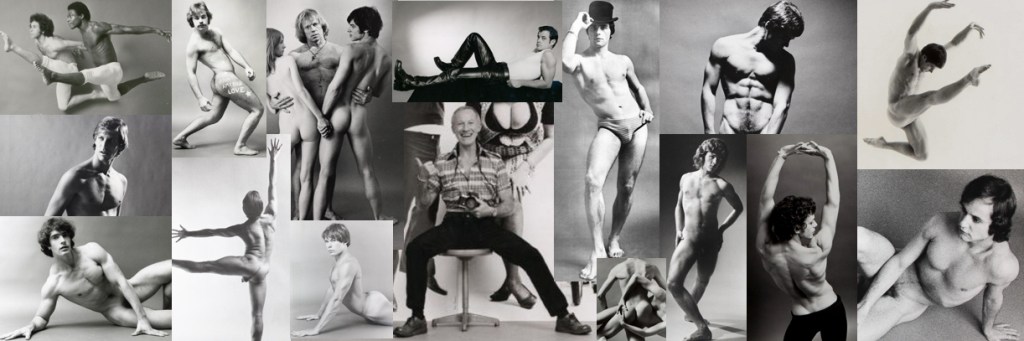
In addition to his dance photography, Duncan was well regarded for his nude photographs, with an emphasis on male subjects. His first two books, Nudes (1970) and More Nudes (1971) were favorably received for his “discreet and artistic arrangements of his subjects.”

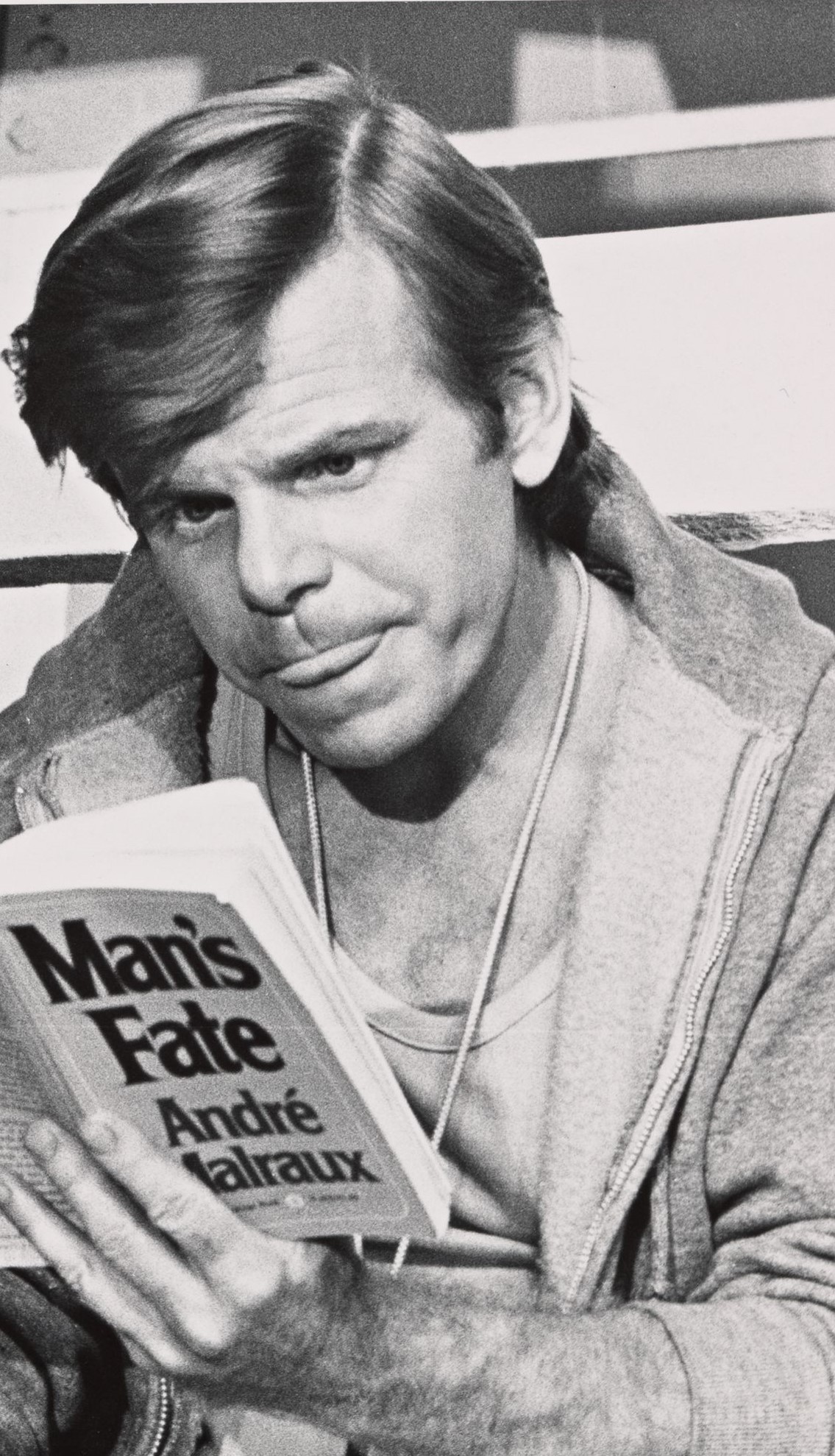
Christopher Walken (1968)

After Dark was an edgy entertainment and culture-based magazine that sprang from the waning Ballroom Dance Magazine in 1968. In The Rise And Fall Of Gay Culture, Daniel Harris writes; “One of the strangest reincarnations in journalistic history… it was out of the ashes of a periodical devoted to such topics as waltzes, rumbas, and turkey trots that After Dark, an audacious mass-market experiment in gay eroticism, arose like a phoenix in all of its subversive splendor.”

Although After Dark was not officially a gay magazine, the publishers were certainly willing to cater to that audience, pushing the envelope on male nudity to a degree that is still not seen in mainstream US publications 50 years later.

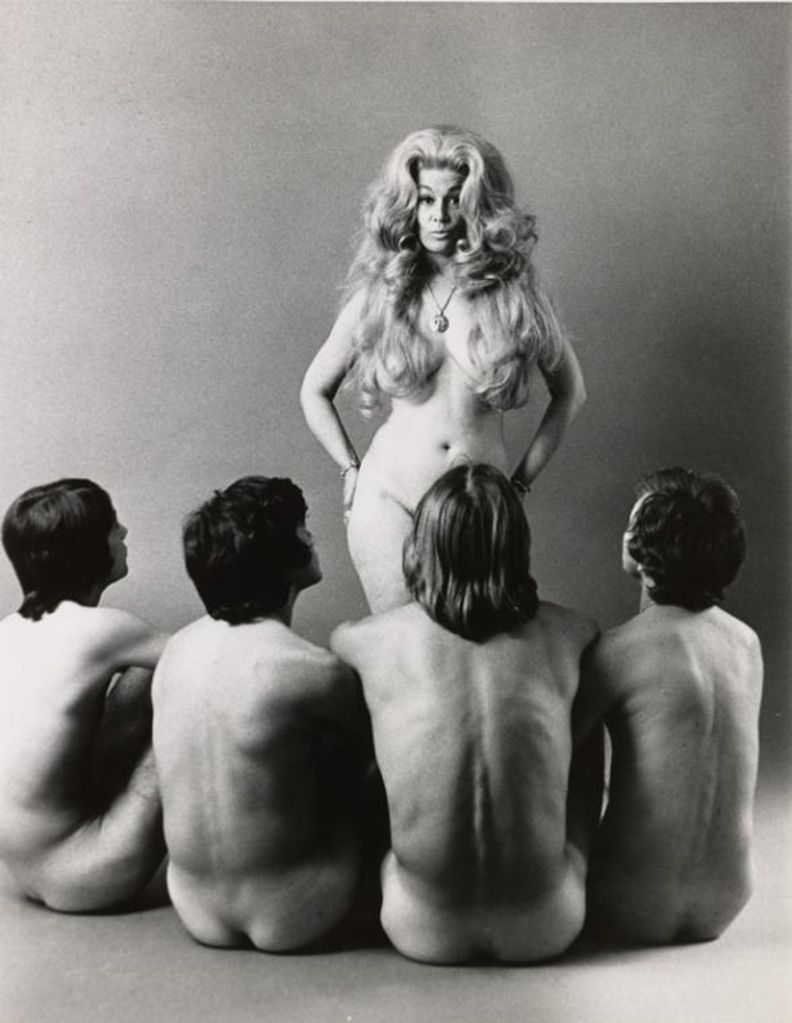
Sylvia Miles & Friends (1970)

Richard Thomas (1969)

Sal Mineo (1971)

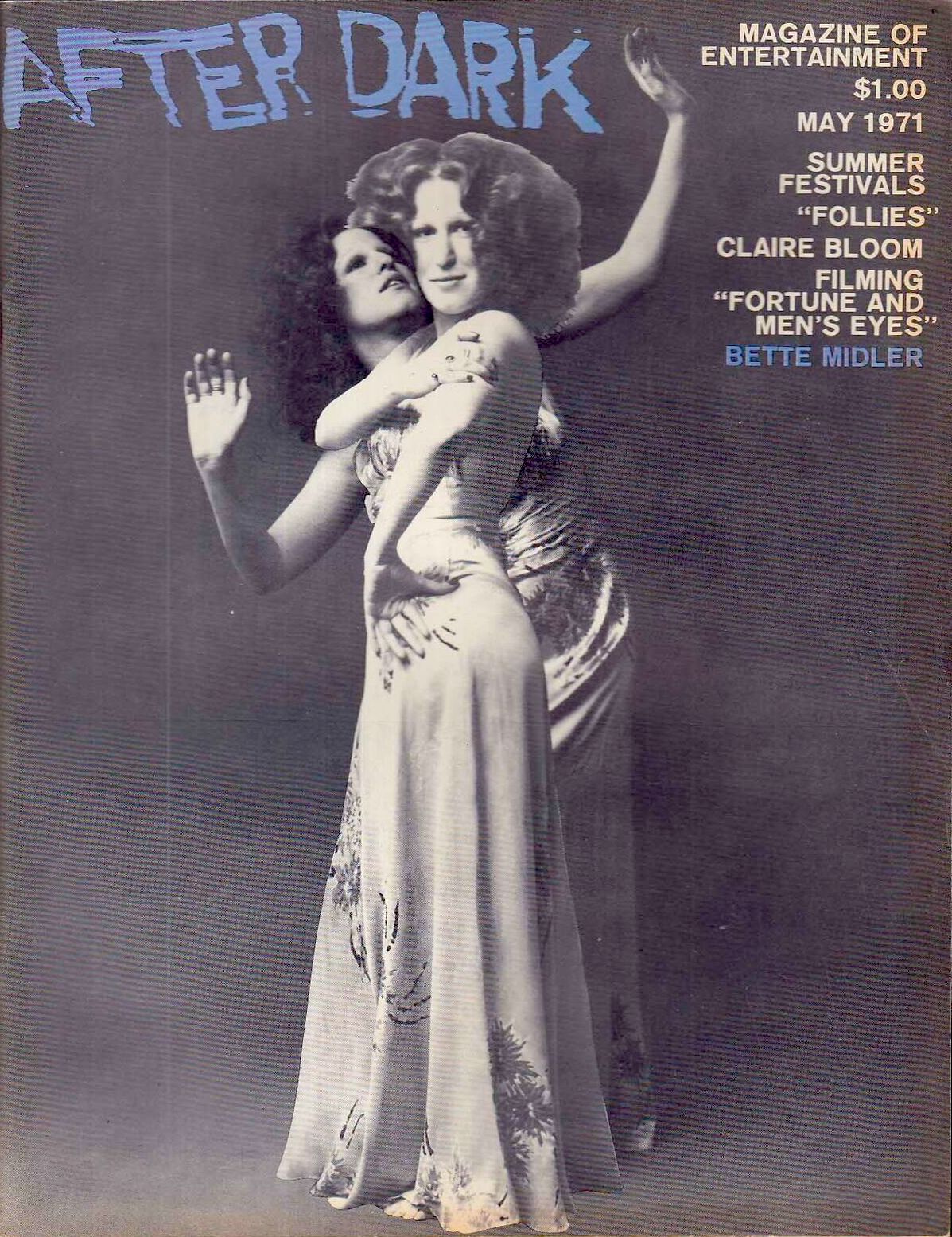
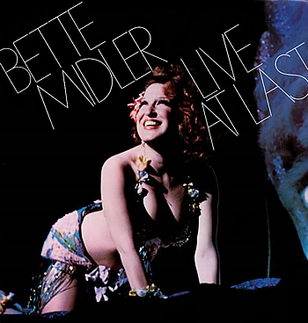
Duncan photographed Bette Midler numerous times through the years, including three After Dark cover photos and the cover shot for her 1976 Live At Last LP.

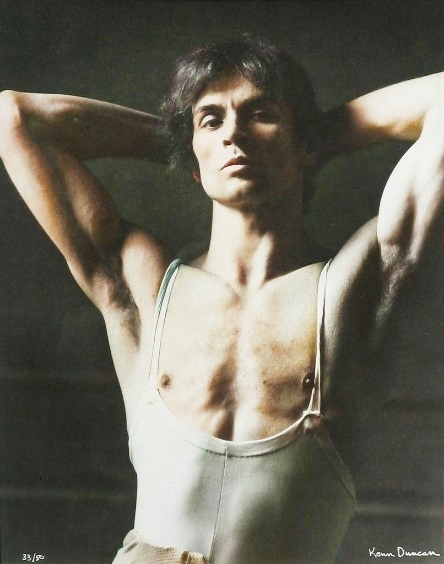
Rudolph Nureyev (1971)

Mikhail Baryshnikov

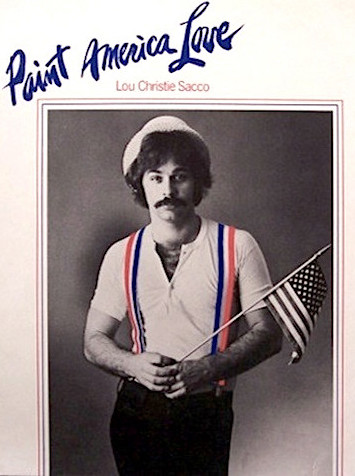
In 1971, Kenn Duncan photographed singer Lou Christie for his Paint America Love LP.

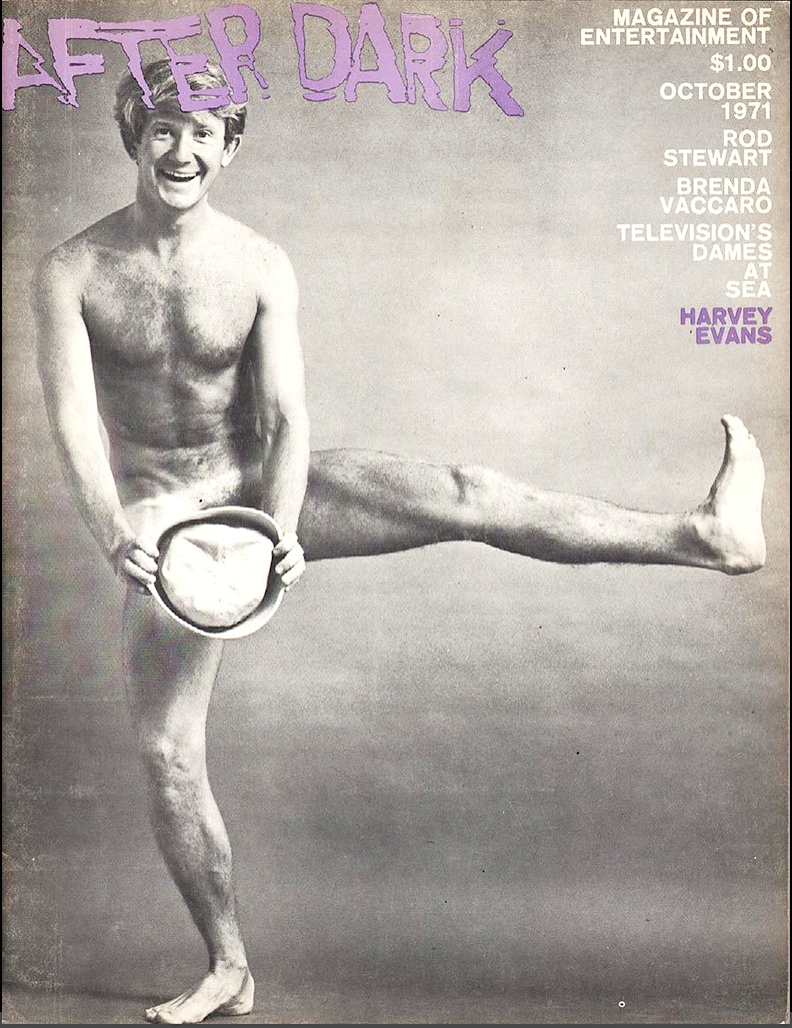
Harvey Evans was photographed in the buff for the October, 1971 cover of After Dark to promote the television adaption of the musical Dames At Sea.

LaBelle (l-r) Nona Hendryx, Sarah Dash, Patti LaBelle photographed in 1972 shortly before their intergalactic makeover.

Tony award-winning Welsh actor/director Roger Rees in several undated photos.

Brad Davis (1981)

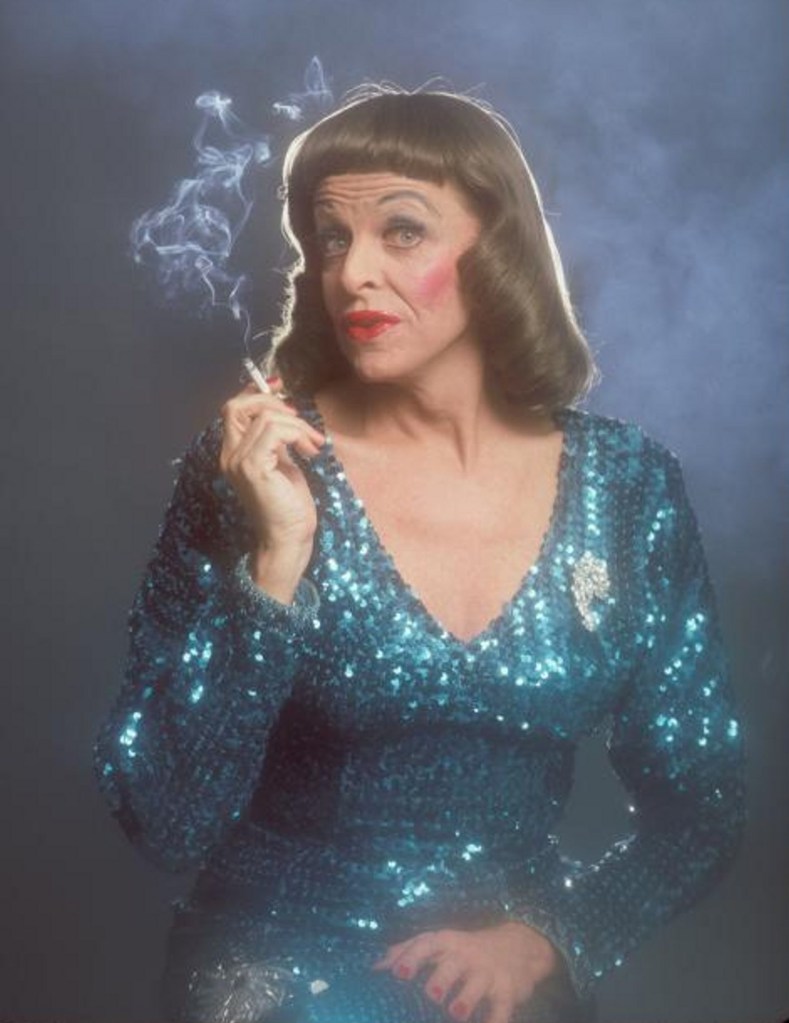
Charles Pierce as Bette Davis (1981)

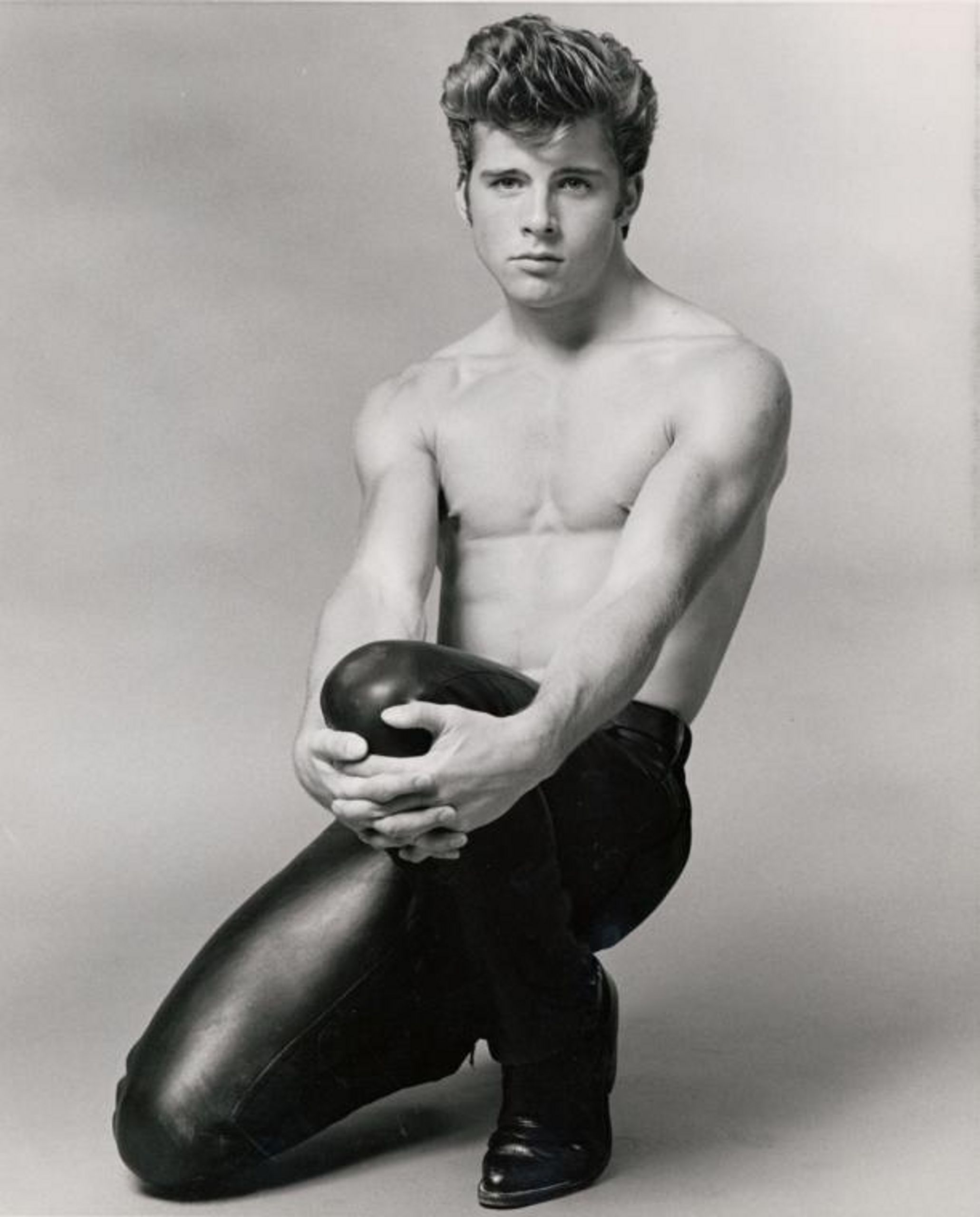
Maxwell Caulfield (1981)


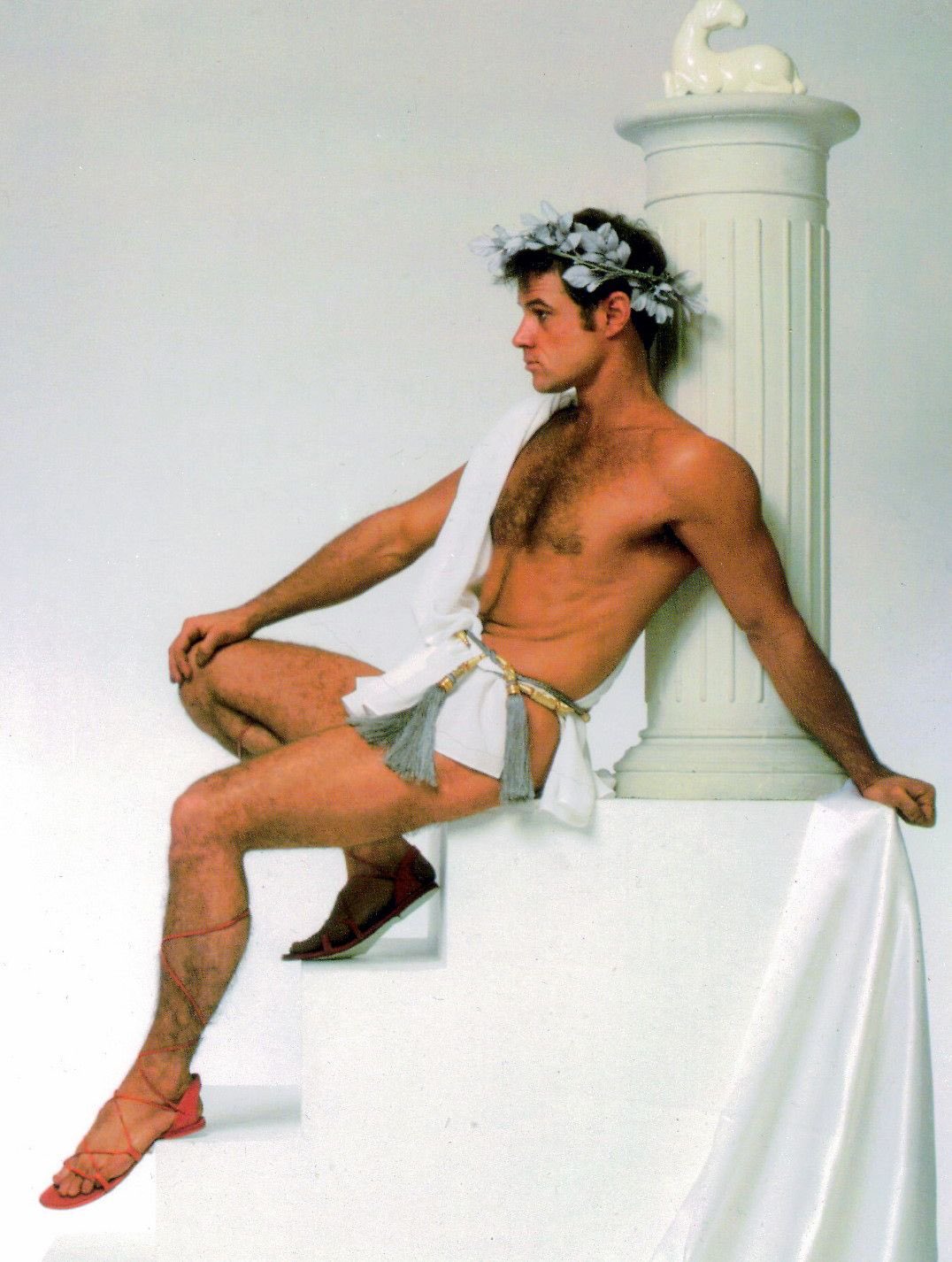
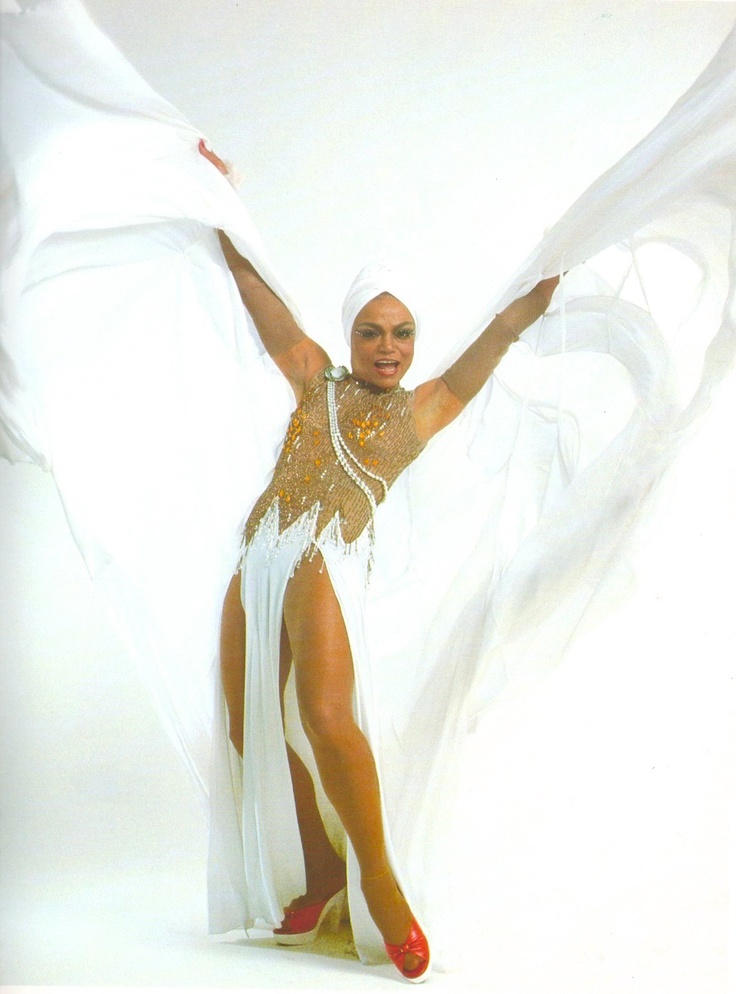
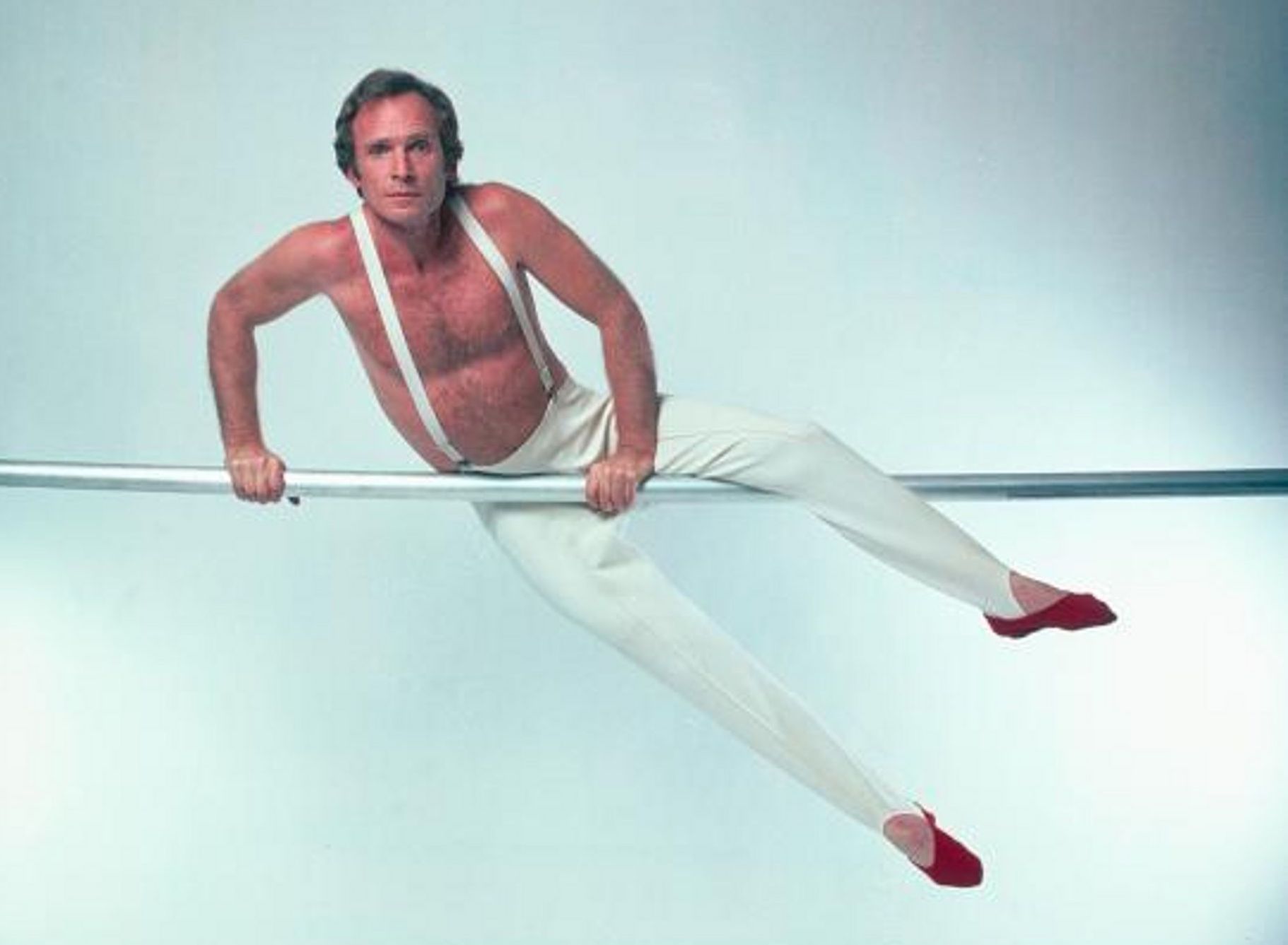
After Dark shuttered in early 1983. The following year, Duncan published The Red Shoes, a photo book featuring celebrities wearing red shoes in a nod to both the Hans Christian Anderson fairy tale as well as the ruby slippers of The Wizard of Oz. Among those featured were many familiar subjects of his earlier work, including (pictured below) Brad Davis, Bette Midler, Maxwell Caulfield, Eartha Kitt, Dick Cavett, Mikhail Baryshnikov, John Curry, Richard Thomas, Gregory Hines, and Treat Williams.

Duncan began work on a second Red Shoes book, but it remained unfinished, along with several other projects. He was just 57 years old when he died of AIDS complications at New York Hospital on July 27, 1986. In 2003, the New York Public Library for the Performing Arts acquired 600,000 photos from Kenn Duncan’s estate. Many of these photos have been digitized and are now available for viewing online for free.


See also:
Don Herron’s Tub Shots
The Yale Posture Photos: Bill Hinnant
The Yale Posture Photos: James Franciscus
Revisiting Bette Midler’s Thighs & Whispers (1979)
The Colorful World of Carl Van Vechten
Remembering Photographer Lucas Murnaghan
John Waters in Blueboy Magazine (1977)
Artist’s Muse: The Mystery Model
Artist’s Muse: William Weslow
Marianne Faithfull After Dark (1980)
Keith Haring In Heat Magazine (1992)
George Platt Lynes: In Touch Magazine (1982)

Tina Turner: 12+ Cover Songs You May Have Missed


It’s hard to believe that Tina Turner is gone. I remember feeling the same way after Prince died – I liked thinking that he was always out there, somewhere, working on music. Not that I was expecting new music from Tina – it was enough to see her pop up in occasional interviews as she enjoyed retirement in her Swiss castle.

What more can you say about the queen? So much is being written and discussed, I should just shut up and walk away. But…

With the exception of the song “Nutbush City Limits”, Tina is not remembered as a songwriter. But she did have a knack for choosing excellent material and putting her indelible stamp on it. After hearing Tina’s take on a song, you could be forgiven if you forget that “Proud Mary” was a Creedence Clearwater Revival tune, or that “Let’s Stay Together” is Al Green’s song. “I Can’t Stand The Rain” was a 1974 hit for Ann Peebles, and Bonnie Tyler had a minor hit with “Simply The Best” the year before Tina recorded it.

That said, there are some interesting covers that have flown under the radar or fallen through the cracks. Here are some of them.

UPDDATE: The New York Times published their own article on Tina’s covers the same day this was posted, but other than the Stones/Beatles/Led Zeppelin cuts, none of the tracks listed below were included.

1) Tina Sings Dusty Springfield: “Just A Little Lovin'” / “Every Day I Have To Cry” – Dusty Springfield’s version of the Barry Mann/Cynthia Weil song “Just A Little Lovin'” was the lead track from the classic 1969 Dusty In Memphis LP. Tina’s version is from her 1979 solo LP Love Explosion, which was not released in the U.S.

Tina Turner – “Just A Little Lovin'” (1979)

“Every Day I Have To Cry” was originally a minor hit for Steve Alaimo in 1962, and memorably covered by Dusty on her 1964 I Only Want To Be With You LP. Tina’s version is from the Phil Spector produced River Deep, Mountain High LP (1966).

Ike & Tina Turner – “Every Day I Have To Cry”

2) Tina Sings Led Zeppelin: “Whole Lotta Love” – This Led Zeppelin cover was released as a single from Tina’s second solo LP, 1975’s Acid Queen. The NY Times article on Tina’s cover songs describes this version as “disco-inflected” but also “slowed down.” To paraphrase Led Zep: It makes me wonder (what they were listening to.)

Tina Turner – “Whole Lotta Love” (1975)

3) Tina Sings Prince: “Let’s Pretend We’re Married” / “Baby I’m A Star” – Tina’s cover of “Let’s Pretend We’re Married” was recorded live in 1984 and featured as a B-side on different singles from the Private Dancer LP, depending on the territory.

Tina Turner – “Let’s Pretend We’re Married”

Tina’s version of “Baby I’m a Star” was omnipresent for a season in 2000, as she sang it in Target commercials while they were sponsoring her tour. It was also released on All That Glitters, a greatest hits CD only available at Target. And then… it was gone.

Tina Turner – “Baby I’m A Star”

4) Tina sings Linda Ronstadt: “Long Long Time” – Earlier this year, Linda Ronstadt’s definitive 1970 version of this Gary White song was introduced to a new generation via the HBO series The Last Of Us. Tina recorded her version in 1974 for her first solo LP, Tina Turns The Country On. Rolling Stone recently wrote about this forgotten gem. Although the LP was not a commercial success, it did garner Tina a Grammy nomination.

Tina Turner – “Long Long Time”

5) Tina Sings Marvin Gaye: “I Heard It Through The Grapevine” – There are a few versions of Tina singing Marvin Gaye’s classic Motown hit. The song was often part of her live repertoire. This live version from the Ike & Tina Turner Review is circa 1970:

Ike & Tina Turner Review – “I Heard It Through The Grapevine”

Thirty years later, Tina recorded a dance version of the song for her Twenty Four Seven LP. Unfortunately the song was pulled from the final release of the album:

Tina Turner – “I Heard It Through The Grapevine”

Also – just for funzies, here’s Tina singing with Marvin Gaye on Shindig! March 25, 1965 doing a medley of “Money (That’s What I Want)” and “I’ll Be Doggone.”

Tina Turner & Marvin Gaye “Money (That’s What I Want)” / “I’ll Be Doggone”

6) Tina Sings Stevie Wonder: “Living For The City” / “Higher Ground” – These two Stevie Wonder tracks from his classic 1973 Innervisions LP were covered the following year by Ike & Tina on their Sweet Rhode Island Red LP. The tracks later turned up on several compilations as the material from this period was often repackaged and re-released.

Ike & Tina Turner – “Living For The City”
Ike & Tina Turner – “Higher Ground”

7) Tina Sings Etta James: “All I Could Do Was Cry” – Motown founder Berry Gordy was a co-writer on this song, which was written for Etta James in 1960. Ike & Tina included their version on the Live! The Ike & Tina Turner Show LP (1964). Tina’s 4-minute monologue in the middle of the song is epic, recounting the wedding of the man she loves as he marries someone else, building to a crescendo with “their friends throwing rice all over their heads.” This overlooked camp classic was later featured on the 2007 CD A Date With John Waters.

Ike & Tina Turner – “All I Could Do Was Cry”

8) Tina Sings Elton John: “Philadelphia Freedom” – This Ike & Tina Turner track was recorded in the mid-1970’s, just before Tina left. Ike later included it on his 1980 LP The Edge and on a 1984 Tina Turner EP titled Mini, among other repackages of their 70’s output.

Tina Turner – “Philadelphia Freedom”

9) Tina Does Disco: “Shame, Shame, Shame” – Like “Philadelphia Freedom,” this cover of the 1975 dance hit for Shirley & Co. was featured on Ike’s The Edge LP, Tina’s Mini EP, and numerous other budget collections.

Tina Turner – “Shame, Shame, Shame”

She also memorably performed the song with Cher on her variety show in 1975:

Cher & Tina Turner – “Shame, Shame, Shame”

10) Tina Sings The Temptations: “Ball of Confusion”– Tina’s version of “Ball Of Confusion” was the gateway to the second (or third?) act of her career. Recorded with B.E.F., aka British Electric Foundation for their 1982 album Music of Quality and Distinction Volume One, the song became a top 5 hit in Norway. Capital Records took notice and signed her to the label. The resulting LP was Private Dancer, and the rest is history.

B.E.F. featuring Tina Turner – “Ball Of Confusion”

11) Tina Sings The Rolling Stones: “Honky Tonk Woman” / “Under My Thumb” / “Let’s Spend The Night Together” – Well of course Tina covered The Stones. She taught moves to Jagger. Tina & Mick were always joining each other onstage, and although she never recorded proper versions of “Jumping Jack Flash” or “It’s Only Rock And Roll‘, they were frequently on her concert setlists.

Ike & Tina’s studio version of “Honky Tonk Woman” was featured on their 1970 LP Come Together, and was also the b-side to the single of the title track:

Ike & Tina Turner – “Honky Tonk Woman”

“Under My Thumb” – A track from the 1975 Acid Queen LP:

Tina Turner – “Under My Thumb”

“Let’s Spend The Night Together” – Also from her1975 Acid Queen LP:

Tina Turner – “Let’s Spend The Night Together”

12) Tina Sings The Beatles: “Help!” / “Something” / “Get Back” / “Come Together” – Although not as closely associated with The Beatles as with the Rolling Stones, Tina covered several of their songs through the years. Her ballad version of “Help!” was on the international edition of the Private Dancer LP, but not the U.S. version.

Tina Turner – “Help!”

Tina’s version of “Something”:

Tina Turner – “Something”

Ike & Tina perform “Get Back” on Beat Club in the UK. The song was included on their 1970 Workin’ Together LP and released as a single in Europe.

Ike & Tina Turner – “Get Back”

“Come Together” was the title track from Ike & Tina’s 1970 LP. The single also featured their version of the Stones’ “Honky Tonk Woman” as the b-side.

Ike & Tina Turner – “Come Together”

Here’s a Spotify playlist of the available songs above as well as many other covers:

You may also like:
10 Forgotten Cher Moments
Marianne Faithfull After Dark (1980)
Girl Group Heaven: Wanda, Rosa & Ronnie
She Knew Something About Love: Brenda Reid (1945-2026)
Dusty Springfield Sings Kate Bush
Etta James: Advertising Zombie
Revisiting Bette Midler’s Thighs And Whispers (1979)
Ronnie Spector – Siren (1980)
Debbie At The World (1989)
12 Forgotten Classics By New Wave Women
Kate Bush’s Queerest Songs
A Christmas Without Miracles: The 1987 Motown Christmas Special

The Yale Posture Photos: Bill Hinnant

Up until recent years, the fabled Ivy League nude posture photos have been written about but seldom seen. Starting in the mid-1930’s and continuing on until the 1970’s, incoming Ivy League University students were photographed fully nude in order to gauge their posture, detect scoliosis, and address other correctable body issues while simultaneously inflicting emotional scarring on the participants. Talk show host Dick Cavett joked about it in his early stand-up routines:

“Some guys hated it… some seemed to enjoy it. One guy tried to go through twice… one guy fainted… one guy tried to buy his pictures… and one guy tried to get his retouched.”

50 years later, he penned a New York Times Op Ed piece with a much darker view of the experience.

In recent years, the posture photos from Yale have garnered the most press, with tongues wagging at the possibilities of seeing our country’s best and brightest in the buff. The pics were so rare that most articles on the subject did not actually feature any of the images, opting instead to use medical textbook illustrations or military posture photos.

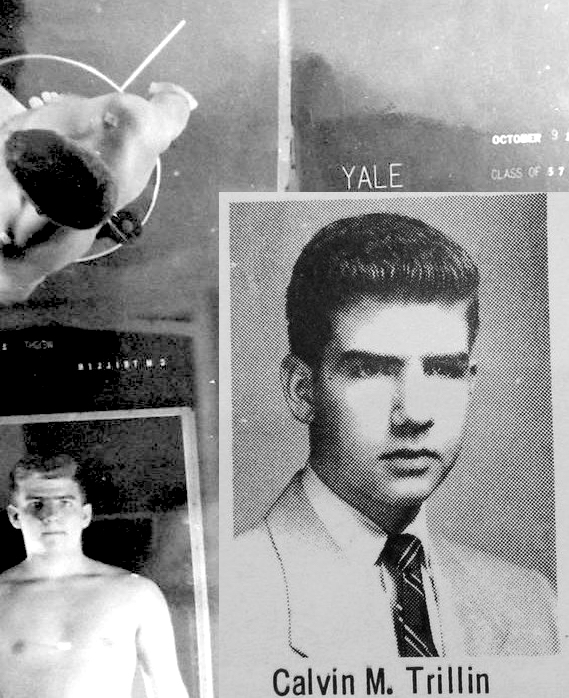
Since 2020, a steady stream of posture photos featuring male freshman Yalies from 1937-1960 have sold on eBay. It was really only a matter of time before some familiar faces began to pop up. I posted about writer Calvin Trillin‘s photo, which went for a little over $100, while the pic of late actor James Franciscus pulled in $1,225.

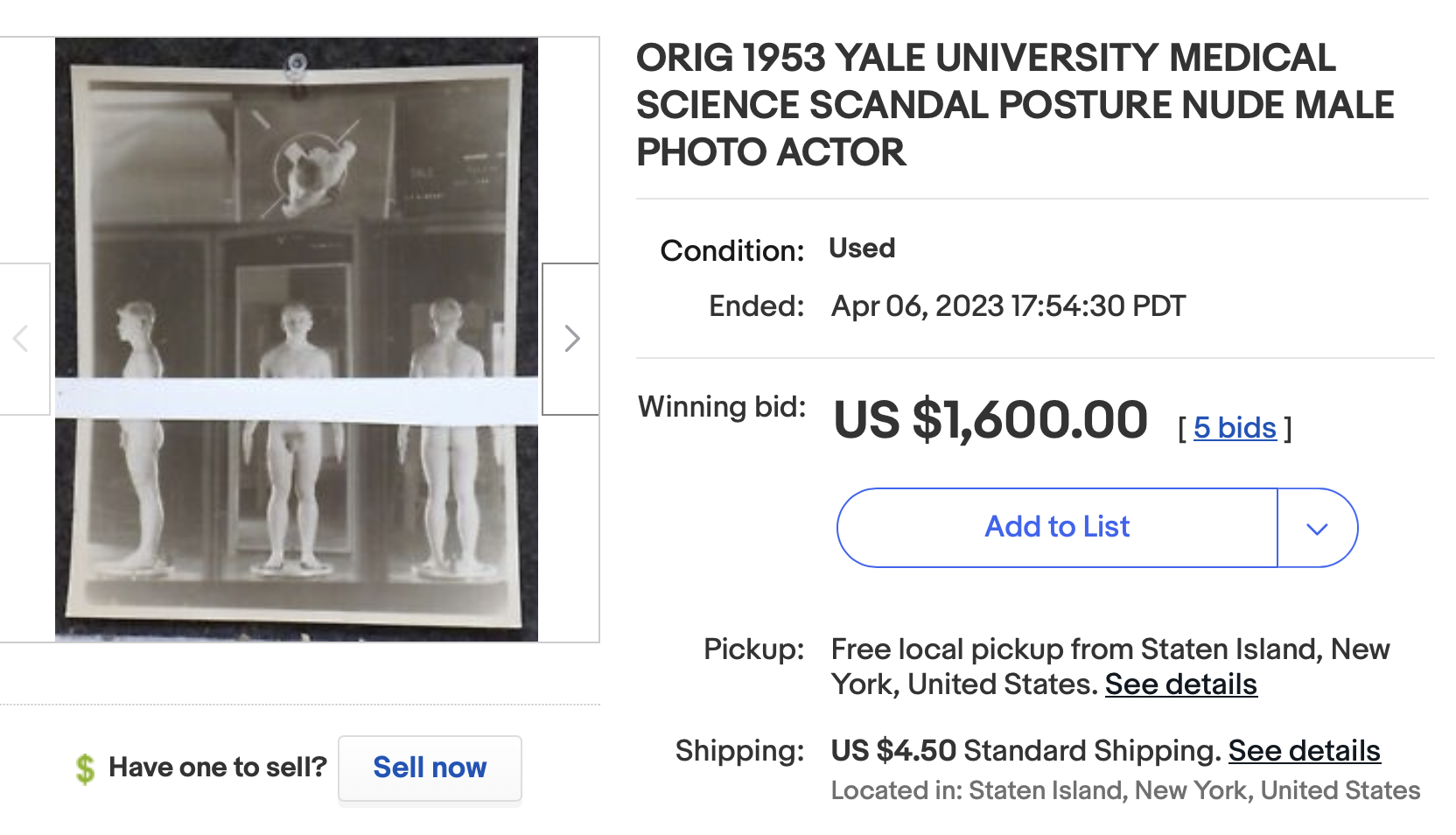
These pics now regularly sell for close to $1,000 each. Earlier this month, actor Bill Hinnant’s photo went for a whopping $1,600.

Chalk one up to eBay for their ever-changing goalposts of propriety. When James Franciscus’ Yale photo went up for auction in 2021, full nudity was prohibited in auction photos. What we were left with was a modesty strip applied by the seller to prevent us from viewing the full Franciscus. Now eBay requires that auctions selling nude photos actually show the goods – to insure that the subject isn’t too…erm… excited to be there. Dean Martin’s dong was covered with a post-it, but now it’s ok to see Bill’s Hinnant:

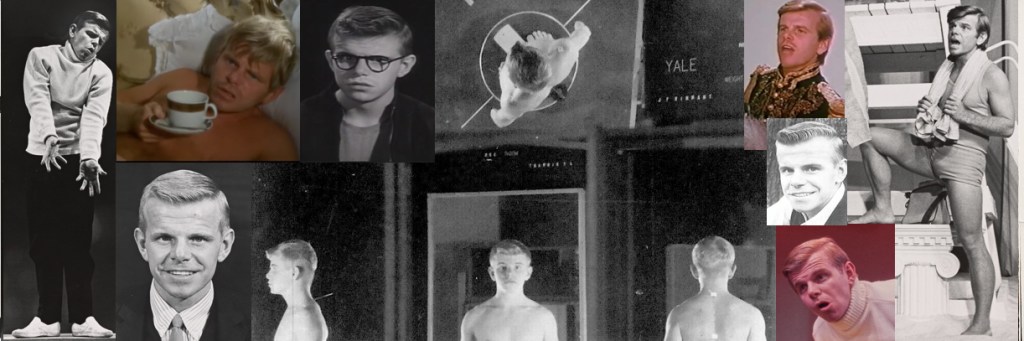
Hinnant was still known by his birth name of John F. Hinnant, Jr. when he arrived at Yale in the Fall of 1953. Originally from Chincoteague Island, Virginia, he had spent two summers as an apprentice at Ogunquit Playhouse in Maine. He made his professional debut there playing Barbara Cook’s son in Carousel. He also appeared in Life With Mother starring the legendary Billie (Glinda the Good Witch) Burke.

Following his sophomore year, Bill departed Yale when he won the role of Lt. Cover in the original cast of the comedy No Time For Sergeants starring Andy Griffith. After a year and a half on Broadway, Hinnant returned to Yale to complete his degree alongside his younger brother, Skip, who was also an actor.

In 1957, Bill Hinnant co-starred with former Yale classmate James Franciscus in the noir film Four Boys And A Gun:

Standing just 5’2″, his stature was usually noted in press articles. “Pintsized blond Hinnant has a full-sized talent!” crowed a 1965 Variety review.

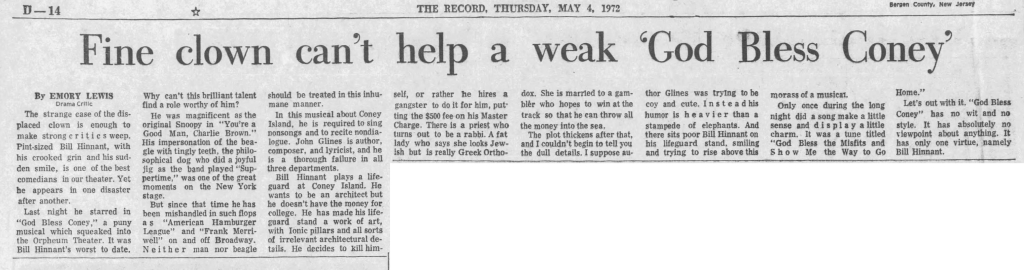
Most of his notices were similar to Variety’s take on the 1963 off-Broadway musical Put It In Writing: “Far from memorable but featuring good work by Bill Hinnant.” This was a theme throughout his career, as he received favorable reviews in forgotten musicals that would close on the road (Maltby & Shire’s Love Match), on opening night (The American Hamburger League, Frank Merriwell), or after a handful of performances (All Kinds Of Giants, God Bless Coney). He guested on television shows ranging from Route 66 and Naked City to sitcoms like Pete & Gladys and Karen Valentine’s self-titled show.

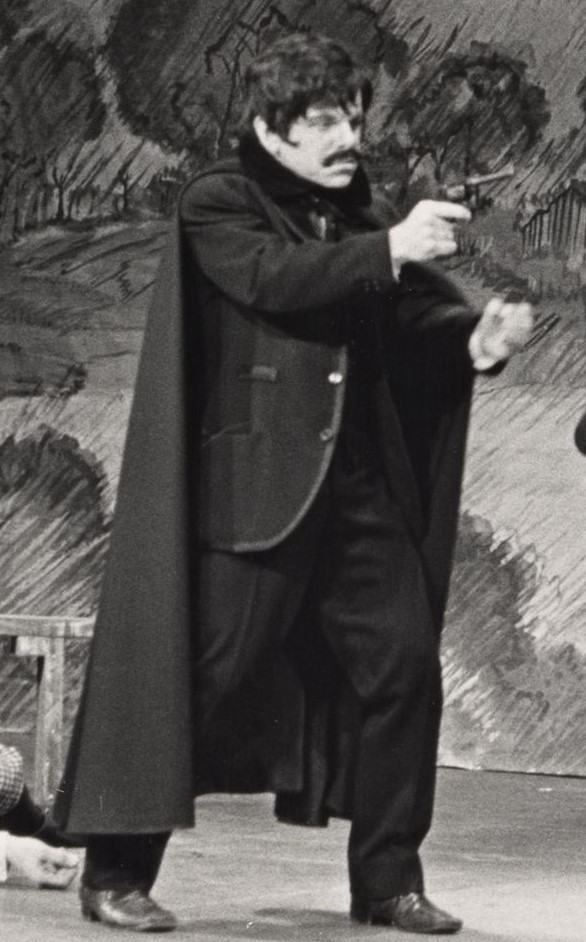
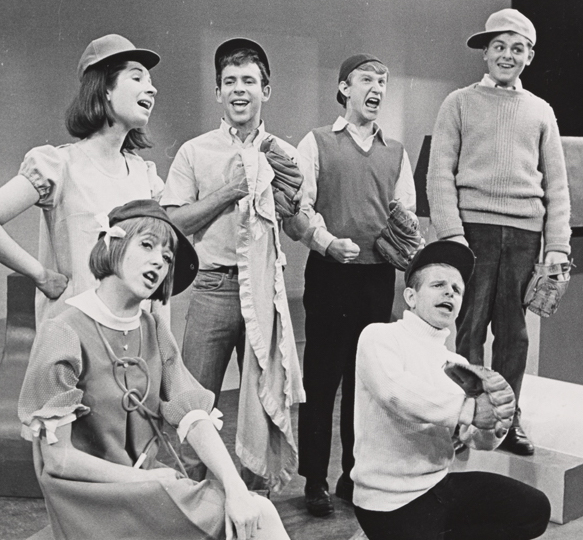
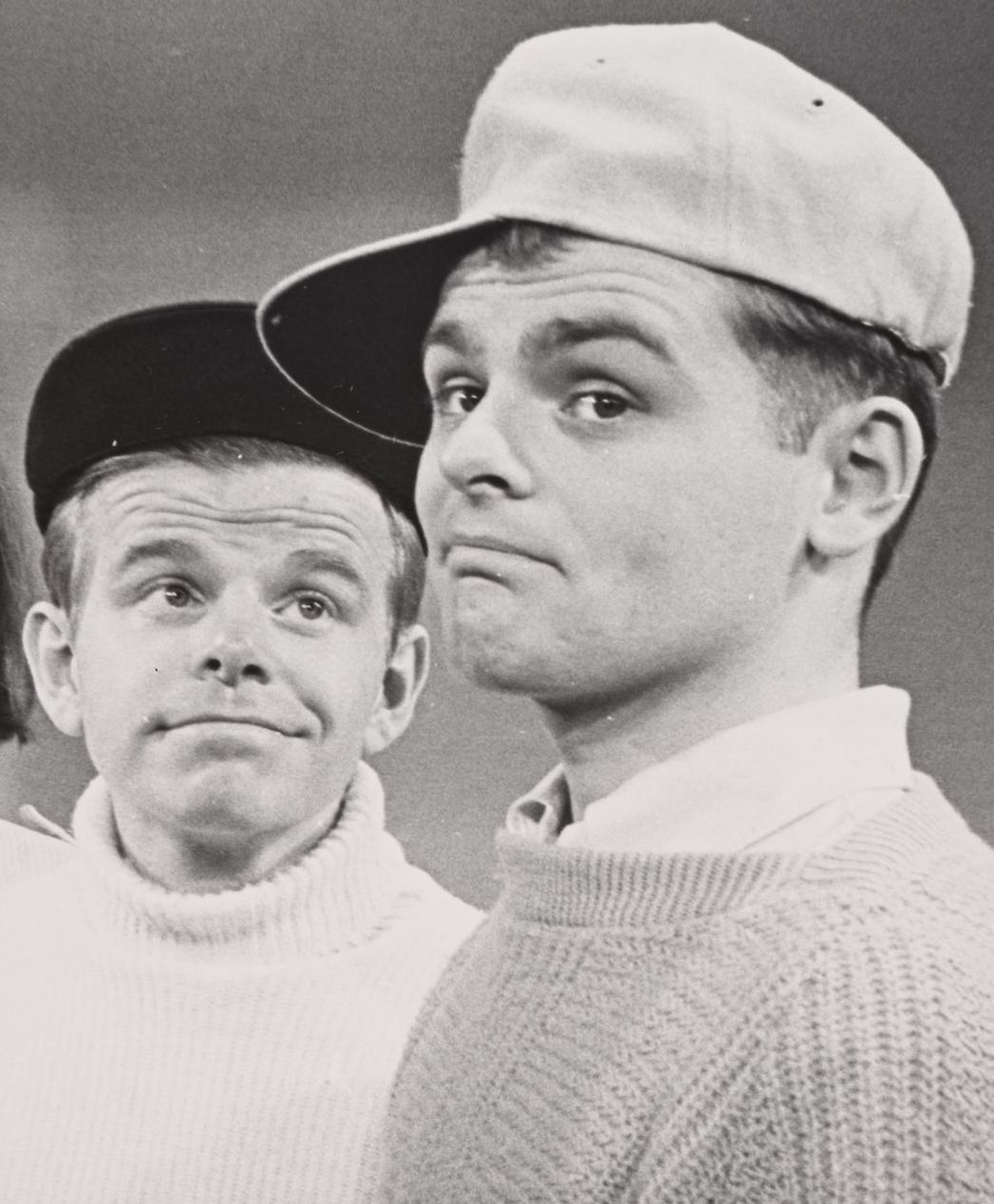
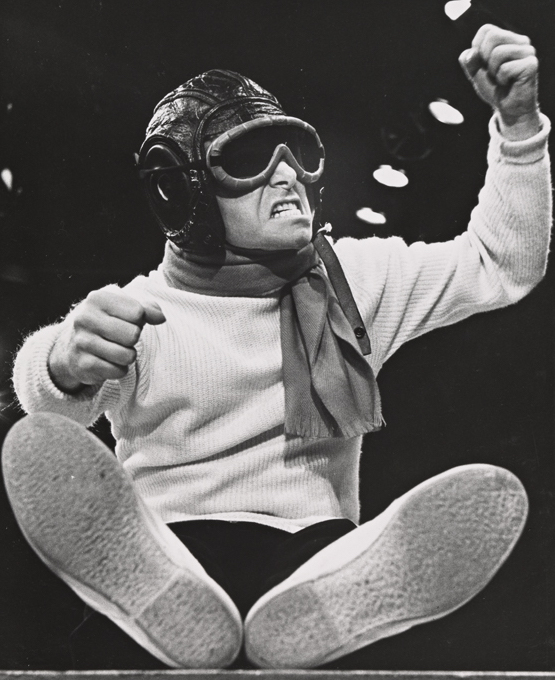
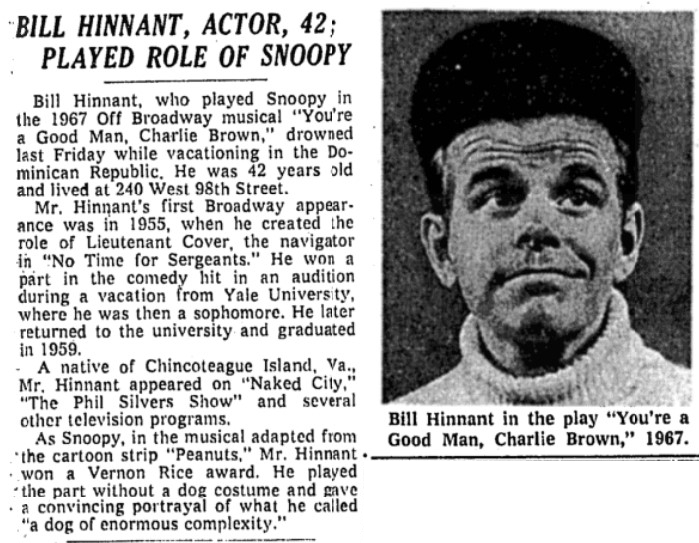
He found his defining role in 1967 when he was cast as Snoopy in the original production of You’re A Good Man, Charlie Brown. The cast included Gary “Radar” Burghoff in the title role, Bob Balaban as Linus and his younger brother Skip Hinnant playing Schroeder. Bill’s scene-stealing Snoopy is still considered to be the definitive interpretation of the role. His performance on the original cast recording is a blueprint for anyone tackling the part. He was awarded a Drama Desk Award for his performance later that year.

In 1969, Hinnant appeared in the film A Nice Girl Like Me with Barbara Ferris:

After a successful run with Charlie Brown, he was still plagued with subpar material- a fact that didn’t go unnoticed by critics:

Even when the material was up to snuff, there were other issues to contend with:

Hinnant reprised his role as Snoopy in a 1973 television adaption of You’re A Good Man, Charlie Brown. This cast featured Wendell Burton as Charlie Brown and My Three Sons actor Barry Livingston as Linus.

Unfortunately The Bill Hinnant Story does not have a happy ending. On February 17th, 1978, Hinnant drowned while vacationing in the Dominican Republic. He was just 42 years old. The Record noted that “the beige-haired, digest-sized and personable bachelor” was very active in charities for the underprivileged and had adopted several children worldwide through the Foster Parents Plan.

Bill Hinnant is interred (as John F. Bill Hinnant Jr.) at Dulaney Valley Memorial Gardens in Timonium, Maryland.

New York Times, (2/24/78)


See also:
The Yale Posture Photos: James Franciscus

Kenn Duncan After Dark
More Dean Martin & Jerry Lewis Shower Pics Surface
Men of St.Mary’s Pre-Flight School
Boys of Summer: St. Mary’s Pre-Flight School
Christmas At St. Mary’s Pre-Flight School, Pt. I
Christmas At St. Mary’s Pre-Flight School, Pt. II
80 Years Ago: The Men of St. Mary’s Pre-Flight School
More Men of St. Mary’s Pre-Flight School
1944: The Men of St. Mary’s Pre-Flight School

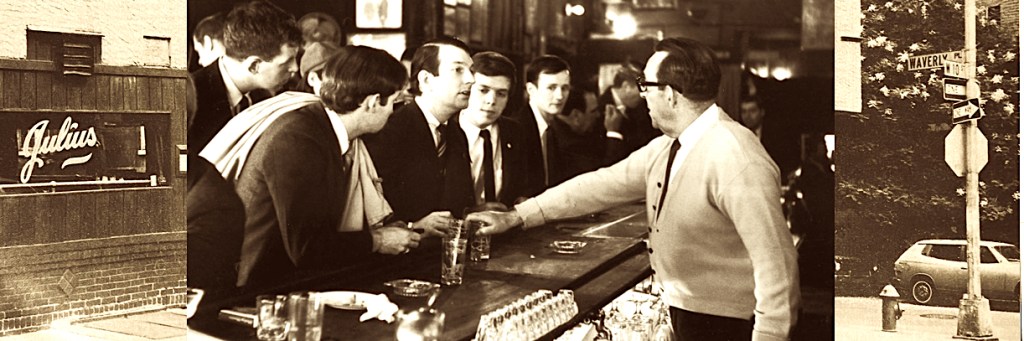
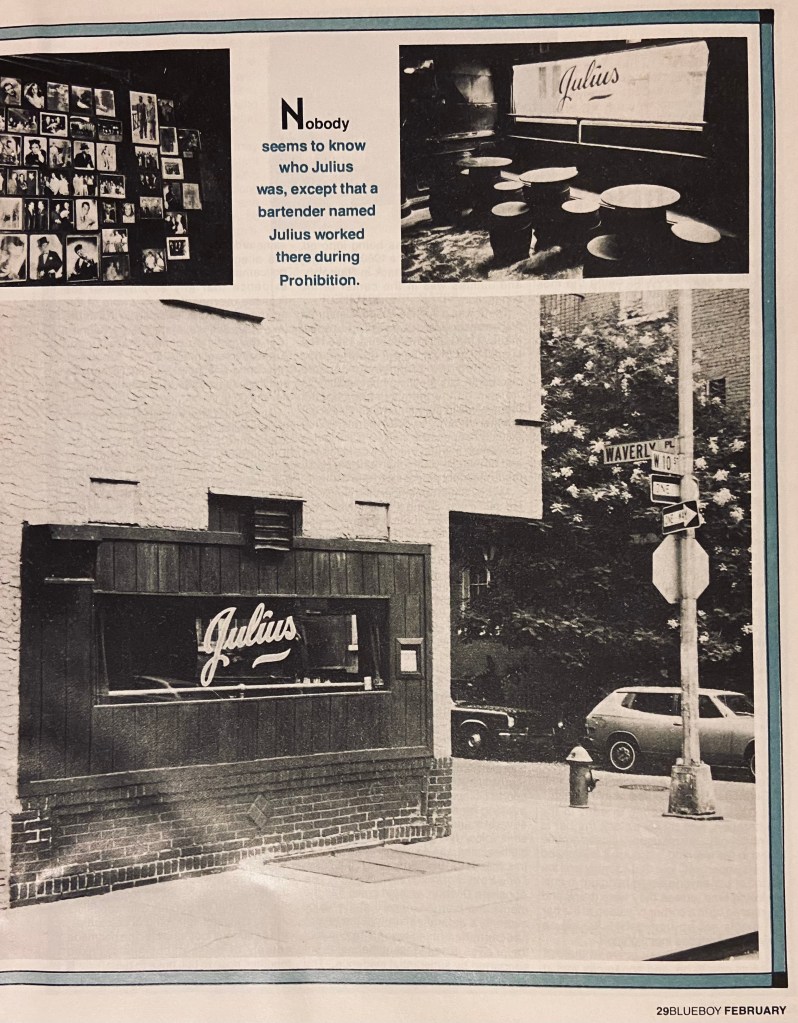
Julius: The Bar That Never Changes Is Officially A Historic Landmark


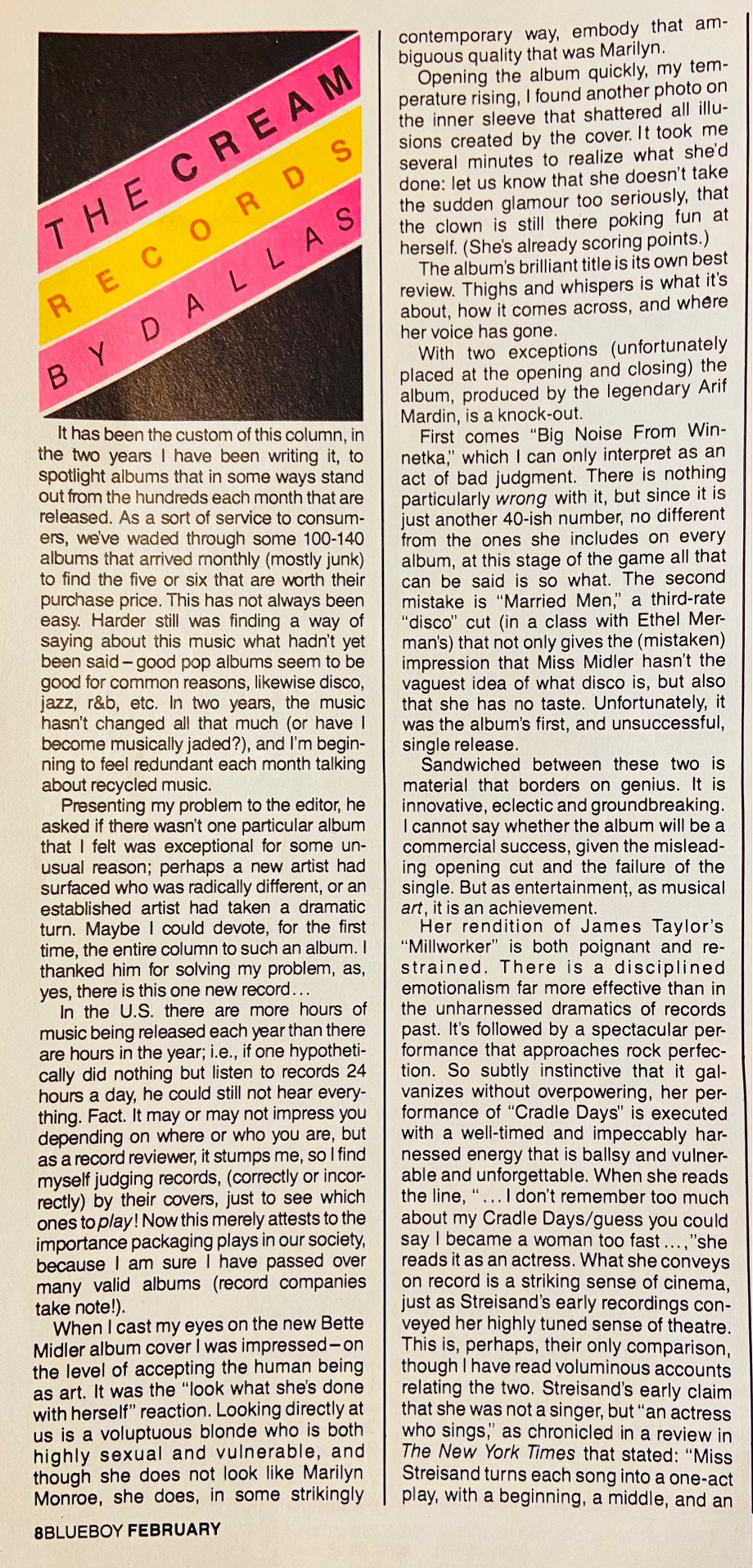
I recently posted a review of Bette Midler’s Thighs and Whispers LP from the February 1980 Blue Boy Magazine. We are revisiting the same issue of the magazine with a profile of Julius, the oldest continuously operating gay bar in New York City.

In April of 1966 – three years before the Stonewall Riots – a protest took place at Julius’s that became known as the “Sip-In.” This action established the rights of gay people to be served in licensed premises in New York and paved the way for gay establishments to obtain state liquor licenses.

The article below also recounts an earlier lesser-known challenge to the bar’s liquor license alleging that the owners “permitted the premise to become disorderly” by permitting homosexuals to “remain on the premises and conduct themselves in an offensive and indecent manner…” Apparently a patron had propositioned a plainclothed police officer. The courts ultimately decided that the charge was not supported by substantial evidence.

In 2016, Julius was listed on the National Register of Historic Places, and on December 6th, 2022 the bar was officially recognized by the New York City Landmarks Preservation Commission.

The article below states that the bar opened before 1860, although the wikipedia page notes different sources claiming 1864 or 1867. In any case, it’s ancient, but it did not gain its gay reputation until the 1950’s.

Some highlights from the piece below:

“The typical Julius’s person is almost always a doctor/lawyer type, though he may well be unemployed. He generally drinks too much – too early and too many.”

“The decor… is High Dirt.”

…and the hamburgers are still legendary.


See Also:
Revisiting Bette Midler’s Thighs & Whispers (1979)
Costello Presley & 80’s Gay Porn Guilty Pleasures
Kenn Duncan After Dark
Gay Times #69 (1978)
Blueboy 1980: Gays of NYC
John Waters in Blueboy Magazine (1977)
New York City: In Touch For Men (1979)
Remembering Bob Harrington
Revisiting Blueboy Magazine (1980)
Armistead Maupin in Blueboy Magazine (1980)
Keith Haring In Heat Magazine (1992)
A Stroll Through 1980’s NYC

Revisiting Bette Midler’s Thighs and Whispers (1979)

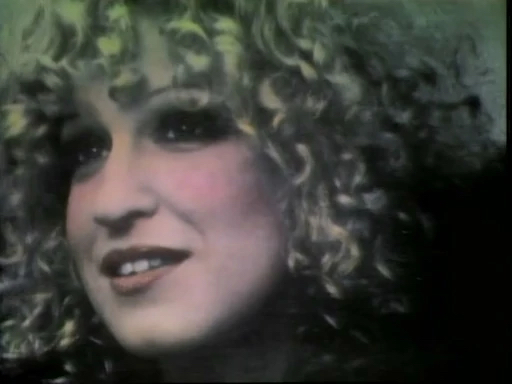
I was recently perusing an old issue of Blueboy magazine (as one does) when I found an in-depth review of Bette Midler’s 1979 LP Thighs and Whispers. Single-monikered reviewer Dallas certainly had strong feelings about the album. The review is quite a roller coaster ride, describing different aspects of the LP as “a knock-out”, “third-rate disco,” “disco at its finest,” “gives the impression that she has no taste,” “borders on genius,” and many breathless adjectives of adulation and despair.

Bette had been going full steam throughout the late 70’s. This was her third studio LP released in three years, plus the live double album Live At Last, a concert special on HBO, and her TV special Ol Red Hair Is Back, which won Bette her first Emmy award.

I should probably take Dallas’s advice to smoke a joint and listen to the song “Hurricane” again, because unfortunately my weed-free opinion is that the track is utterly forgettable.

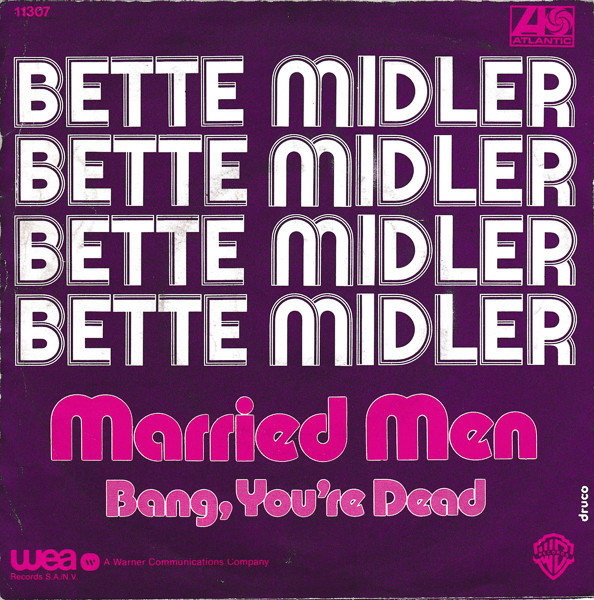
Bette spoke about Thighs and Whispers during a 2021 interview with Jim Farber in Parade Magazine. Reflecting on her career, she admitted that she had recorded “some stinkers.” Of the song “Married Men,” she joked; “Please, God, shoot me now!”

Bette Midler sings “Married Men” on the SNL 4th season finale, (5/26/79). Among her backup singers were Katie Sagal and Luther Vandross.

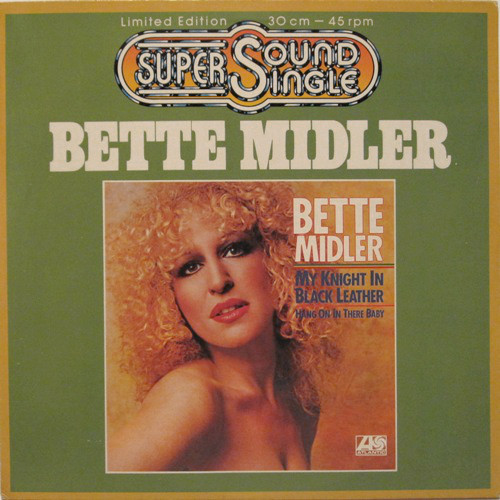
She also mentioned the song “My Knight In Black Leather,” saying “Save me! That was the label saying, ‘You have to record this.’”

Bette has been using “My Knight In Black Leather” as a punchline for decades – not just in interviews but also during her live shows. Reflecting on her career back in 1987, she told an interviewer that she had no regrets:

“I’d do it all over again, just as I did.”

“What about ‘My Knight In Black Leather?'”

“Well,” she said, “that’s the exception. That’s one thing I don’t think I would do again.”

Bette and her Harlettes (Linda Hart, Paulette McWilliams and Franny Eisenberg) performed “My Knight In Black Leather” on the German television show Musikladen (10/18/79)

In defense of the song: it was not supposed to be taken seriously. Should it have been a single? Probably not, but they were trying to get a hit record by tapping into that “Village People *wink-wink, nudge-nudge* we-know-it’s-gay-but-Middle-America-doesn’t” disco energy.

Mister D, head of the BootlegBetty fansite is fond of the LP: “…great album, great cover, great orchestrations, and one cut, ‘Cradle Days’ which I thought is probably her greatest vocals on an album.”  


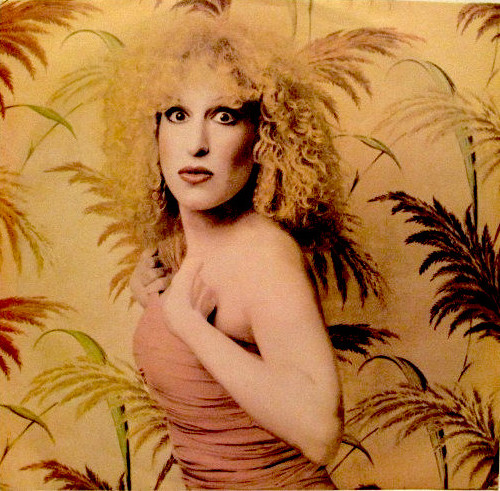
Thighs and Whispers was considered a commercial failure, but ultimately, it was water under the bridge. The film The Rose was released the following month, earning Bette a Golden Globe award and an Oscar nomination. The accompanying soundtrack LP (for those keeping track, that’s 6 albums released in three years) placed her firmly in rock and roll territory. It should be noted that one of the highlights of The Rose – the song “Stay With Me” – was written by Jerry Ragavoy, composer of… “My Knight in Black Leather.”

With an eye towards the 1980’s and the rise of New Wave music, Bette told an interviewer “I think I should jump on every musical bandwagon and really drive people mad, just irritate them to shit so they say ‘She’s such a cow – she’ll jump on any musical bandwagon.’ Why not? I’ll bleach my hair and rip my clothes. I think it’s fun. I’m getting silly in my old age.” This would have to wait 4 years until her next studio album: 1983’s No Frills.

On October 8, 2016, Bette was the special guest at a Forest Hills Stadium show called Nile Rogers’ FOLD (Freak Out Let’s Dance) Festival – a show also featuring his group Chic, The Village People and Earth, Wind, and Fire. Given the theme, I thought Bette might dust off a song from her disco period – 1976’s Strangers In The Night, perhaps. But she didn’t. Her set consisted of her classics: “Friends,” “Do You Want To Dance,” “Boogie Woogie Bugle Boy,” and “Wind Beneath My Wings.” Her final song was a nice surprise: “Route 66,” which she said she had never sung before and had just learned the day before.

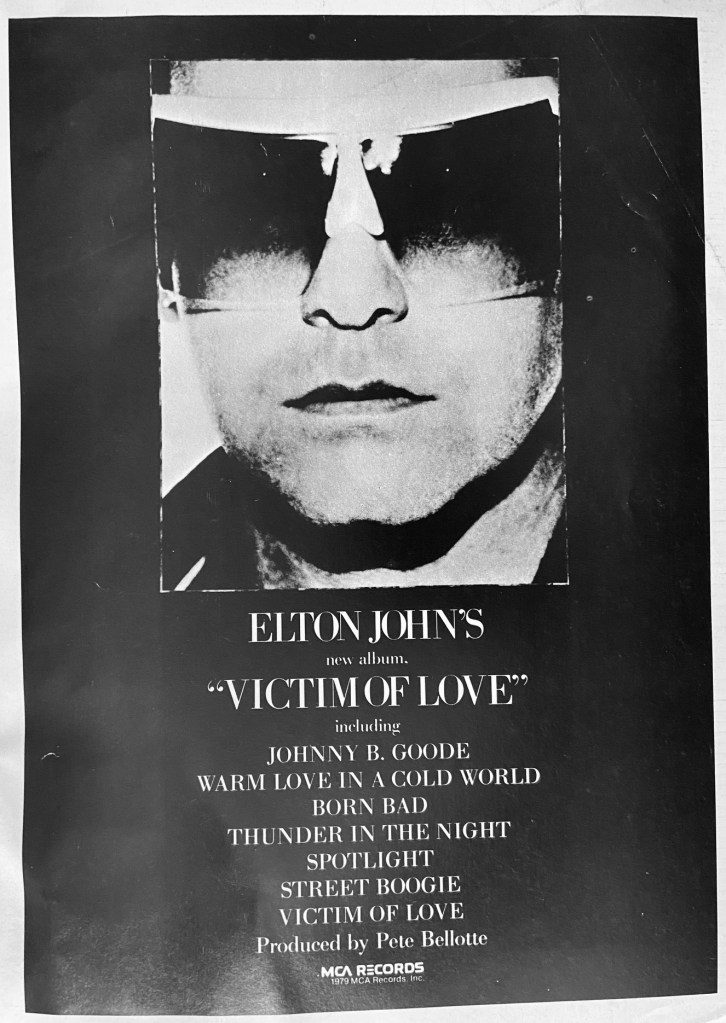
This issue of Blueboy also features a full page ad for Elton John’s foray into disco,Victim of Love, which was released the same month as Thighs and Whispers. The album is widely considered to be the low point of his career.

See Also:
10 Forgotten Cher Moments
Debbie Harry At The World (1989)
Dusty Springfield Sings Kate Bush
Kenn Duncan After Dark (wi/Bette Midler)
Marianne Faithfull After Dark (1980)
Gimme Gimme Gimme: Erasure Covering ABBA
John Waters in Blueboy Magazine (1977)
New York City: In Touch For Men (1979)
San Francisco: In Touch For Men (1979)
Revisiting Blueboy Magazine (1980)
Armistead Maupin in Blueboy Magazine (1980)

Gay Times #69 (1978)

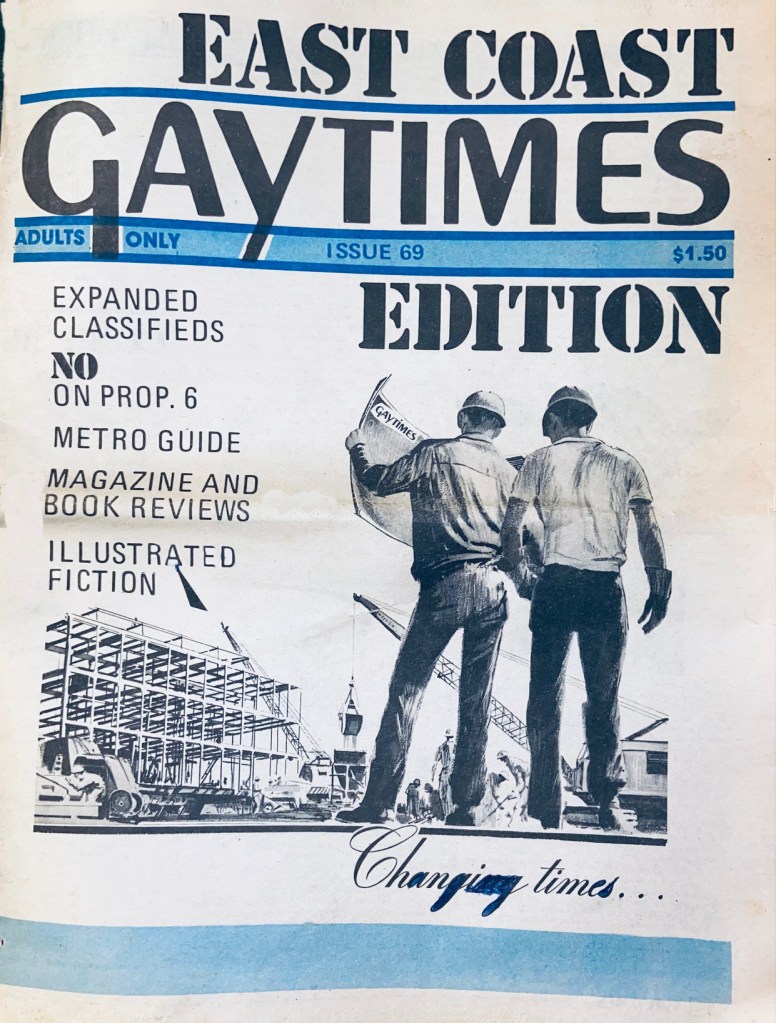
I recently came across a 1978 issue of Gay Times, East Coast Edition – Issue #69 (ahem).

The news section was dominated by California’s Briggs Initiative, aka Proposition 6 – the first attempt to restrict gay and lesbian rights through a statewide ballot measure. Thankfully, it was defeated that November with 58% of the vote, but the stakes were high when this issue went to press.

It was the importance of this vote which also inspired the centerfold:

Caption: Register To Vote – Your right to live may depend on it!

The photo is from Robert Bresson’s 1957 film A Man Escaped, a WWII drama based on a true story of a French resistance fighter portrayed by Francois Leterrier (center).

Elsewhere in the issue, an editorial calls for the continued boycott of Florida Citrus due to the anti-gay efforts of their spokeswoman, Anita Bryant.

Welcome to 2022, when it all seems painfully current, domestically and abroad.

Ah, but it wasn’t all politics and protests. Editor Pat Pomeroy interviewed The New York Man: Damian Charles. He’s described as an Aries ram, former school teacher, author of 49(!) books of erotica, and a centerfold model. He inspired orgasms in 17 countries! (I have to wonder who collects such statistics and where does one find the raw data?) And also – what quote could encapsulate the era better than “… as I have sex with a succession of lovers under the strobe lights at Studio 54”?

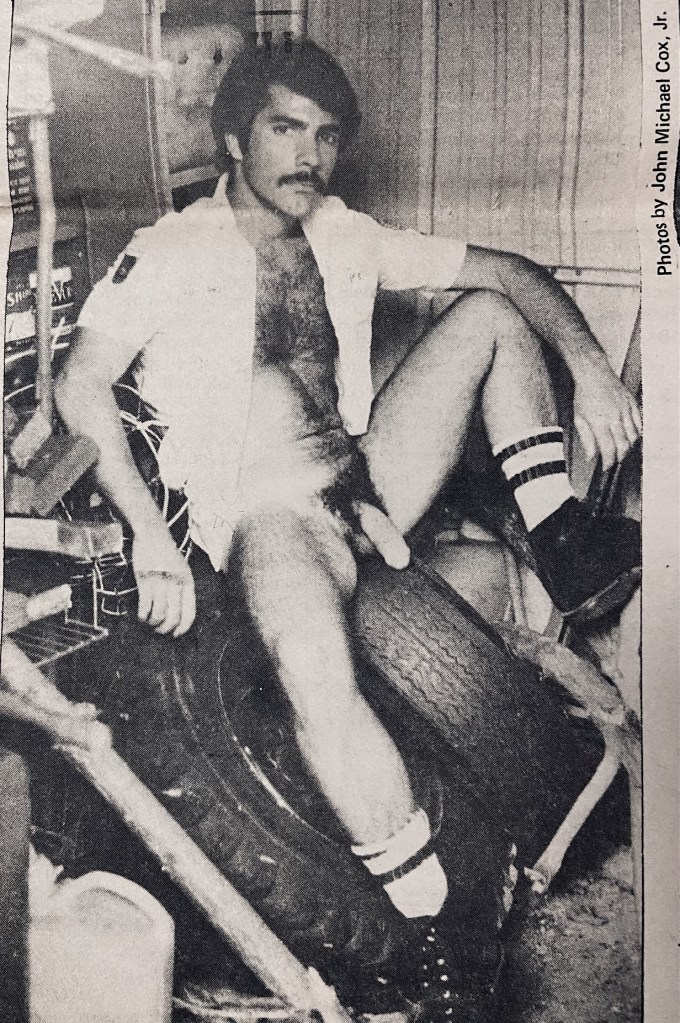
I reached out to photographer John Michael Cox, Jr. to see if he had any recollections of this dynamo. “Charles Herschberg was a very close friend & the writer I most used to conduct interviews – I didn’t like to transcribe interviews so I employed writers. For his nude modeling, he decided on the name Damien Charles, which I never liked. He never had the ambition to do much & mainly posed for me. He never did films but I did shoot some hardcore pix of him with his lover Richard Allan. Chuck died around 1990 in Florida.

“These photos are from the first session we did. I never worked for Gay Times, so Chuck must have given them the prints to use.”

I asked about Chuck’s work as a writer. “I met Chuck when he was writing a piece on (gay porn star) Roger. I came over to the Eros Theatre to photograph him and Roger’s manager Jim Bacon introduced us. Typical of Chuck – he never finished the article.”

Click here for the January 1977 Omega cover story on Jobriath – written by Charles Herschberg with photos by John Michael Cox, Jr.

Regarding the many porn books Chuck wrote: “He probably wrote under many different names. He worked for an outfit that used many writers. They churned out huge amounts of paperback porn.

“Harlequin offered him a deal to do books & said he could alter his porn stuff. $5,000 per book. He couldn’t bring himself to do it.

“Years ago I tried to do a tribute to Chuck on my website, which has since been taken down. Like everyone who knew Chuck, I adored him & also wanted to hit him over the head.”

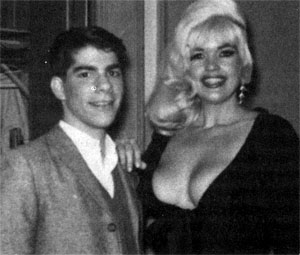
Charles Herschberg with Jayne Mansfield backstage at the Latin Quarter (1965)

Thanks to John Michael Cox Jr. for his recollections of his friend.

See Also:
Kenn Duncan After Dark
Al Parker: In His Own Words
In Touch For Men: Disco Danny (1979)
Costello Presley & 80’s Gay Porn Guilty Pleasures
Blueboy 1980: Gays of NYC
John Waters in Blueboy Magazine (1977)
New York City: In Touch For Men (1979)
San Francisco: In Touch For Men (1979)
Revisiting Blueboy Magazine (1980)
Armistead Maupin in Blueboy Magazine (1980)
George Platt Lynes: In Touch Magazine (1982)
Keith Haring In Heat Magazine (1992)

John Waters In Blueboy Magazine (1977)

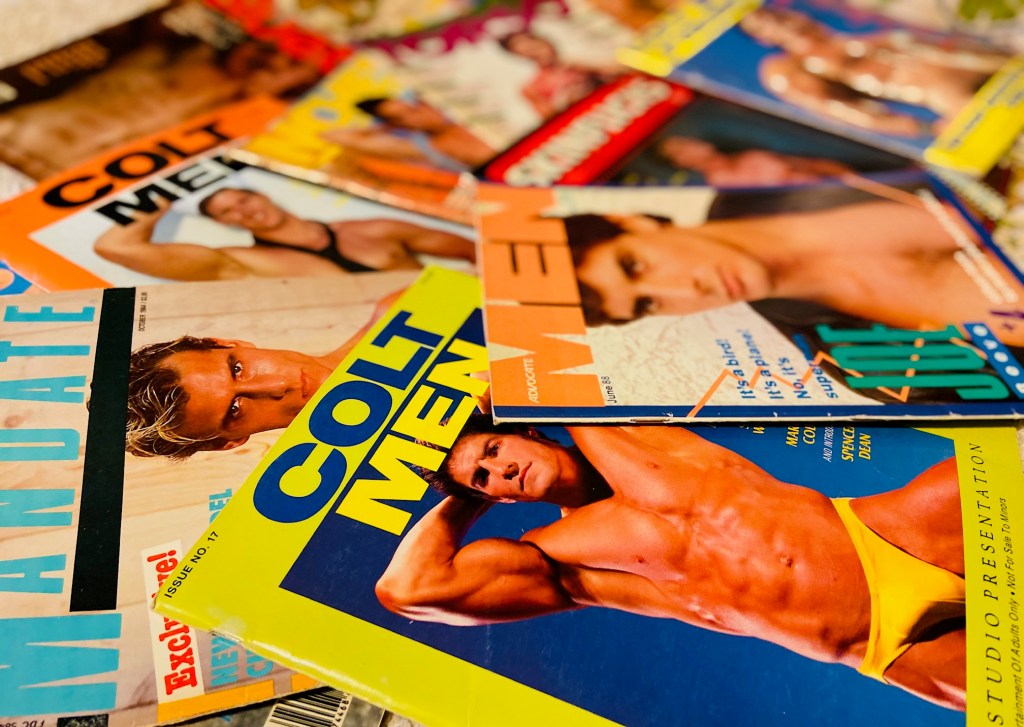
Back in January of 2020, I posted an article written by Armistead Maupin for the September, 1980 issue of Blueboy Magazine. I mentioned that this magazine was part of my collection of vintage male erotica that is large enough to choke a horse – file boxes full of smut that were gifted to me by an old friend when he vacated his New York City apartment after 30 years. I was slowly selling them off on eBay, but that door slammed shut earlier this summer when the company decided that they did not need all the unholy illicit dirty sticky revenue generated by adult items. As of July, they have completely eliminated their adult section.

Sidenote: If anyone can recommend a halfway reputable website to peddle my gay wares, I would be very grateful.

As the end of this selling opportunity drew near, many vendors starting unloading their products at a discounted rate.1Cover I went in the opposite direction: Rather than listing these publications for less than their worth, I chose to buy up even MORE magazines at a discount

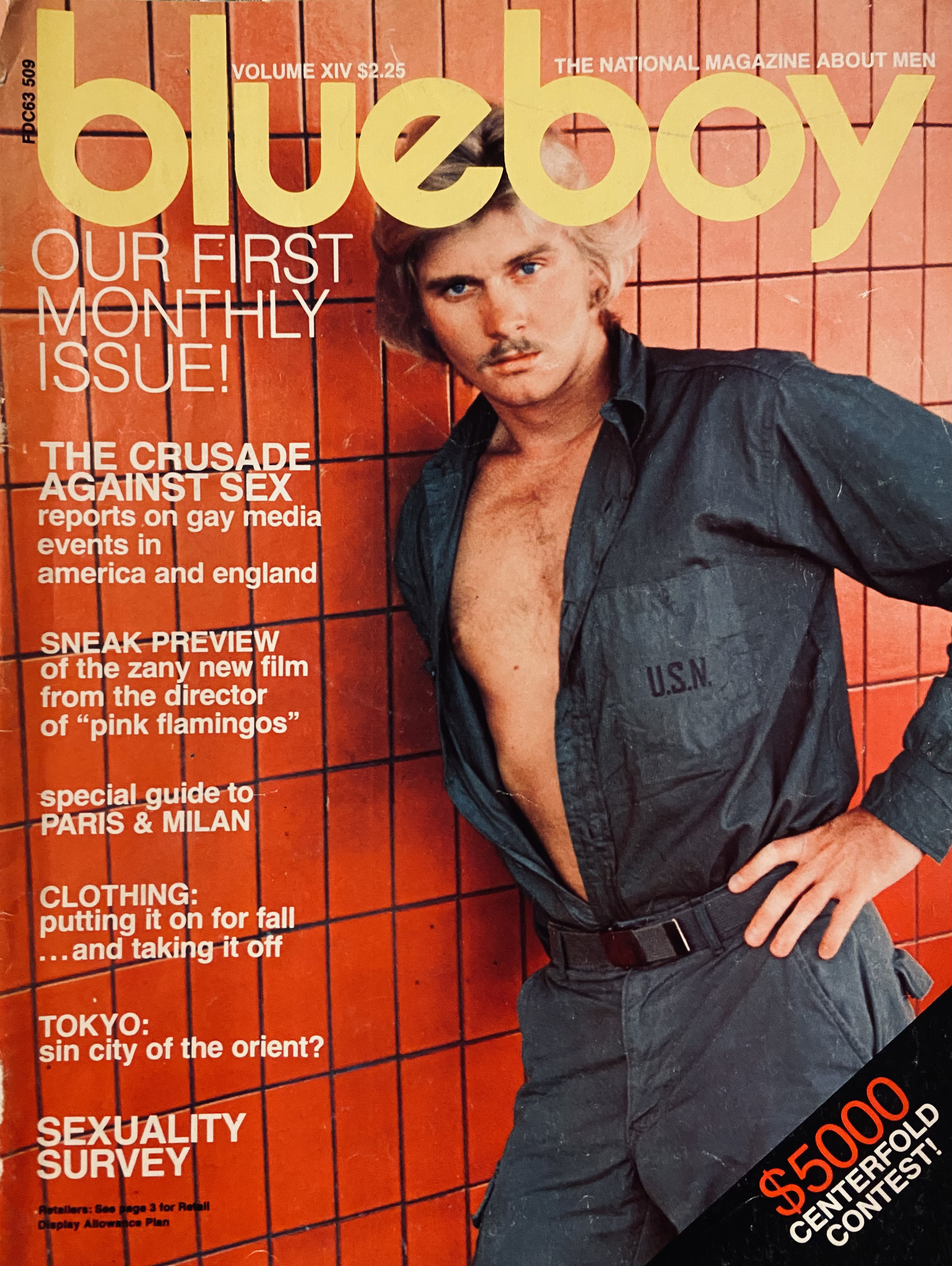
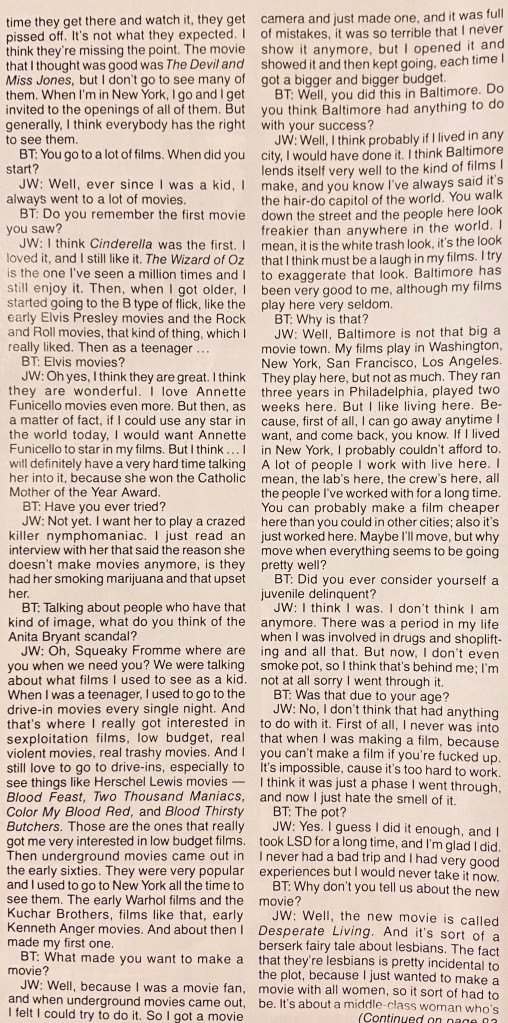
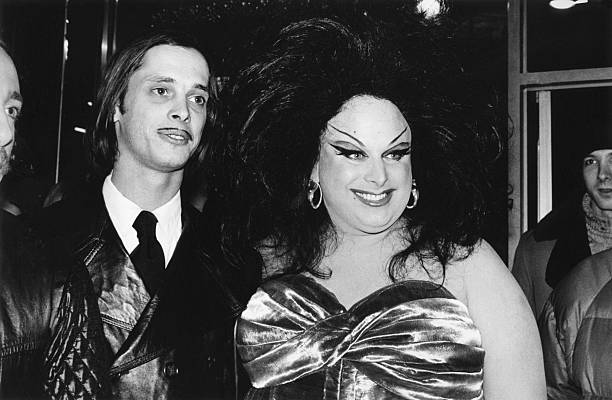
One of these recent acquisitions was the November, 1977 issue of Blueboy Magazine which featured an interview with The Pope of Trash: filmmaker John Waters.

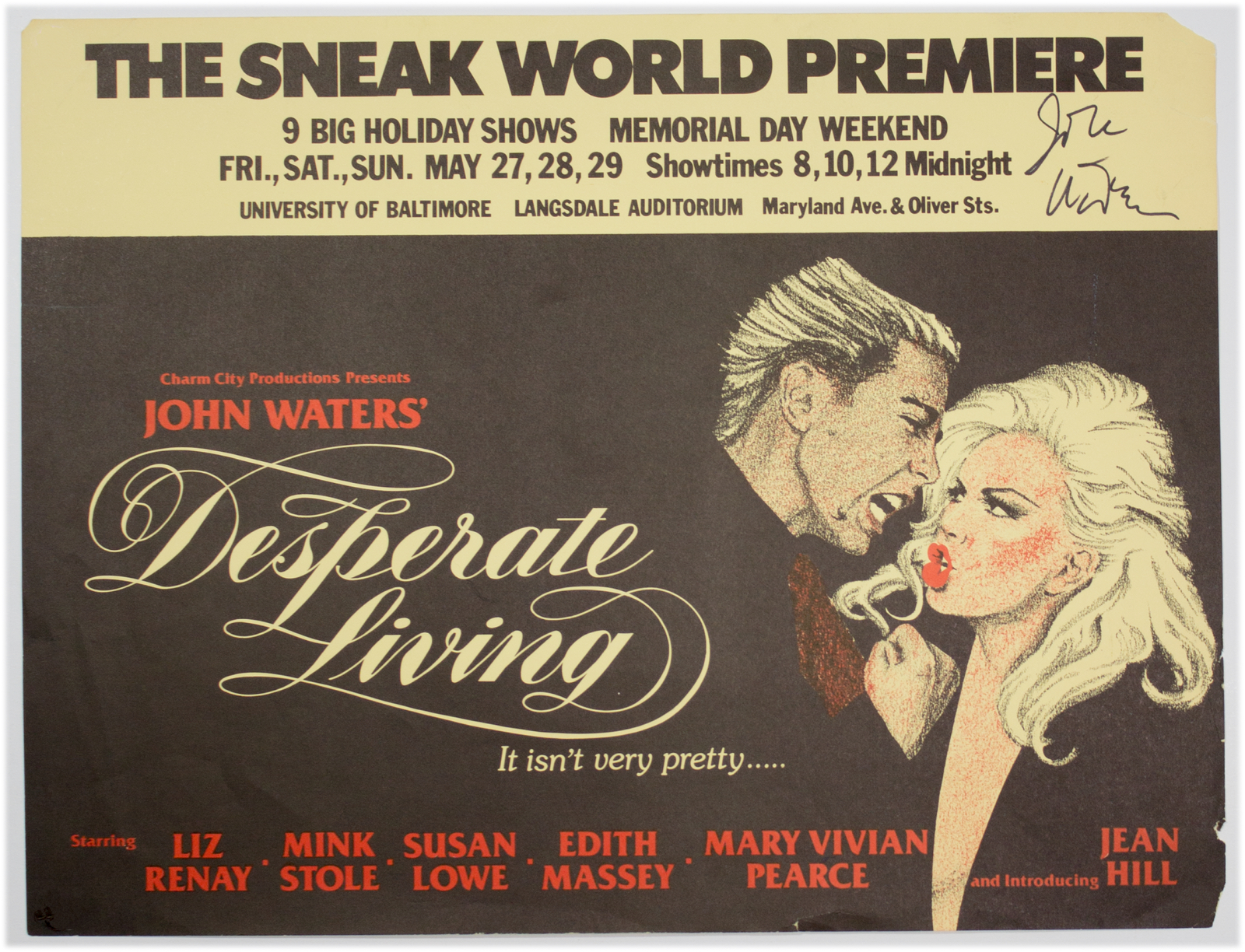
This interview was conducted just as Desperate Living was about to be released.

See Also:
You Know The B-52’s Song “Roam” Is About Butt Sex, Right?
10 Forgotten Cher Moments
Debbie At The World (1989)
Don Herron’s Tub Shots
Sheena Is A Grandmother
Ronnie Spector – Siren (1980)
New York City: In Touch For Men (1979)
San Francisco: In Touch For Men (1979)
Revisiting Blueboy Magazine (1980)
Armistead Maupin in Blueboy Magazine (1980)
George Platt Lynes: In Touch Magazine (1982)
Keith Haring In Heat Magazine (1992)

New York City In Touch (1979)

IT 11_79aa

A few weeks ago, I posted an article from the Nov/Dec 1979 issue of In Touch Magazine. This was part of trio of San Francisco articles from gay publications (the other two from the September, 1980 issue of Blueboy featured essays by Armistead Maupin and Randy Shilts).

Shifting focus back to the East Coast, there were some New York-centric ads and pop culture info that I wanted to post, since that’s my home turf.

IMG_1493

So here we are again, back in 1979 with Issue #44.

Lets get a different perspective of cover model / centerfold Todd Denson:

NY1

There are several ads throughout the magazine for CBC Clubs  – a gay-owned chain of bathouses that dotted North America. CBC Club New York was located at 24 First Avenue in the East Village. This branch closed in the mid-80’s and the space was purchased by the Suthon family, which turned it into the restaurant Cave Canem and later Lucky Cheng’s. It was during the twilight days of Cave Canem that I moved to the neighborhood.

IMG_1487

I had been living there for about a year when my boyfriend and I saw a listing in HX magazine for a gay bar/restaurant inhabiting an old bathhouse located at 24 First Avenue.  This seemed strange – it was only 4 blocks from our East 6th Street apartment, yet we had never heard anything about it.

One night we ventured over – only to be turned away by a surly doorman who claimed there was a private party inside. We didn’t believe him – how did he know we weren’t invited guests? Our imaginations went wild with speculation of what gay/leather/sex dungeon lurked behind those doors. After reading this interesting piece on the history of the space in Jeremiah’s Vanishing New York, I gather that it probably WAS a private party that we tried to crash… and possibly a lesbian orgy.

LuckyChengsThe following year Lucky Cheng’s Chinese Restaurant opened with its now famous drag and gender-fluid waitstaff, thriving at this location for 19 years. By the time I finally ventured in – just once – it was to buy a gift certificate for my parents, at their request. The once bohemian restaurant had become an edgy staple for straight out-of-towners. Lucky Cheng’s eventually followed the tourist trade up to the theatre district. The building was sold and is slated to be torn down and replaced by… you guessed it: Luxury Apartments!

One other note to add a little context: right across the street at 19 First Avenue is Lil’ Frankie’s Restaurant and the home of East Village Radio’s storefront broadcast booth. This is where my 60’s girl group show 60 Degrees with Brian Ferrari aired from 2008-2013… and resumed broadcast in 2024. (see & hear here & here)

NY2

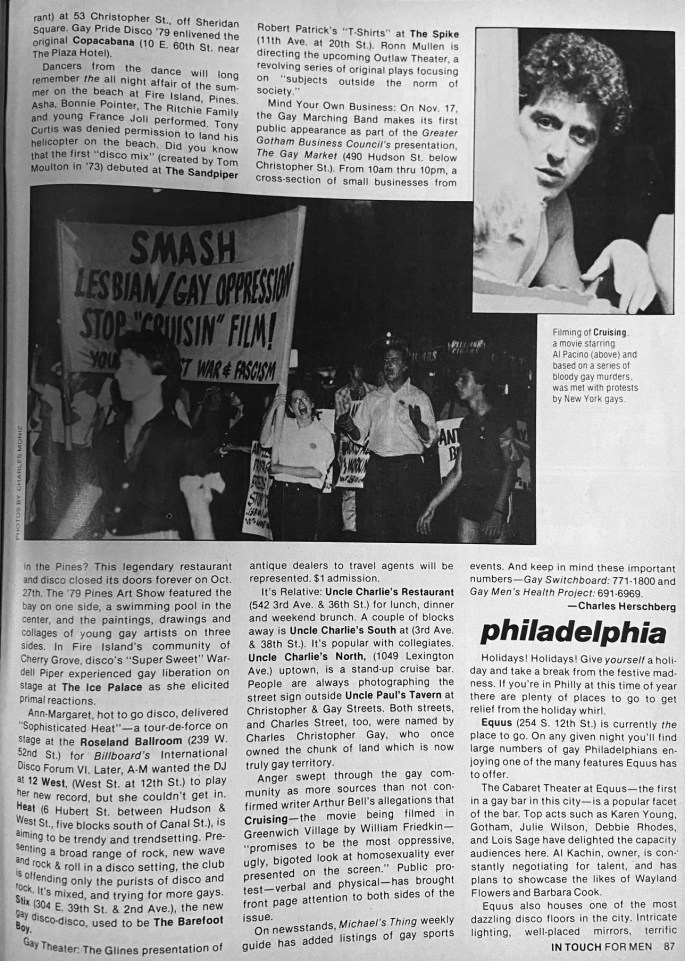
1979 marked the 10th anniversary of the Stonewall Riots.  Here’s an account of how the occasion was celebrated in NYC and Fire Island, as well as the protests surrounding the filming of Al Pacino’s laughable misfire Cruising.

NY3

Some background on the musical references above:

16 year old France Joli’s July 1979 Pines performance is the stuff of legend. She made a return to the annual Beach Party in 2018.

Wardell Piper is mentioned performing “Super Sweet” at the Ice Palace in Cherry Grove. She had been a member of soul group The First Choice, but this was her biggest solo hit:

I love the passing reference that Ann-Margret – “hot to go disco” – couldn’t get into a West Village club to have them play her record. Sounds like the gays weren’t having it. “Love Rush” was a track from this brief chapter of her career. Any allusion to poppers is purely intentional.

Here’s some other ads – one for Broadway Arms Baths, which was located across the street from the Ambassador Theatre on West 49th Street, and two NYC-based gay porn video companies featuring VHS tapes for the low low price range of $65-$99.50! Just imagine what the VCR cost.

NY4

IMG_1486

I had to post pics of this guy, who is SO 1979 that it hurts. Michael Mouse Hank Owens is a landscaper, a Sagittarius and only indoors when he’s at the disco!

IMG_1491IMG_1488

That’s all for now! I leave you with an ad for lube. Natural lube. With a horse.

NY5

See Also:
Gay Times #69 (1978)
Blueboy 1980: Gays of NYC
John Waters in Blueboy Magazine (1977)
In Touch For Men: Disco Danny (1979)
San Francisco: In Touch For Men (1979)
Revisiting Blueboy Magazine (1980)
Armistead Maupin in Blueboy Magazine (1980)
Revisiting Bette Midler’s Thighs & Whispers (1979)
Costello Presley & 80’s Gay Porn Guilty Pleasures
Al Parker: In His Own Words
Debbie Harry At The World (1989)
Sheena Is A Grandmother
Keith Haring In Heat Magazine (1992)
Marianne Faithfull After Dark (1980)