I have been an admirer of Ana Matronic since the days when her band, Scissor Sisters was a local group playing around my East Village neighborhood. Her presence, her voice, her connection with the audience as “Mistress of Ceremonies” were a major factor in why I went on to see the band perform live 20 times before their hiatus in 2012. There’s an unconfirmed rumor that I have the band logo tattooed on my ankle.
With Ms. Matronic at the Ice Palace in Cherry Grove, Fire Island (7/2024)
I couldn’t imagine a Scissor Sisters reunion without her. When a UK tour was announced late last year, Ms. Matronic issued a statement explaining why she would not be taking part, teasing an upcoming podcast series that prevented her from participating.
As someone who embraces my own inner Nerd, I was fully on board with her choice to focus on her current passion project. What I did not know at the time was that I would get to be a part of this next chapter.
And now it is time for the big reveal: Good Time Sallies is here!
From the website: Good Time Sallies tells the stories of impactful people who have been left in the shadows as footnotes or minor characters in somebody else’s story, but each of whom made waves, broke molds, and dared to live life as they pleased.
With every episode, Ana Matronic centers these remarkable people and shares their inspiration with the world. From people of letters to ladies of leisure, from bawdy babes and badass boozehounds to Queens on the scene to queens of the obscene, this vibrant historical podcast is all about celebrating the Good Time Sally in us all who is here to take a shot and make her mark.
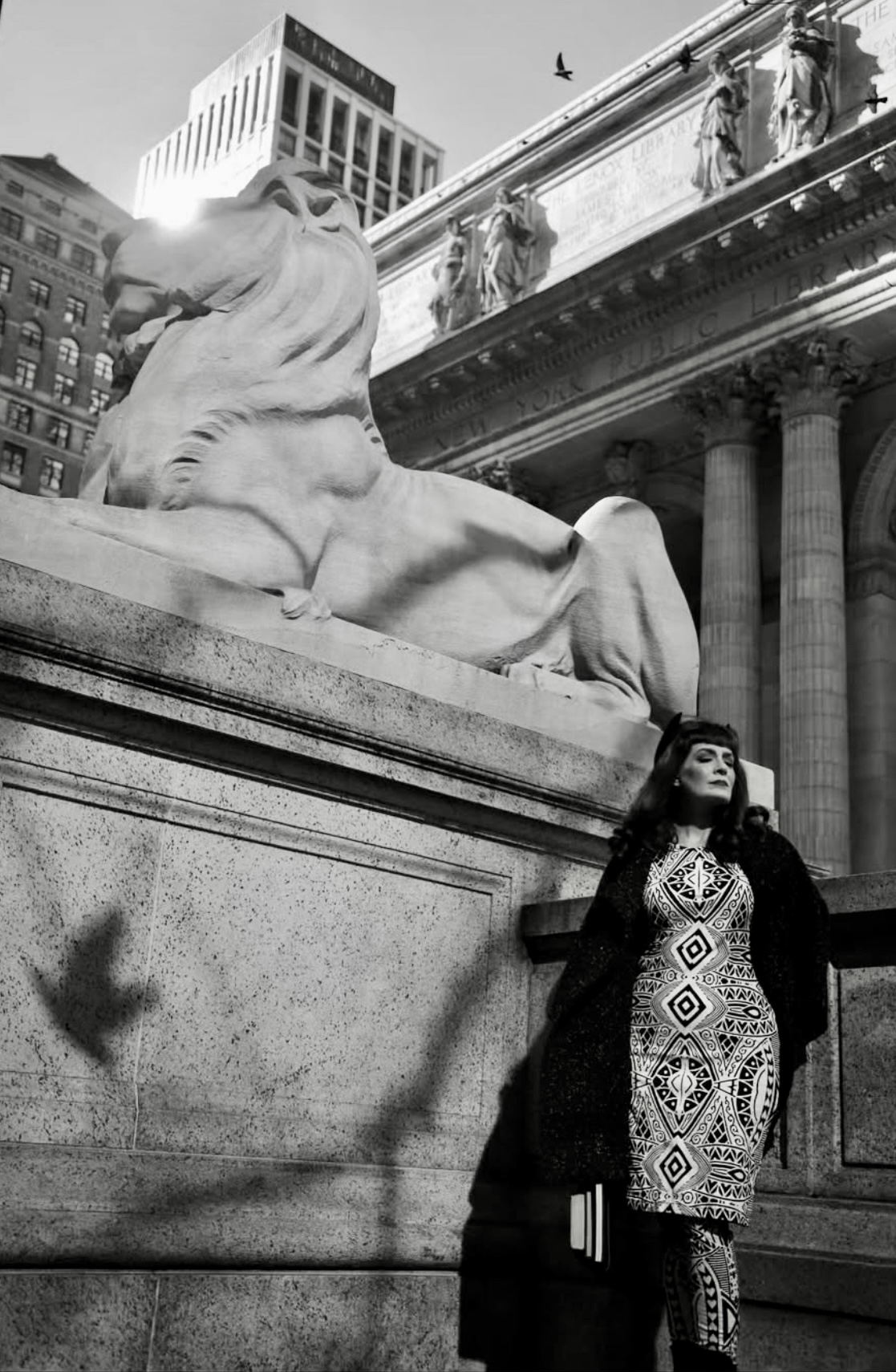
Photos: Krys Fox @krysfoxphoto
Of course, telling the stories of notable people who have been left in the shadows is one of the reasons this blog exists. On the first two episodes of Good Time Sallies, I join Ms. Matronic to reintroduce that dynamic lady of song, stage and screen, Madame Spivy LeVoe. As you already know, Spivy is one of our favorite subjects here on the blog. Be sure to check out the latest post, which covers her film and television appearances.
I hope you enjoy the podcast as much as I did recording it. Thanks again to Ms. Matronic and Lucy Winter for inviting me to take part.
Also: Click here for Radio Spivy on Mixcloud and hear some fine examples of classic diseuse delivering sophisticated songs.
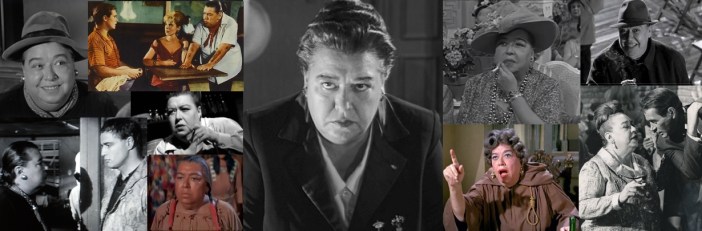
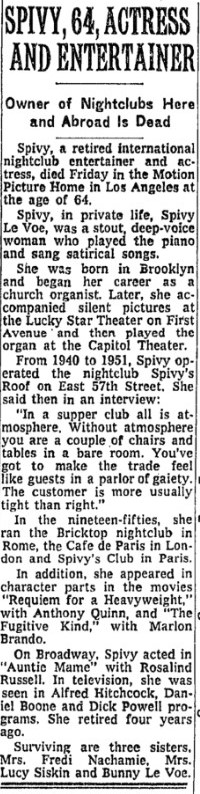
Ladies and Gentleman, it is time once again to revisit that dynamic lady of song, stage and screen, Madame Spivy LeVoe (1906-1971), also known simply as Spivy. While previous posts have focused on specific songs recorded by the lesbian entertainer, nightclub owner, and character actress, this time around we have an overview of her work in film and television from 1959-1967.
“The Roof is closed – gone forever, and my heart is broken.” Spivy wrote to a friend in August, 1951 after her nightclub had shuttered. The once popular top floor venue at 139 East 57th street had fallen into decline after a decade as one of the top Manhattan night spots. The demise of Spivy’s Roof was in part due to Spivy’s increasing stage fright, which in turn escalated her drinking. The combination often prevented her from delivering the two scheduled nightly performances audiences expected. Paul Lynde would later discuss this on The Tonight Show in 1976.
Spivy spent the next 6 years performing throughout Europe, where she opened and closed clubs in Paris and Rome. In London she appeared at the prestigious Café de Paris. These ventures eventually proved unsuccessful and she landed back in New York by 1957. An engagement at the Blue Angel would be her final New York City cabaret run.
Spivy explained her inability to conquer the fear of nightclub audiences. “I have tried everything but psychiatry – even hypnosis – but I couldn’t lick it.
“Funny thing, I have absolutely no stage fright in front of a camera, no matter how many people are on the set. So I guess this is what I’ll be doing from now on.”
It doesn’t take a psychiatrist to piece together that her insecurities performing in front of a live nightclub audience proved insurmountable as her popularity waned. She had entertained audiences since the 1920’s, but 30 years later her style of sophisticated songs had become a relic of a bygone era. Acting roles in front of a camera proved to be a less vulnerable alternative.
Charlie Chaplin reportedly sought to have Spivy play a character based on Elsa Maxwell in his 1957 film A King In New York. Newspaper columns at the time reported that the production company was unable to secure a work permit for her to travel to the UK for filming.
Her first film was The Fugitive Kind in a scene with Marlon Brando and Joanne Woodward, which was not a bad place to start.
“You come back alone some time, ya hear?” Spivy with Marlon Brando and Joanne Woodward in The Fugitive Kind. (1959)
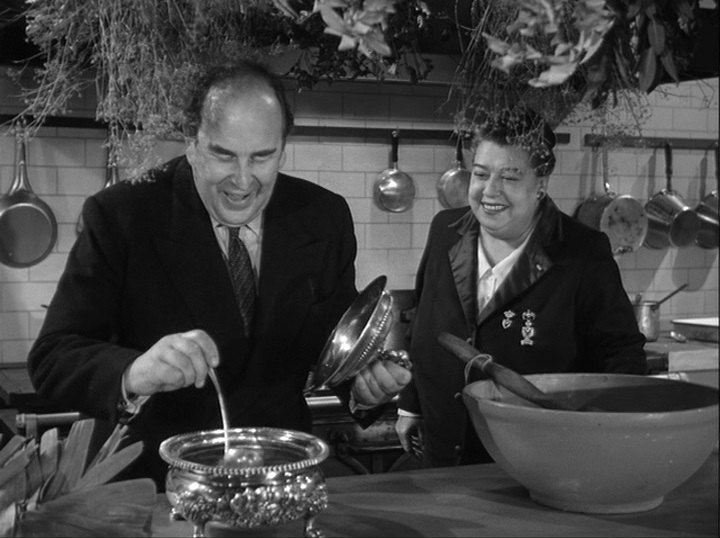
This led to her being cast in the most memorable television role of her career opposite Robert Morley in an episode of Alfred Hitchcock Presents titled “Specialty of the House.” Spivy plays “Spirro,” the piano-playing proprietress of an exclusive restaurant with a dubious main course.
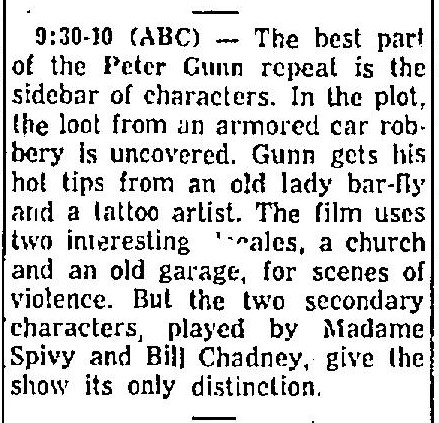
“Bourbon breeds togetherness…” Flo (Spivy) tips off Peter Gunn (Craig Stevens). (1960)
There is a sameness to the majority of Spivy’s film and television acting roles. She’s typically the barkeep or bouncer at a downstairs dive bar in a sketchy part of town. She usually has just one scene where she kicks someone out of the bar, or delivers a key piece of information to move the plot along. Or both. She is always smoking. She may be shady or morally ambiguous, but mostly she just don’t want no trouble, ya hear?
“Have you lost your feeble mind? He’s still got his baby teeth!” Spivy with Brandon DeWilde & Evans Evans in All Fall Down (1962).
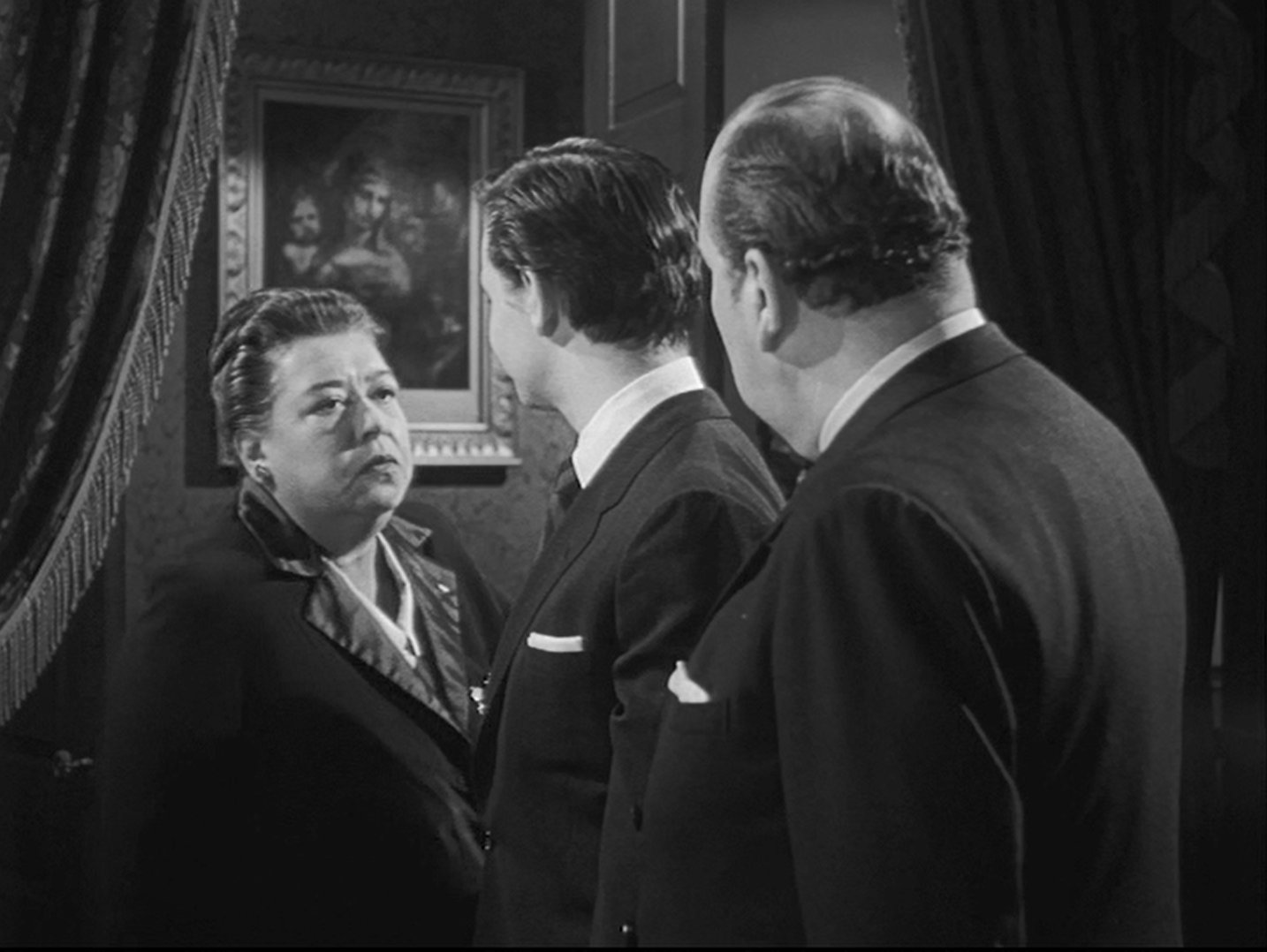
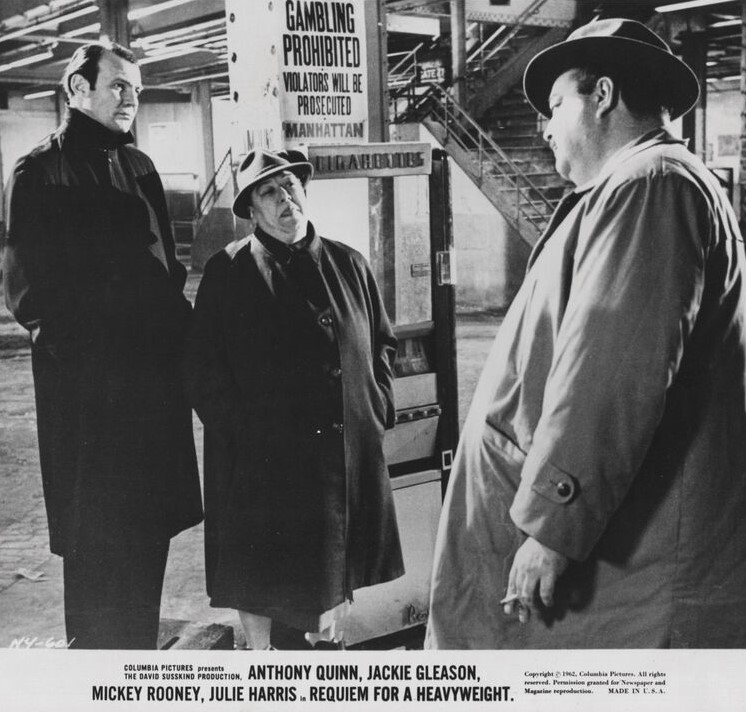
Spivy’s most significant film role was as Ma Greeny in 1962’s Requiem For A Heavyweight with Anthony Quinn and Jackie Gleason. Her tough, androgynous mob boss made an indelible impression on viewers.
“Take a good look in the mirror and then say goodbye to what you see.”
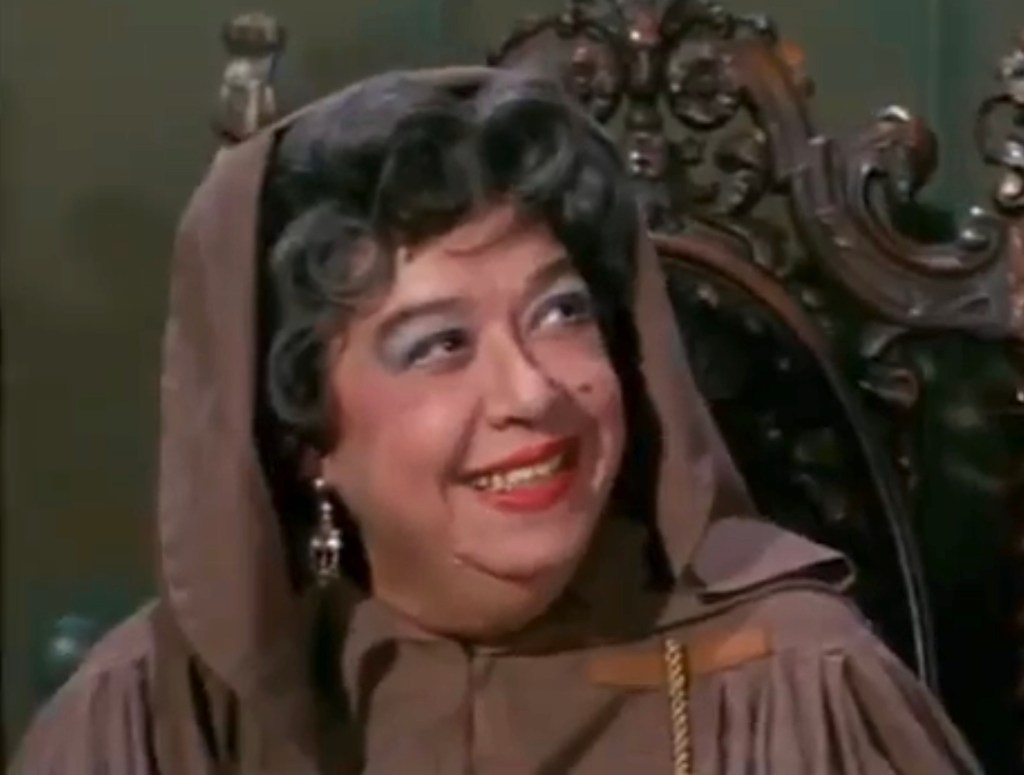
Spivy as The Axe Lady, The Wild Wild West (1966)
One of Spivy’s atypical performances was a 1966 appearance on The Wild Wild West with Robert Conrad. Spivy plays The Axe Lady, a member of a serial killer tribunal who meets her demise at dinner with a steak knife in the back.
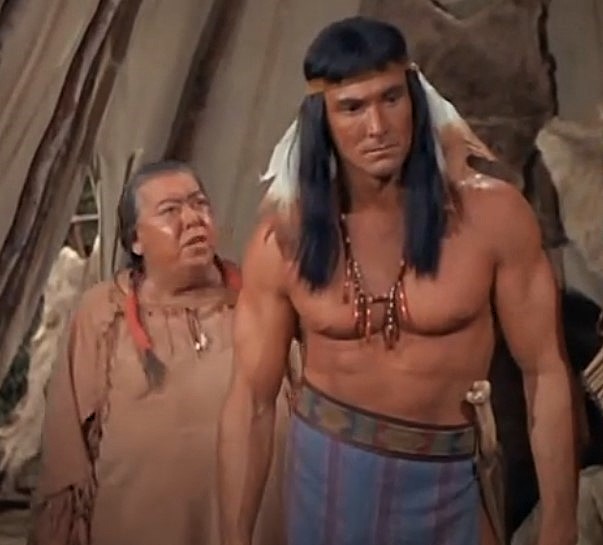
Spivy as Tatama with William Smith as her son Catoga in the Daniel Boone episode “A Matter Of Blood.” (1967)
Spivy’s final television role was her biggest since Alfred Hitchcock Presents: a 1967 Daniel Boone episode in which she plays Tatama, an Indian tribe elder. As with the rest of the actors playing indigenous characters at the time, the brown-face makeup doesn’t age well, but she delivers a good performance, in my humble opinion.
New York Times (1/10/71)
Spivy was diagnosed with cancer in the late 1960’s, eventually moving into a series of hospitals and nursing homes that she kept getting kicked out of. Angry and bitter at her waning independence, she would lash out at staff. Her old friend Patsy Kelley arranged to have her placed at the Motion Picture Country Home in Woodland Hills, California where she died on January 8, 1971, aged 64. She is interred at Valhalla Memorial Park in West Hollywood.
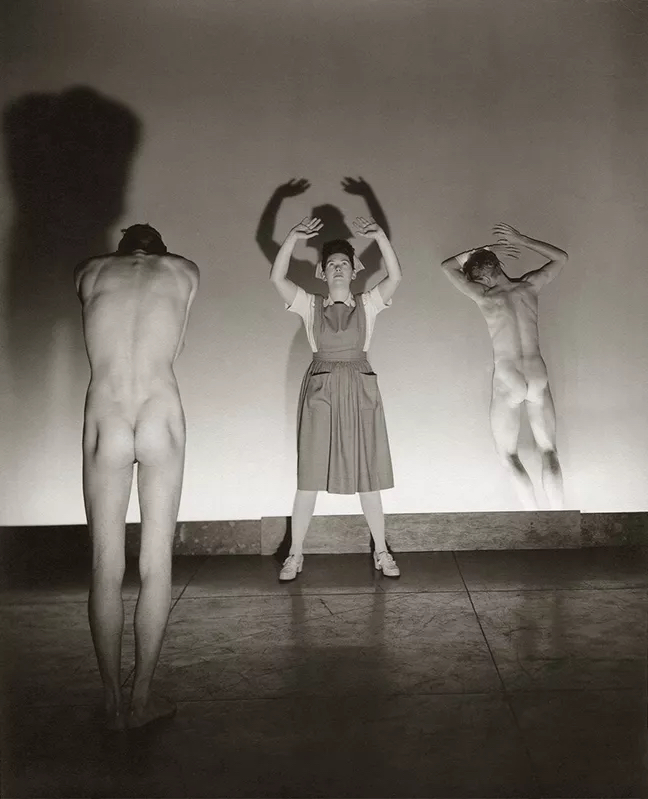
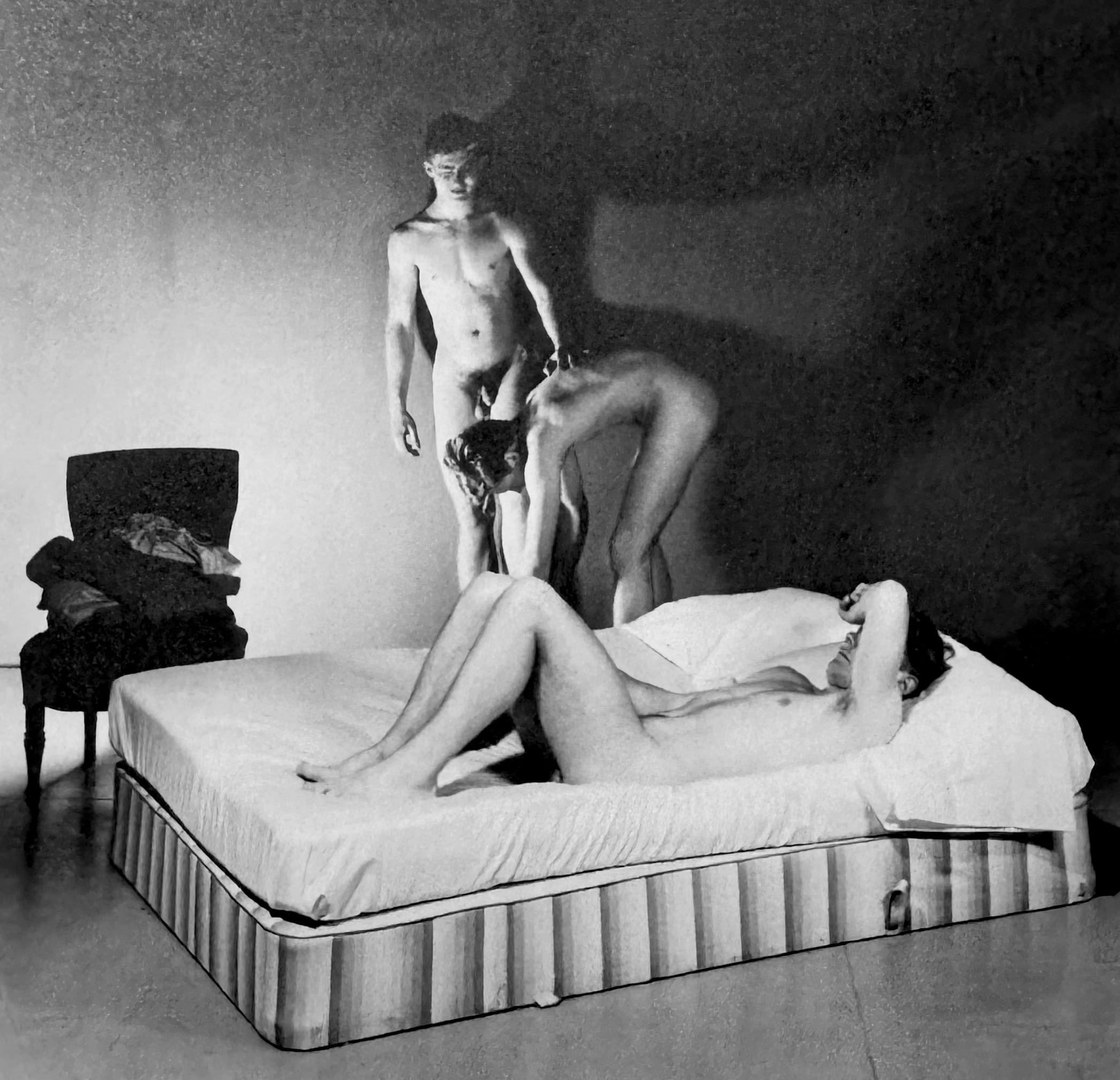
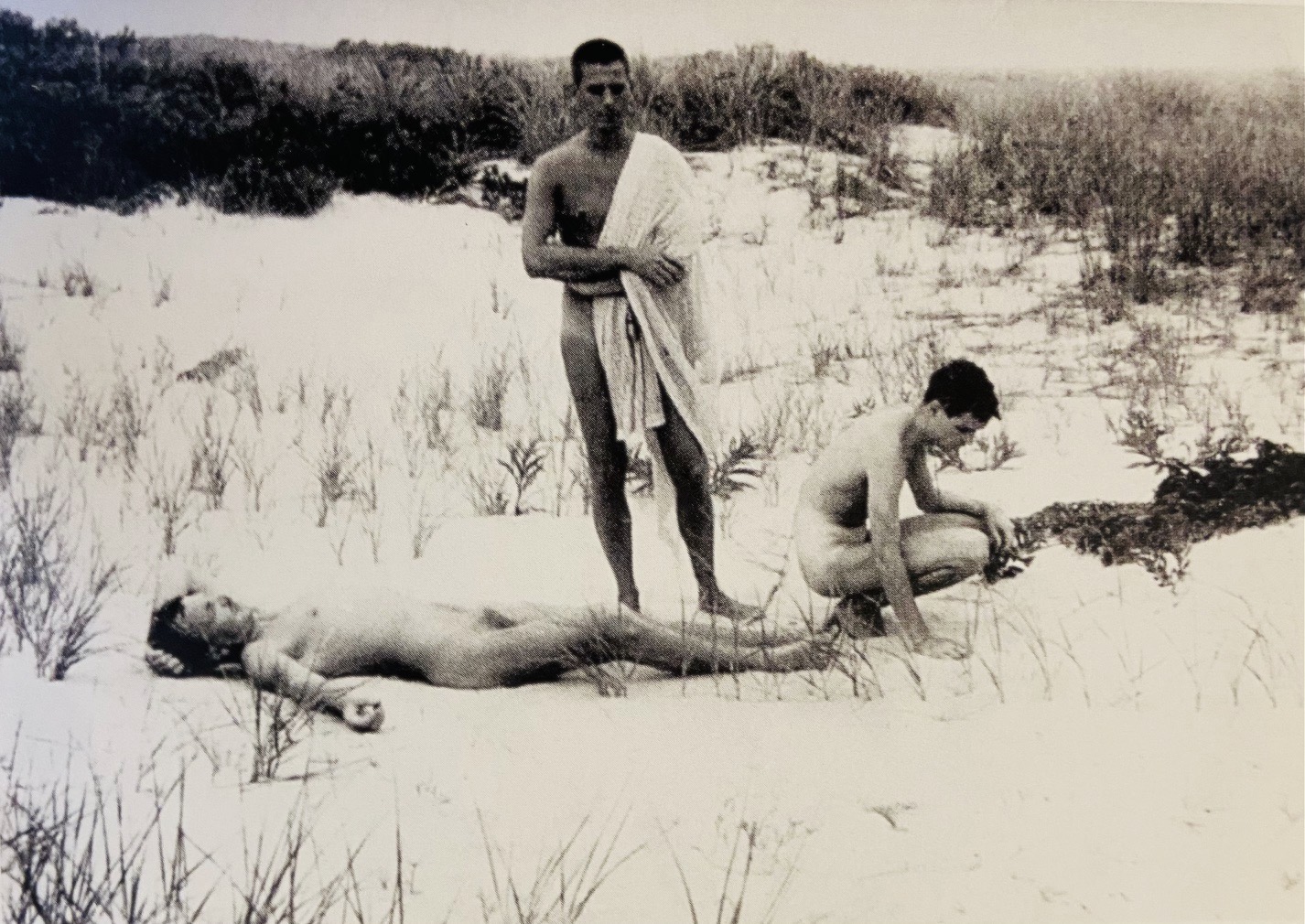
The cover of the book George Platt Lynes Photographs 1931-1955 features this photo of Edward Lennox Bigelow, Dora Maxwell, and Johnathan Tichenor (ca. 1943)
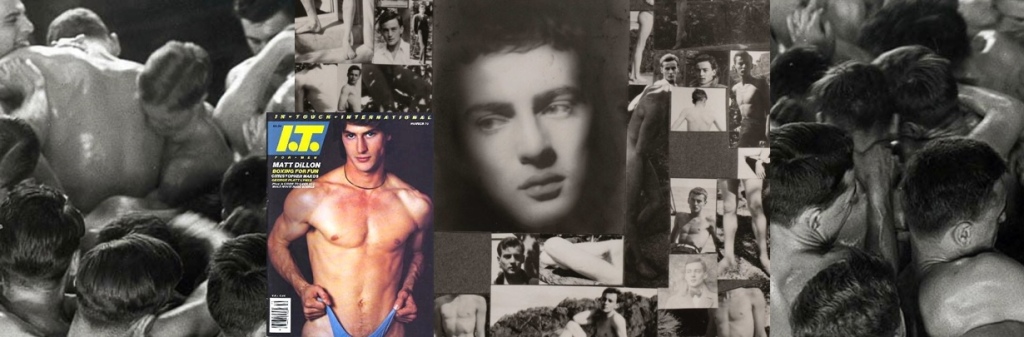
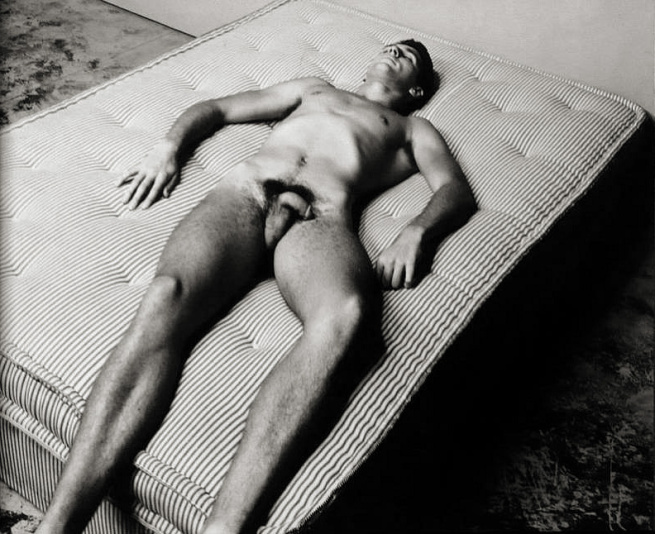
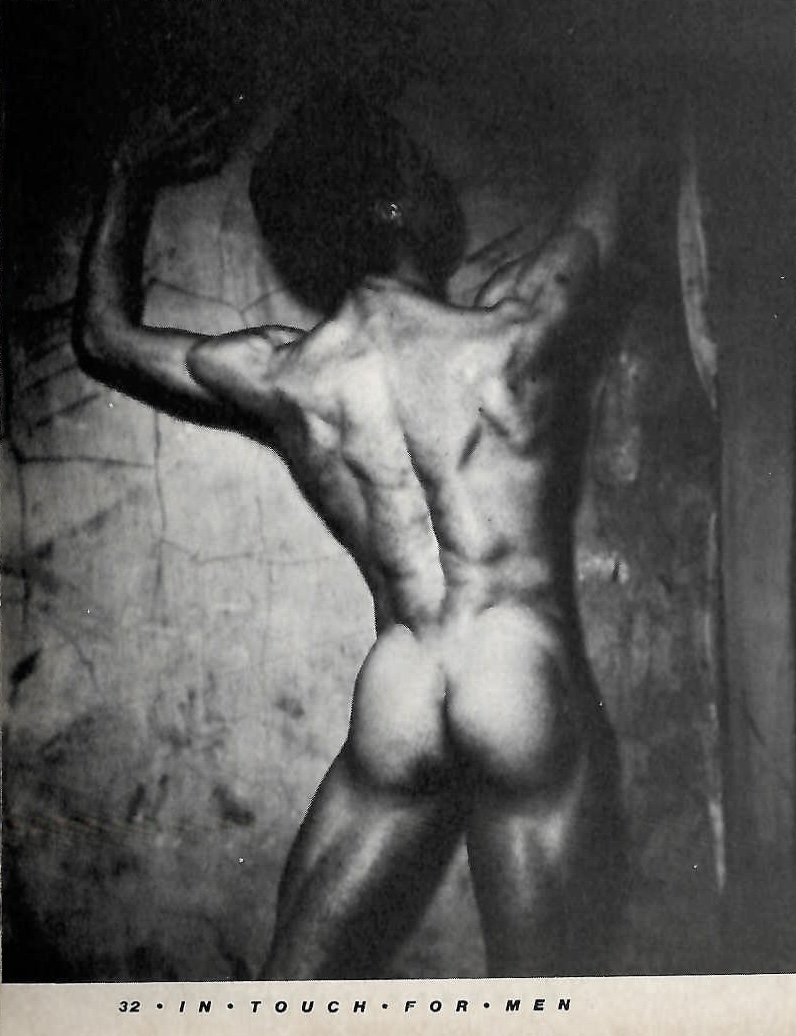
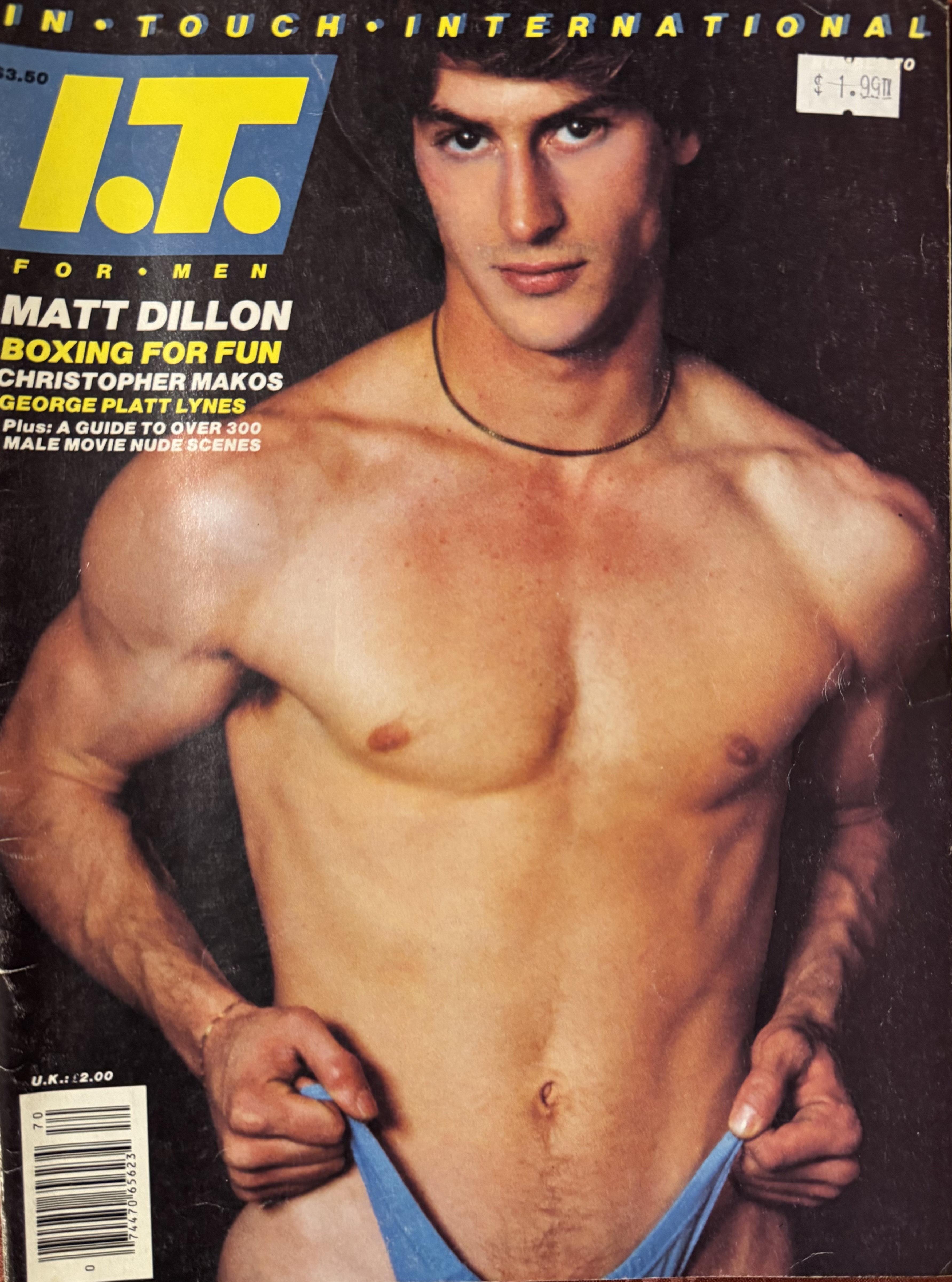
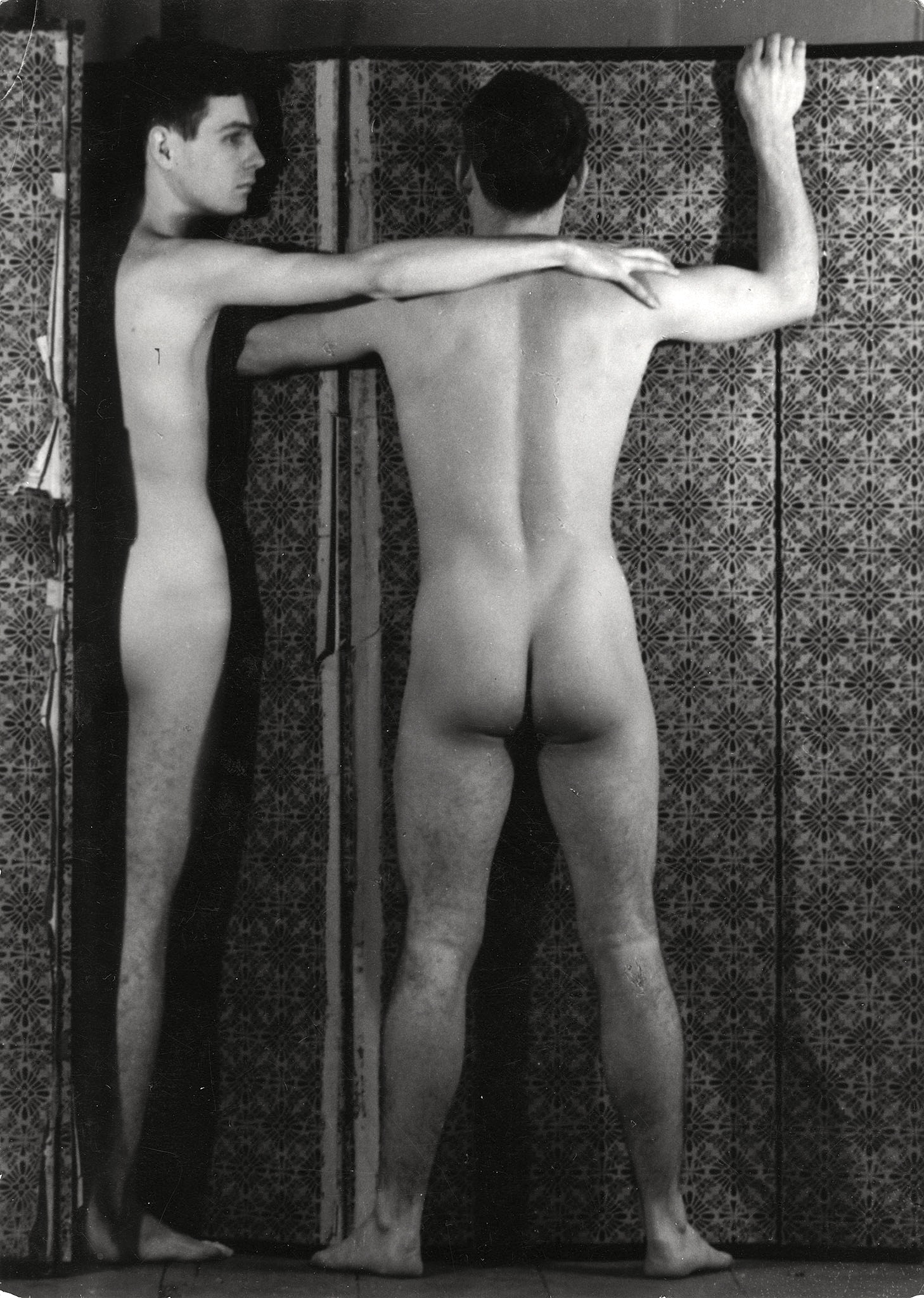
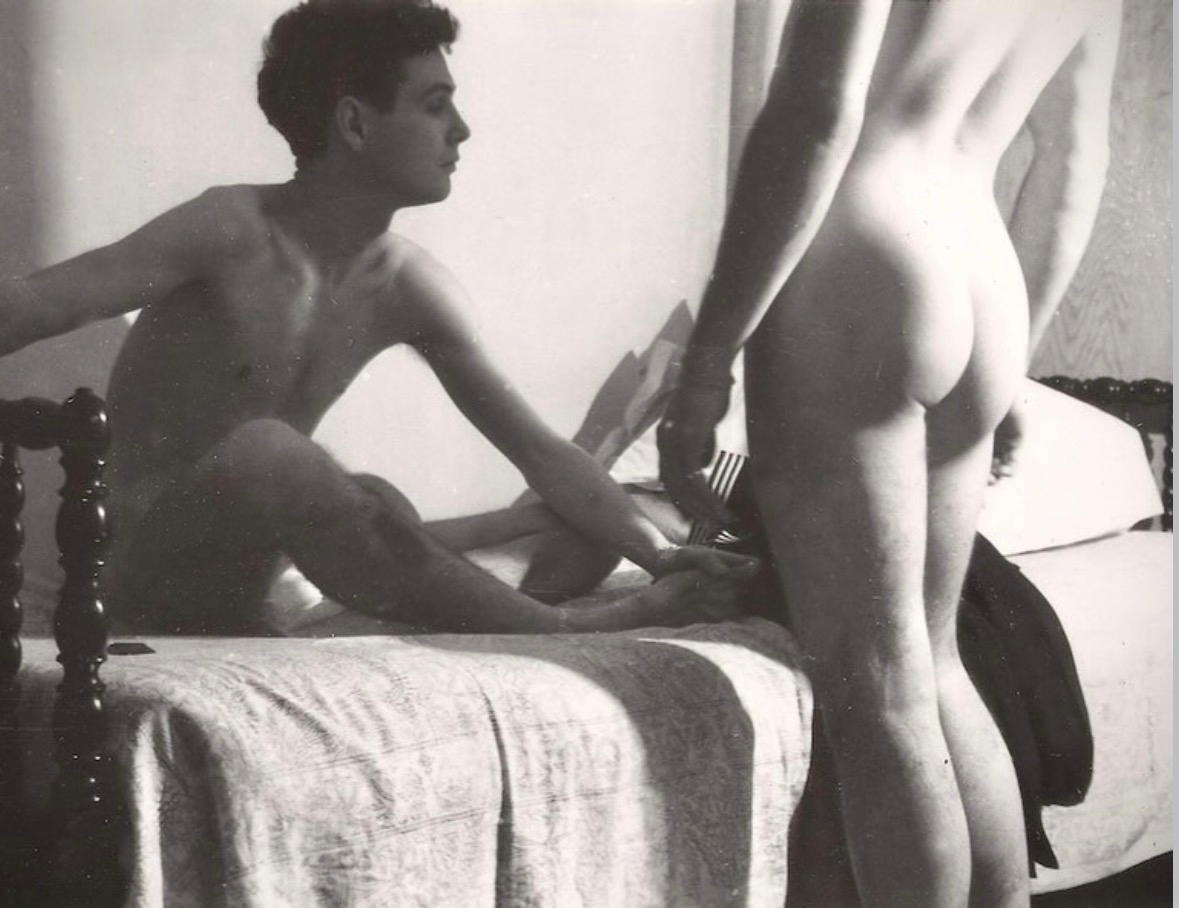
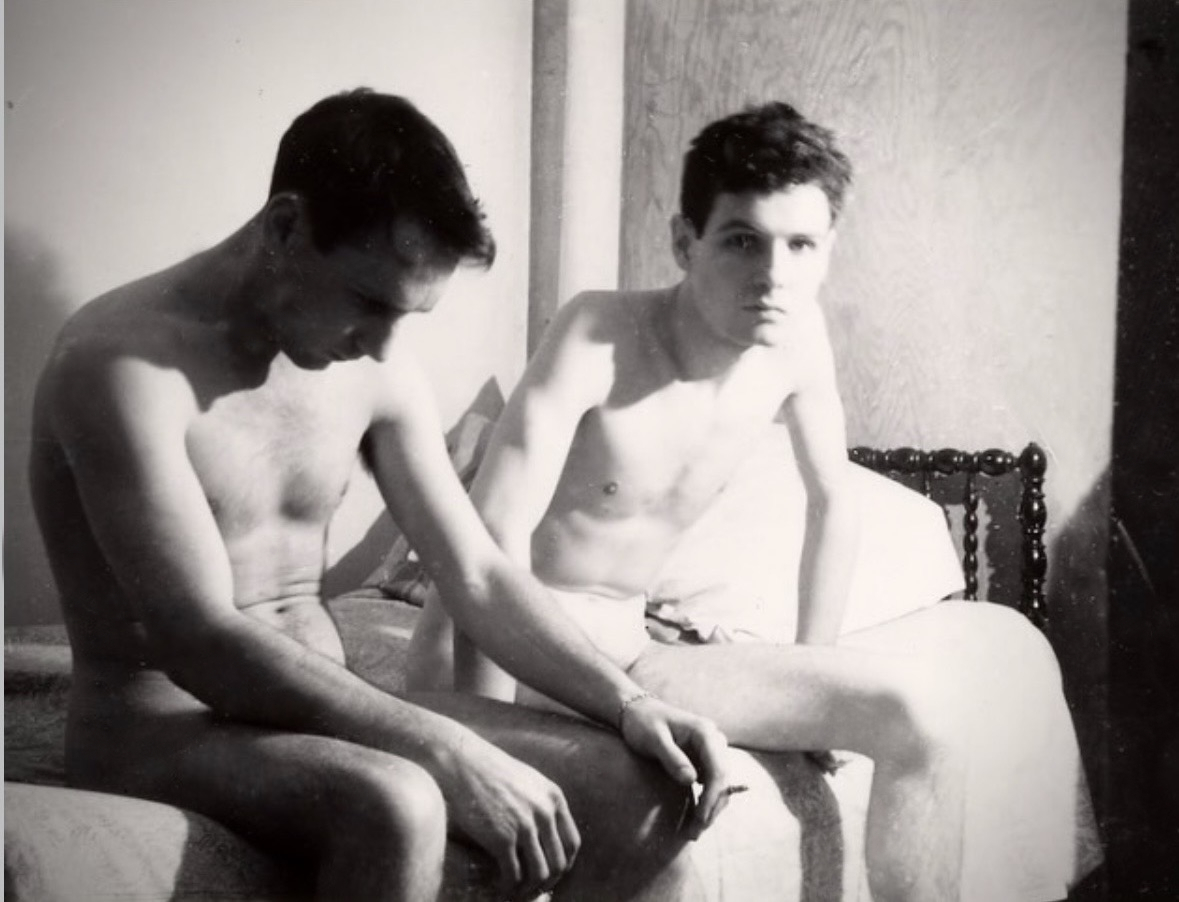
I recently acquired a copy of the August 1982 issue of In Touch magazine, which featured the photos of George Platt Lynes. Although Platt Lynes died of cancer over 25 years earlier, this was the beginning of the publication of his male nude photographs, which have now become recognized as his most memorable work.
Just a few months before, Jack Woody and Twelvetrees Press had published George Platt Lynes Photographs 1931-1955, an oversized hardcover book with introductory texts by Glenway Wescott, George Balanchine, and Lincoln Kirstein. Someone wisely permitted In Touch to publish a handful of Platt Lynes’ male nude studies, introducing his work to a whole new generation of gay men. Many of these photos were previously unpublished.
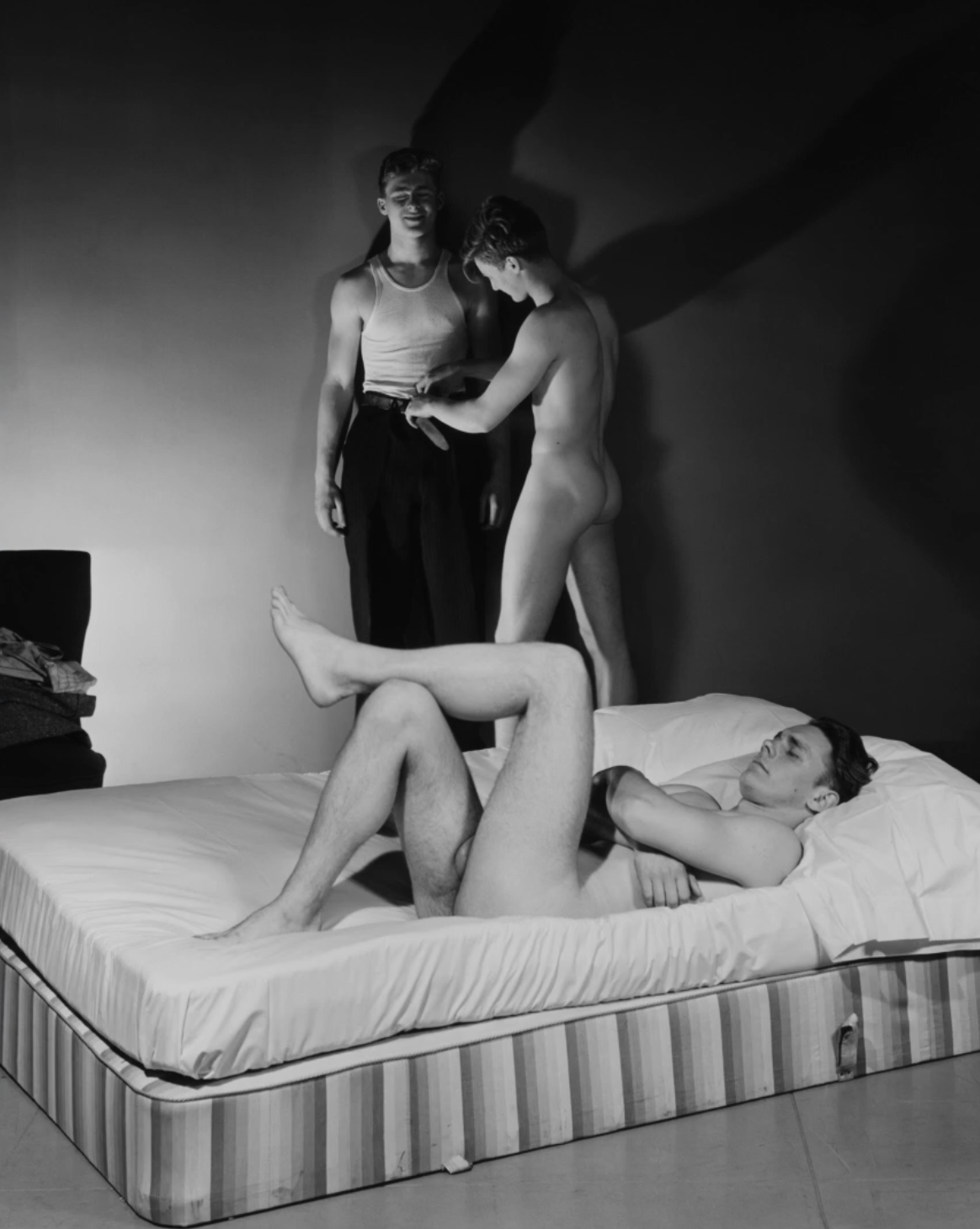
The models in the photo above are Charles “Tex” Smutney and Charles “Buddy” Stanley, subjects of some of Lynes’ most memorable photographs. Of Smutney, David Leddick wrote “few of Platt Lynes’s subjects so perfectly embodied youth and innocence as did this athletic, fair-haired figure.”
The image comes from the 1941 “Bedroom Series” of 30 photographs featuring Tex and Buddy undressing and lying on a bed with a third model, Bradley Ball. (below)
The above photo of The Ritter Brothers (ca. 1934) is now part of the Metropolitan Museum collection.
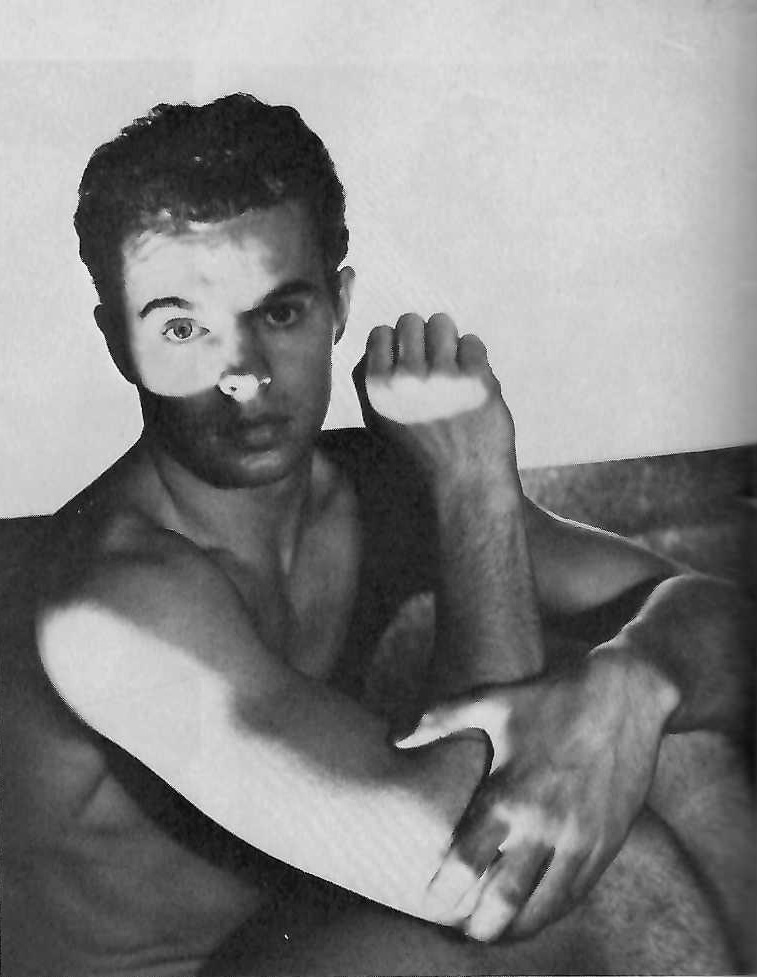
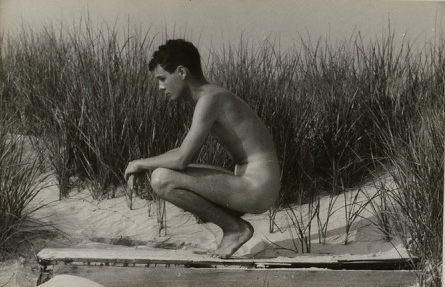
The subject of two In Touch photos is Blanchard Kennedy, a frequent model for Platt Lynes in the late 1930’s.
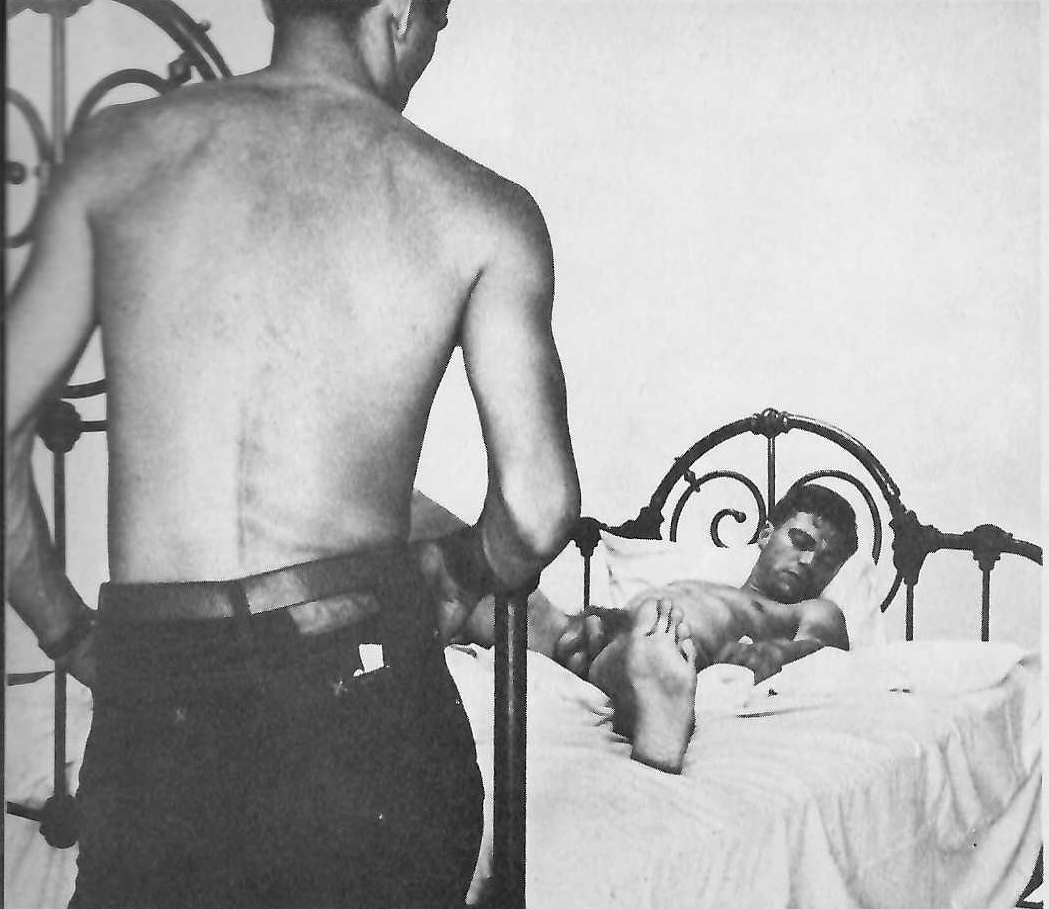
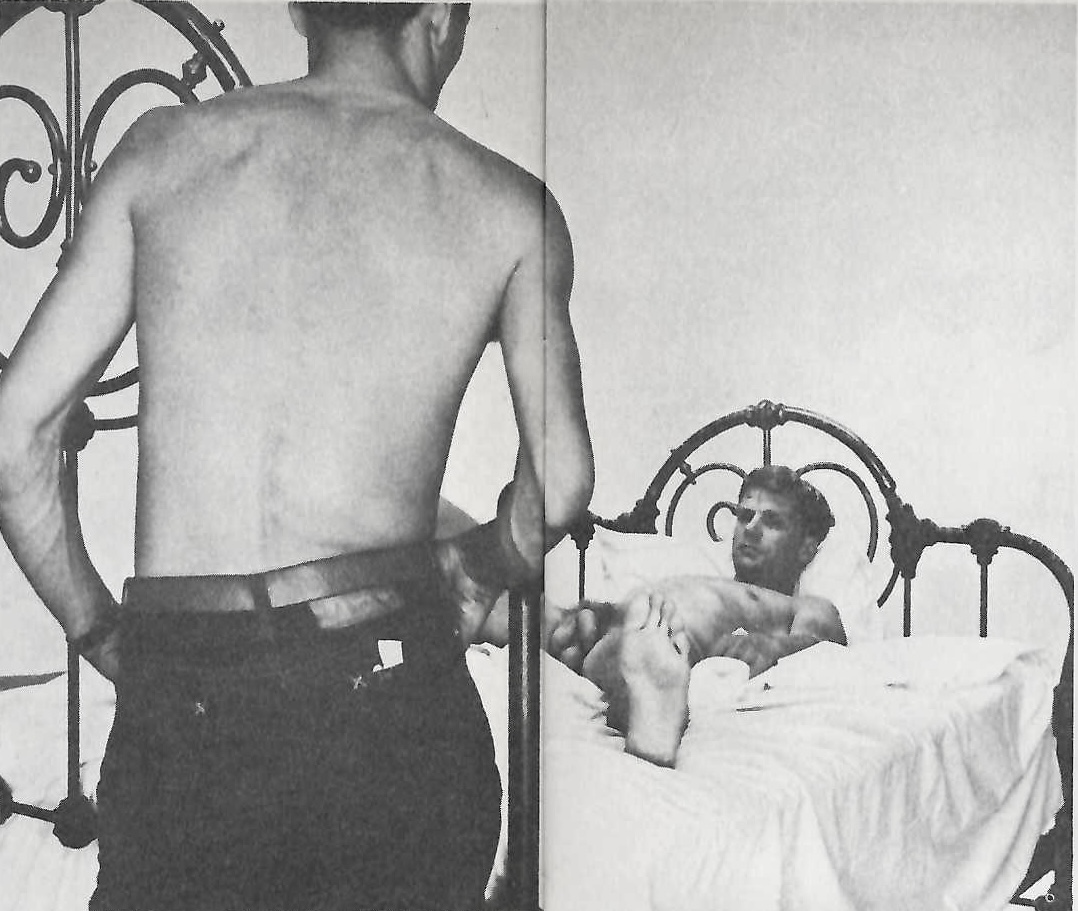
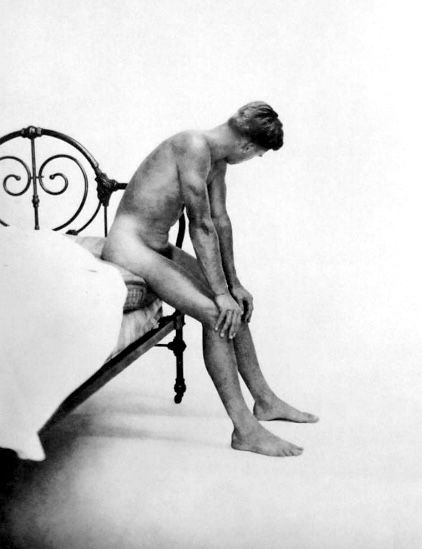
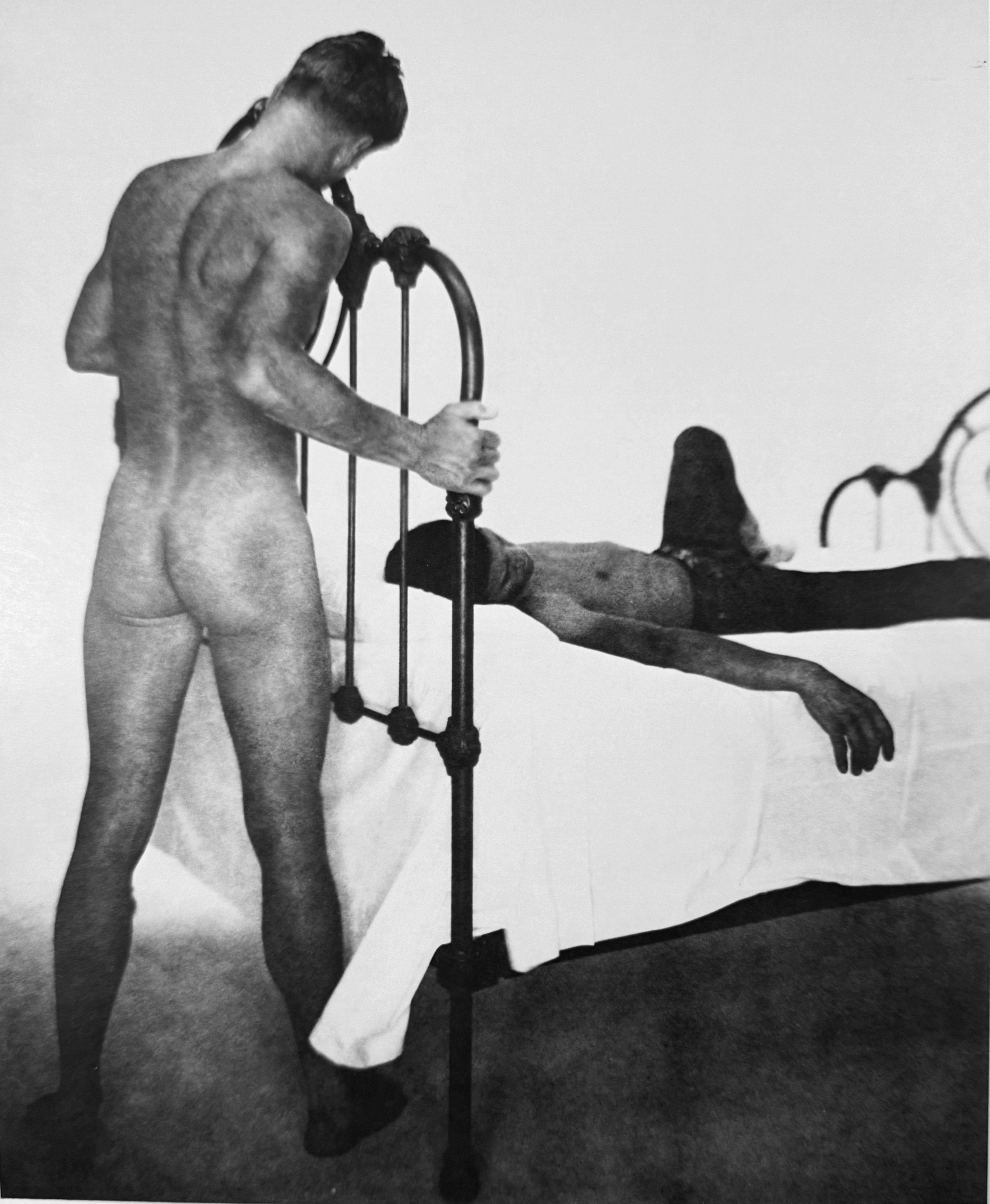
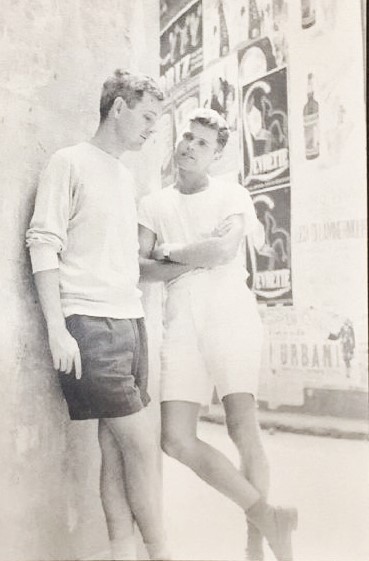
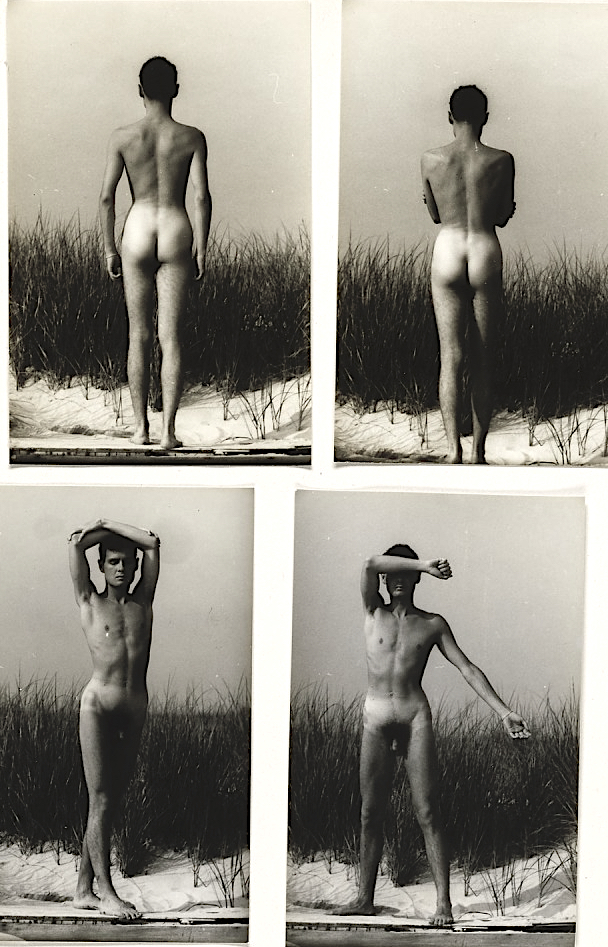
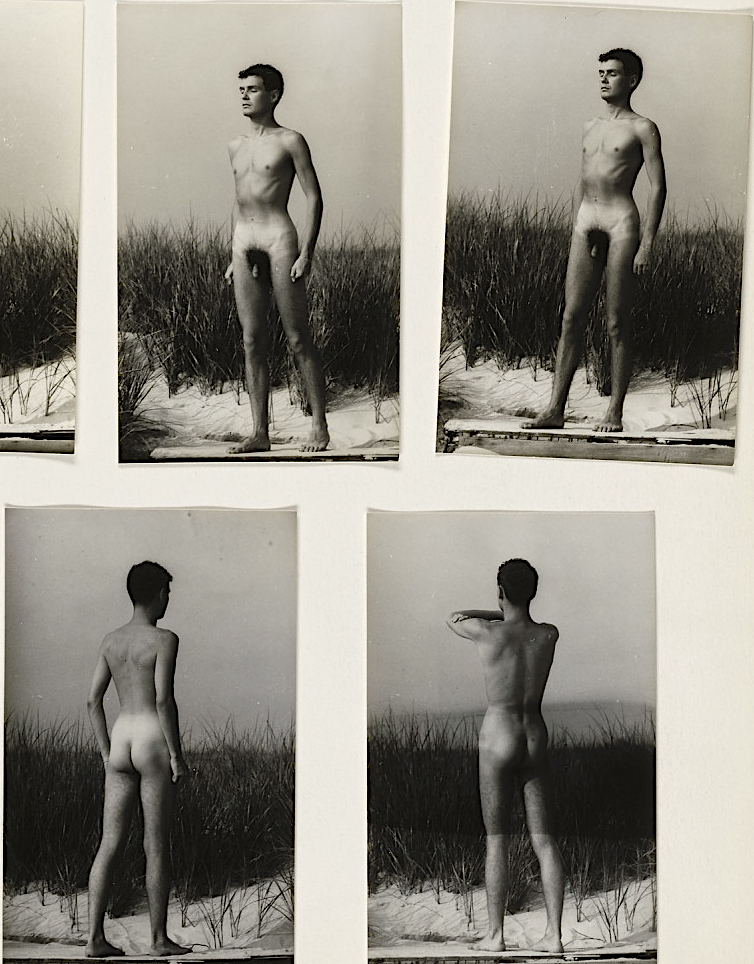
The three photos above from In Touch are part of an early 1950’s series of images taken around the bed in Lynes’ studio (see below). The models are unidentified, although the blond is sometimes misidentified as Alexander Jensen Yow or Ralph Pomeroy, two subjects who were also photographed seperately in or around the same bed.
Left to right: Gordon Hansen, Jack Fontan, Dick Beard, Unidentified
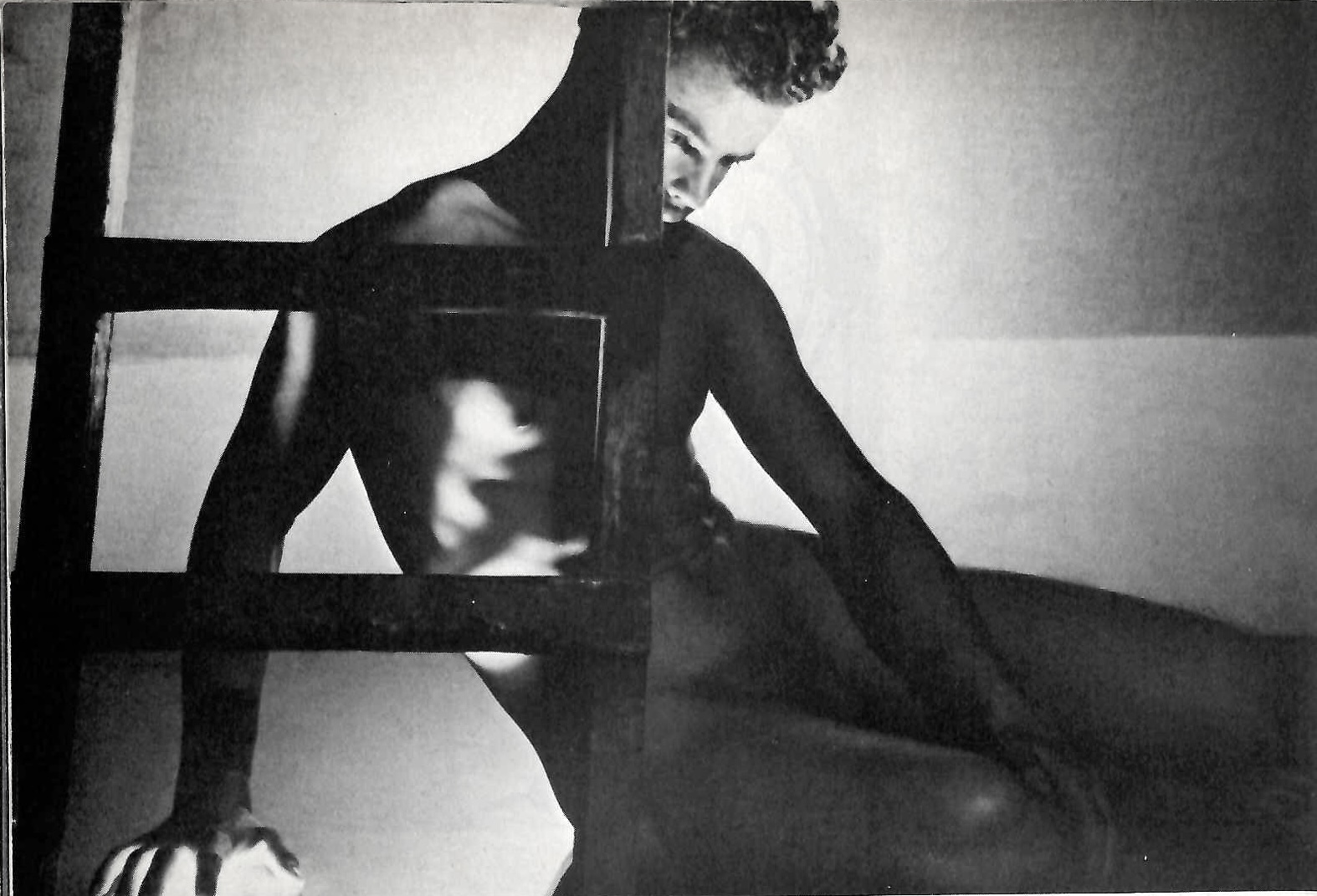
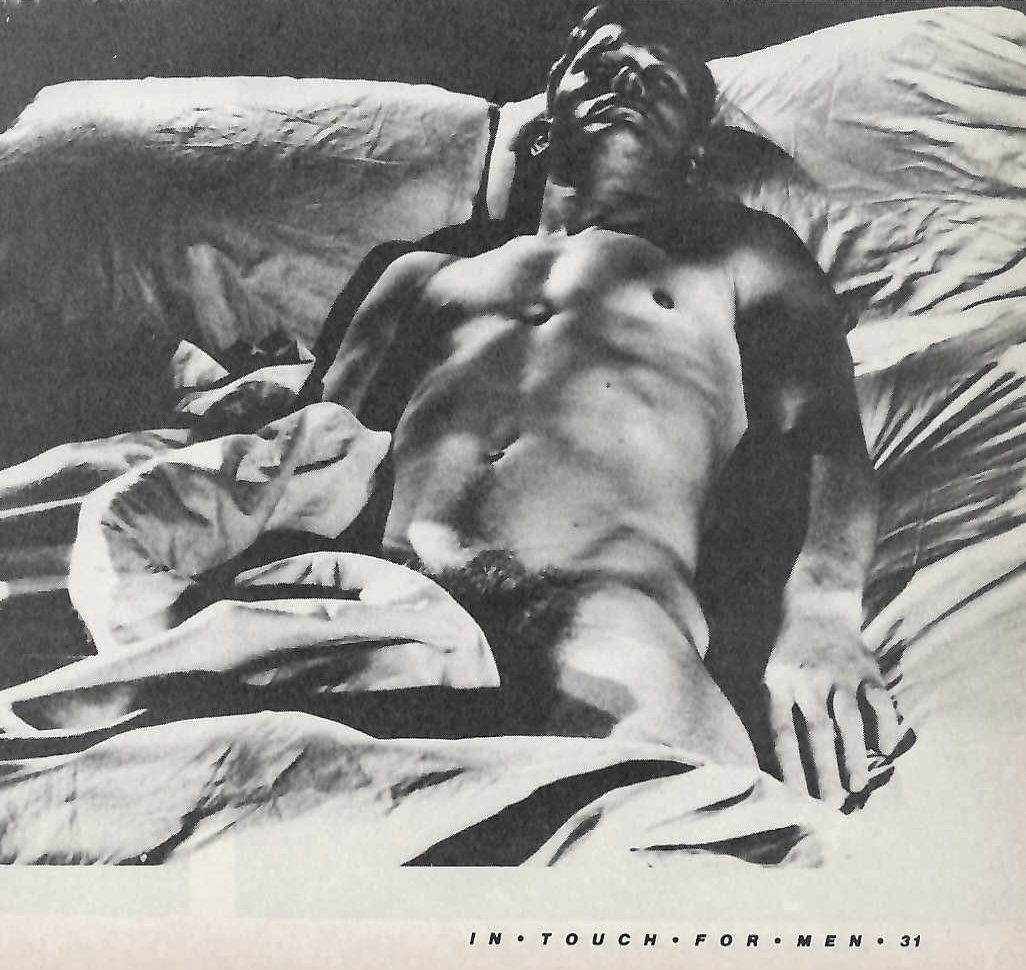
The final full-page photograph of an unidentified model illustrates the timeless artistry of Platt Lynes’ work.
Also featured in this issue is a profile of Warhol photographer Christopher Makos, who, like Platt Lynes, blurred the line between artistic and homoerotic photography.
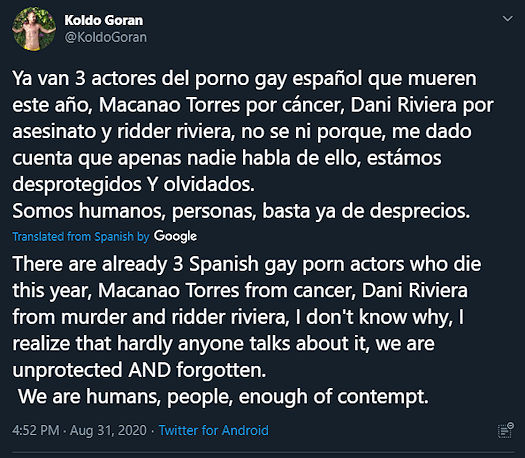
In August of 2020, porn star Koldo Gorantweeted about three fellow performers who had recently died. Goran’s tweet was the only public notice that one of them, Dani Rivera, had been murdered. “I realize nobody talks about it, we are unprotected and forgotten;” Goran tweeted “We are humans, people, enough of contempt.”
Most gay news outlets choose to ignore the passing of all but the biggest names in the adult film industry. Porn companies also seem reluctant to broadcast the death of a performer who is still on their roster, forever young and willing in their website content. An obit is a real boner killer, ya know? Why jeopardize the profit margin?
Additionally, performers who abandon their porn personas and return to life under their real names often pass away unnoticed by former employers and scene partners.
As in previous years, there is a lack of people of color on the list. Why? Is it that few have passed on or that they haven’t been reported yet? For this reason – and due to continued interest from fans – there are ongoing updates to the lists of porn star passings in 2020, 2021, 2022 and 2023. If there’s someone we missed, let us know.
We remember those that were lost in 2024 to prove Koldo Goran wrong – they have not been forgotten.
1) Bo Dixon aka Thom Austin, 62, died in his sleep on February 7, 2024, according to his partner Brad. Dixon was active in films from 2005 to 2008, working for Colt Studios and Hot House Entertainment. According to Queer World News And Life, he left the porn industry “to become a successful body builder, personal trainer and quintessential daddy.”
2) Cole Claire, aka Tristen Wayne Evans had been battling advanced renal disease for two years. In February, the 27 year-old posted on social media that he had decided to stop treatment and enter hospice care. He passed away a few days later on February 22, 2024.
Claire was 19 years old in 2016 when he began working in the adult film industry. The popular model went on to appear in approximately 50 scenes for Helix, Boy Crush and Cockyboys.
3) Rylan Shaw (aka Garret Crenshaw) passed away on February 25, 2024 at the age of 39. Earlier in the month, he announced on social media that he had been battling cancer, stating “I’m not going into details but probably not going to end on a good note.”
The Indiana native appeared in over a dozen scenes at Sean Cody in 2008-2009. After a three year hiatus, he resumed work with Falcon, Men, Raging Stallion, Dominic Ford, Next Door Studios and other outlets. Rylan worked as a bartender in Chicago after he retired from the industry. In 2021 he posted “13 years ago my first vid came out. I ain’t ashamed of it one bit, & I would do it again in a heartbeat.”
4) Evan Mercy was in a motorcycle accident and died from his injuries on May 25, 2024. Originally from Paris, Kentucky, the bisexual performer appeared in approximately 30 scenes from 2012-2014, working for Baitbuddies, All Worlds, Falcon and Dominic Ford, among other studios.
5) Grant Michaels, aka Skylar Hawks, was born on September 6, 1969 and grew up in Zimbabwe, South Africa. He was first seen in the adult film industry in 2004 around the age of 35 and went on to appear in over 125 straight porn films. He also filmed for Colt Studios as Skyler Hawks and on Straight Guys For Gay Eyes. He passed away at age 54 from a “heart attack” on July 19, 2024. His brother is fellow adult film performer Justin Magnum.
6) Alan Marcelo might win the award for Most Performer Aliases. Besides the various spellings of Allan Marcello, Allan Marcelo, Alan Marcello, Allan Marecello, Allen Marcelo and Allen Marcello, he was also billed as Adrian, D’Angelo, Jason, Leonardo, Romeo, Caetano, Caettanno, Caitano and good ole Professor Allan. In any case, he was born in Brazil on February 7, 1983 and began working in gay, trans and straight films when he was 21 years old. He appeared in over 300 titles before retiring in 2012. That said, he does still have an active website with paid content.
7) Mike Hollister, aka Michael Zook was killed in a motorcycle accident in Murfreesboro, Tennessee on Aug 10, 2024. He was 28 years old. Born on October 17, 1995 in Baltimore, Maryland, Hollister appeared in 4 popular scenes for Active Duty in 2016. He went on to work as director of sales for a software company. His obituary states “he touched the lives of everyone he met.”
8) Mars Barcelona, aka Mars Gymburger, aka Igor was a Russian-born model based in Spain who appeared in over 150 scenes for Raw Fuck Club, Lucas Entertainment, Kristen Bjorn, TimTales, Fuckermate and other companies from 2020-2024. He also created content for several fan subscription websites. He passed away on September 26, 2024 – one month before his 40th birthday.
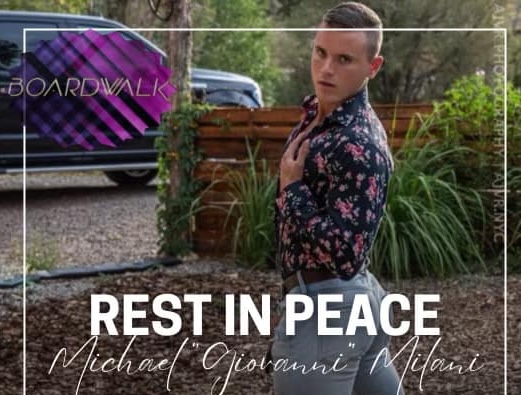
9) Giovanni Rosa, aka Michael Milani died of an overdose on October 12, 2024. The 33 year old, originally from Maryland, also lived in Dallas before moving to South Florida about five years ago. Milani was described by a friend as “vibrant and high-energy, with a ‘no bullshit’ attitude.” He appeared in a dozen films between 2019-2020 for Baitbuddies, Pride Studios, Badpuppy, and Man Royale. In addition to his film work, he was also a party promoter and manager.
10) Tate Daniels, aka Trevor, overdosed in Wilton Manor, Florida just two weeks after Giovanni. Their combined memorial was described as an “intervention disguised as a memorial,” offering help to those in the community with substance abuse issues.
30 year-old Tate was relatively new to the industry, with some high profile OnlyFans collaborations under his belt and work with RawFuckClub. He was also photographed by Luke Cruz and Covetimage.
11) Mr. Saukei, aka Mr. Sauki, Mr. Saki or simply Saukei was born Searcy Lee Allen III on December 12, 1982 in Oklahoma. Between 2004-2013, he appeared in dozens of films for Bacchus, Flavaworks, Pitbull and other companies. He was nominated for a 2009 Blatino Award as Best Bottom. He was 41 years old when he passed away in Tulsa, OK on October 14, 2024.
12) Apollo Moon, a transmasc adult content creator known to friends and family as Forest Harader, died in Los Angeles on December 1, 2024, his loved ones confirmed to Them. He was 26 years old and had been on life support for several days. Over the past two years, he appeared in scenes for Brazzers, Grooby and Manyvids.
On social media, friends remembered him as a trailblazer and a “kind and beautiful force” for the world.
13) FitRick81 aka Fitwolf81 aka Rick Araya was active on OnlyFans since 2022 and also appeared in scenes for RawFuckClub. Born June 26, 1981 in Costa Rica, he was living in Miami when he passed away at age 42 on January 20, 2024.
14) Justin Busiere, aka Clayton, was a model and professional bodybuilder who worked with Fratmen, AllAmericanGuys, and MyFriendsFeet, as well as OnlyFans. According to the IAFD website, he committed suicide on Christmas Day, 2024. He was 33 years old.
One of his last social media posts was a quote from Dr. Seuss: “Remember me and smile, for it’s better to forget than to remember me and cry.”
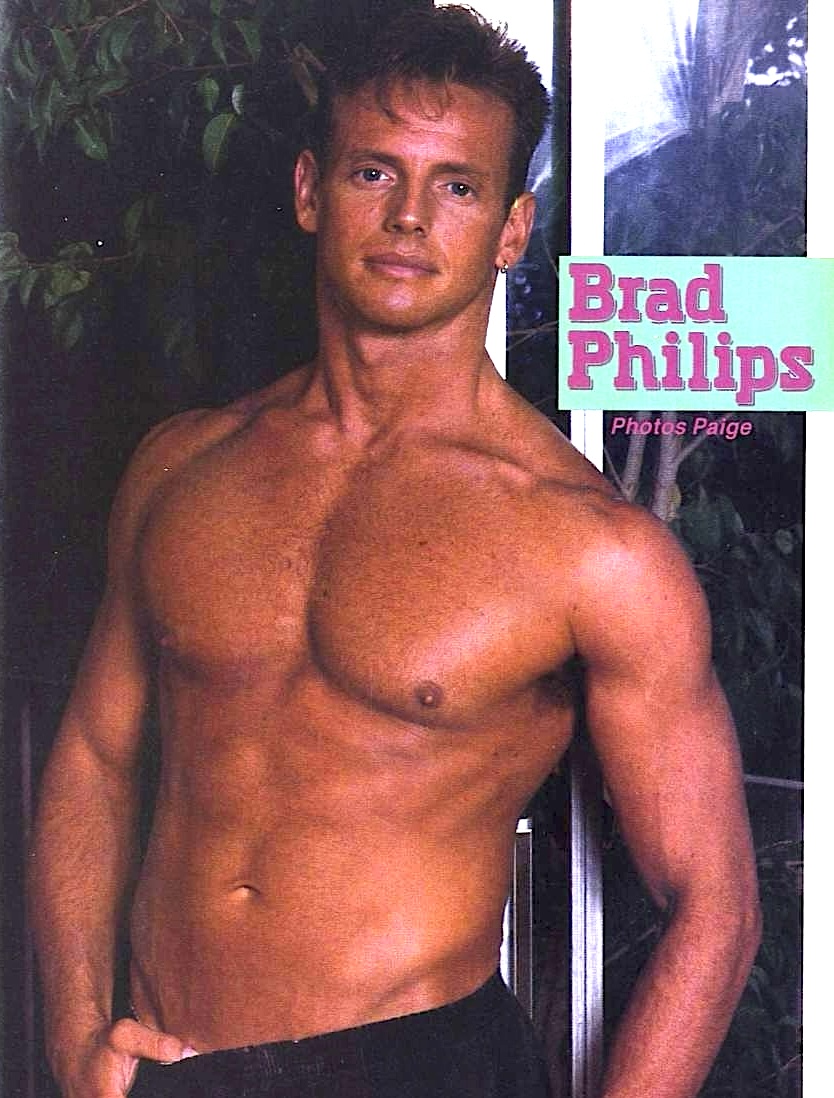
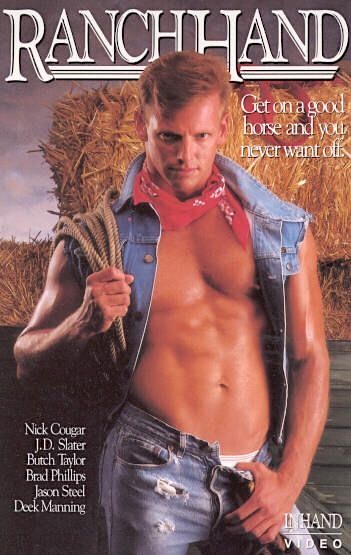
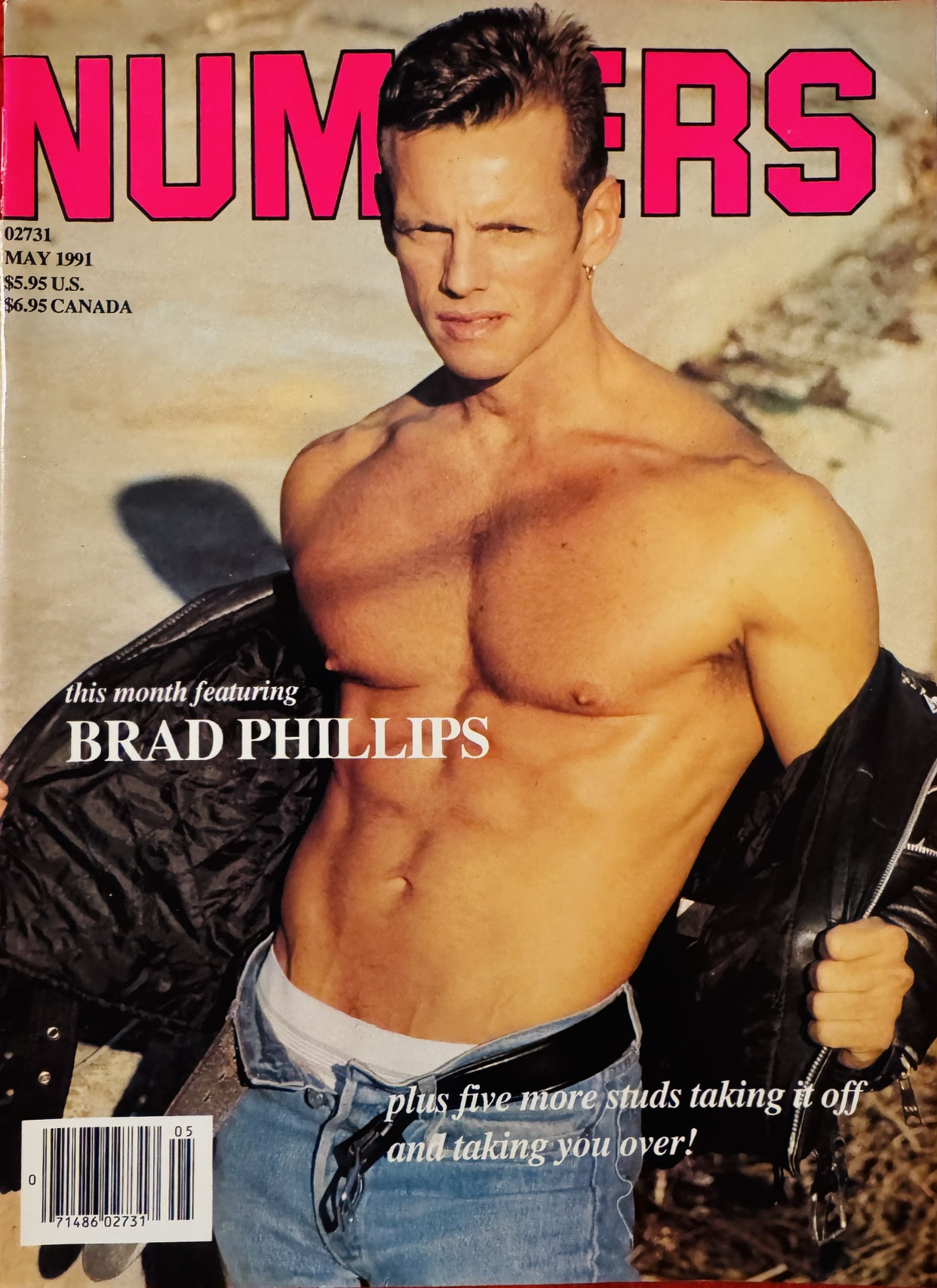
15) Brad Phillips, aka Steven Casavant was born in Glendale, California on February 6, 1955. While in high school, he developed an interest in fitness and began working out. He later taught aerobics for 10 years.
His first film appearance was in Buckshot’s The Company You Keep (1984), a flip scene with Matt Ramsey, aka Peter North. Phillips went on to appear in over 50 movies for Falcon, Surge, HIS, Vivid and Fox Studios, to name a few. Through much of his career, his boyfriend and frequent co-star was Butch Taylor.
In 1987, gay Trekkies were pleasantly surprised to see an uncredited Brad Phillips aboard the Starship Enterprise in Star Trek: The Next Generation. He appeared in 10 episodes of the first season.
After relocating to San Francisco in 1991, Phillips suffered from facial disfigurement due to a rare disease. This was an especially cruel fate for a model and magazine coverboy. He shifted into a new phase, donning an eye patch and adopting the persona of DJ Pirate Steve, spinning throughout the city’s club and party circuit. He also worked as a fitness trainer and masseuse.
According to his partner of 26 years, Phillips died while taking a bath in their San Francisco home on March 13, 2024. He was 69 years old.
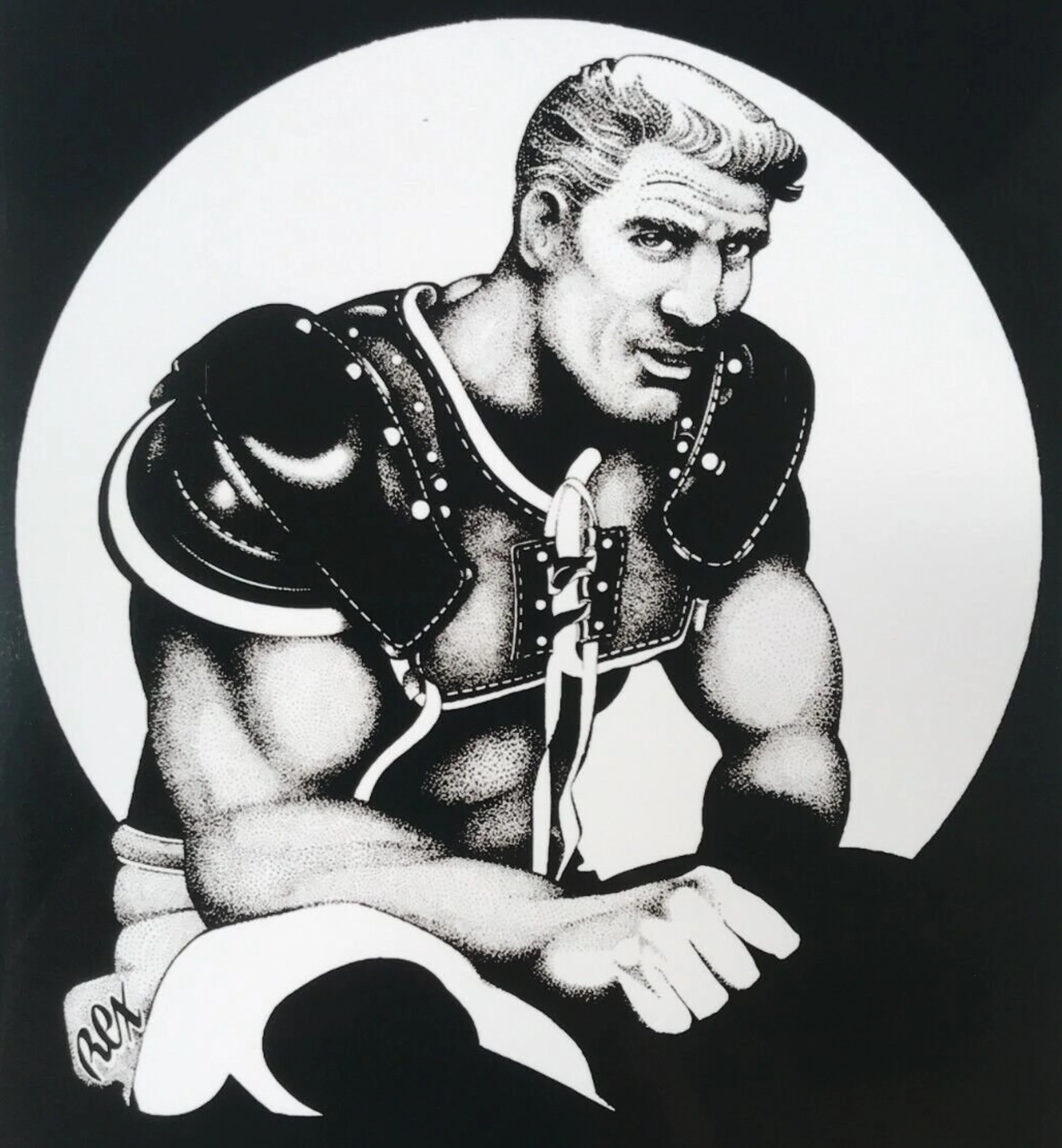
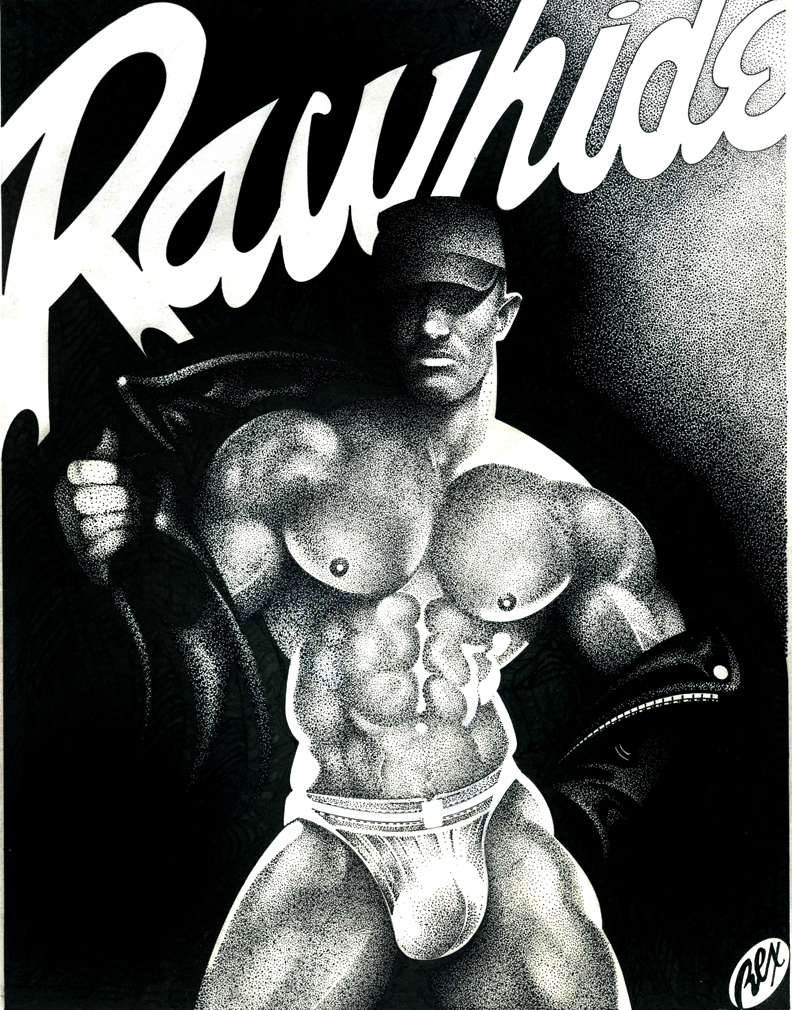
16) Rex was a legendary gay erotic artist and illustrator whose work was closely inspired by Tom of Finland. Rex’s depictions of gay fetish and leather scenes in turn influenced artists like Robert Mapplethorpe. His iconic illustrations were omnipresent in gay bars through the 1970’s and 80’s and prominently featured in Drummer magazine.
The reclusive artist was rarely photographed. His real name and age are unknown, although Jack Fritscher’s research ages Rex at 81 years old when he died. Many assumed the artist had passed away years before his death was announced by the Bob Mizer Foundation in late March.
That’s what I told myself. When I went back to look for earlier drafts that I was sure I had started, I discovered that there were none. I never wrote anything down – I only thought about sharing this story. For years. Until now.
“Do you have any real ghost stories?” is a fun question that pops up occasionally in social situations. My go-to response is the story of The Playground Swing – an unexplained occurrence from when I was in the 6th grade. Whether or not it is an actual ghost story, the memory has stayed with me for 44 years.
Just as the clear, cool weather of an early September day can evoke memories of 9/11, the story of The Playground Swing always comes back to me on crisp October mornings. It sneaks in sideways while I’m going through my morning routine, or while I’m commuting. It evaporates before I ever sit down and type it out. There’s not a whole lot to the story, really. It’s that unexplained simplicity that makes it a bit anticlimactic in the telling.
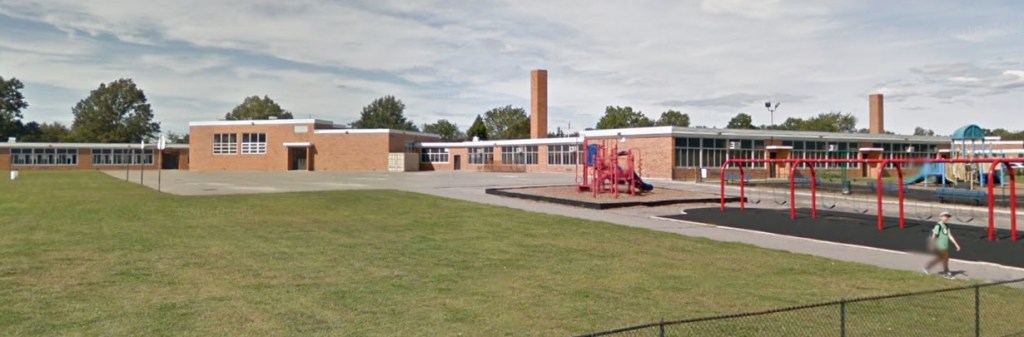
It was the fall of 1980 and I was in 6th grade at Bowling Green Elementary school in East Meadow, New York. We had moved into my grandmother’s house the year before, after a year of unrest following my parents’ divorce. I was happy to be living there, in the cozy house my mother grew up in. I looked forward to going to the school that my parents, aunts, and uncles had all attended.
Once upon a time, I had been a popular kid, but this was our second move in under two years. I remember hearing that it was a bad age to be uprooted and have to make new friends. Obviously many kids maneuver their way through it successfully. I didn’t.
5th grade had been bad, but I did have a couple of new friends to help me get through it. When we got into 6th grade, they were in a different classroom on the other side of the school. In my class, there were no allies. It felt like they were all against me. Looking back now, I would have to say that, among those in my class, I was met with 50% aggression and 50% apathy.
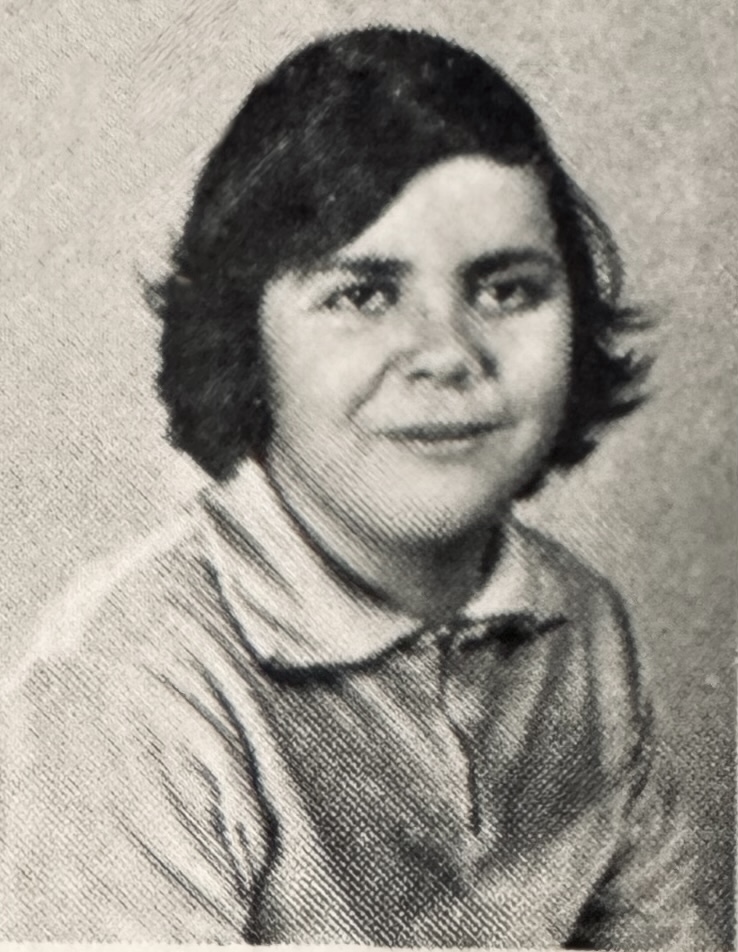
I was a chubby kid in need of a shower and a haircut, with big eyes and thick lashes that caused me to be regularly mistaken for a girl. My class picture says it all: This is a photo of an 11-year-old who was misgendered by the photographer moments before he snapped the picture. When I rolled my eyes and said, “I’m a boy,” he sputtered “Oh, uh… I was talking to that girl over there.” Now smile! *Click*.
For years, my memory was this: One day, my entire class gathered after school to confront me as I walked through the playground towards home. I’m sure it wasn’t ALL of them but when faced with an angry mob of your peers gathering around you, well… I didn’t stop to take attendance. It was a lot of them.
What was their plan? To beat me up? What would that accomplish? I don’t think they actually knew either, and in that disorganization I was able to run away. My best defense was that I could always run fast.
My mother called the school to complain and I was allowed to stay home the next day. The vice-principal went and spoke to the class, asking why they were picking on me. The response landed me in his office for a lecture: I had a bad mouth. I cursed at everyone. This is what he was told. I was the problem. No mention of the taunts and name calling that were the catalysts for my colorful language.
Fuck them, I thought.
My teacher was Mr. Dillon, a soft-spoken beanpole of a man who had been teaching there since my parents attended in the 1950’s. He kept his Vantage cigarettes in the breast pocket of his shirt, and another teacher would stop in to watch the class while he went out for smoke breaks. He had lost his wife a few years before and seemed sad, defeated, and waiting to retire.
In the Bowling Green student handbook that nobody reads, I found that if I brought a note from my mother, I could go home for lunch. I don’t know of anyone else who did this or wanted to. Teachers and staff would look at me funny when I presented my note and told them I was heading out. I would run home to avoid the lunchtime awkwardness of where to sit, as well as any potential playground altercations.
We went on a field trip that year to the top of the World Trade Center, which I loved. Two things stick out about that trip: Standing up against the glass and looking down. It was dizzying. I also remember that when it was time for lunch, I sat with the teachers. They seemed puzzled.
Back to The Playground Swing. Our classroom overlooked the playground and on this one sunny and clear October morning, all of us began to notice this one swing moving back and forth, high and steady like a metronome. It was empty. There was no wind and all of the other swings were completely still. I don’t know how long this went on – it seemed like an hour.
Mr. Dillon tried to redirect our focus back inside the classroom. His voice had a nervous quiver to it that I had never heard before. He could see the swing too, and there was no visible explanation. There were no nearby structures for someone to hide in and pull a string to create this effect. It was a freestanding swing set in the middle of a flat asphalt playground.
By the time the lunch bell rang, the swinging had stopped. We all headed out into the hall, where the kids from the classroom next to ours were similarly perplexed – they had seen it too. There was talk of it being the ghost of some kid who died the year before I moved there, but I don’t remember the name, and surely I would have heard about this before.
Nobody had an explanation, and it never happened again. And that’s the story of The Playground Swing.
The school year went on. The bullying continued, although somehow I managed to avoid another angry mob scenario. One of my main tormentors was this butch brute of a gal who treated me as her physical and verbal punching bag. My mother once again called the school to request that she stop assaulting me, which resulted in her getting called to the vice-principal’s office. We were in music class when she returned. As she walked past where I was sitting, she grabbed the top of the back of my chair and slammed it towards the floor. I fell backwards, landing flat on my back with a loud crack. Everyone gasped. And nobody did a thing.
I got back into my chair, buried my head in my arms and sobbed uncontrollably. The feeling of hopelessness was overwhelming, with one thought repeating in my head: “This will never end. This will never end. This will never end.”
Our last day of school was a needless half day with nothing to do. Mr. Dillon, who could barely maintain control of his class on the best of days, was losing the battle. Kids were killing time by throwing things, yelling and walking around, waiting for dismissal. I’d had enough of this scene and decided to make a move.
While Mr. Dillon was trying to catch a kid who had wandered down the hallway, I went to his desk, opened the drawer, found my report card, and walked out the door. Once outside the school, I heard someone yell out the window “He’s coming after you!” So I ran. I ran through the playground – past those motionless swings. I ran away from that school as fast as I could, faster than ever before. I would continue running away from that place for years.
I would like to say that I didn’t look back, but I did. Every once in a while I would think about what I could have done to navigate those waters more successfully. While I can go back and forth with ideas about how I could have improved my social game, there is one thing from that year that had no explanation or variables: What was up with that swing?
If it was a ghost revisiting the playground to have one last turn on a swing, that’s less frightening than the abuse I suffered at the hands of my classmates.
I just wish I had more stories about benevolent spirits and less about wretched children.
East Village Radio had been back on the air for three months now – and that includes my weekly show, 60 Degrees with Brian Ferrari. On Sunday, September 29th, 2024 The New York Times posted an article about the station on the front page of their Metropolitan section.
60 Degrees is devoted to girl groups and female singers of the 1960’s, featuring hidden gems, cult favorites and unreleased obscurities. The show airs every Sunday morning from 8-10am EST, alternating new shows with old episodes from the original run (2008-2013). Episodes are available to stream any time, on demand for free here.
Here’s a recap of recent episodes – click on the date for streaming:
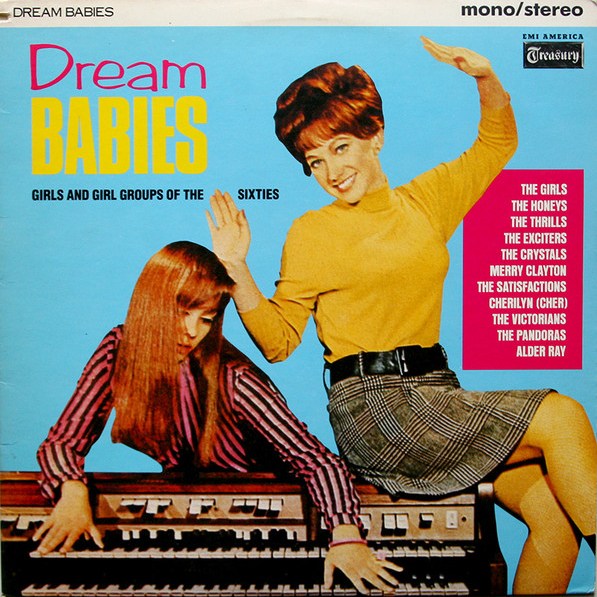
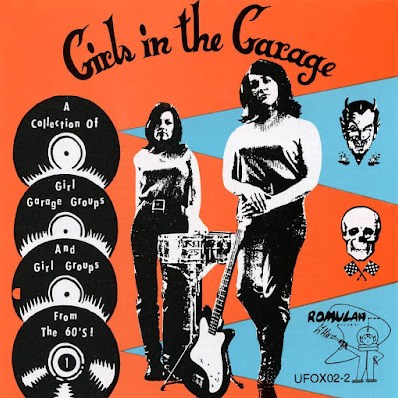
7/21/2024 – A tribute to Mary Weiss of The Shangri-Las, songs from film & television, Young Rascals covers, spotlight on Chess Records & selections from The Girls Scene CD Compilation. 7/28/2024 – From 2/2013, show #54: Sisters In The City (mostly NY), and songs recorded live on The Ed Sullivan Show. 8/4/2024 – Spotlight on Red Bird records, Mama Cass Elliot, Beatles covers, Ronnie Spector, Brit girls and soul sisters. 8/18/2024 – Selections from the Kiss N’ Tell CD Compilation, girl groups in the bubble gum zone, a folky 15 minutes and Stax soul sisters. 8/25/2024 – From 9/2008, show #13: Summer / surf songs, party drama, Beatles covers, and Motown rarities. 9/1/2024 – From 4/2011, show #40: Where The Girls Are LP compilation, Marvelettes tribute, and C’est Chic! French girls compilation. 9/8/2024 – From 9/2008, show #14: An assortment of The Cookies, soul sisters, Beatles covers, and songs about shoes. 9/15/2024 –Spotlight on Sue records, the British Bird Invasion, a folky 15 minutes, Beatles covers, and Motown. 9/22/2024 – From 11/2008, show #16: Wedding drama, Beatles covers, a folky 15 minutes, Girls In The Garage. 9/29/2024 –Dream Babies LP compilation, spotlight on Cameo/Parkway records, Brit girls, 50’s chicks in the 60’s, and Girls in the Garage. 10/6/2024 –Songs from John Waters’ Hairspray, peripheral Motown songs, Spector soundalikes, Beatles covers, Brit girls and Girls In The Garage. 10/13/2024 – A rebroadcast from 3/26/12: The Houston/Warwick Clan, Girls With Guitars, International Gals, Monkees Covers & Motown. 10/20/2024 – A rebroadcast from 4/21/08 featuring car songs, Dusty Springfield covers, NYC: A Mini-Musical, soul, Motown and more! 10/27/2024 – The 60 Degrees Halloween Show
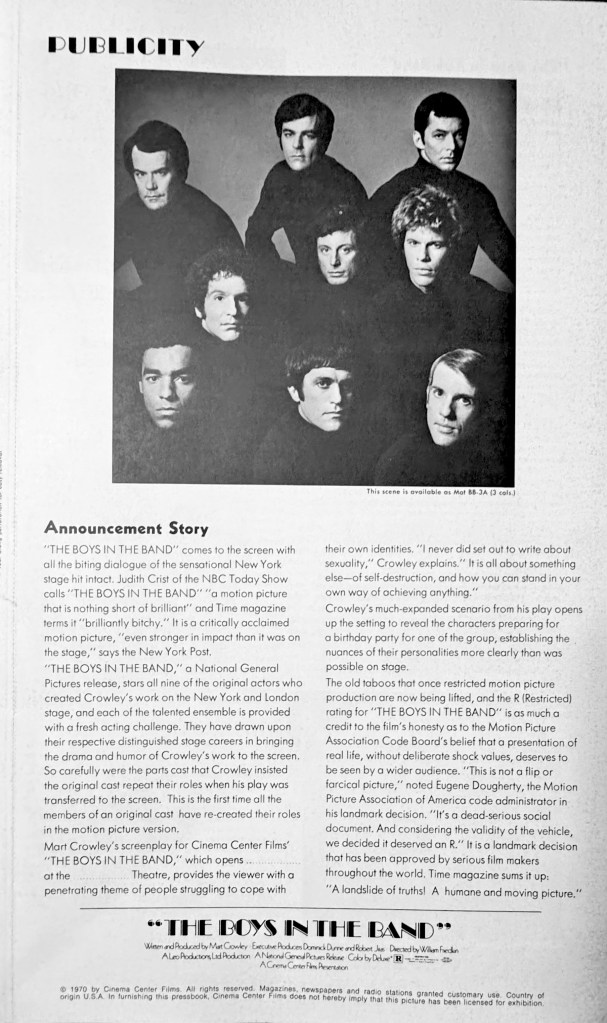
Whenever I see posts on social media that mention the 1970 film The Boys In The Band, there are always strongly opposing viewpoints. Whether you love or hate the film, everyone can agree that it is a cultural touchstone. Like the Stonewall uprising itself, The Boys In The Band serves as a landmark, with every other gay-themed film described as either preceding or following it.
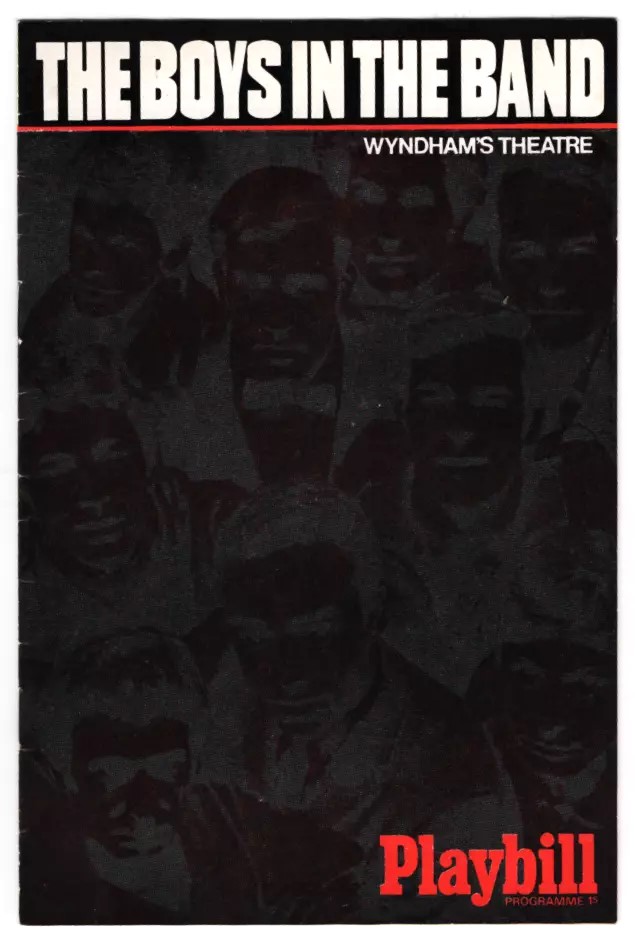
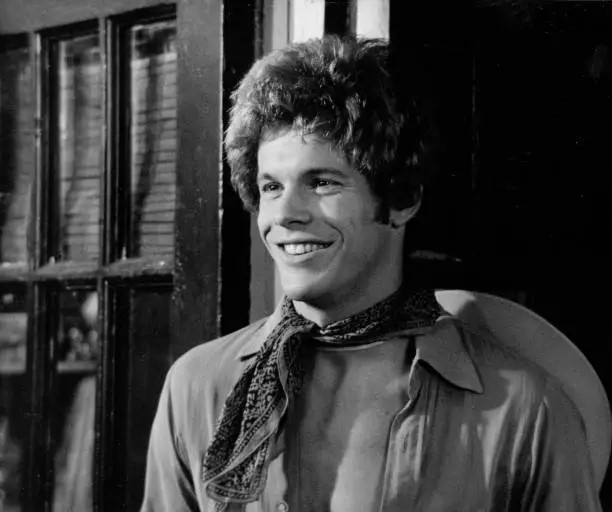
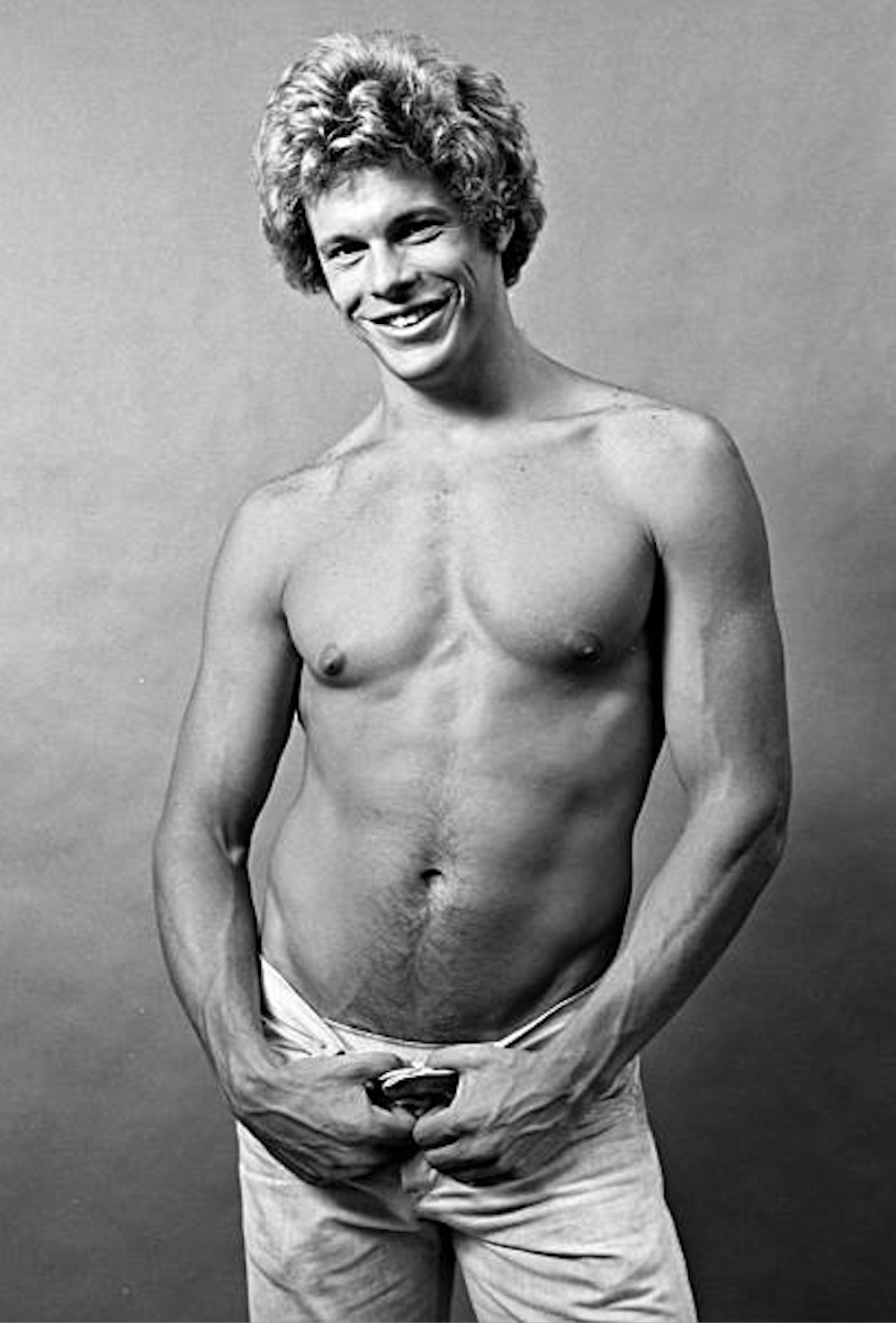
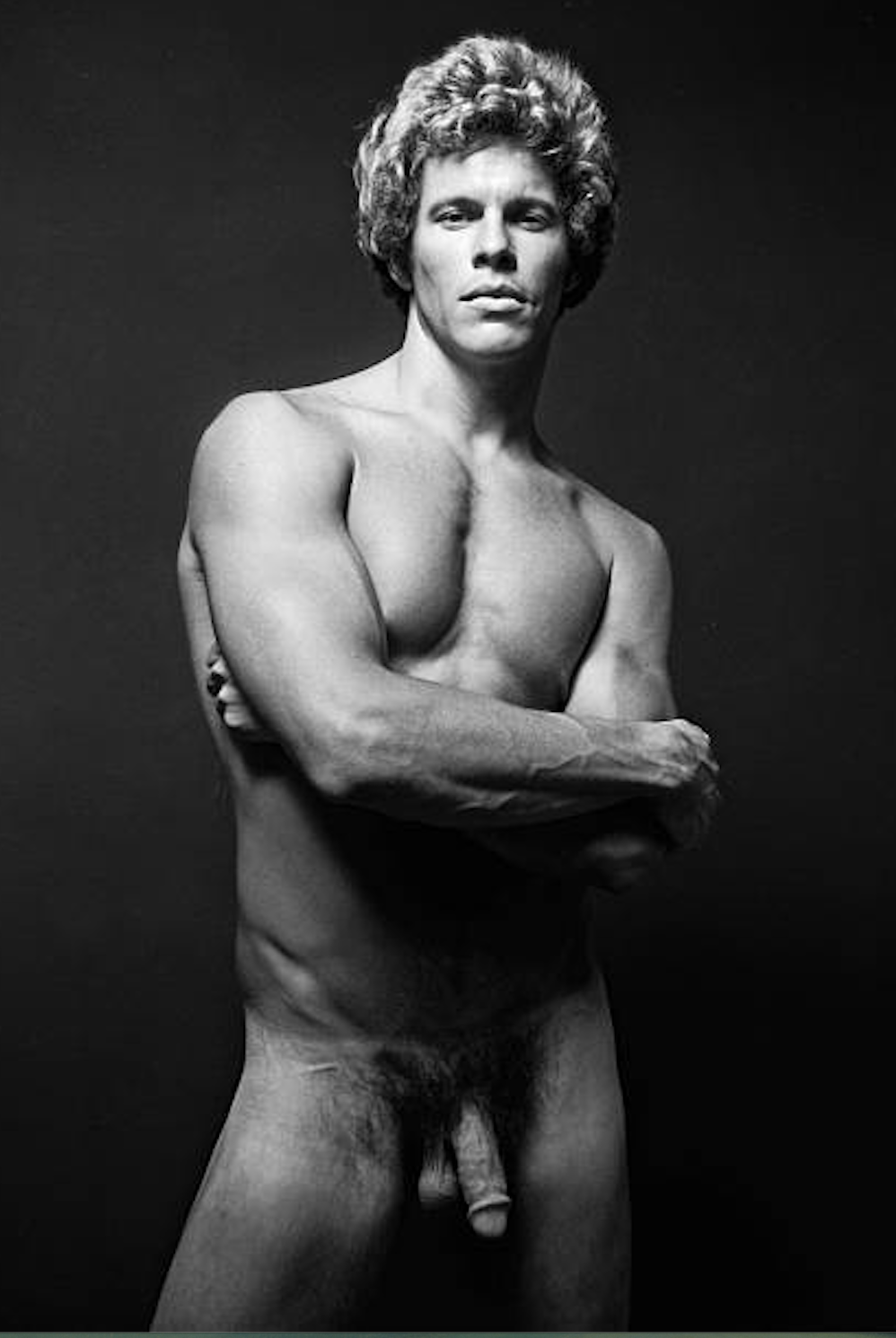
I recently acquired the original press book for the film, which you can see below. Also included is the Playbill from the original West End production with the same cast as well as some revealing photos of “Cowboy” Robert La Tourneaux. During the New York run of the play, he was photographed in and out of clothes by Jack Mitchell for After Dark magazine. Years later, La Tourneaux would appear in photo layouts for Mandate, Honcho, and Zeus, which were the names of gay publications and not a queer law firm.
The Boys In The Band poster (l-r) Leonard Frey, Robert La Tourneaux (Photo by LMPC via Getty Images)
Ladies and Gentleman, it is time once again to revisit that late great dynamic lady of song, Madame Spivy LeVoe (1906-1971), also known simply as Spivy. A lesbian entertainer, nightclub owner and character actress, Spivy has been described as “The Female Noel Coward” – to which I add “…. if he had been born in Brooklyn as Bertha Levine.”
“Why Don’t You?” is the fifth side profiled here from her 1939 album Seven Gay Sophisticated Songs. Spivy is credited with composing the music, with lyrics by Everett Marcy, who also penned “I Brought Culture to Buffalo In The 90’s”.
Marcy had a few Broadway writing credits including New Faces of 1936. It was Marcy who wrote the oft-repeated line introduced in the show by Imogene Coca: “I must get out of these wet clothes and into a dry martini.”
The song “Why Don’t You?” refers to Diana Vreeland’s column of the same name in Harper’s Bazaar magazine. It was full of random “imaginative” suggestions such as “Why don’t you wash your blond child’s hair in dead champagne, as they do in France?”
Some of the notables of the day that are referenced in the song:
Vera Zorina – a ballerina, actress, and the second wife of George Balanchine.
Cecil Beaton – photographer, diarist, painter, interior designer, and an Oscar-winning costume designer.
Elsa Maxwell – a gossip columnist, radio personality, and professional hostess renowned for her high society parties.
“The Zerbes and Bebees” refers to the original paparazzi photographer Jerome Zerbe (1904-88) and syndicated society columnist Lucius Beebe (1902-1966). The two were a couple through the 1930’s.
Peggy Hopkins Joyce – an actress and socialite, notorious for her flamboyant lifestyle with numerous affairs, engagements and six marriages.
Clifton Webb – a character actor best known for his thinly veiled “sissy” supporting roles.
Why Don’t You?
Today when all the headlines full of red lines and bread lines confuse you And the world seems bleak, don’t be blue. In Harper’s they have a column, very smart and very solemn that will amuse you. It asks you little questions to give you smart suggestions how you, too can reek with chic like the most ultra-clique, and they call it “Why Don’t You?” It asks you…
Why don’t you have your ermine muff wired for sound and use it weekends as a concertina? Why don’t you give a charity ball for the Princeton Club and raffle off Vera Zorina?
Why don’t you throw your mother an occasional bone? Why don’t you try sleeping alone? Why don’t you take the pretty blue check you won at bridge and kite it? Why don’t you dip your head in brandy and light it?
Why don’t you try wearing gold sandals backwards just for the sheer agony of it? Why don’t you send last year’s negligée to Cecil Beaton? He’d love it. So they want you to try decorating your flat with bundles of hay… Well they know what they can do with Harper’s, why don’t they?
Why don’t you try going to Elsa Maxwell’s parties as yourself for a change? Why don’t you try wearing a hat that won’t make your husband look strange? Why don’t you develop a bright smile by putting an electric bulb behind each tooth? Why don’t you give a testimonial dinner for Hitler in a telephone booth?
Why don’t you get out of town before you come down with a compound case of heebie jeebies? Why don’t you listen to the birds and bees instead of the Zerbes and Bebees? So they want you to roll up your rugs and cover your floors with broccoli on the first warm day. Well they know what they can do with Vogue too…. Why don’t they?
Why don’t you have a stag line composed of the ex-husbands of Peggy Hopkins Joyce? Why don’t you cross breed carrier pigeons with parrots so they can deliver messages by voice? Why don’t you try throwing Clifton Webb over your left shoulder and making a wish? Why don’t you fill your guest’s finger bowls with invisible tropical fish?
Why don’t you try opening your eyes in the middle of a kiss? Why don’t you cancel your subscriptions to magazines like this? Why don’t you tear everything off your hat and stamp on it? Why don’t you take out a homestead in Montana and go “camp” on it?
So they want you to promise to slap your own face two hundred times a day? Well tell them you’ll have none of it. Tell them you’re through with their “Things To Do” and they can all take their Harper’s and… love it.
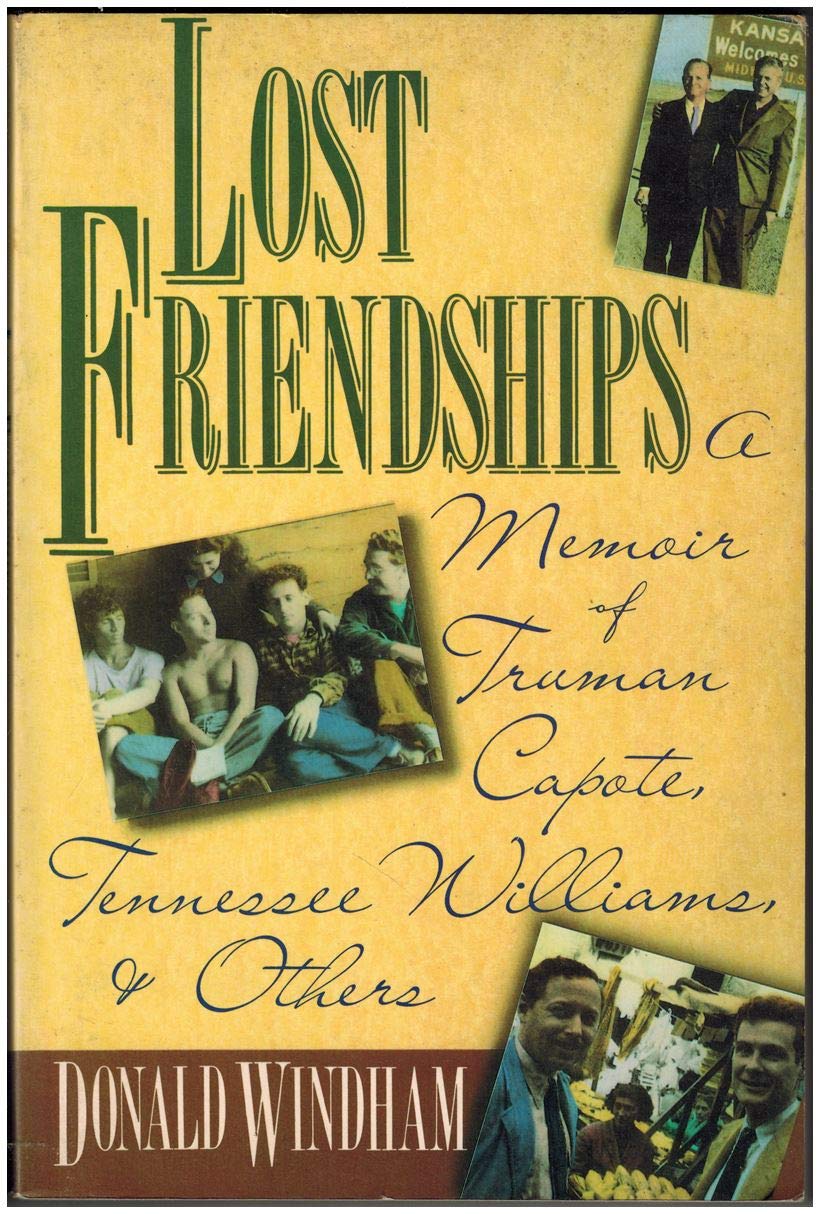
In 1939, 19-year-old Donald Windham moved to New York from Atlanta with his boyfriend, graphic artist/photographer Fred “Butch” Melton. They were welcomed into the New York circle of artistic types that included George Platt Lynes, Tennessee Williams, Paul Cadmus, Jared and Margaret French.
Donald Windham & Fred “Butch” Melton photographed by Jared French at his 5 St. Luke’s Place studio (ca 1941)
In 1942, Butch ended his relationship with Windham, opting for a more conventional lifestyle by getting married, fathering two sons and moving to Macon, Georgia. This didn’t last long: Butch met and fell in love with local artist Wilbur “Billy” Pippin. In early 1948, he left his young family and returned to New York with Billy. But that’s another story…
Donald Windham with Jared French & Paul Cadmus on Fire Island, ca 1940
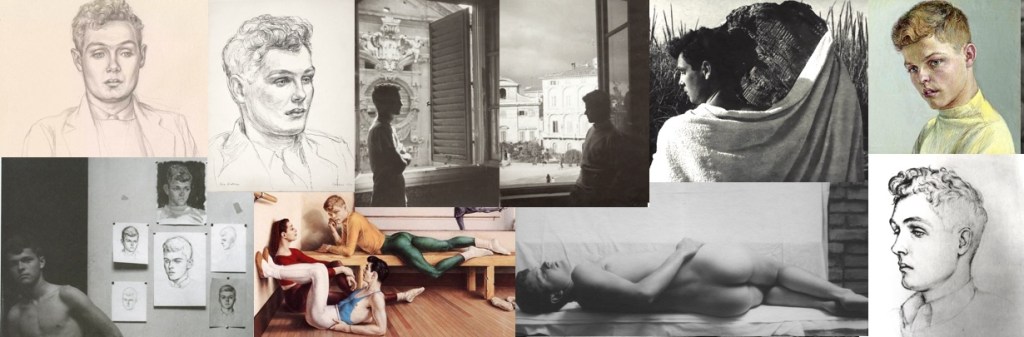
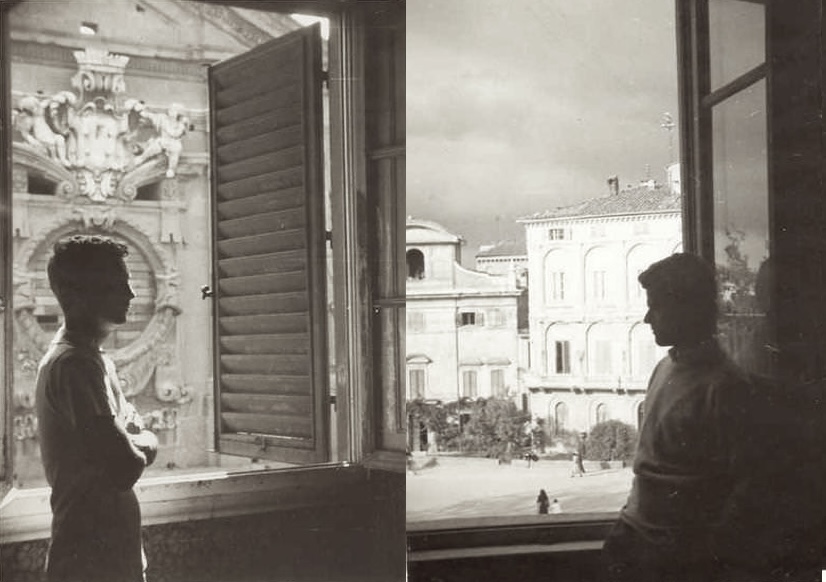
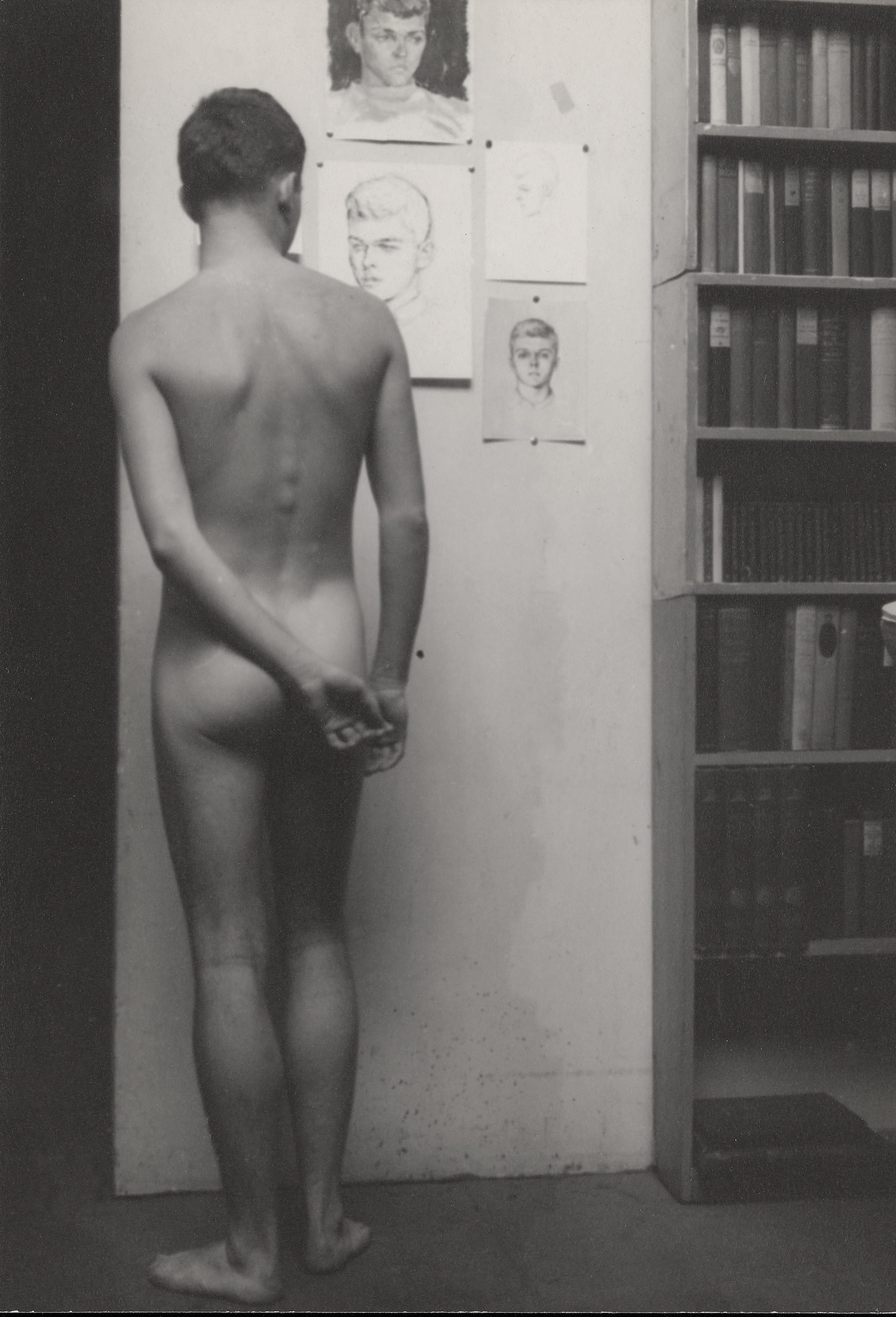
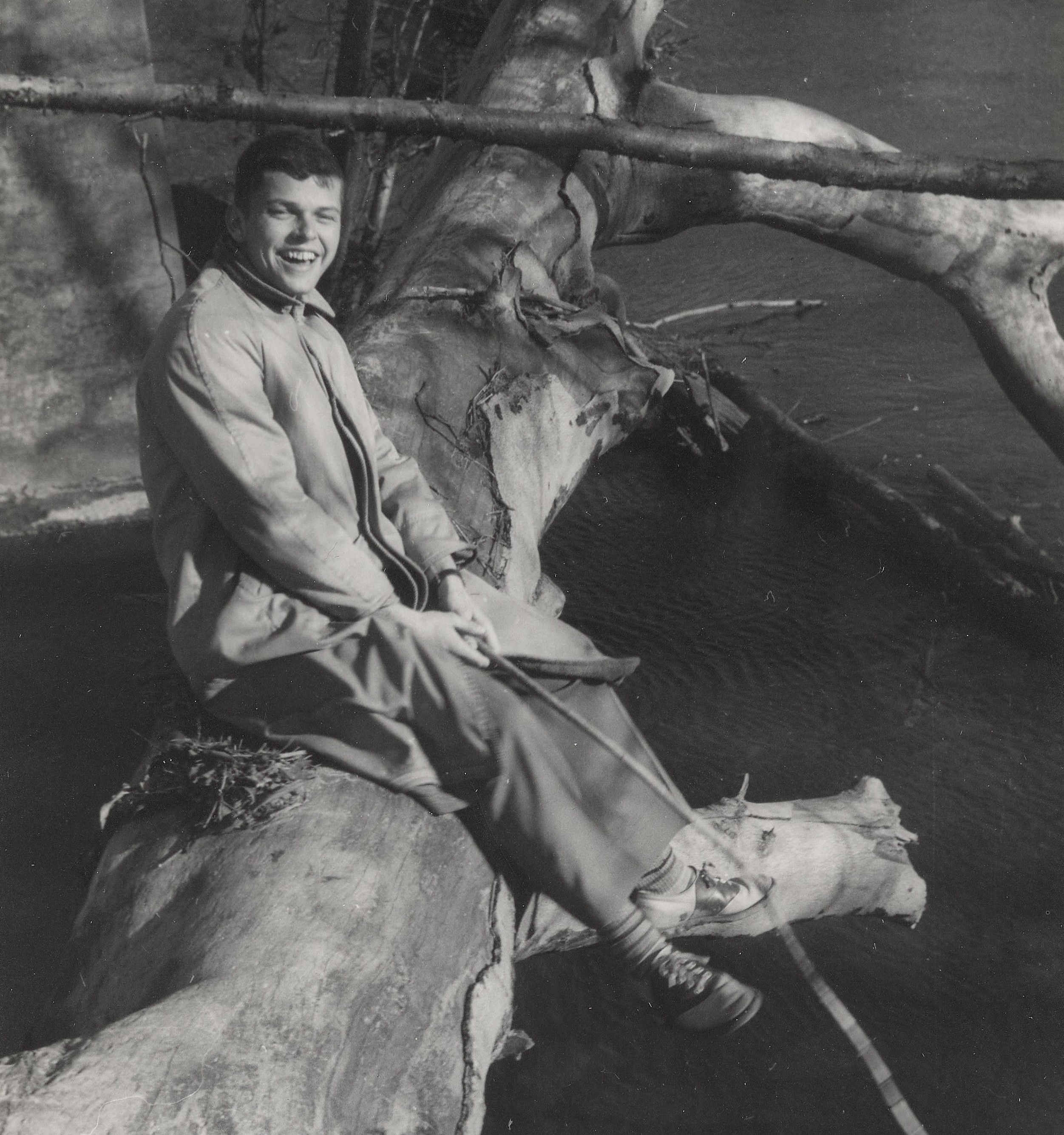
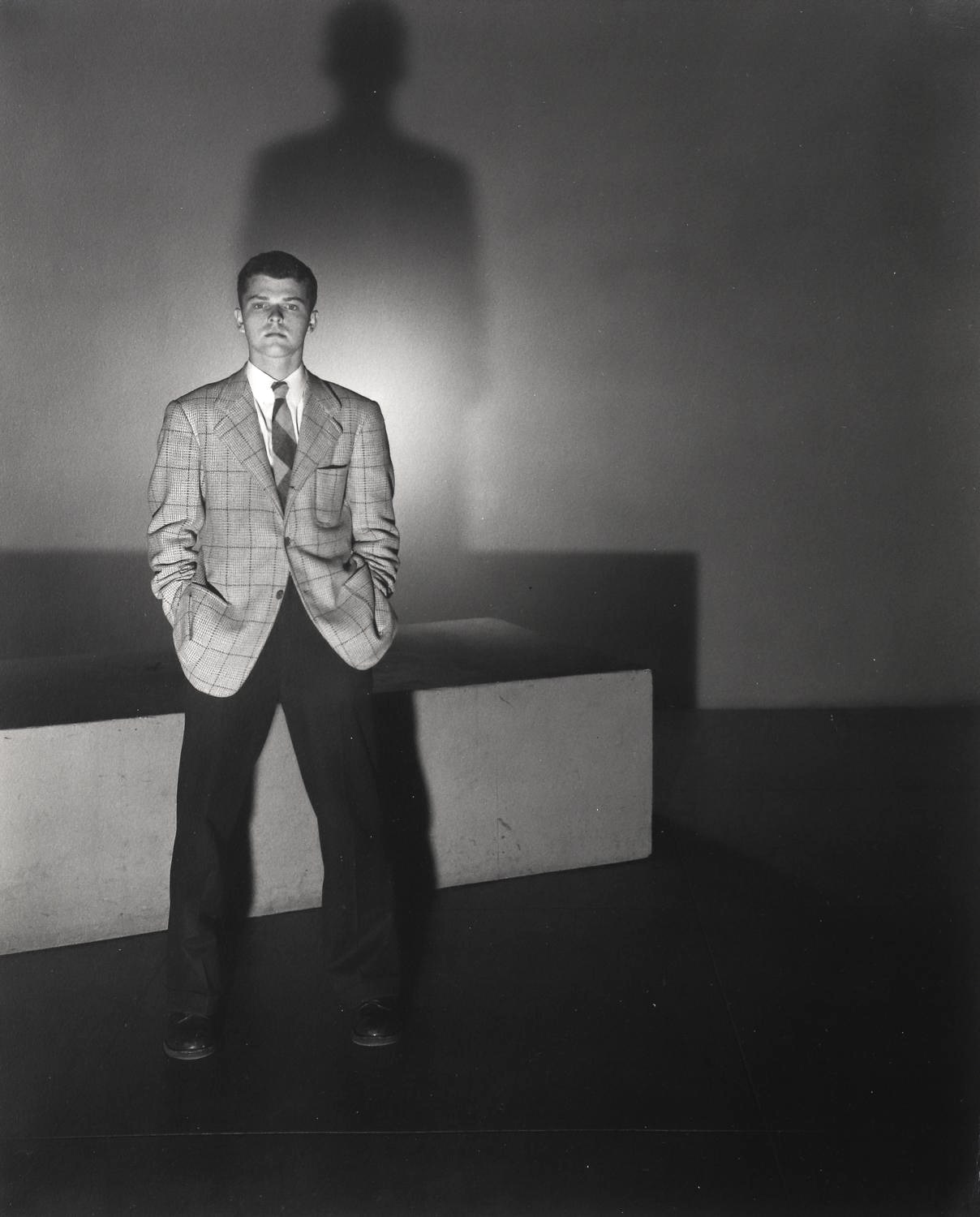
In 1942, the newly single Windham supported himself by working at Lincoln Kirstein’s Dance Index magazine. He lived in the Cadmus/French studios at 5 St. Luke’s Place while they spent time at their rental on Fire Island. He would frequently visit there as well. The lithe young man with the striking profile became the subject of many PaJaMa photos and sketches.
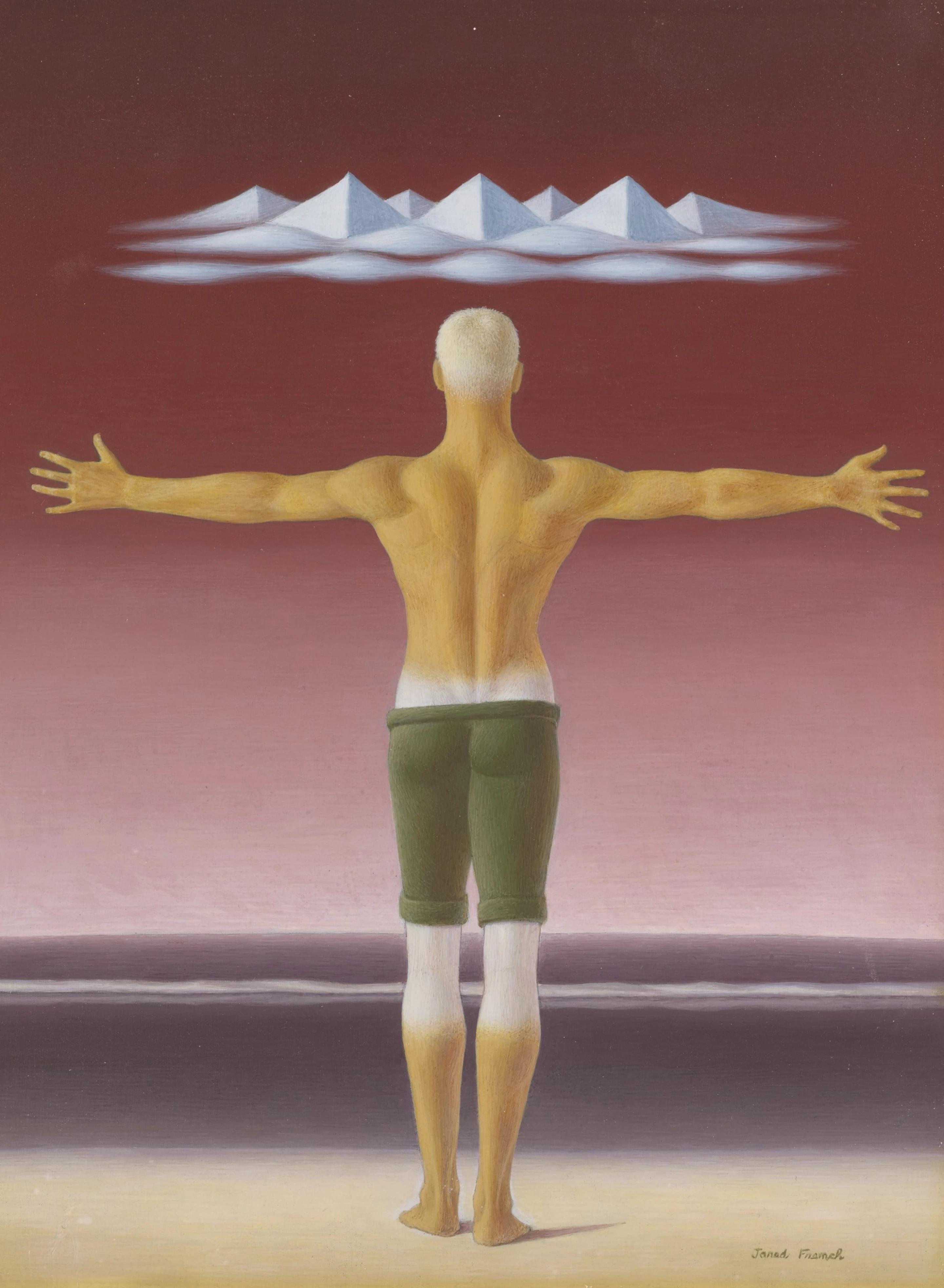
Windham posed as a reference for Jared French’s Homesickness (1942)
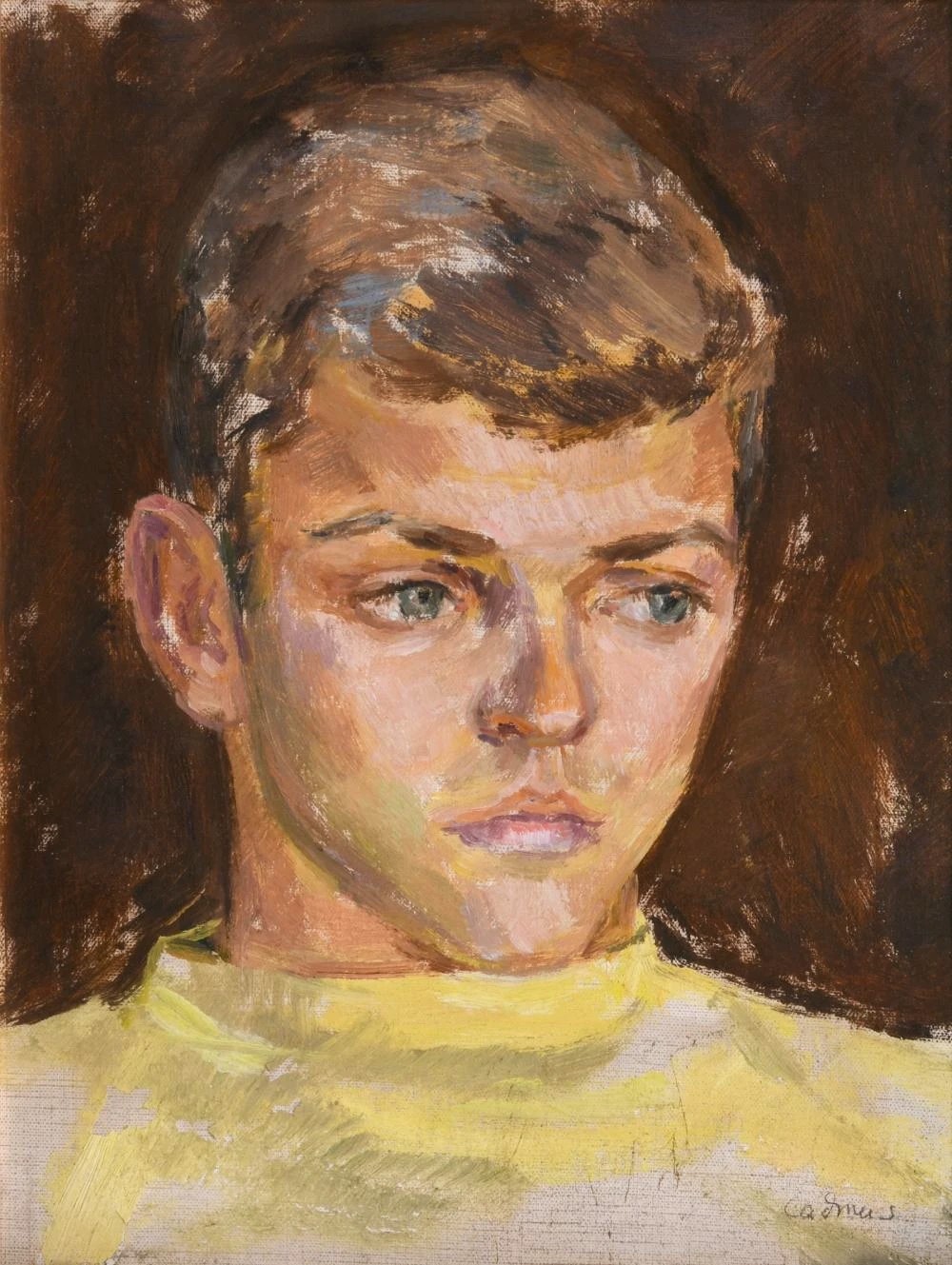
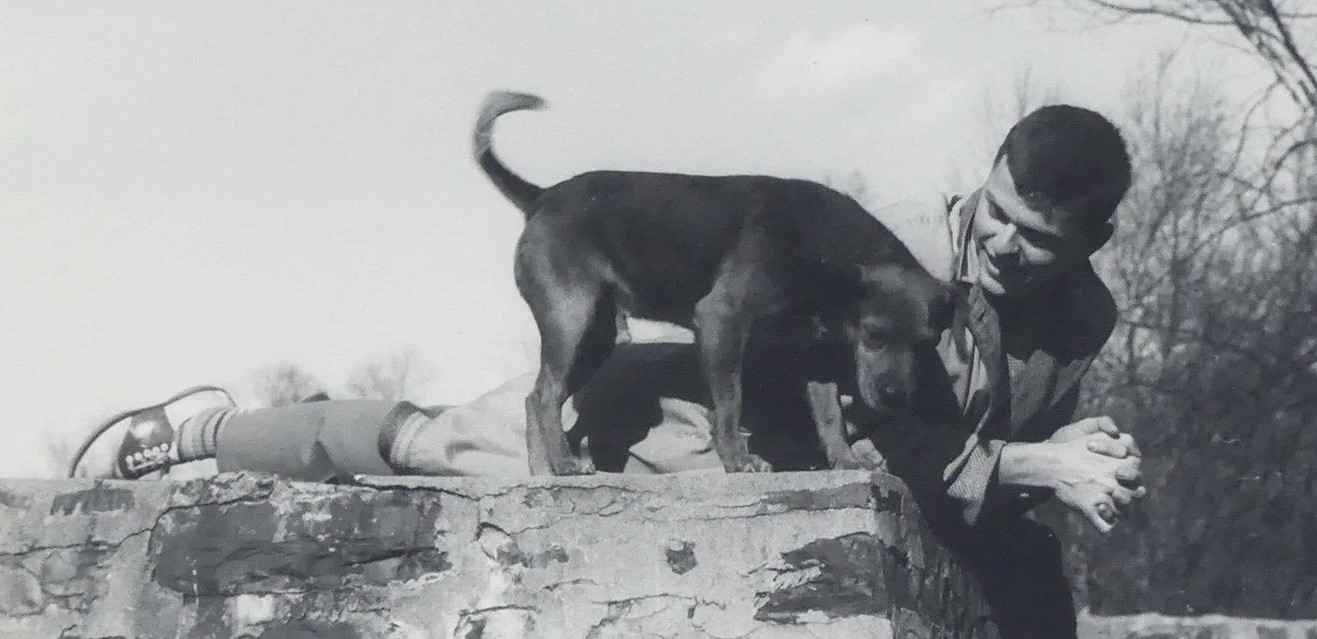
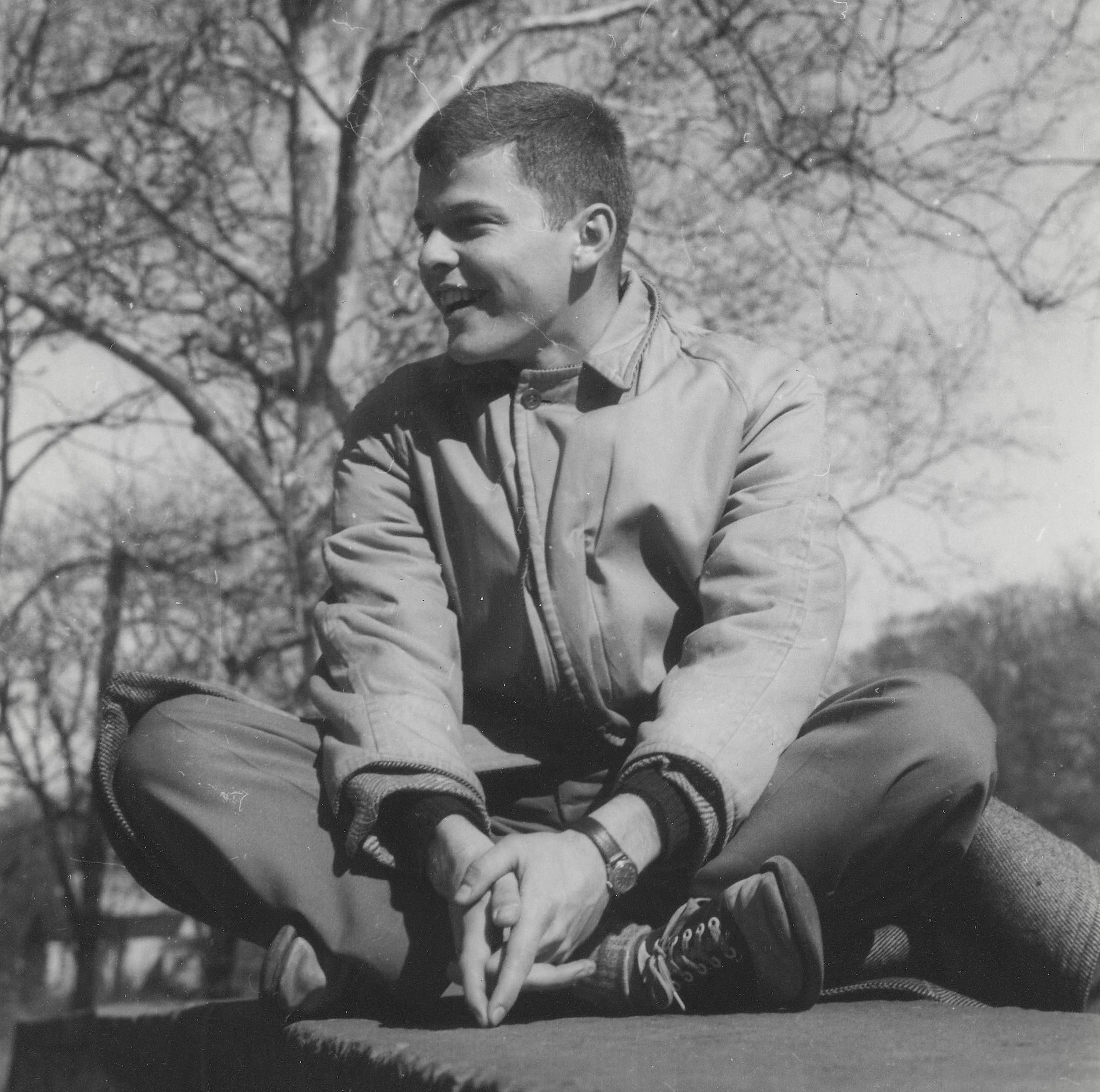
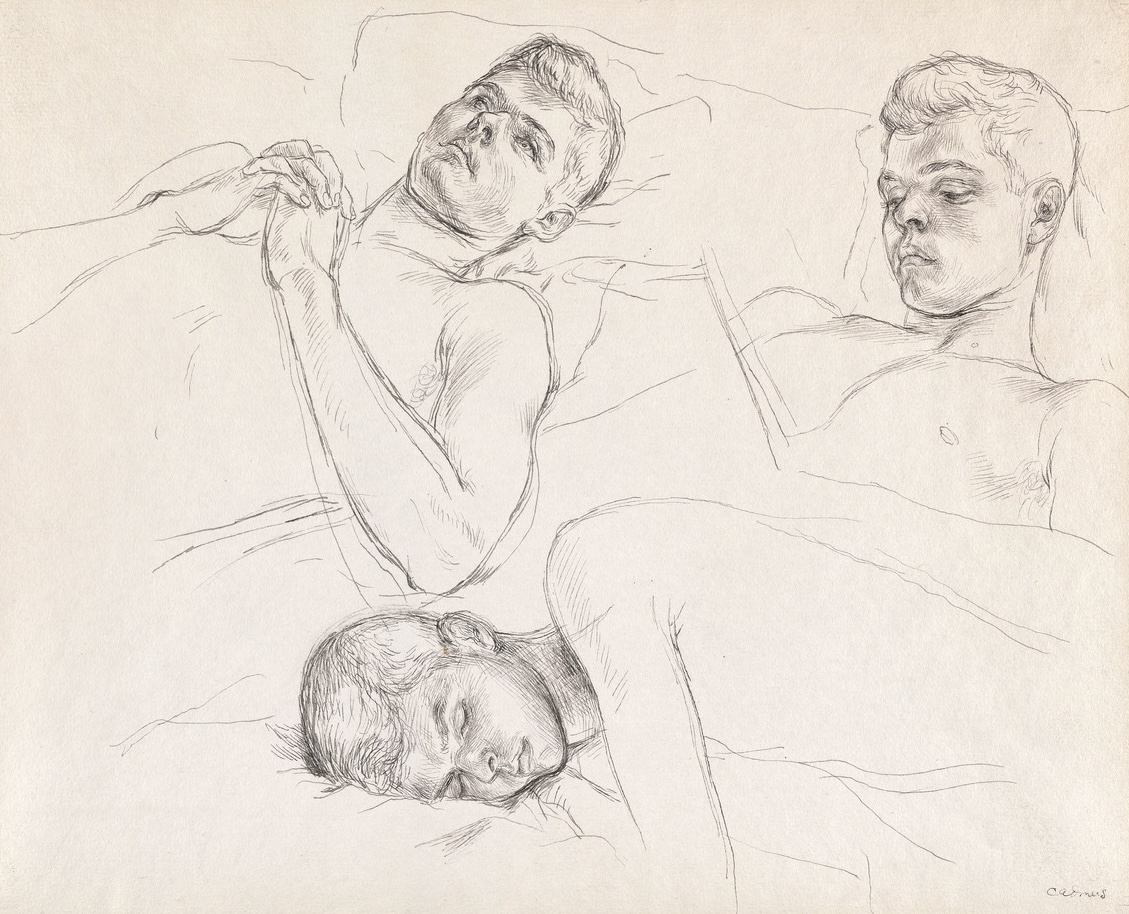
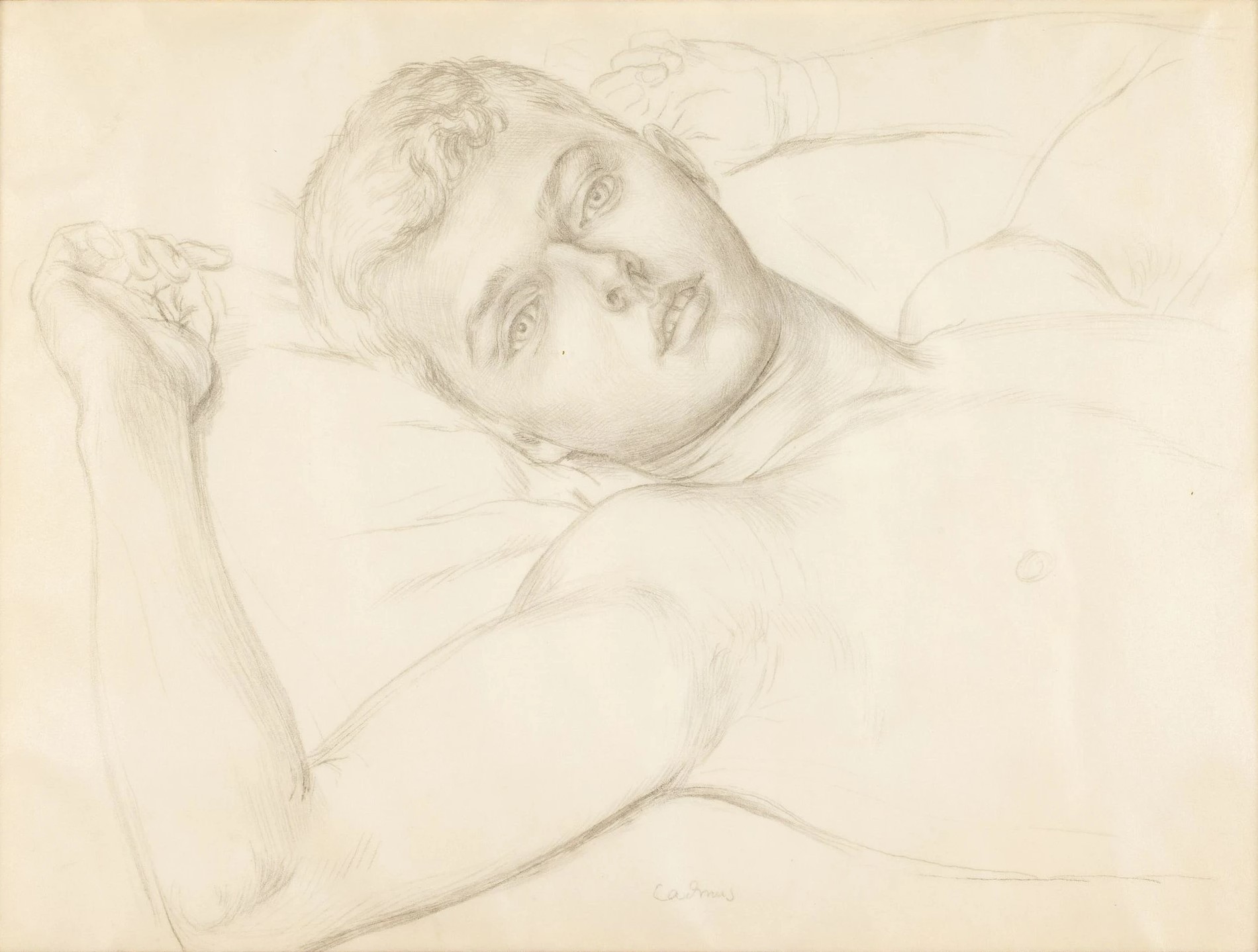
Paul Cadmus met 21-year-old Princeton theater student Sandy Campbell at a party in 1943. The young man asked the artist to do a pencil portrait that he could give to his mother, as he suspected that he would soon be drafted. Cadmus was instantly smitten with the handsome young man. He went on to draw, paint and photograph him frequently throughout the following year.
Campbell is the central figure of Cadmus’s 1944 painting Reflection. Donald Windham was the original model for the figure laying on the floor. Before the painting was completed, however, the two models fell in love. Cadmus was not happy with this turn of events, and Windham’s likeness disappeared from the finished painting, with the figure’s head turned slightly away.
Donald Windham & Sandy Campbell photographed by George Platt Lynes (ca 1943)
Photographer George Platt Lynes photographed both Campbell and Windham several times in separate studio settings. In 1945, he shot Windham again with his friend and writing collaborator, Tennessee Williams.
Donald Windham, Tennessee Williams & Edmund Gwen photographed by George Platt Lynes (1945)
Windham and Williams co-wrote the play You Touched Me!, a romantic comedy based on a short story by D.H. Lawrence. It opened on Broadway starring Edmund Gwen and Montgomery Clift in late 1945. Unfortunately, reviews were mixed and it closed 4 months later.
Around the same time, Campbell was cast in a string of minor Broadway and film roles that would span the next 10 years. He then decided to give up acting and focus on editing and publishing Windham’s work.
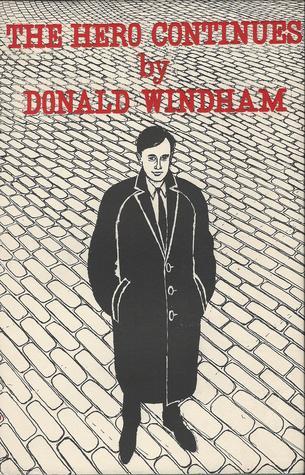
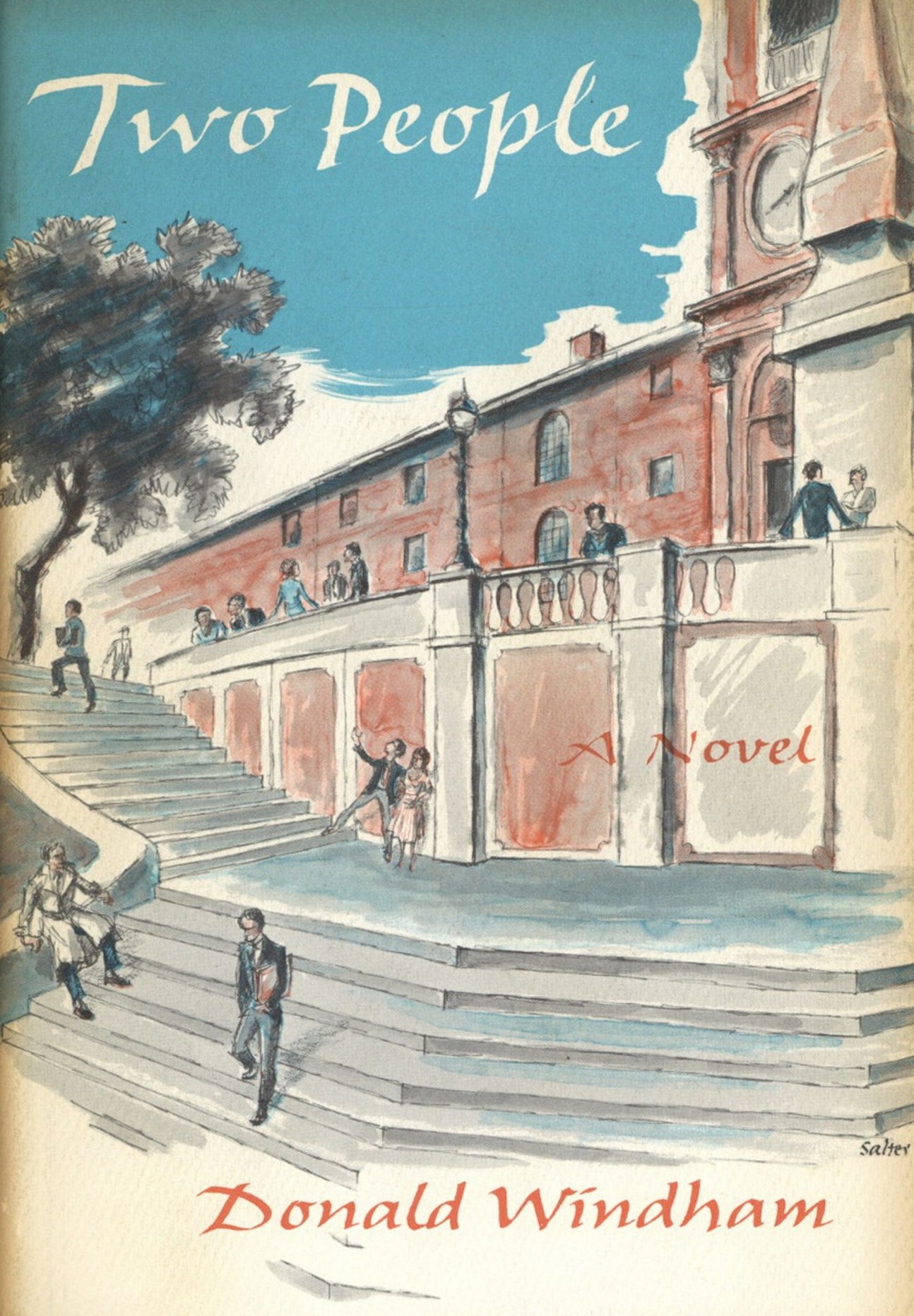
Donald Windham’s literary output (1950-1998)
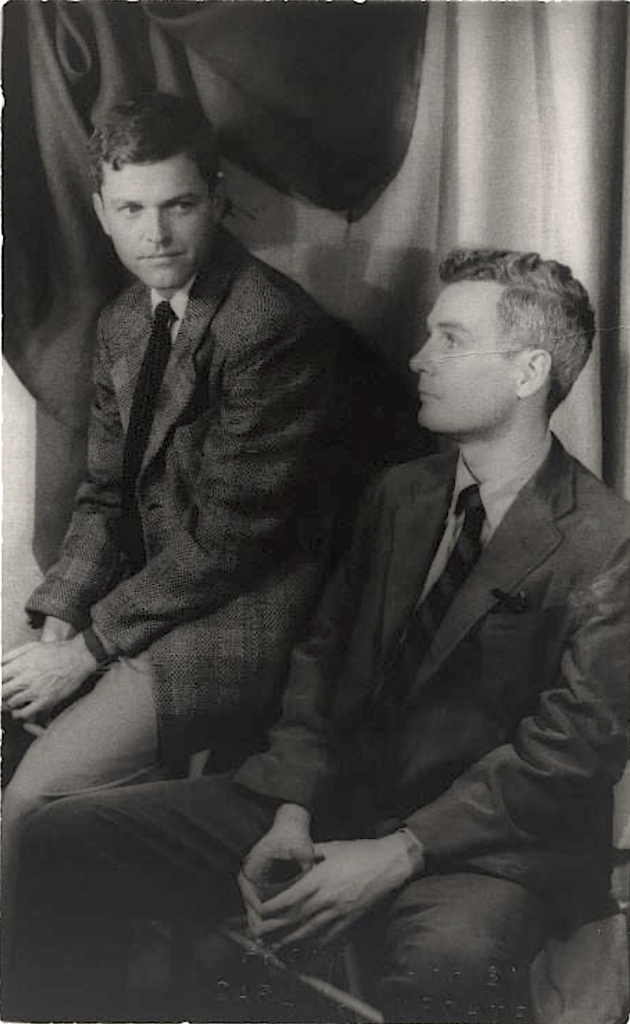
Windham & Campbell photographed by Carl Van Vechten (1955)
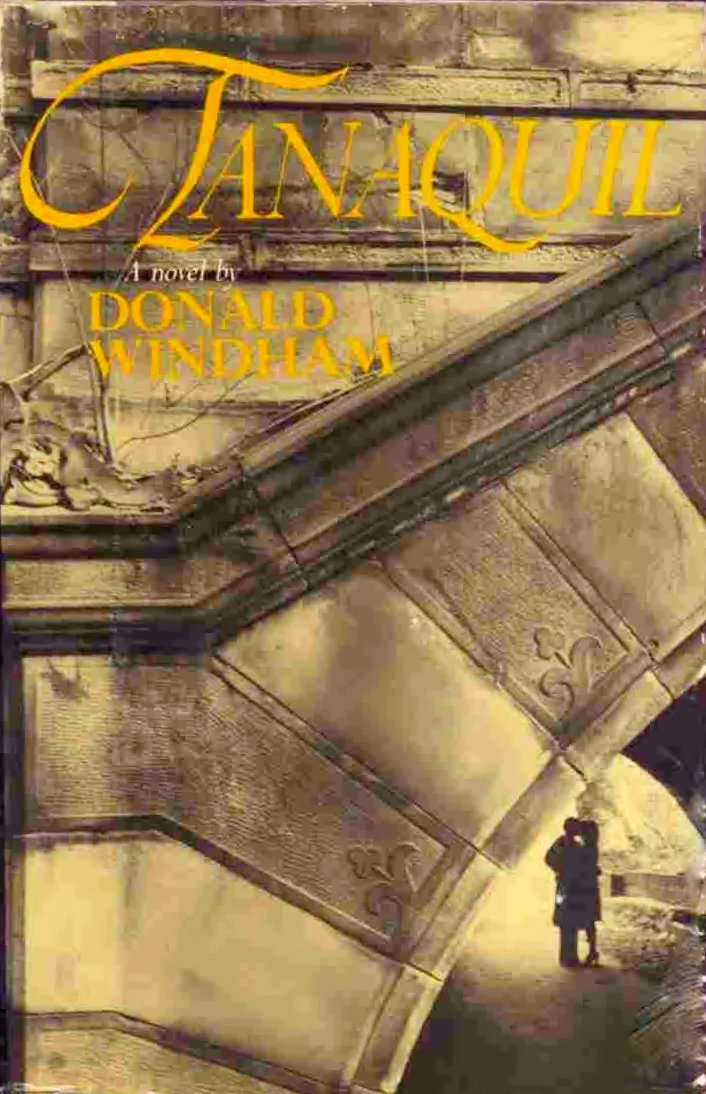
Windham’s 1972 novel Tanaquil is a fictionalization of his time among the George Platt Lynes / PaJaMa circle of friends. His later work focused on correspondence and reflections on his famous literary friends, including E.M. Forster, Tennessee Williams, Alice B. Toklas and Truman Capote.
Campbell & Windham with Capote
Windham & Campbell, ca 1987
Windham and Campbell remained a couple for the rest of their lives. Besides their New York City apartment on Central Park South, they also had a Fire Island house on Ocean Walk in The Pines, where Campbell died suddenly of a heart attack on June 26, 1988. Windham outlived his younger partner by 22 years, passing in May, 2010 at the age of 89. Their combined estates fund the annual Windham-Campbell Literary Prizes, established at Yale University in 2012.
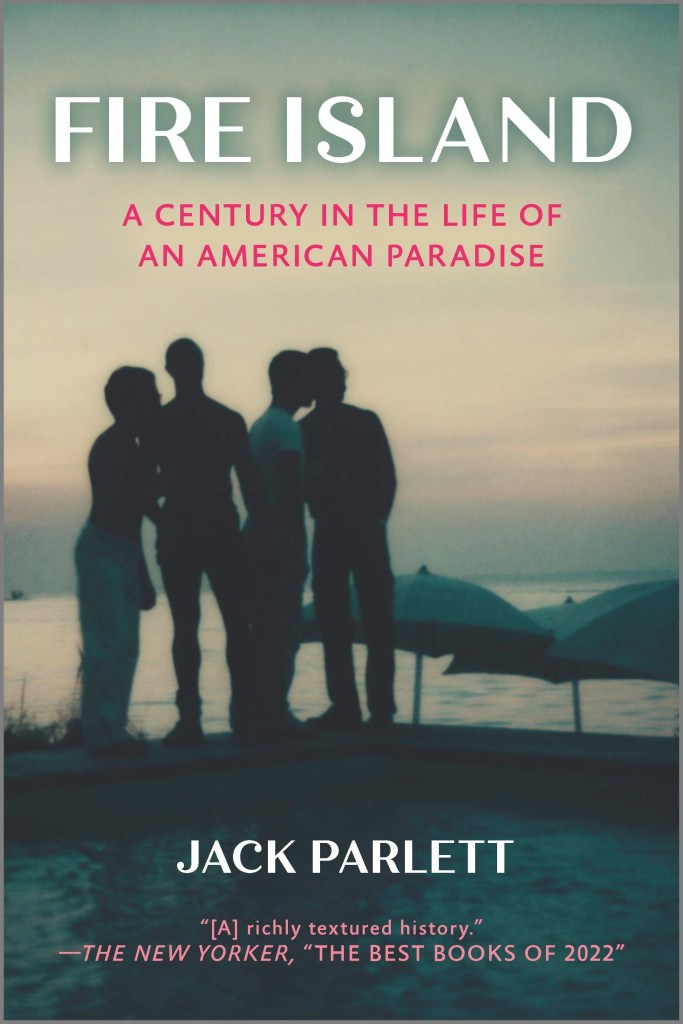
Jack Parlett’s 2022 book Fire Island devotes almost an entire chapter to Donald Windham’s 70-year span visiting the island. Parlett writes; “(Windham) was part of the very first generation to discover its potential as an enclave; first as a young man, visiting Saltaire with some of the earliest queer artists to incorporate the island into their practice; and later as a man in his fifties, happily coupled with the love of his life, who made in the Pines an enclave within an enclave, a restful home for two people, even amid the loudness of the community’s sexual and cultural boom in the 1970’s.”
I’m bursting with excitement to be able to share the news about something I have been working on for the past couple of months…
After a 10 year hiatus, East Village Radio is now officially back on the air. My show, 60 Degrees with Brian Ferrariran on the station for 5 years – from 2008-2013. The 2-hour program, featuring female 60’s singers and girl groups, is now back with new episodes bi-weekly, with repeated classic episodes on the opposite week. Besides the Sunday morning, 8-10am broadcast, archives of the show will be available for streaming on demand, any time, for free.
Here’s a little backstory: I had a late night public access television program called Bri-Guy’s Media Surf that aired in New York City from 1997-2007. Based on the music clips I played on that show, I was approached to do a spot on the early low-frequency broadcast version of East Village Radio. The signal was so weak that I couldn’t receive it in my apartment three blocks north of the station. Given the workload of producing the TV show, I didn’t have the bandwidth to take on a two-hour radio program, so I politely declined. After Media Surf wrapped in late 2007, I was offered a radio spot again. By this time, the station had transitioned into internet streaming and now had a worldwide audience. This time I said “Yes.”
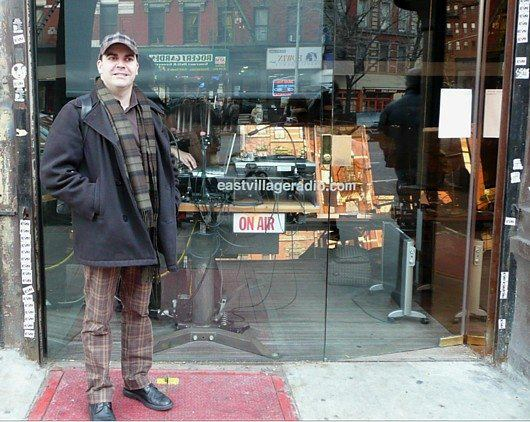
In front of the EVR booth (2008)
From its inception, the concept of 60 Degrees was that it existed in an alternate reality where women ruled the pop charts throughout the 1960’s, a decade that I consider to be the most transitional and eclectic in the history of popular music. The all-female playlist is in direct contrast to radio programmers that only allow a certain number of female artists per hour. In the land of 60 Degrees, it’s all women, all the time. The men remain in the shadows, only stepping forward for the occasional duet.
This is not to say that the male groups that ruled the charts are completely ignored here. Female artists doing Beatles or Rolling Stones covers and tribute or answer songs are often featured. Besides, you can’t have a 60’s girl group playlist without the specter of Phil Spector looming large.
Another rule for 60 Degrees is that it is not a re-hash of the WCBS-FM “We play your favorite oldies” format. If a 60’s hit is in rotation on an oldies station, you won’t hear it here unless it’s live version, an alternate take, or sung in a foreign language.
Other ingredients that add to 60 Degrees’ unique flavor are the vintage commercials and sound clips from various movies and TV shows peppered throughout each 2 hour episode. These add a camp element to the proceedings and act as an acknowledgement of pop culture’s shift over the past 60 years.
60 Degrees usually concludes each episode with a modern cover or a remix of a 60’s tune to transition the listener back to the current day, in preparation for the next show on the East Village Radio schedule.
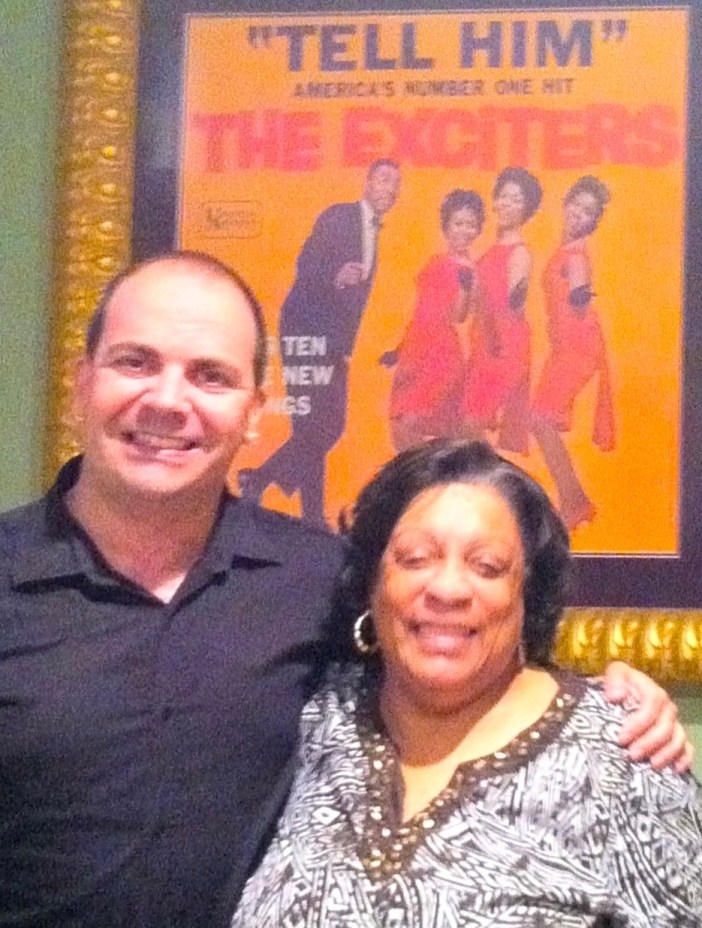
Exciters lead singer Brenda Reid was a guest on the show in 2012.
I did my first (and only) live show in the First Avenue storefront booth on January 17, 2008. Broadcasting live at street level by myself was a slightly terrifying prospect. The first show went without interruption but at some point I was bound to get a random loon trying to get into the booth while I’m spinning some Shirelles. And it wasn’t like I was going to get a sidewalk crowd like the higher profile prime time DJs. Besides, the variety of the content meant that I was dealing with wildly different sound levels and other audio issues over approximately 75 different clips per episode. Pre-taping allowed for a more seamless, fast-paced show, which was then broadcast in the morning hours before the DJ booth was open.
After 5 years on the air, I felt that the show had run it’s course and I hung up my headphones. I continued on my own personal quest of discovering new/old music, focusing on early soul singers and the sister groups of the 1940’s… then the 1930’s… until one day I found myself listening to 78 records on my 1916 RCA crank victrola. Having gone about as far as I could go, I thew it into reverse once again.
And so we’re back. From outer space. And so is 60 Degrees. I hope you will come along for the ride. It’s kinda cool
Bringing 60 Degrees back to East Village Radio, with the help of Jean & The Statesides.