
In case you missed it, Tracy Chapman’s 1988 song “Fast Car” has been covered by country artist Luke Combs. It has now topped the country charts and has out-performed the pop chart standing of the original. Chapman is now the first female African-American songwriter to have a #1 country song.
Chapman released a statement to Billboard: “I never expected to find myself on the country charts, but I’m honored to be there. I’m happy for Luke and his success and grateful that new fans have found and embraced ‘Fast Car.’”

I hate to be a wet blanket on the festivities, but I can’t be the only person that thinks a white male country artist covering this song is a little tone deaf. Especially right now.
I believe Combs’ heart was in the right place when he recorded the song, but in the hands of his listeners – and the country music crowd is overwhelmingly conservative – it becomes another example of how we’re supposed to believe that race and gender do not make a difference as to who gets ahead in the world.
At a time when teaching African-American history is being treated as an act of aggression and the “critical race theory” boogeyman is being used to rile up the right wing mob, a caucasian male country singer covering “Fast Car” makes perfect sense. Because we’re all the same, right? A poor white male and a poor black woman are interchangeable, right? It’s a level playing field. Right?

I do appreciate that Combs is faithful to the original. As a songwriter, he did not want to change a word of Chapman’s song. By the 5th verse, he’s working in the market as a checkout girl. “You’ll get a job and I’ll get promoted…” the lyric goes. Tell me: who is more likely to get that promotion – Chapman’s protagonist or Combs?
“Starting from zero got nothing to prove…” Yes, but “zero” is not the same for everyone. We are all programmed to believe that we live in the land of equal opportunity. If you can make it here, you’ll make it anywhere. If you don’t succeed, well, you just weren’t good enough, or you didn’t try hard enough. But really… we don’t all start in the same place, do we? Most people get a boost in one way or another, whether it’s financial support or nepotism or a legacy admission into a university. Unfortunately, boosts both big and small are often forgotten or underplayed when people recount their path to success.
Dustin Rowles writes on Pajiba.com that he found a strong resonance with “Fast Car” when it was first released back in 1988. I did as well. I was the child of a single parent home – a B student attending a B+ university, dependent on many grants and loans. The song began to climb the charts as I headed home at the end of my freshman year. Unlike many of my classmates, I wasn’t afforded the opportunity to take a $50-a-week summer stock job – a rite of passage for theater students. This would be one of those “little boost” moments that many experience and forget about. Instead, I was expected to live at home and work full-time so I could contribute towards my next year of school. This meant returning to a $4.25-an-hour retail spot at Record World, which wasn’t exactly going to make me financially solvent.

Here was my boost: When family members kept forgetting to pick me up from work, my mother bought me my first car. It wasn’t a fast one. The 1982 Plymouth Horizon cost a few hundred dollars and gradually slowed down whenever it got too hot. But it had a cassette player, and Tracy Chapman’s debut record was on heavy rotation that summer.
Rowles writes that he harbored some resentment for the song, which he perceived as predicting that he would not be able to break the cycle of poverty and dysfunction that he had grown up with. I didn’t feel that way. The song effected me deeply, as did her whole album. But I knew that I was better off than the song’s protagonist. I did not have a false equivalence. My previous job had been at a supermarket where I worked with single black women trying to support their kids on minimum wage. I knew they would not have been hired at the record store making that extra .90 cents an hour.
Ultimately, Rowles concludes that “…there is a way out. Unfortunately, it’s not a fast car, which only allows you to outrun your problems for so long. The easiest way to break the cycle is through education.” He concedes that, as a white male, he had a boost: access to an education that minorities often did not.
And now, 35 years later, “Fast Car” is topping the charts in the wake of the Supreme Court striking down a couple of very important boosts: affirmative action in college admissions, and Biden’s student loan forgiveness program. The latter should be of concern to people of all persuasions who are staring down a lifetime of loan interest payments. But that is assuming every person has the equal opportunity to be accepted into an institution of higher education. Without affirmative action, that is not the case.

As a high school student in Cleveland, Ohio, Tracy Chapman was accepted into A Better Chance, a non-profit program that placed high-achieving minority students in prep schools. She graduated from Wooster School in Connecticut and went on to attend Tufts University, where she was discovered by fellow student/future filmmaker Brian Koppelman. Koppelman’s father was a record executive and signed her to SBK Publishing, which led to a deal with Elektra Records.
Billboard estimates the recent global publishing royalties of “Fast Car” exceed $500,000. Unlike so many other artists, Chapman still owns both the writers’ and publisher’s share of the song, so that money is hers. Additionally, the success of Combs’ version has brought attention to her original, increasing activity 44% since his version was released, according to Luminate. Her song, in its original form, is speaking to a whole new generation. It just needed a boost.
See Also:
Tina Turner: 12+ Cover Songs You May Have Missed
Adam Schlesinger: Not Just The Guy On The Right
Revisiting Bette Midler’s Thighs And Whispers (1979)
You Know The B-52’s Song “Roam” Is About Butt Sex, Right?
Etta James: Advertising Zombie
1991: Homo Alone
The Tin Man & The Lion: Unanswered Prayers
Dusty Springfield Sings Kate Bush
10 Forgotten Cher Moments
Gimme Gimme Gimme: Erasure Covering ABBA






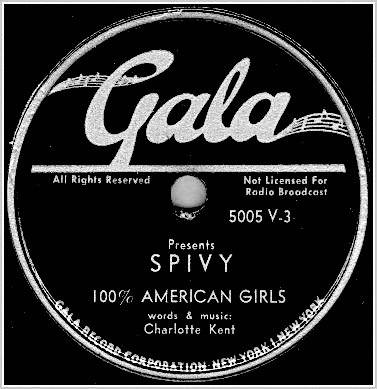
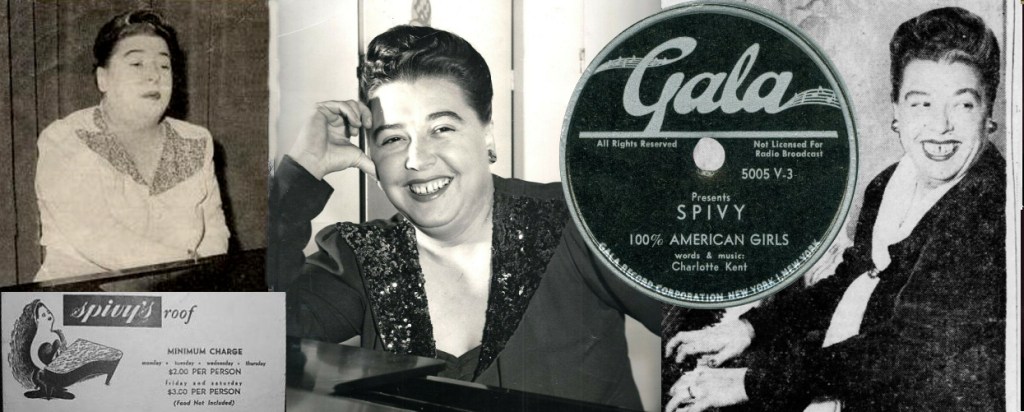
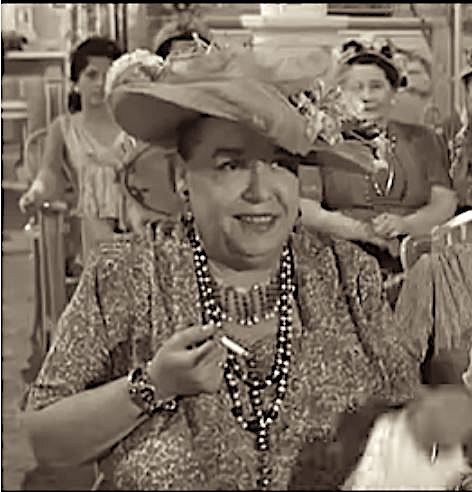 Given the current political climate, it’s a perfect time to have a listen to “100% American Girls”, a stinging satirical composition by Charlotte Kent which reminds us that nationalism, xenophobia and gentile racism have been marching hand-in-hand across this great land for generations. God Bless America.


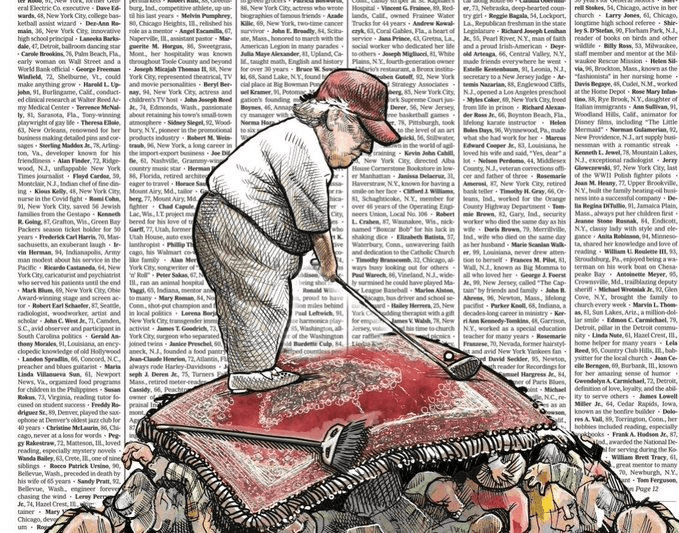















 I don’t even know what to say – in the end I thought I would get up here and just walk around shaking my head and doing different shrugs for 10 minutes. This is what I feel like I do all day since the election.




 Brian Ferrari's Blog