I have this pet peeve… it’s a situation that usually occurs at a party or in a bar or club. Someplace with a jukebox or a DJ where the alcohol flows freely. An overplayed 60’s soul hit like Respect or Dock Of The Bay starts to play and some booze bag sloshes over and says “OH I LOVE MOTOWN! I love Aretha and James BROWN and the Shirelles and the Ronettes and OTIS and ALL the rest of the Motown acts.”
Honey. Sit down. Let me get you a glass of water. We need to talk.
While I appreciate your enthusiasm, let’s set the record straight: Sam Cooke. Otis Redding. James Brown. The Shirelles. The Ronettes. They are NOT Motown acts. Never were. And while Aretha Franklin was FROM Motown, aka Detroit, she was never ON Motown records.
Referring to every black artist who recorded soul music in the 1960’s as a “Motown” singer is lazy, insulting and possibly a teensy bit racist. Kapeesh? With that said, perhaps I should cut people some slack. I realize that we are all very busy and don’t pay a whole lot of attention to minutiae. Besides, sometimes record labels themselves are a little guilty of causing confusion. Case in point: The 1987 Motown Merry Christmasspecial.
First, a little context: In 1984 the Motown 25 TV special was a blockbuster ratings success, with all the former stars of the record label coming home to celebrate Motown’s 25th Anniversary and kiss the ring of founder Berry Gordy. Stevie Wonder, Marvin Gaye, The 4 Tops, The Temptations, Martha Reeves, Mary Wells and many others made appearances. Lionel Richie reunited with the Commodores! Smokey Robinson reunited with the Miracles! Diana Ross reunited with the Supremes for a minute and half before Miss Ross allegedly pushed Mary Wilson out of her way! That last part was edited out of the broadcast…. but anyway… the real highlight of the show was the reunited Jackson 5, followed by Michael Jackson’s performance of Billie Jean, which introduced the moonwalk to the world and we were never the same again.
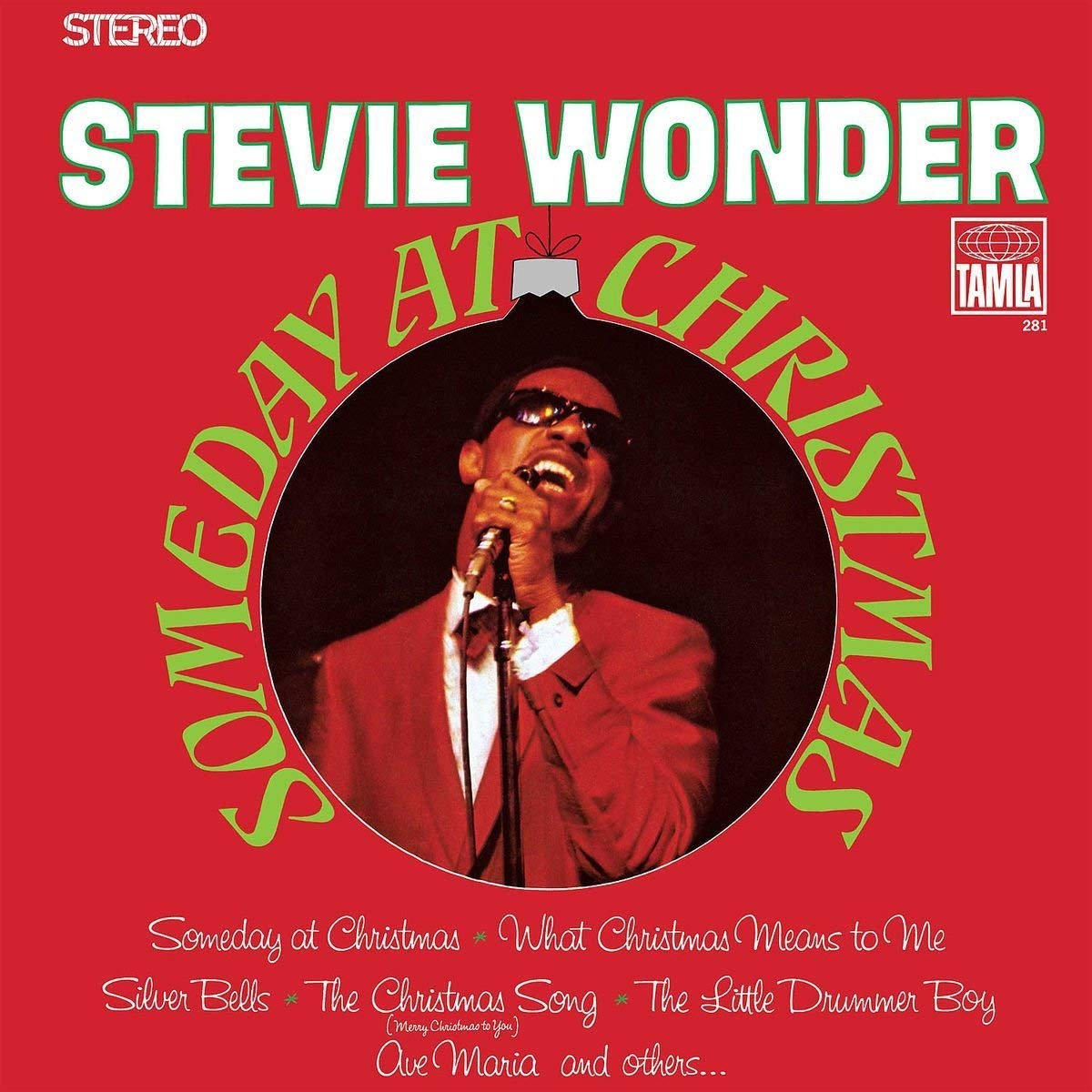
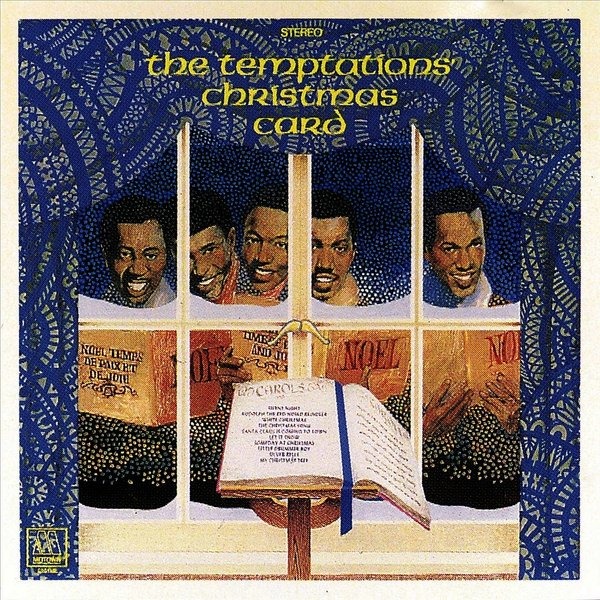
Fast forward three years – the Motown brand was still being milked for all it was worth, even if their current roster of artists were not exactly burning up the charts. I mean, even DeBarge had left the label by this point. But a nostalgic look back at Motown with a Christmas special seemed like a good idea, as most of the top Motown acts had released holiday LPs during the label’s heyday. In fact, The Temptations and Smokey Robinson & Miracles each released two Christmas LPs on the label. But… you do have to get the acts to come back and perform for a TV special, right?
For whatever reason (read: money) only the Temptations and Smokey Robinson are on hand for this star-studded Motown Merry Christmas, which was taped – not in Detroit – but at the Aquarius Theatre in Hollywood, California.
The show aired December 14, 1987 on NBC, hosted by Philip Michael Thomas, the guy who wasn’t Don Johnson on the hit NBC-TV show Miami Vice. Interesting spot of trivia: Thomas, notorious for his over-inflated ego, is credited with coining the acronym EGOT for an Emmy, Grammy, Oscar, and Tony winner. Thomas often crowed in interviews that he would win one of each. As of 2018, he has never been nominated for any of them.
The show opens with our humble host reading a version of “Twas The Night Before Christmas” that name-checks some Motown artists, including Stevie Wonder, who is not there.
This segues into a performance by the 1987 version of The Temptations (which means no Eddie Kendricks or David Ruffin). They are wearing nightshirts and slippers as they perform a doo wop version of White Christmas. Although the group had recorded the song as a ballad on their 1970 Christmas album, that version is scrapped in favor of the Drifters uptempo arrangement, originally released on Atlantic records in 1954. In any case, it’s a fun showcase for the deep bass voice of original member Melvin Franklin.
Next, The Pointer Sisters sing Santa Claus Is Coming To Town, a track from the very first A Very Special Christmasalbum, which had just been released and is now considered a classic. Their performance is spirited, but once again a reminder: The Pointer Sisters have nothing to do with Motown, although a kid imitating Michael Jackson does make an appearance.
For the comedy portion of the program, Redd Foxx arrives onstage dressed as a pimped-out Santa Claus along with Marsha Warfield of NBC’s Night Court and Lola Falana of… many a Las Vegas lounge. Redd performs a rap and the result is exactly what you would imagine a Redd Foxx rap might sound like. Then things get serious as they read a fake letter from an imaginary homeless child and Santa Foxx promises to find him on Christmas. So I guess the kid will have to fend for his imaginary self until then.
Side Note: Although Redd Foxx is best remembered today for Sanford and Son and his other sitcom work, he was also known as “The King of the Party Records” -with over 50 raunchy comedy LPs released on a dozen different record labels. None of these labels was Motown.
Ronnie Spector and Darlene Love deliver a medley of songs from the Phil Spector Christmas Album, which, of course, was not a Motown production. Darlene sings a generous portion of Christmas (Baby Please Come Home). Just the previous Christmas, she had performed the song on David Letterman’s show for the first time, launching a tradition that would continue for the next 28 years.
I forgot to mention: as this is the 1980’s, there is a large gaggle of dancers present throughout the entire show. During this segment they are dressed primarily in gold mylar, gyrating around Ronnie and Darlene as they herd from one end of the stage to the other. One of the more prominent dancers is Michael “Mykal” Perea, a staple of 80’s music videos for many artists including Michael Jackson, Cher and especially Madonna, having appeared in her videos as well as on the Virgin Tour and Live Aid performance. In the mid-80’s, I wanted to BE Michael Perea, shaking my tambourine to Dress You Up and Dancing On The Ceiling with Lionel Richie. I was sorry to learn recently that he died of AIDS complications in 1989.
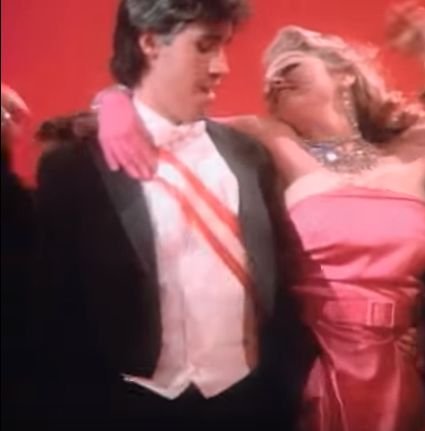
Next up – another medley: Desiree Coleman, one of two artists appearing here (besides Smokey) that was actually signed to the Motown label at the time. Desiree sings Have Yourself A Merry Little Christmas.She is decked out in a tacky 80’s outfit full of sequins and linebacker shoulder pads. I mean… all the costumes in this show are hideously dated, but this one is at the top of the very flammable acrylic heap.
Philip Michael Thomas is onstage with her but thankfully does not sing. Apropos of nothing, Desiree hits a Mariah Carey dog-whistle note at the end of her segment and Thomas leads her away. I’m not a fan.
Smokey sings a portion of a forgettable ballad before Natalie Cole comes in with her soulful rendition of Donny Hathaway’s This Christmas (Side note: do yourself a favor and check out Dave Holmes dissection of Patti LaBelle’s disastrous version of this song from the 1996 National Christmas Tree lighting. Really.)
I remembered This Christmas as a highlight of the program, thinking that Smokey and Natalie had some real chemistry. Re-watching it now, I see that it’s all Natalie’s doing. SHE has chemistry. All we see is the back of Smokey’s head as she sings her way towards him. Together they segue into Give A Little Love On Christmas Day, and it sure does seem like someone’s gonna get a little love before Christmas day even gets here. Oh – Philip Michael Thomas and Desiree Coleman are still onstage too. Thankfully, Philip Michael Thomas still does not sing.
The Temptations are back with a very nice version of Silent Night, featuring the tight soulful harmonies that are their trademark. They end their performance with a declaration: “Merry Christmas from the Motown Family…” as if they are here to represent the rest of the “family” who had to go visit the in-laws and just couldn’t make it this year.
After some more Redd Foxx shenanigans, Run DMC (who were on Profile records) performs Christmas In Hollis, which was also on the A Very Special Christmas LP. Quick geography lesson: Hollis is in Queens, New York, which is about as far from Detroit, Michigan as the Aquarius Theatre in Hollywood, California.
Stephanie Mills sings the R&B ballad When You Love Someone (It’s Christmas Every Day), a song that they twice mention was written by our very own Redd Foxx. What they don’t mention is that the song was recorded by former Motown artists Gladys Knight and The Pips, who are not here.
It’s ironic that Mills appears on a Motown special for a couple of reasons: Not only was she never a Motown artist, but her greatest success was playing 13-year-old Dorothy in The Wiz on Broadway, but when Motown produced the movie adaption, 34-year-old Diana Ross was given the role.
Smokey and the Temptations are back again to sing The Christmas Song (Chestnuts Roasting On An Open Fire). This is fine. But where are the Miracles? Where are the 4 Tops? Gimme some Pips! My kingdom for a Marvelette!
Marsha Warfield reappears dressed as a glittery bag lady as we head into the closing 8+ minute medley. Carrie McDowell is introduced. She is the only caucasian on the bill and the only other artist besides Desiree and Smokey signed to Motown at the time. That said, she was dropped shortly after her debut LP tanked that same year. McDowell has the featured spot here… and this girl can SANG, that’s for sure, but…. this also means that all the other great singers behind her: Natalie Cole, Darlene Love, Pointer Sisters, etc. are given much shorter solos – some are reduced to a single line of a song. Poor Ronnie Spector has one duet line with Stephanie Mills.
Lola Falana has a very brief solo with some very odd stilted physical movements, which I always attributed to the severe multiple sclerosis flareup that plagued her at the time. But upon repeated viewing, she moves quite naturally when she steps back in line with the others. So I don’t know what that was about.
The cast sings approximately 15 seconds of every holiday song ever written. Phillip Michael Thomas is singing now but nobody gives him a mic. And then we’re done. Credits roll. Merry Christmas to all and to all a good night.
In 2000, Diana Ross attempted to launch a Supremes reunion – the first time they would have performed together since the Motown 25 special. Unfortunately, very little money was offered to Mary Wilson and Cindy Birdsong and both declined to participate. In their place were installed Lynda Lawrence and Scherrie Payne (Freda’s sister), both members of the Supremes in the 1970’s – years after Ross had left. Fans didn’t buy it and the tour fizzled out quickly. As with this program, it was just another example of the Motown name being slapped on something and fans were expected to eat it up.
Of course, if we are talking about drunk people at a party, maybe they do fall for it. But some of us are bound to stand up and say… Honey, no. We need to talk.
It’s hard to believe that it has been 10 years since I put this Halloween show together for 60 Degrees wi Brian Ferrari, my weekly radio show focusing on “60’s chicks and girl groups – the hidden gems, cult favorites and unreleased obscurities of the decade.” The show ran for five years (2008-2013) on East Village Radio, a storefront internet radio station in New York City. This Halloween episode was originally broadcast on October 27, 2008 and aired every Halloween for the duration of the run. As with every episode, the songs were interspersed with vintage commercials, sound effects and movie clips.
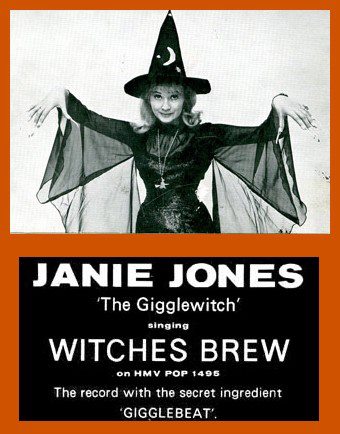
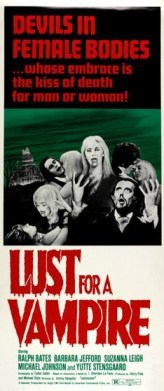
In this very special episode, we’ve got soul witches, rockabilly rabble-rousers, death discs, horror movie theme songs, science fiction sirens, girls driven to madness by love and more dead boyfriends than you can shake a broomstick at. Plus a whole lot more!
Comedian Frank DeCaro recently tweeted: I’m convinced Cher gave us the Dancing Queen album so we could get through the Kavanaugh hearings.
I was intrigued with this album concept from the moment it was announced: Cher covering ABBA. Two great tastes that taste great together. I put it on my Christmas wish list. But after the album’s release last week, a wave of raves washed across my very gay Facebook newsfeed. So I purchased it and, I must say…. listening to this album makes me downright giddy. It’s the perfect antidote to 2018: Chicken soup for the ears, if you will.
Dancing Queen scored an A- minus from Entertainment Weekly and is likely to debut atop the Billboard album charts later this week. Reminder: Cher is 72 years old. This is 20 years after the #1 success of Believe, which was considered to be an impossibly late career comeback at that time.
This seemed like a good time to have a look at some of the forgotten moments of Cher’s fifty-fucking-five year career.
Let’s face it – some things are not remembered because they are just not very good. But there will always be some uber-fan in the comments section that will argue that Cher has never had a bad moment, EVER and you can go to HELL if you disagree.
Also – some critical or commercial failures do fare better when viewed through the lens of time. So let’s not categorize the following examples as good or bad… just… worth a mention.
Like this outfit.
1) Bittersweet White Light (1973)– In certain circles, this LP is considered a camp classic. It’s up to you to decide if you belong in that camp. If you want to hear Cher tackle an Al Jolson medley and other American songbook standards while wading through a muddy, dated Sonny Bono production, look no further! Although her vocal rage had expanded since the 1960’s, she was still partially stuck in her honking Dylan-by-way-of-Sonny-style of singing. Compare her vocals here to anything she has recorded in the past two decades: Vocoder and pitch correction aside, her range now – vocally, stylistically, dramatically – is a world away from her own limitations 40+ years ago.
2) A Woman’s Story / Baby I Love You (1974) Cher reunited with producer Phil Spector for this single, which has never appeared on any Cher LP or compilation. The A-side was written by Spector with brother / sister duo Nino Tempo & April Stevens. Soft Cell’s Marc Almond covered this with a spot-on Cher imitation that few realized because the original was so obscure.
The B-side is a cover of the Ronettes classic – Cher sang backing vocals on the 1963 original. Here, the song is slowed down to a snail’s pace while ramping up the bombast that you would expect from a Spector production. I won’t argue the pros and cons of this venture – some think it’s brilliant, while Ronnie Spector reports that John Lennon referred to it as proof that Phil had gone ‘round the bend.
3) Cherished (1977) – Cher’s last Snuff Garrett-produced LP continued in the storytelling style of their earlier #1 hits Dark Lady and Half Breed. But by 1977, both Cher and the pop music world had moved on. Like her other mid-70’s solo LPs, this album never charted and has never been released on CD. Cher reportedly owns the rights and has no plans to re-release them.
4) Black Rose (1980) People forget that Cher is a rock chick at heart. She seems to have made peace with dance music now, but in 1980 she was bristling under the disco material she was recording for Casablanca records. Cher formed and fronted Black Rose, a punkish indie rock band with then boyfriend/guitarist Les Dudek. Casablanca released one LP – it was neither a critical or commercial success and closed out her tenure at the record label.
5) Cher & Meat Loaf: Dead Ringer For Love (1981): From Mr. Loaf’s follow up to the hugely successful Bat Out Of Hell LP. This duet was a moderate chart hit in other countries, but inexplicably not released as a single in the U.S. If you want to hear Cher take part in the trademark aural excesses of a Jim Steinman production, here it is.
6) I Paralyze (1982) Continuing her early 80’s musical slump, this sole LP for Columbia records was a flop. New Wave Cher didn’t translate well to the current pop market. She then focused on her acting career for the next 5 years before resurfacing with 1987’s self-titled comeback LP. At the time it seemed like she had been gone for much longer, since her early 80’s material had all gone largely unnoticed. Here she is on American Bandstand:
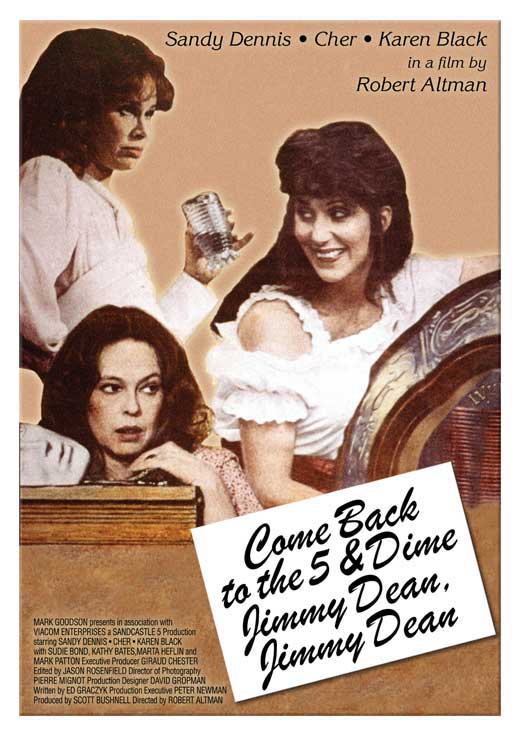
7) Come Back To The Five And Dime, Jimmy Dean Jimmy Dean (1982) – Robert Altman directed this low-budget movie version of the Broadway play, which he also directed with the same cast. Cher co-starred with Karen Black, Sandy Dennis and a young Kathy Bates. While not commercially successful, people did sit up and take notice of her acting chops. Surprisingly, the whole movie is on YouTube, but skip to 1.29 if you want to watch her character’s heartbreaking meltdown.
8) Not.com.mercial CD (1994/2000) – In 1994, Cher attended a songwriter’s workshop that garnered an album’s worth of songs that she had co-written. The resulting album was subsequently rejected by her record label as “Nice, but not commercial.” Cher held on to it for 6 years before releasing it with little fanfare via the internet during her post-Believe renaissance. At the time, she said “I think that the internet is a place that at least it doesn’t infringe on anyone else’s life and if you want to go there you can go there and check it out, and if you don’t want to be bothered by it you don’t even have to know it’s in the universe” Reviews were generally favorable.
9) Walking in Memphis (1995) – When the record company rejected Cher’s songwriter LP, she returned the following year with It’s A Man’s World, about which she told the Advocate “I don’t know. It’s kind of good. It doesn’t suck.” The standout track is her cover of Marc Cohn’s signature song. A modest success in Europe and the UK, it sank without a trace in the U.S. It should have been a hit, with a music video featuring Cher in Elvis drag. Cher liked the video so much, it was played in its entirety on the big screen during her live shows for years after. Take that, bitches.
10) Faithful (1996) – Director Paul Mazursky’s final film – written by Chazz Palmienteri based on his stage play. This was the end of Cher’s A-list Hollywood film career – whether it was the cause or she purposely walked away is debatable. In any case, the film was a commercial failure – criticized for not translating well to the big screen. A charming LA Times review also said “she’s had so much cosmetic surgery, you can’t get through a single close-up without marveling at the cadaverous mask she has become.” Which… by the way… have you seen Palmienteri lately? But I digress: It’s a pretty good movie that is definitely worth revisiting.
BONUS: Don’t Come Crying To Me (1991/1999)
Originally recorded during the Heart Of Stone album sessions, the song was unreleased until 1999, when it was remixed and included in first pressings of If I Could Turn Back Time: Cher’s Greatest Hits. The song was later removed, at Cher’s request. In any case, it’s a favorite of mine.
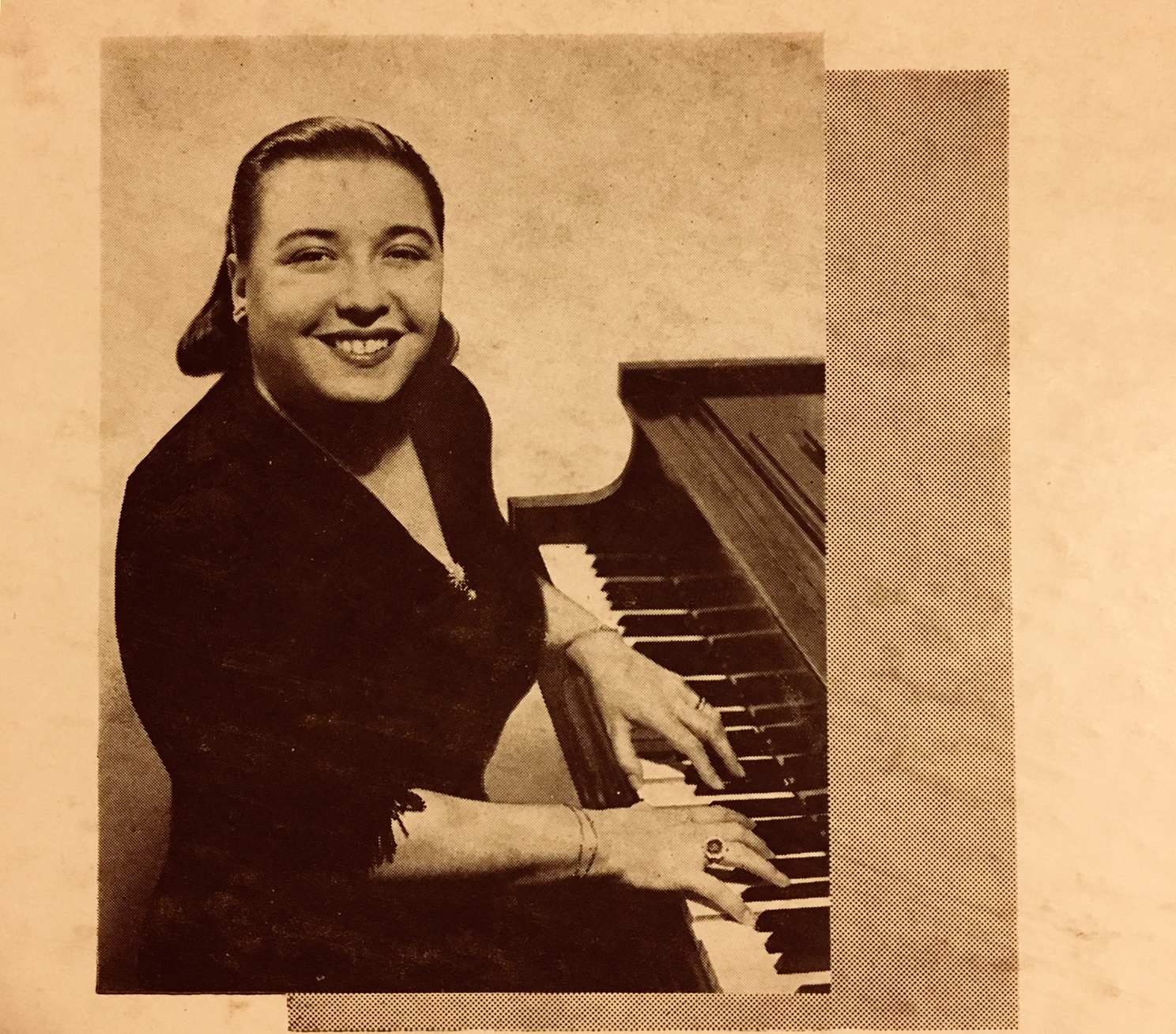
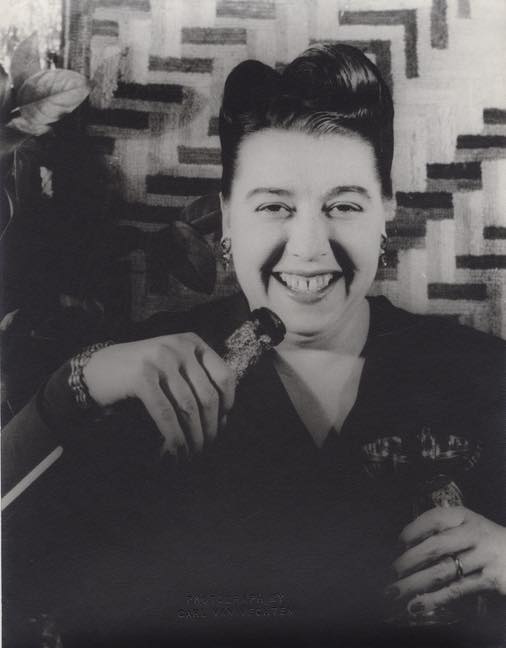
Ladies and Gentleman, I’d like to introduce you to a long lost lady of song that you should know: the late, great Madame Spivy LeVoe (1906-1971), also known simply as Spivy. A lesbian entertainer, nightclub owner and character actress, Spivy has been described as “The Female Noel Coward” – to which I would add “…. if he was born Bertha Levine in Brooklyn.”
In the 1930’s, the former Ms. Levine entertained as a singer/pianist in the back room at Tony’s, a Fifty-Second Street speakeasy and celebrity hot spot. In 1939, the New York Times wrote that “Spivy’s material, witty, acid, and tragicomic, is better than most of the essays one hears about town, and her delivery is that of a sophisticated artist on her own grounds. She knows the value of surprise in punching a line, she uses understatement unerringly, and her piano accompaniment is superb.”
In the summer of 1940, Spivy opened her own chic piano bar, Spivy’s Roof, on the top floor of a building at the corner of Fifty-Seventh Street & Lexington Avenue. Notable performers through its 11 year existence included Mabel Mercer, Thelma Carpenter and Martha Raye as well as early performances by Liberace and Paul Lynde. Spivy’s Roof makes an appearance in the seminal book Gay New York and pops up in several memoirs and biographies of performers, artists and notable society personalities of that era.
Writer Ignacio Schwartz fondly recalls visits to Spivy’s Roof when he was a Holden Caulfield-esque 16 year old boarding school student seeking adventure in New York:
She was a plump lady (one writer said that she was “squat like a bulldog.”) She wore her hair in a tight pompadour with a white streak down the middle. She would place a tall glass of what was probably chilled gin on the piano before her. During her time on stage, she would drain a couple, but her singing — her low, throaty voice — would always be perfect.
The one (song) I remember best of all is The Alley Cat. I cannot for the life of me remember more than a couple of lines of Hamlet that I was taught in that Prussian military school. I still have trouble remembering which novels were written by the Brontë sisters and the ones that came from the pen of Jane Austen. But to this day I can recite most of the words of The Alley Cat, along with the intonations, the riffs (and the pauses for laughs) exactly as it has been tricked away in my memory-bag for the last fifty years.
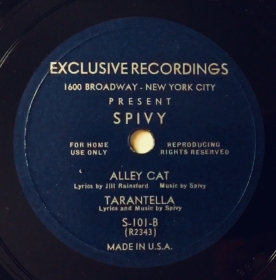
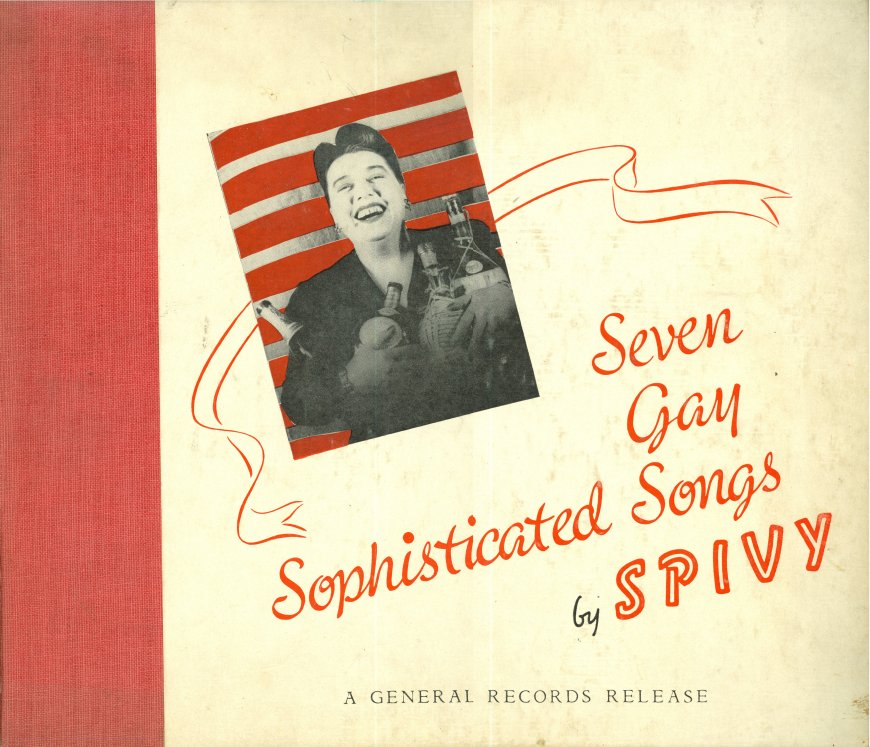
“The Alley Cat”, which Spivy co-wrote with Jill Rainsford, was a staple from her live show and recorded for her 78 album Seven Gay Sophisticated Songs (1939).
Here’s a video that I put together with lyrics included:
The Alley Cat
On the 14th floor of a walk-up flat, I used to keep an alley cat. Each night I’d walk him down the stair, and waited while he got the air. He grew up fast and developed a yen, no sooner was he in than he was out again. I hated to spoil his fun, but I knew what must be done.
So I called the cat and he staggered home, with a ragged ear and a broken dome But I knew he felt like hell that day, so I spoke to him this way: Is it worth it? For that momentary something to yowl around til neighbors call the cops? Is it worth it? For that momentary something to have nine hundred kittens call you “Pop”?
You’ve been an awful wild cat – you should welcome a vacation. Just to sit around and brood and think about your operation. I’ll give you one more night out to complete your education Then the sheltered life is good enough for you.
I took him to the vet and had his profile bobbed, and when he sat down he said, ‘Hell, I’ve been robbed!’ He went out that night but came right home to bed, and the look on his face was a scream as he said: “Well, you’ve done it. Now the operation’s over, I’ll never be the same, it seems so strange, but you’ve done it. Now the operation’s over, no longer will I take chances with the mange.
I had so many wives, I didn’t know where I was at. But since my change of scenery all the girl cats holler ‘Scat!’ I pass them by and hear them cry; ‘There goes that pansy cat.’ But the sheltered life is good enough for me.”
Spivy recorded approximately 15 of her most popular songs. Some she co-wrote with Rainsford, others with lyricist John LaTouche. None of these recordings – originally issued on 78 record albums between 1939-1949 – were ever reissued in any format. I am slowly uploading them to YouTube and will dole them out along with other Spivy tidbits in the future.
In the meantime, if you are so inclined, check out the Queer Music Heritage website , which has a lot of information on Spivy, although the site is rather antiquated and some browsers won’t support it…. If you choose to heed the “unsecure site” warnings and avoid it… then the sheltered life is good enough for you.
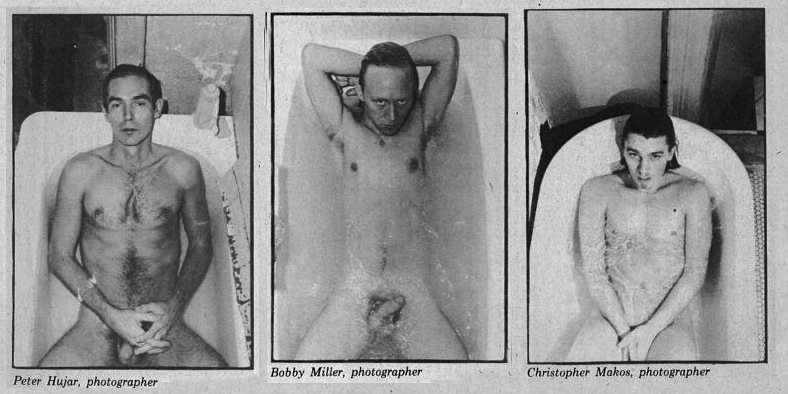
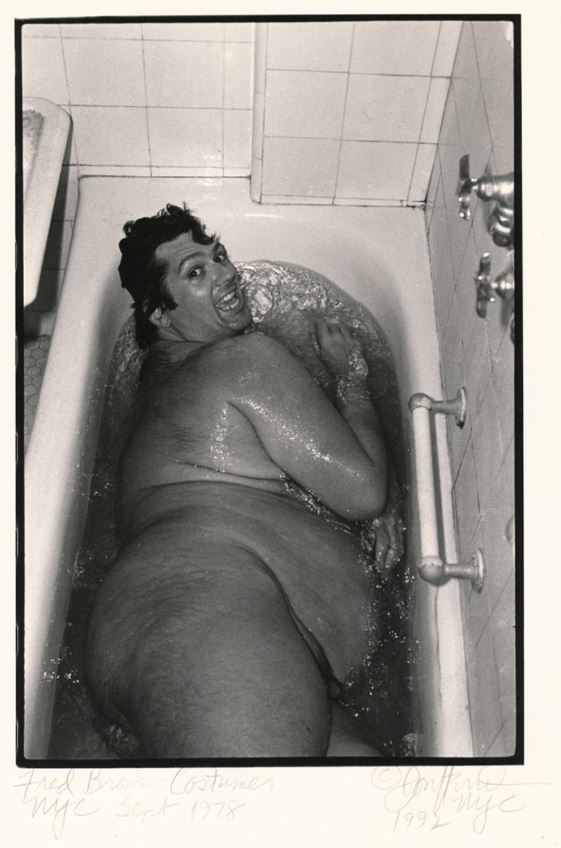
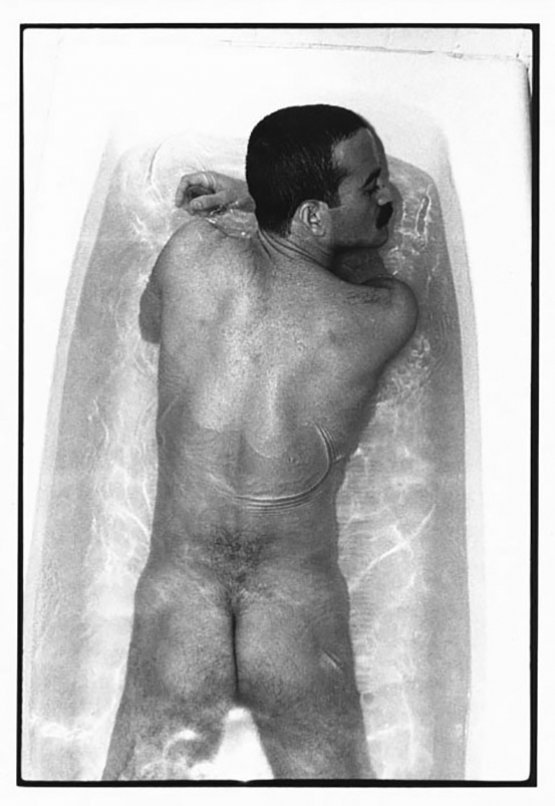
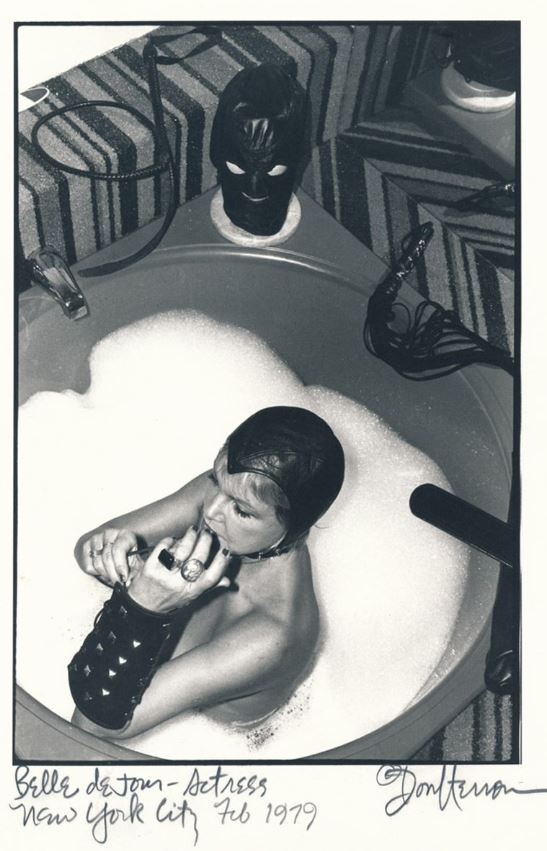
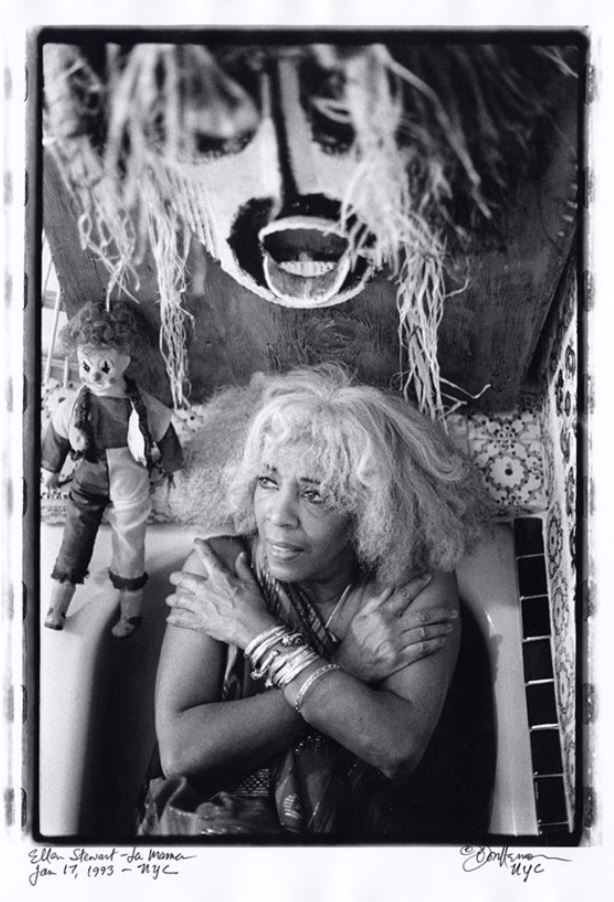
What a difference a week makes! It has only been 10 days since my original article about Don Herron’s Tub Shots was posted to coincide with the opening of the Daniel Cooney Fine Art exhibit. The article was then re-posted on Queerclick, while Out magazine posted their own piece about the gallery exhibit, as did numerous art photography websites and blogs. Each time I do a Google search, I find more information about Don Herron and his series of photos, which had very little internet presence up to this point.
The digital skeleton of the Village Voice even resurrected their feature from April, 1980. This is curious, considering a) The paper had been declared officially dead two weeks ago, and b) One of the subjects in their 23 photo spread sued for invasion of privacy when it was published the first time, claiming that the model release form was forged.
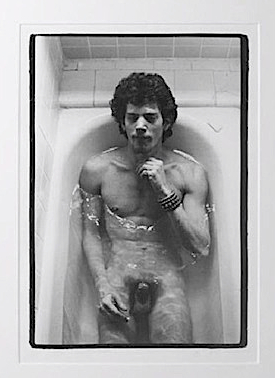
Some alternate pics have surfaced of the ubiquitous Tub Shots featuring Keith Haring and Robert Mapplethorpe:
In a letter to a friend, Herron recalled; “I photographed Robert Mapplethorpe in San Francisco in February, 1978. He was having a show of photos at the Edward de Celle Gallery and we had met at his opening the night before.
“I was to photograph him at 3pm the next day in his hotel room, at at 3 Robert wasn’t in his room, so I waited in the lobby. At 3:15 he walked in and apologized: he had forgotten all about the shoot and was just getting in. As I photographed him in his bathtub he kept saying that he couldn’t remember much about his opening the night before or much about our conversation at the gallery, but if I was willing to photograph him in his current condition he was willing to pose.”
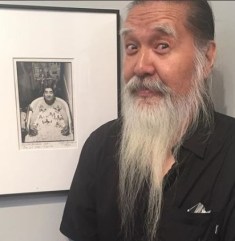
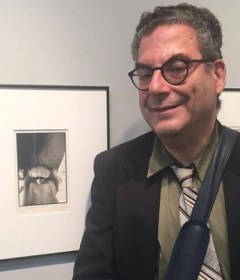
Daniel Cooney Fine Art posted several Instagram photos from the September 13th exhibit opening with original subjects standing next to their photos.
Left to right: Charles Busch, Agosto Machado and Michael Musto:
Here’s a little more info about some of the other luminaries featured in Tub Shots :
Robert Opel (1939-1979) was a conceptual artist, Advocate photographer and gay rights activist who achieved notoriety when he streaked through the 1974 Oscar Ceremony. He launched the first openly gay art gallery in San Francisco, where he was murdered in 1979. He is the subject of Uncle Bob, a 2011 documentary directed by his nephew Robert Oppel.
ActressMink Stoleis one of John Waters’ Dreamlanders and has appeared in all his films, most notably as Connie Marble in Polyester, Taffy in Female Trouble and Dottie Hinkle in Serial Mom. She also played Aunt Helen in all of the Eating Out films.
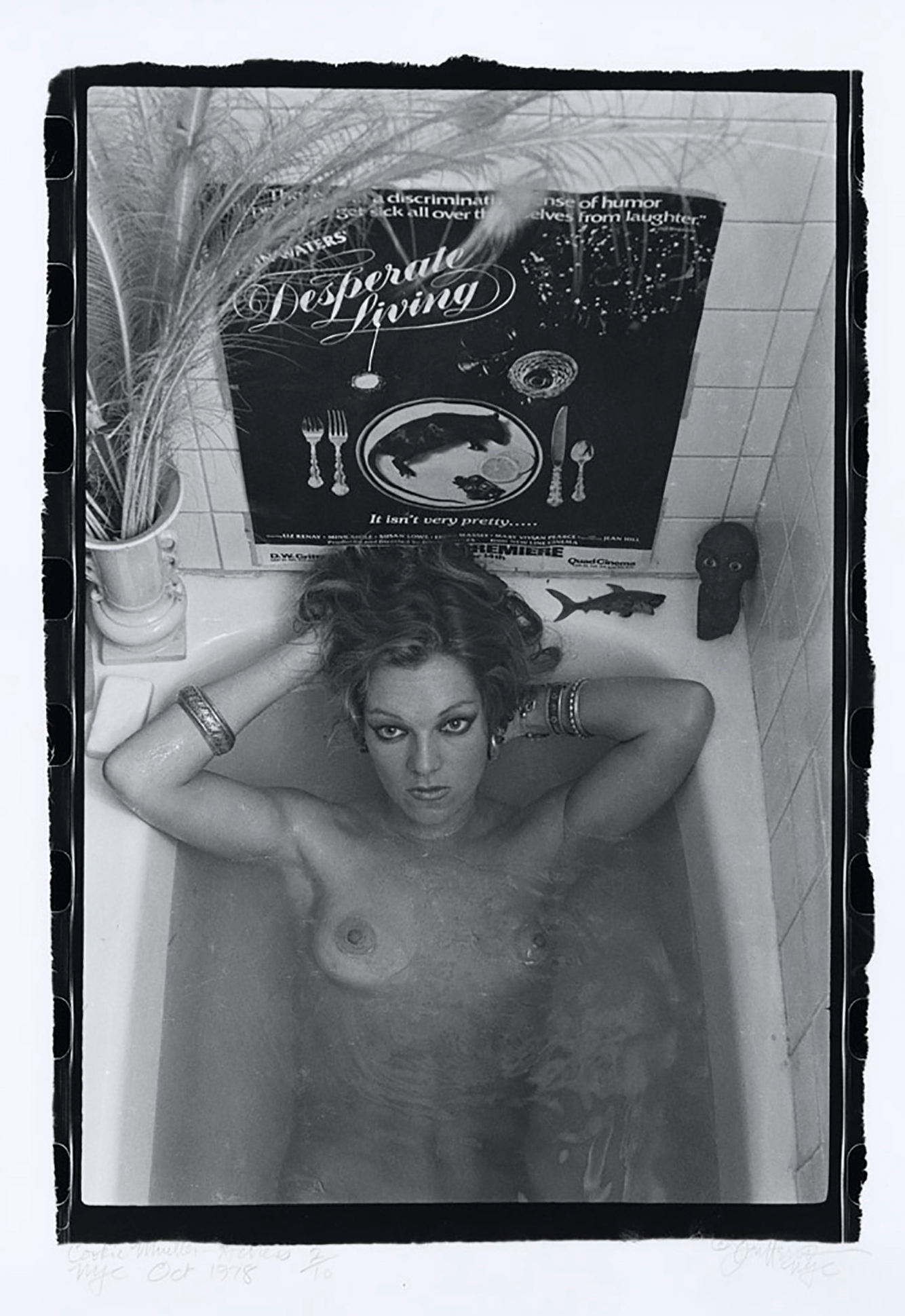
Cookie Mueller (1949-1989) was another John Waters Dreamlander who appeared many of his films, including Pink Flamingos and Desperate Living – her Tub Shot includes the poster for the latter. She also penned a column for The East Village Eye and half a dozen books.
Victor Hugo (1942-1993) was a Venezuelan artist, window dresser and nightlife personality. Hugo designed window displays for his partner Halston‘s Madison Avenue store. He later became one of Andy Warhol’s assistants at The Factory where he worked on the oxidation paintings. As a model, he also appeared in Warhol’s Torso and Sex Parts series.
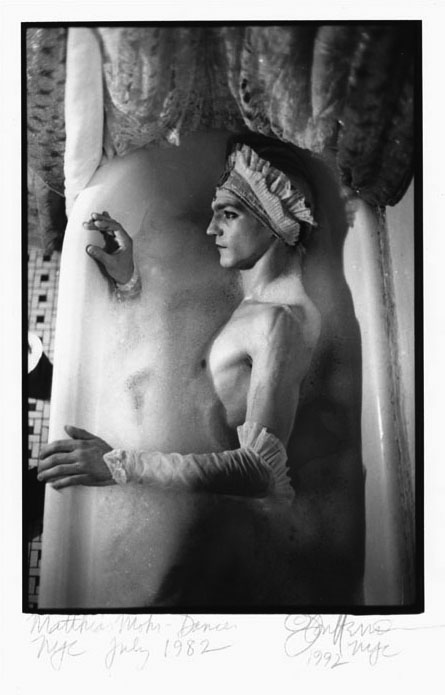
As the different subjects recount how they got involved in the project, a thread emerges: Robert Mapplethorpe brought in Felice Picano, who in turn suggested Victor Hugo and George Stavrinos, who then connected Mel Odom. (Read part 1 of this post for more on them)
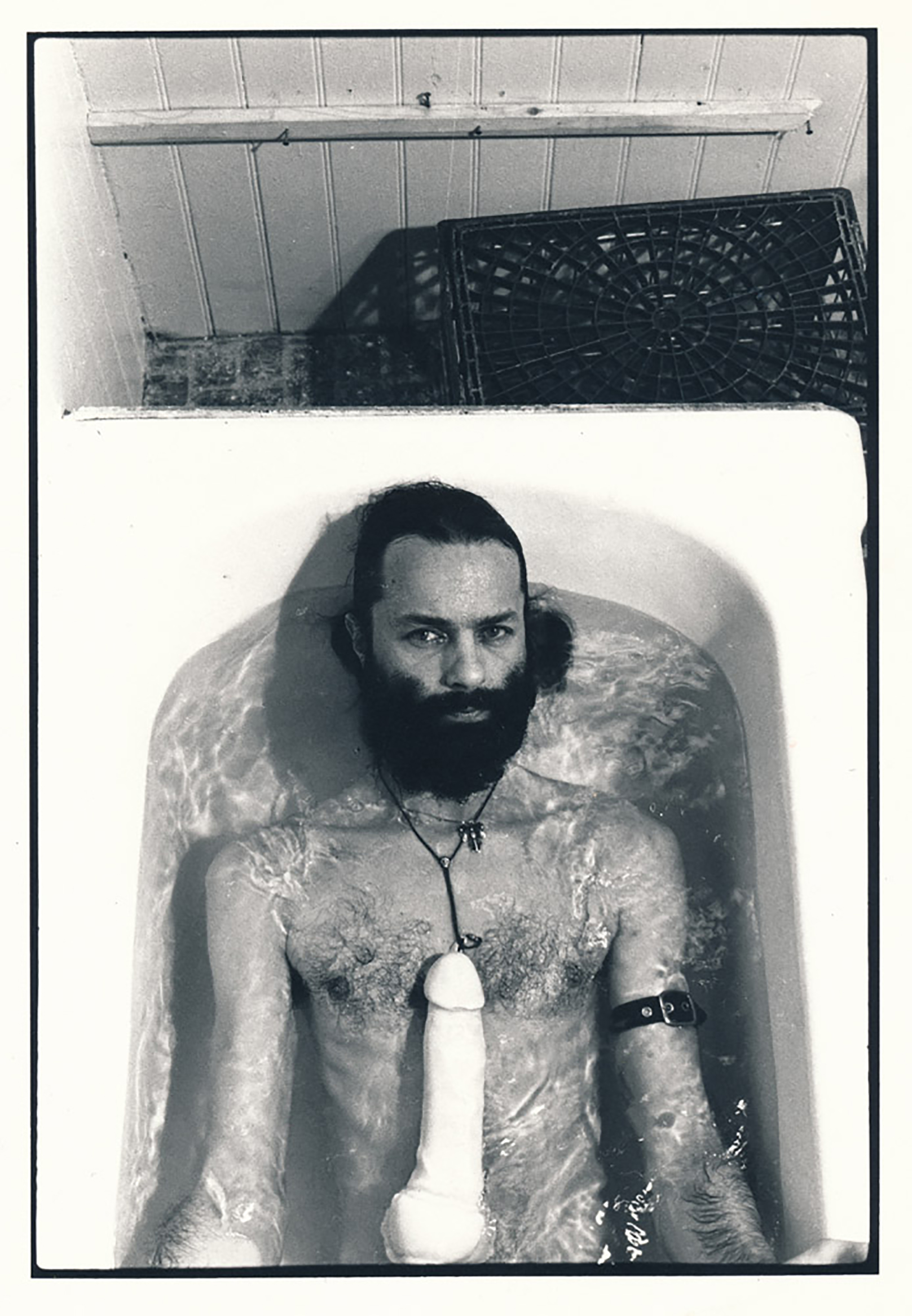
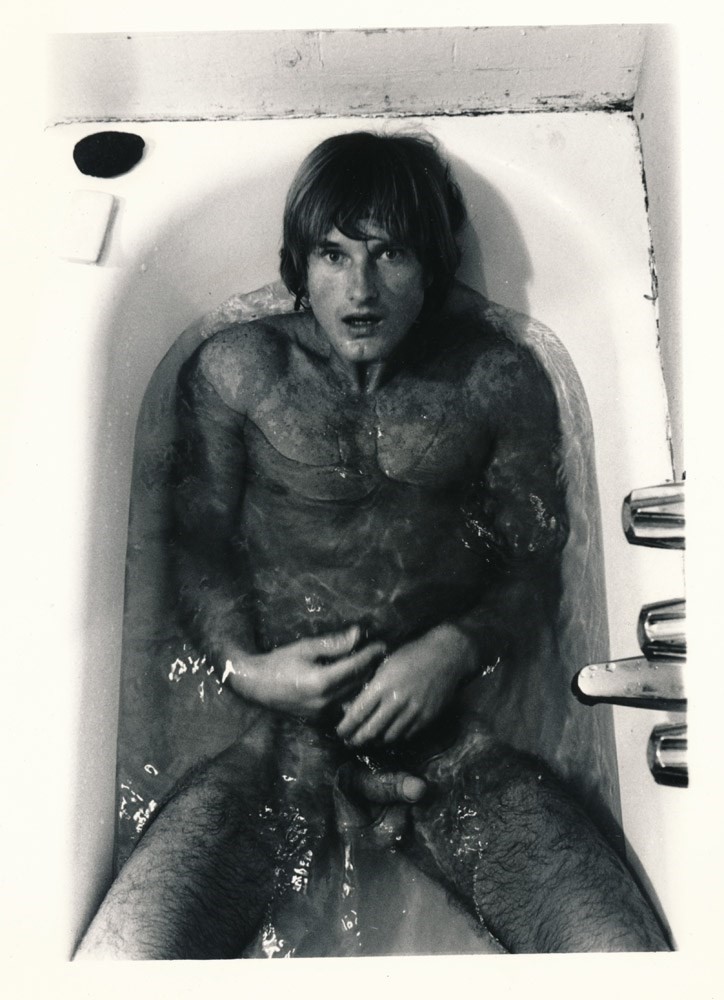
Peter Berlin‘s statement about Don Herron and his Tub Shots is exactly what you would expect from the legendary narcissist:
“He may have approached me for sex and then asked to take my photo. I have no recollection of him or the photo shoot.
At the time, I never cared for photos taken by other photographers, not even Mapplethorpe’s photos of me. I realized how critical I was looking at my image, so I probably would have seen this photo and not liked it. Looking at the photo now, I don’t mind it. It’s not a typical Peter Berlin photo that I would have taken of myself. I like everything but the dick and my expression in the face. But I have no recollection at all of him or this shoot.”
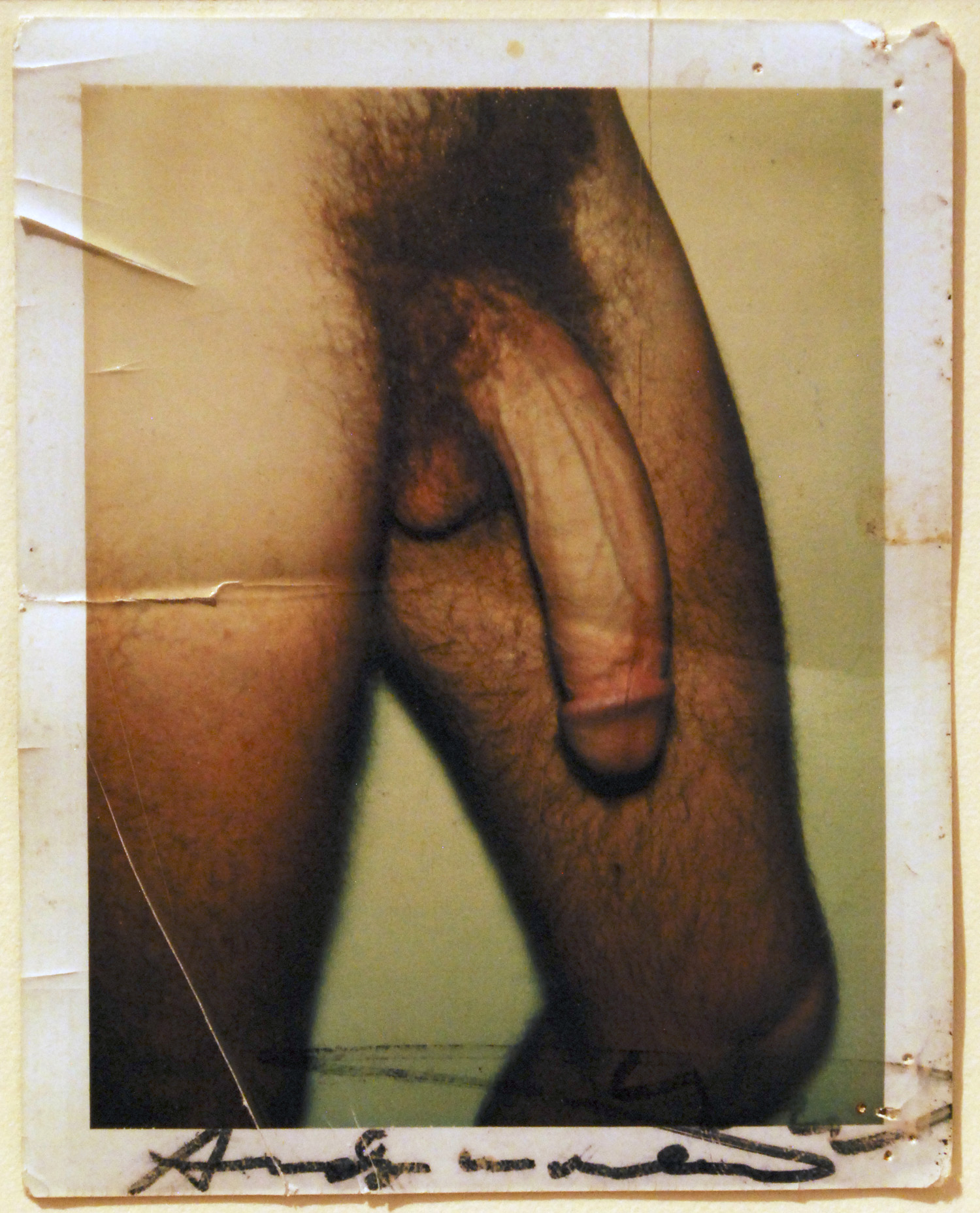
The Daniel Cooney Fine Art exhibit with 65 of these photos at their gallery in New York City runs from September 13 until November 3, 2018. Contact the gallery for reservations via phone at 212-255-8158, via email dan@danielcooneyfineart.com or give them a visit at 508-526 West 26th St., #9C, NY NY.
Congratulations to the late Mr. Herron on this recent rediscovery of his work. As artist Adam Donaldson Powell posted in the comments of Part 1: “…he deserves due credit now. His other paintings and silk screen art were even more impressive than Tub Shots. I would love to see that work praised online as well.” We shall see…
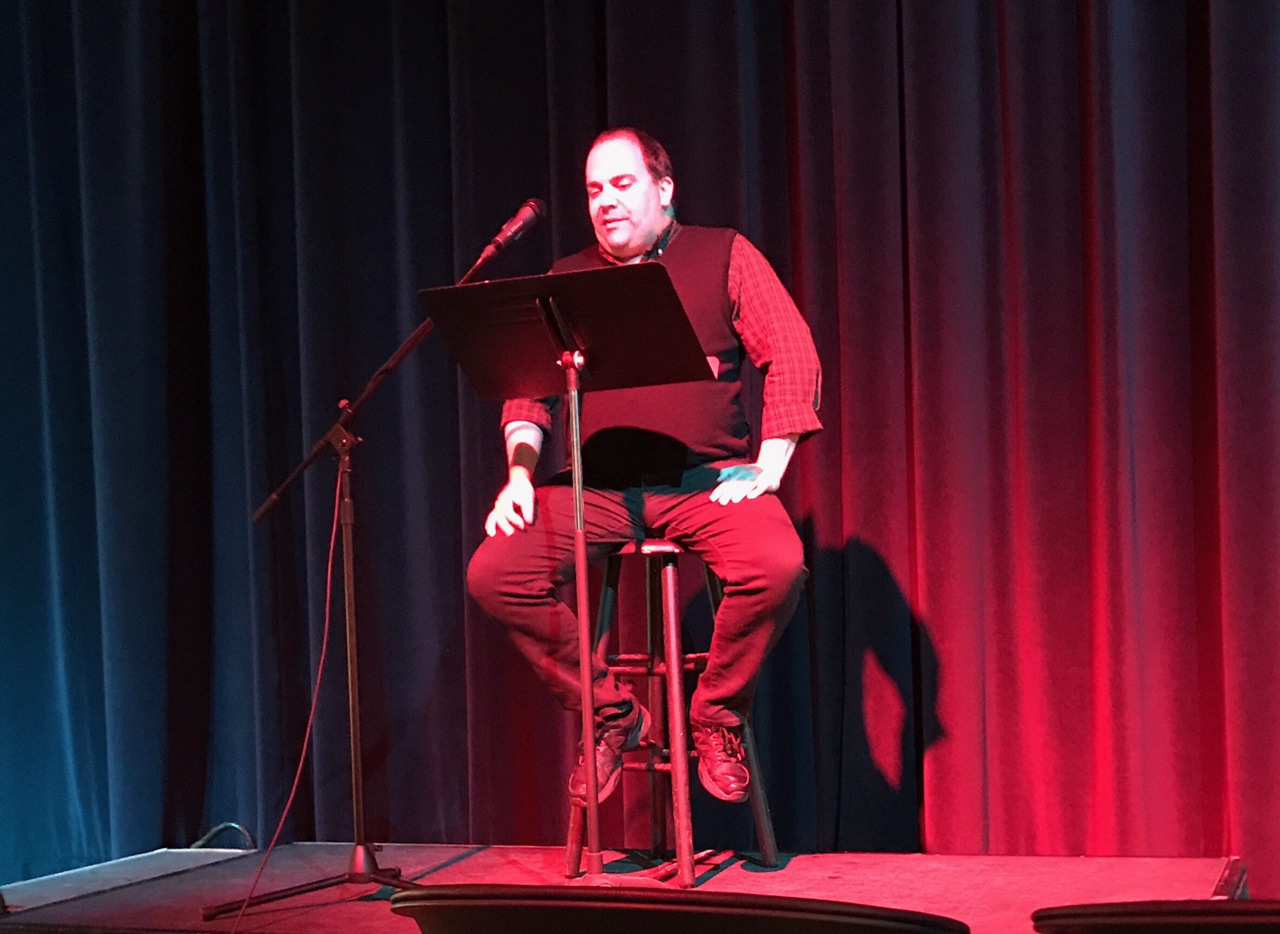
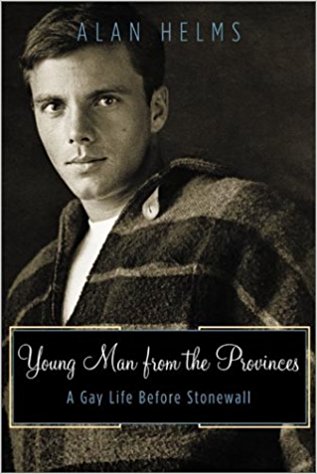
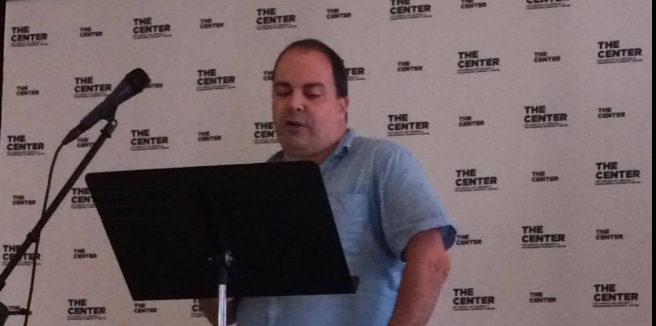
Meditation On A Theme kicked off Gay Pride Month at The Center on June 2, 2017. The theme was That’s So Gay. Here’s what I had to say:
It snuck up on me recently when I wasn’t paying attention. I don’t know how this happened…. but the calendar says that I came out 30 years ago. Is this a milestone that people keep track of and celebrate? What is the anniversary stone or fiber that should be gifted in celebration of declaring yourself a homo for 30 years? Tobacco? Taffeta?
I can’t pinpoint the exact date when this occurred – I got the boyfriend and then started to come out to friends and family. It was the spring of 1987. I was 18 and a senior in high school, which was uncommonly young for people of my generation and average-to-late for younger people. A friend of mine from college now has a 10-year-old trans child. When I came out, I felt like a trailblazer. Now I feel like I wasted a few years. On the other hand, my partner Chris was a late bloomer and I don’t want to make him feel bad, so I’ll just say we all move at our own pace.
We watched the ABC miniseries When We Rise that aired in February. It didn’t get a whole lot of fanfare – people on Facebook either loved or hated it. But for Christ sake, we’re talking about a prime time 4-night miniseries on broadcast network television about the history of the gay rights movement. That’s something, right? It also helped me to dust off some cobwebs and have a look back at when I first came out. Chris is quite curious to learn about our history over the past 50 years and while he sometimes beats himself up about what he doesn’t know, I remind him that he’s a lot more knowledgeable than a lot of younger people. And when I say this, I picture some generic air-headed twink who doesn’t realize that gay history goes back further than season 1 of RuPaul’s Drag Race.
This applies not just to the history of gay activism, but to gay icons and the history of camp as well. Thank god for Ryan Murphy and his FX show Feud – the younger generation has now discovered Joan Crawford and Bette Davis. I’m afraid for the moment that Garbo and Dietrich are shit out of luck.
Together Chris and I have watched many of the documentaries that were integral to my coming out process and understanding of gay history. We watched the 1984 documentary Before Stonewall. I sat with my computer nearby and as each interview subject appeared onscreen (and that includes Ms. Audre Lorde herself) I would Google their names to see if they were still alive. Only one or two are left. And some of them lived to ages in their nineties, but the documentary is now 33 years old. Again, it’s just that passage of time that has gotten away from me.
I know this is going to sound ridiculous but … I forget that everyone continues getting older, even when I am not paying attention. It’s like the first time I was at a beach house in the wintertime. And I went for a walk on the beach in the snow at 4 am and I thought “My GOD! The waves are crashing on the shore all the time!” It’s one of those moments that I smack myself in the head and go … “Well, of course they do, you idiot. Of course they do.” And so… my Captain Obvious Statement of Stupidity is… time just keeps marching on. And before you know it, a generation is gone and you are moving one seat down to make room for the younger ones.
We watched the 1977 documentary The Word Is Out. It holds up well – this was a groundbreaking documentary for its time. There’s a remastered DVD version that I highly recommend, with updates on the cast, which had a lower mortality rate than Before Stonewall, which came years later.
I noticed something interesting while revisiting these documentaries, as well as The Times of Harvey Milk. I hadn’t watched these in many many years. Certain people would appear onscreen and I would remember how I felt about them but I couldn’t remember exactly why. I’d say “Oooh I love her! Ugh I hate him.” …without remembering what it was that they were about to say or do. I started to realize that some people who rubbed me the wrong way as a 20-year-old viewer seem perfectly fine to me now that I am 48.
Some of it is due to a changing view on life or love or recognizing the defensive stance that previous generations might take when openly discussing their sexuality. But I also realized this: I had a low tolerance for effeminacy when I was just coming out. Yes, I was fine with being gay but I wanted to be the one to TELL you that I was gay. I didn’t want you to be able to guess. And someone who was flamboyant was not my cup of tea. I was also an actor and effeminacy was the last thing you wanted anyone to detect. AND this was during the AIDS crisis, of course, and I think that, in my not completely enlightened brain, this inability or unwillingness to hide also broadcast that you HAD it. I know how ridiculous that sounds. I would like to sit down with my younger self and talk about it.
When did this change? I assume it was gradual. But there was one moment that sprung to mind. And I had written about it in an essay called The Bus Stop back in 2005. Bush Jr. was inexplicably elected for a second term and I was feeling pretty disgusted with the conservative portion of the country that would vote for that simpleton. And then we took two steps forward, and one giant step back… and here we are… and now George W doesn’t seem like the worst choice in the world, does he?
The Bus Stop was supposed to be my first published work. It was accepted into a gay anthology that collapsed before the book made it to publication. One thing I must say before I read this: I apologize in advance for anything perceived as racially insensitive. But this is where I was at the time:
I was on my way to work one morning, waiting for the uptown bus on Third Avenue at 9th street. It was a frigid 8 degrees that day – I was all bundled up in a hat, scarf, gloves, and bomber jacket. Nothing flamboyant. Nothing extraordinary.
I turned around and saw this 250lb black kid come out of the deli followed by his three skinny little girlfriends. They were young – probably around 13 or so. The linebacker would have passed for much older but the loud immature behavior was a dead giveaway.
He flings the door open yelling “We in the Village. The Village is gay. Let’s get out of here. Gay people live here.”
Now… to be honest, this kid seemed pretty light in his linebacker loafers. Granted, he was young, but given his size, puberty had paid a big visit. Yet, the voice was pretty high, and the inflection had those telltale signs. And here he was, hangin’ with the girls down in the Village. It was so blatantly obnoxious that I thought perhaps he already did know that he was gay and that this was some sort of a joke that he was making with his friends.
I had only glanced over as they came out the door. I’m a New Yorker. Direct eye contact can be considered an overt act of aggression. You get used to it. So I heard these comments over my shoulder as I peered down the street, praying for the bus to come.
The behemoth continued. “This place is where gay people live. I want to get out of here. Look at him. He’s GAY.”
In an instant, I was 13 years old again on a junior high school playground. I could feel their eyes burning into the back of me. He had to be talking about me. We were alone on this stretch of street. There was nobody else he could be referring to.
The teen flashback only lasted a moment. Because I am not 13 anymore. I am in my thirties, and I am angry. My next impulse was to turn around and say… “Are you black? Do I need to point out that you are black? Yes, I’m gay. What ARE you gonna do about it?”
This didn’t seem like a smart thing to say to a brutish man-child who did not yet know his newly acquired strength. Besides, in front of his friends, he’d really have to prove himself, and he’d snap me like a twig. Or clock me over the head with his box of scam-candy.
The impulse to confront passed. I heard my mother say “Stay above it. Don’t stoop to his level.” So I did what I would have done when I was 13 years old. I ignored it. I stood there.
I started wondering what could have tipped him off. As I said, eye contact was minimal. I wasn’t even paying attention at that point. Age, gender – it didn’t matter. I started to examine my clothes. No bright colors or patterns. Too neat? I hadn’t said anything, so I can’t blame the voice. This time. I wasn’t dancing pirouettes singing show tunes. Was it my earring? The little tuft of gelled hair sticking out from under my hat? (I had more hair then. And hair products.)
Then I stopped myself. Did it matter? Why was I dissecting myself over this? So what if he could or couldn’t tell! Why SHOULD I have to cover my tracks? Why couldn’t I be a big ole fag, in 2005, waiting for a bus in Greenwich fucking Village and NOT have to worry about some dickhead whupping my ass because he couldn’t deal with his own burgeoning sexuality?
The kids were now beating the crap out of each other, smacking their drinks out of each other’s hands as they waited for the same bus that I had been praying would show up already.
Finally, it arrived. This crew pushed their way onto the bus first. I thought about waiting for the next one. But no – let them get on first and then I could make sure I sat as far from away as possible.
Surprise, surprise. Something’s wrong with gay linebacker’s bus pass. He starts arguing with the driver, and they’re all kicked off before they can even get on. As I board the bus, the driver is yelling “I’d have let you go ahead if you hadn’t mouthed off at me.”
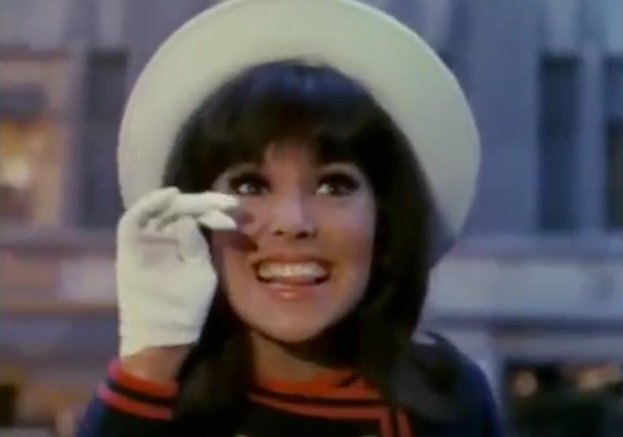
As the bus door closed, I turned to the crew, smiled sweetly and waved my gayest little Marlo Thomas wave. That Girl really pissed them off.
The bus began to pull away, and they ran alongside screaming and giving me the finger. I returned the gesture with one hand while blowing little kisses with the other, hoping that the boy would think of this moment for a long time to come. I wanted him to remember my face, and the faces of every gay person that he had ever caused any trouble. I hoped they kept him awake at night as he tried to understand why he wanted the guy who sat next to him in English class to fuck him and why his family raised him to behave this way and why they hated what he secretly was.
So – that was written 12 years ago. And magically, we no longer had to put up with that shit anymore, right? Yay! Two steps forward, and hopefully now only one step back.
I just had another one of those time passage / epiphany moments, as I realized that the kids in this story are now twice as old. It was half a lifetime ago for them. They are in their 20’s now. Maybe the girls have kids. Maybe that boy was ON RuPaul’s Drag Race. Who knows? The thing is – I’m not mad anymore. I hope he sorted himself out. I hope his family doesn’t hate him. I hope he has a good support system. And I hope by now that he would want to sit down with his younger self and talk about it.
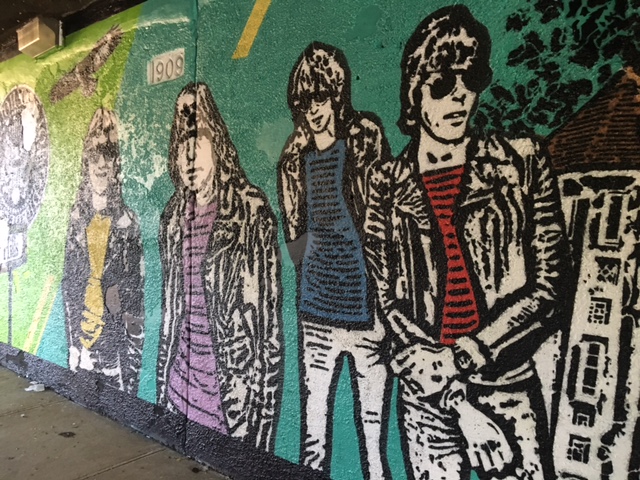
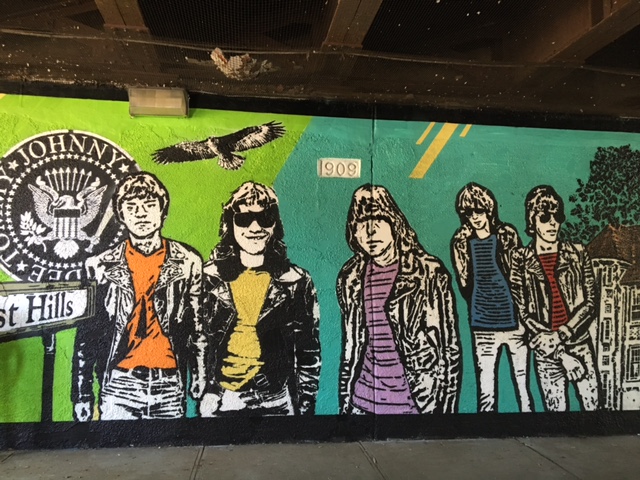
“DUDE! Dude. Duuuuuuuude. Remember that notice on the bulletin board at Parsons? About the Ramones mural in Forest Hills? DUDE! I got it! I totally fucking got it. Totally painting it. Yeah – I love the Ramones. Totally built my 80’s playlist around them on Spotify. I’m tellin’ ya, dude… every time My Sharona comes on, I totally have to stop what I’m doing and CRANK. IT. UP.
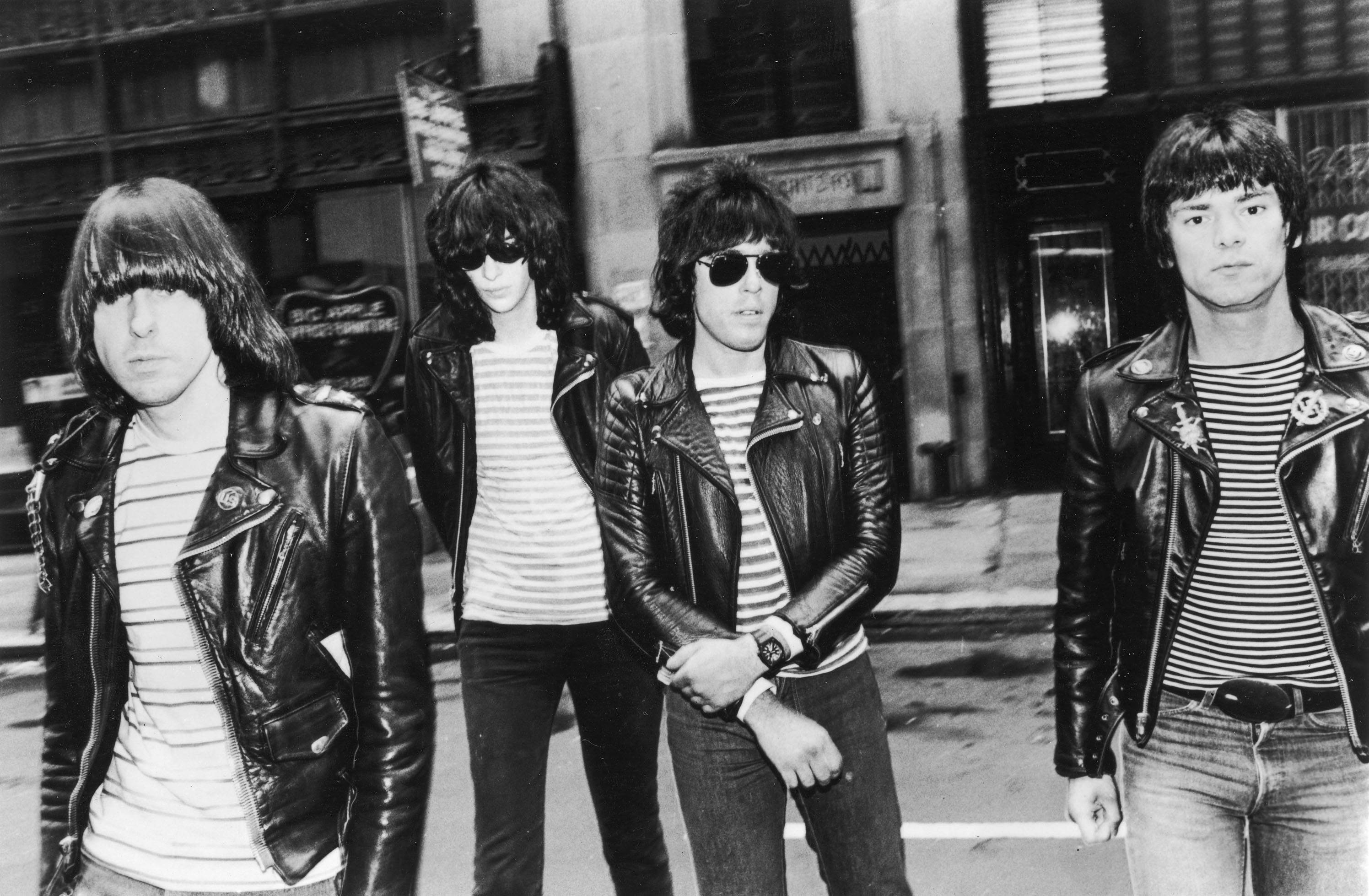
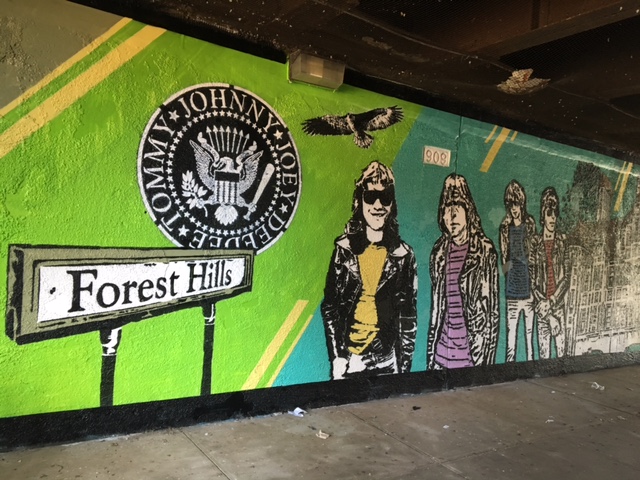
“So I went on Google Images and found this cool shot I wanna use… and they approved it but they said that the second drummer is in the pic. Marky – the replacement guy. So I gotta take him out and find a pic of the first drummer, cuz the original band is from Forest Hills, right? That’s why they’re paying for a mural in the train underpass. Dude, it’s gonna be AWESOME.
“So I projected the picture on the wall to trace it and I did my thing, man. Totally smoked and painted in the underpass all day, ridin’ the buzz and listenin’ to tunage. Awesome. Like every day should be, right? I was totally stoked just makin’ art and gettin’ PAID, man! And I added a hawk flying overhead in the mural cuz AMERICA, man!
“So… two days later I start gettin’ phone calls. Dude. They are going ballistic because I left out fuckin’ Dee Dee Ramone instead of Marky, the second drummer. There’s TWO drummers on the wall, man, and NO bass player. How shitty would that sound? And Marky’s from Brooklyn. Doubleyou Tee Eff, Man. The fans and Dee Dee’s family are calling them and pissed off and crying and shit…
“I mean how the fuck was I supposed to know? I’m like – they all dressed the same and Marky’s wearin’ shades so maybe lets just say it IS Dee Dee, right? Like, who really gives a shit? That’s what I said! But no good.
“So now I gotta go back and add fuckin’ DEE DEE to the mural. Not so much fun the second time around, man. I set up my projector and traced out the biggest fuckin’ Dee Dee you’ve ever seen. I was pissed! He’s blocking the logo, man! Covered up Joey’s name. Plus Joey’s kinda in the background like in the picture anyway but at least Dee Dee’s there, right? A big fuckin’ Dee Dee.
“Never again, dude. Whatever. As they say, ‘Hey Ho! Never mind the bollocks!'”
I’m so happy that Meditation On A Theme is back! And at the LGBT Center, where I first attended one it back in… 2009, I think? And I remember I sat there and thought…. “I wanna do that.” I took part in 13 of them before the hiatus two years ago. The last one I did was in June, 2013 – You Can’t Do That On Television. I was just a few weeks into dating my partner Chris and it was the first time he got to see me get up and actually DO something. And my parents always attended, so they were there and it was the first time they got to meet him, so… really there was no pressure at all. But it turned out OK and we all lived happily ever after.
Chris lived in Kew Gardens at the time. This was my first mixed relationship, and by that I mean the first time I was dating someone who lived outside of Manhattan. I did that selfish “you come to me – I live in the cooler place” thing for as long as I could, but eventually I had to reciprocate and venture out there.
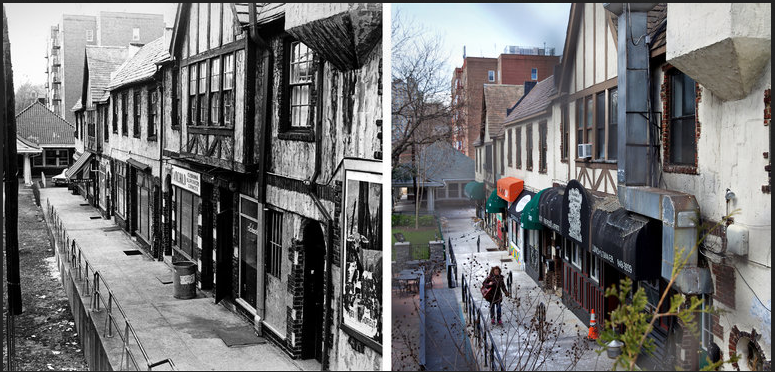
Our first stop was coffee from Odradeks next to the Kew Gardens Long Island Railroad Station. This is at the end of a row of two story Tudor-style buildings on Austin Street between the train station parking lot and Lefferts Boulevard. There’s retail at street level on both the Austin Street side and on the rear of the buildings, with apartments on the second floor. The back faces the train tracks, where there is a foot path and steps up to Lefferts. The most prominent business here is Austin’s Ale House, which has created an outdoor dining area on the track side of the path. This is where we had dinner later that night.
Since my high school days, I had noticed both Kew Gardens and also the next stop Forest Hills from the window of the Long Island Railroad as I’d traveled into Manhattan, so it was interesting now to be the one sitting on the shore as the trains came and went.
If you look at the map, Queens and Brooklyn are physically ON Long Island and I was a total Manhattan snob and felt that if I was going to live in either borough I was basically a failure and practically moving back home. But after a couple of decades of that sort of thinking, here I was starting to enjoy spending time out here… with Chris, in the country with trees and flowers and stuff. One night we saw a raccoon walking on the top of a chain link fence a few feet from the sidewalk and I’m like… I was on a subway 5 minutes ago…where the fuck am I?
So I was moving forward in a new relationship and letting go of the idea that Manhattan was the be all and end all and considering the benefits of living in Queens with more space and quicker access to family on Long Island because nobody’s getting any younger out there and I’d still be back in Manhattan every weekday for work anyway, and I’m not even going to get into the whole “falling out of love with the East Village that is a shell of its former self and unaffordable and blah blah blah…” Countless essays have been written about that.
But things were shifting… slowly.. and we continued to divide time between both places as the relationship progressed.
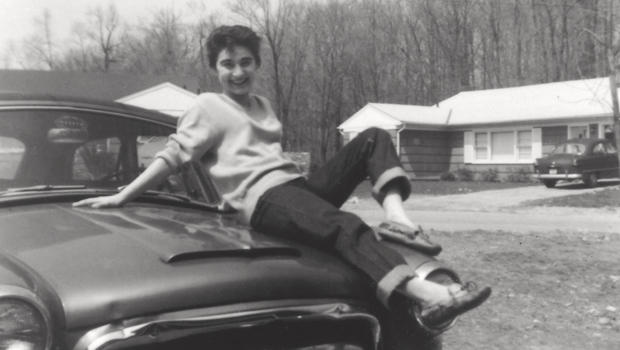
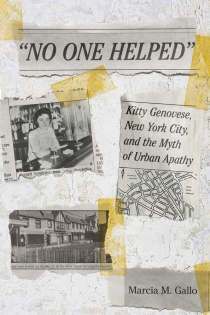
In March of the following year, I was watching the news and they had a segment on the 50th anniversary of the murder of Kitty Genovese. This was the boogie man story of all time to scare people out of moving to the big bad apathetic city. I had heard about this when I was growing up. In 1964, this pretty young woman was murdered and all her neighbors watched and nobody intervened.
I later learned that the reportage of this case produced one of the most famous articles in New York Times history. The headline screamed: 37 Who Saw Murder Didn’t Call Police with the lede paragraph: “For more than half an hour, 37 respectable, law-abiding citizens watched a killer stalk and stab a woman in three separate attacks… Not one person telephoned the police during the assault; one witness called after the woman was dead.” I pictured these blank people eating popcorn watching this attack from their tenement windows.
The piece ran at a time that perfectly played into the fears of the day: anxiety about the anonymity of urban life and also the fear of random violence in post-JFK America. This was only 4 months after his assassination. A 2014 New Yorker magazine piece revisiting the slaying said “The New York Times story fed into a version of reality that was molded to conform to a theory…” basically that life is cheap in the naked city, baby. You’re just one in a million and those cold heartless bastards wouldn’t cross the street to save your life.
The outrage over this story was never about the killer or the actual killing. The attacker had already been captured by the time the Times article ran two weeks after the murder. This was about The 37 – later amended to 38 – The 38 apathetic people who saw something and said nothing. This was also about selling newspapers by scaring the crap out of everyone.
Books were written about the case. Songs. More than one Law & Order episode ripped it from the headlines. The HBO show Girls just did a whole episode that referenced it. There were psychological and sociological studies about what is now known as “The Genovese Syndrome” – when bystanders fail to intervene when a crime is taking place. This all snowballed from the New York Times article. And because of the prestige of the New York Times, nobody really investigated to see if the story was accurately reported. And unfortunately, it wasn’t. People in the neighborhood where it took place knew it. If this happened today, they could have taken to social media to correct the story. But it took 40 years before anyone in print media started to try get it right.
But before I get into that… Where do you think this symbol of urban indifference took place? In the version of the story I envisioned with the people in the windows with the popcorn, it was smack dab in the middle of Manhattan. Hell’s Kitchen! Because that was the worst of the worst and of course it happened there. But no. I’m watching the news report on the 50th anniversary of this horrible event and they are live on the scene… in Kew Gardens. Kitty lived in an apartment above the back of what is now Austin’s Ale House. That foot path along the back that I mentioned? Some older neighborhood residents call it Kitty Genovese Way.
Here’s another interesting tidbit that went unreported for 40 years: Kitty was a lesbian, living with her girlfriend Mary Ann Zielonko. She was killed on the one-year anniversary of the day they had agreed to move in together. While this “unfortunate gay condition” was still regarded as a mental illness at the time, this was not the angle that the New York Times was going for, so the women were referred to as “roommates.” In recent years Mary Ann has started to give interviews and open up about the guilt she has felt her entire life, having slept through the whole incident.
So here’s what happened: Kitty was a manager at a bar in Jamaica. She was driving home around 3am when Winston Mosely spotted her. He was driving around looking for, in his words, “a woman to kill.” She parked her car in the LIRR parking lot and must have realized she was being followed because she didn’t go around back to the footpath to her apartment – she started to run up Austin Street toward Lefferts Boulevard, possibly headed to the front of the bar that is now Austin’s Ale House, but that bar had already closed. She was screaming for help when he caught up to her and stabbed her. Some people in the apartment building across the street later said they thought they heard a drunken altercation or a lover’s quarrel outside the bar. One man opened his window and yelled “Leave that girl alone” – this was enough to scare off Mosely. Kitty, who was already mortally wounded, slowly made her way back down and around to the back of the building, headed towards her apartment. She managed to get into the vestibule of her neighbor’s building when Mosely found her, raped and stabbed her again.
So there were two attacks in two different places. Nobody could have seen or heard both. Someone did call an ambulance, and Kitty was cradled by a neighbor – a 70 year old woman who held her until the ambulance arrived. But none of this fit the grand narrative of urban indifference.
On the other hand, the neighbor whose building she managed to reach, a guy who was actually was a friend of hers (but may have been drunk) opened his door, saw something going on with Kitty and some guy in the vestibule, freaked out, closed his door, called a friend, went out the window to another friend’s apartment and eventually called the police. It’s not as if he blithely said “I don’t wanna get involved” and went back to bed, as it was reported.
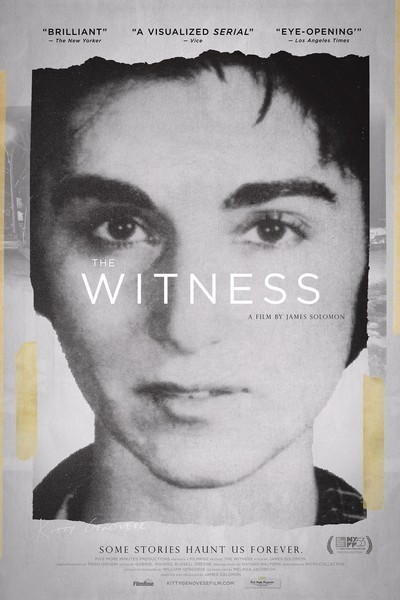
In an interview for a new documentary about the case called The Witness, which is about Kitty’s younger brother Bill investigating what really happened, the author of the original New York Times piece basically admitted that he made up the number of witnesses. But he felt that his version of the story had done a lot of good and brought to light things that needed to be said.
Some sources have said that the outrage over the incident led to the creation of the 911 emergency call system. In 1964, a person had to look up the number of their local precinct in the phone book. But really, the 911 system wasn’t put into place until 1968. And in this particular case, it turns out that people did call the police. One person who called said that they were told by the precinct that “police were already aware of the situation.” But the police didn’t come. Why? It has been speculated that, because the initial attack was perceived to be a domestic dispute, it was ignored. People don’t like to get involved in how a man disciplines his woman. That’s nobody’s business.
But…. what if the focus of the New York Times article had been on the reluctance to get involved in what some thought was a domestic dispute? If some didn’t call the police because of this… and the police didn’t send someone out because of this… couldn’t that have been the shocking focus of the piece? Maybe that caveman thinking could have been dealt with sooner rather than later?
The author of a 2004 revisit in the New York Times said “If the story had been reported more accurately, it would have been a two- or three-day, maybe even a four-day story, but it would not have been a fifty-year story. We would not still be sitting here talking about it today.” As sure as Mama Cass did not choke on a ham sandwich, 38 people did not stand by and let this woman get murdered. But you can’t fix an urban myth.
The Genovese syndrome might exist but it didn’t in this case. Or at least not in the numbers reported. But there were a couple of people that did not help her. That’s no urban legend.
Yes, there are horrible people in this world. There are enough mass shootings to confirm that. But with every tragedy there are stories about the acts of heroism of everyday people. I’m not going to end with some Anne Frank bon mots like “In spite of everything I believe all people are good at heart.” I’m sorry but some people in this world just absolutely suck. But you have to hope that there aren’t too many, or that they aren’t concentrated together.
Later in 2014, Chris and I moved in together in Forest Hills – the next stop closer to Manhattan, in a Tudor-style apartment building right alongside the railroad tracks. I later discovered that two different Son of Sam murders took place down the block back in 1977. But that’s another story…. Shortly after we moved in, signs went up around the neighborhood for the filming of “37” – a dramatization of the Kitty Genovese story, with Forest Hills standing in for Kew Gardens. I immediately thought the worst – the title didn’t give much hope that they were actually going to set the record straight. And this was what I thought, literally up until yesterday, when I read a Facebook post from one of the actors in the film, and what followed was a dialogue in which he assured me that the movie does address the inaccuracies and how the story affected society.
And this made me think back to the 2014 New Yorker magazine article, which concluded that “The real Kitty Genovese syndrome has to do with our susceptibility to narratives that echo our preconceptions and anxieties.” See, I just kind of did the same thing with this film that I haven’t even seen.
Picture a link to the original Kitty Genovese New York Times story scrolling by on your newsfeed. And let’s just assume you already think that New York City is dangerous and the world is a shitty, horrible place. And you read that article and express your outrage and shake your head and shake your fist and wing off a visceral response and click “share.” And it was one source. One embellished source.
So I guess what I’m saying is … If you see something… check around a little. Google. Check Snopes. Think for a minute. Then say something.

 with all the former stars of the record label coming home to celebrate Motown’s 25th Anniversary and kiss the ring of founder Berry Gordy. Stevie Wonder,



 Thomas, notorious for his over-inflated ego, is credited with coining the acronym EGOT for an Emmy, Grammy, Oscar, and Tony winner. Thomas often crowed in interviews that he would win one of each. As of 2018, he has never been nominated for any of them.
 perform a doo wop version of White Christmas. Although the group had recorded the song as a ballad on their
  Next,
Next, 
 Christmas Album


 She is decked out in a tacky 80’s outfit full of sequins and linebacker shoulder pads. I mean… all the costumes in this show are hideously dated, but this one is at the top of the very flammable acrylic heap.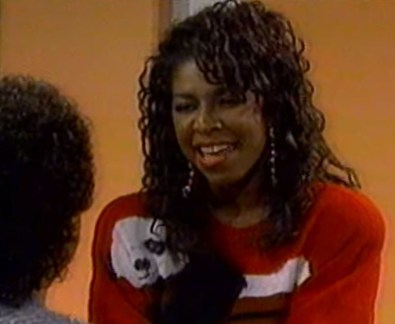
 soulful harmonies that are their trademark. They end their performance with a declaration: “Merry Christmas from the Motown Family…” as if they are here to represent the rest of the “family” who had to go visit the in-laws and just couldn’t make it this year.

 That said, she was dropped shortly after her debut LP tanked that same year. McDowell has the featured spot here… and this girl can SANG, that’s for sure, but…. this also means that all the other great singers behind her: Natalie Cole, Darlene Love, Pointer Sisters, etc. are given much shorter solos – some are reduced to a single line of a song. Poor Ronnie Spector has one duet line with Stephanie Mills.
 Lola Falana has a very brief solo with some very odd stilted physical movements, which I always attributed to the severe multiple sclerosis flareup that plagued her at the time. But upon repeated viewing, she moves quite naturally when she steps back in line with the others. So I don’t know what that was about.

 In this very special episode, we’ve got soul witches, rockabilly rabble-rousers, death discs, horror movie theme songs, science fiction sirens, girls driven to madness by love and more dead boyfriends than you can shake a broomstick at. Plus a whole lot more!




 Dancing Queen scored an A- minus from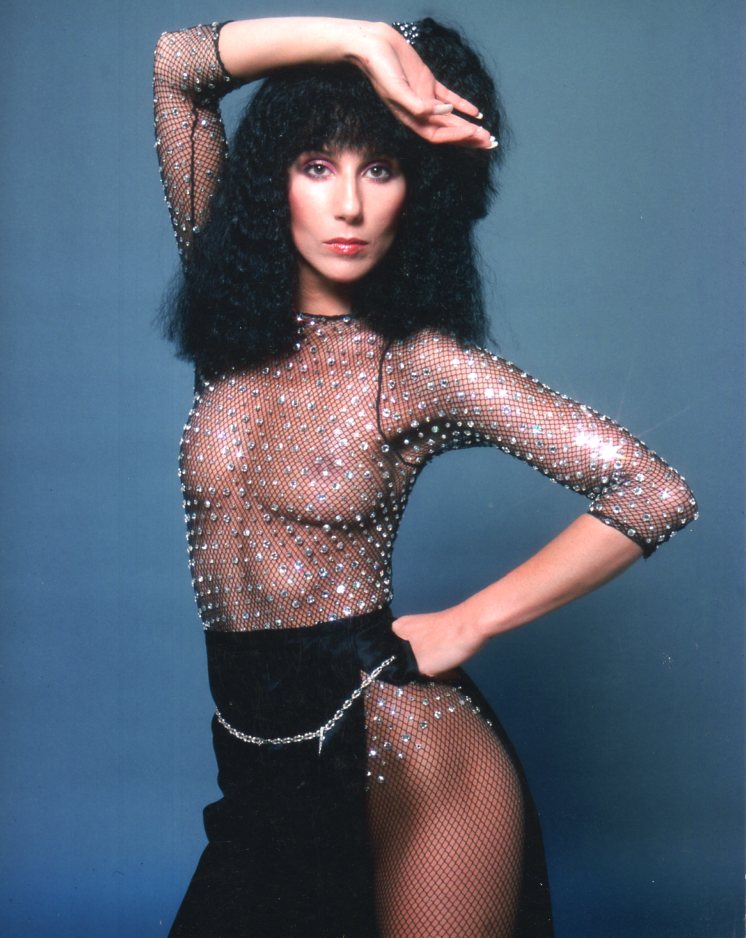
 1) Bittersweet White Light (1973)– In certain circles, this LP is considered a camp classic. It’s up to you to decide if you belong in that camp. If you want to hear Cher tackle an Al Jolson medley and other American songbook standards while wading through a muddy, dated Sonny Bono production, look no further! Although her vocal rage had expanded since the 1960’s, she was still partially stuck in her honking Dylan-by-way-of-Sonny-style of singing. Compare her vocals here to anything she has recorded in the past two decades: Vocoder and pitch correction aside, her range now – vocally, stylistically, dramatically – is a world away from her own limitations 40+ years ago.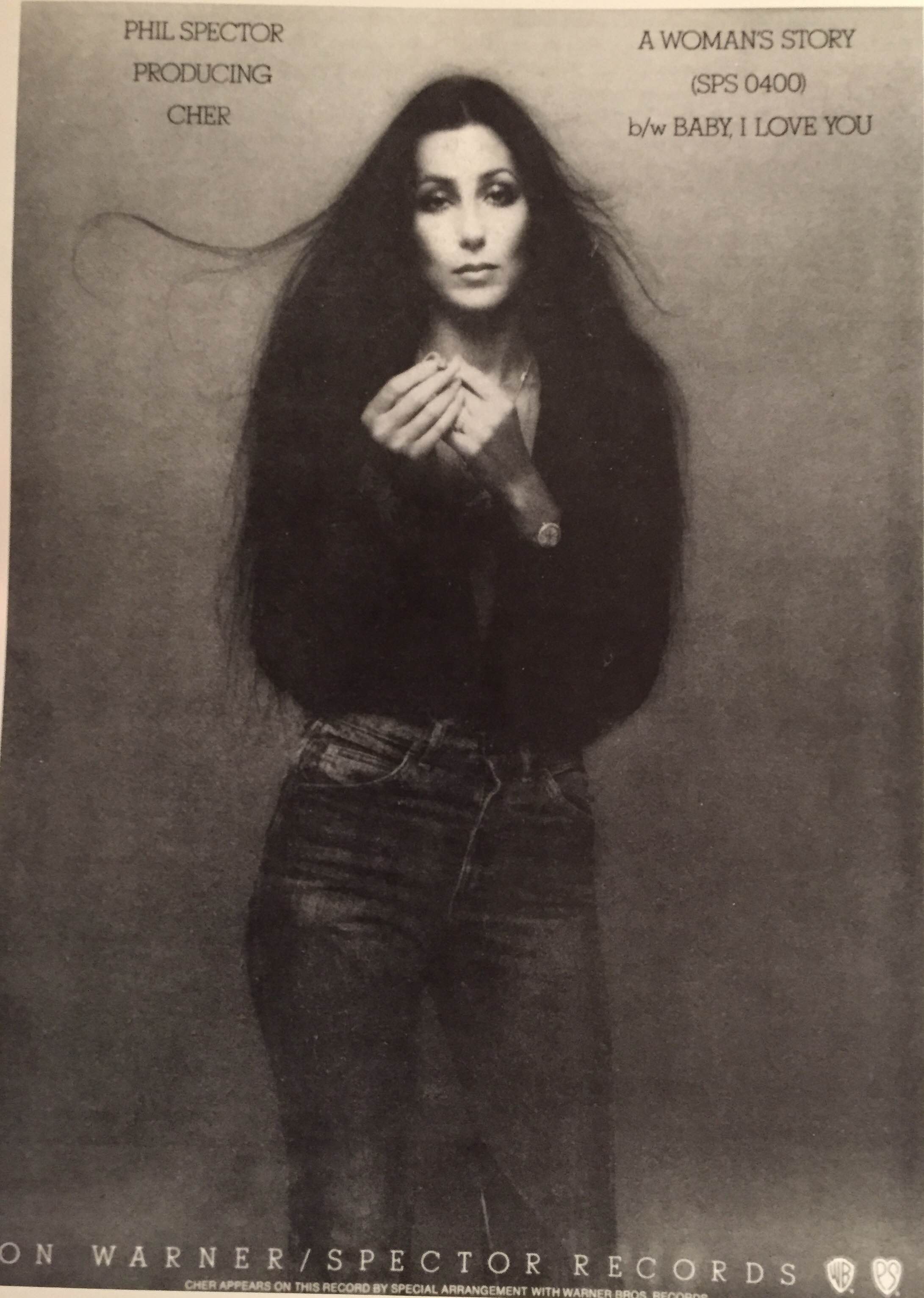
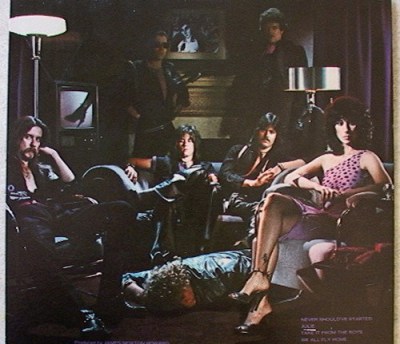 4) Black Rose (1980) People forget that Cher is a rock chick at heart. She seems to have made peace with dance music now, but in 1980 she was bristling under the disco material she was recording for Casablanca records. Cher formed and fronted Black Rose, a punkish indie rock band with then boyfriend/guitarist Les Dudek. Casablanca released one LP – it was neither a critical or commercial success and closed out her tenure at the record label.
 8) Not.com.mercial CD (1994/2000) – In 1994, Cher attended a songwriter’s workshop that garnered an album’s worth of songs that she had co-written. The resulting album was subsequently rejected by her record label as “Nice, but not commercial.” Cher held on to it for 6 years before releasing it with little fanfare via the internet during her post-Believe renaissance. At the time, she said “I think that the internet is a place that at least it doesn’t infringe on anyone else’s life and if you want to go there you can go there and check it out, and if you don’t want to be bothered by it you don’t even have to know it’s in the universe” Reviews were generally favorable.
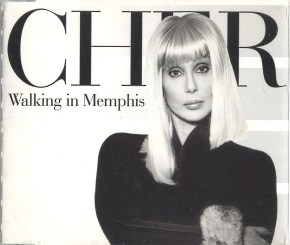 9) Walking in Memphis (1995) – When the record company rejected Cher’s songwriter LP, she returned the following year with
  10) Faithful (1996) – Director Paul Mazursky’s final film – written by Chazz Palmienteri based on his stage play. This was the end of Cher’s A-list Hollywood film career – whether it was the cause or she purposely walked away is debatable. In any case, the film was a commercial failure – criticized for not translating well to the big screen. A charming LA Times review also said “she’s had so much cosmetic surgery, you can’t get through a single close-up without marveling at the cadaverous mask she has become.” Which… by the way… have you seen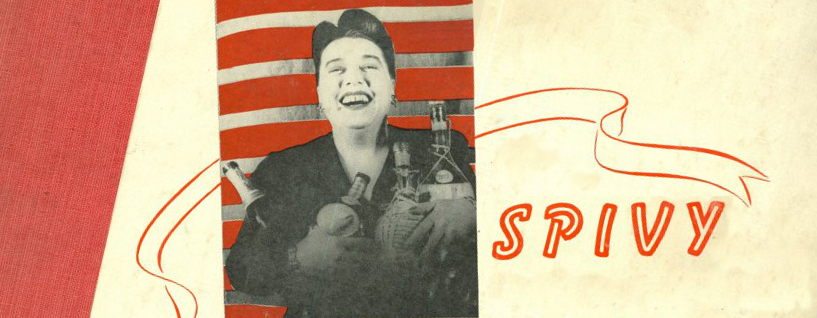
 In the 1930’s, the former Ms. Levine entertained as a singer/pianist in the back room at Tony’s, a Fifty-Second Street speakeasy and celebrity hot spot. In 1939, the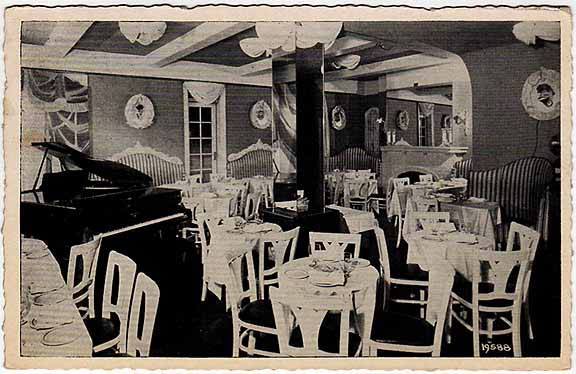






 eter Berlin


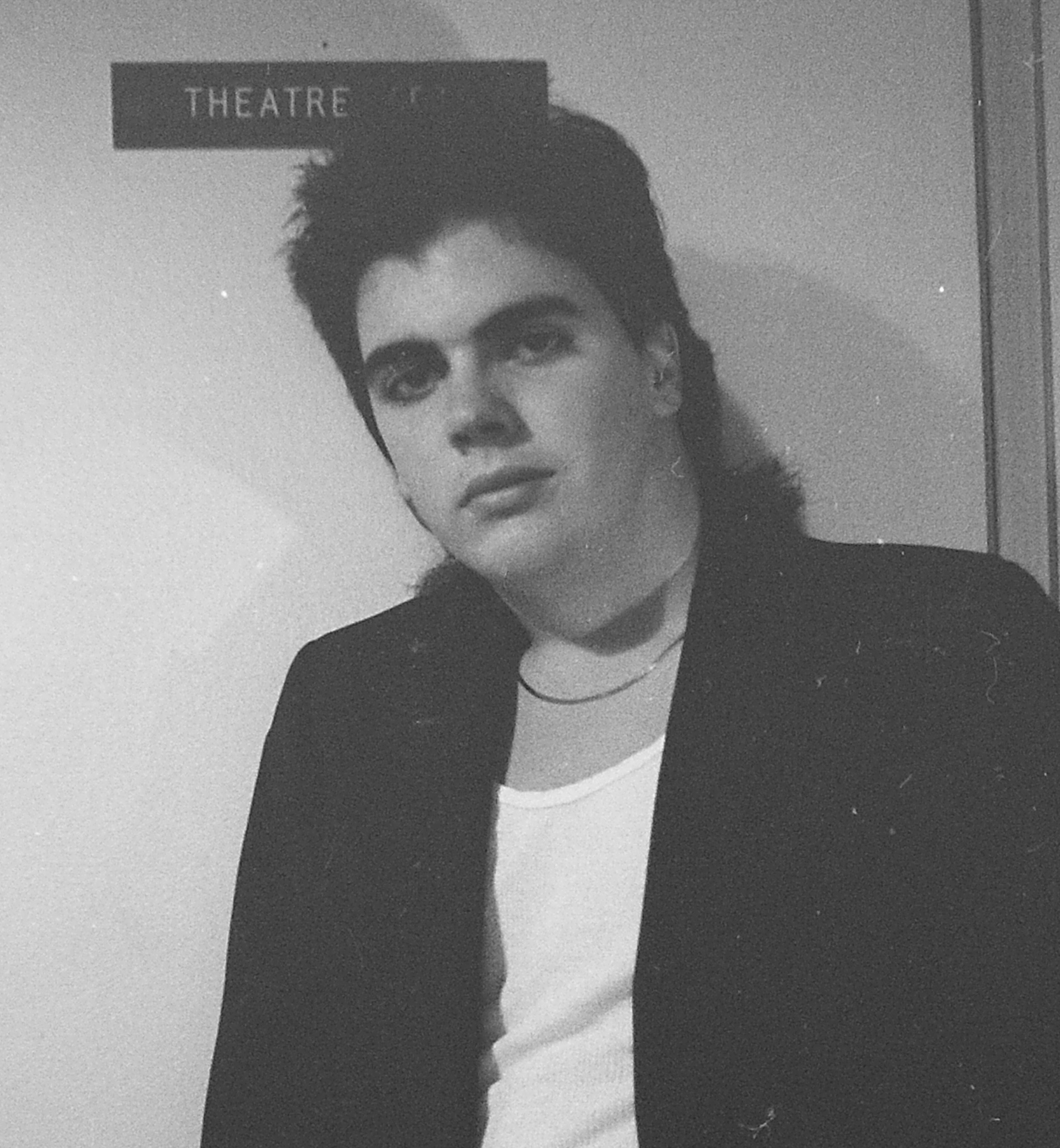 I can’t pinpoint the exact date when this occurred – I got the boyfriend and then started to come out to friends and family. It was the spring of 1987. I was 18 and a senior in high school, which was uncommonly young for people of my generation and average-to-late for younger people. A friend of mine from college now has a 10-year-old trans child. When I came out, I felt like a trailblazer. Now I feel like I wasted a few years. On the other hand, my partner Chris was a late bloomer and I don’t want to make him feel bad, so I’ll just say we all move at our own pace.
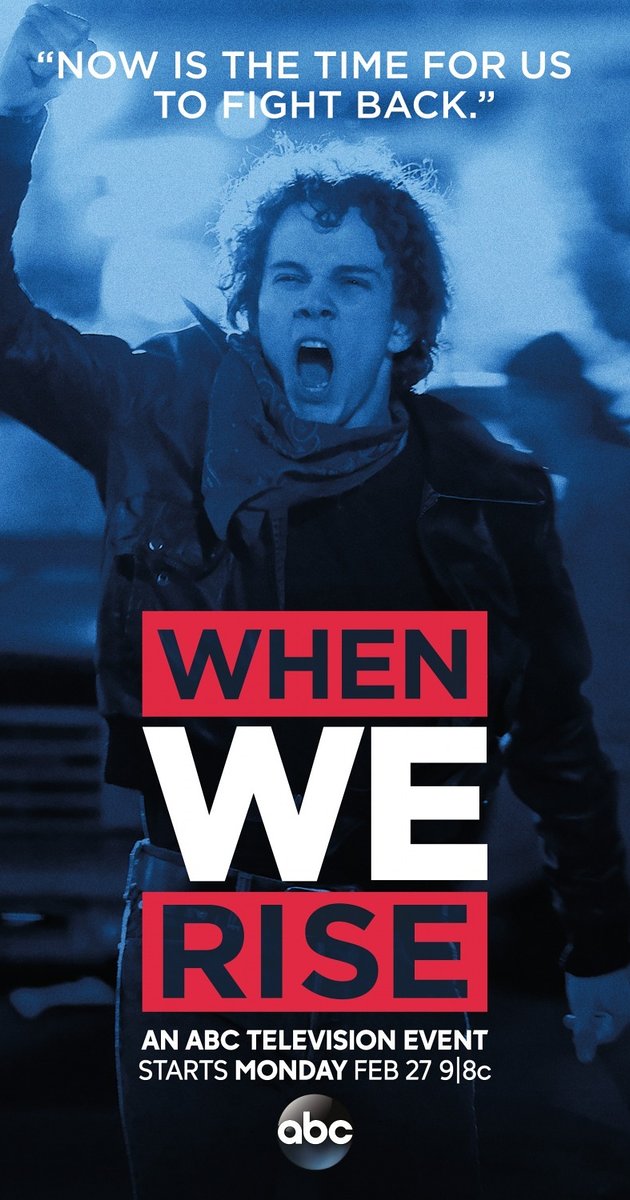 We watched the ABC miniseries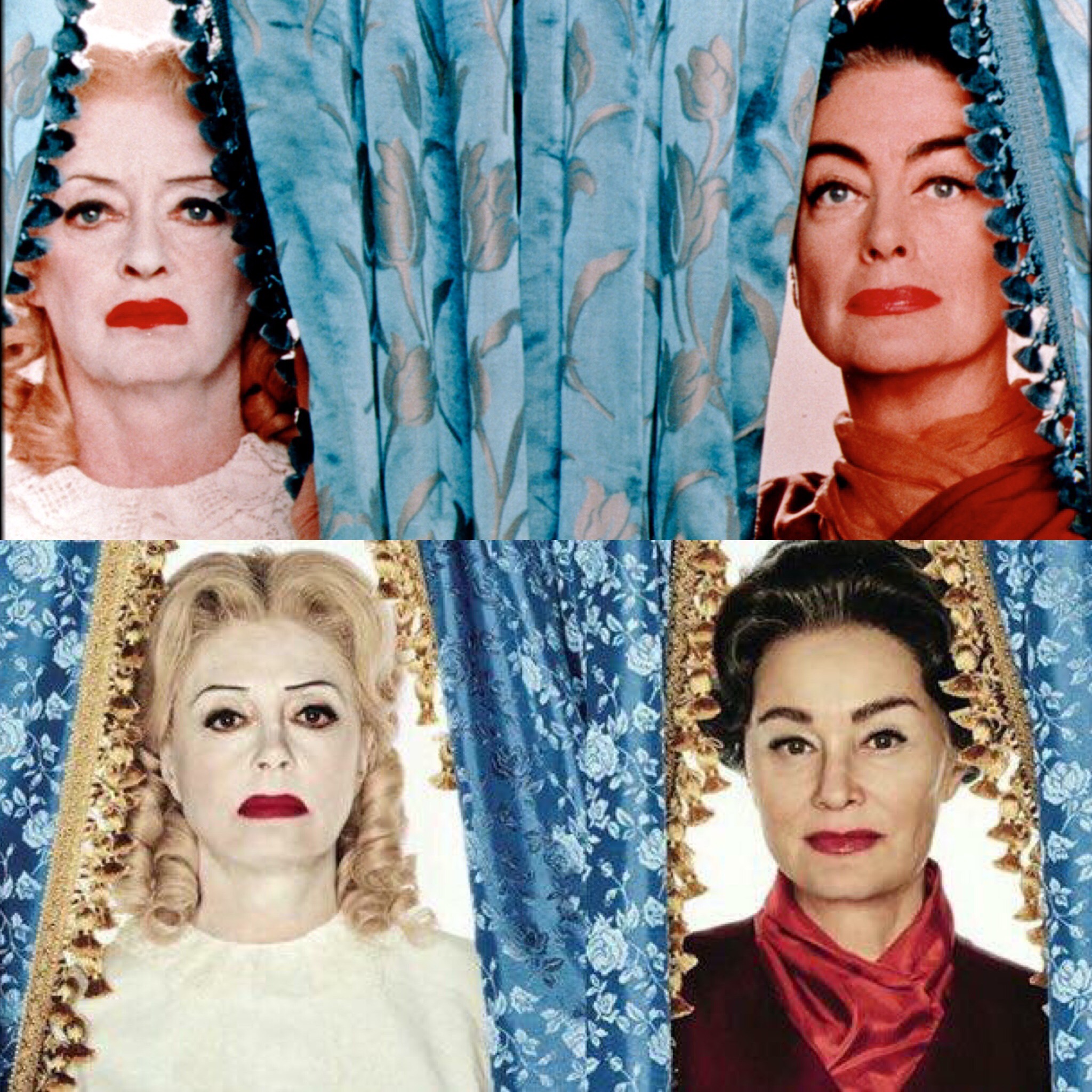
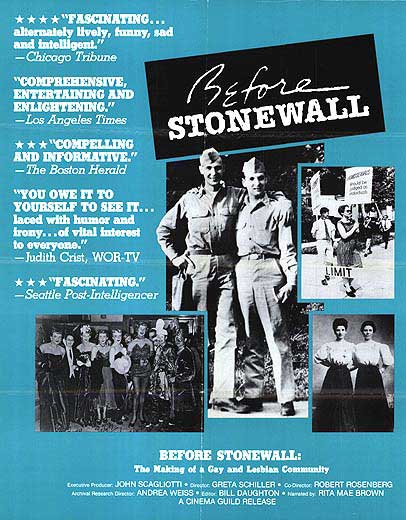
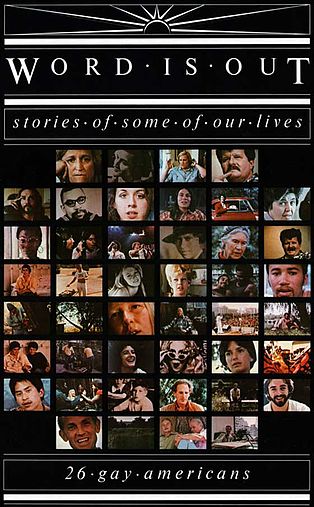 We watched the 1977 documentary
 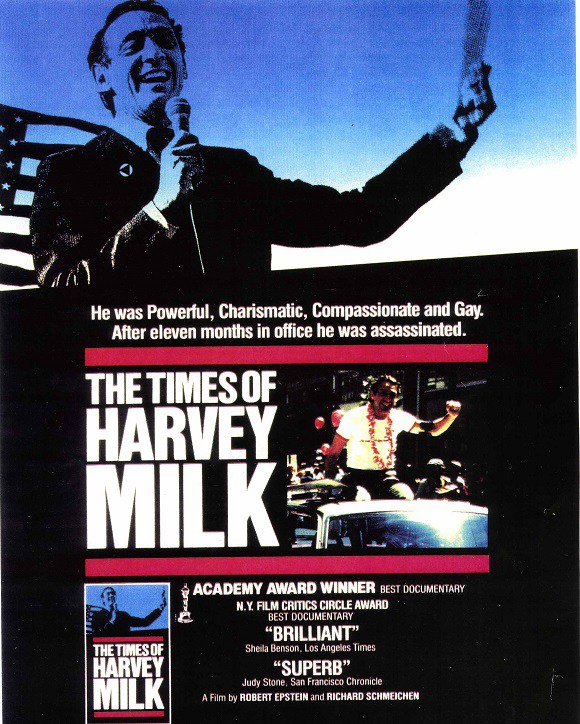 I noticed something interesting while revisiting these documentaries, as well as
 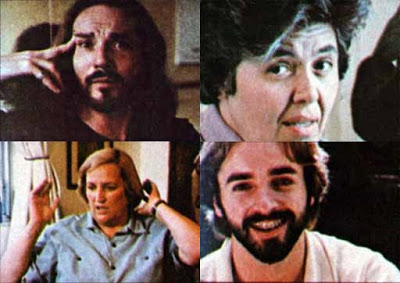 Some of it is due to a changing view on life or love or recognizing the defensive stance that previous generations might take when openly discussing their sexuality. But I also realized this: I had a low tolerance for effeminacy when I was just coming out. Yes, I was fine with being gay but I wanted to be the one to TELL you that I was gay. I didn’t want you to be able to guess. And someone who was flamboyant was not my cup of tea. I was also an actor and effeminacy was the last thing you wanted anyone to detect. AND this was during the AIDS crisis, of course, and I think that, in my not completely enlightened brain, this inability or unwillingness to hide also broadcast that you HAD it. I know how ridiculous that sounds. I would like to sit down with my younger self and talk about it.
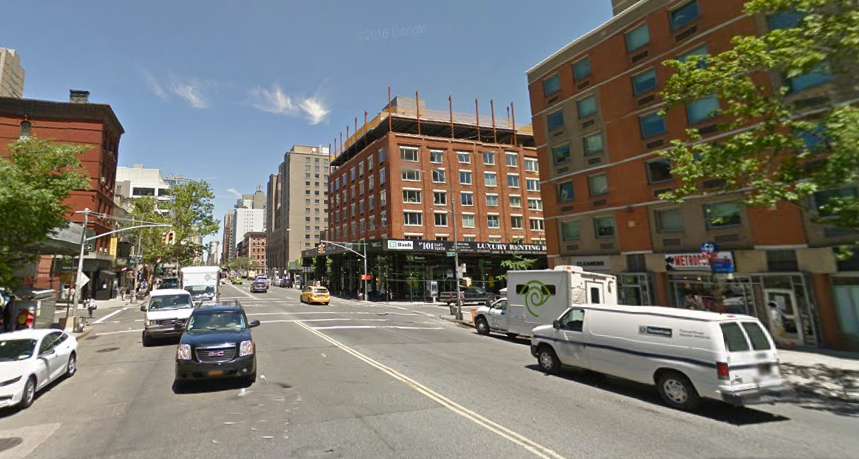 I was on my way to work one morning, waiting for the uptown bus on Third Avenue at 9th street. It was a frigid 8 degrees that day – I was all bundled up in a hat, scarf, gloves, and bomber jacket. Nothing flamboyant. Nothing extraordinary.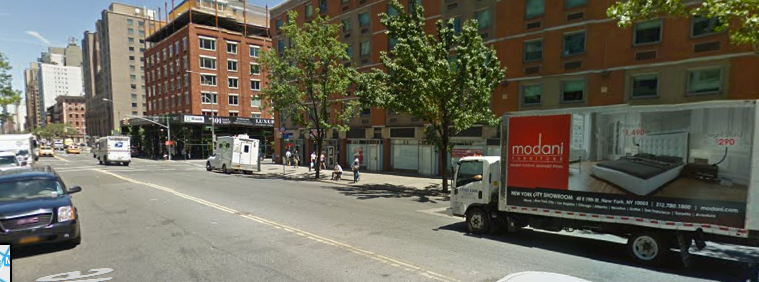
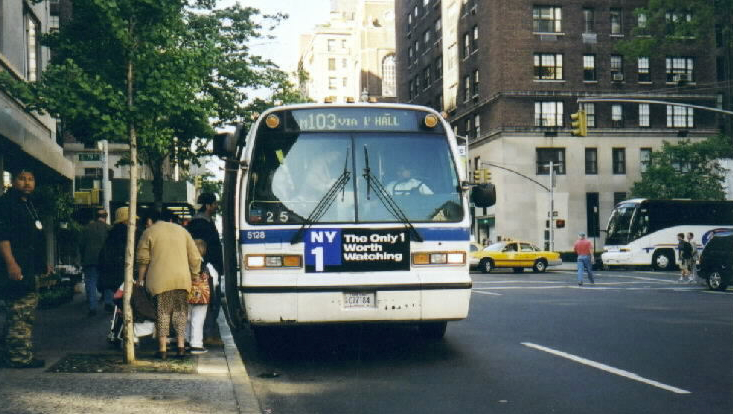 I had only glanced over as they came out the door. I’m a New Yorker. Direct eye contact can be considered an overt act of aggression. You get used to it. So I heard these comments over my shoulder as I peered down the street, praying for the bus to come.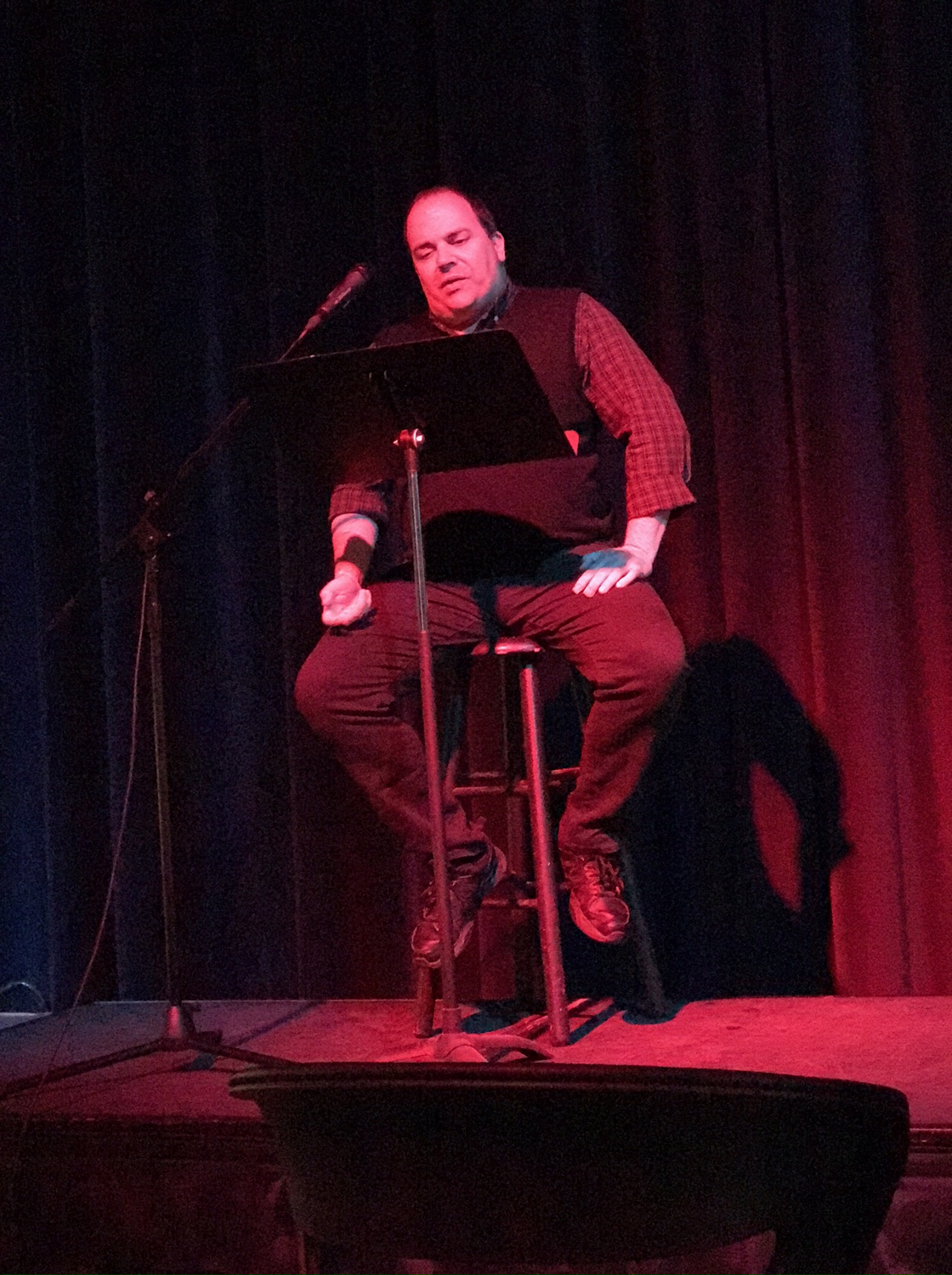
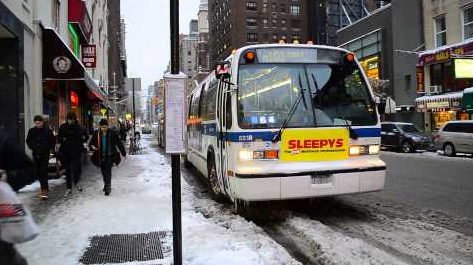
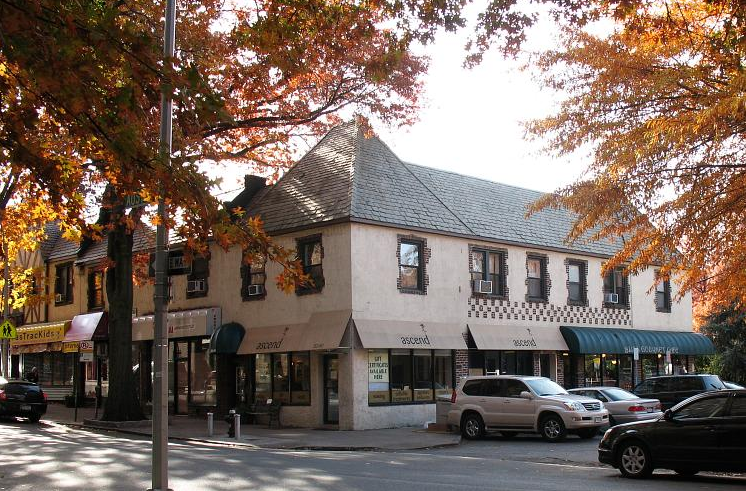 Our first stop was coffee from Odradeks next to the Kew Gardens Long Island Railroad Station. This is at the end of a row of two story Tudor-style buildings on Austin Street between the train station parking lot and Lefferts Boulevard. There’s retail at street level on both the Austin Street side and on the rear of the buildings, with apartments on the second floor. The back faces the train tracks, where there is a foot path and steps up to Lefferts. The most prominent business here is Austin’s Ale House, which has created an outdoor dining area on the track side of the path. This is where we had dinner later that night.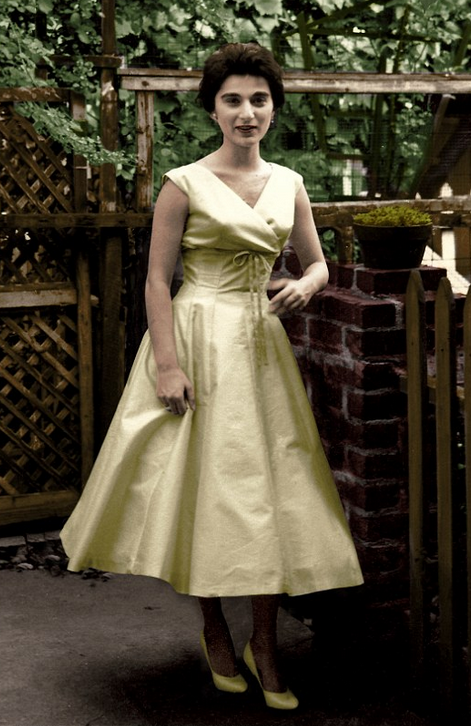
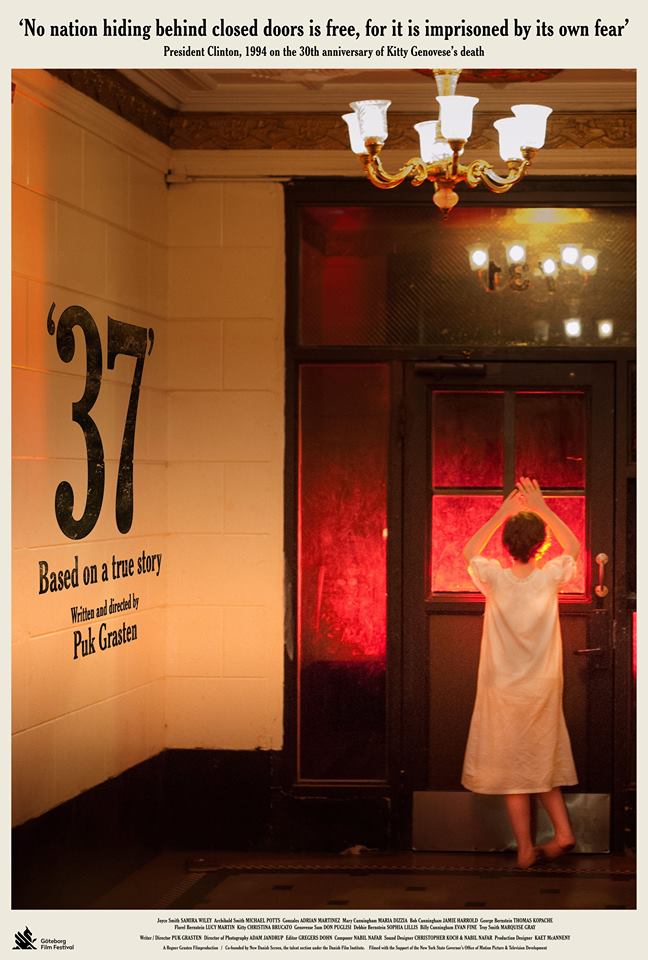 story, with Forest Hills standing in for Kew Gardens. I immediately thought the worst – the title didn’t give much hope that they were actually going to set the record straight. And this was what I thought, literally up until yesterday, when I read a Facebook post from one of the actors in the film, and what followed was a dialogue in which he assured me that the movie does address the inaccuracies and how the story affected society.
 Brian Ferrari's Blog