I have written about late photographer Don Herron’s Tub Shots photo series here and here. Every once in a while I come across one that I’ve never seen. Here is Tales Of The City author Armistead Maupin in 1978:
There’s a show on after the 11pm local news here in NYC called NBC Sports Night. To be honest, I only watch for the snacks. This was last Sunday: 10/20/19 – A discussion about football or rugby or something…. over a radiant bowl of fresh Nacho Doritos.
The Empire State Building in a to go cup (10/18/19)
Neil Patrick Harris recently posted this photo of his injured hand. No word on whether that swelling has been attended to. 😮
You’ve probably seen Pulitzer Prize winning Ronan Farrow making the rounds to promote his new book, Catch And Kill. It’s a rare season that our handsome hero reporter doesn’t make headlines with yet another expose that rocks our world.
But when the dust clears after each bombshell revelation, one pesky rumor trails behind like exhaust fumes, winding its way through social media outlets: Speculation that Farrow is actually the son of Frank Sinatra. These posts are usually illustrated with side-by-side comparative pics of the two.
Here’s an idea: the next time you feel an urge to re-post or share a link perpetrating this improbable myth, consider looking at a photo of Farrow next to one of his own mother, actress Mia Farrow when she was young.
They look just alike.
I know. It’s shocking.
Ronan Farrow looks just like his mother.
Mia’s father, film director John Farrow (1904-1963)
Here’s another revelation: He strongly resembles her father, the dashing John Farrow.
Frank and Mia at their 1966 wedding
As for the Sinatra resemblance… have you seen pics of Sinatra with Mia when they married in 1966? He was 30 years older than his bride. SHE looks like his kid. She looks more like his kid than his OWN kids. Ol’ Blue Eyes married a young blue-eyed pixie. Good genes all around.
In a 2013 Vanity Fair interview, Mia made a joke that Frank “maybe” was Ronan’s father. This vague statement was designed as a dig at Woody Allen, Ronan’s alleged biological father. The reality is that when Ronan was conceived, Sinatra was 72, over a decade into his marriage to his last wife Barbara, and reportedly had undergone a vasectomy years prior.
Woody Allen with Ronan and Mia Farrow
Vasectomy aside, for Sinatra to be Ronan’s father, Mia Farrow would have to have been sleeping with her ex-husband nearly twenty years after their divorce – while they were both in relationships with other people. Does this make Mia look good? Not at all. Is it more important for her to continue to make Woody Allen’s twilight years miserable? Definitely.
I can’t be the only one that feels that this sort of thing undercuts Ronan’s credibility on some level.
Frank Sinatra with two of his children, Nancy and Frank Jr.
I’ll be honest – I lean toward Team Mia when it comes to most details involving Woody. But the whole “maybe” regarding Ronan’s paternity is unfair and disrespectful to Sinatra’s late wife and his biological children. And even though the Sinatra clan answered questions regarding this rumor years ago (respectfully and without mudslinging, I might add), those rebuttals don’t seem to accompany the re-posts that raise the question again and again… a rumor that will continue to resurface until Mia and her look-alike son stop playing coy and put the matter to rest.
Social media followers of porn legend Trevor Knight were starting to suspect something might be amiss in his relationship with longtime partner David Alanson Bradberry. The normally effusive Knight had not mentioned his significant other in quite some time, instead focusing on his workout regime while posting increasingly revealing selfies (one of which resulted in a temporary Facebook suspension).
Last week he posed the question of whether he should resume his porn career, because ” …guys today don’t make anything like I used to.” Surprise! His social media followers responded with a very enthusiastic “YES!”
On Thursday Trevor posted to Facebook what many had already suspected: the couple had split a while ago.:
Hey,
I feel a need to let everyone know that David Alanson Bradberry and I are no longer together. I’ve been single for awhile now. I don’t need any calls, texts or DMs. I’m doing it alone. I will not answer any questions.
He was part of me for 9 years and I will never forget him nor lose contact with him. We made a family together and so we work together with that..
Thank you for understanding and respecting my space..
-The very single, Trevor Knight
Bradberry had been a cast member on Bravo TV’s Below Deck and his engagement to Knight was captured on the show in 2013. In an interview at the time, Bradberry said; “We actually first met during pre-production of my first feature independent film, Bite Marks. I had already been cast, and I was helping with the readings for the other principle roles. Trevor was working as the film’s Assistant Director. This was my first ‘mainstream’ project following my short stint in the adult industry. And Trevor never really left the adult industry. I’m certainly not proud of the fact that I worked in adult films, but I’m not ashamed of it either.”
Under the name David Townson, former Marine Bradberry filmed two versatile hands-full of memorable scenes for Active Duty and other military-themed gay porn sites.
(I’m always surprised when one of these guys actually DOES turn out to be a real military man.)
In case you forgot, Trevor Knight is a gay porn legend, having appeared in over 120 films between 2000-2016, working with every major company from Falcon to MEN to Raging Stallion. His return to the industry seems inevitable… and not unwelcome. We wish them both all the best at this difficult time.
December 21st. I am never quite sure how to handle this day. Do I ignore it? If I acknowledge it, does it seem exploitative somehow? What level of grief is acceptable? We were the class behind them. We were their friends and co-workers, but we were not their BEST friends. We were the ones back in Syracuse. We did not go to London for that Fall semester – most of us had not seen them since the previous May. Of course, we were not family. But we did go through it. It happened to all of us. “We.” We all hung on to each other and we made our way through.
We sat a couple of rows back at the memorials. We were devastated, too, but how do you calibrate your grief? You feel what you feel. We were 19, 20 years old. And it has now been 30 years. There is still a scar on each of us somewhere. It does not matter how much you look at it or if you ignore it, talk about it or don’t talk about it. You still have it. All of us that went through it have them. Our own individual scars – each a little different. Some deeper than others. We have our reunions and little get-togethers but we do not discuss it. For the most part. There is no need to.
And I say to myself: I will address this one day. To explain to everyone else, really. All the people that have become a part of my life since then. 10 years goes by. 20 years. 25 years. One day I will address that scar. One day I will write about what it was like. What these people meant. How we found out who was and was not on the plane. The confusion. The anger. The unimaginable wave of sorrow. How we coped with it.
Ah, but then you get through the day… the week…. and you tell yourself, well… let’s just pack that away for another year. Focus on the holidays! I mean, really…. you were a few rows back. Your feelings are once-removed. What do you have to say that has not already been said so eloquently? What unique perspective do you think you are bringing to the table? Calibrate that. And then pack it away with the rest of the holiday baggage.
So I’ve cracked the door open just a bit on this 30th anniversary of the bombing of Pan Am Flight 103. For Theo and Miriam and Nicole and Turhan and Tim. And for everyone that knew them.
These memorial boards hung in the lobby of Syracuse Stage, honoring the drama students that were among the 270 people killed in the Pan Am Flight 103 bombing.“Into The Morning” Silkscreen by Prof. Gerardine Clark to honor her lost students.
I have this pet peeve… it’s a situation that usually occurs at a party or in a bar or club. Someplace with a jukebox or a DJ where the alcohol flows freely. An overplayed 60’s soul hit like Respect or Dock Of The Bay starts to play and some booze bag sloshes over and says “OH I LOVE MOTOWN! I love Aretha and James BROWN and the Shirelles and the Ronettes and OTIS and ALL the rest of the Motown acts.”
Honey. Sit down. Let me get you a glass of water. We need to talk.
While I appreciate your enthusiasm, let’s set the record straight: Sam Cooke. Otis Redding. James Brown. The Shirelles. The Ronettes. They are NOT Motown acts. Never were. And while Aretha Franklin was FROM Motown, aka Detroit, she was never ON Motown records.
Referring to every black artist who recorded soul music in the 1960’s as a “Motown” singer is lazy, insulting and possibly a teensy bit racist. Kapeesh? With that said, perhaps I should cut people some slack. I realize that we are all very busy and don’t pay a whole lot of attention to minutiae. Besides, sometimes record labels themselves are a little guilty of causing confusion. Case in point: The 1987 Motown Merry Christmasspecial.
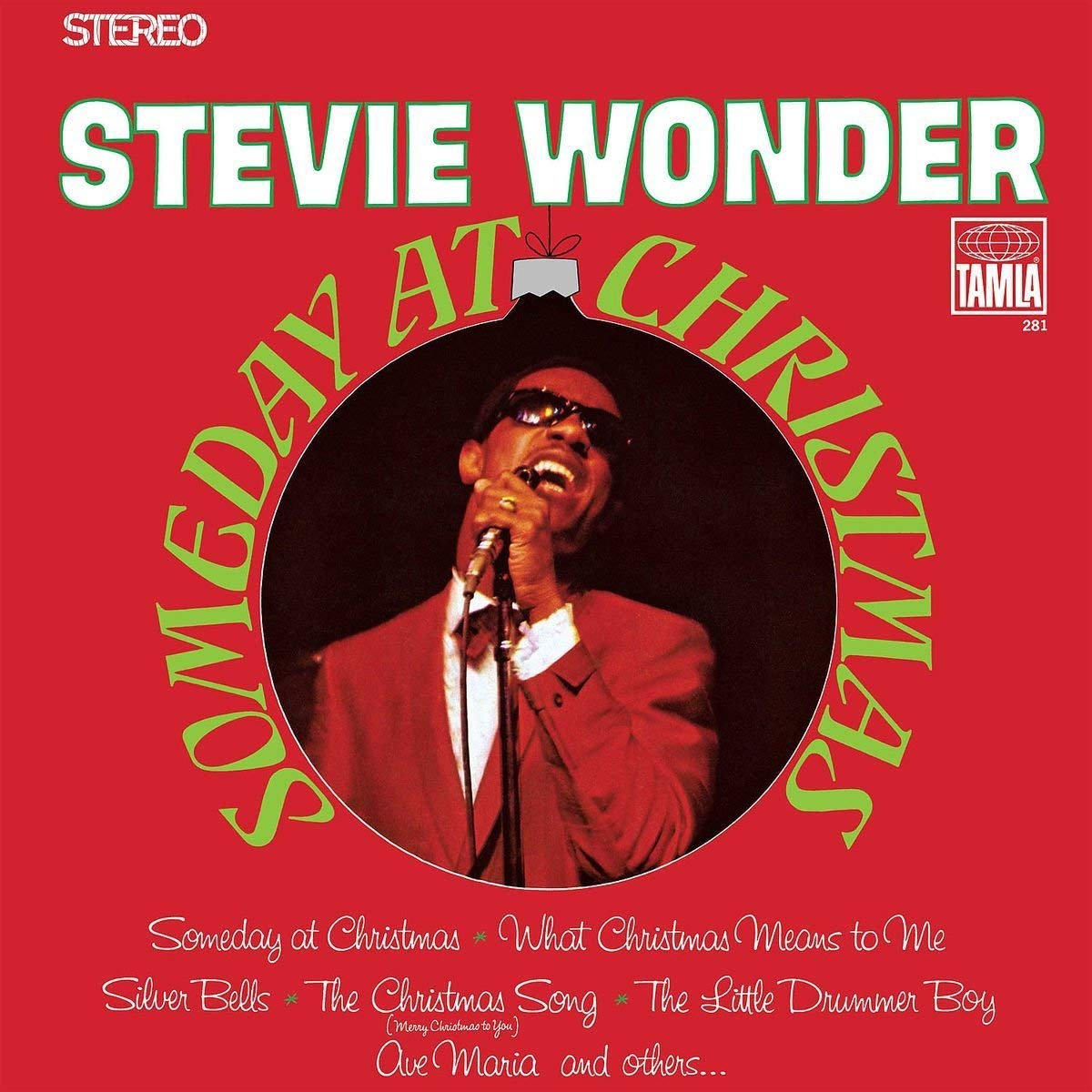
First, a little context: In 1984 the Motown 25 TV special was a blockbuster ratings success, with all the former stars of the record label coming home to celebrate Motown’s 25th Anniversary and kiss the ring of founder Berry Gordy. Stevie Wonder, Marvin Gaye, The 4 Tops, The Temptations, Martha Reeves, Mary Wells and many others made appearances. Lionel Richie reunited with the Commodores! Smokey Robinson reunited with the Miracles! Diana Ross reunited with the Supremes for a minute and half before Miss Ross allegedly pushed Mary Wilson out of her way! That last part was edited out of the broadcast…. but anyway… the real highlight of the show was the reunited Jackson 5, followed by Michael Jackson’s performance of Billie Jean, which introduced the moonwalk to the world and we were never the same again.
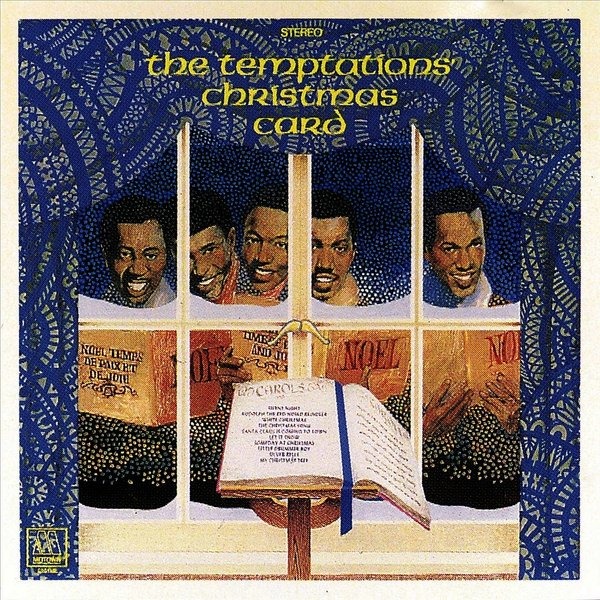
Fast forward three years – the Motown brand was still being milked for all it was worth, even if their current roster of artists were not exactly burning up the charts. I mean, even DeBarge had left the label by this point. But a nostalgic look back at Motown with a Christmas special seemed like a good idea, as most of the top Motown acts had released holiday LPs during the label’s heyday. In fact, The Temptations and Smokey Robinson & Miracles each released two Christmas LPs on the label. But… you do have to get the acts to come back and perform for a TV special, right?
For whatever reason (read: money) only the Temptations and Smokey Robinson are on hand for this star-studded Motown Merry Christmas, which was taped – not in Detroit – but at the Aquarius Theatre in Hollywood, California.
The show aired December 14, 1987 on NBC, hosted by Philip Michael Thomas, the guy who wasn’t Don Johnson on the hit NBC-TV show Miami Vice. Interesting spot of trivia: Thomas, notorious for his over-inflated ego, is credited with coining the acronym EGOT for an Emmy, Grammy, Oscar, and Tony winner. Thomas often crowed in interviews that he would win one of each. As of 2018, he has never been nominated for any of them.
The show opens with our humble host reading a version of “Twas The Night Before Christmas” that name-checks some Motown artists, including Stevie Wonder, who is not there.
This segues into a performance by the 1987 version of The Temptations (which means no Eddie Kendricks or David Ruffin). They are wearing nightshirts and slippers as they perform a doo wop version of White Christmas. Although the group had recorded the song as a ballad on their 1970 Christmas album, that version is scrapped in favor of the Drifters uptempo arrangement, originally released on Atlantic records in 1954. In any case, it’s a fun showcase for the deep bass voice of original member Melvin Franklin.
Next, The Pointer Sisters sing Santa Claus Is Coming To Town, a track from the very first A Very Special Christmasalbum, which had just been released and is now considered a classic. Their performance is spirited, but once again a reminder: The Pointer Sisters have nothing to do with Motown, although a kid imitating Michael Jackson does make an appearance.
For the comedy portion of the program, Redd Foxx arrives onstage dressed as a pimped-out Santa Claus along with Marsha Warfield of NBC’s Night Court and Lola Falana of… many a Las Vegas lounge. Redd performs a rap and the result is exactly what you would imagine a Redd Foxx rap might sound like. Then things get serious as they read a fake letter from an imaginary homeless child and Santa Foxx promises to find him on Christmas. So I guess the kid will have to fend for his imaginary self until then.
Side Note: Although Redd Foxx is best remembered today for Sanford and Son and his other sitcom work, he was also known as “The King of the Party Records” -with over 50 raunchy comedy LPs released on a dozen different record labels. None of these labels was Motown.
Ronnie Spector and Darlene Love deliver a medley of songs from the Phil Spector Christmas Album, which, of course, was not a Motown production. Darlene sings a generous portion of Christmas (Baby Please Come Home). Just the previous Christmas, she had performed the song on David Letterman’s show for the first time, launching a tradition that would continue for the next 28 years.
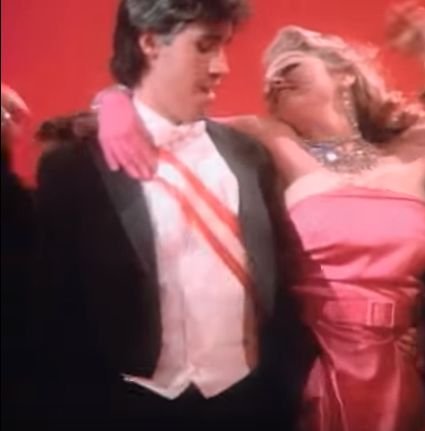
I forgot to mention: as this is the 1980’s, there is a large gaggle of dancers present throughout the entire show. During this segment they are dressed primarily in gold mylar, gyrating around Ronnie and Darlene as they herd from one end of the stage to the other. One of the more prominent dancers is Michael “Mykal” Perea, a staple of 80’s music videos for many artists including Michael Jackson, Cher and especially Madonna, having appeared in her videos as well as on the Virgin Tour and Live Aid performance. In the mid-80’s, I wanted to BE Michael Perea, shaking my tambourine to Dress You Up and Dancing On The Ceiling with Lionel Richie. I was sorry to learn recently that he died of AIDS complications in 1989.
Next up – another medley: Desiree Coleman, one of two artists appearing here (besides Smokey) that was actually signed to the Motown label at the time. Desiree sings Have Yourself A Merry Little Christmas.She is decked out in a tacky 80’s outfit full of sequins and linebacker shoulder pads. I mean… all the costumes in this show are hideously dated, but this one is at the top of the very flammable acrylic heap.
Philip Michael Thomas is onstage with her but thankfully does not sing. Apropos of nothing, Desiree hits a Mariah Carey dog-whistle note at the end of her segment and Thomas leads her away. I’m not a fan.
Smokey sings a portion of a forgettable ballad before Natalie Cole comes in with her soulful rendition of Donny Hathaway’s This Christmas (Side note: do yourself a favor and check out Dave Holmes dissection of Patti LaBelle’s disastrous version of this song from the 1996 National Christmas Tree lighting. Really.)
I remembered This Christmas as a highlight of the program, thinking that Smokey and Natalie had some real chemistry. Re-watching it now, I see that it’s all Natalie’s doing. SHE has chemistry. All we see is the back of Smokey’s head as she sings her way towards him. Together they segue into Give A Little Love On Christmas Day, and it sure does seem like someone’s gonna get a little love before Christmas day even gets here. Oh – Philip Michael Thomas and Desiree Coleman are still onstage too. Thankfully, Philip Michael Thomas still does not sing.
The Temptations are back with a very nice version of Silent Night, featuring the tight soulful harmonies that are their trademark. They end their performance with a declaration: “Merry Christmas from the Motown Family…” as if they are here to represent the rest of the “family” who had to go visit the in-laws and just couldn’t make it this year.
After some more Redd Foxx shenanigans, Run DMC (who were on Profile records) performs Christmas In Hollis, which was also on the A Very Special Christmas LP. Quick geography lesson: Hollis is in Queens, New York, which is about as far from Detroit, Michigan as the Aquarius Theatre in Hollywood, California.
Stephanie Mills sings the R&B ballad When You Love Someone (It’s Christmas Every Day), a song that they twice mention was written by our very own Redd Foxx. What they don’t mention is that the song was recorded by former Motown artists Gladys Knight and The Pips, who are not here.
It’s ironic that Mills appears on a Motown special for a couple of reasons: Not only was she never a Motown artist, but her greatest success was playing 13-year-old Dorothy in The Wiz on Broadway, but when Motown produced the movie adaption, 34-year-old Diana Ross was given the role.
Smokey and the Temptations are back again to sing The Christmas Song (Chestnuts Roasting On An Open Fire). This is fine. But where are the Miracles? Where are the 4 Tops? Gimme some Pips! My kingdom for a Marvelette!
Marsha Warfield reappears dressed as a glittery bag lady as we head into the closing 8+ minute medley. Carrie McDowell is introduced. She is the only caucasian on the bill and the only other artist besides Desiree and Smokey signed to Motown at the time. That said, she was dropped shortly after her debut LP tanked that same year. McDowell has the featured spot here… and this girl can SANG, that’s for sure, but…. this also means that all the other great singers behind her: Natalie Cole, Darlene Love, Pointer Sisters, etc. are given much shorter solos – some are reduced to a single line of a song. Poor Ronnie Spector has one duet line with Stephanie Mills.
Lola Falana has a very brief solo with some very odd stilted physical movements, which I always attributed to the severe multiple sclerosis flareup that plagued her at the time. But upon repeated viewing, she moves quite naturally when she steps back in line with the others. So I don’t know what that was about.
The cast sings approximately 15 seconds of every holiday song ever written. Phillip Michael Thomas is singing now but nobody gives him a mic. And then we’re done. Credits roll. Merry Christmas to all and to all a good night.
In 2000, Diana Ross attempted to launch a Supremes reunion – the first time they would have performed together since the Motown 25 special. Unfortunately, very little money was offered to Mary Wilson and Cindy Birdsong and both declined to participate. In their place were installed Lynda Lawrence and Scherrie Payne (Freda’s sister), both members of the Supremes in the 1970’s – years after Ross had left. Fans didn’t buy it and the tour fizzled out quickly. As with this program, it was just another example of the Motown name being slapped on something and fans were expected to eat it up.
Of course, if we are talking about drunk people at a party, maybe they do fall for it. But some of us are bound to stand up and say… Honey, no. We need to talk.
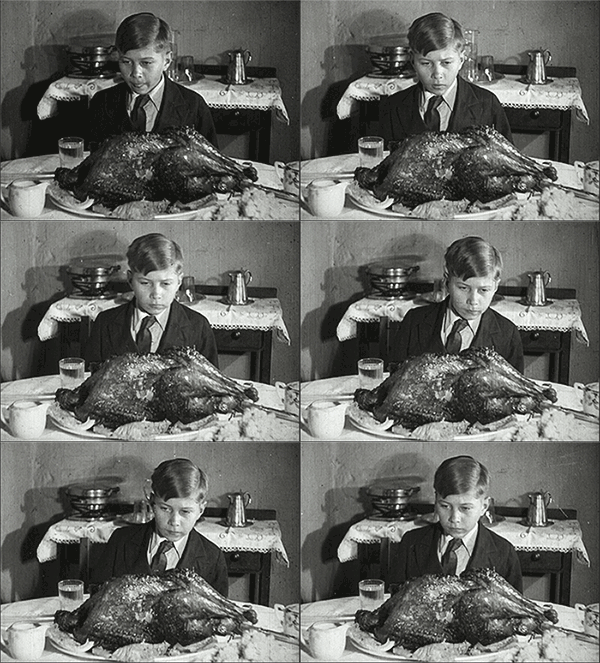
Happy Thanksgiving! I have arrived at your holiday feast bearing a cornucopia of tasty Turkey day treats, both bitter and sweet. Enjoy!
When it comes to holiday music, unfortunately Thanksgiving is lost in the long shadow of Christmas. There’s a severe lack of Thanksgiving songs, aren’t there? All we’ve got is Let’s Turkey Trot by Little Eva, and even then it is not really about Thanksgiving at all. The song’s title refers to the Turkey Trot, a dance step popular back in the early 1900’s.
Let’s Turkey Trot was Eva Boyd’s third single, released in 1963 with the hopes of recapturing the #1 success of her debut platter, The Loco-Motion. Let’s Turkey Trot gave Little Eva a respectable showing on the charts, peaking at #20, although it should have been billed as Little Eva & The Cookies, as the backing group is as much a part of the success of the record as the lead. Group member Earl-Jean McCrea delivers solo lines echoing their own hits Chains & Don’t Say Nothing Bad About My Baby, which also featured Little Eva on background vocals.
Here’s an abbreviated performance by Little Eva on Shindig in 1965. Darlene Love and the Blossoms stand in for the Cookies in what must be one of the proudest moments of their career. Gobble Diddle Dip!
The Dollyrots also covered this track in 2014. Besides using footage of Little Eva’s Shindig performance throughout the video, they also namecheck “Little Eva back in ’63”:
Want some Mashed Potatoes with your Turkey Trot? Here’s Dee Dee Sharp with her own ode to a Thanksgiving staple / dance move:
During the Thanksgiving episode of SNL in 1997, Lilith Fair stand-up comic Cinder Calhoun (a recurring character played by Ana Gasteyer) & singer Sara McLachlan paid a visit to Norm MacDonald and the Weekend Update desk, singing the Thanksgiving classic Basted In Blood. It would not be nearly as funny if they didn’t sing it so well.
On the darker side… one of the faux trailers from Quentin Tarantino’s Grindhouse is the hilariously spot-on Thanksgiving, directed by Eli Roth. It is entirely plausible that someone would have jumped on the bandwagon of grade-z holiday themed horror films that followed the success of Halloween. But this one is a fake. As of now. Who knows…. maybe Roth will film it one day.
Ladies and Gentleman, I’d like to reintroduce you to someone you should know (if you saw my earlier post about her): the late, great Madame Spivy LeVoe (1906-1971), also known simply as Spivy. A lesbian entertainer, nightclub owner and character actress, Spivy has been described as “The Female Noel Coward” – to which I add “…. if he was born Bertha Levine in Brooklyn.”
Spivy owned a chic NYC piano bar called Spivy’s Roof, which was on the top floor of a building that still stands at the corner of Fifty-Seventh Street & Lexington Avenue. Notable performers through its 11 year existence included Mabel Mercer, Thelma Carpenter and Martha Raye as well as early performances by Liberace and Paul Lynde.
Here is Paul Lynde talking about Spivy on the Tonight Show with Johnny Carson, April 30, 1976:
“I played another club – Spivy’s Roof. Do you remember Spivy’s? It was a penthouse club and it was very, very “in” when it was hot. Well… I closed it. I closed Spivy’s. I really did. I was the last person to perform there and as I said it was up on top of the roof. And Spivy and I would be sitting back in the corner all alone and we’d hear the elevator and she’d say “Get your props, you’re on!” And I would get my props out… and it was just the elevator man… he was lonely and wanted to talk to us…. or the landlord trying to collect the rent.
“It was just incredible and you know Spivy… when we did have people, like on the weekend… I would announce her after I was through and she’d run in the john and lock herself in there until the club closed. She never would come on. She would as soon as the club closed … and Judy Garland and Martha Raye and Judy Holliday… they used to come in and Spivy would entertain all night long for them…. but she would not for the audience.
“Finally one night I went to work and the piano was down on the sidewalk under the canopy so I knew it was over.”
I previously posted her song The Alley Cat. Today we have The Tarantella – both such short recordings that they fit on the same side of a 78 record as part of her 1939 album Seven Gay Sophisticated Songs. This is one of the few compositions credited solely to Spivy.
The Tarantella
Oh she did the tarantella with a colorful umbrella and in her hat, she wore a quill. She dressed up like a fella in a suit of real bright yellow just to give the audience a thrill. She would prance in her dance with the chance that her pants wouldn’t stand the strain. She would fall into splits ‘til the folks lost their wits and cried “Again! Another refrain!”
Her coattails she would swish up and they said she shocked the bishop But the bishop said “Oh no.” She may be slightly vicious but her footwear is delicious, why it makes me shout “Bravo!” I shall not leave this place until three times more at least she will Do the tarantella with that colorful umbrella and in her hat, that darling quill.
Oh she did the tarantella with a colorful umbrella and in her hat, she wore a quill. She dressed up like a fella in a suit of real bright yellow just to give the audience a thrill. She would prance in her dance with the chance that her pants wouldn’t stand the strain. She would fall into splits ‘til the folks lost their wits and cried “Again! Another refrain!”
Her coattails she would swish up and they said she shocked the bishop But the bishop said “Oh no.” She may be slightly vicious but her footwear is delicious, why it makes me shout “Bravo!” I shall not leave this place until three times more at least she will Do the tarantella with that colorful umbrella and in her hat, that goddamn quill.
That goddamn quill. It always surprises me to hear swearing on a 78 record. Even light swearing. It’s not as if she dropped an F-bomb. But we are so used to the sanitized Hollywood version of the 1930’s that it is easy to forget that curse words were not invented in the 1960’s. It’s not the last expletive that we will hear from Madame Spivy, as future posts will show…
It’s hard to believe that it has been 10 years since I put this Halloween show together for 60 Degrees wi Brian Ferrari, my weekly radio show focusing on “60’s chicks and girl groups – the hidden gems, cult favorites and unreleased obscurities of the decade.” The show ran for five years (2008-2013) on East Village Radio, a storefront internet radio station in New York City. This Halloween episode was originally broadcast on October 27, 2008 and aired every Halloween for the duration of the run. As with every episode, the songs were interspersed with vintage commercials, sound effects and movie clips.
In this very special episode, we’ve got soul witches, rockabilly rabble-rousers, death discs, horror movie theme songs, science fiction sirens, girls driven to madness by love and more dead boyfriends than you can shake a broomstick at. Plus a whole lot more!
Comedian Frank DeCaro recently tweeted: I’m convinced Cher gave us the Dancing Queen album so we could get through the Kavanaugh hearings.
I was intrigued with this album concept from the moment it was announced: Cher covering ABBA. Two great tastes that taste great together. I put it on my Christmas wish list. But after the album’s release last week, a wave of raves washed across my very gay Facebook newsfeed. So I purchased it and, I must say…. listening to this album makes me downright giddy. It’s the perfect antidote to 2018: Chicken soup for the ears, if you will.
Dancing Queen scored an A- minus from Entertainment Weekly and is likely to debut atop the Billboard album charts later this week. Reminder: Cher is 72 years old. This is 20 years after the #1 success of Believe, which was considered to be an impossibly late career comeback at that time.
This seemed like a good time to have a look at some of the forgotten moments of Cher’s fifty-fucking-five year career.
Let’s face it – some things are not remembered because they are just not very good. But there will always be some uber-fan in the comments section that will argue that Cher has never had a bad moment, EVER and you can go to HELL if you disagree.
Also – some critical or commercial failures do fare better when viewed through the lens of time. So let’s not categorize the following examples as good or bad… just… worth a mention.
Like this outfit.
1) Bittersweet White Light (1973)– In certain circles, this LP is considered a camp classic. It’s up to you to decide if you belong in that camp. If you want to hear Cher tackle an Al Jolson medley and other American songbook standards while wading through a muddy, dated Sonny Bono production, look no further! Although her vocal rage had expanded since the 1960’s, she was still partially stuck in her honking Dylan-by-way-of-Sonny-style of singing. Compare her vocals here to anything she has recorded in the past two decades: Vocoder and pitch correction aside, her range now – vocally, stylistically, dramatically – is a world away from her own limitations 40+ years ago.
2) A Woman’s Story / Baby I Love You (1974) Cher reunited with producer Phil Spector for this single, which has never appeared on any Cher LP or compilation. The A-side was written by Spector with brother / sister duo Nino Tempo & April Stevens. Soft Cell’s Marc Almond covered this with a spot-on Cher imitation that few realized because the original was so obscure.
The B-side is a cover of the Ronettes classic – Cher sang backing vocals on the 1963 original. Here, the song is slowed down to a snail’s pace while ramping up the bombast that you would expect from a Spector production. I won’t argue the pros and cons of this venture – some think it’s brilliant, while Ronnie Spector reports that John Lennon referred to it as proof that Phil had gone ‘round the bend.
3) Cherished (1977) – Cher’s last Snuff Garrett-produced LP continued in the storytelling style of their earlier #1 hits Dark Lady and Half Breed. But by 1977, both Cher and the pop music world had moved on. Like her other mid-70’s solo LPs, this album never charted and has never been released on CD. Cher reportedly owns the rights and has no plans to re-release them.
4) Black Rose (1980) People forget that Cher is a rock chick at heart. She seems to have made peace with dance music now, but in 1980 she was bristling under the disco material she was recording for Casablanca records. Cher formed and fronted Black Rose, a punkish indie rock band with then boyfriend/guitarist Les Dudek. Casablanca released one LP – it was neither a critical or commercial success and closed out her tenure at the record label.
5) Cher & Meat Loaf: Dead Ringer For Love (1981): From Mr. Loaf’s follow up to the hugely successful Bat Out Of Hell LP. This duet was a moderate chart hit in other countries, but inexplicably not released as a single in the U.S. If you want to hear Cher take part in the trademark aural excesses of a Jim Steinman production, here it is.
6) I Paralyze (1982) Continuing her early 80’s musical slump, this sole LP for Columbia records was a flop. New Wave Cher didn’t translate well to the current pop market. She then focused on her acting career for the next 5 years before resurfacing with 1987’s self-titled comeback LP. At the time it seemed like she had been gone for much longer, since her early 80’s material had all gone largely unnoticed. Here she is on American Bandstand:
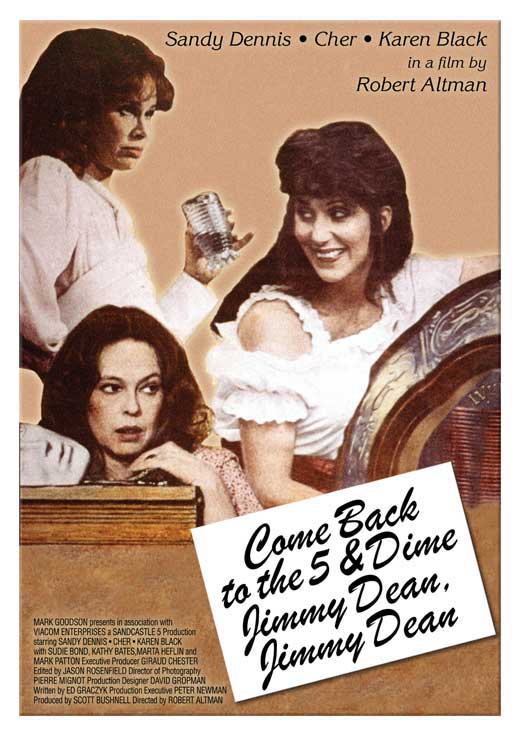
7) Come Back To The Five And Dime, Jimmy Dean Jimmy Dean (1982) – Robert Altman directed this low-budget movie version of the Broadway play, which he also directed with the same cast. Cher co-starred with Karen Black, Sandy Dennis and a young Kathy Bates. While not commercially successful, people did sit up and take notice of her acting chops. Surprisingly, the whole movie is on YouTube, but skip to 1.29 if you want to watch her character’s heartbreaking meltdown.
8) Not.com.mercial CD (1994/2000) – In 1994, Cher attended a songwriter’s workshop that garnered an album’s worth of songs that she had co-written. The resulting album was subsequently rejected by her record label as “Nice, but not commercial.” Cher held on to it for 6 years before releasing it with little fanfare via the internet during her post-Believe renaissance. At the time, she said “I think that the internet is a place that at least it doesn’t infringe on anyone else’s life and if you want to go there you can go there and check it out, and if you don’t want to be bothered by it you don’t even have to know it’s in the universe” Reviews were generally favorable.
9) Walking in Memphis (1995) – When the record company rejected Cher’s songwriter LP, she returned the following year with It’s A Man’s World, about which she told the Advocate “I don’t know. It’s kind of good. It doesn’t suck.” The standout track is her cover of Marc Cohn’s signature song. A modest success in Europe and the UK, it sank without a trace in the U.S. It should have been a hit, with a music video featuring Cher in Elvis drag. Cher liked the video so much, it was played in its entirety on the big screen during her live shows for years after. Take that, bitches.
10) Faithful (1996) – Director Paul Mazursky’s final film – written by Chazz Palmienteri based on his stage play. This was the end of Cher’s A-list Hollywood film career – whether it was the cause or she purposely walked away is debatable. In any case, the film was a commercial failure – criticized for not translating well to the big screen. A charming LA Times review also said “she’s had so much cosmetic surgery, you can’t get through a single close-up without marveling at the cadaverous mask she has become.” Which… by the way… have you seen Palmienteri lately? But I digress: It’s a pretty good movie that is definitely worth revisiting.
BONUS: Don’t Come Crying To Me (1991/1999)
Originally recorded during the Heart Of Stone album sessions, the song was unreleased until 1999, when it was remixed and included in first pressings of If I Could Turn Back Time: Cher’s Greatest Hits. The song was later removed, at Cher’s request. In any case, it’s a favorite of mine.





 with all the former stars of the record label coming home to celebrate Motown’s 25th Anniversary and kiss the ring of founder Berry Gordy. Stevie Wonder,



 Thomas, notorious for his over-inflated ego, is credited with coining the acronym EGOT for an Emmy, Grammy, Oscar, and Tony winner. Thomas often crowed in interviews that he would win one of each. As of 2018, he has never been nominated for any of them.
 perform a doo wop version of White Christmas. Although the group had recorded the song as a ballad on their
  Next,
Next, 
 Christmas Album


 She is decked out in a tacky 80’s outfit full of sequins and linebacker shoulder pads. I mean… all the costumes in this show are hideously dated, but this one is at the top of the very flammable acrylic heap.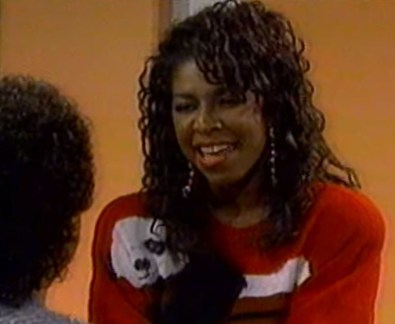
 soulful harmonies that are their trademark. They end their performance with a declaration: “Merry Christmas from the Motown Family…” as if they are here to represent the rest of the “family” who had to go visit the in-laws and just couldn’t make it this year.

 That said, she was dropped shortly after her debut LP tanked that same year. McDowell has the featured spot here… and this girl can SANG, that’s for sure, but…. this also means that all the other great singers behind her: Natalie Cole, Darlene Love, Pointer Sisters, etc. are given much shorter solos – some are reduced to a single line of a song. Poor Ronnie Spector has one duet line with Stephanie Mills.
 Lola Falana has a very brief solo with some very odd stilted physical movements, which I always attributed to the severe multiple sclerosis flareup that plagued her at the time. But upon repeated viewing, she moves quite naturally when she steps back in line with the others. So I don’t know what that was about.
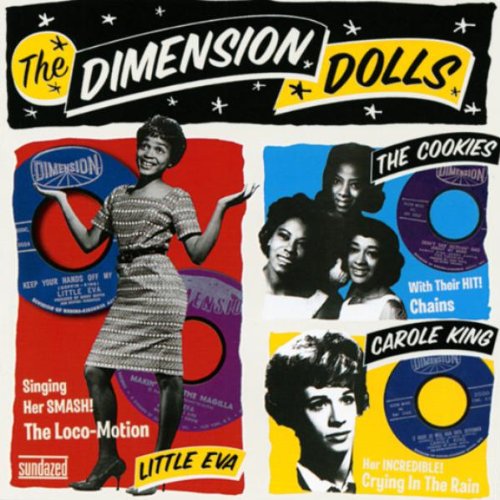 Let’s Turkey Trot was

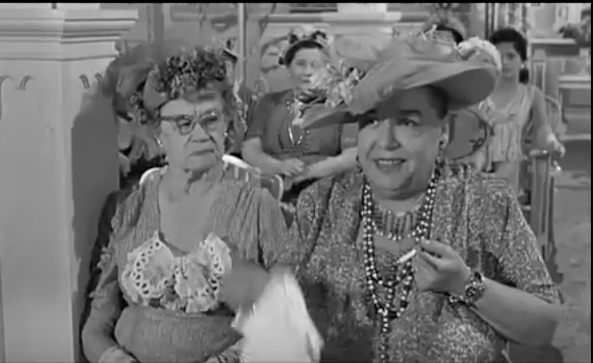




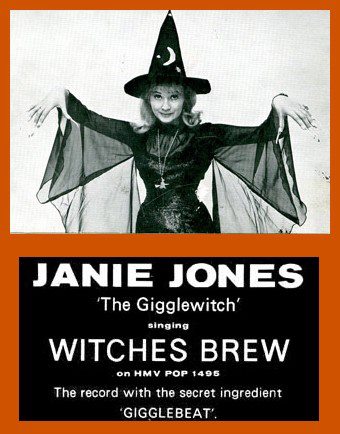 In this very special episode, we’ve got soul witches, rockabilly rabble-rousers, death discs, horror movie theme songs, science fiction sirens, girls driven to madness by love and more dead boyfriends than you can shake a broomstick at. Plus a whole lot more!


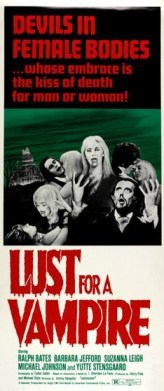


 Dancing Queen scored an A- minus from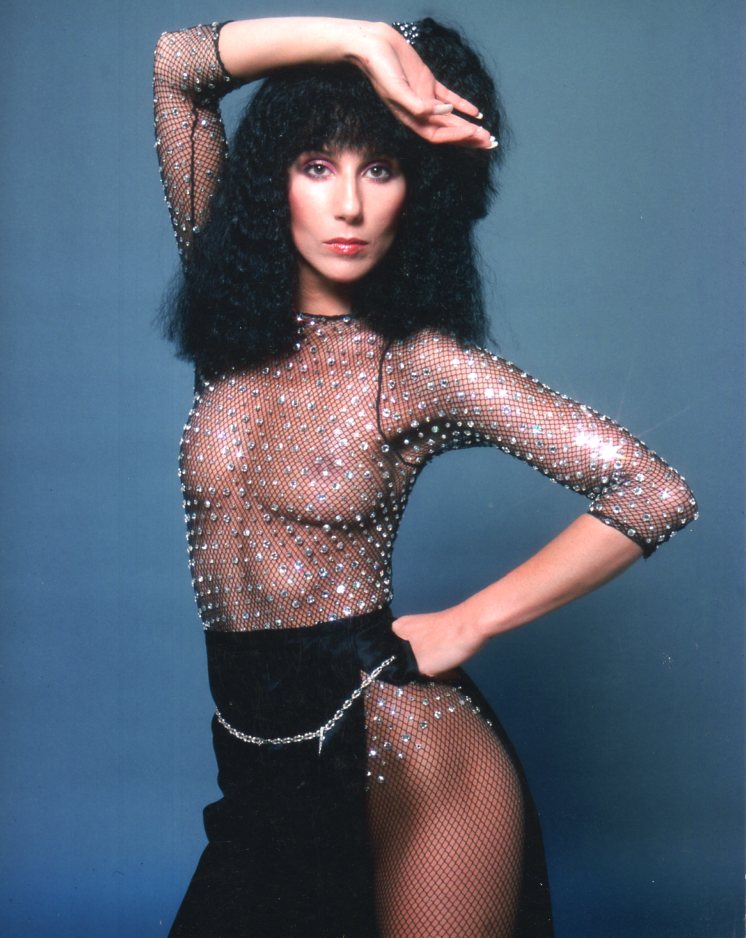
 1) Bittersweet White Light (1973)– In certain circles, this LP is considered a camp classic. It’s up to you to decide if you belong in that camp. If you want to hear Cher tackle an Al Jolson medley and other American songbook standards while wading through a muddy, dated Sonny Bono production, look no further! Although her vocal rage had expanded since the 1960’s, she was still partially stuck in her honking Dylan-by-way-of-Sonny-style of singing. Compare her vocals here to anything she has recorded in the past two decades: Vocoder and pitch correction aside, her range now – vocally, stylistically, dramatically – is a world away from her own limitations 40+ years ago.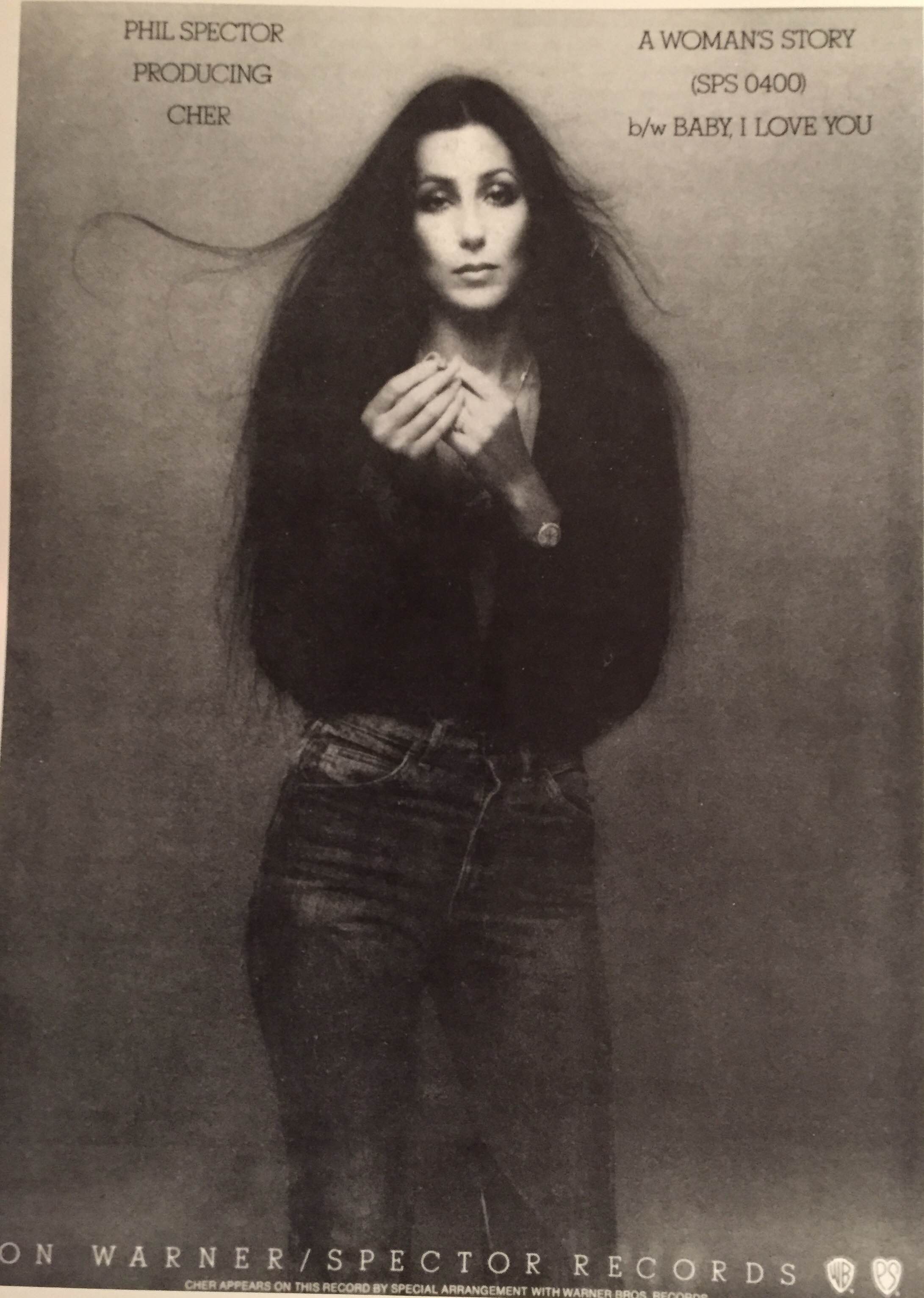
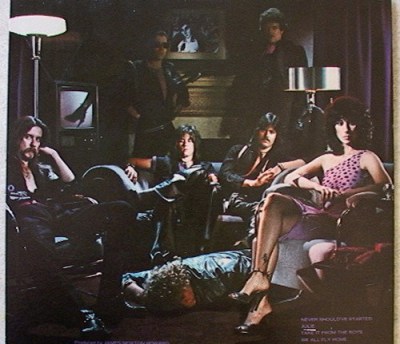 4) Black Rose (1980) People forget that Cher is a rock chick at heart. She seems to have made peace with dance music now, but in 1980 she was bristling under the disco material she was recording for Casablanca records. Cher formed and fronted Black Rose, a punkish indie rock band with then boyfriend/guitarist Les Dudek. Casablanca released one LP – it was neither a critical or commercial success and closed out her tenure at the record label.
 8) Not.com.mercial CD (1994/2000) – In 1994, Cher attended a songwriter’s workshop that garnered an album’s worth of songs that she had co-written. The resulting album was subsequently rejected by her record label as “Nice, but not commercial.” Cher held on to it for 6 years before releasing it with little fanfare via the internet during her post-Believe renaissance. At the time, she said “I think that the internet is a place that at least it doesn’t infringe on anyone else’s life and if you want to go there you can go there and check it out, and if you don’t want to be bothered by it you don’t even have to know it’s in the universe” Reviews were generally favorable.
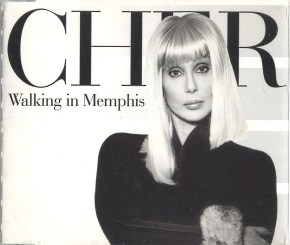 9) Walking in Memphis (1995) – When the record company rejected Cher’s songwriter LP, she returned the following year with
  10) Faithful (1996) – Director Paul Mazursky’s final film – written by Chazz Palmienteri based on his stage play. This was the end of Cher’s A-list Hollywood film career – whether it was the cause or she purposely walked away is debatable. In any case, the film was a commercial failure – criticized for not translating well to the big screen. A charming LA Times review also said “she’s had so much cosmetic surgery, you can’t get through a single close-up without marveling at the cadaverous mask she has become.” Which… by the way… have you seen

