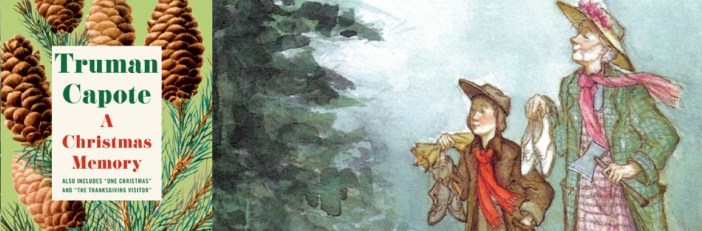
A recent rerun of This American Life featured Truman Capote reading an edited version of his short story A Christmas Memory. Originally published in Mademoiselle magazine in December 1956, Capote’s reading was released on a 1959 LP:
Truman Capote & his cousin Sook.
The largely autobiographical story is set in early 1930’s Monroeville, Alabama and describes a holiday season in the lives of the seven-year-old narrator and an elderly woman who is his distant cousin and best friend. This classic holiday story has been broadcast, recorded, filmed, and staged multiple times.
A 1966 television version won the Peabody Award as well as Emmy awards for the teleplay and lead actress Geraldine Page. You can watch the entire 48 minute film on YouTube:
Biopics and the recent television series Feud: Capote vs. The Swans have focused on Capote’s later life and the mess that he became. It’s nice to revisit one of his finest early pieces of writing and remember what a brilliant talent he was.
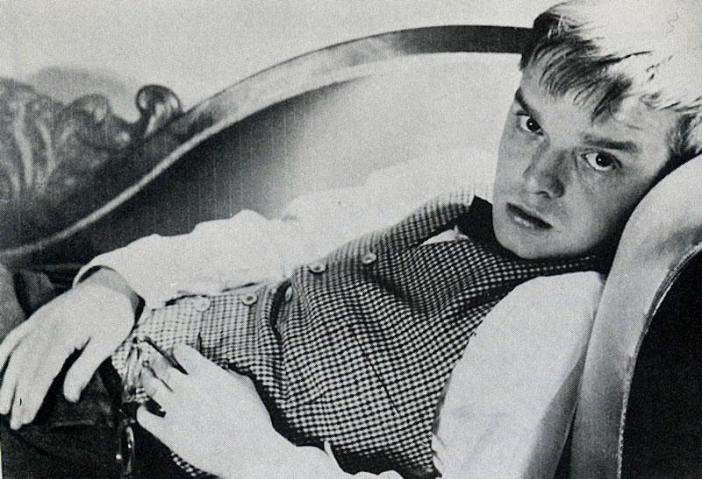
The infamous book jacket photo of Truman Capote from Other Voices, Other Rooms. One critic commented, “He looks as if he were dreamily contemplating some outrage against conventional morality.” (1948)
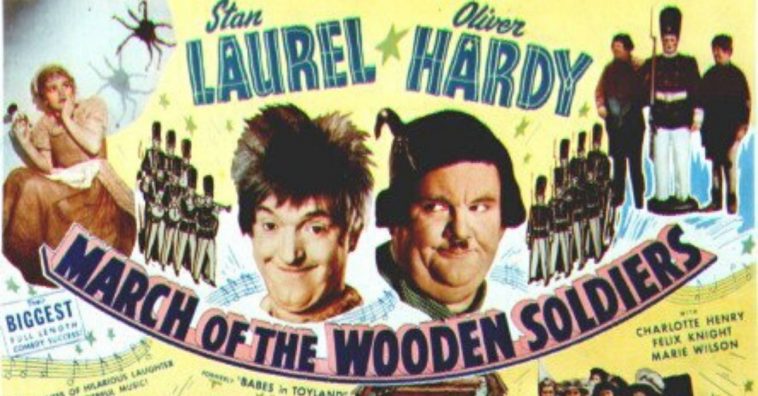
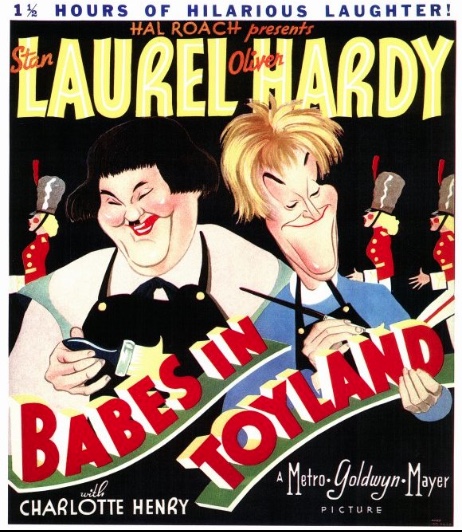
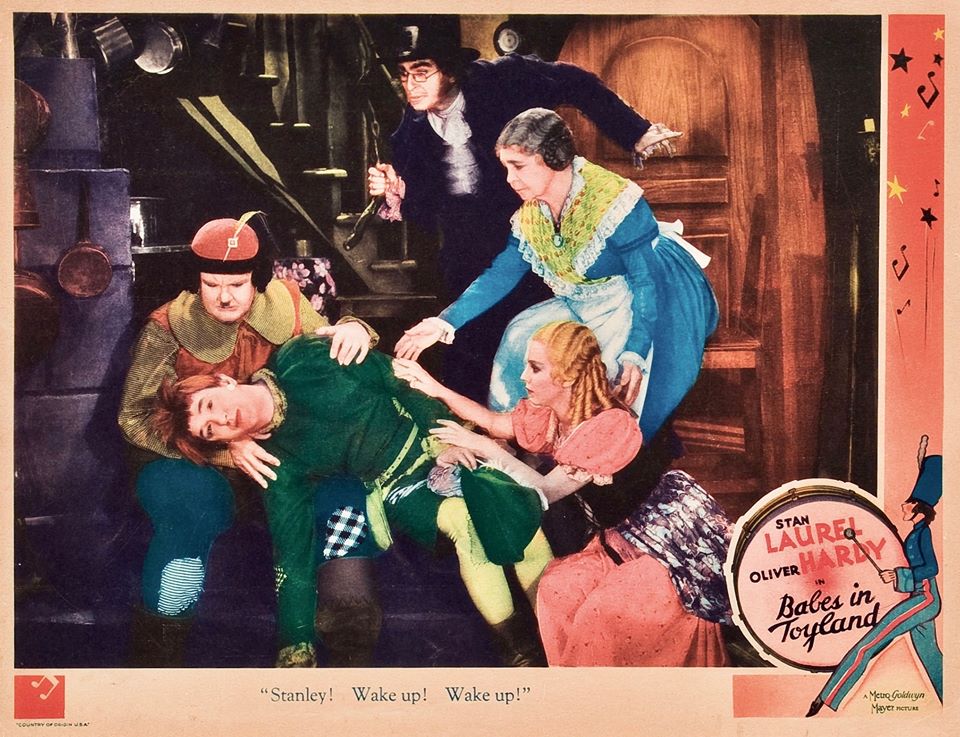
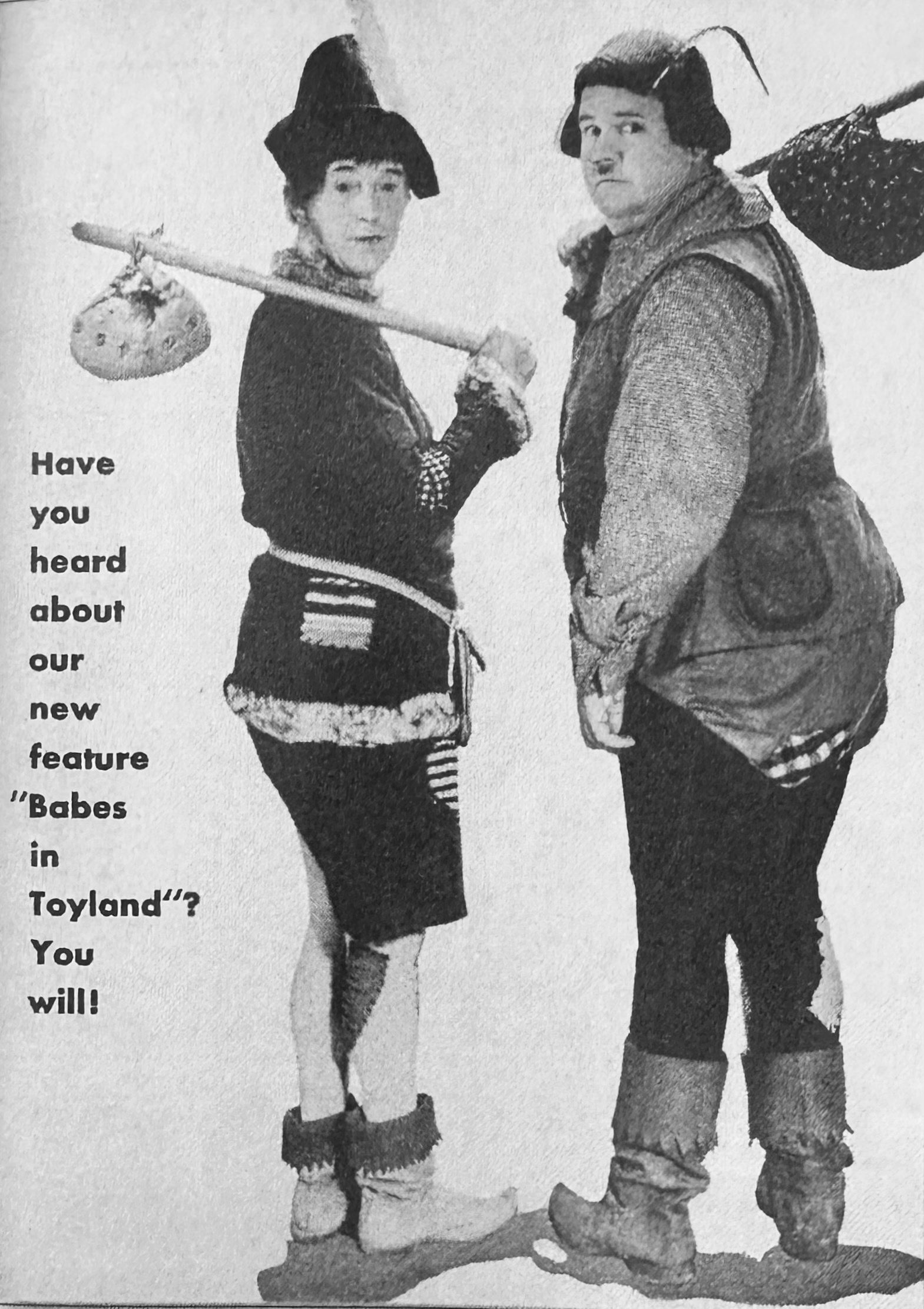
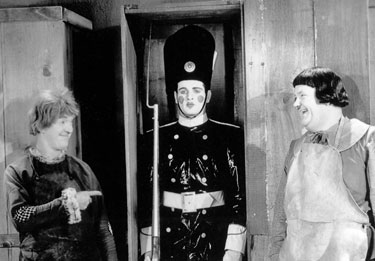
It’s hard to believe that the Laurel & Hardy holiday classic March of the Wooden Soldiers debuted 91 years ago. Originally released as Babes In Toyland on Nov. 30, 1934, the holiday perennial was based on Victor Herbert’s popular 1903 operetta. The film came out of Hal Roach studios and was co-directed by Gus Meins and Charles Rogers.
Here’s the trailer:
I originally posted this celebration of the film on the 85th Anniversary. Here is an updated and expanded version:
10 Things You May Not Know About March of The Wooden Soldiers
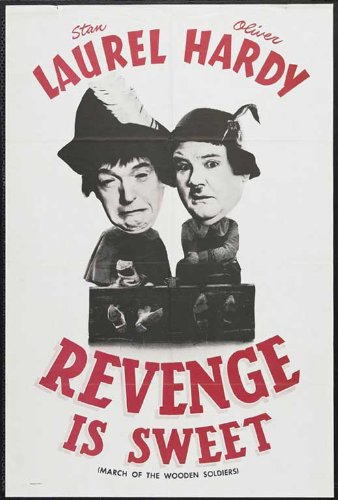
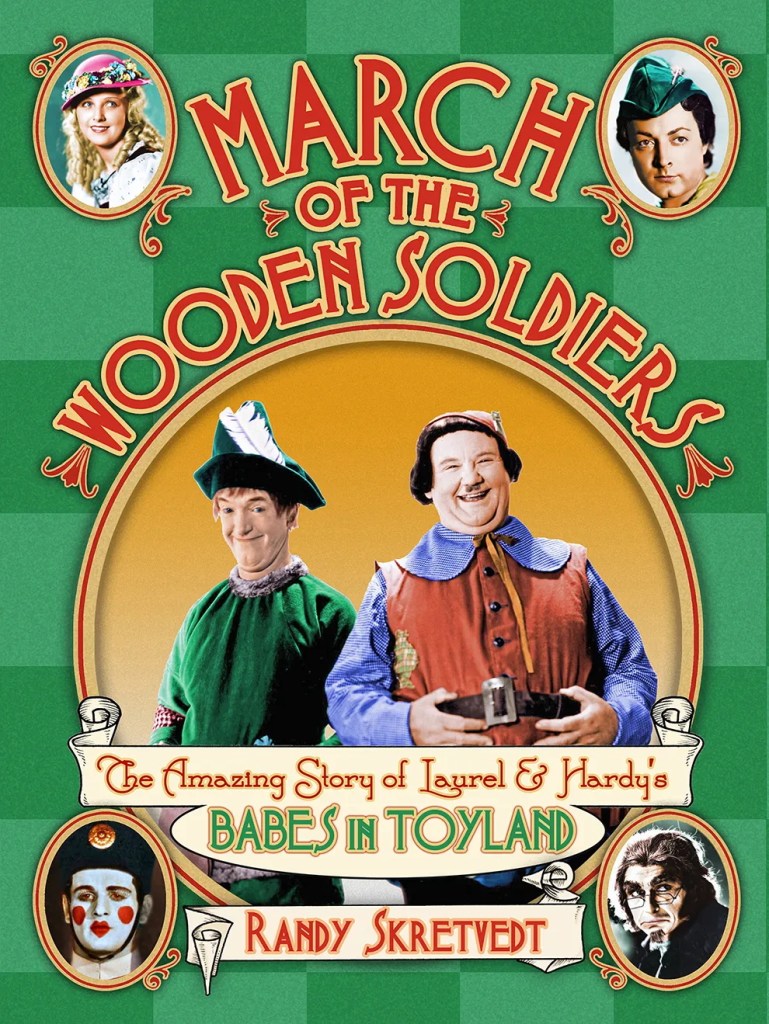
1) In addition to Babes In Toyland, the film was also re-released under several different titles, including Laurel and Hardy in Toyland and Revenge Is Sweet. This was sometimes due to the estate of Victor Herbert withholding rights to the original title. In the book March of the Wooden Soldiers: The Amazing Story of Laurel & Hardy’s Babes In Toyland, Randy Skretvedt writes; “Ella Herbert Bartlett detested the film and didn’t want the name Babes In Toyland to be further besmirched by its association with Laurel and Hardy.”
2) Although the 1934 film includes many of the characters in the original operetta, the plot is almost completely different. Six musical numbers from the original stage score are featured: “Toyland”, “Never Mind Bo-Peep”, “Castle in Spain”, “Go to Sleep (Slumber Deep)” and the instrumental “March of the Toys”. Additionally, an instrumental version of “I Can’t Do The Sum” is used to underscore many scenes.
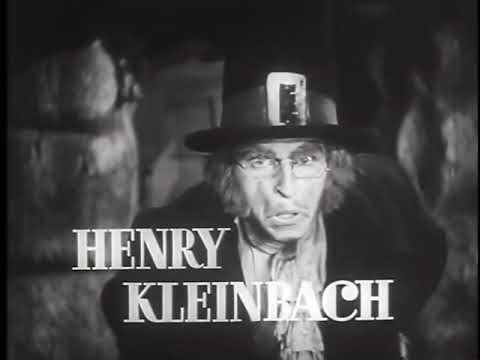
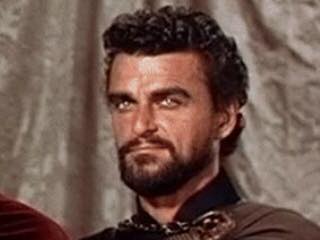
3) The villainous Silas Barnaby was played by 22-year-old Henry Kleinbach. He later changed his name to Henry Brandon and appeared in over 100 films throughout his 60 year career.
Brandon played essentially the same character as an opera impresario who torments poor, poor Alfalfa in Our Gang Follies of 1938.
20 years later he played Acacious Page in film Auntie Mame.
Another fun fact: Brandon’s partner for the last 25+ years of his life was Mark Herron, who was briefly the 4th husband of Judy Garland.
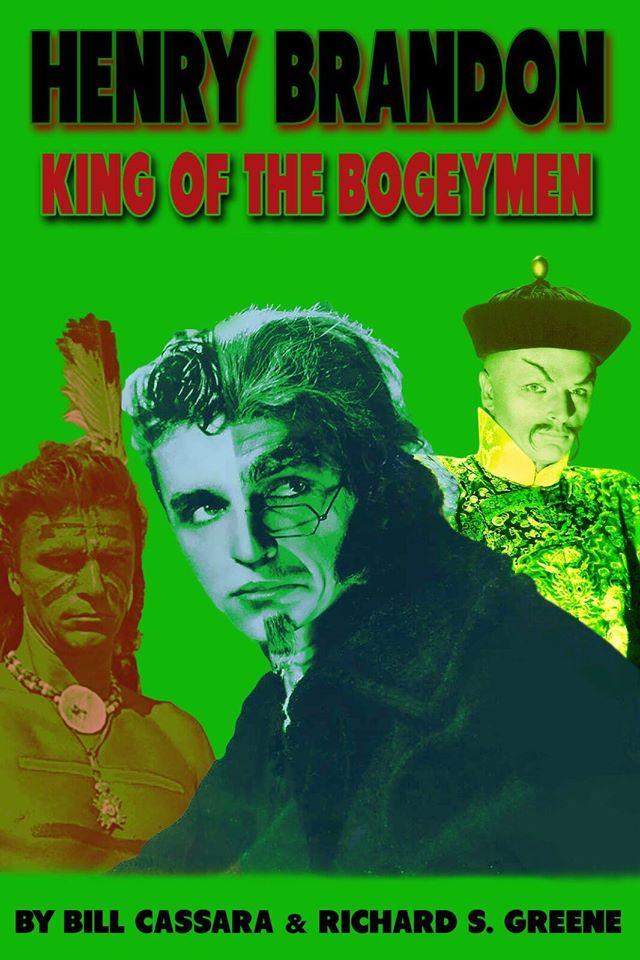
In 2018, Bill Cassara and Richard S. Greene published Henry Brandon: King Of The Bogeymen.
You can also find out more about Henry Brandon here
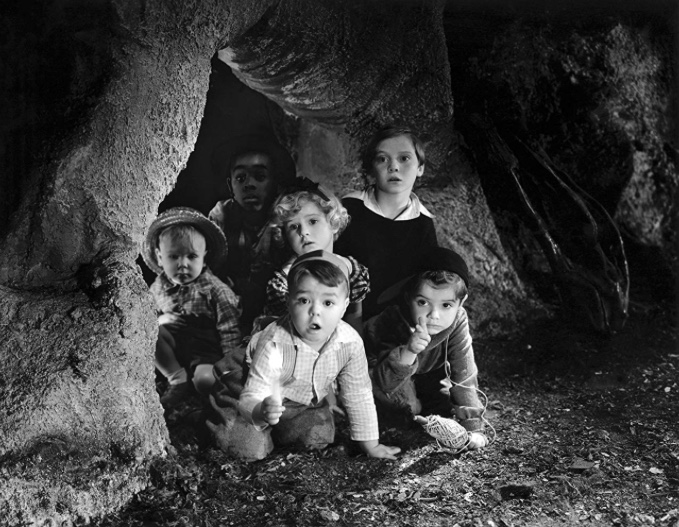
4) Our Gang (aka The Little Rascals) also filmed at Hal Roach studios. Several of the kids appear as schoolchildren in Toyland, although not dressed in their Our Gang costumes as in this photo atop Mother Peep’s Shoe-house.
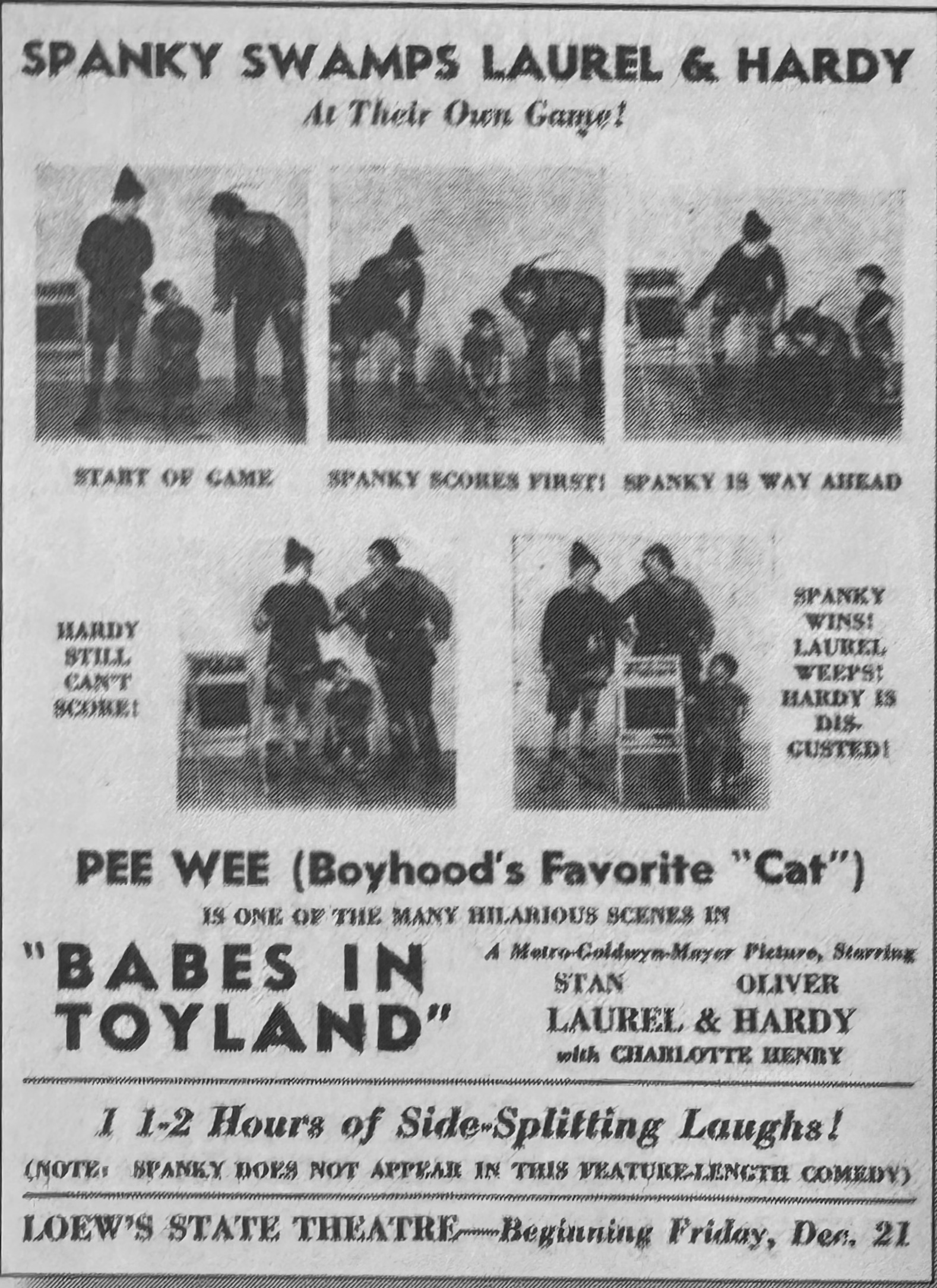
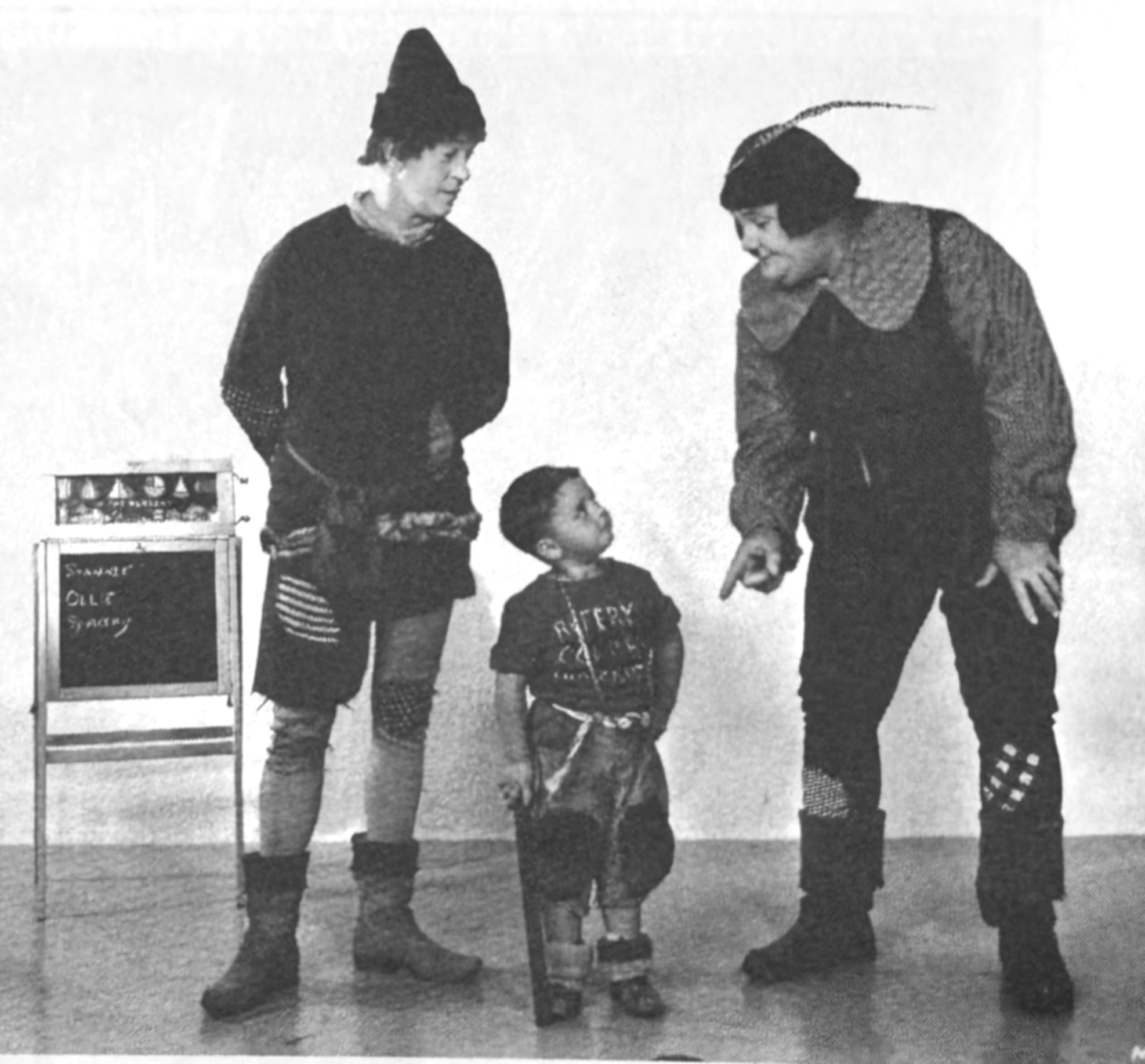
Laurel & Hardy introduce Spanky to “pee wees” in this promotional photo shoot.
One of the most popular Our Gang / Little Rascals shorts, Mama’s Little Pirate was filmed the same year and has an extended sequence shot in the caves of Bogeyland. Gus Meins directed both films.
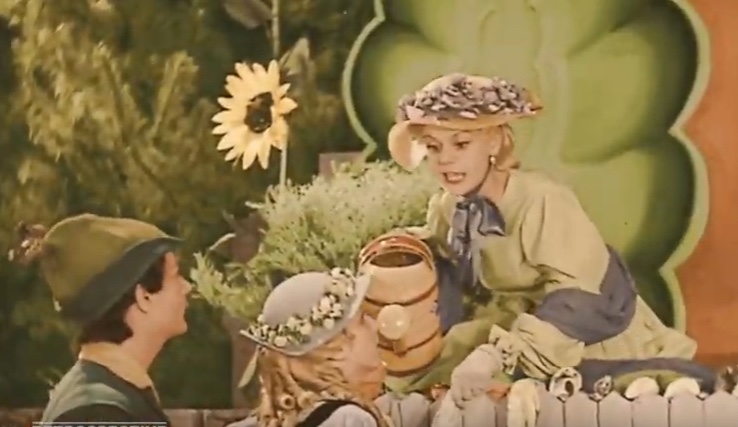
Another Our Gang connection: two graduates of the silent era, Johnny Downs and Jean Darling appear as Little Boy Blue and Curly Locks:
Johnny Downs and Jean Darling as Little Boy Blue and Curly Locks
Queen of Hearts Alice Moore with a couple of Little Rascals.
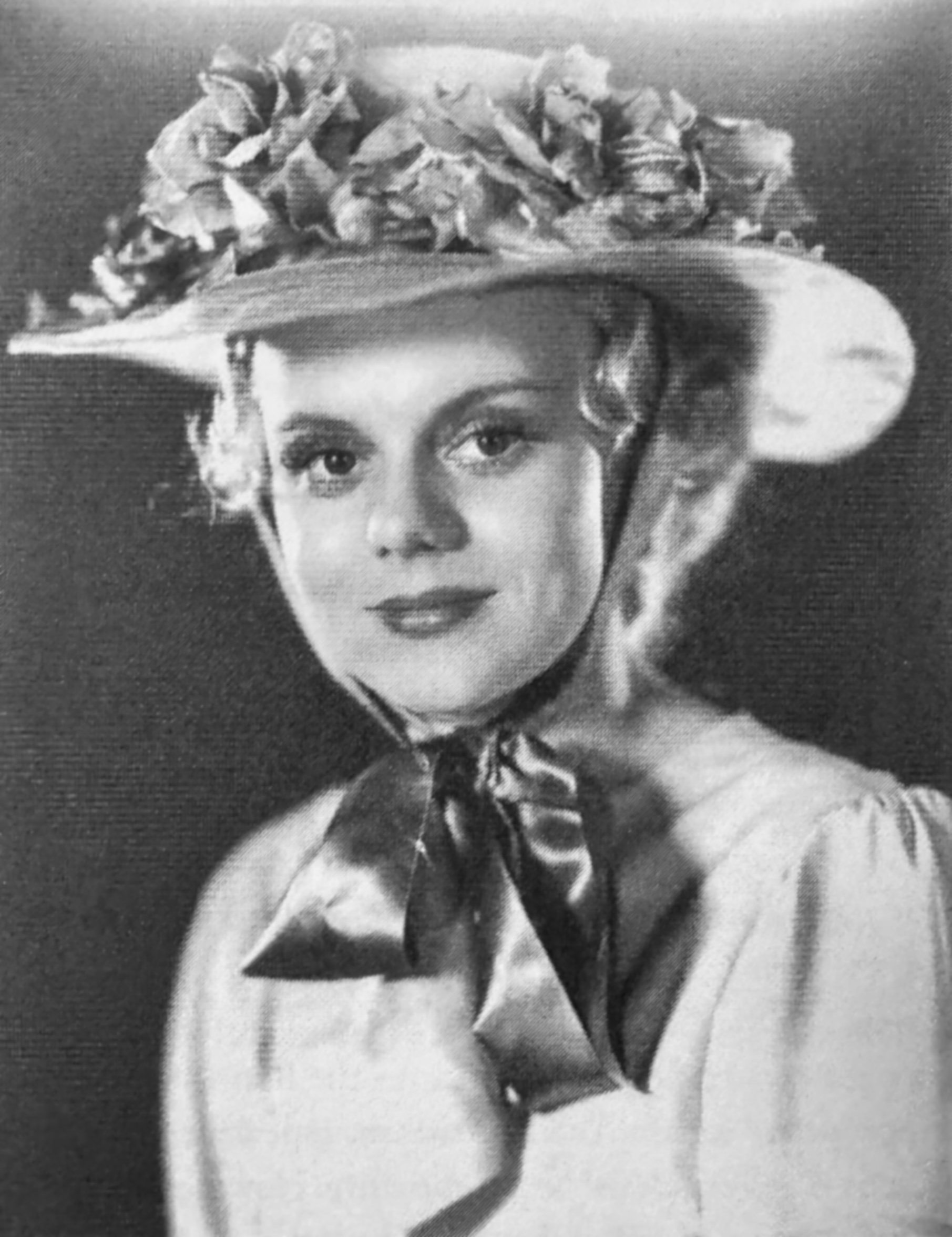
5) Felix Knight played romantic lead Tom Tom and fell in love with co-star Alice Moore, who played the Queen of Hearts. They were married the following year.
Behind the scenes, l-r: Alice Moore (Queen Of Hearts) Charley Rodgers (Simple Simon and the film’s co-director), Felix Knight (Tom Tom), Charlotte Henry (Bo-Peep) and Henry Brandon (Barnaby). Note the Three Little Pigs masks and padding hanging in the background.
Knight also appeared with Laurel and Hardy in their 1936 film – The Bohemian Girl:
6) Marie Wilson makes an early film appearance as Mary Quite Contrary. Her later work in film, radio and television (most notably My Friend Irma) garnered her three stars on the Hollywood Walk Of Fame.
“NO, I haven’t seen them!” Marie Wilson as Mary Quite Contrary
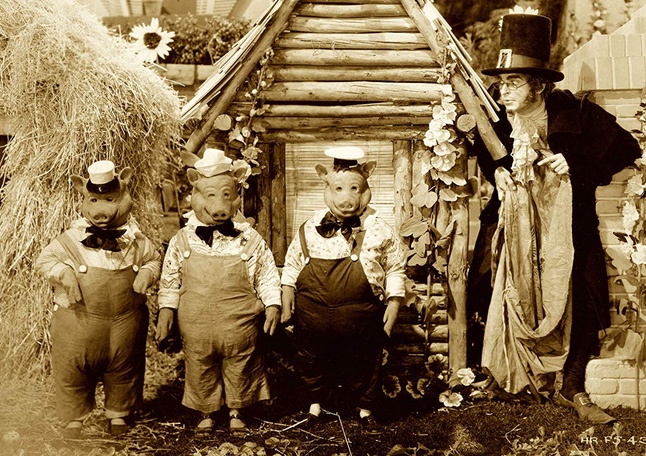
8) About those pigs…. Elmer, the kidnapped pig was played by a little person – 2′ 11″ Angelo Rossito. He appeared in 70 films spanning from the silent film era to his role as “The Master” in Mad Max Beyond Thunderdome (1985).
Angelo Rossitto in Freaks (1932) and Mad Max Beyond Thunderdome (1985)
The two other pigs were played by child actors:
Payne B. Johnson has said that he was cast as Jiggs because, unlike the other children auditioning, he didn’t complain about the heavy mask and padding. Although only four years old, this was his eleventh film credit. He would later appear in a handful of Our Gang shorts, including Our Gang Follies of 1938 with Henry Brandon.
The last surviving major player from the film, Payne B. Johnson passed away at the age of 94 on June 30, 2024.
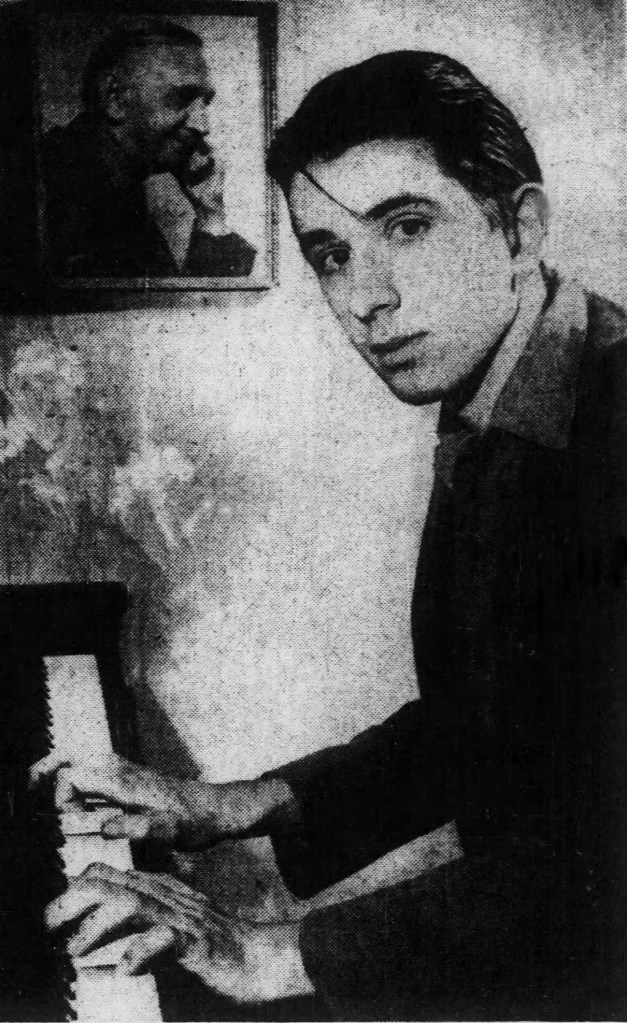
Edward Earle Marsh toured as a child prodigy pianist/composer.
And THIS little piggy…. was a porn star! Willie was played by Edward Earle Marsh, a child prodigy pianist/composer who later performed on Broadway with the stage name Edward Earle. In 1969, he reinvented himself as Zebedy Colt, a gay cabaret singer. He kept the name as he directed and performed in both straight and gay adult films through the 1970’s & 80’s.
Someone needs to write a book about this guy.
9) The film became a broadcast television staple on Thanksgiving and Christmas Day in the early 1960’s. I grew up watching the film on NYC’s WPIX Channel 11, which continues to air the film to this day. In 1990 they switched to the colorized version, and in 2018, due to viewer requests, they began airing restored black and white and colorized versions at different times during the day.
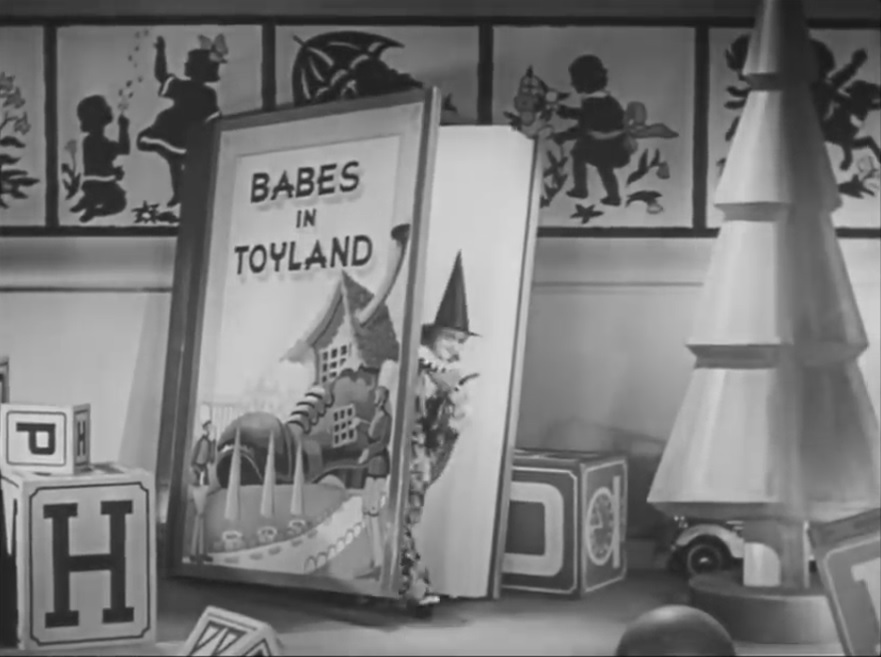
Some may remember a shorter version of the film airing on television years ago. This 73-minute edit was trimmed for theatrical re-release in 1950. Due to the objections of Victor Herbert’s estate mentioned above, the title of the film was changed and the opening sequence shortened to omit “Babes In Toyland” from Mother Goose’s book.
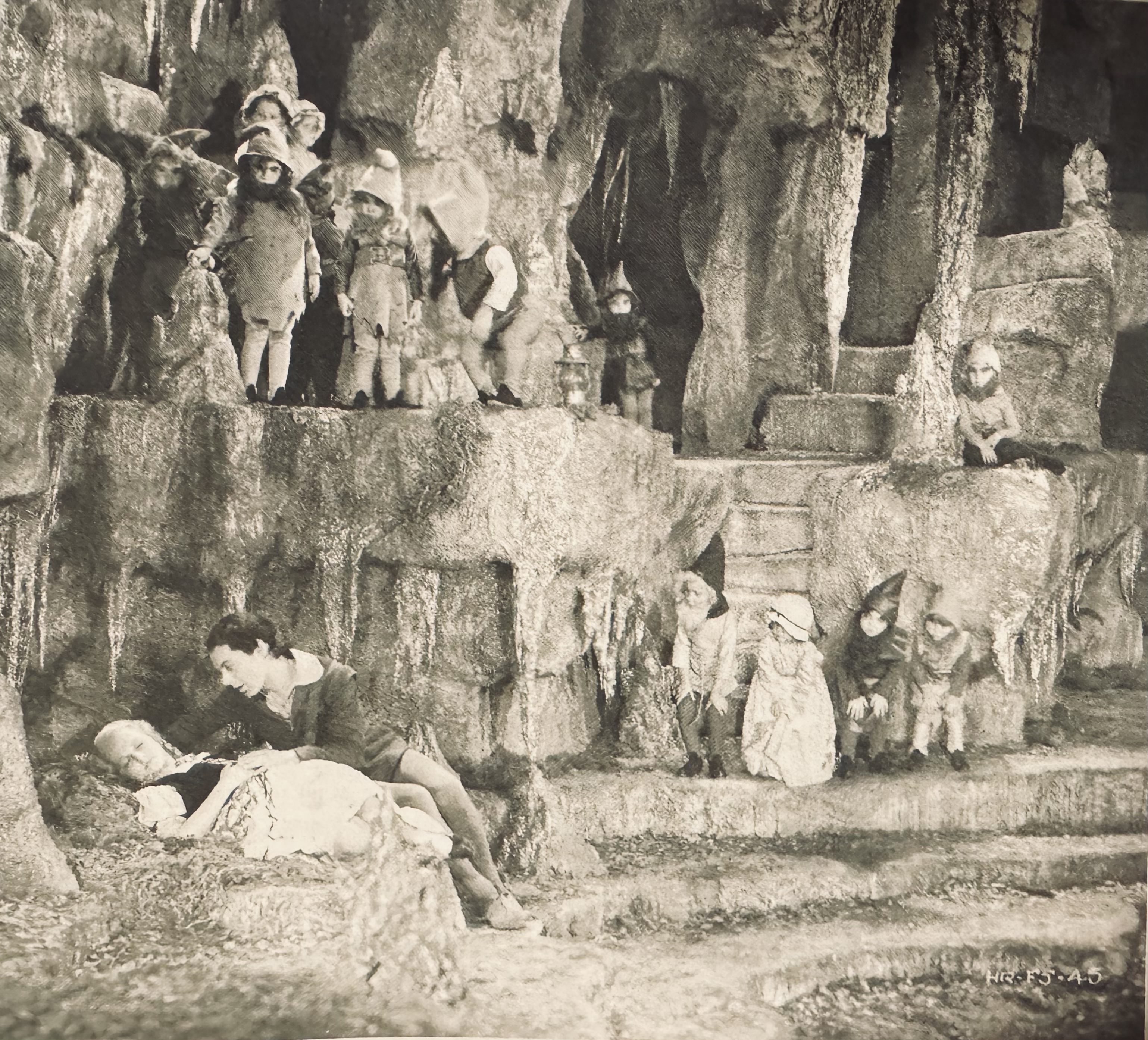
Motion picture censors in 1950 objected to the unmarried Tom Tom and Bo Peep snoozing together at the end of the song “Go to Sleep (Slumber Deep).” The whole sequence was cut.
This edited version of the film had fallen into public domain and was broadcast on television in the 1980’s. Any susequent restored prints or colorized versions of the film run at the original 79 minute length.
If it isn’t broadcast in your area, you can watch the full movie here:
10) Bearing in mind that the source material is the original operetta and not this film, there have been numerous wildly different versions of Babes In Toyland:
Between 1950 and 1960, there were three television productions broadcast during Christmas seasons, including one featuring Barbara Cook and Dennis Day in 1955.
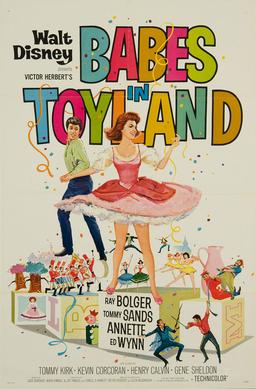
Walt Disney’s Technicolor™ 1961 film version starred Annette Funicello and Ray Bolger.
A 1986 made-for-television version featured Drew Barrymore, Keanu Reeves and “a royal legion of tacky trolls” with only two songs from the Victor Herbert score, a new plot, and new songs by Leslie Bricusse.
Click the link to see the full movie on Youtube:
An 1997 animated film version, with a new plot and only one of the original songs, featured the voices of Christopher Plummer and Lacey Chabert.
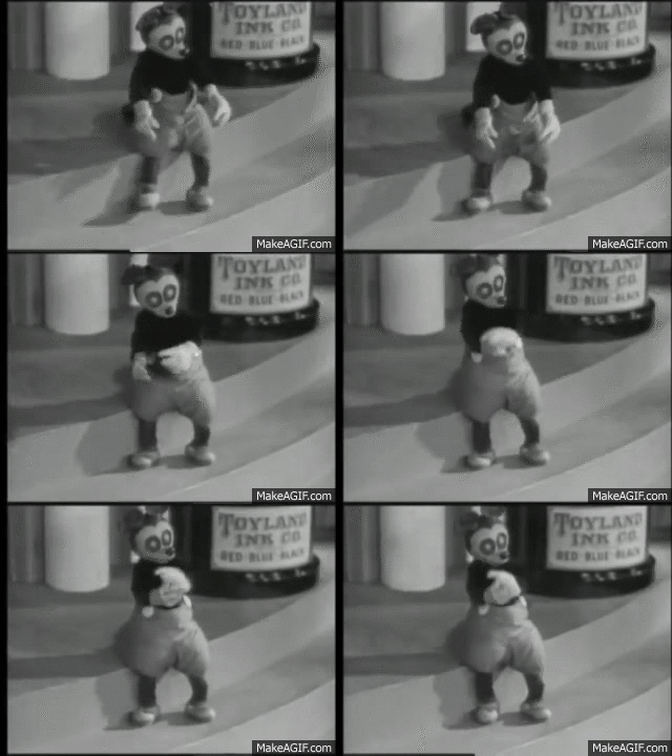
These other versions come and go, but none feature Stannie Dum and Ollie Dee… a gay wedding… nightmare-inducing pig masks … a monkey inside a knockoff Mickey Mouse costume… or carpet-clad Bogeymen with visible zippers and padding.
Join me in wishing a happy 91st birthday to a Hollywood holiday classic!
Next month will mark five years since I started the Artist’s Muse series on this blog – profiling the men who inspired, and were subjects of, mid-century artists like George Platt Lynes, Bernard Perlin, George Tooker and the PaJaMa collective: Paul Cadmus, Jared and Margaret French. Last summer I compiled some of these stories and photos for the Fire Island Pines Historical Preservation Society website. “The Fire Island Muses of George Platt Lynes & The PaJaMa Collective” focused on the subjects of the artwork they created during their time on Fire Island. Click here for the full post.
This summer, Vogue has entered the mix with a piece titled The 1940s Vogue Photographer Who Turned His Lens to the Male Muses of Fire Island. Honestly, it sounds as if he happened upon a coven of beautiful gay men, rather than importing his friends and lovers from the mainland. While it’s true that Lynes would photograph models and “attractive men that he heard of through word of mouth,” this applied to his studio work back in New York City. On Fire Island, the photos were of his intimate circle.
Lynes’ Fire Island photos are inextricably linked with the PaJaMa collective, as they all vacationed together and posed for each other. Artists like Lynes, Tooker and Perlin were all influential on each other’s work, especially the photographic aspects of their creativity.
Lynes with Paul Cadmus, Glenway Wescott, Donald Windham, Jared French & the Fire Island Lighthouse, PaJaMa (ca. 1938-40)
The Vogue piece displays several photos from A.Therien gallery’s recent collection of images featuring fellow photographer Wilbur Pippin, who was profiled here back in April. These are additional photos from that collection:
Wilbur Pippin with Fidelma Cadmus Kirstein and George Tooker, photos by George Platt Lynes & PaJaMa (ca. 1948-50)
In 1943, Lynes was so enamored of Jonathan Tichenor that he left his long-term threeway relationship with Glenway Wescott and Monroe Wheeler to be with him. The pair moved in together and Lynes shocked his discreet friends by announcing that they planned to be married. Tichenor was the subject of many Lynes photographs during this period, including some memorable shots snapped on Fire Island. The relationship imploded in 1945 when Tichenor ran off to become the second husband of socialite/artist Bridget Bate.
Jonathan Tichenor, Fire Island, photos by George Platt Lynes & PaJaMa (ca 1944)
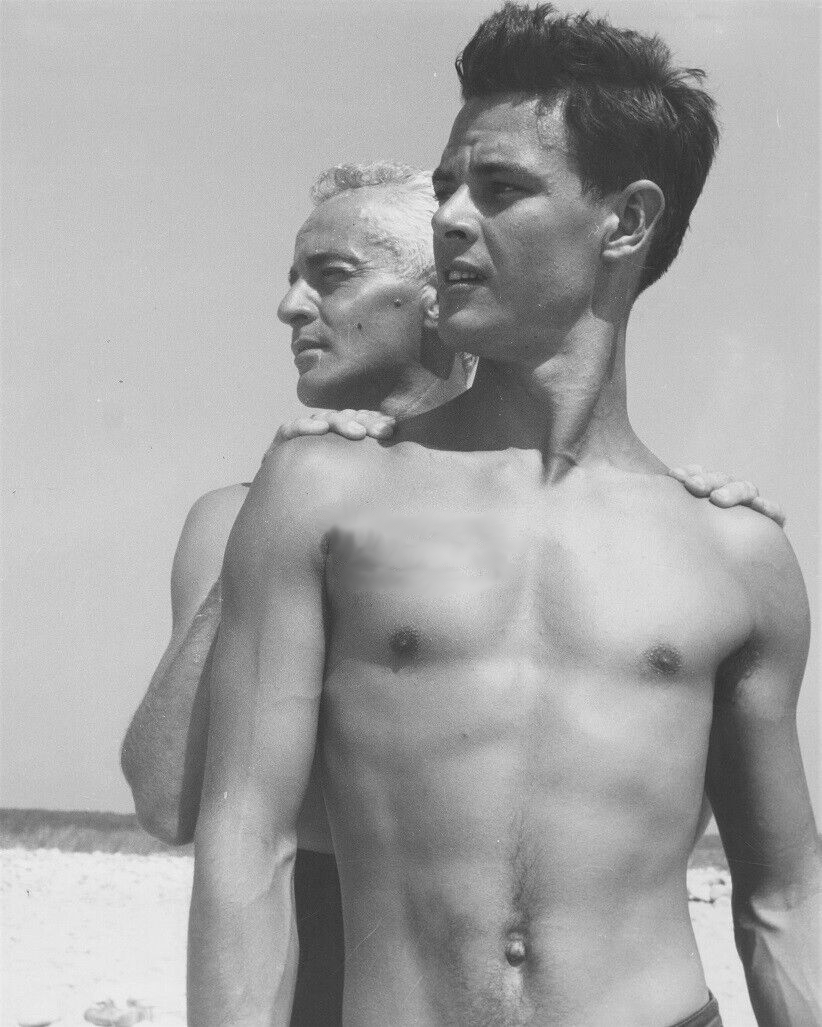
Lynes met aspiring dancer Randy Jack in 1947 while he was working for Vogue in Los Angeles. The pair moved back to New York the following year, where Jack found success as a model. They parted ways a few months later. Read more about Randy Jack here.
Lynes with his boyfriend Randy Jack (ca 1948)
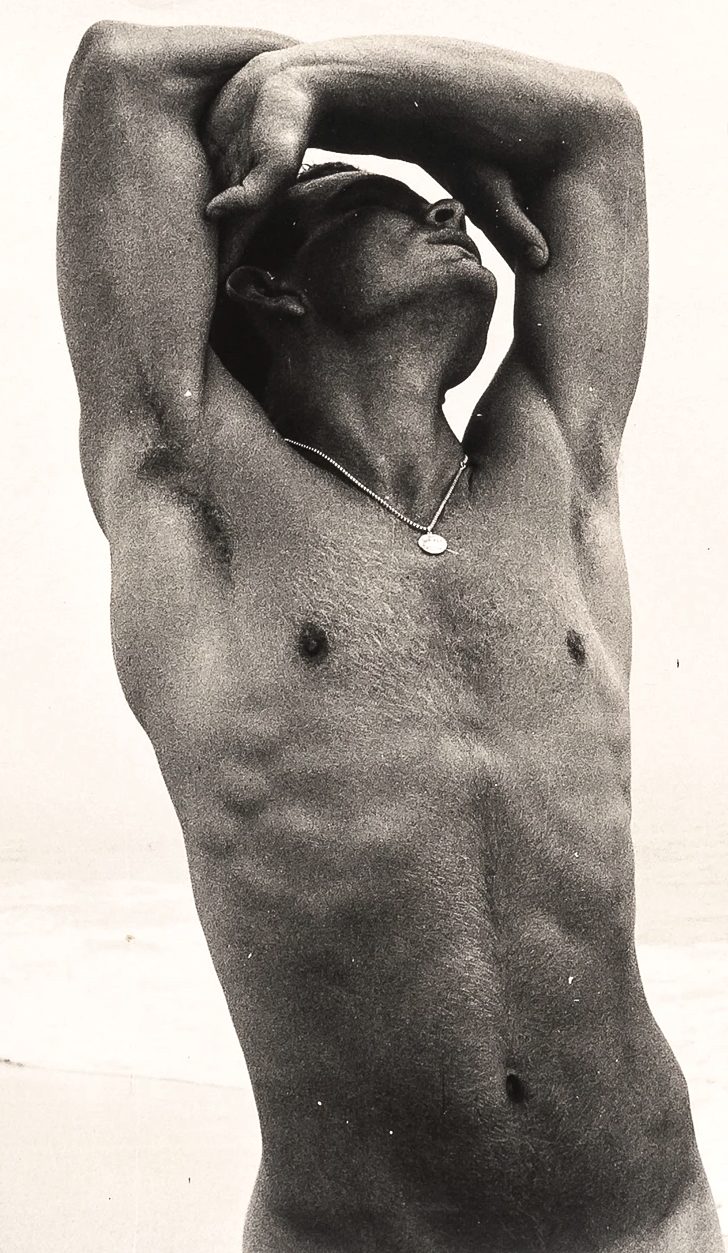
Ten days after the departure of Randy Jack, former military man Chuck Howard moved in with Lynes. Throughout their relationship, Lynes frequently photographed Howard on Fire Island. He later became a successful fashion designer and restaurateur. Read more about Chuck Howard here.
Chuck Howard photographed on Fire Island by George Platt Lynes (ca 1950)
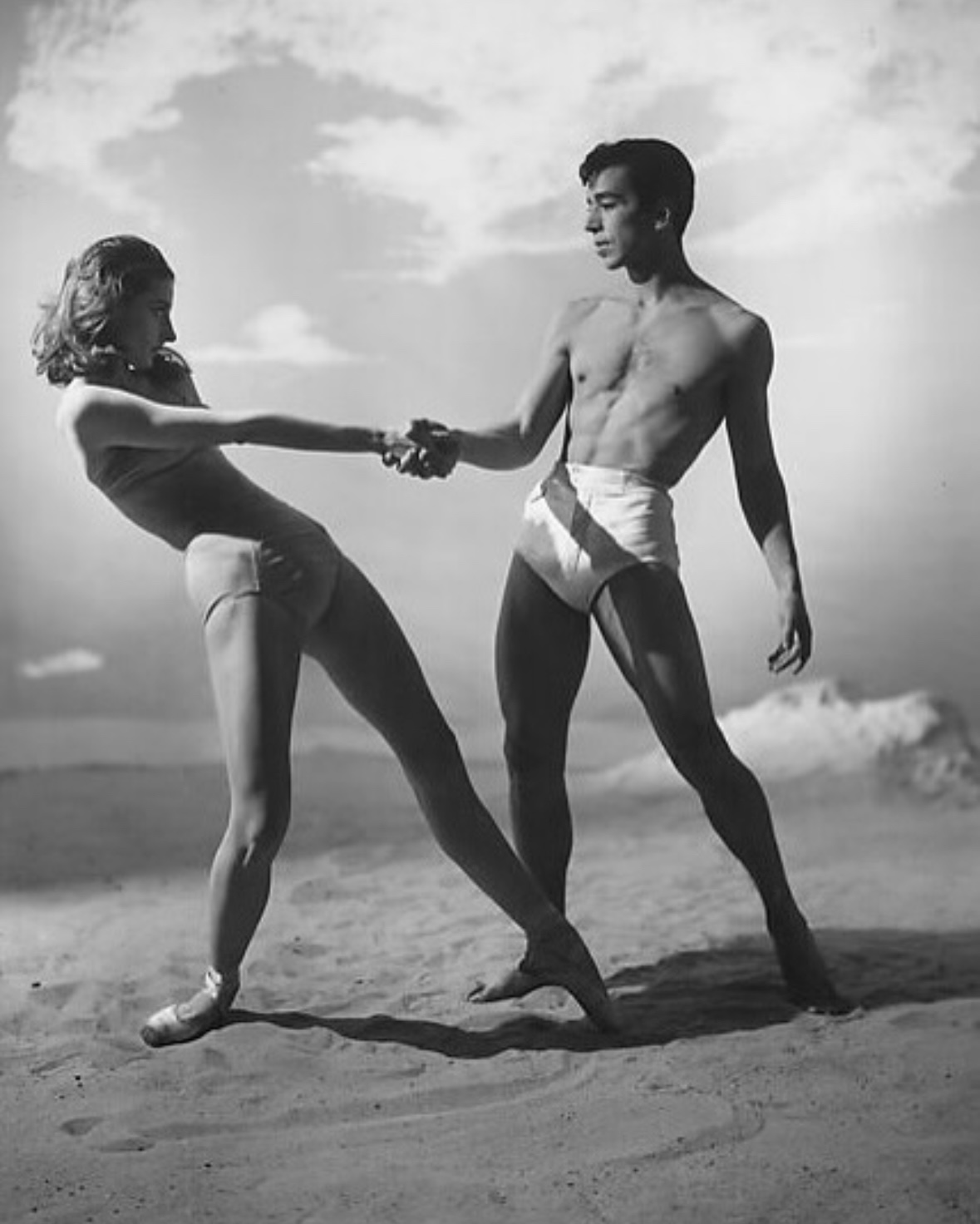
In 1950, Lynes created a studio beach scenario with dancers Nicholas Magallanes and Tanaquil LeClerq in poses from the George Balanchine/Jerome Robbins ballet Jones Beach. Magallanes was also a member of Lynes’ social circle and a frequent model for his nude photography.
Nicholas Magallanes and Tanaquil LeClerq in Jones Beach, George Platt Lynes (1950)
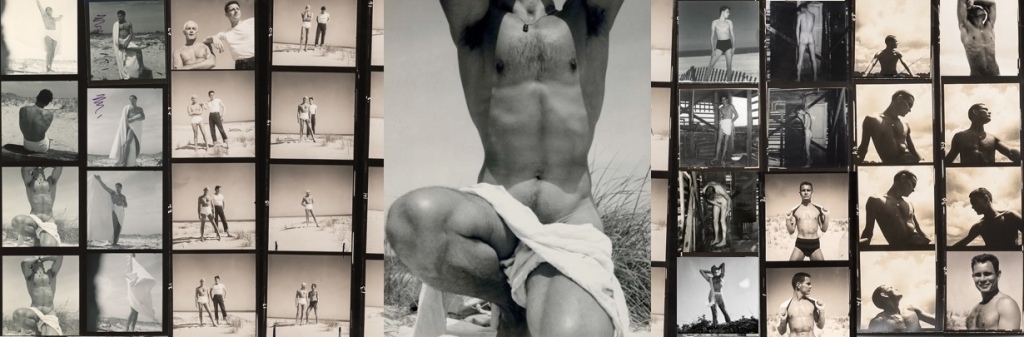
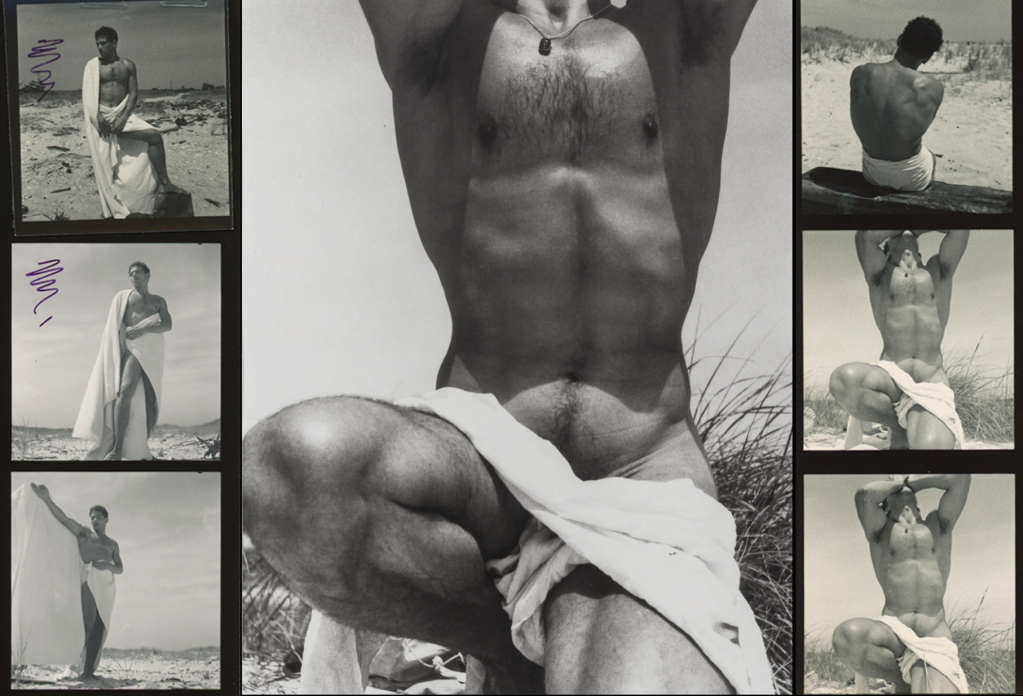
Lynes’ most iconic Fire Island image is of dancer Francisco Moncion, seen here with some alternate shots from the contact sheet. The influence on the work of Herb Ritts and Bruce Weber is evident.
Francisco Moncion photographed by George Platt Lynes on Fire Island (ca 1948-50)
The Vogue profile of George Platt Lynes concludes that his work for the magazine may have provided him with commercial success, but that his Fire Island portraits show that success comes in many forms.
In the April 11, 1936 edition of the New York Age newspaper, Joe Bostic wrote in his “Seeing The Show” column about show he attended at the Apollo Theatre. The headliner was an unknown: the now legendary blues singer Lead Belly. Bostic was not impressed:
The advanced publicity stated that this man had been in two jails on murder charges and that the wardens, on hearing him work out on his guitar and vocally, had set him free. Maybe they did but after hearing the man myself, I’m not so sure that musical excellence prompted [the] actions. It may have been that both they and the other inmates wanted some peace during their quiet hours. No. Lead Belly isn’t the man, if it’s music that you want.
After reviewing other aspects of the show, including the comedy of Pigmeat Markham, Bostic concludes his review with this:
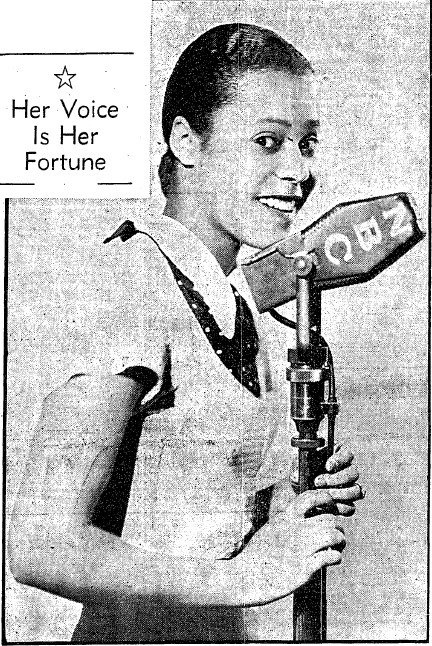
Midge Williams, the sensation from the west coast, looks, acts and sings like she knew most of the answers as a personality soloist…. She’s too good for the company she’s in at the Apollo this week.
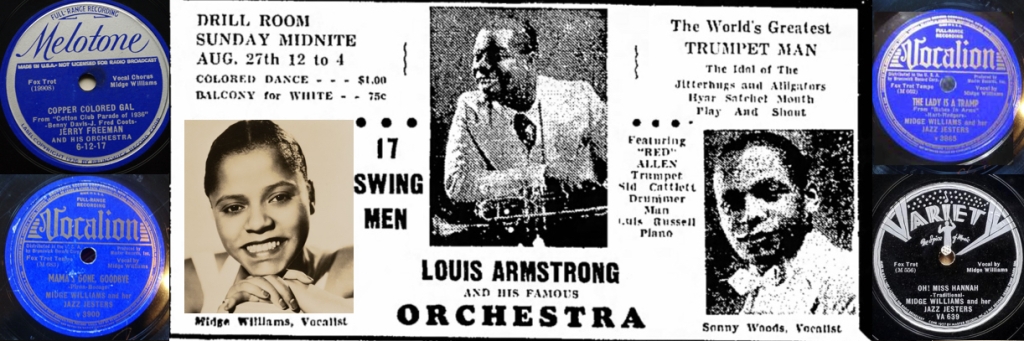
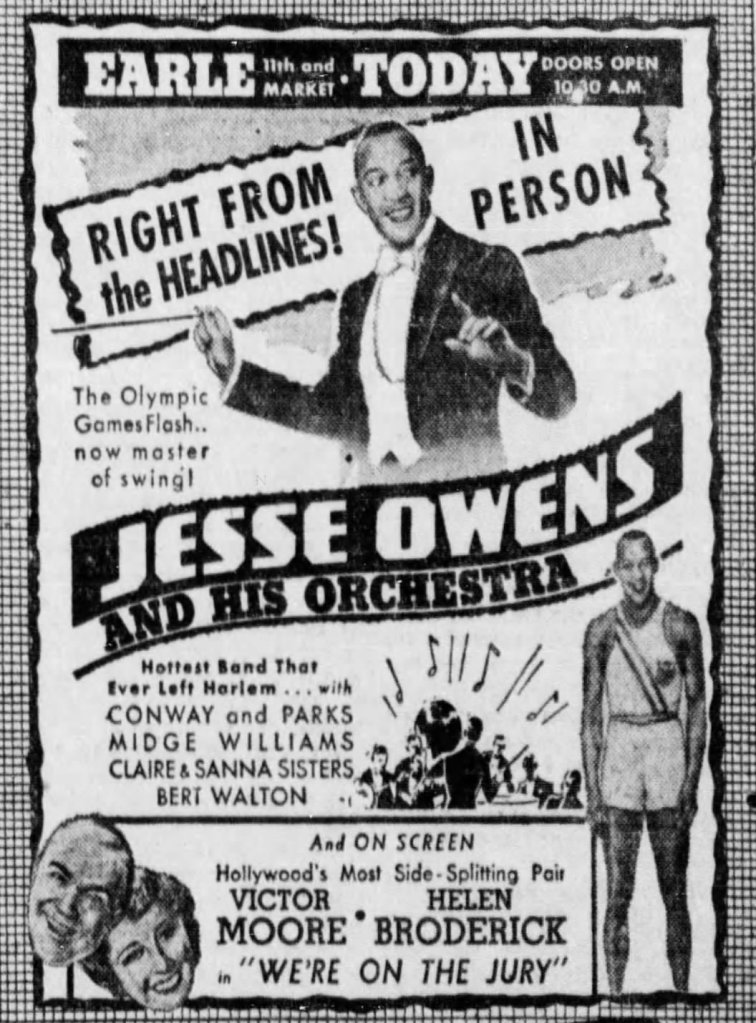
I’ve had a bit of an obsession with the mysterious Midge Williams since I first heard her recordings of familiar jazz standards… sung in both Japanese and English. In the mid 1930’s, she was the first female African American singer with a national radio show. Midge worked with Bunny Berigan, Fats Waller, Duke Ellington, and Jimmie Lunsford. When Olympian Jesse Owens had a short-lived foray as a bandleader, Midge was his singer. She toured with Louis Armstrong’s orchestra for three years, from 1938 until 1941, when she ended up hospitalized in Detroit. And then… nothing. She died of tuberculosis in 1952 at age 36.
That’s the story in a nutshell, according to the liner notes of her CD compilations and the few websites that mention her. Several years ago, I set out to fill in the blanks on this forgotten artist.
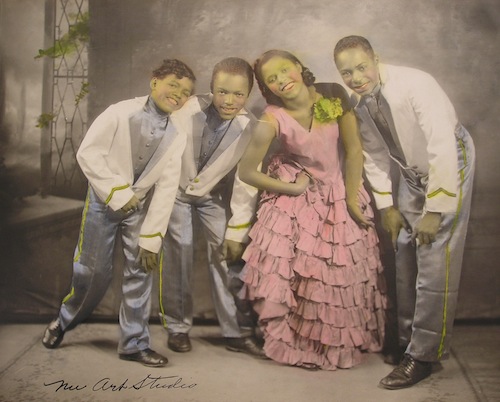
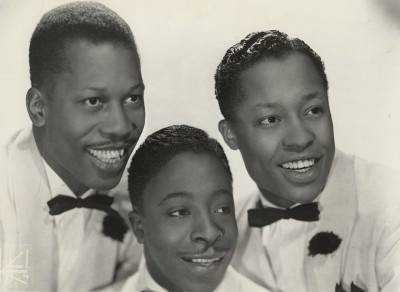
Midge started out in a family group with her three brothers. They were The Williams Quartette, later The Williams Four, performing in clubs and churches in the San Francisco area. They later joined the Fanchon and Marco vaudeville circuit and performed up and down the West Coast during summer breaks from school.
A musician / arranger named Roger Segure took them under his wing and became their manager, securing work on local radio and then traveling with the group to China and Japan. The opportunity to hear swing jazz vocals sung live was heralded as a major event in the history of Japanese jazz. During their stay in Japan, Midge recorded several sides, singing in English and Japanese, accompanied by the Columbia Jazz Band:
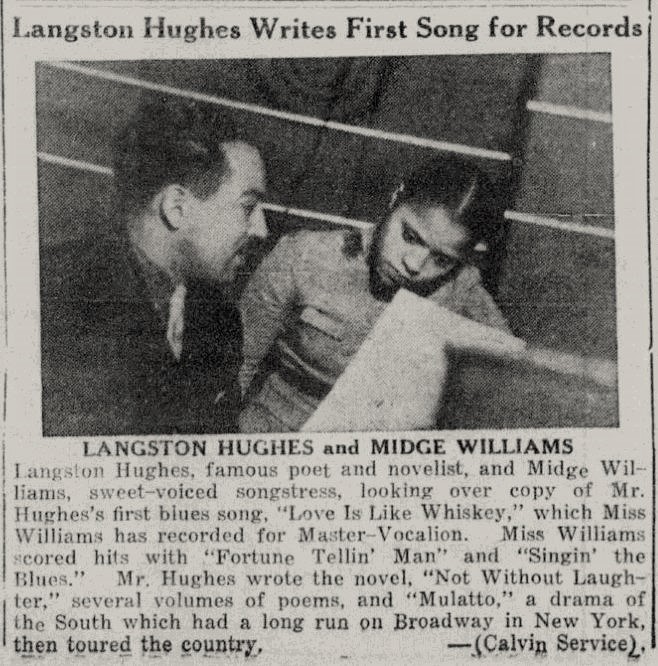
Midge crossed paths with writer Langston Hughes as he traveled through the Far East. Back in New York a few years later, Hughes would write songs for Midge. She recorded his “Love Is Like Whiskey” in February, 1938. Another song, “Night Time,” with lyrics by Hughes and music from her manager Roger Segure, was the theme song to her radio program. Unfortunately, no recording of the song exists.
The New York Age, April 16, 1938
California Eagle, (8/17/39)
Attempts by gossip columnists to stir rumors of a romance between the two proved unsuccessful.
Midge was just 21 years old when she began hosting her own radio show on NBC – a twice-weekly 15-minute program. She recorded several dozen sides while also making club appearances. A prominent figure in Harlem society at the time, the African American newspapers covered her every move… until her alcoholism resulted in a dismissal from the Louis Armstrong Orchestra.
Baltimore Afro-American (4/30/38)
Her last studio recording was with Lil Hardin Armstrong (Louis’ ex-wife) and her Dixielanders in 1940:
In April of 1946, Midge made an appearance on Jack Webb’s radio show. She was in fine voice on a cover of “Cow Cow Boogie”:
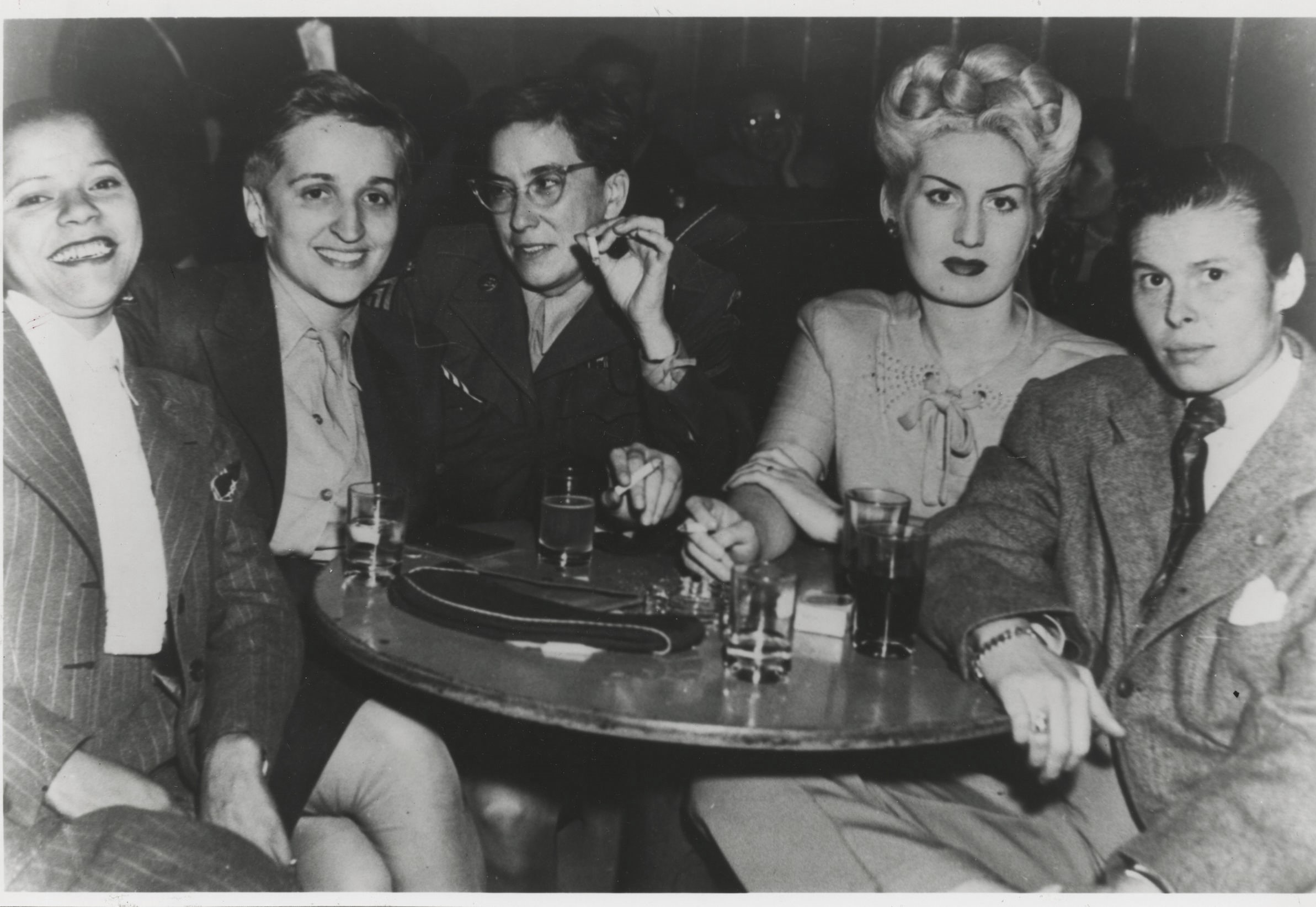
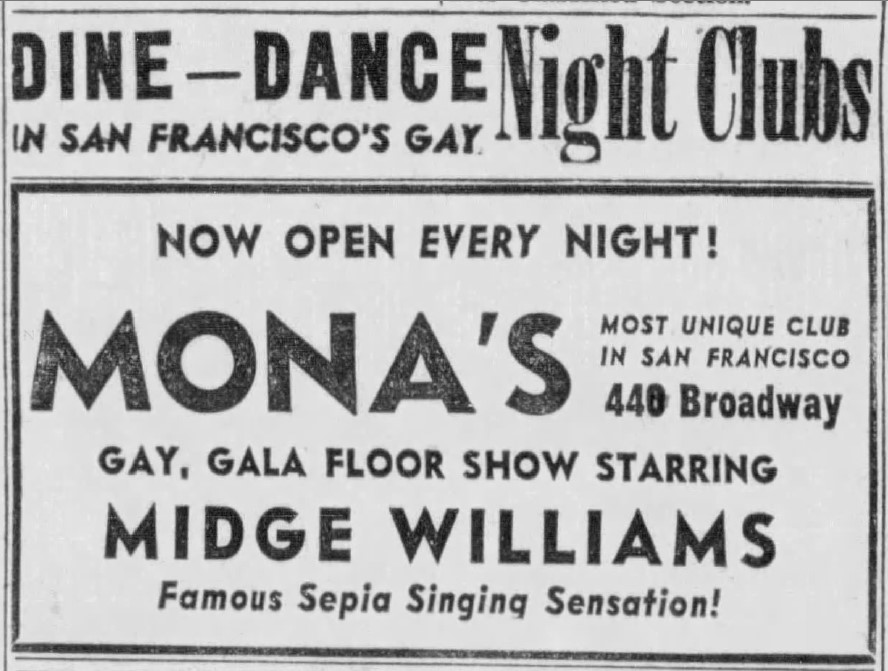
Shortly after the Jack Webb radio performance, Midge settled into a six month engagement at Mona’s 440 Club, the legendary lesbian bar in San Francisco. It is from this period that we have a photo of Midge, an image that has been widely circulated. One of the most familiar photos depicting lesbian nightlife of the 1940’s, it was also used to promote the 1993 documentary Last Call At Maud’s.
Midge Williams (left) with fellow Mona’s singer Kay Scott and friends (ca 1946)
Madame Spivy is having quite a renaissance in 2025, thanks to the efforts of Ms. Ana Matronic and her newly launched Good Time Sallies podcast. As previously mentioned, Madame Spivy is the subject of the first two episodes. I joined Ms. Matronic to discuss the dynamic lady of song, stage and screen. You can find those here.
The subject of episodes #3 & 4 is singer/nightclub owner Ada “Bricktop” Smith, who we covered briefly in our post about Neeka Shaw, The Forgotten Showgirl.
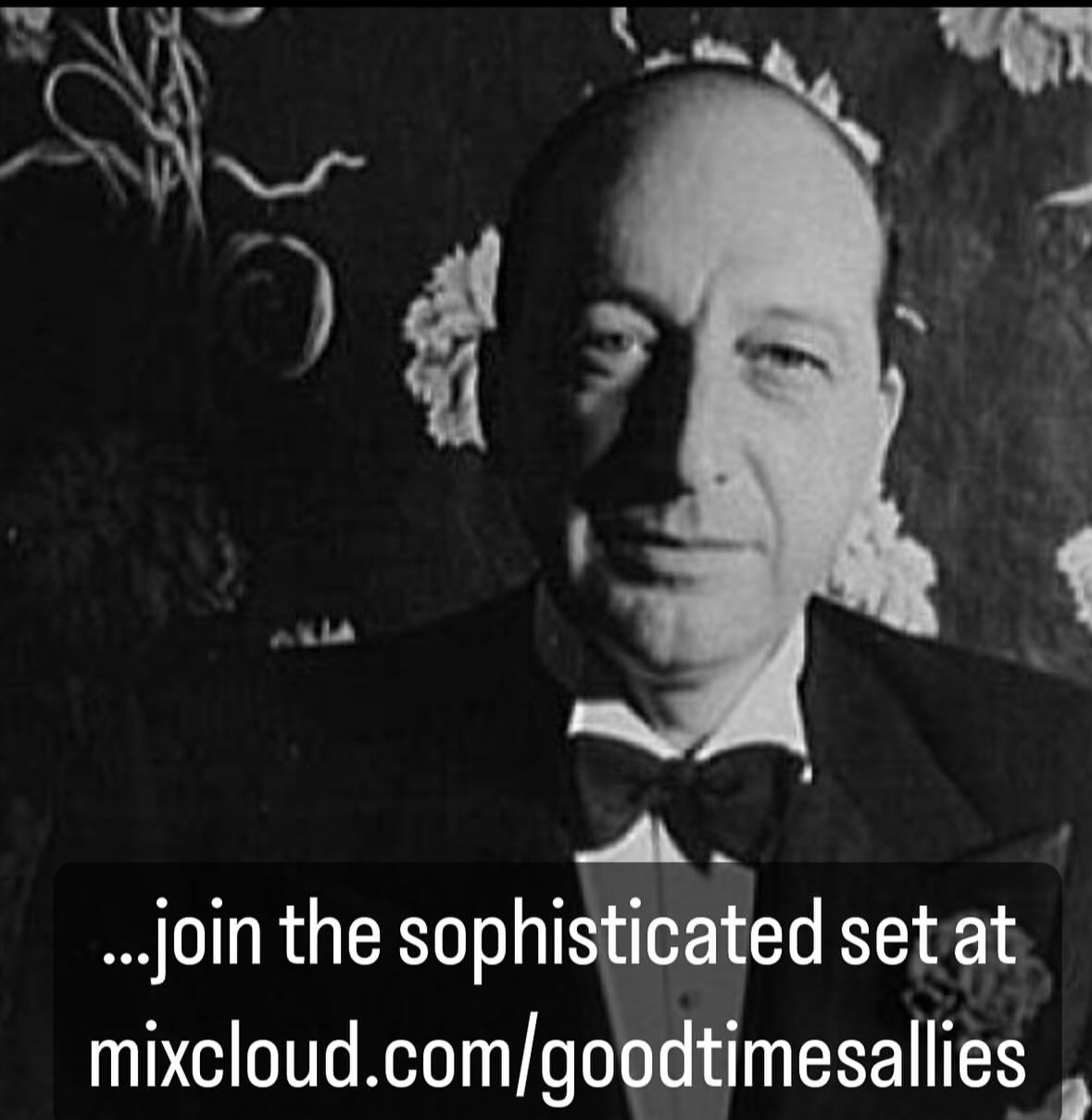
And if that’s not enough for you… Ms. Matronic has created Good Time Sallies: Radio Spivy on Mixcloud, so you can hear many of the songs discussed on the podcast. Besides a generous serving of Madame Spivy’s stylings, you can also hear recordings by Spivy’s friends, influences and artists who appeared at Spivy’s Roof. Included on the playlist are Fanny Brice, Sophie Tucker, Liberace, Martha Raye, Thelma Carpenter, Rae Bourbon, The Three Flames, Bea Lillie and many more!
Click here for Radio Spivy and hear some fine examples of classic diseuse delivering sophisticated songs.
From the website: Good Time Sallies tells the stories of impactful people who have been left in the shadows as footnotes or minor characters in somebody else’s story, but each of whom made waves, broke molds, and dared to live life as they pleased.
With every episode, Ana Matronic centers these remarkable people and shares their inspiration with the world. From people of letters to ladies of leisure, from bawdy babes and badass boozehounds to Queens on the scene to queens of the obscene, this vibrant historical podcast is all about celebrating the Good Time Sally in us all who is here to take a shot and make her mark.
As you already know, Spivy is one of our favorite subjects here on the blog. Be sure to check out the latest post, which covers her film and television appearances.
I have been an admirer of Ana Matronic since the days when her band, Scissor Sisters was a local group playing around my East Village neighborhood. Her presence, her voice, her connection with the audience as “Mistress of Ceremonies” were a major factor in why I went on to see the band perform live 20 times before their hiatus in 2012. There’s an unconfirmed rumor that I have the band logo tattooed on my ankle.
With Ms. Matronic at the Ice Palace in Cherry Grove, Fire Island (7/2024)
I couldn’t imagine a Scissor Sisters reunion without her. When a UK tour was announced late last year, Ms. Matronic issued a statement explaining why she would not be taking part, teasing an upcoming podcast series that prevented her from participating.
As someone who embraces my own inner Nerd, I was fully on board with her choice to focus on her current passion project. What I did not know at the time was that I would get to be a part of this next chapter.
And now it is time for the big reveal: Good Time Sallies is here!
From the website: Good Time Sallies tells the stories of impactful people who have been left in the shadows as footnotes or minor characters in somebody else’s story, but each of whom made waves, broke molds, and dared to live life as they pleased.
With every episode, Ana Matronic centers these remarkable people and shares their inspiration with the world. From people of letters to ladies of leisure, from bawdy babes and badass boozehounds to Queens on the scene to queens of the obscene, this vibrant historical podcast is all about celebrating the Good Time Sally in us all who is here to take a shot and make her mark.
Photos: Krys Fox @krysfoxphoto
Of course, telling the stories of notable people who have been left in the shadows is one of the reasons this blog exists. On the first two episodes of Good Time Sallies, I join Ms. Matronic to reintroduce that dynamic lady of song, stage and screen, Madame Spivy LeVoe. As you already know, Spivy is one of our favorite subjects here on the blog. Be sure to check out the latest post, which covers her film and television appearances.
I hope you enjoy the podcast as much as I did recording it. Thanks again to Ms. Matronic and Lucy Winter for inviting me to take part.
Also: Click here for Radio Spivy on Mixcloud and hear some fine examples of classic diseuse delivering sophisticated songs.
The cover of the book George Platt Lynes Photographs 1931-1955 features this photo of Edward Lennox Bigelow, Dora Maxwell, and Johnathan Tichenor (ca. 1943)
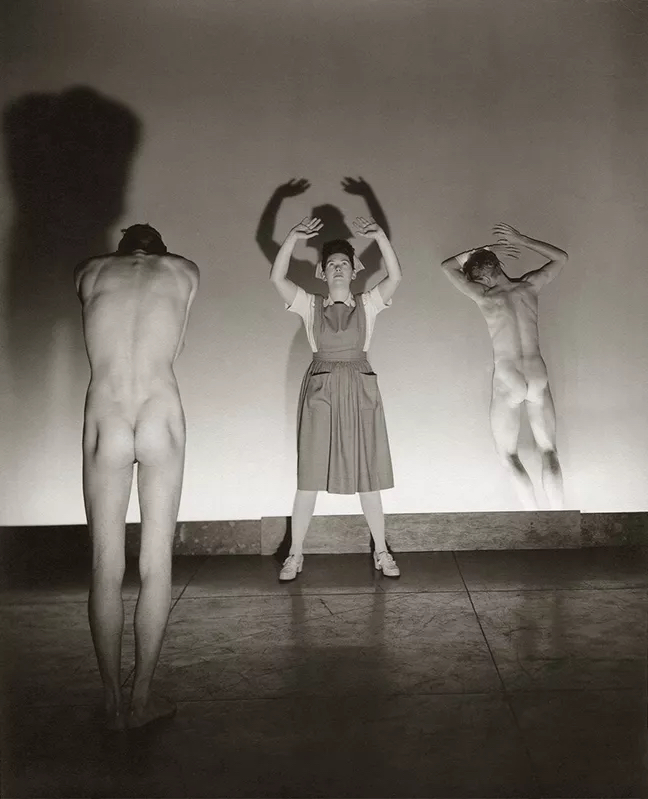
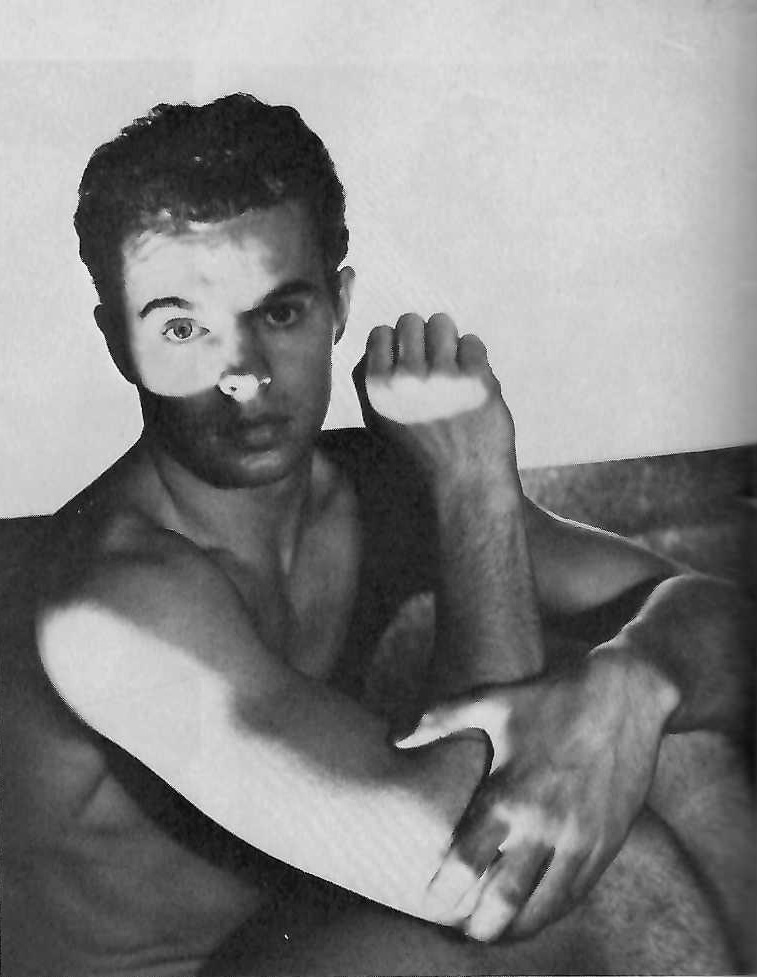
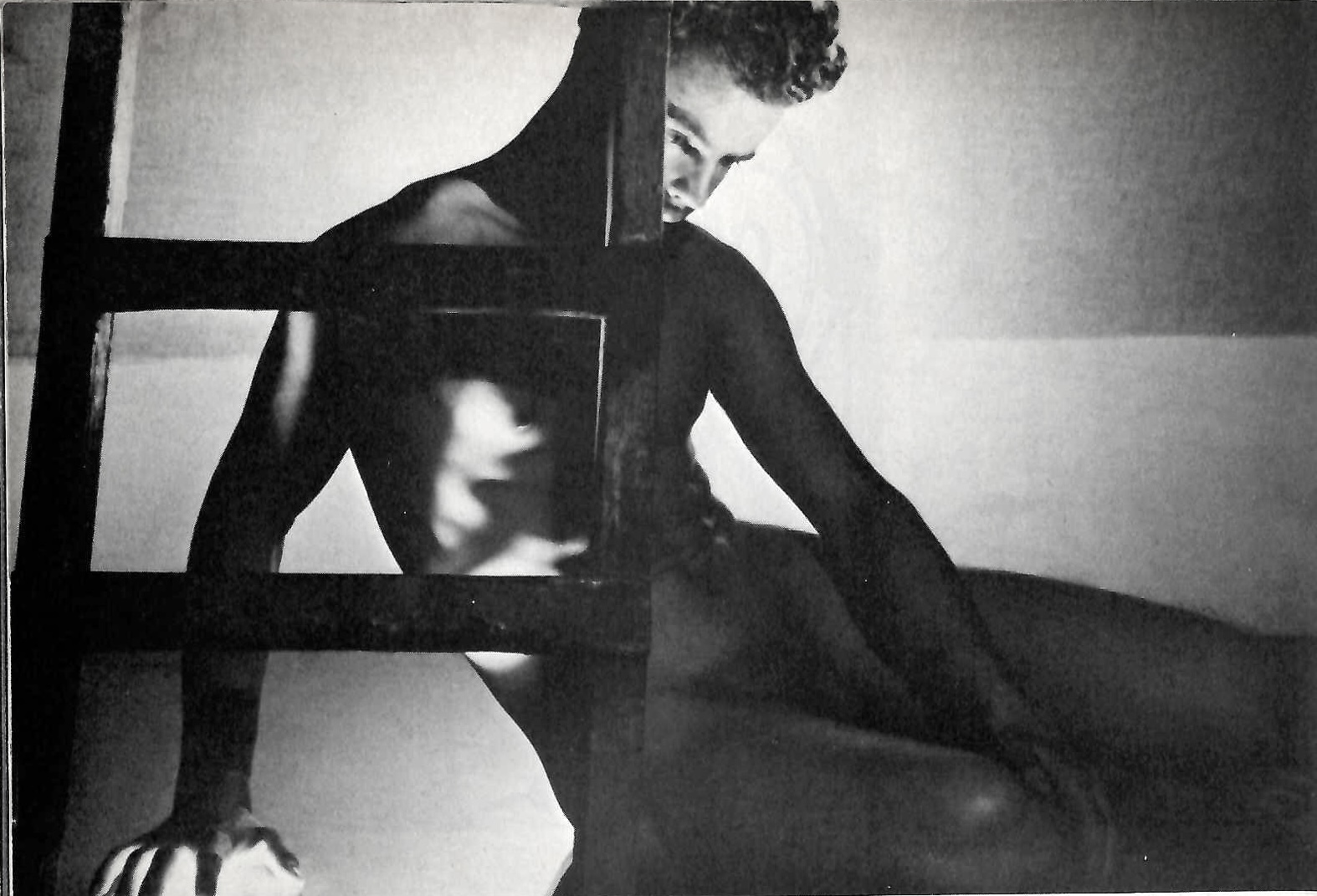
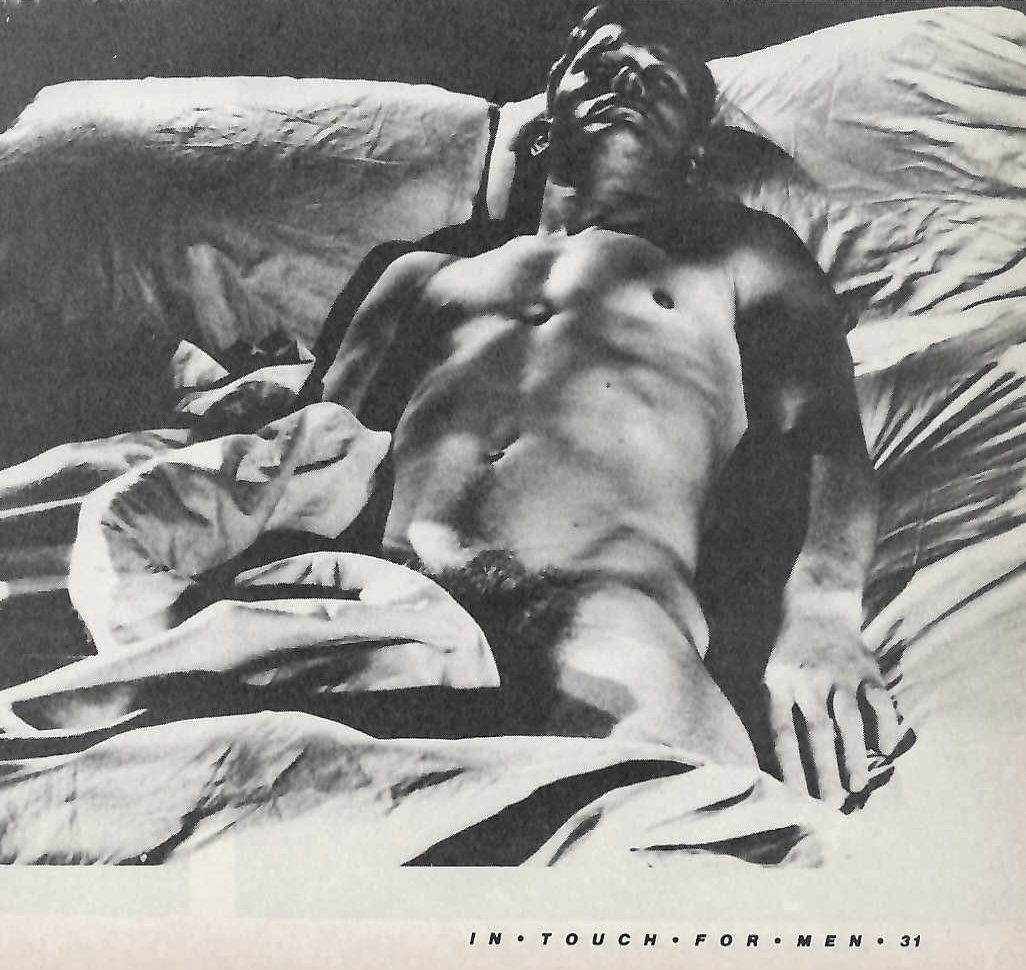
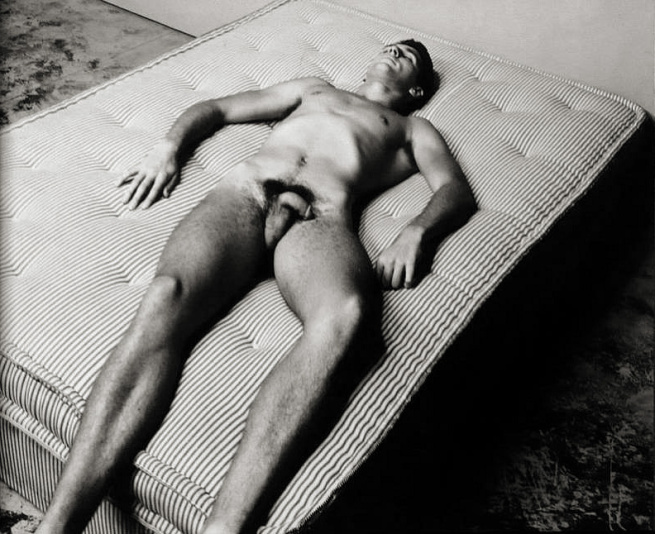
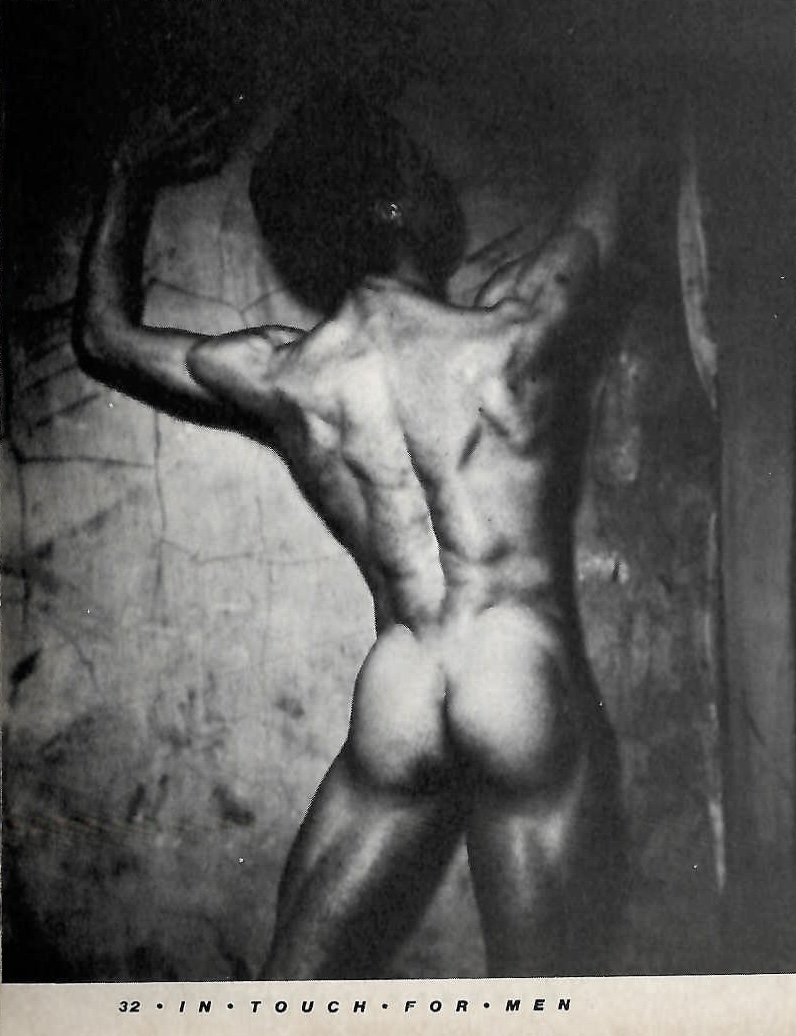
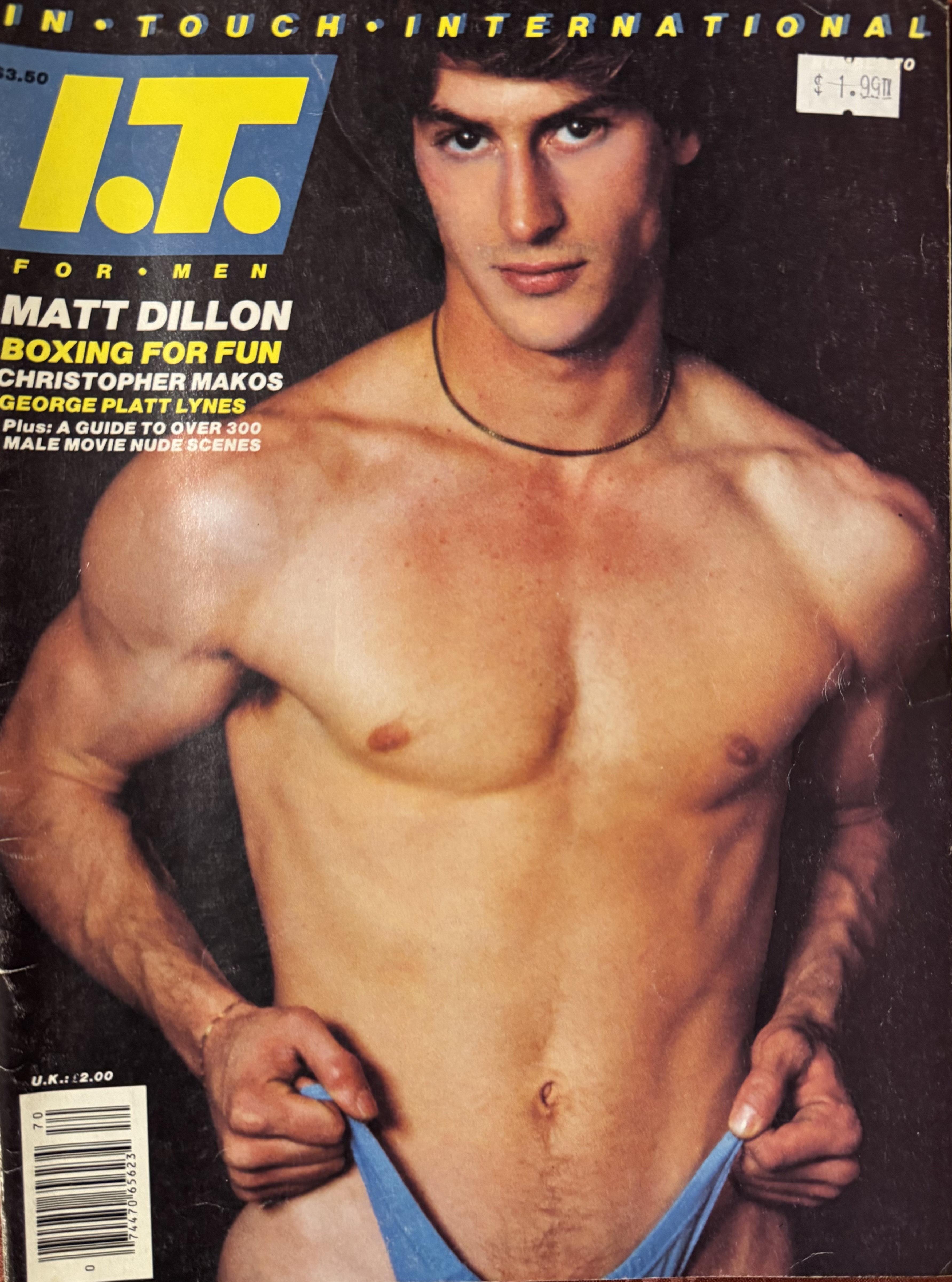
I recently acquired a copy of the August 1982 issue of In Touch magazine, which featured the photos of George Platt Lynes. Although Platt Lynes died of cancer over 25 years earlier, this was the beginning of the publication of his male nude photographs, which have now become recognized as his most memorable work.
Just a few months before, Jack Woody and Twelvetrees Press had published George Platt Lynes Photographs 1931-1955, an oversized hardcover book with introductory texts by Glenway Wescott, George Balanchine, and Lincoln Kirstein. Someone wisely permitted In Touch to publish a handful of Platt Lynes’ male nude studies, introducing his work to a whole new generation of gay men. Many of these photos were previously unpublished.
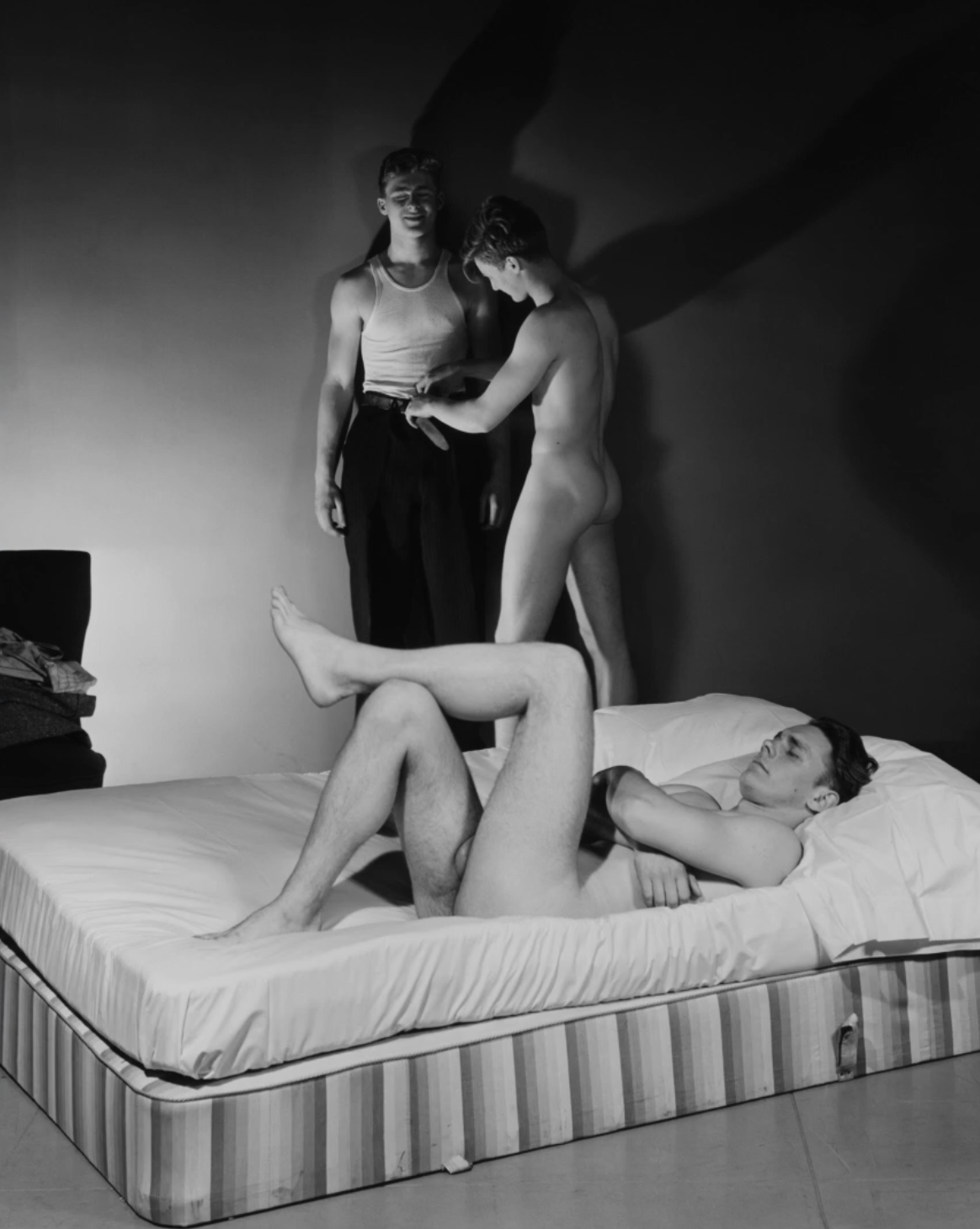
The models in the photo above are Charles “Tex” Smutney and Charles “Buddy” Stanley, subjects of some of Lynes’ most memorable photographs. Of Smutney, David Leddick wrote “few of Platt Lynes’s subjects so perfectly embodied youth and innocence as did this athletic, fair-haired figure.”
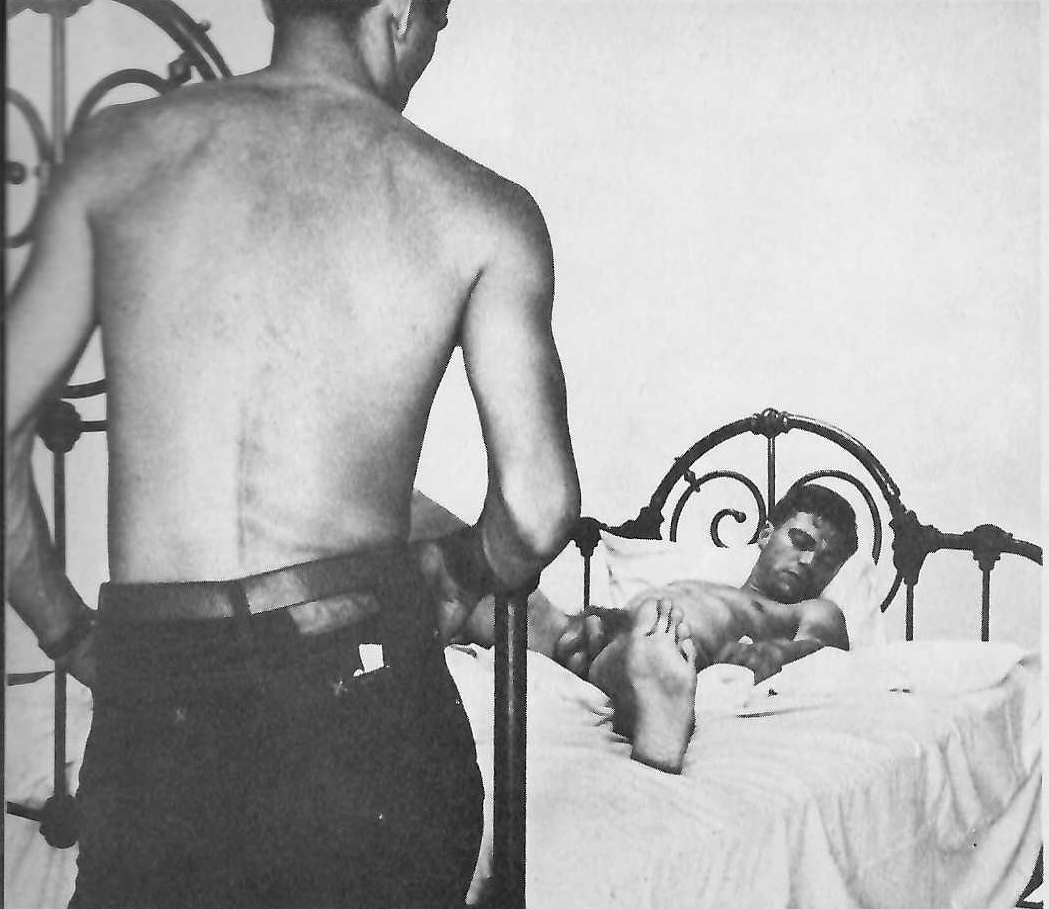
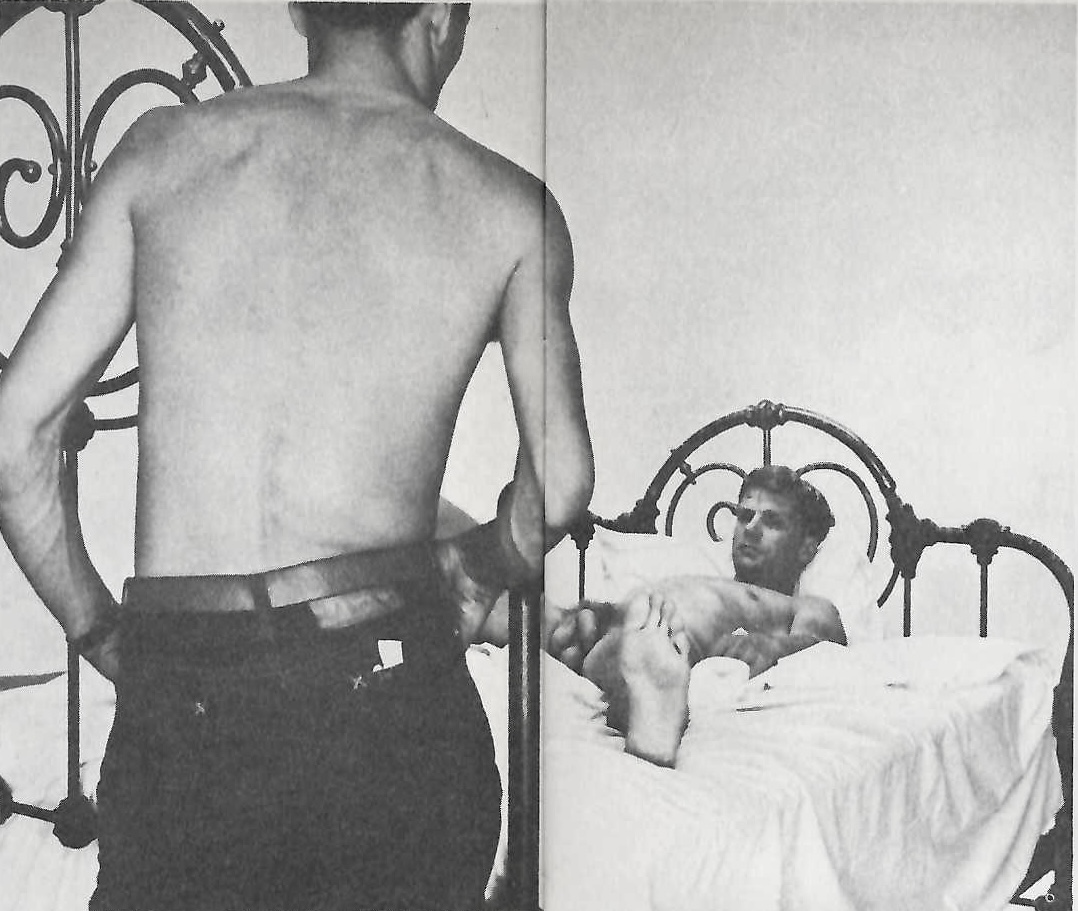
The image comes from the 30 photograph “Bedroom Series” of these two undressing and lying on a bed with a third model, Bradbury Ball. (below)
The above photo of The Ritter Brothers (ca. 1934) is now part of the Metropolitan Museum collection.
The subject of two In Touch photos is Blanchard Kennedy, a frequent model for Platt Lynes in the late 1930’s.
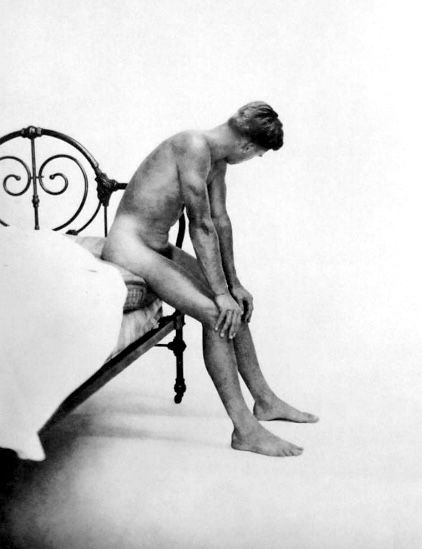
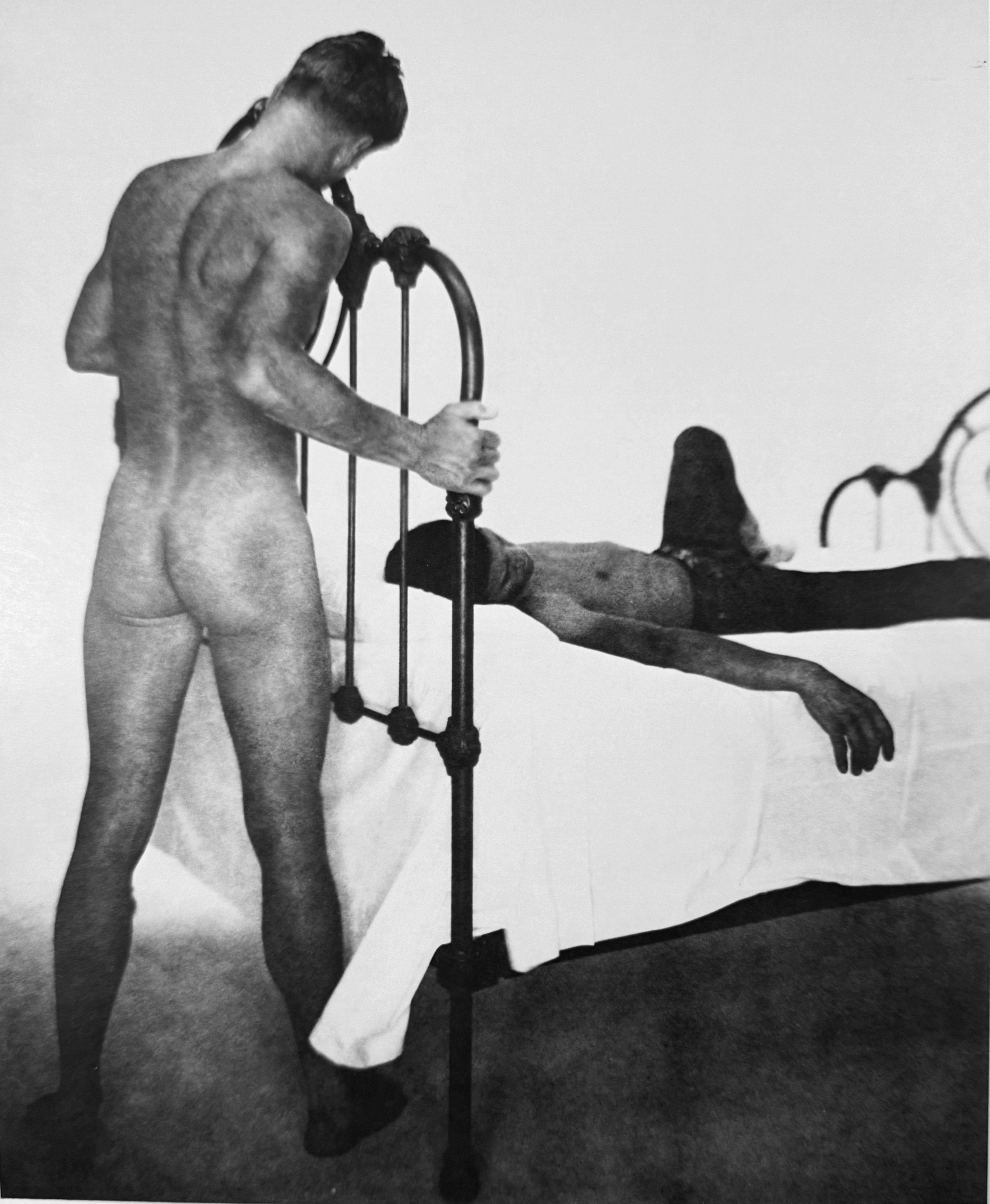
The three photos above from In Touch are part of an early 1950’s series of images taken around the bed in Lynes’ studio (see below). The models are unidentified, although the blond is sometimes misidentified as Alexander Jensen Yow or Ralph Pomeroy, two subjects who were also photographed seperately in or around the same bed.
Left to right: Gordon Hansen, Jack Fontan, Dick Beard, Unidentified
The final full-page photograph of an unidentified model illustrates the timeless artistry of Platt Lynes’ work.
Also featured in this issue is a profile of Warhol photographer Christopher Makos, who, like Platt Lynes, blurred the line between artistic and homoerotic photography.
Ladies and Gentleman, it is time once again to revisit that late great dynamic lady of song, Madame Spivy LeVoe (1906-1971), also known simply as Spivy. A lesbian entertainer, nightclub owner and character actress, Spivy has been described as “The Female Noel Coward” – to which I add “…. if he had been born in Brooklyn as Bertha Levine.”
“Why Don’t You?” is the fifth side profiled here from her 1939 album Seven Gay Sophisticated Songs. Spivy is credited with composing the music, with lyrics by Everett Marcy, who also penned “I Brought Culture to Buffalo In The 90’s”.
Marcy had a few Broadway writing credits including New Faces of 1936. It was Marcy who wrote the oft-repeated line introduced in the show by Imogene Coca: “I must get out of these wet clothes and into a dry martini.”
The song “Why Don’t You?” refers to Diana Vreeland’s column of the same name in Harper’s Bazaar magazine. It was full of random “imaginative” suggestions such as “Why don’t you wash your blond child’s hair in dead champagne, as they do in France?”
Some of the notables of the day that are referenced in the song:
Vera Zorina – a ballerina, actress, and the second wife of George Balanchine.
Cecil Beaton – photographer, diarist, painter, interior designer, and an Oscar-winning costume designer.
Elsa Maxwell – a gossip columnist, radio personality, and professional hostess renowned for her high society parties.
“The Zerbes and Bebees” refers to the original paparazzi photographer Jerome Zerbe (1904-88) and syndicated society columnist Lucius Beebe (1902-1966). The two were a couple through the 1930’s.
Peggy Hopkins Joyce – an actress and socialite, notorious for her flamboyant lifestyle with numerous affairs, engagements and six marriages.
Clifton Webb – a character actor best known for his thinly veiled “sissy” supporting roles.
Why Don’t You?
Today when all the headlines full of red lines and bread lines confuse you And the world seems bleak, don’t be blue. In Harper’s they have a column, very smart and very solemn that will amuse you. It asks you little questions to give you smart suggestions how you, too can reek with chic like the most ultra-clique, and they call it “Why Don’t You?” It asks you…
Why don’t you have your ermine muff wired for sound and use it weekends as a concertina? Why don’t you give a charity ball for the Princeton Club and raffle off Vera Zorina?
Why don’t you throw your mother an occasional bone? Why don’t you try sleeping alone? Why don’t you take the pretty blue check you won at bridge and kite it? Why don’t you dip your head in brandy and light it?
Why don’t you try wearing gold sandals backwards just for the sheer agony of it? Why don’t you send last year’s negligée to Cecil Beaton? He’d love it. So they want you to try decorating your flat with bundles of hay… Well they know what they can do with Harper’s, why don’t they?
Why don’t you try going to Elsa Maxwell’s parties as yourself for a change? Why don’t you try wearing a hat that won’t make your husband look strange? Why don’t you develop a bright smile by putting an electric bulb behind each tooth? Why don’t you give a testimonial dinner for Hitler in a telephone booth?
Why don’t you get out of town before you come down with a compound case of heebie jeebies? Why don’t you listen to the birds and bees instead of the Zerbes and Bebees? So they want you to roll up your rugs and cover your floors with broccoli on the first warm day. Well they know what they can do with Vogue too…. Why don’t they?
Why don’t you have a stag line composed of the ex-husbands of Peggy Hopkins Joyce? Why don’t you cross breed carrier pigeons with parrots so they can deliver messages by voice? Why don’t you try throwing Clifton Webb over your left shoulder and making a wish? Why don’t you fill your guest’s finger bowls with invisible tropical fish?
Why don’t you try opening your eyes in the middle of a kiss? Why don’t you cancel your subscriptions to magazines like this? Why don’t you tear everything off your hat and stamp on it? Why don’t you take out a homestead in Montana and go “camp” on it?
So they want you to promise to slap your own face two hundred times a day? Well tell them you’ll have none of it. Tell them you’re through with their “Things To Do” and they can all take their Harper’s and… love it.
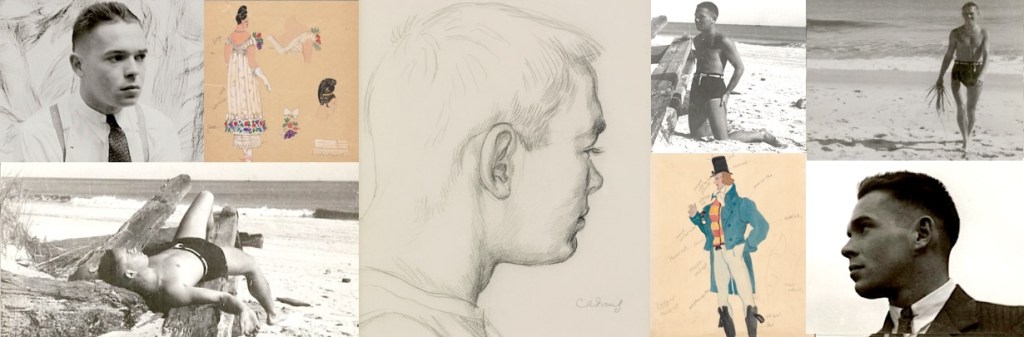
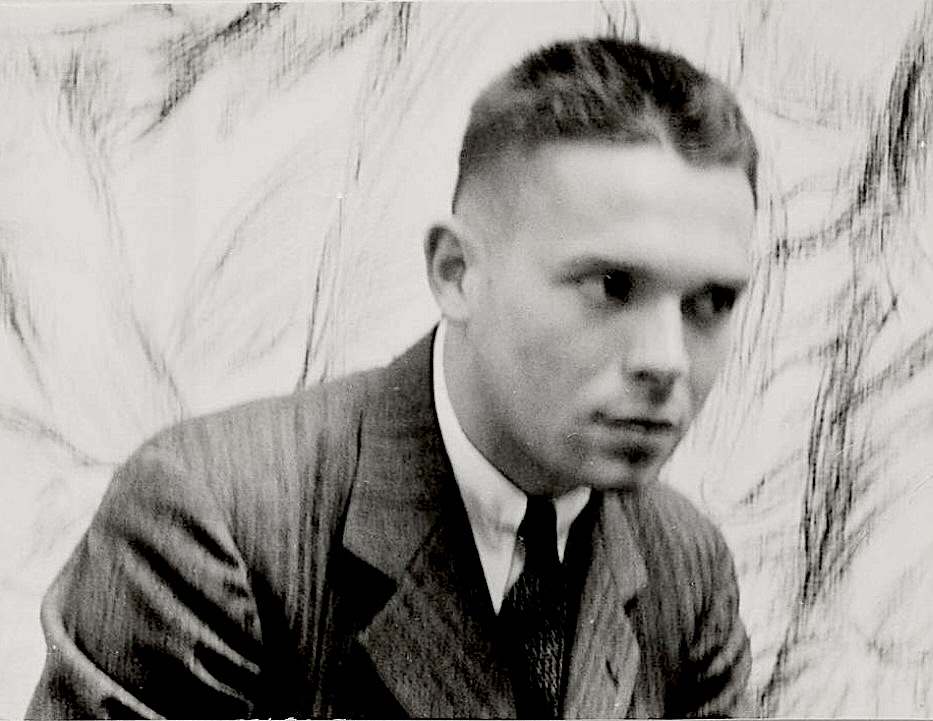
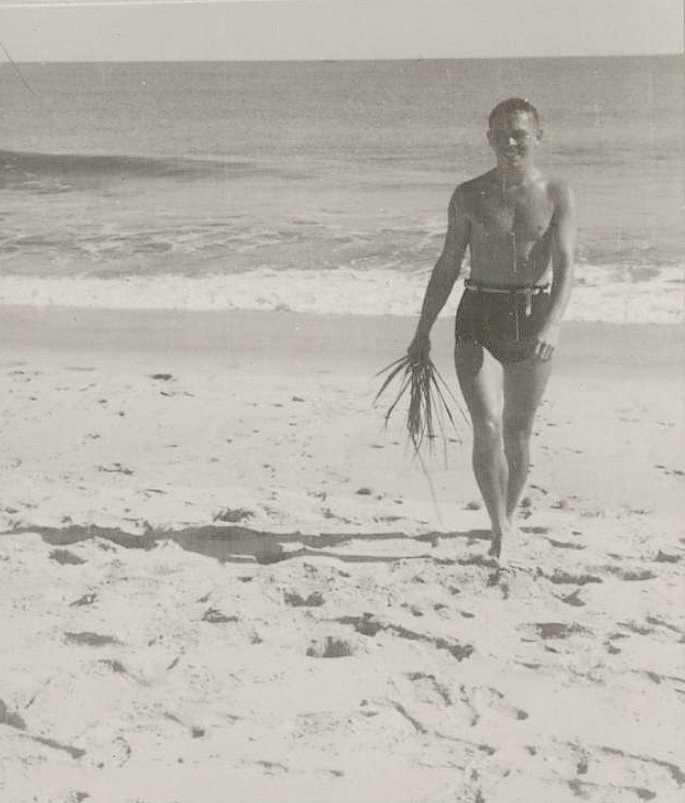
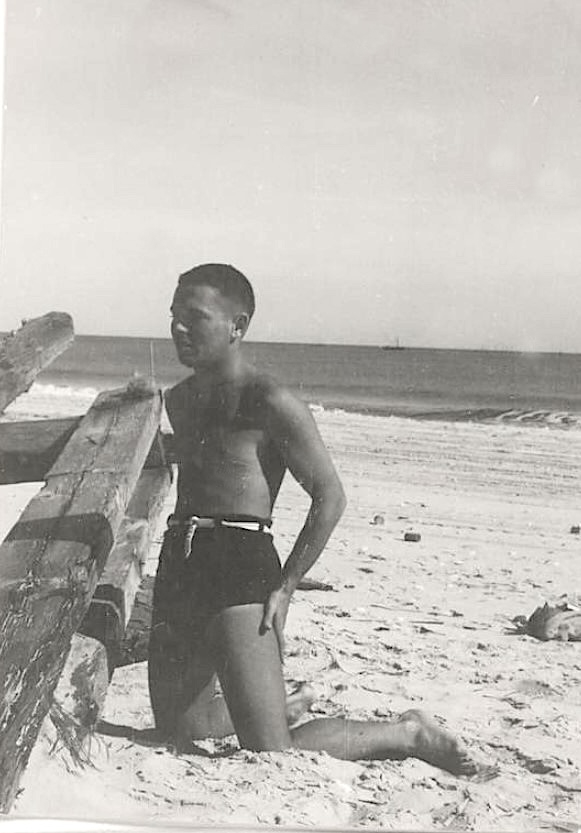
Including Forrest Thayer in the Artist’s Muse series may seem to be a bit of a stretch. He was not a subject of George Platt Lynes (as far as I know) and was only captured by the PaJaMa photo lens during a short period in the late 1930’s. Nevertheless, the talented costume designer still deserves a mention.
Forrest Thayer photographed in the PaJaMa studios at 5 St. Luke’s Place (1938)
Forrest Glenn Thayer, Jr. was born on May 29, 1916 in Sag Harbor, New York. He was the first child of Forrest and Helen Sigmund Thayer. A younger sister, Helen, was born in 1919. His father was the assistant superintendent of the nearby Fahys Watch Case Factory. He later moved up to superintendent in the early 1920’s.
Both parents were active in the Sag Harbor community, appearing in local stage productions and soloing in the church choir. Mrs. Thayer was also president of the bridge club. When the Fahys Watch Case Factory was sold to Bulova in 1934, Forrest Sr. found work with the Keystone Watch Case Company in New Jersey. He moved to Riverside and would visit his wife and children on the weekends.
Forrest Jr. graduated from Pierson High school in 1933 and went on to study at the New York School of Fine and Applied Arts, now known as Parsons School of Design.
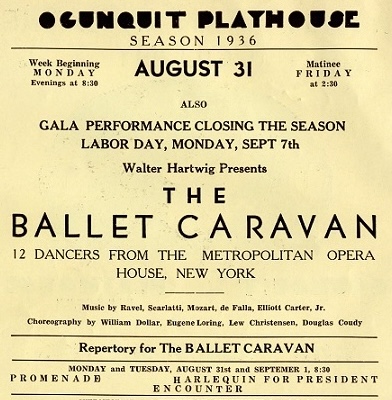
In 1936, Lincoln Kirstein organized Ballet Caravan, a company expressly dedicated to the commission and production of ballets with American themes. These would be created by American composers, choreographers, designers and dancers. The company also provided off-season summer employment for his American Ballet company dancers, which included Kirstein’s paramour, José Martinez.
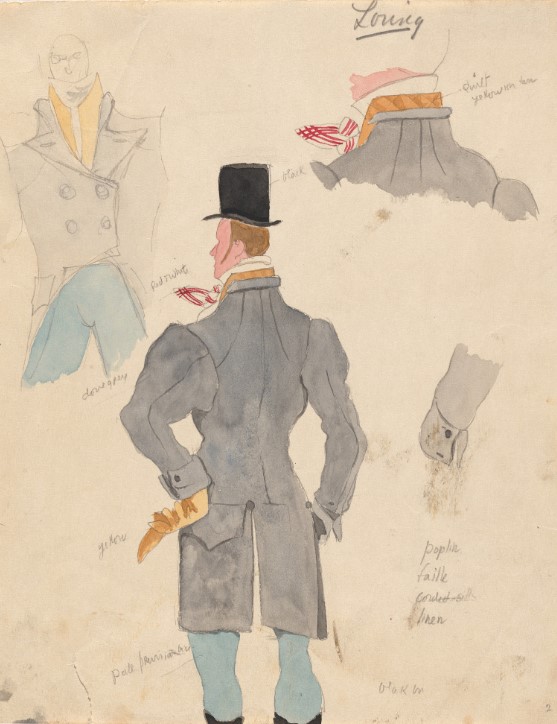
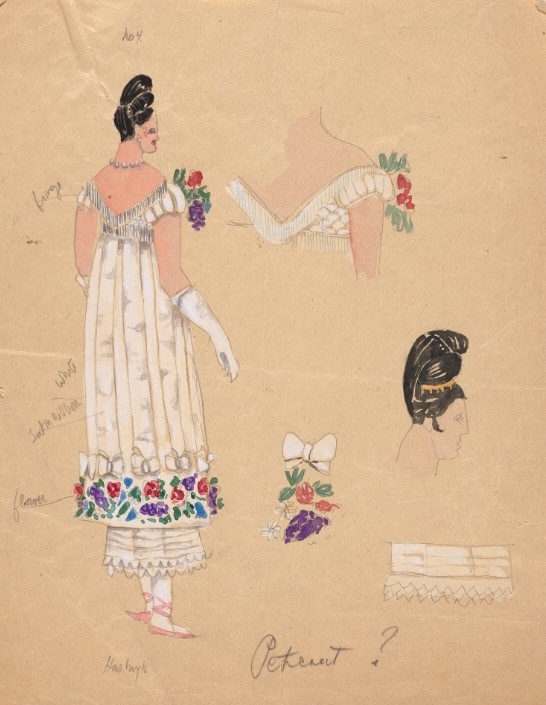
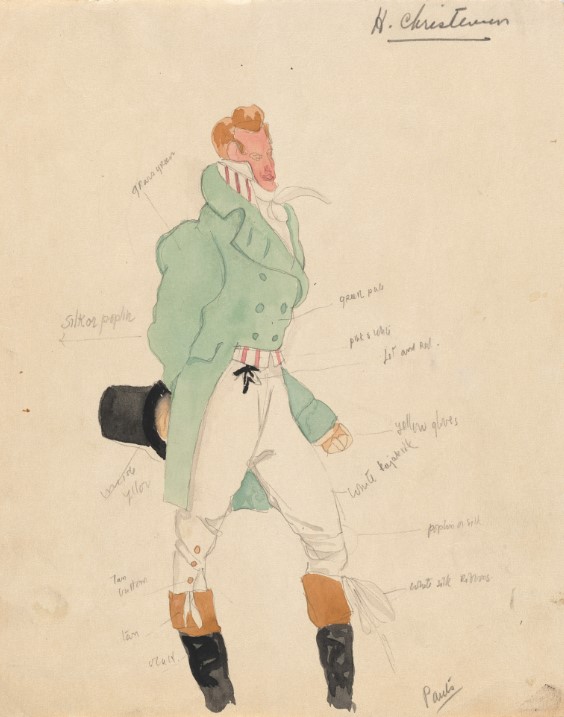
One of dancer William Dollar’s first forays into choreography was Ballet Caravan’s production of Promenade, set to Maurice Ravel’s Valse Nobles et Sentimentales. 20-year-old Forrest Thayer designed the costumes for the production, which featured dancers Eugene Loring and brothers Harold and Lew Christiansen.
Promenade costume sketches by Forrest Thayer with photos by George Platt Lynes (1936)
Sag Harbor Express, 5/12/1938
Paul Cadmus and Jared French would each take a turn designing sets and costumes for Ballet Caravan: Cadmus with Filling Station (choreographed by Lew Christiansen) in 1937 and French with Aaron Copeland’s Billy The Kid (choreographed by Eugene Loring) in the Fall of 1938. Between those productions, the creative team took a trip out to Fire Island where the PaJaMa collective would retire each summer.
Forrest Thayer, Paul Cadmus and José Martinez at the Saltaire, Fire Island Ferry (1938)
Forrest Thayer frolicking on Fire Island with Paul Cadmus, Jared French and JoséMartinez (1938)
The PaJaMa photo “After The Hurricane” features (l-r) Jared French, Lincoln Kirstein, José Martinez, Forrest Thayer and probably Paul Cadmus.
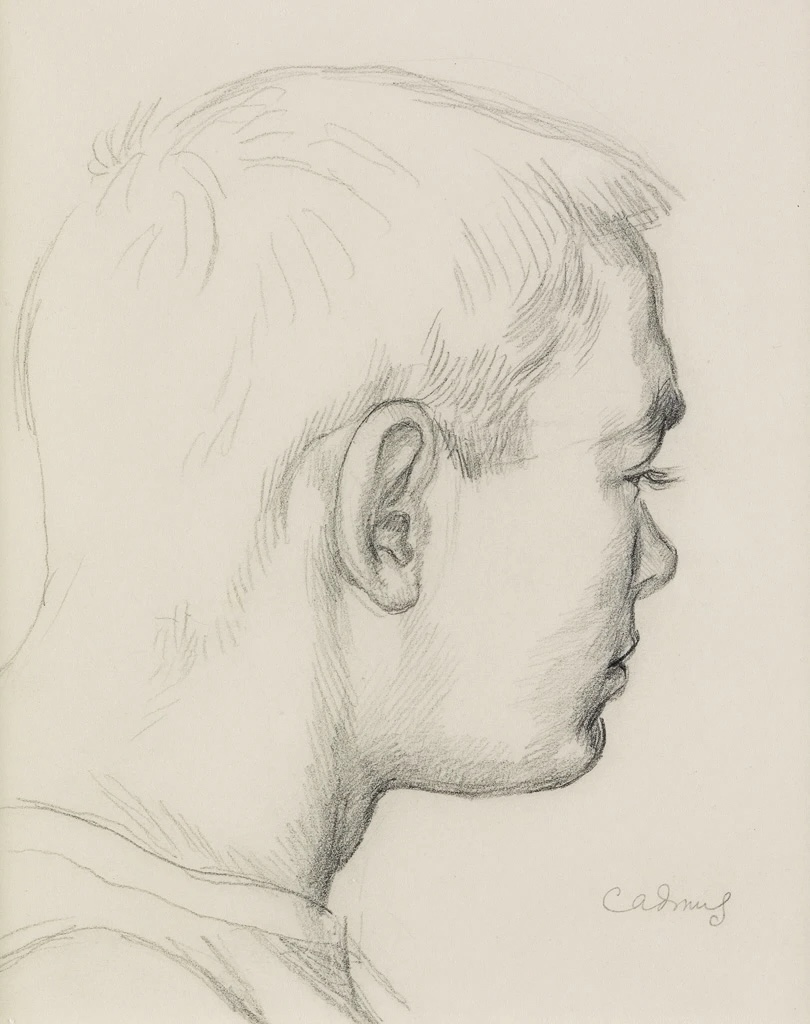
Forrest Thayer sketch by Paul Cadmus
Thayer spent the rest of the summer of 1938 as the scenic designer for the Studio Players in East Hampton, L.I. He continued to find freelance work regionally as a scenic and costume designer. In 1940, he was the scenic designer for the Provincetown Players in New York City. He spent the summer of 1941 working with the Hilltop Players in Ellicot City, Maryland.
During World War II, Thayer served as a staff sergeant in India and Burma from February, 1942 through December, 1945. He landed back in New York after the war and resumed his design career.
In the spring of 1947, Thayer tried his hand at co-directing a revival production of Percy Shelley’s The Cenci at the Equity Library Theater. Reviews were not favorable. During that summer, he directed an adaption of Jean Paul Sartre’s No Exit for the Maverick Players in Woodstock, New York.
New York Daily News, July 23, 1950
Back in New York City, his work with wardrobe continued. Over the next 5 years, he was a part of the following productions:
1947 – Crime And Punishment – Broadway with John Geilgud & Lillian Gish (assistant to Costume Designer Lester Polakov) 1948 – Inside U.S.A. – Broadway (assistant to costume designer Eleanor Goldsmith) 1948 – Cole Porter’s Kiss Me Kate – Broadway (assistant to costume designer Lemuel Ayers) 1949 – Noel Coward’s Present Laughter tour starring Edward Everett Horton (costume design) 1949 – The Philadelphia Story tour (costume design) 1949 – Garson Kanin’s The Smile Of The World – Broadway with Ossie Davis & Ruby Dee (costume design) 1950 – Cole Porter’s Out Of This World – Broadway (assistant to costume designer Lemuel Ayers) 1950 – Garson Kanin’s The Live Wire – Broadway (costume design) 1950 – The Jack Carter Show – NBC Television (costume design) 1951 – Music In The Air – Broadway (assistant to costume designer Lemuel Ayers)
In the fall of 1951, a week before the Broadway opening of Music In The Air, Thayer drove out to Sag Harbor for a visit with his mother. Wherever his career took him, he made frequent return visits to the family home on Jermain Avenue. He spent the evening of Saturday, September 29th in East Hampton visiting friends. As he was driving back to Sag Harbor in the early morning hours of Sunday, September 30th, he was involved in a single car accident. It was reported that he fell asleep at the wheel and struck a tree. He died the next day at Southampton Hospital.
Sag Harbor Express 10/4/51
The Thayer home is just a half mile down the road from Oakland Cemetery. Forrest’s funeral was held at the house, and he was interred with military honors at the cemetery. His parents are now buried there with him.
Eight of Forrest Thayer’s costume sketches from Promenade are a part of the Museum Of Modern Art collection, courtesy of Lincoln Kirstein.
Paul Cadmus & Jared French, Fire Island, PaJaMa (1940)
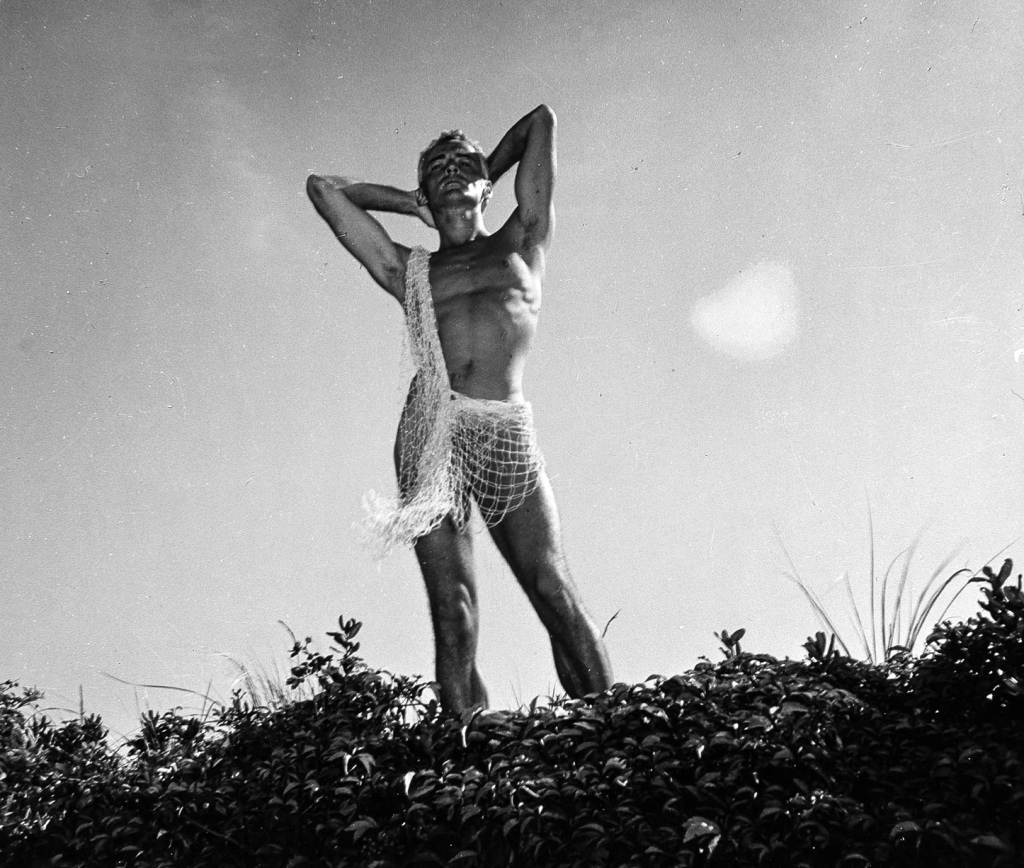
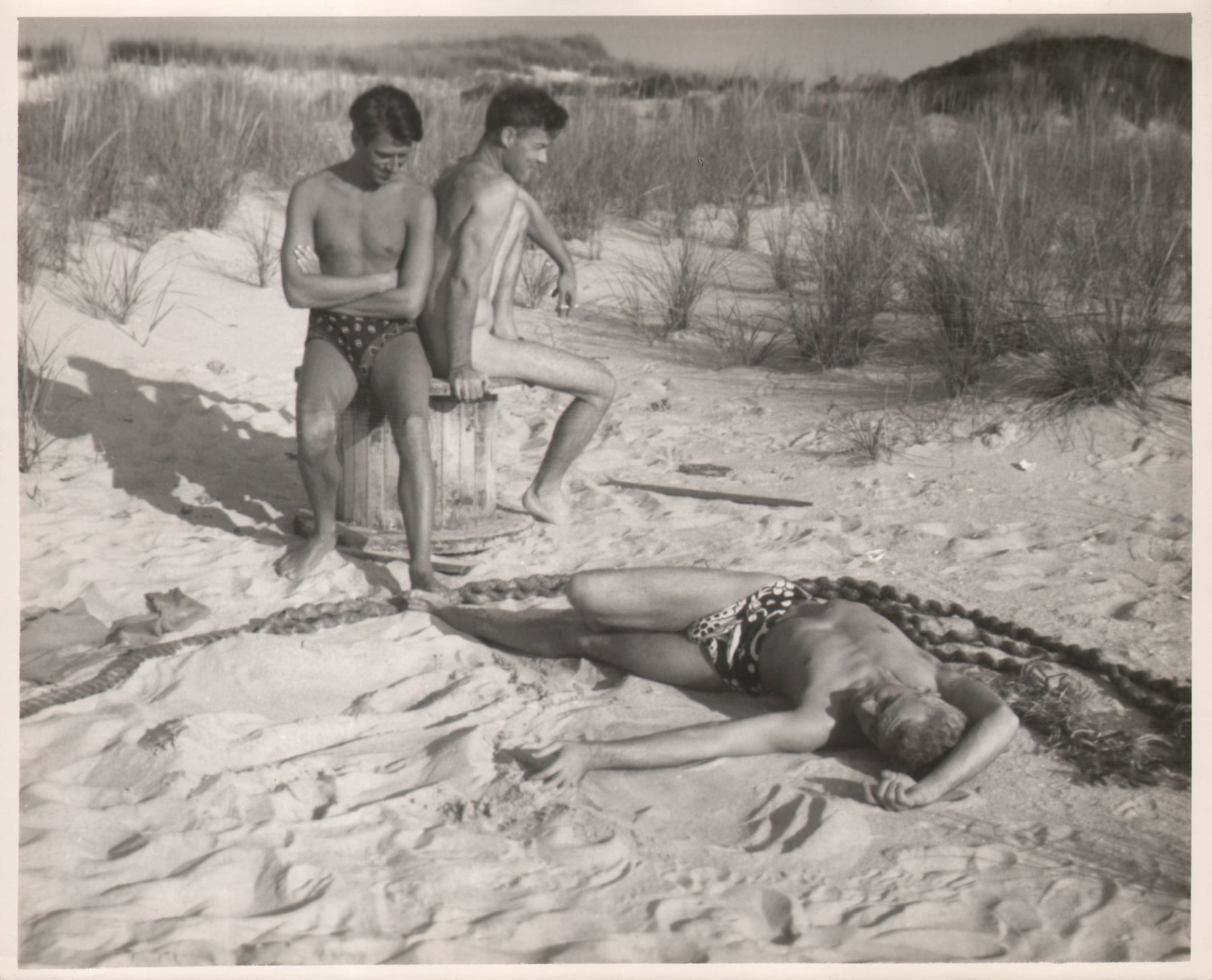
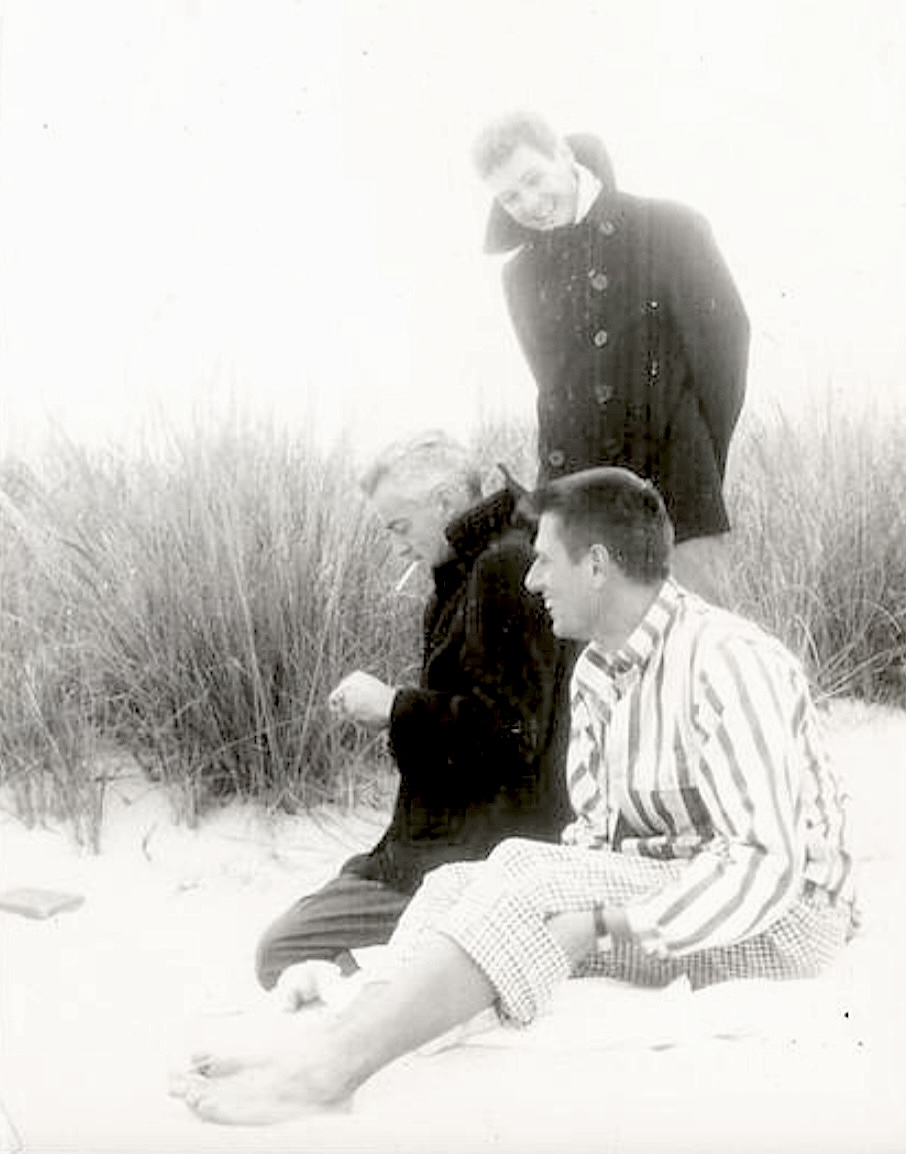
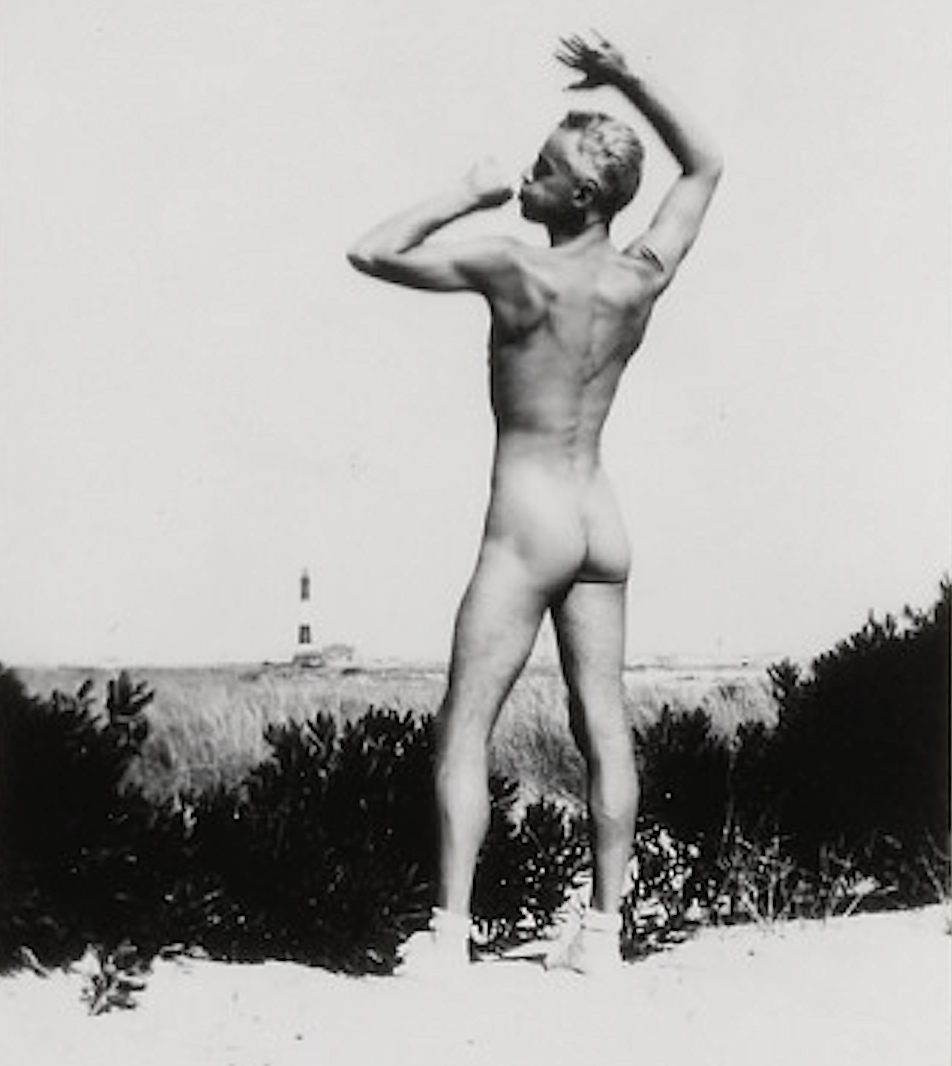
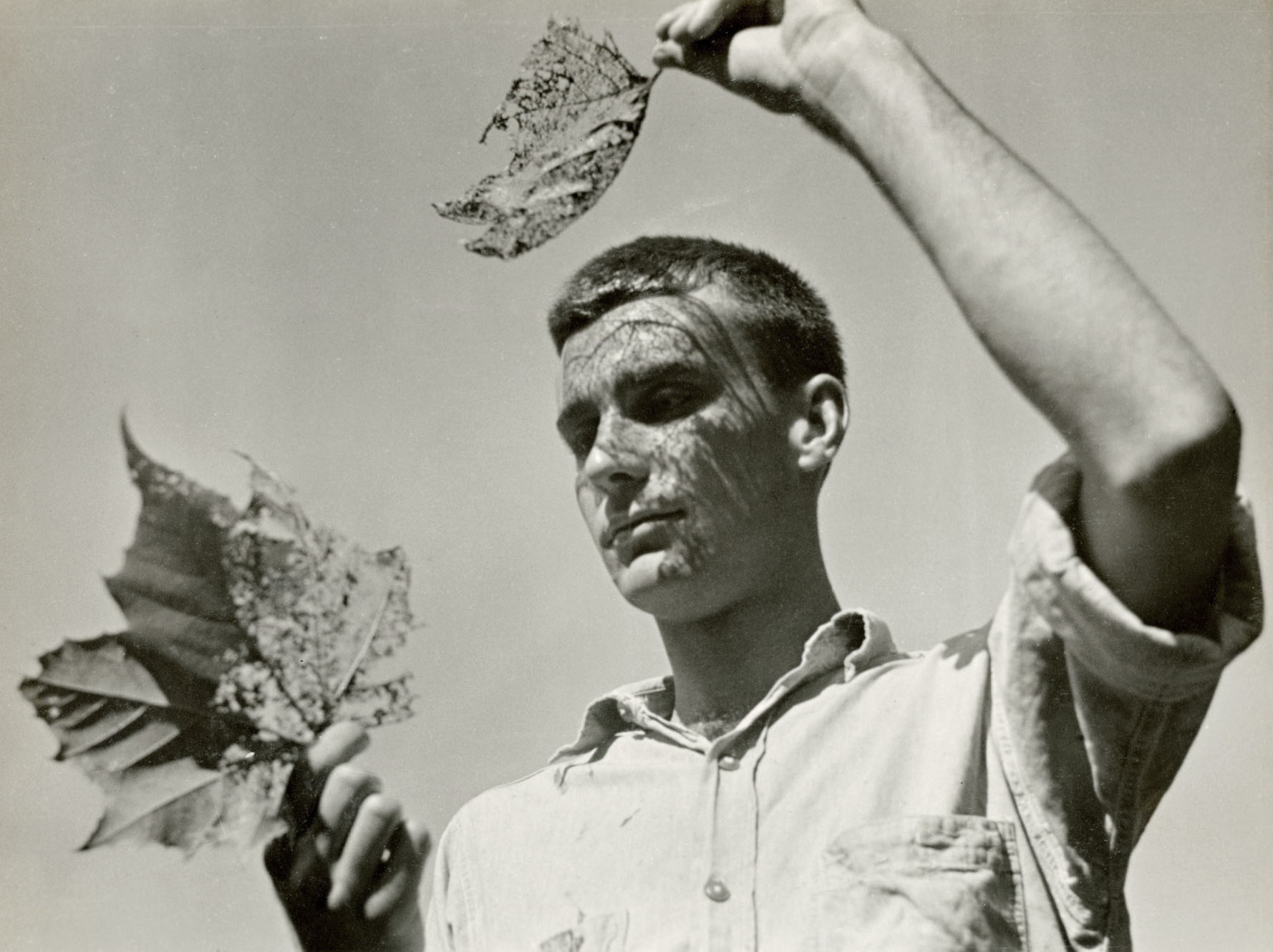
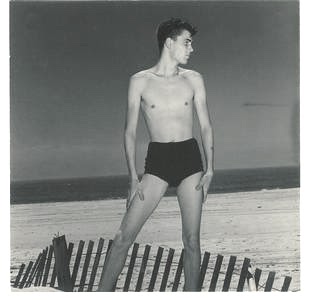
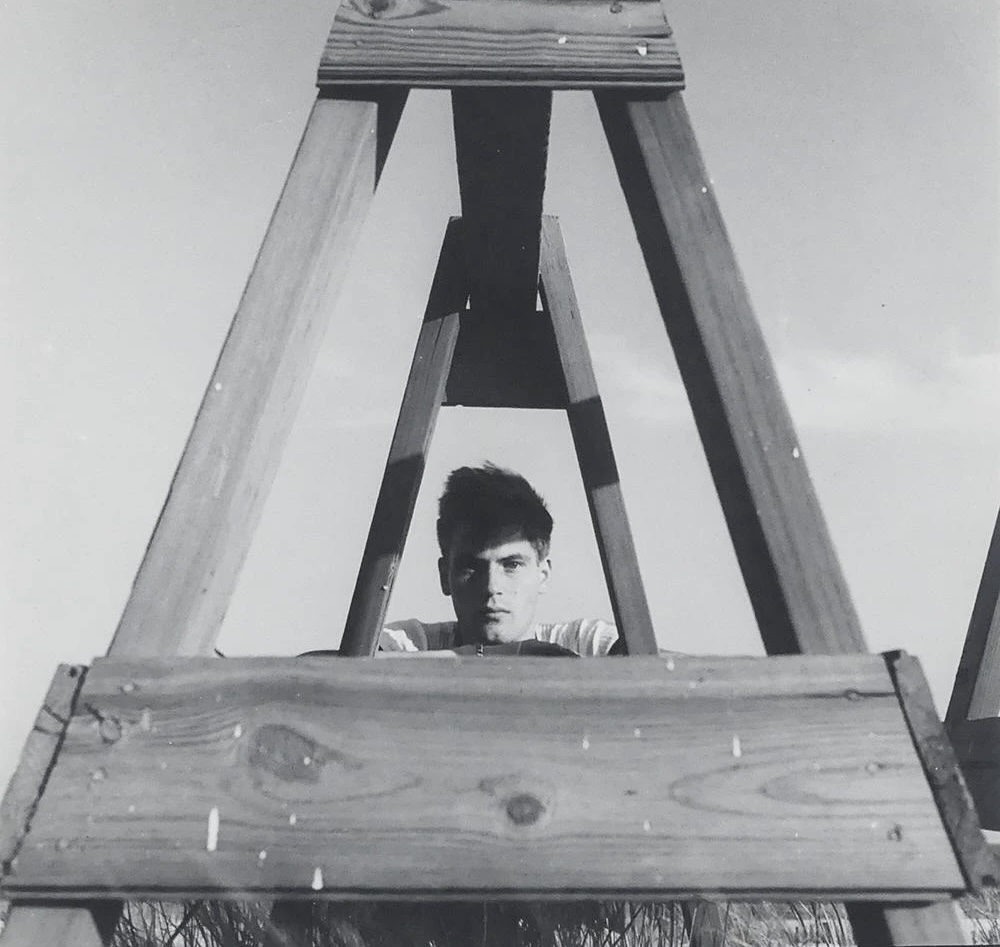
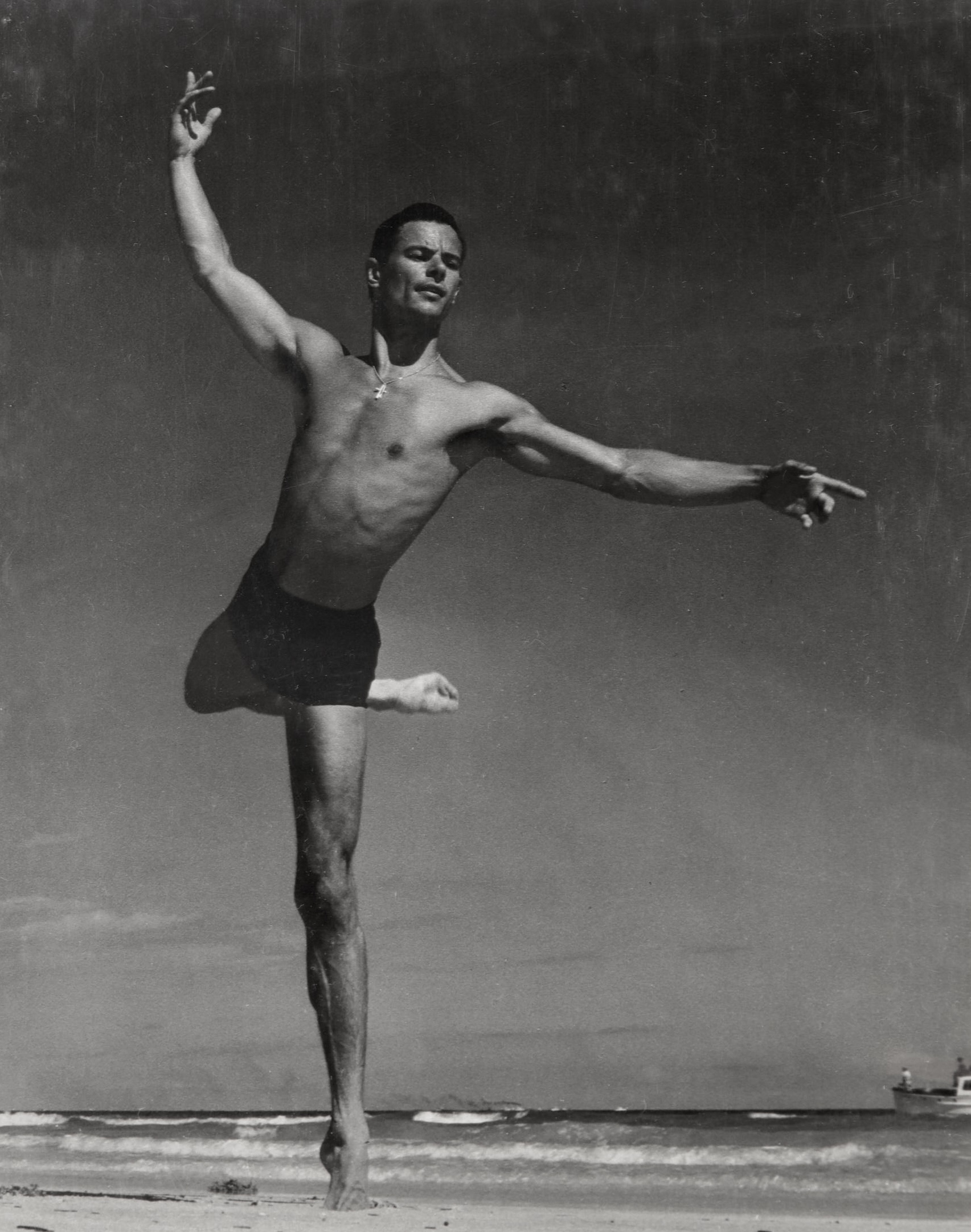
I have previously written about The PaJaMa collective’s Fire Island summers. They were frequently joined by fellow artists George Platt Lynes and Bernard Perlin, as well as a parade of friends and lovers, performers and literary types from their New York social scene. They were almost exclusively attractive young gay men who served as models and muses for the artists.



























































 Brian Ferrari's Blog