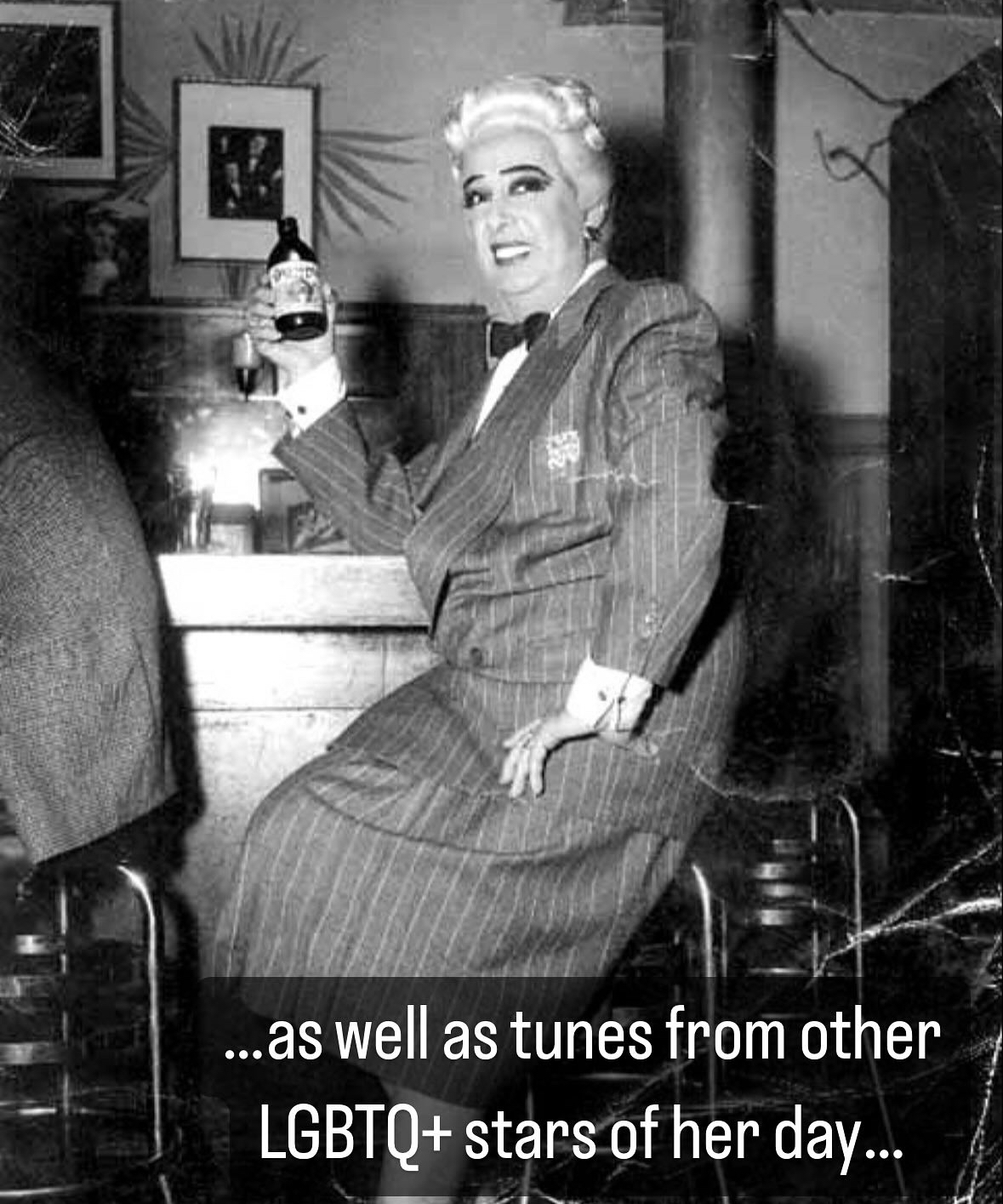
Madame Spivy is having quite a renaissance in 2025, thanks to the efforts of Ms. Ana Matronic and her newly launched Good Time Sallies podcast. As previously mentioned, Madame Spivy is the subject of the first two episodes. I joined Ms. Matronic to discuss the dynamic lady of song, stage and screen. You can find those here.
The subject of episodes #3 & 4 is singer/nightclub owner Ada “Bricktop” Smith, who we covered briefly in our post about Neeka Shaw, The Forgotten Showgirl.
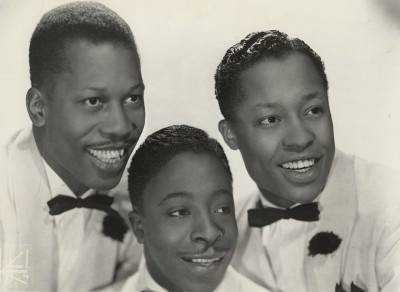
And if that’s not enough for you… Ms. Matronic has created Good Time Sallies: Radio Spivy on Mixcloud, so you can hear many of the songs discussed on the podcast. Besides a generous serving of Madame Spivy’s stylings, you can also hear recordings by Spivy’s friends, influences and artists who appeared at Spivy’s Roof. Included on the playlist are Fanny Brice, Sophie Tucker, Liberace, Martha Raye, Thelma Carpenter, Rae Bourbon, The Three Flames, Bea Lillie and many more!
Click here for Radio Spivy and hear some fine examples of classic diseuse delivering sophisticated songs.
From the website: Good Time Sallies tells the stories of impactful people who have been left in the shadows as footnotes or minor characters in somebody else’s story, but each of whom made waves, broke molds, and dared to live life as they pleased.
With every episode, Ana Matronic centers these remarkable people and shares their inspiration with the world. From people of letters to ladies of leisure, from bawdy babes and badass boozehounds to Queens on the scene to queens of the obscene, this vibrant historical podcast is all about celebrating the Good Time Sally in us all who is here to take a shot and make her mark.
As you already know, Spivy is one of our favorite subjects here on the blog. Be sure to check out the latest post, which covers her film and television appearances.
I have been an admirer of Ana Matronic since the days when her band, Scissor Sisters was a local group playing around my East Village neighborhood. Her presence, her voice, her connection with the audience as “Mistress of Ceremonies” were a major factor in why I went on to see the band perform live 20 times before their hiatus in 2012. There’s an unconfirmed rumor that I have the band logo tattooed on my ankle.
With Ms. Matronic at the Ice Palace in Cherry Grove, Fire Island (7/2024)
I couldn’t imagine a Scissor Sisters reunion without her. When a UK tour was announced late last year, Ms. Matronic issued a statement explaining why she would not be taking part, teasing an upcoming podcast series that prevented her from participating.
As someone who embraces my own inner Nerd, I was fully on board with her choice to focus on her current passion project. What I did not know at the time was that I would get to be a part of this next chapter.
And now it is time for the big reveal: Good Time Sallies is here!
From the website: Good Time Sallies tells the stories of impactful people who have been left in the shadows as footnotes or minor characters in somebody else’s story, but each of whom made waves, broke molds, and dared to live life as they pleased.
With every episode, Ana Matronic centers these remarkable people and shares their inspiration with the world. From people of letters to ladies of leisure, from bawdy babes and badass boozehounds to Queens on the scene to queens of the obscene, this vibrant historical podcast is all about celebrating the Good Time Sally in us all who is here to take a shot and make her mark.
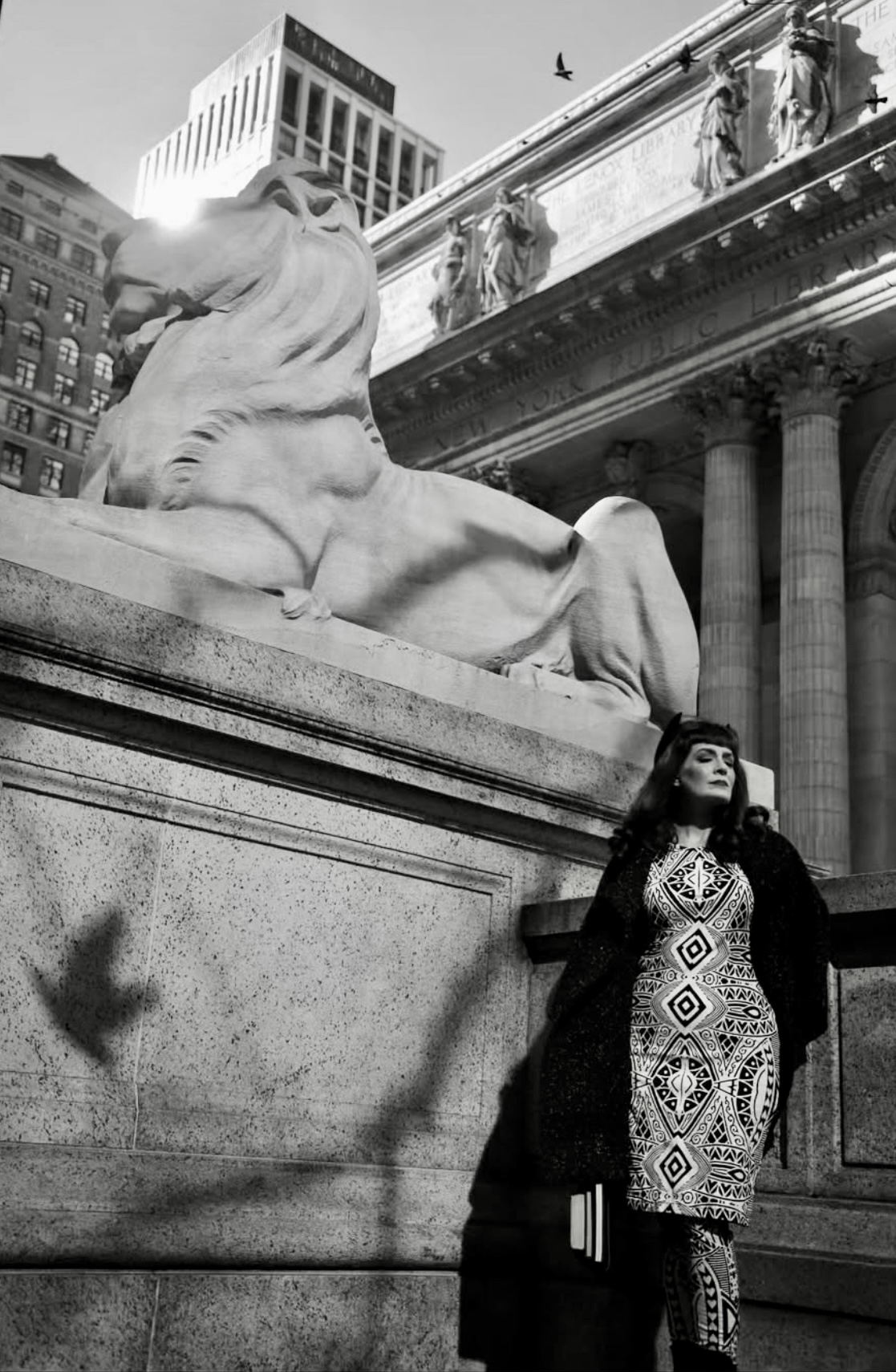
Photos: Krys Fox @krysfoxphoto
Of course, telling the stories of notable people who have been left in the shadows is one of the reasons this blog exists. On the first two episodes of Good Time Sallies, I join Ms. Matronic to reintroduce that dynamic lady of song, stage and screen, Madame Spivy LeVoe. As you already know, Spivy is one of our favorite subjects here on the blog. Be sure to check out the latest post, which covers her film and television appearances.
I hope you enjoy the podcast as much as I did recording it. Thanks again to Ms. Matronic and Lucy Winter for inviting me to take part.
Also: Click here for Radio Spivy on Mixcloud and hear some fine examples of classic diseuse delivering sophisticated songs.
Ladies and Gentleman, it is time once again to revisit that dynamic lady of song, stage and screen, Madame Spivy LeVoe (1906-1971), also known simply as Spivy. While previous posts have focused on specific songs recorded by the lesbian entertainer, nightclub owner, and character actress, this time around we have an overview of her work in film and television from 1959-1967.
“The Roof is closed – gone forever, and my heart is broken.” Spivy wrote to a friend in August, 1951 after her nightclub had shuttered. The once popular top floor venue at 139 East 57th street had fallen into decline after a decade as one of the top Manhattan night spots. The demise of Spivy’s Roof was in part due to Spivy’s increasing stage fright, which in turn escalated her drinking. The combination often prevented her from delivering the two scheduled nightly performances audiences expected. Paul Lynde would later discuss this on The Tonight Show in 1976.
Spivy spent the next 6 years performing throughout Europe, where she opened and closed clubs in Paris and Rome. In London she appeared at the prestigious Café de Paris. These ventures eventually proved unsuccessful and she landed back in New York by 1957. An engagement at the Blue Angel would be her final New York City cabaret run.
Spivy explained her inability to conquer the fear of nightclub audiences. “I have tried everything but psychiatry – even hypnosis – but I couldn’t lick it.
“Funny thing, I have absolutely no stage fright in front of a camera, no matter how many people are on the set. So I guess this is what I’ll be doing from now on.”
It doesn’t take a psychiatrist to piece together that her insecurities performing in front of a live nightclub audience proved insurmountable as her popularity waned. She had entertained audiences since the 1920’s, but 30 years later her style of sophisticated songs had become a relic of a bygone era. Acting roles in front of a camera proved to be a less vulnerable alternative.
Charlie Chaplin reportedly sought to have Spivy play a character based on Elsa Maxwell in his 1957 film A King In New York. Newspaper columns at the time reported that the production company was unable to secure a work permit for her to travel to the UK for filming.
Her first film was The Fugitive Kind in a scene with Marlon Brando and Joanne Woodward, which was not a bad place to start.
“You come back alone some time, ya hear?” Spivy with Marlon Brando and Joanne Woodward in The Fugitive Kind. (1959)
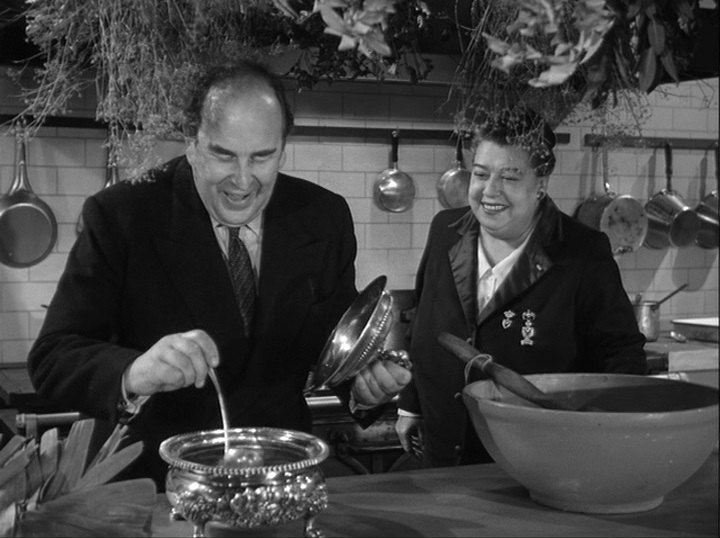
This led to her being cast in the most memorable television role of her career opposite Robert Morley in an episode of Alfred Hitchcock Presents titled “Specialty of the House.” Spivy plays “Spirro,” the piano-playing proprietress of an exclusive restaurant with a dubious main course.
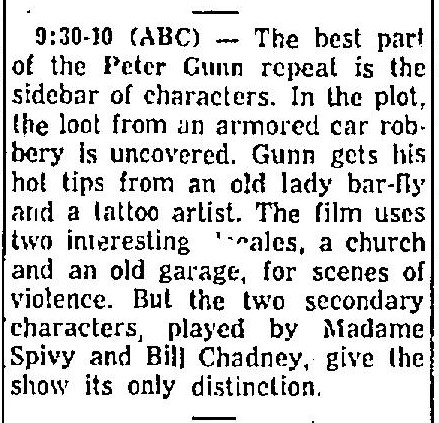
“Bourbon breeds togetherness…” Flo (Spivy) tips off Peter Gunn (Craig Stevens). (1960)
There is a sameness to the majority of Spivy’s film and television acting roles. She’s typically the barkeep or bouncer at a downstairs dive bar in a sketchy part of town. She usually has just one scene where she kicks someone out of the bar, or delivers a key piece of information to move the plot along. Or both. She is always smoking. She may be shady or morally ambiguous, but mostly she just don’t want no trouble, ya hear?
“Have you lost your feeble mind? He’s still got his baby teeth!” Spivy with Brandon DeWilde & Evans Evans in All Fall Down (1962).
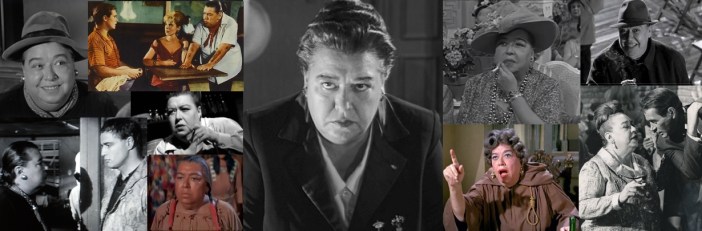
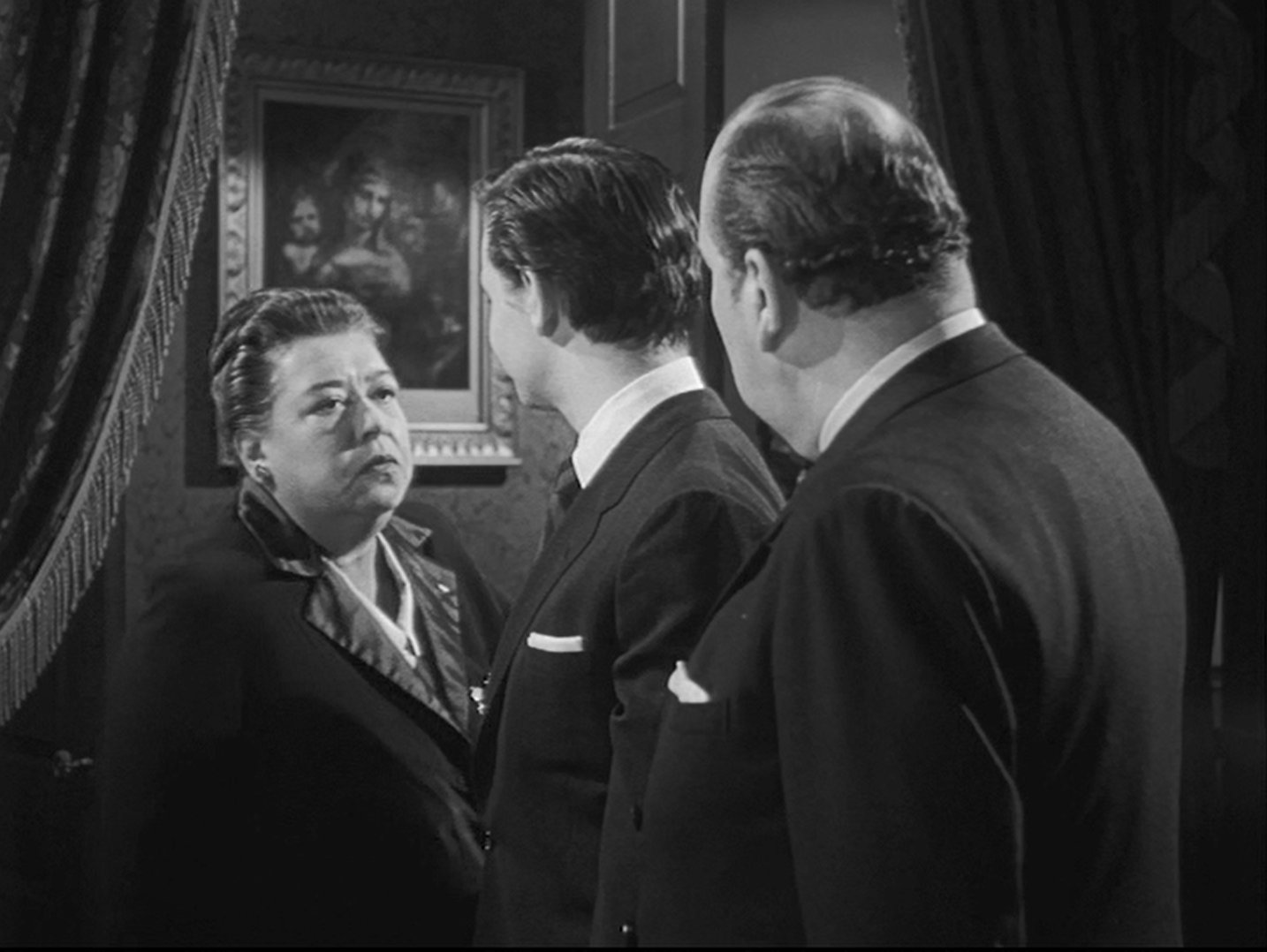
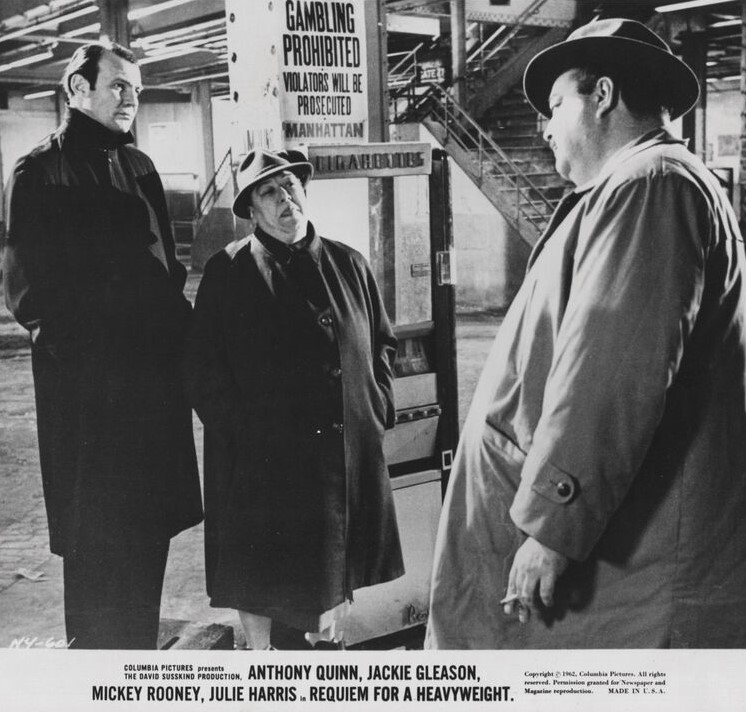
Spivy’s most significant film role was as Ma Greeny in 1962’s Requiem For A Heavyweight with Anthony Quinn and Jackie Gleason. Her tough, androgynous mob boss made an indelible impression on viewers.
“Take a good look in the mirror and then say goodbye to what you see.”
Spivy as The Axe Lady, The Wild Wild West (1966)
One of Spivy’s atypical performances was a 1966 appearance on The Wild Wild West with Robert Conrad. Spivy plays The Axe Lady, a member of a serial killer tribunal who meets her demise at dinner with a steak knife in the back.
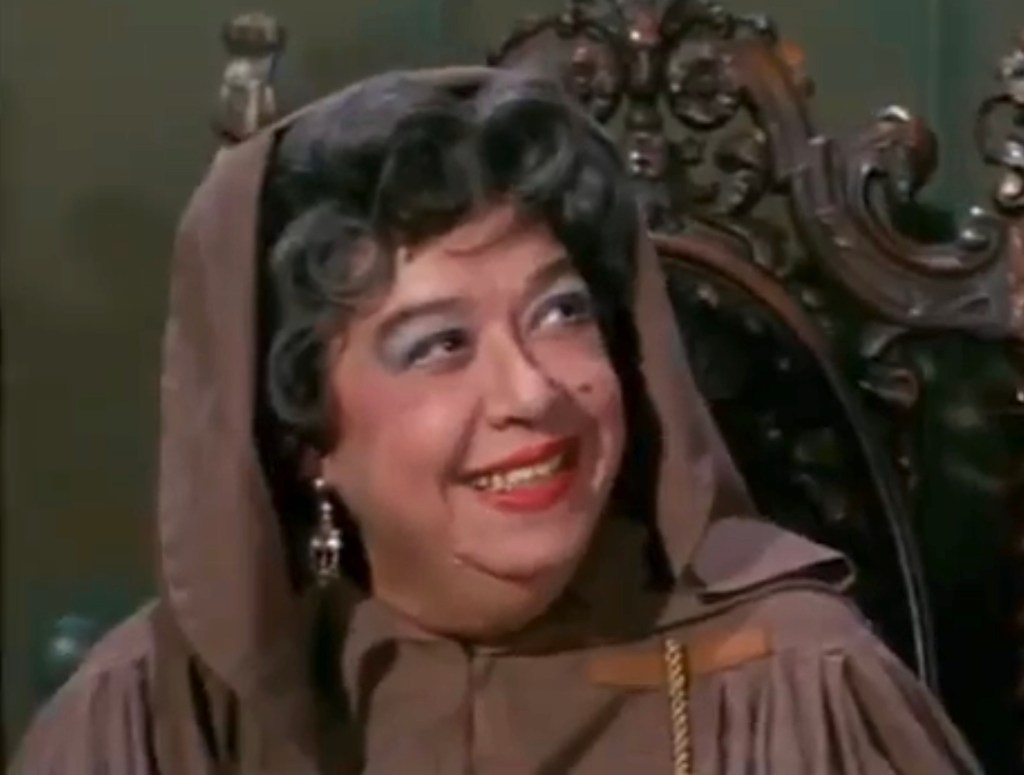
Spivy as Tatama with William Smith as her son Catoga in the Daniel Boone episode “A Matter Of Blood.” (1967)
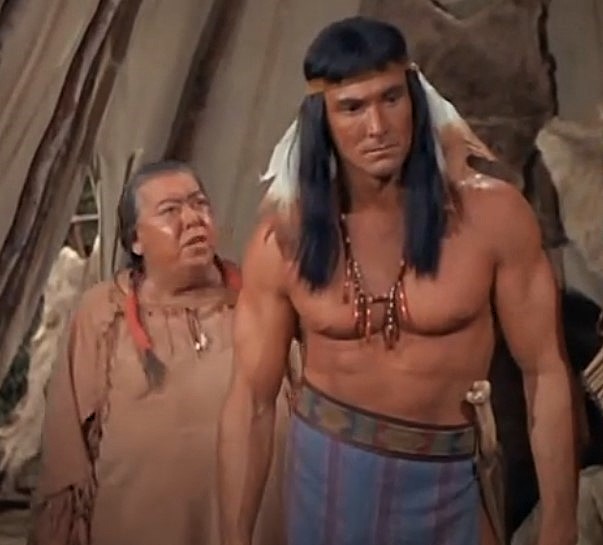
Spivy’s final television role was her biggest since Alfred Hitchcock Presents: a 1967 Daniel Boone episode in which she plays Tatama, an Indian tribe elder. As with the rest of the actors playing indigenous characters at the time, the brown-face makeup doesn’t age well, but she delivers a good performance, in my humble opinion.
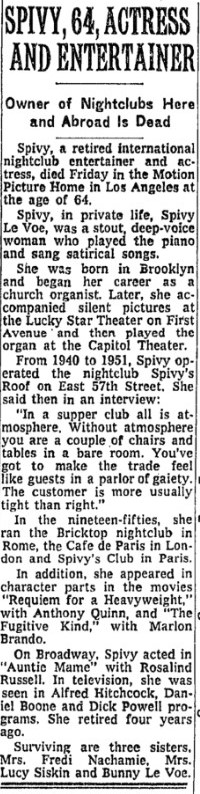
New York Times (1/10/71)
Spivy was diagnosed with cancer in the late 1960’s, eventually moving into a series of hospitals and nursing homes that she kept getting kicked out of. Angry and bitter at her waning independence, she would lash out at staff. Her old friend Patsy Kelley arranged to have her placed at the Motion Picture Country Home in Woodland Hills, California where she died on January 8, 1971, aged 64. She is interred at Valhalla Memorial Park in West Hollywood.
Ok – I admit it: I am one of those people who started playing Christmas music last week. Yesterday the Christmas lights went up. I don’t normally rush this, but this rotted post-election month has really done a job on my belief system. However, I am comfortable enough in my middle-aged fruitiness to freely quote Auntie Mame at you: We need a little Christmas. Now.
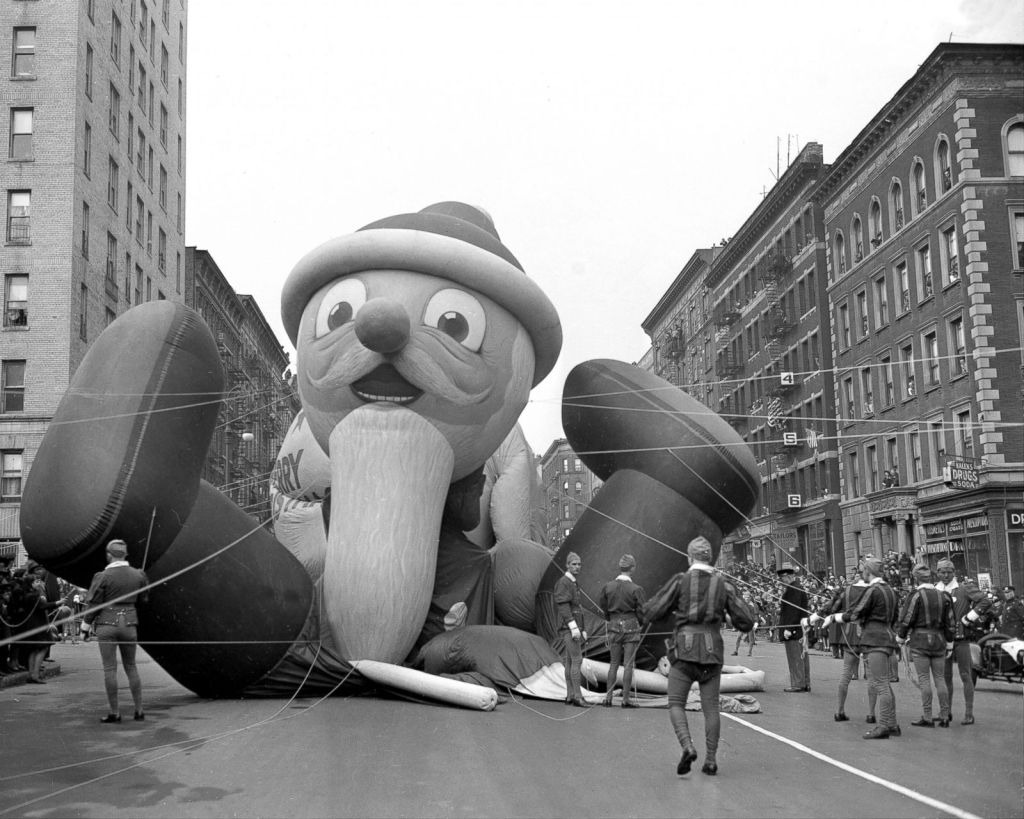
Baron von Munchausen is ready.
One of my favorite holiday CDs of recent years is Tracey Thorn’s Tinsel & Lights – a smart collection of original and non-traditional holiday-themed songs perfectly suited to the Everything But The Girl singer’s melancholy voice.
The lead track, Joy (written by Thorn) has been on repeat in my home every December since its 2012 release. When I first posted this in 2020, the song felt like it was tailor-made for that pandemic holiday season.
The opening lyric: When someone very dear / calls you with the words “Everything’s all clear.” / That’s what you want to hear / but you know it might be different in the new year. / That’s why / That’s why / We hang the lights so high: Joy.
Now, in 2024 as we stare down the barrel of the gun that is the second Trump administration, it’s a different lyric that strikes a chord:
So light the winds of fire / and watch as the flames grow higher / we’ll gather up our fears / And face down all the coming years / All that they destroy / And in their face we throw our Joy.
Here are some other Thanksgiving-themed goodies I have previously posted:
When it comes to holiday music, unfortunately Thanksgiving is lost in the long shadow of Christmas. There’s a severe lack of Thanksgiving songs, aren’t there? All we’ve got is “Let’s Turkey Trot” by Little Eva, and even then it is not really about Thanksgiving at all. The song’s title refers to the Turkey Trot, a dance step popular back in the early 1900’s.
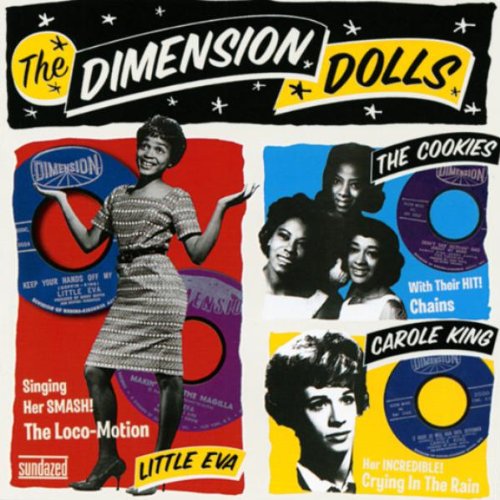
“Let’s Turkey Trot” was Eva Boyd’s third single, released in 1963 with the hopes of recapturing the #1 success of her debut platter, The Loco-Motion. It had a respectable showing on the charts, peaking at #20, although it should have been billed as Little Eva & The Cookies, as the backing group is as much a part of the success of the record as the lead. Group member Earl-Jean McCrea delivers solo lines echoing their own hits Chains & Don’t Say Nothing Bad About My Baby, which also featured Little Eva on background vocals.
Here’s an abbreviated performance by Little Eva on Shindig in 1965. Darlene Love and the Blossoms stand in for the Cookies in what must be one of the proudest moments of their career. Gobble Diddle It!
The Dollyrots also covered this track in 2014. Besides using footage of Little Eva’s Shindig performance throughout the video, they also namecheck “Little Eva back in ’63”:
Want some “Mashed Potatoes” with your “Turkey Trot?” Here’s Dee Dee Sharp with her own ode to a Thanksgiving staple / dance move:
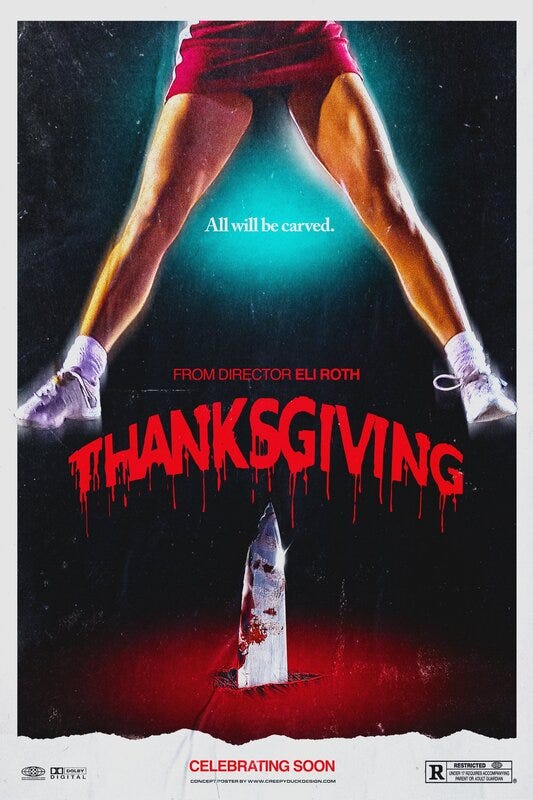
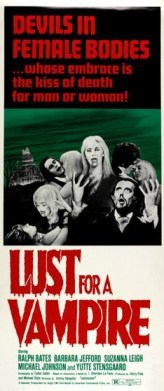
On the darker side… one of the faux trailers from Quentin Tarantino’s Grindhouse is the hilariously spot-on Thanksgiving, directed by Eli Roth. It is entirely plausible that someone would have jumped on the bandwagon of grade-z holiday themed horror films that followed the success of Halloween. But this one is a fake. In 2023, Roth did put out a full movie version of Thanksgiving. The original trailer retains it’s own seedy charm:
During the Thanksgiving episode of SNL in 1997, Lilith Fair stand-up comic Cinder Calhoun (a recurring character played by Ana Gasteyer) & singer Sara McLachlan paid a visit to Norm MacDonald and the Weekend Update desk, singing the Thanksgiving classic “Basted In Blood.” It would not be nearly as funny if they didn’t sing it so well.
Unfortunately this segment seems to have fallen off the annual SNL Thanksgiving Eve prime time special.
In 2019, Ana Gasteyer released a holiday album: Sugar & Booze. Highly recommended!
It’s hard to believe that it has been 16 years since I put this Halloween show together for 60 Degrees wi Brian Ferrari, my weekly radio show focusing on “60’s chicks and girl groups – the hidden gems, cult favorites and unreleased obscurities of the decade.” The show ran for five years (2008-2013) on East Village Radio and has been back on the air since July, 2024. This Halloween episode was originally broadcast on October 27, 2008 and aired every Halloween for the duration of the run.
In this very special episode, we’ve got soul witches, rockabilly rabble-rousers, death discs, horror movie theme songs, science fiction sirens, girls driven to madness by love and more dead boyfriends than you can shake a broomstick at. Plus a whole lot more! As with every episode, the songs were interspersed with vintage commercials, sound effects and movie clips.
East Village Radio had been back on the air for three months now – and that includes my weekly show, 60 Degrees with Brian Ferrari. On Sunday, September 29th, 2024 The New York Times posted an article about the station on the front page of their Metropolitan section.
60 Degrees is devoted to girl groups and female singers of the 1960’s, featuring hidden gems, cult favorites and unreleased obscurities. The show airs every Sunday morning from 8-10am EST, alternating new shows with old episodes from the original run (2008-2013). Episodes are available to stream any time, on demand for free here.
Here’s a recap of recent episodes – click on the date for streaming:
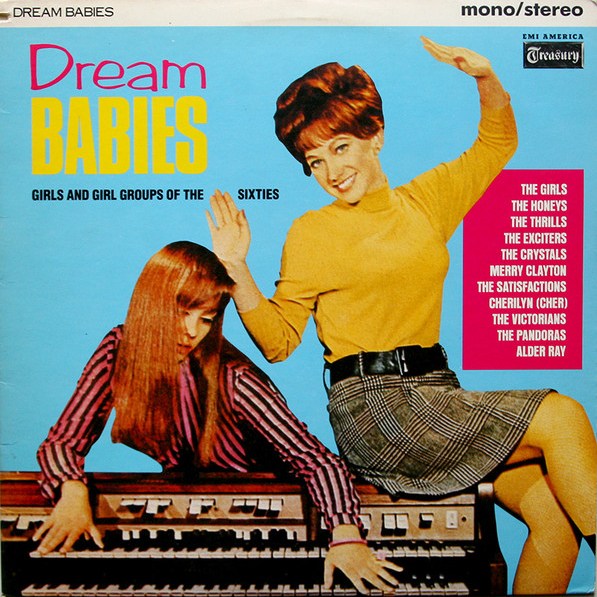
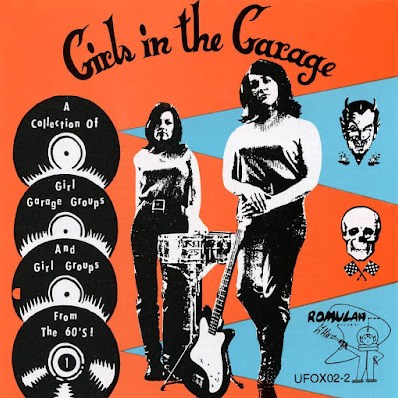
7/21/2024 – A tribute to Mary Weiss of The Shangri-Las, songs from film & television, Young Rascals covers, spotlight on Chess Records & selections from The Girls Scene CD Compilation. 7/28/2024 – From 2/2013, show #54: Sisters In The City (mostly NY), and songs recorded live on The Ed Sullivan Show. 8/4/2024 – Spotlight on Red Bird records, Mama Cass Elliot, Beatles covers, Ronnie Spector, Brit girls and soul sisters. 8/18/2024 – Selections from the Kiss N’ Tell CD Compilation, girl groups in the bubble gum zone, a folky 15 minutes and Stax soul sisters. 8/25/2024 – From 9/2008, show #13: Summer / surf songs, party drama, Beatles covers, and Motown rarities. 9/1/2024 – From 4/2011, show #40: Where The Girls Are LP compilation, Marvelettes tribute, and C’est Chic! French girls compilation. 9/8/2024 – From 9/2008, show #14: An assortment of The Cookies, soul sisters, Beatles covers, and songs about shoes. 9/15/2024 –Spotlight on Sue records, the British Bird Invasion, a folky 15 minutes, Beatles covers, and Motown. 9/22/2024 – From 11/2008, show #16: Wedding drama, Beatles covers, a folky 15 minutes, Girls In The Garage. 9/29/2024 –Dream Babies LP compilation, spotlight on Cameo/Parkway records, Brit girls, 50’s chicks in the 60’s, and Girls in the Garage. 10/6/2024 –Songs from John Waters’ Hairspray, peripheral Motown songs, Spector soundalikes, Beatles covers, Brit girls and Girls In The Garage. 10/13/2024 – A rebroadcast from 3/26/12: The Houston/Warwick Clan, Girls With Guitars, International Gals, Monkees Covers & Motown. 10/20/2024 – A rebroadcast from 4/21/08 featuring car songs, Dusty Springfield covers, NYC: A Mini-Musical, soul, Motown and more! 10/27/2024 – The 60 Degrees Halloween Show
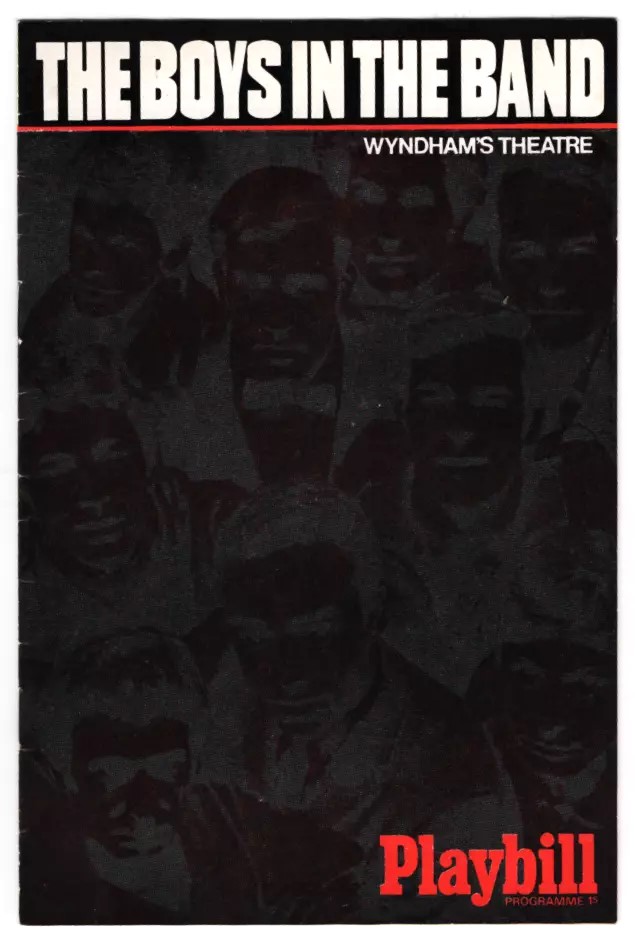
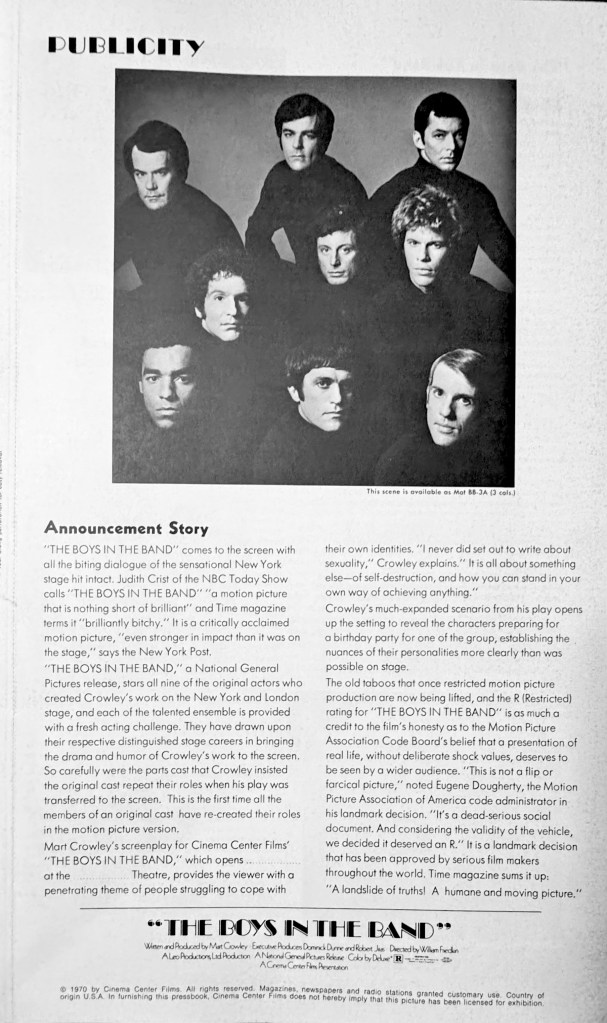
Whenever I see posts on social media that mention the 1970 film The Boys In The Band, there are always strongly opposing viewpoints. Whether you love or hate the film, everyone can agree that it is a cultural touchstone. Like the Stonewall uprising itself, The Boys In The Band serves as a landmark, with every other gay-themed film described as either preceding or following it.
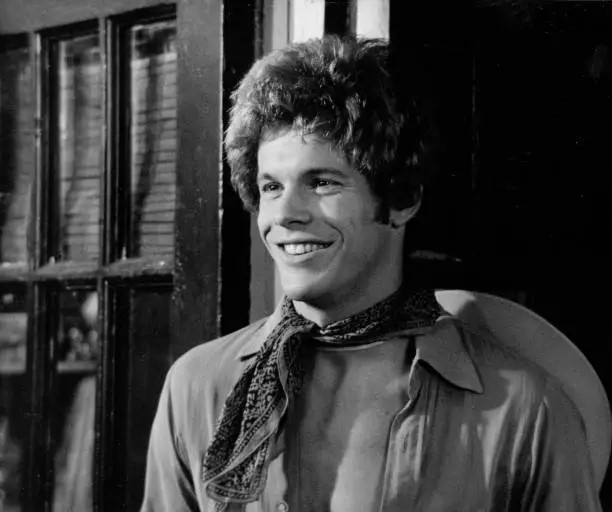
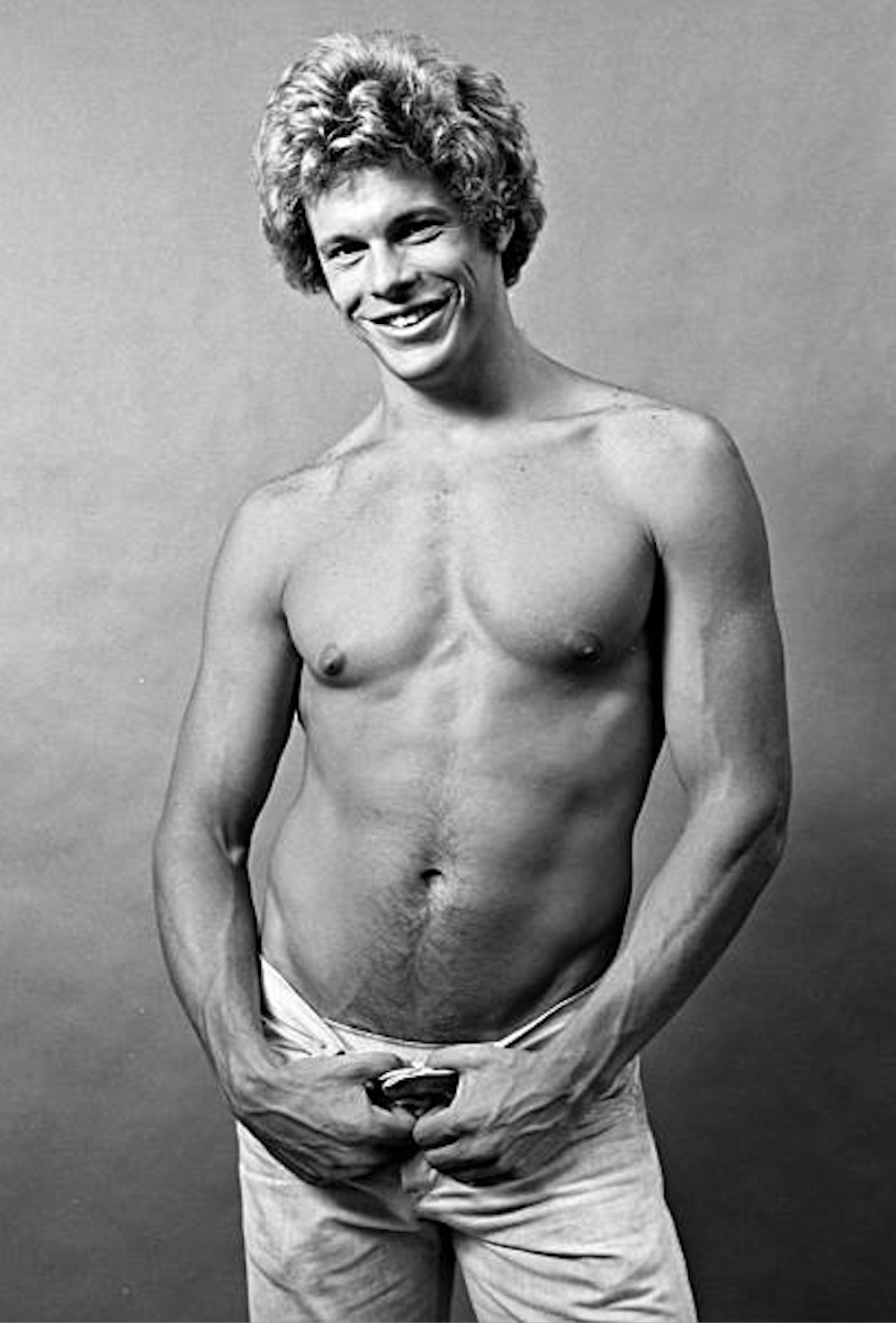
I recently acquired the original press book for the film, which you can see below. Also included is the Playbill from the original West End production with the same cast as well as some revealing photos of “Cowboy” Robert La Tourneaux. During the New York run of the play, he was photographed in and out of clothes by Jack Mitchell for After Dark magazine. Years later, La Tourneaux would appear in photo layouts for Mandate, Honcho, and Zeus, which were the names of gay publications and not a queer law firm.
The Boys In The Band poster (l-r) Leonard Frey, Robert La Tourneaux (Photo by LMPC via Getty Images)
I’m bursting with excitement to be able to share the news about something I have been working on for the past couple of months…
After a 10 year hiatus, East Village Radio is now officially back on the air. My show, 60 Degrees with Brian Ferrariran on the station for 5 years – from 2008-2013. The 2-hour program, featuring female 60’s singers and girl groups, is now back with new episodes bi-weekly, with repeated classic episodes on the opposite week. Besides the Sunday morning, 8-10am broadcast, archives of the show will be available for streaming on demand, any time, for free.
Here’s a little backstory: I had a late night public access television program called Bri-Guy’s Media Surf that aired in New York City from 1997-2007. Based on the music clips I played on that show, I was approached to do a spot on the early low-frequency broadcast version of East Village Radio. The signal was so weak that I couldn’t receive it in my apartment three blocks north of the station. Given the workload of producing the TV show, I didn’t have the bandwidth to take on a two-hour radio program, so I politely declined. After Media Surf wrapped in late 2007, I was offered a radio spot again. By this time, the station had transitioned into internet streaming and now had a worldwide audience. This time I said “Yes.”
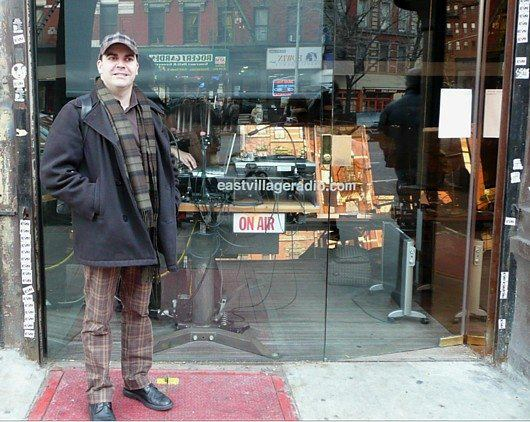
In front of the EVR booth (2008)
From its inception, the concept of 60 Degrees was that it existed in an alternate reality where women ruled the pop charts throughout the 1960’s, a decade that I consider to be the most transitional and eclectic in the history of popular music. The all-female playlist is in direct contrast to radio programmers that only allow a certain number of female artists per hour. In the land of 60 Degrees, it’s all women, all the time. The men remain in the shadows, only stepping forward for the occasional duet.
This is not to say that the male groups that ruled the charts are completely ignored here. Female artists doing Beatles or Rolling Stones covers and tribute or answer songs are often featured. Besides, you can’t have a 60’s girl group playlist without the specter of Phil Spector looming large.
Another rule for 60 Degrees is that it is not a re-hash of the WCBS-FM “We play your favorite oldies” format. If a 60’s hit is in rotation on an oldies station, you won’t hear it here unless it’s live version, an alternate take, or sung in a foreign language.
Other ingredients that add to 60 Degrees’ unique flavor are the vintage commercials and sound clips from various movies and TV shows peppered throughout each 2 hour episode. These add a camp element to the proceedings and act as an acknowledgement of pop culture’s shift over the past 60 years.
60 Degrees usually concludes each episode with a modern cover or a remix of a 60’s tune to transition the listener back to the current day, in preparation for the next show on the East Village Radio schedule.
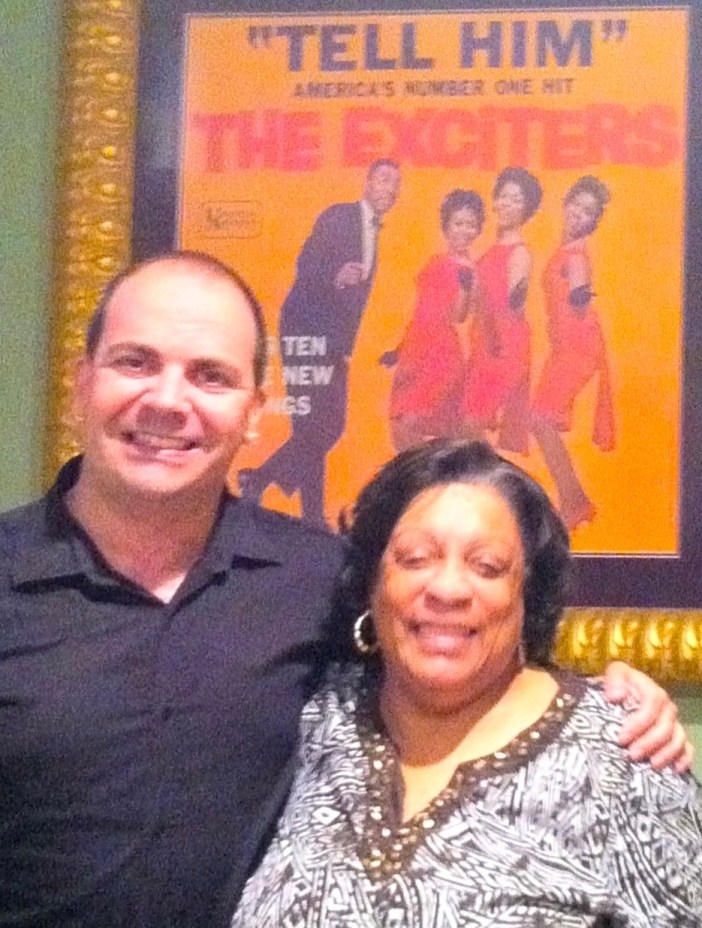
Exciters lead singer Brenda Reid was a guest on the show in 2012.
I did my first (and only) live show in the First Avenue storefront booth on January 17, 2008. Broadcasting live at street level by myself was a slightly terrifying prospect. The first show went without interruption but at some point I was bound to get a random loon trying to get into the booth while I’m spinning some Shirelles. And it wasn’t like I was going to get a sidewalk crowd like the higher profile prime time DJs. Besides, the variety of the content meant that I was dealing with wildly different sound levels and other audio issues over approximately 75 different clips per episode. Pre-taping allowed for a more seamless, fast-paced show, which was then broadcast in the morning hours before the DJ booth was open.
After 5 years on the air, I felt that the show had run it’s course and I hung up my headphones. I continued on my own personal quest of discovering new/old music, focusing on early soul singers and the sister groups of the 1940’s… then the 1930’s… until one day I found myself listening to 78 records on my 1916 RCA crank victrola. Having gone about as far as I could go, I thew it into reverse once again.
And so we’re back. From outer space. And so is 60 Degrees. I hope you will come along for the ride. It’s kinda cool
Bringing 60 Degrees back to East Village Radio, with the help of Jean & The Statesides.
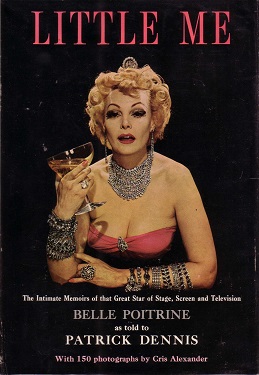
You may already know this, but anyone with an affinity for self-indulgent grande dame memoirs and/or the camp humor of Auntie Mame needs to seek out the 1961 book Little Me, The Intimate Memoirs of That Great Star of Stage, Screen & Television Belle Poitrine, as told to Patrick Dennis. The book spawned a Broadway musical starring Sid Caesar in 1962, which was revived with Martin Short in 1998. However, the book is whole different animal. The 2002 reprint with a new foreword by Charles Busch may be out of print, but affordable copies are easily found online.
The whole thing is a parody – a camp fiction classic created by the Auntie Mame author with over 150 photographs by Cris Alexander, an actor who appeared in both the stage and film versions of Auntie Mame. Alexander had transitioned into his second career as a photographer.
Actress Jeri Archer embodied Belle Poitrine in the photographs with a cast of characters playing her co-horts. Among the familiar faces in the company are character actresses Dodie Goodman and Alice Pearce, author Patrick Dennis (as Cedric Roulstone-Farjeon) and his wife Louise (as Pixie Portnoy). Cris Alexander also appears in various roles alongside his lifelong partner, ballet dancer Shaun O’Brien (as Mr. Musgrove). Miss Rosalind Russell makes an appearance as well.
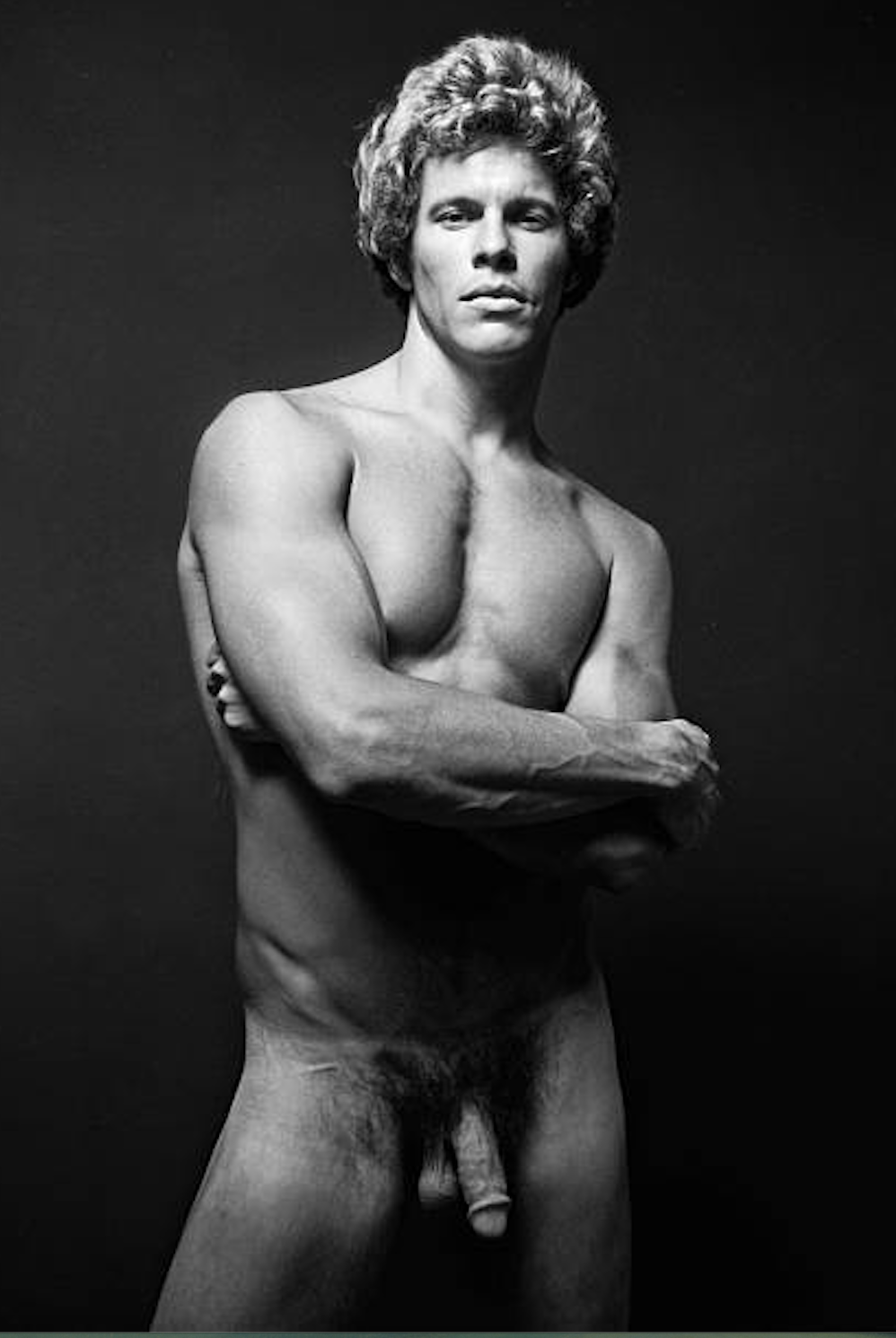
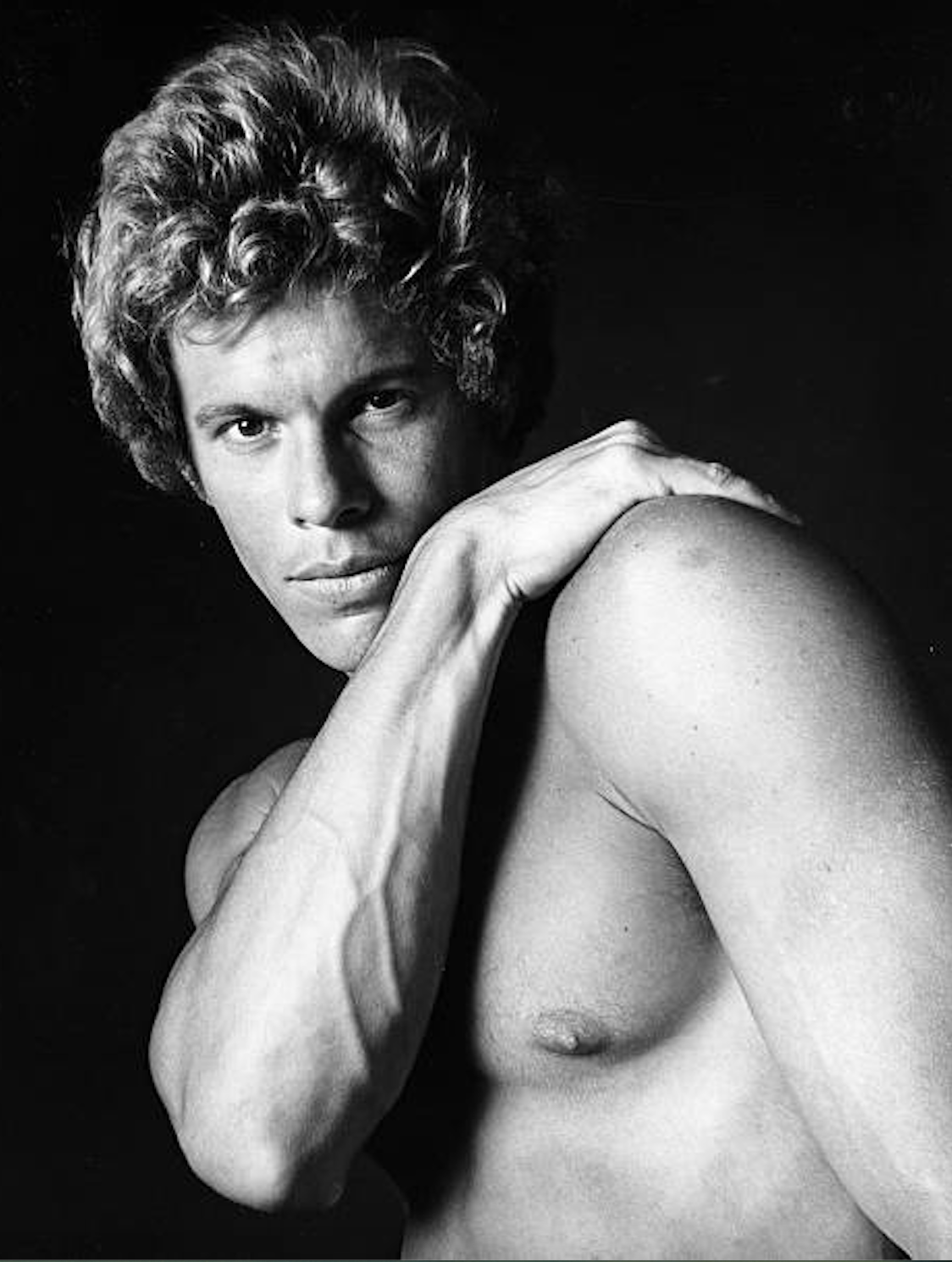
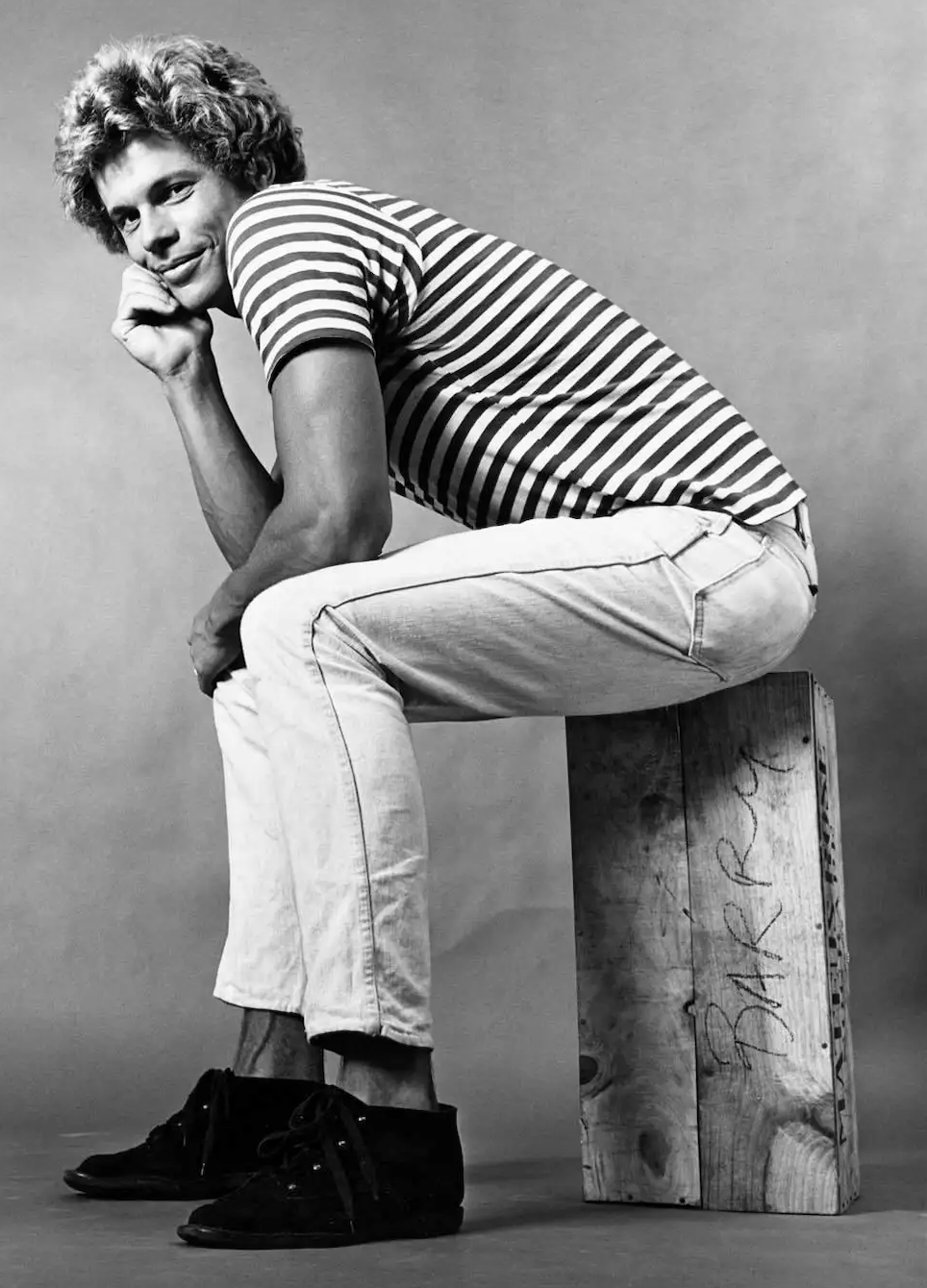
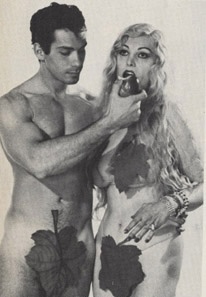
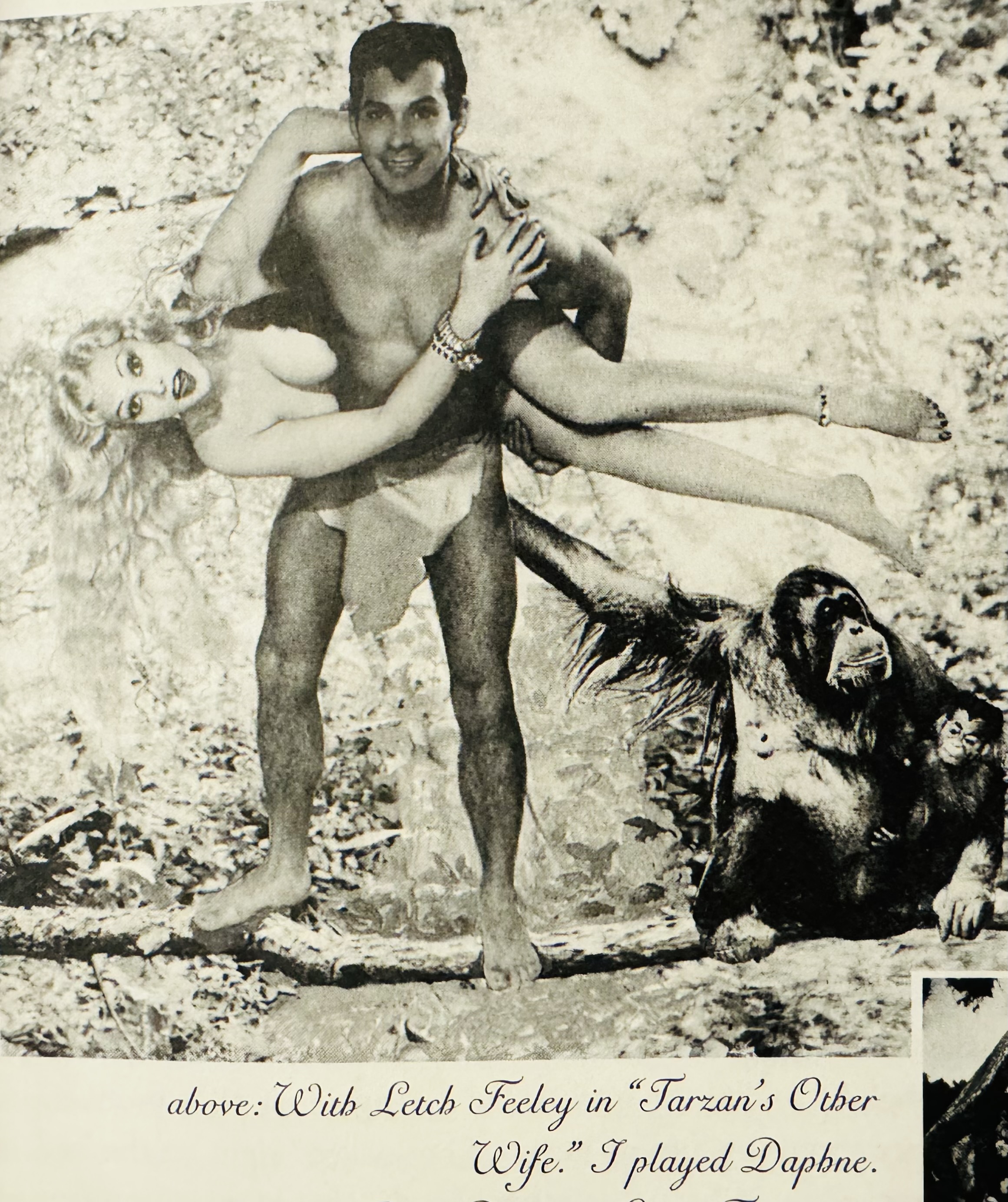
The role of Letch Feeley, Belle’s hunky paramour and costar, was played by Kurt Bieber. After the publication of Little Me, Cris Alexander wrote, “Shaun and Kurt generated an unprecedented amount of fan mail, all sent to the publisher’s office.”
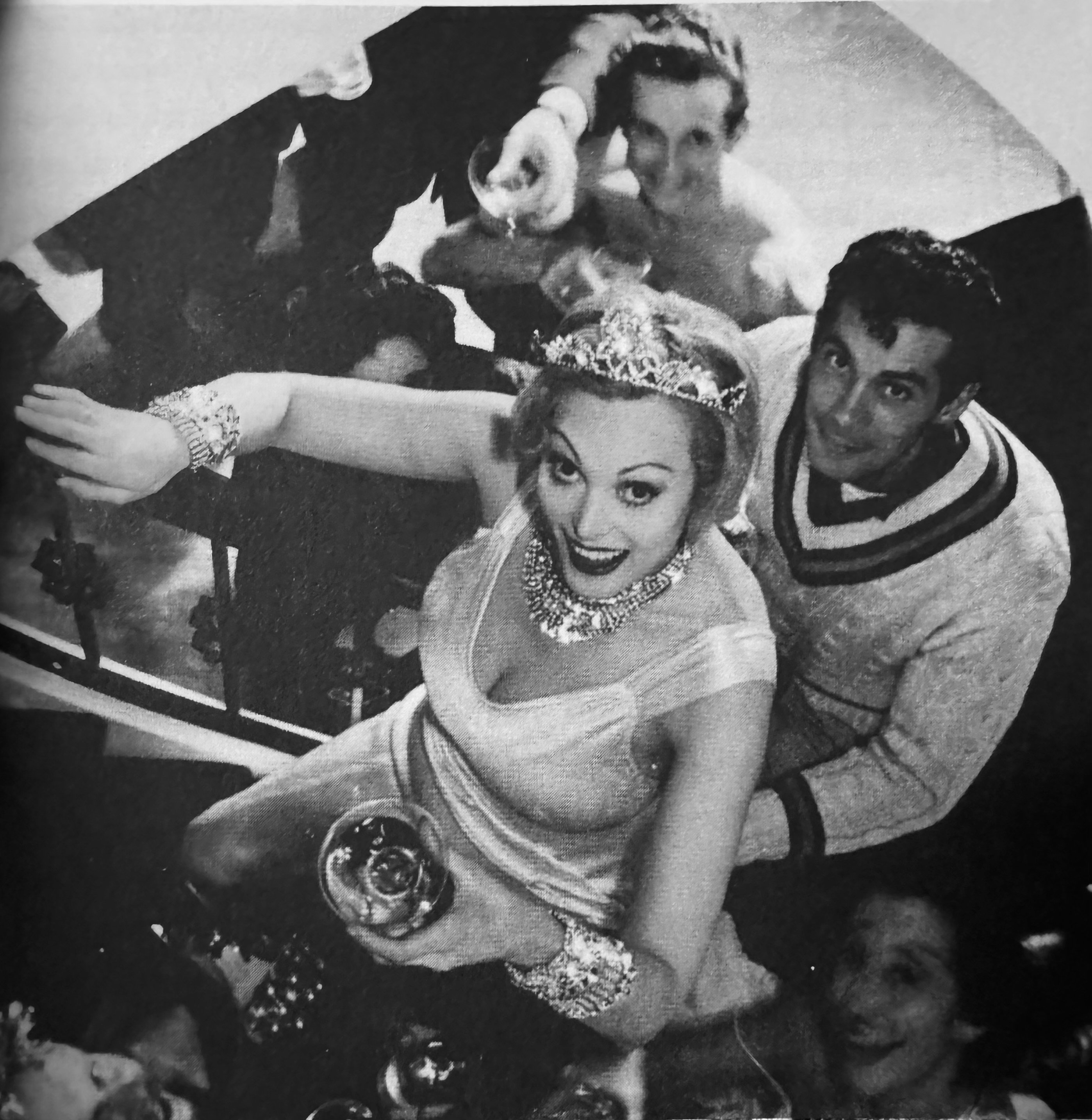
Letch Feeley & Belle Poitrine, aka Kurt Bieber & Jeri Archer in Little Me
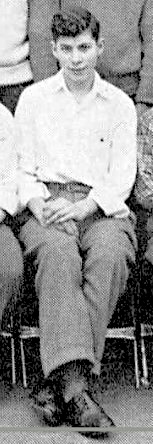
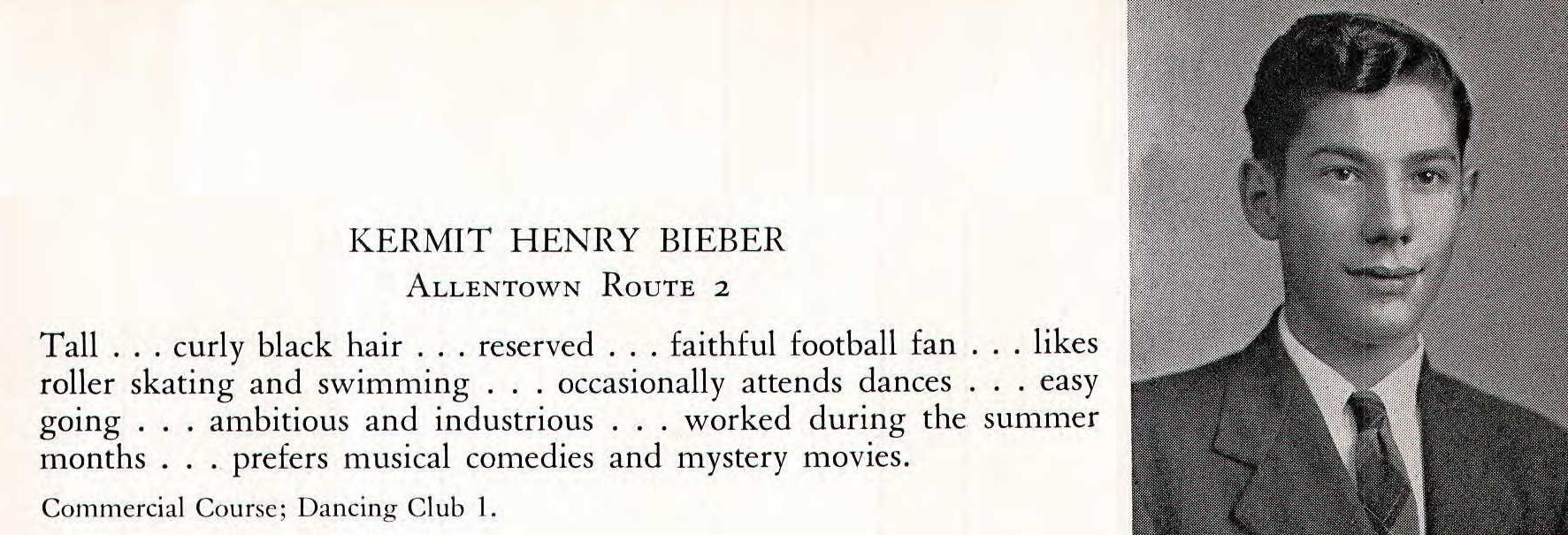
Kermit Henry Bieber was born on January 5, 1929 in Allentown, Pennsylvania. A 1946 graduate of Emmaus High School, Bieber worked at the local Sears before serving in the Army during the Korean War.
After his discharge, he headed to New York, where he studied drama, dance and voice at The American Theatre Wing. Roles in summer stock soon followed, with ensemble work in Can-Can, Happy Hunting, Oklahoma! and Wonderful Town.
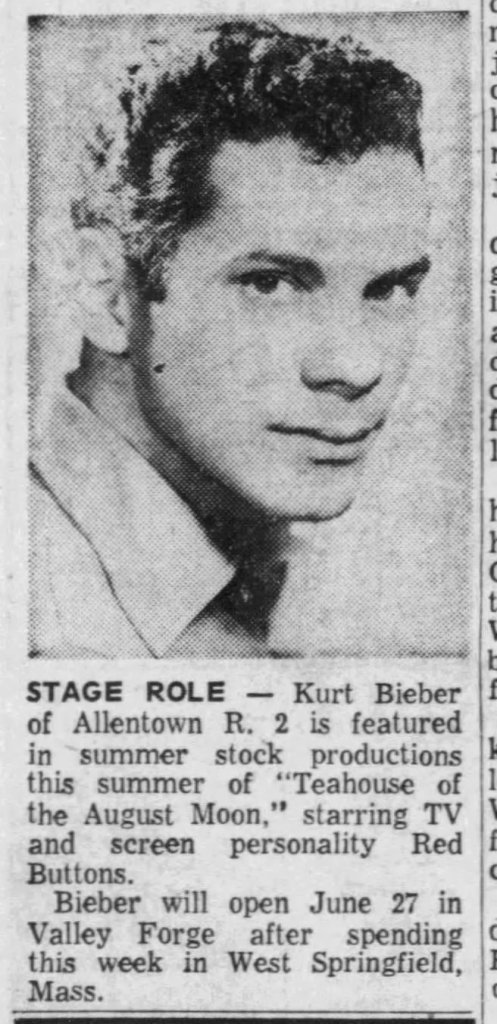
The Morning Call, Allentown, PA (6/21/1960)
It was his work in a regional production of On the Town that took his career to the next level. Cris Alexander later wrote, “Ross Hunter may have discovered Rock Hudson, but I discovered Kurt Bieber during a summer package of On The Town (Pittsburgh ’58).” By October of that year, Bieber was back in New York playing a sailor alongside William Shatner in the original Broadway production of The World of Suzie Wong.
More regional work followed, including a stint in the play Teahouse of The August Moon with Red Buttons. It was around this time that Cris Alexander began to shoot the photos for Little Me, casting Bieber in the role for which he is best remembered.
In Uncle Mame: The Life of Patrick Dennis, author Eric Myers writes “Most memorable to a certain contingent of the book’s audience was actor Kurt Bieber, who… displayed plenty of muscular flesh in nearly all of his photos.”
“I loved doing Little Me. People would stop me in the street and say ‘Aren’t you Letch Feeley?'” Kurt fondly remembered. “It was a first. No one had ever done a book like that… it was such a different atmosphere then. The photos were really a breakthrough.”
“Kurt Bieber is a poseur extraordinaire. The grace and symmetry of the youthful physique is captured in this study by Male Today.”
Following the success of Little Me, Bieber continued acting as well as modeling. He found work as a “posing strap” model for Male Today and other physique magazines. He was an early subject for Jim French, a photographer who was starting up a photo studio under the name Rip Colt. An early Colt film loop lists Bieber as one of the performers – a softcore scene with three muscular models lathering each other up in a shower – but none of the models appear to be him.
In 1969, Bieber had a bit part as a Times Square street hustler in Midnight Cowboy:
At the dawn of the 1970’s, 40-year-old Bieber – no longer a young chorus boy – opted for a new look. He transformed himself into the quintessential gay clone: an urban cowboy/mustache and Levi’s/hanky-code persona that would characterize the gay scene for the next decade. His photos for Colt studios now typify that era of gay erotica.
He was quoted as saying “I loved being photographed in the nude. I’ve always been an exhibitionist. To be an actor, you have to be. Besides, I got to choose the models. I chose hot men that I could get off on. That’s why they gave me (Colt superstar) Dakota.”
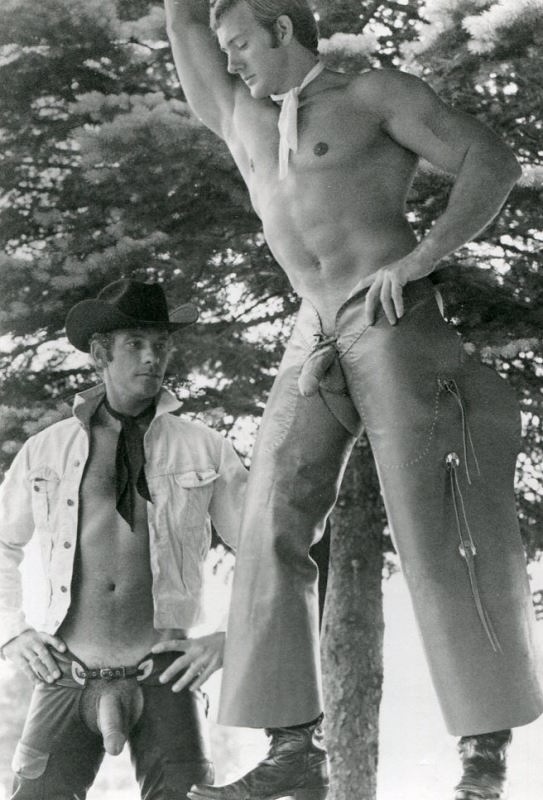
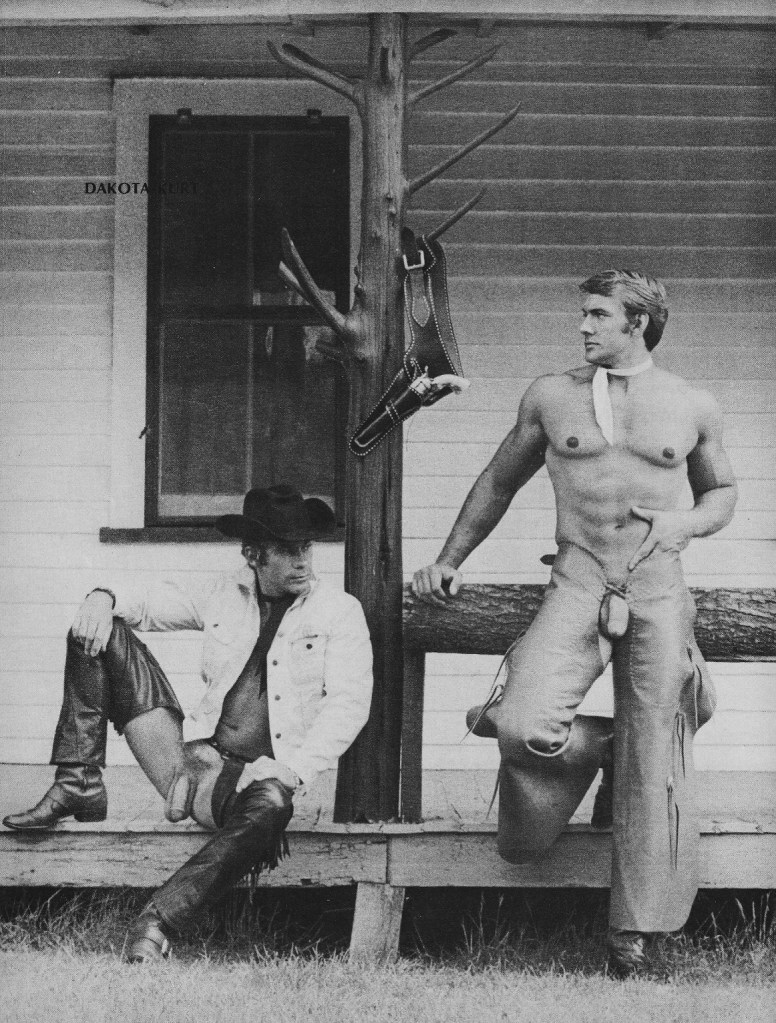
Colt Studios photo of Kurt Bieber with Dakota
Kurt Bieber (in a Colt t-shirt) outside Badlands in the West Village, NYC (1979)
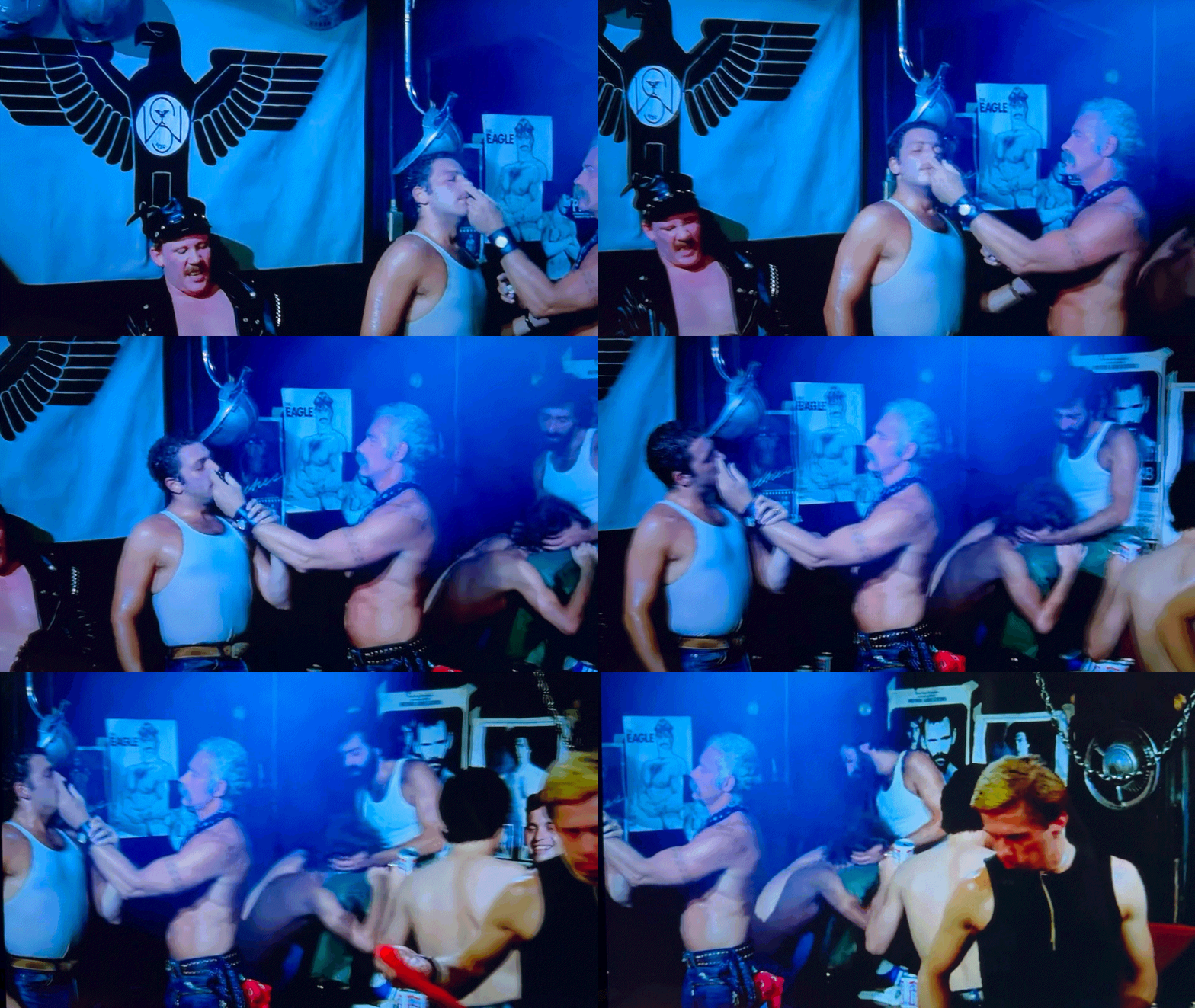
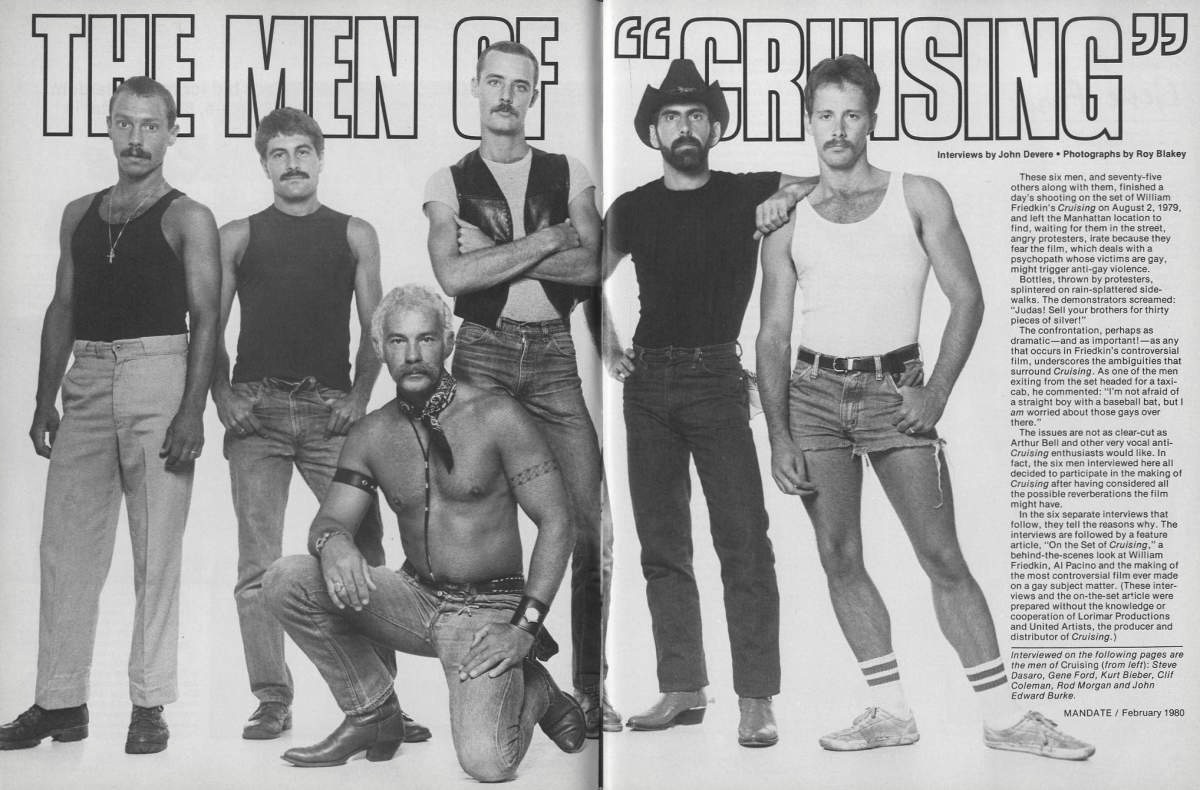
While major film roles never materialized, Bieber appeared in several commercials and continued to garner background work in films like Last Summer and Chapter Two. He can be seen offering poppers to a cohort at The Eagle in the controversial Al Pacino film Cruising (1980):
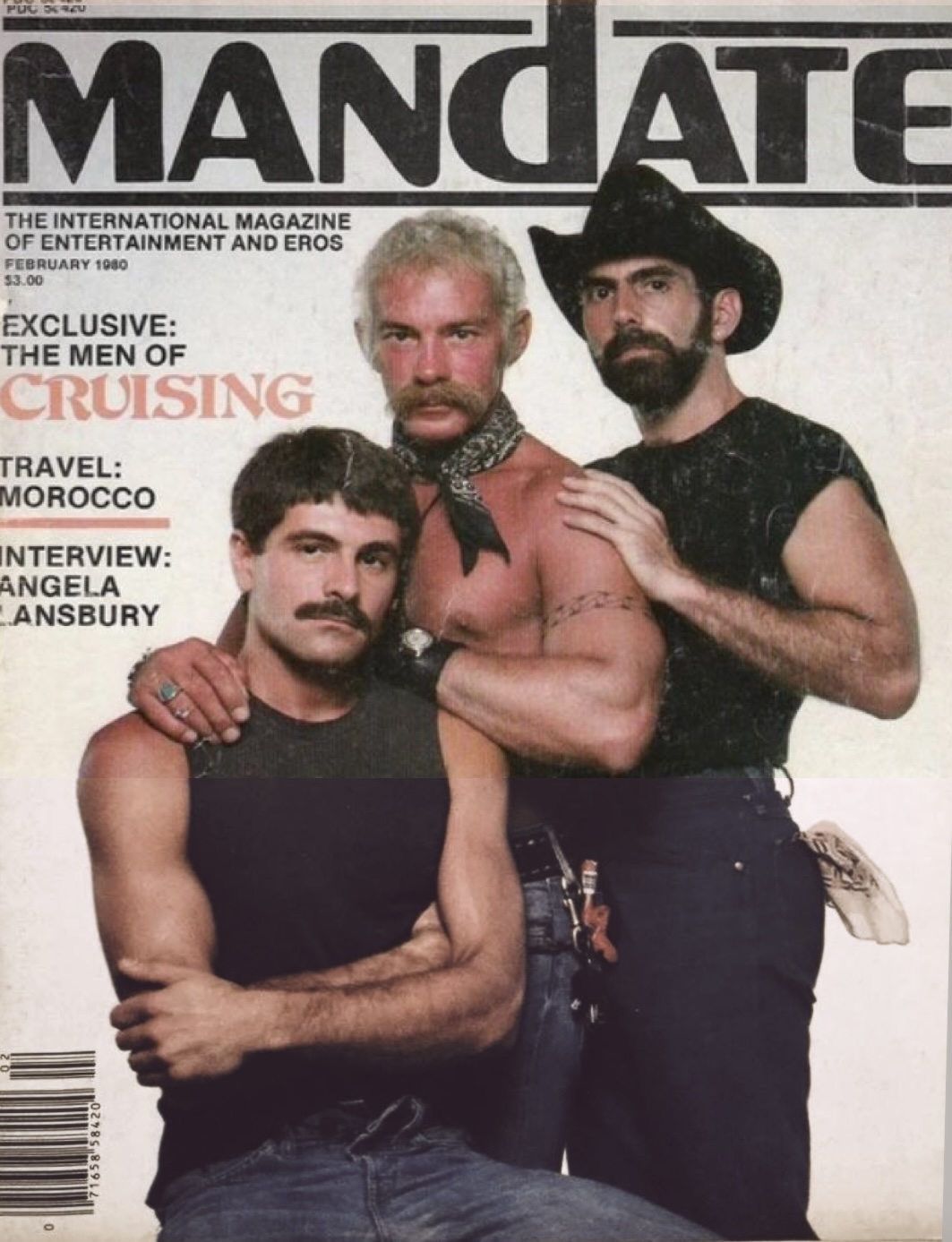
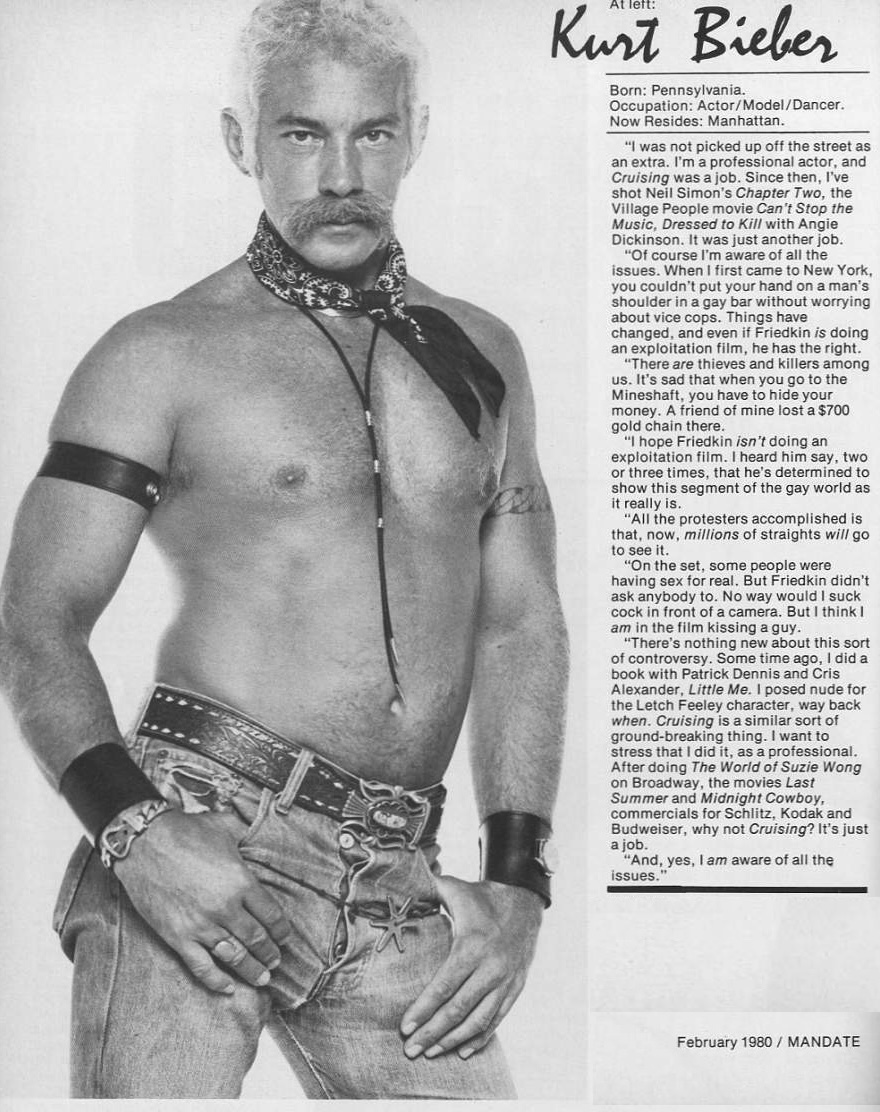
His appearance in Cruising landed Bieber on the cover of the February 1980 issue of Mandate Magazine. In his interview, Bieber mentions that he played Letch Feeley among other acting roles. He differentiates himself from the other Cruising extras, some of whom were cast off the street. “I want to stress that I did it as a professional… It’s just a job.”
As for those rumored to be having sex on camera in the leather bar scenes; “On the set, some people were having sex for real, but (director William) Friedkin didn’t ask anybody to. No way I would suck cock in front of a camera,” he says.
Although Bieber doesn’t mention his work with Colt Studios in this article, four months later Mandate ran a 10-page spread titled “Whatever Happened To Letch Feeley?” This feature tracked Bieber from his Little Me photos through his work with Colt Studios.
When asked to sum himself up at the close of the article, Bieber said with a smile; “I’ve done a little bit of everything and I’ve loved every minute of it.”
Later in 1980, Bieber was done in by a poison dart in Times Square during the opening sequence of Eaten Alive, an Italian cannibal movie:
The epilogue of Uncle Mame: The Life of Patrick Dennis (2000) notes that Bieber “has been an extra in almost every movie ever filmed in New York City. Kurt says he is ‘still around and still cruising Christopher Street.'”
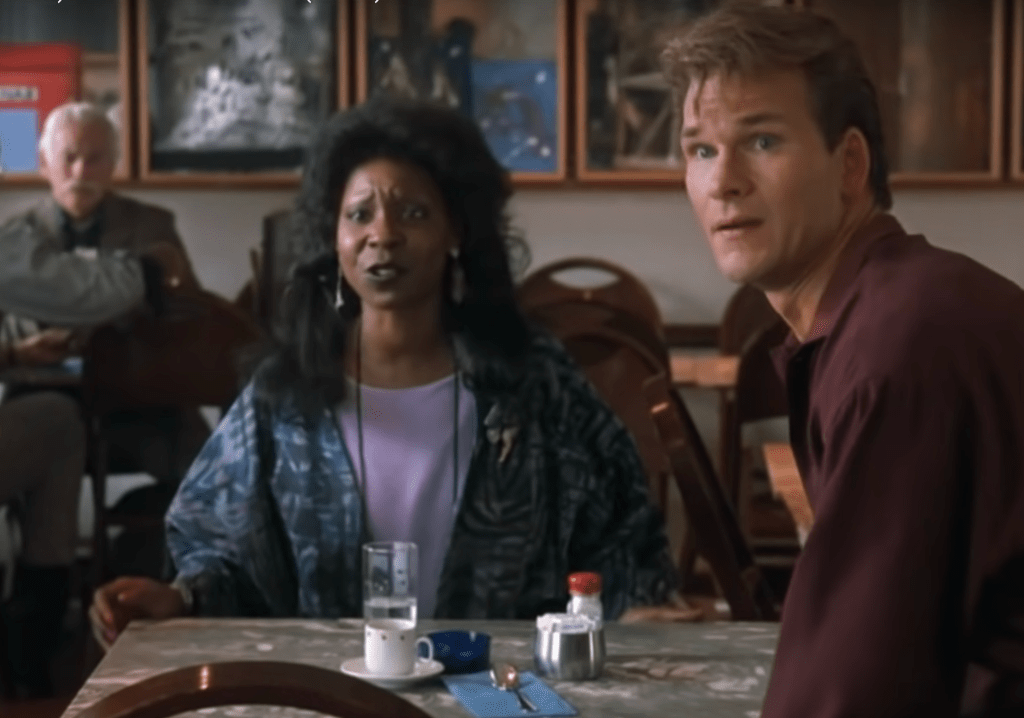
Kurt Bieber behind Whoopi Goldberg and Patrick Swayze in a scene from Ghost (1990)
Decades later, Little Me fans still recognized him. “Even today, I’ll sometimes walk into a store and someone will say ‘Wow! Letch Feeley!’ How they recognize me after all these years, with my white hair, I’ll never know.”
Kurt Bieber passed away at age 86 on December 31, 2015 in New York City.
Continuing with our theme from the last post, Truman Capote is the subject of this article from the February, 1985 issue of Mandate magazine. The piece was written by Boze Hadleigh just 6 months after Capote’s death.
The infamous book jacket photo of Truman Capote from Other Voices, Other Rooms. One critic commented, “He looks as if he were dreamily contemplating some outrage against conventional morality.” (1948)














 “Let’s Turkey Trot” was