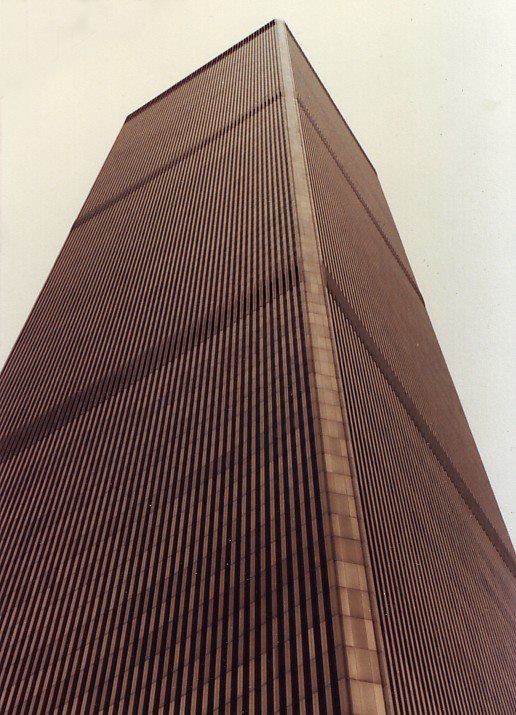
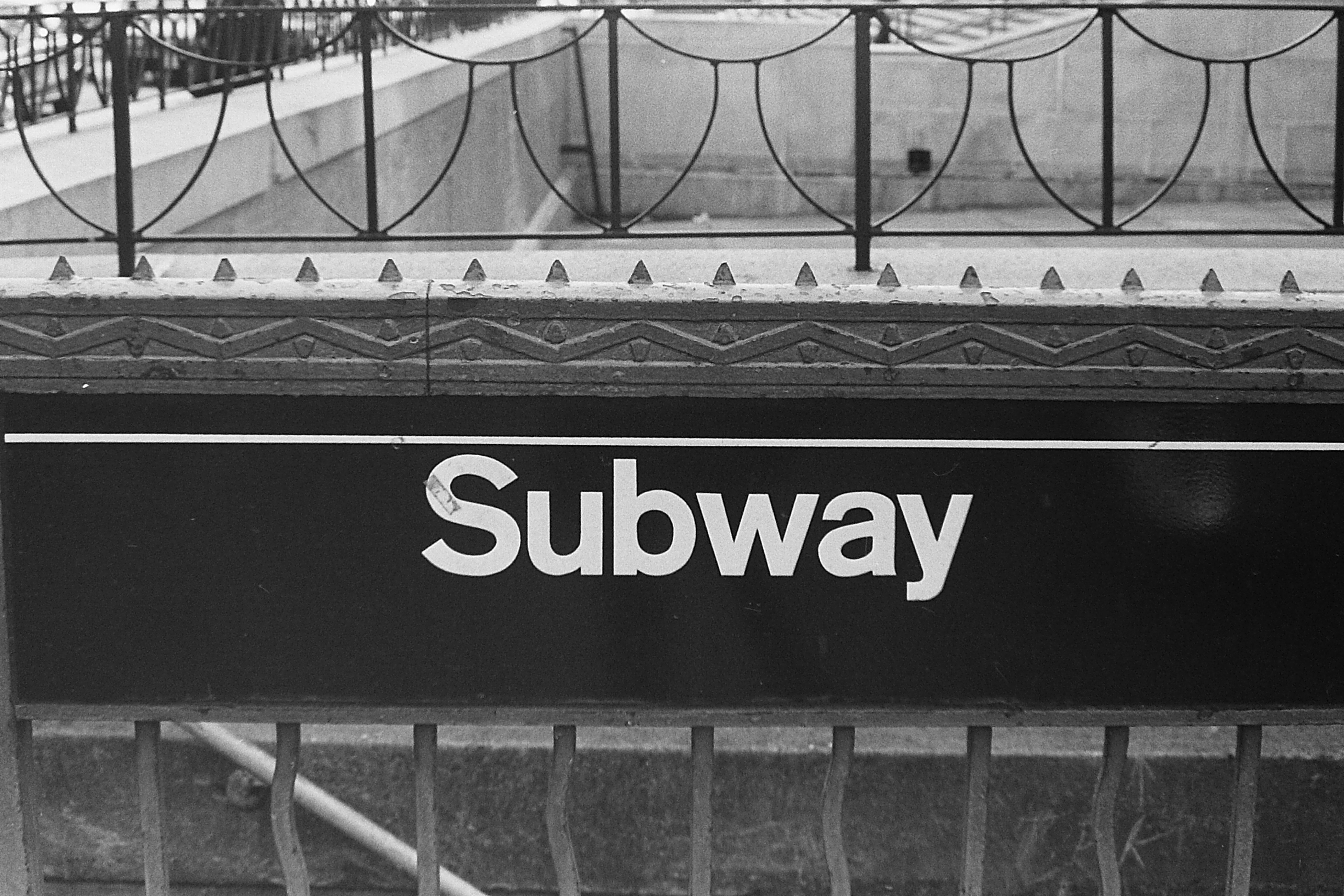
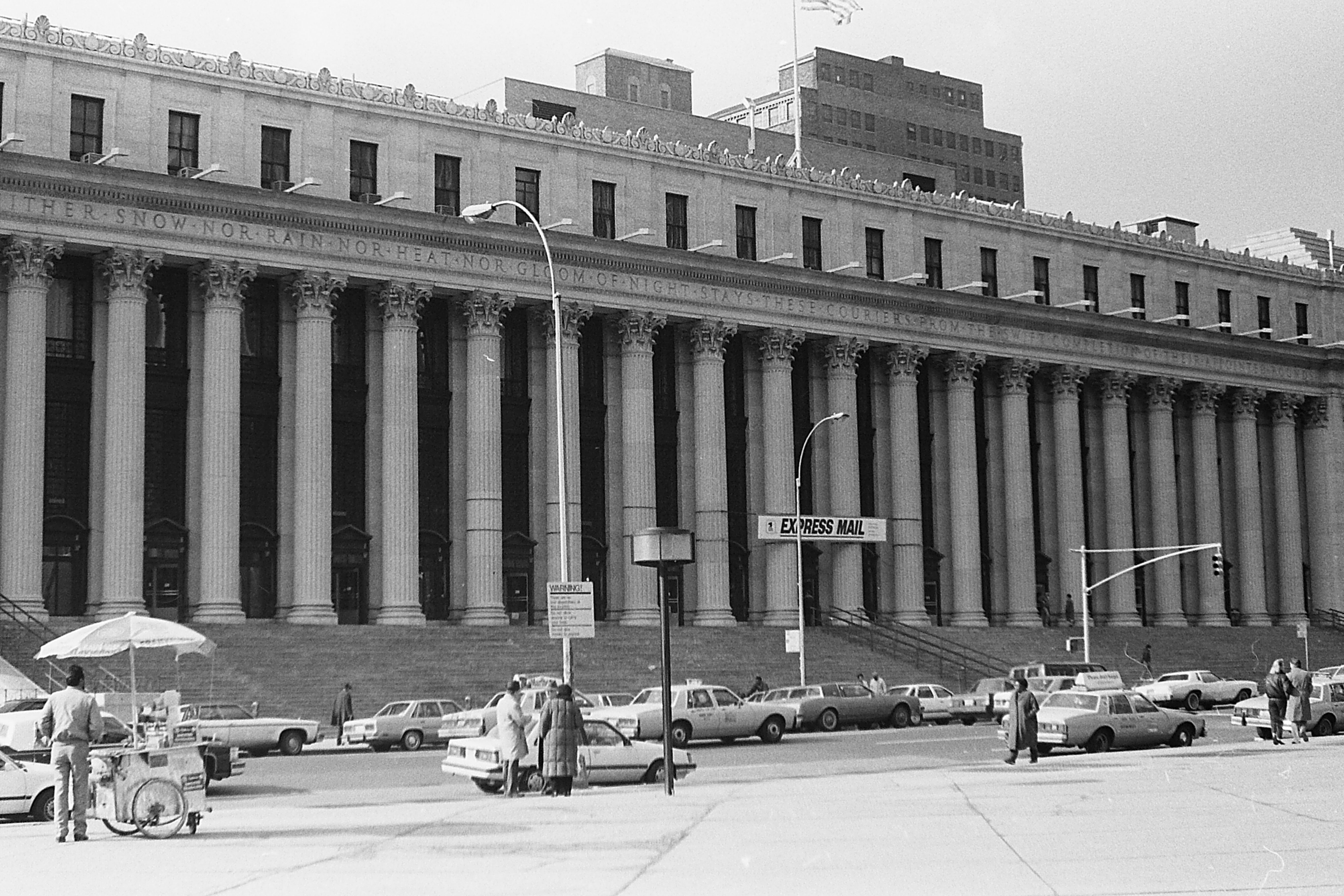
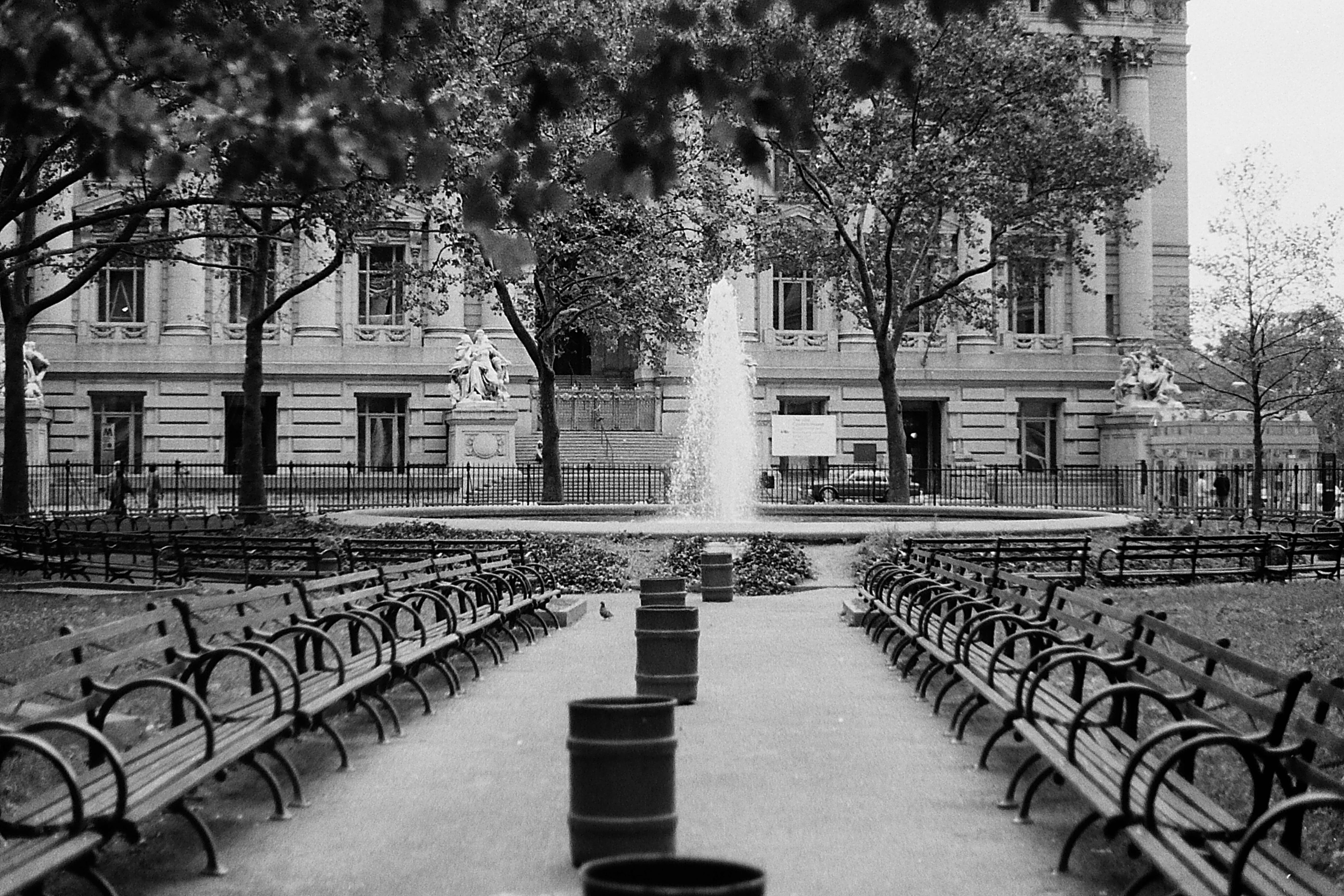
September 11th and the onset of Fall always makes me think back on the New York City that I photographed as a teenager in the 1980’s.
The intrepid photographer (1985)
My photography class would take field trips into Manhattan each semester. Later I began hopping on the Long Island Rail Road to venture in by myself. I loved photographing the city. There was – and is – an infinite number of things to focus your camera on. I learned early on that as much as I loved taking pictures in the city, I did not enjoy photographing the people. I was afraid someone would freak out and demand money or break my camera. My photos with live subjects tended to be dark and blurry or out of focus because I just wanted to snap the photo and run.
Instead, I focused on other elements of the city – a cat in a window, a gargoyle on a building. The purple shoeprints that appeared all around the village in the mid 1980’s. I would go into the city on a Sunday and walk south from Penn Station to the World Trade Center and back, snapping pictures the whole time.
To this day, I will spot a familiar building detail or doorway and remember… oh yeah! I took a picture of that in 1986. After 9/11, I would scan through the footage from that day, searching for familiar places on the plaza and in the vicinity, looking for details so familiar to me in the photos I had taken years ago.
The Statue of Liberty gets a facelift (1984)
Canal Street Station (1986)
Chinatown (1984):
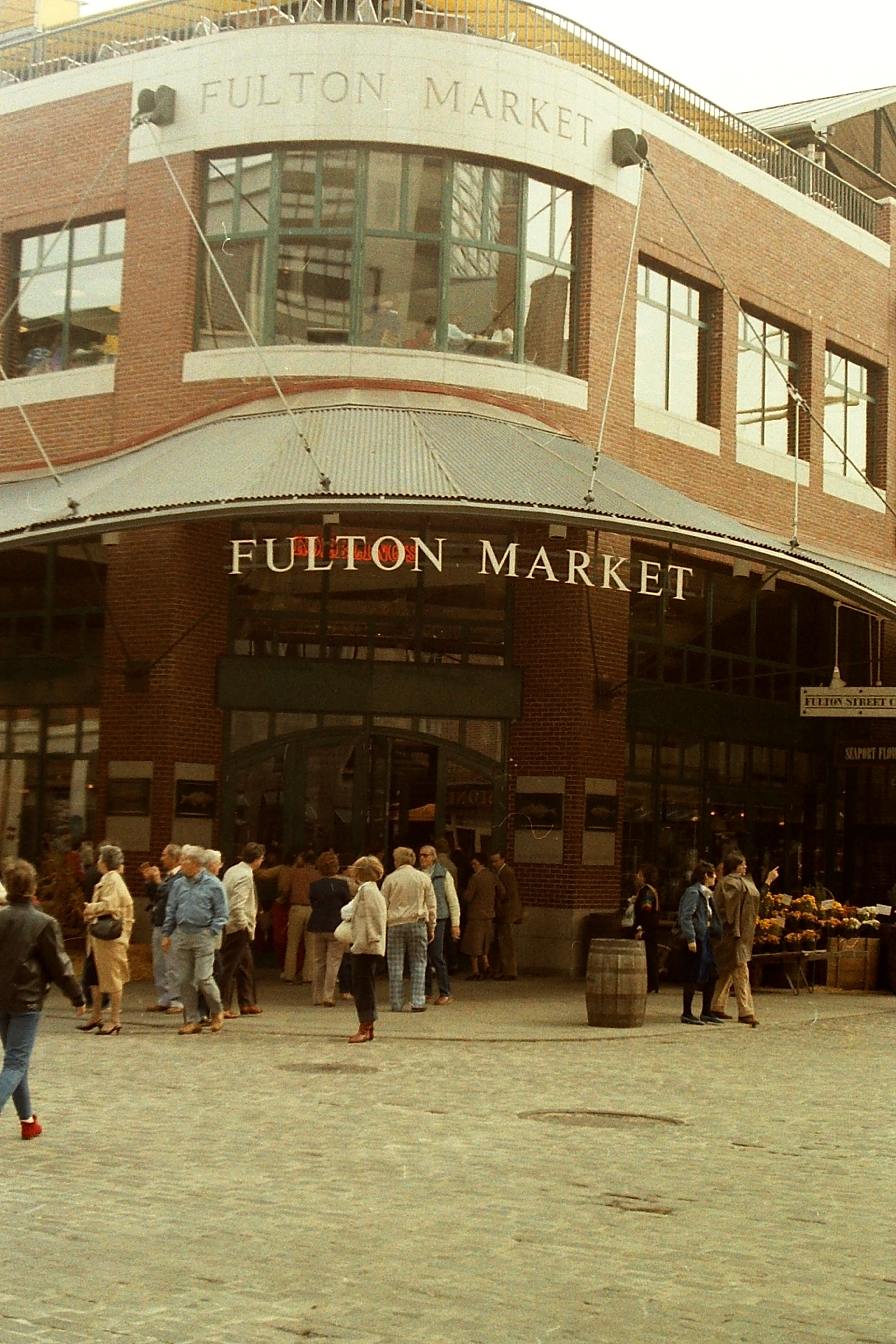
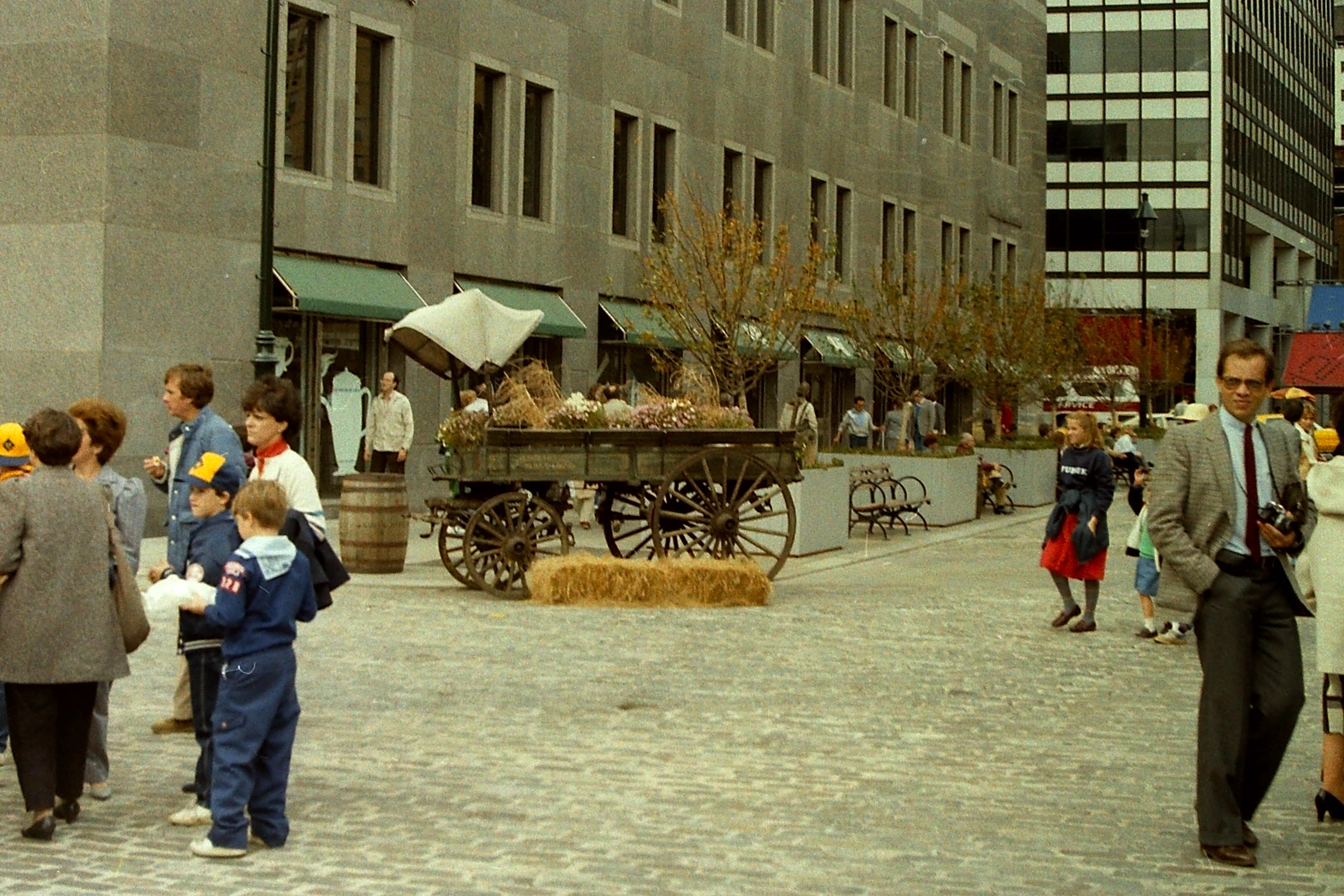
South Street Seaport (1984):
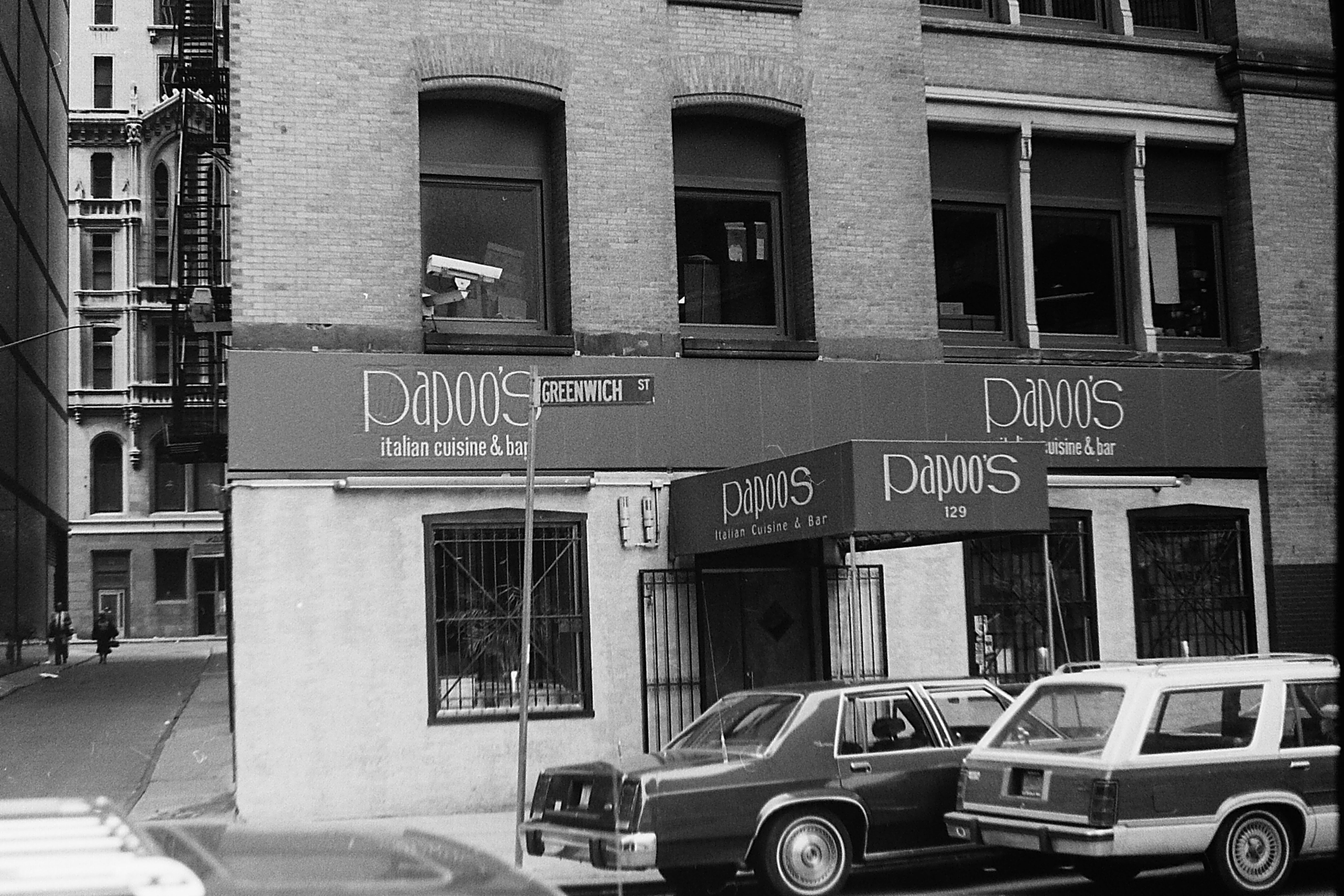
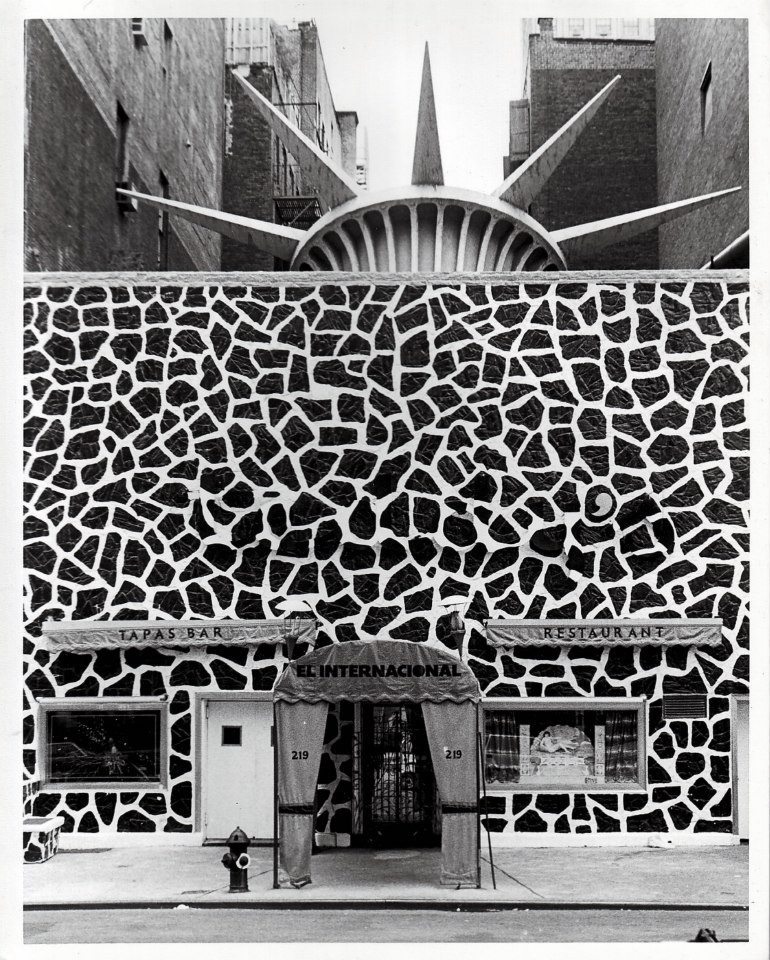
TriBeCa (1986): Donovan’s Publik House was at 108 Greenwich Street. It is now Suspenders restaurant. 67 Greenwich Street housed The Whitehall Hardware Store when this photo was taken. In 2021, the New York Times profiled this structure in an article titled The Indestructible Townhouse. El Internacional, formerly El Teddy’s was a popular hangout at 219 West Broadway. The Guest Of A Guest website described it as “The epitome of downtown cool.”
World Trade Center from above and below (1985-86):
I recently found myself perusing (as one does) the March, 1981 issue of In Touch For Men Magazine when I happened upon an article about Ronnie Spector. “How timely,” I thought, as August 10th marked her 80th birthday. Unfortunately, the Ronettes lead singer passed away at age 78 in January, 2022 – click here for a tribute with some choice song recommendations.
Ronnie with Patti Smith (1977)
Ronnie didn’t have a whole lot going on when Genya Ravan called her up out of the blue and asked her to sign with her new record label, Polish. Ravan was a fellow rock and roll veteran – a Holocaust survivor from Poland who, as Goldie Zelkowitz, fronted the legendary female rock band Goldie & The Gingerbreads. After a name change, a stint fronting the band Ten Wheel Drive, and several solo LPs, Ravan was ready to use her production skills on her own record label. In her memoir Lollipop Lounge: Memoirs Of A Rock And Roll Refugee, Ravan clarifies the label’s name: “‘Polish’ as in shine, not the nationality.”
Ronnie in Creem Magazine (1980)
While the music industry might have been through with Ronnie, Ravan was extremely excited with the prospect of producing her first solo LP. “I was a great fan of hers. I’d loved the sound of her voice ever since I first heard it,” she wrote. “Also, my own career as a singer seemed to be looking bleak… so working with Ronnie seemed to offer an alternative way of permanently stamping my mark on the music industry.”
Ravan’s idea was to expose Ronnie to some of the acts from CBGB’s that she was producing – to bring her iconic voice to a contemporary rock setting.
The album was recorded at Media Sound, RPM and Electric Lady studios with contributions from members of Johnny Thunders’ Heartbreakers, the Dead Boys, Mink DeVille and many others. In addition to producing, Ravan also provided backing vocals.
Recording Siren at RPM Studios
In her own autobiography, Ronnie admitted that she did not feel a connection with the New York punk scene that she felt Genya was pushing her to embrace, although she would concede that the harder edge of Siren inspired her to cut loose on the vocals in a way that she had never done before.
While the lady doth protest, it must be noted that her cover of The Ramones’ “Here Today, Gone Tomorrow” was a natural choice for her to cover: Phil had just produced The End Of The Century for the group, including a cover of The Ronettes “Baby I Love You.” Joey Ramone would later produce Ronnie’s 1999 EP She Talks To Rainbows. If Ronnie didn’t like “Here Today, Gone Tomorrow” initially, she must have had a change of heart, as she re-recorded it for her 2006 CD The Last Of The Rock Stars.
She also collaborated with classic punk band The Misfits on a couple of tracks in 2003. Safe to say, Genya Ravan was on to something after all.
Ronnie & Goldie: Spector with Genya Ravan (1980)
Another standout track that is often overlooked is “Any Way That You Want Me,” a Chip Taylor composition originally recorded in the 1960’s by The Troggs and then Evie Sands. As producer, Ravan’s idea for the album was to “make sure the music had an edge, but at the same time I didn’t want to lose Ronnie’s 1960’s sound entirely.” This track walks that tightrope very well.
Unfortunately, the album doesn’t quite stick the landing with its final track: “Happy Birthday Rock ‘N’ Roll” is a 6 minute passive aggressive valentine-slash-middle finger of a song dedicated to Phil Spector. Harkening back to her ex-husband only negates the distance that the rest of the album puts between Ronnie and her musical past.
By 1980, the story of Ronnie’s barefoot escape from her marriage was no secret. Giving this song the subtitle “For Phil” is just bizarre. Imagine if Tina Turner had dedicated the final track of her Private Dancer LP to Ike.
The lyrics present Phil as the embodiment of “Rock ‘N’ Roll” itself, alternately praising him for his accomplishments, but noting that “You’re pushing 40 / but you’re still not old,” and “Some people say you’ve lost your grip / They say you’re past your prime and you’re no longer hip.”
One can imagine that Phil was not thrilled when he listened to this.
The songwriting on this track is credited to Elkie Brooks and Peter Gage, even though there are several musical breaks that segue into the choruses of “Be My Baby,” “Baby I Love You,” and “You Baby” – Ronettes songs that originally listed Phil as a co-writer. None of the original songwriters are credited here. By comparison, Eddie Money’s 1986 hit “Take Me Home Tonight” – with Ronnie’s “Be My Baby” refrain – lists that song’s writers – Jeff Barry/Ellie Greenwich/Phil Spector alongside the other songwriters. Perhaps if Siren had been a commercial success, the famously litigious Phil would have come after them.
Reviews for the LP were all over the place – from high praise to the lowest dismissal:
Saskatoon Star-Phoenix (3/14/81)
Boston Globe (10/16/80)
Above: NME – Great photo / Terrible review (8/30/1980)
A pan from The Austin American-Statesman, whose reviewer also mis-genders Ms. Ravan. (9/27/80)
The Newsday review above was followed by one for Blondie’s AutoAmerican. (12/26/80)
In a more recent assessment, Joe Viglione writes on the AllMusic website; “If Phil Spector overproduced to good effect, Genya Ravan purposely underproduced, choosing instead to let flavors of different musicians paint the fabric behind Ronnie Spector.”
Genya Ravan stands by the album, writing; “I’m very proud of Siren… and of what I did for her on it. I think it’s the best thing she recorded after her glory days with Phil Spector.”
I recently found myself perusing (as one does) the Sept/Oct 1979 issue of In Touch For Men Magazine. Featured on the cover and centerfold is Tim Kramer, an All-American boy who would go on to become one of the top gay porn stars of the 1980’s.
There is also this two page spread about a similar corn-fed wholesome fellow: the guy who played Disco Danny in a popular Trident commercial.
Unfortunately Disco Danny does not reveal nearly as much, posing for just one shirtless photo. He’s here flirting with the gay press strictly for promotional purposes: trying to arouse the interest of a gay audience for his recently released debut single “Dancin’.”
The commercial that started it all: Trident Disco Danny
The Disco Danny character was a takeoff on John Travolta’s iconic role in the film Saturday Night Fever. Following in Travolta’s platform-shoed footsteps, he was signed to the same record label – Midsong Records. As the In Touch article notes, “Vocal ability was not primarily what won him his contract.”
He appeared on the early Nickelodeon show America Goes Bananaz with host Randy Hamilton conducting the interview and introducing two performances: “Dancin'” and “High School Honey,” a track from the LP that was never released.
The “b” side of the “Dancin'”single: “I Fell In Love With An Angel.”
Unfortunately, all the PR attempts to cross him over to a successful career outside of teen discos proved futile. There was no follow-up single and the Dancin’ LP was shelved, although he continued to find lucrative work in national commercials alongside some familiar faces:
Honeycomb cereal commercial with Anthony Michael Hall.
Bubble Yum commercial with Disco Danny on drums behind Ralph Macchio and Cynthia Gibb.
So what happened then?
Like rainbow suspenders, satin pants and the dance that spawned his name, Disco Danny fell out of fashion. He eventually gave up show biz and found work as a salesman. He married several times and like many a New Yorker, eventually migrated south. According to an acquaintance, he has become a Florida Man, with all the political leanings that go with the territory, adding with a sigh “he’s no longer the sweet, talented kid I knew.”
In case you missed it, Tracy Chapman’s 1988 song “Fast Car” has been covered by country artist Luke Combs. It has now topped the country charts and has out-performed the pop chart standing of the original. Chapman is now the first female African-American songwriter to have a #1 country song.
Chapman released a statement to Billboard: “I never expected to find myself on the country charts, but I’m honored to be there. I’m happy for Luke and his success and grateful that new fans have found and embraced ‘Fast Car.’”
I hate to be a wet blanket on the festivities, but I can’t be the only person that thinks a white male country artist covering this song is a little tone deaf. Especially right now.
I believe Combs’ heart was in the right place when he recorded the song, but in the hands of his listeners – and the country music crowd is overwhelmingly conservative – it becomes another example of how we’re supposed to believe that race and gender do not make a difference as to who gets ahead in the world.
At a time when teaching African-American history is being treated as an act of aggression and the “critical race theory” boogeyman is being used to rile up the right wing mob, a caucasian male country singer covering “Fast Car” makes perfect sense. Because we’re all the same, right? A poor white male and a poor black woman are interchangeable, right? It’s a level playing field. Right?
I do appreciate that Combs is faithful to the original. As a songwriter, he did not want to change a word of Chapman’s song. By the 5th verse, he’s working in the market as a checkout girl. “You’ll get a job and I’ll get promoted…” the lyric goes. Tell me: who is more likely to get that promotion – Chapman’s protagonist or Combs?
“Starting from zero got nothing to prove…” Yes, but “zero” is not the same for everyone. We are all programmed to believe that we live in the land of equal opportunity. If you can make it here, you’ll make it anywhere. If you don’t succeed, well, you just weren’t good enough, or you didn’t try hard enough. But really… we don’t all start in the same place, do we? Most people get a boost in one way or another, whether it’s financial support or nepotism or a legacy admission into a university. Unfortunately, boosts both big and small are often forgotten or underplayed when people recount their path to success.
Dustin Rowles writes on Pajiba.com that he found a strong resonance with “Fast Car” when it was first released back in 1988. I did as well. I was the child of a single parent home – a B student attending a B+ university, dependent on many grants and loans. The song began to climb the charts as I headed home at the end of my freshman year. Unlike many of my classmates, I wasn’t afforded the opportunity to take a $50-a-week summer stock job – a rite of passage for theater students. This would be one of those “little boost” moments that many experience and forget about. Instead, I was expected to live at home and work full-time so I could contribute towards my next year of school. This meant returning to a $4.25-an-hour retail spot at Record World, which wasn’t exactly going to make me financially solvent.
Here was my boost: When family members kept forgetting to pick me up from work, my mother bought me my first car. It wasn’t a fast one. The 1982 Plymouth Horizon cost a few hundred dollars and gradually slowed down whenever it got too hot. But it had a cassette player, and Tracy Chapman’s debut record was on heavy rotation that summer.
Rowles writes that he harbored some resentment for the song, which he perceived as predicting that he would not be able to break the cycle of poverty and dysfunction that he had grown up with. I didn’t feel that way. The song effected me deeply, as did her whole album. But I knew that I was better off than the song’s protagonist. I did not have a false equivalence. My previous job had been at a supermarket where I worked with single black women trying to support their kids on minimum wage. I knew they would not have been hired at the record store making that extra .90 cents an hour.
Ultimately, Rowles concludes that “…there is a way out. Unfortunately, it’s not a fast car, which only allows you to outrun your problems for so long. The easiest way to break the cycle is through education.” He concedes that, as a white male, he had a boost: access to an education that minorities often did not.
And now, 35 years later, “Fast Car” is topping the charts in the wake of the Supreme Court striking down a couple of very important boosts: affirmative action in college admissions, and Biden’s student loan forgiveness program. The latter should be of concern to people of all persuasions who are staring down a lifetime of loan interest payments. But that is assuming every person has the equal opportunity to be accepted into an institution of higher education. Without affirmative action, that is not the case.
As a high school student in Cleveland, Ohio, Tracy Chapman was accepted into A Better Chance, a non-profit program that placed high-achieving minority students in prep schools. She graduated from Wooster School in Connecticut and went on to attend Tufts University, where she was discovered by fellow student/future filmmaker Brian Koppelman. Koppelman’s father was a record executive and signed her to SBK Publishing, which led to a deal with Elektra Records.
Billboard estimates the recent global publishing royalties of “Fast Car” exceed $500,000. Unlike so many other artists, Chapman still owns both the writers’ and publisher’s share of the song, so that money is hers. Additionally, the success of Combs’ version has brought attention to her original, increasing activity 44% since his version was released, according to Luminate. Her song, in its original form, is speaking to a whole new generation. It just needed a boost.
It’s hard to believe that Tina Turner is gone. I remember feeling the same way after Prince died – I liked thinking that he was always out there, somewhere, working on music. Not that I was expecting new music from Tina – it was enough to see her pop up in occasional interviews as she enjoyed retirement in her Swiss castle.
What more can you say about the queen? So much is being written and discussed, I should just shut up and walk away. But…
With the exception of the song “Nutbush City Limits”, Tina is not remembered as a songwriter. But she did have a knack for choosing excellent material and putting her indelible stamp on it. After hearing Tina’s take on a song, you could be forgiven if you forget that “Proud Mary” was a Creedence Clearwater Revival tune, or that “Let’s Stay Together” is Al Green’s song. “I Can’t Stand The Rain” was a 1974 hit for Ann Peebles, and Bonnie Tyler had a minor hit with “Simply The Best” the year before Tina recorded it.
That said, there are some interesting covers that have flown under the radar or fallen through the cracks. Here are some of them.
UPDDATE: The New York Times published their own article on Tina’s covers the same day this was posted, but other than the Stones/Beatles/Led Zeppelin cuts, none of the tracks listed below were included.
1) Tina Sings Dusty Springfield: “Just A Little Lovin'” / “Every Day I Have To Cry” – Dusty Springfield’s version of the Barry Mann/Cynthia Weil song “Just A Little Lovin'” was the lead track from the classic 1969 Dusty In Memphis LP. Tina’s version is from her 1979 solo LP Love Explosion, which was not released in the U.S.
Tina Turner – “Just A Little Lovin'” (1979)
“Every Day I Have To Cry” was originally a minor hit for Steve Alaimo in 1962, and memorably covered by Dusty on her 1964 I Only Want To Be With You LP. Tina’s version is from the Phil Spector produced River Deep, Mountain High LP (1966).
Ike & Tina Turner – “Every Day I Have To Cry”
2) Tina Sings Led Zeppelin: “Whole Lotta Love” – This Led Zeppelin cover was released as a single from Tina’s second solo LP, 1975’s Acid Queen. The NY Times article on Tina’s cover songs describes this version as “disco-inflected” but also “slowed down.” To paraphrase Led Zep: It makes me wonder (what they were listening to.)
Tina Turner – “Whole Lotta Love” (1975)
3) Tina Sings Prince: “Let’s Pretend We’re Married” / “Baby I’m A Star” – Tina’s cover of “Let’s Pretend We’re Married” was recorded live in 1984 and featured as a B-side on different singles from the Private Dancer LP, depending on the territory.
Tina Turner – “Let’s Pretend We’re Married”
Tina’s version of “Baby I’m a Star” was omnipresent for a season in 2000, as she sang it in Target commercials while they were sponsoring her tour. It was also released on All That Glitters, a greatest hits CD only available at Target. And then… it was gone.
Tina Turner – “Baby I’m A Star”
4) Tina sings Linda Ronstadt: “Long Long Time” – Earlier this year, Linda Ronstadt’s definitive 1970 version of this Gary White song was introduced to a new generation via the HBO series The Last Of Us. Tina recorded her version in 1974 for her first solo LP, Tina Turns The Country On. Rolling Stone recently wrote about this forgotten gem. Although the LP was not a commercial success, it did garner Tina a Grammy nomination.
Tina Turner – “Long Long Time”
5) Tina Sings Marvin Gaye: “I Heard It Through The Grapevine” – There are a few versions of Tina singing Marvin Gaye’s classic Motown hit. The song was often part of her live repertoire. This live version from the Ike & Tina Turner Review is circa 1970:
Ike & Tina Turner Review – “I Heard It Through The Grapevine”
Thirty years later, Tina recorded a dance version of the song for her Twenty Four Seven LP. Unfortunately the song was pulled from the final release of the album:
Tina Turner – “I Heard It Through The Grapevine”
Also – just for funzies, here’s Tina singing with Marvin Gaye on Shindig! March 25, 1965 doing a medley of “Money (That’s What I Want)” and “I’ll Be Doggone.”
Tina Turner & Marvin Gaye “Money (That’s What I Want)” / “I’ll Be Doggone”
6) Tina Sings Stevie Wonder: “Living For The City” / “Higher Ground” – These two Stevie Wonder tracks from his classic 1973 Innervisions LP were covered the following year by Ike & Tina on their Sweet Rhode Island Red LP. The tracks later turned up on several compilations as the material from this period was often repackaged and re-released.
Ike & Tina Turner – “Living For The City”
Ike & Tina Turner – “Higher Ground”
7) Tina Sings Etta James: “All I Could Do Was Cry” – Motown founder Berry Gordy was a co-writer on this song, which was written for Etta James in 1960. Ike & Tina included their version on the Live! The Ike & Tina Turner Show LP (1964). Tina’s 4-minute monologue in the middle of the song is epic, recounting the wedding of the man she loves as he marries someone else, building to a crescendo with “their friends throwing rice all over their heads.” This overlooked camp classic was later featured on the 2007 CD A Date With John Waters.
Ike & Tina Turner – “All I Could Do Was Cry”
8) Tina Sings Elton John: “Philadelphia Freedom” – This Ike & Tina Turner track was recorded in the mid-1970’s, just before Tina left. Ike later included it on his 1980 LP The Edge and on a 1984 Tina Turner EP titled Mini, among other repackages of their 70’s output.
Tina Turner – “Philadelphia Freedom”
9) Tina Does Disco: “Shame, Shame, Shame” – Like “Philadelphia Freedom,” this cover of the 1975 dance hit for Shirley & Co. was featured on Ike’s The Edge LP, Tina’s Mini EP, and numerous other budget collections.
Tina Turner – “Shame, Shame, Shame”
She also memorably performed the song with Cher on her variety show in 1975:
Cher & Tina Turner – “Shame, Shame, Shame”
10) Tina Sings The Temptations: “Ball of Confusion”– Tina’s version of “Ball Of Confusion” was the gateway to the second (or third?) act of her career. Recorded with B.E.F., aka British Electric Foundation for their 1982 album Music of Quality and Distinction Volume One, the song became a top 5 hit in Norway. Capital Records took notice and signed her to the label. The resulting LP was Private Dancer, and the rest is history.
B.E.F. featuring Tina Turner – “Ball Of Confusion”
11) Tina Sings The Rolling Stones: “Honky Tonk Woman” / “Under My Thumb” / “Let’s Spend The Night Together” – Well of course Tina covered The Stones. She taught moves to Jagger. Tina & Mick were always joining each other onstage, and although she never recorded proper versions of“Jumping Jack Flash” or “It’s Only Rock And Roll‘, they were frequently on her concert setlists.
Ike & Tina’s studio version of “Honky Tonk Woman” was featured on their 1970 LP Come Together, and was also the b-side to the single of the title track:
Ike & Tina Turner – “Honky Tonk Woman”
“Under My Thumb” – A track from the 1975 Acid Queen LP:
Tina Turner – “Under My Thumb”
“Let’s Spend The Night Together” – Also from her1975 Acid Queen LP:
Tina Turner – “Let’s Spend The Night Together”
12) Tina Sings The Beatles: “Help!” / “Something” / “Get Back” / “Come Together” – Although not as closely associated with The Beatles as with the Rolling Stones, Tina covered several of their songs through the years. Her ballad version of “Help!” was on the international edition of the Private Dancer LP, but not the U.S. version.
Tina Turner – “Help!”
Tina’s version of “Something”:
Tina Turner – “Something”
Ike & Tina perform “Get Back” on Beat Club in the UK. The song was included on their 1970 Workin’ Together LP and released as a single in Europe.
Ike & Tina Turner – “Get Back”
“Come Together” was the title track from Ike & Tina’s 1970 LP. The single also featured their version of the Stones’ “Honky Tonk Woman” as the b-side.
Ike & Tina Turner – “Come Together”
Here’s a Spotify playlist of the available songs above as well as many other covers:
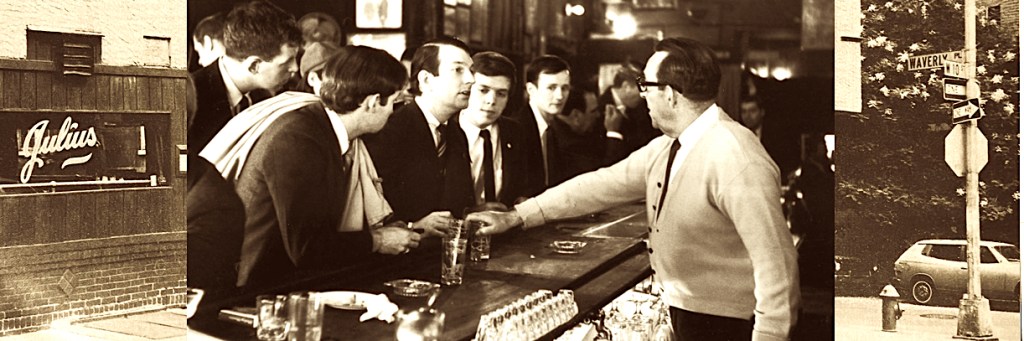
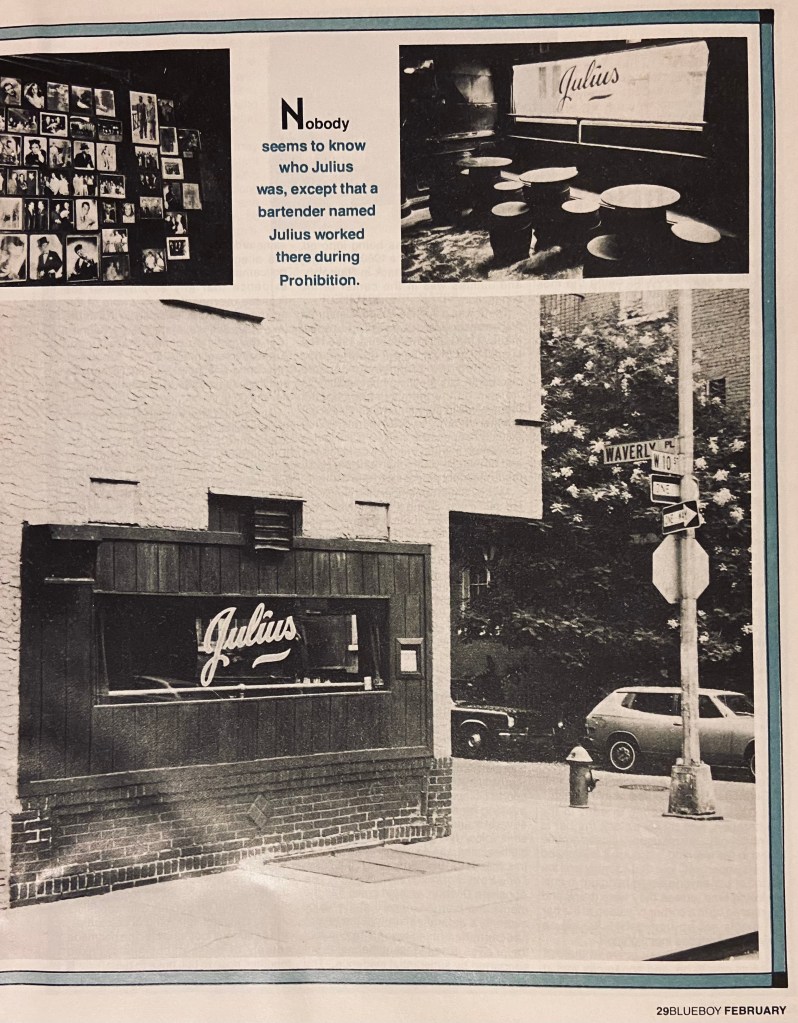
I recently posted a review of Bette Midler’s Thighs and Whispers LP from the February 1980 Blue Boy Magazine. We are revisiting the same issue of the magazine with a profile of Julius, the oldest continuously operating gay bar in New York City.
In April of 1966 – three years before the Stonewall Riots – a protest took place at Julius’s that became known as the “Sip-In.” This action established the rights of gay people to be served in licensed premises in New York and paved the way for gay establishments to obtain state liquor licenses.
The article below also recounts an earlier lesser-known challenge to the bar’s liquor license alleging that the owners “permitted the premise to become disorderly” by permitting homosexuals to “remain on the premises and conduct themselves in an offensive and indecent manner…” Apparently a patron had propositioned a plainclothed police officer. The courts ultimately decided that the charge was not supported by substantial evidence.
The article below states that the bar opened before 1860, although the wikipedia page notes different sources claiming 1864 or 1867. In any case, it’s ancient, but it did not gain its gay reputation until the 1950’s.
Some highlights from the piece below:
“The typical Julius’s person is almost always a doctor/lawyer type, though he may well be unemployed. He generally drinks too much – too early and too many.”
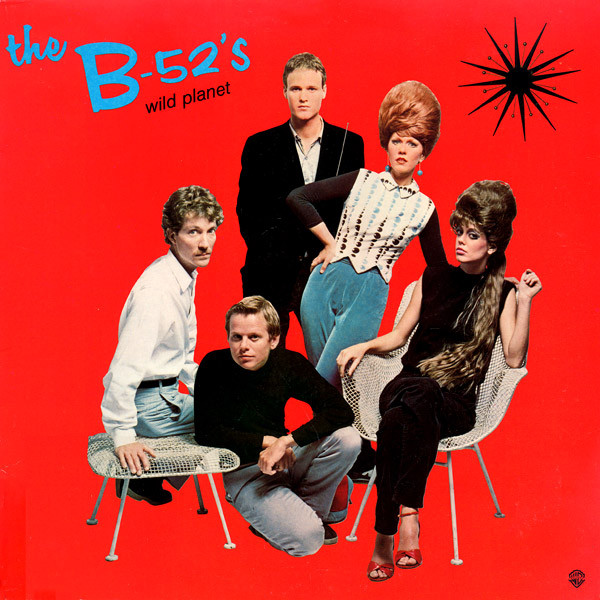
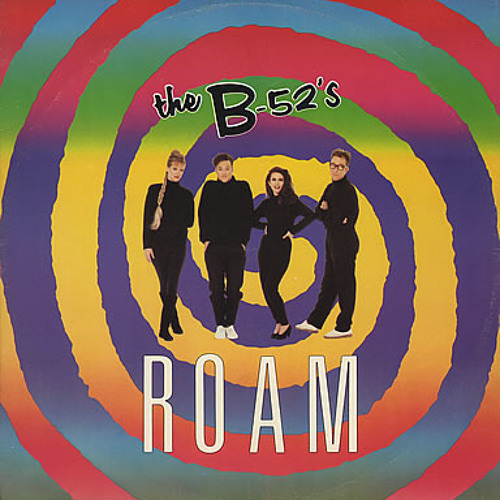
The B-52’s are currently in the midst of another farewell tour. It seems like a good time to revisit this blog post from the summer of 2018:
A couple of months ago, the internetburst into flames when Bunny Wailer, songwriter of “The Electric Slide”, confirmed rumors that the song is indeed about a vibrator. (It’s electric!).
An article on the Aazios site quoted him as saying that he wrote the song after a girlfriend told him she didn’t need him because she had a toy she nicknamed the “electric slide”. The story went viral.
Singer Marcia Griffiths was not happy about it. “I don’t sing about vibrators,” she said. “I sing to teach, educate and uplift.”
“Why not both?” I say.
Huffpost, which initially reposted the Aazios story, then printed an update that it was not true… noting, apropos of nothing, that Aazios is “an online source of LGBTQ news and entertainment” – as if that had anything to do with Bunny Wailer, the vibrator, or the validity of the story.
Snopes has labeled the story FALSE with a quote from Bunny Wailer that reads like a statement prepared by a lawyer to protect a client from litigation: “At no time have I ever lent credence to a rumor that the song was inspired by anything other than Eddie Grant’s “Electric Avenue“. To state otherwise is a falsehood and offends my legacy, the legacy of singer Marcia Griffiths, and tarnishes the reputation of a song beloved by millions of fans the world over.”
The problem is… Wailer wrote the song in the 1970’s, years before Eddie Grant’s 1982 hit. The song was dusted off and reworked to ride the “Electric” coattails of that hit record. Thirty-five years later, it is still adance floor staple at a certain caliber of venue. It is understandable that someone who still makes money off of this record does not want to suddenly admit that their cash cow is about a dildo.
Bottom line: It is or it isn’t. Either way, you now have a topic of conversation to slur loudly over your 9th cocktail while your mom and Karen from finance are knocking into each other on the dance floor.
So… now can we talk about The B-52’s 1989 hit song “Roam“? You know it’s about butt sex, right?
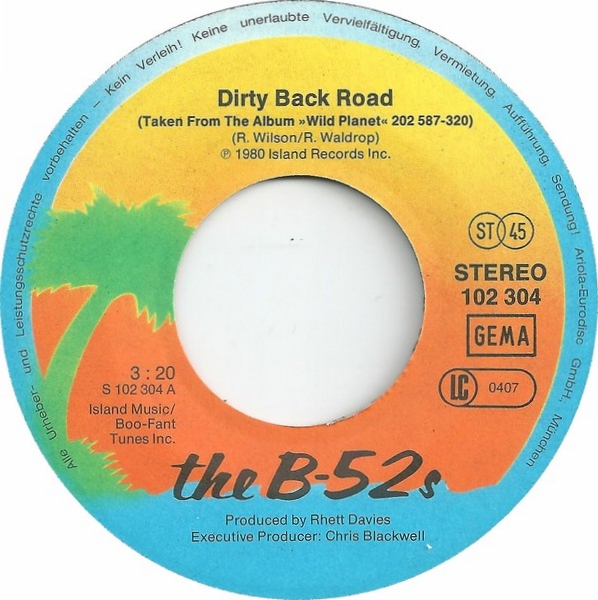
Of course, nobody is going to step up and confirm this now. The B-52’s still make a nice living touring the world performing “Roam” along with party classics like “Rock Lobster“ and “Love Shack“. One song they haven’t performed in years is “Dirty Back Road,” a track from their 1980 Wild Planet LP. Co-written by a guy named Robert Waldrop with band member Ricky Wilson, it’s not that much of a stretch to figure out what this little dittyis about:
Wreckless driving / Like a sports car / God I want you / Like a fuel engine / Energized line / Like a road / You ride me / Like a road / You ride me / Foot on the peddle / Feet in the air / Sand in my hair / Don’t look back / Don’t look behind you / Reckless drivin’ on / Dirty back road
Pretty obvious, right? Well… of course not, according to YouTube comments. People will argue about anything. I know, I know. Never read the comments.
Now lets move on to “Roam“: The song’s lyrics are credited again to Robert Waldrop, with music written by the surviving members of the band. Ricky Wilson had passed away from AIDS complications in 1985 during the recording of the Bouncing Off The Satellites LP. After taking a few years off, the band came back in 1989 with the LP Cosmic Thing, which would be the biggest commercial success of their career. The singles “Love Shack” and “Roam” topped the charts around the world, garnered the band their first two Grammy nominations and still get regular airplay today.
When did I realize that “Roam” was about butt sex? I couldn’t say. I just always knew. I saw Robert Waldrop’s name in the cassette booklet, read the lyrics to “Roam“ and thought “Look at that. He cleaned up his ‘Dirty Back Road‘.” Well, not completely – the second line has them “dancing down those dirty and dusty trails.” It may not be as blatant, but it’s there.
The phrase “Take it hip to hip rock it through the wilderness” is repeated about a dozen times throughout the song.
The chorus: Roam if you want to / Roam around the world / Without wings without wheels / Roam around the world / Without anything but the love we feel…
And then there’s this verse:
Hit the air-strip to the sunset / Ride the arrow to the target / Take it hip to hip rock it through the wilderness / Around the world the trip begins with a kiss
(at this point in the video, a banana goes through a hole in a bagel)
I would like to make it clear that I do not make these pronouncements as some sort of slander. Believe me, I am a big fan of butt sex and partake as often as possible.
In posting this piece, I realize that there are people who will get annoyed or upset that their favorite B-52’s hitis all about taking a ride on the Hershey highway, but really… if you think this is shocking or not possibly true then you never really understood the band and/or their sense of humor in the first place. People who only know them from Top 40 radio might not remember that they were/are a predominantly gay party band. They were messy, subversive and more than just a little punk. Fun punk.
If a clueless fan does not know that, it is akin to saying that you love John Waters because of the films Hairsprayand Cry Baby, buthave never seen Pink Flamingos or Female Trouble.
Like many other bands before or since, the B-52’s started out edgy and moved towards mainstream pop as their career progressed. While their current tour does pull heavily from their first two LPs, their bread and butter is still playing the hit songs. They are a business –not so much a band as a corporation like their contemporaries the Go-Go’s and Blondie.
Even if the B-52’s issued a statement today that “Roam” never was or is about getting popped in the pooper, the motivation would not be to tellthe truth, but rather to protect their own livelihood. Case in point: The Village People, Inc. When faced with anti-gay protests for a gig in Jamaicaback in 1998, their representative had the balls to issue a statement declaring that there was nothing gay about them. The fucking Village People, people. I would like to think that the B-52’s are still way too cool to ever do such a thing.
So… I just thought you ought to know. “Roam” is about takin’ it up the ass. Something to think about when you hearitwafting over the airwaves at the supermarket or when you are in line at the bank. I am not going to debate the evidence. It is what it is. I think it’s a hoot – it makes me chuckle whenever I hear it. But if you feel a strong opposition to the theory… may I invite you to hit the airstrip… and teach yourself the Electric Slide. Boogie woogiewoogie.
UPDATE: Since this was piece was first posted in August, 2018, an expanded 30th Anniversary edition of the Cosmic Thing LP was released. The band did a considerable amount of press, reflecting on the songs and recording process. Not surprisingly, nobody mentioned that “Roam” is about butt sex.
“‘Roam‘ has many meanings, but it’s a beautiful song about death,” Cindy Wilson told Classic Popmagazine in 2019. “It’s about when your spirit leaves your body and you can just roam.”
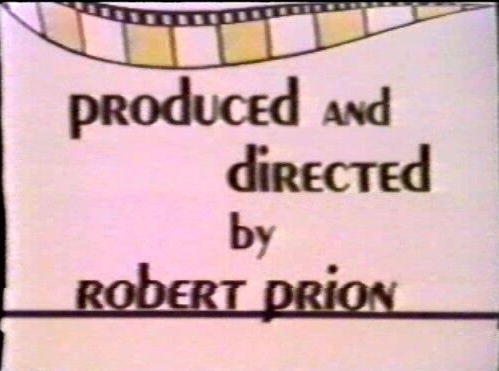
I once heard Robert Prion described as “The Ed Wood of gay porn.” It makes a great punchline, but it’s not quite true. Prion was 69 years old when he passed away on March 28th at his home in Woodbridge, New Jersey. It’s a house that porn fans are well acquainted with, as he filmed over 70 full-length adult films there over the past 40 years.
Prion is survived by his lifelong partner, who appeared in his films under the name Jay Richards.
Robert Prion was born on July 1, 1952 and lived in Woodbridge his entire life. A 1970 graduate of Woodbridge High School, Mr. Prion was employed for many years in the meat department (how fitting!) at Foodtown.
Jay Richards on the box cover for The Boys From New Jersey (1982)
In 1982 Prion released The Boys From New Jersey, the first of 12 films produced throughout the decade. The spirited performances of his skinny and hung cast shone through the muddy fidelity of the VHS home video recording. The films were also elevated by their kickass soundtracks featuring the songs of Depeche Mode, Erasure, New Order and other new wave groups of the day – copyrights be damned. There was plenty of spandex, stone washed high-rise jeans, crop-tops and mullets. Lots and lots of mullets. These movies act as a time capsule of 1980’s mall culture – you can almost smell the Drakkar Noir when you watch them.
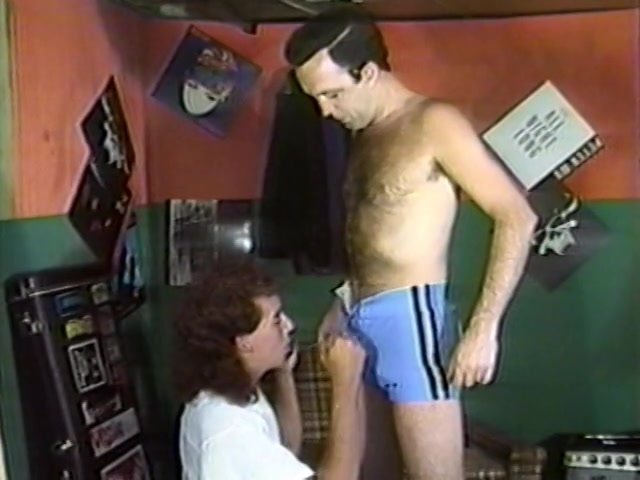
Prion shot scenes in every room of his house, from the low-ceilinged basement to the vaulted attic. Additionally, he filmed in another structure on the property that appeared to be either an elaborate children’s playhouse or a bungalow for little people. Coupled with low camera angles, his performers always seemed to be in danger of hitting their heads in the claustrophobic spaces.
Jay Richards and Karl Thomas (1990)
And yes, there was the pool area – a New Jersey approximation of the traditional California porn set, although the sun never seemed to shine on Prion’s pool and the tiki cabana appeared to be a season away from collapse.
Prion was aware of his place in the porn world: his studio was called New Jersey Trash.
His motto seemed to be “more is more.” Rather than the traditional porn layout of 4 or 5 sex scenes per feature-length film, Prion would cram in 7 to 9 – often starting off with a quick group oral scene before the end of the opening credits.
Bijou Video Catalogue Ads for Suckulent and Men Who Dare (1987)
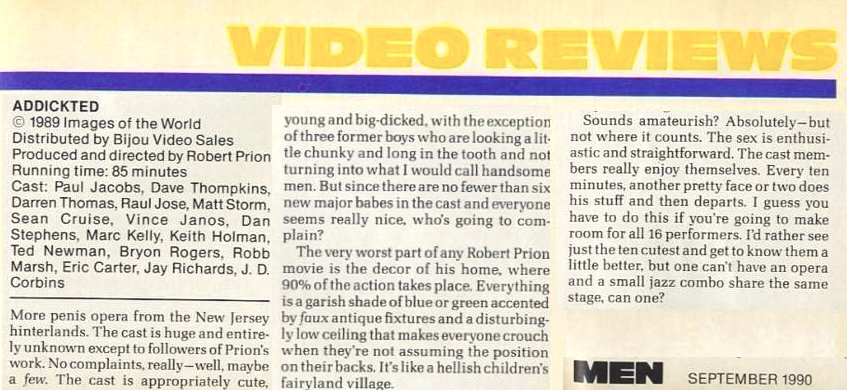
Video Review for Addickted (Advocate Men 9/90)
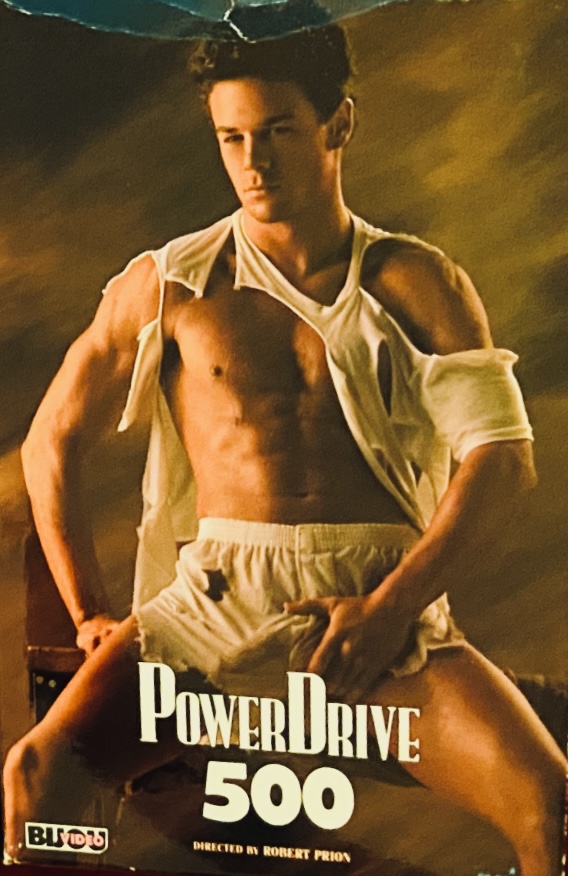
Prion with Chip Ryan in Powerdrive 500 (1990)
Whether or not his performers identified as straight, they put that aside when the cameras were rolling and gave performances that (for the most part) were far above average. It is the quality (and quantity) of these scenes that kept fans coming back for more, despite low production values and questionable design tastes. Many of the models appeared in over a dozen Prion films, indicating that they were treated favorably and/or well compensated.
Prion retired from performing in front of the camera by the mid-1990’s, but his partner Jay Richards continued delivering versatile, if perfunctory, performances in all 70+ Prion films.
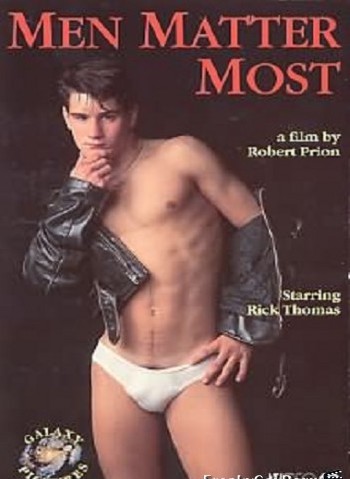
In January 1995, Prion formed his own production company, Galaxy Pictures. His first film for the new company was Men Matter Most. With the advent of DVDs, Prion repackaged and re-released his earlier films. With those and subsequent releases, he would take advantage of the “multiple angles” DVD feature to include whole other bonus sex scenes. Unfortunately, these “easter eggs” are now inaccessible with today’s DVD viewing practices.
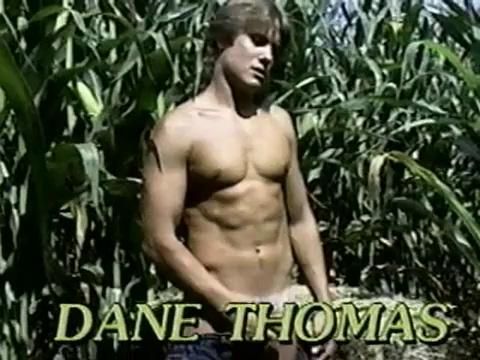
His biggest discovery was Rick Thomas, whose real-life older brother Dane also appeared in a handful of Prion films. They were among his stable of stars who always brought their “A” game, including Eric Carter, Vincent DeMarco, Bryon Rogers, Antonio Vegas, Jon Dante, Alex Turner, Wicked, Cody Marshall, Titan, and Chris Collins, aka “The Mystery Stud” who appeared in over a dozen films and never took off his sunglasses.
Prion benefited from his close proximity to New York City. Big name adult film stars making personal appearances in the city could hop on a New Jersey Transit train and earn some extra cash for a day’s work. Some porn stars who ducked through the low Prion doors: Jon King,Joey Stefano, Karl Thomas, Marc Andrews, Terry DeCarlo, Eric Stone, Todd Stevens, Rick Pantera, David Grant, Storm, David Thompson, Kevin Alexander, Jason Nikas, Scott Matthews, Ryan Raz, Scott Spears, Brandon Aquilar, Tommy DeLuca, Chris Stone, Kurt Morgan and Aaron Lawrence.
Terry DeCarlo on the old Christopher Street Pier in Put It Where It Counts (1993)
Prion’s dizzying output of films began to slow after 25 years although he continued to repackage and re-release older titles in online platforms, where many are still available for viewing. His last movie was released in 2014. See below for a list of all his films.
Robert Prion Films (including compilations):
The Boys From New Jersey: 1982
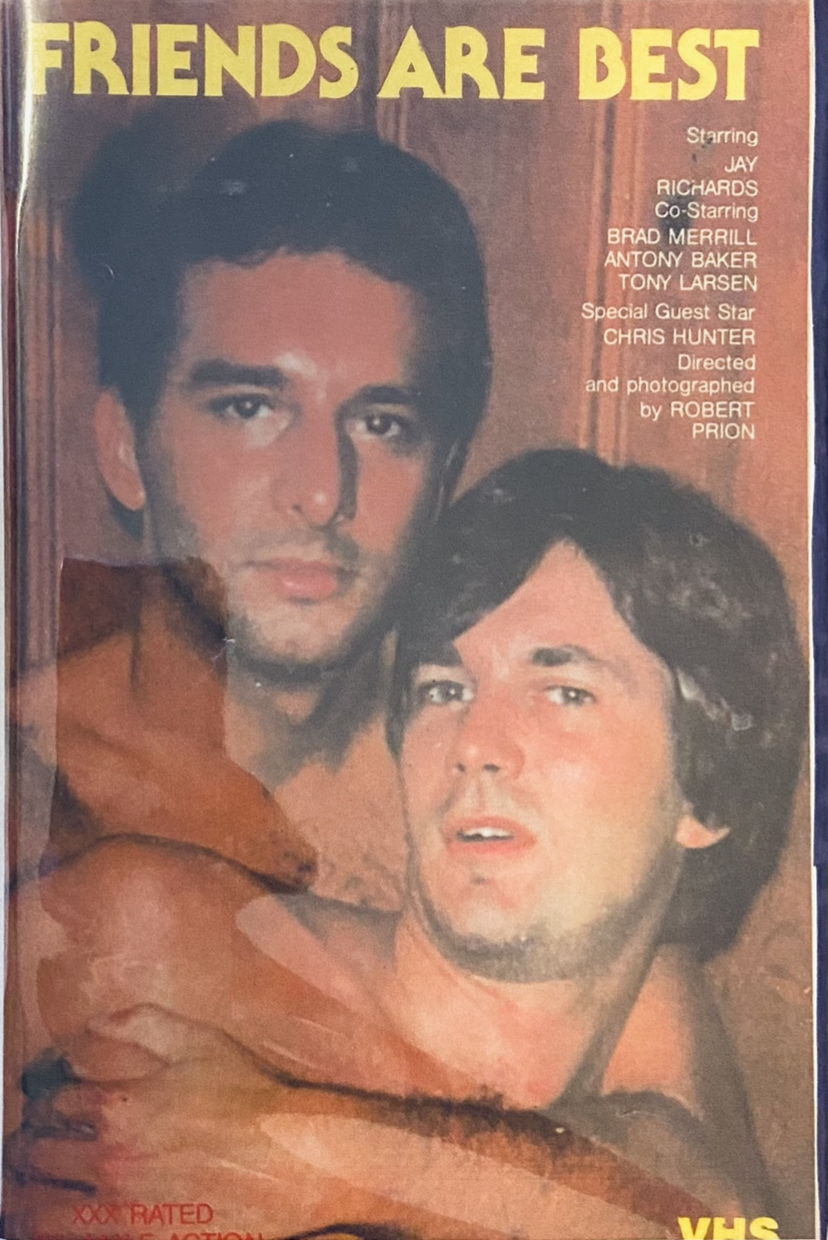
Friends Are Best: 1983
Men Grip Tighter: 1983
Cum and Get It: 1984
Boys Do It Better: 1984
Guy’s Just Can’t Stop: 1985
The Young Stimulators: 1985
The Wild Guys: 1986
Men Who Dare: 1987
Suckulent: 1987
Addicked: 1988
Raw Impulse: 1989
Ultimate Desires: 1989
Powerdrive 500: 1990
X-Posed Images-The Naked Truth: 1990
Untamed Seductions: 1991
Uncensored: 1991
Hidden Instincts: 1992
Total Impact: 1992
19 Good Men: 1993
It’s Raining Dicks: 1993
Solid Intake: 1993
Uncle Prion & His Young Men: The Best Of Robert Prion: 1993
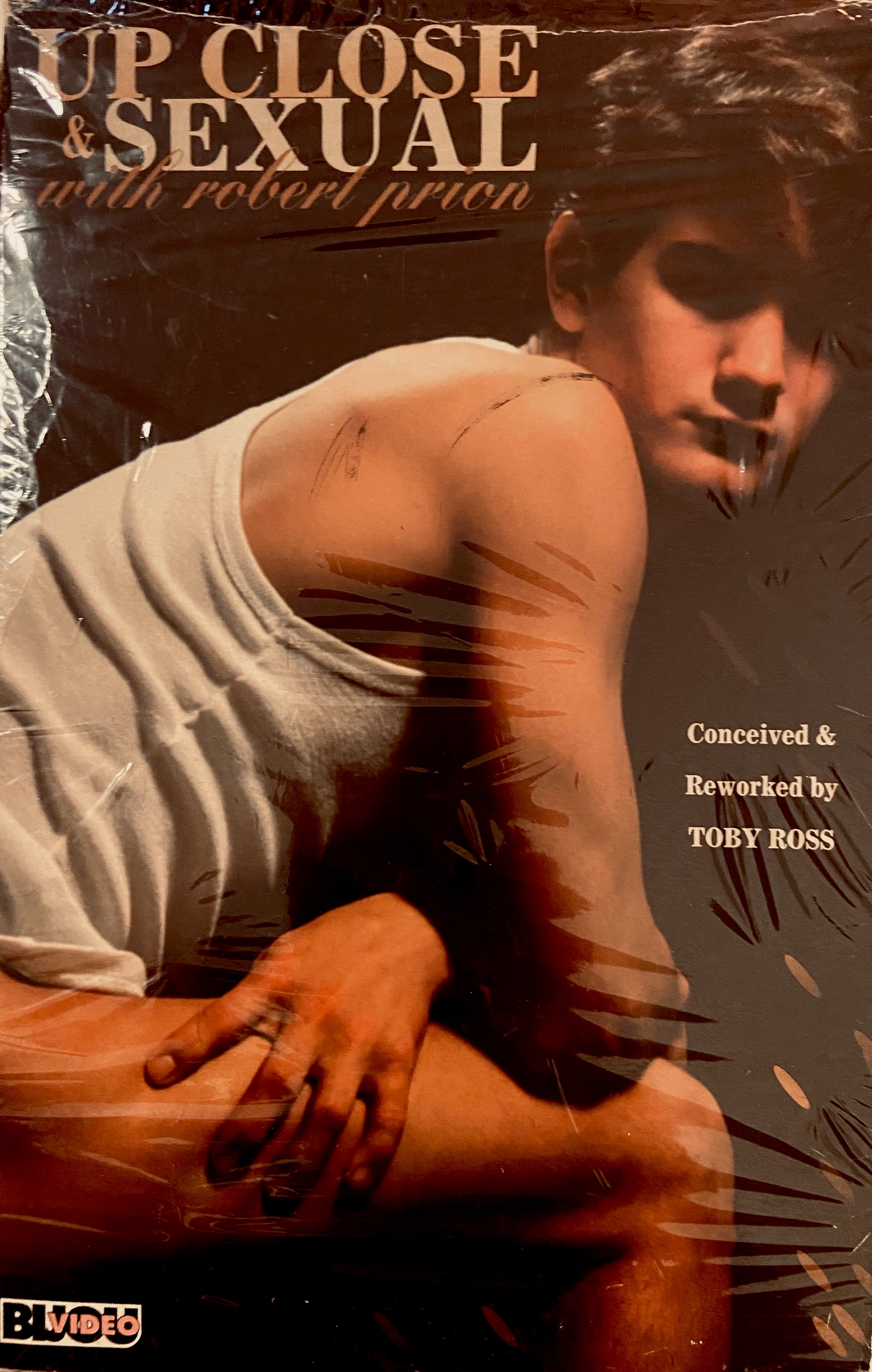
Up Close & Sexual: The Best Of Robert Prion 2: 1993
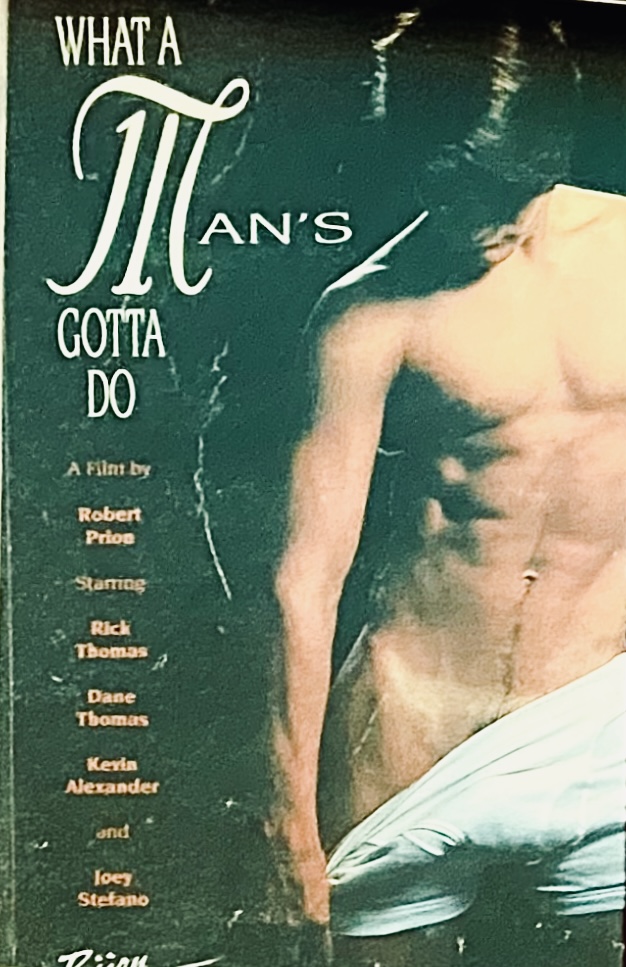
What A Man’s Gotta Do: 1994
Put It Where It Counts: 1994
Men Matter Most: 1995
Pushing The Limit: 1995
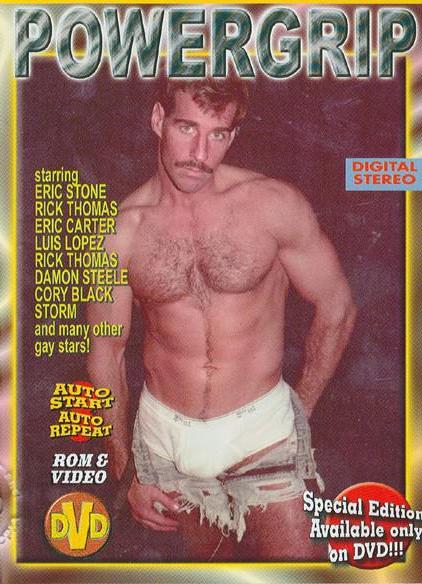
Power Grip: 1995
Everything A Man Wants: 1995
Point Of Entry: 1996
Natural Response: 1996
Whatever It Takes: 1996
Unexpected Persuasion: 1996
Drive Shaft: 1997
Every Man’s Desire: 1997
Can’t Say No: 1997
Nothing Else Matters:1997
Don’t Hold Back:1997
Pushover: 1997
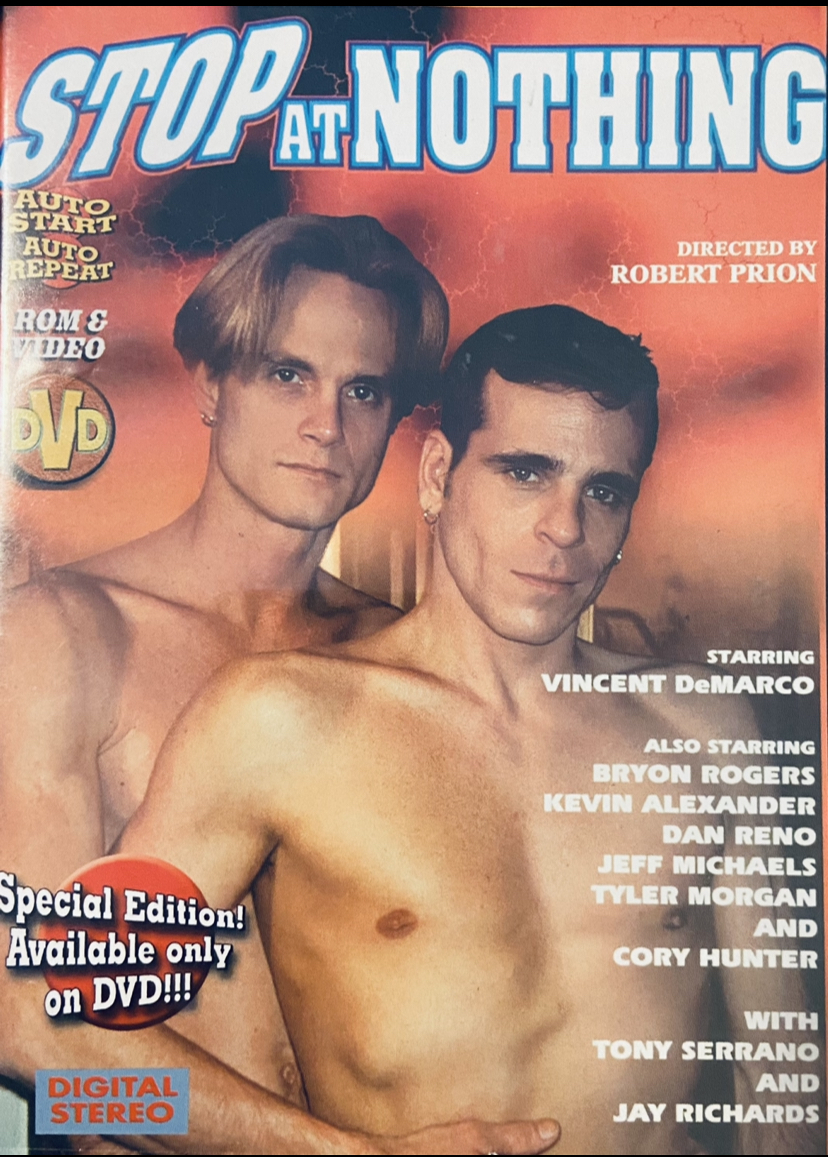
Stop At Nothing: 1998
You’ve Got The Touch: 1998
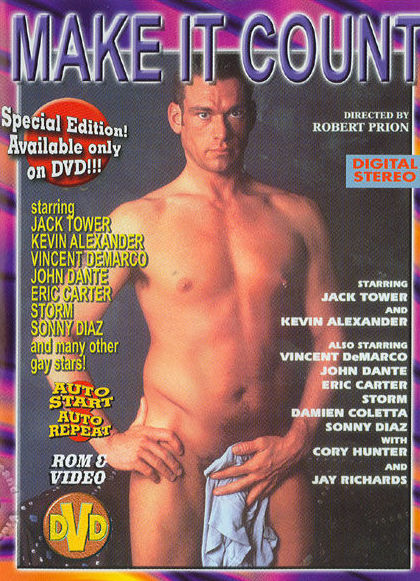
Make It Count: 1998
Relentless: 1998
One Way Or Another: 1998
Shameless: 1999
Any Way I Can: 1999
Let’s See What Happens: 1999
Aim To Please: 1999
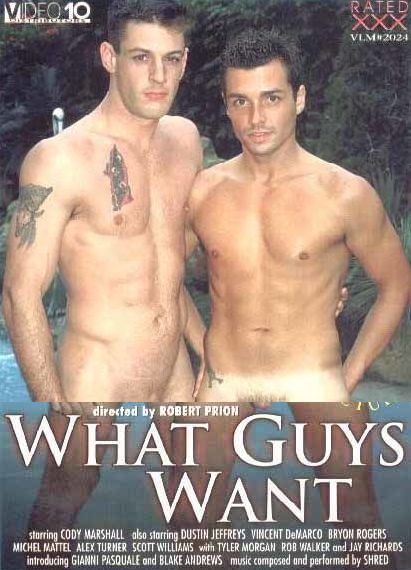
What Guys Want: 1999
Best of Robert Prion 1 – Give and Take: 2000
Best of Robert Prion 2 – Outdoor Seductions: 2000
Best of Robert Prion 3 – Three In The Sack: 2000
Best of Robert Prion 4 – Mix and Match: 2000
Best of Robert Prion 5 – Video Virgins: 2000
Best of Robert Prion 6 – Superstars: 2000
Going Too Far: 2000
Every Inch Of Him: 2000
If You Dare: 2000
So That’s How You Want It: 2000
One Step Further: 2000
Don’t Stop There: 2001
Qualified To Satisfy: 2001
I Want More: 2001
Never Stop The Urge: 2001
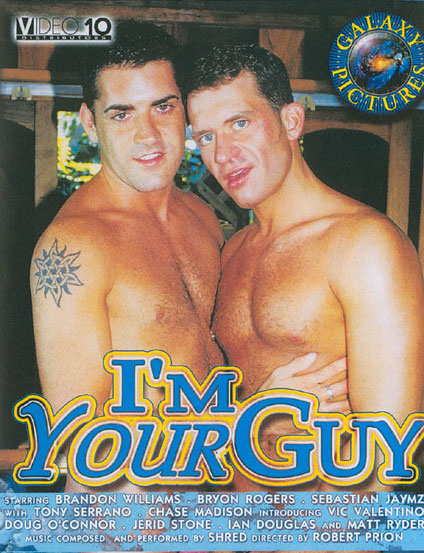
I’m Your Guy: 2001
Over The Edge: 2002
Take It All: 2002
Natural Impulse:2003
Doin’ The Nasty: 2003
Return The Favor: 2003
Teasin’ N’ Pleasin’: 2004
From Every Direction:2004
Access All Areas: 2005
Standing Firm: 2006
All Men Should: 2006
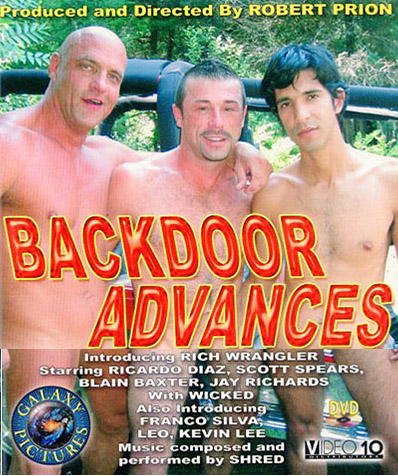
Back Door Advances: 2007
Prion’s 69 More To Cum aka That Sucks: 2007
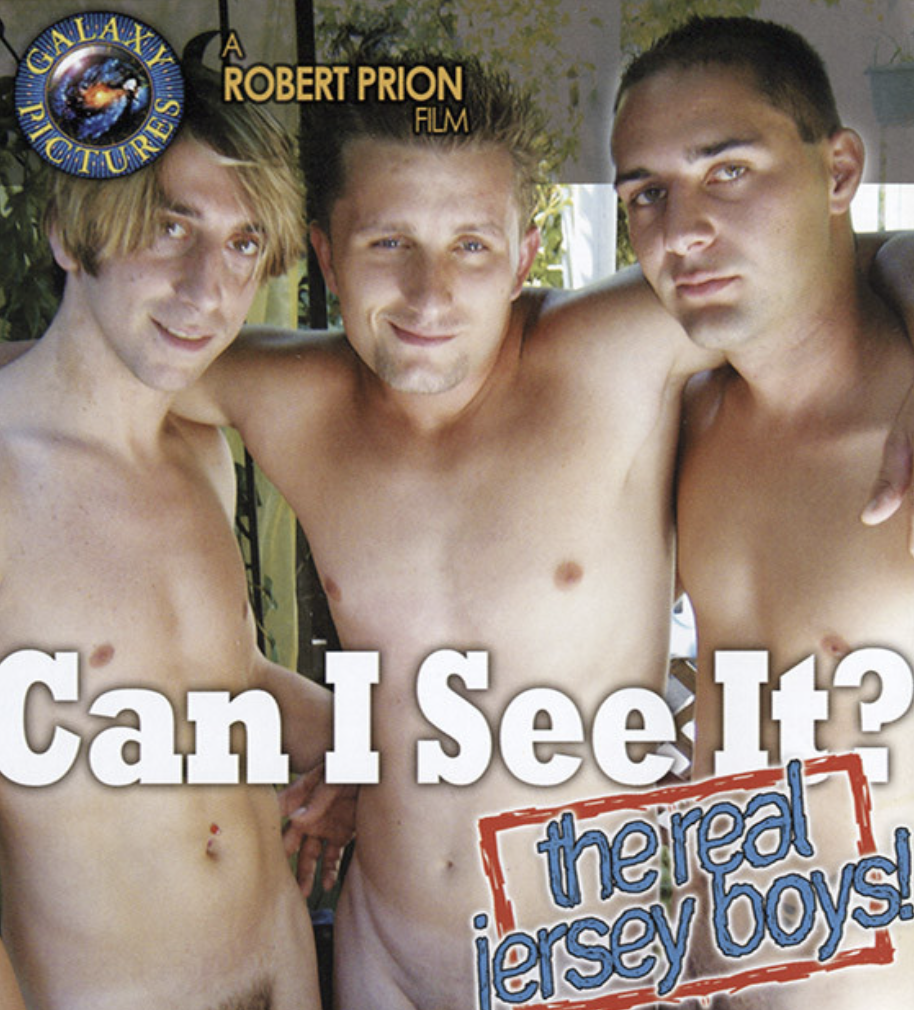
Can I See It?: 2008
It’s Only Natural… Daddy: 2014
We extend our condolences to Jay Richards and the friends and family of Robert Prion.
Amy Sedaris is the queen of Instagram – her offbeat posts highlight the weirdly funny and/or oddly sweet. I am just one of her million+ followers. If you need a daily pick-me-up – and who doesn’t at this point? – check out her feed.
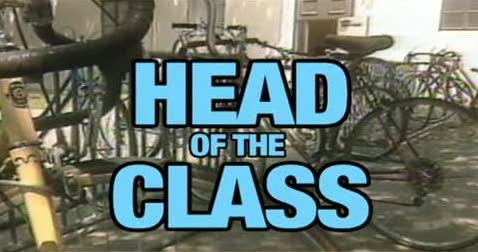
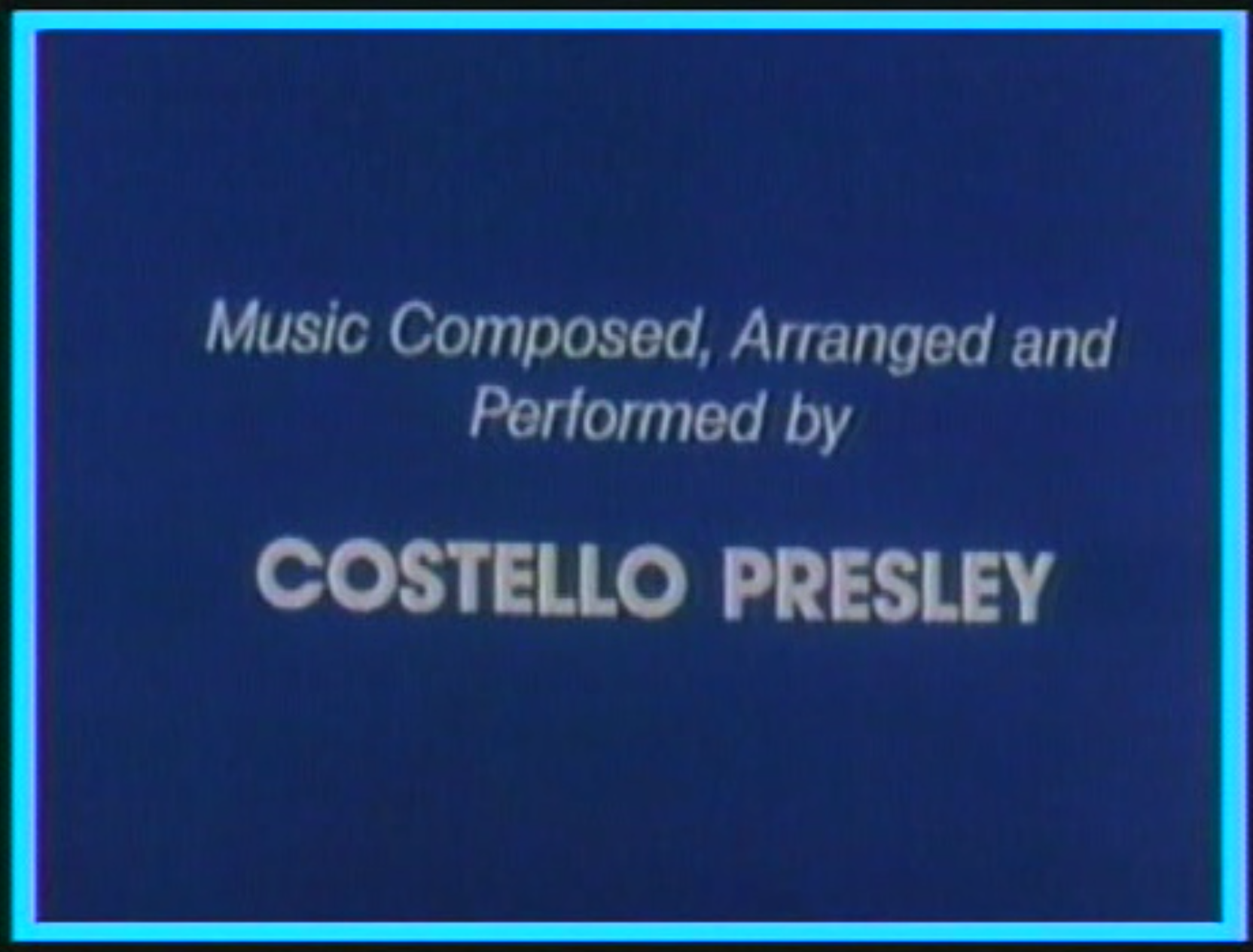
This clip has more than 300k views, 23,436 likes and 897 comments…. but apparently I’m the only one who doesn’t just click the heart, post “LOL” and move on. No. I’m the gay porn nerd spewing info that the general population really does not give a shit about, pointing out that it’s Eric Manchester & Billy London admiring Dean Chasson’s talents in Head Of The Class (1988). Music by Costello Presley!
The comment garnered no “likes” or “responses” – it just dissipated into the air like a public fart as crickets chirped in the distance. Whoooo cares?
I know I’m not the only one interested in finding out more about these videos. Amy Sedaris reposted this clip from Instagram user @homomacabre, whose followers also care about the minutia. His posts highlight the kitsch of old gay porn, with acting thinner than the flimsy sets, not to mention the tacky period clothes and hairstyles. And then there’s the music of Costello Presley.
I wanted to do a blog post about the mysterious synth-pop wizard who scored several dozen gay porn films in the 80’s and early 90’s, but have not successfully uncovered any info about him, including his true identity. I am not alone in my appreciation of Costello Presley: There are multiple soundcloud files and a reddit post with a filmography of approximately 40 titles that feature his music. A porn-adjacent friend of mine does not remember his real name, but assures me that Mr. Presley has left the building.
In 2017, synth band Parralox did a faithful cover of Costello Presley’s “Animal Reaction” from William Higgins’ Class of ’69.
In addition to Head of the Class, another Scott Masters/Catalina video in the Costello Presley oeuvre is John Travis’s Powerline (1989), which also starred Eric Manchester. This film features one of my favorite unintentionally funny scenes from that era.
I purchased a VHS copy of Powerline while on spring break from college. I had gone into New York City to see a Broadway show with some school friends and was about to head back to Long Island. I couldn’t manage to break away from the group and go into a porn shop, so I said my goodbyes at Penn Station and headed down to the train platform. Once the coast was clear, I ran back up to 8th avenue and went into the first smut shop I could find.
I made my way over to the video racks as a stripper in a silver bikini and stilettoes danced on the mirrored stairs leading to the upper level, beckoning shoppers to partake of something more tangible. I grabbed Powerline and headed to the register. With a $39.99 price tag, it was more than I would normally pay for a porn videocassette but my train was leaving in 5 minutes.
All the “acting” scenes are priceless but this one is my favorite, featuring gay-for-pay cover model Tom Steele as the cable guy with Lou Cass and Troy Ramsey as the couple from downstairs who catch him jerking off on the roof.
Porn legend and uber music fan Lou Cass was a frequent guest on The Robin Byrd Show in the early 90’s when he was dancing in New York. The Bay Area resident still has a strong social media presence and occasionally releases his own music. This is one of several versions of Pat Benatar/Nick Gilder’s “Rated X” that he has recorded through the years:
If and when I find out more information about Costello Presley, I will be sure to update the post.
It’s hard for me to believe that I am well past 5 years into this blog nonsense and I have never written a single post about Dusty Springfield. I am a huge Dusty fan – she’s my diva. When I had my public access show here in New York City, I ran performance clips of Dusty so often that I received condolence calls and letters from viewers when she died in 1999.
Too much?
Back then, there was still much to discover: whole albums of unreleased material were unearthed and LPs that had been out of print for decades were remastered and reissued. But now the cupboard is bare, with even incomplete performances cobbled together to produce somewhat finished products.
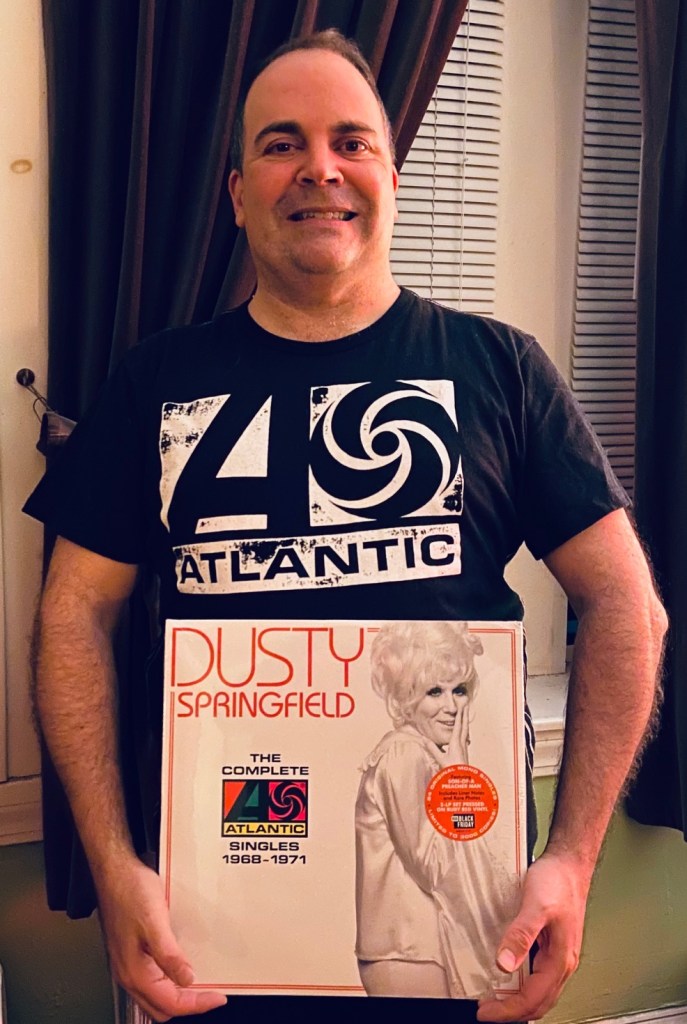
I do appreciate collections that present the tracks in different contexts. A couple of nice recent compilations: Real Gone Music’s Complete Atlantic Singles (1968-1971) and Ace Records’ Dusty Sings Soulare welcome additions to my dusty Dusty collection. And then there’s Goin’ Back: 1964-1971, a 2-CD set of radio and TV recordings that is about to be released in the UK.
With a career spanning close to 40 years and hundreds of recordings in genres from folk to disco and everything in between, it’s easy to forget about some of the lesser known Dusty performances. I was recently reminded of the time she covered a Kate Bush song.
Yes, Kate Bush.
And I’m also a huge fan of Kate Bush. But somehow, I had forgotten about this.
It’s like artists converging from different dimensions. Or maybe not. We live in an age where Lady Gaga and Tony Bennett duets are a thing.
Picture it: London, April 1979. Dusty has just turned 40 as she returned to the UK after living in the US for most of the 1970’s. Meanwhile, 20 year-old Kate Bush had released her first two albums within the previous year. Dusty was performing several shows at The Theatre Royal, Drury Lane. Unfortunately there are no official recordings of the performances but we do have a couple of bootleg audio recordings. Dusty introduces the song:
“When I came here last year, I was surprised and mostly pleased at the musical changes that had happened here. I like things like (Ian Drury’s) ‘Hit Me With Your Rhythm Stick’ just as much as you do…. anyway the thing that impressed me most was that so much originality was around. In particular one young lady came through with a song called ‘Wuthering Heights’…. Kate Bush has an immense amount of originality and I was absolutely staggered by her. I’d like to sing a song that I think is one of the prettiest ones ever written, certainly by her. It’s called ‘The Man With The Child In His Eyes.'”
She then goes on to, as Neil Tennant would later say, “Dustify” the song. It’s a beautiful performance of an unexpected song choice:
Dusty was not alone in her praise of “The Man With The Child In His Eyes”. Besides reaching the #1 spot on the UK pop charts, the song also won an Ivor Novello Award for songwriting.
Later that year, Dusty’s performance at Royal Albert Hall was properly recorded for posterity. Unfortunately, by that time the song had been removed from the set list.
Today would have been Dusty’s 83rd birthday. She is still sorely missed and I’d trade my eye teeth to hear her sing a duet with Lady Gaga.