Luke Combs’ Cover Of “Fast Car” Is The Perfect Song For Our Times

In case you missed it, Tracy Chapman’s 1988 song “Fast Car” has been covered by country artist Luke Combs. It has now topped the country charts and has out-performed the pop chart standing of the original. Chapman is now the first female African-American songwriter to have a #1 country song.

Chapman released a statement to Billboard: “I never expected to find myself on the country charts, but I’m honored to be there. I’m happy for Luke and his success and grateful that new fans have found and embraced ‘Fast Car.’”

I hate to be a wet blanket on the festivities, but I can’t be the only person that thinks a white male country artist covering this song is a little tone deaf. Especially right now.

I believe Combs’ heart was in the right place when he recorded the song, but in the hands of his listeners – and the country music crowd is overwhelmingly conservative – it becomes another example of how we’re supposed to believe that race and gender do not make a difference as to who gets ahead in the world.

At a time when teaching African-American history is being treated as an act of aggression and the “critical race theory” boogeyman is being used to rile up the right wing mob, a caucasian male country singer covering “Fast Car” makes perfect sense. Because we’re all the same, right? A poor white male and a poor black woman are interchangeable, right? It’s a level playing field. Right?

I do appreciate that Combs is faithful to the original. As a songwriter, he did not want to change a word of Chapman’s song. By the 5th verse, he’s working in the market as a checkout girl. “You’ll get a job and I’ll get promoted…” the lyric goes. Tell me: who is more likely to get that promotion – Chapman’s protagonist or Combs?

“Starting from zero got nothing to prove…” Yes, but “zero” is not the same for everyone. We are all programmed to believe that we live in the land of equal opportunity. If you can make it here, you’ll make it anywhere. If you don’t succeed, well, you just weren’t good enough, or you didn’t try hard enough. But really… we don’t all start in the same place, do we? Most people get a boost in one way or another, whether it’s financial support or nepotism or a legacy admission into a university. Unfortunately, boosts both big and small are often forgotten or underplayed when people recount their path to success.

Dustin Rowles writes on Pajiba.com that he found a strong resonance with “Fast Car” when it was first released back in 1988. I did as well. I was the child of a single parent home – a B student attending a B+ university, dependent on many grants and loans. The song began to climb the charts as I headed home at the end of my freshman year. Unlike many of my classmates, I wasn’t afforded the opportunity to take a $50-a-week summer stock job – a rite of passage for theater students. This would be one of those “little boost” moments that many experience and forget about. Instead, I was expected to live at home and work full-time so I could contribute towards my next year of school. This meant returning to a $4.25-an-hour retail spot at Record World, which wasn’t exactly going to make me financially solvent.

Here was my boost: When family members kept forgetting to pick me up from work, my mother bought me my first car. It wasn’t a fast one. The 1982 Plymouth Horizon cost a few hundred dollars and gradually slowed down whenever it got too hot. But it had a cassette player, and Tracy Chapman’s debut record was on heavy rotation that summer.

Rowles writes that he harbored some resentment for the song, which he perceived as predicting that he would not be able to break the cycle of poverty and dysfunction that he had grown up with. I didn’t feel that way. The song effected me deeply, as did her whole album. But I knew that I was better off than the song’s protagonist. I did not have a false equivalence. My previous job had been at a supermarket where I worked with single black women trying to support their kids on minimum wage. I knew they would not have been hired at the record store making that extra .90 cents an hour.

Ultimately, Rowles concludes that “…there is a way out. Unfortunately, it’s not a fast car, which only allows you to outrun your problems for so long. The easiest way to break the cycle is through education.” He concedes that, as a white male, he had a boost: access to an education that minorities often did not.

And now, 35 years later, “Fast Car” is topping the charts in the wake of the Supreme Court striking down a couple of very important boosts: affirmative action in college admissions, and Biden’s student loan forgiveness program. The latter should be of concern to people of all persuasions who are staring down a lifetime of loan interest payments. But that is assuming every person has the equal opportunity to be accepted into an institution of higher education. Without affirmative action, that is not the case.

As a high school student in Cleveland, Ohio, Tracy Chapman was accepted into A Better Chance, a non-profit program that placed high-achieving minority students in prep schools. She graduated from Wooster School in Connecticut and went on to attend Tufts University, where she was discovered by fellow student/future filmmaker Brian Koppelman. Koppelman’s father was a record executive and signed her to SBK Publishing, which led to a deal with Elektra Records.

Billboard estimates the recent global publishing royalties of “Fast Car” exceed $500,000. Unlike so many other artists, Chapman still owns both the writers’ and publisher’s share of the song, so that money is hers. Additionally, the success of Combs’ version has brought attention to her original, increasing activity 44% since his version was released, according to Luminate. Her song, in its original form, is speaking to a whole new generation. It just needed a boost.

See Also:
Tina Turner: 12+ Cover Songs You May Have Missed
Adam Schlesinger: Not Just The Guy On The Right
Revisiting Bette Midler’s Thighs And Whispers (1979)
You Know The B-52’s Song “Roam” Is About Butt Sex, Right?
Etta James: Advertising Zombie
1991: Homo Alone
The Tin Man & The Lion: Unanswered Prayers
Dusty Springfield Sings Kate Bush
10 Forgotten Cher Moments
Gimme Gimme Gimme: Erasure Covering ABBA

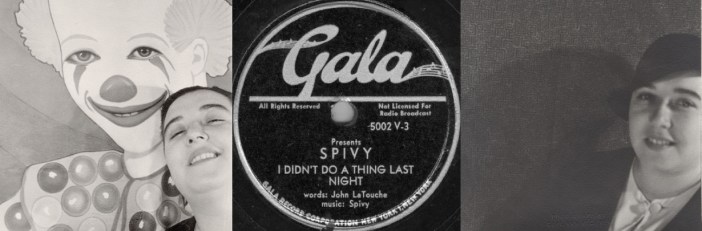
Madame Spivy: I Didn’t Do A Thing Last Night

Madame Spivy photographed by Carl Van Vechten (1932)

“This song is dedicated to a friend who suffers terribly from hangovers. It’s very sad and we must be very quiet, please…”

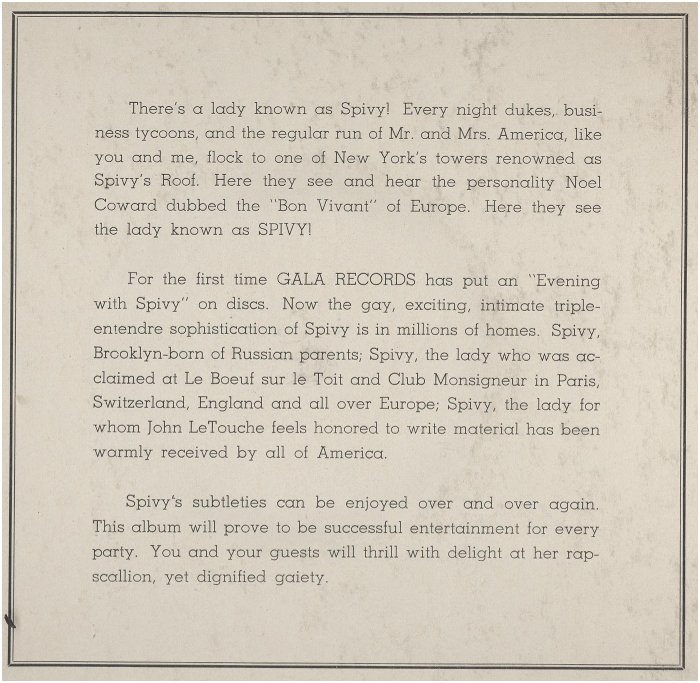
Ladies and Gentleman, it is time once again to revisit that late great dynamic lady of song, Madame Spivy LeVoe (1906-1971), also known simply as Spivy. A lesbian entertainer, nightclub owner and character actress, Spivy has been described as “The Female Noel Coward” – to which I add “…. if he had been born in Brooklyn as Bertha Levine.”

In case you missed them, these are our previous Madame Spivy posts:
The Alley Cat
The Tarantella
Auntie’s Face
100% American Girls
A Tropical Fish
I Brought Culture to Buffalo In The 90’s
Why Don’t You?
Madame Spivy: Movies & Television
Madame Spivy on the Good Time Sallies Podcast

In the Spring/Summer of 2020 with the pandemic in full swing, cabaret performer extraordinaire Justin Vivian Bond was livestreaming weekly shows from The House of Whimsy, aka their home in upstate New York. Imagine my delight when Mx. Viv covered Mme. Spivy’s “I Didn’t Do A Thing Last Night” – one of my favorite of her recordings.

Justin Vivian Bond as Auntie Glam, belting one out in The House Of Whimsy (2020)

As with “Auntie’s Face“, Spivy uses her familiar spoken intro for “I Didn’t Do A Thing Last Night”: A solemn pronouncement that “This is VERY sad and we must be VERY quiet, please.” One can imagine that it was a playful way to get the attention of a noisy nightclub audience.

Spivy wrote the song with John La Touche providing the lyrics. Today, La Touche is best remembered for his Broadway musical The Golden Apple and for his lyrical contributions to Leonard Bernstein’s Candide. He also collaborated with Duke Ellington on the musicals Cabin In The Sky & Beggar’s Holiday.


Spivy and LaTouche met in the mid-1930’s and had a tumultuous lifelong friendship. At one point Spivy paid him fifty dollars a week to supply her with songs. During one falling out in 1938, LaTouche referred to her as his “enemy.” “Poor Spivy,” he wrote, “hysterical, glandular, ugly, charming, and so talented.” After another disagreement later that year, he wrote to her; “I’m sorry; you can hardly afford to lose a staunch friend and neither can I. But both of us are always doing things we can’t afford.”

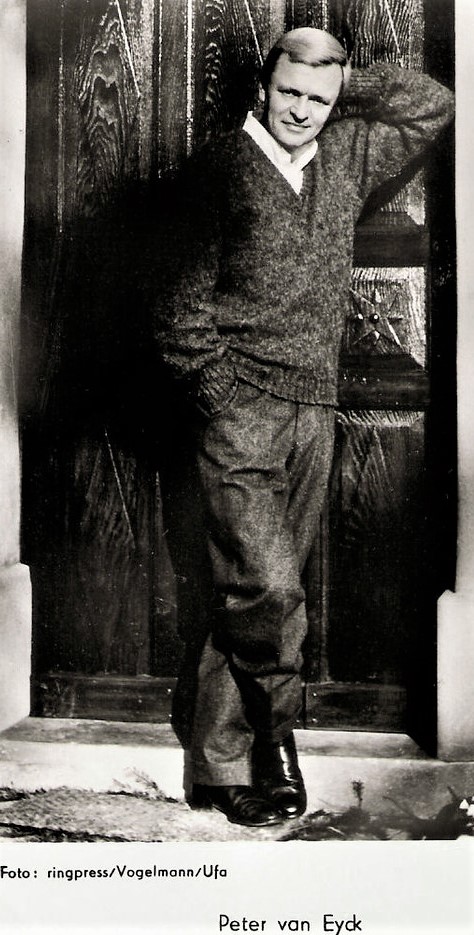
Of the 15 songs Spivy is known to have recorded, 5 of them were written or co-written by LaTouche: One was a solo credit, two were written with Spivy herself, and two were in collaboration with Goetz Eyck, a German-born musician who would go on to a film career as Peter van Eyck.

One LaTouche composition that Spivy did not preserve on record was a highlight of her live performances: “I’m Going On A Binge With A Dinge.” She often concluded her set with this racy little tune detailing a biracial protagonist going uptown for a tryst. “White people / Don’t be offended … ” the song begins. Other lyrics: “Gonna end up in Harlem / With my end up in Harlem”

Unfortunately, LaTouche’s work for and with Mme. Spivy has generally been forgotten or dismissed. In Howard Pollack’s 2017 biography The Ballad Of John LaTouche, the author spends several pages analyzing the lyrics and structure of these compositions before concluding that “the literary attractions of these songs, heavy on irony, outweigh their musical interests.”

Is that so?

Like Spivy, LaTouche was a heavy drinker, which ultimately led to both of their premature passings. He was just 41 years old when he died of a heart attack at his home in Calais, Vermont in 1956. Spivy was 64 years old when she died in January, 1971.

I Didn’t Do A Thing Last Night

Doctor dear, come over with a stretcher – I’ve never in my life felt quite so rotten.
My brain has snapped in two and my face is turning blue,
and everything I eat tastes just like cotton.

Oh yes I did everything you told me – I practically never left my room.
I observed your special diet, had lots of peace and quiet.
So why do I feel like something in Grant’s Tomb?
Lord knows why I don’t feel well – I didn’t do a thing last night.

I had a few friends in to play bridge with me,
And I sipped a little gin, just to keep them company.
Then a pal of mine named Rhoda came in with such a crew,
I gave them scotch and soda and I had a teeny one, too.

Then Vero P.T. Roth brought me some chicken broth,
which is insipid, doctor, don’t you think?
So someone in the party added a soupçon of Bacardi
it really makes a very nourishing drink.

At nine my cousin Andy made such insulting cracks,
that I had a little brandy just to help me to relax.
He tried to grab the bottle and dragged me out of bed.
When I saw that it was empty, I broke it on his head.

He’s still lying on the carpet and my maid insists he’s dead.
Oh doctor dear, why do I feel queer?
I didn’t do a thing last night.

At ten, Princess O’Ravivovich said; “Today is Pushkin’s birthday.”
So I had a little Slivovitz just to help her celebrate.
Then that fool Tessie Zackary upset my Dubonnet,
so they shook me up a daquiri to chase my blues away.

Those pills of yours were dry, so I washed them down with rye,
And I thought some exercise might help me rest.
I dashed down the avenue ’til somebody yelled “Woo!”
Good heavens – I’d forgotten to get dressed!

By then I felt so dizzy, to tell the honest truth,
They made me something fizzy out of vodka and vermouth.
At one, Rear Admiral Nipper, the old man of the sea,
arrived with his battalion, they had to sail at three.

But doctor, I just noticed: They’re still in bed with me!
It’s all so mad and I feel so bad,
and I didn’t do a thing last night.

At five, my old friend Tony said that doctors were baloney.
He said “Yoga exercises cured all pain.”
Doctor dear, I was a wreck with my legs around my neck,
and it took four hours to get them down again.

They sent for rubbing alcohol to rub away the aches,
but they couldn’t find the stuff at all – I’d drunk it by mistake.
Oh yes, I slept just like a baby, ’til I woke up right now.
No, the drinks did not affect me, I’m as flaccid as a cow.
Except I have a tendency to suddenly go “WOW!”

Why in hell don’t I feel well? I didn’t do a thing last night!

John La Touche songs recorded by Spivy
Fool In the Moonlight (music: Goetz Eyck)
I Didn’t Do A Thing Last Night (music: Spivy)
I Love Town (music: Goetz Eyck)
Last of the Fleur De Levy
Surrealist (music: Spivy)

Unrecorded La Touche songs performed by Spivy
I’m Going On A Binge With A Dinge
Moonlight

See also:
The Alley Cat
The Tarantella
Auntie’s Face
100% American Girls
A Tropical Fish
I Brought Culture to Buffalo In The 90’s
Why Don’t You?
Madame Spivy: Movies & Television
Madame Spivy on the Good Time Sallies Podcast

David on The Robin Byrd Show

The recent brouhaha over exposing Michelangelo’s David to impressionable Florida public school children reminded me of the classic sculpture’s 1998 appearance on Robin Byrd‘s Men For Men. For those outside of Manhattan, this was a late night cable TV show featuring strippers and adult film entertainers that aired nearly every night of the week. Apparently, poor Dave had fallen on hard times and was shaking his marbles for cash on 8th Avenue. At least that was the way it appeared on my public access show, Bri-Guy’s Media Surf.

Maria, the beleaguered salt shaker.

I have written about Media Surf in the past – it ran on Manhattan Neighborhood Network from 1997-2007. In the early years, I created short segments using stop-motion with my video camera. Most featured a portly salt shaker named Maria. After a while I grew tired of the time consuming technique. David’s striptease was one of the last that I created.

https://www.tiktok.com/t/ZTNMWMFHs/

/\ /\ I’m leaving this here to show how ridiculous YouTube is. /\ /\


I wanted to utilize my set of David refrigerator magnets on a red metal background. It had to be metal for the magnetic properties, and the red would emulate the lurid background on Robin’s show. I was still trying to figure out how to execute this when I came home one day to find that the apartment doors in my building had been re-painted glossy red. Perfect! I propped my door open, set up my camera tripod and went about creating the frame-by-frame striptease. Luckily I lived on the top floor and was uninterrupted by puzzled neighbors wondering what the hell I was doing.

In the version that aired 25 years ago, David was dancing to Madonna’s “Erotica” – a song that every third performer on Robin Byrd’s show seemed to use at the time. Unfortunately, Madge and Warner Brothers Music are most intolerant of the unauthorized use of their recordings. Rather than risk having the video removed from social media platforms, I switched it out. David now shimmies to Man Parrish / Man 2 Man’s “Male Stripper,” a much better choice of song that I wish I had used in the first place.

I was planning to use a clip of Robin’s generic “Lie back, get comfortable” guest introduction and then cut to David’s performance. It was pure luck that I happened to be recording her show one night when she introduced a guest named “David.” Sometimes the stars align to help create a classic piece of work. 😉

See Also:
If You See Me In The Bathroom, Be Sure To Shake My Hand
1991: Homo Alone
Kurt Bieber: From Little Me to Colt Model
Remembering Bob Harrington
Gay Porn Stars We Lost In 2022
Gay Porn Stars We Lost In 2023
Gay Porn Stars We Lost In 2024
Gay Porn Stars We Lost (so far) In 2025
Keith Haring In Heat Magazine (1992)
You Know The B-52’s Song “Roam” Is About Butt Sex, Right?

Artist’s Muse: José “Pete” Martinez


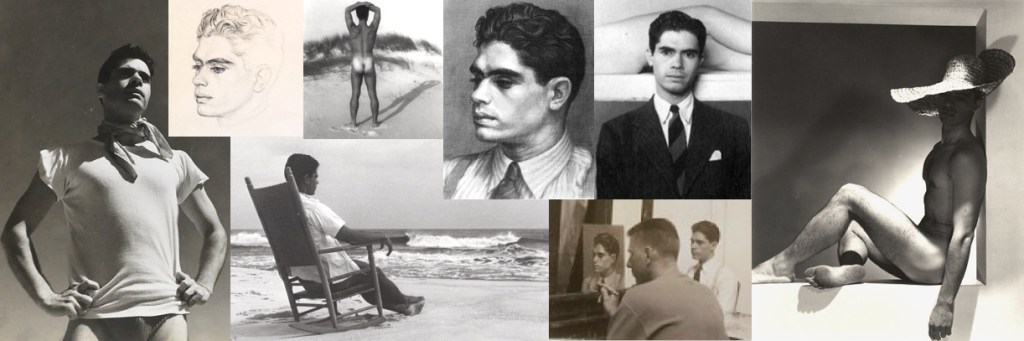
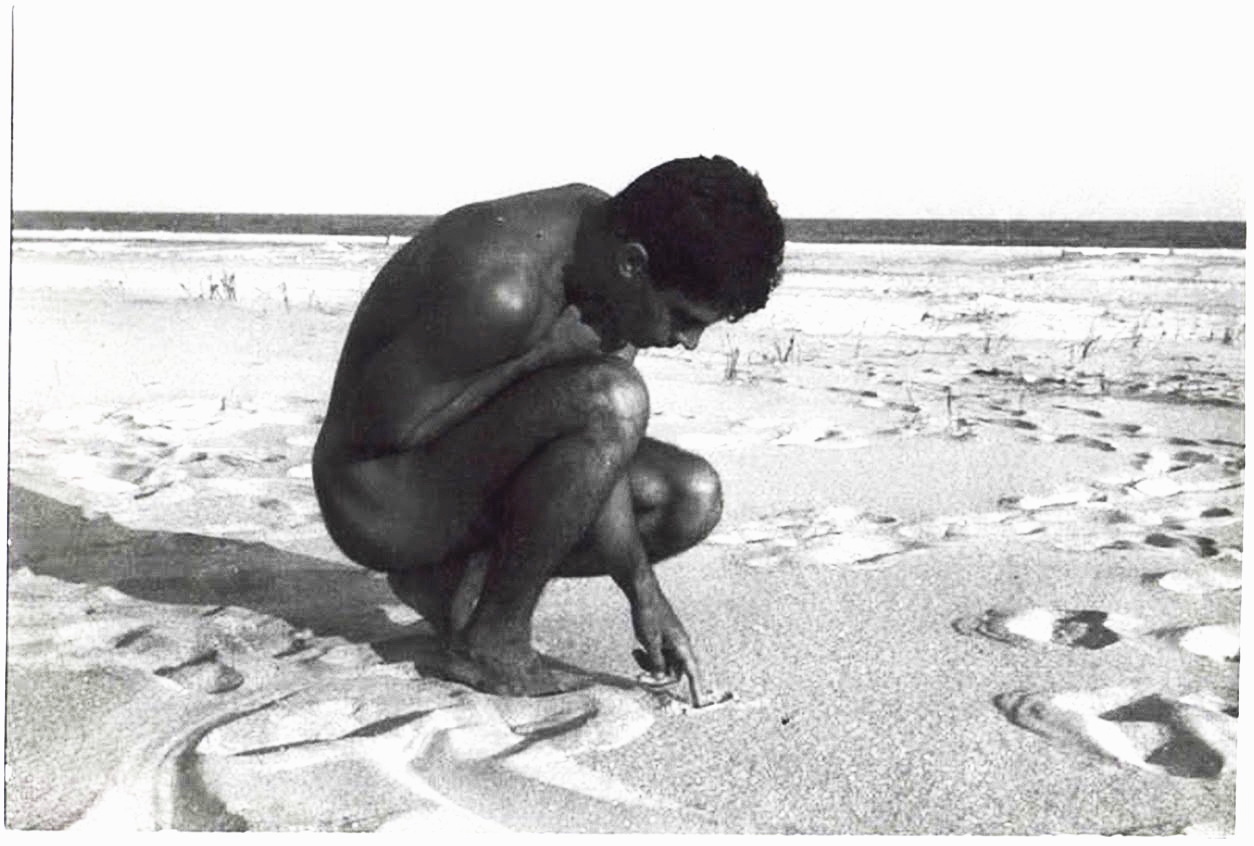
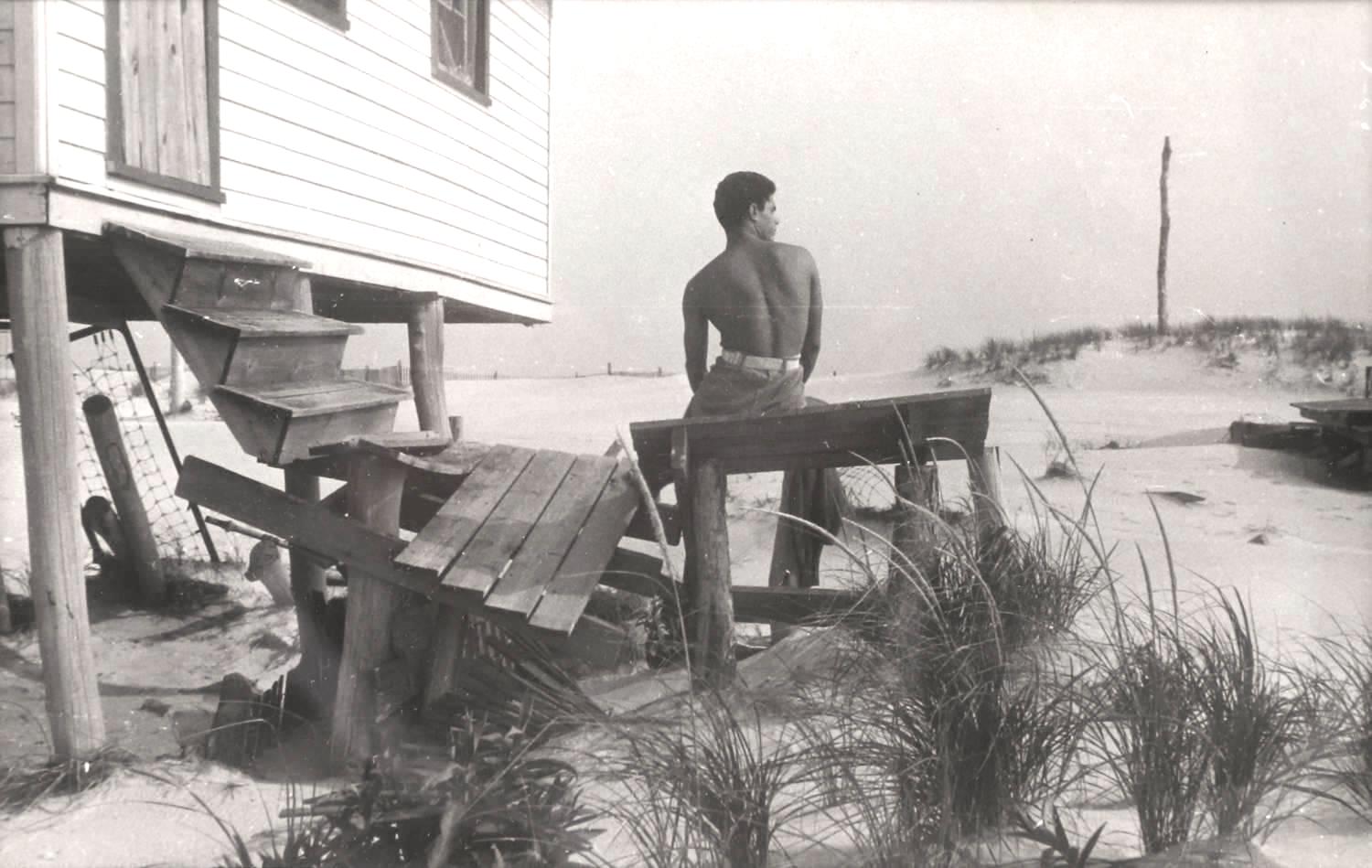
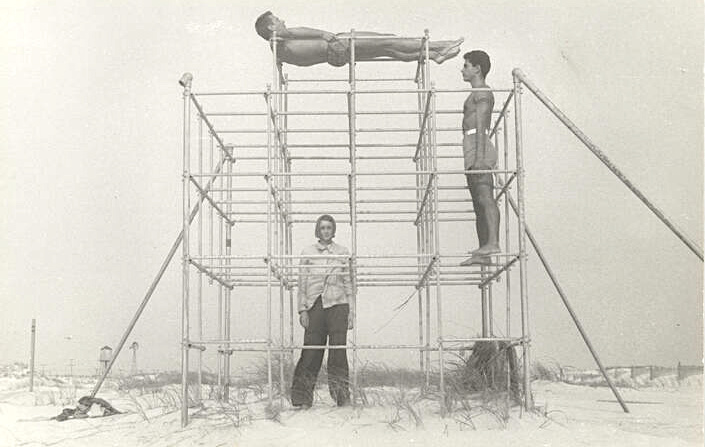
In last summer’s post about the PaJaMa Collective – artists Paul Cadmus, Jared French and his wife Margaret – the focus was on their Fire Island photos of the late 1930’s. One of the friends who cavorted with the trio during that time was José “Pete” Martinez, a dancer from New York City who was involved with their friend, arts patron and ballet impresario Lincoln Kirstein.

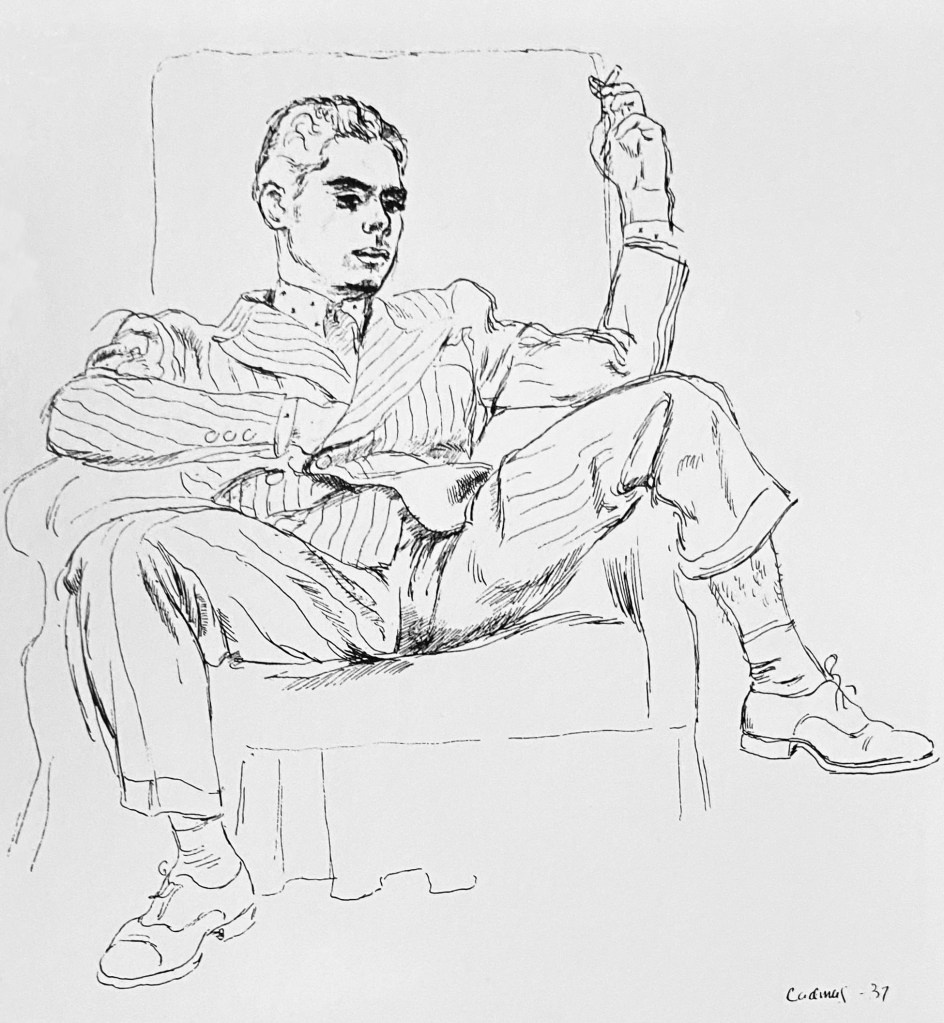
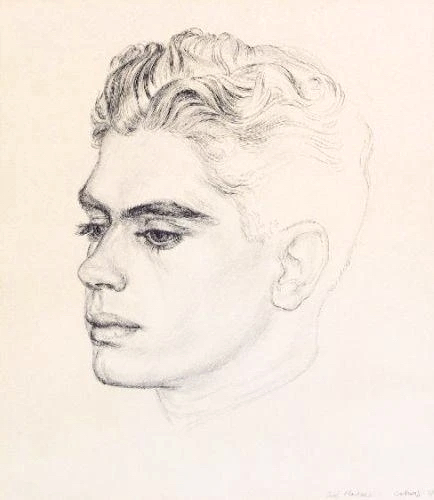
Paul Cadmus’s 1937 sketch of José Martinez appears in Charles Kaiser’s book The Gay Metropolis.

In David Leddick’s book Intimate Companions, Martinez is described as “a droll and witty young man… Those who knew the two men in the 1930’s said he was capable of endlessly amusing his lover, and that of all the men in his life, Martinez was the man that Kirstein most likely loved the most. Kirstein loved gossip and other men’s tales of their sexual exploits, and this love of storytelling drew him to Martinez. In addition, Martinez was handsome, and many artists painted, drew and photographed him. “

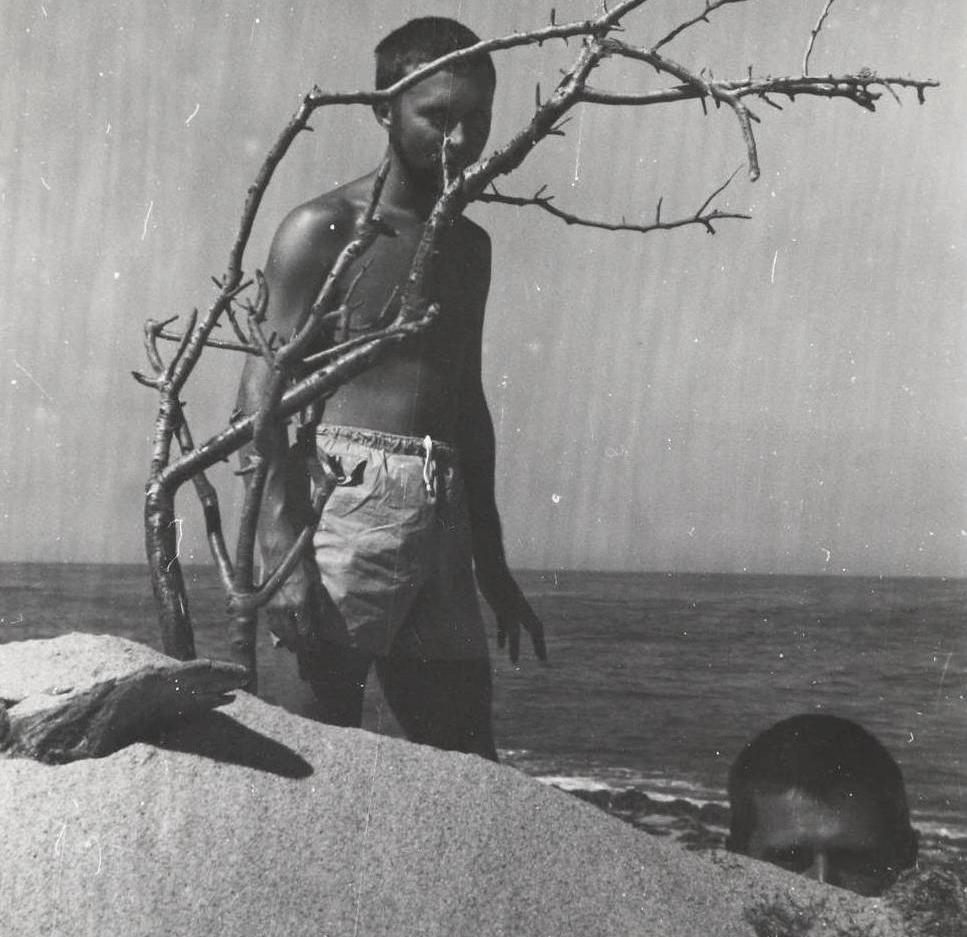
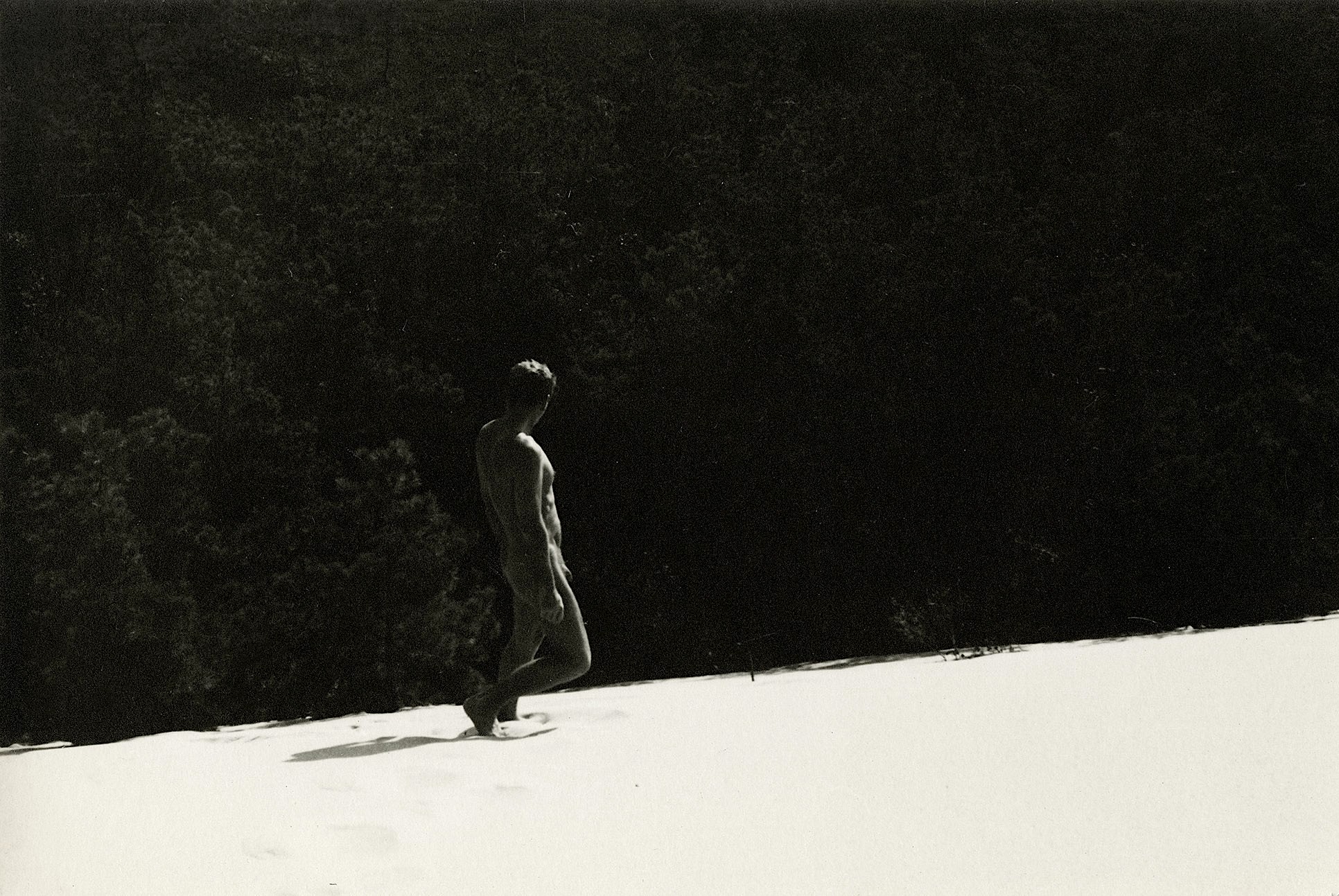
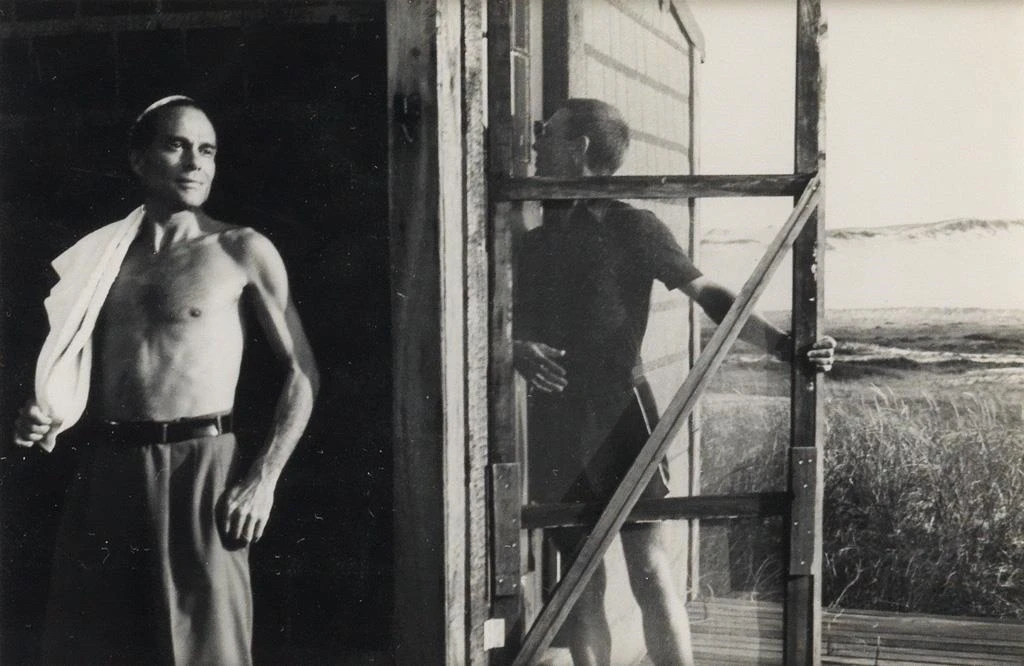
Fire Island PaJaMa photos featuring José Martinez with Paul Cadmus, Jared and Margaret French, ca 1938-39

Besides The PaJaMa Collective, those artists included Paul Cadmus’ sister Fidelma and photographers William Caskey and George Platt Lynes.

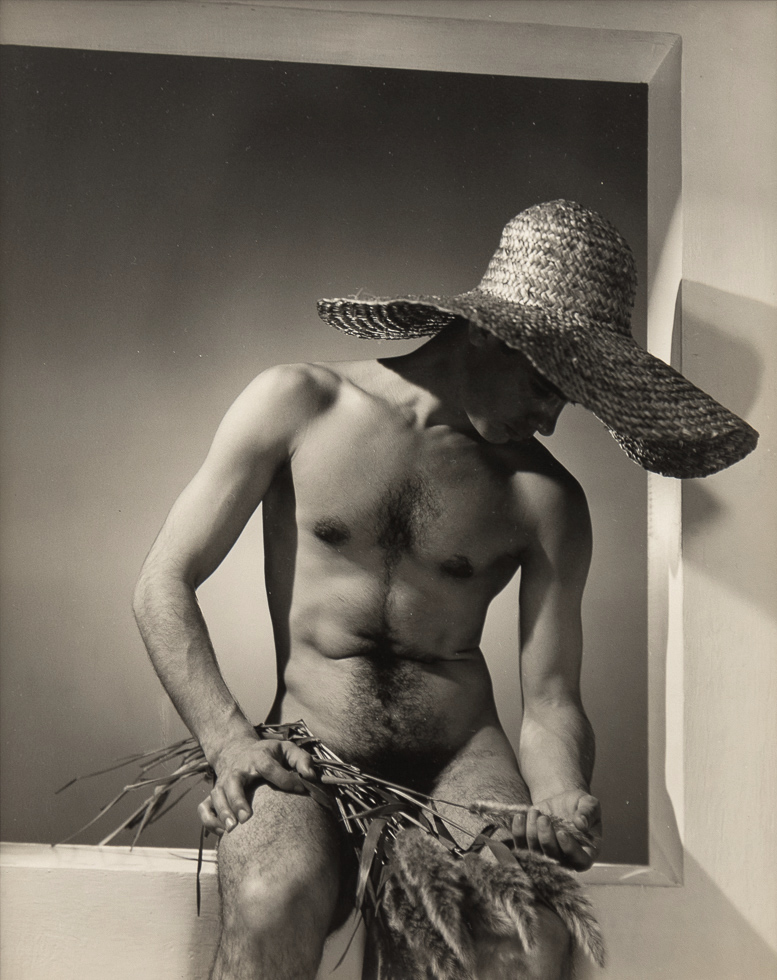
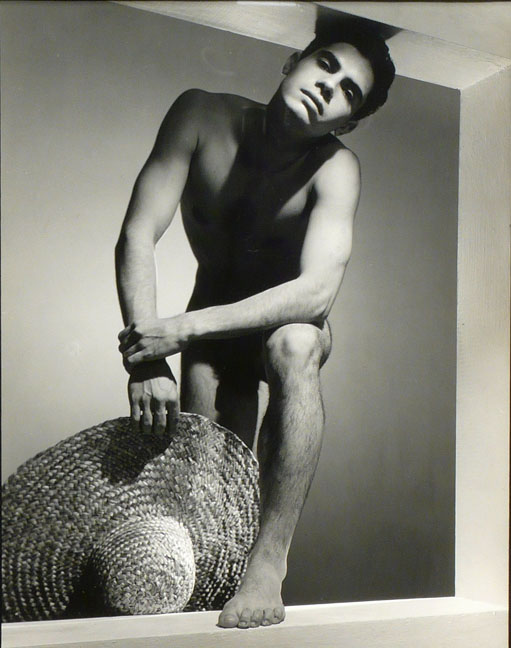
The most memorable Lynes photo of Martinez is a studio shot with the dancer perched in a window frame wearing nothing but a wide brimmed sun hat.


George Platt Lynes photographs of José Martinez.

Pete Martinez (who sometimes used the stage name Pete Stefan) was born José Antonio Martinez-Berlanga in Mexico on March 13, 1913. His family moved to Houston, Texas when he was quite young. Mama Martinez had been a folk dancer back in Mexico and one of Jose’s sisters dreamed of following in her footsteps. Little José was drafted as her dance partner. The scenario is familiar to many boys who begin to study dance as children: the sister loses interest and drops out, but he continues on. It’s a page torn out of A Chorus Line. Later an uncle took him to see Ballet Russe, which further strengthened his resolve to dance. “I was going to set the world on fire,” he would later recount.

After graduating high school, much to the chagrin of his parents, José moved to New York City to study at the School of American Ballet, where he eventually gained a full scholarship. Upon graduation, he was invited to join the company.

José Martinez photographed by Paul Cadmus, ca 1938

Martinez caught the eye of Lincoln Kirstein, and the relationship progressed to the point that they moved in together.

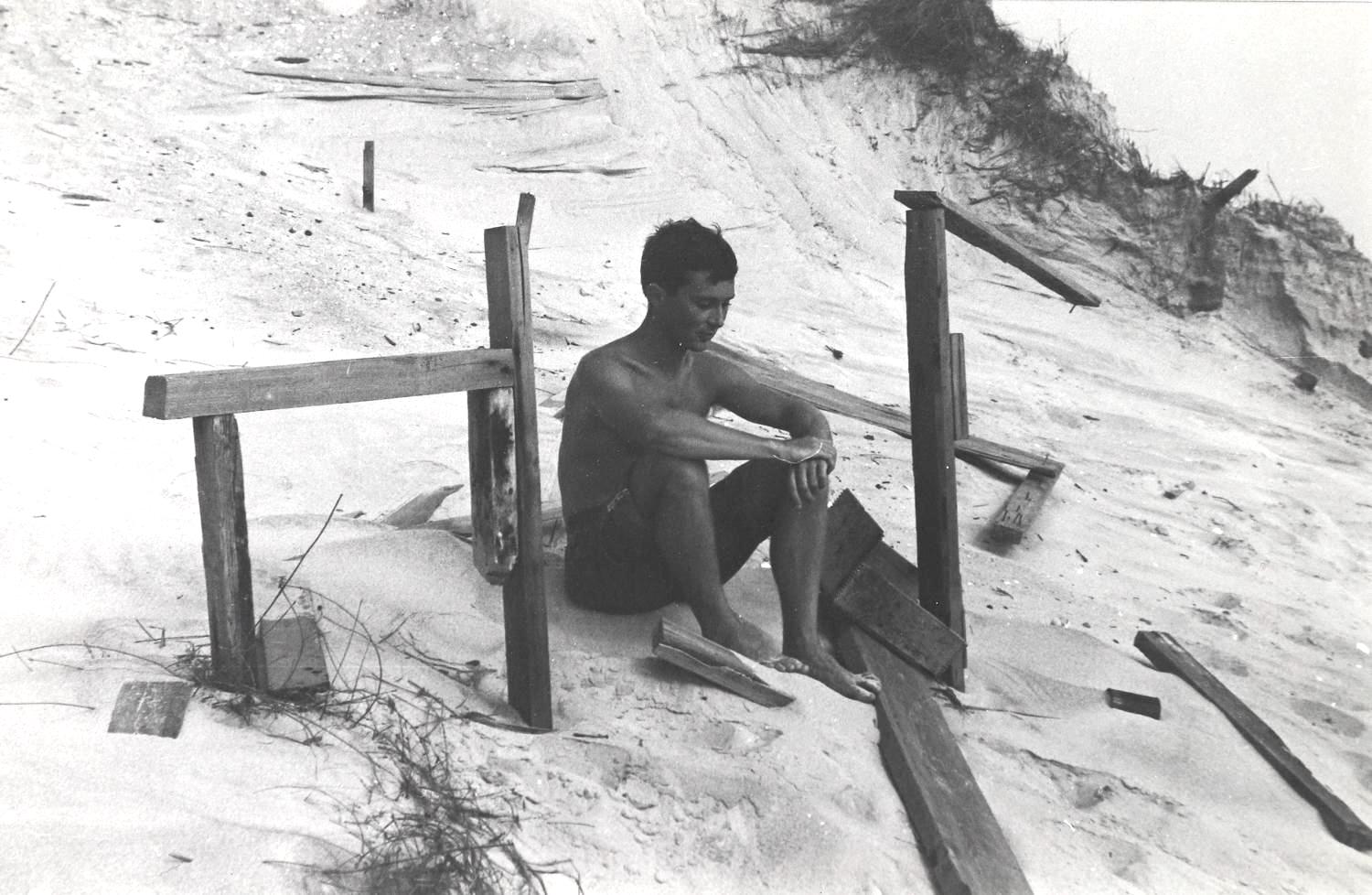
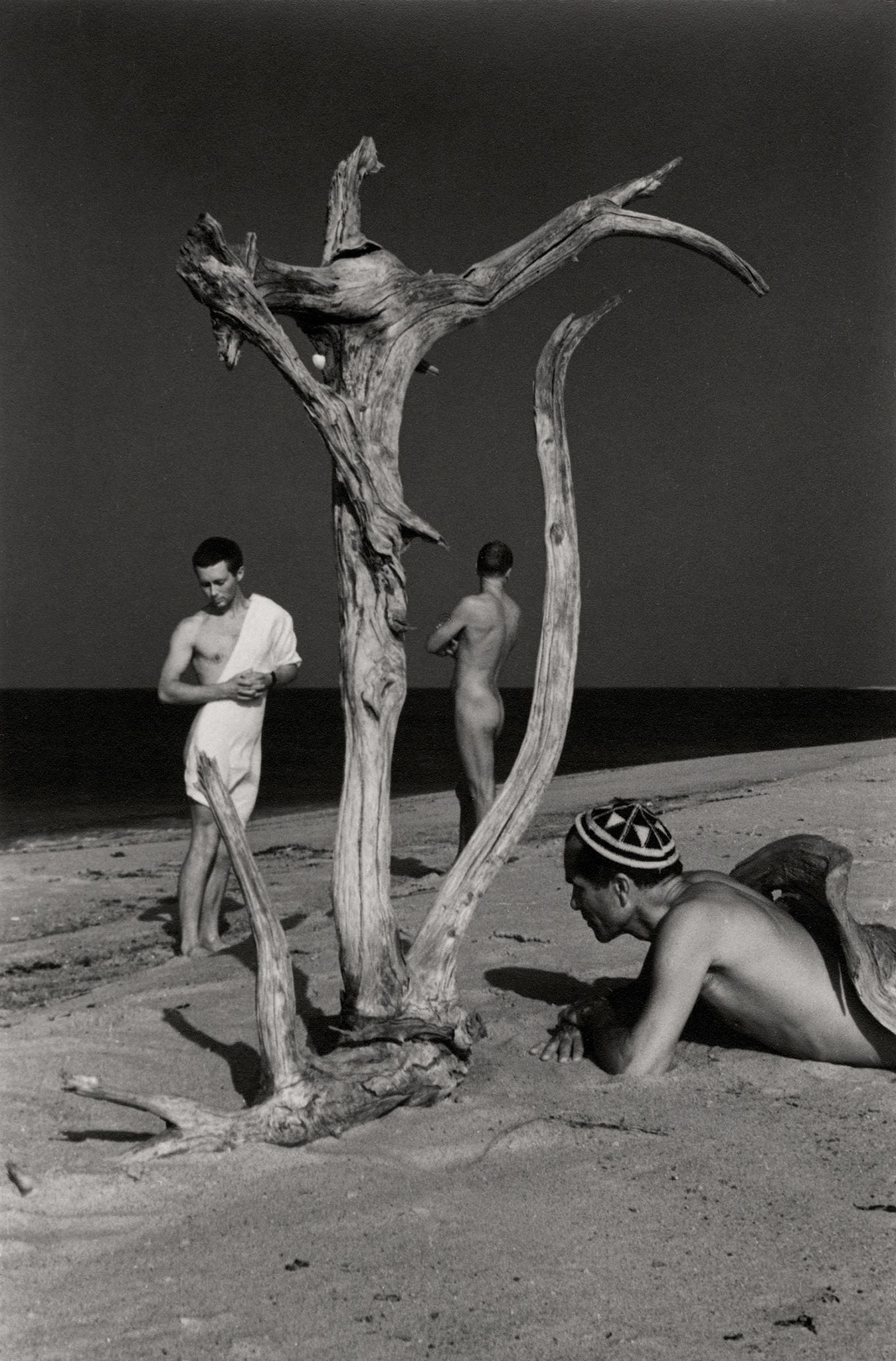
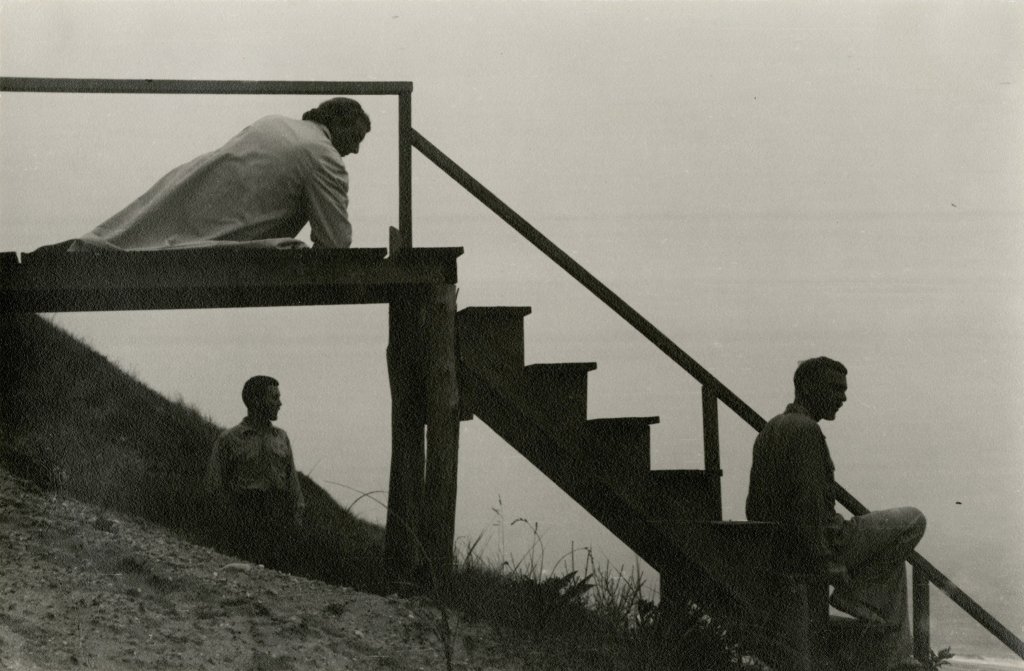
The PaJaMa photo “After The Hurricane” features (l-r) Jared French, Lincoln Kirstein, José Martinez, Forrest Thayer and probably Paul Cadmus. Tragically, costume designer Forrest Thayer was killed in a Southampton single car accident in 1951.


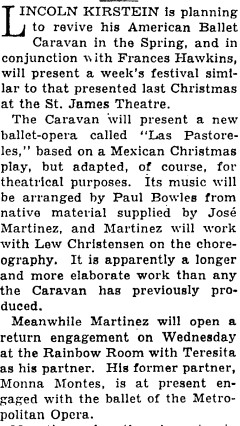
Martinez became a member of The Ballet Caravan, a touring company founded by Kirstein to provide off-season summer employment to American ballet dancers. Here Martinez began to get more involved in the creative process: conceiving the ideas and librettos for ballets, if not choreographing them. He is most associated with the ballet Pastorela, although his exact contribution to its creation varies depending on the source.

As noted in the New York Times article below, Martinez also had several engagements at Rockefeller Center’s Rainbow Room with different dance partners.

New York Times, 12/1/40

Jose Martinez photographed by William Caskey

Lincoln Kirstein & his wife Fidelma Cadmus


Martinez eventually found himself in a triangular romantic situation similar to his friends in The PaJaMa Collective: Paul Cadmus and Jared French had a sexual relationship that continued after French married Margaret Hoening. The three all lived and worked together in a Greenwich Village townhouse at 5 St. Luke’s Place. When Lincoln Kirstein married Paul’s sister Fidelma, she moved into the apartment he shared with Martinez, who continued to live with them for the first year of the marriage.

Martinez was also photographed in the summer of 1938 sunbathing with Jared French and Paul Cadmus on the roof of their home/studios at 5 St. Luke’s Place.

The Ballet Caravan were on a South American tour through 1941 as the U.S. entered World War II. The troupe returned to a very different New York City than the one they had left. When Martinez was denied entry to the Army, he went to work at a hostel for Jewish refugees in Haverford, Pennsylvania where writer Christopher Isherwood was already working. The two were acquaintances through Kirstein but developed a close friendship that would sometimes turn physical, as detailed in Isherwood’s diaries.

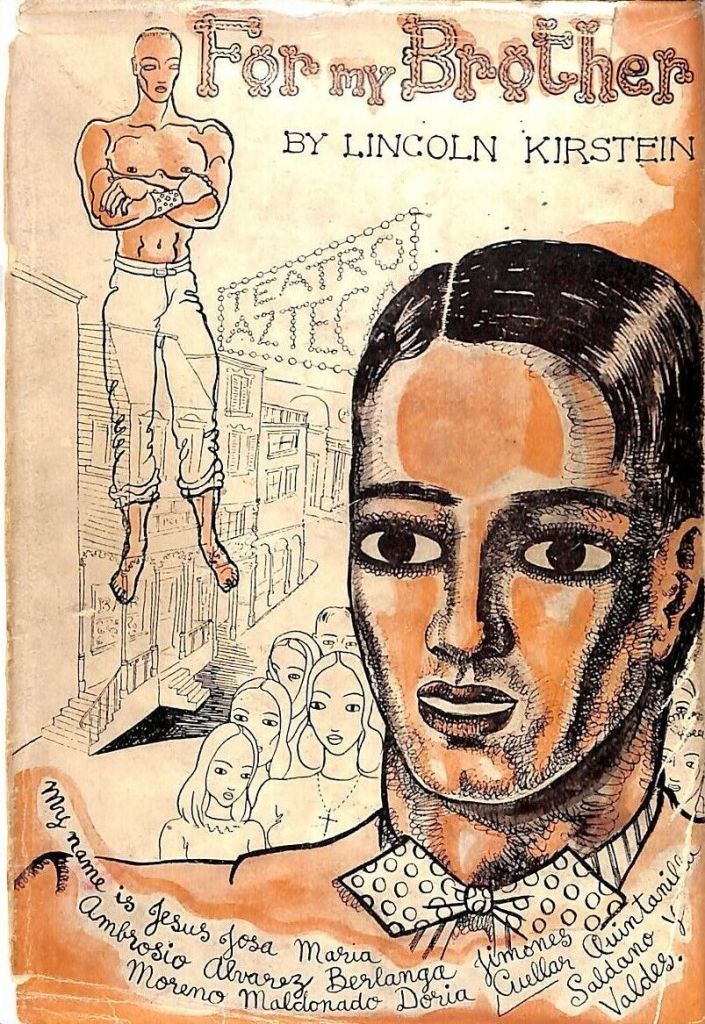
For My Brother: A True Story By José Martinez As Told To Lincoln Kirstein original jacket designed by William Chappell.

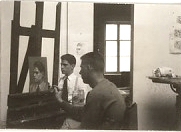
Paul Cadmus photographed sketching José Martinez at 5 St. Luke’s Place.

In 1943, a book was published in the UK with the rather unwieldy title For My Brother: A True Story By José Martinez As Told To Lincoln Kirstein.

From the original dust jacket: “It is the life story of a young American of Mexican origin whose family has settled in a small town in Texas. It is at the same time a study in the contrast between two worlds, two ways of life: industrial, polyglot America, and the more primitive civilization of Mexico just over the border, where many of the hero’s relations still live. The story is told with great poetic feeling and a rare delicacy of perception in human relationships…”

The chronology on Kirstein’s website makes no mention of Martinez and lists For My Brother as fiction “based on a Mexican sojourn.”

The book jacket was designed by fellow dancer-turned-ballet designer William Chappell. For My Brother… is quite rare, as most of the 2,000 printed copies were said to have been destroyed in a warehouse bombed by the Nazis. A Canadian edition was later published by MacMillan.

Martinez was finally able to join the military in 1943 and remained in service until the end of the war.

Back in New York, he resumed his dance career with Ballet Society where he danced in the original 1946 productions of George Balanchine’s Four Temperaments and William Dollar’s Highland Fling.

And then…. to invoke A Chorus Line once again: “What do you do when you can no longer dance?”

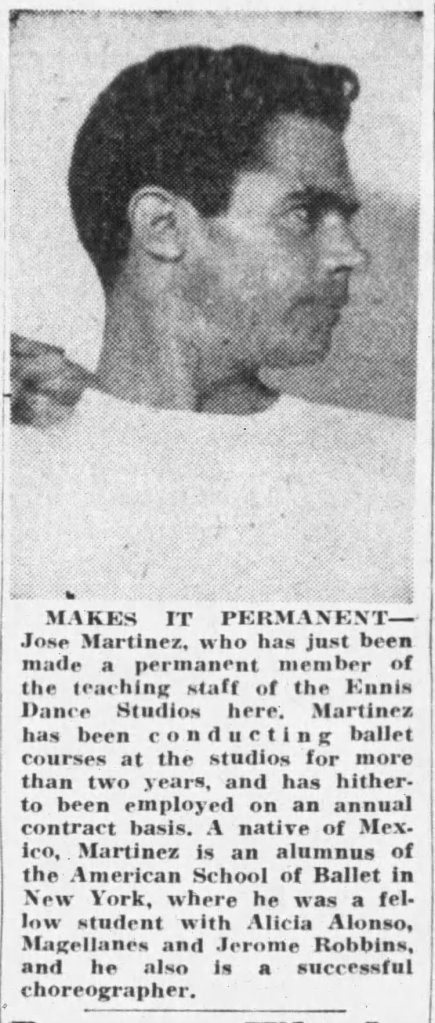
A knee injury hastened the end of his performance career. A June 4, 1950 article in the Norfolk Virginian-Pilot chronicled his coming to terms with the transition. He drifted for a year before settling into the next chapter of his life as a dance teacher in Norfolk, Virginia.

Norfolk Virginian-Pilot, 7/27/47
Norfolk Virginian-Pilot, 6/12/49


After Virginia, Martinez founded other dance studios in Ohio and California, where he retired from teaching in the mid-1960’s.

Lincoln Kirstein died at aged 88 in January, 1996. José Martinez passed away 16 months later in Pasadena, California at age 84.

See also:
Fire Island PaJaMa Party
Provincetown PaJaMa Party
Artist’s Muse: Wilbur Pippin
Artist’s Muse: Forrest Thayer
Artist’s Muse: William Weslow
Artist’s Muse: Chuck Howard
Artist’s Muse: Randy Jack
Artist’s Muse: Ted Starkowski
Artist’s Muse: The Mystery Model
Fire Island Muses of George Platt Lynes & The PaJaMa Collective
George Platt Lynes: In Touch Magazine (1982)
Revisiting George Platt Lynes’ Fire Island Muses

Yes Virginia, There Is A Spotify Playlist (2022)

NYC Santas photographed in the late 1970’s by Susan Meiselas

I know I am not alone when I say that I take comfort in the annual repetition of the holidays: revisiting holiday-themed music, films, television shows… and now internet posts. Dave Holmes’ account of Patti LaBelle’s disastrous performance at the 1996 National Christmas Tree lighting is worth an annual revisit. Trust me.

In fact, the post that you are currently reading has been reworked and updated from the past two Christmas seasons, not to get meta or anything.

I find it interesting that we immerse ourselves in certain pop culture favorites for exactly 6 weeks of the year and then pack them up in mothballs with the ornaments until next year. I mean, Brenda Lee’s “Rockin’ Around The Christmas Tree” is currently at #2 on the Billboard Hot 100. Burl Ives and Andy Williams are also in the top 10! Are any of them on your 4th of July playlist? They aren’t on mine.

Gabe Pressman (left) with Marilyn Monroe (1956)

I used to look forward to the annual Christmas Eve tradition on NBC New York’s evening news when reporter Gabe Pressman would read “Yes Virginia, There Is A Santa Claus.” I taped it in 2011, knowing that the tradition wouldn’t last forever. The self-described “little Jewish kid from the Bronx” was 87 years old at the time and continued to work at NBC until his death at age 93.

NBC New York reporter Gabe Pressman’s annual segment on Virginia O’Hanlon’s 1897 letter to the New York Sun Newspaper.

In keeping with this revisit, my other blog posts of Christmas past are back to haunt you like A Christmas Carol, Mr. Scrooge:

My Canine Christmas Tail is a true story about my dog Sunshine, a basset hound with an appetite for tinsel.

Here is my take on the 1987 Motown Christmas Special – which featured very few Motown acts.

I recently updated my post of 10 Things You May Not Know About March of The Wooden Soldiers, the Laurel & Hardy classic holiday film.

Have you watched Christmas In Connecticut yet this year? How about that delivery woman?

Here’s a little backstory on that classic holiday tune “¿Dónde Está Santa Claus?” & Augie Rios, who sang the original version.

Copyright issues kept my 60 Degrees Girl Group Christmas playlist out of commission but now it’s back! I plan to post other episodes of my old radio show in the new year.

If you prefer Spotify, I have this to share:

Way back in 2002, when Limewire was a thing and people listened to music on silvery discs, I started creating Christmas CD mixes that I would mail out or give to people. These were received with a heartwarming combination of feigned delight, veiled indifference and deafening silence. None of these CDs had a pressing of more than 20 copies. I’d like to call them “much sought after” – but no, that’s not really the case, although every once in a while, someone really got into them and would ask for copies of other volumes.

And so, I’m offering this simple playlist…. for kids from 1 to 92. Unfortunately some of the tracks on these dozen CDs are not on Spotify, but I keep adding songs that would be on the current CD volume… if there was one. And now the playlist is over 16 hours of holiday tunes. I recommend listening on shuffle – there’s something to irritate everyone. Enjoy!

Here’s one more nugget to stuff in your stocking: This vid went viral in 2011. Choreographed and performed by Alex Karigan & Zac Hammer of the Amy Marshall Dance Company, it was filmed in one continuous take at the New 42nd St. Dance Studios. There’s something infectious about it: the joy, the corniness, the celebratory queerness of it all. It makes me want to dust off my jazz shoes. Once a year.

See Also:
Your Guide To Disposable Gay Holiday Movies
The 60 Degrees Girl Group Christmas Show
The Christmas In Connecticut Delivery Woman
March Of The Wooden Soldiers: 10 Things You May Not Know About This Holiday Classic
Sunshine & Tinsel: A Canine Christmas Tail
A Christmas Without Miracles: The 1987 Motown Xmas Special

Julius: The Bar That Never Changes Is Officially A Historic Landmark


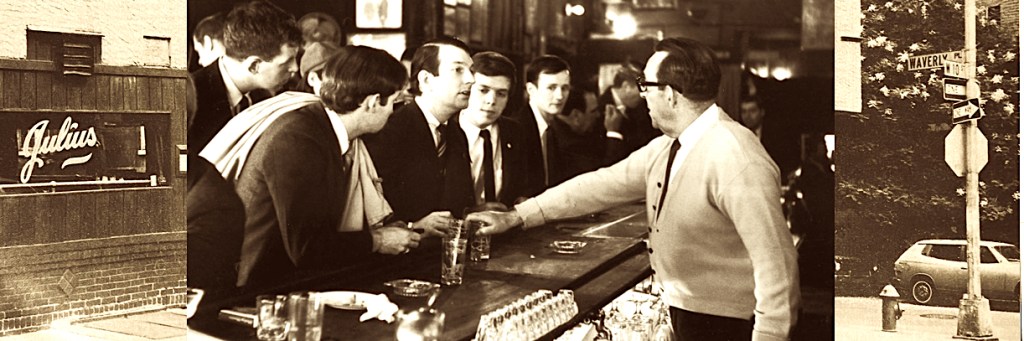
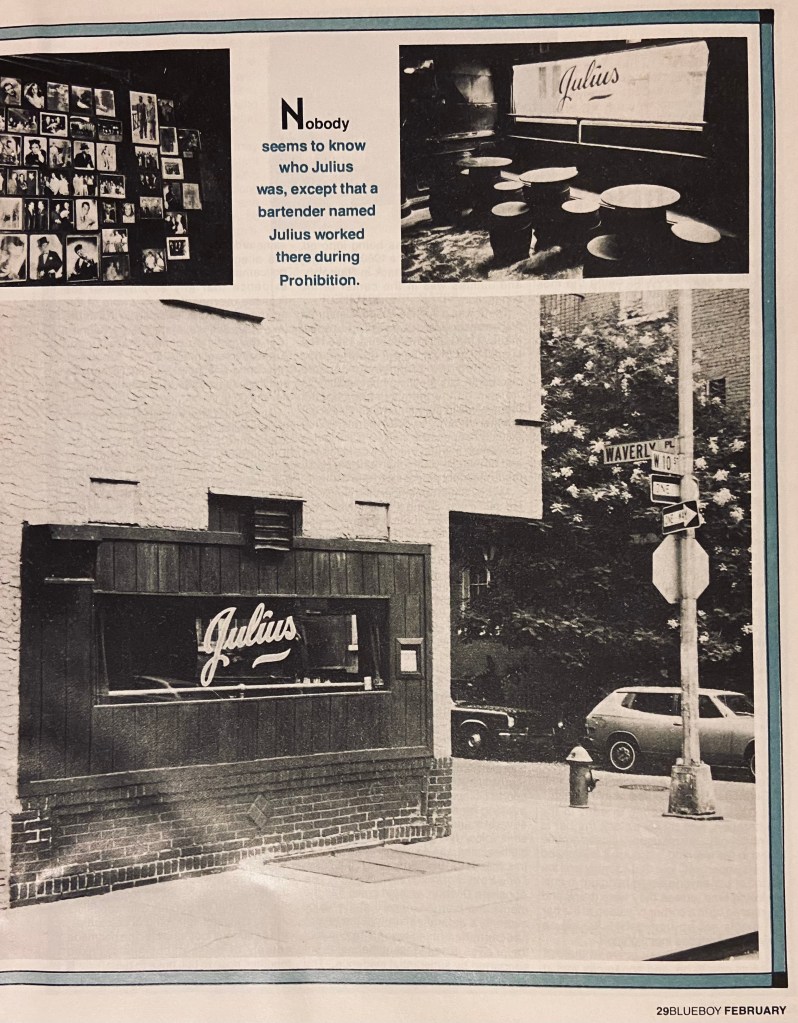
I recently posted a review of Bette Midler’s Thighs and Whispers LP from the February 1980 Blue Boy Magazine. We are revisiting the same issue of the magazine with a profile of Julius, the oldest continuously operating gay bar in New York City.

In April of 1966 – three years before the Stonewall Riots – a protest took place at Julius’s that became known as the “Sip-In.” This action established the rights of gay people to be served in licensed premises in New York and paved the way for gay establishments to obtain state liquor licenses.

The article below also recounts an earlier lesser-known challenge to the bar’s liquor license alleging that the owners “permitted the premise to become disorderly” by permitting homosexuals to “remain on the premises and conduct themselves in an offensive and indecent manner…” Apparently a patron had propositioned a plainclothed police officer. The courts ultimately decided that the charge was not supported by substantial evidence.

In 2016, Julius was listed on the National Register of Historic Places, and on December 6th, 2022 the bar was officially recognized by the New York City Landmarks Preservation Commission.

The article below states that the bar opened before 1860, although the wikipedia page notes different sources claiming 1864 or 1867. In any case, it’s ancient, but it did not gain its gay reputation until the 1950’s.

Some highlights from the piece below:

“The typical Julius’s person is almost always a doctor/lawyer type, though he may well be unemployed. He generally drinks too much – too early and too many.”

“The decor… is High Dirt.”

…and the hamburgers are still legendary.


See Also:
Revisiting Bette Midler’s Thighs & Whispers (1979)
Costello Presley & 80’s Gay Porn Guilty Pleasures
Kenn Duncan After Dark
Gay Times #69 (1978)
Blueboy 1980: Gays of NYC
John Waters in Blueboy Magazine (1977)
New York City: In Touch For Men (1979)
Remembering Bob Harrington
Revisiting Blueboy Magazine (1980)
Armistead Maupin in Blueboy Magazine (1980)
Keith Haring In Heat Magazine (1992)
A Stroll Through 1980’s NYC

Revisiting Bette Midler’s Thighs and Whispers (1979)

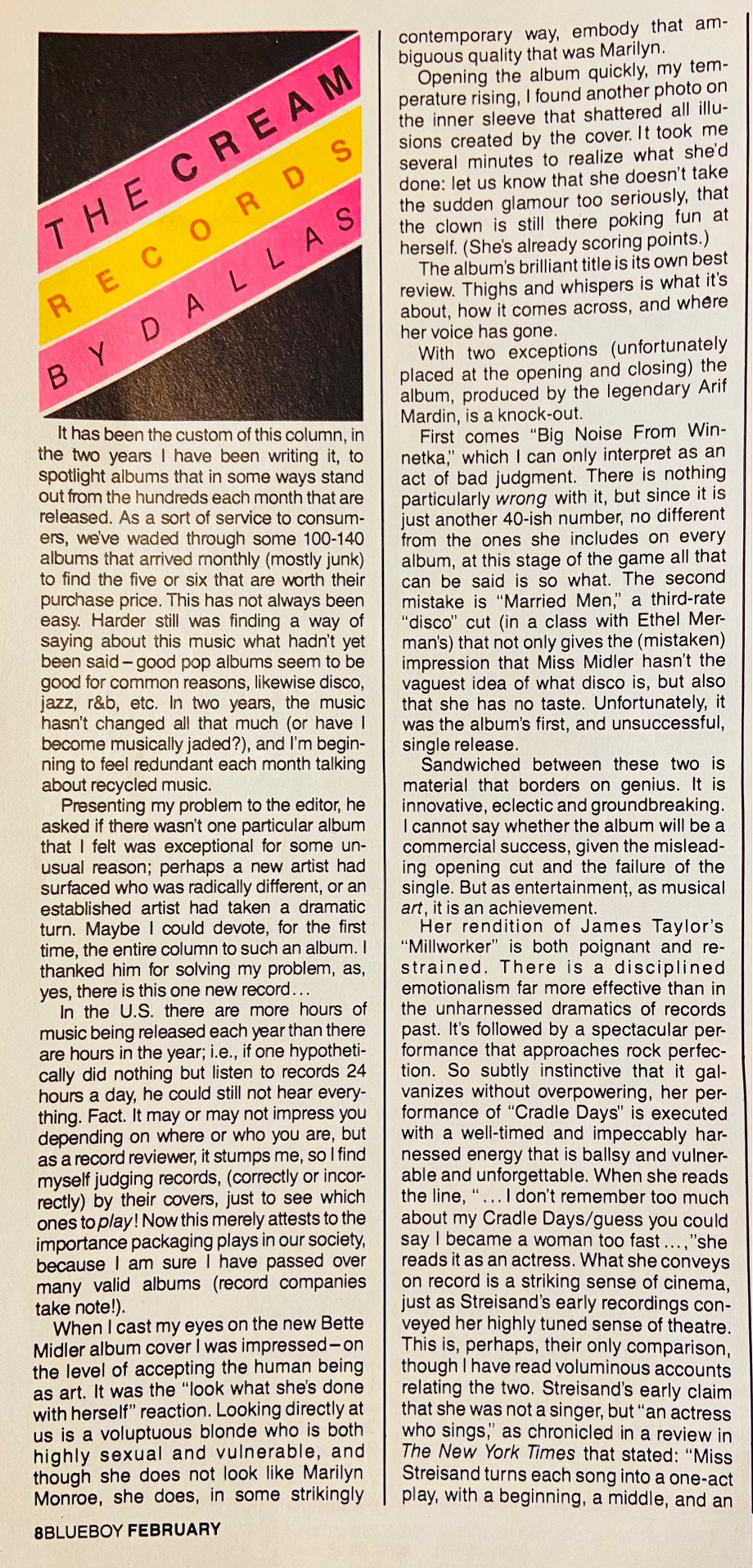
I was recently perusing an old issue of Blueboy magazine (as one does) when I found an in-depth review of Bette Midler’s 1979 LP Thighs and Whispers. Single-monikered reviewer Dallas certainly had strong feelings about the album. The review is quite a roller coaster ride, describing different aspects of the LP as “a knock-out”, “third-rate disco,” “disco at its finest,” “gives the impression that she has no taste,” “borders on genius,” and many breathless adjectives of adulation and despair.

Bette had been going full steam throughout the late 70’s. This was her third studio LP released in three years, plus the live double album Live At Last, a concert special on HBO, and her TV special Ol Red Hair Is Back, which won Bette her first Emmy award.

I should probably take Dallas’s advice to smoke a joint and listen to the song “Hurricane” again, because unfortunately my weed-free opinion is that the track is utterly forgettable.

Bette spoke about Thighs and Whispers during a 2021 interview with Jim Farber in Parade Magazine. Reflecting on her career, she admitted that she had recorded “some stinkers.” Of the song “Married Men,” she joked; “Please, God, shoot me now!”

Bette Midler sings “Married Men” on the SNL 4th season finale, (5/26/79). Among her backup singers were Katie Sagal and Luther Vandross.

She also mentioned the song “My Knight In Black Leather,” saying “Save me! That was the label saying, ‘You have to record this.’”

Bette has been using “My Knight In Black Leather” as a punchline for decades – not just in interviews but also during her live shows. Reflecting on her career back in 1987, she told an interviewer that she had no regrets:

“I’d do it all over again, just as I did.”

“What about ‘My Knight In Black Leather?'”

“Well,” she said, “that’s the exception. That’s one thing I don’t think I would do again.”

Bette and her Harlettes (Linda Hart, Paulette McWilliams and Franny Eisenberg) performed “My Knight In Black Leather” on the German television show Musikladen (10/18/79)

In defense of the song: it was not supposed to be taken seriously. Should it have been a single? Probably not, but they were trying to get a hit record by tapping into that “Village People *wink-wink, nudge-nudge* we-know-it’s-gay-but-Middle-America-doesn’t” disco energy.

Mister D, head of the BootlegBetty fansite is fond of the LP: “…great album, great cover, great orchestrations, and one cut, ‘Cradle Days’ which I thought is probably her greatest vocals on an album.”  


Thighs and Whispers was considered a commercial failure, but ultimately, it was water under the bridge. The film The Rose was released the following month, earning Bette a Golden Globe award and an Oscar nomination. The accompanying soundtrack LP (for those keeping track, that’s 6 albums released in three years) placed her firmly in rock and roll territory. It should be noted that one of the highlights of The Rose – the song “Stay With Me” – was written by Jerry Ragavoy, composer of… “My Knight in Black Leather.”

With an eye towards the 1980’s and the rise of New Wave music, Bette told an interviewer “I think I should jump on every musical bandwagon and really drive people mad, just irritate them to shit so they say ‘She’s such a cow – she’ll jump on any musical bandwagon.’ Why not? I’ll bleach my hair and rip my clothes. I think it’s fun. I’m getting silly in my old age.” This would have to wait 4 years until her next studio album: 1983’s No Frills.

On October 8, 2016, Bette was the special guest at a Forest Hills Stadium show called Nile Rogers’ FOLD (Freak Out Let’s Dance) Festival – a show also featuring his group Chic, The Village People and Earth, Wind, and Fire. Given the theme, I thought Bette might dust off a song from her disco period – 1976’s Strangers In The Night, perhaps. But she didn’t. Her set consisted of her classics: “Friends,” “Do You Want To Dance,” “Boogie Woogie Bugle Boy,” and “Wind Beneath My Wings.” Her final song was a nice surprise: “Route 66,” which she said she had never sung before and had just learned the day before.

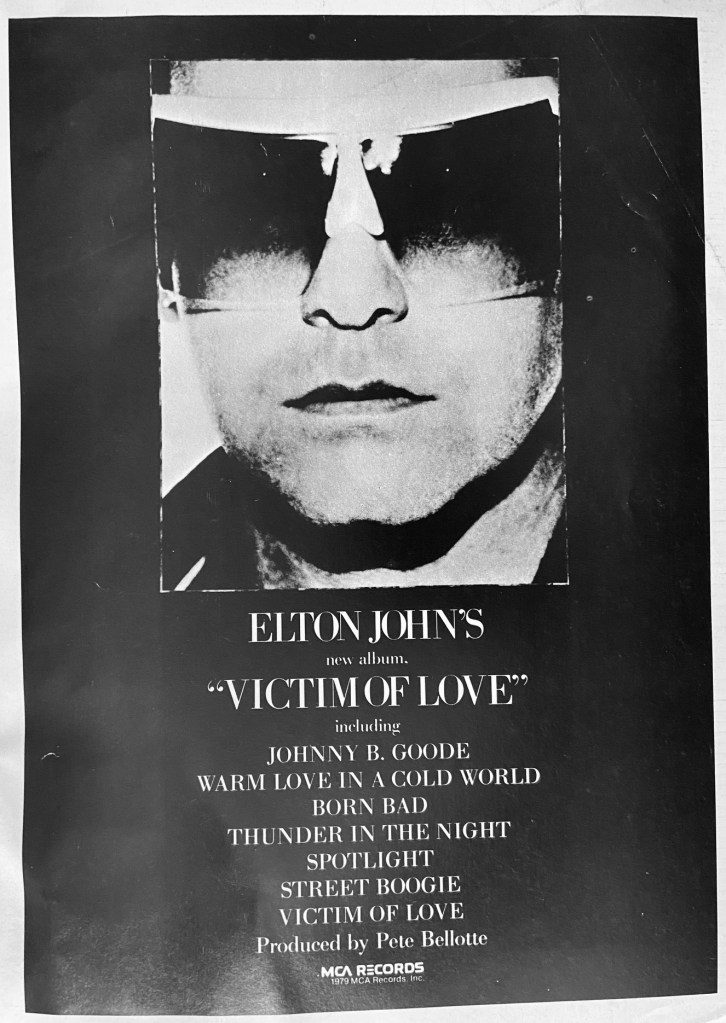
This issue of Blueboy also features a full page ad for Elton John’s foray into disco,Victim of Love, which was released the same month as Thighs and Whispers. The album is widely considered to be the low point of his career.

See Also:
10 Forgotten Cher Moments
Debbie At The World (1989)
Dusty Springfield Sings Kate Bush
Kenn Duncan After Dark (wi/Bette Midler)
Gimme Gimme Gimme: Erasure Covering ABBA
John Waters in Blueboy Magazine (1977)
New York City: In Touch For Men (1979)
San Francisco: In Touch For Men (1979)
Revisiting Blueboy Magazine (1980)
Armistead Maupin in Blueboy Magazine (1980)

Artist’s Muse: The Mystery Model

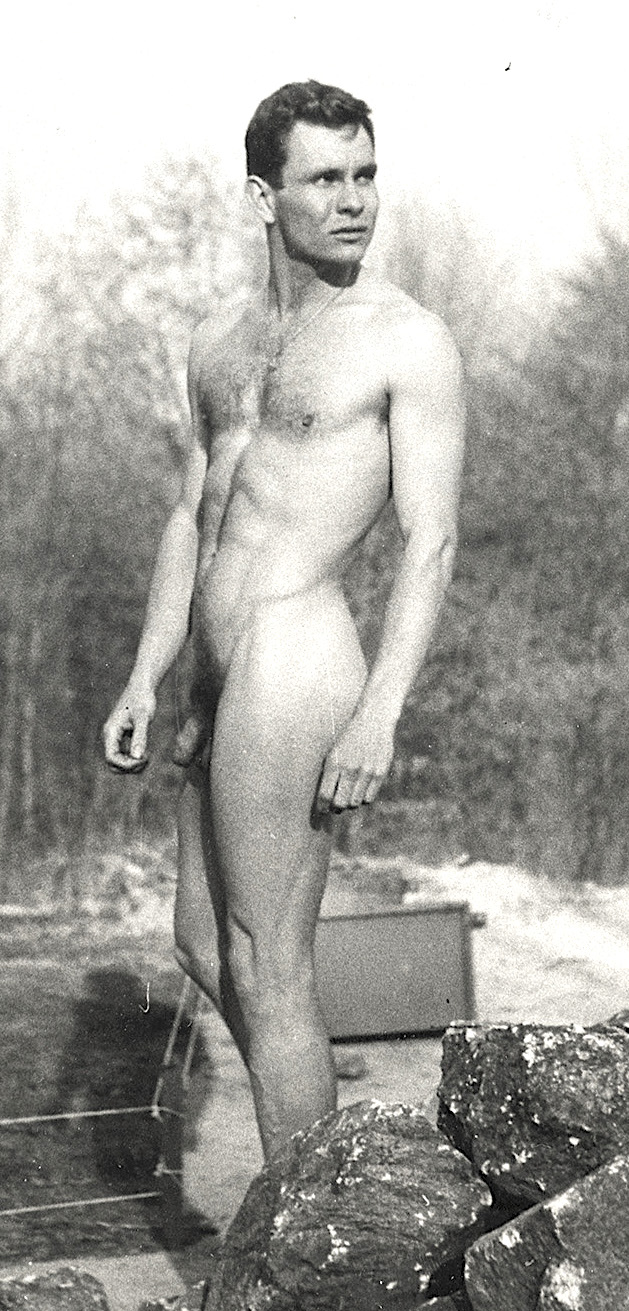
One of my goals in creating posts about artist’s models like Chuck Howard, Randy Jack, and Ted Starkowski is to clear up misinformation posted online by galleries and auction houses. Whether the inaccuracies are intentionally deceptive or the result of laziness, the errors spread across the internet, with subjects misidentified and photo dates sometimes off by decades.

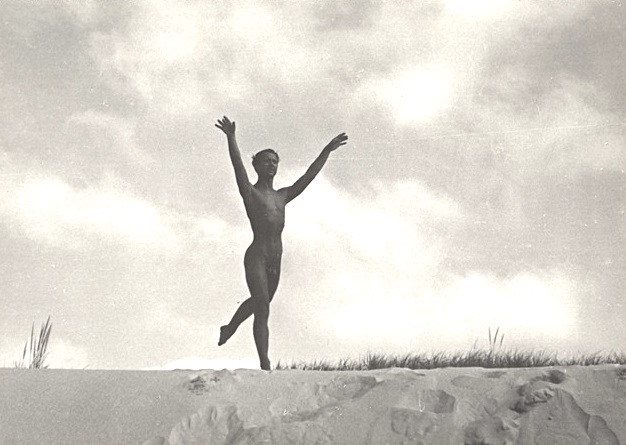
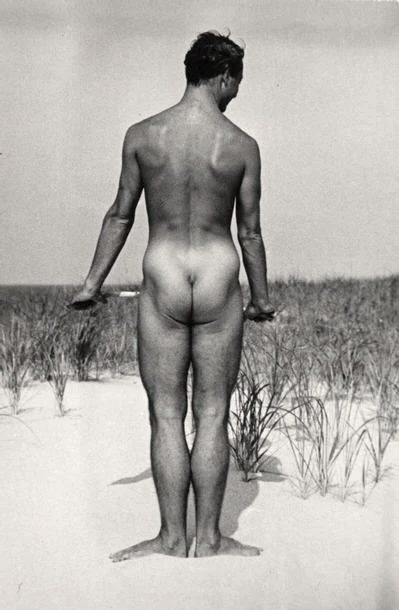
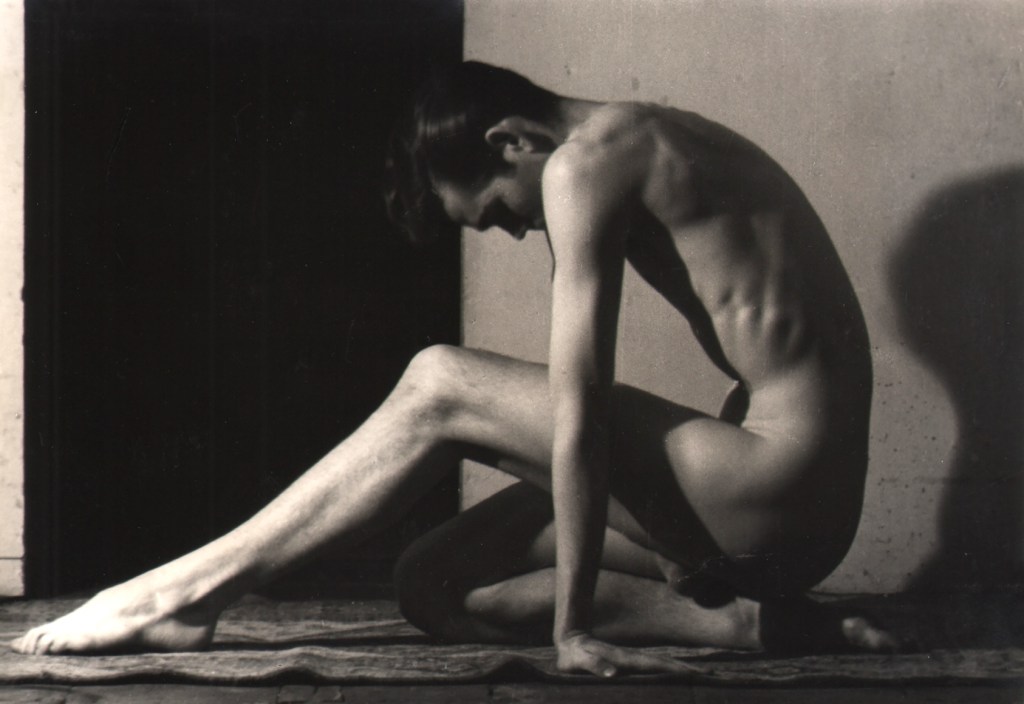
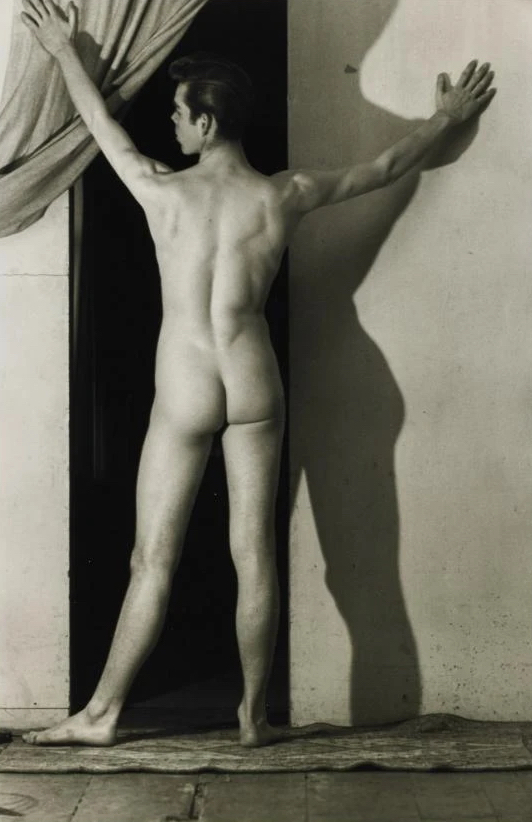
A series of 30+ nude model study photos are have recently been listed for auctions as “Jared French Nude Study of Tennessee Williams” or “Studio di nudo Tennessee Williams.” One set of two 8×10 photos sold for over $650. These should have been credited to the PaJaMa collective, which Jared French was a part of, and unfortunately (or fortunately, depending on how you look at it), the lean muscularly defined model is certainly not writer Tennessee Williams.

Tennessee Williams was the subject of several PaJaMa photos in Provincetown and at Jared French’s New York City studio at 5 St. Luke’s Place. In one of these photos, Williams strikes the same pose in the same place as our mystery model.

So who was the thin young chap with the low-hangers?

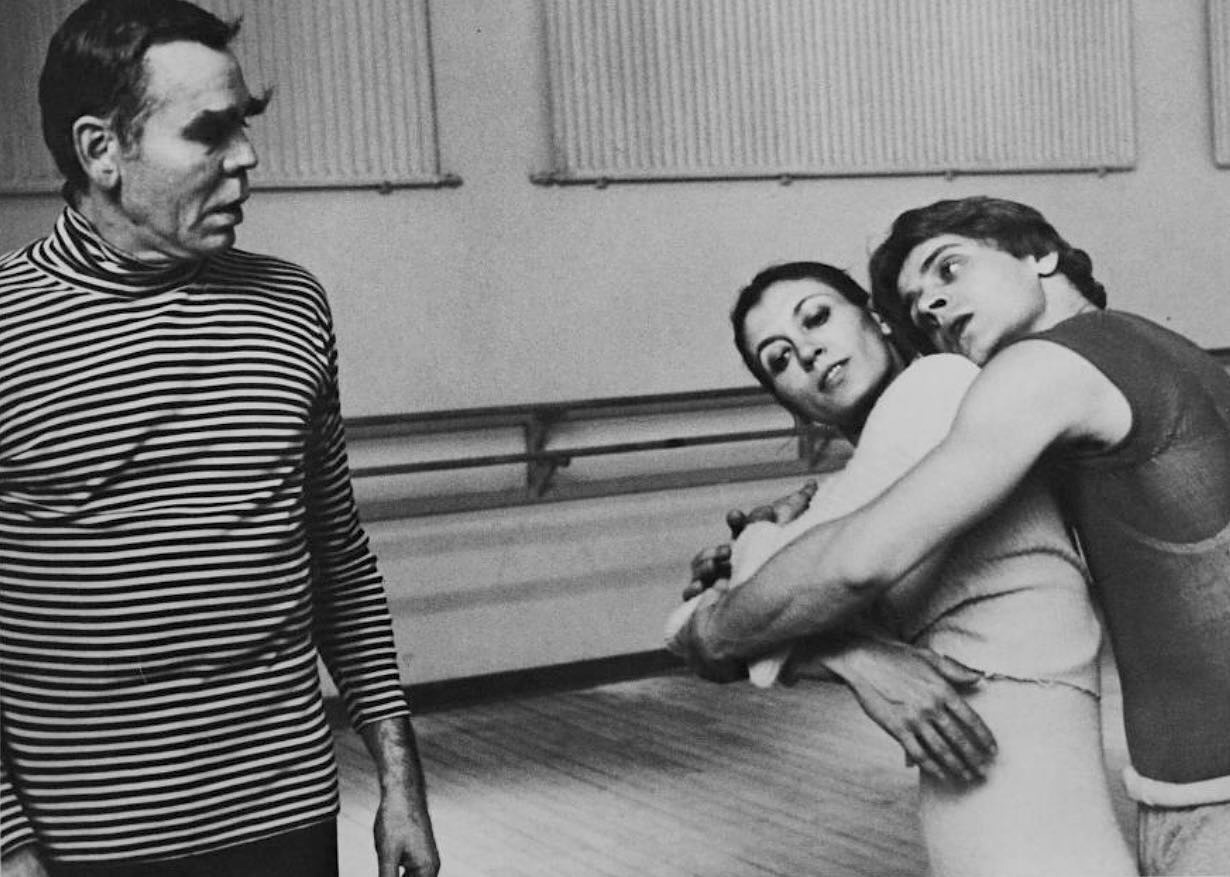
Martha Graham levitating John Butler

In another corner of the internet, I found two of these photos in a PaJaMa exhibit, dated 1943 and identifying the subject as dancer/choreographer John Butler (1918-1993). In the early 1940’s, he earned money working as an art model while studying dance with both Martha Graham and George Balanchine.

Besides the PaJaMa photos above, he was also photographed by George Platt Lynes:

John Neilson Butler was born in Charleston, Tennessee and moved to Greenwood, Mississippi with his parents at a very early age. He graduated from Greenwood High School in 1936 and made his way to New York City, where he initially studied dance with Eugene Loring before moving on to Balanchine and Martha Graham.

AP article (1955)

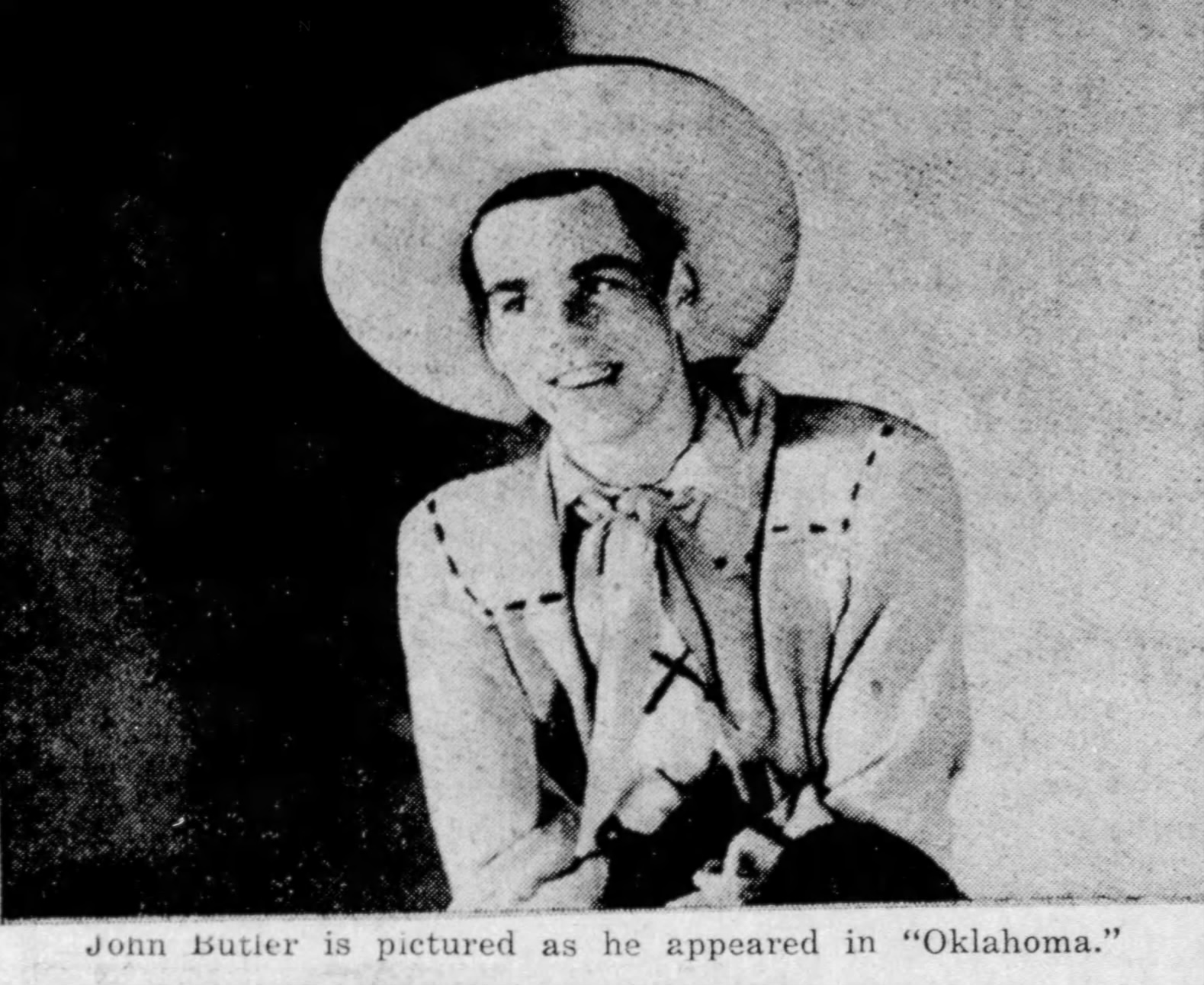
Butler danced on Broadway as Dream Curly in the original production of Oklahoma! He appeared in a string of Broadway musicals throughout the 1940’s including Hollywood Pinafore, Inside U.S.A. and On The Town, where he dated castmate Cris Alexander.

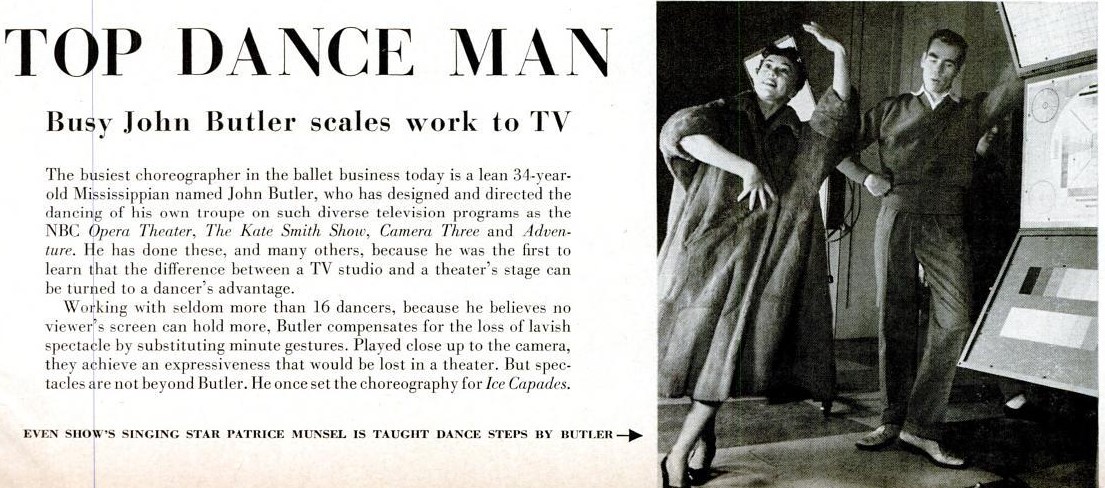
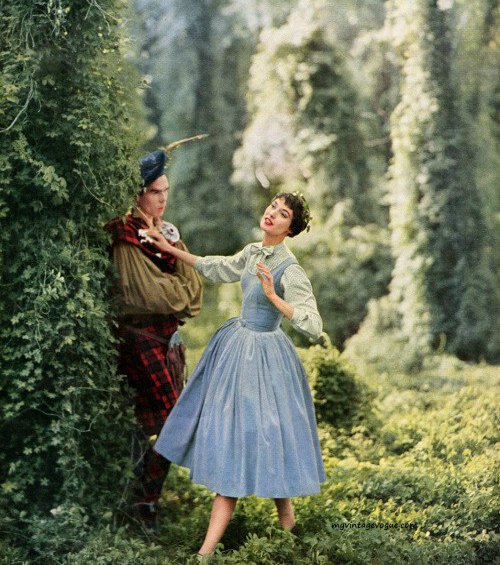
He began to transition into choreography in the late 1940’s. The combined influences of Loring, Balanchine and Graham gave his work unique elements of classical ballet as well as modern dance. He was one of the first to create works specifically for television, which was still considered a new and inferior medium. He choreographed variety show segments (The Ed Sullivan Show, The Kate Smith Show) as well as for Omnibus and full-length ballets and operas. His 1951 staging of Amahl and the Night Visitors was recreated annually for nine NBC holiday specials.

Butler performs as one of the Three Dancers in this 1955 broadcast.

Life Magazine profiled Butler in their April 25, 1955 issue:

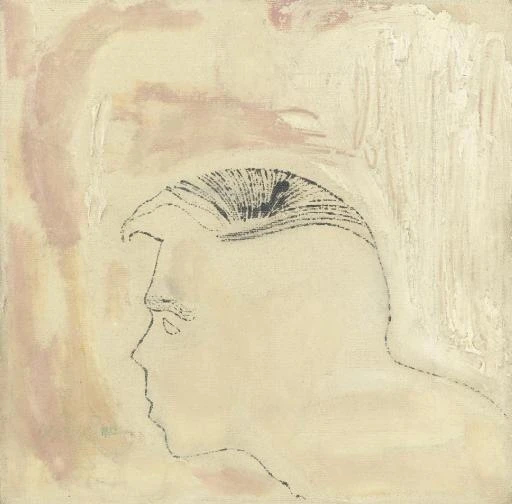
Two sketches of John Butler by Andy Warhol (1952)

In addition to his work choreographing for Broadway and television, Butler founded The John Butler Dance Company in 1955. It was later renamed American Dance Theater and toured Europe until it disbanded in 1961.

John Butler & Carmen de Lavallade rehearse Portrait of Billie, his dance meditation on Billie Holliday (ca 1960)
John Butler & Melvin Dwork (1963)

His most celebrated work was the New York City Opera staging of Carmina Burana (1959). Through the years, it has been recreated with over 30 companies.

In 1961 he met celebrated interior designer Melvin Dwork, who has called Butler “the love of my life.” They remained companions and friends until Butler’s death in 1993. Dwork was instrumental in preserving Butler’s dance legacy.

The Greenwood Commonwealth, Greenwood Mississippi (3/6/1965)

As he matured, Butler’s voluminous eyebrows became something of a trademark of his appearance. He appears to have embraced this with a level of zeal that surely inspired George Whipple.

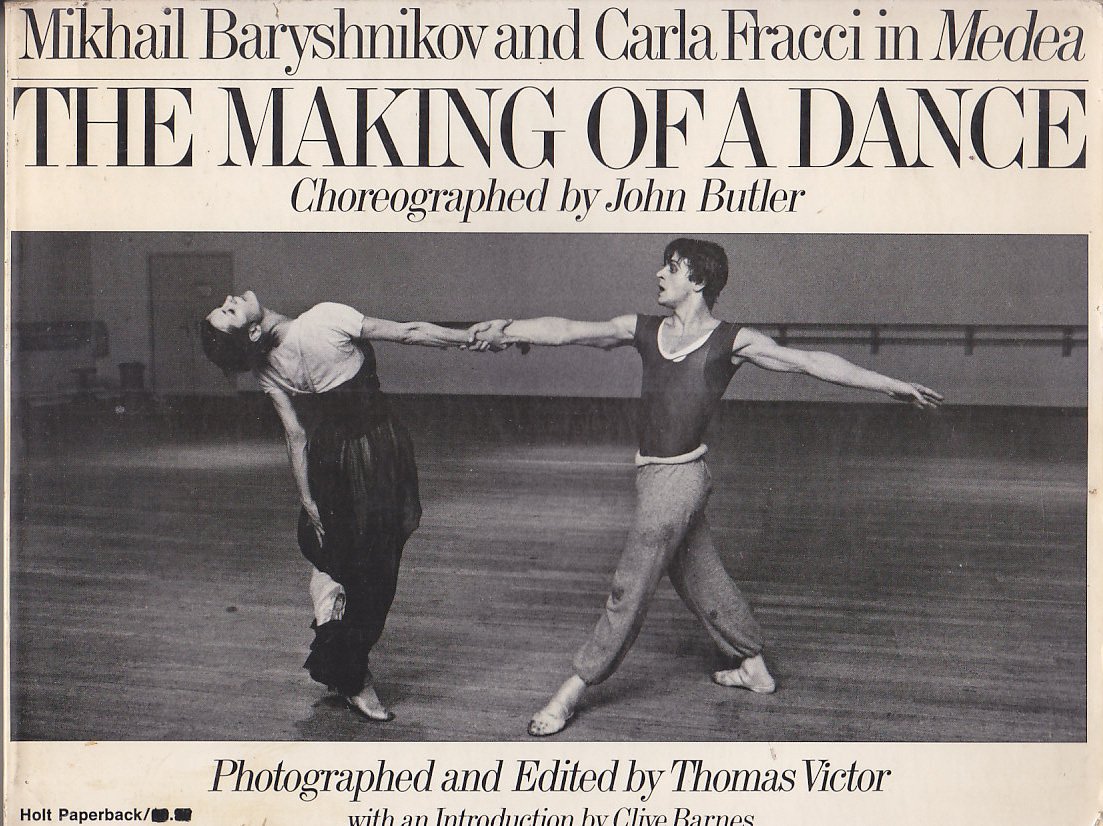
Over the next several decades, Butler continued to choreograph throughout the U.S. and around the world. The Hague, Munich, Sydney, Spoleto, Montreal, and Warsaw were part of his regular rotation with occasional work in Italy and South America. Back in New York City he choreographed Medea, the first dance for Mikhail Baryshnikov after his defection to the West.

John Butler photographed in April of 1993. He died of lung cancer later that year at the age of 74.

In 1993, author Camille Hardy interviewed John Butler for Dance Magazine shortly before his death. As they sat in his Upper East Side apartment, surrounded by his artwork collection and the walls lined with the works of Warhol, Avedon and Lynes, he said “I’ve done everything in my life I ever wanted to do.”

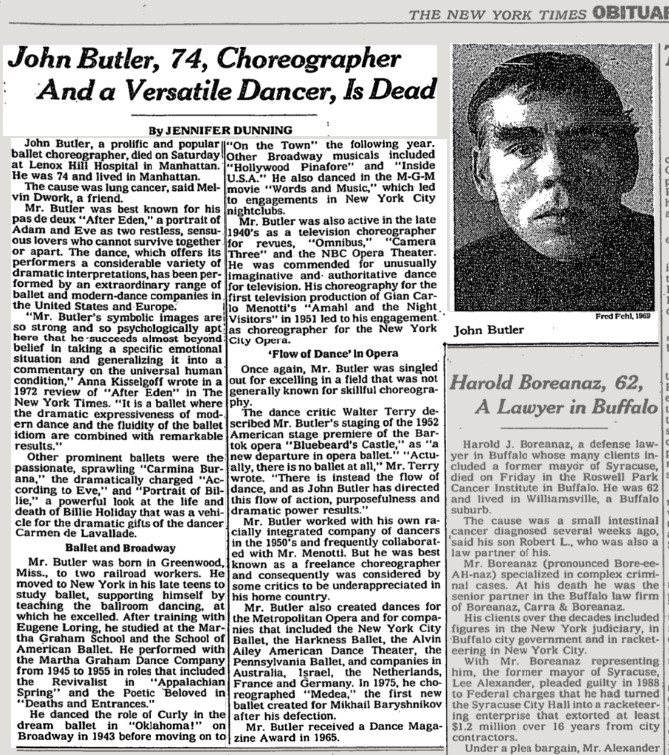
New York Times Obituary (12/13/93)

See also:
Fire Island PaJaMa Party
Provincetown PaJaMa Party
Fire Island Muses of George Platt Lynes & The PaJaMa Collective
Revisiting George Platt Lynes’ Fire Island Muses
Artist’s Muse: Forrest Thayer
Artist’s Muse: William Weslow
Artist’s Muse: José “Pete” Martinez
Artist’s Muse: Chuck Howard
Artist’s Muse: Randy Jack
Artist’s Muse: Wilbur Pippin
Artist’s Muse: Donald Windham & Sandy Campbell
Buddy & Johnny: A Historic Photo Shoot
Kenn Duncan After Dark
George Platt Lynes: In Touch Magazine (1982)

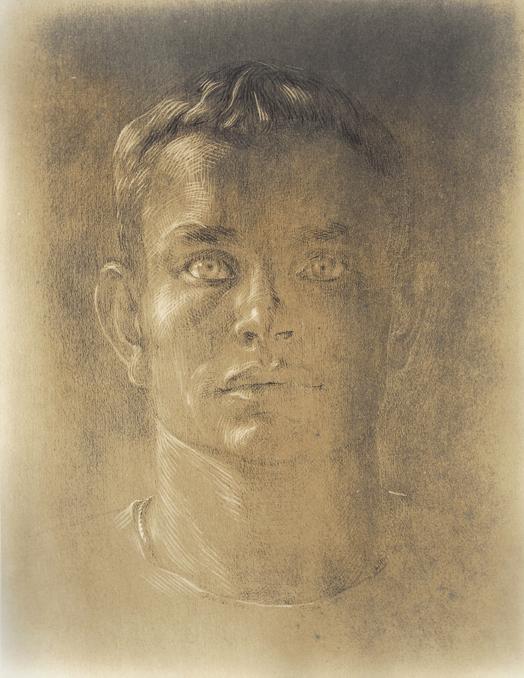
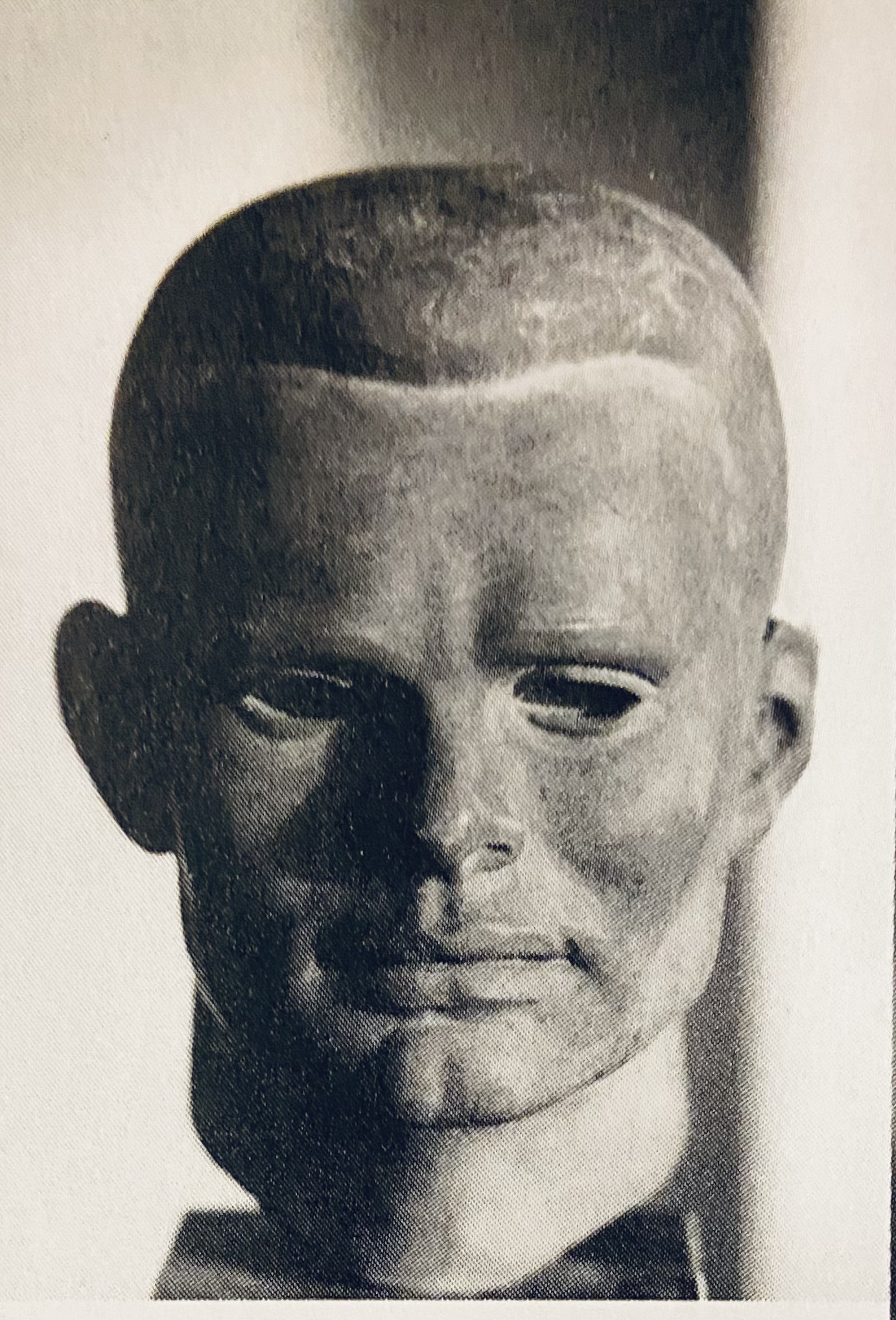
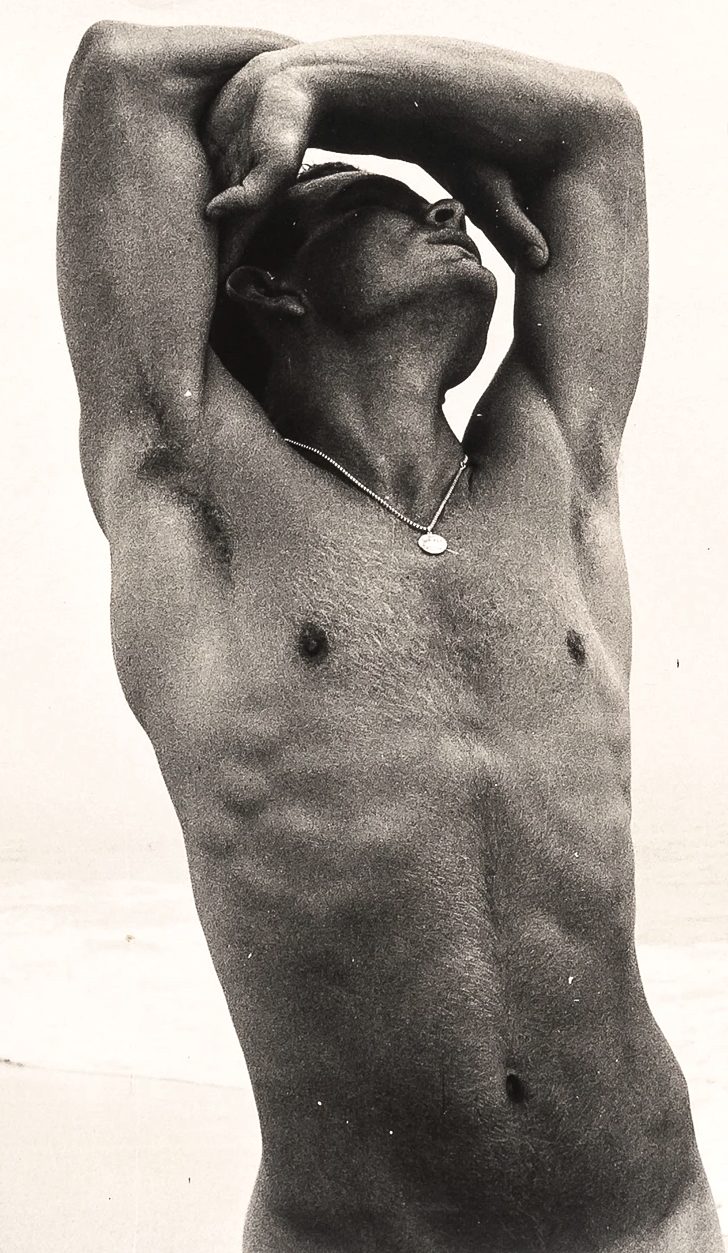
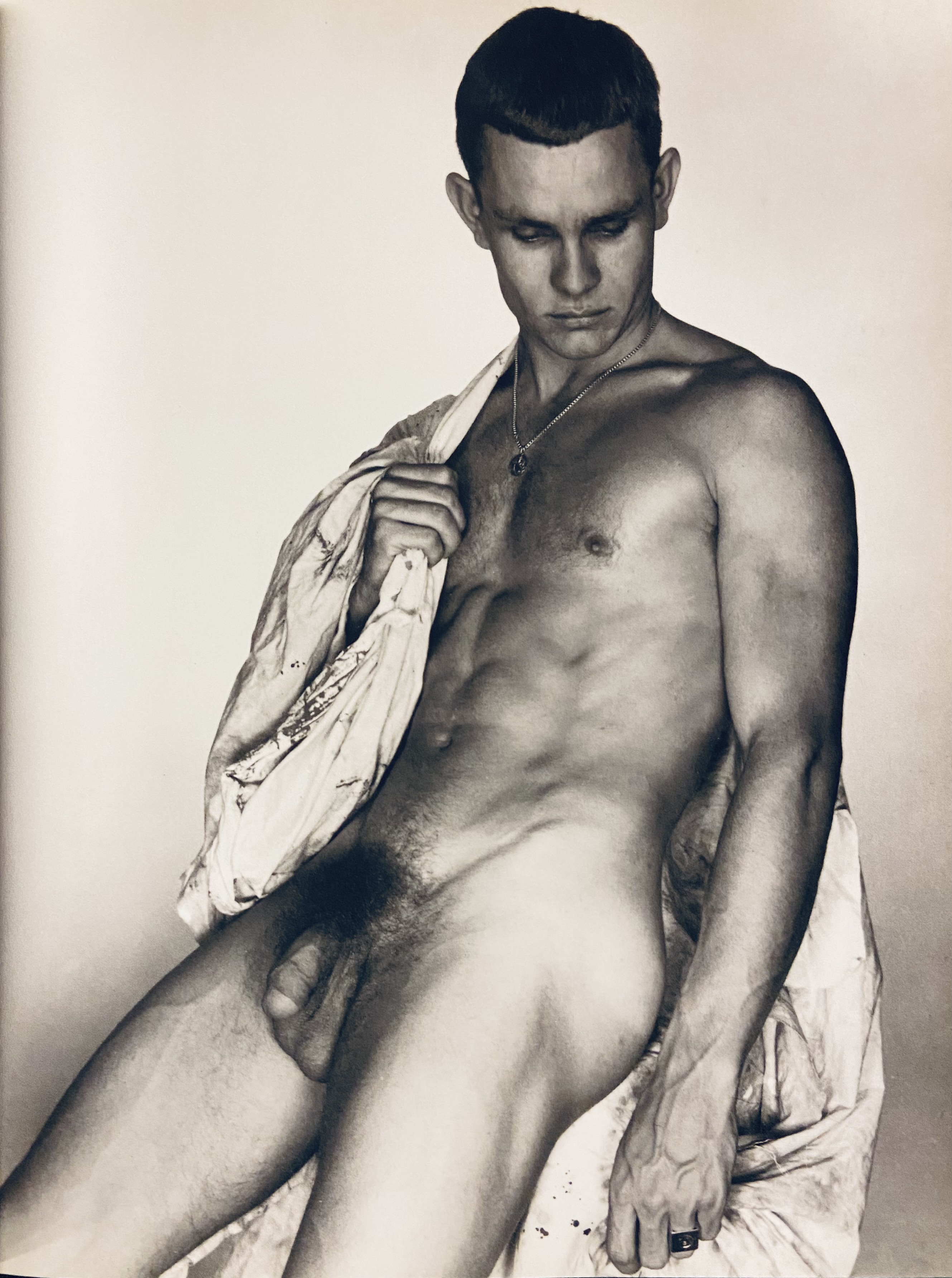
Artist’s Muse: Chuck Howard

In the profile Artist’s Muse: Randy Jack, I wrote about his relationship with photographer George Platt Lynes, which came to an end in the Fall of 1948. Just 10 days after Jack moved out of the apartment, another former military man named Chuck Howard moved in as Lynes’ next boyfriend.

Charles “Chuck” Howard was born in Cochran, Georgia on March 4, 1927. After graduating from high school during World War II, he joined the Naval Air Force and became a tail gunner. While stationed in Miami Beach, he met New York artist Bernard Perlin and the two would “reconnect” whenever Chuck was in New York City. After the war, Howard studied fashion in France on the G.I. Bill before moving back to NYC to live with the artist. When Perlin was offered a residency in Rome, he threw himself a farewell party, and Chuck was introduced to Lynes.

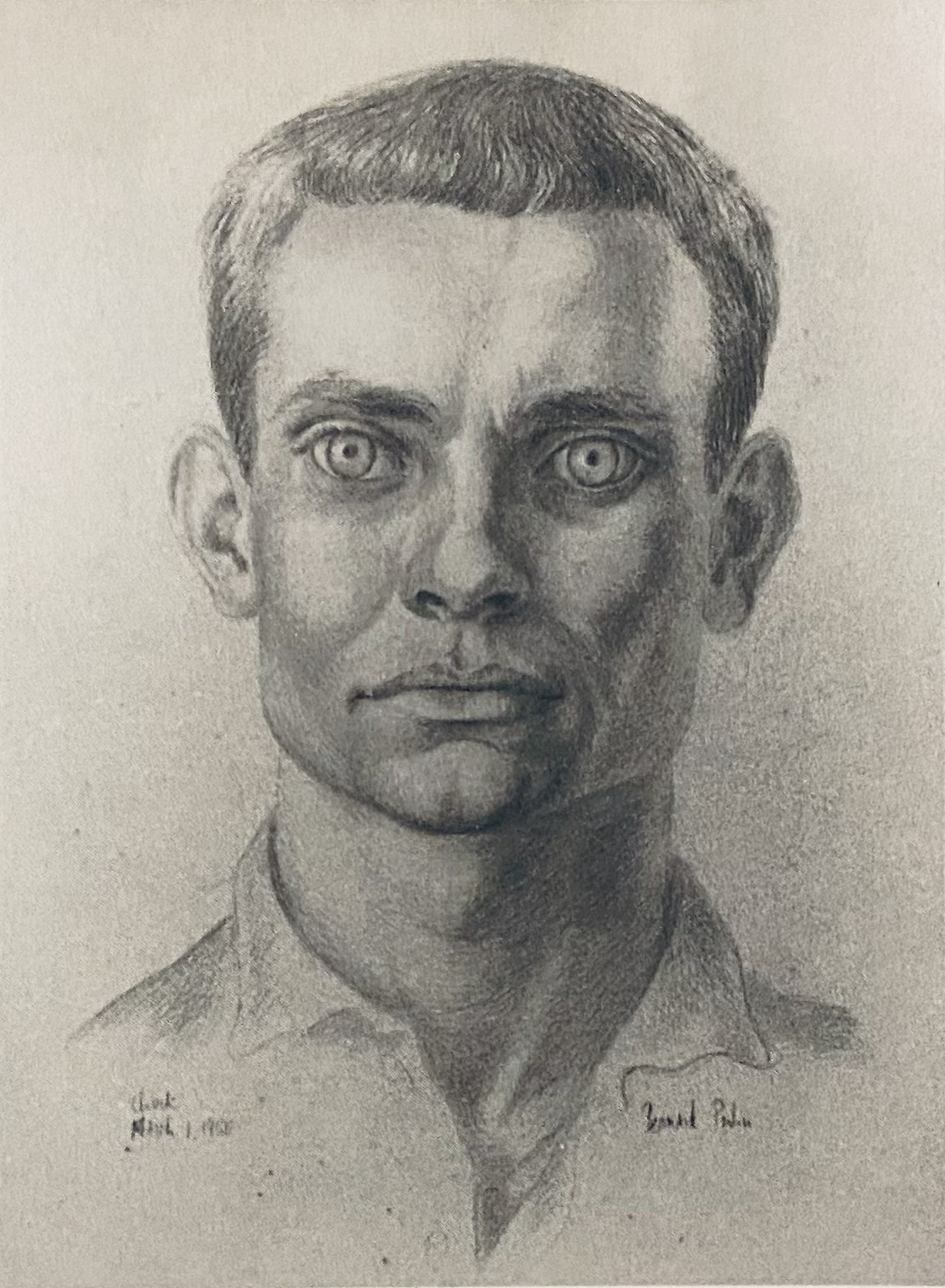
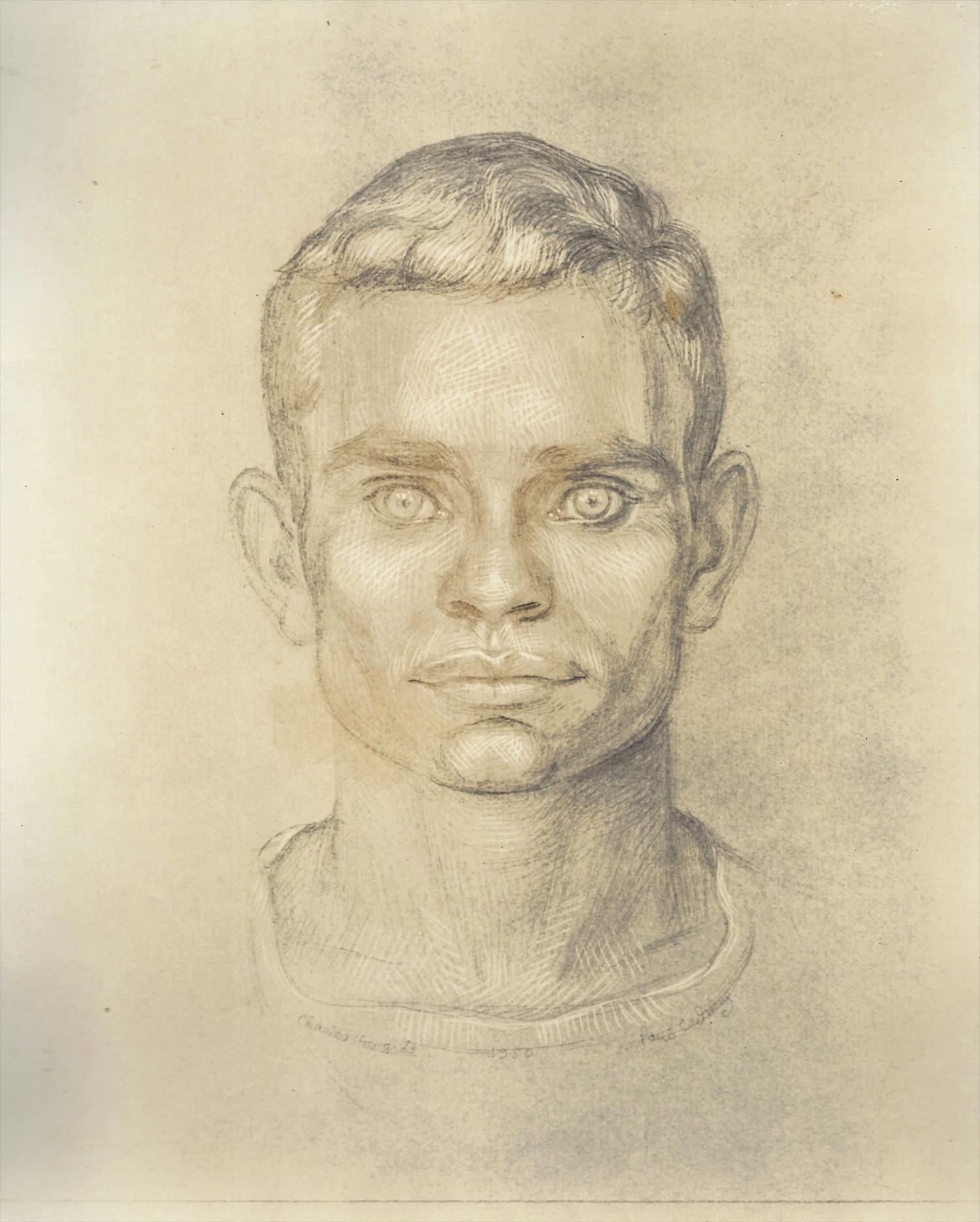
Four sketches of Chuck Howard by Bernard Perlin

George Platt Lynes self portrait with Chuck Howard, ca 1948
Chuck Howard and George Platt Lynes, ca 1950

“Another twenty-one-year-old has moved in on me bag and baggage, almost without being invited..” Lynes wrote in a letter to his friend, author Katherine Anne Porter.

Howard was viewed favorably by Lynes’ friends and was said to have a grounding effect on the photographer. The relationship lasted for just over two years.

George Platt Lynes & Chuck Howard, ca. 1950

Although Howard had previously posed for Bernard Perlin, it was after his introduction to Lynes and his circle of friends that he became a favorite model for the artists. He posed for George Tooker, sculptor John LaFarge, and Jared French, with whom he also had a physical relationship.

Paul Cadmus also sketched him several times and used him as the model for the central figure in his painting Architect (1950).

Architect by Paul Cadmus (1950) Chuck Howard was the model for the central figure with George Tooker reflected behind him.

When Lynes’ nude photography became more widely exhibited decades after his death, photos of Chuck Howard were among the most celebrated. Howard downplayed the photos, describing his work modeling for Lynes as “primarily lighting tests.” Collectors disagree.

Chuck Howard also had a film career of sorts when he participated in Dr. Alfred Kinsey’s famous studies, performing sexual acts with poet Glenway Wescott in front of the researchers’ movie camera. Howard later remarked; “It wasn’t Hollywood.”

Lynes and Howard parted ways in January, 1951. “Chuck has decided to go off and live by himself;” Lynes wrote to his mother. “I shall miss him but I don’t disapprove… I’m afraid that my influence is too often all-pervading, all-inclusive.”

In an earlier blog post on Ted Starkowski, I mentioned that he and Chuck then embarked on what author David Leddick described as “a tempestuous affair.” The couple were photographed together on Fire Island while vacationing with Paul Cadmus, Jared and Margaret French: aka The PaJaMa Collective.

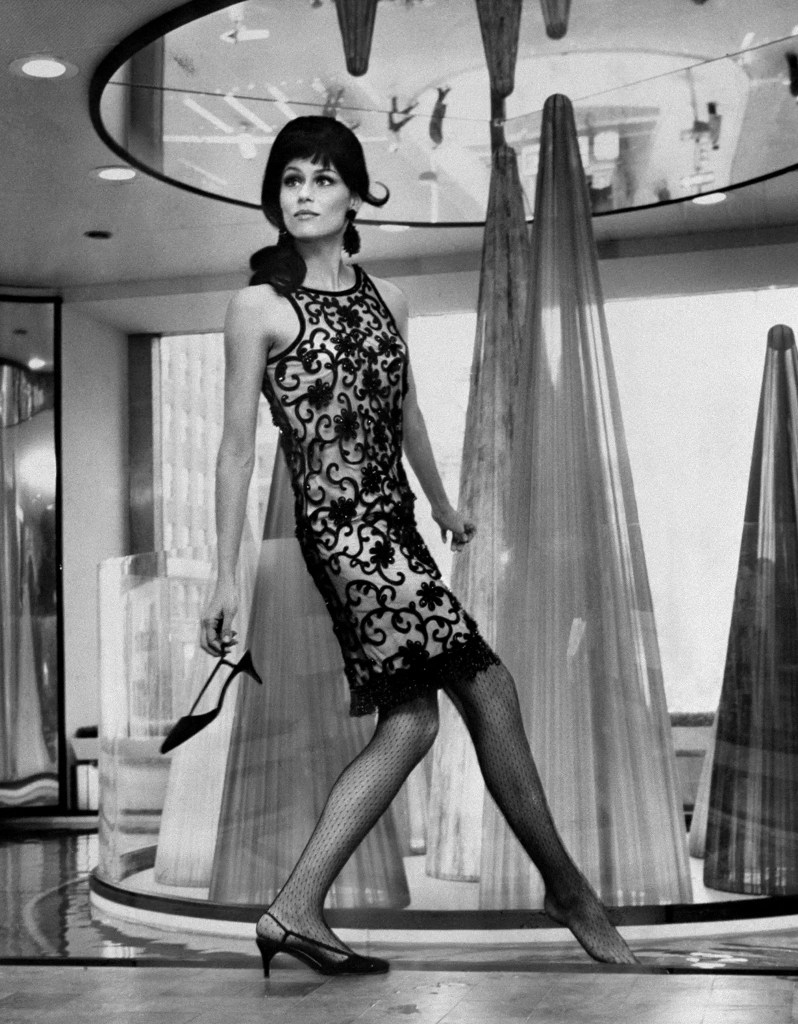
Lauren Hutton modeling a dress by Chuck Howard. (1965)

Act II: Chuck Howard’s career in the fashion industry began to flourish in the late 1950’s when he sketched for several designers, including Bill Blass. He worked for David Crystal before moving on to Anne Klein’s Junior Sophisticates. In 1965, he joined Townley, working his way up to become chief designer and head of business operations. The company was then renamed Chuck Howard, Inc. His design style was noted for its sense of humor with sporty, colorful coats, tunics, pants and jersey shirts.

Around this time, a Parsons student named Donna Karan began working for Howard and he eventually introduced her to Anne Klein.

After Klein’s death in 1974, Donna Karan succeeded her as designer for the Anne Klein studio. Chuck Howard then closed his company and became a designer and creative coordinator there, where he was responsible for several of its collections. He departed with fellow designer Peter Wrigley in 1976 to form their own company.

Howard and Wrigley operated their business out of Chuck’s townhouse at 412 W 47th street – formerly the infamous party house of New Yorker editor Harold Ross and Alexander Woolcott.

Chuck Howard (r) with his partner Ed Vaughan in their restaurant (1981)

Act III: In 1980, after his departure from the fashion industry, Chuck Howard opened his self-named restaurant on Restaurant Row. Assisting him in this next chapter was his partner Edward Vaughan. The couple rented a three story townhouse at 355 W 46th St and lived on the third floor above the restaurant.

Soon after opening, twenty-two-year-old Anthony Bourdain took over running the back of the house. He later recounted his time at the restaurant in the “Chef of The Future!” chapter of Kitchen Confidential, with Chuck and Edward referred to as “Tom and Fred.” He writes, “They were genuinely lovely, intelligent, warm-hearted and funny older guys who cooked well, had impeccable taste and were considered (rightly) to be wonderful, charming and entertaining hosts – naturals, it had been said, for the restaurant business, especially a restaurant in the heart of the theater district where they knew and were liked by so many.”

New York Daily News, (1/15/81)

The restaurant was initially successful, although the Daily News review suggested that it wasn’t destined to last. Bourdain further describes the restaurant’s decline, with mounting costs and dwindling guests. “What I learned… was a sad lesson that has served me well in decades since: I learned to recognize failure. I saw, for the first time, how two beloved, funny and popular guys can end up less beloved, not so funny and much less popular after trying to do nothing more than what their friends told them they were good at.” Bourdain moved on to another restaurant, and by the end of 1982, Chuck Howard’s had closed.

The couple retired to the island of Saba in the Netherlands Antilles where they lived for several years before settling in Santa Fe, New Mexico.

On October 5, 2002, Chuck Howard died of pancreatic cancer at the age of 75 in Albuquerque, New Mexico. He was survived by his long time partner Edward Vaughan.

Chuck Howard, ca 1950 / 1997

Chuck Howard’s life had a similar trajectory as fellow Lynes paramour Randy Jack: A WWII military man who became an artists’ muse before moving on to the world of fashion and finally ending up as a restaurateur. In their twilight years, both also enjoyed a bit of recognition for the work they inspired in some of the great American artists of the 20th century.

See also:
Artist’s Muse: Donald Windham & Sandy Campbell
Artist’s Muse: José “Pete” Martinez
Artist’s Muse: Randy Jack
Artist’s Muse: Wilbur Pippin
Artist’s Muse: Ted Starkowski
Artist’s Muse: The Mystery Model
Fire Island Muses of George Platt Lynes & The PaJaMa Collective
Revisiting George Platt Lynes’ Fire Island Muses
Fire Island PaJaMa Party
Buddy & Johnny: A Historic Photo Shoot
Kenn Duncan After Dark
George Platt Lynes: In Touch Magazine (1982)

You Know The B-52’s Song “Roam” Is About Butt Sex, Right?

The B-52’s are currently in the midst of another farewell tour. It seems like a good time to revisit this blog post from the summer of 2018:

A couple of months ago, the internet burst into flames when Bunny Wailer, songwriter of “The Electric Slide”, confirmed rumors that the song is indeed about a vibrator. (It’s electric!).

An article on the Aazios site quoted him as saying that he wrote the song after a girlfriend told him she didn’t need him because she had a toy she nicknamed the “electric slide”. The story went viral.

Singer Marcia Griffiths was not happy about it. “I don’t sing about vibrators,” she said. “I sing to teach, educate and uplift.”

“Why not both?” I say.

ALT whynot both

Huffpost, which initially reposted the Aazios story, then printed an update that it was not true… noting, apropos of nothing, that Aazios is “an online source of LGBTQ news and entertainment” – as if that had anything to do with Bunny Wailer, the vibrator, or the validity of the story.

Snopehas labeled the story FALSE with a quote from Bunny Wailer that reads like a statement prepared by a lawyer to protect a client from litigation: “At no time have I ever lent credence to a rumor that the song was inspired by anything other than Eddie Grant’s Electric Avenue. To state otherwise is a falsehood and offends my legacy, the legacy of singer Marcia Griffiths, and tarnishes the reputation of a song beloved by millions of fans the world over.”

The problem is… Wailer wrote the song in the 1970’s, years before Eddie Grant’s 1982 hit. The song was dusted off and reworked to ride the “Electric” coattails of that hit record. Thirty-five years later, it is still a dance floor staple at a certain caliber of venue. It is understandable that someone who still makes money off of this record does not want to suddenly admit that their cash cow is about a dildo.

electric slide

Bottom line: It is or it isn’t. Either way, you now have a topic of conversation to slur loudly over your 9th cocktail while your mom and Karen from finance are knocking into each other on the dance floor. 

So… now can we talk about The B-52’s 1989 hit song “Roam“? You know it’s about butt sex, right?

b52s wildplanet

Of course, nobody is going to step up and confirm this now. The B-52’s still make a nice living touring the world performing “Roam” along with party classics like “Rock Lobster and “Love ShackOne song they haven’t performed in years is “Dirty Back Road,” a track from their 1980 Wild Planet LP. Co-written by a guy named Robert Waldrop with band member Ricky Wilson, it’s not that much of a stretch to figure out what this little ditty is about:


Wreckless driving / Like a sports car / God I want you / Like a fuel engine / Energized line / Like a road / You ride me / Like a road / You ride me / Foot on the peddle / Feet in the air / Sand in my hair / Don’t look back / Don’t look behind you / Reckless drivin’ on / Dirty back road

Pretty obvious, right? Well… of course not, according to YouTube comments. People will argue about anything. I know, I know. Never read the comments.

b52s dirty back roadb52s-dirty-back-road-1980

Now lets move on to “Roam“: The song’s lyrics are credited again to Robert Waldrop, with music written by the surviving members of the band. Ricky Wilson had passed away from AIDS complications in 1985 during the recording of the Bouncing Off The Satellites LP. After taking a few years off, the band came back in 1989 with the LP Cosmic Thing, which would be the biggest commercial success of their career. The singles “Love Shack” and “Roam” topped the charts around the world, garnered the band their first two Grammy nominations and still get regular airplay today.


b52s cosmic thingb52s roam


When did I realize that “Roam” was about butt sex? I couldn’t say. I just always knew. I saw Robert Waldrop’s name in the cassette booklet, read the lyrics to “Roam and thought “Look at that. He cleaned up his ‘Dirty Back Road.” Well, not completely – the second line has them “dancing down those dirty and dusty trails.” It may not be as blatant, but it’s there.


The phrase “Take it hip to hip rock it through the wilderness” is repeated about a dozen times throughout the song.

The chorus: Roam if you want to / Roam around the world / Without wings without wheels / Roam around the world / Without anything but the love we feel… 

And then there’s this verse:

Hit the air-strip to the sunset Ride the arrow to the target / Take it hip to hip rock it through the wilderness / Around the world the trip begins with a kiss 

(at this point in the video, a banana goes through a hole in a bagel)

Roam


I would like to make it clear that I do not make these pronouncements as some sort of slander. Believe me, I am a big fan of butt sex and partake as often as possible.

In posting this piece, I realize that there are people who will get annoyed or upset that their favorite B-52’s hit is all about taking a ride on the Hershey highway, but really… if you think this is shocking or not possibly true then you never really understood the band and/or their sense of humor in the first place. People who only know them from Top 40 radio might not remember that they were/are a predominantly gay party bandThey were messysubversive and more than just a little punk. Fun punk. 

If a clueless fan does not know that, it is akin to saying that you love John Waters because of the films Hairspray and Cry Baby, but have never seen Pink Flamingos or Female Trouble.


Polyester


Like many other bands before or since, the B-52’s started out edgy and moved towards mainstream pop as their career progressed. While their current tour does pull heavily from their first two LPs, their bread and butter is still playing the hit songs. They are a business  not so much a band as a corporation like their contemporaries the Go-Go’s and Blondie.

Even if the B-52’s issued a statement today that Roam” never was or is about getting popped in the pooper, the motivation would not be to tell the truth, but rather to protect their own livelihoodCase in point: The Village People, Inc. When faced with anti-gay protests for a gig in Jamaica back in 1998their representative had the balls to issue a statement declaring that there was nothing gay about them. The fucking Village People, people. I would like to think that the B-52’s are still way too cool to ever do such a thing.

So… I just thought you ought to know. Roam” is about takin’ it up the ass. Something to think about when you hear it wafting over the airwaves at the supermarket or when you are in line at the bankI am not going to debate the evidence. It is what it is. I think it’s a hoot – it makes me chuckle whenever I hear it. But if you feel a strong opposition to the theory… may I invite you to hit the airstrip… and teach yourself the Electric Slide. Boogie woogie woogie.


B52s loveshack.gif

UPDATE: Since this was piece was first posted in August, 2018, an expanded 30th Anniversary edition of the Cosmic Thing LP was released. The band did a considerable amount of press, reflecting on the songs and recording process. Not surprisingly, nobody mentioned that “Roam” is about butt sex.

“‘Roam‘ has many meanings, but it’s a beautiful song about death,” Cindy Wilson told Classic Pop magazine in 2019. “It’s about when your spirit leaves your body and you can just roam.”

Well, yes. Some would describe it like that.

See Also:
’60’s Girl Group Survivors
10 Forgotten Cher Moments
Debbie At The World (1989)
Dusty Springfield Sings Kate Bush
12+ Tina Turner Cover Songs You May Have Missed
Gimme Gimme Gimme: Erasure Covering ABBA
Kate Bush’s Gayest Songs
John Waters in Blueboy Magazine (1977)
Sheena Is A Grandmother
Keith Haring In Heat Magazine (1992)