It’s not nice to stereotype. This may be especially true of homosexuals, who have borne the brunt of unkind pinpointing for so long that they believe it themselves.
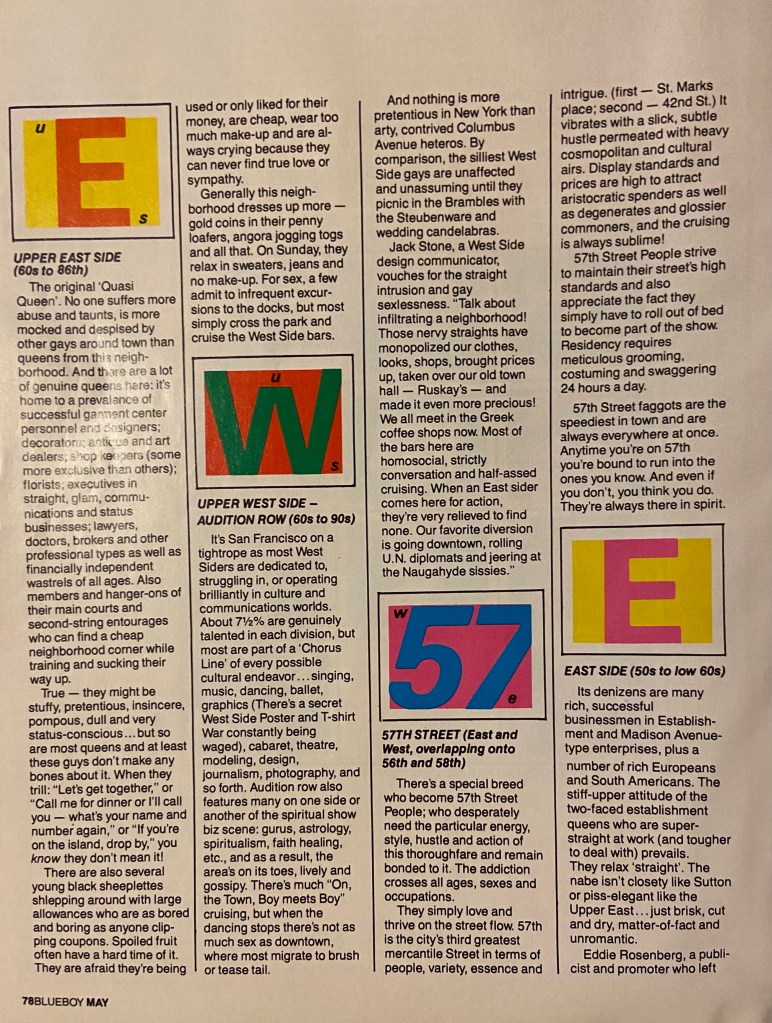
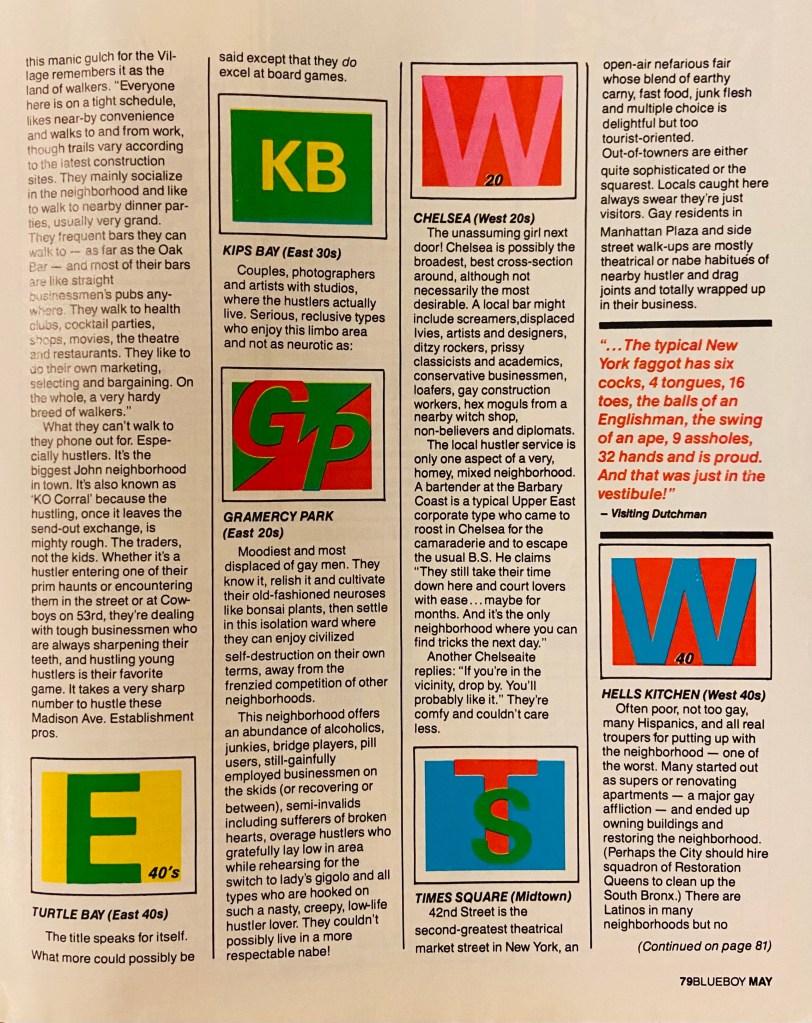
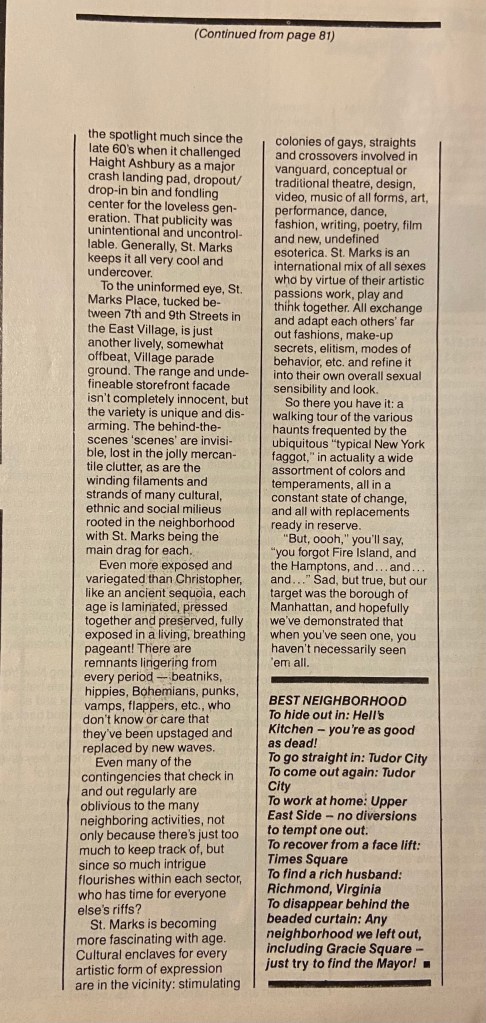
…so begins an outrageously stereotypical article from the May, 1980 issue of Blueboy Magazine, titled “Is There A Typical New York Faggot?”
Now… before you lose your shit over the title, keep in mind that those were different times. The “F” word wasn’t taboo. Larry Kramer’s book by that name had been published just a year and a half earlier. So let’s put that sticking point aside. There’s plenty more to discuss.
Another caveat: This is from Blueboy. A gay porn magazine. It ain’t the Advocate or The Village Voice. Presumably author “J. Greller” was the pen name of a jaded queen with his tongue firmly planted in his own cheek and his head up his own ass. Who can say for sure? I wouldn’t want to, you know, stereotype… but Harold from Boys In The Band could deliver this piece as a monologue.
It’s mean and bitchy, but not in a fun way. It’s like the author had one martini too many and his New York City rant went to a dark place that was no longer funny or clever. The specificity of many of the “types” described gives the indication that he had an axe to grind with very particular unnamed individuals.
Have a read:
To be fair, the entire piece isn’t completely tone-deaf. There are glimpses that ring true, especially in the downtown neighborhoods. This is due in part to the quotes from others – Doley the Third’s observation on Harlem, for example.
I find the piece to be out of sync with the NYC neighborhoods as I have known them since the early 1990’s. But this is my perception over a 30 year period. I wasn’t there in 1980, but I have to wonder if the author has based his observations on, say, a 30 year period prior to that. Were there were really still old vamps & flappers on St. Marks in the CBGB era? Did 57th Street really have its own gay male type that needed dissection? Did nobody ever travel out of their own neighborhood to socialize? Were the streetcars not running?
Interesting to note that, for all this compartmentalizing of Midtown East neighborhoods: Kips Bay vs Turtle Bay vs. East Side… there is no mention of Murray Hill. At the time, according to older gay New Yorkers that I have known, it was referred to as “Mary Hill” due to the large number of gay bars and homosexual residents. J. Geller missed a golden opportunity.
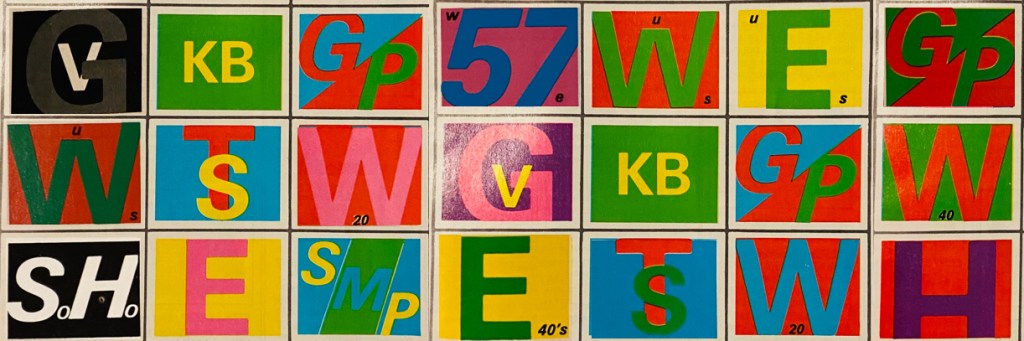
Kudos to the graphic artist Favio Castelli, though.
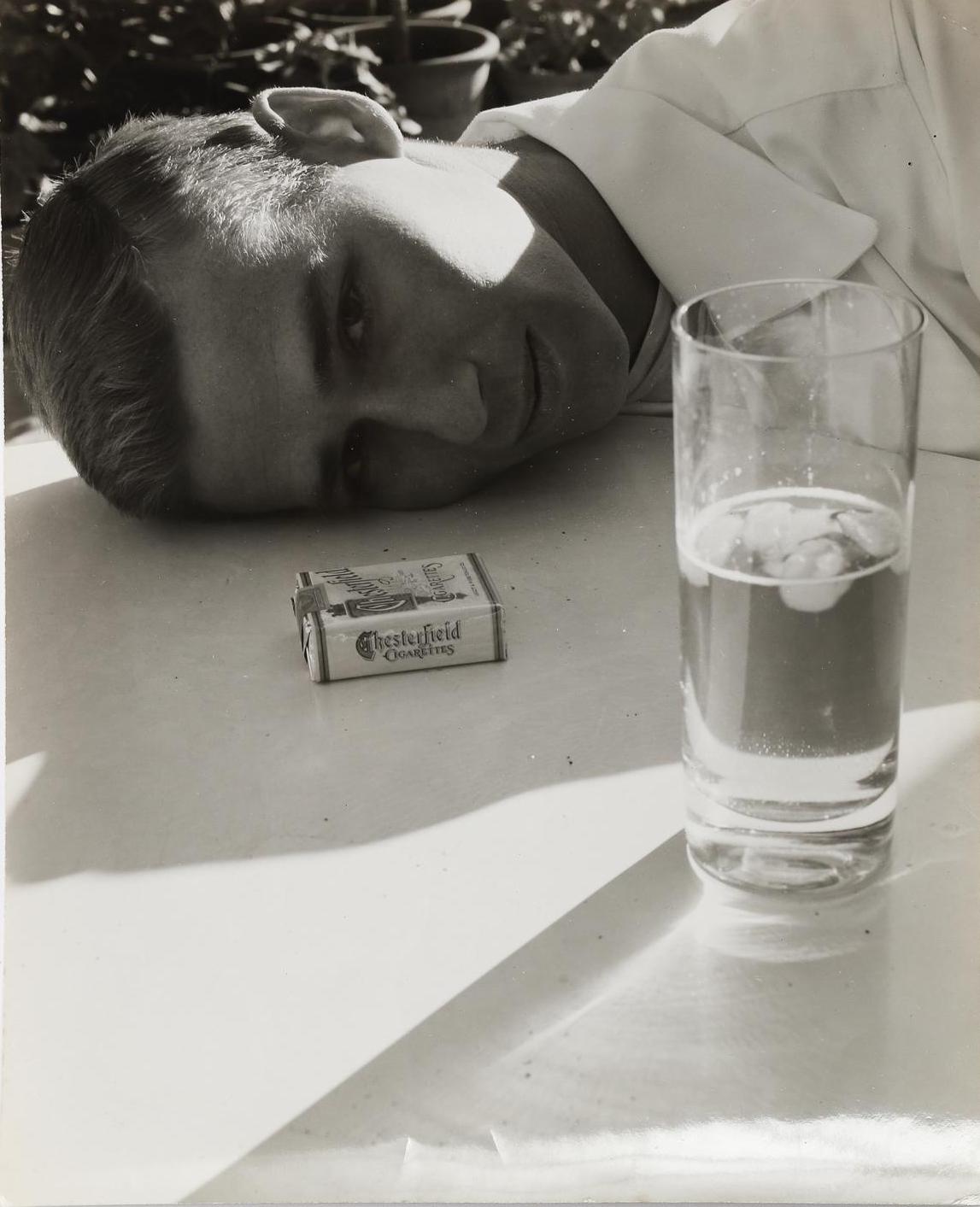
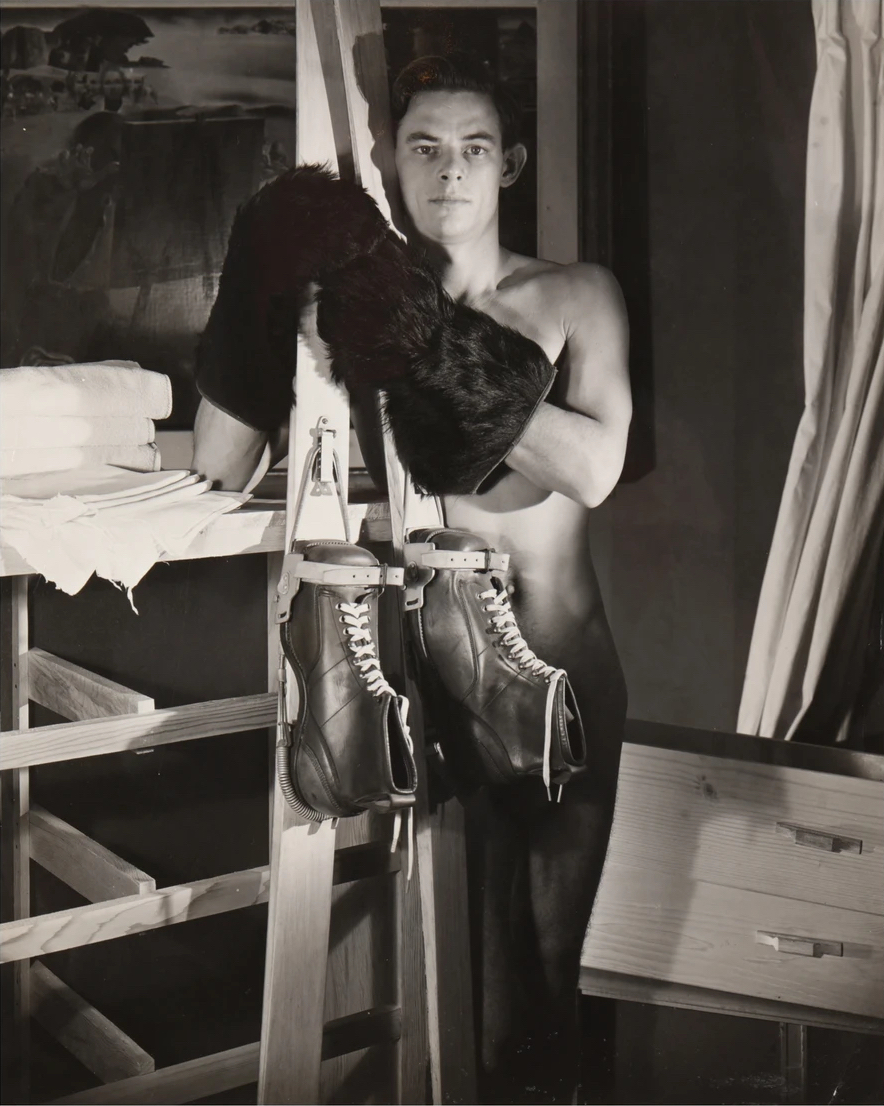
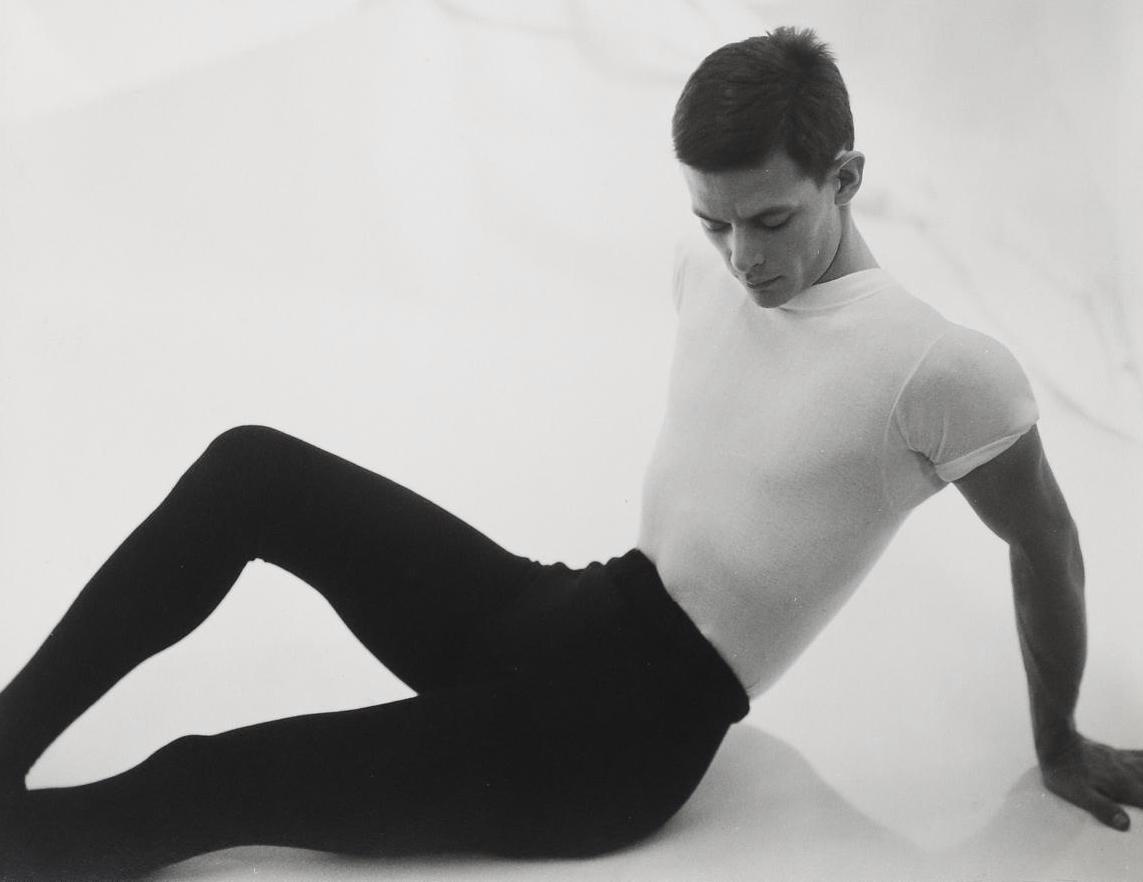
While scrolling across the internet in search of photographs by George Platt Lynes, I came across one that I had never seen before – a handsome shirtless young gent sitting cross-legged on a bed. Initially I was skeptical of its authenticity, as the subject looked so casual and timeless. There is nothing dated about the guy or his surroundings: the image could have been captured at any point in the last century.
I decided to do a little investigating and found that it was, in fact, an authentic Lynes photo. The handsome subject was a fellow named Randy Jack, Lynes boyfriend circa 1947-48. A new Lynes biography also helped to fill in the blanks.
Homer Randolph Jack was born on April 5, 1926 in Lake Clinton, Illinois. He attended Waukegan High School where he enjoyed singing and performing. As a senior, he starred in the high school’s production of the comedy Best Foot Forward. Upon graduation in 1944, he joined the Navy.
After WWII, with his Naval tour of duty completed, Randy Jack settled in Los Angeles, where he embarked on a relationship with ice cream parlor impresario Wil Wright Jr.
Californians of a certain age still swoon at the memory of Wil Wright’s frozen delights, decades after the last shop closed its doors.
George Platt Lynes photos of Wil Wright Jr.
Wil & Randy
In the recently published George Platt Lynes bio The Daring Eye, author Allen Ellenzweig refers to Randy Jack as “Wil Wright’s favorite.” In August of 1947, the two of them rented a room in Lynes’ Hollywood home. The New York-based photographer was in the midst of his “Hollywood period” working for Vogue magazine. Lynes – who always lived beyond his means and was notoriously bad with money management – decided to take in roommates to share chores and expenses.
This arrangement did not last long because, as Lynes wrote to a friend, “Wil can’t bear not to be boss and that is one thing he can’t be. Not here.” Wright also resented George’s influence on Jack, encouraging him to pursue a career as a dancer. When Wil moved out after a couple of months, Randy stayed…. and found his way into Lynes’ bed as well.
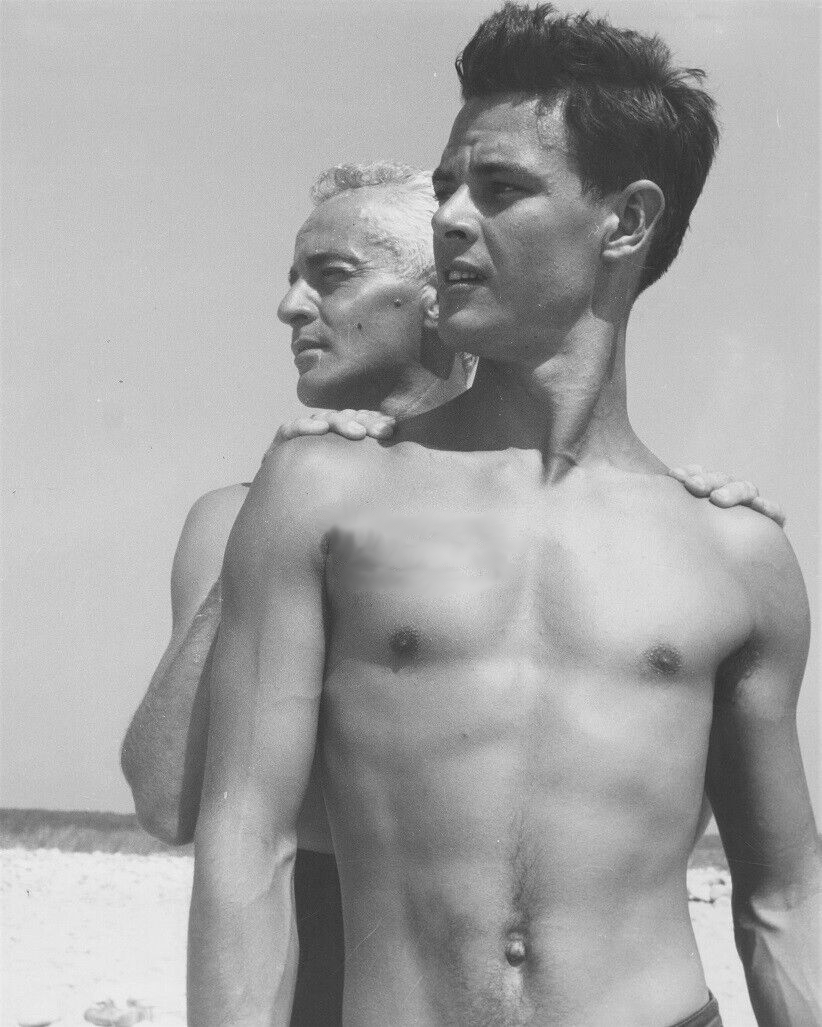
Randy Jack with George Platt Lynes (1947)
Randy Jack committed himself to a vigorous regimen of ballet classes. Although Lynes was aware that Jack was a bit long in the tooth to start training for a career as a dancer, he supported his efforts nonetheless. He wrote to his friend Monroe Wheeler; “He’s too old, 21, but he has a ballet dancers body and a ballet dancer’s soul.”
Randy Jack’s protruding ears – called “bat like” in several accounts – were viewed by Lynes as a further hindrance to attaining success as a ballet dancer. While he could not erase Jack’s advanced age, he could do something to remove this obstacle, so the cards would be “stacked in his favour, to remove whatever flies there may be in the ointment.” He agreed to barter with a plastic surgeon: Lynes would photograph the surgeon’s glamorous wife in exchange for the operation to pin back Jack’s ears. Lynes wrote to his mother at the time: “…I can’t leave things alone but redecorate or remodel anything I can lay my hands on, people as well as houses.”
The photos of Randy Jack taken in Lynes’ library are understandably the most popular.
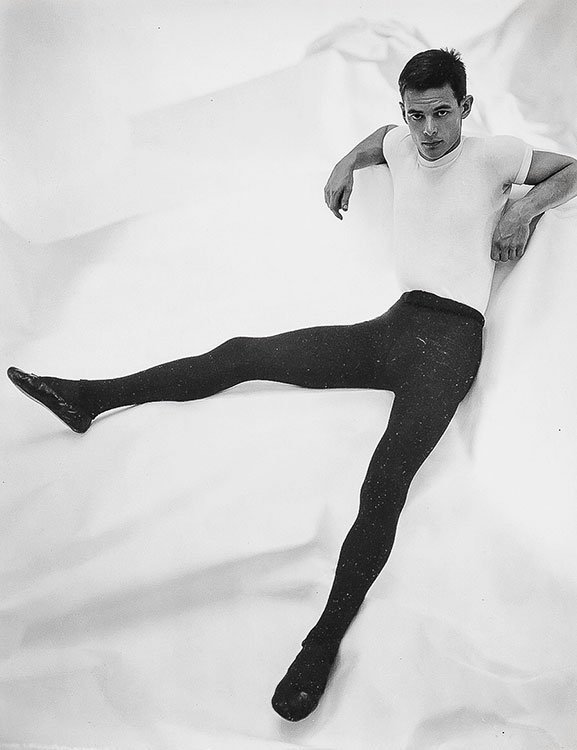
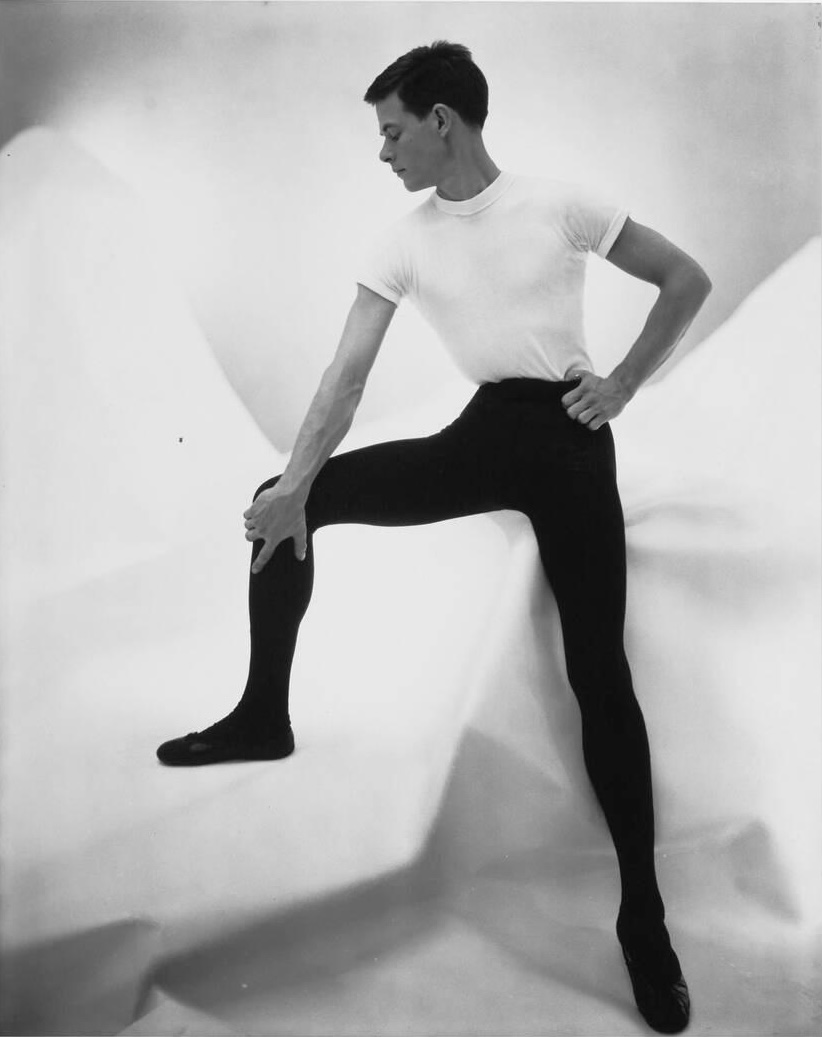
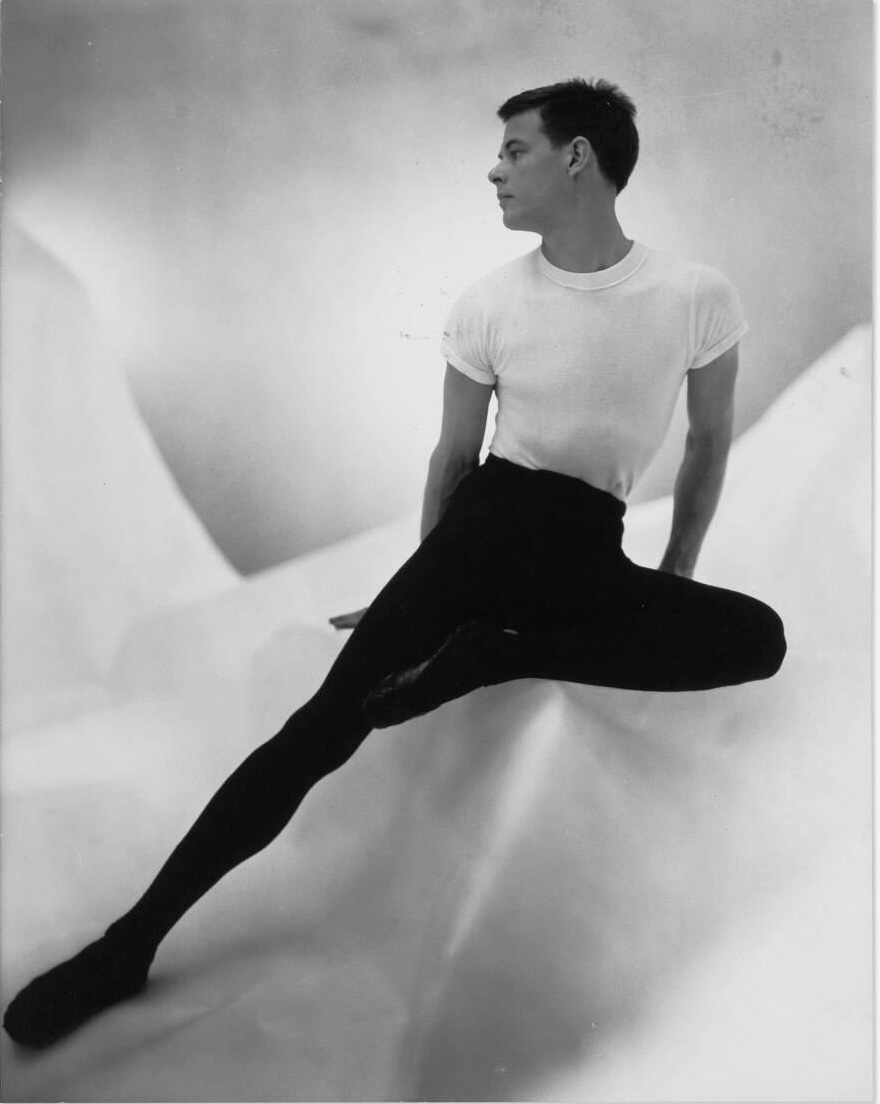
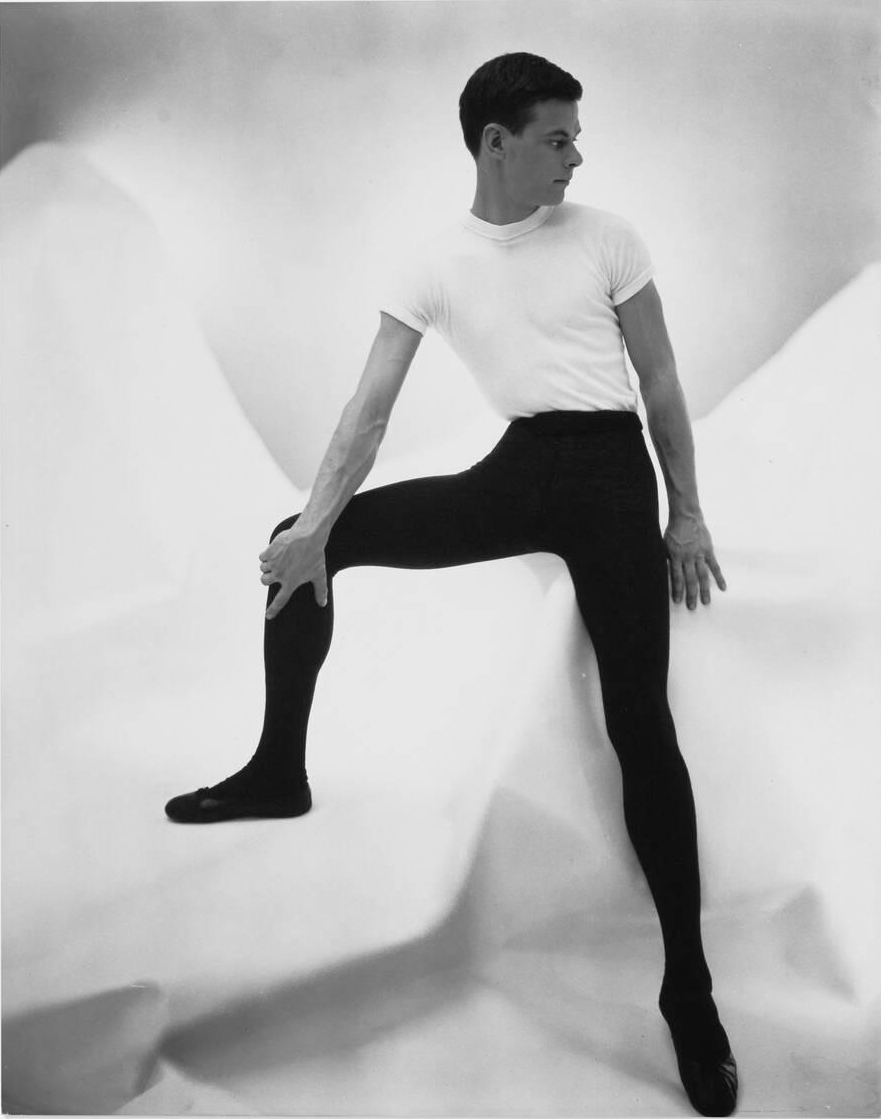
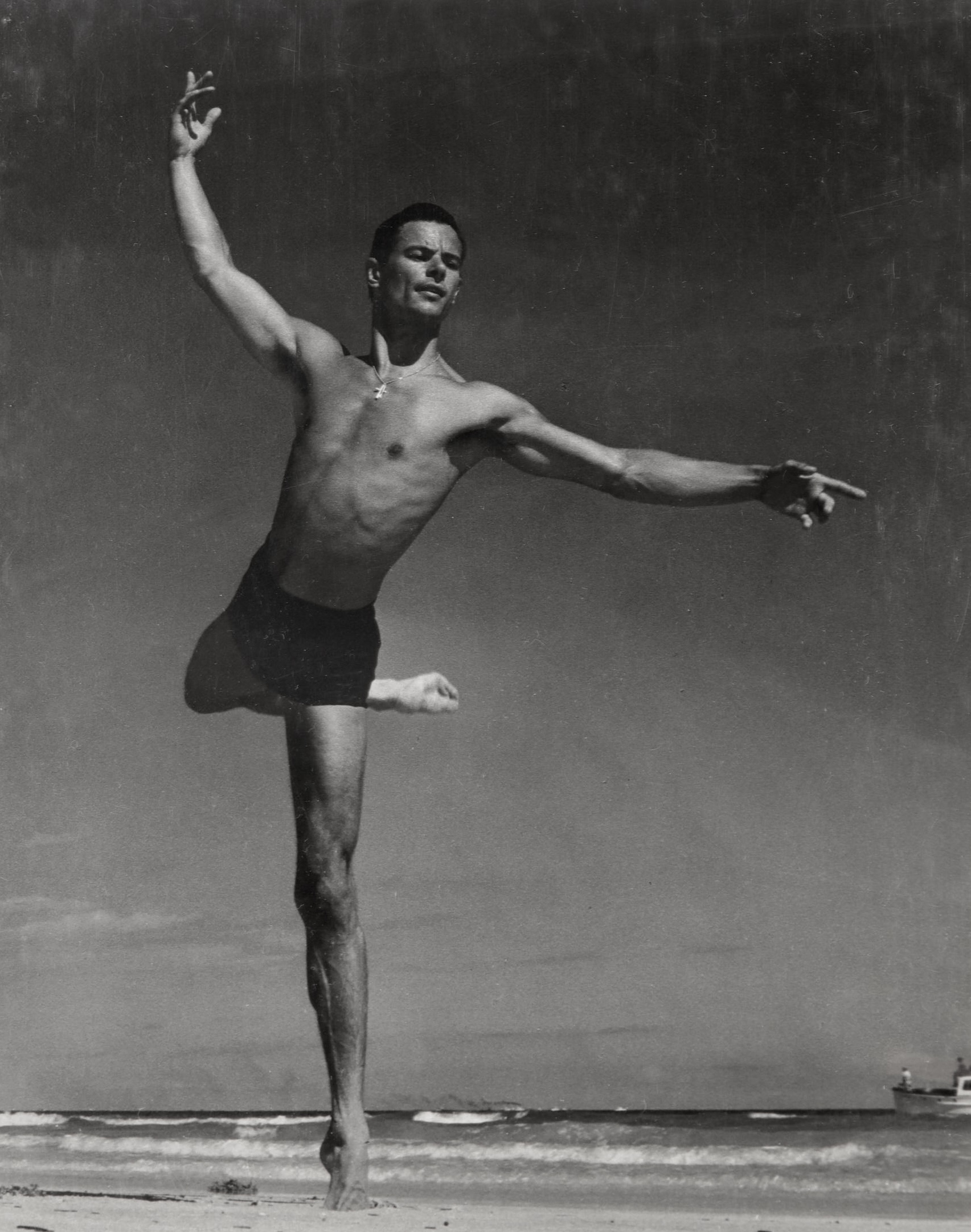
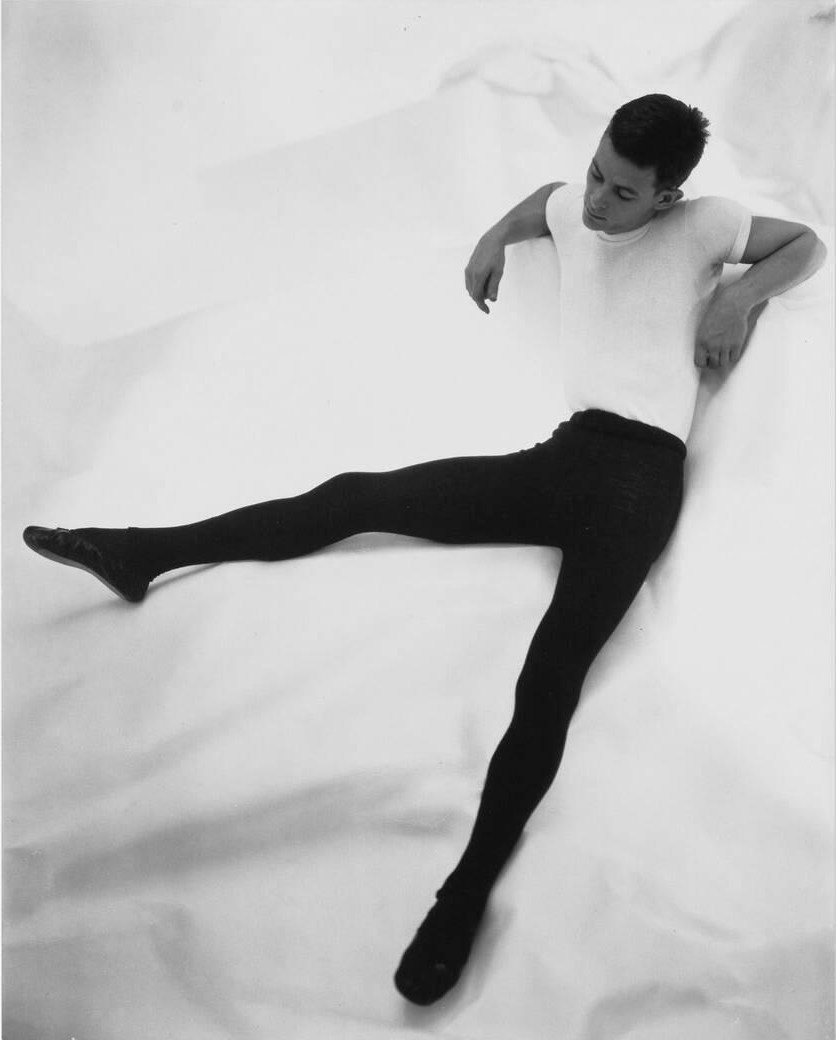
Ears firmly clipped, Lynes photographed his roomie en tenue de danse at Vogue studios, creating this striking series of photos:
In May of 1948, Lynes’ contract with Vogue ended and he returned to New York City with Randy and their dog Bozo in tow.
Portrait of Randy Jack by Bernard Perlin, June 5, 1948
As mentioned in our profile of Ted Starkowski, Lynes and his artist friends often shared models. Like Starkowski, Randy Jack was the subject of several other artists’ work, including Bernard Perlin.
Perlin later recalled, “I really am lousy. George commissioned me to do a drawing of Randy Jack. Randy and I had interrupted the drawing with some ill-advised smooching, which was in turn interrupted by Robert Drew, (my boyfriend) who lived directly downstairs from me. He was damn furious, and he left me. That was the end of it, of our thing.”
Soon after the move to New York, Jack abandoned his ballet studies and began to find work as a fashion model. This proved to be a far more attainable and lucrative goal.
In mid-summer, George wrote to Katherine Anne Porter that he was troubled about the young man, “… I wonder what New York has done to him, or what I have done.”
Whether or not Randy left George or their cohabitation ended by mutual consent is debatable. The fact remains that he moved out in the Fall of 1948… and Lynes’ next boyfriend and muse, Chuck Howard moved into the apartment 10 days later.
David Leddick writes “Jack became one of the most successful fashion models in an industry that was just becoming big business, posing for both photographers and the many illustrators of the time.”
When I look into the life of an artist’s muse from the past, there is always a point in their story that brings to mind the Kirsty MacColl song “What Do Pretty Girls Do?” The answer, she sings: “They get older just like everybody else.”
As his modeling career waned, Jack began his third act as an interior designer. His work with commercial / hotel spaces led him to the Middle East, where he settled on the island of Bahrain and became a restaurateur, opening the Upstairs Downstairs restaurant in 1977.
In 1982 Jack published Upstairs Downstairs Cookbook, featuring favorite recipes from the restaurant’s menu alongside his own illustrations.
In the mid-90’s, Intimate Companions author David Leddick reached out to Randy Jack to talk about his early years with George Platt Lynes. Leddick recounts being tipped off that Jack was living in Bahrain, and that he was able to simply call the local information to get his phone number. Strangely, Jack’s birth name in the book is listed as Randolph Omar Jack, as if the author misheard “Homer” on a poor telephone connection.
A current photo of Randy Jack appeared in Leddick’s 1997 book Naked Men: Pioneering Male Nudes. Shortly after the book’s publication, on June 5, 1997, Jack died in Bahrain. He was 71 years old. The Upstairs Downstairs restaurant is still in operation today. The restaurant’s Facebook page has comments from patrons recalling Randy Jack’s hospitality and the good times they had there.
Department store Santas, 1948 (photo by Nina Leen)
I am not alone in saying that I always take comfort in the annual repetition of the holidays – revisiting holiday-themed music, film, television… and now internet posts as well. In fact, this post is a reworking of one I posted last year, not to get meta or anything.
I find it interesting that we immerse ourselves in certain pop culture favorites for exactly 6 weeks of the year and then pack them up in mothballs with the ornaments until next year. I mean, Bing Crosby, Brenda Lee and Johnny Mathis are rock stars from Thanksgiving through New Years. Are any of them on your 4th of July playlist? They aren’t on mine.
The film A Christmas Story has an even shorter (Elf on the) shelf life. We binge-watch the repeated broadcast for exactly 24 hours each year. I own it on Blu-ray and I’m not sure why: I have never opened it. To pop it in at any other time feels like a betrayal.
In keeping with this revisiting, blog posts of Christmas past are back to haunt you like A Christmas Carol, Mr. Scrooge:
This was my Canine Christmas Tail – a true story about my dog Sunshine and her appetite for tinsel.
Copyright issues kept my 60 Degrees Girl Group Christmas playlist out of commission but now it’s back! I plan to post other episodes of my old radio show in the new year.
If you prefer Spotify, I have this to share:
Way back in 2002, when Limewire was a thing and people listened to music on silvery discs, I started creating Christmas CD mixes that I would mail out or give to people. These were received with a combination of feigned delight, veiled indifference and deafening silence. None of these CDs had a pressing of more than 20 copies. I’d like to call them “much sought after” – but no, that’s not really the case, although every once in a while, someone really got into them and would ask for copies of other volumes.
And so, I’m offering this simple playlist…. for kids from 1 to 92. Unfortunately many of the tracks on these dozen CDs are not on Spotify, but I keep adding songs that would be on the current CD volume… if there was one. And now the playlist is over 14 hours of holiday tunes. I recommend listening on shuffle – there’s something to irritate everyone. Enjoy!
Hard to believe that it has been 5 years since the dynamic actor/actress, performer, reality television star Alexis Arquette passed away. The youngest member of the Arquette clan was just 47 years old.
Fun fact: 12 year old Alexis was featured in The Tubes’ music video for “She’s A Beauty.”
Days after Arquette’s demise, the streaming site XHamster released a statement where they pat themselves on the back for executing a “catch and kill”: allegedly paying $25k to acquire and destroy a sex video peddled by one of Arquette’s ex-paramours. In a blog post about it, KennethInThe212 points out that: a) it seemed like XHamster was pulling a publicity stunt, b) if they were protecting Arquette, why mention a video that nobody previously knew about, and c) how could a sex tape embarrass the free-spirited Arquette, a person who gave zero fucks about other people’s sexual hangups?
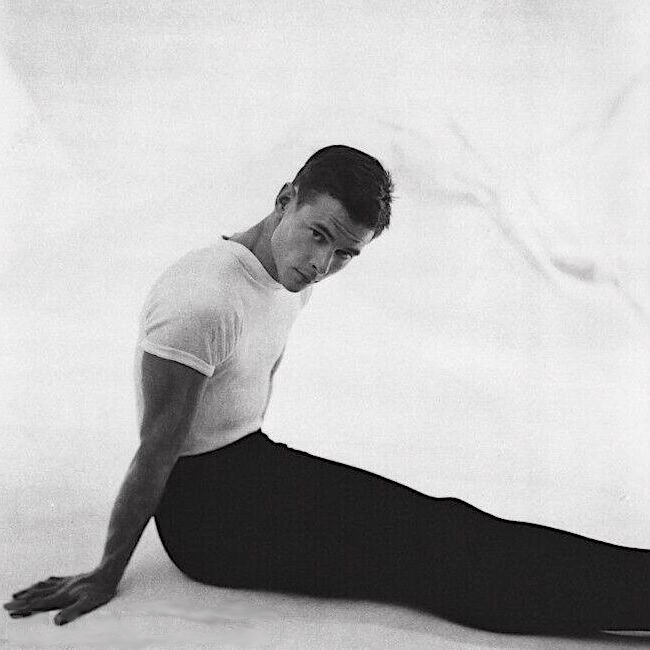
When I read about this alleged sex tape, I was reminded of something I had not thought about in years: Piccadilly Pickups, the 1999 hardcore gay porn flick that Arquette appeared in, and that I had seen it at a screening in New York City with Arquette in attendance.
I read an article in the November 5, 1999 issue of The New York Blade about the MIX Film Festival, which featured experimental works. Arquette was hosting a part of the festival called “The Honcho Midnight Blue Movie Series,” which featured midnight screenings of Andy Warhol’s Couch along with other titillating avant-garde fare. Next to this article was a second one detailing Arquette’s recent foray into gay porn, as the resulting film, Piccadilly Pickups would also be shown.
In 1999, Arquette was still publicly identifying as a bisexual male. He was an indie film darling – a member of Hollywood royalty who dared to push the envelope with unconventional film roles and an outspoken personality.
I was intrigued… so I went to the screening at midnight on Saturday, November 13, 1999. Surprisingly, it was, as advertised, a full-on hardcore gay porno. Unfortunately, it was not a very good one. It wasn’t particularly erotic and the attempts at campy humor fell flat. There was also an extended sequence with a character in blackface. Arquette appears in and out of drag as Henri de la Plus Oooh Aaargh, a wealthy American who wants to exploit the hero of the story. The climax of the film is a group sex scene with Arquette joining in.
Hard to stay gender neutral here, but at one point in the group scene Arquette bends down and sucks their own dick. In the audience at the screening, there is applause. Arquette, in drag, goes on to fuck one of the twinks before producing a climactic money shot which also garnered an enthusiastic audience reaction. And that’s about all I remember about this forgettable film.
A few times throughout the screening Arquette, in the audience, drew laughter with comments about the action onscreen, but I was not sitting close enough to hear this real life version of MST3K.
After the screening Alexis got up, took a modest bow and said a few words, leading off with “I know it’s not exactly Citizen Kane.. but thank you for coming.”
And then the film vanished. Although there is an IMDB listing, I was unable to find any reference to the film online for many years, which is odd, because even the vaguest whiff of a mainstream actor appearing in anything close to porn is recycled and re-discovered across the internet repeatedly. (see Stephen Geoffreys, Simon Rex or even Sylvester Stallone, just to name a few.)
Recently a cut of the film popped up on gay torrent and streaming sites. This watered down version appears to have come from a UK DVD release, which is edited like cable porn: Still an X but not XXX. The autofellatio, penetration and money shots are gone, so why bother, really?
Arquette was a favorite subject of Hollywood photographer Greg Gorman, including some nudes featured in his 2004 book As I See It.
Arquette would go on to become a vocal activist and visible leader in the transgender community. The diversity and complexities of this fearless artist should be remembered and celebrated, even if Piccadilly Pickups is not.
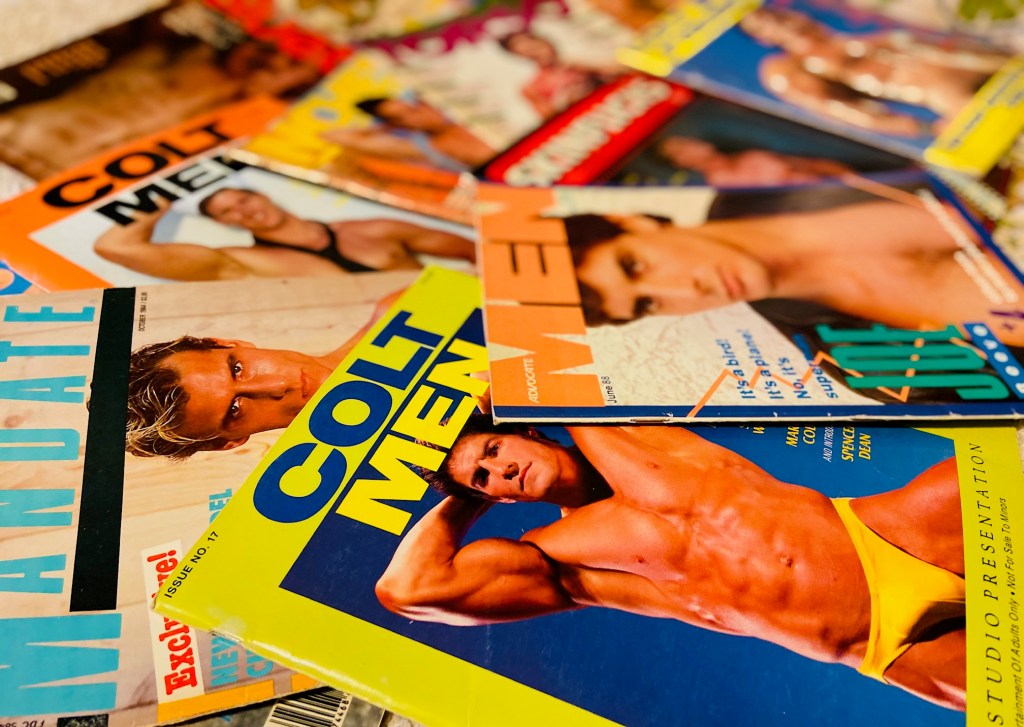
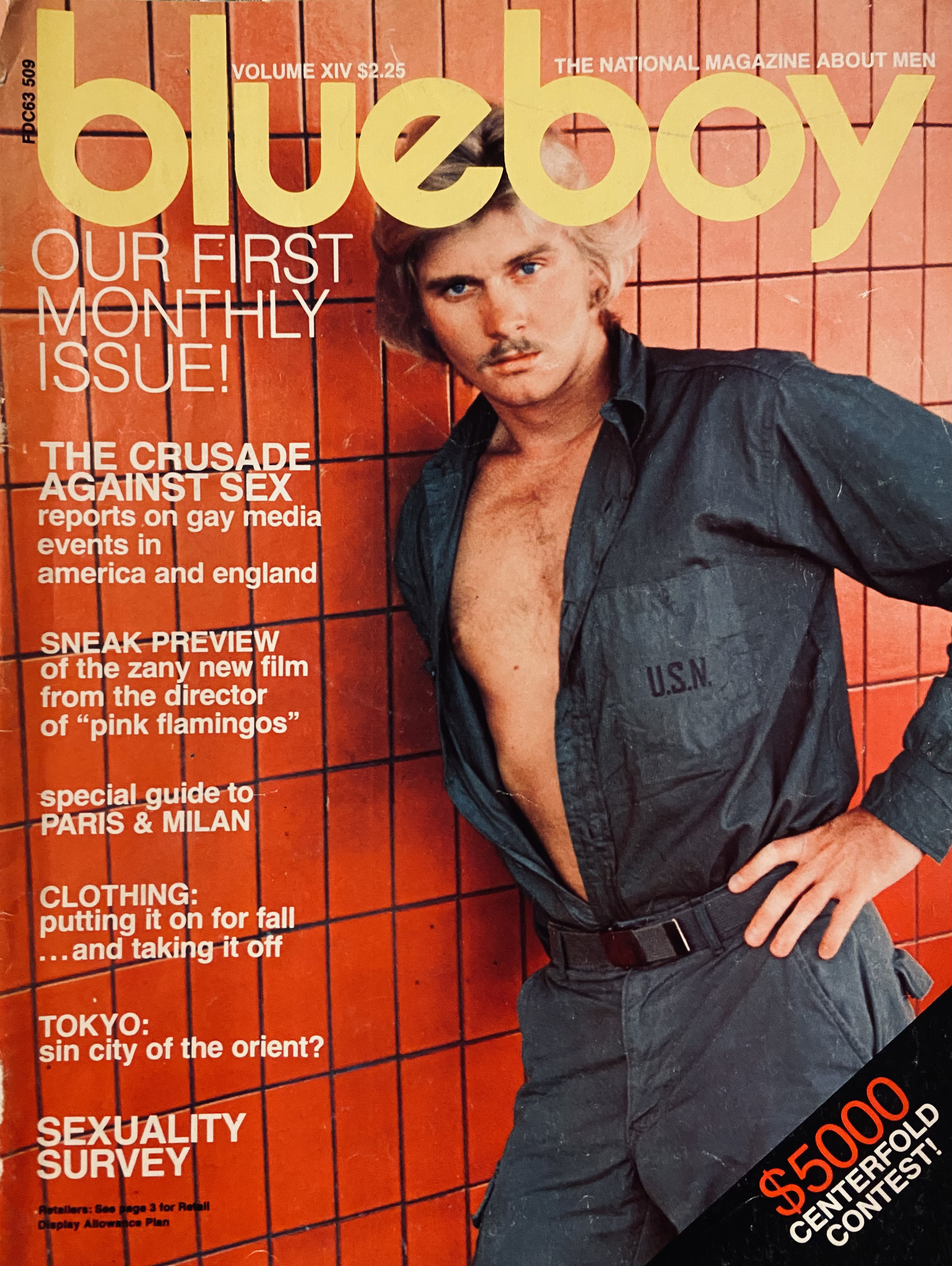
Back in January of 2020, I posted an article written by Armistead Maupin for the September, 1980 issue of Blueboy Magazine. I mentioned that this magazine was part of my collection of vintage male erotica that is large enough to choke a horse – file boxes full of smut that were gifted to me by an old friend when he vacated his New York City apartment after 30 years. I was slowly selling them off on eBay, but that door slammed shut earlier this summer when the company decided that they did not need all the unholy illicit dirty sticky revenue generated by adult items. As of July, they have completely eliminated their adult section.
Sidenote: If anyone can recommend a halfway reputable website to peddle my gay wares, I would be very grateful.
As the end of this selling opportunity drew near, many vendors starting unloading their products at a discounted rate. I went in the opposite direction: Rather than listing these publications for less than their worth, I chose to buy up even MORE magazines at a discount
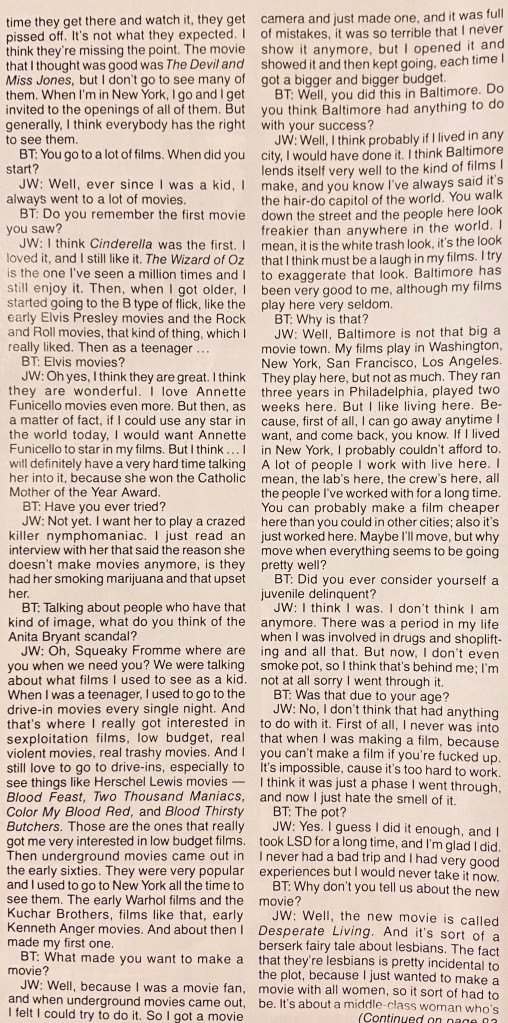
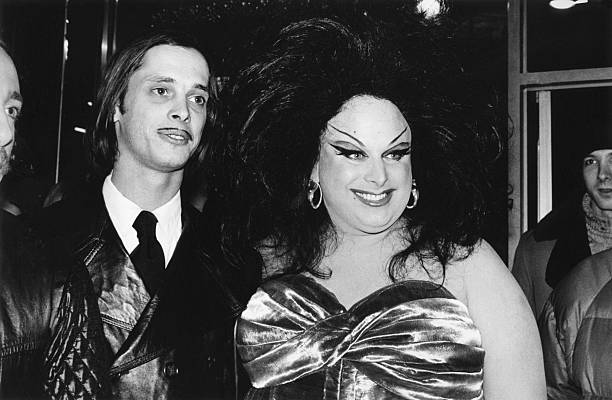
One of these recent acquisitions was the November, 1977 issue of Blueboy Magazine which featured an interview with The Pope of Trash: filmmaker John Waters.
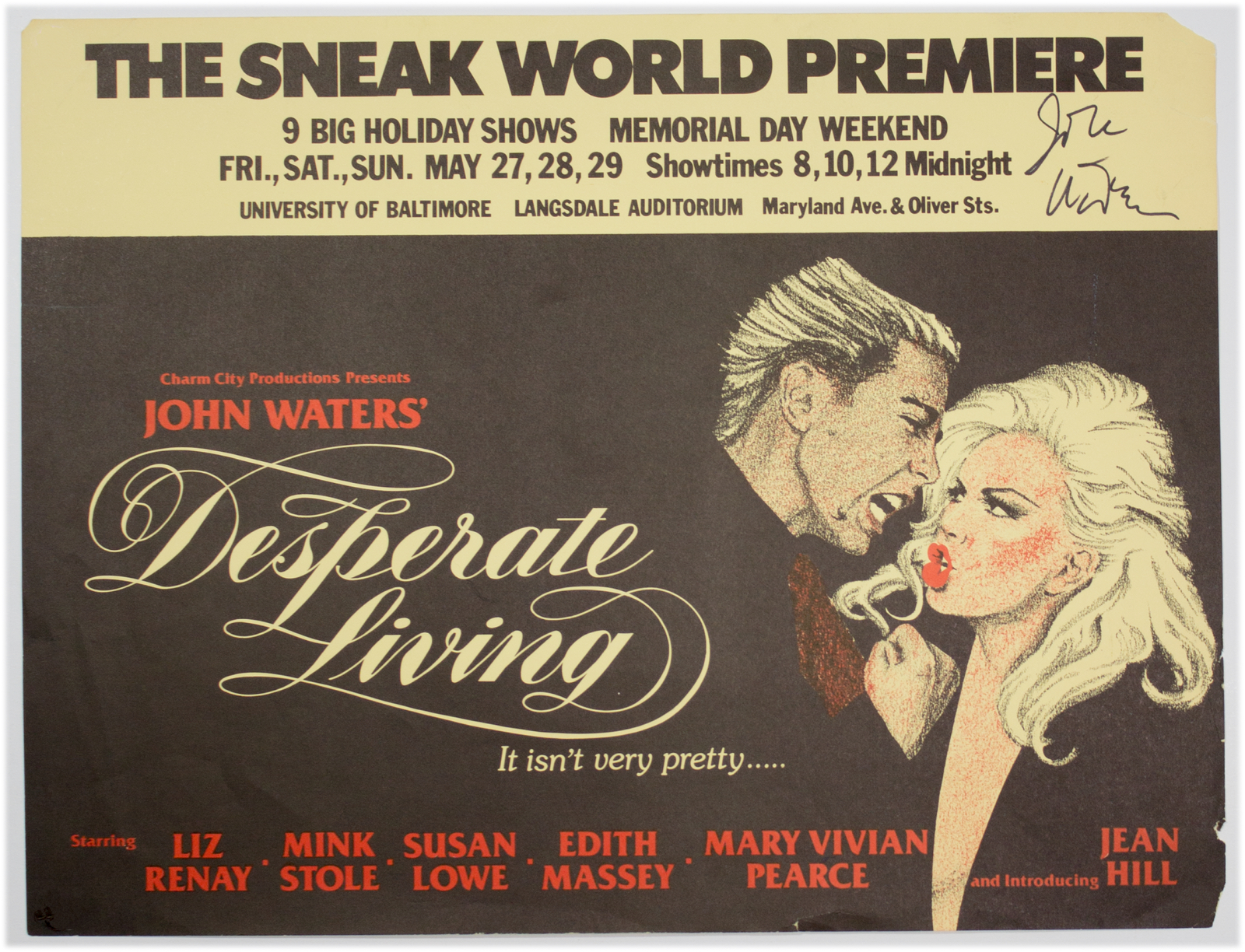
This interview was conducted just as Desperate Living was about to be released.
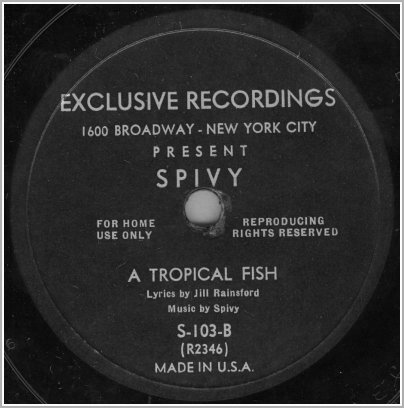
This is the plea of a poor little tropical fish. It’s very sad and we must be very quiet, please.
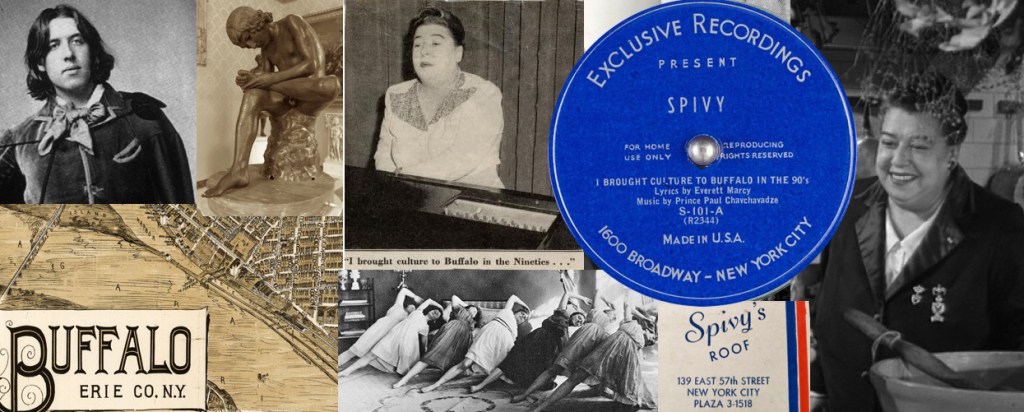
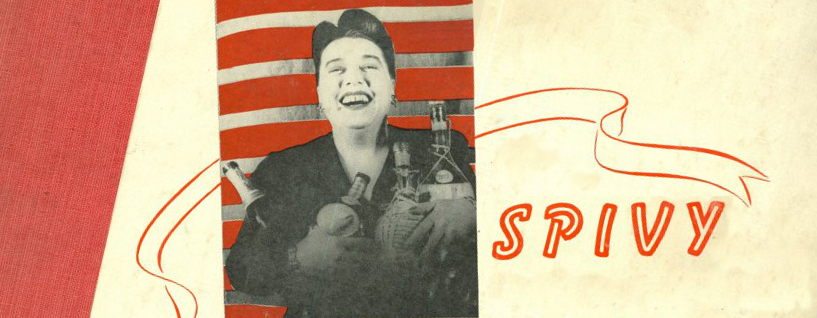
Ladies and germs, it’s time once again to visit that celebrated lady of song, Madame Spivy LeVoe. To the uninitiated, allow me to get you up to speed:
Spivy (1906-1970) was a lesbian entertainer, nightclub owner and character actress, Spivy has been described as “The Female Noel Coward” – to which I add “…. if he had been born in Brooklyn as Bertha Levine.” You can read earlier posts about her here:
Today we will focus on “A Tropical Fish”, a song was co-written by Spivy with Jill “Billy” Rainsford. The duo also composed the previously profiled The Alley Cat. Both songs were featured on the 1939 album Seven Gay Sophisticated Songs By Spivy.
As with “Auntie’s Face”, Spivy begins this song with her trademark spoken intro “It’s very sad and we must be very quiet…” solemnly intoned before launching into the tune, which tells the story of a tropical fish writing a letter of complaint to Fiorello LaGuardia, the Mayor of New York City (1934-1945).
A Tropical Fish
The butcher, the baker, the candlestick maker, the clerk and the trombone player, The child on the street and the ultra-elite all write letters to the mayor. La Guardia’s most conscientious – he tries to grant everyone’s wish But they went him one better when he got a letter from somebody’s tropical fish.
“Dear Mayor,” the letter began, “I’m writing as fish to man. Our tank’s overheated and we’re being treated like common sardines in a can. The way people watch us is quaint. Our privacy’s something what ain’t. So be a good fella, my dear Fiorella and hear a poor fish’s complaint.
“To be quite specific, the food is terrific. We’re on the hay diet – you really should try it. It tastes like the hook – gee, I wish we could cook. The service is lousy – we have no back-housey. And it’s some spot to be in with no pot to … cook in.
“The innocent faunas are hiding in corners Their love life is wearing with human eyes staring… Why can’t we have covers like those birdcage lovers? They’re hidden each night ‘til the morning sunlight Then brought out to bath with no questions asked.
“Dear Mayor, I’ve been very frank… but you don’t know life in a tank. Believe me, it’s hellish and you wouldn’t relish to sleep in the water you drank. Now here’s what we tropicals wish: Some bedrooms to give us ambish. Less public relations and more comfort stations.
Yours truly, A. Tropical Fish”
Lastly, here’s a syndicated article about Spivy that ran in newspapers across the country in late November, 1948. Note that her last name is mispelled “Devoe” with no mention of Bertha Levine.
Tom Ammiano is nearly 80 years old and recently dyed his hair blue. Not your traditional “grandma’s rinse” – it’s a punk-ass electric blue. It suits him.
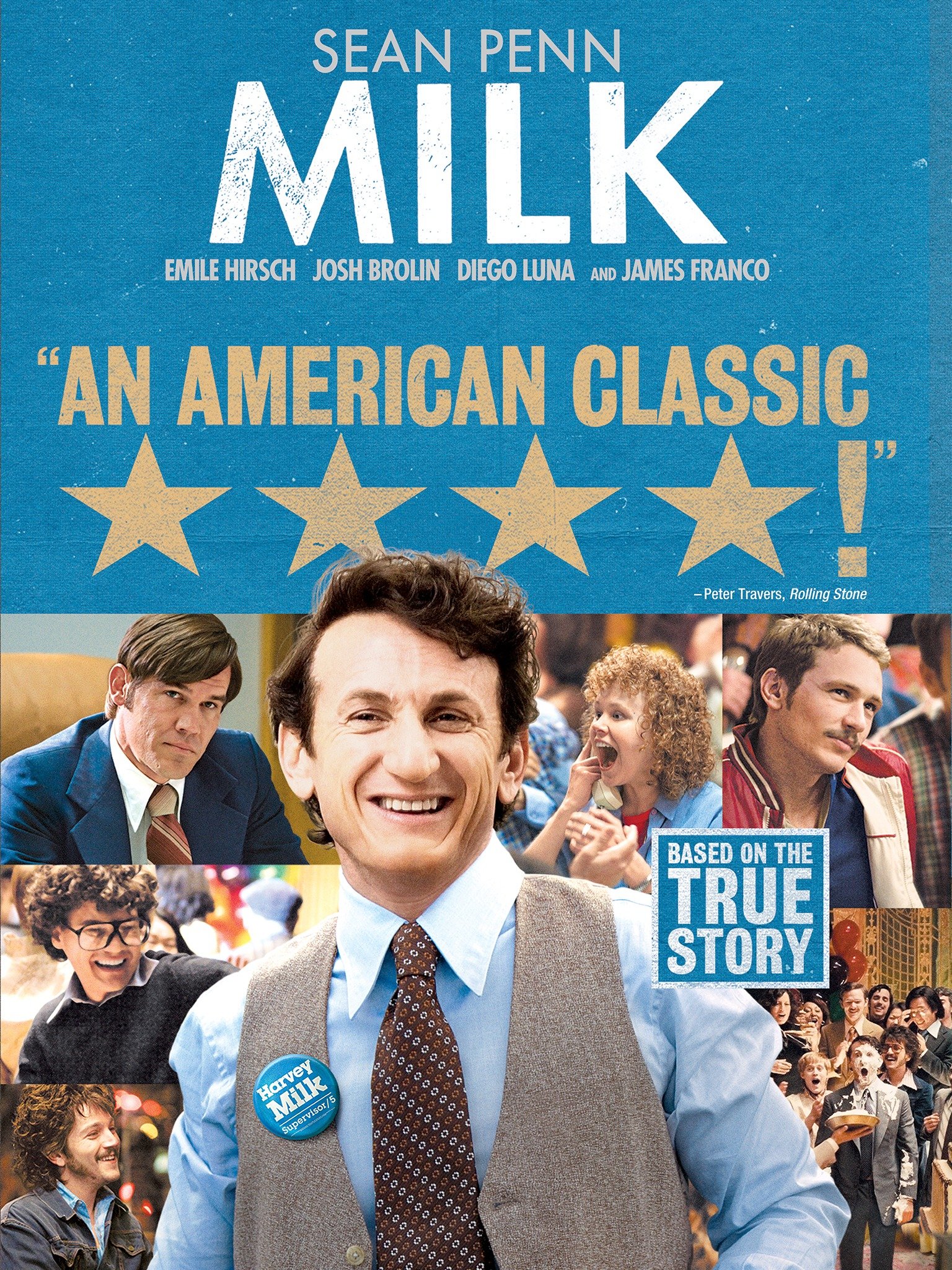
If you don’t follow California politics, you may not be familiar with the name of this San Francisco legend who served for years on the city Board of Supervisors as well as the State Assembly. But you may remember him from the Academy Award winning documentary The Times Of Harvey Milk. Or perhaps you caught the documentary See How They Run, about one of his two San Francisco mayoral campaigns. Or his appearance in the documentary To Be Takei. In Gus Van Sant’s movie Milk, he portrayed himself. In the miniseries When We Rise, he was played by Todd Weeks.
Suffice to say he has been in a lot of documentaries. Although he did not make the final cut of the groundbreaking 1977 film The Word Is Out, his 30 minute pre-interview surfaced online several years ago:
“I’ve never taken much shit but I do get the shit beat out of me because of it.”
In short, Tom the school teacher turned activist, politician, stand-up comedian, and pothead is always a compelling interview. His recently published memoir is titled Kiss My Gay Ass – a phrase he once yelled at then California Governor Schwartzenegger. The book reads like a private uncensored conversation with the author.
There’s a story from the memoir that has garnered Ammiano a surprising amount of attention as of late. 63 years ago, he was a 106 lb. effeminate teen trying to fit in at a Catholic High School in Montclair, New Jersey. Although unsuccessful at contact sports, he excelled at track – running from bullies had trained him to be fast. Among those bullies – the football coach who would physically assault him in the hallways along with the other jocks.
By the end of the school year, Ammiano had performed well enough to qualify for a varsity letter. But before the ceremony, the rug was pulled out from under him. The letter sweater – that symbol of athleticism and masculinity – could not be allowed on the back of faggy Tommy Ammiano. The powers that be – namely, the football coach – would not let that happen. So they moved the goalposts: The track meet that garnered him those last few points towards his letter was suddenly disqualified. And Ammiano’s dream of acceptance through that symbol of “normalcy” went unfulfilled.
He writes of the humiliating experience in his book; “Shame. I hate that. I think shame was a very big deal growing up. During those years everything was about controlling you through shame. Then struggling against that shame – knowing, somehow, it was all wrong. But what are your options?”
Ammiano chose to bury it away and move on with his life – getting as far away from New Jersey and the innumerable aggressions and slights that many a “weird” gay kid suffered while growing up. He moved to San Francisco – “Oz” he calls it – and seldom looked back.
But when you write your memoirs, you have to.
Ammiano recounted the story during a radio interview while promoting the book late last year. “It’s something that still hurts,” he said, “even a hundred years later.” A listener decided to try and correct this situation. He wrote to Immaculate Conception High School to request that they award Ammiano his long overdue varsity letter.
Unaware of this , Ammiano was floored when he received a letter from his alma mater in February of this year. “We most certainly would like to ‘right’ this ‘wrong’…… You truly posses the ‘heart of a Lion’…. You are an inspiration.”
Last month, the cameras rolled as Ammiano was presented with his sweater. At age 79, the man of many documentary appearances has one of his very own. Granted, it’s 7 minutes long, but it’s beautifully done. And it’s on ESPN. He must have had a laugh over that.
ESPN also has an excellent article here. See the documentary here:
Although photographer George Platt Lynes passed away of lung cancer at age 48 in 1955, it took another 30 years before the majority of his male nude photographs were celebrated and widely released. Virtually every collection of his work now features photos of a model named Ted Starkowski. His nude images are featured on the covers of several collections of Lynes’ work – in solo shots or posed with Mel Fellini:
So who was Ted Starkowski?
Lynes biographer David Leddick wrote:
Ted Starkowski worked the streets. Hustling by night, he regaled Bernard Perlin and George Platt Lynes with his adventures while he posed for them during the day. They created unique images with his cat-like face and lithe body.
Perlin later recalled; “He looked like an old tomcat – you know, after the battle. But he just loved the way he looked…. he was a star whore, he aimed for people with money and he got it.”
(Above) George Platt Lynes photographed Ted Starkowski flanked by Bernard Perlin’s sketches.
Teodor Francis Starkowski was born in Hartford, Connecticut on April 4, 1927- the eighth child of Polish immigrants. When he was 6 years old, Ted was critically injured when he was struck by a car in front of his family’s home. He eventually made a full recovery, but the incident would foreshadow another auto accident forty-four years later.
His Army registration in September of 1945 indicates that he had attended three years of high school and was working at St. Thomas Seminary in Bloomfield.
After his stint in the military he relocated to New York City, where he became a favorite subject for Lynes and his circle of artist friends, including Paul Cadmus and Jared French.
(Above) Six images of Ted Starkowski by Jared French.
Few other photographs by Lynes do as much to cast the model as an actor. In his tight jeans, bulging conspicuously at the crotch, fisherman-rib sweater worn without an undershirt, and workaday watchman’s cap relegated to the status of an ornament, Starkowski looks like a longshoreman snatched from the imagination of Tom of Finland … Lynes’s studio provides only the minimum furniture required to support Starkowski in a posture that manages to be solicitous and pensive at the same time, welcoming an evaluating view despite being absorbed in thought.
This photograph extends rough trade as a portable structure of fantasy that discovers erotic opportunities in ambiguities of dress and pose…. Evidently, Starkowski had a knack for acting like a straight man, or at least like a fantasy version thereof.
Ted Starkowski as drawn by Paul Cadmus (Male Nude, TS5, 1954)
Ted Starkowski as drawn by Paul Cadmus (Male Nude, TS-7a) 1955
A reader sent a photo of this Paul Cadmus drawing titled “Ted Reading” – posted with permission.
Another model who posed for many of the same artists was fellow ex-military man Chuck Howard, George Platt Lynes’ live-in boyfriend. After their split in January, 1951, Howard and Starkowski became involved in what David Leddick described as “a tempestuous affair.” The couple were photographed together on Fire Island while vacationing with Paul Cadmus, Jared and Margaret French: artists who called their collective photography work PaJaMa, an acronym of the first letters of their first names. See more of their work here.
The year after George Platt Lynes’ death, Starkowski was photographed by Carl Van Vechten. These photos are dated April 3, 1956:
Portrait of Ted Starkowski at age 36 by Paul Cadmus. (1963)
Thanks to a wealthy benefactor, Starkowski traveled extensively in the second half of the 1950’s. Perlin recalled; “There was this old boy who picked him up on 42nd Street. Ted enthralled him – kept him drunk and kept him out of money, with which Ted bought diamonds, which he wore. Both hands glittered with diamonds.”
Leddick relays a story of Starkowski showing off a new diamond ring to artist George Tooker. Asking if he thought it was too big. Tooker replied “Yes, it is too large for a woman to wear.”
And then… the trail goes dark for the next 14 years. If more images or information come to light, I will update this post. What we do know is that on Friday May 13, 1977, Ted Starkowski was leaving a New York City bar when he was struck and killed by a car. He was 50 years old.
An obituary ran in the Hartford Courant the following Tuesday, May 17th. He was buried in Mount Saint Benedict Cemetery in Bloomfield, Connecticut.
It was a sad end to a man who had inspired many artists.
Bernard Perlin recalled, “Despite his nefariousness, he did good in the art world. My drawings are comparatively negligible, but many of George’s photographs are just absolutely wonderful.”
The sun is shining, the grass is green The orange and palm trees sway There’s never been such a day In Beverly Hills, LA But it’s December the 24th And I’m longing to be up north…
That’s the rarely heard opening verse to Irving Berlin’s classic song White Christmas – originally released in 1942. The song popped into my head as I gathered these Christmastime photos of jockstrap-clad cadets in pre-flight training school at St. Mary’s College in California. Never mind that the school is actually several hundred miles north of Beverly Hills. It is still sunny California, where these strapping young men – many away from home for the first time – were training to go to war during the holidays.
As I mentioned in a previous post, I first became aware of these black and white 5″x7″ triptych photos a couple of years back through posts on a Facebook photo group.
Listings of these photos often turn up on auction sites, where they are sometimes include the index card used to record the physical training progress of the cadet.
The earliest photos feature the men completely nude, but all subsequent photos feature the cadets in jockstraps, standing behind some sort of grid fence to better detect posture misalignment and spinal curvature. All of these photos contain a visible U.S. Navy / St. Mary’s Pre-Flight School placard.
Fortunately for us, multiple photos of some cadets have surfaced, allowing for comparisons of their training progress:
Before / After 8 weeks of training: Fall, 1942
And while there is a lack of ethnic diversity, there is a variety of body types.
Before / After 3 weeks of training: December, 1942
My collection now includes over 300 jpegs of different cadets. Some did perish during WWII, but the largest majority that I have researched lived to ripe old ages. Any surviving cadets would now be in their late 90’s.
One thing these young men have in common, as they were documented in timeless photos of their physical prime: they were far from home during the holidays, training to fight for their country.
At this time of year, 75+ years later, cue up White Christmasas we again salute their fine forms and dedication.
I am not alone in saying that I always take comfort in the annual repetition of the holidays – revisiting holiday-themed music, film, television… and now internet posts as well. This feeling is in overdrive this year, as I occupy myself at home and skip other annual holiday traditions that involve leaving my apartment. The Rockefeller Center tree looks very nice on my television – and that view will have to suffice this year, thank you very much.
I feel bad for this year’s Rockefeller Center tree – sacrificed to become the most famous Christmas shrub in the world at a time when nobody is allowed to actually go near it. It’s the Just Sam of Christmas trees, which makes the displaced owl Ryan Seacrest.
I find it interesting that we immerse ourselves in certain pop culture favorites for exactly 6 weeks of the year and then pack them up in mothballs with the ornaments until next year. I mean, Bing Crosby, Brenda Lee and Johnny Mathis are rock stars from Thanksgiving through New Years. Are any of them on your 4th of July playlist? They aren’t on mine.
The film A Christmas Story has an even shorter (Elf on the) shelf life. We binge-watch the repeated broadcast for exactly 24 hours each year. I own it on Blu-ray and I’m not sure why: I have never opened it. To pop it in at any other time feels like a betrayal.
In keeping with this revisiting, blog posts of Christmas past are back to haunt you like A Christmas Carol, Mr. Scrooge:
This was my Canine Christmas Tail – a true story about my dog Sunshine and her appetite for tinsel.
Copyright issues kept my 60 Degrees Girl Group Christmas playlist out of commission but now it’s back! I plan to post other episodes of my old radio show in the new year.
If you prefer Spotify, I have this to share:
Way back in 2002, when Limewire was a thing and people listened to music on silvery discs, I started creating Christmas CD mixes that I would mail out or give to people. These were received with a combination of feigned delight, veiled indifference and deafening silence. None of these CDs had a pressing of more than 20 copies. I’d like to call them “much sought after” – but no, that’s not really the case, although every once in a while, someone really got into them and would ask for copies of other volumes.
And so, I’m offering this simple playlist…. for kids from 1 to 92. Unfortunately many of the tracks on these dozen CDs are not on Spotify, but I keep adding songs that would be on the current CD volume… if there was one. And now the playlist is over 14 hours of holiday tunes. I recommend listening on shuffle – there’s something to irritate everyone. Enjoy!