One of my goals in creating posts about artist’s models like Chuck Howard, Randy Jack, and Ted Starkowski is to clear up misinformation posted online by galleries and auction houses. Whether the inaccuracies are intentionally deceptive or the result of laziness, the errors spread across the internet, with subjects misidentified and photo dates sometimes off by decades.
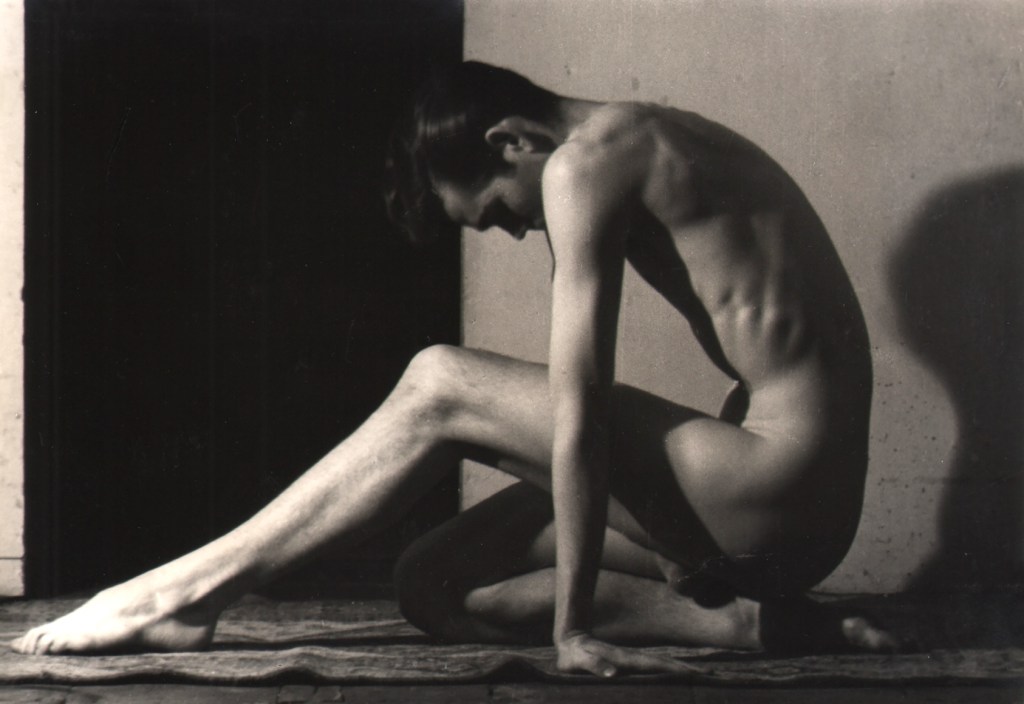
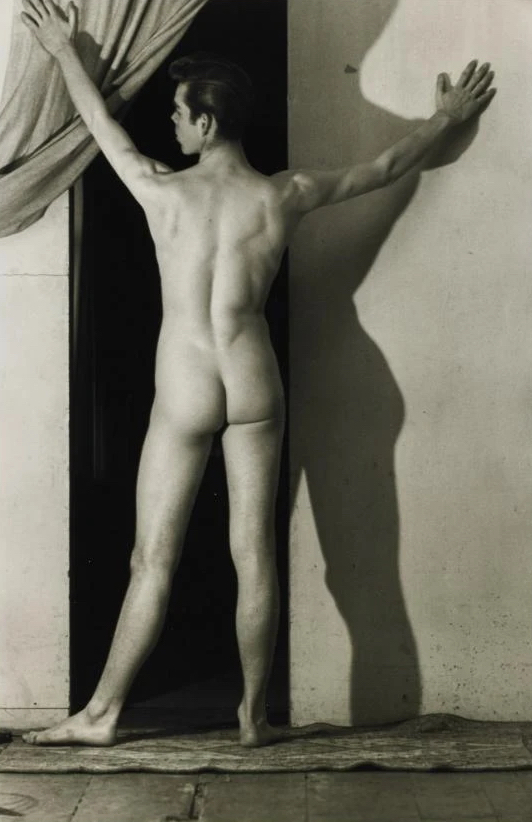
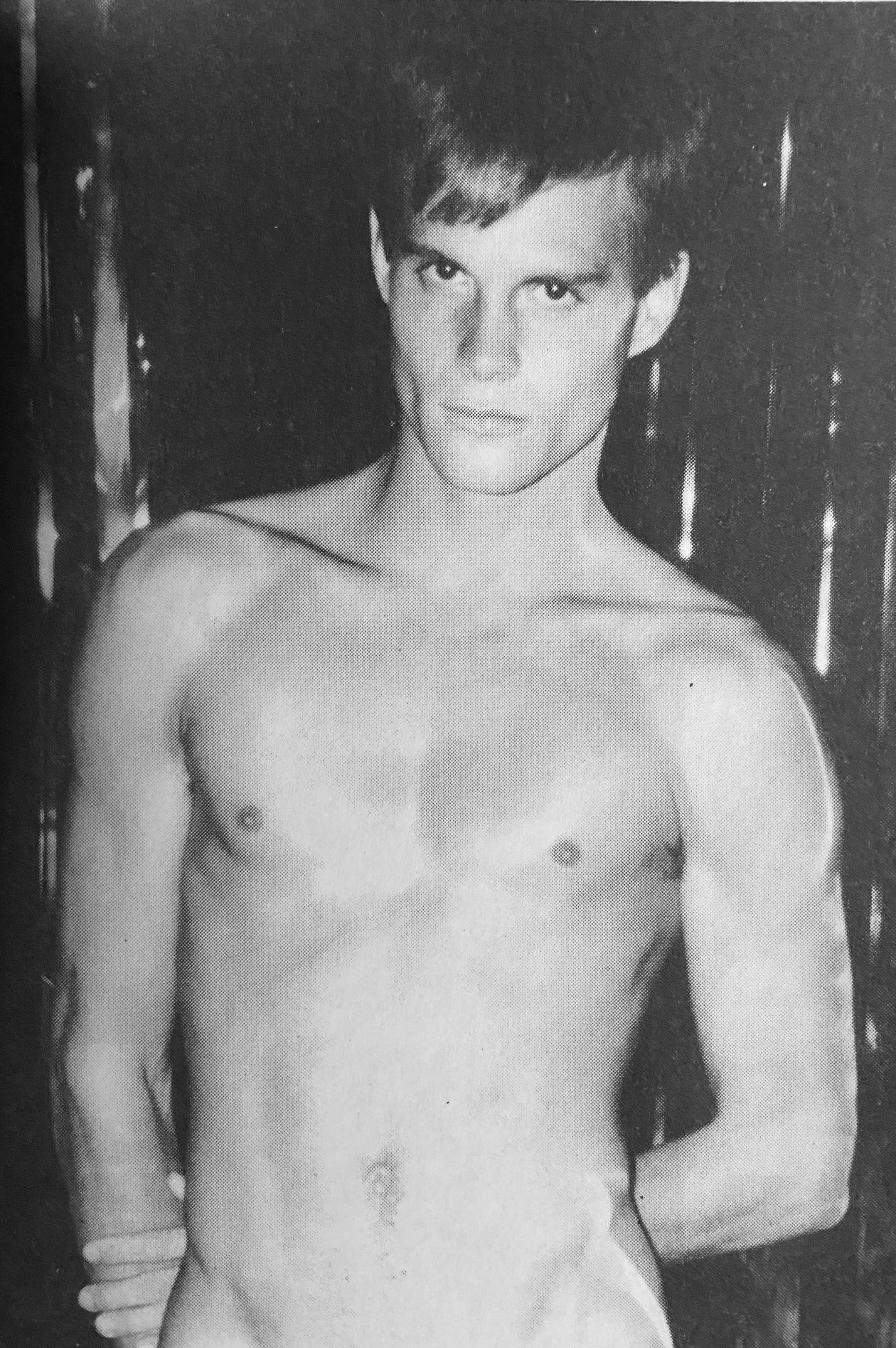
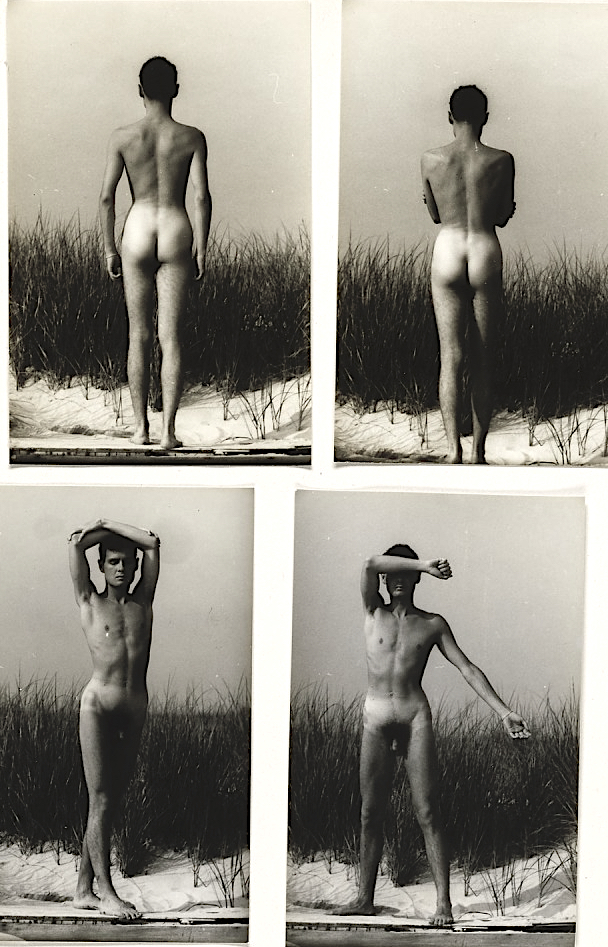
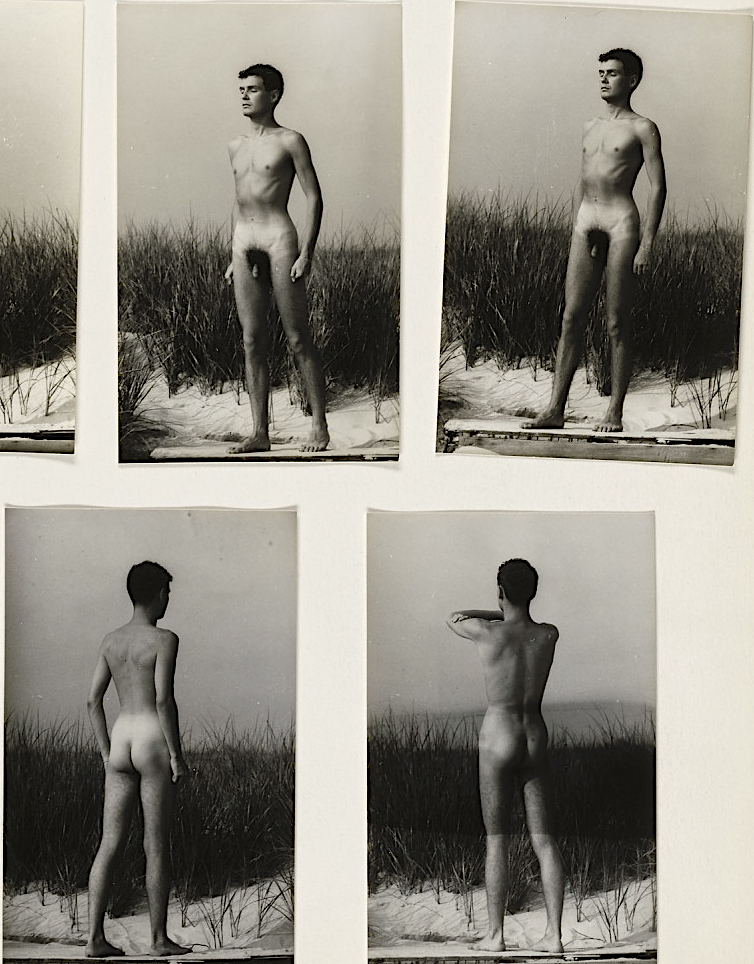
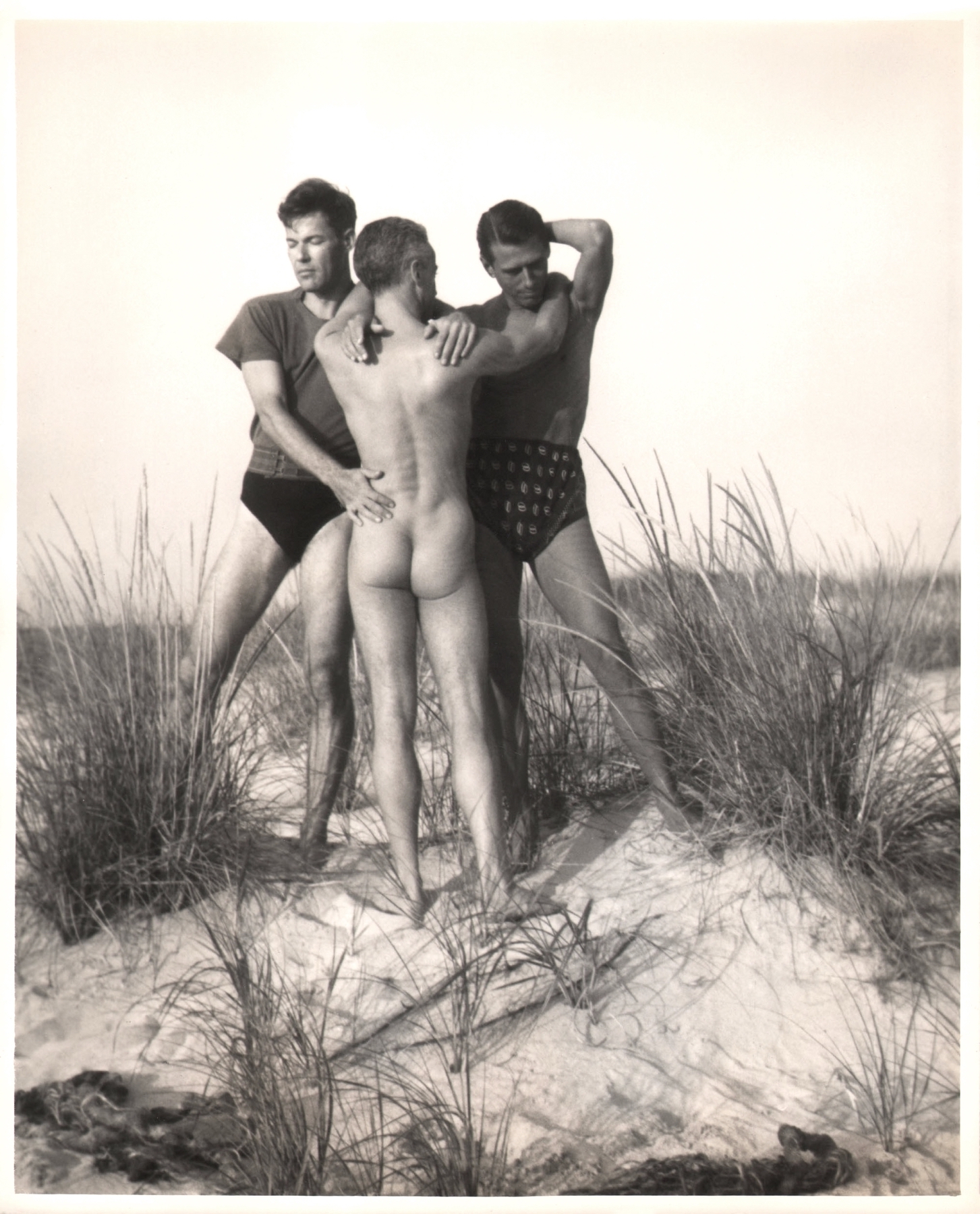
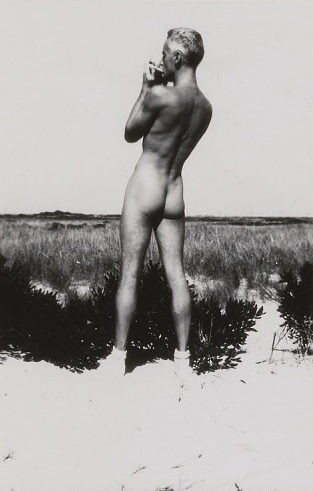
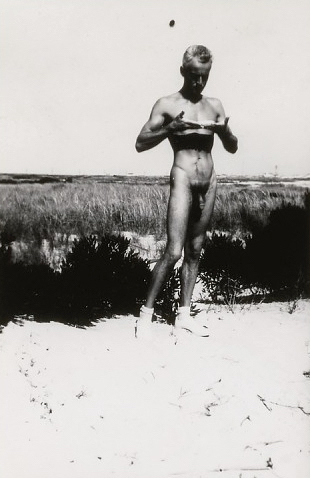
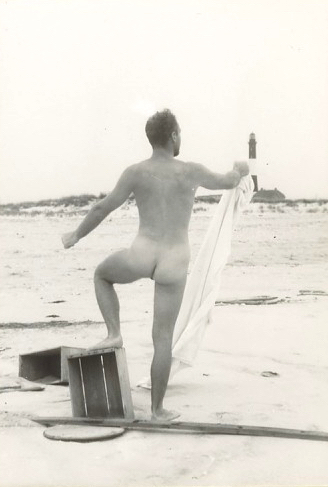
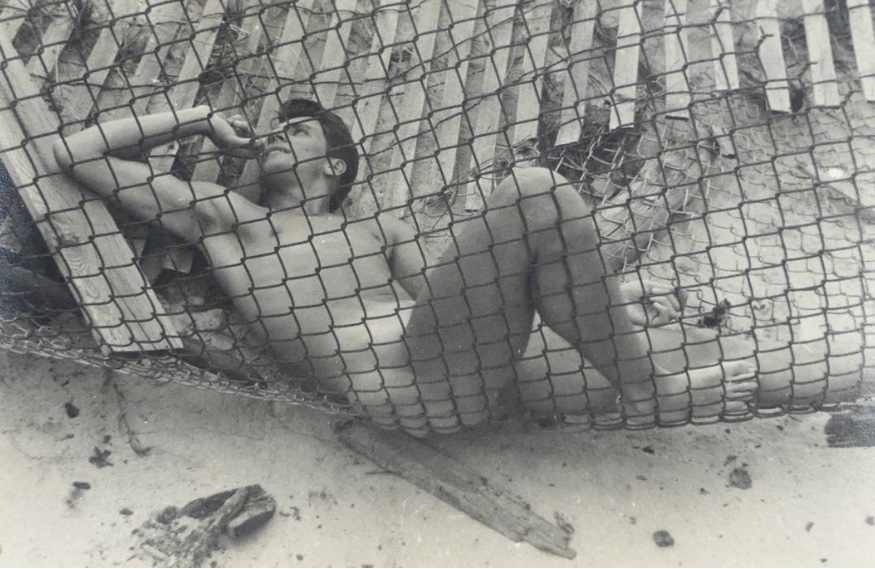
A series of 30+ nude model study photos are have recently been listed for auctions as “Jared French Nude Study of Tennessee Williams” or “Studio di nudo Tennessee Williams.” One set of two 8×10 photos sold for over $650. These should have been credited to the PaJaMa collective, which Jared French was a part of, and unfortunately (or fortunately, depending on how you look at it), the lean muscularly defined model is certainly not writer Tennessee Williams.
Tennessee Williams was the subject of several PaJaMa photos in Provincetown and at Jared French’s New York City studio at 5 St. Luke’s Place. In one of these photos, Williams strikes the same pose in the same place as our mystery model.
Tennessee WilliamsNot Tennessee Williams
So who was the thin young chap with the low-hangers?
Martha Graham levitating John Butler
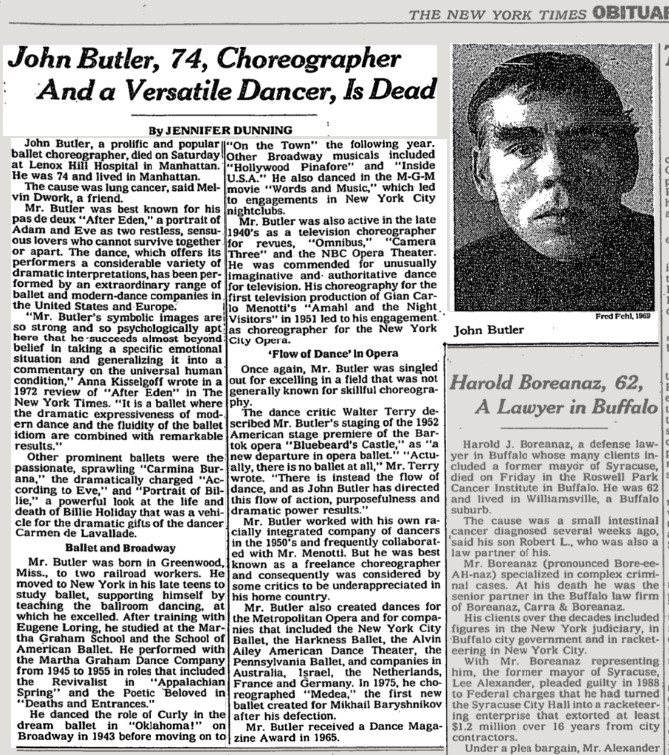
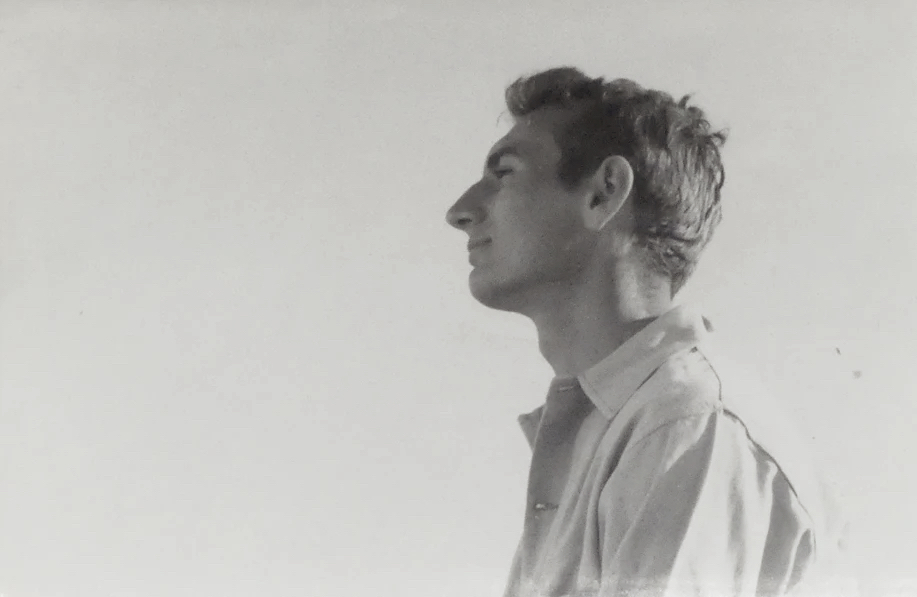
In another corner of the internet, I found two of these photos in a PaJaMa exhibit, dated 1943 and identifying the subject as dancer/choreographer John Butler (1918-1993). In the early 1940’s, he earned money working as an art model while studying dance with both Martha Graham and George Balanchine.
Besides the PaJaMa photos above, he was also photographed by George Platt Lynes:
John Neilson Butler was born in Charleston, Tennessee and moved to Greenwood, Mississippi with his parents at a very early age. He graduated from Greenwood High School in 1936 and made his way to New York City, where he initially studied dance with Eugene Loring before moving on to Balanchine and Martha Graham.
AP article (1955)
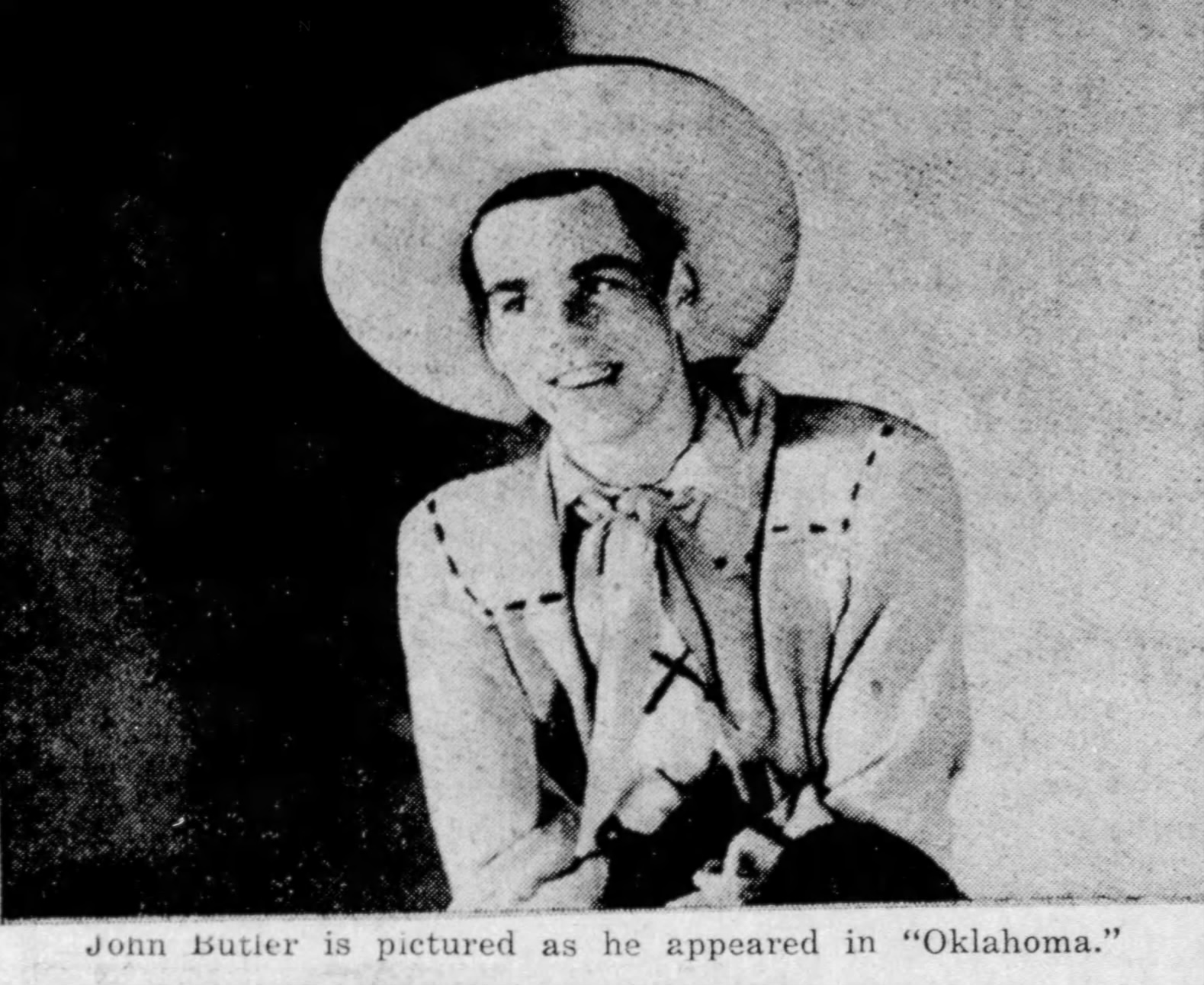
Butler danced on Broadway as Dream Curly in the original production of Oklahoma! He appeared in a string of Broadway musicals throughout the 1940’s including Hollywood Pinafore, Inside U.S.A. and On The Town, where he dated castmate Cris Alexander.
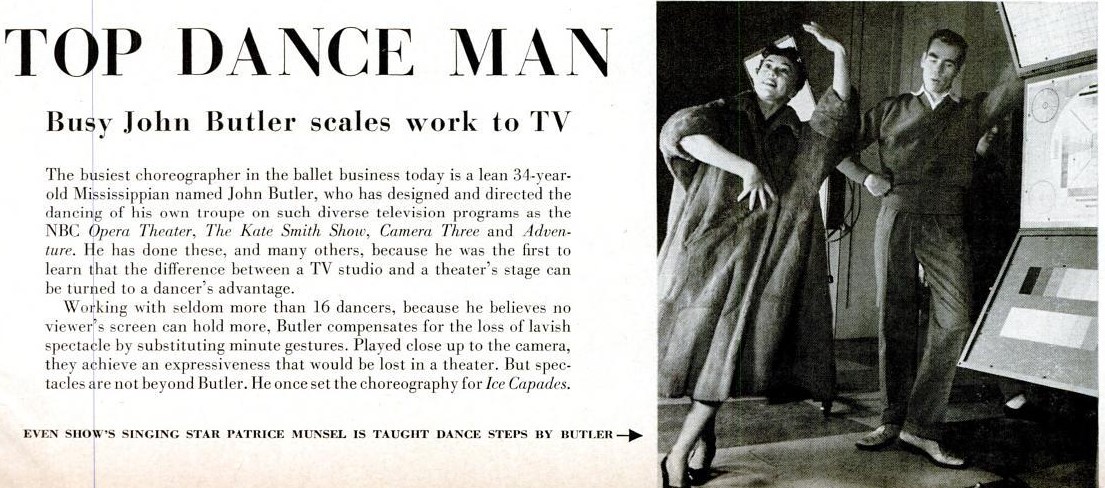
He began to transition into choreography in the late 1940’s. The combined influences of Loring, Balanchine and Graham gave his work unique elements of classical ballet as well as modern dance. He was one of the first to create works specifically for television, which was still considered a new and inferior medium. He choreographed variety show segments (The Ed Sullivan Show, The Kate Smith Show) as well as for Omnibus and full-length ballets and operas. His 1951 staging of Amahl and the Night Visitors was recreated annually for nine NBC holiday specials.
Butler performs as one of the Three Dancers in this 1955 broadcast.
Life Magazine profiled Butler in their April 25, 1955 issue:
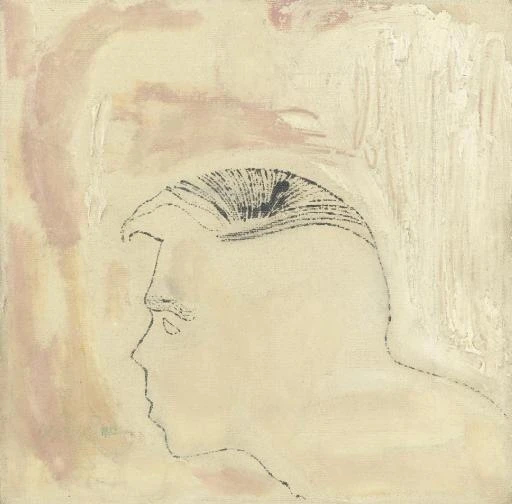
Two sketches of John Butler by Andy Warhol (1952)
Richard Avedon photo of John Butler & Barbara Muller (1954)John Butler photographed by Roloff Beny (1959)
In addition to his work choreographing for Broadway and television, Butler founded The John Butler Dance Company in 1955. It was later renamed American Dance Theater and toured Europe until it disbanded in 1961.
John Butler & Carmen de Lavallade rehearse Portrait of Billie, his dance meditation on Billie Holliday (ca 1960)
John Butler & Melvin Dwork (1963)
His most celebrated work was the New York City Opera staging of Carmina Burana (1959). Through the years, it has been recreated with over 30 companies.
In 1961 he met celebrated interior designer Melvin Dwork, who has called Butler “the love of my life.” They remained companions and friends until Butler’s death in 1993. Dwork was instrumental in preserving Butler’s dance legacy.
The Greenwood Commonwealth, Greenwood Mississippi (3/6/1965)
As he matured, Butler’s voluminous eyebrows became something of a trademark of his appearance. He appears to have embraced this with a level of zeal that surely inspired George Whipple.
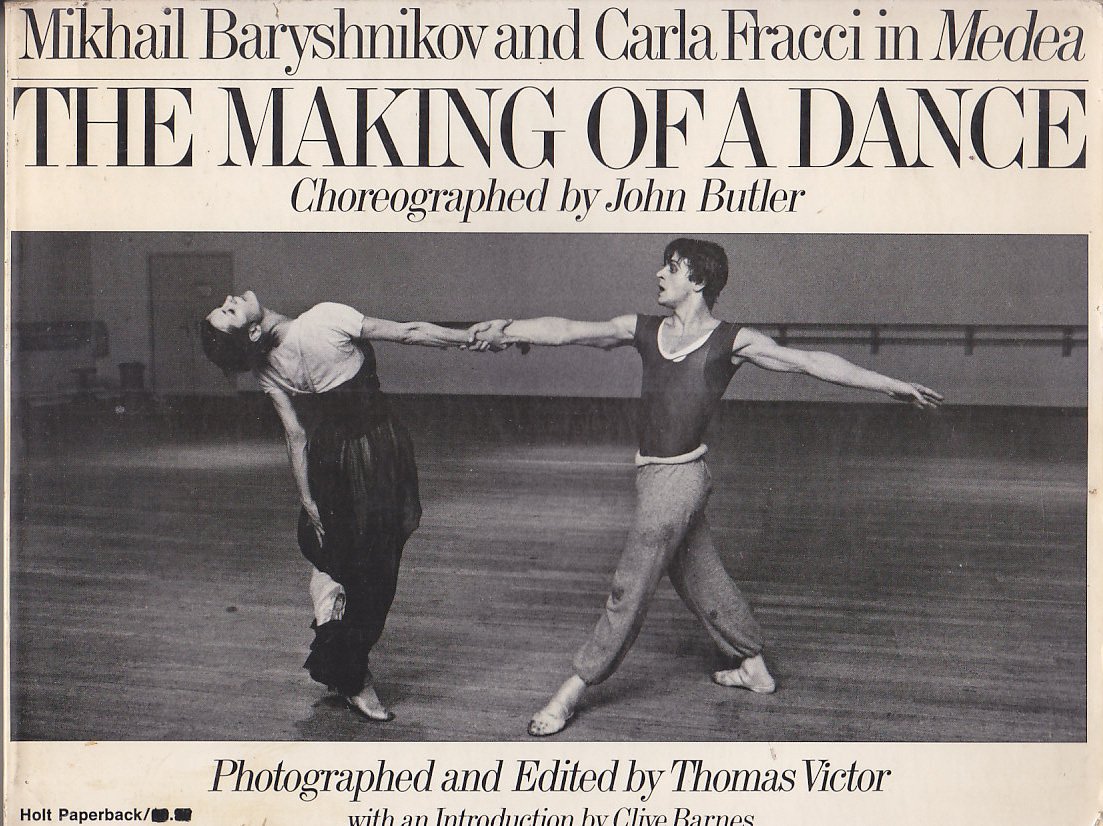
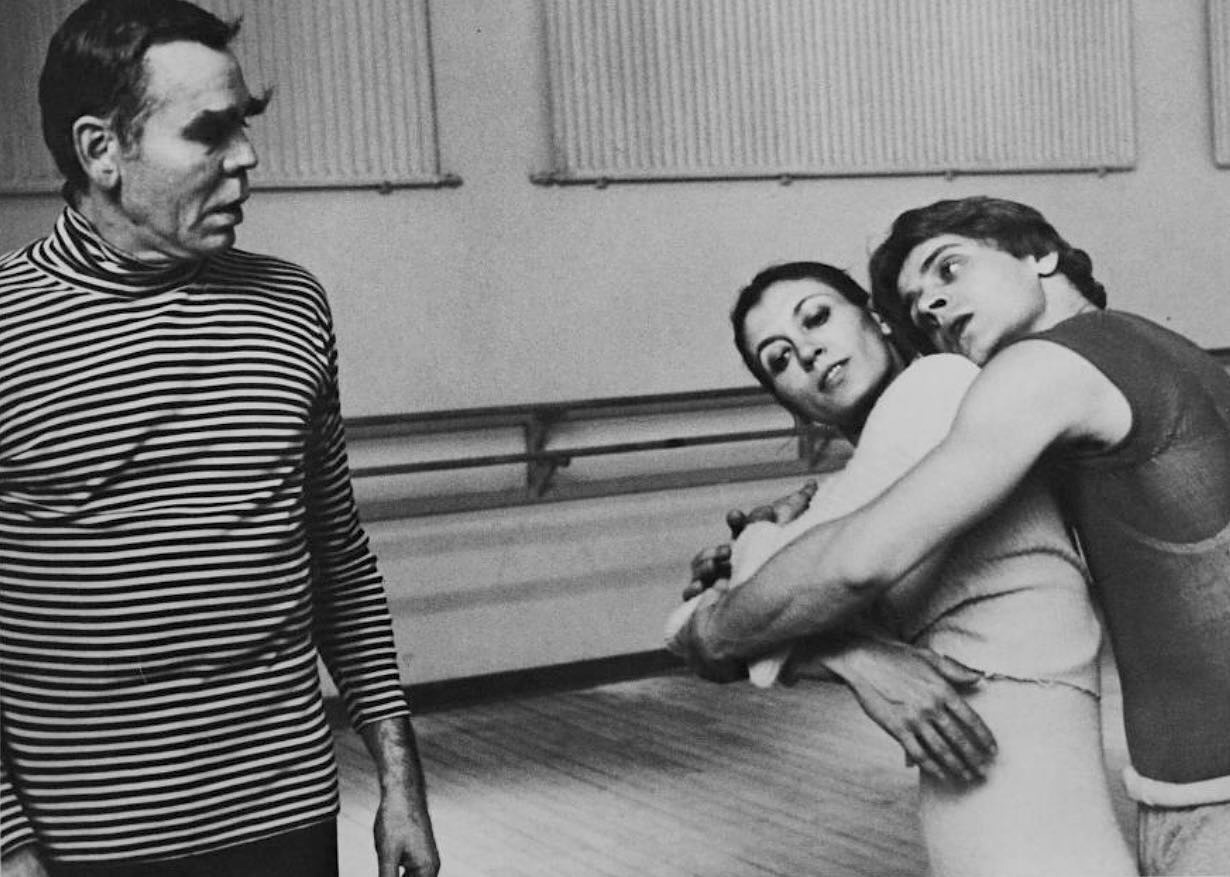
Over the next several decades, Butler continued to choreograph throughout the U.S. and around the world. The Hague, Munich, Sydney, Spoleto, Montreal, and Warsaw were part of his regular rotation with occasional work in Italy and South America. Back in New York City he choreographed Medea, the first dance for Mikhail Baryshnikov after his defection to the West.
John Butler photographed in April of 1993. He died of lung cancer later that year at the age of 74.
In 1993, author Camille Hardy interviewed John Butler for Dance Magazine shortly before his death. As they sat in his Upper East Side apartment, surrounded by his artwork collection and the walls lined with the works of Warhol, Avedon and Lynes, he said “I’ve done everything in my life I ever wanted to do.”
In the profile Artist’s Muse: Randy Jack, I wrote about his relationship with photographer George Platt Lynes, which came to an end in the Fall of 1948. Just 10 days after Jack moved out of the apartment, another former military man named Chuck Howard moved in as Lynes’ next boyfriend.
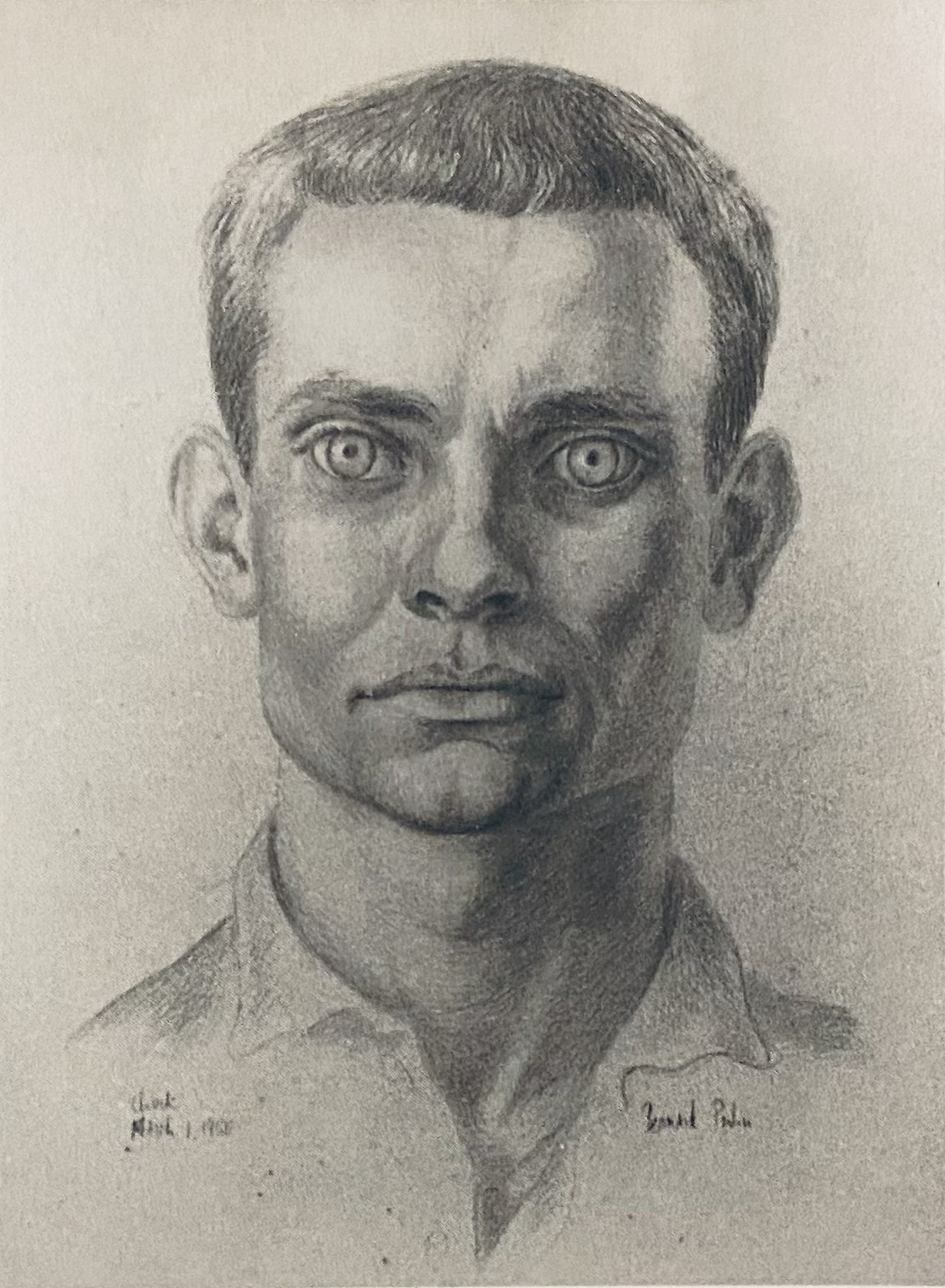
Charles “Chuck” Howard was born in Cochran, Georgia on March 4, 1927. After graduating from high school during World War II, he joined the Naval Air Force and became a tail gunner. While stationed in Miami Beach, he met New York artist Bernard Perlin and the two would “reconnect” whenever Chuck was in New York City. After the war, Howard studied fashion in France on the G.I. Bill before moving back to NYC to live with the artist. When Perlin was offered a residency in Rome, he threw himself a farewell party, and Chuck was introduced to Lynes.
Four sketches of Chuck Howard by Bernard Perlin
George Platt Lynes self portrait with Chuck Howard, ca 1948
Chuck Howard and George Platt Lynes, ca 1950
“Another twenty-one-year-old has moved in on me bag and baggage, almost without being invited..” Lynes wrote in a letter to his friend, author Katherine Anne Porter.
Howard was viewed favorably by Lynes’ friends and was said to have a grounding effect on the photographer. The relationship lasted for just over two years.
George Platt Lynes & Chuck Howard, ca. 1950
Although Howard had previously posed for Bernard Perlin, it was after his introduction to Lynes and his circle of friends that he became a favorite model for the artists. He posed for George Tooker, sculptor John LaFarge, and Jared French, with whom he also had a physical relationship.
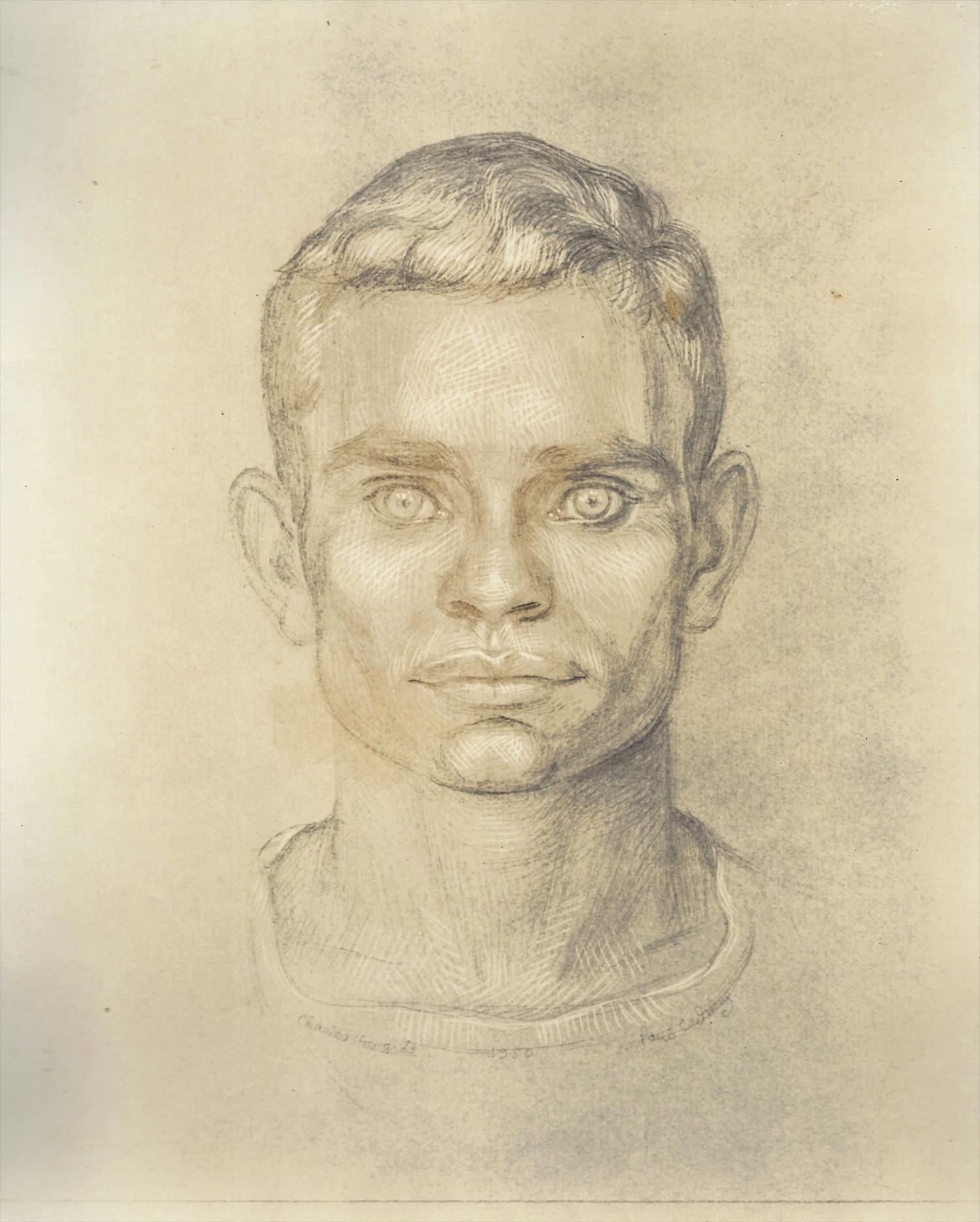
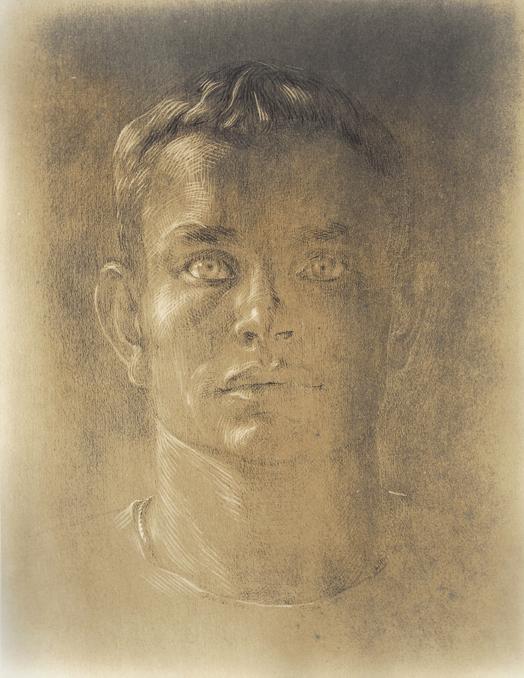
Paul Cadmus also sketched him several times and used him as the model for the central figure in his painting Architect (1950).
Architect by Paul Cadmus (1950) Chuck Howard was the model for the central figure with George Tooker reflected behind him.
When Lynes’ nude photography became more widely exhibited decades after his death, photos of Chuck Howard were among the most celebrated. Howard downplayed the photos, describing his work modeling for Lynes as “primarily lighting tests.” Collectors disagree.
Chuck Howard also had a film career of sorts when he participated in Dr. Alfred Kinsey’s famous studies, performing sexual acts with poet Glenway Wescott in front of the researchers’ movie camera. Howard later remarked; “It wasn’t Hollywood.”
Lynes and Howard parted ways in January, 1951. “Chuck has decided to go off and live by himself;” Lynes wrote to his mother. “I shall miss him but I don’t disapprove… I’m afraid that my influence is too often all-pervading, all-inclusive.”
In an earlier blog post on Ted Starkowski, I mentioned that he and Chuck then embarked on what author David Leddick described as “a tempestuous affair.” The couple were photographed together on Fire Island while vacationing with Paul Cadmus, Jared and Margaret French: aka The PaJaMa Collective.
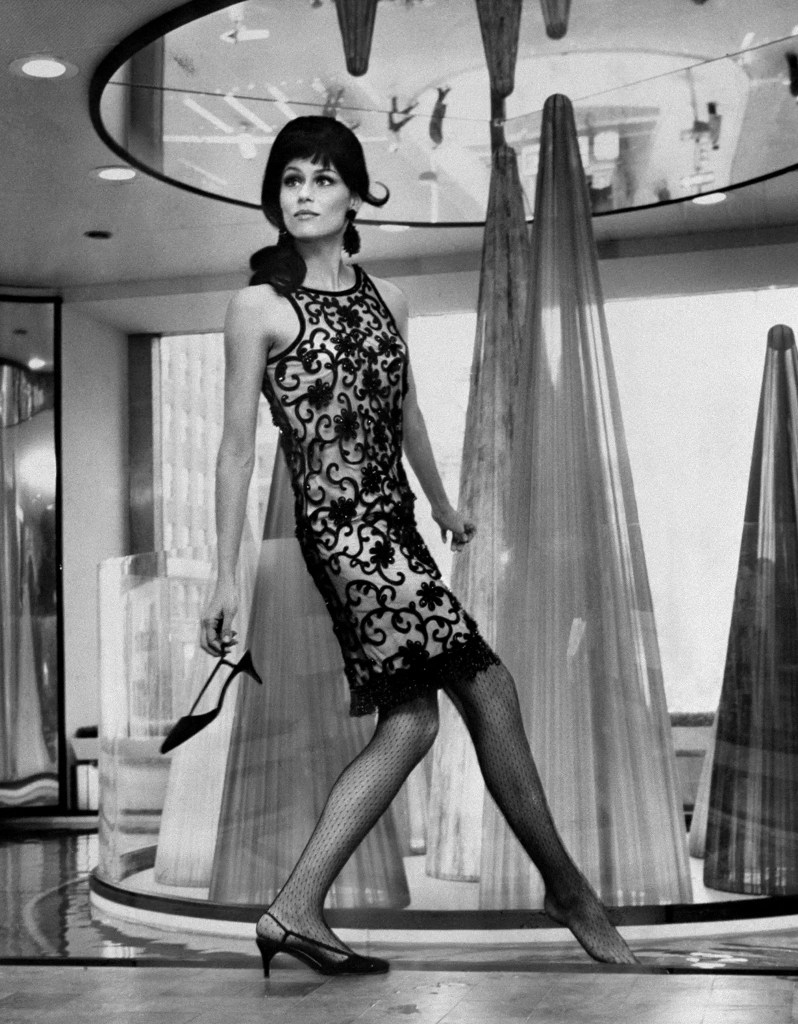
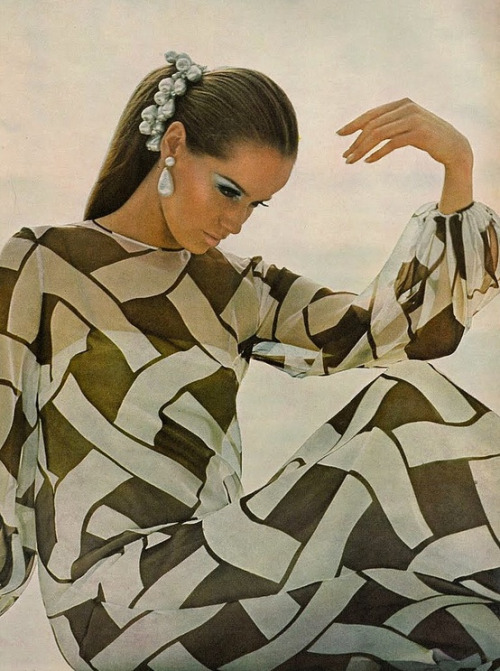
Lauren Hutton modeling a dress by Chuck Howard. (1965)
Act II: Chuck Howard’s career in the fashion industry began to flourish in the late 1950’s when he sketched for several designers, including Bill Blass. He worked for David Crystal before moving on to Anne Klein’s Junior Sophisticates. In 1965, he joined Townley, working his way up to become chief designer and head of business operations. The company was then renamed Chuck Howard, Inc. His design style was noted for its sense of humor with sporty, colorful coats, tunics, pants and jersey shirts.
Around this time, a Parsons student named Donna Karan began working for Howard and he eventually introduced her to Anne Klein.
After Klein’s death in 1974, Donna Karan succeeded her as designer for the Anne Klein studio. Chuck Howard then closed his company and became a designer and creative coordinator there, where he was responsible for several of its collections. He departed with fellow designer Peter Wrigley in 1976 to form their own company.
Chuck Howard (r) with his partner Ed Vaughan in their restaurant (1981)
Act III: In 1980, after his departure from the fashion industry, Chuck Howard opened his self-named restaurant on Restaurant Row. Assisting him in this next chapter was his partner Edward Vaughan. The couple rented a three story townhouse at 355 W 46th St and lived on the third floor above the restaurant.
Soon after opening, twenty-two-year-old Anthony Bourdain took over running the back of the house. He later recounted his time at the restaurant in the “Chef of The Future!” chapter of Kitchen Confidential, with Chuck and Edward referred to as “Tom and Fred.” He writes, “They were genuinely lovely, intelligent, warm-hearted and funny older guys who cooked well, had impeccable taste and were considered (rightly) to be wonderful, charming and entertaining hosts – naturals, it had been said, for the restaurant business, especially a restaurant in the heart of the theater district where they knew and were liked by so many.”
New York Daily News, (1/15/81)
The restaurant was initially successful, although the Daily News review suggested that it wasn’t destined to last. Bourdain further describes the restaurant’s decline, with mounting costs and dwindling guests. “What I learned… was a sad lesson that has served me well in decades since: I learned to recognize failure. I saw, for the first time, how two beloved, funny and popular guys can end up less beloved, not so funny and much less popular after trying to do nothing more than what their friends told them they were good at.” Bourdain moved on to another restaurant, and by the end of 1982, Chuck Howard’s had closed.
The couple retired to the island of Saba in the Netherlands Antilles where they lived for several years before settling in Santa Fe, New Mexico.
On October 5, 2002, Chuck Howard died of pancreatic cancer at the age of 75 in Albuquerque, New Mexico. He was survived by his long time partner Edward Vaughan.
Chuck Howard, ca 1950 / 1997
Chuck Howard’s life had a similar trajectory as fellow Lynes paramour Randy Jack: A WWII military man who became an artists’ muse before moving on to the world of fashion and finally ending up as a restaurateur. In their twilight years, both also enjoyed a bit of recognition for the work they inspired in some of the great American artists of the 20th century.
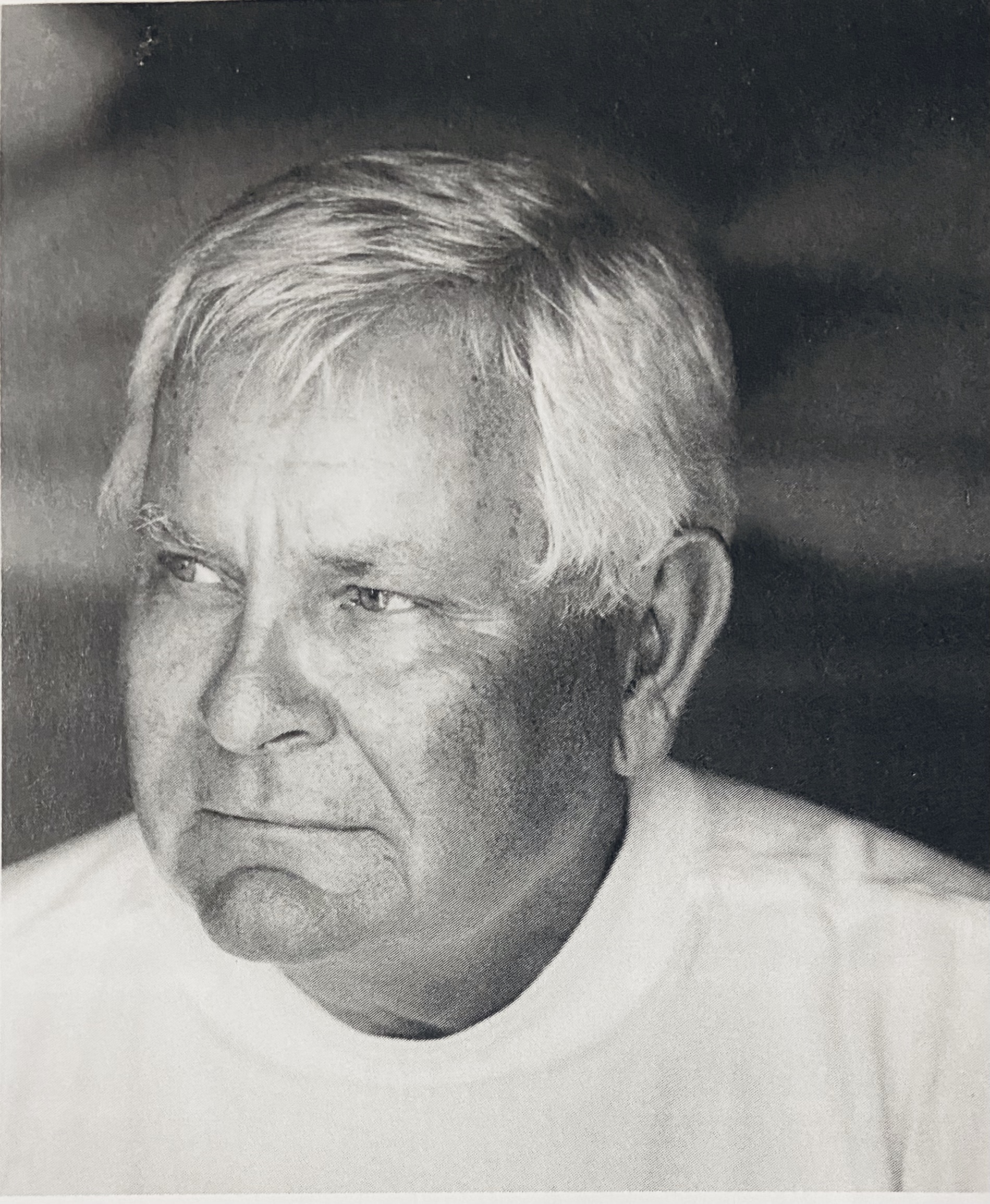
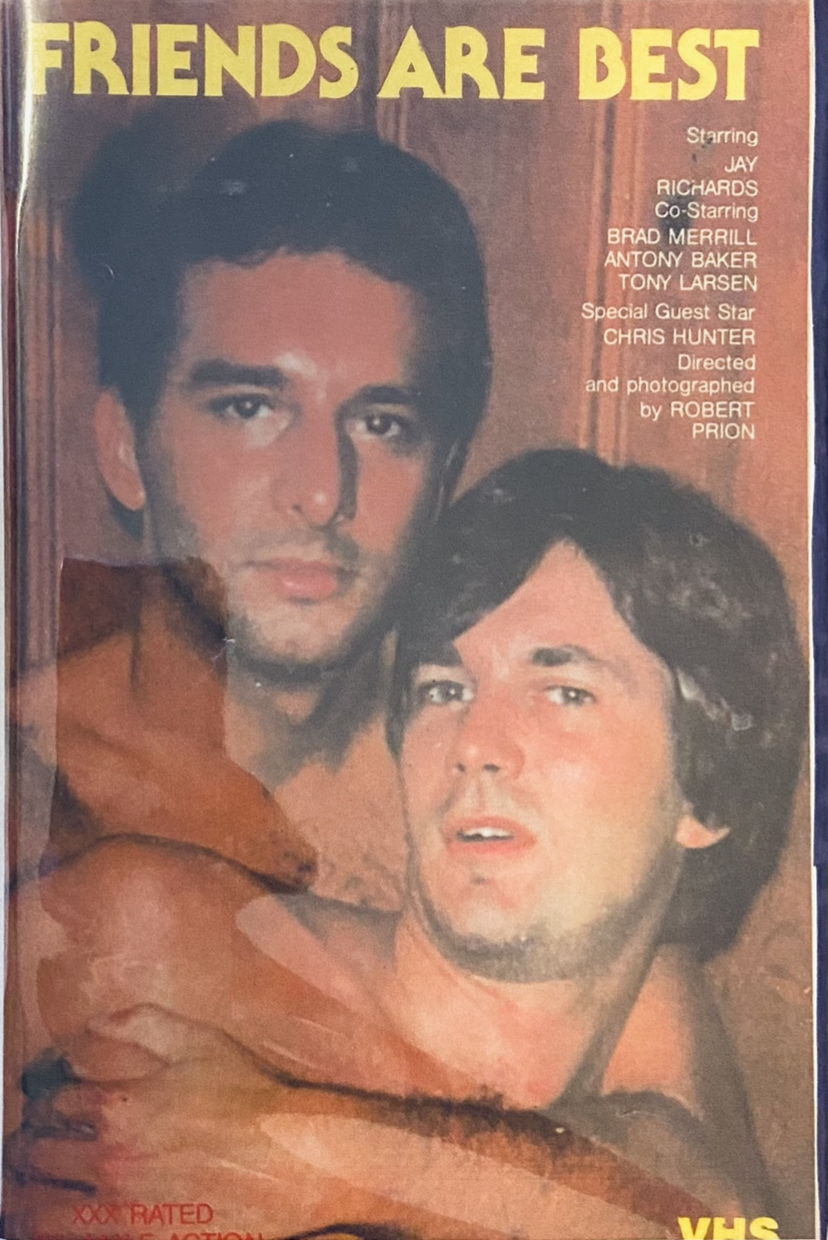
I once heard Robert Prion described as “The Ed Wood of gay porn.” It makes a great punchline, but it’s not quite true. Prion was 69 years old when he passed away on March 28th at his home in Woodbridge, New Jersey. It’s a house that porn fans are well acquainted with, as he filmed over 70 full-length adult films there over the past 40 years.
Prion is survived by his lifelong partner, who appeared in his films under the name Jay Richards.
Robert Prion was born on July 1, 1952 and lived in Woodbridge his entire life. A 1970 graduate of Woodbridge High School, Mr. Prion was employed for many years in the meat department (how fitting!) at Foodtown.
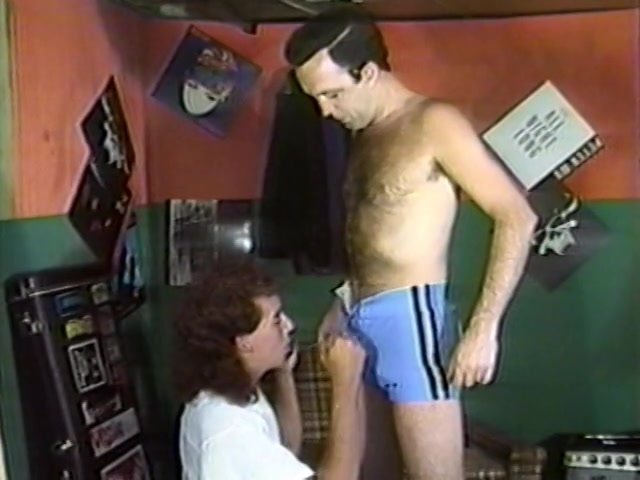
In 1982 Prion released The Boys From New Jersey, the first of 12 films produced throughout the decade. The spirited performances of his skinny and hung cast shone through the muddy fidelity of the VHS home video recording. The films were also elevated by their kickass soundtracks featuring the songs of Depeche Mode, Erasure, New Order and other new wave groups of the day – copyrights be damned. There was plenty of spandex, stone washed high-rise jeans, crop-tops and mullets. Lots and lots of mullets. These movies act as a time capsule of 1980’s mall culture – you can almost smell the Drakkar Noir when you watch them.
Prion shot scenes in every room of his house, from the low-ceilinged basement to the vaulted attic. Additionally, he filmed in another structure on the property that appeared to be either an elaborate children’s playhouse or a bungalow for little people. Coupled with low camera angles, his performers always seemed to be in danger of hitting their heads in the claustrophobic spaces.
Jay Richards and Karl Thomas (1990)
And yes, there was the pool area – a New Jersey approximation of the traditional California porn set, although the sun never seemed to shine on Prion’s pool and the tiki cabana appeared to be a season away from collapse.
Prion was aware of his place in the porn world: his studio was called New Jersey Trash.
His motto seemed to be “more is more.” Rather than the traditional porn layout of 4 or 5 sex scenes per feature-length film, Prion would cram in 7 to 9 – often starting off with a quick group oral scene before the end of the opening credits.
Bijou Video Catalogue Ads for Suckulent and Men Who Dare (1987)
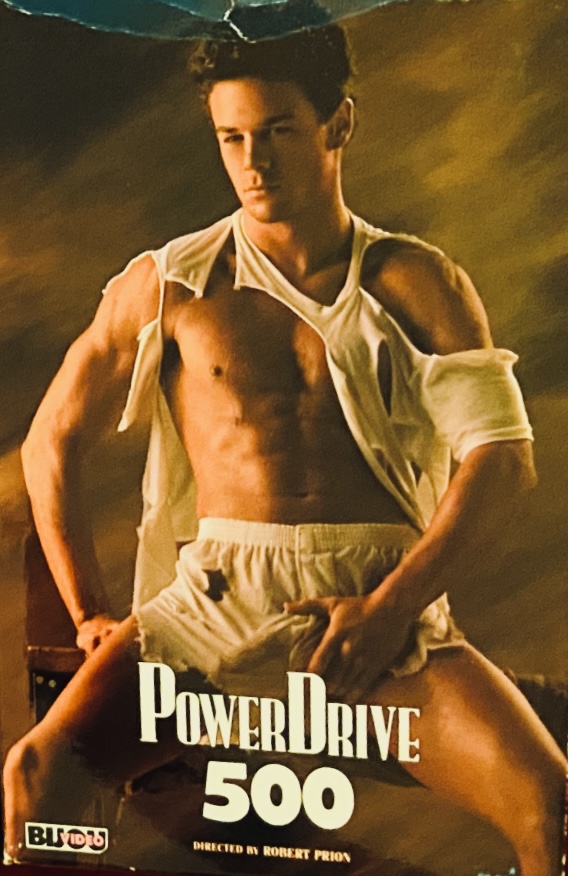
Prion with Chip Ryan in Powerdrive 500 (1990)
Whether or not his performers identified as straight, they put that aside when the cameras were rolling and gave performances that (for the most part) were far above average. It is the quality (and quantity) of these scenes that kept fans coming back for more, despite low production values and questionable design tastes. Many of the models appeared in over a dozen Prion films, indicating that they were treated favorably and/or well compensated.
Prion retired from performing in front of the camera by the mid-1990’s, but his partner Jay Richards continued delivering versatile, if perfunctory, performances in all 70+ Prion films.
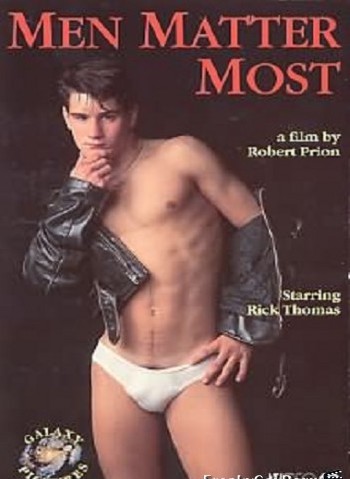
In January 1995, Prion formed his own production company, Galaxy Pictures. His first film for the new company was Men Matter Most. With the advent of DVDs, Prion repackaged and re-released his earlier films. With those and subsequent releases, he would take advantage of the “multiple angles” DVD feature to include whole other bonus sex scenes. Unfortunately, these “easter eggs” are now inaccessible with today’s DVD viewing practices.
His biggest discovery was Rick Thomas, whose real-life older brother Dane also appeared in a handful of Prion films. They were among his stable of stars who always brought their “A” game, including Eric Carter, Vincent DeMarco, Bryon Rogers, Antonio Vegas, Jon Dante, Alex Turner, Wicked, Cody Marshall, Titan, and Chris Collins, aka “The Mystery Stud” who appeared in over a dozen films and never took off his sunglasses.
Prion benefited from his close proximity to New York City. Big name adult film stars making personal appearances in the city could hop on a New Jersey Transit train and earn some extra cash for a day’s work. Some porn stars who ducked through the low Prion doors: Jon King,Joey Stefano, Karl Thomas, Marc Andrews, Terry DeCarlo, Eric Stone, Todd Stevens, Rick Pantera, David Grant, Storm, David Thompson, Kevin Alexander, Jason Nikas, Scott Matthews, Ryan Raz, Scott Spears, Brandon Aquilar, Tommy DeLuca, Chris Stone, Kurt Morgan and Aaron Lawrence.
Terry DeCarlo on the old Christopher Street Pier in Put It Where It Counts (1993)
Prion’s dizzying output of films began to slow after 25 years although he continued to repackage and re-release older titles in online platforms, where many are still available for viewing. His last movie was released in 2014. See below for a list of all his films.
Robert Prion Films (including compilations):
The Boys of New Jersey: 1982
Friends Are Best: 1983
Men Grip Tighter: 1983
Cum and Get It: 1984
Boys Do It Better: 1984
Guy’s Just Can’t Stop: 1985
The Young Stimulators: 1985
The Wild Guys: 1986
Men Who Dare: 1987
Suckulent: 1987
Addicked: 1988
Raw Impulse: 1989
Ultimate Desires: 1989
Powerdrive 500: 1990
X-Posed Images-The Naked Truth: 1990
Untamed Seductions: 1991
Uncensored: 1991
Hidden Instincts: 1992
Total Impact: 1992
19 Good Men: 1993
It’s Raining Dicks: 1993
Solid Intake: 1993
Uncle Prion & His Young Men: The Best Of Robert Prion: 1993
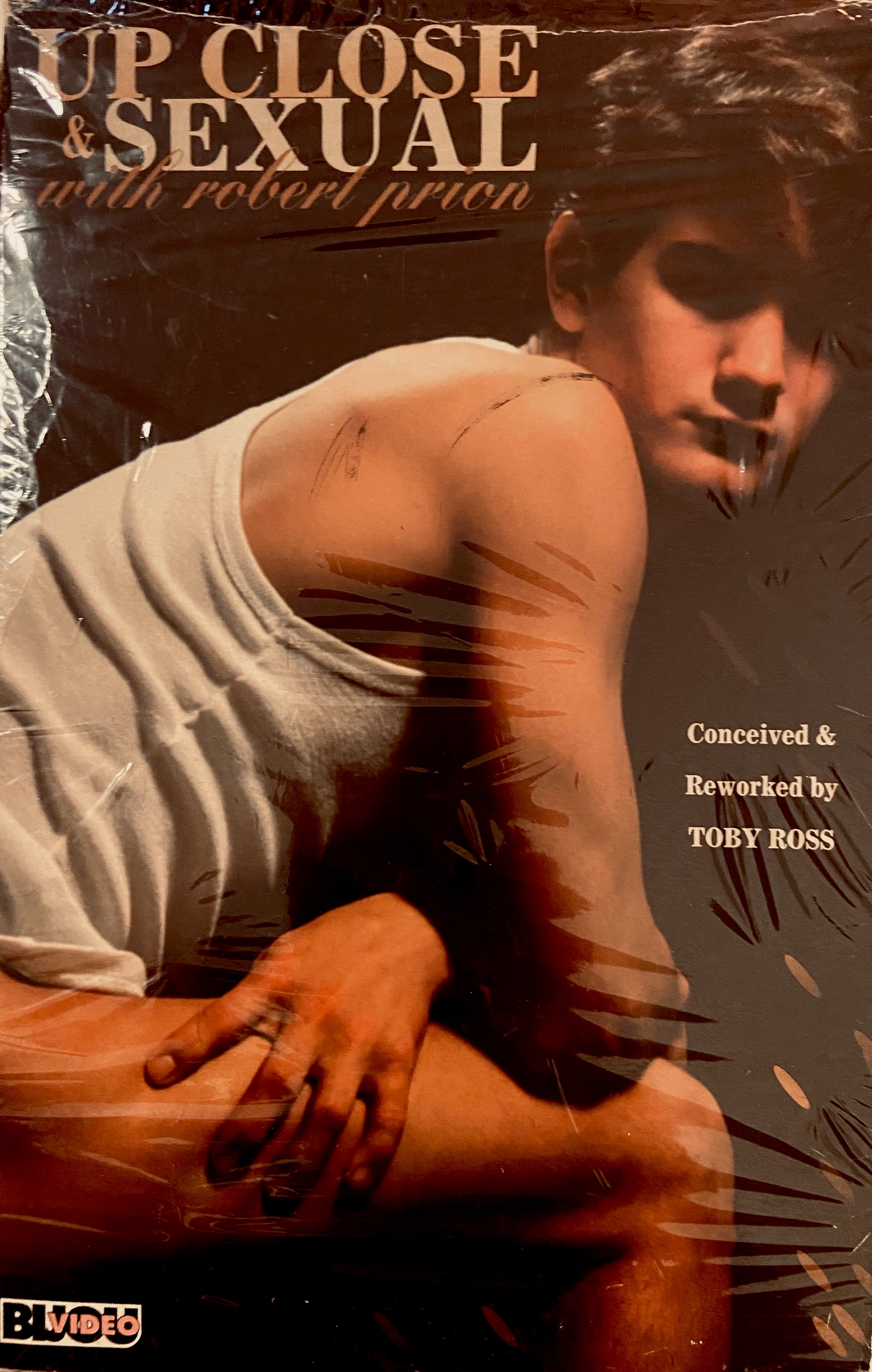
Up Close & Sexual: The Best Of Robert Prion 2: 1993
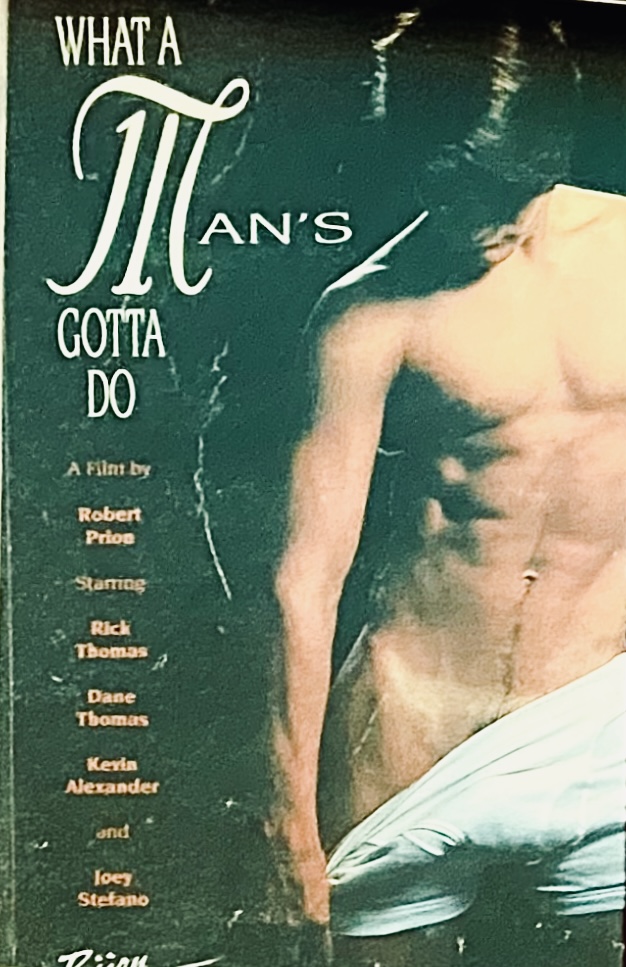
What A Man’s Gotta Do: 1994
Put It Where It Counts: 1994
Men Matter Most: 1995
Pushing The Limit: 1995
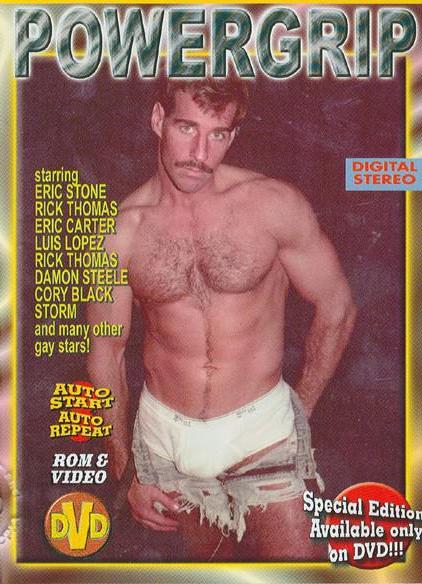
Power Grip: 1995
Everything A Man Wants: 1995
Point Of Entry: 1996
Natural Response: 1996
Whatever It Takes: 1996
Unexpected Persuasion: 1996
Drive Shaft: 1997
Every Man’s Desire: 1997
Can’t Say No: 1997
Nothing Else Matters:1997
Don’t Hold Back:1997
Pushover: 1997
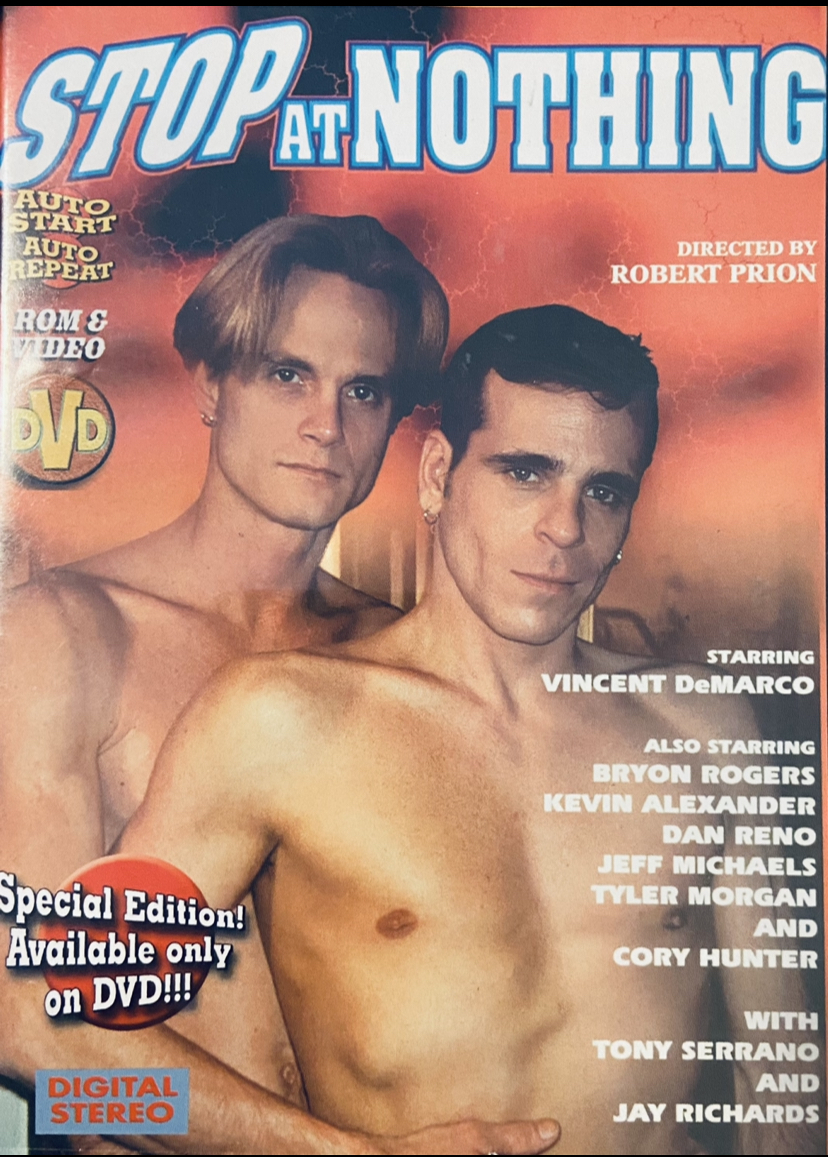
Stop At Nothing: 1998
You’ve Got The Touch: 1998
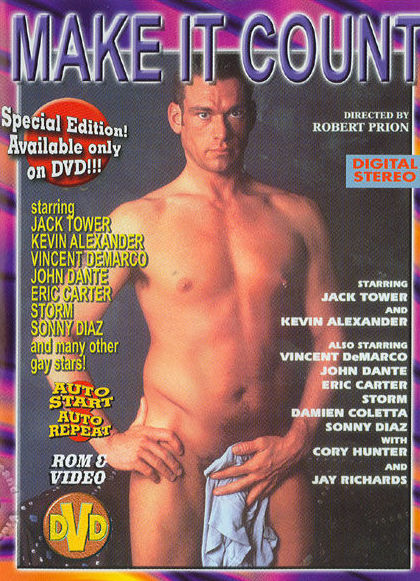
Make It Count: 1998
Relentless: 1998
One Way Or Another: 1998
Shameless: 1999
Any Way I Can: 1999
Let’s See What Happens: 1999
Aim To Please: 1999
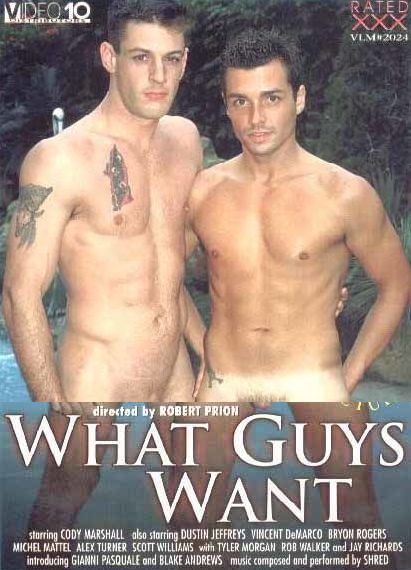
What Guys Want: 1999
Best of Robert Prion 1 – Give and Take: 2000
Best of Robert Prion 2 – Outdoor Seductions: 2000
Best of Robert Prion 3 – Three In The Sack: 2000
Best of Robert Prion 4 – Mix and Match: 2000
Best of Robert Prion 5 – Video Virgins: 2000
Best of Robert Prion 6 – Superstars: 2000
Going Too Far: 2000
Every Inch Of Him: 2000
If You Dare: 2000
So That’s How You Want It: 2000
One Step Further: 2000
Don’t Stop There: 2001
Qualified To Satisfy: 2001
I Want More: 2001
Never Stop The Urge: 2001
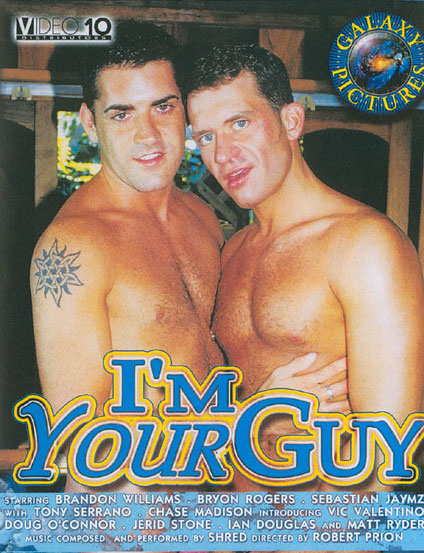
I’m Your Guy: 2001
Over The Edge: 2002
Take It All: 2002
Natural Impulse:2003
Doin’ The Nasty: 2003
Return The Favor: 2003
Teasin’ N’ Pleasin’: 2004
From Every Direction:2004
Access All Areas: 2005
Standing Firm: 2006
All Men Should: 2006
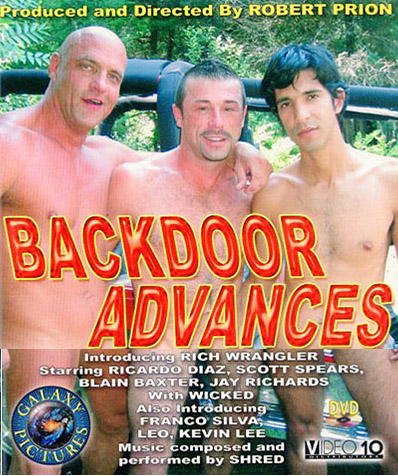
Back Door Advances: 2007
Prion’s 69 More To Cum aka That Sucks: 2007
Can I See It?: 2008
It’s Only Natural… Daddy: 2014
We extend our condolences to Jay Richards and the friends and family of Robert Prion.
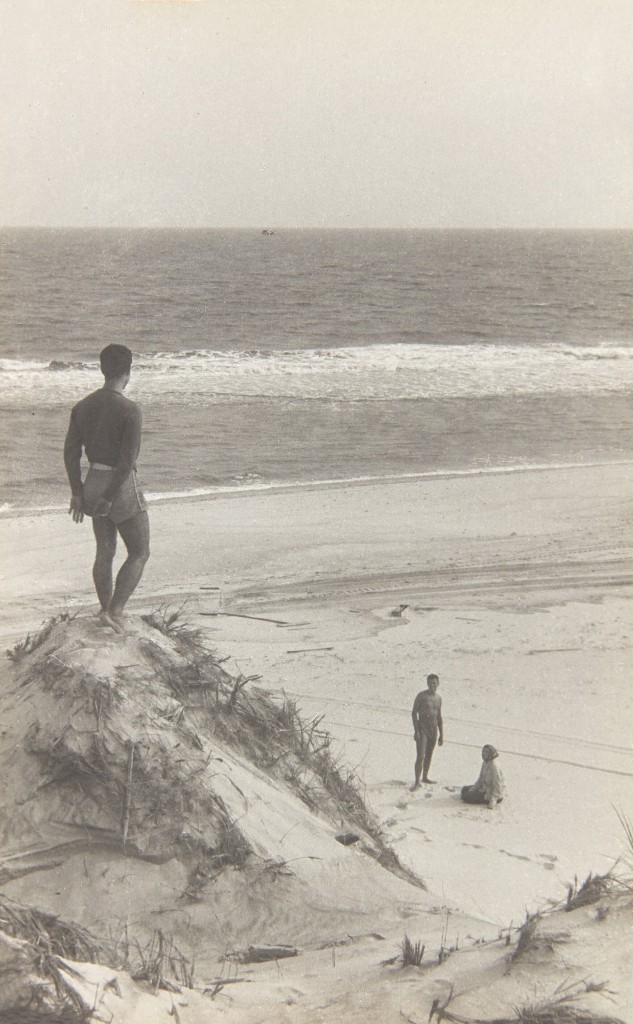
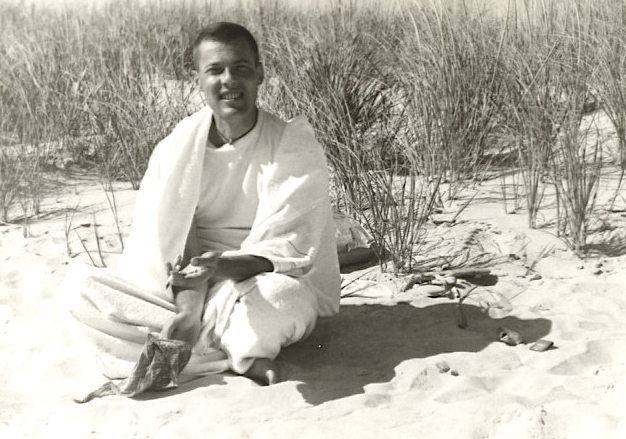
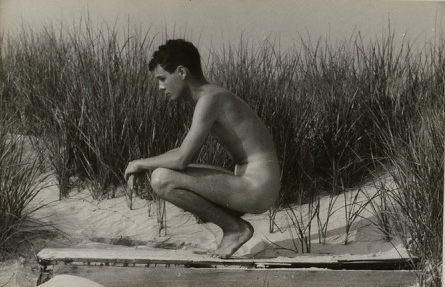
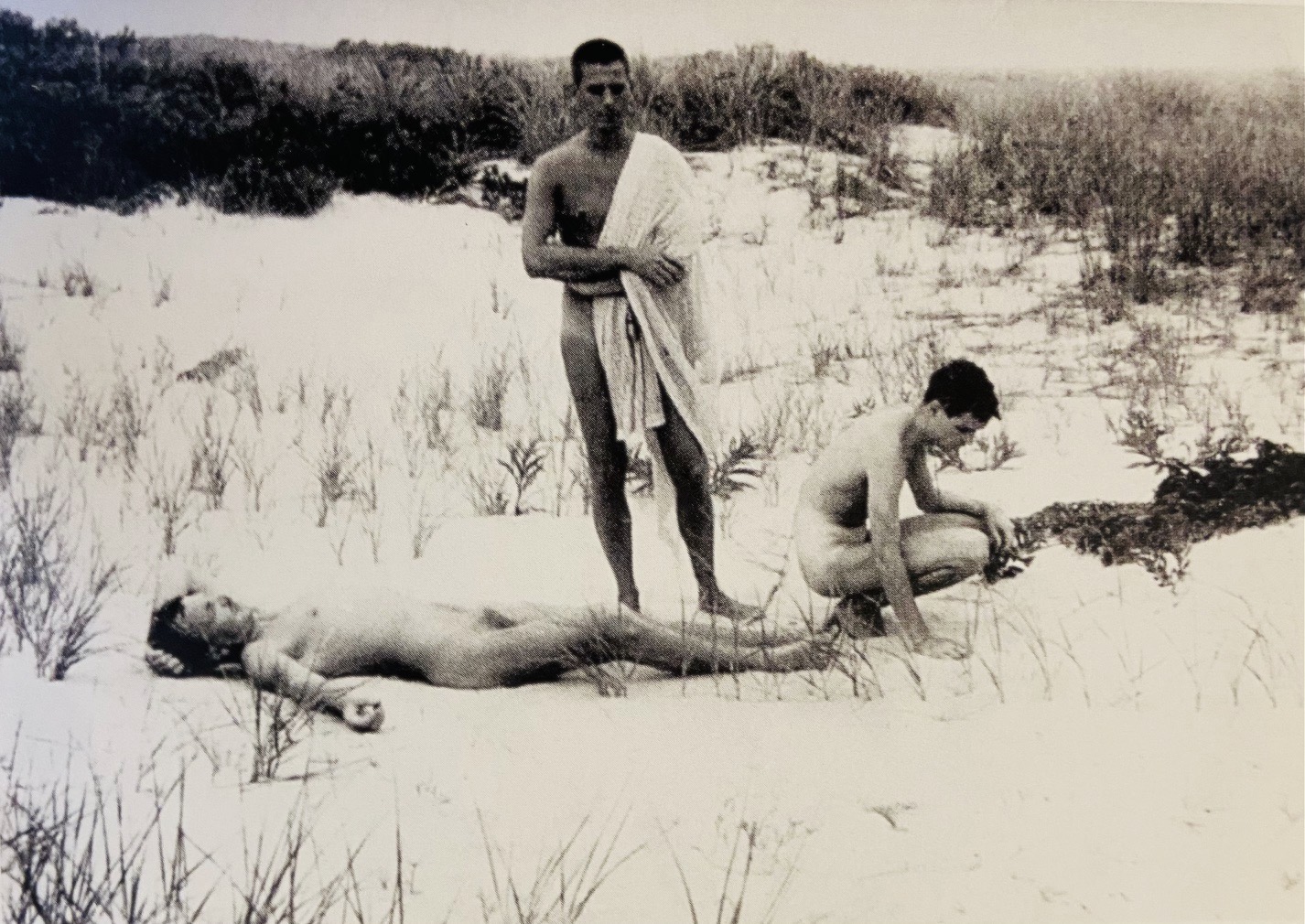
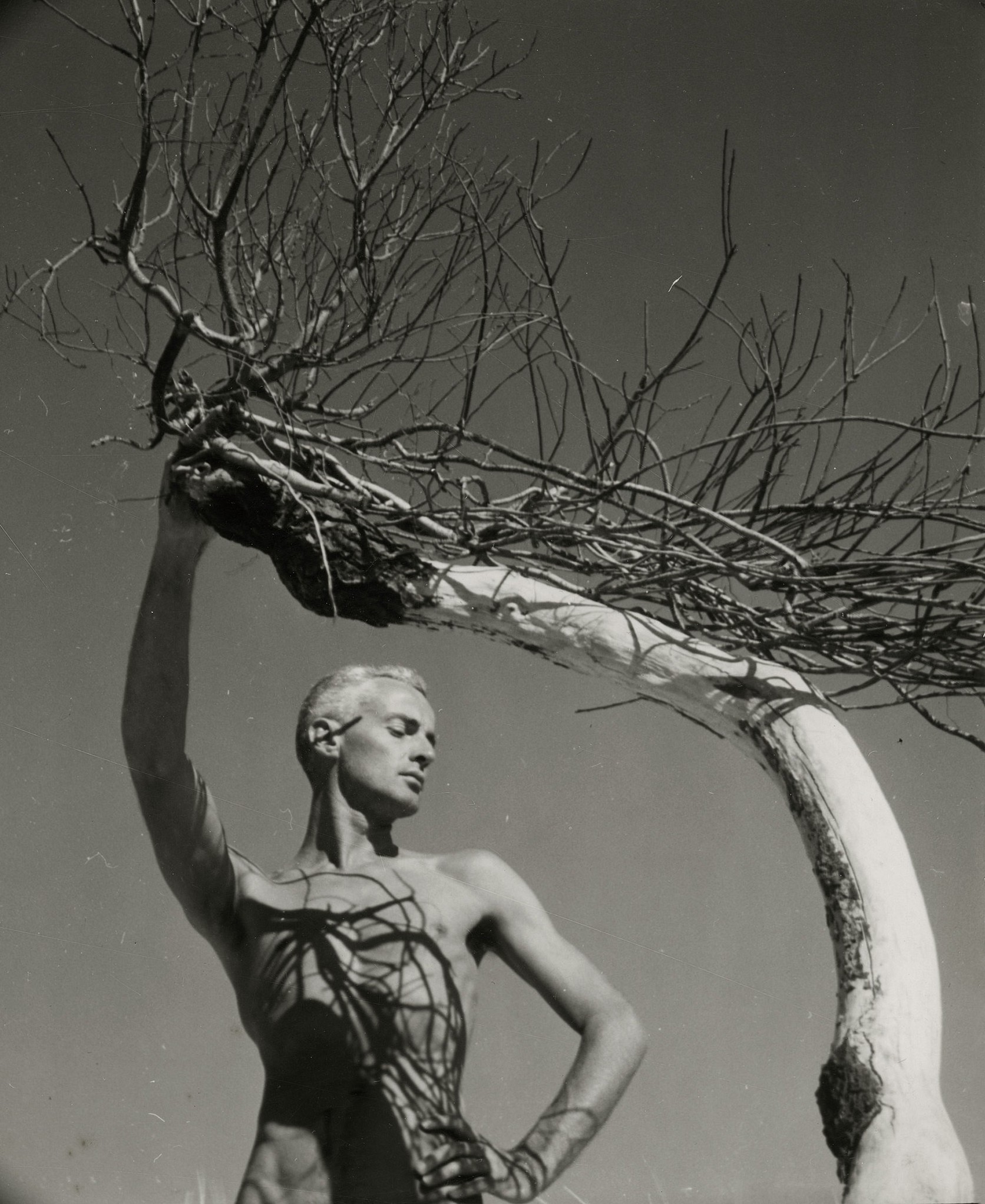
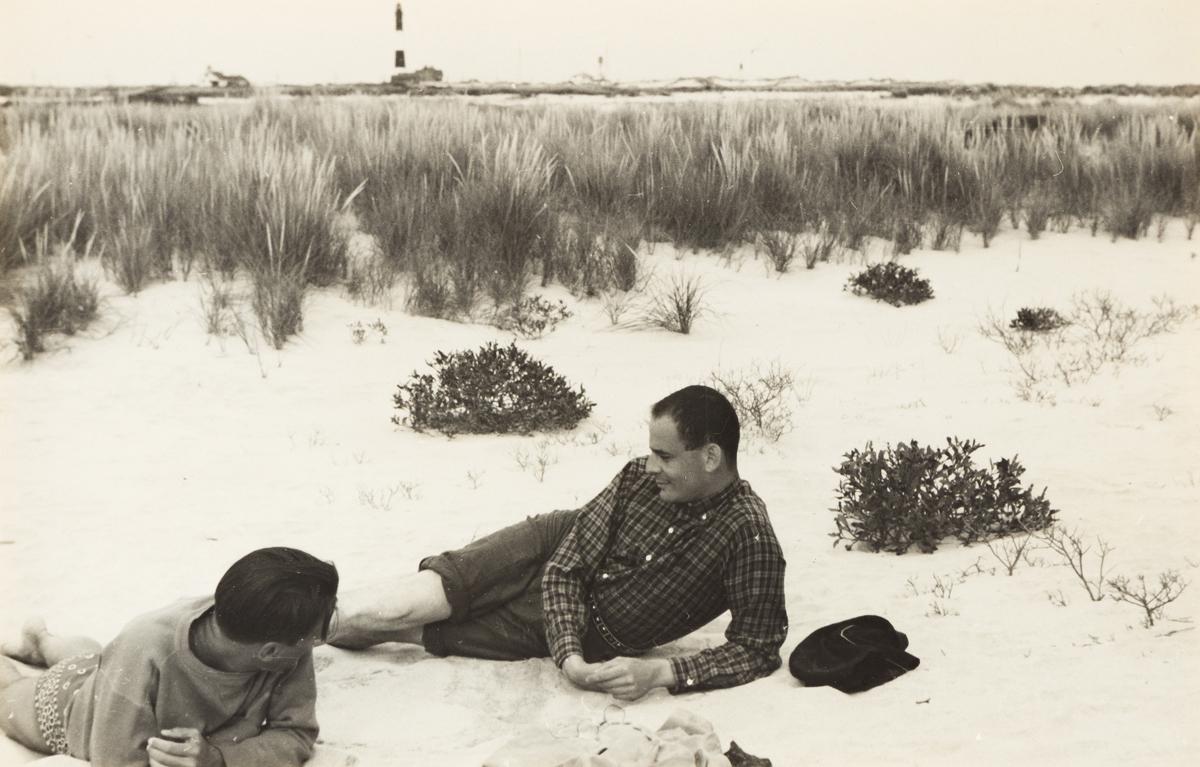
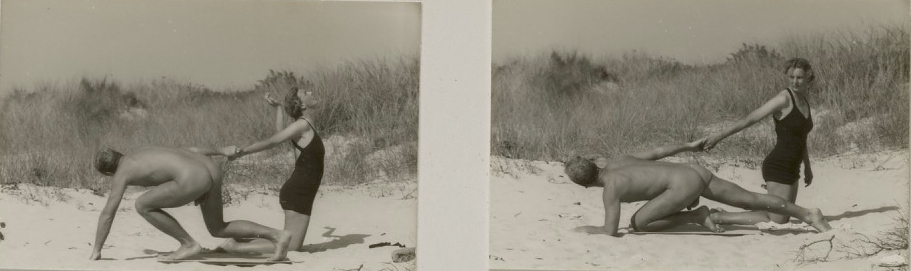
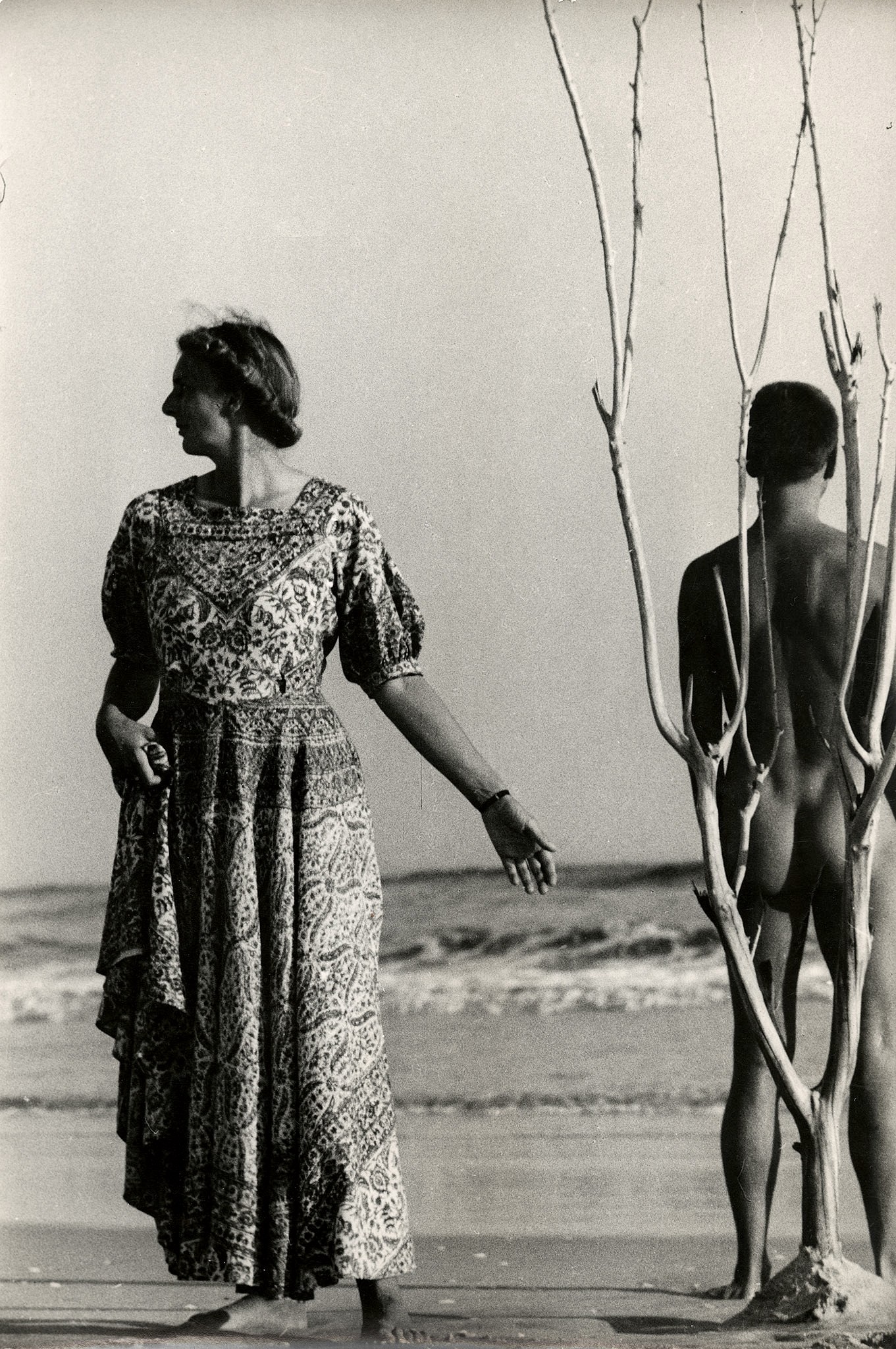
During vacations from the 1930’s through the mid-1950’s, artists Paul Cadmus, Jared French, and his wife Margaret Hoening French photographed each other on the beaches of Fire Island and later Cape Cod. Usually nude or donning simple costumes, they would also use found objects as props to create stark, surreal and/or erotic images. They passed Margaret’s Leica camera around, taking turns as subject and auteur. This collaborative authorship was reflected in the umbrella name Paul Cadmus later chose for this work, utilizing the first two letters of their first names: PaJaMa.
Cadmus explained, “After we’d been working most of the day, we’d go out late afternoons and take photographs when the light was best. They were just playthings. We would hand out these little photographs when we went to dinner parties, like playing cards.”
The dynamic was complicated: Paul and Jared were lovers – a relationship that continued during Jared and Margaret’s marriage. All three lived and worked in a townhouse at 5 St. Lukes Place in Greenwich Village.
Paul Cadmus & Jared French, Fire Island, PaJaMa (1941)
A 2015 New York Times review of a PaJaMa exhibition noted that their photos “breathed eroticism.” While some of the hundreds of photos are masterpieces of magical realism, others appear to be figure studies for their painting. And then there are simple snapshots of nude men frolicking on the beach, enjoying the sun and surf.
Right: Jared French on Fire Island (1940) Left: Paul Cadmus’ etching “Youth With Kite”, 1941
Jared French and his considerable wares are the most frequent subject of the photographs, with entire rolls of film devoted to his nude poses and posturing. Cadmus and Margaret are slightly more demure although we do not know who was giving direction from behind the camera at any given time.
These three artists were joined by various friends and lovers through the years, fellow artists and writers that were part of their New York social circle.
Dancer/Model José “Pete” Martinez appears in PaJaMa photos of the late 1930’s with Paul Cadmus
1938 PaJaMa photos of writer Glenway Wescott sometimes appear online mislabled as Paul Cadmus or Ted Starkowski.
Photographer George Platt Lynes was a frequent guest with his own camera.
Artist Bernard Perlin captured by the PaJaMa lens on Fire Island (1939)
Jared French in Saltaire after the devastating hurricane of 1938.
West of Saltaire, the Fire Island Lighthouse served as a frequent backdrop.
Jensen Yow, Bill Harris & Jack Fontan, ca. 1950
Alexander Jensen Yow recently recalled the circle of artists, as well as his participation in PaJaMa photos of the early 1950’s. “Paul posed us and took the pictures. I was never out there with Jerry (Jared). There were plenty of personality conflicts all scattered around with these people, but I never knew what they were or anything… Jerry was always nice to me though. But his and Margaret’s was a strange relationship… She was crazy about Jerry but she was always in the background, you know. Always there. Jerry did what he wanted to do, and she tagged after him. I was so green when I met these people that I didn’t know how to act…. I tried to be discreet but it wasn’t easy.” (NOTE: Jensen Yow died at age 95 in September of 2022)
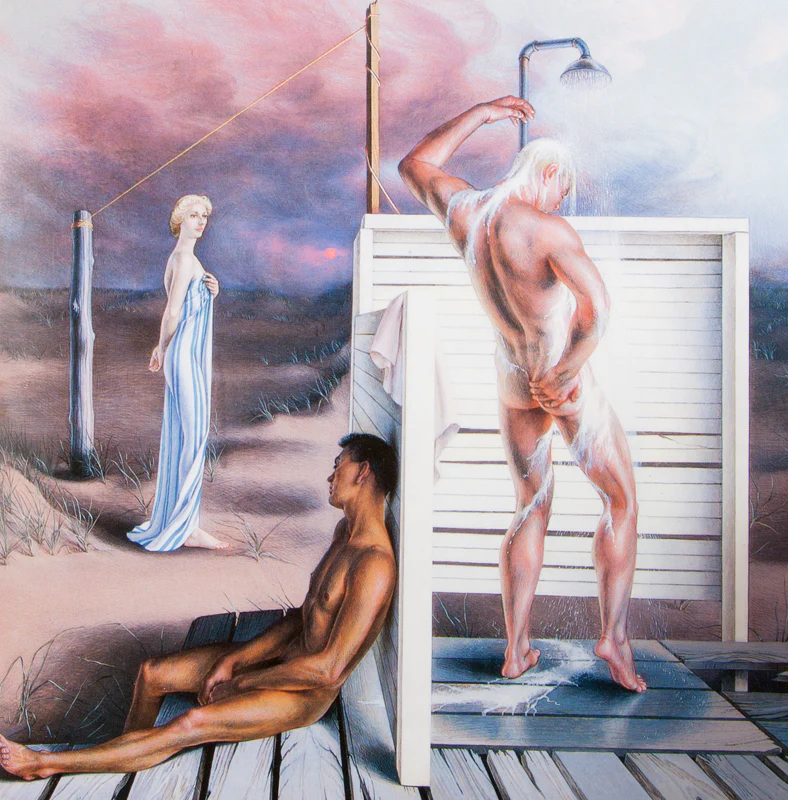
Paul Cadmus, “The Shower”, 1943
Margaret French, “The Moon by Day”, 1939
As with George Platt Lynes’ male nude photographs, the PaJaMa collection did not receive much notice or recognition until the 1990’s. They are now frequently exhibited in galleries and selections are a part of the MOMA collection.
Donald Windham, Saltaire, FI (1942)
In George Parlett’s 2022 book Fire Island, he writes of a PaJaMa photo of Donald Windham:
It’s composition seems to show us how remembering is an act, not a given. There Windham is, dragging the large net, collecting and carrying with him the various and unknown sediments of the shore while offering his gaze wholly to his beholder. There is a levity there, in the resemblance of the net to a gown or a veil, its slightly campy or drag quality, but also a quiet note of death, in how this black material evokes a shroud, or mourning garb. Fire Island has long been a place where such contradictions are brought together; youth and death, glamour and grit. This interplay can be felt, the image tells us, in the landscape of the place.
The warmth of your love is like the warmth of the sun… This will be our year took a long time to come…
“How come you don’t write about me? Or maybe you do.”
His eyes narrowed suspiciously. Or, I assumed they did. He texted this to me, so it was virtual skepticism that I sensed.
My partner of 9 years is artist/musician Toby Hobbes. He is also my editor/proofreader and the person who set up this blog 5 years ago and told me to get to work. While he does get an occasional mention from time to time (see Circle In Monkeyshines or Scenes From A Pandemic), any essays specifically about him or our relationship remain unfinished.
This was one piece I started:
It was our second date. We were heading out to dinner after a few pre-game cocktails at Nowhere Bar in the East Village. I pulled him over by the side of a building to get out of the First Avenue foot traffic. I had something that I needed to tell him and didn’t want to keep it a secret any longer. My gut was telling me that we were heading into a relationship, so there had to be honesty. And he was new to this – at 37, this was his first same-sex dating experience.
Summer, 2013
I took a deep breath and said; “Listen there is something that I need to tell you before this goes any further…” I was still holding onto his hand. He looked concerned.
I continued on, talking fast just to get it over with. “I know I told you I was 39 years old. Well I’m not. I am 44. I know. It’s stupid. It’s just a number. But 44 sounds so much worse and I didn’t want you to feel like it was too big an age difference. So now you know. And I hope it’s not a big deal.”
The concern faded into puzzlement. “Why would I think that was a big deal?”
I went off on a diatribe about gay men being ageist and that I had shaved off exactly 5 years when I ended up single again at 40, which seemed to be a big cutoff number for most men on Match and Grindr and Scruff and Growlr and Fluff and Squirt and…
Toby let go of my hand and took a step back. “I have to tell you something too,” he said. “I have a kid at home. Well, he’s my nephew. I’ve had custody since he was 10 and he’s 17 now. I didn’t say anything because I was afraid that you wouldn’t want to deal with all that.”
In that moment, my opinion of him – of his character, his heart – went right through the roof. He was a responsible adult.
Besides his nephew, there were also two dogs, a cat, and the long shadow of the ex-girlfriend that had left his finances in a shambles. On our first anniversary, we agreed to move in together. This was partly out of necessity and also because we felt like we were ready. For me, this meant leaving Manhattan after 22 years, as there was no way we could afford adequate space for our crew. We settled in Forest Hills, Queens, which I highly recommend.
At the time, people would congratulate me for being “selfless” or ask how I could take on so much responsibility. For me, there was no choice – no question about it. I realized that I loved Toby very quickly. And he loved me with a totality that was unlike any of my previous relationships. I felt like the last 4 years of frustrating dating experiences were just The Universe’s way of keeping me in a holding pattern until he showed up at my apartment with a six pack of Sam Adams.
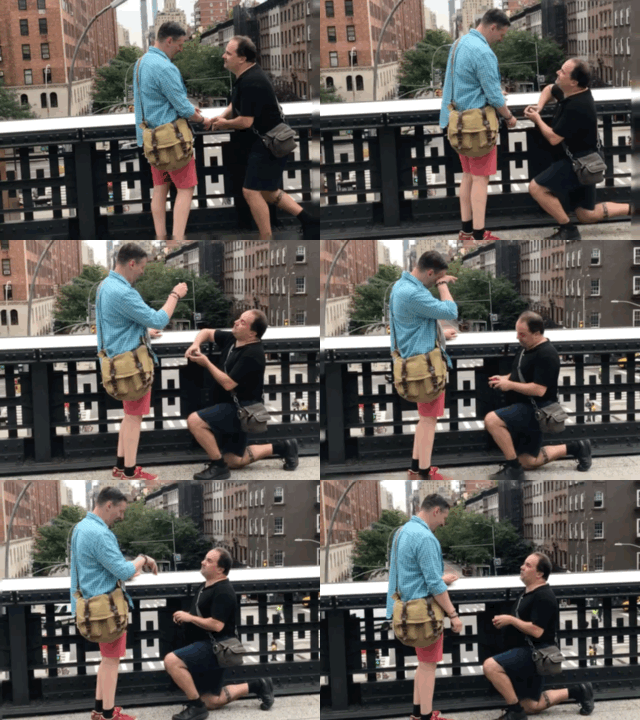
Fast forward to July 30th 2018: I proposed to him on The High Line above West 23rd Street with my family hiding in the bushes taking pictures nearby. We made no immediate plans for the wedding but assumed that we would be married the following year.
Then Toby got accepted into a program at the International Culinary Center (formerly the French Culinary Institute) and we decided to wait until he graduated. Then I was suddenly unemployed. So we waited again. And then there was the pandemic.
In the spring of 2021 we started to look at wedding venues. I was determined to get hitched before we celebrated our 10th anniversary as a couple. Besides, after this pandemic, we all needed a party. To celebrate LIFE. Also, neither of my sisters ever got married, and my mom was itching to finally have a wedding for one of her kids. We secured a venue and set a date: Sea Cliff Manor, May 19th, 2022.
About that pesky pandemic… I thought; “Ohhh – surely that will all be behind us by then! Just a masked blur in our rear-view mirrors.” Silly, silly fool. I failed to remember that objects in the mirror are closer than they appear.
In the months prior to the wedding, it became clear that COVID was not going to be gone, so we decided to specify on the invitations that attendees needed to be vaccinated. Imagine our surprise when this turned out to be a deal breaker for some, as a few formerly enthusiastic friends and family members suddenly ghosted us.
We went into planning this wedding with the awareness that, at some point along the way, we might encounter people who were a little more churchy than we realized and they might object to our Big Gay Wedding. Thankfully that did not occur. As it turned out, our big ethical divide was not religion. It was science.
Ultimately this was for the best. Better to know who people really are when their masks come off.
The three weeks before the wedding are bound to be stressful, as anyone can tell you. We were finalizing the guest list, DJ setlist, photographer, tuxedos, favors, seating charts, menus, programs, obtaining the marriage license and wedding rings. And the vows! We had to write the vows.
But then other stuff started happening.
On Saturday April 30th, Toby cut his finger on a meat slicer at work, requiring 12 stitches on his left pinky. Three days later, I got sick with COVID. The next day, while taking the final reception payment to Sea Cliff Manor, my mom & stepdad were in a car accident. Thankfully, nobody was injured. Two days after that, on his birthday, Toby got COVID as well. We were both vaxxed and boosted, so it was more of an inconvenience than anything else, although we were starting to feel like some homophobic anti-vaxxer was practicing voodoo shit.
We soldiered on. This wedding was going to happen whether we were ready or not.
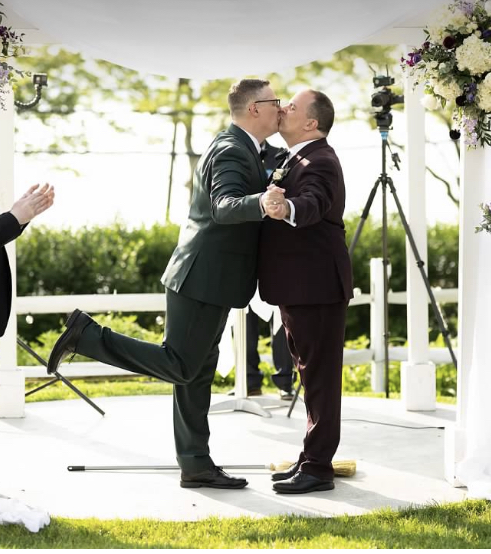
The big day arrived and everything went off without a hitch. It was a family affair with Toby’s nephew as his best man and my sister as my best woman. My mom & stepdad walked me down the aisle.
We asked my friend Merri to sing The Zombies’ This Will Be Our Year. When I chose the song last year, I thought it was a pretty obscure choice. Turns out to be a wedding standard as well as the jingle for Target’s “Back To School” ad campaign. Ah, well. The chorus of “This will be our year / It took a long time to come” certainly struck a chord with us.
While the planning was crucial and paid off in the best way, it was actually a spontaneous moment that I keep revisiting from that day. Luckily we opted to live stream the ceremony, so there is footage to look back on. When Toby and I joined hands to say our vows, he started to bounce up and down with excitement. It was the defining moment of the day. I turned it into a gif captioned “Life Goals: Marry someone who is this excited to marry you.”
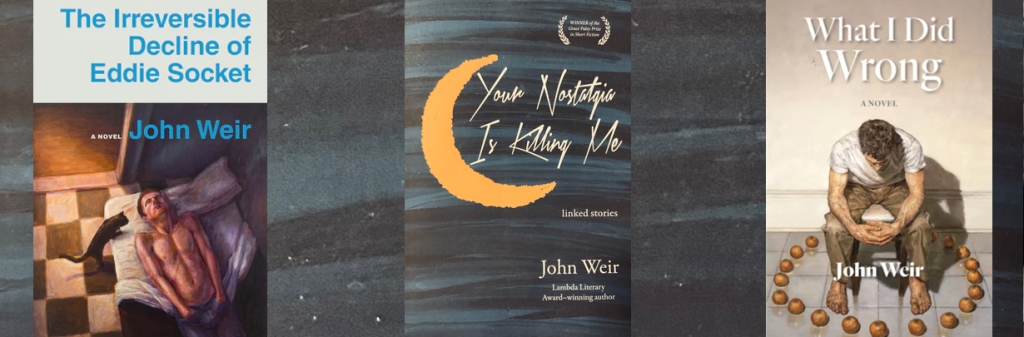
He has a new book out. An award winning book. It’s called Your Nostalgia Is Killing Me (Red Hen Press). It is described on the cover as “linked stories” and won the Grace Paley Prize for short fiction. God forbid you call it a memoir or a short story collection. But we’ll get to that later.
This month, his two previous novels: 1989’s The Irreversible Decline of Eddie Socket and 2007’sWhat I Did Wrongare back in print with Fordham University Press. You can easily order any of these titles on Amazon or Barnes Ignoble. However, if you want to throw your business to an indie book seller, or more specifically a gay bookstore, it appears that you will have to go to one that he has personally walked into and asked them to stock his books. He’ll come back and sign them, too.
The Strand also does not have copies in their store. He went there and asked. Something to do with distribution, although you can order them from their online warehouse.
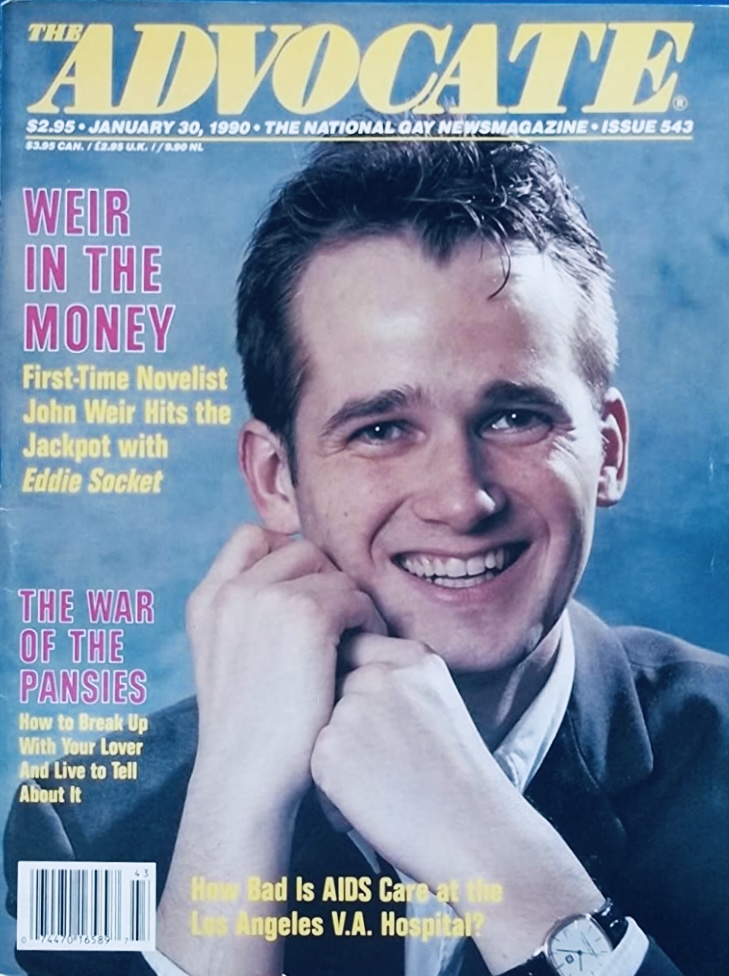
John Weir on the cover of The Advocate (1990)
I have been a fan of John Weir’s work since Eddie Socket‘s original release. I purchased a copy at, uh, Barnes Ignoble, and was thoroughly captivated by this groundbreaking book – winner of the 1990 Lambda Literary Award for Best Gay Debut Novel and one of the first to address the AIDS crisis.
The book kept me company on a miserable theater tour in the fall of 1991. I strongly identified with the protagonist, and when he contracted AIDS halfway through the book, it scared the hell out of me.
I wrote some of my favorite quotes in my journal:
Though he didn’t think that God existed, still, it was nice to just sit somewhere with people who believed that he did.
And
My feelings are clichés and that bugs me, so I try to hide it with other slicker clichés, and with everything in quotes, at least I can remind myself that I know better than my feelings, which are really the drippiest, most sentimental, self-pitying things.
I pored over it for so long that one of my cast-mates finally said “What the hell is with you and that book?!”
The many editions of Eddie Socket
John Weir was working with ACT UP on The Day of Desperation in January, 1991 when he and other activists (including fellow writer Dale Peck) interrupted the CBS Evening News with Dan Rather:
It’s interesting to hear him mention his mother in the clip above, as she is the subject of several stories in Your Nostalgia Is Killing Me, written 25 years later, after their relationship had evolved into an adult child/caregiver situation.
In the intervening years, Weir was Contributing Editor at Details magazine and published nonfiction pieces in The New York Times, Spin, and Rolling Stone, among other publications. In addition to his writing, he has been an associate professor of English at Queens College since 1993.
I have been following John on Facebook for years. He would sometimes post new material and share extended witty, hysterically funny conversations with his mother. I also followed Sukey Tawdry, Mrs. Weir’s beloved pooch who had his own Facebook profile and passed away just days after she did in 2018. (John’s tribute is posted here.)
For all of the platform’s faults, John’s connection to Facebook is evident: he dedicates Nostalgia to his 5,000 followers.
Weir has a crankier social media alter-ego, whom he refers to as “The 3am Guy.” This allows him to rant about various topics at all hours of the night and then perhaps soften the edges or clean up the mess the following day – a tactic more people should adopt, IMHO.
It was Weir himself and not The 3am Guy who posted the following – a stinging encapsulation of what it is like to be a gay author of a certain age, on the first day of Gay Pride Month, just trying to get his work in front of its target audience.
This is his entire post, which I have reprinted with his permission:
The Self-Pitying Author Asks: Why Are None of My Books on the LGBTQ+ Pride Table at My Local Groovy BKNY Bookstore, Next to *The Town of Babylon* and *The Guncle*?
It’s LGBTQ+ Pride Month, and I plan to spend the month ashamed! Mostly because I have this new book out and I haven’t done enough to promote it. Here’s a funny thing about the book:
Well, *Your Nostalgia Is Killing Me* calls itself “linked stories” on the cover. That’d mean it’s a collection of short stories: fiction.
Somebody said maybe it’d get more notice if I had called it a novel, “because it reads like a novel” (presumably because the same dude is the narrator of all 11 stories, and the stories follow him – not in order! – from like 1974 to 2014); and the thing is:
It got published because I submitted it to a writing contest – the Association of Writers & Writing Program’s (AWP’s) Grace Paley Prize for Short Fiction.
I submitted to a contest, which I’d never done before, because: my agent wasn’t interested in the manuscript, which meant I no longer had an agent; and of the *12 agents whom I queried to see if they’d represent me* – well: None. Of them. Even. Replied. Not even their harried assistants wrote back to pretend they were the agent and say, “No thanks.” No one. Not an email, not even a form-rejection email.
Then in fear and self-loathing I sent the manuscript to a friend, who is also an agent (generally, I don’t think it’s a good idea to have an agent who’s a friend), and they said, “Love this, can’t sell it.”
So I submitted to a contest.
Which specified: “Short Fiction.”
Author Grace Paley, photographed by Jess Paley
Like the kind of stories Grace Paley wrote. A prize in her name! And I was all, “Well, I’m not Paley, and not that the judge has to pick a Paley-esque collection, but: I do sort of do the thing Paley does of writing stories as if they were just what happened that day.” (Not to put myself on her level of genius!)
A lot of Paley’s stories are written as if they were unstructured suit jackets, they fit fine but without the expected ribbing: her work feels impromptu, copied from everyday ordinary life (even if that ordinary life is extraordinary); and so but then you realize that every word is deliberate, she has a distinct aesthetic and a project, her writing isn’t random, nor is it cinema verité, though it’s often presented as if a quirky documentarian were given a camera to record whatever is in front of her.
So my collection got picked for the Grace Paley Short Fiction Prize, the reward for which was its being published by a small press that partners with the AWP: Red Hen Press.
So it won a Story prize, so it’s Stories.
I guess it was my idea to use the phrase “linked stories,” because short story collections don’t sell that well, and I thought maybe people would be more likely to buy it if they thought it was gonna feel like a novel.
I don’t think it’s a novel. I don’t really care if it’s a novel. I don’t know what it is; but then some people have been:
It’s a memoir. It’s autobiography. It’s a series of essays with a dude in the middle saying “Ow.” It’s nonfiction misnomered as fiction!
“How dare you misgenre me!” it’s thinking, sitting un-bought on a low shelf in the Fiction section at your neighborhood Barnes Ignoble.
Well, but back to Paley: I can’t call it nonfiction because I lied about stuff; compressed 6 real people into one fictional character; took scenes from real life and put them in a different month, with other weather; invented conversations; collapsed 8 different events into one; made shit up; gave all my best lines to other people; left things out that’d make me look bad if you thought I committed them; mis-remembered the past; manipulated my mis-remembered past to satisfy narrative arcs. Gave stuff tidy endings that, in real life, are never-ending.
I used techniques of fiction, in other words.
But I wanted it to read as if it were happening right in front of you, happening *to* you, right now, in this moment that you’re reading it.
I wanted it to read like nonfiction. Or like a Frederick Wiseman documentary, maybe.
I wanted you to think, “He must have just written down what happened.”
Robert Lowell & Elizabeth Hardwick
“Why not say what happened?” Elizabeth Hardwick said to Robert Lowell, when he was stuck on a poem; and then he emptied all her letters into his book! Her aggrieved, enraged letters about his leaving her for another woman.
Sleep with a writer, wake up in print.
So I can see a person’s assigning my book in a course in, like, I dunno, “Personal Narrative?”
Argh, I think the term these days is “Autofiction,” which I hate. I always hear, under that name, the accusation that all a particular writer ever did was obsess about themselves; and that an “auto-fictionalist” was deficient because they could not make shit up.
Is there a notion lately that a “writer” is a person who works entirely from “imagination,” and that to base a story on true events is somehow not to be as glorious as a person who works solely from imagination?
As if “saying what happened” did not involve using your imagination.
As if “autofiction” is somehow ethically suspect because you’re invading the privacy of people whose lives your work is based on. But there is such a thing as an emotional autobiography, where the arc of feeling is lifted from your own life, if not the events. And even a science fiction writer is surely modeling characters on people they know in real life (see Philip K. Dick’s books where one of the main characters is clearly based on Bishop James Pike of California).
And then there is this thing of, If you’re a homo-dude like myself over age like 55 and you’re writing about stuff that happened in the first 15 years of the global AIDS crisis, 1981 -1996, you are automatically *historical*, and your writing is going to have no useful application to stuff that is happening today, it’s gonna be retrograde at worst, merely “interesting” at best, yet another traumatized recounting of an era that properly belongs in a theme park, AIDSWorld.
O and alas. Call my book what you want, it doesn’t have a genre. But if it reads like nonfiction, that doesn’t mean it’s without an aesthetic; and if it reads like a novel, that doesn’t mean it’s not a series of stories carefully revised and assembled in a particular order; and if it reads like memoir, don’t expect it to be telling the truth about everything; and if it’s just some Wicked Aging Sodomite not letting go of the past, well:
Maybe we live in a country and moment when we are deeply aware of having *let go too quickly of the past*; and maybe the refusal to account for the past is a right wing strategy; and maybe the past is not even past, as Faulkner says; and maybe a book is not a weighted blanket, maybe it’s not meant to help you fall dreamlessly to sleep, maybe its point is to fling you into a stage of inconsolable grief at 3 in the morning.
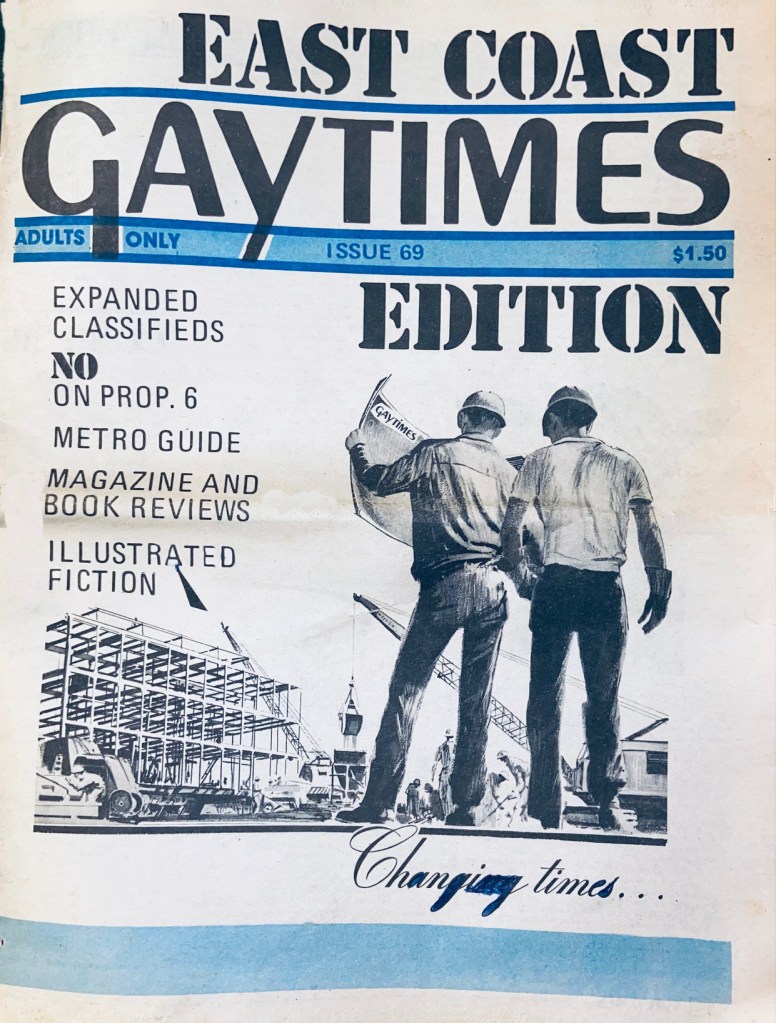
I recently came across a 1978 issue of Gay Times, East Coast Edition – Issue #69 (ahem).
The news section was dominated by California’s Briggs Initiative, aka Proposition 6 – the first attempt to restrict gay and lesbian rights through a statewide ballot measure. Thankfully, it was defeated that November with 58% of the vote, but the stakes were high when this issue went to press.
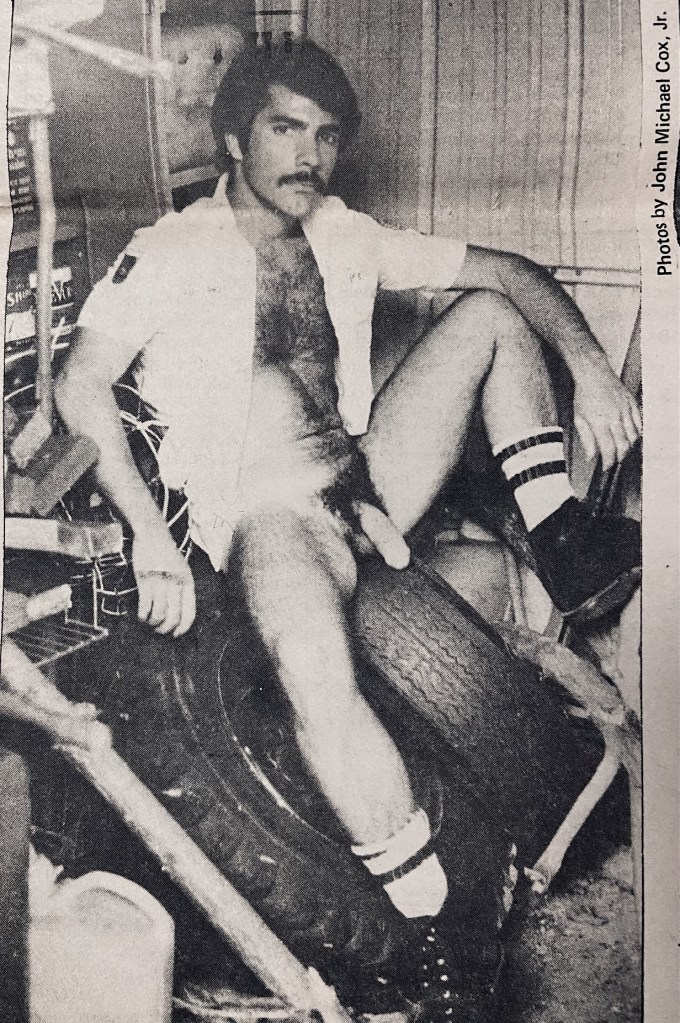
It was the importance of this vote which also inspired the centerfold:
Caption: Register To Vote – Your right to live may depend on it!
The photo is from Robert Bresson’s 1957 film A Man Escaped, a WWII drama based on a true story of a French resistance fighter portrayed by Francois Leterrier (center).
Elsewhere in the issue, an editorial calls for the continued boycott of Florida Citrus due to the anti-gay efforts of their spokeswoman, Anita Bryant.
Welcome to 2022, when it all seems painfully current, domestically and abroad.
Ah, but it wasn’t all politics and protests. Editor Pat Pomeroy interviewed The New York Man: Damian Charles. He’s described as an Aries ram, former school teacher, author of 49(!) books of erotica, and a centerfold model. He inspired orgasms in 17 countries! (I have to wonder who collects such statistics and where does one find the raw data?) And also – what quote could encapsulate the era better than “… as I have sex with a succession of lovers under the strobe lights at Studio 54”?
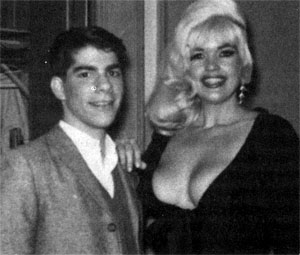
I reached out to photographer John Michael Cox, Jr. to see if he had any recollections of this dynamo. “Charles Herschberg was a very close friend & the writer I most used to conduct interviews – I didn’t like to transcribe interviews so I employed writers. For his nude modeling, he decided on the name Damien Charles, which I never liked. He never had the ambition to do much & mainly posed for me. He never did films but I did shoot some hardcore pix of him with his lover Richard Allan. Chuck died around 1990 in Florida.
“These photos are from the first session we did. I never worked for Gay Times, so Chuck must have given them the prints to use.”
I asked about Chuck’s work as a writer. “I met Chuck when he was writing a piece on (gay porn star) Roger. I came over to the Eros Theatre to photograph him and Roger’s manager Jim Bacon introduced us. Typical of Chuck – he never finished the article.”
Regarding the many porn books Chuck wrote: “He probably wrote under many different names. He worked for an outfit that used many writers. They churned out huge amounts of paperback porn.
“Harlequin offered him a deal to do books & said he could alter his porn stuff. $5,000 per book. He couldn’t bring himself to do it.
“Years ago I tried to do a tribute to Chuck on my website, which has since been taken down. Like everyone who knew Chuck, I adored him & also wanted to hit him over the head.”
Charles Herschberg with Jayne Mansfield backstage at the Latin Quarter (1965)
Thanks to John Michael Cox Jr. for his recollections of his friend.
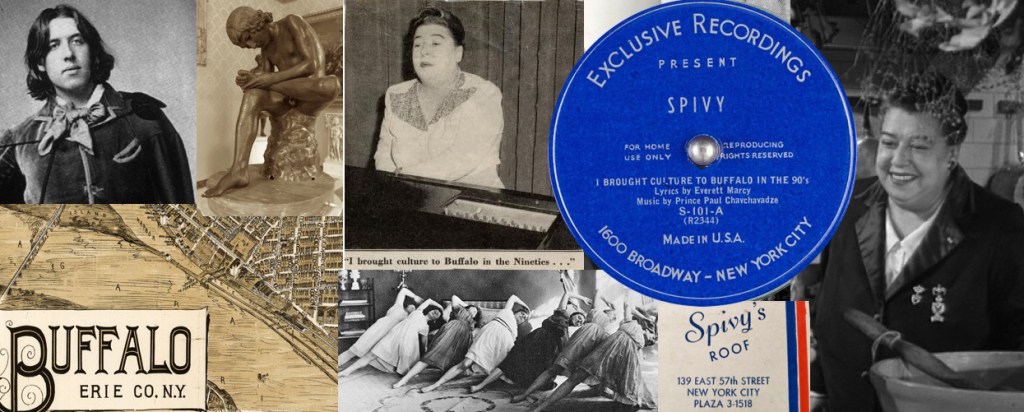
Ladies and Gentleman, it is time once again to revisit that late, great dynamic lady of song, Madame Spivy LeVoe (1906-1971), also known simply as Spivy. A lesbian entertainer, nightclub owner and character actress, Spivy has been described as “The Female Noel Coward” – to which I add “…. if he had been born in Brooklyn as Bertha Levine.”
Our latest offering is one of her signature songs: “I Brought Culture to Buffalo in the 90’s”. Curiously, on the recording Spivy introduces the song as “Intimate Memories of Buffalo In The 90’s.” This is the fourth side we have profiled from her 1939 album Seven Gay Sophisticated Songs. The lyrics were written by Everett Marcy, who also co-wrote (with Spivy) “Why Don’t You,” another song from the album. Marcy also had a few Broadway writing credits including New Faces of 1936.
Prince Paul Chavchavadze
The music is credited to Prince Paul Chavchavadze (1899-1971), a writer, translator, and deposed Georgian royal living in New York City. And with that nugget of information, I have to say… whenever I look into the eclectic array of international bohemians associated with Spivy, I am reminded of the party scene at the beginning of Auntie Mame. This is also a fitting scenario considering Spivy later played Mother Burnside in the Broadway production.
Oscar Wilde plays a part in the lyrics of the song, as a guest in the home of our fictional hostess. It should be noted that he did conduct several lecture tours across the U.S., including speaking engagements in Buffalo. One of the topics was “The Decorative Arts.”
I Brought Culture to Buffalo In the 90’s
I Brought Culture to Buffalo in the 90’s. When Wilde was there, he visited my home I showed him all the glories I’d bought so cheap in Greece and all the wonders I’d brought home from Rome. He was spellbound at the splendor of my whatnot and the cigar butt Papa got from General Grant. He couldn’t tear his eyes from my bay window and the maidenhair beneath the rubber plants.
I Brought Culture to Buffalo in the 90’s – the year I took the iron dog off our lawn. In its place I put a Venus in a nightie and a rather naughty but authentic faun. I completely reproduced the Versailles garden though the Erie claimed they had the right of way. I swore I’d die before a tie was laid to desecrate Versailles. I made Buffalo the place it is today.
I was the first to have a Turkish corner though plenty followed suit, you may be sure. I produced a pageant based on Jackie Horner and the deficit was given to the poor. I Brought Culture to Buffalo in the 90’s. I made the natives conscious of the nude. In my dining room I put “Boy Extracting Thorn From Foot” and my guests that winter scarcely touched their food.
The season that I gave my talks on yoga was one I felt I never could surpass. I had a negligee cut like a toga and all my candelabra piped for gas. I Brought Culture to Buffalo in the 90’s. When Wilde was there, he visited my home. Filled with all the treasures of the ages and a nugget Uncle Nate had sent from Nome.
I showed him all the house right through the garret and said “What one thing does it still require?” When Oscar looked at me, I could not bear it. “A match,” he said, “Madame, a match to set the goddamn place on fire!”
This newspaper blurb (courtesy of the Queer Music Heritage page) mentions the song being “rented” to singer Bea Lillie:
Eagle’s calling and he’s calling your name, Tides are turning, bringing winds of change Why do I feel this way? The promise of a new day…
Paula Abdul still reigns supreme on Lite-FM, if my trips to the pharmacy and grocery store are any indication. Her #1 hits from the Forever Your Girl LP are still in heavy rotation there, yet her chart-topping follow up album, Spellbound, seems to have been forgotten along with its two #1 hit singles: “Rush, Rush” and “Promise Of A New Day.”
“Promise Of A New Day” – the lead track on the album – was my unofficial theme of the Summer of 1991. Not the edgiest choice, but it perfectly captured the energy I felt as I moved into my first New York City apartment. I picked up a used promo CD of Spellbound at St. Marks Sounds and played it as I hung posters and organized my books and records on unstable milk crate shelving units.
So I wasn’t a rebel through and through, but I loved the East Village. I felt like I belonged there more than anyplace else, even if I was content to spend most nights in my apartment getting acquainted with Robin Byrd and leased access television rather than going over to Avenue B to watch GG Allin roll around in his own poop.
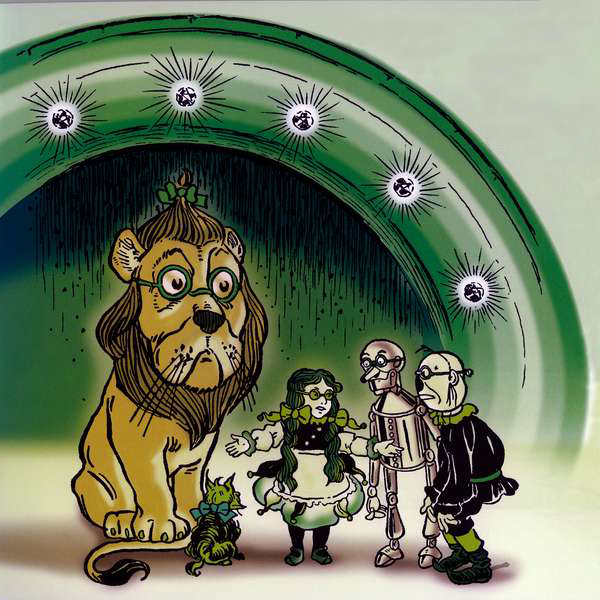
I previously wrote about my first professional theatre job as the Cowardly Lion on a children’s theatre tour. It was a big adventure with a little romance and a lot of angst as the tour drew to a close. Most of the other cast members had theatre jobs lined up for the summer, while I was about to wake up on the black and white side of the rainbow with no prospects other than crawling back to Carle Place Tower Records and asking for my job back.
I had to get to Manhattan. It was looming in the distance like the Emerald City. As I wrote in another post about this period… Dorothy may have been happy to go back home, but the Lion, with his newfound courage, stayed in Oz.
It turned out that Glinda the Good Witch didn’t have a job lined up, either. She lived in a women’s hotel on Gramercy Park South but was ready to make a move. When she suggested that we find an apartment together, I jumped at the chance.
I knew this might not be a perfect fit. Glinda’s nickname on the tour was Eeyore – partly because she carried the stuffed animal around with her, but also because it matched her personality. She was a lumbering sad-sack with a constant cloud of doom over her head. It was much more amusing when we were on tour than while apartment hunting in the summer heat.
We looked at one apartment after another – she would hem and haw and say that she needed to think about it. Any halfway decent place was taken by the time she made up her mind. In the meantime, she continued to live in the women’s hotel while I kept schlepping into the city from Long Island. This went on for almost two months.
By the time I found the apartment on East 6th street and Avenue A – a converted 2 bedroom in a 5th floor tenement walkup for $750 a month – I felt that this was our last chance. If she didn’t go for this one, then I needed to come up with an alternate living situation. Perhaps she sensed that this was the end of the line, because she agreed fairly quickly and we got it.
There was a clause in the lease – a standard apartment lease – that says something about the tenant being responsible for carpeting 80 percent of the floors to reduce noise for the downstairs neighbor. When we asked the landlord about this on the day of the lease signing, he started to laugh. A little too long. Then he simply said; “Don’t worry about it.”
Our first night in the apartment, we were startled awake by the blood curdling screams that sounded like a woman being attacked. This quickly escalated into a shrieking, incoherent babble that echoed inside and outside the building. I immediately thought of Kitty Genovese and the nightmare of urban apathy. It abruptly stopped before we could find the source. We soon learned that the neighbor right below us had frequent schizophrenic episodes – usually in the middle of the night, although they would happen at any time. So no, we did not need to carpet our floors to limit our noise for the downstairs neighbor.
Despite its flaws, I loved that apartment. It was above this derelict bar called the Cherry Tavern. 20 years later, the NYU kids were lining up to get in. We had no door buzzer so visitors would have to call from the pay phone on the corner – this was pre-cell phone, of course. One of us would have to walk down all those flights to let them in. The floors in the apartment were so slanted that we had to put a 2×4 under one end of the kitchen table to keep it level. The ceiling leaked. The exposed brick wall in the living room was actively crumbling. Anything placed near it was subjected to a coat of debris.
Our living room furniture was purchased by chance at a garage sale on moving day for a total of $8: a $3 wood coffee table with a wobbly leg and a $5 foam couch which folded out into a bed. Suddenly, we had a guest room.
Unfortunately, the couch would collapse sideways if you leaned on the armrests. Our heavy foot lockers were placed on either side to act as end tables as well as bookends.
Before the move, I had started working in the city. Technically, it wasn’t a telemarking job, but it was pretty close: trying to persuade doctors to take part in phone conferences sponsored by drug companies. My friend worked there and made tons of money in commissions. He loved it.
Two weeks after the move, I was fired. My success rate wasn’t high enough. I didn’t have a strong, assuring voice that was able to convince doctors that spending an hour on a conference call talking about Cardizem was a particularly good use of their time.
I tried not to panic. I had bills now. REAL bills. Shit. What the hell was I going to do? Hit the Village Voice want ads. I applied at St. Mark’s Sounds, which would have been my dream job if the $4.25 an hour they paid would cover my expenses.
My next job was a temporary night time position filling laundry carts at the Midtown Sheraton Hotel. I was in charge of the 36th through 50th floors, filling housekeeper’s carts with freshly laundered sheets, towels, little shampoos and soaps. I climbed a lot of stairs. I never saw any guests or housekeepers. It was solitary work but it paid well.
Although this was supposed to be a three month position, I was let go after three weeks. Was it my earring? It had been suggested that I not wear it to work, as the head of housekeeping would not approve. But I never SAW anybody while I was working, so I left it in. I crossed paths with her one day, and was let go at the end of my shift.
On the plus side, I had acquired a linen closet full of Sheraton sheets and towels and a year’s supply of sundries.
I had to remind myself that I didn’t move to Manhattan to be a housekeeper or telemarketer. I continued to audition but that went about as well as the employment prospects.
Meanwhile, Glinda was having her own issues. She was in full Eeyore mode: Unhappy in her day job. No theatre job prospects. No social life. She would stay in bed all day watching television with the lights off in her windowless room. I tried to include her when I went out with my college friends, but she complained that we all talked about the past and she felt left out. She became increasingly petty and jealous. She was not the kind of person who would be happy for me when I got a job or a callback audition or went on a date. Her first response was always some variation on “Why don’t I have that?” She also seemed quite pleased when the job, callback or date didn’t work out for me. Years later she was diagnosed as clinically depressed and went on medication, but we didn’t know about that at the time.
One day I came home, opened the apartment door and walked into the Amityville Horror. She had painted the 5’x5’ entryway high gloss blood red. But she didn’t do it carefully. There were red spatters on the black and white tile floor and red smears along the ceiling. It looked like a slaughterhouse. If she had ever mentioned that she wanted to paint, I certainly would have helped… first and foremost by explaining that a simulated bloodbath in the vestibule might not give guests a favorable first impression.
In late August, I got the call from the children’s theatre company that had done our Wizard of Oz tour. They were lining up their Christmas shows – would I like to do a New England tour of Babes in Toyland? Hell yeah. Of course, Glinda was not happy, because they didn’t call HER. And now she would be living with a subletter.
I needed two months of employment to get me to the start of the tour. My sister worked in the main office of the Petland chain of pet stores and directed me to an open position at their 14th street location. I would clean out the bird room every day – scrubbing bird shit off the cages with a wire brush. I learned how count out bags of 20 live crickets, and how to hold mice by the tail, flick them on the head to knock them out before feeding them to the snakes. Every day I acted like this was my career choice – nobody knew I was just biding my time.
I was barely making enough money to get by. I still feel a little queasy when I see those cheapo Table Talk individual dessert pies, which were 50 cents each. The Wendy’s dollar menu was also a big treat. And I was in New York City! I was sitting in Union Square eating my sad little lunch rather than a suburban mall parking lot. One day I watched Harvey Keitel film a scene from Bad Lieutenant and then went back to work and sold a bag of live crickets to Ellen Greene. Besides, I knew I would be back onstage and out on the road again soon. I was a New York City Actor now, with my own apartment to come back to.
One of my favorite memories of this period was a hot summer evening when I took my dinner plate of spaghetti out on the fire escape to catch a little breeze. I was wearing cut-off shorts and a t-shirt, eating off of a paper plate, while five stories below was the rear garden of a pricey Swiss restaurant on 7th street – an early sign of how the neighborhood would eventually change. A string quartet serenaded the outdoor diners. Every once in a while, one of them would notice me, up on my perch. They would point and whisper to their dinner companions while I pretended not to notice.
In my head, I heard the tremulous voice of Billie Burke as Glinda the Good Witch saying “It’s all right… it’s just one of the little people who live in this land…”
I didn’t care. I was as happy as a clam on my city balcony with the Empire State Building off in the distance. I felt like I was exactly where I wanted and was supposed to be. I had come to the end of one road and felt a sense of accomplishment, knowing how hard I worked to get there. There was a whole other adventure up ahead, but for now I was in the East Village, and I was home.
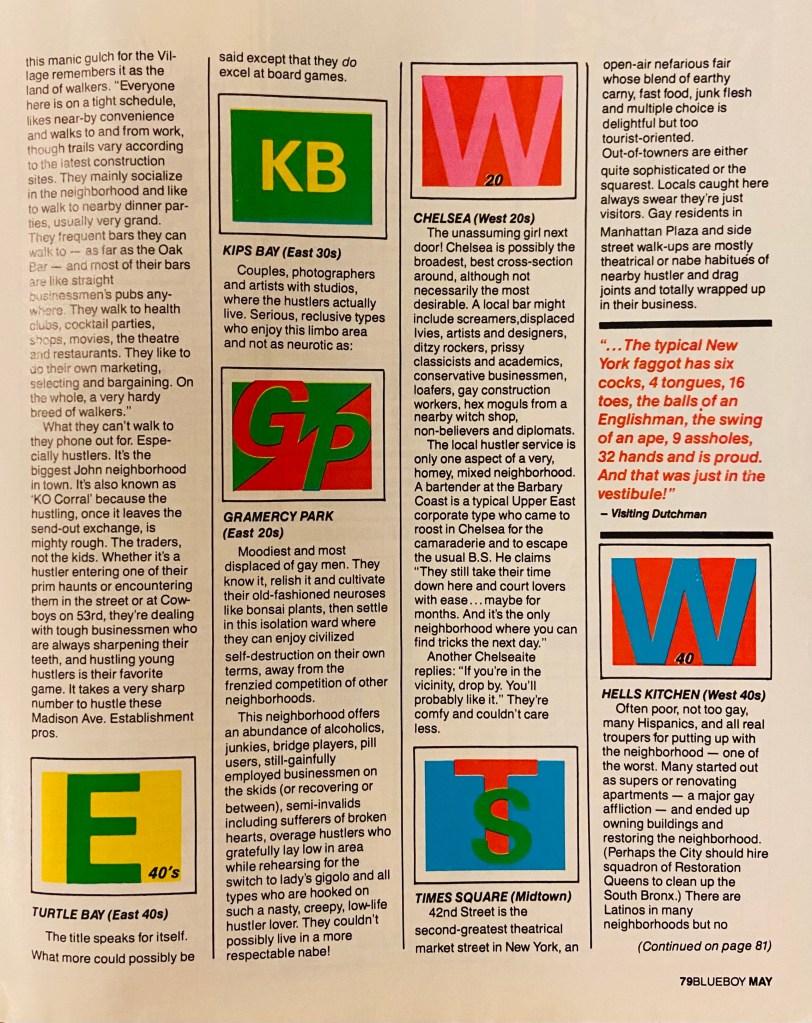
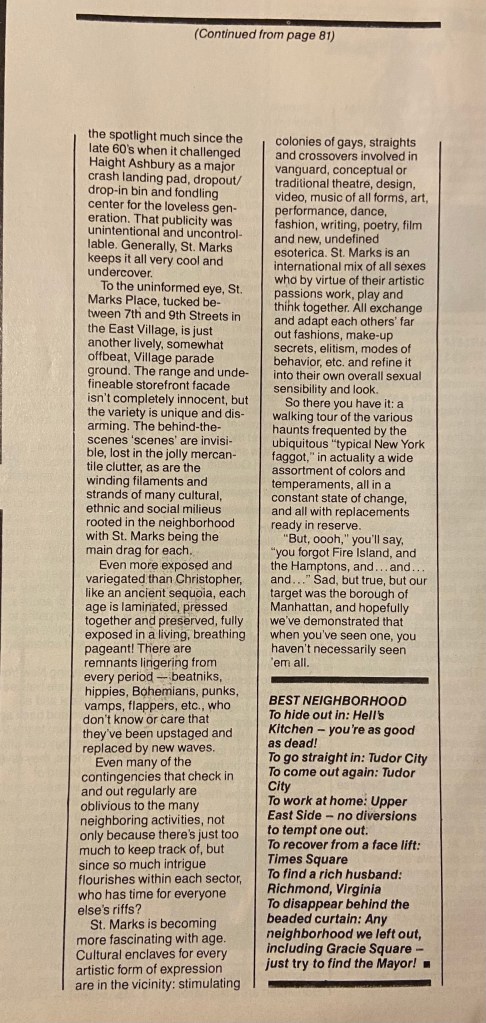
It’s not nice to stereotype. This may be especially true of homosexuals, who have borne the brunt of unkind pinpointing for so long that they believe it themselves.
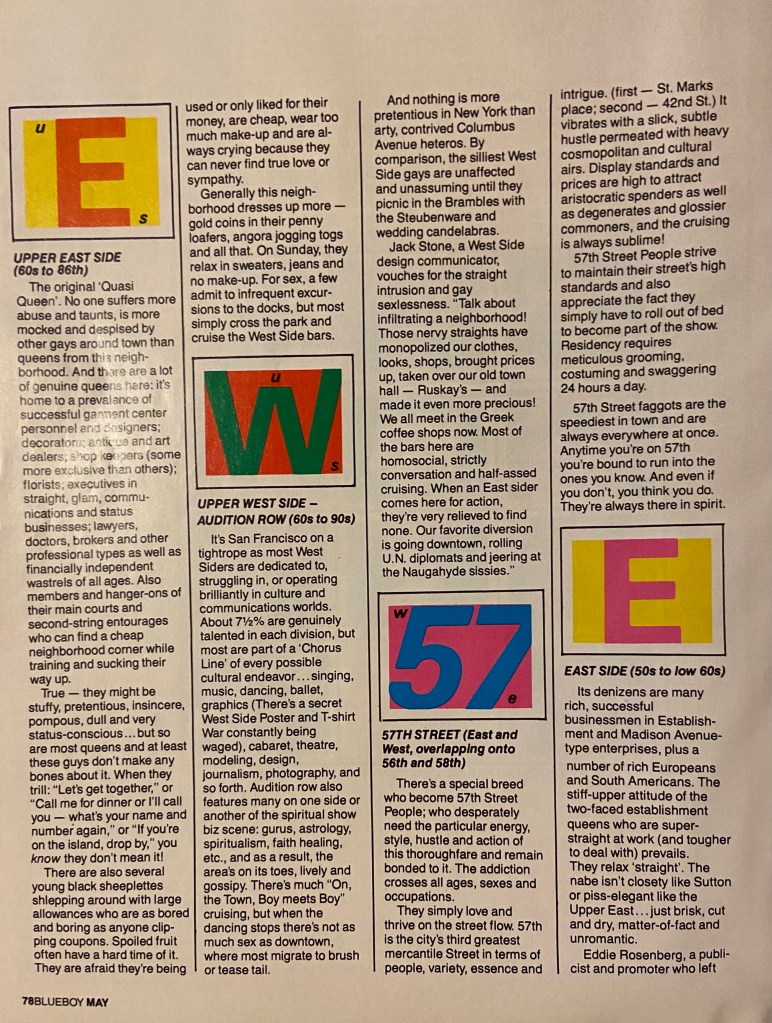
…so begins an outrageously stereotypical article from the May, 1980 issue of Blueboy Magazine, titled “Is There A Typical New York Faggot?”
Now… before you lose your shit over the title, keep in mind that those were different times. The “F” word wasn’t taboo. Larry Kramer’s book by that name had been published just a year and a half earlier. So let’s put that sticking point aside. There’s plenty more to discuss.
Another caveat: This is from Blueboy. A gay porn magazine. It ain’t the Advocate or The Village Voice. Presumably author “J. Greller” was the pen name of a jaded queen with his tongue firmly planted in his own cheek and his head up his own ass. Who can say for sure? I wouldn’t want to, you know, stereotype… but Harold from Boys In The Band could deliver this piece as a monologue.
It’s mean and bitchy, but not in a fun way. It’s like the author had one martini too many and his New York City rant went to a dark place that was no longer funny or clever. The specificity of many of the “types” described gives the indication that he had an axe to grind with very particular unnamed individuals.
Have a read:
To be fair, the entire piece isn’t completely tone-deaf. There are glimpses that ring true, especially in the downtown neighborhoods. This is due in part to the quotes from others – Doley the Third’s observation on Harlem, for example.
I find the piece to be out of sync with the NYC neighborhoods as I have known them since the early 1990’s. But this is my perception over a 30 year period. I wasn’t there in 1980, but I have to wonder if the author has based his observations on, say, a 30 year period prior to that. Were there were really still old vamps & flappers on St. Marks in the CBGB era? Did 57th Street really have its own gay male type that needed dissection? Did nobody ever travel out of their own neighborhood to socialize? Were the streetcars not running?
Interesting to note that, for all this compartmentalizing of Midtown East neighborhoods: Kips Bay vs Turtle Bay vs. East Side… there is no mention of Murray Hill. At the time, according to older gay New Yorkers that I have known, it was referred to as “Mary Hill” due to the large number of gay bars and homosexual residents. J. Geller missed a golden opportunity.
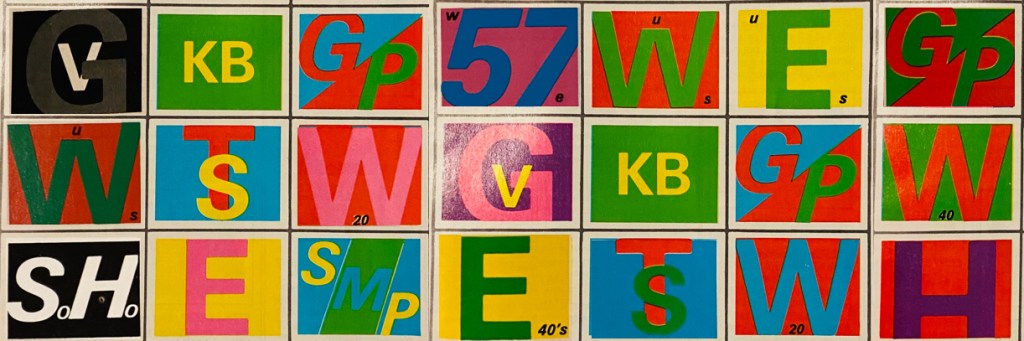
Kudos to the graphic artist Favio Castelli, though.































































































 Brian Ferrari's Blog