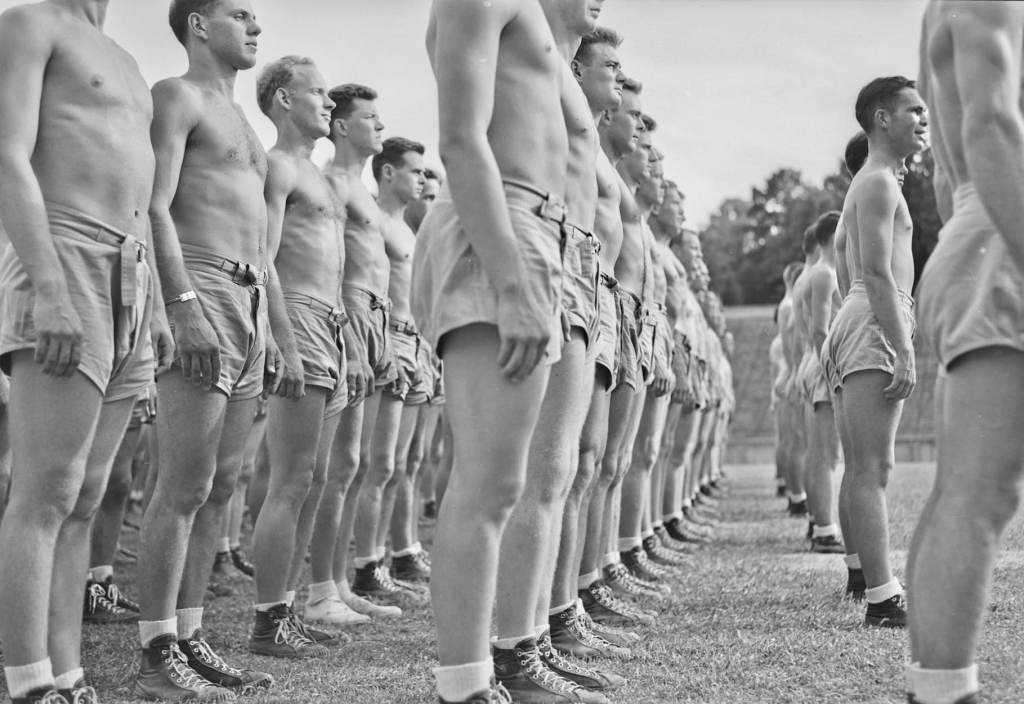
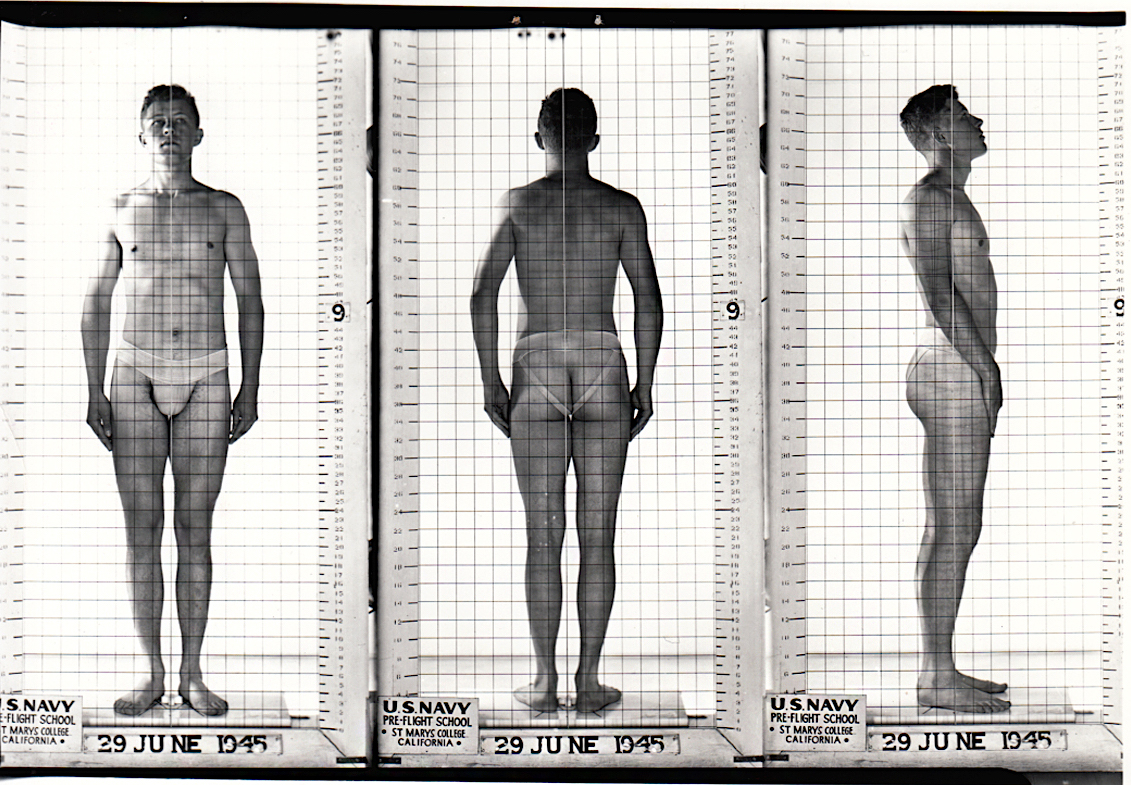
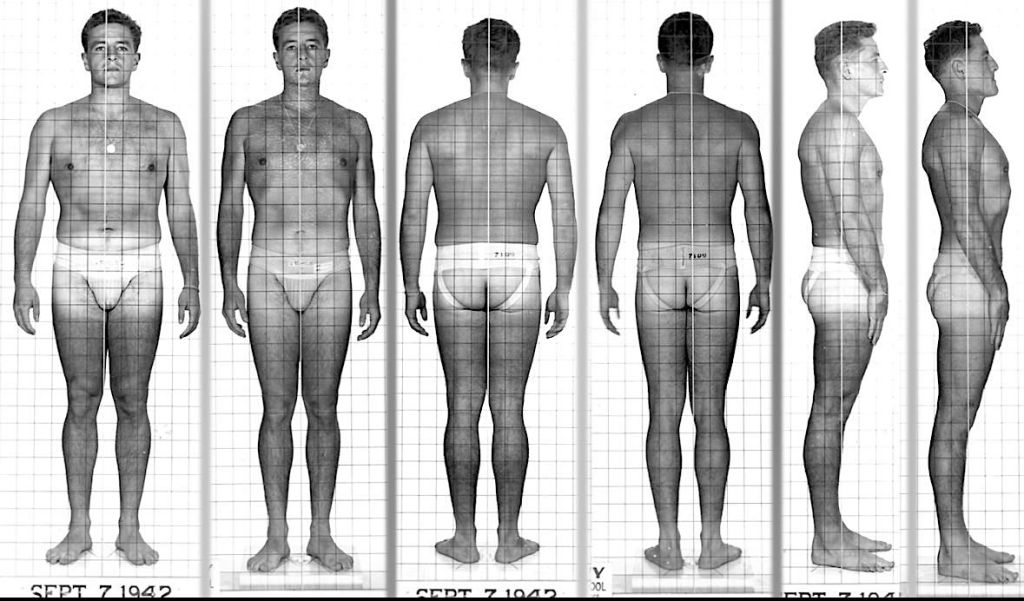
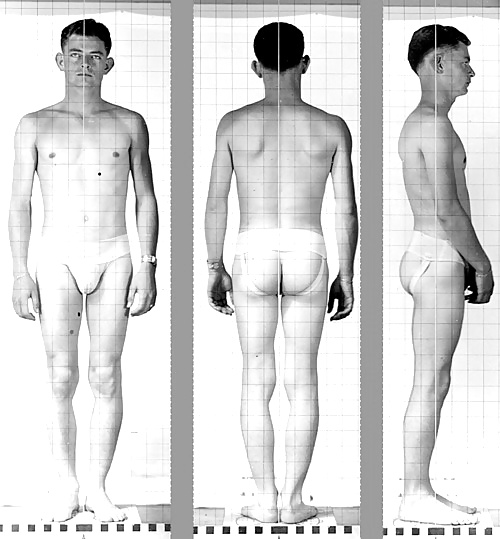
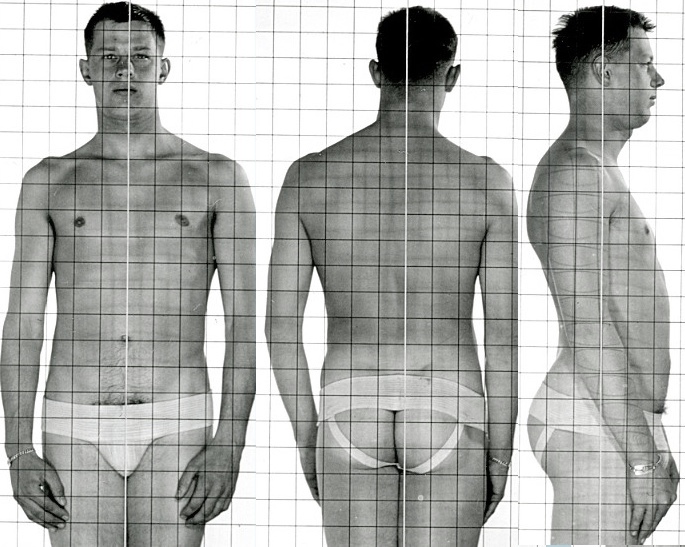
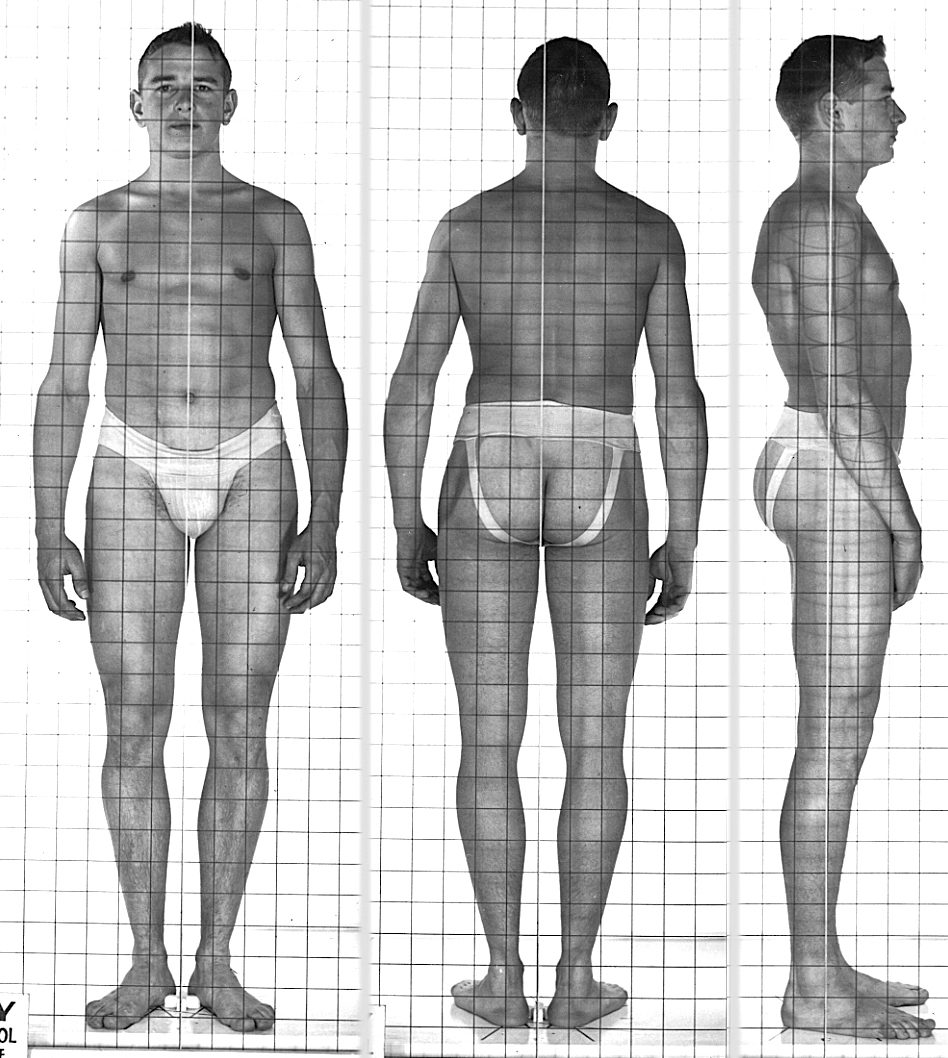
June, 2022 marked 80 years since the start of the U.S. Navy pre-flight training program that took place at St. Mary’s College. Images of naked or jockstrap-clad cadets were taken during training at the school in Moraga, California when it was requisitioned for the war effort from 1942-1946. You can see more of these photos in our previous posts:
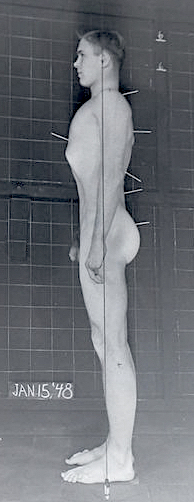
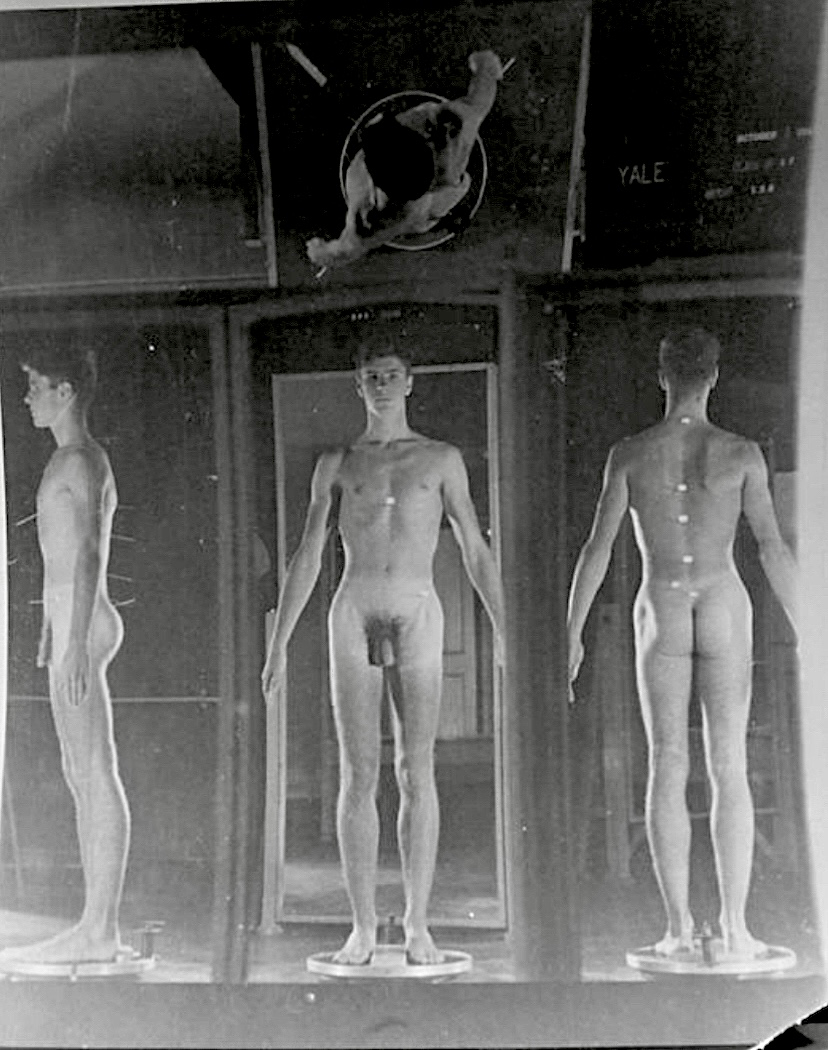
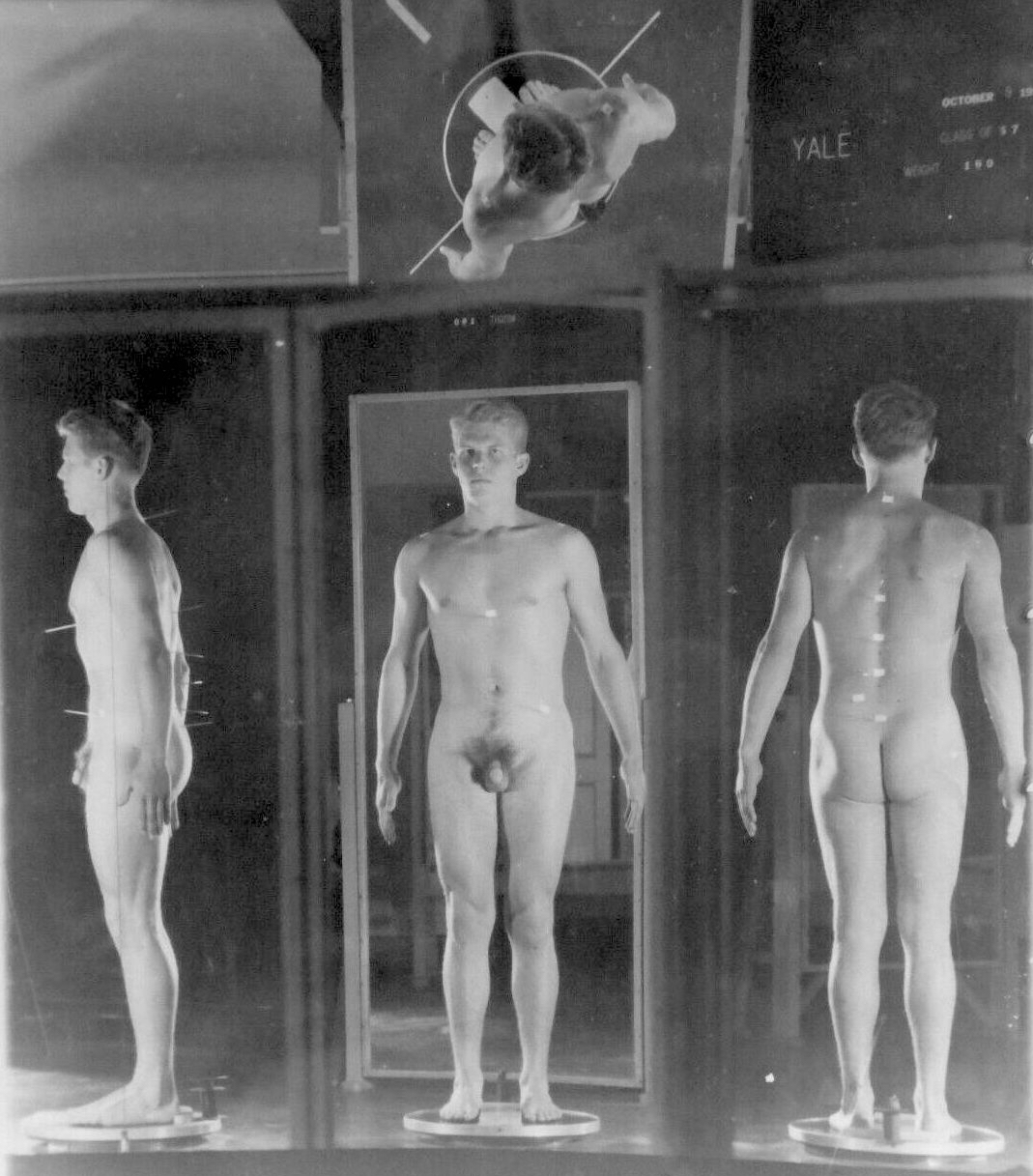
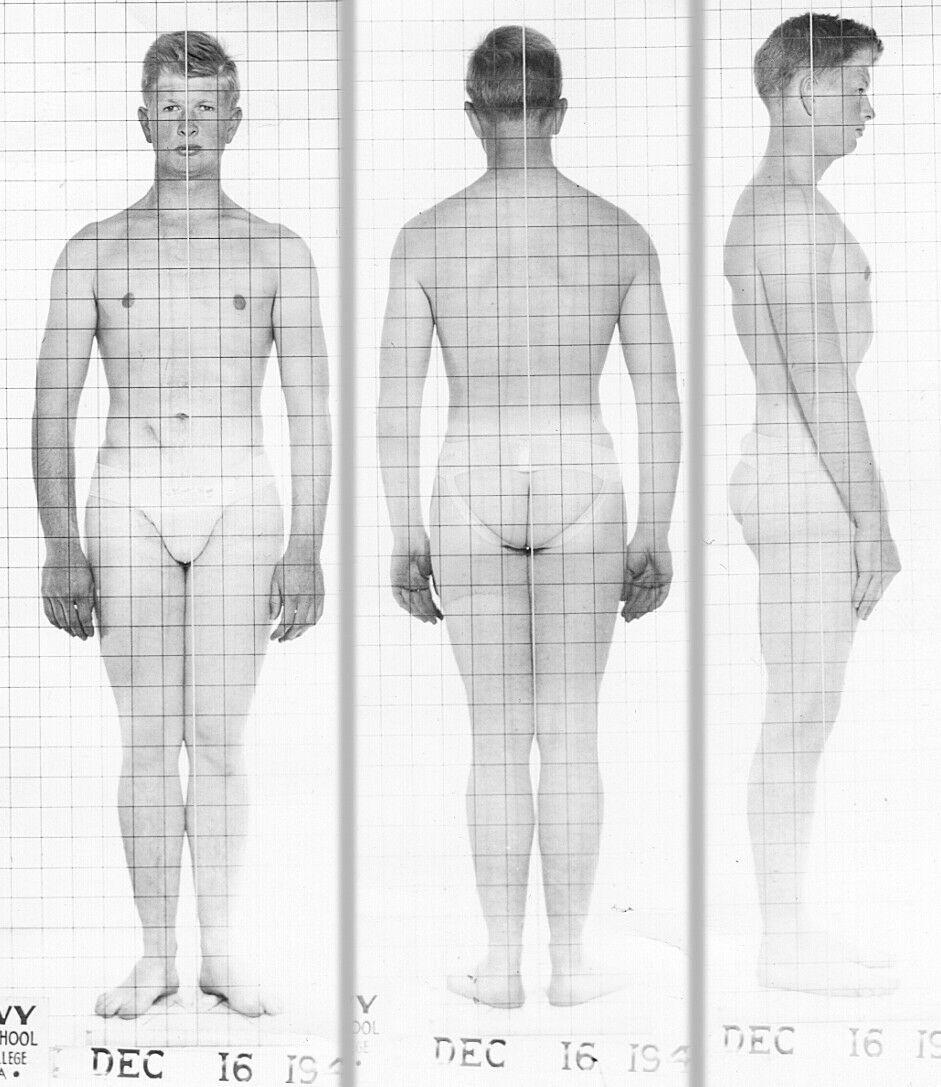
Unfortunately, there is still some confusion when these pictures surface, as they are sometimes misidentified as Ivy League posture photos. For comparison, here are two of the different Yale posture photos:
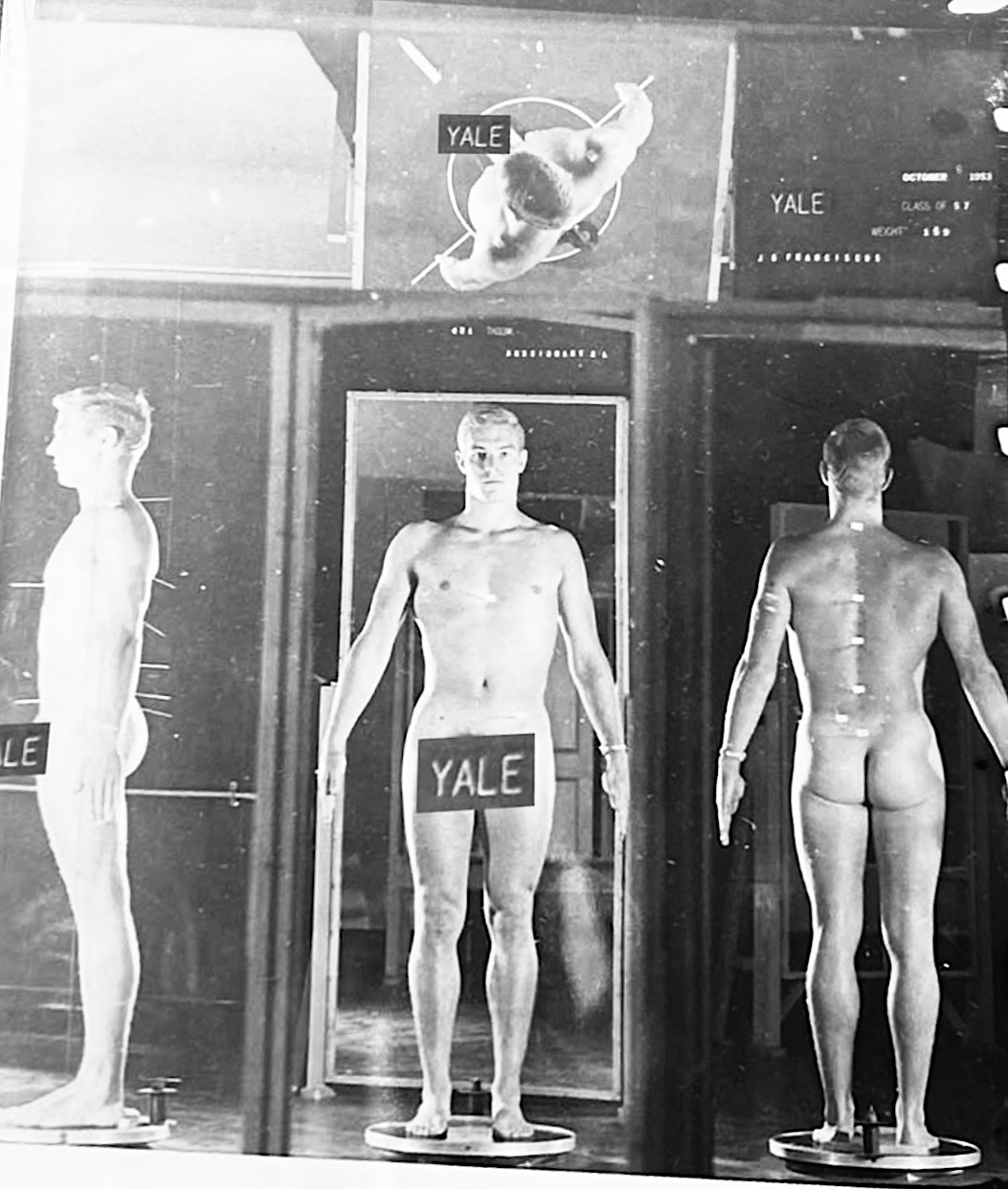
The single profile pose was used from the late 1930’s until 1952. It was then replaced with a mirror/ triptych setup, which has “Yale” visible in the background.
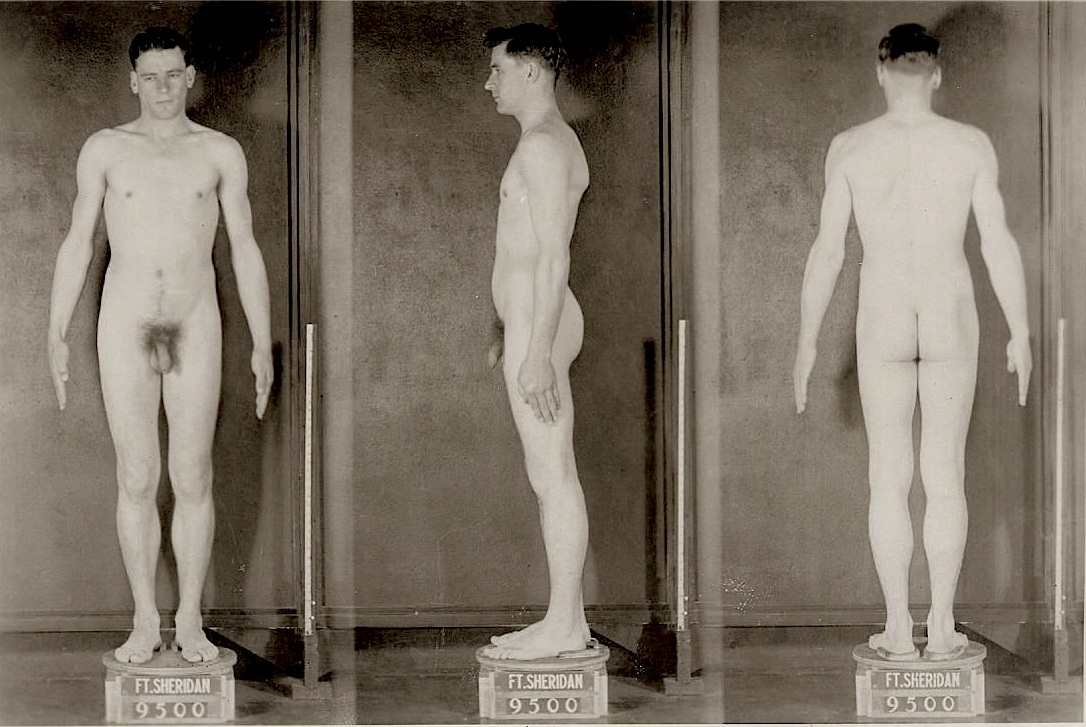
Prior to World War II, there were other physical fitness photos taken at the army base in Ft. Sheridan, Illinois. These fully nude pics do not pop up on the internet as often as those from St. Mary’s Pre-flight school. As shown above, both sets of photos contain the location identified within the photo.
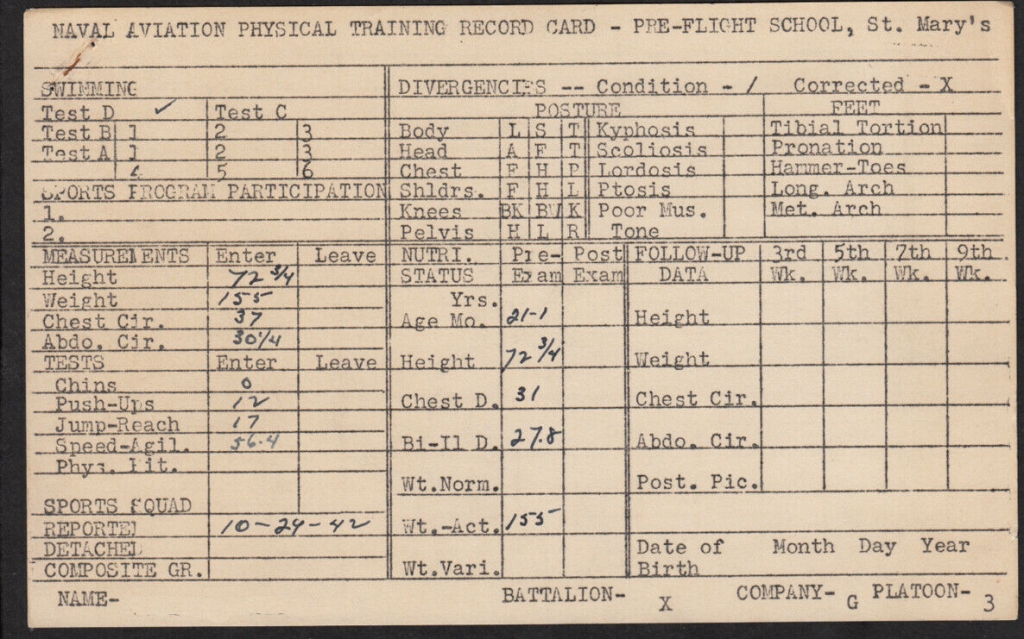
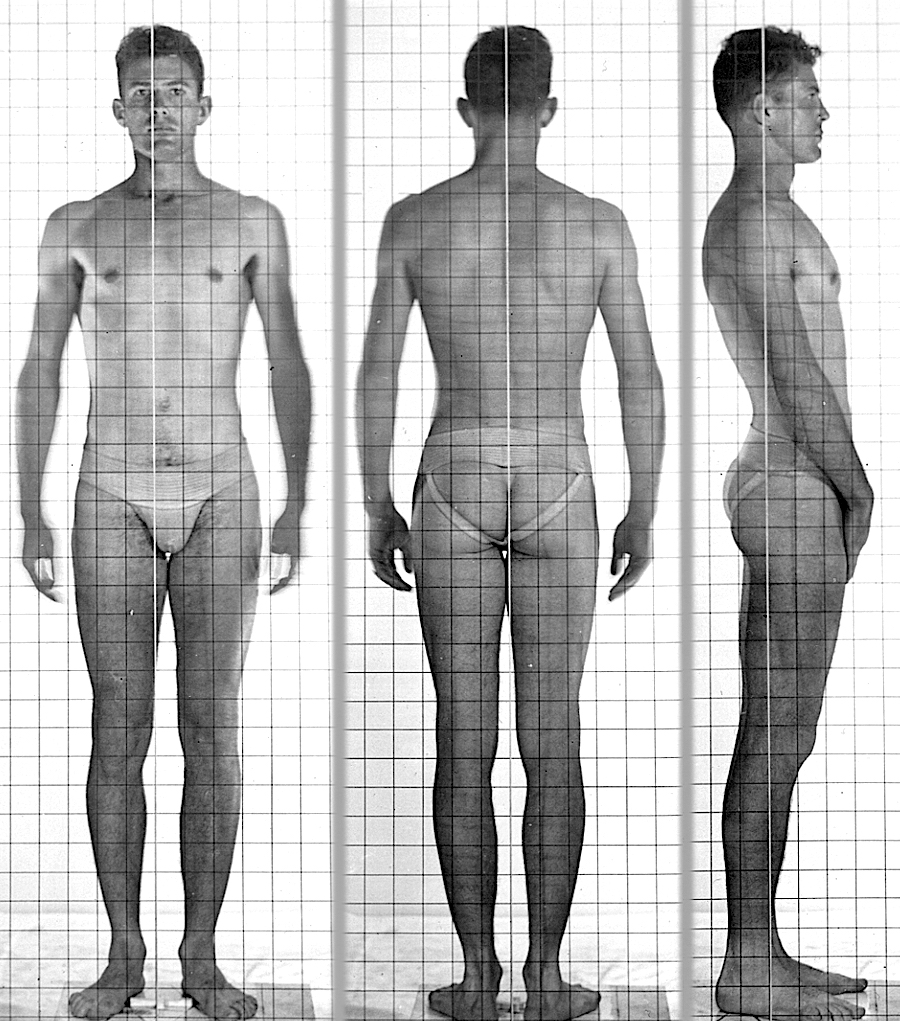
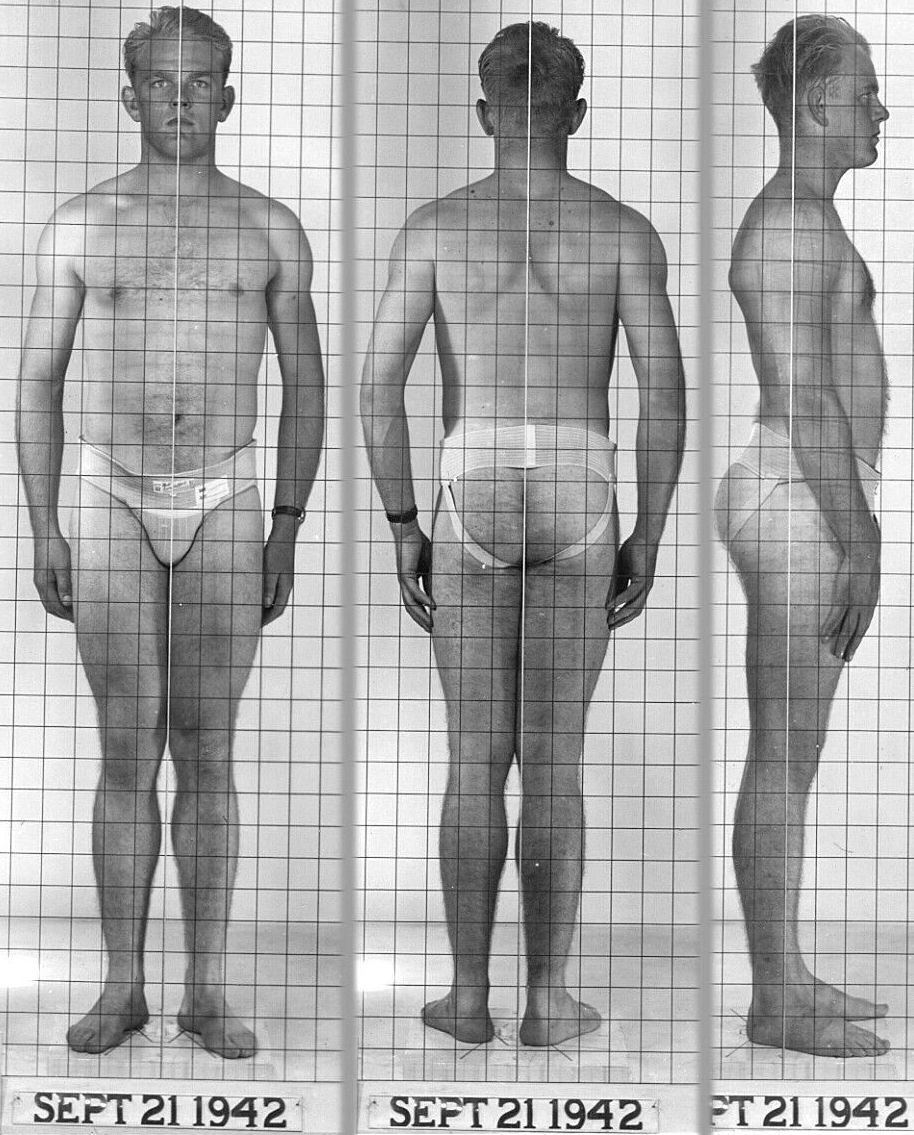
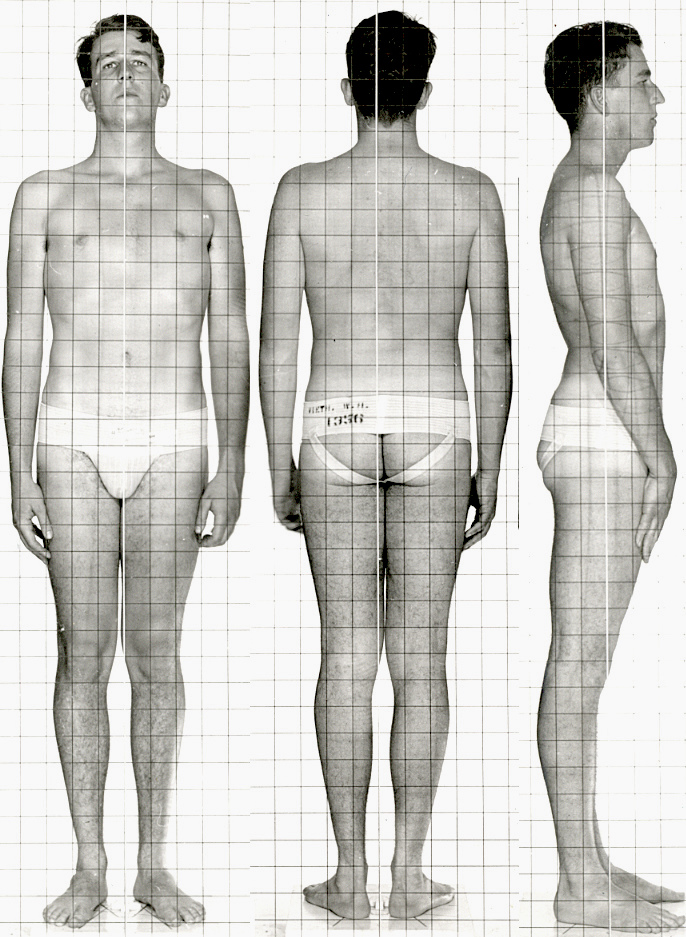
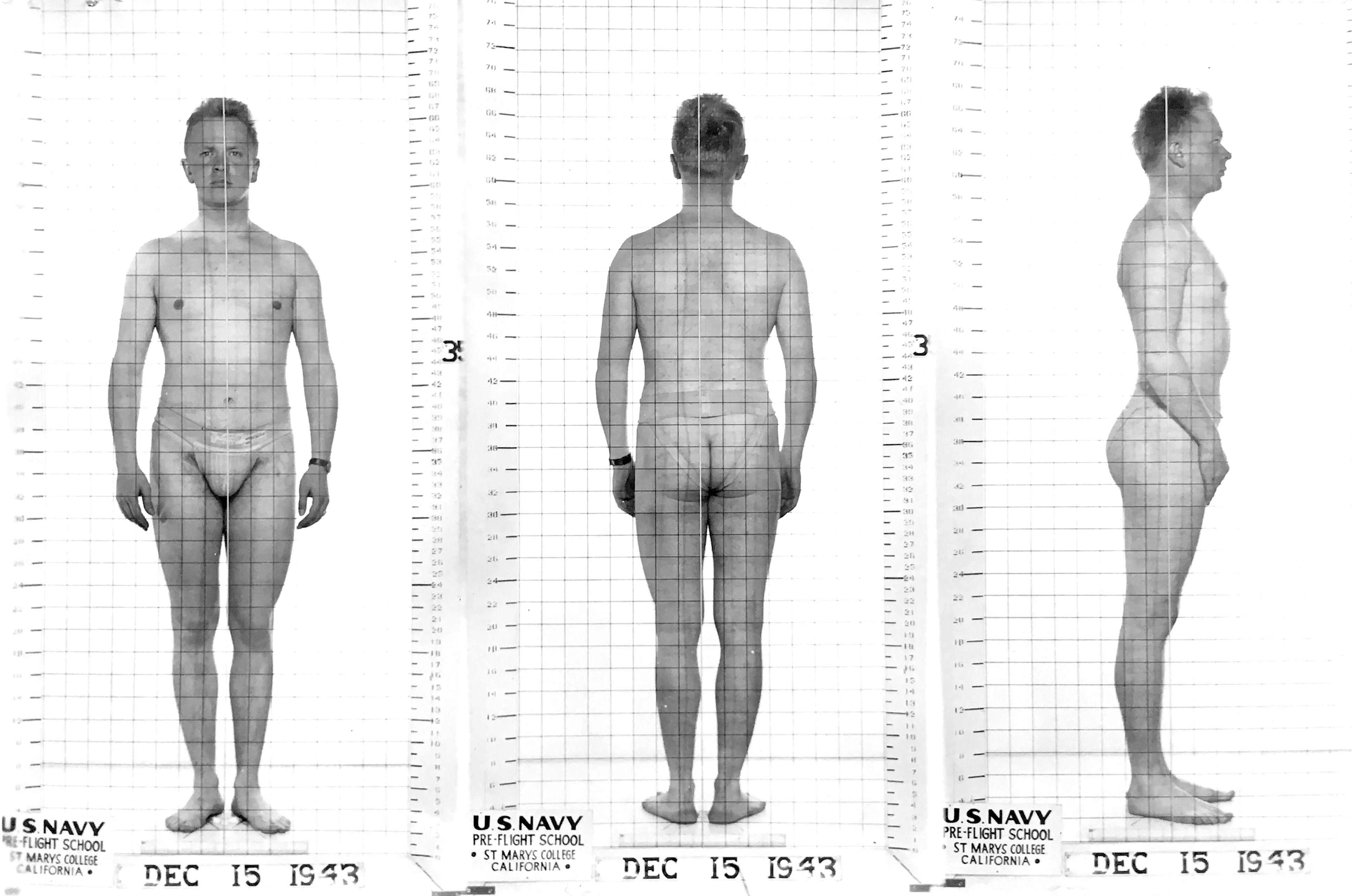
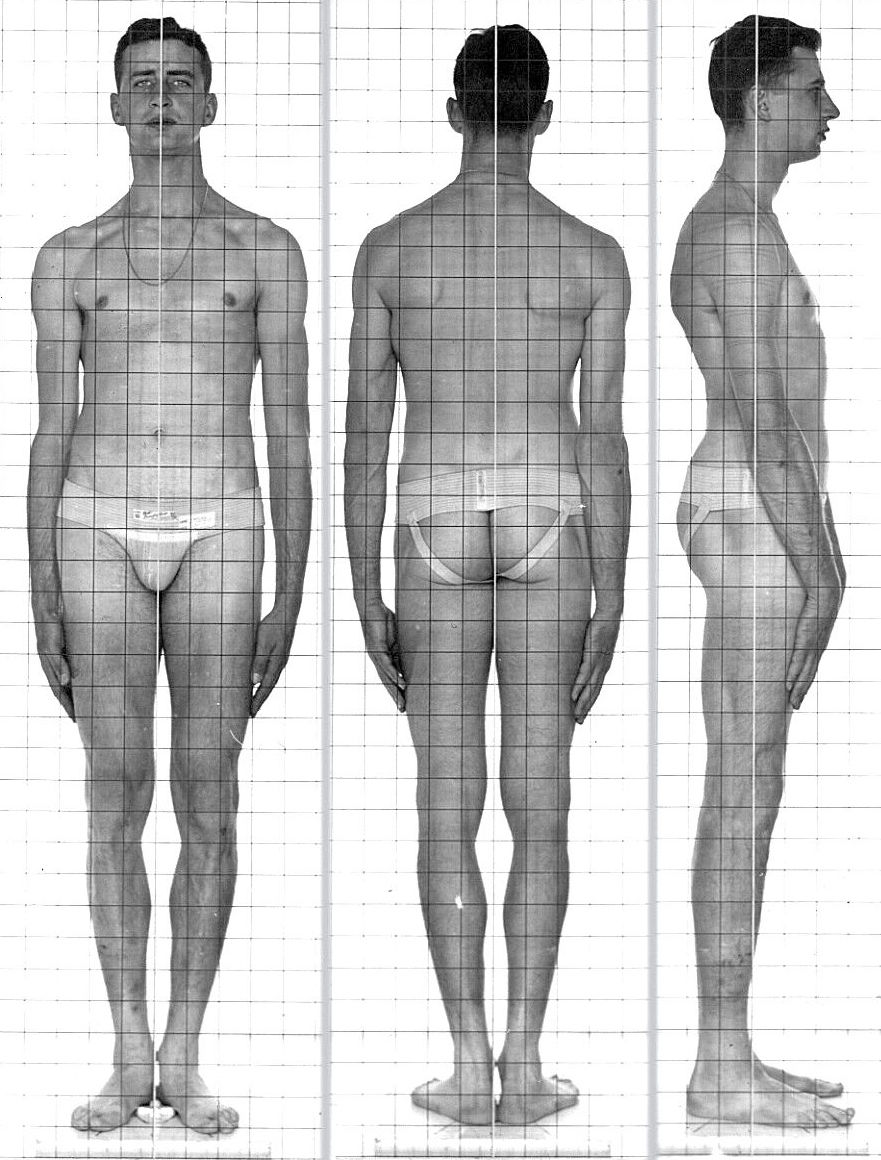
The St. Mary’s photos were taken to measure the fitness progression of each recruit as they underwent extreme physical training. Each picture was accompanied by an index card containing body measurements and physical achievement statistics over the course of several months.
This allows for some contrasting images that would be the envy of many fitness plans.
Only the earliest St. Mary’s photos – dated June 13, 1942 – feature the men completely nude. All subsequent photos feature the cadets in jockstraps. In all of the photos, the men stand behind some sort of grid fencing to better illustrate misalignment and spinal curvature. The above comparative photos were dated June 13th & August 28th, 1942.
My collection of photos gathered from around the internet now includes close to 700 different cadets. The youngest identified died at age 20 and the oldest lived to 103 years old.
Whether the individual photos of these handsome young men capture them at the beginning of their lives or tragically close to the end, all of the subjects are timelessly captured in prime physical condition as they trained to serve their country. 80 years later, we salute and admire their fine forms and dedication.
Navy Memorial Bench plaque from the St. Mary’s campus.
A new book gives insight into a same-sex relationship in rural Canada a century ago.
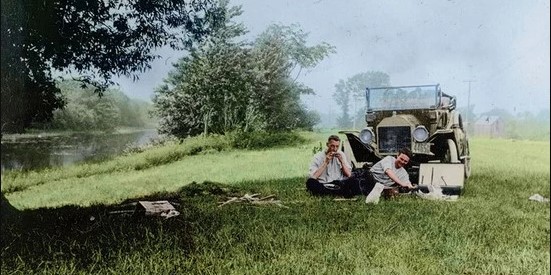
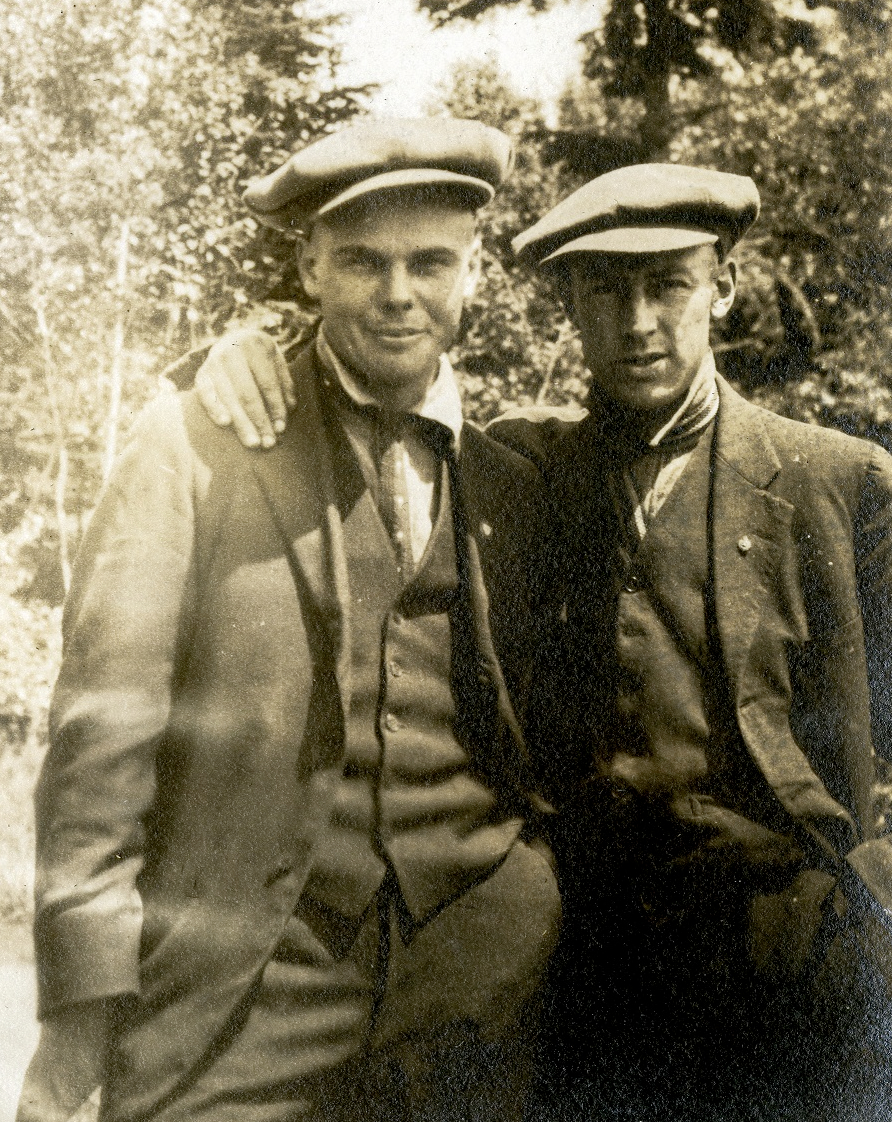
Tinted photo of Leonard “Len” Keith (1891-1950) & Joseph “Cub” Coates (1899-1965) on a trip to Jemseg, New Brunswick (1916)
If it weren’t for the advent of the self-timing camera, we would not know anything about the relationship between Len & Cub. There are no surviving notes, letters or documents to provide any further evidence. Luckily, Len had an interest in photography and documented their intimacy in a trove of images spanning nearly 15 years. These photos serve to illustrate their story in the recently published bookLen & Cub: A Queer History (Goose Lane Press) by Meredith J. Batt and Dusty Green.
Len & Cub features Len’s photos of the duo between 1916 and 1930 and tells the story of a relationship in early 20th Century rural North America. These photos provide the oldest known photographic records of a same-sex couple in New Brunswick, Canada.
The term “queer” seems a bit ill-fitting to describe the actions of individuals a century ago, when even the terms “homosexual” or “gay” were not part of the vernacular. The choice of language is explained by the authors, who dedicate the book to the queer youth of New Brunswick. As Green states in his preface, “… the record of their lives is a testament to the resilience of queer people and an affirmation that we belong in any place we choose to call home.”
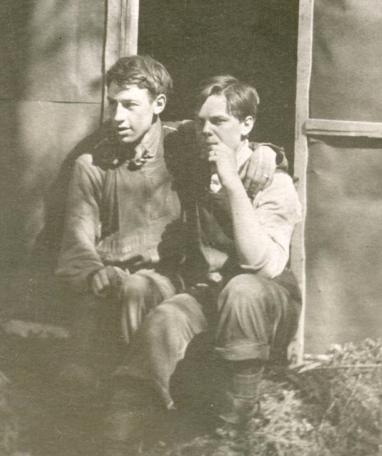
Leonard “Len” Keith was born in 1891 in Butternut Ridge (now Havelock), New Brunswick. His family enjoyed a moderate amount of wealth as the owners of a match factory and later a grist mill. Joseph “Cub” Coates was born 8 years later, the son of a farmer who was a neighbor to the Keith family. Together Len and Cub shared a love of the outdoors and documented their outings in photos. The pictures taken during hunting and canoe trips with their arms around each other or lying in bed together make clear the affection they held for each other.
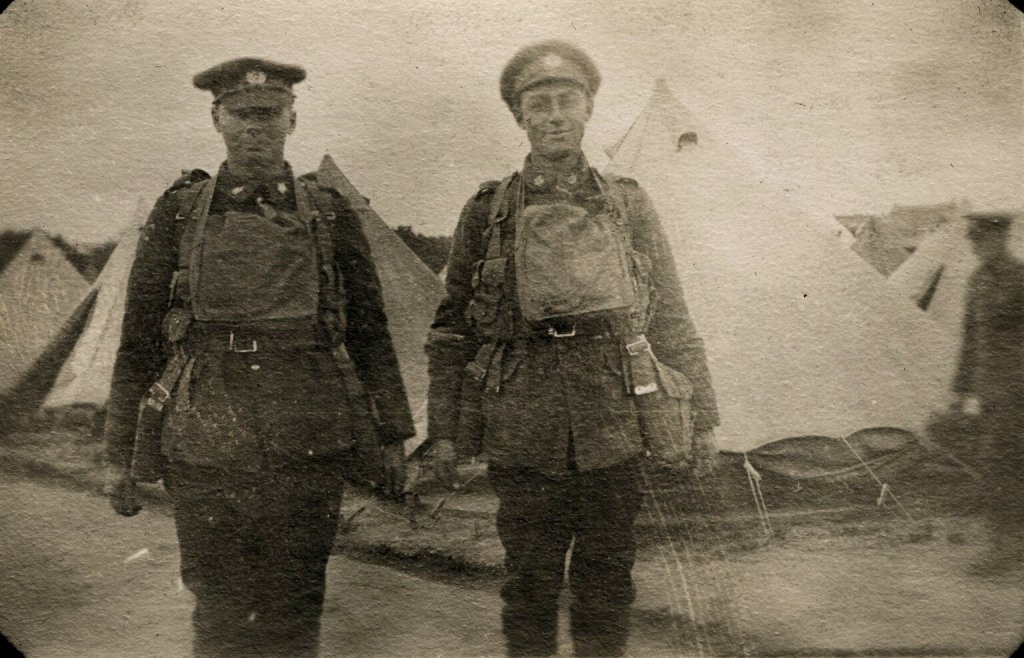
When Len was called to service during World War I, Cub signed up as well, and the two trained together in Quebec.
Cub and Len in training at Saint-Jen-sur-Richelieu, Quebec (1918)
Photos of the duo are less frequent in the late 1920’s. Len’s camera captures several other unnamed male companions that accompanied him on trips and other outdoor adventures.
Len was also a car enthusiast and eventually opened a garage, which he later converted into a pool hall. Cub continued to make a living farming and then as a butcher.
In 1931, Len was forced to leave Havelock, allegedly due to his homosexual activities. He signed over control of his business and finances to his sister Lucy and headed to the United States. He later settled in Montreal, where he resided until succumbing to cancer in 1950. His sister arranged for his burial in Havelock.
It appears that Cub was not caught up in the scandal that forced Len out of town. He stayed in Havelock until 1940, when he married Rita Cameron, a nurse from the neighboring town of Chatham. After he served in WWII, the couple relocated to Moncton. He would go on to become a prominent figure in New Brunswick’s harness racing circles before his death in 1965.
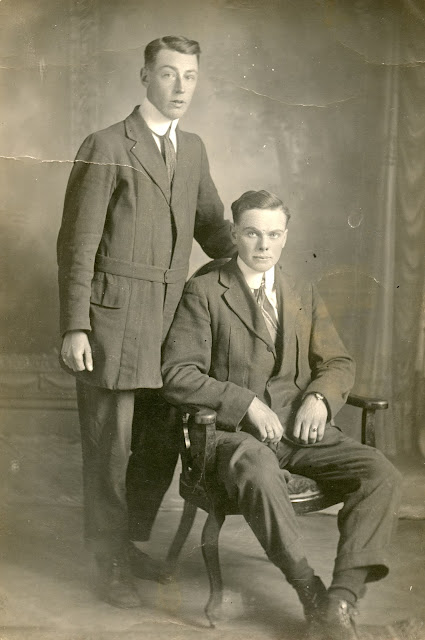
Len & Cub, ca 1916
The photos were donated to the Provincial Archives of New Brunswick by John Corey, a local historian who purchased them at a Keith family estate sale in 1984. Corey’s father had been a classmate of Len’s and knew both families. When he donated the collection, John referred to Len & Cub as “boyfriends” and also identified a photo of an individual who was instrumental in driving Len out of Havelock.
As some of these photos began to circulate on the internet several years ago, curiosity about Len & Cub’s story grew. In addition to the recent publication of the book, the BeaverBrook Art Gallery in Fredericton, NB is featuring an exhibition of the photos from April 2 – July 29, 2022.
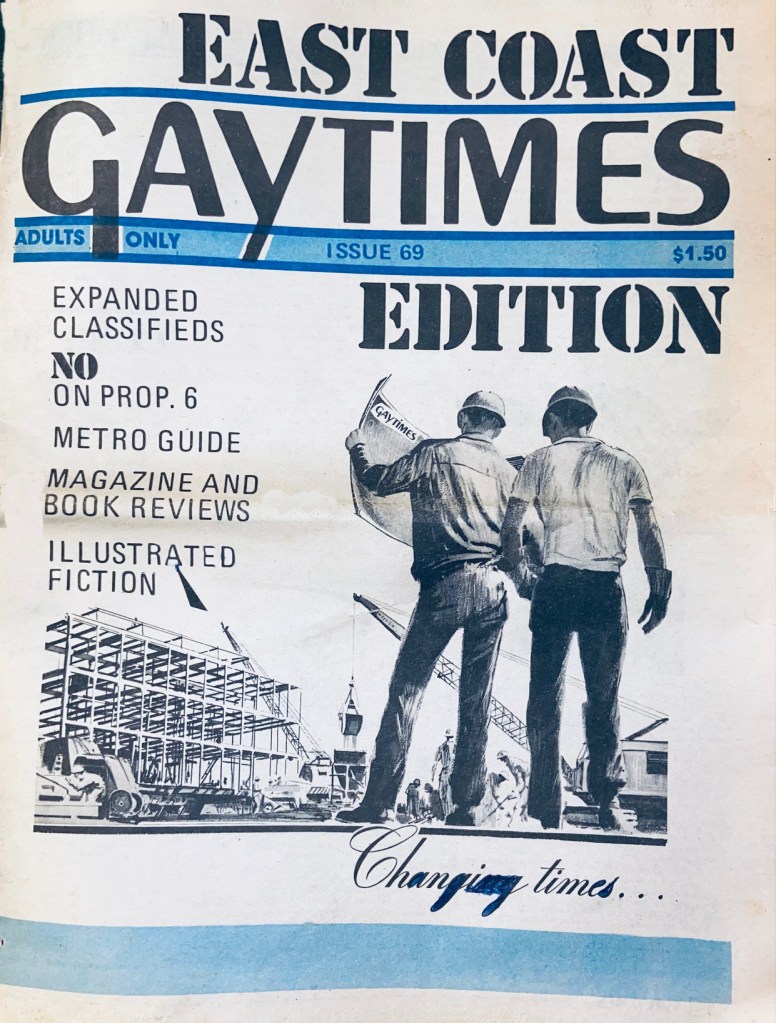
I recently came across a 1978 issue of Gay Times, East Coast Edition – Issue #69 (ahem).
The news section was dominated by California’s Briggs Initiative, aka Proposition 6 – the first attempt to restrict gay and lesbian rights through a statewide ballot measure. Thankfully, it was defeated that November with 58% of the vote, but the stakes were high when this issue went to press.
It was the importance of this vote which also inspired the centerfold:
Caption: Register To Vote – Your right to live may depend on it!
The photo is from Robert Bresson’s 1957 film A Man Escaped, a WWII drama based on a true story of a French resistance fighter portrayed by Francois Leterrier (center).
Elsewhere in the issue, an editorial calls for the continued boycott of Florida Citrus due to the anti-gay efforts of their spokeswoman, Anita Bryant.
Welcome to 2022, when it all seems painfully current, domestically and abroad.
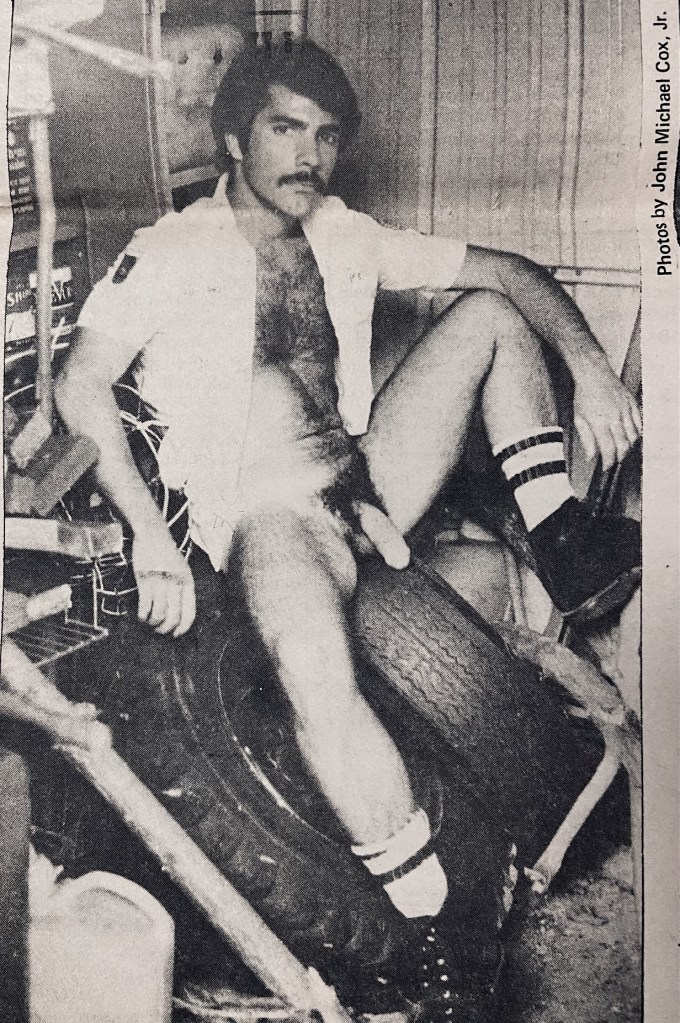
Ah, but it wasn’t all politics and protests. Editor Pat Pomeroy interviewed The New York Man: Damian Charles. He’s described as an Aries ram, former school teacher, author of 49(!) books of erotica, and a centerfold model. He inspired orgasms in 17 countries! (I have to wonder who collects such statistics and where does one find the raw data?) And also – what quote could encapsulate the era better than “… as I have sex with a succession of lovers under the strobe lights at Studio 54”?
I reached out to photographer John Michael Cox, Jr. to see if he had any recollections of this dynamo. “Charles Herschberg was a very close friend & the writer I most used to conduct interviews – I didn’t like to transcribe interviews so I employed writers. For his nude modeling, he decided on the name Damien Charles, which I never liked. He never had the ambition to do much & mainly posed for me. He never did films but I did shoot some hardcore pix of him with his lover Richard Allan. Chuck died around 1990 in Florida.
“These photos are from the first session we did. I never worked for Gay Times, so Chuck must have given them the prints to use.”
I asked about Chuck’s work as a writer. “I met Chuck when he was writing a piece on (gay porn star) Roger. I came over to the Eros Theatre to photograph him and Roger’s manager Jim Bacon introduced us. Typical of Chuck – he never finished the article.”
Regarding the many porn books Chuck wrote: “He probably wrote under many different names. He worked for an outfit that used many writers. They churned out huge amounts of paperback porn.
“Harlequin offered him a deal to do books & said he could alter his porn stuff. $5,000 per book. He couldn’t bring himself to do it.
“Years ago I tried to do a tribute to Chuck on my website, which has since been taken down. Like everyone who knew Chuck, I adored him & also wanted to hit him over the head.”
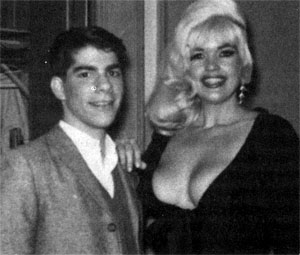
Charles Herschberg with Jayne Mansfield backstage at the Latin Quarter (1965)
Thanks to John Michael Cox Jr. for his recollections of his friend.
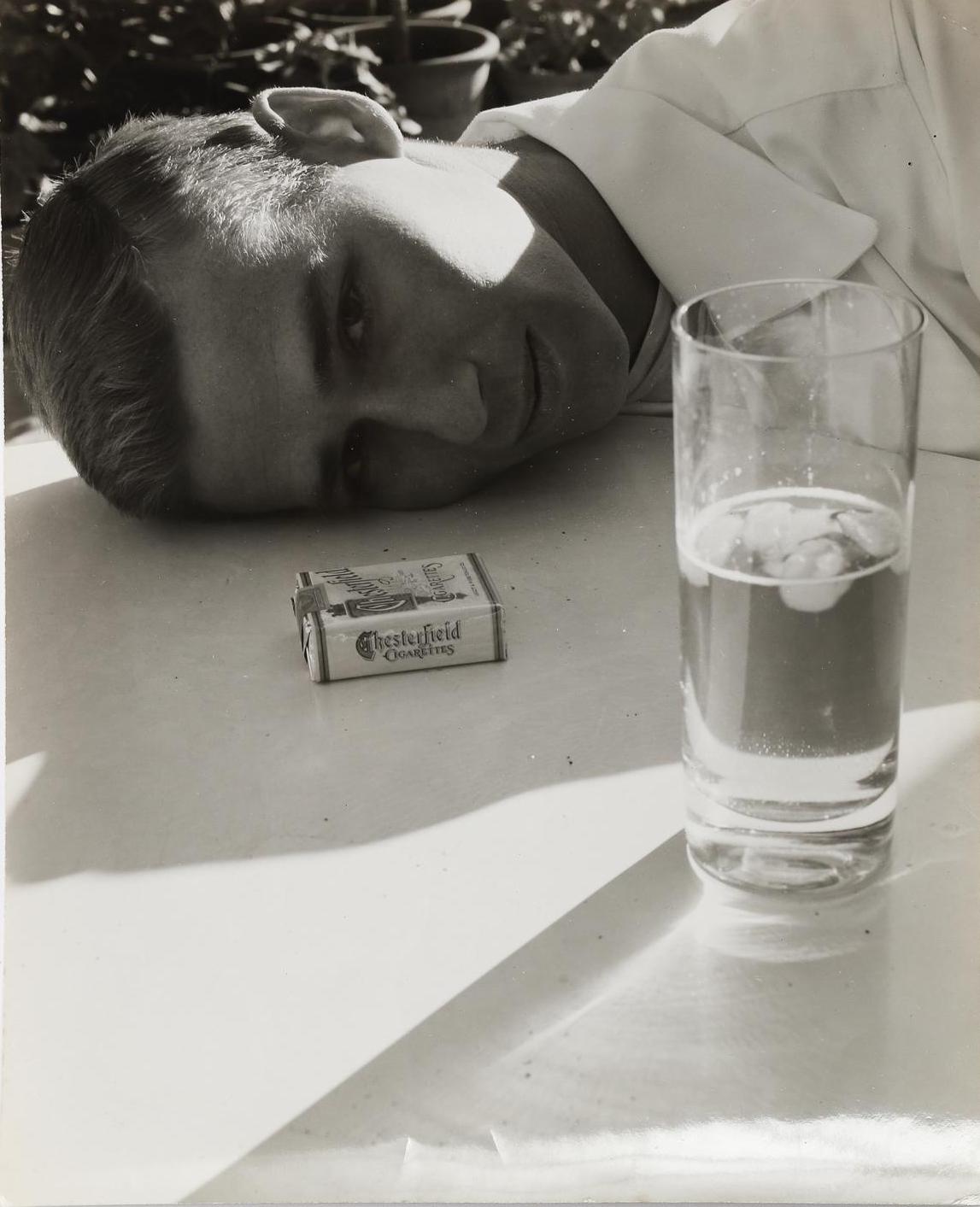
While scrolling across the internet in search of photographs by George Platt Lynes, I came across one that I had never seen before – a handsome shirtless young gent sitting cross-legged on a bed. Initially I was skeptical of its authenticity, as the subject looked so casual and timeless. There is nothing dated about the guy or his surroundings: the image could have been captured at any point in the last century.
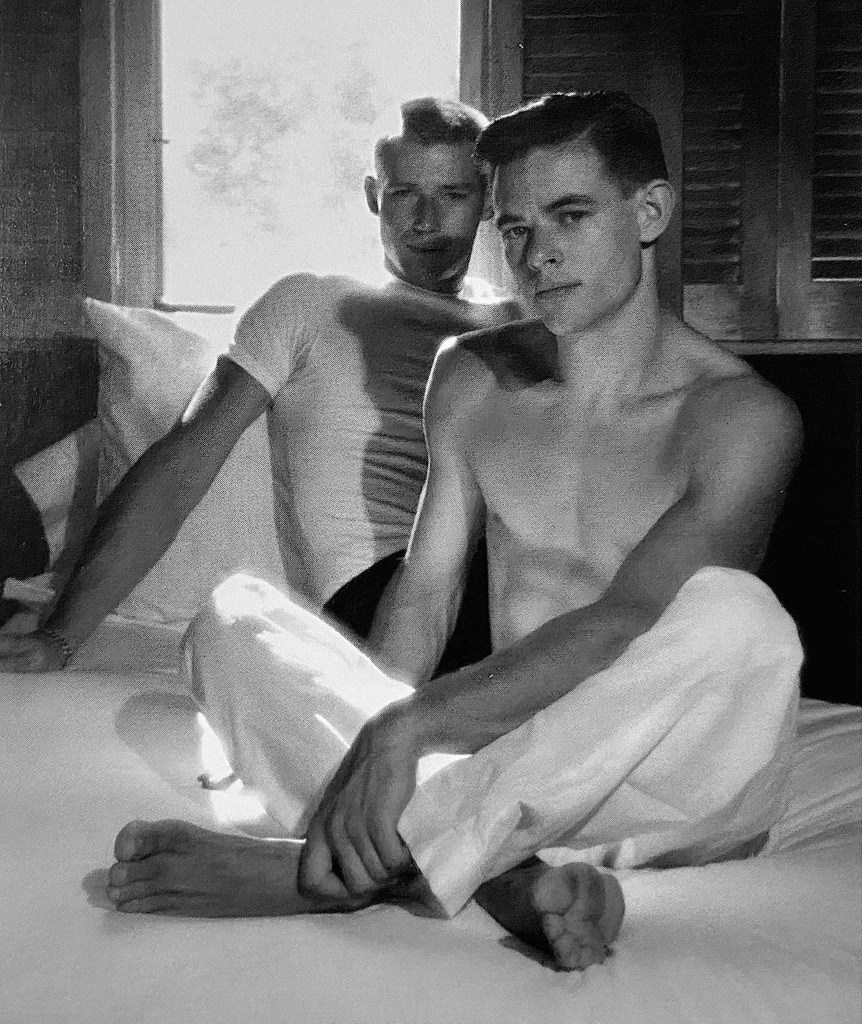
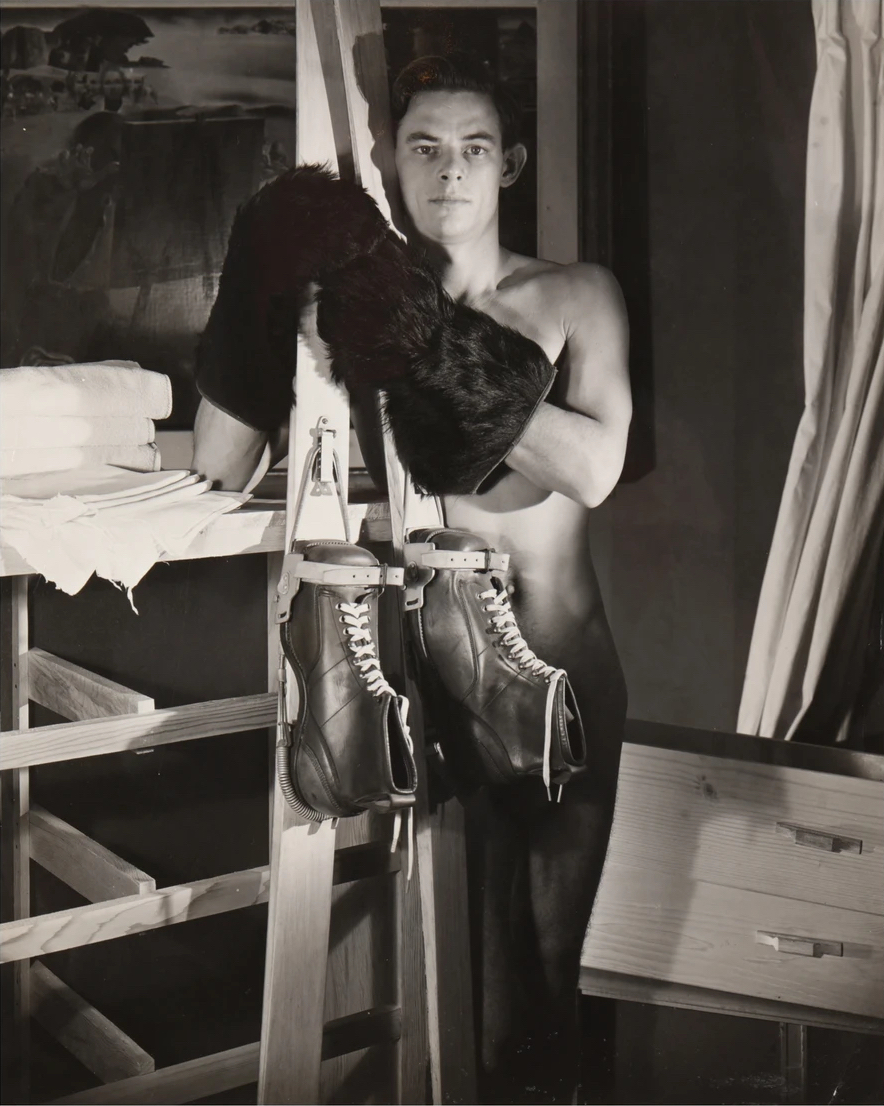
I decided to do a little investigating and found that it was, in fact, an authentic Lynes photo. The handsome subject was a fellow named Randy Jack, Lynes boyfriend circa 1947-48. A new Lynes biography also helped to fill in the blanks.
Homer Randolph Jack was born on April 5, 1926 in Lake Clinton, Illinois. He attended Waukegan High School where he enjoyed singing and performing. As a senior, he starred in the high school’s production of the comedy Best Foot Forward. Upon graduation in 1944, he joined the Navy.
After WWII, with his Naval tour of duty completed, Randy Jack settled in Los Angeles, where he embarked on a relationship with ice cream parlor impresario Wil Wright Jr.
Californians of a certain age still swoon at the memory of Wil Wright’s frozen delights, decades after the last shop closed its doors.
George Platt Lynes photos of Wil Wright Jr.
Wil & Randy
In the recently published George Platt Lynes bio The Daring Eye, author Allen Ellenzweig refers to Randy Jack as “Wil Wright’s favorite.” In August of 1947, the two of them rented a room in Lynes’ Hollywood home. The New York-based photographer was in the midst of his “Hollywood period” working for Vogue magazine. Lynes – who always lived beyond his means and was notoriously bad with money management – decided to take in roommates to share chores and expenses.
This arrangement did not last long because, as Lynes wrote to a friend, “Wil can’t bear not to be boss and that is one thing he can’t be. Not here.” Wright also resented George’s influence on Jack, encouraging him to pursue a career as a dancer. When Wil moved out after a couple of months, Randy stayed…. and found his way into Lynes’ bed as well.
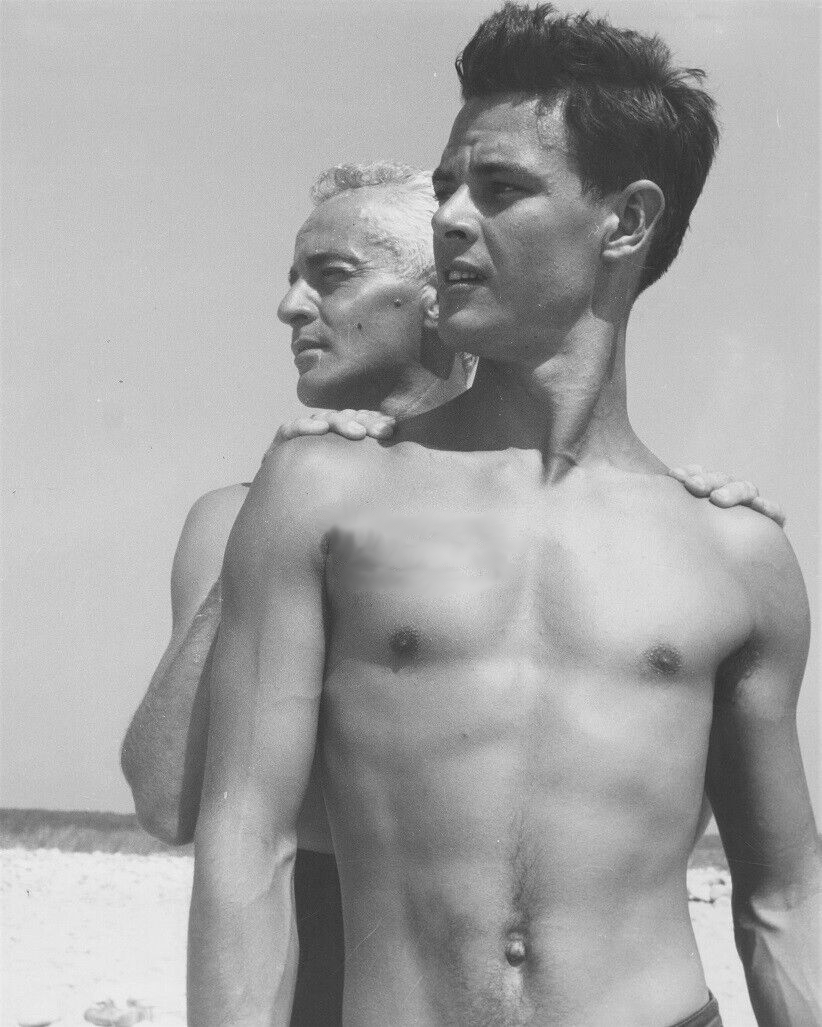
Randy Jack with George Platt Lynes (1947)
Randy Jack committed himself to a vigorous regimen of ballet classes. Although Lynes was aware that Jack was a bit long in the tooth to start training for a career as a dancer, he supported his efforts nonetheless. He wrote to his friend Monroe Wheeler; “He’s too old, 21, but he has a ballet dancers body and a ballet dancer’s soul.”
Randy Jack’s protruding ears – called “bat like” in several accounts – were viewed by Lynes as a further hindrance to attaining success as a ballet dancer. While he could not erase Jack’s advanced age, he could do something to remove this obstacle, so the cards would be “stacked in his favour, to remove whatever flies there may be in the ointment.” He agreed to barter with a plastic surgeon: Lynes would photograph the surgeon’s glamorous wife in exchange for the operation to pin back Jack’s ears. Lynes wrote to his mother at the time: “…I can’t leave things alone but redecorate or remodel anything I can lay my hands on, people as well as houses.”
The photos of Randy Jack taken in Lynes’ library are understandably the most popular.
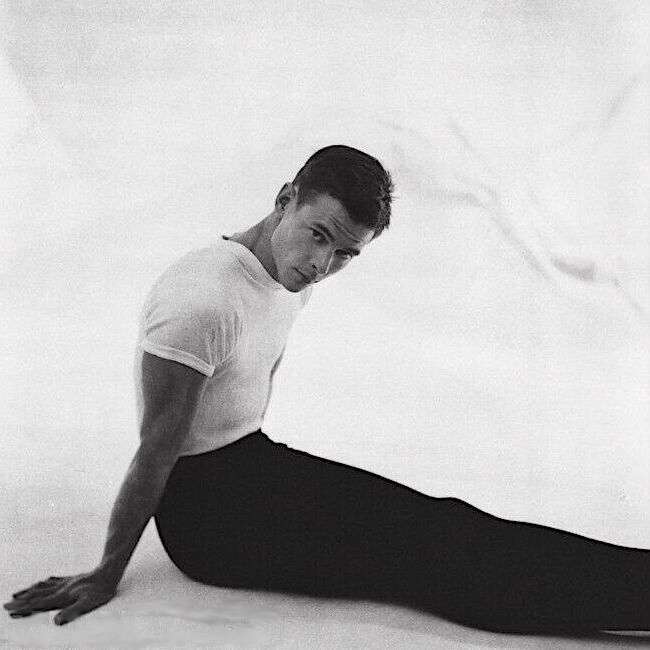
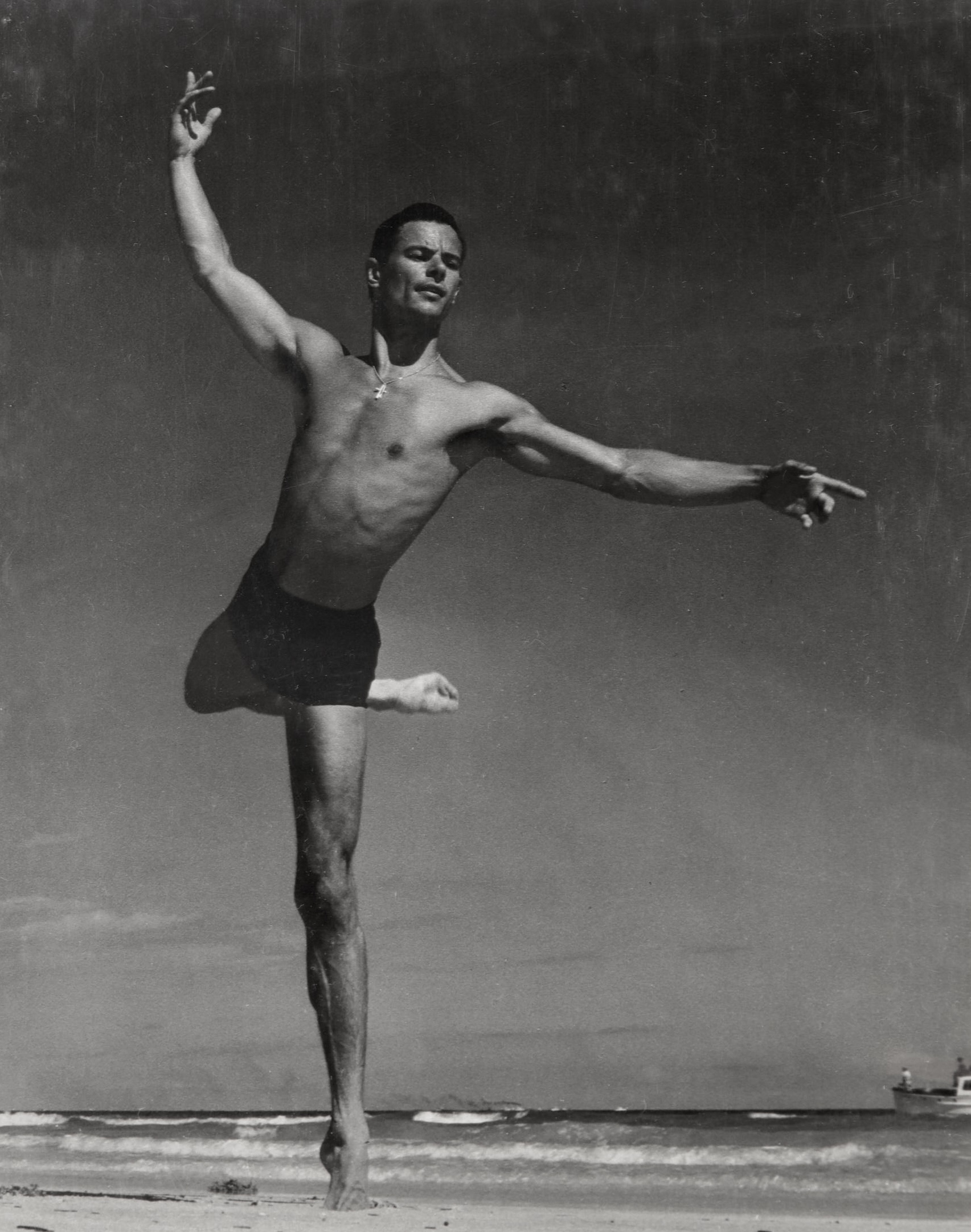
Ears firmly clipped, Lynes photographed his roomie en tenue de danse at Vogue studios, creating this striking series of photos:
In May of 1948, Lynes’ contract with Vogue ended and he returned to New York City with Randy and their dog Bozo in tow.
Portrait of Randy Jack by Bernard Perlin, June 5, 1948
As mentioned in our profile of Ted Starkowski, Lynes and his artist friends often shared models. Like Starkowski, Randy Jack was the subject of several other artists’ work, including Bernard Perlin.
Perlin later recalled, “I really am lousy. George commissioned me to do a drawing of Randy Jack. Randy and I had interrupted the drawing with some ill-advised smooching, which was in turn interrupted by Robert Drew, (my boyfriend) who lived directly downstairs from me. He was damn furious, and he left me. That was the end of it, of our thing.”
Soon after the move to New York, Jack abandoned his ballet studies and began to find work as a fashion model. This proved to be a far more attainable and lucrative goal.
In mid-summer, George wrote to Katherine Anne Porter that he was troubled about the young man, “… I wonder what New York has done to him, or what I have done.”
Whether or not Randy left George or their cohabitation ended by mutual consent is debatable. The fact remains that he moved out in the Fall of 1948… and Lynes’ next boyfriend and muse, Chuck Howard moved into the apartment 10 days later.
David Leddick writes “Jack became one of the most successful fashion models in an industry that was just becoming big business, posing for both photographers and the many illustrators of the time.”
When I look into the life of an artist’s muse from the past, there is always a point in their story that brings to mind the Kirsty MacColl song “What Do Pretty Girls Do?” The answer, she sings: “They get older just like everybody else.”
As his modeling career waned, Jack began his third act as an interior designer. His work with commercial / hotel spaces led him to the Middle East, where he settled on the island of Bahrain and became a restaurateur, opening the Upstairs Downstairs restaurant in 1977.
In 1982 Jack published Upstairs Downstairs Cookbook, featuring favorite recipes from the restaurant’s menu alongside his own illustrations.
In the mid-90’s, Intimate Companions author David Leddick reached out to Randy Jack to talk about his early years with George Platt Lynes. Leddick recounts being tipped off that Jack was living in Bahrain, and that he was able to simply call the local information to get his phone number. Strangely, Jack’s birth name in the book is listed as Randolph Omar Jack, as if the author misheard “Homer” on a poor telephone connection.
A current photo of Randy Jack appeared in Leddick’s 1997 book Naked Men: Pioneering Male Nudes. Shortly after the book’s publication, on June 5, 1997, Jack died in Bahrain. He was 71 years old. The Upstairs Downstairs restaurant is still in operation today. The restaurant’s Facebook page has comments from patrons recalling Randy Jack’s hospitality and the good times they had there.
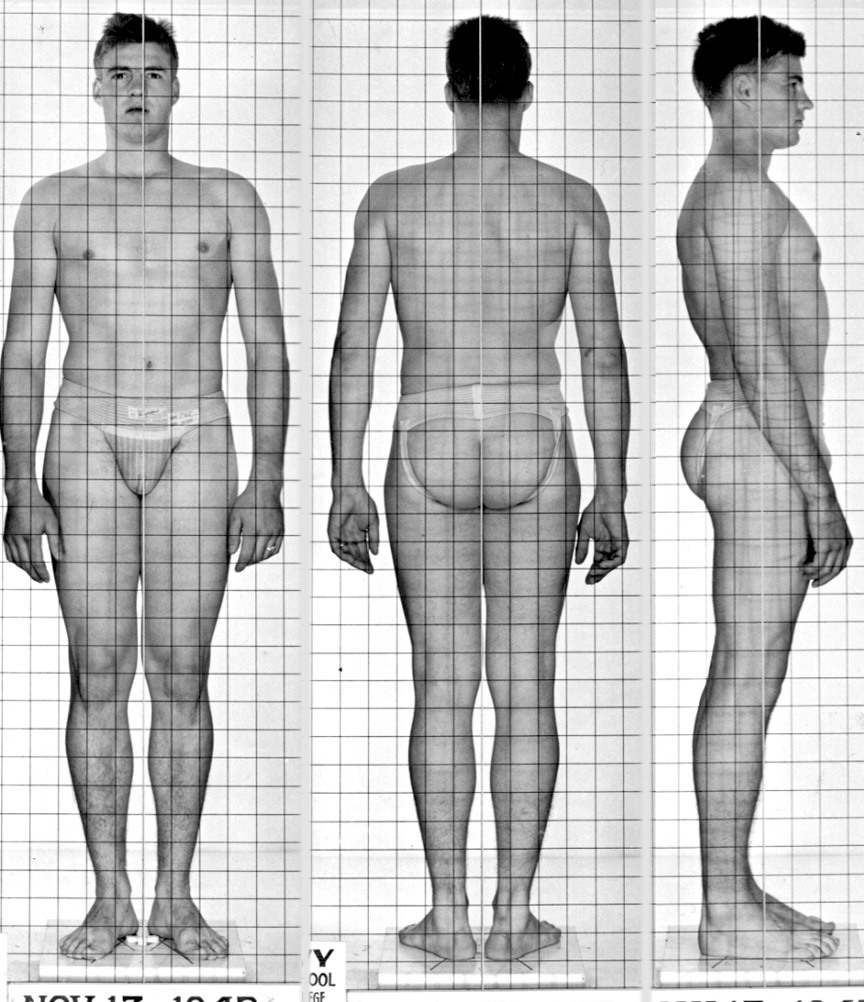
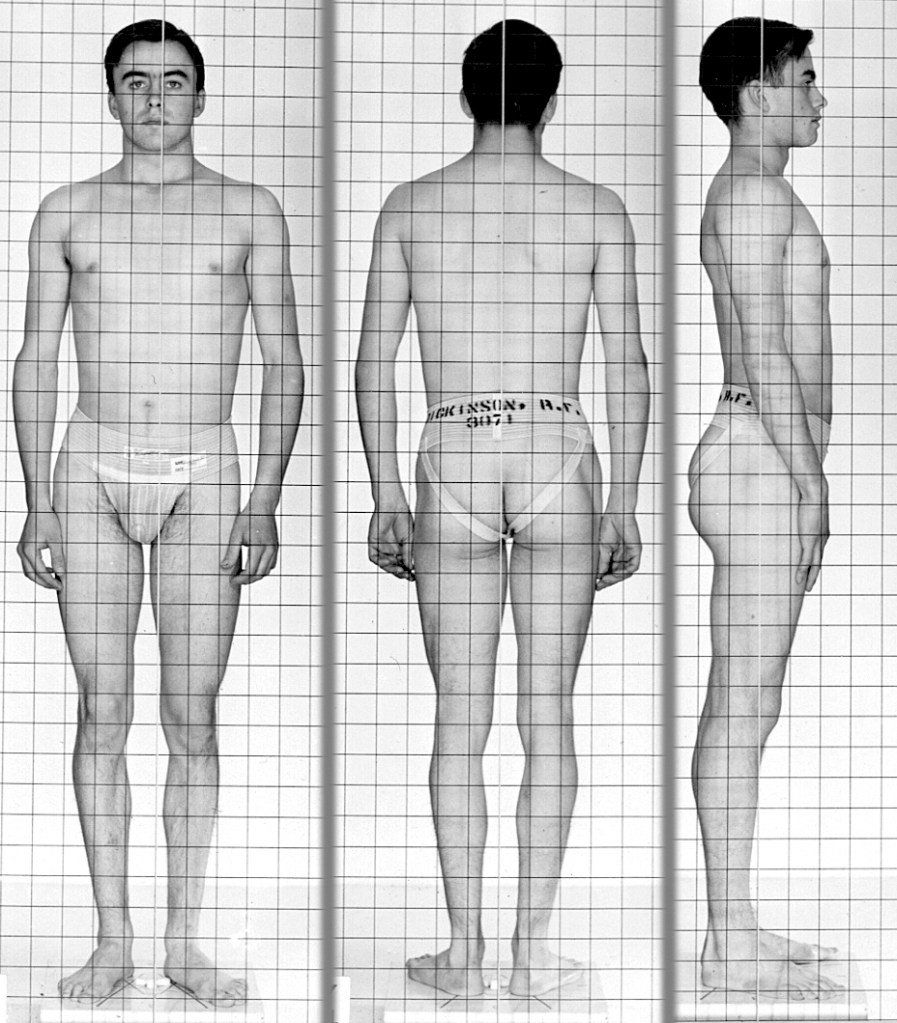
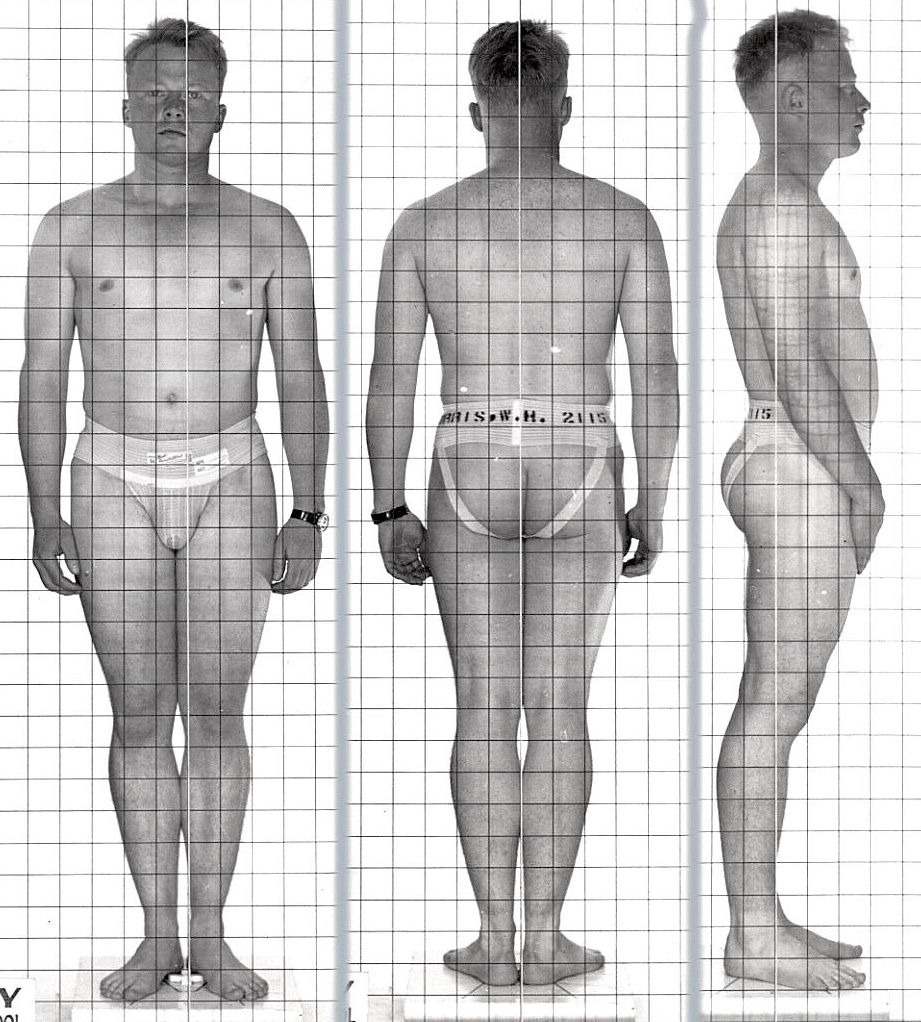
It’s that time again… due to popular demand, it’s our fourth installment of WWII-era photos featuring the jockstrap-clad pre-flight training school cadets at St. Mary’s College in California. You can view the first one here. Part II was from last Christmas. Part III was the boys of summer. And now here we are with another look at these strapping young men – many away from home for the first time – photographed as they trained to go to war during the holidays.
I first became aware of these black and white 5″x7″ triptych photos a few years ago. Listings often turn up on auction sites, where the photos are often accompanied by the index card used to record the physical training progress of the cadet.
The earliest photos (from June 13, 1942) feature the men completely nude, but all subsequent photos feature the cadets in jockstraps, standing behind some sort of grid fencing to better detect posture misalignment and spinal curvature.
There is still some confusion between these photos and the Yale / Ivy League posture pics, since the Navy photos were sometimes used to illustrate stories about the Yale pics. Note that all of these images contain a visible U.S. Navy / St. Mary’s Pre-Flight School placard, even if they have been cropped out in some posts. Similarly the Yale University photos are identified as such within the frame of the photos:
Fortunately for us, multiple photos of some cadets have surfaced, allowing for comparisons of their training progress:
Before / After 7 weeks of training, Sept. – Nov. 1942
And while there is a lack of ethnic diversity, there are a variety of body types.
Before / After a month of training: 12/8/43-1/12/44
My collection now includes close to 600 jpegs of different cadets. While some of these men did perish during WWII, the largest majority that I have researched lived to ripe old ages.
Any surviving cadets would now be close to 100 years old. I recently discovered one who passed away a few months ago at the age of 103.
One thing these young men have in common, as they were documented in timeless photos of their physical prime: they were far from home during the holidays, training to fight for their country.
At this time of year, nearly 80 years later, we again salute The Greatest Generation for their fine forms and dedication.
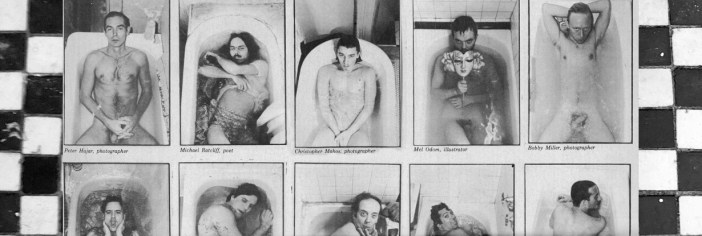
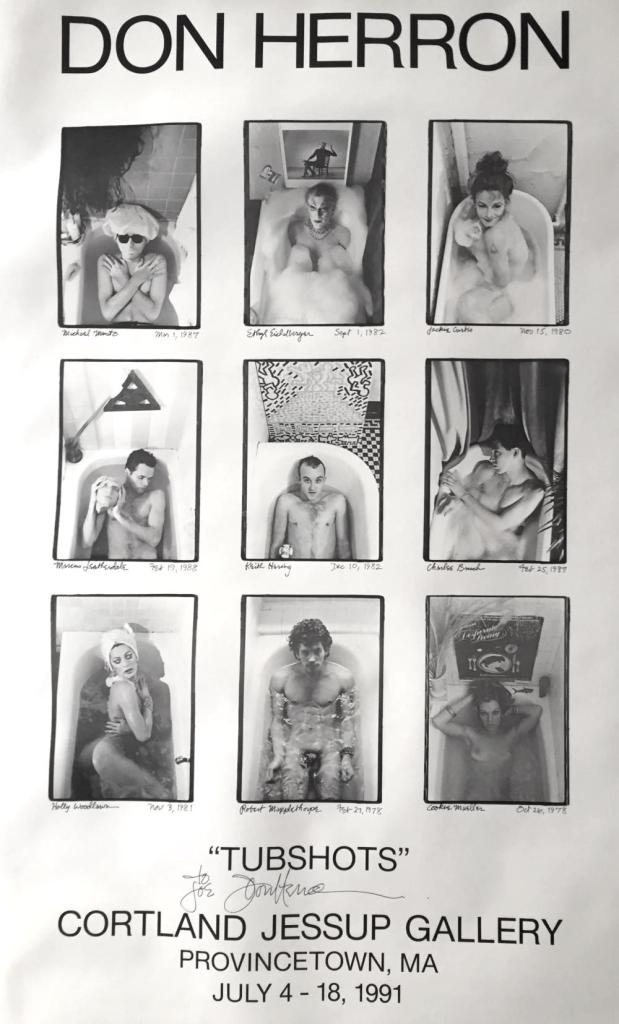
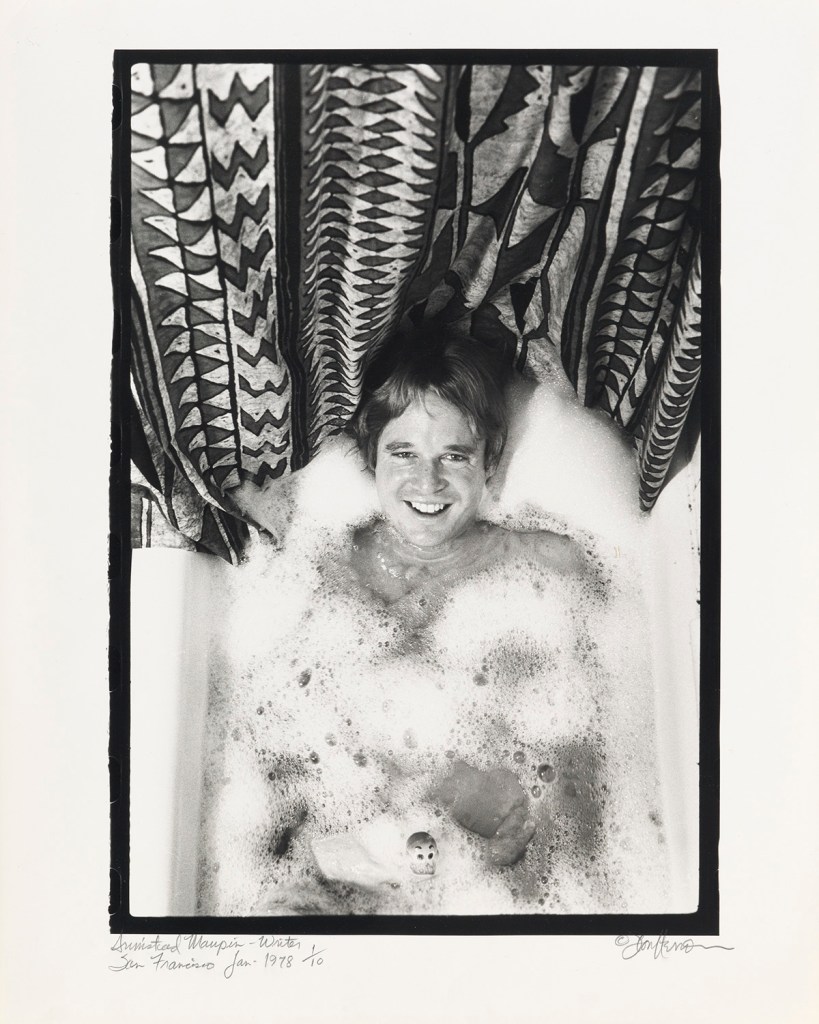
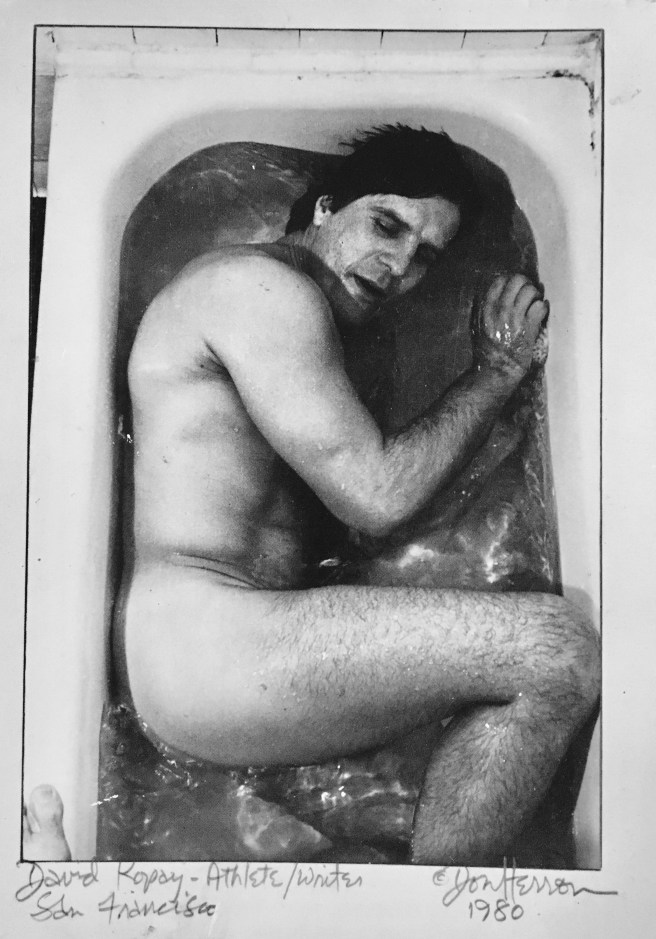
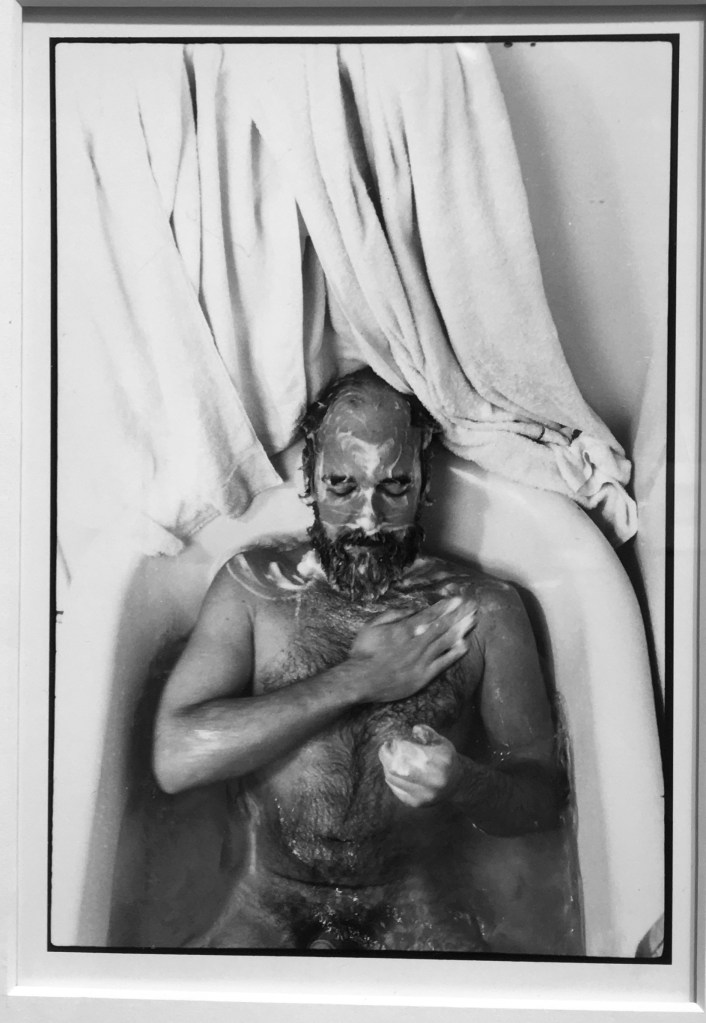
Three years ago, I posted two collections of artist / photographer Don Herron’s Tub Shots, a series of photographs featuring the famous and near famous posing in their bathtubs. This coincided with an exhibition of 65 of the images at the Daniel Cooney Gallery here in NYC. My blog posts (Pt. 1 and Pt. II) still garner a considerable amount of traffic, so I thought I would share more of these photos – ones that didn’t make it into those original posts and others that have resurfaced since that time.
Signed poster for a 1991 exhibition in Provincetown.
Writer/Performer/Filmmaker John Heys as Diana Vreeland (1992). Looking back at the photo in 2018, Heys commented, “Simply put, as Diana Vreeland often said… ‘A bit of alright!’ Of course that is how I felt in my divine penthouse bath.”
Amos Poe, Filmmaker
Tales of the City Author Armistead Maupin – San Francisco (1978)
Cassandra, Photographer – Houston, Texas (1979)
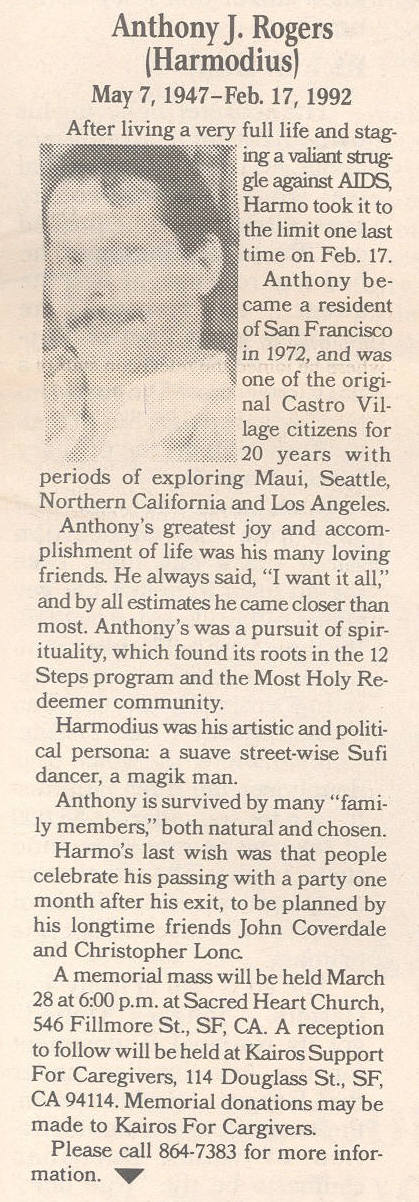
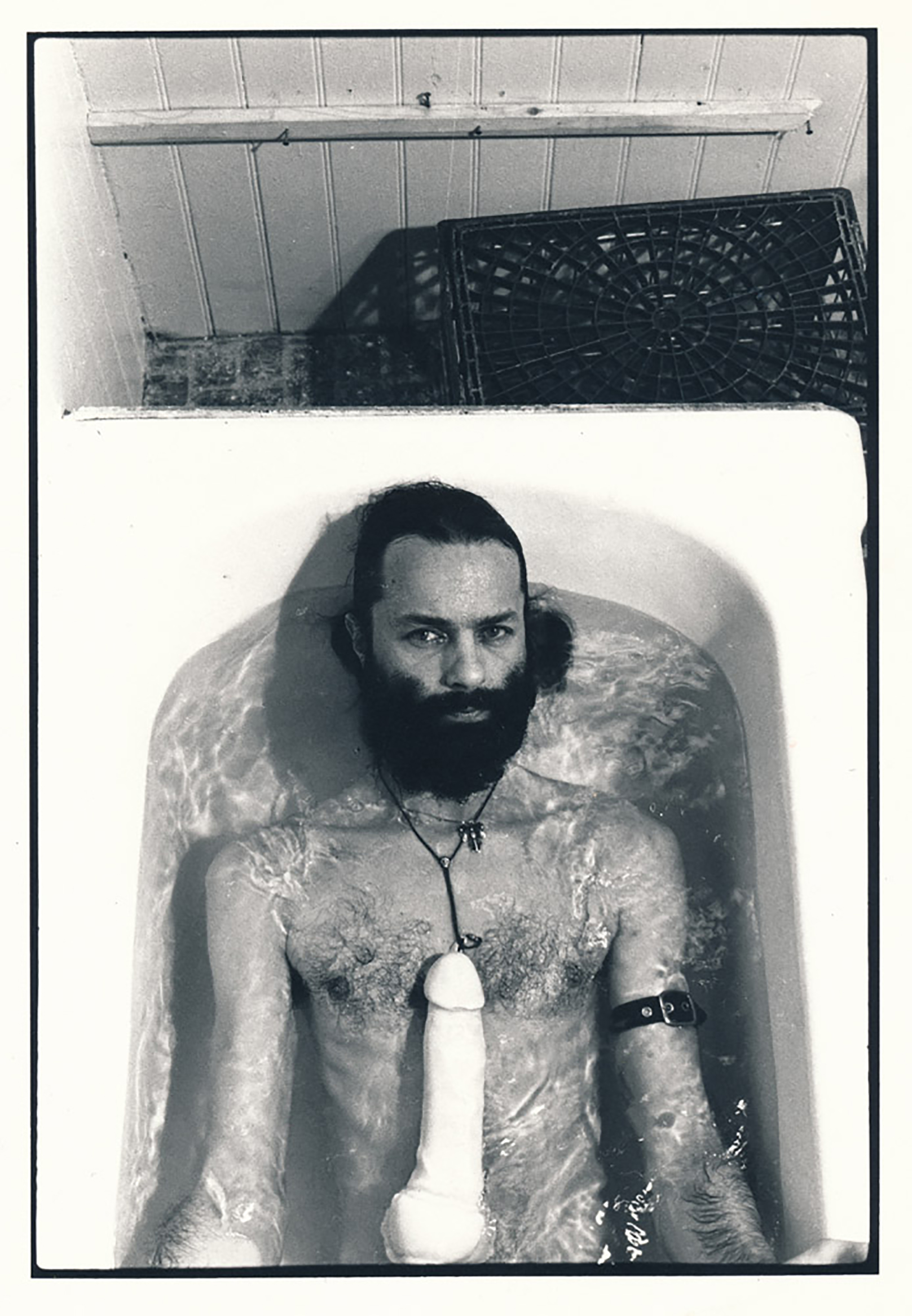
Queer San Francisco performerHarmodious, aka Anthony J. Rogers (1947-1992) was photographed in 1978 at Fey Way Gallery in the same tub used for the portraits of his sometime boyfriend Robert Opel, and gallery employee Christine McCabe.
Bill Dodd, Jeweler – Austin, Texas (1980)
Victor Bockris – author of many rock biographies who also wrote for Andy Warhol’s Interview magazine.
Warner Jepson (1930-2011), Composer – San Francisco (1980)
When McCabe’s photo was published in the 1980 Village Voice layout, she sued Herron and the newspaper. Although the signature on the model release was questionable, McCabe admitted that Herron did tell her that he wanted to publish a book of the photos. The suit was settled with McCabe receiving an undisclosed sum.
A selection of Tub Shots were featured in the April, 1980 issue of Christopher Street, with football player David Kopay‘s photo on the cover.
Actor/Playwright/Visual Artist/Puppeteer and Singer-songwriter Winston Tong – San Francisco, CA
When the Village Voice Online edition posted an article about the Daniel Cooney gallery exhibition in 2018, they chose to post just 3 of the 23 photos from the original layout: Robert Mapplethorpe and McCabe’s photos were 2 of them. Whether or not this was a random occurrence or a belated turn of the screw towards McCabe, the photos have since been removed.
David Middaugh – Painter
Jerry Burchard (1931-2011) Photographer, San Francisco (1978)
Liz Derringer – ex-wife of Rick Derringer, she is a rock journalist & publicist who also wrote for Interview, NYC (1979)
Ron Jehu (1937-2007) was a San Francisco gallery owner who also hosted avant-garde exhibitions and events featuring Sylvester, Divine and Robert Mapplethorpe.
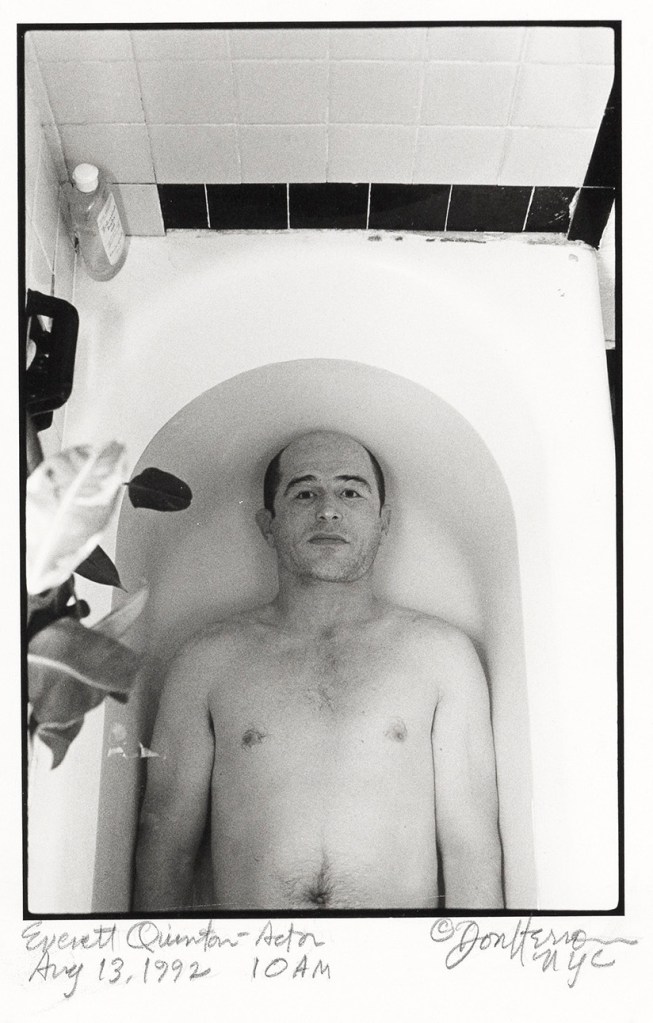
Everett Quinton (1952-2023) was an actor, director, & artistic director of the Ridiculous Theatre Company. “I’m not sure if Don was a friend of a friend or how he got my number. I only know that he asked me if I would like to be photographed in the bathtub and that seemed fun and I said yes. I remember the smell of the chlorine in my nose for days after the shoot as I laid still under the water for a while… waiting for the bubbles to go away so it would look creepy. I love the picture very much and I remember Don standing on the sides of the bathtub to get the shot. And I remember it was a fun experience.”
Charles Henri Ford (1908-2002) was a surrealist poet, magazine editor, filmmaker, photographer, collage artist and diarist. He was also the partner of artist Pavel Tchelitchew. NYC (1980)
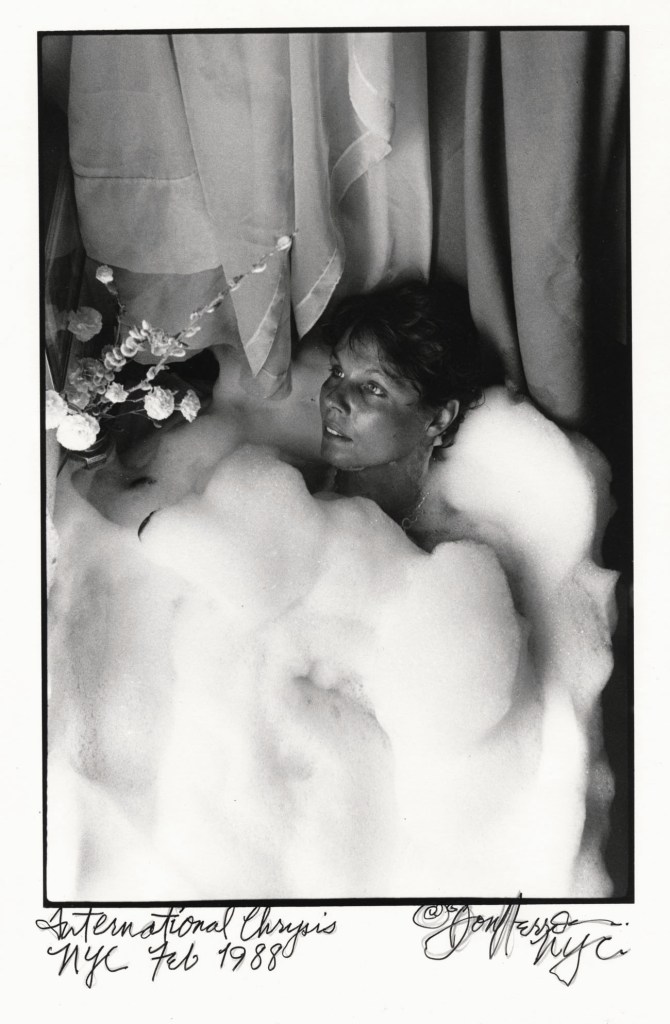
International Chrysis (1951-1990) was a transgender entertainer and protege to Salvador Dali. She is the subject of the 1993 documentary Split. NYC (1988)
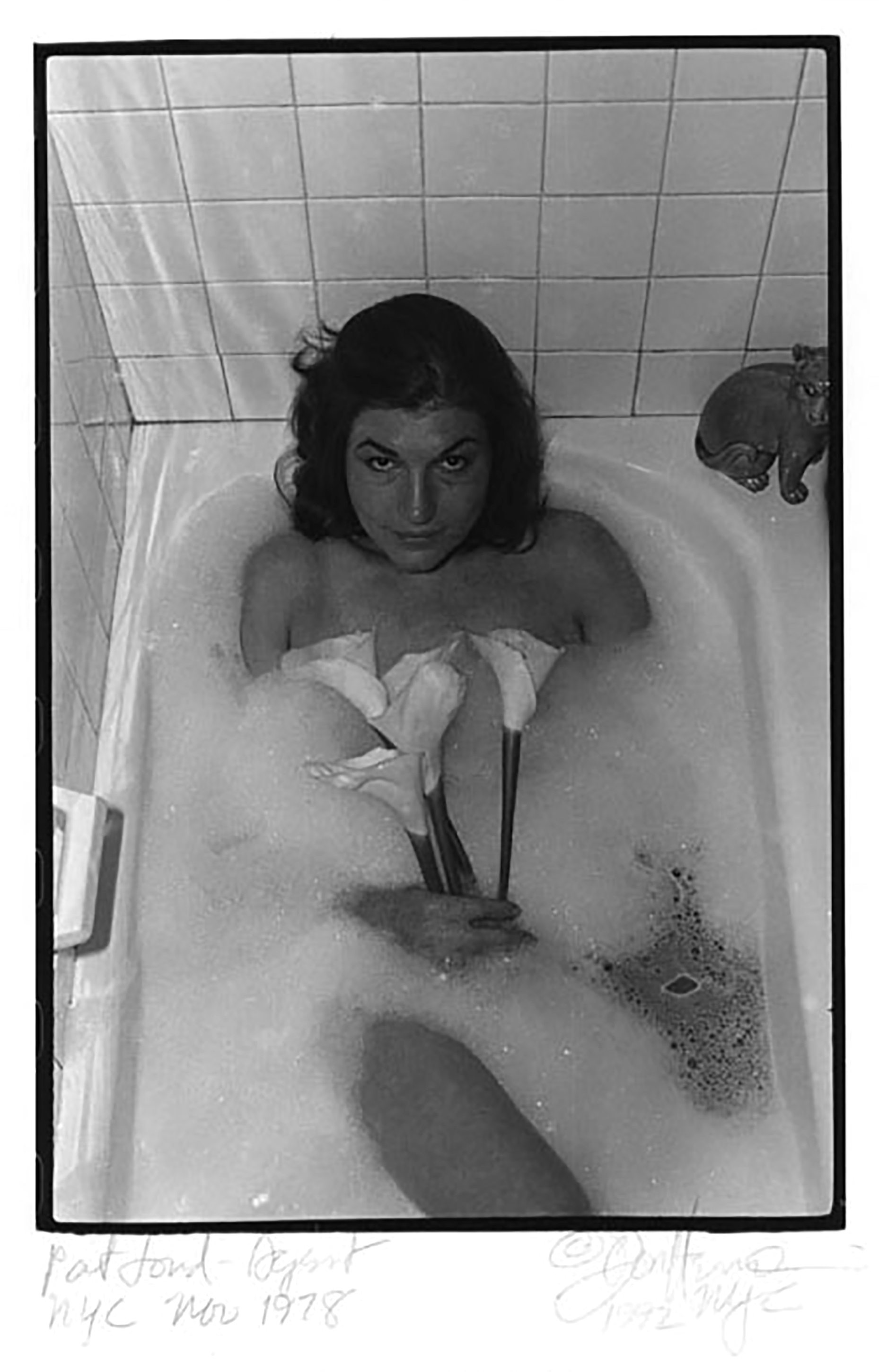
Pat Loud (1926-2021) was the matriarch of the Loud family, subject of the first reality series on American television. She later recalled that she only agreed to Don Herron’s request for a photo shoot if her friend and interior designer Richard Ridge (1928-2021) posed as well. NYC (1978)
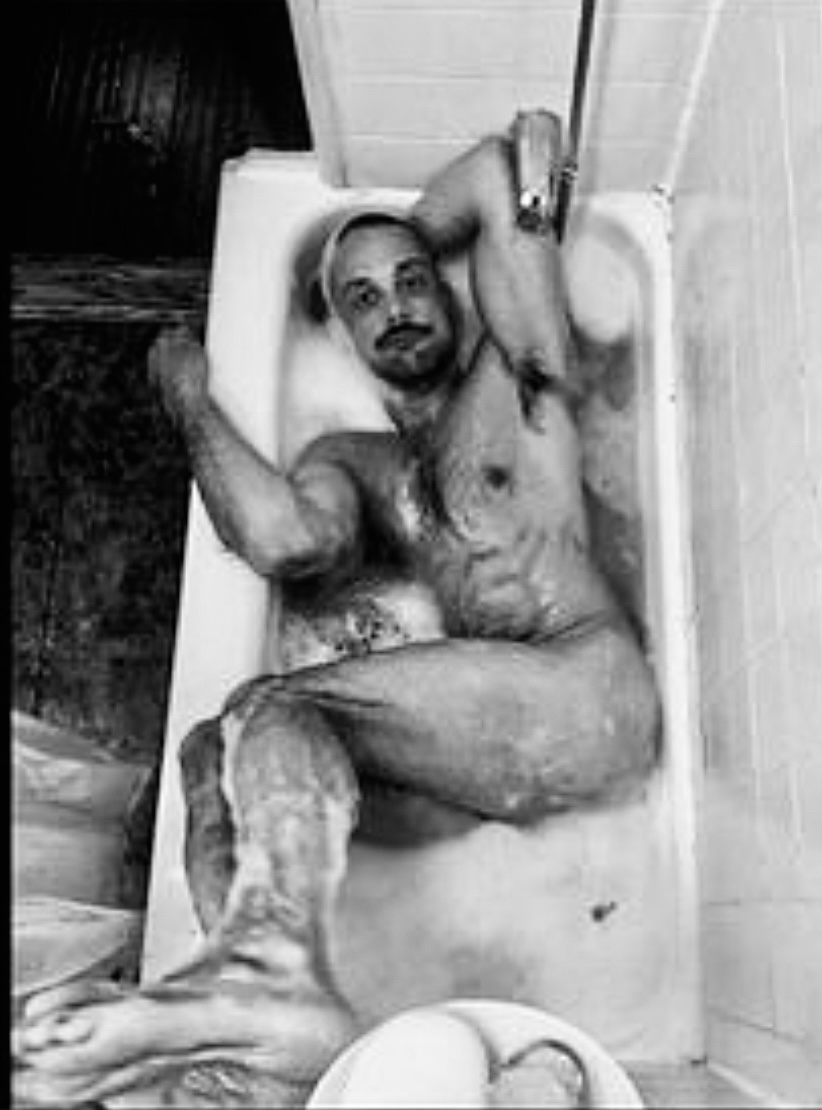
Richard Erker (1945-2004) was an artist, sculptor and jewelry maker. He owned a shop in SoHo in the early 1980’s and later moved to Palm Springs, where he was the victim of an unsolved murder.
Richard Hartenstein (1945-1988) Makeup artist, NYC (1980)
Cornelius Conboy was the owner of 8BC, an East Village nightclub, performance space and gallery. “Don was gloriously set in his own universe yet welcomed everyone to join. I see that the photo is dated 1987 yet am certain it was taken earlier than that. 1986 at the latest. I lived in Italy in 1987 and that bathtub is from my apartment above 8BC, when Donald’s famous mural “Civilization Teeters” hung above the bar.
“My memory is that while he was very meticulous about the lighting he was rather laissez-faire about posing. There was a vase of those bodega flowers that last forever after they dry out – baby’s breath and purple statice. I’ve always considered myself a romantic and here I seem to be channeling my best inner Ophelia.”
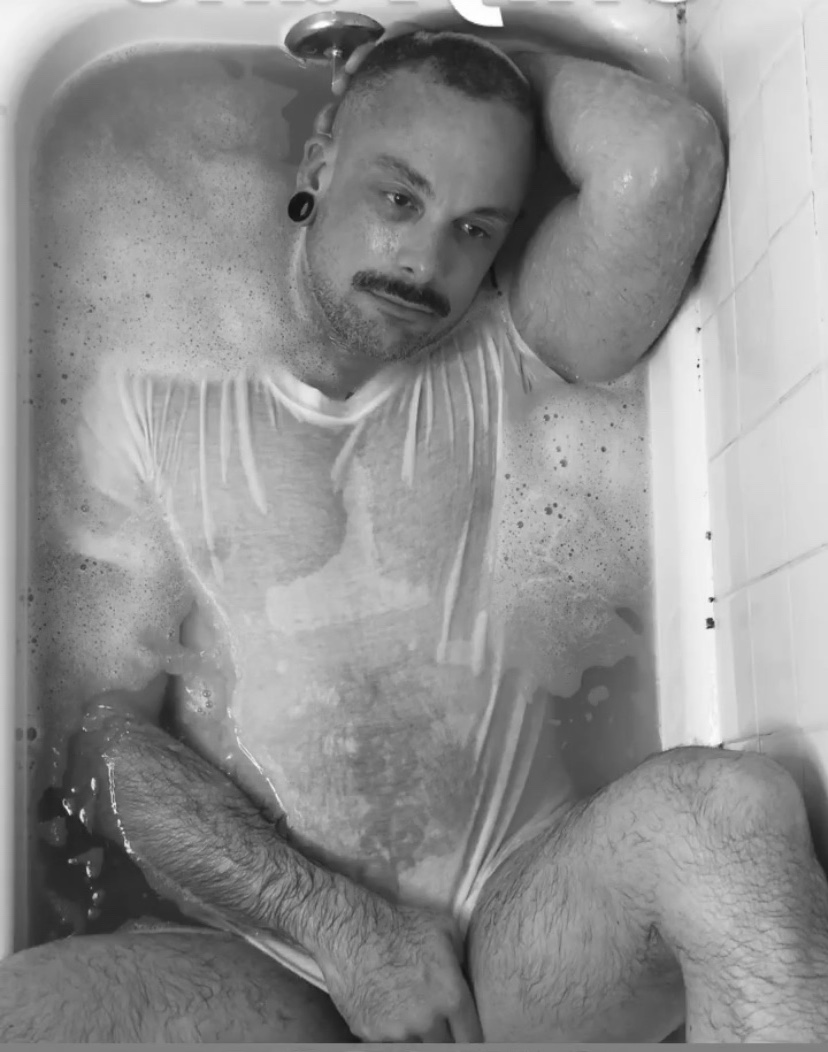
Fashion designer Geoffrey Mac‘s (unintentional?) homage to the “Tub Shots” series, as recently posted on Instagram.
Welcome to our third installment of photos celebrating WWII-era men of U.S. Navy pre-flight training at St. Mary’s College. These images of naked or jockstrap-clad cadets were taken at the school in Moraga, California when it was requisitioned for the war effort between 1942-1946. You can see more photos in our other posts:
Only the earliest photos – dated June 13, 1942 – feature the men completely nude. An anonymous person offers a helping hand as the men are photographed in profile.
Comparative photos from June 13 & August 18,1942
All subsequent photos feature the cadets in jockstraps. In all of the photos, the men stand behind some sort of grid fencing to better illustrate misalignment and spinal curvature.
The photos were taken to measure the fitness progression of each recruit as they underwent extreme physical training. Each picture was accompanied by an index card containing body measurements and physical achievement test results over the course of several months.
This allows for some contrasting images that Weight Watchers might want to consider emulating.
Before and after a summer of training: June 26 & September 8, 1942
This installment focuses on photos of cadets as they underwent summer training in the California sun. The results speak for themselves. #tanlines
My collection of photos gathered from around the internet now includes close to 500 different cadets. I have taken my pastime a step further by researching the origins as well as the fates of these brave men. Those featured in this post passed away as young as 22 and as old as 94.
Whether the photos of these handsome young men are literal snapshots near the beginnings of their lives or tragically close to the end, all of the subjects are equally, timelessly captured here in prime physical condition, sun dappled as they trained to serve their country. Nearly 80 years later, we salute and admire their fine forms and dedication.
The fabled Ivy League nude posture photos have been written about but seldom seen. Incoming college students were photographed fully nude to gauge posture, detect scoliosis, and address other correctable body issues… all while emotionally scarring the participants. Talk show host Dick Cavett joked about it in his early stand-up routines but had a much darker view of the experience 50 years later in a New York Times Op Ed piece.
In recent years, the photographs from Yale University have garnered the most press, with tongues wagging at the possibilities of seeing our country’s best and brightest in the buff. The photos in question were so rare that most online articles on the subject did not actually feature any of them, opting to show similar medical textbook illustrations or military posture pics such as the WWII-era St. Mary’s College Navy Pre-Flight School photos, which I have written about here and here.
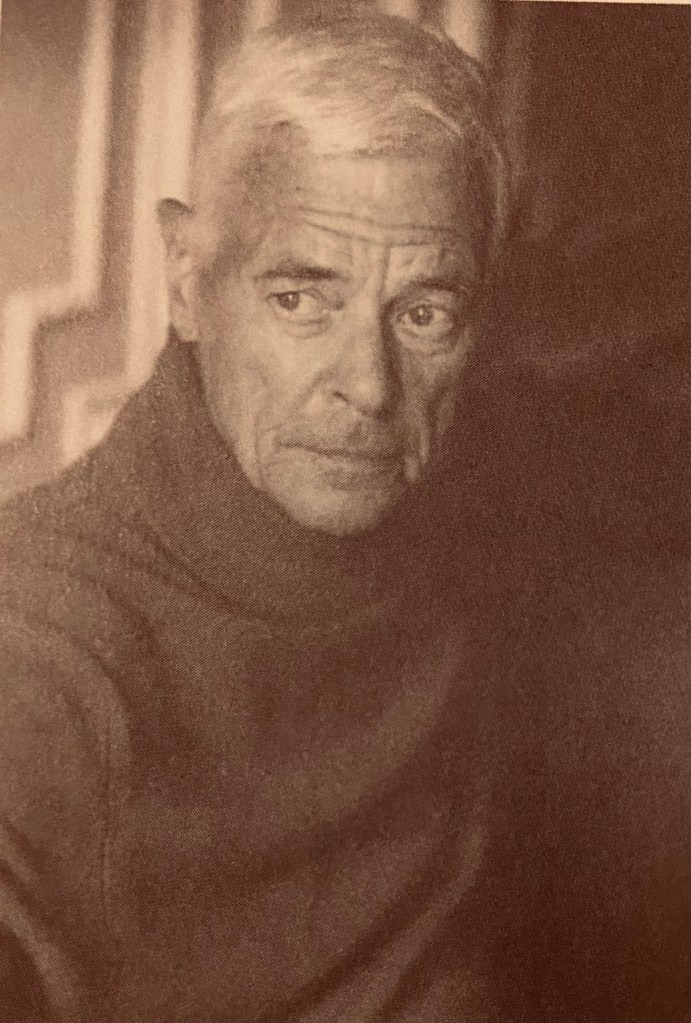
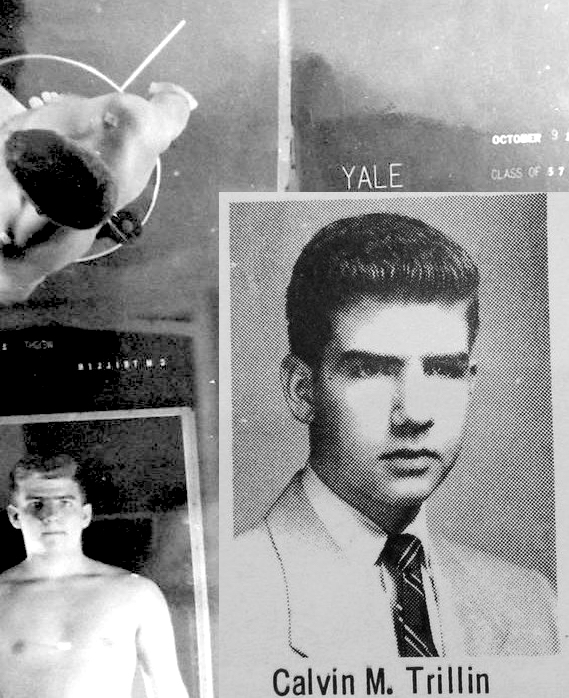
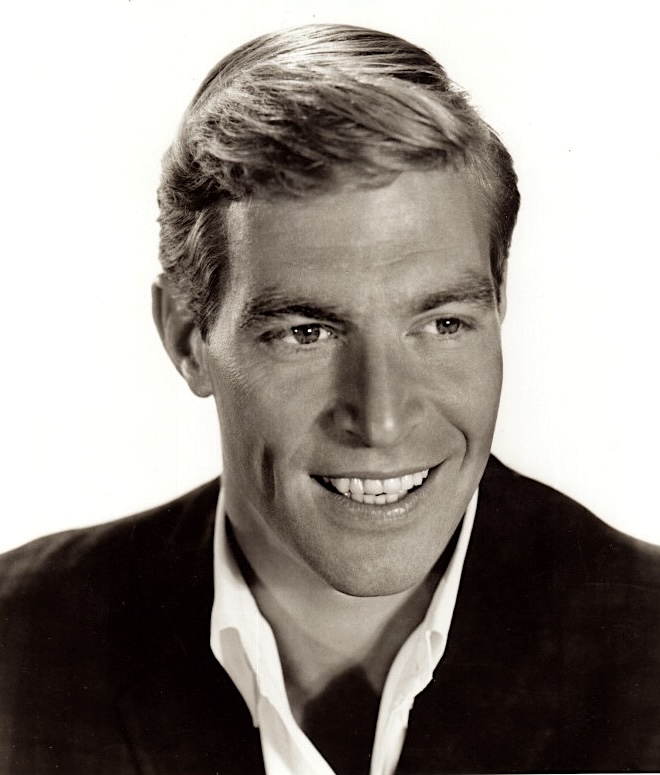
In the past few years, choice examples of the photos featuring male freshman Yalies from 1937-1960 have begun to trickle out on eBay. It was only a matter of time before some familiar names began to pop up. Writer Calvin Trillin‘s photo went for a little over $100, while the pic of late actor James Franciscus pulled in a whopping $1,225.
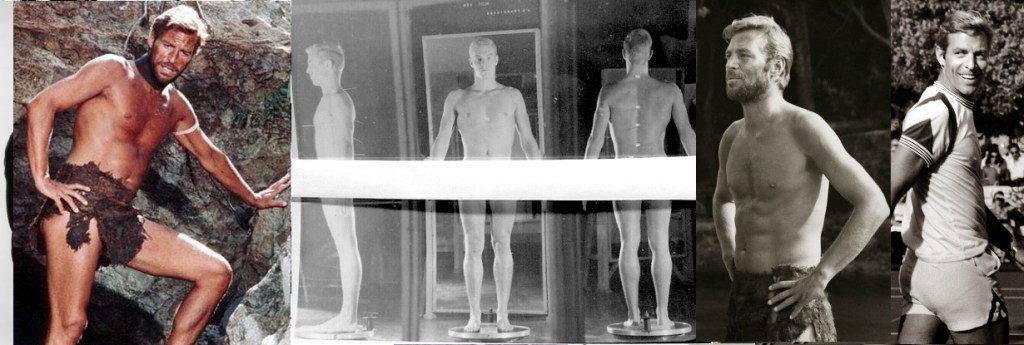
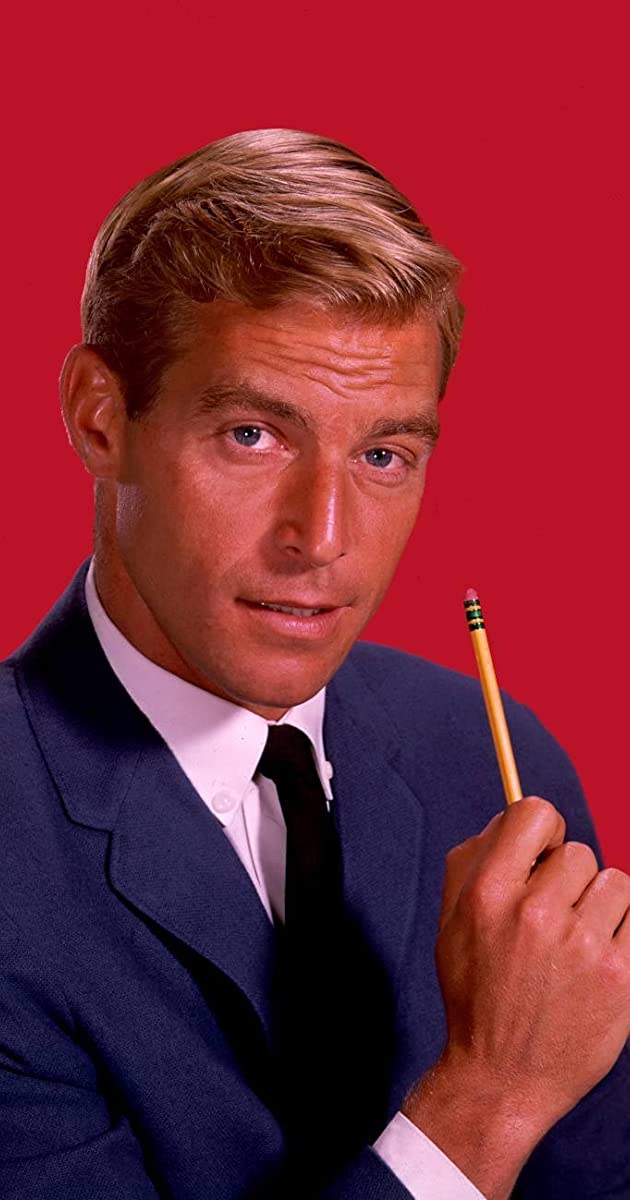
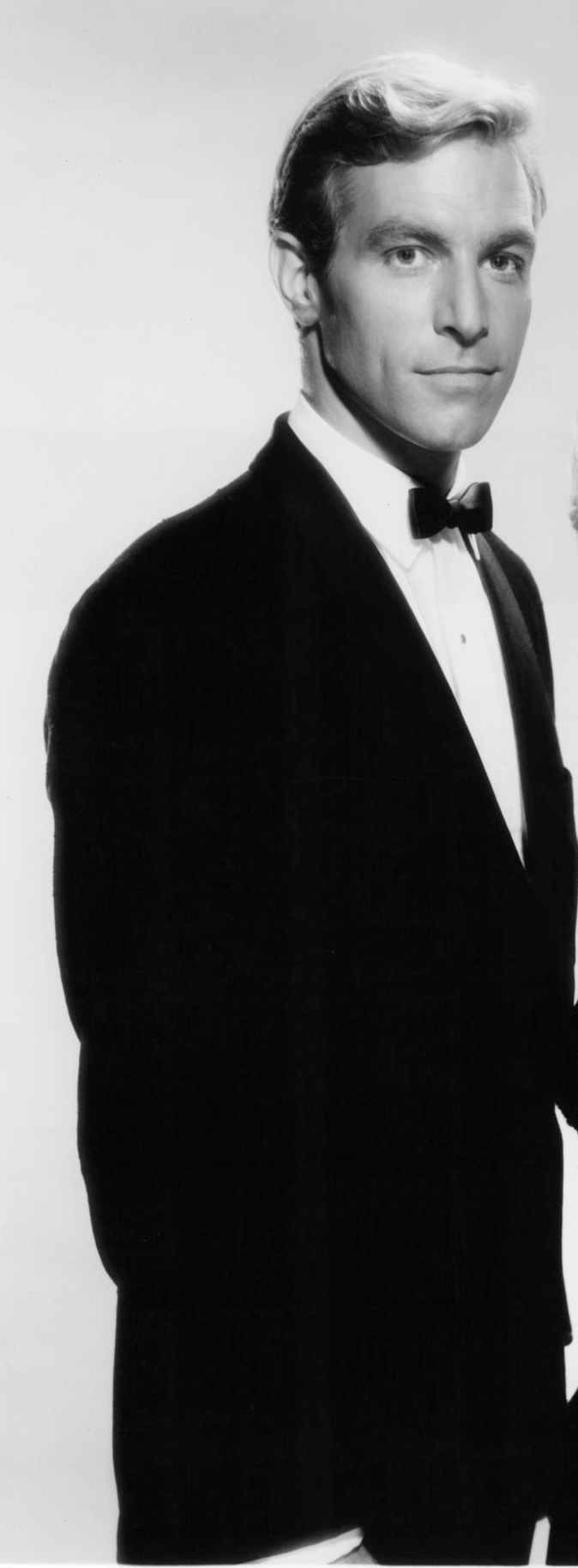
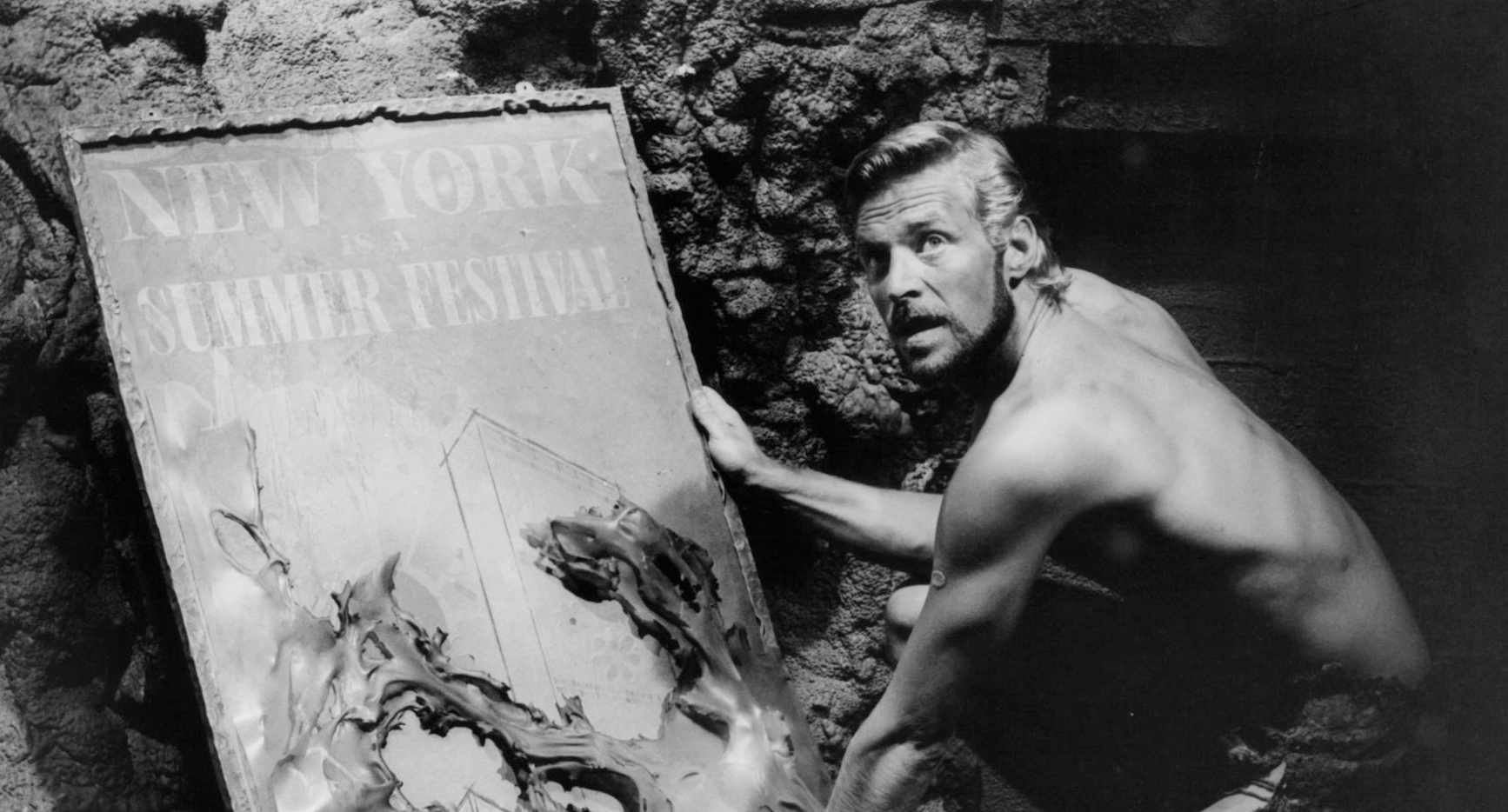
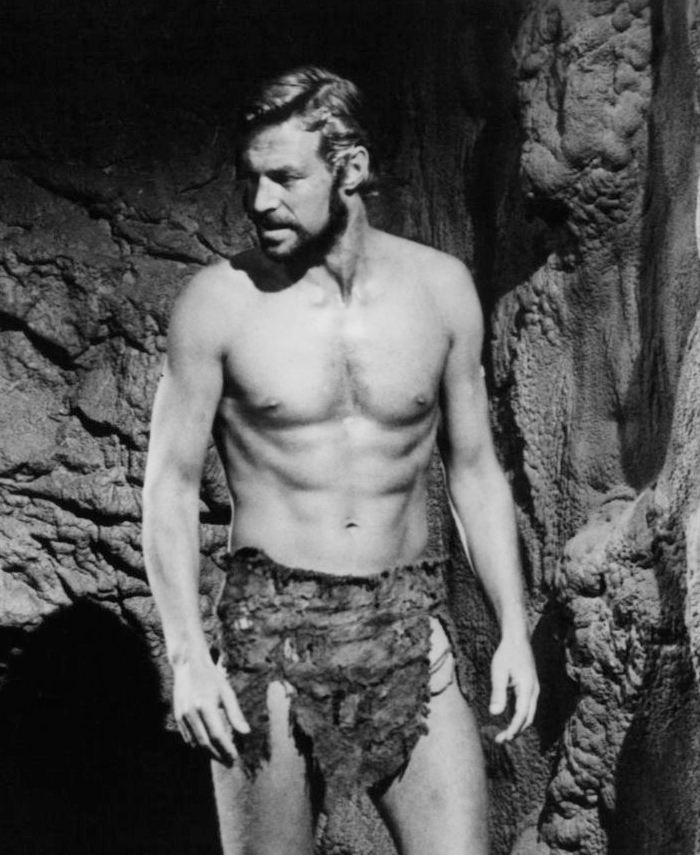
Younger readers might not remember Franciscus – the dashing star of half a dozen television series and over 30 films. There is a fan site that dubs him The Patron Saint Of Cool. He was not afraid to show some skin over the course of his career, particularly in Beneath The Planet Of The Apes (1970).
Prior to Yale, Franciscus attended the prestigious Taft School in Connecticut, graduating in 1953.
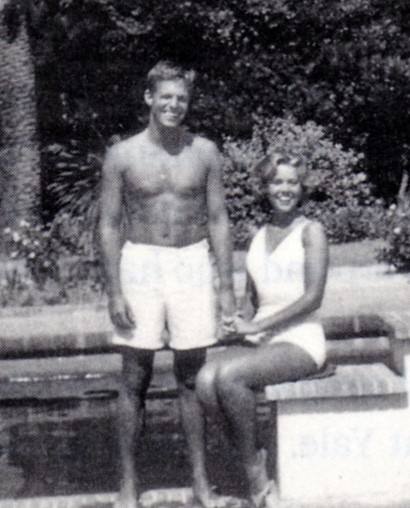
In her memoir and in a recent segment on The Tonight Show, Jane Fonda remembers James Franciscus as her first love…and the best kiss she ever had.
They met while working together in summer stock when she was 18 and he was 20.
“He walked me out to the end of a pier and he kissed me,” she recalled. “The stars began to whirl and the pier began to shake, and my knees gave way and I slid down to a pile at his feet…. I’ve never had a kiss like that ever since.”
As for his Yale photo, which was taken the year before…. unfortunately, we don’t get to see the full Franciscus. The image posted for the public auction has a strip of paper blocking the view.
UPDATE: The photo is now in the collection of photographer Jack Pierson and was part of a 2024 exhibition at Elliot Templeton Fine Arts in New York City.
Artist / writer Adam Donaldson Powell asked if I would contribute to his latest project, in which he invites artists, writers, musicians, and other performing artists from around the world to contribute essays about their work and lives during the COVID-19 pandemic and aftermath. Here is my contribution:
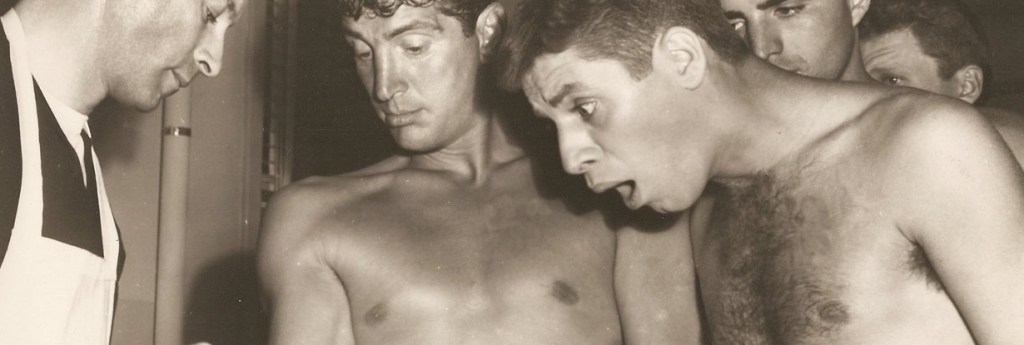
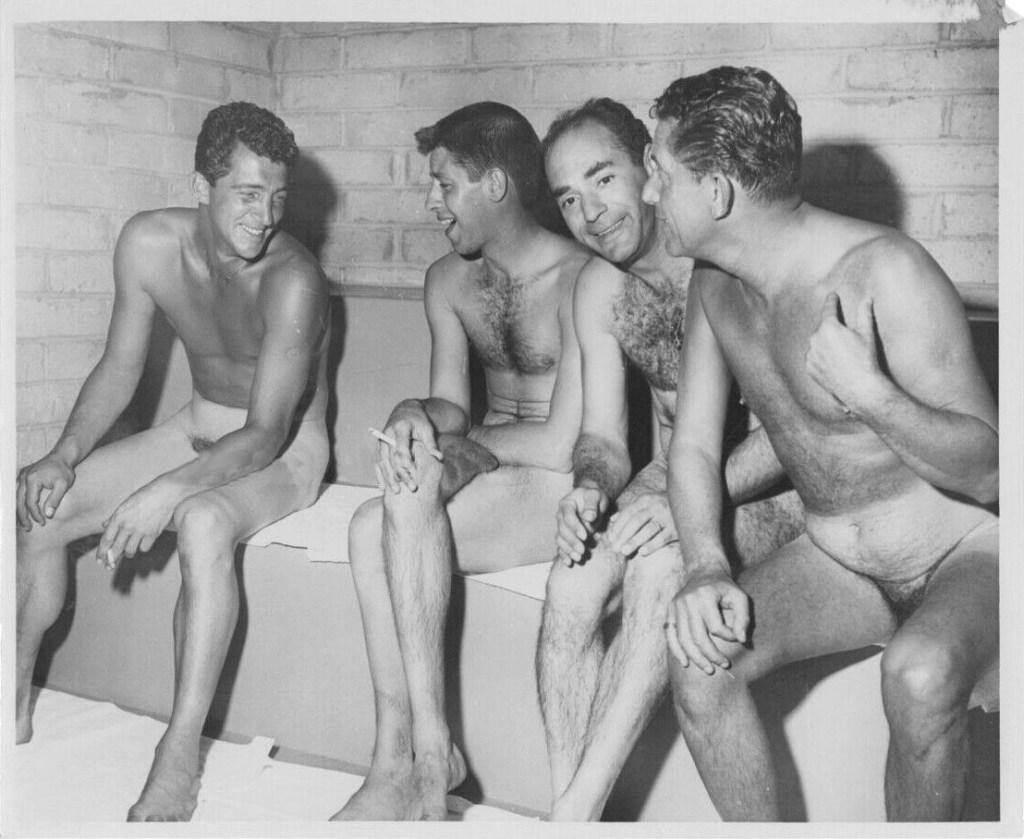
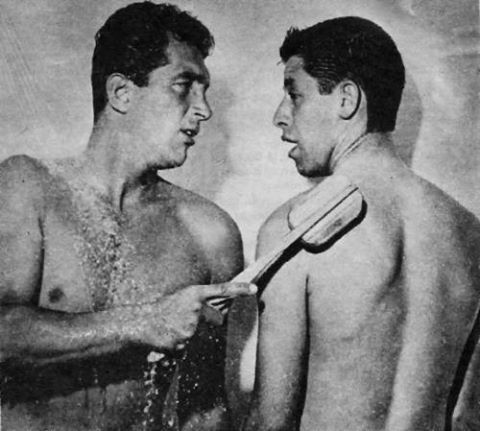
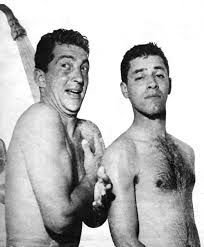
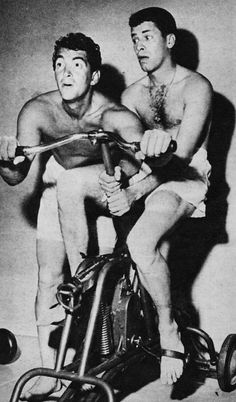
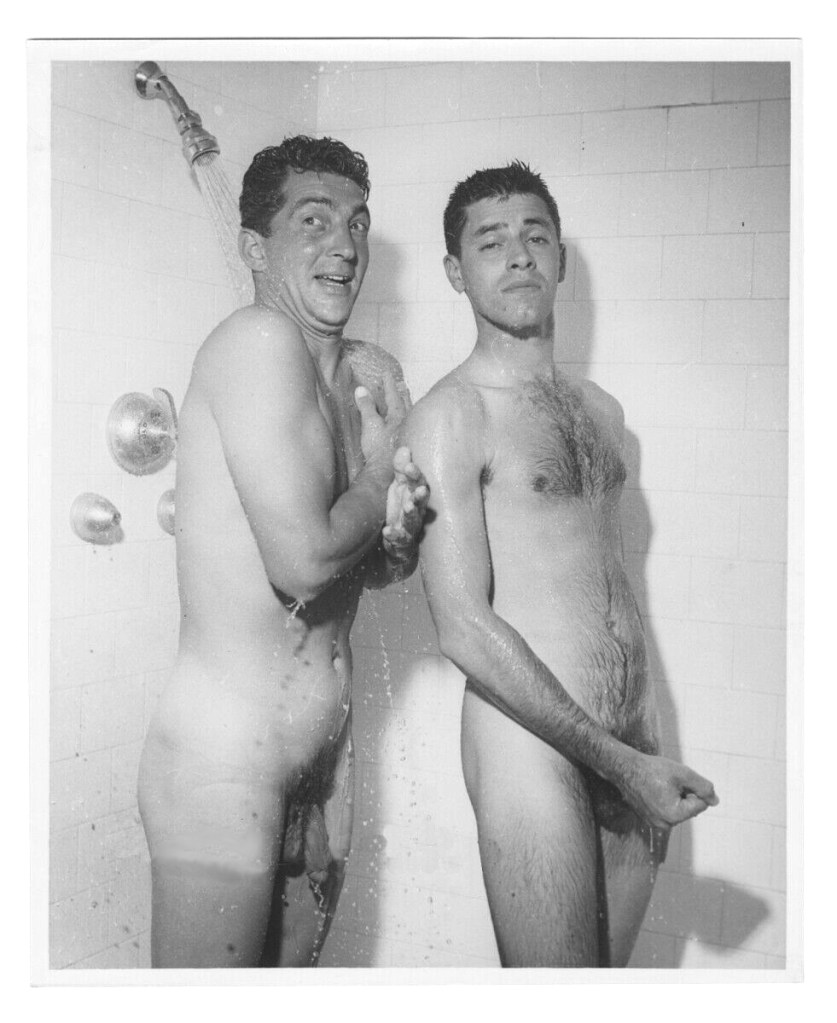
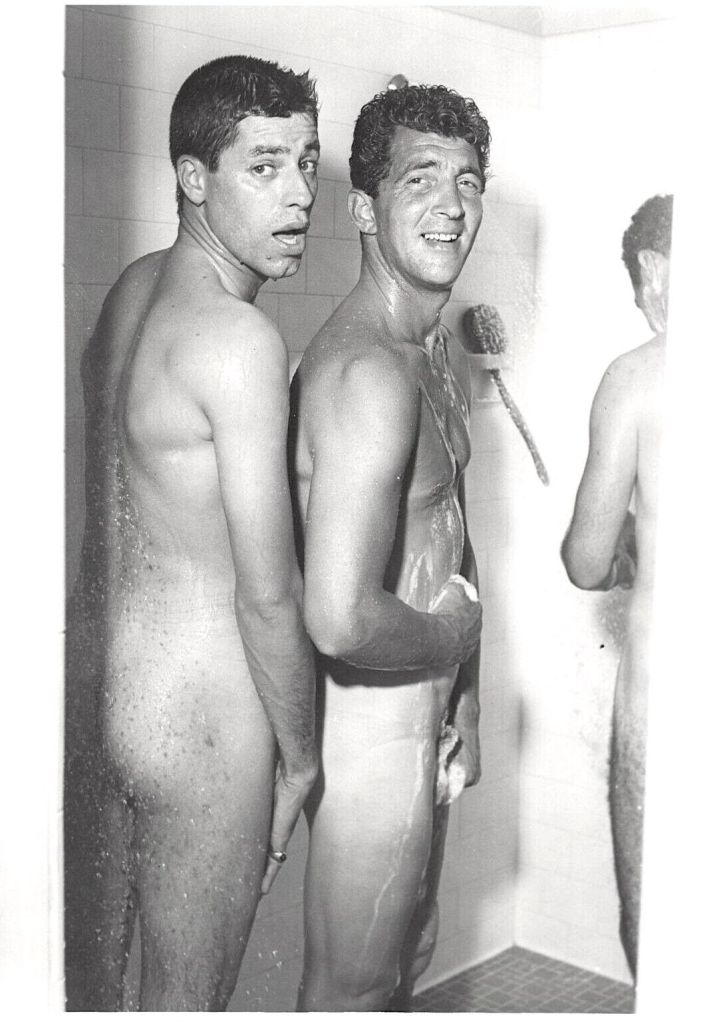
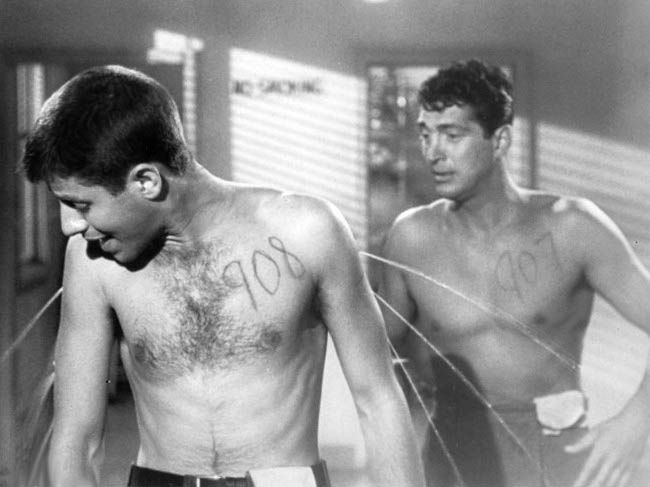
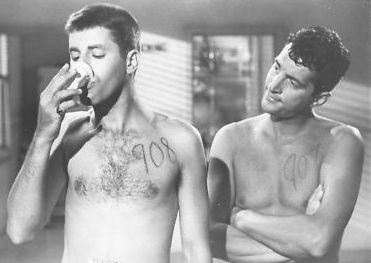
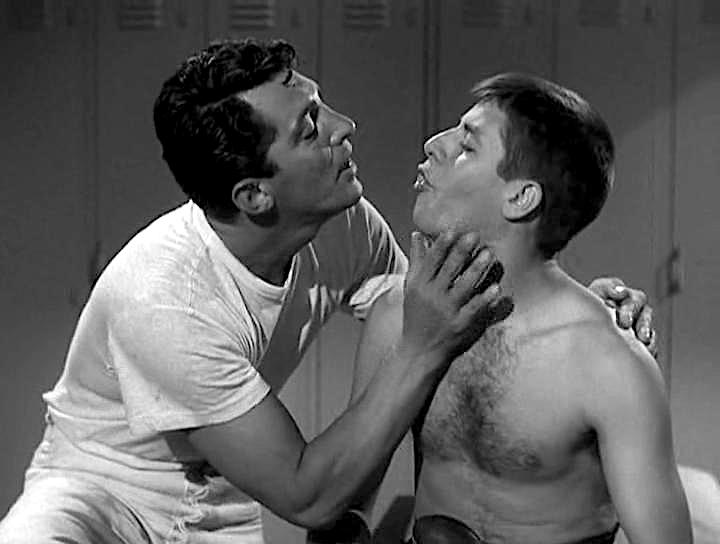
Photos of Dean Martin and Jerry Lewis have recently come to light that are raising some eyebrows. A nude shot of the duo showering together sold on eBay for nearly $4,500 this past week, while a steam room photo sold for a modest $375.
These photos appear to have sold at Sotheby’s in 2018 as part of a collection belonging to Frank Branda, Jerry Lewis’s driver and assistant.
The auction description listed “4 candid photographs (8 x 10 in.) of Lewis and Martin in a steam room and shower, Lewis posing modestly, Martin less so.”
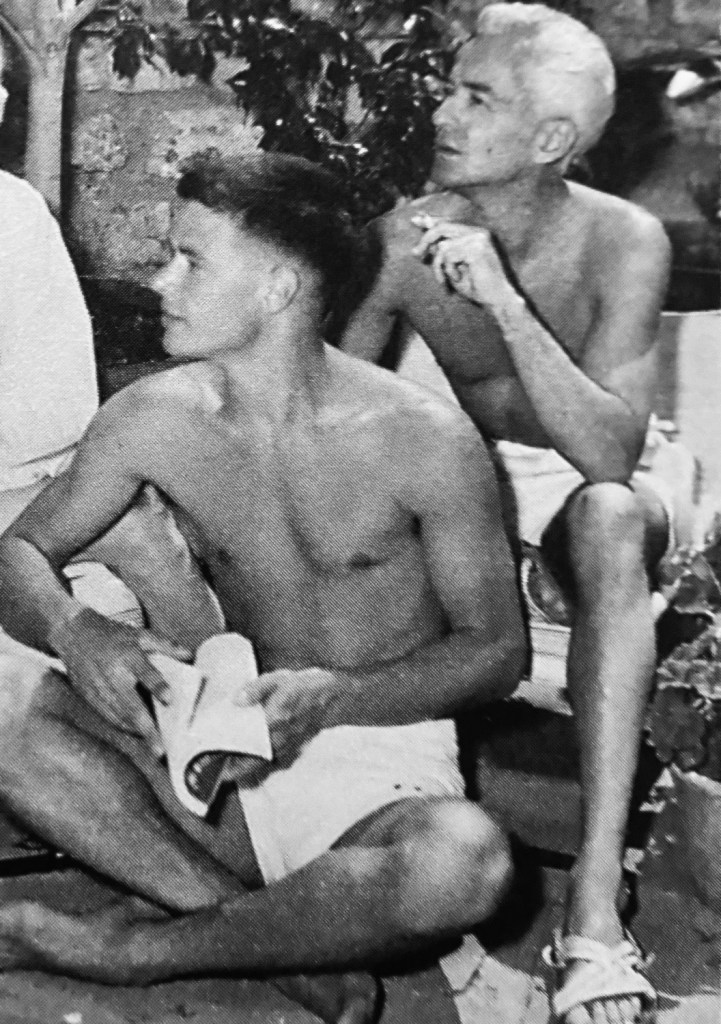
Martin & Lewis have a schvitz and a smoke. And who are their co-horts?
While I originally thought the guy on the right was comedian Morey Amsterdam, a reader wrote:
The guy on the right in the sauna photo is Mack Gray, who was Dean’s assistant, and later in life arguably his closest friend. Dean and Jerry met him when they first came to Hollywood; they attended one of George Raft’s parties, and Jerry referred to Gray as Raft’s ‘Man Friday’. (It’s also worth noting, by the by, that Raft and Gray were in a relationship.)
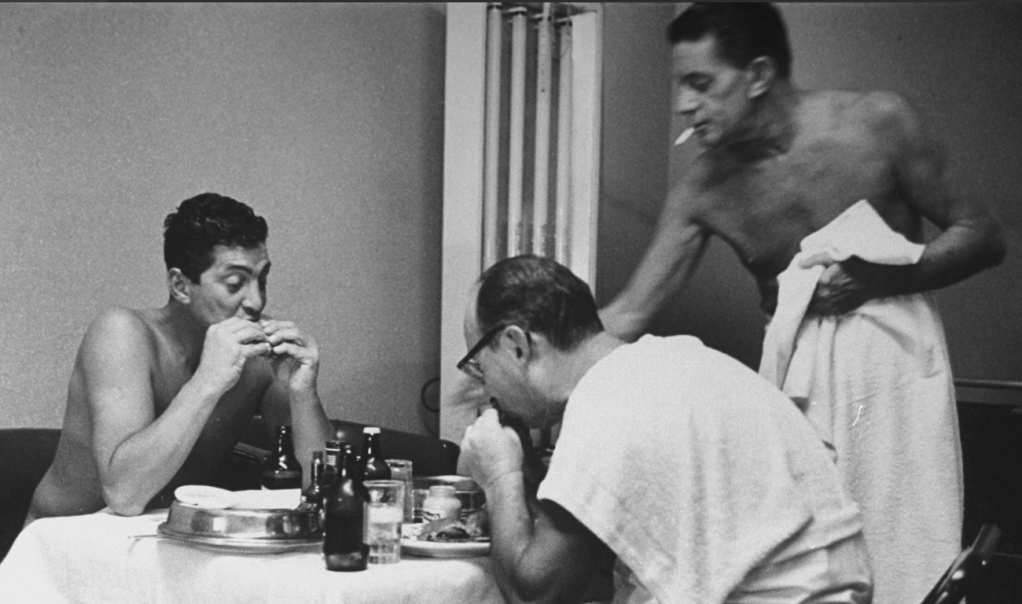
Dean Martin sharing a meal with songwriter Sammy Cahn as assistant Mack Gray attends. (1958)
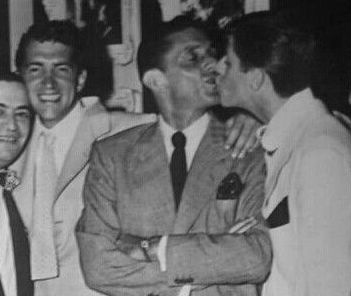
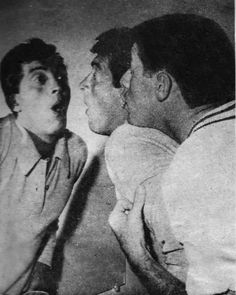
Jerry Lewis smooches with Mack Gray.
Cropped versions of a couple of these photos can be found on Pinterest, although in poor quality jpegs, apparently scans of photos that ran in a magazine or newspaper at the time. I wouldn’t exactly call Pinterest a reliable source, but if the captioning is accurate these shots were taken in 1952 at the Palm Springs El Mirador Hotel.
I’m the first to call “fake” on photoshopped images found on the internet, but these new photos are very clear. The only pixel anomalies are the results of my attempt to remove the eBay seller’s name, which was strategically plastered across key nether regions, including Dean Martin’s uncut dong.
UPDATE: Other photos have gone up for auction – see a more recent post about those here.





























































 Brian Ferrari's Blog