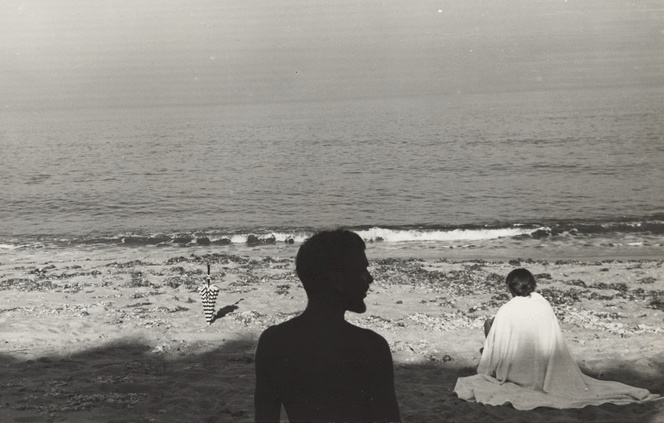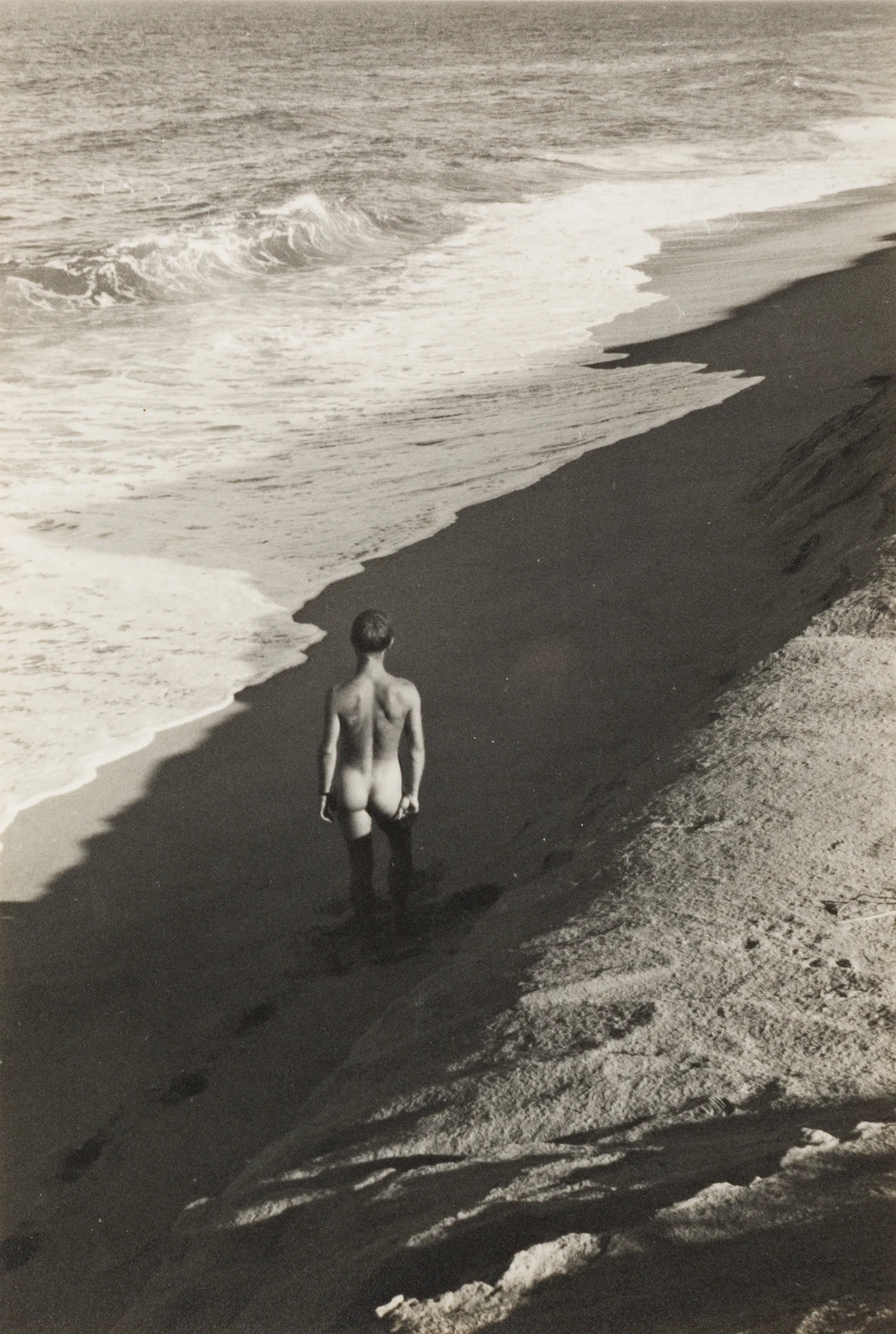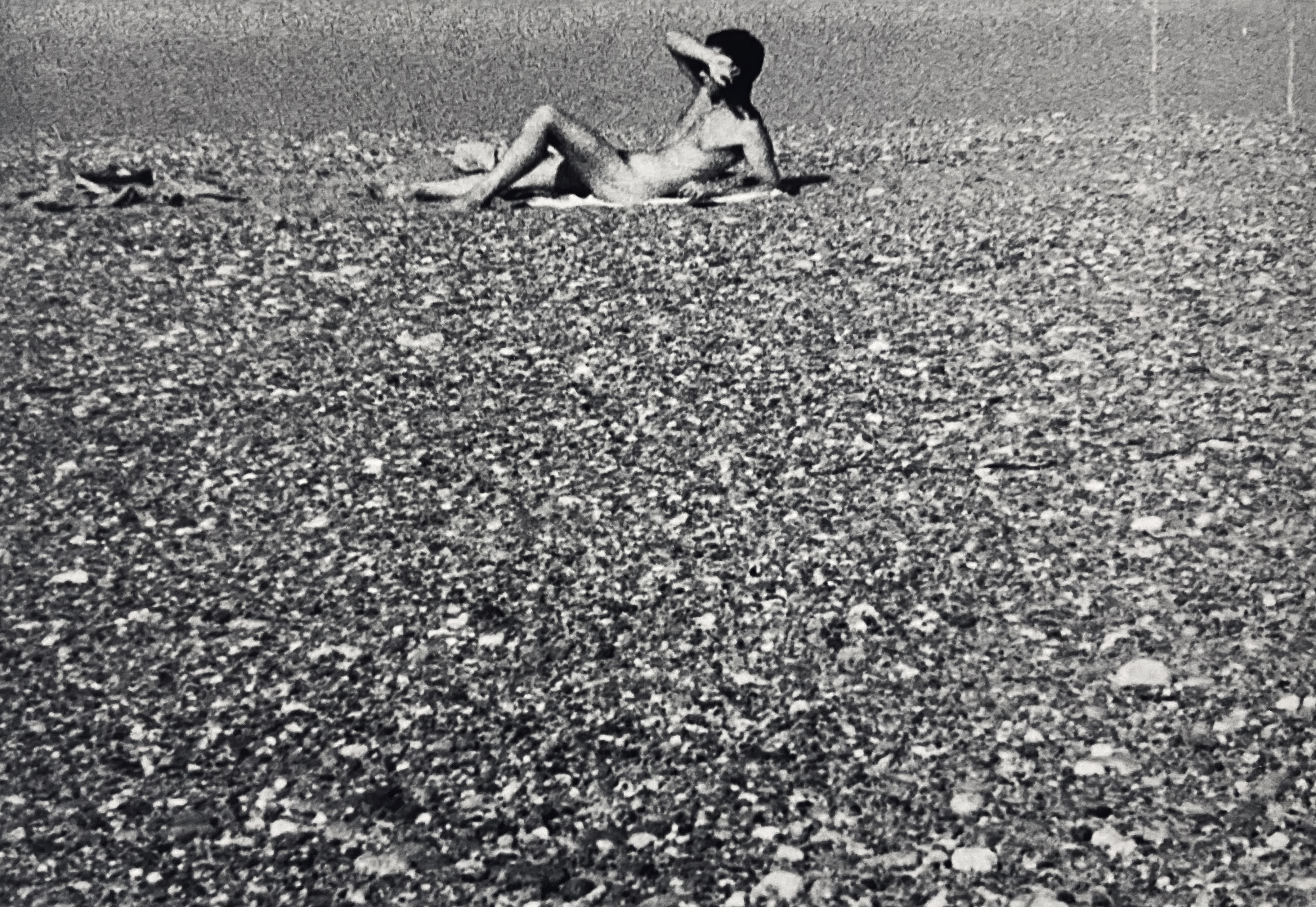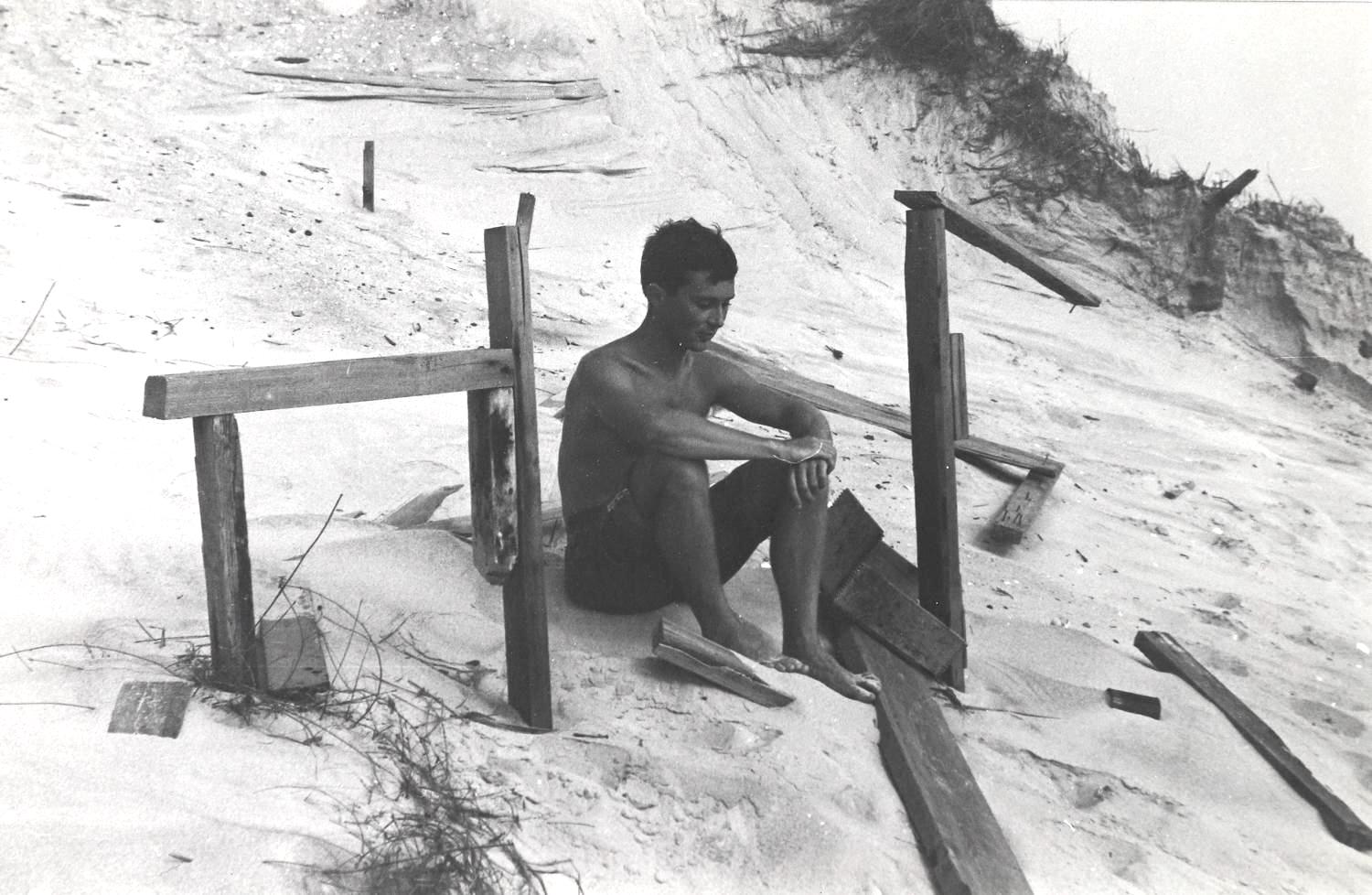
Artist’s Muse: Forrest Thayer

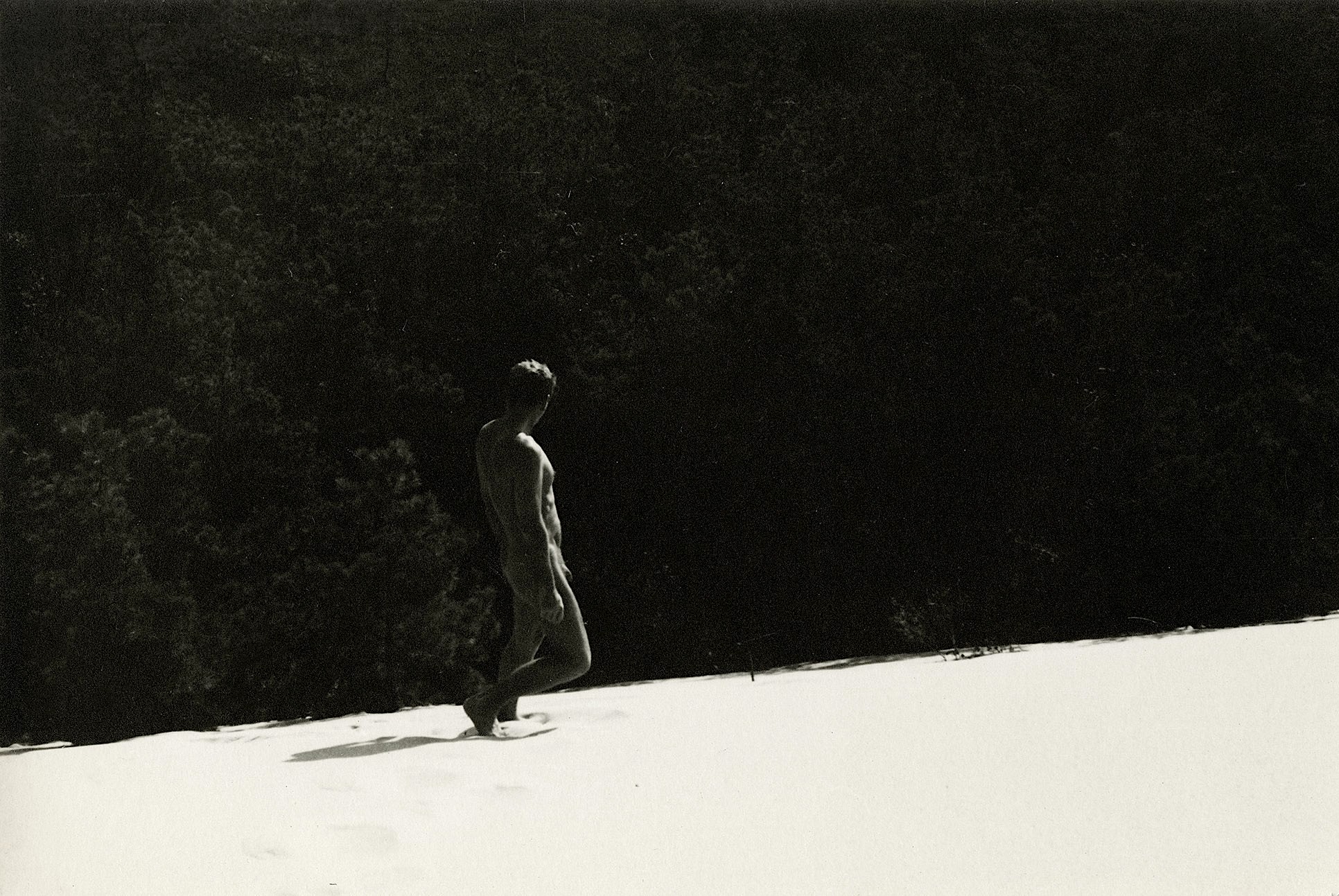
I recently wrote a piece for the Fire Island Pines Historical Preservation Society titled “The Fire Island Muses of George Platt Lynes & The PaJaMa Collective.” It focuses on the subjects of the artwork they created during their time on Fire Island. This is an expansion on one of those profiled: Forrest Thayer.

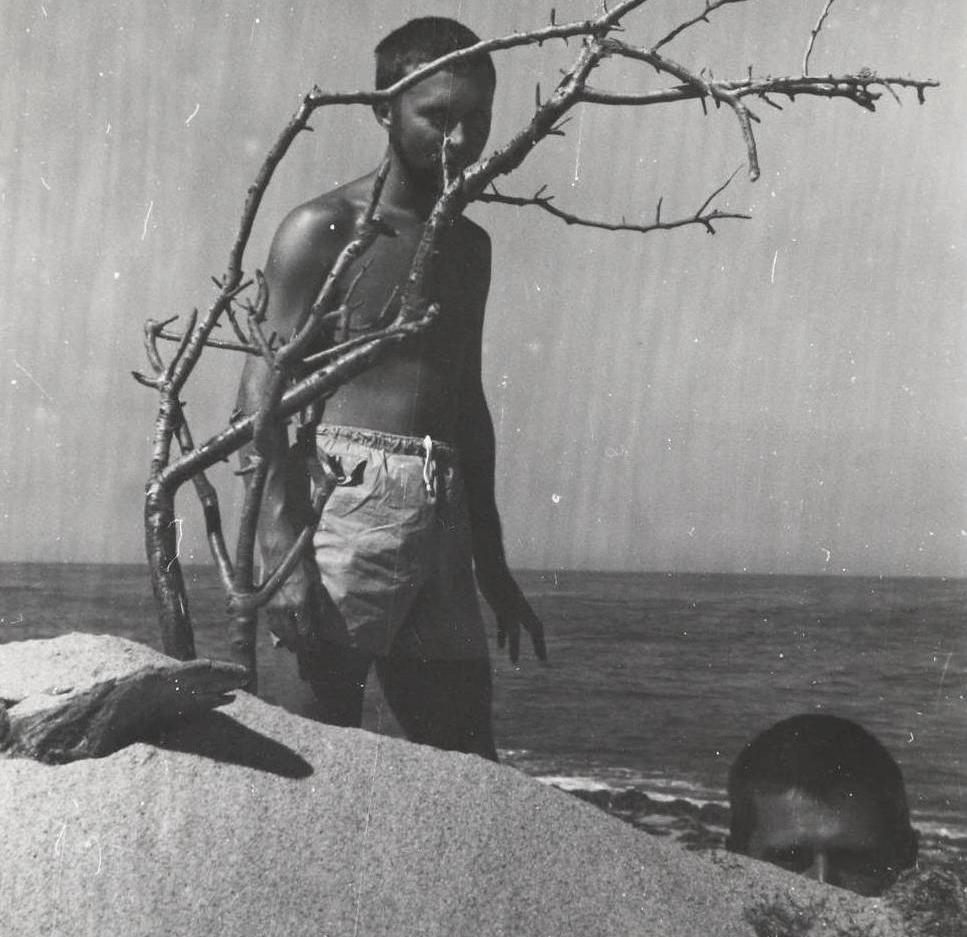
Including Forrest Thayer in the Artist’s Muse series may seem to be a bit of a stretch. He was not a subject of George Platt Lynes (as far as I know) and was only captured by the PaJaMa photo lens during a short period in the late 1930’s. Nevertheless, the talented costume designer still deserves a mention.
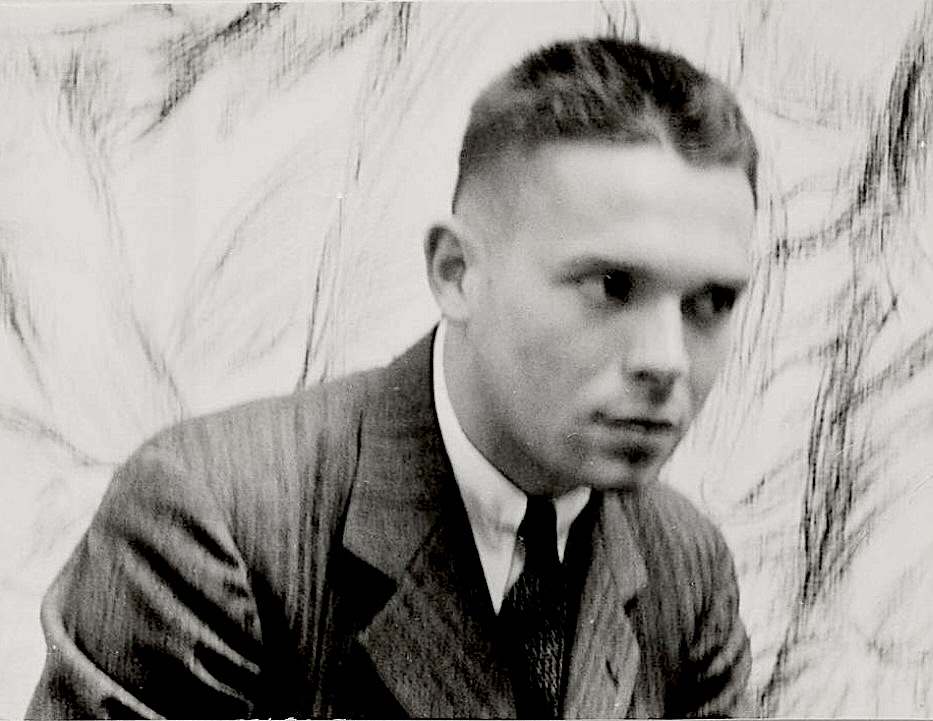
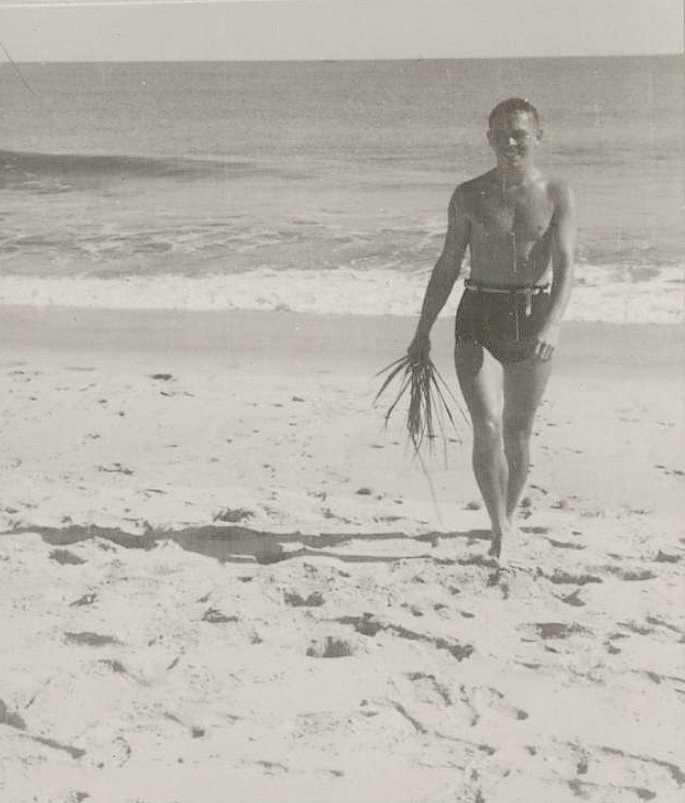
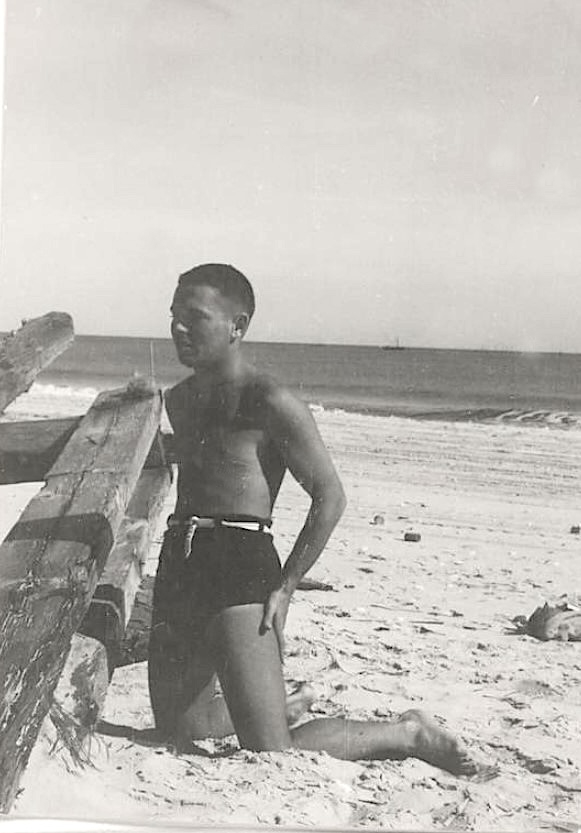
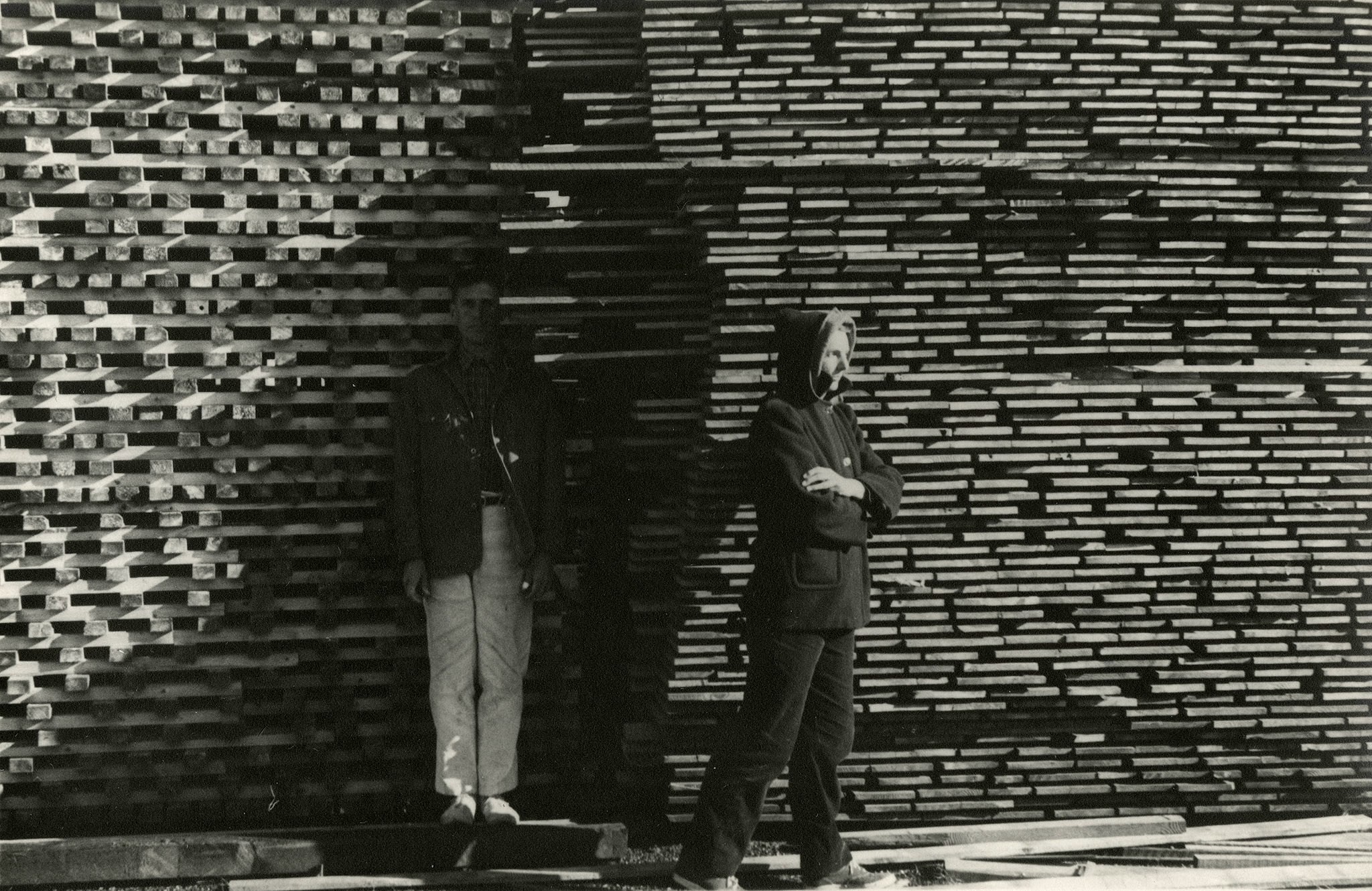
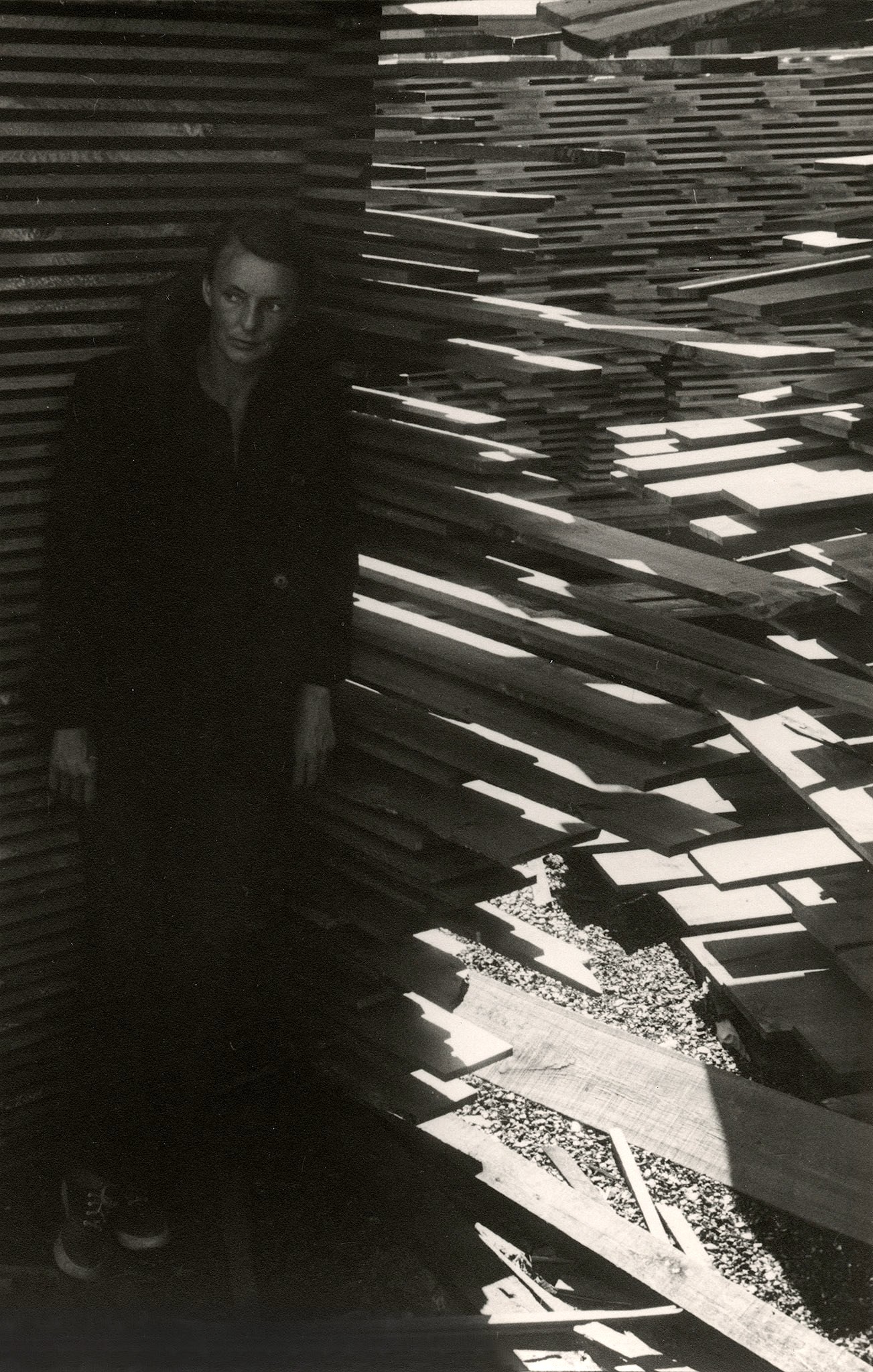
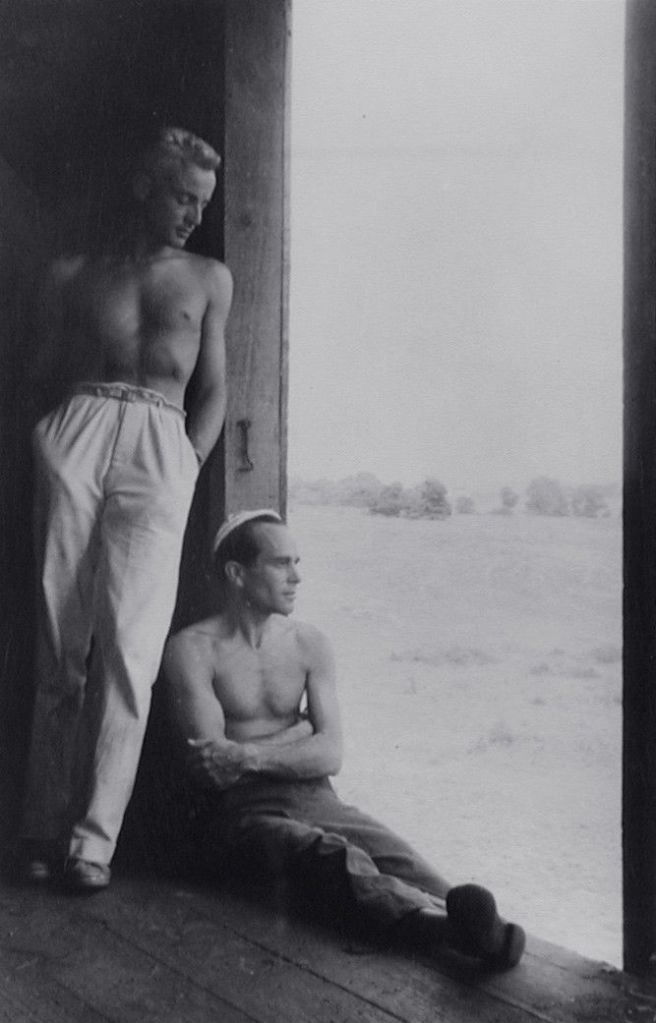
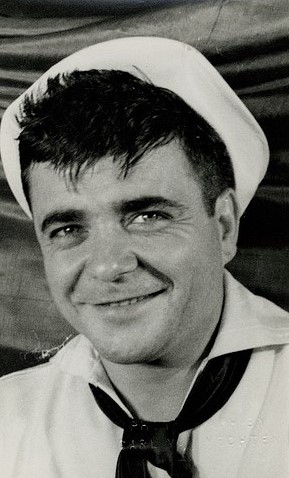
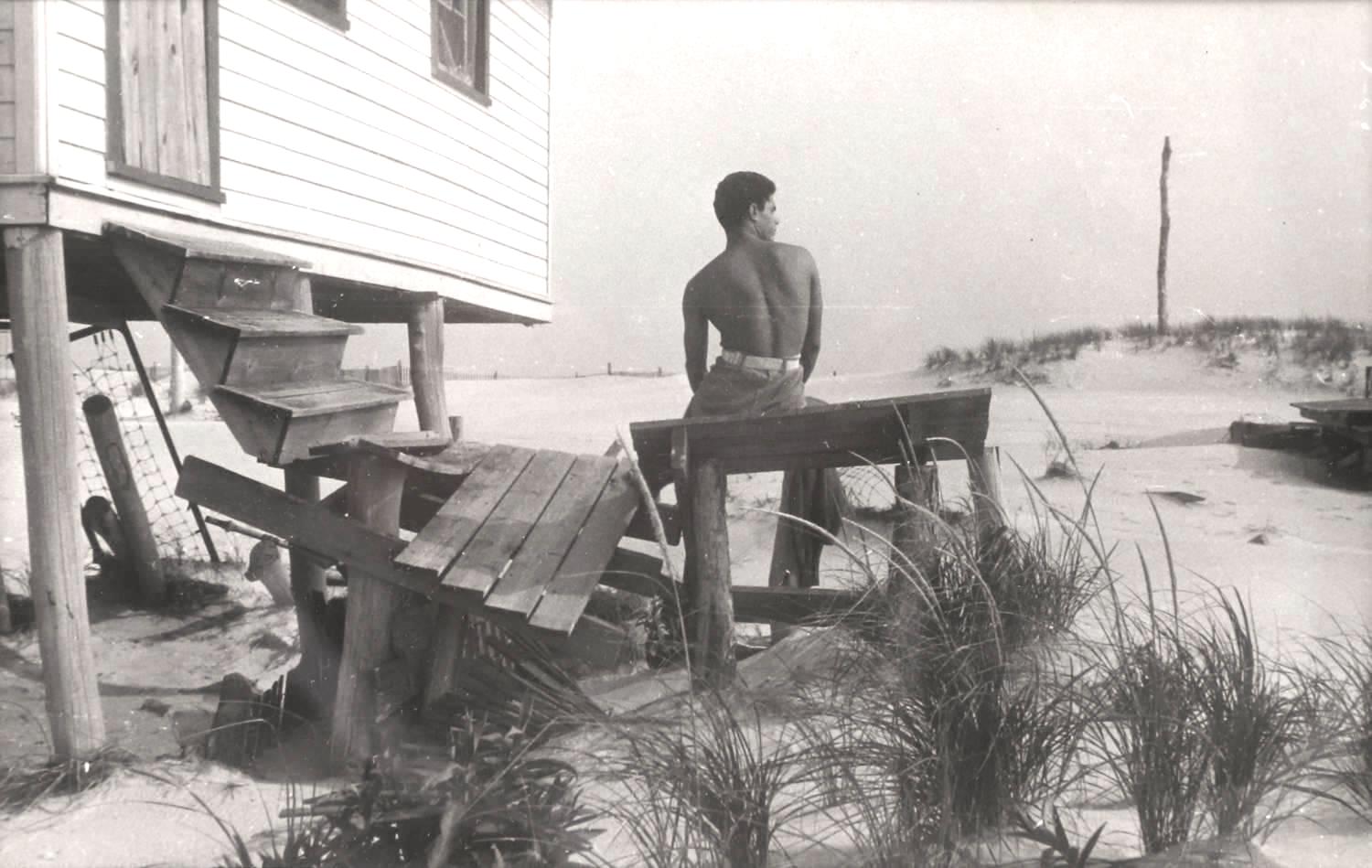
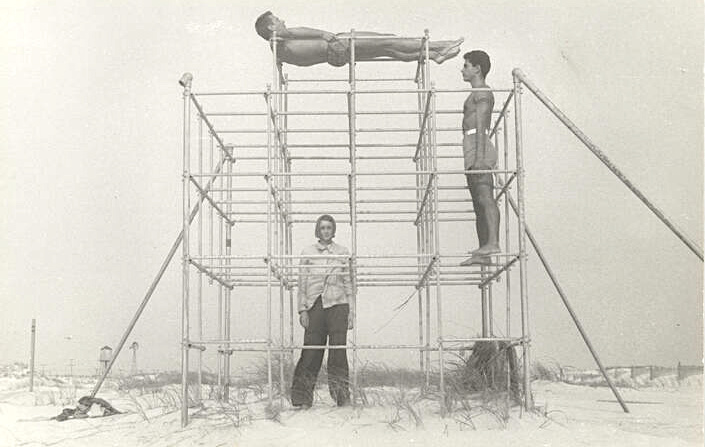
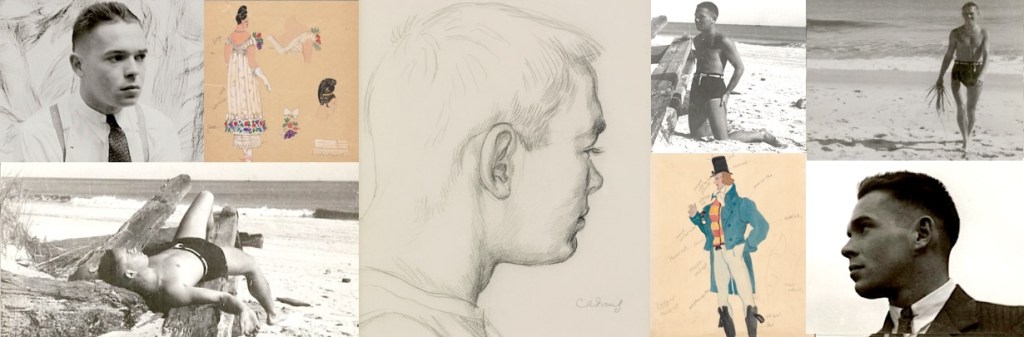
Forrest Thayer photographed in the PaJaMa studios at 5 St. Luke’s Place (1938)

Forrest Glenn Thayer, Jr. was born on May 29, 1916 in Sag Harbor, New York. He was the first child of Forrest and Helen Sigmund Thayer. A younger sister, Helen, was born in 1919. His father was the assistant superintendent of the nearby Fahys Watch Case Factory. He later moved up to superintendent in the early 1920’s.

Both parents were active in the Sag Harbor community, appearing in local stage productions and soloing in the church choir. Mrs. Thayer was also president of the bridge club. When the Fahys Watch Case Factory was sold to Bulova in 1934, Forrest Sr. found work with the Keystone Watch Case Company in New Jersey. He moved to Riverside and would visit his wife and children on the weekends.

Forrest Jr. graduated from Pierson High school in 1933 and went on to study at the New York School of Fine and Applied Arts, now known as Parsons School of Design.
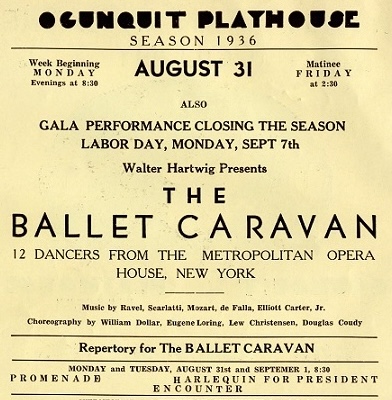
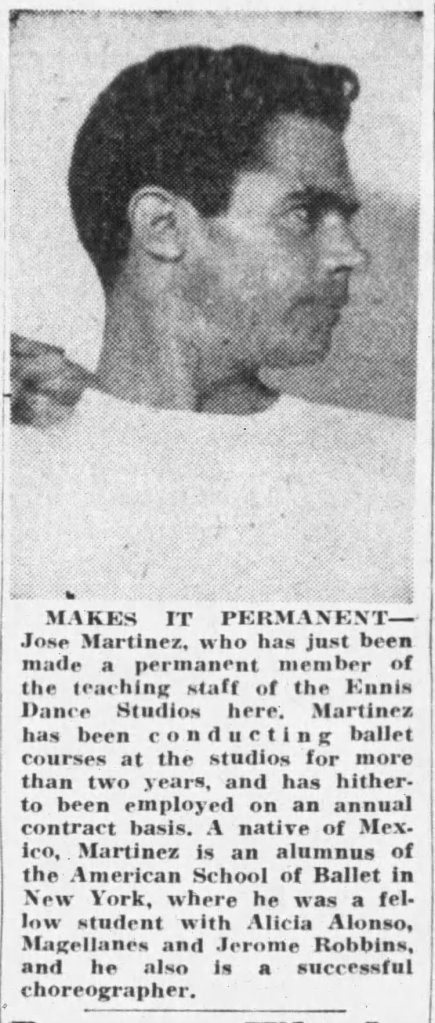
In 1936, Lincoln Kirstein organized Ballet Caravan, a company expressly dedicated to the commission and production of ballets with American themes. These would be created by American composers, choreographers, designers and dancers.  The company also provided off-season summer employment for his American Ballet company dancers, which included Kirstein’s paramour, José Martinez. 

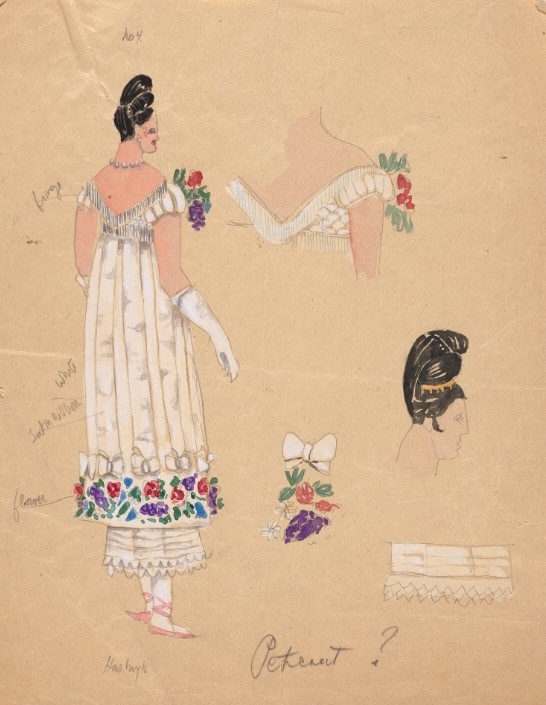
One of dancer William Dollar’s first forays into choreography was Ballet Caravan’s production of Promenade, set to Maurice Ravel’s Valse Nobles et Sentimentales. 20-year-old Forrest Thayer designed the costumes for the production, which featured dancers Eugene Loring and brothers Harold and Lew Christiansen.

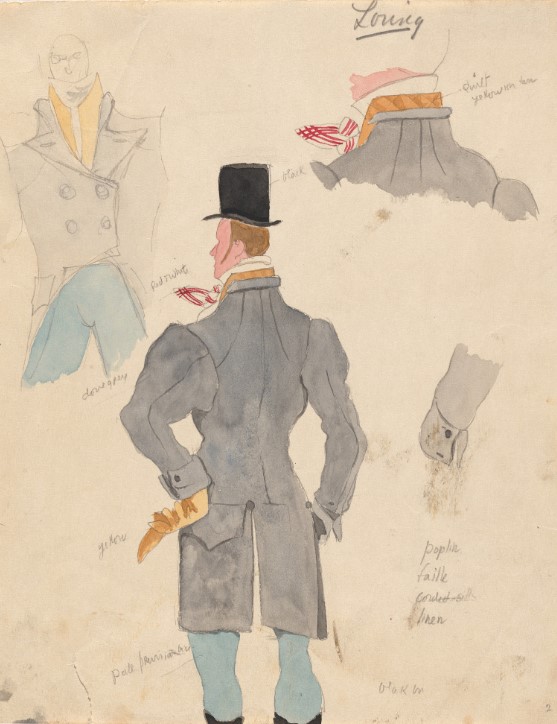
Promenade costume sketches by Forrest Thayer with photos by George Platt Lynes (1936)

Sag Harbor Express, 5/12/1938

Paul Cadmus and Jared French would each take a turn designing sets and costumes for Ballet Caravan: Cadmus with Filling Station (choreographed by Lew Christiansen) in 1937 and French with Aaron Copeland’s Billy The Kid (choreographed by Eugene Loring) in the Fall of 1938. Between those productions, the creative team took a trip out to Fire Island where the PaJaMa collective would retire each summer.

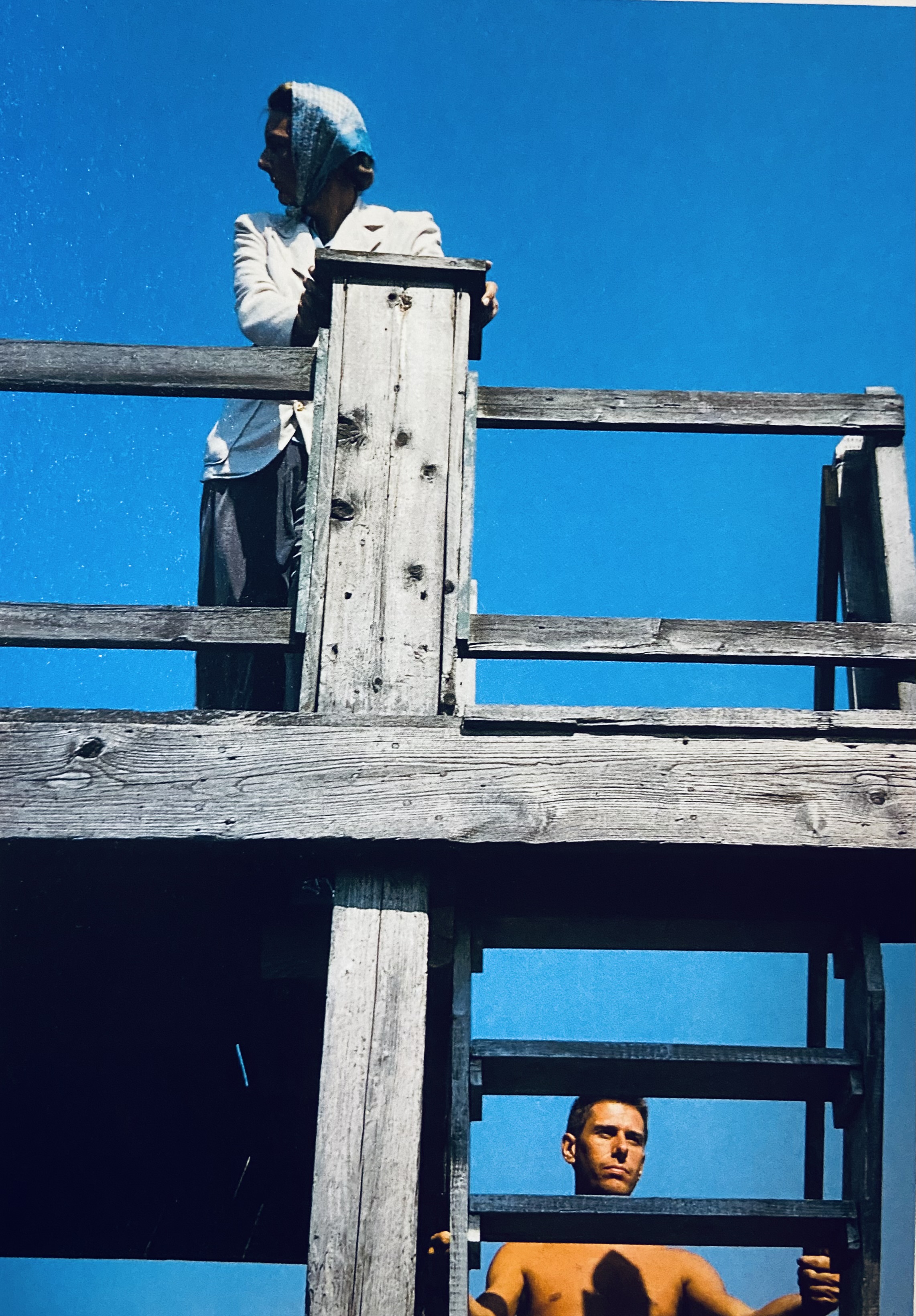
Forrest Thayer, Paul Cadmus and José Martinez at the Saltaire, Fire Island Ferry (1938)

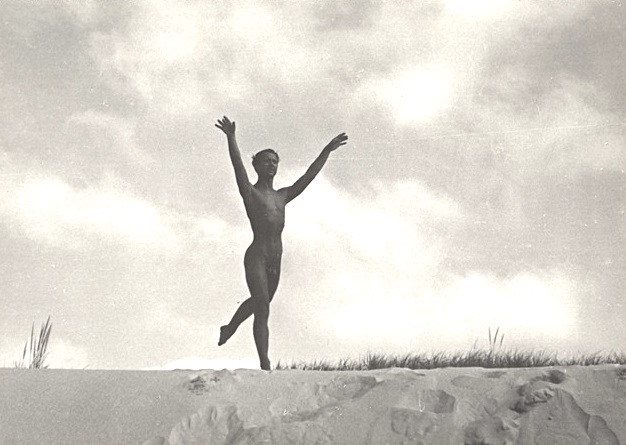
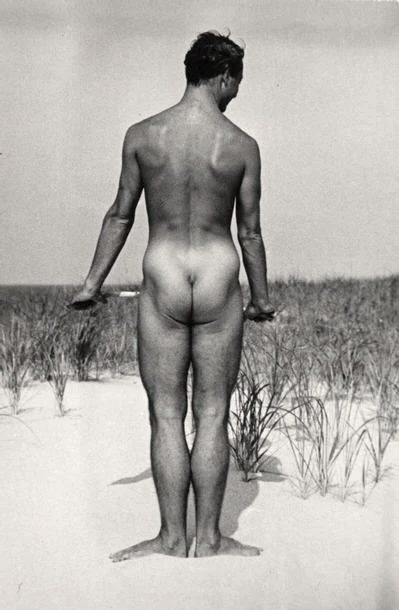
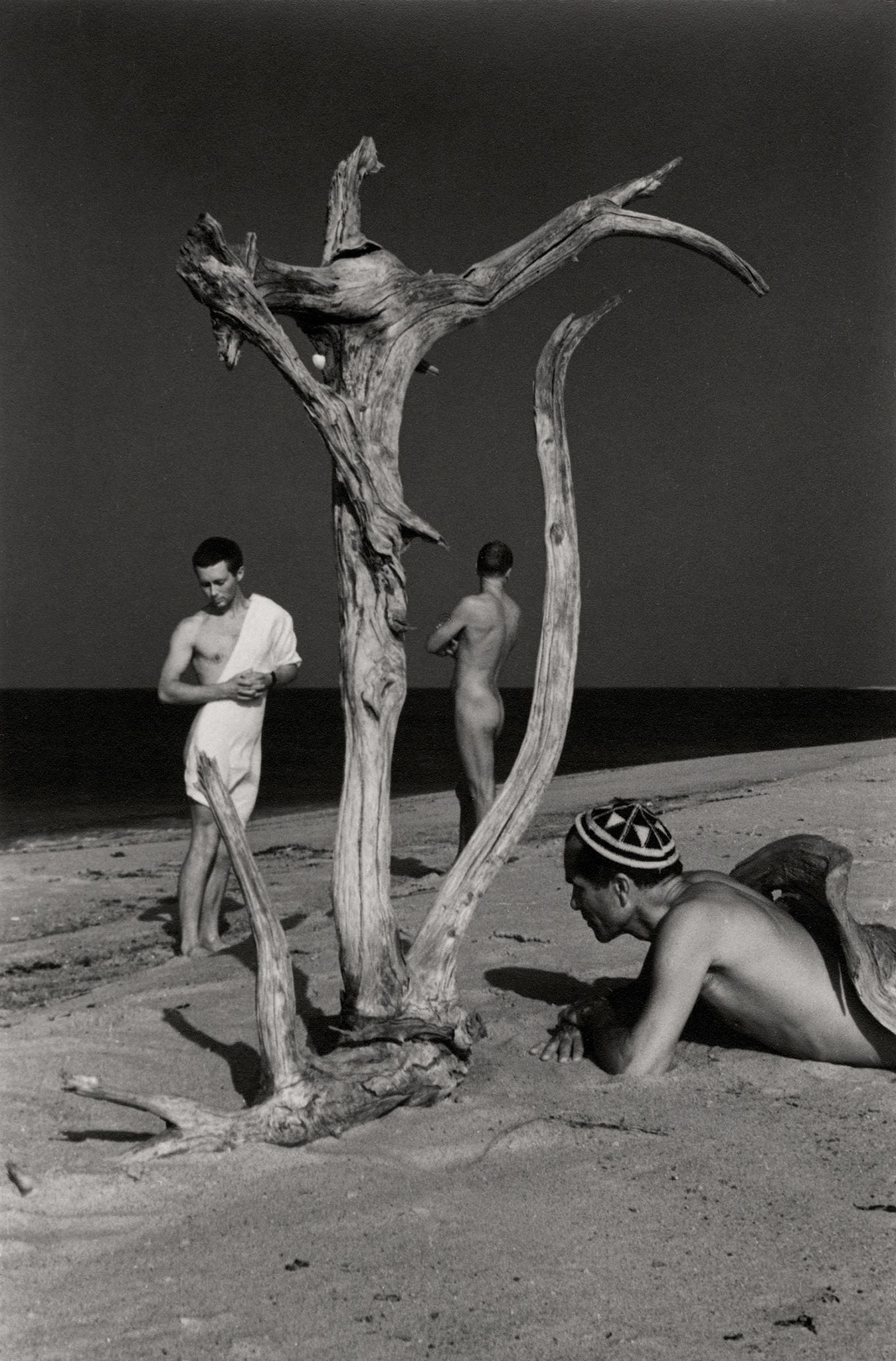
Forrest Thayer frolicking on Fire Island with Paul Cadmus, Jared French and José Martinez (1938)

The PaJaMa photo “After The Hurricane” features (l-r) Jared French, Lincoln Kirstein, José Martinez, Forrest Thayer and probably Paul Cadmus. 

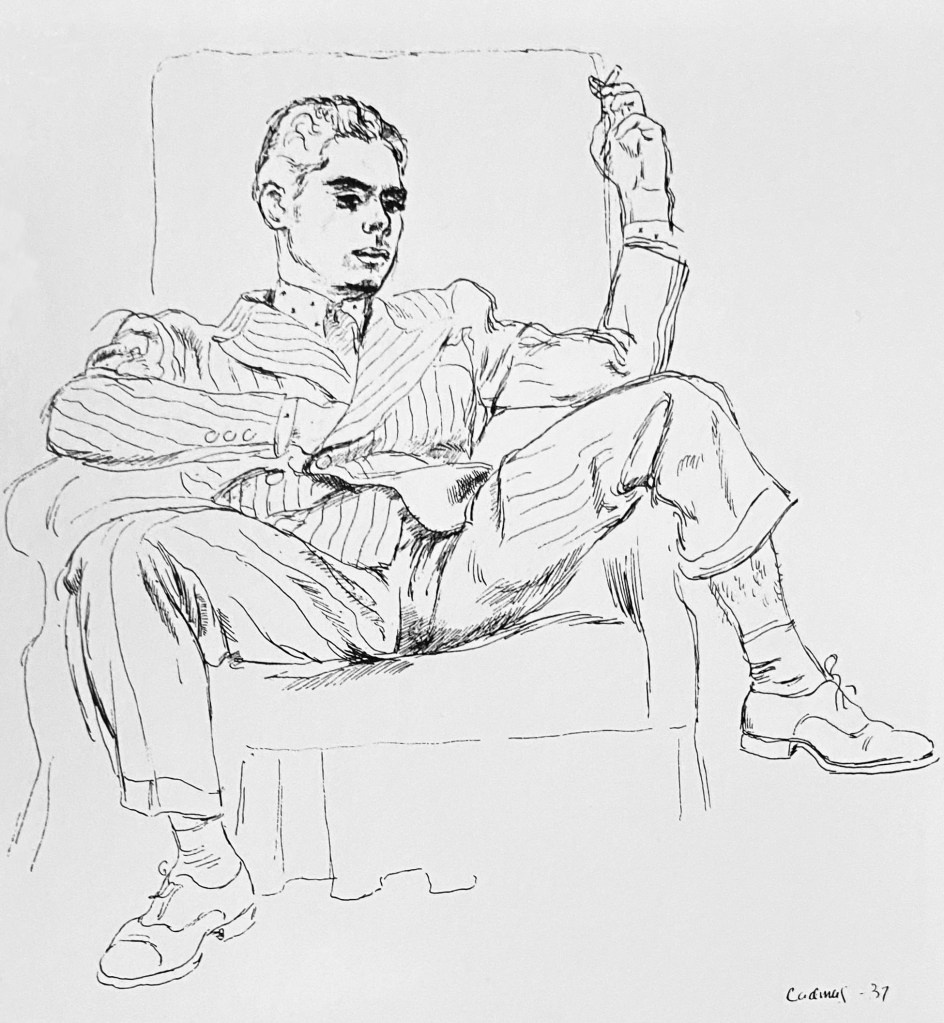
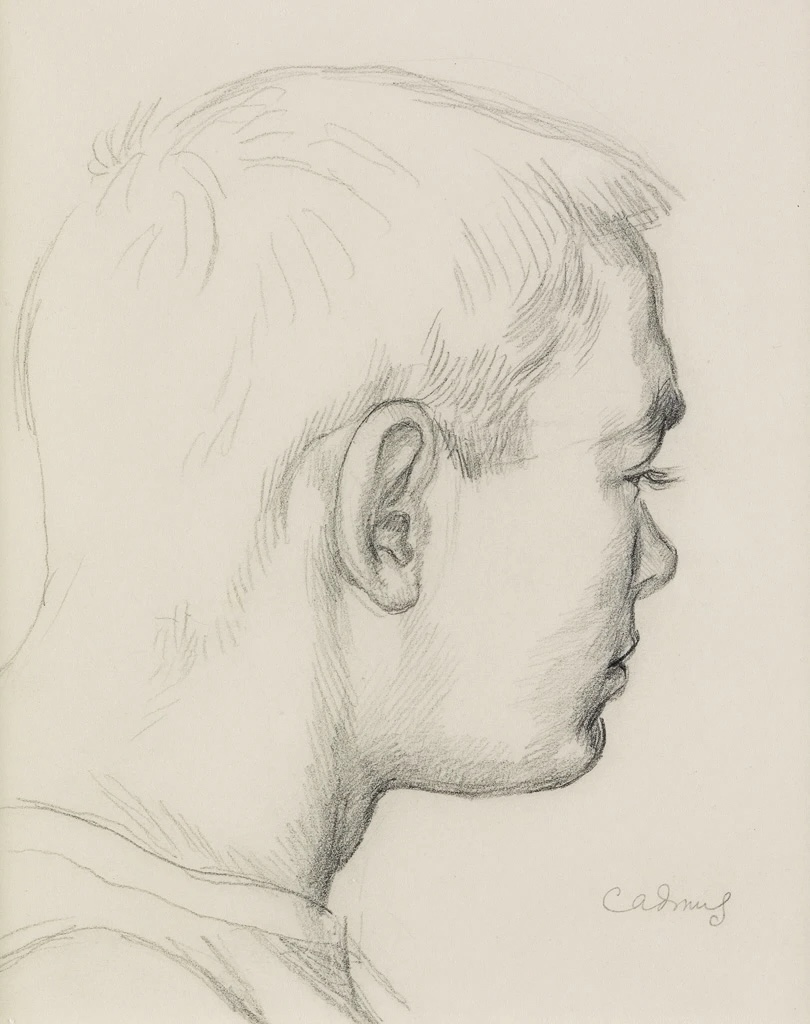
Forrest Thayer sketch by Paul Cadmus

Thayer spent the rest of the summer of 1938 as the scenic designer for the Studio Players in East Hampton, L.I. He continued to find freelance work regionally as a scenic and costume designer. In 1940, he was the scenic designer for the Provincetown Players in New York City. He spent the summer of 1941 working with the Hilltop Players in Ellicot City, Maryland.

During World War II, Thayer served as a staff sergeant in India and Burma from February, 1942 through December, 1945. He landed back in New York after the war and resumed his design career.

In the spring of 1947, Thayer tried his hand at co-directing a revival production of Percy Shelley’s The Cenci at the Equity Library Theater. Reviews were not favorable. During that summer, he directed an adaption of Jean Paul Sartre’s No Exit for the Maverick Players in Woodstock, New York.

New York Daily News, July 23, 1950

Back in New York City, his work with wardrobe continued. Over the next 5 years, he was a part of the following productions:

1947 – Crime And Punishment – Broadway with John Geilgud & Lillian Gish (assistant to Costume Designer Lester Polakov)
1948 – Inside U.S.A. – Broadway (assistant to costume designer Eleanor Goldsmith)
1948 – Cole Porter’s Kiss Me Kate – Broadway (assistant to costume designer Lemuel Ayers)
1949 – Noel Coward’s Present Laughter tour starring Edward Everett Horton (costume design)
1949 – The Philadelphia Story tour (costume design)
1949 – Garson Kanin’s The Smile Of The World – Broadway with Ossie Davis & Ruby Dee (costume design)
1950 – Cole Porter’s Out Of This World – Broadway (assistant to costume designer Lemuel Ayers)
1950 – Garson Kanin’s The Live Wire – Broadway (costume design)
1950 – The Jack Carter Show – NBC Television (costume design)
1951 – Music In The Air – Broadway (assistant to costume designer Lemuel Ayers)

In the fall of 1951, a week before the Broadway opening of Music In The Air, Thayer drove out to Sag Harbor for a visit with his mother. Wherever his career took him, he made frequent return visits to the family home on Jermain Avenue. He spent the evening of Saturday, September 29th in East Hampton visiting friends. As he was driving back to Sag Harbor in the early morning hours of Sunday, September 30th, he was involved in a single car accident. It was reported that he fell asleep at the wheel and struck a tree. He died the next day at Southampton Hospital.

Sag Harbor Express 10/4/51

The Thayer home is just a half mile down the road from Oakland Cemetery. Forrest’s funeral was held at the house, and he was interred with military honors at the cemetery. His parents are now buried there with him.

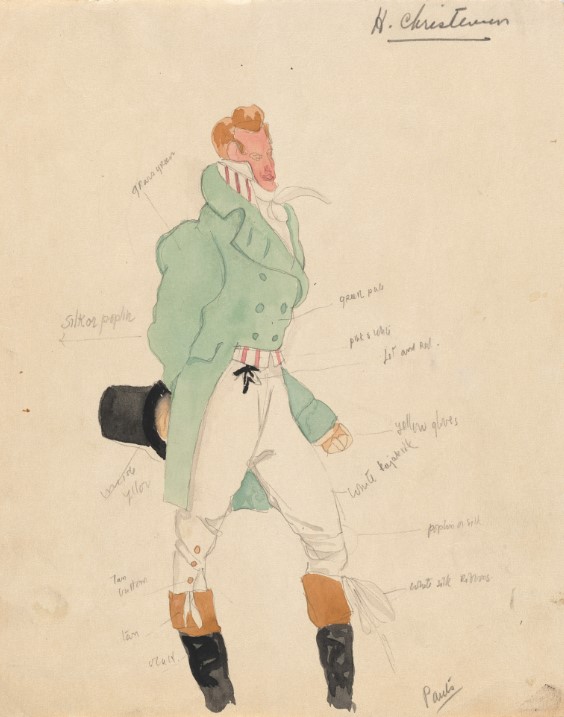
Eight of Forrest Thayer’s costume sketches from Promenade are a part of the Museum Of Modern Art collection, courtesy of Lincoln Kirstein.

See also:
Fire Island PaJaMa Party
Provincetown PaJaMa Party
Artist’s Muse: José “Pete” Martinez
Artist’s Muse: Chuck Howard
Artist’s Muse: Randy Jack
Artist’s Muse: Ted Starkowski
Artist’s Muse: The Mystery Model
Artist’s Muse: Donald Windham & Sandy Campbell
Artist’s Muse: Wilbur Pippin
George Platt Lynes: In Touch Magazine (1982)
Fire Island Muses of George Platt Lynes & The PaJaMa Collective
Revisiting George Platt Lynes’ Fire Island Muses
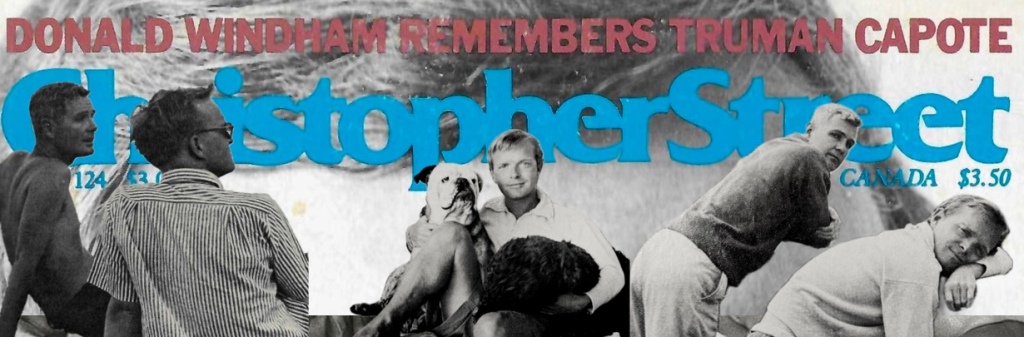
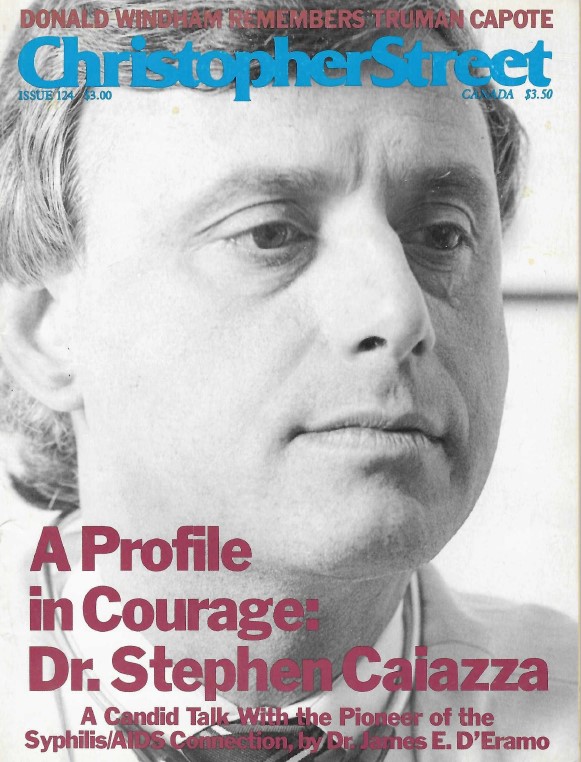
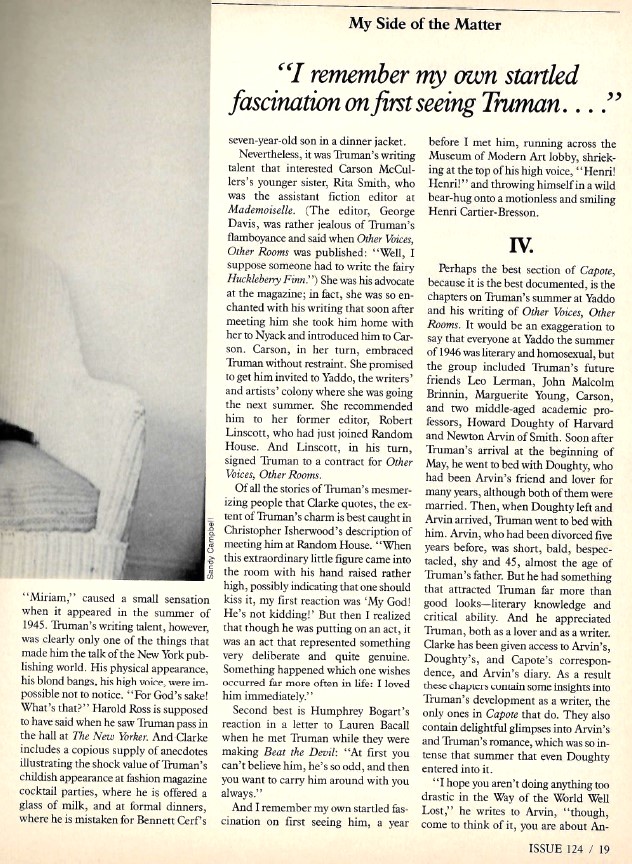
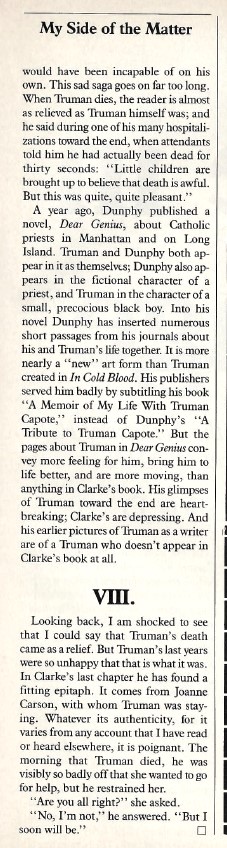
Donald Windham on Truman Capote: Christopher Street (1988)

Donald Windham and his partner Sandy Campbell were two of the subjects of my recent collaboration with the Fire Island Pines Historical Preservation Society. The Fire Island Muses of George Platt Lynes and The PaJaMa Collective focused on the subjects of their photography and artwork, specifically during summers spent on Fire Island.

Donald Windham (with Paul Cadmus) & Sandy Campbell in PaJaMa photos of the early 1940’s.

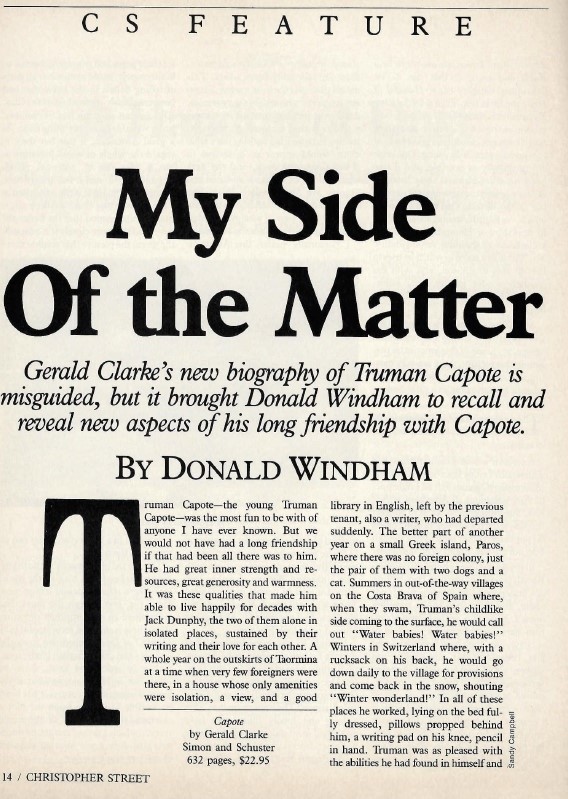
I recently rediscovered this piece written by Windham for a 1988 issue of Christopher Street. I bought the magazine at a West Village newsstand back in the day, and it has remained in my possession all these years, proving yet again why I never throw anything away. Because you never know…

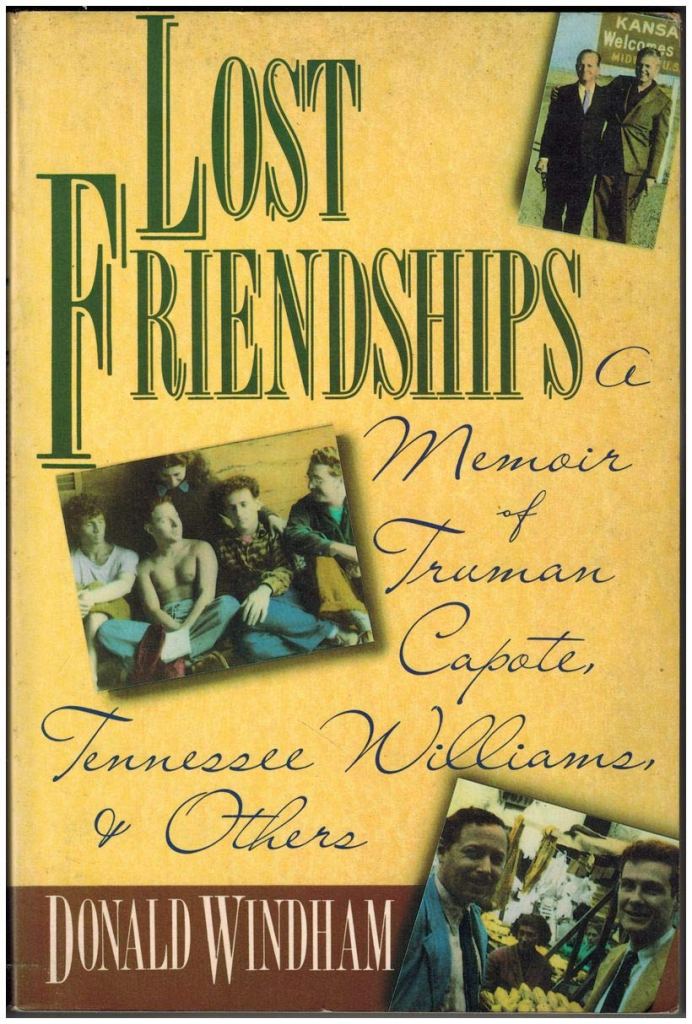
Back in 1987, Donald Windham had published Lost Friendships: A Memoir of Truman Capote, Tennessee Williams, and Others. This article was written the following year in response to the publication of Gerald Clarke’s 600+ page biography Capote, which Windham describes as “misguided.” Clarke’s book would later be adapted into the 2005 film, with Phillip Seymour Hoffman winning an Oscar for his portrayal of troubled Truman.

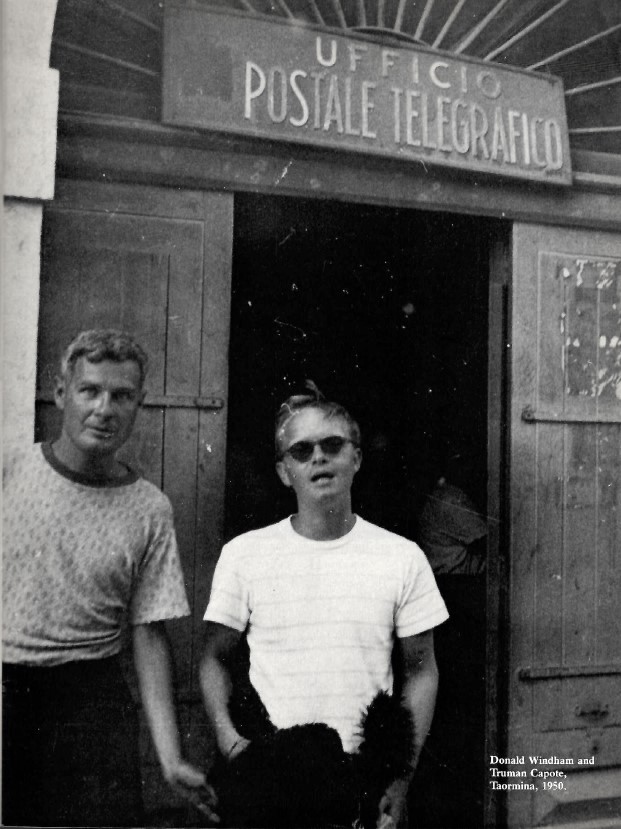
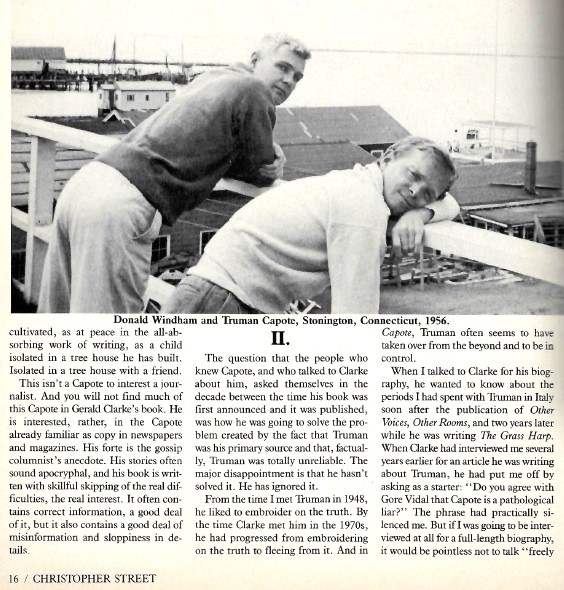
Note that the photos accompanying the article are credited to Sandy Campbell.

This photo appears in several places on the internet misidentifying Capote as Sandy Campbell with Donald Windham, Piazza San Marco (1948)
Capote with Sandy Campbell at the Kansas border, October 1964

See also:
Truman Capote in Mandate (1985)
Truman Capote’s Christmas Memory
Artist’s Muse: Donald Windham & Sandy Campbell
Fire Island PaJaMa Party
Fire Island Muses of George Platt Lynes & The PaJaMa Collective
Artist’s Muse: José “Pete” Martinez
Artist’s Muse: Chuck Howard
Artist’s Muse: Wilbur Pippin
Artist’s Muse: The Mystery Model
Don Herron’s Tub Shots IV: Christopher Street 1980
George Platt Lynes: In Touch Magazine (1982)
Revisiting George Platt Lynes’ Fire Island Muses

Fire Island Muses of George Platt Lynes & The PaJaMa Collective

I am pleased to announce that I have penned an article for the Fire Island Pines Historical Preservation Society website titled “The Fire Island Muses of George Platt Lynes & The PaJaMa Collective.” It focuses on the subjects of the artwork they created during their time on Fire Island. See the full piece here: https://www.pineshistory.org/the-archives/fire-island-muses

Paul Cadmus & Jared French, Fire Island, PaJaMa (1940)

I have previously written about The PaJaMa collective’s Fire Island summers. They were frequently joined by fellow artists George Platt Lynes and Bernard Perlin, as well as a parade of friends and lovers, performers and literary types from their New York social scene. They were almost exclusively attractive young gay men who served as models and muses for the artists.

Chuck Howard & Ted Starkowski, FI, PaJaMa, 1951

10 of these men are profiled in the piece – several of whom have previously been featured here. The others will inevitably get more in-depth profiles in the future:
José “Pete” Martinez
Forrest Thayer
Donald Windham & Sandy Campbell
Jonathan Tichenor
Randy Jack
Ted Starkowski
Chuck Howard
Jensen Yow & Jack Fontan

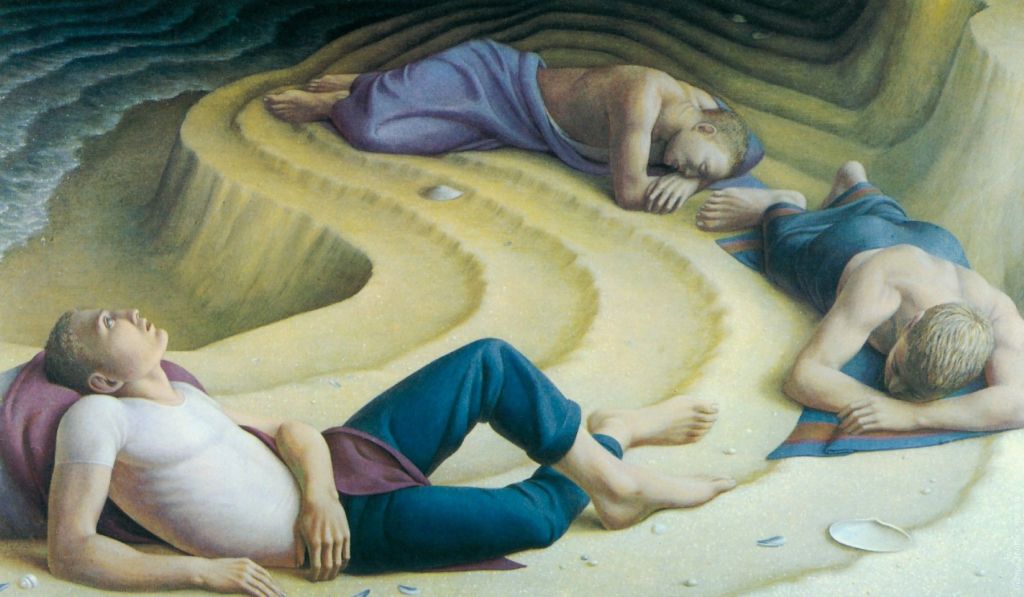
Paul Cadmus: Two Boys On The Beach (1938) / Two Boys On The Beach 2 (1939)

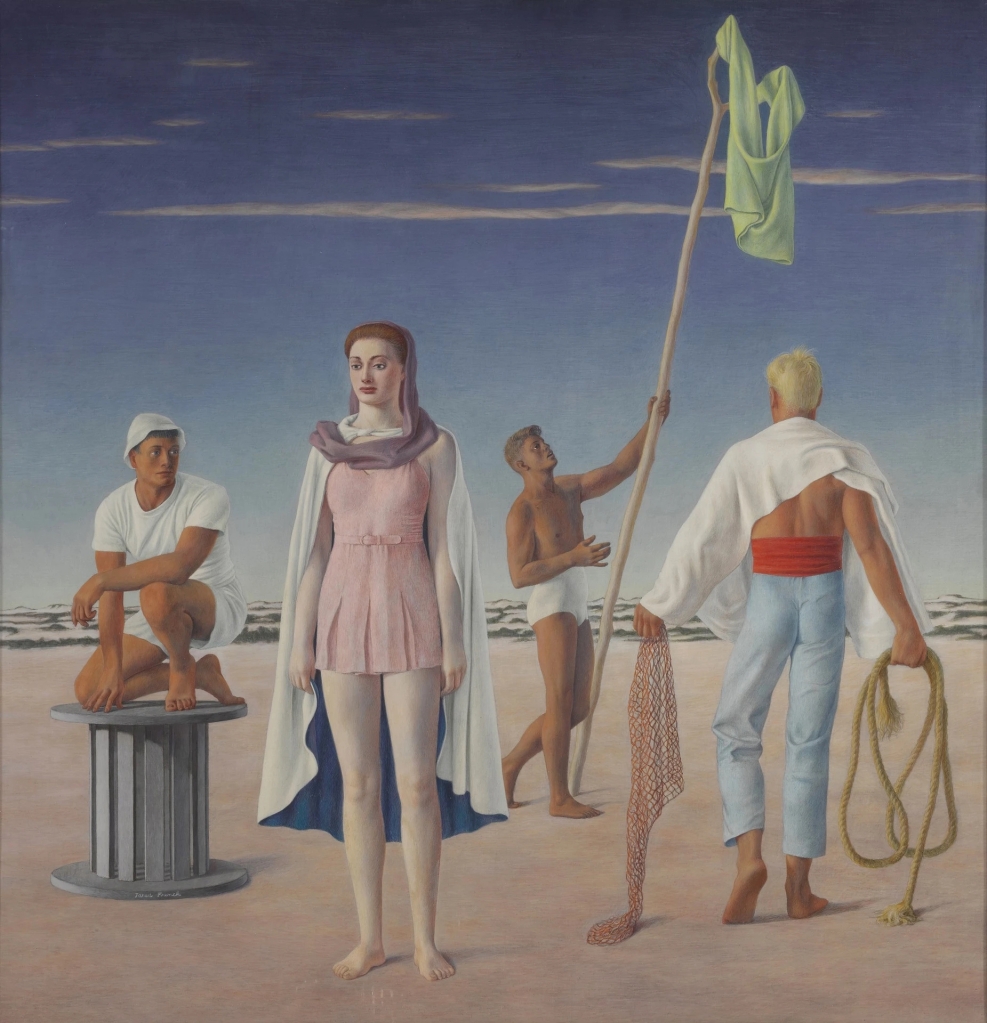
Margaret French, “The Moon by Day”, 1939

Thanks to Robert Bonanno for reaching out and John Dempsey for the feedback and formatting!

See Also:
Fire Island PaJaMa Party
Provincetown PaJaMa Party
Revisiting George Platt Lynes’ Fire Island Muses
Artist’s Muse: Wilbur Pippin
Artist’s Muse: William Weslow
Artist’s Muse: The Mystery Model
Buddy & Johnny: A Historic Photo Shoot
Donald Windham on Truman Capote: Christopher Street (1988)
New York City In Touch (1979)
Gay Times #69 (1978)
George Platt Lynes: In Touch Magazine (1982)

Artist’s Muse: William Weslow

Hard to believe but it has been a year since the last Artist’s Muse profile – these are men who inspired and were subjects of 20th Century painters, photographers, and other artists. It was last January that we cast the spotlight on Jose “Pete” Martinez. Chuck Howard was profiled in September, 2022 and is currently being featured in George Platt Lynes photographs on exhibition at Childs Gallery in Boston. If you read our post and then take a look at their press release, you might surmise the primary source of their biographical material.

Our latest Artist’s Muse is William Weslow, a ballet dancer with an extraordinarily long career who was also a Broadway performer, artist, and masseur. He posed for George Platt Lynes’ camera during their brief relationship, and was later involved with choreographer Jerome Robbins. He posed nude for dance photographer Kenn Duncan when he was in his 50’s, looking as fit as in photos from 25 years earlier.

The Columbian, Vancouver, WA (6/7/44)

William Edward Weslow was born on March 20, 1925 in Seattle, Washington. His mother had been a Ziegfeld dancer, and he soon followed her lead. As a teen, Weslow studied with famed dance instructor Mary Ann Wells. His 1943 draft registration card lists him as a student at Broadway High School in Seattle. Later that year, he joined the Navy Coast Guard and was stationed in the Alaska.

Annie Get Your Gun (1946) Ethel Merman with Weslow on the right (Photo: Eileen Darby)

After his stint in the Navy, Weslow headed to New York to continue his ballet study. He joined the Ballet Theatre, but soon turned his attention to the Broadway stage. He was in the original Broadway casts of two Ethel Merman vehicles: Annie Get Your Gun and Call Me Madam, the latter choreographed by Jerome Robbins. Besides touring companies, he also appeared on Broadway in the original casts of The Girl In Pink Tights and Wonderful Town with Rosalind Russell.

Weslow photographed by George Platt Lynes (1951)

It was around 1951 that Weslow had his brief relationship with photographer George Platt Lynes. The affair was so fleeting that it did not garner a mention in Allen Ellenzweig’s recent Lynes biography. In David Leddick’s Intimate Companions, it is summed up in a single anecdote:

Dancer William Weslow, who had a transitory but more serious than usual romance with George Platt Lynes in the early 1950’s, evidently treated the photographer to the kind of temperament Platt Lynes had displayed to his admirers in the past. Dining at Platt Lynes’s apartment before a performance, Weslow had requested a steak because of the demanding dancing that was to be done that evening. Instead, Platt Lynes served him an elaborate veal dish, which the young dancer flung against the wall before leaving in search of a steak.

Lynes’s photographs of Weslow are also rare, due in part to the paper negative process that the photographer was experimenting with at the time. This cost-cutting technique gave the photos a quality that have been described as either “ethereal” or “muddy.”

When he wasn’t on stage, Weslow enjoyed painting and sketching, with an affinity for exotic birds, both real and imagined. His work garnered several gallery showings through the years.

Buffalo Courier Express (4/1/51) & New York Post Star (7/9/71)

New York Daily News (1/1/54) & (11/6/54)

Weslow was a soloist at Radio City Music Hall, New York Daily News (6/20/56)

In 1955, he originated the role of Levi Stolzfuss in the Amish musical Plain and Fancy. After nearly 10 years in musicals, he felt the need for a change. When the show closed the following year, he rejoined the Ballet Theatre for a brief stint before settling in at the New York City Ballet for the rest of his dance career.

Like his relationship with Lynes, Weslow’s dalliance with choreographer Jerome Robbins was so fleeting that most biographers fail to mention it. It is worth noting as it caused friction between the two while they continued to work together. Weslow is not alone in saying that Robbins could be vindictive, manipulating his dancers because of personal grudges, often pitting them against each other.

Weslow also caught the eye of New York City Ballet Director Lincoln Kirstein. He rebuffed his advances, stating “I don’t find you attractive, Mr. Kirstein.” “Who asked you to find me attractive?” Kirstein snapped, “I was just asking you to come over to the house for a few drinks and stay over.”

Later, the two had a chance meeting at a gay bathhouse. Weslow greeted him loudly with “Why Lincoln, hello! Come here often?” The married Kirstein did not respond and left the establishment.

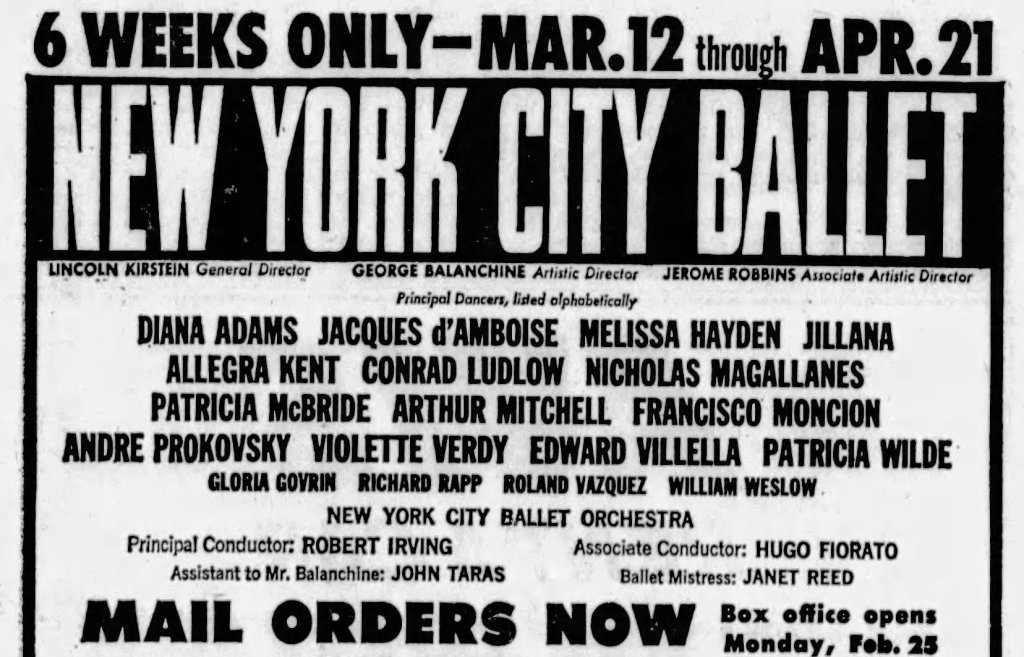
1963 Ad for New York City Ballet
1963: Weslow & Suki Schorer in Variations from Don Sebastian (photo: Martha Swope)
1964: Weslow & Sara Leland in La Valse (photo: Martha Swope)
1964: William Weslow & Carol Sumner are the dancers in the first of 4 Temperaments – NYCB filmed for Canadian Television
1965: New York City Ballet rehearsal for Don Quixote (l-r) Nicholas Magallanes, George Balanchine, Richard Rapp, Jillana, William Weslow (photo: Martha Swope)
Camden Courier Post, New Jersey (3/8/66)
1966: Weslow & Marnee Morris in A Midsummer Night’s Dream (photo: Martha Swope)
1967: Weslow & Leslie Ruchala in Don Quixote (photo: Martha Swope)

In the mid 1960’s, Weslow began cultivating a side career as a masseur, working on fellow ballet dancers including Alicia Alonso and Edward Villella, who credited Weslow’s massages with extending his career by several years. Weslow makes a brief appearance as his masseur in the 1968 documentary Man Who Dances: Edward Villella.

In 1972, Weslow was dismissed from the New York City Ballet. He was 47 years-old and had been with the company for 14 years. In the book I Remember Balanchine, he recounts Balanchine telling him, “You’re too old. You have to leave company. We only want young, pretty dancers here. Old dancers – you see, when they get old they should just go away and die. This is what they should do, die. Because you’re not pretty. No youth… Besides, dear, you’re not going to commit suicide, are you?”

He replied; “To please you, no, I wouldn’t, Mr. Balanchine.”

“And that was that,” Weslow writes; “He didn’t say ‘You have been a good dancer’ or anything. It was just ‘Go away. Go away.’ I was close to tears. It was a terrible blow because I adored the company.”

Weslow’s massage work helped him to keep a connection to the dance world while easing into the next phase of his life, as he became known as “masseur to the stars.”

1976: Weslow was 51 years old when he was photographed by Kenn Duncan
When former ballet dancer Anne Byrne (aka Mrs. Dustin Hoffman) was profiled in the New York Daily News, her masseur William Weslow was there to lend a hand or two. (1/22/78)
William Weslow (1997)

When interviewed later in life, a reporter recalled “He seemed to love Maria Tallchief and had a poster of her on the wall. He also had kind words for Allegra Kent. He could be quite sarcastic, compassionate, cranky and deeply moving remembering certain people and other things.”

Allegra Kent called him “the funniest comedian ever” while also noting his empathy for others. He could also be quite brutal in his assessment of those he had worked with. Of Kirstein he said, “There was cruelty in Lincoln.” Jerome Robbins, he told a biographer “should have been cut up in small pieces and burned in a microwave somewhere because he was so horrible to me.”

William Weslow (2000)

While photographing male nudes for his 2011 book Shades of Love, photographer Demitris Yeros recounts how a naked octogenarian William Weslow would repeatedly interrupt the photo shoot, arms waving to chase the pigeons from his veranda. 

William Weslow passed away at age 87 on January 29, 2013 in New York City. He was remembered in a Dance Magazine article as “A flamboyant personality with a sassy comeback for any remark directed his way…. (he) was as colorful off stage as on.”

See also:
Artist’s Muse: José “Pete” Martinez
Artist’s Muse: Donald Windham & Sandy Campbell
Artist’s Muse: Forrest Thayer
Artist’s Muse: Chuck Howard
Artist’s Muse: Randy Jack
Artist’s Muse: Ted Starkowski
Artist’s Muse: Wilbur Pippin
Artist’s Muse: The Mystery Model
Fire Island Muses of George Platt Lynes & The PaJaMa Collective
Revisiting George Platt Lynes’ Fire Island Muses
George Platt Lynes: In Touch Magazine (1982)
Kenn Duncan After Dark

Christmas At St. Mary’s Pre-Flight School pt. III

Dear Readers,

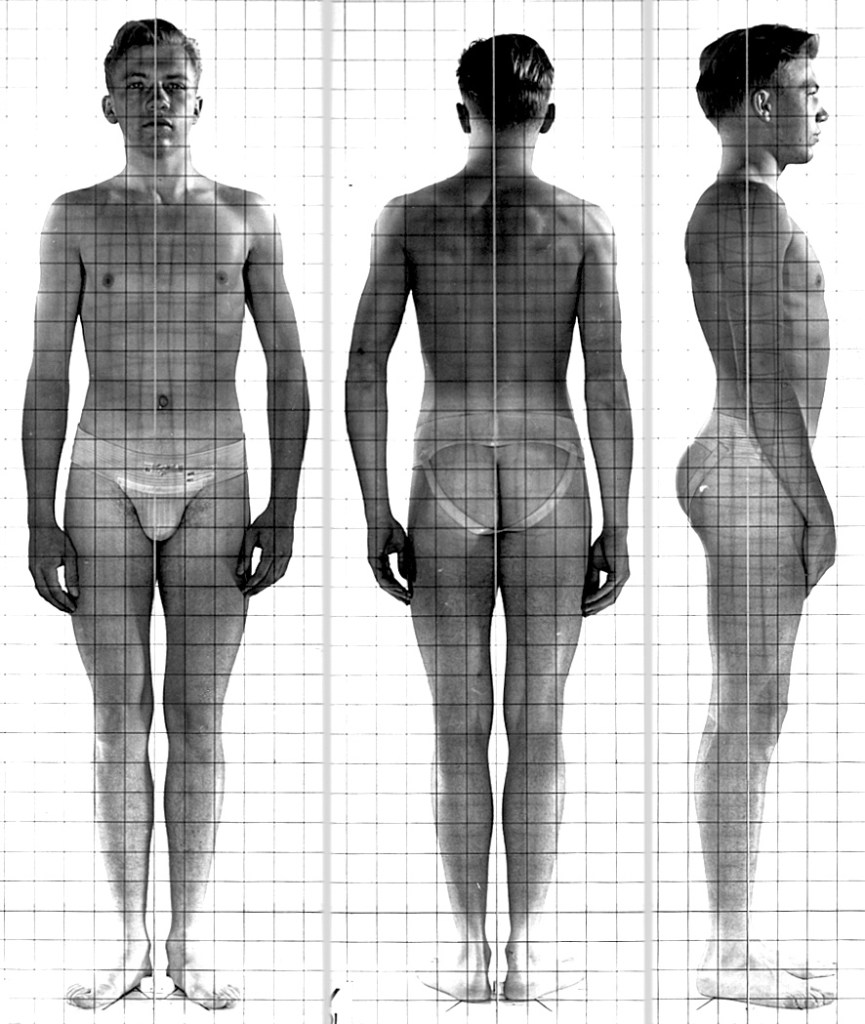
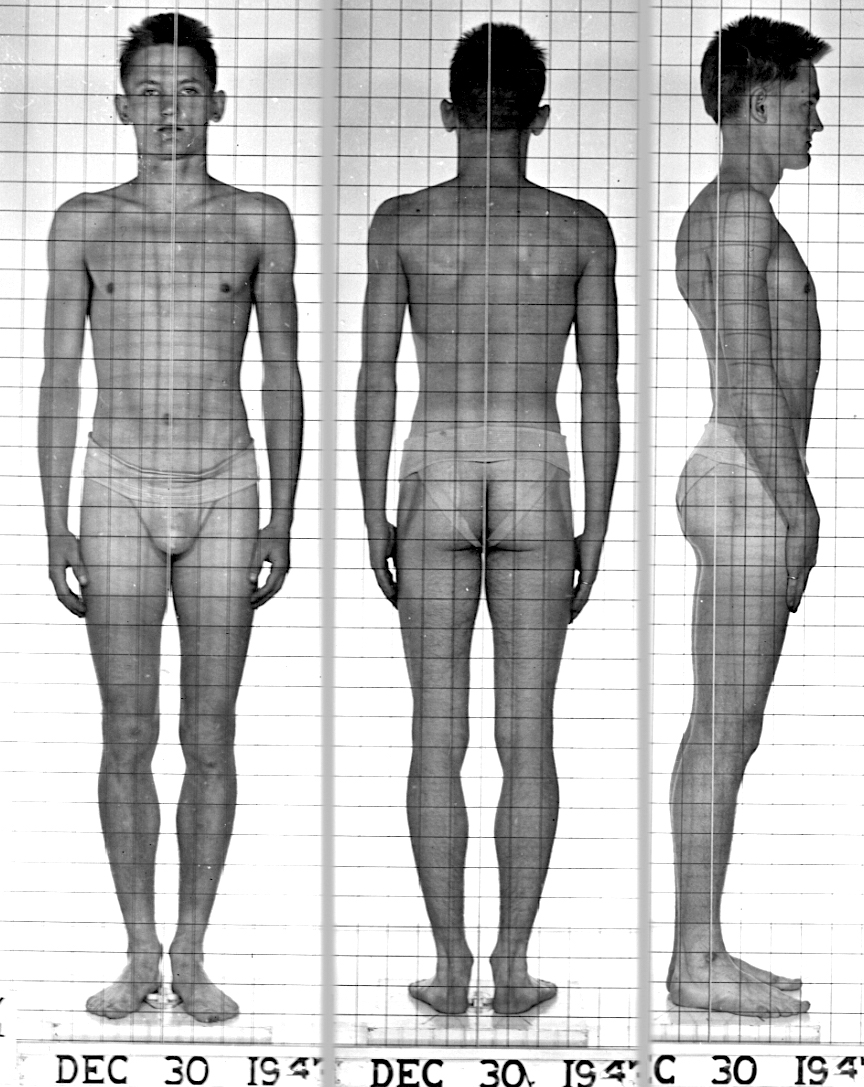
It’s that time again… due to popular demand, we have a 7th installment of WWII-era photos featuring the jockstrap-clad pre-flight training school cadets at St. Mary’s College in California. You can view the first one here, with links to all the rest at the bottom of the article. This is the third installment focusing on these strapping young men – many away from home for the first time – photographed as they trained to go to war during the holiday season.

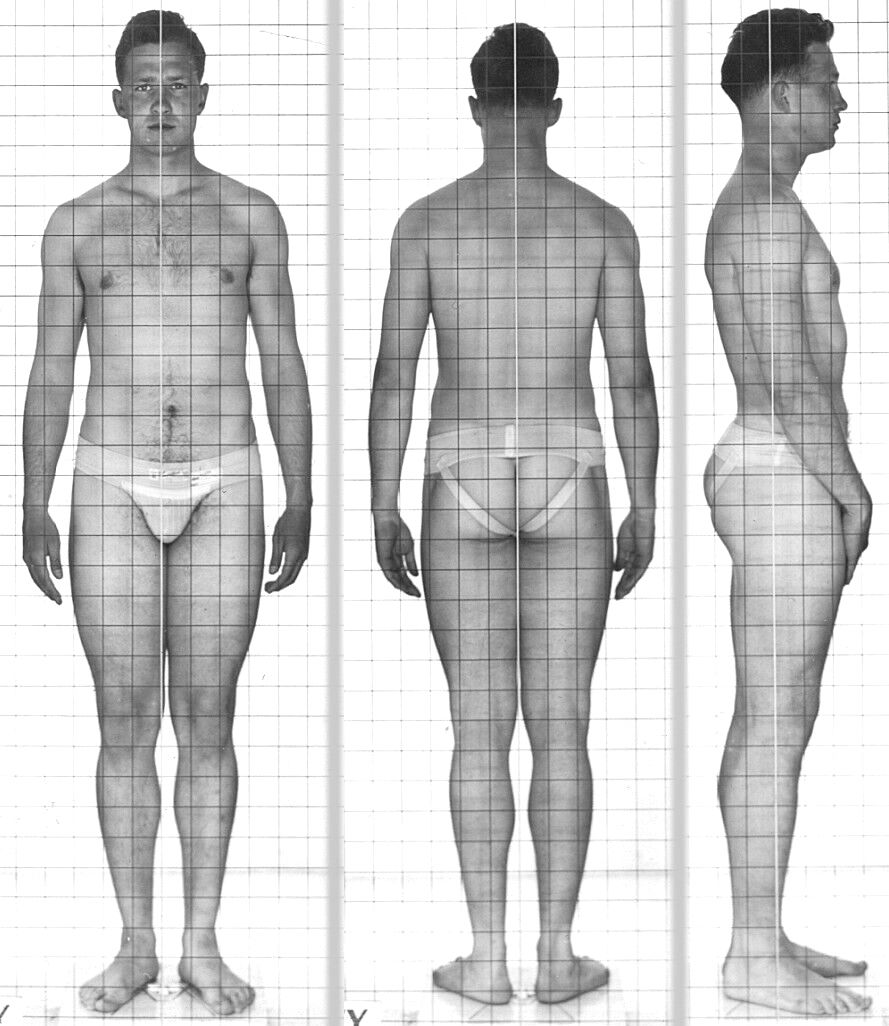
I first became aware of these black and white 5″x7″ triptych photos several years ago. Listings turn up on auction sites frequently, where the photos are often accompanied by the index card used to record the physical training progress of the cadet.

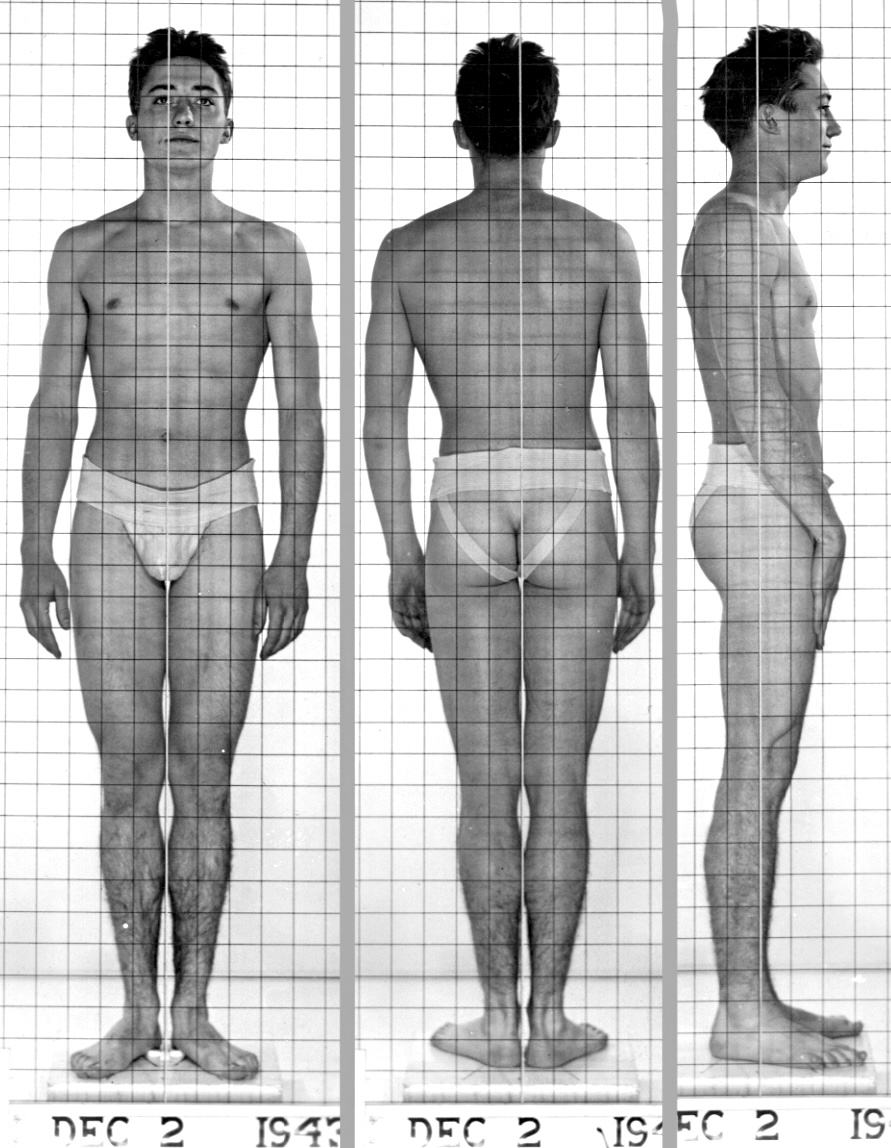
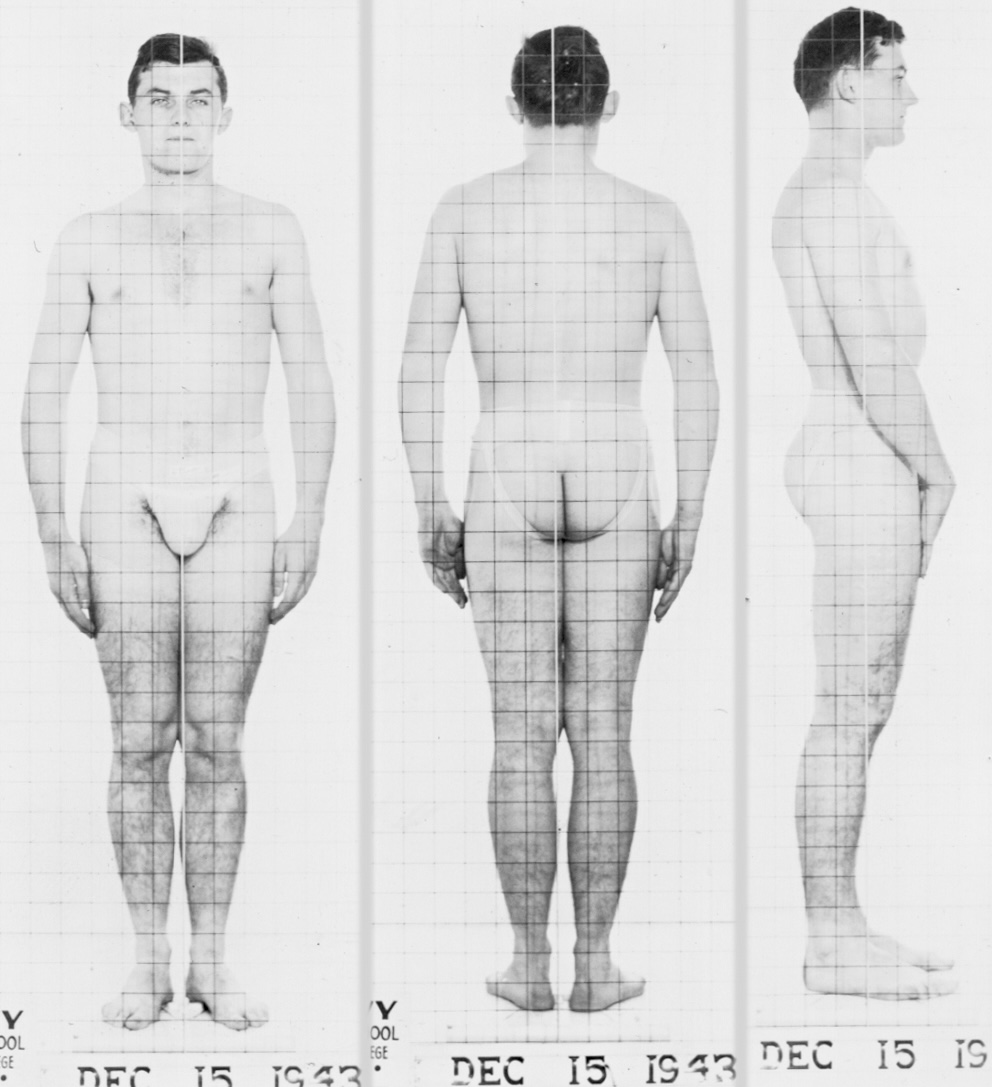
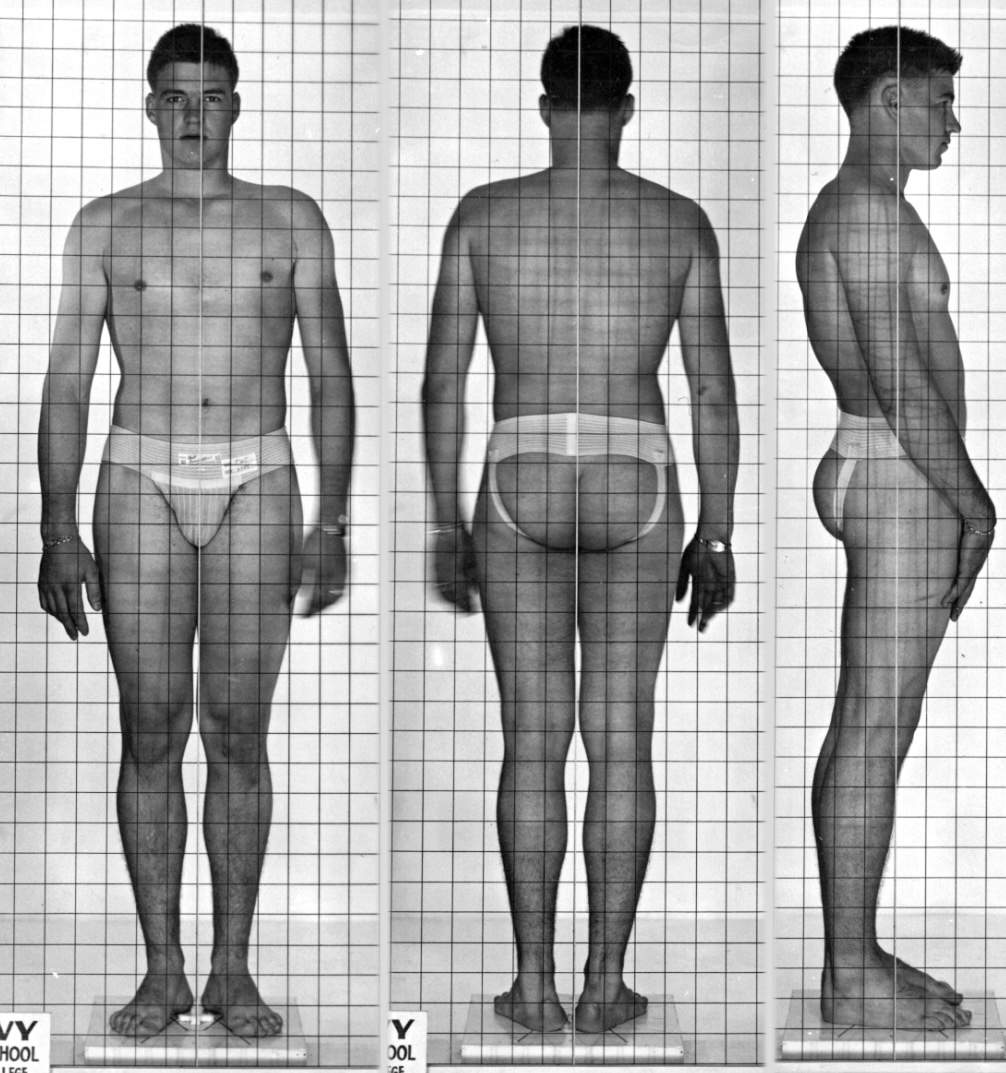
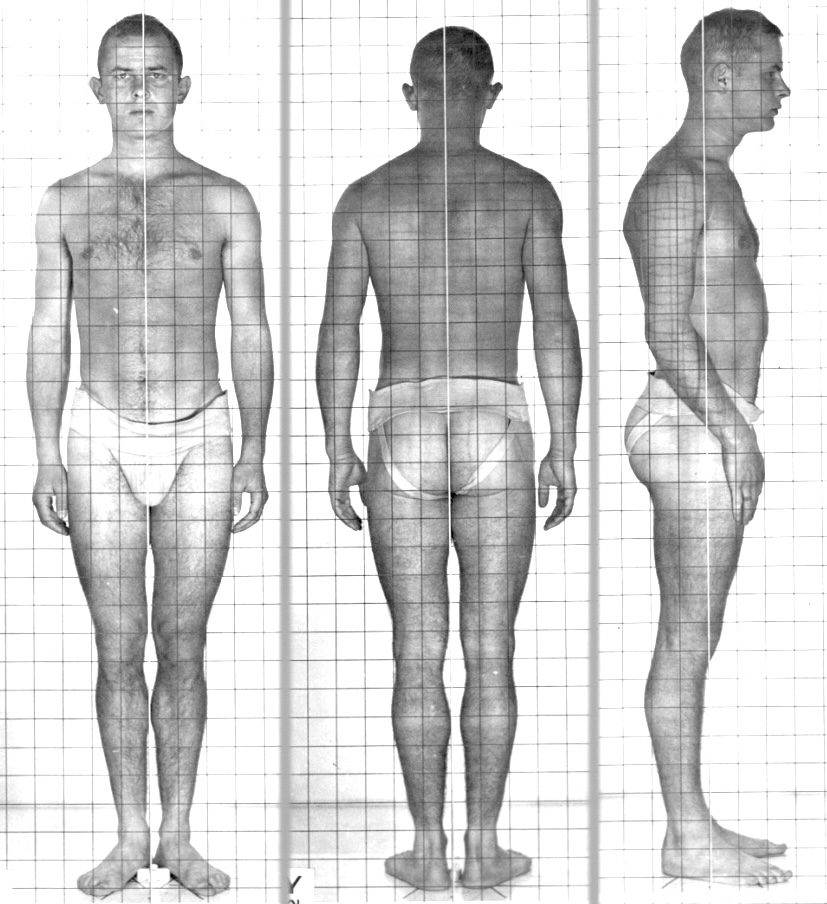
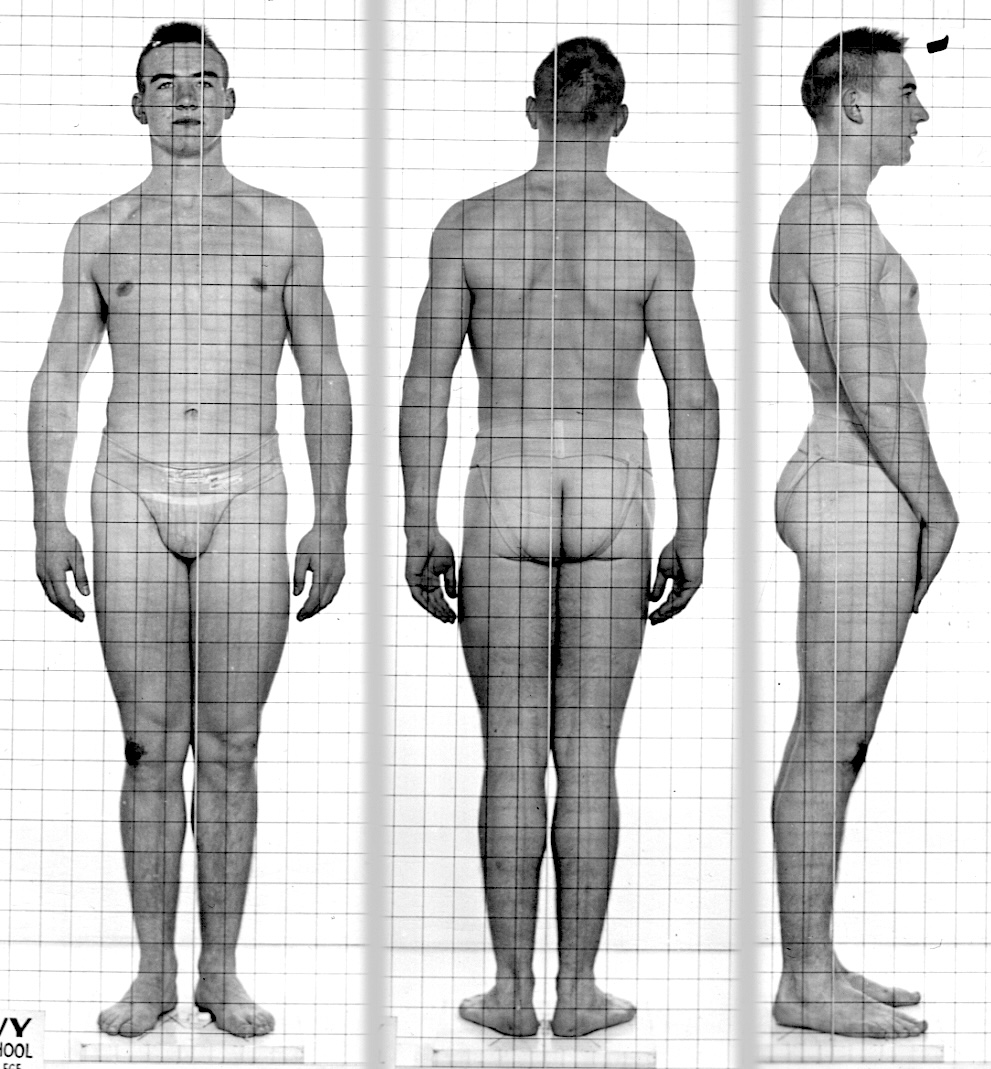
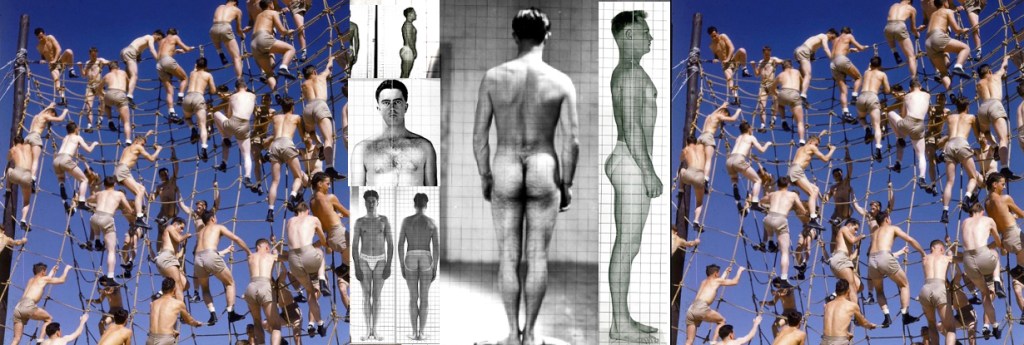
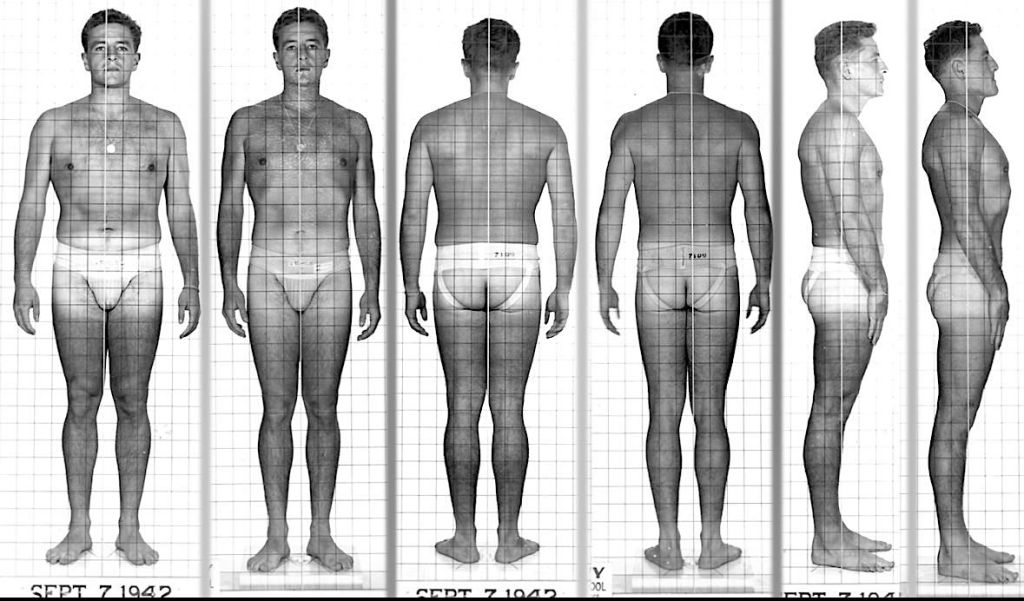
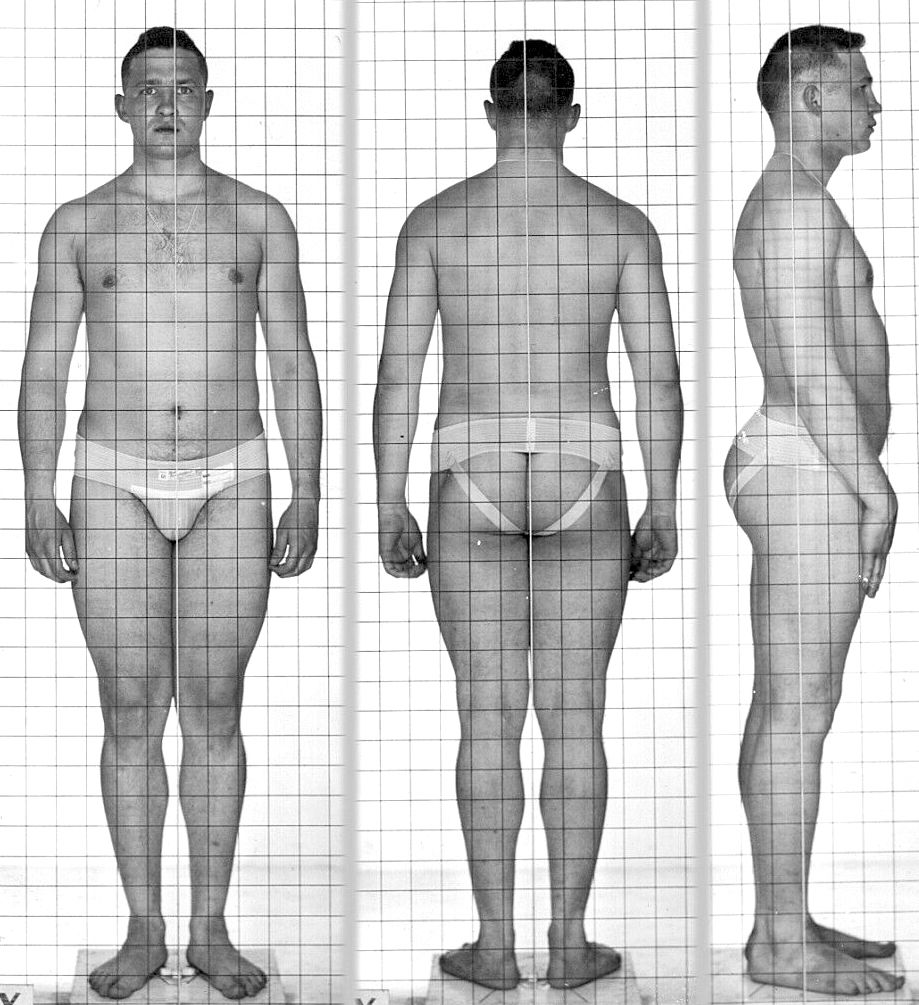
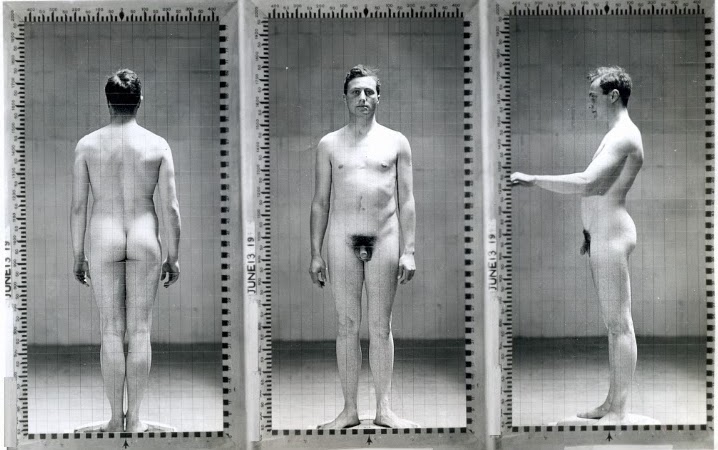
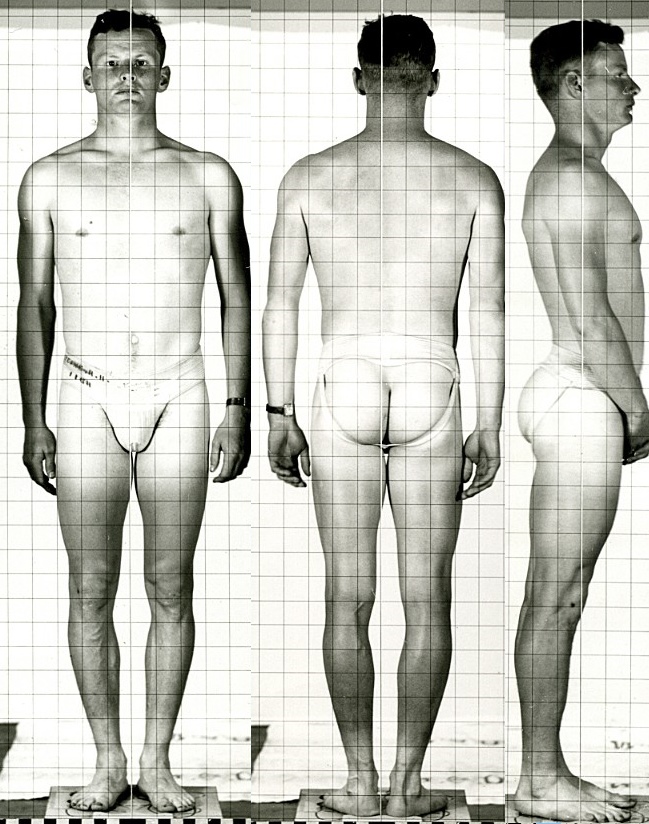
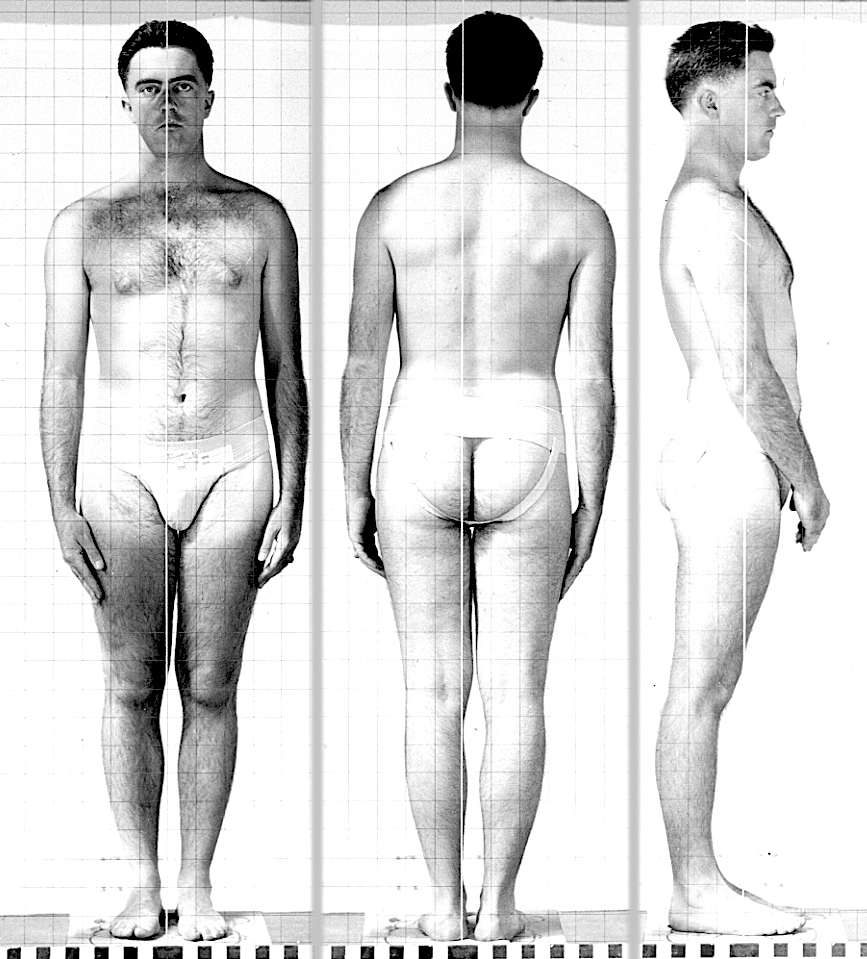
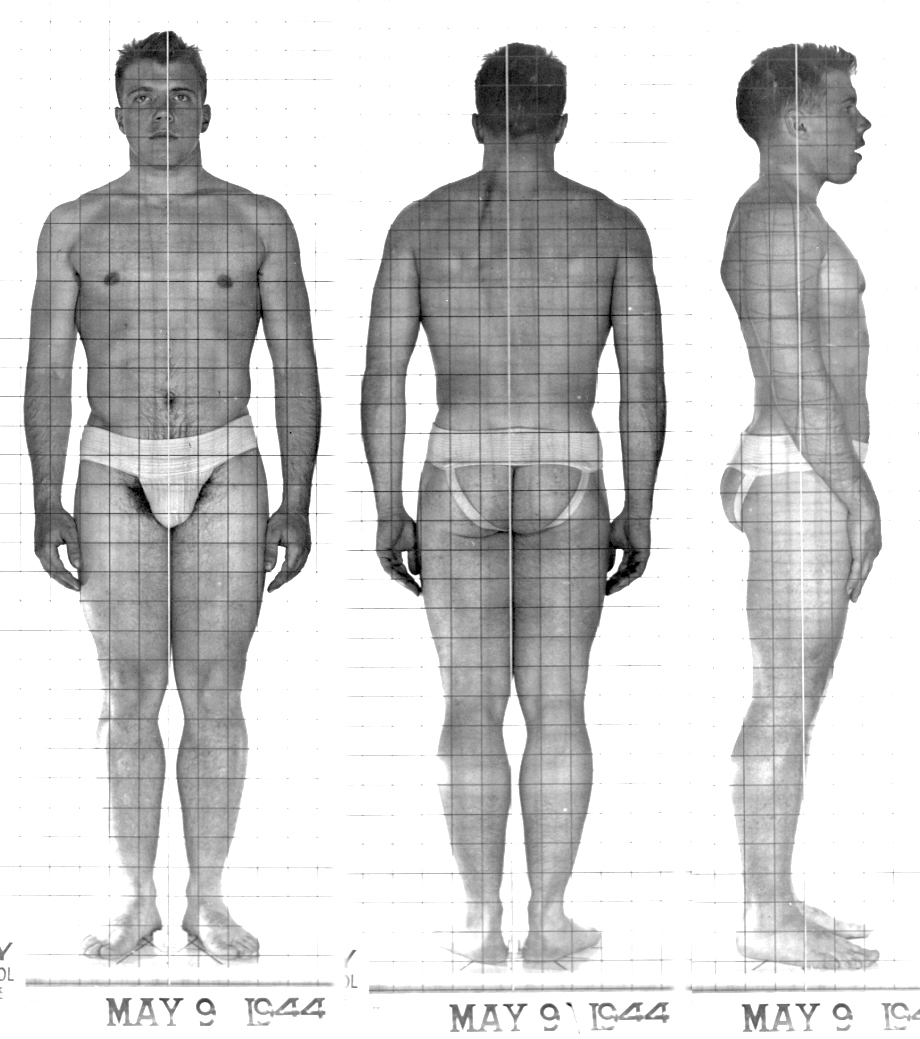
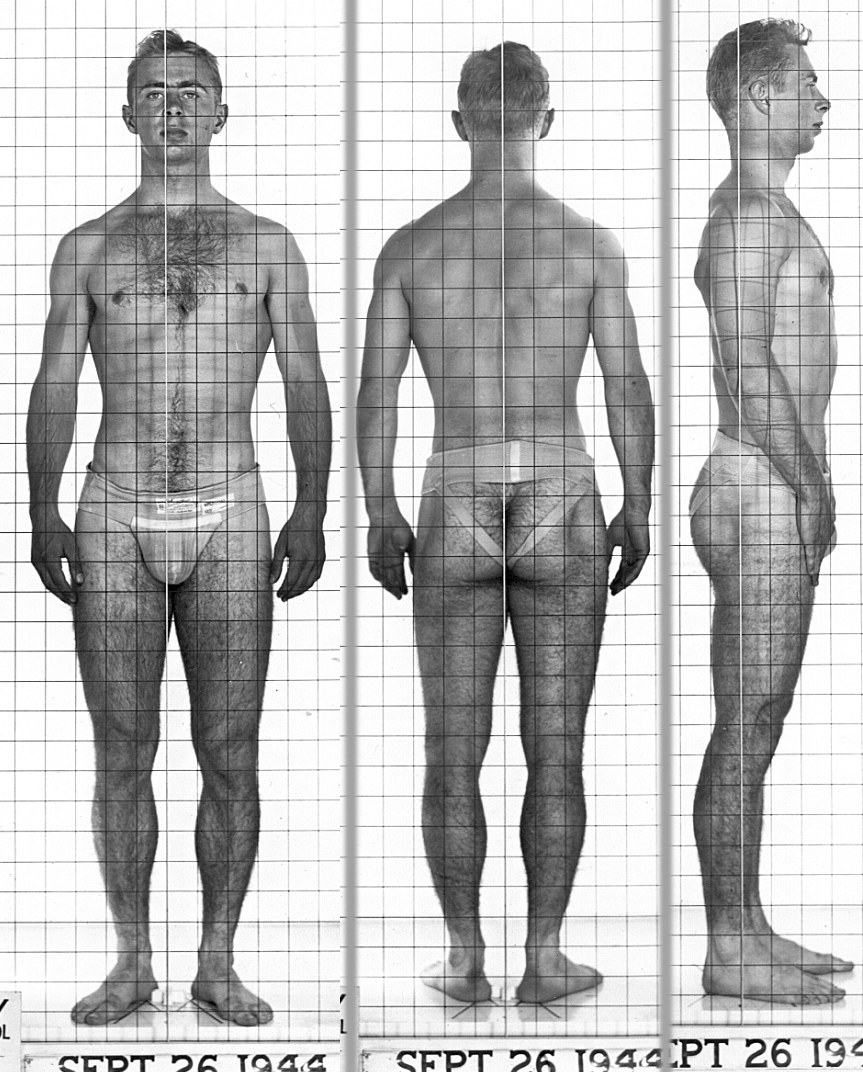
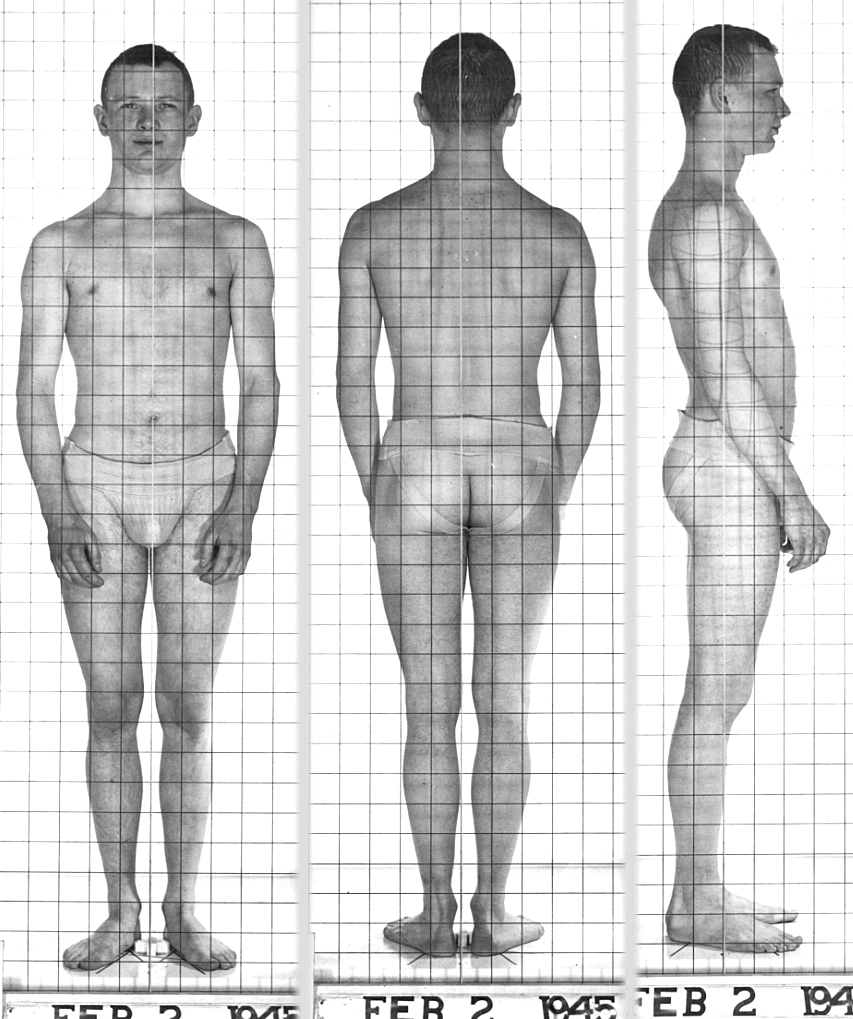
The earliest photos (from June 13, 1942) feature the men completely nude, but all subsequent photos feature the cadets in jockstraps, standing behind some sort of grid fencing to better detect posture misalignment and spinal curvature.

There is still some confusion between these photos and the Yale / Ivy League posture pics, since the Navy photos were sometimes used to illustrate stories about the Yale pics. Note that all of these images contain a visible U.S. Navy / St. Mary’s Pre-Flight School placard, even if they have been cropped out in some posts. Similarly the Yale University photos are identified as such within the frame of the photos:

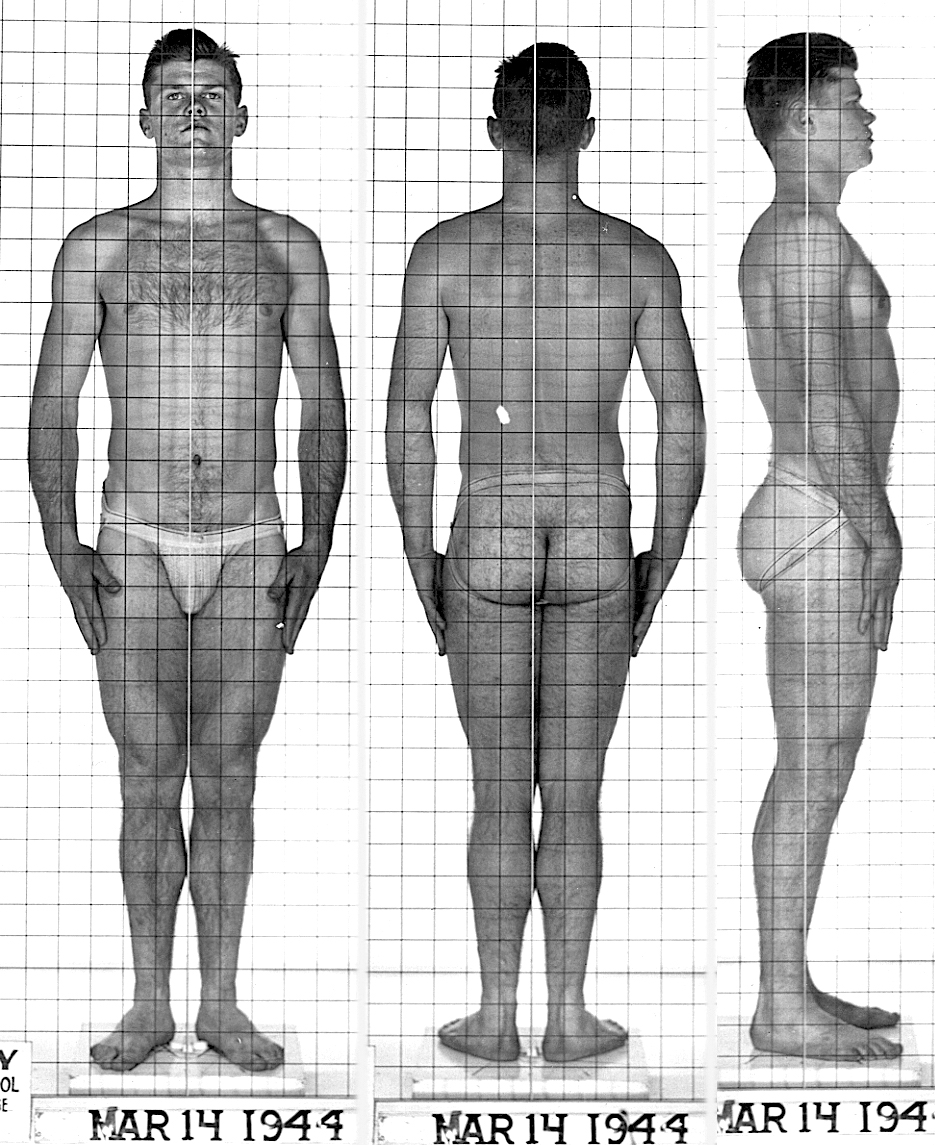
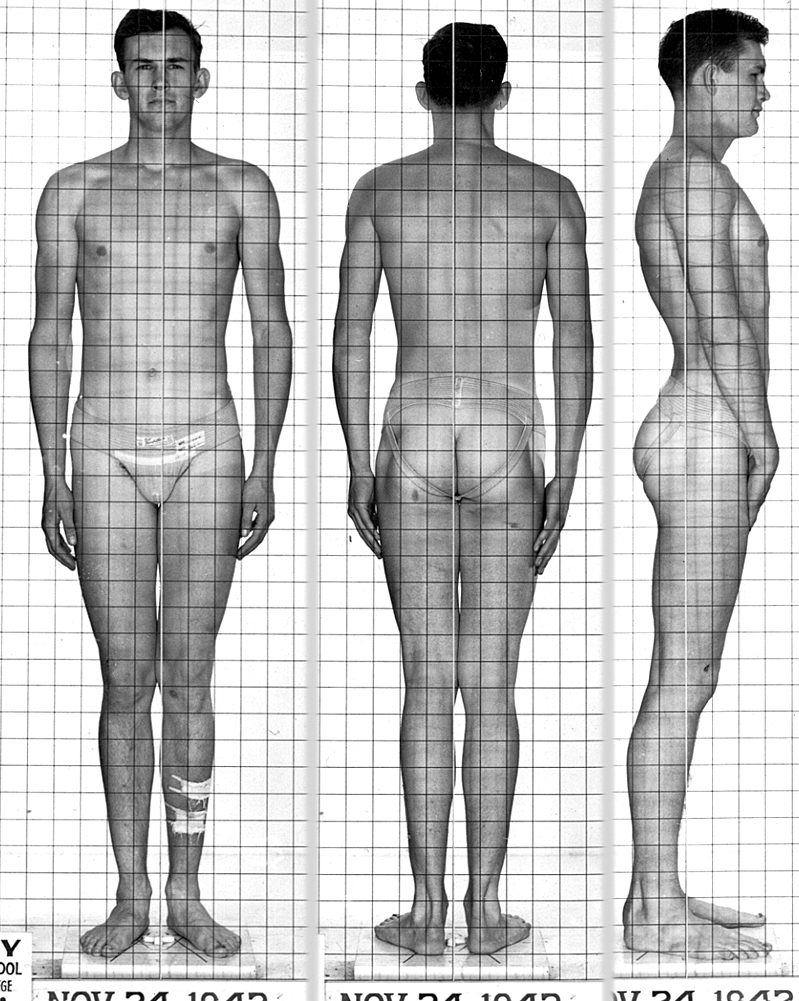
Fortunately for us, multiple photos of some cadets have surfaced, allowing for comparisons of their training progress:

Comparison photos 11/2-12/1/42

And while there is a lack of ethnic diversity, there are a variety of body types.

Comparison photos: 10/24 – 12/22/44


My collection now includes over 800 jpegs of different cadets. While some of these men did perish during WWII, the largest majority that I have researched lived to ripe old ages.

Comparison photos: 12/8/43-2/2/44


Any surviving cadets would now be close to 100 years old. I recently discovered one who passed away last year at the age of 103.

Comparison photos: 11/2-12/22/42


One thing these young men have in common, as they were documented in timeless photos of their physical prime: they were far from home during the holidays, training to fight for their country.


At this time of year, 80 years later, we again salute The Greatest Generation for their fine forms and dedication.

See more here:
Men of St.Mary’s Pre-Flight School
Christmas At St. Mary’s Pre-Flight School, Pt. I
Christmas At St. Mary’s Pre-Flight School, Pt. II
Boys of Summer: St. Mary’s Pre-Flight School
80 Years Ago: The Men Of St. Mary’s Pre-Flight School
More Men Of St. Mary’s Pre-Flight School
1944: The Men of St. Mary’s Pre-Flight School
The Yale Posture Photos: James Franciscus
The Yale Posture Photos: Bill Hinnant

Provincetown PaJaMa Party

PaJaMa, Nantucket, 1946

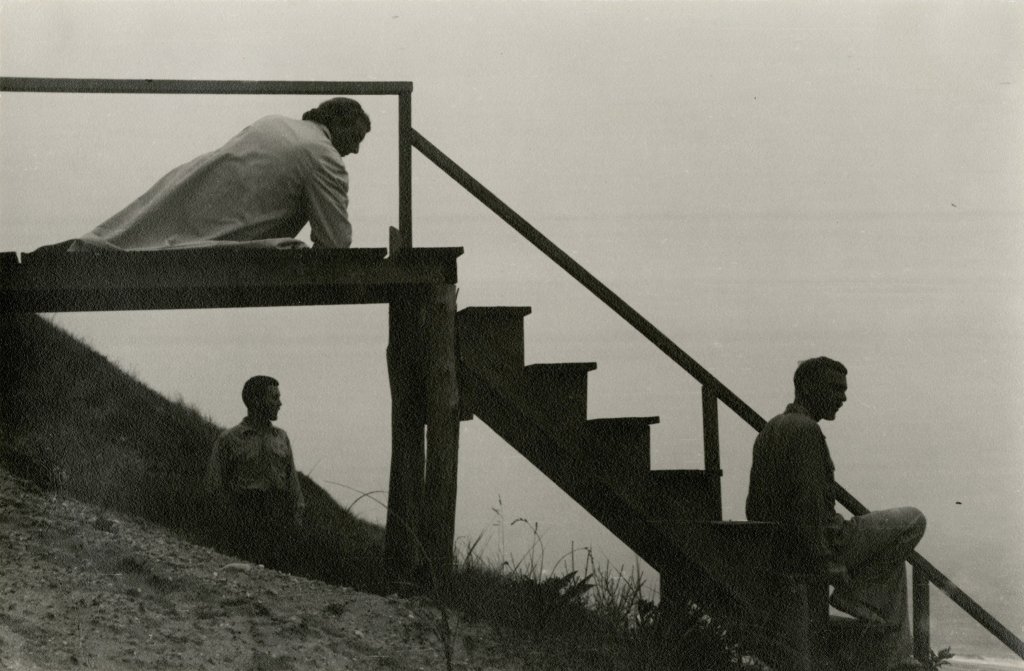
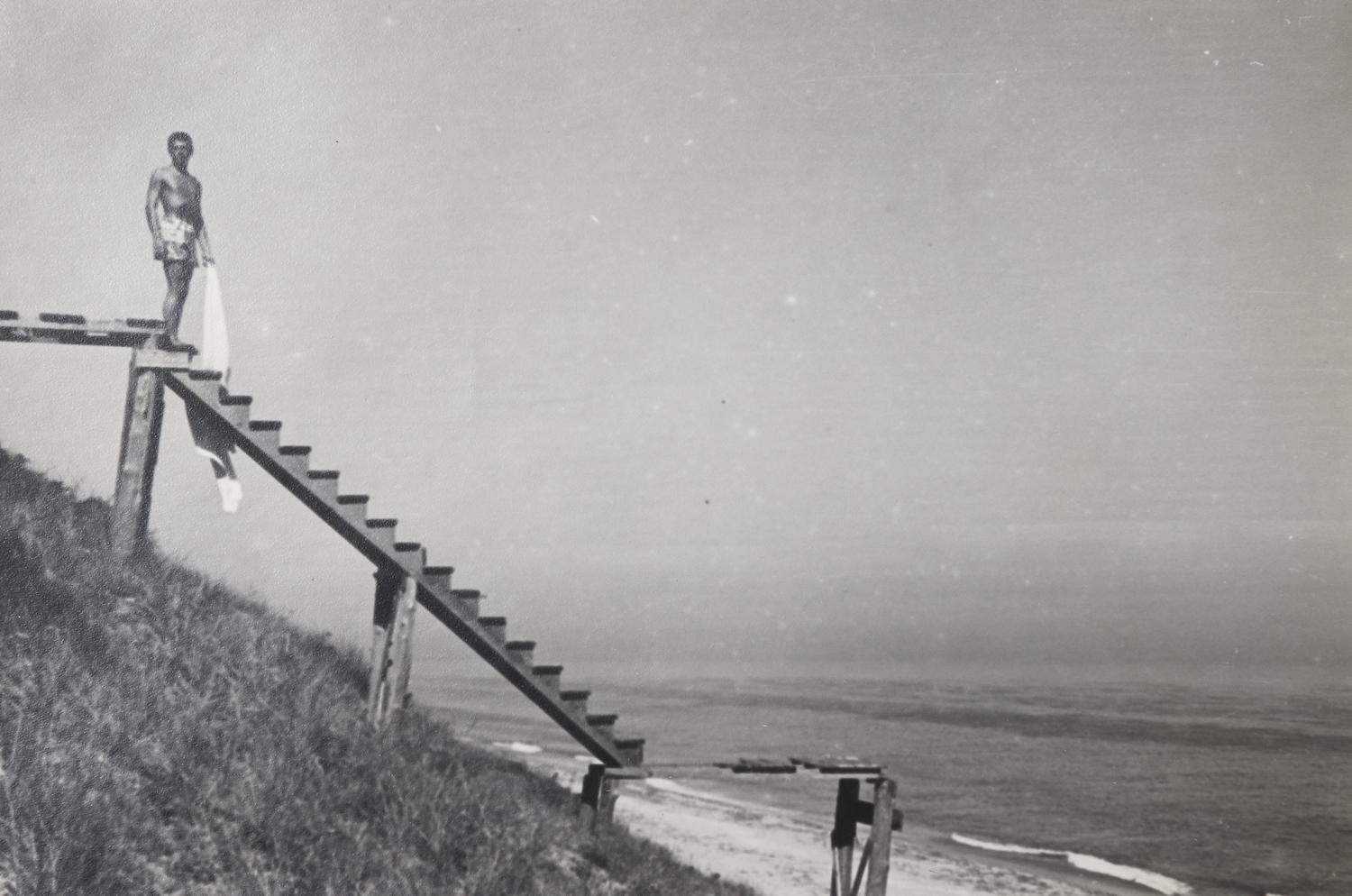
During vacations from the 1930’s through the mid-1950’s, artists Paul Cadmus, Jared French and his wife Margaret Hoening French photographed each other on the beaches of New York’s Fire Island as well as Nantucket and Cape Cod, Massachusettes.

Last summer we focused on their early years on Fire Island. The photos in this post are primarily from Nantucket, Provincetown and other locations on Cape Cod during the summer months of 1946-1948.

Usually nude or donning simple costumes, the artists also used found objects as props to create stark, surreal and/or erotic images. They passed Margaret’s Leica camera around, taking turns as subject and auteur. This collaborative authorship was reflected in the umbrella name they chose for this work, utilizing the first two letters of their first names: PaJaMa.

Paul Cadmus on Cape Cod (1928)

Years later Cadmus explained, “After we’d been working most of the day, we’d go out late afternoons and take photographs when the light was best. They were just playthings. We would hand out these little photographs when we went to dinner parties, like playing cards.”

The dynamic amongst the trio was complicated: Jared French and Paul Cadmus were lovers – a relationship that continued during his marriage to Margaret. All three lived and worked in a townhouse at 5 St. Lukes Place in Greenwich Village.

The PaJaMa collective expanded in 1945 with the inclusion of Cadmus’ boyfriend, George Tooker, an artist 16 years his junior. Cadmus would later explain “I had Jerry (Jared) in the daytime and George at night.” Although his name was not added to the PaJaMa moniker, Tooker was an active participant in the collective from 1944-49.

George Tooker with Paul Cadmus in Nantucket and Provincetown PaJaMa photos, (1946-48)

A 2015 New York Times review of a PaJaMa exhibition noted that their photos “breathed eroticism.” While some of the hundreds of photos are masterpieces of magical realism, others appear to be figure studies for their painting.

Tooker, Cadmus & French, Wauwinet, Nantucket (1946)

As when they vacationed on Fire Island, the collective were joined on Cape Cod by various friends and lovers, fellow artists and writers that were part of their New York social circle.

Dancer/choreographer Todd Bolender was the subject of a series of PaJaMa photos taken in Provincetown (1947)

Museum curator/publisher Monroe Wheeler is seen in 1947 Provincetown photos with French, Tooker & Cadmus. His lifelong partner Glenway Wescott was more prominent in the Fire Island PaJaMa photos of the early 1940’s.

Writer Christopher Isherwood with his then-boyfriend, photographer Bill Caskey, Provincetown (1947)

Photographer George Platt Lynes (left, wi/ Monroe Wheeler) joined them on Fire Island and later in Provincetown with his own camera.

PaJaMa photos are part of this tribute to playwright Tennessee Williams, displayed at Provincetown’s Atlantic House, one of the oldest gay bars in the U.S.
Provincetown, 1947 (l-r): George Platt Lynes, Monroe Wheeler, Paul Cadmus and George Tooker
George Tooker, Sleepers I (1951)

On Cape Cod, the collective occasionally experimented with color film, which gave their work a different texture.

The quartet toured Europe in 1949 and by the end of the trip, Tooker had split from Cadmus. He later said “I was looking for a relationship and my relationship with Paul always included Jared and Margaret French.” Tooker would soon find a partner in painter Bill Christopher, with whom he remained until Christopher’s death in 1973.

Back to a trio, the PaJaMa collective would return to Fire Island for their summer getaway in 1950.

PaJaMa, Provincetown (1948)
Paul Cadmus & Margaret French, Jenny Lind Tower, North Truro (1947)
PaJaMa, Women & Boys (ca 1940s)

As with George Platt Lynes’ male nude photographs, the PaJaMa photographs did not receive much notice or recognition until the 1990’s. They are now frequently exhibited in galleries and selections are a part of the MOMA collection.

See Also:
Fire Island PaJaMa Party
Fire Island Muses of George Platt Lynes & The PaJaMa Collective
Revisiting George Platt Lynes’ Fire Island Muses
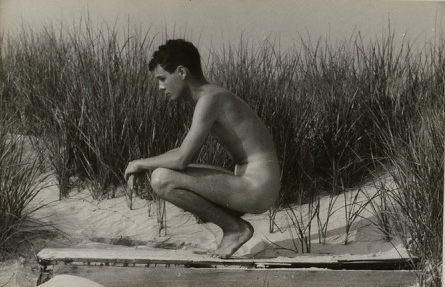
Artist’s Muse: Wilbur Pippin
Artist’s Muse: William Weslow
Artist’s Muse: José “Pete” Martinez
Artist’s Muse: The Mystery Model
Artist’s Muse: Chuck Howard
Artist’s Muse: Ted Starkowski
Artist’s Muse: Randy Jack
Buddy & Johnny: A Historic Photo Shoot
George Platt Lynes: In Touch Magazine (1982)

Madame Spivy: I Didn’t Do A Thing Last Night

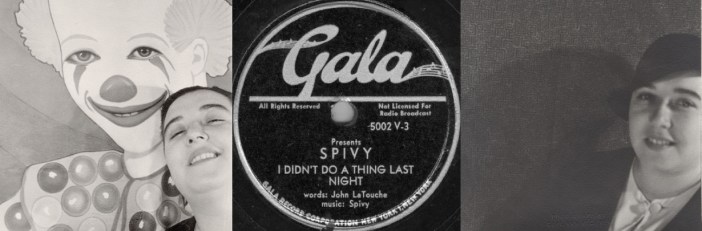
Madame Spivy photographed by Carl Van Vechten (1932)

“This song is dedicated to a friend who suffers terribly from hangovers. It’s very sad and we must be very quiet, please…”

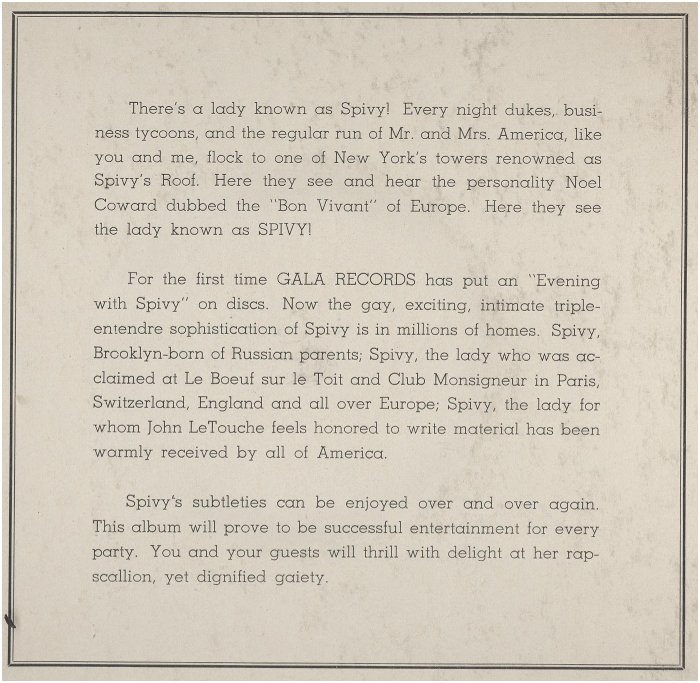
Ladies and Gentleman, it is time once again to revisit that late great dynamic lady of song, Madame Spivy LeVoe (1906-1971), also known simply as Spivy. A lesbian entertainer, nightclub owner and character actress, Spivy has been described as “The Female Noel Coward” – to which I add “…. if he had been born in Brooklyn as Bertha Levine.”

In case you missed them, these are our previous Madame Spivy posts:
The Alley Cat
The Tarantella
Auntie’s Face
100% American Girls
A Tropical Fish
I Brought Culture to Buffalo In The 90’s
Why Don’t You?
Madame Spivy: Movies & Television
Madame Spivy on the Good Time Sallies Podcast

In the Spring/Summer of 2020 with the pandemic in full swing, cabaret performer extraordinaire Justin Vivian Bond was livestreaming weekly shows from The House of Whimsy, aka their home in upstate New York. Imagine my delight when Mx. Viv covered Mme. Spivy’s “I Didn’t Do A Thing Last Night” – one of my favorite of her recordings.

Justin Vivian Bond as Auntie Glam, belting one out in The House Of Whimsy (2020)

As with “Auntie’s Face“, Spivy uses her familiar spoken intro for “I Didn’t Do A Thing Last Night”: A solemn pronouncement that “This is VERY sad and we must be VERY quiet, please.” One can imagine that it was a playful way to get the attention of a noisy nightclub audience.

Spivy wrote the song with John La Touche providing the lyrics. Today, La Touche is best remembered for his Broadway musical The Golden Apple and for his lyrical contributions to Leonard Bernstein’s Candide. He also collaborated with Duke Ellington on the musicals Cabin In The Sky & Beggar’s Holiday.


Spivy and LaTouche met in the mid-1930’s and had a tumultuous lifelong friendship. At one point Spivy paid him fifty dollars a week to supply her with songs. During one falling out in 1938, LaTouche referred to her as his “enemy.” “Poor Spivy,” he wrote, “hysterical, glandular, ugly, charming, and so talented.” After another disagreement later that year, he wrote to her; “I’m sorry; you can hardly afford to lose a staunch friend and neither can I. But both of us are always doing things we can’t afford.”

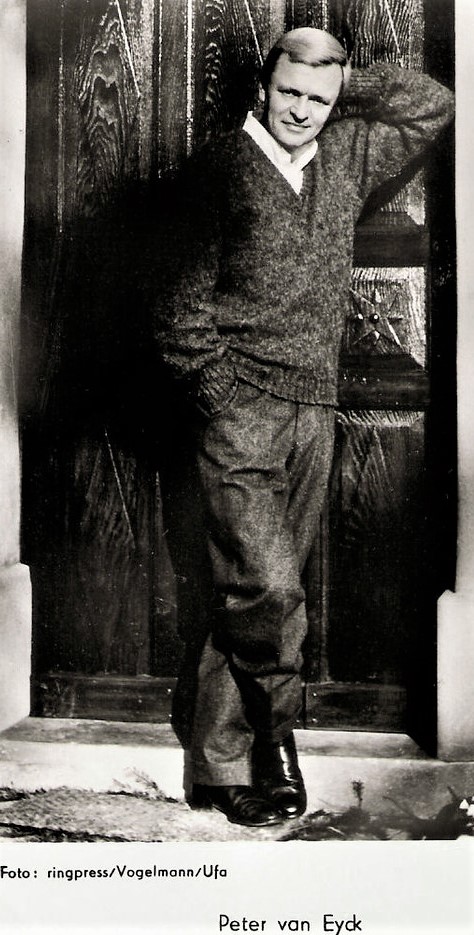
Of the 15 songs Spivy is known to have recorded, 5 of them were written or co-written by LaTouche: One was a solo credit, two were written with Spivy herself, and two were in collaboration with Goetz Eyck, a German-born musician who would go on to a film career as Peter van Eyck.

One LaTouche composition that Spivy did not preserve on record was a highlight of her live performances: “I’m Going On A Binge With A Dinge.” She often concluded her set with this racy little tune detailing a biracial protagonist going uptown for a tryst. “White people / Don’t be offended … ” the song begins. Other lyrics: “Gonna end up in Harlem / With my end up in Harlem”

Unfortunately, LaTouche’s work for and with Mme. Spivy has generally been forgotten or dismissed. In Howard Pollack’s 2017 biography The Ballad Of John LaTouche, the author spends several pages analyzing the lyrics and structure of these compositions before concluding that “the literary attractions of these songs, heavy on irony, outweigh their musical interests.”

Is that so?

Like Spivy, LaTouche was a heavy drinker, which ultimately led to both of their premature passings. He was just 41 years old when he died of a heart attack at his home in Calais, Vermont in 1956. Spivy was 64 years old when she died in January, 1971.

I Didn’t Do A Thing Last Night

Doctor dear, come over with a stretcher – I’ve never in my life felt quite so rotten.
My brain has snapped in two and my face is turning blue,
and everything I eat tastes just like cotton.

Oh yes I did everything you told me – I practically never left my room.
I observed your special diet, had lots of peace and quiet.
So why do I feel like something in Grant’s Tomb?
Lord knows why I don’t feel well – I didn’t do a thing last night.

I had a few friends in to play bridge with me,
And I sipped a little gin, just to keep them company.
Then a pal of mine named Rhoda came in with such a crew,
I gave them scotch and soda and I had a teeny one, too.

Then Vero P.T. Roth brought me some chicken broth,
which is insipid, doctor, don’t you think?
So someone in the party added a soupçon of Bacardi
it really makes a very nourishing drink.

At nine my cousin Andy made such insulting cracks,
that I had a little brandy just to help me to relax.
He tried to grab the bottle and dragged me out of bed.
When I saw that it was empty, I broke it on his head.

He’s still lying on the carpet and my maid insists he’s dead.
Oh doctor dear, why do I feel queer?
I didn’t do a thing last night.

At ten, Princess O’Ravivovich said; “Today is Pushkin’s birthday.”
So I had a little Slivovitz just to help her celebrate.
Then that fool Tessie Zackary upset my Dubonnet,
so they shook me up a daquiri to chase my blues away.

Those pills of yours were dry, so I washed them down with rye,
And I thought some exercise might help me rest.
I dashed down the avenue ’til somebody yelled “Woo!”
Good heavens – I’d forgotten to get dressed!

By then I felt so dizzy, to tell the honest truth,
They made me something fizzy out of vodka and vermouth.
At one, Rear Admiral Nipper, the old man of the sea,
arrived with his battalion, they had to sail at three.

But doctor, I just noticed: They’re still in bed with me!
It’s all so mad and I feel so bad,
and I didn’t do a thing last night.

At five, my old friend Tony said that doctors were baloney.
He said “Yoga exercises cured all pain.”
Doctor dear, I was a wreck with my legs around my neck,
and it took four hours to get them down again.

They sent for rubbing alcohol to rub away the aches,
but they couldn’t find the stuff at all – I’d drunk it by mistake.
Oh yes, I slept just like a baby, ’til I woke up right now.
No, the drinks did not affect me, I’m as flaccid as a cow.
Except I have a tendency to suddenly go “WOW!”

Why in hell don’t I feel well? I didn’t do a thing last night!

John La Touche songs recorded by Spivy
Fool In the Moonlight (music: Goetz Eyck)
I Didn’t Do A Thing Last Night (music: Spivy)
I Love Town (music: Goetz Eyck)
Last of the Fleur De Levy
Surrealist (music: Spivy)

Unrecorded La Touche songs performed by Spivy
I’m Going On A Binge With A Dinge
Moonlight

See also:
The Alley Cat
The Tarantella
Auntie’s Face
100% American Girls
A Tropical Fish
I Brought Culture to Buffalo In The 90’s
Why Don’t You?
Madame Spivy: Movies & Television
Madame Spivy on the Good Time Sallies Podcast

More Men of St. Mary’s Pre-Flight School

St. Mary’s College during WWII

June, 2022 marked 80 years since the start of the U.S. Navy pre-flight training program that took place at St. Mary’s College. Images of naked or jockstrap-clad cadets were taken during training at the school in Moraga, California when it was requisitioned for the war effort from 1942-1946. You can see more of these photos in our previous posts:

Men of St. Mary’s Pre-Flight School
Boys of Summer: St. Mary’s Pre-Flight School
Christmas At St. Mary’s Pre-Flight School, Pt. I
Christmas At St. Mary’s Pre-Flight School, Pt. II
Christmas At St. Mary’s Pre-Flight School, Pt. III
80 Years Ago: The Men of St. Mary’s Pre-Flight School
1944: The Men of St. Mary’s Pre-Flight School

Unfortunately, there is still some confusion when these pictures surface, as they are sometimes miscredited as Ivy League posture photos. For comparison, here are two of the different Yale posture photos:

The single profile pose was used from the late 1930’s until 1952. It was then replaced with a mirror/ triptych setup, which has “Yale” visible in the background.

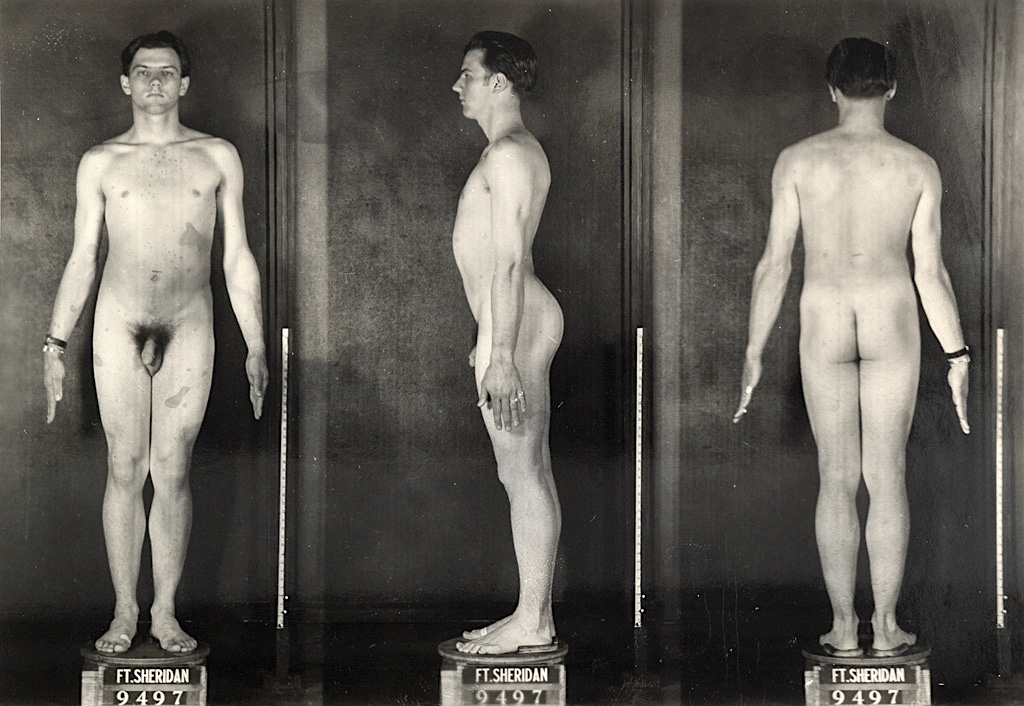
Prior to World War II, there were other physical fitness photos taken at the army base in Ft. Sheridan, Illinois. These fully nude pics do not pop up on the internet as often as those from St. Mary’s Pre-flight school. As shown above, both sets of photos contain the location identified within the photo.

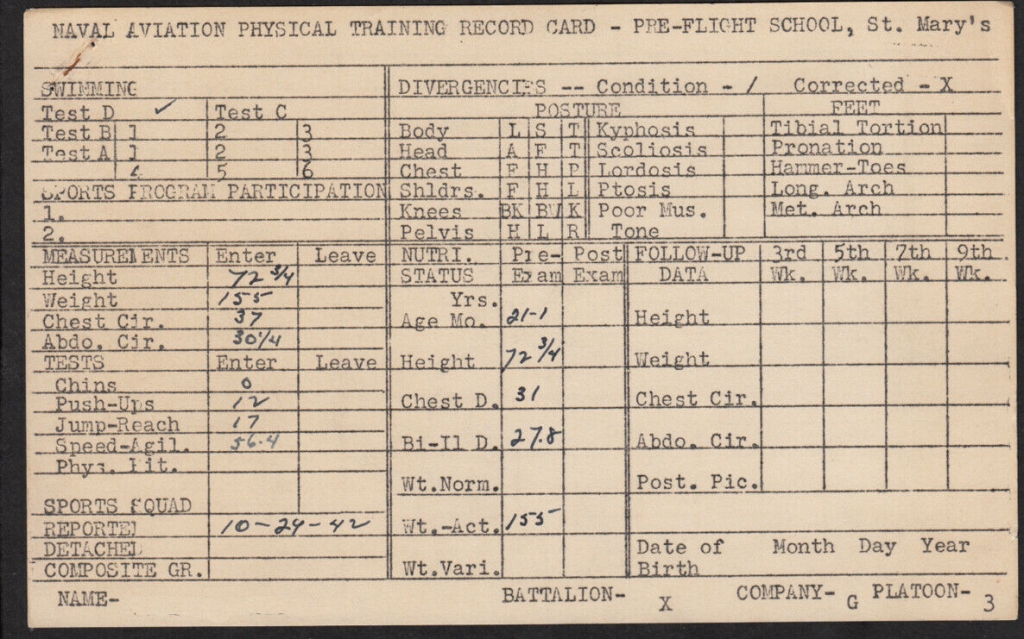
The St. Mary’s photos were taken to measure the fitness progression of each recruit as they underwent extreme physical training. Each picture was accompanied by an index card containing body measurements and physical achievement statistics over the course of several months.


This allows for some contrasting images that would be the envy of many fitness plans.


Comparative photos: March 1 – May 5, 1943

Only the earliest St. Mary’s photos – dated June 13, 1942 – feature the men completely nude. All subsequent photos feature the cadets in jockstraps. In all of the photos, the men stand behind some sort of grid fencing to better illustrate misalignment and spinal curvature.


My collection of photos gathered from around the internet now includes over 750 different cadets. The youngest identified died at age 20 and the oldest lived to 103 years old.

Whether the individual photos of these handsome young men capture them at the beginning of their lives or tragically close to the end, all of the subjects are timelessly captured in prime physical condition as they trained to serve their country. 80 years later, we salute and admire their fine forms and dedication.

Navy Memorial Bench plaque from the St. Mary’s campus.


See Also:
The Yale Posture Photos: James Franciscus
The Yale Posture Photos: Bill Hinnant
Men of St.Mary’s Pre-Flight School
Boys of Summer: St. Mary’s Pre-Flight School
Christmas At St. Mary’s Pre-Flight School, Pt. I
Christmas At St. Mary’s Pre-Flight School, Pt. II
Christmas At St. Mary’s Pre-Flight School, Pt. III
80 Years Ago: The Men of St. Mary’s Pre-Flight School

Artist’s Muse: José “Pete” Martinez


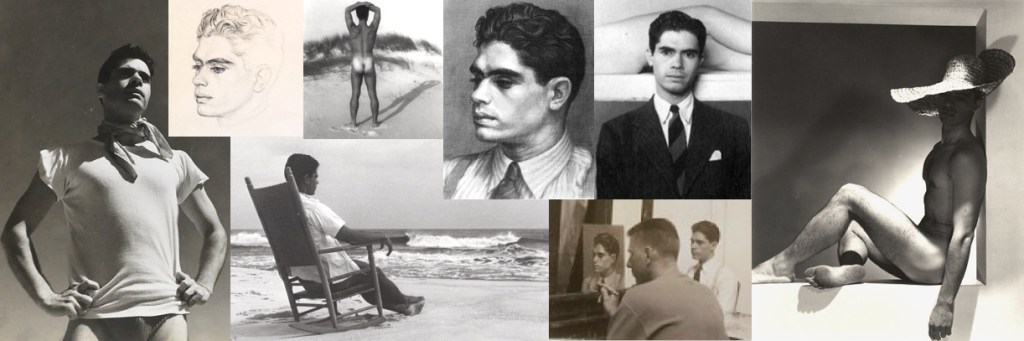
In last summer’s post about the PaJaMa Collective – artists Paul Cadmus, Jared French and his wife Margaret – the focus was on their Fire Island photos of the late 1930’s. One of the friends who cavorted with the trio during that time was José “Pete” Martinez, a dancer from New York City who was involved with their friend, arts patron and ballet impresario Lincoln Kirstein.

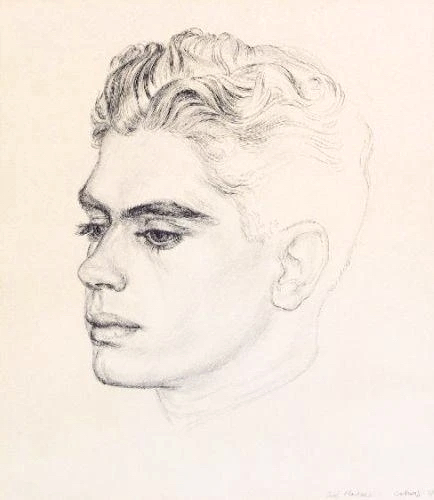
Paul Cadmus’s 1937 sketch of José Martinez appears in Charles Kaiser’s book The Gay Metropolis.

In David Leddick’s book Intimate Companions, Martinez is described as “a droll and witty young man… Those who knew the two men in the 1930’s said he was capable of endlessly amusing his lover, and that of all the men in his life, Martinez was the man that Kirstein most likely loved the most. Kirstein loved gossip and other men’s tales of their sexual exploits, and this love of storytelling drew him to Martinez. In addition, Martinez was handsome, and many artists painted, drew and photographed him. “

Fire Island PaJaMa photos featuring José Martinez with Paul Cadmus, Jared and Margaret French, ca 1938-39

Besides The PaJaMa Collective, those artists included Paul Cadmus’ sister Fidelma and photographers William Caskey and George Platt Lynes.

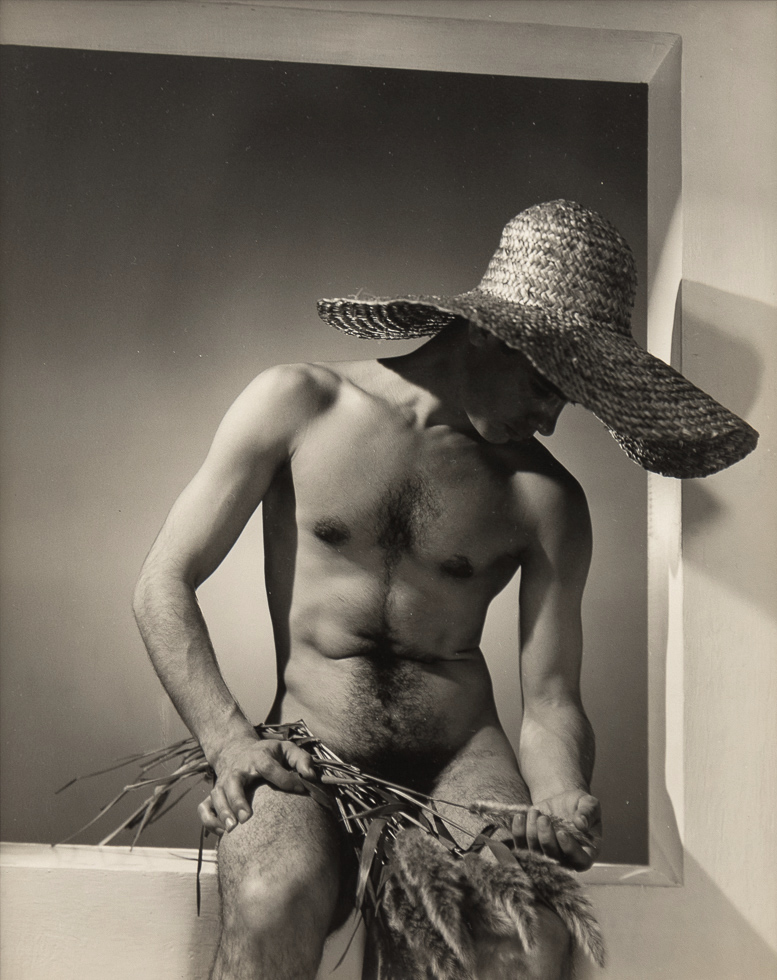
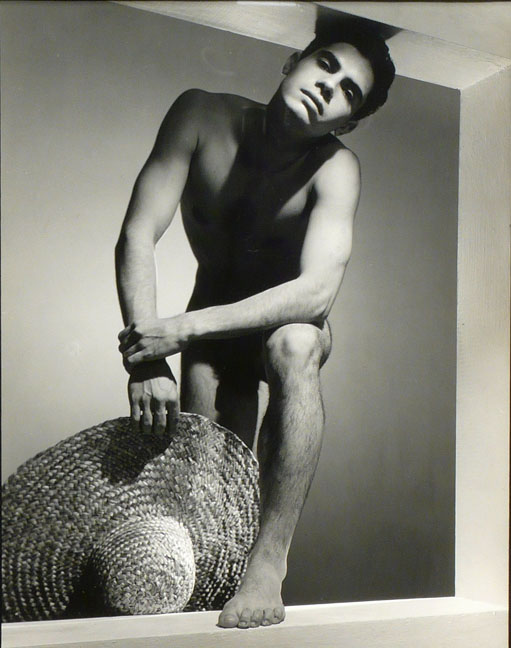
The most memorable Lynes photo of Martinez is a studio shot with the dancer perched in a window frame wearing nothing but a wide brimmed sun hat.


George Platt Lynes photographs of José Martinez.

Pete Martinez (who sometimes used the stage name Pete Stefan) was born José Antonio Martinez-Berlanga in Mexico on March 13, 1913. His family moved to Houston, Texas when he was quite young. Mama Martinez had been a folk dancer back in Mexico and one of Jose’s sisters dreamed of following in her footsteps. Little José was drafted as her dance partner. The scenario is familiar to many boys who begin to study dance as children: the sister loses interest and drops out, but he continues on. It’s a page torn out of A Chorus Line. Later an uncle took him to see Ballet Russe, which further strengthened his resolve to dance. “I was going to set the world on fire,” he would later recount.

After graduating high school, much to the chagrin of his parents, José moved to New York City to study at the School of American Ballet, where he eventually gained a full scholarship. Upon graduation, he was invited to join the company.

José Martinez photographed by Paul Cadmus, ca 1938

Martinez caught the eye of Lincoln Kirstein, and the relationship progressed to the point that they moved in together.

The PaJaMa photo “After The Hurricane” features (l-r) Jared French, Lincoln Kirstein, José Martinez, Forrest Thayer and probably Paul Cadmus. Tragically, costume designer Forrest Thayer was killed in a Southampton single car accident in 1951.


Martinez became a member of The Ballet Caravan, a touring company founded by Kirstein to provide off-season summer employment to American ballet dancers. Here Martinez began to get more involved in the creative process: conceiving the ideas and librettos for ballets, if not choreographing them. He is most associated with the ballet Pastorela, although his exact contribution to its creation varies depending on the source.

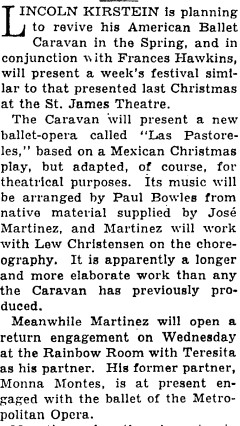
As noted in the New York Times article below, Martinez also had several engagements at Rockefeller Center’s Rainbow Room with different dance partners.

New York Times, 12/1/40

Jose Martinez photographed by William Caskey

Lincoln Kirstein & his wife Fidelma Cadmus


Martinez eventually found himself in a triangular romantic situation similar to his friends in The PaJaMa Collective: Paul Cadmus and Jared French had a sexual relationship that continued after French married Margaret Hoening. The three all lived and worked together in a Greenwich Village townhouse at 5 St. Luke’s Place. When Lincoln Kirstein married Paul’s sister Fidelma, she moved into the apartment he shared with Martinez, who continued to live with them for the first year of the marriage.

Martinez was also photographed in the summer of 1938 sunbathing with Jared French and Paul Cadmus on the roof of their home/studios at 5 St. Luke’s Place.

The Ballet Caravan were on a South American tour through 1941 as the U.S. entered World War II. The troupe returned to a very different New York City than the one they had left. When Martinez was denied entry to the Army, he went to work at a hostel for Jewish refugees in Haverford, Pennsylvania where writer Christopher Isherwood was already working. The two were acquaintances through Kirstein but developed a close friendship that would sometimes turn physical, as detailed in Isherwood’s diaries.

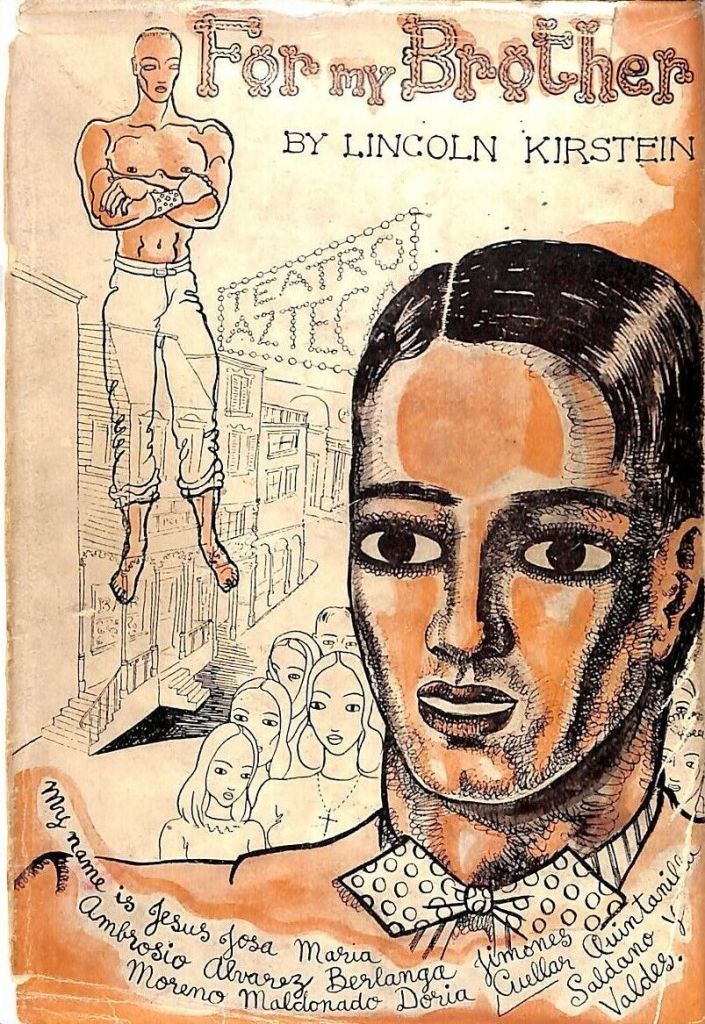
For My Brother: A True Story By José Martinez As Told To Lincoln Kirstein original jacket designed by William Chappell.

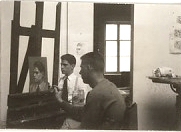
Paul Cadmus photographed sketching José Martinez at 5 St. Luke’s Place.

In 1943, a book was published in the UK with the rather unwieldy title For My Brother: A True Story By José Martinez As Told To Lincoln Kirstein.

From the original dust jacket: “It is the life story of a young American of Mexican origin whose family has settled in a small town in Texas. It is at the same time a study in the contrast between two worlds, two ways of life: industrial, polyglot America, and the more primitive civilization of Mexico just over the border, where many of the hero’s relations still live. The story is told with great poetic feeling and a rare delicacy of perception in human relationships…”

The chronology on Kirstein’s website makes no mention of Martinez and lists For My Brother as fiction “based on a Mexican sojourn.”

The book jacket was designed by fellow dancer-turned-ballet designer William Chappell. For My Brother… is quite rare, as most of the 2,000 printed copies were said to have been destroyed in a warehouse bombed by the Nazis. A Canadian edition was later published by MacMillan.

Martinez was finally able to join the military in 1943 and remained in service until the end of the war.

Back in New York, he resumed his dance career with Ballet Society where he danced in the original 1946 productions of George Balanchine’s Four Temperaments and William Dollar’s Highland Fling.

And then…. to invoke A Chorus Line once again: “What do you do when you can no longer dance?”

A knee injury hastened the end of his performance career. A June 4, 1950 article in the Norfolk Virginian-Pilot chronicled his coming to terms with the transition. He drifted for a year before settling into the next chapter of his life as a dance teacher in Norfolk, Virginia.

Norfolk Virginian-Pilot, 7/27/47
Norfolk Virginian-Pilot, 6/12/49


After Virginia, Martinez founded other dance studios in Ohio and California, where he retired from teaching in the mid-1960’s.

Lincoln Kirstein died at aged 88 in January, 1996. José Martinez passed away 16 months later in Pasadena, California at age 84.

See also:
Fire Island PaJaMa Party
Provincetown PaJaMa Party
Artist’s Muse: Wilbur Pippin
Artist’s Muse: Forrest Thayer
Artist’s Muse: William Weslow
Artist’s Muse: Chuck Howard
Artist’s Muse: Randy Jack
Artist’s Muse: Ted Starkowski
Artist’s Muse: The Mystery Model
Fire Island Muses of George Platt Lynes & The PaJaMa Collective
George Platt Lynes: In Touch Magazine (1982)
Revisiting George Platt Lynes’ Fire Island Muses

Artist’s Muse: The Mystery Model

One of my goals in creating posts about artist’s models like Chuck Howard, Randy Jack, and Ted Starkowski is to clear up misinformation posted online by galleries and auction houses. Whether the inaccuracies are intentionally deceptive or the result of laziness, the errors spread across the internet, with subjects misidentified and photo dates sometimes off by decades.

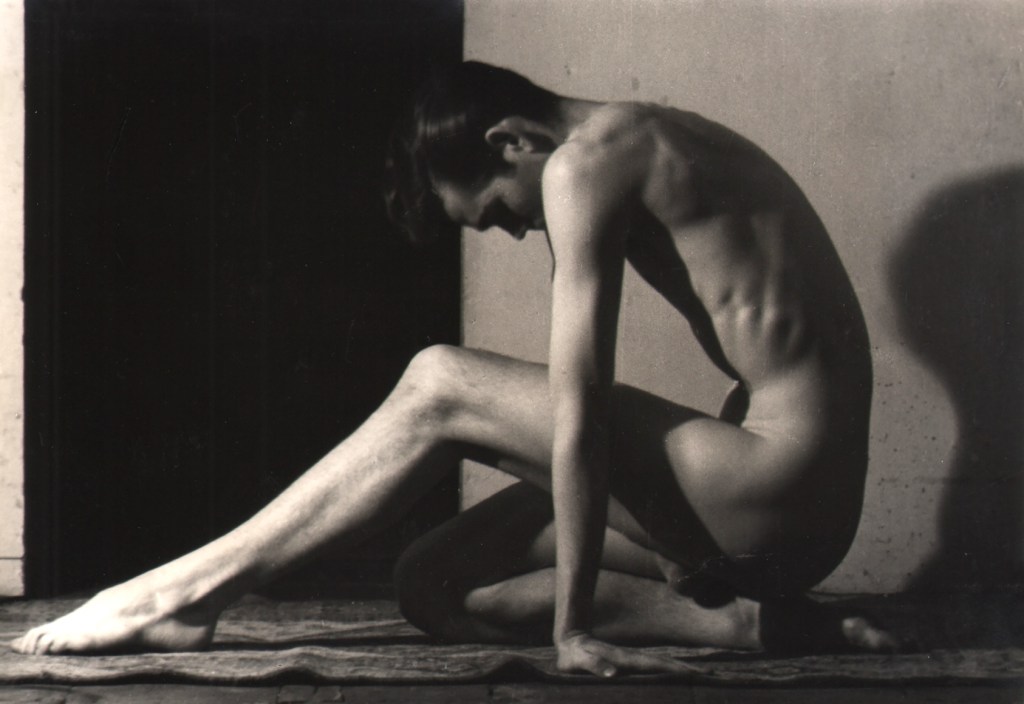
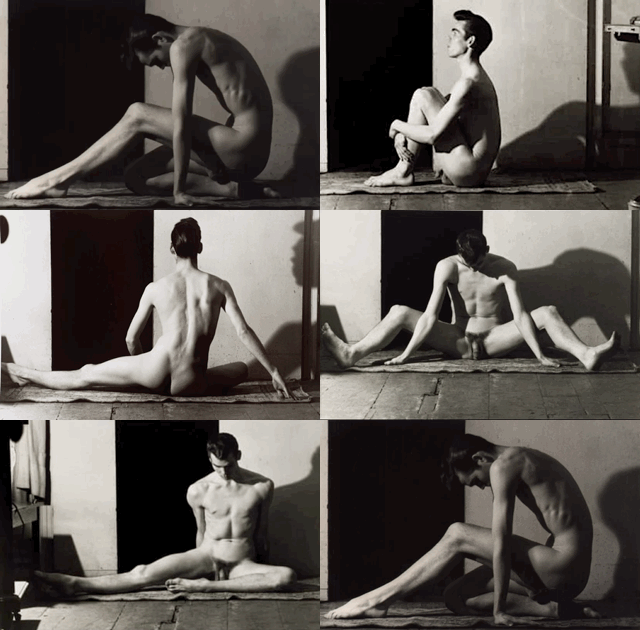
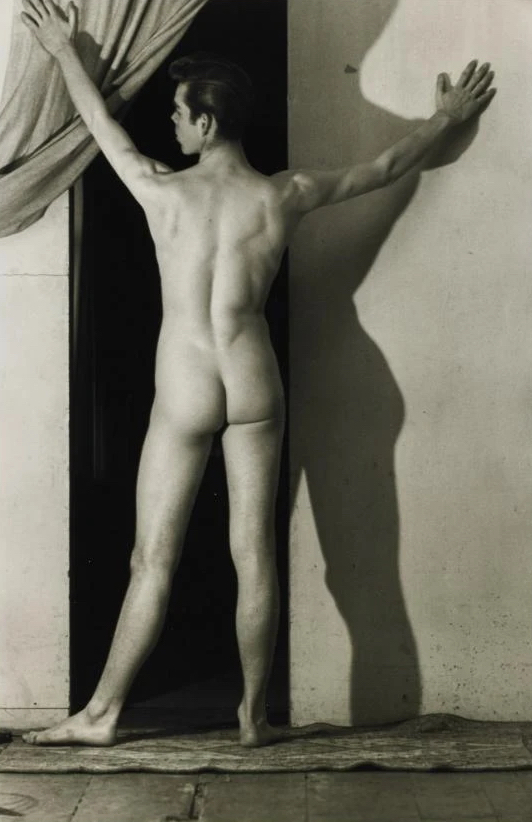
A series of 30+ nude model study photos are have recently been listed for auctions as “Jared French Nude Study of Tennessee Williams” or “Studio di nudo Tennessee Williams.” One set of two 8×10 photos sold for over $650. These should have been credited to the PaJaMa collective, which Jared French was a part of, and unfortunately (or fortunately, depending on how you look at it), the lean muscularly defined model is certainly not writer Tennessee Williams.

Tennessee Williams was the subject of several PaJaMa photos in Provincetown and at Jared French’s New York City studio at 5 St. Luke’s Place. In one of these photos, Williams strikes the same pose in the same place as our mystery model.

So who was the thin young chap with the low-hangers?

Martha Graham levitating John Butler

In another corner of the internet, I found two of these photos in a PaJaMa exhibit, dated 1943 and identifying the subject as dancer/choreographer John Butler (1918-1993). In the early 1940’s, he earned money working as an art model while studying dance with both Martha Graham and George Balanchine.

Besides the PaJaMa photos above, he was also photographed by George Platt Lynes:

John Neilson Butler was born in Charleston, Tennessee and moved to Greenwood, Mississippi with his parents at a very early age. He graduated from Greenwood High School in 1936 and made his way to New York City, where he initially studied dance with Eugene Loring before moving on to Balanchine and Martha Graham.

AP article (1955)

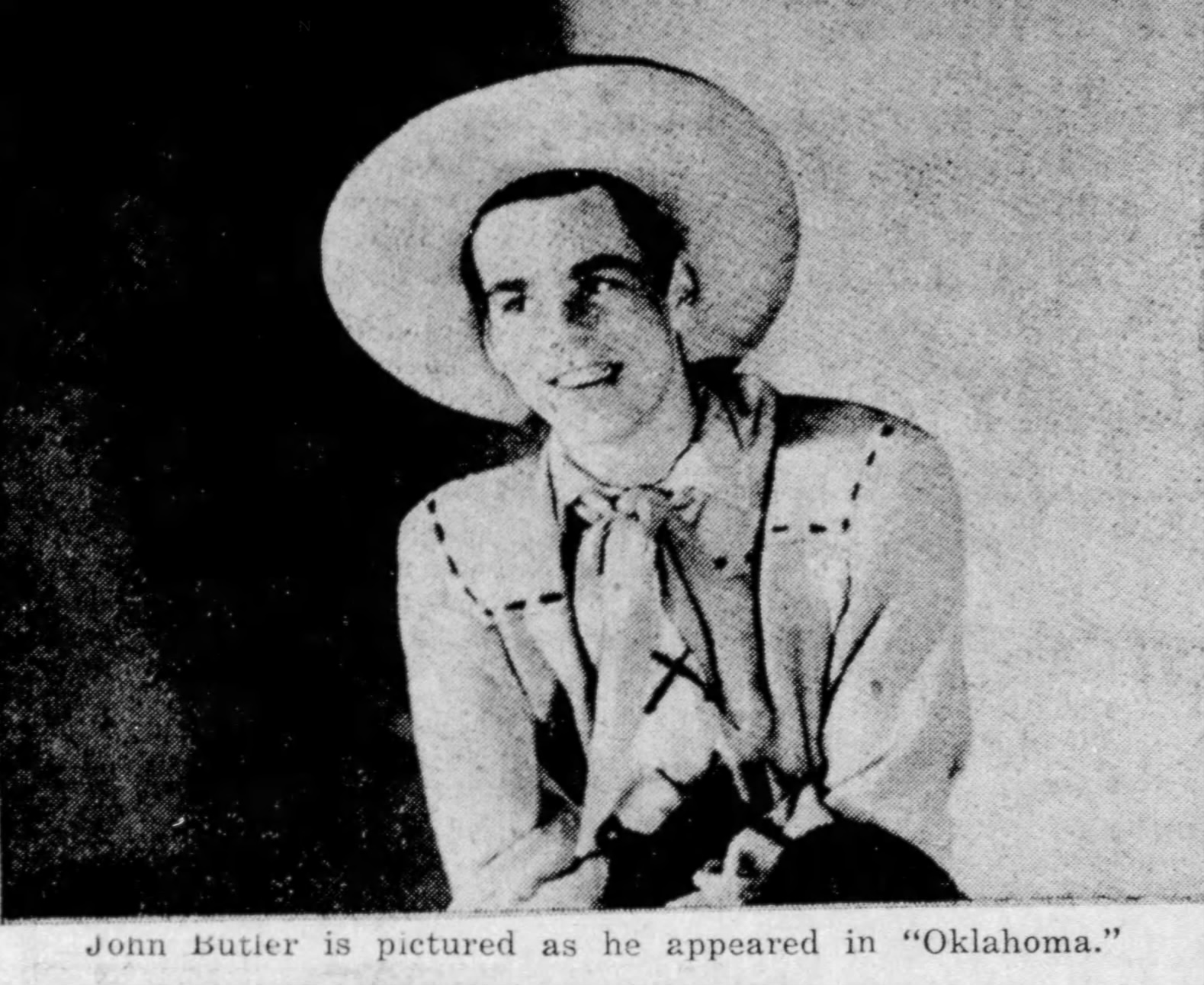
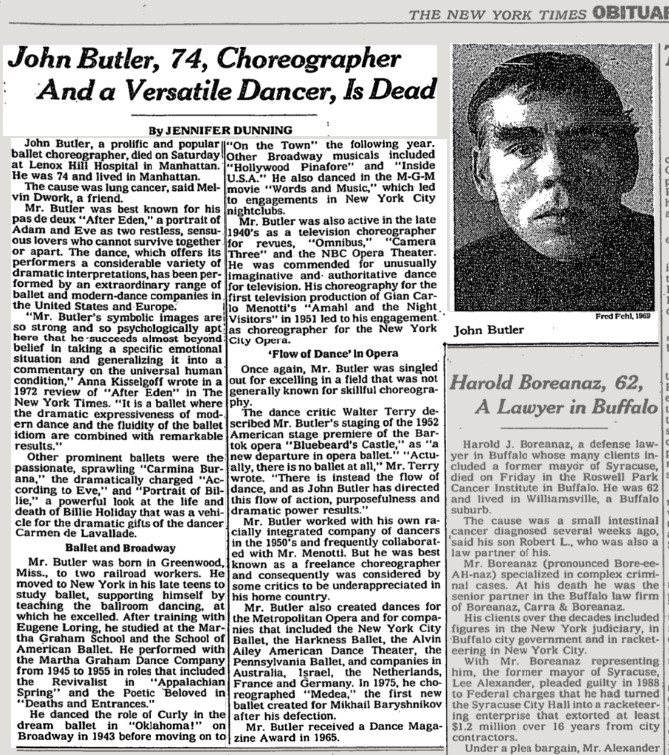
Butler danced on Broadway as Dream Curly in the original production of Oklahoma! He appeared in a string of Broadway musicals throughout the 1940’s including Hollywood Pinafore, Inside U.S.A. and On The Town, where he dated castmate Cris Alexander.

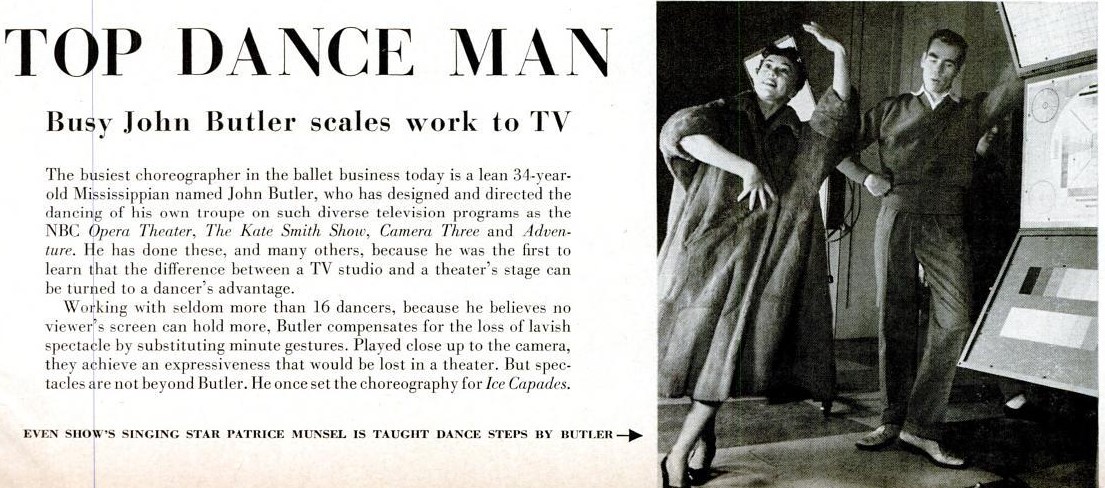
He began to transition into choreography in the late 1940’s. The combined influences of Loring, Balanchine and Graham gave his work unique elements of classical ballet as well as modern dance. He was one of the first to create works specifically for television, which was still considered a new and inferior medium. He choreographed variety show segments (The Ed Sullivan Show, The Kate Smith Show) as well as for Omnibus and full-length ballets and operas. His 1951 staging of Amahl and the Night Visitors was recreated annually for nine NBC holiday specials.

Butler performs as one of the Three Dancers in this 1955 broadcast.

Life Magazine profiled Butler in their April 25, 1955 issue:

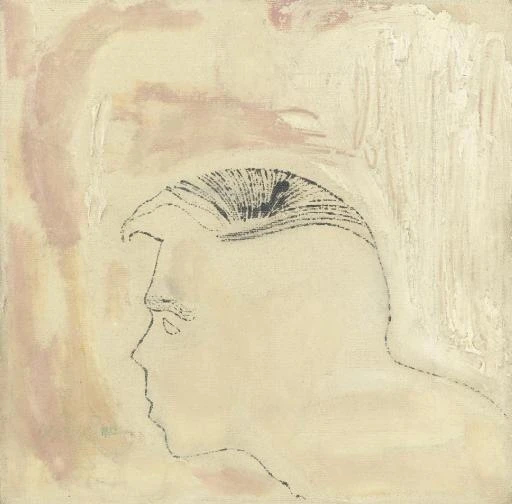
Two sketches of John Butler by Andy Warhol (1952)

In addition to his work choreographing for Broadway and television, Butler founded The John Butler Dance Company in 1955. It was later renamed American Dance Theater and toured Europe until it disbanded in 1961.

John Butler & Carmen de Lavallade rehearse Portrait of Billie, his dance meditation on Billie Holliday (ca 1960)
John Butler & Melvin Dwork (1963)

His most celebrated work was the New York City Opera staging of Carmina Burana (1959). Through the years, it has been recreated with over 30 companies.

In 1961 he met celebrated interior designer Melvin Dwork, who has called Butler “the love of my life.” They remained companions and friends until Butler’s death in 1993. Dwork was instrumental in preserving Butler’s dance legacy.

The Greenwood Commonwealth, Greenwood Mississippi (3/6/1965)

As he matured, Butler’s voluminous eyebrows became something of a trademark of his appearance. He appears to have embraced this with a level of zeal that surely inspired George Whipple.

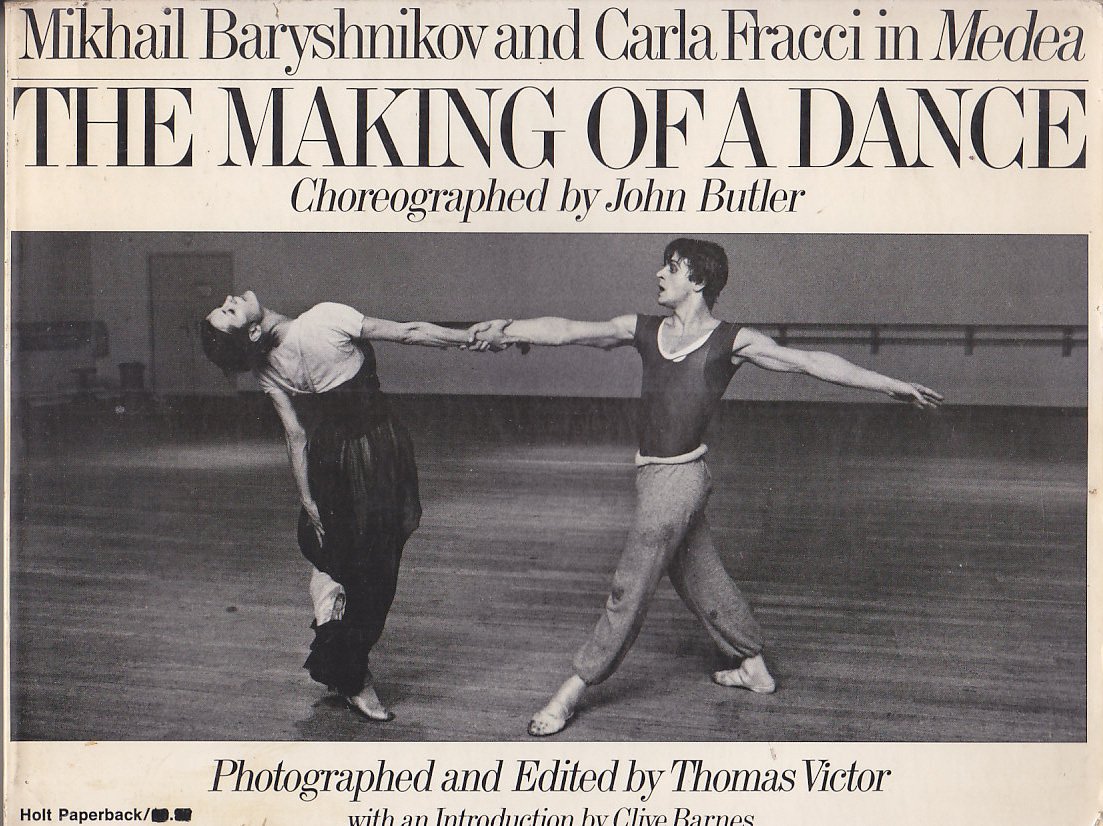
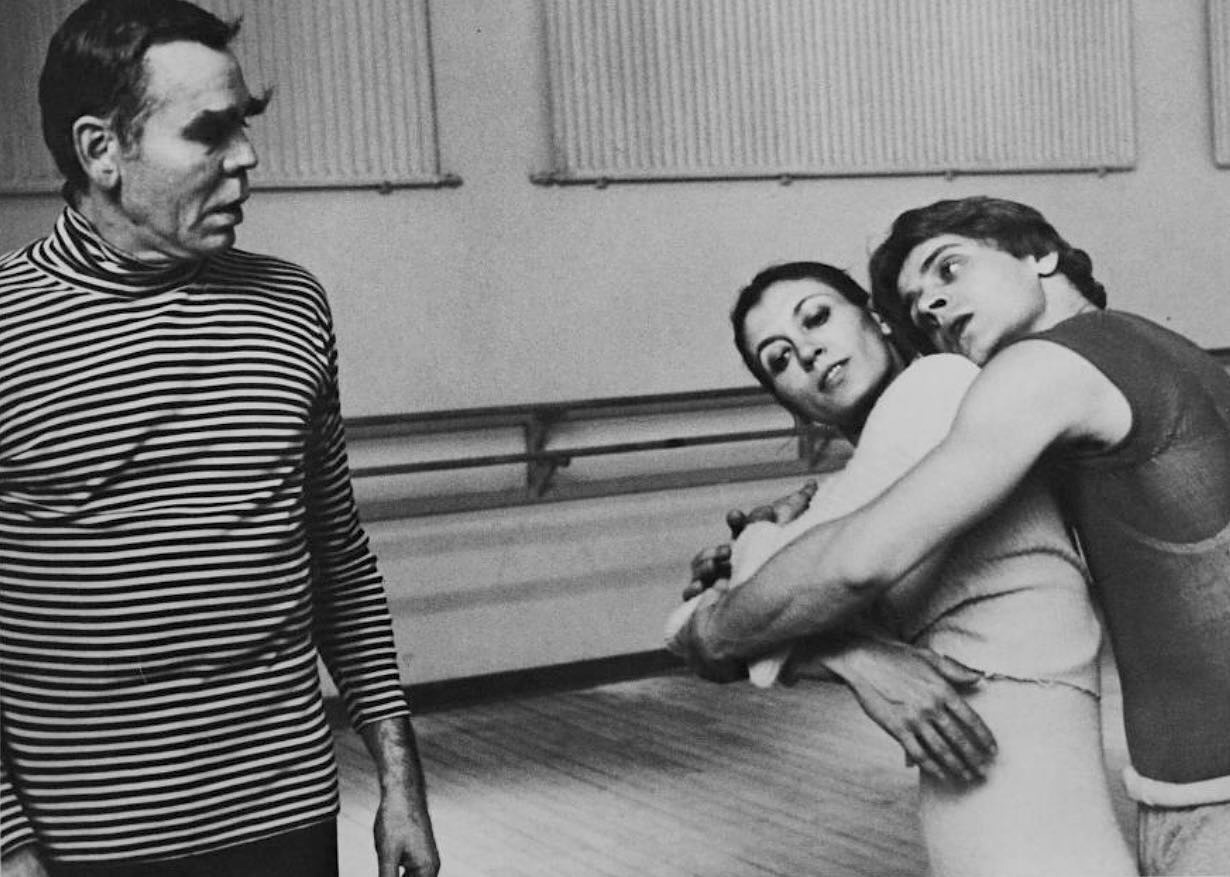
Over the next several decades, Butler continued to choreograph throughout the U.S. and around the world. The Hague, Munich, Sydney, Spoleto, Montreal, and Warsaw were part of his regular rotation with occasional work in Italy and South America. Back in New York City he choreographed Medea, the first dance for Mikhail Baryshnikov after his defection to the West.

John Butler photographed in April of 1993. He died of lung cancer later that year at the age of 74.

In 1993, author Camille Hardy interviewed John Butler for Dance Magazine shortly before his death. As they sat in his Upper East Side apartment, surrounded by his artwork collection and the walls lined with the works of Warhol, Avedon and Lynes, he said “I’ve done everything in my life I ever wanted to do.”

New York Times Obituary (12/13/93)

See also:
Fire Island PaJaMa Party
Provincetown PaJaMa Party
Fire Island Muses of George Platt Lynes & The PaJaMa Collective
Revisiting George Platt Lynes’ Fire Island Muses
Artist’s Muse: Forrest Thayer
Artist’s Muse: William Weslow
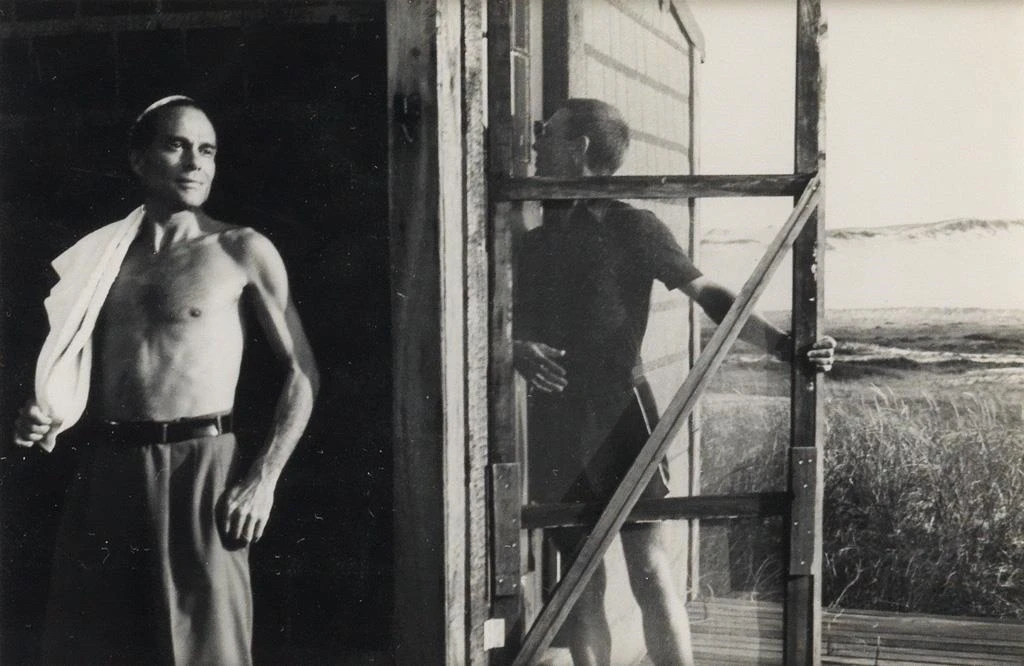
Artist’s Muse: José “Pete” Martinez
Artist’s Muse: Chuck Howard
Artist’s Muse: Randy Jack
Artist’s Muse: Wilbur Pippin
Artist’s Muse: Donald Windham & Sandy Campbell
Buddy & Johnny: A Historic Photo Shoot
Kenn Duncan After Dark
George Platt Lynes: In Touch Magazine (1982)