Remembering Prolific Pornographer Robert Prion

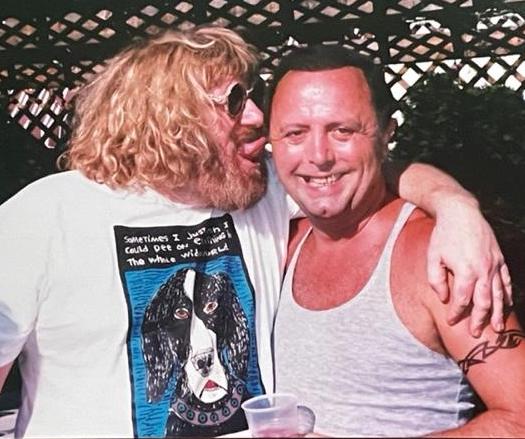
I once heard Robert Prion described as “The Ed Wood of gay porn.” It makes a great punchline, but it’s not quite true. Prion was 69 years old when he passed away on March 28th at his home in Woodbridge, New Jersey. It’s a house that porn fans are well acquainted with, as he filmed over 70 full-length adult films there over the past 40 years.

Prion is survived by his lifelong partner, who appeared in his films under the name Jay Richards.

Robert Prion was born on July 1, 1952 and lived in Woodbridge his entire life. A 1970 graduate of Woodbridge High School, Mr. Prion was employed for many years in the meat department (how fitting!) at Foodtown.

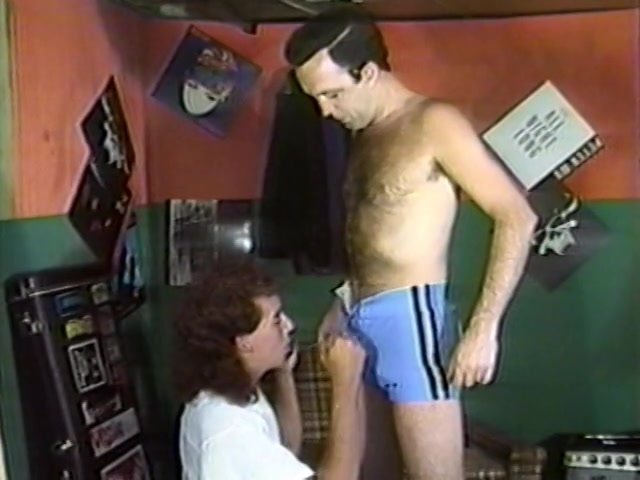
In 1982 Prion released The Boys From New Jersey, the first of 12 films produced throughout the decade. The spirited performances of his skinny and hung cast shone through the muddy fidelity of the VHS home video recording. The films were also elevated by their kickass soundtracks featuring the songs of Depeche Mode, Erasure, New Order and other new wave groups of the day – copyrights be damned. There was plenty of spandex, stone washed high-rise jeans, crop-tops and mullets. Lots and lots of mullets. These movies act as a time capsule of 1980’s mall culture – you can almost smell the Drakkar Noir when you watch them.

Prion shot scenes in every room of his house, from the low-ceilinged basement to the vaulted attic. Additionally, he filmed in another structure on the property that appeared to be either an elaborate children’s playhouse or a bungalow for little people. Coupled with low camera angles, his performers always seemed to be in danger of hitting their heads in the claustrophobic spaces.

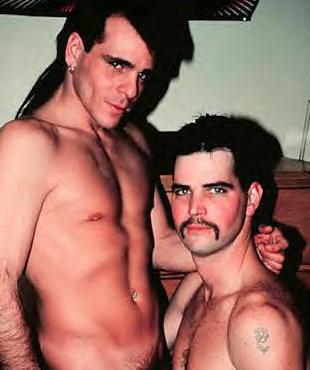
Jay Richards and Karl Thomas (1990)

And yes, there was the pool area – a New Jersey approximation of the traditional California porn set, although the sun never seemed to shine on Prion’s pool and the tiki cabana appeared to be a season away from collapse.

Prion was aware of his place in the porn world: his studio was called New Jersey Trash.

His motto seemed to be “more is more.” Rather than the traditional porn layout of 4 or 5 sex scenes per feature-length film, Prion would cram in 7 to 9 – often starting off with a quick group oral scene before the end of the opening credits.

Bijou Video Catalogue Ads for Suckulent and Men Who Dare (1987)

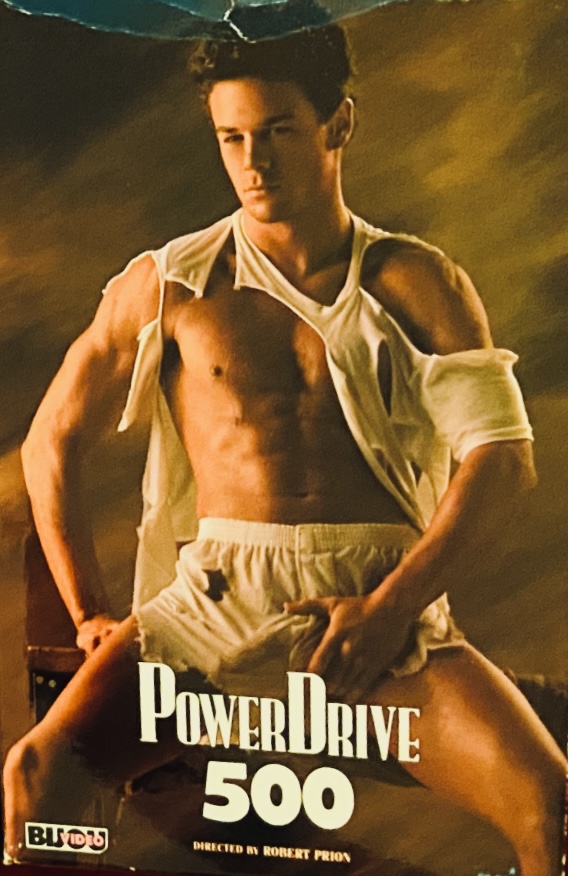
Prion with Chip Ryan in Powerdrive 500 (1990)

Whether or not his performers identified as straight, they put that aside when the cameras were rolling and gave performances that (for the most part) were far above average. It is the quality (and quantity) of these scenes that kept fans coming back for more, despite low production values and questionable design tastes. Many of the models appeared in over a dozen Prion films, indicating that they were treated favorably and/or well compensated.

Prion retired from performing in front of the camera by the mid-1990’s, but his partner Jay Richards continued delivering versatile, if perfunctory, performances in all 70+ Prion films.

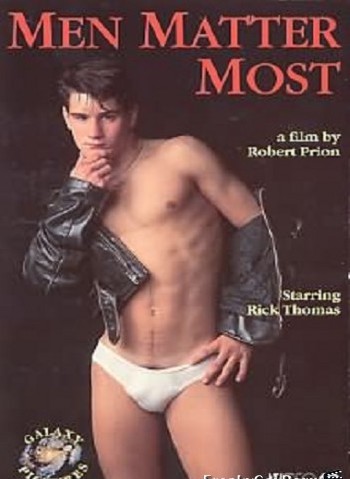
In January 1995, Prion formed his own production company, Galaxy Pictures. His first film for the new company was Men Matter Most. With the advent of DVDs, Prion repackaged and re-released his earlier films. With those and subsequent releases, he would take advantage of the “multiple angles” DVD feature to include whole other bonus sex scenes. Unfortunately, these “easter eggs” are now inaccessible with today’s DVD viewing practices.

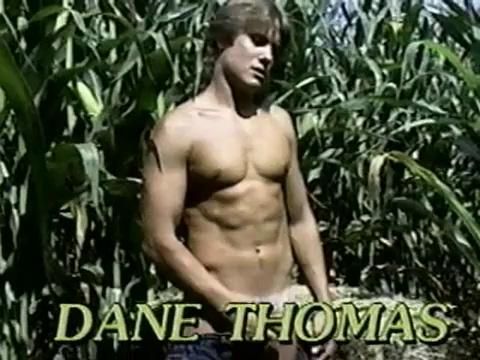
His biggest discovery was Rick Thomas, whose real-life older brother Dane also appeared in a handful of Prion films. They were among his stable of stars who always brought their “A” game, including Eric Carter, Vincent DeMarco, Bryon Rogers, Antonio Vegas, Jon Dante, Alex Turner, Wicked, Cody Marshall, Titan, and Chris Collins, aka “The Mystery Stud” who appeared in over a dozen films and never took off his sunglasses.

Prion benefited from his close proximity to New York City. Big name adult film stars making personal appearances in the city could hop on a New Jersey Transit train and earn some extra cash for a day’s work. Some porn stars who ducked through the low Prion doors: Jon King, Joey Stefano, Karl Thomas, Marc Andrews, Terry DeCarlo, Eric Stone, Todd Stevens, Rick Pantera, David Grant, Storm, David Thompson, Kevin Alexander, Jason Nikas, Scott Matthews, Ryan Raz, Scott Spears, Brandon Aquilar, Tommy DeLuca, Chris Stone, Kurt Morgan and Aaron Lawrence.

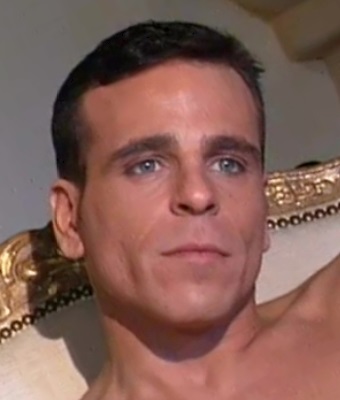
Terry DeCarlo on the old Christopher Street Pier in Put It Where It Counts (1993)

Prion’s dizzying output of films began to slow after 25 years although he continued to repackage and re-release older titles in online platforms, where many are still available for viewing. His last movie was released in 2014. See below for a list of all his films.

Robert Prion Films (including compilations):

  1. The Boys of New Jersey: 1982
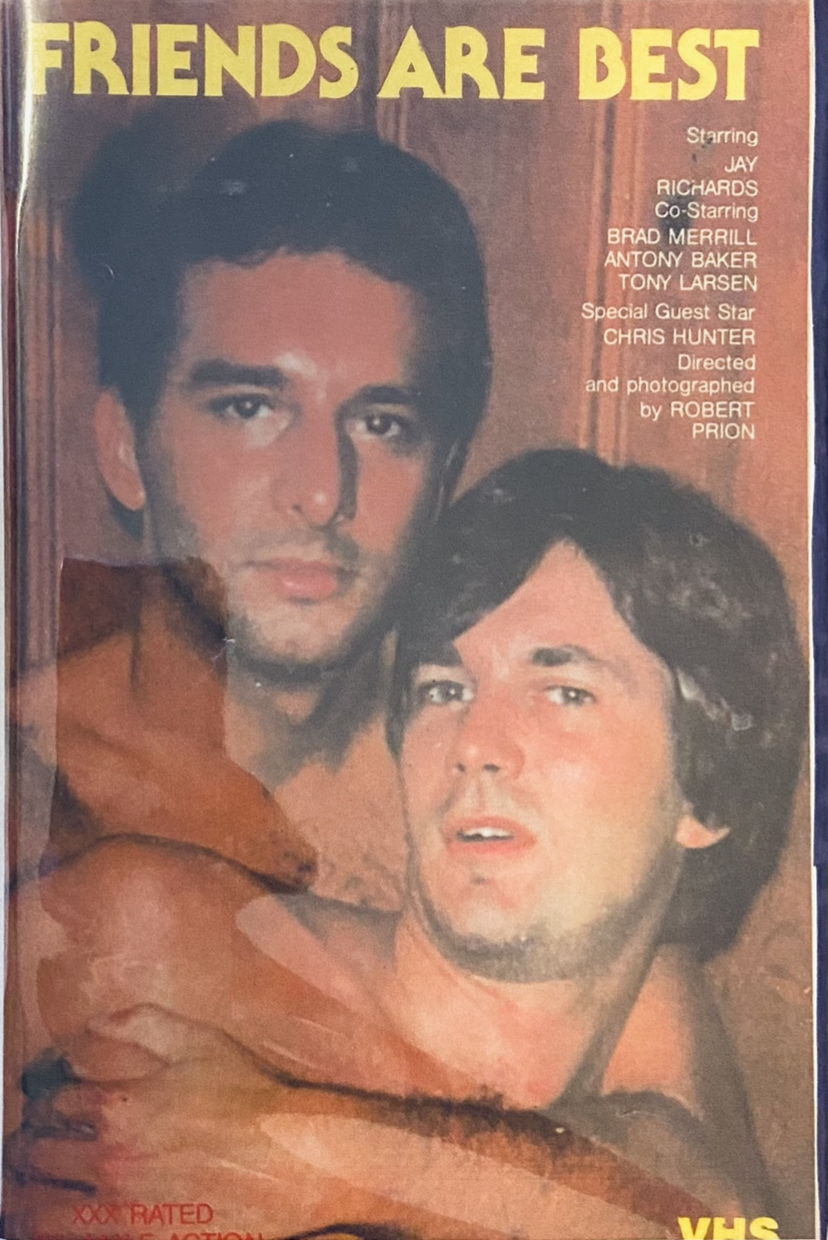
  2. Friends Are Best: 1983
  3. Men Grip Tighter: 1983
  4. Cum and Get It: 1984
  5. Boys Do It Better: 1984
  6. Guy’s Just Can’t Stop: 1985
  7. The Young Stimulators: 1985
  8. The Wild Guys: 1986
  9. Men Who Dare: 1987
  10. Suckulent: 1987
  11. Addicked: 1988
  12. Raw Impulse: 1989
  13. Ultimate Desires: 1989
  14. Powerdrive 500: 1990
  15. X-Posed Images-The Naked Truth: 1990
  1. Untamed Seductions: 1991
  2. Uncensored: 1991
  3. Hidden Instincts: 1992
  4. Total Impact: 1992
  5. 19 Good Men: 1993
  6. It’s Raining Dicks: 1993
  7. Solid Intake: 1993
  8. Uncle Prion & His Young Men: The Best Of Robert Prion: 1993
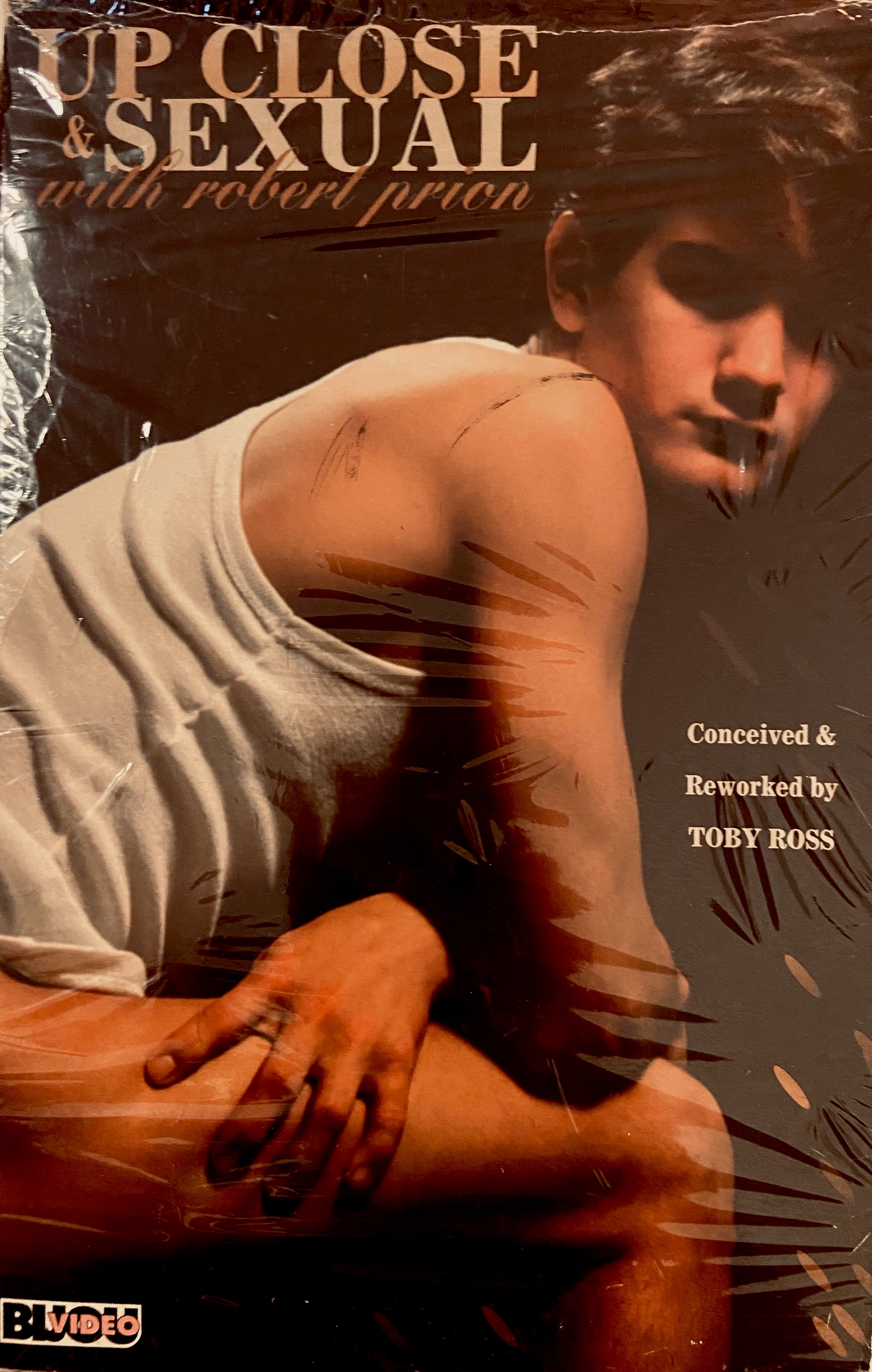
  9. Up Close & Sexual: The Best Of Robert Prion 2: 1993
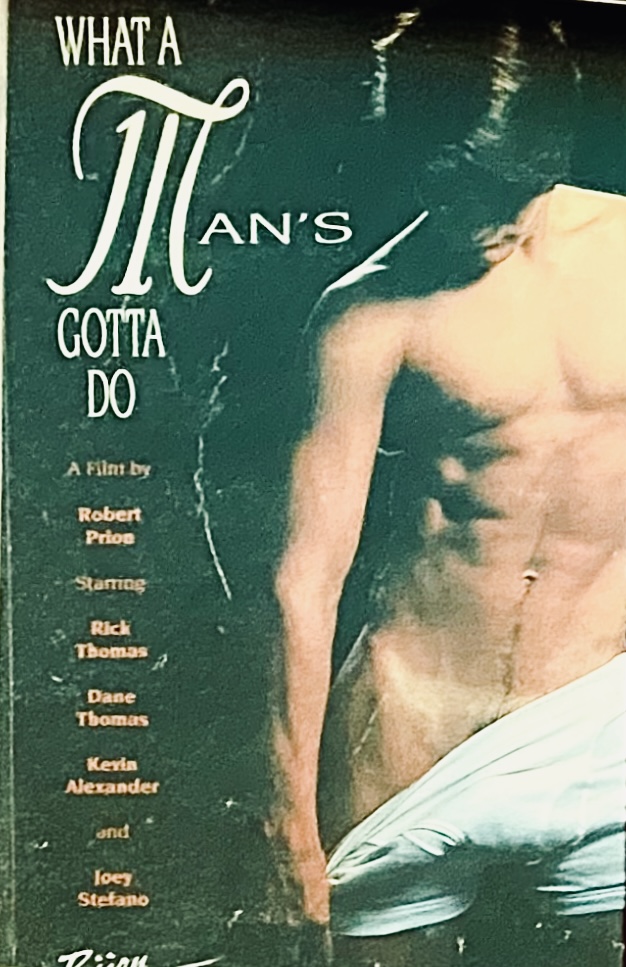
  10. What A Man’s Gotta Do: 1994
  11. Put It Where It Counts: 1994
  12. Men Matter Most: 1995
  13. Pushing The Limit: 1995
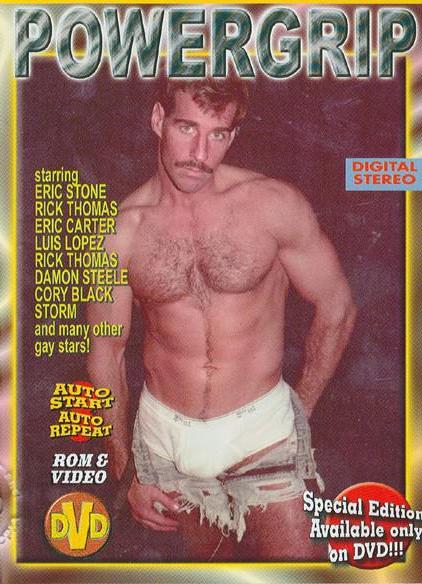
  14. Power Grip: 1995
  15. Everything A Man Wants: 1995
  1. Point Of Entry: 1996
  2. Natural Response: 1996
  3. Whatever It Takes: 1996
  4. Unexpected Persuasion: 1996
  5. Drive Shaft: 1997
  6. Every Man’s Desire: 1997
  7. Can’t Say No: 1997
  8. Nothing Else Matters:1997
  9. Don’t Hold Back:1997
  10. Pushover: 1997
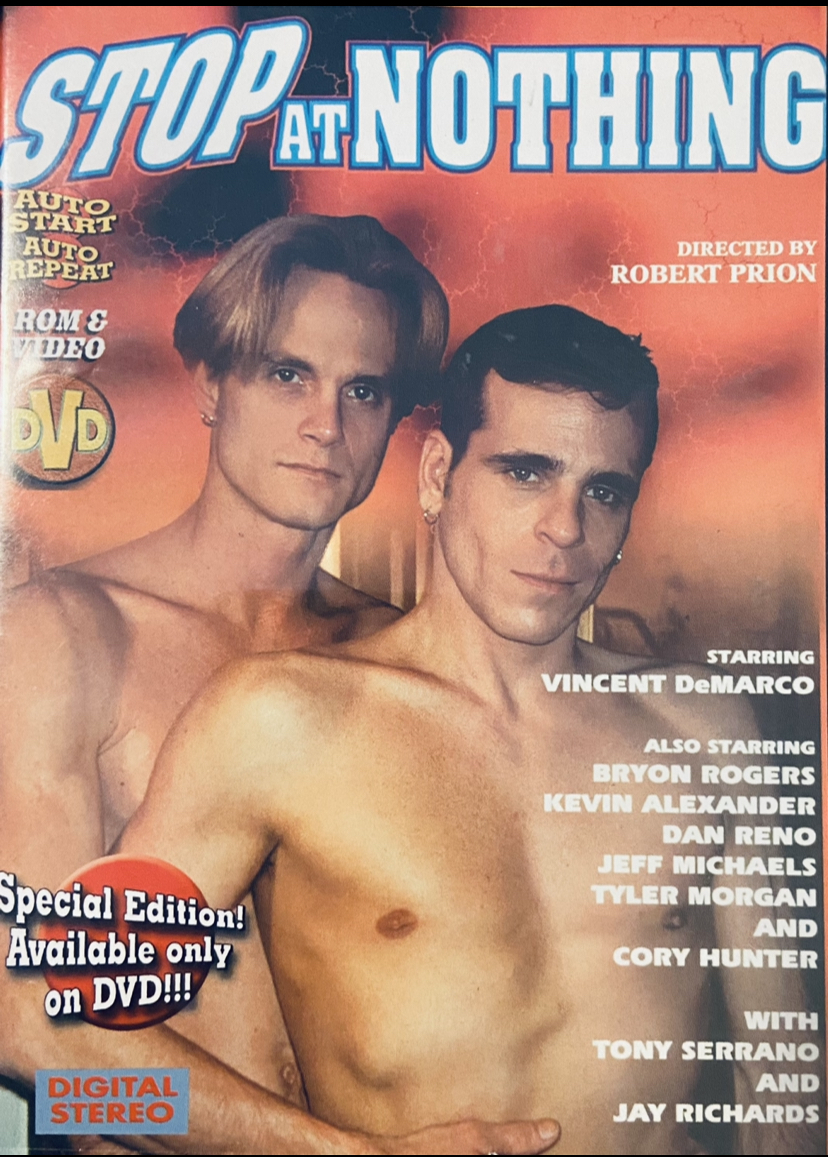
  11. Stop At Nothing: 1998
  12. You’ve Got The Touch: 1998
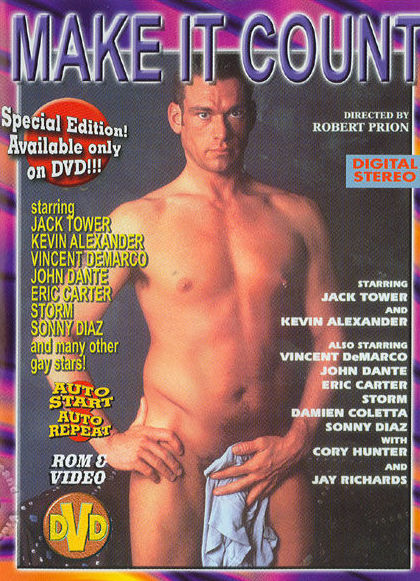
  13. Make It Count: 1998
  14. Relentless: 1998
  15. One Way Or Another: 1998
  1. Shameless: 1999
  2. Any Way I Can: 1999
  3. Let’s See What Happens: 1999
  4. Aim To Please: 1999
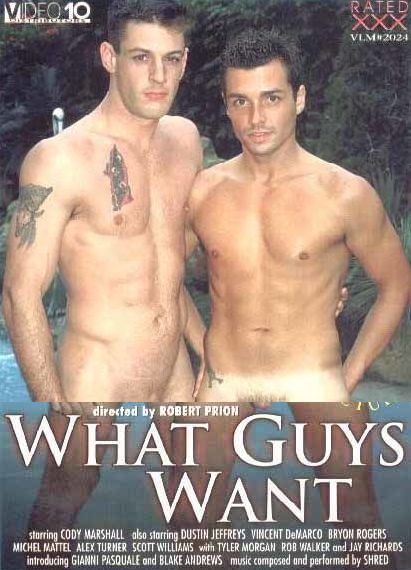
  5. What Guys Want: 1999
  6. Best of Robert Prion 1 – Give and Take: 2000
  7. Best of Robert Prion 2 – Outdoor Seductions: 2000
  8. Best of Robert Prion 3 – Three In The Sack: 2000
  9. Best of Robert Prion 4 – Mix and Match: 2000
  10. Best of Robert Prion 5 – Video Virgins: 2000
  11. Best of Robert Prion 6 – Superstars: 2000
  12. Going Too Far: 2000
  13. Every Inch Of Him: 2000
  14. If You Dare: 2000
  15. So That’s How You Want It: 2000
  1. One Step Further: 2000
  2. Don’t Stop There: 2001
  3. Qualified To Satisfy: 2001
  4. I Want More: 2001
  5. Never Stop The Urge: 2001
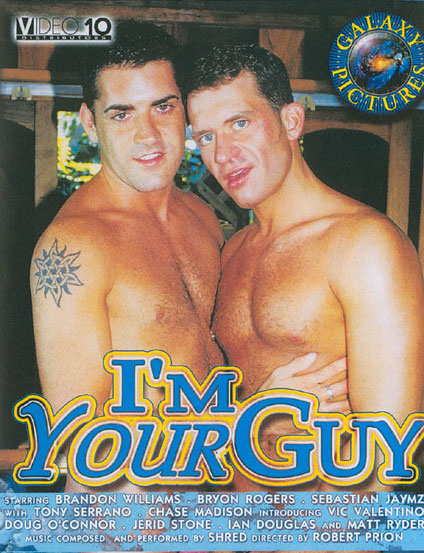
  6. I’m Your Guy: 2001
  7. Over The Edge: 2002
  8. Take It All: 2002
  9. Natural Impulse:2003
  10. Doin’ The Nasty: 2003
  1. Return The Favor: 2003
  2. Teasin’ N’ Pleasin’: 2004
  3. From Every Direction:2004
  4. Access All Areas: 2005
  5. Standing Firm: 2006
  6. All Men Should: 2006
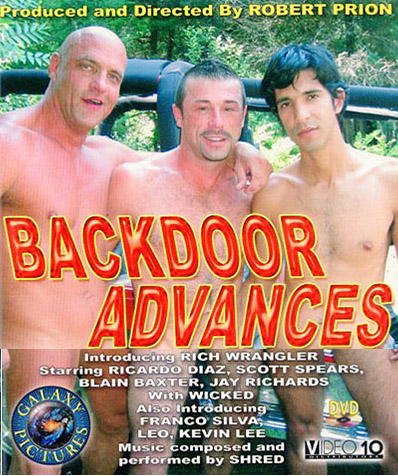
  7. Back Door Advances: 2007
  8. Prion’s 69 More To Cum aka That Sucks: 2007
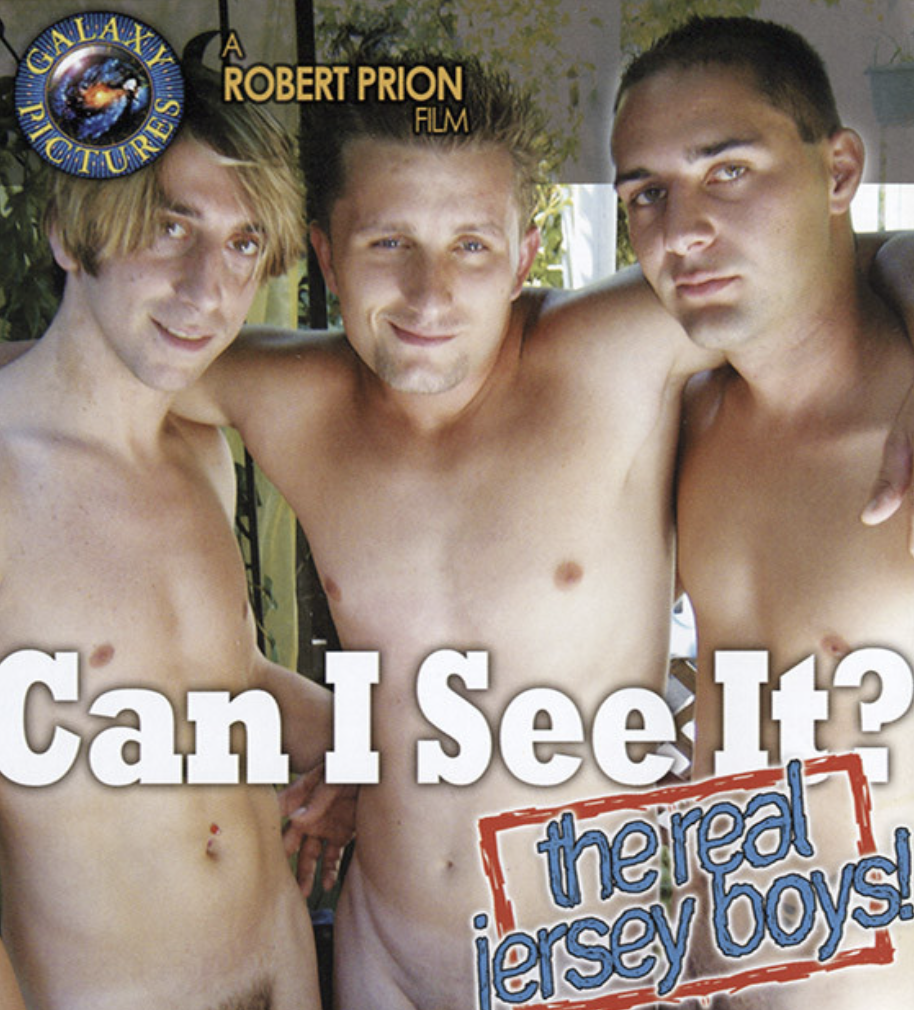
  9. Can I See It?: 2008
  10. It’s Only Natural… Daddy: 2014

We extend our condolences to Jay Richards and the friends and family of Robert Prion.

See also:
Gay Porn Stars We Lost (so far) in 2025
Gay Porn Stars We Lost in 2024
Gay Porn Stars We Lost in 2023
Gay Porn Stars We Lost in 2022
Gay Porn Stars We Lost in 2021
Gay Porn Stars We Lost in 2020
Alexis Arquette’s Lost Porn Flick
RIP Porn Star Turned Activist Terry DeCarlo
Costello Presley and 80’s Gay Porn Guilty Pleasures

Fire Island PaJaMa Party

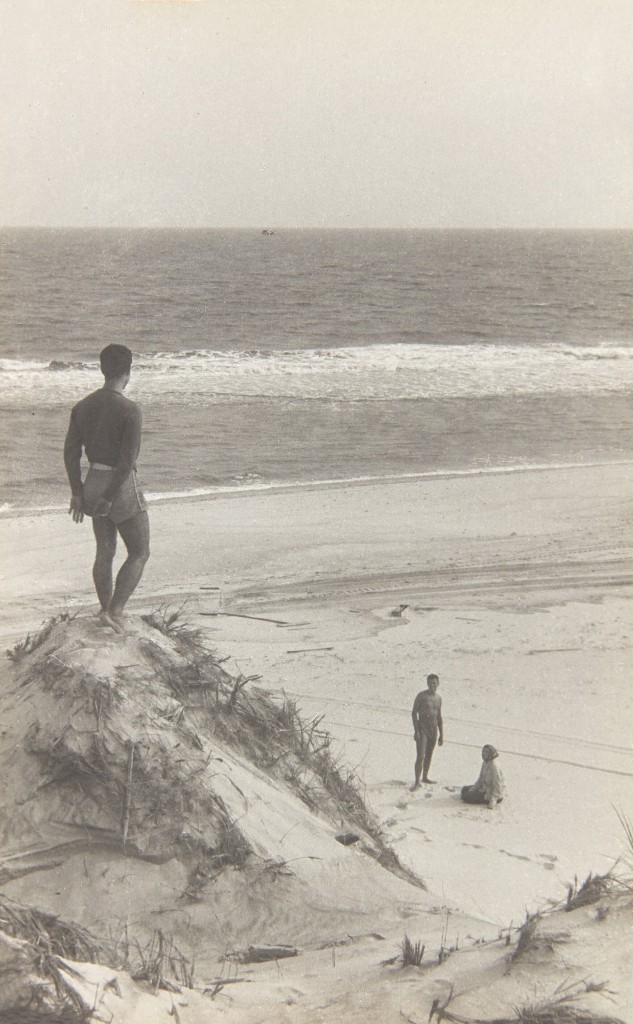
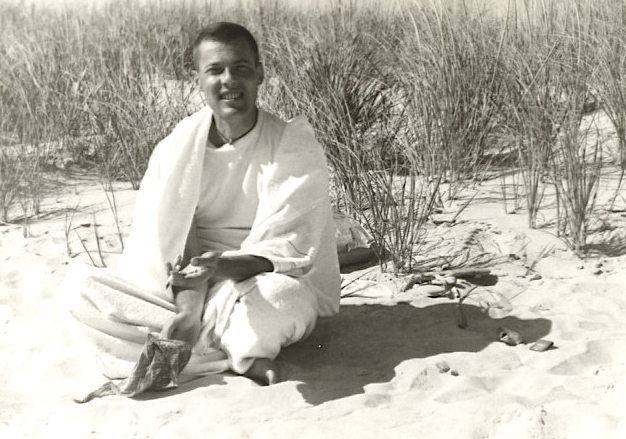
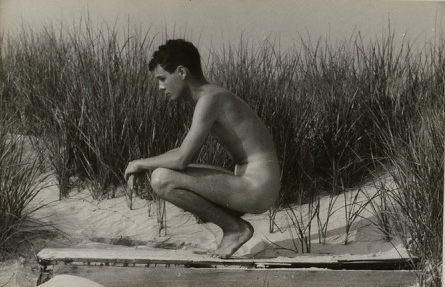
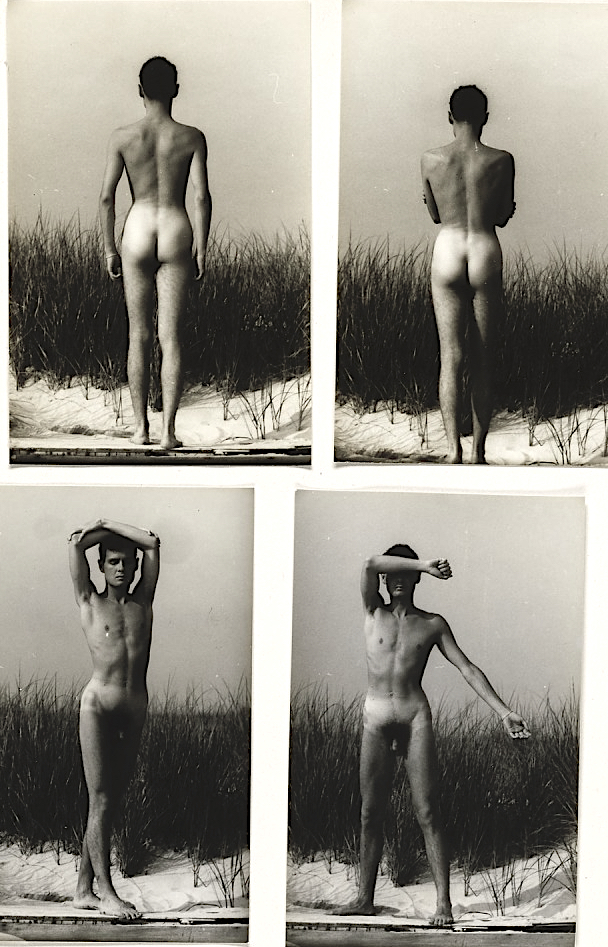
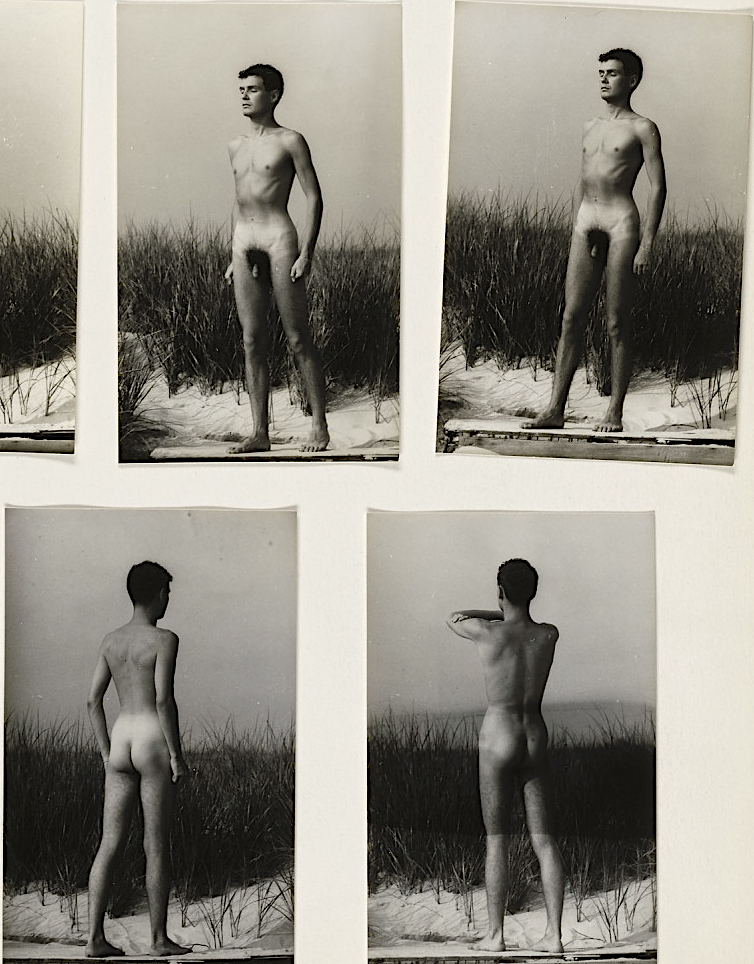
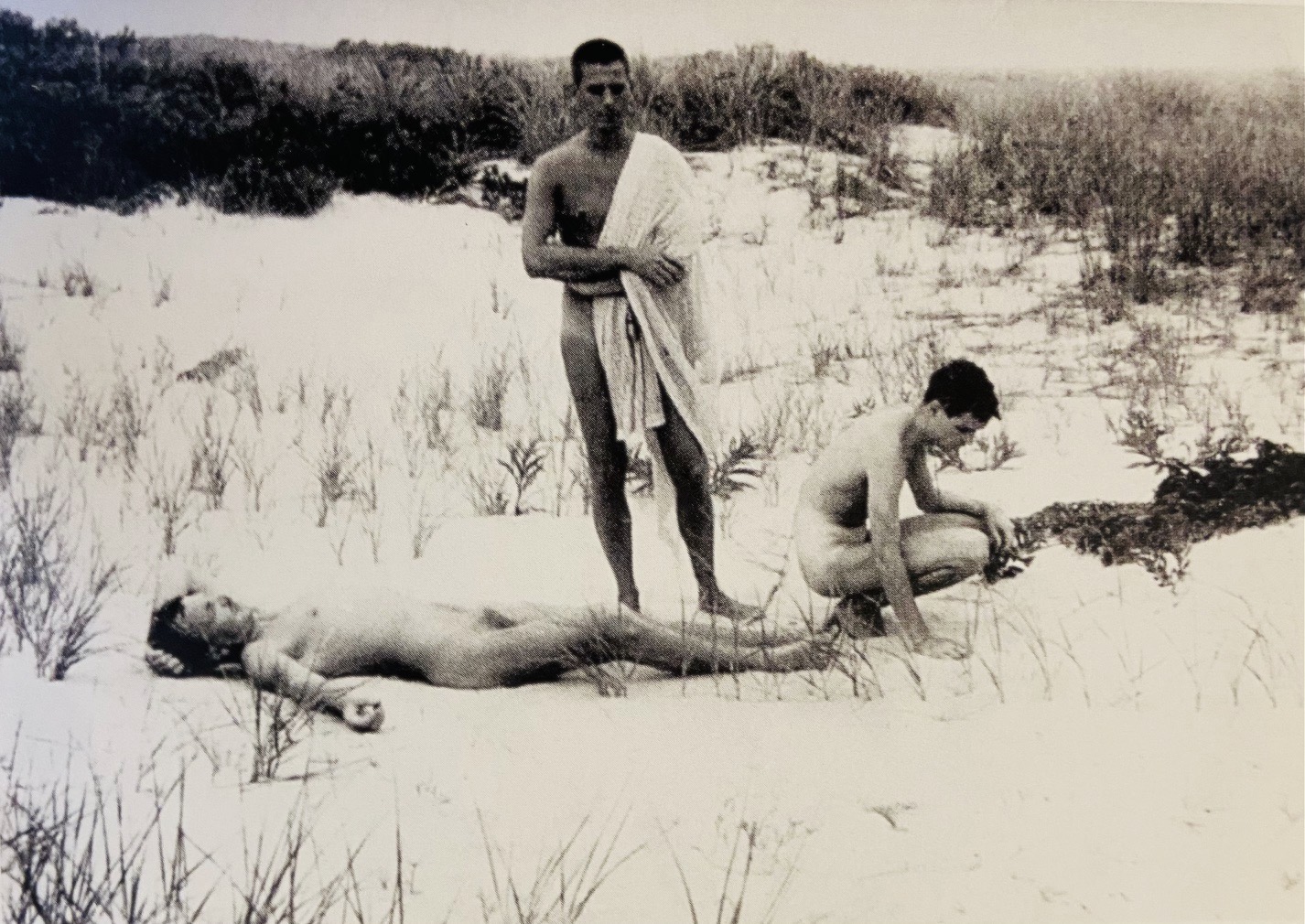
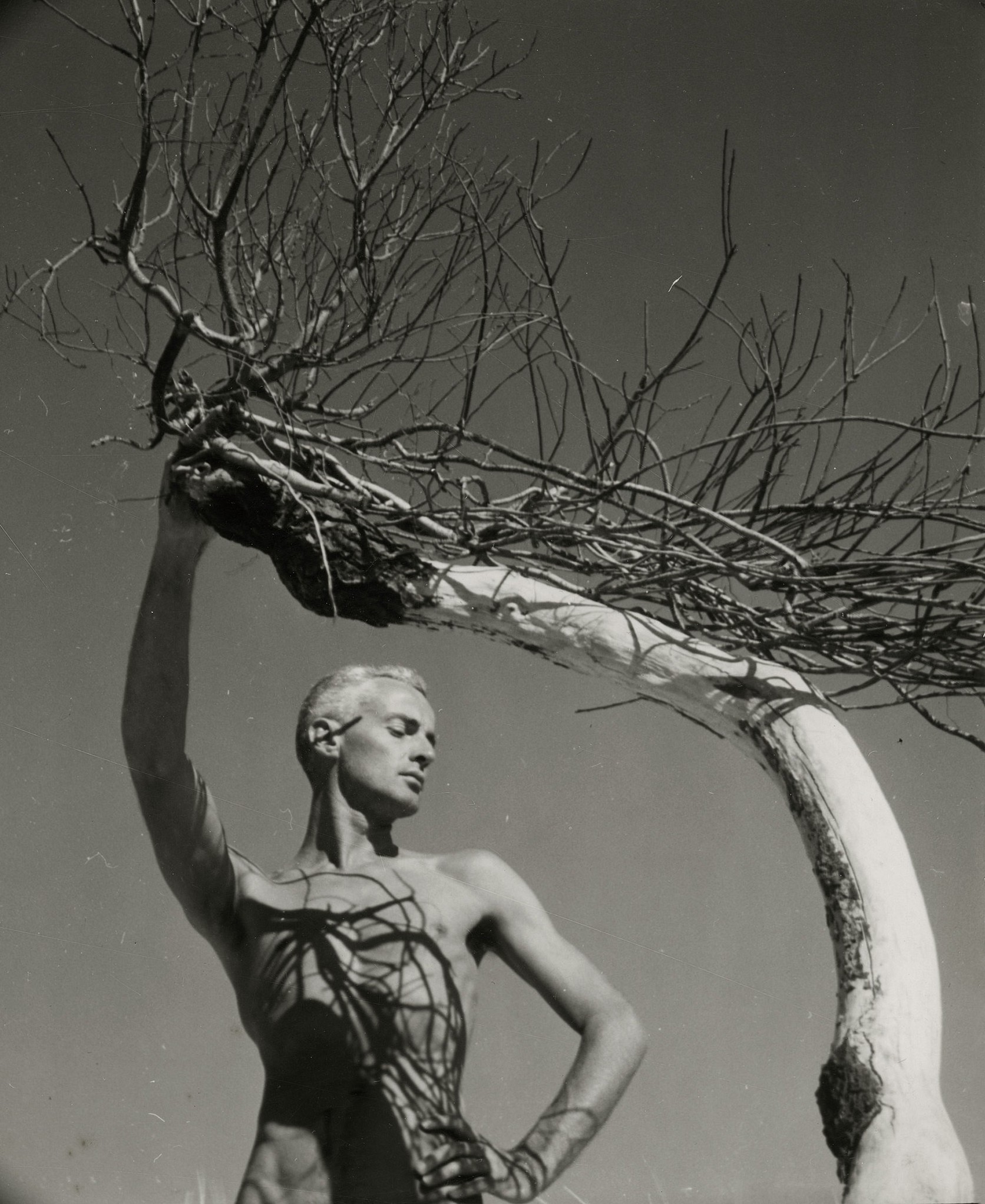
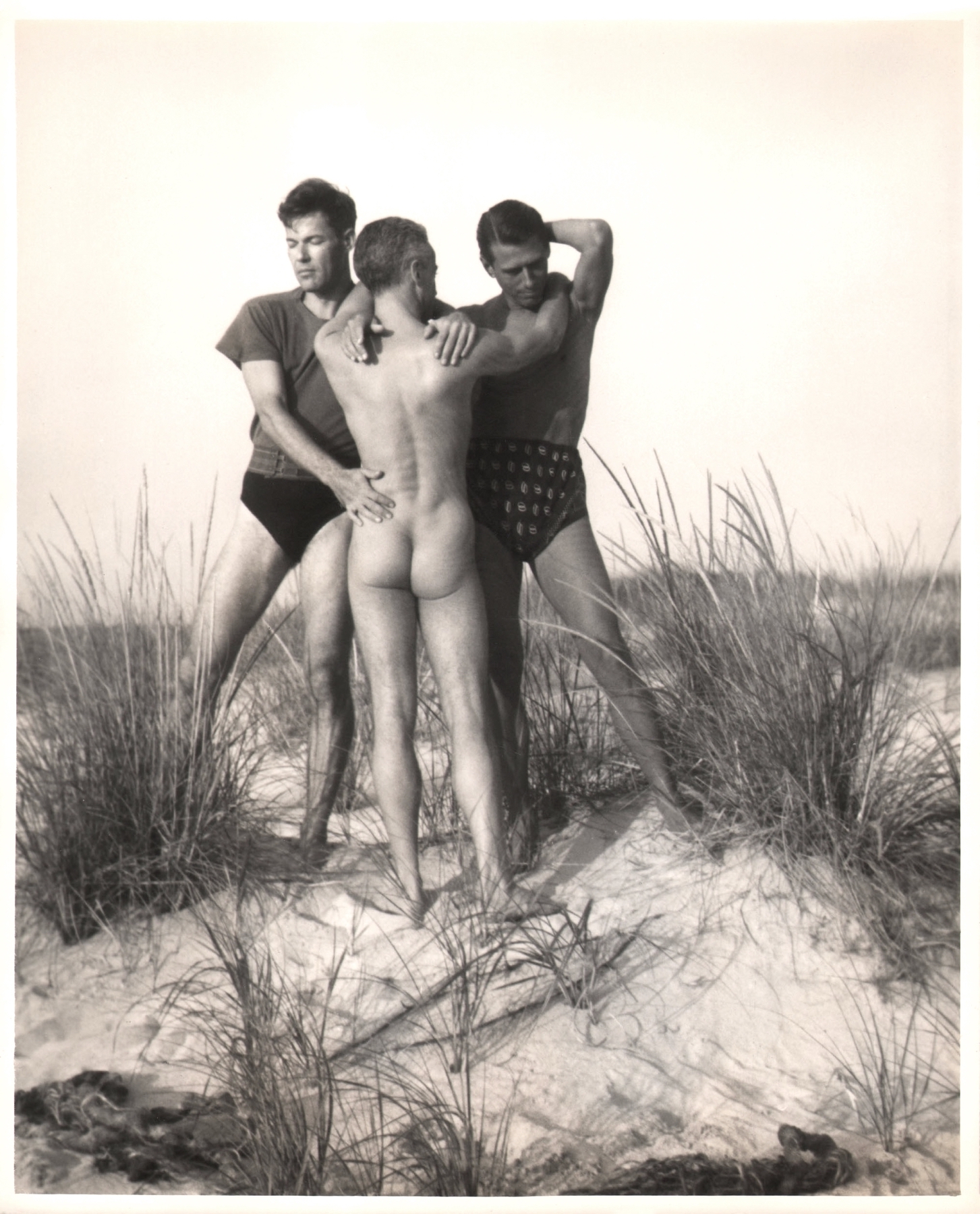
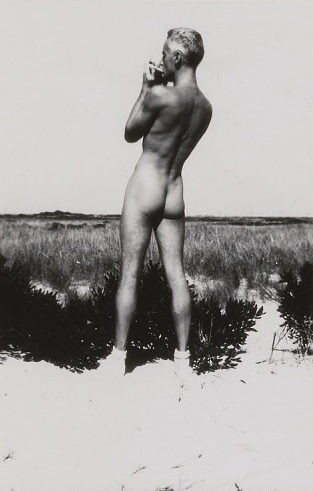
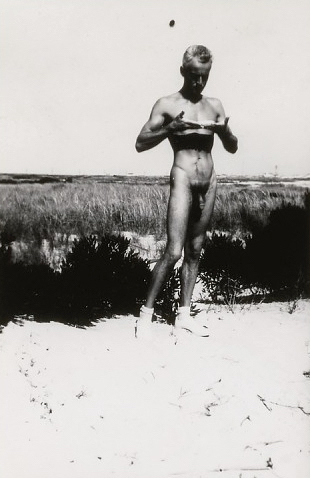
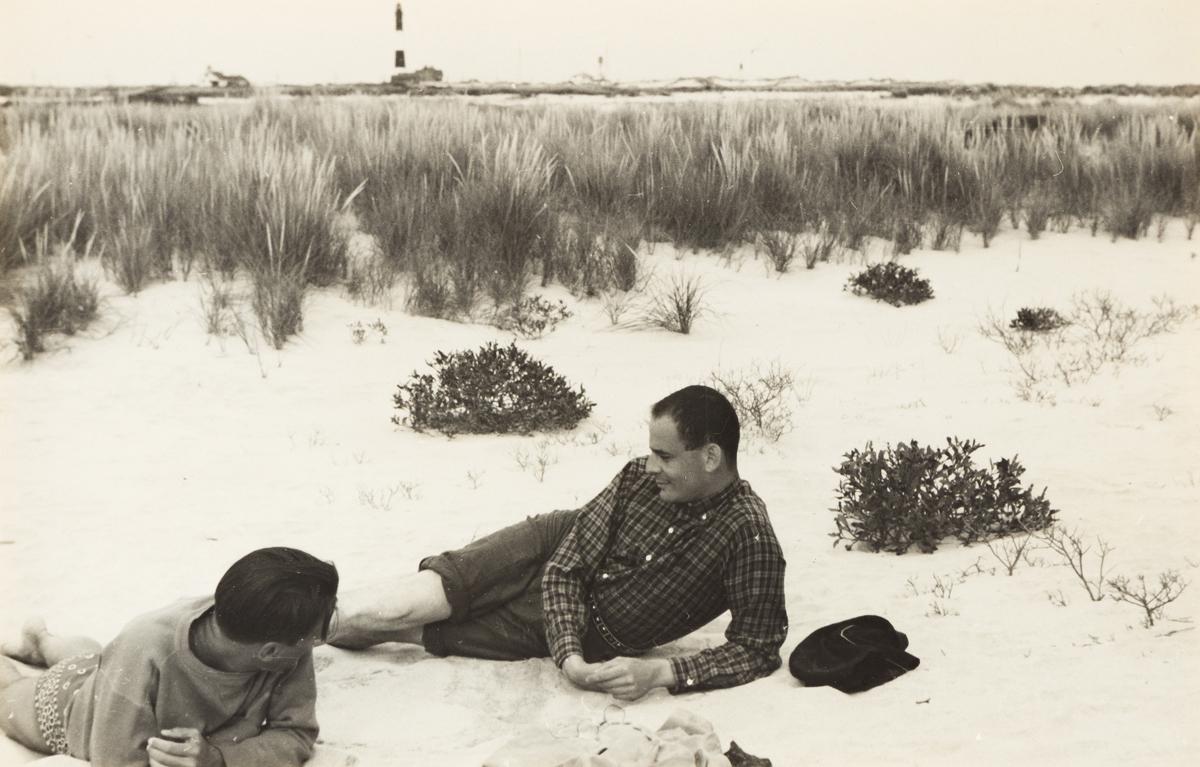
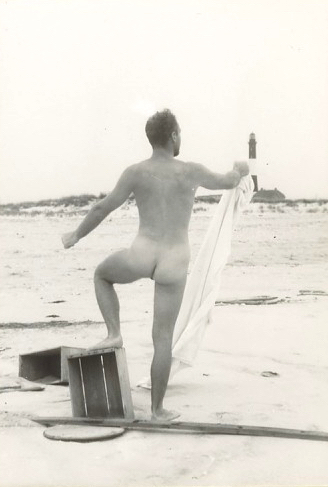
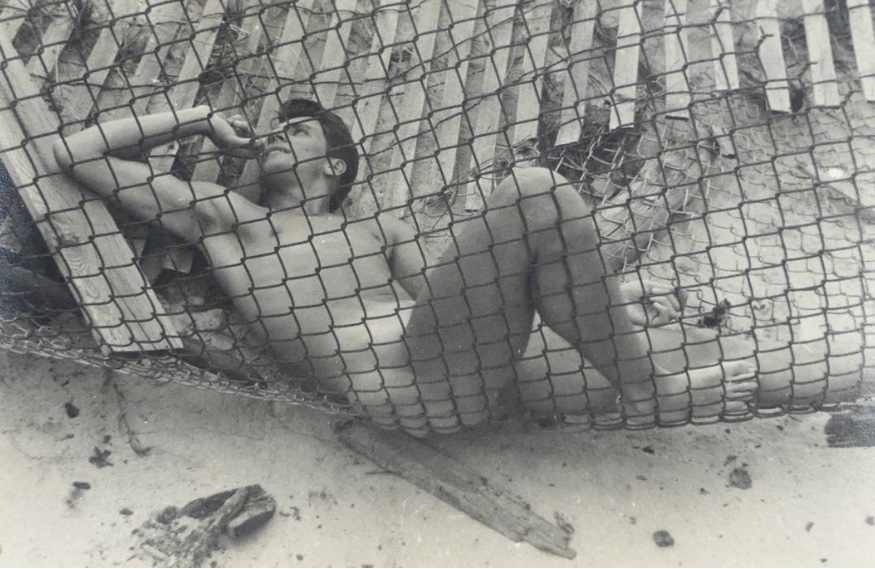
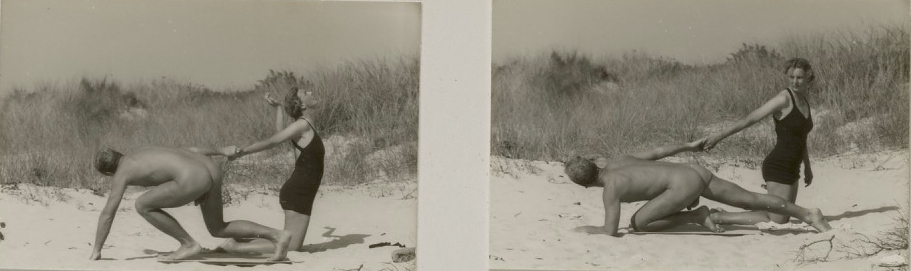
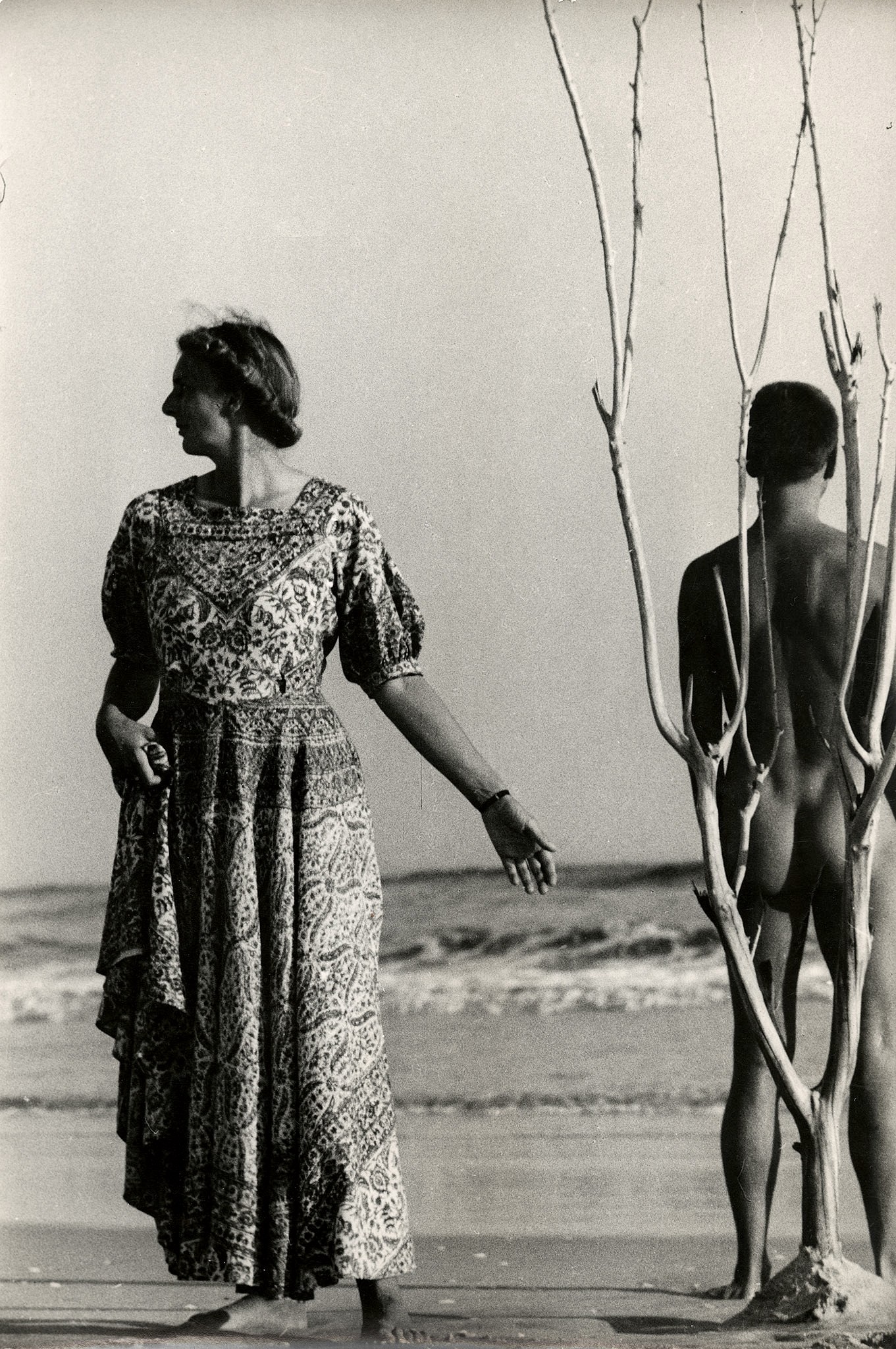
During vacations from the 1930’s through the mid-1950’s, artists Paul Cadmus, Jared French, and his wife Margaret Hoening French photographed each other on the beaches of Fire Island and later Cape Cod. Usually nude or donning simple costumes, they would also use found objects as props to create stark, surreal and/or erotic images. They passed Margaret’s Leica camera around, taking turns as subject and auteur. This collaborative authorship was reflected in the umbrella name Paul Cadmus later chose for this work, utilizing the first two letters of their first names: PaJaMa.

Cadmus explained, “After we’d been working most of the day, we’d go out late afternoons and take photographs when the light was best. They were just playthings. We would hand out these little photographs when we went to dinner parties, like playing cards.”

The dynamic was complicated: Paul and Jared were lovers – a relationship that continued during Jared and Margaret’s marriage. All three lived and worked in a townhouse at 5 St. Lukes Place in Greenwich Village.

Paul Cadmus & Jared French, Fire Island, PaJaMa (1941)

A 2015 New York Times review of a PaJaMa exhibition noted that their photos “breathed eroticism.” While some of the hundreds of photos are masterpieces of magical realism, others appear to be figure studies for their painting. And then there are simple snapshots of nude men frolicking on the beach, enjoying the sun and surf.

Right: Jared French on Fire Island (1940) Left: Paul Cadmus’ etching “Youth With Kite”, 1941

Jared French and his considerable wares are the most frequent subject of the photographs, with entire rolls of film devoted to his nude poses and posturing. Cadmus and Margaret are slightly more demure although we do not know who was giving direction from behind the camera at any given time.

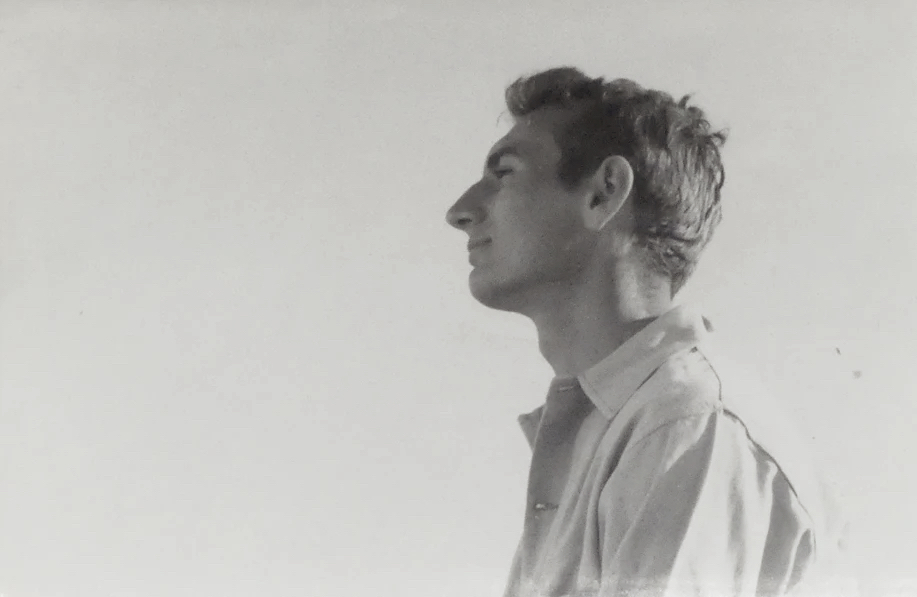
These three artists were joined by various friends and lovers through the years, fellow artists and writers that were part of their New York social circle.

Dancer/Model José “Pete” Martinez appears in PaJaMa photos of the late 1930’s with Paul Cadmus

1938 PaJaMa photos of writer Glenway Wescott sometimes appear online mislabled as Paul Cadmus or Ted Starkowski.

Writer Donald Windham (with Cadmus & French), ca 1940

Photographer George Platt Lynes was a frequent guest with his own camera.

Artist Bernard Perlin captured by the PaJaMa lens on Fire Island (1939)

Jared French in Saltaire after the devastating hurricane of 1938.

West of Saltaire, the Fire Island Lighthouse served as a frequent backdrop.

Jensen Yow, Bill Harris & Jack Fontan, ca. 1950

Alexander Jensen Yow recently recalled the circle of artists, as well as his participation in PaJaMa photos of the early 1950’s. “Paul posed us and took the pictures. I was never out there with Jerry (Jared). There were plenty of personality conflicts all scattered around with these people, but I never knew what they were or anything… Jerry was always nice to me though. But his and Margaret’s was a strange relationship… She was crazy about Jerry but she was always in the background, you know. Always there. Jerry did what he wanted to do, and she tagged after him. I was so green when I met these people that I didn’t know how to act…. I tried to be discreet but it wasn’t easy.” (NOTE: Jensen Yow died at age 95 in September of 2022)

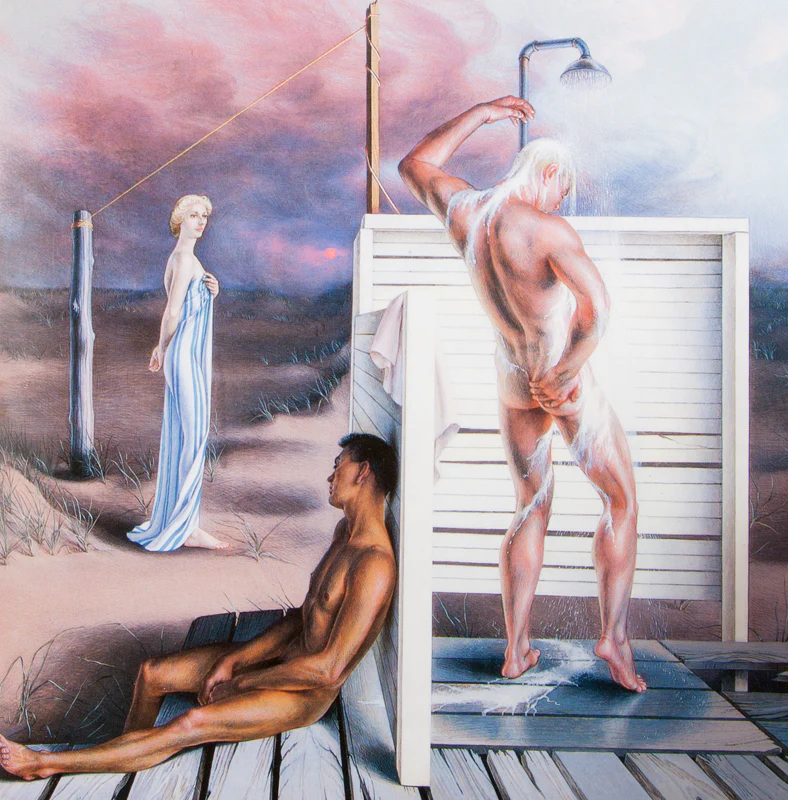
Paul Cadmus, “The Shower”, 1943

Margaret French, “The Moon by Day”, 1939

As with George Platt Lynes’ male nude photographs, the PaJaMa collection did not receive much notice or recognition until the 1990’s. They are now frequently exhibited in galleries and selections are a part of the MOMA collection.

Donald Windham, Saltaire, FI (1942)

In George Parlett’s 2022 book Fire Island, he writes of a PaJaMa photo of Donald Windham:

It’s composition seems to show us how remembering is an act, not a given. There Windham is, dragging the large net, collecting and carrying with him the various and unknown sediments of the shore while offering his gaze wholly to his beholder. There is a levity there, in the resemblance of the net to a gown or a veil, its slightly campy or drag quality, but also a quiet note of death, in how this black material evokes a shroud, or mourning garb. Fire Island has long been a place where such contradictions are brought together; youth and death, glamour and grit. This interplay can be felt, the image tells us, in the landscape of the place.

PaJaMa, FI, ca. 1944

See Also:
Provincetown PaJaMa Party
Fire Island Muses of George Platt Lynes & The PaJaMa Collective
Revisiting George Platt Lynes’ Fire Island Muses
Artist’s Muse: Wilbur Pippin
Artist’s Muse: Donald Windham & Sandy Campbell
Artist’s Muse: José “Pete” Martinez
Artist’s Muse: The Mystery Model
Artist’s Muse: Chuck Howard
Artist’s Muse: Ted Starkowski
Artist’s Muse: Randy Jack
Buddy & Johnny: A Historic Photo Shoot
George Platt Lynes: In Touch Magazine (1982)

Len & Cub – A Relationship In Photos

A new book gives insight into a same-sex relationship in rural Canada a century ago.

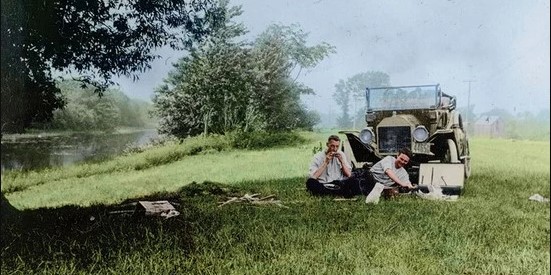
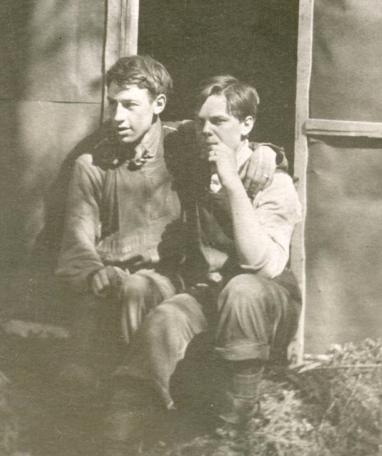
Tinted photo of Leonard “Len” Keith (1891-1950) & Joseph “Cub” Coates (1899-1965) on a trip to Jemseg, New Brunswick (1916)

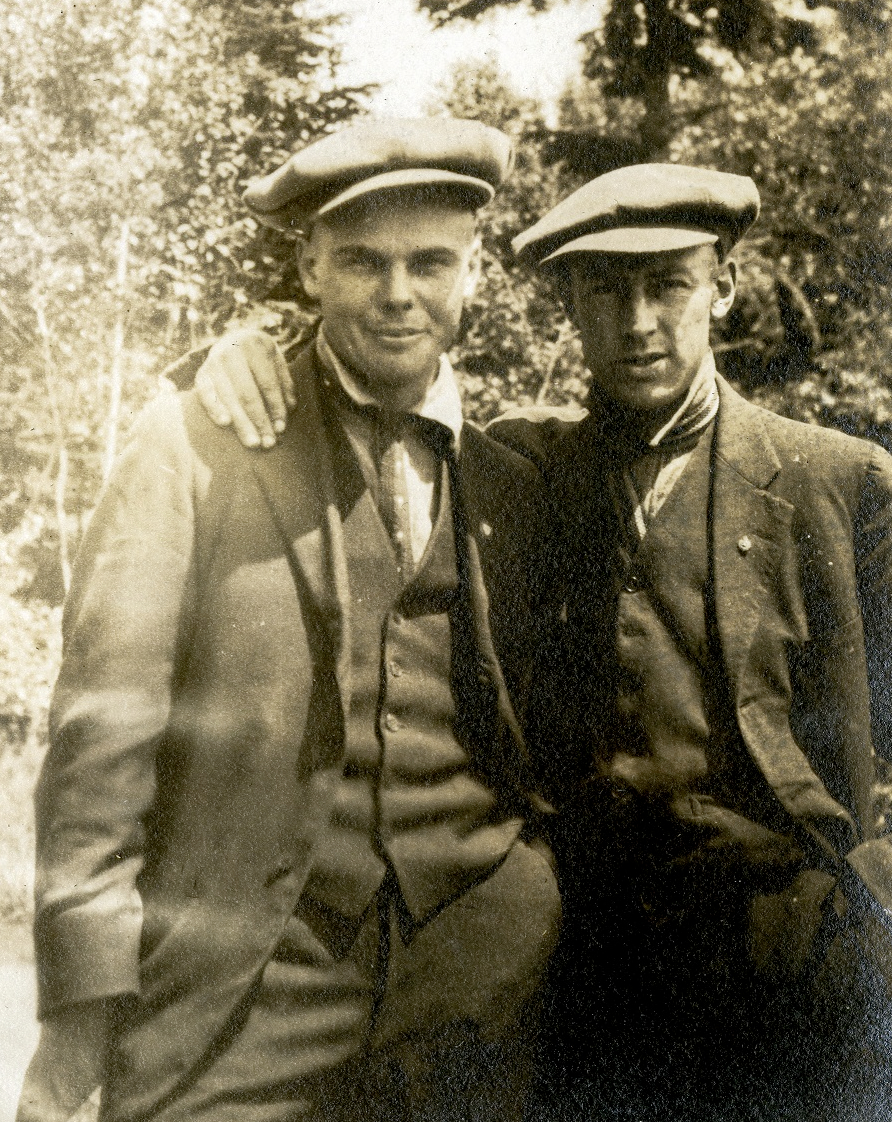
If it weren’t for the advent of the self-timing camera, we would not know anything about the relationship between Len & Cub. There are no surviving notes, letters or documents to provide any further evidence. Luckily, Len had an interest in photography and documented their intimacy in a trove of images spanning nearly 15 years. These photos serve to illustrate their story in the recently published book Len & Cub: A Queer History (Goose Lane Press) by Meredith J. Batt and Dusty Green.

Len & Cub features Len’s photos of the duo between 1916 and 1930 and tells the story of a relationship in early 20th Century rural North America. These photos provide the oldest known photographic records of a same-sex couple in New Brunswick, Canada.

The term “queer” seems a bit ill-fitting to describe the actions of individuals a century ago, when even the terms “homosexual” or “gay” were not part of the vernacular. The choice of language is explained by the authors, who dedicate the book to the queer youth of New Brunswick. As Green states in his preface, “… the record of their lives is a testament to the resilience of queer people and an affirmation that we belong in any place we choose to call home.”

Leonard “Len” Keith  was born in 1891 in Butternut Ridge (now Havelock), New Brunswick. His family enjoyed a moderate amount of wealth as the owners of a match factory and later a grist mill. Joseph “Cub” Coates was born 8 years later, the son of a farmer who was a neighbor to the Keith family. Together Len and Cub shared a love of the outdoors and documented their outings in photos. The pictures taken during hunting and canoe trips with their arms around each other or lying in bed together make clear the affection they held for each other.

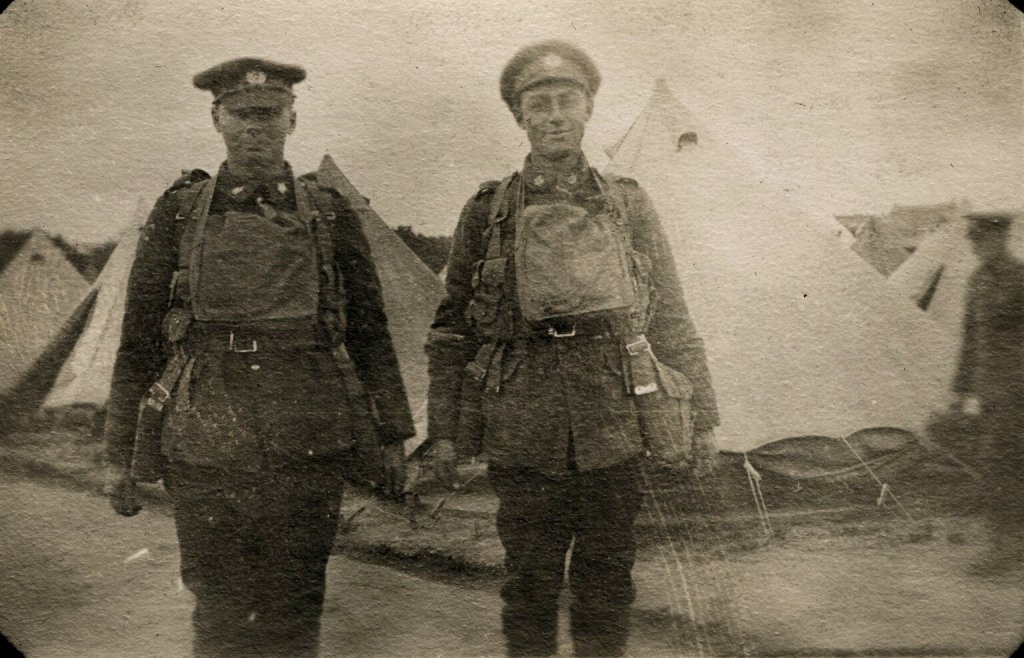
When Len was called to service during World War I, Cub signed up as well, and the two trained together in Quebec.

Cub and Len in training at Saint-Jen-sur-Richelieu, Quebec (1918)

Photos of the duo are less frequent in the late 1920’s. Len’s camera captures several other unnamed male companions that accompanied him on trips and other outdoor adventures.

Len was also a car enthusiast and eventually opened a garage, which he later converted into a pool hall. Cub continued to make a living farming and then as a butcher.

In 1931, Len was forced to leave Havelock, allegedly due to his homosexual activities. He signed over control of his business and finances to his sister Lucy and headed to the United States. He later settled in Montreal, where he resided until succumbing to cancer in 1950. His sister arranged for his burial in Havelock.

It appears that Cub was not caught up in the scandal that forced Len out of town. He stayed in Havelock until 1940, when he married Rita Cameron, a nurse from the neighboring town of Chatham. After he served in WWII, the couple relocated to Moncton. He would go on to become a prominent figure in New Brunswick’s harness racing circles before his death in 1965.

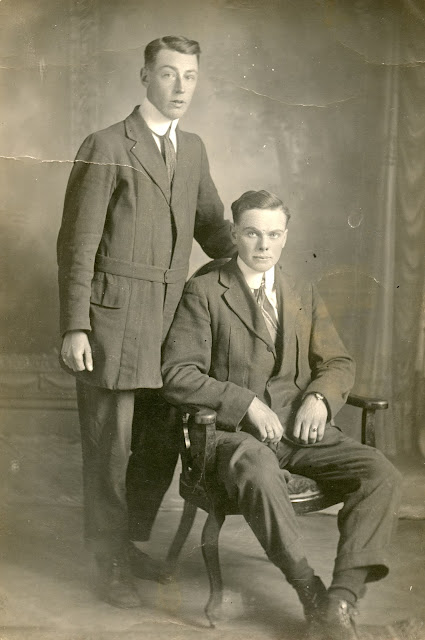
Len & Cub, ca 1916

The photos were donated to the Provincial Archives of New Brunswick by John Corey, a local historian who purchased them at a Keith family estate sale in 1984. Corey’s father had been a classmate of Len’s and knew both families. When he donated the collection, John referred to Len & Cub as “boyfriends” and also identified a photo of an individual who was instrumental in driving Len out of Havelock.

As some of these photos began to circulate on the internet several years ago, curiosity about Len & Cub’s story grew. In addition to the recent publication of the book, the BeaverBrook Art Gallery in Fredericton, NB is featuring an exhibition of the photos from April 2 – July 29, 2022.

Click here to watch a short video about Len and Cub from the CBC.

See Also:
We Got Hitched
The Tin Man & The Lion: Unanswered Prayers
Tom Ammiano Gets His Letter
San Francisco In Touch (1979)
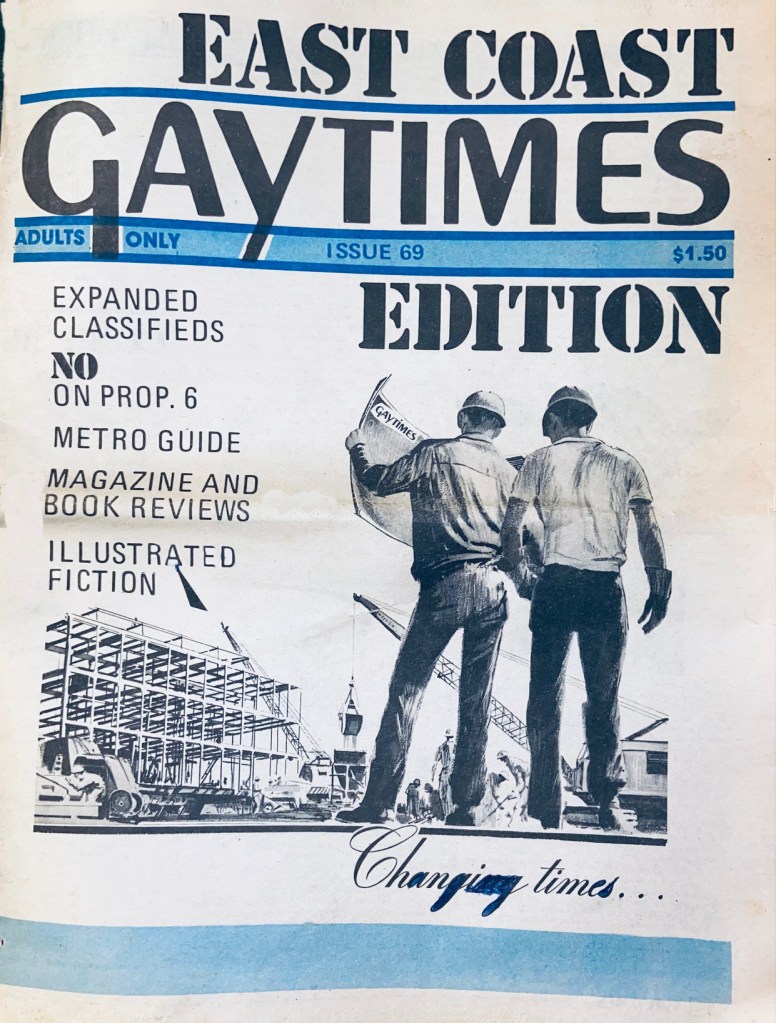
Gay Times #69 (1978)
Blueboy 1980: Gays of NYC
John Waters in Blueboy Magazine (1977)
New York City: In Touch For Men (1979)
Revisiting Blueboy Magazine (1980)
Armistead Maupin in Blueboy Magazine (1980)

Dusty Springfield Sings Kate Bush

It’s hard for me to believe that I am well past 5 years into this blog nonsense and I have never written a single post about Dusty Springfield. I am a huge Dusty fan – she’s my diva. When I had my public access show here in New York City, I ran performance clips of Dusty so often that I received condolence calls and letters from viewers when she died in 1999.

Too much?

Back then, there was still much to discover: whole albums of unreleased material were unearthed and LPs that had been out of print for decades were remastered and reissued. But now the cupboard is bare, with even incomplete performances cobbled together to produce somewhat finished products.

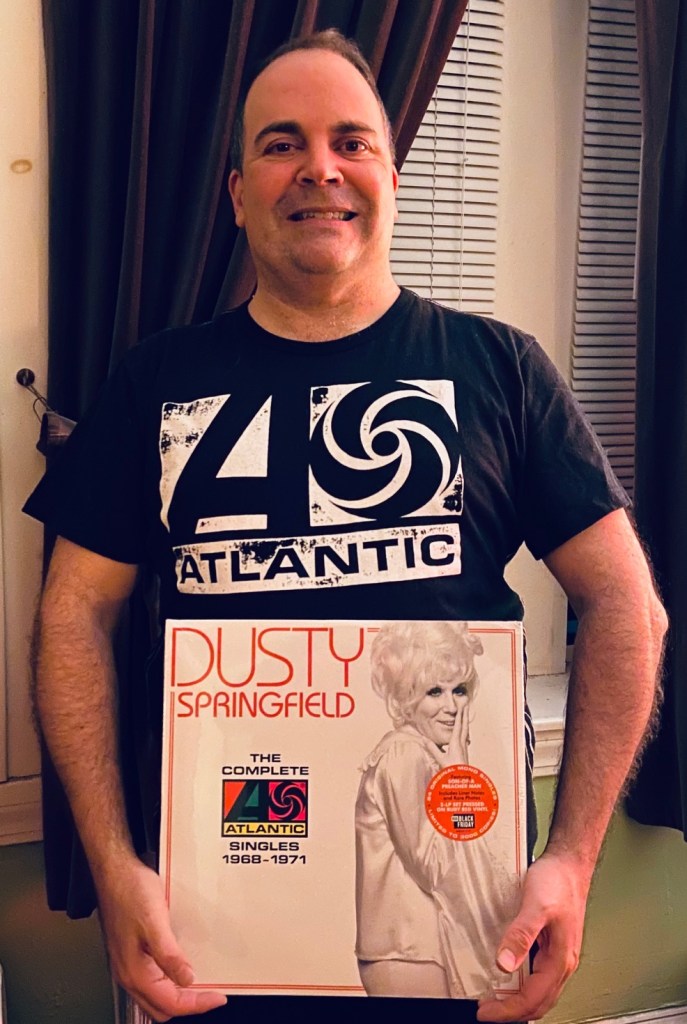
I do appreciate collections that present the tracks in different contexts. A couple of nice recent compilations: Real Gone Music’s Complete Atlantic Singles (1968-1971) and Ace Records’ Dusty Sings Soul are welcome additions to my dusty Dusty collection. And then there’s Goin’ Back: 1964-1971, a 2-CD set of radio and TV recordings that is about to be released in the UK.

With a career spanning close to 40 years and hundreds of recordings in genres from folk to disco and everything in between, it’s easy to forget about some of the lesser known Dusty performances. I was recently reminded of the time she covered a Kate Bush song.

Yes, Kate Bush.

And I’m also a huge fan of Kate Bush. But somehow, I had forgotten about this.

It’s like artists converging from different dimensions. Or maybe not. We live in an age where Lady Gaga and Tony Bennett duets are a thing.

Programme for the Drury Lane shows, 1979

Dusty always had a great ear for music, whether choosing her own material or introducing the Motown Sound to the UK. She was also instrumental in getting Led Zeppelin signed to Atlantic records. It’s not surprising that she would have taken notice of Kate Bush from the very beginning.

Picture it: London, April 1979. Dusty has just turned 40 as she returned to the UK after living in the US for most of the 1970’s. Meanwhile, 20 year-old Kate Bush had released her first two albums within the previous year. Dusty was performing several shows at The Theatre Royal, Drury Lane. Unfortunately there are no official recordings of the performances but we do have a couple of bootleg audio recordings. Dusty introduces the song:

“When I came here last year, I was surprised and mostly pleased at the musical changes that had happened here. I like things like (Ian Drury’s) ‘Hit Me With Your Rhythm Stick’ just as much as you do…. anyway the thing that impressed me most was that so much originality was around. In particular one young lady came through with a song called ‘Wuthering Heights’…. Kate Bush has an immense amount of originality and I was absolutely staggered by her. I’d like to sing a song that I think is one of the prettiest ones ever written, certainly by her. It’s called ‘The Man With The Child In His Eyes.'”

She then goes on to, as Neil Tennant would later say, “Dustify” the song. It’s a beautiful performance of an unexpected song choice:

Dusty was not alone in her praise of “The Man With The Child In His Eyes”. Besides reaching the #1 spot on the UK pop charts, the song also won an Ivor Novello Award for songwriting.

Later that year, Dusty’s performance at Royal Albert Hall was properly recorded for posterity. Unfortunately, by that time the song had been removed from the set list.

Today would have been Dusty’s 83rd birthday. She is still sorely missed and I’d trade my eye teeth to hear her sing a duet with Lady Gaga.

Revisiting Kate Bush’s gayest songs.

See also:
Kate Bush’s Gayest Songs
Adam Schlesinger: Not Just The Guy On The Right
A Voice You Know: Angela McCluskey
Luke Combs’ Cover Of “Fast Car” Is The Perfect Song For Our Times
You Know The B-52’s Song “Roam” Is About Butt Sex, Right?
Debbie At The World (1989)
Etta James: Advertising Zombie
Tina Turner: 12+ Cover Songs You May Have Missed
10 Forgotten Cher Moments
So Jill Sobule
The Lost Madonna 80’s Megamix Video

Gay Times #69 (1978)

I recently came across a 1978 issue of Gay Times, East Coast Edition – Issue #69 (ahem).

The news section was dominated by California’s Briggs Initiative, aka Proposition 6 – the first attempt to restrict gay and lesbian rights through a statewide ballot measure. Thankfully, it was defeated that November with 58% of the vote, but the stakes were high when this issue went to press.

It was the importance of this vote which also inspired the centerfold:

Caption: Register To Vote – Your right to live may depend on it!

The photo is from Robert Bresson’s 1957 film A Man Escaped, a WWII drama based on a true story of a French resistance fighter portrayed by Francois Leterrier (center).

Elsewhere in the issue, an editorial calls for the continued boycott of Florida Citrus due to the anti-gay efforts of their spokeswoman, Anita Bryant.

Welcome to 2022, when it all seems painfully current, domestically and abroad.

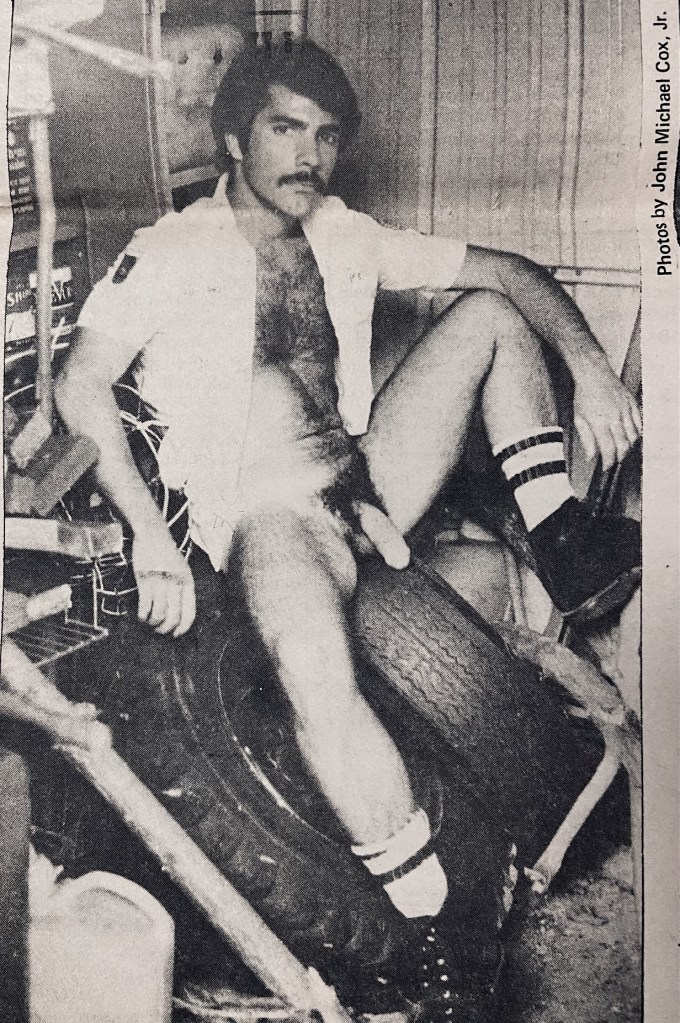
Ah, but it wasn’t all politics and protests. Editor Pat Pomeroy interviewed The New York Man: Damian Charles. He’s described as an Aries ram, former school teacher, author of 49(!) books of erotica, and a centerfold model. He inspired orgasms in 17 countries! (I have to wonder who collects such statistics and where does one find the raw data?) And also – what quote could encapsulate the era better than “… as I have sex with a succession of lovers under the strobe lights at Studio 54”?

I reached out to photographer John Michael Cox, Jr. to see if he had any recollections of this dynamo. “Charles Herschberg was a very close friend & the writer I most used to conduct interviews – I didn’t like to transcribe interviews so I employed writers. For his nude modeling, he decided on the name Damien Charles, which I never liked. He never had the ambition to do much & mainly posed for me. He never did films but I did shoot some hardcore pix of him with his lover Richard Allan. Chuck died around 1990 in Florida.

“These photos are from the first session we did. I never worked for Gay Times, so Chuck must have given them the prints to use.”

I asked about Chuck’s work as a writer. “I met Chuck when he was writing a piece on (gay porn star) Roger. I came over to the Eros Theatre to photograph him and Roger’s manager Jim Bacon introduced us. Typical of Chuck – he never finished the article.”

Click here for the January 1977 Omega cover story on Jobriath – written by Charles Herschberg with photos by John Michael Cox, Jr.

Regarding the many porn books Chuck wrote: “He probably wrote under many different names. He worked for an outfit that used many writers. They churned out huge amounts of paperback porn.

“Harlequin offered him a deal to do books & said he could alter his porn stuff. $5,000 per book. He couldn’t bring himself to do it.

“Years ago I tried to do a tribute to Chuck on my website, which has since been taken down. Like everyone who knew Chuck, I adored him & also wanted to hit him over the head.”

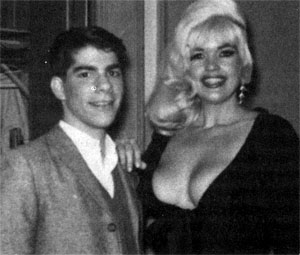
Charles Herschberg with Jayne Mansfield backstage at the Latin Quarter (1965)

Thanks to John Michael Cox Jr. for his recollections of his friend.

See Also:
Kenn Duncan After Dark
In Touch For Men: Disco Danny (1979)
Costello Presley & 80’s Gay Porn Guilty Pleasures
Blueboy 1980: Gays of NYC
John Waters in Blueboy Magazine (1977)
New York City: In Touch For Men (1979)
San Francisco: In Touch For Men (1979)
Revisiting Blueboy Magazine (1980)
Armistead Maupin in Blueboy Magazine (1980)
George Platt Lynes: In Touch Magazine (1982)
Keith Haring In Heat Magazine (1992)

Madame Spivy: I Brought Culture To Buffalo In The 90’s

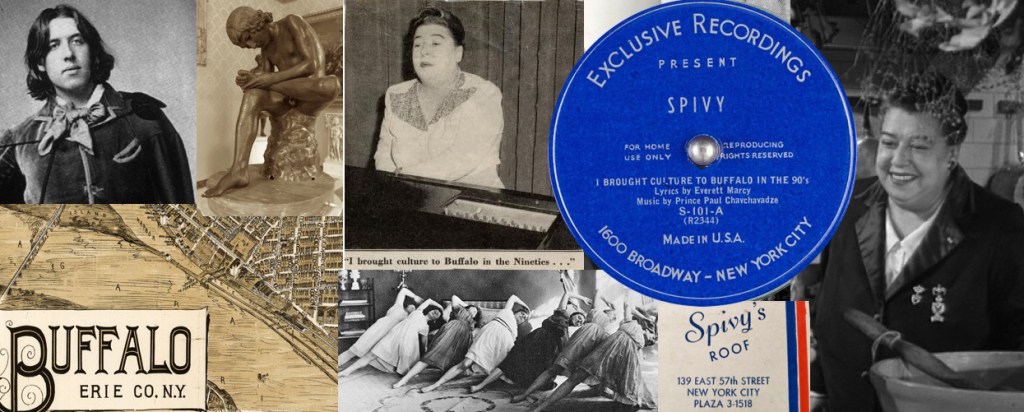
Ladies and Gentleman, it is time once again to revisit that late, great dynamic lady of song, Madame Spivy LeVoe (1906-1971), also known simply as Spivy. A lesbian entertainer, nightclub owner and character actress, Spivy has been described as “The Female Noel Coward” – to which I add “…. if he had been born in Brooklyn as Bertha Levine.”

In case you missed them, these are our other Madame Spivy posts:
The Alley Cat
The Tarantella
Auntie’s Face
100% American Girls
A Tropical Fish
I Didn’t Do A Thing Last Night
Why Don’t You?Madame Spivy: Movies & Television
Madame Spivy on the Good Time Sallies Podcast

Our latest offering is one of her signature songs: “I Brought Culture to Buffalo in the 90’s”. Curiously, on the recording Spivy introduces the song as “Intimate Memories of Buffalo In The 90’s.” This is the fourth side we have profiled from her 1939 album Seven Gay Sophisticated Songs. The lyrics were written by Everett Marcy, who also co-wrote (with Spivy) “Why Don’t You,” another song from the album. Marcy also had a few Broadway writing credits including New Faces of 1936.

Prince Paul Chavchavadze

The music is credited to Prince Paul Chavchavadze (1899-1971), a writer, translator, and deposed Georgian royal living in New York City. And with that nugget of information, I have to say… whenever I look into the eclectic array of international bohemians associated with Spivy, I am reminded of the party scene at the beginning of Auntie Mame. This is also a fitting scenario considering Spivy later played Mother Burnside in the Broadway production.

Oscar Wilde plays a part in the lyrics of the song, as a guest in the home of our fictional hostess. It should be noted that he did conduct several lecture tours across the U.S., including speaking engagements in Buffalo. One of the topics was “The Decorative Arts.”

I Brought Culture to Buffalo In the 90’s

I Brought Culture to Buffalo in the 90’s. When Wilde was there, he visited my home
I showed him all the glories I’d bought so cheap in Greece
and all the wonders I’d brought home from Rome.
He was spellbound at the splendor of my whatnot and the cigar butt Papa got from General Grant.
He couldn’t tear his eyes from my bay window and the maidenhair beneath the rubber plants.

I Brought Culture to Buffalo in the 90’s – the year I took the iron dog off our lawn.
In its place I put a Venus in a nightie and a rather naughty but authentic faun.
I completely reproduced the Versailles garden though the Erie claimed they had the right of way.
I swore I’d die before a tie was laid to desecrate Versailles. I made Buffalo the place it is today.

I was the first to have a Turkish corner though plenty followed suit, you may be sure.
I produced a pageant based on Jackie Horner and the deficit was given to the poor.
I Brought Culture to Buffalo in the 90’s. I made the natives conscious of the nude.
In my dining room I put “Boy Extracting Thorn From Foot” and my guests that winter scarcely touched their food.

The season that I gave my talks on yoga was one I felt I never could surpass.
I had a negligee cut like a toga and all my candelabra piped for gas.
I Brought Culture to Buffalo in the 90’s. When Wilde was there, he visited my home.
Filled with all the treasures of the ages and a nugget Uncle Nate had sent from Nome.

I showed him all the house right through the garret and said “What one thing does it still require?”
When Oscar looked at me, I could not bear it.
“A match,” he said, “Madame, a match to set the goddamn place on fire!”

This newspaper blurb (courtesy of the Queer Music Heritage page) mentions the song being “rented” to singer Bea Lillie:

Blueboy 1980: Gays of NYC

It’s not nice to stereotype. This may be especially true of homosexuals, who have borne the brunt of unkind pinpointing for so long that they believe it themselves.

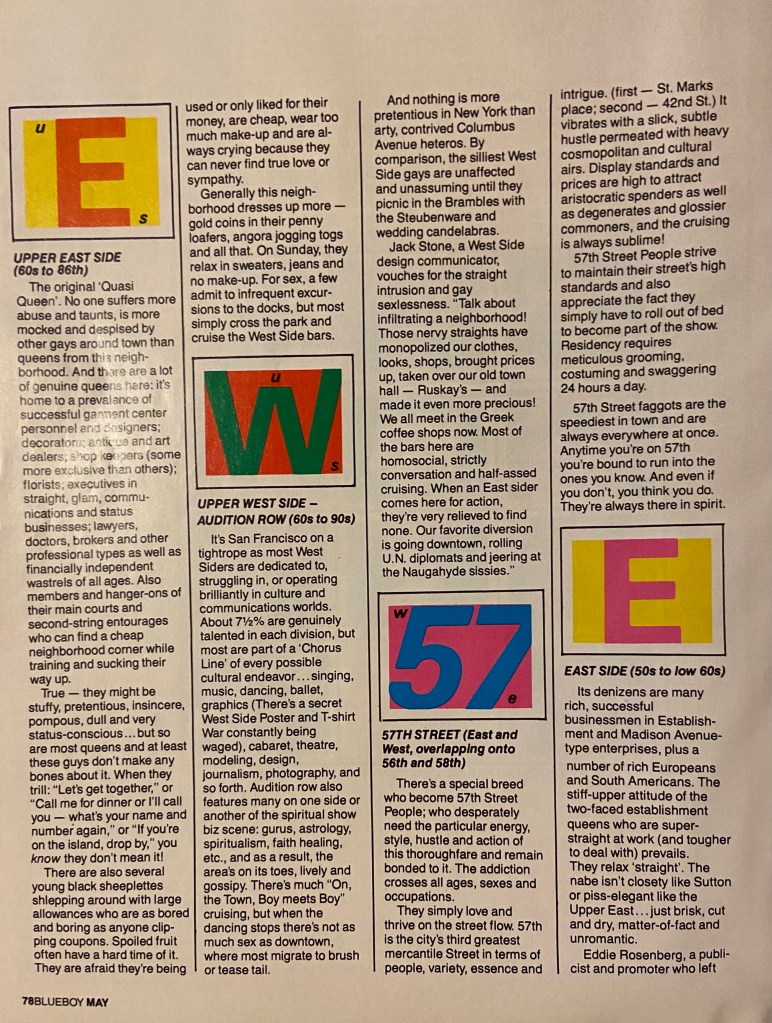
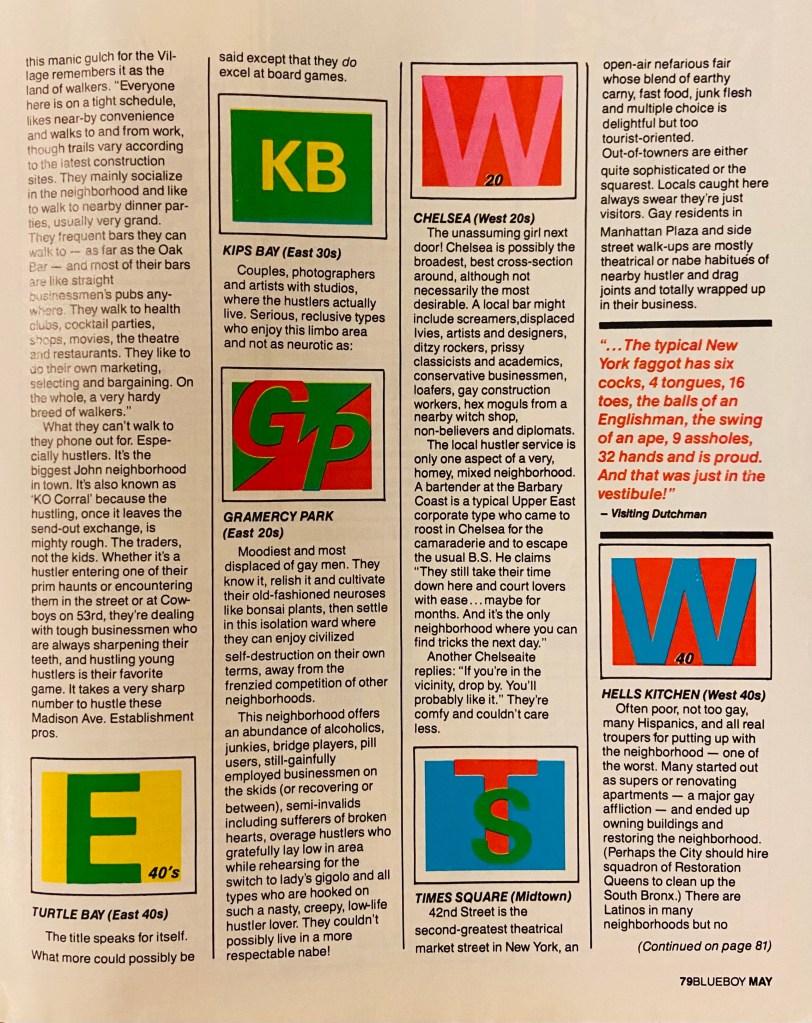
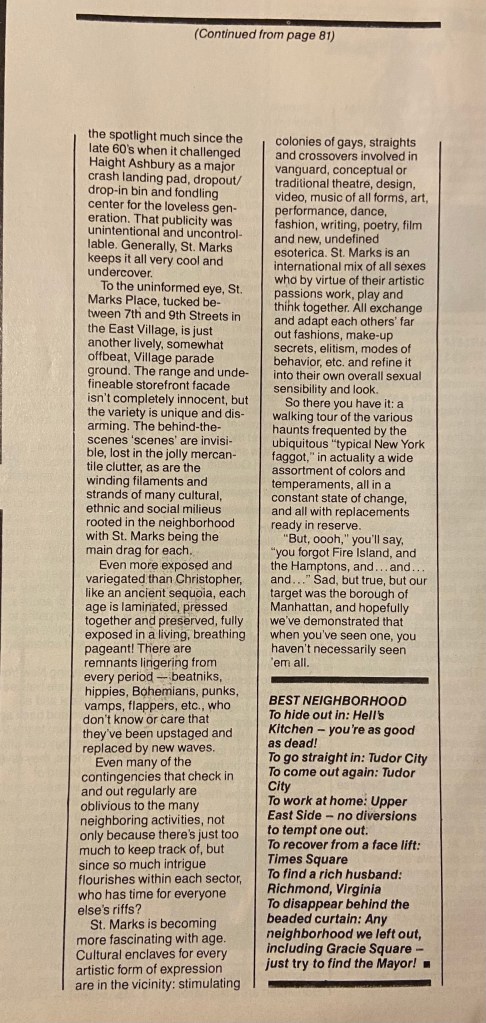
…so begins an outrageously stereotypical article from the May, 1980 issue of Blueboy Magazine, titled “Is There A Typical New York Faggot?”

Now… before you lose your shit over the title, keep in mind that those were different times. The “F” word wasn’t taboo. Larry Kramer’s book by that name had been published just a year and a half earlier. So let’s put that sticking point aside. There’s plenty more to discuss.

Another caveat: This is from Blueboy. A gay porn magazine. It ain’t the Advocate or The Village Voice. Presumably author “J. Greller” was the pen name of a jaded queen with his tongue firmly planted in his own cheek and his head up his own ass. Who can say for sure? I wouldn’t want to, you know, stereotype… but Harold from Boys In The Band could deliver this piece as a monologue.

It’s mean and bitchy, but not in a fun way. It’s like the author had one martini too many and his New York City rant went to a dark place that was no longer funny or clever. The specificity of many of the “types” described gives the indication that he had an axe to grind with very particular unnamed individuals.

Have a read:

To be fair, the entire piece isn’t completely tone-deaf. There are glimpses that ring true, especially in the downtown neighborhoods. This is due in part to the quotes from others – Doley the Third’s observation on Harlem, for example.

I find the piece to be out of sync with the NYC neighborhoods as I have known them since the early 1990’s. But this is my perception over a 30 year period. I wasn’t there in 1980, but I have to wonder if the author has based his observations on, say, a 30 year period prior to that. Were there were really still old vamps & flappers on St. Marks in the CBGB era? Did 57th Street really have its own gay male type that needed dissection? Did nobody ever travel out of their own neighborhood to socialize? Were the streetcars not running?

Interesting to note that, for all this compartmentalizing of Midtown East neighborhoods: Kips Bay vs Turtle Bay vs. East Side…  there is no mention of Murray Hill. At the time, according to older gay New Yorkers that I have known, it was referred to as “Mary Hill” due to the large number of gay bars and homosexual residents. J. Geller missed a golden opportunity. 

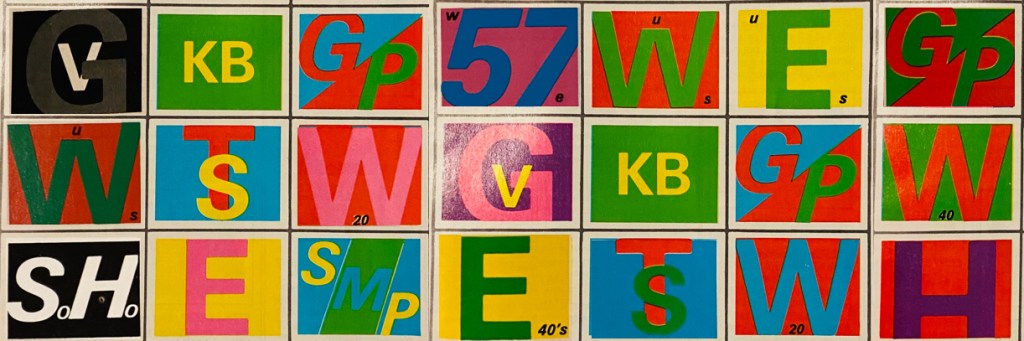
Kudos to the graphic artist Favio Castelli, though.

See Also:
Kenn Duncan After Dark
Keith Haring In Heat Magazine (1992)
Costello Presley & 80’s Gay Porn Guilty Pleasures
Gay Times #69 (1978)
John Waters in Blueboy Magazine (1977)
New York City: In Touch For Men (1979)
Remembering Bob Harrington
Revisiting Blueboy Magazine (1980)
Armistead Maupin in Blueboy Magazine (1980)
George Platt Lynes: In Touch Magazine (1982)
Artist’s Muse: Randy Jack

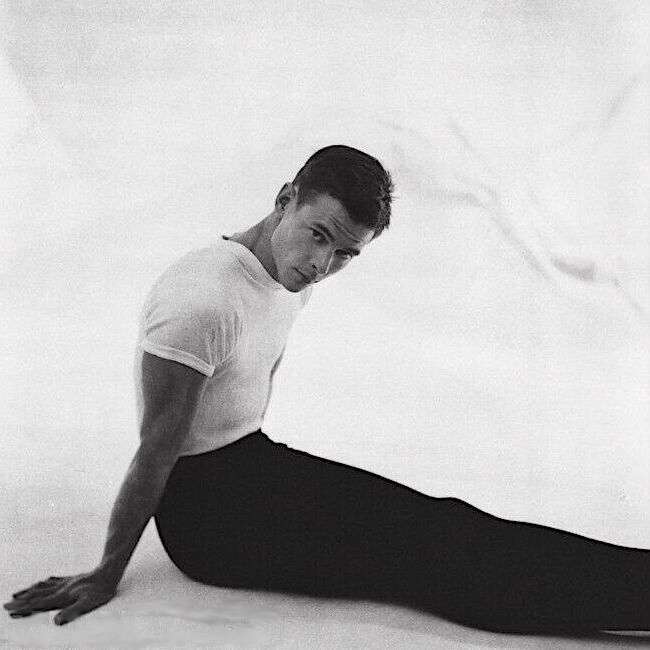
While scrolling across the internet in search of photographs by George Platt Lynes, I came across one that I had never seen before – a handsome shirtless young gent sitting cross-legged on a bed. Initially I was skeptical of its authenticity, as the subject looked so casual and timeless. There is nothing dated about the guy or his surroundings: the image could have been captured at any point in the last century.

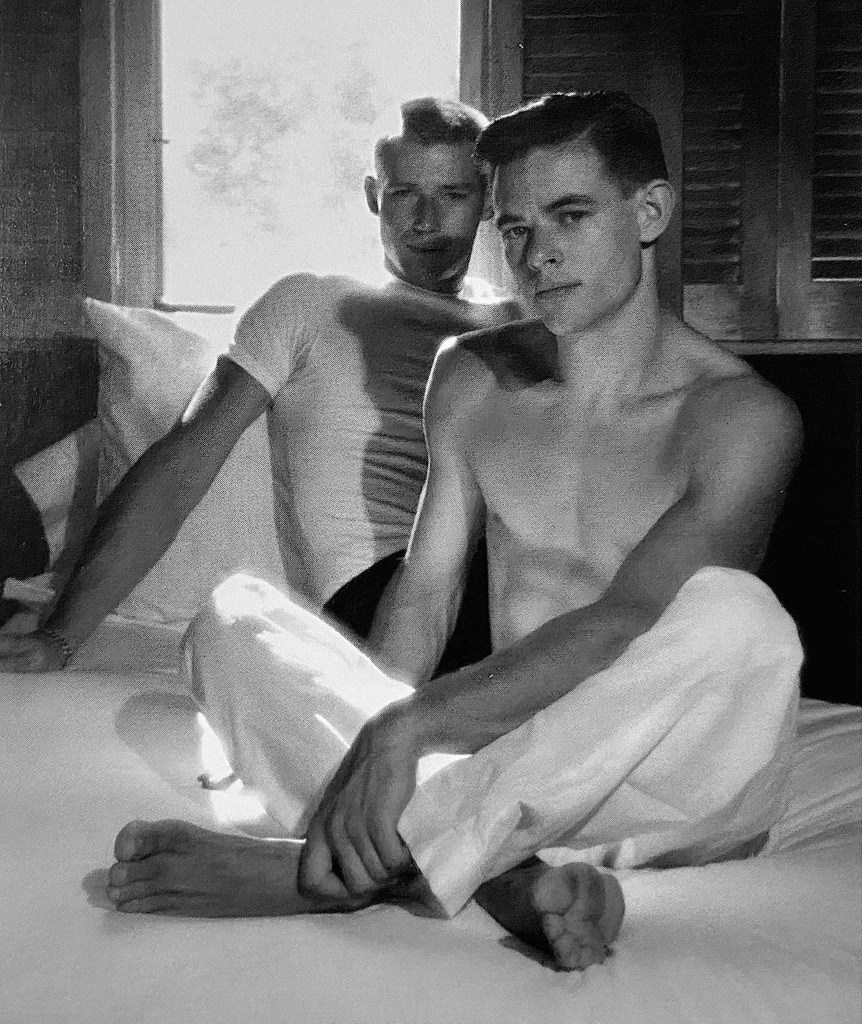
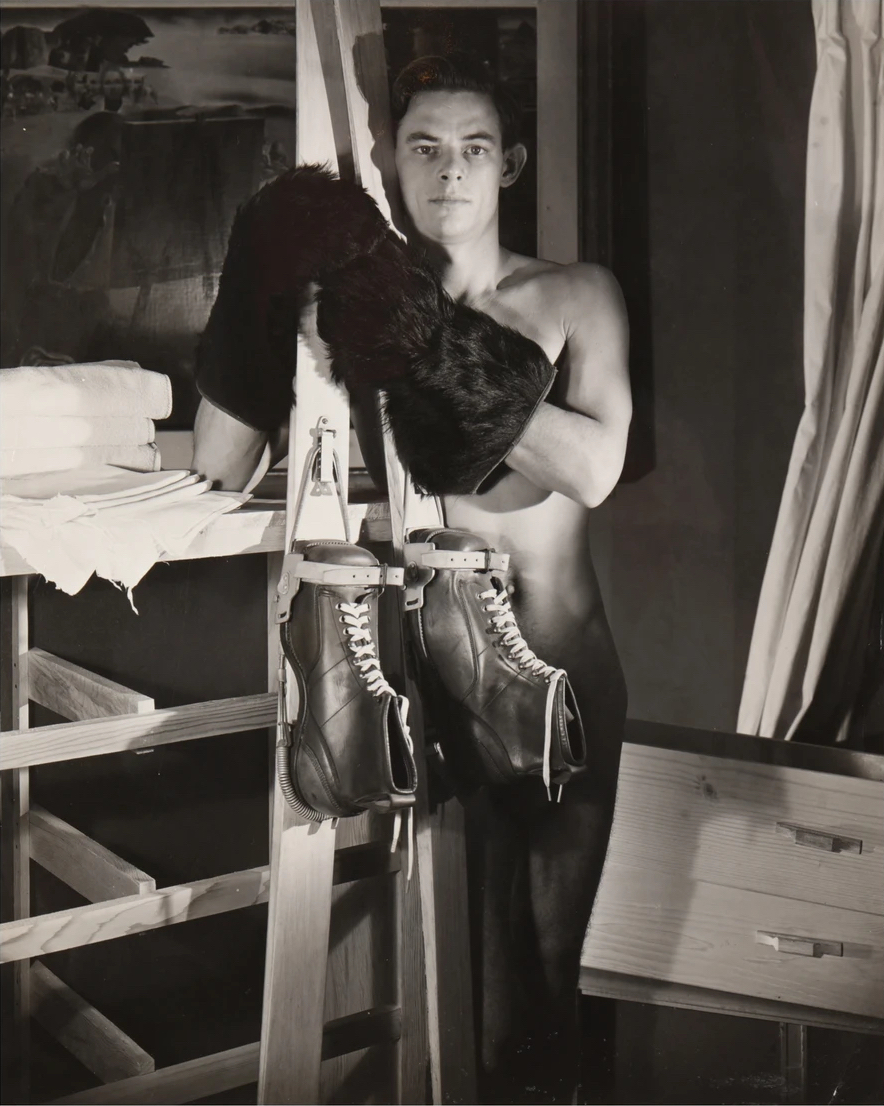
I decided to do a little investigating and found that it was, in fact, an authentic Lynes photo. The handsome subject was a fellow named Randy Jack, Lynes boyfriend circa 1947-48. A new Lynes biography also helped to fill in the blanks.

Homer Randolph Jack was born on April 5, 1926 in Lake Clinton, Illinois. He attended Waukegan High School where he enjoyed singing and performing. As a senior, he starred in the high school’s production of the comedy Best Foot Forward. Upon graduation in 1944, he joined the Navy.

After WWII, with his Naval tour of duty completed, Randy Jack settled in Los Angeles, where he embarked on a relationship with ice cream parlor impresario Wil Wright Jr.

Californians of a certain age still swoon at the memory of Wil Wright’s frozen delights, decades after the last shop closed its doors.

Wil & Randy

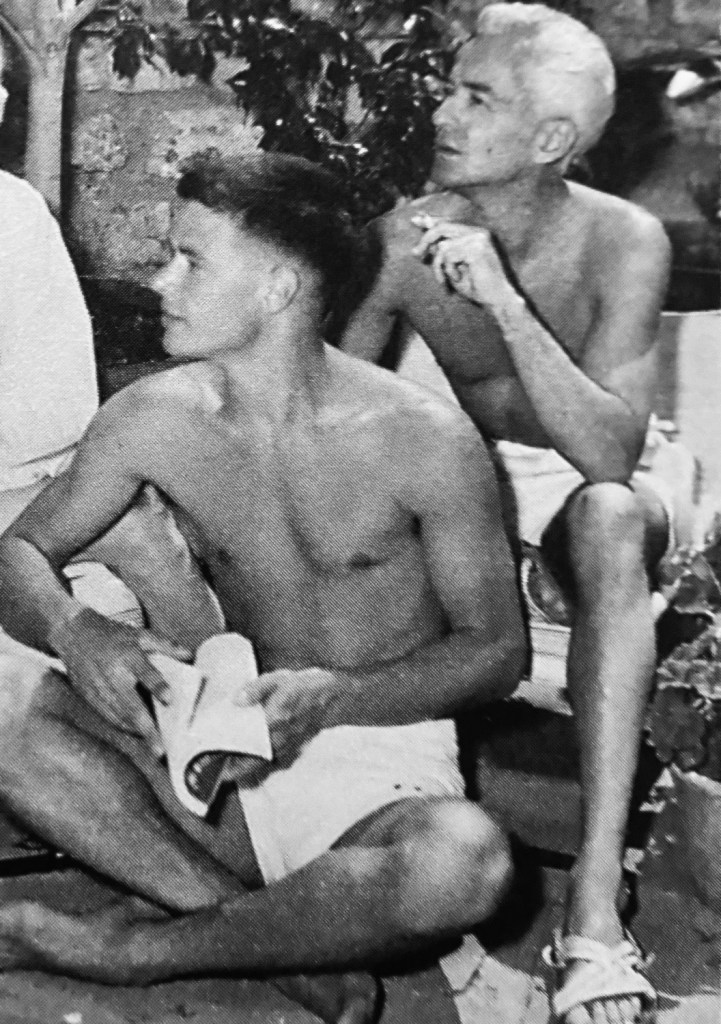
In the recently published George Platt Lynes bio The Daring Eye, author Allen Ellenzweig refers to Randy Jack as “Wil Wright’s favorite.” In August of 1947, the two of them rented a room in Lynes’ Hollywood home. The New York-based photographer was in the midst of his “Hollywood period” working for Vogue magazine. Lynes – who always lived beyond his means and was notoriously bad with money management – decided to take in roommates to share chores and expenses.

This arrangement did not last long because, as Lynes wrote to a friend, “Wil can’t bear not to be boss and that is one thing he can’t be. Not here.” Wright also resented George’s influence on Jack, encouraging him to pursue a career as a dancer. When Wil moved out after a couple of months, Randy stayed…. and found his way into Lynes’ bed as well.

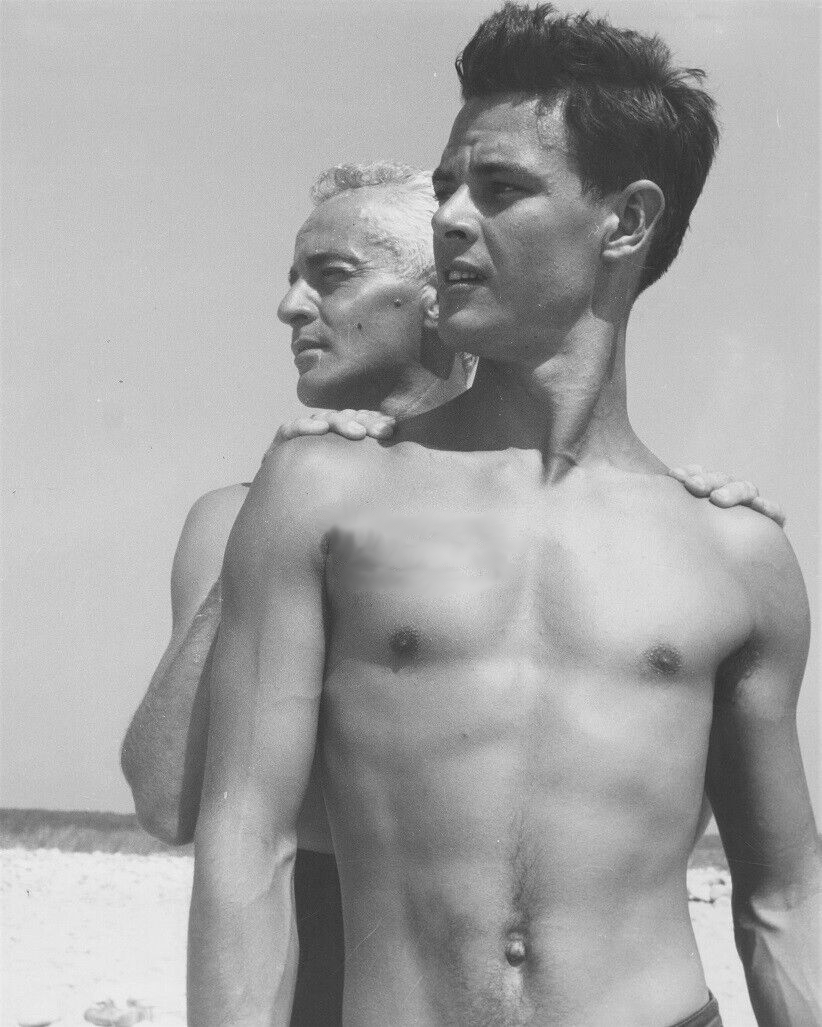
Randy Jack with George Platt Lynes (1947)

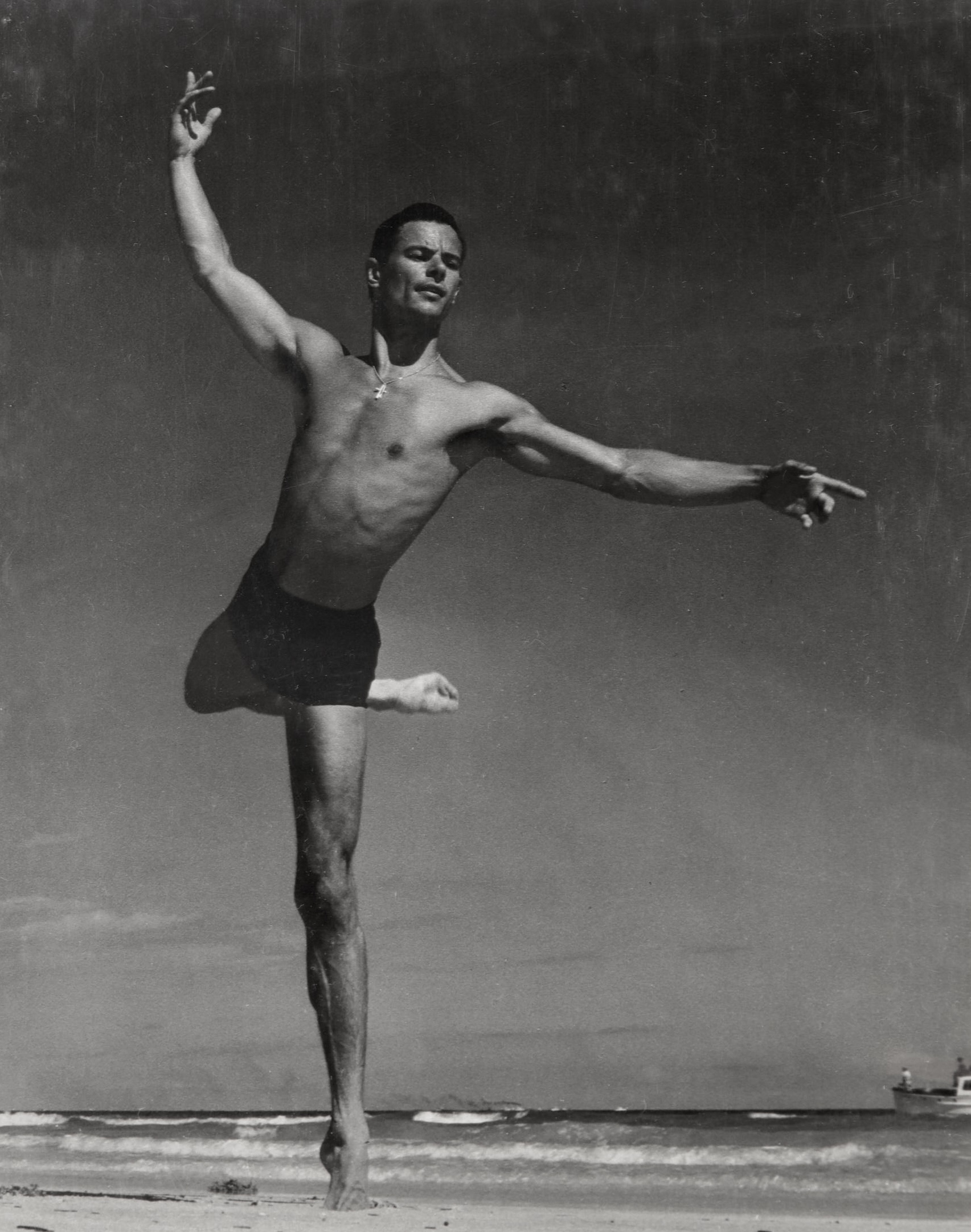
Randy Jack committed himself to a vigorous regimen of ballet classes. Although Lynes was aware that Jack was a bit long in the tooth to start training for a career as a dancer, he supported his efforts nonetheless. He wrote to his friend Monroe Wheeler; “He’s too old, 21, but he has a ballet dancers body and a ballet dancer’s soul.” 

Randy Jack’s protruding ears – called “bat like” in several accounts – were viewed by Lynes as a further hindrance to attaining success as a ballet dancer. While he could not erase Jack’s advanced age, he could do something to remove this obstacle, so the cards would be “stacked in his favour, to remove whatever flies there may be in the ointment.” He agreed to barter with a plastic surgeon: Lynes would photograph the surgeon’s glamorous wife in exchange for the operation to pin back Jack’s ears. Lynes wrote to his mother at the time: “…I can’t leave things alone but redecorate or remodel anything I can lay my hands on, people as well as houses.”

The photos of Randy Jack taken in Lynes’ library are understandably the most popular.

Ears firmly clipped, Lynes photographed his roomie en tenue de danse at Vogue studios, creating this striking series of photos:

In May of 1948, Lynes’ contract with Vogue ended and he returned to New York City with Randy and their dog Bozo in tow.

Portrait of Randy Jack by Bernard Perlin, June 5, 1948

As mentioned in our profile of Ted Starkowski, Lynes and his artist friends often shared models. Like Starkowski, Randy Jack was the subject of several other artists’ work, including Bernard Perlin.

Perlin later recalled, “I really am lousy. George commissioned me to do a drawing of Randy Jack. Randy and I had interrupted the drawing with some ill-advised smooching, which was in turn interrupted by Robert Drew, (my boyfriend) who lived directly downstairs from me. He was damn furious, and he left me. That was the end of it, of our thing.”

Soon after the move to New York, Jack abandoned his ballet studies and began to find work as a fashion model. This proved to be a far more attainable and lucrative goal.

In mid-summer, George wrote to Katherine Anne Porter that he was troubled about the young man, “… I wonder what New York has done to him, or what I have done.”

Whether or not Randy left George or their cohabitation ended by mutual consent is debatable. The fact remains that he moved out in the Fall of 1948… and Lynes’ next boyfriend and muse, Chuck Howard moved into the apartment 10 days later.

David Leddick writes “Jack became one of the most successful fashion models in an industry that was just becoming big business, posing for both photographers and the many illustrators of the time.”

When I look into the life of an artist’s muse from the past, there is always a point in their story that brings to mind the Kirsty MacColl song “What Do Pretty Girls Do?” The answer, she sings: “They get older just like everybody else.”

As his modeling career waned, Jack began his third act as an interior designer. His work with commercial / hotel spaces led him to the Middle East, where he settled on the island of Bahrain and became a restaurateur, opening the Upstairs Downstairs restaurant in 1977.

In 1982 Jack published Upstairs Downstairs Cookbook, featuring favorite recipes from the restaurant’s menu alongside his own illustrations.

In the mid-90’s, Intimate Companions author David Leddick reached out to Randy Jack to talk about his early years with George Platt Lynes. Leddick recounts being tipped off that Jack was living in Bahrain, and that he was able to simply call the local information to get his phone number. Strangely, Jack’s birth name in the book is listed as Randolph Omar Jack, as if the author misheard “Homer” on a poor telephone connection.

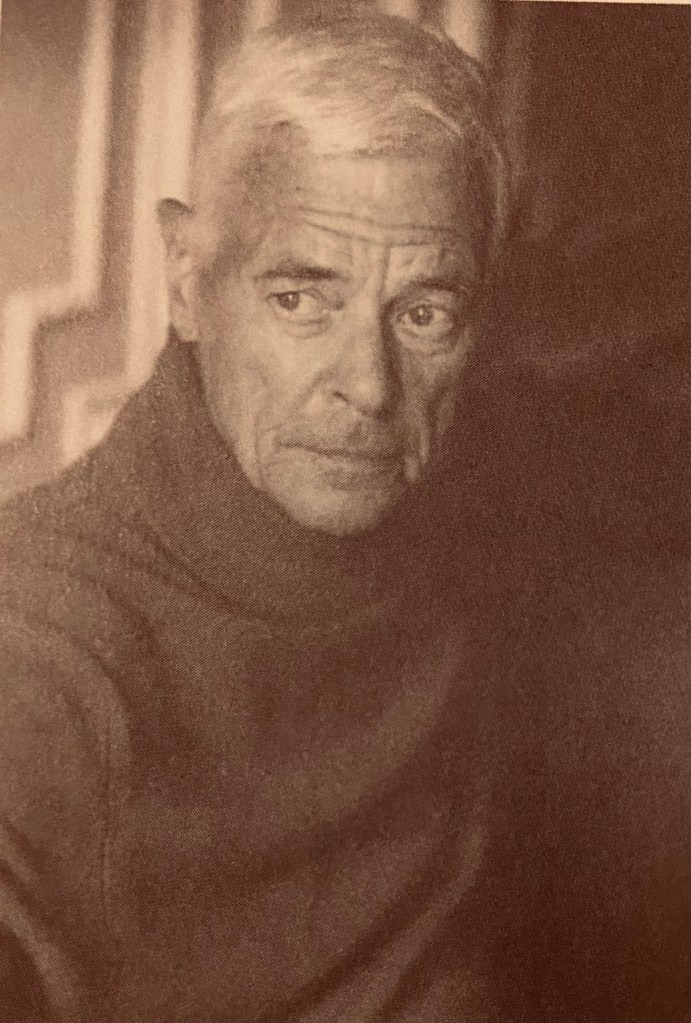
A current photo of Randy Jack appeared in Leddick’s 1997 book Naked Men: Pioneering Male Nudes. Shortly after the book’s publication, on June 5, 1997, Jack died in Bahrain. He was 71 years old. The Upstairs Downstairs restaurant is still in operation today. The restaurant’s Facebook page has comments from patrons recalling Randy Jack’s hospitality and the good times they had there.

The kid from Waukegan had come a long way.

See Also:
George Platt Lynes models / bedfellows John Leapheart & Buddy McCarthy profiled here
Artist’s Muse: Donald Windham & Sandy Campbell
Artist’s Muse: William Weslow
Artist’s Muse: José “Pete” Martinez
Artist’s Muse: Ted Starkowski
Artist’s Muse: Chuck Howard
Artist’s Muse: The Mystery Model
Artist’s Muse: Wilbur Pippin
Fire Island Muses of George Platt Lynes & The PaJaMa Collective
Revisiting George Platt Lynes’ Fire Island Muses
Fire Island PaJaMa Party
George Platt Lynes: In Touch Magazine (1982)

The Comfort of Repetition & The Ultimate Christmas Playlist

Department store Santas, 1948 (photo by Nina Leen)

I am not alone in saying that I always take comfort in the annual repetition of the holidays – revisiting holiday-themed music, film, television… and now internet posts as well. In fact, this post is a reworking of one I posted last year, not to get meta or anything.

I find it interesting that we immerse ourselves in certain pop culture favorites for exactly 6 weeks of the year and then pack them up in mothballs with the ornaments until next year. I mean, Bing Crosby, Brenda Lee and Johnny Mathis are rock stars from Thanksgiving through New Years. Are any of them on your 4th of July playlist? They aren’t on mine.

The film A Christmas Story has an even shorter (Elf on the) shelf life. We binge-watch the repeated broadcast for exactly 24 hours each year. I own it on Blu-ray and I’m not sure why: I have never opened it. To pop it in at any other time feels like a betrayal.

In keeping with this revisiting, blog posts of Christmas past are back to haunt you like A Christmas Carol, Mr. Scrooge:

This was my Canine Christmas Tail – a true story about my dog Sunshine and her appetite for tinsel.

Here is my take on the 1987 Motown Christmas Special – which featured few Motown acts.

When March of The Wooden Soldiers celebrated its 85th anniversary in 2019, I posted 10 things you may not know about this classic holiday film.

Have you watched Christmas In Connecticut yet this year? How about that delivery woman?


Copyright issues kept my 60 Degrees Girl Group Christmas playlist out of commission but now it’s back! I plan to post other episodes of my old radio show in the new year.

If you prefer Spotify, I have this to share:

Way back in 2002, when Limewire was a thing and people listened to music on silvery discs, I started creating Christmas CD mixes that I would mail out or give to people. These were received with a combination of feigned delight, veiled indifference and deafening silence. None of these CDs had a pressing of more than 20 copies. I’d like to call them “much sought after” – but no, that’s not really the case, although every once in a while, someone really got into them and would ask for copies of other volumes.

And so, I’m offering this simple playlist…. for kids from 1 to 92. Unfortunately many of the tracks on these dozen CDs are not on Spotify, but I keep adding songs that would be on the current CD volume… if there was one. And now the playlist is over 14 hours of holiday tunes. I recommend listening on shuffle – there’s something to irritate everyone. Enjoy!

See also:
Truman Capote’s Christmas Memory
The 60 Degrees Girl Group Christmas Show
’60s Girl Group Survivors
The Christmas In Connecticut Delivery Woman
¿Dónde Está Santa Claus (& Augie Rios)?
March Of The Wooden Soldiers: 10 Things You May Not Know About This Holiday Classic
Yes Virginia, There Is A Spotify Playlist
A Christmas Without Miracles: The 1987 Motown Xmas Special

Alexis Arquette’s Lost Porn Flick

Hard to believe that it has been 5 years since the dynamic actor/actress, performer, reality television star Alexis Arquette passed away. The youngest member of the Arquette clan was just 47 years old.

Fun fact: 12 year old Alexis was featured in The Tubes’ music video for “She’s A Beauty.”

Days after Arquette’s demise, the streaming site XHamster released a statement where they pat themselves on the back for executing a “catch and kill”: allegedly paying $25k to acquire and destroy a sex video peddled by one of Arquette’s ex-paramours. In a blog post about it, KennethInThe212 points out that: a) it seemed like XHamster was pulling a publicity stunt, b) if they were protecting Arquette, why mention a video that nobody previously knew about, and c) how could a sex tape embarrass the free-spirited Arquette, a person who gave zero fucks about other people’s sexual hangups?

When I read about this alleged sex tape, I was reminded of something I had not thought about in years: Piccadilly Pickups, the 1999 hardcore gay porn flick that Arquette appeared in, and that I had seen it at a screening in New York City with Arquette in attendance.

I read an article in the November 5, 1999 issue of The New York Blade about the MIX Film Festival, which featured experimental works. Arquette was hosting a part of the festival called “The Honcho Midnight Blue Movie Series,” which featured midnight screenings of Andy Warhol’s Couch along with other titillating avant-garde fare. Next to this article was a second one detailing Arquette’s recent foray into gay porn, as the resulting film, Piccadilly Pickups would also be shown.

In 1999, Arquette was still publicly identifying as a bisexual male. He was an indie film darling – a member of Hollywood royalty who dared to push the envelope with unconventional film roles and an outspoken personality.

I was intrigued… so I went to the screening at midnight on Saturday, November 13, 1999. Surprisingly, it was, as advertised, a full-on hardcore gay porno. Unfortunately, it was not a very good one. It wasn’t particularly erotic and the attempts at campy humor fell flat. There was also an extended sequence with a character in blackface. Arquette appears in and out of drag as Henri de la Plus Oooh Aaargh, a wealthy American who wants to exploit the hero of the story. The climax of the film is a group sex scene with Arquette joining in.

Hard to stay gender neutral here, but at one point in the group scene Arquette bends down and sucks their own dick. In the audience at the screening, there is applause. Arquette, in drag, goes on to fuck one of the twinks before producing a climactic money shot which also garnered an enthusiastic audience reaction. And that’s about all I remember about this forgettable film.

A few times throughout the screening Arquette, in the audience, drew laughter with comments about the action onscreen, but I was not sitting close enough to hear this real life version of MST3K.

After the screening Alexis got up, took a modest bow and said a few words, leading off with “I know it’s not exactly Citizen Kane.. but thank you for coming.”

And then the film vanished. Although there is an IMDB listing, I was unable to find any reference to the film online for many years, which is odd, because even the vaguest whiff of a mainstream actor appearing in anything close to porn is recycled and re-discovered across the internet repeatedly. (see Stephen Geoffreys, Simon Rex or even Sylvester Stallone, just to name a few.)

Recently a cut of the film popped up on gay torrent and streaming sites. This watered down version appears to have come from a UK DVD release, which is edited like cable porn: Still an X but not XXX. The autofellatio, penetration and money shots are gone, so why bother, really?

Arquette was a favorite subject of Hollywood photographer Greg Gorman, including some nudes featured in his 2004 book As I See It.

Arquette would go on to become a vocal activist and visible leader in the transgender community. The diversity and complexities of this fearless artist should be remembered and celebrated, even if Piccadilly Pickups is not.  

See Also:
Gay Porn Stars We Lost (so far) in 2025
Gay Porn Stars We Lost In 2024
Gay Porn Stars We Lost In 2023
Gay Porn Stars We Lost In 2022
Gay Porn Stars We Lost In 2021
Gay Porn Stars We Lost In 2020
Remembering prolific pornographer Robert Prion
RIP Porn Star Turned Activist Terry DeCarlo
Costello Presley and 80’s Gay Porn Guilty Pleasureres