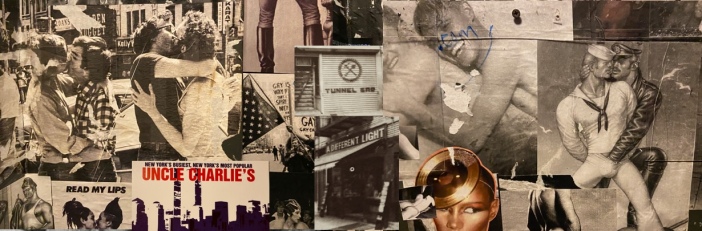
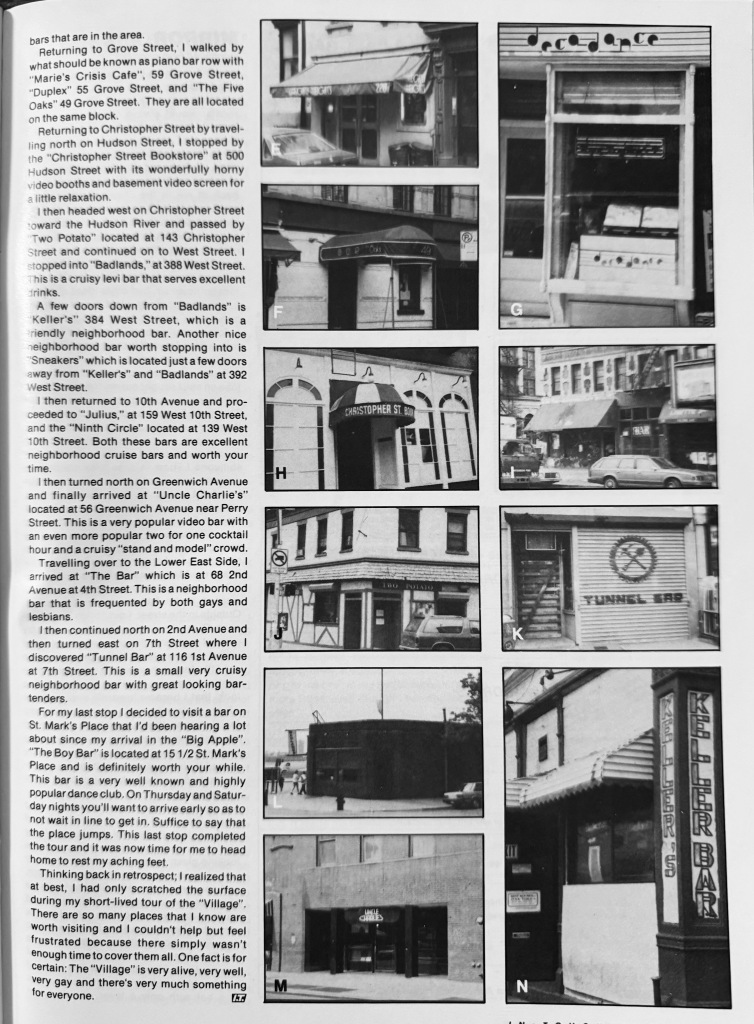
I recently found myself perusing (as one does) the January, 1990 issue of In Touch For Men. An article titled Touring Around The Village caught my eye. Wesley Allen took a walking tour around Greenwich Village, writing about the gay bars, shops, and restaurants.
This was the New York City that I fell in love with – the one I would visit on day trips from Long Island and was finally able to move to the following year. (See The Lion In The Emerald City and 1991: Homo Alone for more on that. ) These were the shops I frequented and a couple of the bars, too.
Of the 26 businesses mentioned here, four of them still exist at the same locations: The Monster, Ty’s, Marie’s Crisis, and Julius. Around the time that this magazine hit the stands, The Duplex, which originally opened in 1951 at 55 Grove Street, moved to its current spot at 61 Christopher Street.
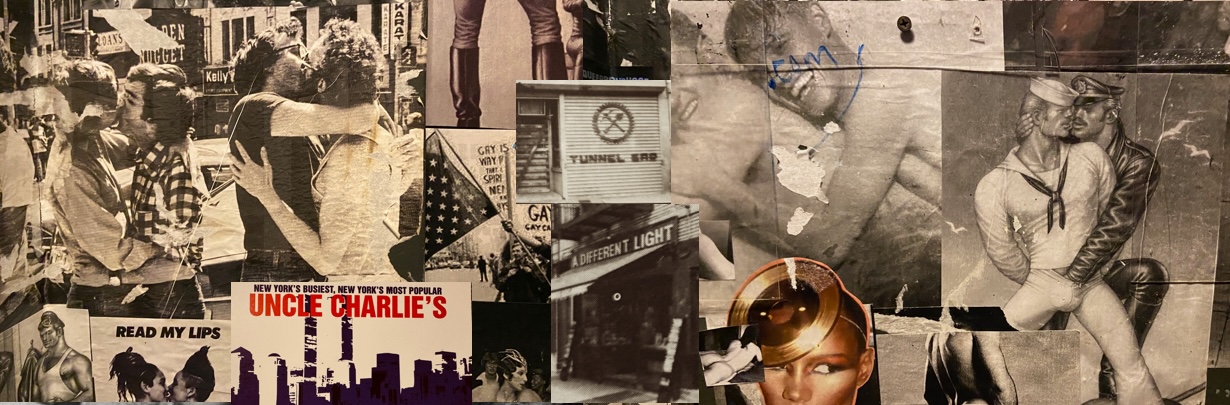
In 1991, I moved into a 5th floor walkup on East 6th Street between First Avenue and Avenue A. Tunnel Bar was my neighborhood spot, just around the corner on First Avenue at 7th Street. On slow nights, the bespectacled bald barback would sit cross-legged on the far end of the bar, absentmindedly clicking his tongue ring on his teeth like some sort of queer lizard. I couldn’t decide if it was creepy or adorable.
A few years after Tunnel Bar went out of business, Saifee, the hardware store next door expanded into the space. I would reminisce about what it used to be whenever I would go in to buy plant dirt and screws.
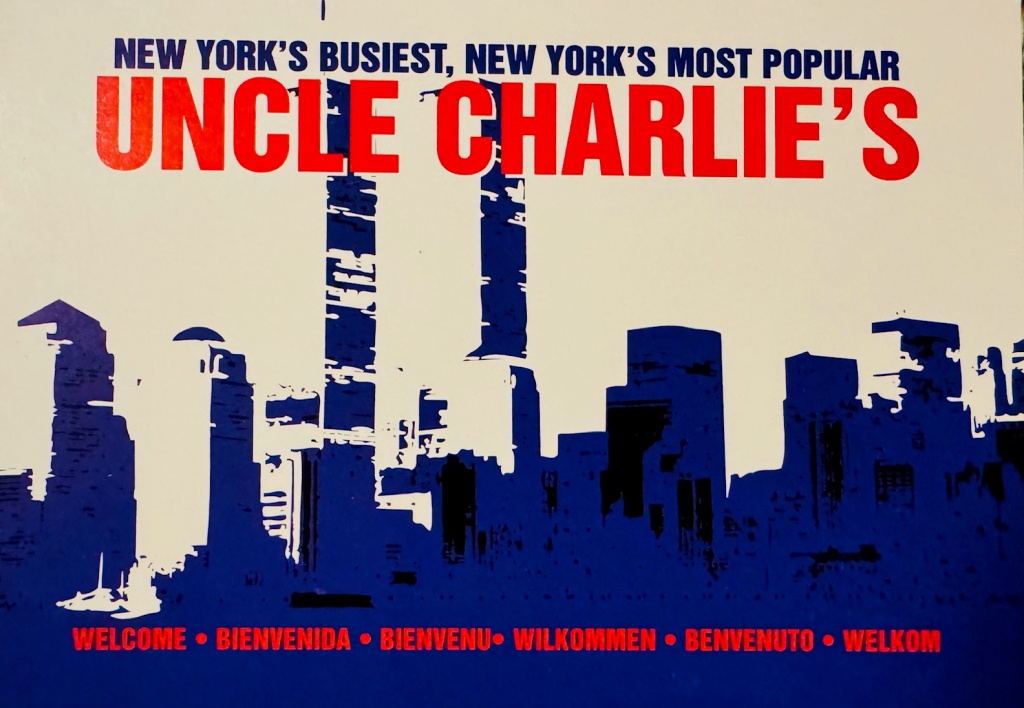
I used to joke that the bar I frequented the most was Uncle Charlie’s, but it was just so I could hold my friends’ coats while they cruised the preppy boys. I was invisible there – never quite handsome or stylish enough for the clientele.
Postcard for the 56 Greenwich Avenue location of Uncle Charlie’s, which closed in September, 1997.
The Bar on Second Avenue was another neighborhood spot that I frequented, followed by The Boiler Room, which opened right around the corner on East 4th street in 1994. The Bar went straight a few years later, undergoing many hetero iterations and name changes in the ensuing years. The Boiler Room remained its gay seedy self until the Fall of 2024, when it moved to 45 Second Avenue.
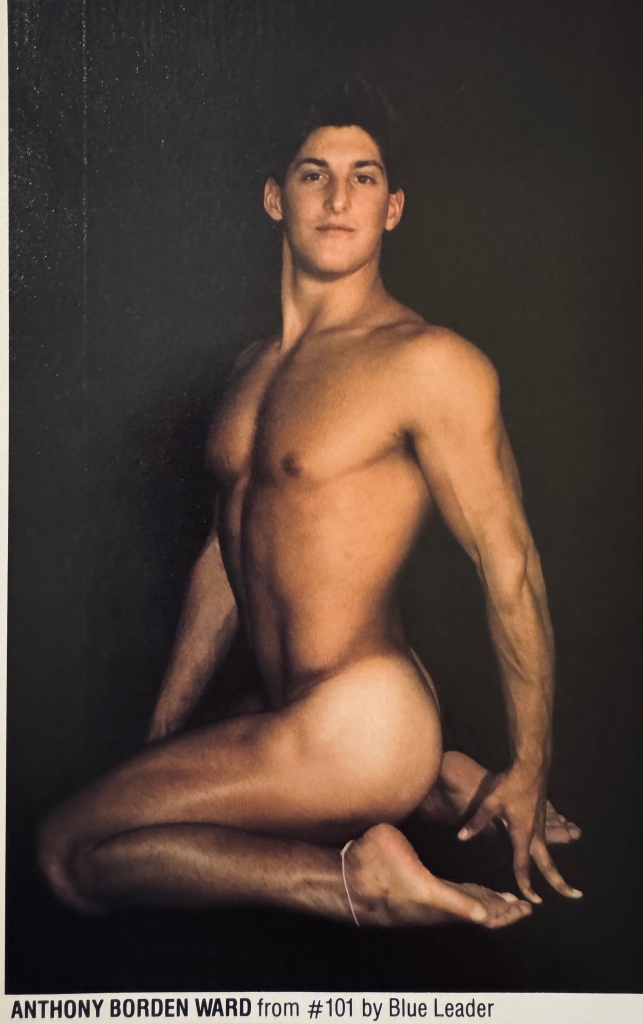
Another item of interest in this issue of In Touch: A very nice photo of Madonna paramour / model Tony Ward.
In the April 11, 1936 edition of the New York Age newspaper, Joe Bostic wrote in his “Seeing The Show” column about show he attended at the Apollo Theatre. The headliner was an unknown: the now legendary blues singer Lead Belly. Bostic was not impressed:
The advanced publicity stated that this man had been in two jails on murder charges and that the wardens, on hearing him work out on his guitar and vocally, had set him free. Maybe they did but after hearing the man myself, I’m not so sure that musical excellence prompted [the] actions. It may have been that both they and the other inmates wanted some peace during their quiet hours. No. Lead Belly isn’t the man, if it’s music that you want.
After reviewing other aspects of the show, including the comedy of Pigmeat Markham, Bostic concludes his review with this:
Midge Williams, the sensation from the west coast, looks, acts and sings like she knew most of the answers as a personality soloist…. She’s too good for the company she’s in at the Apollo this week.
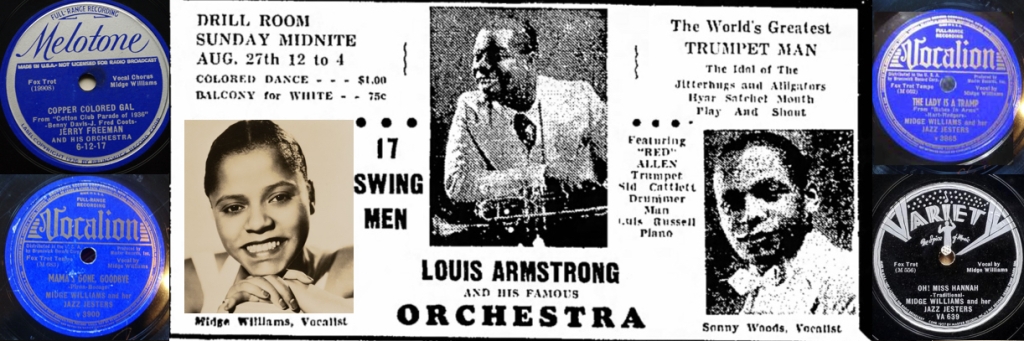
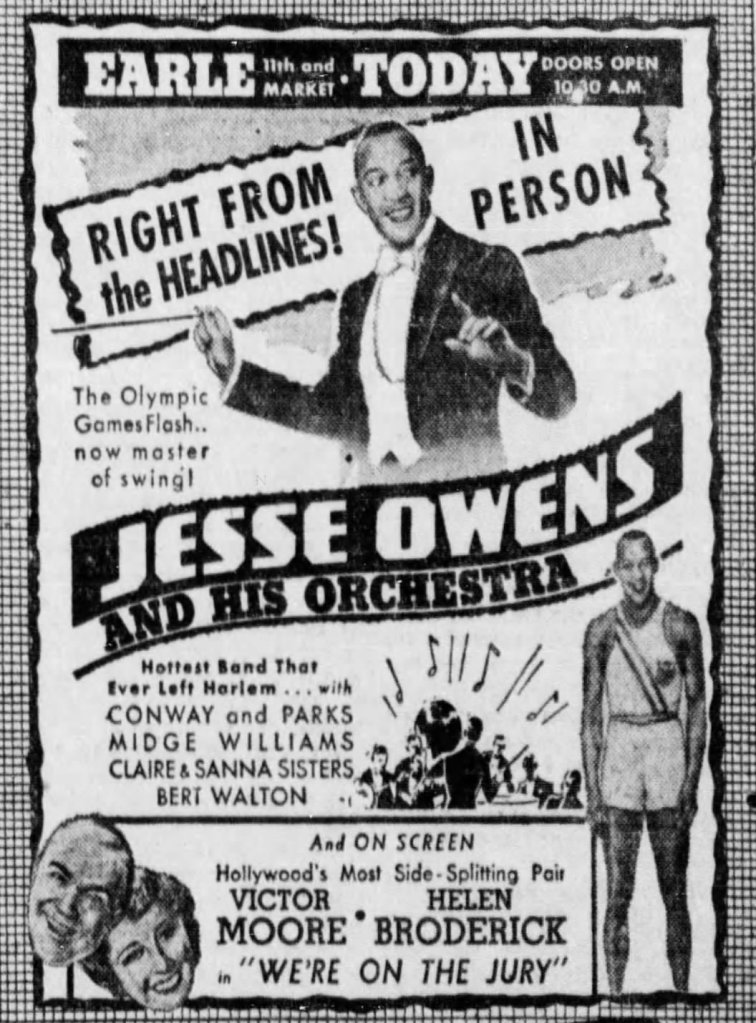
I’ve had a bit of an obsession with the mysterious Midge Williams since I first heard her recordings of familiar jazz standards… sung in both Japanese and English. In the mid 1930’s, she was the first female African American singer with a national radio show. Midge worked with Bunny Berigan, Fats Waller, Duke Ellington, and Jimmie Lunsford. When Olympian Jesse Owens had a short-lived foray as a bandleader, Midge was his singer. She toured with Louis Armstrong’s orchestra for three years, from 1938 until 1941, when she ended up hospitalized in Detroit. And then… nothing. She died of tuberculosis in 1952 at age 36.
That’s the story in a nutshell, according to the liner notes of her CD compilations and the few websites that mention her. Several years ago, I set out to fill in the blanks on this forgotten artist.
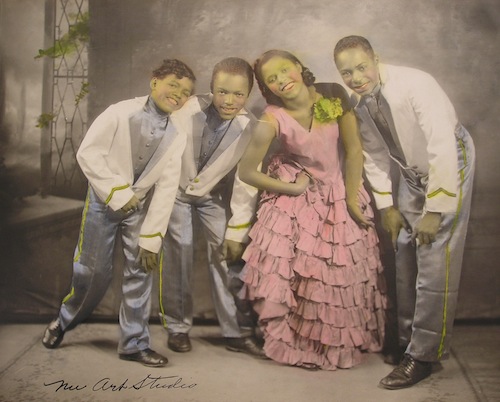
Midge started out in a family group with her three brothers. They were The Williams Quartette, later The Williams Four, performing in clubs and churches in the San Francisco area. They later joined the Fanchon and Marco vaudeville circuit and performed up and down the West Coast during summer breaks from school.
A musician / arranger named Roger Segure took them under his wing and became their manager, securing work on local radio and then traveling with the group to China and Japan. The opportunity to hear swing jazz vocals sung live was heralded as a major event in the history of Japanese jazz. During their stay in Japan, Midge recorded several sides, singing in English and Japanese, accompanied by the Columbia Jazz Band:
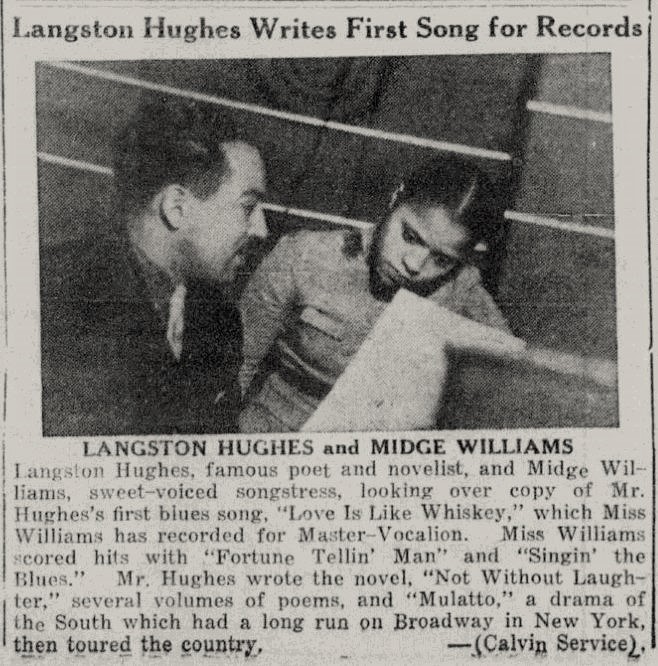
Midge crossed paths with writer Langston Hughes as he traveled through the Far East. Back in New York a few years later, Hughes would write songs for Midge. She recorded his “Love Is Like Whiskey” in February, 1938. Another song, “Night Time,” with lyrics by Hughes and music from her manager Roger Segure, was the theme song to her radio program. Unfortunately, no recording of the song exists.
The New York Age, April 16, 1938
California Eagle, (8/17/39)
Attempts by gossip columnists to stir rumors of a romance between the two proved unsuccessful.
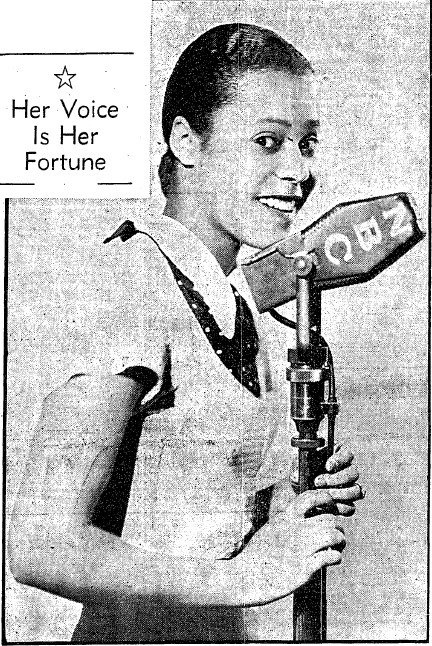
Midge was just 21 years old when she began hosting her own radio show on NBC – a twice-weekly 15-minute program. She recorded several dozen sides while also making club appearances. A prominent figure in Harlem society at the time, the African American newspapers covered her every move… until her alcoholism resulted in a dismissal from the Louis Armstrong Orchestra.
Baltimore Afro-American (4/30/38)
Her last studio recording was with Lil Hardin Armstrong (Louis’ ex-wife) and her Dixielanders in 1940:
In April of 1946, Midge made an appearance on Jack Webb’s radio show. She was in fine voice on a cover of “Cow Cow Boogie”:
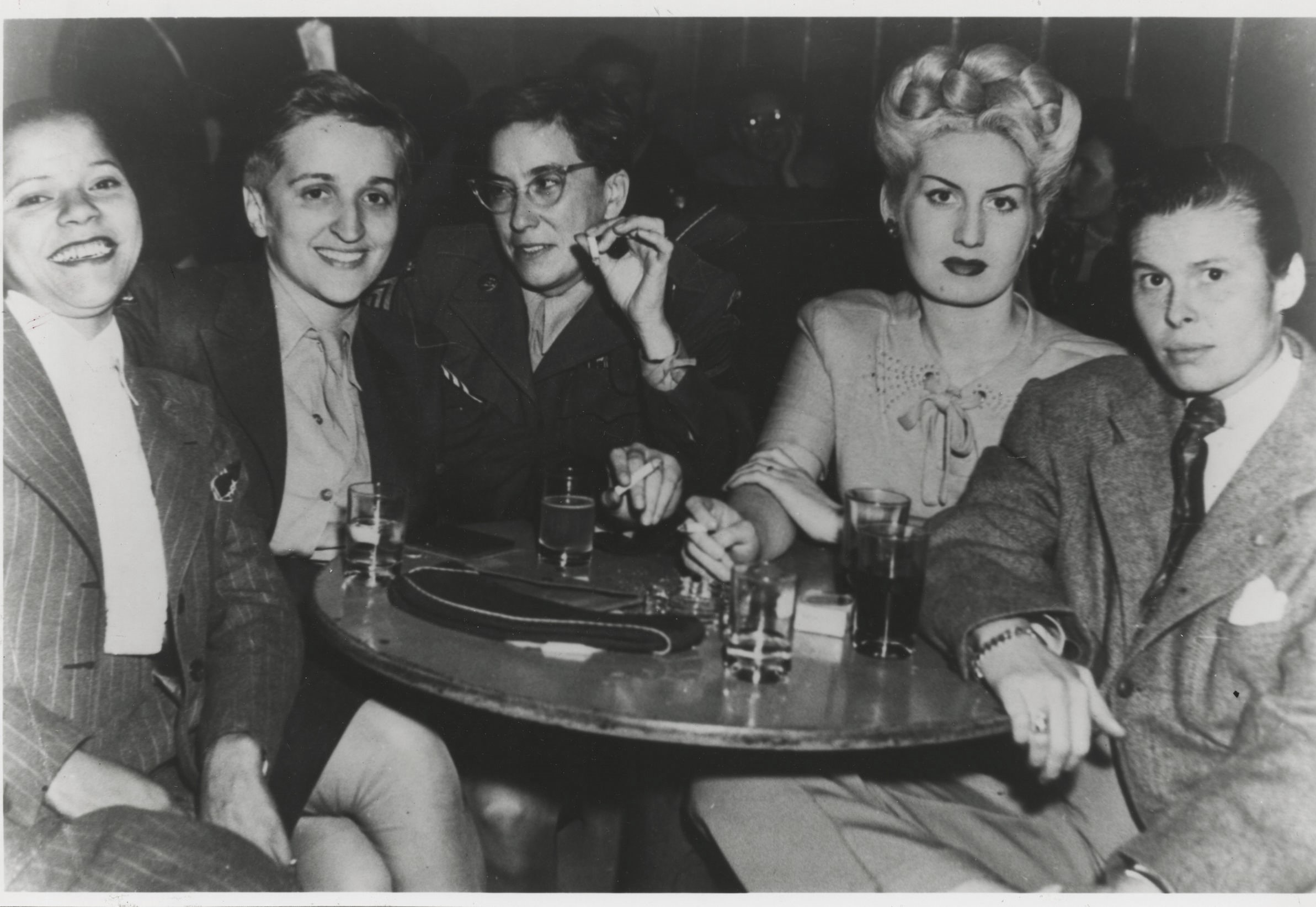
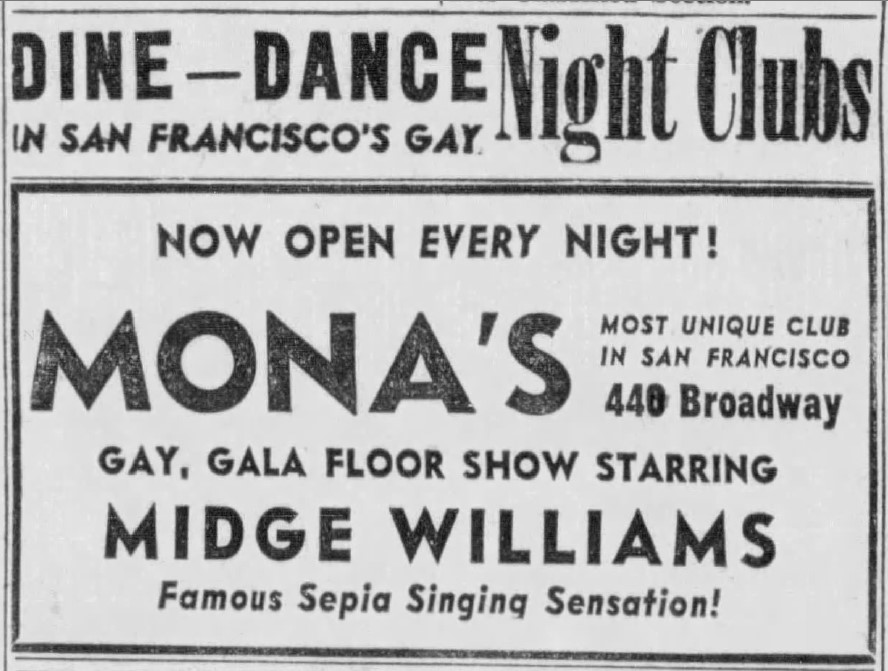
Shortly after the Jack Webb radio performance, Midge settled into a six month engagement at Mona’s 440 Club, the legendary lesbian bar in San Francisco. It is from this period that we have a photo of Midge, an image that has been widely circulated. One of the most familiar photos depicting lesbian nightlife of the 1940’s, it was also used to promote the 1993 documentary Last Call At Maud’s.
Midge Williams (left) with fellow Mona’s singer Kay Scott and friends (ca 1946)
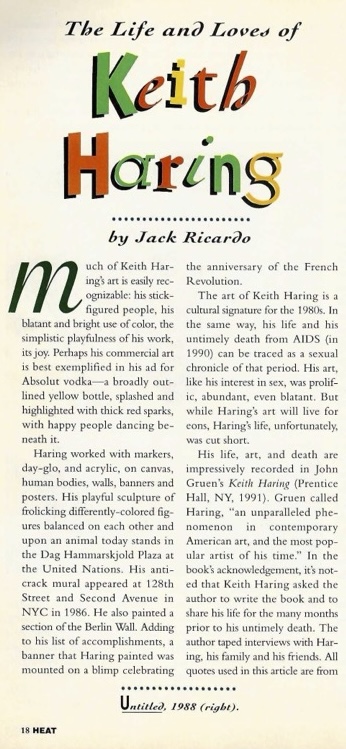
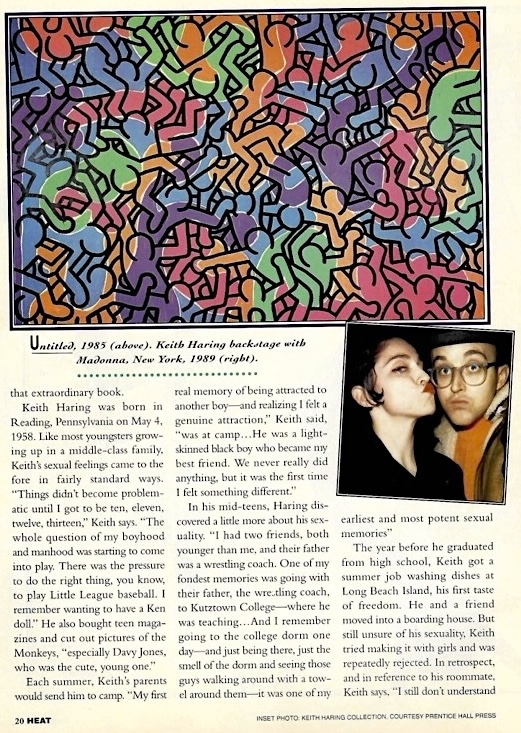
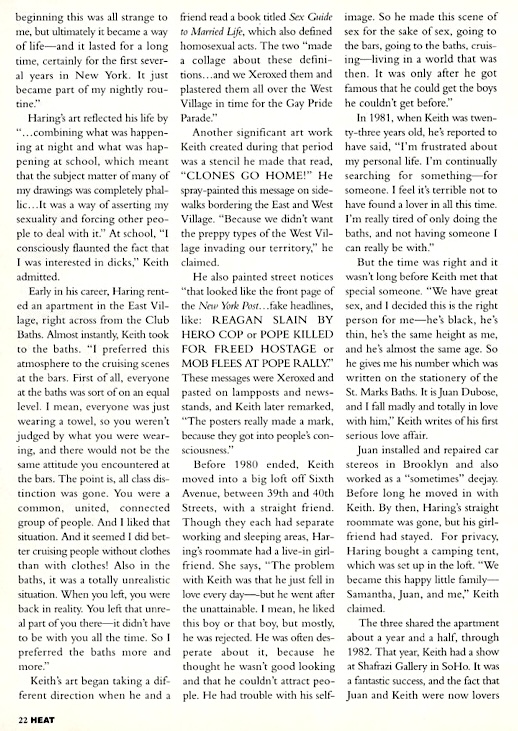
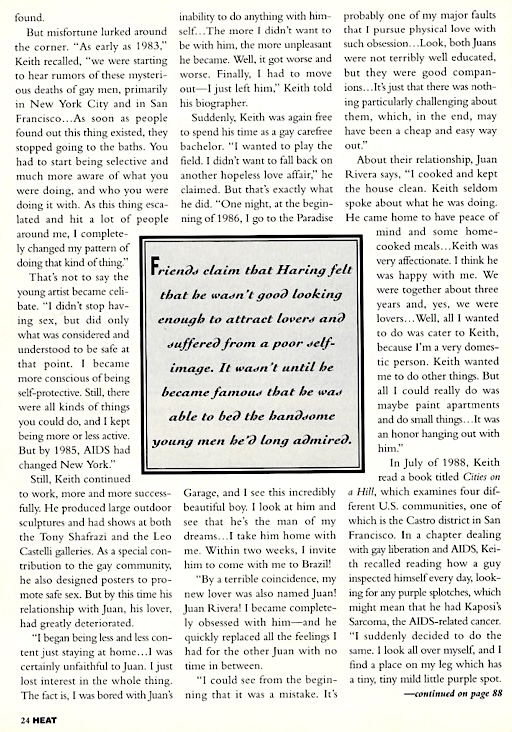
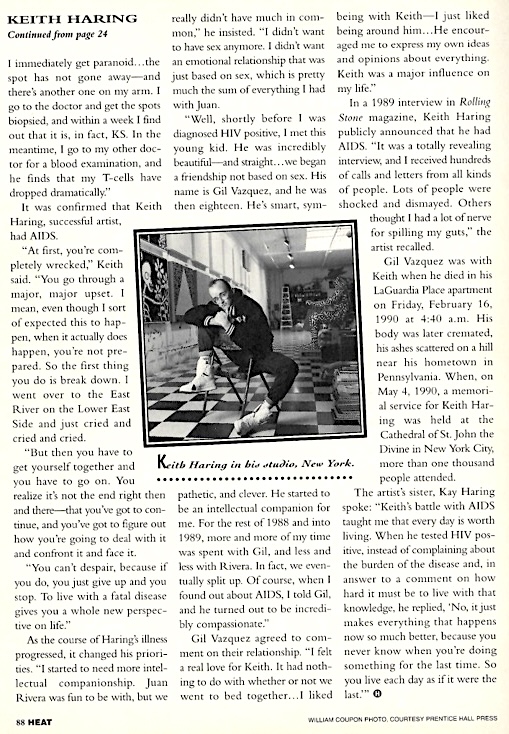
I was recently perusing (as one does) the June 1992 issue of Heat, a short-lived gay men’s magazine. Amongst the pictorials of cover boy Rob Cryston and fellow gay porn stars Karl Thomas and Sam Abdul is an article titled “The Life and Loves of Keith Haring” by Jack Ricardo.
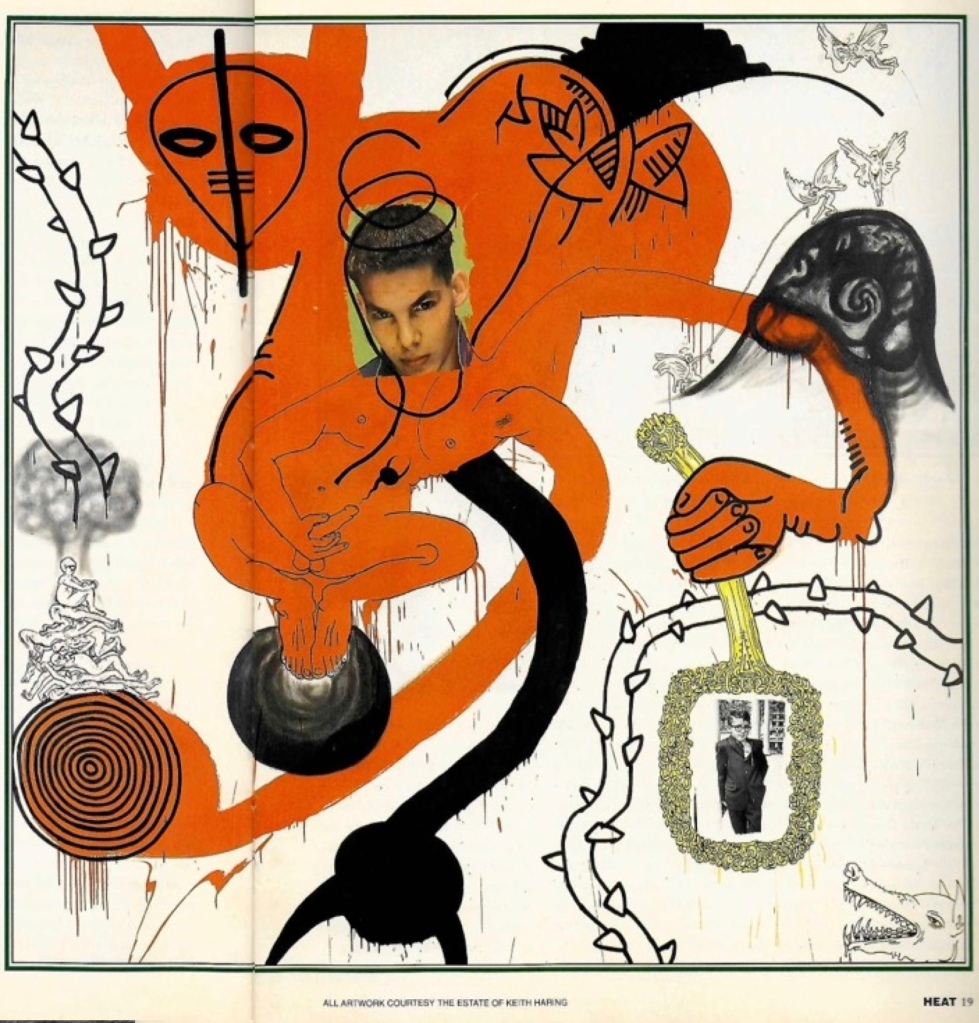
Keith Haring, Untitled (1988)
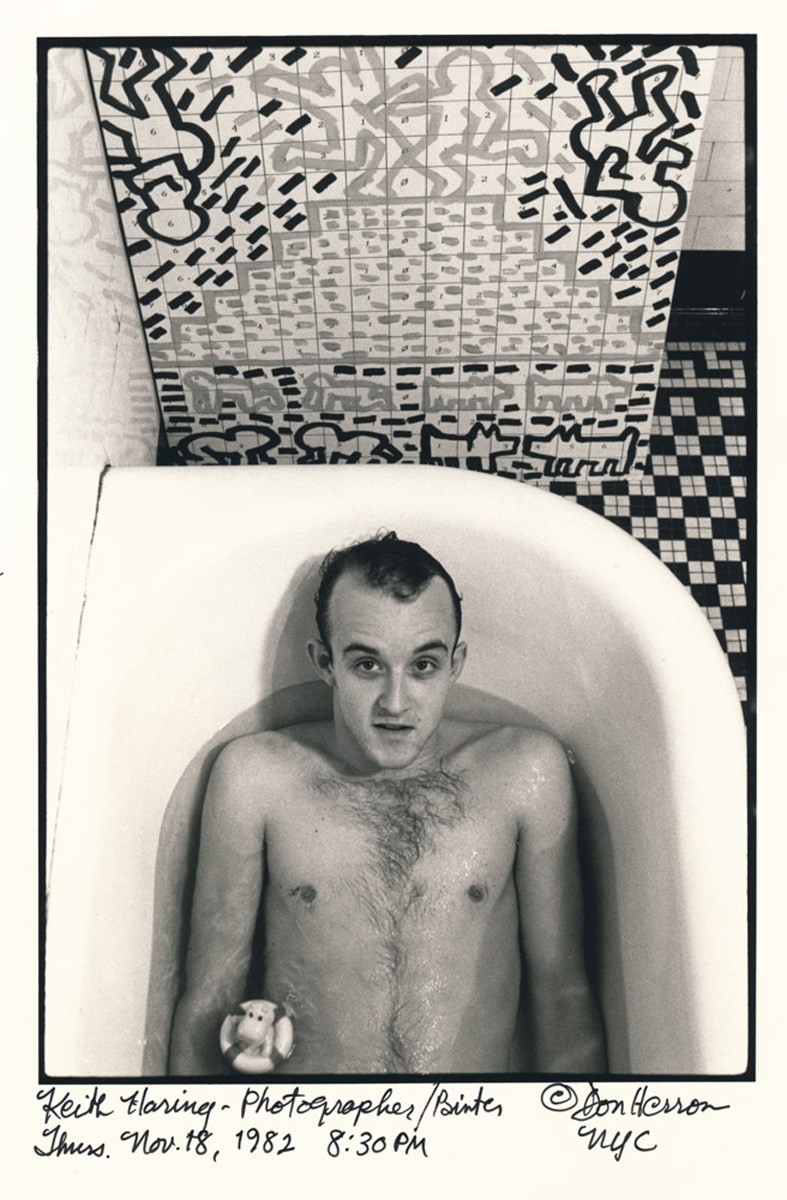
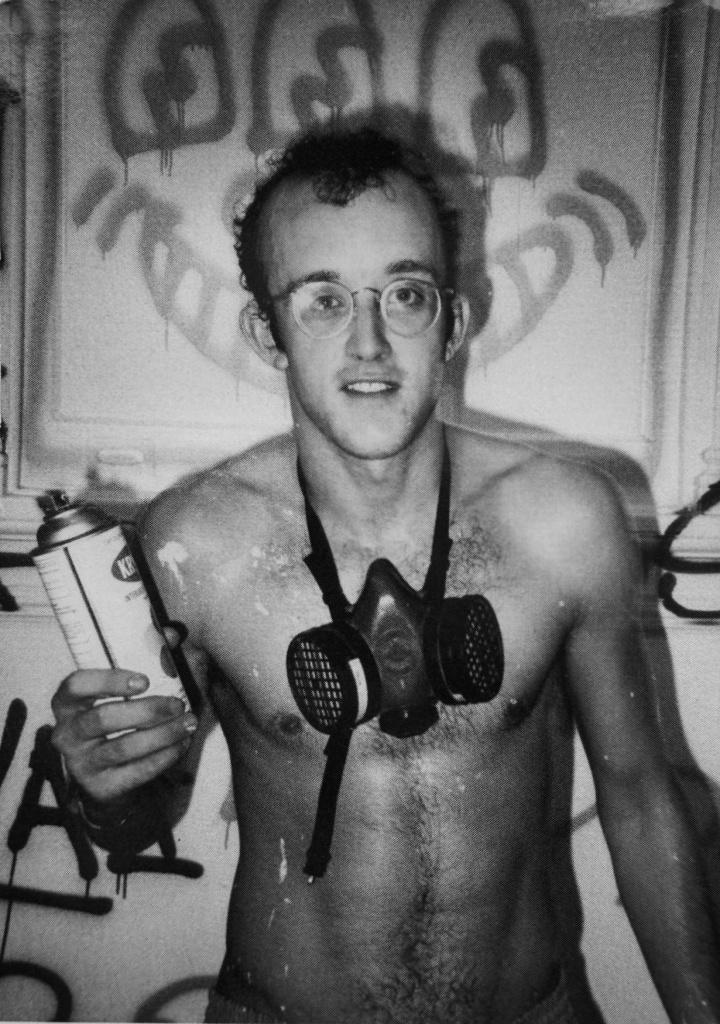
Keith Haring photographed by Don Herron (1982)
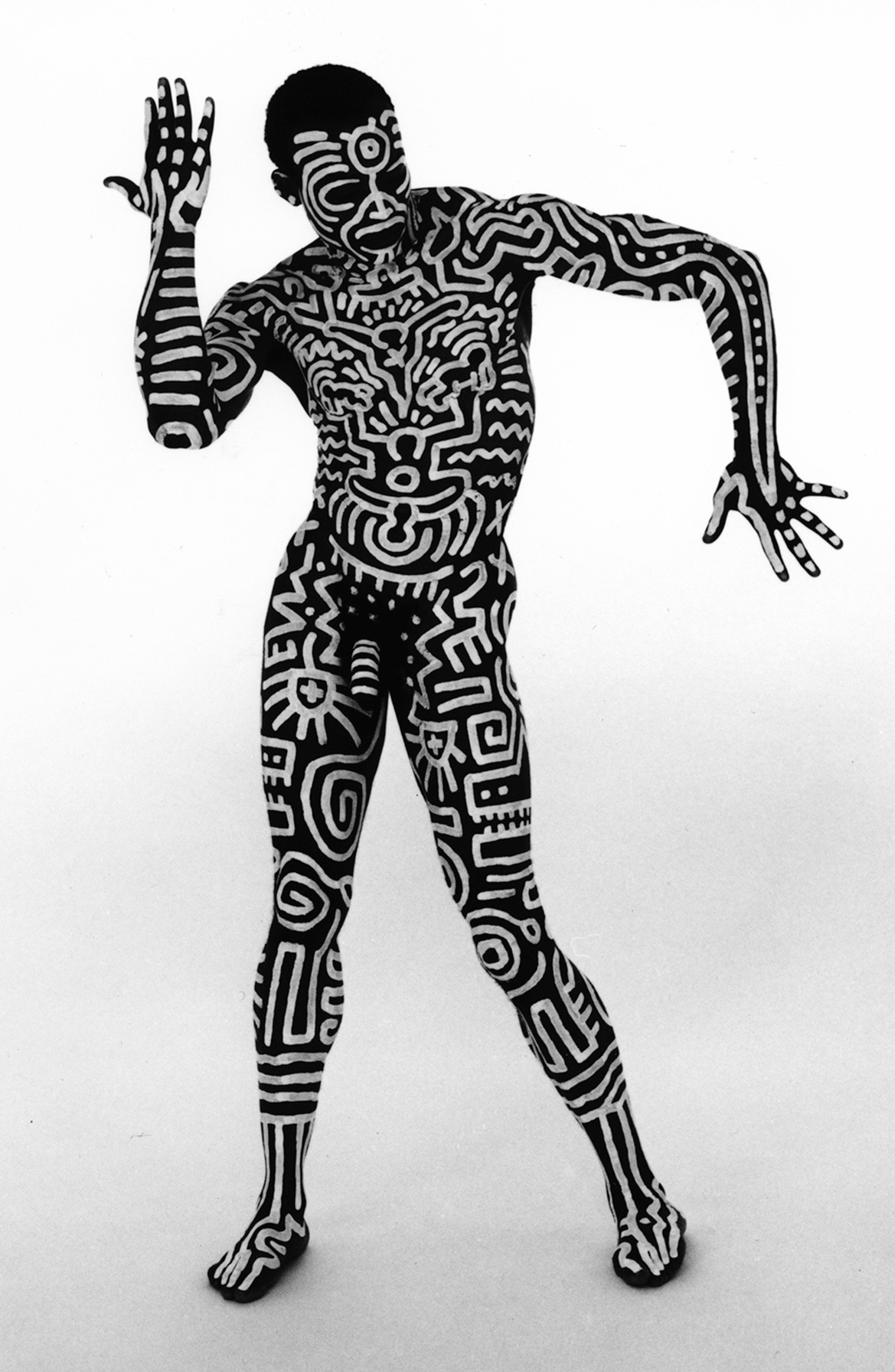
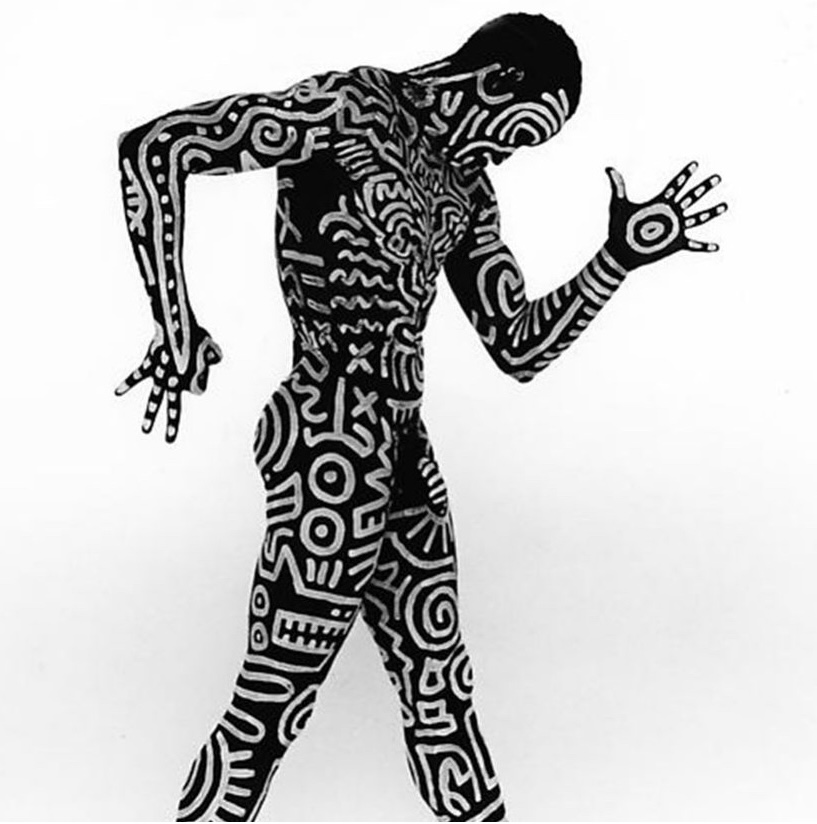
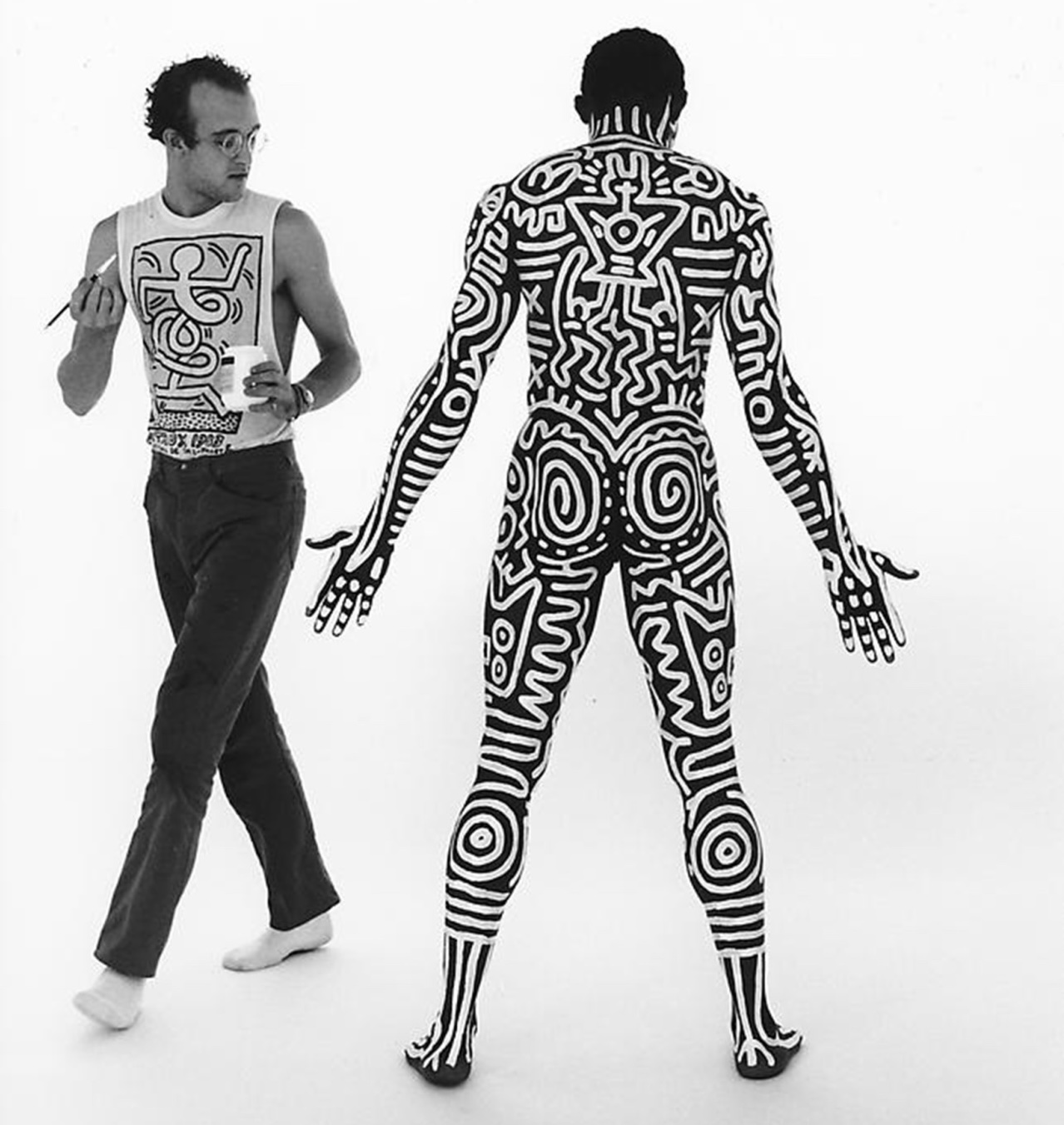
Bill T. Jones painted by Keith Haring (1983)
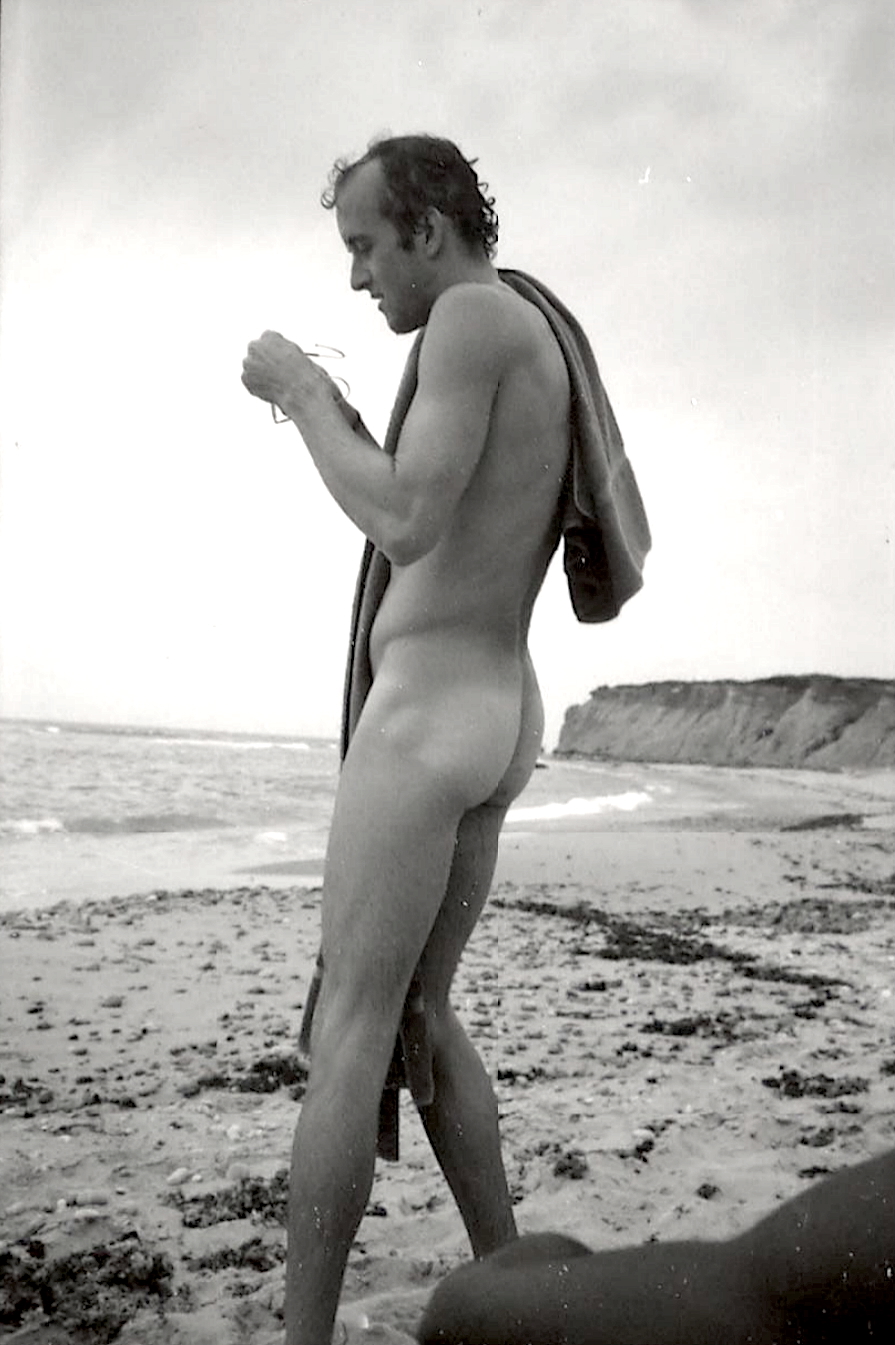
Keith Haring photographed by Andy Warhol, Montauk (8/22/84)
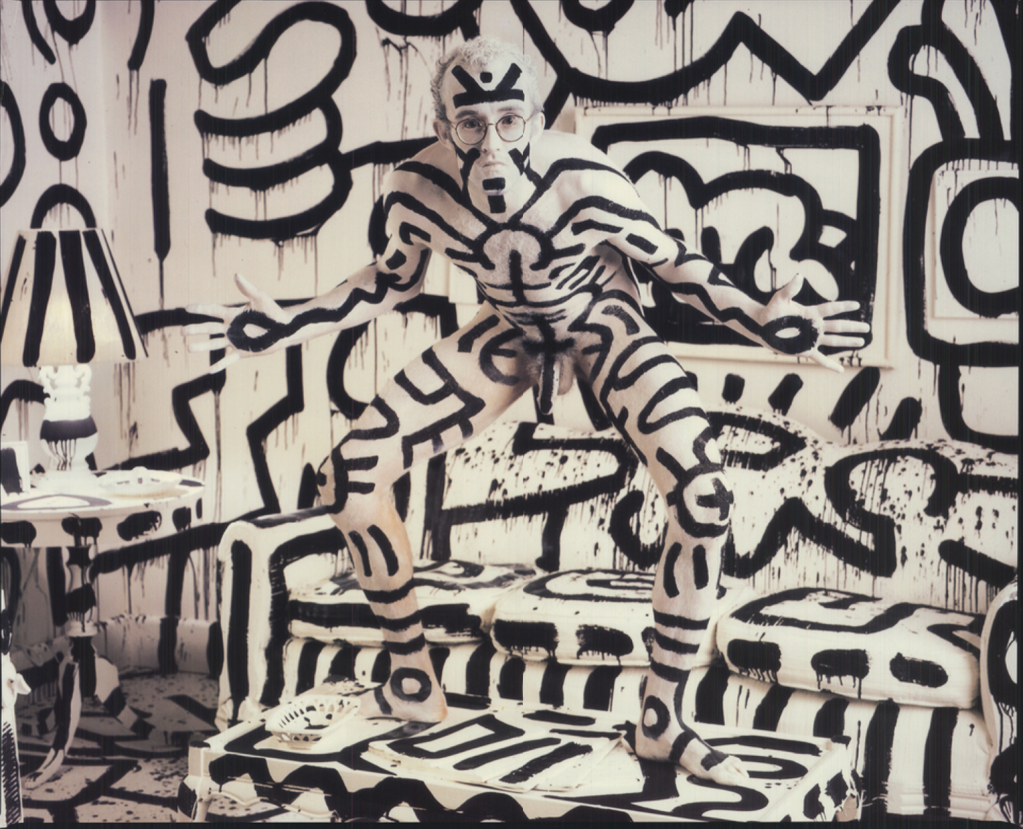
Keith Haring photographed by Annie Leibovitz (1986)
This article was published just two years after Haring’s death. In 2019, Gil Vazquez became Executive Director of the Keith Haring Foundation, a role he held for 6 years.
Keith Haring photographed by Patrick McMullan, NYC (8/14/84)
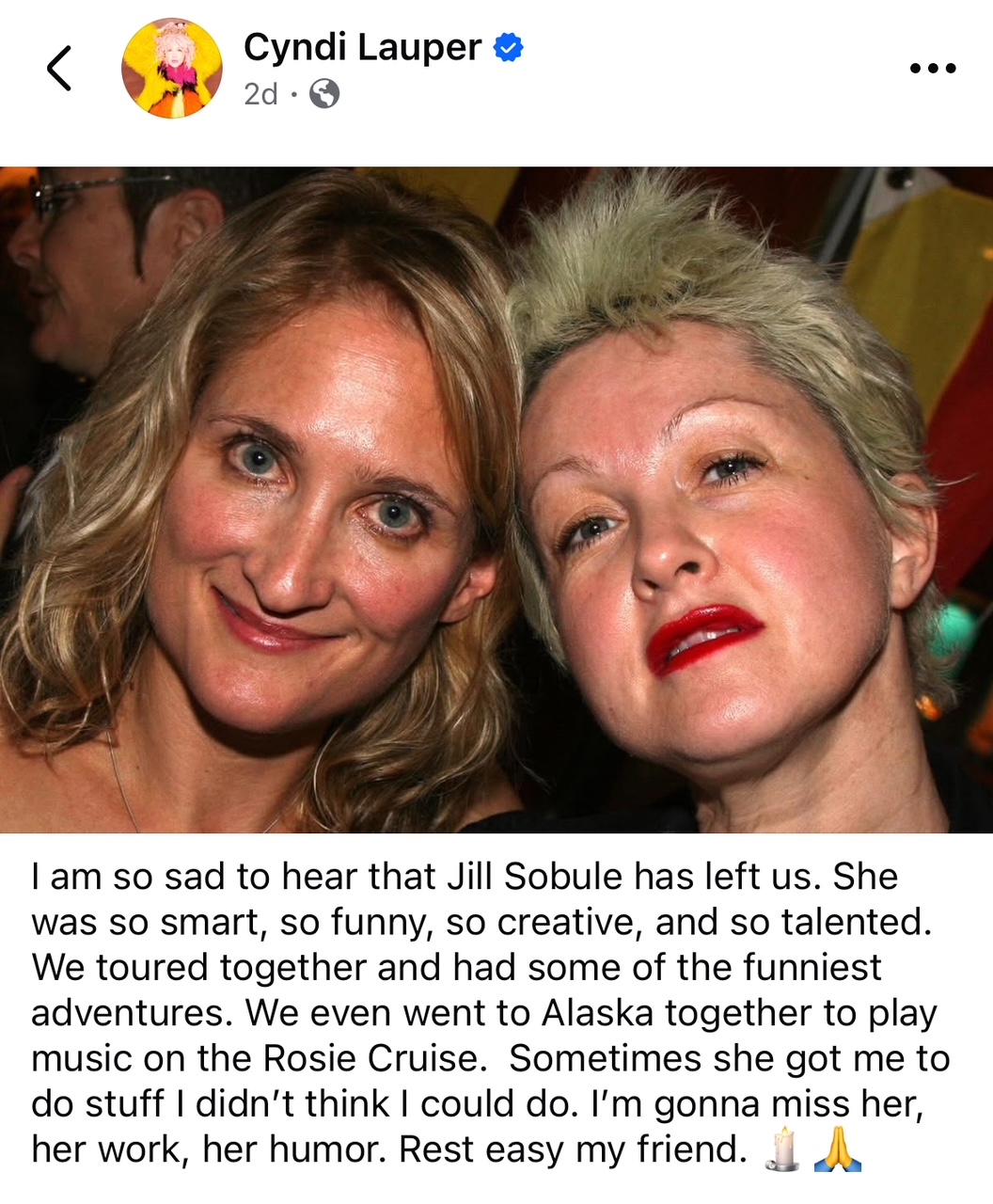
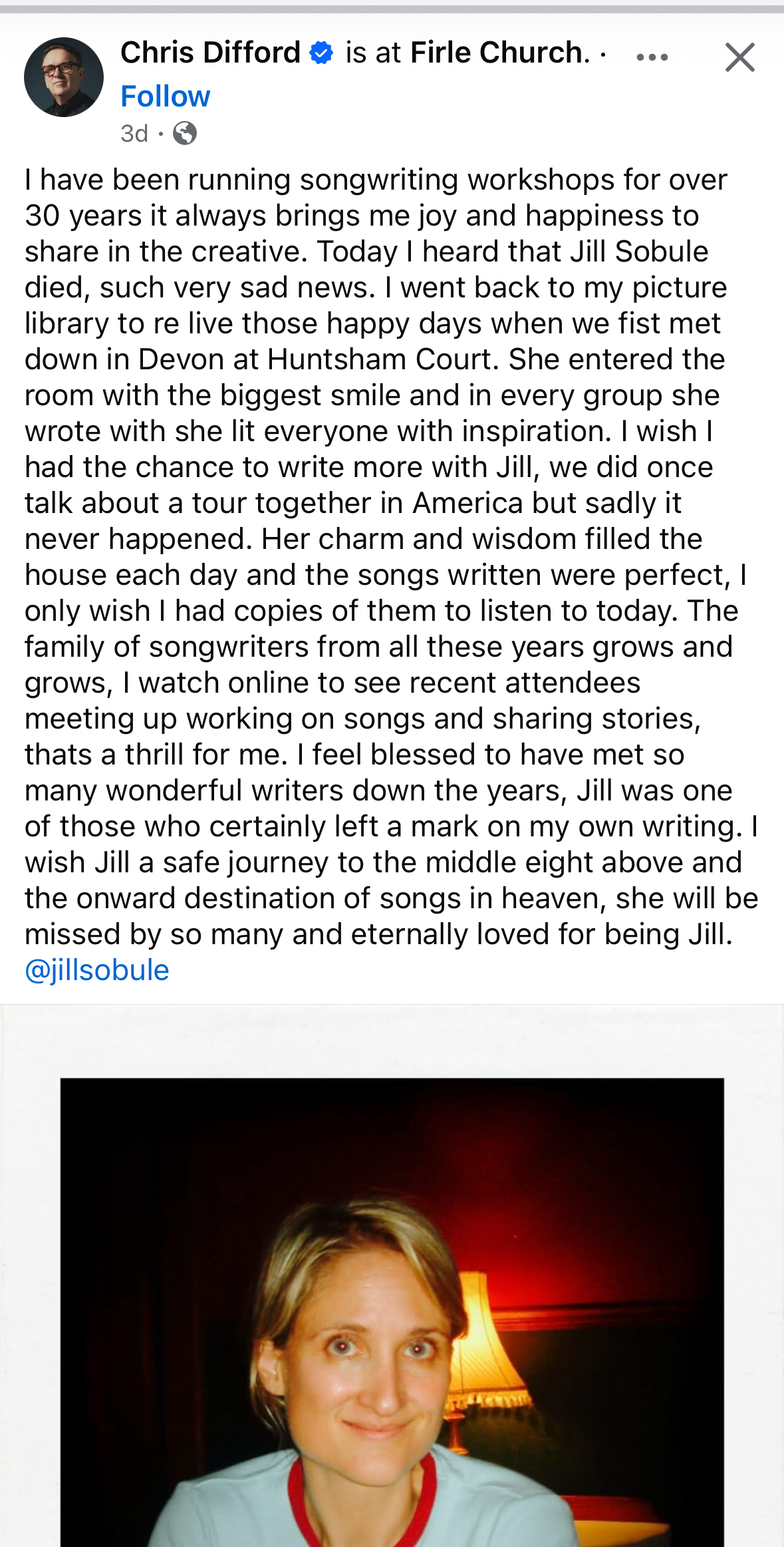
Last month, when the NYC lounge Barracuda announced its closing after 30 years, I posted a couple of photos on social media from a May 5, 1997 appearance by singer/songwriter Jill Sobule. She was interviewed onstage by nightlife icon Candis Cayne, sang a couple of songs, screened the music video for “Bitter” and then met with fans.
That was 28 years ago this week. 30 years ago this same week, Jill’s single “I Kissed A Girl” was released. And now just days before both anniversaries comes the news that Jill has perished in a house fire. It’s a shocking end for such a talented individual, beloved by fans and fellow musicians.
Until the advent of YouTube, the screening of “Bitter” at Barracuda back in 1997 was the only time I ever saw the music video. MTV and VH1 certainly weren’t playing it. Her Happy Town CD had only been out for two months, but it was pretty clear that it wasn’t going to be as successful as her 1995 breakthrough LP – the one with her two hits: “I Kissed A Girl” and “Supermodel”. She would be dropped by Atlantic records by the end of 1997.
When I stepped up to meet Jill that night, I blathered on like the breathless fan that I was, telling her that the album was great and that her fans appreciated her music whether she sold 20 or 20 million copies. She seemed to be touched, gave me a hug and said “Oh, thank you so much.”
Jill sang a song at Barracuda that she had just written called “Money Shot” – a little ditty about a troubled porn star who couldn’t finish the job. She trusted that her audience at this gay club would appreciate it and the song went over well.
The following night, Jill was on the bill as part of a songwriters series at the Bottom Line in Greenwich Village. In the middle of her set, she asked the audience for song requests. I’d had a few cocktails by that point and called out “MONEY SHOT!”
I immediately regretted it.
Her wide eyes got even wider. She looked mortified as she said “Oh no.”
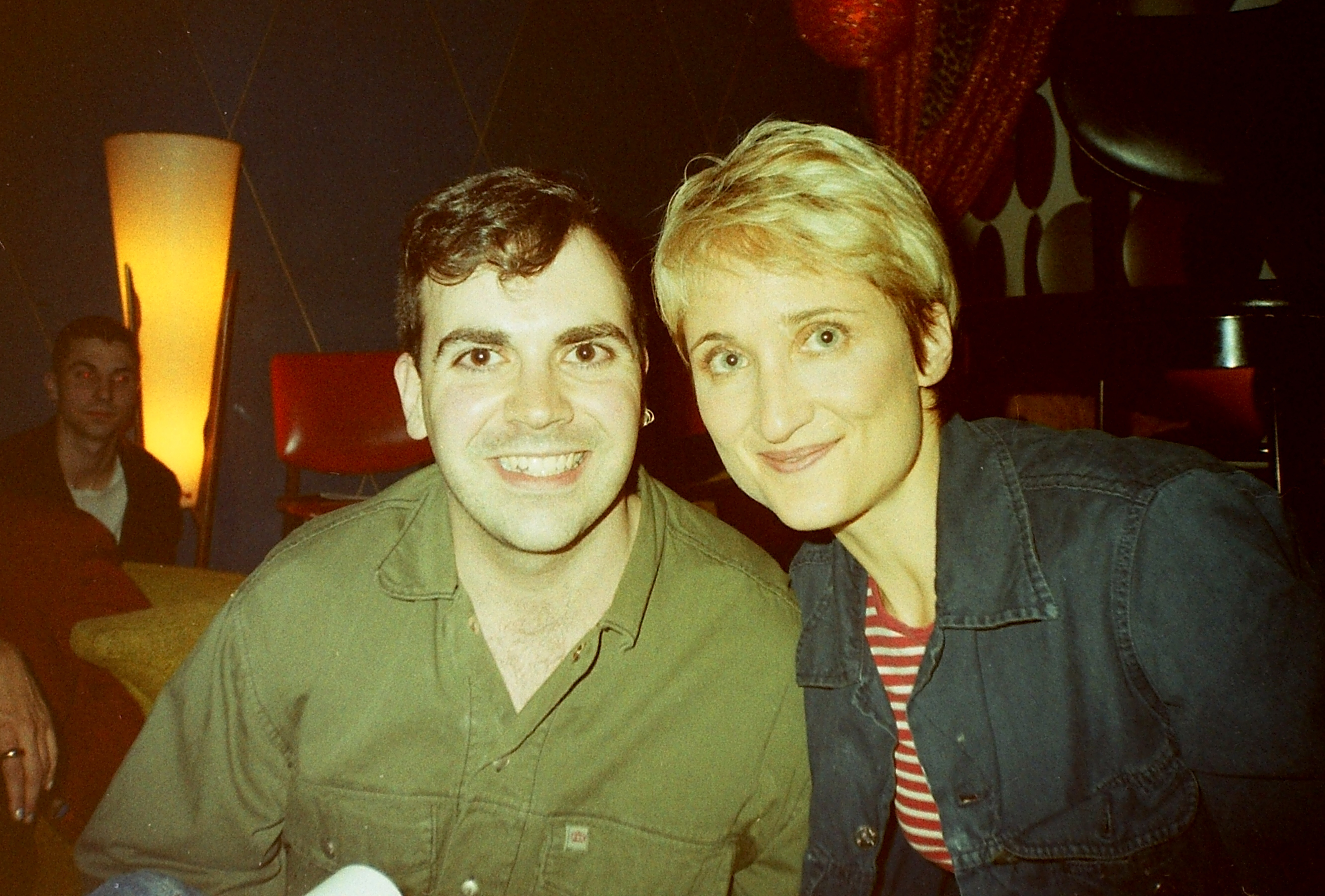
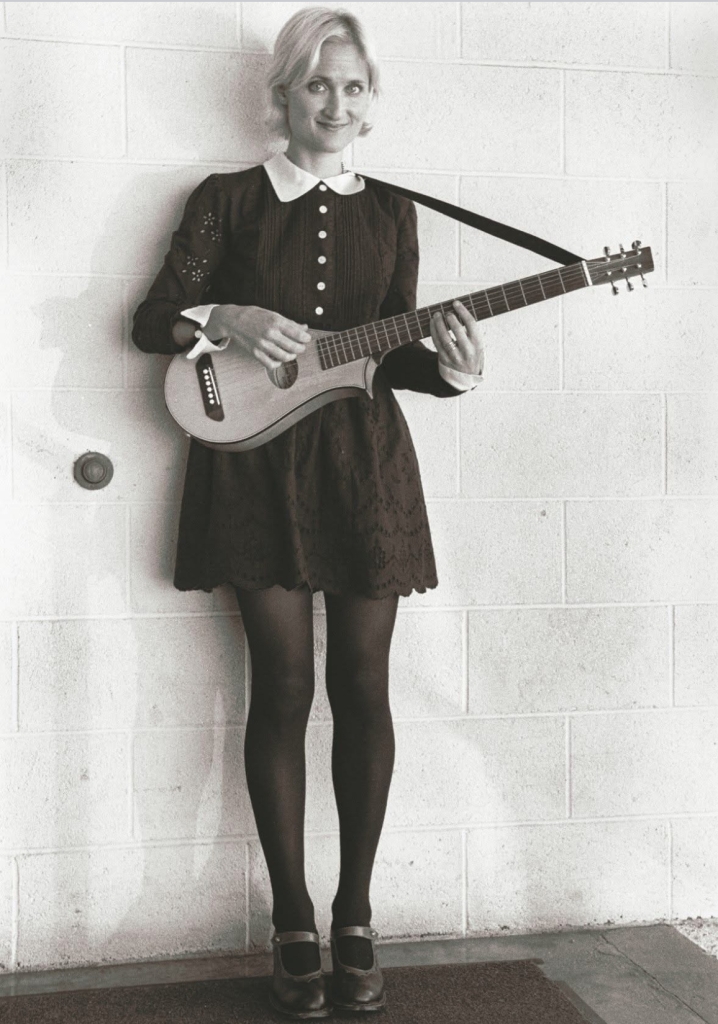
Jill at Joe’s Pub, NYC (April, 2002)
What had been a fun idea at a performance for gay fans in a Chelsea lounge didn’t fly in mixed company at The Bottom Line.
Five years later, I was briefly in a folk trio called The Wormwoods. We shared the bill with Jill and a dozen other singers at Joe’s Pub for two Dusty Springfield tribute concerts. She performed the classic Dusty In Memphis track “Just A Little Lovin’.”
Fast forward to August, 2011: Jill is opening for Fountains of Wayne at Bowery Ballroom on the Lower East Side. At first glance, this might appear to be an ill fit: The “I Kissed A Girl” girl and the “Stacey’s Mom” guys. Their fans can tell you that dismissing either act as a one-hit wonder is an oversight of many albums worth of smart, funny storytelling. Jill won over the Fountains of Wayne audience in no time.
Jill was at the merch table at intermission. “I think you made some new fans tonight,” I said.
She was pleasantly surprised. “They really seemed to like it, didn’t they?”
Songwriters of North America CEO Michelle Lewis called Jill Sobule “a singer/songwriter’s singer/songwriter.” I have similarly called her a musician’s musician. She often performed with just the smallest guitar and played with such intricacy that her audience could forget that it was her only accompaniment. I saw her onstage once with a small children’s keyboard that she had just picked up at a garage sale. Again, she found a way to make it sound like it was all the instrumentation that she needed.
Her song “Mexican Wrestler” epitomized her genius: heartbreakingly funny songwriting and a brilliantly nuanced performance.
Two weeks ago when Jill was opening for The Fixx on tour, she posted online about a concertgoer who took offense at her song “JD Vance is a C**t.” After the show, the woman shoved her and spewed some MAGA bile in her direction.
Jill’s response? She couldn’t wait until her next show – so that she could sing that song again.
I hate the idea of facing the next four years without her take on the unraveling of this administration. I can’t quite grasp that she won’t be here to sing “Underdog Victorious” when we are all on the other side of it.
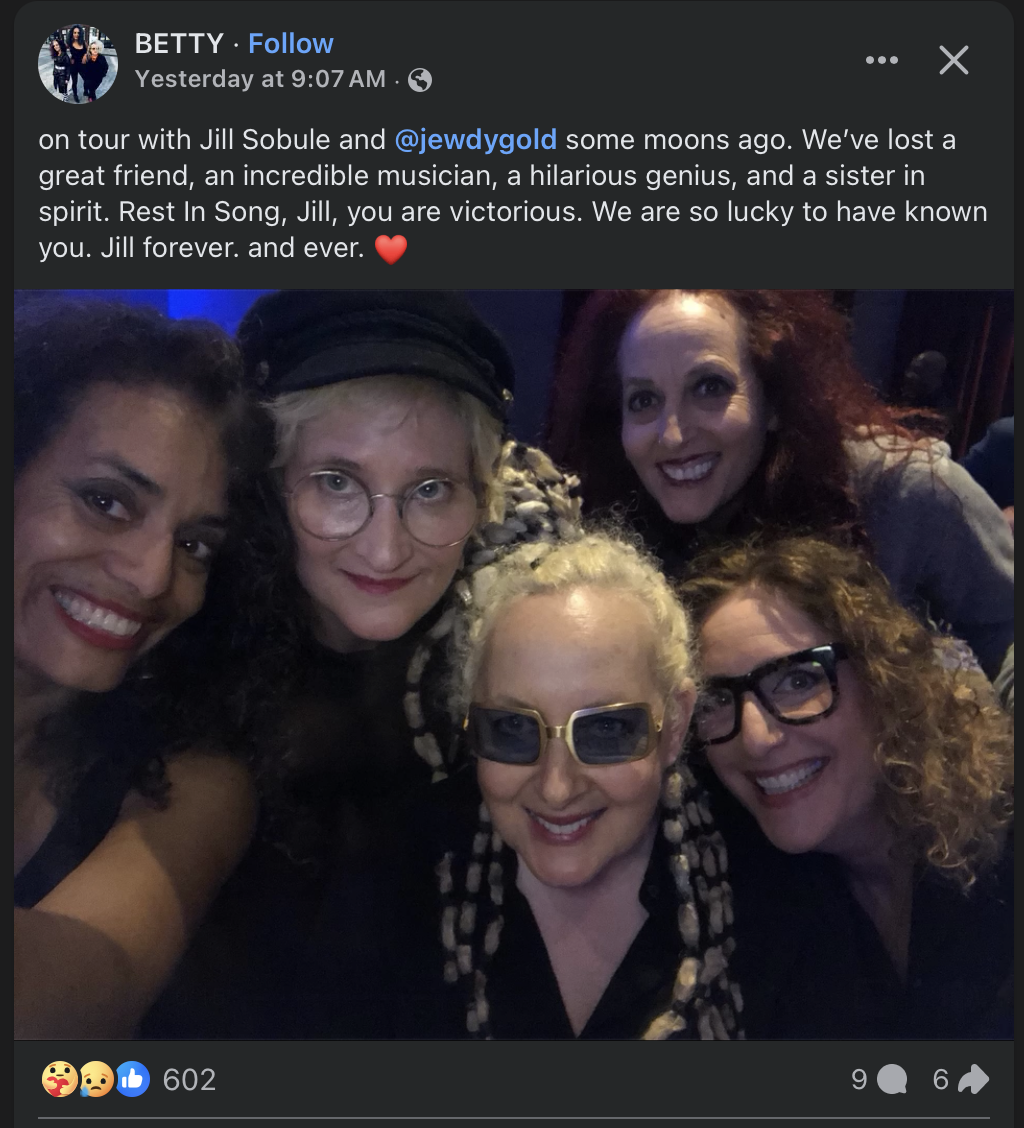
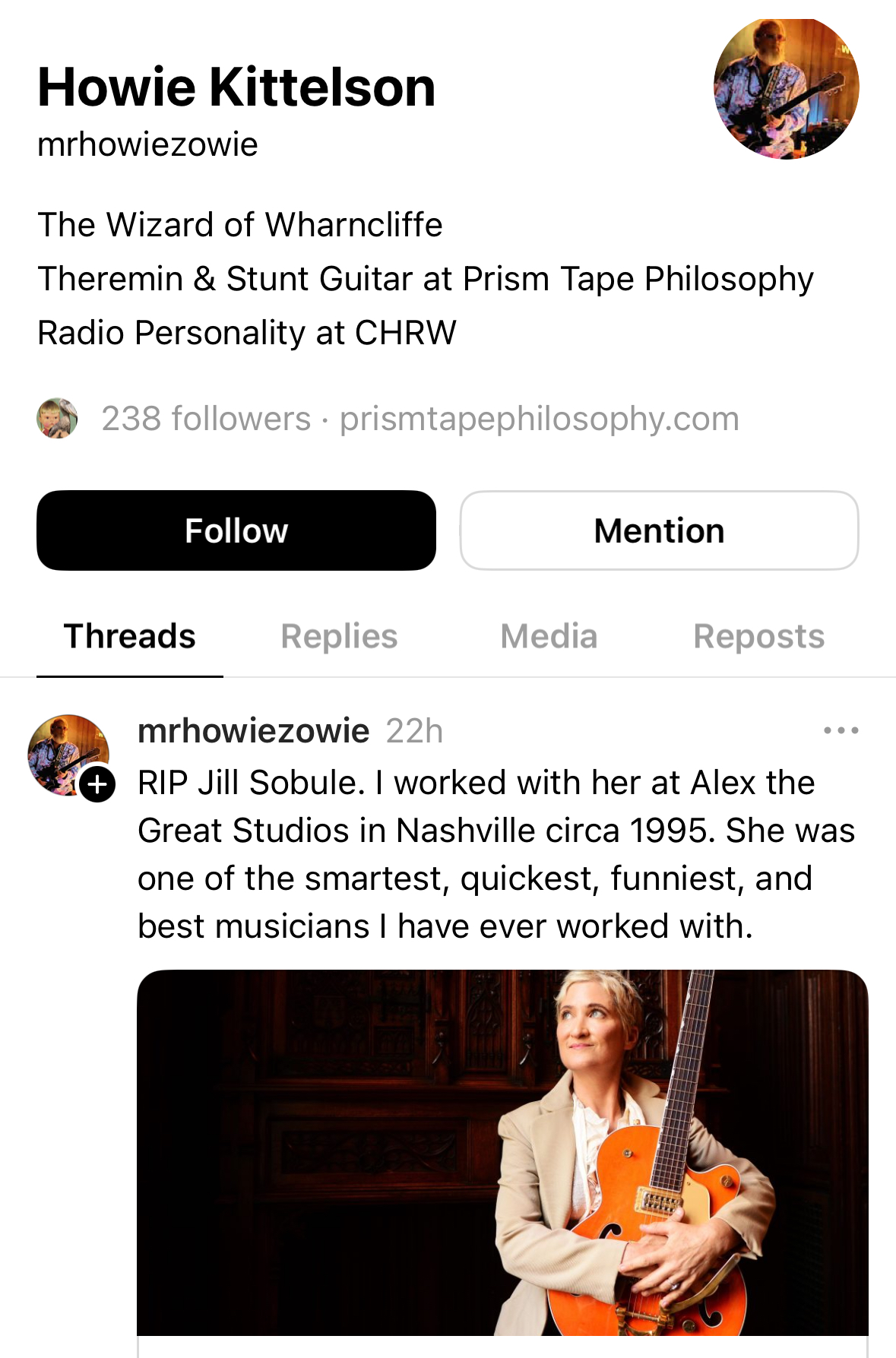
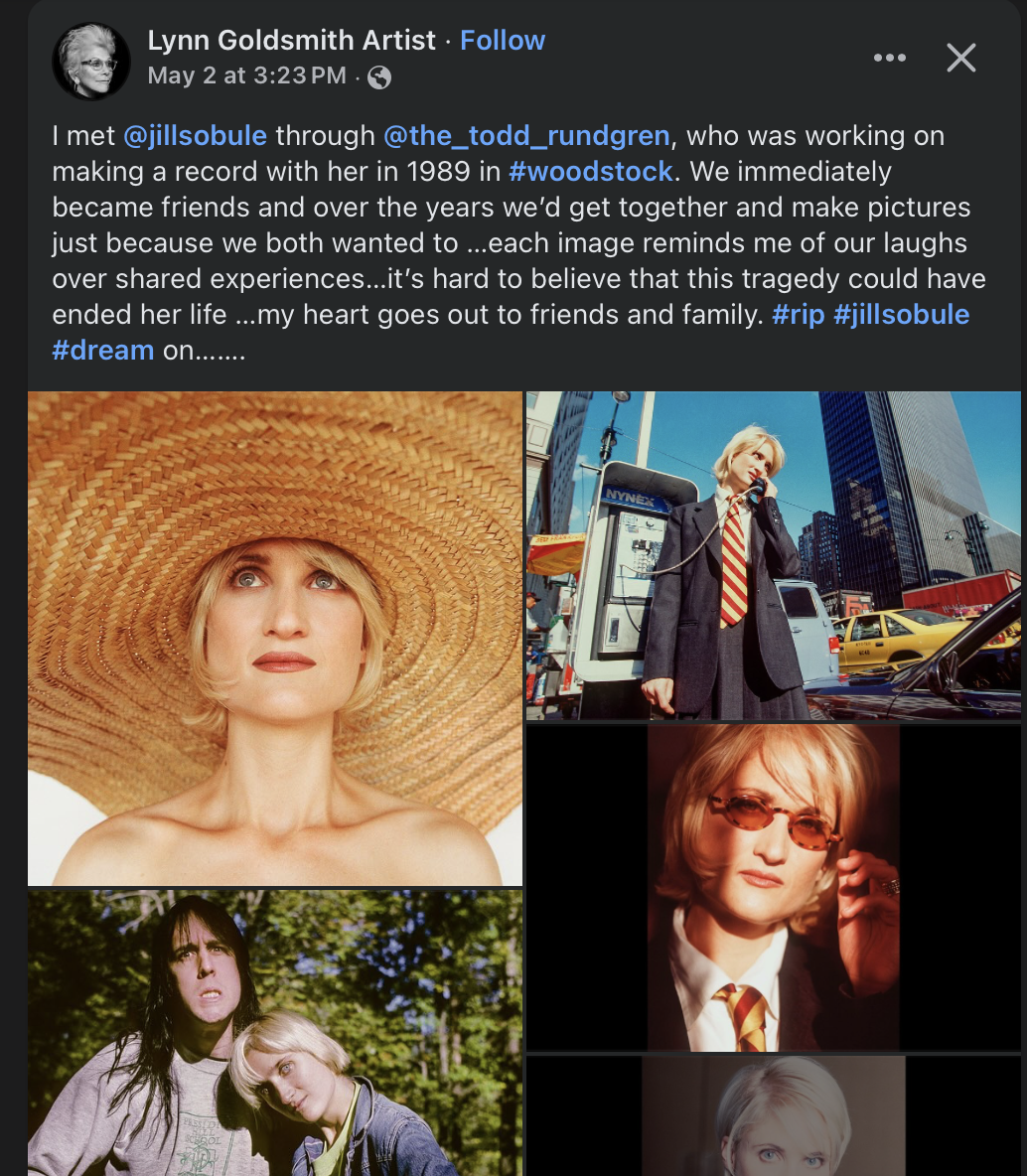
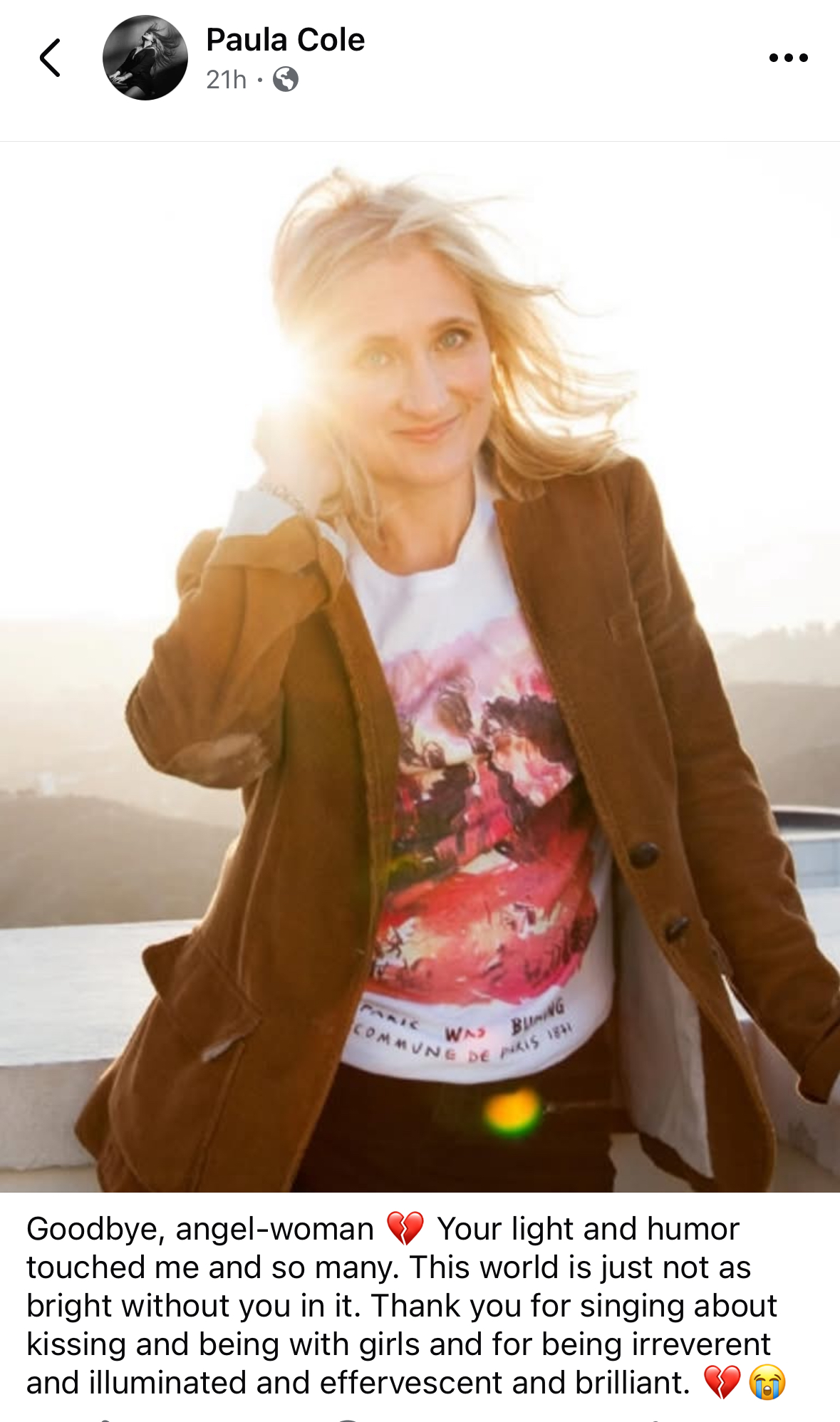
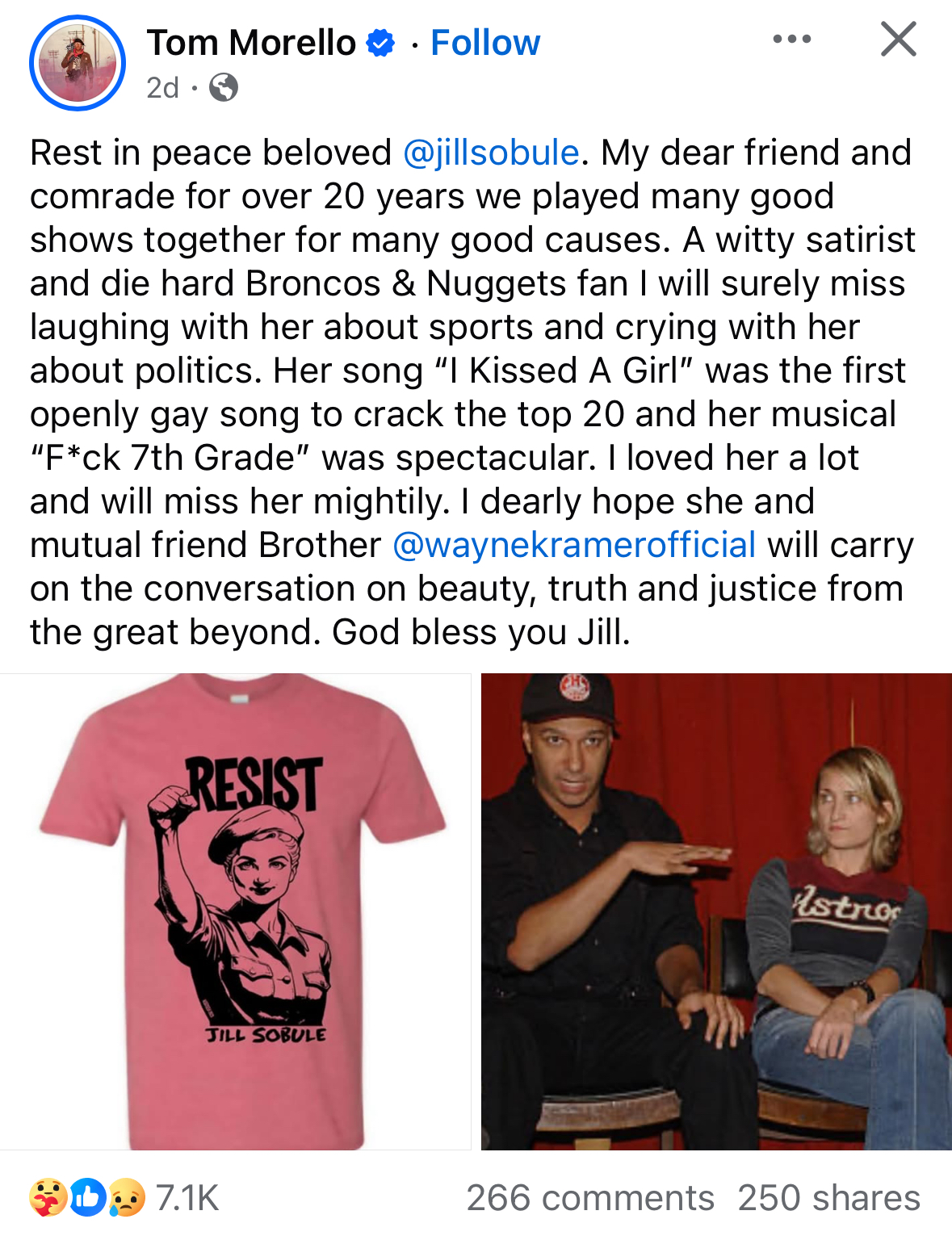
Some of the many tributes to Jill that have popped up on social media:
Jane Wiedlin of The Go-Go’s posted a link to “So Jill,” a song she co-wrote and performed with bandmate Charlotte Caffey and Lloyd Cole after meeting Jill at a songwriters retreat in 1997.
Photo: Brian Blauser/Mountain Stage Archive, Oct 8, 1995
The last 25 minutes of the May 4th episode of 60 Degrees with Brian Ferrari on East Village Radio is a tribute to Jill, with her songs about Joey Heatherton and Bobbie Gentry alongside covers of “Just A Little Lovin’,” “Stone Soul Picnic” and “Que Sera Sera.”Click to have a listen – the tribute starts at 1:35.
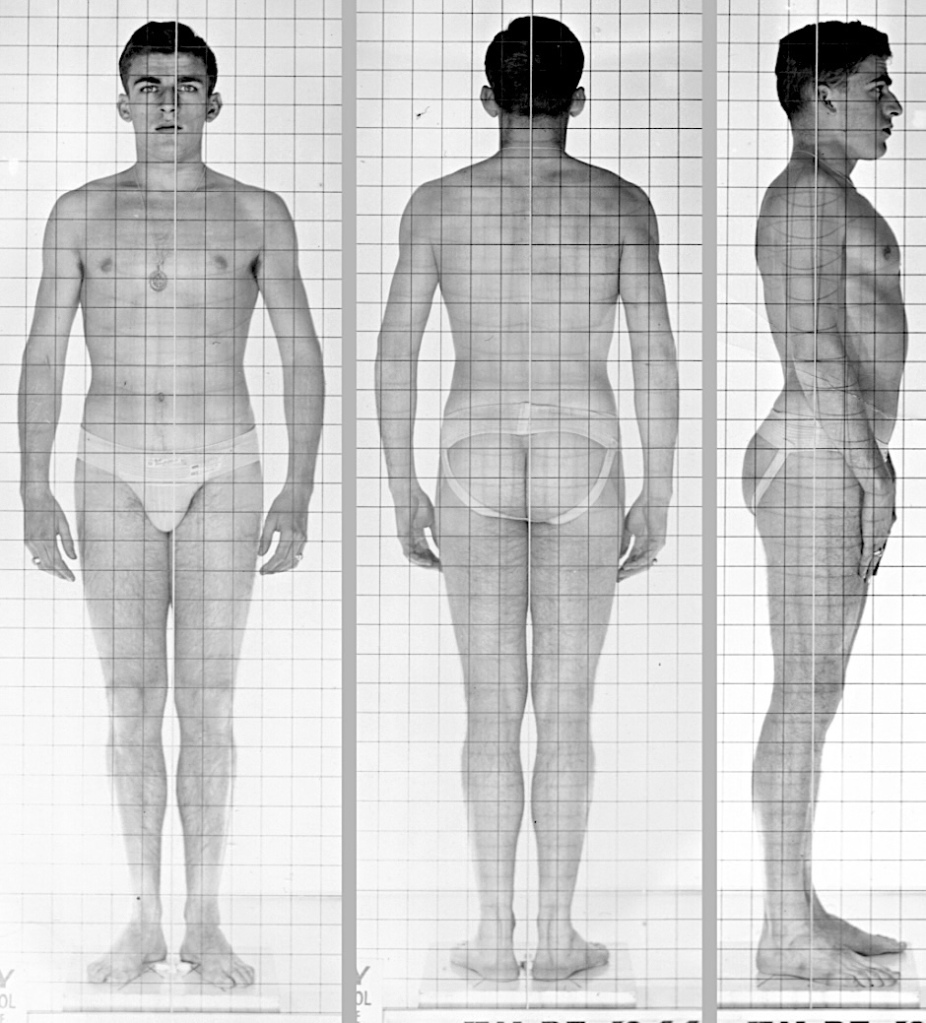
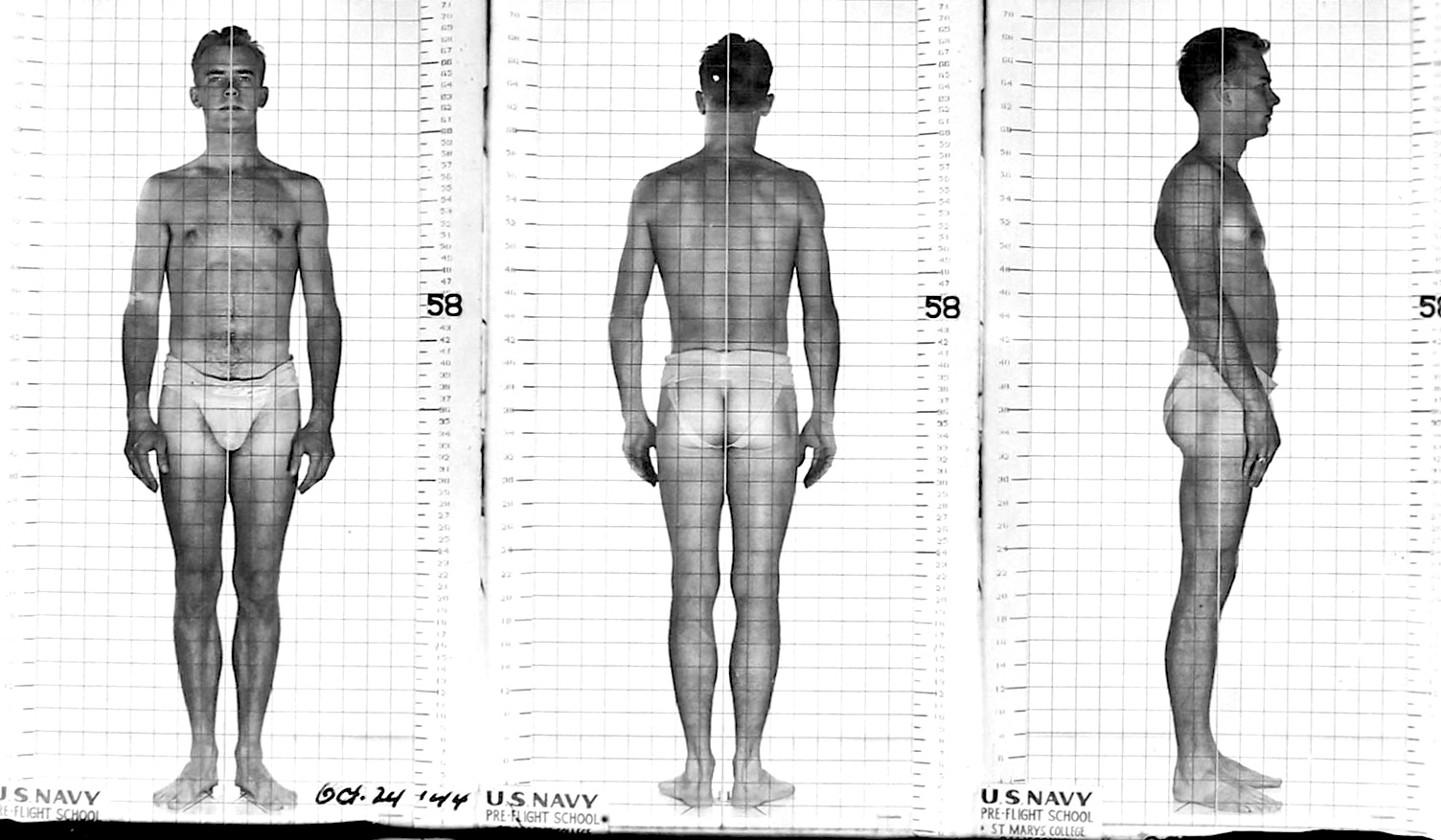
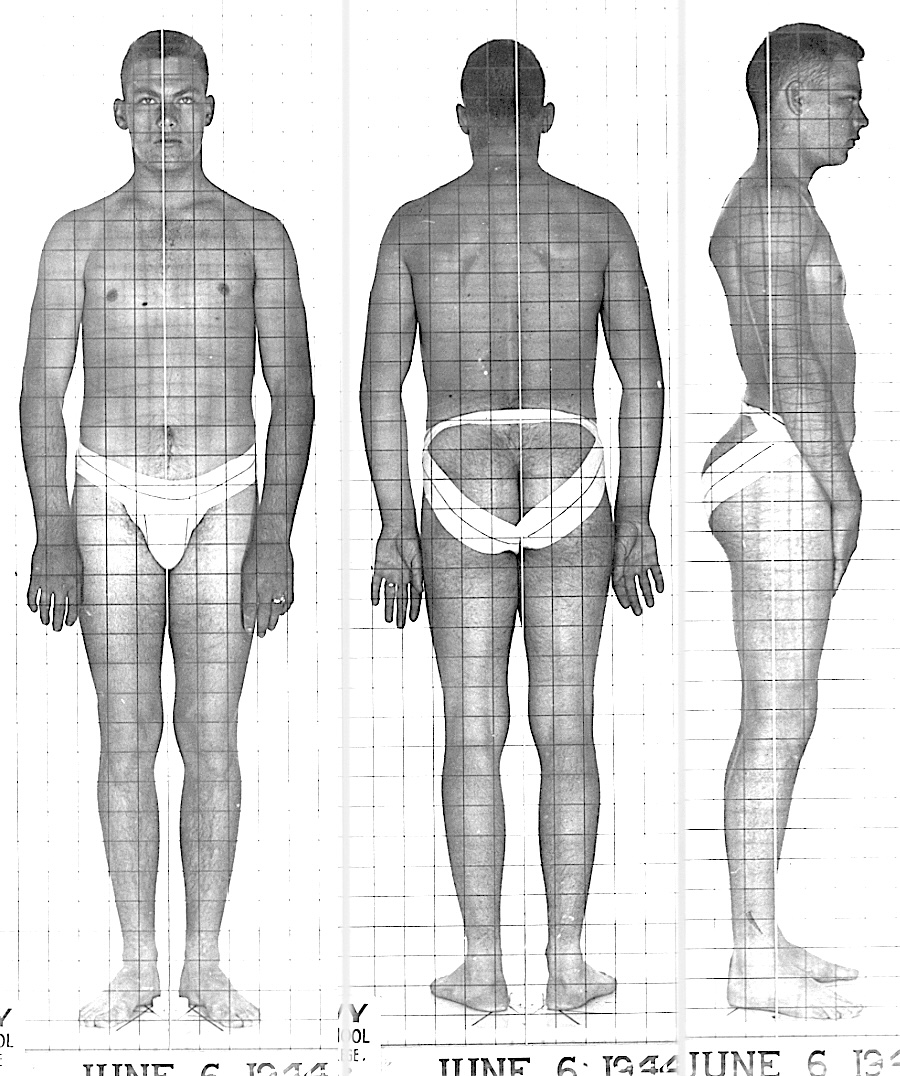
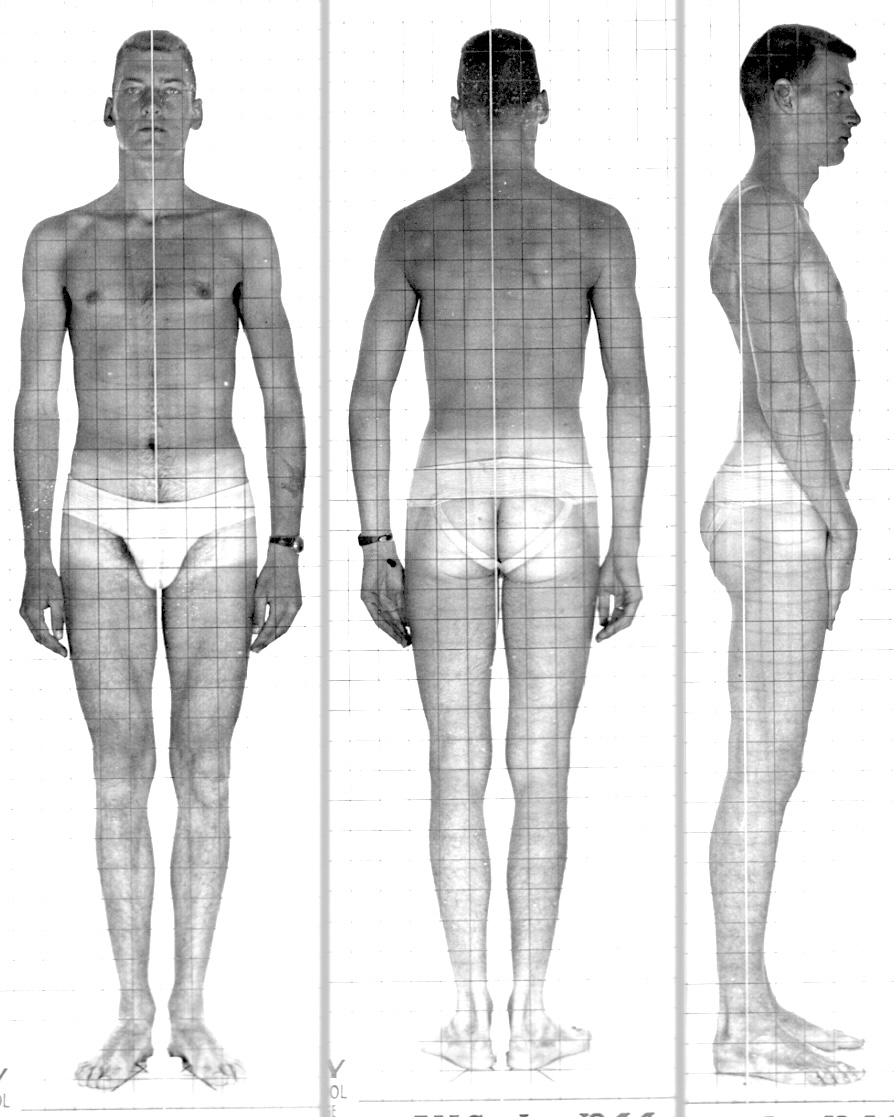
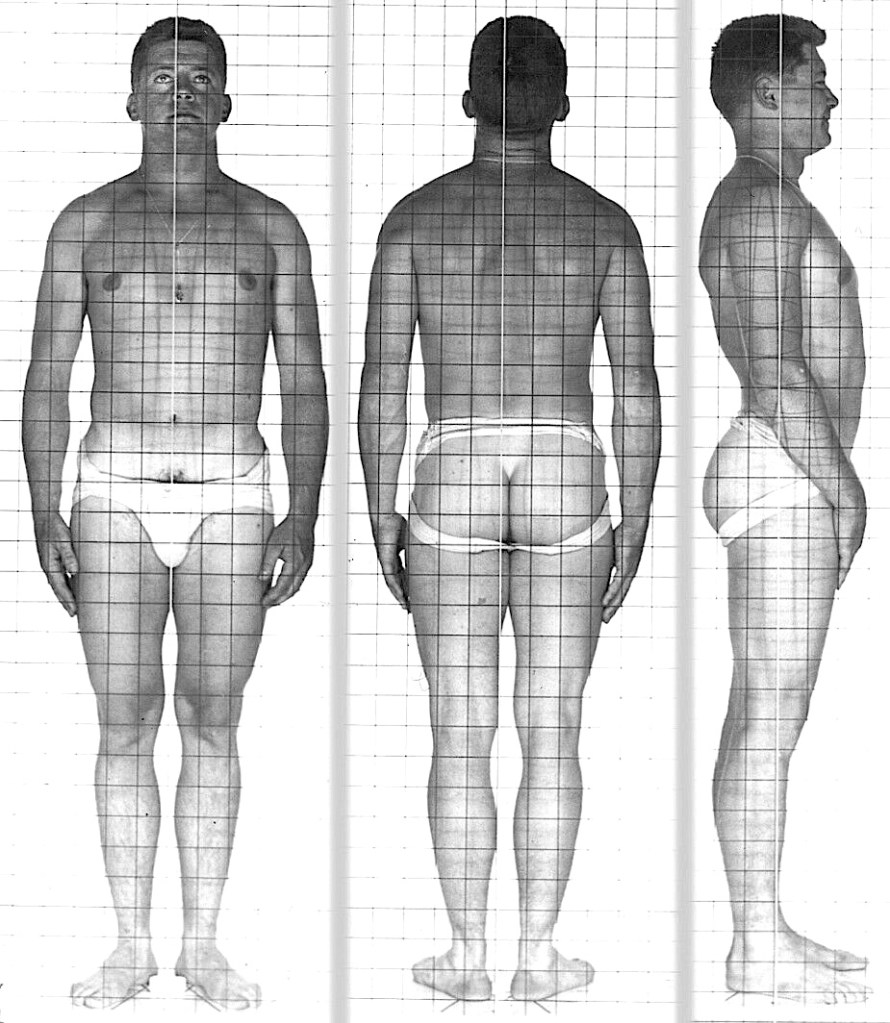
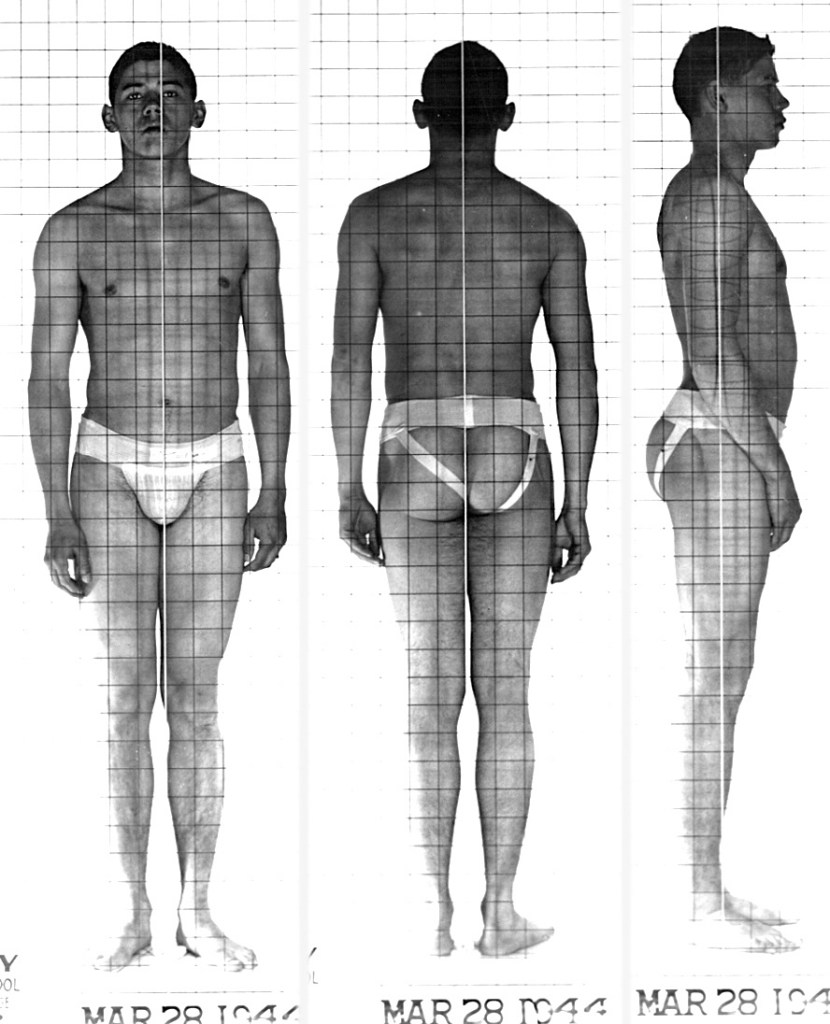
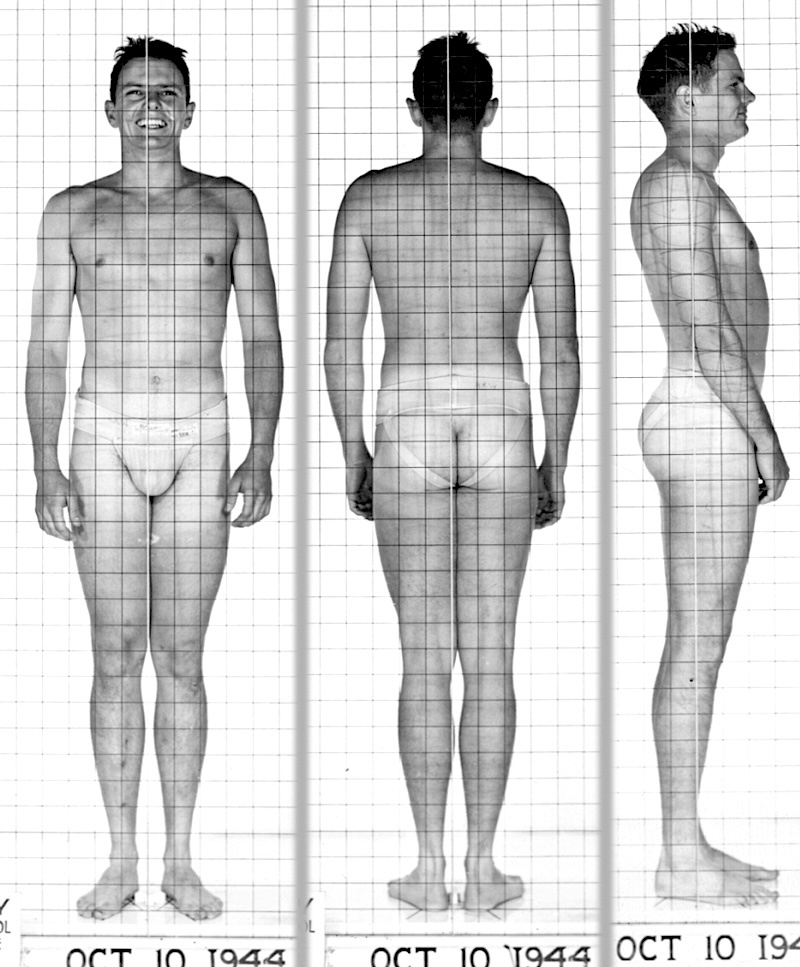
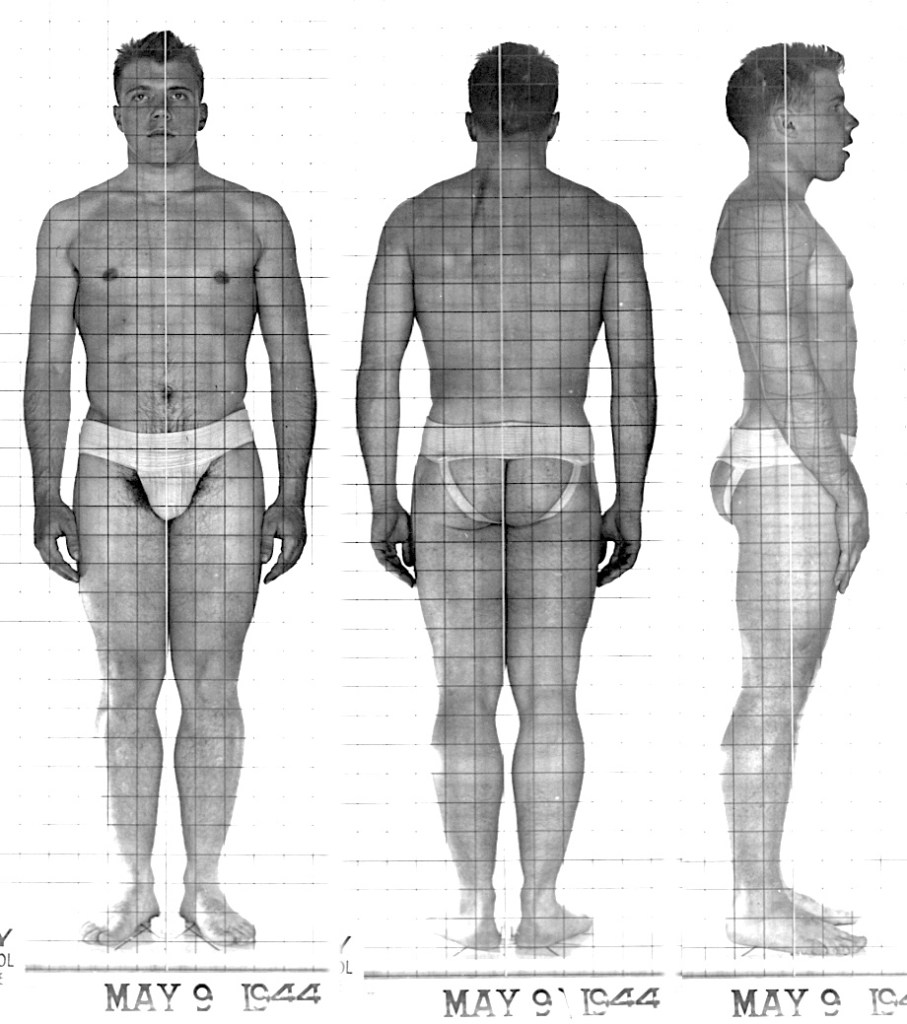
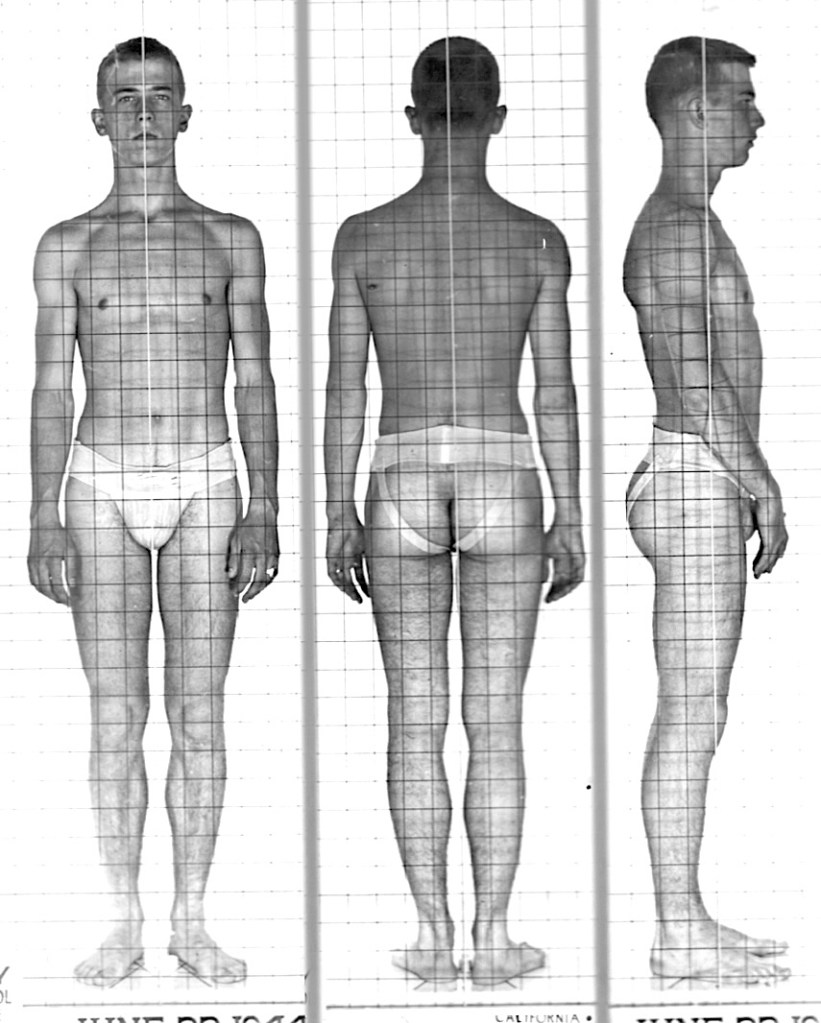
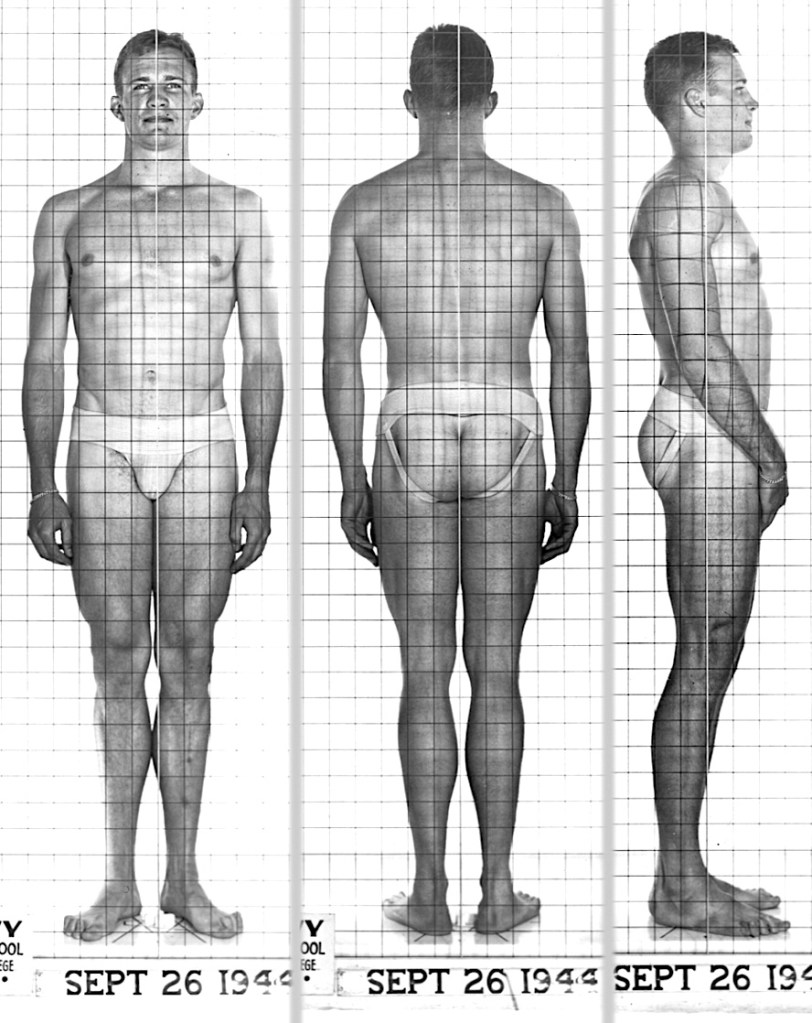
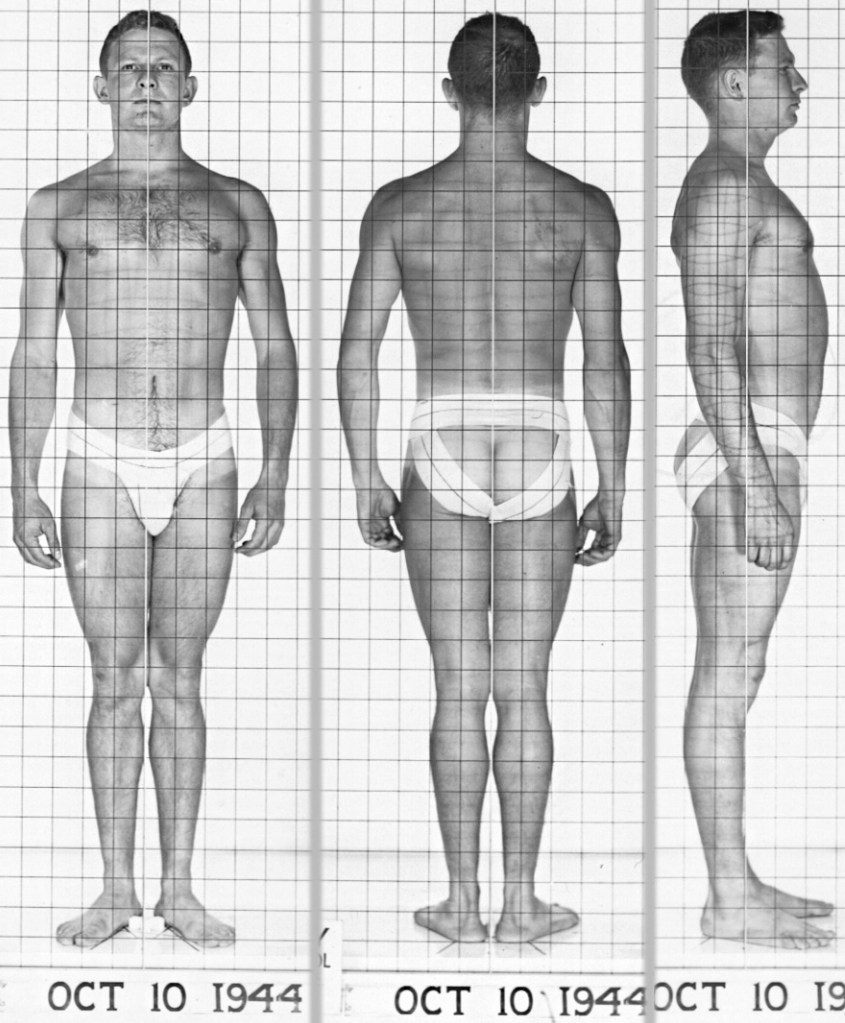
It’s that time again… due to popular demand, we have an 8th installment of WWII-era photos featuring the jockstrap-clad pre-flight training school cadets at St. Mary’s College in California. You can view the first one here, with links to all the rest at the bottom of this post. This installment focuses on those who trained in 1944 – 80 years ago. These men enlisted to fight against a dictator, as opposed to our current situation, where we are all contending with living under one.
I first became aware of these black and white 5″x7″ triptych photos several years ago. Listings turn up on auction sites frequently, where the photos are often accompanied by the index card used to record the physical training progress of the cadet.
The earliest photos (from June 13, 1942) feature the men completely nude, but all subsequent photos feature the cadets in jockstraps, standing behind some sort of grid fencing to better detect posture misalignment and spinal curvature.
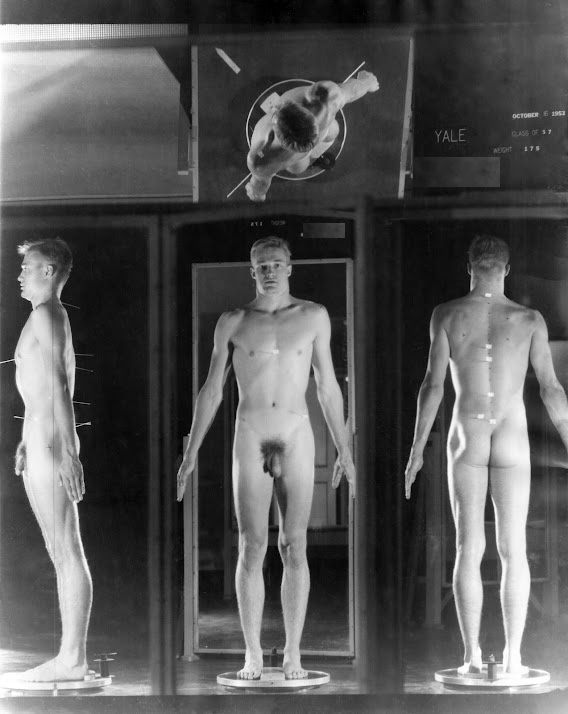
There is still some confusion between these photos and the Yale / Ivy League posture pics, since the Navy photos were sometimes used to illustrate stories about the Yale pics. Note that all of these images contain a visible U.S. Navy / St. Mary’s Pre-Flight School placard, even if they have been cropped out in some posts. Similarly the Yale University photos are identified as such within the frame of the photos:
Fortunately for us, multiple photos of some cadets have surfaced, allowing for comparisons of their training progress:
Comparison photos 6/6-8/1/44
Comparison photos 8/1-8/29/44
And while there is a lack of ethnic diversity, there are a variety of body types.
My collection now includes over 900 jpegs of different cadets. While some of these men did perish during WWII, the largest majority that I have researched lived to ripe old ages.
Any surviving cadets would now be over 100 years old. Last year, I discovered one who passed away in 2022 at the age of 103.
One thing these young men have in common, as they were documented in timeless photos of their physical prime: they were far from home, training to fight for their country.
At this time of year, 80 years later, we again salute The Greatest Generation for their fine forms and dedication.
That’s what I told myself. When I went back to look for earlier drafts that I was sure I had started, I discovered that there were none. I never wrote anything down – I only thought about sharing this story. For years. Until now.
“Do you have any real ghost stories?” is a fun question that pops up occasionally in social situations. My go-to response is the story of The Playground Swing – an unexplained occurrence from when I was in the 6th grade. Whether or not it is an actual ghost story, the memory has stayed with me for 44 years.
Just as the clear, cool weather of an early September day can evoke memories of 9/11, the story of The Playground Swing always comes back to me on crisp October mornings. It sneaks in sideways while I’m going through my morning routine, or while I’m commuting. It evaporates before I ever sit down and type it out. There’s not a whole lot to the story, really. It’s that unexplained simplicity that makes it a bit anticlimactic in the telling.
It was the fall of 1980 and I was in 6th grade at Bowling Green Elementary school in East Meadow, New York. We had moved into my grandmother’s house the year before, after a year of unrest following my parents’ divorce. I was happy to be living there, in the cozy house my mother grew up in. I looked forward to going to the school that my parents, aunts, and uncles had all attended.
Once upon a time, I had been a popular kid, but this was our second move in under two years. I remember hearing that it was a bad age to be uprooted and have to make new friends. Obviously many kids maneuver their way through it successfully. I didn’t.
5th grade had been bad, but I did have a couple of new friends to help me get through it. When we got into 6th grade, they were in a different classroom on the other side of the school. In my class, there were no allies. It felt like they were all against me. Looking back now, I would have to say that, among those in my class, I was met with 50% aggression and 50% apathy.
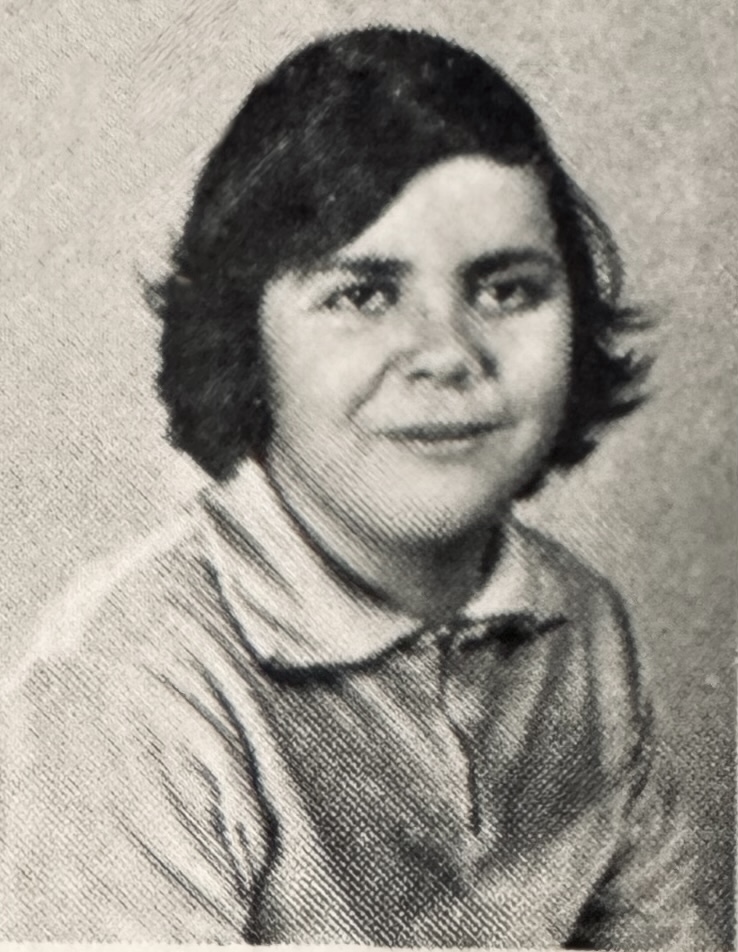
I was a chubby kid in need of a shower and a haircut, with big eyes and thick lashes that caused me to be regularly mistaken for a girl. My class picture says it all: This is a photo of an 11-year-old who was misgendered by the photographer moments before he snapped the picture. When I rolled my eyes and said, “I’m a boy,” he sputtered “Oh, uh… I was talking to that girl over there.” Now smile! *Click*.
For years, my memory was this: One day, my entire class gathered after school to confront me as I walked through the playground towards home. I’m sure it wasn’t ALL of them but when faced with an angry mob of your peers gathering around you, well… I didn’t stop to take attendance. It was a lot of them.
What was their plan? To beat me up? What would that accomplish? I don’t think they actually knew either, and in that disorganization I was able to run away. My best defense was that I could always run fast.
My mother called the school to complain and I was allowed to stay home the next day. The vice-principal went and spoke to the class, asking why they were picking on me. The response landed me in his office for a lecture: I had a bad mouth. I cursed at everyone. This is what he was told. I was the problem. No mention of the taunts and name calling that were the catalysts for my colorful language.
Fuck them, I thought.
My teacher was Mr. Dillon, a soft-spoken beanpole of a man who had been teaching there since my parents attended in the 1950’s. He kept his Vantage cigarettes in the breast pocket of his shirt, and another teacher would stop in to watch the class while he went out for smoke breaks. He had lost his wife a few years before and seemed sad, defeated, and waiting to retire.
In the Bowling Green student handbook that nobody reads, I found that if I brought a note from my mother, I could go home for lunch. I don’t know of anyone else who did this or wanted to. Teachers and staff would look at me funny when I presented my note and told them I was heading out. I would run home to avoid the lunchtime awkwardness of where to sit, as well as any potential playground altercations.
We went on a field trip that year to the top of the World Trade Center, which I loved. Two things stick out about that trip: Standing up against the glass and looking down. It was dizzying. I also remember that when it was time for lunch, I sat with the teachers. They seemed puzzled.
Back to The Playground Swing. Our classroom overlooked the playground and on this one sunny and clear October morning, all of us began to notice this one swing moving back and forth, high and steady like a metronome. It was empty. There was no wind and all of the other swings were completely still. I don’t know how long this went on – it seemed like an hour.
Mr. Dillon tried to redirect our focus back inside the classroom. His voice had a nervous quiver to it that I had never heard before. He could see the swing too, and there was no visible explanation. There were no nearby structures for someone to hide in and pull a string to create this effect. It was a freestanding swing set in the middle of a flat asphalt playground.
By the time the lunch bell rang, the swinging had stopped. We all headed out into the hall, where the kids from the classroom next to ours were similarly perplexed – they had seen it too. There was talk of it being the ghost of some kid who died the year before I moved there, but I don’t remember the name, and surely I would have heard about this before.
Nobody had an explanation, and it never happened again. And that’s the story of The Playground Swing.
The school year went on. The bullying continued, although somehow I managed to avoid another angry mob scenario. One of my main tormentors was this butch brute of a gal who treated me as her physical and verbal punching bag. My mother once again called the school to request that she stop assaulting me, which resulted in her getting called to the vice-principal’s office. We were in music class when she returned. As she walked past where I was sitting, she grabbed the top of the back of my chair and slammed it towards the floor. I fell backwards, landing flat on my back with a loud crack. Everyone gasped. And nobody did a thing.
I got back into my chair, buried my head in my arms and sobbed uncontrollably. The feeling of hopelessness was overwhelming, with one thought repeating in my head: “This will never end. This will never end. This will never end.”
Our last day of school was a needless half day with nothing to do. Mr. Dillon, who could barely maintain control of his class on the best of days, was losing the battle. Kids were killing time by throwing things, yelling and walking around, waiting for dismissal. I’d had enough of this scene and decided to make a move.
While Mr. Dillon was trying to catch a kid who had wandered down the hallway, I went to his desk, opened the drawer, found my report card, and walked out the door. Once outside the school, I heard someone yell out the window “He’s coming after you!” So I ran. I ran through the playground – past those motionless swings. I ran away from that school as fast as I could, faster than ever before. I would continue running away from that place for years.
I would like to say that I didn’t look back, but I did. Every once in a while I would think about what I could have done to navigate those waters more successfully. While I can go back and forth with ideas about how I could have improved my social game, there is one thing from that year that had no explanation or variables: What was up with that swing?
If it was a ghost revisiting the playground to have one last turn on a swing, that’s less frightening than the abuse I suffered at the hands of my classmates.
I just wish I had more stories about benevolent spirits and less about wretched children.
Ladies and Gentleman, it is time once again to revisit that late great dynamic lady of song, Madame Spivy LeVoe (1906-1971), also known simply as Spivy. A lesbian entertainer, nightclub owner and character actress, Spivy has been described as “The Female Noel Coward” – to which I add “…. if he had been born in Brooklyn as Bertha Levine.”
“Why Don’t You?” is the fifth side profiled here from her 1939 album Seven Gay Sophisticated Songs. Spivy is credited with composing the music, with lyrics by Everett Marcy, who also penned “I Brought Culture to Buffalo In The 90’s”.
Marcy had a few Broadway writing credits including New Faces of 1936. It was Marcy who wrote the oft-repeated line introduced in the show by Imogene Coca: “I must get out of these wet clothes and into a dry martini.”
The song “Why Don’t You?” refers to Diana Vreeland’s column of the same name in Harper’s Bazaar magazine. It was full of random “imaginative” suggestions such as “Why don’t you wash your blond child’s hair in dead champagne, as they do in France?”
Some of the notables of the day that are referenced in the song:
Vera Zorina – a ballerina, actress, and the second wife of George Balanchine.
Cecil Beaton – photographer, diarist, painter, interior designer, and an Oscar-winning costume designer.
Elsa Maxwell – a gossip columnist, radio personality, and professional hostess renowned for her high society parties.
“The Zerbes and Bebees” refers to the original paparazzi photographer Jerome Zerbe (1904-88) and syndicated society columnist Lucius Beebe (1902-1966). The two were a couple through the 1930’s.
Peggy Hopkins Joyce – an actress and socialite, notorious for her flamboyant lifestyle with numerous affairs, engagements and six marriages.
Clifton Webb – a character actor best known for his thinly veiled “sissy” supporting roles.
Why Don’t You?
Today when all the headlines full of red lines and bread lines confuse you And the world seems bleak, don’t be blue. In Harper’s they have a column, very smart and very solemn that will amuse you. It asks you little questions to give you smart suggestions how you, too can reek with chic like the most ultra-clique, and they call it “Why Don’t You?” It asks you…
Why don’t you have your ermine muff wired for sound and use it weekends as a concertina? Why don’t you give a charity ball for the Princeton Club and raffle off Vera Zorina?
Why don’t you throw your mother an occasional bone? Why don’t you try sleeping alone? Why don’t you take the pretty blue check you won at bridge and kite it? Why don’t you dip your head in brandy and light it?
Why don’t you try wearing gold sandals backwards just for the sheer agony of it? Why don’t you send last year’s negligée to Cecil Beaton? He’d love it. So they want you to try decorating your flat with bundles of hay… Well they know what they can do with Harper’s, why don’t they?
Why don’t you try going to Elsa Maxwell’s parties as yourself for a change? Why don’t you try wearing a hat that won’t make your husband look strange? Why don’t you develop a bright smile by putting an electric bulb behind each tooth? Why don’t you give a testimonial dinner for Hitler in a telephone booth?
Why don’t you get out of town before you come down with a compound case of heebie jeebies? Why don’t you listen to the birds and bees instead of the Zerbes and Bebees? So they want you to roll up your rugs and cover your floors with broccoli on the first warm day. Well they know what they can do with Vogue too…. Why don’t they?
Why don’t you have a stag line composed of the ex-husbands of Peggy Hopkins Joyce? Why don’t you cross breed carrier pigeons with parrots so they can deliver messages by voice? Why don’t you try throwing Clifton Webb over your left shoulder and making a wish? Why don’t you fill your guest’s finger bowls with invisible tropical fish?
Why don’t you try opening your eyes in the middle of a kiss? Why don’t you cancel your subscriptions to magazines like this? Why don’t you tear everything off your hat and stamp on it? Why don’t you take out a homestead in Montana and go “camp” on it?
So they want you to promise to slap your own face two hundred times a day? Well tell them you’ll have none of it. Tell them you’re through with their “Things To Do” and they can all take their Harper’s and… love it.
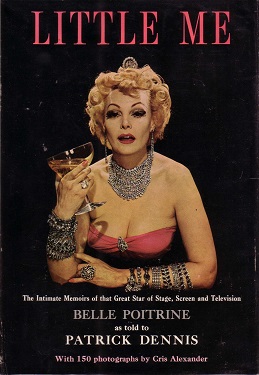
You may already know this, but anyone with an affinity for self-indulgent grande dame memoirs and/or the camp humor of Auntie Mame needs to seek out the 1961 book Little Me, The Intimate Memoirs of That Great Star of Stage, Screen & Television Belle Poitrine, as told to Patrick Dennis. The book spawned a Broadway musical starring Sid Caesar in 1962, which was revived with Martin Short in 1998. However, the book is whole different animal. The 2002 reprint with a new foreword by Charles Busch may be out of print, but affordable copies are easily found online.
The whole thing is a parody – a camp fiction classic created by the Auntie Mame author with over 150 photographs by Cris Alexander, an actor who appeared in both the stage and film versions of Auntie Mame. Alexander had transitioned into his second career as a photographer.
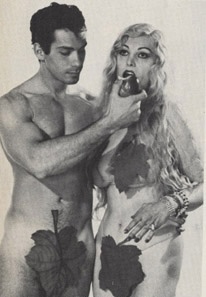
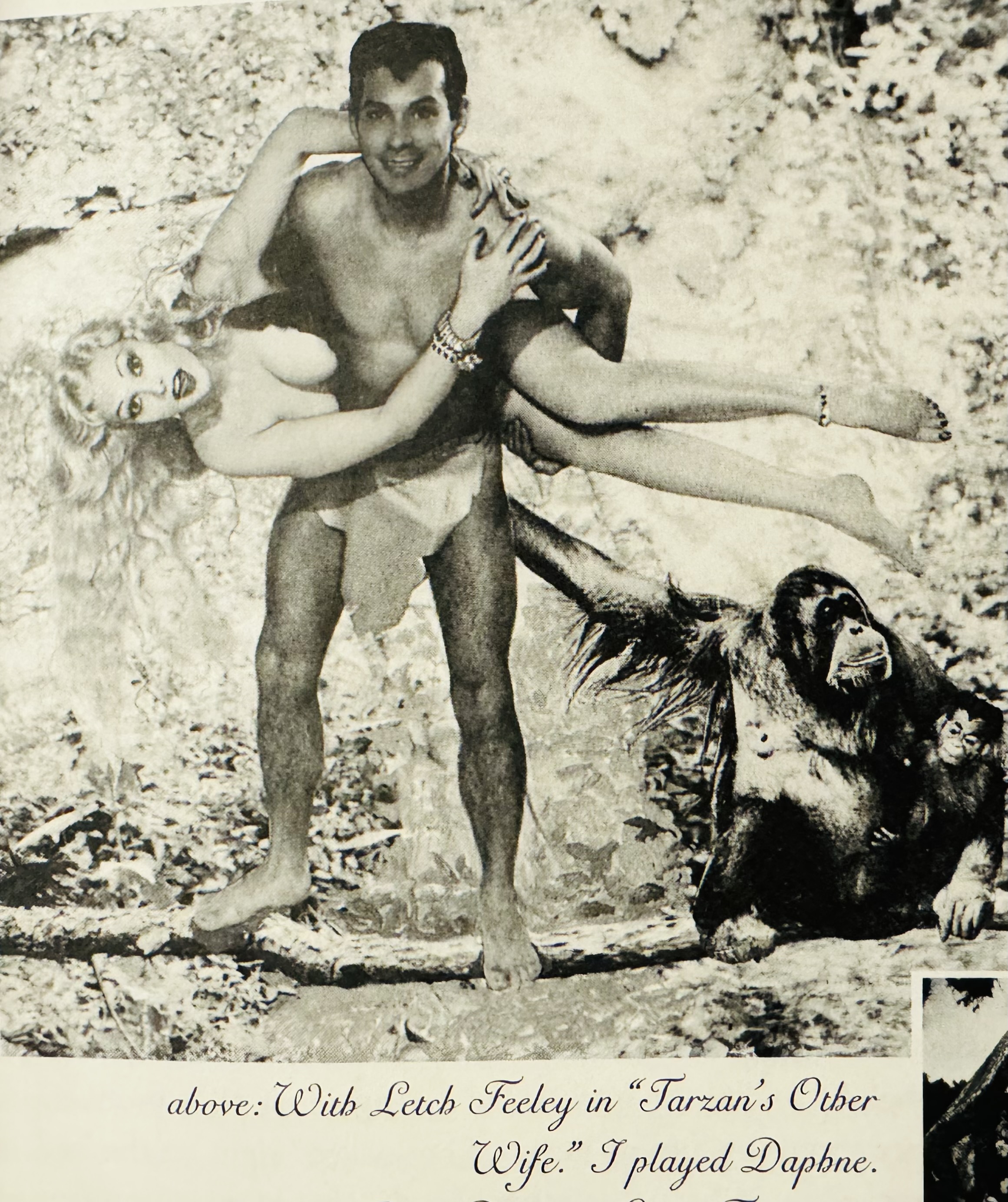
Actress Jeri Archer embodied Belle Poitrine in the photographs with a cast of characters playing her co-horts. Among the familiar faces in the company are character actresses Dodie Goodman and Alice Pearce, author Patrick Dennis (as Cedric Roulstone-Farjeon) and his wife Louise (as Pixie Portnoy). Cris Alexander also appears in various roles alongside his lifelong partner, ballet dancer Shaun O’Brien (as Mr. Musgrove). Miss Rosalind Russell makes an appearance as well.
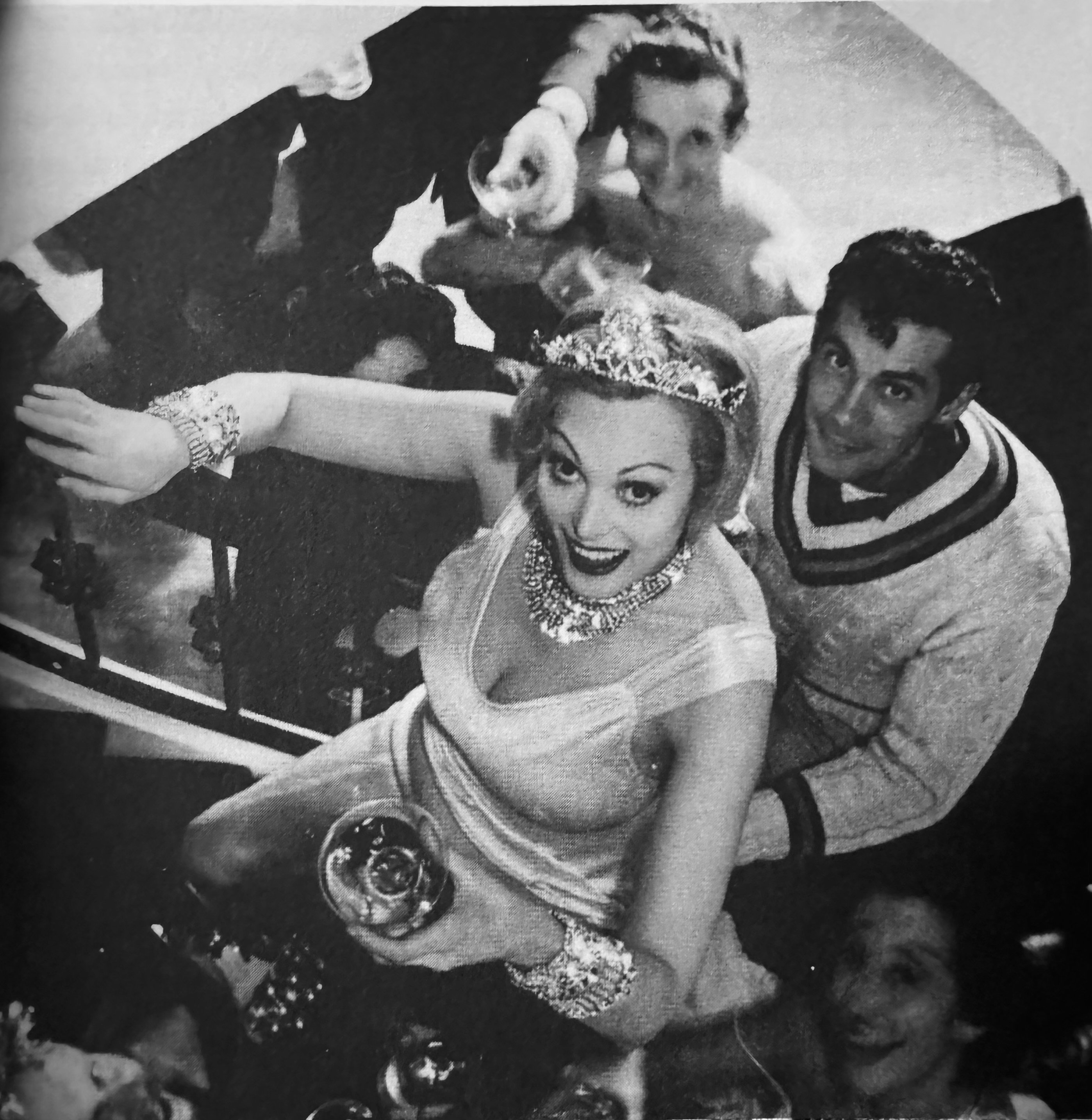
The role of Letch Feeley, Belle’s hunky paramour and costar, was played by Kurt Bieber. After the publication of Little Me, Cris Alexander wrote, “Shaun and Kurt generated an unprecedented amount of fan mail, all sent to the publisher’s office.”
Letch Feeley & Belle Poitrine, aka Kurt Bieber & Jeri Archer in Little Me
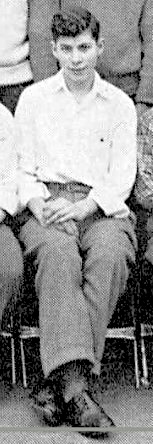
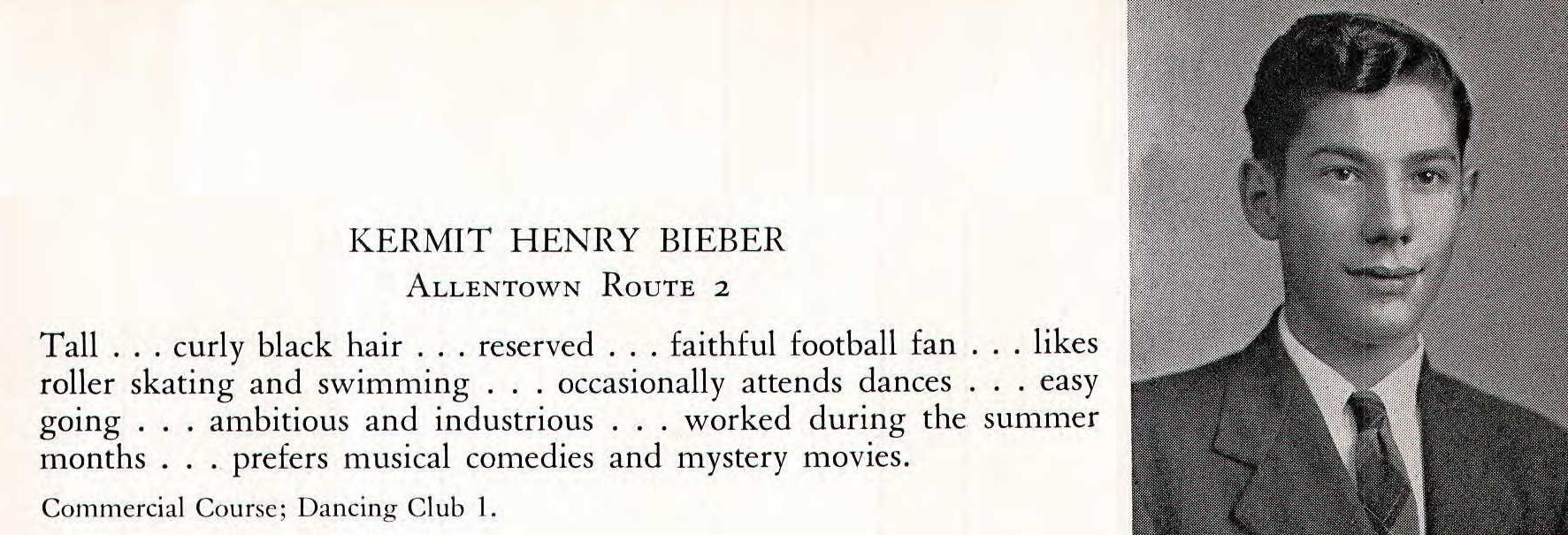
Kermit Henry Bieber was born on January 5, 1929 in Allentown, Pennsylvania. A 1946 graduate of Emmaus High School, Bieber worked at the local Sears before serving in the Army during the Korean War.
After his discharge, he headed to New York, where he studied drama, dance and voice at The American Theatre Wing. Roles in summer stock soon followed, with ensemble work in Can-Can, Happy Hunting, Oklahoma! and Wonderful Town.
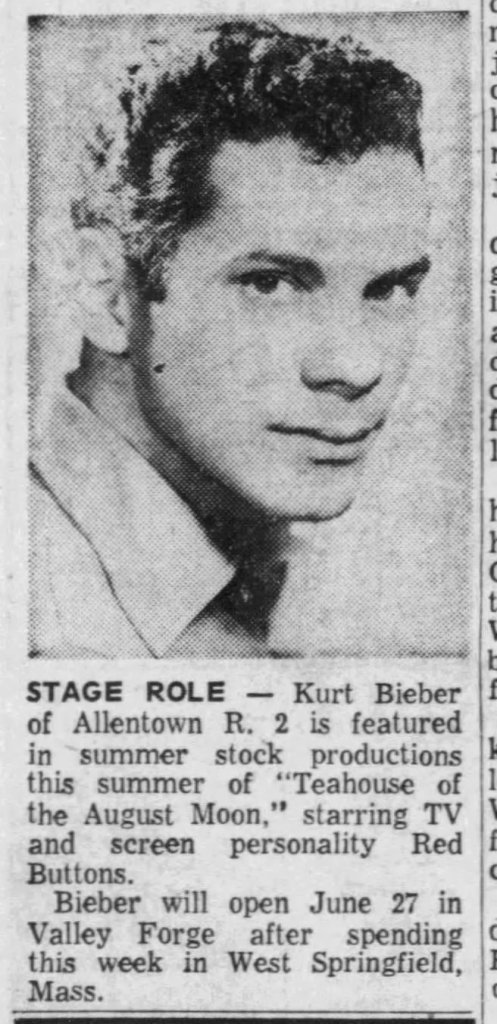
The Morning Call, Allentown, PA (6/21/1960)
It was his work in a regional production of On the Town that took his career to the next level. Cris Alexander later wrote, “Ross Hunter may have discovered Rock Hudson, but I discovered Kurt Bieber during a summer package of On The Town (Pittsburgh ’58).” By October of that year, Bieber was back in New York playing a sailor alongside William Shatner in the original Broadway production of The World of Suzie Wong.
More regional work followed, including a stint in the play Teahouse of The August Moon with Red Buttons. It was around this time that Cris Alexander began to shoot the photos for Little Me, casting Bieber in the role for which he is best remembered.
In Uncle Mame: The Life of Patrick Dennis, author Eric Myers writes “Most memorable to a certain contingent of the book’s audience was actor Kurt Bieber, who… displayed plenty of muscular flesh in nearly all of his photos.”
“I loved doing Little Me. People would stop me in the street and say ‘Aren’t you Letch Feeley?'” Kurt fondly remembered. “It was a first. No one had ever done a book like that… it was such a different atmosphere then. The photos were really a breakthrough.”
“Kurt Bieber is a poseur extraordinaire. The grace and symmetry of the youthful physique is captured in this study by Male Today.”
Following the success of Little Me, Bieber continued acting as well as modeling. He found work as a “posing strap” model for Male Today and other physique magazines. He was an early subject for Jim French, a photographer who was starting up a photo studio under the name Rip Colt. An early Colt film loop lists Bieber as one of the performers – a softcore scene with three muscular models lathering each other up in a shower – but none of the models appear to be him.
In 1969, Bieber had a bit part as a Times Square street hustler in Midnight Cowboy:
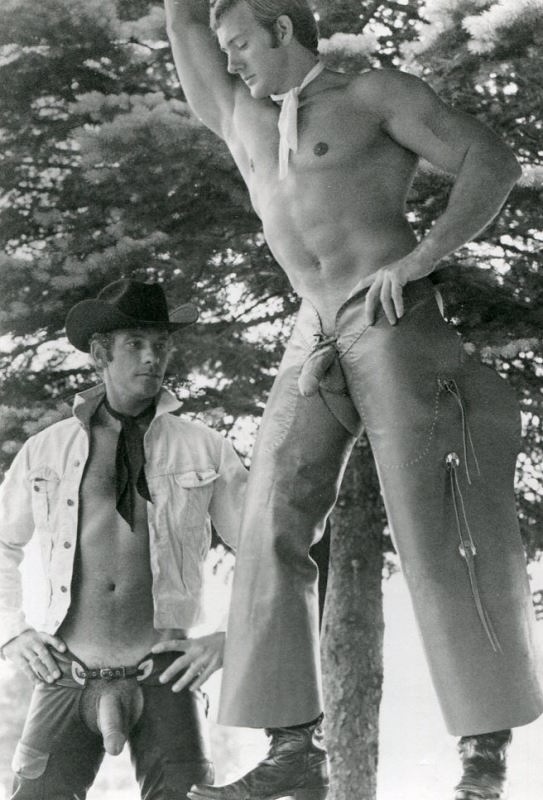
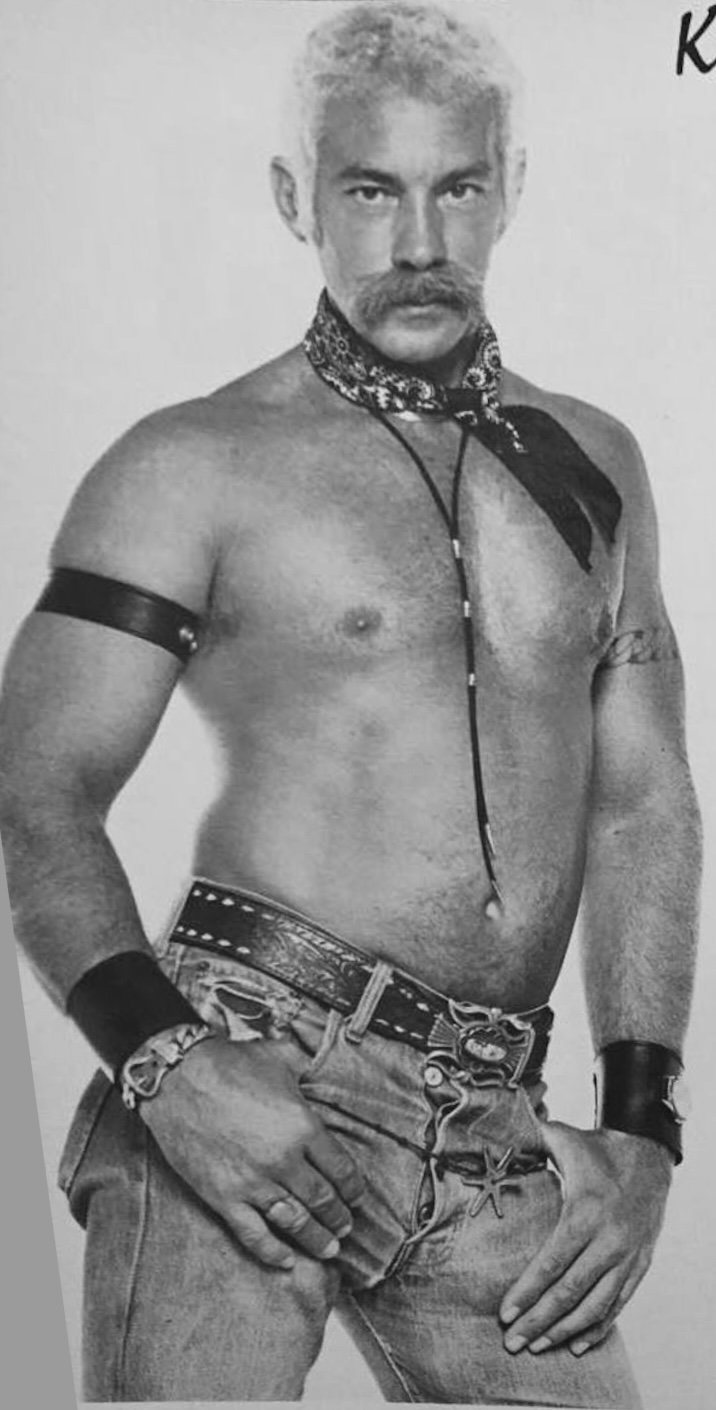
At the dawn of the 1970’s, 40-year-old Bieber – no longer a young chorus boy – opted for a new look. He transformed himself into the quintessential gay clone: an urban cowboy/mustache and Levi’s/hanky-code persona that would characterize the gay scene for the next decade. His photos for Colt studios now typify that era of gay erotica.
He was quoted as saying “I loved being photographed in the nude. I’ve always been an exhibitionist. To be an actor, you have to be. Besides, I got to choose the models. I chose hot men that I could get off on. That’s why they gave me (Colt superstar) Dakota.”
Kurt Bieber (in a Colt t-shirt) outside Badlands in the West Village, NYC (1979)
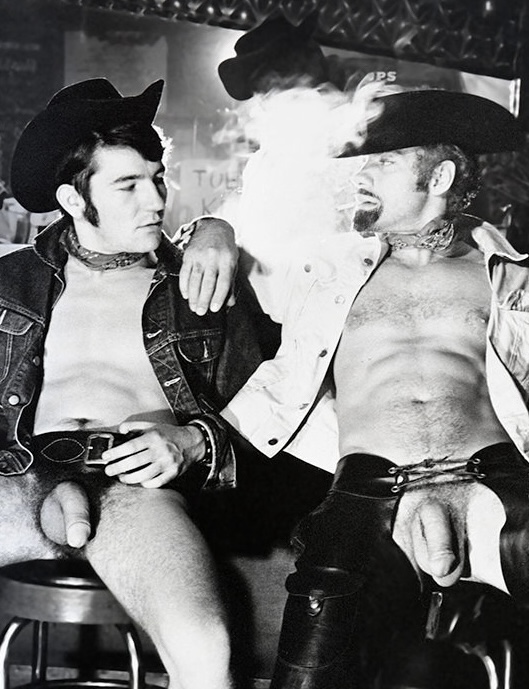
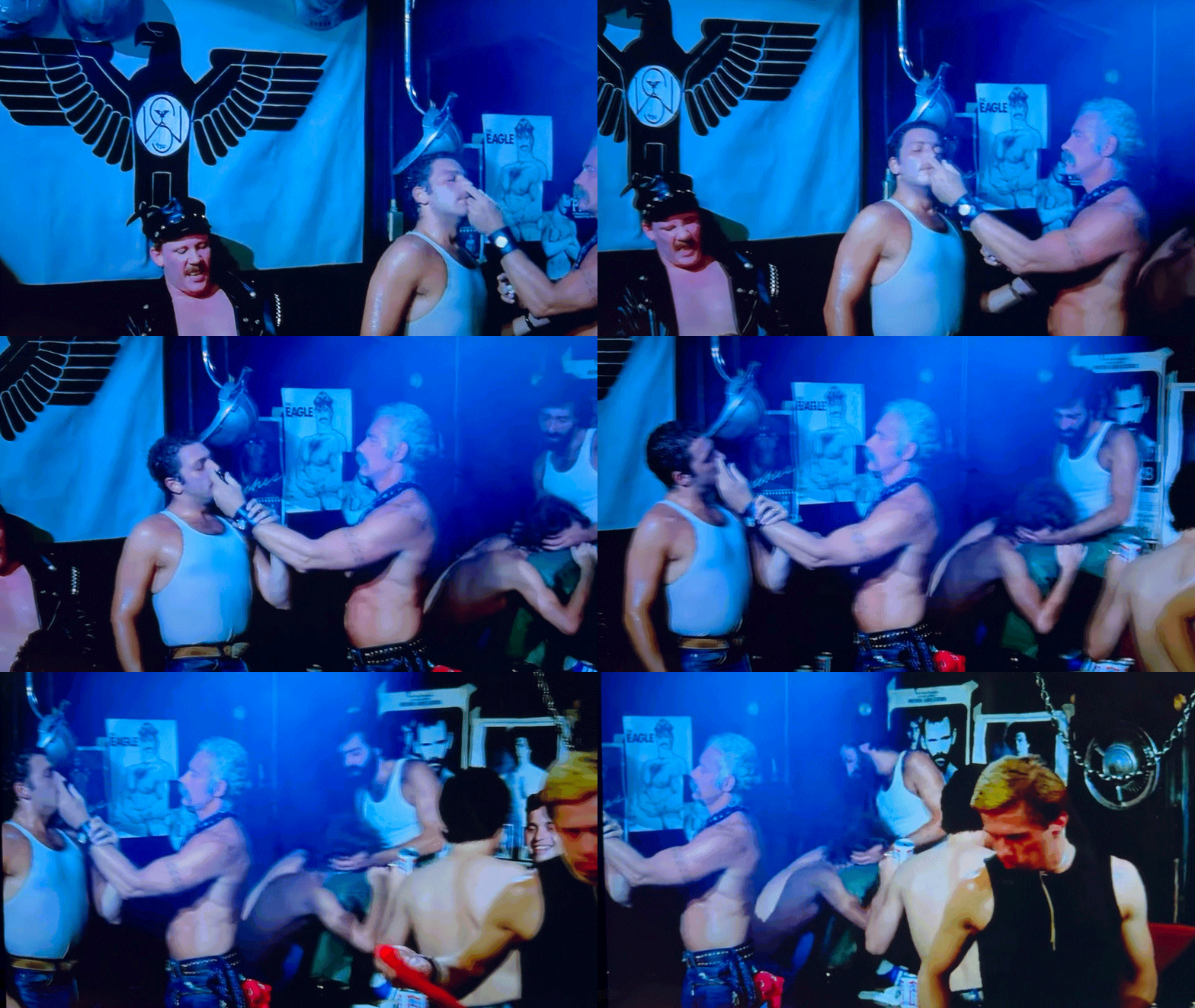
While major film roles never materialized, Bieber appeared in several commercials and continued to garner background work in films like Last Summer and Chapter Two. He can be seen offering poppers to a cohort at The Eagle in the controversial Al Pacino film Cruising (1980):
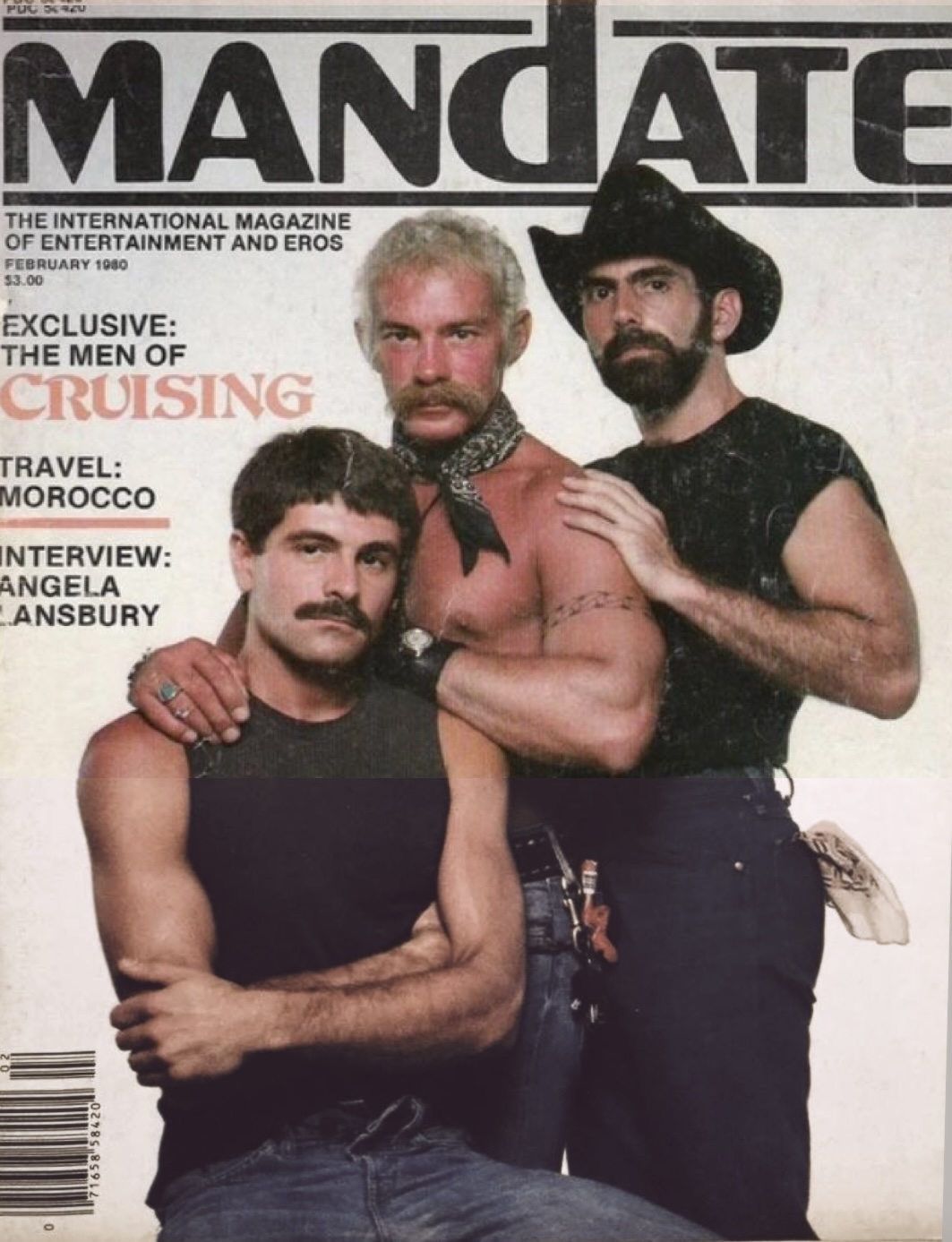
His appearance in Cruising landed Bieber on the cover of the February 1980 issue of Mandate Magazine. In his interview, Bieber mentions that he played Letch Feeley among other acting roles. He differentiates himself from the other Cruising extras, some of whom were cast off the street. “I want to stress that I did it as a professional… It’s just a job.”
As for those rumored to be having sex on camera in the leather bar scenes; “On the set, some people were having sex for real, but (director William) Friedkin didn’t ask anybody to. No way I would suck cock in front of a camera,” he says.
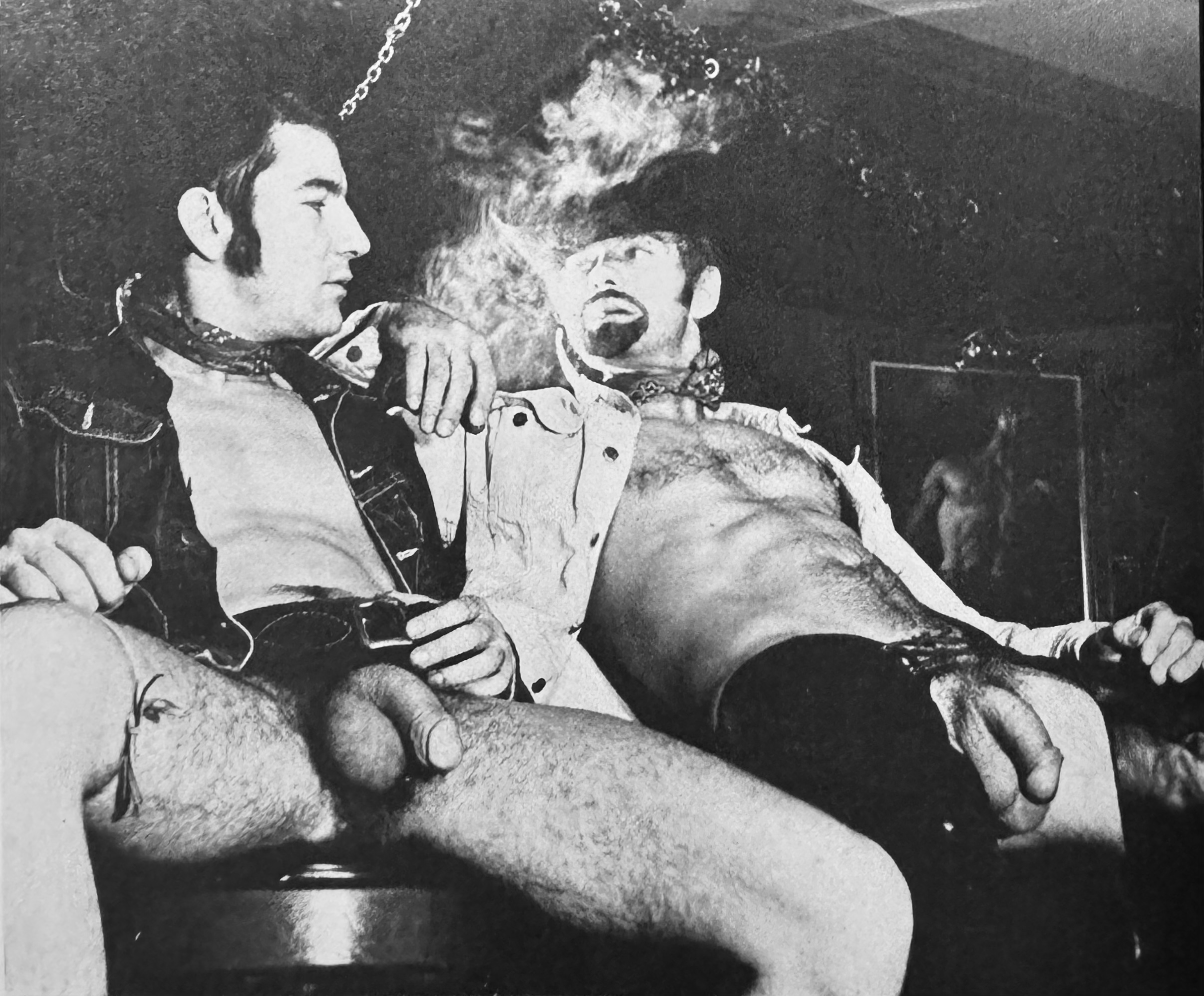
Although Bieber doesn’t mention his work with Colt Studios in this article, four months later Mandate ran a 10-page spread titled “Whatever Happened To Letch Feeley?” This feature tracked Bieber from his Little Me photos through his work with Colt Studios.
When asked to sum himself up at the close of the article, Bieber said with a smile; “I’ve done a little bit of everything and I’ve loved every minute of it.”
Later in 1980, Bieber was done in by a poison dart in Times Square during the opening sequence of Eaten Alive, an Italian cannibal movie:
The epilogue of Uncle Mame: The Life of Patrick Dennis (2000) notes that Bieber “has been an extra in almost every movie ever filmed in New York City. Kurt says he is ‘still around and still cruising Christopher Street.'”
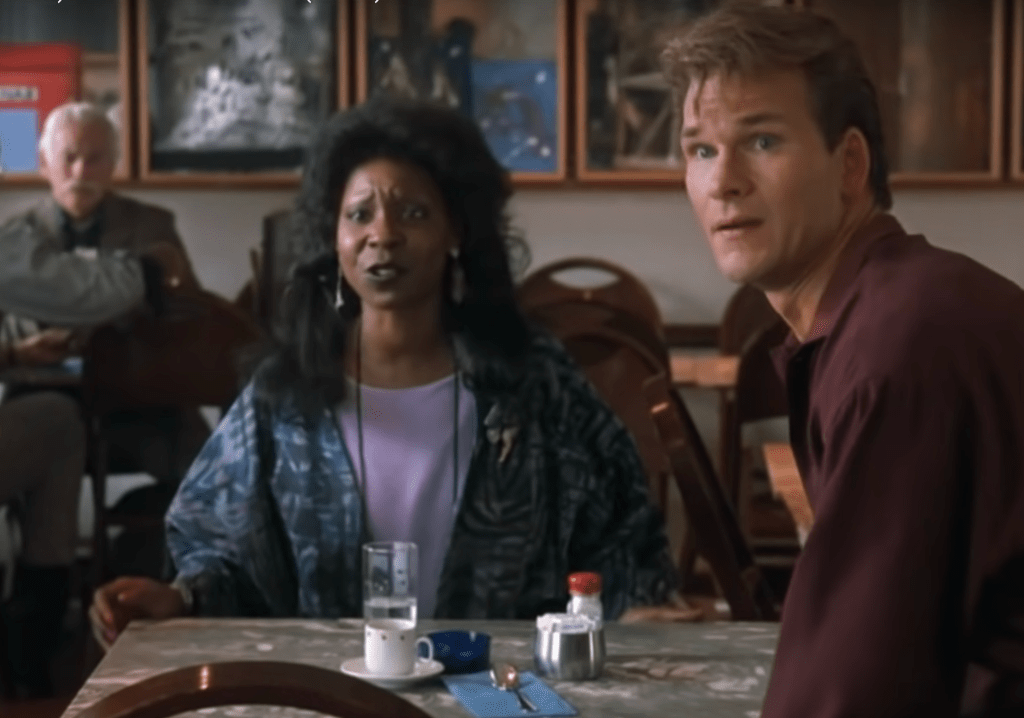
Kurt Bieber behind Whoopi Goldberg and Patrick Swayze in a scene from Ghost (1990)
Decades later, Little Me fans still recognized him. “Even today, I’ll sometimes walk into a store and someone will say ‘Wow! Letch Feeley!’ How they recognize me after all these years, with my white hair, I’ll never know.”
Kurt Bieber passed away at age 86 on December 31, 2015 in New York City.
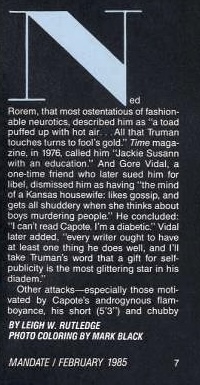
Continuing with our theme from the last post, Truman Capote is the subject of this article from the February, 1985 issue of Mandate magazine. The piece was written by Boze Hadleigh just 6 months after Capote’s death.
The infamous book jacket photo of Truman Capote from Other Voices, Other Rooms. One critic commented, “He looks as if he were dreamily contemplating some outrage against conventional morality.” (1948)
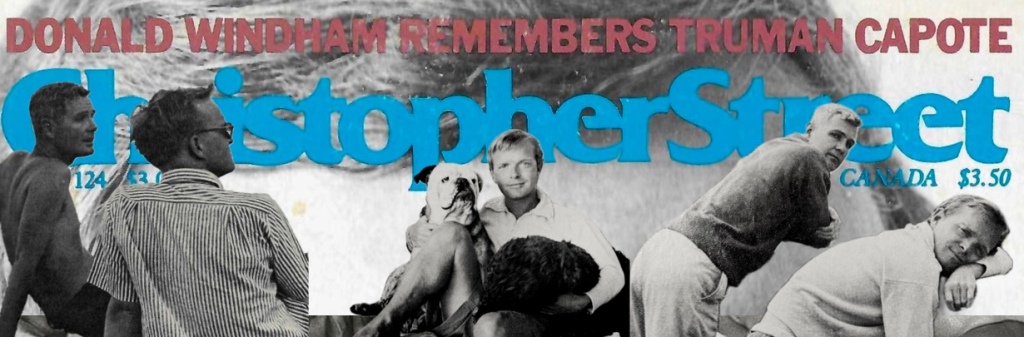
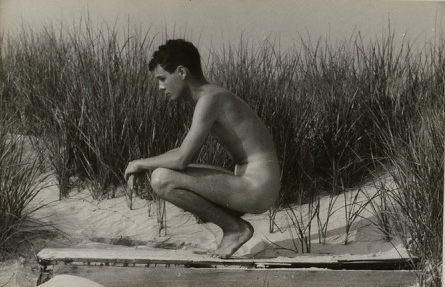
Donald Windham (with Paul Cadmus) & Sandy Campbell in PaJaMa photos of the early 1940’s.
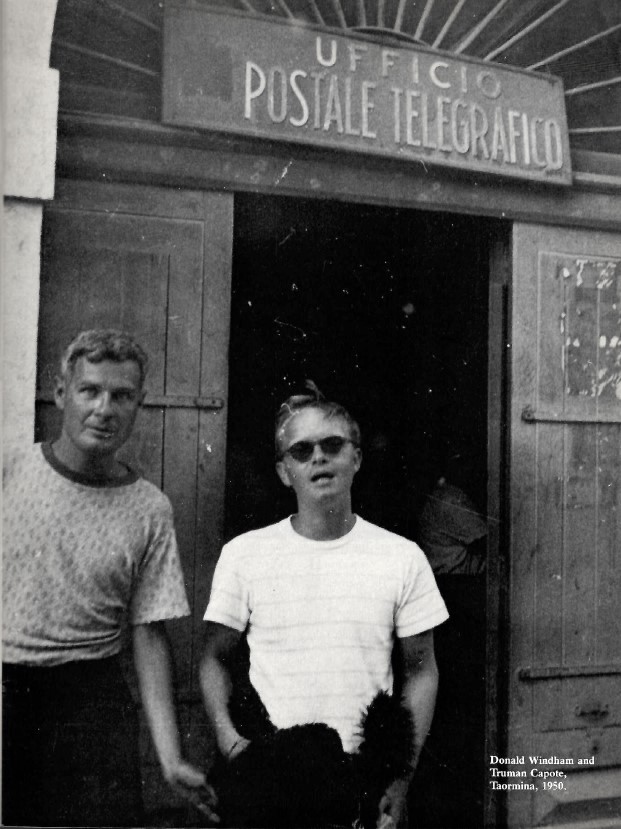
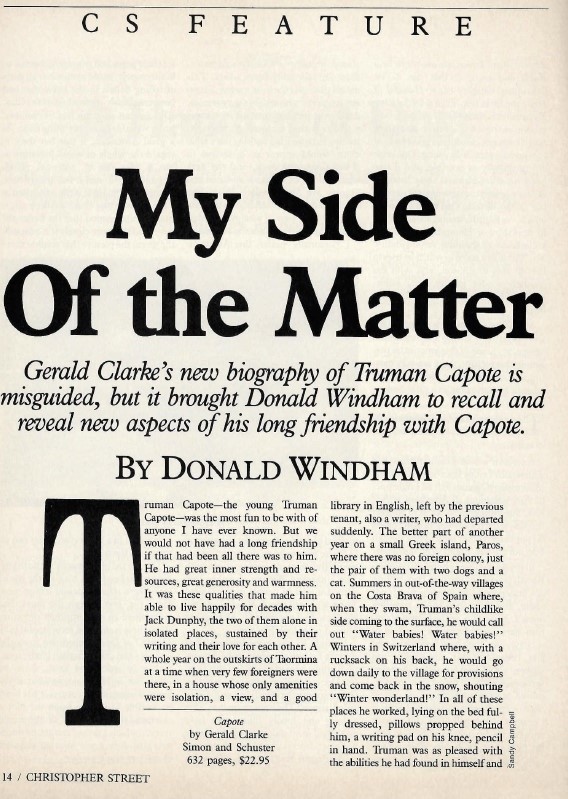
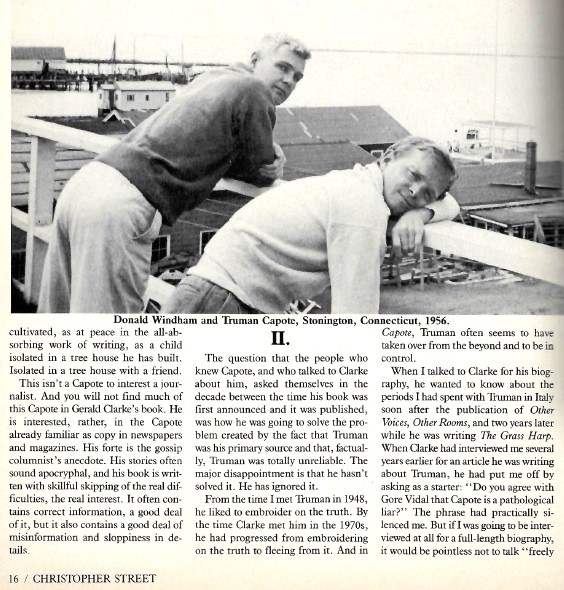
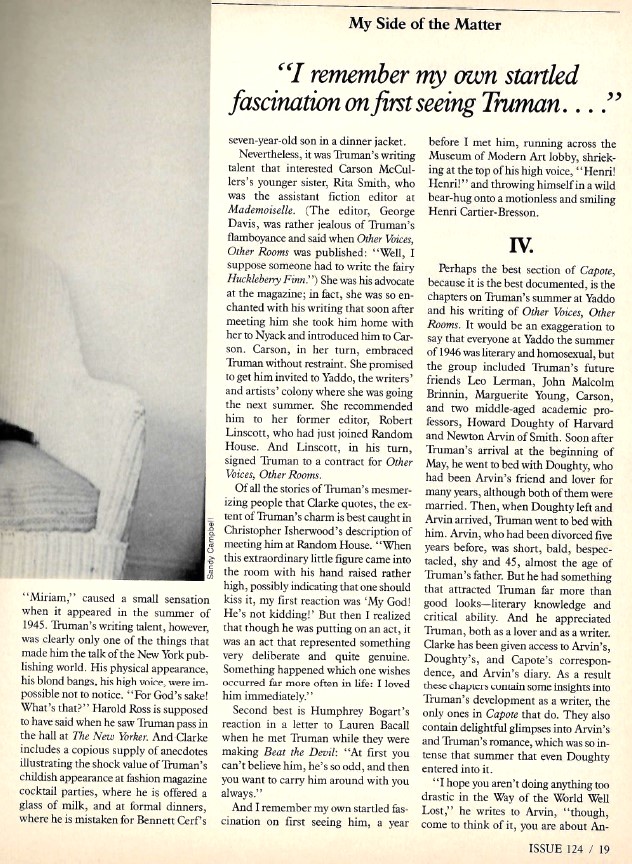
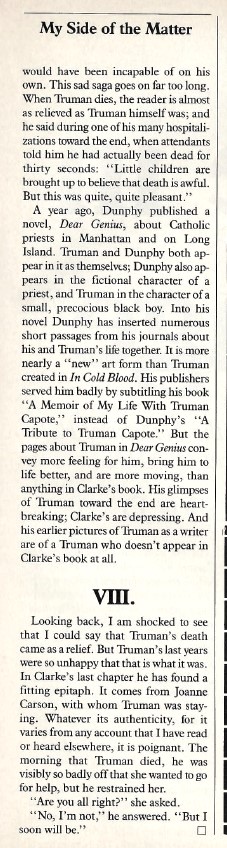
I recently rediscovered this piece written by Windham for a 1988 issue of Christopher Street. I bought the magazine at a West Village newsstand back in the day, and it has remained in my possession all these years, proving yet again why I never throw anything away. Because you never know…
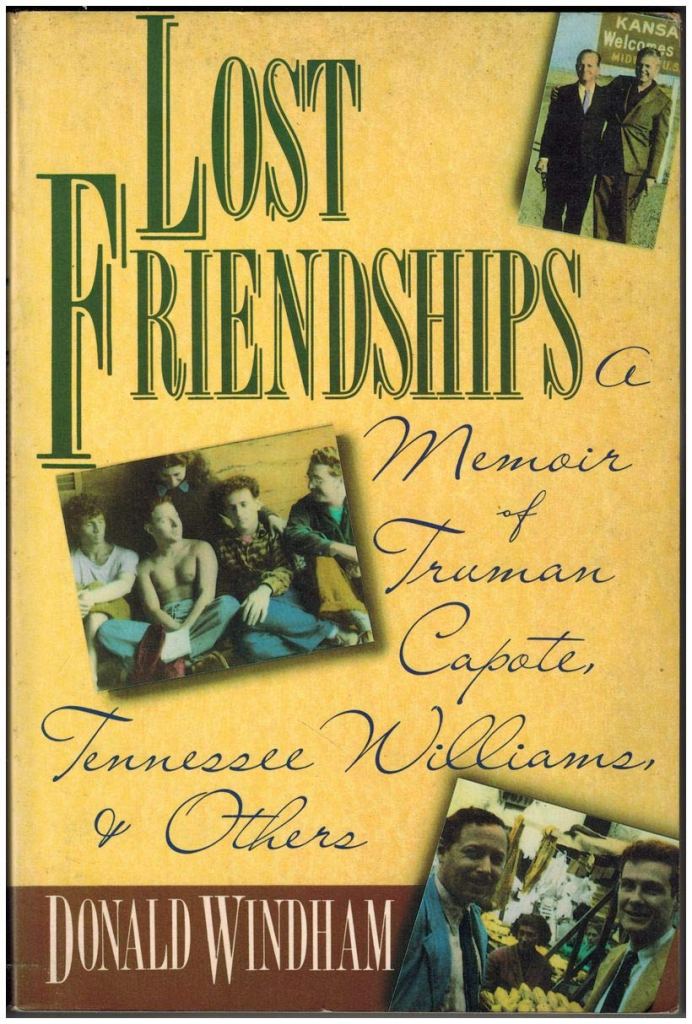
Back in 1987, Donald Windham had published Lost Friendships: A Memoir of Truman Capote, Tennessee Williams, and Others. This article was written the following year in response to the publication of Gerald Clarke’s 600+ page biography Capote, which Windham describes as “misguided.” Clarke’s book would later be adapted into the 2005 film, with Phillip Seymour Hoffman winning an Oscar for his portrayal of troubled Truman.
Note that the photos accompanying the article are credited to Sandy Campbell.
This photo appears in several places on the internet misidentifying Capote as Sandy Campbell with Donald Windham, Piazza San Marco (1948)
Capote with Sandy Campbell at the Kansas border, October 1964




































































 Brian Ferrari's Blog